EP1535601A1 - Utilisation en coloration de dérivés de ninhydrine comportant un ou plusieurs cycles condensés - Google Patents
Utilisation en coloration de dérivés de ninhydrine comportant un ou plusieurs cycles condensés Download PDFInfo
- Publication number
- EP1535601A1 EP1535601A1 EP04291870A EP04291870A EP1535601A1 EP 1535601 A1 EP1535601 A1 EP 1535601A1 EP 04291870 A EP04291870 A EP 04291870A EP 04291870 A EP04291870 A EP 04291870A EP 1535601 A1 EP1535601 A1 EP 1535601A1
- Authority
- EP
- European Patent Office
- Prior art keywords
- amino
- groups
- acid
- composition
- hair
- Prior art date
- Legal status (The legal status is an assumption and is not a legal conclusion. Google has not performed a legal analysis and makes no representation as to the accuracy of the status listed.)
- Withdrawn
Links
- MSYFXQDLQPNPBF-UHFFFAOYSA-N O=C(c(c(C1=O)c2)cc-3c2-c2ccccc-32)C1=O Chemical compound O=C(c(c(C1=O)c2)cc-3c2-c2ccccc-32)C1=O MSYFXQDLQPNPBF-UHFFFAOYSA-N 0.000 description 1
Classifications
-
- A—HUMAN NECESSITIES
- A61—MEDICAL OR VETERINARY SCIENCE; HYGIENE
- A61K—PREPARATIONS FOR MEDICAL, DENTAL OR TOILETRY PURPOSES
- A61K8/00—Cosmetics or similar toiletry preparations
- A61K8/18—Cosmetics or similar toiletry preparations characterised by the composition
- A61K8/30—Cosmetics or similar toiletry preparations characterised by the composition containing organic compounds
- A61K8/33—Cosmetics or similar toiletry preparations characterised by the composition containing organic compounds containing oxygen
- A61K8/35—Ketones, e.g. benzophenone
-
- A—HUMAN NECESSITIES
- A61—MEDICAL OR VETERINARY SCIENCE; HYGIENE
- A61Q—SPECIFIC USE OF COSMETICS OR SIMILAR TOILETRY PREPARATIONS
- A61Q5/00—Preparations for care of the hair
- A61Q5/10—Preparations for permanently dyeing the hair
Definitions
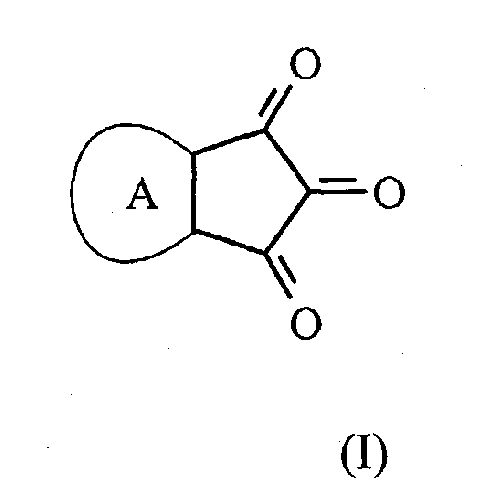
- the present invention relates to compositions for coloring materials keratin derivatives, in particular hair dye compositions containing at least at least one ninhydrin derivative having one or more fused rings associated therewith, preferably a primary or secondary amine functional compound or a activated methylene function, a staining method using such compositions and a multicomponent coloring agent for carrying out such a method.
- oxidation bases are colorless or weakly colored compounds which, when combined with oxidising products, give rise by a process of oxidative condensation to colored compounds. These dyes are insoluble and are trapped inside the hair fiber.
- the colorations obtained have good toughness to shampoos.
- the oxidation reaction is carried out using oxidizing products such as water oxygenated in a basic medium. These oxidizing agents attack hair keratin whose cosmetic and mechanical properties can be seriously degraded in case of repeated colorations.
- direct dyeing consisting in applying direct dyes to the keratin fibers which are colored molecules and dyes having an affinity for the fibers.
- direct dyes conventionally used for nitro dyes, benzene, anthraquinone, nitropyridine, azo, cationic azo, xanthene, acridine, azine or triarylmethane or dyes natural.
- ninhydrin derivatives mentioned above are preferably used in combination with labile hydrogen compounds, such as primary amines or secondary or activated methylene compounds.
- the colorations thus obtained have good chromaticities and are distinguished in particular by excellent washing tenacity (several dozens of shampoos).
- Group A is preferably chosen from anthracenyl groups, tetracenyl, phenanthrenyl, azulenyl.
- the group A may be substituted with halo groups such as chloro, iodo, bromo and / or fluoro, C 1 -C 6 alkyl groups, hydroxyl groups, C 1 -C 6 alkoxy groups, amino groups, mono- or di- (C 1 -C 6 ) alkylamino groups, mono- or di-hydroxy (C 1 -C 6 ) alkylamino groups, tri (C 1 -C 6 ) alkyl groups ammonio , imidazolyl groups, pyridinyl groups, thio groups, (C 1 -C 6 ) alkylthio groups, thio (C 1 -C 6 ) alkyl groups, (C 1 -C 6 ) alkyl groups.
- halo groups such as chloro, iodo, bromo and / or fluoro
- C 1 -C 6 alkyl groups hydroxyl groups, C 1 -C 6 alkoxy groups, amino groups, mono- or
- carbonyl hydrogenocarbonyl groups, hydroxycarbonyl groups, (C 1 -C 6 ) alkoxycarbonyl groups, nitro groups, sulphonato groups, the corresponding protonated groups such as ammonio, imidazolio, and / or pyridinio.
- compositions are particularly useful for dyeing fibers keratin, especially the hair.
- the compounds of formula (I) include, of course, also salts acid addition and the corresponding base addition salts.
- ninhydrin derivatives of formula (I) above are used in the present invention in a cosmetically acceptable medium generally containing a significant fraction of water.
- a cosmetically acceptable medium generally containing a significant fraction of water.
- the ninhydrin derivatives of formula (I) are in hydration equilibrium with the geminated diol form (or carbonyl hydrate) corresponding to the following formula (I):
- ninhydrin derivatives are of formula (I), these therefore always include not only the compounds of formula (I) but also the corresponding hydrated forms of formula (I) bis.
- ninhydrin derivatives usable according to the present invention for coloring hair fibers are as follows:
- the ninhydrin derivatives of formula (I) described above may be used alone for coloring materials keratin. Indeed, these compounds are capable of generating colored molecules with the amine functions of keratin (color reaction).
- Compounds of formula (I) may also be used together with minus an activator which makes it possible to modify the reaction kinetics of the compound ninhydrin with keratinous material.
- an activator may be an oxidizing agent, a reducing agent, brönsted acids, a metal catalyst such as transition metal catalysts such as iron, platinum, palladium, proteins including enzymes, compounds that modify the ionic strength of the medium such as NaCl salts, labile hydrogen compounds selected from those having a primary or secondary amine function and those having a activated methylene function.
- an activator may be an oxidizing agent, a reducing agent, brönsted acids, a metal catalyst such as transition metal catalysts such as iron, platinum, palladium, proteins including enzymes, compounds that modify the ionic strength of the medium such as NaCl salts, labile hydrogen compounds selected from those having a primary or secondary amine function and those having a activated methylene function.
- the primary amine or secondary amine compounds are preferably aromatic amines.
- the primary or secondary nonaromatic amines are for example the 2-aminoethanol, 2-methoxyethylamine, 2-ethoxyethylamine, 2- (2-aminoethoxy) ethanol, 2- or 3-aminopropanol, 2,3-dihydroxypropylamine, 4-hydroxypropylamine, 2-aminopropane-1,3-diol, 2-amino-2-methylpropanol, 2-amino-2-methylpropane-1,3-diol, 2-amino-2-hydroxymethylpropane-1,3-diol, tetrahydropentylamine, pentahydroxyhexylamines such as glucamine, D-glucosamine, D-galactosamine, 1,2-diaminoethane, 1,2- or 1,3-diaminopropane, 1,3-diamino-2-propanol, 2- (2-amnoethylamino) ethylamine,
- the compounds with activated methylene function are chosen for example from the following: 1,2,3,3-tetramethyl-3H-indolium iodide, p-toluenesulphonate 1,2,3,3-tetramethyl-3H-indolium, 1,2,3,3-tetramethyl-3H-indolium methanesulfonate, 1,3,3-trimethyl-2-methylene indoline, 2,3-dimethylbenzothiazolium iodide, 2,3-dimethylbenzothiazolium p-toluenesulfonate, the rhodanine, rhodanine-3-acetic acid, 1-ethyl-2-quinaldinium iodide, iodide 1-methyl-2-quinaldinium, barbituric acid, thiobarbituric acid, acid 1,3-dimethylthiobarbituric acid, diethylthiobarbituric acid, oxindole, 3-ind
- ninhydrin derivatives of formula (I) When the ninhydrin derivatives of formula (I) are used in combination with a primary or secondary amine or a functional compound activated methylene, it is necessary to keep these different reagents separately to avoid a premature color reaction.
- the contacting of the reagents is only while immediately before application to the hair, by extemporaneous mixing two compositions respectively containing the ninhydrin derivatives and the compounds with labile hydrogen.
- the contacting of the reagents can also be done directly on the hair by successive application of different reagents.
- This multicomponent coloring agent is preferably form of a multi-compartment kit, with at least a first compartment containing the first component (composition (a)) and at least one second compartment containing the second component (composition (b)).
- the invention also relates to a dye cosmetic composition containing at least one ninhydrin derivative of formula (I) and at least one principle cosmetic active.
- the active cosmetic ingredients present in the cosmetic compositions of the present invention are chosen for example from vitamins, saccharides, oligosaccharides, polysaccharides hydrolysed or not, modified or no, amino acids, oligopeptides, peptides, hydrolysed proteins or no, modified or not, amino polyacids, enzymes, acids and fatty alcohols branched or unbranched, animal, vegetable or mineral waxes, ceramides and pseudo-ceramides, hydroxylated organic acids, UV filters, anti-oxidants and anti-free radical agents, chelating agents, agents anti-dandruff, seborrhea regulating agents, soothing agents, agents cationic, anionic, nonionic or amphoteric surfactants, polymers cationic, anionic, neutral or amphoteric, organomodified silicones or no, mineral, vegetable or animal oils, polyisobutenes and poly ( ⁇ -olefins), fatty esters, anionic polymers in dissolved or dispersed form, nonionic
- the cosmetic active ingredient is preferably present in a proportion of 0.001 to 50% by weight, in particular from 0.01 to 20% by weight, and ideally from 0.1 to 10% by weight, based on the total weight of the cosmetic composition.
- the cosmetic active ingredient is a surfactant and / or a polymeric agent (polymer), these agents may be of a nonionic nature, cationic, anionic or amphoteric.
- hair dye compositions used in the present invention are storage stable when they contain, as the only reagents, ninhydrin derivatives of formula (I). But when they contain both ninhydrin derivatives of formula (I) and compounds with labile hydrogen such as primary or secondary amines or activated methylene function, these compositions must be used immediately after mixing the composition containing the ninhydrin derivatives of formula (I) with that containing the one or more labile hydrogen compounds.
- These ready-to-use coloring compositions preferably have a pH between 2 and 12, and in particular between 3 and 11.
- ninhydrin derivatives of formula (I) are preferably between 0.0001% and 30% by weight.
- the labile hydrogen compounds used in combination with the ninhydrin of formula (I) are preferably present in a proportion of 0.0001 to 30% weight relative to the total weight of the composition.
- Another subject of the present invention is a coloring process capillary composition
- a coloring process capillary composition comprising applying to the hair a coloring composition capillary ready for use as described above.
- This composition is left in contact with the hair fibers for a time sufficient to obtain the desired coloring.
- This exposure time is generally between 5 minutes and 1 hour, and in particular between 15 and 30 minutes.
- the colored reaction between the derivatives of ninhydrin and amine functions of keratin or labile hydrogen compounds possibly present, can be accelerated by heating the impregnated hair with the coloring composition.
- the heating temperature does not exceed preferably not more than 80 ° C, and in particular less than or equal to 60 ° C.
- the hair is rinsed and washed.
- the application reagents participating in the color reaction can also be done in two stages, in other words, one can successively apply two different compositions containing respectively at least one ninhydrin derivative of formula (I) and at least one compound having a primary or secondary amine function or a activated methylene function.
- the present invention therefore also relates to a method of two-stage staining including applying to the hair one after the other, in any order, a composition (a) and a composition (b) such as defined above for the multi-component coloring agent.
- the hair impregnated with (a) and / or (b) may be heated, preferably to a temperature of temperature of 80 ° C, and in particular up to a temperature not exceeding 60 ° C, such heating to accelerate the color reaction and shorten the laying time.
- This composition is applied to two strands of hair natural and permed with 90% white hair, 1 g each.
- the bath ratio is 5, the exposure time of 30 minutes and the temperature of 60 ° C.
- the locks are rinsed, then washed with a standard shampoo.
- the locks obtained are colored and have a golden reflection.
Landscapes
- Health & Medical Sciences (AREA)
- Life Sciences & Earth Sciences (AREA)
- Animal Behavior & Ethology (AREA)
- General Health & Medical Sciences (AREA)
- Public Health (AREA)
- Veterinary Medicine (AREA)
- Emergency Medicine (AREA)
- Birds (AREA)
- Epidemiology (AREA)
- Cosmetics (AREA)
Abstract
Description


- en tant que premier composant, une composition (a) contenant au moins un dérivé de ninhydrine de formule (I), et
- en tant que deuxième composant, une composition (b) contenant au moins un composé à fonction amine primaire ou secondaire ou au moins un composé à fonction méthylène activé, tels que décrits ci-dessus.

Claims (19)
- Utilisation pour la coloration de matières kératiniques d'une composition contenant, dans un milieu approprié pour la teinture, au moins un composé de formule (I)dans laquelle
 A représente un polycycle aromatique condensé comportant au moins 12 chaínons.
 - Utilisation selon la revendication 1, caractérisée par le fait que le groupement A est choisi parmi les groupes anthracényle, tétracényle, phénanthrènyle, azulènyle.
- Utilisation selon la revendication 1 ou 2, caractérisée par le fait que le groupement A est substitué par un ou plusieurs groupements choisis parmi des groupements halogéno, groupements alkyle en C1-C6, groupements hydroxy, groupements alcoxy en C1-C6, groupements amino, groupements imidazolyle, groupements pyridinyle, groupements mono- ou di-(alkyle en C1-C6)amino, groupements mono- ou di-hydroxy(alkyle en C1-C6)amino, groupements tri(alkyle en C1-C6)ammonio, groupements thio, groupements (alkyle en C1-C6)thio, groupements thio(alkyl en C1-C6), groupements (alkyle en C1-C6)carbonyle, groupements hydrogénocarbonyle, groupements hydroxycarbonyle, groupements (alcoxy en C1-C6)carbonyle, groupements nitro, groupements sulfonato, les groupes protonés correspondants tels que ammonio,, imidazolio, et/ou pyridinio.
- Utilisation selon l'une quelconque des revendications 1 à 3, caractérisée par le fait qu'elle comprend en outre au moins un activateur qui permet de modifier la cinétique de réaction du composé ninhydrine avec la matière kératinique.
- Utilisation selon la revendication 4, caractérisée par le fait que l'activateur est choisi parmi un agent oxydant, un agent réducteur, des acides de brönsted, un catalyseur métallique, des protéines, des composés modifiant la force ionique du milieu, des composés à hydrogène labile choisi parmi ceux comportant une fonction amine primaire ou secondaire et ceux comportant une fonction méthylène activé ou un mélange de ceux-ci.
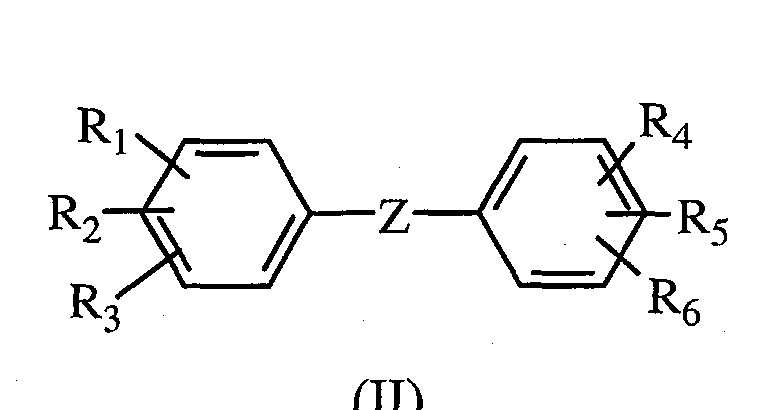
- Utilisation selon la revendication 5, caractérisée par le fait que le composé comportant une fonction amine primaire ou secondaire est une amine aromatique choisie parmi la N,N-diméthyl-p-phénylènediamine, la N,N-diéthyl-p-phénylènediamine, la N-(2-hydroxy-éthyl)-N-éthyl-p-phénylènediamine, la N,N-bis-(2-hydroxyéthyl)-p-phénylène-diamine, la N-(2-méthoxyéthyl)-p-phénylènediamine, la 2,3-, 2,4- ou 2,5-dichloro-p-phénylène-diamine, la 2-chloro-p-phénylènediamine, le dibromhydrate de 2,5-dihydroxy-4-morpholinoaniline, le 2-, 3- ou 4-aminophénol, le 2-aminométhyl-4-aminophénol, le 2-hydroxyméthyl-4-aminophénol, l'ortho-phénylènediamine, la p-phénylènediamine, l'ortho-toluènediamine, le 2,5-diaminotoluène, le 2,5-diaminophénol, le 2,5-diaminophénéthol, le 4-amino-3-méthylphénol, le 2-(2,5-diaminophényl)-éthanol, le 2,4-diaminophénoxyéthanol, le 2-(2,5-diaminophénoxy)-éthanol, la 4-méthylaminoaniline, la 3-amino-4-(2'-hydroxyéthyloxy)aniline, la 3,4-méthylènediaminoaniline, la 3,4-méthylènedioxyaniline, le 3-amino-2,4-dichlorophénol, le 4-méthylaminophénol, le 2-méthyl-5-aminophénol, le 3-méthyl-4-aminophénol, le 2-méthyl-5-(2-hydroxyéthylamino)phénol, le 6-méthyl-3-amino-2-chlorophénol, le 2-méthyl-5-amino-4-chlorophénol, le 3,4-méthylènedioxyphénol, le 5-(2-hydroxyéthylamino)-4-méthoxy-2-méthylphénol, le 4-amino-2-hydroxyméthylphénol, le 1,3-diamino-2,4-diméthoxybenzène, l'acide 2-, 3-, 4-aminobenzoïque, l'acide 2-amino-, 3-amino ou 4-aminophénylacétique, l'acide 2,3-, 2,4-, 2,5-, 3,4- ou 3,5-diaminobenzoïque, l'acide 4-amino- ou 5-amino-salicylique, l'acide 3-amino-4-hydroxybenzoïque, l'acide 4-amino-3-hydroxybenzoïque, l'acide 2-amino-, 3-amino ou 4-aminobenzènesulfonique, l'acide 3-amino-4-hydroxybenzènesulfonique, l'acide 4-amino-3-hydroxynaphtalène-1-sulfonique, l'acide 6-amino-7-hydroxynaphtalène-2-sulfonique, l'acide 7-amino-4-hydroxynaphtalène-2-sulfonique, l'acide 4-amino-5-hydroxynaphtalène-2,7-disulfonique, l'acide 3-amino-2-naphtoïque, l'acide 3-aminophtalique, l'acide 5-aminoisophtalique, le 1,3,5-triaminobenzène, le 1,2,4-triaminobenzène, le 1,2,4,5-tétraaminobenzène, le 2,4,5-triaminophénol, le pentaaminobenzène, l'hexaaminobenzène, le 2,4,6-triaminorésorcinol, le 4,5-diaminopyrochatécol, le 4,6-diaminopyrogallol, le 3,5-diamino-4-hydroxypyrochatécol, et les anilines aromatiques et phénols aromatiques comportant un autre résidu aromatique, correspondant à la formule (II) suivantedans laquelle
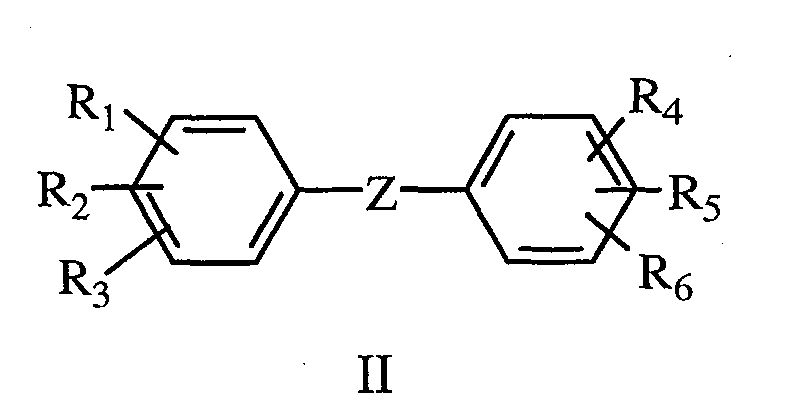 R1 représente un groupe hydroxy ou amino éventuellement substitués par un groupe alkyle en C1-4, hydroxyalkyle en C1-4 ou (alcoxy en C1-4)-(alkyle en C1-4),R2, R3, R4, R5 et R6 représentent chacun indépendamment un atome d'hydrogène, un groupe hydroxy ou un groupe amino, éventuellement substitués par un groupe alkyle en C1-4, hydroxyalkyle en C1-4 ou (alcoxy en C1-4)-(alkyle en C1-4), ou un groupe acide carboxylique ou sulfonique,Z représente une liaison directe, une chaíne hydrocarbonée en C1-4, saturée ou insaturée, éventuellement hydroxylée, un groupe carbonyle, sulfonyle ou imino, un atome d'oxygène ou de soufre, ou un groupe de formule Q-(CH2-P-CH2-Q')o où P représente une liaison directe ou un groupe -CH2- ou -CHOH-, Q et Q' représentent, indépendamment l'un de l'autre, un atome d'oxygène, un groupe NR7 où R7 représente un atome d'hydrogène, un groupe alkyle en C1-4 ou hydroxyalkyle en C1-4, ou un groupe O-(CH2)pNH ou NH-(CH2)p'-O où p et p' valent 2 ou 3 et o est un nombre entre 1 et 4
ou une amine aliphatique choisie parmi le 2-aminoéthanol, la 2-méthoxyéthylamine, la 2-éthoxyéthylamine, le 2-(2-aminoéthoxy)-éthanol, le 2- ou 3-aminopropanol, la 2,3-dihydroxypropylamine, la 4-hydroxypropylamine, le 2-aminopropane-1,3-diol, le 2-amino-2-méthylpropanol, le 2-amino-2-méthylpropane-1,3-diol, le 2-amino-2-hydroxyméthylpropane-1,3-diol, la tétrahydropentylamine, les pentahydroxyhexylamines telles que la glucamine, la D-glucosamine, la D-galactosamine, le 1,2-diaminoéthane, le 1,2- ou 1,3-diaminopropane, le 1,3-diamino-2-propanol, la 2-(2-amnoéthylamino)-éthylamine, le 2-(2-aminoéthylamino)éthanol, la 3-(2-aminoéthylamino)-propylamine et le 3-(2-aminoéthylamino)propanol. - Utilisation selon la revendication 5, caractérisée par le fait que le composé à fonction méthylène activé est choisi parmi l'iodure de 1,2,3,3-tétraméthyl-3H-indolium, le p-toluènesulfonate de 1,2,3,3-tétraméthyl-3H-indolium, le méthanesulfonate de 1,2,3,3-tétraméthyl-3H-indolium, la 1,3,3-triméthyl-2-méthylène-indoline, l'iodure de 2,3-diméthylbenzothiazolium, le p-toluènesulfonate de 2,3-diméthyl-benzothiazolium, la rhodanine, l'acide rhodanine-acétique, l'iodure de 1-éthyl-2-quinaldinium, l'iodure de 1-méthyl-2-quinaldinium, l'acide barbiturique, l'acide thiobarbiturique, l'acide 1,3-diméthylthiobarbiturique, l'acide diéthylthiobarbitique, l'oxindole, l'acétate de 3-indoxyle, la coumarone et la 1-méthyl-3-phényl-2-pyrazinone.
- Utilisation selon l'une quelconque des revendications précédentes, caractérisée par le fait que la composition a un pH compris entre 2 et 12, de préférence entre 3 et 11.
- Utilisation selon l'une quelconque des revendications précédentes, caractérisée par le fait que la concentration du composé de formule (I) est comprise entre 0,0001 % et 30 %, rapporté au poids total de la composition.
- Utilisation selon l'une quelconque des revendications précédentes, caractérisée par le fait que la concentration du composé à fonction méthylène activé ou du composé comportant une fonction amine primaire ou secondaire est comprise entre 0,0001% et 30% rapporté au poids total de la composition.
- Composition cosmétique tinctoriale comprenant, dans un milieu approprié pour la teinture des fibres kératiniques, au moins un dérivé de ninhydrine de formule (I) tel que défini dans les revendications 1 à 3 et au moins un agent tensioactif et/ou un agent polymérique de nature non ionique, cationique, anionique ou amphotère.
- Composition cosmétique prête à l'emploi contenant au moins un dérivé de ninhydrine de formule (I) tel que défini dans les revendications 1 à 3 et au moins un composé contenant une fonction amine primaire ou secondaire ou au moins un composé à fonction méthylène activé ou un mélange de ceux-ci.
- Agent de coloration multi-composants comportanten tant que premier composant, une composition (a) contenant au moins un composé de formule (I) tel que défini dans les revendications 1 à 3, eten tant que deuxième composant, une composition (b) contenant au moins un activateur tel que défini dans l'une quelconque des revendications 4 à 7.
- Agent de coloration selon la revendication 13, caractérisé par le fait qu'il se présente sous forme d'un kit multi-compartiments, avec au moins un premier compartiment contenant la composition (a) et au moins un deuxième compartiment contenant la composition (b).
- Procédé de coloration capillaire comprenant l'application, sur les cheveux, d'une composition de coloration capillaire telle que définie dans les revendications 1 à 10, un temps de pose suffisant pour permettre l'obtention de la coloration souhaitée, puis le rinçage et le lavage des cheveux.
- Procédé de coloration capillaire selon la revendication 15, caractérisé par le fait qu'il comprend le chauffage des cheveux imprégnés de composition de coloration capillaire jusqu'à une température de 80 °C, de préférence de 60 °C.
- Procédé de coloration capillaire comprenant le fait d'appliquer sur les cheveux l'une après l'autre, dans n'importe quel ordre, une composition (a) et une composition (b) telles que définies dans la revendication 13.
- Procédé de coloration capillaire selon la revendication 17, caractérisé par le fait qu'une étape de rinçage intermédiaire est insérée entre l'application de la première composition et l'application de la deuxième composition.
- Procédé de coloration capillaire selon l'une quelconque des revendications 17 ou 18, comprenant le chauffage des cheveux imprégnés avec la composition (a) et/ou (b) jusqu'à une température de 80 °C, de préférence de 60 °C.
Applications Claiming Priority (4)
| Application Number | Priority Date | Filing Date | Title |
|---|---|---|---|
| FR0309176A FR2857862A1 (fr) | 2003-07-25 | 2003-07-25 | Utilisation en coloration capillaire de derives de ninhydrine comportant un ou plusieurs cycles condenses |
| FR0309176 | 2003-07-25 | ||
| FR0402245 | 2004-03-04 | ||
| FR0402245A FR2857868B1 (fr) | 2003-07-25 | 2004-03-04 | Utilisation en coloration capillaire de derives de ninhydrine comportant un ou plusieurs cycles condenses |
Publications (1)
| Publication Number | Publication Date |
|---|---|
| EP1535601A1 true EP1535601A1 (fr) | 2005-06-01 |
Family
ID=33566489
Family Applications (1)
| Application Number | Title | Priority Date | Filing Date |
|---|---|---|---|
| EP04291870A Withdrawn EP1535601A1 (fr) | 2003-07-25 | 2004-07-23 | Utilisation en coloration de dérivés de ninhydrine comportant un ou plusieurs cycles condensés |
Country Status (3)
| Country | Link |
|---|---|
| US (1) | US7179305B2 (fr) |
| EP (1) | EP1535601A1 (fr) |
| FR (1) | FR2857868B1 (fr) |
Cited By (1)
| Publication number | Priority date | Publication date | Assignee | Title |
|---|---|---|---|---|
| FR2996121A1 (fr) * | 2012-09-28 | 2014-04-04 | Oreal | Procede de coloration capillaire mettant en oeuvre au moins un derive d'azulene, un sel de manganese ou de zinc, du peroxyde d'hydrogene et du (bi)carbonate |
Families Citing this family (4)
| Publication number | Priority date | Publication date | Assignee | Title |
|---|---|---|---|---|
| FR2929112B1 (fr) * | 2008-03-31 | 2010-07-30 | Oreal | Composition de teinture comprenant au moins un derive de cyclanone et au moins un alcoxysilane |
| US20130053573A1 (en) * | 2009-12-21 | 2013-02-28 | E I Du Pont De Nemours And Company | 2,4,5-triaminophenols and related compounds |
| CN117042747A (zh) * | 2021-02-23 | 2023-11-10 | 安格斯化学公司 | 头发改变产品中氨的替代 |
| US20240350386A1 (en) * | 2021-08-09 | 2024-10-24 | Wella Germany Gmbh | Hair Coloring Compositions Comprising Hydroxyalkyl Amines As Alkalising Agents |
Citations (2)
| Publication number | Priority date | Publication date | Assignee | Title |
|---|---|---|---|---|
| JPS4811956B1 (fr) * | 1969-02-06 | 1973-04-17 | ||
| DE4317855A1 (de) * | 1993-05-28 | 1994-12-01 | Henkel Kgaa | Ninhydrinhaltige Mittel zum Färben keratinhaltiger Fasern |
-
2004
- 2004-03-04 FR FR0402245A patent/FR2857868B1/fr not_active Expired - Fee Related
- 2004-07-23 EP EP04291870A patent/EP1535601A1/fr not_active Withdrawn
- 2004-07-26 US US10/898,368 patent/US7179305B2/en not_active Expired - Fee Related
Patent Citations (2)
| Publication number | Priority date | Publication date | Assignee | Title |
|---|---|---|---|---|
| JPS4811956B1 (fr) * | 1969-02-06 | 1973-04-17 | ||
| DE4317855A1 (de) * | 1993-05-28 | 1994-12-01 | Henkel Kgaa | Ninhydrinhaltige Mittel zum Färben keratinhaltiger Fasern |
Non-Patent Citations (1)
| Title |
|---|
| DATABASE WPI Derwent World Patents Index; AN 1973-22659U [16], XP002285499 * |
Cited By (1)
| Publication number | Priority date | Publication date | Assignee | Title |
|---|---|---|---|---|
| FR2996121A1 (fr) * | 2012-09-28 | 2014-04-04 | Oreal | Procede de coloration capillaire mettant en oeuvre au moins un derive d'azulene, un sel de manganese ou de zinc, du peroxyde d'hydrogene et du (bi)carbonate |
Also Published As
| Publication number | Publication date |
|---|---|
| US20050050653A1 (en) | 2005-03-10 |
| US7179305B2 (en) | 2007-02-20 |
| FR2857868B1 (fr) | 2005-10-14 |
| FR2857868A1 (fr) | 2005-01-28 |
Similar Documents
| Publication | Publication Date | Title |
|---|---|---|
| CA1304202C (fr) | Procede de teinture des fibres keratiniques avec le 5, 6-dihydroxyindole associe a un iodure et une composition de peroxyde d'hydrogene a ph alcalin | |
| EP0810851B1 (fr) | Composition de teinture eclaircissante pour fibres keratiniques comprenant un colorant direct specifique | |
| EP2104486B1 (fr) | Utilisation de colorants naturels pour la coloration des cheveux humains | |
| FR2870724A1 (fr) | Composition pour le traitement de matieres keratiniques comprenant un compose polycarboxylique particulier et un agent nacrant et/ou opacifiant et procedes la mettant en oeuvre | |
| EP0459901B1 (fr) | Procédé de teinture des fibres kératiniques avec le 2,6-diméthyl 1,4-diamino benzène et/ou le 2,3-diméthyl 1,4-diamino benzène et/ou le 2,6-diéthyl 1,4-diamino benzène en milieu acide et compositions mises en oeuvre | |
| FR2843022A1 (fr) | Utilisation de diamines comportant au moins un groupe quaternise et de dialdehydes pour la teinture des fibres keratiniques. | |
| FR2889945A1 (fr) | Composition de coloration directe comprenant des composes oxygenes insolubles, procedes mettant en oeuvre cette composition. | |
| EP1535601A1 (fr) | Utilisation en coloration de dérivés de ninhydrine comportant un ou plusieurs cycles condensés | |
| EP1502580B1 (fr) | Utilisation en coloration de triones vicinales aromatiques polycycliques à cycles condensés | |
| DE10229420A1 (de) | Verfahren zur schonenden oxidativen Färbung von Haaren | |
| EP1500387B1 (fr) | Utilisation en coloration de dérivés de ninhydrine | |
| EP1537851A1 (fr) | Utilisation en coloration de dérivés de ninhydrine portant un groupe hétéroalkyle. | |
| EP1535600A1 (fr) | Utilisation en coloration de dérivés de ninhydrine portant un système insaturé | |
| EP1537852A1 (fr) | Utilisation en coloration de dérivés de ninhydrine | |
| FR2857859A1 (fr) | Utilisation en coloration capillaire de derives de ninhydrine portant un systeme insature | |
| EP1530963A1 (fr) | Utilisation en coloration de dérivés de ninhydrine | |
| FR2857862A1 (fr) | Utilisation en coloration capillaire de derives de ninhydrine comportant un ou plusieurs cycles condenses | |
| EP1609457A1 (fr) | Compositions tinctoriales comprenant un derive de 1.2-indanedione | |
| FR2857861A1 (fr) | Utilisation en coloration capillaire de derives de ninhydrine | |
| EP1609458A1 (fr) | Compositions tinctoriales comprenant un dérivé de 1,3-indanedione | |
| FR2857858A1 (fr) | Utilisation en coloration capillaire de triones vicinales aromatiques polycycliques a cycles condenses | |
| FR2857863A1 (fr) | Utilisation en coloration capillaire de derives de ninhydrine portant un groupe heteroalkyle | |
| FR2857860A1 (fr) | Utilisation en coloration capillaire de derives de ninhydrine | |
| US7179304B2 (en) | Process for dyeing keratin fibers with at least one polycyclic aromatic vicinal trione | |
| US7179306B2 (en) | Process for dying keratin fibers comprising at least one aryl or aryloxy substitutent-based ninhydrin derivative |
Legal Events
| Date | Code | Title | Description |
|---|---|---|---|
| PUAI | Public reference made under article 153(3) epc to a published international application that has entered the european phase |
Free format text: ORIGINAL CODE: 0009012 |
|
| 17P | Request for examination filed |
Effective date: 20040803 |
|
| AK | Designated contracting states |
Kind code of ref document: A1 Designated state(s): AT BE BG CH CY CZ DE DK EE ES FI FR GB GR HU IE IT LI LU MC NL PL PT RO SE SI SK TR |
|
| AX | Request for extension of the european patent |
Extension state: AL HR LT LV MK |
|
| AKX | Designation fees paid |
Designated state(s): AT BE BG CH CY CZ DE DK EE ES FI FR GB GR HU IE IT LI LU MC NL PL PT RO SE SI SK TR |
|
| GRAP | Despatch of communication of intention to grant a patent |
Free format text: ORIGINAL CODE: EPIDOSNIGR1 |
|
| RIC1 | Information provided on ipc code assigned before grant |
Ipc: A61Q 5/10 20060101ALI20080702BHEP Ipc: A61K 8/35 20060101AFI20080702BHEP |
|
| RTI1 | Title (correction) |
Free format text: USE OF NINHYDRIN DERIVATIVES CARRYING ONE OR MORE CONDENSED CYCLES IN COLOURING |
|
| STAA | Information on the status of an ep patent application or granted ep patent |
Free format text: STATUS: THE APPLICATION IS DEEMED TO BE WITHDRAWN |
|
| 18D | Application deemed to be withdrawn |
Effective date: 20081217 |
|
| RIC1 | Information provided on ipc code assigned before grant |
Ipc: A61K 8/35 20060101AFI20161207BHEP |