EP1535458B1 - Stetig abnehmende netzwerk-qos-anforderungen für das streaming von gespeicherten videoinhalten in einer mobilen drahtlosen interworking-umgebung - Google Patents
Stetig abnehmende netzwerk-qos-anforderungen für das streaming von gespeicherten videoinhalten in einer mobilen drahtlosen interworking-umgebung Download PDFInfo
- Publication number
- EP1535458B1 EP1535458B1 EP03761194.4A EP03761194A EP1535458B1 EP 1535458 B1 EP1535458 B1 EP 1535458B1 EP 03761194 A EP03761194 A EP 03761194A EP 1535458 B1 EP1535458 B1 EP 1535458B1
- Authority
- EP
- European Patent Office
- Prior art keywords
- radio access
- access network
- mobile terminal
- data transfer
- video program
- Prior art date
- Legal status (The legal status is an assumption and is not a legal conclusion. Google has not performed a legal analysis and makes no representation as to the accuracy of the status listed.)
- Expired - Lifetime
Links
- 238000012546 transfer Methods 0.000 claims description 78
- 238000000034 method Methods 0.000 claims description 23
- 230000001413 cellular effect Effects 0.000 claims description 6
- 230000004044 response Effects 0.000 claims description 6
- 230000003139 buffering effect Effects 0.000 claims 2
- 230000008901 benefit Effects 0.000 description 8
- 230000008569 process Effects 0.000 description 5
- 238000010586 diagram Methods 0.000 description 4
- 230000007423 decrease Effects 0.000 description 3
- 239000000872 buffer Substances 0.000 description 2
- 238000004891 communication Methods 0.000 description 2
- 230000003247 decreasing effect Effects 0.000 description 2
- 238000005516 engineering process Methods 0.000 description 2
- 238000012986 modification Methods 0.000 description 2
- 230000004048 modification Effects 0.000 description 2
- 230000015556 catabolic process Effects 0.000 description 1
- 239000000470 constituent Substances 0.000 description 1
- 230000008878 coupling Effects 0.000 description 1
- 238000010168 coupling process Methods 0.000 description 1
- 238000005859 coupling reaction Methods 0.000 description 1
- 238000013500 data storage Methods 0.000 description 1
- 230000007812 deficiency Effects 0.000 description 1
- 238000006731 degradation reaction Methods 0.000 description 1
- 230000000593 degrading effect Effects 0.000 description 1
- 230000009977 dual effect Effects 0.000 description 1
- 230000006870 function Effects 0.000 description 1
- 230000006855 networking Effects 0.000 description 1
- 230000002093 peripheral effect Effects 0.000 description 1
- 238000007639 printing Methods 0.000 description 1
- 238000012545 processing Methods 0.000 description 1
Images

Classifications
-
- H—ELECTRICITY
- H04—ELECTRIC COMMUNICATION TECHNIQUE
- H04N—PICTORIAL COMMUNICATION, e.g. TELEVISION
- H04N21/00—Selective content distribution, e.g. interactive television or video on demand [VOD]
- H04N21/40—Client devices specifically adapted for the reception of or interaction with content, e.g. set-top-box [STB]; Operations thereof
- H04N21/43—Processing of content or additional data, e.g. demultiplexing additional data from a digital video stream; Elementary client operations, e.g. monitoring of home network or synchronising decoder's clock; Client middleware
- H04N21/433—Content storage operation, e.g. storage operation in response to a pause request, caching operations
-
- H—ELECTRICITY
- H04—ELECTRIC COMMUNICATION TECHNIQUE
- H04L—TRANSMISSION OF DIGITAL INFORMATION, e.g. TELEGRAPHIC COMMUNICATION
- H04L67/00—Network arrangements or protocols for supporting network services or applications
- H04L67/01—Protocols
- H04L67/06—Protocols specially adapted for file transfer, e.g. file transfer protocol [FTP]
-
- H—ELECTRICITY
- H04—ELECTRIC COMMUNICATION TECHNIQUE
- H04L—TRANSMISSION OF DIGITAL INFORMATION, e.g. TELEGRAPHIC COMMUNICATION
- H04L65/00—Network arrangements, protocols or services for supporting real-time applications in data packet communication
- H04L65/60—Network streaming of media packets
- H04L65/61—Network streaming of media packets for supporting one-way streaming services, e.g. Internet radio
- H04L65/612—Network streaming of media packets for supporting one-way streaming services, e.g. Internet radio for unicast
-
- H—ELECTRICITY
- H04—ELECTRIC COMMUNICATION TECHNIQUE
- H04L—TRANSMISSION OF DIGITAL INFORMATION, e.g. TELEGRAPHIC COMMUNICATION
- H04L65/00—Network arrangements, protocols or services for supporting real-time applications in data packet communication
- H04L65/80—Responding to QoS
-
- H—ELECTRICITY
- H04—ELECTRIC COMMUNICATION TECHNIQUE
- H04L—TRANSMISSION OF DIGITAL INFORMATION, e.g. TELEGRAPHIC COMMUNICATION
- H04L67/00—Network arrangements or protocols for supporting network services or applications
- H04L67/01—Protocols
- H04L67/04—Protocols specially adapted for terminals or networks with limited capabilities; specially adapted for terminal portability
-
- H—ELECTRICITY
- H04—ELECTRIC COMMUNICATION TECHNIQUE
- H04N—PICTORIAL COMMUNICATION, e.g. TELEVISION
- H04N21/00—Selective content distribution, e.g. interactive television or video on demand [VOD]
- H04N21/20—Servers specifically adapted for the distribution of content, e.g. VOD servers; Operations thereof
- H04N21/23—Processing of content or additional data; Elementary server operations; Server middleware
- H04N21/238—Interfacing the downstream path of the transmission network, e.g. adapting the transmission rate of a video stream to network bandwidth; Processing of multiplex streams
-
- H—ELECTRICITY
- H04—ELECTRIC COMMUNICATION TECHNIQUE
- H04N—PICTORIAL COMMUNICATION, e.g. TELEVISION
- H04N21/00—Selective content distribution, e.g. interactive television or video on demand [VOD]
- H04N21/40—Client devices specifically adapted for the reception of or interaction with content, e.g. set-top-box [STB]; Operations thereof
- H04N21/41—Structure of client; Structure of client peripherals
- H04N21/414—Specialised client platforms, e.g. receiver in car or embedded in a mobile appliance
- H04N21/41407—Specialised client platforms, e.g. receiver in car or embedded in a mobile appliance embedded in a portable device, e.g. video client on a mobile phone, PDA, laptop
-
- H—ELECTRICITY
- H04—ELECTRIC COMMUNICATION TECHNIQUE
- H04N—PICTORIAL COMMUNICATION, e.g. TELEVISION
- H04N21/00—Selective content distribution, e.g. interactive television or video on demand [VOD]
- H04N21/60—Network structure or processes for video distribution between server and client or between remote clients; Control signalling between clients, server and network components; Transmission of management data between server and client, e.g. sending from server to client commands for recording incoming content stream; Communication details between server and client
- H04N21/63—Control signaling related to video distribution between client, server and network components; Network processes for video distribution between server and clients or between remote clients, e.g. transmitting basic layer and enhancement layers over different transmission paths, setting up a peer-to-peer communication via Internet between remote STB's; Communication protocols; Addressing
- H04N21/637—Control signals issued by the client directed to the server or network components
- H04N21/6377—Control signals issued by the client directed to the server or network components directed to server
-
- H—ELECTRICITY
- H04—ELECTRIC COMMUNICATION TECHNIQUE
- H04N—PICTORIAL COMMUNICATION, e.g. TELEVISION
- H04N21/00—Selective content distribution, e.g. interactive television or video on demand [VOD]
- H04N21/60—Network structure or processes for video distribution between server and client or between remote clients; Control signalling between clients, server and network components; Transmission of management data between server and client, e.g. sending from server to client commands for recording incoming content stream; Communication details between server and client
- H04N21/65—Transmission of management data between client and server
- H04N21/658—Transmission by the client directed to the server
-
- H—ELECTRICITY
- H04—ELECTRIC COMMUNICATION TECHNIQUE
- H04W—WIRELESS COMMUNICATION NETWORKS
- H04W28/00—Network traffic management; Network resource management
- H04W28/16—Central resource management; Negotiation of resources or communication parameters, e.g. negotiating bandwidth or QoS [Quality of Service]
- H04W28/18—Negotiating wireless communication parameters
- H04W28/22—Negotiating communication rate
Definitions
- the present invention generally relates to networking and, more particularly, to a method and a mobile terminal for downloading and displaying a video program in an interworking environment comprising a first radio access network having a first data transfer rate and a second radio access network having a second data transfer rate.
- a mobile terminal may be able to upgrade to higher data transfer rates when the mobile terminal periodically crosses through the higher bandwidth coverage of the WLAN. Renegotiation of the data transfer rates may be desirable after downloading portions of the video program at high data transfer rates.
- QoS Quality of Service
- the problems stated above, as well as other related problems of the prior art, are solved by the present invention, which is directed to a method and mobile terminal as claimed in claims 1 and 7 respectively, for managing the downloading and display of a video program by the mobile terminal in an interworking environment.
- the present invention takes advantage of the increased bandwidth provided in higher bandwidth areas of the interworking environment to reduce the data transfer rate in lower bandwidth areas. This provides many attendant advantages to a user including, e.g., reducing the cost to the user of using the lower bandwidth areas and the probability that the renegotiation of the QoS requirements will succeed.
- a method for downloading and displaying a video program using a mobile terminal in an interworking environment includes a first radio access network having a first data transfer rate and a second radio access network having a second data transfer rate that is faster than the first data transfer rate.
- the video program is downloaded through the first or second radio access networks at respective first and second data transfer rates wherein the video program is downloaded at the second data transfer rate when the mobile terminal is in the coverage area of the second radio access network.
- the downloaded video program is displayed at a predetermined playback rate. Excess portions of the downloaded video program that result when a rate at which the video program is downloaded exceeds the predetermined playback rate are buffered.
- a third data transfer rate which is lower than the first data transfer rate, is calculated in response to the predetermined playback rate, the buffered excess portions and the time duration of the remainder of the video program.
- the third data transfer rate corresponds to the rate required to maintain the current video quality in view of the above.
- the third data transfer rate is negotiated with the first access network for downloading the video program when the difference between the first and third data transfer rates exceeds a threshold level.
- a mobile terminal for downloading and displaying a video program in an interworking environment.
- the interworking environment includes a first radio access network having a first data transfer rate and a second radio access network having a second data transfer rate that is faster than the first data transfer rate.
- a receiver downloads, through the first or second radio access networks, the video program at respective first and second data transfer rates wherein the video program is downloaded at the second data transfer rate when the mobile terminal is in the coverage area of the second radio access network.
- a display displays the downloaded video program at a predetermined playback rate.
- a memory device buffers excess portions of the downloaded video program that result when a rate at which the video program is downloaded exceeds the predetermined playback rate.
- a processor calculates a third data transfer rate, which is lower than the first data transfer rate, in response to the predetermined playback rate, the buffered excess portions and the time duration of the remainder of the video program.
- the processor controls the negotiation, via a transmitter, of the third data transfer rate with the first access network for downloading the video program when the difference between the first and third data transfer rates exceeds a threshold value.
- the present invention is directed to a method and a mobile terminal for downloading and displaying a video program in an interworking environment.
- the present invention takes advantage of the increased bandwidth provided in higher bandwidth areas of the interworking environment to negotiate a reduced data transfer rate (QoS) in lower bandwidth areas.
- QoS reduced data transfer rate
- the present invention provides a methodology to ensure Quality of Service (QoS) renegotiation in the lower bandwidth areas without degrading video quality.
- video program refers to a program that includes, at the least, video data, and may or may not also include other data such as, for example, audio data.
- the present invention may be implemented in various forms of hardware, software, firmware, special purpose processors, or a combination thereof.
- the present invention is implemented as a combination of hardware and software.
- the software is preferably implemented as an application program tangibly embodied on a program storage device.
- the application program may be uploaded to, and executed by, a machine comprising any suitable architecture.
- the machine is implemented on a computer platform having hardware such as one or more central processing units (CPU), a random access memory (RAM), and input/output (I/O) interface(s).
- CPU central processing units
- RAM random access memory
- I/O input/output
- the computer platform also includes an operating system and microinstruction code.
- various processes and functions described herein may either be part of the microinstruction code or part of the application program (or a combination thereof) that is executed via the operating system.
- various other peripheral devices may be connected to the computer platform such as an additional data storage device and a printing device.
- the present invention is directed to an interworking environment.
- Such an interworking environment may include, for example, ubiquitous low speed first radio access network and a second radio access network having a much higher data transfer speed and lower access cost.
- the present invention allows users with relatively high mobility to take full advantage of such an environment in stored video streaming applications.
- Examples of low rate radio access networks to which the present invention may be applied include, but are not limited to, fixed or mobile wireless wide area networks such as third generation (3G), second generation plus (2.5G), second generation (2G), and first generation (1 G) cellular networks, and so forth.
- Examples of high rate radio access networks to which the present invention may be applied include, but are not limited to, Wireless Local Area Networks (WLANs) and so forth.
- the WLANs may be, for example, those compliant with IEEE 802.11 or Hiperlan 2.
- the following description of the present invention shall generally employ a 3G cellular network as the first radio access network and a WLAN as the second radio access network.
- the present invention is not limited to the preceding communication technologies and network types and, thus, other communication technologies and network types may also be readily employed by the present invention while maintaining the scope of the present invention.
- the present invention may be applied to an interworking between more than two networks while maintaining the scope of the present invention.
- the present invention may be applied to all or a subset of the networks that are part of an interworking while maintaining the scope of the present invention.
- a mobile terminal downloads the video program at the first data transfer rate from the first radio access network, and at the second data transfer rate as the mobile terminal crosses through coverage areas of the second radio access network.
- the downloaded program data is processed at a predetermined playback rate and displayed on display device. Due to the higher data transfer rate in the second radio access network areas, excess program data may result.
- the excess program data that result when the download rate exceeds the playback rate is buffered into a memory device.
- a third data transfer rate can be calculated in response to the predetermined playback rate, the buffered excess portions and the time duration of the remainder of the video program. This third data transfer rate corresponds to the data transfer rate required in view of the above factors.
- the mobile terminal When the difference between the first and third data transfer rates is sufficient, i.e., exceeds a threshold level, the mobile terminal renegotiates the third data transfer rate with the first radio access network for downloading the video program, wherein the third data transfer rate is lower than the first data transfer rate. This ensures that the video quality is not degraded even if the data transfer rate falls to the third data transfer rate for the remainder of the program playback time.
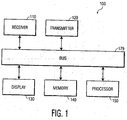
- FIG. 1 is a block diagram illustrating a mobile terminal 100 to which the present invention may be applied, according to an illustrative embodiment of the present invention.
- the mobile terminal 100 includes a receiver 110, a transmitter 120, a display 130, a memory 140, and a processor 150, all interconnected by a bus 179.
- the receiver 110 and transmitter 120 are configured to receive/transmit data from/to either one of the two radio access networks.
- the mobile terminal may be, but is not limited to, a cellular phone, a Personal Digital Assistant (PDA), a laptop computer, and so forth. The arrangement and operation of such elements in those devices are well known to those skilled in the art.
- PDA Personal Digital Assistant
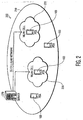
- FIG. 2 is a block diagram illustrating an interworking environment 200 to which the present invention may be applied, according to an illustrative embodiment of the present invention.
- the interworking environment 200 includes a first radio access network 210, which in the illustrative embodiment is a 3G network, and second radio access network areas 220, which in the illustrative embodiment are WLANs, dispersed there through.
- a mobile terminal 100 moves through coverage areas of the first and second radio access networks, possibly including areas of dual coverage.
- a server 270 reachable from both the first radio access network and the second radio access network, provides a source from which a video program can be downloaded to the mobile terminal 100.
- a Mobile Terminal starts downloading the video program to local storage at the higher WLAN data transfer rate.
- the MT Given the discrepancy between the downloading rate and the playback rate, after some time has elapsed from the start of downloading, the MT will have a certain amount of buffered video.
- One way to make use of the buffered amount is to decrease the QoS requirement (data transfer rate) once the MT moves into 3G coverage, thus decreasing the cost of 3G access. With this option, it is desirable to ensure that the video quality will not be degraded throughout the rest of the video session. However, it cannot be assumed that once the QoS requirement on the 3G network is decreased, the QoS requirement can be upgraded at some later time.
- the present invention provides a method that advantageously decreases the data transfer rate while ensuring that the same quality is maintained for the remainder of the video session.
- R p - R g * T ⁇ B t
- the mobile terminal will renegotiate with the 3G network using this new rate.
- the sufficiency of the rate difference can be determined based on a predetermined threshold level, or may be adjusted for the program as desired. It is apparent that the new rate R g ' is always smaller than the old rate R g . We can see this more clearly as follows.
- FIG. 3 is a flow chart illustrating the steps downloading and displaying a video program in an interworking environment that includes a first radio access network and a second radio access network, according to an illustrative embodiment of the present invention.
- the first radio access network has a first data transfer rate, which may be negotiated between a mobile terminal and the first radio access network
- the second radio access network has a second data transfer rate that is faster than the first data transfer rate.
- step 305 It is determined whether the mobile terminal is in a coverage area of the second radio access network (step 305). If so, the mobile terminal attaches to the second radio access network, if not already done, and downloads the video program at the second (faster) data transfer rate (step 315). As the data transfer rate is higher than the rate at which the data is processed and displayed, an excess develops, and the excess data is buffered, or stored in a memory device in step 325.
- the mobile terminal determines whether it is in a coverage area of the first radio access network (step 310). If not, the process stops. If so, the mobile terminal downloads the video program at a data transfer rate negotiated with the first radio access network (step 320).
- the downloaded video program is displayed on a display device at a predetermined playback rate (step 330).
- the mobile terminal calculates, either periodically or continuously, a new data rate in response to the predetermined playback rate, the buffered excess portions and the time duration of the remainder of the video program (335).
- the new data rate reflects the required data rate for maintaining the quality of the video display in view of the buffered excess portions of the video program and the remaining time of the video program.
- the mobile terminal determines whether the difference between the new data rate determined in step 335 and the currently negotiated data transfer rate with the first radio access network exceeds a threshold level.
- the threshold level may be a set predetermined level or adjusted as desired (step 340).
- the threshold value may be equal to, for example, the time duration of the remainder of the video program to be played back multiplied by the difference between the predetermined playback rate and the first data transfer rate.
- step 305 If difference does not exceeds the threshold level, the process returns to step 305 and continues downloading the video program as desired. If the difference exceeds the threshold level, the process continues to step 345 to renegotiate a new data transfer rate with the first radio access network, which is lower than the previously negotiated data transfer rate. The process then returns to step 305 to continue downloading the video program as desired.
- the negotiation of the new data transfer rate with the first radio access network by the mobile terminal may be performed at any time that such negotiation is possible including waiting (or not) for the mobile terminal to be entirely outside the coverage area of the second radio access network. That is, given the teachings of the present invention provided herein, one of ordinary skill in the related art will contemplate these and various other time instances for when the negotiation can take place in relation to the positioning of the mobile terminal with respect to the coverage areas of the first and second radio access networks.
- the mobile terminal may or may not have been in the coverage area of the first radio access network and downloading the video program in that area (at the first (slower) data transfer rate) prior to entering the coverage area of the second radio access network as determined at step 305. That is, the present invention does not require any particular or pre-specified sequence of movements by the mobile terminal through the various networks to obtain the benefits of the present invention. All that is necessary is for buffered excess portions of the downloaded video program to be accumulated in the buffer such that a sufficient rate difference between the first data transfer rate and a new data transfer rate can be generated.
- the present invention decreases the network QoS requirement (and, thus, cost) as the direct benefit of "occasionally crossing" WLAN cells. Moreover, the present invention advantageously provides a methodology such that the QoS requirement renegotiation with the network will always succeed. Further, the present invention does not result in any degradation of quality throughout the video session.
Landscapes
- Engineering & Computer Science (AREA)
- Signal Processing (AREA)
- Multimedia (AREA)
- Computer Networks & Wireless Communication (AREA)
- General Engineering & Computer Science (AREA)
- Quality & Reliability (AREA)
- Mobile Radio Communication Systems (AREA)
- Data Exchanges In Wide-Area Networks (AREA)
- Two-Way Televisions, Distribution Of Moving Picture Or The Like (AREA)
Claims (12)
- Verfahren zum Herunterladen eines Videoprogramms unter Verwendung eines mobilen Endgeräts, wobei das Verfahren die folgenden Schritte umfasst:Herunterladen des Videoprogramms mit einer ersten Datenrate mit einem ersten Funkzugangsnetz (210) auf das mobile Endgerät (100);Fortsetzen des Herunterladens des Videoprogramms mit einer zweiten Datenrate von einem zweiten Funkzugangsnetz (220), wenn das mobile Endgerät in einem Versorgungsbereich des zweiten Funkzugangsnetzes ist, wobei die zweite Datenübertragungsrate höher als die erste Datenübertragungsrate ist und wobei sich ein Versorgungsbereich des ersten Netzes mit einem Versorgungsbereich des zweiten Netzes überlappt;Anzeigen des heruntergeladenen Videoprogramms mit einer Wiedergaberate bei dem mobilen Endgerät (100);Puffern von Abschnitten des heruntergeladenen Videoprogramms, die sich ergeben, wenn eine Rate, mit der das Videoprogramm heruntergeladen wird, die Wiedergaberate übersteigt, bei dem mobilen Endgerät;Periodisches Berechnen einer dritten Datenübertragungsrate, die niedriger als die erste Datenübertragungsrate ist, in Ansprechen auf die Wiedergaberate, die gepufferten Abschnitte und eine Zeitdauer eines Rests des Videoprogramms bei dem mobilen Endgerät; undAushandeln der dritten Datenübertragungsrate mit dem dritten Funkzugangsnetz, wenn eine Differenz zwischen der ersten und der dritten Datenübertragungsrate einen Schwellenpegel übersteigt, Fortsetzen des Herunterladens des Videoprogramms mit der ausgehandelten dritten Übertragungsrate, wenn das mobile Endgerät den Versorgungsbereich des zweiten Funkzugangsnetzes verlässt und innerhalb des Versorgungsbereichs des ersten Funkzugangsnetzes ist.
- Verfahren nach Anspruch 1, wobei die dritte Datenübertragungsrate gleich

ist, wobei Rp die Wiedergaberate ist, Bt eine Menge der gepufferten Abschnitte des heruntergeladenen Videoprogramms ist und T die Zeitdauer des Rests des wiederzugebenden Videoprogramms ist. - Verfahren nach Anspruch 1, wobei der Schritt des Aushandelns ausgeführt wird, wenn das mobile Endgerät innerhalb des Versorgungsbereichs des zweiten Funkzugangsnetzes (220) ist.
- Verfahren nach Anspruch 1, wobei der Schritt des Aushandelns ausgeführt wird, nachdem das mobile Endgerät den Versorgungsbereich des zweiten Funkzugangsnetzes verlassen hat.
- Verfahren nach Anspruch 1, wobei das erste Funkzugangsnetz (210) ein 3G-Zellennetz ist.
- Verfahren nach Anspruch 1, wobei das zweite Funkzugangsnetz (220) ein drahtloses lokales Netz (WLAN) ist.
- Mobiles Endgerät (100) zum Herunterladen eines Videoprogramms, wobei das mobile Endgerät umfasst:einen Empfänger (110) zum Herunterladen des Videoprogramms auf das mobile Endgerät mit einer ersten Datenrate über ein erstes Funkzugangsnetz (210) und zum Fortsetzen des Herunterladens des Videoprogramms mit einer zweiten Datenrate über ein zweites Funkzugangsnetz (220), wenn das mobile Endgerät in einem Versorgungsbereich des zweiten Funkzugangsnetzes ist,wobei die zweite Datenübertragungsrate höher als die erste Datenübertragungsrate ist; undeinen Sender zum Senden von Daten an das erste Funkzugangsnetz oder an das zweite Funkzugangsnetz, wobei sich ein Versorgungsbereich für das erste Funkzugangsnetz mit einem Versorgungsbereich für das zweite Funkzugangsnetz überlappt; dadurch gekennzeichnet, dass das mobile Endgerät ferner umfasst:eine Speichervorrichtung (140) zum Puffern von Abschnitten des heruntergeladenen Videoprogramms, die sich ergeben, wenn eine Rate, mit der das Videoprogramm heruntergeladen wird, eine Wiedergaberate übersteigt; undeinen Prozessor (150) zum Berechnen einer dritten Datenübertragungsrate, die niedriger als die erste Datenübertragungsrate ist, wobei die dritte Datenübertragungsrate in Ansprechen auf die Wiedergaberate, auf die gepufferten Abschnitte und auf eine Zeitdauer eines Rests des Videoprogramms berechnet wird, wobei der Prozessor ferner das Aushandeln der dritten Datenübertragungsrate mit dem ersten Funkzugangsnetz steuert, wenn eine Differenz zwischen der ersten und der dritten Datenübertragungsrate einen Schwellenwert übersteigt, wobei der Empfänger das Videoprogramm mit der ausgehandelten dritten Datenübertragungsrate weiter herunterlädt, wenn das mobile Endgerät den Versorgungsbereich des zweiten Funkzugangsnetzes verlässt und innerhalb des Versorgungsbereichs des ersten Funkzugangsnetzes ist.
- Mobiles Endgerät nach Anspruch 7, wobei die dritte Datenübertragungsrate gleich

ist, wobei Rp die Wiedergaberate ist, Bt eine Menge der gepufferten Abschnitte des heruntergeladenen Videoprogramms ist und T die Zeitdauer des Rests des wiederzugebenden Videoprogramms ist. - Mobiles Endgerät nach Anspruch 7, wobei die dritte Datenübertragungsrate ausgehandelt wird, wenn das mobile Endgerät innerhalb des Versorgungsbereichs des zweiten Funkzugangsnetzes ist.
- Mobiles Endgerät nach Anspruch 7, wobei die dritte Datenübertragungsrate ausgehandelt wird, nachdem das mobile Endgerät den Versorgungsbereich des zweiten Funkzugangsnetzes verlassen hat.
- Mobiles Endgerät nach Anspruch 7, wobei das erste Funkzugangsnetz (210) ein 3G-Zellennetz ist.
- Mobiles Endgerät nach Anspruch 7, wobei das zweite Funkzugangsnetz (220) ein drahtloses lokales Netz (WLAN) ist.
Applications Claiming Priority (3)
| Application Number | Priority Date | Filing Date | Title |
|---|---|---|---|
| US39081002P | 2002-06-21 | 2002-06-21 | |
| US390810P | 2002-06-21 | ||
| PCT/US2003/019521 WO2004002130A2 (en) | 2002-06-21 | 2003-06-19 | Ever-decreasing network qos requirements for stored video streaming in a mobile wireless interworking environment |
Publications (3)
| Publication Number | Publication Date |
|---|---|
| EP1535458A2 EP1535458A2 (de) | 2005-06-01 |
| EP1535458A4 EP1535458A4 (de) | 2010-09-29 |
| EP1535458B1 true EP1535458B1 (de) | 2016-01-20 |
Family
ID=30000626
Family Applications (1)
| Application Number | Title | Priority Date | Filing Date |
|---|---|---|---|
| EP03761194.4A Expired - Lifetime EP1535458B1 (de) | 2002-06-21 | 2003-06-19 | Stetig abnehmende netzwerk-qos-anforderungen für das streaming von gespeicherten videoinhalten in einer mobilen drahtlosen interworking-umgebung |
Country Status (8)
| Country | Link |
|---|---|
| US (1) | US7640565B2 (de) |
| EP (1) | EP1535458B1 (de) |
| JP (1) | JP4531560B2 (de) |
| KR (1) | KR100978172B1 (de) |
| CN (1) | CN100359948C (de) |
| AU (1) | AU2003243694A1 (de) |
| MX (1) | MXPA04012760A (de) |
| WO (1) | WO2004002130A2 (de) |
Families Citing this family (28)
| Publication number | Priority date | Publication date | Assignee | Title |
|---|---|---|---|---|
| US6578203B1 (en) | 1999-03-08 | 2003-06-10 | Tazwell L. Anderson, Jr. | Audio/video signal distribution system for head mounted displays |
| US20020057364A1 (en) | 1999-05-28 | 2002-05-16 | Anderson Tazwell L. | Electronic handheld audio/video receiver and listening/viewing device |
| US7210160B2 (en) | 1999-05-28 | 2007-04-24 | Immersion Entertainment, L.L.C. | Audio/video programming and charging system and method |
| WO2004034617A1 (en) | 2002-10-07 | 2004-04-22 | Immersion Entertainment, Llc | System and method for providing event spectators with audio/video signals pertaining to remote events |
| US7593687B2 (en) | 2003-10-07 | 2009-09-22 | Immersion Entertainment, Llc | System and method for providing event spectators with audio/video signals pertaining to remote events |
| WO2005051022A1 (en) * | 2003-11-14 | 2005-06-02 | Cingular Wireless Ii, Llc | Personal base station system with wireless video capability |
| US7889697B2 (en) | 2004-05-04 | 2011-02-15 | Qualcomm Incorporated | Method and apparatus for content delivery to a mobile device |
| US9055552B2 (en) | 2005-06-16 | 2015-06-09 | Qualcomm Incorporated | Quick paging channel with reduced probability of missed page |
| WO2007050834A1 (en) | 2005-10-27 | 2007-05-03 | Qualcomm Incorporated | A method and apparatus for processing overlapping ns broadcast and sticky assignments in wireless communication systems |
| US20070097935A1 (en) * | 2005-10-27 | 2007-05-03 | Alexei Gorokhov | In-band rate control for an orthogonal frequency division multiple access communication system |
| KR100735312B1 (ko) * | 2006-02-14 | 2007-07-04 | 삼성전자주식회사 | 디지털방송 수신기를 구비한 휴대용 단말기에서 데이터처리 방법 |
| US7937451B2 (en) * | 2007-01-08 | 2011-05-03 | Mspot, Inc. | Method and apparatus for transferring digital content from a computer to a mobile handset |
| US7865572B2 (en) | 2007-01-08 | 2011-01-04 | Mspot, Inc. | Method and apparatus for transferring digital content from a personal computer to a mobile handset |
| US7865571B2 (en) | 2007-01-08 | 2011-01-04 | Mspot, Inc. | Method and apparatus for transferring digital content from a personal computer to a mobile handset |
| US9317179B2 (en) | 2007-01-08 | 2016-04-19 | Samsung Electronics Co., Ltd. | Method and apparatus for providing recommendations to a user of a cloud computing service |
| JP4930148B2 (ja) * | 2007-03-29 | 2012-05-16 | ブラザー工業株式会社 | 情報処理装置、情報処理方法及び情報処理用プログラム |
| KR20100009903A (ko) * | 2008-07-21 | 2010-01-29 | 엘지전자 주식회사 | 콘텐츠 재생방법 및 장치, 그리고 그의 휴대 단말장치 |
| EP2429190A1 (de) * | 2010-09-13 | 2012-03-14 | NTT DoCoMo, Inc. | Verfahren und Vorrichtung zur Übertragung eines Videostreams |
| US20130018990A1 (en) * | 2011-07-14 | 2013-01-17 | Yigang Cai | Negotiations for alternate download options between an end user and a server |
| KR101297411B1 (ko) * | 2011-10-06 | 2013-08-19 | 주식회사에어플러그 | 스트리밍 데이터의 미처리 상태에 따른 이종망(異種網)들의 선택적 사용을 제어하는 장치와 방법 |
| US10136443B2 (en) * | 2012-09-07 | 2018-11-20 | Nokia Solutions And Networks Oy | Mechanism and apparatus to perform cooperative resource management in wireless networks |
| US20140119290A1 (en) * | 2012-11-01 | 2014-05-01 | General Electric Company | Systems and methods of bandwidth allocation |
| WO2014144493A2 (en) * | 2013-03-15 | 2014-09-18 | Ushahidi, Inc. | Devices, systems and methods for enabling network connectivity |
| WO2015143606A1 (zh) * | 2014-03-24 | 2015-10-01 | 华为技术有限公司 | 无线接入网设备、用户设备及缓冲区状态上报方法 |
| WO2016042687A1 (ja) * | 2014-09-19 | 2016-03-24 | 日本電気株式会社 | 送信装置及びその制御方法 |
| US9794309B2 (en) | 2015-05-15 | 2017-10-17 | Spotify Ab | Method and a media device for pre-buffering media content streamed to the media device from a server system |
| CN105830415B (zh) * | 2015-06-03 | 2017-07-04 | 瑞典爱立信有限公司 | 用于管理媒体流的方法、无线通信设备和基站设备 |
| CN105656921A (zh) * | 2016-02-03 | 2016-06-08 | 北京百度网讯科技有限公司 | 数据传输方法、装置及设备 |
Family Cites Families (20)
| Publication number | Priority date | Publication date | Assignee | Title |
|---|---|---|---|---|
| US5404505A (en) * | 1991-11-01 | 1995-04-04 | Finisar Corporation | System for scheduling transmission of indexed and requested database tiers on demand at varying repetition rates |
| US5640453A (en) * | 1994-08-11 | 1997-06-17 | Stanford Telecommunications, Inc. | Universal interactive set-top controller for downloading and playback of information and entertainment services |
| FI103450B1 (fi) | 1996-04-23 | 1999-06-30 | Nokia Mobile Phones Ltd | Multimediapäätelaite ja menetelmä multimediavastaanoton toteuttamiseksi |
| JPH10126856A (ja) * | 1996-10-21 | 1998-05-15 | Kyocera Corp | 携帯テレビ電話装置 |
| CN1242920A (zh) * | 1997-01-03 | 2000-01-26 | 西门子信息及通讯网络公司 | 用于蜂窝智能交换的系统和方法 |
| US6018359A (en) * | 1998-04-24 | 2000-01-25 | Massachusetts Institute Of Technology | System and method for multicast video-on-demand delivery system |
| US6301231B1 (en) * | 1998-06-02 | 2001-10-09 | Amer A. Hassan | Satellite communication system with variable rate satellite link diversity |
| CA2343751A1 (en) * | 1998-07-27 | 2000-02-10 | Webtv Networks, Inc. | Remote computer access |
| US6097422A (en) * | 1998-10-05 | 2000-08-01 | Panasonic Technologies, Inc. | Algorithm for fast forward and fast rewind of MPEG streams |
| WO2000038465A1 (en) * | 1998-12-18 | 2000-06-29 | Telefonaktiebolaget Lm Ericsson (Publ) | Method and system for intersystem soft handoff |
| US7057667B1 (en) * | 1999-02-26 | 2006-06-06 | Canon Kabushiki Kaisha | Image display control system and method allowing connection of various kinds of image displays to one supply source |
| KR100591369B1 (ko) * | 1999-08-27 | 2006-06-19 | 노키아 코포레이션 | Dvb-t용 이동 멀티미디어 단말기 및 대규모와 소규모셀 통신 |
| US6654956B1 (en) * | 2000-04-10 | 2003-11-25 | Sigma Designs, Inc. | Method, apparatus and computer program product for synchronizing presentation of digital video data with serving of digital video data |
| DE60042965D1 (de) * | 2000-05-24 | 2009-10-29 | Sony Deutschland Gmbh | Dienstqualitätsunterhandlung |
| JP4596693B2 (ja) * | 2000-07-06 | 2010-12-08 | パナソニック株式会社 | ストリーミング方法およびそれを実行するシステム |
| US7016970B2 (en) | 2000-07-06 | 2006-03-21 | Matsushita Electric Industrial Co., Ltd. | System for transmitting stream data from server to client based on buffer and transmission capacities and delay time of the client |
| CN1296356A (zh) * | 2000-12-18 | 2001-05-23 | 华南理工大学 | 以移动电话短信息交互式访问互联网的方法及其装置 |
| US7046746B1 (en) * | 2001-03-19 | 2006-05-16 | Cisco Systems Wireless Networking (Australia) Pty Limited | Adaptive Viterbi decoder for a wireless data network receiver |
| IL160981A0 (en) * | 2001-09-26 | 2004-08-31 | Interact Devices Inc | System and method for communicating media signals |
| JP2007509533A (ja) * | 2003-10-15 | 2007-04-12 | クゥアルコム・インコーポレイテッド | 高速データレートインタフェース |
-
2003
- 2003-06-19 JP JP2004516035A patent/JP4531560B2/ja not_active Expired - Fee Related
- 2003-06-19 MX MXPA04012760A patent/MXPA04012760A/es active IP Right Grant
- 2003-06-19 CN CNB038145510A patent/CN100359948C/zh not_active Expired - Fee Related
- 2003-06-19 KR KR1020047020716A patent/KR100978172B1/ko not_active Expired - Fee Related
- 2003-06-19 AU AU2003243694A patent/AU2003243694A1/en not_active Abandoned
- 2003-06-19 US US10/518,995 patent/US7640565B2/en not_active Expired - Fee Related
- 2003-06-19 EP EP03761194.4A patent/EP1535458B1/de not_active Expired - Lifetime
- 2003-06-19 WO PCT/US2003/019521 patent/WO2004002130A2/en not_active Ceased
Also Published As
| Publication number | Publication date |
|---|---|
| JP2005531220A (ja) | 2005-10-13 |
| KR100978172B1 (ko) | 2010-08-25 |
| EP1535458A2 (de) | 2005-06-01 |
| CN1663270A (zh) | 2005-08-31 |
| WO2004002130A3 (en) | 2004-03-04 |
| AU2003243694A1 (en) | 2004-01-06 |
| MXPA04012760A (es) | 2005-03-23 |
| KR20050013219A (ko) | 2005-02-03 |
| AU2003243694A8 (en) | 2004-01-06 |
| CN100359948C (zh) | 2008-01-02 |
| US7640565B2 (en) | 2009-12-29 |
| JP4531560B2 (ja) | 2010-08-25 |
| EP1535458A4 (de) | 2010-09-29 |
| US20060156365A1 (en) | 2006-07-13 |
| WO2004002130A2 (en) | 2003-12-31 |
Similar Documents
| Publication | Publication Date | Title |
|---|---|---|
| US7640565B2 (en) | Ever-decreasing network QOS requirements for stored video streaming in a mobile wireless interworking environment | |
| AU2011203884B2 (en) | Explicit congestion notification based rate adaptation using binary marking in communication systems | |
| US7764965B2 (en) | Dynamically changing service characteristics based on device and network connectivity attributes | |
| JP4509176B2 (ja) | モバイル装置へのコンテンツ配送のための装置および方法 | |
| US7133486B2 (en) | Ever-increasing quality for stored video streaming in a mobile wireless interworking environment | |
| WO2006028694A2 (en) | System and method for voice and text based service interworking | |
| US20040032882A1 (en) | Method and apparatus for data transfer | |
| EP1483934B1 (de) | Verfahren zur verbesserung der dienstqualitätsverwaltung in einem mobilpaketfunkkommunikationszellularsystem | |
| EP2184923A2 (de) | Verarbeitungsvorrichtung für bewegte Bilder, Verarbeitungsverfahren für bewegte Bilder und Programm | |
| US20070083624A1 (en) | Method and system for providing service to wireless devices operating in a power saving mode | |
| US20110181686A1 (en) | Flow control | |
| US7984111B2 (en) | Software applications incorporating functionalities based on data-type and access | |
| Nam et al. | Adaptive multimedia stream service with intelligent proxy |
Legal Events
| Date | Code | Title | Description |
|---|---|---|---|
| PUAI | Public reference made under article 153(3) epc to a published international application that has entered the european phase |
Free format text: ORIGINAL CODE: 0009012 |
|
| 17P | Request for examination filed |
Effective date: 20050119 |
|
| AK | Designated contracting states |
Kind code of ref document: A2 Designated state(s): AT BE BG CH CY CZ DE DK EE ES FI FR GB GR HU IE IT LI LU MC NL PT RO SE SI SK TR |
|
| AX | Request for extension of the european patent |
Extension state: AL LT LV MK |
|
| RAP1 | Party data changed (applicant data changed or rights of an application transferred) |
Owner name: THOMSON LICENSING |
|
| DAX | Request for extension of the european patent (deleted) | ||
| RBV | Designated contracting states (corrected) |
Designated state(s): DE ES FR GB IT |
|
| RAP1 | Party data changed (applicant data changed or rights of an application transferred) |
Owner name: THOMSON LICENSING |
|
| A4 | Supplementary search report drawn up and despatched |
Effective date: 20100831 |
|
| RIC1 | Information provided on ipc code assigned before grant |
Ipc: H04L 29/06 20060101ALI20100825BHEP Ipc: H04L 29/08 20060101ALI20100825BHEP Ipc: H04N 1/00 20060101AFI20040109BHEP |
|
| 17Q | First examination report despatched |
Effective date: 20110117 |
|
| REG | Reference to a national code |
Ref country code: DE Ref legal event code: R079 Ref document number: 60348495 Country of ref document: DE Free format text: PREVIOUS MAIN CLASS: H04N0001000000 Ipc: H04N0021238000 |
|
| GRAP | Despatch of communication of intention to grant a patent |
Free format text: ORIGINAL CODE: EPIDOSNIGR1 |
|
| RIC1 | Information provided on ipc code assigned before grant |
Ipc: H04N 21/658 20110101ALI20150618BHEP Ipc: H04L 29/08 20060101ALI20150618BHEP Ipc: H04W 28/22 20090101ALI20150618BHEP Ipc: H04N 21/238 20110101AFI20150618BHEP Ipc: H04N 21/6377 20110101ALI20150618BHEP Ipc: H04L 29/06 20060101ALI20150618BHEP Ipc: H04N 21/414 20110101ALI20150618BHEP |
|
| INTG | Intention to grant announced |
Effective date: 20150703 |
|
| GRAS | Grant fee paid |
Free format text: ORIGINAL CODE: EPIDOSNIGR3 |
|
| GRAP | Despatch of communication of intention to grant a patent |
Free format text: ORIGINAL CODE: EPIDOSNIGR1 |
|
| INTG | Intention to grant announced |
Effective date: 20151110 |
|
| GRAA | (expected) grant |
Free format text: ORIGINAL CODE: 0009210 |
|
| AK | Designated contracting states |
Kind code of ref document: B1 Designated state(s): DE ES FR GB IT |
|
| REG | Reference to a national code |
Ref country code: GB Ref legal event code: FG4D |
|
| REG | Reference to a national code |
Ref country code: DE Ref legal event code: R084 Ref document number: 60348495 Country of ref document: DE |
|
| REG | Reference to a national code |
Ref country code: DE Ref legal event code: R096 Ref document number: 60348495 Country of ref document: DE |
|
| REG | Reference to a national code |
Ref country code: FR Ref legal event code: PLFP Year of fee payment: 14 |
|
| PG25 | Lapsed in a contracting state [announced via postgrant information from national office to epo] |
Ref country code: IT Free format text: LAPSE BECAUSE OF FAILURE TO SUBMIT A TRANSLATION OF THE DESCRIPTION OR TO PAY THE FEE WITHIN THE PRESCRIBED TIME-LIMIT Effective date: 20160120 Ref country code: ES Free format text: LAPSE BECAUSE OF FAILURE TO SUBMIT A TRANSLATION OF THE DESCRIPTION OR TO PAY THE FEE WITHIN THE PRESCRIBED TIME-LIMIT Effective date: 20160120 |
|
| REG | Reference to a national code |
Ref country code: DE Ref legal event code: R097 Ref document number: 60348495 Country of ref document: DE |
|
| PLBE | No opposition filed within time limit |
Free format text: ORIGINAL CODE: 0009261 |
|
| STAA | Information on the status of an ep patent application or granted ep patent |
Free format text: STATUS: NO OPPOSITION FILED WITHIN TIME LIMIT |
|
| 26N | No opposition filed |
Effective date: 20161021 |
|
| GBPC | Gb: european patent ceased through non-payment of renewal fee |
Effective date: 20160619 |
|
| PG25 | Lapsed in a contracting state [announced via postgrant information from national office to epo] |
Ref country code: GB Free format text: LAPSE BECAUSE OF NON-PAYMENT OF DUE FEES Effective date: 20160619 |
|
| REG | Reference to a national code |
Ref country code: FR Ref legal event code: PLFP Year of fee payment: 15 |
|
| REG | Reference to a national code |
Ref country code: DE Ref legal event code: R082 Ref document number: 60348495 Country of ref document: DE Representative=s name: HOFSTETTER, SCHURACK & PARTNER PATENT- UND REC, DE |
|
| REG | Reference to a national code |
Ref country code: FR Ref legal event code: PLFP Year of fee payment: 16 |
|
| PGFP | Annual fee paid to national office [announced via postgrant information from national office to epo] |
Ref country code: DE Payment date: 20180622 Year of fee payment: 16 |
|
| PGFP | Annual fee paid to national office [announced via postgrant information from national office to epo] |
Ref country code: FR Payment date: 20180620 Year of fee payment: 16 |
|
| REG | Reference to a national code |
Ref country code: DE Ref legal event code: R119 Ref document number: 60348495 Country of ref document: DE |
|
| PG25 | Lapsed in a contracting state [announced via postgrant information from national office to epo] |
Ref country code: DE Free format text: LAPSE BECAUSE OF NON-PAYMENT OF DUE FEES Effective date: 20200101 |
|
| PG25 | Lapsed in a contracting state [announced via postgrant information from national office to epo] |
Ref country code: FR Free format text: LAPSE BECAUSE OF NON-PAYMENT OF DUE FEES Effective date: 20190630 |