EP1534324B1 - Tumorspezifische oligosaccharid-epitope und ihre verwendung - Google Patents
Tumorspezifische oligosaccharid-epitope und ihre verwendung Download PDFInfo
- Publication number
- EP1534324B1 EP1534324B1 EP03792440.4A EP03792440A EP1534324B1 EP 1534324 B1 EP1534324 B1 EP 1534324B1 EP 03792440 A EP03792440 A EP 03792440A EP 1534324 B1 EP1534324 B1 EP 1534324B1
- Authority
- EP
- European Patent Office
- Prior art keywords
- structures
- present description
- glcnac
- terminal
- cancer
- Prior art date
- Legal status (The legal status is an assumption and is not a legal conclusion. Google has not performed a legal analysis and makes no representation as to the accuracy of the status listed.)
- Expired - Lifetime
Links
Images








Classifications
-
- A—HUMAN NECESSITIES
- A61—MEDICAL OR VETERINARY SCIENCE; HYGIENE
- A61K—PREPARATIONS FOR MEDICAL, DENTAL OR TOILETRY PURPOSES
- A61K39/00—Medicinal preparations containing antigens or antibodies
- A61K39/395—Antibodies; Immunoglobulins; Immune serum, e.g. antilymphocytic serum
- A61K39/39533—Antibodies; Immunoglobulins; Immune serum, e.g. antilymphocytic serum against materials from animals
- A61K39/39558—Antibodies; Immunoglobulins; Immune serum, e.g. antilymphocytic serum against materials from animals against tumor tissues, cells, antigens
-
- A—HUMAN NECESSITIES
- A61—MEDICAL OR VETERINARY SCIENCE; HYGIENE
- A61K—PREPARATIONS FOR MEDICAL, DENTAL OR TOILETRY PURPOSES
- A61K38/00—Medicinal preparations containing peptides
- A61K38/16—Peptides having more than 20 amino acids; Gastrins; Somatostatins; Melanotropins; Derivatives thereof
- A61K38/17—Peptides having more than 20 amino acids; Gastrins; Somatostatins; Melanotropins; Derivatives thereof from animals; from humans
- A61K38/1703—Peptides having more than 20 amino acids; Gastrins; Somatostatins; Melanotropins; Derivatives thereof from animals; from humans from vertebrates
- A61K38/1709—Peptides having more than 20 amino acids; Gastrins; Somatostatins; Melanotropins; Derivatives thereof from animals; from humans from vertebrates from mammals
-
- A—HUMAN NECESSITIES
- A61—MEDICAL OR VETERINARY SCIENCE; HYGIENE
- A61K—PREPARATIONS FOR MEDICAL, DENTAL OR TOILETRY PURPOSES
- A61K38/00—Medicinal preparations containing peptides
- A61K38/16—Peptides having more than 20 amino acids; Gastrins; Somatostatins; Melanotropins; Derivatives thereof
- A61K38/43—Enzymes; Proenzymes; Derivatives thereof
- A61K38/45—Transferases (2)
-
- A—HUMAN NECESSITIES
- A61—MEDICAL OR VETERINARY SCIENCE; HYGIENE
- A61K—PREPARATIONS FOR MEDICAL, DENTAL OR TOILETRY PURPOSES
- A61K47/00—Medicinal preparations characterised by the non-active ingredients used, e.g. carriers or inert additives; Targeting or modifying agents chemically bound to the active ingredient
- A61K47/50—Medicinal preparations characterised by the non-active ingredients used, e.g. carriers or inert additives; Targeting or modifying agents chemically bound to the active ingredient the non-active ingredient being chemically bound to the active ingredient, e.g. polymer-drug conjugates
- A61K47/51—Medicinal preparations characterised by the non-active ingredients used, e.g. carriers or inert additives; Targeting or modifying agents chemically bound to the active ingredient the non-active ingredient being chemically bound to the active ingredient, e.g. polymer-drug conjugates the non-active ingredient being a modifying agent
- A61K47/54—Medicinal preparations characterised by the non-active ingredients used, e.g. carriers or inert additives; Targeting or modifying agents chemically bound to the active ingredient the non-active ingredient being chemically bound to the active ingredient, e.g. polymer-drug conjugates the non-active ingredient being a modifying agent the modifying agent being an organic compound
- A61K47/549—Sugars, nucleosides, nucleotides or nucleic acids
-
- A—HUMAN NECESSITIES
- A61—MEDICAL OR VETERINARY SCIENCE; HYGIENE
- A61K—PREPARATIONS FOR MEDICAL, DENTAL OR TOILETRY PURPOSES
- A61K47/00—Medicinal preparations characterised by the non-active ingredients used, e.g. carriers or inert additives; Targeting or modifying agents chemically bound to the active ingredient
- A61K47/50—Medicinal preparations characterised by the non-active ingredients used, e.g. carriers or inert additives; Targeting or modifying agents chemically bound to the active ingredient the non-active ingredient being chemically bound to the active ingredient, e.g. polymer-drug conjugates
- A61K47/51—Medicinal preparations characterised by the non-active ingredients used, e.g. carriers or inert additives; Targeting or modifying agents chemically bound to the active ingredient the non-active ingredient being chemically bound to the active ingredient, e.g. polymer-drug conjugates the non-active ingredient being a modifying agent
- A61K47/68—Medicinal preparations characterised by the non-active ingredients used, e.g. carriers or inert additives; Targeting or modifying agents chemically bound to the active ingredient the non-active ingredient being chemically bound to the active ingredient, e.g. polymer-drug conjugates the non-active ingredient being a modifying agent the modifying agent being an antibody, an immunoglobulin or a fragment thereof, e.g. an Fc-fragment
- A61K47/6835—Medicinal preparations characterised by the non-active ingredients used, e.g. carriers or inert additives; Targeting or modifying agents chemically bound to the active ingredient the non-active ingredient being chemically bound to the active ingredient, e.g. polymer-drug conjugates the non-active ingredient being a modifying agent the modifying agent being an antibody, an immunoglobulin or a fragment thereof, e.g. an Fc-fragment the modifying agent being an antibody or an immunoglobulin bearing at least one antigen-binding site
- A61K47/6851—Medicinal preparations characterised by the non-active ingredients used, e.g. carriers or inert additives; Targeting or modifying agents chemically bound to the active ingredient the non-active ingredient being chemically bound to the active ingredient, e.g. polymer-drug conjugates the non-active ingredient being a modifying agent the modifying agent being an antibody, an immunoglobulin or a fragment thereof, e.g. an Fc-fragment the modifying agent being an antibody or an immunoglobulin bearing at least one antigen-binding site the antibody targeting a determinant of a tumour cell
-
- A—HUMAN NECESSITIES
- A61—MEDICAL OR VETERINARY SCIENCE; HYGIENE
- A61P—SPECIFIC THERAPEUTIC ACTIVITY OF CHEMICAL COMPOUNDS OR MEDICINAL PREPARATIONS
- A61P31/00—Antiinfectives, i.e. antibiotics, antiseptics, chemotherapeutics
-
- A—HUMAN NECESSITIES
- A61—MEDICAL OR VETERINARY SCIENCE; HYGIENE
- A61P—SPECIFIC THERAPEUTIC ACTIVITY OF CHEMICAL COMPOUNDS OR MEDICINAL PREPARATIONS
- A61P35/00—Antineoplastic agents
-
- A—HUMAN NECESSITIES
- A61—MEDICAL OR VETERINARY SCIENCE; HYGIENE
- A61P—SPECIFIC THERAPEUTIC ACTIVITY OF CHEMICAL COMPOUNDS OR MEDICINAL PREPARATIONS
- A61P37/00—Drugs for immunological or allergic disorders
- A61P37/02—Immunomodulators
-
- A—HUMAN NECESSITIES
- A61—MEDICAL OR VETERINARY SCIENCE; HYGIENE
- A61P—SPECIFIC THERAPEUTIC ACTIVITY OF CHEMICAL COMPOUNDS OR MEDICINAL PREPARATIONS
- A61P37/00—Drugs for immunological or allergic disorders
- A61P37/02—Immunomodulators
- A61P37/04—Immunostimulants
-
- C—CHEMISTRY; METALLURGY
- C07—ORGANIC CHEMISTRY
- C07H—SUGARS; DERIVATIVES THEREOF; NUCLEOSIDES; NUCLEOTIDES; NUCLEIC ACIDS
- C07H3/00—Compounds containing only hydrogen atoms and saccharide radicals having only carbon, hydrogen, and oxygen atoms
- C07H3/06—Oligosaccharides, i.e. having three to five saccharide radicals attached to each other by glycosidic linkages
-
- C—CHEMISTRY; METALLURGY
- C07—ORGANIC CHEMISTRY
- C07K—PEPTIDES
- C07K16/00—Immunoglobulins [IG], e.g. monoclonal or polyclonal antibodies
- C07K16/18—Immunoglobulins [IG], e.g. monoclonal or polyclonal antibodies against material from animals or humans
-
- G—PHYSICS
- G01—MEASURING; TESTING
- G01N—INVESTIGATING OR ANALYSING MATERIALS BY DETERMINING THEIR CHEMICAL OR PHYSICAL PROPERTIES
- G01N33/00—Investigating or analysing materials by specific methods not covered by groups G01N1/00 - G01N31/00
- G01N33/48—Biological material, e.g. blood, urine; Haemocytometers
- G01N33/50—Chemical analysis of biological material, e.g. blood, urine; Testing involving biospecific ligand binding methods; Immunological testing
- G01N33/53—Immunoassay; Biospecific binding assay; Materials therefor
- G01N33/575—Immunoassay; Biospecific binding assay; Materials therefor for cancer
- G01N33/5756—Immunoassay; Biospecific binding assay; Materials therefor for cancer involving tumour-associated glycolinkage [TAG]
-
- G—PHYSICS
- G01—MEASURING; TESTING
- G01N—INVESTIGATING OR ANALYSING MATERIALS BY DETERMINING THEIR CHEMICAL OR PHYSICAL PROPERTIES
- G01N33/00—Investigating or analysing materials by specific methods not covered by groups G01N1/00 - G01N31/00
- G01N33/48—Biological material, e.g. blood, urine; Haemocytometers
- G01N33/50—Chemical analysis of biological material, e.g. blood, urine; Testing involving biospecific ligand binding methods; Immunological testing
- G01N33/53—Immunoassay; Biospecific binding assay; Materials therefor
- G01N33/575—Immunoassay; Biospecific binding assay; Materials therefor for cancer
- G01N33/5758—Immunoassay; Biospecific binding assay; Materials therefor for cancer involving compounds serving as markers for tumours, cancers or neoplasias, e.g. cellular determinants, receptors, heat shock/stress proteins, A-protein, oligosaccharides or metabolites
- G01N33/5759—Immunoassay; Biospecific binding assay; Materials therefor for cancer involving compounds serving as markers for tumours, cancers or neoplasias, e.g. cellular determinants, receptors, heat shock/stress proteins, A-protein, oligosaccharides or metabolites involving compounds localised on the membrane of tumour or cancer cells
-
- A—HUMAN NECESSITIES
- A61—MEDICAL OR VETERINARY SCIENCE; HYGIENE
- A61K—PREPARATIONS FOR MEDICAL, DENTAL OR TOILETRY PURPOSES
- A61K39/00—Medicinal preparations containing antigens or antibodies
- A61K2039/505—Medicinal preparations containing antigens or antibodies comprising antibodies
-
- A—HUMAN NECESSITIES
- A61—MEDICAL OR VETERINARY SCIENCE; HYGIENE
- A61K—PREPARATIONS FOR MEDICAL, DENTAL OR TOILETRY PURPOSES
- A61K39/00—Medicinal preparations containing antigens or antibodies
-
- C—CHEMISTRY; METALLURGY
- C12—BIOCHEMISTRY; BEER; SPIRITS; WINE; VINEGAR; MICROBIOLOGY; ENZYMOLOGY; MUTATION OR GENETIC ENGINEERING
- C12Y—ENZYMES
- C12Y204/00—Glycosyltransferases (2.4)
Definitions
- the present description relates to oligosaccharide sequences, which are specifically expressed by human tumors.
- the invention is also related to diagnostics of cancer and malignancies.
- oligosaccharide sequences which are different from the non-malignant glycosylation of the same cell or tissue type.
- Examples of the known or speculated cancer associated oligosaccharide structures include: glycolipid structures such as globo-H (Fu ⁇ 2Gal ⁇ 3GalNAc ⁇ 3Gal ⁇ 4Lac ⁇ Cer), gangliosides: GM1 Gal ⁇ 3GalNAc ⁇ 4(NeuNAc ⁇ 3)Lac ⁇ Cer or GD2 GalNAc ⁇ 4(NeuNAc ⁇ 8NeuNAc ⁇ 3)Lac ⁇ Cer; Lewis-type fucosylated structures such as Lewis a and x: Gal ⁇ 3/4(Fuc ⁇ 4/3)GlcNAc, Lewis y: Fuc ⁇ 2Gal ⁇ 4(Fuc ⁇ 3)GlcNAc, sialyl-Lewis x: NeuNAc ⁇ 3Gal ⁇ 4(Fuc ⁇ 3)GlcNAc, and some combinations of these on polylactosamine chains; O-glycan core
- a monoclonal antibody recognizing GlcNAc ⁇ 3Gal ⁇ 4GlcNAc ⁇ 6 sequence may possibly recognize similar structures on malignant tissues, such as mucinous ovarian neoplasms, pseudopyloric metaplasia of gallbladder and pancreatic epithelia, gastric differentiated carcinoma of stomach, gallbladder and pancreas, and on non-malignant tissues, such as human amniotic fluid, but, however, the structures from malignat tissues were not characterized (Hanisch et al., 1993).
- the antibody did not recognize neoglycolipid structure GlcNAc ⁇ 3Gal ⁇ 4GlcNAc ⁇ 3Gal ⁇ 4 nor carcinomas of lung, colorectum, endometrium or other organs.
- Another monoclonal antibody raised against testicular cells probably recognizes branched N-acetyllactosamines such as GlcNAc ⁇ 3(GlcNAc ⁇ 6)Gal ⁇ 4GlcNAc-(Symington et al., 1984).
- Terminal GlcNAc has also been reported from mucins of human foetal mucin (Hounsell et al., 1989). In normal tissues terminal GlcNAc may be present in minor amounts as biosynthetic intermediates in the biosynthesis of poly-N-acetyllactosamines.
- This antibody also weakly recognized the pentasaccharide structure described above. Moreover, the antibody recognized a protease sensitive epitope on COS-1 cells, which cell line is not of human origin. The immunization protocols of these studies did not describe induced antibody responses against polyvalent conjugates of the saccharides, but immunization by glycolipids.
- Gal ⁇ antigen is not naturally present in man and recently it was also shown that the natural antibodies bind structures such as GalNAc ⁇ 3Gal ⁇ 4GlcNAc, GalNAc ⁇ 3Gal ⁇ 4GlcNAc, and GlcNAc ⁇ 3Gal ⁇ 4GlcNAc (Teneberg et al., 1996).
- the X2-structure, GalNAc ⁇ 3Gal ⁇ 4GlcNAc is a normal antigen on human tissues and structures GalNAc ⁇ 3Gal ⁇ 4GlcNAc and Gal ⁇ 3Gal ⁇ 4GlcNAc have not been described from normal or cancer tissues.
- the present finding that the terminal GlcNAc structure is a tumor antigen indicates that the actual function of the natural antibodies might be the prevention of cancers having terminal GlcNAc structures.
- the Formel (III) indicates that the GlcNAc residues are ⁇ 2, ⁇ 4, or ⁇ 6-linked.
- the present description is not directed to such unusual structures.
- the present description is directed to human tumor specific glycans_comprising non-reducing end terminal ⁇ -linked GlcNAc residues.
- Patent application WO 00/21552 claims several unusual O-glycan structures isolated from bovine submaxillary mucin.
- Two of the structures such as GlcNAc ⁇ 6GalNAc ⁇ 6GalNAc and GalNAc ⁇ 3(GlcNAc ⁇ 6)GalNAc comprise terminal GlcNAc-residues.
- the application did not indicate that said structures would also be related to bovine or human cancers.
- the present description is not directed to these structures comprising two GalNAc-residues.
- the application contains speculation about potential therapheutic use of the structures as antigens related to cancer. However, it has not been shown that the structures are related to bovine cancer when these are present in bovine normal submaxillary secretion.
- glycosylations are species specific and vary between human and bovine, e.g. bovine and human glycosyltransferase and glycosylation profiles are different.
- the human genome is also known and thus gylcosyltransferases which could be related to synthesis of the claimed bovine structures should have been now produced and characterized from human. So far none of these has been described in human, or human cancer.
- Meichenin et al, 2000 shows a murine monoclonal antibody which can bind to some oligosaccharides containing terminal GlcNAc ⁇ and to certain human tissue cancer samples.
- the antibody was produced in mouse using the endo-beta-galactosidase treated red cells.
- the article does not establish any human specific immunotherapy with a specific antibody or other carbohydrate specific binding substance binding to an immunogenic carbohydrate.
- the fact that such an antibody with limited specificity was formed in mouse does not indicate that similar antibody would be formed in human, or it would be tolerable in human, or be useful in context of individual human tumors of specific kind, since immune reactions to carbohydrates are species specific.
- Patent application FI20011671 described the general useability of terminal GlcNAc-structures in tumor therapy.
- the application described specific polylactosamine type oligosaccharide sequences containing terminal GlcNAc linked to Gal especially found from glycolipid.
- the application indicated that the structures can be part of N-linked glycan or O-linked glycans, and that the tumorspecific oligosaccharide sequences can also be linked to O-glycosidic GalNAc.
- the application did not disclose exact structures of the O-linked or N-linked glycans
- the present application also show for the first time the useability of the oligosaccharide sequences of the terminal beta-GlcNAc sequences for cancers of lung, stomach, colon, larynx and mucinous carcinomas, especially mucinous ovarian carcinomas forming a group of epithlial type and/or mucin secreting cancers.
- the present description is further especially directed to human cancer specific protein linked GlcNAc ⁇ -structures.
- the present description is also further especially directed to the specified N-glycans and O-glycans and protein linked GlcNAc.
- the preferred structures form a specific family of terminal specifically "protein linked GlcNAc ⁇ -structures" which are human protein linked defective glycosylation present in human cancer.
- the preferred terminal beta-GlcNAc O-glycans and N-glycans form a specific family of human cancer specific "protein linked GlcNAc ⁇ -glycan cores" which are result of defective galactosylation of cancer or tumor tissue.
- the present application further describes human natural antibodies and more specifically human cancer associated antibodies specifically recognizing preferred human terminal beta-linked GlcNAc structures.
- the present description also describes an enzyme based targeting of the cancer antigens by transferring a modified monosaccharide derivative on cancer cells.
- a galactosyltransferase has been used to label human endo-beta-galactosidase modified erythrocytes (Viitala and Finne, 1984) and mouse teratocarcinoma cells (Spillmann and Finne, 1994) under in vitro conditions.
- Cell surface galactosyltransferases has been also studied in connection of various biological conditions. These studies do not describe diagnostics or therapy for any disease.
- the carbohydrates transferred are not monosaccharide conjugates according to the present description.
- the old studies utilized radioactively labeled UDP-Gal, the chemical structure of the Gal-residue is not changed but it contains atoms enriched with 14 C or 3 H.
- a fluorecently labelled muramic acid has been transferred on bacteria and the method was speculated to be used to study vaccination against the compound transferred or for interaction studies between bacteria, the transfer reaction was not specific for a type of a bacterium.
- the method was aimed to be used in vitro and the cells had to be permeabilized to achieve very weak reactions by the peptidoglycan precursor molecules (Sadamoto, R. et al 2001).
- the transfer reactions described by the present description for bacteria are targeted to transfer of the carbohydrates directly to the cell surface.
- the previous technology describes in vitro transfer of Gal on acceptors of a cancer cell by ⁇ 1-3galactosyltransferase.
- the monosaccharide to be transferred is not modified nor aimed for blocking of a pathogenesis-inducing carbohydrate receptor.
- the invention does not describe transfer of immunologically active or toxic monosaccharide conjugates, but the terminal structure formed is reactive to anti Gal ⁇ 1-3Gal-antibodies.
- the epitope was aimed for increasing immununoreactivity of cancer cells to be injected as cancer vaccine.
- oligosaccharide sequences which are different from the non-malignant glycosylation of the same cell or tissue type. Association and specificity of oligosaccharide structures with regard to cancers have been well established only in few cases, some of the structures are present in normal cells and tissues and are possibly only more concentrated in cancers.
- the present patent application also describes terminal N-acetylglucosamine containing tumor specific oligosaccharide sequences. Normally there are large amounts of antibodies recognizing terminal GlcNAc structures in human serum. Thus, the previous finding that the terminal GlcNAc structure is a tumor antigen indicates that the actual function of the natural antibodies might be the prevention of cancers having terminal GlcNAc structures.
- WO 03/094842 discloses conjugates of glucosamine and a central nervous system drug.
- the conjugates may be considered as suitable glycosyltransferase substrates.
- Moczar et al., 1975, disclose polypeptide-N-acetylglucosamine conjugates used as substrates for glycosyltransferases and in immunological studies.
- the present description is directed to terminal ⁇ -linked N-acetylglucosamine oligosaccharide chain structures and protein linked monosaccharide N-acetylglucosamine which are presented by human tumors.
- the present description realizes specific defects in human tumors, which leads to cell surface and extracellular presentation of unsual carbohydrates comprising terminal N-acetylglucosamines.
- the terminal GlcNAc-structures are very rare in human normal tissues. The expression of the structures are caused by two factors. For the first the biosynthesis and degradation machinery in the tumor cells does not work properly. Many terminal structures in normal tissues comprise galactose on GlcNAc-residues, these structures are capped by sialic acids, blood group antigens and the like.
- the present data indicates that the cancer or tumor carbohydrates are exposed to unusual glycosidase activities and the defective glycosylation reactions by ⁇ 4- and possibly also by ⁇ 3-galactosyltransferases. Defects were observable in all 3 types of ⁇ -galactosylated oligosaccharide sequences.
- the intracellular targeting and quality control of glycosylation including glycoprotein and glycolipid structures seem to be defective. In normal cells the glycosylation is under quality control which recirculates underglycosylated proteins and glycolipids to complete the natural glycosylation, so that in normal cells the amount of the structures disclosed in the present description are very rare on cell surfaces.
- the oligosaccharide structures described by the present description are present in low amounts in human golgi apprathus, the known protein linked GlcNAc is considered to be almost exclusively a cytoplasmic nuclear protein modification.
- the defects in organization of the golgi apparathus leads to partial cell surface expression of the tumor specific structures described by the present description. Even intracellularily overexpressed structures according to the present description are directly useful for diagnostic applications.
- the protein linked N-acetylglucosamine is in general present in so called O-GlcNAc-structures intracellularily.
- the present description notices strong overexpression of the protein linked N-acetylglucosamine.
- the overexpression leads to even some cell surface associated labeling of the O-linked GlcNAc on human tumors.
- terminal ⁇ -linked GlcNAc is common to the all three groups 1-3 above, it is realized that the subterminal structures have effect on the structures which should be recognized in diagnostic or theraphy of tumors or cancers.
- the present description is specifically directed to diagnostic uses of terminal oligosaccharide sequences comprising the terminal GlcNAc and one to several neighboring monosaccharide residues in the three defective oligosaccharide sequence groups.
- the present description is directed to the oligosaccharide sequences comprising nonreducing end terminal ⁇ -GlcNAc oligosaccharide sequences on polylactosamines, or O-glycans or N-glycans.
- the present description is directed to all of the defective glycosylation types when an analysis of normal glycosylation and potential general glycosylation defect is used together.
- the present description is further directed to the use of combinations of at least two of the four terminal GlcNAc type structures, especially the use of the polylactosamine type terminal GlcNAc-sequence in combination with the other terminal GlcNAc-structures as diagnostical targets.
- the defect of the glycosylation may be general and affect at least two classes of the four defective classes of terminal GlcNAc ⁇ -glycosylations disclosed in the present description: O-glycans, N-glycans, polylactosamines and protein linked GlcNAc.
- the general defect of galactosylation may affect both specific protein linked glycosylations and glycolipid linked glycosylations, especially polylactosamine type terminal GlcNAc-structures of glycolipids.
- the present description is specifically directed to detecting presence of general galactosylation defect from a cancer sample and/or from normal tissue sample of a person.
- the present description is directed to the analysis of the general glycosylation defect producing the multiple types of terminal GlcNAc structures.
- the defect may be analyzed by an analysis of the carbohydrate samples as described by the present description.
- the galactosylation defect may be analyzed also by, for example, genetic or biochemical or cell biological means by analyzing production and/or activity and/or localization of enzymes or other proteins or biochemical mediators capable of producing the general glycosylation defect.
- the present description is directed to detecting general glycosylation defect when the intracellular structures involving glycan biosynthesis and/or degradation are defective.
- the present description is especially directed to the analysis of the general glycosylation defect by genetic and/or biochemical and/or cell biological means when the method is verified with the analysis of carbohydrate structures, preferably the carbohydrate structures are analyzed by mass spectrometry and/or with known chemical and/or enzymatic methods and/or by substances according to the present description specifically binding and/or modifying the terminal GlcNAc ⁇ -structures disclosed in the present description.
- the analysis of the general glycosylation defect in normal tissue(s) is according to the present description directed to be also used for predicting susceptibility or risk for a person for getting cancer and/or selecting persons for additional screening for cancer.
- the individual analysis of the normal tissue glycosylations and/or the general galactosylation defect disclosed in the present description is preferable as the normal glycosylation was noticed to vary in some cancer patients as described in the examples.
- the present description is also directed to the prediction of a high risk for cancer, especially for a person with "cancer type" terminal GlcNAc structures present in high amounts in normal tissue.
- glycosylation defect especially protein glycosylation defect
- the present description further discloses a glycosylation defect wherein the intracellular structures involving glycan biosynthesis and/or degradation are defective.
- a specific class of terminal GlcNAc ⁇ -structures is defective, the specific glycosylation defect may be detected by analyzing alteration in activity and/or localization of specific enzymes synthesizing or degradating glycan structures to create terminal GlcNAc-structures.
- the present description is especially directed to the analysis of the specific glycosylation defect by genetic and/or biochemical and/or cell biological means when the method is verified with the analysis of carbohydrate structures disclosed in the present description, preferably the carbohydrate structures are analyzed by mass spectrometry and/or with known chemical and/or enzymatic methods and/or by substances disclosed in the present description specifically binding and/or modifying the terminal GlcNAc ⁇ -structures disclosed in the present description.
- the present description is especially directed to human cancer specific protein linked GlcNAc ⁇ -structures.
- the data of the present application shows that protein fractions isolated from certain tumors express many terminal GlcNAc-structures on N-glycan and O-glycan type, especially "specifically protein linked GlcNAc ⁇ -structures", which means that the GlcNAc-structures are present in core structures of N-glycans or O-glycans and not elongated as lactosamine structures.
- the experiment about the protein fraction from the same hypernephroma tumor previously shown to contain glycolipid linked GlcNAc ⁇ Gal-structures was now shown to express much of the specifically protein linked GlcNAc ⁇ -structures such as N-glycan with terminal GlcNAc ⁇ 2Man-terminals.
- the present description is thus especially directed to the specified N-glycans and O-glycans and protein linked GlcNAc structures as "specifically protein linked GlcNAc structures".
- the preferred structures form a specific family of terminal protein linked GlcNAc ⁇ -structures which are human protein linked defective glycosylations present in human cancer.
- the present description further disclose specific preferred N-glycan structures and O-glycan structures.
- the preferred terminal beta-GlcNAc O-glycans and N-glycans form a specific family of human cancer specific "protein linked GlcNAc ⁇ -glycan cores" which are result of defective galactosylation of cancer or tumor tissue.
- the present application further describes human natural antibodies and more specifically human cancer associated antibodies specifically recognizing preferred human terminal beta-linked GlcNAc structures.
- the application also describes an enzyme based targeting of the cancer antigens by transferring a modified monosaccharide derivative on cancer cells.
- the N-glycans described here belong to specifically protein linked GlcNAc ⁇ -structures and protein linked GlcNAc ⁇ -glycan cores disclosed in the present description.
- the structures include the natural N-glycans and terminal structure containing fragments thereof useful as for immunization or as a binding epitope for targeting substances. All structures contain specific GlcNAc ⁇ 2Man-structure.
- the inventors have characterized by mass spectrometry several N-glycan structures comprising terminal GlcNAc residues from tumors such as larynx, stomach, colon and lung tumors.
- the present description shows that the overexpression of the N- glycans on tumors is common.
- the novel N-glycan type tumor antigens were also detected specifically by novel glycosyltransferase methods from tissue sections of tumors but not or in lower amounts in corresponding normal or non-malignant tissues.
- the present description is directed to N-glycan structure
- the natural protein linked oligosaccharide should contain the reducing end GlcNAc ⁇ Asn- structure and at least one of the branches carrying the terminal GlcNAc ⁇ 2Man.
- the present description is directed to at least one of natural oligosaccharide sequence structures and structures truncated from the reducing end of the N-glycan according to the following Formula [GN ⁇ 2Man] r1 ⁇ 3([GN ⁇ 2Man] r2 ⁇ 6) ⁇ Man[ ⁇ 4GN[ ⁇ 4(Fuc ⁇ 6) r3 GN] r4 ] r5 ⁇ r6 wherein
- the structures represent truncated forms of known N-linked glycan structures on human N-glycans. Such structures are rare on normal tissues and thus the structures are suitable for immuno diagnostics.
- a group of more preferred structures are represented by formula: [GN ⁇ 2Man] r1 ⁇ 3([GN ⁇ 2Man] r2 ⁇ 6) ⁇ Man[ ⁇ 4GN] r5 ⁇ r6 wherein
- GN is GlcNAc
- one GN ⁇ Man can be further elongated by one or several other monosaccharide residues such as galactose, and/or one GN ⁇ 2Man can be truncated to Man, and/or Man ⁇ 6-residue, and most preferably GN is GlcNAc.
- the preferred non-elongated structures include:
- N-glycan oligosaccharide sequences include:
- N-glycan oligosaccharide sequences include:
- the O-glycans described here belong to specifically protein linked GlcNAc ⁇ -structures and protein linked GlcNAc ⁇ -glycan cores disclosed in the present description.
- the structures include the natural O-glycans and terminal structure containing fragments thereof useful as for immunization or as a binding epitope for targeting substances. All structures contain specific GlcNAc ⁇ GalNAc, preferably GlcNAc ⁇ GalNAc ⁇ -structure.
- O-glycans of tumors contain structures carrying terminal ⁇ -linked GlcNAc.
- the O-glycan specificity for tumor is demonstrated in the examples by describing specific natural cancer associated antibody from a person recovered from ovarian cancer and by absence of the antibody in a pool of sera from persons without cancer background.
- the present description is specifically directed to human tumor specific O-glycan core structures comprising terminal ⁇ -linked GlcNAc residues, preferably with the provision that the O-glycan sequences do not comprise GalNAc-GalNAc sequence.
- the preferred O-glycan oligosaccharide sequences comprise at least one oligosaccharide sequence according to the formula: [GlcNAc ⁇ 3] s1 [Gal ⁇ 3] s2 (GlcNAc ⁇ 6) s5 GalNAc wherein s1, s2, and s5 are independently 0 or 1, with proviso that at least s1 is 1 or s5 is 1.
- Gal-residue When there is two GlcNAc structures, one may be substituted with Gal, NeuNAc ⁇ Gal or other natural oligosaccharide sequences.
- the Gal-residue may be further substituted with sialic acid or other natural oligosaccharide sequences, in a preferred alternative the Gal-residue is sialylated.
- Preferred O-glycan oligosaccharide sequences include: GlcNAc ⁇ 3Gal ⁇ 3(Gal ⁇ 4GlcNAc ⁇ 6)GalNAc, GlcNAc ⁇ 3Gal ⁇ 3(GlcNAc ⁇ 6)GalNAc, GlcNAc ⁇ 3Gal ⁇ 3GalNAc, Gal ⁇ 3(GlcNAc ⁇ 6)GalNAc, GlcNAc ⁇ 3(GlcNAc ⁇ 6)GalNAc, GlcNAc ⁇ 6GalNAc, GlcNAc ⁇ 3GalNAc, and SA ⁇ Gal ⁇ 3(GlcNAc ⁇ 6)GalNAc, wherein SA is sialic acid, preferably Neu5Ac or Neu5Gc or derivative such as O-acetylated derivative thereof which may be ⁇ 3- or ⁇ 6-linked to Gal.
- SA is sialic acid, preferably Neu5Ac or Neu5Gc or derivative such as O-acetylated derivative thereof which may be ⁇ 3
- O-glycan oligosaccharide sequences include:
- O-glycan sequences include Gal ⁇ 3(GlcNAc ⁇ 6)GalNAc, GlcNAc ⁇ 3GalNAc , GlcNAc ⁇ 6GalNAc and NeuNAc ⁇ 3Gal ⁇ 3(GlcNAc ⁇ 6)GalNAc.
- the O-glycan means that the original antigen is protein/peptide linked from the reducing end to serine or threonine, preferably alpha linked to serine or threonine, or conjugate or analog thereof.
- the oligosaccharide may also be linked to other carrier aglycon or aglycon spacer structures. Linkage to aglycon or aglycon spacer means that the epitopes are not, at least not directly, linked to carbohydrate, especially not linked to GalNAc ⁇ .
- Aglycon preferably comprises at least one CH2-group like in serine or threonine, giving preferred structures OS ⁇ -O-CH 2 -R, wherein OS is an oligosaccharide according to the present description and R is rest of the aglycon or spacer, preferably comprising additional methylene or acyclic alkyl-structures.
- OS is an oligosaccharide according to the present description
- R is rest of the aglycon or spacer, preferably comprising additional methylene or acyclic alkyl-structures.
- the O-glycan is linked by a beta linkage as decribed above.
- the present description is specifically directed to human antibodies recognizing O-glycan oligosaccharide sequence structures Gal ⁇ 3(GlcNAc ⁇ 6)GalNAc, and/or GlcNAc ⁇ 6GalNAc but not Gal ⁇ 3(Gal ⁇ 4GlcNAc ⁇ 6)GalNAc, and/or Gal ⁇ 4GlcNAc ⁇ 6GalNAc and diagnostic uses of these as described by the present description.
- the present description is directed to human antibody recognizing effectively oligosaccharide sequence Gal ⁇ 3(GlcNAc ⁇ 6)GalNAc but not oligosaccharide sequence Gal ⁇ 3(Gal ⁇ 4GlcNAc ⁇ 6)GalNAc.
- GlcNAc ⁇ 3GalNAc is also preferred O-glycan type target for human antibodies.
- the human antibody is natural antibody.
- the antibody is induced by a cancer vaccine.
- the human antibody is an IgG or IgA or IgM antibody, most preferably a IgG antibody.
- the present description is directed to uses of to rare sialylated variants of the O-glycan core structures such as GlcNAc ⁇ 3(NeuNAc ⁇ 6)GalNAc or NeuNAc ⁇ 3Gal ⁇ 3(GlcNAc ⁇ 6)GalNAc.
- polylactosamine sequences described here do no belong to specifically protein linked GlcNAc ⁇ -structures and protein linked GlcNAc ⁇ -glycan cores according to the present description.
- the structures are useful in combination with the protein specific structures and other specific methods described by the present description.
- the present description describes the presence of terminal N-acetylglucosamine (GlcNAc) on poly-Nacetylactosamine type structures on human tumors.
- the structures were first found in large amounts from a human hyper nephroma tumor in one out of four tumors studied.
- the glycolipid fraction of the tumor was characterized to contain terminal N-acetylglucosamines by a specific radiolabelled Escherichia coli strain and FAB-mass spectrometry of permethylated sample.
- the glycolipid fraction also contained terminal N-acetyllactosamines, which could be detected by using a specific lectin. Screening of normal kidney glycolipids by the bacterium showed that the terminal GlcNAc was not present in the corresponding normal tissue, as it was not present in several other control tissues.
- One alternative of the present description describes detection or isolation of an oligosaccharide sequence or oligosaccharide sequences comprising a terminal N-acetylglucosamine residue from tumor.
- the present description is directed to non- ⁇ 6- containing linear polylactosamine sequences: GlcNAc ⁇ 3Gal, GlcNAc ⁇ 3Gal ⁇ 4GlcNAc, GlcNAc ⁇ 3 Gal ⁇ 4GlcNAc3 Gal ⁇ 4GlcNAc.
- a preferred group of poly-N-acetylactosamine type sequences are ⁇ 3-, ⁇ 6-branched structures, GlcNAc ⁇ 3(GlcNAc ⁇ 6)Gal, GlcNAc ⁇ 3(GlcNAc ⁇ 6)Gal ⁇ 4GlcNAc, Gal ⁇ 4GlcNAc ⁇ 3(GlcNAc ⁇ 6)Gal ⁇ 4GlcNAc. Then branched structures resemble branched O-glycan structures.
- the protein linked GlcNAc described here belong to specifically protein linked GlcNAc ⁇ -structures according to the present description.
- the inventors have characterized protein linked GlcNAc residues from tumors such as larynx, stomach, colon and lung tumors.
- the present description shows that the overexpression of the protein linked GlcNAc expression on tumors is common.
- the novel N-glycan type tumor antigens were also detected specifically by novel glycosyltransferase methods from tissue sections of tumors but not or in lower amounts in corresponding normal or non-malignant tissues.
- the analysis of the protein linked GlcNAc indicated presence of several forms of protein linked GlcNAc
- the present description is directed according to the present description to diagnostic uses comprising beta linked N-acetylglucosamine monosaccharide residue, GlcNAc ⁇ .
- GlcNAc ⁇ beta linked N-acetylglucosamine monosaccharide residue
- the present description is in a preferred alternative directed to the uses according to the present description using O-glycosidic structures GlcNAcSer and/or GlcNAcThr, wherein the hydroxyl groups serine and threonine residues are glycosidically linked to the GlcNAc residue.
- the serine (Ser) and threonine (Thr) amino acid residues are in a preferred alternatives parts of peptides or peptide conjugates or derivatized from amino- and/or carboxylic acid groups.
- the present description is directed to the uses of GlcNAcX, wherein X is aglycon preferably mimicking serine or threonine amino acid residues described above.
- GlcNAc ⁇ X is linked to polyvalent carrier according to the present description for uses described by the present description, preferably to a carrier useful for vaccination, and most preferably to a carbohydrate carrier as described by the present description.
- GlcNAc ⁇ X is linked to polyvalent carrier according to the present description, preferably to a carbohydrate carrier as described by the present description.
- the present description is also directed to ⁇ -linked N-glycosidic analogs of the O-glycan type structures described above, for example GlcNAc ⁇ -Asn and peptide derivetives and analogs thereof.
- O-glycan type structures for example GlcNAc ⁇ -Asn and peptide derivetives and analogs thereof.
- such structures are formed by exoglycosidases or by endo-N-acetylglucosaminyltransferase.
- the present description describes novel natural immune reactions found from persons having cancer or which have been cured from cancer. Possibility of human immune reaction against a novel carbohydrate cannot be guessed from animal data due to species specificity of glycosylation,
- the present description is especially directed novel human cancer associated immune reactions and human cancer associated antibodies including corresponding humanized antibodies against O-glycan structures GlcNAc ⁇ 3GalNAc, GlcNAc ⁇ 6(Gal ⁇ 3)GalNAc, N-glycan structures comprising terminal GlcNAc ⁇ 2Man, especially ones binding GlcNAc ⁇ 2Man ⁇ 3(GlcNAc ⁇ 2Man ⁇ 6)Man, and the protein linked GlcNAc-structure, especially when the antibody binds to GlcNAc ⁇ -O-CH 2 -R, where in the structure is O-glycosidically linked to serine or threonine or an aglycon represented by R as described for O-glycans.
- the antibody reactions were especially effective against O-glycan structures.
- the oligosaccharide sequences of the present description can be a part of a glycolipid, a part of a glycoprotein, and/or a part of a N-acetyllactosamine chain.
- the tumor specific oligosaccharide sequences can also be a part of glycolipids, a part of N-linked glycans or O-linked glycans of glycoproteins.
- the tumor associated oligosaccharide sequences can also be directly linked to O-glycosidic GalNAc. Defects or changes in biosynthetic and/or biodegradative pathways of tumors lead to the synthesis of the oligosaccharide sequences of the present description both on glycolipids and glycoproteins.
- Terminal N-acetylglucosamine means that the non-reducing end GlcNAc residue in an oligosaccharide chain is not substituted by any other monosaccharide.
- oligosaccharide sequence indicates that the monosaccharide residue/residues in the sequence are part of a larger glycoconjugate, which contains other monosaccharide residues in a chain, which may be branched, or natural substituted modifications of oligosaccharide chains.
- the oligosaccharide chain is normally conjugated to a lipid anchor or to a protein.
- the oligosaccharide sequences according to the present description are non-reducing terminal oligosaccharide sequences, which means here that the oligosaccharide sequences are not linked to other monosaccharide or oligosaccharide structures except optionally from the reducing end of the oligosaccharide sequence.
- the oligosaccharide sequence when present as conjugate is preferably conjugated from the reducing end of the oligosaccharide sequence, though other linkage positions which are tolerated by the antibody/binding substance binding can also be used.
- the oligosaccharide sequence according to the present description means the corresponding oligosaccharide residue which is not linked by natural glycosidic linkages to other monosaccharide or oligosaccharide structures.
- the oligosaccharide residue is preferably a free oligosaccharide or a conjugate or derivative from the reducing end of the oligosaccharide residue.
- ganglio- or galactosylglobosides can also represent the tumor specific terminal GlcNAc: terminal Gal ⁇ 4GlcNAc ⁇ 3/ ⁇ 6 structures are linked to the glycolipid cores in some tissues and under low galactosylation conditions described by the present description terminal GlcNAcs can be revealed.
- the tumor specific oligosaccharides are detected for the diagnostics of cancer or tumor.
- the tumor specific oligosaccharide sequence is detected by a specific binding substance which can be an aptamer, lectin, peptide, or protein, such as an antibody, a fragment thereof or genetically engineered variants thereof. More preferably the specific binding substance is divalent, oligovalent or polyvalent. Most preferably the binding substance is a lectin or an antibody.
- Specific binding combinatorial chemistry libraries can be used to search for the binding molecules.
- Saccharide binding proteins, antibodies or lectins can be engineered, for example, by phage display methods to produce specific binders for the structures of the present description.
- Labelled bacteria or cells or other polymeric surfaces containing molecules recognizing the structures can be used for the detection.
- Oligosaccharide sequences can also be released from cancer or tumor cells by endoglycosidase enzymes. Alternatively oligosaccharides can be released by protease enzymes, such as glycopepides.
- Chemical methods to release oligosaccharides or derivatives thereof include, e.g., otsonolysis of glycolipids and beta-elimination or hydrazinolysis methods to release oligosaccharides from glycoproteins. Alternatively the glycolipid fraction can be isolated.
- a substance specifically binding to the tumor specific oligosaccharide sequences can also be used for the analysis of the same sequences on cell surfaces. Said sequences can be detected, e.g., as glycoconjugates or as released and/or isolated oligosaccharide fractions.
- the possible methods for the analysis of said sequences in various forms also include NMR-spectroscopy, mass spectometry and glycosidase degradation methods. Preferably at least two analysis methods are used, especially when methods of limited specificity are used.
- the present description is especially directed to the analysis and/or comparision of several analytical signals, preferably mass spectrometry signals produced from a sample comprising total fraction of oligosaccharides released from a cancer or a tumor sample.
- a single mass spectrum of an oligosaccharide fraction comprise a profile of glycosylation and multiple peaks indicating the potential presence of the oligosaccharide sequences and potential presence of cancer specific oligosaccharide sequences and altered levels thereof in comparison to normal tissue sample.
- the profiles are determined preferably by MALDI-TOF spectrometry as described in Examples.
- the total oligosaccharide fraction corresponds preferably total fraction of protein oligosaccharides, preferably comprising at least one cancer or tumor specific oligosaccharide sequence according to the present description.
- the total oligosaccharide fraction comprises at least one cancer or tumor specific O-glycosidic and one N-glycosidic oligosaccharide according to the present description.
- the present description is further directed to analysis of the multiple mass spectrometric signals when the total oligosaccharide fraction released from a cancer or tumor sample after an enzymatic or a chemical digestion step.
- the enzymatic digestion is preferably performed by a glycosidase enzyme, preferably selected from the group: galactosidase, sialidase, N-acetylhexosaminidase, N-acetylglucosaminidase, fucosidase or mannosidase.
- a glycosidase enzyme preferably selected from the group: galactosidase, sialidase, N-acetylhexosaminidase, N-acetylglucosaminidase, fucosidase or mannosidase.
- the tumor specific oligosaccharide sequences can also be used for detection and or quantitation of the human antibodies binding to the tumor specific oligosaccharide sequences, for example, in enzyme-linked immunosorbent assay (ELISA) or affinity chromatography type assay formats.
- ELISA enzyme-linked immunosorbent assay
- the detection of human antibodies binding to the tumor specific oligosaccharide sequences is preferably aimed for diagnostics of cancer, development of cancer theraphies, especially cancer vaccines against the oligosaccharide sequences according to the present description, and search for blood donors which have high amounts of the antibodies or one type of the antibody.
- the terminal GlcNAc may be more common in tumors occurring in patients suffering from immunodeficient conditions, e.g., immunodeficiency causing diseases, such as AIDS, or immunodefiency caused by immunosuppressive medication.
- immunodeficiency causing diseases such as AIDS
- immunodefiency caused by immunosuppressive medication Kaposi's sarcoma is a common cancer related to AIDS and immunodeficiency.
- Immunosuppressive medications are used, for instance, with organ transplantations to prevent rejection during kidney, heart, liver or lung transplantations. Malignancies arising during such therapies are in general benign, but they cause often the loss of the precious organ transplant.
- Some of the potential natural anticancer antibodies may probably also recognize following epitopes: GalNAc ⁇ 3Gal ⁇ 4GlcNAc, GalNAc ⁇ 3Gal ⁇ 4GlcNAc, and Gal ⁇ 3Gal ⁇ 4GlcNAc, which have been shown to be similar.
- the first structure, X 2 is more common in persons who belong to a rare variant of p-blood group, these persons may also have less antibodies recognizing GlcNAc ⁇ 3Gal ⁇ 4GlcNAc structure.
- Capability to produce antibodies against tumor or cancer specific antigens may vary according to individual differences in immune system. Persons who have recovered from cancer may have especially high amounts of natural anticancer antibodies.
- a possible example from the antibody mediated immune reaction against tumor tissue is a total recovery from hypernephroma after surgery of the majority of the tumor.
- the oligosaccharide sequences with terminal GlcNAcs are potential targets of such immune response.
- the present description is also directed to novel method to transfer a modified monosaccharide derivative on cancer cells or tumor for diagnostics.
- the monosaccharide derivatives to be transferred by glycosyltransferases also comprise a glycosidically linked nucleotide residue.
- the preferred monosaccharide derivatives are 2-modified such as amide derivatives of UDP-galactosamine
- a preferred diagnostic monosaccharide derivative is UDP-GalN[-S]-D, wherein
- the spacer is preferably flexible enough to allow the binding of the modified nucleotide monosaccharide to the transferase.
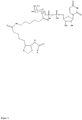
- a preferred monosaccharide derivative is UDP- N-(6-biotinamidohexanoyl)galactosamine.
- a preferred enzyme to be used is a galactosyltransferase which is engineered to transfer effectively 2-modified monosaccharides. Also natural GalNAc/GlcNAc-transferases with similar specificity from animals for example, may also be used.
- the present description is especially directed to method to label tumor tissue by biotin by incubating the tissue with UDP-GalN-spacer-biotin and a modified galactosyltransferase.
- the present description is further directed to enzyme based diagnostic targeting and/or labeling terminal GlcNAc-residues in vivo or ex vivo by transferring a labeled monosaccharide covalently to the GlcNAc residues of material such as protein or tissue sample or cancer tissue expressing any cancer specific terminal GlcNAc containing structure, preferably any cancer or tumor specific structure according to the present description including the polylactosamine, N-glycan, O-glycan and protein linked terminal GlcNAc-structures.
- polylactosamine, N- glycan, or O-glycan type of structure is targeted.
- the present description is specifically directed to glycosylation reactions of preferred terminal GlcNAc structures according to the present description.
- the monosaccharide is transferred by a ⁇ -glycosyltransferase, more preferably by ⁇ -glycosyltransferase which is ⁇ 3- or ⁇ 4-glycosyltransferase and most preferably by a ⁇ 4-glycosyltransferase.
- the transferase is able to transfer one or several of the monosaccharide residues selected from the group Glc, GlcNAc, Gal and GalNAc and at least one modified derivative thereof.
- the transferase is a Hex(NAc) r ⁇ 4-transferase, wherein Hex is Glc or Gal, and r is 0 or r is 1.
- Preferred glycosylatransferases include animal and human glycosyltransferase. Human transferases are especially preferred for in vivo uses.
- glycosylatransferase is an animal ⁇ 4-GlcNAc and/or GalNAc-glycosyltransferase comprising structure allowing transfer of 2-modified Gal or GalN or Glc or GlcN.
- a preferred transferase has been described by Ramakrishnan and Qasba 2002.
- This bovine ⁇ 4-galactosyltransferase enzyme has a mutation at a residue allowing the transfer.
- the present description is also directed to similar animal enzymes containing the same or similar peptide structure at the catalytic site and having characterized to transfer GalNAc and/or GlcNAc from UDP-GalNAc or UDP-GlcNAc.
- the animal enzyme is a variant of human ⁇ 4-galactosyltransferase, preferably human ⁇ 4-galactosyltransferase comprising the same mutation.
- a preferred enzyme for transferring the substances is a glycosyltransferase capable of transferring of a monosaccharide unit modified to position 2.
- a mutated animal form of such enzyme was described by Ramakrishnan and Qasba 2002. The present description is especially directed to soluble human glycosyltransferases and active fragments thereof, especially mutated galactosyltransferases, capable of transferring 2-modified monosaccharide structures.
- the specific diagnostic method is directed to transfer of carbohydrate conjugate to terminal GlcNAc as described by the present description when the carbohydrate to be transferred is modified to position 2.
- the carbohydrate to be transferred has the structure according to the Formula C1 HexL-S-T
- T is the group to be transferred or targeted according to the present description.
- the transferable group was surprisingly found out to be useful even when larger the acetylgroup naturally present on GalNAc or GlcNAc, even larger than 4 carbon atom substance, even larger than 6- carbon substance or 10- carbon substance, the present description is directed to transfer of substances comprising preferably more than 4 carbon atoms, more preferably more than 6 carbon atoms and most preferably more than 10 carbon atoms.
- the transferase accepts is also preferred for use in transfer of modified monosacccharides containing more than about 100 Da extra molecular weight, even more than 500 Da, 1000 Da Or even more than 5000 Da.
- the present description is directed to use of the full capacity of the preferred glycosyltransferases.
- the capability of the enzyme to transfer the large group allows the transfer of functional structures such as labels.
- the capability of transfer even PEG-polymer of about 5000 kDA was even more surprising than the transfer of biotin or similar size labels.
- the present description is further directed to the nucleotide sugar conjugates for transferring specific substances T according to the present description according to the Formula C2: Nu-Hex(L-S-T)
- nucleotide sugar conjugates are according to the Formula C3 UDP-Gal(N-S-T) and Formula C4 UDP-Glc(N-S-T), wherein the nucleotide is UDP and linking atom is nitrogen and S and T are spacer as described above.
- Present description is further directed to transfer linking groups by using modified monosaccharides according to the present description.
- the linking group can be later modified by a corresponding linking group linked with a group to be transferred according to the present description.
- the present description is especially directed to the transfer of chemoselective and protein/tissue compatible linking groups which are preferably effective in water solutions or aqueous buffers.
- the chemoselectivity means that linking group reacts to another corresponding linking group with selectivity.
- the protein and tissue compability means that the linking group or its corresponding linking group does not react, or does not essentially react with amino acid residues or other structures present on the material to be targeted under the conditions of the targeting reaction.
- the protein and tissue compability depends on the chemical groups present on the material.
- thiol chemistry may be applicable.
- a preferred pair of chemoselective group is a thiol and a thiol reactive group such as for example maleimide.
- Another preferred pair of desired linking groups is a aldehyde or ketone to be reacted with an aminooxy group. The aminooxy group reacts selectively and effectively the carbonyl substances in aqueous solution.
- the present description is directed to substances according to the formulas C1-C3 when the T group to be targeted is a chemoselective and protein/tissue compatible linking group.
- the inventors found out that the preferred modified galactosyltransferase according to the present description transfers at least certain non-carbon atom comprising linking groups even when the spacer is short such as 2-4 four atoms.
- the present description is directed to substances comprising a short spacer comprising at least 2 carbon, in preferred alternative at least 3 or 4 atoms, atoms and a linking group, preferably when the spacer has 2 carbon atoms the linking group is N-protected aminooxy group.
- the aminooxy group is preferably transferred in protected form which is cleaved to reactive aminooxy group under conditions compatible with most proteins.
- a protected linking group according to the present description is used.
- the present description is directed to transfer of biotin as a non-covalent pretargetting group. Additional groups can be targeted to biotin by avidin or strepavidin.
- the present description is specifically directed to transfer of biotin on to tissue or cell as described by the present description, the examples represent useful methods and reagents and actual labelling.
- the present description is aimed for modification of under galactosylated glycoproteins produced by certain cell line, for example by insect cells.
- the present description is especially directed to modification of terminal GlcNAc containing proteins produced under conditions yielding undergalactosylated (and sialylated) glycoproteins.
- the lack of terminal glycosylation may be induced by cell culture conditions, such as amount oxygen, presence of monosaccharide substrates and proteins.
- the present description is further directed to removal of the terminal glycosylation by expressing galactosidase or sialidase (neuraminidase) or fucosidase or N-acetylhexosminidase enzyme, preferably a beta-galactosidase and optionally alpha-neuraminidase to the cell culture medium by the same or different production cell line.
- the alpha neuraminidase may be of general broad specificity or specific for the sialic acid species produced with alpha3-, or alpha6- and optionally also for alpha8- or alpha 9-linked sialic acid.
- the glycidase enzyme may be produced as immobilized in the cell wall of yeast or other production cell type.
- the present description is directed to modification of terminal GlcNAc on O-glycan or N-glycan and/or protein linked glycans.
- the substrate of the modification is usually part of regular N-glycosidic or O-glycosidic core structures.
- the present description is specifically directed to substances according to Formula P1: Hex(L-S-PEG)-GlcNAc ⁇ -Core-peptide wherein Hex, L and S are as described in Formula C1, Core is a core structure of N-glycan and/or O-glycan, when GlcNAc is part of the core structure the core is the glycan core excluding a terminal GlcNAc residue, PEG is polyethylene glycol, and peptide is protein.
- the present description is preferably directed to substances according to the Formula P3: Glc(N-S-PEG)-GlcNAc ⁇ -Core-peptide, wherein S, PEG-core and peptide are as described above.
- the present description is further directed to modified cell or tissue material, when the modification is produced by transfer of modified carbohydrate on the surface of the cell and /or tissue according to the present description.
- Preferred substances are according to the present description as follows.
- Formula CT1 Hex(L-S-PEG)-GlcNAc ⁇ -Core-cell/tiss wherein Hex, PEG, L and S are as described in Formula D1, Core is a core structure of N-glycan and/or O-glycan, optionally excluding a terminal GlcNAc residue, Cell/tiss means cell or tissue modifiable.
- the present description is directed to tissues according to the Formula CT2: Gal(N-S-PEG)-GlcNAc ⁇ -Cell/tiss, wherein S, PEG-core and peptide are as described above.
- the present description is preferably directed to substances according to the Formula CT3: Glc(N-S-PEG)-GlcNAc ⁇ -Cell/Tiss, wherein S, PEG-core and peptide are as described above.
- the present description is further directed to modified cell or tissue material, when the modification is produced by a transfer of modified carbohydrate on the surface of the cell and /or tissue according to the present description.
- the present description especially relates to the in vitro transfer of donor carbohydrate to oligosaccharides related to pathogenic conditions, like cancer specific oligosaccharide sequences, or to those present on pathogens like viruses, bacteria or parasites.
- the present description is directed to methods for the detection of the pathogenic entities or activities by the present description.
- the specific transfer of modified monosaccharides to the pathogenic entities allows the detection of the pathogenic entities.
- the modification of the monosaccharide need not to be toxic.
- the monosaccharide is modified by a label substance like a tag substance including for example an antigen detectable by an antibody, biotin, digotoxigenin, digitoxin or a directly detectable substance with examples of fluorescent substance like rhodamine or flourescein or substance with chemiluminesence activity or phosphorence substance or a specific molecular mass marker detectable by mass spectrometry.
- the modified monosaccharide is labeled with two label compounds, which are more preferentially a tag substance and a directly detectable substance and most preferentially a tag substance like biotin and a mass spectrometry label.
- the label substance is preferentially linked through a spacer to the modified monosaccharide.
- the present description is also directed to the use of said carbohydrate for diagnostics of the pathogenic entities and diseases related to them.
- the present description is specifically directed to the use of said carbohydrate/carbohydrates for diagnostics of infections, cancer and malignancies.
- the cell surface carbohydrates are labeled by the modified monosaccharide.
- Modified monosaccharides aimed for detection are useful for detection of certain congenital disorders of glycosylation and under-sialylated LDL. Especially useful are labeled nucleotide sugars.
- the mofied monosaccharide are labeled with biotin and mass spectrometric labels.
- the modified monosaccharide are transferred by glycosyltransferring enzyme or enzymes, preferentially by a ⁇ 4galactosyltransferase, to cell prepararations, the biotinylated fraction is purified and analyzed by mass spectrometry to reveal difference of expression of the glycosyltransferase acceptors.
- Preferentially glycopeptides produced by proteolysis of the sample are analyzed and recognized by mass spectrometry.
- the method is used to detect difference of O-linked GlcNAc expression levels in cells under different conditions.
- the differences in the same cell or tissue type are detected under different conditions.
- the intracellular proteins should be accessible in the cell preparation.
- the O-linked GlcNAc is known to be associated with different pathogenic conditions like diabetes.
- the target oligosaccharide sequences of the present description can be a part of a glycolipid, a part of a glycoprotein, and/or a part of a N-acetyllactosamine chain.
- the oligosaccharide sequences on glycoproteins can also be a part of N-linked glycans or O-linked glycans of glycoproteins. Defects or changes in biosynthetic and/or biodegradative pathways of tumors lead to the synthesis of the oligosaccharide sequences of the present description both on glycolipids and glycoproteins.
- Terminal N-acetylglucosamine means that the non-reducing end GlcNAc residue in an oligosaccharide chain is not substituted by any other monosaccharide.
- oligosaccharide sequence indicates that the monosaccharide residue/residues in the sequence are part of a larger glycoconjugate, which contains other monosaccharide residues in a chain, which may be branched, or natural substituted modifications of oligosaccharide chains.
- the oligosaccharide chain is normally conjugated to a lipid anchor or to a protein.
- the present description is specifically directed to the use of the tumor specific terminal-GlcNAc-oligosaccharide sequences for the screening of specific binders with regard to the structures.
- the screening allows finding of optimal binding substances for the tumor specific oligosaccharide sequences according to the present description.
- the specific binders may be therapheutic or diagnostic antibodies or other molecules binding to the glycans as described by the present description above.
- the screening of the substances binding to the oligosaccharide sequences according to the present description may be performed in an enzyme linked immonoassays (so called ELISA-assays). Direct binding can be measured for example when either the binding substance or the terminal-GlcNAc-glycan structure is linked to a solid phase matrix.
- Free oligosaccharides or oligosaccharide conjugates according to the present description can be also used as specific inhibitors in the assays.
- Fluoresence polararization difference and NMR are examples of liquid phase methods to be used for screening of the substances binding to the oligosaccharide sequences according to the present description.
- the substance according to the present description can be attached to a carrier.
- Methods for the linking of oligosaccharide sequences to a monovalent or multivalent carrier are known in the art.
- the conjugation is performed by linking the cancer specific oligosaccharide sequences or analogs or derivatives thereof from the reducing end to a carrier molecule.
- a carrier molecule a number of molecules of a substance according to the present description can be attached to one carrier increasing the stimulation of immune response and the efficiency of the antibody binding.
- conjugates larger than 10 kDa carrying typically more than 10 oligosaccharide sequences are preferably used.
- the oligosaccharide sequences according to the present description can be synthesized, for example, enzymatically by glycosyltransferases, or by transglycosylation catalyzed by a glycosidase enzyme or a transglycosidase enzyme, for review see Ernst et al., 2000.
- Specificities of the enzymes and their use of co-factors such as nucleotide sugar donors, can be engineered.
- Specific modified enzymes can be used to obtain more effective synthesis, for example, glycosynthase is modified to achieve transglycosylation but not glycosidase reactions.
- Organic synthesis of the saccharides and conjugates of the present description or compounds similar to these are known (Ernst et al., 2000).
- Carbohydrate materials can be isolated from natural sources and be modified chemically or enzymatically into compounds according to the present description.
- Natural oligosaccharides can be isolated from milks of various ruminants and other animals.
- Transgenic organisms such as cows or microbes, expressing glycosylating enzymes can be used for the production of saccharides.
- Examples of conditions treatable according to the present description are cancers in which the tumor expresses one or more of the tumor specific oligosaccharides described in the present description.
- the treatable cancer cases can be discovered by detecting the presence of the tumor specific oligosaccharide sequences in a biological sample taken from a patient. Said sample can be a biopsy or a blood sample.
- treatment used herein relates to both treatment in order to cure or alleviate a disease or a condition, and to treatment in order to prevent the development of a disease or a condition.
- the treatment may be either performed in a acute or in a chronic way.
- a tumor specific oligosaccharide or compound specifically recognizing tumor specific oligosaccharides of the present description may be included, e.g., in a probe or a test stick, optionally in a test kit.
- a probe or a test stick When this probe or test stick is brought into contact with a sample containing antibodies from a cancer patient or cancer cells or tissue of a patient, components of a cancer positive sample will bind the probe or test stick and can be thus removed from the sample and further analyzed.
- tumor means solid multicellular tumor tissues.
- tumor means herein premalignant tissue, which is developing to a solid tumor and has tumor specific characteristics.
- the term “tumor” is not referring herein to a single cell cancer such as a leukaemia or to cultured cancer cells or a cluster of such cells.
- the present description is preferably directed to primary human cancer samples. It is well known that glycosylations in cultivated cancer cells vary and are not in general relevant with regerd to cancer. It is also known that transfections, cell culture media and dividing solid tumor to single cells may have daramatic effects for glycosylations.
- cancer includes tumors.
- Glycolipid and carbohydrate nomenclature is according to recommendations by the IUPAC-IUB Commission on Biochemical Nomenclature ( Carbohydr. Res. 1998, 322:167 ; Carbohydr. Res. 1997, 297:1 ; Eur. J. Biochem. 1998, 257:29 ).
- Gal, Glc, GlcNAc, and NeuNAc are of the D-configuration, Fuc of the L-configuration, and that all monosaccharide units are in the pyranose form.
- Glucosamine is referred as GlcN and galactosamine as GalN.
- Glycosidic linkages are shown partly in shorter and partly in longer nomenclature, the linkages ⁇ 3 and ⁇ 6 of the NeuNAc-residues mean the same as ⁇ 2-3 and ⁇ 2-6, respectively, and ⁇ 1-3, ⁇ 1-4, and ⁇ 1-6 can be shortened as ⁇ 3, ⁇ 4, and ⁇ 6, respectively.
- Lactosamine or N-acetyllactosamine or Gal ⁇ 3/4GlcNAc means either type one structure residue Gal ⁇ 3GlcNAc or type two structure residue Gal ⁇ 1-4GlcNAc, and sialic acid is N-acetylneuraminic acid or NeuNAc, Lac refers to lactose and Cer is ceramide.
- the Gal ⁇ 4GlcNAc ⁇ -binding lectin from Erythrina cristagalli was purchased from Vector Laboratories Inc., Burlingame, CA. Batches of 100 ⁇ g protein were labelled with 125 I, using Na 125 I (100 mCi/ml; Amersham Pharmacia Biotech), according to the IODO-GEN protocol of the manufacturer (Pierce, Rockford, IL). Approximately 5 x 10 3 cpm/ ⁇ g protein was obtained.
- the chromatograms were soaked in PBS containing 2% bovine serum albumin (BSA) (w/v), 0.1% NaN 3 (w/v) for 2 hr at room temperature.
- the chromatograms were subsequentely covered with radio labelled bacteria diluted in PBS (2-5 x 10 6 cpm/ml) or radiolabelled lectin in BSA (2 x 10 3 cpm/ml). Incubation was done for 2 hr at room temperature, followed by repeated washings with PBS.
- the chromatograms were thereafter exposed to XAR-5 X-ray films (Eastman Kodak, Rochester, NY) for 12 hr.
- Thin-layer overlay assays were performed with radiolabelled G-fimbriated Escherichia coli to screen various tumors and normal tissues.
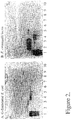
- the E.coli strain IHE11088 pRR-5 specifically recognizes terminal GlcNAc ⁇ -structures (Rhen, M. et al. 1986). Binding active glycolipids were found in non-acid fraction from one of four hypernephroma tumors studied ( Fig 1 ). No binding was observed towards corresponding fraction of non-acid glycosphingolipids from human normal kidney or to other control tissues studied.
- Non-acid glycosphingolipids from human hypernephroma tumor were fractionated and analysed by binding with the GlcNAc ⁇ -specific G-fimbriated E.coli ( Fig.1A ) and lectin from Erythrina cristagalli which recognizes terminal Gal ⁇ 4GlcNAc ⁇ -structures ( Fig. 2B ) by thin-layer overlay assay.
- the two binding reagents show partially overlapping glycospingolipid binding species.
- the data indicates that the terminal GlcNAc-species are mostly present on N-acetyllactosamine type non-acid glycosphingolipids.
- the terminal GlcNAc-species which do not have an overlap with lectin binding activity have most probably terminal structures where N-acetyllactosamine is derivatized by GlcNAc such as GlcNAc ⁇ 3Gal ⁇ 3/4GlcNAc ⁇ -; diffuse bands probably also indicates the presence of an isomeric form GlcNAc ⁇ 6Gal ⁇ 3/4GlcNAc ⁇ -.
- the sample also appears to contain minor species where the terminal GlcNAc and N-acetyllactosamine are present in the same glycolipid.
- glycolipids were partially analyzed by FAB mass spectrometry and by EI masspectrometry after permethylation, which showed presence of terminal HexNAc and that the smallest species with terminal GlcNAc is a pentasaccharide glycosphingolipid probably of lacto or neolacto series. Also 7-meric and larger structures up to 15-mer were observed ( Fig. 1 ). The binding of the lectins indicates that most of the lactosamine probably has the type two N-acetylactosamine structure.
- MALDI-TOF MS MALDI-TOF MS.
- MALDI-TOF mass spectrometry was performed with a Voyager-DE STR BioSpectrometry Workstation, essentially as in (Saarinen et al., 1999; Papac et al., 1996; Harvey, 1993).
- Exoglycosidase digestions All exoglycosidase reactions were performed essentially as described in (Nyman et al., 1998; Saarinen et al., 1999) and analysed by MALDI-TOF MS. The enzymes and their specific control reactions with characterised oligosaccharides were: ⁇ -N-acetylglucosaminidase ( Streptococcus pneumoniae, recombinant, E.
- UDP-GalN-biotin UDP-galactosamine
- UDP-GalN UDP-galactosamine
- UDP-GalN UDP-galactosamine
- the reaction mixture contains 10 mM galactosamine-1-phosphate, 20 mM UDP-Glc, 5 U/ml of galactose-1-phosphate uridyltransferase, 100 mM Na-HEPES pH 8.0, 5 mM MgCl 2 , and 5 mM ⁇ -mercaptoethanol.
- the reaction vessel is incubated at room temperature under nitrogen atmosphere for 3 days, after which nucleotide sugars are isolated from the reaction mixture with a graphitised carbon column essentially as in (Mäki et al., 2002).
- the nucleotide sugar mixture containing UDP-Glc and UDP-GalN, is incubated with a molar excess of sulfosuccinimidyl-6-(biotinamido)hexanoate (sulfo-NHS-LC-biotin; Pierce, USA) in 50 mM NH 4 HCO 3 at room temperature for 2.5 hours.
- the product, UDP-GalN-biotin, uridine 5'-diphospho-N-(6-biotinamidohexanoyl)galactosamine is purified by gel filtration and reversed phase HPLC.
- N-(6-biotinamidohexanoyl)galactosamine can be transferred from UDP-GalN-biotin to a terminal GlcNAc containing acceptor with a recombinant ⁇ 1,4-galactosyltransferase similar to the enzyme described in (Ramakrishnan and Qasba, 2002).
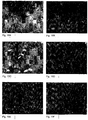
- an oligosaccharide acceptor such as GlcNAc ⁇ 1-3Gal ⁇ 1-4GlcNAc ⁇ 1-3Gal ⁇ 1-4Glc, or deparaffinised formalin-fixed paraffin-embedded tissue sections, are incubated at +37 °C with a reaction mixture containing 10 mM UDP-GalN-biotin, 160 U/l enzyme, 100 mM Tris-HCl, and 20 mM MnCl 2 . After washing, the biotin groups are visualised by standard methods in the art, using streptavidin or avidin coupled reagents, for example streptavidin-FITC.
- N-glycans were detached from the tissue sections with Chryseobacterium meningosepticum N-glycosidase F (Calbiochem, USA) essentially as in (Nyman et al., 1998). Chromatography was performed as described in figure legends to Fig. 7A and 7B .
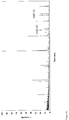
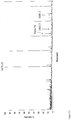
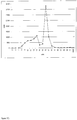
- Cancer-associated terminal GlcNAc containing N-glycans from lung adenocarcinoma samples Formalin-fixed samples, from tumor and surrounding healthy tissue, were obtained from a patient with lung adenocarcinoma. There was a significant difference between the neutral glycans isolated from the tumor sample ( Fig. 3A ) and the healthy tissue sample ( Fig. 3B ), namely a peak at m/z 1485.48, corresponding to the ion [Hex 3 HexNAc 4 Fuc 1 +Na] + (calc. m/z 1485.53). The relative intensity of this glycan peak was elevated over 6.1 times in the tumor sample, as compared to healthy tissue.
- ⁇ -mannosidase digestion before the ⁇ -N-acetylglucosaminidase digestion did not affect the two peaks, indicating that the ⁇ -Man residues were subterminal to the ⁇ -GlcNAc residues.
- ⁇ 1,4-galactosidase digestion of the original neutral glycan sample completely transformed the peak at m/z 1647.5 into the peak at m/z 1485.5, indicating the presence of a terminal Gal ⁇ 1-4GlcNAc unit.
- the lung adenocarcinoma tumor sample contained highly elevated amounts of the complex N-linked glycan core structure GlcNAc ⁇ -Man ⁇ 1-6(GlcNAc ⁇ -Man ⁇ 1-3)Man ⁇ 1-4GlcNAc ⁇ 1-4(Fuc ⁇ 1-6)GlcNAc, and slightly elevated amounts of the mono- ⁇ 1,4-galactosylated (to GlcNAc) derivative of the former structure, as compared to the surrounding healthy tissue.
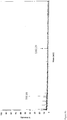
- UDP-GalN-biotin UDP-galactosamine was synthesized as described under Materials and Methods. The product was characterized by MALDI-TOF MS (obs. m/z 564.42 for [C 15 H 25 N 3 O 16 P 2 -H] - , calc. m/z 564.31); Fig. 4A ) and the expected peak appeared in the mass spectrum one mass unit smaller than the peak of UDP-Glc (obs. m/z 565.37 for [C 15 H 24 N 2 O 17 P 2 -H] - , calc. m/z 565.29); Fig. 4A ).
- the crude nucleotide sugar preparate was reacted with a biotinylation reagent, namely succinimidyl-6-(biotinamido)hexanoate.
- a biotinylation reagent namely succinimidyl-6-(biotinamido)hexanoate.
- the expected product could be seen in the MALDI-TOF mass spectrum of the reaction mixture (obs. m/z 902.93 for [C 31 H 50 N 6 O 19 P 2 S-H] - , calc. m/z 903.76; Fig. 4B ).
- UDP-Glc did not react at all with the biotinylation reagent.
- the product [N-(6-biotinamidohexanoyl)galactosamine] ⁇ 1-4GlcNAc ⁇ 1-3Gal ⁇ 1-4GlcNAc ⁇ 1-3Gal ⁇ 1-4Glc, was characterized by MALDI-TOF MS (obs. m/z for [M+Na] + 1433.38, calc. m/z 1433.55). Taken together, the results indicate that the synthesized product has the expected structure ( Fig. 5 ). The product was chromatographically purified to homogeneity.
- the broad peak was pooled and passed through columns of strong cation exchange material and C 18 silica, which would retain all glycopeptidic material, but allow for quantitative elution of free oligosaccharides. Nearly 80 % of the radioactivity in the pooled fractions was retained in the columns, indicating that the broad peak indeed corresponded to alkali-liberated glycopeptides, from which the [ 14 C]Gal labeled glycan moieties had not been detached. Major part of the remaining radioactivity was found to correspond to the N-glycan structure described above, but the presence of other labelled oligosaccharides could not be excluded.
- the major peak in the gel filtration HPLC chromatogram containing 55 % of the total radioactivity, coeluted with an N-acetyllactosamine (LacNAc) standard.
- the specifically eluted proteins are likely to represent the heavy and light chain subunits of IgG or IgA, but not IgM human antibodies.
- the present results indicate the presence of elevated levels of terminal GlcNAc specific antibodies in serum of the person who had recovered from cancer, more specifically IgG and/or IgA antibodies that recognize the GlcNAc ⁇ 1-6(Gal ⁇ 1-3)GalNAc ⁇ glycan epitope.
- Example 12 (reference). Determination and statistical evaluation of decreased neutral N- and O-glycan galactosylation in human carcinomas.
- the non-sialylated glycan fractions from non-small cell lung carcinoma and from control samples from respective healthy lung tissue were isolated and analyzed by MALDI-TOF mass spectrometry as described above.
- the galactosylation degrees were calculated as follows.
- the relative intensities (I) of three peaks in the mass spectra were measured, namely those at m/z 1485.5 (corresponding to the ion [Hex 3 HexNAc 4 dHex 1 Na] + , with two non-reducing terminal N-acetylglucosamine residues), m/z 1647.6 (corresponding to the ion [Hex 4 HexNAc 4 dHex 1 Na] + , with one non-reducing terminal N-acetyllactosamine group and one non-reducing terminal N-acetylglucosamine residue), and m/z 1809.6 (corresponding to the ion [Hex 5 HexNAc 4 dHex 1 Na] + , with two non-reducing terminal N-acetyllactosamine groups).
- the non-reducing terminal residues of these glycan components were previously determined as either N-acetylglucosamine according to sensitivity to digestion with glucosaminidase from Jack beans, or N-acetyllactosamine according to sensitivity to ⁇ -galactosidase digestion.
- Galactosylation degree of neutral monofucosylated biantennary N-glycans is significantly reduced in non-small cell lung adenocarcinoma.
- the difference seen in the mass spectra between tumor and healthy specimens was correlated to radiochemical staining of tissue sections prepared from the same specimens, when the sections were treated with C-14 labelled uridine diphosphogalactose and bovine milk ⁇ 1,4-galactosyltransferase in galactosyltransferase reactions that were designed to quantitate non-reducing terminal N-acetylglucosamine residues in the sample glycoproteins.
- the difference in radiochemical staining between the tumor and healthy control samples was the greatest when the respective difference in the degrees of galactosylation was the greatest, which allows for correlating the total amount of galactosyltransferase-sensitive non-reducing terminal ⁇ -N-acetylglucosamine residues in the tumor, with the mass spectrometric results obtained with isolated glycans from the tissue specimen.
- the analyzed samples from the patient group included individuals in which the phenomenon was very drastic.
- the N-glycan peak at m/z 1485.5 was either the most abundant or the second most abundant neutral glycan signal in the mass spectra, indicating that the corresponding glycan structure had been specifically accumulated in the tumor cell glycoproteins.
- a similar phenomenon was also detected in tumor samples from individual patients of kidney carcinoma and a gastro-intestinal carcinoma, indicating that it is not restricted to lung carcinoma.
- non-reducing terminal ⁇ -N-acetylglucosamine containing N-glycans also characterized the isolated tumor protein-linked glycans from a patient with kidney hypernephroma, which had previously been analyzed for its glycolipid structures and found to contain also glycolipids characterized by decreased galactosylation.
- the latter correlation between glycoprotein and glycolipid structures further suggests that our observed accumulation of non-reducing terminal ⁇ -N-acetylglucosamine containing glycoconjugates is a result of a general defect in galactosylation that occurs in various forms of cancer.
- Tumor sample from an individual lung carcinoma patient that shows severely decreased non-reducing terminal galactosylation of O- and N-linked glycoprotein glycans.
- Tumor sample from a non-small cell lung adenocarcinoma patient was studied in detail to elucidate the structures of various N-acetylglucosaminidase sensitive structures detected in the sample.
- the mass spectrum of the non-sialylated glycan fraction from the paraffin-embedded and formalin-fixed tumor sample showed a significantly increased amount of a signal at m/z 609.23 (for Hex 1 HexNAc 2 , calc.
- glycan signal was not sensitive to Jack bean ⁇ -mannosidase digestion, whereas signals corresponding to high-mannose type N-glycans with molecular formulae Man 3-8 GlcNAC 2 and Man 2-3 GlcNAc 2 Fuc 1 present in the same sample were transformed into peaks at m/z 609.16 for Hex 1 HexNAc 2 and m/z 755.22 for Hex 1 HexNAc 2 Fuc 1 (calc. m/z 755.27), respectively. Similarly, ⁇ -mannosidase digestion had no effect on the specific peak. However, ⁇ -N-acetylglucosaminidase from S.
- pneumoniae did cleave the peak at m/z 609.23 that was transformed into a peak at m/z 405.77. corresponding to Hex 1 HexNAc 1 (calc. m/z 406.13), which indicates for the presence of a non-reducing terminal ⁇ -N-acetylglucosamine residue in the glycan structure.
- recombinant ⁇ 1,3-galactosidase partly transformed the peak into a peak at m/z 447.16, HexNAc 2 (calc. m/z 447.16).
- the present data indicates that a major component glycan in the peak at m/z 609.23 contains both non-reducing terminal ⁇ -N-acetylglucosamine and non-reducing terminal ⁇ 1,3-linked galactose residues, and indicates that it contains the O-glycan Core 2 trisaccharide structure GlcNAc ⁇ 1-6(Gal ⁇ 1-3)GalNAc.
- the mass spectrum of the sialylated glycan fraction from the same tumor contained a significantly increased amount of a signal that can be assigned to a sialylated counterpart of the neutral trisaccharide described above, namely at m/z 876.27 for NeuAc 1 Hex 1 HexNAc 2 (calc.
- the glycan signals at m/z 1485.61, 1647.67, and 1809.72 represent a series of differently galactosylated glycan species.
- the galactosylation degree calculated from these three signals in the present tumor sample is 24 %, which is significantly below the average 33 % of the tumor samples from the group of 7 lung cancer patients described above.
- the simultaneous presence of the Hex 1 HexNAc 2 and NeuAc 1 Hex 1 HexNAc 2 terminal ⁇ -N-acetylglucosamine residue-containing glycans in the present tumor sample indicates that there is a general decrease in galactosylation of non-reducing terminal ⁇ -N-acetylglucosamine residues in the protein-linked glycans of the particular tumor sample.
- UDP-GalN uridine diphosphogalactosamine
- fluorescein-poly(ethylene glycol)-NHS MW 5000, Nektar Therapeutics, USA
- O-Benzotriazol-1-yl-N,N,N',N'-bis(tetramethylene)uronium hexafluorophosphate Aldrich, USA
- the reaction mixture was gel filtrated in a Superdex Peptide HR 10/30 column (Amersham Pharmacia Biotech) at 1 ml/min flow rate in 250 mM NH 4 HCO 3 and the effluent was monitored with the UV detector at 214 nm, 261 nm, and 460 nm. Material eluted between 8 and 10 minutes, coeluting with the fluorescein-PEG starting material, was collected and dried. Anion exchange chromatography was performed on a Resource Q 1 ml column (Amersham Pharmacia Biotech) using H 2 O-NaCl gradient. UV absorption at 214 nm, 261 nm, and 460 nm was monitored.
- Formalin-fixed and paraffin-embedded tissue sections from human non-small cell lung adenocarcinoma tumor tissue were deparaffinised and covered with incubation mixture containing UDP-GalN-PEG-fluorescein as a sugar donor, 20 mM MnCl 2 , 10 mM Tris-HCl pH 8.0, and a mutant galactosyltransferase enzyme similar to the one described by Ramakrishnan and Qasba (2002).
- a negative control reaction contained the same incubation mixture without the enzyme. Reactions were incubated at 37 °C for 20 hours, after which the tissue sections were washed with water. The fluorescent samples were analyzed by Olympus AX70 Provis fluorescence microscope.
- the samples showed clear positive cells at wavelengths 460-490 nm (FITC) within the tumor tissue ( FIG. 10.E ).
- the fluorescence was in the cytoplasm as well as in the membrane on the positive cells ( Fig. 10.C ).
- the control samples remained negative ( Fig. 10.A ) showing only some autofluorescence ( Fig. 10.B ).
- the samples analyzed at wavelengths 530-550 nm were negative, indicating that the positive results were not due to autofluorescence ( Fig. 10.D, 10.F ).
- this example described how the enzyme catalysed the ex vivo transfer of GalN-PEG-fluorescein groups from UDP-GalN-PEG-fluorescein to non-reducing terminal N-acetylglucosamine (GlcNAc) residues present in glycoprotein glycans of human tumor cells and tumor tissue sections.
- carboxylic acid reagents that were successfully incorporated to the 2-amino group of uridine diphosphogalactosamine through amidation, included S-acetyl-3-mercaptopropionic acid, 4-mercaptobutyric acid, Boc-2-aminooxyacetic acid, and N-maleimido-6-aminohexanoic acid, which are suitable for protein-compatible water-solution coupling of N-maleimido, aldehyde, and thiol group containing reagents or biologically active substances, respectively.
- the 3-mercaptopropionic acid conjugate was primarily produced as acetate protected form and the 2-aminooxyacetic acid conjugate as t-Boc protected form, and the protective groups can be completely removed by incubation in mild alkaline aqueous solution or trifluoroacetic acid, respectively. After purification, the structures of the conjugation reagents were confirmed by MALDI-TOF mass spectrometry and found to contain the desired functional groups attached to the galactosamine residue.
- the reagents were incubated in aqueous solution with a non-reducing terminal N-acetylglucosamine containing glycoconjugate and a modified galactosyltransferase enzyme similar to the one described by Ramakrishnan and Qasba (2002), which resulted in the successful transfer of conjugation reagent-modified galactosamine residues to the glycoconjugates, evidenced by MALDI-TOF mass spectrometry as a mass increase of the acceptor glycoconjugate, equivalent to the galactosamine-reagent conjugate (mass spectra not shown).
- Example 14 (reference). Increased levels of specific antibodies against non-reducing terminal N-acetylglucosamine containing glycoconjugates in serum of cancer patients.
- Antibody levels against the Core 2 trisaccharide GlcNAc ⁇ 1-6(Gal ⁇ 1-3)GalNAc were elevated in the whole patient group, but the specific antibody response varied: in one patient both IgG and IgM levels were elevated, in one patient mainly IgG, and in two patients mainly IgM.
- Antibody response against the GlcNAc ⁇ 1-3GalNAc disaccharide showed an identical pattern of antibody type response in the patient group.
- Two patients showed elevated serum levels of mainly IgM and one patient mainly IgG antibodies against an O-glycosidic ⁇ -GlcNAc epitope.
- Table 2 Specific antibody responses against carbohydrate epitopes expressed as antibody signal intensities from which the assay background has been subtracted.
- Saccharide 1 GlcNAc ⁇ 1 -2Man ⁇ 1 -6(GlcNAc ⁇ 1 -2Man ⁇ 1 -3)Man ⁇ 1-4GlcNAc ⁇ 1 -4(Fuc ⁇ 1 -6)GlcNAc ⁇ -N-Asn-R
- Saccharide 2 positive cancer-associated saccharide
- Saccharide 3 GlcNAc ⁇ 1-6(Gal ⁇ 1-3)GalNAc ⁇ -O-CH 2 -R
- Saccharide 4 GlcNAc ⁇ -O-CH 2 -R
- Saccharide 5 GlcNAc ⁇ 1-3GalNAc ⁇ -O-CH 2 -R.
- R variable linker.
- Fresh human blood sample was collected from blood group B -individual (5 ml). After clotting for 30 min it was centrifuged at + 4°C, 2000 rpm for 25 minutes, and the serum was collected for experiments (2 ml, stored on ice).
- Reactions were performed with 50 nmol of acceptor saccharide (GlcNAc ⁇ 1-3Gal ⁇ 1-4GlcNAc, from enzymatic synthesis, purified by ion exhange and gel filtration, characterized by NMR and mass spectrometry), 5 nmol UDP-[ 14 C]Gal (mixture of nonlabelled and radioactive, radioactivity was 100 000 cpm) and 20 ⁇ l of fresh human serum (total volume was 20 ⁇ l). Reaction conditions were varied by adding cations and bovine milk ⁇ 1,4-galactosyltransferase ( ⁇ 1,4GalT).
Landscapes
- Health & Medical Sciences (AREA)
- Life Sciences & Earth Sciences (AREA)
- Chemical & Material Sciences (AREA)
- Engineering & Computer Science (AREA)
- Immunology (AREA)
- General Health & Medical Sciences (AREA)
- Medicinal Chemistry (AREA)
- Pharmacology & Pharmacy (AREA)
- Organic Chemistry (AREA)
- Animal Behavior & Ethology (AREA)
- Public Health (AREA)
- Veterinary Medicine (AREA)
- Molecular Biology (AREA)
- Bioinformatics & Cheminformatics (AREA)
- Biochemistry (AREA)
- Epidemiology (AREA)
- Biomedical Technology (AREA)
- Proteomics, Peptides & Aminoacids (AREA)
- Urology & Nephrology (AREA)
- Hematology (AREA)
- Biotechnology (AREA)
- Genetics & Genomics (AREA)
- Gastroenterology & Hepatology (AREA)
- Cell Biology (AREA)
- Microbiology (AREA)
- Chemical Kinetics & Catalysis (AREA)
- Nuclear Medicine, Radiotherapy & Molecular Imaging (AREA)
- General Chemical & Material Sciences (AREA)
- Physics & Mathematics (AREA)
- Food Science & Technology (AREA)
- Pathology (AREA)
- General Physics & Mathematics (AREA)
- Analytical Chemistry (AREA)
- Oncology (AREA)
- Marine Sciences & Fisheries (AREA)
- Biophysics (AREA)
- Zoology (AREA)
- Mycology (AREA)
- Communicable Diseases (AREA)
- Medicines Containing Antibodies Or Antigens For Use As Internal Diagnostic Agents (AREA)
Claims (2)
- Verwendung einer Zusammensetzung, umfassendi) ein 2-modifiziertes Monosaccharidderivat nach der Formel
Nu-HexL-S-T
wobei Hex Gal oder GalNAc ist, Nu UDP ist,L ein Bindungsatom auf Kohlenstoff 2 des Gal oder GalNAc ist, S eine Spacer-Gruppe, ein Atom oder nichts ist, und T eine Bezeichnung oder eine chemoselektive und/ oder protein-/gewebekompatible Bindegruppe ist; undii) eine Galactosyl-Transferase, die hergestellt ist, um ein an einen Nukleotidrest glycosidisch gebundenes 2-modifiziertes Monosaccharidderivat effektiv zu übertragen;in der In-vitro-Diagnose von einem Krebs oder einem Tumor. - Verwendung nach Anspruch 1, wobei L ein Sauerstoff-, Stickstoff-, Kohlenstoff-, oder Schwefelatom ist.
Priority Applications (1)
| Application Number | Priority Date | Filing Date | Title |
|---|---|---|---|
| EP10184228A EP2322209A3 (de) | 2002-08-20 | 2003-08-20 | Tumorspezifische Oligosaccharid-Epitope und deren Verwendung |
Applications Claiming Priority (3)
| Application Number | Priority Date | Filing Date | Title |
|---|---|---|---|
| WOPCT/FI02/00681 | 2002-08-20 | ||
| PCT/FI2002/000681 WO2003016915A1 (en) | 2001-08-20 | 2002-08-20 | Tumor specific oligosaccharide sequences and use thereof |
| PCT/FI2003/000615 WO2004017810A2 (en) | 2002-08-20 | 2003-08-20 | Tumor specific oligosaccharide epitopes and use thereof |
Related Child Applications (1)
| Application Number | Title | Priority Date | Filing Date |
|---|---|---|---|
| EP10184228A Division-Into EP2322209A3 (de) | 2002-08-20 | 2003-08-20 | Tumorspezifische Oligosaccharid-Epitope und deren Verwendung |
Publications (2)
| Publication Number | Publication Date |
|---|---|
| EP1534324A2 EP1534324A2 (de) | 2005-06-01 |
| EP1534324B1 true EP1534324B1 (de) | 2019-01-16 |
Family
ID=31897309
Family Applications (2)
| Application Number | Title | Priority Date | Filing Date |
|---|---|---|---|
| EP03792440.4A Expired - Lifetime EP1534324B1 (de) | 2002-08-20 | 2003-08-20 | Tumorspezifische oligosaccharid-epitope und ihre verwendung |
| EP10184228A Withdrawn EP2322209A3 (de) | 2002-08-20 | 2003-08-20 | Tumorspezifische Oligosaccharid-Epitope und deren Verwendung |
Family Applications After (1)
| Application Number | Title | Priority Date | Filing Date |
|---|---|---|---|
| EP10184228A Withdrawn EP2322209A3 (de) | 2002-08-20 | 2003-08-20 | Tumorspezifische Oligosaccharid-Epitope und deren Verwendung |
Country Status (5)
| Country | Link |
|---|---|
| US (1) | US20180055928A1 (de) |
| EP (2) | EP1534324B1 (de) |
| JP (1) | JP2005535723A (de) |
| AU (1) | AU2003255544A1 (de) |
| WO (1) | WO2004017810A2 (de) |
Families Citing this family (11)
| Publication number | Priority date | Publication date | Assignee | Title |
|---|---|---|---|---|
| WO2005051429A2 (en) * | 2003-11-19 | 2005-06-09 | Government Of The United States Of America As Represented By The Secretary Of The Department Of Health And Human Services | Targeted conjugates with a modified saccharide linker |
| US7651847B2 (en) * | 2004-06-22 | 2010-01-26 | The Regents Of The University Of California | Methods of oligosaccharide profiling for the detection of cancer |
| FI20055398A0 (fi) | 2005-07-08 | 2005-07-08 | Suomen Punainen Risti Veripalv | Menetelmä solupopulaatioiden evaluoimiseksi |
| EP2166085A1 (de) | 2008-07-16 | 2010-03-24 | Suomen Punainen Risti Veripalvelu | Divalente modifizierte Zellen |
| KR101322615B1 (ko) | 2011-10-21 | 2013-10-29 | 고려대학교 산학협력단 | 티올 선택성을 갖는 화학정량 형광 표지자, 그 제조방법 및 이를 이용한 생체내 티올 영상화 방법 |
| WO2016026143A1 (en) * | 2014-08-22 | 2016-02-25 | Huiru Wang | Saccharide-based biomarkers and therapeutics |
| GB201517859D0 (en) * | 2015-10-08 | 2015-11-25 | Altermune Ltd | Novel compounds and therapeutic uses thereof |
| WO2017139975A1 (en) * | 2016-02-19 | 2017-08-24 | Huiru Wang | Antibodies against n-acetylglucosamine and n-acetyl-galactosamine |
| GB201705686D0 (en) | 2017-04-07 | 2017-05-24 | Centauri Therapeutics Ltd | Novel compounds and therapeutic uses thereof |
| AU2018287171B2 (en) | 2017-06-21 | 2024-03-28 | Glykos Finland Oy | Hydrophilic linkers and conjugates thereof |
| CN112851731B (zh) * | 2021-01-08 | 2023-01-13 | 浙江大学 | O-GlcNAc糖基化修饰一步酶标记试剂盒及其应用 |
Family Cites Families (29)
| Publication number | Priority date | Publication date | Assignee | Title |
|---|---|---|---|---|
| EP0111005B1 (de) | 1982-06-03 | 1988-04-20 | Otsuka Pharmaceutical Co., Ltd. | Fucose-Antigene, Verfahren zu ihrer Herstellung und gegen diese gerichtete Antikörper, Testeinheit, enthaltend das Fucose Antigen und ein Verfahren zur Bestimmung von tumorassoziierten Zuckerketten |
| US5171667A (en) | 1985-04-04 | 1992-12-15 | Fred Hutchinson Cancer Research Center | Hybridomas producing monoclonal antibodies to mono-, di- and trifucosylated type 2 chain |
| US4904596A (en) | 1985-08-07 | 1990-02-27 | Fred Hutchinson Cancer Research Center | Hybridoma antibody (FH6) defining a human cancer-associated difucoganglioside |
| US4851511A (en) | 1986-01-30 | 1989-07-25 | Fred Hutchinson Cancer Research Center | Monoclonal antibody that specifically binds to disialosyl Lea |
| GB8618443D0 (en) * | 1986-07-29 | 1986-09-03 | Univ London | Monoclonal antibodies |
| US5059520A (en) | 1986-08-27 | 1991-10-22 | Sloan-Kettering Institute For Cancer Research | Monoclonal antibody panel for blood group a antigen |
| JP2579497B2 (ja) * | 1987-09-07 | 1997-02-05 | オリエンタル酵母工業株式会社 | 肝臓疾患診断剤 |
| GB8726271D0 (en) * | 1987-11-10 | 1987-12-16 | Univ London | Protein glycosylation assay |
| DE3807594A1 (de) * | 1988-03-08 | 1989-09-21 | Reutter Werner | Antikoerper, verfahren zu ihrer herstellung, oligosaccharid-haptene und klone zur erzeugung der antikoerper sowie verwendung der antikoerper zur diagnose und therapie von tumoren |
| US5229289A (en) | 1988-03-11 | 1993-07-20 | The Biomembrane Institute | Monoclonal antibodies and vaccine development directed to human cancer-associated antigens by immunization with animal and human and with synthetic carbohydrate-carrier conjugates |
| US5660834A (en) | 1988-03-11 | 1997-08-26 | The Biomembrane Institute | Monoclonal antibodies and vaccine development directed to human cancer-associated antigens by immunization with carbohydrate-carrier conjugates |
| CA1313496C (en) * | 1988-04-29 | 1993-02-09 | James Wilson Dennis | Diagnostic method to screen tumors |
| US5173292A (en) | 1988-06-14 | 1992-12-22 | Sloan-Kettering Institute For Cancer Research | Monoclonal antibodies which specifically recognize galactosyl-globoside, compositions containing same and methods of using same |
| US5102663A (en) | 1988-10-18 | 1992-04-07 | Sloan-Kettering Instutute For Cancer Research | Vaccine for stimulating or enhancing production of antibodies against 9-O-acetyl GD3 |
| JPH02264864A (ja) * | 1989-04-04 | 1990-10-29 | Shin Etsu Chem Co Ltd | Gsa―2結合性蛋白質の免疫学的測定試薬及びそれを用いた免疫学測定用キット |
| DE4009630C2 (de) * | 1990-03-26 | 1995-09-28 | Reinhard Prof Dr Dr Brossmer | CMP-aktivierte fluoreszierende Sialinsäuren sowie Verfahren zu ihrer Herstellung |
| US6083929A (en) | 1991-05-06 | 2000-07-04 | The Biomembrane Institute | Extended type 1 chain glycosphingolipids as tumor-associated antigens |
| US5543505A (en) | 1993-03-15 | 1996-08-06 | Sloan-Kettering Institute For Cancer Research | Synthetic compounds which bind to H. pylori, and uses thereof |
| US6310185B1 (en) | 1994-03-08 | 2001-10-30 | Memorial Sloan Kettering Cancer Center | Recombinant human anti-Lewis Y antibodies |
| US5708163A (en) | 1994-03-15 | 1998-01-13 | Sloan-Kettering Institute Of Cancer Research | Synthesis of the breast tumor-associated antigen defined by monoclonalantibody MBRL and uses thereof |
| US5679769A (en) | 1994-03-15 | 1997-10-21 | Sloan-Kettering Institute For Cancer Research | Synthesis of asparagine-linked glycopeptides on a polymeric solid support |
| US5795961A (en) | 1995-02-14 | 1998-08-18 | Ludwig Institute For Cancer Research | Recombinant human anti-Lewis b antibodies |
| AU720802B2 (en) | 1996-07-03 | 2000-06-15 | Millenium Pharmaceuticals, Inc. | Detection of cancer by assaying for cancer-specific antigens having linked oligosaccharides which are at least triantennary |
| US6075134A (en) * | 1997-05-15 | 2000-06-13 | The Regents Of The University Of California | Glycoconjugates and methods |
| AU1443900A (en) * | 1998-10-09 | 2000-05-01 | University Technology Corporation | Glycoprotein antigens, antibodies specific thereto and method for producing same |
| JP4351314B2 (ja) * | 1998-12-24 | 2009-10-28 | 大塚製薬株式会社 | コレスタノール化合物及びこれを含有する医薬 |
| GB0012216D0 (en) * | 2000-05-19 | 2000-07-12 | European Molecular Biology Lab Embl | Glycosyltransferase protein |
| FI20011671A7 (fi) * | 2001-08-20 | 2003-02-21 | Carbion Oy | Tuumorispesifiset oligosakkaridisekvenssit ja niiden käyttö |
| EP2042196B1 (de) | 2001-10-10 | 2016-07-13 | ratiopharm GmbH | Neumodellierung und Glykokonjugation von Granulozyten-Kolonie stimulierender Faktor (G-CSF) |
-
2003
- 2003-08-20 EP EP03792440.4A patent/EP1534324B1/de not_active Expired - Lifetime
- 2003-08-20 JP JP2004530289A patent/JP2005535723A/ja active Pending
- 2003-08-20 AU AU2003255544A patent/AU2003255544A1/en not_active Abandoned
- 2003-08-20 WO PCT/FI2003/000615 patent/WO2004017810A2/en not_active Ceased
- 2003-08-20 EP EP10184228A patent/EP2322209A3/de not_active Withdrawn
-
2017
- 2017-07-19 US US15/653,546 patent/US20180055928A1/en not_active Abandoned
Non-Patent Citations (1)
| Title |
|---|
| B]LTER THOMAS ET AL: "Chemoenzymatic synthesis of biotinylated nucleotide sugars as substrates for glycosyltransferases", CHEMBIOCHEM - A EUROPEAN JOURNAL OF CHEMICAL BIOLOGY, WILEY VCH, WEINHEIM, DE, vol. 2, 1 January 2001 (2001-01-01), pages 884 - 894, XP002974357, ISSN: 1439-4227, DOI: 10.1002/1439-7633(20011203)2:12<884::AID-CBIC884>3.0.CO;2-2 * |
Also Published As
| Publication number | Publication date |
|---|---|
| EP1534324A2 (de) | 2005-06-01 |
| JP2005535723A (ja) | 2005-11-24 |
| US20180055928A1 (en) | 2018-03-01 |
| AU2003255544A8 (en) | 2004-03-11 |
| EP2322209A2 (de) | 2011-05-18 |
| EP2322209A3 (de) | 2012-02-01 |
| WO2004017810A2 (en) | 2004-03-04 |
| AU2003255544A1 (en) | 2004-03-11 |
| WO2004017810A3 (en) | 2004-06-10 |
Similar Documents
| Publication | Publication Date | Title |
|---|---|---|
| US20140234318A1 (en) | Tumor specific oligosaccharide epitopes and use thereof | |
| US20180055928A1 (en) | Tumor specific oligosaccharide epitopes and use thereof | |
| Oyelaran et al. | Microarrays with varying carbohydrate density reveal distinct subpopulations of serum antibodies | |
| Dube et al. | Glycans in cancer and inflammation—potential for therapeutics and diagnostics | |
| Stowell et al. | Human galectin-1 recognition of poly-N-acetyllactosamine and chimeric polysaccharides | |
| Liu et al. | Neoglycolipid probes prepared via oxime ligation for microarray analysis of oligosaccharide-protein interactions | |
| Satomaa et al. | Analysis of the human cancer glycome identifies a novel group of tumor-associated N-acetylglucosamine glycan antigens | |
| US20170002095A1 (en) | Cancer specific glycans and use thereof | |
| Wuhrer et al. | Schistosoma mansoni cercarial glycolipids are dominated by Lewis X and pseudo-Lewis Y structures | |
| US8313912B2 (en) | Cancer specific oligosaccharide sequences and use thereof | |
| Deng et al. | Exploration of sialic acid diversity and biology using sialoglycan microarrays | |
| Rich et al. | Chemical and Chemoenzymatic Synthesis of S‐Linked Ganglioside Analogues and Their Protein Conjugates for Use as Immunogens | |
| US20090324617A1 (en) | Cancer specific glycans and use thereof | |
| Chandrasekaran et al. | Novel interactions of complex carbohydrates with peanut (PNA), Ricinus communis (RCA-I), Sambucus nigra (SNA-I) and wheat germ (WGA) agglutinins as revealed by the binding specificities of these lectins towards mucin core-2 O-linked and N-linked glycans and related structures | |
| Macmillan et al. | [General Articles] Recent Developments in the Synthesis and Discovery of Oligosaccharides and Glycoconjugates for the Treatment of Disease | |
| SK10042003A3 (sk) | Použitie látky obsahujúcej Helicobacter pylori | |
| Gowda et al. | N-linked oligosaccharides of cobra venom factor contain novel α (1-3) galactosylated Lex structures | |
| Gao et al. | Negative-ion electrospray tandem mass spectrometry and microarray analyses of developmentally regulated antigens based on type 1 and type 2 backbone sequences | |
| Zhang et al. | Highly sialylated mucin-type glycopeptide from porcine intestinal mucosa after heparin extraction: O-glycan profiling and immunological activity evaluation | |
| Nita‐Lazar et al. | Methods for analysis of O‐linked modifications on epidermal growth factor‐like and thrombospondin type 1 repeats | |
| Zhang et al. | Recent approaches for directly profiling cell surface sialoform | |
| Duk et al. | Structures of unique globoside elongation products present in erythrocytes with a rare NOR phenotype | |
| Wu | Lectinochemical studies on the glyco-recognition factors of a Tn (GalNAc α 1→ Ser/Thr) specific lectin isolated from the seeds of Salvia sclarea | |
| Weikkolainen et al. | Use of natural and synthetic oligosaccharide, neoglycolipid and glycolipid libraries in defining lectins from pathogens | |
| da Silva | Lectins as biorecognition elements in biosensors for clinical applications in cancer |
Legal Events
| Date | Code | Title | Description |
|---|---|---|---|
| PUAI | Public reference made under article 153(3) epc to a published international application that has entered the european phase |
Free format text: ORIGINAL CODE: 0009012 |
|
| 17P | Request for examination filed |
Effective date: 20050308 |
|
| AK | Designated contracting states |
Kind code of ref document: A2 Designated state(s): AT BE BG CH CY CZ DE DK EE ES FI FR GB GR HU IE IT LI LU MC NL PT RO SE SI SK TR |
|
| AX | Request for extension of the european patent |
Extension state: AL LT LV MK |
|
| RAP1 | Party data changed (applicant data changed or rights of an application transferred) |
Owner name: GLYKOS FINLAND OY |
|
| RAX | Requested extension states of the european patent have changed |
Extension state: LV Payment date: 20050303 Extension state: LT Payment date: 20050303 |
|
| RIC1 | Information provided on ipc code assigned before grant |
Ipc: A61K 47/48 20060101ALI20070110BHEP Ipc: C07H 5/06 20060101ALI20070110BHEP Ipc: G01N 33/574 20060101ALI20070110BHEP Ipc: A61P 31/00 20060101ALI20070110BHEP Ipc: A61P 35/00 20060101ALI20070110BHEP Ipc: A61K 31/70 20060101ALI20070110BHEP Ipc: A61K 39/00 20060101AFI20050323BHEP |
|
| 17Q | First examination report despatched |
Effective date: 20070301 |
|
| APBK | Appeal reference recorded |
Free format text: ORIGINAL CODE: EPIDOSNREFNE |
|
| APBN | Date of receipt of notice of appeal recorded |
Free format text: ORIGINAL CODE: EPIDOSNNOA2E |
|
| APBR | Date of receipt of statement of grounds of appeal recorded |
Free format text: ORIGINAL CODE: EPIDOSNNOA3E |
|
| APAF | Appeal reference modified |
Free format text: ORIGINAL CODE: EPIDOSCREFNE |
|
| APBX | Invitation to file observations in appeal sent |
Free format text: ORIGINAL CODE: EPIDOSNOBA2E |
|
| APAQ | Information on invitation to file observation in appeal modified |
Free format text: ORIGINAL CODE: EPIDOSCOBA2E |
|
| APBZ | Receipt of observations in appeal recorded |
Free format text: ORIGINAL CODE: EPIDOSNOBA4E |
|
| APBT | Appeal procedure closed |
Free format text: ORIGINAL CODE: EPIDOSNNOA9E |
|
| STAA | Information on the status of an ep patent application or granted ep patent |
Free format text: STATUS: EXAMINATION IS IN PROGRESS |
|
| GRAP | Despatch of communication of intention to grant a patent |
Free format text: ORIGINAL CODE: EPIDOSNIGR1 |
|
| STAA | Information on the status of an ep patent application or granted ep patent |
Free format text: STATUS: GRANT OF PATENT IS INTENDED |
|
| RIC1 | Information provided on ipc code assigned before grant |
Ipc: A61K 31/70 19850101ALI20180706BHEP Ipc: A61K 39/00 19850101AFI20180706BHEP Ipc: A61P 31/00 20000101ALI20180706BHEP Ipc: A61P 35/00 20000101ALI20180706BHEP Ipc: G01N 33/574 19850101ALI20180706BHEP Ipc: C07H 5/06 19740701ALI20180706BHEP Ipc: A61K 38/45 20060101ALI20180706BHEP Ipc: A61K 47/54 20170101ALI20180706BHEP |
|
| INTG | Intention to grant announced |
Effective date: 20180806 |
|
| GRAS | Grant fee paid |
Free format text: ORIGINAL CODE: EPIDOSNIGR3 |
|
| GRAA | (expected) grant |
Free format text: ORIGINAL CODE: 0009210 |
|
| STAA | Information on the status of an ep patent application or granted ep patent |
Free format text: STATUS: THE PATENT HAS BEEN GRANTED |
|
| AK | Designated contracting states |
Kind code of ref document: B1 Designated state(s): AT BE BG CH CY CZ DE DK EE ES FI FR GB GR HU IE IT LI LU MC NL PT RO SE SI SK TR |
|
| AX | Request for extension of the european patent |
Extension state: LT LV |
|
| REG | Reference to a national code |
Ref country code: GB Ref legal event code: FG4D |
|
| REG | Reference to a national code |
Ref country code: CH Ref legal event code: PK Free format text: BERICHTIGUNGEN Ref country code: CH Ref legal event code: NV Representative=s name: NOVAGRAAF INTERNATIONAL SA, CH Ref country code: CH Ref legal event code: EP |
|
| REG | Reference to a national code |
Ref country code: IE Ref legal event code: FG4D |
|
| REG | Reference to a national code |
Ref country code: DE Ref legal event code: R096 Ref document number: 60351777 Country of ref document: DE |
|
| RIC2 | Information provided on ipc code assigned after grant |
Ipc: A61K 39/00 20060101AFI20180706BHEP Ipc: A61K 38/45 20060101ALI20180706BHEP Ipc: A61P 35/00 20060101ALI20180706BHEP Ipc: A61K 47/54 20170101ALI20180706BHEP Ipc: C07H 5/06 20060101ALI20180706BHEP Ipc: G01N 33/574 20060101ALI20180706BHEP Ipc: A61P 31/00 20060101ALI20180706BHEP Ipc: A61K 31/70 20060101ALI20180706BHEP |
|
| REG | Reference to a national code |
Ref country code: AT Ref legal event code: REF Ref document number: 1089192 Country of ref document: AT Kind code of ref document: T Effective date: 20190215 |
|
| REG | Reference to a national code |
Ref country code: DK Ref legal event code: T3 Effective date: 20190401 |
|
| REG | Reference to a national code |
Ref country code: NL Ref legal event code: FP |
|
| REG | Reference to a national code |
Ref country code: SE Ref legal event code: TRGR |
|
| REG | Reference to a national code |
Ref country code: LT Ref legal event code: MG9D |
|
| REG | Reference to a national code |
Ref country code: AT Ref legal event code: MK05 Ref document number: 1089192 Country of ref document: AT Kind code of ref document: T Effective date: 20190116 |
|
| PG25 | Lapsed in a contracting state [announced via postgrant information from national office to epo] |
Ref country code: PT Free format text: LAPSE BECAUSE OF FAILURE TO SUBMIT A TRANSLATION OF THE DESCRIPTION OR TO PAY THE FEE WITHIN THE PRESCRIBED TIME-LIMIT Effective date: 20190516 Ref country code: ES Free format text: LAPSE BECAUSE OF FAILURE TO SUBMIT A TRANSLATION OF THE DESCRIPTION OR TO PAY THE FEE WITHIN THE PRESCRIBED TIME-LIMIT Effective date: 20190116 |
|
| PG25 | Lapsed in a contracting state [announced via postgrant information from national office to epo] |
Ref country code: BG Free format text: LAPSE BECAUSE OF FAILURE TO SUBMIT A TRANSLATION OF THE DESCRIPTION OR TO PAY THE FEE WITHIN THE PRESCRIBED TIME-LIMIT Effective date: 20190416 Ref country code: GR Free format text: LAPSE BECAUSE OF FAILURE TO SUBMIT A TRANSLATION OF THE DESCRIPTION OR TO PAY THE FEE WITHIN THE PRESCRIBED TIME-LIMIT Effective date: 20190417 |
|
| REG | Reference to a national code |
Ref country code: DE Ref legal event code: R097 Ref document number: 60351777 Country of ref document: DE |
|
| PG25 | Lapsed in a contracting state [announced via postgrant information from national office to epo] |
Ref country code: SK Free format text: LAPSE BECAUSE OF FAILURE TO SUBMIT A TRANSLATION OF THE DESCRIPTION OR TO PAY THE FEE WITHIN THE PRESCRIBED TIME-LIMIT Effective date: 20190116 Ref country code: AT Free format text: LAPSE BECAUSE OF FAILURE TO SUBMIT A TRANSLATION OF THE DESCRIPTION OR TO PAY THE FEE WITHIN THE PRESCRIBED TIME-LIMIT Effective date: 20190116 Ref country code: EE Free format text: LAPSE BECAUSE OF FAILURE TO SUBMIT A TRANSLATION OF THE DESCRIPTION OR TO PAY THE FEE WITHIN THE PRESCRIBED TIME-LIMIT Effective date: 20190116 Ref country code: RO Free format text: LAPSE BECAUSE OF FAILURE TO SUBMIT A TRANSLATION OF THE DESCRIPTION OR TO PAY THE FEE WITHIN THE PRESCRIBED TIME-LIMIT Effective date: 20190116 Ref country code: CZ Free format text: LAPSE BECAUSE OF FAILURE TO SUBMIT A TRANSLATION OF THE DESCRIPTION OR TO PAY THE FEE WITHIN THE PRESCRIBED TIME-LIMIT Effective date: 20190116 Ref country code: IT Free format text: LAPSE BECAUSE OF FAILURE TO SUBMIT A TRANSLATION OF THE DESCRIPTION OR TO PAY THE FEE WITHIN THE PRESCRIBED TIME-LIMIT Effective date: 20190116 |
|
| PLBE | No opposition filed within time limit |
Free format text: ORIGINAL CODE: 0009261 |
|
| STAA | Information on the status of an ep patent application or granted ep patent |
Free format text: STATUS: NO OPPOSITION FILED WITHIN TIME LIMIT |
|
| 26N | No opposition filed |
Effective date: 20191017 |
|
| PG25 | Lapsed in a contracting state [announced via postgrant information from national office to epo] |
Ref country code: SI Free format text: LAPSE BECAUSE OF FAILURE TO SUBMIT A TRANSLATION OF THE DESCRIPTION OR TO PAY THE FEE WITHIN THE PRESCRIBED TIME-LIMIT Effective date: 20190116 |
|
| PG25 | Lapsed in a contracting state [announced via postgrant information from national office to epo] |
Ref country code: TR Free format text: LAPSE BECAUSE OF FAILURE TO SUBMIT A TRANSLATION OF THE DESCRIPTION OR TO PAY THE FEE WITHIN THE PRESCRIBED TIME-LIMIT Effective date: 20190116 |
|
| PG25 | Lapsed in a contracting state [announced via postgrant information from national office to epo] |
Ref country code: LU Free format text: LAPSE BECAUSE OF NON-PAYMENT OF DUE FEES Effective date: 20190820 Ref country code: MC Free format text: LAPSE BECAUSE OF FAILURE TO SUBMIT A TRANSLATION OF THE DESCRIPTION OR TO PAY THE FEE WITHIN THE PRESCRIBED TIME-LIMIT Effective date: 20190116 |
|
| PG25 | Lapsed in a contracting state [announced via postgrant information from national office to epo] |
Ref country code: CY Free format text: LAPSE BECAUSE OF FAILURE TO SUBMIT A TRANSLATION OF THE DESCRIPTION OR TO PAY THE FEE WITHIN THE PRESCRIBED TIME-LIMIT Effective date: 20190116 |
|
| PG25 | Lapsed in a contracting state [announced via postgrant information from national office to epo] |
Ref country code: HU Free format text: LAPSE BECAUSE OF FAILURE TO SUBMIT A TRANSLATION OF THE DESCRIPTION OR TO PAY THE FEE WITHIN THE PRESCRIBED TIME-LIMIT; INVALID AB INITIO Effective date: 20030820 |
|
| PGFP | Annual fee paid to national office [announced via postgrant information from national office to epo] |
Ref country code: NL Payment date: 20220826 Year of fee payment: 20 |
|
| PGFP | Annual fee paid to national office [announced via postgrant information from national office to epo] |
Ref country code: SE Payment date: 20220827 Year of fee payment: 20 Ref country code: IE Payment date: 20220829 Year of fee payment: 20 Ref country code: GB Payment date: 20220829 Year of fee payment: 20 Ref country code: FI Payment date: 20220829 Year of fee payment: 20 Ref country code: DK Payment date: 20220829 Year of fee payment: 20 Ref country code: DE Payment date: 20220829 Year of fee payment: 20 |
|
| PGFP | Annual fee paid to national office [announced via postgrant information from national office to epo] |
Ref country code: FR Payment date: 20220825 Year of fee payment: 20 Ref country code: BE Payment date: 20220829 Year of fee payment: 20 |
|
| PGFP | Annual fee paid to national office [announced via postgrant information from national office to epo] |
Ref country code: CH Payment date: 20220905 Year of fee payment: 20 |
|
| P01 | Opt-out of the competence of the unified patent court (upc) registered |
Effective date: 20230309 |
|
| REG | Reference to a national code |
Ref country code: DE Ref legal event code: R071 Ref document number: 60351777 Country of ref document: DE |
|
| REG | Reference to a national code |
Ref country code: DK Ref legal event code: EUP Expiry date: 20230820 |
|
| REG | Reference to a national code |
Ref country code: NL Ref legal event code: MK Effective date: 20230819 |
|
| REG | Reference to a national code |
Ref country code: CH Ref legal event code: PL |
|
| REG | Reference to a national code |
Ref country code: GB Ref legal event code: PE20 Expiry date: 20230819 |
|
| REG | Reference to a national code |
Ref country code: IE Ref legal event code: MK9A |
|
| REG | Reference to a national code |
Ref country code: BE Ref legal event code: MK Effective date: 20230820 |
|
| REG | Reference to a national code |
Ref country code: SE Ref legal event code: EUG |
|
| PG25 | Lapsed in a contracting state [announced via postgrant information from national office to epo] |
Ref country code: IE Free format text: LAPSE BECAUSE OF EXPIRATION OF PROTECTION Effective date: 20230820 Ref country code: GB Free format text: LAPSE BECAUSE OF EXPIRATION OF PROTECTION Effective date: 20230819 |