EP1533411A2 - Washing machine and method of controlling the same - Google Patents
Washing machine and method of controlling the same Download PDFInfo
- Publication number
- EP1533411A2 EP1533411A2 EP04254733A EP04254733A EP1533411A2 EP 1533411 A2 EP1533411 A2 EP 1533411A2 EP 04254733 A EP04254733 A EP 04254733A EP 04254733 A EP04254733 A EP 04254733A EP 1533411 A2 EP1533411 A2 EP 1533411A2
- Authority
- EP
- European Patent Office
- Prior art keywords
- rotary tub
- motor
- vibration level
- vibration
- rotational speed
- Prior art date
- Legal status (The legal status is an assumption and is not a legal conclusion. Google has not performed a legal analysis and makes no representation as to the accuracy of the status listed.)
- Granted
Links
Images


Classifications
-
- D—TEXTILES; PAPER
- D06—TREATMENT OF TEXTILES OR THE LIKE; LAUNDERING; FLEXIBLE MATERIALS NOT OTHERWISE PROVIDED FOR
- D06F—LAUNDERING, DRYING, IRONING, PRESSING OR FOLDING TEXTILE ARTICLES
- D06F33/00—Control of operations performed in washing machines or washer-dryers
- D06F33/30—Control of washing machines characterised by the purpose or target of the control
- D06F33/48—Preventing or reducing imbalance or noise
-
- D—TEXTILES; PAPER
- D06—TREATMENT OF TEXTILES OR THE LIKE; LAUNDERING; FLEXIBLE MATERIALS NOT OTHERWISE PROVIDED FOR
- D06F—LAUNDERING, DRYING, IRONING, PRESSING OR FOLDING TEXTILE ARTICLES
- D06F2103/00—Parameters monitored or detected for the control of domestic laundry washing machines, washer-dryers or laundry dryers
- D06F2103/26—Imbalance; Noise level
-
- D—TEXTILES; PAPER
- D06—TREATMENT OF TEXTILES OR THE LIKE; LAUNDERING; FLEXIBLE MATERIALS NOT OTHERWISE PROVIDED FOR
- D06F—LAUNDERING, DRYING, IRONING, PRESSING OR FOLDING TEXTILE ARTICLES
- D06F2105/00—Systems or parameters controlled or affected by the control systems of washing machines, washer-dryers or laundry dryers
- D06F2105/46—Drum speed; Actuation of motors, e.g. starting or interrupting
-
- D—TEXTILES; PAPER
- D06—TREATMENT OF TEXTILES OR THE LIKE; LAUNDERING; FLEXIBLE MATERIALS NOT OTHERWISE PROVIDED FOR
- D06F—LAUNDERING, DRYING, IRONING, PRESSING OR FOLDING TEXTILE ARTICLES
- D06F37/00—Details specific to washing machines covered by groups D06F21/00 - D06F25/00
- D06F37/30—Driving arrangements
- D06F37/304—Arrangements or adaptations of electric motors
Definitions
- a variation of the rotational speed of the rotary tub 106 may be a very important variable.
- a sudden increase of the rotational speed of the rotary tub 106 may result in high vibration so that attenuating by the vibration of the rotary tub 106 by suitably controlling the variation of the rotational speed of the rotary tub 106 according to the vibration level of the rotary tub 106 while increasing the rotational speed may be needed.
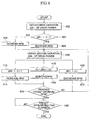
- the control unit 202 determines that the vibration level of the rotary tub 106 deviates from the stable range and is in an unstable state in operation 420, and decreases the current rotational speed of the rotary tub 106 (i.e., the RPM of the motor 108) in operation 422, thus resulting in an attenuation of the vibration together with the current rotational speed of the rotary tub 106.
Landscapes
- Engineering & Computer Science (AREA)
- Textile Engineering (AREA)
- Control Of Washing Machine And Dryer (AREA)
Abstract
Description
Claims (27)
- A washing machine, comprising:a rotary tub (106);a motor (108) linked to the rotary tub to be supplied with drive power and rotating to rotate the rotary tub;a vibration detector (204) operable to detect a vibration level of the rotary tub during a rotation of the rotary tub using a variation of the drive power supplied to the motor when the motor rotates; anda controller (202) operable to control a current rotational speed of the motor to be increased, maintained or decreased according to the vibration level of the rotary tub detected by the vibration detector, to attenuate the vibration level of the rotary tub.
- The washing machine according to claim 1, wherein the controller is operable to control an intensity of the drive power to allow the current rotational speed of the motor to follow a target rotational speed of the motor.
- The washing machine according to claim 1 or 2, wherein the vibration detector is operable to detect a voltage and a phase of the drive power.
- The washing machine according to any preceding claim, wherein the controller is operable to obtain detection results for the vibration level by the vibration detector at regular preset intervals, and to determine the vibration level of the rotary tub based on a difference between two neighboring detection results.
- The washing machine according to claim 4, wherein the controller is operable to vary the current rotational speed of the motor by stages according to the vibration level of the rotary tub so that the vibration attenuates.
- A method of controlling a washing machine, the washing machine having a rotary tub (106) and a motor (108) linked to the rotary tub to be supplied with drive power and rotating to rotate the rotary tub, the method comprising the steps of:detecting a vibration level of the rotary tub during a rotation of the rotary tub using a variation of the drive power supplied to the motor when the motor rotates (402, 410); andcontrolling a current rotational speed of the motor to be increased, maintained or decreased according to the detected vibration level of the rotary tubto attenuate the vibration of the rotary tub (406, 408, 414, 418, 422).
- The method according to claim 6, wherein the controlling of the current rotational speed comprises:controlling an intensity of the drive power to allow the current rotational speed of the motor to follow a target rotational speed of the motor.
- The method according to claim 6 or 7, wherein the detecting of the vibration level comprises:defining a plurality of different reference ranges for a variation of the drive power so as to determine the vibration level of the rotary tub; andascertaining to which of the plurality of different reference ranges the variation of the drive power belongs to determine the vibration level of the rotary tub.
- The method according to claim 8, wherein the plurality of different reference ranges include:a first reference range representing when a rotating state of the rotary tub is stable (412);a second reference range representing when the rotating state of the rotary tub is desirable (416); anda third reference range representing when the rotating state of the rotary tub is unstable (420).
- The method according to claim 9, further comprising:increasing the current rotational speed of the motor when the rotating state of the rotary tub is determined to be stable based on detection results for the vibration level (414).
- The method according to any of claims 6-10, further comprising:maintaining the current rotational speed of the motor without a change thereof when a rotating state of the rotary tub is determined to be desirable based on detection results for the vibration level (418).
- The method according to any of claims 6-11, further comprising:decreasing the current rotational speed of the motor when a rotating state of the rotary tub is determined to be unstable based on detection results for the vibration level (422).
- The method according to any of claims 6-12, wherein the detecting of the vibration level is performed to obtain detection results for the vibration level at regular preset intervals, and the vibration level of the rotary tub is determined based on a difference between two neighboring detection results.
- The method according to claim 13, further comprising:varying by stages the current rotational speed of the motor according to the vibration level of the rotary tub so that the vibration attenuates.
- The method according to claim 14, further comprising:decreasing the current rotational speed of the motor to a rotational speed of a previous stage, when the rotating state of the rotary tub is unstable.
- A washing machine having a rotary tub (106) and a motor (108) to drive the rotary tub, comprising:a vibration detector (204) operable to detect a vibration level of the rotary tub while the rotary tub is driven by the motor, the vibration level being detected according to a degree of variation of drive power supplied to the motor, as the motor rotates; anda controller (202) operable to control a driving speed of the motor according to the vibration level of the rotary tub detected by the vibration detector to attenuate the vibration level of the rotary tub.
- A washing machine having a rotary tub (106) and a motor (108) to drive the rotary tub, comprising:a power variation detector operable to detect a degree of variation of drive power supplied to the motor, as the motor rotates; anda controller (202) operable to control a driving speed of the motor according the degree of variation detected by the power variation detector to attenuate a vibration level of the rotary tub.
- The washing machine according to claim 17, wherein the controller is operable to control an intensity of the drive power so that the driving speed of the motor follows a target speed of the motor.
- The washing machine according to claim 17 or 18, wherein the controller is operable to determine the vibration level of the rotary tub based on a difference between respective pairs of detection results obtained from the power variation detector at regular intervals and to vary the driving speed of the motor by stages according to the determined vibration level.
- A method of controlling a washing machine having a rotary tub (106) and a motor (108) to drive the rotary tub, comprising:detecting a vibration level of the rotary tub while the rotary tub is driven by the motor, the vibration level being detected according to a degree of variation of drive power supplied to the motor, as the motor rotates; andcontrolling a driving speed of the motor according to the vibration level of the rotary tub to attenuate the vibration level of the rotary tub.
- A method of controlling a washing machine having a rotary tub (106) and a motor (108) to drive the rotary tub, comprising:detecting a degree of variation of drive power supplied to the motor, as the motor rotates;controlling a driving speed of the motor according the degree of variation to attenuate a vibration level of the rotary tub.
- The method according to claim 21, wherein the controlling of the driving speed comprises:controlling an intensity of the drive power so that the driving speed of the motor follows a target speed of the motor.
- The method according to claim 21 or 22, wherein the controlling of the driving speed comprises:determining the vibration level of the rotary tub based on a difference between respective pairs of detection results obtained from the power variation detector at regular intervals; andvarying the driving speed of the motor by stages according to the determined vibration level.
- The method according to any of claims 21-23, wherein the detecting of the vibration level comprises:establishing a plurality of preset different reference ranges for the variation of the drive power, the established plurality of preset different reference ranges corresponding to vibration levels of the rotary tub; andcomparing the degree of variation with the established plurality of different reference ranges to determine the vibration level of the rotary tub.
- The method according to claim 24, wherein the plurality of different reference ranges include first, second and third reference ranges, respectively, representing when a driving state of the rotary tub is stable, when the driving state of the rotary tub is desirable and when the driving state of the rotary tub is unstable, the controlling of the driving speed of the motor comprises:increasing the driving speed of the motor when the driving state is determined to be stable;maintaining the driving speed of the motor when the driving state is determined to be desirable; anddecreasing the driving speed of the motor when the driving state is determined to be unstable.
- The method according to claim 25, wherein the increasing, maintaining or decreasing of the driving speed of the motor are repeatedly performed so that the driving speed increases to the maximum driving speed of the motor to drive the rotary tub; the control method further comprising:performing a spin-drying process while the rotary tub rotates at the maximum driving speed; andterminating the spin-drying process after a preset spin-drying time has elapsed.
- The method according to any of claims 23-26, wherein the controlling of the driving speed of the motor further comprises:varying by stages the driving speed of the motor according to the vibration level of the rotary tub so that the vibration attenuates; anddecreasing the driving speed of the motor to a driving speed of a previous stage, when the rotating state of the rotary tub is unstable.
Applications Claiming Priority (2)
| Application Number | Priority Date | Filing Date | Title |
|---|---|---|---|
| KR2003081563 | 2003-11-18 | ||
| KR1020030081563A KR101052787B1 (en) | 2003-11-18 | 2003-11-18 | Washing machine and its control method |
Publications (3)
| Publication Number | Publication Date |
|---|---|
| EP1533411A2 true EP1533411A2 (en) | 2005-05-25 |
| EP1533411A3 EP1533411A3 (en) | 2014-03-19 |
| EP1533411B1 EP1533411B1 (en) | 2017-03-15 |
Family
ID=34431791
Family Applications (1)
| Application Number | Title | Priority Date | Filing Date |
|---|---|---|---|
| EP04254733.1A Expired - Lifetime EP1533411B1 (en) | 2003-11-18 | 2004-08-06 | Washing machine and method of controlling the same |
Country Status (5)
| Country | Link |
|---|---|
| US (1) | US7340791B2 (en) |
| EP (1) | EP1533411B1 (en) |
| JP (1) | JP4058029B2 (en) |
| KR (1) | KR101052787B1 (en) |
| CN (1) | CN100453727C (en) |
Cited By (6)
| Publication number | Priority date | Publication date | Assignee | Title |
|---|---|---|---|---|
| WO2006129157A1 (en) * | 2005-05-30 | 2006-12-07 | Indesit Company S.P.A. | Machine for the treatment of laundry with learning phase |
| WO2007114671A2 (en) | 2006-04-05 | 2007-10-11 | Lg Electronics, Inc. | Spin drying method |
| EP2000576A2 (en) | 2007-06-05 | 2008-12-10 | Samsung Electronics Co., Ltd. | Washing machine and method of controlling the same |
| EP2083109A1 (en) | 2008-01-22 | 2009-07-29 | Samsung Electronics Co., Ltd. | Drum type washing machine having ball balancers and controlling method of the same |
| EP1921197A3 (en) * | 2006-11-06 | 2014-08-20 | Samsung Electronics Co., Ltd. | Washing machine and method of controlling the same |
| EP1950336B1 (en) * | 2007-01-24 | 2019-01-02 | Samsung Electronics Co., Ltd. | Washing machine with balancers and control method thereof |
Families Citing this family (30)
| Publication number | Priority date | Publication date | Assignee | Title |
|---|---|---|---|---|
| JP4656661B2 (en) * | 2006-10-20 | 2011-03-23 | パナソニック株式会社 | Washing machine |
| JP4867631B2 (en) * | 2006-12-08 | 2012-02-01 | パナソニック株式会社 | Washing machine |
| JP4831046B2 (en) * | 2007-10-18 | 2011-12-07 | パナソニック株式会社 | Drum washing machine |
| JP4650476B2 (en) * | 2007-10-18 | 2011-03-16 | パナソニック株式会社 | Drum washing machine |
| AU2008325307A1 (en) * | 2007-11-08 | 2009-05-14 | Fisher & Paykel Appliances Limited | Slow speed drive method for an electronically commutated motor, controller implementing same, washing machine incorporating same |
| JP4812789B2 (en) * | 2008-03-10 | 2011-11-09 | 株式会社東芝 | Washing machine |
| US8695381B2 (en) * | 2008-03-28 | 2014-04-15 | Electrolux Home Products, Inc. | Laundering device vibration control |
| JP4961409B2 (en) * | 2008-09-24 | 2012-06-27 | 日立アプライアンス株式会社 | Drum washing machine |
| KR101588202B1 (en) * | 2009-01-09 | 2016-01-25 | 엘지전자 주식회사 | Method for washing and Washing machine |
| EP2470712B1 (en) | 2009-08-27 | 2018-03-07 | LG Electronics Inc. | Control method of laundry machine |
| WO2011025323A2 (en) * | 2009-08-27 | 2011-03-03 | Lg Electronics Inc. | Control method of laundry machine |
| WO2011025318A1 (en) * | 2009-08-27 | 2011-03-03 | Lg Electronics Inc. | Control method of laundry machine |
| KR102011816B1 (en) * | 2012-02-01 | 2019-08-19 | 엘지전자 주식회사 | Controlling Method for Laundry machine |
| CN103334255B (en) * | 2013-06-09 | 2015-08-05 | 松下家电研究开发(杭州)有限公司 | A kind of intelligent dehydration controlling method of washing machine |
| CN106835612B (en) * | 2013-12-06 | 2019-08-20 | 林向亮 | Automatic shutdown type vibrationproof rotary drum washing machine |
| KR20150075626A (en) * | 2013-12-26 | 2015-07-06 | 동부대우전자 주식회사 | Apparatus and method for reducing vibration of washing machine |
| US9912264B2 (en) * | 2015-07-13 | 2018-03-06 | Nidec Motor Corporation | System and method for limiting vibration of electric motor |
| CN105063955B (en) * | 2015-08-05 | 2018-01-16 | 无锡小天鹅股份有限公司 | The control method and device of washing machine |
| KR102401489B1 (en) | 2015-12-24 | 2022-05-24 | 삼성전자주식회사 | Method of reducing vibration during dehydration and washing machine using the same |
| KR20170086208A (en) * | 2016-01-18 | 2017-07-26 | 엘지전자 주식회사 | Washing machine and method for controlling washing machine |
| KR102527576B1 (en) * | 2016-10-07 | 2023-04-28 | 엘지전자 주식회사 | Washing machine and method for controlling washing machine |
| CN108570789B (en) * | 2017-03-10 | 2021-07-27 | 青岛海尔洗涤电器有限公司 | A control method of a multi-drum washing machine |
| CN108866930B (en) * | 2017-05-10 | 2022-08-16 | 无锡小天鹅电器有限公司 | Method and apparatus for controlling dehydration of washing machine, and machine-readable storage medium |
| CN110857497B (en) * | 2018-08-06 | 2022-04-01 | 无锡小天鹅电器有限公司 | Dehydration control method and device and clothes treatment device |
| CN111286918B (en) * | 2020-03-24 | 2022-12-09 | 青岛海尔洗衣机有限公司 | Dewatering control method of washing machine and washing machine |
| CN113668189A (en) * | 2020-05-14 | 2021-11-19 | 青岛海尔洗衣机有限公司 | Displacement detection device, washing machine and control method of washing machine |
| KR102450221B1 (en) | 2020-12-14 | 2022-10-05 | 엘지전자 주식회사 | Home appliance and controlling method for the same |
| KR102746277B1 (en) * | 2022-02-22 | 2024-12-26 | 엘지전자 주식회사 | Clothes Treatment Apparatus And Controlling Method of The Same |
| KR102771868B1 (en) * | 2022-02-22 | 2025-02-25 | 엘지전자 주식회사 | Clothes Treatment Apparatus And Controlling Method of The Same |
| KR102731227B1 (en) * | 2022-02-22 | 2024-11-18 | 엘지전자 주식회사 | Clothes Treatment Apparatus And Controlling Method of The Same |
Family Cites Families (13)
| Publication number | Priority date | Publication date | Assignee | Title |
|---|---|---|---|---|
| US4765161A (en) * | 1987-10-19 | 1988-08-23 | American Laundry Machinery, Inc. | Out-of-balance control for laundry machines |
| JPH0790067B2 (en) * | 1990-03-14 | 1995-10-04 | 三洋電機株式会社 | Dehydrator |
| KR960013394B1 (en) * | 1993-06-19 | 1996-10-04 | 엘지전자 주식회사 | Low Frequency Vibration Washing Machine and Method |
| JPH07204383A (en) * | 1994-01-26 | 1995-08-08 | Toshiba Corp | Washing machine |
| KR0165517B1 (en) * | 1996-03-07 | 1999-05-01 | 김광호 | Vibration detecting sensor |
| US5946947A (en) * | 1996-05-21 | 1999-09-07 | Samsung Electronics Co., Ltd. | Clothes washing machine having vibration and noise damper |
| KR0183903B1 (en) * | 1996-07-25 | 1999-05-15 | 삼성전자주식회사 | Vibration control method and circuit of washing machine |
| US6470751B1 (en) * | 1999-02-20 | 2002-10-29 | Lg Electronics Inc. | Vibration detecting apparatus and method thereof |
| US6418581B1 (en) * | 1999-06-24 | 2002-07-16 | Ipso-Usa, Inc. | Control system for measuring load imbalance and optimizing spin speed in a laundry washing machine |
| US6640372B2 (en) * | 2000-06-26 | 2003-11-04 | Whirlpool Corporation | Method and apparatus for detecting load unbalance in an appliance |
| KR100741810B1 (en) * | 2001-01-31 | 2007-07-25 | 주식회사 엘지이아이 | Washing machine with frequency sensor |
| JP3957619B2 (en) * | 2002-11-22 | 2007-08-15 | シャープ株式会社 | Ion elution unit and equipment equipped with the same |
| CN1453418A (en) * | 2003-06-04 | 2003-11-05 | 山东大学 | Active damper for washing machine |
-
2003
- 2003-11-18 KR KR1020030081563A patent/KR101052787B1/en not_active Expired - Fee Related
-
2004
- 2004-08-02 US US10/902,812 patent/US7340791B2/en not_active Expired - Fee Related
- 2004-08-06 EP EP04254733.1A patent/EP1533411B1/en not_active Expired - Lifetime
- 2004-08-10 CN CNB2004100705884A patent/CN100453727C/en not_active Expired - Fee Related
- 2004-09-14 JP JP2004267338A patent/JP4058029B2/en not_active Expired - Fee Related
Cited By (10)
| Publication number | Priority date | Publication date | Assignee | Title |
|---|---|---|---|---|
| WO2006129157A1 (en) * | 2005-05-30 | 2006-12-07 | Indesit Company S.P.A. | Machine for the treatment of laundry with learning phase |
| RU2404311C2 (en) * | 2005-05-30 | 2010-11-20 | Индезит Компани С.П.А. | Linen processing machine with radiation stage |
| WO2007114671A2 (en) | 2006-04-05 | 2007-10-11 | Lg Electronics, Inc. | Spin drying method |
| EP2013397A4 (en) * | 2006-04-05 | 2010-08-25 | Lg Electronics Inc | Spin drying method |
| EP1921197A3 (en) * | 2006-11-06 | 2014-08-20 | Samsung Electronics Co., Ltd. | Washing machine and method of controlling the same |
| EP1950336B1 (en) * | 2007-01-24 | 2019-01-02 | Samsung Electronics Co., Ltd. | Washing machine with balancers and control method thereof |
| EP2000576A2 (en) | 2007-06-05 | 2008-12-10 | Samsung Electronics Co., Ltd. | Washing machine and method of controlling the same |
| EP2000576A3 (en) * | 2007-06-05 | 2009-09-09 | Samsung Electronics Co., Ltd. | Washing machine and method of controlling the same |
| EP2083109A1 (en) | 2008-01-22 | 2009-07-29 | Samsung Electronics Co., Ltd. | Drum type washing machine having ball balancers and controlling method of the same |
| US8341787B2 (en) | 2008-01-22 | 2013-01-01 | Samsung Electronics Co., Ltd. | Drum type washing machine having ball balancers and controlling method of the same |
Also Published As
| Publication number | Publication date |
|---|---|
| JP2005144147A (en) | 2005-06-09 |
| KR101052787B1 (en) | 2011-07-29 |
| CN1619042A (en) | 2005-05-25 |
| KR20050047775A (en) | 2005-05-23 |
| JP4058029B2 (en) | 2008-03-05 |
| US7340791B2 (en) | 2008-03-11 |
| US20050102765A1 (en) | 2005-05-19 |
| EP1533411B1 (en) | 2017-03-15 |
| CN100453727C (en) | 2009-01-21 |
| EP1533411A3 (en) | 2014-03-19 |
Similar Documents
| Publication | Publication Date | Title |
|---|---|---|
| EP1533411A2 (en) | Washing machine and method of controlling the same | |
| US8341787B2 (en) | Drum type washing machine having ball balancers and controlling method of the same | |
| CA2252251C (en) | Automatic washing machine incorporating a suds detection and control system | |
| US7296445B2 (en) | Method and apparatus for monitoring load imbalance in a washing machine | |
| US20080301884A1 (en) | Washing machine and method of controlling the same | |
| EP1970478A2 (en) | Washing machine and control method for disentangling clothes in the washing machine | |
| JP3762611B2 (en) | Drum washing machine | |
| KR20000007275A (en) | Method for detecting unbalance of drum washing machine | |
| KR20050105730A (en) | (a) drum type washing machine and method of controlling the same | |
| JP2004514519A (en) | Dehydration speed control method for drum washing machine | |
| KR20210131075A (en) | Washing machine and control method for washing machine | |
| JPH11216296A (en) | Drum type centrifugal dehydration device | |
| KR20050105731A (en) | (a) drum type washing machine and method of controlling the same | |
| RU2443816C2 (en) | Method of automatic setting of control parameters of washing machine and system of its implementation | |
| JP2000157788A (en) | Drum type washing machine | |
| US7707671B2 (en) | Dehydration controlling apparatus for washing machine and method thereof | |
| JP3188143B2 (en) | Centrifugal dehydrator | |
| KR101031333B1 (en) | Washing machine control method | |
| KR101340529B1 (en) | Washing machine and method for controlling washing machine | |
| JP3536565B2 (en) | Washing machine | |
| KR102405804B1 (en) | Laundry treating appratus and controlling method thereof | |
| JP3423294B2 (en) | Centrifugal dehydrator | |
| US12577718B2 (en) | Washing machine and method of controlling the same | |
| CN118581691A (en) | washing machine | |
| KR20050036543A (en) | Method for controlling dehydration in drum type washing machine |
Legal Events
| Date | Code | Title | Description |
|---|---|---|---|
| PUAI | Public reference made under article 153(3) epc to a published international application that has entered the european phase |
Free format text: ORIGINAL CODE: 0009012 |
|
| AK | Designated contracting states |
Kind code of ref document: A2 Designated state(s): AT BE BG CH CY CZ DE DK EE ES FI FR GB GR HU IE IT LI LU MC NL PL PT RO SE SI SK TR |
|
| AX | Request for extension of the european patent |
Extension state: AL HR LT LV MK |
|
| RAP1 | Party data changed (applicant data changed or rights of an application transferred) |
Owner name: SAMSUNG ELECTRONICS CO., LTD. |
|
| PUAL | Search report despatched |
Free format text: ORIGINAL CODE: 0009013 |
|
| AK | Designated contracting states |
Kind code of ref document: A3 Designated state(s): AT BE BG CH CY CZ DE DK EE ES FI FR GB GR HU IE IT LI LU MC NL PL PT RO SE SI SK TR |
|
| AX | Request for extension of the european patent |
Extension state: AL HR LT LV MK |
|
| RIC1 | Information provided on ipc code assigned before grant |
Ipc: D06F 37/30 20060101ALN20140210BHEP Ipc: D06F 35/00 20060101ALI20140210BHEP Ipc: D06F 37/20 20060101AFI20140210BHEP Ipc: D06F 33/02 20060101ALN20140210BHEP |
|
| 17P | Request for examination filed |
Effective date: 20140910 |
|
| RBV | Designated contracting states (corrected) |
Designated state(s): AT BE BG CH CY CZ DE DK EE ES FI FR GB GR HU IE IT LI LU MC NL PL PT RO SE SI SK TR |
|
| AKX | Designation fees paid |
Designated state(s): DE GB |
|
| 17Q | First examination report despatched |
Effective date: 20150421 |
|
| GRAP | Despatch of communication of intention to grant a patent |
Free format text: ORIGINAL CODE: EPIDOSNIGR1 |
|
| STAA | Information on the status of an ep patent application or granted ep patent |
Free format text: STATUS: GRANT OF PATENT IS INTENDED |
|
| RIC1 | Information provided on ipc code assigned before grant |
Ipc: D06F 33/02 20060101ALN20161124BHEP Ipc: D06F 37/20 20060101AFI20161124BHEP Ipc: D06F 37/30 20060101ALN20161124BHEP Ipc: D06F 35/00 20060101ALI20161124BHEP |
|
| INTG | Intention to grant announced |
Effective date: 20161209 |
|
| RIC1 | Information provided on ipc code assigned before grant |
Ipc: D06F 37/30 20060101ALN20161125BHEP Ipc: D06F 33/02 20060101ALN20161125BHEP Ipc: D06F 35/00 20060101ALI20161125BHEP Ipc: D06F 37/20 20060101AFI20161125BHEP |
|
| GRAS | Grant fee paid |
Free format text: ORIGINAL CODE: EPIDOSNIGR3 |
|
| GRAA | (expected) grant |
Free format text: ORIGINAL CODE: 0009210 |
|
| STAA | Information on the status of an ep patent application or granted ep patent |
Free format text: STATUS: THE PATENT HAS BEEN GRANTED |
|
| AK | Designated contracting states |
Kind code of ref document: B1 Designated state(s): DE GB |
|
| REG | Reference to a national code |
Ref country code: GB Ref legal event code: FG4D |
|
| REG | Reference to a national code |
Ref country code: DE Ref legal event code: R096 Ref document number: 602004050907 Country of ref document: DE |
|
| REG | Reference to a national code |
Ref country code: DE Ref legal event code: R097 Ref document number: 602004050907 Country of ref document: DE |
|
| PLBE | No opposition filed within time limit |
Free format text: ORIGINAL CODE: 0009261 |
|
| STAA | Information on the status of an ep patent application or granted ep patent |
Free format text: STATUS: NO OPPOSITION FILED WITHIN TIME LIMIT |
|
| 26N | No opposition filed |
Effective date: 20171218 |
|
| PGFP | Annual fee paid to national office [announced via postgrant information from national office to epo] |
Ref country code: DE Payment date: 20180725 Year of fee payment: 15 |
|
| PGFP | Annual fee paid to national office [announced via postgrant information from national office to epo] |
Ref country code: GB Payment date: 20180725 Year of fee payment: 15 |
|
| REG | Reference to a national code |
Ref country code: DE Ref legal event code: R119 Ref document number: 602004050907 Country of ref document: DE |
|
| GBPC | Gb: european patent ceased through non-payment of renewal fee |
Effective date: 20190806 |
|
| PG25 | Lapsed in a contracting state [announced via postgrant information from national office to epo] |
Ref country code: DE Free format text: LAPSE BECAUSE OF NON-PAYMENT OF DUE FEES Effective date: 20200303 |
|
| PG25 | Lapsed in a contracting state [announced via postgrant information from national office to epo] |
Ref country code: GB Free format text: LAPSE BECAUSE OF NON-PAYMENT OF DUE FEES Effective date: 20190806 |