EP1530200B1 - Werkzeug zur Qualitätserfassung - Google Patents
Werkzeug zur Qualitätserfassung Download PDFInfo
- Publication number
- EP1530200B1 EP1530200B1 EP04253137A EP04253137A EP1530200B1 EP 1530200 B1 EP1530200 B1 EP 1530200B1 EP 04253137 A EP04253137 A EP 04253137A EP 04253137 A EP04253137 A EP 04253137A EP 1530200 B1 EP1530200 B1 EP 1530200B1
- Authority
- EP
- European Patent Office
- Prior art keywords
- frequency
- values
- generating
- pitch
- sequence
- Prior art date
- Legal status (The legal status is an assumption and is not a legal conclusion. Google has not performed a legal analysis and makes no representation as to the accuracy of the status listed.)
- Expired - Lifetime
Links
- 238000001303 quality assessment method Methods 0.000 title claims abstract description 27
- 238000000034 method Methods 0.000 claims abstract description 28
- 238000005070 sampling Methods 0.000 claims abstract description 7
- 238000013507 mapping Methods 0.000 claims description 15
- 238000012549 training Methods 0.000 claims description 9
- 238000004590 computer program Methods 0.000 claims description 4
- 238000012360 testing method Methods 0.000 description 13
- 230000001755 vocal effect Effects 0.000 description 5
- 230000000694 effects Effects 0.000 description 4
- 238000012544 monitoring process Methods 0.000 description 3
- 230000008569 process Effects 0.000 description 3
- 238000004458 analytical method Methods 0.000 description 2
- 238000012512 characterization method Methods 0.000 description 2
- 238000004891 communication Methods 0.000 description 2
- 238000011161 development Methods 0.000 description 2
- 238000000605 extraction Methods 0.000 description 2
- 230000003595 spectral effect Effects 0.000 description 2
- 238000012935 Averaging Methods 0.000 description 1
- 230000003321 amplification Effects 0.000 description 1
- 230000005540 biological transmission Effects 0.000 description 1
- 238000006243 chemical reaction Methods 0.000 description 1
- 230000006835 compression Effects 0.000 description 1
- 238000007906 compression Methods 0.000 description 1
- 230000006735 deficit Effects 0.000 description 1
- 238000001514 detection method Methods 0.000 description 1
- 238000010586 diagram Methods 0.000 description 1
- 238000005516 engineering process Methods 0.000 description 1
- 238000011156 evaluation Methods 0.000 description 1
- 238000001914 filtration Methods 0.000 description 1
- 230000036541 health Effects 0.000 description 1
- 238000012417 linear regression Methods 0.000 description 1
- 238000005259 measurement Methods 0.000 description 1
- 238000010295 mobile communication Methods 0.000 description 1
- 238000003199 nucleic acid amplification method Methods 0.000 description 1
- 230000008447 perception Effects 0.000 description 1
- 238000012545 processing Methods 0.000 description 1
- 230000009467 reduction Effects 0.000 description 1
- 230000004044 response Effects 0.000 description 1
- 230000001360 synchronised effect Effects 0.000 description 1
- 230000002123 temporal effect Effects 0.000 description 1
- 230000009466 transformation Effects 0.000 description 1
- 238000000844 transformation Methods 0.000 description 1
- 238000013024 troubleshooting Methods 0.000 description 1
- 238000012800 visualization Methods 0.000 description 1
Images



Classifications
-
- G—PHYSICS
- G10—MUSICAL INSTRUMENTS; ACOUSTICS
- G10L—SPEECH ANALYSIS TECHNIQUES OR SPEECH SYNTHESIS; SPEECH RECOGNITION; SPEECH OR VOICE PROCESSING TECHNIQUES; SPEECH OR AUDIO CODING OR DECODING
- G10L25/00—Speech or voice analysis techniques not restricted to a single one of groups G10L15/00 - G10L21/00
- G10L25/48—Speech or voice analysis techniques not restricted to a single one of groups G10L15/00 - G10L21/00 specially adapted for particular use
- G10L25/69—Speech or voice analysis techniques not restricted to a single one of groups G10L15/00 - G10L21/00 specially adapted for particular use for evaluating synthetic or decoded voice signals
-
- G—PHYSICS
- G10—MUSICAL INSTRUMENTS; ACOUSTICS
- G10L—SPEECH ANALYSIS TECHNIQUES OR SPEECH SYNTHESIS; SPEECH RECOGNITION; SPEECH OR VOICE PROCESSING TECHNIQUES; SPEECH OR AUDIO CODING OR DECODING
- G10L19/00—Speech or audio signals analysis-synthesis techniques for redundancy reduction, e.g. in vocoders; Coding or decoding of speech or audio signals, using source filter models or psychoacoustic analysis
Definitions
- This invention relates to a new parameter suitable for use in non-intrusive speech quality assessment system.
- Signals carried over telecommunications links can undergo considerable transformations, such as digitisation, encryption and modulation. They can also be distorted due to the effects of lossy compression and transmission errors.
- Some automated systems require a known (reference) signal to be played through a distorting system (the communications network or other system under test) to derive a degraded signal, which is compared with an undistorted version of the reference signal.
- a distorting system the communications network or other system under test
- Such systems are known as "intrusive" quality assessment systems, because whilst the test is carried out the channel under test cannot, in general, carry live traffic.
- non-intrusive quality assessment systems are systems which can be used whilst live traffic is carried by the channel, without the need for test calls.
- Non-intrusive testing is required because for some testing it is not possible to make test calls. This could be because the call termination points are geographically diverse or unknown. It could also be that the cost of capacity is particularly high on the route under test. Whereas, a non-intrusive monitoring application can run all the time on the live calls to give a meaningful measurement of performance.
- a known non-intrusive quality assessment system uses a database of distorted samples which has been assessed by panels of human listeners to provide a Mean Opinion Score (MOS).
- MOS Mean Opinion Score
- MOSs are generated by subjective tests which aim to find the average user's perception of a system's speech quality by asking a panel of listeners a directed question and providing a limited response choice. For example, to determine listening quality users are asked to rate "the quality of the speech" on a five-point scale from Bad to Excellent. The MOS, is calculated for a particular condition by averaging the ratings of all listeners.
- This invention relates to improved parameters for a speech quality assessment system.
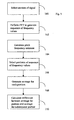
- a method of generating a parameter from a signal comprising a sequence of values measured from voiced portions of said signal at a sampling frequency, said parameter suitable for use in a quality assessment tool, said method comprising the steps of
- Said section of said sequence of values may be selected such that a pitch mark is associated with a value central to said section.
- the frequency transform may comprise a Fast Fourier Transform.
- the step of generating a pitch frequency estimate may comprise the steps of using pitch marks associated with said sequence of values; comparing the number of values between a value associated with a pitch mark and a value associated with an immediately preceding pitch mark with the number of vlues between the value associated with the pitch mark and a value associated with an immediately following pitch mark; and generating said pitch frequency estimate in dependence upon the minimum number of said values, and the sampling frequency.
- the portions of said sequence of frequency values may be selected by generating multiples of said pitch frequency estimate, said multiples representing harmonics of said pitch frequency estimate; and selecting portions in which the frequency range of the portion is substantially equal to half said pitch frequency estimate; and which the central frequency of each portion is either a frequency substantially equal to one of said multiples, or a frequency substantially half way between two of said multiples.
- the invention also provides a method of training a quality assessment tool comprising the step of training a mapping for use in a method of assessing speech quality in a telecommunications network, such that a fit between a quality measure generated from a plurality of parameters for a signal and the mean opinion score associated with said signal is optimised by said mapping wherein said plurality of parameters includes a parameter generated according to any on of the preceding claims.
- the invention also provides a method of assessing speech quality in a telecommunications network comprising the steps of generating a parameter according to any one of the preceding claims; generating a quality measure in dependence upon said parameter.
- a non-intrusive quality assessment system 1 is connected to a communications channel 2 via an interface 3.
- the interface 3 provides any data conversion required between the monitored data and the quality assessment system 1.
- a data signal is analysed by the quality assessment system, and the resulting quality prediction is stored in a database 4. Details relating to data signals which have been analysed are also stored for later reference. Further data signals are analysed and the quality prediction is updated so that over a period of time the quality prediction relates to a plurality of analysed data signals.
- the database 4 may store quality prediction results from a plurality of different intercept points.
- the database 4 may be remotely interrogated by a user via a user terminal 5, which provides analysis and visualisation of quality prediction results stored in the database 4.
- Figure 2 is a block diagram of an illustrative telecommunications network showing possible intercept points where non-intrusive quality assessment may be employed.
- the telecommunication network shown in Figure 2 comprises an operator's network 20 which is connected to a Global System for Mobile communications (GSM) mobile network 22, a third generation (3G) mobile network 24, and an Internet Protocol (IP) network 26.
- GSM Global System for Mobile communications
- IP Internet Protocol
- the operator's network 20 is accessed by customers via main distribution frames 28, 28' which are connected to a digital local exchange (DLE) 30 possibly via a remote concentrator unit (RCU) 32.
- DLE digital local exchange
- RCU remote concentrator unit
- DMSU digital multiplexing switching units
- ISC international switching centre
- GMSC Gateway Mobile Switching Centre
- the IP network 26 comprises a plurality of IP routers of which one IP router 46 is shown.
- the GSM network 22 comprises a plurality of mobile switching centres (MSCs), of which one MSC 48 is shown, which are connected to a plurality of base transceiver stations (BTSs), of which one BTS 50 is shown.
- the 3G network 24 comprises a plurality of nodes, of which one node 52 is shown.
- Non intrusive quality assessment may be performed, for example, at the following points:
- testing regimes and configurations can be used to suit a particular application, providing quality measures for selections of calls based upon the user's requirements. These could include different testing schedules and route selections. With multiple assessment points in a network, it is possible to make comparisons of results between assessment points. This allows the performance of specific links or network subsystems to be monitored. Reductions in the quality perceived by customers can then be attributed to specific circumstances or faults.
- the data, stored in the database 4, can be used for a number of applications such as :-
- a database 60 contains distorted speech samples containing a diverse range of conditions and technologies. These have been assessed by panels of human listeners to provide a MOS, in a known manner. Each speech sample therefore has an associated MOS derived from subjective tests.
- the database 60 includes speech signal having the following network conditions and impairments amongst others, mobile network errors, mutes, low bit rate speech codecs, noise, transcoding, Voice over Internet Protocol (VoIP), Digital Circuit Multiplication Equipment (DCME) clipping.
- VoIP Voice over Internet Protocol
- DCME Digital Circuit Multiplication Equipment
- each sample is pre-processed to normalise the signal level and take account of any filtering effects of the network via which the speech sample was collected.
- the speech sample is filtered, level aligned and any DC offset is removed.
- the amount of amplification or attenuation applied is stored for later use.
- tone detection is performed for each sample to determine whether the sample is speech, data, or if it contains DTMF or musical tones. If it is determined that the sample is not speech then the sample is discarded, and is not used for training the quality assessment tool.
- each speech sample is annotated to indicate periods of speech activity and silence/noise. This is achieved by use of a Voice Activity Detector (VAD) together with a voiced/unvoiced speech discriminator.
- VAD Voice Activity Detector
- each speech sample is annotated to indicate positions of the pitch cycles using a temporal/spectral pitch extraction method.
- This allows parameters to be extracted on a pitch synchronous basis, which helps to provide parameters which are independent of the particular talker.
- Vocal Tract Descriptors are extracted as part of the speech parameterisation described later and need to be taken from the voiced sections of the speech file.
- a final pitch cycle identifier is used to provide boundaries for this extraction.
- a characterisation of the properties of the pitch structure over time is also passed to step 65 to form part of the speech parameters.
- the parameterisation step 65 is designed to reduce the amount of data to be processed whilst preserving the information relevant to the distortions present in the speech sample.
- candidate parameters are calculated including the following:
- vocal tract parameters are calculated. They capture the overall fit of the vocal tract model, instantaneous improbable variations and illegal sequences. Average values and statistics for individual vocal tract model elements over time are also included as base parameters. For example, see International Patent Application Number WO 01/35393.
- Distortion identification may also be performed. This is not described here, as it is not relevant to the present invention. A full description may be found in co-pending European Patent Application number 03250333.6, published under EP-A-1443496.
- the inventors have recently invented a new spectral clarity parameter which significantly improves performance of the speech quality assessment method.
- a section of a signal such as that shown in Figure 4a is selected.
- the signal comprises a sequence of values which have been measured at a particular sampling frequency.
- the signal is sampled at a frequency of 8000 Hz.
- Figure 4b represents a sequence of pitch marks previously extracted and associated with the signal.
- a section comprising 512 values is selected such that a value associated with a pitch mark P is central to the selected section.
- a Blackman Harris window is then applied to the portion and a Fast Fourier Transform is applied at step 102 to produce a sequence of frequency values as illustrated schematically in Figure 4c. It will be understood that other frequency transforms for example a Discrete Fourier Transform (DFT) could equally well be used.
- DFT Discrete Fourier Transform
- a pitch frequency estimate is generated as follows.
- the number of values between pitch mark P and pitch mark P+1 is compared to the number of values between pitch mark P and pitch mark P-1. In this example the differences are 80 and 81 values respectively.
- the minimum is selected, and the pitch frequency estimate is calculated in dependence upon the sampling frequency. Therefore in this example the pitch frequency estimate is 100Hz.
- the pitch frequency estimate represents the pitch of the speech and is represented by H0.
- step 106 portions of the sequence of frequency values are selected in dependence upon the pitch frequency estimate as follows. Harmonics (H1 - H5) are estimated to occur around multiples of the pitch frequency estimate H0, so in this example we would expect H1 to be around 200Hz, H2 to be around 300Hz etc. These are illustrated schematically in Figure 4c. It would be possible to calculate a more precise harmonic frequency by performing 'peak picking' around the expected frequency value of the harmonics.
- Portions comprising a frequency range of half the pitch frequency estimate are selected, although other shorter frequency ranges could be used.
- the centre frequency of the portions selected are equal to either a frequency value of a harmonic, or to a frequency value half way between two harmonics.
- Selected portions A, B, C, D, E, F, G are illustrated in Figure 4c. Note that if the frequency range of a portion equal to half the frequency range of the pitch frequency estimate is used then there will be no space between subsequent selected portions.
- An average value for each portion is then calculated at step 108, simply by summing the sequence of values in each portion and dividing the total by the number of values in said portion.
- the sum of differences between two adjacent portions is calculated and an average over the number of peaks used is generated.
- the differences used to generate the parameter are those associated with the portions relating to H2 to H5 and the subsequence portion in each case. This is because H1 is in generally filtered out in practice because of the telephone bandwidth.
- a parameter is thus generated for each pitch mark, and in order to generate a parameter for the whole of the voiced part of the signal a simple average is generated.
- mapping 76 is trained at 68. Once the optimum mapping between the parameters for each speech sample and the MOS associated with each speech sample (provided by the database 60) has been determined a characterisation of the mapping is saved at step 69, which includes identification of the particular parameters which resulted in the optimum mapping.
- mapping is a linear mapping between the chosen parameters and MOSs and the optimum mapping is determined using linear regression analysis, such that once the mapping has been trained at step 68, the mapping 76 is characterised by a set of parameters used together with a weight for each parameter.
- the steps for operation of the quality assessment tool are similar to the steps shown in Figure 3, which are performed during training of the overall mapping for the quality assessment tool.
- Steps 61-64 operate as described with reference to Figure 3. In this case only one sample is processed at a time. At step 75 the previously saved mapping characteristics 76 are used to determine a MOS for the sample.
Landscapes
- Engineering & Computer Science (AREA)
- Computational Linguistics (AREA)
- Signal Processing (AREA)
- Health & Medical Sciences (AREA)
- Audiology, Speech & Language Pathology (AREA)
- Human Computer Interaction (AREA)
- Physics & Mathematics (AREA)
- Acoustics & Sound (AREA)
- Multimedia (AREA)
- Telephonic Communication Services (AREA)
- Valve-Gear Or Valve Arrangements (AREA)
- Paper (AREA)
- Monitoring And Testing Of Exchanges (AREA)
- Data Exchanges In Wide-Area Networks (AREA)
- Complex Calculations (AREA)
Claims (9)
- Verfahren zum Erzeugen eines Parameters aus einem Signal mit einer Sequenz von Werten, die mit einer Abtastfrequenz aus stimmhaften Teilen des Signals gemessen werden, wobei der Parameter für die Verwendung in einem Qualitätserfassungswerkzeug geeignet ist, wobei das Verfahren die folgenden Schritte umfaßt:a) Auswählen (100) eines Abschnitts des Signals;b) Ausführen (102) einer Frequenztransformation an dem Abschnitt, um eine Sequenz von Frequenzwerten bereitzustellen; undc) Erzeugen (104) einer Tonhöhenfrequenzschätzung;
dadurch gekennzeichnet, daß das Verfahren ferner die folgenden Schritte umfaßt:d) Auswählen (106) einer Vielzahl von Teilen der Sequenz von Frequenzwerten in Abhängigkeit von der Tonhöhenfrequenzschätzung, wobei die Teile einen Frequenzbereich und eine Mittenfrequenz aufweisen;e) Erzeugen (108) eines Mittelwerts für jeden der Vielzahl von Teilen durch Summieren der Sequenz von Werten jedes Teils und Dividieren des Gesamtwerts durch die Anzahl der Werte in dem Teil;f) Erzeugen (110) eines Abschnittsparameters in Abhängigkeit von der Differenz zwischen dem Mittelwert für einen Teil der Sequenz von Frequenzwerten und dem Mittelwert für einen nachfolgenden Teil der Sequenz von Frequenzwerten;g) Wiederholen der Schritte a) - f), um eine Vielzahl der Abschnittsparameter bereitzustellen, und Erzeugen der Parameter durch eine Schätzung in Abhängigkeit von der Vielzahl der Abschnittsparameter. - Verfahren nach Anspruch 1, bei dem der Abschnitt der Sequenz von Werten so ausgewählt wird, daß eine Tonhöhenmarkierung mit einem Wert in der Mitte des Abschnitts assoziiert wird.
- Verfahren nach Anspruch 1 oder Anspruch 2, bei dem die Frequenztransformation eine schnelle Fouriertransformation umfaßt.
- Verfahren nach einem der vorhergehenden Ansprüche, bei dem der Schritt des Erzeugens einer Tonhöhenfrequenzschätzung die folgenden Schritte umfaßt:Verwenden der mit der Sequenz von Werten assoziierten Tonhöhenmarkierungen;Vergleichen der Anzahl von Werten zwischen einem mit einer Tonhöhenmarkierung assoziierten Wert und einem mit einer unmittelbar vorausgehenden Tonhöhenmarkierung assoziierten Wert mit einer Anzahl von Werten zwischen dem mit der Tonhöhenmarkierung assoziierten Wert und einem mit einer unmittelbar folgenden Tonhöhenmarkierung assoziierten Wert;Erzeugen der Tonhöhenfrequenzschätzung in Abhängigkeit von der minimalen Anzahl der Werte und der Abtastfrequenz.
- Verfahren nach einem der vorhergehenden Ansprüche, bei dem die Teile der Sequenz von Frequenzwerten durch die folgenden Schritte ausgewählt werden:Erzeugen von Vielfachen der Tonhöhenfrequenzschätzung, wobei die Vielfachen Oberschwingungen der Tonhöhenfrequenzschätzung repräsentieren; undAuswählen von Teilen, in denen der Frequenzbereich des Teils im wesentlichen gleich der Hälfte der Tonhöhenfrequenzschätzung ist; und wobei die Mittenfrequenz jedes Teils entweder eine Frequenz ist, die im wesentlichen gleich einem der Vielfachen ist, oder eine Frequenz, die im wesentlichen halb zwischen zwei der Vielfachen liegt.
- Verfahren zum Trainieren eines Qualitätserfassungswerkzeugs mit dem Schritt des Trainierens (68) einer Abbildung zur Verwendung bei einem Verfahren zum Erfassen der Sprachqualität in einem Telekommunikationsnetz dergestalt, daß eine Anpassung zwischen einem aus einer Vielzahl von Parametern für ein Signal erzeugten Qualitätsmaß und dem mit dem Signal assoziierten mittleren Meinungswert durch die Abbildung optimiert wird, wobei die Vielzahl von Parametern einen nach einem der vorhergehenden Ansprüche erzeugten Parameter enthält.
- Verfahren zum Erfassen von Sprachqualität in einem Telekommunikationsnetz, mit den folgenden Schritten:Erzeugen eines Parameters nach einem der vorhergehenden Ansprüche;Erzeugen (75) eines Qualitätsmaßes in Abhängigkeit von dem Parameter.
- Computerlesbares Medium, das ein Computerprogramm zum Implementieren eines Verfahrens nach einem der Ansprüche 1 bis 7 trägt.
- Computerprogramm das Computerprogrammcodemittel umfaßt, die, wenn sie ausgeführt werden, bewirken, daß ein Computer ein Verfahren nach einem der Ansprüche 1 bis 7 durchführt.
Applications Claiming Priority (2)
| Application Number | Priority Date | Filing Date | Title |
|---|---|---|---|
| GB0326043A GB2407952B (en) | 2003-11-07 | 2003-11-07 | Quality assessment tool |
| GB0326043 | 2003-11-07 |
Publications (3)
| Publication Number | Publication Date |
|---|---|
| EP1530200A1 EP1530200A1 (de) | 2005-05-11 |
| EP1530200B1 true EP1530200B1 (de) | 2006-07-19 |
| EP1530200B8 EP1530200B8 (de) | 2008-10-08 |
Family
ID=29726155
Family Applications (1)
| Application Number | Title | Priority Date | Filing Date |
|---|---|---|---|
| EP04253137A Expired - Lifetime EP1530200B8 (de) | 2003-11-07 | 2004-05-26 | Werkzeug zur Qualitätserfassung |
Country Status (6)
| Country | Link |
|---|---|
| US (1) | US7406419B2 (de) |
| EP (1) | EP1530200B8 (de) |
| JP (1) | JP4759230B2 (de) |
| AT (1) | ATE333695T1 (de) |
| DE (1) | DE602004001564T2 (de) |
| GB (1) | GB2407952B (de) |
Families Citing this family (15)
| Publication number | Priority date | Publication date | Assignee | Title |
|---|---|---|---|---|
| US20050228655A1 (en) * | 2004-04-05 | 2005-10-13 | Lucent Technologies, Inc. | Real-time objective voice analyzer |
| EP1727375A1 (de) | 2005-05-27 | 2006-11-29 | Psytechnics Limited | Beurteilung der wahrgenommenen Qualität eines Video-Paketdatenstromes |
| US7856355B2 (en) * | 2005-07-05 | 2010-12-21 | Alcatel-Lucent Usa Inc. | Speech quality assessment method and system |
| US7751485B2 (en) | 2005-10-05 | 2010-07-06 | Lg Electronics Inc. | Signal processing using pilot based coding |
| KR100857112B1 (ko) | 2005-10-05 | 2008-09-05 | 엘지전자 주식회사 | 신호 처리 방법 및 이의 장치, 그리고 인코딩 및 디코딩방법 및 이의 장치 |
| US7696907B2 (en) | 2005-10-05 | 2010-04-13 | Lg Electronics Inc. | Method and apparatus for signal processing and encoding and decoding method, and apparatus therefor |
| US7672379B2 (en) | 2005-10-05 | 2010-03-02 | Lg Electronics Inc. | Audio signal processing, encoding, and decoding |
| WO2007040349A1 (en) | 2005-10-05 | 2007-04-12 | Lg Electronics Inc. | Method and apparatus for signal processing |
| US8370132B1 (en) * | 2005-11-21 | 2013-02-05 | Verizon Services Corp. | Distributed apparatus and method for a perceptual quality measurement service |
| US7752053B2 (en) | 2006-01-13 | 2010-07-06 | Lg Electronics Inc. | Audio signal processing using pilot based coding |
| CN101411171B (zh) * | 2006-01-31 | 2013-05-08 | 艾利森电话股份有限公司 | 非侵入信号质量评测的方法和设备 |
| US20070203694A1 (en) * | 2006-02-28 | 2007-08-30 | Nortel Networks Limited | Single-sided speech quality measurement |
| JP5018773B2 (ja) * | 2006-05-26 | 2012-09-05 | 日本電気株式会社 | 音声入力システム、対話型ロボット、音声入力方法、および、音声入力プログラム |
| EP2106154A1 (de) * | 2008-03-28 | 2009-09-30 | Deutsche Telekom AG | Audiovisuelle Qualitätsbewertung |
| US10541894B2 (en) | 2016-10-20 | 2020-01-21 | Netscout Systems, Inc. | Method for assessing the perceived quality of adaptive video streaming |
Family Cites Families (14)
| Publication number | Priority date | Publication date | Assignee | Title |
|---|---|---|---|---|
| SG47708A1 (en) * | 1993-11-25 | 1998-04-17 | British Telecomm | Testing telecommunication apparatus |
| JPH0895596A (ja) * | 1994-09-22 | 1996-04-12 | Nippon Telegr & Teleph Corp <Ntt> | 速見速聴き装置及び方法 |
| JP3094832B2 (ja) * | 1995-03-24 | 2000-10-03 | 三菱電機株式会社 | 信号識別器 |
| JP3576800B2 (ja) * | 1997-04-09 | 2004-10-13 | 松下電器産業株式会社 | 音声分析方法、及びプログラム記録媒体 |
| US6330428B1 (en) * | 1998-12-23 | 2001-12-11 | Nortel Networks Limited | Voice quality performance evaluator and method of operation in conjunction with a communication network |
| US6985559B2 (en) * | 1998-12-24 | 2006-01-10 | Mci, Inc. | Method and apparatus for estimating quality in a telephonic voice connection |
| SE9903553D0 (sv) * | 1999-01-27 | 1999-10-01 | Lars Liljeryd | Enhancing percepptual performance of SBR and related coding methods by adaptive noise addition (ANA) and noise substitution limiting (NSL) |
| EP1228505B1 (de) * | 1999-11-08 | 2003-12-03 | BRITISH TELECOMMUNICATIONS public limited company | Nicht-beeinflussende bestimmung der sprachqualität |
| JP3325248B2 (ja) * | 1999-12-17 | 2002-09-17 | 株式会社ワイ・アール・ピー高機能移動体通信研究所 | 音声符号化パラメータの取得方法および装置 |
| JP3404350B2 (ja) * | 2000-03-06 | 2003-05-06 | パナソニック モバイルコミュニケーションズ株式会社 | 音声符号化パラメータ取得方法、音声復号方法及び装置 |
| JP2002123296A (ja) * | 2000-10-19 | 2002-04-26 | Dainippon Printing Co Ltd | 音響信号の符号化方法および分離方法 |
| JP3698310B2 (ja) * | 2001-02-22 | 2005-09-21 | 日本電信電話株式会社 | 客観品質測定装置を使用した主観品質推定方法およびこの方法を実施する装置 |
| EP1244094A1 (de) * | 2001-03-20 | 2002-09-25 | Swissqual AG | Verfahren und Vorrichtung zur Bestimmung eines Qualitätsmasses eines Audiosignals |
| US6917916B2 (en) * | 2001-12-13 | 2005-07-12 | Motorola, Inc. | Method and apparatus for testing digital channels in a wireless communication system |
-
2003
- 2003-11-07 GB GB0326043A patent/GB2407952B/en not_active Expired - Lifetime
-
2004
- 2004-05-26 DE DE602004001564T patent/DE602004001564T2/de not_active Expired - Lifetime
- 2004-05-26 EP EP04253137A patent/EP1530200B8/de not_active Expired - Lifetime
- 2004-05-26 AT AT04253137T patent/ATE333695T1/de not_active IP Right Cessation
- 2004-06-07 US US10/862,840 patent/US7406419B2/en active Active
- 2004-06-11 JP JP2004173491A patent/JP4759230B2/ja not_active Expired - Fee Related
Also Published As
| Publication number | Publication date |
|---|---|
| GB2407952A (en) | 2005-05-11 |
| EP1530200A1 (de) | 2005-05-11 |
| US7406419B2 (en) | 2008-07-29 |
| JP4759230B2 (ja) | 2011-08-31 |
| EP1530200B8 (de) | 2008-10-08 |
| US20050143977A1 (en) | 2005-06-30 |
| DE602004001564T2 (de) | 2007-06-28 |
| GB0326043D0 (en) | 2003-12-10 |
| DE602004001564D1 (de) | 2006-08-31 |
| JP2005143074A (ja) | 2005-06-02 |
| ATE333695T1 (de) | 2006-08-15 |
| GB2407952B (en) | 2006-11-29 |
Similar Documents
| Publication | Publication Date | Title |
|---|---|---|
| EP1530200B1 (de) | Werkzeug zur Qualitätserfassung | |
| US8689105B2 (en) | Real-time monitoring of perceived quality of packet voice transmission | |
| US7606704B2 (en) | Quality assessment tool | |
| US6246978B1 (en) | Method and system for measurement of speech distortion from samples of telephonic voice signals | |
| Rix | Perceptual speech quality assessment-a review | |
| JP2006115498A (ja) | 音声品質自動測定発表テストシステム | |
| EP1938496B1 (de) | Verfahren und vorrichtung zur schätzung der sprachqualität | |
| US7657388B2 (en) | Quality assessment tool | |
| EP1443497B1 (de) | Verfahren zur Qualitätsbestimmung eines Audiosignals | |
| Polacký et al. | An analysis of the impact of packet loss, codecs and type of voice on internal parameters of P. 563 model | |
| Wanstedt et al. | Development of an objective speech quality measurement model for the AMR codec | |
| Mahdi | Voice quality measurement in modern telecommunication networks | |
| Somek et al. | Speech quality assessment | |
| Mahdi et al. | Perceptual Voice Quality Measurement-Can You Hear Me Loud and Clear? | |
| Kraljevski et al. | Perceived speech quality estimation using DTW algorithm | |
| Mahdi | Advances in Perceptual Speech Quality Assessment | |
| Picovici | Perceptual Voice Quality | |
| Mousa et al. | VoIP Quality Assessment Technologies | |
| Kraljevski et al. | Speech Quality Measurement in GSM Networks Using Time Encoded Signal Processing |
Legal Events
| Date | Code | Title | Description |
|---|---|---|---|
| PUAI | Public reference made under article 153(3) epc to a published international application that has entered the european phase |
Free format text: ORIGINAL CODE: 0009012 |
|
| AK | Designated contracting states |
Kind code of ref document: A1 Designated state(s): AT BE BG CH CY CZ DE DK EE ES FI FR GB GR HU IE IT LI LU MC NL PL PT RO SE SI SK TR |
|
| AX | Request for extension of the european patent |
Extension state: AL HR LT LV MK |
|
| 17P | Request for examination filed |
Effective date: 20050913 |
|
| GRAP | Despatch of communication of intention to grant a patent |
Free format text: ORIGINAL CODE: EPIDOSNIGR1 |
|
| AKX | Designation fees paid |
Designated state(s): AT BE BG CH CY CZ DE DK EE ES FI FR GB GR HU IE IT LI LU MC NL PL PT RO SE SI SK TR |
|
| GRAS | Grant fee paid |
Free format text: ORIGINAL CODE: EPIDOSNIGR3 |
|
| GRAA | (expected) grant |
Free format text: ORIGINAL CODE: 0009210 |
|
| AK | Designated contracting states |
Kind code of ref document: B1 Designated state(s): AT BE BG CH CY CZ DE DK EE ES FI FR GB GR HU IE IT LI LU MC NL PL PT RO SE SI SK TR |
|
| PG25 | Lapsed in a contracting state [announced via postgrant information from national office to epo] |
Ref country code: SI Free format text: LAPSE BECAUSE OF FAILURE TO SUBMIT A TRANSLATION OF THE DESCRIPTION OR TO PAY THE FEE WITHIN THE PRESCRIBED TIME-LIMIT Effective date: 20060719 Ref country code: IT Free format text: LAPSE BECAUSE OF FAILURE TO SUBMIT A TRANSLATION OF THE DESCRIPTION OR TO PAY THE FEE WITHIN THE PRESCRIBED TIME-LIMIT;WARNING: LAPSES OF ITALIAN PATENTS WITH EFFECTIVE DATE BEFORE 2007 MAY HAVE OCCURRED AT ANY TIME BEFORE 2007. THE CORRECT EFFECTIVE DATE MAY BE DIFFERENT FROM THE ONE RECORDED. Effective date: 20060719 Ref country code: LI Free format text: LAPSE BECAUSE OF FAILURE TO SUBMIT A TRANSLATION OF THE DESCRIPTION OR TO PAY THE FEE WITHIN THE PRESCRIBED TIME-LIMIT Effective date: 20060719 Ref country code: BE Free format text: LAPSE BECAUSE OF FAILURE TO SUBMIT A TRANSLATION OF THE DESCRIPTION OR TO PAY THE FEE WITHIN THE PRESCRIBED TIME-LIMIT Effective date: 20060719 Ref country code: CZ Free format text: LAPSE BECAUSE OF FAILURE TO SUBMIT A TRANSLATION OF THE DESCRIPTION OR TO PAY THE FEE WITHIN THE PRESCRIBED TIME-LIMIT Effective date: 20060719 Ref country code: PL Free format text: LAPSE BECAUSE OF FAILURE TO SUBMIT A TRANSLATION OF THE DESCRIPTION OR TO PAY THE FEE WITHIN THE PRESCRIBED TIME-LIMIT Effective date: 20060719 Ref country code: SK Free format text: LAPSE BECAUSE OF FAILURE TO SUBMIT A TRANSLATION OF THE DESCRIPTION OR TO PAY THE FEE WITHIN THE PRESCRIBED TIME-LIMIT Effective date: 20060719 Ref country code: AT Free format text: LAPSE BECAUSE OF FAILURE TO SUBMIT A TRANSLATION OF THE DESCRIPTION OR TO PAY THE FEE WITHIN THE PRESCRIBED TIME-LIMIT Effective date: 20060719 Ref country code: FI Free format text: LAPSE BECAUSE OF FAILURE TO SUBMIT A TRANSLATION OF THE DESCRIPTION OR TO PAY THE FEE WITHIN THE PRESCRIBED TIME-LIMIT Effective date: 20060719 Ref country code: NL Free format text: LAPSE BECAUSE OF FAILURE TO SUBMIT A TRANSLATION OF THE DESCRIPTION OR TO PAY THE FEE WITHIN THE PRESCRIBED TIME-LIMIT Effective date: 20060719 Ref country code: RO Free format text: LAPSE BECAUSE OF FAILURE TO SUBMIT A TRANSLATION OF THE DESCRIPTION OR TO PAY THE FEE WITHIN THE PRESCRIBED TIME-LIMIT Effective date: 20060719 Ref country code: CH Free format text: LAPSE BECAUSE OF FAILURE TO SUBMIT A TRANSLATION OF THE DESCRIPTION OR TO PAY THE FEE WITHIN THE PRESCRIBED TIME-LIMIT Effective date: 20060719 |
|
| REG | Reference to a national code |
Ref country code: GB Ref legal event code: FG4D |
|
| REG | Reference to a national code |
Ref country code: CH Ref legal event code: EP |
|
| RBV | Designated contracting states (corrected) |
Designated state(s): AT BE BG CH CY CZ DE DK EE ES FI FR GB GR HU IE IT LI LU MC NL PL PT RO SE SI SK TR |
|
| REG | Reference to a national code |
Ref country code: IE Ref legal event code: FG4D |
|
| REF | Corresponds to: |
Ref document number: 602004001564 Country of ref document: DE Date of ref document: 20060831 Kind code of ref document: P |
|
| PG25 | Lapsed in a contracting state [announced via postgrant information from national office to epo] |
Ref country code: BG Free format text: LAPSE BECAUSE OF FAILURE TO SUBMIT A TRANSLATION OF THE DESCRIPTION OR TO PAY THE FEE WITHIN THE PRESCRIBED TIME-LIMIT Effective date: 20061019 Ref country code: SE Free format text: LAPSE BECAUSE OF FAILURE TO SUBMIT A TRANSLATION OF THE DESCRIPTION OR TO PAY THE FEE WITHIN THE PRESCRIBED TIME-LIMIT Effective date: 20061019 Ref country code: DK Free format text: LAPSE BECAUSE OF FAILURE TO SUBMIT A TRANSLATION OF THE DESCRIPTION OR TO PAY THE FEE WITHIN THE PRESCRIBED TIME-LIMIT Effective date: 20061019 |
|
| PG25 | Lapsed in a contracting state [announced via postgrant information from national office to epo] |
Ref country code: ES Free format text: LAPSE BECAUSE OF FAILURE TO SUBMIT A TRANSLATION OF THE DESCRIPTION OR TO PAY THE FEE WITHIN THE PRESCRIBED TIME-LIMIT Effective date: 20061030 |
|
| PG25 | Lapsed in a contracting state [announced via postgrant information from national office to epo] |
Ref country code: PT Free format text: LAPSE BECAUSE OF FAILURE TO SUBMIT A TRANSLATION OF THE DESCRIPTION OR TO PAY THE FEE WITHIN THE PRESCRIBED TIME-LIMIT Effective date: 20061219 |
|
| NLV1 | Nl: lapsed or annulled due to failure to fulfill the requirements of art. 29p and 29m of the patents act | ||
| ET | Fr: translation filed | ||
| PLBE | No opposition filed within time limit |
Free format text: ORIGINAL CODE: 0009261 |
|
| STAA | Information on the status of an ep patent application or granted ep patent |
Free format text: STATUS: NO OPPOSITION FILED WITHIN TIME LIMIT |
|
| 26N | No opposition filed |
Effective date: 20070420 |
|
| PG25 | Lapsed in a contracting state [announced via postgrant information from national office to epo] |
Ref country code: MC Free format text: LAPSE BECAUSE OF NON-PAYMENT OF DUE FEES Effective date: 20070531 |
|
| PG25 | Lapsed in a contracting state [announced via postgrant information from national office to epo] |
Ref country code: GR Free format text: LAPSE BECAUSE OF FAILURE TO SUBMIT A TRANSLATION OF THE DESCRIPTION OR TO PAY THE FEE WITHIN THE PRESCRIBED TIME-LIMIT Effective date: 20061020 |
|
| PG25 | Lapsed in a contracting state [announced via postgrant information from national office to epo] |
Ref country code: IE Free format text: LAPSE BECAUSE OF NON-PAYMENT OF DUE FEES Effective date: 20070528 |
|
| PG25 | Lapsed in a contracting state [announced via postgrant information from national office to epo] |
Ref country code: EE Free format text: LAPSE BECAUSE OF FAILURE TO SUBMIT A TRANSLATION OF THE DESCRIPTION OR TO PAY THE FEE WITHIN THE PRESCRIBED TIME-LIMIT Effective date: 20060719 |
|
| PGRI | Patent reinstated in contracting state [announced from national office to epo] |
Ref country code: IT Effective date: 20080601 |
|
| PG25 | Lapsed in a contracting state [announced via postgrant information from national office to epo] |
Ref country code: CY Free format text: LAPSE BECAUSE OF FAILURE TO SUBMIT A TRANSLATION OF THE DESCRIPTION OR TO PAY THE FEE WITHIN THE PRESCRIBED TIME-LIMIT Effective date: 20060719 Ref country code: LU Free format text: LAPSE BECAUSE OF NON-PAYMENT OF DUE FEES Effective date: 20070526 |
|
| PG25 | Lapsed in a contracting state [announced via postgrant information from national office to epo] |
Ref country code: TR Free format text: LAPSE BECAUSE OF FAILURE TO SUBMIT A TRANSLATION OF THE DESCRIPTION OR TO PAY THE FEE WITHIN THE PRESCRIBED TIME-LIMIT Effective date: 20060719 Ref country code: HU Free format text: LAPSE BECAUSE OF FAILURE TO SUBMIT A TRANSLATION OF THE DESCRIPTION OR TO PAY THE FEE WITHIN THE PRESCRIBED TIME-LIMIT Effective date: 20070120 |
|
| REG | Reference to a national code |
Ref country code: FR Ref legal event code: PLFP Year of fee payment: 12 |
|
| PGFP | Annual fee paid to national office [announced via postgrant information from national office to epo] |
Ref country code: IT Payment date: 20150527 Year of fee payment: 12 Ref country code: FR Payment date: 20150519 Year of fee payment: 12 |
|
| PG25 | Lapsed in a contracting state [announced via postgrant information from national office to epo] |
Ref country code: IT Free format text: LAPSE BECAUSE OF FAILURE TO SUBMIT A TRANSLATION OF THE DESCRIPTION OR TO PAY THE FEE WITHIN THE PRESCRIBED TIME-LIMIT Effective date: 20160526 |
|
| REG | Reference to a national code |
Ref country code: FR Ref legal event code: ST Effective date: 20170131 |
|
| PG25 | Lapsed in a contracting state [announced via postgrant information from national office to epo] |
Ref country code: FR Free format text: LAPSE BECAUSE OF NON-PAYMENT OF DUE FEES Effective date: 20160531 |
|
| P01 | Opt-out of the competence of the unified patent court (upc) registered |
Effective date: 20230527 |
|
| PGFP | Annual fee paid to national office [announced via postgrant information from national office to epo] |
Ref country code: DE Payment date: 20230530 Year of fee payment: 20 |
|
| REG | Reference to a national code |
Ref country code: DE Ref legal event code: R071 Ref document number: 602004001564 Country of ref document: DE |