EP1528758B1 - Synchronized sliding module for a splitted keyboard of a mobile terminal and a method of using it. - Google Patents
Synchronized sliding module for a splitted keyboard of a mobile terminal and a method of using it. Download PDFInfo
- Publication number
- EP1528758B1 EP1528758B1 EP04025940A EP04025940A EP1528758B1 EP 1528758 B1 EP1528758 B1 EP 1528758B1 EP 04025940 A EP04025940 A EP 04025940A EP 04025940 A EP04025940 A EP 04025940A EP 1528758 B1 EP1528758 B1 EP 1528758B1
- Authority
- EP
- European Patent Office
- Prior art keywords
- sub
- housing
- sliding
- slide
- housings
- Prior art date
- Legal status (The legal status is an assumption and is not a legal conclusion. Google has not performed a legal analysis and makes no representation as to the accuracy of the status listed.)
- Expired - Lifetime
Links
Images



Classifications
-
- H—ELECTRICITY
- H04—ELECTRIC COMMUNICATION TECHNIQUE
- H04B—TRANSMISSION
- H04B1/00—Details of transmission systems, not covered by a single one of groups H04B3/00 - H04B13/00; Details of transmission systems not characterised by the medium used for transmission
- H04B1/38—Transceivers, i.e. devices in which transmitter and receiver form a structural unit and in which at least one part is used for functions of transmitting and receiving
- H04B1/40—Circuits
-
- H—ELECTRICITY
- H04—ELECTRIC COMMUNICATION TECHNIQUE
- H04M—TELEPHONIC COMMUNICATION
- H04M1/00—Substation equipment, e.g. for use by subscribers
- H04M1/02—Constructional features of telephone sets
- H04M1/0202—Portable telephone sets, e.g. cordless phones, mobile phones or bar type handsets
- H04M1/0206—Portable telephones comprising a plurality of mechanically joined movable body parts, e.g. hinged housings
- H04M1/0247—Portable telephones comprising a plurality of mechanically joined movable body parts, e.g. hinged housings comprising more than two body parts
-
- H—ELECTRICITY
- H04—ELECTRIC COMMUNICATION TECHNIQUE
- H04M—TELEPHONIC COMMUNICATION
- H04M1/00—Substation equipment, e.g. for use by subscribers
- H04M1/02—Constructional features of telephone sets
- H04M1/23—Construction or mounting of dials or of equivalent devices; Means for facilitating the use thereof
-
- H—ELECTRICITY
- H04—ELECTRIC COMMUNICATION TECHNIQUE
- H04M—TELEPHONIC COMMUNICATION
- H04M1/00—Substation equipment, e.g. for use by subscribers
- H04M1/02—Constructional features of telephone sets
- H04M1/0202—Portable telephone sets, e.g. cordless phones, mobile phones or bar type handsets
- H04M1/0206—Portable telephones comprising a plurality of mechanically joined movable body parts, e.g. hinged housings
- H04M1/0208—Portable telephones comprising a plurality of mechanically joined movable body parts, e.g. hinged housings characterized by the relative motions of the body parts
- H04M1/0235—Slidable or telescopic telephones, i.e. with a relative translation movement of the body parts; Telephones using a combination of translation and other relative motions of the body parts
- H04M1/0237—Sliding mechanism with one degree of freedom
Definitions
- the present invention relates to mobile terminals, such as cellular phones, PDAs (Personal Digital Assistants), HHPs (Handheld Phones), etc. More particularly, the present invention relates to a mobile terminal, which comprises a pair of sub-housings slidably movable on a main housing, and a sliding module of the mobile terminal and a method of sliding the sub-housings thereof.
- the term "mobile terminal” means an electronic apparatus, which allows a user to perform wireless communication with others in a handheld state.
- mobile terminals have been designed to achieve miniaturization, slimness, and lighter weight to increase portability.
- mobile terminals have been increasingly developed to support multimedia applications, which can provide various functions.
- the mobile terminals have been both miniaturized and reduced in weight, as well as used for multi-function and multipurpose applications.
- the mobile terminals have been adapted to be appropriate for a variety of multimedia environments or Internet environments. Regardless of users' sex or age, mobile terminals are now used worldwide, and are viewed as a necessity of life, to be carried at all times.
- the mobile terminals can be classified into various types according to appearance.
- the mobile terminals can be classified into a bar-type terminal, a flip-type terminal, or a folder-type terminal according to their appearances.
- the bar-type terminal means a terminal having a bar-shaped single housing
- the flip-type terminal means a terminal having a flip member rotatably coupled to the bar-shaped housing by a hinge member
- the folder-type terminal means a terminal having a folder rotatably coupled to the bar-shaped housing by a hinge member.
- the conventional mobile terminals can be classified into a neck wearable type terminal and a wrist wearable type terminal according to how the terminal is worn, and can be classified into a rotational type terminal and a sliding type terminal according to the opening and closing method thereof.
- These mobile terminals variously classified as mentioned above, can be easily understood by those skilled in the art of the present invention.
- the mobile terminals have been developed to have a structure that allows high-speed data communication, as well as voice communication. That is, according to the increasing demands of users, the mobile terminals will be adapted to supply various services employing wireless communication technology that transmits data at high speed.
- the conventional mobile terminal is provided with a screen that is too small for the new services offered to the users, e.g. web browsing.
- This problem of lack of space resulting of the miniaturisation of electronic devices has been addressed in document EP 1051012 , in which a portable electronic device, which has a slidingly attached touch screen and a sliding lid also slidingly installed on top of the touch screen.
- a keyboard is installed on top of the sliding lid.
- the display of the device is partly covered by the sliding lid and, thus, protected by the sliding lid against mechanical stress.
- the display can be revealed by moving the sliding lid away from the display, whereupon a cogging made on the bottom of the sliding lid rotates a cogwheel, attached inside the device that touches the cogging.
- the cogwheel transmits the movement of the sliding lid to a movement that is opposite to that of the sliding lid of the display, through a gear rack attached to the display.
- the device can again be brought to the normal state by moving the sliding lid back on top of the display or the display to underneath the sliding lid, whereupon the cogged surfaces that touch against each other cause the remaining moving element to move, and again bring the device to the normal state. Therefore, a larger display can be installed in such a device.
- the conventional mobile terminal is provided with a restricted input means, for example, a keypad.
- a restricted input means for example, a keypad.
- a solution is proposed in US Patent 2003/0103041 A1 in which, a handheld data processing device having three functional components are assembled in a sliding configuration.
- a processor module is mechanically coupled to two sliding covers.
- the processor module houses circuits for performing the functions of data processing and may also include a display and input/output functionality.
- the two sliding covers provide protection for the processor module and may include input/output transducers such as a keypad, speaker or microphone. Therefore an enriched keypad can be provided to the mobile electronic device.
- an object of the invention is to provide a mobile terminal with a pair of sub-housings slidably moving away in opposite directions, allowing an expanded keypad to be installed in the mobile terminal, and a sliding module of the mobile terminal.
- this object is accomplished by providing a sliding module for a mobile terminal comprising: a main housing; and first and second sub-housings, each slidably mounted on an upper surface of the main housing such that the first and second sub-housings can slide towards each other or away from each other to open and, therefore, uncover or close and, therefore, cover a predetermined region of the upper surface of the main housing, wherein the sliding module is provided with slide links, each being equipped on the main housing to slidably move thereon in a state that the slide links face each other and having one end fixed to one of the first and second sub-housings while being interlinked to the other slide link by means of a predetermined gear such that the one end of the slide link can move towards the other slide link or away therefrom.
- a mobile terminal comprising: a main housing having an opening, provided at the center of the main housing to allow a display apparatus to be equipped therein, and at least one pair of guide holes symmetrically elongated in a longitudinal direction at both sides of the opening centered on the opening while penetrating the main housing; first and second sub-housings, each being slidably mounted on an upper surface of the main housing with one or more guide protrusions linearly moving within the guide holes provided on one surface of each of the sub-housings, to slidably move towards the other sub-housing or away from the other sub-housing, thereby opening or closing the display apparatus equipped on the opening of the main housing; and at least one sliding module provided with slide links, each being equipped on an inside of the main housing to slidably move thereon in a state that the slide links face each other, and having one end fixed to the guide protrusions of the first or second sub-housing while being
- a mobile terminal 100 having at least one sliding module 200 comprises a main housing 101, and first and second sub-housings 102a and 102b, each being slidably mounted on the upper surface of the main housing 101, to slidably move on the upper surface of the main housing 101 towards or away from each other, thereby opening (uncovering) or closing (covering) a predetermined region of the upper surface of the main housing 101.
- the first and second sub-housings 102a and 102b are mounted on the main housing 101 by means of the sliding module 200.
- a display apparatus 111 is mounted on the upper surface of the main housing 101, which is opened (uncovered) or closed (covered) by the first and second sub-housings 102a and 102b.
- the display apparatus 111 is mounted on the predetermined region of the upper surface of the main housing 101, specifically, on the center of the upper surface of the main housing 101. Accordingly, the main housing 101 is provided, at the center of the upper surface thereof, with an opening 113, shown in Fig. 3 , to allow the display apparatus 111 to be equipped thereto.
- the opening 113 is provided, at both sides thereof, with at least one pair of guide holes 115 symmetrically elongated in the longitudinal direction.
- the guide holes 115 penetrate the main housing 101.
- the first and second sub-housings 102a and 102b are equipped on the upper surface of the main housing 101 such that the first and second sub-housings 102a and 102b can slidably move towards each other or away from each other.
- Each of the first and second sub-housings 102a and 102b is formed, at one side thereof, with at least one guide protrusion 129.
- the guide protrusion 129 can linearly move within the corresponding guide hole 115, and has one end protruded towards an inner portion of the main housing 101.
- the first and second sub-housings 102a and 102b can slide on the upper surface of the main housing 101, respectively. Accordingly, when the first and second sub-housings 102a and 102b slide on the upper surface of the main housing 101, the predetermined region of the upper surface of the main housing 101, more specifically, the center of the main housing 101, on which the display apparatus is mounted, is opened or closed.
- Each of the first and second sub-housings 102a and 102b is provided with a keypad 121 comprising a plurality of key buttons on the upper surface of each of the first and second sub-housings. Additionally, there are provided a receiver 123 having a speaker therein, and a sender 125 having a microphone therein at preferably separate locations on the upper surface of the first and second sub-housings 102a and 102b, respectively.
- users can conduct voice communication using the mobile terminal 100.
- the users can play games using the mobile terminal 100, after opening the display apparatus 111 by sliding the first and second sub-housings 102a and 102 away from each other.
- the display apparatus 111 is provided with the keypad 121 at either side thereof, the users can conveniently operate the mobile terminal 100 with both hands to play games or to chat.
- windows 127 for exposing some portion of the display apparatus 111 may be formed on the first and second sub-housings 102a and 102b, respectively. Accordingly, with the display apparatus 111 of the mobile terminal 100 closed, the display apparatus 111 is exposed by means of the windows 127, so that the users can conveniently confirm the current time, remaining capacity of battery, existence of newly received information, and the like.
- the first and second sub-housings 102a and 102b are mounted on the main housing 101 by means of the sliding module 200.
- the sliding module 200 is mounted at an inner portion of the main housing 101, and comprises a module housing 201, slide links 204a and 204b, and a sprocket 206.
- the module housing 201 is extended in the longitudinal direction, and defines a receiving space 212, which is opened at both ends 211 of the receiving space 212.
- the module housing 201 is extended in the longitudinal direction, and is constituted by assembling first and second covers 201 a and 201b.
- each of the covers 201a and 201b is opened at both ends 211 thereof and at one side facing the opened side of the other cover. That is, the first and second covers 201a and 201b are assembled to face each other, defining the receiving space 212 of the module housing 201 opened at both ends 211.
- the first and second covers 201a and 201b are formed with coupling holes 215 and coupling protrusions 216, respectively corresponding to the coupling holes 215 to be engaged with each other, on either side thereof, respectively. Accordingly, when assembling the first and second covers 201a and 201b to face each other, the coupling holes 215 and the coupling protrusions 216 are engaged with each other, thereby completing the assembly of the module housing 201. Additionally, the first and second covers 201a and 201b are formed with grooves 213 and 214 facing each other, respectively. When assembling the first and second covers 201a and 201b, the grooves 213 and 214 are engaged with each other, forming a rotating hole 219.
- the first cover 201a is formed at one end thereof with a fastening piece 218.
- the fastening piece 218 acts to fasten the module housing 201 to an inner portion of the main housing 101. Meanwhile, although the fastening piece 218 is provided as one component in the drawings, it is noted that the shapes and the number of fastening means to fasten the module housing 201 to the main housing 101 can be variously provided.
- a pair of slide links 204a and 204b are provided to face each other within the module housing 201.
- Each of the slide links 204a and 204b is extended in the longitudinal direction, and is equipped within the module housing 201 such that the slide links 204a and 204b can be slidably moved within the module housing 201, and can be drawn from or input to the module housing 201 through both ends thereof.
- Each of the slide links 204a and 204b is formed at one end thereof with a fastening piece 241, and formed with a plurality of driving holes 243 uniformly spaced from the other end in the longitudinal direction.
- each of the slide links 204a and 204b may be formed with a supporting piece 245, which is extended in the longitudinal direction while being supported on an inner wall of the module housing 201.
- Each fastening piece 241 of the slide links 204a and 204b is fastened to the one end of the corresponding guide protrusion 129 of each of the first and second sub-housings 102a and 102b. That is, the guide protrusion 129 is exposed to the inner portion of the main housing 101 through the guide hole 115 of the main housing 101, and is then fastened to the corresponding fastening piece 241 of each of the slide links 204a and 204b. Accordingly, when the user slides the first and second sub-housings 102a and 102b, the slide links 204a and 204b slide in the longitudinal direction of the module housing 201.
- the sprocket 206 is rotatably mounted between the pair of slide links 204a and 204b, and is formed with a plurality of driving pins 261 uniformly spaced on an outer peripheral surface of the sprocket 206 to be engaged with the driving holes 243. Accordingly, when one of the slide links 204a is slidingly moved, the sprocket 206 is rotated corresponding to the sliding movement of the slide links 204a, causing the other slide link 204b to be slidingly moved.
- the sprocket 206 is formed with a rotating protrusion 263 at either side of the sprocket 206 such that the rotating protrusion 263 can be rotatably coupled to the rotating hole 219 of the module housing 201.
- the module housing 201 is formed at upper and lower surfaces thereof with receiving holes 217, respectively.
- the pairs of slide links 204a and 204b are interlinked with each other by means of a gear constituted by the driving holes 243 and the sprocket 206 having the driving pins 261 formed thereon.
- a gear constituted by the driving holes 243 and the sprocket 206 having the driving pins 261 formed thereon When one of the sub-housings 102a and 102b is slidingly moved, one of the slide links 204a and 204b coupled to the corresponding guide protrusion 129 is also slidingly moved, thereby rotating the sprocket 206.
- the sprocket 206 is rotated, the other slide link is slidingly moved according to a rotational direction of the sprocket 206, causing the other sub-housing to be rotated. For instance, as shown in Fig.
- the sliding module 200 constructed as described above is fastened to the inner portion of the main housing 101.
- a pair of sliding module 200 may be symmetrically positioned at opposite edges of the openings 113.
- the fastening pieces 241 of the slide links 204a and 204a; 204b and 204b, facing each other and symmetrically positioned at both sides of the openings 113 are fastened to supporting pieces 119, so that the fastening pieces 241 of the slide links 204a and 204a; 204b and 204b are connected to each other by means of each of the supporting piece 119.
- the mobile terminal of the present invention is provided with the first and second sub-housings designed to slide on the main housing towards each other or away from each other to open or close the display apparatus, thereby allowing easy operation of the keypads provided at both sides of the display apparatus with both hands when the display apparatus is open, resulting in convenience of playing games or chatting.
- the first and second sub-housings are interlinked with each other though the sliding modules, such that, when moving only one sub-housing, the other sub-housing can also be moved, thereby allowing easy opening closing of the display apparatus.
Landscapes
- Engineering & Computer Science (AREA)
- Signal Processing (AREA)
- Computer Networks & Wireless Communication (AREA)
- Telephone Set Structure (AREA)
- Casings For Electric Apparatus (AREA)
Description
- The present invention relates to mobile terminals, such as cellular phones, PDAs (Personal Digital Assistants), HHPs (Handheld Phones), etc. More particularly, the present invention relates to a mobile terminal, which comprises a pair of sub-housings slidably movable on a main housing, and a sliding module of the mobile terminal and a method of sliding the sub-housings thereof.
- In general, the term "mobile terminal" means an electronic apparatus, which allows a user to perform wireless communication with others in a handheld state. Recently, mobile terminals have been designed to achieve miniaturization, slimness, and lighter weight to increase portability. Additionally, mobile terminals have been increasingly developed to support multimedia applications, which can provide various functions. Particularly, the mobile terminals have been both miniaturized and reduced in weight, as well as used for multi-function and multipurpose applications. For example, the mobile terminals have been adapted to be appropriate for a variety of multimedia environments or Internet environments. Regardless of users' sex or age, mobile terminals are now used worldwide, and are viewed as a necessity of life, to be carried at all times.
- Conventional mobile terminals can be classified into various types according to appearance. For instance, the mobile terminals can be classified into a bar-type terminal, a flip-type terminal, or a folder-type terminal according to their appearances. The bar-type terminal means a terminal having a bar-shaped single housing, the flip-type terminal means a terminal having a flip member rotatably coupled to the bar-shaped housing by a hinge member, and the folder-type terminal means a terminal having a folder rotatably coupled to the bar-shaped housing by a hinge member.
- In addition to this classification, the conventional mobile terminals can be classified into a neck wearable type terminal and a wrist wearable type terminal according to how the terminal is worn, and can be classified into a rotational type terminal and a sliding type terminal according to the opening and closing method thereof. These mobile terminals, variously classified as mentioned above, can be easily understood by those skilled in the art of the present invention.
- Meanwhile, in recent years, the mobile terminals have been developed to have a structure that allows high-speed data communication, as well as voice communication. That is, according to the increasing demands of users, the mobile terminals will be adapted to supply various services employing wireless communication technology that transmits data at high speed.
- The conventional mobile terminal is provided with a screen that is too small for the new services offered to the users, e.g. web browsing. This problem of lack of space resulting of the miniaturisation of electronic devices has been addressed in document
EP 1051012 , in which a portable electronic device, which has a slidingly attached touch screen and a sliding lid also slidingly installed on top of the touch screen. A keyboard is installed on top of the sliding lid. In a normal state, the display of the device is partly covered by the sliding lid and, thus, protected by the sliding lid against mechanical stress. When necessary, the display can be revealed by moving the sliding lid away from the display, whereupon a cogging made on the bottom of the sliding lid rotates a cogwheel, attached inside the device that touches the cogging. The cogwheel transmits the movement of the sliding lid to a movement that is opposite to that of the sliding lid of the display, through a gear rack attached to the display. Correspondingly, the device can again be brought to the normal state by moving the sliding lid back on top of the display or the display to underneath the sliding lid, whereupon the cogged surfaces that touch against each other cause the remaining moving element to move, and again bring the device to the normal state. Therefore, a larger display can be installed in such a device. - In addition, the conventional mobile terminal is provided with a restricted input means, for example, a keypad. Thus, when sending electronic mail or chatting, which requires the input of a great amount of data, characters must be input by means of keys, restricted in number on the keypad, thereby frequently causing inconvenience due to the need to press one key several times according to a shape of a letter. Furthermore, since the number of keys constituting the keypad is restricted, there is a problem in that users can only play games using the limited number of keys.
- A solution is proposed in
US Patent 2003/0103041 A1 in which, a handheld data processing device having three functional components are assembled in a sliding configuration. A processor module is mechanically coupled to two sliding covers. The processor module houses circuits for performing the functions of data processing and may also include a display and input/output functionality. The two sliding covers provide protection for the processor module and may include input/output transducers such as a keypad, speaker or microphone. Therefore an enriched keypad can be provided to the mobile electronic device. - Therefore, the present invention has been made in view of the above-mentioned problems involved with the related art, and an object of the invention is to provide a mobile terminal with a pair of sub-housings slidably moving away in opposite directions, allowing an expanded keypad to be installed in the mobile terminal, and a sliding module of the mobile terminal.
- In accordance with one aspect of the present invention, this object is accomplished by providing a sliding module for a mobile terminal comprising: a main housing; and first and second sub-housings, each slidably mounted on an upper surface of the main housing such that the first and second sub-housings can slide towards each other or away from each other to open and, therefore, uncover or close and, therefore, cover a predetermined region of the upper surface of the main housing, wherein the sliding module is provided with slide links, each being equipped on the main housing to slidably move thereon in a state that the slide links face each other and having one end fixed to one of the first and second sub-housings while being interlinked to the other slide link by means of a predetermined gear such that the one end of the slide link can move towards the other slide link or away therefrom.
In accordance with another aspect of the present invention, this object is accomplished by providing a mobile terminal comprising: a main housing having an opening, provided at the center of the main housing to allow a display apparatus to be equipped therein, and at least one pair of guide holes symmetrically elongated in a longitudinal direction at both sides of the opening centered on the opening while penetrating the main housing; first and second sub-housings, each being slidably mounted on an upper surface of the main housing with one or more guide protrusions linearly moving within the guide holes provided on one surface of each of the sub-housings, to slidably move towards the other sub-housing or away from the other sub-housing, thereby opening or closing the display apparatus equipped on the opening of the main housing; and at least one sliding module provided with slide links, each being equipped on an inside of the main housing to slidably move thereon in a state that the slide links face each other, and having one end fixed to the guide protrusions of the first or second sub-housing while being interlinked to the other slide link through a predetermined gear such that the one end of the slide link can move towards the other slide link or away from the other slide link. - The above objects and advantages of the present invention will become more apparent by describing in detail preferred embodiments thereof with reference to the attached drawings in which:
-
Fig. 1 is a perspective view illustrating a mobile terminal having a sliding module according to a preferred embodiment of the present invention; -
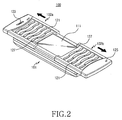
Fig. 2 is a perspective view illustrating the mobile terminal with a display apparatus opened by sub-housings of the mobile terminal shown inFig. 1 ; -
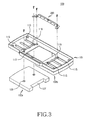
Fig. 3 is an exploded perspective view illustrating the mobile terminal shown inFig. 1 ; -
Fig. 4 is an inner plan view illustrating a closed or covered state of the mobile terminal shown inFig. 3 ; -
Fig. 5 is an inner plan view illustrating an opened or uncovered state of the mobile terminal shown inFig. 3 , in which the display apparatus is opened by the sub-housings of the mobile terminal; -
Fig. 6 is an exploded perspective view illustrating the sliding module of the mobile terminal shown inFig. 3 ; and -
Fig. 7 is a perspective view illustrating a module housing of the sliding module shown inFig. 6 . - Now, preferred embodiments of the present invention will be described in detail with reference to the annexed drawings. In the detailed description of the preferred embodiments, detailed illustration of the well-known functions or constructions related to the present invention will be omitted for conciseness.
- Referring to
Figs. 1 to 5 , amobile terminal 100 having at least one slidingmodule 200 according to a preferred embodiment of the present invention comprises amain housing 101, and first andsecond sub-housings main housing 101, to slidably move on the upper surface of themain housing 101 towards or away from each other, thereby opening (uncovering) or closing (covering) a predetermined region of the upper surface of themain housing 101. The first andsecond sub-housings main housing 101 by means of the slidingmodule 200. Adisplay apparatus 111 is mounted on the upper surface of themain housing 101, which is opened (uncovered) or closed (covered) by the first andsecond sub-housings - The
display apparatus 111 is mounted on the predetermined region of the upper surface of themain housing 101, specifically, on the center of the upper surface of themain housing 101. Accordingly, themain housing 101 is provided, at the center of the upper surface thereof, with anopening 113, shown inFig. 3 , to allow thedisplay apparatus 111 to be equipped thereto. The opening 113 is provided, at both sides thereof, with at least one pair ofguide holes 115 symmetrically elongated in the longitudinal direction. Theguide holes 115 penetrate themain housing 101. - The first and
second sub-housings main housing 101 such that the first andsecond sub-housings second sub-housings guide protrusion 129. Theguide protrusion 129 can linearly move within thecorresponding guide hole 115, and has one end protruded towards an inner portion of themain housing 101. As eachguide protrusion 129 of the first andsecond sub-housings corresponding guide hole 115, the first andsecond sub-housings main housing 101, respectively. Accordingly, when the first andsecond sub-housings main housing 101, the predetermined region of the upper surface of themain housing 101, more specifically, the center of themain housing 101, on which the display apparatus is mounted, is opened or closed. - Each of the first and
second sub-housings keypad 121 comprising a plurality of key buttons on the upper surface of each of the first and second sub-housings. Additionally, there are provided areceiver 123 having a speaker therein, and asender 125 having a microphone therein at preferably separate locations on the upper surface of the first andsecond sub-housings mobile terminal 100. In addition to the voice communication using themobile terminal 100, the users can play games using themobile terminal 100, after opening thedisplay apparatus 111 by sliding the first and second sub-housings 102a and 102 away from each other. At this time, as shown inFig. 2 , since thedisplay apparatus 111 is provided with thekeypad 121 at either side thereof, the users can conveniently operate themobile terminal 100 with both hands to play games or to chat. - Meanwhile, with the
display apparatus 111 of themobile terminal 100 closed,windows 127 for exposing some portion of thedisplay apparatus 111 may be formed on the first and second sub-housings 102a and 102b, respectively. Accordingly, with thedisplay apparatus 111 of themobile terminal 100 closed, thedisplay apparatus 111 is exposed by means of thewindows 127, so that the users can conveniently confirm the current time, remaining capacity of battery, existence of newly received information, and the like. - The first and second sub-housings 102a and 102b are mounted on the
main housing 101 by means of the slidingmodule 200. - Referring to
Figs. 3 to 7 , the slidingmodule 200 is mounted at an inner portion of themain housing 101, and comprises amodule housing 201,slide links 204a and 204b, and asprocket 206. - As shown in
Fig. 7 , themodule housing 201 is extended in the longitudinal direction, and defines a receivingspace 212, which is opened at both ends 211 of the receivingspace 212. In view of manufacturability, themodule housing 201 is extended in the longitudinal direction, and is constituted by assembling first andsecond covers Fig. 6 , each of thecovers second covers space 212 of themodule housing 201 opened at both ends 211. The first andsecond covers coupling holes 215 andcoupling protrusions 216, respectively corresponding to the coupling holes 215 to be engaged with each other, on either side thereof, respectively. Accordingly, when assembling the first andsecond covers coupling protrusions 216 are engaged with each other, thereby completing the assembly of themodule housing 201. Additionally, the first andsecond covers grooves 213 and 214 facing each other, respectively. When assembling the first andsecond covers grooves 213 and 214 are engaged with each other, forming arotating hole 219. Thefirst cover 201a is formed at one end thereof with afastening piece 218. Thefastening piece 218 acts to fasten themodule housing 201 to an inner portion of themain housing 101. Meanwhile, although thefastening piece 218 is provided as one component in the drawings, it is noted that the shapes and the number of fastening means to fasten themodule housing 201 to themain housing 101 can be variously provided. - A pair of
slide links 204a and 204b are provided to face each other within themodule housing 201. Each of theslide links 204a and 204b is extended in the longitudinal direction, and is equipped within themodule housing 201 such that theslide links 204a and 204b can be slidably moved within themodule housing 201, and can be drawn from or input to themodule housing 201 through both ends thereof. Each of theslide links 204a and 204b is formed at one end thereof with afastening piece 241, and formed with a plurality of drivingholes 243 uniformly spaced from the other end in the longitudinal direction. Additionally, each of theslide links 204a and 204b may be formed with a supportingpiece 245, which is extended in the longitudinal direction while being supported on an inner wall of themodule housing 201. Eachfastening piece 241 of theslide links 204a and 204b is fastened to the one end of thecorresponding guide protrusion 129 of each of the first and second sub-housings 102a and 102b. That is, theguide protrusion 129 is exposed to the inner portion of themain housing 101 through theguide hole 115 of themain housing 101, and is then fastened to thecorresponding fastening piece 241 of each of theslide links 204a and 204b. Accordingly, when the user slides the first and second sub-housings 102a and 102b, theslide links 204a and 204b slide in the longitudinal direction of themodule housing 201. - The
sprocket 206 is rotatably mounted between the pair ofslide links 204a and 204b, and is formed with a plurality of drivingpins 261 uniformly spaced on an outer peripheral surface of thesprocket 206 to be engaged with the driving holes 243. Accordingly, when one of theslide links 204a is slidingly moved, thesprocket 206 is rotated corresponding to the sliding movement of theslide links 204a, causing the other slide link 204b to be slidingly moved. Thesprocket 206 is formed with arotating protrusion 263 at either side of thesprocket 206 such that therotating protrusion 263 can be rotatably coupled to therotating hole 219 of themodule housing 201. In order to secure a moving space for the driving pins 261 of thesprocket 206 when thesprocket 206 is rotated, themodule housing 201 is formed at upper and lower surfaces thereof with receivingholes 217, respectively. - That is, the pairs of
slide links 204a and 204b are interlinked with each other by means of a gear constituted by the drivingholes 243 and thesprocket 206 having the drivingpins 261 formed thereon. When one of the sub-housings 102a and 102b is slidingly moved, one of theslide links 204a and 204b coupled to thecorresponding guide protrusion 129 is also slidingly moved, thereby rotating thesprocket 206. When thesprocket 206 is rotated, the other slide link is slidingly moved according to a rotational direction of thesprocket 206, causing the other sub-housing to be rotated. For instance, as shown inFig. 6 , when afirst slide link 204a provided at a lower side of themodule housing 201 is moved in the direction of the arrow A1, thesprocket 206 is rotated in the counterclockwise direction A. As thesprocket 206 is rotated in the counterclockwise direction A, a second slide link 204b provided at an upper side of themodule housing 201 is moved in the direction of the arrow A2. As a result, when the user slides one of the sub-housings 102a and 102b in the direction to open thedisplay apparatus 111, the other sub-housing is also slidingly moved in the direction to open thedisplay apparatus 111. Furthermore, the first and second sub-housings 102a and 102b are interlinked with each other, such that, when moving only one sub-housing, the other sub-housing can be moved, thereby realizing operation of closing thedisplay apparatus 111. - The sliding
module 200 constructed as described above is fastened to the inner portion of themain housing 101. Preferably, in order to ensure a stable opening and closing operation of the first and second sub-housings 102a and 102b, a pair of slidingmodule 200 may be symmetrically positioned at opposite edges of theopenings 113. At this time, as shown inFig. 3 , thefastening pieces 241 of theslide links openings 113, are fastened to supportingpieces 119, so that thefastening pieces 241 of theslide links piece 119. - As apparent from the description, the mobile terminal of the present invention is provided with the first and second sub-housings designed to slide on the main housing towards each other or away from each other to open or close the display apparatus, thereby allowing easy operation of the keypads provided at both sides of the display apparatus with both hands when the display apparatus is open, resulting in convenience of playing games or chatting. Additionally, the first and second sub-housings are interlinked with each other though the sliding modules, such that, when moving only one sub-housing, the other sub-housing can also be moved, thereby allowing easy opening closing of the display apparatus.
- While this invention has been described in connection with what is presently considered to be the most practical and preferred embodiment, it is to be understood that the invention is not limited to the disclosed embodiment.
Claims (19)
- A sliding module (200) for a mobile terminal (100) comprising:a main housing (101);first and second sub-housings (102a, 102b), each slidably mounted on an upper surface of the main housing (101) such that the first and second sub-housings (102a, 102b) are operable to slide towards each other or away from each other to open or close a predetermined region of the upper surface of the main housing (101),wherein the sliding module (200) is provided with slide links (204a, 204b), each being equipped on the main housing (101) to slidably move thereon in a state that the slide links (204a, 204b) face each other, and one of the slide links (204a or 204b) having one end fixed to one of the first and second sub-housings (102a, 102b) while being interlinked to the other slide link by means of a predetermined gear such that the one end of the slide link is operable to move towards the other slide link or away from the other slide link,characterized in thatsaid sliding module (200) is further provided with a module housing (201) extended in the longitudinal direction and opened at both ends (211) of the module housing (201), each of said slide links (204a, 204b) extending through one of said ends (211) and being arranged to slidably move within the module housing.
- The sliding module (200) as set forth in claim 1, wherein each of the slide links (204a, 204b) is formed, at one end thereof, with a fastening piece (218) fastened to the first (102a) or second sub-housing (102b).
- The sliding module (200) as set forth in claim 1, wherein the gear comprises:a plurality of driving holes (243) uniformly spaced from the other end of each of the slide links (204a, 204b) in a longitudinal direction; anda sprocket (206) rotatably mounted between the pair of slide links (204a, 204b), formed with a plurality of driving pins (261) uniformly spaced on an outer peripheral surface of the sprocket (206) to engage the driving holes, such that, when one of the slide links (204a, 204b) is slidingly moved, the sprocket (206) is rotated corresponding to a sliding movement of the slide link, causing the other slide link to slidingly move.
- The sliding module (200) as set forth in claim 1, wherein the module housing (201) is provided with first and second covers (201 a, 201b), each being extended in the longitudinal direction and defining a receiving space (212) opened at both ends (211) of the cover and at one side of the cover facing the opened side of the other cover, the first and second covers (201a, 201b) being coupled to each other in a state that the first and second covers (201a, 201b) face each other.
- The sliding module (200) as set forth in claim 1, wherein the sliding module (200) is formed with rotating holes (219) at the center of both sides thereof, and the sprocket (206) is formed, at both sides thereof, with rotating protrusions (263), each rotating protrusion (263) being supported by one of the rotating holes (219).
- The sliding module (200) as set forth in claim 1, wherein the module housing (201) is further provided with at least one fastening piece (218) extended at a predetermined position and being formed with a fastening hole.
- The sliding module (200) as set forth in claim 1, wherein each of the slide links (204a, 204b) is further provided with a supporting piece (245) supported on an inner wall of the module housing (201).
- The sliding module (200) as set forth in claim 1, wherein the module housing (201) is formed, at the center of both sides thereof, with receiving holes, each providing spaces to allow the driving pins (261) of the sprocket (206) to be rotated therein.
- A mobile terminal (100), comprising:at least one sliding module (200) according to claim 1;said main housing (101) having an opening, provided at the center of the main housing (101) to allow a display apparatus (111) to be equipped therein, and at least one pair of guide holes (115) symmetrically elongated in a longitudinal direction at both sides of the opening centered on the opening while penetrating the main housing (101); andsaid first and second sub-housings (102a, 102b) with at least one guide protrusion (129) adapted to linearly move within the guide holes (115) provided on one surface of each of the sub-housings (102a, 102b), to slidably move towards the other sub-housing or away from the other sub-housing, thereby opening or closing the display apparatus (111) equipped on the opening of the main housing (101).
- The mobile terminal (100) as set forth in claim 9, wherein a pair of sliding modules (200) is symmetrically provided at opposites edges of the opening.
- The mobile terminal (100) as set forth in claim 9, wherein the gear comprises:a plurality of driving holes (243) uniformly spaced from the other end of each of the slide links (204a, 204b) in a longitudinal direction; anda sprocket (206) rotatably mounted between the pair of slide links (204a, 204b), formed with a plurality of driving pins (261) uniformly spaced on an outer peripheral surface of the sprocket (206) to be engaged with the driving holes (243), adapted to, when one of the slide links (204a, 204b) is slidingly moved, rotate the sprocket (206) corresponding to a sliding movement of the slide link, causing the other slide link to be slidingly moved.
- The mobile terminal (100) as set forth in claim 11, wherein the sliding module (200) comprises: said module housing (201) defining a receiving space (212) opened at both ends (211) of the receiving space (212); said pair of slide links (204a, 204b), each having a fastening piece (218) fastened to the guide protrusion (129) at one end of the slide link and a plurality of driving holes (243) uniformly spaced in the longitudinal direction from the other end of the slide link, the sliding links being adapted to be slidingly moved in a state that the sliding links face each other, so that the slide links (204a, 204b) are operable to be drawn from or input to the module housing (201) through both ends (211) of the module housing (201).; and said gear comprising a sprocket (206) rotatably mounted between the slide links (204a, 204b), formed with a plurality of driving pins (261) uniformly spaced on an outer peripheral surface of the sprocket (206) to be engaged with the driving holes (243), such that, when one of the slide links (204a, 204b) is slidingly moved, the sprocket (206) is rotated corresponding to a sliding movement of the slide link, causing the other slide link to be slidingly moved.
- The mobile terminal (100) as set forth in claim 9, wherein a pair of sliding modules (200) is symmetrically provided at opposite edges of the opening to face each other, and respectively comprise a pair of supporting pieces (245), each connecting respective facing ends of the sliding modules (200).
- The mobile terminal (100) as set forth in claim 9, wherein the first and second sub-housings (102a, 102b) are opened at some portion of one end thereof to provide facing windows (127), respectively, and some portion of the display apparatus (111) is exposed through the windows (127) in a closed state of the first and second sub-housings (102a, 102b).
- The mobile terminal (100) as set forth in claim 9, wherein the guide protrusion (129) protrudes into an inner portion of the main housing (101) through the corresponding guide hole (115).
- The mobile terminal (100) as set forth in claim 9, wherein the first and second sub-housings (102a, 102b) are equipped with keypads (121) on an upper surface thereof, respectively.
- The mobile terminal (100) as set forth in claim 9, further comprising a receiver (123) having a speaker equipped at one end of one of the first and second sub-housings (102a, 102b), and a sender (125) having a microphone equipped at the other end of the other sub-housing.
- A method of opening and closing a cover over a display apparatus (111) on a mobile terminal (100) comprising the steps of:interlinking at least two sub-housings (102a, 102b) together by using at least one slide link with a plurality of driving holes (243) that are engaged by a plurality of driving pins (245) located on a sprocket (206);sliding either one (102a) of the at least two sub-housings (102a, 102b) away from the other sub-housing (102b);rotating said sprocket (206) to engage said driving holes (243) of at least one slide link with said driving pins (246);moving by rotation of said sprocket (206) the other sub-housing of the two sub-housings (102a, 102b) away from said one sub-housing being slid in said sliding step thereby opening said cover over said display apparatus (111);re-sliding either one of the at least two sub-housings (102a, 102b) toward the other sub-housing;rotating said sprocket (206) to engage said driving holes (243) of at least one slide link with said driving pins (261); andmoving by rotation of said sprocket (206) the other sub-housing of the two sub-housings (102a, 102b) toward said sub-housing being in the re-sliding step thereby closing said cover over said display apparatus (111);characterized in thatthe slide links (204a, 204b) are drawn from or input to the module housing (201) extended in the longitudinal direction through both opening ends (211) of the module housing.
- The method of claim 18, wherein the at least two sub-housings (102a, 102b) comprise:a keyboard (121) for entering data or controlling an activity that is viewable on the display apparatus (111).
Applications Claiming Priority (2)
| Application Number | Priority Date | Filing Date | Title |
|---|---|---|---|
| KR2003077122 | 2003-11-01 | ||
| KR1020030077122A KR100640379B1 (en) | 2003-11-01 | 2003-11-01 | Handheld terminal and its sliding module |
Publications (2)
| Publication Number | Publication Date |
|---|---|
| EP1528758A1 EP1528758A1 (en) | 2005-05-04 |
| EP1528758B1 true EP1528758B1 (en) | 2010-07-28 |
Family
ID=34420698
Family Applications (1)
| Application Number | Title | Priority Date | Filing Date |
|---|---|---|---|
| EP04025940A Expired - Lifetime EP1528758B1 (en) | 2003-11-01 | 2004-11-02 | Synchronized sliding module for a splitted keyboard of a mobile terminal and a method of using it. |
Country Status (5)
| Country | Link |
|---|---|
| US (1) | US7330548B2 (en) |
| EP (1) | EP1528758B1 (en) |
| KR (1) | KR100640379B1 (en) |
| CN (1) | CN100553158C (en) |
| DE (1) | DE602004028325D1 (en) |
Families Citing this family (18)
| Publication number | Priority date | Publication date | Assignee | Title |
|---|---|---|---|---|
| US20060003708A1 (en) * | 2004-06-30 | 2006-01-05 | Joni Jantti | Slide able keypad |
| US7397658B2 (en) | 2005-05-24 | 2008-07-08 | Nokia Corporation | Multi-function electronic device with split cover |
| KR100744295B1 (en) | 2005-09-27 | 2007-07-30 | 삼성전자주식회사 | Handheld terminal |
| EP1796349A1 (en) * | 2005-12-07 | 2007-06-13 | Motorola, Inc. | Electronic device including two sliding housings and an internal display |
| KR100708607B1 (en) * | 2006-01-03 | 2007-04-18 | 삼성전자주식회사 | Mobile communication terminal with both keypads |
| FI7318U1 (en) * | 2006-08-11 | 2006-11-29 | Nokia Corp | Modular messaging device |
| WO2008025367A1 (en) * | 2006-08-29 | 2008-03-06 | Nokia Corporation | Electronic device with movable housing parts |
| TWI323861B (en) * | 2007-03-13 | 2010-04-21 | Benq Corp | Dual display devices |
| KR20110048569A (en) * | 2008-08-29 | 2011-05-11 | 노키아 코포레이션 | Device with auto-slide keypad |
| US8385992B2 (en) * | 2008-12-19 | 2013-02-26 | Nokia Corporation | User interfaces and associated apparatus and methods |
| KR101578430B1 (en) * | 2009-07-13 | 2015-12-18 | 엘지전자 주식회사 | Mobile terminal |
| US20130076654A1 (en) | 2011-09-27 | 2013-03-28 | Imerj LLC | Handset states and state diagrams: open, closed transitional and easel |
| CN102594949A (en) * | 2012-02-24 | 2012-07-18 | 康佳集团股份有限公司 | Slider phone |
| TWI660662B (en) * | 2017-05-23 | 2019-05-21 | 仁寶電腦工業股份有限公司 | Electronic device |
| CN110324448B (en) | 2018-03-31 | 2021-06-15 | Oppo广东移动通信有限公司 | Electronic device and control method of electronic device |
| CN110324447B (en) * | 2018-03-31 | 2021-05-28 | Oppo广东移动通信有限公司 | Electronic device and control method of electronic device |
| CN112118332B (en) * | 2019-06-20 | 2022-11-22 | 中兴通讯股份有限公司 | Improve audio quality's comprehensive screen terminal |
| WO2022244895A1 (en) * | 2021-05-17 | 2022-11-24 | 엘지전자 주식회사 | Display device |
Family Cites Families (4)
| Publication number | Priority date | Publication date | Assignee | Title |
|---|---|---|---|---|
| US5440629A (en) * | 1993-07-02 | 1995-08-08 | Gray; Robert R. | Changeable contour construction of wireless telephone |
| FI991007A7 (en) | 1999-05-03 | 2000-11-04 | Nokia Corp | Sliding cover electronic device |
| US7187363B2 (en) | 2001-11-30 | 2007-03-06 | Palm, Inc. | Integrated handheld data processing device having a sliding form factor |
| TW557050U (en) | 2002-08-12 | 2003-10-01 | Lite On Technology Corp | Two-part keyboard |
-
2003
- 2003-11-01 KR KR1020030077122A patent/KR100640379B1/en not_active Expired - Fee Related
-
2004
- 2004-10-08 US US10/960,030 patent/US7330548B2/en not_active Expired - Fee Related
- 2004-11-01 CN CNB2004100848869A patent/CN100553158C/en not_active Expired - Fee Related
- 2004-11-02 DE DE602004028325T patent/DE602004028325D1/en not_active Expired - Lifetime
- 2004-11-02 EP EP04025940A patent/EP1528758B1/en not_active Expired - Lifetime
Also Published As
| Publication number | Publication date |
|---|---|
| DE602004028325D1 (en) | 2010-09-09 |
| KR20050042303A (en) | 2005-05-09 |
| CN1612487A (en) | 2005-05-04 |
| EP1528758A1 (en) | 2005-05-04 |
| US20050095928A1 (en) | 2005-05-05 |
| KR100640379B1 (en) | 2006-10-30 |
| US7330548B2 (en) | 2008-02-12 |
| CN100553158C (en) | 2009-10-21 |
Similar Documents
| Publication | Publication Date | Title |
|---|---|---|
| EP1528758B1 (en) | Synchronized sliding module for a splitted keyboard of a mobile terminal and a method of using it. | |
| EP1720326B1 (en) | Portable terminal with two bodies being both foldable and slidable relative to each other | |
| KR100630102B1 (en) | Mobile communication device with sliding pop up type keypad | |
| EP2134065B1 (en) | Portable terminal | |
| EP1775596B1 (en) | Keypad for sliding-type portable terminal | |
| EP1587284B1 (en) | Portable terminal with touch key | |
| EP1806909B1 (en) | Portable communication terminal for games and user interfacing device thereof | |
| KR100800843B1 (en) | Portable communication device and its sliding module | |
| EP1748628B1 (en) | Slim portable terminal | |
| KR100800769B1 (en) | Multimedia mobile communication device | |
| US7532916B2 (en) | Slide-type portable terminal using flexible material | |
| US7697270B2 (en) | Portable electronic device | |
| EP1739931B1 (en) | Portable terminal having slidable and foldable housings | |
| US7450968B2 (en) | Mobile communication device with slide portion | |
| US7450979B2 (en) | Sliding module for portable terminal | |
| EP1758343A2 (en) | Hinge device for portable terminal and portable terminal having the same | |
| EP1594290B1 (en) | Two-way folder-type terminal | |
| EP1843555B1 (en) | Slim portable terminal | |
| KR100754605B1 (en) | Mobile phone for game with folding-type keypad | |
| KR100365797B1 (en) | Sliding-type portable radiotelephone | |
| KR100790187B1 (en) | Hinge Device for Gaming Mobile Communication Terminal | |
| CN101150613A (en) | Slide module for double slide type portable communication terminal | |
| KR100754600B1 (en) | Combined device for display device of mobile terminal | |
| KR100819241B1 (en) | Keypad of a mobile terminal | |
| KR20080067864A (en) | Sliding device of the double sliding type portable communication device |
Legal Events
| Date | Code | Title | Description |
|---|---|---|---|
| PUAI | Public reference made under article 153(3) epc to a published international application that has entered the european phase |
Free format text: ORIGINAL CODE: 0009012 |
|
| 17P | Request for examination filed |
Effective date: 20041102 |
|
| AK | Designated contracting states |
Kind code of ref document: A1 Designated state(s): AT BE BG CH CY CZ DE DK EE ES FI FR GB GR HU IE IS IT LI LU MC NL PL PT RO SE SI SK TR |
|
| AX | Request for extension of the european patent |
Extension state: AL HR LT LV MK YU |
|
| AKX | Designation fees paid |
Designated state(s): DE FR GB |
|
| GRAP | Despatch of communication of intention to grant a patent |
Free format text: ORIGINAL CODE: EPIDOSNIGR1 |
|
| GRAS | Grant fee paid |
Free format text: ORIGINAL CODE: EPIDOSNIGR3 |
|
| GRAA | (expected) grant |
Free format text: ORIGINAL CODE: 0009210 |
|
| AK | Designated contracting states |
Kind code of ref document: B1 Designated state(s): DE FR GB |
|
| REG | Reference to a national code |
Ref country code: GB Ref legal event code: FG4D |
|
| REF | Corresponds to: |
Ref document number: 602004028325 Country of ref document: DE Date of ref document: 20100909 Kind code of ref document: P |
|
| PLBE | No opposition filed within time limit |
Free format text: ORIGINAL CODE: 0009261 |
|
| STAA | Information on the status of an ep patent application or granted ep patent |
Free format text: STATUS: NO OPPOSITION FILED WITHIN TIME LIMIT |
|
| 26N | No opposition filed |
Effective date: 20110429 |
|
| REG | Reference to a national code |
Ref country code: DE Ref legal event code: R097 Ref document number: 602004028325 Country of ref document: DE Effective date: 20110429 |
|
| REG | Reference to a national code |
Ref country code: DE Ref legal event code: R082 Ref document number: 602004028325 Country of ref document: DE Representative=s name: GRUENECKER, KINKELDEY, STOCKMAIR & SCHWANHAEUS, DE Ref country code: DE Ref legal event code: R082 Ref document number: 602004028325 Country of ref document: DE Representative=s name: GRUENECKER PATENT- UND RECHTSANWAELTE PARTG MB, DE |
|
| REG | Reference to a national code |
Ref country code: FR Ref legal event code: PLFP Year of fee payment: 13 |
|
| REG | Reference to a national code |
Ref country code: FR Ref legal event code: PLFP Year of fee payment: 14 |
|
| REG | Reference to a national code |
Ref country code: FR Ref legal event code: PLFP Year of fee payment: 15 |
|
| PGFP | Annual fee paid to national office [announced via postgrant information from national office to epo] |
Ref country code: DE Payment date: 20181022 Year of fee payment: 15 |
|
| PGFP | Annual fee paid to national office [announced via postgrant information from national office to epo] |
Ref country code: GB Payment date: 20181023 Year of fee payment: 15 Ref country code: FR Payment date: 20181029 Year of fee payment: 15 |
|
| REG | Reference to a national code |
Ref country code: DE Ref legal event code: R119 Ref document number: 602004028325 Country of ref document: DE |
|
| GBPC | Gb: european patent ceased through non-payment of renewal fee |
Effective date: 20191102 |
|
| PG25 | Lapsed in a contracting state [announced via postgrant information from national office to epo] |
Ref country code: GB Free format text: LAPSE BECAUSE OF NON-PAYMENT OF DUE FEES Effective date: 20191102 Ref country code: FR Free format text: LAPSE BECAUSE OF NON-PAYMENT OF DUE FEES Effective date: 20191130 Ref country code: DE Free format text: LAPSE BECAUSE OF NON-PAYMENT OF DUE FEES Effective date: 20200603 |