EP1528494A1 - Automatische Lieferantenausschreibung - Google Patents
Automatische Lieferantenausschreibung Download PDFInfo
- Publication number
- EP1528494A1 EP1528494A1 EP04024088A EP04024088A EP1528494A1 EP 1528494 A1 EP1528494 A1 EP 1528494A1 EP 04024088 A EP04024088 A EP 04024088A EP 04024088 A EP04024088 A EP 04024088A EP 1528494 A1 EP1528494 A1 EP 1528494A1
- Authority
- EP
- European Patent Office
- Prior art keywords
- supplier
- request
- quotation
- reply
- computer implemented
- Prior art date
- Legal status (The legal status is an assumption and is not a legal conclusion. Google has not performed a legal analysis and makes no representation as to the accuracy of the status listed.)
- Withdrawn
Links
Images




Classifications
-
- G—PHYSICS
- G06—COMPUTING OR CALCULATING; COUNTING
- G06Q—INFORMATION AND COMMUNICATION TECHNOLOGY [ICT] SPECIALLY ADAPTED FOR ADMINISTRATIVE, COMMERCIAL, FINANCIAL, MANAGERIAL OR SUPERVISORY PURPOSES; SYSTEMS OR METHODS SPECIALLY ADAPTED FOR ADMINISTRATIVE, COMMERCIAL, FINANCIAL, MANAGERIAL OR SUPERVISORY PURPOSES, NOT OTHERWISE PROVIDED FOR
- G06Q10/00—Administration; Management
- G06Q10/08—Logistics, e.g. warehousing, loading or distribution; Inventory or stock management
- G06Q10/087—Inventory or stock management, e.g. order filling, procurement or balancing against orders
-
- G—PHYSICS
- G06—COMPUTING OR CALCULATING; COUNTING
- G06Q—INFORMATION AND COMMUNICATION TECHNOLOGY [ICT] SPECIALLY ADAPTED FOR ADMINISTRATIVE, COMMERCIAL, FINANCIAL, MANAGERIAL OR SUPERVISORY PURPOSES; SYSTEMS OR METHODS SPECIALLY ADAPTED FOR ADMINISTRATIVE, COMMERCIAL, FINANCIAL, MANAGERIAL OR SUPERVISORY PURPOSES, NOT OTHERWISE PROVIDED FOR
- G06Q10/00—Administration; Management
- G06Q10/06—Resources, workflows, human or project management; Enterprise or organisation planning; Enterprise or organisation modelling
-
- G—PHYSICS
- G06—COMPUTING OR CALCULATING; COUNTING
- G06Q—INFORMATION AND COMMUNICATION TECHNOLOGY [ICT] SPECIALLY ADAPTED FOR ADMINISTRATIVE, COMMERCIAL, FINANCIAL, MANAGERIAL OR SUPERVISORY PURPOSES; SYSTEMS OR METHODS SPECIALLY ADAPTED FOR ADMINISTRATIVE, COMMERCIAL, FINANCIAL, MANAGERIAL OR SUPERVISORY PURPOSES, NOT OTHERWISE PROVIDED FOR
- G06Q30/00—Commerce
- G06Q30/06—Buying, selling or leasing transactions
- G06Q30/0601—Electronic shopping [e-shopping]
- G06Q30/0611—Request for offers or quotes
Definitions
- the present invention deals with automated business processing. More specifically, the present invention deals with the automatic identification of suppliers for sourcing business requests.
- a company in order to deliver its product, outsources a wide variety of services to other companies, and also purchases a wide variety of inventory from other companies.
- a bicycle manufacturer may actually only perform assembly steps in manufacturing a bicycle. In order to perform these steps, the bicycle manufacturer outsources bicycle frame construction services to a frame builder, and also outsources painting services to a painting company. Similarly, the bicycle manufacturer purchases all components of the bicycle (such as wheels, tires, brakes, deraielles, seats, headsets, bottom brackets, and other desired accessories or parts) from wholesale sellers of those parts.
- the manufacturer In outsourcing the purchase requests and service requests to other companies, current manufacturers undergo a fairly complex and cumbersome process. First, the manufacturer must contact a plurality of different suppliers for each service and each part in order to obtain a competitive bid for the parts or services being outsourced. The manufacturer may generally request written bid and delivery information from the suppliers. This requires the manufacturer to transmit specifications or at least a detailed description of the job or parts desired, to all of the different suppliers which require such a description to fill the requested orders. Each supplier must then do its best to respond to the requested bid, identifying as best it can, those specific items which will be considered in awarding the bid to a given supplier.
- Each of the written proposals from the suppliers must then be received by the manufacturer and then be evaluated, based on award criteria, in order to award the job to one of the plurality of suppliers for each service and each item to be purchased. Needless to say, this is extremely time consuming and labor intensive for the manufacturer, and it can be extremely time consuming and labor intensive for each of the suppliers.
- a manufacturer may not have sufficient time to request bids from as many qualified suppliers as it would like.
- the manufacturer does not have enough time to even solicit a competitive bid by supplying a request to more than one supplier. Instead, the manufacturer simply requests a single supplier, time-after-time, for its best price. If the supplier realizes that it is not in a competitive situation, the price may be artificially elevated to the manufacturer.
- the present system can create critical scheduling difficulties. For example, in the bicycle manufacturer example discussed above, assume that the frame builder will be three days late in delivering the frames to the bicycle manufacturer. Assume also that the painting company had originally scheduled to paint the bicycle frames on the first two days of a given month, but then has other painting jobs for other manufacturers scheduled throughout the following three weeks of the month. If the frame builder delivers the frames three days late to the painter, then the painter will not be able to paint the frames until the fourth week of the month. This will delay the ultimate delivery date of the bicycles from the manufacturer to its retailers by three weeks.
- the process for requesting services from another frame builder may be so cumbersome that it cannot be performed within a reasonably short period of time.
- the bicycle manufacturer is simply forced to deliver its bicycles to its retailers nearly a month late.
- the present invention automates the process by which requests for quotation are generated by manufacturers to suppliers.
- An RFQ engine resides on a manufacturers computer system and is used to generate a request for quotation (RFQ) template.
- the template describes the service or goods to be supplied by the suppliers.
- the RFQ template is finalized, it is saved in a predesignated storage space on the manufacturer's computer system and is indexed on an RFQ index mapping which is accessible by suppliers.
- the suppliers are provided with RFQ reply engines which intermittently access the index mapping to determine whether there are any RFQ templates for which they wish to reply. If there are, the RFQ reply engine accesses the content of the RFQ template on the manufacturer's predesignated storage area and is used to either automatically or manually generate a reply to the RFQ template. The reply is transmitted back to the manufacturer where it is evaluated based on award criteria.
- the RFQ template includes filter criteria for filtering the suppliers that are authorized to respond to the RFQ template.
- the suppliers include filter criteria in determining which RFQ templates they wish to respond to.
- the RFQ template generation engine automatically evaluates the RFQ replies based on the award criteria and identifies a suggested winner.
- the system also optionally provides for further negotiations between the manufacturer and the suggested winner before the service or parts purchase contract is awarded to the supplier.
- the further negotiations can involve, for example, sharing more detailed information about the job description, such as computer aided design drawings, etc. Further, the negotiations can include conventional negotiations such as with respect to price, delivery date, etc.
- the present invention deals with an automated system by which requests for services and parts can be published, replied to, and awarded.
- requests for services and parts can be published, replied to, and awarded.
- one exemplary environment in which the present invention can be implemented is discussed.
- FIG. 1 illustrates an example of a suitable computing system environment 100 on which the invention may be implemented.
- the computing system environment 100 is only one example of a suitable computing environment and is not intended to suggest any limitation as to the scope of use or functionality of the invention. Neither should the computing environment 100 be interpreted as having any dependency or requirement relating to any one or combination of components illustrated in the exemplary operating environment 100.
- the invention is operational with numerous other general purpose or special purpose computing system environments or configurations.
- Examples of well known computing systems, environments, and/or configurations that may be suitable for use with the invention include, but are not limited to, personal computers, server computers, hand-held or laptop devices, multiprocessor systems, microprocessor-based systems, set top boxes, programmable consumer electronics, network PCs, minicomputers, mainframe computers, distributed computing environments that include any of the above systems or devices, and the like.
- the invention may be described in the general context of computer-executable instructions, such as program modules, being executed by a computer.
- program modules include routines, programs, objects, components, data structures, etc. that perform particular tasks or implement particular abstract data types.
- the invention may also be practiced in distributed computing environments where tasks are performed by remote processing devices that are linked through a communications network.
- program modules may be located in both local and remote computer storage media including memory storage devices.
- an exemplary system for implementing the invention includes a general purpose computing device in the form of a computer 110.
- Components of computer 110 may include, but are not limited to, a processing unit 120, a system memory 130, and a system bus 121 that couples various system components including the system memory to the processing unit 120.
- the system bus 121 may be any of several types of bus structures including a memory bus or memory controller, a peripheral bus, and a local bus using any of a variety of bus architectures.
- such architectures include Industry Standard Architecture (ISA) bus, Micro Channel Architecture (MCA) bus, Enhanced ISA (EISA) bus, Video Electronics Standards Association (VESA) local bus, and Peripheral Component Interconnect (PCI) bus also known as Mezzanine bus.
- ISA Industry Standard Architecture
- MCA Micro Channel Architecture
- EISA Enhanced ISA
- VESA Video Electronics Standards Association
- PCI Peripheral Component Interconnect
- Computer 110 typically includes a variety of computer readable media.
- Computer readable media can be any available media that can be accessed by computer 110 and includes both volatile and nonvolatile media, removable and non-removable media.
- Computer readable media may comprise computer storage media and communication media.
- Computer storage media includes both volatile and nonvolatile, removable and non-removable media implemented in any method or technology for storage of information such as computer readable instructions, data structures, program modules or other data.
- Computer storage media includes, but is not limited to, RAM, ROM, EEPROM, flash memory or other memory technology, CD-ROM, digital versatile disks (DVD) or other optical disk storage, magnetic cassettes, magnetic tape, magnetic disk storage or other magnetic storage devices, or any other medium which can be used to store the desired information and which can be accessed by computer 100.
- Communication media typically embodies computer readable instructions, data structures, program modules or other data in a modulated data signal such as a carrier WAV or other transport mechanism and includes any information delivery media.
- modulated data signal means a signal that has one or more of its characteristics set or changed in such a manner as to encode information in the signal.
- communication media includes wired media such as a wired network or direct-wired connection, and wireless media such as acoustic, FR, infrared and other wireless media. Combinations of any of the above should also be included within the scope of computer readable media.
- the system memory 130 includes computer storage media in the form of volatile and/or nonvolatile memory such as read only memory (ROM) 131 and random access memory (RAM) 132.
- ROM read only memory
- RAM random access memory
- BIOS basic input/output system
- RAM 132 typically contains data and/or program modules that are immediately accessible to and/or presently being operated on by processing unit 120.
- FIG. 1 illustrates operating system 134, application programs 135, other program modules 136, and program data 137.
- the computer 110 may also include other removable/non-removable volatile/nonvolatile computer storage media.
- FIG. 1 illustrates a hard disk drive 141 that reads from or writes to non-removable, nonvolatile magnetic media, a magnetic disk drive 151 that reads from or writes to a removable, nonvolatile magnetic disk 152, and an optical disk drive 155 that reads from or writes to a removable, nonvolatile optical disk 156 such as a CD ROM or other optical media.
- removable/non-removable, volatile/nonvolatile computer storage media that can be used in the exemplary operating environment include, but are not limited to, magnetic tape cassettes, flash memory cards, digital versatile disks, digital video tape, solid state RAM, solid state ROM, and the like.
- the hard disk drive 141 is typically connected to the system bus 121 through a non-removable memory interface such as interface 140, and magnetic disk drive 151 and optical disk drive 155 are typically connected to the system bus 121 by a removable memory interface, such as interface 150.
- hard disk drive 141 is illustrated as storing operating system 144, application programs 145, other program modules 146, and program data 147. Note that these components can either be the same as or different from operating system 134, application programs 135, other program modules 136, and program data 137. Operating system 144, application programs 145, other program modules 146, and program data 147 are given different numbers here to illustrate that, at a minimum, they are different copies.
- a user may enter commands and information into the computer 110 through input devices such as a keyboard 162, a microphone 163, and a pointing device 161, such as a mouse, trackball or touch pad.
- Other input devices may include a joystick, game pad, satellite dish, scanner, or the like.
- a monitor 191 or other type of display device is also connected to the system bus 121 via an interface, such as a video interface 190.
- computers may also include other peripheral output devices such as speakers 197 and printer 196, which may be connected through an output peripheral interface 190.
- the computer 110 may operate in a networked environment using logical connections to one or more remote computers, such as a remote computer 180.
- the remote computer 180 may be a personal computer, a hand-held device, a server, a router, a network PC, a peer device or other common network node, and typically includes many or all of the elements described above relative to the computer 110.
- the logical connections depicted in FIG. 1 include a local area network (LAN) 171 and a wide area network (WAN) 173, but may also include other networks.
- LAN local area network
- WAN wide area network
- Such networking environments are commonplace in offices, enterprise-wide computer networks, intranets and the Internet.
- the computer 110 When used in a LAN networking environment, the computer 110 is connected to the LAN 171 through a network interface or adapter 170. When used in a WAN networking environment, the computer 110 typically includes a modem 172 or other means for establishing communications over the WAN 173, such as the Internet.
- the modem 172 which may be internal or external, may be connected to the system bus 121 via the user-input interface 160, or other appropriate mechanism.
- program modules depicted relative to the computer 110, or portions thereof may be stored in the remote memory storage device.
- FIG. 1 illustrates remote application programs 185 as residing on remote computer 180. It will be appreciated that the network connections shown are exemplary and other means of establishing a communications link between the computers may be used.
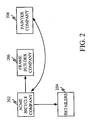
- FIG. 2 is a block diagram of one embodiment of a prior art manufacturer and supplier communication system.
- the exemplary system shown in FIG. 2 includes a manufacturer (ACME Bicycling Manufacturing Company) 202 which manufactures and sells bicycles to a plurality of bicycle retailers 204.
- manufacturer 202 outsources frame-building services to a supplier (Frame Builder Company) 206.
- Such services may include, for example, the manufacture and welding of frames.
- FIG. 2 also shows that manufacturing company 202 outsources painting services to a second supplier (Painter Company) 208.
- the frame building supplier 206 provides welded frames to manufacturer 202, which then provides the unpainted frames to supplier 208 where the frames are painted and then returned to manufacturer 202 for assembly and shipment to retailers 204.
- company 202 In manufacturing the bicycles, company 202 conventionally seeks requests for services and parts from its suppliers (such as frame builder 206 and painter 208). As described in the background portion, this can be a cumbersome and time consuming process, and it can be difficult to compare bids from different suppliers. It can also lead to critical scheduling difficulties which can undesirably delay delivery of bicycles from manufacturer 202 to retailers 204. Similarly, it can lead to artificially elevated prices being quoted from suppliers 206 and 208 to manufacturer 202, thus undesirably increasing the price of the bicycles delivered to retailers 203, or undesirably reducing the margin realized by the sales of bicycles from manufacturer 202 to retailers 204.
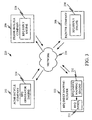
- FIG. 3 is a block diagram of the manufacturer/supplier system shown in FIG. 2, in accordance with one embodiment of the present invention.
- FIG. 3 shows system 220 which includes bicycle manufacturer 202, frame builder 206 and painter 208, along with an RFQ index mapping builder 222.
- the components of the system 220 shown in FIG. 3 are illustratively connected by a network 224, which can be a global network (such as the internet) or another network.
- FIG. 3 also shows that bicycle manufacturer 202 includes an RFQ generator engine 226.
- engine 226 is used in generating and publishing RFQ templates for reply by suppliers 206 and 208.
- suppliers 206 and 208 include an RFQ reply engine 228 and 230, respectively.
- the RFQ reply engines 228 and 230 are used to generate replies to RFQ templates published by manufacturer 202 and transmit those replies to manufacturer 202 for evaluation.
- FIG. 3 also shows that system 220 includes RFQ index mapping builder 222.
- Builder 222 includes an RFQ index mapping engine 232.
- Engine 232 as is described in greater detail below, indexes in index 231 RFQ templates generated by manufacturers (such as manufacturer 202).
- FIG. 3 only shows a single manufacturer 202 and two suppliers 206 and 208.
- a plurality of different manufacturers of the same goods or of different goods can also be part of the system.
- a wide variety of different service providers can be part of the system as well.
- the present invention is described with respect to a single manufacturer 202 and two different suppliers 206 and 208, simply for the sake of clarity and simplicity.
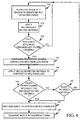
- FIG. 4 is a flow diagram illustrating how manufacturers and suppliers become part of the system shown in FIG. 220.
- Manufacturers such as manufacturer 202, first register with index mapping builder 222. This can be done by simply opening a network connection to builder 222 and selecting a registration screen through which manufacturer 202 provides required registration information to builder 222. This is indicated by block 300 in FIG. 4.
- Some exemplary registration information can include a description, such as a SIC code which generally describes the manufacturer 202.
- the manufacturer may be asked to input a textual description of what the manufacturer does or choose such a description from a drop down menu.
- the manufacturer may also be requested to input an address, areas of expertise, the types of goods or services provided by the manufacturer and the types of goods or services outsourced by the manufacturer.
- Manufacturer 202 may also optionally be provided with the opportunity to input preliminary filtering criteria.
- the manufacturer 202 may only desire that services or goods be outsourced from suppliers within a certain geographic area. This information can be set up in a profile or registration template for manufacturer 202 such that only suppliers within that geographic region will respond to RFQ templates published by supplier 202.
- preliminary filtering criteria can be input by manufacturer 202 as well. For instance, the manufacturer can filter on selected suppliers, so that only selected suppliers will see (or have access to) the RFQ template. This is discussed in greater detail below.
- RFQ index mapping builder 222 downloads to manufacturer 202 the RFQ generator engine 226. This is indicated by block 302 in FIG. 4. As is described later with respect to FIGS. 5A and 5B, engine 226 is used to generate and publish RFQ templates for manufacturer 202.
- Suppliers 206 and 208 can also become part of system 220 by registering with RFQ mapping builder 222. In doing so, suppliers 206 and 208 will also illustratively establish a network connection to builder 222 and access a registration page which indicates the type of information required in order to register into system 220.
- the registration information may illustratively include identifying information which identifies the supplier and the types of goods or services provided by the supplier, address or geographic location information indicating where the supplier is located, etc.
- the supplier may optionally be provided with an opportunity to provide preliminary filtering information as well. In that case, again as is described later with respect to FIG. 6, the supplier will only be notified of indexed RFQ templates which meet the preliminary filtering criteria.
- registration of the supplier with builder 222 is indicated by block 304 in FIG. 4.
- builder 222 downloads RFQ reply engines 228 and 230, respectively to the suppliers. This is indicated by block 306 in FIG. 4.
- the RFQ supply engines 228 and 230 are used, as is described with respect to FIG. 6, to generate replies to RFQ templates indexed at RFQ index mapping builder 222.
- FIG. 5A is a flow diagram illustrating one embodiment in which manufacturers (such as manufacturer 202) generates and publishes an RFQ template for response by suppliers 206 and 208.
- FIG. 5B is one illustrative embodiment (which is exemplary only) of an RFQ template 312 generated by manufacturer 202.
- manufacturer 202 In order to have suppliers 206 and 208 quote on jobs for providing parts or services to manufacturer 202, manufacturer 202 first generates an RFQ template. This is indicated by block 310 in FIG. 5A.
- the RFQ template defines the job or goods required by manufacturer 202 in sufficient detail that they can be quoted by suppliers 206 and 208.
- One exemplary RFQ template is illustrated at 312 in FIG. 5B.
- the exemplary RFQ template 312 may be stored, for example, as a spread sheet-type document, a word processor-type document, or any other desired document which can be easily responded to by a supplier.
- RFQ template 312 also illustratively includes a job description which is a textual description of the job or parts being requested.
- Template 312 in the example of the bicycle manufacturer seeking painting services, includes an item description which identifies the items to be painted, the number of items to be painted, the date of delivery required for those items, a geographic location of the manufacturer, quality standards which are to be met by the supplier, and any other desired details (such as the specific paint process steps required to complete the job).
- the template 312 can also include an optional supplier pre-designation (described in greater detail below), the award criteria upon which the job will be awarded, the RFQ expiration date, and any other desired fields can be included as well.
- the templates can be stored in any desired format (such as a word processing document or other format). The template can then be re-used, modified or enhanced.
- the optional supplier pre-designation field can be used as a preliminary filter placed on the RFQ template by the manufacturer.
- the manufacturer may have three painting suppliers which it has authorized for use on its bicycle frames.
- the manufacturer may identify (such as by registration number or other identification number) the three painting suppliers who are authorized to respond to the RFQ template 312.
- the RFQ reply engine 230 at the painting suppliers will execute preliminary filtering operations on the RFQ template and will not respond if they are not included on the optional supplier pre-designation field of the RFQ template being processed.
- FIG. 5B also illustrates that the award criteria is indicated as all criteria, and price. This indicates that the manufacturer will award the contract to the supplier based on its evaluation of all mentioned criteria, and including price. Of course, specific criteria can be listed as well. For instance, if the manufacturer is not as sensitive about delivery date as it is about color, the manufacturer may indicate that in the award criteria field. Many other or different fields can be included in an RFQ template as well, and template 312 is illustrated for exemplary purposes only.
- RFQ templates have been used in the past, they have not been used in highly efficient ways. Therefore, in accordance with one embodiment of the invention, once the manufacturer has generated an RFQ template, the manufacturer stores the RFQ template to a pre-designated folder on its local data store This is indicated by block 314 in FIG. 5A.
- the RFQ generator engine 226 may set up a specific RFQ publication folder which stores RFQs to be indexed and published.
- RFQ generator engine 226 automatically sends index information to RFQ index mapping builder 222. This is indicated by block 316.
- the index information can include a wide variety of different information.
- the index information simply indicates that an RFQ is being published by a manufacturer.
- the RFQ is simply indexed as a location of the data store from which the entire RFQ template can be retrieved by suppliers.
- the index information will at least contain some additional information which can be used to perform preliminary filtering criteria.
- the index information may include the category and job description from the template, or any other desired information.
- engine 232 places an index entry in RFQ index 231 to reflect the RFQ template 312 which is being published by the manufacturer 202. This is indicated by block 318.
- FIG. 5A also indicates an optional step that can be taken. For instance, if the manufacturer 202 has identified suppliers in the optional supplier pre-designation field, then RFQ index mapping engine 232 can take additional steps in addition to placing an entry in RFQ index 231 reflecting the RFQ template. Engine 232 can affirmatively notify the pre-designated suppliers that an RFQ has been published with those suppliers listed as pre-designated suppliers. This is indicated by block 320, and may facilitate a quicker reply to the published RFQ template. It should also be noted, of course, that RFQ generator engine 226 at the manufacturer 202 can directly notify the pre-designated suppliers as well.
- FIG. 6 is a flow diagram illustrating one embodiment of the operation of RFQ supply engines 228 and 230, respectively. The discussion will proceed with respect to RFQ reply engine 228, but it will be noted that other RFQ reply engines will operate in a similar manner.
- RFQ reply engine 228 is configured to intermittently access index 231 through network 224.
- engine 228 searches the index for RFQ templates which are published, and to which supplier 206 whishes to reply. This is indicated by block 330 shown in FIG. 6.
- the search of index 231 can be conducted through engine 232, or through any other suitable searching techniques.
- the index 231 is arranged hierarchically, or categorically, to enable more precise and efficient searching to be performed by supplier 206.
- reply engine 228 Once reply engine 228 has accessed index 231, and identified RFQ templates which have been published since its last search, it applies any preliminary filtering criteria to the information which is contained in index 231. This is indicated by block 332 in FIG. 6. For instance, as mentioned previously, the preliminary filtering criteria may indicate that the supplier 206 wishes to only reply to RFQ templates published for certain job categories, or in a certain geographic area, or based on any other information which is indexed in index 231.
- Reply engine 228 determines whether any of the published RFQ templates meet the preliminary filtering criteria which were applied in block 332. This is indicated in block 334. If not, then reply engine 228 determines that no RFQ templates have been published since its last search which meet the preliminary filter criteria. Therefore, supplier 206 does not wish to reply to any of the published RFQ templates indexed in index 231, and processing simply reverts to block 230.
- reply engine 228 determines that one or more RFQ templates indexed in index 231 meet the preliminary filter criteria applied, then reply engine 228 accesses the RFQ template at the predetermined data store location on the data store at manufacturer 202, and downloads the RFQ template from the manufacturer's data store. This is indicated by block 336.
- reply engine 228 Upon receiving the entire RFQ template from the manufacturer, reply engine 228 illustratively applies more detailed criteria to the content of the RFQ template downloaded. This is indicated by block 338 in FIG. 6. For instance, even though a relatively small amount of information may be indexed in index 231, so that a relatively small number of preliminary filter criteria can be applied, the supplier 206 may well wish to refrain from replying to RFQ templates based on a host of additional detailed filter criteria. For instance, supplier 206 may have a list of manufacturers with which it will not do business, based on past business dealings. Those can be included in the preliminary or detailed filter criteria. Similarly, if geographic location is not indexed, the supplier may still wish to filter RFQ templates for reply based on the geographic location of the manufacturer.
- the supplier is a supplier of janitorial services in Baltimore, MD it may well wish to refrain from replying to RFQ templates generated requesting quotations for janitorial services in San Francisco, CA.
- the RFQ templates can be filtered based on detailed filter criteria which contains the geographic location information. A wide variety of other detailed filter criteria can be used as well, limited only by desires of the users of the system.
- Reply engine 228 determines whether the downloaded RFQ template meets the detailed filter criteria established by the supplier. This is indicated by block 340 in FIG. 6. If not, the supplier may wish to respond anyway. For instance, if the RFQ template indicates a geographic region which is only slightly outside of the service area of the supplier, but the supplier determines that the business may be advantageous for it, it will optionally be given an opportunity to override a rejection of the RFQ template and respond to the RFQ template, even though it does not meet all of the detailed filter criteria established by the suppler. This is indicated by block 342. If the supplier still does not want to reply to the RFQ template, then processing returns to block 330.
- the RFQ reply engine 228 is used to prepare a reply to the downloaded RFQ template. This is indicated by block 344 in FIG. 6.
- Responding to the RFQ template will, of course, vary widely depending on the type of information requested on the RFQ template. However, some replies can easily be automatically be generated. For instance, if the RFQ template is simply seeking a quotation for an item which a supplier provides at a fixed price, the reply to the RFQ template can be generated automatically.
- the reply can be generated through manual intervention.
- the reply includes the criteria from RFQ template and an indication as to whether the supplier can meet the criteria of any proposed modifications to the criteria.
- the reply may also include different or additional information as well.
- RFQ reply engine 208 Once the RFQ reply has been created by RFQ reply engine 208 (either manually or automatically) it is transmitted to manufacturer 202. This is indicated by block 346 in FIG. 6. RFQ generator engine 226, or another component of manufacturer 202 can then be used to receive and evaluate the RFQ replies received from suppliers.
- FIG. 7 is a flow diagram illustrating the processing and evaluation of RFQ replies at manufacturer 202 in accordance with one embodiment of the present invention.
- engine 226 (or another component of manufacturer 222) receives the responsive RFQ replies. This is indicated by block 350 in FIG. 7.
- engine 226 evaluates the replies received, based upon the award criteria listed in the RFQ template 312. This is indicated by block 352.
- This can take place in a variety of different ways. For instance, all of the RFQ replies can be stored or accumulated until the RFQ expires. Then, the specific award criteria listed in the RFQ template can be automatically compared against fields identifying those criteria in the RFQ replies. By contrast, each RFQ template can be automatically evaluated and scored as it is received. In either case, evaluation of the RFQ replies is illustratively based upon the award criteria listed in the RFQ template, and those award criteria can be weighted, as desired by the manufacturer. For instance, one manufacturer may weight price heavier than delivery date, while another manufacturer may weight delivery date heavier than price. Of course, a wide variety of different weighting techniques can be used, as desired by the manufacturer.
- the manufacturer (either manually or with engine 226) eventually identifies a suggested winner based upon the evaluation performed at block 352. This is indicated by block 354 in FIG. 7.
- the manufacturer 202 may still wish to engage in additional negotiations with the suggested winning supplier 206.
- the supplier may have responded to the RFQ template without specifying some type of criteria requested in the RFQ template, or by quoting a criterion which does not fully comply with the desires of the manufacturer. In that case, the manufacturer may engage in further negotiations requesting a lower price or requesting that the supplier more closely meet the desired criteria.
- the suggested winning supplier may have contingently specified a reply, based on upon receiving more detailed information describing the job for which the quote was sought.
- the manufacturer may share additional details with the suggested winning supplier, such as computer aided design (CAD) drawings, more detailed specifications, etc., prior to awarding a contract to the suggested winning supplier.
- CAD drawings, detailed specification files etc. can be shared online. Further, instant messaging and speech can be used as well.
- the further negotiation between manufacturer 202 and the suggested winning supplier 206 is, of course, optional, and is indicated by block 356 in FIG. 7.
- the manufacturer 202 awards the job to the identified supplier. This is indicated by block 358.
- the present invention thus provides significant advantages over prior systems for identifying suppliers.
- a large majority of the process for identifying suppliers is performed automatically and can thus be done very quickly and without cumbersome, manually intensive operations. Therefore, in the event that a supplier who has already been chosen indicates that it is unable, for whatever reason, to meet the previously quoted job, the manufacturer can quickly and efficiently find another supplier to fill in, without undertaking cumbersome and time consuming manual processes.
- the present invention allows a manufacturer to enable a large number of suppliers to bid on jobs, without the corresponding increase in manual processes required to obtain and evaluate the bids.
- the present invention also allows suppliers to identify manufacturers for which it can supply goods and services, where it would otherwise be unable to identify those manufacturers. If the manufacturer is part of system 220, any supplier that is part of system 220 may be able to identify that manufacturer as a potential customer.
- the templates are illustratively stored locally, so there is no need to upload files to an electronic market place, but instead the files are shared in a peer-to-peer fashion.
- various embodiments of the present invention allow manufacturers to filter the suppliers which can respond to an RFQ template. Some embodiments also allow suppliers to filter the manufacturers or RFQ templates to which they will reply. This renders the process of seeking, and replying to, RFQ templates, quick and efficient for both the manufacturer and the suppliers.
Landscapes
- Business, Economics & Management (AREA)
- Engineering & Computer Science (AREA)
- Economics (AREA)
- Strategic Management (AREA)
- Entrepreneurship & Innovation (AREA)
- Human Resources & Organizations (AREA)
- General Physics & Mathematics (AREA)
- Theoretical Computer Science (AREA)
- Marketing (AREA)
- Development Economics (AREA)
- General Business, Economics & Management (AREA)
- Physics & Mathematics (AREA)
- Finance (AREA)
- Accounting & Taxation (AREA)
- Tourism & Hospitality (AREA)
- Quality & Reliability (AREA)
- Operations Research (AREA)
- Educational Administration (AREA)
- Game Theory and Decision Science (AREA)
- Management, Administration, Business Operations System, And Electronic Commerce (AREA)
Applications Claiming Priority (2)
| Application Number | Priority Date | Filing Date | Title |
|---|---|---|---|
| US10/696,972 US20050096955A1 (en) | 2003-10-30 | 2003-10-30 | Automatic supplier sourcing |
| US696972 | 2003-10-30 |
Publications (1)
| Publication Number | Publication Date |
|---|---|
| EP1528494A1 true EP1528494A1 (de) | 2005-05-04 |
Family
ID=34423386
Family Applications (1)
| Application Number | Title | Priority Date | Filing Date |
|---|---|---|---|
| EP04024088A Withdrawn EP1528494A1 (de) | 2003-10-30 | 2004-10-08 | Automatische Lieferantenausschreibung |
Country Status (5)
| Country | Link |
|---|---|
| US (1) | US20050096955A1 (de) |
| EP (1) | EP1528494A1 (de) |
| JP (1) | JP2005135393A (de) |
| KR (1) | KR20050041866A (de) |
| CN (1) | CN1624701A (de) |
Cited By (1)
| Publication number | Priority date | Publication date | Assignee | Title |
|---|---|---|---|---|
| WO2019015744A1 (en) * | 2017-07-17 | 2019-01-24 | Siemens Aktiengesellschaft | METHOD AND SYSTEM FOR RESOURCE ALLOCATION IN A PRODUCTION PLANT |
Families Citing this family (15)
| Publication number | Priority date | Publication date | Assignee | Title |
|---|---|---|---|---|
| US7899759B1 (en) | 2004-01-05 | 2011-03-01 | Heggem Richard A | Obtaining reliable information about a seller's practices |
| US7464051B1 (en) | 2004-01-05 | 2008-12-09 | Heggem Richard A | Connecting business-to-business buyers and sellers |
| US10534820B2 (en) * | 2006-01-27 | 2020-01-14 | Richard A. Heggem | Enhanced buyer-oriented search results |
| US20070214254A1 (en) * | 2006-03-07 | 2007-09-13 | Anatoly Aguinik | Method and system for topology discovery in an ad hoc network |
| US20080243580A1 (en) * | 2007-03-26 | 2008-10-02 | Helander Mary E | Method and system for services partner labor rate optimization |
| KR101094703B1 (ko) * | 2008-05-22 | 2011-12-20 | 주식회사 이베이코리아 | 온라인 마켓에서 제시된 항목 선택에 의한 견적 요구와조합 견적 응대를 통한 효율적인 전자 상거래 방법 및시스템 |
| WO2010042531A1 (en) * | 2008-10-06 | 2010-04-15 | Fluor Technologies Corporation | Systems and methods for automation of construction work packages |
| US20110082770A1 (en) * | 2009-10-06 | 2011-04-07 | Prabhakaran Krishnamoorthy | User-Initiated Buyer-Vendor Match Search |
| US10140638B2 (en) * | 2012-12-06 | 2018-11-27 | International Business Machines Corporation | Providing information technology resiliency in a cloud-based services marketplace |
| CA2952028C (en) * | 2014-06-13 | 2020-06-30 | IndustryStar, LLC | Supply chain management system |
| US20160092898A1 (en) * | 2014-09-30 | 2016-03-31 | Mengjiao Wang | Intelligent pricing |
| US11423449B1 (en) * | 2016-03-23 | 2022-08-23 | Desprez, Llc | Electronic pricing machine configured to generate prices based on supplier willingness and a user interface therefor |
| US20190197601A1 (en) * | 2017-12-27 | 2019-06-27 | Vijayakumar AYYADURAI | SaaS CLOUD-BASED SYSTEM FOR SOURCING, PROCURING AND SELLING ENGINEERING COMPONENTS |
| US10713425B2 (en) * | 2018-08-20 | 2020-07-14 | Palo Alto Research Center Incorporated | System and method for generating a proposal based on a request for proposal (RFP) |
| CN111144983A (zh) * | 2019-12-23 | 2020-05-12 | 福建亿能达信息技术股份有限公司 | 一种医用耗材比价方法 |
Family Cites Families (14)
| Publication number | Priority date | Publication date | Assignee | Title |
|---|---|---|---|---|
| US5893076A (en) * | 1996-01-16 | 1999-04-06 | Sterling Commerce, Inc. | Supplier driven commerce transaction processing system and methodology |
| US5758328A (en) * | 1996-02-22 | 1998-05-26 | Giovannoli; Joseph | Computerized quotation system and method |
| WO2000067171A1 (en) * | 1999-05-03 | 2000-11-09 | Sicommnet, Inc. | Internet-based commerce system |
| US6289460B1 (en) * | 1999-09-13 | 2001-09-11 | Astus Corporation | Document management system |
| US7251628B1 (en) * | 1999-10-13 | 2007-07-31 | International Business Machines Corporation | Automated purchasing agent system and method |
| US6895388B1 (en) * | 1999-11-05 | 2005-05-17 | Ford Motor Company | Communication schema of online system and method of locating consumer product in the enterprise production pipeline |
| US7653583B1 (en) * | 2000-05-16 | 2010-01-26 | Versata Development Group, Inc. | Method and apparatus for filtering and/or sorting responses to electronic requests for quote |
| US20020052807A1 (en) * | 2000-06-26 | 2002-05-02 | Tao-Yag Han | Network architecture-based design-to-order system and method |
| US7110976B2 (en) * | 2000-08-22 | 2006-09-19 | Scott Allen Heimermann | Centralized, requisition-driven, order formulating, e-procurement method using reverse auction |
| JP2003162654A (ja) * | 2001-11-27 | 2003-06-06 | Ntt Data Corp | 入札情報処理装置及び入札情報処理プログラム |
| JP2003271848A (ja) * | 2002-03-19 | 2003-09-26 | Idemitsu Petrochem Co Ltd | 公開見積装置、そのシステム、その方法、そのプログラムおよびそのプログラムを記録した記録媒体 |
| US7769595B2 (en) * | 2003-01-17 | 2010-08-03 | California Distribution Center, Inc. | Automated pricing and/or “Green” indicating method and system |
| US7783523B2 (en) * | 2003-01-17 | 2010-08-24 | California Distribution Center, Inc. | Automated pricing system |
| US7337151B2 (en) * | 2003-01-17 | 2008-02-26 | California Distribution Center, Inc. | Automated pricing system |
-
2003
- 2003-10-30 US US10/696,972 patent/US20050096955A1/en not_active Abandoned
-
2004
- 2004-09-10 KR KR1020040072431A patent/KR20050041866A/ko not_active Ceased
- 2004-09-29 JP JP2004285231A patent/JP2005135393A/ja active Pending
- 2004-10-08 EP EP04024088A patent/EP1528494A1/de not_active Withdrawn
- 2004-10-29 CN CNA2004100899108A patent/CN1624701A/zh active Pending
Non-Patent Citations (1)
| Title |
|---|
| No Search * |
Cited By (1)
| Publication number | Priority date | Publication date | Assignee | Title |
|---|---|---|---|---|
| WO2019015744A1 (en) * | 2017-07-17 | 2019-01-24 | Siemens Aktiengesellschaft | METHOD AND SYSTEM FOR RESOURCE ALLOCATION IN A PRODUCTION PLANT |
Also Published As
| Publication number | Publication date |
|---|---|
| US20050096955A1 (en) | 2005-05-05 |
| CN1624701A (zh) | 2005-06-08 |
| JP2005135393A (ja) | 2005-05-26 |
| KR20050041866A (ko) | 2005-05-04 |
Similar Documents
| Publication | Publication Date | Title |
|---|---|---|
| US10796362B2 (en) | Used automobile transaction facilitation for a specific used automobile | |
| US9412117B2 (en) | Automated system for adapting market data and evaluating the market value of items | |
| US8065202B1 (en) | Form management in an electronic procurement system | |
| US8069096B1 (en) | Multi-constituent attribution of a vendor's product catalog | |
| CA2251075C (en) | Computerized quotation system and method | |
| US7212991B2 (en) | Method for optimizing a business transaction | |
| US8135621B2 (en) | System and method for supporting anonymous transactions | |
| US20170352080A1 (en) | Automobile transaction facilitation based on a customer selection of a specific automobile | |
| EP1528494A1 (de) | Automatische Lieferantenausschreibung | |
| US8027885B2 (en) | Complex prices in bidding | |
| US20010037255A1 (en) | Systems and methods for providing products and services to an industry market | |
| US8055520B2 (en) | System and program product for selecting a lower cost supplier based on total cost and forecasted demand | |
| US12299732B2 (en) | User-specific rule-based database querying | |
| US9779445B1 (en) | Procurement systems and methods | |
| WO2001071546A2 (en) | Using lead-times and usage rates to determine inventory reorder points and levels | |
| WO2007002650A2 (en) | System and method for distribution of wholesale goods | |
| US20020002579A1 (en) | System and method for providing services using a Web hub | |
| Kong et al. | An e‐commerce system for construction material procurement | |
| US20060074919A1 (en) | Searching industrial component data, building industry networks, and generating and tracking design opportunities | |
| US7440911B1 (en) | Distributed quote management | |
| US8799110B2 (en) | Simplified configuration of touchless buying | |
| US20050177468A1 (en) | Request for quote system and method | |
| US7587341B2 (en) | Method and system for directing the sourcing of a part or component from a secondary supplier | |
| US20070192126A1 (en) | System and method for partner inclusion into an enterprise network | |
| US20140067584A1 (en) | Integrated system for automated creation of contract |
Legal Events
| Date | Code | Title | Description |
|---|---|---|---|
| PUAI | Public reference made under article 153(3) epc to a published international application that has entered the european phase |
Free format text: ORIGINAL CODE: 0009012 |
|
| AK | Designated contracting states |
Kind code of ref document: A1 Designated state(s): AT BE BG CH CY CZ DE DK EE ES FI FR GB GR HU IE IT LI LU MC NL PL PT RO SE SI SK TR |
|
| AX | Request for extension of the european patent |
Extension state: AL HR LT LV MK |
|
| 17P | Request for examination filed |
Effective date: 20051025 |
|
| AKX | Designation fees paid |
Designated state(s): AT BE BG CH CY CZ DE DK EE ES FI FR GB GR HU IE IT LI LU MC NL PL PT RO SE SI SK TR |
|
| STAA | Information on the status of an ep patent application or granted ep patent |
Free format text: STATUS: THE APPLICATION HAS BEEN WITHDRAWN |
|
| 18W | Application withdrawn |
Effective date: 20120925 |