EP1527583B1 - Ortsabhängige Zugriffskontrolle für drahtlose lokale Kommunikationsnetze - Google Patents
Ortsabhängige Zugriffskontrolle für drahtlose lokale Kommunikationsnetze Download PDFInfo
- Publication number
- EP1527583B1 EP1527583B1 EP03728879A EP03728879A EP1527583B1 EP 1527583 B1 EP1527583 B1 EP 1527583B1 EP 03728879 A EP03728879 A EP 03728879A EP 03728879 A EP03728879 A EP 03728879A EP 1527583 B1 EP1527583 B1 EP 1527583B1
- Authority
- EP
- European Patent Office
- Prior art keywords
- wireless station
- wireless
- access point
- geographical area
- station
- Prior art date
- Legal status (The legal status is an assumption and is not a legal conclusion. Google has not performed a legal analysis and makes no representation as to the accuracy of the status listed.)
- Expired - Lifetime
Links
Images


Classifications
-
- H—ELECTRICITY
- H04—ELECTRIC COMMUNICATION TECHNIQUE
- H04L—TRANSMISSION OF DIGITAL INFORMATION, e.g. TELEGRAPHIC COMMUNICATION
- H04L63/00—Network architectures or network communication protocols for network security
- H04L63/10—Network architectures or network communication protocols for network security for controlling access to devices or network resources
- H04L63/107—Network architectures or network communication protocols for network security for controlling access to devices or network resources wherein the security policies are location-dependent, e.g. entities privileges depend on current location or allowing specific operations only from locally connected terminals
-
- G—PHYSICS
- G01—MEASURING; TESTING
- G01S—RADIO DIRECTION-FINDING; RADIO NAVIGATION; DETERMINING DISTANCE OR VELOCITY BY USE OF RADIO WAVES; LOCATING OR PRESENCE-DETECTING BY USE OF THE REFLECTION OR RERADIATION OF RADIO WAVES; ANALOGOUS ARRANGEMENTS USING OTHER WAVES
- G01S5/00—Position-fixing by co-ordinating two or more direction or position line determinations; Position-fixing by co-ordinating two or more distance determinations
- G01S5/02—Position-fixing by co-ordinating two or more direction or position line determinations; Position-fixing by co-ordinating two or more distance determinations using radio waves
- G01S5/0252—Radio frequency fingerprinting
- G01S5/02521—Radio frequency fingerprinting using a radio-map
-
- H—ELECTRICITY
- H04—ELECTRIC COMMUNICATION TECHNIQUE
- H04L—TRANSMISSION OF DIGITAL INFORMATION, e.g. TELEGRAPHIC COMMUNICATION
- H04L12/00—Data switching networks
- H04L12/28—Data switching networks characterised by path configuration, e.g. LAN [Local Area Networks] or WAN [Wide Area Networks]
- H04L12/2854—Wide area networks, e.g. public data networks
- H04L12/2856—Access arrangements, e.g. Internet access
-
- H—ELECTRICITY
- H04—ELECTRIC COMMUNICATION TECHNIQUE
- H04L—TRANSMISSION OF DIGITAL INFORMATION, e.g. TELEGRAPHIC COMMUNICATION
- H04L63/00—Network architectures or network communication protocols for network security
- H04L63/10—Network architectures or network communication protocols for network security for controlling access to devices or network resources
- H04L63/105—Multiple levels of security
-
- H—ELECTRICITY
- H04—ELECTRIC COMMUNICATION TECHNIQUE
- H04W—WIRELESS COMMUNICATION NETWORKS
- H04W12/00—Security arrangements; Authentication; Protecting privacy or anonymity
- H04W12/08—Access security
-
- H—ELECTRICITY
- H04—ELECTRIC COMMUNICATION TECHNIQUE
- H04W—WIRELESS COMMUNICATION NETWORKS
- H04W12/00—Security arrangements; Authentication; Protecting privacy or anonymity
- H04W12/60—Context-dependent security
- H04W12/63—Location-dependent; Proximity-dependent
- H04W12/64—Location-dependent; Proximity-dependent using geofenced areas
-
- H—ELECTRICITY
- H04—ELECTRIC COMMUNICATION TECHNIQUE
- H04W—WIRELESS COMMUNICATION NETWORKS
- H04W4/00—Services specially adapted for wireless communication networks; Facilities therefor
- H04W4/02—Services making use of location information
- H04W4/021—Services related to particular areas, e.g. point of interest [POI] services, venue services or geofences
-
- H—ELECTRICITY
- H04—ELECTRIC COMMUNICATION TECHNIQUE
- H04W—WIRELESS COMMUNICATION NETWORKS
- H04W48/00—Access restriction; Network selection; Access point selection
- H04W48/02—Access restriction performed under specific conditions
- H04W48/04—Access restriction performed under specific conditions based on user or terminal location or mobility data, e.g. moving direction, speed
-
- H—ELECTRICITY
- H04—ELECTRIC COMMUNICATION TECHNIQUE
- H04W—WIRELESS COMMUNICATION NETWORKS
- H04W64/00—Locating users or terminals or network equipment for network management purposes, e.g. mobility management
Definitions
- the present invention relates to a wireless, local area network (LAN). More particularly, the present invention relates to a system and method for preventing unauthorized use of a wireless LAN.
- LAN local area network
- Wireless LANs are a popular and inexpensive way to allow multiple users of "stations" to communicate with each other, to access a wired LAN, to access a local server, to access a remote server, such as over the Internet, etc.
- a "station” is a piece of equipment, such as a laptop computer, a personal digital assistant (PDA), a pager, a cellular phone, or similar device.
- the station includes a wireless transceiver which can communicate with an access point. The communication can occur via radio waves, infrared, or any other known form of wireless communication.
- the access point allows wireless stations to communicate with each other and to communicate with infrastructure connected to the access point.
- the server can provide services, such as access to applications like an email system, a word processing program, an accounting system and/or a dedicated database.
- Wireless LANs are employed within such facilities as businesses, university classrooms or buildings, airport lounges, hotel meeting rooms, etc.
- One problem with wireless LANs is unauthorized users.
- An unauthorized user can position an unauthorized station on the outskirts of the transmission/reception area of the access point, such as in a parking lot, and "hack" into the wireless LAN.
- the unauthorized user can then use the LAN services without paying a subscriber fee. This leads to lost revenues and slows down the applications for the authorized subscribers.
- the unauthorized user can often gain access to sensitive data, and/or can cause destruction or corruption of application programs and data on the wireless LAN.
- BERZINS A "I/O Software and Bluesoft show innovative authentication solution at the Intel Developer Forum" PRESS RELEASE (Online), 25 February 2002 (2002-02-25), pages 1-2 , a multifactor authentication for communication between a Bluetooth wireless device and a PC a is described.
- the Bluetooth wireless device must be positioned in a predetermined distance to the PC. Otherwise, the PC does not allow access; the nearby wireless device is used as key, wherein a distance and the presence of a particular wireless device is used for allowing or denying access.
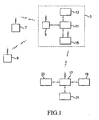
- FIG. 1 is a block diagram illustrating a wireless LAN, in accordance with the present invention.
- Figure 2 is a floor plan of a business employing the wireless LAN
- Figure 3 is a flow chart illustrating a method for allowing a wireless station access to the wireless LAN
- Figure 4 is a floor plan of an airport lounge employing the wireless LAN.
- Figure 5 is a flow chart illustrating a method for verifying that wireless stations on the wireless LAN remain within a predefined geographical service area.
- FIG. 1 is a block diagram illustrating a wireless LAN, in accordance with the present invention.
- the wireless LAN includes at least one access point 3.
- the access point 3 includes a wireless transceiver 5.
- the wireless transceiver communicates with wireless stations 7 and 9 in the vicinity.
- the transceiver 5 is connected to a control unit 11.
- the control unit 11 is connected to a memory 13 and a bridge or router 15.
- the router 15 is connected to a server 17, either via a hardwired connection or via a wireless connection (as illustrated in Figure 1 ).
- the server 17 is, in turn, connected to peripheral devices, such as a printer 19, a modem 21 and a database 23.
- the bridge or router 15 need not be directly connected to a local server.
- a server could be anywhere in the Intranet, or Internet, if a suitable network configuration is provided.
- the primary function of the access point is to act as a bridge to allow communications between wireless stations (in which case a server is not required) and/or to allow communications between wireless stations and some infrastructure connected to the access point (which may or may not include a server).
- a small business is located within a building defined by outside perimeter walls 25.
- a parking lot 27 is provided at the entrance to the business.
- the server 17 is located in one of the workspaces 33.
- the server 17 has a hardwired connection to the printer 19 and the modem 21.
- a personnel, customer, and production database is located on a hard drive, internal to the server 17.
- the server 17 also includes a wireless connection to a first access point 41 and a second access point 43.
- Each station 45, 47, 49 will communicate with a closest access point 41, 43.
- Employees may take their laptops to and from various offices and workspaces without interruption of their connection to the server 17.
- the station 45, 47, 49 is handed-off to a closest access point 41, 43, so that an adequate signal strength is maintained.
- Figure 2 also illustrates an unauthorized fourth station 51.
- the authorized fourth station 51 is located in a car 53 in the parking lot 27.
- the unauthorized station 51 is sufficiently close to the second access point 43 to send signals to, and receive signals from, the second access point 43.
- a person in the parked car 53 has the opportunity to gain access to the wireless LAN.
- step S100 an association request is received from a station seeking to connect to the wireless LAN.
- the request is received by the transceiver 5.
- the transceiver 5 passes the request to the control unit 11.
- step S102 the control unit 11 measures the signal strength (SS) of the request.
- Step S106 the control unit 11 compares the measured signal strength to a predetermined threshold value stored in the memory 13. If the measured signal strength is greater than the predetermined threshold value, the system concludes that the station is within the confines of the business's outer perimeter walls 25. Therefore, the process proceeds to step S108.
- step S108 the control unit 11 allows the station to communicate with the server 17 or with other stations on the wireless LAN, via the router 15.
- key codes, user names, and passwords may also be checked by the access point 3 or server 17 prior to allowing a station full access to the wireless LAN.
- step S110 the control unit 11 prevents the station from communicating with the server 17 and with other stations on the wireless LAN by denying access to the router 15. It is also an option that the control unit 11 can send a message to the station, informing the station that it is out of range.
- a wireless LAN can be installed in a business having a floor plan of any configuration or size, there would be no single predetermined threshold value which would be suitable for all installations. Therefore, it is envisioned that the predetermined threshold value would be experimentally determined at the time of installation by a technician or by the end user. During installation, a technician would take a station and travel entirely within the geographical area to be served by the access point of the wireless LAN. Measurements would be made of the signal strength of the technician's station in this geographical area to form a first set of measured signal strengths.
- the technician would take the station just outside the geographical area to be serviced by the access point.
- Signal strength measurement would be again taken, this time to form a second set of measured signal strengths.
- the predetermined threshold value would be set to reside somewhere in the margin between the first and second sets of measured signal strengths. Of course, it would be possible to obtain only the first set of measured signal strengths and set the predetermined threshold value slightly less than the lowest measured signal strength. In a wireless LAN having more than one access point, the process would be repeated to determine a predetermined threshold value for each access point.
- Figure 4 is a floor plan for a wireless LAN, in accordance with the present invention, employed in a lounge area of an airport.
- Figure 4 also illustrates a wireless LAN which does not include a local server.
- a lounge 100 is defined by structural walls 101.
- the lounge 100 there are a plurality of tables 103 and seats 105, such as chairs and couches. Travelers, relaxing or working in the lounge, can operate portable wireless stations, such as a fifth station 107 and a sixth station 109.
- the fifth and sixth stations 107 and 109 communicate with a third access point 111, positioned inside of an attendant's area 113.
- the third access point 111 is hardwired to a personal computer 115.
- Figure 4 illustrates that the present invention is applicable to situations wherein only a portion of a building, instead of an entire building, is defined as the authorized geographical area of the wireless LAN.
- the authorized geographical area is defined within interior walls 101 of an airport terminal. It should be noted that it is within the scope of the present invention to establish an authorized geographical area which is not defined by walls, but merely a radius from the access point.
- a hacker could conceal a laptop computer in a briefcase and walk into a business, under the premise of asking directions to a nearby building. Once inside the business, the laptop could be automatically programmed to connect to the wireless LAN. Since the laptop would actually be within the authorized geographical area, a sufficient signal strength would be present, and the method of Figure 3 would characterize the station (e.g. laptop) as an authorized station. After the hacker leaves the business, the hacker could sit in the parking lot and access the wireless LAN.
- FIG. 5 is a flow chart illustrating a method of ensuring that authorized stations on the wireless LAN remain within the authorized geographical area.
- the control unit 11 checks a timer value.
- the timer value could be an internal clock of a CPU of the control unit 11, or any other timing device.
- it is determined if the timer value has elapsed, or if a designated time period has passed. If not, the process returns to step S120.
- step S124 a signal strength of all of the stations on the wireless LAN is measured. Also in step S124, a total number of the stations on the wireless LAN is noted and a variable "i" is set equal to 1. Then, the process goes to step S126.
- step S126 the signal strength (SS) of the station(i), e.g. the first station on the wireless LAN, is compared in the predetermined threshold value stored in the memory 13. If the signal strength exceeds the predetermined threshold value, the process goes to step S128.
- SS signal strength
- step S1208 the variable "i" is incremented and the process returns to step S126. Therefore, the next station's signal strength, e.g. the second station's signal strength, is compared to the predetermined threshold value. If a station's signal strength is less than the predetermined threshold value, the method goes to step S130.
- the next station's signal strength e.g. the second station's signal strength
- the control unit evaluates an "access control policy" stored in the memory 13.
- the access control policy sets the standards for dealing with a station which passes outside of the authorized geographical area.
- different stations as identified by their unique key codes, are treated differently when they pass outside of the authorized geographical area. For example: (1) certain stations could be seamlessly operated outside of the authorized geographical area; (2) certain stations could be provided with a warning signal causing a display indicting that the user should return to the authorized geographical area; (3) certain stations could be allowed to continue a data transfer which is in progress, but be foreclosed from initiating any new data transfer; (4) certain stations could be allowed restricted access (e.g.
- a timer could be started which allows certain stations to function in a normal manner for a period of time sufficient to allow the station to return to the authorized geographical area; (6) certain stations could be immediately denied further access to the wireless LAN and/or not associated with the wireless LAN, such as by sending a de-authentication notification to the station.
- the de-authentication notification would reset the station's state variables, such that the station would be unassociated with the wireless LAN, in accordance with the 802.11 standards. Denying access to the wireless LAN would be transparent to the station (e.g. the station would not receive a transmission from the wireless LAN and hence would not "know" that access had been denied). Sending a de-authentication notification would not be transparent to the station.
- each station could have its own unique timer value.
- a check would be made to see if a particular station had left the authorized geographical area after the lapse of the timer value associated with that particular station. For example, one station would be checked every three minutes, while another station would be checked every ten minutes.
- Step S132 illustrates the situation when policies (1) and (6) are in place.
- processing proceeds to step S134.
- step S134 the station is allowed to seamlessly remain on the wireless LAN. If the policy associated with the particular station outside of the authorized geographical area calls for policy (6), processing proceeds to step S136. In step S136, the station is denied further access to the wireless LAN and/or the station is not associated.
- step S138 the control unit 11 checks to see if the last station on the wireless LAN has been evaluated. If not, the variable "i" is incremented in step S128, and the next station is evaluated. If so, the process returns to step S120 and waits for a period. After, the period lapses, the control unit again reevaluates all of the stations on the wireless LAN.
- the period of steps S120 and S122 may be selectively set by the installer or end user, e.g., three minutes, 30 seconds.
- the present invention it is possible to define an authorized geographical area, inside of which stations can connect to a wireless LAN and outside of which stations cannot connect to the wireless LAN.
- the geographical area is inferred by relying on a measured signal strength of the station seeking a connection to the wireless LAN.
- This method can be very accurate since walls, especially outside walls, tend to greatly weaken or attenuate wireless signals.
- This arrangement counteracts the "parking lot scenario," wherein an unauthorized person gains access to a wireless LAN, while sitting in a car parked adjacent to a business, hotel, person's house, etc.
Landscapes
- Engineering & Computer Science (AREA)
- Computer Security & Cryptography (AREA)
- Signal Processing (AREA)
- Computer Networks & Wireless Communication (AREA)
- Computing Systems (AREA)
- Computer Hardware Design (AREA)
- General Engineering & Computer Science (AREA)
- Remote Sensing (AREA)
- Radar, Positioning & Navigation (AREA)
- General Physics & Mathematics (AREA)
- Physics & Mathematics (AREA)
- Mobile Radio Communication Systems (AREA)
- Small-Scale Networks (AREA)
Claims (13)
- Verfahren zum Betreiben eines drahtlosen lokalen Kommunikationsnetzwerkes, umfassend die folgenden Schritte:Empfangen einer Anforderung von einer drahtlosen Station (7, 9) an einem Zugriffspunkt (3) des drahtlosen lokalen Kommunikationsnetzwerkes;Bestimmen, ob ein Ort der drahtlosen Station (7, 9) sich innerhalb eines vordefinierten geographischen Bereichs befindet;wenn sich der Ort innerhalb des vordefinierten geographischen Bereichs befindet, der drahtlosen Station (7, 9) erlauben, auf das drahtlose lokale Kommunikationsnetzwerk zuzugreifen; undwenn sich der Ort außerhalb des vordefinierten geographischen Bereichs befindet, den Zugriff der drahtlosen Station (7, 9) auf das drahtlose lokale Kommunikationsnetzwerk verweigern, wobei das Verfahren dadurch gekennzeichnet ist, dass der Schritt des Bestimmens die folgenden Schritte umfasst:Messen einer Signalstärke der drahtlosen Station (7, 9) wie am Zugriffspunkt des drahtlosen lokalen Kommunikationsnetzwerkes empfangen; undVergleichen der Signalstärke mit einem vorgegebenen Schwellwert, wobei der vorgegebene Schwellwert so eingestellt ist, dass mit einer Signalstärke, die größer ist als der vorgegebene Schwellwert, am Zugriffspunkt (3) zuverlässige Signale von der drahtlosen Station (7, 9) empfangen werden können, allerdings von am Zugangspunkt (3) empfangenen Signalstärken, die kleiner sind als der vorgegebene Schwellwert, angenommen wird, dass sie von einer unautorisierten drahtlosen Station außerhalb des vordefinierten geographischen Bereichs kommen, und ihr Zugriff auf das drahtlose lokale Kommunikationsnetzwerk verweigert wird.
- Verfahren nach Anspruch 1, welches weiterhin die folgenden Schritte umfassend:Überprüfen eines von der drahtlosen Station übertragenen Schlüsselcodes nach dem Schritt, der drahtlosen Station zu erlauben, auf das lokale Kommunikationsnetzwerk zuzugreifen;wenn der Schlüsselcode mit einem voreingestellten Schlüssel übereinstimmt, der drahtlosen Station erlauben, einen oder mehrere Dienste zu benutzen, die von dem drahtlosen lokalen Kommunikationsnetzwerk bereitgestellt werden; undwenn der Schlüssel nicht mit einem voreingestellten Schlüsselcode übereinstimmt, den Zugriff der drahtlosen Station, um Dienste zu verwenden, die vom drahtlosen lokalen Kommunikationsnetzwerk bereitgestellt werden, verweigern.
- Verfahren nach Anspruch 1, welches weiterhin den folgenden Schritt aufweist:periodisches Verifizieren, dass alle drahtlosen Stationen (7, 9), die auf das drahtlose lokale Kommunikationsnetzwerk zugreifen, innerhalb des vordefinierten geographischen Bereichs verbleiben.
- Verfahren nach Anspruch 3, wobei wenn sich eine drahtlose Station (7, 9) aus dem vordefinierten geographischen Bereich herausbewegt, Aktivieren eines Steuerungs-Regelwerkes betreffend das Erlauben fortgesetzten Zugriffs auf das drahtlose lokale Kommunikationsnetzwerk für die drahtlose Station außerhalb des vordefinierten geographischen Bereiches.
- Verfahren nach Anspruch 4, wobei das Steuerungs-Regelwerk beinhaltet, der drahtlosen Station (7, 9) den Zugriff auf das drahtlose lokale Kommunikationsnetzwerk außerhalb des vordefinierten geographischen Bereichs zu verweigern.
- Verfahren nach Anspruch 5, wobei das Steuerungs-Regelwerk außerdem das Zurücksetzen von Zustandsvariablen beinhaltet, die in einem Speicher der drahtlosen Station (7, 9) außerhalb des vordefinierten geographischen Bereichs gespeichert sind.
- Verfahren nach Anspruch 4, wobei das Steuerungs-Regelwerk beinhaltet, zu bestimmen, ob ein Datentransfer zwischen dem drahtlosen lokalen Kommunikationsnetzwerk und der drahtlosen Station (7, 9) stattfindet, und wenn dies so ist, Fortsetzen des Datentransfers bis zum Abschluss, und dann den Zugriff der drahtlosen Station (7, 9) außerhalb des vordefinierten geographischen Bereichs auf das drahtlose lokale Kommunikationsnetzwerk verweigern.
- System, umfassend:einen Zugriffspunkt (3) zum Empfangen einer drahtlosen Anforderung von einer drahtlosen Station (7, 9);wobei der Zugriffspunkt (3) eine Steuereinheit (11) aufweist, um zu bestimmen, ob ein Ort der drahtlosen Station (7, 9) sich innerhalb eines vorgegebenen geographischen Bereichs befindet; undeinen Router oder eine Brücke (15) zum Bereitstellen eines Zugriffs auf ein drahtloses lokales Kommunikationsnetzwerk für die drahtlose Station (7, 9), wenn sich die drahtlose Station (7, 9) innerhalb des vorgegebenen geographischen Bereichs befindet,wobei die Steuereinheit (11) beinhaltet:eine Signalstärke-Messeinrichtung zum Messen einer Signalstärke eines vom Zugriffspunkt von der drahtlosen Station (7, 9) empfangenen Signals, undwobei der Zugriffspunkt (3) weiterhin aufweist:einen Speicher (13), der einen vorgegebenen Schwellwert speichert, undwobei die Steuereinheit (11) einen Vergleicher beinhaltet zum Vergleichen einer gemessenen, vom Zugriffspunkt (3) von der drahtlosen Station (7, 9) empfangenen Signalstärke mit dem vorgegebenen Schwellwert, wobei der vorgegebene Schwellwert so eingestellt ist, dass mit einer Signalstärke, die größer ist als der vorgegebene Schwellwert, am Zugriffspunkt zuverlässige Signale von der drahtlosen Station empfangen werden können, allerdings von am Zugriffspunkt empfangenen Signalstärken, die kleiner sind als der vorgegebene Schwellwert, angenommen wird, dass sie von einer unautorisierten drahtlosen Station (7, 9) außerhalb des vordefinierten geographischen Bereichs kommen, und ihr Zugriff auf das drahtlose lokale Kommunikationsnetzwerk verweigert wird.
- System nach Anspruch 8, wobei die Steuereinheit (11) weiterhin beinhaltet:einen Timer, wobei die Steuereinheit den Timer überwacht und nach einer vorbestimmten Zeit die Steuereinheit bestimmt, ob ein Ort der drahtlosen Station innerhalb des vorgegebenen geographischen Bereichs verbleibt.
- System nach Anspruch 8 oder 9, wobei das System weiterhin die drahtlose Station umfasst, von welcher der Empfänger die drahtlose Anforderung empfängt.
- Verfahren zum Aufbauen eines drahtlosen lokalen Kommunikationsnetzwerkes, umfassend die folgenden Schritte:Bereitstellen eines Zugriffspunktes zum Senden und Empfangen von Kommunikationen mit drahtlosen Stationen (7, 9) innerhalb eines vordefinierten geographischen Bereichs;Betreiben einer drahtlosen Station (7, 9) innerhalb des vordefinierten geographischen Bereichs, der kleiner ist als ein Bereich, der zuverlässig vom Zugriffspunkt (3) bedient werden kann;Messen von am Zugriffspunkt (3) empfangenen Signalstärken von der drahtlosen Station (7, 9), wenn die drahtlose Station innerhalb des vordefinierten geographischen Bereiches bewegt wird;Einstellen eines vorgegebenen Schwellwerts bei einem Betrag, der kleiner ist als die niedrigste gemessene Signalstärke; undSpeichern des vorgegebenen Schwellwertes in einem Speicher (13), wobei der vorgegebene Schwellwert so eingestellt ist, dass mit einer Signalstärke, die größer ist als der vorgegebene Schwellwert, am Zugriffspunkt zuverlässige Signale von der drahtlosen Station empfangen werden können, allerdings von am Zugriffspunkt empfangenen Signalstärken, die kleiner sind als der vorgegebene Schwellwert, angenommen wird, dass sie von einer unautorisierten drahtlosen Station (7, 9) außerhalb des vordefinierten geographischen Bereichs kommen, und ihr Zugriff auf das drahtlose lokale Kommunikationsnetzwerk verweigert wird.
- Verfahren nach Anspruch 11, welches weiterhin die folgenden Schritte umfasst:eindeutiges Identifizieren einer ersten drahtlosen Station (7) zum Kommunizieren mit dem Zugriffspunkt (3); und Speichern eines ersten Steuerungs-Regelwerks im Speicher, um mit der ersten drahtlosen Station umzugehen, wobei das erste Steuerungs-Regelwerk Parameter zum Behandeln von Kommunikationen zwischen dem Zugriffspunkt (3) und der ersten drahtlosen Station (7) beinhaltet, wenn sich die erste drahtlose Station aus dem vordefinierten geographischen Bereich herausbewegt.
- Verfahren nach Anspruch 12, welches weiterhin die folgenden Schritte umfasst: eindeutiges Identifizieren einer zweiten drahtlosen Station (9) zum Kommunizieren mit dem Zugriffspunkt (3); und Speichern eines zweiten Steuerungs-Regelwerks im Speicher (13), um mit der zweiten drahtlosen Station (9) umzugehen, wobei das zweite Steuerungs-Regelwerk Parameter zum Behandeln von Kommunikation zwischen dem Zugriffspunkt und der zweiten drahtlosen Station (9) beinhaltet, wenn sich die zweite drahtlose Station aus dem vordefinierten geographischen Bereich herausbewegt, wobei sich das zweite Steuerungs-Regelwerk von dem ersten Steuerungs-Regelwerk unterscheidet.
Applications Claiming Priority (3)
| Application Number | Priority Date | Filing Date | Title |
|---|---|---|---|
| US180527 | 2002-06-27 | ||
| US10/180,527 US7403773B2 (en) | 2002-06-27 | 2002-06-27 | Location-based access control for wireless local area networks |
| PCT/US2003/015073 WO2004004278A1 (en) | 2002-06-27 | 2003-05-15 | Location-based access control for wireless local area networks |
Publications (2)
| Publication Number | Publication Date |
|---|---|
| EP1527583A1 EP1527583A1 (de) | 2005-05-04 |
| EP1527583B1 true EP1527583B1 (de) | 2010-07-07 |
Family
ID=29999168
Family Applications (1)
| Application Number | Title | Priority Date | Filing Date |
|---|---|---|---|
| EP03728879A Expired - Lifetime EP1527583B1 (de) | 2002-06-27 | 2003-05-15 | Ortsabhängige Zugriffskontrolle für drahtlose lokale Kommunikationsnetze |
Country Status (7)
| Country | Link |
|---|---|
| US (1) | US7403773B2 (de) |
| EP (1) | EP1527583B1 (de) |
| KR (1) | KR20050032529A (de) |
| AU (1) | AU2003234539A1 (de) |
| CA (1) | CA2489698C (de) |
| DE (1) | DE60333298D1 (de) |
| WO (1) | WO2004004278A1 (de) |
Families Citing this family (42)
| Publication number | Priority date | Publication date | Assignee | Title |
|---|---|---|---|---|
| US7047036B2 (en) | 2002-07-02 | 2006-05-16 | Interdigital Technology Corporation | Method and apparatus for handoff between a wireless local area network (WLAN) and a universal mobile telecommunication system (UMTS) |
| US8156539B1 (en) * | 2002-12-18 | 2012-04-10 | Cypress Semiconductor Corporation | Method and system for protecting a wireless network |
| US7493140B2 (en) * | 2003-01-22 | 2009-02-17 | Johnson Controls Technology Company | System, method and device for providing communication between a vehicle and a plurality of wireless devices having different communication standards |
| KR100991476B1 (ko) | 2003-11-12 | 2010-11-04 | 인터디지탈 테크날러지 코포레이션 | 상이한 타입의 액세스 기술 네트워크에 대한 애플리케이션서버 자동 액세스(asaa) 시스템 |
| TWI249360B (en) | 2003-11-13 | 2006-02-11 | Interdigital Tech Corp | Method and system for facilitating inter-system handover |
| JP4642069B2 (ja) | 2004-03-12 | 2011-03-02 | インターデイジタル テクノロジー コーポレーション | マルチモード無線送受信装置を用いた、無線通信システム間での無線アクセス技術を切り換えるための方法及び装置 |
| EP1782569B1 (de) * | 2004-07-07 | 2013-09-25 | Nariste Networks Pty Ltd | Standortaktivierte sicherheitsdienste in einem drahtlosen netzwerk |
| US20060092891A1 (en) * | 2004-10-28 | 2006-05-04 | Interdigital Technology Corporation | Controlled area signalling |
| US20060133338A1 (en) * | 2004-11-23 | 2006-06-22 | Interdigital Technology Corporation | Method and system for securing wireless communications |
| CA2544681C (en) * | 2005-04-22 | 2015-11-17 | Protexis Inc. | Location-specific or range-based licensing system |
| US20070087763A1 (en) * | 2005-10-18 | 2007-04-19 | Honeywell International Inc. | Location aware wireless security |
| DE102005057101A1 (de) * | 2005-11-30 | 2007-06-06 | Siemens Ag | Verfahren und zentrale Einrichtung für Zugangskontrollen zu gesicherten Bereichen oder Einrichtungen |
| US8726344B1 (en) * | 2005-11-30 | 2014-05-13 | Qurio Holdings, Inc. | Methods, systems, and products for measuring trust scores of devices |
| US9420520B2 (en) | 2006-02-21 | 2016-08-16 | Telefonaktiebolaget Lm Ericsson (Publ) | Method and apparatus for providing access for a limited set of mobile stations to a restricted local access point |
| KR100792673B1 (ko) * | 2006-10-13 | 2008-01-09 | 서울통신기술 주식회사 | 사설 무선 통신 시스템의 단말 제어 방법 및 장치 |
| GB0623842D0 (en) * | 2006-11-29 | 2007-01-10 | British Telecomm | Secure access |
| US20090077620A1 (en) * | 2007-05-17 | 2009-03-19 | Ravi Ranjith Chirakkoly | Method and System for Location-Based Wireless Network |
| US20140355592A1 (en) | 2012-11-01 | 2014-12-04 | Datavalet Technologies | System and method for wireless device detection, recognition and visit profiling |
| US20090082015A1 (en) * | 2007-09-26 | 2009-03-26 | Symbol Technologies, Inc. | Systems and methods for controlling mobile unit access to network services based on its location |
| US9213348B2 (en) * | 2009-01-16 | 2015-12-15 | Broadcom Corporation | Method and system for utilizing a broadband gateway for peer to peer communications |
| KR101318013B1 (ko) * | 2010-08-30 | 2013-10-14 | 주식회사 팬택 | 간편 전송 모드를 가지는 단말기 및 이를 이용한 네트워크 연결 방법 |
| US8949958B1 (en) * | 2011-08-25 | 2015-02-03 | Amazon Technologies, Inc. | Authentication using media fingerprinting |
| KR20130025749A (ko) * | 2011-09-02 | 2013-03-12 | 삼성전자주식회사 | P2p 연결을 지원하는 화상형성장치 및 그것의 신호 세기에 기초한 보안 관리 방법 |
| US8750903B1 (en) * | 2012-02-28 | 2014-06-10 | CellAntenna Corporation | Cell phone control and localization for restricted facilities |
| CN103475998A (zh) * | 2013-08-30 | 2013-12-25 | 北京智谷睿拓技术服务有限公司 | 无线网络服务提供方法及系统 |
| CN104519526B (zh) | 2013-09-27 | 2019-02-26 | 华为技术有限公司 | 网络接入点、网络控制器、网络设备及其负载控制方法 |
| EP2919431B1 (de) | 2014-03-12 | 2017-11-08 | Accenture Global Services Limited | Sichere verteilung von elektronischem inhalt unter berücksichtigung des empfängerorts |
| US9797978B1 (en) | 2014-09-03 | 2017-10-24 | Howard Melamed | UAV, system, and method for radio frequency spectral analysis |
| US9715009B1 (en) | 2014-12-19 | 2017-07-25 | Xidrone Systems, Inc. | Deterent for unmanned aerial systems |
| US9689976B2 (en) | 2014-12-19 | 2017-06-27 | Xidrone Systems, Inc. | Deterent for unmanned aerial systems |
| US9847035B1 (en) | 2015-01-28 | 2017-12-19 | Howard Melamed | Methods for radio frequency spectral analysis |
| US9529360B1 (en) * | 2015-01-28 | 2016-12-27 | Howard Melamed | System and method for detecting and defeating a drone |
| WO2016126491A1 (en) | 2015-02-02 | 2016-08-11 | Eero, Inc. | Systems and methods for intuitive home networking |
| US20160301690A1 (en) * | 2015-04-10 | 2016-10-13 | Enovate Medical, Llc | Access control for a hard asset |
| US9734682B2 (en) | 2015-03-02 | 2017-08-15 | Enovate Medical, Llc | Asset management using an asset tag device |
| FR3053561A1 (fr) * | 2016-06-29 | 2018-01-05 | Orange | Controle de connexion a un reseau local installe a bord d'un vehicule |
| US10524225B1 (en) * | 2016-08-08 | 2019-12-31 | A9.Com, Inc. | System and method for locating a mobile electronic device |
| EP3520455A4 (de) | 2016-09-27 | 2020-04-22 | A9.com, Inc. | Verfahren zur teilung einer netzwerkkonfiguration |
| GB2556339A (en) * | 2016-09-27 | 2018-05-30 | Zoneart Networks Ltd | Wireless access control system |
| US10897709B2 (en) * | 2016-12-09 | 2021-01-19 | Arris Enterprises Llc | Wireless network authorization using a trusted authenticator |
| US10907940B1 (en) | 2017-12-12 | 2021-02-02 | Xidrone Systems, Inc. | Deterrent for unmanned aerial systems using data mining and/or machine learning for improved target detection and classification |
| US11277251B1 (en) | 2019-07-03 | 2022-03-15 | Michael Patrick Millard | Radio frequency spectrum management system and method |
Family Cites Families (18)
| Publication number | Priority date | Publication date | Assignee | Title |
|---|---|---|---|---|
| US5428821A (en) * | 1991-06-28 | 1995-06-27 | Motorola, Inc. | Base site with remote calibration capability |
| US5794141A (en) * | 1994-02-24 | 1998-08-11 | Gte Mobile Comm Servinc | Multi-mode communication network with handset-assisted cordless base station activation |
| FI102123B1 (fi) * | 1994-04-15 | 1998-10-15 | Nokia Telecommunications Oy | Solukkotyyppinen matkaviestinjärjestelmä sekä menetelmä handoverin suorittamiseksi mikrosolun ja makrosolun välillä |
| US5835061A (en) * | 1995-06-06 | 1998-11-10 | Wayport, Inc. | Method and apparatus for geographic-based communications service |
| FI103171B1 (fi) * | 1996-02-20 | 1999-04-30 | Nokia Telecommunications Oy | Menetelmä ja järjestely solunvaihtopäätöksen tekemiseksi matkaviestinjärjestelmässä |
| US6011973A (en) * | 1996-12-05 | 2000-01-04 | Ericsson Inc. | Method and apparatus for restricting operation of cellular telephones to well delineated geographical areas |
| US5995253A (en) * | 1997-02-04 | 1999-11-30 | Digital Equipment Corporation | Variable wavelength transceiver |
| GB2339994B (en) * | 1998-07-25 | 2000-10-11 | Motorola Ltd | Radio communication system |
| US6195558B1 (en) * | 1998-09-29 | 2001-02-27 | Avaya Technology Corp. | Automatic reassignment of a telephone number of a wireless terminal based on location of the wireless terminal |
| US6308067B1 (en) * | 1999-11-30 | 2001-10-23 | At&T Corp. | Wireless communications system and method of operation for reducing fraud |
| US6307471B1 (en) * | 1999-12-01 | 2001-10-23 | Ensure Technologies, Inc. | Radio based proximity token with multiple antennas |
| JP3501067B2 (ja) * | 2000-02-10 | 2004-02-23 | 日本電気株式会社 | 事業所用phs無線通信システム、構内交換機及びphs子機 |
| US7136644B2 (en) * | 2001-11-29 | 2006-11-14 | Motorola, Inc. | Method and apparatus for controlling service acquisition in a local area network device |
| US7133663B2 (en) * | 2001-12-20 | 2006-11-07 | Accenture Global Services, Gmbh | Determining the context of surroundings |
| US6920330B2 (en) * | 2002-03-26 | 2005-07-19 | Sun Microsystems, Inc. | Apparatus and method for the use of position information in wireless applications |
| US6889045B2 (en) * | 2002-06-26 | 2005-05-03 | Motorola, Inc. | Method and apparatus for implementing bi-directional soft handovers between wireless networks via media gateway control |
| US7286474B2 (en) * | 2002-07-12 | 2007-10-23 | Avaya Technology Corp. | Method and apparatus for performing admission control in a communication network |
| US7072652B2 (en) * | 2003-12-15 | 2006-07-04 | Intel Corporation | Handoff apparatus, systems, and methods |
-
2002
- 2002-06-27 US US10/180,527 patent/US7403773B2/en not_active Expired - Lifetime
-
2003
- 2003-05-15 AU AU2003234539A patent/AU2003234539A1/en not_active Abandoned
- 2003-05-15 EP EP03728879A patent/EP1527583B1/de not_active Expired - Lifetime
- 2003-05-15 WO PCT/US2003/015073 patent/WO2004004278A1/en not_active Ceased
- 2003-05-15 KR KR1020047021730A patent/KR20050032529A/ko not_active Ceased
- 2003-05-15 CA CA002489698A patent/CA2489698C/en not_active Expired - Fee Related
- 2003-05-15 DE DE60333298T patent/DE60333298D1/de not_active Expired - Lifetime
Also Published As
| Publication number | Publication date |
|---|---|
| DE60333298D1 (de) | 2010-08-19 |
| US20040203748A1 (en) | 2004-10-14 |
| CA2489698C (en) | 2009-09-22 |
| AU2003234539A1 (en) | 2004-01-19 |
| KR20050032529A (ko) | 2005-04-07 |
| EP1527583A1 (de) | 2005-05-04 |
| US7403773B2 (en) | 2008-07-22 |
| CA2489698A1 (en) | 2004-01-08 |
| WO2004004278A1 (en) | 2004-01-08 |
Similar Documents
| Publication | Publication Date | Title |
|---|---|---|
| EP1527583B1 (de) | Ortsabhängige Zugriffskontrolle für drahtlose lokale Kommunikationsnetze | |
| EP2076078B1 (de) | Definieren einer Grenze für ein drahtloses Netzwerk mit physikalischen Zugriffsteuersystemen | |
| US10482694B2 (en) | Systems and methods for redundant access control systems based on mobile devices | |
| US8437741B2 (en) | Intelligent network access controller and method | |
| US7372839B2 (en) | Global positioning system (GPS) based secure access | |
| US20100159879A1 (en) | Intelligent network access controller and method | |
| US9449445B2 (en) | Wireless communication techniques for controlling access granted by a security device | |
| US7212097B2 (en) | Service provision method and apparatus in a distributed system | |
| US7158803B1 (en) | Emergency services for wireless data access networks | |
| US20180359635A1 (en) | Securitization of Temporal Digital Communications Via Authentication and Validation for Wireless User and Access Devices | |
| US11683312B2 (en) | Client device authentication to a secure network | |
| JPH1066158A (ja) | アクセス制御システムに対するセキュリティ | |
| US20040267551A1 (en) | System and method of restricting access to wireless local area network based on client location | |
| US20150312845A1 (en) | Method and apparatus for location-based security and policy enforcement for mobile devices | |
| JPH11510019A (ja) | 通信ネットワーク、通信システム及びそのようなシステム用のユニットに対するアクセス制限処理 | |
| US12548392B2 (en) | Systems and techniques for accessing multiple access points within a facility using a single authentication instance | |
| JP2002345033A (ja) | 携帯電話不正使用抑止システム及び方法並びに該システムに用いられる制御プログラム | |
| JP4068314B2 (ja) | 無線端末 |
Legal Events
| Date | Code | Title | Description |
|---|---|---|---|
| PUAI | Public reference made under article 153(3) epc to a published international application that has entered the european phase |
Free format text: ORIGINAL CODE: 0009012 |
|
| 17P | Request for examination filed |
Effective date: 20050122 |
|
| AK | Designated contracting states |
Kind code of ref document: A1 Designated state(s): AT BE BG CH CY CZ DE DK EE ES FI FR GB GR HU IE IT LI LU MC NL PT RO SE SI SK TR |
|
| AX | Request for extension of the european patent |
Extension state: AL LT LV MK |
|
| DAX | Request for extension of the european patent (deleted) | ||
| RBV | Designated contracting states (corrected) |
Designated state(s): DE FR GB HU NL |
|
| RIN1 | Information on inventor provided before grant (corrected) |
Inventor name: MANI, MAHALINGAM Inventor name: KAPPES, MARTIN Inventor name: GARG, SACHIN |
|
| 17Q | First examination report despatched |
Effective date: 20080528 |
|
| R17C | First examination report despatched (corrected) |
Effective date: 20080605 |
|
| GRAP | Despatch of communication of intention to grant a patent |
Free format text: ORIGINAL CODE: EPIDOSNIGR1 |
|
| RTI1 | Title (correction) |
Free format text: LOCATION-BASED ACCESS CONTROL FOR WIRELESS LOCAL AREA NETWORKS |
|
| GRAS | Grant fee paid |
Free format text: ORIGINAL CODE: EPIDOSNIGR3 |
|
| GRAA | (expected) grant |
Free format text: ORIGINAL CODE: 0009210 |
|
| RAP1 | Party data changed (applicant data changed or rights of an application transferred) |
Owner name: AVAYA TECHNOLOGY LLC |
|
| AK | Designated contracting states |
Kind code of ref document: B1 Designated state(s): DE FR GB HU NL |
|
| REG | Reference to a national code |
Ref country code: GB Ref legal event code: FG4D |
|
| REF | Corresponds to: |
Ref document number: 60333298 Country of ref document: DE Date of ref document: 20100819 Kind code of ref document: P |
|
| RAP2 | Party data changed (patent owner data changed or rights of a patent transferred) |
Owner name: AVAYA INC. |
|
| REG | Reference to a national code |
Ref country code: NL Ref legal event code: VDEP Effective date: 20100707 |
|
| PG25 | Lapsed in a contracting state [announced via postgrant information from national office to epo] |
Ref country code: NL Free format text: LAPSE BECAUSE OF FAILURE TO SUBMIT A TRANSLATION OF THE DESCRIPTION OR TO PAY THE FEE WITHIN THE PRESCRIBED TIME-LIMIT Effective date: 20100707 |
|
| REG | Reference to a national code |
Ref country code: DE Ref legal event code: R081 Ref document number: 60333298 Country of ref document: DE Owner name: AVAYA INC., US Free format text: FORMER OWNER: AVAYA TECHNOLOGY LLC, BASKING RIDGE, US Effective date: 20110214 Ref country code: DE Ref legal event code: R081 Ref document number: 60333298 Country of ref document: DE Owner name: AVAYA INC., BASKING RIDGE, US Free format text: FORMER OWNER: AVAYA TECHNOLOGY LLC, BASKING RIDGE, N.J., US Effective date: 20110214 |
|
| PLBE | No opposition filed within time limit |
Free format text: ORIGINAL CODE: 0009261 |
|
| STAA | Information on the status of an ep patent application or granted ep patent |
Free format text: STATUS: NO OPPOSITION FILED WITHIN TIME LIMIT |
|
| 26N | No opposition filed |
Effective date: 20110408 |
|
| REG | Reference to a national code |
Ref country code: DE Ref legal event code: R097 Ref document number: 60333298 Country of ref document: DE Effective date: 20110408 |
|
| PGFP | Annual fee paid to national office [announced via postgrant information from national office to epo] |
Ref country code: NL Payment date: 20120515 Year of fee payment: 10 |
|
| PG25 | Lapsed in a contracting state [announced via postgrant information from national office to epo] |
Ref country code: HU Free format text: LAPSE BECAUSE OF FAILURE TO SUBMIT A TRANSLATION OF THE DESCRIPTION OR TO PAY THE FEE WITHIN THE PRESCRIBED TIME-LIMIT Effective date: 20100707 |
|
| REG | Reference to a national code |
Ref country code: FR Ref legal event code: PLFP Year of fee payment: 14 |
|
| REG | Reference to a national code |
Ref country code: FR Ref legal event code: PLFP Year of fee payment: 15 |
|
| REG | Reference to a national code |
Ref country code: FR Ref legal event code: PLFP Year of fee payment: 16 |
|
| PGFP | Annual fee paid to national office [announced via postgrant information from national office to epo] |
Ref country code: DE Payment date: 20200520 Year of fee payment: 18 |
|
| PGFP | Annual fee paid to national office [announced via postgrant information from national office to epo] |
Ref country code: FR Payment date: 20210525 Year of fee payment: 19 |
|
| PGFP | Annual fee paid to national office [announced via postgrant information from national office to epo] |
Ref country code: GB Payment date: 20210527 Year of fee payment: 19 |
|
| REG | Reference to a national code |
Ref country code: DE Ref legal event code: R079 Ref document number: 60333298 Country of ref document: DE Free format text: PREVIOUS MAIN CLASS: H04L0029060000 Ipc: H04L0065000000 |
|
| REG | Reference to a national code |
Ref country code: DE Ref legal event code: R119 Ref document number: 60333298 Country of ref document: DE |
|
| PG25 | Lapsed in a contracting state [announced via postgrant information from national office to epo] |
Ref country code: DE Free format text: LAPSE BECAUSE OF NON-PAYMENT OF DUE FEES Effective date: 20211201 |
|
| GBPC | Gb: european patent ceased through non-payment of renewal fee |
Effective date: 20220515 |
|
| PG25 | Lapsed in a contracting state [announced via postgrant information from national office to epo] |
Ref country code: FR Free format text: LAPSE BECAUSE OF NON-PAYMENT OF DUE FEES Effective date: 20220531 |
|
| PG25 | Lapsed in a contracting state [announced via postgrant information from national office to epo] |
Ref country code: GB Free format text: LAPSE BECAUSE OF NON-PAYMENT OF DUE FEES Effective date: 20220515 |