EP1526508A1 - Verfahren zum Auswählen von Syntheseneinheiten - Google Patents
Verfahren zum Auswählen von Syntheseneinheiten Download PDFInfo
- Publication number
- EP1526508A1 EP1526508A1 EP04105204A EP04105204A EP1526508A1 EP 1526508 A1 EP1526508 A1 EP 1526508A1 EP 04105204 A EP04105204 A EP 04105204A EP 04105204 A EP04105204 A EP 04105204A EP 1526508 A1 EP1526508 A1 EP 1526508A1
- Authority
- EP
- European Patent Office
- Prior art keywords
- pitch
- segment
- similarity
- information
- units
- Prior art date
- Legal status (The legal status is an assumption and is not a legal conclusion. Google has not performed a legal analysis and makes no representation as to the accuracy of the status listed.)
- Granted
Links
Images


Classifications
-
- G—PHYSICS
- G10—MUSICAL INSTRUMENTS; ACOUSTICS
- G10L—SPEECH ANALYSIS TECHNIQUES OR SPEECH SYNTHESIS; SPEECH RECOGNITION; SPEECH OR VOICE PROCESSING TECHNIQUES; SPEECH OR AUDIO CODING OR DECODING
- G10L19/00—Speech or audio signals analysis-synthesis techniques for redundancy reduction, e.g. in vocoders; Coding or decoding of speech or audio signals, using source filter models or psychoacoustic analysis
- G10L19/0018—Speech coding using phonetic or linguistical decoding of the source; Reconstruction using text-to-speech synthesis
-
- G—PHYSICS
- G10—MUSICAL INSTRUMENTS; ACOUSTICS
- G10L—SPEECH ANALYSIS TECHNIQUES OR SPEECH SYNTHESIS; SPEECH RECOGNITION; SPEECH OR VOICE PROCESSING TECHNIQUES; SPEECH OR AUDIO CODING OR DECODING
- G10L13/00—Speech synthesis; Text to speech systems
- G10L13/06—Elementary speech units used in speech synthesisers; Concatenation rules
Definitions
- the invention relates to a method for selecting units of synthesis.
- the indexing techniques of natural speech units have recently allowed the development of synthesis systems from the particularly powerful text. These techniques are now studied in the context of very low speech rate coding, together with algorithms borrowed from the field of speech recognition, Ref [1-5].
- the main idea is to identify in the speech signal to be coded a almost optimal segmentation in elementary units. These units can be units obtained from a phonetic transcription, which has the disadvantage of having to be corrected manually for an optimal result, or automatically according to spectral stability criteria. From this type of segmentation, and for each segment, we look for unity synthesis in a dictionary obtained during a phase prior learning, and containing reference synthesis units.
- the coding scheme used is to model the space acoustic of the speaker (or speakers) by Markov models hidden (HMM or Hidden Markov Models). These dependent models or independent of the speaker are obtained during a learning phase prior to using algorithms identical to those used in the speech recognition systems.
- the essential difference lies in the fact that the models are learned on vectors grouped by classes automatically and not in a supervised way from a phonetic transcription.
- the learning procedure then consists of automatically obtain the segmentation of learning signals (for example using the so-called temporal decomposition method), group segments obtained in a finite number of classes corresponding to the number of HMM models that we wish to build.
- the number of models is directly related to the desired resolution for represent the acoustic space of the speaker (s).
- these models make it possible to segment the signal to be coded using an algorithm from Viterbi. Segmentation allows to associate to each segment, the index of class and its length. This information is not sufficient to model spectral information, for each of the classes a realization of spectral trajectory is selected from among several so-called synthesis. These units are extracted from the learning base at its segmentation using HMM models. It is possible to take into account context for example by using multiple subclasses allowing for take into account transitions from one class to another. A first index indicates the class to which the segment belongs, a second index specifies the subclass to which it belongs as the index of class of the previous segment. The subclass index is therefore not transmit, and the class index must be stored for the next segment. The subclasses thus defined make it possible to take into account the different transitions to the class associated with the segment in question. To the information spectral one adds the information of prosody, that is to say the value of pitch and energy parameters and their evolutions.
- a classic method is initially to select the unit closest to a spectral point of view then, once the unit selected, to code the prosody information, either independently of the selected unit.
- the method according to the present invention proposes a novel method of selecting the closest synthesis unit together with modeling and quantification of additional information necessary at the level of the decoder for the reproduction of the speech signal.
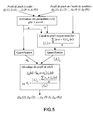
- information is a segment of speech to code and one uses as proximity criteria the fundamental frequency or pitch, or the spectral distortion, and / or the energy profile and a step of merge of the criteria used to determine the synthesis unit representative.
- the method comprises for example a coding step and / or a pitch correction step by modifying the synthesis profile.
- the step of encoding and / or correcting the pitch may be a Linear transformation of the pitch profile.
- the method is for example used for the selection and / or the coding of synthesis units for a very low bit rate speech coder.
- the speech signal is analyzed frame to frame to extract characteristic parameters (spectral parameters, pitch, energy).
- This analysis is classically using a sliding window set on the horizon of the frame. This frame has a duration of the order of 20 ms, and the update is done with a shift of the analysis window of the order of 10 ms to 20 ms.
- HMM Hidden Markov Model
- model speech segments set of successive frames
- phonemes if the learning phase is supervised (phonetic segmentation and transcription available) or to spectrally stable sounds in the case of a segmentation obtained from Automatic way.
- 64 HMM models are used here, which make it possible recognition phase to associate with each segment the model index HMM identified, and therefore the class to which it belongs.
- HMM models are also used with the help of a Viterbi type algorithm to be coding phase the segmentation and classification of each of the segments (belonging to a class). Each segment is therefore identified by an index between 1 and 64 which is transmitted to the decoder.
- the decoder uses this index to find the synthesis unit in the dictionary built during the learning phase.
- Units of synthesis that make up the dictionary are simply the sequences of parameters associated with the segments obtained on the learning corpus.
- a dictionary class contains all units associated with the same model HMM. Each synthesis unit is therefore characterized by a sequence of spectral parameters, a sequence of pitch value (pitch profile), a sequence of gains (energy profile).
- each class (from 1 to 64) of the dictionary is subdivided into 64 subclasses, where each subclass contains synthesis units that are temporally preceded by a segment belonging to the same class. This approach allows take into account the past context, and thus improve the recovery of the areas transients from one unit to another.
- the present invention relates in particular to a method of selection of a multicriteria synthesis unit.
- the process allows example to take into account simultaneously the pitch, the spectral distortion, and pitch and energy evolution profiles.
- the method may comprise in a variant embodiment a pitch coding step by correction of the synthesis pitch profile detailed below.
- the criterion relating to the evolution profile of the pitch makes it possible in part to consider the voicing information. It is however possible to disable when the segment is totally unvoiced, or the subclass selected is also unvoiced. Indeed, we can notice mainly three types of subclasses: the subclasses containing majority of voiced units, those containing predominantly unvoiced units, and subclasses containing predominantly units mixed.
- the method according to the invention is not limited to optimizing the flow rate allocated to prosody information but also allows to keep for the coding phase the entirety of the synthesis units obtained during the learning phase with a constant number of bits to encode the unit of synthesis.
- the synthesis unit is characterized by both the value pitch and its index. This approach allows in a scheme of speaker-independent coding to cover all pitch values possible and to select the synthesis unit taking into account in part characteristics of the speaker, there is indeed for the same speaker a correlation between the pitch variation range and the characteristics of the vocal tract (especially the length).
- the similarity measure may be a spectral distance.
- Step A9) comprises for example a step where the average the set of spectra of the same segment and the measure of similarity is an intercorrelation measure.
- the spectral distortion criterion is for example calculated on harmonic structures resampled to constant pitch or resampled the pitch of the segment to be coded, after interpolation of initial harmonic structures.
- the similarity criterion will depend on the spectral parameters used (for example the type of parameters used for the representation of the envelope).
- spectral parameters for example the type of parameters used for the representation of the envelope.
- LSP Line Spectral Pair, LSF, Line Spectral Frequencies
- cepstral parameters are usually used, and they can either be derived from a linear prediction analysis (LPCC, Linear Prediction Cepstrum Coefficients) or estimated from a filter bank often on a Mel or Bark perceptual scale (MFCC, Mel Frequency Cepstrum Coefficients).
- Pre-treatment then consists in estimating a spectral envelope from the amplitudes harmonics (linear or polynomial spline interpolation) and to resample the envelope thus obtained, either by using the frequency of the segment to be coded, either by using a frequency fundamental constant (100 Hz for example).
- a fundamental frequency constant allows to pre-calculate all the harmonic structures of synthesis units during the learning phase.
- Re-sampling is then only on the segment to be coded.
- the similarity measure can then be estimated simply from the average harmonic structure of the segment to be coded, and that of the synthesis unit considered.
- This measure of similarity can also be a standardized cross-correlation measurement. It can also be noted that resampling procedure can be done on a scale perceptual frequencies (Mel or Bark).
- the method comprises a step of pitch coding by modifying the synthesis profile. This consists of resynthesizing a pitch profile from that of the synthesis unit selected and a linearly variable gain over the duration of the segment code. It is then sufficient to transmit an additional value for characterize the correction gain over the entire segment.
- the flow associated with the prosody is then between 225 and 300 bits / sec, which leads to an overall bit rate between 450 and 600 bits / sec.
Landscapes
- Engineering & Computer Science (AREA)
- Computational Linguistics (AREA)
- Health & Medical Sciences (AREA)
- Audiology, Speech & Language Pathology (AREA)
- Human Computer Interaction (AREA)
- Physics & Mathematics (AREA)
- Acoustics & Sound (AREA)
- Multimedia (AREA)
- Signal Processing (AREA)
- Compression, Expansion, Code Conversion, And Decoders (AREA)
- Transition And Organic Metals Composition Catalysts For Addition Polymerization (AREA)
- Separation By Low-Temperature Treatments (AREA)
Applications Claiming Priority (2)
| Application Number | Priority Date | Filing Date | Title |
|---|---|---|---|
| FR0312494A FR2861491B1 (fr) | 2003-10-24 | 2003-10-24 | Procede de selection d'unites de synthese |
| FR0312494 | 2003-10-24 |
Publications (2)
| Publication Number | Publication Date |
|---|---|
| EP1526508A1 true EP1526508A1 (de) | 2005-04-27 |
| EP1526508B1 EP1526508B1 (de) | 2009-05-27 |
Family
ID=34385390
Family Applications (1)
| Application Number | Title | Priority Date | Filing Date |
|---|---|---|---|
| EP04105204A Expired - Lifetime EP1526508B1 (de) | 2003-10-24 | 2004-10-21 | Verfahren zum Auswählen von Syntheseneinheiten |
Country Status (6)
| Country | Link |
|---|---|
| US (1) | US8195463B2 (de) |
| EP (1) | EP1526508B1 (de) |
| AT (1) | ATE432525T1 (de) |
| DE (1) | DE602004021221D1 (de) |
| ES (1) | ES2326646T3 (de) |
| FR (1) | FR2861491B1 (de) |
Families Citing this family (15)
| Publication number | Priority date | Publication date | Assignee | Title |
|---|---|---|---|---|
| JP4265501B2 (ja) * | 2004-07-15 | 2009-05-20 | ヤマハ株式会社 | 音声合成装置およびプログラム |
| CN1842702B (zh) * | 2004-10-13 | 2010-05-05 | 松下电器产业株式会社 | 声音合成装置和声音合成方法 |
| US7126324B1 (en) * | 2005-11-23 | 2006-10-24 | Innalabs Technologies, Inc. | Precision digital phase meter |
| ATE456130T1 (de) * | 2007-10-29 | 2010-02-15 | Harman Becker Automotive Sys | Partielle sprachrekonstruktion |
| US8401849B2 (en) * | 2008-12-18 | 2013-03-19 | Lessac Technologies, Inc. | Methods employing phase state analysis for use in speech synthesis and recognition |
| US8731931B2 (en) | 2010-06-18 | 2014-05-20 | At&T Intellectual Property I, L.P. | System and method for unit selection text-to-speech using a modified Viterbi approach |
| US9664518B2 (en) * | 2010-08-27 | 2017-05-30 | Strava, Inc. | Method and system for comparing performance statistics with respect to location |
| CN102651217A (zh) * | 2011-02-25 | 2012-08-29 | 株式会社东芝 | 用于合成语音的方法、设备以及用于语音合成的声学模型训练方法 |
| US9291713B2 (en) | 2011-03-31 | 2016-03-22 | Strava, Inc. | Providing real-time segment performance information |
| US9116922B2 (en) | 2011-03-31 | 2015-08-25 | Strava, Inc. | Defining and matching segments |
| US8620646B2 (en) * | 2011-08-08 | 2013-12-31 | The Intellisis Corporation | System and method for tracking sound pitch across an audio signal using harmonic envelope |
| US10453479B2 (en) | 2011-09-23 | 2019-10-22 | Lessac Technologies, Inc. | Methods for aligning expressive speech utterances with text and systems therefor |
| US8996301B2 (en) | 2012-03-12 | 2015-03-31 | Strava, Inc. | Segment validation |
| US8886539B2 (en) * | 2012-12-03 | 2014-11-11 | Chengjun Julian Chen | Prosody generation using syllable-centered polynomial representation of pitch contours |
| WO2020171036A1 (ja) * | 2019-02-20 | 2020-08-27 | ヤマハ株式会社 | 音信号合成方法、生成モデルの訓練方法、音信号合成システムおよびプログラム |
Citations (1)
| Publication number | Priority date | Publication date | Assignee | Title |
|---|---|---|---|---|
| US20020065655A1 (en) * | 2000-10-18 | 2002-05-30 | Thales | Method for the encoding of prosody for a speech encoder working at very low bit rates |
Family Cites Families (9)
| Publication number | Priority date | Publication date | Assignee | Title |
|---|---|---|---|---|
| JPH10260692A (ja) * | 1997-03-18 | 1998-09-29 | Toshiba Corp | 音声の認識合成符号化/復号化方法及び音声符号化/復号化システム |
| JP2000056789A (ja) * | 1998-06-02 | 2000-02-25 | Sanyo Electric Co Ltd | 音声合成装置及び電話機 |
| JP2000075878A (ja) * | 1998-08-31 | 2000-03-14 | Canon Inc | 音声合成装置およびその方法ならびに記憶媒体 |
| US6581032B1 (en) * | 1999-09-22 | 2003-06-17 | Conexant Systems, Inc. | Bitstream protocol for transmission of encoded voice signals |
| US6574593B1 (en) * | 1999-09-22 | 2003-06-03 | Conexant Systems, Inc. | Codebook tables for encoding and decoding |
| JP3515039B2 (ja) * | 2000-03-03 | 2004-04-05 | 沖電気工業株式会社 | テキスト音声変換装置におけるピッチパタン制御方法 |
| JP3728172B2 (ja) * | 2000-03-31 | 2005-12-21 | キヤノン株式会社 | 音声合成方法および装置 |
| SE521600C2 (sv) * | 2001-12-04 | 2003-11-18 | Global Ip Sound Ab | Lågbittaktskodek |
| CA2388352A1 (en) * | 2002-05-31 | 2003-11-30 | Voiceage Corporation | A method and device for frequency-selective pitch enhancement of synthesized speed |
-
2003
- 2003-10-24 FR FR0312494A patent/FR2861491B1/fr not_active Expired - Fee Related
-
2004
- 2004-10-21 AT AT04105204T patent/ATE432525T1/de not_active IP Right Cessation
- 2004-10-21 DE DE602004021221T patent/DE602004021221D1/de not_active Expired - Lifetime
- 2004-10-21 EP EP04105204A patent/EP1526508B1/de not_active Expired - Lifetime
- 2004-10-21 ES ES04105204T patent/ES2326646T3/es not_active Expired - Lifetime
- 2004-10-22 US US10/970,731 patent/US8195463B2/en not_active Expired - Fee Related
Patent Citations (1)
| Publication number | Priority date | Publication date | Assignee | Title |
|---|---|---|---|---|
| US20020065655A1 (en) * | 2000-10-18 | 2002-05-30 | Thales | Method for the encoding of prosody for a speech encoder working at very low bit rates |
Non-Patent Citations (4)
| Title |
|---|
| BAUDOIN G ; EL CHAMI F: "Corpus based very low bit rate speech coding", 2003 IEEE INTERNATIONAL CONFERENCE ON ACOUSTICS, SPEECH, AND SIGNAL PROCESSING, vol. 1, 6 April 2003 (2003-04-06) - 10 April 2003 (2003-04-10), HONG KONG, CHINA, pages 792 - 795, XP002285304, ISBN: 0-7803-7663-3 * |
| C.BAVEREL ET AL., CODAGE DE LA PAROLE À TRÈS BAS DÉBIT PAR INDEXATION D'UNITÉS DE TAILLE VARIABLE, 2001 |
| M. PADELLINI, F. CAPMAN, G. BAUDOIN: "Dynamic Unit Selection for Very Low Bit Rate Coding at 500 bits/sec", TSD 2004, 8 September 2004 (2004-09-08) - 11 September 2004 (2004-09-11), BRNO, CZ, XP002312723 * |
| M. PADELLINI, G. BAUDOIN AND F. CAPMAN: "Codage de la parole a très bas débit par indexation d'unités de taille variable", RJC'2003, 5ÈMES RENCONTRES JEUNES CHERCHEURS EN PAROLE, 23 September 2003 (2003-09-23) - 26 September 2003 (2003-09-26), GRENOBLE, FRANCE, XP002285303 * |
Also Published As
| Publication number | Publication date |
|---|---|
| FR2861491A1 (fr) | 2005-04-29 |
| US20050137871A1 (en) | 2005-06-23 |
| US8195463B2 (en) | 2012-06-05 |
| FR2861491B1 (fr) | 2006-01-06 |
| EP1526508B1 (de) | 2009-05-27 |
| DE602004021221D1 (de) | 2009-07-09 |
| ES2326646T3 (es) | 2009-10-16 |
| ATE432525T1 (de) | 2009-06-15 |
Similar Documents
| Publication | Publication Date | Title |
|---|---|---|
| EP1526508B1 (de) | Verfahren zum Auswählen von Syntheseneinheiten | |
| US20080082333A1 (en) | Prosody Conversion | |
| FR2522179A1 (fr) | Procede et appareil de reconnaissance de paroles permettant de reconnaitre des phonemes particuliers du signal vocal quelle que soit la personne qui parle | |
| US20020184009A1 (en) | Method and apparatus for improved voicing determination in speech signals containing high levels of jitter | |
| JPH075892A (ja) | 音声認識方法 | |
| EP1606792B1 (de) | Verfahren zur analyse der grundfrequenz, verfahren und vorrichtung zur sprachkonversion unter dessen verwendung | |
| JPH08123484A (ja) | 信号合成方法および信号合成装置 | |
| WO2005106853A1 (fr) | Procede et systeme de conversion rapides d'un signal vocal | |
| Bhatt | Simulation and overall comparative evaluation of performance between different techniques for high band feature extraction based on artificial bandwidth extension of speech over proposed global system for mobile full rate narrow band coder | |
| Khonglah et al. | Speech enhancement using source information for phoneme recognition of speech with background music | |
| Lee et al. | A segmental speech coder based on a concatenative TTS | |
| EP1197952A1 (de) | Verfahren zur Kodierung von Prosodie für die Sprachkodierung mit sehr niedriger Datenrate | |
| Albahri et al. | Artificial bandwidth extension to improve automatic emotion recognition from narrow-band coded speech | |
| Bachhav et al. | Exploiting explicit memory inclusion for artificial bandwidth extension | |
| Fernandez Gallardo et al. | Spectral sub-band analysis of speaker verification employing narrowband and wideband speech | |
| Miyamoto et al. | Non-linear harmonic generation based blind bandwidth extension considering aliasing artifacts | |
| Min et al. | Deep vocoder: Low bit rate compression of speech with deep autoencoder | |
| Berisha et al. | Bandwidth extension of speech using perceptual criteria | |
| JP2000514207A (ja) | 音声合成システム | |
| JPH1097274A (ja) | 話者認識方法及び装置 | |
| EP1846918B1 (de) | Verfahren zur schätzung einer sprachumsetzungsfunktion | |
| Sharma et al. | Non-intrusive bit-rate detection of coded speech | |
| Salor et al. | Dynamic programming approach to voice transformation | |
| Do et al. | Objective evaluation of HMM-based speech synthesis system using kullback-leibler divergence. | |
| CN119360823B (zh) | 基于多子带生成策略的语音合成系统、方法、介质及设备 |
Legal Events
| Date | Code | Title | Description |
|---|---|---|---|
| PUAI | Public reference made under article 153(3) epc to a published international application that has entered the european phase |
Free format text: ORIGINAL CODE: 0009012 |
|
| AK | Designated contracting states |
Kind code of ref document: A1 Designated state(s): AT BE BG CH CY CZ DE DK EE ES FI FR GB GR HU IE IT LI LU MC NL PL PT RO SE SI SK TR |
|
| AX | Request for extension of the european patent |
Extension state: AL HR LT LV MK |
|
| 17P | Request for examination filed |
Effective date: 20051007 |
|
| AKX | Designation fees paid |
Designated state(s): AT BE BG CH CY CZ DE DK EE ES FI FR GB GR HU IE IT LI LU MC NL PL PT RO SE SI SK TR |
|
| 17Q | First examination report despatched |
Effective date: 20070612 |
|
| GRAP | Despatch of communication of intention to grant a patent |
Free format text: ORIGINAL CODE: EPIDOSNIGR1 |
|
| GRAS | Grant fee paid |
Free format text: ORIGINAL CODE: EPIDOSNIGR3 |
|
| GRAA | (expected) grant |
Free format text: ORIGINAL CODE: 0009210 |
|
| AK | Designated contracting states |
Kind code of ref document: B1 Designated state(s): AT BE BG CH CY CZ DE DK EE ES FI FR GB GR HU IE IT LI LU MC NL PL PT RO SE SI SK TR |
|
| REG | Reference to a national code |
Ref country code: GB Ref legal event code: FG4D Free format text: NOT ENGLISH |
|
| REG | Reference to a national code |
Ref country code: CH Ref legal event code: EP |
|
| REG | Reference to a national code |
Ref country code: IE Ref legal event code: FG4D Free format text: LANGUAGE OF EP DOCUMENT: FRENCH |
|
| REF | Corresponds to: |
Ref document number: 602004021221 Country of ref document: DE Date of ref document: 20090709 Kind code of ref document: P |
|
| REG | Reference to a national code |
Ref country code: DE Ref legal event code: R096 Ref document number: 602004021221 Country of ref document: DE Effective date: 20090709 |
|
| REG | Reference to a national code |
Ref country code: ES Ref legal event code: FG2A Ref document number: 2326646 Country of ref document: ES Kind code of ref document: T3 |
|
| PG25 | Lapsed in a contracting state [announced via postgrant information from national office to epo] |
Ref country code: PT Free format text: LAPSE BECAUSE OF FAILURE TO SUBMIT A TRANSLATION OF THE DESCRIPTION OR TO PAY THE FEE WITHIN THE PRESCRIBED TIME-LIMIT Effective date: 20090927 Ref country code: FI Free format text: LAPSE BECAUSE OF FAILURE TO SUBMIT A TRANSLATION OF THE DESCRIPTION OR TO PAY THE FEE WITHIN THE PRESCRIBED TIME-LIMIT Effective date: 20090527 Ref country code: AT Free format text: LAPSE BECAUSE OF FAILURE TO SUBMIT A TRANSLATION OF THE DESCRIPTION OR TO PAY THE FEE WITHIN THE PRESCRIBED TIME-LIMIT Effective date: 20090527 |
|
| NLV1 | Nl: lapsed or annulled due to failure to fulfill the requirements of art. 29p and 29m of the patents act | ||
| PG25 | Lapsed in a contracting state [announced via postgrant information from national office to epo] |
Ref country code: SI Free format text: LAPSE BECAUSE OF FAILURE TO SUBMIT A TRANSLATION OF THE DESCRIPTION OR TO PAY THE FEE WITHIN THE PRESCRIBED TIME-LIMIT Effective date: 20090527 Ref country code: NL Free format text: LAPSE BECAUSE OF FAILURE TO SUBMIT A TRANSLATION OF THE DESCRIPTION OR TO PAY THE FEE WITHIN THE PRESCRIBED TIME-LIMIT Effective date: 20090527 Ref country code: PL Free format text: LAPSE BECAUSE OF FAILURE TO SUBMIT A TRANSLATION OF THE DESCRIPTION OR TO PAY THE FEE WITHIN THE PRESCRIBED TIME-LIMIT Effective date: 20090527 Ref country code: SE Free format text: LAPSE BECAUSE OF FAILURE TO SUBMIT A TRANSLATION OF THE DESCRIPTION OR TO PAY THE FEE WITHIN THE PRESCRIBED TIME-LIMIT Effective date: 20090827 |
|
| REG | Reference to a national code |
Ref country code: IE Ref legal event code: FD4D |
|
| PG25 | Lapsed in a contracting state [announced via postgrant information from national office to epo] |
Ref country code: EE Free format text: LAPSE BECAUSE OF FAILURE TO SUBMIT A TRANSLATION OF THE DESCRIPTION OR TO PAY THE FEE WITHIN THE PRESCRIBED TIME-LIMIT Effective date: 20090527 Ref country code: DK Free format text: LAPSE BECAUSE OF FAILURE TO SUBMIT A TRANSLATION OF THE DESCRIPTION OR TO PAY THE FEE WITHIN THE PRESCRIBED TIME-LIMIT Effective date: 20090527 Ref country code: RO Free format text: LAPSE BECAUSE OF FAILURE TO SUBMIT A TRANSLATION OF THE DESCRIPTION OR TO PAY THE FEE WITHIN THE PRESCRIBED TIME-LIMIT Effective date: 20090527 Ref country code: CZ Free format text: LAPSE BECAUSE OF FAILURE TO SUBMIT A TRANSLATION OF THE DESCRIPTION OR TO PAY THE FEE WITHIN THE PRESCRIBED TIME-LIMIT Effective date: 20090527 Ref country code: IE Free format text: LAPSE BECAUSE OF FAILURE TO SUBMIT A TRANSLATION OF THE DESCRIPTION OR TO PAY THE FEE WITHIN THE PRESCRIBED TIME-LIMIT Effective date: 20090527 |
|
| PG25 | Lapsed in a contracting state [announced via postgrant information from national office to epo] |
Ref country code: SK Free format text: LAPSE BECAUSE OF FAILURE TO SUBMIT A TRANSLATION OF THE DESCRIPTION OR TO PAY THE FEE WITHIN THE PRESCRIBED TIME-LIMIT Effective date: 20090527 |
|
| PG25 | Lapsed in a contracting state [announced via postgrant information from national office to epo] |
Ref country code: BG Free format text: LAPSE BECAUSE OF FAILURE TO SUBMIT A TRANSLATION OF THE DESCRIPTION OR TO PAY THE FEE WITHIN THE PRESCRIBED TIME-LIMIT Effective date: 20090827 |
|
| PLBE | No opposition filed within time limit |
Free format text: ORIGINAL CODE: 0009261 |
|
| STAA | Information on the status of an ep patent application or granted ep patent |
Free format text: STATUS: NO OPPOSITION FILED WITHIN TIME LIMIT |
|
| BERE | Be: lapsed |
Owner name: THALES Effective date: 20091031 |
|
| 26N | No opposition filed |
Effective date: 20100302 |
|
| PG25 | Lapsed in a contracting state [announced via postgrant information from national office to epo] |
Ref country code: MC Free format text: LAPSE BECAUSE OF NON-PAYMENT OF DUE FEES Effective date: 20091031 |
|
| REG | Reference to a national code |
Ref country code: DE Ref legal event code: R097 Ref document number: 602004021221 Country of ref document: DE Effective date: 20100302 |
|
| PG25 | Lapsed in a contracting state [announced via postgrant information from national office to epo] |
Ref country code: GR Free format text: LAPSE BECAUSE OF FAILURE TO SUBMIT A TRANSLATION OF THE DESCRIPTION OR TO PAY THE FEE WITHIN THE PRESCRIBED TIME-LIMIT Effective date: 20090828 Ref country code: BE Free format text: LAPSE BECAUSE OF NON-PAYMENT OF DUE FEES Effective date: 20091031 |
|
| PG25 | Lapsed in a contracting state [announced via postgrant information from national office to epo] |
Ref country code: LU Free format text: LAPSE BECAUSE OF NON-PAYMENT OF DUE FEES Effective date: 20091021 |
|
| PG25 | Lapsed in a contracting state [announced via postgrant information from national office to epo] |
Ref country code: HU Free format text: LAPSE BECAUSE OF FAILURE TO SUBMIT A TRANSLATION OF THE DESCRIPTION OR TO PAY THE FEE WITHIN THE PRESCRIBED TIME-LIMIT Effective date: 20091128 |
|
| PG25 | Lapsed in a contracting state [announced via postgrant information from national office to epo] |
Ref country code: TR Free format text: LAPSE BECAUSE OF FAILURE TO SUBMIT A TRANSLATION OF THE DESCRIPTION OR TO PAY THE FEE WITHIN THE PRESCRIBED TIME-LIMIT Effective date: 20090527 |
|
| PG25 | Lapsed in a contracting state [announced via postgrant information from national office to epo] |
Ref country code: CY Free format text: LAPSE BECAUSE OF FAILURE TO SUBMIT A TRANSLATION OF THE DESCRIPTION OR TO PAY THE FEE WITHIN THE PRESCRIBED TIME-LIMIT Effective date: 20090527 |
|
| REG | Reference to a national code |
Ref country code: FR Ref legal event code: PLFP Year of fee payment: 13 |
|
| REG | Reference to a national code |
Ref country code: FR Ref legal event code: PLFP Year of fee payment: 14 |
|
| PGFP | Annual fee paid to national office [announced via postgrant information from national office to epo] |
Ref country code: DE Payment date: 20171018 Year of fee payment: 14 |
|
| PGFP | Annual fee paid to national office [announced via postgrant information from national office to epo] |
Ref country code: CH Payment date: 20171013 Year of fee payment: 14 Ref country code: GB Payment date: 20171013 Year of fee payment: 14 Ref country code: ES Payment date: 20171102 Year of fee payment: 14 Ref country code: IT Payment date: 20171024 Year of fee payment: 14 |
|
| REG | Reference to a national code |
Ref country code: FR Ref legal event code: PLFP Year of fee payment: 15 |
|
| REG | Reference to a national code |
Ref country code: DE Ref legal event code: R119 Ref document number: 602004021221 Country of ref document: DE |
|
| REG | Reference to a national code |
Ref country code: CH Ref legal event code: PL |
|
| GBPC | Gb: european patent ceased through non-payment of renewal fee |
Effective date: 20181021 |
|
| PG25 | Lapsed in a contracting state [announced via postgrant information from national office to epo] |
Ref country code: DE Free format text: LAPSE BECAUSE OF NON-PAYMENT OF DUE FEES Effective date: 20190501 |
|
| PG25 | Lapsed in a contracting state [announced via postgrant information from national office to epo] |
Ref country code: CH Free format text: LAPSE BECAUSE OF NON-PAYMENT OF DUE FEES Effective date: 20181031 Ref country code: LI Free format text: LAPSE BECAUSE OF NON-PAYMENT OF DUE FEES Effective date: 20181031 |
|
| PG25 | Lapsed in a contracting state [announced via postgrant information from national office to epo] |
Ref country code: GB Free format text: LAPSE BECAUSE OF NON-PAYMENT OF DUE FEES Effective date: 20181021 Ref country code: IT Free format text: LAPSE BECAUSE OF NON-PAYMENT OF DUE FEES Effective date: 20181021 |
|
| REG | Reference to a national code |
Ref country code: ES Ref legal event code: FD2A Effective date: 20191203 |
|
| PG25 | Lapsed in a contracting state [announced via postgrant information from national office to epo] |
Ref country code: ES Free format text: LAPSE BECAUSE OF NON-PAYMENT OF DUE FEES Effective date: 20181022 |
|
| P01 | Opt-out of the competence of the unified patent court (upc) registered |
Effective date: 20230517 |
|
| PGFP | Annual fee paid to national office [announced via postgrant information from national office to epo] |
Ref country code: FR Payment date: 20230921 Year of fee payment: 20 |