EP1519283B1 - Selbst-beibehaltene Realzeitdatenanhäufung - Google Patents
Selbst-beibehaltene Realzeitdatenanhäufung Download PDFInfo
- Publication number
- EP1519283B1 EP1519283B1 EP04103359A EP04103359A EP1519283B1 EP 1519283 B1 EP1519283 B1 EP 1519283B1 EP 04103359 A EP04103359 A EP 04103359A EP 04103359 A EP04103359 A EP 04103359A EP 1519283 B1 EP1519283 B1 EP 1519283B1
- Authority
- EP
- European Patent Office
- Prior art keywords
- aggregation
- records
- record
- group
- aggregation group
- Prior art date
- Legal status (The legal status is an assumption and is not a legal conclusion. Google has not performed a legal analysis and makes no representation as to the accuracy of the status listed.)
- Expired - Lifetime
Links
Images


Classifications
-
- G—PHYSICS
- G06—COMPUTING OR CALCULATING; COUNTING
- G06Q—INFORMATION AND COMMUNICATION TECHNOLOGY [ICT] SPECIALLY ADAPTED FOR ADMINISTRATIVE, COMMERCIAL, FINANCIAL, MANAGERIAL OR SUPERVISORY PURPOSES; SYSTEMS OR METHODS SPECIALLY ADAPTED FOR ADMINISTRATIVE, COMMERCIAL, FINANCIAL, MANAGERIAL OR SUPERVISORY PURPOSES, NOT OTHERWISE PROVIDED FOR
- G06Q10/00—Administration; Management
- G06Q10/08—Logistics, e.g. warehousing, loading or distribution; Inventory or stock management
- G06Q10/087—Inventory or stock management, e.g. order filling, procurement or balancing against orders
-
- G—PHYSICS
- G06—COMPUTING OR CALCULATING; COUNTING
- G06F—ELECTRIC DIGITAL DATA PROCESSING
- G06F17/00—Digital computing or data processing equipment or methods, specially adapted for specific functions
- G06F17/40—Data acquisition and logging
-
- G—PHYSICS
- G06—COMPUTING OR CALCULATING; COUNTING
- G06F—ELECTRIC DIGITAL DATA PROCESSING
- G06F16/00—Information retrieval; Database structures therefor; File system structures therefor
- G06F16/20—Information retrieval; Database structures therefor; File system structures therefor of structured data, e.g. relational data
- G06F16/24—Querying
- G06F16/245—Query processing
- G06F16/2455—Query execution
- G06F16/24553—Query execution of query operations
- G06F16/24554—Unary operations; Data partitioning operations
- G06F16/24556—Aggregation; Duplicate elimination
-
- G—PHYSICS
- G06—COMPUTING OR CALCULATING; COUNTING
- G06F—ELECTRIC DIGITAL DATA PROCESSING
- G06F16/00—Information retrieval; Database structures therefor; File system structures therefor
- G06F16/20—Information retrieval; Database structures therefor; File system structures therefor of structured data, e.g. relational data
- G06F16/24—Querying
- G06F16/245—Query processing
- G06F16/2455—Query execution
- G06F16/24564—Applying rules; Deductive queries
- G06F16/24565—Triggers; Constraints
-
- G—PHYSICS
- G06—COMPUTING OR CALCULATING; COUNTING
- G06F—ELECTRIC DIGITAL DATA PROCESSING
- G06F16/00—Information retrieval; Database structures therefor; File system structures therefor
- G06F16/20—Information retrieval; Database structures therefor; File system structures therefor of structured data, e.g. relational data
- G06F16/24—Querying
- G06F16/245—Query processing
- G06F16/2458—Special types of queries, e.g. statistical queries, fuzzy queries or distributed queries
- G06F16/2477—Temporal data queries
-
- Y—GENERAL TAGGING OF NEW TECHNOLOGICAL DEVELOPMENTS; GENERAL TAGGING OF CROSS-SECTIONAL TECHNOLOGIES SPANNING OVER SEVERAL SECTIONS OF THE IPC; TECHNICAL SUBJECTS COVERED BY FORMER USPC CROSS-REFERENCE ART COLLECTIONS [XRACs] AND DIGESTS
- Y10—TECHNICAL SUBJECTS COVERED BY FORMER USPC
- Y10S—TECHNICAL SUBJECTS COVERED BY FORMER USPC CROSS-REFERENCE ART COLLECTIONS [XRACs] AND DIGESTS
- Y10S707/00—Data processing: database and file management or data structures
- Y10S707/99931—Database or file accessing
-
- Y—GENERAL TAGGING OF NEW TECHNOLOGICAL DEVELOPMENTS; GENERAL TAGGING OF CROSS-SECTIONAL TECHNOLOGIES SPANNING OVER SEVERAL SECTIONS OF THE IPC; TECHNICAL SUBJECTS COVERED BY FORMER USPC CROSS-REFERENCE ART COLLECTIONS [XRACs] AND DIGESTS
- Y10—TECHNICAL SUBJECTS COVERED BY FORMER USPC
- Y10S—TECHNICAL SUBJECTS COVERED BY FORMER USPC CROSS-REFERENCE ART COLLECTIONS [XRACs] AND DIGESTS
- Y10S707/00—Data processing: database and file management or data structures
- Y10S707/99931—Database or file accessing
- Y10S707/99937—Sorting
Definitions
- the present invention relates to methods and computer systems for monitoring a workflow of a business or other organization. More particularly, the present invention relates to methods for aggregating information about multiple instances of an activity and for maintaining that aggregation.
- Computers, and in particular, computer database applications, are used by businesses and other organizations to monitor and record information about an organization's activities. Often, the organization will have various processes or activities that must be performed, and which recur frequently. Indeed, it is common for an organization to have numerous instances of an activity in various stages of completion at any given time.
- a business may sell goods based on orders received from customers. An activity of interest may be fulfilling those customer orders; each purchase order represents a separate instance of that activity.
- that business may have multiple instances of the activity (i.e., multiple orders from multiple customers) in various stages of completion.
- a financial institution may loan funds to customers based on applications from those customers.
- An activity of interest may be the processing of a loan application to completion (e.g., approval or rejection), with each application representing a separate instance of the activity.
- completion e.g., approval or rejection
- each application representing a separate instance of the activity.
- there may be multiple loan application instances in various stages of processing.
- a governmental entity responsible for issuing permits may have multiple permit applications in various stages of being processed.
- US 2003/0149702 discloses a database with batched accumulation data in an aggregation buffer.
- a record or other data object can be created for each instance of the activity.
- a separate field or other component of the record is then established to hold a value for some type of information common to each instance.
- a business selling goods may create a separate database record for each customer order. Within that record may be separate fields for the time the order was received, where the order was received, what was ordered, when the order was shipped, etc.
- Such use of a database program is often conceptualized as a table. Each instance of the activity is assigned a separate row (or tuple) of the table. Each type of information common to multiple instances is then assigned a separate column of the table.
- OLAP cube for data in a database.
- processing required for generating OLAP cubes can also be quite time-consuming. If there are a significant number of database records, OLAP cubes can often only be generated on a daily (or sometimes hourly) basis. If an organization needs aggregated information in real-time, OLAP cubes will often not suffice.
- the invention includes a method for maintaining aggregations of values contained by fields of multiple database records.
- the method includes creating multiple aggregation groups. Each group includes a plurality of aggregation records, and each aggregation record includes a value for an aggregation of values contained by fields of a different subset of the multiple database records.
- the method further includes selecting a first aggregation group upon insertion or update of a first of the multiple database records.
- the method also includes revising, based on one or more values within the inserted or updated first database record, and as part of a first aggregation group update transaction, the aggregation value of one of the aggregation records of the first aggregation group. Subsequent selection of the first aggregation group is prevented until completion of the first aggregation group update transaction. A second aggregation group is selected while the first aggregation group update transaction is being performed and upon insertion or update of a second of the multiple database records. Based on one or more values within the inserted or updated second database record and during the first aggregation group update transaction, the aggregation value of one of the aggregation records of the second aggregation group is revised. In other aspects of the invention, the aggregation groups are combined into a single table of aggregation records.
- the invention includes a method for maintaining aggregated data regarding multiple instances of an organizational activity, each instance of the activity having one of a plurality of process states.
- the method includes creating a plurality of records in an aggregated data table, each record containing an aggregated value for a subset of the multiple instances in the same process state during the same time period.
- the method further includes updating the aggregated data table to reflect deletion of data corresponding to instances in one of the process states outside of a preselected time window.
- SQL Structured Query Language
- RDBMS relational database management system
- OLAP Online Analytical Processing
- SQL SERVERTM 2000 RDBMS software and associated OLAP services software can be obtained from various sources, including Inside Microsoft® SQL SERVERTM 2000 by Karen Delaney (2001 Microsoft Press) and Microsoft® SQL SERVERTM 2000 Books Online, available at ⁇ http://www.microsoft.com/sql/techinfo/productdoc/2000/>.
- the invention is not limited to implementation using SQL SERVERTM 2000 RDBMS software and associated OLAP services software, and may be implemented using other types of RDBMS and OLAP software.
- RDBMS software such as the aforementioned SQL SERVERTM 2000 software
- SQL SERVERTM 2000 software operating on a server and accessed by one or more clients.
- Such configurations are known in the art and described in, e.g., the previously-incorporated U.S. patent application 10/157,968 .
- a client-server configuration is only one example of a manner in which the invention can be implemented.
- the invention can also be implemented in other physical system configurations.
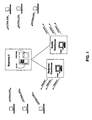
- FIG. 1 is a block diagram showing processing of customer orders by a hypothetical wholesale business which sells goods to customers based on customer purchase orders.
- Business X receives purchase orders from multiple customers.
- Business X Upon receipt of each purchase order, Business X inputs information about the order into a database maintained on a database server.
- Business X creates a new record for the purchase order in the database, with fields for various types of information common to individual purchase orders.
- each record includes fields for purchase order number, date and time of receipt, city in which the customer is located, and quantity of goods ordered.
- Business X determines whether each purchase order will be accepted or rejected, and then updates one or more other fields in the database to reflect the acceptance or rejection.
- a purchase order is accepted, a corresponding sales order is generated and sent to the Business X warehouse located in the city of the ordering customer.
- the time of shipment is input (via a client computer at one of the warehouses) into another field of the record.
- yet another field is updated.
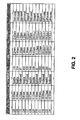
- FIG. 2 is a portion of a table from the database of FIG. 1 , and is maintained by Business X and used to store data regarding individual purchase order instances.
- This instances data table has individual records (e.g., rows) for each purchase order and individual fields (columns) for various types of data.
- "PO#” is a purchase order number.
- "RecvTime” is the date and time the purchase order was received
- "City” is the city in which the warehouse closest to the customer issuing a purchase order is located
- “Quantity” is the number of items ordered.
- “ShipTime” is the time goods for a purchase order were shipped
- “DeliveryTime” is the time those goods were delivered.
- ProcessState is a variable used to describe the portion of the process a purchase order is currently undergoing. If a purchase order has been received but no goods have been shipped, the purchase order is "InProcess.” If goods have been shipped but not delivered, the purchase order is "Shipped.” If goods have been delivered, the purchase order is "Delivered.” Although not shown, there could be other values for ProcessState (e.g., "Denied” of a purchase order was denied). Purchase orders for which goods have not yet been shipped have a ⁇ NULL> value in the ShipTime field. Similarly, purchase orders for which goods have not been delivered have a ⁇ NULL> value in the DeliveryTime field. As purchase orders are shipped and/or delivered, those fields are updated with the appropriate time values.
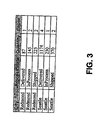
- FIG. 3 shows, by warehouse, the total number of purchase orders ("Count") that are currently delivered, in process or shipped.
- FIG. 3 also shows, in the Quantity column, the total number of goods that each warehouse has delivered, shipped, and is processing for shipment.
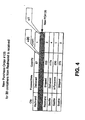
- FIG. 4 shows how the table of FIG. 3 would be updated to reflect receipt of a new purchase order number 135 for 30 units from Redmond. Specifically, the "InProcess" total for Redmond is increased by 30 and the Count total is increased by 1.
- FIG. 5 shows updating the table of FIG. 4 when purchase order number 135 is shipped. The "Quantity” and “Count” totals for Redmond/InProcess purchase orders are respectively decreased by 30 and 1, while the same fields for Redmond/Shipped purchase orders are respectively increased by 30 and 1.
- FIG. 6 shows two program threads attempting to simultaneously perform transactions on the same table.
- there is a clustered index on City and on ProcessState i.e., data rows are stored in order based on the clustered index keys
- FIG. 6 shows two program threads attempting to simultaneously perform transactions on the same table.
- clustered index on City and on ProcessState i.e., data rows are stored in order based on the clustered index keys
- Deadlock occurs in FIG. 6 when program thread A attempts to update three records in one transaction: update Redmond/InProcess and Redmond/Shipped to reflect that purchase order 134 has shipped, and update Seattle/InProcess to reflect new purchase order 136. Simultaneously, program thread B also attempts to update three records in one transaction: update Seattle/InProcess and Seattle/Shipped to reflect that purchase order 133 has shipped, and then update Redmond/InProcess to reflect new purchase order 135. In order to perform its transaction, thread A acquires an exclusive lock on Redmond/InProcess and Redmond/Shipped so as to prevent other threads from affecting those records while they are being updated by thread A.
- Thread A then attempts to acquire an exclusive lock on Seattle/InProcess.
- thread B acquires an exclusive lock on the records Seattle/InProcess and Seattle/Shipped and makes a modification, and then tries to acquire an exclusive lock on Redmond/InProcess. Because thread A has already locked Redmond/InProcess, thread B cannot complete the first part of its transaction. However, thread B is able to lock Seattle/InProcess and Seattle/Shipped before thread A attempts to lock Seattle/InProcess. Thread A is thus prevented from completing the second part of its transaction. In effect, each thread is waiting for the other to finish, and neither can complete its transaction.
- Some systems will choose one of the threads as a deadlock victim, roll back any partially completed portions of the victim's transaction, and report an error to the victim. Although this allows the other thread to proceed, and although the victim can retry its transaction, system performance is nonetheless degraded. In particular, processing resources and memory are wasted undoing partially completed transactions, and then further wasted by repeating previously-completed portions of a transaction.
- FIG. 7 shows how deadlock is prevented according to at least one embodiment of the invention.
- a table of aggregated values is partitioned into separate tables.
- FIG. 7 shows two partitions (separated by a bold line), and the presence of additional partitions is indicated by the vertical ellipsis.
- Each of the individual partitioned tables 0, 1, etc. contains the same records, but the values in those records will usually differ among the partitions.
- partition 0 has records for RedmondlDelivered, Redmond/InProcess, Redmond/Shipped, Seattle/Delivered, Seattle/InProcess and Seattle/Shipped.
- Partition 1 also has records for Redmond/Delivered, Redmond/InProcess, Redmond/Shipped, Seattle/Delivered, Seattle/InProcess and Seattle/Shipped. However, the values of Quantity and Count for Redmond/Delivered in partition 0 are different from the values of Quantity and Count for Redmond/Delivered in partition 1, etc. Only a single program thread is permitted to access a particular partition at one time. To illustrate, threads A and B from FIG. 6 are now shown in FIG. 7 . In FIG. 7 , thread A performs its transaction on partition 0, while thread B simultaneously performs its transaction on partition 1. Because the threads are no longer competing for access to the same records, deadlock is avoided.
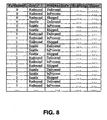
- the partitioned tables of FIG. 7 are implemented as a separate SQL table, such as is shown in FIG. 8 .
- the partition number is included as an additional field ("PartitionID").
- This multi-partition aggregation table is maintained by a trigger on the instances data table of FIG. 2 .
- a "trigger” is a special type of SQL stored procedure which is automatically invoked by an INSERT, UPDATE or DELETE statement. Whenever a new record is inserted into the instances data table of FIG. 2 , the trigger causes a corresponding contribution to be made to one of the partitions of the multi-partition aggregation table of FIG. 8 .
- the corresponding records of multi-partition aggregation table FIG. 8
- an individual partition in the table of FIG. 8 will not have complete information about Business X.
- One update to the instances data table ( FIG. 2 ) may cause an update within partition 0, while another update to the instances data table may cause an update within partition 1, etc.
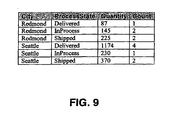
- the partitions are combined to provide a complete data aggregation table for Business X.
- the first italicized name (“view_name”) is a name for a view in which the individual partitions are combined.
- the second italicized name (“multi_partition_table”) is the name of the multi-partition aggregation table of FIG. 8 .
- the resulting table (“view_name”) would be in the form shown in FIG. 9 . Because each partition of the multi-partition aggregation table contains relatively few records, the partitions can be combined relatively quickly. In effect, the summaries are summarized. In other embodiments, each partition can be implemented as a separate table and then joined in a CREATE VIEW command with the SQL JOIN statement.
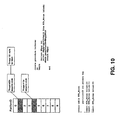
- the token is obtained by a call to a special stored procedure named Get_Mutex.
- the multi-partition aggregation table is maintained by a SQL trigger. Before a row within the multi-partition aggregation table can be updated, one or more instructions within the trigger must indicate which row is to be updated. As part of those instructions, the Get_Mutex stored procedure is called. The Get_Mutex procedure then returns a value for the PartitionID column of the table. While a thread is performing a transaction on records having that returned PartitionID value, other threads are prevented from obtaining the same value, and thereby prevented from accessing a partition while it is being updated by another thread.
- an existing instances data table record for purchase order 140 is later updated to change ProcessState from InProcess to Shipped. Additional logic in the trigger would then:
- RTA_Mutex a single-column table named RTA_Mutex is created ("create table RTA_Mutex").
- the RTA_Mutex table has the same number of rows as there are partitions in the multi-partition aggregation table of FIG. 8 ; each field is then assigned one of the PartitionID values.
- the table of FIG. 8 includes 10 partitions (i.e., PartitioniD has integer values from 0 through 9).
- the Get_Mutex stored procedure is created. After declaring the local variable @par, the local @par variable is assigned a value from one of the rows of the RTA_Mutex table.
- the "select" statement assigns to @par the value of PartitionID from the RTA_Mutex table where PartitionID equals "@@spid%10".
- the system function @@spid returns the server process identifier of the current user process.
- the @@spid function returns a number identifying the program thread that called the Get_Mutex stored procedure.
- the modulo arithmatic operator (“ % ) then returns the remainder of that program thread identifier divided by 10.
- the procedure finds a row of RTA_Mutex where the value for PartitionID equals that remainder, and locks that row with an exclusive lock locking hint ( "(xlock)" ).
- PartitionID in that locked RTA_Mutex row is then returned as the result of the Get_Mutex stored procedure. Because of the exclusive lock on that row, no other programming threads are allowed to access that row of the RTA_Mutex table, and are therefore unable to obtain that PartitionID value until completion of the transaction that previously acquired that PartitionID value.
- a program thread having an identifier of 231 calls Get_Mutex.
- the remainder of 231 divided by 10 is 1; the value returned to the programming thread by Get_Mutex is thus the value of the field in RTA_Mutex where PartitionID equals 1.
- program thread 231 Upon return of a value from Get_Mutex, program thread 231 is then able to update row(s) of partition 1 in FIG. 8 . While thread 231 is updating partition 1, program thread 161 calls Get_Mutex. However, because the transaction of thread 231 is not completed, thread 161 is not able to access the row of RTA_Mutex holding a value of 1 for PartitionID.
- FIG. 10 is only one example of a manner in which a Get_Mutex procedure could be implemented.
- all threads attempting to access a partition could enter a first-in-first-out queue. Each thread in the queue could then be assigned the first available partition.
- the number of partitions is at least equal to, and preferably greater than, the number of processors on the database server.
- the size of the instances data table ( FIG. 2 ) will grow over time as more and more purchase orders are received.
- the size of the aggregation table of FIG. 9 (or of the multi-partition aggregation table of FIG. 8 ) will not increase unless additional aggregation fields are added (e.g., Redmond/Denied and Seattle/Denied).
- additional aggregation fields e.g., Redmond/Denied and Seattle/Denied.
- the size of the tables will not grow, however, the values of the Quantity and Count columns will increase.
- an organization only requires aggregated data for events within a certain time "window.” For example, Business X may require aggregated data for purchase orders currently in process, for orders that are currently being shipped, and for orders that were delivered within the last 24 hours.
- Business X may want to further sort the data based on, e.g., the time of day in which events occur.
- Business X managers wish to know how many purchase orders became in process in Redmond and in Seattle during the most recent 8:00 a.m. hour and have not been shipped (0 in the example), during the most recent 9:00 a.m. hour (also 0 in the example), during the most recent 10:00 a.m. hour (2 and 1), etc.
- the managers also want to know how many purchase orders were shipped at 8:00 a.m. but not yet delivered, were shipped at 9:00 a.m. but not yet delivered, etc.
- the managers also want to know how many purchase orders were delivered from those locations during those time periods.
- the aggregation table grows each hour. Unlike purchase orders that are "InProcess” or “Shipped,” and which will ultimately become “Delivered,” a "Delivered” purchase order does not transition to another state. Put differently, once a purchase order becomes “Delivered” at a particular hour on a particular day, a record will persist in the aggregation table for that hour/day unless some action is taken. Over time, the table would thus become large and slow to query. On the other hand, the managers are less interested in knowing the total number of purchase orders that have been delivered from a location over a longer period (e.g., in the last week, etc.). Although such information may be useful for some purposes, it is needed relatively infrequently.
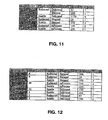
- FIG. 12 shows how, in at least one embodiment of the invention, data for inactive purchase order instances (e.g., delivered purchase orders) may be purged from the real-time aggregation table when that data reaches a certain age. For simplicity, only a single partition is shown. However, and as persons skilled in the art will appreciate based on the following description, the embodiment of FIG. 12 can be implemented in conjunction with the previously-described multi-partition embodiment.
- data for inactive purchase order instances e.g., delivered purchase orders
- TimeSlice is the server date and time (with hour precision) that the instances data table ( FIG. 2 ) is updated to reflect that an instance is completed.
- a purchase order becomes completed when ordered goods have been delivered to the customer.
- Hour is the hour of the day in which the event of interest occurs.
- the time component of TimeSlice is the same as Hour for a completed record, although this need not be the case.
- the data of the real-time aggregation table of FIG. 12 is modified by a trigger which fires when data records of the instances data table are inserted or updated.
- the value of the TimeSlice column is automatically generated by the trigger according to two rules. If more updates are expected to a record (e.g., the goods have not yet been delivered), TimeSlice is NULL. Otherwise, a number is generated that represents the current time (with hour precision) and date. Notably, a non-NULL TimeSlice value for a completed purchase order does not prevent aggregation of data for completed purchase orders. Because the time component of TimeSlice only has hour precision, purchase orders delivered from the same warehouse during the same 1 hour period can be aggregated in a single record.
- purchase orders 126 and 128 ( FIG. 2 ) were delivered at 3:10 p.m. and 3:05 p.m., respectively.
- the record for Jan 20 3 p.m./3/Seattle/Delivered shows a Count of 2 and a Quantity of 790, which correlates with data records for purchase order 126 and purchase order 128 in FIG. 2 .
- the trigger modifies the real-time aggregation table of FIG. 12 .
- the trigger also determines whether any of the completed instance aggregated data in the table is stale, i.e., no longer needed. In the example, it is assumed that aggregated data for instances completed more than 24 hours ago is stale and should be removed from the aggregated data table. Accordingly, each time the trigger modifies the table of FIG. 12 , the trigger deletes records having a TimeSlice value in which the latest time in that time slice period is more than 24 hours prior to the current time. If the trigger updates the table of FIG. 12 at 1:05 p.m.
- the record for Jan 20 12p.m./12/Seattle/Delivered will be deleted, as all data in that record corresponds to purchase orders completed more than 24 hours ago.
- the table of FIG. 12 is displayed in a view which hides the TimeSlice data from the user.
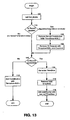
- FIG. 13 is a flow chart showing logic for a trigger that maintains a real-time data aggregation table (such as in FIG. 12 ) in multiple partitions.
- the flow chart of FIG. 13 shows logic that is followed by the trigger in each individual programming thread during a transaction to update one or more aggregated data records in a partition.
- Each thread updates an individual partition, with each partition having a format similar to the table of FIG. 12 .
- the trigger accesses two system tables named "inserted” and "deleted” that are maintained in memory (e.g., RAM) by a SQL database server.
- the inserted and deleted tables are automatically generated by the database server, and temporarily store copies of data from a row affected during a preceding attempt to insert a record into or to update an existing record of an instances data table (such as in FIG. 2 ).
- the inserted table contains values inserted into a row of the instances data table
- the deleted table contains values replaced in an updated row of the instances data table.
- the trigger first obtains the token at block 102.
- the trigger obtains the token by a call to a procedure such as Get_Mutex, as previously described.
- the trigger determines whether an instances data record is being updated. In particular, the trigger determines if the deleted table is empty. If the deleted table is not empty, a Quantity value in the deleted table is used at block 106 to decrease the Quantity value for the appropriate record of the partition.
- the trigger identifies the record in the partition where Hour equals the hour during which the instances data record was updated to its previous ProcessState value, where City equals the city of the updated instances data record, and where ProcessState equals the previous process state of the updated record. The Count value for that record is also decreased by 1.
- the trigger determines whether any records in the partition have a NULL value for TimeSlice and a Count value of 0. If so, those records are deleted.
- the trigger determines whether the instances data record being updated (or inserted) is complete. In other words, the trigger determines whether further updates are expected. This can be performed in various ways. For example, an "IsComplete” column could be added to each instance record and set to "1" when the update is final. In other embodiments, various process state values (e.g., "Delivered” or “Denied”) could signal process completion for the instance.
- the Quantity value from the "inserted" table is used at block 112 to increase the Quantity value of the record in the aggregation table partition where TimeSlice equals NULL, Hour equals the hour the instances data record was updated to its current ProcessState value, City equals the city of the updated instances data record, and ProcessState equals the current ProcessState value of the updated instances data record.
- the Count value in that partition record is also increased by 1. The trigger then concludes.
- a TimeSlice value is generated at block 114.
- the trigger deletes all records having a TimeSlice value outside of the selected time window (e.g., older than 24 hours).
- the trigger identifies (or creates, if necessary) a partition record in which the value of TimeSlice equals the just-generated TimeSlice value, where Hour equals the hour of completion, where City equals the city of the updated instances data record, and where ProcessState equals the value from the completed instances data record ("Delivered" in the example).
- the Quantity value from the "inserted” table is then used to increase the Quantity value of the identified (or created) partition record.
- the Count value for that partition record is also increased by 1. The trigger then concludes.
- the trigger logic of FIG. 13 could be modified to accommodate updates of multiple records in the instances data table. Instead of ending after blocks 112 or 118, the trigger would determine whether there are additional instance records being updated as part of a batch update of the instances data table. If so, the trigger logic would loop back to block 104. If not, the trigger would then conclude. In still other embodiments, the time window could be adjusted by a user.
Landscapes
- Engineering & Computer Science (AREA)
- Theoretical Computer Science (AREA)
- Physics & Mathematics (AREA)
- General Physics & Mathematics (AREA)
- Business, Economics & Management (AREA)
- General Engineering & Computer Science (AREA)
- Databases & Information Systems (AREA)
- Data Mining & Analysis (AREA)
- Computational Linguistics (AREA)
- Economics (AREA)
- Software Systems (AREA)
- Mathematical Physics (AREA)
- Human Resources & Organizations (AREA)
- Marketing (AREA)
- General Business, Economics & Management (AREA)
- Strategic Management (AREA)
- Quality & Reliability (AREA)
- Probability & Statistics with Applications (AREA)
- Operations Research (AREA)
- Tourism & Hospitality (AREA)
- Entrepreneurship & Innovation (AREA)
- Development Economics (AREA)
- Finance (AREA)
- Accounting & Taxation (AREA)
- Fuzzy Systems (AREA)
- Computer Hardware Design (AREA)
- Information Retrieval, Db Structures And Fs Structures Therefor (AREA)
- Management, Administration, Business Operations System, And Electronic Commerce (AREA)
Claims (26)
- Verfahren zum Pflegen von Zusammenfassungen von Werten, die in Feldern mehrerer Datenbankeinträge enthalten sind, umfassend:Erzeugen von mehreren Zusammenfassungsgruppen, wobei jede Gruppe eine Mehrzahl von Zusammenfassungseinträgen beinhaltet, wobei jeder Zusammenfassungseintrag einen Wert für eine Zusammenfassung von Werten beinhaltet, die in Feldern einer eigenen Teilmenge der mehreren Datenbankeinträge enthalten sind;Auswählen einer ersten Zusammenfassungsgruppe bei Einfügen oder Aktualisieren eines ersten der mehreren Datenbankeinträge;Revidieren des Zusammenfassungswertes eines der Zusammenfassungseinträge der ersten Zusammenfassungsgruppe auf Grundlage eines oder mehrerer Werte innerhalb des eingefügten oder aktualisierten ersten Datenbankeintrages und als Teil einer ersten Zusammenfassungsgruppenaktualisierungstransaktion;gekennzeichnet durchVerhindern einer nachfolgenden Auswahl der ersten Zusammenfassungsgruppe, bis die erste Zusammenfassungsgruppenaktualisierungstransaktion beendet ist;Auswählen einer zweiten Zusammenfassungsgruppe, während die erste Zusammenfassungsgruppenaktualisierungstransaktion durchgeführt wird und bei Einfügen oder Aktualisieren eines zweiten der mehreren Datenbankeinträge; undRevidieren des Zusammenfassungswertes eines der Zusammenfassungseinträge der zweiten Zusammenfassungsgruppe auf Grundlage eines oder mehrerer Werte innerhalb des eingefügten oder aktualisierten zweiten Datenbankeintrages und während der ersten Zusammenfassungsgruppenaktualisierungstransaktion.
- Verfahren nach Anspruch 1, wobei jede Zusammenfassungsgruppe eine separate Partition einer Mehrpartitionenzusammenfassungstabelle ist:
- Verfahren nach Anspruch 1, 2 oder 4, des Weiteren umfassend:Auswählen einer dritten Zusammenfassungsgruppe bei Initiieren einer nachfolgenden Transaktion zur Aktualisierung des ersten der mehreren Datenbankeinträge; undRevidieren des Zusammenfassungswertes eines Zusammenfassungseintrages der dritten Zusammenfassungsgruppe auf Grundlage eines oder mehrerer Werte innerhalb des nachfolgenden aktualisierten ersten Datenbankeintrages.
- Verfahren nach Anspruch 1 oder 2, des Weiteren umfassend:Kombinieren der mehreren Zusammenfassungsgruppen zu einer einzelnen Tabelle von Zusammenfassungseinträgen, wobei jeder Eintrag der einzelnen Tabelle Werte eines Zusammenfassungseintrages aus jeder der mehreren Zusammenfassungsgruppen zusammenfasst.
- Verfahren nach Anspruch 1, 2 oder 4, wobei das Erzeugen von mehreren Zusammenfassungsgruppen ein Erzeugen von wenigstens drei Zusammenfassungsgruppen umfasst.
- Verfahren nach Anspruch 1, 2 oder 4, wobei das Erzeugen von mehreren Zusammenfassungsgruppen ein Erzeugen von wenigstens zehn Zusammenfassungsgruppen umfasst.
- Verfahren nach Anspruch 1, 2 oder 4, wobei das Erzeugen von mehreren Zusammenfassungsgruppen ein Erzeugen einer Anzahl von Zusammenfassungsgruppen umfasst und wobei die Anzahl eine Anzahl von Prozessoren in einem Computer, der zum Durchführen der Schritte von Anspruch 1 verwendet wird, übersteigt.
- Verfahren nach Anspruch 1, 2 oder 4, wobei:das Auswählen einer ersten Zusammenfassungsgruppe in Reaktion auf ein durch einen ersten Programmthread erfolgendes Anfordern eines Zugriffes auf eine der mehreren Zusammenfassungsgruppen initiiert wird; unddas Verhindern einer nachfolgenden Auswahl ein gegenüber anderen Programmthreads erfolgendes Verweigern eines Zugriffes auf die erste Zusammenfassungsgruppe umfasst, bis der erste Programmthread den Zugriff auf die erste Zusammenfassungsgruppe nicht mehr benötigt.
- Verfahren nach Anspruch 8, des Weiteren umfassend:Bestimmen einer Systemkennung für den anfordernden Programmthread bei Empfangen einer Anforderung von einem Programmthread zum Zugriff auf eine Zusammenfassungsgruppe; undZuweisen einer Zusammenfassungsgruppenkennung an den anfordernden Programmthread auf Grundlage der bestimmten Systemkennung.
- Verfahren nach Anspruch 1, 2, 4 oder 8, wobei:jeder der mehreren Datenbankeinträge einer Instanz einer organisationstechnischen Aktivität entspricht,jeder der mehreren Datenbankeinträge ein Feld mit einem Wert zur Angabe dessen, dass die entsprechende Instanz in einem von mehreren Prozesszuständen ist, beinhaltet undjede Zusammenfassungsgruppe zeitsortierte Zusammenfassungseinträge beinhaltet,wobei jeder zeitsortierte Zusammenfassungseintrag einen Zusammenfassungswert für Instanzen in einem der mehreren Prozesszustände während einer Zeitperiode mit Zuordnung zu dem zeitsortierten Zusammenfassungseintrag enthält.
- Verfahren nach Anspruch 10, wobei einer der mehreren Prozesszustände eine beendete Instanz umfasst und des Weiteren umfassend:Löschen von Zusammenfassungseinträgen entsprechend Instanzen mit Beendigung außerhalb eines vorausgewählten Zeitfensters.
- Computerlesbares Medium, auf dem Daten zur Darstellung von Sequenzen von Anweisungen gespeichert sind, die bei Ausführung durch einen Prozessor bewirken, dass der Prozessor Schritte ausführt, die umfassen:Erzeugen von mehreren Zusammenfassungsgruppen, wobei jede Gruppe eine Mehrzahl von Zusammenfassungseinträgen beinhaltet, wobei jeder Zusammenfassungseintrag einen Wert für eine Zusammenfassung von Werten beinhaltet, die in Feldern einer eigenen Teilmenge mehrerer Datenbankeinträge enthalten sind;Auswählen einer ersten Zusammenfassungsgruppe bei Einfügen oder Aktualisieren eines ersten der mehreren Datenbankeinträge;Revidieren des Zusammenfassungswertes eines der Zusammenfassungseinträge der ersten Zusammenfassungsgruppe auf Grundlage eines oder mehrerer Werte innerhalb des eingefügten oder aktualisierten ersten Datenbankeintrages und als Teil einer ersten Zusammenfassungsgruppenaktualisierungstransaktion;gekennzeichnet durchVerhindern einer nachfolgenden Auswahl der ersten Zusammenfassungsgruppe, bis die erste Zusammenfassungsgruppenaktualisierungstransaktion beendet ist;Auswählen einer zweiten Zusammenfassungsgruppe, während die erste Zusammenfassungsgruppenaktualisierungstransaktion durchgeführt wird und bei Einfügen oder Aktualisieren eines zweiten der mehreren Datenbankeinträge; undRevidieren des Zusammenfassungswertes eines der Zusammenfassungseinträge der zweiten Zusammenfassungsgruppe auf Grundlage eines oder mehrerer Werte innerhalb des eingefügten oder aktualisierten zweiten Datenbankeintrages und während der ersten Zusammenfassungsgruppenaktualisierungstransaktion.
- Computerlesbares Medium nach Anspruch 12, wobei jede Zusammenfassungsgruppe eine separate Partition einer Mehrpartitionenzusammenfassungstabelle ist.
- Computerlesbares Medium nach Anspruch 12, 13 oder 15, umfassend weitere Anweisungen zur Durchführung von Schritten, die umfassen:Auswählen einer dritten Zusammenfassungsgruppe bei Initiieren einer nachfolgenden Transaktion zur Aktualisierung des ersten der mehreren Datenbankeinträge;Revidieren des Zusammenfassungswertes eines Zusammenfassungseintrages der dritten Zusammenfassungsgruppe auf Grundlage eines oder mehrerer Werte innerhalb des nachfolgenden aktualisierten ersten Datenbankeintrages.
- Computerlesbares Medium nach Anspruch 12 oder 13, umfassend weitere Anweisungen zur Durchführung von Schritten, die umfassen:Kombinieren der mehreren Zusammenfassungsgruppen zu einer einzelnen Tabelle von Zusammenfassungseinträgen, wobei jeder Eintrag der einzelnen Tabelle Werte eines Zusammenfassungseintrages aus jeder der mehreren Zusammenfassungsgruppen zusammenfasst.
- Computerlesbares Medium nach Anspruch 12, 13 oder 15, wobei das Erzeugen von mehreren Zusammenfassungsgruppen ein Erzeugen von wenigstens drei Zusammenfassungsgruppen umfasst.
- Computerlesbares Medium nach Anspruch 12, 13 oder 15, wobei das Erzeugen von mehreren Zusammenfassungsgruppen ein Erzeugen von wenigstens zehn Zusammenfassungsgruppen umfasst.
- Computerlesbares Medium nach Anspruch 12, 13 oder 15, wobei:das Auswählen einer ersten Zusammenfassungsgruppe in Reaktion auf ein durch einen ersten Programmthread erfolgendes Anfordern eines Zugriffes auf eine der mehreren Zusammenfassungsgruppen initiiert wird; unddas Verhindern einer nachfolgenden Auswahl ein gegenüber anderen Programmthreads erfolgendes Verweigern eines Zugriffes auf die erste Zusammenfassungsgruppe, bis der erste Programmthread den Zugriff auf die erste Zusammenfassungsgruppe nicht mehr benötigt, umfasst.
- Computerlesbares Medium nach Anspruch 18, umfassend weitere Anweisungen zur Durchführung von Schritten, die umfassen:Bestimmen einer Systemkennung für den anfordernden Programmthread bei Empfangen einer Anforderung von einem Programmthread zum Zugriff auf eine Zusammenfassungsgruppe; undZuweisen einer Zusammenfassungsgruppenkennung an den anfordernden Programmthread auf Grundlage der bestimmten Systemkennung.
- Computerlesbares Medium nach Anspruch 12, 13, 15 oder 18, wobei:jeder der mehreren Datenbankeinträge einer Instanz einer organisationstechnischen Aktivität entspricht,jeder der mehreren Datenbankeinträge ein Feld mit einem Wert zur Angabe dessen, dass die entsprechende Instanz in einem von mehreren Prozesszuständen ist, beinhaltet undjede Zusammenfassungsgruppe zeitsortierte Zusammenfassungseinträge beinhaltet,wobei jeder zeitsortierte Zusammenfassungseintrag einen Zusammenfassungswert für Instanzen in einem der mehreren Prozesszustände während einer Zeitperiode mit Zuordnung zu dem zeitsortierten Zusammenfassungseintrag enthält.
- Computerlesbares Medium nach Anspruch 20, wobei einer der mehreren Prozesszustände eine beendete Instanz umfasst und umfassend weitere Anweisungen zur Durchführung von Schritten, die umfassen:Löschen von Zusammenfassungseinträgen entsprechend Instanzen mit Beendigung außerhalb eines vorausgewählten Zeitfensters.
- Datenverarbeitungsvorrichtung zum Pflegen von Zusammenfassungen von Werten, die in Feldern mehrerer Datenbankeinträge enthalten sind, umfassend:wenigstens eine Datenspeichervorrichtung;wenigstens eine Anwendereingabevorrichtung; undeinen Prozessor, der funktionell mit der Speichervorrichtung und der Anwendereingabevorrichtung verbunden ist, wobei auf der wenigstens einen Datenspeichervorrichtung ein Satz von Anweisungen gespeichert ist, die bei Ausführung den Prozessor konfigurieren zum:Erzeugen von mehreren Zusammenfassungsgruppen, wobei jede Gruppe eine Mehrzahl von Zusammenfassungseinträgen beinhaltet, wobei jeder Zusammenfassungseintrag einen Wert für eine Zusammenfassung von Werten beinhaltet, die in Feldern einer eigenen Teilmenge mehrerer Datenbankeinträge enthalten sind;Auswählen einer ersten Zusammenfassungsgruppe bei Einfügen oder Aktualisieren eines ersten der mehreren Datenbankeinträge;Revidieren des Zusammenfassungswertes eines der Zusammenfassungseinträge der ersten Zusammenfassungsgruppe auf Grundlage eines oder mehrerer Werte innerhalb des eingefügten oder aktualisierten ersten Datenbankeintrages und als Teil einer ersten Zusammenfassungsgruppenaktualisierungstransaktion;gekennzeichnet durchVerhindern einer nachfolgenden Auswahl der ersten Zusammenfassungsgruppe, bis die erste Zusammenfassungsgruppenaktualisierungstransaktion beendet ist; Auswählen einer zweiten Zusammenfassungsgruppe, während die erste Zusammenfassungsgruppenaktualisierungstransaktion durchgeführt wird und bei Einfügen oder Aktualisieren eines zweiten der mehreren Datenbankeinträge; undRevidieren des Zusammenfassungswertes eines der Zusammenfassungseinträge der zweiten Zusammenfassungsgruppe auf Grundlage eines oder mehrerer Werte innerhalb des eingefügten oder aktualisierten zweiten Datenbankeintrages und während der ersten Zusammenfassungsgruppenaktualisierungstransaktion.
- Datenverarbeitungsvorrichtung nach Anspruch 22 oder 24, wobei der Satz von Anweisungen zusätzliche Anweisungen beinhaltet, die bei Ausführung den Prozessor konfigurieren zum:Auswählen einer dritten Zusammenfassungsgruppe bei Initiieren einer nachfolgenden Transaktion zur Aktualisierung des ersten der mehreren Datenbankeinträge; undRevidieren des Zusammenfassungswertes eines Zusammenfassungseintrages der dritten Zusammenfassungsgruppe auf Grundlage eines oder mehrerer Werte innerhalb des nachfolgenden aktualisierten ersten Datenbankeintrages.
- Datenverarbeitungsvorrichtung nach Anspruch 22, wobei der Satz von Anweisungen zusätzliche Anweisungen beinhaltet, die bei Ausführung den Prozessor konfigurieren zum:Kombinieren der mehreren Zusammenfassungsgruppen zu einer einzelnen Tabelle von Zusammenfassungseinträgen, wobei jeder Eintrag der einzelnen Tabelle Werte eines Zusammenfassungseintrages aus jeder der mehreren Zusammenfassungsgruppen zusammenfasst.
- Datenverarbeitungsvorrichtung nach Anspruch 22 oder 24, wobei
das Auswählen einer ersten Zusammenfassungsgruppe in Reaktion auf ein durch einen ersten Programmthread erfolgendes Anfordern eines Zugriffes auf eine der mehreren Zusammenfassungsgruppen initiiert wird; und
das Verhindern einer nachfolgenden Auswahl ein gegenüber anderen Programmthreads erfolgendes Verweigern eines Zugriffes auf die erste Zusammenfassungsgruppe, bis der erste Programmthread den Zugriff auf die erste Zusammenfassungsgruppe nicht mehr benötigt, umfasst. - Datenverarbeitungsvorrichtung nach Anspruch 25, wobei der Satz von Anweisungen zusätzliche Anweisungen beinhaltet, die bei Ausführung den Prozessor konfigurieren zum:Bestimmen einer Systemkennung für den anfordernden Programmthread bei Empfangen einer Anforderung von einem Programmthread zum Zugriff auf eine Zusammenfassungsgruppe; undZuweisen einer Zusammenfassungsgruppenkennung an den anfordernden Programmthread auf Grundlage der bestimmten Systemkennung.
Priority Applications (1)
| Application Number | Priority Date | Filing Date | Title |
|---|---|---|---|
| EP10011649A EP2306381A1 (de) | 2003-09-26 | 2004-07-14 | Selbsterhaltende Echtzeitdatenaggregation |
Applications Claiming Priority (2)
| Application Number | Priority Date | Filing Date | Title |
|---|---|---|---|
| US670561 | 1991-03-18 | ||
| US10/670,561 US7149736B2 (en) | 2003-09-26 | 2003-09-26 | Maintaining time-sorted aggregation records representing aggregations of values from multiple database records using multiple partitions |
Related Child Applications (1)
| Application Number | Title | Priority Date | Filing Date |
|---|---|---|---|
| EP10011649.0 Division-Into | 2010-09-29 |
Publications (3)
| Publication Number | Publication Date |
|---|---|
| EP1519283A2 EP1519283A2 (de) | 2005-03-30 |
| EP1519283A3 EP1519283A3 (de) | 2006-05-10 |
| EP1519283B1 true EP1519283B1 (de) | 2011-08-24 |
Family
ID=34194828
Family Applications (2)
| Application Number | Title | Priority Date | Filing Date |
|---|---|---|---|
| EP10011649A Withdrawn EP2306381A1 (de) | 2003-09-26 | 2004-07-14 | Selbsterhaltende Echtzeitdatenaggregation |
| EP04103359A Expired - Lifetime EP1519283B1 (de) | 2003-09-26 | 2004-07-14 | Selbst-beibehaltene Realzeitdatenanhäufung |
Family Applications Before (1)
| Application Number | Title | Priority Date | Filing Date |
|---|---|---|---|
| EP10011649A Withdrawn EP2306381A1 (de) | 2003-09-26 | 2004-07-14 | Selbsterhaltende Echtzeitdatenaggregation |
Country Status (6)
| Country | Link |
|---|---|
| US (1) | US7149736B2 (de) |
| EP (2) | EP2306381A1 (de) |
| JP (1) | JP4828102B2 (de) |
| KR (1) | KR20050030531A (de) |
| CN (1) | CN1601541B (de) |
| AT (1) | ATE521944T1 (de) |
Cited By (3)
| Publication number | Priority date | Publication date | Assignee | Title |
|---|---|---|---|---|
| US8152062B2 (en) | 2005-04-29 | 2012-04-10 | Mercatus Technologies Inc. | Portable information terminal mountable on shopping cart and removable memory device usable with same |
| US8571941B2 (en) | 2005-04-29 | 2013-10-29 | Mercatus Technologies Inc. | Systems and methods for managing user information over a network |
| US20230065855A1 (en) * | 2021-08-26 | 2023-03-02 | International Business Machines Corporation | Dynamical database system resource balance |
Families Citing this family (92)
| Publication number | Priority date | Publication date | Assignee | Title |
|---|---|---|---|---|
| EP1676217B1 (de) | 2003-09-15 | 2011-07-06 | Ab Initio Technology LLC | Datenprofilierung |
| US8315972B2 (en) * | 2003-09-26 | 2012-11-20 | Microsoft Corporation | Method for maintaining databases information about multiple instances of an activity generating, updating virtual OLAP cube based on modified star-schema |
| US7392359B2 (en) * | 2003-10-01 | 2008-06-24 | Hewlett-Packard Development Company, L.P. | Non-blocking distinct grouping of database entries with overflow |
| US7526459B2 (en) | 2003-11-28 | 2009-04-28 | Manyworlds, Inc. | Adaptive social and process network systems |
| US7526458B2 (en) * | 2003-11-28 | 2009-04-28 | Manyworlds, Inc. | Adaptive recommendations systems |
| USRE45770E1 (en) | 2003-11-28 | 2015-10-20 | World Assets Consulting Ag, Llc | Adaptive recommendation explanations |
| US8600920B2 (en) | 2003-11-28 | 2013-12-03 | World Assets Consulting Ag, Llc | Affinity propagation in adaptive network-based systems |
| US12093983B2 (en) | 2003-11-28 | 2024-09-17 | World Assets Consulting Ag, Llc | Adaptive and recursive system and method |
| US20090018918A1 (en) | 2004-11-04 | 2009-01-15 | Manyworlds Inc. | Influence-based Social Network Advertising |
| US7539652B2 (en) | 2003-11-28 | 2009-05-26 | Manyworlds, Inc. | Adaptive self-modifying and recombinant systems |
| US7606772B2 (en) * | 2003-11-28 | 2009-10-20 | Manyworlds, Inc. | Adaptive social computing methods |
| US8566263B2 (en) | 2003-11-28 | 2013-10-22 | World Assets Consulting Ag, Llc | Adaptive computer-based personalities |
| US7275055B2 (en) * | 2004-02-26 | 2007-09-25 | International Business Machines Corporation | Method and system for managing aggregation data structures |
| SG136964A1 (en) * | 2004-04-26 | 2007-11-29 | Right90 Inc | Forecasting data with real-time updates |
| DE602004024293D1 (de) * | 2004-06-23 | 2010-01-07 | Sap Ag | System und Verfahren zur Datenverarbeitung |
| US7278122B2 (en) * | 2004-06-24 | 2007-10-02 | Ftl Systems, Inc. | Hardware/software design tool and language specification mechanism enabling efficient technology retargeting and optimization |
| US7359923B2 (en) * | 2004-08-20 | 2008-04-15 | International Business Machines Corporation | Online incremental deferred integrity processing and maintenance of rolled in and rolled out data |
| US7516114B2 (en) * | 2004-10-22 | 2009-04-07 | International Business Machines Corporation | Visual structuring of multivariable data |
| US20060190433A1 (en) * | 2005-02-23 | 2006-08-24 | Microsoft Corporation | Distributed navigation business activities data |
| US20060224400A1 (en) * | 2005-04-01 | 2006-10-05 | Microsoft Corporation | Business event notifications on aggregated thresholds |
| US7774359B2 (en) * | 2005-04-26 | 2010-08-10 | Microsoft Corporation | Business alerts on process instances based on defined conditions |
| US7627544B2 (en) * | 2005-05-20 | 2009-12-01 | Microsoft Corporation | Recognizing event patterns from event streams |
| GB0524348D0 (en) * | 2005-11-30 | 2006-01-04 | Ibm | Method and system for concurrent processing of list items |
| US20070150585A1 (en) * | 2005-12-28 | 2007-06-28 | Microsoft Corporation | Multi-dimensional aggregation on event streams |
| US7519613B2 (en) * | 2006-02-28 | 2009-04-14 | International Business Machines Corporation | Method and system for generating threads of documents |
| CN100456295C (zh) * | 2006-06-20 | 2009-01-28 | 华为技术有限公司 | 一种数据系统维护方法及装置 |
| US8806495B2 (en) * | 2006-11-20 | 2014-08-12 | Microsoft Corp. | Lightweight transactional memory for data parallel programming |
| US8095474B2 (en) * | 2006-11-29 | 2012-01-10 | Caterpillar Inc. | Method for processing advanced ship notices (ASNs) |
| US20080133493A1 (en) * | 2006-12-04 | 2008-06-05 | Michael Bender | Method for maintaining database clustering when replacing tables with inserts |
| US8424011B2 (en) * | 2007-05-31 | 2013-04-16 | Sap Ag | Multiple instance management for workflow process models |
| US8229966B2 (en) * | 2007-09-07 | 2012-07-24 | Teradata Us, Inc. | System to generate a structured query language query by using a dimensional hierarchy |
| GB2460626A (en) * | 2008-05-22 | 2009-12-09 | Geotate Bv | File creation system and method |
| JP5086934B2 (ja) * | 2008-08-07 | 2012-11-28 | 株式会社三菱東京Ufj銀行 | データ処理装置及びプログラム |
| US20100146008A1 (en) * | 2008-12-10 | 2010-06-10 | Yahoo! Inc. | Light-weight concurrency control in parallelized view maintenance |
| EP2290562A1 (de) * | 2009-08-24 | 2011-03-02 | Amadeus S.A.S. | Segmentiertes, im Hauptspeicher gespeichertes Datenbanktabellensystem mit verbessertem kollaborativem Abtastalgorithmus |
| US8645377B2 (en) * | 2010-01-15 | 2014-02-04 | Microsoft Corporation | Aggregating data from a work queue |
| CN102129425B (zh) * | 2010-01-20 | 2016-08-03 | 阿里巴巴集团控股有限公司 | 数据仓库中大对象集合表的访问方法及装置 |
| US9292575B2 (en) | 2010-11-19 | 2016-03-22 | International Business Machines Corporation | Dynamic data aggregation from a plurality of data sources |
| US9449057B2 (en) | 2011-01-28 | 2016-09-20 | Ab Initio Technology Llc | Generating data pattern information |
| US10621206B2 (en) | 2012-04-19 | 2020-04-14 | Full Circle Insights, Inc. | Method and system for recording responses in a CRM system |
| US10599620B2 (en) * | 2011-09-01 | 2020-03-24 | Full Circle Insights, Inc. | Method and system for object synchronization in CRM systems |
| US8533804B2 (en) | 2011-09-23 | 2013-09-10 | Loyal3 Holdings, Inc. | User login with redirect to home network |
| US8468129B2 (en) | 2011-09-23 | 2013-06-18 | Loyal3 Holdings, Inc. | Asynchronous replication of databases of peer networks |
| JP5295395B2 (ja) * | 2012-01-04 | 2013-09-18 | 株式会社三菱東京Ufj銀行 | データ処理装置 |
| US8938416B1 (en) | 2012-01-13 | 2015-01-20 | Amazon Technologies, Inc. | Distributed storage of aggregated data |
| US9218371B2 (en) | 2012-02-29 | 2015-12-22 | International Business Machines Corporation | Automatic table cleanup for relational databases |
| US10180960B2 (en) | 2012-05-15 | 2019-01-15 | Entit Software Llc | Query processing |
| US8682925B1 (en) | 2013-01-31 | 2014-03-25 | Splunk Inc. | Distributed high performance analytics store |
| US10061807B2 (en) | 2012-05-18 | 2018-08-28 | Splunk Inc. | Collection query driven generation of inverted index for raw machine data |
| US8516008B1 (en) | 2012-05-18 | 2013-08-20 | Splunk Inc. | Flexible schema column store |
| US8935430B2 (en) | 2012-06-29 | 2015-01-13 | Verisign, Inc. | Secondary service updates into DNS system |
| US8792633B2 (en) | 2012-09-07 | 2014-07-29 | Genesys Telecommunications Laboratories, Inc. | Method of distributed aggregation in a call center |
| CN103729304B (zh) * | 2012-10-11 | 2017-03-15 | 腾讯科技(深圳)有限公司 | 数据处理方法及装置 |
| US9239741B2 (en) * | 2012-10-16 | 2016-01-19 | Futurewei Technologies, Inc. | System and method for flexible distributed massively parallel processing (MPP) |
| CN110096494B (zh) | 2012-10-22 | 2024-04-26 | 起元科技有限公司 | 使用源跟踪剖析数据 |
| US9756184B2 (en) | 2012-11-08 | 2017-09-05 | Genesys Telecommunications Laboratories, Inc. | System and method of distributed maintenance of contact center state |
| US9900432B2 (en) | 2012-11-08 | 2018-02-20 | Genesys Telecommunications Laboratories, Inc. | Scalable approach to agent-group state maintenance in a contact center |
| US10412121B2 (en) | 2012-11-20 | 2019-09-10 | Genesys Telecommunications Laboratories, Inc. | Distributed aggregation for contact center agent-groups on growing interval |
| US9477464B2 (en) | 2012-11-20 | 2016-10-25 | Genesys Telecommunications Laboratories, Inc. | Distributed aggregation for contact center agent-groups on sliding interval |
| WO2014081895A1 (en) * | 2012-11-20 | 2014-05-30 | Genesys Telecommunications Laboratories, Inc. | Distributed aggregation for contact center agent-groups on growing interval |
| US9460135B2 (en) * | 2012-12-18 | 2016-10-04 | Webtrends Inc. | Methods and automated systems for testing, optimization, and analysis that use robust statistical processing of non-binomial experimental results |
| US9892026B2 (en) * | 2013-02-01 | 2018-02-13 | Ab Initio Technology Llc | Data records selection |
| US9578171B2 (en) | 2013-03-26 | 2017-02-21 | Genesys Telecommunications Laboratories, Inc. | Low latency distributed aggregation for contact center agent-groups on sliding interval |
| JP5604554B2 (ja) * | 2013-04-30 | 2014-10-08 | 株式会社三菱東京Ufj銀行 | データ処理装置 |
| US9917885B2 (en) | 2013-07-30 | 2018-03-13 | International Business Machines Corporation | Managing transactional data for high use databases |
| CN103544302B (zh) * | 2013-10-31 | 2018-06-19 | 北京锐安科技有限公司 | 数据库的分区维护方法和装置 |
| US9569481B1 (en) | 2013-12-10 | 2017-02-14 | Google Inc. | Efficient locking of large data collections |
| US11487732B2 (en) | 2014-01-16 | 2022-11-01 | Ab Initio Technology Llc | Database key identification |
| EP3114620A1 (de) | 2014-03-07 | 2017-01-11 | Systema Systementwicklung Dip.-Inf. Manfred Austen Gmbh | Echtzeitinformationsysteme und -methodologie auf grundlage kontinuierlicher homomorpher verarbeitung in linearen informationsebenen |
| AU2015225694B2 (en) | 2014-03-07 | 2019-06-27 | Ab Initio Technology Llc | Managing data profiling operations related to data type |
| WO2016074370A1 (zh) * | 2014-11-12 | 2016-05-19 | 华为技术有限公司 | 一种KeyValue数据库的数据表的更新方法与表数据更新装置 |
| US10706073B1 (en) * | 2014-12-03 | 2020-07-07 | Amazon Technologies, Inc. | Partitioned batch processing for a usage analysis system |
| US10229150B2 (en) * | 2015-04-23 | 2019-03-12 | Splunk Inc. | Systems and methods for concurrent summarization of indexed data |
| US10417189B2 (en) | 2015-10-30 | 2019-09-17 | Netapp, Inc. | Hybrid model of fine-grained locking and data partitioning |
| US10452633B2 (en) | 2015-10-30 | 2019-10-22 | Netapp, Inc. | Auto-expiring locks based on object stamping |
| US10546257B2 (en) * | 2016-05-09 | 2020-01-28 | International Business Machines Corporation | Optimizing event aggregation in an event-driven system |
| US11182384B2 (en) * | 2016-07-25 | 2021-11-23 | Visa International Service Association | Event-driven architecture using rolling aggregates |
| US20180067972A1 (en) | 2016-09-07 | 2018-03-08 | International Business Machines Corporation | Automatically setting an auto-purge value to multiple tables within a database |
| CN106598823B (zh) * | 2016-10-19 | 2019-01-25 | 同盾控股有限公司 | 一种网络行为特征的差量计算方法和系统 |
| US10474674B2 (en) | 2017-01-31 | 2019-11-12 | Splunk Inc. | Using an inverted index in a pipelined search query to determine a set of event data that is further limited by filtering and/or processing of subsequent query pipestages |
| US11379530B2 (en) | 2017-01-31 | 2022-07-05 | Splunk Inc. | Leveraging references values in inverted indexes to retrieve associated event records comprising raw machine data |
| US11068540B2 (en) | 2018-01-25 | 2021-07-20 | Ab Initio Technology Llc | Techniques for integrating validation results in data profiling and related systems and methods |
| US10776338B2 (en) | 2018-03-29 | 2020-09-15 | Hewlett-Packard Development Company, L.P. | Data aggregation data structure |
| CN109034982B (zh) * | 2018-09-05 | 2022-06-17 | 满金坝(深圳)科技有限公司 | 千万级订单表中订单信息加速处理方法及装置 |
| CN109684398A (zh) * | 2018-12-24 | 2019-04-26 | 普元信息技术股份有限公司 | 大数据环境下基于多状态实现数据优化管理功能的系统及方法 |
| CN112579616A (zh) * | 2019-09-29 | 2021-03-30 | 北京国双科技有限公司 | 任务处理方法、装置、存储介质和电子设备 |
| US11841827B2 (en) * | 2021-01-29 | 2023-12-12 | Splunk Inc. | Facilitating generation of data model summaries |
| US11892976B2 (en) | 2021-01-29 | 2024-02-06 | Splunk Inc. | Enhanced search performance using data model summaries stored in a remote data store |
| CN113986932B (zh) * | 2021-12-28 | 2022-04-12 | 恒生电子股份有限公司 | 数据处理方法、装置、计算机设备及可读存储介质 |
| US11695772B1 (en) * | 2022-05-03 | 2023-07-04 | Capital One Services, Llc | System and method for enabling multiple auxiliary use of an access token of a user by another entity to facilitate an action of the user |
| US12299119B2 (en) | 2022-05-16 | 2025-05-13 | Microsoft Technology Licensing, Llc | Event-triggered forensics capture |
| CN115757523A (zh) * | 2022-11-29 | 2023-03-07 | 杭州网易云音乐科技有限公司 | 数据处理方法、装置和系统、介质和计算机设备 |
Citations (1)
| Publication number | Priority date | Publication date | Assignee | Title |
|---|---|---|---|---|
| US5794241A (en) * | 1996-04-08 | 1998-08-11 | Oracle Corporation | Method and apparatus for dynamically disabling and enabling table locking for a database |
Family Cites Families (63)
| Publication number | Priority date | Publication date | Assignee | Title |
|---|---|---|---|---|
| US5319780A (en) | 1987-10-19 | 1994-06-07 | International Business Machines Corporation | System that implicitly locks a subtree or explicitly locks a node based upon whether or not an explicit lock request is issued |
| JPH04167056A (ja) * | 1990-10-31 | 1992-06-15 | Hitachi Ltd | Almデータベースの更新方式 |
| JPH052610A (ja) * | 1991-06-25 | 1993-01-08 | Mitsubishi Electric Corp | リレーシヨナルデータベースにおける集約演算処理方式 |
| US5713020A (en) | 1993-09-02 | 1998-01-27 | Microsoft Corporation | Method and system for generating database queries containing multiple levels of aggregation |
| US5590319A (en) * | 1993-12-15 | 1996-12-31 | Information Builders, Inc. | Query processor for parallel processing in homogenous and heterogenous databases |
| US5537589A (en) | 1994-06-30 | 1996-07-16 | Microsoft Corporation | Method and system for efficiently performing database table aggregation using an aggregation index |
| CA2167790A1 (en) | 1995-01-23 | 1996-07-24 | Donald S. Maier | Relational database system and method with high data availability during table data restructuring |
| US5717919A (en) | 1995-10-02 | 1998-02-10 | Sybase, Inc. | Database system with methods for appending data records by partitioning an object into multiple page chains |
| US5822751A (en) | 1996-12-16 | 1998-10-13 | Microsoft Corporation | Efficient multidimensional data aggregation operator implementation |
| US6301616B1 (en) | 1997-04-11 | 2001-10-09 | Microsoft Corporation | Pledge-based resource allocation system |
| US6115705A (en) * | 1997-05-19 | 2000-09-05 | Microsoft Corporation | Relational database system and method for query processing using early aggregation |
| US5943668A (en) | 1997-06-30 | 1999-08-24 | International Business Machines Corporation | Relational emulation of a multi-dimensional database |
| US5978796A (en) | 1997-06-30 | 1999-11-02 | International Business Machines Corporation | Accessing multi-dimensional data by mapping dense data blocks to rows in a relational database |
| US5926818A (en) | 1997-06-30 | 1999-07-20 | International Business Machines Corporation | Relational database implementation of a multi-dimensional database |
| US6205447B1 (en) | 1997-06-30 | 2001-03-20 | International Business Machines Corporation | Relational database management of multi-dimensional data |
| US5905985A (en) | 1997-06-30 | 1999-05-18 | International Business Machines Corporation | Relational database modifications based on multi-dimensional database modifications |
| US5940818A (en) | 1997-06-30 | 1999-08-17 | International Business Machines Corporation | Attribute-based access for multi-dimensional databases |
| JP3476349B2 (ja) * | 1997-11-12 | 2003-12-10 | 三菱電機株式会社 | データ処理装置 |
| GB2332540B (en) * | 1997-12-18 | 2002-12-04 | Ibm | An improved parcel trace system |
| CA2326513C (en) | 1998-03-27 | 2009-06-16 | Informix Software, Inc. | Processing precomputed views |
| US6122640A (en) * | 1998-09-22 | 2000-09-19 | Platinum Technology Ip, Inc. | Method and apparatus for reorganizing an active DBMS table |
| US20010051907A1 (en) * | 1998-12-08 | 2001-12-13 | Srihari Kumar | Interactive financial portfolio tracking interface |
| US6502086B2 (en) | 1999-01-04 | 2002-12-31 | International Business Machines Corporation | Mapping binary objects in extended relational database management systems with relational registry |
| US6496909B1 (en) | 1999-04-06 | 2002-12-17 | Silicon Graphics, Inc. | Method for managing concurrent access to virtual memory data structures |
| US6442560B1 (en) | 1999-06-22 | 2002-08-27 | Microsoft Corporation | Record for multidimensional databases |
| US6438537B1 (en) | 1999-06-22 | 2002-08-20 | Microsoft Corporation | Usage based aggregation optimization |
| US6430565B1 (en) | 1999-06-22 | 2002-08-06 | Microsoft Corporation | Path compression for records of multidimensional database |
| US6374263B1 (en) | 1999-07-19 | 2002-04-16 | International Business Machines Corp. | System for maintaining precomputed views |
| US6665682B1 (en) * | 1999-07-19 | 2003-12-16 | International Business Machines Corporation | Performance of table insertion by using multiple tables or multiple threads |
| US6408292B1 (en) * | 1999-08-04 | 2002-06-18 | Hyperroll, Israel, Ltd. | Method of and system for managing multi-dimensional databases using modular-arithmetic based address data mapping processes on integer-encoded business dimensions |
| US6542895B1 (en) | 1999-08-30 | 2003-04-01 | International Business Machines Corporation | Multi-dimensional restructure performance when adding or removing dimensions and dimensions members |
| US6546395B1 (en) | 1999-08-30 | 2003-04-08 | International Business Machines Corporation | Multi-dimensional restructure performance by selecting a technique to modify a relational database based on a type of restructure |
| US6895581B1 (en) * | 2000-03-30 | 2005-05-17 | Microsoft Corporation | Replaceable classes and virtual constructors for object-oriented programming languages |
| US7155519B2 (en) * | 2000-03-31 | 2006-12-26 | Mdsi Software Srl | Systems and methods for enhancing connectivity between a mobile workforce and a remote scheduling application |
| US6516322B1 (en) | 2000-04-28 | 2003-02-04 | Microsoft Corporation | XML-based representation of mobile process calculi |
| US6505189B1 (en) * | 2000-06-15 | 2003-01-07 | Ncr Corporation | Aggregate join index for relational databases |
| US6735587B2 (en) * | 2000-07-28 | 2004-05-11 | International Business Machines Corporation | Maintaining pre-computed aggregate views incrementally in the presence of non-minimal changes |
| US6603839B1 (en) | 2000-09-13 | 2003-08-05 | International Business Machines Corporation | Automatic transfer of electronic directory entries from directory assistance service to a directory within an electronic communication device |
| EP1197876A3 (de) * | 2000-10-13 | 2003-04-16 | Miosoft Corporation | Dauerhafte Datenspeichertechnik |
| WO2002042952A1 (en) * | 2000-11-27 | 2002-05-30 | Commonwealth Bank Of Australia | Aggregation service |
| US6633884B2 (en) * | 2001-04-03 | 2003-10-14 | Bmc Software, Inc. | System and method for analyzing a database for on-line reorganization |
| US20030005087A1 (en) * | 2001-05-24 | 2003-01-02 | Microsoft Corporation | Server side sampling of databases |
| US6728709B1 (en) | 2001-06-22 | 2004-04-27 | Unisys Corporation | Locking partitioned database tables |
| US7024401B2 (en) * | 2001-07-02 | 2006-04-04 | International Business Machines Corporation | Partition boundary determination using random sampling on very large databases |
| US20030061132A1 (en) * | 2001-09-26 | 2003-03-27 | Yu, Mason K. | System and method for categorizing, aggregating and analyzing payment transactions data |
| US6792429B2 (en) | 2001-12-19 | 2004-09-14 | Hewlett-Packard Development Company, L.P. | Method for fault tolerant modification of data representation in a large database |
| US7969306B2 (en) * | 2002-01-11 | 2011-06-28 | Sap Aktiengesellschaft | Context-aware and real-time item tracking system architecture and scenarios |
| US8090751B2 (en) | 2002-02-05 | 2012-01-03 | Hewlett-Packard Development Company, L.P. | Operational data store |
| US7171427B2 (en) * | 2002-04-26 | 2007-01-30 | Oracle International Corporation | Methods of navigating a cube that is implemented as a relational object |
| US20030204421A1 (en) * | 2002-04-29 | 2003-10-30 | Value Benefits Insurance Agency, Inc. | Integrated system and method for insurance products |
| US7548935B2 (en) * | 2002-05-09 | 2009-06-16 | Robert Pecherer | Method of recursive objects for representing hierarchies in relational database systems |
| US7571187B2 (en) * | 2002-05-31 | 2009-08-04 | Microsoft Corporation | Support for real-time queries concerning current state, data and history of a process |
| US7155429B2 (en) * | 2002-07-09 | 2006-12-26 | Bridgelogix Corporation | Method, apparatus and article of manufacture to aggregate automated transaction procession |
| US7634477B2 (en) * | 2002-09-18 | 2009-12-15 | Netezza Corporation | Asymmetric data streaming architecture having autonomous and asynchronous job processing unit |
| US6768995B2 (en) * | 2002-09-30 | 2004-07-27 | Adaytum, Inc. | Real-time aggregation of data within an enterprise planning environment |
| WO2004036461A2 (en) * | 2002-10-14 | 2004-04-29 | Battelle Memorial Institute | Information reservoir |
| US7146356B2 (en) * | 2003-03-21 | 2006-12-05 | International Business Machines Corporation | Real-time aggregation of unstructured data into structured data for SQL processing by a relational database engine |
| US7089266B2 (en) * | 2003-06-02 | 2006-08-08 | The Board Of Trustees Of The Leland Stanford Jr. University | Computer systems and methods for the query and visualization of multidimensional databases |
| US7152778B2 (en) * | 2003-06-23 | 2006-12-26 | Bitstock | Collecting and valuating used items for sale |
| WO2005029275A2 (en) * | 2003-09-19 | 2005-03-31 | Thomson Global Resources Ag | Leveraging informational assets across multiple business units |
| US8315972B2 (en) * | 2003-09-26 | 2012-11-20 | Microsoft Corporation | Method for maintaining databases information about multiple instances of an activity generating, updating virtual OLAP cube based on modified star-schema |
| US7334002B2 (en) * | 2004-02-27 | 2008-02-19 | Microsoft Corporation | System and method for recovery units in databases |
| WO2005091138A1 (en) * | 2004-03-16 | 2005-09-29 | Grid Analytics Llc | System and method for aggregation and analysis of information from multiple disparate sources while assuring source and record anonymity using an exchange hub |
-
2003
- 2003-09-26 US US10/670,561 patent/US7149736B2/en not_active Expired - Fee Related
-
2004
- 2004-07-13 JP JP2004206471A patent/JP4828102B2/ja not_active Expired - Fee Related
- 2004-07-14 CN CN2004100552395A patent/CN1601541B/zh not_active Expired - Fee Related
- 2004-07-14 AT AT04103359T patent/ATE521944T1/de not_active IP Right Cessation
- 2004-07-14 EP EP10011649A patent/EP2306381A1/de not_active Withdrawn
- 2004-07-14 EP EP04103359A patent/EP1519283B1/de not_active Expired - Lifetime
- 2004-07-16 KR KR1020040055474A patent/KR20050030531A/ko not_active Withdrawn
Patent Citations (1)
| Publication number | Priority date | Publication date | Assignee | Title |
|---|---|---|---|---|
| US5794241A (en) * | 1996-04-08 | 1998-08-11 | Oracle Corporation | Method and apparatus for dynamically disabling and enabling table locking for a database |
Cited By (5)
| Publication number | Priority date | Publication date | Assignee | Title |
|---|---|---|---|---|
| US8152062B2 (en) | 2005-04-29 | 2012-04-10 | Mercatus Technologies Inc. | Portable information terminal mountable on shopping cart and removable memory device usable with same |
| US8571941B2 (en) | 2005-04-29 | 2013-10-29 | Mercatus Technologies Inc. | Systems and methods for managing user information over a network |
| US9424589B2 (en) | 2005-04-29 | 2016-08-23 | Mercatus Technologies Inc. | Systems and methods for enabling and managing ordering information within a network |
| US20230065855A1 (en) * | 2021-08-26 | 2023-03-02 | International Business Machines Corporation | Dynamical database system resource balance |
| US11748352B2 (en) * | 2021-08-26 | 2023-09-05 | International Business Machines Corporation | Dynamical database system resource balance |
Also Published As
| Publication number | Publication date |
|---|---|
| JP4828102B2 (ja) | 2011-11-30 |
| US20050071320A1 (en) | 2005-03-31 |
| EP1519283A3 (de) | 2006-05-10 |
| CN1601541A (zh) | 2005-03-30 |
| US7149736B2 (en) | 2006-12-12 |
| EP2306381A1 (de) | 2011-04-06 |
| EP1519283A2 (de) | 2005-03-30 |
| KR20050030531A (ko) | 2005-03-30 |
| CN1601541B (zh) | 2011-11-30 |
| ATE521944T1 (de) | 2011-09-15 |
| JP2005108186A (ja) | 2005-04-21 |
Similar Documents
| Publication | Publication Date | Title |
|---|---|---|
| US7149736B2 (en) | Maintaining time-sorted aggregation records representing aggregations of values from multiple database records using multiple partitions | |
| JP5209001B2 (ja) | アクティビティの複数のインスタンスに関する情報を維持する方法 | |
| US7111001B2 (en) | Event driven transaction state management with single cache for persistent framework | |
| US7308704B2 (en) | Data structure for access control | |
| US7350237B2 (en) | Managing access control information | |
| US6397227B1 (en) | Database management system and method for updating specified tuple fields upon transaction rollback | |
| US7689560B2 (en) | Persistent data storage techniques | |
| US10963464B2 (en) | Multiple partitioning schemes for partitioned database objects | |
| US7774318B2 (en) | Method and system for fast deletion of database information | |
| US20040148273A1 (en) | Method, system, and program for optimizing database query execution | |
| US6654756B1 (en) | Combination of mass storage sizer, comparator, OLTP user defined workload sizer, and design | |
| JP2012138110A (ja) | 持続的データ記憶技術 | |
| EP4217896B1 (de) | Verteilung von schlüsselerlaubnis | |
| US8336053B2 (en) | Transaction management | |
| US7844615B2 (en) | Systems and methods for an enterprise services framework using a state model | |
| US7076480B2 (en) | Dynamic adjustment of commit frequency | |
| US20070073655A1 (en) | Enhancing tables and SQL interaction with queue semantics | |
| US8799266B2 (en) | Method and system for managing operation of a user-defined function on a partitioned database | |
| US7711730B2 (en) | Method of returning data during insert statement processing | |
| US7752612B2 (en) | Method, apparatus and program storage device for determining an optimal number of tasks during reorganization of a database system with memory and processor constraints | |
| US20170103096A1 (en) | Enhancing tables and sql interaction with queue semantics | |
| US20150379585A1 (en) | Single Sheet Planning |
Legal Events
| Date | Code | Title | Description |
|---|---|---|---|
| PUAI | Public reference made under article 153(3) epc to a published international application that has entered the european phase |
Free format text: ORIGINAL CODE: 0009012 |
|
| AK | Designated contracting states |
Kind code of ref document: A2 Designated state(s): AT BE BG CH CY CZ DE DK EE ES FI FR GB GR HU IE IT LI LU MC NL PL PT RO SE SI SK TR |
|
| AX | Request for extension of the european patent |
Extension state: AL HR LT LV MK |
|
| PUAL | Search report despatched |
Free format text: ORIGINAL CODE: 0009013 |
|
| AK | Designated contracting states |
Kind code of ref document: A3 Designated state(s): AT BE BG CH CY CZ DE DK EE ES FI FR GB GR HU IE IT LI LU MC NL PL PT RO SE SI SK TR |
|
| AX | Request for extension of the european patent |
Extension state: AL HR LT LV MK |
|
| 17P | Request for examination filed |
Effective date: 20061108 |
|
| AKX | Designation fees paid |
Designated state(s): AT BE BG CH CY CZ DE DK EE ES FI FR GB GR HU IE IT LI LU MC NL PL PT RO SE SI SK TR |
|
| 17Q | First examination report despatched |
Effective date: 20070810 |
|
| GRAJ | Information related to disapproval of communication of intention to grant by the applicant or resumption of examination proceedings by the epo deleted |
Free format text: ORIGINAL CODE: EPIDOSDIGR1 |
|
| GRAP | Despatch of communication of intention to grant a patent |
Free format text: ORIGINAL CODE: EPIDOSNIGR1 |
|
| GRAP | Despatch of communication of intention to grant a patent |
Free format text: ORIGINAL CODE: EPIDOSNIGR1 |
|
| GRAS | Grant fee paid |
Free format text: ORIGINAL CODE: EPIDOSNIGR3 |
|
| GRAA | (expected) grant |
Free format text: ORIGINAL CODE: 0009210 |
|
| AK | Designated contracting states |
Kind code of ref document: B1 Designated state(s): AT BE BG CH CY CZ DE DK EE ES FI FR GB GR HU IE IT LI LU MC NL PL PT RO SE SI SK TR |
|
| REG | Reference to a national code |
Ref country code: GB Ref legal event code: FG4D |
|
| REG | Reference to a national code |
Ref country code: CH Ref legal event code: EP |
|
| REG | Reference to a national code |
Ref country code: IE Ref legal event code: FG4D |
|
| REG | Reference to a national code |
Ref country code: DE Ref legal event code: R096 Ref document number: 602004034065 Country of ref document: DE Effective date: 20111103 |
|
| REG | Reference to a national code |
Ref country code: NL Ref legal event code: VDEP Effective date: 20110824 |
|
| PG25 | Lapsed in a contracting state [announced via postgrant information from national office to epo] |
Ref country code: NL Free format text: LAPSE BECAUSE OF FAILURE TO SUBMIT A TRANSLATION OF THE DESCRIPTION OR TO PAY THE FEE WITHIN THE PRESCRIBED TIME-LIMIT Effective date: 20110824 Ref country code: PT Free format text: LAPSE BECAUSE OF FAILURE TO SUBMIT A TRANSLATION OF THE DESCRIPTION OR TO PAY THE FEE WITHIN THE PRESCRIBED TIME-LIMIT Effective date: 20111226 Ref country code: FI Free format text: LAPSE BECAUSE OF FAILURE TO SUBMIT A TRANSLATION OF THE DESCRIPTION OR TO PAY THE FEE WITHIN THE PRESCRIBED TIME-LIMIT Effective date: 20110824 Ref country code: SE Free format text: LAPSE BECAUSE OF FAILURE TO SUBMIT A TRANSLATION OF THE DESCRIPTION OR TO PAY THE FEE WITHIN THE PRESCRIBED TIME-LIMIT Effective date: 20110824 |
|
| REG | Reference to a national code |
Ref country code: AT Ref legal event code: MK05 Ref document number: 521944 Country of ref document: AT Kind code of ref document: T Effective date: 20110824 |
|
| PG25 | Lapsed in a contracting state [announced via postgrant information from national office to epo] |
Ref country code: PL Free format text: LAPSE BECAUSE OF FAILURE TO SUBMIT A TRANSLATION OF THE DESCRIPTION OR TO PAY THE FEE WITHIN THE PRESCRIBED TIME-LIMIT Effective date: 20110824 Ref country code: SI Free format text: LAPSE BECAUSE OF FAILURE TO SUBMIT A TRANSLATION OF THE DESCRIPTION OR TO PAY THE FEE WITHIN THE PRESCRIBED TIME-LIMIT Effective date: 20110824 Ref country code: CY Free format text: LAPSE BECAUSE OF FAILURE TO SUBMIT A TRANSLATION OF THE DESCRIPTION OR TO PAY THE FEE WITHIN THE PRESCRIBED TIME-LIMIT Effective date: 20110824 Ref country code: AT Free format text: LAPSE BECAUSE OF FAILURE TO SUBMIT A TRANSLATION OF THE DESCRIPTION OR TO PAY THE FEE WITHIN THE PRESCRIBED TIME-LIMIT Effective date: 20110824 Ref country code: GR Free format text: LAPSE BECAUSE OF FAILURE TO SUBMIT A TRANSLATION OF THE DESCRIPTION OR TO PAY THE FEE WITHIN THE PRESCRIBED TIME-LIMIT Effective date: 20111125 |
|
| PG25 | Lapsed in a contracting state [announced via postgrant information from national office to epo] |
Ref country code: BE Free format text: LAPSE BECAUSE OF FAILURE TO SUBMIT A TRANSLATION OF THE DESCRIPTION OR TO PAY THE FEE WITHIN THE PRESCRIBED TIME-LIMIT Effective date: 20110824 |
|
| PG25 | Lapsed in a contracting state [announced via postgrant information from national office to epo] |
Ref country code: CZ Free format text: LAPSE BECAUSE OF FAILURE TO SUBMIT A TRANSLATION OF THE DESCRIPTION OR TO PAY THE FEE WITHIN THE PRESCRIBED TIME-LIMIT Effective date: 20110824 Ref country code: SK Free format text: LAPSE BECAUSE OF FAILURE TO SUBMIT A TRANSLATION OF THE DESCRIPTION OR TO PAY THE FEE WITHIN THE PRESCRIBED TIME-LIMIT Effective date: 20110824 |
|
| PG25 | Lapsed in a contracting state [announced via postgrant information from national office to epo] |
Ref country code: RO Free format text: LAPSE BECAUSE OF FAILURE TO SUBMIT A TRANSLATION OF THE DESCRIPTION OR TO PAY THE FEE WITHIN THE PRESCRIBED TIME-LIMIT Effective date: 20110824 Ref country code: EE Free format text: LAPSE BECAUSE OF FAILURE TO SUBMIT A TRANSLATION OF THE DESCRIPTION OR TO PAY THE FEE WITHIN THE PRESCRIBED TIME-LIMIT Effective date: 20110824 |
|
| PG25 | Lapsed in a contracting state [announced via postgrant information from national office to epo] |
Ref country code: DK Free format text: LAPSE BECAUSE OF FAILURE TO SUBMIT A TRANSLATION OF THE DESCRIPTION OR TO PAY THE FEE WITHIN THE PRESCRIBED TIME-LIMIT Effective date: 20110824 |
|
| PLBE | No opposition filed within time limit |
Free format text: ORIGINAL CODE: 0009261 |
|
| STAA | Information on the status of an ep patent application or granted ep patent |
Free format text: STATUS: NO OPPOSITION FILED WITHIN TIME LIMIT |
|
| 26N | No opposition filed |
Effective date: 20120525 |
|
| REG | Reference to a national code |
Ref country code: DE Ref legal event code: R097 Ref document number: 602004034065 Country of ref document: DE Effective date: 20120525 |
|
| PGFP | Annual fee paid to national office [announced via postgrant information from national office to epo] |
Ref country code: IT Payment date: 20120713 Year of fee payment: 9 |
|
| PG25 | Lapsed in a contracting state [announced via postgrant information from national office to epo] |
Ref country code: MC Free format text: LAPSE BECAUSE OF NON-PAYMENT OF DUE FEES Effective date: 20120731 |
|
| REG | Reference to a national code |
Ref country code: CH Ref legal event code: PL |
|
| GBPC | Gb: european patent ceased through non-payment of renewal fee |
Effective date: 20120714 |
|
| PG25 | Lapsed in a contracting state [announced via postgrant information from national office to epo] |
Ref country code: ES Free format text: LAPSE BECAUSE OF FAILURE TO SUBMIT A TRANSLATION OF THE DESCRIPTION OR TO PAY THE FEE WITHIN THE PRESCRIBED TIME-LIMIT Effective date: 20111205 Ref country code: GB Free format text: LAPSE BECAUSE OF NON-PAYMENT OF DUE FEES Effective date: 20120714 Ref country code: CH Free format text: LAPSE BECAUSE OF NON-PAYMENT OF DUE FEES Effective date: 20120731 Ref country code: LI Free format text: LAPSE BECAUSE OF NON-PAYMENT OF DUE FEES Effective date: 20120731 |
|
| REG | Reference to a national code |
Ref country code: IE Ref legal event code: MM4A |
|
| PG25 | Lapsed in a contracting state [announced via postgrant information from national office to epo] |
Ref country code: BG Free format text: LAPSE BECAUSE OF FAILURE TO SUBMIT A TRANSLATION OF THE DESCRIPTION OR TO PAY THE FEE WITHIN THE PRESCRIBED TIME-LIMIT Effective date: 20111124 |
|
| PG25 | Lapsed in a contracting state [announced via postgrant information from national office to epo] |
Ref country code: IE Free format text: LAPSE BECAUSE OF NON-PAYMENT OF DUE FEES Effective date: 20120714 |
|
| PG25 | Lapsed in a contracting state [announced via postgrant information from national office to epo] |
Ref country code: TR Free format text: LAPSE BECAUSE OF FAILURE TO SUBMIT A TRANSLATION OF THE DESCRIPTION OR TO PAY THE FEE WITHIN THE PRESCRIBED TIME-LIMIT Effective date: 20110824 |
|
| PG25 | Lapsed in a contracting state [announced via postgrant information from national office to epo] |
Ref country code: LU Free format text: LAPSE BECAUSE OF NON-PAYMENT OF DUE FEES Effective date: 20120714 Ref country code: IT Free format text: LAPSE BECAUSE OF NON-PAYMENT OF DUE FEES Effective date: 20130714 |
|
| PG25 | Lapsed in a contracting state [announced via postgrant information from national office to epo] |
Ref country code: HU Free format text: LAPSE BECAUSE OF FAILURE TO SUBMIT A TRANSLATION OF THE DESCRIPTION OR TO PAY THE FEE WITHIN THE PRESCRIBED TIME-LIMIT Effective date: 20040714 |
|
| REG | Reference to a national code |
Ref country code: DE Ref legal event code: R082 Ref document number: 602004034065 Country of ref document: DE Representative=s name: GRUENECKER, KINKELDEY, STOCKMAIR & SCHWANHAEUS, DE |
|
| REG | Reference to a national code |
Ref country code: GB Ref legal event code: 732E Free format text: REGISTERED BETWEEN 20150115 AND 20150121 |
|
| REG | Reference to a national code |
Ref country code: DE Ref legal event code: R081 Ref document number: 602004034065 Country of ref document: DE Owner name: MICROSOFT TECHNOLOGY LICENSING, LLC, REDMOND, US Free format text: FORMER OWNER: MICROSOFT CORP., REDMOND, WASH., US Effective date: 20110914 Ref country code: DE Ref legal event code: R081 Ref document number: 602004034065 Country of ref document: DE Owner name: MICROSOFT TECHNOLOGY LICENSING, LLC, REDMOND, US Free format text: FORMER OWNER: MICROSOFT CORP., REDMOND, WASH., US Effective date: 20150126 Ref country code: DE Ref legal event code: R082 Ref document number: 602004034065 Country of ref document: DE Representative=s name: GRUENECKER PATENT- UND RECHTSANWAELTE PARTG MB, DE Effective date: 20150126 |
|
| REG | Reference to a national code |
Ref country code: FR Ref legal event code: TP Owner name: MICROSOFT TECHNOLOGY LICENSING, LLC, US Effective date: 20150724 |
|
| REG | Reference to a national code |
Ref country code: FR Ref legal event code: PLFP Year of fee payment: 13 |
|
| REG | Reference to a national code |
Ref country code: FR Ref legal event code: PLFP Year of fee payment: 14 |
|
| REG | Reference to a national code |
Ref country code: FR Ref legal event code: PLFP Year of fee payment: 15 |
|
| PGFP | Annual fee paid to national office [announced via postgrant information from national office to epo] |
Ref country code: FR Payment date: 20180612 Year of fee payment: 15 |
|
| PGFP | Annual fee paid to national office [announced via postgrant information from national office to epo] |
Ref country code: DE Payment date: 20180703 Year of fee payment: 15 |
|
| REG | Reference to a national code |
Ref country code: DE Ref legal event code: R079 Ref document number: 602004034065 Country of ref document: DE Free format text: PREVIOUS MAIN CLASS: G06F0017300000 Ipc: G06F0016000000 |
|
| REG | Reference to a national code |
Ref country code: DE Ref legal event code: R119 Ref document number: 602004034065 Country of ref document: DE |
|
| PG25 | Lapsed in a contracting state [announced via postgrant information from national office to epo] |
Ref country code: DE Free format text: LAPSE BECAUSE OF NON-PAYMENT OF DUE FEES Effective date: 20200201 |
|
| PG25 | Lapsed in a contracting state [announced via postgrant information from national office to epo] |
Ref country code: FR Free format text: LAPSE BECAUSE OF NON-PAYMENT OF DUE FEES Effective date: 20190731 |