EP1515566A2 - Dispositif et procédé de traitement de données vidéo et graphiques - Google Patents
Dispositif et procédé de traitement de données vidéo et graphiques Download PDFInfo
- Publication number
- EP1515566A2 EP1515566A2 EP04292045A EP04292045A EP1515566A2 EP 1515566 A2 EP1515566 A2 EP 1515566A2 EP 04292045 A EP04292045 A EP 04292045A EP 04292045 A EP04292045 A EP 04292045A EP 1515566 A2 EP1515566 A2 EP 1515566A2
- Authority
- EP
- European Patent Office
- Prior art keywords
- image
- composition
- memory
- video
- unit
- Prior art date
- Legal status (The legal status is an assumption and is not a legal conclusion. Google has not performed a legal analysis and makes no representation as to the accuracy of the status listed.)
- Granted
Links
Images

Classifications
-
- H—ELECTRICITY
- H04—ELECTRIC COMMUNICATION TECHNIQUE
- H04N—PICTORIAL COMMUNICATION, e.g. TELEVISION
- H04N21/00—Selective content distribution, e.g. interactive television or video on demand [VOD]
- H04N21/40—Client devices specifically adapted for the reception of or interaction with content, e.g. set-top-box [STB]; Operations thereof
- H04N21/41—Structure of client; Structure of client peripherals
- H04N21/426—Internal components of the client ; Characteristics thereof
- H04N21/42653—Internal components of the client ; Characteristics thereof for processing graphics
-
- H—ELECTRICITY
- H04—ELECTRIC COMMUNICATION TECHNIQUE
- H04N—PICTORIAL COMMUNICATION, e.g. TELEVISION
- H04N19/00—Methods or arrangements for coding, decoding, compressing or decompressing digital video signals
- H04N19/60—Methods or arrangements for coding, decoding, compressing or decompressing digital video signals using transform coding
- H04N19/61—Methods or arrangements for coding, decoding, compressing or decompressing digital video signals using transform coding in combination with predictive coding
-
- H—ELECTRICITY
- H04—ELECTRIC COMMUNICATION TECHNIQUE
- H04N—PICTORIAL COMMUNICATION, e.g. TELEVISION
- H04N19/00—Methods or arrangements for coding, decoding, compressing or decompressing digital video signals
- H04N19/60—Methods or arrangements for coding, decoding, compressing or decompressing digital video signals using transform coding
- H04N19/61—Methods or arrangements for coding, decoding, compressing or decompressing digital video signals using transform coding in combination with predictive coding
- H04N19/615—Methods or arrangements for coding, decoding, compressing or decompressing digital video signals using transform coding in combination with predictive coding using motion compensated temporal filtering [MCTF]
-
- H—ELECTRICITY
- H04—ELECTRIC COMMUNICATION TECHNIQUE
- H04N—PICTORIAL COMMUNICATION, e.g. TELEVISION
- H04N19/00—Methods or arrangements for coding, decoding, compressing or decompressing digital video signals
- H04N19/60—Methods or arrangements for coding, decoding, compressing or decompressing digital video signals using transform coding
- H04N19/63—Methods or arrangements for coding, decoding, compressing or decompressing digital video signals using transform coding using sub-band based transform, e.g. wavelets
-
- H—ELECTRICITY
- H04—ELECTRIC COMMUNICATION TECHNIQUE
- H04N—PICTORIAL COMMUNICATION, e.g. TELEVISION
- H04N21/00—Selective content distribution, e.g. interactive television or video on demand [VOD]
- H04N21/40—Client devices specifically adapted for the reception of or interaction with content, e.g. set-top-box [STB]; Operations thereof
- H04N21/41—Structure of client; Structure of client peripherals
- H04N21/426—Internal components of the client ; Characteristics thereof
- H04N21/42692—Internal components of the client ; Characteristics thereof for reading from or writing on a volatile storage medium, e.g. Random Access Memory [RAM]
-
- H—ELECTRICITY
- H04—ELECTRIC COMMUNICATION TECHNIQUE
- H04N—PICTORIAL COMMUNICATION, e.g. TELEVISION
- H04N21/00—Selective content distribution, e.g. interactive television or video on demand [VOD]
- H04N21/40—Client devices specifically adapted for the reception of or interaction with content, e.g. set-top-box [STB]; Operations thereof
- H04N21/43—Processing of content or additional data, e.g. demultiplexing additional data from a digital video stream; Elementary client operations, e.g. monitoring of home network or synchronising decoder's clock; Client middleware
- H04N21/4302—Content synchronisation processes, e.g. decoder synchronisation
- H04N21/4307—Synchronising the rendering of multiple content streams or additional data on devices, e.g. synchronisation of audio on a mobile phone with the video output on the TV screen
- H04N21/43072—Synchronising the rendering of multiple content streams or additional data on devices, e.g. synchronisation of audio on a mobile phone with the video output on the TV screen of multiple content streams on the same device
-
- H—ELECTRICITY
- H04—ELECTRIC COMMUNICATION TECHNIQUE
- H04N—PICTORIAL COMMUNICATION, e.g. TELEVISION
- H04N21/00—Selective content distribution, e.g. interactive television or video on demand [VOD]
- H04N21/40—Client devices specifically adapted for the reception of or interaction with content, e.g. set-top-box [STB]; Operations thereof
- H04N21/43—Processing of content or additional data, e.g. demultiplexing additional data from a digital video stream; Elementary client operations, e.g. monitoring of home network or synchronising decoder's clock; Client middleware
- H04N21/44—Processing of video elementary streams, e.g. splicing a video clip retrieved from local storage with an incoming video stream or rendering scenes according to encoded video stream scene graphs
- H04N21/44008—Processing of video elementary streams, e.g. splicing a video clip retrieved from local storage with an incoming video stream or rendering scenes according to encoded video stream scene graphs involving operations for analysing video streams, e.g. detecting features or characteristics in the video stream
-
- H—ELECTRICITY
- H04—ELECTRIC COMMUNICATION TECHNIQUE
- H04N—PICTORIAL COMMUNICATION, e.g. TELEVISION
- H04N5/00—Details of television systems
- H04N5/222—Studio circuitry; Studio devices; Studio equipment
- H04N5/262—Studio circuits, e.g. for mixing, switching-over, change of character of image, other special effects ; Cameras specially adapted for the electronic generation of special effects
- H04N5/272—Means for inserting a foreground image in a background image, i.e. inlay, outlay
-
- H—ELECTRICITY
- H04—ELECTRIC COMMUNICATION TECHNIQUE
- H04N—PICTORIAL COMMUNICATION, e.g. TELEVISION
- H04N5/00—Details of television systems
- H04N5/44—Receiver circuitry for the reception of television signals according to analogue transmission standards
- H04N5/445—Receiver circuitry for the reception of television signals according to analogue transmission standards for displaying additional information
- H04N5/44504—Circuit details of the additional information generator, e.g. details of the character or graphics signal generator, overlay mixing circuits
-
- G—PHYSICS
- G09—EDUCATION; CRYPTOGRAPHY; DISPLAY; ADVERTISING; SEALS
- G09G—ARRANGEMENTS OR CIRCUITS FOR CONTROL OF INDICATING DEVICES USING STATIC MEANS TO PRESENT VARIABLE INFORMATION
- G09G5/00—Control arrangements or circuits for visual indicators common to cathode-ray tube indicators and other visual indicators
- G09G5/36—Control arrangements or circuits for visual indicators common to cathode-ray tube indicators and other visual indicators characterised by the display of a graphic pattern, e.g. using an all-points-addressable [APA] memory
- G09G5/39—Control of the bit-mapped memory
- G09G5/393—Arrangements for updating the contents of the bit-mapped memory
-
- H—ELECTRICITY
- H04—ELECTRIC COMMUNICATION TECHNIQUE
- H04N—PICTORIAL COMMUNICATION, e.g. TELEVISION
- H04N19/00—Methods or arrangements for coding, decoding, compressing or decompressing digital video signals
- H04N19/10—Methods or arrangements for coding, decoding, compressing or decompressing digital video signals using adaptive coding
- H04N19/102—Methods or arrangements for coding, decoding, compressing or decompressing digital video signals using adaptive coding characterised by the element, parameter or selection affected or controlled by the adaptive coding
- H04N19/13—Adaptive entropy coding, e.g. adaptive variable length coding [AVLC] or context adaptive binary arithmetic coding [CABAC]
Definitions
- the invention relates to the processing of video data and graphics, for example data from a video disc (DVD), or video and graphics data from of a digital television transmission.
- video data and graphics for example data from a video disc (DVD), or video and graphics data from of a digital television transmission.
- the invention thus advantageously applies to decoders video or satellite decoders ("Set Top Box", according to a Anglo-Saxon denomination commonly used).
- Such data processing systems video and graphics feature units that create the pixels and store the images thus created in the external memory.
- Such units are for example decoders MPEG, JPEG, microprocessors, or even graphics accelerators that allow the creation of graphic objects using functions simple, such as filling a rectangle, or the copy an object, or the mixture of two objects.
- the system includes also units, for example of the DMA type, which will extract the pixels thus generated from the external memory, for example the memory SDRAM, and send them to a pixel composer whose role is to compose all the plans ("layers", according to a name commonly used English) to form the image before send it to a display device, for example a screen of television.
- DMA digital versatile access
- a pixel composer whose role is to compose all the plans ("layers", according to a name commonly used English) to form the image before send it to a display device, for example a screen of television.
- each unit of the type DMA is dedicated to a type of plan particular image, for example a video clip or a shot graphic, and is optimized to extract this map with a format predetermined.
- Such an architecture is effective in terms of bandwidth, since the manipulation of pixels is reduced to a minimum. Indeed, during the duration of a frame or an image, video decoding as well as the graphic plans are made while they are accessed during the next image or frame and composed together. he therefore results that the external memory is used once for store all the shots and once to read them before mixing or composition.
- each unit of the DMA type can require means of resizing, anti-flicker or color conversion. And, all these ways lead to a extremely expensive resource parallelization in terms of area.
- the pixel composer must be designed to combine all the graphic plans with video plans. Now, such composer is composed of a large number of multipliers, which has also a negative impact on the surface.
- the integrated circuit is more flexible and any change in specifications then translates by a change in material means.
- all DMA type units operate at the sampling rate television or at a multiple of this sampling frequency (13.5 MHz or 27 MHz). And, in order to avoid non-deliveries of pixels to the television screen, it is appropriate to take into account a large number of real-time constraints, which leads to further complexity the system.
- the invention aims to provide a solution to these problems.
- the object of the invention is to reduce the surface area of a Video and graphics data processing, while not limited by the material for the number of shots to compose.
- the invention also aims to offer no limitation as to the number of video clips that can be displayed.
- the invention also aims to offer no limitation as to the scaling factors for the graphic plans.
- the invention also aims at no longer imposing constraints on the placement of graphic thumbnails on the image. More specifically, the invention aims to allow the insertion of several graphic thumbnails on the same video line.
- the invention therefore proposes a device for the treatment of video and graphics data, comprising a component and a main RAM capable of holding video data and graphics.
- the component comprises a processing unit, a unit of two-dimensional acceleration able to cooperate with the unit of processing and main memory to compose real-time images with at least one video clip and possibly at least a graphical plan and store them in the main memory as well an output interface to extract from the main memory the image data thus composed for delivery to a image display means.
- the invention provides for using an acceleration unit two-dimensional, that is to say a graphic accelerator two-dimensional which was in general until now used for create graphic objects, to compose images in real time having at least one graphic plane and possibly at least one video plan. For example some images may contain only one video plan, while others may have blueprints graphics and video plans.
- the random access memory main is a memory external to the component.
- the component includes a video synchronization generator capable of delivering to regular intervals of vertical synchronization signals. And, during a first interval, the processing unit is able to perform a scene analysis of the image to display and generate a list instructions for composition of said image.
- the unit acceleration dials the image to be displayed in view of the said composition instructions and stores it in said memory main.
- the output interface extracts the image data from said image to display.
- the component may advantageously comprise an interface input to receive encoded video data, as well as a unit of video decoding cooperating with the processing unit and said memory main.
- the video decoding unit performs advantageously decoding the video data and stores them in the main memory during the first interval.
- the processing unit can generate instructions of composition for the entire image
- the invention is particularly advantageous in that the processing unit can generate composition instructions for some parts image only, especially when other parts of image are not changed from previous images.
- the unit acceleration is able to compose the image in several compositions successive elementary elements, each elementary composition two intermediate planes, an intermediate plane being a plane of the image or a plane resulting from at least one composition previous elementary.
- First and second internal treatment channels of said three internal processing paths are advantageously equipped with horizontal and vertical filtering means so as to to be able to transform the size of an image, while the third way internal is free of horizontal and vertical filtering means.
- the video data relating to a video plan of image and having luminance data and data of less chrominance than the luminance data are exclusively processed by said first and second internal channels treatment.
- one of said first and second internal channels is preferably exclusively dedicated to the processing of data from luminance.
- the filtering means of each of the first and second internal channels are preferably independently controllable.
- auxiliary, internal random access memory to the component, which will be used as a work area to store temporarily results without using the buffer zone image of the external memory.
- said component comprises an internal random access memory suitable for cooperate with the acceleration unit, so as to store temporarily intermediate data when composing of an image.
- the processing unit is suitable, in the presence of an area of an image to composed of more than two planes, to subdivide that area into Subareas whose size at the exit of the acceleration unit two-dimensional is at most equal to the memory size of the internal memory.
- this size is such that once these two compound subfields, the resulting size is at most equal to the memory size of said internal memory.
- the acceleration unit is then able to perform the composition of said zone by successively composing the different sub-zones, the composition of a sub-zone taking place in several successive elementary compositions, each composition elementary plan implementing two intermediate planes, a plan intermediate being a plane of said subarea or a resulting plane at least one preceding elemental composition of said sub-zone.
- the result of the last elementary composition of the sub-area is stored in said main memory, while the result of each previous elemental composition is temporarily stored in said internal memory.
- the unit acceleration is used for the composition of the image.
- graphic objects can be generated directly by the processing unit or come from a external source.
- the acceleration unit can also be able to generate graphical objects intended to be inserted in the graphic plans.
- the acceleration unit is then used for two functions, namely on the one hand the generation of graphic objects which is its function usual, and on the other hand the image composition.
- the component comprises a generator of video synchronization capable of delivering at regular intervals vertical synchronization signals, and in the course of some at least of these intervals, the acceleration unit composes an image at display, based on dialing instructions.
- the acceleration unit is then advantageously able to generate said graphic objects according to a list of instructions within an interval, the compositional task image has priority over that of the generations of objects graphics.
- the unit graphical acceleration device comprises control means suitable for trigger the image composition task at the occurrence of a signal vertical synchronization, then trigger a generation task graphical objects or to allow the resumption of a generation task graphical object interrupted during said occurrence of the signal of vertical synchronization.
- the device according to the invention is advantageously produced under the shape of an integrated circuit.
- the invention also relates to a video decoder incorporating a video and graphics data processing device as defined above.
- the invention also proposes a method for treating video and graphics data, in which one composes in real time at within a unit of two-dimensional acceleration of images having at least one video plane and possibly at least one plane graphic and stored in a main memory and then extracted of the main memory the image data thus composed in view a display of the corresponding images.
- Said main memory is for example located outside a component comprising said acceleration unit.
- the invention is delivered to regular intervals of vertical synchronization signals.
- scene analysis involves a segmentation of this scene into several zones or homogeneous regions in terms of composition (number of plans, order of plans, resizing parameters ). And then we generate for each zone a list composition of said zone.
- this video data is decoded and stored in the main memory during the first interval.
- composition instructions for certain areas only the image.
- one stores temporarily intermediate data when composing an image, in a memory internal to the component comprising said acceleration unit.
- These objects are then generated graphs in accordance with a list of application instructions and within an interval, the task of composing the image takes precedence compared to that of generating graphic objects.
- the image composition task is triggered. the occurrence of a vertical synchronization signal, then at the end of this composition task, we trigger a generation task graphical objects or authorize the resumption of a generation task graphical object interrupted during said occurrence of the signal of vertical synchronization.
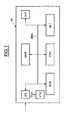
- the reference SY designates generally a digital image processing device incorporating, for example a satellite decoder and / or a television set.
- IFE input means receive, by example, a satellite dish or a digital disc (no shown here for simplification purposes) a flow of data compressed according to, for example, MPEG standards.
- a DCD image decoding device for example a MPEG decoder, decodes the encoded images from these data compressed for display on an AFF display.
- the device SY furthermore comprises a processing unit CPU, or microprocessor, which can for example manage the decoding of different satellite channels as well as an information BLT generator graphics intended to be embedded on the overlay screen of video images, for example interactive menus obtained by the operation of a TV remote control.
- This BLT generator is a two-dimensional acceleration unit that, as we will see in more detail below, will allow the composition of the images to be display.
- the device SY also has a dynamic memory MMP, for example a memory of the DDR / SDRAM type, which is shared between these different elements.
- MMP dynamic memory
- the device SY comprises a generator of video synchronization VTG capable of delivering at regular intervals vertical sync signals Vsync. According to the display mode used on the screen, these vertical sync signals can to separate frames from an image or images.
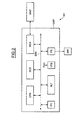
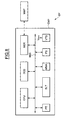
- MMP memory could be part of the circuit integrated circuit forming the component incorporating the DCD decoder, the CPU processor, the BLT acceleration unit and the IFE interface, it is also possible, as illustrated in Figure 2, that memory main MMP is a memory external to the CMP component.
- the MMP memory dialogues with the others elements of the CMP component through a controller of MCR memory.
- a controller of MCR memory there is an IFS output interface, DMA type, connected to the BBS bus as well as the AFF display means.
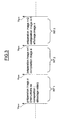
- the generator of video synchronization delivers at regular intervals Vsync vertical synchronization.
- an image has several plans ("Layers”, according to an Anglo-Saxon used) including at least one video clip and one graphic clip.
- the processing unit CPU is able to perform a scene analysis of the image to display and generate a list instructions for composing this image.
- the video decoding unit DCD performs the decodes video data and stores it in main memory MMP.
- the acceleration unit BLT composes the image at display, taking into account the said composition instructions and store it in the main memory.
- IFS output interface retrieved from memory main MMP the image data of image n, in view of its display.
- the treatment unit CPU prepares the next image n + 2, while the acceleration unit BLT composes the image n + 1.
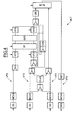
- an internal architecture a BLT image acceleration unit for composing image.
- the acceleration unit BLT according to the invention comprises in particular an additional channel treatment, in this case the VT3 route.
- the BLT unit has three inputs, S1, S2, S3 (three FIFO memories), connected to the three processing channels VT1, VT2 and VT3, which result in an arithmetic and logical unit composition ALUB, conventionally formed multipliers.
- the BLT unit includes a processing channel conventional VT4 output connected between the output of the unit of ALUB composition and an output FIFO memory DES.
- MCV1-MCV3 input conversion means At the head of each of the VT1-VT3 treatment pathways, are arranged MCV1-MCV3 input conversion means. Each of these means is intended to receive for example 128-bit words and to deliver pixels on 32 bits according to for example an ⁇ RGB format of 4x8 bits. ⁇ denotes here the 8 bits of transparency of the pixel.
- Such means are conventional and known in themselves, and include means for reading management in the FIFO memory and a sequencer and encoding means of color.
- MCVS On the VT4 output channel, MCVS means, also conventional structure and known per se, perform treatments inverses of those carried out in the MCV1-MCV3 means.
- color conversion means referenced Y2R and able to transform from YCbCr format to ⁇ RGB format, are planned in parallel on one of the treatment routes, in this case the VT2 way.
- inverse conversion means R2Y are provided on the VT4 exit lane.
- the VT2 and VT3 channels are equipped with horizontal and vertical filtering, respectively referenced HF2, HF3 and VF2, VF3, so as to be able to transform the size of an image, while that the VT1 processing path is free of filtering means horizontal and vertical.
- an anti-flicker filter FF is arranged between these means of vertical and horizontal filtering, as well as a means of deinterlacing DEI.
- the filtering means of each of the channels VT2 and VT3 are independently controllable, which allows separately control the resize factor according to a commonly used Anglo-Saxon name) for the luminance Y and chrominance data CbCr, for example.
- the horizontal and vertical filtering means and the filter anti-flicker and deinterlacer are classic and known in itself. This being the case, it is possible, for example, to use means of filtering and an anti-flicker filter, such as those described by example in French patent applications Nos. 2,801,463 and / or 2,798,033.
- Video data relating to a video plane of the image to compose, and including luminance data Y and data less chrominance CbCr than the data from Luminance, are exclusively processed by VT2 treatment channels and VT3.
- the VT3 treatment path will be dedicated exclusively to luminance data processing.
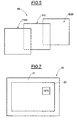
- the IM image consists of three shots, namely, a BKG background graphic plan, a shot FRG foreground graphic and VID video clip.
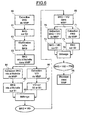
- the BKG background plane is extracted of the main memory MMP (step 60) and is delivered on the input S2 (step 61), so that it can be scaled after passing through the vertical and horizontal filters (step 62). Indeed, generally, given that graphic plans have specific formats, a Scaling is usually necessary.
- the graphic data representative of the BKG plan put to scale are stored in the MMP main memory, and more exactly in a specific memory area "frame buffer" of the MMP memory (step 63).
- the image data corresponding to the BKG plane set to scale are extracted from this specific memory area (step 64), and the video data corresponding to the video plane VID are also extracts from the MMP memory (step 66).
- the luminance data of the video plane are delivered to input S3, while the chrominance data of the video clip are delivered on the input S2 (step 67).
- the video data is mixed (step 68) in the unit of ALUB composition with graphical data from the treatment VT1 and corresponding to the graphic plan BKG set the scale.
- these BKG + VID data are extracted from the memory area MMP memory (step 70) to be delivered to the input S1 of the BLT acceleration unit (step 72) to be injected into the ALUB composition unit without undergoing treatment filtering.
- the data representative of the graphical plan of foreground FRG are extracted from the MMP memory (step 71) for delivered on the input S2 (step 73) in order to undergo a treatment of scaling (step 73) before mixing (step 74) in the unit of ALUB composition with BKG + VID data.
- the corresponding data are output from DES of the BLT acceleration unit to be stored in the memory area specific to the MMP memory (step 75).
- the processing unit can then generate instructions for composition for some parts only of image.
- the CPU processing unit will then issue composition instructions only for zone Z2 of the image and not for the fixed zone Z1, so as to compose the video plane with the zone corresponding to the background graphic plane and with for example an object GFX located in the FRG plane.
- the invention therefore has the advantage of not requiring update unmodified portions of the specific memory area image until a possible change in the scene.
- the invention makes it possible to effectively treat the opacities of the image thus avoiding access to hidden pixels.
- the embodiment illustrated in FIG. 8 makes it possible to reduce even more bandwidth consumption at the level of the main memory MMP.
- the CMP component comprises, in in addition, an internal RAM MMA, or auxiliary memory.
- This memory is for example a static memory of the SRAM type.
- This internal RAM MMA is able to cooperate with the BLT acceleration unit, so as to temporarily store intermediate data when composing an image.
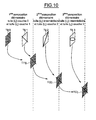
- the plans will be divided into sub-areas or tiles, whose size will depend on the memory size of the memory MMA as well as the pixel format used.
- each layer is decomposed into tiles Tij. So, as illustrated also on the figure 10, the first elementary composition will concern each tile Tij0 of layer 0 and homologous tile Tij1 of a layer 1.
- the tile Tij0 will be extracted from the main memory MMP and delivered to the input S1 of the unit BLT acceleration, while the Tij1 tile will be extracted from the MMP memory and delivered to the input S2 of the BLT acceleration unit.
- the output DES of this BLT acceleration unit will then deliver a first intermediate tile TI1ij that will be stored in the memory MMA auxiliary.
- the intermediate tile TI1ij will be extracted from the memory MMA and delivered to the input S1 of the BLT acceleration unit, so that be composed, during a second elementary composition, with the tile Tij2, extracted from the memory MMP and present at the input S2 of the BLT acceleration unit, so as to form a second square intermediate TI2ij.
- This second intermediate tile TI2ij is in turn stored in the MMA memory.
- the second intermediate tile TI2ij is extracted from the MMA memory, issued at the S1 input of the unit acceleration BLT to be mixed with the tile Tij3 extracted from the MMP memory and delivered to the input S2 of the BLT unit.
- This auxiliary memory MMA thus makes it possible to avoid unity acceleration to consume bandwidth on the memory main MMP, to store intermediate results.
- the execution time is thus reduced, which facilitates the control real time treatment.
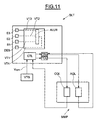
- the BLT composition unit composes images, based on composition instructions contained in the MMP memory and forming a list of instructions for CQL composition ( Figure 11).
- the generation of graphic objects by the unit acceleration is also performed according to a list AQL application instructions also stored in memory main MMP.
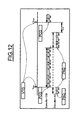
- the invention provides that within an interval separated by two occurrences of the Vsync signal, the image composition task has priority over that of generation of graphic objects.
- the graphical acceleration unit comprises CTL control means capable of triggering the task of image composition at the occurrence of a synchronization signal vertical Vsync, then trigger an object generation task graphics at the end of the image composition task or to authorize resumption of a graphical object generation task that has been interrupted during said occurrence of the synchronization signal vertical.
- composition instructions cN 1 -cN 10 are then successively executed, and then, when the control means detect that the last instruction cN 10 has been executed, they activate an address pointer PAQ which designates the application instruction to be executed. .
- the AQL list had started at the previous interval by the instruction aN 1 . Then, the instruction aN 2 was executed.
- the generation of the graphic object continues from the instruction aN 3 to the instruction aN 6 . Then, in the example illustrated here, there is a rest time ("idle") before the occurrence of the next Vsync signal.
Landscapes
- Engineering & Computer Science (AREA)
- Multimedia (AREA)
- Signal Processing (AREA)
- Computer Graphics (AREA)
- Controls And Circuits For Display Device (AREA)
- Image Generation (AREA)
- Processing Or Creating Images (AREA)
Abstract
Description
- trois entrées,
- trois voies internes de traitement respectivement connectées sur les trois entrées,
- une unité commandable de composition connectée à la sortie desdites trois voies internes de traitement,
- une quatrième voie interne de traitement connectée à la sortie de l'unité de composition, et
- une sortie connectée à la sortie de cette quatrième voie.
- la figure 1 illustre schématiquement un premier mode de réalisation d'un dispositif de traitement selon l'invention ;
- la figure 2 illustre schématiquement un autre mode de réalisation d'un dispositif selon l'invention ;
- la figure 3 illustre schématiquement des traitements d'image selon un mode de mise en oeuvre de l'invention ;
- la figure 4 illustre schématiquement un mode de réalisation d'une unité d'accélération bidimensionnelle selon l'invention ;
- les figures 5 et 6 illustrent schématiquement un exemple de composition d'image selon l'invention ;
- la figure 7 illustre schématiquement un autre exemple de composition d'image selon l'invention,
- la figure 8 illustre schématiquement un autre mode de réalisation d'un dispositif selon l'invention ;
- les figures 9 et 10 illustrent schématiquement un autre exemple de composition d'image selon l' invention ;
- la figure 11 illustre schématiquement un autre mode de réalisation d'une unité d'accélération selon l'invention ; et
- la figure 12 illustre schématiquement un fonctionnement d'une unité d'accélération tel que représenté sur la figure 10.
Claims (31)
- Dispositif de traitement de données vidéo et graphiques, comprenant un composant (CMP) et une mémoire vive principale (MMP) apte à contenir des données vidéo et graphiques, le composant comportant une unité de traitement (CPU), une unité d'accélération bidimensionnelle (BLT) apte à coopérer avec l'unité de traitement et la mémoire principale pour composer en temps réel des images comportant au moins un plan vidéo et éventuellement au moins un plan graphique et les stocker dans la mémoire principale, et une interface de sortie (IFS) pour extraire de la mémoire les données d'images ainsi composées en vue de leur délivrance à un moyen d'affichage d'images (AFF).
- Dispositif selon la revendication 1, caractérisé par le fait que ladite mémoire vive principale (MMP) est une mémoire externe au composant.
- Dispositif selon la revendication 1 ou 2, caractérisé par le fait que le composant (CMP) comporte un générateur de synchronisation vidéo (VTG) apte à délivrer à intervalles réguliers des signaux de synchronisation verticale (Vsync), par le fait que pendant un premier intervalle (INT1), l'unité de traitement est apte à effectuer une analyse de scène de l'image à afficher et à générer une liste d'instructions de composition de ladite image, par le fait que pendant un deuxième intervalle (INT2), consécutif au premier, l'unité d'accélération compose l'image à afficher compte tenu desdites instructions de composition et la stocke dans ladite mémoire principale, et par le fait que pendant un troisième intervalle (INT3), consécutif au deuxième, l'interface de sortie extrait les données d'image de ladite image à afficher.
- Dispositif selon la revendication 3, caractérisé par le fait que le composant (CMP) comporte une interface (IFE) pour recevoir des données vidéo codées, et une unité de décodage vidéo (DCD) coopérant avec l'unité de traitement (CPU) et ladite mémoire principale (MMP), et par le fait que l'unité de décodage vidéo effectue le décodage des données vidéo (DCD) et les stocke dans la mémoire principale pendant le premier intervalle (INT1).
- Dispositif selon la revendication 3 ou 4, caractérisé par le fait que l'unité de traitement (CPU) est apte à générer des instructions de composition pour certaines zones seulement de l'image.
- Dispositif selon l'une des revendications précédentes, caractérisé par le fait que certaines zones au moins de l'image à composer comporte plus de deux plans (FRG, VID, BGK), et par le fait que l'unité d'accélération (BLT) est apte à composer ces zones
en plusieurs compositions élémentaires successives, chaque composition élémentaire mettant en oeuvre deux plans intermédiaires, un plan intermédiaire étant un plan de l'image ou un plan résultant d'au moins une composition élémentaire précédente. - Dispositif selon l'une des revendications précédentes, caractérisé par le fait que l'unité d'accélération (BLT) comporte trois entrées (S1-S3), trois voies internes de traitement (VT1-VT3) respectivement connectées sur les trois entrées, une unité commandable de composition (ALUB) connectées à la sortie desdites trois voies internes de traitement, une quatrième voie interne de traitement (VT4) connectée à la sortie de l'unité de composition, et une sortie (DES) connectée à la sortie de cette quatrième voie.
- Dispositif selon la revendication 7, caractérisé par le fait qu'une première et une deuxième voies internes de traitement (VT2-VT3) parmi lesdites trois voies internes de traitement sont équipées de moyens de filtrage horizontal et vertical (VF2, VF3, HF2, HF3), de façon à pouvoir transformer la taille d'une image, tandis que la troisième voie interne (VT1) est exempte de moyens de filtrage horizontal et vertical, et par le fait que des données vidéo relatives à un plan vidéo de l'image et comportant des données de luminance (Y) et des données de chrominance (CbCr) moins nombreuses que les données de luminance sont exclusivement traitées par lesdites première et deuxième voies internes de traitement (VT2, VT3).
- Dispositif selon la revendication 8, caractérisé par le fait que l'une desdites première et deuxième voies internes (VT2, VT3) est exclusivement dédiée au traitement de données de luminance (Y).
- Dispositif selon l'une des revendications 7 à 9, caractérisé par le fait que les moyens de filtrage (VF2, VF3, HF2, HF3) de chacune des première et deuxième voies internes sont commandables indépendamment.
- Dispositif selon l'une des revendications précédentes, caractérisé par le fait que ledit composant comporte une mémoire vive interne (MMA) apte à coopérer avec l'unité d'accélération (BLT) de façon à stocker temporairement des données intermédiaires lors de la composition d'une image.
- Dispositif selon la revendication 11, caractérisé par le fait que l'unité de traitement est apte, en présence d'une zone d'une image à composer comportant plus de deux plans, à subdiviser cette zone en sous-zones (Tij) dont la taille à la sortie de l'unité d'accélération bidimensionnelle est au plus égale à la taille-mémoire de ladite mémoire interne, et par le fait que l'unité d'accélération est apte à effectuer la composition de ladite zone en composant successivement les différentes sous-zones, la composition d'une sous-zone s'effectuant en plusieurs compositions élémentaires successives, chaque composition élémentaire mettant en oeuvre deux plans intermédiaires, un plan intermédiaire étant un plan de ladite sous-zone ou un plan résultant d'au moins une composition élémentaire précédente de ladite sous-zone, et par le fait que le résultat de la dernière composition élémentaire de la sous-zone est stocké dans ladite mémoire principale (MMP), alors que le résultat de chaque composition élémentaire précédente est temporairement stocké dans ladite mémoire interne (MMA).
- Dispositif selon l'une des revendications précédentes, caractérisé par le fait que l'unité d'accélération (BLT) est apte en outre à générer des objets graphiques destinés à être insérés dans des plans graphiques.
- Dispositif selon la revendication 13, caractérisé par le fait que le composant comporte un générateur de synchronisation vidéo (VTG) apte à délivrer à intervalles réguliers des signaux de synchronisation verticale (Vsync), par le fait qu'au cours de certains au moins de ces intervalles l'unité d'accélération compose une image à afficher compte tenu d'instructions de composition (CQL), par le fait que l'unité d'accélération est apte à générer lesdits objets graphiques conformément à une liste d'instructions d'application (AQL), et par le fait qu'au sein d'un intervalle la tâche de composition d'image est prioritaire par rapport à celle de génération d'objet graphique.
- Dispositif selon la revendication 14, caractérisé par le fait que l'unité d'accélération graphique comporte des moyens de contrôle (CTL) aptes à déclencher la tâche de composition d'image à l'occurrence d'un signal de synchronisation verticale, puis à déclencher une tâche de génération d'objet graphique ou à autoriser la reprise d'une tâche de génération d'objet graphique interrompue lors de ladite occurrence du signal de synchronisation verticale.
- Dispositif selon l'une des revendications précédentes, caractérisé par le fait qu'il est réalisé sous la forme d'un circuit intégré.
- Décodeur vidéo, caractérisé par le fait qu'il incorpore un dispositif selon l'une des revendications 1 à16.
- Procédé de traitement de données vidéo et graphiques, dans lequel on compose en temps réel au sein d'une unité d'accélération bidimensionnelle (BLT) des images comportant au moins un plan vidéo et éventuellement au moins un plan graphique et on les stocke dans une mémoire principale (MMP) puis on extrait de la mémoire principale les données d'images ainsi composées en vue d'un affichage des images correspondantes.
- Procédé selon la revendication 18, caractérisé par le fait que ladite mémoire principale (MMP) est situé à l'extérieur d'un composant comportant ladite unité d'accélération.
- Procédé selon la revendication 18 ou 19, caractérisé par le fait qu'on délivre à intervalles réguliers des signaux de synchronisation verticale, par le fait que pendant un premier intervalle (INT1), on effectue une analyse de scène de l'image à afficher et on génère une liste d'instructions de composition de ladite image, par le fait que pendant un deuxième intervalle (INT2), consécutif au premier, on compose l'image à afficher compte tenu desdites instructions de composition et on la stocke dans ladite mémoire principale, et par le fait que pendant un troisième intervalle (INT3), consécutif au deuxième, on extrait les données d'image de ladite image à afficher.
- Procédé selon la revendication 20, caractérisé par le fait qu'on reçoit des données vidéo codées, on décode ces données vidéo et on les stocke dans la mémoire principale (MMP) pendant le premier intervalle (INT1).
- Procédé selon la revendication 20 ou 21, caractérisé par le fait qu'on génère des instructions de composition pour certaines zones seulement de l'image.
- Procédé selon l'une des revendications 18 à 22, caractérisé par le fait que certaines zones de l'image à composer comportent plus de deux plans (FRG, VID, BGK) et par le fait qu'on compose ces zones de l'image en plusieurs compositions élémentaires successives, chaque composition élémentaire mettant en oeuvre deux plans intermédiaires, un plan intermédiaire étant un plan de l'image ou un plan résultant d'au moins une composition élémentaire précédente.
- Procédé selon l'une des revendications 18 à 23, caractérisé par le fait que l'unité d'accélération (BLT) comporte trois entrées, trois voies internes de traitement respectivement connectées sur les trois entrées, une unité commandable de composition connectée à la sortie desdites trois voies internes de traitement, une quatrième voie interne de traitement connectée à la sortie de l'unité de composition, et une sortie connectée à la sortie de cette quatrième voie, et par le fait qu'on équipe une première et une deuxième voies internes de traitement parmi lesdites trois voies internes de traitement, de moyens de filtrage horizontal et vertical, de façon à pouvoir transformer la taille d'une image, tandis que la troisième voie interne est exempte de moyens de filtrage horizontal et vertical, et par le fait que des données vidéo relatives à un plan vidéo de l'image et comportant des données de luminance et des données de chrominance moins nombreuses que les données de luminance sont exclusivement traitées par lesdites première et deuxième voies internes de traitement.
- Procédé selon la revendication 24, caractérisé par le fait que l'une desdites première et deuxième voies internes (VT2, VT3) est exclusivement dédiée au traitement de données de luminance.
- Procédé selon l'une des revendications 24 ou 25, caractérisé par le fait qu'on commande indépendamment les moyens de filtrage de chacune des première et deuxième voies internes (VT2, VT3).
- Procédé selon l'une des revendications 18 à 26, caractérisé par le fait qu'on stocke temporairement des données intermédiaires lors de la composition d'une image, dans une mémoire (MMA) interne au composant comportant ladite unité d'accélération (BLT).
- Procédé selon la revendication 27, caractérisé par le fait qu'en présence d'une zone d'une image à composer comportant plus de deux plans, on subdivise cette zone en sous-zones (Tij), par le fait qu'on effectue la composition de ladite zone en composant successivement les différentes sous-zones, la composition d'une sous-zone s'effectuant en plusieurs compositions élémentaires successives, chaque composition élémentaire mettant en oeuvre deux plans intermédiaires, un plan intermédiaire étant un plan de ladite sous-zone ou un plan résultant d'au moins une composition élémentaire précédente de ladite sous-zone, et par le fait que le résultat de la dernière composition élémentaire de la sous-zone est stocké dans ladite mémoire principale, alors que le résultat de chaque composition élémentaire précédente est temporairement stocké dans ladite mémoire interne, et par le fait que la taille d'une sous-zone est telle qu'une fois deux sous-zones composées, la taille résultante est au plus égale à la taille-mémoire de ladite mémoire interne.
- Procédé selon l'une des revendications 18 à 28, caractérisé par le fait qu'on génère au sein de l'unité d'accélération (BLT) des objets graphiques destinés à être insérés dans des plans graphiques.
- Procédé selon la revendication 29, caractérisé par le fait qu'on délivre à intervalles réguliers des signaux de synchronisation verticale, par le fait qu'au cours de certains au moins de ces intervalles, on compose une image à afficher compte tenu d'instructions de composition (CQL), par le fait qu'on génère lesdits objets graphiques conformément à une liste d'instructions d'application (AQL), et par le fait qu'au sein d'un intervalle la tâche de composition d'image est prioritaire par rapport à celle de génération d'objet graphique.
- Procédé selon la revendication 30, caractérisé par le fait qu'on déclenche la tâche de composition d'image à l'occurrence d'un signal de synchronisation verticale, puis à l'issue de cette tâche de composition on déclenche une tâche de génération d'objet graphique ou on autorise la reprise d'une tâche de génération d'objet graphique interrompue lors de ladite occurrence du signal de synchronisation verticale.
Priority Applications (1)
| Application Number | Priority Date | Filing Date | Title |
|---|---|---|---|
| EP09158672A EP2079240A3 (fr) | 2003-09-08 | 2004-08-12 | Dispositif et procédé de traitement de données vidéo et graphiques |
Applications Claiming Priority (2)
| Application Number | Priority Date | Filing Date | Title |
|---|---|---|---|
| FR0310566 | 2003-09-08 | ||
| FR0310566A FR2859591A1 (fr) | 2003-09-08 | 2003-09-08 | Dispositif et procede de traitement de donnees video et graphiques |
Related Child Applications (1)
| Application Number | Title | Priority Date | Filing Date |
|---|---|---|---|
| EP09158672A Division EP2079240A3 (fr) | 2003-09-08 | 2004-08-12 | Dispositif et procédé de traitement de données vidéo et graphiques |
Publications (3)
| Publication Number | Publication Date |
|---|---|
| EP1515566A2 true EP1515566A2 (fr) | 2005-03-16 |
| EP1515566A3 EP1515566A3 (fr) | 2005-07-06 |
| EP1515566B1 EP1515566B1 (fr) | 2009-10-07 |
Family
ID=34130761
Family Applications (2)
| Application Number | Title | Priority Date | Filing Date |
|---|---|---|---|
| EP09158672A Ceased EP2079240A3 (fr) | 2003-09-08 | 2004-08-12 | Dispositif et procédé de traitement de données vidéo et graphiques |
| EP04292045A Expired - Lifetime EP1515566B1 (fr) | 2003-09-08 | 2004-08-12 | Dispositif et procédé de traitement de données vidéo et graphiques |
Family Applications Before (1)
| Application Number | Title | Priority Date | Filing Date |
|---|---|---|---|
| EP09158672A Ceased EP2079240A3 (fr) | 2003-09-08 | 2004-08-12 | Dispositif et procédé de traitement de données vidéo et graphiques |
Country Status (5)
| Country | Link |
|---|---|
| US (1) | US7474311B2 (fr) |
| EP (2) | EP2079240A3 (fr) |
| JP (1) | JP2005086822A (fr) |
| DE (1) | DE602004023464D1 (fr) |
| FR (1) | FR2859591A1 (fr) |
Families Citing this family (4)
| Publication number | Priority date | Publication date | Assignee | Title |
|---|---|---|---|---|
| JP2006317636A (ja) * | 2005-05-11 | 2006-11-24 | Sony Corp | 画像処理装置および方法、記録媒体、並びに、プログラム |
| JP2007163903A (ja) * | 2005-12-14 | 2007-06-28 | Matsushita Electric Ind Co Ltd | 表示制御装置および表示制御方法 |
| US7929599B2 (en) | 2006-02-24 | 2011-04-19 | Microsoft Corporation | Accelerated video encoding |
| CN110838130B (zh) * | 2018-08-15 | 2022-07-12 | 湖南大学 | 一种快速模糊距离变换方法 |
Family Cites Families (9)
| Publication number | Priority date | Publication date | Assignee | Title |
|---|---|---|---|---|
| JP3876456B2 (ja) * | 1996-05-23 | 2007-01-31 | ソニー株式会社 | 画像合成装置 |
| US5889949A (en) * | 1996-10-11 | 1999-03-30 | C-Cube Microsystems | Processing system with memory arbitrating between memory access requests in a set top box |
| US6311204B1 (en) * | 1996-10-11 | 2001-10-30 | C-Cube Semiconductor Ii Inc. | Processing system with register-based process sharing |
| WO2000028518A2 (fr) * | 1998-11-09 | 2000-05-18 | Broadcom Corporation | Systeme d'affichage graphique |
| US6573905B1 (en) * | 1999-11-09 | 2003-06-03 | Broadcom Corporation | Video and graphics system with parallel processing of graphics windows |
| FR2798033B1 (fr) | 1999-08-24 | 2002-05-10 | St Microelectronics Sa | Procede et systeme de traitement d'images numeriques |
| FR2801463B1 (fr) | 1999-11-23 | 2002-04-12 | St Microelectronics Sa | Procede et systeme de traitement d'images numeriques |
| JP2001285749A (ja) * | 2000-01-24 | 2001-10-12 | Matsushita Electric Ind Co Ltd | 画像合成装置、記録媒体及びプログラム |
| JP3481913B2 (ja) * | 2000-12-18 | 2003-12-22 | 株式会社アクセル | 画像処理装置 |
-
2003
- 2003-09-08 FR FR0310566A patent/FR2859591A1/fr active Pending
-
2004
- 2004-08-12 EP EP09158672A patent/EP2079240A3/fr not_active Ceased
- 2004-08-12 EP EP04292045A patent/EP1515566B1/fr not_active Expired - Lifetime
- 2004-08-12 DE DE602004023464T patent/DE602004023464D1/de not_active Expired - Lifetime
- 2004-08-24 US US10/924,748 patent/US7474311B2/en not_active Expired - Lifetime
- 2004-09-06 JP JP2004258029A patent/JP2005086822A/ja active Pending
Also Published As
| Publication number | Publication date |
|---|---|
| FR2859591A1 (fr) | 2005-03-11 |
| EP1515566B1 (fr) | 2009-10-07 |
| EP2079240A3 (fr) | 2010-05-26 |
| US20050078119A1 (en) | 2005-04-14 |
| EP1515566A3 (fr) | 2005-07-06 |
| JP2005086822A (ja) | 2005-03-31 |
| EP2079240A2 (fr) | 2009-07-15 |
| DE602004023464D1 (de) | 2009-11-19 |
| US7474311B2 (en) | 2009-01-06 |
Similar Documents
| Publication | Publication Date | Title |
|---|---|---|
| FR2842320A1 (fr) | Dispositif de traitement de donnees multimedia | |
| US20080168512A1 (en) | System and Method to Implement Interactive Video Streaming | |
| CN109729405B (zh) | 视频处理方法、装置、电子设备及存储介质 | |
| US11943489B2 (en) | Method and system for automatic real-time frame segmentation of high resolution video streams into constituent features and modifications of features in each frame to simultaneously create multiple different linear views from same video source | |
| EP1439701A2 (fr) | Procédé et dispositif de décodage audio et vidéo, circuit pilote vidéo | |
| EP1432246B1 (fr) | Procede et dispositif de decodage et d'affichage en marche arriere d'images mpeg, circuit pilote video et boitier decodeur incorporant un tel dispositif | |
| FR2795279A1 (fr) | Procede et dispositif de commutation de programmes de television numerique | |
| EP1515566B1 (fr) | Dispositif et procédé de traitement de données vidéo et graphiques | |
| EP0969672A1 (fr) | Procédé et dispositif de décodage d'une image, comprimée notamment selon les normes MPEG, en particulier une image bidirectionnelle | |
| US20030202110A1 (en) | Arrangement of images | |
| EP0778544B1 (fr) | Procédé de traitement de données dans des réseaux matriciels dans un système d'estimation de mouvement | |
| EP2022009B1 (fr) | Procede de codage et systeme d'affichage sur un ecran d'une maquette numerique d'un objet sous forme d'une image de synthese | |
| EP3637765A1 (fr) | Optimisation d'un sous-échantillonnage intervenant avant le codage d'images en compression | |
| EP1246471A1 (fr) | Dispositif implémentant conjointement un post-traitement et un décodage de données | |
| FR2780184A1 (fr) | Procede et dispositif de decodage d'images, permettant un nombre reduit d'ouvertures de pages-memoire dans le traitement de prediction | |
| FR2828054A1 (fr) | Procede et dispositif de codage d'une scene | |
| US20090214138A1 (en) | Image processing method, and processing methods for digital photo frame and interactive image process | |
| CN120343332A (zh) | 视频的处理方法、装置、电子设备及存储介质 | |
| EP2487898A1 (fr) | Procédé d'affichage d'une mosaïque vidéo personnalisée et réceptacle audiovisuel correspondant | |
| FR2817641A1 (fr) | Procede et dispositif de traitement d'images numeriques | |
| FR2781326A1 (fr) | Procede et systeme d'elaboration d'images numeriques resultant d'elements graphiques auxiliaires incrustes dans des images principales | |
| US20240236388A1 (en) | Method and system for automatic real-time frame segmentation of high resolution video streams into constituent features and modifications of features in each frame to simultaneously create multiple different linear views from same video source | |
| EP1432247A1 (fr) | Procédé et dispositif de décodage et d'affichage en marche avant accélérée d'images MPEG, circuit pilote vidéo et boítier décodeur incorporant un tel dispositif | |
| CN120378639A (zh) | 直播互动方法、设备及存储介质 | |
| EP0967577B1 (fr) | Procédé et dispositif de traitement d'images, comprimées notamment selon les normes MPEG |
Legal Events
| Date | Code | Title | Description |
|---|---|---|---|
| PUAI | Public reference made under article 153(3) epc to a published international application that has entered the european phase |
Free format text: ORIGINAL CODE: 0009012 |
|
| AK | Designated contracting states |
Kind code of ref document: A2 Designated state(s): AT BE BG CH CY CZ DE DK EE ES FI FR GB GR HU IE IT LI LU MC NL PL PT RO SE SI SK TR |
|
| AX | Request for extension of the european patent |
Extension state: AL HR LT LV MK |
|
| PUAL | Search report despatched |
Free format text: ORIGINAL CODE: 0009013 |
|
| RTI1 | Title (correction) |
Free format text: APPARATUS AND METHOD TO PROCESS VIDEO AND GRAFIC DATA |
|
| AK | Designated contracting states |
Kind code of ref document: A3 Designated state(s): AT BE BG CH CY CZ DE DK EE ES FI FR GB GR HU IE IT LI LU MC NL PL PT RO SE SI SK TR |
|
| AX | Request for extension of the european patent |
Extension state: AL HR LT LV MK |
|
| 17P | Request for examination filed |
Effective date: 20051207 |
|
| AKX | Designation fees paid |
Designated state(s): DE FR GB IT |
|
| 17Q | First examination report despatched |
Effective date: 20060110 |
|
| GRAP | Despatch of communication of intention to grant a patent |
Free format text: ORIGINAL CODE: EPIDOSNIGR1 |
|
| GRAS | Grant fee paid |
Free format text: ORIGINAL CODE: EPIDOSNIGR3 |
|
| GRAA | (expected) grant |
Free format text: ORIGINAL CODE: 0009210 |
|
| AK | Designated contracting states |
Kind code of ref document: B1 Designated state(s): DE FR GB IT |
|
| REG | Reference to a national code |
Ref country code: GB Ref legal event code: FG4D Free format text: NOT ENGLISH |
|
| REF | Corresponds to: |
Ref document number: 602004023464 Country of ref document: DE Date of ref document: 20091119 Kind code of ref document: P |
|
| PLBE | No opposition filed within time limit |
Free format text: ORIGINAL CODE: 0009261 |
|
| STAA | Information on the status of an ep patent application or granted ep patent |
Free format text: STATUS: NO OPPOSITION FILED WITHIN TIME LIMIT |
|
| 26N | No opposition filed |
Effective date: 20100708 |
|
| PGFP | Annual fee paid to national office [announced via postgrant information from national office to epo] |
Ref country code: FR Payment date: 20100910 Year of fee payment: 7 Ref country code: DE Payment date: 20100806 Year of fee payment: 7 |
|
| PGFP | Annual fee paid to national office [announced via postgrant information from national office to epo] |
Ref country code: GB Payment date: 20100727 Year of fee payment: 7 |
|
| PG25 | Lapsed in a contracting state [announced via postgrant information from national office to epo] |
Ref country code: IT Free format text: LAPSE BECAUSE OF FAILURE TO SUBMIT A TRANSLATION OF THE DESCRIPTION OR TO PAY THE FEE WITHIN THE PRESCRIBED TIME-LIMIT Effective date: 20091007 |
|
| GBPC | Gb: european patent ceased through non-payment of renewal fee |
Effective date: 20110812 |
|
| REG | Reference to a national code |
Ref country code: FR Ref legal event code: ST Effective date: 20120430 |
|
| REG | Reference to a national code |
Ref country code: DE Ref legal event code: R119 Ref document number: 602004023464 Country of ref document: DE Effective date: 20120301 |
|
| PG25 | Lapsed in a contracting state [announced via postgrant information from national office to epo] |
Ref country code: FR Free format text: LAPSE BECAUSE OF NON-PAYMENT OF DUE FEES Effective date: 20110831 Ref country code: GB Free format text: LAPSE BECAUSE OF NON-PAYMENT OF DUE FEES Effective date: 20110812 |
|
| PG25 | Lapsed in a contracting state [announced via postgrant information from national office to epo] |
Ref country code: DE Free format text: LAPSE BECAUSE OF NON-PAYMENT OF DUE FEES Effective date: 20120301 |
|
| P01 | Opt-out of the competence of the unified patent court (upc) registered |
Effective date: 20230521 |