EP1515252B1 - Verfahren und Rechnersystem für die Verminderung der Ausführungszeit eines Rechnerprogramms zur Berechnung einer erforderlichen Werkstoffmenge - Google Patents
Verfahren und Rechnersystem für die Verminderung der Ausführungszeit eines Rechnerprogramms zur Berechnung einer erforderlichen Werkstoffmenge Download PDFInfo
- Publication number
- EP1515252B1 EP1515252B1 EP03020327A EP03020327A EP1515252B1 EP 1515252 B1 EP1515252 B1 EP 1515252B1 EP 03020327 A EP03020327 A EP 03020327A EP 03020327 A EP03020327 A EP 03020327A EP 1515252 B1 EP1515252 B1 EP 1515252B1
- Authority
- EP
- European Patent Office
- Prior art keywords
- planning
- component
- components
- parent
- data structure
- Prior art date
- Legal status (The legal status is an assumption and is not a legal conclusion. Google has not performed a legal analysis and makes no representation as to the accuracy of the status listed.)
- Expired - Lifetime
Links
Images


Classifications
-
- G—PHYSICS
- G06—COMPUTING OR CALCULATING; COUNTING
- G06Q—INFORMATION AND COMMUNICATION TECHNOLOGY [ICT] SPECIALLY ADAPTED FOR ADMINISTRATIVE, COMMERCIAL, FINANCIAL, MANAGERIAL OR SUPERVISORY PURPOSES; SYSTEMS OR METHODS SPECIALLY ADAPTED FOR ADMINISTRATIVE, COMMERCIAL, FINANCIAL, MANAGERIAL OR SUPERVISORY PURPOSES, NOT OTHERWISE PROVIDED FOR
- G06Q10/00—Administration; Management
- G06Q10/06—Resources, workflows, human or project management; Enterprise or organisation planning; Enterprise or organisation modelling
-
- G—PHYSICS
- G06—COMPUTING OR CALCULATING; COUNTING
- G06Q—INFORMATION AND COMMUNICATION TECHNOLOGY [ICT] SPECIALLY ADAPTED FOR ADMINISTRATIVE, COMMERCIAL, FINANCIAL, MANAGERIAL OR SUPERVISORY PURPOSES; SYSTEMS OR METHODS SPECIALLY ADAPTED FOR ADMINISTRATIVE, COMMERCIAL, FINANCIAL, MANAGERIAL OR SUPERVISORY PURPOSES, NOT OTHERWISE PROVIDED FOR
- G06Q10/00—Administration; Management
- G06Q10/04—Forecasting or optimisation specially adapted for administrative or management purposes, e.g. linear programming or "cutting stock problem"
-
- G—PHYSICS
- G06—COMPUTING OR CALCULATING; COUNTING
- G06Q—INFORMATION AND COMMUNICATION TECHNOLOGY [ICT] SPECIALLY ADAPTED FOR ADMINISTRATIVE, COMMERCIAL, FINANCIAL, MANAGERIAL OR SUPERVISORY PURPOSES; SYSTEMS OR METHODS SPECIALLY ADAPTED FOR ADMINISTRATIVE, COMMERCIAL, FINANCIAL, MANAGERIAL OR SUPERVISORY PURPOSES, NOT OTHERWISE PROVIDED FOR
- G06Q10/00—Administration; Management
- G06Q10/08—Logistics, e.g. warehousing, loading or distribution; Inventory or stock management
- G06Q10/087—Inventory or stock management, e.g. order filling, procurement or balancing against orders
- G06Q10/0875—Itemisation or classification of parts, supplies or services, e.g. bill of materials
Definitions
- the present invention generally relates to electronic data processing, and more particularly, relates to methods, computer program products and systems for material requirements planning (MRP).
- MRP material requirements planning
- Some computer systems such as, for example, Enterprise Resource Planning (ERP) systems or Supply Chain Management (SCM) systems, support functions to plan material requirements for production.
- ERP Enterprise Resource Planning
- SCM Supply Chain Management
- BOM bills of materials
- a bill of materials includes all components of a product in a hierarchical structure. The hierarchy indicates for each component for which parent component it is needed. A parent component can have multiple child components.
- BOMs are processed simultaneously because some of the products may use the same components. Therefore, to plan these components that are used by multiple products, the requirements by each of the products are to be considered.
- Some systems use parallelization to cope with a huge amount of data in case of simultaneous planning of many products.
- some systems create a data structure that includes the BOMs of all products being subject to material requirements planning and introduce planning levels in this data structure.
- a planning level all components are planned before the system moves on to the next planning level. This guarantees that all requirements of the previous planning level are considered.
- Such a system is described in the international patent application WO 94/01826.
- the idle processes have to wait until the last process finishes before parallel processing at the next planning level can continue.
- the waiting period can be long.
- individual customer requirements exist at more than just the final product level which may cause waiting times at multiple planning levels.
- an inlay shelf may be included which is also included as a component in almost any other kitchen of the kitchen manufacturer.
- this shelf can become a long-runner in the MRP that occupies a process for hours and leaves the other processes waiting before moving to the next planning level.
- Patent application EP0992868 discloses a MRP system that includes a plurality of material/quantity requirements planning (MRP) arithmetic apparatuses disposed in parallel.
- a MRP arithmetic apparatus determines arithmetically a net required quantity of a given item to supply the net required quantity as determined to the other MRP arithmetic apparatuses.
- the MRP arithmetic apparatuses execute part-based expansion arithmetics in parallel, respectively, for allocated ones of plural child-items which constitute the item on the basis of the net required quantity of the item.
- a level counter indicating the low level being processed is provided in an arithmetic-susceptible item managing unit.
- a general aspect of the invention is to provide a method, computer system and computer program product for reducing MRP runtimes based on a less complex software architecture. This is achieved by embodiments of the invention according to the independent claims 1, 9, and 10.
- the computer system is able to decide about proceeding with the planning of components on a component by component base while still being based on a less complex software architecture.
- the need for planning levels to ensure the completeness of the planning of superordinate components is eliminated.
- Parallelization of MRP runs can be used more efficiently because waiting times of idle processes can be avoided.
- Each row of the table 300 refers to a component in the data structure.
- the relationship pointers 310 point from a parent component to its child components. Equally, the pointers can be implemented to point from child components to their parent components.
- the table 300 can be based on a material master table of an application system.
- a material master table typically includes master data for each component (e.g., unit of measure, lot size, etc.) that is handled by the application system.
- the relationship pointers 310 By adding the relationship pointers 310 to the material master table, the BOM information and the material master data information is available in a single data structure. Therefore, during the MRP run only one data structure (table 300) needs to be accessed by the MRP engine. This reduces the total data access time.
- the table 300 has a component column for storing a component ID (e.g., F1, F2, A1, etc.), a planning level column, a counter value column and a planning flag column.
- a component ID e.g., F1, F2, A1, etc.
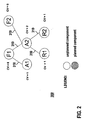
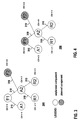
- the counter value column stores for each component the associated counter value CV that is calculated as described in FIGs. 2 to 4.
- FIG. 5 illustrates the state of the data structure at the first point in time (cf. FIG. 2).
- the planning flag column indicates for each component whether the component is subject to MRP or not. For example, some ERP systems set a planning flag for a specific component only if something has changed with respect to the requirements for this component. This can occur when the order size for a specific product using the specific component is changed or when further orders for products using the specific component are entered into the system or deleted from the system. Any of these cases has an impact on the requirements for the specific component and, therefore will lead to setting a corresponding planning flag in the table 300.
- the MRP engine can set the counter values only for those components having a planning flag. Further, in this implementation, the MRP engine can proceed with the planning of a child component only if the child component has a planning flag.
- the advantage of using the planning flag is that the MRP engine knows in advance any component in the table 300 that will not be affected by the MRP run. Thus, the MRP engine can ignore any component without a planning flag.
- the values of the planning level column of this implementation may be obtained by using the parent-child relationships in the data structure to define a planning level for each component. How to define planning levels is known in the art and documented, for example, in the SAP training course "LO050: PP-Planning" or the SAP workshop "EWC10: Technical optimisation of the Availability Check”.
- the MRP engine is able to proceed with the planning of the specific child component A2 that belongs to a planning level 1 which is subordinate to the planning level 0 of at least one of the corresponding parent components F1, F1 even if the planning of further components at the planning level 0 of the at least one corresponding parent component is incomplete.
- This allows the MRP engine to benefit from parallelization because the planning of the child component at the subordinate planning level can be performed by a first process while the planning of further components at superordinate planning levels can be performed by at least a second process in parallel. Without the concept of decrementing associated counters of child components (cf. FIGs. 2 to 4), the first process would need to wait until the further processes at the superordinate planning levels are completed.
- each component can have a further attribute for storing a time statistics where the planning duration of the previous MRP run is recorded for the component.
- the further attribute corresponds to a further column.
- statements about the probable planning duration for each component can be derived by the MRP engine from a forecast based on the previous MRP run, since usually MRP runs in a company tend to be similar.
- Components can be bundled into packages for optimised parallel processing. For example, components can be bundled so that long-runners are grouped with short-runners.
- the approximate MRP runtimes for the packages can be calculated in advance, to improve their grouping and approximate a simultaneous completion of all processes.
- MRP runtime is proportional to the number of planning items, such as, for example, planned orders, purchase requisitions, delivery schedule lines, etc., that are to be created during the planning run.
- the number of planning items per product depends on various planning mechanisms, such as the lot-sizing procedure and/or the number of requirements (e.g., sales orders, forecast demand) and does not change much over time.
- the number of planning items per product can be stored in a planning file for later use.
- the packages can then be built packages in such a way, that a predefined number of planning items is created in each package. For example, in an SAP APO-PP/DS application good performance results can be achieved, when each package creates approximately 1000 planning items. Complex planning items may require smaller packages.
- Embodiments of the invention can be implemented in digital electronic circuitry, or in computer hardware, firmware, software, or in combinations of them.
- the invention can be implemented as an archiving computer program product, i.e., a computer program tangibly embodied in an information carrier, e.g., in a machine-readable storage device or in a propagated signal, for execution by, or to control the operation of, data processing apparatus, e.g., a programmable processor, a computer, or multiple computers.
- An archiving computer program can be written in any form of programming language, including compiled or interpreted languages, and it can be deployed in any form, including as a stand-alone program or as a module, component, subroutine, or other unit suitable for use in a computing environment.
- a computer program can be deployed to be executed on one computer or on multiple computers at one site or distributed across multiple sites and interconnected by a communication network.
- Method steps of the invention can be performed by one or more programmable processors executing a computer program to perform functions of the invention by operating on input data and generating output. Method steps can also be performed by, and apparatus of the invention can be implemented as, special purpose logic circuitry, e.g., an FPGA (field programmable gate array) or an ASIC (application-specific integrated circuit).
- FPGA field programmable gate array
- ASIC application-specific integrated circuit
- processors suitable for the execution of a computer program include, by way of example, both general and special purpose microprocessors, and any one or more processors of any kind of digital computer.
- a processor will receive instructions and data from a read-only memory or a random access memory or both.
- the essential elements of a computer are at least one processor for executing instructions and one or more memory devices for storing instructions and data.
- a computer will also include, or be operatively coupled to receive data from or transfer data to, or both, one or more mass storage devices for storing data, e.g., magnetic, magneto-optical disks, or optical disks.
- Information carriers suitable for embodying computer program instructions and data include all forms of non-volatile memory, including by way of example semiconductor memory devices, e.g., EPROM, EEPROM, and flash memory devices; magnetic disks, e.g., internal hard disks or removable disks; magneto-optical disks; and CD-ROM and DVD-ROM disks.
- semiconductor memory devices e.g., EPROM, EEPROM, and flash memory devices
- magnetic disks e.g., internal hard disks or removable disks
- magneto-optical disks e.g., CD-ROM and DVD-ROM disks.
- the processor and the memory can be supplemented by, or incorporated in special purpose logic circuitry.
- the invention can be implemented on a computer having a display device, e.g., a cathode ray tube (CRT) or liquid crystal display (LCD) monitor, for displaying information to the user and a keyboard and a pointing device, e.g., a mouse or a trackball, by which the user can provide input to the computer.
- a display device e.g., a cathode ray tube (CRT) or liquid crystal display (LCD) monitor
- keyboard and a pointing device e.g., a mouse or a trackball
- Other kinds of devices can be used to provide for interaction with a user as well; for example, feedback provided to the user can be any form of sensory feedback, e.g., visual feedback, auditory feedback, or tactile feedback; and input from the user can be received in any form, including acoustic, speech, or tactile input.
- the invention can be implemented in a computing system that includes a back-end component, e.g., as a data server, or that includes a middleware component, e.g., an application server, or that includes a front-end component, e.g., a client computer having a graphical user interface or a Web browser through which a user can interact with an implementation of the invention, or any combination of such back-end, middleware, or front-end components.
- the components of the system can be interconnected by any form or medium of digital data communication, e.g., a communication network. Examples of communication networks include a local area network (LAN) and a wide area network (WAN), e.g., the Internet.
- LAN local area network
- WAN wide area network
- the computing system can include clients and servers.
- a client and server are generally remote from each other and typically interact through a communication network.
- the relationship of client and server arises by virtue of computer programs running on the respective computers and having a client-server relationship to each other.
Landscapes
- Business, Economics & Management (AREA)
- Engineering & Computer Science (AREA)
- Economics (AREA)
- Strategic Management (AREA)
- Human Resources & Organizations (AREA)
- Entrepreneurship & Innovation (AREA)
- Quality & Reliability (AREA)
- General Business, Economics & Management (AREA)
- Marketing (AREA)
- Operations Research (AREA)
- Development Economics (AREA)
- Tourism & Hospitality (AREA)
- Physics & Mathematics (AREA)
- Theoretical Computer Science (AREA)
- General Physics & Mathematics (AREA)
- Game Theory and Decision Science (AREA)
- Educational Administration (AREA)
- Accounting & Taxation (AREA)
- Finance (AREA)
- Management, Administration, Business Operations System, And Electronic Commerce (AREA)
- General Factory Administration (AREA)
- Debugging And Monitoring (AREA)
Claims (13)
- Computerimplementiertes Verfahren für die Materialbedarfsplanung, mit den folgenden Schritten:Laden mehrerer (200) Auftragsstücklisten in eine Datenstruktur (300);Analysieren von Haupt-/Unterkomponenten-Beziehungen (310) zwischen Komponenten der mehreren Auftragsstucklisten in der Datenstruktur (300), wobei die Haupt-/Unterkomponenten-Beziehungen in der Datenstruktur Planungsebenen für die Komponenten definieren;
dadurch gekennzeichnet, daß das verfahren ferner die folgenden Schritte umfaßt:eine Materialbedarfsplanungs-Engine (100) setzt für jede Komponente in der Datenstrukur einen Zählerwert (CV), der die Anzahl der Hauptkomponenten für jede Komponente angibt;die Materialbedarfsplanungs-Engine (100) dekrementiert den Zählerwert (CV) einer spezifischen Unterkomponente (A2), wenn das Planen einer Hauptkomponente (F1, F2) der spezifischen Unterkomponente (A2) abgeschlossen ist;die Materialbedarfsplanungs-Engine (100) setzt die Planung der spezifischen Unterkomponente (A2) fort, wenn der assoziierte Zählerwert (CV) angibt, daß das Planen aller Hauptkomponenten (F1, F2) der spezifischen Unterkomponente abgeschlossen ist,
wobei die Hauptkomponenten (F1, F2) Planungsebenen aufweisen, die der Planungsebene der spezifischen Unterkomponente (A2) übergeordnet sind, und setzt parallel die Planung weiterer Komponenten auf der Planungsebene der Unterkomponente (A2) übergeordneten Planungsebenen fort. - Verfahren nach Anspruch 1, wobei der Setzschritt für jede Komponente mit einem Planungsflag ausgeführt wird.
- Verfahren nach Anspruch 2, wobei der vorausgegangene Schritt ausgeführt wird, wenn die spezifische Unterkomponente ein Planungsflag aufweist.
- Verfahren nach einem der vorhergehenden Ansprüche, wobei bei dem vorausgegangenen Schritt die Planung weiterer Komponenten auf der Planungsebene mindestens einer entsprechenden Hauptkomponente unvollständig ist.
- Verfahren nach Anspruch 4, wobei die Planung der spezifischen Unterkomponente in dem vorausgegangenen der vorausgegangene Schritt durch einen ersten Prozeß auf der untergeordneten Planungsebene ausgeführt wird und die Planung weiterer Komponenten auf übergeordneten Planungsebenen durch mindestens einen zweiten Prozeß parallel ausgeführt wird.
- Verfahren nach einem der vorhergehenden Ansprüche, wobei die Datenstruktur als eine nichtrelationale Tabelle unter Verwendung von Zeigern implementiert wird, die die Haupt-/Unterkomponenten-Beziehungen (310) zwischen Komponenten widerspiegeln.
- Verfahren nach den Ansprüchen 5 oder 6, wobei die Planungsdauer für jede Komponente in der Datenstruktur 300 gespeichert wird.
- Verfahren nach Anspruch 7, wobei die Planungsdauer für jede Komponente von einer vorausgegangenen Ausführung des Verfahrens zum Bündeln von Komponenten zu Paketen zur optimierten parallelen Verarbeitung verwendet wird.
- Computerprogrammprodukt zur Materialbedarfsplanung, umfassend mehrere Anweisungen, die beim Laden in einen Speicher eines Computersystems (900) bewirken, daß mindestens ein Prozessor des Computersystems (900) die Schritte des beliebigen einzelnen der Ansprüche 1 bis 8 ausführt.
- Computersystem (900) für die Materialbedarfsplanung, umfassend:eine erste Speicherkomponente (200), die so konfiguriert ist, daß sie mehrere (200) Auftragsstücklisten speichert;eine zweite Speicherkomponente (300), die so konfiguriert ist, daß sie die mehreren Auftragsstücklisten in einer Datenstruktur speichert; undeine MRP-Engine (100), die so konfiguriert ist, daß sie Haupt-/Unterkomponenten-Beziehungen (310) zwischen Komponenten der mehreren Auftragsstücklisten in der Datenstruktur analysiert, wobei die Haupt-/Unterkomponenten-Beziehungen in der Datenstruktur Planungsebenen für die Komponenten definieren;
dadurch gekennzeichnet, dass die MRP-Engine (100) so konfiguriert ist, daß sie:für jede Komponente in der Datenstrukur einen Zählerwert (CV) setzt, der die Anzahl der Hauptkomponenten für jede Komponente angibt;den Zählerwert (CV) einer spezifischen Unterkomponente (A2) dekrementiert, wenn das Planen einer Hauptkomponente (F1, F2) der spezifischen Unterkomponente (A2) abgeschlossen ist;die Planung der spezifischen Unterkomponente (A2) fortsetzt, wenn der assozierte Zählerwert (CV) angibt, daß das Planen aller Hauptkomponenten (F1, F2) der spezifischen Unterkomponente abgeschlossen ist, wobei die Hauptkomponenten (F1, F2) Planungsebenen aufweisen, die der Planungsebene der spezifischen Unterkomponente (A2) übergeordnet sind; undparallel die Planung weiterer Komponenten auf der Planungsebene der Unterkomponente (A2) übergeordneten Planungsebenen fortsetzt. - Computersystem nach Anspruch 10, wobei die MRP-Engine (100) so konfiguriert ist, daß sie den Zählerwert setzt, falls die entsprechende Komponente ein Planungsflag aufweist.
- Computersystem nach Anspruch 10 oder 11, wobei die MRP-Engine (100) so konfiguriert ist, daß sie die Planung der spezifischen Unterkomponente (A2) fortsetzt, falls die spezifische Unterkomponente ein Planungsflag aufweist.
- Computersystem nach einem der Ansprüche 10 bis 12, wobei die Datenstruktur in der zweiten Speicherungskomponente (300) als eine nichtrelationale Tabelle unter Verwendung von Zeigern implementiert wird, um die Haupt-/Unterkomponenten-Beziehung (310) zwischen Komponenten widerzuspiegeln.
Priority Applications (4)
| Application Number | Priority Date | Filing Date | Title |
|---|---|---|---|
| DE60303413T DE60303413T2 (de) | 2003-09-09 | 2003-09-09 | Verfahren und computersystem zum reduzieren von ausführungszeiten bei der materialbedarfsplanung |
| AT03020327T ATE317145T1 (de) | 2003-09-09 | 2003-09-09 | Verfahren und rechnersystem für die verminderung der ausführungszeit eines rechnerprogramms zur berechnung einer erforderlichen werkstoffmenge |
| EP03020327A EP1515252B1 (de) | 2003-09-09 | 2003-09-09 | Verfahren und Rechnersystem für die Verminderung der Ausführungszeit eines Rechnerprogramms zur Berechnung einer erforderlichen Werkstoffmenge |
| US10/936,532 US7653452B2 (en) | 2003-09-09 | 2004-09-09 | Methods and computer systems for reducing runtimes in material requirements planning |
Applications Claiming Priority (1)
| Application Number | Priority Date | Filing Date | Title |
|---|---|---|---|
| EP03020327A EP1515252B1 (de) | 2003-09-09 | 2003-09-09 | Verfahren und Rechnersystem für die Verminderung der Ausführungszeit eines Rechnerprogramms zur Berechnung einer erforderlichen Werkstoffmenge |
Publications (2)
| Publication Number | Publication Date |
|---|---|
| EP1515252A1 EP1515252A1 (de) | 2005-03-16 |
| EP1515252B1 true EP1515252B1 (de) | 2006-02-01 |
Family
ID=34130167
Family Applications (1)
| Application Number | Title | Priority Date | Filing Date |
|---|---|---|---|
| EP03020327A Expired - Lifetime EP1515252B1 (de) | 2003-09-09 | 2003-09-09 | Verfahren und Rechnersystem für die Verminderung der Ausführungszeit eines Rechnerprogramms zur Berechnung einer erforderlichen Werkstoffmenge |
Country Status (4)
| Country | Link |
|---|---|
| US (1) | US7653452B2 (de) |
| EP (1) | EP1515252B1 (de) |
| AT (1) | ATE317145T1 (de) |
| DE (1) | DE60303413T2 (de) |
Families Citing this family (18)
| Publication number | Priority date | Publication date | Assignee | Title |
|---|---|---|---|---|
| US7822792B2 (en) * | 2006-12-15 | 2010-10-26 | Sap Ag | Administration of planning file entries in planning systems with concurrent transactions |
| US8155772B2 (en) * | 2008-02-04 | 2012-04-10 | Sap Ag | Method and system for integrating a restriction object with a material object |
| US9767495B2 (en) * | 2008-12-19 | 2017-09-19 | Sap Se | Different sales and planning product options |
| US20100161366A1 (en) * | 2008-12-19 | 2010-06-24 | Achim Clemens | Product requirement specification in production model |
| US8555183B2 (en) * | 2009-02-03 | 2013-10-08 | The Boeing Company | Software-based system and method for changing structural feature designations |
| US9122998B2 (en) * | 2010-07-28 | 2015-09-01 | International Business Machines Corporation | Catalog-based software license reconciliation |
| US9230273B2 (en) | 2010-07-28 | 2016-01-05 | International Business Machines Corporation | Creation and use of constraint templates |
| GB201100215D0 (en) * | 2011-01-07 | 2011-02-23 | Brm Fusion Ltd | Projecting project outcome |
| US8595267B2 (en) * | 2011-06-27 | 2013-11-26 | Amazon Technologies, Inc. | System and method for implementing a scalable data storage service |
| JP5852361B2 (ja) * | 2011-08-22 | 2016-02-03 | インターナショナル・ビジネス・マシーンズ・コーポレーションInternational Business Machines Corporation | 部品表を展開する装置及び方法 |
| US9141581B2 (en) * | 2012-07-25 | 2015-09-22 | Sap Se | Production scheduling management |
| US11113303B2 (en) | 2016-05-09 | 2021-09-07 | Sap Se | Ownership transfer of database artifacts between files |
| US10984021B2 (en) | 2017-06-29 | 2021-04-20 | Sap Se | Deployment of independent database artifact groups |
| US11093443B2 (en) | 2017-06-29 | 2021-08-17 | Sap Se | Database-level container group management |
| US10776330B2 (en) | 2017-06-29 | 2020-09-15 | Sap Se | Optimized re-deployment of database artifacts |
| US10674438B2 (en) | 2017-06-29 | 2020-06-02 | Sap Se | Restricting access to external schemas from within a database level container by whitelisting allowed schemas |
| US10657114B2 (en) | 2017-11-28 | 2020-05-19 | Sap Se | Reserving key specifications |
| US11030164B2 (en) | 2018-01-18 | 2021-06-08 | Sap Se | Artifact deployment for application managed service instances |
Family Cites Families (4)
| Publication number | Priority date | Publication date | Assignee | Title |
|---|---|---|---|---|
| AU4543993A (en) * | 1992-07-01 | 1994-01-31 | Maspar Computer Corporation | Systems and methods for planning and simulation |
| US5764519A (en) * | 1995-03-08 | 1998-06-09 | Hitachi, Inc. | Method and device for computing material requirements |
| JPH10301604A (ja) * | 1997-04-23 | 1998-11-13 | Hitachi Ltd | 資材所要量計算装置および資材所要量計算方法 |
| US7197469B2 (en) * | 2001-06-26 | 2007-03-27 | International Business Machines Corporation | Method for allocating limited component supply and capacity to optimize production scheduling |
-
2003
- 2003-09-09 AT AT03020327T patent/ATE317145T1/de not_active IP Right Cessation
- 2003-09-09 DE DE60303413T patent/DE60303413T2/de not_active Expired - Lifetime
- 2003-09-09 EP EP03020327A patent/EP1515252B1/de not_active Expired - Lifetime
-
2004
- 2004-09-09 US US10/936,532 patent/US7653452B2/en active Active
Also Published As
| Publication number | Publication date |
|---|---|
| ATE317145T1 (de) | 2006-02-15 |
| EP1515252A1 (de) | 2005-03-16 |
| US20050080690A1 (en) | 2005-04-14 |
| DE60303413D1 (de) | 2006-04-13 |
| DE60303413T2 (de) | 2006-09-28 |
| US7653452B2 (en) | 2010-01-26 |
Similar Documents
| Publication | Publication Date | Title |
|---|---|---|
| US7653452B2 (en) | Methods and computer systems for reducing runtimes in material requirements planning | |
| US9875276B2 (en) | Database view generation | |
| Glock et al. | Decision support models for production ramp-up: a systematic literature review | |
| US9128999B2 (en) | Managing software product-line customizations | |
| US20170032016A1 (en) | Real-time information systems and methodology based on continuous homomorphic processing in linear information spaces | |
| US20080162550A1 (en) | Representation of multiplicities for Docflow reporting | |
| EP3625672B1 (de) | Dynamische parallelisierung eines berechnungsprozesses | |
| EP2189929A1 (de) | Popup-Fenster zur Fehlerberichtigung | |
| US11023468B2 (en) | First/last aggregation operator on multiple keyfigures with a single table scan | |
| US20160350079A1 (en) | Method and system of editing workflow logic and screens with a gui tool | |
| EP1570391A1 (de) | Computersystem und -verfahren zur geschäftlichen datenverarbeitung | |
| EP1825427A2 (de) | Systeme und verfahren zur produktionsplanungsanalyse mithilfe von simulationen von diskreten ereignissen | |
| US20090282411A1 (en) | Scheduling method and system | |
| CN111985862A (zh) | 定位库存物品的方法和装置 | |
| CN103177074B (zh) | 定制制造执行系统屏幕的图形用户界面 | |
| US7603260B2 (en) | Object model for initiating physical operations | |
| US8195532B2 (en) | Generating information for use in performing physical operations | |
| Pant et al. | Manufacturing information integration using a reference model | |
| Bollapragada et al. | Single-stage resource allocation and economic lot scheduling on multiple, nonidentical production lines | |
| CN113781195A (zh) | 财政数据监控方法、装置 | |
| EP3086244B1 (de) | Datenbanksystem und verfahren zum betrieb davon | |
| US20130152039A1 (en) | Project specific software delivery planning | |
| US20030208720A1 (en) | Method and apparatus for generating electronic document definitions | |
| US7752100B1 (en) | Selector function for life-time value financial processing in a relational database management system | |
| JP2001282346A (ja) | 生産管理システム、生産管理方法および生産管理プログラムを格納したコンピュータ読取り可能な記録媒体 |
Legal Events
| Date | Code | Title | Description |
|---|---|---|---|
| PUAI | Public reference made under article 153(3) epc to a published international application that has entered the european phase |
Free format text: ORIGINAL CODE: 0009012 |
|
| 17P | Request for examination filed |
Effective date: 20040716 |
|
| AK | Designated contracting states |
Kind code of ref document: A1 Designated state(s): AT BE BG CH CY CZ DE DK EE ES FI FR GB GR HU IE IT LI LU MC NL PT RO SE SI SK TR |
|
| AX | Request for extension of the european patent |
Extension state: AL LT LV MK |
|
| GRAP | Despatch of communication of intention to grant a patent |
Free format text: ORIGINAL CODE: EPIDOSNIGR1 |
|
| GRAS | Grant fee paid |
Free format text: ORIGINAL CODE: EPIDOSNIGR3 |
|
| RAP1 | Party data changed (applicant data changed or rights of an application transferred) |
Owner name: SAP AG |
|
| AKX | Designation fees paid |
Designated state(s): AT BE BG CH CY CZ DE DK EE ES FI FR GB GR HU IE IT LI LU MC NL PT RO SE SI SK TR |
|
| GRAA | (expected) grant |
Free format text: ORIGINAL CODE: 0009210 |
|
| RIC1 | Information provided on ipc code assigned before grant |
Ipc: G06Q 10/00 00000000AFI20051207BHEP |
|
| AK | Designated contracting states |
Kind code of ref document: B1 Designated state(s): AT BE BG CH CY CZ DE DK EE ES FI FR GB GR HU IE IT LI LU MC NL PT RO SE SI SK TR |
|
| PG25 | Lapsed in a contracting state [announced via postgrant information from national office to epo] |
Ref country code: IT Free format text: LAPSE BECAUSE OF FAILURE TO SUBMIT A TRANSLATION OF THE DESCRIPTION OR TO PAY THE FEE WITHIN THE PRESCRIBED TIME-LIMIT;WARNING: LAPSES OF ITALIAN PATENTS WITH EFFECTIVE DATE BEFORE 2007 MAY HAVE OCCURRED AT ANY TIME BEFORE 2007. THE CORRECT EFFECTIVE DATE MAY BE DIFFERENT FROM THE ONE RECORDED. Effective date: 20060201 Ref country code: NL Free format text: LAPSE BECAUSE OF FAILURE TO SUBMIT A TRANSLATION OF THE DESCRIPTION OR TO PAY THE FEE WITHIN THE PRESCRIBED TIME-LIMIT Effective date: 20060201 Ref country code: CH Free format text: LAPSE BECAUSE OF FAILURE TO SUBMIT A TRANSLATION OF THE DESCRIPTION OR TO PAY THE FEE WITHIN THE PRESCRIBED TIME-LIMIT Effective date: 20060201 Ref country code: LI Free format text: LAPSE BECAUSE OF FAILURE TO SUBMIT A TRANSLATION OF THE DESCRIPTION OR TO PAY THE FEE WITHIN THE PRESCRIBED TIME-LIMIT Effective date: 20060201 Ref country code: BE Free format text: LAPSE BECAUSE OF FAILURE TO SUBMIT A TRANSLATION OF THE DESCRIPTION OR TO PAY THE FEE WITHIN THE PRESCRIBED TIME-LIMIT Effective date: 20060201 Ref country code: AT Free format text: LAPSE BECAUSE OF FAILURE TO SUBMIT A TRANSLATION OF THE DESCRIPTION OR TO PAY THE FEE WITHIN THE PRESCRIBED TIME-LIMIT Effective date: 20060201 Ref country code: FI Free format text: LAPSE BECAUSE OF FAILURE TO SUBMIT A TRANSLATION OF THE DESCRIPTION OR TO PAY THE FEE WITHIN THE PRESCRIBED TIME-LIMIT Effective date: 20060201 Ref country code: SI Free format text: LAPSE BECAUSE OF FAILURE TO SUBMIT A TRANSLATION OF THE DESCRIPTION OR TO PAY THE FEE WITHIN THE PRESCRIBED TIME-LIMIT Effective date: 20060201 Ref country code: RO Free format text: LAPSE BECAUSE OF FAILURE TO SUBMIT A TRANSLATION OF THE DESCRIPTION OR TO PAY THE FEE WITHIN THE PRESCRIBED TIME-LIMIT Effective date: 20060201 Ref country code: SK Free format text: LAPSE BECAUSE OF FAILURE TO SUBMIT A TRANSLATION OF THE DESCRIPTION OR TO PAY THE FEE WITHIN THE PRESCRIBED TIME-LIMIT Effective date: 20060201 |
|
| REG | Reference to a national code |
Ref country code: GB Ref legal event code: FG4D |
|
| REG | Reference to a national code |
Ref country code: CH Ref legal event code: EP |
|
| REG | Reference to a national code |
Ref country code: IE Ref legal event code: FG4D |
|
| REF | Corresponds to: |
Ref document number: 60303413 Country of ref document: DE Date of ref document: 20060413 Kind code of ref document: P |
|
| PG25 | Lapsed in a contracting state [announced via postgrant information from national office to epo] |
Ref country code: DK Free format text: LAPSE BECAUSE OF FAILURE TO SUBMIT A TRANSLATION OF THE DESCRIPTION OR TO PAY THE FEE WITHIN THE PRESCRIBED TIME-LIMIT Effective date: 20060501 Ref country code: SE Free format text: LAPSE BECAUSE OF FAILURE TO SUBMIT A TRANSLATION OF THE DESCRIPTION OR TO PAY THE FEE WITHIN THE PRESCRIBED TIME-LIMIT Effective date: 20060501 Ref country code: BG Free format text: LAPSE BECAUSE OF FAILURE TO SUBMIT A TRANSLATION OF THE DESCRIPTION OR TO PAY THE FEE WITHIN THE PRESCRIBED TIME-LIMIT Effective date: 20060501 |
|
| PG25 | Lapsed in a contracting state [announced via postgrant information from national office to epo] |
Ref country code: ES Free format text: LAPSE BECAUSE OF FAILURE TO SUBMIT A TRANSLATION OF THE DESCRIPTION OR TO PAY THE FEE WITHIN THE PRESCRIBED TIME-LIMIT Effective date: 20060512 |
|
| NLV1 | Nl: lapsed or annulled due to failure to fulfill the requirements of art. 29p and 29m of the patents act | ||
| PG25 | Lapsed in a contracting state [announced via postgrant information from national office to epo] |
Ref country code: PT Free format text: LAPSE BECAUSE OF FAILURE TO SUBMIT A TRANSLATION OF THE DESCRIPTION OR TO PAY THE FEE WITHIN THE PRESCRIBED TIME-LIMIT Effective date: 20060703 |
|
| REG | Reference to a national code |
Ref country code: CH Ref legal event code: PL |
|
| PG25 | Lapsed in a contracting state [announced via postgrant information from national office to epo] |
Ref country code: IE Free format text: LAPSE BECAUSE OF NON-PAYMENT OF DUE FEES Effective date: 20060911 |
|
| PG25 | Lapsed in a contracting state [announced via postgrant information from national office to epo] |
Ref country code: MC Free format text: LAPSE BECAUSE OF NON-PAYMENT OF DUE FEES Effective date: 20060930 |
|
| ET | Fr: translation filed | ||
| PLBE | No opposition filed within time limit |
Free format text: ORIGINAL CODE: 0009261 |
|
| STAA | Information on the status of an ep patent application or granted ep patent |
Free format text: STATUS: NO OPPOSITION FILED WITHIN TIME LIMIT |
|
| 26N | No opposition filed |
Effective date: 20061103 |
|
| PG25 | Lapsed in a contracting state [announced via postgrant information from national office to epo] |
Ref country code: CZ Free format text: LAPSE BECAUSE OF FAILURE TO SUBMIT A TRANSLATION OF THE DESCRIPTION OR TO PAY THE FEE WITHIN THE PRESCRIBED TIME-LIMIT Effective date: 20060201 Ref country code: GR Free format text: LAPSE BECAUSE OF FAILURE TO SUBMIT A TRANSLATION OF THE DESCRIPTION OR TO PAY THE FEE WITHIN THE PRESCRIBED TIME-LIMIT Effective date: 20060502 |
|
| PG25 | Lapsed in a contracting state [announced via postgrant information from national office to epo] |
Ref country code: EE Free format text: LAPSE BECAUSE OF FAILURE TO SUBMIT A TRANSLATION OF THE DESCRIPTION OR TO PAY THE FEE WITHIN THE PRESCRIBED TIME-LIMIT Effective date: 20060201 |
|
| PG25 | Lapsed in a contracting state [announced via postgrant information from national office to epo] |
Ref country code: HU Free format text: LAPSE BECAUSE OF FAILURE TO SUBMIT A TRANSLATION OF THE DESCRIPTION OR TO PAY THE FEE WITHIN THE PRESCRIBED TIME-LIMIT Effective date: 20060802 Ref country code: LU Free format text: LAPSE BECAUSE OF NON-PAYMENT OF DUE FEES Effective date: 20060909 Ref country code: TR Free format text: LAPSE BECAUSE OF FAILURE TO SUBMIT A TRANSLATION OF THE DESCRIPTION OR TO PAY THE FEE WITHIN THE PRESCRIBED TIME-LIMIT Effective date: 20060201 |
|
| PG25 | Lapsed in a contracting state [announced via postgrant information from national office to epo] |
Ref country code: CY Free format text: LAPSE BECAUSE OF FAILURE TO SUBMIT A TRANSLATION OF THE DESCRIPTION OR TO PAY THE FEE WITHIN THE PRESCRIBED TIME-LIMIT Effective date: 20060201 |
|
| REG | Reference to a national code |
Ref country code: DE Ref legal event code: R082 Ref document number: 60303413 Country of ref document: DE Representative=s name: MUELLER-BORE & PARTNER PATENTANWAELTE PARTG MB, DE |
|
| REG | Reference to a national code |
Ref country code: DE Ref legal event code: R082 Ref document number: 60303413 Country of ref document: DE Representative=s name: MUELLER-BORE & PARTNER PATENTANWAELTE PARTG MB, DE Effective date: 20141210 Ref country code: DE Ref legal event code: R081 Ref document number: 60303413 Country of ref document: DE Owner name: SAP SE, DE Free format text: FORMER OWNER: SAP AG, 69190 WALLDORF, DE Effective date: 20141210 |
|
| REG | Reference to a national code |
Ref country code: FR Ref legal event code: PLFP Year of fee payment: 13 |
|
| REG | Reference to a national code |
Ref country code: FR Ref legal event code: PLFP Year of fee payment: 14 |
|
| REG | Reference to a national code |
Ref country code: FR Ref legal event code: PLFP Year of fee payment: 15 |
|
| REG | Reference to a national code |
Ref country code: FR Ref legal event code: PLFP Year of fee payment: 16 |
|
| PGFP | Annual fee paid to national office [announced via postgrant information from national office to epo] |
Ref country code: GB Payment date: 20220920 Year of fee payment: 20 Ref country code: DE Payment date: 20220620 Year of fee payment: 20 |
|
| PGFP | Annual fee paid to national office [announced via postgrant information from national office to epo] |
Ref country code: FR Payment date: 20220922 Year of fee payment: 20 |
|
| REG | Reference to a national code |
Ref country code: DE Ref legal event code: R071 Ref document number: 60303413 Country of ref document: DE |
|
| REG | Reference to a national code |
Ref country code: GB Ref legal event code: PE20 Expiry date: 20230908 |
|
| PG25 | Lapsed in a contracting state [announced via postgrant information from national office to epo] |
Ref country code: GB Free format text: LAPSE BECAUSE OF EXPIRATION OF PROTECTION Effective date: 20230908 |