EP1515244A2 - Abbildung einer Klassenhierarchie auf ein relationales Datenbanksystem - Google Patents
Abbildung einer Klassenhierarchie auf ein relationales Datenbanksystem Download PDFInfo
- Publication number
- EP1515244A2 EP1515244A2 EP04020481A EP04020481A EP1515244A2 EP 1515244 A2 EP1515244 A2 EP 1515244A2 EP 04020481 A EP04020481 A EP 04020481A EP 04020481 A EP04020481 A EP 04020481A EP 1515244 A2 EP1515244 A2 EP 1515244A2
- Authority
- EP
- European Patent Office
- Prior art keywords
- class
- derived
- classes
- view
- instances
- Prior art date
- Legal status (The legal status is an assumption and is not a legal conclusion. Google has not performed a legal analysis and makes no representation as to the accuracy of the status listed.)
- Withdrawn
Links
Images

Classifications
-
- G—PHYSICS
- G06—COMPUTING OR CALCULATING; COUNTING
- G06F—ELECTRIC DIGITAL DATA PROCESSING
- G06F16/00—Information retrieval; Database structures therefor; File system structures therefor
- G06F16/20—Information retrieval; Database structures therefor; File system structures therefor of structured data, e.g. relational data
- G06F16/28—Databases characterised by their database models, e.g. relational or object models
- G06F16/289—Object oriented databases
Definitions
- the invention relates to a method for mapping one through a class hierarchy modeled technical system into a relational database.
- Object-oriented applications are state of the art today.
- the Data that handles such applications are in the form of Instances of classes.
- These classes provide a blueprint which determines which attributes (data) the instances of the class have and what methods (functionality) are available to deal with this data.
- the classes of these object-oriented applications can be derived from each other, that means that a class in the course of deriving the attributes and methods of a inherits another class whose attributes and methods thus have themselves.
- she can also own, not inherited Have attributes and methods. So can complex class hierarchies result in which the different classes arranged are. The further up in such a class hierarchy is a class the more general she is, the further down she stands, the more special is she.
- the second class is considered directly derived from the first. From all classes higher up in the class hierarchy whose Attributes and methods she also indirectly inherited, she is indirect derived. For every instance of a class, it also applies to all instances Classes is one of which derives its class directly or indirectly has been. It also has all the attributes and methods of these classes on whose instance it is indirect.
- Relational database management systems have long been a part of State of the art. In these databases are managed, which are the Allow data to be stored in tables, these tables being columns and have rows.
- the terms "lines” and “columns” are allowed However, they are not interpreted to mean that lines actually are arranged side by side with each other and columns. Instead is also a representation with each other and arranged horizontally extending columns and arranged side by side and vertically extending lines conceivable.
- a relational database can have any number of tables.
- a Querying such a relational database can affect several refer to such tables simultaneously and pretend like this Tables should be linked together for the purpose of the query.
- relational database management systems As a query language for relational database management systems mostly SQL (Structured Query Language) application. Almost all popular relational database management system allow one Access to the data of the databases via SQL. Although relational database management systems as well as SQL as query language already are relatively old, they are still widely used since the query language is standardized and standardized based on it Programming interfaces exist. In addition, relational connect Databases a fairly simple and understandable to laymen Storage of the data with very powerful query possibilities by means of the flexible linking of tables to data queries.
- SQL Structured Query Language
- relational database management systems exist as well object-oriented database management systems.
- object-oriented Database management systems are designed to be classes and their instances. However, you have measured so far in the number of relational database management systems, only a small distribution found. Their use is above all the lack of a uniform query language contrary.
- a second possibility is to put the data to be stored in one Binary form to convert the binary data into corresponding fields from database tables and retry these fields as needed then read the data back into the corresponding To convert instances back.
- This possibility has a variety serious weaknesses. So is the possibility of data from the database to query with one of the many available query tools lost because the binary data can not be interpreted without conversion are. This is not the main advantage of the relational database available. In addition, this possibility does not allow targeted Access to individual attributes of instances without them in advance Query form of the binary data from the database and then they to convert back within the application.
- a third possibility is the classes and instances of these Classes so that for each class there is a database table which has appropriate columns to the attributes of the class to be able to record. For every single instance of such a class a record is created in this table.
- Disadvantage of this possibility is that the inheritance relationships between the classes are not in be mapped to the database.
- the database only together with a data model stored in the application allows a clear interpretation of the stored data.
- the structure of the data stored in the database is not clear.
- a problematic aspect is that the Query instances of a class in many different tables must be done and the number of queries increases accordingly.
- There Instances of class A derived class B have both instances this class B as well as instances of class A would, it would Require all instances of class A to query the tables class A and all derived classes individually by means of separate Search database queries.
- a method of storing instances of classes of a class hierarchy can be found in US Patent 5,291,583.
- tables are created in a database, each assigned to a class. These tables point Columns that represent the attributes of the class and rows that each associated with an instance of the class. They are in tables derived classes provide only columns for those attributes that belong to the class and were not inherited. instances a derived class are accordingly represented by records in the table of the corresponding class itself as well as in the tables the direct and indirect parent classes of this class.
- a disadvantage is considered that thus the reading of an instance may require a variety of reading operations and that the Consistency of the stored data is compromised if, for example during the multiple database accesses required to store an instance a fault occurs in the system. This danger of disturbed Consistency of the data stored in the database must be additional Security measures are met.
- a method is to be provided which the Illustration of a technical modeled by a class hierarchy System in a relational database management system, wherein the data model is mapped in its entirety so that Access to this data is not customized for the data model Tools is possible.
- the relational database management system stored data in the loss of individual records their Consistency maintain.
- a method for imaging a by a Hierarchy with multiple classes of modeled technical system provided in a relational database, with instances of these classes can exist and where attributes are assigned to each class can, in a first step for each class of the class hierarchy in each case a table is created, in the instances of the class with the assigned attributes of the class to be dropped as individual records and in a second step, a view generation rule for each class at least in the class hierarchy a class is derived, is stored, with one to this View view belonging to all instances of the associated view Class and all instances of the classes that it derives as records contains, where the records of the view of a class are composed from the records of the table of this class as well as from the tables or views derived directly from this class Classes.
- Conceivable are applications that have such a representation and processing allow any class hierarchies stored in a database, without the applications themselves providing information about this Have class hierarchies.
- all are the class hierarchy contain identifying information and interrogatable from it. Without the inventive method, the requirement would all instances of a class including all instances of derivatives derived from it Barely accessing a class with only one database request be satisfiable.
- the definition of the views that causes the view the records the table of the assigned class and the records of the tables or views of the directly derived classes leads to a very easy administration of the database in case of a new one Added class or removed an existing one. It just has to be the View or view generation rule of the class are changed, from which the remote class was derived or the new class is derived, so the number of write accesses required is minimized.
- the views of everyone in the class hierarchy above this Class lying classes can remain unchanged as their data not directly from the table of the removed or newly created, but instead from the views or tables of the directly derived Classes. In the case of querying data, the query goes through it recursively the class hierarchy, taking the views of each class always only on the table belonging to the same class and on the Reference tables or views of the directly derived class.
- the technical system becomes a system that exists in reality denotes, for example, a machine, a network, a biological System or subsystem, generally a larger number of components or objects that are related to each other stand.
- the method is characterized in a third method step, a sight generation rule for each class from which no class derived in the class hierarchy is stored, with one to this sight generation rule view that contains all instances of the associated class, and that the records of the views of each class are composed from the records of the table of this class as well as from the views the classes derived directly from this class.
- the query is done instead always based on the view.
- this view contains only the contents of the table belonging to the class.
- the content of View of each class is accordingly made up of the content of class-related table and views of the class directly derived class together.
- the views of the indirectly derived classes which are accordingly further down in the class hierarchy, become only indirectly taken into account by recursion.
- the tables of directly derived Classes in the form of columns at least all attributes of the classes on which these derived classes were derived.
- each stored instance is in its table provided with a unique identifier and this unique Identifier of the instance is also listed in the views that this instance contain.
- Such an identifier allows specific access to an individual Record containing a specific instance.
- the abandonment of one such unique identifier is problematic when in a database table There are identical records that are missing in a database query nameable differences not targeted and separately can be manipulated.
- Such a column allows, as a result of a database request via the pure instances with their respective attributes, for each to contain in the result contained information, which the is the lowest class of the class hierarchy whose instance it is.
- This information allows the instance directly from the table query this class and thus the attributes as a result too received that were not part of the first database query, as the table the class to which the first database query was directed for this attribute does not contain a column.
- Procedures in a relational database mapped class hierarchy takes place by means of a first step, in which from the perspective of Class all instances of this class and those of it directly or indirectly derived classes that meet given criteria, and a second step in which the determined in the first step Instances from the tables of their respective class with all required attributes are queried.
- This procedure makes it possible, in a first step, for a given Class all instances of this class and those of it directly or indirectly Derived classes that determine a given query condition fulfill.
- a query condition may be omitted if all instances of the class and their derived class are determined should.
- the determined instances are from the database management system in the form of individual records returned, depending on Formulation of the query each record with the attributes of the queried Class and a unique identifier and information over the table in which the data record is located. About this two information, the unique identifier and the information over the table, it is then in the second step of the procedure possible to read the record from its table and also get all the attributes that the class associated with the table has.
- the problem underlying the invention is also due to a digital Storage medium solved, in particular a disk, with electronic readable control signals, so with a programmable Computer system can interact that the invention Procedure is performed.
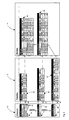
- Fig. 1 shows a class hierarchy 10 and one based on this class hierarchy 10 by means of the inventive two-step process structure of a database generated according to a first embodiment, which consists of Tables 12 and 14.
- the Class hierarchy 10 has a total of three classes 16, 18, 20 to three Hierarchy levels and forms computers of a network in the database from.
- a class 16 is the top of the three classes 16, 18, 20 in the class hierarchy. It is called “Calculator” and has Attributes 22 that are characteristic of computers: "IP address internally", “Processor” and "RAM”.
- Internet Calculator is a third class 20 Derived from “internet server”.
- This class 20 "Internet server” features via the directly and indirectly inherited attributes 22, 24 of class 16 "Calculator” as well as the class 20 "Internet Calculator” and has beyond yet another attribute 26 "external IP address", which indicates via which IP address a server can be reached from the Internet.
- Table 28 "T-calculator” has as Columns the attributes 22 of class 16 “calculator”
- the table 30 "T-Internet-Rechner” has as columns the attributes 22, 24 of the classes 16, 18 “Calculator” and “Internet Calculator”
- Table 32 "T-Internet Server” has as columns the attributes 22, 24, 26 of the classes 16, 18, 20 “Calculator”, “Internet Calculator” and “Internet Server”.
- all three tables 28, 30, 32 “T-calculator”, “T-Internet-Rechner” and “T-Internet Server” each have a column “OID” in which for each instance in the form of a data set of Tables 28, 30, 32 “T-computers", “T-Internet-Rechner” and “T-Internet-Server” a unique identifier can be filed with.
- each still a view 34, 36 each the name of the associated Class 16, 18 carries a prefixed "V-" (View).
- V- View
- the Columns of these views 34, 36 “V-computer” and “V-Internet-Rechner” correspond to the columns of Tables 28, 30 "T-computers” and “T-Internet-computers” the respective classes 16, 18 “computers” and “internet computers”, added a further column “class” in which for each record stored in the views 34, 36 “V-computer” and “V-Internet-Rechner” becomes, from the table which class 16, 18, 20 “Calculator”, "Internet Calculator” or “internet server” this comes from.
- a view generation rule of view 36 "V-Internet-Rechner” is defined as that these on the one hand the instances of class 18 "Internet computers” from Table 30 "T-Internet Calculator” and the other Instances of Class 20 "Internet Server” from Table 32 "T-Internet Server” class 20 derived from class 18 "Internet computers"
- the view 36 contains “V-Internet-Rechner” a total of four records 42, 44, 46, 48 where this in the view 36 "V-Internet-Rechner” in a column "class” around the information from the table of which class they are respectively added come.
- the data records 42, 44, 46, 48, which are present in the view 36 "V-Internet-Rechner” are, i. that in the records 46, 48 from the table "T-Internet server” the column for the attribute 26 "IP address external” is omitted, because the class 18 "Internet Calculator" this attribute and thus the View 36 "V-Internet-Rechner” does not have a dedicated column.
- the vision generation rule of view 34 "V-calculator” is defined so that on the one hand the data records 38, 40 of the instances of the class 16 “Calculator” from Table 28 “T-calculator” and on the other the records 42, 44, 46, 48 of the instances of directly and indirectly derived Classes 18, 20 "Internet Computers” and “Internet Servers” from the Perspective 36 “V-Internet-Rechner” of the directly derived class 18 "Internet-Rechner” takes over. Also this view 34 "V-calculator” has one Column “Class”, in which is stored for each record, from the Table of which class he comes from.
- the records indicate in the view 34 "V-calculator” again only those columns on which the Table 28 “T-calculator” based on class 16 "Calculator”.
- the records 42, 44, 46, 48, which have the view 36 "V-Internet-Rechner” come, in the view 34 "V-computer” not more about the attribute 24 "kb / sec", since the class 16 "calculator” no corresponding Has attribute.
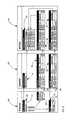
- Fig. 2 shows a substantially identical with Fig. 1 constellation, the was produced according to the second embodiment of the invention.
- Fig. 1 contains the here represented database in addition to the Class 16 "Calculator” and 18 "Internet computers” associated views 34, 36 “V-computer” and “V” Internet computer “ also for the class 20 "Internet server” a view 37 called “V-Internet server”, which in the course of a third process step was generated. So there exists for each class 16, 18, 20 “computers”, “Internet computer” and “Internet server” each have their own view, regardless whether other classes are derived from the class.
- the View 37 "V-Internet-Server”, which thus in addition to the already in Fig. 1 displayed views 34, 36 “V-computer” and “V-Internet computer” created is, however, contains only those in Table 32 "T-Internet server” contained records.
- Fig. 3 again shows a means of the method according to the invention
- the second embodiment generated database, the database of this underlying class structure other than the class structure from Fig. 1 and Fig. 2 is constructed.
- the class hierarchy in turn forms a computer network starting from a class 66 "network participant” two classes 68, 70 "calculator” and “printer” are derived directly.
- the class 66 "Netz tradition screening” has an attribute 72 "IP address”, which to the Classes 68, 70 "calculator” and “printer” inherited.
- the class 68 "Calculator” also has two more attributes 74 "Processor” and “memory”, while the class 70 "printer” own Attributes 76 "Type” and "Pages / Min.” having.
- Tables 80, 82 "T-calculator” and “T-printer” contain data sets for instances of the associated class 68, 70 "computer” and “printer”, where the table 80 "T-calculator” two records 90, 92 and the table 82 “T-printer” two records 94, 96 contains. From the class 66 "Netz tradition screening" do not exist direct instances, so that the Table 78 "T network participant" contains no data records.
- a view generation rule of view 84 "V network participants” specifies that the view 84 "V network subscriber” contains the columns of table 78 "T network subscriber” and an additional “class” column. About that In addition, the view generation rule defines view 84 "V network participants” determines that the data records of table 78 "T network nodes” be adopted, which in this case, however for lack of data records in table 78 "T network nodes” no effect Has. In addition, according to the sight generation rule, the View 84 "V network participants” records 90, 92, 94, 96 taken over, in the views 80, 82 "V-computer” and “V-printer” of the classes 68.70 “calculator” and “printer” are included. But they will adopted only with those columns that the view 84 "V network participants” itself has.
- the view 84 "V network participants” contains the data records 90, 92, 94, 96 of all instances of the derived from the class 66 "network participants” Classes 68, 70 "Calculator” and "Printer".
- An access to the data can take place with the two-stage process described with reference to FIG. 1, in a first step, a query on the view 84 "V network participants” takes place, in which all meet a certain criterion Instances in the form of records, and then in a second step the results returned as a result Records from their respective table with all existing attributes be queried.
Landscapes
- Engineering & Computer Science (AREA)
- Databases & Information Systems (AREA)
- Theoretical Computer Science (AREA)
- Data Mining & Analysis (AREA)
- Physics & Mathematics (AREA)
- General Engineering & Computer Science (AREA)
- General Physics & Mathematics (AREA)
- Information Retrieval, Db Structures And Fs Structures Therefor (AREA)
Abstract
Description
- Fig. 1
- eine Datenbankstruktur einer ersten Klassenhierarchie mit drei Klassen, wie sie sich aus dem erfindungsgemäßen Verfahren gemäß einer ersten Ausführungsform mit zwei Verfahrensschritten ergibt, und
- Fig. 2
- eine Datenbankstruktur der Klassenhierarchie aus Fig. 1, wie sie sich aus dem erfindungsgemäßen Verfahren gemäß einer zweiten Ausführungsform mit drei Verfahrensschritten ergibt, und
- Fig. 3
- eine Datenbankstruktur einer zweiten Klassenhierarchie mit drei Klassen, wie sie sich aus dem erfindungsgemäßen Verfahren gemäß der zweiten Ausführungsform mit drei Verfahrensschritten ergibt.
Claims (11)
- Verfahren zum Abbilden eines durch eine Hierarchie mit mehreren Klassen (16, 18, 20; 66, 68, 70) modellierten technischen Systems in eine relationale Datenbank, wobei Instanzen dieser Klassen (16, 18, 20; 66, 68, 70) existieren können und wobei jeder Klasse (16, 18, 20; 66, 68, 70) Attribute (22, 24, 26; 72, 74, 76) zugeordnet sein können,
dadurch gekennzeichnet, dassin einem ersten Schritt für jede Klasse (16, 18, 20; 66, 68, 70) der Klassenhierarchie jeweils eine Tabelle (28, 30, 32; 78, 80, 82) erzeugt wird, in der Instanzen der Klasse mit den zugeordneten abzulegenden Attributen (22, 24, 26; 72, 74, 76) der Klasse als einzelne Datensätze (38, 40, 42, 44, 46, 48; 90, 92, 94, 96) ablegbar sind, undin einem zweiten Schritt eine Sichterzeugungsregel für jede Klasse (16, 18; 66), von der in der Klassenhierarchie wenigstens eine Klasse (18, 20; 68, 70) abgeleitet wurde, abgespeichert wird, wobei eine zu dieser Sichterzeugungsregel gehörende Sicht (34, 36; 84) alle Instanzen der zugeordneten Klasse (16, 18; 66) sowie alle Instanzen der von ihr abgeleiteten Klassen (18, 20; 68, 70) als Datensätze enthält, wobei die Datensätze der Sicht (34, 36, 37; 84, 86, 88) einer Klasse (16, 18, 20; 66, 68, 70) sich zusammensetzen aus den Datensätzen (38, 40, 42, 44, 46, 48; 90, 92, 94, 96) der Tabelle (28, 30, 32; 78, 80, 82) dieser Klasse (16, 18, 20; 66, 68, 70) sowie aus den Datensätzen der Tabellen (32) oder der Sichten (36, 37; 86, 88) der direkt von dieser Klasse (16, 18; 66) abgeleiteten Klassen (18, 20; 68, 70). - Verfahren gemäß Anspruch 1,
dadurch gekennzeichnet, dass die von abgeleiteten Klassen (18, 20) stammenden Datensätze (42, 44, 46, 48) in der Sicht (34, 36) einer Klasse (16, 18)bei abgeleiteten Klassen (18) aus der Sicht (36) dieser abgeleiteten Klasse (18) stammen, sofern von der abgeleiteten Klasse (18) selbst mindestens eine weitere Klasse (20) abgeleitet ist, undbei abgeleiteten Klassen (20) aus der Tabelle (32) dieser abgeleiteten Klasse (20) stammen, sofern von der abgeleiteten Klasse (20) keine weiteren Klassen abgeleitet sind. - Verfahren gemäß Anspruch 1,
dadurch gekennzeichnet, dass
in einem dritten Verfahrensschritt eine Sichterzeugungsregel für jede Klasse (20; 68, 70), von der in der Klassenhierarchie keine Klasse abgeleitet wurde, abgespeichert wird, wobei eine zu dieser Sichterzeugungsregel gehörende Sicht (37; 86, 88) alle Instanzen der zugeordneten Klasse (20; 68, 70) enthält, und dass die Datensätze der Sichten (34, 36, 37; 84, 86, 88) einer jeden Klasse (16, 18, 20; 66, 68, 70) sich zusammensetzen aus den Datensätzen (38, 40, 42, 44, 46, 48; 90, 92, 94, 96) der Tabelle (28, 30, 32; 78, 80, 82) dieser Klasse (16, 18, 20; 66, 68, 70) sowie, falls zu dieser Klasse abgeleitete Klassen existieren, aus den Datensätzen der Sichten (36, 37; 86, 88) der direkt von dieser Klasse (16, 18; 66) abgeleiteten Klassen (18, 20; 68, 70). - Verfahren gemäß einem der vorstehenden Ansprüche,
dadurch gekennzeichnet, dass
die Tabellen (30, 32; 80, 82) der direkt abgeleiteten Klassen (18, 20; 68, 70) in Form von Spalten wenigstens alle Attribute (22, 24; 72, 74) der Klassen (16, 18; 66), von denen diese abgeleiteten Klassen (18, 20; 68, 70) jeweils abgeleitet wurden, aufweisen. - Verfahren gemäß einem der vorstehenden Ansprüche,
dadurch gekennzeichnet, dass
in die Sicht (34, 36, 37; 84, 86, 88) einer jeweiligen Klasse (16, 18, 20; 66, 68, 70) nur diejenigen Attribute (22, 24, 26; 72, 74, 76) abgebildet werden, die auch in der Tabelle (28, 30, 32; 78, 80, 82) der Klasse (16, 18, 20; 66, 68, 70) abgebildet sind. - Verfahren gemäß einem der vorstehenden Ansprüche,
dadurch gekennzeichnet, dass
jede abgelegte Instanz in ihrer Tabelle (28, 30, 32; 80, 82) mit einer eindeutigen Kennung versehen wird und diese eindeutige Kennung der Instanz auch in den Sichten (34, 36, 37; 86, 88) aufgeführt ist, die diese Instanz enthalten. - Verfahren gemäß einem der vorstehenden Ansprüche,
dadurch gekennzeichnet, dass
in jeder durch eine Sichterzeugungsregel definierten Sicht (34, 36, 37; 84, 86, 88) eine Spalte vorgesehen ist, in der für jeden Datensatz (38, 40, 42, 44, 46, 48; 90, 92, 94, 96) eine Information über die Tabelle (28, 30, 32; 80, 82) abgelegt wird, aus der der Datensatz (38, 40, 42, 44, 46, 48; 90, 92, 94, 96) stammt. - Verfahren gemäß Anspruch 7,
dadurch gekennzeichnet, dass
es sich bei der Information um den Namen der Klasse (16, 18, 20; 68, 70) handelt, aus der der Datensatz (38, 40, 42, 44, 46, 48; 90, 92, 94, 96) stammt, und/oder um den Namen der zugehörigen Tabelle (28, 30, 32; 80, 82) der Klasse (16, 18, 20; 68, 70) handelt. - Verfahren zum Abfragen von Information über ein technisches System aus einer gemäß Anspruch 7 oder 8 in einer relationalen Datenbank abgebildeten Klassenhierarchie mittelseines ersten Schritts, bei dem aus der Sicht (34, 36, 37; 84, 86, 88) einer Klasse (16, 18, 20; 66, 68, 70) alle Instanzen dieser Klasse (16, 18, 20; 66, 68, 70) und der von ihr direkt oder indirekt abgeleiteten Klassen (18, 20; 68, 70) ermittelt werden, die vorgegebenen Kriterien entsprechen, undeines zweiten Schritts, bei dem die im ersten Schritt ermittelten Instanzen aus den Tabellen (28, 30, 32; 80, 82) ihrer jeweiligen Klasse (16, 18, 20; 68, 70) mit allen benötigten Attributen (22, 24, 26; 72, 74, 76) abgefragt werden.
- Digitales Speichermedium, insbesondere Diskette, mit elektronisch auslesbaren Steuersignalen, die so mit einem programmierbaren Computersystem zusammenwirken können, dass ein Verfahren nach einem der Ansprüche 1 bis 9 ausgeführt wird.
- Computerprogrammprodukt mit Programmcodemitteln, die auf einem computerlesbaren Datenträger gespeichert sind, um das Verfahren nach wenigstens einem der Ansprüche 1 bis 9 durchzuführen, wenn das Computerprogrammprodukt auf einem Computer ausgeführt wird.
Applications Claiming Priority (2)
| Application Number | Priority Date | Filing Date | Title |
|---|---|---|---|
| DE10343328 | 2003-09-11 | ||
| DE10343328A DE10343328A1 (de) | 2003-09-11 | 2003-09-11 | Verfahren zum Abbilden eines hierarchischen technischen Systems in eine relationale Datenbank |
Publications (2)
| Publication Number | Publication Date |
|---|---|
| EP1515244A2 true EP1515244A2 (de) | 2005-03-16 |
| EP1515244A3 EP1515244A3 (de) | 2005-05-18 |
Family
ID=34129826
Family Applications (1)
| Application Number | Title | Priority Date | Filing Date |
|---|---|---|---|
| EP04020481A Withdrawn EP1515244A3 (de) | 2003-09-11 | 2004-08-28 | Abbildung einer Klassenhierarchie auf ein relationales Datenbanksystem |
Country Status (3)
| Country | Link |
|---|---|
| US (1) | US20050102262A1 (de) |
| EP (1) | EP1515244A3 (de) |
| DE (1) | DE10343328A1 (de) |
Families Citing this family (5)
| Publication number | Priority date | Publication date | Assignee | Title |
|---|---|---|---|---|
| US20060167920A1 (en) * | 2005-01-25 | 2006-07-27 | Listdex Corporation | System and Method for Managing Large-Scale Databases |
| US7720863B2 (en) * | 2006-03-17 | 2010-05-18 | Microsoft Corporation | Security view-based, external enforcement of business application security rules |
| US9361346B2 (en) * | 2009-04-14 | 2016-06-07 | Oracle America, Inc. | Mapping information stored in a LDAP tree structure to a relational database structure |
| US8694559B2 (en) * | 2012-07-13 | 2014-04-08 | Sap Ag | Using database content for multiple business data systems connected to one database |
| US20170310765A1 (en) * | 2016-04-20 | 2017-10-26 | Kabushiki Kaisha Toshiba | System and method for location-based access to document processing devices |
Family Cites Families (9)
| Publication number | Priority date | Publication date | Assignee | Title |
|---|---|---|---|---|
| US5291583A (en) * | 1990-12-14 | 1994-03-01 | Racal-Datacom, Inc. | Automatic storage of persistent ASN.1 objects in a relational schema |
| EP0658260A1 (de) * | 1992-09-01 | 1995-06-21 | NUTTALL, David J. H. | Informationsmodell basierend auf einem physikalischem system |
| US5694598A (en) * | 1994-10-12 | 1997-12-02 | U S West Technologies, Inc. | Method for mapping data between a relational format and an object-oriented format |
| US6704744B1 (en) * | 1994-12-07 | 2004-03-09 | Next Computer, Inc. | Method and apparatus for mapping objects to multiple tables of a database |
| US5850544A (en) * | 1995-06-06 | 1998-12-15 | International Business Machines Corporation | System and method for efficient relational query generation and tuple-to-object translation in an object-relational gateway supporting class inheritance |
| US6175837B1 (en) * | 1998-06-29 | 2001-01-16 | Sun Microsystems, Inc. | Object-relational mapping toll that processes views |
| US6279008B1 (en) * | 1998-06-29 | 2001-08-21 | Sun Microsystems, Inc. | Integrated graphical user interface method and apparatus for mapping between objects and databases |
| US6470354B1 (en) * | 1999-08-05 | 2002-10-22 | International Business Machines Corporation | Implementing persistent object services (POS) on top of a relational database |
| US7076567B1 (en) * | 2002-04-25 | 2006-07-11 | Oracle International Corporation | Simplified application object data synchronization for optimized data storage |
-
2003
- 2003-09-11 DE DE10343328A patent/DE10343328A1/de not_active Ceased
-
2004
- 2004-08-28 EP EP04020481A patent/EP1515244A3/de not_active Withdrawn
- 2004-09-10 US US10/938,064 patent/US20050102262A1/en not_active Abandoned
Non-Patent Citations (1)
| Title |
|---|
| XIAOLEI QIAN; ET AL: "Query interoperation among object-oriented and relational databases", DATA ENGINEERING, IEEE, SILVER SPRING, MD, US, 3 June 1995 (1995-06-03), pages 271 - 278, XP002102381 * |
Also Published As
| Publication number | Publication date |
|---|---|
| DE10343328A1 (de) | 2005-04-14 |
| EP1515244A3 (de) | 2005-05-18 |
| US20050102262A1 (en) | 2005-05-12 |
Similar Documents
| Publication | Publication Date | Title |
|---|---|---|
| EP0910829B1 (de) | Datenbanksystem | |
| DE69229453T2 (de) | Verfahren und Anordnung zum Zugriff auf eine relationelle Datenbank, ohne eine objektorientierte Umgebung verlassen zu müssen | |
| EP0855062B1 (de) | Informationssystem und verfahren zur speicherung von daten in einem informationssystem | |
| DE69628374T2 (de) | Datenverwaltungssystem | |
| DE19954534A1 (de) | Rückwärtsindexieren von Zeichenketten in einer relationalen Datenbank zum Suchen mit Joker | |
| DE69127399T2 (de) | Verfahren zur automatischen Löschung vorübergehender Dokumentverbindungen in einem Datenverarbeitungssystem | |
| EP1276056B1 (de) | Verfahren zum Verwalten einer Datenbank | |
| EP2439691A1 (de) | Vorrichtung und Verfahren zum maschinellen Erstellen eines Prozessdiagramms | |
| DE69933043T2 (de) | Verfahren und vorrichtung für einen adaptiven generator von adressennachschlagtabellen | |
| DE19715723A1 (de) | Array-Verfahren | |
| EP2601594A1 (de) | Verfahren und vorrichtung zur automatischen verarbeitung von daten in einem zellen-format | |
| DE10343328A1 (de) | Verfahren zum Abbilden eines hierarchischen technischen Systems in eine relationale Datenbank | |
| DE69413289T2 (de) | Verfahren zur Verminderung des "SNMP"-Instrumentationsnachrichtenflusses | |
| EP1285315B1 (de) | Informationsverarbeitungssystem und verfahren zu dessen betrieb | |
| DE602004012493T2 (de) | Verfahren und Vorrichtung für konfigurierbares Speichern von Netzelementendaten in einem Netzverwaltungssystem | |
| DE10006959B4 (de) | Verfahren zur Abfrage einer Datenbank | |
| DE102004023634B4 (de) | Verfahren zur Vollständigkeits- und Konsistenzprüfung einer Informationsbibliothek | |
| EP1556789A1 (de) | Verwaltung von mit einer erweiterbaren auszeichnungssprache beschriebenen daten | |
| WO2004042556A2 (de) | Strukturierung, speicherung und verarbeitung von daten gemäss einem generischen objektmodell | |
| DE102018128048A1 (de) | Verfahren und Vorrichtung zum Speichern von Daten und deren Beziehungen | |
| DE10250642A1 (de) | Erweiterung von Datensätzen | |
| DE69231147T2 (de) | Gemeinsames Dateizugriffssystem und gemeinsames Dateizugriffsverfahren in einem Computersystem mit verteiltem Speicher | |
| DE10109876B4 (de) | Verfahren und Einrichtung zum Datenmanagement | |
| DE102020123509A1 (de) | Verfahren zum Bereitstellen und Validieren alternativer Objektbezeichner sowie zum Ermitteln von Referenzen alternativer Objektbezeichner innerhalb einer OPC-UA basierenden Kommunikationsumgebung | |
| DE10250643A1 (de) | Verarbeitung von Daten in generischer und spezifischer Darstellungsform |
Legal Events
| Date | Code | Title | Description |
|---|---|---|---|
| PUAI | Public reference made under article 153(3) epc to a published international application that has entered the european phase |
Free format text: ORIGINAL CODE: 0009012 |
|
| AK | Designated contracting states |
Kind code of ref document: A2 Designated state(s): AT BE BG CH CY CZ DE DK EE ES FI FR GB GR HU IE IT LI LU MC NL PL PT RO SE SI SK TR |
|
| AX | Request for extension of the european patent |
Extension state: AL HR LT LV MK |
|
| PUAL | Search report despatched |
Free format text: ORIGINAL CODE: 0009013 |
|
| AK | Designated contracting states |
Kind code of ref document: A3 Designated state(s): AT BE BG CH CY CZ DE DK EE ES FI FR GB GR HU IE IT LI LU MC NL PL PT RO SE SI SK TR |
|
| AX | Request for extension of the european patent |
Extension state: AL HR LT LV MK |
|
| 17P | Request for examination filed |
Effective date: 20050610 |
|
| AKX | Designation fees paid |
Designated state(s): AT BE BG CH CY CZ DE DK EE ES FI FR GB GR HU IE IT LI LU MC NL PL PT RO SE SI SK TR |
|
| 17Q | First examination report despatched |
Effective date: 20050708 |
|
| STAA | Information on the status of an ep patent application or granted ep patent |
Free format text: STATUS: THE APPLICATION HAS BEEN WITHDRAWN |
|
| 18W | Application withdrawn |
Effective date: 20070608 |