EP1513207A1 - Fuel cell power generation system and method for operating the same - Google Patents
Fuel cell power generation system and method for operating the same Download PDFInfo
- Publication number
- EP1513207A1 EP1513207A1 EP03719202A EP03719202A EP1513207A1 EP 1513207 A1 EP1513207 A1 EP 1513207A1 EP 03719202 A EP03719202 A EP 03719202A EP 03719202 A EP03719202 A EP 03719202A EP 1513207 A1 EP1513207 A1 EP 1513207A1
- Authority
- EP
- European Patent Office
- Prior art keywords
- power generation
- fuel
- fuel cell
- reforming device
- gas
- Prior art date
- Legal status (The legal status is an assumption and is not a legal conclusion. Google has not performed a legal analysis and makes no representation as to the accuracy of the status listed.)
- Granted
Links
- 239000000446 fuel Substances 0.000 title claims abstract description 434
- 238000010248 power generation Methods 0.000 title claims abstract description 182
- 238000000034 method Methods 0.000 title claims description 67
- 239000001301 oxygen Substances 0.000 claims abstract description 257
- 229910052760 oxygen Inorganic materials 0.000 claims abstract description 257
- QVGXLLKOCUKJST-UHFFFAOYSA-N atomic oxygen Chemical compound [O] QVGXLLKOCUKJST-UHFFFAOYSA-N 0.000 claims abstract description 256
- 239000007789 gas Substances 0.000 claims abstract description 245
- 238000002407 reforming Methods 0.000 claims abstract description 208
- 239000011261 inert gas Substances 0.000 claims abstract description 178
- 210000004027 cell Anatomy 0.000 claims abstract description 145
- 239000003463 adsorbent Substances 0.000 claims abstract description 122
- 210000005056 cell body Anatomy 0.000 claims abstract description 66
- 230000015572 biosynthetic process Effects 0.000 claims abstract description 41
- 238000010438 heat treatment Methods 0.000 claims abstract description 18
- CURLTUGMZLYLDI-UHFFFAOYSA-N Carbon dioxide Chemical compound O=C=O CURLTUGMZLYLDI-UHFFFAOYSA-N 0.000 claims description 202
- 239000003054 catalyst Substances 0.000 claims description 125
- 229910002092 carbon dioxide Inorganic materials 0.000 claims description 103
- 239000001569 carbon dioxide Substances 0.000 claims description 97
- 238000010926 purge Methods 0.000 claims description 69
- 150000001412 amines Chemical class 0.000 claims description 55
- 238000006243 chemical reaction Methods 0.000 claims description 48
- 238000011084 recovery Methods 0.000 claims description 31
- 239000010949 copper Substances 0.000 claims description 27
- 239000002737 fuel gas Substances 0.000 claims description 27
- 238000007254 oxidation reaction Methods 0.000 claims description 21
- 230000003647 oxidation Effects 0.000 claims description 17
- GEHJYWRUCIMESM-UHFFFAOYSA-L sodium sulfite Chemical compound [Na+].[Na+].[O-]S([O-])=O GEHJYWRUCIMESM-UHFFFAOYSA-L 0.000 claims description 14
- PXHVJJICTQNCMI-UHFFFAOYSA-N Nickel Chemical compound [Ni] PXHVJJICTQNCMI-UHFFFAOYSA-N 0.000 claims description 13
- 230000008929 regeneration Effects 0.000 claims description 13
- 238000011069 regeneration method Methods 0.000 claims description 13
- 238000011144 upstream manufacturing Methods 0.000 claims description 10
- 239000011651 chromium Substances 0.000 claims description 9
- 239000011572 manganese Substances 0.000 claims description 9
- 229910052802 copper Inorganic materials 0.000 claims description 8
- 238000004064 recycling Methods 0.000 claims description 8
- XEEYBQQBJWHFJM-UHFFFAOYSA-N Iron Chemical compound [Fe] XEEYBQQBJWHFJM-UHFFFAOYSA-N 0.000 claims description 7
- RYGMFSIKBFXOCR-UHFFFAOYSA-N Copper Chemical compound [Cu] RYGMFSIKBFXOCR-UHFFFAOYSA-N 0.000 claims description 5
- 229910052804 chromium Inorganic materials 0.000 claims description 5
- 229910052748 manganese Inorganic materials 0.000 claims description 5
- 229910052759 nickel Inorganic materials 0.000 claims description 5
- VYZAMTAEIAYCRO-UHFFFAOYSA-N Chromium Chemical compound [Cr] VYZAMTAEIAYCRO-UHFFFAOYSA-N 0.000 claims description 4
- PWHULOQIROXLJO-UHFFFAOYSA-N Manganese Chemical compound [Mn] PWHULOQIROXLJO-UHFFFAOYSA-N 0.000 claims description 4
- 229910017052 cobalt Inorganic materials 0.000 claims description 4
- 239000010941 cobalt Substances 0.000 claims description 4
- GUTLYIVDDKVIGB-UHFFFAOYSA-N cobalt atom Chemical compound [Co] GUTLYIVDDKVIGB-UHFFFAOYSA-N 0.000 claims description 4
- 239000006096 absorbing agent Substances 0.000 claims description 3
- JBQYATWDVHIOAR-UHFFFAOYSA-N tellanylidenegermanium Chemical compound [Te]=[Ge] JBQYATWDVHIOAR-UHFFFAOYSA-N 0.000 claims description 3
- 239000000243 solution Substances 0.000 description 73
- 238000006722 reduction reaction Methods 0.000 description 19
- 238000001179 sorption measurement Methods 0.000 description 19
- 238000012360 testing method Methods 0.000 description 15
- 230000003247 decreasing effect Effects 0.000 description 12
- 230000000694 effects Effects 0.000 description 11
- 230000002829 reductive effect Effects 0.000 description 11
- 239000011701 zinc Substances 0.000 description 10
- 238000005516 engineering process Methods 0.000 description 9
- 238000010521 absorption reaction Methods 0.000 description 8
- 239000000203 mixture Substances 0.000 description 8
- XLYOFNOQVPJJNP-UHFFFAOYSA-N water Substances O XLYOFNOQVPJJNP-UHFFFAOYSA-N 0.000 description 7
- IJGRMHOSHXDMSA-UHFFFAOYSA-N Atomic nitrogen Chemical compound N#N IJGRMHOSHXDMSA-UHFFFAOYSA-N 0.000 description 5
- UFHFLCQGNIYNRP-UHFFFAOYSA-N Hydrogen Chemical compound [H][H] UFHFLCQGNIYNRP-UHFFFAOYSA-N 0.000 description 5
- 238000002485 combustion reaction Methods 0.000 description 5
- 238000009434 installation Methods 0.000 description 5
- 238000006477 desulfuration reaction Methods 0.000 description 4
- 230000023556 desulfurization Effects 0.000 description 4
- 239000001257 hydrogen Substances 0.000 description 4
- 229910052739 hydrogen Inorganic materials 0.000 description 4
- 238000007689 inspection Methods 0.000 description 4
- 238000012423 maintenance Methods 0.000 description 4
- VNWKTOKETHGBQD-UHFFFAOYSA-N methane Chemical compound C VNWKTOKETHGBQD-UHFFFAOYSA-N 0.000 description 4
- 235000010265 sodium sulphite Nutrition 0.000 description 4
- 239000012808 vapor phase Substances 0.000 description 4
- UGFAIRIUMAVXCW-UHFFFAOYSA-N Carbon monoxide Chemical compound [O+]#[C-] UGFAIRIUMAVXCW-UHFFFAOYSA-N 0.000 description 3
- 229910002091 carbon monoxide Inorganic materials 0.000 description 3
- 239000003638 chemical reducing agent Substances 0.000 description 3
- 238000001816 cooling Methods 0.000 description 3
- 230000006866 deterioration Effects 0.000 description 3
- 239000010970 precious metal Substances 0.000 description 3
- 230000001105 regulatory effect Effects 0.000 description 3
- 229920006395 saturated elastomer Polymers 0.000 description 3
- 238000000629 steam reforming Methods 0.000 description 3
- DKGAVHZHDRPRBM-UHFFFAOYSA-N Tert-Butanol Chemical compound CC(C)(C)O DKGAVHZHDRPRBM-UHFFFAOYSA-N 0.000 description 2
- 229910021536 Zeolite Inorganic materials 0.000 description 2
- 230000002411 adverse Effects 0.000 description 2
- PNEYBMLMFCGWSK-UHFFFAOYSA-N aluminium oxide Inorganic materials [O-2].[O-2].[O-2].[Al+3].[Al+3] PNEYBMLMFCGWSK-UHFFFAOYSA-N 0.000 description 2
- 239000007864 aqueous solution Substances 0.000 description 2
- 235000011089 carbon dioxide Nutrition 0.000 description 2
- 229910052593 corundum Inorganic materials 0.000 description 2
- QDOXWKRWXJOMAK-UHFFFAOYSA-N dichromium trioxide Chemical compound O=[Cr]O[Cr]=O QDOXWKRWXJOMAK-UHFFFAOYSA-N 0.000 description 2
- HNPSIPDUKPIQMN-UHFFFAOYSA-N dioxosilane;oxo(oxoalumanyloxy)alumane Chemical compound O=[Si]=O.O=[Al]O[Al]=O HNPSIPDUKPIQMN-UHFFFAOYSA-N 0.000 description 2
- 238000003487 electrochemical reaction Methods 0.000 description 2
- 229910052742 iron Inorganic materials 0.000 description 2
- 229910052757 nitrogen Inorganic materials 0.000 description 2
- 150000003141 primary amines Chemical class 0.000 description 2
- 239000007858 starting material Substances 0.000 description 2
- 238000003860 storage Methods 0.000 description 2
- 229910001845 yogo sapphire Inorganic materials 0.000 description 2
- 239000010457 zeolite Substances 0.000 description 2
- 229910052725 zinc Inorganic materials 0.000 description 2
- 239000007832 Na2SO4 Substances 0.000 description 1
- VYPSYNLAJGMNEJ-UHFFFAOYSA-N Silicium dioxide Chemical compound O=[Si]=O VYPSYNLAJGMNEJ-UHFFFAOYSA-N 0.000 description 1
- PMZURENOXWZQFD-UHFFFAOYSA-L Sodium Sulfate Chemical compound [Na+].[Na+].[O-]S([O-])(=O)=O PMZURENOXWZQFD-UHFFFAOYSA-L 0.000 description 1
- HCHKCACWOHOZIP-UHFFFAOYSA-N Zinc Chemical compound [Zn] HCHKCACWOHOZIP-UHFFFAOYSA-N 0.000 description 1
- 230000009286 beneficial effect Effects 0.000 description 1
- 230000003197 catalytic effect Effects 0.000 description 1
- 238000004891 communication Methods 0.000 description 1
- 230000007423 decrease Effects 0.000 description 1
- 230000002542 deteriorative effect Effects 0.000 description 1
- 230000005611 electricity Effects 0.000 description 1
- 150000002431 hydrogen Chemical class 0.000 description 1
- 238000009413 insulation Methods 0.000 description 1
- 239000012212 insulator Substances 0.000 description 1
- JEIPFZHSYJVQDO-UHFFFAOYSA-N iron(III) oxide Inorganic materials O=[Fe]O[Fe]=O JEIPFZHSYJVQDO-UHFFFAOYSA-N 0.000 description 1
- 239000003350 kerosene Substances 0.000 description 1
- 239000007788 liquid Substances 0.000 description 1
- 238000004519 manufacturing process Methods 0.000 description 1
- 238000002156 mixing Methods 0.000 description 1
- 239000002808 molecular sieve Substances 0.000 description 1
- JCXJVPUVTGWSNB-UHFFFAOYSA-N nitrogen dioxide Inorganic materials O=[N]=O JCXJVPUVTGWSNB-UHFFFAOYSA-N 0.000 description 1
- 239000008188 pellet Substances 0.000 description 1
- 230000002265 prevention Effects 0.000 description 1
- 239000002994 raw material Substances 0.000 description 1
- 238000006479 redox reaction Methods 0.000 description 1
- 239000000741 silica gel Substances 0.000 description 1
- 229910002027 silica gel Inorganic materials 0.000 description 1
- URGAHOPLAPQHLN-UHFFFAOYSA-N sodium aluminosilicate Chemical compound [Na+].[Al+3].[O-][Si]([O-])=O.[O-][Si]([O-])=O URGAHOPLAPQHLN-UHFFFAOYSA-N 0.000 description 1
- 229910052938 sodium sulfate Inorganic materials 0.000 description 1
- 230000002269 spontaneous effect Effects 0.000 description 1
- 239000000126 substance Substances 0.000 description 1
- 231100000167 toxic agent Toxicity 0.000 description 1
- 239000003440 toxic substance Substances 0.000 description 1
Images



Classifications
-
- C—CHEMISTRY; METALLURGY
- C01—INORGANIC CHEMISTRY
- C01B—NON-METALLIC ELEMENTS; COMPOUNDS THEREOF; METALLOIDS OR COMPOUNDS THEREOF NOT COVERED BY SUBCLASS C01C
- C01B13/00—Oxygen; Ozone; Oxides or hydroxides in general
- C01B13/02—Preparation of oxygen
- C01B13/0229—Purification or separation processes
- C01B13/0248—Physical processing only
- C01B13/0259—Physical processing only by adsorption on solids
- C01B13/0262—Physical processing only by adsorption on solids characterised by the adsorbent
-
- H—ELECTRICITY
- H01—ELECTRIC ELEMENTS
- H01M—PROCESSES OR MEANS, e.g. BATTERIES, FOR THE DIRECT CONVERSION OF CHEMICAL ENERGY INTO ELECTRICAL ENERGY
- H01M8/00—Fuel cells; Manufacture thereof
- H01M8/04—Auxiliary arrangements, e.g. for control of pressure or for circulation of fluids
- H01M8/04223—Auxiliary arrangements, e.g. for control of pressure or for circulation of fluids during start-up or shut-down; Depolarisation or activation, e.g. purging; Means for short-circuiting defective fuel cells
- H01M8/04231—Purging of the reactants
-
- H—ELECTRICITY
- H01—ELECTRIC ELEMENTS
- H01M—PROCESSES OR MEANS, e.g. BATTERIES, FOR THE DIRECT CONVERSION OF CHEMICAL ENERGY INTO ELECTRICAL ENERGY
- H01M8/00—Fuel cells; Manufacture thereof
- H01M8/06—Combination of fuel cells with means for production of reactants or for treatment of residues
- H01M8/0606—Combination of fuel cells with means for production of reactants or for treatment of residues with means for production of gaseous reactants
- H01M8/0612—Combination of fuel cells with means for production of reactants or for treatment of residues with means for production of gaseous reactants from carbon-containing material
-
- B—PERFORMING OPERATIONS; TRANSPORTING
- B01—PHYSICAL OR CHEMICAL PROCESSES OR APPARATUS IN GENERAL
- B01D—SEPARATION
- B01D2257/00—Components to be removed
- B01D2257/10—Single element gases other than halogens
- B01D2257/104—Oxygen
-
- B—PERFORMING OPERATIONS; TRANSPORTING
- B01—PHYSICAL OR CHEMICAL PROCESSES OR APPARATUS IN GENERAL
- B01D—SEPARATION
- B01D2258/00—Sources of waste gases
- B01D2258/02—Other waste gases
- B01D2258/0208—Other waste gases from fuel cells
-
- B—PERFORMING OPERATIONS; TRANSPORTING
- B01—PHYSICAL OR CHEMICAL PROCESSES OR APPARATUS IN GENERAL
- B01D—SEPARATION
- B01D53/00—Separation of gases or vapours; Recovering vapours of volatile solvents from gases; Chemical or biological purification of waste gases, e.g. engine exhaust gases, smoke, fumes, flue gases, aerosols
- B01D53/02—Separation of gases or vapours; Recovering vapours of volatile solvents from gases; Chemical or biological purification of waste gases, e.g. engine exhaust gases, smoke, fumes, flue gases, aerosols by adsorption, e.g. preparative gas chromatography
- B01D53/04—Separation of gases or vapours; Recovering vapours of volatile solvents from gases; Chemical or biological purification of waste gases, e.g. engine exhaust gases, smoke, fumes, flue gases, aerosols by adsorption, e.g. preparative gas chromatography with stationary adsorbents
- B01D53/0407—Constructional details of adsorbing systems
-
- C—CHEMISTRY; METALLURGY
- C01—INORGANIC CHEMISTRY
- C01B—NON-METALLIC ELEMENTS; COMPOUNDS THEREOF; METALLOIDS OR COMPOUNDS THEREOF NOT COVERED BY SUBCLASS C01C
- C01B2203/00—Integrated processes for the production of hydrogen or synthesis gas
- C01B2203/06—Integration with other chemical processes
- C01B2203/066—Integration with other chemical processes with fuel cells
-
- C—CHEMISTRY; METALLURGY
- C01—INORGANIC CHEMISTRY
- C01B—NON-METALLIC ELEMENTS; COMPOUNDS THEREOF; METALLOIDS OR COMPOUNDS THEREOF NOT COVERED BY SUBCLASS C01C
- C01B2210/00—Purification or separation of specific gases
- C01B2210/0043—Impurity removed
- C01B2210/0046—Nitrogen
-
- Y—GENERAL TAGGING OF NEW TECHNOLOGICAL DEVELOPMENTS; GENERAL TAGGING OF CROSS-SECTIONAL TECHNOLOGIES SPANNING OVER SEVERAL SECTIONS OF THE IPC; TECHNICAL SUBJECTS COVERED BY FORMER USPC CROSS-REFERENCE ART COLLECTIONS [XRACs] AND DIGESTS
- Y02—TECHNOLOGIES OR APPLICATIONS FOR MITIGATION OR ADAPTATION AGAINST CLIMATE CHANGE
- Y02E—REDUCTION OF GREENHOUSE GAS [GHG] EMISSIONS, RELATED TO ENERGY GENERATION, TRANSMISSION OR DISTRIBUTION
- Y02E60/00—Enabling technologies; Technologies with a potential or indirect contribution to GHG emissions mitigation
- Y02E60/30—Hydrogen technology
- Y02E60/50—Fuel cells
Definitions
- This invention relates to a fuel cell power generation system and a method for operating it. More particularly, the invention relates to a technology which can reliably remove residual matter, such as a combustible gas ormoisture, oxygen, etc., without leaving themwithin a fuel reforming device, at a low cost and with a compact configuration.
- a fuel cell power generation system is mainly composed of a fuel reforming device and a fuel cell body, and has attracted attention as a dispersed type power source for households, etc..
- the fuel reforming device converts a fuel gas, such as city gas, into a hydrogen-rich reformed gas, and supplies it to the fuel cell body.
- the fuel cell body reacts the reformed gas with air electrochemically to generate electrical power.
- a combustible gas such as hydrogen or methane, moisture, and so on remain in different parts of the fuel reforming device or the like.
- the combustible gas may leak to the outside, or moisture may form dew on a catalyst, deteriorating the catalyst.
- Japanese Patent Application Laid-Open No. 2001-277137 proposes to feed air into the fuel reforming device at the time of stopping power generation to fill the fuel reforming device with air, thereby removing residual matter, such as a combustible gas or moisture, from the interior of the fuel reforming device.
- oxygen in the air is likely to deteriorate the catalyst of the fuel reforming device (especially, a Cu/Zn-based LTS catalyst used in a CO conversion reaction).
- Japanese Patent Application Laid-Open No. 2001-180908 proposes that a precious metal catalyst minimally deteriorated by oxygen be applied to the fuel reforming device.
- the precious metal catalyst is lower in catalytic efficiency than the Cu/Zn-based catalyst (about 1/5 to 1/10 expressed as volume ratio) , thus resulting in the upsizing of the fuel reforming device, and posing difficulty in heating the entire device uniformly.
- Japanese Patent Application Laid-Open No. 2000-277137 proposes performing a combustion reaction between a fuel gas or a reformed gas and air to produce an inert gas mainly consisting of nitrogen and carbon dioxide; storing the inert gas in a tank for a while; and withdrawing the inert gas from the tank when stopping operation to fill the inert gas into the fuel reforming device, thereby removing residual matter, such as a combustible gas or moisture, from within the fuel reforming device.
- Japanese Patent Application Laid-Open No. 2000-277138 shows a system newly provided with a second fuel cell body different from the fuel cell body for power generation, and proposes performing an electrochemical reaction between a reformed gas and air, or air discharged from the fuel cell body for power generation, in the second fuel cell body to discharge low-oxygen, nitrogen-rich exhaust air from the second fuel cell body, so as to utilize it as an inert gas; and, when stopping operation, filling the inert gas into the fuel reforming device, therebyremoving residual matter, such as a combustible gas or moisture, from within the fuel reforming device.
- a fuel cell power generation system for solving the above-described challenge, is a fuel cell power generation system equipped with a fuel reforming device and a fuel cell body, the fuel cell power generation system being characterized by raw gas feeding means for feeding into the fuel reforming device at least one raw gas among a burner exhaust gas discharged from a heating burner of the fuel reforming device, exhaust air discharged from a cathode of the fuel cell body, and air from outside the system; and inert gas formation means including an oxidizable and reducible oxygen adsorbent which adsorbs oxygen in the raw gas to remove oxygen from the raw gas and generate an inert gas.
- a fuel cell power generation system is that of the first invention, characterized by adsorbent reduction means for reducing the oxygen adsorbent which has adsorbed oxygen.
- a fuel cell power generation system is that of the first or second invention, characterized in that the oxygen adsorbent is disposed in at least one location among a location in the raw gas feeding means, a location between a reforming catalyst layer and a CO conversion catalyst layer provided in the fuel reforming device, a location upstream of the reforming catalyst layer within the fuel reforming device, and a location in the reforming catalyst layer provided in the fuel reforming device.
- a fuel cell power generation system is that of any one of the first to third inventions, characterized in that the oxygen absorber comprises at least one of chromium (Cr), manganese (Mn), iron (Fe), cobalt (Co), nickel (Ni), copper (Cu), and zinc (Zn).
- the oxygen absorber comprises at least one of chromium (Cr), manganese (Mn), iron (Fe), cobalt (Co), nickel (Ni), copper (Cu), and zinc (Zn).
- a fuel cell power generation system is a fuel cell power generation system equipped with a fuel reforming device and a fuel cell body, the fuel cell power generation system being characterized by raw gas feeding means for feeding into the fuel reforming device at least one raw gas among a burner exhaust gas discharged from a heating burner of the fuel reforming device, exhaust air discharged from a cathode of the fuel cell body, and air from outside the system; and inert gas formation means including an oxygen absorbing solution which absorbs oxygen in the raw gas to remove oxygen from the raw gas and generate an inert gas.
- a fuel cell power generation system is that of the fifth invention, characterized in that the oxygen absorbing solution is an Na 2 SO 3 solution.
- a fuel cell power generation system is a fuel cell power generation system equipped with a fuel reforming device and a fuel cell body, the fuel cell power generation system being characterized by inert gas formation means comprising: carbon dioxide recovery means including an aqueous amine solution which is fed with at least one raw gas among an anode exhaust gas discharged from an anode of the fuel cell body, and a reformed gas formed by reforming in the fuel reforming device, to absorb carbon dioxide in the raw gas; and carbon dioxide feeding means adapted to heat the aqueous amine solution of the carbon dioxide recovery means, thereby releasing carbon dioxide from the aqueous amine solution, and feed the carbon dioxide into the fuel reforming device.
- a fuel cell power generation system is that of the seventh invention, characterized by raw gas recycling means for supplying the raw gas, from which carbon dioxide has been recovered by the carbon dioxide recovery means, to the burner of the fuel reforming device.
- a fuel cell power generation system is that of the seventh or eighth invention, characterized by moisture recovery means for recovering moisture from the carbon dioxide fed into the fuel reforming device, and moisture recycling means for returning the moisture, which has been recovered by the moisture recovery means, to the aqueous amine solution of the carbon dioxide recovery means.
- a method for operating a fuel cell power generation system according to the tenth invention is a method for operating the fuel cell power generation systemaccording to any one of the first to fourth inventions, characterized by forming the inert gas by the inert gas formation means, and removing residual matter, which has remained within the fuel reforming device, with the inert gas for inert gas purging, in stopping an operation for power generation.
- a method for operating a fuel cell power generation system is that of the tenth invention, characteri zed by reducing the oxygen adsorbent of the inert gas formationmeans with a reformed gas formed by reforming in the fuel reforming device, or an anode exhaust gas discharged from an anode of the fuel cell body, thereby performing regeneration of the oxygen adsorbent of the inert gas formation means.
- a method for operating a fuel cell power generation system according to the twelfth invention is that of the eleventh invention, characterized by performing the regeneration in carrying out an operation for power generation.
- a method for operating a fuel cell power generation system is a method for operating the fuel cell power generation system of the fifth or sixth invention, characterized by forming the inert gas by the inert gas formation means, and removing residual matter, which has remained within the fuel reforming device, with the inert gas for inert gas purging, in stopping an operation for power generation.
- a method for operating a fuel cell power generation system is a method for operating the fuel cell power generation system of any one of the seventh to ninth inventions, characteri zed by recovering carbon dioxide in the raw gas by the carbon dioxide recovery means of the inert gas formation means during an operation for power generation, and actuating the carbon dioxide feeding means of the inert gas formation means to form an inert gas from the aqueous amine solution, thereby removing residual matter, which has remained within the fuel reforming device, for inert gas purging, in stopping the operation for power generation.
- a method for operating a fuel cell power generation system is that of the fourteenth invention, characterizedby supplying the raw gas, from which carbon dioxide has been recovered by the carbon dioxide recovery means, to the burner of the fuel reforming device during the operation for power generation.
- a method for operating a fuel cell power generation system is that of the fourteenth or fifteenth invention, characterized by recovering moisture from the carbon dioxide, which is fed into the fuel reforming device by the carbon dioxide feeding means, and returning the moisture to the aqueous amine solution of the carbon dioxide recovery means by the carbon dioxide feeding means, in stopping the operation for power generation.
- a method for operating a fuel cell power generation system according to the seventeenth invention is that of any one of the tenth to sixteenth inventions, characterized by removing the residual matter within the fuel reforming device with steam before purging the interior of the fuel reforming device with the inert gas.
- a method for operating a fuel cell power generation system is that of the seventeenth invention, characterized by removing the residual matter within the fuel reforming device with steam, then flowing only air to the burner of the fuel reforming device to cool the fuel reforming device, and then purging the interior of the fuel reforming device with the inert gas.
- a method for operating a fuel cell power generation system is that of the seventeenth or eighteenth invention, characterized in that the steam for removing the residual matter within the fuel reforming device has a fuel gas incorporated therein, the fuel gas being in an amount necessary and sufficient to prevent oxidation within the fuel reforming device.
- a method for operating a fuel cell power generation system is that of any one of the tenth to nineteenth inventions, characterized by actuating only the burner of the fuel reforming device to heat and raise the temperature of the fuel reforming device; feeding steam to the fuel reforming device during a rise in the temperature of the fuel reforming device, the steam containing a necessary and sufficient amount of a fuel gas to prevent oxidation within the fuel reforming device; and supplying the fuel gas, in a necessary amount according to the actuation of the fuel cell body, after completion of the rise in the temperature of the fuel reforming device, to start an operation for power generation.
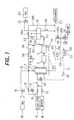
- FIG. 1 is a schematic configurational drawing of the fuel cell power generation system.
- the fuel cell power generation system is a fuel cell power generation system equipped with a fuel reforming device 60 and a fuel cell body 4, as shown in FIG. 1.
- This fuel cell power generation system includes valves 30a, 32, pipelines 30b, 31, a condenser 34, a pump 35, etc. which constitute raw gas feeding means for feeding a burner exhaust gas 25 (raw gas) discharged from a heating burner 10 of the fuel reforming device 60; and an inert gas formation device 5A which is inert gas formation means containing an oxidizable and reducible oxygen adsorbent 28 disposed in the pipelines 30b, 31 to adsorb oxygen in the burner exhaust gas 25, thereby removing oxygen from the burner exhaust gas 25 and forming an inert gas 40.
- the fuel cell power generation system also includes a heater 33 which is adsorbent reduction means for reducing the oxygen adsorbent 28 having adsorbed oxygen.
- the fuel reforming device 60 is equipped with a fuel reformer 1, a CO conversion catalyst reactor 2, and a PROX catalyst reactor 3.
- the reforming of a fuel gas 6 is performed, mainly, in the fuel reformer 1 by mixing the fuel gas 6 and steam, and flowing the mixture through a reforming catalyst layer 7 to cause a steam reforming reaction (CH 4 + H 2 O ⁇ CO + 3H 2 O) generally at a temperature of 500 to 700°C.
- Ru/Al 2 O 3 for example, can be used as a reforming catalyst.
- City gas or LPG (liquefiedpropane gas), DME (dimethylethanol), or kerosene is used as the fuel gas 6.
- the fuel gas 6 is supplied to the fuel reformer 1 via a main valve 8 and a sub-valve 9. Since the steam reforming reaction is an endothermic reaction, the fuel reformer 1 is provided with the burner 10 as a heat source. Water 11 is supplied to the fuel reformer 1 via a valve 12. The water 12 is converted into steamby an evaporator (not shown) utilizing the heat of the burner 10. The burner 10 is supplied with part of the fuel gas 6 via a valve 13, and air 14 via a pump 15.
- the CO conversion catalyst reactor 2 forms hydrogen from steam and carbon monoxide by a CO conversion (also called CO shift) reaction (CO + H 2 O ⁇ CO 2 + H 2 ) using a CO conversion catalyst layer, and is used to raise the efficiency of reforming by making the effective use of CO which has been formed by the steam reforming react ion in the fuel reformer 1.
- CO conversion also called CO shift
- HTS high temperature shift catalyst
- LTS low temperature shift catalyst
- HTS high temperature shift catalyst
- LTS low temperature shift catalyst
- HTS high temperature shift catalyst
- LTS low temperature shift catalyst
- HTS high temperature shift catalyst
- LTS low temperature shift catalyst
- Fe 2 O 3 ⁇ Cr 2 O 3 can be used as the HTS catalyst
- CuO ⁇ ZnO for example, can be used as the LTS catalyst.
- the PROX catalyst reactor 3 performs a PReferable OXidization reaction (CO + 1/2O 2 ⁇ CO 2 ) using a PROX catalyst layer, thereby converting carbon monoxide, which is a toxic substance, into carbon dioxide (carbonic acid gas), and is used to minimize the carbon monoxide concentration of a reformed gas 16.
- Ru/Al 2 O 3 can be used as the PROX catalyst.
- the PROX reaction is performed at about 100 to 150°C.
- the reformed gas 16, which has been reformed from the fuel gas 6 by passing through the fuel reformer 1, the CO conversion catalyst reactor 2, and the PROX catalyst reactor 3, is supplied to an anode 18 of the fuel cell body 4 via a valve 17.
- a cathode 19 of the fuel cell body 4 is supplied with air 20 via a pump 21.
- An anode exhaust gas (reformed gas after use) 22 discharged from the fuel cell body 4 is returned to the fuel reformer 1 via an anode exhaust gas passage 36 and a valve 38, and is used, for example, as a fuel for the burner 10.
- An unused reformed gas 23, which has been reformed by the fuel reforming device 60, but becomes a surplus for the convenience of power generation load, is also returned to the fuel reformer 1 via a valve 24, the anode exhaust gas passage 36 and the valve 38, and is used, for example, as a fuel for the burner 10.
- the burner exhaust gas 25 discharged from the fuel reformer 1, and cathode exhaust air 26 discharged from the fuel cell body 4 are discharged to a system exhaust gas passage 27.
- the inert gas formation device 5A is mainly composed of the oxygen adsorbent 28 capable of undergoing repeated oxidation and reduction.
- the oxygen adsorbent 28 in the present embodiment is installed outside the fuel reforming device 60 including the fuel reformer 1, the CO conversion catalyst reactor 2, and the PROX catalyst reactor 3.
- the oxygen adsorbent 28 is charged into a suitable container.
- the inlet of the container of the oxygen adsorbent 28 is supplied with part or all of the burner exhaust gas 25 via a burner exhaust gas passage 29, the valve 30a, and the pipeline 30b.
- the outlet of the container of the oxygen adsorbent 28 is connected to the fuel reformer 1 via the pipeline 31 and the valve 32.
- the heater 33 using electricity or the like is annexed to the oxygen adsorbent 28.
- the condenser 34 and the pump 35 are connected sequentially to the pipeline 30b between the valve 30a and the inlet of the container of the oxygen adsorbent 28.
- a valve 37a and a pipeline 37b, which enable the used reformed gas 22 or the unused reformed gas 23 to be supplied from a portion of the anode exhaust gas passage 36 downstream of the valve 38, are connected to a portion of the pipeline 30b upstream of the condenser 34.
- a valve 39a and a pipeline 39b, which discharge the used reformed gas 22 and the unused reformed gas 23 from the upstream side of the valve 38 to the system exhaust gas passage 27, are connected to the anode exhaust gas passage 36.
- the oxygen adsorbent 28 may be any one which can undergo oxidation and reduction.
- any one of Cr (chromium) , Mn (manganese) , Fe (iron) , Co (cobalt), Ni (nickel), Cu (copper), and Zn (zinc) can be used.
- a combination of two or more of Cr, Mn, Fe, Co, Ni, Cu and Zn mentioned here (for example, a Cu/Zn mixture) can be used.
- the LTS catalyst In addition to Cu or Cu/Zn, a substance similar to the LTS catalyst can be used.
- the LTS catalyst such as the Cu/Zn mixture, has its CO conversion function deteriorated upon repeated oxidation and reduction, but its oxidation and reduction function itself does not decline.
- the oxygen adsorbent 28 is not limited in terms of its shape, but preferably, it is of a pellet shape or a honeycomb shape.
- oxygen adsorbent 28 oxygen is adsorbed and removed from the burner exhaust gas 25 according to an oxidation reaction represented by Cu + 1/2O 2 ⁇ CuO.
- This deoxidizing treatment is performed at 100°C or higher, preferably 150°C to 700°C, more preferably 200°C to 400°C. By heating the oxygen adsorbent 28 to 100°C or above, oxygen can be easily removed from the burner exhaust gas 25.
- CuO is reduced to Cu according to a reduction reaction represented by CuO + H 2 atmosphere ⁇ Cu.
- This reductive regeneration treatment is performed at 100°C or higher, preferably 150°C to 700°C, more preferably 200°C to 400°C.
- the oxygen adsorbent 28 is reduced with a hydrogen gas atmosphere for the purpose of regeneration by the time when next purging with the inert gas 40 is carried out within the system.
- the valve 37a is opened to feed the used reformed gas 22 or the unused reformed gas 23 to the oxygen adsorbent 28 via the valve 37a and the pipeline 37b, thereby reducing the oxygen adsorbent 28.
- the heater 33 is actuated (100°C or above) to raise the temperature of the oxygen adsorbent 28 (in the case of Cu, to about 200°C), thereby increasing the efficiency of reduction.
- the heater 33 After completion of reduction, the heater 33 is stopped.
- the condenser 34 is actuated to remove moisture in the reformed gases 22, 23, thereby increasing the efficiency of reduction.
- the pump 35 is actuated to increase the amounts of the reformed gases 22, 23.
- the reformed gases 22, 23 after being used for regeneration of the oxygen adsorbent 28 are preferably returned to the reforming catalyst layer 7 by opening the valve 32, but these reformed gases 22, 23 can also be supplied to the burner 10 via a suitable path.
- the burner 10 is generally adjusted such that the burner exhaust gas 25 contains about 2% of oxygen.
- the internal volume of the system is several liters, and the interior of the system is purged with several times that volume (for example, 10 liters) of the inert gas 40.
- the resulting inert gas 40 is flowed for 1 minute at a flow rate of about 10 liters/minute.
- Cu is used as the oxygen adsorbent 28
- about 1.3 g of Cu is required.
- an oxygen adsorption test was conducted under the testing conditions shown in Table 1 below.
- a Cu/Zn mixture was used as the oxygen adsorbent 28, 20 cc of the Cu/Zn mixture was charged into a container, switching between a gas A for oxygen adsorption and a gas B for reduction is performed so that either gas is introduced into the oxygen adsorbent 28, and an O 2 meter (oxygen concentration sensor) is attached to the outlet of the oxygen adsorbent 28 to measure the oxygen concentration.
- the oxygen adsorption test was conducted at an adsorption temperature of 100°C, 200°C or 300°C, and the gas A at the time of oxygen adsorption at the inlet of the oxygen adsorbent 28 was set to have a composition simulating the burner exhaust gas 25 (O 2 : 2%, CO 2 : 10%, H 2 O: 3%, remainder N 2 ).
- the dwell time of the gas in the oxygen adsorbent 28 was determined mainly based on a space velocity of 5,000 (1/h). Under these conditions, the effect of the adsorption temperature was confirmed.
- Table 2 and FIG. 3 shows that at the adsorption temperature of 100°C, the time during which the oxygen concentration in the gas at the outlet of the oxygen adsorbent 28 remained zero was 14 minutes; at the adsorption temperature of 200°C, the time during which the oxygen concentration in the gas at the outlet of the oxygen adsorbent 28 remained zero was 24 minutes; and at the adsorption temperature of 300°C, the time during which the oxygen concentration in the gas at the outlet of the oxygen adsorbent 28 remained zero was 32 minutes.
- the oxygen adsorbent 28 is heated with the use of the heater 33.
- the oxygen adsorbent 28 may be placed, for example, adjacent to the fuel reforming device 60 (for example, inwardly of the heat insulator). By this measure, the oxygen adsorbent 28 can be held at an appropriate temperature by utilizing the heat of the fuel reforming device 60.
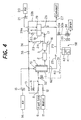
- FIG. 4 is a schematic configurational drawing of the fuel cell power generation system.
- the same parts as those in the aforementioned first embodiment are assigned the same numerals as the numerals used in the descriptions of the aforementioned first embodiment, whereby duplicate explanations are omitted.
- the fuel cell power generation system is a fuel cell power generation system equipped with a fuel reforming device 60 and a fuel cell body 4, as shown in FIG. 4.
- This fuel cell power generation system includes valves 30a, 32, pipelines 30b, 31, a condenser 34, a pump 35, etc. which constitute raw gas feeding means for feeding a burner exhaust gas 25 (raw gas) discharged from a heating burner 10 of the fuel reforming device 60; and an inert gas formation device 5B, as inert gas formation means containing an oxygen absorbing solution 41, which is disposed between the pipelines 30b and 31 and absorbs oxygen in the burner exhaust gas 25, thereby removing oxygen from the burner exhaust gas 25 and forming an inert gas 40.
- the inert gas formation device 5B is mainly composed of the oxygen absorbing solution 41.
- the oxygen absorbing solution 41 is charged into a tank (container) 42.
- the inlet of the tank 42 is supplied with part or all of the burner exhaust gas 25 via a burner exhaust gas passage 29, the valve 30a, and the pipeline 30b.
- the outlet of the tank 42 is connected to a fuel reformer 1 via the pipeline 31 and the valve 32.
- any liquid having an oxygen absorbing function can be used as the oxygen absorbing solution 41.
- a solution of sodium sulfite Na 2 SO 3
- oxygen is absorbed and removed from the burner exhaust gas 25 in accordance with an oxidation reaction represented by Na 2 SO 3 + 1/2O 2 ⁇ Na 2 SO 4 .
- the fuel cell power generation system according to the present embodiment corresponds to the fuel cell power generation system according to the aforementioned first embodiment (FIG. 1) in which the inert gas formation device 5B utilizing the oxygen absorbing solution 41 instead of the oxygen adsorbent 28 has been applied, and also the heater 33, the valve 37a and the pipeline 37b have been omitted.
- the oxygen absorbing solution 41 which has absorbed oxygen, has its oxygen absorbing capacity gradually saturated. Thus, around a point in time when the oxygen absorbing capacity of the oxygen absorbing solution 41 has approached its saturation, the oxygen absorbing solution 41 is replaced by a new oxygen absorbing solution 41 before next purging. For example, the oxygen absorbing solution 41 is replaced at regular intervals of about 1 year or several years.
- the oxygen absorbing solution 41 when sodium sulfite (Na 2 SO 3 ) is used as the oxygen absorbing solution 41, the amount of sodium sulfite (126 g/mol) needed per year is twice that of oxygen, and is 7.3 mols (about 920 g) . If the oxygen absorbing solution is a 20 wt.% aqueous solution, about 4.6 liters of the oxygen absorbing solution 41 will become necessary . Moreover, the tank 42 containing the oxygen absorbing solution 41 is required to have a volume of about 6 to 10 liters.
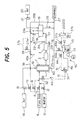
- FIG. 5 is a schematic configurational drawing of the fuel cell power generation system.
- the same parts as those in the aforementioned first embodiment are assigned the same numerals as the numerals used in the descriptions of the aforementioned first embodiment, whereby duplicate explanations are omitted.
- the fuel cell power generation system is a fuel cell power generation system equipped with a fuel reforming device 60 and a fuel cell body 4, as shown in FIG. 5.
- This fuel cell power generation system has an inert gas formation device 5C as inert gas formation means including valves 37a, 37c, a pipeline 37b, a pump 35, a tank 42, etc. which constitute carbon dioxide recovery means containing an aqueous amine solution 43 supplied with an anode exhaust gas 22 discharged from an anode 18 of the fuel cell body 4 to absorb carbon dioxide in the anode exhaust gas 22, and valves 44, 32, a pipeline 31, a heater 33, etc. which constitute carbon dioxide feeding means for heating the aqueous amine solution 43 of the carbon dioxide recovery means to release carbon dioxide from the aqueous amine solution 43 and feeding the carbon dioxide into the fuel reforming device 60.
- the fuel cell power generation system also includes a valve 45a, a pipeline 45b, etc. constituting raw gas recycling means for supplying the anode exhaust gas 22, from which carbon dioxide has been recovered by the above-mentioned carbon dioxide recovery means, to a burner 10 of the fuel reforming device 60.
- the fuel cell power generation system further includes a condenser 34, which is moisture recovery means for recovering moisture from carbon dioxide fed into the fuel reforming device 60, and a pipeline 46, etc. as moisture recycling means for returning the moisture recovered by the condenser 34 to the aqueous amine solution 43.
- a condenser 34 which is moisture recovery means for recovering moisture from carbon dioxide fed into the fuel reforming device 60, and a pipeline 46, etc. as moisture recycling means for returning the moisture recovered by the condenser 34 to the aqueous amine solution 43.
- the inert gas formation device 5C is mainly composed of the aqueous amine solution 43 and the heater 33.
- the aqueous amine solution 43 is charged into a tank 42.
- the inlet of the tank 42 is supplied with part of the anode exhaust gas 22 from between the valve 38 and the valve 39a on the anode exhaust gas.passage 36 via the valve 37a, pipeline 37b, valve 37c and pump 35.
- As the heater 33 a heater acting with an alternating current power source (AC) is applied.
- AC alternating current power source
- a vapor phase portion within the tank 42 (i.e., a space above the solution) is connected to the fuel reformer 1 via the pipeline 31 and the valve 32.
- a pressure regulating valve 44 and the condenser 34 are connected sequentially.
- the vapor phase portion of the tank 42 is also connected to a portion of the anode exhaust gas passage 36 downstream of the valve 38 via the valve 45a and the pipeline 45b.
- amine various amines may be used, such as a primary amine.
- a carbon dioxide gas absorption reaction represented by 2RNH 2 + CO 2 ⁇ (RNH 3 ) + + (RNHCOO) -
- RNH 3 carbon dioxide gas absorption reaction
- RNH 3 carbon dioxide gas dissipation reaction
- the fuel cell power generation system according to the present embodiment is the fuel cell power generation system according to the aforementioned first embodiment (FIG. 1) in which there has been applied the inert gas formation device 5C utilizing the aqueous amine solution 43 instead of the oxygen adsorbent 28, the condenser 34 has been installed downstream of the inert gas formation device 5C, the valve 37c, pressure regulating valve 44, valve 45a and pipeline 45b have been newly added, and the valve 30a and the pipeline 30 have been omitted.
- the required amount of amine will be described. As an example, assume that the amount of release of the carbon dioxide gas necessary per purging is 1 mol (22.4 liters). In this case, the amount of amine necessary to absorb 1 mol of carbon dioxide gas for one purging is 2 mols (122 g) , if the type of the amine is MEA (molecular weight 61). Provided that the aqueous amine solution is a 50 wt. % aqueous solution, about 250 ml of the aqueous amine solution is needed. If it is assumed that the volume of the container 42, including the vapor phase portion, is 600 ml, the container 42 measures 50 mm in diameter by 300 mm in height, and the height of the surface of the solution is about 130 mm.
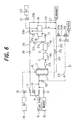
- FIG. 6 is a schematic configurational drawing of the fuel cell power generation system.
- the same parts as those in the aforementioned first embodiment are assigned the same numerals as the numerals used in the descriptions of the aforementioned first embodiment, whereby duplicate explanations are omitted.
- the fuel cell power generation system according to the present embodiment is the fuel cell power generation system according to the first embodiment (FIG.
- the oxygen adsorbent 28 capable of undergoing repeated oxidation and reduction is, in the present embodiment, installed between a fuel reformer 1 and a CO conversion catalyst reactor 2, in other words, between a reforming catalyst layer 7 and a CO conversion catalyst layer, with in a fuel reforming device 60 including the fuel reformer 1, the CO conversion catalyst reactor 2, and a PROX catalyst reactor 3, and is charged into a suitable container.
- the inlet of the container of the oxygen adsorbent 28 is connected to the fuel reformer 1, while the outlet of the container of the oxygen adsorbent 28 is connected to the CO conversion catalyst reactor 2.
- a burner exhaust gas passage 29 is connected to the reforming catalyst layer 7 of the fuel reformer 1 via a valve 30a, a pipeline 30b, a condenser 34, a pump 35, a pipeline 31 and a valve 32.
- the oxygen adsorbent 28 is installed outside the fuel reforming device 60 ( i . e . , in the raw gas feeding means).
- the oxygen adsorbent 28 is installed within the fuel reforming device 60 (between the reforming catalyst layer 7 and the CO conversion catalyst layer).
- the valve 30a and the valve 32 are opened, whereby part or all of the burner exhaust gas 25 is taken into the reforming catalyst layer 7 of the fuel reformer 1 from the burner exhaust gas passage 29 via the valve 30a, the pipeline 30b, the condenser 34, the pump 35, the pipeline 31 and the valve 32.
- the burner exhaust gas 25 is added to the oxygen adsorbent 28 from the inlet of the container.
- the burner exhaust gas 25 has oxygen inside it adsorbed and removed by the oxygen adsorbent 28, is thereby changed to an inert gas 40, and is then fed sequentially to the CO conversion catalyst reactor 2, PROX catalyst reactor 4 and fuel cell body 4.
- valve 30a and the valve 32 are closed, and a reformed gas 16 formed by the reforming catalyst layer 7 is added to the oxygen adsorbent 28 through the inlet of the container and, through the oxygen adsorbent 28, is added to the CO conversion catalyst reactor 2.
- the burner exhaust gas 25 containing oxygen flows through the reforming catalyst layer 7.
- a precious metal catalyst such as Ru, which is an-oxidation-resistant catalyst not deteriorated by oxygen, unlike a CO conversion catalyst, such as an LTS catalyst, used in a CO conversion reaction.
- the oxygen adsorbent 28 is disposed between the reforming catalyst layer 7 which is not deteriorated by oxygen, and the CO conversion catalyst layer which is liable to deterioration by oxygen.
- the CO conversion catalyst layer is passed by the inert gas 40 rid of oxygen, so that the CO conversion catalyst is free from deterioration.
- the oxygen adsorbent 28 is reduced when the reformed gas 16 from the reforming catalyst layer 7 passes therethrough during the reforming operation.
- the oxygen adsorption temperature and the oxygen release temperature of the oxygen adsorbent 28 are 200°C to 300°C, based on the results of the tests described in the aforementioned first embodiment.
- the gas temperature on the side upstream of the CO conversion catalyst layer is kept at about 250°C, thereby obviating the need for an electrical heater (see the numeral 33 in FIG. 1) or the like for heating the oxygen adsorbent 28.
- the oxygen adsorbent 28, which has adsorbed oxygen, is automatically reduced in the present embodiment, because the reformed gas 16 from the fuel reformer 1 is added to the oxygen adsorbent 28 during the next operation of the system, in other words, during the next reforming operation.
- Heat generated by the oxidation-reduction reaction of the oxygen adsorbent 28 may adversely affect the catalyst within the fuel reforming device 60, especially, LTS catalyst. To prevent this adverse influence, it is preferred to provide a heat insulating layer using, for example, vacuum heat insulation, or a heat exchange portion, between the oxygen adsorbent 28 and the CO conversion catalyst reactor 2.
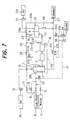
- FIG. 7 is a schematic configurational drawing of the fuel cell power generation system.
- the same parts as those in the aforementioned first embodiment are assigned the same numerals as the numerals used in the descriptions of the aforementioned first embodiment, whereby duplicate explanations are omitted.
- the fuel cell power generation system according to the present embodiment is the fuel cell power generation system according to the first embodiment (FIG. 1) in which the place of installation of the oxygen adsorbent 28 has been changed, and the heater 33 has been omitted.
- the oxygen adsorbent 28 capable of undergoing repeated oxidation and reduction is, in the present embodiment, installed in a portion of a fuel reformer 1 upstream of a reforming catalyst layer 7, in other words, between inlet ports of the fuel reformer 1 for a fuel gas 6 and water 11 and the reforming catalyst layer 7, within a fuel reforming device 60, and is packed into other layer communicating with the reforming catalyst layer 7.
- the oxygen adsorbent 28 is reduced with a hydrogen gas atmosphere for the purpose of regeneration by the time when next purging of the interior of the system with the inert gas 40 is carried out.
- the valve 37a is opened to feed the used reformed gas 22 or the unused reformed gas 23 to the oxygen adsorbent 28 via the valve 37a and the pipeline 37b, thereby reducing the oxygen adsorbent 28.
- the reformed gases 22, 23 after being used for regeneration of the oxygen adsorbent 28 are preferably returned to the reforming catalyst layer 7 by opening the valve 32, but these reformed gases 22, 23 can also be supplied to the burner 10 by a suitable path.
- the same effects as in the aforementioned first embodiment can be obtained, and the oxygen adsorbent 28 can be heated to the reduction temperature by the burner 10 of the fuel reforming device 60.
- an electrical heater see the numeral 33 in FIG. 1 or the like for reductive regeneration is not needed, and the running cost can be decreased further.
- a water adsorbent 52 may be provided between the fuel reformer 1 and the CO conversion catalyst reactor 2 as shown in FIG. 8, instead of using the condenser 34, the pump 35, etc.
- the water adsorbent 52 silica gel, zeolite, or molecular sieve, for example, can be applied.
- the reforming catalyst layer 7 and the layer of the oxygen adsorbent 28 are separately provided within the fuel reformer 1, as shown in FIG. 7.
- the oxygen adsorbent 28 can be provided in the reforming catalyst layer 7, that is, a layer 54 of a mixture of a reforming catalyst and an oxygen adsorbent can be provided within the fuel reformer 1, as shown in FIG. 9. This contrivance makes it possible to avoid a double-layer configuration within the fuel reformer 1 as shown in FIG. 7, and simplify the structure of the fuel reformer 1.
- FIG. 10 is a schematic configurational drawing of the fuel cell power generation system.
- the same parts as those in the aforementioned first embodiment are assigned the same numerals as the numerals used in the descriptions of the aforementioned first embodiment, whereby duplicate explanations are omitted.
- the fuel cell power generation system according to the present embodiment is the fuel cell power generation system according to the first embodiment (FIG.
- valve 30a and the pipeline 30b are brought into communication with the outside without being connected to the burner exhaust gas passage 29.
- the burner exhaust gas 25 is used as the starting material (raw gas) for the inert gas 40.
- air outside the system is used as the starting material (raw gas) for the inert gas 40.
- the valve 30a and the valve 32 are opened, and the condenser 34 and the pump 35 are actuated, whereby air from the outside is taken into the oxygen adsorbent 28. Oxygen in this air is adsorbed and removed by the oxygen adsorbent 28 to form the inert gas 40.
- the inert gas 40 is then fed sequentially to the CO conversion catalyst reactor 2, PROX catalyst reactor 4 and fuel cell body 4.
- the inert gas 40 is formed with the use of outside air.
- the inert gas 40 can be formed, for example, with the use of exhaust air 26 discharged from the cathode 19 of the fuel cell body 4.
- junction between the anode exhaust gas passage 36 and the pipeline 37b in the aforementioned first and third embodiments may be located upstream or downstream of the valve 38.
- the treatment which comprises closing the valve 13 to pass only air to the burner 10, thereby cooling the fuel reformer 1 to 500°C or lower, after completion of purging with steam.
- the inert gas 40 can be formed by using air outside the system as the raw gas, or the inert gas 40 can be formed by using the exhaust air 26, which has been discharged from the cathode 19 of the fuel cell body 4, as the raw gas.
- inert gas formation methods or means in the aforementioned first to sixth embodiments maybe combined in suitable plural numbers to form the inert gas, and the inert gas can be used for purging.
- a desulfurization catalyst reactor provided with a desulfurization catalyst can be provided upstream of the reforming catalyst reactor 1.
- zeolite or the like can be applied as the desulfurization catalyst.
- Such a desulfurization catalyst reactor generally operates at the ordinary temperature.
- the fuel cell power generation system is a fuel cell power generation system equipped with a fuel reforming device and a fuel cell body, the fuel cell power generation system comprising: raw gas feeding means for feeding into the fuel reforming device at least one raw gas among a burner exhaust gas discharged from a heating burner of the fuel reforming device, exhaust air discharged from a cathode of the fuel cell body, and air from outside the system; and inert gas formation means including an oxidizable and reducible oxygen adsorbent which adsorbs oxygen in the raw gas to remove oxygen from the raw gas and form an inert gas.
- the inert gas with a lower (substantially no) oxygen content than those by the earlier technologies can be formed.
- the LTS catalyst for CO conversion is not deteriorated by purging with the inert gas.
- the oxygen adsorbent can be reused multiple times by undergoing reduction after adsorbingoxygen.
- purging can be performed while the inert gas is being formed. As a result, residual matter such as a combustible gas or moisture, and oxygen can be reliably removed, without being left within the fuel reforming device, in a simple manner with a compact configuration at a low cost.
- the fuel cell power generation system according to the second invention is that of the first invention, further comprising adsorbent reduction means for reducing the oxygen adsorbent which has adsorbed oxygen.
- adsorbent reduction means for reducing the oxygen adsorbent which has adsorbed oxygen.
- the fuel cell power generation system is that of the first or second invention, wherein the oxygen adsorbent is disposed in at least one location among a location in the raw gas feeding means, a location between a reforming catalyst layer and a CO conversion catalyst layer provided in the fuel reforming device, a location upstream of the reforming catalyst layer within the fuel reforming device, and a location in the reforming catalyst layer provided in the fuel reforming device.
- the oxygen adsorbent is disposed in the raw gas feeding means, the place of installation of the inert gas formation means can be set freely.
- the oxygen adsorbent is disposed between the reforming catalyst layer and the CO conversion catalyst layer provided in the fuel reforming device, a special means for heating the oxygen adsorbent is unnecessary. If the oxygen adsorbent is disposed upstream of the reforming catalyst layer within the fuel reforming device, the oxygen adsorbent can be used as a reforming catalyst, even when it is a catalyst which is deteriorated by oxygen, and a special means for heating the oxygen adsorbent is unnecessary. If the oxygen adsorbent is disposed in the reforming catalyst layer provided in the fuel reforming device, a special means for heating the oxygen adsorbent is unnecessary.
- the fuel cell power generation system according to the fourth invention is that of any one of the first to third inventions, wherein the oxygen absorber comprises at least one of chromium (Cr), manganese (Mn), iron (Fe), cobalt (Co), nickel (Ni), copper (Cu), and zinc (Zn).
- the oxygen absorber comprises at least one of chromium (Cr), manganese (Mn), iron (Fe), cobalt (Co), nickel (Ni), copper (Cu), and zinc (Zn).
- the fuel cell power generation system is a fuel cell power generation system equipped with a fuel reforming device and a fuel cell body, the fuel cell power generation system further comprising raw gas feeding means for feeding into the fuel reforming device at least one raw gas among a burner exhaust gas discharged from a heating burner of the fuel reforming device, exhaust air discharged from a cathode of the fuel cell body, and air from outside the system; and inert gas formation means including an oxygen absorbing solution which absorbs oxygen in the raw gas to remove oxygen from the raw gas and generate an inert gas.
- the inert gas with a lower (substantially no) oxygen content than those by the earlier technologies can be formed.
- the LTS catalyst for CO conversion is not deteriorated by purging with the inert gas.
- purging can be performed while the inert gas is being formed.
- residual matter such as a combustible gas or moisture, and oxygen can be reliably removed, without being left within the fuel reforming device, in a simple manner with a compact configuration at a low cost.
- the fuel cell power generation system according to the sixth invention is that of the fifth invention, wherein the oxygen absorbing solution is an Na 2 SO 3 solution.
- the oxygen absorbing solution is an Na 2 SO 3 solution.
- the fuel cell power generation system is a fuel cell power generation system equipped with a fuel reforming device and a fuel cell body, the fuel cell power generation system further comprising inert gas formation means including: carbon dioxide recovery means including an aqueous amine solution which is fed with at least one raw gas among an anode exhaust gas discharged from an anode of the fuel cell body, and a reformed gas formed by reforming in the fuel reforming device, to absorb carbon dioxide in the raw gas; and carbon dioxide feeding means adapted to heat the aqueous amine solution of the carbon dioxide recovery means, thereby releasing carbon dioxide from the aqueous amine solution, and feed the carbon dioxide into the fuel reforming device.
- inert gas formation means including: carbon dioxide recovery means including an aqueous amine solution which is fed with at least one raw gas among an anode exhaust gas discharged from an anode of the fuel cell body, and a reformed gas formed by reforming in the fuel reforming device, to absorb carbon dioxide in the raw gas; and carbon dioxide feeding means adapted to
- the inert gas (carbon dioxide) free from oxygen can be formed.
- the absorption and dissipation of carbon dioxide by the aqueous amine solution have semipermanent durability.
- purging can be performed while the inert gas is being formed.
- residual matter such as a combustible gas or moisture, and oxygen can be reliably removed, without being left within the fuel reforming device, in a simple manner with a compact configuration at a low cost.
- the fuel cell power generation system according to the eighth invention is that of the seventh invention, further comprising raw gas recycling means for supplying the raw gas, from which carbon dioxide has been recovered by the carbon dioxide recovery means, to the burner of the fuel reforming device.
- the raw gas can be recycled as a fuel for the burner.
- the fuel cell power generation system according to the ninth invention is that of the seventh or eighth invention, further comprising moisture recovery means for recovering moisture from the carbon dioxide fed into the fuel reforming device, and moisture recycling means for returning the moisture, which has been recovered by themoisturerecoverymeans, to the aqueous amine solution of the carbon dioxide recovery means.
- moisture recovery means for recovering moisture from the carbon dioxide fed into the fuel reforming device
- moisture recycling means for returning the moisture, which has been recovered by themoisturerecoverymeans, to the aqueous amine solution of the carbon dioxide recovery means.
- the method for operating a fuel cell power generation system according to the tenth invention is a method for operating the fuel cell power generation system according to any one of the first to fourth inventions, comprising forming the inert gas by the inert gas formation means, and removing residual matter, which has remained within the fuel reforming device, with the inert gas for inert gas purging, in stopping an operation for power generation.
- the inert gas with a lower (substantially no) oxygen content than those by the earlier technologies can be formed.
- the LTS catalyst for CO conversion is not deteriorated by purging with the inert gas.
- purging can be performed while the inert gas is being formed.
- the oxygen adsorbent can be reused many times by being reduced after adsorbing oxygen.
- residual matter such as a combustible gas or moisture, and oxygen can be reliably removed, without being left within the fuel reforming device, in a simple manner with a compact configuration at a low cost.
- the method for operating a fuel cell power generation system according to the eleventh invention is that of the tenth invention, comprising reducing the oxygen adsorbent of the inert gas formation means with a reformed gas formed by reforming in the fuel reforming device, or an anode exhaust gas discharged from an anode of the fuel cell body, thereby performing regeneration of the oxygen adsorbent of the inert gas formation means.
- a special reducing agent is not necessary.
- the method for operating a fuel cell power generation system according to the twelfth invention is that of the eleventh invention, comprising performing the regeneration in carrying out an operation for power generation.
- regeneration treatment can be performed with high efficiency.
- the method for operating a fuel cell power generation system is a method for operating the fuel cell power generation systemof the fifth or sixth invention, comprising forming the inert gas by the inert gas formation means, and removing residual matter, which has remained within the fuel reforming device, with the inert gas for inert gas purging, in stopping an operation for power generation.
- the inert gas with a lower (substantially no) oxygen content than those by the earlier technologies can be formed.
- the LTS catalyst for CO conversion is not deteriorated by purging with the inert gas.
- purging can be performed while the inert gas is being formed.
- residual matter such as a combustible gas or moisture, and oxygen can be reliably removed, without being left within the fuel reforming device, in a simple manner with a compact configuration at a low cost.
- the method for operating a fuel cell power generation system according to the fourteenth invention is a method for operating the fuel cell power generation system of any one of the seventh to ninth inventions, comprising recovering carbon dioxide in the raw gas by the carbon dioxide recovery means of the inert gas formation means during an operation for power generation, and actuating the carbon dioxide feeding means of the inert gas formation means to form an inert gas from the aqueous amine solution, thereby removing residual matter, which has remained within the fuel reforming device, for inert gas purging, in stopping the operation for power generation.
- the inert gas (carbon dioxide) free from oxygen as compared with the earlier technologies, can be formed.
- the absorption and dissipation of carbon dioxide by the aqueous amine solution have semipermanent durability.
- residual matter such as a combustible gas or moisture, and oxygen can be reliably removed, without being left within the fuel reforming device, in a simple manner with a compact configuration at a low cost.
- the method for operating a fuel cell power generation system according to the fifteenth invention is that of the fourteenth invention, comprising supplying the raw gas, from which carbon dioxide has been recovered by the carbon dioxide recovery means, to the burner of the fuel reforming device during the operation for power generation.
- the raw gas can be recycled as a fuel for the burner.
- the method for operating a fuel cell power generation system according to the sixteenth invention is that of the fourteenth or fifteenth invention, comprising recovering moisture from the carbon dioxide, which is fed into the fuel reforming device by the carbon dioxide feeding means, and returning the moisture to the aqueous amine solution of the carbon dioxide recovery means, in stopping the operation for power generation.
- the fourteenth or fifteenth invention comprising recovering moisture from the carbon dioxide, which is fed into the fuel reforming device by the carbon dioxide feeding means, and returning the moisture to the aqueous amine solution of the carbon dioxide recovery means, in stopping the operation for power generation.
- the method for operating a fuel cell power generation system according to the seventeenth invention is that of any one of the tenth to sixteenth inventions, comprising removing the residual matter within the fuel reforming device with steam before purging the interior of the fuel reforming device with the inert gas.
- the amount of the inert gas may be small, and the amount of the oxygen adsorbent, the oxygen absorbing solution, or the aqueous amine solution may be small.
- the method for operating a fuel cell power generation system according to the eighteenth invention is that of the seventeenth invention, comprising removing; the residual matter within the fuel reforming device with steam, then flowing only air to the burner of the fuel reforming device to cool the fuel reforming device, and then purging the interior of the fuel reforming device with the inert gas.
- the amount of the inert gas may be small, and the amount of the oxygen adsorbent, the oxygen absorbing solution, or the aqueous amine solution may be small.
- the method for operating a fuel cell power generation system according to the nineteenth invention is that of the seventeenth or eighteenth invention, wherein the steam for removing the residual matter within the fuel reforming device has a fuel gas incorporated therein, the fuel gas being in an amount necessary and sufficient to prevent oxidation within the fuel reforming device.
- the prevention of oxidation within the fuel reforming device can be performed in a simple manner at a low cost.
- the method for operating a fuel cell power generation system is that of any one of the tenth to nineteenth inventions, comprising actuating only the burner of the fuel reforming device to heat and raise the temperature of the fuel reforming device; feeding steam to the fuel reforming device during a rise in the temperature of the fuel reforming device, the steam containing a necessary and sufficient amount of a fuel gas to prevent oxidation within the fuel reforming device; and supplying the fuel gas, in a necessary amount according to the actuation of the fuel cell body, after completion of the rise in the temperature of the fuel reforming device, to start an operation for power generation.
- the rise in the temperature of the fuel reforming device is rapid, and the oxidation of the interior of the fuel reforming device with steam can be prevented in a simple manner at a low cost.
- the present invention can provide a fuel cell power generation system, which can reliably remove residual matter, such as a combustible gas or moisture, and oxygen, without leaving them within a fuel reforming device, at a low cost and with a compact configuration, and a method for operating the fuel cell power generation system.
- the present invention can afford industrially very beneficial results.
Landscapes
- Chemical & Material Sciences (AREA)
- Chemical Kinetics & Catalysis (AREA)
- Manufacturing & Machinery (AREA)
- Sustainable Development (AREA)
- Sustainable Energy (AREA)
- Engineering & Computer Science (AREA)
- Life Sciences & Earth Sciences (AREA)
- Electrochemistry (AREA)
- General Chemical & Material Sciences (AREA)
- Organic Chemistry (AREA)
- Analytical Chemistry (AREA)
- Inorganic Chemistry (AREA)
- Fuel Cell (AREA)
Abstract
Description
characterized by actuating only the burner of the fuel reforming device to heat and raise the temperature of the fuel reforming device; feeding steam to the fuel reforming device during a rise in the temperature of the fuel reforming device, the steam containing a necessary and sufficient amount of a fuel gas to prevent oxidation within the fuel reforming device; and supplying the fuel gas, in a necessary amount according to the actuation of the fuel cell body, after completion of the rise in the temperature of the fuel reforming device, to start an operation for power generation.
| Type of Gas | Test category | Temp. of adsorbent (°C) | Gas flow rate (L/h) | Space velocity (l/h) | Gas |
| A | Oxygen | ||||
| 100 | 100 | 5000 | O2: 2% | ||
| adsorption | 200 | 600 | 30000 | CO2: 10% | |
| test | 300 | H2O: 3% | |||
| N2: Remainder | |||||
| B | Reduction | 200 | 600 | 30000 | H2: 3% |
| test | N2: Remainder |
| Test No. | 1 | 2 | 3 |
| Space velocity (l/h) | 5000 | 5000 | 5000 |
| Oxygen adsorption temperature (°C) | 300 | 200 | 100 |
| Amount of oxygen adsorption (L) | 1.62 | 1.18 | 0.71 |
| Minimum oxygen concentration in oxygen adsorption (%) | 0 (32 min) | 0 (24 min) | 0 (14 min) |
Claims (20)
- A fuel cell power generation system equipped with a fuel reforming device and a fuel cell body, comprising:raw gas feeding means for feeding into said fuel reforming device at least one raw gas among a burner exhaust gas discharged from a heating burner of said fuel reforming device, exhaust air discharged from a cathode of said fuel cell body, and air from outside said system; andinert gas formation means including an oxidizable and reducible oxygen adsorbent which adsorbs oxygen in said raw gas to remove oxygen from said raw gas and generate an inert gas.
- The fuel cell power generation system according to claim 1, characterized by:adsorbent reduction means for reducing said oxygen adsorbent which has adsorbed oxygen.
- The fuel cell power generation system according to claim 1 or 2, characterized in that
said oxygen adsorbent is disposed in at least one location among a location in said raw gas feeding means, a location between a reforming catalyst layer and a CO conversion catalyst layer provided in said fuel reforming device, a location upstream of said reforming catalyst layer within said fuel reforming device, and a location in said reforming catalyst layer provided in said fuel reforming device. - The fuel cell power generation system according to any one of claims 1 to 3, characterized in that
said oxygen absorber comprises at least one of chromium (Cr), manganese (Mn), iron (Fe), cobalt (Co), nickel (Ni), copper (Cu), and zinc (Zn). - A fuel cell power generation system equipped with a fuel reforming device and a fuel cell body, comprising:raw gas feeding means for feeding into said fuel reforming device at least one raw gas among a burner exhaust gas discharged from a heating burner of said fuel reforming device, exhaust air discharged from a cathode of said fuel cell body, and air from outside said system; andinert gas formation means including an oxygen absorbing solution which absorbs oxygen in said raw gas to remove oxygen from said raw gas and generate an inert gas.
- The fuel cell power generation system according to claim 5, characterized in that
said oxygen absorbing solution is an Na2SO3 solution. - A fuel cell power generation system equipped with a fuel reforming device and a fuel cell body, including inert gas formation means comprising:carbon dioxide recovery means including an aqueous amine solution which is fed with at least one raw gas among an anode exhaust gas discharged from an anode of said fuel cell body, and a reformed gas formed by reforming in said fuel reforming device, to absorb carbon dioxide in said raw gas; andcarbon dioxide feeding means adapted to heat said aqueous amine solution of said carbon dioxide' recovery means, thereby releasing carbon dioxide from said aqueous amine solution, and feed said carbon dioxide into said fuel reforming device.
- The fuel cell power generation system according to claim 7, further comprising:
raw gas recycling means for supplying said raw gas, from which carbon dioxide has been recovered by said carbon dioxide recovery means, to said burner of said fuel reforming device. - The fuel cell power generation system according to claim 7 or 8, further comprising:moisture recovery means for recovering moisture from said carbon dioxide fed into said fuel reforming device; andmoisture recycling means for returning said moisture, which has been recovered by said moisture recovery means, to said aqueous amine solution of said carbon dioxide recovery means.
- A method for operating the fuel cell power generation system according to any one of claims 1 to 4, characterized by:
forming said inert gas by said inert gas formation means, and removing residual matter, which has remained within said fuel reforming device, with said inert gas for inert gas purging, in stopping an operation for power generation. - The method for operating the fuel cell power generation system according to claim 10, characterized by:
reducing said oxygen adsorbent of said inert gas formation means with a reformed gas formed by reforming in said fuel reforming device, or an anode exhaust gas discharged from an anode of said fuel cell body, thereby performing regeneration of said oxygen adsorbent of said inert gas formation means. - The method for operating the fuel cell power generation system according to claim 11, characterized by:
performing said regeneration in carrying out an operation for power generation. - A method for operating the fuel cell power generation system according to claim 5 or 6, characteri zed by:
forming said inert gas by said inert gas formation means, and removing residual matter, which has remained within said fuel reforming device, with said inert gas for inert gas purging, in stopping an operation for power generation. - A method for operating the fuel cell power generation system of any one of claims 7 to 9,
characterized by:recovering carbon dioxide in said raw gas by said carbon dioxide recovery means of said inert gas formation means during an operation for power generation; andactuating said carbon dioxide feeding means of said inert gas formation means to form an inert gas from said aqueous amine solution, thereby removing residual matter, which has remained within said fuel reforming device, for inert gas purging, in stopping the operation for power generation. - The method for operating the fuel cell power generation system according to claim 14, characterized by:
supplying said raw gas, from which carbon dioxide has been recovered by said carbon dioxide recovery means, to said burner of said fuel reforming device during the operation for power generation. - The method for operating the fuel cell power generation system according to claim 14 or 15,
characterized by:recovering moisture from said carbon dioxide, which is fed into said fuel reforming device by said carbon dioxide feeding means, and returning said moisture to said aqueous amine solution of said carbon dioxide recovery means, in stopping the operation for power generation. - The method for operating the fuel cell power generation system according to any one of claims 10 to 16, characterized by:
removing said residual matter within said fuel reforming device with steam before purging an interior of said fuel reforming device with said inert gas. - The method for operating the fuel cell power generation system according to claim 17, characterized by:removing said residual matter within said fuel reforming device with steam;then flowing only air to said burner of said fuel reforming device to cool said fuel reforming device; andthen purging said interior of said fuel reforming device with said inert gas.
- The method for operating the fuel cell power generation system according to claim 17 or 18,
characterized in that
said steam for removing said residual matter within said fuel reforming device has a fuel gas incorporated therein, said fuel gas being in an amount necessary and sufficient to prevent oxidation within said fuel reforming device. - The method for operating the fuel cell power generation system according to any one of claims 10 to 19, characterized by:actuating only said burner of said fuel reforming device to heat and raise a temperature of said fuel reforming device;feeding steam to said fuel reforming device during a rise in the temperature of said fuel reforming device, said steam containing a necessary and sufficient amount of a fuel gas to prevent oxidation within said fuel reforming device; andsupplying said fuel gas, in a necessary amount according to actuation of said fuel cell body, after completion of the rise in the temperature of said fuel reforming device, to start an operation for power generation.
Applications Claiming Priority (5)
| Application Number | Priority Date | Filing Date | Title |
|---|---|---|---|
| JP2002130315 | 2002-05-02 | ||
| JP2002130315 | 2002-05-02 | ||
| JP2002198615 | 2002-07-08 | ||
| JP2002198615 | 2002-07-08 | ||
| PCT/JP2003/005353 WO2003094273A1 (en) | 2002-05-02 | 2003-04-25 | Fuel cell power generation system and method for operating the same |
Publications (3)
| Publication Number | Publication Date |
|---|---|
| EP1513207A1 true EP1513207A1 (en) | 2005-03-09 |
| EP1513207A4 EP1513207A4 (en) | 2009-12-02 |
| EP1513207B1 EP1513207B1 (en) | 2012-05-23 |
Family
ID=29405310
Family Applications (1)
| Application Number | Title | Priority Date | Filing Date |
|---|---|---|---|
| EP03719202A Expired - Lifetime EP1513207B1 (en) | 2002-05-02 | 2003-04-25 | Fuel cell power generation system and method for operating the same |
Country Status (6)
| Country | Link |
|---|---|
| US (1) | US7387650B2 (en) |
| EP (1) | EP1513207B1 (en) |
| JP (1) | JP4444098B2 (en) |
| CN (1) | CN100336259C (en) |
| CA (1) | CA2479660C (en) |
| WO (1) | WO2003094273A1 (en) |
Cited By (3)
| Publication number | Priority date | Publication date | Assignee | Title |
|---|---|---|---|---|
| WO2006061245A1 (en) * | 2004-12-10 | 2006-06-15 | European Fuel Cell Gmbh | Fuel cell heating device and method for operating said fuel cell heating device |
| EP1905510A3 (en) * | 2006-09-29 | 2010-02-10 | J. Eberspächer GmbH & Co. KG | Fuel cell system and corresponding operating method |
| DE102005052535B4 (en) * | 2005-04-12 | 2011-04-21 | Mitsubishi Denki K.K. | Fuel cell power generation system with deoxidizer tank |
Families Citing this family (23)
| Publication number | Priority date | Publication date | Assignee | Title |
|---|---|---|---|---|
| JP4421178B2 (en) * | 2002-09-18 | 2010-02-24 | 本田技研工業株式会社 | Fuel cell stack |
| JP4486353B2 (en) * | 2003-12-05 | 2010-06-23 | パナソニック株式会社 | HYDROGEN GENERATOR, METHOD FOR STOPPING HYDROGEN GENERATOR AND FUEL CELL POWER GENERATOR |
| US20060110634A1 (en) * | 2004-11-24 | 2006-05-25 | Volker Formanski | Method and apparatus for preventing condensation in cathode exhaust conduit of fuel cell |
| JP2006286472A (en) * | 2005-04-01 | 2006-10-19 | Toshiba Fuel Cell Power Systems Corp | Fuel treating device, fuel cell generator, and its starting method |
| JP4795741B2 (en) * | 2005-07-25 | 2011-10-19 | ウチヤ・サーモスタット株式会社 | Nitrogen gas generator and fuel cell power generation system using the same |
| US7615304B2 (en) * | 2005-10-28 | 2009-11-10 | General Electric Company | SOFC systems to power a liquid or gas fuel pumping station |
| JP4918255B2 (en) * | 2005-12-22 | 2012-04-18 | ウチヤ・サーモスタット株式会社 | Nitrogen gas generator |
| US20070154745A1 (en) * | 2005-12-29 | 2007-07-05 | Michael Penev | Purging a fuel cell system |
| JP5065605B2 (en) * | 2006-03-02 | 2012-11-07 | Jx日鉱日石エネルギー株式会社 | Hydrogen production apparatus, fuel cell system and operation method thereof |
| JP4724029B2 (en) * | 2006-03-27 | 2011-07-13 | アイシン精機株式会社 | Method for shutting down reformer |
| KR100759664B1 (en) * | 2006-09-12 | 2007-09-17 | 삼성에스디아이 주식회사 | Fuel cell system with purging device and method of stopping the operation |
| DE102007023417A1 (en) * | 2007-05-18 | 2008-11-20 | Daimler Ag | Heating device for condensate drain |
| DE102008013150B4 (en) * | 2008-03-07 | 2012-01-26 | Airbus Operations Gmbh | Mixing system and method for inerting a gas volume and their use |
| JP5487563B2 (en) * | 2008-06-19 | 2014-05-07 | カシオ計算機株式会社 | Electronics |
| WO2011025797A1 (en) * | 2009-08-24 | 2011-03-03 | Cellera, Inc. | Systems and methods of securing immunity to air co2 in alkaline fuel cells |
| EP2336083A1 (en) * | 2009-12-17 | 2011-06-22 | Topsøe Fuel Cell A/S | Gas generator and processes for the conversion of a fuel into an oxygen-depleted gas and/or hydrogen-enriched gas |
| JP2012022968A (en) * | 2010-07-16 | 2012-02-02 | Mitsubishi Heavy Ind Ltd | Fuel cell power generation system |
| WO2013112619A1 (en) | 2012-01-23 | 2013-08-01 | Battelle Memorial Institute | Separation and/or sequestration apparatus and methods |
| JP5941706B2 (en) * | 2012-03-01 | 2016-06-29 | 株式会社ブリヂストン | Method for producing inert gas |
| AT518956B1 (en) * | 2016-08-02 | 2019-04-15 | Avl List Gmbh | METHOD FOR HITCHING A GENERATOR UNIT WITH A FUEL CELL DEVICE |
| JP7213217B2 (en) * | 2020-10-30 | 2023-01-26 | 三菱重工業株式会社 | Fuel cell power generation system and control method for fuel cell power generation system |
| KR102794976B1 (en) * | 2022-02-10 | 2025-04-10 | 엘지전자 주식회사 | Fuel cell system and method for operating the same |
| CN117154153B (en) * | 2023-09-20 | 2024-04-30 | 江苏核电有限公司 | Backup system of hydrogen energy fuel cell and application method thereof |
Family Cites Families (26)
| Publication number | Priority date | Publication date | Assignee | Title |
|---|---|---|---|---|
| JPS5312902B2 (en) * | 1972-03-27 | 1978-05-06 | ||
| US4287170A (en) * | 1980-03-06 | 1981-09-01 | Erickson Donald C | Nitrogen and oxygen via chemical air separation |
| JPS60112263A (en) | 1983-11-24 | 1985-06-18 | Mitsubishi Electric Corp | Fuel battery power generating apparatus |
| JPS6124155A (en) | 1984-07-13 | 1986-02-01 | Mitsubishi Electric Corp | Power generating system using fuel cell |
| JPH03112263A (en) * | 1989-09-26 | 1991-05-13 | Nec Corp | Diagnosing system for facsimile equipment |
| EP0550892B1 (en) | 1991-12-24 | 1996-09-18 | Kabushiki Kaisha Toshiba | Power generation plant including fuel cell |
| JP3515789B2 (en) | 1992-01-27 | 2004-04-05 | 株式会社東芝 | Fuel cell power plant |
| JP3267997B2 (en) | 1992-01-31 | 2002-03-25 | 株式会社東芝 | Fuel cell power plant |
| JPH06203865A (en) | 1993-01-06 | 1994-07-22 | Sanyo Electric Co Ltd | Fuel cell system |
| JPH07169493A (en) | 1993-12-17 | 1995-07-04 | Toshiba Corp | Combustible gas purging device for fuel cell power plant |
| JP3276043B2 (en) | 1995-03-10 | 2002-04-22 | 英史 平井 | Novel composite, method for producing the same, and oxygen adsorbent comprising the composite |
| JPH09330731A (en) | 1996-04-11 | 1997-12-22 | Mitsui Petrochem Ind Ltd | Recovery and fixation of carbon dioxide, nitrogen and argon in fuel cell power generation |
| US7138046B2 (en) * | 1996-06-06 | 2006-11-21 | World Hydrogen Energy Llc | Process for production of hydrogen from anaerobically decomposed organic materials |
| JPH1126004A (en) * | 1997-07-02 | 1999-01-29 | Toshiba Corp | Power generation system |
| JPH11191426A (en) | 1997-12-26 | 1999-07-13 | Sanyo Electric Co Ltd | Fuel cell power generating system |
| US6153163A (en) | 1998-06-03 | 2000-11-28 | Praxair Technology, Inc. | Ceramic membrane reformer |
| US6200696B1 (en) * | 1999-02-16 | 2001-03-13 | Energy Research Corporation | Internal reforming fuel cell assembly with simplified fuel feed |
| JP4106801B2 (en) | 1999-03-24 | 2008-06-25 | 松下電工株式会社 | Fuel cell power generation system |
| JP2000277137A (en) | 1999-03-24 | 2000-10-06 | Matsushita Electric Works Ltd | Method for purging residual gas from fuel cell power generating system |
| JP2001180908A (en) | 1999-12-27 | 2001-07-03 | Matsushita Electric Ind Co Ltd | Hydrogen generator and method of starting and stopping the same |
| JP2002020102A (en) * | 2000-06-30 | 2002-01-23 | Mitsubishi Kakoki Kaisha Ltd | Method for starting and method for stopping hydrogen producing device |
| JP2002034102A (en) | 2000-07-14 | 2002-01-31 | Fuji Electric Co Ltd | Method of stopping fuel cell vehicle and reformer for the vehicle |
| JP4533515B2 (en) * | 2000-08-16 | 2010-09-01 | 三菱重工業株式会社 | Syngas production method |
| JP2002110207A (en) * | 2000-10-03 | 2002-04-12 | Nippon Mitsubishi Oil Corp | Fuel cell system and operating method thereof |
| US6620537B2 (en) * | 2001-02-15 | 2003-09-16 | Ralph C. Struthers | Hydrocarbon fueled hydrogen fuel generator system and apparatus in combination with hydrogen fuel cells |
| JP2002280038A (en) | 2001-03-21 | 2002-09-27 | Matsushita Electric Ind Co Ltd | Fuel cell power generation system |
-
2003
- 2003-04-25 WO PCT/JP2003/005353 patent/WO2003094273A1/en not_active Ceased
- 2003-04-25 CA CA002479660A patent/CA2479660C/en not_active Expired - Fee Related
- 2003-04-25 CN CNB038094924A patent/CN100336259C/en not_active Expired - Fee Related
- 2003-04-25 JP JP2004502393A patent/JP4444098B2/en not_active Expired - Fee Related
- 2003-04-25 US US10/509,741 patent/US7387650B2/en not_active Expired - Fee Related
- 2003-04-25 EP EP03719202A patent/EP1513207B1/en not_active Expired - Lifetime
Non-Patent Citations (2)
| Title |
|---|
| No further relevant documents disclosed * |
| See also references of WO03094273A1 * |
Cited By (3)
| Publication number | Priority date | Publication date | Assignee | Title |
|---|---|---|---|---|
| WO2006061245A1 (en) * | 2004-12-10 | 2006-06-15 | European Fuel Cell Gmbh | Fuel cell heating device and method for operating said fuel cell heating device |
| DE102005052535B4 (en) * | 2005-04-12 | 2011-04-21 | Mitsubishi Denki K.K. | Fuel cell power generation system with deoxidizer tank |
| EP1905510A3 (en) * | 2006-09-29 | 2010-02-10 | J. Eberspächer GmbH & Co. KG | Fuel cell system and corresponding operating method |
Also Published As
| Publication number | Publication date |
|---|---|
| CA2479660A1 (en) | 2003-11-13 |
| WO2003094273A1 (en) | 2003-11-13 |
| JPWO2003094273A1 (en) | 2005-09-08 |
| CA2479660C (en) | 2009-11-24 |
| EP1513207B1 (en) | 2012-05-23 |
| US7387650B2 (en) | 2008-06-17 |
| JP4444098B2 (en) | 2010-03-31 |
| CN1650459A (en) | 2005-08-03 |
| CN100336259C (en) | 2007-09-05 |
| EP1513207A4 (en) | 2009-12-02 |
| US20050112423A1 (en) | 2005-05-26 |
Similar Documents
| Publication | Publication Date | Title |
|---|---|---|
| US7387650B2 (en) | Fuel cell power generation system and method for operating the same | |
| CN111655609B (en) | A fuel chemical chain hydrogen production system and method | |
| US7763086B2 (en) | Hydrogen purification process and system | |
| US9112201B2 (en) | Hydrogen production apparatus, fuel cell system and operation method thereof | |
| US20060032138A1 (en) | Carbon monoxide adsorption for carbon monoxide clean-up in a fuel cell system | |
| CN101516768B (en) | Process for removal of metal carbonyls from a synthesis gas stream | |
| JP2002020102A (en) | Method for starting and method for stopping hydrogen producing device | |
| JP2009117054A (en) | Power generation method and system using high-temperature fuel cell | |
| JP2005179083A (en) | Hydrogen producing apparatus, fuel cell system, and its operatin method | |
| JPH0757756A (en) | Fuel cell power generation system | |
| JP2006342014A (en) | Method for producing high purity hydrogen | |
| WO2001004046A1 (en) | Method for electric power generation using fuel cell and electric power generation system using fuel cell | |
| JP4557849B2 (en) | Method for producing hydrogen from ethanol | |
| JP5098073B2 (en) | Energy station | |
| JP2006076802A (en) | HYDROGEN GENERATOR, FUEL CELL SYSTEM INCLUDING THE SAME, AND HYDROGEN GENERATION METHOD | |
| JP2003095612A (en) | Hydrogen producing plant | |
| JP4041085B2 (en) | Fuel gas production system and method for stopping the same | |
| JP2005285626A (en) | Fuel gas production power generation system | |
| JP2022076978A (en) | Systems and methods for treating off-gas emissions from fuel cells. | |
| JP2004075440A (en) | Hydrogen production equipment | |
| CN115340067B (en) | System and method for selective oxidation of CO using metal oxides | |
| KR20250171011A (en) | Hydrogen purification system and method for purifying hydrogen | |
| JP4448220B2 (en) | Carbon oxide hydrogenation process | |
| JP2012001380A (en) | Hydrogen purification system, low-temperature waste heat utilizing system, and hydrogen purification method | |
| JPH0541235A (en) | Fuel treatment device for fuel cell plant |
Legal Events
| Date | Code | Title | Description |
|---|---|---|---|
| PUAI | Public reference made under article 153(3) epc to a published international application that has entered the european phase |
Free format text: ORIGINAL CODE: 0009012 |
|
| 17P | Request for examination filed |
Effective date: 20041014 |
|
| AK | Designated contracting states |
Kind code of ref document: A1 Designated state(s): AT BE BG CH CY CZ DE DK EE ES FI FR GB GR HU IE IT LI LU MC NL PT RO SE SI SK TR |
|
| RIN1 | Information on inventor provided before grant (corrected) |
Inventor name: YASUTAKE, TOSHINOBU,MITSUBISHI HEAVY INDUSTRIES, Inventor name: KONDO, MASAMI,MITSUBISHI HEAVY INDUSTRIES, LTD. Inventor name: NOJIMA, SHIGERU,MITSUBISHI HEAVY INDUSTRIES, LTD. Inventor name: YONEMURA, MASANAO,MITSUBISHI HEAVY INDUSTES, LTD. Inventor name: WATANABE, SATORU,MITSUBISHI HEAVY INDUSTRIES, LTD Inventor name: ISHIBASHI, NAOHIKOMITSUBISHI HEAVY INDUSTRIES LTD Inventor name: YOSHIDA, HIROHISA,MITSUBISHI HEAVY INDUSTRIES,LTD Inventor name: FUJIKAWA, KEIJI,MITSUBISHI HEAVY INDUSTRIES, LTD. Inventor name: OMOTO, SETSUO,MITSUBISHI HEAVY INDUSTRIES, LTD. |
|
| RBV | Designated contracting states (corrected) |
Designated state(s): DE FR GB IT |
|
| A4 | Supplementary search report drawn up and despatched |
Effective date: 20091102 |
|
| 17Q | First examination report despatched |
Effective date: 20100309 |
|
| REG | Reference to a national code |
Ref country code: DE Ref legal event code: R079 Ref document number: 60341004 Country of ref document: DE Free format text: PREVIOUS MAIN CLASS: H01M0008040000 Ipc: C01B0013020000 |
|
| RIC1 | Information provided on ipc code assigned before grant |
Ipc: H01M 8/04 20060101ALI20111010BHEP Ipc: C01B 13/02 20060101AFI20111010BHEP Ipc: B01D 53/14 20060101ALI20111010BHEP Ipc: H01M 8/06 20060101ALI20111010BHEP |
|
| GRAP | Despatch of communication of intention to grant a patent |
Free format text: ORIGINAL CODE: EPIDOSNIGR1 |
|
| GRAS | Grant fee paid |
Free format text: ORIGINAL CODE: EPIDOSNIGR3 |
|
| GRAA | (expected) grant |
Free format text: ORIGINAL CODE: 0009210 |
|
| AK | Designated contracting states |
Kind code of ref document: B1 Designated state(s): DE FR GB IT |
|
| REG | Reference to a national code |
Ref country code: GB Ref legal event code: FG4D |
|
| REG | Reference to a national code |
Ref country code: DE Ref legal event code: R096 Ref document number: 60341004 Country of ref document: DE Effective date: 20120719 |
|
| PG25 | Lapsed in a contracting state [announced via postgrant information from national office to epo] |
Ref country code: IT Free format text: LAPSE BECAUSE OF FAILURE TO SUBMIT A TRANSLATION OF THE DESCRIPTION OR TO PAY THE FEE WITHIN THE PRESCRIBED TIME-LIMIT Effective date: 20120523 |
|
| PLBE | No opposition filed within time limit |
Free format text: ORIGINAL CODE: 0009261 |
|
| STAA | Information on the status of an ep patent application or granted ep patent |
Free format text: STATUS: NO OPPOSITION FILED WITHIN TIME LIMIT |
|
| 26N | No opposition filed |
Effective date: 20130226 |
|
| REG | Reference to a national code |
Ref country code: DE Ref legal event code: R097 Ref document number: 60341004 Country of ref document: DE Effective date: 20130226 |
|
| GBPC | Gb: european patent ceased through non-payment of renewal fee |
Effective date: 20130425 |
|
| PG25 | Lapsed in a contracting state [announced via postgrant information from national office to epo] |
Ref country code: GB Free format text: LAPSE BECAUSE OF NON-PAYMENT OF DUE FEES Effective date: 20130425 |
|
| REG | Reference to a national code |
Ref country code: FR Ref legal event code: PLFP Year of fee payment: 14 |
|
| PGFP | Annual fee paid to national office [announced via postgrant information from national office to epo] |
Ref country code: FR Payment date: 20160309 Year of fee payment: 14 |
|
| PGFP | Annual fee paid to national office [announced via postgrant information from national office to epo] |
Ref country code: DE Payment date: 20160419 Year of fee payment: 14 |
|
| REG | Reference to a national code |
Ref country code: DE Ref legal event code: R119 Ref document number: 60341004 Country of ref document: DE |
|
| REG | Reference to a national code |
Ref country code: FR Ref legal event code: ST Effective date: 20171229 |
|
| PG25 | Lapsed in a contracting state [announced via postgrant information from national office to epo] |
Ref country code: FR Free format text: LAPSE BECAUSE OF NON-PAYMENT OF DUE FEES Effective date: 20170502 Ref country code: DE Free format text: LAPSE BECAUSE OF NON-PAYMENT OF DUE FEES Effective date: 20171103 |