EP1505845A1 - Verfahren und Vorrichtung zum Ermitteln mindestens eines Übertragungsparameters in einem Übertragungssystem - Google Patents
Verfahren und Vorrichtung zum Ermitteln mindestens eines Übertragungsparameters in einem Übertragungssystem Download PDFInfo
- Publication number
- EP1505845A1 EP1505845A1 EP03017895A EP03017895A EP1505845A1 EP 1505845 A1 EP1505845 A1 EP 1505845A1 EP 03017895 A EP03017895 A EP 03017895A EP 03017895 A EP03017895 A EP 03017895A EP 1505845 A1 EP1505845 A1 EP 1505845A1
- Authority
- EP
- European Patent Office
- Prior art keywords
- communication
- channel
- decoding
- type
- data
- Prior art date
- Legal status (The legal status is an assumption and is not a legal conclusion. Google has not performed a legal analysis and makes no representation as to the accuracy of the status listed.)
- Granted
Links
- 230000005540 biological transmission Effects 0.000 title claims abstract description 47
- 238000000034 method Methods 0.000 title claims abstract description 45
- 238000004891 communication Methods 0.000 claims description 97
- FGUUSXIOTUKUDN-IBGZPJMESA-N C1(=CC=CC=C1)N1C2=C(NC([C@H](C1)NC=1OC(=NN=1)C1=CC=CC=C1)=O)C=CC=C2 Chemical compound C1(=CC=CC=C1)N1C2=C(NC([C@H](C1)NC=1OC(=NN=1)C1=CC=CC=C1)=O)C=CC=C2 FGUUSXIOTUKUDN-IBGZPJMESA-N 0.000 claims 1
- YTAHJIFKAKIKAV-XNMGPUDCSA-N [(1R)-3-morpholin-4-yl-1-phenylpropyl] N-[(3S)-2-oxo-5-phenyl-1,3-dihydro-1,4-benzodiazepin-3-yl]carbamate Chemical compound O=C1[C@H](N=C(C2=C(N1)C=CC=C2)C1=CC=CC=C1)NC(O[C@H](CCN1CCOCC1)C1=CC=CC=C1)=O YTAHJIFKAKIKAV-XNMGPUDCSA-N 0.000 claims 1
- 230000006870 function Effects 0.000 description 5
- 230000001419 dependent effect Effects 0.000 description 4
- 238000012544 monitoring process Methods 0.000 description 4
- 230000004069 differentiation Effects 0.000 description 3
- 238000011156 evaluation Methods 0.000 description 3
- 238000013507 mapping Methods 0.000 description 3
- 230000008569 process Effects 0.000 description 3
- 238000012545 processing Methods 0.000 description 3
- 238000012546 transfer Methods 0.000 description 3
- 206010009944 Colon cancer Diseases 0.000 description 2
- 238000012423 maintenance Methods 0.000 description 2
- 238000005259 measurement Methods 0.000 description 2
- 238000012795 verification Methods 0.000 description 2
- 230000001133 acceleration Effects 0.000 description 1
- 238000013459 approach Methods 0.000 description 1
- 230000002457 bidirectional effect Effects 0.000 description 1
- 125000004122 cyclic group Chemical group 0.000 description 1
- 238000010586 diagram Methods 0.000 description 1
- 238000005516 engineering process Methods 0.000 description 1
- 238000002474 experimental method Methods 0.000 description 1
- 230000006872 improvement Effects 0.000 description 1
- 230000000977 initiatory effect Effects 0.000 description 1
- 238000012806 monitoring device Methods 0.000 description 1
- 238000000926 separation method Methods 0.000 description 1
- 230000011664 signaling Effects 0.000 description 1
- 239000013589 supplement Substances 0.000 description 1
- 238000012360 testing method Methods 0.000 description 1
- 238000012549 training Methods 0.000 description 1
Images



Classifications
-
- H—ELECTRICITY
- H04—ELECTRIC COMMUNICATION TECHNIQUE
- H04W—WIRELESS COMMUNICATION NETWORKS
- H04W24/00—Supervisory, monitoring or testing arrangements
Definitions
- the present invention relates to a method and apparatus for detecting at least one transmission parameter in a transmission system, in particular at one between a first and a second node of a transmission system arranged interface, wherein between the first and the second node
- There are several channels that allow communication between nodes Transmission system on the other hand the communication with at least one participant serve, being for communication between nodes of the transmission system a predetermined number of communication protocols come into consideration.
- the present invention finds particular application in the field of mobile networks.
- GSM network standard
- a radio frequency which only this participant was assigned. This frequency was occupied by the participant as long as how he maintained his connection, no matter whether there were breaks in conversation irrespective of the services and services purchased by it be offered to the associated providers.
- the so-called second generation followed as a system of the 2.5th generation the so-called GPRS.
- the UMTS network joined.
- the UMTS network transmits various kinds of information on the channels, For example, information between nodes of the transmission system, information, which are addressed to several participants, as well as information sent to only directed to a particular participant. The information is divided into useful information as well as management information. For monitor devices or protocol testers or the like, which only a specific interface in such a mobile network accessible, there is now the problem that they are from an already established Transmission need to find out how each channel is allocated to one Decryption and thus allow further processing of the transmitted data.
- the document 3GPP TS 25.301 provides an overview of the channel assignment for a UMTS network ,
- the documents 3GPP TS 25.427 and 3GPP TS 25.435 deal with the frame protocol, the document 3GPP TS 25.321 with the MAC, the document 3GPP TS 25.322 with the RLC, the document 3GPP TS 25.331 with the RRC and finally the document 3GPP TS 25.433 with the NBAP.
- Further information about ALCAP can be found in ITU ITU Q.2630.2. For the SSCOP reference is made to the ITU directive ITU Q.2110.2.
- Figure 1 shows for better understanding of the problem underlying the invention a section of a UMTS network with one MSC 10, three RNCs (Radio Network Controller) 14A, 14B, 14C, three nodes B 16A, 16B, 16C and three user equipments 18A, 18B, 18C.
- RNCs Radio Network Controller
- Node B forms a logical node, such as the BTS in a GSM network; he is responsible for sending and receiving in one or several radio cells, so-called cells, to / from User Equipment; he terminates the lub interface, d. H. the NBAP and the ALCAP; it serves the RF power control and he controls a predeterminable number of radio cells.
- a Node B is therefore one Base station to which a plurality of transmitting and receiving antennas are connected, wherein each such antenna combination defines a radio cell.
- An RNC controls the use and integrity of the radio resources; he terminates RANAP, NBAP, ALCAP, RNSAP and RRC / RLC / MAC and it forms the central element of a UMTS network.
- An RNC is therefore a radio exchange station, at the several Such base stations are connected.
- the functions of the protocol used on the lub interface can be used like describe: management of lub transport resources, logical operation and Maintenance of the Node B, in particular lub link management, radio cell configuration management, Radio Network Performance Measurements, Resource Event Management, Management of the CTCH (Common Transport Channel), Radio Resource Management and Radio Network Configuration Alignment. It also includes the Implementation of a specific operation and maintenance transport, as well as the Function of system information management.
- the lub interface implemented the following functions: traffic management for common channels, d. H. for channels that are common to all subscribers connected to the corresponding Node B. apply, in particular access control, performance management and data transmission.
- traffic management for Dedicated Channels d. H. Channels associated with a particular subscriber, in particular Radio Link Management, Radio Link Supervision, Channel Allocation / Deallocation, Performance Management, Measurement Report, Dedicated Transport Channel Management as well as data transmission.
- FIG. 2 shows the protocols and layers involved in the lub interface.
- the lowest Protocol layer forms the physical layer 20, on the one hand, the frame protocols Setting up FP 22, on the other hand, SSCOP 24 protocols of a section backup layer.
- Layer 24 is followed by the ALCAP (Access Link Control Application Part) 26 as well as the NBAP (Node B Application Part) 28, the base station management serve.
- An NBAP connection is used in particular for the configuration the radio cells and opens the channels for the radio cells.
- An ALCAP connection defines the assignment of the channels opened by NBAP.
- the ALCAP 26 specific is for an ATM (Asynchronous Transfer Mode) transport layer, eliminating the ALCAP on an IP protocol transport layer.
- the following is from a ATM transport layer is also assumed to be the distinction between NBAP and ALCAP.
- the invention is also for an IP protocol transport layer applicable, but then the distinction between NBAP and ALCAP is inevitably eliminated.
- ALCAP 26 and NBAP 28 are for communication between the RNC and the Node B.
- the frame protocols 22 are specifically the channel types FACH, RACH and PCH, which are passed on to all participants of a Node B, and DCH, which is dedicated to a particular subscriber.
- the RRC 34 which is a radio Resource Controller acts.
- FIG. 3 shows a more detailed schematic representation of the difference between an RNC 14 and a node B 16 links used.
- further FP links for the radio cell no. n drawn. As can be seen from FIG.
- the connections end ALCAP and NBAP in each node, while connections PCH, RACH and FACH node-B side by side to the multiple participants and the connection DCH to a particular subscriber.
- the information transmitted in the six said channels is transmitted in a single channel and therefore the problem of distinction the individual channels, as in the present UMTS network does not occur.
- the object of the present invention therefore consists in the aforementioned Process or the device mentioned in such a way that the Implementation of monitoring tasks is once again facilitated.
- the present invention is based on the finding that the above object is achieved by an auto-configuration process can be solved, in which the individual parameters on the basis of previously known distinguishing parameters or according to the trial-and-error method be determined automatically. This is a determination of the relevant transmission parameters even without knowledge of user-specific length agreements possible for data packages.
- the steps according to the invention are oriented to determine the transmission parameters to the standards, so that user-specific Solutions do not need to be considered.
- the decoding is stopped as soon as meaningfully decoded with the currently used communication protocol Data does not originate or all communication protocols considered none meaningful decoded data. Subsequently, the result of the decoding evaluated and made the following decision:
- the present channel is for communication between nodes of the transmission system, if reasonable decoded data results during decoding, if a communication protocol for communication between the nodes of Transmission system was used, or if in the decoding no reasonable decoded data and to all communication protocols for the communication with at least one participant was used. Or it will second, the decision made, the present channel is used for communication with at least one participant, if decoded decoding reasonable Data yield and a communication protocol for communication with at least a subscriber was used, or, if no decoding have yielded meaningful decoded data and all communication protocols for the Communication between the nodes of the transmission system were used.
- the present channel is for communication between nodes of the transmission system, if reasonable decoded data results during decoding, if a communication protocol for communication between the nodes of Transmission system was used, or if in the decoding no reasonable decoded data and to all communication protocols for the communication with at least one participant was used.
- the decision made the present channel is used for communication with at least one participant, if decoded
- the above first mentioned decision is made and come several types of communication channels between the nodes of the system preferably executes the following further steps: decoding at least a first one Amount of data of the received data stream assuming it is a communication channel of a first type. Subsequently, the result of the Decoding evaluated and made the following decision: If in the decoding Meaningful decoded data result in: Increase of a meter reading in favor the decision that this is a communication channel of the first type acts to 1; or, if decoding does not provide meaningful decoded data result: The present channel is not a communication channel of the first type.
- These Type of approach takes into account that there may be data patterns that are both make sense with an NBAP link as well as an ALCAP link.
- bit patterns at different locations in a frame are preferably evaluated at different locations in a frame and finally made a majority decision.
- the last two steps mentioned of decoding and evaluating are preferably repeated on the assumption that it is is a communication channel of at least a second or further Type. As a result, this type can accumulate points and thereby ultimately hit the one Influence decision.
- the steps of decoding and evaluating become preferably repeated for at least a second or further amount of data. Prefers This can be a different amount of data in the same frame with other standards also corresponding amounts of data in another Frames are evaluated, i. in particular, that within a frame corresponding location arranged bit patterns are evaluated.
- the method according to the invention is, for example to a UMTS-type transmission system
- the interface can be a lub or a lur interface
- the first node is an RNC node
- the second node is Node B. or an RNC node.
- a communication channel for communication between two Node can be of type NBAP and / or another of type ALCAP.
- the present channel of the Communication with at least one participant serves the following further steps First, it checks whether the particular channel is a Channel to the node or one channel to the participant, and next the particular channel to a group of types according to the result of the verification step assigned.
- Steps are performed. For a predetermined amount of data, in particular one Frame containing at least one field for a serial number of a data length, in particular of a frame, within a header field and a payload field, Determine the length of the field for the sequence number and then assign of the particular channel to a group of types according to the result of the previous one Determining step.
- group used in the present invention also includes only one group member include.
- the respectively determined result is preferred in a higher-level protocol layer and in case the respective result is not verified could, the respective determination step and possibly subsequent determination steps and the verification step is repeated until the respective determined result is verified could be.
- the particular communication channel for communication with at least one Subscriber is of a particular transport channel type, in particular of the type FACH, RACH, PCH or DCH, and of a particular type of logic channel, in particular of type BCCH, CCCH or PCCH.
- the above object is achieved also achieved by a device for carrying out the method according to the invention.
- Preferred embodiments of the invention are monitoring devices or protocol testers, although it can also be provided that realized software or hardware To arrange components in one place and the transmission of the at least one Transfer parameters to perform elsewhere.
- the device can be designed in particular to the determined transmission parameters to set the configuration of the device automatically, so that the requirements can be kept low on the training of the operator. Thereby Operators can already after brief briefing the invention Operate the device.
- the inventive device may further comprise a memory or coupled to a memory in which parameter sets for specific operators Such transmission systems can be stored, and by which they a user can be loaded as currently used parameters. In this Context can also be provided, from such parameter sets for the respective acceptance step. This allows the determination the actual transmission parameters are compressed significantly in time.
- the present invention is exemplified by an lub interface described in a UMTS mobile network. Without limitation the procedure at other interfaces of a UMTS network or another Communication network.
- a coarse division is made, i. it will probably be, whether it is a channel of a frame protocol 22, see FIG. 2 or not. In the event that there is no frame protocol 22, it is therefore one NBAP 28 or an ALCAP 26. So it is determined whether it is a specific Channel around a channel for communication between nodes of the transmission system or a channel for communication with at least one participant.
- a received at the lub interface data stream is after the for the Communication between RNC 14 and Node B 16 or communication with at least decode a UE 18 eligible communication protocol.
- the decoding is set as soon as with the currently used communication protocol meaningful decoded data or any communication protocols that may be considered did not yield meaningful decoded data.
- the present channel is used for communication between nodes of the transmission system.
- the present channel is used the communication with at least one participant.
- it is therefore a channel of type NBAP or ALCAP, while in the second case the channel represents a frame protocol.
- the framework to be analyzed is tried by ALCAP or NBAP rules to decode. If decoding errors occur, it could be the other one Act protocol. However, at least NBAP is a complex protocol, the ASN.1 data carries coded by packet encoding rules. A complete decoding would therefore be inefficient and time consuming. This is especially important the UMTS monitoring technology, where the processing speed is a critical Parameter is. In the method according to the invention therefore only a few Evaluated octets of the frame to be analyzed and then a preliminary Decide whether it is an ALCAP or NBAP application. Preliminary decision means that for each selected data packet Points are awarded to either ALCAP or NBAP.
- the procedure to be performed is in progress therefore, for example, as follows: If the first octet equals an NBAP message type, For example, Initiating Message, Outcome, Successful Outcome or Unsuccessful outcome, then NBAP gets a first point. Is the second octet equal to a valid NBAP method code, e.g. Eg id-RadioLinkSetup, then receives NBAP another point. Is the fifth octet a valid ALCAP message type, ALCAP gets a point. Is the seventh octet available, d. H.
- the frame length is equal to or greater than seven, and if this octet is a valid ALCAP parameter type, ALCAP gets another point. ALCAP also gets this point if none Message parameters are present, d. H. the frame contains only six octets. Finally, NBAP gets another point if bit 7 or bit 3 in the seventh octet is equal to "1" because these bits are always "0" in valid ALCAP frames (so-called spare bits).
- the procedure is as follows: under the frame protocol channels There are three downlink data channel types, d. H. Data channels directed towards the subscriber are FACH, PCH and DSCH, and three uplink data channel types, i. Data channels directed to the node, namely RACH, CPCH and USCH, and Although in addition to the DCH, either a downlink, an uplink or a bidirectional Connection can be. Each of these types has a different structure Header and payload, in addition to a large number of transport formats, transport format compilations and logical link combinations.
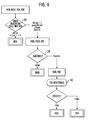
- condition 36 see FIG. 4, is not met, d. H. CPCH and / or DSCH frames exist, then the algorithm continues to work in the case of DSCH frames, because DSCH frames have a header size greater than 5 and similar to that DCH type can be separated. Accordingly, after separation of the DCH type Channel types with a header length of four, namely FACH; RACH and PCH.
- Condition 38 determines whether it is an uplink or a downlink is. If it is an uplink, this channel is of the RACH type. If it is a downlink, the present channel is of type FACH or PCH. With the box 40, the serial number (CFN) is evaluated, in particular the Bit length of the serial number. If these 8 bits are on, it is a channel of type FACH, this has 12 bits, it is a channel of type PCH.
- CPCH frames it is not possible between CPCH and RACH frames using the algorithm shown in Figure 4, since both have exactly the same structure, but then the knowledge of the mapping of the logical Channels from higher layers, such as MAC or RLC, are used to filter out the required CPCH frames. Similar to the header length, the payload CRC can be used to track the length of the payload frame.
- the determination of transport formats, transport format compilations or the combinations and modes of the logical channels is much more difficult.
- the 3GPP specification describes some given configurations and each manufacturer applies certain settings to configure its system. These parameters can be stored in a database. Most of these data are network dependent. Preferably, therefore, a database is designed so that it does not stores only the manufacturer-dependent settings, but also the network-dependent. These databases can be used in accordance with the procedure "Trial-and-error" settings required for correct decoding determine.
- Another way to determine the transport formats uses the information blocks (SIBs) of the NBAP system, which can be monitored in the NBAP protocol. Both methods, d. H. the use of a database and the use of the SIB information can also be used together to determine the number of Ways to reduce.
- SIBs information blocks
- TDD Time Division Duplex
- CCC Common Control Channel
- the transport channel has been determined to be of the "RACH” type, the further procedure is shown in Figure 6: If the first two bits equal “0xb00", then the logical Channel of type CCCH, the associated RLC mode is "transparent". At other first two bits is either TDD or a CPCH or no CCCH (Common Control Channel).
- the star in Figure 6 is intended to indicate that the algorithm presented can not distinguish between RACH and CPCH. Therefore it is possible that one CPCH MAC PDU, whose first two bits are equal to 0xb00, is misinterpreted as a RACH which is mapped to a CCCH.
- a transport channel from Type PCH no distinction is necessary, see Figure 7, since PCH PDUs no TCTF field to have. A PCH is always mapped to a logical channel of type PCCH and the RLC mode is always "transparent".
- the length of the RLC length indicator field which is equal to 7 or 15 bits, must be the Frame protocol transport formats are derived. For logical common control Channels, see assumption 2 in the last list of assumptions, will become the RLC used only by the RRC.
Landscapes
- Engineering & Computer Science (AREA)
- Computer Networks & Wireless Communication (AREA)
- Signal Processing (AREA)
- Mobile Radio Communication Systems (AREA)
- Data Exchanges In Wide-Area Networks (AREA)
- Communication Control (AREA)
- Maintenance And Management Of Digital Transmission (AREA)
Abstract
Description
- Fig. 1
- in schematischer Darstellung Knoten und Schnittstellen eines UMTS-Mobilfunknetzes;
- Fig. 2
- in schematischer Darstellung die an einer lub-Schnittstelle beteiligten Protokolle und Schichten;
- Fig. 3
- in-schematischer Darstellung die unterschiedlichen an einer lubSchnittstelle vorkommenden Typen von Kommunikationskanälen;
- Fig. 4
- in Blockschaltbilddarstellung die Vorgehensweise zur Ermittlung, ob der vorliegende Kommunikationskanal vom Typ FACH, RACH, PCH oder DCH ist;
- Fig. 5
- eine weitere Differenzierung für den Fall, dass der Kommunikationskanal vom Typ FACH ist;
- Fig. 6
- eine weitere Differenzierung für den Fall, dass der Kommunikationskanal vom Typ RACH ist, und
- Fig. 7
- eine weitere Differenzierung für den Fall, dass der Kommunikationskanal vom Typ PCH ist.
- es treten keine CPCH-, DSCH- und USCH-Typen auf, d. h. nur FACH-, RACH-, PCH- und DCH-Typen;
- es treten keine CRC-Fehler auf;
- DHCs müssen für die weitere Verarbeitung nicht ausgewertet werden und werden daher ignoriert;
- die Uplink- und Downlink-Richtungen sind bekannt.
- der obige auf die Frame-Protokoll-Kanal-Typen angewendete Algorithmus findet zumindest einen der folgenden Transportkanaltypen: FACH, RACH, PCH;
- nur die gemeinsamen Logiksteuerkanaltypen CCCH, SHCCH, BCCH und PCCH werden abgebildet;
- es liegt nur FDD (Frequency Division Duplex) vor, d. h. eine Abbildung auf SHCCH wird ignoriert.
- der logische Kanaltyp;
- der RLC-Modus (Transparent, Acknowledge, Unacknowledge);
- der Wert des c/t-Felds, wenn ein Transportkanal auf mehr als einen logischen Kanal abgebildet wird (MUX);
- die Länge des RLC-Längenindikator-Felds (7 oder 15 Bit)
- der RLC-Verwender (PDCP oder RRC).
Claims (15)
- Verfahren zum Ermitteln mindestens eines Übertragungsparameters an einer zwischen einem ersten und einem zweiten Knoten eines Übertragungssystems angeordneten Schnittstelle, wobei zwischen dem ersten und dem zweiten Knoten mehrere Kanäle bestehen, die zum einen der Kommunikation zwischen Knoten des Übertragungssystems, zum anderen der Kommunikation mit mindestens einem Teilnehmer dienen, wobei für die Kommunikation zwischen Knoten des Übertragungssystems eine vorgegebene Anzahl von Kommunikationsprotokollen in Betracht kommt, bei dem zur Bestimmung des mindestens einen Übertragungsparameters folgende Schritte ausgeführt werden:Annehmen eines bestimmten Übertragungsparameters, insbesondere eines bestimmten Protokolls oder einer bestimmten Kanalbelegung,Dekodieren eines empfangenen Datenstroms oberhalb der physikalischen Schicht unter Verwendung des angenommenen bestimmten Übertragungsparameters, undfür den Fall, dass sich bei der Dekodierung sinnvolle Daten ergeben, Treffen der Entscheidung, dass der angenommene Übertragungsparameter dem tatsächlichen Übertragungsparameter entspricht, undfür den Fall, dass sich bei der Dekodierung keine sinnvollen dekodierten Daten ergeben, Annahme eines anderen Übertragungsparameters und Wiederholung des Dekodierungsschritts.
- Verfahren nach Anspruch 1,
gekennzeichnet durch folgenden Schritt:Ermitteln, ob es sich bei einem bestimmten Kanal um einen Kanal zur Kommunikation zwischen Knoten des Übertragungssystems handelt oder um einen Kanal zur Kommunikation mit mindestens einem Teilnehmer durcha) Dekodieren eines an der Schnittstelle empfangenen Datenstroms nach den für die Kommunikation zwischen den Knoten des Übertragungssystems oder die Kommunikation mit mindestens einem Teilnehmer in Betracht kommenden Kommunikationsprotokollen;b) Einstellen der Dekodierung, sobald mit dem gegenwärtig verwendeten Kommunikationsprotokoll sinnvolle dekodierte Daten entstehen, oder alle in Betracht kommenden Kommunikationsprotokolle keine sinnvollen dekodierten Daten ergeben haben; undc) Auswerten des Ergebnisses der Dekodierung und Treffen folgender Entscheidung:c1) der vorliegende Kanal dient der Kommunikation zwischen Knoten des Übertragungssystems,oderfalls sich bei der Dekodierung sinnvolle dekodierte Daten ergeben und ein Kommunikationsprotokoll für die Kommunikation zwischen den Knoten des Übertragungssystems verwendet wurde; oderfalls sich bei der Dekodierung keine sinnvollen dekodierten Daten ergeben haben und alle Kommunikationsprotokolle für die Kommunikation mit mindestens einem Teilnehmer verwendet wurden;c2) der vorliegende Kanal dient der Kommunikation mit mindestens einem Teilnehmer,falls sich bei der Dekodierung sinnvolle dekodierte Daten ergeben und ein Kommunikationsprotokoll für die Kommunikation mit mindestens einem Teilnehmer verwendet wurde; oderfalls sich bei der Dekodierung keine sinnvollen dekodierten Daten ergeben haben und alle Kommunikationsprotokolle für die Kommunikation zwischen den Knoten des Übertragungssystems verwendet wurden. - Verfahren nach Anspruch 2, für den Fall, dass die Entscheidung c1) getroffen wird und mehrere Typen von Kommunikationskanälen zwischen den Knoten des Systems in Betracht kommen, gekennzeichnet durch folgende weiteren Schritte:d) Dekodieren mindestens einer ersten Datenmenge des empfangenen Datenstroms unter der Annahme, es handelt sich um einen Kommunikationskanal eines ersten Typs;e) Auswerten des Ergebnisses der Dekodierung und Treffen folgender Entscheidung:e1) falls sich bei der Dekodierung sinnvolle dekodierte Daten ergeben: Erhöhung eines Zählerstands zugunsten der Entscheidung, dass es sich um einen Kommunikationskanal des ersten Typs handelt, um 1;e2) der vorliegende Kanal ist kein Kommunikationskanal des ersten Typs, falls sich bei der Dekodierung keine sinnvollen dekodierten Daten ergeben.
- Verfahren nach Anspruch 3,
dadurch gekennzeichnet, dass die Schritte d) und e) wiederholt werden unter der Annahme, es handelt sich um einen Kommunikationskanal zumindest eines zweiten oder weiteren Typs. - Verfahren nach Anspruch 3 oder 4,
dadurch gekennzeichnet, dass die Schritte d) und e) wiederholt werden zumindest für eine zweite oder weitere Datenmenge. - Verfahren nach einem der Ansprüche 3 bis 5,
dadurch gekennzeichnet, dass aufgrund des Zählerstands nach zumindest einer einmaligen Durchführung des Schritts e1) eine Entscheidung getroffen wird, wonach ein Kommunikationskanal des Typs vorliegt, der den höchsten Zählerstand aufweist, oder, wenn der höchste Zählerstand von mindestens zwei Typen von Kommunikationskanälen eingenommen wird, gemäß einer vorab getroffenen Vereinbarung entschieden wird, welcher Typ von Kommunikationskanal vorliegt. - Verfahren nach einem der vorhergehenden Ansprüche,
dadurch gekennzeichnet, dass das Übertragungssystem ein UMTS-Netz ist, und die Schnittstelle eine lub-Schnittstelle oder eine lur-Schnittstelle, der erste Knoten ein RNC-Knoten, der zweite Knoten ein Node B oder ein RNC-Knoten, ein Kommunikationskanal für die Kommunikation zwischen zwei Knoten vom Typ NBAP und/oder ein anderer vom Typ ALCAP ist. - Verfahren nach Anspruch 2, für den Fall, dass die Entscheidung c2) getroffen wird und mehrere Typen von Kommunikationskanälen zur Kommunikation mit mindestens einem Teilnehmer des Systems in Betracht kommen, gekennzeichnet durch folgende weiteren Schritte, die für zumindest eine Protokollschicht, insbesondere für mehrere Protokollschichten in serieller Reihenfolge von der niedrigsten zur höchsten beteiligten Protokollschicht, durchgeführt werden:f) für eine vorbestimmte Datenmenge, insbesondere einen Rahmen, die zumindest ein Header-Kontrolldatenfeld innerhalb eines Headerfelds sowie ein Nutzdatenfeld umfasst, Annahme einer ersten Headerlänge, Berechnung des zugehörigen Header-Kontrolldatenfelds, und Vergleich mit dem tatsächlichen Header-Kontrolldatenfeld;g) bei Übereinstimmen des berechneten Header-Kontrolldatenfelds mit dem tatsächlichen Header-Kontrolldatenfeld: in Abhängigkeit der ermittelten Headerlänge Zuordnen des Kanals zu einem bestimmten Typ oder einer bestimmten Gruppe von Typen von Kommunikationskanälen;
bei Nicht-Übereinstimmen des berechneten Header-Kontrolldatenfelds mit dem tatsächlichen Header-Kontrolldatenfeld: solange Wiederholung des Schritts f) mit unterschiedlichen angenommenen Headerlängen, bis sich eine Übereinstimmung der berechneten Header-Kontrolldatenfelds mit dem tatsächlichen Header-Kontrolldatenfeld ergibt. - Verfahren nach einem der Ansprüche 2 bis 8,
dadurch gekennzeichnet, dass folgende weiteren Schritte durchgeführt wird:h) Überprüfen, ob es sich bei dem bestimmten Kanal um einen Kanal zum Knoten oder um einen Kanal zum Teilnehmer handelt; undi) Zuordnen des bestimmten Kanals zu einer Gruppe von Typen gemäß dem Ergebnis von Schritt h). - Verfahren nach einem der Ansprüche 2 bis 9,
dadurch gekennzeichnet, dass folgende weitere Schritte durchgeführt werden:j) für eine vorbestimmte Datenmenge, insbesondere einen Rahmen, die zumindest ein Feld für eine laufende Nummer einer Datenmenge, insbesondere eines Rahmens, innerhalb eines Headerfelds sowie ein Nutzdatenfeld umfasst, Bestimmen der Länge des Felds für die laufende Nummer; undk) Zuordnen des bestimmten Kanals zu einer Gruppe von Typen gemäß dem Ergebnis von Schritt j). - Verfahren nach einem der Ansprüche 2 bis 10,
gekennzeichnet durch folgenden weiteren Schritt:l) Überprüfung des jeweils ermittelten Ergebnisses in einer übergeordneten Protokollschicht; undm) für den Fall, dass das jeweilige ermittelte Ergebnis nicht verifiziert werden konnte, Wiederholen des jeweiligen Bestimmungsschritts und gegebenenfalls nachfolgender Bestimmungsschritte und Wiederholung von Schritt l) bis das jeweilige ermittelte Ergebnis verifiziert werden konnte. - Verfahren nach einem der Ansprüche 2 bis 11,
dadurch gekennzeichnet, dass der bestimmte Kommunikationskanal für die Kommunikation mit mindestens einem Teilnehmer von einem bestimmten Transportkanaltyp ist, insbesondere vom Typ FACH, RACH, PCH oder DCH, und von einem bestimmten Logikkanaltyp, insbesondere vom Typ BCCH, CCCH oder PCCH. - Vorrichtung zur Durchführung eines Verfahrens nach einem der Ansprüche 1 bis 12.
- Vorrichtung nach Anspruch 13,
dadurch gekennzeichnet, dass sie weiterhin dazu ausgelegt ist, die ermittelten Parameter zur Konfiguration der Vorrichtung automatisch einzustellen. - Vorrichtung nach Anspruch 13 oder 14,
dadurch gekennzeichnet, dass sie weiterhin einen Speicher umfasst oder mit einem Speicher gekoppelt ist, in den Parametersätze für bestimmte Betreiber derartiger Übertragungssysteme abgelegt werden können und von dem sie durch einen Benutzer als aktuell zu verwendende Parameter geladen werden können.
Priority Applications (4)
| Application Number | Priority Date | Filing Date | Title |
|---|---|---|---|
| EP03017895A EP1505845B1 (de) | 2003-08-05 | 2003-08-05 | Verfahren und Vorrichtung zum Ermitteln mindestens eines Übertragungsparameters in einem Übertragungssystem |
| DE50302716T DE50302716D1 (de) | 2003-08-05 | 2003-08-05 | Verfahren und Vorrichtung zum Ermitteln mindestens eines Übertragungsparameters in einem Übertragungssystem |
| US10/887,382 US7907586B2 (en) | 2003-08-05 | 2004-07-07 | Determining a transmission parameter in a transmission system |
| JP2004229692A JP4235915B2 (ja) | 2003-08-05 | 2004-08-05 | 伝送システムの伝送パラメータ測定方法 |
Applications Claiming Priority (1)
| Application Number | Priority Date | Filing Date | Title |
|---|---|---|---|
| EP03017895A EP1505845B1 (de) | 2003-08-05 | 2003-08-05 | Verfahren und Vorrichtung zum Ermitteln mindestens eines Übertragungsparameters in einem Übertragungssystem |
Publications (2)
| Publication Number | Publication Date |
|---|---|
| EP1505845A1 true EP1505845A1 (de) | 2005-02-09 |
| EP1505845B1 EP1505845B1 (de) | 2006-03-22 |
Family
ID=33547641
Family Applications (1)
| Application Number | Title | Priority Date | Filing Date |
|---|---|---|---|
| EP03017895A Expired - Lifetime EP1505845B1 (de) | 2003-08-05 | 2003-08-05 | Verfahren und Vorrichtung zum Ermitteln mindestens eines Übertragungsparameters in einem Übertragungssystem |
Country Status (4)
| Country | Link |
|---|---|
| US (1) | US7907586B2 (de) |
| EP (1) | EP1505845B1 (de) |
| JP (1) | JP4235915B2 (de) |
| DE (1) | DE50302716D1 (de) |
Cited By (1)
| Publication number | Priority date | Publication date | Assignee | Title |
|---|---|---|---|---|
| EP1596617A1 (de) | 2004-05-11 | 2005-11-16 | Tektronix International Sales GmbH | Verfahren und Vorrichtung zum Ermitteln mindestens eines Topologieparameters eines Mobilfunknetzwerks |
Families Citing this family (9)
| Publication number | Priority date | Publication date | Assignee | Title |
|---|---|---|---|---|
| US8161162B1 (en) * | 2004-06-30 | 2012-04-17 | Kaseya International Limited | Remote computer management using network communications protocol that enables communication through a firewall and/or gateway |
| KR100606370B1 (ko) * | 2004-11-30 | 2006-07-31 | 엘지노텔 주식회사 | 3지피피 시스템에서의 스케줄링 정보의 오류검출 방법 |
| GB2450257B (en) * | 2006-03-29 | 2012-01-04 | Intel Corp | Optimization of network protocol options by reinforcement learning and propagation |
| JP4910657B2 (ja) * | 2006-11-27 | 2012-04-04 | 富士通株式会社 | 移動無線ネットワーク制御方法及び装置 |
| WO2008097044A1 (en) * | 2007-02-06 | 2008-08-14 | Lg Electronics Inc. | Verification of system information in wireless communication system |
| KR101405965B1 (ko) * | 2007-06-25 | 2014-06-12 | 엘지전자 주식회사 | 디지털 방송 시스템 및 데이터 처리 방법 |
| US8892757B2 (en) * | 2009-10-13 | 2014-11-18 | Blackberry Limited | Methods and apparatus for intelligent selection of a transport protocol for content streaming |
| JP5614530B2 (ja) * | 2010-04-28 | 2014-10-29 | ブラザー工業株式会社 | 情報通信システム、ノード装置、情報処理方法、及び情報処理プログラム |
| EP3866356B1 (de) * | 2020-02-17 | 2023-08-23 | Rohde & Schwarz GmbH & Co. KG | Verfahren zur messung der totalen strahlungsleistung eines prüflings sowie prüfsystem |
Citations (3)
| Publication number | Priority date | Publication date | Assignee | Title |
|---|---|---|---|---|
| EP0713310A2 (de) * | 1994-11-04 | 1996-05-22 | Canon Information Systems, Inc. | Netzwerkprotokollsensor |
| WO2003025767A2 (en) * | 2001-09-18 | 2003-03-27 | Invensys Systems, Inc. | Multi-protocol bus device with automatic protocol detection |
| WO2003047280A2 (en) * | 2001-11-23 | 2003-06-05 | Actix Limited | Testing and monitoring equipment and methods for a digital mobile phone network |
Family Cites Families (8)
| Publication number | Priority date | Publication date | Assignee | Title |
|---|---|---|---|---|
| US5991299A (en) * | 1997-09-11 | 1999-11-23 | 3Com Corporation | High speed header translation processing |
| US6400695B1 (en) * | 1998-05-22 | 2002-06-04 | Lucent Technologies Inc. | Methods and apparatus for retransmission based access priority in a communications system |
| CN101364837B (zh) * | 2000-01-14 | 2016-02-03 | 交互数字技术公司 | 用于码分多址通信的设备和方法 |
| EP1168754B1 (de) * | 2000-06-26 | 2005-03-16 | Alcatel | Adressierungsschema für ein IP basiertes funkzugriffsnetz |
| DE10140114A1 (de) * | 2001-08-16 | 2003-03-13 | Infineon Technologies Ag | Vorrichtung und Verfahren zur Qualitätsprüfung von über einen Funkkanal übertragenen Datenpaketen |
| US20030223417A1 (en) * | 2002-06-04 | 2003-12-04 | Masashi Higashida | Method of processing data packets |
| US20040205752A1 (en) * | 2003-04-09 | 2004-10-14 | Ching-Roung Chou | Method and system for management of traffic processor resources supporting UMTS QoS classes |
| WO2004112406A1 (en) * | 2003-06-18 | 2004-12-23 | Utstarcom (China) Co. Ltd. | Method for implementing diffserv in the wireless access network of the universal mobile telecommunication system |
-
2003
- 2003-08-05 DE DE50302716T patent/DE50302716D1/de not_active Expired - Lifetime
- 2003-08-05 EP EP03017895A patent/EP1505845B1/de not_active Expired - Lifetime
-
2004
- 2004-07-07 US US10/887,382 patent/US7907586B2/en active Active
- 2004-08-05 JP JP2004229692A patent/JP4235915B2/ja not_active Expired - Fee Related
Patent Citations (3)
| Publication number | Priority date | Publication date | Assignee | Title |
|---|---|---|---|---|
| EP0713310A2 (de) * | 1994-11-04 | 1996-05-22 | Canon Information Systems, Inc. | Netzwerkprotokollsensor |
| WO2003025767A2 (en) * | 2001-09-18 | 2003-03-27 | Invensys Systems, Inc. | Multi-protocol bus device with automatic protocol detection |
| WO2003047280A2 (en) * | 2001-11-23 | 2003-06-05 | Actix Limited | Testing and monitoring equipment and methods for a digital mobile phone network |
Cited By (1)
| Publication number | Priority date | Publication date | Assignee | Title |
|---|---|---|---|---|
| EP1596617A1 (de) | 2004-05-11 | 2005-11-16 | Tektronix International Sales GmbH | Verfahren und Vorrichtung zum Ermitteln mindestens eines Topologieparameters eines Mobilfunknetzwerks |
Also Published As
| Publication number | Publication date |
|---|---|
| DE50302716D1 (de) | 2006-05-11 |
| US20050030903A1 (en) | 2005-02-10 |
| JP4235915B2 (ja) | 2009-03-11 |
| JP2005057784A (ja) | 2005-03-03 |
| US7907586B2 (en) | 2011-03-15 |
| EP1505845B1 (de) | 2006-03-22 |
Similar Documents
| Publication | Publication Date | Title |
|---|---|---|
| DE60031566T2 (de) | Signalisierungsverfahren und apparate in einem zellularen netz | |
| EP1325590B1 (de) | Verfahren zur übertragung von datenpaketen über eine luftschnittstelle eines mobilfunksystems | |
| DE602004010209T2 (de) | Verbesserte Aufwärtsrichtungsdatenübertragung | |
| EP1656809B1 (de) | Verfahren zur auswahl eines zur verfügung stehenden übertragungskanals durch senden eines negativen entscheidungswerts und eines zusätzlichen positiven entscheidungswerts, sowie entsprechende basistation, mobiles endgerät und mobilfunknetz | |
| DE60035210T2 (de) | Verfahren zur ablaufplanung einer paketübertragung über ein umts-netz | |
| EP3142410B1 (de) | Teilnehmerendgerät und basisstation zur verwaltung eines buffer statusreports | |
| DE69825610T2 (de) | Verfahren und gerät zur übertragung von datenpaketen in einem datenpaketübertragungssystem | |
| DE60106457T2 (de) | Zuteilung von datenübertragungsbetriebsmitteln bei der paketvermittelten datenübertragung | |
| EP2044796B1 (de) | Gruppierung von teilnehmer-endgerät-zellzugangsinformationen in einem informationsblock einer systeminformation | |
| DE10252535A1 (de) | Vorrichtung und ein Verfahren zur Übertragung von Datenpaketen verschiedener Verbindungen an einen Empfänger | |
| EP1505845B1 (de) | Verfahren und Vorrichtung zum Ermitteln mindestens eines Übertragungsparameters in einem Übertragungssystem | |
| EP1596617B1 (de) | Verfahren und Vorrichtung zum Erstellen und Durchfuehren eines Testszenarios fuer eine reale Vermittlungsstation eines Mobilfunknetzwerks | |
| EP1006692A1 (de) | Verfahren und Kommunikationssystem zur Übertragung einer Kombination mehrerer Dienste über gemeinsam genutzte physikalische Kanäle | |
| EP1135892B1 (de) | Verfahren und kommunikationssystem zur übertragung von daten über gemeinsam genutzte physikalische kanäle | |
| EP1250822B1 (de) | Verfahren zur signalisierung einer kanalzuweisung in einem funk-kommunikationssystem | |
| DE60100095T2 (de) | Funkverbindungsrahmenprotokollsystem zur Hochgeschwindigkeitsdatenübetragung über digitale zellulare mobile Telekommunikationsnetze | |
| EP1570700B1 (de) | Verfahren zur detektierung des multi-user-verhaltens auf der luftschnittstelle bei gprs- und egprs-mobilfunksystemen | |
| DE102006044529A1 (de) | Verfahren zum Erzeugen und Senden von Systeminformationen, Netzwerkeinrichtung, Verfahren zum Überprüfen, ob einem Mobilfunk-Teilnehmergerät der Zugang in einer Mobilfunkzelle ermöglicht ist, Mobilfunk-Teilnehmergerät und Verfahren zum Ermitteln von gültigen Systeminformationen | |
| EP1679919A1 (de) | Verfahren und Vorrichtung zur Zuordnung mindestens eines Parameters zu mindestens einem Übertragungskanal | |
| EP1629621B1 (de) | Verfahren und tester zum bestimmen einer fehlerrate eines mobilfunkgeräts bei variabler blockzuordnung | |
| DE60018452T2 (de) | System und verfahren zur identifizierung von kodierungs/dekodierungs-informationen in einem mobilkommunikationsnetzwerk | |
| DE10053746B4 (de) | Verfahren zur Übertragung von Authentifizierungsdaten in einem Funk-Kommunikationsystem | |
| DE10031494A1 (de) | Verfahren zum Multiplexen einer Vielzahl von Datenpaketen mehrerer Datenströme innerhalb des PDCP-Protokolls eines UMTS-Funkkommunikationsystems | |
| DE19944334C1 (de) | Verfahren zum Betreiben eines Mobilfunknetzes | |
| DE102004037815B4 (de) | Mobilfunkeinrichtung und Verfahren zum Steuern von Mobilfunk-Senderessourcen in einer Mobilfunkeinrichtung |
Legal Events
| Date | Code | Title | Description |
|---|---|---|---|
| PUAI | Public reference made under article 153(3) epc to a published international application that has entered the european phase |
Free format text: ORIGINAL CODE: 0009012 |
|
| 17P | Request for examination filed |
Effective date: 20040227 |
|
| AK | Designated contracting states |
Kind code of ref document: A1 Designated state(s): AT BE BG CH CY CZ DE DK EE ES FI FR GB GR HU IE IT LI LU MC NL PT RO SE SI SK TR |
|
| AX | Request for extension of the european patent |
Extension state: AL LT LV MK |
|
| GRAP | Despatch of communication of intention to grant a patent |
Free format text: ORIGINAL CODE: EPIDOSNIGR1 |
|
| RAP1 | Party data changed (applicant data changed or rights of an application transferred) |
Owner name: TEKTRONIX INTERNATIONAL SALES GMBH |
|
| GRAS | Grant fee paid |
Free format text: ORIGINAL CODE: EPIDOSNIGR3 |
|
| AKX | Designation fees paid |
Designated state(s): DE FR GB IT |
|
| GRAA | (expected) grant |
Free format text: ORIGINAL CODE: 0009210 |
|
| AK | Designated contracting states |
Kind code of ref document: B1 Designated state(s): DE FR GB IT |
|
| REG | Reference to a national code |
Ref country code: GB Ref legal event code: FG4D Free format text: NOT ENGLISH |
|
| REF | Corresponds to: |
Ref document number: 50302716 Country of ref document: DE Date of ref document: 20060511 Kind code of ref document: P |
|
| REG | Reference to a national code |
Ref country code: GB Ref legal event code: 710B Free format text: EXTENSION APPLICATION: APPLICATION FOR EXTENSION OF THE PERIOD(S) PRESCRIBED BY RULE(S) SCHEDULE 4 PARA 2 FILED ON 20060901 |
|
| ET | Fr: translation filed | ||
| PLBE | No opposition filed within time limit |
Free format text: ORIGINAL CODE: 0009261 |
|
| STAA | Information on the status of an ep patent application or granted ep patent |
Free format text: STATUS: NO OPPOSITION FILED WITHIN TIME LIMIT |
|
| 26N | No opposition filed |
Effective date: 20061227 |
|
| GBT | Gb: translation of ep patent filed (gb section 77(6)(a)/1977) |
Effective date: 20070321 |
|
| REG | Reference to a national code |
Ref country code: GB Ref legal event code: 9110 Free format text: EXTENSION ALLOWED: PERIOD(S) PRESCRIBED BY RULE(S) SCHEDULE 4 PARA 2 EXTENDED UNDER RULE 110(6) IN ACCORDANCE WITH THE DECISION OF THE COMPTROLLER DATED 20070122 |
|
| PGFP | Annual fee paid to national office [announced via postgrant information from national office to epo] |
Ref country code: IT Payment date: 20120823 Year of fee payment: 10 |
|
| PGFP | Annual fee paid to national office [announced via postgrant information from national office to epo] |
Ref country code: FR Payment date: 20130823 Year of fee payment: 11 |
|
| PG25 | Lapsed in a contracting state [announced via postgrant information from national office to epo] |
Ref country code: IT Free format text: LAPSE BECAUSE OF NON-PAYMENT OF DUE FEES Effective date: 20130805 |
|
| REG | Reference to a national code |
Ref country code: FR Ref legal event code: ST Effective date: 20150430 |
|
| PG25 | Lapsed in a contracting state [announced via postgrant information from national office to epo] |
Ref country code: FR Free format text: LAPSE BECAUSE OF NON-PAYMENT OF DUE FEES Effective date: 20140901 |
|
| PGFP | Annual fee paid to national office [announced via postgrant information from national office to epo] |
Ref country code: GB Payment date: 20220829 Year of fee payment: 20 Ref country code: DE Payment date: 20220829 Year of fee payment: 20 |
|
| REG | Reference to a national code |
Ref country code: DE Ref legal event code: R071 Ref document number: 50302716 Country of ref document: DE |
|
| REG | Reference to a national code |
Ref country code: GB Ref legal event code: PE20 Expiry date: 20230804 |
|
| PG25 | Lapsed in a contracting state [announced via postgrant information from national office to epo] |
Ref country code: GB Free format text: LAPSE BECAUSE OF EXPIRATION OF PROTECTION Effective date: 20230804 |