EP1494680B1 - Use of carbon-2-modified-vitamin d analogs to induce the formation of new bone - Google Patents
Use of carbon-2-modified-vitamin d analogs to induce the formation of new bone Download PDFInfo
- Publication number
- EP1494680B1 EP1494680B1 EP03716465A EP03716465A EP1494680B1 EP 1494680 B1 EP1494680 B1 EP 1494680B1 EP 03716465 A EP03716465 A EP 03716465A EP 03716465 A EP03716465 A EP 03716465A EP 1494680 B1 EP1494680 B1 EP 1494680B1
- Authority
- EP
- European Patent Office
- Prior art keywords
- compound
- group
- hydrogen
- bone
- hydroxy
- Prior art date
- Legal status (The legal status is an assumption and is not a legal conclusion. Google has not performed a legal analysis and makes no representation as to the accuracy of the status listed.)
- Expired - Lifetime
Links
- 210000000988 bone and bone Anatomy 0.000 title claims abstract description 55
- 229940046008 vitamin d Drugs 0.000 title abstract description 47
- 230000015572 biosynthetic process Effects 0.000 title abstract description 9
- 150000001875 compounds Chemical class 0.000 claims abstract description 92
- 230000012010 growth Effects 0.000 claims abstract description 16
- 230000011164 ossification Effects 0.000 claims abstract description 10
- 229910052739 hydrogen Inorganic materials 0.000 claims description 38
- 239000001257 hydrogen Substances 0.000 claims description 38
- 125000002887 hydroxy group Chemical group [H]O* 0.000 claims description 29
- 238000000034 method Methods 0.000 claims description 24
- UFHFLCQGNIYNRP-UHFFFAOYSA-N Hydrogen Chemical compound [H][H] UFHFLCQGNIYNRP-UHFFFAOYSA-N 0.000 claims description 20
- 125000000217 alkyl group Chemical group 0.000 claims description 17
- 150000002431 hydrogen Chemical class 0.000 claims description 17
- 229910052799 carbon Inorganic materials 0.000 claims description 16
- OKTJSMMVPCPJKN-UHFFFAOYSA-N Carbon Chemical compound [C] OKTJSMMVPCPJKN-UHFFFAOYSA-N 0.000 claims description 14
- 125000002496 methyl group Chemical group [H]C([H])([H])* 0.000 claims description 14
- 125000002252 acyl group Chemical group 0.000 claims description 13
- 239000011612 calcitriol Substances 0.000 claims description 13
- 230000004936 stimulating effect Effects 0.000 claims description 12
- 125000003709 fluoroalkyl group Chemical group 0.000 claims description 10
- 125000002768 hydroxyalkyl group Chemical group 0.000 claims description 10
- 238000002360 preparation method Methods 0.000 claims description 10
- 241000124008 Mammalia Species 0.000 claims description 9
- 125000001570 methylene group Chemical group [H]C([H])([*:1])[*:2] 0.000 claims description 8
- 125000003545 alkoxy group Chemical group 0.000 claims description 7
- 239000004053 dental implant Substances 0.000 claims description 6
- YZCKVEUIGOORGS-OUBTZVSYSA-N Deuterium Chemical group [2H] YZCKVEUIGOORGS-OUBTZVSYSA-N 0.000 claims description 5
- 229910052805 deuterium Inorganic materials 0.000 claims description 5
- 125000001153 fluoro group Chemical group F* 0.000 claims description 5
- 230000006872 improvement Effects 0.000 claims description 5
- 238000010883 osseointegration Methods 0.000 claims description 5
- 239000003814 drug Substances 0.000 claims description 4
- 125000004043 oxo group Chemical group O=* 0.000 claims description 4
- 230000003239 periodontal effect Effects 0.000 claims description 4
- 125000002023 trifluoromethyl group Chemical group FC(F)(F)* 0.000 claims description 4
- 125000005345 deuteroalkyl group Chemical group 0.000 claims description 3
- 125000006527 (C1-C5) alkyl group Chemical group 0.000 claims description 2
- MYMOFIZGZYHOMD-UHFFFAOYSA-N Dioxygen Chemical compound O=O MYMOFIZGZYHOMD-UHFFFAOYSA-N 0.000 claims description 2
- 125000001118 alkylidene group Chemical group 0.000 claims description 2
- 229910052757 nitrogen Inorganic materials 0.000 claims description 2
- 125000004433 nitrogen atom Chemical group N* 0.000 claims description 2
- 229910052760 oxygen Inorganic materials 0.000 claims description 2
- 239000001301 oxygen Substances 0.000 claims description 2
- 150000003431 steroids Chemical class 0.000 claims description 2
- 229910052717 sulfur Inorganic materials 0.000 claims description 2
- 125000004434 sulfur atom Chemical group 0.000 claims description 2
- YRIMSXJXBHUHJT-UHFFFAOYSA-N 2,3-di(nonanoyloxy)propyl nonanoate Chemical compound CCCCCCCCC(=O)OCC(OC(=O)CCCCCCCC)COC(=O)CCCCCCCC YRIMSXJXBHUHJT-UHFFFAOYSA-N 0.000 claims 1
- ILJSQTXMGCGYMG-UHFFFAOYSA-N triacetic acid Chemical compound CC(=O)CC(=O)CC(O)=O ILJSQTXMGCGYMG-UHFFFAOYSA-N 0.000 claims 1
- 239000011710 vitamin D Substances 0.000 abstract description 46
- 229930003316 Vitamin D Natural products 0.000 abstract description 36
- QYSXJUFSXHHAJI-XFEUOLMDSA-N Vitamin D3 Natural products C1(/[C@@H]2CC[C@@H]([C@]2(CCC1)C)[C@H](C)CCCC(C)C)=C/C=C1\C[C@@H](O)CCC1=C QYSXJUFSXHHAJI-XFEUOLMDSA-N 0.000 abstract description 36
- 235000019166 vitamin D Nutrition 0.000 abstract description 36
- 150000003710 vitamin D derivatives Chemical class 0.000 abstract description 21
- 210000000963 osteoblast Anatomy 0.000 abstract description 16
- 230000008468 bone growth Effects 0.000 abstract description 9
- 206010017076 Fracture Diseases 0.000 abstract description 8
- GMRQFYUYWCNGIN-NKMMMXOESA-N calcitriol Chemical class C1(/[C@@H]2CC[C@@H]([C@]2(CCC1)C)[C@@H](CCCC(C)(C)O)C)=C\C=C1\C[C@@H](O)C[C@H](O)C1=C GMRQFYUYWCNGIN-NKMMMXOESA-N 0.000 abstract description 7
- 230000035876 healing Effects 0.000 abstract description 7
- 208000010392 Bone Fractures Diseases 0.000 abstract description 6
- 238000003786 synthesis reaction Methods 0.000 abstract description 5
- 238000001356 surgical procedure Methods 0.000 abstract description 4
- 239000007943 implant Substances 0.000 abstract description 3
- 230000000638 stimulation Effects 0.000 abstract description 3
- -1 vitamin D compounds Chemical class 0.000 description 27
- 239000000203 mixture Substances 0.000 description 19
- OYPRJOBELJOOCE-UHFFFAOYSA-N Calcium Chemical compound [Ca] OYPRJOBELJOOCE-UHFFFAOYSA-N 0.000 description 13
- 229910052791 calcium Inorganic materials 0.000 description 13
- 239000011575 calcium Substances 0.000 description 13
- 210000004027 cell Anatomy 0.000 description 13
- 230000000694 effects Effects 0.000 description 13
- GMRQFYUYWCNGIN-ZVUFCXRFSA-N 1,25-dihydroxy vitamin D3 Chemical compound C1([C@@H]2CC[C@@H]([C@]2(CCC1)C)[C@@H](CCCC(C)(C)O)C)=CC=C1C[C@@H](O)C[C@H](O)C1=C GMRQFYUYWCNGIN-ZVUFCXRFSA-N 0.000 description 12
- 238000009472 formulation Methods 0.000 description 11
- 230000006870 function Effects 0.000 description 9
- AUONHKJOIZSQGR-UHFFFAOYSA-N oxophosphane Chemical compound P=O AUONHKJOIZSQGR-UHFFFAOYSA-N 0.000 description 9
- 238000001727 in vivo Methods 0.000 description 8
- 230000008569 process Effects 0.000 description 8
- 239000007788 liquid Substances 0.000 description 7
- 150000003722 vitamin derivatives Chemical class 0.000 description 7
- OAICVXFJPJFONN-UHFFFAOYSA-N Phosphorus Chemical compound [P] OAICVXFJPJFONN-UHFFFAOYSA-N 0.000 description 6
- 239000005556 hormone Substances 0.000 description 6
- 229940088597 hormone Drugs 0.000 description 6
- 229910052698 phosphorus Inorganic materials 0.000 description 6
- 239000011574 phosphorus Substances 0.000 description 6
- 239000004480 active ingredient Substances 0.000 description 5
- 125000000325 methylidene group Chemical group [H]C([H])=* 0.000 description 5
- 239000004215 Carbon black (E152) Substances 0.000 description 4
- 102000029816 Collagenase Human genes 0.000 description 4
- 108060005980 Collagenase Proteins 0.000 description 4
- 241000700159 Rattus Species 0.000 description 4
- 230000004071 biological effect Effects 0.000 description 4
- 230000033558 biomineral tissue development Effects 0.000 description 4
- 229960002424 collagenase Drugs 0.000 description 4
- LOKCTEFSRHRXRJ-UHFFFAOYSA-I dipotassium trisodium dihydrogen phosphate hydrogen phosphate dichloride Chemical compound P(=O)(O)(O)[O-].[K+].P(=O)(O)([O-])[O-].[Na+].[Na+].[Cl-].[K+].[Cl-].[Na+] LOKCTEFSRHRXRJ-UHFFFAOYSA-I 0.000 description 4
- 208000037265 diseases, disorders, signs and symptoms Diseases 0.000 description 4
- 125000001495 ethyl group Chemical group [H]C([H])([H])C([H])([H])* 0.000 description 4
- 229930195733 hydrocarbon Natural products 0.000 description 4
- 150000002576 ketones Chemical class 0.000 description 4
- 239000011159 matrix material Substances 0.000 description 4
- 230000001404 mediated effect Effects 0.000 description 4
- 208000005368 osteomalacia Diseases 0.000 description 4
- 239000002953 phosphate buffered saline Substances 0.000 description 4
- 208000007442 rickets Diseases 0.000 description 4
- 239000000243 solution Substances 0.000 description 4
- 239000000725 suspension Substances 0.000 description 4
- 229940088594 vitamin Drugs 0.000 description 4
- 239000011782 vitamin Substances 0.000 description 4
- MECHNRXZTMCUDQ-RKHKHRCZSA-N vitamin D2 Chemical compound C1(/[C@@H]2CC[C@@H]([C@]2(CCC1)C)[C@H](C)/C=C/[C@H](C)C(C)C)=C\C=C1\C[C@@H](O)CCC1=C MECHNRXZTMCUDQ-RKHKHRCZSA-N 0.000 description 4
- XLYOFNOQVPJJNP-UHFFFAOYSA-N water Substances O XLYOFNOQVPJJNP-UHFFFAOYSA-N 0.000 description 4
- KJKIIUAXZGLUND-ICCVIKJNSA-N 25-hydroxyvitamin D2 Chemical compound C1(/[C@@H]2CC[C@@H]([C@]2(CCC1)C)[C@@H](\C=C\[C@H](C)C(C)(C)O)C)=C\C=C1\C[C@@H](O)CCC1=C KJKIIUAXZGLUND-ICCVIKJNSA-N 0.000 description 3
- 208000006386 Bone Resorption Diseases 0.000 description 3
- 208000001132 Osteoporosis Diseases 0.000 description 3
- 230000009471 action Effects 0.000 description 3
- 125000004183 alkoxy alkyl group Chemical group 0.000 description 3
- 125000004453 alkoxycarbonyl group Chemical group 0.000 description 3
- 125000003118 aryl group Chemical group 0.000 description 3
- 125000003236 benzoyl group Chemical group [H]C1=C([H])C([H])=C(C([H])=C1[H])C(*)=O 0.000 description 3
- 244000309464 bull Species 0.000 description 3
- 239000002775 capsule Substances 0.000 description 3
- 239000006071 cream Substances 0.000 description 3
- 201000010099 disease Diseases 0.000 description 3
- 239000000839 emulsion Substances 0.000 description 3
- 238000000338 in vitro Methods 0.000 description 3
- 210000003734 kidney Anatomy 0.000 description 3
- 239000002674 ointment Substances 0.000 description 3
- 230000001582 osteoblastic effect Effects 0.000 description 3
- 125000001997 phenyl group Chemical class [H]C1=C([H])C([H])=C(*)C([H])=C1[H] 0.000 description 3
- 230000004044 response Effects 0.000 description 3
- 229920006395 saturated elastomer Polymers 0.000 description 3
- 239000007787 solid Substances 0.000 description 3
- 239000002904 solvent Substances 0.000 description 3
- 239000007921 spray Substances 0.000 description 3
- 239000003826 tablet Substances 0.000 description 3
- 239000011653 vitamin D2 Substances 0.000 description 3
- ATMUYWZMPLKPEJ-XLMAVXFVSA-N (1r,3ar,7ar)-7a-methyl-1-[(2r)-6-methylheptan-2-yl]-2,3,3a,5,6,7-hexahydro-1h-inden-4-one Chemical compound O=C1CCC[C@]2(C)[C@@H]([C@H](C)CCCC(C)C)CC[C@H]21 ATMUYWZMPLKPEJ-XLMAVXFVSA-N 0.000 description 2
- JWUBBDSIWDLEOM-NQZHSCJISA-N 25-hydroxy-3 epi cholecalciferol Chemical compound C1([C@@H]2CC[C@@H]([C@]2(CCC1)C)[C@@H](CCCC(C)(C)O)C)=CC=C1C[C@H](O)CCC1=C JWUBBDSIWDLEOM-NQZHSCJISA-N 0.000 description 2
- CIWBSHSKHKDKBQ-JLAZNSOCSA-N Ascorbic acid Natural products OC[C@H](O)[C@H]1OC(=O)C(O)=C1O CIWBSHSKHKDKBQ-JLAZNSOCSA-N 0.000 description 2
- 0 C[C@@](CCC1)(C(*)CC2)[C@@]2C1=CC=C1C(*)(*)[C@@](*)C(*)(*)[C@@](*)C1 Chemical compound C[C@@](CCC1)(C(*)CC2)[C@@]2C1=CC=C1C(*)(*)[C@@](*)C(*)(*)[C@@](*)C1 0.000 description 2
- 208000013725 Chronic Kidney Disease-Mineral and Bone disease Diseases 0.000 description 2
- LFQSCWFLJHTTHZ-UHFFFAOYSA-N Ethanol Chemical compound CCO LFQSCWFLJHTTHZ-UHFFFAOYSA-N 0.000 description 2
- 102000003982 Parathyroid hormone Human genes 0.000 description 2
- 108090000445 Parathyroid hormone Proteins 0.000 description 2
- CDBYLPFSWZWCQE-UHFFFAOYSA-L Sodium Carbonate Chemical compound [Na+].[Na+].[O-]C([O-])=O CDBYLPFSWZWCQE-UHFFFAOYSA-L 0.000 description 2
- 238000009825 accumulation Methods 0.000 description 2
- TUCNEACPLKLKNU-UHFFFAOYSA-N acetyl Chemical compound C[C]=O TUCNEACPLKLKNU-UHFFFAOYSA-N 0.000 description 2
- 125000000746 allylic group Chemical group 0.000 description 2
- 230000000123 anti-resoprtive effect Effects 0.000 description 2
- 239000003963 antioxidant agent Substances 0.000 description 2
- 235000006708 antioxidants Nutrition 0.000 description 2
- 235000010323 ascorbic acid Nutrition 0.000 description 2
- 229960005070 ascorbic acid Drugs 0.000 description 2
- 239000011668 ascorbic acid Substances 0.000 description 2
- DHCLVCXQIBBOPH-UHFFFAOYSA-N beta-glycerol phosphate Natural products OCC(CO)OP(O)(O)=O DHCLVCXQIBBOPH-UHFFFAOYSA-N 0.000 description 2
- GHRQXJHBXKYCLZ-UHFFFAOYSA-L beta-glycerolphosphate Chemical compound [Na+].[Na+].CC(CO)OOP([O-])([O-])=O GHRQXJHBXKYCLZ-UHFFFAOYSA-L 0.000 description 2
- 125000002619 bicyclic group Chemical group 0.000 description 2
- 239000011230 binding agent Substances 0.000 description 2
- 210000004369 blood Anatomy 0.000 description 2
- 239000008280 blood Substances 0.000 description 2
- 230000024279 bone resorption Effects 0.000 description 2
- 230000037118 bone strength Effects 0.000 description 2
- 125000004432 carbon atom Chemical group C* 0.000 description 2
- 239000000969 carrier Substances 0.000 description 2
- 230000008859 change Effects 0.000 description 2
- 239000003086 colorant Substances 0.000 description 2
- 238000009833 condensation Methods 0.000 description 2
- 230000005494 condensation Effects 0.000 description 2
- 230000008878 coupling Effects 0.000 description 2
- 238000010168 coupling process Methods 0.000 description 2
- 238000005859 coupling reaction Methods 0.000 description 2
- 230000002950 deficient Effects 0.000 description 2
- 230000029087 digestion Effects 0.000 description 2
- 239000006185 dispersion Substances 0.000 description 2
- 239000003937 drug carrier Substances 0.000 description 2
- 239000003995 emulsifying agent Substances 0.000 description 2
- 238000006345 epimerization reaction Methods 0.000 description 2
- 238000007429 general method Methods 0.000 description 2
- 230000007062 hydrolysis Effects 0.000 description 2
- 238000006460 hydrolysis reaction Methods 0.000 description 2
- 238000011534 incubation Methods 0.000 description 2
- 238000001802 infusion Methods 0.000 description 2
- 239000004615 ingredient Substances 0.000 description 2
- 229910052500 inorganic mineral Inorganic materials 0.000 description 2
- 210000000936 intestine Anatomy 0.000 description 2
- TYQCGQRIZGCHNB-JLAZNSOCSA-N l-ascorbic acid Chemical compound OC[C@H](O)[C@H]1OC(O)=C(O)C1=O TYQCGQRIZGCHNB-JLAZNSOCSA-N 0.000 description 2
- 239000006210 lotion Substances 0.000 description 2
- 239000011707 mineral Substances 0.000 description 2
- 230000024121 nodulation Effects 0.000 description 2
- 239000003921 oil Substances 0.000 description 2
- 125000001181 organosilyl group Chemical group [SiH3]* 0.000 description 2
- 125000004430 oxygen atom Chemical group O* 0.000 description 2
- 210000002990 parathyroid gland Anatomy 0.000 description 2
- 239000000199 parathyroid hormone Substances 0.000 description 2
- 229960001319 parathyroid hormone Drugs 0.000 description 2
- 239000006187 pill Substances 0.000 description 2
- 239000000843 powder Substances 0.000 description 2
- 125000001436 propyl group Chemical group [H]C([*])([H])C([H])([H])C([H])([H])[H] 0.000 description 2
- 125000006239 protecting group Chemical group 0.000 description 2
- 230000009467 reduction Effects 0.000 description 2
- 201000006409 renal osteodystrophy Diseases 0.000 description 2
- 230000008439 repair process Effects 0.000 description 2
- QBERHIJABFXGRZ-UHFFFAOYSA-M rhodium;triphenylphosphane;chloride Chemical compound [Cl-].[Rh].C1=CC=CC=C1P(C=1C=CC=CC=1)C1=CC=CC=C1.C1=CC=CC=C1P(C=1C=CC=CC=1)C1=CC=CC=C1.C1=CC=CC=C1P(C=1C=CC=CC=1)C1=CC=CC=C1 QBERHIJABFXGRZ-UHFFFAOYSA-M 0.000 description 2
- 210000002966 serum Anatomy 0.000 description 2
- SQGYOTSLMSWVJD-UHFFFAOYSA-N silver(1+) nitrate Chemical compound [Ag+].[O-]N(=O)=O SQGYOTSLMSWVJD-UHFFFAOYSA-N 0.000 description 2
- 239000003381 stabilizer Substances 0.000 description 2
- 239000000126 substance Substances 0.000 description 2
- 239000001962 taste-modifying agent Substances 0.000 description 2
- 230000001225 therapeutic effect Effects 0.000 description 2
- 230000000699 topical effect Effects 0.000 description 2
- 229930003231 vitamin Natural products 0.000 description 2
- 235000013343 vitamin Nutrition 0.000 description 2
- 102000009310 vitamin D receptors Human genes 0.000 description 2
- 108050000156 vitamin D receptors Proteins 0.000 description 2
- 239000011647 vitamin D3 Substances 0.000 description 2
- QYSXJUFSXHHAJI-YRZJJWOYSA-N vitamin D3 Chemical compound C1(/[C@@H]2CC[C@@H]([C@]2(CCC1)C)[C@H](C)CCCC(C)C)=C\C=C1\C[C@@H](O)CCC1=C QYSXJUFSXHHAJI-YRZJJWOYSA-N 0.000 description 2
- PKFBWEUIKKCWEW-WEZTXPJVSA-N (1r,3r)-5-[(2e)-2-[(1r,3as,7ar)-1-[(2r)-6-hydroxy-6-methylheptan-2-yl]-7a-methyl-2,3,3a,5,6,7-hexahydro-1h-inden-4-ylidene]ethylidene]cyclohexane-1,3-diol Chemical group C1(/[C@@H]2CC[C@@H]([C@]2(CCC1)C)[C@@H](CCCC(C)(C)O)C)=C\C=C1C[C@@H](O)C[C@H](O)C1 PKFBWEUIKKCWEW-WEZTXPJVSA-N 0.000 description 1
- UHMPCVGLSKFXHR-NFZXMVPNSA-N (1r,3r)-5-[(2e)-2-[(3as,7ar)-1-[(2s)-6-hydroxy-6-methylheptan-2-yl]-7a-methyl-2,3,3a,5,6,7-hexahydro-1h-inden-4-ylidene]ethylidene]-2-methylidenecyclohexane-1,3-diol Chemical compound C1(/[C@@H]2CCC([C@]2(CCC1)C)[C@H](CCCC(C)(C)O)C)=C\C=C1C[C@@H](O)C(=C)[C@H](O)C1 UHMPCVGLSKFXHR-NFZXMVPNSA-N 0.000 description 1
- 125000004080 3-carboxypropanoyl group Chemical group O=C([*])C([H])([H])C([H])([H])C(O[H])=O 0.000 description 1
- OGSPWJRAVKPPFI-UHFFFAOYSA-N Alendronic Acid Chemical compound NCCCC(O)(P(O)(O)=O)P(O)(O)=O OGSPWJRAVKPPFI-UHFFFAOYSA-N 0.000 description 1
- 229940122361 Bisphosphonate Drugs 0.000 description 1
- 208000020084 Bone disease Diseases 0.000 description 1
- 206010061728 Bone lesion Diseases 0.000 description 1
- 206010065687 Bone loss Diseases 0.000 description 1
- 108091003079 Bovine Serum Albumin Proteins 0.000 description 1
- WSNMPAVSZJSIMT-UHFFFAOYSA-N COc1c(C)c2COC(=O)c2c(O)c1CC(O)C1(C)CCC(=O)O1 Chemical compound COc1c(C)c2COC(=O)c2c(O)c1CC(O)C1(C)CCC(=O)O1 WSNMPAVSZJSIMT-UHFFFAOYSA-N 0.000 description 1
- 241000792859 Enema Species 0.000 description 1
- 241000854350 Enicospilus group Species 0.000 description 1
- 239000005977 Ethylene Substances 0.000 description 1
- WSFSSNUMVMOOMR-UHFFFAOYSA-N Formaldehyde Chemical compound O=C WSFSSNUMVMOOMR-UHFFFAOYSA-N 0.000 description 1
- 206010020649 Hyperkeratosis Diseases 0.000 description 1
- 208000013038 Hypocalcemia Diseases 0.000 description 1
- 241001465754 Metazoa Species 0.000 description 1
- 208000012902 Nervous system disease Diseases 0.000 description 1
- 229910019142 PO4 Inorganic materials 0.000 description 1
- 208000005770 Secondary Hyperparathyroidism Diseases 0.000 description 1
- 208000003217 Tetany Diseases 0.000 description 1
- 102000004142 Trypsin Human genes 0.000 description 1
- 108090000631 Trypsin Proteins 0.000 description 1
- 238000011892 Von Kossa's method Methods 0.000 description 1
- 238000010521 absorption reaction Methods 0.000 description 1
- 230000001133 acceleration Effects 0.000 description 1
- 125000002777 acetyl group Chemical group [H]C([H])([H])C(*)=O 0.000 description 1
- 230000032683 aging Effects 0.000 description 1
- OFHCOWSQAMBJIW-AVJTYSNKSA-N alfacalcidol Chemical compound C1(/[C@@H]2CC[C@@H]([C@]2(CCC1)C)[C@H](C)CCCC(C)C)=C\C=C1\C[C@@H](O)C[C@H](O)C1=C OFHCOWSQAMBJIW-AVJTYSNKSA-N 0.000 description 1
- 125000003342 alkenyl group Chemical group 0.000 description 1
- 125000005103 alkyl silyl group Chemical group 0.000 description 1
- 230000001195 anabolic effect Effects 0.000 description 1
- 239000002246 antineoplastic agent Substances 0.000 description 1
- 208000006673 asthma Diseases 0.000 description 1
- 239000012298 atmosphere Substances 0.000 description 1
- 230000001580 bacterial effect Effects 0.000 description 1
- 230000009286 beneficial effect Effects 0.000 description 1
- 125000001797 benzyl group Chemical group [H]C1=C([H])C([H])=C(C([H])=C1[H])C([H])([H])* 0.000 description 1
- 125000001584 benzyloxycarbonyl group Chemical group C(=O)(OCC1=CC=CC=C1)* 0.000 description 1
- 230000033228 biological regulation Effects 0.000 description 1
- 230000008512 biological response Effects 0.000 description 1
- 150000004663 bisphosphonates Chemical class 0.000 description 1
- 230000000903 blocking effect Effects 0.000 description 1
- 230000008416 bone turnover Effects 0.000 description 1
- KAKZBPTYRLMSJV-UHFFFAOYSA-N butadiene group Chemical group C=CC=C KAKZBPTYRLMSJV-UHFFFAOYSA-N 0.000 description 1
- 125000004744 butyloxycarbonyl group Chemical group 0.000 description 1
- 239000001506 calcium phosphate Substances 0.000 description 1
- 229910000389 calcium phosphate Inorganic materials 0.000 description 1
- 235000011010 calcium phosphates Nutrition 0.000 description 1
- 125000001589 carboacyl group Chemical group 0.000 description 1
- 125000001721 carboxyacetyl group Chemical group 0.000 description 1
- 238000004113 cell culture Methods 0.000 description 1
- 238000006243 chemical reaction Methods 0.000 description 1
- 239000003795 chemical substances by application Substances 0.000 description 1
- 229940110456 cocoa butter Drugs 0.000 description 1
- 235000019868 cocoa butter Nutrition 0.000 description 1
- 238000006482 condensation reaction Methods 0.000 description 1
- 238000007796 conventional method Methods 0.000 description 1
- 125000004122 cyclic group Chemical group 0.000 description 1
- 125000000392 cycloalkenyl group Chemical group 0.000 description 1
- 230000002939 deleterious effect Effects 0.000 description 1
- 238000010511 deprotection reaction Methods 0.000 description 1
- 238000001212 derivatisation Methods 0.000 description 1
- 208000035475 disorder Diseases 0.000 description 1
- 108010007093 dispase Proteins 0.000 description 1
- 239000012153 distilled water Substances 0.000 description 1
- HKXBNHCUPKIYDM-CGMHZMFXSA-N doxercalciferol Chemical compound C1(/[C@@H]2CC[C@@H]([C@]2(CCC1)C)[C@H](C)/C=C/[C@H](C)C(C)C)=C\C=C1\C[C@@H](O)C[C@H](O)C1=C HKXBNHCUPKIYDM-CGMHZMFXSA-N 0.000 description 1
- 229940079593 drug Drugs 0.000 description 1
- 230000001804 emulsifying effect Effects 0.000 description 1
- 239000007920 enema Substances 0.000 description 1
- 229940095399 enema Drugs 0.000 description 1
- 230000006862 enzymatic digestion Effects 0.000 description 1
- 229940011871 estrogen Drugs 0.000 description 1
- 239000000262 estrogen Substances 0.000 description 1
- 125000003754 ethoxycarbonyl group Chemical group C(=O)(OCC)* 0.000 description 1
- 125000005745 ethoxymethyl group Chemical group [H]C([H])([H])C([H])([H])OC([H])([H])* 0.000 description 1
- 125000000816 ethylene group Chemical group [H]C([H])([*:1])C([H])([H])[*:2] 0.000 description 1
- 238000011156 evaluation Methods 0.000 description 1
- 239000012091 fetal bovine serum Substances 0.000 description 1
- 239000008098 formaldehyde solution Substances 0.000 description 1
- 125000002485 formyl group Chemical group [H]C(*)=O 0.000 description 1
- 229940001490 fosamax Drugs 0.000 description 1
- 239000012634 fragment Substances 0.000 description 1
- 239000008187 granular material Substances 0.000 description 1
- 125000005843 halogen group Chemical group 0.000 description 1
- 125000003104 hexanoyl group Chemical group O=C([*])C([H])([H])C([H])([H])C([H])([H])C([H])([H])C([H])([H])[H] 0.000 description 1
- 238000004128 high performance liquid chromatography Methods 0.000 description 1
- 238000011540 hip replacement Methods 0.000 description 1
- 230000003284 homeostatic effect Effects 0.000 description 1
- 238000009905 homogeneous catalytic hydrogenation reaction Methods 0.000 description 1
- 125000004435 hydrogen atom Chemical group [H]* 0.000 description 1
- 125000004356 hydroxy functional group Chemical group O* 0.000 description 1
- 230000000705 hypocalcaemia Effects 0.000 description 1
- 239000007924 injection Substances 0.000 description 1
- 238000002347 injection Methods 0.000 description 1
- 208000014674 injury Diseases 0.000 description 1
- 238000001990 intravenous administration Methods 0.000 description 1
- 125000005929 isobutyloxycarbonyl group Chemical group [H]C([H])([H])C([H])(C([H])([H])[H])C([H])([H])OC(*)=O 0.000 description 1
- 125000005928 isopropyloxycarbonyl group Chemical group [H]C([H])([H])C([H])(OC(*)=O)C([H])([H])[H] 0.000 description 1
- 238000013150 knee replacement Methods 0.000 description 1
- 230000003902 lesion Effects 0.000 description 1
- 239000000865 liniment Substances 0.000 description 1
- 210000004185 liver Anatomy 0.000 description 1
- 239000007937 lozenge Substances 0.000 description 1
- 238000012423 maintenance Methods 0.000 description 1
- 238000004519 manufacturing process Methods 0.000 description 1
- 239000000463 material Substances 0.000 description 1
- 125000001160 methoxycarbonyl group Chemical group [H]C([H])([H])OC(*)=O 0.000 description 1
- 125000004184 methoxymethyl group Chemical group [H]C([H])([H])OC([H])([H])* 0.000 description 1
- DWCZIOOZPIDHAB-UHFFFAOYSA-L methyl green Chemical compound [Cl-].[Cl-].C1=CC(N(C)C)=CC=C1C(C=1C=CC(=CC=1)[N+](C)(C)C)=C1C=CC(=[N+](C)C)C=C1 DWCZIOOZPIDHAB-UHFFFAOYSA-L 0.000 description 1
- 230000004048 modification Effects 0.000 description 1
- 238000012986 modification Methods 0.000 description 1
- 125000001624 naphthyl group Chemical group 0.000 description 1
- 239000006199 nebulizer Substances 0.000 description 1
- 125000000449 nitro group Chemical group [O-][N+](*)=O 0.000 description 1
- 231100000252 nontoxic Toxicity 0.000 description 1
- 230000003000 nontoxic effect Effects 0.000 description 1
- 239000007764 o/w emulsion Substances 0.000 description 1
- 125000002811 oleoyl group Chemical group O=C([*])C([H])([H])C([H])([H])C([H])([H])C([H])([H])C([H])([H])C([H])([H])C([H])([H])/C([H])=C([H])\C([H])([H])C([H])([H])C([H])([H])C([H])([H])C([H])([H])C([H])([H])C([H])([H])C([H])([H])[H] 0.000 description 1
- 230000000399 orthopedic effect Effects 0.000 description 1
- 230000003204 osmotic effect Effects 0.000 description 1
- 210000002997 osteoclast Anatomy 0.000 description 1
- 230000001599 osteoclastic effect Effects 0.000 description 1
- 125000003431 oxalo group Chemical group 0.000 description 1
- MPQXHAGKBWFSNV-UHFFFAOYSA-N oxidophosphanium Chemical class [PH3]=O MPQXHAGKBWFSNV-UHFFFAOYSA-N 0.000 description 1
- 125000001312 palmitoyl group Chemical group O=C([*])C([H])([H])C([H])([H])C([H])([H])C([H])([H])C([H])([H])C([H])([H])C([H])([H])C([H])([H])C([H])([H])C([H])([H])C([H])([H])C([H])([H])C([H])([H])C([H])([H])C([H])([H])[H] 0.000 description 1
- 230000000849 parathyroid Effects 0.000 description 1
- 238000007911 parenteral administration Methods 0.000 description 1
- 239000002245 particle Substances 0.000 description 1
- 239000006072 paste Substances 0.000 description 1
- 239000008024 pharmaceutical diluent Substances 0.000 description 1
- 239000000546 pharmaceutical excipient Substances 0.000 description 1
- UYWQUFXKFGHYNT-UHFFFAOYSA-N phenylmethyl ester of formic acid Natural products O=COCC1=CC=CC=C1 UYWQUFXKFGHYNT-UHFFFAOYSA-N 0.000 description 1
- NBIIXXVUZAFLBC-UHFFFAOYSA-K phosphate Chemical compound [O-]P([O-])([O-])=O NBIIXXVUZAFLBC-UHFFFAOYSA-K 0.000 description 1
- 239000010452 phosphate Substances 0.000 description 1
- 208000001685 postmenopausal osteoporosis Diseases 0.000 description 1
- 239000002243 precursor Substances 0.000 description 1
- 230000035755 proliferation Effects 0.000 description 1
- 230000002035 prolonged effect Effects 0.000 description 1
- 125000001325 propanoyl group Chemical group O=C([*])C([H])([H])C([H])([H])[H] 0.000 description 1
- 125000004742 propyloxycarbonyl group Chemical group 0.000 description 1
- 108090000623 proteins and genes Proteins 0.000 description 1
- INCIMLINXXICKS-UHFFFAOYSA-M pyronin Y Chemical compound [Cl-].C1=CC(=[N+](C)C)C=C2OC3=CC(N(C)C)=CC=C3C=C21 INCIMLINXXICKS-UHFFFAOYSA-M 0.000 description 1
- 238000009738 saturating Methods 0.000 description 1
- 238000000926 separation method Methods 0.000 description 1
- 229910001961 silver nitrate Inorganic materials 0.000 description 1
- 210000000813 small intestine Anatomy 0.000 description 1
- 229910000029 sodium carbonate Inorganic materials 0.000 description 1
- 238000007711 solidification Methods 0.000 description 1
- 230000008023 solidification Effects 0.000 description 1
- 239000008174 sterile solution Substances 0.000 description 1
- 239000003270 steroid hormone Substances 0.000 description 1
- 230000035882 stress Effects 0.000 description 1
- 125000001424 substituent group Chemical group 0.000 description 1
- 125000005346 substituted cycloalkyl group Chemical group 0.000 description 1
- 239000000829 suppository Substances 0.000 description 1
- 230000001629 suppression Effects 0.000 description 1
- 239000008399 tap water Substances 0.000 description 1
- 235000020679 tap water Nutrition 0.000 description 1
- ILMRJRBKQSSXGY-UHFFFAOYSA-N tert-butyl(dimethyl)silicon Chemical group C[Si](C)C(C)(C)C ILMRJRBKQSSXGY-UHFFFAOYSA-N 0.000 description 1
- 125000005931 tert-butyloxycarbonyl group Chemical group [H]C([H])([H])C(OC(*)=O)(C([H])([H])[H])C([H])([H])[H] 0.000 description 1
- 125000003718 tetrahydrofuranyl group Chemical group 0.000 description 1
- 125000001412 tetrahydropyranyl group Chemical group 0.000 description 1
- 229940124597 therapeutic agent Drugs 0.000 description 1
- 238000011200 topical administration Methods 0.000 description 1
- 230000009466 transformation Effects 0.000 description 1
- 230000008733 trauma Effects 0.000 description 1
- QORWJWZARLRLPR-UHFFFAOYSA-H tricalcium bis(phosphate) Chemical compound [Ca+2].[Ca+2].[Ca+2].[O-]P([O-])([O-])=O.[O-]P([O-])([O-])=O QORWJWZARLRLPR-UHFFFAOYSA-H 0.000 description 1
- 125000000026 trimethylsilyl group Chemical group [H]C([H])([H])[Si]([*])(C([H])([H])[H])C([H])([H])[H] 0.000 description 1
- RIOQSEWOXXDEQQ-UHFFFAOYSA-N triphenylphosphine Chemical compound C1=CC=CC=C1P(C=1C=CC=CC=1)C1=CC=CC=C1 RIOQSEWOXXDEQQ-UHFFFAOYSA-N 0.000 description 1
- 239000012588 trypsin Substances 0.000 description 1
- 210000002700 urine Anatomy 0.000 description 1
- 239000003981 vehicle Substances 0.000 description 1
- 239000007762 w/o emulsion Substances 0.000 description 1
- 239000002699 waste material Substances 0.000 description 1
- 239000011995 wilkinson's catalyst Substances 0.000 description 1
Images
Classifications
-
- A—HUMAN NECESSITIES
- A61—MEDICAL OR VETERINARY SCIENCE; HYGIENE
- A61K—PREPARATIONS FOR MEDICAL, DENTAL OR TOILETRY PURPOSES
- A61K31/00—Medicinal preparations containing organic active ingredients
- A61K31/59—Compounds containing 9, 10- seco- cyclopenta[a]hydrophenanthrene ring systems
-
- A—HUMAN NECESSITIES
- A61—MEDICAL OR VETERINARY SCIENCE; HYGIENE
- A61K—PREPARATIONS FOR MEDICAL, DENTAL OR TOILETRY PURPOSES
- A61K31/00—Medicinal preparations containing organic active ingredients
- A61K31/59—Compounds containing 9, 10- seco- cyclopenta[a]hydrophenanthrene ring systems
- A61K31/593—9,10-Secocholestane derivatives, e.g. cholecalciferol, i.e. vitamin D3
-
- A—HUMAN NECESSITIES
- A61—MEDICAL OR VETERINARY SCIENCE; HYGIENE
- A61P—SPECIFIC THERAPEUTIC ACTIVITY OF CHEMICAL COMPOUNDS OR MEDICINAL PREPARATIONS
- A61P1/00—Drugs for disorders of the alimentary tract or the digestive system
- A61P1/02—Stomatological preparations, e.g. drugs for caries, aphtae, periodontitis
-
- A—HUMAN NECESSITIES
- A61—MEDICAL OR VETERINARY SCIENCE; HYGIENE
- A61P—SPECIFIC THERAPEUTIC ACTIVITY OF CHEMICAL COMPOUNDS OR MEDICINAL PREPARATIONS
- A61P19/00—Drugs for skeletal disorders
-
- A—HUMAN NECESSITIES
- A61—MEDICAL OR VETERINARY SCIENCE; HYGIENE
- A61P—SPECIFIC THERAPEUTIC ACTIVITY OF CHEMICAL COMPOUNDS OR MEDICINAL PREPARATIONS
- A61P19/00—Drugs for skeletal disorders
- A61P19/08—Drugs for skeletal disorders for bone diseases, e.g. rachitism, Paget's disease
-
- A—HUMAN NECESSITIES
- A61—MEDICAL OR VETERINARY SCIENCE; HYGIENE
- A61P—SPECIFIC THERAPEUTIC ACTIVITY OF CHEMICAL COMPOUNDS OR MEDICINAL PREPARATIONS
- A61P3/00—Drugs for disorders of the metabolism
- A61P3/02—Nutrients, e.g. vitamins, minerals
-
- A—HUMAN NECESSITIES
- A61—MEDICAL OR VETERINARY SCIENCE; HYGIENE
- A61P—SPECIFIC THERAPEUTIC ACTIVITY OF CHEMICAL COMPOUNDS OR MEDICINAL PREPARATIONS
- A61P3/00—Drugs for disorders of the metabolism
- A61P3/12—Drugs for disorders of the metabolism for electrolyte homeostasis
- A61P3/14—Drugs for disorders of the metabolism for electrolyte homeostasis for calcium homeostasis
Definitions
- the present invention relates to vitamin D compounds, and more particularly to 19-nor vitamin D compounds substituted at the carbon 2 position which are useful for stimulating growth of new bone.
- vitamin D The ability of vitamin D to bring about normal bone formation is well recognized and has been for well over 75 years. Thus, vitamin D will heal rickets and osteomalacia. In the case of these two diseases, it is envisioned that the osteoblasts of bone are able to synthesize the organic matrix of the skeleton even in the absence of vitamin D but that vitamin D is required for the deposit of mineral in the newly-layed down matrix. In this capacity, it is generally believed that vitamin D heals rickets and osteomalacia by the elevation of plasma calcium and phosphorus to levels required for the mineralization process to proceed (DeLuca 1 , 1981).
- vitamin D In the intervening time between the work of Shipley, Kramer, and Howland, 2,3 (1925; 1925) and the work carried out by Underwood and DeLuca 5 (1984), a great deal of information was derived regarding how vitamin D carries out its functions. It is now abundantly clear that vitamin D must first be 25-hydroxylated in the liver and subsequently 1 ⁇ -hydroxylated in the kidney before it can function (DeLuca 6 , 1974). These two reactions produce the final active form of vitamin D, namely 1,25-(OH) 2 D 3 (DeLuca & Schnoes 7 , 1983).
- This compound then stimulates the intestine to absorb calcium, the kidney to reabsorb calcium, the intestine to absorb phosphate, and it stimulates bone to mobilize calcium when signaled by high parathyroid hormone levels. These actions result in a rise in plasma calcium and phosphorus levels that bring about the healing of bone lesions such as rickets and osteomalacia and prevent the neurological disorder of hypocalcemic tetany.
- 1,25-(OH) 2 D 3 has been used in a variety of bone diseases; among them are the treatment of renal osteodystrophy, osteoporosis, osteomalacia, and various types of rickets (Feldman D, Glorieux FH, Pike JW, eds. 8 , 1997). In addition, it has been used to treat hypocalcemia of hypoparathyroid patients (Kooh et al. 9 , 1975).
- Bone turnover is a normal critical process that is homeostatic in nature and necessary for renewal of defective bone that occurs as a result of normal aging or trauma. This process is essential to the maintenance of adult skeletal integrity and is carried out through the activity of two important cell types, the bone resorbing osteoclast and the bone forming osteoblast. Steroid hormones such as vitamin D play an important modulatory role in the regulation of osteoblast production and function.
- the treatment of bone loss disorders utilizes anti-bone resorption substances.
- the estrogens for example are used to treat post-menopausal osteoporosis through their capacity to block bone resorption that results from the lack of female hormones.
- the bis-phosphonates which include Fosamax® act by blocking the resorption of bone, thus causing an increase in bone mass. It is very clear, therefore, that the anti-resorption agents cannot be considered for use under circumstances where new bone growth is required.
- the present invention is thus directed toward the use of a therapeutically effective amount of a compound of formula (I) in the preparation of a medicament for stimulating, in a mammal, osseointegration of a dental implant, growth of periodontal bone or an improvement in bone quality following a distraction osteogenesis procedure, by stimulating growth of new bone in said mammal:
- Y 1 and Y 2 which may be the same or different, are each chosen from hydrogen and a hydroxy-protecting group
- R 11 and R 12 are each hydrogen or taken together are a methylene group
- R 6 and R 7 which may be the same or different, are each chosen from hydrogen, alkyl, hydroxyalkyl, fluoroalkyl, hydroxy and alkoxy, with the proviso that R 6 and R 7 cannot both be hydrogen, or R 6 and R 7 when taken together may represent the group -(CH 2 ) x - where X is an integer from 2 to
- the invention further provides a compound of formula (I) as defined above for use in stimulating, in a mammal, osseintegration of a dental implant, growth of periodonfal bone or an improvement in bone quality following a distration osteogenesis procedure, by stimulating growth of new bone in said mammal.
- side chains with natural 20 R -configuration are the structures represented by formulas (a), b), (c), (d) and (e) below. i.e. the side chain as it occurs in 25-hydroxyvitamin D 3 (a); vitamin D 3 (b); 25-hydroxyvitamin D 2 (c); vitamin D 2 (d); and the C-24 epimer of 25-hydroxyvitamin D 2 (e):
- Preferred compounds are the 2-carbon modified analogs of 19-nor-1 ⁇ ,25-dihydroxyvitainin D 3 , particularly 2-methylene-19-nor-20(S)-1 ⁇ ,25-dihydroxyvitamin D 3 and 2 ⁇ -methyl-19-nor-20(S)-1 ⁇ ,25-dihydroxyvitamin D 3 .
- Slow release forms of these compounds are also desirable, i.e. compounds having an acyl group at positions 1, 3 and/or 25, particularly 25-acetate forms.
- the above compounds exhibit a desired, and highly advantageous, pattern of biological activity. These compounds are characterized by their ability to stimulate new bone growth and thus may be used to stimulate osteoblastic-mediated bone growth. Their activity on stimulating new bone growth allows the in vivo administration of these compounds as preferred therapeutic agents for the osseointegration of dental implants and to stimulate growth of periodontal bone or an improvervent in bone quality following a distraction osteogeneris procedure.
- the treatment may be topical, transdermal, oral or parenteral.
- the compounds may be present in a composition in an amount from about 0.01 ⁇ g/gm to about 50 ⁇ g/gm of the composition, and may be administered in dosages of from about 0.01 ⁇ g/day to about 50 ⁇ g/day.
- hydroxy-protecting group' signifies any group commonly used for the temporary protection of hydroxy functions, such as for example, alkoxycarbonyl, acyl, alkylsilyl or alkylarylsilyl groups (hereinafter referred to simply as “silyl” groups), and alkoxyalkyl groups.
- Alkoxycarbonyl protecting groups are alkyl-O-CO- groupings such as methoxycarbonyl, ethoxycarbonyl, propoxycarbonyl, isopropoxycarbonyl, butoxycarbonyl, isobutoxycarbonyl, tert-butoxycarbonyl, benzyloxycarbonyl or allyloxycarbonyl.
- acyl signifies an alkanoyl group of 1 to 6 carbons, in all of its isomeric forms, or a carboxyalkanoyl group of 1 to 6 carbons, such as an oxalyl, malonyl, succinyl, glutaryl group, or an aromatic acyl group such as benzoyl, or a halo, nitro or alkyl substituted benzoyl group.
- alkyl as used in the description or the claims, denotes a straight-chain or branched alkyl radical of 1 to 10 carbons, in all its isomeric forms.
- Alkoxyalkyl protecting groups are groupings such as methoxymethyl, ethoxymethyl, methoxyethoxymethyl, or tetrahydrofuranyl and tetrahydropyranyl.
- Preferred silyl-protecting groups are trimethylsilyl, triethylsilyl, t-butyldimethylsilyl, dibutylmethylsilyl, diphenylmethylsilyl, phenyldimethylsilyl, diphenyl-t-butylsilyl and analogous alkylated silyl radicals.
- aryl specifies a phenyl-, or an alkyl-, nitro- or halo-substituted phenyl group
- alkoxy specifies an -O-alkyl group.
- a “protected hydroxy” group is a hydroxy group derivatised or protected by any of the above groups commonly used for the temporary or permanent protection of hydroxy functions, e.g. the silyl, alkoxyalkyl, acyl or alkoxycarbonyl groups, as previously defined.
- hydroxyalkyl deuteroalkyl
- fluoroalkyl refer to an alkyl radical substituted by one or more hydroxy, deuterium or fluoro groups respectively.
- the term “24-homo” refers to the addition of one methylene group and the term “24-dihomo” refers to the addition of two methylene groups at the carbon 24 position in the side chain. Likewise, the term “trihomo” refers to the addition of three methylene groups. Also, the term “26,27-dimethyl” refers to the addition of a methyl group at the carbon 26 and 27 positions so that for example R 3 and R 4 are ethyl groups. Likewise, the term “26,27-diethyl” refers to the addition of an ethyl group at the 26 and 27 positions so that R 3 and R 4 are propyl groups. When R 11 and R 12 are both hydrogen, the compounds are referred to herein as "19-nor" compounds.
- the side chain contains an oxygen atom substituted at any of positions 20, 22 or 23, the term "20-oxa,” “22-oxa” or “23-oxa,” respectively, should be added to the named compound.
- the named compounds could also be of the vitamin D 2 type if desired.
- 2-alkylidene-vitamin D compounds particularly 2-methylene-19-nor-vitamin D compounds, having the basic structure V
- the preparation of 2-alkylidene-vitamin D compounds, particularly 2-methylene-19-nor-vitamin D compounds, having the basic structure V can be accomplished by a common general method, i.e. the condensation of a bicyclic Windaus-Grundmann type ketone II with the allylic phosphine oxide III to the corresponding 2-alkylidene -vitamin D analogs IV followed by deprotection at C-1 and C-3 in the latter compounds:
- Y 1 , Y 2 , R 11 , R 12 and R represent the groups defined above with respect to formula I ;
- Y 1 and Y 2 are preferably hydroxy-protecting groups, it being also understood that any functionalities in R that might be sensitive, or that interfere with the condensation reaction, be suitably protected as is well-known in the art.
- Hydrindanones of the general structure II are known, or can be prepared by known methods.
- C-20 epimerization may be accomplished by the analogous coupling of the phosphine oxide III with a (20 S ) Grundmann's ketone which after hydrolysis of the hydroxy-protecting groups will give a (20 S )-2-alkyliden-vitamin D compound.
- other 2-alkylidene-vitamin D analogs may be synthesized by the method disclosed herein, specifically for example, 2-methylene-19-nor-20(S)-1 ⁇ ,25-dihydroxyvitamin D 3 can be obtained wherein R 11 and R 12 would both be hydrogen.
- these 2-alkyl analogs are characterized by the general formula VI shown below: where Y 1 and Y 2 , which may be the same or different, are each chosen from hydrogen and a hydroxy-protecting group, R 11 and R 12 are both hydrogen or taken together are a methylene group, R 10 is chosen from alkyl, hydroxyalkyl and fluoroalkyl, and where the group R represents any of the typical side chains known for vitamin D type compounds as previously described herein.
- the side chain contains an oxygen atom substituted at any of positions 20, 22 or 23, the term "20-oxa,” “22-oxa” or “23-oxa,” respectively, should be added to the named compound.
- the named compounds could also be of the vitamin D 2 type if desired.
- 2-alkyl-compounds of structure VI when the side chain is unsaturated and R 11 and R 12 are both hydrogen are:
- the double bond located between the 23 and 23 carbon atoms in the side chain may be in either the (E) or (Z) configuration. Accordingly, depending upon the configuration, the term “22,23(E)” or “22,23(Z)” should be included in each of the above named compounds. Also, it is common to designate the double bond located between the 22 and 23 carbon atoms with the designation " ⁇ 22 ". Thus, for example, the second named compound above could also be written as 19-nor-24-homo-22,23(E)- ⁇ 22 -1,25-(OH) 2 D 3 where the double bond is the (E) configuration. Similarly, if the methyl group attached at carbon 20 is in the unnatural configuration, this compound could be written as 19-nor-20(S)-24-homo-22,23(E)- ⁇ 22 -1,25-(OH) 2 D 3 .
- 2-alkyl-vitamin D compounds particularly 2 ⁇ -methyl-vitamin D compounds, having the basic structure VI
- the preparation of 2-alkyl-vitamin D compounds, particularly 2 ⁇ -methyl-vitamin D compounds, having the basic structure VI can be accomplished by a common general method, i.e. the condensation of a bicyclic Windaus-Grundmann type ketone II with the allylic phosphine oxide III to the corresponding 2-alkylidene-vitamin D analogs IV followed by a selective reduction of the exomethylene group at C-2 in the latter compounds to provide 2-alkyl compounds.
- the final step of the process is the selective homogeneous catalytic hydrogenation of the exomethylene unit at carbon 2 in the vitamin IV performed effciently in the presence of tris(triphenylphosphine)rhodium(I) chloride [Wilkinson's catalyst, (Ph 3 P) 3 RhCl].
- Such reduction conditions reduce only the C(2) methylene unit leaving C(5)-C(8) butadiene moiety unaffected.
- the isolated material is an epimeric mixture (ca. 1:1) of2-alkyl-19-nor-vitamins differing in configuration at C-2.
- the mixture can be used without separation or, if desired, the individual 2 ⁇ - and 2 ⁇ -isomers can be separated by an efficient HPLC system.
- the C-20 epimerization may be accomplished by the analogous coupling of the phosphine oxide III with a (20S) Grundmann's ketone which after hydrolysis of the hydroxy-protecting groups will give a (20S)-2-alkyl-vitamin compound.
- 2-alkyl-vitamin D analogs may be synthesized by the method disclosed herein, specifically for example, 2 ⁇ -methyl-19-nor-20(S)-1 ⁇ ,25-dihydroxyvitamin D 3 wherein R 11 and R 12 would both be hydrogen.
- Modified vitamin D compounds that exhibit a desirable and highly advantageous pattern of biological activity in vivo, namely, the more gradual onset and more prolonged duration of activity, may also be used herein.
- the key feature of the modified vitamin D compounds having these desirable biological attributes is that they are derivatives of 2-substituted-vitamin D analogs, in which a hydrolyzable group is attached to the hydroxy group at carbon 25 and, optionally, to any other of the hydroxy groups present in the molecule.
- these derivatives hydrolyze to the active 2-substituted-vitamin D analog, at different rates in vivo, thus providing for the "slow release" of the biologically active vitamin D compound in the body.
- the “slow release” in vivo activity profiles of such compounds can, of course, be further modulated by the use of mixtures of derivatives or the use of mixtures consisting of one or more vitamin D derivative together with underivatized vitamin D compounds.
- the critical structural feature of the vitamin derivatives identified above is the presence of a hydrolyzable group attached to the hydroxy group at carbon 25 of the molecule.
- a hydrolyzable group at that position imparts on the resulting derivatives the desirable "slow-release" biological activity profile mentioned above.
- Other hydroxy functions occurring in the molecule e.g. hydroxy functions at carbons 1 or 3 may be present as free hydroxy groups, or one or more of them may also be derivatived with a hydrolyzable group.
- the "hydrolyzable group" present in the above-mentioned derivatives is preferably an acyl group, i.e. a group of the type Q 1 CO-, where Q 1 represents hydrogen or a hydrocarbon radical of from 1 to 18 carbons that may be straight chain, cyclic, branched, saturated or unsaturated.
- the hydrocarbon radical may be a straight chain or branched alkyl group, or a straight chain or branched alkenyl group with one or more double bonds, or it may be an optionally substituted cycloalkyl or cycloalkenyl group, or an aromatic group, such as substituted or unsubstituted phenyl, benzyl or naphthyl.
- acyl groups are alkanoyl or alkenoyl groups, of which some typical examples are formyl, acetyl, propanoyl, hexanoyl, isobutyryl, 2-butenoyl, palmitoyl or oleoyl.
- Another suitable type of hydrolyzable group is the hydrocarbyloxycarbonyl group, i.e. a group of the type Q 2 -O-CO-, where Q 2 is a C 1 to C 18 hydrocarbon radical as defined above.
- hydrocarbon radicals are methyl, ethyl, propyl, and higher straight chain or branched alkyl and alkenyl radicals, as well as aromatic hydrocarbon radicals such as phenyl or benzoyl.
- modified vitamin D compounds are hydrolyzable in vivo to the active analog over a period of time following administration, and as a consequence regulate the in vivo availability of the active analog, thereby also modulating their activity profile in vivo.
- activity profile refers to the biological response over time of vitamin D compounds. Individual modified compounds, or mixtures of such compounds, can be administered to "fine tune" a desired time course of response.
- modified vitamin D compound encompasses any vitamin D compound in which one or more of the hydroxy functions present in such a compound are modified by derivatization with a hydrolyzable group.
- a “hydrolyzable group” is a hydroxy-modifying group that can be hydrolyzed in vivo, so as to regenerate the free hydroxy functions.
- hydrolyzable group preferably includes acyl and hydrocarbyloxycarbonyl groups, i.e. groups of the type Q 1 CO- and Q 2 -O-CO, respectively, where Q 1 and Q 2 have the meaning defining earlier.
- the modified vitamin D compounds encompassed may be represented by the formula VII shown below: where Y 1 , Y 2 , R 11 , R 12 , R 6 and R 7 are as previously defined herein with respect to formula I with the exception that R 5 in the side chain is -OY 3 and Y 3 is an acyl group or a hydrocarbyloxycarbonyl group, as previously defined herein.
- modified vitamin D compounds include 2-substituted derivatives such as:
- the compounds defined by the formulae herein may be formulated for pharmaceutical applications as a solution in innocuous solvents, or as an emulsion, suspension or dispersion in suitable solvents or carriers, or as pills, tablets or capsules, together with solid carriers, according to conventional methods known in the art. Any such formulations may also contain other pharmaceutically-acceptable and non-toxic excipients such as stabilizers, anti-oxidants, binders, coloring agents or emulsifying or taste-modifying agents.
- the formulations may be administered orally, systemically or locally. If local, the compound may be administered in an immobilized form, as is well known in the art, or by Alzet minipump.
- the compounds may be administered orally, topically, parenterally or transdermally.
- the compounds are advantageously administered by injection or by intravenous infusion or suitable sterile solutions, or in the form of liquid or solid doses via the alimentary canal, or in the form of creams, ointments, patches, or similar vehicles suitable for transdermal applications.
- Doses of from 0.01 ⁇ g to 50 ⁇ g per day of the compounds are appropriate for treatment purposes, such doses being adjusted according to the disease to be treated, its severity and the response of the subject as is well understood in the art.
- each may be suitably administered alone, or together with graded doses of another active vitamin D compound -- e.g. 1 ⁇ -hydroxyvitamin D 2 or D 3 , or 1 ⁇ ,25-dihydroxyvitamin D 3 -- in situations where different degrees of bone mineral mobilization and calcium transport stimulation is found to be advantageous.
- the compounds may be formulated as creams, lotions, ointments, topical patches, pills, capsules or tablets, or in liquid form as solutions, emulsions, dispersions, or suspensions in pharmaceutically innocuous and acceptable solvent or oils, and such preparations may contain in addition other pharmaceutically innocuous or beneficial components, such as stabilizers, antioxidants, emulsifiers, coloring agents, binders or taste-modifying agents.
- the compounds are advantageously administered in amounts sufficient to effect the desired therapeutic result for a specified condition and route of administration, i.e. a "therapeutically effective amount.” Dosages as described above are suitable, it being understood that the amounts given are to be adjusted in accordance with the severity of the disease, and the condition and response of the subject as is well understood in the art.
- the formulations comprise an active ingredient in association with a pharmaceutically acceptable carrier therefore and optionally other therapeutic ingredients.
- the carrier must be "acceptable” in the sense of being compatible with the other ingredients of the formulations and not deleterious to the recipient thereof.
- Formulations suitable for oral administration may be in the form of discrete units as capsules, sachets, tablets or lozenges, each containing a predetermined amount of the active ingredient; in the form of a powder or granules; in the form of a solution or a suspension in an aqueous liquid or non-aqueous liquid; or in the form of an oil-in-water emulsion or a water-in-oil emulsion.
- Formulations for rectal administration may be in the form of a suppository incorporating the active ingredient and carrier such as cocoa butter, or in the form of an enema.
- Formulations suitable for parenteral administration conveniently comprise a sterile oily or aqueous preparation of the active ingredient which is preferably isotonic with the blood of the recipient.
- Formulations suitable for topical administration include liquid or semi-liquid preparations such as liniments, lotions, applicants, oil-in-water or water-in-oil emulsions such as creams, ointments or pastes; or solutions or suspensions such as drops; or as sprays.
- a nebulizer or an atomizer can be used for asthma treatment.
- dosage unit a unitary, i.e. a single dose which is capable of being administered to a patient as a physically and chemically stable unit dose comprising either the active ingredient as such or a mixture of it with solid or liquid pharmaceutical diluents or carriers.
- the bone pieces are thoroughly washed and cleaned under sterile conditions using phosphate-buffered saline (PBS). These pieces are then cut to obtain smaller pieces (1-2 mm 3 ) and subjected to enzymatic digestion process to isolate osteoblasts as described below.
- PBS phosphate-buffered saline
- Osteoblastic cells are obtained from the bone pieces by collagenase digestion. Briefly, the bone samples are washed twice in PBS and dissected in about 1mm 3 size fragments which are then sequentially digested in trypsin (1mg/mL) for ten minutes, followed by dispase (2mg/mL) for twenty minutes, and bacterial collagenase [Collagenase A] (3mg/mL) twice for thirty minutes in PBS at 37°C in a water bath.
- Cells released by collagenase digestion are then washed, counted and grown to sub-confluence in 25cm 2 cell culture flasks in 1:1 Ham's F12/Dulbecco's modification of Eagle's medium (DMEM) supplemented with 10% fetal bovine serum.
- DMEM Eagle's medium
- Cells are cultured at 37°C in a humidified atmosphere of 5% CO 2 /95% air. Medium changes are made every 2-3 days and cells are cultured until they are 80% confluent. Cells are then trypsinized, washed and frozen from early passages for evaluation using techniques as described below.
- cells are cultured in 6 well plates at 1- 3 X10 5 cells/well.
- Cells are cultured in the presence of either 1,25-(OH) 2 D 3 or vitamin D analogs at various doses for 7 days.
- Complete medium changes are carried out twice during the 7-day period and the medium is supplemented with fresh compounds (either 1,25-(OH) 2 D 3 or 2-methylene-19-nor-(20S)-1 ⁇ ,25-dihydroxyvitamin D 3 -- 2MD) during each medium change.
- fresh compounds either 1,25-(OH) 2 D 3 or 2-methylene-19-nor-(20S)-1 ⁇ ,25-dihydroxyvitamin D 3 -- 2MD
- days 10 and 13 complete medium changes are carried out and the compounds are replaced by treatment with ascorbic acid (50 ⁇ g/ml) and ⁇ -glycerol phosphate (10 mM).
- a third dose of ascorbic acid and ⁇ -glycerol phosphate is added to the cultures on day 15 if needed.
- cells are stained using the Von Kossa technique. Briefly, cells are stained with 5% silver nitrate for 30 minutes in the dark, rinsed with distilled water, reduced with sodium carbonate/formaldehyde solution for 2 minutes and washed under tap water for 10 minutes. The cells are then stained with methyl green pyronin for 20 minutes, washed with water followed by two washes of absolute alcohol.
- bone nodule formation in vitro is confirmed by the presence of calcium phosphate (calcified matrix) that stains dark brown to black in the nodular regions of the culture(Marie 15,16 , 1994; 1995; Shevde et al. 17 , 2001). Bone nodule formation in vitro can be assessed quantitatively by various published procedures.
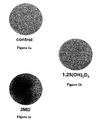
- Figure 1 illustrates photographs of the osteoblast cultures after 14 days of incubation and shows dramatically that very little change is introduced by 1,25-(OH) 2 D 3 when provided at 10 -8 molar.
- the native vitamin D hormone appears to have a minimum effect on the osteoblasts to form mineralized bone.
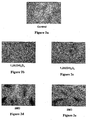
- Figure 2 provides a Von Kossa stained series of cultures with different concentrations of 1,25-(OH) 2 D 3 or 2MD. These results clearly demonstrate that 2MD has a unique and strong action on stimulating the osteoblast cultures to form mineralized bone as revealed by the Von Kossa stain. Even at a concentration of 10 -12 molar, 2MD produced a saturating degree of new bone formation. These results have been repeated with different human osteoblast cultures on several occasions with identical results and conclusions.
- a patient who has fractured any portion of his/her skeleton could be treated orally, systemically, or directly with 2MD to facilitate fracture healing.
- 2MD in a slow-release form at the site of the fracture; thereby providing a slow-release form such as 2MD 25-acetate or in an osmotic minipump to deliver a small amount of this compound each hour, or could be implanted in an immobilized form or injected in an immobilized form into the fracture area.
- this compound either provided systemically or placed at the site would markedly stimulate the growth and healing of bone transplants as for example in distraction osteogenesis procedures.
- this compound could be very useful in patients who have had implants or devises that are used to heal or hold bone in place.
Landscapes
- Health & Medical Sciences (AREA)
- Medicinal Chemistry (AREA)
- Veterinary Medicine (AREA)
- Public Health (AREA)
- General Health & Medical Sciences (AREA)
- Animal Behavior & Ethology (AREA)
- Life Sciences & Earth Sciences (AREA)
- Chemical & Material Sciences (AREA)
- Pharmacology & Pharmacy (AREA)
- Epidemiology (AREA)
- Organic Chemistry (AREA)
- Bioinformatics & Cheminformatics (AREA)
- General Chemical & Material Sciences (AREA)
- Chemical Kinetics & Catalysis (AREA)
- Nuclear Medicine, Radiotherapy & Molecular Imaging (AREA)
- Engineering & Computer Science (AREA)
- Physical Education & Sports Medicine (AREA)
- Obesity (AREA)
- Diabetes (AREA)
- Rheumatology (AREA)
- Hematology (AREA)
- Endocrinology (AREA)
- Nutrition Science (AREA)
- Orthopedic Medicine & Surgery (AREA)
- Pharmaceuticals Containing Other Organic And Inorganic Compounds (AREA)
- Prostheses (AREA)
Applications Claiming Priority (3)
| Application Number | Priority Date | Filing Date | Title |
|---|---|---|---|
| US10/105,826 US20030195175A1 (en) | 2002-03-25 | 2002-03-25 | Use of carbon-2-modified-vitamin D analogs to induce the formation of new bone |
| US105826 | 2002-03-25 | ||
| PCT/US2003/007443 WO2003082300A1 (en) | 2002-03-25 | 2003-03-12 | Use of carbon-2-modified-vitamin d analogs to induce the formation of new bone |
Publications (2)
| Publication Number | Publication Date |
|---|---|
| EP1494680A1 EP1494680A1 (en) | 2005-01-12 |
| EP1494680B1 true EP1494680B1 (en) | 2008-09-03 |
Family
ID=28673538
Family Applications (1)
| Application Number | Title | Priority Date | Filing Date |
|---|---|---|---|
| EP03716465A Expired - Lifetime EP1494680B1 (en) | 2002-03-25 | 2003-03-12 | Use of carbon-2-modified-vitamin d analogs to induce the formation of new bone |
Country Status (20)
| Country | Link |
|---|---|
| US (3) | US20030195175A1 (enExample) |
| EP (1) | EP1494680B1 (enExample) |
| JP (1) | JP2005527558A (enExample) |
| KR (1) | KR100983953B1 (enExample) |
| CN (1) | CN100531739C (enExample) |
| AT (1) | ATE406901T1 (enExample) |
| AU (1) | AU2003220169B2 (enExample) |
| BR (1) | BR0308701A (enExample) |
| CA (1) | CA2480125C (enExample) |
| DE (1) | DE60323351D1 (enExample) |
| DK (1) | DK1494680T3 (enExample) |
| ES (1) | ES2312764T3 (enExample) |
| HK (1) | HK1079996B (enExample) |
| IL (1) | IL164275A0 (enExample) |
| MX (1) | MXPA04009288A (enExample) |
| NZ (1) | NZ535843A (enExample) |
| PL (1) | PL372346A1 (enExample) |
| PT (1) | PT1494680E (enExample) |
| WO (1) | WO2003082300A1 (enExample) |
| ZA (1) | ZA200408153B (enExample) |
Families Citing this family (13)
| Publication number | Priority date | Publication date | Assignee | Title |
|---|---|---|---|---|
| CA2539361A1 (en) * | 2003-09-19 | 2005-03-31 | Pfizer Products Inc. | Pharmaceutical compositions and methods comprising combinations of 2-alkylidene-19-nor-vitamin d derivatives and an estrogen agonist/antagonist |
| KR20060040744A (ko) * | 2003-09-19 | 2006-05-10 | 화이자 프로덕츠 인크. | 쇠약, 근육 손상 또는 근육감소증 치료용2-알킬리덴-19-노르-비타민 d 유도체 |
| WO2005027928A1 (en) * | 2003-09-19 | 2005-03-31 | Pfizer Products Inc. | 2-alkylidene-19-nor-vit amin d derivatives for the treatment of hypocalcemic tetany or hyproparathyroidism |
| WO2005027919A1 (en) * | 2003-09-19 | 2005-03-31 | Pfizer Products Inc. | 2-alkylidene-19-nor-vitamin d derivatives for the treatment of a second hip fracture |
| AU2004273667A1 (en) * | 2003-09-19 | 2005-03-31 | Wisconsin Alumni Research Foundation (Warf) | 2-alkylidene-19-nor-vitamin D derivatives for the treatment of osteopenia or male osteoporosis |
| US7214671B2 (en) * | 2004-02-19 | 2007-05-08 | Wisconsin Alumni Research Foundation | Use of 2-methylene-19-nor-20(S)-1α,25-dihydroxyvitamin D3 for the prophylaxis of bone diseases |
| EP1743023A1 (en) * | 2004-05-07 | 2007-01-17 | Wisconsin Alumni Research Foundation | Method of forming mesenchymal stem cells from embryonic stem cells |
| WO2006061683A1 (en) * | 2004-12-09 | 2006-06-15 | Pfizer Products Inc. | 2-alkylidene-19-nor-vitamin d derivatives for the treatment of osteogenesis imperfecta |
| US7528122B2 (en) | 2006-02-02 | 2009-05-05 | Wisconsin Alumni Research Foundation | Vitamin D analog—NEL, methods and uses thereof |
| US7803789B2 (en) * | 2006-02-02 | 2010-09-28 | Wisconsin Alumni Research Foundation | Vitamin D analog—RAK, methods and uses thereof |
| NZ595727A (en) * | 2009-04-17 | 2013-11-29 | Vidasym Inc | Vitamin d receptor agonists and uses thereof |
| US9688596B2 (en) * | 2015-08-05 | 2017-06-27 | Wisconsin Alumni Research Foundation | Synthesis and biological activity of 2-methylene analogs of calcitriol and related compounds |
| CN111588506B (zh) * | 2020-01-02 | 2022-01-25 | 南京医科大学 | 一种含维生素c的钛种植体存储液的应用 |
Family Cites Families (18)
| Publication number | Priority date | Publication date | Assignee | Title |
|---|---|---|---|---|
| US584928A (en) * | 1897-06-22 | Schlag | ||
| US4666634A (en) * | 1984-12-05 | 1987-05-19 | Chugai Seiyaku Kabushiki Kaisha | vitamin D3 derivatives having a substituent at 2-position |
| IL74617A (en) * | 1985-03-15 | 1988-11-15 | Yeda Res & Dev | Compositions comprising a vitamin d derivative and method for the local treatment of bone fractures in animals |
| US5246925A (en) * | 1989-03-09 | 1993-09-21 | Wisconsin Alumni Research Foundation | 19-nor-vitamin D compounds for use in treating hyperparathyroidism |
| CA1333616C (en) * | 1989-03-09 | 1994-12-20 | Hector F. Deluca | 19-nor-vitamin d compounds |
| US5556645A (en) * | 1990-01-12 | 1996-09-17 | Bockman; Richard | Methods of enhancing wound healing and tissue repair |
| US5086191A (en) * | 1991-05-28 | 1992-02-04 | Wisconsin Alumni Research Foundation | Intermediates for the synthesis of 19-nor vitamin D compounds |
| JP2898882B2 (ja) * | 1993-04-05 | 1999-06-02 | ウイスコンシン アラムナイ リサーチ フオンデーシヨン | 2−位に置換基を有する19−ノル−ビタミンd3 化合物 |
| US5565589A (en) * | 1993-11-03 | 1996-10-15 | Wisconsin Alumni Research Foundation | 17-formyl-5,6-trans-vitamin D compounds |
| US5428029A (en) * | 1993-11-24 | 1995-06-27 | Hoffmann-La Roche Inc. | Vitamin D3 fluorinated analogs |
| WO1997011053A1 (en) * | 1995-09-21 | 1997-03-27 | Wisconsin Alumni Research Foundation | Calcitriol derivatives and their uses |
| US5976142A (en) * | 1996-10-16 | 1999-11-02 | Chin; Martin | Apparatus and method for distraction osteogenesis of small alveolar bone |
| US5945410A (en) * | 1997-03-17 | 1999-08-31 | Wisconsin Alumni Research Foundation | 2-alkyl-19-nor-vitamin D compounds |
| US5843928A (en) * | 1997-03-17 | 1998-12-01 | Wisconsin Alumni Research Foundation | 2-alkylidene-19-nor-vitamin D compounds |
| US6392071B1 (en) * | 1997-03-17 | 2002-05-21 | Wisconsin Alumni: Research Foundation | 26,27-homologated-20-EPI-2-alkylidene-19-nor-vitamin D compounds |
| US6306844B1 (en) * | 1997-03-17 | 2001-10-23 | Wisconsin Alumni Research Foundation | Use of 2α-methyl-19-nor-20(S)-1α, 25-dihydroxyvitamin D3 to increase bone strength |
| CA2297489A1 (en) * | 1997-07-30 | 1999-02-11 | Emory University | Novel bone mineralization proteins, dna, vectors, expression systems |
| EP1301189A2 (en) * | 2000-07-14 | 2003-04-16 | Wisconsin Alumni Research Foundation | USE OF 2-METHYLENE-19-NOR-20(S)-1$g(a),25-DIHYDROXYVITAMIN D 3? TO INCREASE BONE STRENGTH |
-
2002
- 2002-03-25 US US10/105,826 patent/US20030195175A1/en not_active Abandoned
-
2003
- 2003-03-12 CA CA002480125A patent/CA2480125C/en not_active Expired - Fee Related
- 2003-03-12 US US10/509,065 patent/US20050203071A1/en not_active Abandoned
- 2003-03-12 AU AU2003220169A patent/AU2003220169B2/en not_active Ceased
- 2003-03-12 BR BR0308701-8A patent/BR0308701A/pt not_active Application Discontinuation
- 2003-03-12 JP JP2003579837A patent/JP2005527558A/ja active Pending
- 2003-03-12 HK HK06100147.6A patent/HK1079996B/zh not_active IP Right Cessation
- 2003-03-12 MX MXPA04009288A patent/MXPA04009288A/es active IP Right Grant
- 2003-03-12 ES ES03716465T patent/ES2312764T3/es not_active Expired - Lifetime
- 2003-03-12 CN CNB038119684A patent/CN100531739C/zh not_active Expired - Fee Related
- 2003-03-12 KR KR1020047015427A patent/KR100983953B1/ko not_active Expired - Fee Related
- 2003-03-12 PT PT03716465T patent/PT1494680E/pt unknown
- 2003-03-12 EP EP03716465A patent/EP1494680B1/en not_active Expired - Lifetime
- 2003-03-12 NZ NZ535843A patent/NZ535843A/xx not_active IP Right Cessation
- 2003-03-12 AT AT03716465T patent/ATE406901T1/de active
- 2003-03-12 DK DK03716465T patent/DK1494680T3/da active
- 2003-03-12 IL IL16427503A patent/IL164275A0/xx not_active IP Right Cessation
- 2003-03-12 PL PL03372346A patent/PL372346A1/xx unknown
- 2003-03-12 WO PCT/US2003/007443 patent/WO2003082300A1/en not_active Ceased
- 2003-03-12 DE DE60323351T patent/DE60323351D1/de not_active Expired - Lifetime
-
2004
- 2004-10-08 ZA ZA200408153A patent/ZA200408153B/xx unknown
-
2010
- 2010-12-02 US US12/958,879 patent/US20110112056A1/en not_active Abandoned
Also Published As
| Publication number | Publication date |
|---|---|
| CA2480125A1 (en) | 2003-10-09 |
| PT1494680E (pt) | 2008-10-21 |
| AU2003220169B2 (en) | 2008-09-11 |
| EP1494680A1 (en) | 2005-01-12 |
| WO2003082300A1 (en) | 2003-10-09 |
| US20110112056A1 (en) | 2011-05-12 |
| CN100531739C (zh) | 2009-08-26 |
| NZ535843A (en) | 2006-03-31 |
| US20030195175A1 (en) | 2003-10-16 |
| HK1079996B (zh) | 2010-04-01 |
| DK1494680T3 (da) | 2008-11-17 |
| JP2005527558A (ja) | 2005-09-15 |
| PL372346A1 (en) | 2005-07-11 |
| KR100983953B1 (ko) | 2010-09-27 |
| MXPA04009288A (es) | 2005-06-08 |
| AU2003220169A1 (en) | 2003-10-13 |
| ZA200408153B (en) | 2006-03-29 |
| CN1655797A (zh) | 2005-08-17 |
| DE60323351D1 (de) | 2008-10-16 |
| BR0308701A (pt) | 2005-01-18 |
| CA2480125C (en) | 2009-12-29 |
| KR20040095346A (ko) | 2004-11-12 |
| ES2312764T3 (es) | 2009-03-01 |
| US20050203071A1 (en) | 2005-09-15 |
| HK1079996A1 (zh) | 2006-04-21 |
| IL164275A0 (en) | 2005-12-18 |
| ATE406901T1 (de) | 2008-09-15 |
Similar Documents
| Publication | Publication Date | Title |
|---|---|---|
| US20110112056A1 (en) | Use of Carbon-2-Modified-Vitamin D Analogs to Induce the Formation of New Bone | |
| US6579861B2 (en) | 1α-hydroxy-2-methylene-19-nor-homopregnacalciferol and its uses | |
| AU2001273303B2 (en) | Use of 2alpha-methyl-19-nor-20(s)-1alpha,25-dihydroxyvitamin D3 to increase bone strength | |
| US6627622B2 (en) | (20S)-1α-hydroxy-2-methylene-19-nor-bishomopregnacalciferol and its uses | |
| EP1482951A1 (en) | Alpha-hydroxy-2-methylene-10-nor-pregnacalciferol and its uses | |
| US7115594B2 (en) | Use of 2-methylene-19-nor-20(S)-1α,25-dihydroxyvitamin D3 to increase bone strength | |
| EP1722856B1 (en) | Use of 2-methylene-19-nor-20(s)-1alpha,25-dihydroxyvitamin d3 for the prophylaxis of bone diseases | |
| US5696103A (en) | Method for treating osteoporosis |
Legal Events
| Date | Code | Title | Description |
|---|---|---|---|
| PUAI | Public reference made under article 153(3) epc to a published international application that has entered the european phase |
Free format text: ORIGINAL CODE: 0009012 |
|
| 17P | Request for examination filed |
Effective date: 20041008 |
|
| AK | Designated contracting states |
Kind code of ref document: A1 Designated state(s): AT BE BG CH CY CZ DE DK EE ES FI FR GB GR HU IE IT LI LU MC NL PT RO SE SI SK TR |
|
| AX | Request for extension of the european patent |
Extension state: AL LT LV MK |
|
| GRAP | Despatch of communication of intention to grant a patent |
Free format text: ORIGINAL CODE: EPIDOSNIGR1 |
|
| GRAS | Grant fee paid |
Free format text: ORIGINAL CODE: EPIDOSNIGR3 |
|
| GRAA | (expected) grant |
Free format text: ORIGINAL CODE: 0009210 |
|
| AK | Designated contracting states |
Kind code of ref document: B1 Designated state(s): AT BE BG CH CY CZ DE DK EE ES FI FR GB GR HU IE IT LI LU MC NL PT RO SE SI SK TR |
|
| REG | Reference to a national code |
Ref country code: GB Ref legal event code: FG4D |
|
| REG | Reference to a national code |
Ref country code: CH Ref legal event code: EP |
|
| REG | Reference to a national code |
Ref country code: IE Ref legal event code: FG4D |
|
| REF | Corresponds to: |
Ref document number: 60323351 Country of ref document: DE Date of ref document: 20081016 Kind code of ref document: P |
|
| REG | Reference to a national code |
Ref country code: PT Ref legal event code: SC4A Free format text: AVAILABILITY OF NATIONAL TRANSLATION Effective date: 20081009 |
|
| REG | Reference to a national code |
Ref country code: SE Ref legal event code: TRGR |
|
| REG | Reference to a national code |
Ref country code: CH Ref legal event code: NV Representative=s name: PATENTANWAELTE SCHAAD, BALASS, MENZL & PARTNER AG |
|
| REG | Reference to a national code |
Ref country code: DK Ref legal event code: T3 |
|
| REG | Reference to a national code |
Ref country code: GR Ref legal event code: EP Ref document number: 20080403174 Country of ref document: GR |
|
| PG25 | Lapsed in a contracting state [announced via postgrant information from national office to epo] |
Ref country code: NL Free format text: LAPSE BECAUSE OF FAILURE TO SUBMIT A TRANSLATION OF THE DESCRIPTION OR TO PAY THE FEE WITHIN THE PRESCRIBED TIME-LIMIT Effective date: 20080903 |
|
| PG25 | Lapsed in a contracting state [announced via postgrant information from national office to epo] |
Ref country code: SI Free format text: LAPSE BECAUSE OF FAILURE TO SUBMIT A TRANSLATION OF THE DESCRIPTION OR TO PAY THE FEE WITHIN THE PRESCRIBED TIME-LIMIT Effective date: 20080903 |
|
| REG | Reference to a national code |
Ref country code: ES Ref legal event code: FG2A Ref document number: 2312764 Country of ref document: ES Kind code of ref document: T3 |
|
| NLV1 | Nl: lapsed or annulled due to failure to fulfill the requirements of art. 29p and 29m of the patents act | ||
| PG25 | Lapsed in a contracting state [announced via postgrant information from national office to epo] |
Ref country code: BG Free format text: LAPSE BECAUSE OF FAILURE TO SUBMIT A TRANSLATION OF THE DESCRIPTION OR TO PAY THE FEE WITHIN THE PRESCRIBED TIME-LIMIT Effective date: 20081203 |
|
| PG25 | Lapsed in a contracting state [announced via postgrant information from national office to epo] |
Ref country code: CZ Free format text: LAPSE BECAUSE OF FAILURE TO SUBMIT A TRANSLATION OF THE DESCRIPTION OR TO PAY THE FEE WITHIN THE PRESCRIBED TIME-LIMIT Effective date: 20080903 Ref country code: RO Free format text: LAPSE BECAUSE OF FAILURE TO SUBMIT A TRANSLATION OF THE DESCRIPTION OR TO PAY THE FEE WITHIN THE PRESCRIBED TIME-LIMIT Effective date: 20080903 Ref country code: SK Free format text: LAPSE BECAUSE OF FAILURE TO SUBMIT A TRANSLATION OF THE DESCRIPTION OR TO PAY THE FEE WITHIN THE PRESCRIBED TIME-LIMIT Effective date: 20080903 |
|
| PLBE | No opposition filed within time limit |
Free format text: ORIGINAL CODE: 0009261 |
|
| STAA | Information on the status of an ep patent application or granted ep patent |
Free format text: STATUS: NO OPPOSITION FILED WITHIN TIME LIMIT |
|
| PG25 | Lapsed in a contracting state [announced via postgrant information from national office to epo] |
Ref country code: EE Free format text: LAPSE BECAUSE OF FAILURE TO SUBMIT A TRANSLATION OF THE DESCRIPTION OR TO PAY THE FEE WITHIN THE PRESCRIBED TIME-LIMIT Effective date: 20080903 |
|
| 26N | No opposition filed |
Effective date: 20090604 |
|
| PG25 | Lapsed in a contracting state [announced via postgrant information from national office to epo] |
Ref country code: MC Free format text: LAPSE BECAUSE OF NON-PAYMENT OF DUE FEES Effective date: 20090331 |
|
| PG25 | Lapsed in a contracting state [announced via postgrant information from national office to epo] |
Ref country code: LU Free format text: LAPSE BECAUSE OF NON-PAYMENT OF DUE FEES Effective date: 20090312 |
|
| PG25 | Lapsed in a contracting state [announced via postgrant information from national office to epo] |
Ref country code: HU Free format text: LAPSE BECAUSE OF FAILURE TO SUBMIT A TRANSLATION OF THE DESCRIPTION OR TO PAY THE FEE WITHIN THE PRESCRIBED TIME-LIMIT Effective date: 20090304 |
|
| PG25 | Lapsed in a contracting state [announced via postgrant information from national office to epo] |
Ref country code: TR Free format text: LAPSE BECAUSE OF FAILURE TO SUBMIT A TRANSLATION OF THE DESCRIPTION OR TO PAY THE FEE WITHIN THE PRESCRIBED TIME-LIMIT Effective date: 20080903 |
|
| PG25 | Lapsed in a contracting state [announced via postgrant information from national office to epo] |
Ref country code: CY Free format text: LAPSE BECAUSE OF FAILURE TO SUBMIT A TRANSLATION OF THE DESCRIPTION OR TO PAY THE FEE WITHIN THE PRESCRIBED TIME-LIMIT Effective date: 20080903 |
|
| REG | Reference to a national code |
Ref country code: FR Ref legal event code: PLFP Year of fee payment: 14 |
|
| REG | Reference to a national code |
Ref country code: FR Ref legal event code: PLFP Year of fee payment: 15 |
|
| REG | Reference to a national code |
Ref country code: FR Ref legal event code: PLFP Year of fee payment: 16 |
|
| PGFP | Annual fee paid to national office [announced via postgrant information from national office to epo] |
Ref country code: DE Payment date: 20180227 Year of fee payment: 16 Ref country code: CH Payment date: 20180314 Year of fee payment: 16 Ref country code: DK Payment date: 20180312 Year of fee payment: 16 Ref country code: GB Payment date: 20180307 Year of fee payment: 16 Ref country code: FI Payment date: 20180312 Year of fee payment: 16 |
|
| PGFP | Annual fee paid to national office [announced via postgrant information from national office to epo] |
Ref country code: SE Payment date: 20180313 Year of fee payment: 16 Ref country code: AT Payment date: 20180226 Year of fee payment: 16 Ref country code: PT Payment date: 20180312 Year of fee payment: 16 Ref country code: BE Payment date: 20180214 Year of fee payment: 16 Ref country code: IT Payment date: 20180321 Year of fee payment: 16 Ref country code: IE Payment date: 20180312 Year of fee payment: 16 Ref country code: GR Payment date: 20180214 Year of fee payment: 16 Ref country code: FR Payment date: 20180223 Year of fee payment: 16 |
|
| PGFP | Annual fee paid to national office [announced via postgrant information from national office to epo] |
Ref country code: ES Payment date: 20180402 Year of fee payment: 16 |
|
| REG | Reference to a national code |
Ref country code: DE Ref legal event code: R119 Ref document number: 60323351 Country of ref document: DE |
|
| REG | Reference to a national code |
Ref country code: DK Ref legal event code: EBP Effective date: 20190331 |
|
| REG | Reference to a national code |
Ref country code: SE Ref legal event code: EUG |
|
| PG25 | Lapsed in a contracting state [announced via postgrant information from national office to epo] |
Ref country code: PT Free format text: LAPSE BECAUSE OF NON-PAYMENT OF DUE FEES Effective date: 20190912 Ref country code: FI Free format text: LAPSE BECAUSE OF NON-PAYMENT OF DUE FEES Effective date: 20190312 Ref country code: SE Free format text: LAPSE BECAUSE OF NON-PAYMENT OF DUE FEES Effective date: 20190313 |
|
| REG | Reference to a national code |
Ref country code: CH Ref legal event code: PL |
|
| REG | Reference to a national code |
Ref country code: AT Ref legal event code: MM01 Ref document number: 406901 Country of ref document: AT Kind code of ref document: T Effective date: 20190312 |
|
| GBPC | Gb: european patent ceased through non-payment of renewal fee |
Effective date: 20190312 |
|
| REG | Reference to a national code |
Ref country code: BE Ref legal event code: MM Effective date: 20190331 |
|
| PG25 | Lapsed in a contracting state [announced via postgrant information from national office to epo] |
Ref country code: AT Free format text: LAPSE BECAUSE OF NON-PAYMENT OF DUE FEES Effective date: 20190312 Ref country code: CH Free format text: LAPSE BECAUSE OF NON-PAYMENT OF DUE FEES Effective date: 20190331 Ref country code: DE Free format text: LAPSE BECAUSE OF NON-PAYMENT OF DUE FEES Effective date: 20191001 Ref country code: GB Free format text: LAPSE BECAUSE OF NON-PAYMENT OF DUE FEES Effective date: 20190312 Ref country code: LI Free format text: LAPSE BECAUSE OF NON-PAYMENT OF DUE FEES Effective date: 20190331 Ref country code: IE Free format text: LAPSE BECAUSE OF NON-PAYMENT OF DUE FEES Effective date: 20190312 |
|
| PG25 | Lapsed in a contracting state [announced via postgrant information from national office to epo] |
Ref country code: BE Free format text: LAPSE BECAUSE OF NON-PAYMENT OF DUE FEES Effective date: 20190331 Ref country code: IT Free format text: LAPSE BECAUSE OF NON-PAYMENT OF DUE FEES Effective date: 20190312 Ref country code: FR Free format text: LAPSE BECAUSE OF NON-PAYMENT OF DUE FEES Effective date: 20190331 Ref country code: GR Free format text: LAPSE BECAUSE OF NON-PAYMENT OF DUE FEES Effective date: 20191007 |
|
| PG25 | Lapsed in a contracting state [announced via postgrant information from national office to epo] |
Ref country code: DK Free format text: LAPSE BECAUSE OF NON-PAYMENT OF DUE FEES Effective date: 20190331 |
|
| REG | Reference to a national code |
Ref country code: ES Ref legal event code: FD2A Effective date: 20200727 |
|
| PG25 | Lapsed in a contracting state [announced via postgrant information from national office to epo] |
Ref country code: ES Free format text: LAPSE BECAUSE OF NON-PAYMENT OF DUE FEES Effective date: 20190313 |