EP1494439A2 - System zur Verwendung eines Kommunikationsendgeräts als Rechnerprozessor - Google Patents
System zur Verwendung eines Kommunikationsendgeräts als Rechnerprozessor Download PDFInfo
- Publication number
- EP1494439A2 EP1494439A2 EP04014591A EP04014591A EP1494439A2 EP 1494439 A2 EP1494439 A2 EP 1494439A2 EP 04014591 A EP04014591 A EP 04014591A EP 04014591 A EP04014591 A EP 04014591A EP 1494439 A2 EP1494439 A2 EP 1494439A2
- Authority
- EP
- European Patent Office
- Prior art keywords
- communications device
- processor
- communications
- link
- accordance
- Prior art date
- Legal status (The legal status is an assumption and is not a legal conclusion. Google has not performed a legal analysis and makes no representation as to the accuracy of the status listed.)
- Withdrawn
Links
Images


Classifications
-
- H—ELECTRICITY
- H04—ELECTRIC COMMUNICATION TECHNIQUE
- H04M—TELEPHONIC COMMUNICATION
- H04M1/00—Substation equipment, e.g. for use by subscribers
- H04M1/72—Mobile telephones; Cordless telephones, i.e. devices for establishing wireless links to base stations without route selection
- H04M1/725—Cordless telephones
- H04M1/72502—Cordless telephones with one base station connected to a single line
-
- G—PHYSICS
- G06—COMPUTING OR CALCULATING; COUNTING
- G06F—ELECTRIC DIGITAL DATA PROCESSING
- G06F15/00—Digital computers in general; Data processing equipment in general
- G06F15/16—Combinations of two or more digital computers each having at least an arithmetic unit, a program unit and a register, e.g. for a simultaneous processing of several programs
-
- H—ELECTRICITY
- H04—ELECTRIC COMMUNICATION TECHNIQUE
- H04M—TELEPHONIC COMMUNICATION
- H04M1/00—Substation equipment, e.g. for use by subscribers
- H04M1/253—Telephone sets using digital voice transmission
- H04M1/2535—Telephone sets using digital voice transmission adapted for voice communication over an Internet Protocol [IP] network
-
- H—ELECTRICITY
- H04—ELECTRIC COMMUNICATION TECHNIQUE
- H04M—TELEPHONIC COMMUNICATION
- H04M1/00—Substation equipment, e.g. for use by subscribers
- H04M1/72—Mobile telephones; Cordless telephones, i.e. devices for establishing wireless links to base stations without route selection
- H04M1/724—User interfaces specially adapted for cordless or mobile telephones
- H04M1/72403—User interfaces specially adapted for cordless or mobile telephones with means for local support of applications that increase the functionality
- H04M1/72409—User interfaces specially adapted for cordless or mobile telephones with means for local support of applications that increase the functionality by interfacing with external accessories
- H04M1/72412—User interfaces specially adapted for cordless or mobile telephones with means for local support of applications that increase the functionality by interfacing with external accessories using two-way short-range wireless interfaces
-
- H—ELECTRICITY
- H04—ELECTRIC COMMUNICATION TECHNIQUE
- H04M—TELEPHONIC COMMUNICATION
- H04M1/00—Substation equipment, e.g. for use by subscribers
- H04M1/60—Substation equipment, e.g. for use by subscribers including speech amplifiers
- H04M1/6033—Substation equipment, e.g. for use by subscribers including speech amplifiers for providing handsfree use or a loudspeaker mode in telephone sets
- H04M1/6041—Portable telephones adapted for handsfree use
-
- H—ELECTRICITY
- H04—ELECTRIC COMMUNICATION TECHNIQUE
- H04M—TELEPHONIC COMMUNICATION
- H04M1/00—Substation equipment, e.g. for use by subscribers
- H04M1/72—Mobile telephones; Cordless telephones, i.e. devices for establishing wireless links to base stations without route selection
- H04M1/724—User interfaces specially adapted for cordless or mobile telephones
- H04M1/72403—User interfaces specially adapted for cordless or mobile telephones with means for local support of applications that increase the functionality
- H04M1/72442—User interfaces specially adapted for cordless or mobile telephones with means for local support of applications that increase the functionality for playing music files
Definitions
- the present invention is generally related to communications devices and processors, and more specifically related to utilizing cellular telephone as a peripheral for a computer processor.
- Computers such as personal computers and laptops
- the quality of the audio from a personal computer, and especially a laptop is typically not suitable, or optimized for all potential uses, for example holding a voice conversation.
- audio from a computer one must be in the vicinity of the computer, privacy issues are also a concern in the case of verbal communications, as anyone else in the vicinity of the computer will also hear all sides of the conversation.
- much of the power supplied by the battery is used to render an image, or simply display status on the large display.
- Cellular telephones are extremely popular. It is not uncommon for a person to forsake her land line and use her cell phone as her only communications device. Often, a person may spend considerable time choosing a cell phone. When considering a cell phone, a person may look at the quality of the audio, the quality of the video (if provided), the overall feel of the cell phone, the color, the style, the extras (e.g., headset, chargers), and the service plan for example. People use cell phones during all sorts of occasions, such as while commuting to work, while eating, while walking, while working, while playing, just to name a few. Thus, it is understandable how a person can become quite comfortable with her cell phone.
- a purpose optimized communications device such as a cellular telephone as a peripheral for a processor, thus providing the ability to render audio, still images and video as well as user interaction provided by the processor via the communications device, allowing the user to choose a single device such as a cellular handset for its intended purpose, as well as for use as a PC peripheral requiring similar attributes.
- a system and method in accordance with the present invention utilizes a communications device, such as a cellular telephone for example, as a peripheral for a processor, such as a personal computer (PC) or laptop.
- the communications device and the processor communicate via a communications link which provides direct communications. That is the communications device and the processor communicate with each other without having to communicate through any intervening systems.
- the communications device is capable of communicating with other communications devices independent of the processor and the communications link. For example, if the communications device is a cellular telephone, the cellular telephone can communicate with other cellular telephones independent of the processor and the communications link, and can communicate directly with the processor without using the cellular network.
- the communications link can be a wired or wireless link (e.g., a Bluetooth link).
- the communications device renders data received from the processor via the communication link, such as audio and/or video data.
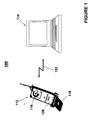
- Figure 1 is an illustration of a processor-centric system comprising a peripheral communications device and a processor in accordance with the present invention
- FIG. 2 is an illustration of a processor-centric system comprising a plurality of communications devices coupled to a processor via a communications link, wherein the processor is also coupled to a network via a network link, in accordance with the present invention.
- FIG. 3 is an illustration of an exemplary communications device comprising a headset in accordance with the present invention
- Figure 4 is an illustration of exemplary multiple communications devices concurrently receiving different information from the processor via communications link in accordance with the present invention
- FIG. 5 is block diagram of an exemplary system for utilizing a communications device as a peripheral for a processor, in accordance with the present invention.
- Figure 6 is a flow diagram of an exemplary process for rendering data from a processor with a communications device in accordance with the present invention.
- a system in accordance with the present invention comprises a communications device, such as a cellular telephone for example, functioning as a peripheral to a processor, such as a laptop or personal computer (PC), for example.
- the communications device replaces the speaker, microphone, and/or display of the processor.
- the communications device is directly coupled to the processor.
- the communications device is a cellular telephone, it is not coupled to the processor via a cellular network, but rather is coupled directly to the processor, by any of several exemplary communications links described below.
- Various embodiments are described herein. These various embodiments include the communications device functioning as a voice peripheral, an audio peripheral, a display peripheral, and combinations thereof.
- Embodiments also include the communications link between the communications device and the processor comprising a wireless link, a wired link, an optical link, and combinations thereof. Further embodiments include the communications device coupled to other entities (e.g., the Internet) via the processor. User interaction with the processor can be accomplished via the communications device. For example, a user can navigate a play list, change setting on the processor, or send text messages via the communications device. These actions can be accomplished by a keypad and/or wheel (e.g., thumbwheel) on the communications device.
- a keypad and/or wheel e.g., thumbwheel
- This processor-centric system provides the ability for the processor to run applications and transmit information related to the applications to the communications device.
- the processor can perform a multimedia application such as playing a movie (e.g., stored on internal memory or from a compact disk (CD)).
- the movie is transmitted to the communications peripheral, which in turn, renders the movie. Rendering the movie on the communications device in this manner provides many benefits.
- the processor is a laptop running on a battery pack, the life of the battery pack can be extended because the processor does not have to use its display to render the movie.
- several users can watch separate movies on their respective communications devices (e.g., cell phones).
- the separate movies are transmitted by the processor (e.g., laptop), which is capable of running several application concurrently. This scenario is especially advantageous on airplanes, and the like.
- FIG 1 is an illustration of a processor-centric system 100 comprising a peripheral communications device 112 and a processor 114.
- the communications device 112 is depicted as a cellular telephone in Figure 1, it is to be understood that the communications device 112 can be any appropriate communications device. Examples of an appropriate communications device include a cellular telephone, a portable phone, a personal digital assistant (PDA), a Smart Personal Object, and a portable or stationary electronic communications device.
- the processor 114 is depicted as a laptop computer in Figure 1, it is to be understood that the processor 114 can be any appropriate processor. Examples of an appropriate processor include a laptop computer, a notebook computer, a PC, a server, a desktop computer, a mobile computer, and a handheld computer.
- the communications device 112 comprises a speaker 116 for rendering acoustic information, and a microphone 118 for receiving acoustic information.
- the communications device 112 optionally comprises a display 120 for rendering visual information.
- the communications link 122 facilitates the transfer of information (also referred to as data) between the communications device 112 and the processor 114.
- the communications link 122 comprises a transmitter and receiver on the communications device 122 and a transmitter and receiver on the processor 114.
- the communications link 122 can comprise any appropriate communications link. Examples of an appropriate communications link include a wireless link, a radio frequency (RF) link, a Bluetooth link, a wired link, a Universal Serial Buss (USB) link, an optical link, and an infrared link.
- the communications device 112 is configured to a peripheral mode. The peripheral mode allows the communications device 112 to be able to receive and transmit information from and to the processor 114. The peripheral mode can be activated from the communications device 112, from the processor 114, or a combination thereof.
- the communications device 112 functions as the speaker and microphone for the processor 114.
- the audio data provided by the processor 114 is transmitted to the communications device 112 via the communications link 122 and rendered by the speaker 116.
- acoustic information e.g., voice
- video data provided by the processor 114 is transmitted to the communications device 112 via the communications link 122 and rendered by the display 120.
- FIG. 2 is an illustration of a processor-centric system 200 comprising a plurality of communications devices 112 1 - 112 N coupled to a processor 114 via a communications link 122, wherein the processor 114 is also coupled to a network 214 via a network link 212, in accordance with an embodiment of the present invention.
- the network 214 can comprise any appropriate network, such as an intranet, a telephone network, or the internet, for example.
- the network link 212 can comprise any appropriate link capable of transferring data between the processor 114 and the network 214. Examples of an appropriate network link 212 includes a wired link, a wireless link, an optical link, a Transmission Control Protocol/Internet Protocol (TCP/IP) compatible link, or a combination thereof.
- TCP/IP Transmission Control Protocol/Internet Protocol
- Each communications device 112 1 through 112 N function as a true peripheral, thus the system 200 is a processor-centric system.
- Each communications device 112 is controlled by the processor 114.
- the processor 114 is coupled to a land line telephone system and configured to receive calls coming in from the land line.
- the processor 114 routes the call to selected ones of the communications devices 112 1 - 112 N .
- the processor 114 is coupled to the Internet and configured to receive voice communications via voice over internet protocol (VOIP).
- VOIP voice over internet protocol
- the processor 114 upon receiving a VOIP call, routes this call to selected ones of the communications devices 112 1 - 112 N via the direct communications link 122.
- the communications device 112 does not initiate the call.
- the routing of a call to a communications device 112 via the direct communications link 122 is not simply a download from the internet to a cellular telephone via a cellular network. The routing is controlled by the processor 114, and bypasses the cellular network.
- the communications link 122 can comprise any appropriate communications link capable of directly transferring information (data) between the communications device 112 and the processor 114.
- the communications link 112 comprises a Bluetooth communications link.
- Bluetooth is known in the art as a low power multi-channel RF communications standard.
- the processor 114 can concurrently communicate with selected communications device peripherals 112 1 - 112 N without interference.
- users of the system 200 can each listen to music over their respective communications device 112 which is being provided by the processor 114 via the communications link 122. All the users can listen to the same music, or each user can listen to her particular choice of music.
- the processor 114 is capable of processing several applications currently.
- the processor 114 is capable of processing several music applications concurrently. Utilizing a multi-channel embodiment of the communication link 122, each user can listen to selected music.
- the wireless feature of this embodiment of the communications link 122 allows the users to be mobile (e.g., all users do not have to sit in the same room).
- FIG 3 is an illustration of a communications device 112 comprising a headset 312.
- the communications device 112 comprises a headset 312 which, when in use, is coupled to the communications device via communications link 314.
- the use of the headset 312 allows a user 316 to listen to data (e.g., music or voice) provided by the communications device 112 via the communication link 314. This advantageously allows the user free use of her hands.
- the user 316 can listen to music while at the same time, utilizing the processor 114.
- the processor plays the music (e.g., via a media player application), transmits data related to the music via the communications link 122, which is received from the communications device 112 and transmitted to the headset 312 via the communications link 314.
- the communications link 314 can be any appropriate link such as a wireless link, a radio frequency (RF) link, a Bluetooth link, a wired link, a Universal Serial Buss (USB) link, an optical link, and an infrared link.
- the link 314 is a Bluetooth compatible link.
- the processor 114 is coupled to the internet, and the user 316 can concurrently play a group participation game with another person via the internet and talk to that person via the communications device 112.
- Figure 4 is an illustration of multiple communications devices 122 1 , 112 2 concurrently receiving different information from the processor 114 via communications link 122.
- the users depicted in Figure 4 are watching video information being rendered by displays 120 1 and 120 2 of the communications devices 112 1 and 112 2 , respectively.
- the users are concurrently listening to audio information being rendered by headsets 312 1 and 312 2 .
- audio and video information is transferred via communications link 122 from the processor 114 to the communications devices 112 1 and 112 2 .
- the communications devices 112 1 and 112 2 render the video information via displays 120 1 and 120 2 , respectively, and transmit audio information via the communications link 314 to respective headsets 312 1 and 312 2 .
- the headset 312 comprises a microphone for receiving acoustic information and transmitting that information to the communications device 112 via the communications link 314.
- This embodiment is particularly advantageous in scenarios involving multiple users who are out of earshot (not within audible range) of each other. For example, assume two users (husband and wife) are on an airplane and are not sitting near each other.
- the processor is a laptop computer
- the communications devices are cellular telephones having headsets
- the communications links 122 and 314 are Bluetooth compatible links.
- each user can concurrently watch a different movie. That is the laptop computer 114 can be instructed to play two selected movies (stored within the laptop) and transmit the information related to each movie over separate channels of the Bluetooth link 122.
- Each cellular telephone 112 can be configured to a peripheral mode.
- the peripheral mode allows the cellular telephone 112 to be able to receive and transmit information from and to the laptop 114.
- the video and audio information for each move is transmitted via the Bluetooth communications link 122 to the respective cellular telephones. That is, the husband's selected movie information is transmitted to his cell phone and the wife's selected movie information is transmitted to her cell phone.
- Each user watches the video portion of the respective movie on the display 120 of his or her cellular telephone 112.
- Each user also listens to the audio portion of the respective movie on his or her headset 312. If the wife wants to talk to the husband, for example, she can simply speak into the microphone on her headset 312 (or she could activate this feature via a switch), for example.
- the microphone receives her voice and transmits information related to her voice to her cellular telephone 112 via the Bluetooth link 314.
- Her cellular telephone 112 then transmits that information to the laptop computer 114 via the Bluetooth link 122.
- the laptop computer 114 then transmits the information to the husband's cellular telephone via the Bluetooth link 122.
- the wife can send a text message, or the like, to her husband.
- FIG. 5 is block diagram of a system 500 for utilizing a communications device 112 as a peripheral for a processor 114, in accordance with an exemplary embodiment of the present invention.
- the system 500 comprises a communications device 112, a processor 114, and optionally a headset 312.
- the communications device 512 comprises a microphone 526, a receiver 528, at least one speaker 530, a transmitter 532, and an optional display 534.
- the speaker(s) 530 and the display 534 are transducers for rendering audio information and video information, respectively, received from the processor 514 via the communications link.
- the receiver 528 receives data via the communications link.
- the communications link can be a link to the headset 516, to the processor 514, or a combination thereof.
- the receiver 528 provides the portion of the received data related to audio information to the speaker(s) 530.
- the speaker(s) 530 converts the received data into acoustic energy (renders the audio).
- the receiver 528 provides the portion of the received data related to video information to the display 534 (if a display is utilized).
- the display 534 converts the received data to video information (renders the video) and provides audio portion of that data to the microphone 526.
- the transmitter 532 provides data to the communications link.
- the transmitter 532 receives data related to acoustic information from the microphone 526. This data is transferred to the headset 516, the processor 514, or a combination thereof.
- the optional headset 516 comprises a microphone 518, a transmitter 520, at least one speaker 522, and a receiver 524.
- the receiver 524 receives data via the communications link. As described above the communications link is a link to the communications device 512.
- the receiver 524 provides the received data to the speaker(s) 522.
- the speaker(s) 52 converts the received data into acoustic energy (renders the audio).
- the transmitter 520 provides data to the communications link.
- the transmitter 520 receives data from the microphone 518. This data is transferred to the communications device 512.
- the headset comprises a switch 548 for allowing transmission of data from the microphone 518 to the transmitter 520.
- the switch 548 can be mechanically operated, voice activated, or a combination thereof.
- the processor 514 comprises a receiver 536 and a transmitter 540 coupled to the communications link.
- the communications link can is a link to the communications device 512.
- the processor 514 also comprises a receiver 538 and a transmitter 542 coupled to a network link.
- the network link can be coupled to a network (e.g., the internet).
- the receiver 536 receives data via the communications link.
- the communications link is a link to the communications device 512.
- the receiver 536 provides the received data to the processing portion 546 of the processor 514.
- the transmitter 540 provides data to the communications link.
- the transmitter 540 data is related to acoustic information, video information, or a combination thereof.
- control signals are transferred between the communications device 512 and the processor 514 via the communications link to configure the communications device 512 in and out of the peripheral mode.
- the communications device 516 is a cellular telephone
- the communication link is not a cellular network, but rather is a direct communications link between the communications device 512 and the processor 514..
- FIG. 6 is a flow diagram of an exemplary process for rendering data from a processor with a communications device in accordance with the present invention.
- data transmitted by the processor e.g., processor 114 is directly received by the communications device (e.g., communications device 112) via the communications link (e.g., communications link 122).
- Data can also be received by an auxiliary peripheral (e.g., headset 312) at step 612.
- Data received by the communications device is rendered by the communications device at step 614.
- audio data is rendered by an acoustic transducer (e.g., speaker(s) 116), and video data is rendered by a display device (e.g., display 120), if the communications device has a display device.
- a display device e.g., display 120
- Audio data can also be rendered by the auxiliary peripheral (e.g., headset 312) at step 614.
- Data can be directly transmitted from the communications device to the processor via the communications link at step 616.
- the communications can be transmitted data indicative of voice information and/or control information to the processor.
- Data can also be transmitted by the auxiliary peripheral (e.g., headset 312) at step 616.
- a method for rendering data from a processor with a communications device as described herein may be embodied in the form of computer-implemented processes and system for practicing those processes.
- a method for rendering data from a processor with a communications device as described herein may also be embodied in the form of computer program code embodied in tangible media, such as floppy diskettes, read only memories (ROMs), CD-ROMs, hard drives, high density disk, or any other computer-readable storage medium, wherein, when the computer program code is loaded into and executed by a computer, the computer becomes a system for practicing the invention.
- the methods for rendering data from a processor with a communications device as described herein may also be embodied in the form of computer program code, for example, whether stored in a storage medium, loaded into and/or executed by a computer, or transmitted over some transmission medium, such as over the electrical wiring or cabling, through fiber optics, or via electromagnetic radiation, wherein, when the computer program code is loaded into and executed by a computer, the computer becomes a system for practicing the invention.
- the computer program code segments configure the processor to create specific logic circuits.
- the various techniques described herein may be implemented in connection with hardware or software or, where appropriate, with a combination of both.
- the methods and apparatus of the present invention may take the form of program code (i.e., instructions) embodied in tangible media, such as floppy diskettes, CD-ROMs, hard drives, or any other machine-readable storage medium, wherein, when the program code is loaded into and executed by a machine, such as a computer, the machine becomes an apparatus for practicing the invention.
- the computing device will generally include a processor, a storage medium readable by the processor (including volatile and non-volatile memory and/or storage elements), at least one input device, and at least one output device.
- One or more programs that may utilize the signal processing services of the present invention are preferably implemented in a high level procedural or object oriented programming language to communicate with a computer.
- the program(s) can be implemented in assembly or machine language, if desired.
- the language may be a compiled or interpreted language, and combined with hardware implementations.
- the methods and apparatus of the present invention may also be practiced via communications embodied in the form of program code that is transmitted over some transmission medium, such as over electrical wiring or cabling, through fiber optics, or via any other form of transmission, wherein, when the program code is received and loaded into and executed by a machine, such as an EPROM, a gate array, a programmable logic device (PLD), a client computer, a video recorder or the like, or a receiving machine having the signal processing capabilities as described in exemplary embodiments above becomes an apparatus for practicing the invention.
- a machine such as an EPROM, a gate array, a programmable logic device (PLD), a client computer, a video recorder or the like, or a receiving machine having the signal processing capabilities as described in exemplary embodiments above becomes an apparatus for practicing the invention.
- PLD programmable logic device
- client computer a video recorder or the like
- a receiving machine having the signal processing capabilities as described in exemplary embodiments above becomes an apparatus for practicing the invention.
Landscapes
- Engineering & Computer Science (AREA)
- Computer Networks & Wireless Communication (AREA)
- Signal Processing (AREA)
- Human Computer Interaction (AREA)
- Theoretical Computer Science (AREA)
- Computer Hardware Design (AREA)
- General Engineering & Computer Science (AREA)
- General Physics & Mathematics (AREA)
- Physics & Mathematics (AREA)
- Software Systems (AREA)
- Mobile Radio Communication Systems (AREA)
- Telephone Function (AREA)
- Telephonic Communication Services (AREA)
- Information Transfer Between Computers (AREA)
Applications Claiming Priority (2)
| Application Number | Priority Date | Filing Date | Title |
|---|---|---|---|
| US10/611,123 US7349689B2 (en) | 2003-07-01 | 2003-07-01 | Communications device processor peripheral |
| US611123 | 2006-12-14 |
Publications (2)
| Publication Number | Publication Date |
|---|---|
| EP1494439A2 true EP1494439A2 (de) | 2005-01-05 |
| EP1494439A3 EP1494439A3 (de) | 2011-02-23 |
Family
ID=33435427
Family Applications (1)
| Application Number | Title | Priority Date | Filing Date |
|---|---|---|---|
| EP04014591A Withdrawn EP1494439A3 (de) | 2003-07-01 | 2004-06-22 | System zur Verwendung eines Kommunikationsendgeräts als Rechnerprozessor |
Country Status (6)
| Country | Link |
|---|---|
| US (1) | US7349689B2 (de) |
| EP (1) | EP1494439A3 (de) |
| JP (1) | JP2005027319A (de) |
| KR (1) | KR100935963B1 (de) |
| CN (2) | CN101527746A (de) |
| TW (1) | TWI354481B (de) |
Cited By (2)
| Publication number | Priority date | Publication date | Assignee | Title |
|---|---|---|---|---|
| EP1758356A2 (de) | 2005-08-22 | 2007-02-28 | Sony Ericsson Mobile Communications Japan, Inc. | Mobiles Endgerät, Kommunikationsendgerät, dazugehörige Anrufmethode und Anrufprogram |
| EP2056426B1 (de) * | 2007-10-30 | 2020-03-11 | Qualcomm Incorporated | Drahtlose Energieübertragung |
Families Citing this family (28)
| Publication number | Priority date | Publication date | Assignee | Title |
|---|---|---|---|---|
| GB2394080A (en) * | 2002-10-10 | 2004-04-14 | Nokia Corp | USB host device which relinquishes host status upon detection of elevated bus voltage |
| DK200301664A (da) * | 2003-11-10 | 2005-05-11 | Gn Netcom As | Kommunikationsenhed, der er koblet til en pc's pc-telefon |
| US8613669B1 (en) * | 2004-04-30 | 2013-12-24 | Activision Publishing, Inc. | Game controller with display and methods therefor |
| US7957733B2 (en) | 2004-07-16 | 2011-06-07 | Sellerbid, Inc. | Method and apparatus for multimedia communications with different user terminals |
| US20140071818A1 (en) | 2004-07-16 | 2014-03-13 | Virginia Innovation Sciences, Inc. | Method and system for efficient communication |
| US7899492B2 (en) | 2004-07-16 | 2011-03-01 | Sellerbid, Inc. | Methods, systems and apparatus for displaying the multimedia information from wireless communication networks |
| KR100662358B1 (ko) * | 2004-10-04 | 2007-01-02 | 엘지전자 주식회사 | 오디오 플레이어 조작 키가 구비된 이동 통신 단말기 |
| EP1672940A1 (de) * | 2004-12-20 | 2006-06-21 | Sony Ericsson Mobile Communications AB | Verfahren und System zum gemeinsamen Gebrauch von Mediendaten |
| TWM272321U (en) * | 2004-12-29 | 2005-08-01 | Wistron Corp | Wireless handset for VoIP |
| TW200627243A (en) * | 2005-01-27 | 2006-08-01 | Inventec Multimedia & Telecom | Connection method and system for wireless peripherals and computer platform |
| KR100714725B1 (ko) | 2005-08-29 | 2007-05-07 | 삼성전자주식회사 | 입력 정보의 노출을 방지하기 위한 입력 장치 및 입력 방법 |
| US9118770B2 (en) * | 2005-08-31 | 2015-08-25 | Plantronics, Inc. | Remote headset configuration |
| US20070135112A1 (en) * | 2005-12-13 | 2007-06-14 | Lessing Simon R | Method for configuring the functionality of a mobile multimedia or communication device |
| CN101115247B (zh) * | 2006-07-24 | 2011-05-11 | 中兴通讯股份有限公司 | 和个人电脑进行互动通讯的手机及其通讯的方法 |
| CN101132456B (zh) * | 2006-08-22 | 2011-08-10 | 中兴通讯股份有限公司 | 蓝牙多功能遥控器装置及其实现语音通信的方法 |
| CN101046783A (zh) * | 2007-04-29 | 2007-10-03 | 华为技术有限公司 | 外围设备运行方法、外围设备及主机 |
| US8301618B2 (en) * | 2008-02-26 | 2012-10-30 | Microsoft Corporation | Techniques to consume content and metadata |
| US9264669B2 (en) | 2008-02-26 | 2016-02-16 | Microsoft Technology Licensing, Llc | Content management that addresses levels of functionality |
| TWI370654B (en) * | 2008-04-01 | 2012-08-11 | Wistron Corp | Analog processing device for a data transmission device |
| US8346827B2 (en) | 2010-09-28 | 2013-01-01 | International Business Machines Corporation | Multimedia data delivery method and system |
| KR101810403B1 (ko) * | 2011-05-13 | 2017-12-19 | 삼성전자주식회사 | 휴대용 단말기에서 주변 디바이스의 데이터를 저장하기 위한 장치 및 방법 |
| EP2834774A4 (de) * | 2012-04-01 | 2016-06-08 | Intel Corp | Analyse von menschlichen befehlen in gestenform |
| US9451258B2 (en) | 2012-04-03 | 2016-09-20 | Qualcomm Incorporated | Chroma slice-level QP offset and deblocking |
| TWI532352B (zh) * | 2012-05-04 | 2016-05-01 | 財團法人資訊工業策進會 | 無演進封包核心直接通訊系統及其通訊連接方法 |
| WO2015112137A1 (en) * | 2014-01-22 | 2015-07-30 | Pearl Capital Developments Llc | Coordinated hand-off of audio data transmission |
| US10129773B2 (en) | 2014-03-24 | 2018-11-13 | Google Technology Holdings LLC | Methods and apparatus for managing data use |
| US20150271785A1 (en) * | 2014-03-24 | 2015-09-24 | Motorola Mobility Llc | Managing device resources and configuration |
| CN111124134A (zh) * | 2019-12-30 | 2020-05-08 | 歌尔科技有限公司 | 头戴显示设备的数据传输方法、装置及头戴显示设备 |
Family Cites Families (13)
| Publication number | Priority date | Publication date | Assignee | Title |
|---|---|---|---|---|
| JPH07288800A (ja) * | 1994-04-15 | 1995-10-31 | Hitachi Ltd | マルチメディアシステム |
| US6157620A (en) * | 1997-05-16 | 2000-12-05 | Telefonaktiebolaget Lm Ericsson | Enhanced radio telephone for use in internet telephony |
| JP2000244874A (ja) * | 1999-02-18 | 2000-09-08 | Sony Corp | ビデオサーバ装置 |
| US20020057810A1 (en) * | 1999-05-10 | 2002-05-16 | Boesen Peter V. | Computer and voice communication unit with handsfree device |
| KR20010068336A (ko) * | 2000-01-04 | 2001-07-23 | 구자홍 | 전화신호 입력 장치를 갖는 브이오아이피용 핸드셋 장치 |
| JP2001256162A (ja) * | 2000-03-14 | 2001-09-21 | Nec Corp | 情報処理端末およびコンテンツ取得システム |
| JP2001325206A (ja) * | 2000-05-12 | 2001-11-22 | Canon Inc | 表示装置、表示システム及びコンピュータ読み取り可能な記憶媒体 |
| JP2002032212A (ja) * | 2000-07-14 | 2002-01-31 | Toshiba Corp | コンピュータシステムおよびヘッドセット型表示装置 |
| KR100379719B1 (ko) * | 2000-08-30 | 2003-04-11 | (주)알토텍 | 무선전화기 및 무선전화기를 이용하여 컴퓨터 음성신호를청취하기 위한 청취시스템. |
| JP2002271453A (ja) * | 2001-03-14 | 2002-09-20 | Alps Electric Co Ltd | ヘッドセット用送受信機 |
| JP2003087865A (ja) * | 2001-09-13 | 2003-03-20 | Nec Corp | 移動通信システム、その情報共有方法及びそのプログラム |
| JP2003110667A (ja) * | 2001-09-26 | 2003-04-11 | Sakka Hideo | 携帯電話機及びその外部装置接続方法、通信端末システム及びその利用者特定方法 |
| WO2003083717A1 (en) * | 2002-03-27 | 2003-10-09 | British Telecommunications Public Limited Company | A multi-user display system |
-
2003
- 2003-07-01 US US10/611,123 patent/US7349689B2/en not_active Expired - Lifetime
-
2004
- 2004-06-22 EP EP04014591A patent/EP1494439A3/de not_active Withdrawn
- 2004-06-28 TW TW093118828A patent/TWI354481B/zh not_active IP Right Cessation
- 2004-06-30 KR KR1020040050110A patent/KR100935963B1/ko not_active Expired - Fee Related
- 2004-07-01 CN CN200910130564A patent/CN101527746A/zh active Pending
- 2004-07-01 CN CNA2004100552643A patent/CN1577299A/zh active Pending
- 2004-07-01 JP JP2004195948A patent/JP2005027319A/ja active Pending
Cited By (4)
| Publication number | Priority date | Publication date | Assignee | Title |
|---|---|---|---|---|
| EP1758356A2 (de) | 2005-08-22 | 2007-02-28 | Sony Ericsson Mobile Communications Japan, Inc. | Mobiles Endgerät, Kommunikationsendgerät, dazugehörige Anrufmethode und Anrufprogram |
| EP1758356A3 (de) * | 2005-08-22 | 2008-11-05 | Sony Ericsson Mobile Communications Japan, Inc. | Mobiles Endgerät, Kommunikationsendgerät, dazugehörige Anrufmethode und Anrufprogram |
| US8116251B2 (en) | 2005-08-22 | 2012-02-14 | Sony Ericsson Mobile Communications Japan, Inc. | Mobile phone, communication terminal, phone call method and phone call program |
| EP2056426B1 (de) * | 2007-10-30 | 2020-03-11 | Qualcomm Incorporated | Drahtlose Energieübertragung |
Also Published As
| Publication number | Publication date |
|---|---|
| TWI354481B (en) | 2011-12-11 |
| TW200507596A (en) | 2005-02-16 |
| US7349689B2 (en) | 2008-03-25 |
| CN101527746A (zh) | 2009-09-09 |
| CN1577299A (zh) | 2005-02-09 |
| KR20050004036A (ko) | 2005-01-12 |
| US20050003761A1 (en) | 2005-01-06 |
| EP1494439A3 (de) | 2011-02-23 |
| KR100935963B1 (ko) | 2010-01-08 |
| JP2005027319A (ja) | 2005-01-27 |
Similar Documents
| Publication | Publication Date | Title |
|---|---|---|
| US7349689B2 (en) | Communications device processor peripheral | |
| US8280434B2 (en) | Mobile wireless communications device for hearing and/or speech impaired user | |
| US9712659B2 (en) | Duplex audio for mobile communication device and accessory | |
| US7023821B2 (en) | Voice over IP portable transreceiver | |
| US8254592B2 (en) | Electronic device and external equipment with configurable audio path circuitry | |
| US20110060435A1 (en) | Audio processing for improved user experience | |
| US10827455B1 (en) | Method and apparatus for sending a notification to a short-range wireless communication audio output device | |
| KR20090055359A (ko) | 4극 이어폰과 5극 이어폰 호환회로와 방법 및 이를이용하는 휴대 단말기 | |
| CN106982286B (zh) | 一种录音方法、设备和计算机可读存储介质 | |
| CN111556439A (zh) | 一种终端的连接控制方法、终端及计算机存储介质 | |
| CN109155803B (zh) | 音频数据处理方法、终端设备和存储介质 | |
| US7085557B2 (en) | Network-based wireless telephone communication device | |
| CA2691168C (en) | Mobile wireless communications device for hearing and/or speech impaired user | |
| KR101945174B1 (ko) | Ptt 통신 서비스를 실행하기 위한 기록매체에 저장된 프로그램 | |
| KR100597483B1 (ko) | 다수의 무선통신 단말기를 이용한 서라운드 음향 구현 방법 | |
| KR200434157Y1 (ko) | 무선 스테레오 헤드셋 및 무선데이터통신 어댑터 겸용 장치 | |
| TWI436604B (zh) | 藍牙電子裝置及其管理遠端行動通訊裝置的方法 | |
| CN117768581A (zh) | 一种移动终端以及移动终端语音通话方法 | |
| HK1147839B (en) | Mobile wireless communications device for hearing and/or speech impaired user | |
| HK1147839A (en) | Mobile wireless communications device for hearing and/or speech impaired user | |
| KR20050049817A (ko) | 다수의 무선통신 단말기를 이용한 서라운드 음향 구현 방법 |
Legal Events
| Date | Code | Title | Description |
|---|---|---|---|
| PUAI | Public reference made under article 153(3) epc to a published international application that has entered the european phase |
Free format text: ORIGINAL CODE: 0009012 |
|
| AK | Designated contracting states |
Kind code of ref document: A2 Designated state(s): AT BE BG CH CY CZ DE DK EE ES FI FR GB GR HU IE IT LI LU MC NL PL PT RO SE SI SK TR |
|
| AX | Request for extension of the european patent |
Extension state: AL HR LT LV MK |
|
| PUAL | Search report despatched |
Free format text: ORIGINAL CODE: 0009013 |
|
| AK | Designated contracting states |
Kind code of ref document: A3 Designated state(s): AT BE BG CH CY CZ DE DK EE ES FI FR GB GR HU IE IT LI LU MC NL PL PT RO SE SI SK TR |
|
| AX | Request for extension of the european patent |
Extension state: AL HR LT LV MK |
|
| 17P | Request for examination filed |
Effective date: 20110812 |
|
| AKX | Designation fees paid |
Designated state(s): AT BE BG CH CY CZ DE DK EE ES FI FR GB GR HU IE IT LI LU MC NL PL PT RO SE SI SK TR |
|
| STAA | Information on the status of an ep patent application or granted ep patent |
Free format text: STATUS: THE APPLICATION HAS BEEN WITHDRAWN |
|
| 18W | Application withdrawn |
Effective date: 20121015 |