EP1490465B1 - Behandlungsmittel für textile flächengebilde - Google Patents
Behandlungsmittel für textile flächengebilde Download PDFInfo
- Publication number
- EP1490465B1 EP1490465B1 EP03745690A EP03745690A EP1490465B1 EP 1490465 B1 EP1490465 B1 EP 1490465B1 EP 03745690 A EP03745690 A EP 03745690A EP 03745690 A EP03745690 A EP 03745690A EP 1490465 B1 EP1490465 B1 EP 1490465B1
- Authority
- EP
- European Patent Office
- Prior art keywords
- fabric
- group
- composition
- particles
- carbon atoms
- Prior art date
- Legal status (The legal status is an assumption and is not a legal conclusion. Google has not performed a legal analysis and makes no representation as to the accuracy of the status listed.)
- Expired - Lifetime
Links
- 239000000203 mixture Substances 0.000 title claims abstract description 128
- 239000004744 fabric Substances 0.000 title claims abstract description 82
- 238000011282 treatment Methods 0.000 title claims abstract description 29
- 239000002245 particle Substances 0.000 claims abstract description 60
- 125000000524 functional group Chemical group 0.000 claims abstract description 43
- 125000004432 carbon atom Chemical group C* 0.000 claims abstract description 41
- 229910052710 silicon Inorganic materials 0.000 claims abstract description 22
- 239000010703 silicon Substances 0.000 claims abstract description 22
- 125000004437 phosphorous atom Chemical group 0.000 claims abstract description 20
- 229910052799 carbon Inorganic materials 0.000 claims abstract description 12
- 125000004430 oxygen atom Chemical group O* 0.000 claims abstract description 12
- 239000004753 textile Substances 0.000 claims abstract description 10
- 230000001050 lubricating effect Effects 0.000 claims abstract description 8
- 239000004927 clay Substances 0.000 claims description 87
- 239000003599 detergent Substances 0.000 claims description 34
- 125000000217 alkyl group Chemical group 0.000 claims description 33
- XUIMIQQOPSSXEZ-UHFFFAOYSA-N Silicon Chemical compound [Si] XUIMIQQOPSSXEZ-UHFFFAOYSA-N 0.000 claims description 24
- 239000011777 magnesium Substances 0.000 claims description 19
- 125000004429 atom Chemical group 0.000 claims description 17
- 239000003795 chemical substances by application Substances 0.000 claims description 17
- 230000015572 biosynthetic process Effects 0.000 claims description 14
- 238000000034 method Methods 0.000 claims description 14
- 238000012360 testing method Methods 0.000 claims description 14
- 125000002947 alkylene group Chemical group 0.000 claims description 13
- 150000001875 compounds Chemical class 0.000 claims description 12
- 229910052749 magnesium Inorganic materials 0.000 claims description 11
- PXHVJJICTQNCMI-UHFFFAOYSA-N Nickel Chemical compound [Ni] PXHVJJICTQNCMI-UHFFFAOYSA-N 0.000 claims description 10
- 238000010409 ironing Methods 0.000 claims description 9
- 239000000344 soap Substances 0.000 claims description 9
- FYYHWMGAXLPEAU-UHFFFAOYSA-N Magnesium Chemical compound [Mg] FYYHWMGAXLPEAU-UHFFFAOYSA-N 0.000 claims description 8
- 230000001153 anti-wrinkle effect Effects 0.000 claims description 8
- 125000005842 heteroatom Chemical group 0.000 claims description 8
- 238000004900 laundering Methods 0.000 claims description 8
- 230000008569 process Effects 0.000 claims description 7
- RTZKZFJDLAIYFH-UHFFFAOYSA-N Diethyl ether Chemical compound CCOCC RTZKZFJDLAIYFH-UHFFFAOYSA-N 0.000 claims description 6
- 229910052782 aluminium Inorganic materials 0.000 claims description 6
- 125000002091 cationic group Chemical group 0.000 claims description 6
- 229910052759 nickel Inorganic materials 0.000 claims description 6
- 102000004190 Enzymes Human genes 0.000 claims description 5
- 108090000790 Enzymes Proteins 0.000 claims description 5
- QCWXUUIWCKQGHC-UHFFFAOYSA-N Zirconium Chemical compound [Zr] QCWXUUIWCKQGHC-UHFFFAOYSA-N 0.000 claims description 5
- 230000003750 conditioning effect Effects 0.000 claims description 5
- 239000002979 fabric softener Substances 0.000 claims description 5
- 229910052760 oxygen Inorganic materials 0.000 claims description 5
- 229910052726 zirconium Inorganic materials 0.000 claims description 5
- ABLZXFCXXLZCGV-UHFFFAOYSA-N Phosphorous acid Chemical group OP(O)=O ABLZXFCXXLZCGV-UHFFFAOYSA-N 0.000 claims description 4
- QAOWNCQODCNURD-UHFFFAOYSA-L Sulfate Chemical compound [O-]S([O-])(=O)=O QAOWNCQODCNURD-UHFFFAOYSA-L 0.000 claims description 4
- 239000004411 aluminium Substances 0.000 claims description 4
- XAGFODPZIPBFFR-UHFFFAOYSA-N aluminium Chemical compound [Al] XAGFODPZIPBFFR-UHFFFAOYSA-N 0.000 claims description 4
- 125000000129 anionic group Chemical group 0.000 claims description 4
- 229910019142 PO4 Inorganic materials 0.000 claims description 3
- 238000005299 abrasion Methods 0.000 claims description 3
- 125000003277 amino group Chemical group 0.000 claims description 3
- JXLHNMVSKXFWAO-UHFFFAOYSA-N azane;7-fluoro-2,1,3-benzoxadiazole-4-sulfonic acid Chemical compound N.OS(=O)(=O)C1=CC=C(F)C2=NON=C12 JXLHNMVSKXFWAO-UHFFFAOYSA-N 0.000 claims description 3
- 150000001732 carboxylic acid derivatives Chemical class 0.000 claims description 3
- 125000002768 hydroxyalkyl group Chemical group 0.000 claims description 3
- 239000010452 phosphate Substances 0.000 claims description 3
- NBIIXXVUZAFLBC-UHFFFAOYSA-K phosphate Chemical compound [O-]P([O-])([O-])=O NBIIXXVUZAFLBC-UHFFFAOYSA-K 0.000 claims description 3
- 229910052698 phosphorus Inorganic materials 0.000 claims description 3
- 229910021653 sulphate ion Inorganic materials 0.000 claims description 3
- 125000004178 (C1-C4) alkyl group Chemical group 0.000 claims description 2
- 125000006656 (C2-C4) alkenyl group Chemical group 0.000 claims description 2
- 125000003342 alkenyl group Chemical group 0.000 claims description 2
- 229910052717 sulfur Inorganic materials 0.000 claims description 2
- 238000009472 formulation Methods 0.000 description 31
- 239000010410 layer Substances 0.000 description 25
- XLYOFNOQVPJJNP-UHFFFAOYSA-N water Substances O XLYOFNOQVPJJNP-UHFFFAOYSA-N 0.000 description 20
- LFQSCWFLJHTTHZ-UHFFFAOYSA-N Ethanol Chemical compound CCO LFQSCWFLJHTTHZ-UHFFFAOYSA-N 0.000 description 19
- 239000000463 material Substances 0.000 description 19
- 238000006243 chemical reaction Methods 0.000 description 17
- 229910021647 smectite Inorganic materials 0.000 description 16
- -1 polysiloxane Polymers 0.000 description 13
- 229920000742 Cotton Polymers 0.000 description 12
- OKKJLVBELUTLKV-UHFFFAOYSA-N Methanol Chemical compound OC OKKJLVBELUTLKV-UHFFFAOYSA-N 0.000 description 12
- 239000000047 product Substances 0.000 description 12
- 229910052751 metal Inorganic materials 0.000 description 11
- 239000002184 metal Substances 0.000 description 11
- 238000003786 synthesis reaction Methods 0.000 description 11
- HEMHJVSKTPXQMS-UHFFFAOYSA-M Sodium hydroxide Chemical compound [OH-].[Na+] HEMHJVSKTPXQMS-UHFFFAOYSA-M 0.000 description 9
- 150000002118 epoxides Chemical class 0.000 description 8
- 239000007788 liquid Substances 0.000 description 8
- 229940091250 magnesium supplement Drugs 0.000 description 8
- 238000003756 stirring Methods 0.000 description 8
- 239000000654 additive Substances 0.000 description 7
- 230000008901 benefit Effects 0.000 description 7
- 239000004615 ingredient Substances 0.000 description 7
- 238000005461 lubrication Methods 0.000 description 7
- 229910021645 metal ion Inorganic materials 0.000 description 7
- 150000002892 organic cations Chemical class 0.000 description 7
- 125000000962 organic group Chemical group 0.000 description 7
- 238000005406 washing Methods 0.000 description 7
- PEDCQBHIVMGVHV-UHFFFAOYSA-N Glycerine Chemical compound OCC(O)CO PEDCQBHIVMGVHV-UHFFFAOYSA-N 0.000 description 6
- 238000010438 heat treatment Methods 0.000 description 6
- DHRRIBDTHFBPNG-UHFFFAOYSA-L magnesium dichloride hexahydrate Chemical compound O.O.O.O.O.O.[Mg+2].[Cl-].[Cl-] DHRRIBDTHFBPNG-UHFFFAOYSA-L 0.000 description 6
- 230000037303 wrinkles Effects 0.000 description 6
- 229910000323 aluminium silicate Inorganic materials 0.000 description 5
- 239000008394 flocculating agent Substances 0.000 description 5
- 125000002887 hydroxy group Chemical group [H]O* 0.000 description 5
- 239000002736 nonionic surfactant Substances 0.000 description 5
- 239000002304 perfume Substances 0.000 description 5
- 229910052615 phyllosilicate Inorganic materials 0.000 description 5
- 150000003242 quaternary ammonium salts Chemical class 0.000 description 5
- 239000011541 reaction mixture Substances 0.000 description 5
- IJGRMHOSHXDMSA-UHFFFAOYSA-N Atomic nitrogen Chemical compound N#N IJGRMHOSHXDMSA-UHFFFAOYSA-N 0.000 description 4
- VYPSYNLAJGMNEJ-UHFFFAOYSA-N Silicium dioxide Chemical compound O=[Si]=O VYPSYNLAJGMNEJ-UHFFFAOYSA-N 0.000 description 4
- 230000000996 additive effect Effects 0.000 description 4
- 230000001476 alcoholic effect Effects 0.000 description 4
- 239000003945 anionic surfactant Substances 0.000 description 4
- GGAUUQHSCNMCAU-UHFFFAOYSA-N butane-1,2,3,4-tetracarboxylic acid Chemical compound OC(=O)CC(C(O)=O)C(C(O)=O)CC(O)=O GGAUUQHSCNMCAU-UHFFFAOYSA-N 0.000 description 4
- 239000000969 carrier Substances 0.000 description 4
- 150000001768 cations Chemical class 0.000 description 4
- 239000004205 dimethyl polysiloxane Substances 0.000 description 4
- HNPSIPDUKPIQMN-UHFFFAOYSA-N dioxosilane;oxo(oxoalumanyloxy)alumane Chemical compound O=[Si]=O.O=[Al]O[Al]=O HNPSIPDUKPIQMN-UHFFFAOYSA-N 0.000 description 4
- 230000000694 effects Effects 0.000 description 4
- 239000000499 gel Substances 0.000 description 4
- 229940050906 magnesium chloride hexahydrate Drugs 0.000 description 4
- 238000012986 modification Methods 0.000 description 4
- 229920000435 poly(dimethylsiloxane) Polymers 0.000 description 4
- 229920001296 polysiloxane Polymers 0.000 description 4
- 239000002243 precursor Substances 0.000 description 4
- OYPRJOBELJOOCE-UHFFFAOYSA-N Calcium Chemical compound [Ca] OYPRJOBELJOOCE-UHFFFAOYSA-N 0.000 description 3
- IAYPIBMASNFSPL-UHFFFAOYSA-N Ethylene oxide Chemical compound C1CO1 IAYPIBMASNFSPL-UHFFFAOYSA-N 0.000 description 3
- DGAQECJNVWCQMB-PUAWFVPOSA-M Ilexoside XXIX Chemical compound C[C@@H]1CC[C@@]2(CC[C@@]3(C(=CC[C@H]4[C@]3(CC[C@@H]5[C@@]4(CC[C@@H](C5(C)C)OS(=O)(=O)[O-])C)C)[C@@H]2[C@]1(C)O)C)C(=O)O[C@H]6[C@@H]([C@H]([C@@H]([C@H](O6)CO)O)O)O.[Na+] DGAQECJNVWCQMB-PUAWFVPOSA-M 0.000 description 3
- 150000001412 amines Chemical class 0.000 description 3
- 229910052791 calcium Inorganic materials 0.000 description 3
- 239000011575 calcium Substances 0.000 description 3
- 238000005341 cation exchange Methods 0.000 description 3
- 239000007795 chemical reaction product Substances 0.000 description 3
- 238000004140 cleaning Methods 0.000 description 3
- 238000010276 construction Methods 0.000 description 3
- 229910052802 copper Inorganic materials 0.000 description 3
- 239000010949 copper Substances 0.000 description 3
- 239000003431 cross linking reagent Substances 0.000 description 3
- 238000002474 experimental method Methods 0.000 description 3
- 238000001914 filtration Methods 0.000 description 3
- 239000012530 fluid Substances 0.000 description 3
- 238000005342 ion exchange Methods 0.000 description 3
- 239000012669 liquid formulation Substances 0.000 description 3
- 125000002496 methyl group Chemical group [H]C([H])([H])* 0.000 description 3
- 239000001301 oxygen Substances 0.000 description 3
- 239000011236 particulate material Substances 0.000 description 3
- 229920001223 polyethylene glycol Polymers 0.000 description 3
- 229920000642 polymer Polymers 0.000 description 3
- 125000002924 primary amino group Chemical group [H]N([H])* 0.000 description 3
- 230000009467 reduction Effects 0.000 description 3
- 150000003839 salts Chemical class 0.000 description 3
- 229910052708 sodium Inorganic materials 0.000 description 3
- 239000011734 sodium Substances 0.000 description 3
- 239000007787 solid Substances 0.000 description 3
- 239000004094 surface-active agent Substances 0.000 description 3
- 229920002994 synthetic fiber Polymers 0.000 description 3
- CSCPPACGZOOCGX-UHFFFAOYSA-N Acetone Chemical compound CC(C)=O CSCPPACGZOOCGX-UHFFFAOYSA-N 0.000 description 2
- KRKNYBCHXYNGOX-UHFFFAOYSA-K Citrate Chemical compound [O-]C(=O)CC(O)(CC([O-])=O)C([O-])=O KRKNYBCHXYNGOX-UHFFFAOYSA-K 0.000 description 2
- PIICEJLVQHRZGT-UHFFFAOYSA-N Ethylenediamine Chemical compound NCCN PIICEJLVQHRZGT-UHFFFAOYSA-N 0.000 description 2
- XEEYBQQBJWHFJM-UHFFFAOYSA-N Iron Chemical compound [Fe] XEEYBQQBJWHFJM-UHFFFAOYSA-N 0.000 description 2
- 229910000503 Na-aluminosilicate Inorganic materials 0.000 description 2
- CDBYLPFSWZWCQE-UHFFFAOYSA-L Sodium Carbonate Chemical compound [Na+].[Na+].[O-]C([O-])=O CDBYLPFSWZWCQE-UHFFFAOYSA-L 0.000 description 2
- 229920002472 Starch Polymers 0.000 description 2
- 239000002253 acid Substances 0.000 description 2
- 239000002216 antistatic agent Substances 0.000 description 2
- QVGXLLKOCUKJST-UHFFFAOYSA-N atomic oxygen Chemical compound [O] QVGXLLKOCUKJST-UHFFFAOYSA-N 0.000 description 2
- 239000002585 base Substances 0.000 description 2
- 239000003093 cationic surfactant Substances 0.000 description 2
- 239000003153 chemical reaction reagent Substances 0.000 description 2
- 230000001143 conditioned effect Effects 0.000 description 2
- 230000002596 correlated effect Effects 0.000 description 2
- 230000008021 deposition Effects 0.000 description 2
- GUJOJGAPFQRJSV-UHFFFAOYSA-N dialuminum;dioxosilane;oxygen(2-);hydrate Chemical compound O.[O-2].[O-2].[O-2].[Al+3].[Al+3].O=[Si]=O.O=[Si]=O.O=[Si]=O.O=[Si]=O GUJOJGAPFQRJSV-UHFFFAOYSA-N 0.000 description 2
- 150000004985 diamines Chemical class 0.000 description 2
- 235000014113 dietary fatty acids Nutrition 0.000 description 2
- WSFMFXQNYPNYGG-UHFFFAOYSA-M dimethyl-octadecyl-(3-trimethoxysilylpropyl)azanium;chloride Chemical compound [Cl-].CCCCCCCCCCCCCCCCCC[N+](C)(C)CCC[Si](OC)(OC)OC WSFMFXQNYPNYGG-UHFFFAOYSA-M 0.000 description 2
- 239000006185 dispersion Substances 0.000 description 2
- 238000001035 drying Methods 0.000 description 2
- 238000000921 elemental analysis Methods 0.000 description 2
- 238000011156 evaluation Methods 0.000 description 2
- 239000000194 fatty acid Substances 0.000 description 2
- 229930195729 fatty acid Natural products 0.000 description 2
- 239000003349 gelling agent Substances 0.000 description 2
- 230000007062 hydrolysis Effects 0.000 description 2
- 238000006460 hydrolysis reaction Methods 0.000 description 2
- 239000003112 inhibitor Substances 0.000 description 2
- 239000011229 interlayer Substances 0.000 description 2
- 150000002500 ions Chemical class 0.000 description 2
- 159000000003 magnesium salts Chemical class 0.000 description 2
- 239000010445 mica Substances 0.000 description 2
- 229910052618 mica group Inorganic materials 0.000 description 2
- 229910052757 nitrogen Inorganic materials 0.000 description 2
- 239000003921 oil Substances 0.000 description 2
- 239000003973 paint Substances 0.000 description 2
- 230000000704 physical effect Effects 0.000 description 2
- 239000000843 powder Substances 0.000 description 2
- 238000001556 precipitation Methods 0.000 description 2
- 125000001436 propyl group Chemical group [H]C([*])([H])C([H])([H])C([H])([H])[H] 0.000 description 2
- 125000001453 quaternary ammonium group Chemical group 0.000 description 2
- 230000000717 retained effect Effects 0.000 description 2
- 239000002002 slurry Substances 0.000 description 2
- 235000012217 sodium aluminium silicate Nutrition 0.000 description 2
- 241000894007 species Species 0.000 description 2
- 239000007921 spray Substances 0.000 description 2
- 239000008107 starch Substances 0.000 description 2
- 235000019698 starch Nutrition 0.000 description 2
- 239000000725 suspension Substances 0.000 description 2
- 239000000454 talc Substances 0.000 description 2
- 229910052623 talc Inorganic materials 0.000 description 2
- PZJJKWKADRNWSW-UHFFFAOYSA-N trimethoxysilicon Chemical compound CO[Si](OC)OC PZJJKWKADRNWSW-UHFFFAOYSA-N 0.000 description 2
- SMZOUWXMTYCWNB-UHFFFAOYSA-N 2-(2-methoxy-5-methylphenyl)ethanamine Chemical compound COC1=CC=C(C)C=C1CCN SMZOUWXMTYCWNB-UHFFFAOYSA-N 0.000 description 1
- FALRKNHUBBKYCC-UHFFFAOYSA-N 2-(chloromethyl)pyridine-3-carbonitrile Chemical compound ClCC1=NC=CC=C1C#N FALRKNHUBBKYCC-UHFFFAOYSA-N 0.000 description 1
- JKNCOURZONDCGV-UHFFFAOYSA-N 2-(dimethylamino)ethyl 2-methylprop-2-enoate Chemical compound CN(C)CCOC(=O)C(C)=C JKNCOURZONDCGV-UHFFFAOYSA-N 0.000 description 1
- NIXOWILDQLNWCW-UHFFFAOYSA-N 2-Propenoic acid Natural products OC(=O)C=C NIXOWILDQLNWCW-UHFFFAOYSA-N 0.000 description 1
- BHTZPJXABISXPB-UHFFFAOYSA-N 4-triethoxysilylbutan-2-amine Chemical compound CCO[Si](OCC)(OCC)CCC(C)N BHTZPJXABISXPB-UHFFFAOYSA-N 0.000 description 1
- QTBSBXVTEAMEQO-UHFFFAOYSA-M Acetate Chemical compound CC([O-])=O QTBSBXVTEAMEQO-UHFFFAOYSA-M 0.000 description 1
- HRPVXLWXLXDGHG-UHFFFAOYSA-N Acrylamide Chemical compound NC(=O)C=C HRPVXLWXLXDGHG-UHFFFAOYSA-N 0.000 description 1
- NOWKCMXCCJGMRR-UHFFFAOYSA-N Aziridine Chemical compound C1CN1 NOWKCMXCCJGMRR-UHFFFAOYSA-N 0.000 description 1
- 241000195940 Bryophyta Species 0.000 description 1
- GAWIXWVDTYZWAW-UHFFFAOYSA-N C[CH]O Chemical group C[CH]O GAWIXWVDTYZWAW-UHFFFAOYSA-N 0.000 description 1
- BHPQYMZQTOCNFJ-UHFFFAOYSA-N Calcium cation Chemical group [Ca+2] BHPQYMZQTOCNFJ-UHFFFAOYSA-N 0.000 description 1
- ZAMOUSCENKQFHK-UHFFFAOYSA-N Chlorine atom Chemical compound [Cl] ZAMOUSCENKQFHK-UHFFFAOYSA-N 0.000 description 1
- RKWGIWYCVPQPMF-UHFFFAOYSA-N Chloropropamide Chemical compound CCCNC(=O)NS(=O)(=O)C1=CC=C(Cl)C=C1 RKWGIWYCVPQPMF-UHFFFAOYSA-N 0.000 description 1
- RYGMFSIKBFXOCR-UHFFFAOYSA-N Copper Chemical compound [Cu] RYGMFSIKBFXOCR-UHFFFAOYSA-N 0.000 description 1
- 229920000858 Cyclodextrin Polymers 0.000 description 1
- IMROMDMJAWUWLK-UHFFFAOYSA-N Ethenol Chemical compound OC=C IMROMDMJAWUWLK-UHFFFAOYSA-N 0.000 description 1
- FPVVYTCTZKCSOJ-UHFFFAOYSA-N Ethylene glycol distearate Chemical compound CCCCCCCCCCCCCCCCCC(=O)OCCOC(=O)CCCCCCCCCCCCCCCCC FPVVYTCTZKCSOJ-UHFFFAOYSA-N 0.000 description 1
- 238000005033 Fourier transform infrared spectroscopy Methods 0.000 description 1
- 229920002907 Guar gum Polymers 0.000 description 1
- JLVVSXFLKOJNIY-UHFFFAOYSA-N Magnesium ion Chemical compound [Mg+2] JLVVSXFLKOJNIY-UHFFFAOYSA-N 0.000 description 1
- WAEMQWOKJMHJLA-UHFFFAOYSA-N Manganese(2+) Chemical compound [Mn+2] WAEMQWOKJMHJLA-UHFFFAOYSA-N 0.000 description 1
- WHNWPMSKXPGLAX-UHFFFAOYSA-N N-Vinyl-2-pyrrolidone Chemical compound C=CN1CCCC1=O WHNWPMSKXPGLAX-UHFFFAOYSA-N 0.000 description 1
- NBIIXXVUZAFLBC-UHFFFAOYSA-N Phosphoric acid Chemical compound OP(O)(O)=O NBIIXXVUZAFLBC-UHFFFAOYSA-N 0.000 description 1
- OAICVXFJPJFONN-UHFFFAOYSA-N Phosphorus Chemical compound [P] OAICVXFJPJFONN-UHFFFAOYSA-N 0.000 description 1
- 239000002202 Polyethylene glycol Substances 0.000 description 1
- JUJWROOIHBZHMG-UHFFFAOYSA-N Pyridine Chemical class C1=CC=NC=C1 JUJWROOIHBZHMG-UHFFFAOYSA-N 0.000 description 1
- 229910018540 Si C Inorganic materials 0.000 description 1
- 229910018557 Si O Inorganic materials 0.000 description 1
- KEAYESYHFKHZAL-UHFFFAOYSA-N Sodium Chemical compound [Na] KEAYESYHFKHZAL-UHFFFAOYSA-N 0.000 description 1
- 239000004115 Sodium Silicate Substances 0.000 description 1
- 239000004902 Softening Agent Substances 0.000 description 1
- ULUAUXLGCMPNKK-UHFFFAOYSA-N Sulfobutanedioic acid Chemical class OC(=O)CC(C(O)=O)S(O)(=O)=O ULUAUXLGCMPNKK-UHFFFAOYSA-N 0.000 description 1
- GWEVSGVZZGPLCZ-UHFFFAOYSA-N Titan oxide Chemical compound O=[Ti]=O GWEVSGVZZGPLCZ-UHFFFAOYSA-N 0.000 description 1
- RTAQQCXQSZGOHL-UHFFFAOYSA-N Titanium Chemical compound [Ti] RTAQQCXQSZGOHL-UHFFFAOYSA-N 0.000 description 1
- 229910021536 Zeolite Inorganic materials 0.000 description 1
- OBNDGIHQAIXEAO-UHFFFAOYSA-N [O].[Si] Chemical group [O].[Si] OBNDGIHQAIXEAO-UHFFFAOYSA-N 0.000 description 1
- 239000006096 absorbing agent Substances 0.000 description 1
- 150000008065 acid anhydrides Chemical class 0.000 description 1
- 239000004480 active ingredient Substances 0.000 description 1
- 238000005054 agglomeration Methods 0.000 description 1
- 230000002776 aggregation Effects 0.000 description 1
- 238000013019 agitation Methods 0.000 description 1
- 150000001299 aldehydes Chemical class 0.000 description 1
- 229910052783 alkali metal Inorganic materials 0.000 description 1
- 229910052784 alkaline earth metal Inorganic materials 0.000 description 1
- 150000001342 alkaline earth metals Chemical class 0.000 description 1
- 150000004703 alkoxides Chemical class 0.000 description 1
- PNEYBMLMFCGWSK-UHFFFAOYSA-N aluminium oxide Inorganic materials [O-2].[O-2].[O-2].[Al+3].[Al+3] PNEYBMLMFCGWSK-UHFFFAOYSA-N 0.000 description 1
- ANBBXQWFNXMHLD-UHFFFAOYSA-N aluminum;sodium;oxygen(2-) Chemical compound [O-2].[O-2].[Na+].[Al+3] ANBBXQWFNXMHLD-UHFFFAOYSA-N 0.000 description 1
- 150000001408 amides Chemical class 0.000 description 1
- 239000002280 amphoteric surfactant Substances 0.000 description 1
- 239000002518 antifoaming agent Substances 0.000 description 1
- 239000003963 antioxidant agent Substances 0.000 description 1
- 235000006708 antioxidants Nutrition 0.000 description 1
- 238000013459 approach Methods 0.000 description 1
- 239000003125 aqueous solvent Substances 0.000 description 1
- 238000003491 array Methods 0.000 description 1
- HONIICLYMWZJFZ-UHFFFAOYSA-O azetidin-1-ium Chemical compound C1C[NH2+]C1 HONIICLYMWZJFZ-UHFFFAOYSA-O 0.000 description 1
- 150000001541 aziridines Chemical class 0.000 description 1
- 230000004888 barrier function Effects 0.000 description 1
- 239000011324 bead Substances 0.000 description 1
- 230000009286 beneficial effect Effects 0.000 description 1
- 239000011230 binding agent Substances 0.000 description 1
- 239000007844 bleaching agent Substances 0.000 description 1
- 238000005282 brightening Methods 0.000 description 1
- 229910052793 cadmium Inorganic materials 0.000 description 1
- BDOSMKKIYDKNTQ-UHFFFAOYSA-N cadmium atom Chemical compound [Cd] BDOSMKKIYDKNTQ-UHFFFAOYSA-N 0.000 description 1
- 229910001424 calcium ion Inorganic materials 0.000 description 1
- 125000002915 carbonyl group Chemical group [*:2]C([*:1])=O 0.000 description 1
- 150000001735 carboxylic acids Chemical class 0.000 description 1
- 229920002678 cellulose Polymers 0.000 description 1
- 239000001913 cellulose Substances 0.000 description 1
- 238000005119 centrifugation Methods 0.000 description 1
- 239000000919 ceramic Substances 0.000 description 1
- XQTIWNLDFPPCIU-UHFFFAOYSA-N cerium(3+) Chemical compound [Ce+3] XQTIWNLDFPPCIU-UHFFFAOYSA-N 0.000 description 1
- 230000008859 change Effects 0.000 description 1
- 150000003841 chloride salts Chemical class 0.000 description 1
- 239000000460 chlorine Substances 0.000 description 1
- 229910052801 chlorine Inorganic materials 0.000 description 1
- 238000000576 coating method Methods 0.000 description 1
- 229910052681 coesite Inorganic materials 0.000 description 1
- 230000000052 comparative effect Effects 0.000 description 1
- 239000012141 concentrate Substances 0.000 description 1
- 229920001577 copolymer Polymers 0.000 description 1
- 230000000875 corresponding effect Effects 0.000 description 1
- 238000005260 corrosion Methods 0.000 description 1
- 229910052593 corundum Inorganic materials 0.000 description 1
- 229910052906 cristobalite Inorganic materials 0.000 description 1
- 238000012864 cross contamination Methods 0.000 description 1
- 238000004132 cross linking Methods 0.000 description 1
- 238000002425 crystallisation Methods 0.000 description 1
- 125000004122 cyclic group Chemical group 0.000 description 1
- 229940097362 cyclodextrins Drugs 0.000 description 1
- 239000008367 deionised water Substances 0.000 description 1
- 229910021641 deionized water Inorganic materials 0.000 description 1
- 150000002009 diols Chemical class 0.000 description 1
- KPUWHANPEXNPJT-UHFFFAOYSA-N disiloxane Chemical class [SiH3]O[SiH3] KPUWHANPEXNPJT-UHFFFAOYSA-N 0.000 description 1
- 238000006073 displacement reaction Methods 0.000 description 1
- 238000004090 dissolution Methods 0.000 description 1
- AFOSIXZFDONLBT-UHFFFAOYSA-N divinyl sulfone Chemical class C=CS(=O)(=O)C=C AFOSIXZFDONLBT-UHFFFAOYSA-N 0.000 description 1
- 125000003438 dodecyl group Chemical group [H]C([H])([H])C([H])([H])C([H])([H])C([H])([H])C([H])([H])C([H])([H])C([H])([H])C([H])([H])C([H])([H])C([H])([H])C([H])([H])C([H])([H])* 0.000 description 1
- YGUFXEJWPRRAEK-UHFFFAOYSA-N dodecyl(triethoxy)silane Chemical compound CCCCCCCCCCCC[Si](OCC)(OCC)OCC YGUFXEJWPRRAEK-UHFFFAOYSA-N 0.000 description 1
- 239000000975 dye Substances 0.000 description 1
- 230000002708 enhancing effect Effects 0.000 description 1
- 238000000605 extraction Methods 0.000 description 1
- 150000004665 fatty acids Chemical class 0.000 description 1
- 239000000945 filler Substances 0.000 description 1
- 239000000834 fixative Substances 0.000 description 1
- 239000006260 foam Substances 0.000 description 1
- 238000005187 foaming Methods 0.000 description 1
- 239000012634 fragment Substances 0.000 description 1
- 239000003205 fragrance Substances 0.000 description 1
- 239000000417 fungicide Substances 0.000 description 1
- 230000002070 germicidal effect Effects 0.000 description 1
- 239000011521 glass Substances 0.000 description 1
- 125000003827 glycol group Chemical group 0.000 description 1
- 239000000665 guar gum Substances 0.000 description 1
- 229960002154 guar gum Drugs 0.000 description 1
- 235000010417 guar gum Nutrition 0.000 description 1
- 229910052735 hafnium Inorganic materials 0.000 description 1
- VBJZVLUMGGDVMO-UHFFFAOYSA-N hafnium atom Chemical compound [Hf] VBJZVLUMGGDVMO-UHFFFAOYSA-N 0.000 description 1
- 229910001385 heavy metal Inorganic materials 0.000 description 1
- KWLMIXQRALPRBC-UHFFFAOYSA-L hectorite Chemical compound [Li+].[OH-].[OH-].[Na+].[Mg+2].O1[Si]2([O-])O[Si]1([O-])O[Si]([O-])(O1)O[Si]1([O-])O2 KWLMIXQRALPRBC-UHFFFAOYSA-L 0.000 description 1
- 229910000271 hectorite Inorganic materials 0.000 description 1
- 125000001183 hydrocarbyl group Chemical group 0.000 description 1
- 125000004435 hydrogen atom Chemical group [H]* 0.000 description 1
- 230000002209 hydrophobic effect Effects 0.000 description 1
- 239000003752 hydrotrope Substances 0.000 description 1
- XLYOFNOQVPJJNP-UHFFFAOYSA-M hydroxide Chemical compound [OH-] XLYOFNOQVPJJNP-UHFFFAOYSA-M 0.000 description 1
- 230000006872 improvement Effects 0.000 description 1
- 239000012535 impurity Substances 0.000 description 1
- 238000010348 incorporation Methods 0.000 description 1
- 239000000976 ink Substances 0.000 description 1
- 239000002198 insoluble material Substances 0.000 description 1
- 230000003993 interaction Effects 0.000 description 1
- 229910052742 iron Inorganic materials 0.000 description 1
- 239000012948 isocyanate Substances 0.000 description 1
- 150000002513 isocyanates Chemical class 0.000 description 1
- 150000002576 ketones Chemical class 0.000 description 1
- 239000004922 lacquer Substances 0.000 description 1
- CZMAIROVPAYCMU-UHFFFAOYSA-N lanthanum(3+) Chemical compound [La+3] CZMAIROVPAYCMU-UHFFFAOYSA-N 0.000 description 1
- 229910003002 lithium salt Inorganic materials 0.000 description 1
- 159000000002 lithium salts Chemical class 0.000 description 1
- 239000000314 lubricant Substances 0.000 description 1
- 239000008204 material by function Substances 0.000 description 1
- 238000005259 measurement Methods 0.000 description 1
- 238000002844 melting Methods 0.000 description 1
- 230000008018 melting Effects 0.000 description 1
- 229910000000 metal hydroxide Inorganic materials 0.000 description 1
- 229910044991 metal oxide Inorganic materials 0.000 description 1
- 150000004706 metal oxides Chemical class 0.000 description 1
- 125000000956 methoxy group Chemical group [H]C([H])([H])O* 0.000 description 1
- 238000002156 mixing Methods 0.000 description 1
- 230000004048 modification Effects 0.000 description 1
- 239000000178 monomer Substances 0.000 description 1
- 229910052901 montmorillonite Inorganic materials 0.000 description 1
- 238000000465 moulding Methods 0.000 description 1
- 235000011929 mousse Nutrition 0.000 description 1
- 229910000273 nontronite Inorganic materials 0.000 description 1
- 239000012038 nucleophile Substances 0.000 description 1
- 230000000269 nucleophilic effect Effects 0.000 description 1
- 229920001778 nylon Polymers 0.000 description 1
- 125000002347 octyl group Chemical group [H]C([*])([H])C([H])([H])C([H])([H])C([H])([H])C([H])([H])C([H])([H])C([H])([H])C([H])([H])[H] 0.000 description 1
- MSRJTTSHWYDFIU-UHFFFAOYSA-N octyltriethoxysilane Chemical compound CCCCCCCC[Si](OCC)(OCC)OCC MSRJTTSHWYDFIU-UHFFFAOYSA-N 0.000 description 1
- 229960003493 octyltriethoxysilane Drugs 0.000 description 1
- JRZJOMJEPLMPRA-UHFFFAOYSA-N olefin Natural products CCCCCCCC=C JRZJOMJEPLMPRA-UHFFFAOYSA-N 0.000 description 1
- 239000003605 opacifier Substances 0.000 description 1
- 230000003287 optical effect Effects 0.000 description 1
- 150000002891 organic anions Chemical class 0.000 description 1
- 239000011368 organic material Substances 0.000 description 1
- 229920000620 organic polymer Polymers 0.000 description 1
- 150000003961 organosilicon compounds Chemical group 0.000 description 1
- 229940055076 parasympathomimetics choline ester Drugs 0.000 description 1
- 239000006072 paste Substances 0.000 description 1
- 230000000737 periodic effect Effects 0.000 description 1
- 238000005191 phase separation Methods 0.000 description 1
- ACVYVLVWPXVTIT-UHFFFAOYSA-N phosphinic acid Chemical compound O[PH2]=O ACVYVLVWPXVTIT-UHFFFAOYSA-N 0.000 description 1
- UEZVMMHDMIWARA-UHFFFAOYSA-M phosphonate Chemical compound [O-]P(=O)=O UEZVMMHDMIWARA-UHFFFAOYSA-M 0.000 description 1
- 239000011574 phosphorus Substances 0.000 description 1
- 239000000049 pigment Substances 0.000 description 1
- 229920000058 polyacrylate Polymers 0.000 description 1
- 229920000728 polyester Polymers 0.000 description 1
- 229940068917 polyethylene glycols Drugs 0.000 description 1
- 238000006116 polymerization reaction Methods 0.000 description 1
- 238000002360 preparation method Methods 0.000 description 1
- 150000003138 primary alcohols Chemical class 0.000 description 1
- ZOPBFGGKKBZDMA-UHFFFAOYSA-N propane;trimethylazanium;chloride Chemical compound [Cl-].CCC.C[NH+](C)C ZOPBFGGKKBZDMA-UHFFFAOYSA-N 0.000 description 1
- 102000004169 proteins and genes Human genes 0.000 description 1
- 108090000623 proteins and genes Proteins 0.000 description 1
- 150000003856 quaternary ammonium compounds Chemical class 0.000 description 1
- 239000011369 resultant mixture Substances 0.000 description 1
- 238000002390 rotary evaporation Methods 0.000 description 1
- DOSGOCSVHPUUIA-UHFFFAOYSA-N samarium(3+) Chemical compound [Sm+3] DOSGOCSVHPUUIA-UHFFFAOYSA-N 0.000 description 1
- 239000004576 sand Substances 0.000 description 1
- 229910000275 saponite Inorganic materials 0.000 description 1
- 229910000276 sauconite Inorganic materials 0.000 description 1
- 150000003333 secondary alcohols Chemical class 0.000 description 1
- 239000003352 sequestering agent Substances 0.000 description 1
- 229910010271 silicon carbide Inorganic materials 0.000 description 1
- 239000000377 silicon dioxide Substances 0.000 description 1
- LIVNPJMFVYWSIS-UHFFFAOYSA-N silicon monoxide Inorganic materials [Si-]#[O+] LIVNPJMFVYWSIS-UHFFFAOYSA-N 0.000 description 1
- 229920005573 silicon-containing polymer Polymers 0.000 description 1
- 238000002791 soaking Methods 0.000 description 1
- 229910001388 sodium aluminate Inorganic materials 0.000 description 1
- 239000000429 sodium aluminium silicate Substances 0.000 description 1
- URGAHOPLAPQHLN-UHFFFAOYSA-N sodium aluminosilicate Chemical compound [Na+].[Al+3].[O-][Si]([O-])=O.[O-][Si]([O-])=O URGAHOPLAPQHLN-UHFFFAOYSA-N 0.000 description 1
- 229910000029 sodium carbonate Inorganic materials 0.000 description 1
- 235000017550 sodium carbonate Nutrition 0.000 description 1
- 239000001509 sodium citrate Substances 0.000 description 1
- NLJMYIDDQXHKNR-UHFFFAOYSA-K sodium citrate Chemical compound O.O.[Na+].[Na+].[Na+].[O-]C(=O)CC(O)(CC([O-])=O)C([O-])=O NLJMYIDDQXHKNR-UHFFFAOYSA-K 0.000 description 1
- 239000012312 sodium hydride Substances 0.000 description 1
- 229910000104 sodium hydride Inorganic materials 0.000 description 1
- 159000000000 sodium salts Chemical class 0.000 description 1
- NTHWMYGWWRZVTN-UHFFFAOYSA-N sodium silicate Chemical compound [Na+].[Na+].[O-][Si]([O-])=O NTHWMYGWWRZVTN-UHFFFAOYSA-N 0.000 description 1
- 229910052911 sodium silicate Inorganic materials 0.000 description 1
- YNBRSWNUNPAQOF-UHFFFAOYSA-M sodium;phenylmethanesulfonate Chemical compound [Na+].[O-]S(=O)(=O)CC1=CC=CC=C1 YNBRSWNUNPAQOF-UHFFFAOYSA-M 0.000 description 1
- 239000002689 soil Substances 0.000 description 1
- 239000012265 solid product Substances 0.000 description 1
- 239000003381 stabilizer Substances 0.000 description 1
- 230000000087 stabilizing effect Effects 0.000 description 1
- 229910052682 stishovite Inorganic materials 0.000 description 1
- 239000000758 substrate Substances 0.000 description 1
- 229940014800 succinic anhydride Drugs 0.000 description 1
- 230000000475 sunscreen effect Effects 0.000 description 1
- 239000000516 sunscreening agent Substances 0.000 description 1
- 239000008400 supply water Substances 0.000 description 1
- 238000006557 surface reaction Methods 0.000 description 1
- 238000010189 synthetic method Methods 0.000 description 1
- 239000003760 tallow Substances 0.000 description 1
- 125000003396 thiol group Chemical group [H]S* 0.000 description 1
- 239000010936 titanium Substances 0.000 description 1
- 229910052719 titanium Inorganic materials 0.000 description 1
- 238000012546 transfer Methods 0.000 description 1
- 229910052723 transition metal Inorganic materials 0.000 description 1
- 150000003624 transition metals Chemical class 0.000 description 1
- 229910052905 tridymite Inorganic materials 0.000 description 1
- WUMSTCDLAYQDNO-UHFFFAOYSA-N triethoxy(hexyl)silane Chemical compound CCCCCC[Si](OCC)(OCC)OCC WUMSTCDLAYQDNO-UHFFFAOYSA-N 0.000 description 1
- BPSIOYPQMFLKFR-UHFFFAOYSA-N trimethoxy-[3-(oxiran-2-ylmethoxy)propyl]silane Chemical compound CO[Si](OC)(OC)CCCOCC1CO1 BPSIOYPQMFLKFR-UHFFFAOYSA-N 0.000 description 1
- FYZFRYWTMMVDLR-UHFFFAOYSA-M trimethyl(3-trimethoxysilylpropyl)azanium;chloride Chemical compound [Cl-].CO[Si](OC)(OC)CCC[N+](C)(C)C FYZFRYWTMMVDLR-UHFFFAOYSA-M 0.000 description 1
- LEONUFNNVUYDNQ-UHFFFAOYSA-N vanadium atom Chemical compound [V] LEONUFNNVUYDNQ-UHFFFAOYSA-N 0.000 description 1
- 239000010455 vermiculite Substances 0.000 description 1
- 229910052902 vermiculite Inorganic materials 0.000 description 1
- 235000019354 vermiculite Nutrition 0.000 description 1
- 210000002268 wool Anatomy 0.000 description 1
- 238000002424 x-ray crystallography Methods 0.000 description 1
- 239000008096 xylene Substances 0.000 description 1
- 229910001845 yogo sapphire Inorganic materials 0.000 description 1
- 239000010457 zeolite Substances 0.000 description 1
Classifications
-
- C—CHEMISTRY; METALLURGY
- C11—ANIMAL OR VEGETABLE OILS, FATS, FATTY SUBSTANCES OR WAXES; FATTY ACIDS THEREFROM; DETERGENTS; CANDLES
- C11D—DETERGENT COMPOSITIONS; USE OF SINGLE SUBSTANCES AS DETERGENTS; SOAP OR SOAP-MAKING; RESIN SOAPS; RECOVERY OF GLYCEROL
- C11D3/00—Other compounding ingredients of detergent compositions covered in group C11D1/00
- C11D3/02—Inorganic compounds ; Elemental compounds
- C11D3/12—Water-insoluble compounds
- C11D3/124—Silicon containing, e.g. silica, silex, quartz or glass beads
- C11D3/1246—Silicates, e.g. diatomaceous earth
- C11D3/1253—Layer silicates, e.g. talcum, kaolin, clay, bentonite, smectite, montmorillonite, hectorite or attapulgite
-
- C—CHEMISTRY; METALLURGY
- C01—INORGANIC CHEMISTRY
- C01B—NON-METALLIC ELEMENTS; COMPOUNDS THEREOF; METALLOIDS OR COMPOUNDS THEREOF NOT COVERED BY SUBCLASS C01C
- C01B33/00—Silicon; Compounds thereof
- C01B33/20—Silicates
- C01B33/36—Silicates having base-exchange properties but not having molecular sieve properties
- C01B33/38—Layered base-exchange silicates, e.g. clays, micas or alkali metal silicates of kenyaite or magadiite type
- C01B33/44—Products obtained from layered base-exchange silicates by ion-exchange with organic compounds such as ammonium, phosphonium or sulfonium compounds or by intercalation of organic compounds, e.g. organoclay material
-
- C—CHEMISTRY; METALLURGY
- C11—ANIMAL OR VEGETABLE OILS, FATS, FATTY SUBSTANCES OR WAXES; FATTY ACIDS THEREFROM; DETERGENTS; CANDLES
- C11D—DETERGENT COMPOSITIONS; USE OF SINGLE SUBSTANCES AS DETERGENTS; SOAP OR SOAP-MAKING; RESIN SOAPS; RECOVERY OF GLYCEROL
- C11D3/00—Other compounding ingredients of detergent compositions covered in group C11D1/00
- C11D3/02—Inorganic compounds ; Elemental compounds
- C11D3/12—Water-insoluble compounds
- C11D3/1226—Phosphorus containing
Definitions
- This invention relates to fabric treatment compositions, to their use in the treatment of fabric and to a method of treating fabric with the compositions.
- fabric may be treated in order to modify its physical properties either in an industrial pretreatment or during laundering.
- creases in general, and cotton in particular are prone to the formation of creases before, during and after laundering and drying.
- creases and wrinkles refer to non-permanent deformations in the fabric which can be removed by flattening at elevated temperature and moisture (eg, by ironing) and are used synonymously herein.
- a detergent composition featuring a substantially water-insoluble particulate material with a diameter from about 5 to 30 ⁇ m is described in US 4,051,046 .
- the particulate material may be a glass, ceramic or polymer-based bead, or a starch that has been treated with a hydrophobic agent to reduce its water solubility.
- the particles In order to permit ironing, the particles must have a melting point above 150°C.
- smectite clay as a softening agent is disclosed in US 3,936,537 .
- the clay is combined with a quaternary ammonium salt, which confers anti-static benefits, and a dispersion inhibitor consisting of a solid organic material, in a detergent compatible composition.
- Smectite clay is also used in the fabric-softening detergent compositions disclosed in US 4,062,647 . Again the clay is said to impart improved softening and/or antistatic characteristics.
- a fabric softening detergent composition comprising a synthetic non-soap detergent, builder salt and clay is disclosed in GB 1400898 .
- the clay added for softening benefits, is a three-layer smectite-type clay with an ion exchange capacity of at least 50 meq/100g.
- the combination of builder salt and clay is described as helping prevent agglomeration of the clay, thus allowing efficient deposition of the clay on fabric.
- GB 1428061 a similar fabric softening composition is disclosed with a water-insoluble quaternary ammonium salt present as an anti-static agent.
- the smectite-type clay responsible for imparting softness benefits, has a particle size below 50 microns and an ion-exchange capacity of at least 50 meq/100 grams.
- clay which may be smectite clay, is used in conjunction with an enzyme in a detergent composition to afford increased softening properties.
- EP-A-0 381 487 describes the use of liquid detergent compositions in which a clay (an aluminosilicate eg, smectite) is treated with a barrier material, selected from a siloxane, a polysiloxane, a polyacrylate, dialkyl citrate, alkoxylated dialkyl citrate, alkoxylated glycerol mono- and di-stearates, and alkoxylated N-alkyl alkanolamides, prior to incorporation of the clay into the formulation.
- a clay an aluminosilicate eg, smectite
- a barrier material selected from a siloxane, a polysiloxane, a polyacrylate, dialkyl citrate, alkoxylated dialkyl citrate, alkoxylated glycerol mono- and di-stearates, and alkoxylated N-alkyl alkanolamides
- BTCA butane-1,2,3,4-tetracarboxylic acid
- US4844821 discloses liquid laundry detergent and liquid fabric softener compositions containing a smectite-type clay fabric softener in combination with an antisettling agent and, optionally, a softness enhancing amount of a polymeric clay-flocculating agent.
- US3948790 discloses detergent compositions containing a quaternary ammonium clay.
- the clay is an impalpable smectite clay in which from 5 to 100 molar percent of the exchangeable cations are alkyl-substituted ammonium ions.
- US4828723 discloses non-aqueous heavy duty laundry detergent composition in the form of a suspension of a builder salt in liquid nonionic surfactant which is stabilised against phase separation by the addition of a low density filler and a small amount of organophilic modified clay such as a water-swellable smectite clay in which the metal cations are fully or partially exchanged with mono- or di-long chain quaternary ammonium compounds.
- organophilic modified clay such as a water-swellable smectite clay in which the metal cations are fully or partially exchanged with mono- or di-long chain quaternary ammonium compounds.
- US 5336647 discloses organophilic clay complexes which are dispersible in non-aqueous fluids to form a gel therein.
- the organophilic clay complex comprises the reaction product of :
- US 5527871 discloses a layered inorganic-organic polymer which has its inorganic portion in the form of a layered clay-like structure composed of one or two sheets of tetrahedrons (whose central atom is Si or a metal) and a sheet of octahedrons (whose central atom is a metal).
- the central atoms of the tetrahedrons are partially or entirely bonded to organic groups.
- the organic groups may contain functional groups e.g. the functional groups may participate in a polymerisation reaction.
- US4287086 discloses organophilic organic-clay complexes which are dispersible in organic liquids to form a gel.
- the gels may be useful as lubricating greases, oil base muds, oil base packer fluids, paint-varnish-lacquer removers, paints and foundry moulding sand binders.
- the organophilic clay is the reaction product of a smectite clay and a methyl benzyl dialkyl ammonium salt.
- US542999 discloses an organophilic clay gellant useful in a non-aqueous fluid system such as paints, inks and coatings.
- the organophilic clay gellant comprises the reaction product of:
- Co-pending WO-A-0 246 345 ( PCT/EP01/12580 ), published on 13.06.02 , discloses fabric treatment composition comprising a textile compatible carrier and water insoluble particles having a layered structure comprising oxygen atoms and silicon and/or phosphorus atoms, and comprising organic functional groups which are bonded to silicon and/or phosphorus atoms in the layers by direct covalent bonds between the silicon and/or phosphorus atoms and a carbon atom.
- fabric compositions comprising water-insoluble particles having a layered structure and comprising one or more organic functional groups which are capable of self cross-linking and/or reacting with the fibres of the fabric leads to improved anti-wrinkle, ie, crease reduction, performance of fabrics, without the disadvantages of conventional cross-linking agents such as butane-1,2,3,4-tetracarboxylic acid (BTCA).
- BTCA butane-1,2,3,4-tetracarboxylic acid
- Cellulosic fibres possess hydroxyl groups; proteins possess a range of functional groups.
- the organic functional groups comprise electrophilic groups which are capable of reacting with hydroxyl groups for reaction with, for example, cellulosic fibres or proteinaceous fibres and/or thiol groups for more specific reaction, for example, with proteinaceous fibres.
- electrophilic groups include: acid anhydrides, epoxides, acid chlorides, isocyanates, azetidinium-containing groups, carboxylic acids, vinyl sulfones, aldehydes, ketones, enol esters, aziridines, azalactones and mixtures thereof.
- the epoxide group is especially preferred.
- detergent composition comprising a textile compatible carrier which is chosen from soap and non-soap anionic, cationic, non-ionic, amphoteric and zwitterionic detergent active compounds, and mixtures thereof, and particles having a layered structure comprising oxygen atoms and silicon and/or phosphorus atoms, and comprising organic functional groups which are bonded to silicon and/or phosphorus atoms in the layers by direct covalent bonds between the silicon and/or phosphorus atoms and a carbon atom, characterised in that the functional groups are selected from:
- the organic functional groups are selected to delivery enhanced lubricating properties compared to corresponding materials which do not possess the functional groups. When applied to fabrics the materials provide a lubricating effect reducing the inter-yarn friction at the yarn/yarn contacts. The effect of the materials can be assessed by Kawabata shear as discussed hereinafter.
- the enhanced lubricating properties may provide improved softness, ease of ironing, anti-wrinkle, anti-abrasion and related benefits.
- the materials may be used to treat fabric by simply bringing them in contact with the fabric.
- the materials are water dispersible and may be delivered to the fabric in the main wash or in the rinse conditioner.
- the lubrication performance delivered by these materials can exceed the lubrication performance delivered by conventional rinse conditioner cationic surfactant systems.
- the desired functional groups may be introduced during the synthesis of the materials, through post-modification of pre-synthesised functional materials or modification of an existing clay.
- the present invention involves the use of particles having a layered structure comprising oxygen atoms and silicon and/or phosphorus atoms, and comprising organic functional groups which are bonded to silicon and/or phosphorus atoms in the layers by direct covalent bonds between the silicon and/or phosphorus atoms and a carbon atom.
- the particles tend to be water-insoluble.
- the particles are dispersible in water at 20°C and in some cases will appear to give solutions as they may break down into submicron fragments.
- the particles used in the invention are of a size such that they are not perceived as distinct particles to the touch.
- the particles used in the invention have an average size of from 0.01 to 100 ⁇ m. More preferably, the particles used herein have an average size in the range of from about 1 ⁇ m to 50 ⁇ m.
- the size of the particles refers to their maximum dimension, such as their diameter when the particles are substantially spherical.
- the layered nature of the particles preferably involves an ordered array comprising oxygen atoms and silicon and/or phosphorus atoms.
- the layers may also comprise other metallic and/or non-metallic atoms.
- Other atoms which may be present in the layers include, for example, di- and/or tri- valent metal atoms, such as of alkaline earth metals (eg, magnesium or calcium), of transition metals (eg, copper, nickel and/or zirconium), of Group IIIB of the periodic table (eg, aluminum) or of mixtures thereof.
- Suitable particles may comprise discrete, repeating units of layers or sheets. Layers or sheets are substantially two-dimensional arrays of atoms.
- the repeating unit consists of a plurality of (eg, two or three) layers, or sheets, of atoms with a metallic atom or a mixture of metallic atoms forming the central layer and a range of non-metallic atoms bridging and/or forming the surrounding layers.
- a metallic atom or a mixture of metallic atoms forming the central layer and a range of non-metallic atoms bridging and/or forming the surrounding layers.
- Also present within the repeating unit may be a variety of atomic, ionic or molecular species, including for example, polyvalent metal ions such as sodium and/or calcium and/or hydroxonium ions.
- Suitable examples of layered structures include those comprising divalent or trivalent metal ions, or a mixture thereof, in the central layer.
- the central layer comprises magnesium, nickel or aluminium ions, or mixtures thereof, which are connected via oxygen atoms and/or hydroxyl groups to the surrounding layer.
- the surrounding layers comprise a mixture of silicon atoms and oxygen atoms as well as other cationic and/or molecular species.
- the interlayer spacing in the particles which are used in the invention is preferably greater than 10X, more preferably greater than 12X, as determined by X-ray crystallography.
- the interlayer spacing preferably does not exceed about 100X and, more preferably, it does not exceed about 50X.
- the layered structure is analogous to that of talc-like smectite, or phyllosilicate clays.
- Smectite clays can broadly be differentiated on the basis of the number of octahedral metal-oxygen arrangements in the central layer for a given number of silicon-oxygen atoms in the outer layer.
- Those clays featuring primarily divalent metal ions comprise the prototype talc and the members hectorite, saponite, sauconite and vermiculite.
- the structures change and now comprise the prototype pyrophillite, montmorillonite, nontronite and volchonskoite.
- the particles comprise one or more organic functional groups.
- the functional groups in each particle may be a single type of functional group or a mixture of different types of functional groups. These organic functional groups can be at least partly responsible for conferring the desired properties on the fabric, after treatment with the particles or compositions comprising the particles.
- the functional groups of formula (I) are long chain alkyl or alkylene groups having from 8 to 20 carbon atoms.
- the terminal group T represents H or an alkyl, ether, carboxylic acid, sulphonate, sulphate, phosphate and phosphonate groups.
- the amine group is linked via R 1 which is an alkylene group of at least 4 carbon atoms. At least 1, preferably both, of the R 2 groups is an alkyl group of at least 8 carbon atoms.
- the quaternary group of formula (III) is linked via R 3 which represents an alkylene group of at least 3 carbon atoms.
- R 3 may have a long chain e.g. up to 20 carbon atoms.
- 1 or 2 of the R 4 groups is lower alkyl e.g. methyl and the other has a longer chain length e.g. up to 20 carbon atoms.
- two of the R 4 groups are long chain alkyl groups.
- the groups of formula (IV) and (V) are based upon the structure of known cationic fabric softening compounds. It is possible to introduce these groups into the material of the particles either during synthesis of the material or through post-modification of a pre-synthesised functional clay.
- the silicone backbone may have side chains in a similar manner to known silicone polymers. Suitable side chains include alkyl groups, perfluro side chains, side chains having amino functionality, side chains having sugar moieties and epoxylated and/or propoxylated side chains.
- the materials may comprise a mixture of two or more functional groups.
- the particles are preferably of a clay functionalised by the introduction of organic functional groups during its synthesis.
- the organic functional groups may be converted to different organic functional groups by reaction of the clay, after it has been synthesised, with an appropriate reagent, to form another clay which is suitable for use in the present invention.
- Appropriate reagents and reaction conditions for the interconversion of functional groups are well-known to those skilled in the art.
- the clay may need no conversion of functional groups prior to use in the compositions of the invention.
- the functionalised particles are of the general class of inorganic-organic hybrid clays known as an organo(phyllosilicates).
- organo(phyllosilicates) examples of synthetic methods for forming organo(phyllosilicates), or organoclays, are described in J. Mater. Chem., vol. 8, 1998, p 1927-1932 , J. Phys. Chem. B. 1997, 101, 531-539 , J. Chem. Soc., Chem. Commun., 1995, 241-242 and J. Mater. Chem. 2000, 10, 1457-1463 .
- the organic functionality is introduced into the clay by assembling a metal oxide/hydroxide framework in the presence of an organotrialkoxysilane.
- the particles of the present invention are preferably produced according to this method. Therefore, the particles are preferably obtainable by the hydrolysis of an organotrialkoxysilane in the presence of at least one di- or tri- valent metal ion in an alcoholic solution at a suitable pH appropriate to the metal ion used.
- a suitable pH for the hydrolysis on the basis of the teaching of the prior art. For example, for magnesium, the pH is typically greater than 7 and for aluminium it will typically be in the range of from pH 5-12 (preferably from 5.5 to 6.5).
- metal organophosphates including zirconium (which is preferred), titanium, hafnium, vanadium (V), magnesium (II), manganese (II), calcium (II), cadmium (II), lanthanum (III), samarium (III), cerium (III) and iron (III)
- zirconium which is preferred
- magnesium (II) manganese
- II calcium
- II lanthanum
- III samarium
- metal organophosphates including zirconium (which is preferred), titanium, hafnium, vanadium (V), magnesium (II), manganese (II), calcium (II), cadmium (II), lanthanum (III), samarium (III), cerium (III) and iron (III)
- zirconium which is preferred
- Zirconium organophosphates, and other metal organophosphates typically comprise, in each layer, a plane of metal atoms linked together by phosphonate groups.
- the metal atoms are preferably octahedrally coordinated by oxygen atoms, with the three oxygen atoms of each phosphonate tetrahedron bound to three different metal atoms.
- the preferred particles used in the invention are organoclays and more preferably three-layer clays consisting of a central metal-containing layer, as in the analogous talc-like structures, together with bridging oxygen and hydroxyl groups and silicon atoms in the outer two layers. Unlike talc, however, the outer silicon atoms are attached to organic groups as well as oxygen atoms. Preferably, a high proportion (for example greater than 50% by number, more preferably greater than 75% by number) of the Si atoms in any given organoclay particle are covalently bonded to at least one carbon atom.
- the layered structure may contain varying amounts of Si atoms that are not covalently bonded to a carbon atom, and these particles will also operate effectively within the scope of the invention.
- the organoclays preferably comprise silicon or phosphorus, oxygen, metal (eg, magnesium, nickel, zirconium or aluminium or mixtures thereof) and, optionally, hydrogen atoms, in addition to the organic functional groups and the organic functional groups in the water insoluble particles.
- metal eg, magnesium, nickel, zirconium or aluminium or mixtures thereof
- hydrogen atoms in addition to the organic functional groups and the organic functional groups in the water insoluble particles.
- Preferred particles of the invention may have the general formula (without the functional groups) M x Si 8-y O 16-3y (OH) 4+3y , wherein:
- the organoclay may be represented by the formula Mg 6 Si 8 R 8 O 16 (OH) 4 , with a silicon to magnesium ratio of 1.33 and where R is any one of the suitable organic functional groups listed above.
- the particles are conveniently functionalised by virtue of a direct Si-C covalent bond created during the synthesis of the whole material, not by synthetic post-modification (eg, by grafting onto the surface of a preformed clay particle); this allows far more organic functional groups to be incorporated at the surface of, and/or within the layers of, the particle.
- Treatment of fabric with the fabric treatment compositions of the invention comprises any step in which the compositions are applied to fabric.
- composition in the form of an aqueous dispersion or suspension.
- Treatments include laundering of the fabric.
- the fabric preferably comprises synthetic or non-synthetic fibres or mixtures thereof.
- Non-synthetic fibres include, for example, cellulosic (eg, cotton) or proteinaceous (eg, wool or silk) fibres.
- Synthetic fibres include, for example, nylons and polyesters.
- the invention may also be carried out in non-domestic environments.
- the method of the invention may involve the treatment of fabric (before or after it has been made into finished articles such as garments) on an industrial scale.
- the particles having a layered structure and comprising one or more organic functional groups are preferably present in the fabric treatment composition in an amount of from 0.01% to 50% by weight of the composition; more preferably they are present in an amount of from 0.1% to 20% by weight of the composition, most preferably 0.1-10% by weight of the composition.
- the particles may be supplied as concentrates e.g. for adding to a treatment liquor, in which case the particles may be present in concentrations up to 100%.
- the fabric treatment composition contains one or more textile compatible carriers.
- the nature of the textile compatible carrier will be dictated to a large extent by the stage at which the composition of the invention is used in a laundering process, the compositions being capable of being used, in principle, at any stage of the process.
- the compositions are for use as main wash detergent compositions, which is preferred, the one or more textile compatible carriers comprise a detergent active compound.
- compositions of the invention preferably comprise a perfume, such as of the type which is conventionally used in fabric care compositions.
- the compositions may be in the form of packaged articles which are labelled as being for use in a domestic laundering process.
- the textile compatible carrier is a component which can assist in the interaction of the first component with the fabric.
- the carrier can also provide benefits in addition to those provided by the first component e.g. softening, cleaning.
- composition of the invention is to be used before, or after, the laundry process it may be in the form of a spray or foaming product.
- the laundering processes of the present invention include the large scale and small scale (eg domestic) cleaning of fabrics.
- Suitable fabrics include fabrics which are in the form of garments.
- the processes are domestic.
- composition of the present invention is in the form of a detergent composition
- the textile-compatible carrier may be chosen from soap and non-soap anionic, cationic, nonionic, amphoteric and zwitterionic detergent active compounds, and mixtures thereof.
- the preferred textile-compatible carriers that can be used are soaps and synthetic non-soap anionic and nonionic compounds.
- Anionic surfactants are well-known to those skilled in the art. Examples include alkylbenzene sulphonates, particularly linear alkylbenzene sulphonates having an alkyl chain length of C 8 -C 15 ; primary and secondary alkylsulphates, particularly C 8 -C 15 primary alkyl sulphates; alkyl ether sulphates; olefin sulphonates; alkyl xylene sulphonates; dialkyl sulphosuccinates; and fatty acid ester sulphonates.
- Sodium salts are generally preferred.
- Nonionic surfactants that may be used include the primary and secondary alcohol ethoxylates, especially the C 8 -C 20 aliphatic alcohols ethoxylated with an average of from 1 to 20 moles of ethylene oxide per mole of alcohol, and more especially the C 10 -C 15 primary and secondary aliphatic alcohols ethoxylated with an average of from 1 to 10 moles of ethylene oxide per mole of alcohol.
- Non-ethoxylated nonionic surfactants include alkylpolyglycosides, glycerol monoethers, and polyhydroxyamides (glucamide).
- Cationic surfactants that may be used include quaternary ammonium salts of the general formula R 1 R 2 R 3 R 4 N + X - wherein the R groups are independently hydrocarbyl chains of C 1 -C 22 length, typically alkyl, hydroxyalkyl or ethoxylated alkyl groups, and X is a solubilising cation (for example, compounds in which R 1 is a C 8 -C 22 alkyl group, preferably a C 8 -C 10 or C 12 -C 19 alkyl group, R 2 is a methyl group, and R 3 and R 4 , which may be the same or different, are methyl or hydroxyethyl groups); and cationic esters (for example, choline esters) and pyridinium salts.
- R 1 is a C 8 -C 22 alkyl group, preferably a C 8 -C 10 or C 12 -C 19 alkyl group
- R 2 is a methyl group
- the total quantity of detergent surfactant in the composition is suitably from 0.1 to 60 wt% e.g. 0.5-55 wt%, such as 5-50wt%.
- the quantity of anionic surfactant (when present) is in the range of from 1 to 50% by weight of the total composition. More preferably, the quantity of anionic surfactant is in the range of from 3 to 35% by weight, e.g. 5 to 30% by weight.
- the quantity of nonionic surfactant when present is in the range of from 2 to 25% by weight, more preferably from 5 to 20% by weight.
- Amphoteric surfactants may also be used, for example amine oxides or betaines.
- compositions may suitably contain from 10 to 70%, preferably from 15 to 70% by weight, of detergency builder.
- the quantity of builder is in the range of from 15 to 50% by weight.
- the detergent composition may contain as builder a crystalline aluminosilicate, preferably an alkali metal aluminosilicate, more preferably a sodium aluminosilicate.
- the aluminosilicate may generally be incorporated in amounts of from 10 to 70% by weight (anhydrous basis), preferably from 25 to 50%.
- Aluminosilicates are materials having the general formula: 0.8-1.5 M 2 O. Al 2 O 3 . 0.8-6 SiO 2 where M is a monovalent cation, preferably sodium. These materials contain some bound water and are required to have a calcium ion exchange capacity of at least 50 mg CaO/g.
- the preferred sodium aluminosilicates contain 1.5-3.5 SiO 2 units in the formula above. They can be prepared readily by reaction between sodium silicate and sodium aluminate, as amply described in the literature.
- compositions of the invention include non-aqueous solvents, perfume carriers, fluorescers, colourants, hydrotropes, antifoaming agents, antiredeposition agents, enzymes, optical brightening agents, opacifiers, dye transfer inhibitors, anti-shrinking agents, anti-wrinkle agents, anti-spotting agents, germicides, fungicides, anti-oxidants, UV absorbers (sunscreens), heavy metal sequestrants, chlorine scavengers, dye fixatives, anti-corrosion agents, drape imparting agents, antistatic agents, ironing aids, bleach systems, soil release agents and unmodified smectite clays. This list is not intended to be exhaustive.
- compositions of the invention may also include an agent which produces a pearlescent appearance, e.g. an organic pearlising compound such as ethylene glycol distearate, or inorganic pearlising pigments such as microfine mica or titanium dioxide (TiO 2 ) coated mica.
- an agent which produces a pearlescent appearance e.g. an organic pearlising compound such as ethylene glycol distearate, or inorganic pearlising pigments such as microfine mica or titanium dioxide (TiO 2 ) coated mica.
- An anti-settling agent may be included in the compositions of the invention.
- the anti-settling agent which reduces the tendency of solid particles to separate out from the remainder of a liquid composition, is preferably used in an amount of from 0.5 to 5% by weight of the composition.
- Organophilic quaternised ammonium-clay compounds and fumed silicas are examples of suitable anti-settling agents.
- a further optional ingredient in the compositions of the invention is a flocculating agent which may act as a delivery aid to enhance deposition of the active ingredients (such as the water insoluble particles) onto fabric.
- Flocculating agents may be present in the compositions of the invention in amounts of up to 10% by weight, based on the weight of the organoclay.
- Suitable flocculating agents include polymers, for example long chain polymers and copolymers comprising repeating units derived from monomers such as ethylene oxide, acrylamide, acrylic acid, dimethylaminoethyl methacrylate, vinyl alcohol, vinyl pyrrolidone, ethylene imine and mixtures thereof. Gums such as guar gum, optionally modified, are also suitable for use as flocculating agents.
- Suitable delivery aids for the particles include, for example, the water-soluble or water-dispersible rebuild agents (eg, cellulose monoacetate) described in WO 00/18860 .
- the composition of the invention may be in the form of a liquid, solid (e.g. powder or tablet), a gel or paste, spray, stick or a foam or mousse. Examples including a soaking product, a rinse treatment (e.g. conditioner or finisher) or a mainwash product.
- the composition may also be applied to a substrate e.g. a flexible sheet or used in a dispenser which can be used in the wash cycle, rinse cycle or during the dryer cycle.
- compositions may include adjunct components imparting other beneficial properties to the products e.g. lubricants, such as silicones, anti-wrinkling agents, such as lithium salts, and perfume ingredients, such as cyclodextrins and fragrances.
- lubricants such as silicones, anti-wrinkling agents, such as lithium salts, and perfume ingredients, such as cyclodextrins and fragrances.
- the specimen is subjected to cyclic shear deformation, the maximum displacement (shear angle) being 8°.
- Shear stiffness is highly correlated with the tightness of fabric construction and the inter-yarn friction at yarn/yarn contacts.
- Shear hysteresis is directly related to the size of the frictional forces operating between yarns and is highly correlated with perceived softness in some fabric constructions. From the shear hysteresis loop, the following parameters are obtained.
- Examples 1 to 5 employed a direct one-step approach, in which products were precipitated from basic alcoholic solutions.
- magnesium chloride hexahydrate, MgCl 2 .6H 2 O was charged to a reaction vessel and ethanol/methanol was added. Stirring was employed to dissolve the magnesium salt.
- Organotrialkoxysilane was added, under rapid stirring, followed immediately by the addition of sodium hydroxide solution (0.05 M). The resultant reaction mixture was stirred at room temperature for a minimum of 1 hour.
- the product of the reaction was isolated by filtration or centrifugation and washed with copious water and ethanol. The products may be retained as a slurry in water, dried in air or with or without heating, dried under vacuum with or without heating or freeze-dried.
- Example Organotrialkoxysilane Precursor 1 according to the invention Octadecyldimethyl(3-trimethoxysilylpropyl)ammonium chloride 2 not according to the invention Hexyltriethoxysilane 3 not according to the invention Octyltriethoxysilane 4 not according to the invention Dodecyltriethoxysilane 5 not according to the invention (3-Glycidoxypropyl) trimethoxysilane
- Example 5 is not a material for use in fabric treatment in accordance with the invention but is an example of a clay having a functional group which can be used in a reaction to introduce functional groups in accordance with the invention.
- Examples 6 to 8 employed an alternative method for preparation of amino-containing magnesium organoclays employed base-free, alcoholic conditions.
- Magnesium chloride hexahydrate, MgCl 2 .6H 2 O was dissolved in ethanol or methanol and organotrialkoxysilane was added with rapid stirring. Immediate clouding of the solution followed by copious precipitation ensued after 5 minutes stirring.
- the reaction mixture was left stirring at room temperature for a minimum of 1 hour.
- the product of reaction was isolated by filtration and washed thoroughly with ethanol.
- the products of the reaction may be redispersed in ethanol or water and retained as a slurry, dried in air with or without heating, dried under vacuum with or without heating or freeze-dried.
- Example Organotrialkoxysilane Precursor 6 not according to the invention 3-Aminobutyltriethoxysilane 7 not according to the invention
- 4-Antinobutyltriethoxysilane 8 not according to the invention N-Trimethoxysilylpropyl-N,N,N-trimethylammonium chloride
- the epoxide group was initially ring-opened by heating with an excess of ethylenediamine to give an amine-terminated clay. After continuous extraction with acetone the dried clay contained nitrogen by elemental analysis. The prepared amino clay was then reacted with succinic anhydride to give a clay with an acid functionality, the FTIR of the clay showed evidence of an amide and caxboxylicacid carbonyl stretch.
- Polydimethylsiloxane (PDMS)-functionalised clays were prepared via the reaction of the epoxide clays with ⁇ , ⁇ -diamino PDMS (900, 2000 and 3,000 mwts) (Examples 13 to 15) and ⁇ , ⁇ -dihydroxy PDMS oligomers. (Example 16).
- ⁇ , ⁇ -diamino PDMS 900, 2000 and 3,000 mwts
- ⁇ , ⁇ -dihydroxy PDMS oligomers Example 16.
- the diamine simply heating the epoxide clay with the diamine was sufficient to ring-open the epoxide while the diol required the use of 1 equivalent of sodium hydride to form the more nucleophilic alkoxide.
- Anionic surfactants Sodium benzylsulfonate + sodium alcohol EO sulfate
- Nonionic surfactant Alkyl ethoxylate
- Sodium citrate 4%
- Minor ingredients enzymes, enzyme stabilizing systems, fluorescer, perfumes, water etc to make up to 100%
- the Oxford cotton pieces were conditioned for 24 hours at 20°C and 65% RH.
- the shear hysteresis (2HG5) of 6 fabric pieces was measured in the centre of each piece in the warp direction.
- the average 2HG5 and the standard deviation were calculated for each treatment. Treatments can only be compared within the experiment.
- Test 1 According to the invention 2 Not according to the invention 3 Not according to the invention 4 Not according to the invention 5 Not according to the invention Additives Clay of Example 1 Clay of Example 8 Clay of Example 4 Clay of Example 3 Clay of Example 6 2HG5 2HG5 2HG5 2HG5 2HG5 Fabric washing liquid formulation (A) 5.64 6.4 5.78 6.49 6.39 Formulation (A) + additive 2.5% 5.43 5.81 5.75 6.01 6.4 Formulation (A) + additive 5% 5.16 5.89 5.76 6.16 5. 9 Formulation (A) + additive 10% 5.27 6.16 5.05 6.02 5.87 The results clearly demonstrate a reduction in 2HG5 when additives of the invention are included in the detergent composition.
- a simulated wash experiment was carried out. 200 ml local town's supply water heated to 40° C. Four (20x20cm) unresinated cotton poplin squares (20g) added to the Linitest pot. Washing (with agitation) ensued for 30 minutes. Fabrics were subjected to two cold water rinses for 5 minutes each rinse. Fabrics were tumble dried, trimmed to 17x17cm and conditioned for several hours in a humidity-controlled room.
- Formulation B test wash detergent composition (granular detergent)
- Formulation C Fabric conditioning formulation: test conditioning formulation
- Test Main wash Final rinse Granulated powder composition Additive (% in formulation) Ingredient (% max on weight of fabric) Shear hysteresis, 2HG5 6 Formulation (B) QPC200G (7%) - 7.6 7 Formulation (B) Clay of Example 1 (7%) - 7.1 8 Formulation (B) - Formulation (C) (0.3%) 6.4 9 Formulation B - Clay of Example 1 (0.3%) 6.0 Tests 6 and 7 compare the performance between unmodified smectite clay against the clay of Example 1 in main wash. Tests 8 and 9 compare the performance between a standard fabric conditioner and the clay of Example 1 in the rinse at approximately equivalent active levels.
- Monitors were panelled against an in-house wrinkle scale ranging from 0-10; where 0 is zero wrinkling and 10 is heavy wrinkling.
- a selection of washed Oxford and poplin monitors were also measured using Kawabata shear (a measure of lubrication).
- Results from Kawabata measurements carried out on monitors following a single wash illustrate the increased level of lubrication delivered to fabrics when a fuctionalised clay of the invention is included in the detergent composition.
Landscapes
- Chemical & Material Sciences (AREA)
- Organic Chemistry (AREA)
- Inorganic Chemistry (AREA)
- Wood Science & Technology (AREA)
- Chemical Kinetics & Catalysis (AREA)
- Oil, Petroleum & Natural Gas (AREA)
- Engineering & Computer Science (AREA)
- Life Sciences & Earth Sciences (AREA)
- Health & Medical Sciences (AREA)
- General Health & Medical Sciences (AREA)
- Treatments For Attaching Organic Compounds To Fibrous Goods (AREA)
- Detergent Compositions (AREA)
- Chemical Or Physical Treatment Of Fibers (AREA)
- Treatment Of Fiber Materials (AREA)
Claims (23)
- Waschmittelzusammensetzung, umfassend einen textilkompatiblen Träger, der aus seifenartigen und nichtseifenartigen anionischen, kationischen, nichtionischen, amphoteren und zwitterionischen Waschmittelverbindungen und Gemischen davon ausgewählt ist, und Teilchen mit einer Schichtstruktur, umfassend Sauerstoffatome und Silicium- und/oder Phosphoratome und umfassend organische funktionelle Gruppen, die an Silicium- und/oder Phosphoratome in den Schichten durch direkte kovalente Bindungen zwischen den Silicium- und/oder Phosphoratomen und einem Kohlenstoffatom gebunden sind,
dadurch gekennzeichnet, daß die funktionellen Gruppen ausgewählt sind aus:(i) einer Gruppe der Formel:
-Y-T (I),
worin:Y eine langkettige Alkyl- oder Alkylengruppe mit 8 bis 20 Kohlenstoffatomen, unterbrochen durch ein oder mehrere Heteroatome, ausgewählt aus N, O und S, umfaßt, vorausgesetzt, es gibt mindestens 3, vorzugsweise mindestens 4 Kohlenstoffatome für jedes Heteroatom in der Kette, wobei Y an das Silicium- oder Phosphoratom mittels eines Kohlenstoffatoms gebunden ist, undT H oder eine Alkyl-, Ether-, Carbonsäure-, Sulfonat-, Sulfat-, Phosphat- oder Phosphonatgruppe darstellt;(ii) einer Gruppe der Formel:
-R1-NR2R2 (II),
worin:R1 eine Alkylengruppe mit mindestens 4 Kohlenstoffatomen darstellt,jeder R2 unabhängig Niederalkyl ist und -NR2R2 vorzugsweise, aber nicht notwendigerweise, eine terminale Gruppe ist;(iii) einer Gruppe der Formel: R3 eine Alkylengruppe mit mindestens 3 Kohlenstoffatomen darstellt,jeder R4 unabhängig aus Alkylgruppen mit 1 bis 25 Kohlenstoffatomen ausgewählt ist, vorausgesetzt, mindestens ein R4 ist Niederalkyl mit 1 bis 16 Kohlenstoffatomen,(iv) einer Gruppe der Formel
 worin jede R1a-Gruppe unabhängig aus C1-4-Alkyl- oder Hydroxyalkylgruppen oder C2-4-Alkenylgruppen ausgewählt ist;jede R2a-Gruppe unabhängig aus C8-28-Alkyl- oder Alkenylgruppen ausgewählt ist;R3a eine lineare oder verzweigte Alkylengruppe mit 1 bis 5 Kohlenstoffatomen ist,X
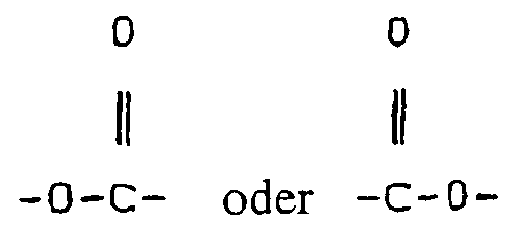 und p 0 oder eine ganze Zahl von 1 bis 5 ist,mit der Maßgabe, daß einer von R1a und R2a eine Alkylengruppe mit mindestens 3 Kohlenstoffatomen ist, angelagert an das Silicium- oder Phosphoratom;(v) einer Gruppe der Formel:
 (vi) einer Gruppe der Formel:
 T wie oben definiert ist,R5 eine Gruppe mit mindestens einem Kohlenstoffatom, vorzugsweise mindestens 3 Kohlenstoffatomen, die durch ein oder mehrere Heteroatome, ausgewählt aus N, O und S, unterbrochen sein kann, darstellt, vorausgesetzt es gibt mindestens 3 Kohlenstoffatome für jedes Heteroatom,n eine ganze Zahl von mindestens 6 ist; und(vii) einer Gruppe der Formel:
 T und R5 wie oben definiert sind,jeder R6 unabhängig eine Alkylgruppe, eine fluorierte Alkylgruppe, eine Amino-substituierte Alkylgruppe, eine Alkylgruppe, substituiert mit einer Zuckereinheit oder einer Seitenkette, umfassend eine ethoxylierte und/oder propoxylierte Kette, darstellt und x eine ganze Zahl von mindestens 5 ist.
 - Zusammensetzung nach Anspruch 1, wobei -Y-T eine Alkylgruppe mit 6 bis 20 Kohlenstoffatomen ist.
- Zusammensetzung nach Anspruch 1, wobei jeder R2 Niederalkyl mit 1 bis 6 Kohlenstoffatomen ist.
- Zusammensetzung nach Anspruch 1, wobei mindestens einer von R2 eine Alkylgruppe mit mindestens 8 Kohlenstoffatomen ist.
- Zusammensetzung nach Anspruch 4, wobei jeder R2 eine Alkylgruppe mit mindestens 8 Kohlenstoffatomen ist.
- Zusammensetzung nach einem vorhergehenden Anspruch, wobei die Teilchen zwei oder mehr verschiedene funktionelle Gruppen, ausgewählt aus den Formeln (I) bis (VII), umfassen.
- Zusammensetzung nach einem vorhergehenden Anspruch, wobei die Teilchen Schichten umfassen, die ferner Atome, ausgewählt aus Magnesium, Aluminium, Nickel, Zirkonium und Gemischen davon, umfassen.
- Zusammensetzung nach einem vorhergehenden Anspruch, wobei die Teilchen aus einem Ton sind, in den die organischen funktionellen Gruppen während der Bildung des Tons eingeführt worden sind.
- Zusammensetzung nach einem vorhergehenden Anspruch, wobei die Teilchen aus einem Organophyllosilicat sind.
- Zusammensetzung nach einem vorhergehenden Anspruch, die eine Waschmittelzusammensetzung für die Hauptwäsche ist und in der der textilkompatible Träger eine waschaktive Verbindung umfaßt.
- Zusammensetzung nach einem der Ansprüche 1 bis 9, die ein Gewebekonditionierer ist, umfassend einen oder mehrere Gewebeweichspüler oder -konditionierer.
- Zusammensetzung nach einem der Ansprüche 1 bis 9, umfassend eine oder mehrere weitere Komponenten, ausgewählt aus Aufbaustoffen und Enzymen.
- Zusammensetzung nach einem vorhergehenden Anspruch, umfassend 0,01 bis 50 Gew.-% der Teilchen.
- Zusammensetzung nach Anspruch 13, umfassend 0,1 bis 20 Gew.-% der Teilchen.
- Verwendung von Teilchen, wie in einem der Ansprüche 1 bis 9 definiert, bei der Behandlung von Gewebe.
- Verwendung von Teilchen, wie in einem der Ansprüche 1 bis 9 definiert, zur Behandlung eines Gewebes, um das Gewebe mit verbesserten Gleiteigenschaften auszustatten.
- Verwendung von Teilchen, wie in einem der Ansprüche 1 bis 9 definiert, zur Behandlung eines Gewebes, um die Kawabata-Scherung des Gewebes, die gemäß dem hierin definierten Kawabata-Scher-Test gemessen wird, zu verringern.
- Verwendung von Teilchen, wie in einem der Ansprüche 1 bis 9 definiert, zur Behandlung eines Gewebes, um verbesserte Weichheit und/oder leichteres Bügeln und/oder Antifalteneigenschaften und/oder Antiabriebeigenschaften bereitzustellen.
- Verwendung einer Zusammensetzung nach einem der Ansprüche 1 bis 14 zur Behandlung eines Gewebes.
- Verwendung einer Zusammensetzung nach einem der Ansprüche 1 bis 14 zur Behandlung eines Gewebes, um das Gewebe mit verbesserten Gleiteigenschaften auszustatten.
- Verwendung einer Zusammensetzung nach einem der Ansprüche 1 bis 14 zur Behandlung eines Gewebes, um die Kawabata-Scherung des Gewebes, die gemäß dem hierin definierten Kawabata-Scher-Test gemessen wird, zu verringern.
- Verwendung einer Zusammensetzung nach einem der Ansprüche 1 bis 14 zur Behandlung eines Gewebes, um verbesserte Weichheit und/oder leichteres Bügeln und/oder Antifalteneigenschaften und/oder Antiabriebeigenschaften bereitzustellen.
- Verwendung nach einem der Ansprüche 15 bis 22, bei der die Behandlung Teil eines Haushaltswaschverfahrens ist.
Applications Claiming Priority (3)
| Application Number | Priority Date | Filing Date | Title |
|---|---|---|---|
| GBGB0207850.9A GB0207850D0 (en) | 2002-04-04 | 2002-04-04 | Fabric treatment compositions |
| GB0207850 | 2002-04-04 | ||
| PCT/EP2003/003031 WO2003085075A1 (en) | 2002-04-04 | 2003-03-21 | Fabric treatment compositions |
Publications (2)
| Publication Number | Publication Date |
|---|---|
| EP1490465A1 EP1490465A1 (de) | 2004-12-29 |
| EP1490465B1 true EP1490465B1 (de) | 2007-07-11 |
Family
ID=9934282
Family Applications (1)
| Application Number | Title | Priority Date | Filing Date |
|---|---|---|---|
| EP03745690A Expired - Lifetime EP1490465B1 (de) | 2002-04-04 | 2003-03-21 | Behandlungsmittel für textile flächengebilde |
Country Status (11)
| Country | Link |
|---|---|
| US (2) | US7012055B2 (de) |
| EP (1) | EP1490465B1 (de) |
| AT (1) | ATE366790T1 (de) |
| AU (1) | AU2003226702A1 (de) |
| BR (1) | BR0308354B1 (de) |
| CA (1) | CA2477499A1 (de) |
| DE (1) | DE60314855T2 (de) |
| ES (1) | ES2290483T3 (de) |
| GB (1) | GB0207850D0 (de) |
| WO (1) | WO2003085075A1 (de) |
| ZA (1) | ZA200406718B (de) |
Families Citing this family (3)
| Publication number | Priority date | Publication date | Assignee | Title |
|---|---|---|---|---|
| GB0207850D0 (en) * | 2002-04-04 | 2002-05-15 | Unilever Plc | Fabric treatment compositions |
| US8304379B2 (en) | 2007-07-25 | 2012-11-06 | Hiroshima University | Silicon compound-containing solidified detergent composition and method for producing the same |
| US8859486B2 (en) | 2013-03-14 | 2014-10-14 | Church & Dwight Co., Inc. | Anhydrous detergent composition comprising a clay mixture processed with quaternary ammonium salts |
Family Cites Families (26)
| Publication number | Priority date | Publication date | Assignee | Title |
|---|---|---|---|---|
| ZA734721B (en) * | 1972-07-14 | 1974-03-27 | Procter & Gamble | Detergent compositions |
| US4051046A (en) * | 1973-02-16 | 1977-09-27 | The Procter & Gamble Company | Detergent compositions containing insoluble particulate materials having fabric conditioning properties |
| US3954632A (en) | 1973-02-16 | 1976-05-04 | The Procter & Gamble Company | Softening additive and detergent composition |
| US3892681A (en) * | 1973-02-16 | 1975-07-01 | Procter & Gamble | Detergent compositions containing water insoluble starch |
| GB1462484A (en) * | 1974-01-31 | 1977-01-26 | Procter & Gamble Ltd | Detergent compositions |
| US3936537A (en) * | 1974-11-01 | 1976-02-03 | The Procter & Gamble Company | Detergent-compatible fabric softening and antistatic compositions |
| US4287086A (en) * | 1975-05-02 | 1981-09-01 | Nl Industries, Inc. | Viscous organic systems containing an organophilic clay gellant without an organic dispersant therefor |
| US4260498A (en) * | 1978-10-20 | 1981-04-07 | Dresser Industries, Inc. | Silane coated silicate minerals and method for preparing same |
| US4439373A (en) | 1982-12-27 | 1984-03-27 | Stauffer Chemical Company | Process for preparing phosphonomethylated amino acids |
| US4557854A (en) * | 1984-03-02 | 1985-12-10 | Dow Corning Corporation | Detergent compositions containing insoluble particulates with a cationic surface treatment |
| DE3434709A1 (de) * | 1984-09-21 | 1986-04-03 | Hoechst Ag, 6230 Frankfurt | Adsorbentien auf basis organophil modifizierter schichtkieselsaeuren |
| JPS61212321A (ja) * | 1985-03-15 | 1986-09-20 | Shiseido Co Ltd | 乳化剤組成物 |
| US4828723A (en) * | 1987-07-15 | 1989-05-09 | Colgate-Palmolive Company | Stable non-aqueous suspension containing organophilic clay and low density filler |
| US4844821A (en) * | 1988-02-10 | 1989-07-04 | The Procter & Gamble Company | Stable liquid laundry detergent/fabric conditioning composition |
| GB8902286D0 (en) | 1989-02-02 | 1989-03-22 | Bp Chem Int Ltd | Detergent formulations |
| US5443750A (en) * | 1991-01-16 | 1995-08-22 | The Procter & Gamble Company | Detergent compositions with high activity cellulase and softening clays |
| US5336647A (en) * | 1991-11-14 | 1994-08-09 | Rheox, Inc. | Organoclay compositions prepared with a mixture of two organic cations and their use in non-aqueous systems |
| US5429999A (en) * | 1991-11-14 | 1995-07-04 | Rheox, Inc. | Organoclay compositions containing two or more cations and one or more organic anions, their preparation and use in non-aqueous systems |
| US5527871A (en) * | 1992-12-28 | 1996-06-18 | Kabushiki Kaisha Toyota Chuo Kenkyusho | Layered inorganic-organic polymer shaped article thereof and process for producing the same |
| JP3899546B2 (ja) * | 1996-03-11 | 2007-03-28 | 株式会社豊田中央研究所 | 層状有機チタノシリケートおよび層状有機チタノシリケートの成形体 |
| JPH09301713A (ja) * | 1996-05-13 | 1997-11-25 | Kanegafuchi Chem Ind Co Ltd | 新規な変性粘土複合体、その製法、および変性粘土複合体と樹脂とからなる樹脂組成物、ならびにその製造方法 |
| DE69731465D1 (de) | 1996-05-13 | 2004-12-09 | Kaneka Corp | Thermoplastische harz-zusammensetzung enthaltend ein mit einem silan behandelten mehrschichtigen phyllosilicat und verfahren zu deren herstellung |
| AU9649398A (en) | 1997-10-30 | 1999-05-24 | Kaneka Corporation | Polyester resin compositions and processes for the preparation thereof |
| JP4205223B2 (ja) | 1998-10-20 | 2009-01-07 | 一幸 黒田 | 多孔質層状珪酸及びその製造方法 |
| WO2002046345A1 (en) * | 2000-12-06 | 2002-06-13 | Unilever Plc | Fabric treatment compositions |
| GB0207850D0 (en) * | 2002-04-04 | 2002-05-15 | Unilever Plc | Fabric treatment compositions |
-
2002
- 2002-04-04 GB GBGB0207850.9A patent/GB0207850D0/en not_active Ceased
-
2003
- 2003-03-21 WO PCT/EP2003/003031 patent/WO2003085075A1/en not_active Ceased
- 2003-03-21 AU AU2003226702A patent/AU2003226702A1/en not_active Abandoned
- 2003-03-21 BR BRPI0308354-3A patent/BR0308354B1/pt not_active IP Right Cessation
- 2003-03-21 CA CA002477499A patent/CA2477499A1/en not_active Abandoned
- 2003-03-21 DE DE60314855T patent/DE60314855T2/de not_active Expired - Lifetime
- 2003-03-21 EP EP03745690A patent/EP1490465B1/de not_active Expired - Lifetime
- 2003-03-21 AT AT03745690T patent/ATE366790T1/de not_active IP Right Cessation
- 2003-03-21 ES ES03745690T patent/ES2290483T3/es not_active Expired - Lifetime
- 2003-04-04 US US10/406,952 patent/US7012055B2/en not_active Expired - Fee Related
-
2004
- 2004-08-24 ZA ZA2004/06718A patent/ZA200406718B/en unknown
-
2005
- 2005-10-25 US US11/258,331 patent/US20060040842A1/en not_active Abandoned
Non-Patent Citations (1)
| Title |
|---|
| None * |
Also Published As
| Publication number | Publication date |
|---|---|
| US7012055B2 (en) | 2006-03-14 |
| BR0308354A (pt) | 2005-01-25 |
| ES2290483T3 (es) | 2008-02-16 |
| DE60314855T2 (de) | 2008-03-13 |
| US20040127392A1 (en) | 2004-07-01 |
| WO2003085075A1 (en) | 2003-10-16 |
| ZA200406718B (en) | 2005-12-28 |
| BR0308354B1 (pt) | 2014-04-15 |
| GB0207850D0 (en) | 2002-05-15 |
| AU2003226702A1 (en) | 2003-10-20 |
| DE60314855D1 (de) | 2007-08-23 |
| EP1490465A1 (de) | 2004-12-29 |
| ATE366790T1 (de) | 2007-08-15 |
| US20060040842A1 (en) | 2006-02-23 |
| CA2477499A1 (en) | 2003-10-16 |
Similar Documents
| Publication | Publication Date | Title |
|---|---|---|
| CA1130057A (en) | Fabric softening compositions | |
| CA2429648C (en) | Fabric care composition comprising an organophilic clay and a functionalized oil | |
| EP1218477A1 (de) | Zusammensetzung zur textilpflege | |
| EP1461408A1 (de) | Textilpflegemittel | |
| EP1341887B1 (de) | Zusammensetzungen zur behandlung von gewebe | |
| EP1490465B1 (de) | Behandlungsmittel für textile flächengebilde | |
| EP1383860B1 (de) | Zusammensetzungen zur textilpflege | |
| EP0387426B1 (de) | Textil-Wäscheweichmacher, enthaltend natürlichen Hektoritten | |
| US7211198B2 (en) | Surfactant compositions | |
| JPS5833915B2 (ja) | 繊維柔軟化作用を有する洗剤組成物 | |
| CA1152262A (en) | Fabric softening compositions | |
| EP1205538A1 (de) | Wäschepflegezusammensetzung | |
| GB2357294A (en) | Fabric treatment composition |
Legal Events
| Date | Code | Title | Description |
|---|---|---|---|
| PUAI | Public reference made under article 153(3) epc to a published international application that has entered the european phase |
Free format text: ORIGINAL CODE: 0009012 |
|
| 17P | Request for examination filed |
Effective date: 20040818 |
|
| AK | Designated contracting states |
Kind code of ref document: A1 Designated state(s): AT BE BG CH CY CZ DE DK EE ES FI FR GB GR HU IE IT LI LU MC NL PT RO SE SI SK TR |
|
| AX | Request for extension of the european patent |
Extension state: AL LT LV MK |
|
| 17Q | First examination report despatched |
Effective date: 20050429 |
|
| GRAP | Despatch of communication of intention to grant a patent |
Free format text: ORIGINAL CODE: EPIDOSNIGR1 |
|
| GRAS | Grant fee paid |
Free format text: ORIGINAL CODE: EPIDOSNIGR3 |
|
| GRAA | (expected) grant |
Free format text: ORIGINAL CODE: 0009210 |
|
| AK | Designated contracting states |
Kind code of ref document: B1 Designated state(s): AT BE BG CH CY CZ DE DK EE ES FI FR GB GR HU IE IT LI LU MC NL PT RO SE SI SK TR |
|
| REG | Reference to a national code |
Ref country code: GB Ref legal event code: FG4D |
|
| REG | Reference to a national code |
Ref country code: CH Ref legal event code: EP |
|
| REF | Corresponds to: |
Ref document number: 60314855 Country of ref document: DE Date of ref document: 20070823 Kind code of ref document: P |
|
| REG | Reference to a national code |
Ref country code: IE Ref legal event code: FG4D |
|
| ET | Fr: translation filed | ||
| PG25 | Lapsed in a contracting state [announced via postgrant information from national office to epo] |
Ref country code: NL Free format text: LAPSE BECAUSE OF FAILURE TO SUBMIT A TRANSLATION OF THE DESCRIPTION OR TO PAY THE FEE WITHIN THE PRESCRIBED TIME-LIMIT Effective date: 20070711 Ref country code: FI Free format text: LAPSE BECAUSE OF FAILURE TO SUBMIT A TRANSLATION OF THE DESCRIPTION OR TO PAY THE FEE WITHIN THE PRESCRIBED TIME-LIMIT Effective date: 20070711 Ref country code: BG Free format text: LAPSE BECAUSE OF FAILURE TO SUBMIT A TRANSLATION OF THE DESCRIPTION OR TO PAY THE FEE WITHIN THE PRESCRIBED TIME-LIMIT Effective date: 20071011 Ref country code: PT Free format text: LAPSE BECAUSE OF FAILURE TO SUBMIT A TRANSLATION OF THE DESCRIPTION OR TO PAY THE FEE WITHIN THE PRESCRIBED TIME-LIMIT Effective date: 20071211 |
|
| REG | Reference to a national code |
Ref country code: CH Ref legal event code: PL |
|
| NLV1 | Nl: lapsed or annulled due to failure to fulfill the requirements of art. 29p and 29m of the patents act | ||
| REG | Reference to a national code |
Ref country code: ES Ref legal event code: FG2A Ref document number: 2290483 Country of ref document: ES Kind code of ref document: T3 |
|
| PG25 | Lapsed in a contracting state [announced via postgrant information from national office to epo] |
Ref country code: CH Free format text: LAPSE BECAUSE OF FAILURE TO SUBMIT A TRANSLATION OF THE DESCRIPTION OR TO PAY THE FEE WITHIN THE PRESCRIBED TIME-LIMIT Effective date: 20070711 Ref country code: AT Free format text: LAPSE BECAUSE OF FAILURE TO SUBMIT A TRANSLATION OF THE DESCRIPTION OR TO PAY THE FEE WITHIN THE PRESCRIBED TIME-LIMIT Effective date: 20070711 Ref country code: LI Free format text: LAPSE BECAUSE OF FAILURE TO SUBMIT A TRANSLATION OF THE DESCRIPTION OR TO PAY THE FEE WITHIN THE PRESCRIBED TIME-LIMIT Effective date: 20070711 |
|
| PG25 | Lapsed in a contracting state [announced via postgrant information from national office to epo] |
Ref country code: BE Free format text: LAPSE BECAUSE OF FAILURE TO SUBMIT A TRANSLATION OF THE DESCRIPTION OR TO PAY THE FEE WITHIN THE PRESCRIBED TIME-LIMIT Effective date: 20070711 |
|
| PG25 | Lapsed in a contracting state [announced via postgrant information from national office to epo] |
Ref country code: DK Free format text: LAPSE BECAUSE OF FAILURE TO SUBMIT A TRANSLATION OF THE DESCRIPTION OR TO PAY THE FEE WITHIN THE PRESCRIBED TIME-LIMIT Effective date: 20070711 Ref country code: GR Free format text: LAPSE BECAUSE OF FAILURE TO SUBMIT A TRANSLATION OF THE DESCRIPTION OR TO PAY THE FEE WITHIN THE PRESCRIBED TIME-LIMIT Effective date: 20071012 |
|
| PLBE | No opposition filed within time limit |
Free format text: ORIGINAL CODE: 0009261 |
|
| STAA | Information on the status of an ep patent application or granted ep patent |
Free format text: STATUS: NO OPPOSITION FILED WITHIN TIME LIMIT |
|
| PG25 | Lapsed in a contracting state [announced via postgrant information from national office to epo] |
Ref country code: CZ Free format text: LAPSE BECAUSE OF FAILURE TO SUBMIT A TRANSLATION OF THE DESCRIPTION OR TO PAY THE FEE WITHIN THE PRESCRIBED TIME-LIMIT Effective date: 20070711 Ref country code: SK Free format text: LAPSE BECAUSE OF FAILURE TO SUBMIT A TRANSLATION OF THE DESCRIPTION OR TO PAY THE FEE WITHIN THE PRESCRIBED TIME-LIMIT Effective date: 20070711 |
|
| 26N | No opposition filed |
Effective date: 20080414 |
|
| PG25 | Lapsed in a contracting state [announced via postgrant information from national office to epo] |
Ref country code: RO Free format text: LAPSE BECAUSE OF FAILURE TO SUBMIT A TRANSLATION OF THE DESCRIPTION OR TO PAY THE FEE WITHIN THE PRESCRIBED TIME-LIMIT Effective date: 20070711 Ref country code: SE Free format text: LAPSE BECAUSE OF FAILURE TO SUBMIT A TRANSLATION OF THE DESCRIPTION OR TO PAY THE FEE WITHIN THE PRESCRIBED TIME-LIMIT Effective date: 20071011 |
|
| PG25 | Lapsed in a contracting state [announced via postgrant information from national office to epo] |
Ref country code: MC Free format text: LAPSE BECAUSE OF NON-PAYMENT OF DUE FEES Effective date: 20080331 |
|
| PG25 | Lapsed in a contracting state [announced via postgrant information from national office to epo] |
Ref country code: EE Free format text: LAPSE BECAUSE OF FAILURE TO SUBMIT A TRANSLATION OF THE DESCRIPTION OR TO PAY THE FEE WITHIN THE PRESCRIBED TIME-LIMIT Effective date: 20070711 Ref country code: IE Free format text: LAPSE BECAUSE OF NON-PAYMENT OF DUE FEES Effective date: 20080321 |
|
| PG25 | Lapsed in a contracting state [announced via postgrant information from national office to epo] |
Ref country code: SI Free format text: LAPSE BECAUSE OF FAILURE TO SUBMIT A TRANSLATION OF THE DESCRIPTION OR TO PAY THE FEE WITHIN THE PRESCRIBED TIME-LIMIT Effective date: 20070711 |
|
| PG25 | Lapsed in a contracting state [announced via postgrant information from national office to epo] |
Ref country code: CY Free format text: LAPSE BECAUSE OF FAILURE TO SUBMIT A TRANSLATION OF THE DESCRIPTION OR TO PAY THE FEE WITHIN THE PRESCRIBED TIME-LIMIT Effective date: 20070711 |
|
| PG25 | Lapsed in a contracting state [announced via postgrant information from national office to epo] |
Ref country code: LU Free format text: LAPSE BECAUSE OF NON-PAYMENT OF DUE FEES Effective date: 20080321 Ref country code: HU Free format text: LAPSE BECAUSE OF FAILURE TO SUBMIT A TRANSLATION OF THE DESCRIPTION OR TO PAY THE FEE WITHIN THE PRESCRIBED TIME-LIMIT Effective date: 20080112 |
|
| PG25 | Lapsed in a contracting state [announced via postgrant information from national office to epo] |
Ref country code: TR Free format text: LAPSE BECAUSE OF FAILURE TO SUBMIT A TRANSLATION OF THE DESCRIPTION OR TO PAY THE FEE WITHIN THE PRESCRIBED TIME-LIMIT Effective date: 20070711 |
|
| REG | Reference to a national code |
Ref country code: FR Ref legal event code: PLFP Year of fee payment: 13 |
|
| PGFP | Annual fee paid to national office [announced via postgrant information from national office to epo] |
Ref country code: ES Payment date: 20150326 Year of fee payment: 13 Ref country code: DE Payment date: 20150327 Year of fee payment: 13 Ref country code: IT Payment date: 20150325 Year of fee payment: 13 |
|
| PGFP | Annual fee paid to national office [announced via postgrant information from national office to epo] |
Ref country code: FR Payment date: 20150317 Year of fee payment: 13 Ref country code: GB Payment date: 20150327 Year of fee payment: 13 |
|
| REG | Reference to a national code |
Ref country code: DE Ref legal event code: R119 Ref document number: 60314855 Country of ref document: DE |
|
| GBPC | Gb: european patent ceased through non-payment of renewal fee |
Effective date: 20160321 |
|
| REG | Reference to a national code |
Ref country code: FR Ref legal event code: ST Effective date: 20161130 |
|
| PG25 | Lapsed in a contracting state [announced via postgrant information from national office to epo] |
Ref country code: GB Free format text: LAPSE BECAUSE OF NON-PAYMENT OF DUE FEES Effective date: 20160321 Ref country code: DE Free format text: LAPSE BECAUSE OF NON-PAYMENT OF DUE FEES Effective date: 20161001 Ref country code: FR Free format text: LAPSE BECAUSE OF NON-PAYMENT OF DUE FEES Effective date: 20160331 |
|
| PG25 | Lapsed in a contracting state [announced via postgrant information from national office to epo] |
Ref country code: IT Free format text: LAPSE BECAUSE OF NON-PAYMENT OF DUE FEES Effective date: 20160321 |
|
| REG | Reference to a national code |
Ref country code: ES Ref legal event code: FD2A Effective date: 20170428 |
|
| PG25 | Lapsed in a contracting state [announced via postgrant information from national office to epo] |
Ref country code: ES Free format text: LAPSE BECAUSE OF NON-PAYMENT OF DUE FEES Effective date: 20160322 |