EP1488026B1 - Method for enhancing the muscle performance - Google Patents
Method for enhancing the muscle performance Download PDFInfo
- Publication number
- EP1488026B1 EP1488026B1 EP03716790A EP03716790A EP1488026B1 EP 1488026 B1 EP1488026 B1 EP 1488026B1 EP 03716790 A EP03716790 A EP 03716790A EP 03716790 A EP03716790 A EP 03716790A EP 1488026 B1 EP1488026 B1 EP 1488026B1
- Authority
- EP
- European Patent Office
- Prior art keywords
- light
- particles
- powder
- materials
- wavelengths
- Prior art date
- Legal status (The legal status is an assumption and is not a legal conclusion. Google has not performed a legal analysis and makes no representation as to the accuracy of the status listed.)
- Expired - Lifetime
Links
- 238000000034 method Methods 0.000 title claims description 25
- 210000003205 muscle Anatomy 0.000 title claims description 14
- 230000002708 enhancing effect Effects 0.000 title claims description 3
- 239000002245 particle Substances 0.000 claims abstract description 68
- 239000000463 material Substances 0.000 claims abstract description 45
- 229920005989 resin Polymers 0.000 claims abstract description 33
- 239000011347 resin Substances 0.000 claims abstract description 33
- GWEVSGVZZGPLCZ-UHFFFAOYSA-N Titan oxide Chemical compound O=[Ti]=O GWEVSGVZZGPLCZ-UHFFFAOYSA-N 0.000 claims description 47
- 239000004408 titanium dioxide Substances 0.000 claims description 20
- PNEYBMLMFCGWSK-UHFFFAOYSA-N aluminium oxide Inorganic materials [O-2].[O-2].[O-2].[Al+3].[Al+3] PNEYBMLMFCGWSK-UHFFFAOYSA-N 0.000 claims description 15
- 229910052814 silicon oxide Inorganic materials 0.000 claims description 5
- LIVNPJMFVYWSIS-UHFFFAOYSA-N silicon monoxide Chemical class [Si-]#[O+] LIVNPJMFVYWSIS-UHFFFAOYSA-N 0.000 claims description 3
- 241001465754 Metazoa Species 0.000 claims description 2
- 238000002560 therapeutic procedure Methods 0.000 claims 1
- 239000000835 fiber Substances 0.000 abstract description 35
- 239000000203 mixture Substances 0.000 abstract description 34
- 239000000843 powder Substances 0.000 abstract description 32
- 230000003287 optical effect Effects 0.000 abstract description 15
- 239000012876 carrier material Substances 0.000 abstract description 12
- 238000001429 visible spectrum Methods 0.000 abstract description 6
- 239000004753 textile Substances 0.000 abstract description 4
- 239000007795 chemical reaction product Substances 0.000 abstract description 3
- 230000010354 integration Effects 0.000 abstract description 2
- 238000000576 coating method Methods 0.000 abstract 1
- 239000011810 insulating material Substances 0.000 abstract 1
- 230000001681 protective effect Effects 0.000 abstract 1
- VYPSYNLAJGMNEJ-UHFFFAOYSA-N Silicium dioxide Chemical compound O=[Si]=O VYPSYNLAJGMNEJ-UHFFFAOYSA-N 0.000 description 32
- 229920000728 polyester Polymers 0.000 description 23
- 238000009826 distribution Methods 0.000 description 20
- 235000012239 silicon dioxide Nutrition 0.000 description 20
- 239000010453 quartz Substances 0.000 description 19
- 238000001228 spectrum Methods 0.000 description 19
- 230000003595 spectral effect Effects 0.000 description 17
- 210000000707 wrist Anatomy 0.000 description 13
- 230000000694 effects Effects 0.000 description 12
- TWNQGVIAIRXVLR-UHFFFAOYSA-N oxo(oxoalumanyloxy)alumane Chemical compound O=[Al]O[Al]=O TWNQGVIAIRXVLR-UHFFFAOYSA-N 0.000 description 12
- 239000011149 active material Substances 0.000 description 11
- 230000005855 radiation Effects 0.000 description 11
- 229920000742 Cotton Polymers 0.000 description 10
- 239000004744 fabric Substances 0.000 description 10
- 230000008569 process Effects 0.000 description 9
- 238000009987 spinning Methods 0.000 description 9
- 229920000642 polymer Polymers 0.000 description 8
- 238000012360 testing method Methods 0.000 description 8
- 210000003491 skin Anatomy 0.000 description 7
- DNIAPMSPPWPWGF-UHFFFAOYSA-N Propylene glycol Chemical compound CC(O)CO DNIAPMSPPWPWGF-UHFFFAOYSA-N 0.000 description 6
- 230000009286 beneficial effect Effects 0.000 description 6
- 230000005284 excitation Effects 0.000 description 6
- 238000005259 measurement Methods 0.000 description 6
- BASFCYQUMIYNBI-UHFFFAOYSA-N platinum Chemical compound [Pt] BASFCYQUMIYNBI-UHFFFAOYSA-N 0.000 description 6
- 239000012528 membrane Substances 0.000 description 5
- 239000000377 silicon dioxide Substances 0.000 description 5
- 239000000126 substance Substances 0.000 description 5
- 239000000725 suspension Substances 0.000 description 5
- 230000029663 wound healing Effects 0.000 description 5
- KDLHZDBZIXYQEI-UHFFFAOYSA-N Palladium Chemical compound [Pd] KDLHZDBZIXYQEI-UHFFFAOYSA-N 0.000 description 4
- 238000001125 extrusion Methods 0.000 description 4
- 239000012530 fluid Substances 0.000 description 4
- 239000000499 gel Substances 0.000 description 4
- 239000008188 pellet Substances 0.000 description 4
- 239000000047 product Substances 0.000 description 4
- 229920002994 synthetic fiber Polymers 0.000 description 4
- 238000013329 compounding Methods 0.000 description 3
- 230000001276 controlling effect Effects 0.000 description 3
- 210000002950 fibroblast Anatomy 0.000 description 3
- 238000001914 filtration Methods 0.000 description 3
- 210000002683 foot Anatomy 0.000 description 3
- 238000000227 grinding Methods 0.000 description 3
- 238000005286 illumination Methods 0.000 description 3
- 230000003993 interaction Effects 0.000 description 3
- 238000011068 loading method Methods 0.000 description 3
- 210000003470 mitochondria Anatomy 0.000 description 3
- 238000002156 mixing Methods 0.000 description 3
- 229910052697 platinum Inorganic materials 0.000 description 3
- 210000001519 tissue Anatomy 0.000 description 3
- 230000006820 DNA synthesis Effects 0.000 description 2
- XUMBMVFBXHLACL-UHFFFAOYSA-N Melanin Chemical compound O=C1C(=O)C(C2=CNC3=C(C(C(=O)C4=C32)=O)C)=C2C4=CNC2=C1C XUMBMVFBXHLACL-UHFFFAOYSA-N 0.000 description 2
- 239000004677 Nylon Substances 0.000 description 2
- 229920000297 Rayon Polymers 0.000 description 2
- 229920002334 Spandex Polymers 0.000 description 2
- RTAQQCXQSZGOHL-UHFFFAOYSA-N Titanium Chemical compound [Ti] RTAQQCXQSZGOHL-UHFFFAOYSA-N 0.000 description 2
- NIXOWILDQLNWCW-UHFFFAOYSA-N acrylic acid group Chemical group C(C=C)(=O)O NIXOWILDQLNWCW-UHFFFAOYSA-N 0.000 description 2
- 239000000654 additive Substances 0.000 description 2
- 210000003423 ankle Anatomy 0.000 description 2
- QVGXLLKOCUKJST-UHFFFAOYSA-N atomic oxygen Chemical compound [O] QVGXLLKOCUKJST-UHFFFAOYSA-N 0.000 description 2
- 230000017531 blood circulation Effects 0.000 description 2
- 210000004027 cell Anatomy 0.000 description 2
- 230000004663 cell proliferation Effects 0.000 description 2
- 238000007796 conventional method Methods 0.000 description 2
- 230000005670 electromagnetic radiation Effects 0.000 description 2
- 230000035876 healing Effects 0.000 description 2
- 238000007689 inspection Methods 0.000 description 2
- 238000009413 insulation Methods 0.000 description 2
- 239000007788 liquid Substances 0.000 description 2
- 239000011159 matrix material Substances 0.000 description 2
- 229920001778 nylon Polymers 0.000 description 2
- 229910052760 oxygen Inorganic materials 0.000 description 2
- 239000001301 oxygen Substances 0.000 description 2
- 229910052763 palladium Inorganic materials 0.000 description 2
- -1 polyethylene Polymers 0.000 description 2
- 239000004814 polyurethane Substances 0.000 description 2
- 229920002635 polyurethane Polymers 0.000 description 2
- 230000035755 proliferation Effects 0.000 description 2
- 238000001243 protein synthesis Methods 0.000 description 2
- 239000002964 rayon Substances 0.000 description 2
- 230000001105 regulatory effect Effects 0.000 description 2
- 229910052710 silicon Inorganic materials 0.000 description 2
- 239000010703 silicon Substances 0.000 description 2
- 210000001626 skin fibroblast Anatomy 0.000 description 2
- 239000007787 solid Substances 0.000 description 2
- 239000004759 spandex Substances 0.000 description 2
- 230000000638 stimulation Effects 0.000 description 2
- 239000012209 synthetic fiber Substances 0.000 description 2
- 239000010936 titanium Substances 0.000 description 2
- 229910052719 titanium Inorganic materials 0.000 description 2
- 230000014616 translation Effects 0.000 description 2
- QTBSBXVTEAMEQO-UHFFFAOYSA-M Acetate Chemical compound CC([O-])=O QTBSBXVTEAMEQO-UHFFFAOYSA-M 0.000 description 1
- 229920001817 Agar Polymers 0.000 description 1
- 240000008564 Boehmeria nivea Species 0.000 description 1
- 206010068975 Bone atrophy Diseases 0.000 description 1
- ZOXJGFHDIHLPTG-UHFFFAOYSA-N Boron Chemical compound [B] ZOXJGFHDIHLPTG-UHFFFAOYSA-N 0.000 description 1
- OYPRJOBELJOOCE-UHFFFAOYSA-N Calcium Chemical compound [Ca] OYPRJOBELJOOCE-UHFFFAOYSA-N 0.000 description 1
- 244000025254 Cannabis sativa Species 0.000 description 1
- 235000012766 Cannabis sativa ssp. sativa var. sativa Nutrition 0.000 description 1
- 235000012765 Cannabis sativa ssp. sativa var. spontanea Nutrition 0.000 description 1
- OKTJSMMVPCPJKN-UHFFFAOYSA-N Carbon Chemical compound [C] OKTJSMMVPCPJKN-UHFFFAOYSA-N 0.000 description 1
- 240000000491 Corchorus aestuans Species 0.000 description 1
- 235000011777 Corchorus aestuans Nutrition 0.000 description 1
- 235000010862 Corchorus capsularis Nutrition 0.000 description 1
- 102000018832 Cytochromes Human genes 0.000 description 1
- 108010052832 Cytochromes Proteins 0.000 description 1
- 241000206672 Gelidium Species 0.000 description 1
- DGAQECJNVWCQMB-PUAWFVPOSA-M Ilexoside XXIX Chemical compound C[C@@H]1CC[C@@]2(CC[C@@]3(C(=CC[C@H]4[C@]3(CC[C@@H]5[C@@]4(CC[C@@H](C5(C)C)OS(=O)(=O)[O-])C)C)[C@@H]2[C@]1(C)O)C)C(=O)O[C@H]6[C@@H]([C@H]([C@@H]([C@H](O6)CO)O)O)O.[Na+] DGAQECJNVWCQMB-PUAWFVPOSA-M 0.000 description 1
- 206010023230 Joint stiffness Diseases 0.000 description 1
- WHXSMMKQMYFTQS-UHFFFAOYSA-N Lithium Chemical compound [Li] WHXSMMKQMYFTQS-UHFFFAOYSA-N 0.000 description 1
- 206010028289 Muscle atrophy Diseases 0.000 description 1
- AMQJEAYHLZJPGS-UHFFFAOYSA-N N-Pentanol Chemical compound CCCCCO AMQJEAYHLZJPGS-UHFFFAOYSA-N 0.000 description 1
- CBENFWSGALASAD-UHFFFAOYSA-N Ozone Chemical compound [O-][O+]=O CBENFWSGALASAD-UHFFFAOYSA-N 0.000 description 1
- 239000004962 Polyamide-imide Substances 0.000 description 1
- 239000004698 Polyethylene Substances 0.000 description 1
- 239000002202 Polyethylene glycol Substances 0.000 description 1
- 239000004642 Polyimide Substances 0.000 description 1
- 239000004743 Polypropylene Substances 0.000 description 1
- 239000004793 Polystyrene Substances 0.000 description 1
- XUIMIQQOPSSXEZ-UHFFFAOYSA-N Silicon Chemical compound [Si] XUIMIQQOPSSXEZ-UHFFFAOYSA-N 0.000 description 1
- 208000027418 Wounds and injury Diseases 0.000 description 1
- 230000009471 action Effects 0.000 description 1
- 230000000996 additive effect Effects 0.000 description 1
- 235000010419 agar Nutrition 0.000 description 1
- UQZIWOQVLUASCR-UHFFFAOYSA-N alumane;titanium Chemical compound [AlH3].[Ti] UQZIWOQVLUASCR-UHFFFAOYSA-N 0.000 description 1
- 238000010171 animal model Methods 0.000 description 1
- 230000002238 attenuated effect Effects 0.000 description 1
- 230000001580 bacterial effect Effects 0.000 description 1
- 230000005540 biological transmission Effects 0.000 description 1
- 210000000988 bone and bone Anatomy 0.000 description 1
- 229910052796 boron Inorganic materials 0.000 description 1
- 229910052791 calcium Inorganic materials 0.000 description 1
- 239000011575 calcium Substances 0.000 description 1
- 244000309466 calf Species 0.000 description 1
- 235000009120 camo Nutrition 0.000 description 1
- 229910052799 carbon Inorganic materials 0.000 description 1
- 208000003295 carpal tunnel syndrome Diseases 0.000 description 1
- 230000008859 change Effects 0.000 description 1
- 235000005607 chanvre indien Nutrition 0.000 description 1
- 230000004087 circulation Effects 0.000 description 1
- 239000002131 composite material Substances 0.000 description 1
- 230000006835 compression Effects 0.000 description 1
- 238000007906 compression Methods 0.000 description 1
- 239000000356 contaminant Substances 0.000 description 1
- 238000011109 contamination Methods 0.000 description 1
- 239000013078 crystal Substances 0.000 description 1
- 230000006378 damage Effects 0.000 description 1
- 239000002274 desiccant Substances 0.000 description 1
- 238000001514 detection method Methods 0.000 description 1
- 230000001627 detrimental effect Effects 0.000 description 1
- 239000010432 diamond Substances 0.000 description 1
- 239000013013 elastic material Substances 0.000 description 1
- 230000005684 electric field Effects 0.000 description 1
- 230000037149 energy metabolism Effects 0.000 description 1
- 238000005516 engineering process Methods 0.000 description 1
- 210000002615 epidermis Anatomy 0.000 description 1
- 239000002657 fibrous material Substances 0.000 description 1
- 235000013305 food Nutrition 0.000 description 1
- 210000000245 forearm Anatomy 0.000 description 1
- 239000011521 glass Substances 0.000 description 1
- 210000004247 hand Anatomy 0.000 description 1
- 239000011487 hemp Substances 0.000 description 1
- 230000003284 homeostatic effect Effects 0.000 description 1
- 238000002639 hyperbaric oxygen therapy Methods 0.000 description 1
- 238000010348 incorporation Methods 0.000 description 1
- 208000014674 injury Diseases 0.000 description 1
- 239000010985 leather Substances 0.000 description 1
- 229910052744 lithium Inorganic materials 0.000 description 1
- 238000004519 manufacturing process Methods 0.000 description 1
- 230000007246 mechanism Effects 0.000 description 1
- 230000002503 metabolic effect Effects 0.000 description 1
- 229910044991 metal oxide Inorganic materials 0.000 description 1
- 150000004706 metal oxides Chemical class 0.000 description 1
- 230000005486 microgravity Effects 0.000 description 1
- 210000000663 muscle cell Anatomy 0.000 description 1
- 201000000585 muscular atrophy Diseases 0.000 description 1
- 230000007935 neutral effect Effects 0.000 description 1
- 238000007383 open-end spinning Methods 0.000 description 1
- 230000001151 other effect Effects 0.000 description 1
- 206010033675 panniculitis Diseases 0.000 description 1
- 238000001126 phototherapy Methods 0.000 description 1
- 229940068196 placebo Drugs 0.000 description 1
- 239000000902 placebo Substances 0.000 description 1
- 230000010287 polarization Effects 0.000 description 1
- 238000005498 polishing Methods 0.000 description 1
- 229920002312 polyamide-imide Polymers 0.000 description 1
- 229920000573 polyethylene Polymers 0.000 description 1
- 229920001223 polyethylene glycol Polymers 0.000 description 1
- 229920001721 polyimide Polymers 0.000 description 1
- 239000011116 polymethylpentene Substances 0.000 description 1
- 229920000306 polymethylpentene Polymers 0.000 description 1
- 229920001155 polypropylene Polymers 0.000 description 1
- 229920002223 polystyrene Polymers 0.000 description 1
- 238000007781 pre-processing Methods 0.000 description 1
- 238000012545 processing Methods 0.000 description 1
- 230000002035 prolonged effect Effects 0.000 description 1
- 239000002994 raw material Substances 0.000 description 1
- 230000000284 resting effect Effects 0.000 description 1
- 238000004904 shortening Methods 0.000 description 1
- 229910052708 sodium Inorganic materials 0.000 description 1
- 239000011734 sodium Substances 0.000 description 1
- 230000006641 stabilisation Effects 0.000 description 1
- 238000011105 stabilization Methods 0.000 description 1
- 210000004304 subcutaneous tissue Anatomy 0.000 description 1
- 230000000475 sunscreen effect Effects 0.000 description 1
- 239000000516 sunscreening agent Substances 0.000 description 1
- 238000012546 transfer Methods 0.000 description 1
- 239000012780 transparent material Substances 0.000 description 1
- 238000009827 uniform distribution Methods 0.000 description 1
- 238000010792 warming Methods 0.000 description 1
- XLYOFNOQVPJJNP-UHFFFAOYSA-N water Substances O XLYOFNOQVPJJNP-UHFFFAOYSA-N 0.000 description 1
- 210000002268 wool Anatomy 0.000 description 1
Images


Classifications
-
- D—TEXTILES; PAPER
- D01—NATURAL OR MAN-MADE THREADS OR FIBRES; SPINNING
- D01F—CHEMICAL FEATURES IN THE MANUFACTURE OF ARTIFICIAL FILAMENTS, THREADS, FIBRES, BRISTLES OR RIBBONS; APPARATUS SPECIALLY ADAPTED FOR THE MANUFACTURE OF CARBON FILAMENTS
- D01F1/00—General methods for the manufacture of artificial filaments or the like
- D01F1/02—Addition of substances to the spinning solution or to the melt
- D01F1/10—Other agents for modifying properties
-
- D—TEXTILES; PAPER
- D01—NATURAL OR MAN-MADE THREADS OR FIBRES; SPINNING
- D01F—CHEMICAL FEATURES IN THE MANUFACTURE OF ARTIFICIAL FILAMENTS, THREADS, FIBRES, BRISTLES OR RIBBONS; APPARATUS SPECIALLY ADAPTED FOR THE MANUFACTURE OF CARBON FILAMENTS
- D01F1/00—General methods for the manufacture of artificial filaments or the like
- D01F1/02—Addition of substances to the spinning solution or to the melt
- D01F1/10—Other agents for modifying properties
- D01F1/106—Radiation shielding agents, e.g. absorbing, reflecting agents
-
- Y—GENERAL TAGGING OF NEW TECHNOLOGICAL DEVELOPMENTS; GENERAL TAGGING OF CROSS-SECTIONAL TECHNOLOGIES SPANNING OVER SEVERAL SECTIONS OF THE IPC; TECHNICAL SUBJECTS COVERED BY FORMER USPC CROSS-REFERENCE ART COLLECTIONS [XRACs] AND DIGESTS
- Y10—TECHNICAL SUBJECTS COVERED BY FORMER USPC
- Y10T—TECHNICAL SUBJECTS COVERED BY FORMER US CLASSIFICATION
- Y10T428/00—Stock material or miscellaneous articles
- Y10T428/13—Hollow or container type article [e.g., tube, vase, etc.]
- Y10T428/1352—Polymer or resin containing [i.e., natural or synthetic]
- Y10T428/1362—Textile, fabric, cloth, or pile containing [e.g., web, net, woven, knitted, mesh, nonwoven, matted, etc.]
Definitions
- the present invention generally makes use of a specific combination of active particles, forming a powder, that are combined with a resin to produce filaments for materials such as textiles.
- the specific mixture of particles and materials may be engineered to impart unique and valuable properties to end products, including integration with optical energies, heat, and other electromagnetic energies. Resultant compositions may interact with light in the visible spectrum, as well as optical and electromagnetic energy beyond the visible spectrum.
- the powder may be added to a carrier material, such as, for example, a polymer, which may then be extruded to form a filament which may be used to create a fabric useful in a variety of applications.
- a carrier material such as, for example, a polymer
- Such applications may include hosiery, footwear, active wear, sports wear, sports wraps, base layer, gloves, and bandages. These items may also have certain properties such as controlling odor, regulating heat, providing protection from fire, providing protection from harmful light, insulation; wound healing, and preserving food.
- the powder may be designed to interact in a benign manner with the human body, its needs, requirements, and homeostatic stabilization.
- Known fibers do not completely solve the escape of radiation from a heat-emitting object, without also creating moisture or other undesirable side effects.
- EP-A-0 462 275 teaches a powder which radiates feeble-energy infrared rays.
- the powder comprises alumina and titanium with platinum or palladium added as additives, or alumina and silica with palladium added as an additive.
- Textile products may be produced from synthetic fibres containing the powder such as clothes which are indicating to have a warming and insulating effect.
- US-A-5 466 526 discloses a far infrared radiant composite fibre comprising polyurethane elastic material and which includes platinum and at least one metal oxide selected from alumina, silica and titania.
- a 15% polyurethane elastic fibre is mixed with each of alumina, silica, titania and platinum in the ratio 10:82:3:5 mixed-spun with 85% cotton which is made into ladies teeshirts.
- EP-A-1 291 405 (prior art pursuant ot Art. 54(3) EPC) discloses a far infrared radiation composition which may comprise alumina, silica and titanium dioxide which may be incorporated into synthetic fibres formed for instance from polyester.
- the present invention provides a method for enhancing muscle performance in accordance with Claim 1.
- the titanium dioxide within the composition may comprise an average grain size of 2.0 microns or less and the grains may be substantially triangular.
- the aluminum oxide within the composition may comprise an average grain size of 1.4 microns or less and the grains may be scalloped-shaped.
- the quartz within the composition may comprise an average grain size of 1.5 microns or less and the grains may be rounded in shape.
- the titanium dioxide, aluminum oxide, and quartz composition may be homogenized within this embodiment.
- the composition may shift the wavelength of incident light, by both shortening and lengthening the wavelength of the incident light that is exposed to the composition.
- the material provided by the present invention alters the spectral distribution of light applied to the wearer.
- the material when the material is subjected to ambient light, an altered spectrum of light is applied to the wearer.
- the particles form a total of 1% to 2% by weight of the filament.
- the resin is a polymer.
- the silicon oxide is quartz.
- the material may be in the form of a patch, wristband, glove or a foot covering. The material may be loosely applied to the skin. It is preferred according to the invention that the material is applied for at least 3 minutes, more preferably for at least 5 minutes, and most preferably for at least 10 minutes.
- Fig. 1 is a graph of hand data from transcutaneous oxygen measurements.
- Fig. 2 is a graph of foot data from transcutaneous oxygen measurements.
- Fig. 3 is a graph of a spectral distribution pattern of alumina.
- Fig. 4 is a graph of a spectral distribution pattern of titanium dioxide.
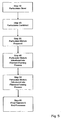
- Fig. 5 is a flow chart of a process for making filaments with particles added.
- the present invention focuses on methods of use of a biologically benign powder in a resin that has certain beneficial properties such as retaining source infrared radiation and changing the wavelength of light reflected by the powder or passing through the powder.
- This powder is combined with a carrier material, such as a resin, specifically a polymer, and/or implemented into a textile fiber, a non-woven membrane, or a similar product.
- Products that incorporate this powder may provide additional beneficial properties to a subject wearing such a product such as, for example, wound healing, skin fibroblast stimulation, fibroblast growth and proliferation, increased DNA synthesis, increased protein synthesis, increased cell proliferation by changing the optical properties in and around the human system interacting with light, and changing the wavelength, reflecting, or absorbing light in the electromagnetic spectrum.
- the compositions and fibers represent a combination of substances that work together with electromagnetic radiation to provide such beneficial properties.
- compositions of the present invention may be used in a variety of settings to trap source infrared radiation, to provide heat to an object, or to prevent the escape of infrared light.
- Materials in the form of a fabric include hosiery, footwear, active wear, sports wear, sports wraps, base layer, gloves and bandages. These items may also have certain properties such as controlling odor, regulating heat, providing protection from fire, providing protection from harmful light, insulation and wound healing.
- Electromagnetic light spans a very large spectrum from 10 nm to 1060 nm of wavelength and spans ultraviolet light, visible light, and infrared light.
- Ultraviolet (“UV") light has wavelengths from 10 nm to 390 nm and is divided in to near (390 to 300 nm), mid (300 to 200 nm), and far (200 to 10 nm) spectra regions.
- Visible light is a small band in the electromagnetic spectrum with wavelengths between 390 and 770 nm and is divided into violet, blue, green, yellow, orange, and red light.
- Infrared (“IR”) light spans from 770 nm to 1060 nm and includes near (770 to 1.5 X 10 3 ), mid (1.5X 10 3 to 6 X 10 3 ), and far (6 X 10 3 to 10 6 ) regions.
- the refractive index (“RI”) is a measure of a substance's ability to bend light. Light and optical energy that the body is exposed to extends throughout the electromagnetic spectrum. The adult human body, at rest, emits about 100 watts of IR in the mid and far wavelengths. During exercise this level rises sharply and the distribution of wavelengths changes.
- the present invention relates to a material, such as a resin, film, polymer or fiber, for example, that is optically responsive to light and electromagnetic spectrums.
- the end materials created may be used to interact with living or non-living systems.
- the end material may be created by adding various active materials together to form a powder.
- the powder may then be combined or mixed with carrier materials that may have their own unique optical properties and may also act as a matrix for the powder and its particles.
- the active materials selected to form the powder are selected based upon several characteristics.
- One characteristic is that the active materials, in particle form, may be biologically benign, or inert.
- the material preferably exhibits one of two optical properties: being transparent or having a different refractive index than the carrier material.
- Specific active materials that may be used in the present invention include silicon, carbon, and various vitreous glasses including oxides of aluminum titanium, silicon, boron, calcium, sodium, and lithium.
- the active materials are titanium dioxide, quartz and aluminum oxide.
- the choice of materials and their optical properties can be selected to effect a certain result; such as, for example, a biological excitation for a range of wavelengths from 1.015 microns to 0.601 microns (601 nm).
- a biological excitation for a range of wavelengths from 1.015 microns to 0.601 microns (601 nm).
- an overlapping series of pass-bands that promote excitation and emission in the ranges that bracket the desired wavelength may be created by the materials.
- These pass bands may be created by using particles of staggered refractive indices with respect to the host, creating a known transparency and if possible concentrating normally blocked or attenuated wavelengths by using particles with high transparency and moderate refractive indices.
- a material that is transparent to UV light with a high refractive index that is not transmissive at short wave, or harmful, UV regions may be used.
- Specific carrier materials that may be used in the present invention include resins such as rayon, polyester (PET), nylon, acrylic, polyamide, and polyimide.
- resins such as rayon, polyester (PET), nylon, acrylic, polyamide, and polyimide.
- solid transparent materials with a transmission in the range, of about 0.5 to about 11 microns is preferable, such as, for example, polyethylene and many of its derivatives, polypropylene and many of its derivatives, polymethylpentene, and polystyrene and many of its derivatives. These materials may also exhibit useful transparencies in the ultraviolet.
- the addition of active particles with varying refractive indices may yield a wide range of filtering effects in the IR and UV ranges.
- resin may serve as a medium to encase and act as a lensing medium for active materials.
- the materials may be ground or processed to comprise various properties.
- the grinding or processing helps to determine the particle size of the active material, the concentration of each type of active material, and the physical characteristics of the active material, and is known in the art.
- the physical characteristics may include the smoothness or shape of the particles.
- the particles may be smooth, round, triangular, or scalloped.
- the end material may achieve one of two results with respect to wavelength: it may shorten or lengthen wavelength depending the desired effect.
- IR light excites atomic and/or molecular structure. The excitation may frequently result in stresses on either atomic or molecular levels. When the stress is released, the electron energy level may change and release energy as photons.
- particular wavelengths may be selected by the ease that a given wavelength may be absorbed and/or emitted. If the active particles are suspended in a matrix that performs a filtering action, i.e., passing optical energy, the active particles may be closer to the wavelength of the carrier material. Conversely, if shorter or longer wavelengths are to be passed, the size of the active particles may be closer to the size of the wavelength of the light passed. For example, in applications in which the desired wavelength is 1 micron, the particle size may be the same, i.e., 1 micron. If carrier material, such as resinfor example, is capable of passing 14 micron to 4 microns it may be desirable to have some particles slightly larger than or equal to those wavelengths. Desired particles sizes may range from about 2 microns to about 0.5 micron and are preferably related to the targeted wavelength.
- the powder may comprise aluminum oxide (Al 2 O 3 ), quartz (SiO 2 ), and titanium dioxide (TiO 2 - in rutile form).
- Titanium dioxide may be obtained from any commercially available source, such as from Millennium Chemicals, Inc., Hunt Valley, MD. Quartz may be obtained from any commercially available source, such as Barbera Co., Alameda, CA.
- Aluminum oxide may be obtained from any commercially available source, such as from Industrial Supply, Loveland, CO.
- Aluminum oxide has a unique property that promotes infrared light bandshifts under certain conditions.
- interaction with IR light occurs.
- the IR light emission of the human body is absorbed and excites electron energy levels in the atoms and molecules of the components of the compositions of the present invention.
- the electrons return to their previous energy levels they release energy in the IR range but at a different wavelength, i.e., a longer wavelength.
- the compositions of the present application when used in a body covering, such as a compression wrap or sleeve, utilize these bandshifting properties of aluminum oxide to reflect longer infrared wavelengths back into the human body.
- the longer infrared wavelength allows capillaries to relax and be less constricted, resulting in greater blood flow where required, which results in improved body circulation.
- Quartz, or silicon dioxide, is biologically benign if it is incorporated into a carrier material in solid bulk form. Quartz is also capable of non-linear frequency multiplication, and, in proper combination with a particular wavelength and a carrier, may emit ultraviolet (UV) light. UV light is known to inhibit bacterial growth and the creation of ozone. UV that has a wavelength that is too short can be detrimental to the human system. Quartz may be used to absorb the shorter wavelength UV light if its physical particle size is close to the wavelength of light that should be excluded. In the present invention, quartz may be used to increase frequency or shorten wavelength.
- quartz may exhibit piezoelectric properties.
- the distribution of charges may become unequal and an electric field may be established along one face and an opposite field may be established along the other face. If the stressing effect, such as pressure, for example, is constant, the charges may redistribute themselves in an equal and neutral manner. If the stress is removed once the charges are redistributed, a charge of opposite polarity and equal magnitude to the initial charge may be established. This charge redistribution results in nonlinear behavior, which may be manifested as frequency doubling.
- Titanium dioxide is unique because it has a high refractive index and also has a high degree of transparency in the visible region of the spectrum. It is used as a sunblock in sunscreens because it reflects, absorbs, and scatters light and does not irritate the skin. Only diamonds have a higher refractive index than titanium dioxide. For these reasons, titanium dioxide is ideal for applications that are close to skin surfaces.
- the optical properties of titanium are used in conjunction with quartz and an appropriate carrier material, such as PET, for example, a greenhouse effect may be created. Infrared wavelengths of one size may pass back through the resin and may be reflected. This reflection creates longer wavelengths that prevent passage back through the PET. In a specific embodiment of the present invention this property may be used to reflect longer wavelengths into the human system while directing shorter, more harmful wavelengths away from the human system.
- Particle size and shape of the active materials in the powder may also affect the end product by controlling the wavelength of light that is allowed to pass through the particles.
- a particle size of about 1.4 microns or smaller is used for aluminum oxide.
- the particle shape may be scalloped.
- the particle size of quartz may be about 1.5 microns or smaller.
- the quartz particles may be spherical or substantially spherical.
- the titanium dioxide particles may be about 2 microns or smaller and triangular with rounded edges.
- the specific properties and characteristics of the active particles and carrier materials may be combined to produce a specific effect such as wound healing, skin fibroblast stimulation, fibroblast growth and proliferation, increased DNA synthesis, increased protein synthesis, and increased cell proliferation by changing the optical properties in and around the human system. These properties are related to specific wavelengths of light and the interaction of that light with the compositions of the present invention.
- wavelengths may be selected to provoke melanin excitement, which occurs at about 15 nm.
- melanin excitement an energy range from a band about 10 nm to about 2.5 microns from the human metabolic action may be used.
- Daylight from either an outdoor broadband or an indoor lamp ranges from about 1.1 microns, with a "hump" around 900 nm and a broad general peak around 700-800 nm, and also includes lesser wavelengths such as 400 to 700 nm.
- Some of the general properties and desirable filtering and changes include but are not limited to having band pass in the 600 to 900 nm band range.
- a carrier material may be selected to have a transparency from 200-900 nm. resin has a known transparency in the 8 to 14 micron range.
- An active particle may also be selected to have a wavelength between about 950 and 550 nm. This may be accomplished by using particles with a general size distribution of 2 microns and lower.
- Muscle and bone atrophy are well-documented in astronauts, and various minor injuries occurring in space have been reported not to heal until landing on Earth.
- Evidence suggests that using LED light therapy at 680, 730 and 880 nm simultaneously in conjunction with hyperbaric oxygen therapy accelerates the healing process in Space Station missions, where prolonged exposure to microgravity may otherwise retard healing.
- Tissues stimulate the basic energy processes in the mitochondria (energy compartments) of each cell, particularly when near-infrared light is used to activate the color sensitive chemicals (chromophores, cytochrome systems) inside each cell.
- Optimal LED wavelengths may include 680, 730, and 880 nm.
- the particle size of the compositions of the present invention may be selected to provide reflective or pass through beneficial wavelengths of light.
- the active particles of the present invention may be ground to reach an approximate particle size of about 0.5 to about 2.0 microns.
- titanium dioxide may be ground to a grain size of between 1 and 2 microns and may be triangular with rounded edges.
- Aluminum oxide may be ground to a grain size of between 1.4 and 1 microns and may be scalloped-shaped.
- Quartz is preferably ground to a grain size of about 1.5 to 1 microns and is generally rounded. All particles are reduced in size and shaped by processes known in the art, such as grinding, polishing, or tumbling, for example.
- the dry weight ratio of the active materials titanium dioxide, quartz, and aluminum oxide in the powder is 10:10:2, respectively.
- the compositions may further comprise a resin, such as a polymer made into a film or fiber.
- a resin such as a polymer made into a film or fiber.
- the polymer may initially be in pellet form and dried to remove moisture by using, for example, a desiccant dryer.
- the powder may then be dispersed into the resin by methods known in the art, such as for example in a rotating drum with paddle-type mixers.
- the polymer used may be polyester.
- the powder may comprise from about 0.5 to about 20 percent of the mixture.
- the powder may comprise from about 1 to about 10 percent of the mixture.
- the powder may comprise from about 1 to about 2 percent of the total weight of the resin/powder mixture.
- about 100 pounds of the powder may be combined with about 1000 pounds of PET.
- the powder may be introduced to the resin by other processes known in the art such as compounding, for example.
- 100 pounds of the powder may be combined with about 250 to about 300 pounds of PET.
- the resulting liquid may be extruded into fiber that may be drawn into staple fibers of various lengths.
- This process of grinding, combining, and extrusion is known in the art, as described in, for example, U.S. Patent Nos. 6,204,317 ; 6,214,264 ; and 6,218,007 .
- the fibers may be combined together by a spinning process, preferably using a rotary spinning machine, to yield a yam.
- the range of the size of the apertures in the rotary spinning machine may be from about 6 microns to about 30 microns.
- the step of spinning the fibers of the present invention into yarn comprises spinning staple having a denier per fiber of between about 1 and about 3; accordingly, the prior step of spinning the melted polyester into fiber likewise comprises forming a fiber of those dimensions.
- the fiber is typically heat set before being cut into staple with conventional techniques. While the extruded fibers are solidifying, they may be drawn by methods known in the art to impart strength.
- the method can further comprise forming fabrics, typically woven or knitted fabrics from the spun yarn in combination with both natural and synthetic fibers.
- Typical natural fibers may include cotton, wool, hemp, silk, ramie, and jute.
- typical synthetic fibers may include acrylic, acetate, Lycra, spandex, polyester, nylon, and rayon.
- the present invention also includes spinning a blend of cotton into yarn in which the polyester may include between about 0.5 and 4% by weight of polyethylene glycol into yarn in a rotor spinning machine.
- the method can further comprise spinning the fibers of the present invention.
- the fibers of the present invention may include a woven or knitted fabric from the blended yarn with the yarn being either dyed as spun yarn, or after incorporation into the fabric in which case it is dyed as a fabric.
- the cotton and polyester can be blended in any appropriate proportion, but in the specific embodiments the blend includes between about 35 and 65% by weight of cotton with the remainder polyester. Blends of 50% cotton and 50% polyester ("50/50") are also used.
- the yarn formed according to this embodiment can likewise be incorporated into blends with cotton, and is known to those familiar with such blending processes, the cotton is typically blended with polyester staple fiber before spinning the blend into yarn.
- the blend may contain between about 35% and 65% by weight cotton with 50/50 blends being typical.
- Other methods of production of fibers are equally suitable such as those described in U.S. Patent Nos. 3,341,512 ; 3,377,129 ; 4,666,454 ; 4,975,233 ; 5,008,230 ; 5,091,504 ; 5,135,697 ; 5,272,246 ; 4,270,913 ; 4,384,450 ; 4,466,237 ; 4,113,794 ; and 5,694,754 .
- the polyester mixture may be used to create a staple fiber.
- the staple fiber may then be used to create a non-woven membrane.
- This membrane may be bonded to another fabric, membrane or material.
- the non-woven membrane may be used as a lining by being bonded to the inside of a pair of leather gloves or, for example, being bonded to another fabric such as ThinsulateTM by 3M by methods known to those skilled in the art.
- Example 1 Muscle strength
- WB1 woven with fibers comprising the powder composition of the present invention
- WB2 woven with fibers lacking the powder composition of the present invention
- Panelists are selected from the general population, and no specific demographic parameters are utilized in recruiting the panelists. Panelists are placed within a climate-controlled area of standard room temperature, standard humidity, and sea-level atmospheric pressure. A measurement of each panelist's grip strength is taken prior to the panelists' donning of any band. Panelists are asked to don a band from WB2. Five minutes later, a measurement of each panelist's grip strength is taken. Panelists are then asked to remove the band from WB2, wait five minutes, and don a band from WB1. Five minutes later, measurements of each panelist's grip strength are taken. Grip dynamometers are used to record the grip strengths of the panelists throughout the trials. All grip strength measurements are averaged.
- proximal means close to, abutting, next to, or underneath a material used in the Example. Instances of "proximal" include a wrist to a hand, an elbow to a hand, a wrist to a finger, an ankle to a foot, and an ankle to a toe.
- Subjects were analyzed for the effects of a material of the invention (the test material) on strength of proximal muscles. Wrist bands made either with the test material or without it were used. Subjects ranged in age between 20 and 80 years old. Each subject was asked to stand in a relaxed position and to squeeze a dynamometer having an analog readout with his or her preferred hand. The device used is also used to test patients with carpal tunnel syndrome. The subjects squeezed the device as hard as possible three times, resting between efforts. The amount of pressure applied was measured on the dynamometer, and the highest number for each subject was used as the control level. A wrist band was then placed on the wrist of the hand used to establish the control level. Optionally, a second wrist band was placed on the other wrist.
- the test material the test material
- test material successfully caused an increase in strength in muscles proximal to the location of the wrist bands comprising the test material. It is believed that this increased strength is due to increased blood flow to those muscles, caused by the presence of the test material.
- a wearable fabric or material is woven from resin filaments, such as polymers and, preferably from resin filaments or fibers, including uniformly distributed 0.5 to 1.5 micron, biologically benign particles of titanium dioxide, alumina and silicon oxides.
- the material may also be formed from non woven filaments. Particles having substantially intact crystal lattice structures, and minimal contamination, have improved optical performance when uniformly distributed within the resin filaments beyond what is achievable with substantially or partially amorphous particles and are therefore preferred.
- the particles may be added in substantially equal weight for a .25% to 15% loading of the PET. A range of 1 % to 2% loading of the resins presently preferred.
- Crystalline particles of titanium dioxide, alumina and silicon oxides, with the desirable properties, may be obtained from the following suppliers.
- Silicon oxide Alibab.com., 39899 Balentine Dr., Ste 325, Newark, CA 94560
- Alumina PACE Technologies, 200 Larkin Dr., Wheeling, IL 60090
- Titanium Dioxide Goodfellow Corporation, 800 Lancaster Ave, Berwyn, PA 19312
- Ambient light incident on the woven material typically includes visible light as well as some infrared (IR) and ultraviolet (UV) radiation.
- the crystalline particles within the resin filaments have pass bands in or overlapping the visible spectrum and also translates or converts some portions of UV and IR light into light in specific pass bands in or overlapping the visible light spectrum including the near IR.
- the light applied to the skin of the wearer of the material therefore has a substantially modified distribution of light in pass bands in or overlapping the visible spectrum.
- the substantially uniform distribution of the particles in the resin results in interaction and enhancement of these effects so that the spectral distribution of the light applied to the wearer is substantially altered from the spectral distribution that would have been applied under the same conditions without the presence of the particles in the PET.
- the ambient light applied to the material had a relatively flat or equal spectrum in the band of interest
- the light transmitted through unadulterated resin would also have a relatively flat spectrum reduced in amplitude generally, but somewhat higher in intensity in the pass band of the unadulterated PET.
- Resin is often manufactured from recycled materials including contaminants.
- the light transmitted through contaminated resin will also typically have a relatively even or flat distribution of the spectrum of the light applied to the material.
- the light transmitted through the resin including the particles, whether or not contaminated will exhibit the substantially altered spectrum, described below as an altered spectrum distribution pattern.
- Fig. 3 is a graph of the intensities of light emerging from a suspension of alumina particles, from about .25 to 1.75 micron in a fluid having a refractive index of 1.51, similar to the resin carrier.
- the fluid may be prepared by mixing Agar-Agar, water, propylene glycol and amyl alcohol to form a gel to suspend the particles.
- a generally broadband relatively flat spectrum of light is applied to the gel suspension and a scanning spectrophotometer is used to detect and measure the light emerging from the gel with suspended particles.
- the graph shows the results, normalized to a peak intensity of 1.00 at a wavelength of about 300 nm.
- the emerging light has substantial peaks and valleys, for example, valley "A” occurring just below about 400 nm and twin peaks "B” at just above 400 nm.
- a similar graph of the light emerging from a suspension of titanium dioxide particles in a similar gel is shown for a similar flat spectrum input.
- the graph shows the results, normalized to a peak intensity of 1.00 at a wavelength of about 425 nm.
- the emerging light has substantial peaks and valleys, for example, valley "C” occurring just below about 400 nm and peak "D" occurring at about 425 nm.
- the spectral distribution of light emerging from Quartz particles also has peak amplitudes at certain wavelengths and minima or valleys at other wavelengths.
- the spectral altering characteristics of the particles shown in Figs. 1 and 2 for titanium dioxide and alumina, respectively, interact to further alter the spectral distribution of the light emerging from the filament material, that is, the spectral distribution pattern.
- the resultant pattern becomes quite complex and provides wide and narrow peaks and valleys at many different spectral lines.
- the characteristics of the PET, and temperature, particle size distribution and other effects may shift or further vary the spectral density pattern.
- the variations in the spectral density pattern from the ambient that is, the pattern of peaks and valleys is not random but rather intentional and permits selective illumination of the wearer's skin with a somewhat higher intensity light at certain specific wavelengths and ranges of wavelengths surrounded by light at lower intensity at other specific wavelengths and ranges of wavelengths.
- the selective spectral distribution pattern of illumination can cause various beneficial effects in the wearer by selectively energizing some components of the human body, such as mitochondria.
- the spectral distribution pattern of the wearable fiber having titanium dioxide, alumina and quartz particles may include spectral lines, 35 nm wide on each side, for the following sets of spectra, and ranges of spectra (all in nm): 400, 420, 443, 458, 462, 474, 490, 512, 540 to 550, 550 to 565, 570 to 595, 598, 602, 620, 590 to 630, 625 to 648, 633 to 670, 665 to 680, 686 to 703, 710 to 770, 700 to 740, 708 to 734, 737 to 770, 750 to 790, 800, 880, 870 to 910, 920 to 940, 933 to 960, 905 to 950, 940 to 970
- Distributed harmonic outputs may also be present, 45 nm wide, on either side of (all in nm): 950, 975, 1050, 1070, 1100, 1150, 1190, 1205, 1250, 1285, 1290, 1310, 1350 1370 and 1390.
- the resultant spectral distribution pattern provides selective illumination of the wearer which has been shown to be advantageous to the wearer.
- the human body is known to radiate heat and also, at very low levels, to radiate light in various pass bands.
- the wearable fiber material will therefore also receive light and heat from wearer's body, which is also subject to the effects of the particles in the PET, the resultant radiation may also be applied to the wearer's skin.
- Polarization of the light in the fiber may be caused by the resin material as well as the particles and further enhances the ability of the resin and particulate system to modify the distribution of wavelengths in the visible and near IR light applied to the wearer.
- the increase in applied visible and near IR radiation may be on the order of 0.01 to .03 percent using wearable materials made from the fiber and particulate system.
- step 10 the sizes of one or more the types of the particles may be adjusted by pre-processing if the particles are not within the desired range of particles sizes.
- step 20 the particles may be physically combined by mechanical mixing to provide a powder or other particle mixture.
- the particle mixture may be prepared by compounding or fluid suspension or other known mechanisms to permit introduction into the filament forming process in step 40.
- Conventional compounding techniques include forming a high concentration of the particles in pellets, typically on the order of 1/8 inch diameter rods about 1" long. In the filament forming process step 40, these pellets are combined with additional pellets or chips of resin in order to achieve the desired loading or concentration of particles in the final filament.
- Conventional fluid suspension techniques include suspending the particles in a liquid, such a propylene glycol, which is compatible with the resin used in filament forming step 40.
- the filament forming process in step 50 is conventional thermal extrusion. Thereafter, depending up the final use of the filaments, end process steps 60 may be applied.
Landscapes
- Engineering & Computer Science (AREA)
- Manufacturing & Machinery (AREA)
- Chemical & Material Sciences (AREA)
- Chemical Kinetics & Catalysis (AREA)
- General Chemical & Material Sciences (AREA)
- Textile Engineering (AREA)
- Artificial Filaments (AREA)
- Radiation-Therapy Devices (AREA)
- Undergarments, Swaddling Clothes, Handkerchiefs Or Underwear Materials (AREA)
- Bedding Items (AREA)
- Professional, Industrial, Or Sporting Protective Garments (AREA)
- Gloves (AREA)
- Pharmaceuticals Containing Other Organic And Inorganic Compounds (AREA)
- Medicines That Contain Protein Lipid Enzymes And Other Medicines (AREA)
- Medicines Containing Material From Animals Or Micro-Organisms (AREA)
- Cosmetics (AREA)
- Paints Or Removers (AREA)
- Compositions Of Macromolecular Compounds (AREA)
- Acyclic And Carbocyclic Compounds In Medicinal Compositions (AREA)
Applications Claiming Priority (5)
| Application Number | Priority Date | Filing Date | Title |
|---|---|---|---|
| US36623702P | 2002-03-22 | 2002-03-22 | |
| US366237P | 2002-03-22 | ||
| US41553202P | 2002-10-02 | 2002-10-02 | |
| US415532P | 2002-10-02 | ||
| PCT/US2003/008910 WO2003083189A1 (en) | 2002-03-22 | 2003-03-24 | Polymeric fiber composition and method |
Publications (2)
| Publication Number | Publication Date |
|---|---|
| EP1488026A1 EP1488026A1 (en) | 2004-12-22 |
| EP1488026B1 true EP1488026B1 (en) | 2010-03-10 |
Family
ID=28678165
Family Applications (1)
| Application Number | Title | Priority Date | Filing Date |
|---|---|---|---|
| EP03716790A Expired - Lifetime EP1488026B1 (en) | 2002-03-22 | 2003-03-24 | Method for enhancing the muscle performance |
Country Status (11)
| Country | Link |
|---|---|
| US (1) | US20040043174A1 (https=) |
| EP (1) | EP1488026B1 (https=) |
| JP (2) | JP4489439B2 (https=) |
| KR (1) | KR100740730B1 (https=) |
| AT (1) | ATE460514T1 (https=) |
| AU (1) | AU2003220481B2 (https=) |
| CA (1) | CA2479958C (https=) |
| DE (1) | DE60331636D1 (https=) |
| ES (1) | ES2341765T3 (https=) |
| PT (1) | PT1488026E (https=) |
| WO (1) | WO2003083189A1 (https=) |
Cited By (1)
| Publication number | Priority date | Publication date | Assignee | Title |
|---|---|---|---|---|
| US20110254937A1 (en) * | 2010-04-15 | 2011-10-20 | Olympus Corporation | Image processing device and program |
Families Citing this family (17)
| Publication number | Priority date | Publication date | Assignee | Title |
|---|---|---|---|---|
| US7100352B2 (en) | 2004-01-21 | 2006-09-05 | Robins Steven D | Protective composite yarn |
| CA2712513A1 (en) * | 2007-01-31 | 2008-08-07 | Innovision Headwear Inc. | Optically active headgear |
| US20090291108A1 (en) * | 2008-05-25 | 2009-11-26 | Tsai-Chin Chen | Fabric with health care component |
| US20110107502A1 (en) * | 2009-11-12 | 2011-05-12 | Todd Dalhausser | Training and recovery clothing and related methods |
| US20110277216A1 (en) * | 2010-05-13 | 2011-11-17 | Alan Norman Higgins | Fiber material |
| KR101345694B1 (ko) * | 2011-03-11 | 2013-12-30 | 옵토팩 주식회사 | 파이버, 파이버 집합체 및 이를 포함하는 접착제 |
| US20220218115A1 (en) * | 2017-08-27 | 2022-07-14 | Under Armour, Inc. | Bedding for a mattress |
| US10252945B2 (en) | 2012-09-26 | 2019-04-09 | Multiple Energy Technologies Llc | Bioceramic compositions |
| ES2492215B1 (es) | 2013-02-06 | 2015-06-29 | Jesús CANDEL FABREGAS | Polvo cerámico fotocatalítico y de emisión infrarroja, aplicable a fibras textiles y procedimiento de obtención de dicho polvo |
| SE537818C2 (sv) * | 2013-04-05 | 2015-10-27 | Ten Medical Design Ab | Strålskyddande material |
| ITMI20131095A1 (it) | 2013-06-28 | 2014-12-29 | Allergosystem S R L | Tessuto e filato con proprieta' ossigenanti |
| US20170049890A1 (en) | 2014-05-05 | 2017-02-23 | Multiple Energy Technologies Llc | Bioceramic compositions and biomodulatory uses thereof |
| PL3199673T3 (pl) * | 2014-09-24 | 2020-12-28 | Kai-Li Huang | Włókna do kontrolowania środowiska na podstawie zielonej energii, sposób ich wytwarzania oraz wykonana z nich tkanina |
| WO2017018470A1 (ja) * | 2015-07-27 | 2017-02-02 | 国立研究開発法人理化学研究所 | 発光装置、発光システム、及び、発光装置の製造方法 |
| US10337124B2 (en) * | 2015-08-26 | 2019-07-02 | Teague Egan | Textile graphene component thermal fiber |
| AU2020209227A1 (en) * | 2019-01-16 | 2021-08-19 | Hologenix, Llc | Cellulose and semi-cellulose based fibers and yarns embedded with mineral particles and methods of making the same |
| MX2023015261A (es) * | 2021-06-23 | 2024-01-19 | Beiersdorf Ag Star | Recubrimiento para heridas para aumentar la concentracion de no en las heridas. |
Family Cites Families (16)
| Publication number | Priority date | Publication date | Assignee | Title |
|---|---|---|---|---|
| US1415313A (en) * | 1918-10-15 | 1922-05-09 | William M Cavanaugh | Method of making leather yarn and article |
| US1713113A (en) * | 1927-10-01 | 1929-05-14 | William M Cavanaugh | Leather manufacture |
| FR2384836A1 (fr) * | 1977-03-25 | 1978-10-20 | Bric | Textiles photoluminescents par enduction |
| JPH03190990A (ja) * | 1989-12-20 | 1991-08-20 | Toshio Komuro | 赤外線微弱エネルギー放射用の粉末及びそれを混入した合成繊維 |
| DE4142240A1 (de) * | 1991-12-20 | 1993-06-24 | Basf Ag | Verwendung von pigmentpraeparationen zum pigmentieren oder mattieren von zurichtmitteln fuer leder und lederimitate |
| US5466526A (en) | 1992-07-16 | 1995-11-14 | Magata; Katsumi | Far infrared radiant composite fiber containing metal |
| US5851668A (en) * | 1992-11-24 | 1998-12-22 | Hoechst Celanese Corp | Cut-resistant fiber containing a hard filler |
| IL109236A (en) * | 1993-04-13 | 1998-01-04 | Sumitomo Chemical Co | A-alumina powder and its production |
| CA2221138A1 (en) * | 1995-06-06 | 1996-12-12 | Kimberly-Clark Worldwide, Inc. | Microporous fabric containing a microbial adsorbent |
| DE19647038B4 (de) * | 1996-11-14 | 2007-02-22 | Ferro Gmbh | Kugelförmige Pigmente, Verfahren zu ihrer Herstellung und deren Verwendung |
| US5779950A (en) * | 1996-12-02 | 1998-07-14 | Kang; Dong Soon | Method of making a synthetic fiber containing infrared energy powder |
| TWI285671B (en) * | 1998-10-13 | 2007-08-21 | Orion 21 A D Pty Ltd | Luminescent gel coats and moldable resins |
| US6332993B1 (en) * | 1999-09-16 | 2001-12-25 | Nan Ya Plastics Corporation | Process of making heat-retaining fibers |
| CA2406102A1 (en) * | 2000-05-19 | 2002-10-22 | Toshio Komuro | Far infrared radiation composition having excellent static-eliminating properties, and fiber and fiber product comprising the same |
| US20020035755A1 (en) * | 2000-06-14 | 2002-03-28 | Widdemer John D. | Interactive leather for gloves, shoes, garments and upholstery |
| JP4175558B2 (ja) * | 2002-07-23 | 2008-11-05 | 株式会社ファーベスト | 遠赤外線放射材料 |
-
2003
- 2003-03-24 KR KR1020047015048A patent/KR100740730B1/ko not_active Expired - Lifetime
- 2003-03-24 JP JP2003580616A patent/JP4489439B2/ja not_active Expired - Lifetime
- 2003-03-24 ES ES03716790T patent/ES2341765T3/es not_active Expired - Lifetime
- 2003-03-24 US US10/396,132 patent/US20040043174A1/en not_active Abandoned
- 2003-03-24 WO PCT/US2003/008910 patent/WO2003083189A1/en not_active Ceased
- 2003-03-24 DE DE60331636T patent/DE60331636D1/de not_active Expired - Lifetime
- 2003-03-24 CA CA002479958A patent/CA2479958C/en not_active Expired - Fee Related
- 2003-03-24 AT AT03716790T patent/ATE460514T1/de not_active IP Right Cessation
- 2003-03-24 EP EP03716790A patent/EP1488026B1/en not_active Expired - Lifetime
- 2003-03-24 PT PT03716790T patent/PT1488026E/pt unknown
- 2003-03-24 AU AU2003220481A patent/AU2003220481B2/en not_active Expired
-
2008
- 2008-07-02 JP JP2008173997A patent/JP2008231657A/ja active Pending
Cited By (2)
| Publication number | Priority date | Publication date | Assignee | Title |
|---|---|---|---|---|
| US20110254937A1 (en) * | 2010-04-15 | 2011-10-20 | Olympus Corporation | Image processing device and program |
| US8681208B2 (en) * | 2010-04-15 | 2014-03-25 | Olympus Corporation | Image processing device and program |
Also Published As
| Publication number | Publication date |
|---|---|
| JP2008231657A (ja) | 2008-10-02 |
| ATE460514T1 (de) | 2010-03-15 |
| CA2479958A1 (en) | 2003-10-09 |
| DE60331636D1 (de) | 2010-04-22 |
| AU2003220481B2 (en) | 2007-11-22 |
| JP2005520950A (ja) | 2005-07-14 |
| KR20040104539A (ko) | 2004-12-10 |
| PT1488026E (pt) | 2010-05-31 |
| US20040043174A1 (en) | 2004-03-04 |
| AU2003220481A1 (en) | 2003-10-13 |
| KR100740730B1 (ko) | 2007-07-19 |
| CA2479958C (en) | 2009-11-03 |
| JP4489439B2 (ja) | 2010-06-23 |
| WO2003083189A1 (en) | 2003-10-09 |
| EP1488026A1 (en) | 2004-12-22 |
| ES2341765T3 (es) | 2010-06-28 |
Similar Documents
| Publication | Publication Date | Title |
|---|---|---|
| US7074499B2 (en) | Polymeric fiber composition and method | |
| EP1488026B1 (en) | Method for enhancing the muscle performance | |
| EP3840829B1 (en) | Electrically passive low-level light therapy system and methods incorporating same | |
| CN1057809C (zh) | 防紫外线清凉保健织物及其制造方法 | |
| JP2585166B2 (ja) | 金属を含有した繊維からなる靴下 | |
| KR100922446B1 (ko) | 이중표면구조의 천연광물 함유 다기능성 원단 | |
| US20210189603A1 (en) | Cellulose and semi-cellulose based fibers and yarns embedded with mineral particles and methods of making the same | |
| CN113526948A (zh) | 一种太赫兹源发射材料、太赫兹发射体及太赫兹床上用品 | |
| WO2020144388A1 (es) | Material textil con microparticulas biocerámicas que emite en el infrarrojo lejano en cuatro longitudes de onda concretras simultáneamente | |
| Yüce | Yarns emitting far infrared rays | |
| CN1186885A (zh) | 远红外保温保健防臭织物及其制备方法 | |
| Saati et al. | The effect of laser-activated bleaching with 810 nm and 980 nm diode lasers on enamel micro-hardness; an in vitro study | |
| JPH03158103A (ja) | 日傘類 | |
| WO2025142593A1 (ja) | 繊維、生地、装着品、及び繊維の製造方法 | |
| CN107752161A (zh) | 防紫外线防日晒纳米元素织物户外运动服 | |
| CN1289874A (zh) | 健康、凉爽的纺织品及其制备方法 | |
| KR20030084860A (ko) | 수용성 원적외선 향 방사 조성물의 제조방법 | |
| JPH0711081B2 (ja) | 日焼け止めストッキング及びその製造方法 | |
| JP2001214348A (ja) | ニット製品及び赤外線治療用サポーター | |
| JPH0197468A (ja) | 創傷被覆材 |
Legal Events
| Date | Code | Title | Description |
|---|---|---|---|
| PUAI | Public reference made under article 153(3) epc to a published international application that has entered the european phase |
Free format text: ORIGINAL CODE: 0009012 |
|
| 17P | Request for examination filed |
Effective date: 20041020 |
|
| AK | Designated contracting states |
Kind code of ref document: A1 Designated state(s): AT BE BG CH CY CZ DE DK EE ES FI FR GB GR HU IE IT LI LU MC NL PT RO SE SI SK TR |
|
| AX | Request for extension of the european patent |
Extension state: AL LT LV MK |
|
| RAP1 | Party data changed (applicant data changed or rights of an application transferred) |
Owner name: HOLOFIBER, LLC |
|
| RIN1 | Information on inventor provided before grant (corrected) |
Inventor name: SCHNURER, JOHN H. Inventor name: HORINEK, DAVID D. Inventor name: KLEIN, ROBERT M. |
|
| 17Q | First examination report despatched |
Effective date: 20081028 |
|
| GRAP | Despatch of communication of intention to grant a patent |
Free format text: ORIGINAL CODE: EPIDOSNIGR1 |
|
| RTI1 | Title (correction) |
Free format text: METHOD FOR ENHANCING THE MUSCLE PERFORMANCE |
|
| GRAS | Grant fee paid |
Free format text: ORIGINAL CODE: EPIDOSNIGR3 |
|
| GRAA | (expected) grant |
Free format text: ORIGINAL CODE: 0009210 |
|
| AK | Designated contracting states |
Kind code of ref document: B1 Designated state(s): AT BE BG CH CY CZ DE DK EE ES FI FR GB GR HU IE IT LI LU MC NL PT RO SE SI SK TR |
|
| REG | Reference to a national code |
Ref country code: GB Ref legal event code: FG4D |
|
| REG | Reference to a national code |
Ref country code: CH Ref legal event code: EP |
|
| REG | Reference to a national code |
Ref country code: IE Ref legal event code: FG4D |
|
| REF | Corresponds to: |
Ref document number: 60331636 Country of ref document: DE Date of ref document: 20100422 Kind code of ref document: P |
|
| REG | Reference to a national code |
Ref country code: PT Ref legal event code: SC4A Free format text: AVAILABILITY OF NATIONAL TRANSLATION Effective date: 20100524 |
|
| REG | Reference to a national code |
Ref country code: ES Ref legal event code: FG2A Ref document number: 2341765 Country of ref document: ES Kind code of ref document: T3 |
|
| REG | Reference to a national code |
Ref country code: NL Ref legal event code: VDEP Effective date: 20100310 |
|
| PG25 | Lapsed in a contracting state [announced via postgrant information from national office to epo] |
Ref country code: AT Free format text: LAPSE BECAUSE OF FAILURE TO SUBMIT A TRANSLATION OF THE DESCRIPTION OR TO PAY THE FEE WITHIN THE PRESCRIBED TIME-LIMIT Effective date: 20100310 Ref country code: FI Free format text: LAPSE BECAUSE OF FAILURE TO SUBMIT A TRANSLATION OF THE DESCRIPTION OR TO PAY THE FEE WITHIN THE PRESCRIBED TIME-LIMIT Effective date: 20100310 Ref country code: SI Free format text: LAPSE BECAUSE OF FAILURE TO SUBMIT A TRANSLATION OF THE DESCRIPTION OR TO PAY THE FEE WITHIN THE PRESCRIBED TIME-LIMIT Effective date: 20100310 |
|
| PG25 | Lapsed in a contracting state [announced via postgrant information from national office to epo] |
Ref country code: SE Free format text: LAPSE BECAUSE OF FAILURE TO SUBMIT A TRANSLATION OF THE DESCRIPTION OR TO PAY THE FEE WITHIN THE PRESCRIBED TIME-LIMIT Effective date: 20100310 Ref country code: RO Free format text: LAPSE BECAUSE OF FAILURE TO SUBMIT A TRANSLATION OF THE DESCRIPTION OR TO PAY THE FEE WITHIN THE PRESCRIBED TIME-LIMIT Effective date: 20100310 Ref country code: NL Free format text: LAPSE BECAUSE OF FAILURE TO SUBMIT A TRANSLATION OF THE DESCRIPTION OR TO PAY THE FEE WITHIN THE PRESCRIBED TIME-LIMIT Effective date: 20100310 Ref country code: MC Free format text: LAPSE BECAUSE OF NON-PAYMENT OF DUE FEES Effective date: 20100331 Ref country code: GR Free format text: LAPSE BECAUSE OF FAILURE TO SUBMIT A TRANSLATION OF THE DESCRIPTION OR TO PAY THE FEE WITHIN THE PRESCRIBED TIME-LIMIT Effective date: 20100611 Ref country code: CY Free format text: LAPSE BECAUSE OF FAILURE TO SUBMIT A TRANSLATION OF THE DESCRIPTION OR TO PAY THE FEE WITHIN THE PRESCRIBED TIME-LIMIT Effective date: 20100310 Ref country code: EE Free format text: LAPSE BECAUSE OF FAILURE TO SUBMIT A TRANSLATION OF THE DESCRIPTION OR TO PAY THE FEE WITHIN THE PRESCRIBED TIME-LIMIT Effective date: 20100310 |
|
| REG | Reference to a national code |
Ref country code: CH Ref legal event code: PL |
|
| PG25 | Lapsed in a contracting state [announced via postgrant information from national office to epo] |
Ref country code: CZ Free format text: LAPSE BECAUSE OF FAILURE TO SUBMIT A TRANSLATION OF THE DESCRIPTION OR TO PAY THE FEE WITHIN THE PRESCRIBED TIME-LIMIT Effective date: 20100310 Ref country code: SK Free format text: LAPSE BECAUSE OF FAILURE TO SUBMIT A TRANSLATION OF THE DESCRIPTION OR TO PAY THE FEE WITHIN THE PRESCRIBED TIME-LIMIT Effective date: 20100310 Ref country code: BG Free format text: LAPSE BECAUSE OF FAILURE TO SUBMIT A TRANSLATION OF THE DESCRIPTION OR TO PAY THE FEE WITHIN THE PRESCRIBED TIME-LIMIT Effective date: 20100610 |
|
| PLBE | No opposition filed within time limit |
Free format text: ORIGINAL CODE: 0009261 |
|
| STAA | Information on the status of an ep patent application or granted ep patent |
Free format text: STATUS: NO OPPOSITION FILED WITHIN TIME LIMIT |
|
| PG25 | Lapsed in a contracting state [announced via postgrant information from national office to epo] |
Ref country code: DK Free format text: LAPSE BECAUSE OF FAILURE TO SUBMIT A TRANSLATION OF THE DESCRIPTION OR TO PAY THE FEE WITHIN THE PRESCRIBED TIME-LIMIT Effective date: 20100310 |
|
| 26N | No opposition filed |
Effective date: 20101213 |
|
| PG25 | Lapsed in a contracting state [announced via postgrant information from national office to epo] |
Ref country code: LI Free format text: LAPSE BECAUSE OF NON-PAYMENT OF DUE FEES Effective date: 20100331 Ref country code: CH Free format text: LAPSE BECAUSE OF NON-PAYMENT OF DUE FEES Effective date: 20100331 |
|
| PG25 | Lapsed in a contracting state [announced via postgrant information from national office to epo] |
Ref country code: LU Free format text: LAPSE BECAUSE OF NON-PAYMENT OF DUE FEES Effective date: 20100324 Ref country code: HU Free format text: LAPSE BECAUSE OF FAILURE TO SUBMIT A TRANSLATION OF THE DESCRIPTION OR TO PAY THE FEE WITHIN THE PRESCRIBED TIME-LIMIT Effective date: 20100911 |
|
| REG | Reference to a national code |
Ref country code: FR Ref legal event code: PLFP Year of fee payment: 14 |
|
| REG | Reference to a national code |
Ref country code: FR Ref legal event code: PLFP Year of fee payment: 15 |
|
| REG | Reference to a national code |
Ref country code: FR Ref legal event code: PLFP Year of fee payment: 16 |
|
| PGFP | Annual fee paid to national office [announced via postgrant information from national office to epo] |
Ref country code: IE Payment date: 20220110 Year of fee payment: 20 Ref country code: GB Payment date: 20220203 Year of fee payment: 20 Ref country code: DE Payment date: 20220126 Year of fee payment: 20 |
|
| PGFP | Annual fee paid to national office [announced via postgrant information from national office to epo] |
Ref country code: TR Payment date: 20220322 Year of fee payment: 20 Ref country code: PT Payment date: 20220324 Year of fee payment: 20 Ref country code: IT Payment date: 20220210 Year of fee payment: 20 Ref country code: FR Payment date: 20220210 Year of fee payment: 20 Ref country code: BE Payment date: 20220221 Year of fee payment: 20 |
|
| PGFP | Annual fee paid to national office [announced via postgrant information from national office to epo] |
Ref country code: ES Payment date: 20220405 Year of fee payment: 20 |
|
| REG | Reference to a national code |
Ref country code: DE Ref legal event code: R071 Ref document number: 60331636 Country of ref document: DE |
|
| REG | Reference to a national code |
Ref country code: BE Ref legal event code: MK Effective date: 20230324 |
|
| REG | Reference to a national code |
Ref country code: GB Ref legal event code: PE20 Expiry date: 20230323 |
|
| REG | Reference to a national code |
Ref country code: IE Ref legal event code: MK9A |
|
| REG | Reference to a national code |
Ref country code: ES Ref legal event code: FD2A Effective date: 20230427 |
|
| PG25 | Lapsed in a contracting state [announced via postgrant information from national office to epo] |
Ref country code: GB Free format text: LAPSE BECAUSE OF EXPIRATION OF PROTECTION Effective date: 20230323 |
|
| PG25 | Lapsed in a contracting state [announced via postgrant information from national office to epo] |
Ref country code: PT Free format text: LAPSE BECAUSE OF EXPIRATION OF PROTECTION Effective date: 20230404 Ref country code: IE Free format text: LAPSE BECAUSE OF EXPIRATION OF PROTECTION Effective date: 20230324 Ref country code: ES Free format text: LAPSE BECAUSE OF EXPIRATION OF PROTECTION Effective date: 20230325 |