EP1487761B1 - Method for producing a particulate urea-formaldehyde polymer as slow release nitrogen fertilizer - Google Patents
Method for producing a particulate urea-formaldehyde polymer as slow release nitrogen fertilizer Download PDFInfo
- Publication number
- EP1487761B1 EP1487761B1 EP03728259.7A EP03728259A EP1487761B1 EP 1487761 B1 EP1487761 B1 EP 1487761B1 EP 03728259 A EP03728259 A EP 03728259A EP 1487761 B1 EP1487761 B1 EP 1487761B1
- Authority
- EP
- European Patent Office
- Prior art keywords
- urea
- formaldehyde
- particles
- polymer
- fertilizer
- Prior art date
- Legal status (The legal status is an assumption and is not a legal conclusion. Google has not performed a legal analysis and makes no representation as to the accuracy of the status listed.)
- Expired - Lifetime
Links
Images

Classifications
-
- A—HUMAN NECESSITIES
- A01—AGRICULTURE; FORESTRY; ANIMAL HUSBANDRY; HUNTING; TRAPPING; FISHING
- A01C—PLANTING; SOWING; FERTILISING
- A01C1/00—Apparatus, or methods of use thereof, for testing or treating seed, roots, or the like, prior to sowing or planting
- A01C1/06—Coating or dressing seed
-
- C—CHEMISTRY; METALLURGY
- C05—FERTILISERS; MANUFACTURE THEREOF
- C05C—NITROGENOUS FERTILISERS
- C05C9/00—Fertilisers containing urea or urea compounds
- C05C9/02—Fertilisers containing urea or urea compounds containing urea-formaldehyde condensates
-
- C—CHEMISTRY; METALLURGY
- C05—FERTILISERS; MANUFACTURE THEREOF
- C05G—MIXTURES OF FERTILISERS COVERED INDIVIDUALLY BY DIFFERENT SUBCLASSES OF CLASS C05; MIXTURES OF ONE OR MORE FERTILISERS WITH MATERIALS NOT HAVING A SPECIFIC FERTILISING ACTIVITY, e.g. PESTICIDES, SOIL-CONDITIONERS, WETTING AGENTS; FERTILISERS CHARACTERISED BY THEIR FORM
- C05G3/00—Mixtures of one or more fertilisers with additives not having a specially fertilising activity
-
- C—CHEMISTRY; METALLURGY
- C05—FERTILISERS; MANUFACTURE THEREOF
- C05G—MIXTURES OF FERTILISERS COVERED INDIVIDUALLY BY DIFFERENT SUBCLASSES OF CLASS C05; MIXTURES OF ONE OR MORE FERTILISERS WITH MATERIALS NOT HAVING A SPECIFIC FERTILISING ACTIVITY, e.g. PESTICIDES, SOIL-CONDITIONERS, WETTING AGENTS; FERTILISERS CHARACTERISED BY THEIR FORM
- C05G5/00—Fertilisers characterised by their form
- C05G5/20—Liquid fertilisers
- C05G5/27—Dispersions, e.g. suspensions or emulsions
-
- C—CHEMISTRY; METALLURGY
- C05—FERTILISERS; MANUFACTURE THEREOF
- C05G—MIXTURES OF FERTILISERS COVERED INDIVIDUALLY BY DIFFERENT SUBCLASSES OF CLASS C05; MIXTURES OF ONE OR MORE FERTILISERS WITH MATERIALS NOT HAVING A SPECIFIC FERTILISING ACTIVITY, e.g. PESTICIDES, SOIL-CONDITIONERS, WETTING AGENTS; FERTILISERS CHARACTERISED BY THEIR FORM
- C05G5/00—Fertilisers characterised by their form
- C05G5/30—Layered or coated, e.g. dust-preventing coatings
-
- C—CHEMISTRY; METALLURGY
- C05—FERTILISERS; MANUFACTURE THEREOF
- C05G—MIXTURES OF FERTILISERS COVERED INDIVIDUALLY BY DIFFERENT SUBCLASSES OF CLASS C05; MIXTURES OF ONE OR MORE FERTILISERS WITH MATERIALS NOT HAVING A SPECIFIC FERTILISING ACTIVITY, e.g. PESTICIDES, SOIL-CONDITIONERS, WETTING AGENTS; FERTILISERS CHARACTERISED BY THEIR FORM
- C05G5/00—Fertilisers characterised by their form
- C05G5/30—Layered or coated, e.g. dust-preventing coatings
- C05G5/37—Layered or coated, e.g. dust-preventing coatings layered or coated with a polymer
-
- Y—GENERAL TAGGING OF NEW TECHNOLOGICAL DEVELOPMENTS; GENERAL TAGGING OF CROSS-SECTIONAL TECHNOLOGIES SPANNING OVER SEVERAL SECTIONS OF THE IPC; TECHNICAL SUBJECTS COVERED BY FORMER USPC CROSS-REFERENCE ART COLLECTIONS [XRACs] AND DIGESTS
- Y02—TECHNOLOGIES OR APPLICATIONS FOR MITIGATION OR ADAPTATION AGAINST CLIMATE CHANGE
- Y02P—CLIMATE CHANGE MITIGATION TECHNOLOGIES IN THE PRODUCTION OR PROCESSING OF GOODS
- Y02P60/00—Technologies relating to agriculture, livestock or agroalimentary industries
- Y02P60/20—Reduction of greenhouse gas [GHG] emissions in agriculture, e.g. CO2
- Y02P60/21—Dinitrogen oxide [N2O], e.g. using aquaponics, hydroponics or efficiency measures
-
- Y—GENERAL TAGGING OF NEW TECHNOLOGICAL DEVELOPMENTS; GENERAL TAGGING OF CROSS-SECTIONAL TECHNOLOGIES SPANNING OVER SEVERAL SECTIONS OF THE IPC; TECHNICAL SUBJECTS COVERED BY FORMER USPC CROSS-REFERENCE ART COLLECTIONS [XRACs] AND DIGESTS
- Y10—TECHNICAL SUBJECTS COVERED BY FORMER USPC
- Y10S—TECHNICAL SUBJECTS COVERED BY FORMER USPC CROSS-REFERENCE ART COLLECTIONS [XRACs] AND DIGESTS
- Y10S47/00—Plant husbandry
- Y10S47/09—Physical and chemical treatment of seeds for planting
Definitions
- the present invention relates to a method of producing a particulate urea-formaldehyde polymer as slow release nitrogen for enhancing the delivery of nitrogen needed for plant development and growth.
- Fertilizer is often applied as a formulated (N-P-K) solid, granular or powder, or sometimes as a liquid to an area to be fertilized.
- N-P-K formulated
- Urea-formaldehyde (UF) condensation products are widely used as slow release nitrogen fertilizers in crops, ornamental plants and grasses.
- Urea-formaldehyde fertilizer materials also can be supplied either as liquids or as solids and are the reaction products of urea and formaldehyde. Such materials generally contain at least 28% nitrogen, largely in an insoluble but slowly available form.
- Extended release UF fertilizers can be prepared by reacting urea and formaldehyde at an elevated temperature in an alkaline solution to produce methylol ureas.
- the methylol ureas then are acidified to polymerize the methylol ureas to methylene ureas, which increase in chain length as the reaction is allowed to continue.
- the methylene urea polymers that the condensation products normally contain have limited water solubility and thus release nitrogen throughout an extended period.
- the mixture of methylene urea polymers generally have a range of molecular weights and are understood to be degraded slowly by microbial action into water soluble nitrogen.
- UF fertilizers are usually evaluated by the amount and the release characteristics of their water insoluble nitrogen.
- U.S. 4,089,899 describes a solid, controlled release nitrogen fertilizer of the ureaform type, which consists essentially of only two nitrogen fractions: water soluble nitrogen and cold water insoluble nitrogen.
- U.S. 3,677,736 describes a urea-formaldehyde fertilizer suspension.
- urea-formaldehyde fertilizer compositions both liquid and solid forms
- U.S. 4,378,238 U.S. 4,554,005
- U.S. 5,039,328 U.S. 5,266,097
- U.S. 6,432,156 U.S. 6,464,746 .
- the present invention proposes to provide a method of producing a particulate urea-formaldehyde polymer as a particulate slow-release nitrogen (UF) as a plant fertilizer.
- a particulate urea-formaldehyde polymer as a particulate slow-release nitrogen (UF) as a plant fertilizer.
- UF slow-release nitrogen
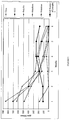
- Figure 1 is a graph showing the lysimeter results (nitrogen release rate) over a six (6) month time period for the UF polymer powder (particulate) of the present invention as compared with several commercially available sources of nitrogen fertilizers.
- Figure 2 is a photomicrograph of tall fescue seeds having an adherent coating containing slow release nitrogen particles in accordance with the present invention.
- the present invention is directed to a method of preparing a particulate urea-formaldehyde polymer that is useful for enhancing the delivery of nitrogen needed for plant development and growth.
- the invention specifically relates to slow release nitrogen (UF) particles and to the use of the particles for enhancing plant development and growth.
- the slow release urea-formaldehyde particles produced by the method of the present invention can be used in a variety of applications, for example they can be adhered to the surface of a seed, or on the surface of an aggregate material, such as sand, using an adhesive binder; they can used in preparing a granular fertilizer; they can be used as a root dip or in a soil drench; or they can be used as a soil additive.
- the slow release urea-formaldehyde particles of the invention may have use in animal nutrition and could be used to coat urea, or another animal feed material.
- the slow release UF polymer particles of the present invention are produced by forming an aqueous solution of methylol by reacting urea and formaldehyde at a urea: formaldehyde mole ratio of 0.95:1 1 to 1.05:1; acidifying the aqueous methylol urea solution, wherein the aqueous methylol urea solution either contains a dispersing agent or is subjected to a high shear condition during the acidifying, to form an aqueous dispersion of insoluble urea-formaldehyde polymer particles and drying the dispersion to recover the urea-formaldehyde polymer particles, wherein the urea-formaldehyde polymer particles have a size between 1 and 150 microns.
- Ammonia may be an optional reactant, as will be understood by those skilled in the art, in an amount of up to about 25% by weight of the formed UF polymer, usually in an amount below about 10% by weight, but in the preferred embodiment of the present invention ammonia is not used at all.
- reaction between urea and formaldehyde is conducted in a manner to produce methylol ureas.
- Methods of doing this are well known to those skilled in the art and any of such known methods can be used.
- reaction between the urea and formaldehyde can be promoted by maintaining the aqueous mixture initially at a moderate alkaline pH, with a pH in the range of about 7 to 9 being suitable and with a pH more usually between 7.5 and 8.5, to promote the formation of methylol ureas.
- any required pH adjustment may be accomplished using either an acid or a base.
- the initial formation of methyol ureas generally can be conducted at a reaction temperature broadly in the range of 70° F to 175° F (about 20° C to about 80° C), with a reaction temperature in the range of 90° F to 160° F (about 30° C to about 70° C) more usually employed.
- the pH may be adjusted using commonly available acids and bases such as sodium hydroxide (caustic) and sulfuric acid and any material that can alter the pH is suitable for this purpose.
- the reaction pH also may be maintained (buffered) or adjusted by adding such alkaline compounds as triethanolamine, sodium or potassium bicarbonate, sodium or potassium carbonate, or other alkali metal hydroxides, such as potassium hydroxide and lithium hydroxide.
- the methylolation may also be done at a moderate acidic pH, such as in the pH range of 5.0 to 6.0, as will be recognized by those skilled in the art and the present invention is not limited by the way the initial methylolation is conducted.
- a moderate acidic pH such as in the pH range of 5.0 to 6.0
- the nascent UF polymer then is condensed to the point where the polymer becomes insoluble in the aqueous environment.
- This result is accomplished by rapidly acidifying the methylol ureas, to a pH below about 6, preferably below about 5 and usually to a pH below about 4, but above about 1.
- a pH in the range of 2.5 to 4.0 has proven to be suitable. Any organic or inorganic acid that will lower the pH can be used. Particularly suitable is a strong acid, such as a mineral acid and an organic acid such as the stronger carboxylic acids.
- suitable acids include formic acid, acetic acid, nitric acid, phosphoric acid, sulfuric acid and hydrochloric acid.
- the present invention is not limited by the way the further polymerization of the methylol ureas and ultimate insolubilization is conducted and obtained.
- the aqueous mixture of the methylol ureas is mixed in the presence of a dispersing agent during the step of rapid polymerization which leads to insolubilization, such as the rapid acidification step, although it is possible to get a similar result by maintaining a sufficiently high level of agitation (high shear) during the reaction in the absence of any dispersing agent.
- the resulting dispersion of UF polymer particles formed from the polymerization that occurs, for example, following acidification, can then be used directly (possibly following some thickening, or concentration enrichment), i.e., as a dispersion, to coat seed or sand, to treat roots, as a soil drench or soil additive, or to form a granular fertilizer, or alternately (and preferably) the dispersion of UF polymer particles can be recovered or isolated from the dispersion to produce a UF polymer powder, which then is used in any of the various applications noted above.
- the UF particulates formed in this manner have approximately 36% by weight nitrogen.
- most of the nitrogen is chemically bound in the UF polymer particulates and thus is agronomically unavailable until microorganisms, principally bacteria, enzymatically (e.g., using urease and nitrogenase) degrade the polymer into a form useable by a growing plant. It is this property that leads to labeling the UF polymer particle "slow release” or "extended release.”
- a small amount of the nitrogen typically on the order of 5% by weight of the particulate, may be of the fast or quick release variety (e.g., principally unreacted urea) and thus may be immediately available to a seed or plant.
- the reaction conditions including the mole ratio of reactants
- the extent of the reaction also can be adjusted such that a higher amount of free urea is present in/with the UF polymer particles, up to about 10% by weight, as a way to deliver more immediately available nitrogen for a quicker initial development or greening effect. Such adjustments are well within the skill of the art in view of the present disclosure.
- Formaldehyde is available in many forms. Paraform (solid, polymerized formaldehyde) and formalin solutions (aqueous solutions of formaldehyde, sometimes with methanol, in 37 percent, 44 percent, or 50 percent formaldehyde concentrations) are commonly used sources of formaldehyde. Formaldehyde also may be available as a gas. Each of these sources of formaldehyde is suitable for use in the preparing the UF polymer of this invention. Generally, for ease of use, formalin solutions are preferred as the formaldehyde source. In addition, some of the formaldehyde may be replaced with another aldehyde, such as acetaldehyde and/or propylaldehyde that can react with urea. Glyoxal may also be used in place of formaldehyde, as may other aldehydes not specifically enumerated.
- Urea also is available in many forms. Solid urea, such as prill, and urea solutions, typically aqueous solutions, are commercially available. Further, urea often is chemically combined with formaldehyde in the form of a urea-formaldehyde concentrate, such as UFC 85, or as a commercially-available solution containing about 25 weight percent urea, about 60 weight percent formaldehyde, and about 15 weight percent water, available under the trademark STA-FORM 60.® Each of these sources of urea can be used in preparing the UF polymer of this invention.
- a urea-formaldehyde concentrate such as UFC 85
- STA-FORM 60.® Each of these sources of urea can be used in preparing the UF polymer of this invention.
- the urea-formaldehyde condensation reaction that results in the UF polymer particles according to the method of this invention is preferably conducted in an aqueous environment. As noted above, the reaction is conducted until the growing urea-formaldehyde polymer becomes insoluble in the aqueous reaction medium.
- a dispersing agent is preferably included in the water to facilitate the production of small polymer particles by the reaction.
- One suitable dispersant is the line of DAXAD dispersants commercially available from Hampshire Chemicals, a subsidiary of the Dow Chemical Company.
- One of the classes of these dispersants is a condensed naphthalene sulfonate. Both the high and low molecular weight species of this product line have been shown to be suitable, such as DAXDAD 19.
- dispersants or surfactants also can be used, including those that might be classified as anionic, such as polyacrylates (also available under the DAXAD label - such as DAXAD 30 from Hampshire Chemicals).
- Nonionic and cationic dispersant compounds also can be used. Suitable alternative materials can be identified using routine experimentation. The nature of the specific dispersant/surfactant is not critical. Another example would be a lignosulfonate salt or lignin. It is also possible to dispense with the use of any dispersant, provided that the reaction medium is sufficiently agitated (high shear) during the UF condensation reaction to promote the formation of small polymer particles.
- the amount of dispersant to include in the aqueous solution of methylol urea at the time of the insolubilization reaction can be readily determined by those skilled in the art. The amount depends to some extent on the particular dispersant chosen to use and the concentration of methylol urea in the aqueous reaction medium. Generally, the urea and formaldehyde reactants and the water vehicle are provided in amounts to yield a methylol urea concentration that ultimately provides a dispersion of UF polymer particles at about a 20% by weight solid concentration up to about 60% by weight solids. More usually, the materials are provided so that the UF polymer dispersion is between about 30% and 55% by weight solids.
- the dispersion of UF polymer particles is prepared at about a 40% by weight solids concentration.
- the dispersing agent is generally supplied at a concentration of between about 0.1% and 5% by weight, and usually in at least about 0.5% by weight up to about 2% by weight.
- the particle size of the UF polymer particulate material may vary fairly widely. In general, a particular size is dictated by the specific application for which the particle is too be used. In some applications, such as when used as a soil additive, the particle size is less critical than when it may be used for example in a seed coating where is likely would be desirable to have a particle size smaller than the seed itself and usually substantially smaller than the seed. Producing small UF particles helps one better obtain a necessary and desired degree of adhesion of the UF particles in such applications. By using the preferred method of making the UF polymer in the presence of a dispersant, it is easy to produce most of the UF particles sufficiently small so as to pass through a 100 mesh (U.S.
- UF polymer particles will be smaller than about 150 microns and a large number of them may be smaller than about 75 microns. While there is virtually no lower limit to the UF polymer particle size for practicing the invention; as a practical matter, most particles will be larger than one micron. Most of the particles, prepared using the procedures and materials noted above, have a particle size in the range of 10 to 80 microns, with a number average particle size between about 25 and 35 microns. A number average particle size of about 30 microns is quite common.
- the aqueous dispersion of UF polymer particles can be used directly for the wide variety of available applications, such as coating seeds or coating sand, or the solid UF particles can be isolated from the dispersion before use. In some cases, it may be easier and more cost effective to use the dispersion directly. However, if there is a desire to isolate the particles, and that may be preferred in some applications, then according to the broadest aspects of the invention, any way for isolating the UF polymer particles from the aqueous UF polymer dispersion can be used. For example, the UF polymer particles in the dispersion may be isolated by filtration and oven drying, or by thin film evaporation. When using these latter techniques, it may then be necessary to reduce the particle size of the recovered solids, for example by grinding, to obtain a desired particle size or size distribution for a specific application.
- spray dryer and “spray drying” refer to the technically sophisticated process of atomizing (in the form of finely divided droplets) the UF dispersion or slurry into a gas stream (often a heated air stream) under controlled temperature conditions and under specific gas/liquid contacting conditions to effect evaporation of water from the atomized droplets and production of a dry particulate solid product.
- a flow promoter such as an aluminosilicate material
- a flow promoter such as an aluminosilicate material
- UF polymer solid particles In addition to the slow release nitrogen, UF polymer solid particles, a variety of other additives, including other agriculturally acceptable particulate materials, may also be combined with the UF polymer particles in the variety of potential applications. Some materials may exhibit a high degree of water solubility, and thus may be mixed with the UF polymer dispersion before its use. In fact, in some cases one may be able to mix such materials, especially the water soluble materials, with the UF polymer dispersion prior to spray-drying.
- materials that can be used in combination with the UF polymer particles are materials commonly used in fertilizer applications that are not toxic to seeds, or harmful to the soil environment in which seeds are planted, or in which a plant is growing.
- Such materials may include calcium carbonate (agricultural lime) in its various forms for adding weight and/or raising the pH of acid soils; metal containing compounds and minerals such as gypsum, metal silicates and chelates of various micronutrient metals such as iron, zinc and manganese; talc; elemental sulfur; activated carbon, which may act as a "safener” to protect against potentially harmful chemicals in the soil; pesticides, herbicides and fungicides to combat or prevent undesired insects, weeds and disease, super absorbent polymers, wicking agents, wetting agents, plant stimulants to accelerate growth, an inorganic (N-P-K) type fertilizer, sources of phosphorus, sources of potassium, and organic fertilizers, such as urea as a way to deliver more immediately available nitrogen for a quicker initial
- the UF polymer particles can be used to coat seeds or other solid aggregates using an adhesive.
- the nature of the adhesive binder is not narrowly critical. Any non-toxic, biocompatible adhesive material should be suitable.
- adhesive classes which can potentially be used as the adhesive binder in the various applications include, but are not limited to, animal hide glues, celluloses including ethyl celluloses, methyl celluloses, hydroxymethyl celluloses, hydroxypropyl celluloses, hydroxymethyl propyl celluloses, carboxy methyl celluloses, polyvinyl alcohols and polyvinyl alcohol copolymers, dextrins, malto-dextrins, alginates, sugars, molasses, polyvinyl pyrrolidones, polyvinyl acetates and polyvinyl acetate copolymers, polysaccharides, fats, oils, proteins, gum arabics, shellacs, vinylidene chlorides, vinylidene chloride copolymers, lignosulfonates, starches, acrylate polymers and copolymers, such as polyvinyl acrylates, zeins, gelatins, chitosan, polyethylene oxide
- the UF polymer particles can be used to prepare a composite fertilizer as granular particles.
- Granular particles can be prepared by commingling the UF polymer particles with one or more fertilizer enhancing solids.
- the fertilizer enhancing solids preferably contain a source of phosphorus and a source of potassium.
- the source of potassium may be potash (potassium chloride) or its sulfates, which are available commercially, such as the sulfate of potash (“SOP”) or the sulfate of potash-magnesia (“SPM”).
- SOP sulfate of potash
- SPM potash-magnesia
- the source of phosphorus may be monoammonium phosphate ("MAP"), diammonium phosphate ("DAP”), or triple super phosphate (“TSP”), all of which are generally available from commercial sources.
- MAP monoammonium phosphate
- DAP diammonium phosphate
- TSP triple super phosphate
- the amounts of nitrogen, phosphorus, and potassium included in the final fertilizer granules is not critical and typically will range from 0% to about 60% for each component. Most preferably, between about 1-100% slow-release nitrogen, 0-60% of a potassium source, and 0-60% of a phosphorus source are included in the final fertilizer granules.
- the fertilizer enhancing solids also preferably include other fertilizer components and/or nutrients (including materials previously identified) such as iron, manganese, calcium, micronutrients, and the like.
- additional components such as iron, manganese, calcium, micronutrients, and the like.
- the forms and sources of these additional components are known to persons skilled in the art, and the appropriate amounts may be selected to include in the fertilizer granules without undue experimentation.
- U.S. 5,797,976 which provides an extensive list of fertilizer enhancing solids for enhancing the growth and development of plants, is herein incorporated by reference in its entirety for its disclosure.
- the UF polymer particles are combined with one or more of the fertilizer enhancing solids and a binder and then mixed to granulate the ingredients into more or less homogeneous granules.
- plain water can be used as the binder simply by moistening the dry components to accomplish granulation.
- the water may be provided at ambient temperature, or it may be heated to provide additional energy for the granulation process. In some cases it may be preferred to provide the water as steam.
- the dry fertilizer ingredients including the UF polymer particles, are combined and are mixed until a well-mixed blend of the ingredients is obtained.
- Fertilizer enhancing solids of an appropriate size for granulation may be purchased from commercial sources, or they may be obtained by crushing or milling larger sized particles and screening for size.
- the dry ingredients can be blended by tumbling in a rotary mixer, although other methods of mixing may be used. For example, mixing in a paddle mixer or in a ribbon or other type of batch mixer may be preferred in certain cases.
- a binder is added to the mixture of particles, for example as noted above, the particles can simply be moistened, and then are further mixed to begin the granulation process.
- a granulator that subjects the particles to a rolling action during the granulation.
- rolling-type granulators include dish-type granulators, drum-type granulators, or stirring-type (agitation-type) granulators in which stirring vanes or paddles rotate in a vessel.
- the blended particles can be moistened by spraying them with steam to heat the particles simultaneously during the moistening.
- the blended particles may be moistened with plain water, which may be sprayed onto the blend of particles.
- a solution of an adhesive such as a methylol urea solution, or a solution of one of the earlier identified agriculturally acceptable adhesives, is used as the binder (moisturizer). Any of these binders may be used alone, or in combination with others. Regardless of whether steam, water, or another binder is used, the moistening with the binder and the mixing preferably takes place in a tumbler or other mixer granulator so that the particles are evenly moistened.
- the amount of binder/moisture added to the granules should be controlled; too little or too much binder being detrimental to final granule integrity.
- the temperature during granulation in not narrowly critical.
- the dry ingredients are mixed with binder until homogeneous particles of fertilizer granules, i.e., granules that contain most, if not all, of the fertilizer components, are obtained.
- the fertilizer granules contain, in addition to the UF polymer particles of the present invention, a source of phosphorus, and a source of potassium.
- a source of phosphorus i.e., a source of phosphorus
- potassium a source of potassium
- the desired particle size of the granules is generally dictated by the particular application of the resulting fertilizer. Granule particle sizes in the range of 20 mils to 250 mils (about 0.5 to about 6.0 mm) are typical. To obtain granules having a smaller particle size, one would typically initiate the granulation process using powder ingredients having a finer particle size. Particle size is controlled by properly adjusting the amount of binder and the rate of binder addition, the operating conditions of the granulator and the granulation time.
- the granules may be fed into a dryer to facilitate final production and recovery of the granulated fertilizer.
- a dryer For example, one might employ a rotating drum dryer with a drying zone temperature between 100° and 250° F (about 40° to about 120° C), usually between about 185° F and 200° F (between 85° C and about 95° C).
- the material is cooled to ambient temperature, and then is passed to a screening apparatus to separate granules meeting desired size specifications. Oversize granules and fines can be recycled to the granulation step, with oversize granules first being milled or crushed. Appropriately sized granules are recovered as the granulated fertilizer product.
- the amount of UF polymer particles produced by the method of the invention used in any particular application may vary fairly widely, but will usually depend on the particular application and its need for nitrogen fertilization, as well as the optional presence of other particulates and solids besides the essential UF polymer particles of the present invention.
- the UF polymer particles produced by the method of present invention, and the related fertilizer granules are useful for fertilizing a wide variety of seeds and plants, including seeds used to grow crops for human consumption, for silage, or for other agricultural uses. Indeed, virtually any seed or plant can be treated using UF polymer particles produced by the method of the present invention, such as cereals, vegetables, ornamentals, conifers, coffee, turf grasses, forages and fruits, including citrus.
- Plants that can be treated include grains such as barley, oats and corn, sunflower, sugar beets, rape, safflower, flax, canary grass, tomatoes, cotton seed, peanuts, soybean, wheat, rice, alfalfa, sorghum, bean, sugar cane, broccoli, cabbage and carrot.
- a urea-formaldehyde (UF) dispersion suitable for producing UF polymer particles according to the method of the present invention, is prepared as follows. Water (32.3 parts by weight) and a 50% aqueous solution of formaldehyde (31.8 parts by weight) are added to a reaction vessel equipped with vacuum reflux, a heater and a mixer. While adjusting the temperature of the agitated aqueous mixture to 100° F, its pH is also adjusted to about 7.0 (6.8 to 7.2) using either 50% caustic (NaOH), or 35% sulfuric acid, as needed. Once the aqueous mixture has been heated to 100° F (about 38° C), 31.8 parts by weight of prilled urea also is added and mixing is continued.
- the temperature of the agitated aqueous mixture then is increased to 120° F (about 50° C) and held for a time (usually about 15 minutes) sufficient to dissolve the urea. While maintaining the temperature of the agitated mixture at 120° F (about 50° C), the pH is adjusted to within the range of 8.0 to 8.4, again using either 50% caustic (NaOH), or 35% sulfuric acid as needed. Using, as appropriate, a combination of the reaction exotherm and external heating, the reaction mixture is heated to a temperature of 158° F and the temperature is controlled using vacuum reflux. The pH of the mixture is adjusted, as needed, to about 7.8 to 8.2, using either 50% caustic (NaOH), or 35% sulfuric acid.
- the agitated mixture is held at a temperature of about 158° F (70° C) for about 30 minutes and the pH continues to be adjusted, as needed, to about 7.8 to 8.2, using either 50% caustic (NaOH), or 35% sulfuric acid so that the reactants form methylol ureas.
- the aqueous mixture is cooled to about 105° F (about 40° C) and a dispersant (one part by weight of DAXAD 19) is added while the batch is cooled.
- a dispersant one part by weight of DAXAD 19
- the pH of the aqueous mixture is adjusted, as quickly as possible, to a pH of about 3.3 to 3.5, using 35% sulfuric acid, at which point the batch may exotherm to a temperature of above 175° F (about 80° C) before the exotherm subsides. This procedure causes rapid condensation of the methylol ureas to a solid network polymer.
- the temperature of the aqueous mixture is cooled to 105° F (about 40° C) as quickly as possible while it is held for 20 minutes.
- the pH of the aqueous mixture is adjusted to 6.5 to 7.5, using either 50% caustic (NaOH), or 35% sulfuric acid, as needed, and then is discharged to storage.
- the UF polymer dispersion at about 38 weight percent solids should be agitated during its storage.
- the dispersion made in accordance with Example 1 can then be spray dried to produce UF polymer particles.
- a Niro P6 spray dryer can be fed with 15 pounds per hour of the dispersion of Example 1.
- the spray dryer receives an inlet gas stream at a flow rate of about 415 standard cubic feet per minute and a temperature of 330- 340° F (165-170° C).
- the outlet temperature of the spray dryer was measured as 75-95° F (25-35° C).
- the recovered UF polymer particle product (at about 1 wt. % moisture) had particle sizes distributed from 10 to 80 microns, with a number average size of 30 microns.
- a UF polymer dispersion made in accordance with Example 1 having about a 38 wt. % solids content, at a temperature of 28° C and at a feed rate of 100 lbs/minute was spray-dried with the atomizer wheel operating at 13,000 RPMs. Air, at a flow rate of 49,400 standard cubic feet per minute and at a temperature of 186° C was delivered to the spray dryer. The outlet air temperature was measured as 88° C. Spray-dried UF polymer particles were recovered from the spray dryer.
- the sprayed dried UF powder product of Example 3 was tested in an incubation lysimeter, a procedure developed by Dr. Jerry Sartain of the University of Florida.
- An individual lysimeter is simply a 12 inch long piece of 3" diameter PVC piping.
- the pipe has a permanent cap on the bottom and a removable cap on the top.
- the bottom cap has an opening where water can drain and vacuum can be applied to remove excess water.
- a sand-soil mixture is prepared by mixing ninety-five (95) parts sand and five (5) parts topsoil.
- An amount of the sand-topsoil mixture sufficient to fill the column then is mixed thoroughly with an amount of each of the fertilizers to be tested sufficient to provide 450 mg of nitrogen in the column. After filling the lysimeter column, enough water is added to moisten the column contents. The column then is ready for the start of the testing. Once a month, 500 milliliters of 0.01 M citric acid is added to the column, allowed to flow downwardly through the column, and is collected from the bottom drain. Any excess water (citric acid) is removed from the column using a vacuum and combined with the amount collected from the drain. The collected liquid is analyzed for nitrogen (nitrate and ammonia) content. The amount of nitrogen (nitrate and ammonia) eluted from the column each month is determined.
Landscapes
- Chemical & Material Sciences (AREA)
- Life Sciences & Earth Sciences (AREA)
- Organic Chemistry (AREA)
- Pest Control & Pesticides (AREA)
- Dispersion Chemistry (AREA)
- Soil Sciences (AREA)
- Environmental Sciences (AREA)
- Fertilizers (AREA)
- Pretreatment Of Seeds And Plants (AREA)
- Phenolic Resins Or Amino Resins (AREA)
- Agricultural Chemicals And Associated Chemicals (AREA)
Description
- The present invention relates to a method of producing a particulate urea-formaldehyde polymer as slow release nitrogen for enhancing the delivery of nitrogen needed for plant development and growth.
- Fertilizer is often applied as a formulated (N-P-K) solid, granular or powder, or sometimes as a liquid to an area to be fertilized. There are basically two types of fertilizers, water soluble fertilizers and "slow release" fertilizers. While water soluble fertilizers are generally less expensive than slow release fertilizers, they have the disadvantage of leaching nutrients very quickly into and through the soil. Some solid, water soluble fertilizers can be made slow release by various coatings. Alternatively, a reduction in nitrogen availability also can be obtained by using enzyme inhibitors. Slow release fertilizers are designed to release nutrients to plants or soil over an extended period of time, which is more efficient than multiple applications of water soluble fertilizers. Therefore, slow release fertilizers (also referred to as controlled release or extended release) minimize the frequency with which plants must be fertilized, as well as reduce or minimize leaching.
- Urea-formaldehyde (UF) condensation products are widely used as slow release nitrogen fertilizers in crops, ornamental plants and grasses. Urea-formaldehyde fertilizer materials also can be supplied either as liquids or as solids and are the reaction products of urea and formaldehyde. Such materials generally contain at least 28% nitrogen, largely in an insoluble but slowly available form.
- Extended release UF fertilizers (ureaform) can be prepared by reacting urea and formaldehyde at an elevated temperature in an alkaline solution to produce methylol ureas. The methylol ureas then are acidified to polymerize the methylol ureas to methylene ureas, which increase in chain length as the reaction is allowed to continue.
- The methylene urea polymers that the condensation products normally contain have limited water solubility and thus release nitrogen throughout an extended period. The mixture of methylene urea polymers generally have a range of molecular weights and are understood to be degraded slowly by microbial action into water soluble nitrogen. UF fertilizers are usually evaluated by the amount and the release characteristics of their water insoluble nitrogen.
-
U.S. 4,089,899 describes a solid, controlled release nitrogen fertilizer of the ureaform type, which consists essentially of only two nitrogen fractions: water soluble nitrogen and cold water insoluble nitrogen. -
U.S. 3,677,736 describes a urea-formaldehyde fertilizer suspension. - Other disclosures of urea-formaldehyde fertilizer compositions, both liquid and solid forms include
U.S. 4,378,238 ,U.S. 4,554,005 ,U.S. 5,039,328 ,U.S. 5,266,097 ,U.S. 6,432,156 , andU.S. 6,464,746 . - Granular nitrogen-containing fertilizers have been produced commercially by a variety of techniques using water soluble nitrogen products, such as urea, potassium nitrate, and ammonium phosphate. The practical advantages of handling, blending, and storing such fertilizer granules are known and well documented. The preparation of granular fertilizers using slow release UF fertilizers also has been described in the prior art.
- Urea-formaldehyde condensation products are known from
US 3,649,598 andUS 3,712,879 .US 2,810,710 describes a urea-form fertilizer, whileUS 3,759,687 andFR 2,270,221 SU 1819877 US 5,501,720 describes a fertilizer containing urea-formaldehyde resin and lignosulfonates. - The present invention proposes to provide a method of producing a particulate urea-formaldehyde polymer as a particulate slow-release nitrogen (UF) as a plant fertilizer. Such particles can be used for forming granular fertilizer compositions.
-
Figure 1 is a graph showing the lysimeter results (nitrogen release rate) over a six (6) month time period for the UF polymer powder (particulate) of the present invention as compared with several commercially available sources of nitrogen fertilizers. -
Figure 2 is a photomicrograph of tall fescue seeds having an adherent coating containing slow release nitrogen particles in accordance with the present invention. - As noted above, the present invention is directed to a method of preparing a particulate urea-formaldehyde polymer that is useful for enhancing the delivery of nitrogen needed for plant development and growth. The invention specifically relates to slow release nitrogen (UF) particles and to the use of the particles for enhancing plant development and growth. The slow release urea-formaldehyde particles produced by the method of the present invention can be used in a variety of applications, for example they can be adhered to the surface of a seed, or on the surface of an aggregate material, such as sand, using an adhesive binder; they can used in preparing a granular fertilizer; they can be used as a root dip or in a soil drench; or they can be used as a soil additive. In yet another embodiment, the slow release urea-formaldehyde particles of the invention may have use in animal nutrition and could be used to coat urea, or another animal feed material.
- Because of the slow release character of the urea-formaldehyde particles produced by the method of the present invention, upwards of twenty times the amount of nitrogen fertilizer can be supplied in many fertilizer applications than would be possible using common quick release nitrogen fertilizers available in the prior art, such as urea or methylol ureas, without damaging seeds or growing plants (phytotoxic effect).
- The slow release UF polymer particles of the present invention are produced by forming an aqueous solution of methylol by reacting urea and formaldehyde at a urea: formaldehyde mole ratio of 0.95:1 1 to 1.05:1; acidifying the aqueous methylol urea solution, wherein the aqueous methylol urea solution either contains a dispersing agent or is subjected to a high shear condition during the acidifying, to form an aqueous dispersion of insoluble urea-formaldehyde polymer particles and drying the dispersion to recover the urea-formaldehyde polymer particles, wherein the urea-formaldehyde polymer particles have a size between 1 and 150 microns. Ammonia may be an optional reactant, as will be understood by those skilled in the art, in an amount of up to about 25% by weight of the formed UF polymer, usually in an amount below about 10% by weight, but in the preferred embodiment of the present invention ammonia is not used at all.
- In the initial step of preparing the UF polymer particles, reaction between urea and formaldehyde is conducted in a manner to produce methylol ureas. Methods of doing this are well known to those skilled in the art and any of such known methods can be used. For example, reaction between the urea and formaldehyde can be promoted by maintaining the aqueous mixture initially at a moderate alkaline pH, with a pH in the range of about 7 to 9 being suitable and with a pH more usually between 7.5 and 8.5, to promote the formation of methylol ureas. Given urea's inherent level of alkalinity, any required pH adjustment may be accomplished using either an acid or a base. The initial formation of methyol ureas generally can be conducted at a reaction temperature broadly in the range of 70° F to 175° F (about 20° C to about 80° C), with a reaction temperature in the range of 90° F to 160° F (about 30° C to about 70° C) more usually employed. The pH may be adjusted using commonly available acids and bases such as sodium hydroxide (caustic) and sulfuric acid and any material that can alter the pH is suitable for this purpose. The reaction pH also may be maintained (buffered) or adjusted by adding such alkaline compounds as triethanolamine, sodium or potassium bicarbonate, sodium or potassium carbonate, or other alkali metal hydroxides, such as potassium hydroxide and lithium hydroxide. Alternatively (though not generally preferred), the methylolation may also be done at a moderate acidic pH, such as in the pH range of 5.0 to 6.0, as will be recognized by those skilled in the art and the present invention is not limited by the way the initial methylolation is conducted.
- Following the initial formation of methylol ureas, the nascent UF polymer then is condensed to the point where the polymer becomes insoluble in the aqueous environment. This result is accomplished by rapidly acidifying the methylol ureas, to a pH below about 6, preferably below about 5 and usually to a pH below about 4, but above about 1. A pH in the range of 2.5 to 4.0 has proven to be suitable. Any organic or inorganic acid that will lower the pH can be used. Particularly suitable is a strong acid, such as a mineral acid and an organic acid such as the stronger carboxylic acids. Thus, suitable acids include formic acid, acetic acid, nitric acid, phosphoric acid, sulfuric acid and hydrochloric acid. However, in its broadest aspects the present invention is not limited by the way the further polymerization of the methylol ureas and ultimate insolubilization is conducted and obtained.
- In order to produce a useful range of UF polymer particle sizes, the aqueous mixture of the methylol ureas is mixed in the presence of a dispersing agent during the step of rapid polymerization which leads to insolubilization, such as the rapid acidification step, although it is possible to get a similar result by maintaining a sufficiently high level of agitation (high shear) during the reaction in the absence of any dispersing agent. The resulting dispersion of UF polymer particles formed from the polymerization that occurs, for example, following acidification, can then be used directly (possibly following some thickening, or concentration enrichment), i.e., as a dispersion, to coat seed or sand, to treat roots, as a soil drench or soil additive, or to form a granular fertilizer, or alternately (and preferably) the dispersion of UF polymer particles can be recovered or isolated from the dispersion to produce a UF polymer powder, which then is used in any of the various applications noted above. The UF particulates formed in this manner have approximately 36% by weight nitrogen.
- Particularly in the preferred embodiment, most of the nitrogen is chemically bound in the UF polymer particulates and thus is agronomically unavailable until microorganisms, principally bacteria, enzymatically (e.g., using urease and nitrogenase) degrade the polymer into a form useable by a growing plant. It is this property that leads to labeling the UF polymer particle "slow release" or "extended release." A small amount of the nitrogen, typically on the order of 5% by weight of the particulate, may be of the fast or quick release variety (e.g., principally unreacted urea) and thus may be immediately available to a seed or plant. Because the UF polymer has only about 5% quick release nitrogen, however, the chance of over fertilization using the particulate source of nitrogen of the present invention is minimal. However, if desired, the reaction conditions (including the mole ratio of reactants) and/or the extent of the reaction also can be adjusted such that a higher amount of free urea is present in/with the UF polymer particles, up to about 10% by weight, as a way to deliver more immediately available nitrogen for a quicker initial development or greening effect. Such adjustments are well within the skill of the art in view of the present disclosure.
- Skilled practitioners recognize that the formaldehyde and urea reactants used to make the UF polymer of this invention are commercially available in many forms. Any form of these materials, which can react with the other reactant and which does not introduce extraneous moieties deleterious to the desired reaction and reaction product, can be used in the preparation of the slow release nitrogen, urea-formaldehyde polymer particles of the invention.
- Formaldehyde is available in many forms. Paraform (solid, polymerized formaldehyde) and formalin solutions (aqueous solutions of formaldehyde, sometimes with methanol, in 37 percent, 44 percent, or 50 percent formaldehyde concentrations) are commonly used sources of formaldehyde. Formaldehyde also may be available as a gas. Each of these sources of formaldehyde is suitable for use in the preparing the UF polymer of this invention. Generally, for ease of use, formalin solutions are preferred as the formaldehyde source. In addition, some of the formaldehyde may be replaced with another aldehyde, such as acetaldehyde and/or propylaldehyde that can react with urea. Glyoxal may also be used in place of formaldehyde, as may other aldehydes not specifically enumerated.
- Urea also is available in many forms. Solid urea, such as prill, and urea solutions, typically aqueous solutions, are commercially available. Further, urea often is chemically combined with formaldehyde in the form of a urea-formaldehyde concentrate, such as UFC 85, or as a commercially-available solution containing about 25 weight percent urea, about 60 weight percent formaldehyde, and about 15 weight percent water, available under the trademark STA-FORM 60.® Each of these sources of urea can be used in preparing the UF polymer of this invention.
- The urea-formaldehyde condensation reaction that results in the UF polymer particles according to the method of this invention is preferably conducted in an aqueous environment. As noted above, the reaction is conducted until the growing urea-formaldehyde polymer becomes insoluble in the aqueous reaction medium. A dispersing agent is preferably included in the water to facilitate the production of small polymer particles by the reaction. One suitable dispersant is the line of DAXAD dispersants commercially available from Hampshire Chemicals, a subsidiary of the Dow Chemical Company. One of the classes of these dispersants is a condensed naphthalene sulfonate. Both the high and low molecular weight species of this product line have been shown to be suitable, such as DAXDAD 19. A variety of other dispersants, or surfactants also can be used, including those that might be classified as anionic, such as polyacrylates (also available under the DAXAD label - such as DAXAD 30 from Hampshire Chemicals). Nonionic and cationic dispersant compounds also can be used. Suitable alternative materials can be identified using routine experimentation. The nature of the specific dispersant/surfactant is not critical. Another example would be a lignosulfonate salt or lignin. It is also possible to dispense with the use of any dispersant, provided that the reaction medium is sufficiently agitated (high shear) during the UF condensation reaction to promote the formation of small polymer particles.
- The amount of dispersant to include in the aqueous solution of methylol urea at the time of the insolubilization reaction can be readily determined by those skilled in the art. The amount depends to some extent on the particular dispersant chosen to use and the concentration of methylol urea in the aqueous reaction medium. Generally, the urea and formaldehyde reactants and the water vehicle are provided in amounts to yield a methylol urea concentration that ultimately provides a dispersion of UF polymer particles at about a 20% by weight solid concentration up to about 60% by weight solids. More usually, the materials are provided so that the UF polymer dispersion is between about 30% and 55% by weight solids. Preferably, the dispersion of UF polymer particles is prepared at about a 40% by weight solids concentration. Under these conditions, the dispersing agent is generally supplied at a concentration of between about 0.1% and 5% by weight, and usually in at least about 0.5% by weight up to about 2% by weight.
- The particle size of the UF polymer particulate material may vary fairly widely. In general, a particular size is dictated by the specific application for which the particle is too be used. In some applications, such as when used as a soil additive, the particle size is less critical than when it may be used for example in a seed coating where is likely would be desirable to have a particle size smaller than the seed itself and usually substantially smaller than the seed. Producing small UF particles helps one better obtain a necessary and desired degree of adhesion of the UF particles in such applications. By using the preferred method of making the UF polymer in the presence of a dispersant, it is easy to produce most of the UF particles sufficiently small so as to pass through a 100 mesh (U.S. or Tyler) screen, and generally at least a major portion also pass through a 200 mesh screen. Thus, most of the UF polymer particles will be smaller than about 150 microns and a large number of them may be smaller than about 75 microns. While there is virtually no lower limit to the UF polymer particle size for practicing the invention; as a practical matter, most particles will be larger than one micron. Most of the particles, prepared using the procedures and materials noted above, have a particle size in the range of 10 to 80 microns, with a number average particle size between about 25 and 35 microns. A number average particle size of about 30 microns is quite common.
- The aqueous dispersion of UF polymer particles can be used directly for the wide variety of available applications, such as coating seeds or coating sand, or the solid UF particles can be isolated from the dispersion before use. In some cases, it may be easier and more cost effective to use the dispersion directly. However, if there is a desire to isolate the particles, and that may be preferred in some applications, then according to the broadest aspects of the invention, any way for isolating the UF polymer particles from the aqueous UF polymer dispersion can be used. For example, the UF polymer particles in the dispersion may be isolated by filtration and oven drying, or by thin film evaporation. When using these latter techniques, it may then be necessary to reduce the particle size of the recovered solids, for example by grinding, to obtain a desired particle size or size distribution for a specific application.
- Another, often preferred, way of isolating or recovering the UF polymer particles from the UF dispersion formed by the polymerization of urea and formaldehyde as described above, is by spray-drying. As used herein, the terms "spray dryer" and "spray drying" refer to the technically sophisticated process of atomizing (in the form of finely divided droplets) the UF dispersion or slurry into a gas stream (often a heated air stream) under controlled temperature conditions and under specific gas/liquid contacting conditions to effect evaporation of water from the atomized droplets and production of a dry particulate solid product. Spray drying as used herein is typically carried out with pressure nozzles (nozzle atomization) or centrifugal atomizers operating at high speeds (e.g., a spinning disc). Despite the high velocity generation of droplets, a spray dryer is designed so that the droplets do not contact the spray dryer wall under proper operating procedures. This effect is achieved by a precise balance of atomizer velocity, air flow, spray dryer dimensions of height and diameter, and inlet and outlet means to produce a cyclonic flow of gas, e.g., air in the chamber. A pulse atomizer also can be used to produce the small droplets needed to facilitate evaporation of the water. In some cases, it may be desirable to include a flow promoter, such as an aluminosilicate material, in the aqueous dispersion that is processed in a spray dryer simply to facilitate subsequent handling and transport of the spray dried UF powder (e.g., to avoid clumping).
- In addition to the slow release nitrogen, UF polymer solid particles, a variety of other additives, including other agriculturally acceptable particulate materials, may also be combined with the UF polymer particles in the variety of potential applications. Some materials may exhibit a high degree of water solubility, and thus may be mixed with the UF polymer dispersion before its use. In fact, in some cases one may be able to mix such materials, especially the water soluble materials, with the UF polymer dispersion prior to spray-drying.
- Included in materials that can be used in combination with the UF polymer particles are materials commonly used in fertilizer applications that are not toxic to seeds, or harmful to the soil environment in which seeds are planted, or in which a plant is growing. Such materials may include calcium carbonate (agricultural lime) in its various forms for adding weight and/or raising the pH of acid soils; metal containing compounds and minerals such as gypsum, metal silicates and chelates of various micronutrient metals such as iron, zinc and manganese; talc; elemental sulfur; activated carbon, which may act as a "safener" to protect against potentially harmful chemicals in the soil; pesticides, herbicides and fungicides to combat or prevent undesired insects, weeds and disease, super absorbent polymers, wicking agents, wetting agents, plant stimulants to accelerate growth, an inorganic (N-P-K) type fertilizer, sources of phosphorus, sources of potassium, and organic fertilizers, such as urea as a way to deliver more immediately available nitrogen for a quicker initial greening effect, surfactants, initiators, stabilizers, cross linkers, antioxidants, UV stabilizers, reducing agents, colorants and plasticizers. Mixtures of these different materials may of course also be employed. In a preferred embodiment, described in more detail hereafter, one or more of these materials is combined with the UF polymer particles of the invention to produce granular fertilizer solids.
- Thus, either the aqueous dispersion of slow release nitrogen particles itself, or more preferably the isolated, powdered UF polymer, slow release nitrogen, recovered from the aqueous dispersion, preferably by spray-drying, then is used in the desired application.
- The UF polymer particles can be used to coat seeds or other solid aggregates using an adhesive. The nature of the adhesive binder is not narrowly critical. Any non-toxic, biocompatible adhesive material should be suitable.
- Based on these characteristics, adhesive classes which can potentially be used as the adhesive binder in the various applications include, but are not limited to, animal hide glues, celluloses including ethyl celluloses, methyl celluloses, hydroxymethyl celluloses, hydroxypropyl celluloses, hydroxymethyl propyl celluloses, carboxy methyl celluloses, polyvinyl alcohols and polyvinyl alcohol copolymers, dextrins, malto-dextrins, alginates, sugars, molasses, polyvinyl pyrrolidones, polyvinyl acetates and polyvinyl acetate copolymers, polysaccharides, fats, oils, proteins, gum arabics, shellacs, vinylidene chlorides, vinylidene chloride copolymers, lignosulfonates, starches, acrylate polymers and copolymers, such as polyvinyl acrylates, zeins, gelatins, chitosan, polyethylene oxide polymers, acrylamide polymers and copolymers, polyhydroxyethyl acrylates, methylacrylamide polymers, polychloroprenes, poly (methyl vinyl ether)-maleic anhydride copolymers, vinylpyrrolidone/styrene copolymers, vinyl acetate/butyl acrylate copolymers, styrene/acrylic ester copolymers, vinyl acetate/ethylene copolymers and polyurethane polymers. Crosslinkable silicone materials as described in
U.S. 4,753,035 also can be used. Still other materials, including natural inorganic materials such as silica gel and clay may also be suitable in some applications as will be readily apparent to those skilled in the art. - The UF polymer particles can be used to prepare a composite fertilizer as granular particles. Granular particles can be prepared by commingling the UF polymer particles with one or more fertilizer enhancing solids. The fertilizer enhancing solids preferably contain a source of phosphorus and a source of potassium. The source of potassium may be potash (potassium chloride) or its sulfates, which are available commercially, such as the sulfate of potash ("SOP") or the sulfate of potash-magnesia ("SPM"). The source of phosphorus may be monoammonium phosphate ("MAP"), diammonium phosphate ("DAP"), or triple super phosphate ("TSP"), all of which are generally available from commercial sources. The amounts of nitrogen, phosphorus, and potassium included in the final fertilizer granules is not critical and typically will range from 0% to about 60% for each component. Most preferably, between about 1-100% slow-release nitrogen, 0-60% of a potassium source, and 0-60% of a phosphorus source are included in the final fertilizer granules.
- In addition to phosphorus, and potassium, the fertilizer enhancing solids also preferably include other fertilizer components and/or nutrients (including materials previously identified) such as iron, manganese, calcium, micronutrients, and the like. The forms and sources of these additional components are known to persons skilled in the art, and the appropriate amounts may be selected to include in the fertilizer granules without undue experimentation. In this regard, the disclosure of
U.S. 5,797,976 , which provides an extensive list of fertilizer enhancing solids for enhancing the growth and development of plants, is herein incorporated by reference in its entirety for its disclosure. - To prepare the fertilizer granules, the UF polymer particles are combined with one or more of the fertilizer enhancing solids and a binder and then mixed to granulate the ingredients into more or less homogeneous granules. In many applications, as is well understood by those skilled in the art of granulation, plain water can be used as the binder simply by moistening the dry components to accomplish granulation. The water may be provided at ambient temperature, or it may be heated to provide additional energy for the granulation process. In some cases it may be preferred to provide the water as steam.
- The dry fertilizer ingredients, including the UF polymer particles, are combined and are mixed until a well-mixed blend of the ingredients is obtained. Fertilizer enhancing solids of an appropriate size for granulation, as is well-known to those skilled in the art of granulation, may be purchased from commercial sources, or they may be obtained by crushing or milling larger sized particles and screening for size. The dry ingredients can be blended by tumbling in a rotary mixer, although other methods of mixing may be used. For example, mixing in a paddle mixer or in a ribbon or other type of batch mixer may be preferred in certain cases.
- After blending the ingredients to obtain a fairly uniform mixture, a binder is added to the mixture of particles, for example as noted above, the particles can simply be moistened, and then are further mixed to begin the granulation process. To obtain the granular fertilizer, one normally would employ a granulator that subjects the particles to a rolling action during the granulation. Such rolling-type granulators include dish-type granulators, drum-type granulators, or stirring-type (agitation-type) granulators in which stirring vanes or paddles rotate in a vessel. As recognized by those skilled in granulating solids, the blended particles can be moistened by spraying them with steam to heat the particles simultaneously during the moistening. Alternatively, the blended particles may be moistened with plain water, which may be sprayed onto the blend of particles. In yet another embodiment, a solution of an adhesive, such as a methylol urea solution, or a solution of one of the earlier identified agriculturally acceptable adhesives, is used as the binder (moisturizer). Any of these binders may be used alone, or in combination with others. Regardless of whether steam, water, or another binder is used, the moistening with the binder and the mixing preferably takes place in a tumbler or other mixer granulator so that the particles are evenly moistened.
- As understood by skilled workers, the amount of binder/moisture added to the granules should be controlled; too little or too much binder being detrimental to final granule integrity. The temperature during granulation in not narrowly critical. The dry ingredients are mixed with binder until homogeneous particles of fertilizer granules, i.e., granules that contain most, if not all, of the fertilizer components, are obtained. In most cases, the fertilizer granules contain, in addition to the UF polymer particles of the present invention, a source of phosphorus, and a source of potassium. Those skilled in the art recognize that not all of the granules will contain the same ratio of all components, but it is preferred that the majority of the granules include each ingredient.
- The desired particle size of the granules is generally dictated by the particular application of the resulting fertilizer. Granule particle sizes in the range of 20 mils to 250 mils (about 0.5 to about 6.0 mm) are typical. To obtain granules having a smaller particle size, one would typically initiate the granulation process using powder ingredients having a finer particle size. Particle size is controlled by properly adjusting the amount of binder and the rate of binder addition, the operating conditions of the granulator and the granulation time.
- After granulation, the granules may be fed into a dryer to facilitate final production and recovery of the granulated fertilizer. For example, one might employ a rotating drum dryer with a drying zone temperature between 100° and 250° F (about 40° to about 120° C), usually between about 185° F and 200° F (between 85° C and about 95° C). After drying, the material is cooled to ambient temperature, and then is passed to a screening apparatus to separate granules meeting desired size specifications. Oversize granules and fines can be recycled to the granulation step, with oversize granules first being milled or crushed. Appropriately sized granules are recovered as the granulated fertilizer product.
- According to this process a granular, slow-acting nitrogen fertilizer can be obtained, which is excellent in the physical properties for use as a fertilizer, having an acceptable hardness with minimal breakage.
- The amount of UF polymer particles produced by the method of the invention used in any particular application may vary fairly widely, but will usually depend on the particular application and its need for nitrogen fertilization, as well as the optional presence of other particulates and solids besides the essential UF polymer particles of the present invention.
- The UF polymer particles produced by the method of present invention, and the related fertilizer granules are useful for fertilizing a wide variety of seeds and plants, including seeds used to grow crops for human consumption, for silage, or for other agricultural uses. Indeed, virtually any seed or plant can be treated using UF polymer particles produced by the method of the present invention, such as cereals, vegetables, ornamentals, conifers, coffee, turf grasses, forages and fruits, including citrus. Plants that can be treated include grains such as barley, oats and corn, sunflower, sugar beets, rape, safflower, flax, canary grass, tomatoes, cotton seed, peanuts, soybean, wheat, rice, alfalfa, sorghum, bean, sugar cane, broccoli, cabbage and carrot.
- A urea-formaldehyde (UF) dispersion, suitable for producing UF polymer particles according to the method of the present invention, is prepared as follows. Water (32.3 parts by weight) and a 50% aqueous solution of formaldehyde (31.8 parts by weight) are added to a reaction vessel equipped with vacuum reflux, a heater and a mixer. While adjusting the temperature of the agitated aqueous mixture to 100° F, its pH is also adjusted to about 7.0 (6.8 to 7.2) using either 50% caustic (NaOH), or 35% sulfuric acid, as needed. Once the aqueous mixture has been heated to 100° F (about 38° C), 31.8 parts by weight of prilled urea also is added and mixing is continued. The temperature of the agitated aqueous mixture then is increased to 120° F (about 50° C) and held for a time (usually about 15 minutes) sufficient to dissolve the urea. While maintaining the temperature of the agitated mixture at 120° F (about 50° C), the pH is adjusted to within the range of 8.0 to 8.4, again using either 50% caustic (NaOH), or 35% sulfuric acid as needed. Using, as appropriate, a combination of the reaction exotherm and external heating, the reaction mixture is heated to a temperature of 158° F and the temperature is controlled using vacuum reflux. The pH of the mixture is adjusted, as needed, to about 7.8 to 8.2, using either 50% caustic (NaOH), or 35% sulfuric acid. The agitated mixture is held at a temperature of about 158° F (70° C) for about 30 minutes and the pH continues to be adjusted, as needed, to about 7.8 to 8.2, using either 50% caustic (NaOH), or 35% sulfuric acid so that the reactants form methylol ureas. While continuing agitation, the aqueous mixture is cooled to about 105° F (about 40° C) and a dispersant (one part by weight of DAXAD 19) is added while the batch is cooled. Upon reaching 105° F (about 40° C), the batch is placed under full vacuum. While maintaining full vacuum and applying cooling to the agitated batch, the pH of the aqueous mixture is adjusted, as quickly as possible, to a pH of about 3.3 to 3.5, using 35% sulfuric acid, at which point the batch may exotherm to a temperature of above 175° F (about 80° C) before the exotherm subsides. This procedure causes rapid condensation of the methylol ureas to a solid network polymer. After completing the pH adjustment, the temperature of the aqueous mixture is cooled to 105° F (about 40° C) as quickly as possible while it is held for 20 minutes. Following the 20 minute holding period, the pH of the aqueous mixture is adjusted to 6.5 to 7.5, using either 50% caustic (NaOH), or 35% sulfuric acid, as needed, and then is discharged to storage. The UF polymer dispersion at about 38 weight percent solids should be agitated during its storage.
- The dispersion made in accordance with Example 1 can then be spray dried to produce UF polymer particles. A Niro P6 spray dryer can be fed with 15 pounds per hour of the dispersion of Example 1. The spray dryer receives an inlet gas stream at a flow rate of about 415 standard cubic feet per minute and a temperature of 330- 340° F (165-170° C). The outlet temperature of the spray dryer was measured as 75-95° F (25-35° C). The recovered UF polymer particle product (at about 1 wt. % moisture) had particle sizes distributed from 10 to 80 microns, with a number average size of 30 microns.
- Using a Niro industrial-sized spray dryer (ON 030-5051), a UF polymer dispersion made in accordance with Example 1 having about a 38 wt. % solids content, at a temperature of 28° C and at a feed rate of 100 lbs/minute was spray-dried with the atomizer wheel operating at 13,000 RPMs. Air, at a flow rate of 49,400 standard cubic feet per minute and at a temperature of 186° C was delivered to the spray dryer. The outlet air temperature was measured as 88° C. Spray-dried UF polymer particles were recovered from the spray dryer.
- In order to assess the release performance of the UF powder produced by the method of the present invention, the sprayed dried UF powder product of Example 3 was tested in an incubation lysimeter, a procedure developed by Dr. Jerry Sartain of the University of Florida. An individual lysimeter is simply a 12 inch long piece of 3" diameter PVC piping. The pipe has a permanent cap on the bottom and a removable cap on the top. The bottom cap has an opening where water can drain and vacuum can be applied to remove excess water. A sand-soil mixture is prepared by mixing ninety-five (95) parts sand and five (5) parts topsoil. An amount of the sand-topsoil mixture sufficient to fill the column then is mixed thoroughly with an amount of each of the fertilizers to be tested sufficient to provide 450 mg of nitrogen in the column. After filling the lysimeter column, enough water is added to moisten the column contents. The column then is ready for the start of the testing. Once a month, 500 milliliters of 0.01 M citric acid is added to the column, allowed to flow downwardly through the column, and is collected from the bottom drain. Any excess water (citric acid) is removed from the column using a vacuum and combined with the amount collected from the drain. The collected liquid is analyzed for nitrogen (nitrate and ammonia) content. The amount of nitrogen (nitrate and ammonia) eluted from the column each month is determined. In addition to the UF powder of Example 6, sulfur coated urea (SCU), a polymer coated urea (Poly-On), a low molecular weight methylene urea (Nitroform) and an even lower molecular weight methylene urea (Nutralene) also were tested. Each material was tested in triplicate and the results of the testing are illustrated in the
Figure 1 . The graph ofFigure 1 plots the total nitrate released each month (average of three replicates) over a six month period of time. As shown, the UF powder had the lowest level released in the first month and then sustained the highest levels of release in the fourth, fifth and sixth months. Furthermore, as shown by the release curve inFigure 1 , the release rate of nitrogen (as nitrate) from the UF polymer particles of the present invention is substantially uniform (constant) over a period of six months.
Claims (2)
- A method of producing a particulate urea-formaldehyde polymer comprising forming an aqueous solution of methylol urea by reacting urea and formaldehyde at a urea :formaldehyde mole ratio of 0.95:1 to 1.05:1; acidifying the aqueous methylol urea solution, wherein the aqueous methylol urea solution either contains a dispersing agent or is subjected to a high shear condition during the acidifying, to form an aqueous dispersion of insoluble urea-formaldehyde polymer particles and drying the dispersion to recover the urea-formaldehyde polymer particles, wherein most of the urea-formaldehyde particles have a size between 1 and 150 microns.
- The method of claim 1 wherein the methylol urea solution contains a dispersing agent during the acidifying and the aqueous dispersion of urea-formaldehyde polymer particles is dried by spray drying.
Applications Claiming Priority (5)
| Application Number | Priority Date | Filing Date | Title |
|---|---|---|---|
| US36727802P | 2002-03-26 | 2002-03-26 | |
| US367278P | 2002-03-26 | ||
| US37940202P | 2002-05-13 | 2002-05-13 | |
| US379402P | 2002-05-13 | ||
| PCT/US2003/008454 WO2003082005A2 (en) | 2002-03-26 | 2003-03-26 | Slow release nitrogen fertilizer |
Publications (3)
| Publication Number | Publication Date |
|---|---|
| EP1487761A2 EP1487761A2 (en) | 2004-12-22 |
| EP1487761A4 EP1487761A4 (en) | 2010-05-05 |
| EP1487761B1 true EP1487761B1 (en) | 2013-12-04 |
Family
ID=28678183
Family Applications (3)
| Application Number | Title | Priority Date | Filing Date |
|---|---|---|---|
| EP03728259.7A Expired - Lifetime EP1487761B1 (en) | 2002-03-26 | 2003-03-26 | Method for producing a particulate urea-formaldehyde polymer as slow release nitrogen fertilizer |
| EP03721400.4A Expired - Lifetime EP1487254B1 (en) | 2002-03-26 | 2003-03-26 | Slow release nitrogen seed coat |
| EP20140193533 Withdrawn EP2839734A3 (en) | 2002-03-26 | 2003-03-26 | Slow release nitrogen seed coat |
Family Applications After (2)
| Application Number | Title | Priority Date | Filing Date |
|---|---|---|---|
| EP03721400.4A Expired - Lifetime EP1487254B1 (en) | 2002-03-26 | 2003-03-26 | Slow release nitrogen seed coat |
| EP20140193533 Withdrawn EP2839734A3 (en) | 2002-03-26 | 2003-03-26 | Slow release nitrogen seed coat |
Country Status (12)
| Country | Link |
|---|---|
| US (4) | US6936681B1 (en) |
| EP (3) | EP1487761B1 (en) |
| JP (2) | JP4430945B2 (en) |
| KR (2) | KR101002884B1 (en) |
| CN (1) | CN1309685C (en) |
| AU (4) | AU2003233412B2 (en) |
| BR (2) | BR0308607B1 (en) |
| CA (2) | CA2480173C (en) |
| ES (1) | ES2450130T3 (en) |
| HK (1) | HK1080446B (en) |
| MX (2) | MXPA04009282A (en) |
| WO (4) | WO2003082004A2 (en) |
Cited By (1)
| Publication number | Priority date | Publication date | Assignee | Title |
|---|---|---|---|---|
| CN105594501A (en) * | 2015-11-19 | 2016-05-25 | 宁夏中青农业科技有限公司 | Urea resin foam particle matrix and processing method thereof |
Families Citing this family (147)
| Publication number | Priority date | Publication date | Assignee | Title |
|---|---|---|---|---|
| US6039059A (en) * | 1996-09-30 | 2000-03-21 | Verteq, Inc. | Wafer cleaning system |
| US20070280981A1 (en) * | 2006-06-02 | 2007-12-06 | The Andersons, Inc. | Adherent biologically active ingredient carrier granule |
| EP1487761B1 (en) | 2002-03-26 | 2013-12-04 | Koch Agronomic Services, LLC | Method for producing a particulate urea-formaldehyde polymer as slow release nitrogen fertilizer |
| JP3860073B2 (en) * | 2002-05-27 | 2006-12-20 | サッポロビール株式会社 | Appropriateness determination method of raw barley as raw material for malt production by dyeing method |
| JP2005325024A (en) * | 2002-08-02 | 2005-11-24 | Maruo Calcium Co Ltd | Flowering agent |
| CA2529222A1 (en) * | 2003-06-27 | 2005-01-06 | Melspring International B.V. | Process for the production of a fertilizer and fertilizer |
| FR2874008B1 (en) * | 2004-08-06 | 2007-02-23 | Snf Sas Soc Par Actions Simpli | FERTILIZER PELLETS AND METHOD OF MANUFACTURE |
| KR20070086823A (en) * | 2004-11-30 | 2007-08-27 | 신젠타 파티서페이션즈 아게 | Methods and Compositions for Coating Proliferation Materials |
| CN100534959C (en) | 2005-04-07 | 2009-09-02 | 中北大学 | Multiple nutrient macromolecule slow release fertilizer and its preparation method and uses |
| US7534280B2 (en) * | 2005-04-25 | 2009-05-19 | The Davey Tree Expert Company | Fertilizers containing polyamino acid |
| US20060236734A1 (en) * | 2005-04-25 | 2006-10-26 | The Davey Tree Expert Company | Fertilizers containing polyamino acid |
| US7686215B2 (en) * | 2005-05-21 | 2010-03-30 | Apple Inc. | Techniques and systems for supporting podcasting |
| DE102005028016A1 (en) | 2005-06-16 | 2006-12-21 | Uhde Gmbh | Coated controlled release fertilizer and process for its production |
| CA2619636C (en) | 2005-08-18 | 2014-04-15 | Regal Chemical Company | Polyaspartate slow release fertilizer |
| EP1928995A4 (en) * | 2005-09-08 | 2009-11-25 | Cornell Res Foundation Inc | PREPARATIONS BASED ON VIABLE MICRO-ORGANISMS AND METHODS OF MAKING AND USING SAME |
| US9102893B2 (en) * | 2005-09-08 | 2015-08-11 | Advanced Biological Marketing | Equipment lubricating microbial compositions |
| ITMI20051892A1 (en) * | 2005-10-07 | 2007-04-08 | Sadepan Chimica S R L | METHOD FOR THE PREPARATION OF GRANULAR ORGANIC-MINERAL FERTILIZERS WITH NITROGEN, SLOW CESSION, HIGH FREQUENCY AND MINIMUM ENVIRONMENTAL IMPACT |
| BRPI0707108A2 (en) | 2006-01-12 | 2011-04-19 | Agrotain International L L C | fluid fertilizer composition, dry runoff additive, and method of preparation of a dry runoff additive |
| CN101360697B (en) * | 2006-01-17 | 2012-07-18 | 山田蔵 | Method for promoting plant growth and improving plant quality and growth-promoting agent and quality-improving agent to be used in the method |
| US20070207927A1 (en) * | 2006-03-01 | 2007-09-06 | Rosa Fred C | Polymer based seed coating |
| WO2008002503A2 (en) | 2006-06-23 | 2008-01-03 | Agrotain International, L.L.C. | Solid urea fertilizer |
| US8642507B1 (en) | 2006-08-14 | 2014-02-04 | The United States Of America As Represented By The Secretary Of Agriculture | Fertilizer formulation for reduction of nutrient and pesticide leaching |
| US20100263420A1 (en) * | 2006-09-29 | 2010-10-21 | Basf Se | Process for the continuous granulation of fertilizers |
| US7862642B2 (en) * | 2006-12-14 | 2011-01-04 | Georgia-Pacific Chemicals Llc | Extended-release urea-based granular fertilizer |
| US20080196463A1 (en) * | 2007-02-21 | 2008-08-21 | Hudson Alice P | Precursor coatings for sulfur coated controlled release fertilizers |
| US7753618B2 (en) | 2007-06-28 | 2010-07-13 | Calera Corporation | Rocks and aggregate, and methods of making and using the same |
| JP2010531732A (en) * | 2007-06-28 | 2010-09-30 | カレラ コーポレイション | Desalination method including precipitation of carbonate compounds |
| US9549499B2 (en) | 2007-11-13 | 2017-01-24 | Board Of Trustees Of Michigan State University | Solid carrier sprayer apparatus and methods of using same |
| US8028928B2 (en) | 2007-11-13 | 2011-10-04 | Board Of Trustees Of Michigan State University | Spreader apparatus for sand based formulations |
| US9856415B1 (en) | 2007-12-11 | 2018-01-02 | Superior Silica Sands, LLC | Hydraulic fracture composition and method |
| US7726070B2 (en) * | 2007-12-11 | 2010-06-01 | Thrash Tommy K | Hydration maintenance apparatus and method |
| US9057014B2 (en) | 2007-12-11 | 2015-06-16 | Aquasmart Enterprises, Llc | Hydraulic fracture composition and method |
| US20170137703A1 (en) | 2007-12-11 | 2017-05-18 | Superior Silica Sands, LLC | Hydraulic fracture composition and method |
| US10920494B2 (en) | 2007-12-11 | 2021-02-16 | Aquasmart Enterprises, Llc | Hydraulic fracture composition and method |
| US7749476B2 (en) | 2007-12-28 | 2010-07-06 | Calera Corporation | Production of carbonate-containing compositions from material comprising metal silicates |
| JP2012513944A (en) | 2007-12-28 | 2012-06-21 | カレラ コーポレイション | How to capture CO2 |
| US20100239467A1 (en) | 2008-06-17 | 2010-09-23 | Brent Constantz | Methods and systems for utilizing waste sources of metal oxides |
| US7754169B2 (en) | 2007-12-28 | 2010-07-13 | Calera Corporation | Methods and systems for utilizing waste sources of metal oxides |
| JP4950953B2 (en) * | 2008-07-02 | 2012-06-13 | 財団法人日本植物調節剤研究協会 | Crop cultivation method with reduced inhibition of germination growth inhibition by chemical substances |
| US20100016162A1 (en) * | 2008-07-11 | 2010-01-21 | Brian Goodwin | Foliarly applicable silicon nutrition compositions & methods |
| KR20110038691A (en) | 2008-07-16 | 2011-04-14 | 칼레라 코포레이션 | How to use CO2 in electrochemical systems |
| US7993500B2 (en) | 2008-07-16 | 2011-08-09 | Calera Corporation | Gas diffusion anode and CO2 cathode electrolyte system |
| US7771505B2 (en) * | 2008-07-16 | 2010-08-10 | Agrium Inc. | Controlled release fertilizer composition |
| EP2212033A4 (en) * | 2008-07-16 | 2013-04-24 | Calera Corp | LOW ENERGY 4-CELL ELECTROCHEMICAL SYSTEM COMPRISING CARBON DIOXIDE GASEOUS |
| AU2009287461A1 (en) | 2008-09-11 | 2010-04-08 | Calera Corporation | CO2 commodity trading system and method |
| TW201026597A (en) | 2008-09-30 | 2010-07-16 | Calera Corp | CO2-sequestering formed building materials |
| US7815880B2 (en) | 2008-09-30 | 2010-10-19 | Calera Corporation | Reduced-carbon footprint concrete compositions |
| US8869477B2 (en) | 2008-09-30 | 2014-10-28 | Calera Corporation | Formed building materials |
| US7939336B2 (en) | 2008-09-30 | 2011-05-10 | Calera Corporation | Compositions and methods using substances containing carbon |
| WO2010051458A1 (en) * | 2008-10-31 | 2010-05-06 | Calera Corporation | Non-cementitious compositions comprising co2 sequestering additives |
| US9133581B2 (en) | 2008-10-31 | 2015-09-15 | Calera Corporation | Non-cementitious compositions comprising vaterite and methods thereof |
| KR101221061B1 (en) | 2008-11-14 | 2013-01-11 | 한국농수산대학 산학협력단 | Silicate, iron powder and calcium gypsum coated seed |
| CN102316715B (en) | 2008-12-19 | 2016-03-23 | 巴斯德生物科学有限公司 | Use the materials and methods of the Pasteurella spore control nematode in seed pelleting |
| DK2389434T3 (en) | 2009-01-26 | 2015-09-28 | Pasteuria Bioscience Inc | Novel pasteuria strain |
| AU2010201005A1 (en) | 2009-02-10 | 2010-08-26 | Calera Corporation | Low-voltage alkaline production using hydrogen and electrocatlytic electrodes |
| CA2694959A1 (en) | 2009-03-02 | 2010-09-02 | Calera Corporation | Gas stream multi-pollutants control systems and methods |
| TW201105406A (en) | 2009-03-10 | 2011-02-16 | Calera Corp | Systems and methods for processing CO2 |
| EP2410833B8 (en) * | 2009-03-23 | 2017-08-30 | Brigham Young University | Seed coating compositions and methods for applying soil surfactants to water-repellent soil |
| US7993511B2 (en) | 2009-07-15 | 2011-08-09 | Calera Corporation | Electrochemical production of an alkaline solution using CO2 |
| CN101993268B (en) * | 2009-08-25 | 2012-11-28 | 史丹利化肥股份有限公司 | Selenium urea formaldehyde roller pelleting compound fertilizer and production method thereof |
| ES2848156T3 (en) | 2009-09-03 | 2021-08-05 | Fbsciences Holdings Inc | Compositions and methods of seed treatment |
| CA2775407A1 (en) * | 2009-09-28 | 2011-03-31 | Fbsciences Holdings, Inc. | Fertilizer compositions and methods |
| US8597395B2 (en) * | 2009-09-28 | 2013-12-03 | Floratine Biosciences, Inc. | Methods of reducing plant abiotic stress by applying a composition comprising lignins, tannins, and hydrocarbons |
| CA2783244A1 (en) * | 2009-12-07 | 2011-06-16 | Momentum Technologies, Inc. | Nutrient yielding bio-renewable controlled release fertilizer coatings |
| RU2457666C2 (en) * | 2010-01-11 | 2012-08-10 | Федеральное государственное бюджетное образовательное учреждение высшего профессионального образования "Казанский государственный аграрный университет" | Method of cultivation of fodder crops and controlled-release nitrogen fertiliser to its implementation |
| WO2011093341A1 (en) * | 2010-01-26 | 2011-08-04 | 独立行政法人農業・食品産業技術総合研究機構 | Agent for improving plant growth, seeds, and method for improving plant growth |
| CA2801614A1 (en) | 2010-06-07 | 2011-12-15 | Sri Lanka Institute Of Nanotechnology (Pvt) Ltd | A cellulose based sustained release macronutrient composition for fertilizer application |
| WO2012009641A2 (en) | 2010-07-15 | 2012-01-19 | Fbsciences Holdings, Inc. | Microorganism compositions and methods |
| MX2013005192A (en) | 2010-11-09 | 2013-11-20 | Pasteuria Bioscience Inc | Novel pasteuria strain and uses thereof. |
| CN102557838A (en) * | 2010-12-30 | 2012-07-11 | 中国科学院沈阳应用生态研究所 | Multi-functional slow-release urea fertilizer and preparation method |
| JP5678755B2 (en) * | 2011-03-23 | 2015-03-04 | Jfeスチール株式会社 | Iron powder for seed coating, iron powder coated seed |
| CN102153392B (en) * | 2011-04-08 | 2014-04-23 | 山东聊城鲁西化工第五化肥有限公司 | Production method of novel slow release urea-formaldehyde compound fertilizer |
| GB201106748D0 (en) * | 2011-04-20 | 2011-06-01 | Exosect Ltd | Coating compositions for pathogen control in cotton |
| US20130243839A1 (en) * | 2011-08-08 | 2013-09-19 | Landec Corporation | Controlled, Sustained Release Particles for Treating Seeds and Plants and Methods for Making the Particles |
| US9139485B2 (en) | 2011-08-09 | 2015-09-22 | Universiti Putra Malaysia | Plant treatment agent |
| US8682584B2 (en) * | 2011-08-19 | 2014-03-25 | Brookside Laboratories, Inc. | Nitrogen potential index |
| WO2013029005A1 (en) * | 2011-08-25 | 2013-02-28 | Dow Agrosciences Llc | Pesticidal compositions with enhanced active ingredient retention in pest control zones |
| SG11201402883VA (en) * | 2011-09-14 | 2014-10-30 | Stet Acquisition Inc | Pelletized organic fertilizer |
| CA3105047C (en) | 2011-12-13 | 2023-08-01 | Monsanto Technology Llc | Plant growth-promoting bacillus thuringiensis strain and uses thereof |
| EP2802204B1 (en) | 2012-01-12 | 2020-09-09 | FBSciences Holdings, Inc. | Modulation of plant biology |
| WO2013133819A1 (en) | 2012-03-07 | 2013-09-12 | Empire Technology Development Llc | Lignin-based multipurpose fertilizers |
| US9115307B2 (en) | 2012-03-31 | 2015-08-25 | The Andersons, Inc. | Soil adherent pellet and active agent delivery with same |
| CN102653503B (en) * | 2012-05-18 | 2013-07-10 | 成都市新都化工股份有限公司 | Double-envelope composite fertilizer production method |
| CA2881465C (en) | 2012-08-15 | 2021-01-05 | Koch Agronomic Services, Llc | Compositions of substantially spherical particles and methods of making thereof |
| US9682894B2 (en) | 2012-08-15 | 2017-06-20 | Koch Agronomic Services, Llc | Compositions of urea formaldehyde particles and methods of making thereof |
| US9353019B2 (en) * | 2013-01-18 | 2016-05-31 | Oms Investments, Inc. | Coated seeds |
| CN103102220A (en) * | 2013-02-04 | 2013-05-15 | 桂林菲科特生物科技有限公司 | High-energy peptide urea |
| CA2808647C (en) * | 2013-03-08 | 2014-08-26 | Biochambers Incorporated | A controlled environment enclosure with built-in sterilization/pasteurization functionality |
| US9169164B2 (en) * | 2013-04-05 | 2015-10-27 | Ecolab Usa Inc. | Polymers useful in agricultural applications |
| DK3041338T3 (en) | 2013-09-04 | 2020-03-16 | Indigo Ag Inc | Agricultural endophyte plant compositions and methods of use |
| JP6536402B2 (en) * | 2013-11-21 | 2019-07-03 | 横浜ゴム株式会社 | Pneumatic tire |
| NZ723446A (en) | 2014-01-31 | 2022-02-25 | Saudi Basic Ind Corp | Fertilizer capsule comprising one or more cores and method of making same |
| CN106458780B (en) | 2014-05-05 | 2019-11-12 | 赛贝克环球科技公司 | Coated granular fertilizer, method of manufacture and use thereof |
| CN103980070B (en) * | 2014-05-10 | 2016-04-06 | 青岛乡润生物科技有限公司 | A kind of Synergistic type peanut Slow release special fertilizer |
| CN104045486B (en) * | 2014-05-28 | 2016-03-02 | 马鞍山市心洲葡萄专业合作社 | One grow wheat specific complex coated fertilizer and preparation method thereof |
| KR102409814B1 (en) * | 2014-07-25 | 2022-06-15 | 스미또모 가가꾸 가부시끼가이샤 | Coated rice seed and method for producing same |
| KR102458739B1 (en) * | 2014-07-25 | 2022-10-24 | 스미또모 가가꾸 가부시끼가이샤 | Coated rice seed and method for producing same |
| WO2016070184A1 (en) | 2014-10-31 | 2016-05-06 | Koch Agronomic Services, Llc | Nitrification inhibitor compositions and methods of making thereof |
| CN104557286A (en) * | 2014-12-24 | 2015-04-29 | 中国科学院沈阳应用生态研究所 | Efficient compound organic acid-based stable ecological fertilizer |
| US20160185682A1 (en) * | 2014-12-31 | 2016-06-30 | Dow Agrosciences Llc | Nitrification inhibitor compositions and methods for preparing the same |
| US10602744B2 (en) | 2015-02-09 | 2020-03-31 | Bioconsortia, Inc. | Agriculturally beneficial microbes, microbial compositions, and consortia |
| EP3095770A1 (en) * | 2015-05-21 | 2016-11-23 | Casale SA | Process for the production of combined fertilizers |
| CN107709507A (en) * | 2015-06-26 | 2018-02-16 | 陶氏环球技术有限责任公司 | Using waterborne sulfonated aromatic polymer to strengthen water-retaining property |
| BR112018001196B1 (en) | 2015-07-20 | 2021-10-26 | Sabic Global Technologies B.V. | FERTILIZER CORE PARTICLE, FERTILIZER GRAIN, AND, METHOD FOR PREPARING A FERTILIZER CORE PARTICLE |
| EP3325491B1 (en) | 2015-07-20 | 2020-05-20 | SABIC Global Technologies B.V. | Fertilizer composition and methods of making and using same |
| CN109072168B (en) | 2015-07-25 | 2023-07-07 | 生物联盟有限公司 | Agriculturally advantageous microorganisms, microbial compositions and consortia |
| ES3040217T3 (en) | 2015-11-16 | 2025-10-29 | Sabic Agri Nutrients Company | Coated granular fertilizers, methods of manufacture thereof, and uses thereof |
| WO2017087265A1 (en) | 2015-11-16 | 2017-05-26 | Sabic Global Technologies B.V. | Methods of manufacture for coated granular fertilizers |
| CN105359902B (en) * | 2015-12-16 | 2017-12-19 | 孟祥荣 | A kind of seedbed method for culturing seedlings of early rice |
| WO2017137902A1 (en) | 2016-02-08 | 2017-08-17 | Sabic Global Technologies B.V. | Method of making a fertilizer seed core |
| MX2018014351A (en) * | 2016-06-18 | 2019-03-14 | Milliken & Co | Compositions suitable for use in making fertilizers, methods for making such compositions, and method for making fertilizers using the same. |
| CN106146151B (en) * | 2016-06-30 | 2018-02-06 | 吉林贝盈生物科技有限公司 | Granulated fertilizer additive and preparation method thereof, granulated fertilizer additive powder and granulated fertilizer |
| US20180177192A1 (en) * | 2016-12-27 | 2018-06-28 | Talc Usa, Llc | Seed Treatment Composition |
| CN110072827A (en) * | 2017-01-20 | 2019-07-30 | 科氏农艺服务有限责任公司 | Fertilizer composition containing acid resistance urease inhibitor adduct |
| EP3612508B1 (en) | 2017-04-19 | 2026-01-28 | Sabic Agri-Nutrients Company | Enhanced efficiency fertilizer with urease inhibitor and nitrification inhibitor in separate particles |
| EP3612506A1 (en) | 2017-04-19 | 2020-02-26 | SABIC Global Technologies B.V. | Enhanced efficiency fertilizer with urease inhibitor and nitrification inhibitor separated within the same particle |
| WO2018193345A1 (en) | 2017-04-20 | 2018-10-25 | Sabic Global Technologies B.V. | Enhanced efficiency fertilizer with embedded powder composition |
| AU2018266105A1 (en) | 2017-05-09 | 2019-12-12 | Taxon Biosciences Inc. | Plant growth-promoting microbes, compositions, and uses |
| CN107176890A (en) * | 2017-05-15 | 2017-09-19 | 覃广强 | A kind of rich manganese slow-release compound fertilizer |
| US11447431B1 (en) | 2017-06-14 | 2022-09-20 | Central Garden & Pet Company | Composite coating for seed |
| US11324160B1 (en) | 2017-06-14 | 2022-05-10 | Central Garden & Pet Company | Composite coating for seed |
| AU2018313067B2 (en) | 2017-08-09 | 2024-02-08 | SABIC Agri-Nutrients Company | Extruded fertilizer granules with urease and/or nitrification inhibitors |
| CN107382510B (en) * | 2017-08-21 | 2020-11-24 | 济南大学 | A kind of controllable slow-release fertilizer and preparation method thereof |
| CN107337543B (en) * | 2017-08-21 | 2020-11-24 | 济南大学 | A kind of slow-release fertilizer for saline-alkali soil and preparation method thereof |
| MX2020003019A (en) | 2017-09-27 | 2020-08-03 | Pioneer Hi Bred Int | Soil application of crop protection agents. |
| CN107879766A (en) * | 2017-11-08 | 2018-04-06 | 贵州省化工研究院 | A kind of ureaformaldehyde method of modifying and modified urea formaldehyde and its application |
| US20190141991A1 (en) * | 2017-11-14 | 2019-05-16 | Ralph Waldo Emerson | Anti-pest guardian barrier including an article/substrate protecting drying oil |
| CN107721622A (en) * | 2017-11-16 | 2018-02-23 | 来安县薜必英家庭农场 | It is a kind of to save artificial paddy-specific slow release fertilizer |
| CN108456121A (en) * | 2018-02-09 | 2018-08-28 | 郑州高富肥料有限公司 | A kind of nucleocapsid slow-release or control-release fertilizer and preparation method thereof |
| CN108314561A (en) * | 2018-05-09 | 2018-07-24 | 河北卓秋实业有限公司 | A kind of macromolecule long-acting slow-release selenium-rich fertilizer and preparation method thereof |
| DE102018210030A1 (en) | 2018-06-20 | 2019-12-24 | Thyssenkrupp Ag | Use and recycling of supercritical CO2 as a solvent for PLA and other biodegradable polymers in the coating process for fertilizers |
| WO2020076888A1 (en) | 2018-10-10 | 2020-04-16 | Pioneer Hi-Bred International, Inc. | Plant growth-promoting microbes, compositions, and uses |
| EP3877303B1 (en) | 2018-11-01 | 2025-03-12 | Corteva Agriscience LLC | Systems and methods for manufacture of controlled release of agricultural cores |
| CA3119846A1 (en) * | 2018-11-20 | 2020-05-28 | Arr-Maz Products, L.P. | Fertilizer coating applied in the reduction of caking and moisture adsorption |
| WO2020205764A1 (en) | 2019-04-02 | 2020-10-08 | Corn Products Development, Inc. | Aflatoxin biocontrol composition |
| CN114206808A (en) * | 2019-06-05 | 2022-03-18 | Oms投资公司 | Controlled Release Fertilizer Compositions |
| CA3153492A1 (en) | 2019-10-03 | 2021-04-08 | Keith Hogan | Core-shell composite particles and methods of making same |
| WO2021154990A1 (en) * | 2020-01-29 | 2021-08-05 | Wenrick Jarod D | Biodegradable additive |
| US20230292764A1 (en) | 2020-06-17 | 2023-09-21 | Bioconsortia, Inc. | Agriculturally beneficial microbes, microbial compositions, and consortia |
| AU2022211442A1 (en) | 2021-01-21 | 2023-09-07 | Carbo Ceramics Inc. | Pellets containing agricultural treatment materials and methods of making same |
| US20240156103A1 (en) | 2021-03-22 | 2024-05-16 | Bioconsortia, Inc. | Enhanced diazotrophic microorganisms for use in agriculture |
| US11530169B1 (en) | 2021-10-07 | 2022-12-20 | Bio-Soil Enhancers, Inc. | Fertilizer microbe combination |
| EP4226755A1 (en) * | 2022-02-11 | 2023-08-16 | Yara International ASA | Device for distributing fertilizer |
| CN114747446B (en) * | 2022-04-01 | 2023-06-27 | 中国科学院地理科学与资源研究所 | Corn and soybean mixed planting method |
| CN117263749B (en) * | 2022-08-09 | 2025-09-19 | 南京林业大学 | Preparation method of modified lignin-based sprayable slow-release urea fertilizer |
| JP7747282B2 (en) * | 2023-07-04 | 2025-10-01 | 国立大学法人北海道国立大学機構 | Coated seeds with controlled germination time |
| JP7834302B1 (en) * | 2025-02-18 | 2026-03-24 | 朝日アグリア株式会社 | Fertilizer and its manufacturing method |
Family Cites Families (128)
| Publication number | Priority date | Publication date | Assignee | Title |
|---|---|---|---|---|
| US2648609A (en) | 1949-01-21 | 1953-08-11 | Wisconsin Alumni Res Found | Method of applying coatings to edible tablets or the like |
| US2810710A (en) | 1955-06-10 | 1957-10-22 | Borden Co | Urea formaldehyde condensation product |
| LU35985A1 (en) * | 1957-05-06 | |||
| US2986840A (en) * | 1957-12-16 | 1961-06-06 | Hugh R Rogers | Seed and method of preparing same with urea-aldehyde resin |
| US2999336A (en) | 1958-08-09 | 1961-09-12 | Cie Nord Africaine De L Hyperp | Preparation of coated seeds |
| US2999335A (en) * | 1959-06-30 | 1961-09-12 | Gadget Of The Month Club Inc | Manually operable carousel-simulating toy |
| US3227543A (en) * | 1961-04-27 | 1966-01-04 | Hercules Powder Co Ltd | Manufacture and use of urea-formaldehyde compositions in fertilizer |
| US3981845A (en) | 1963-08-23 | 1976-09-21 | Ciba-Geigy Ag | High surface area polycondensation polymer particulates based on urea and formaldehyde |
| US3316676A (en) | 1965-03-03 | 1967-05-02 | Grace W R & Co | Seed packages of water insoluble polyethylene oxide |
| US3438764A (en) * | 1965-08-30 | 1969-04-15 | Du Pont | Stable fertilizer ammoniating solution and method of making said solution |
| FR1456008A (en) * | 1965-09-02 | 1966-05-20 | Azote Office Nat Ind | Wet process for manufacturing pure phosphoric acid |
| US3598565A (en) | 1968-07-30 | 1971-08-10 | Thomas M Graves | Seed coating composition |
| DE1917569A1 (en) * | 1969-04-05 | 1971-03-25 | Neba Chemie Ag | Process for the production of urea-formaldehyde condensation products |
| US3705794A (en) * | 1969-08-15 | 1972-12-12 | Scott & Sons Co O M | Foamed fertilizers and combination products |
| US3649598A (en) | 1969-08-22 | 1972-03-14 | Sumitomo Chemical Co | Method for producing condensation products of urea and formaldehyde using sodium borate as an alkalizer |
| US3621612A (en) | 1970-04-24 | 1971-11-23 | Northrup King & Co | Process of regulating plant growth |
| US3707807A (en) | 1970-12-02 | 1973-01-02 | Chevron Res | Seed coating composition |
| US3735017A (en) * | 1971-04-12 | 1973-05-22 | Amp Inc | Lead frames and method of making same |
| US3759687A (en) | 1971-04-30 | 1973-09-18 | A Nobell | Method for manufacture of ureaformaldehyde fertilizer |
| US3713800A (en) | 1971-05-24 | 1973-01-30 | J Karnemaat | Process for producing garbage based fertilizer |
| US3677736A (en) | 1971-06-08 | 1972-07-18 | Allied Chem | Liquid fertilizer suspension containing ureaform |
| US3911183A (en) | 1972-11-10 | 1975-10-07 | Thomas M Hinkes | Seed coating process and product |
| US3808740A (en) | 1973-01-08 | 1974-05-07 | Northrup King & Co | Coated seeds and methods |
| GB1380865A (en) * | 1973-03-23 | 1975-01-15 | Coated Seed | Pasture establishment |
| JPS5747642B2 (en) | 1973-08-08 | 1982-10-12 | ||
| DE2422238C2 (en) | 1974-05-08 | 1987-03-26 | Saarbergwerke AG, 6600 Saarbrücken | Process for the production of a urea-formaldehyde fertilizer |
| US3905152A (en) | 1974-07-02 | 1975-09-16 | Minnesota Mining & Mfg | Coated seeds |
| US4066490A (en) | 1974-11-05 | 1978-01-03 | Shin Nihon Ryokugaku Kabushiki Kaisha | Method for producing a lawn nursery strip |
| CA1041484A (en) | 1974-12-20 | 1978-10-31 | Silvio Vargiu | Process for the preparation of urea-formaldehyde condensates to be used as fertilizers |
| IL47144A (en) | 1975-04-22 | 1978-06-15 | Chem & Phosphates Ltd | Fertilizer compound the ureaform type and a method for the production thereof |
| US4058067A (en) | 1975-05-27 | 1977-11-15 | Fmc Corporation | Treatment of seedlings |
| US4025329A (en) | 1975-12-04 | 1977-05-24 | O. M. Scott & Sons Company | Particulate urea-formaldehyde fertilizer composition and process |
| US4190981A (en) | 1977-08-26 | 1980-03-04 | Muldner Lawrence Carl | Mat for growing lawns or other vegetation |
| US4174957A (en) | 1978-03-06 | 1979-11-20 | Hydrosoil Corporation | Synthetic growing medium and method of preparing it |
| US4192095A (en) | 1978-07-31 | 1980-03-11 | Haslam Lester H | Seed treating suspension and method of seed treatment |
| US4357780A (en) | 1978-12-20 | 1982-11-09 | Ball Harry J | Fibrous web for planting seeds, method of using same, apparatus for producing same |
| US4219966A (en) | 1979-03-21 | 1980-09-02 | Mccalister William J | Method of rapid grass growth |
| US4249343A (en) | 1979-07-25 | 1981-02-10 | Eastman Kodak Company | Seed coatings |
| US4245432A (en) | 1979-07-25 | 1981-01-20 | Eastman Kodak Company | Seed coatings |
| US4251952A (en) | 1979-08-06 | 1981-02-24 | Sandoz Ltd. | Plant seed coating |
| US4296512A (en) * | 1979-11-09 | 1981-10-27 | Union Carbide Corporation | Method for making fasteners |
| US4280830A (en) | 1980-01-23 | 1981-07-28 | O. M. Scott And Sons Company | Urea-formaldehyde granular fertilizer |
| US4333265A (en) | 1980-03-13 | 1982-06-08 | Arnold Richard L | Air drop planting system and improved planting device for same |
| US4298512A (en) * | 1980-04-24 | 1981-11-03 | W. A. Cleary Chemical Corporation | Urea formaldehyde dispersions modified with higher aldehydes |
| US4411663A (en) * | 1981-07-21 | 1983-10-25 | Adnovum Ag | Reactable reagents with substrates |
| US4411683A (en) | 1981-07-30 | 1983-10-25 | The O. M. Scott & Sons Company | Process of preparing solid controlled release fertilizer composition |
| US4378238A (en) | 1981-07-30 | 1983-03-29 | The O.M. Scott & Sons Company | Controlled release particulate fertilizer composition |
| US4832728A (en) | 1981-09-25 | 1989-05-23 | Melamine Chemicals, Inc. | Fertilizer compositions, processes of making them, and pocesses of using them |
| DE3150631A1 (en) * | 1981-12-21 | 1983-07-21 | Saat- Und Erntetechnik Gmbh, 3440 Eschwege | Use of treated seeds for sowing |
| US4409015A (en) | 1982-02-11 | 1983-10-11 | Borden, Inc. | Flowable liquid fertilizer containing suspended water insoluble nitrogen |
| US4429075A (en) | 1982-05-17 | 1984-01-31 | Chem-Nuclear Systems, Inc. | Cross-linked urea-formaldehyde polymer matrix compositions containing cyclic intermediate structures |
| JPS596219A (en) | 1982-07-01 | 1984-01-13 | Kanegafuchi Chem Ind Co Ltd | Reactive emulsion |
| US4526608A (en) * | 1982-07-14 | 1985-07-02 | Zoecon Corporation | Certain 2-pyridyloxyphenyl-oximino-ether-carboxylates, herbicidal compositions containing same and their herbicidal method of use |
| US4410685A (en) | 1982-09-10 | 1983-10-18 | Borden, Inc. | Hydrolytically stable urea-formaldehyde resins and process for manufacturing them |
| US4501851A (en) | 1982-09-10 | 1985-02-26 | Borden, Inc. | Urea-formaldehyde precursor |
| US4474925A (en) | 1982-12-10 | 1984-10-02 | W. A. Cleary Chemical Corporation | Urea formaldehyde dispersions modified with polyfunctional aldehydes |
| LU84601A1 (en) | 1983-01-24 | 1984-10-24 | Sba Chimie Societe Anonyme | PROCESS AND COMPOSITIONS FOR CONDITIONING FLOORS |
| US4526606A (en) | 1983-05-05 | 1985-07-02 | Georgia-Pacific Resins, Inc. | Urea-formaldehyde liquid fertilizer suspension |
| US4493725A (en) | 1983-05-17 | 1985-01-15 | Korea Advanced Institute Of Science And Technology | Fertilizer product with sustained action and process therefor |
| US4596593A (en) * | 1983-05-25 | 1986-06-24 | Nitto Chemical Industry Co., Ltd. | Urea-formaldehyde condensate-based slow release nitrogen fertilizer and process for producing same |
| US4780988A (en) | 1983-05-25 | 1988-11-01 | Korber Ag | Method of producing rod-shaped incipient plant carrying devices |
| US4530713A (en) * | 1983-07-25 | 1985-07-23 | Borden, Inc. | Urea-formaldehyde fertilizer suspensions |
| US4735015A (en) | 1983-11-25 | 1988-04-05 | Basf Corporation | Seed protective coating |
| FR2556173B1 (en) | 1983-12-12 | 1986-09-05 | Solvay | COATED SEEDS AND PROCESS FOR OBTAINING THEM |
| FR2556172B1 (en) | 1983-12-12 | 1986-09-05 | Interox | COATED SEEDS AND PROCESS FOR OBTAINING THEM |
| JPS60162201A (en) * | 1984-02-01 | 1985-08-24 | Mita Ind Co Ltd | Reflection plate |
| US4578105A (en) | 1985-01-07 | 1986-03-25 | Hawkeye Chemical Company | Stable ureaform dispersion fertilizers |
| JPS61204190A (en) * | 1985-03-06 | 1986-09-10 | Kanto Ishi Pharma Co Ltd | Glycoside and its production |
| US4752317A (en) | 1985-07-08 | 1988-06-21 | Reed Lignin, Inc. | Controlled release formation for urea |
| US4789391A (en) | 1985-07-08 | 1988-12-06 | Reed Lignin Inc. | Controlled release formulation for fertilizers |
| US4756738A (en) | 1985-07-08 | 1988-07-12 | Reed Lignin, Inc. | Controlled release formulation for fertilizers |
| IT209335Z2 (en) * | 1986-06-30 | 1988-09-20 | Nordica Spa | HEATING DEVICE, PARTICULARLY FOR SKI SHOES. |
| US4906276A (en) | 1986-11-03 | 1990-03-06 | American Colloid Company | Plant transplant and plant preservation medium |
| US4753035A (en) | 1987-02-04 | 1988-06-28 | Dow Corning Corporation | Crosslinked silicone coatings for botanical seeds |
| US4960858A (en) * | 1988-07-29 | 1990-10-02 | The United States Of America As Represented By The Secretary Of The Air Force | Rigid rod aromatic benzimidazole/thiazole heterocyclic polymer |
| US5022182A (en) | 1988-08-22 | 1991-06-11 | Promac Industries, Ltd. | Agricultural processes and products |
| US5043007A (en) | 1988-08-25 | 1991-08-27 | Davis Bobby G | Process for the production of fertilizer and the fertilizer produced thereby |
| US5797976A (en) | 1988-09-09 | 1998-08-25 | Yamashita; Thomas T. | Method and composition for promoting and controlling growth of plants |
| US6309440B1 (en) | 1998-08-25 | 2001-10-30 | Thomas T. Yamashita | Method and composition for promoting and controlling growth of plants |
| US5344471A (en) | 1988-11-15 | 1994-09-06 | Sri International | Plant root coatings |
| US5110898A (en) | 1988-11-28 | 1992-05-05 | Georgia-Pacific Corporation | Method for manufacturing amino-aldehyde compositions |
| US4960856A (en) | 1988-11-28 | 1990-10-02 | Georgia-Pacific Corporation | Urea-formaldehyde compositions and method of manufacture |
| US5300127A (en) | 1989-01-06 | 1994-04-05 | Agricultural Genetics Company Limited | Seed coatings |
| GB8900313D0 (en) | 1989-01-06 | 1989-03-08 | Agricultural Genetics Co | Seed coatings |
| JP2903593B2 (en) | 1989-02-14 | 1999-06-07 | 三菱化学株式会社 | Method for producing granular slow-release nitrogen fertilizer |
| JPH0322905A (en) * | 1989-03-06 | 1991-01-31 | Nitto Chem Ind Co Ltd | Pelletized seed |
| CA2010408A1 (en) | 1989-03-06 | 1990-09-06 | Saburo Murayama | Pelletized seed |
| CA2016101C (en) | 1989-05-05 | 2000-11-21 | Elizabeth M. Tipping | Enhancement of conifer seedling growth |
| US4997469A (en) | 1990-01-10 | 1991-03-05 | Harmony Products, Inc. | High integrity, low odor, natural based nitrogenous granules for agriculture |
| US5106646A (en) * | 1991-01-08 | 1992-04-21 | Kraft General Foods, Inc. | Stabilized low calorie syrup with reduced sweetener solids content |
| RU1819877C (en) | 1991-01-09 | 1993-06-07 | Институт общей и неорганической химии АН БССР | Composition for treating mineral fertilizers |
| US5262381A (en) | 1991-09-06 | 1993-11-16 | Osaka Gas Co. Ltd. | Method to enhance inoculation of root systems |
| US5266097A (en) | 1992-12-31 | 1993-11-30 | The Vigoro Corporation | Aminoureaformaldehyde fertilizer method and composition |
| DE4308505A1 (en) | 1993-01-19 | 1994-09-08 | Polyplant Gmbh | Process for the preparation of a culture substrate which is flexible, workable, biodegradable and environmentally friendly and which is capable of storing (retaining) water and fertilisers and of being composted |
| US5376175A (en) | 1993-08-17 | 1994-12-27 | Long, Jr.; Richard L. | Method and means for uniformly coating particulate material |
| US5443637A (en) | 1993-09-17 | 1995-08-22 | Coating Machinery Systems, Inc. | Means for continuously coating particulate material |
| US5501720A (en) | 1994-06-13 | 1996-03-26 | Georgia-Pacific Corporation | Spray-dried urea-formaldehyde and lignosulfonate compositions |
| US5674971A (en) | 1995-06-06 | 1997-10-07 | Georgia-Pacific Resins, Inc. | Urea-formaldehyde resin composition and method of preparation thereof |
| CN1040096C (en) * | 1995-08-17 | 1998-10-07 | 郑州乐喜施磷复肥技术研究推广中心 | Releasion controlled fertilizer |
| US6058649A (en) | 1995-09-11 | 2000-05-09 | Her Majesty The Queen In Right Of Canada, As Represented By The Minister Of Agriculture | Seed coating for enhancing the level of selenium in crops |
| US5618330A (en) | 1995-12-20 | 1997-04-08 | Artozon Sylvester; Rosa I. | Plant treatment compositions and process |
| US5849320A (en) | 1996-06-13 | 1998-12-15 | Novartis Corporation | Insecticidal seed coating |
| US5725630A (en) * | 1996-07-31 | 1998-03-10 | Helena Chemical Co. | Dry granular fertilizer blend and a method of fertilizing plants |
| US6088957A (en) | 1996-10-09 | 2000-07-18 | Mjm Technologies, L.L.P. | Seed-containing fertilizer package |
| US6009663A (en) | 1996-10-09 | 2000-01-04 | Mjm Technologies, L.L.P. | Carrier for seeds and consumable particulates |
| CN1237876A (en) | 1996-10-31 | 1999-12-08 | 先锋高级育种国际股份有限公司 | Seed coatings |
| US6022827A (en) | 1997-01-28 | 2000-02-08 | E. I. Du Pont De Nemours And Company | Sod or other vegetation having a root support matrix with beneficial plant adjuvants thereon |
| US6209259B1 (en) | 1997-07-11 | 2001-04-03 | Encap, Llc | Seeding treatments |
| US5860245A (en) | 1997-08-19 | 1999-01-19 | Welch; Robin Lee | Vegetable growing mat |
| US5935909A (en) | 1997-09-16 | 1999-08-10 | Donlar Corporation | Treatment of tree seedlings to enhance survival rate |
| CN1138728C (en) * | 1998-06-02 | 2004-02-18 | 朱永绥 | Method for producing urea-formaldehyde compound fertilizer |
| US6464746B2 (en) | 1998-07-24 | 2002-10-15 | Lebanon Chemical Corporation | Homogeneous granules of slow-release fertilizer and method of making the same |
| US6048378A (en) * | 1998-08-13 | 2000-04-11 | Lesco, Inc. | Highly available particulate controlled release nitrogen fertilizer |
| GB9902665D0 (en) * | 1999-02-05 | 1999-03-31 | Mandops Uk Ltd | Foliar fertiliser |
| US6432256B1 (en) * | 1999-02-25 | 2002-08-13 | Applied Materials, Inc. | Implanatation process for improving ceramic resistance to corrosion |
| EP1036492A1 (en) * | 1999-03-13 | 2000-09-20 | Aventis Research & Technologies GmbH & Co. KG | Seed treatment composition |
| US6254655B1 (en) * | 1999-03-18 | 2001-07-03 | Oms Investments, Inc. | Processes for preparing granular composite fertilizer compositions and products produced thereby |
| DE19923525A1 (en) * | 1999-05-21 | 2000-11-23 | Saar En Gmbh | Urea-formaldehyde fertilizer preparation, including addition of hexamethylene tetramine and/or tetramethylene diamine to precondensate before final condensation to release ammonia for neutralization in situ |
| US6306194B1 (en) | 1999-09-14 | 2001-10-23 | Georgia-Pacific Resins, Inc. | Controlled release urea-formaldehyde liquid fertilizer resins with high nitrogen levels |
| US6230438B1 (en) | 1999-09-20 | 2001-05-15 | Grow Tec Inc. | Water insoluble, freeze sensitive seed coatings |
| US6432156B1 (en) | 1999-11-17 | 2002-08-13 | The Homestead Corp. | Method of coating materials and materials formed thereby |
| US6858634B2 (en) | 2000-09-15 | 2005-02-22 | Monsanto Technology Llc | Controlled release formulations and methods for their production and use |
| DE10102555B4 (en) | 2001-01-19 | 2014-04-10 | Suet Saat- Und Erntetechnik Gmbh | Seed with an envelope containing nitrogen fertilizer |
| US20020134012A1 (en) * | 2001-03-21 | 2002-09-26 | Monsanto Technology, L.L.C. | Method of controlling the release of agricultural active ingredients from treated plant seeds |
| ITMI20011831A1 (en) * | 2001-08-30 | 2003-03-02 | Sadepan Chimica S R L | PROCEDURE FOR THE PRODUCTION OF AZIOATED AND COMPLEX FERTILIZERS, EVEN WITH MICROELEMENTS, IN HIGH SPHERICAL GRANULAR FORM WITH HIGH HOMOGENEOUS |
| EP1487761B1 (en) | 2002-03-26 | 2013-12-04 | Koch Agronomic Services, LLC | Method for producing a particulate urea-formaldehyde polymer as slow release nitrogen fertilizer |
| JP2004129614A (en) | 2002-10-11 | 2004-04-30 | Takii Shubyo Kk | Method for improving seed germination, seed for improving germination, and coated seed |
| JP4490664B2 (en) | 2003-09-25 | 2010-06-30 | 住友化学株式会社 | Seed germination improvement method, germination improvement seed, coating seed and germination improvement agent |
-
2003
- 2003-03-26 EP EP03728259.7A patent/EP1487761B1/en not_active Expired - Lifetime
- 2003-03-26 CA CA2480173A patent/CA2480173C/en not_active Expired - Fee Related
- 2003-03-26 AU AU2003233412A patent/AU2003233412B2/en not_active Ceased
- 2003-03-26 MX MXPA04009282A patent/MXPA04009282A/en active IP Right Grant
- 2003-03-26 CA CA2479614A patent/CA2479614C/en not_active Expired - Fee Related
- 2003-03-26 US US10/396,701 patent/US6936681B1/en not_active Expired - Lifetime
- 2003-03-26 JP JP2003579560A patent/JP4430945B2/en not_active Expired - Fee Related
- 2003-03-26 HK HK06100290.1A patent/HK1080446B/en not_active IP Right Cessation
- 2003-03-26 AU AU2003218151A patent/AU2003218151A1/en not_active Abandoned
- 2003-03-26 WO PCT/US2003/008452 patent/WO2003082004A2/en not_active Ceased
- 2003-03-26 BR BRPI0308607-0B1A patent/BR0308607B1/en not_active IP Right Cessation
- 2003-03-26 KR KR1020047014895A patent/KR101002884B1/en not_active Expired - Fee Related
- 2003-03-26 WO PCT/US2003/007800 patent/WO2003082003A2/en not_active Ceased
- 2003-03-26 ES ES03728259.7T patent/ES2450130T3/en not_active Expired - Lifetime
- 2003-03-26 CN CNB038090953A patent/CN1309685C/en not_active Expired - Fee Related
- 2003-03-26 AU AU2003224718A patent/AU2003224718A1/en not_active Abandoned
- 2003-03-26 AU AU2003224717A patent/AU2003224717B2/en not_active Ceased
- 2003-03-26 US US10/396,702 patent/US6900162B2/en not_active Expired - Lifetime
- 2003-03-26 KR KR1020047014894A patent/KR101084819B1/en not_active Expired - Fee Related
- 2003-03-26 WO PCT/US2003/008453 patent/WO2003082775A1/en not_active Ceased
- 2003-03-26 JP JP2003579559A patent/JP4456875B2/en not_active Expired - Fee Related
- 2003-03-26 US US10/396,706 patent/US6936573B2/en not_active Expired - Lifetime
- 2003-03-26 WO PCT/US2003/008454 patent/WO2003082005A2/en not_active Ceased
- 2003-03-26 MX MXPA04009230A patent/MXPA04009230A/en active IP Right Grant
- 2003-03-26 BR BRPI0308609-7B1A patent/BR0308609B1/en not_active IP Right Cessation
- 2003-03-26 EP EP03721400.4A patent/EP1487254B1/en not_active Expired - Lifetime
- 2003-03-26 EP EP20140193533 patent/EP2839734A3/en not_active Withdrawn
- 2003-03-26 US US10/396,700 patent/US7213367B2/en not_active Expired - Lifetime
Cited By (1)
| Publication number | Priority date | Publication date | Assignee | Title |
|---|---|---|---|---|
| CN105594501A (en) * | 2015-11-19 | 2016-05-25 | 宁夏中青农业科技有限公司 | Urea resin foam particle matrix and processing method thereof |
Also Published As
Similar Documents
| Publication | Publication Date | Title |
|---|---|---|
| CA2479614C (en) | Slow release nitrogen fertilizer | |
| CN104812723B (en) | Improved composition of substantially spherical particles | |
| JPH11278973A (en) | Preventive granular agent for nitration, compound fertilizer containing the same and method for cultivating crop | |
| ZA200407493B (en) | Slow release nitrogen fertilizer |
Legal Events
| Date | Code | Title | Description |
|---|---|---|---|
| PUAI | Public reference made under article 153(3) epc to a published international application that has entered the european phase |
Free format text: ORIGINAL CODE: 0009012 |
|
| 17P | Request for examination filed |
Effective date: 20040927 |
|
| AK | Designated contracting states |
Kind code of ref document: A2 Designated state(s): AT BE BG CH CY CZ DE DK EE ES FI FR GB GR HU IE IT LI LU MC NL PT RO SE SI SK TR |
|
| AX | Request for extension of the european patent |
Extension state: AL LT LV MK |
|
| RAP1 | Party data changed (applicant data changed or rights of an application transferred) |
Owner name: GEORGIA-PACIFIC CHEMICALS LLC |
|
| A4 | Supplementary search report drawn up and despatched |
Effective date: 20100406 |
|
| 17Q | First examination report despatched |
Effective date: 20110211 |
|
| RAP1 | Party data changed (applicant data changed or rights of an application transferred) |
Owner name: KOCH AGRONOMIC SERVICES, LLC |
|
| REG | Reference to a national code |
Ref country code: DE Ref legal event code: R079 Ref document number: 60345395 Country of ref document: DE Free format text: PREVIOUS MAIN CLASS: C05C0009020000 Ipc: C08G0012120000 |
|
| RIC1 | Information provided on ipc code assigned before grant |
Ipc: C05G 3/00 20060101AFI20130319BHEP Ipc: C05C 9/02 20060101ALI20130319BHEP |
|
| RIC1 | Information provided on ipc code assigned before grant |
Ipc: C05C 9/02 20060101ALI20130410BHEP Ipc: C05G 3/00 20060101ALI20130410BHEP Ipc: C08G 12/12 20060101AFI20130410BHEP |
|
| GRAP | Despatch of communication of intention to grant a patent |
Free format text: ORIGINAL CODE: EPIDOSNIGR1 |
|
| INTG | Intention to grant announced |
Effective date: 20130612 |
|
| GRAS | Grant fee paid |
Free format text: ORIGINAL CODE: EPIDOSNIGR3 |
|
| GRAA | (expected) grant |
Free format text: ORIGINAL CODE: 0009210 |
|
| AK | Designated contracting states |
Kind code of ref document: B1 Designated state(s): AT BE BG CH CY CZ DE DK EE ES FI FR GB GR HU IE IT LI LU MC NL PT RO SE SI SK TR |
|
| REG | Reference to a national code |
Ref country code: GB Ref legal event code: FG4D |
|
| REG | Reference to a national code |
Ref country code: CH Ref legal event code: EP |
|
| REG | Reference to a national code |
Ref country code: AT Ref legal event code: REF Ref document number: 643529 Country of ref document: AT Kind code of ref document: T Effective date: 20140115 Ref country code: IE Ref legal event code: FG4D |
|
| REG | Reference to a national code |
Ref country code: DE Ref legal event code: R096 Ref document number: 60345395 Country of ref document: DE Effective date: 20140130 |
|
| REG | Reference to a national code |
Ref country code: NL Ref legal event code: T3 |
|
| REG | Reference to a national code |
Ref country code: ES Ref legal event code: FG2A Ref document number: 2450130 Country of ref document: ES Kind code of ref document: T3 Effective date: 20140324 |
|
| PG25 | Lapsed in a contracting state [announced via postgrant information from national office to epo] |
Ref country code: SE Free format text: LAPSE BECAUSE OF FAILURE TO SUBMIT A TRANSLATION OF THE DESCRIPTION OR TO PAY THE FEE WITHIN THE PRESCRIBED TIME-LIMIT Effective date: 20131204 Ref country code: FI Free format text: LAPSE BECAUSE OF FAILURE TO SUBMIT A TRANSLATION OF THE DESCRIPTION OR TO PAY THE FEE WITHIN THE PRESCRIBED TIME-LIMIT Effective date: 20131204 |
|
| PG25 | Lapsed in a contracting state [announced via postgrant information from national office to epo] |
Ref country code: CY Free format text: LAPSE BECAUSE OF FAILURE TO SUBMIT A TRANSLATION OF THE DESCRIPTION OR TO PAY THE FEE WITHIN THE PRESCRIBED TIME-LIMIT Effective date: 20131204 |
|
| PG25 | Lapsed in a contracting state [announced via postgrant information from national office to epo] |
Ref country code: BE Free format text: LAPSE BECAUSE OF FAILURE TO SUBMIT A TRANSLATION OF THE DESCRIPTION OR TO PAY THE FEE WITHIN THE PRESCRIBED TIME-LIMIT Effective date: 20131204 Ref country code: EE Free format text: LAPSE BECAUSE OF FAILURE TO SUBMIT A TRANSLATION OF THE DESCRIPTION OR TO PAY THE FEE WITHIN THE PRESCRIBED TIME-LIMIT Effective date: 20131204 |
|
| PG25 | Lapsed in a contracting state [announced via postgrant information from national office to epo] |
Ref country code: CZ Free format text: LAPSE BECAUSE OF FAILURE TO SUBMIT A TRANSLATION OF THE DESCRIPTION OR TO PAY THE FEE WITHIN THE PRESCRIBED TIME-LIMIT Effective date: 20131204 Ref country code: PT Free format text: LAPSE BECAUSE OF FAILURE TO SUBMIT A TRANSLATION OF THE DESCRIPTION OR TO PAY THE FEE WITHIN THE PRESCRIBED TIME-LIMIT Effective date: 20140404 Ref country code: SK Free format text: LAPSE BECAUSE OF FAILURE TO SUBMIT A TRANSLATION OF THE DESCRIPTION OR TO PAY THE FEE WITHIN THE PRESCRIBED TIME-LIMIT Effective date: 20131204 Ref country code: RO Free format text: LAPSE BECAUSE OF FAILURE TO SUBMIT A TRANSLATION OF THE DESCRIPTION OR TO PAY THE FEE WITHIN THE PRESCRIBED TIME-LIMIT Effective date: 20131204 |
|
| REG | Reference to a national code |
Ref country code: DE Ref legal event code: R097 Ref document number: 60345395 Country of ref document: DE |
|
| PLBE | No opposition filed within time limit |
Free format text: ORIGINAL CODE: 0009261 |
|
| STAA | Information on the status of an ep patent application or granted ep patent |
Free format text: STATUS: NO OPPOSITION FILED WITHIN TIME LIMIT |
|
| PG25 | Lapsed in a contracting state [announced via postgrant information from national office to epo] |
Ref country code: DK Free format text: LAPSE BECAUSE OF FAILURE TO SUBMIT A TRANSLATION OF THE DESCRIPTION OR TO PAY THE FEE WITHIN THE PRESCRIBED TIME-LIMIT Effective date: 20131204 Ref country code: LU Free format text: LAPSE BECAUSE OF FAILURE TO SUBMIT A TRANSLATION OF THE DESCRIPTION OR TO PAY THE FEE WITHIN THE PRESCRIBED TIME-LIMIT Effective date: 20140326 |
|
| REG | Reference to a national code |
Ref country code: CH Ref legal event code: PL |
|
| 26N | No opposition filed |
Effective date: 20140905 |
|
| REG | Reference to a national code |
Ref country code: DE Ref legal event code: R097 Ref document number: 60345395 Country of ref document: DE Effective date: 20140905 |
|
| PG25 | Lapsed in a contracting state [announced via postgrant information from national office to epo] |
Ref country code: LI Free format text: LAPSE BECAUSE OF NON-PAYMENT OF DUE FEES Effective date: 20140331 Ref country code: CH Free format text: LAPSE BECAUSE OF NON-PAYMENT OF DUE FEES Effective date: 20140331 |
|
| PG25 | Lapsed in a contracting state [announced via postgrant information from national office to epo] |
Ref country code: SI Free format text: LAPSE BECAUSE OF FAILURE TO SUBMIT A TRANSLATION OF THE DESCRIPTION OR TO PAY THE FEE WITHIN THE PRESCRIBED TIME-LIMIT Effective date: 20131204 |
|
| REG | Reference to a national code |
Ref country code: FR Ref legal event code: PLFP Year of fee payment: 13 |
|
| PGFP | Annual fee paid to national office [announced via postgrant information from national office to epo] |
Ref country code: DE Payment date: 20150317 Year of fee payment: 13 Ref country code: ES Payment date: 20150212 Year of fee payment: 13 Ref country code: IT Payment date: 20150224 Year of fee payment: 13 Ref country code: IE Payment date: 20150309 Year of fee payment: 13 Ref country code: NL Payment date: 20150309 Year of fee payment: 13 |
|
| PGFP | Annual fee paid to national office [announced via postgrant information from national office to epo] |
Ref country code: FR Payment date: 20150309 Year of fee payment: 13 Ref country code: TR Payment date: 20150319 Year of fee payment: 13 Ref country code: GB Payment date: 20150325 Year of fee payment: 13 Ref country code: AT Payment date: 20150225 Year of fee payment: 13 |
|
| PG25 | Lapsed in a contracting state [announced via postgrant information from national office to epo] |
Ref country code: MC Free format text: LAPSE BECAUSE OF FAILURE TO SUBMIT A TRANSLATION OF THE DESCRIPTION OR TO PAY THE FEE WITHIN THE PRESCRIBED TIME-LIMIT Effective date: 20131204 Ref country code: BG Free format text: LAPSE BECAUSE OF FAILURE TO SUBMIT A TRANSLATION OF THE DESCRIPTION OR TO PAY THE FEE WITHIN THE PRESCRIBED TIME-LIMIT Effective date: 20131204 |
|
| PG25 | Lapsed in a contracting state [announced via postgrant information from national office to epo] |
Ref country code: GR Free format text: LAPSE BECAUSE OF FAILURE TO SUBMIT A TRANSLATION OF THE DESCRIPTION OR TO PAY THE FEE WITHIN THE PRESCRIBED TIME-LIMIT Effective date: 20140305 |
|
| PG25 | Lapsed in a contracting state [announced via postgrant information from national office to epo] |
Ref country code: HU Free format text: LAPSE BECAUSE OF FAILURE TO SUBMIT A TRANSLATION OF THE DESCRIPTION OR TO PAY THE FEE WITHIN THE PRESCRIBED TIME-LIMIT; INVALID AB INITIO Effective date: 20030326 |
|
| REG | Reference to a national code |
Ref country code: DE Ref legal event code: R119 Ref document number: 60345395 Country of ref document: DE |
|
| REG | Reference to a national code |
Ref country code: AT Ref legal event code: MM01 Ref document number: 643529 Country of ref document: AT Kind code of ref document: T Effective date: 20160326 |
|
| REG | Reference to a national code |
Ref country code: NL Ref legal event code: MM Effective date: 20160401 |
|
| GBPC | Gb: european patent ceased through non-payment of renewal fee |
Effective date: 20160326 |
|
| REG | Reference to a national code |
Ref country code: IE Ref legal event code: MM4A |
|
| REG | Reference to a national code |
Ref country code: FR Ref legal event code: ST Effective date: 20161130 |
|
| PG25 | Lapsed in a contracting state [announced via postgrant information from national office to epo] |
Ref country code: FR Free format text: LAPSE BECAUSE OF NON-PAYMENT OF DUE FEES Effective date: 20160331 Ref country code: IE Free format text: LAPSE BECAUSE OF NON-PAYMENT OF DUE FEES Effective date: 20160326 Ref country code: DE Free format text: LAPSE BECAUSE OF NON-PAYMENT OF DUE FEES Effective date: 20161001 Ref country code: NL Free format text: LAPSE BECAUSE OF NON-PAYMENT OF DUE FEES Effective date: 20160401 Ref country code: GB Free format text: LAPSE BECAUSE OF NON-PAYMENT OF DUE FEES Effective date: 20160326 |
|
| PG25 | Lapsed in a contracting state [announced via postgrant information from national office to epo] |
Ref country code: IT Free format text: LAPSE BECAUSE OF NON-PAYMENT OF DUE FEES Effective date: 20160326 Ref country code: AT Free format text: LAPSE BECAUSE OF NON-PAYMENT OF DUE FEES Effective date: 20160326 |
|
| REG | Reference to a national code |
Ref country code: ES Ref legal event code: FD2A Effective date: 20170426 |
|
| PG25 | Lapsed in a contracting state [announced via postgrant information from national office to epo] |
Ref country code: ES Free format text: LAPSE BECAUSE OF NON-PAYMENT OF DUE FEES Effective date: 20160327 |
|
| PG25 | Lapsed in a contracting state [announced via postgrant information from national office to epo] |
Ref country code: TR Free format text: LAPSE BECAUSE OF NON-PAYMENT OF DUE FEES Effective date: 20160326 |