Technical Field
The present invention relates to a system
delivering video picture information, and more
particularly, to a delivering apparatus delivering
video picture information according to a request from
a user, a receiving apparatus receiving video picture
information delivered from a server device, and a
storing device receiving and storing video picture
information.
Background Art
In recent years, a video picture information
delivering system delivering video contents according
to a request of a user from a server device, which stores
video picture information, via a network has started
to widespread. Such a system is generally called a VOD
(Video on Demand) system.
In the above described video picture delivering
system, a terminal device which receives and displays
video picture information normally comprises a function
for making a request to make special reproduction (skip,
fast-forward playback, pause, etc. of moving pictures)
in addition to a function for making a request to deliver
moving pictures to the server device. In the meantime,
the server device reads from the storing device video
contents corresponding to the request from the user,
and delivers the read contents to the terminal device
of the user as shown in Fig. 1. Here, this server device
comprises a function for skipping a moving picture, or
for halting the delivery of moving pictures according
to a request of a user.
Incidentally, a video picture desired to be
securely viewed by a user is often inserted in video
picture information delivered by the above described
system. For example, a video picture of an
advertisement of a sponsor of the video picture
information is inserted in the delivered video picture
information. However, a user often skips the video
picture of the advertisement by using the above
described special reproduction function when
reproducing the received video picture information.
Here, if the video picture of the advertisement is not
viewed by the user, it is expected that the sponsor will
not offer funds for producing video contents in the
current business model. Namely, good-quality programs
can possibly decrease.
For this reason, various methods are proposed to
avoid such a situation. For example, a configuration
having a function for prohibiting the skip of a video
picture portion of an advertisement, a configuration
for charging an extra fee when the video picture portion
of the advertisement is skipped, and the like are
proposed.
However, there is a possibility that these methods
are not user-friendly, or not accepted by users.
This problem can occur not only in a video picture
information delivering system such as a VOD system, etc.
but also in a case where video picture information
received by a normal TV tuner, etc. is stored onto a
storage medium, and the stored video picture information
is reproduced.
Disclosure of Invention
An object of the present invention is to provide
a method for securely making a user view particular
information (especially, advertisement information),
which is included in delivered video contents, in a
system where video picture information is delivered.
A video picture information delivering apparatus
according to the present invention delivers moving
pictures according to a request from a terminal device.
This apparatus comprises: a determining unit for
determining whether or not a predetermined particular
picture is included in some of moving pictures to be
skipped, upon receipt of a request to skip the some of
the moving pictures; and a transmitting unit for
transmitting associated information corresponding to
the particular picture along with the moving pictures
after being skipped if the particular picture is
included in the some of the moving pictures to be
skipped.
If this video picture delivering apparatus is used
in the video picture delivering system, and the
particular picture is skipped, associated information
corresponding to the particular picture is transmitted
to the terminal device. Accordingly, even if the
particular picture is skipped, the associated
information corresponding to the particular picture is
displayed on the terminal device. Namely, it is
possible to make a user securely view the information
associated with the particular picture.
This video picture information delivering
apparatus may be configured to further comprise a
storing unit for storing the associated information,
and a combining unit for combining the moving pictures
after being skipped and the associated information
stored in the storing unit. In this case, the
transmitting unit transmits the pictures combined by
the combining unit to the terminal device. With this
configuration, the moving pictures after being skipped,
in which the associated information is embedded, can
be displayed on the terminal device.
Or, this video picture information delivering
apparatus may be configured to further comprise a
storing unit for storing the above described associated
information, wherein the transmitting unit may
multiplex the moving pictures after being skipped and
the associated information, and transmit the
multiplexed pictures to the terminal device. In this
case, the moving pictures after being skipped and the
associated information are combined and displayed by
the terminal device.
A video picture information receiving apparatus
according to the present invention is used to receive
moving pictures from a server device in a system where
the moving pictures are delivered from the server device
according to a request from a user. This apparatus
comprises: a requesting unit for transmitting a request
to skip some of the moving pictures to the server device;
an obtaining unit for obtaining associated information
corresponding to a predetermined particular picture if
the particular picture is included in the some of the
moving pictures to be skipped; and a displaying unit
for making the display device display the moving
pictures after being skipped and the associated
information.
With this video picture information receiving
apparatus, associated information corresponding to a
particular picture is received from the server device,
etc. if the particular picture is skipped. Accordingly,
the associated information corresponding to the
particular picture can be displayed on the display
device even if the particular picture is skipped.
Namely, it is possible to make a user securely view the
information associated with the particular picture.
Brief Description of Drawings
Fig. 1 is a schematic showing basic functions of
a server device;
Fig. 2 is a schematic showing a configuration of
a video picture information delivering system;
Fig. 3 is a schematic showing the structure of
video data of MPEG;
Fig. 4 is a schematic showing the structure of
audio data of MPEG;
Fig. 5 is a schematic showing the structure of a
pack when video data and audio data are stored;
Fig. 6 is a schematic showing a configuration of
a server device according to a first embodiment;
Fig. 7 is a schematic diagram showing video
contents stored in the server device;
Figs. 8A and 8B are schematic diagrams showing
moving picture delivery operations when a skip request
is input;
Fig. 9 is a schematic explaining the operations
of the server device;
Fig. 10 shows one example of the operations of a
transmitting unit provided in the server device;
Figs. 11A and 11B respectively show an example of
an arrangement of a main part picture and associated
information;
Fig. 12 is a schematic showing a modification
example of the server device according to the first
embodiment;
Fig. 13 is a schematic showing a principle part
of the server device, which transmits associated
information corresponding to an attribute of a user to
a user terminal;
Fig. 14 is a schematic showing a configuration of
a transmitting unit of a server device used in a second
embodiment;
Fig. 15 is a schematic showing a configuration of
a user terminal used in the second embodiment;
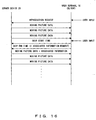
Fig. 16 is a schematic showing a user request, and
the state of data delivery according to the request;
Fig. 17 is a schematic showing a configuration of
a user terminal used in a third embodiment; and
Fig. 18 is a schematic showing a configuration of
a storing device receiving and storing moving picture
data.
Best Mode of Carrying Out the Invention
Preferred embodiments according to the present
invention are described hereinafter.
Fig. 2 is a schematic showing a configuration of
a video picture information delivering system. In this
system, a user terminal 10 is connected to a server
device 20 via a network, and makes a request to deliver
moving pictures to the server device 20. Here, the
network may be a public network or a private network.
Additionally, part or the whole of the network may be
a wireless network. Furthermore, communications
protocols are not particularly limited. In the
meantime, the server device 20 delivers the moving
pictures according to the request from the user terminal
10.
The user terminal 10 comprises a requesting unit
11 transmitting a request from a user to the server
device 20, and a reproducing unit 12 reproducing moving
picture data received from the server device 20. Here,
the request from the user includes "playback", "pause",
"fast-forward playback", "skip", etc. Furthermore,
the user terminal 10 comprises a display device 13
displaying the moving pictures delivered from the server
device 20.
The server device 20 comprises an accepting unit
21, a storing device 22, a controlling unit 23, and a
transmitting unit 24. The accepting unit 22 accepts a
user request transmitted from the user terminal 10. The
storing device 22 stores moving picture data of video
picture information to be delivered to the user terminal
10. The controlling unit 23 reads corresponding moving
picture data from the storing device 22 according to
the user request accepted by the accepting unit 21. The
transmitting unit 24 transmits to the user terminal 10
the moving picture data that the controlling unit 23
reads from the storing device 22.
With the above described configuration, the user
transmits a request to the server device 20 by using
the user terminal 10, whereby he or she can receive and
view desired video contents.
Moving picture data (including audio data) stored
in the storing device 22 is not particularly limited.
However, the moving picture data is assumed to conform,
for example, to the specifications stipulated by MPEG
(Moving Picture Experts Group).
Fig. 3 is a schematic showing the structure of
video data of MPEG. The video data of MPEG is configured
by a sequence header (SH), and a group of pictures (GOP)
succeeding thereto. At its end, a sequence end code
(SEC) is provided. Each of groups of pictures (GOPs)
includes a plurality of pictures. Fundamentally, each
of the groups of pictures (GOPs) includes an I picture
(intra-frame coded picture), a P picture (inter-frame
forward predictive coded picture), and a B picture
(inter-frame bidirectional predictive coded picture).
Each piece of picture data is configured by a
plurality of slices, each of which is configured by a
plurality of macro blocks (MBs). Each of the macro
blocks (MBs) is configured by a brightness signal (Y),
and color difference signals (Cb,Cr). The brightness
signal (Y) is configured by four 8×8 blocks, whereas
each of the color difference signals (Cb,Cr) is
configured by one 8×8 block.
An access to the above described video data is
fundamentally made in units of groups of pictures (GOPs).
Additionally, moving picture data is compressed with
a discrete cosine transform (DCT), quantization,
variable encoding, etc. in units of the above described
8×8 blocks.
Fig. 4 is a schematic showing the structure of
audio data of MPEG. The audio data of MPEG is configured
by AAUs (Audio Access Units) each of which is created
for each frame. The AAU is a minimum unit that can be
decoded into an audio signal, and includes data of a
predetermined number of samples (384 samples). The AAU
is configured by a header, an error check (EC), and audio
data. Here, the error check (EC) is, for example, a
16-bit CRC. However, this is not an essential element.
Additionally, the audio data is configured by an
allocation, a scale factor, and samples. The
allocation is bit allocation information. The scale
factor indicates a magnification when the waveform of
each channel is reproduced. The samples are encoded
sampling data.
The above described video data is put into packets
in units of pictures of GOPs, whereas the audio data
is put into packets in units of AAUs. A plurality of
video packets or audio packets are bound, whereby a
"pack" is configured as shown in Fig. 5.
To each pack, a pack header and a system header
are attached. Here, the pack header includes an SCR
(System Clock Reference) which represents a reference
time when moving picture data is reproduced. In the
meantime, the system header includes information which
indicates a bit rate, information which indicates the
number of video channels/audio channels, and the like.
When video data and audio data, which have the
above described configurations, are stored in the
storing device 22, a table which manages a
correspondence between the SCR of each pack and a storage
address is created. When moving picture data is read
from the storing device 22, that table is referenced.
Additionally, a time stamp which indicates
reproduction timing is added to moving picture data.
Specifically, for example, a PTS (Presentation Time
Stamp) for managing the time of a reproduction output,
and a DTS (Decoding Time Stamp) for managing the time
of decoding are added for each frame of the video data.
Specific embodiments of the video picture
information delivering system according to the present
invention are described below.
<First embodiment>
In the first embodiment, whether or not an
advertisement picture is included in moving pictures
to be skipped is examined when some of moving pictures
are skipped according to a user request. If the
advertisement picture is included in the moving pictures
to be skipped, associated information corresponding to
the skipped advertisement picture is displayed on a
display device 13 when the moving pictures after being
skipped are displayed on the display device 13 of the
user terminal 10. Here, the associated information is
information associated with the advertisement picture
which is inserted in the moving pictures delivered to
the user terminal 10. The associated information may
be character data, still picture data, or moving picture
data. Additionally, the associated information is
fundamentally configured by character information or
picture information, which is obtained by simplifying
the contents of the corresponding advertisement picture.
For example, associated information corresponding to
an advertisement picture of a certain sweet is
configured by information which indicates the name of
a company making the sweet, information which indicates
the name of the sweet, information which indicates the
feature or the sale point of the sweet, and the like.
Fig. 6 is a schematic showing the configuration
of the server device 20 in the first embodiment. The
server device 20 reads moving picture data of
corresponding video contents from a video contents
storing device 31 according to a request from a user,
and delivers the read data to the user terminal 10. Here,
the video contents storing device 31 may be implemented
as part of the server device 20, or a device independent
of the server device 20. Additionally, the video
contents storing device 31 stores moving picture data
of video contents to be delivered to the user terminal
10. Here, the video contents to be delivered to the user
terminal 10 are configured by main part pictures and
advertisement pictures (CMs) as shown in Fig. 7. Video
contents stored in the video contents storing device
31 are sometimes referred to as original video pictures
or original pictures.
The 'request from the user includes at least
information which identifies the user or the user
terminal 10, and information which represents the
contents of the request. Here, the server device 20
accepts at least a playback request, a pause request,
a fast-forward request, and a skip request. Namely, the
user terminal 10 can make the user select at least an
arbitrary request of "playback", "pause",
"fast-forward playback", and "skip".
The request from the user is accepted by the
accepting unit 21. Then, an accepting unit 21 analyzes
the received user request, and notifies a read
controlling unit 32 of its result. Here, if the user
makes the "playback" request, the read controlling unit
32 reads the moving picture data of the specified video
contents from the video contents storing device 31.
Then, a transmitting unit 24 transmits the moving
picture data to the user terminal 10. As a result, the
moving pictures delivered from the server device 20 are
displayed on a display device 13 of the user terminal
10. For example, if the video contents shown in Fig.
7 are delivered to the user terminal 10, video pictures
in which advertisement pictures are inserted are
displayed on the display device 13.
Or, if the user makes the "skip" request while the
moving pictures are being displayed on the display
device 13, that request is accepted by the accepting
unit 21. Then, the accepting unit 21 detects a skip
start time and a skip end time, and notifies the read
controlling unit 32 and a determining unit 33 of its
results. In this case, the read controlling unit 32
reads moving picture data after the skip end time without
reading moving picture data from the skip start time
until the skip end time, after reading moving picture
data up to the skip start time. In the meantime, the
determining unit 33 examines whether or not an
advertisement picture is included during the time period
from the skip start time to the skip end time. Then,
if the advertisement picture is included during that
time period, the determining unit 33 reads associated
information corresponding to the skipped advertisement
picture from an associated information storing unit 34,
and passes the read information to the transmitting unit
24.
Upon receipt of the associated information from
the determining unit 33, the transmitting unit 24
generates a combined picture which includes the moving
pictures after being skipped and the associated
information, and transmits the combined pictures to the
user terminal 10.
Figs. 8A and 8B are schematic diagrams showing
moving picture delivery operations when the skip request
is input. Here, assume that original video pictures
stored in the video contents storing device 31 are
configured by a picture A, a picture B, a picture C, ...,
a picture H, a picture I, a picture J .... Also assume
that the picture G is an advertisement picture and a
moving picture for a predetermined time period (by way
of example, 60 seconds).
When a request to skip the pictures D and E is input
in Fig. 8A, the read controlling unit 32 skips the
pictures D and E and reads the pictures G through J after
reading the pictures A through C. Since the
advertisement picture is not included in the moving
pictures specified by the skip request at this time,
the determining unit 33 notifies the transmitting unit
24 that the advertisement picture is not included. Then,
the transmitting unit 24 transmits the pictures A
through C and G through J, which are read by the read
controlling unit 32, to the user terminal 10.
Accordingly, the pictures G through J are displayed in
succession to the pictures A through C on the display
device 13 of the user terminal 10 in this case.
In the meantime, when a request to skip the picture
G is input in Fig. 8B, the read controlling unit 32 skips
the picture G and reads the pictures H through J after
reading the pictures A through F. Since the
advertisement picture is included in the moving picture
specified by the skip request, the determining unit 33
reads associated information g, which corresponds to
the picture G, from the associated information storing
unit 34, and passes the read information to the
transmitting unit 24.
Upon receipt of the associated information g, the
transmitting unit 24 combines an original picture and
the associated information g at predetermined timing
after the skip. In the example shown in Fig. 8B, the
associated information g is combined with the original
picture immediately after the picture skip is terminated.
Namely, the combined picture configured by the picture
H and the associated information g is generated.
Accordingly, in this case, when the moving pictures are
displayed on the display device 13, the combined picture
which includes the picture H and the associated
information g is displayed at timing when the picture
H is to be displayed.
As described above, in the video picture
information delivering system according to the first
embodiment, if an advertisement picture is skipped by
a user, information associated with the advertisement
picture is displayed on the user terminal along with
the pictures after being skipped. Accordingly, a
provider (or a sponsor) of the pictures can make a user
securely view information associated with the
advertisement picture, even if the advertisement
picture is skipped. In the meantime, the user can skip
the moving picture at desired timing without paying any
extra cost.
Note that the skip request is input by the user,
for example, with the use of a skip button comprised
by the user terminal 10. If the user desires to skip
some of the moving pictures in this case, he or she
presses (or clicks) the skip button. Additionally, a
"time period during which a moving picture is skipped"
is specified, for example, by a time during which the
skip button continues to be pressed, or by the number
of times that the skip button is repeatedly pressed.
Or, the "time period during which a moving picture is
skipped" may be directly specified by using a keyboard,
etc.
When the skip request is input from the user, the
user terminal 10 calculates the "skip start time" and
the "skip end time". Here, the "skip start time" is,
for example, a time at which the skip button is pressed
by the user. In the meantime, the "skip end time" is
a time elapsed from the "skip start time" for the "time
period during which a moving picture is skipped". These
times are measured by using the beginning of the moving
pictures displayed on the display device 13 as a
reference. Or, these times may be obtained, for example,
by using the above described SCR, PTS, DTS, etc. Then,
the user terminal 10 transmits the "skip start time"
and the "skip end time" to the server device 20 as the
skip request. As a result, the server device 20 can
recognize a time domain during which the moving picture
is to be skipped. Note that the "skip start time" and
the "skip end time" may be calculated by the server
device 20.
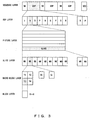
Fig. 9 is a schematic explaining the operations
of the server device 20. In Fig. 9, the determining unit
33 comprises a table for managing advertisement pictures
inserted in original video pictures. Here, to this
table, appearance times (the start time and the end time)
of each of advertisement pictures, and a pointer
pointing to a location where associated information is
stored are registered. In the associated information
storing unit 34, associated information corresponding
to each of the advertisement pictures is stored. The
storage addresses of the associated information are
registered to the above described table.
In the implementation example shown in Fig. 9, the
server device 20 receives the skip request from the user
terminal 10 while the moving pictures are being
delivered from the server device 20 to the user terminal
10. Here, assume that this skip request specifies "skip
start time=0:20:00, skip end time=0:21:00".
The above described skip request is accepted and
analyzed by the accepting unit 21. Then, the accepting
unit 21 generates skip time information, and notifies
the read controlling unit 34 and the determining unit
33 of the generated skip time information. Here, the
skip time information is configured by the "skip start
time", and the "skip end time".
When the skip time information is provided, the
read controlling unit 32 reads moving picture data from
the video contents storing device 31 according to the
information. Namely, the read controlling unit 32
skips the domain corresponding to "0:20:00 to 0:21:00"
when reading the moving picture data from the video
contents storing device 31.
In the meantime, the determining unit 33 examines
whether or not an advertisement picture is included in
the moving pictures skipped by the user by referencing
the above described table. In this example, an
advertisement picture, which is registered to the second
record in the table shown in Fig. 9, is included in the
moving pictures skipped by the user. Accordingly, a
pointer B corresponding to the advertisement picture
is obtained in this case. Then, the determining unit
33 extracts corresponding associated information from
the associated information storing unit 34 by using the
pointer B, and passes the extracted information to the
transmitting unit 24.
The transmitting unit 24 transmits the moving
pictures read by the read controlling unit 32 to the
user terminal 10, and also transmits the associated
information to the user terminal 10 if the associated
information is provided from the determining unit 33.
Operations of the transmitting unit 24 are described
below with reference to Fig. 10.
The transmitting unit 24 first decodes the moving
picture data after being skipped, which is read by the
read controlling unit 32. As a result, respective
frames of the moving pictures after being skipped are
generated. That is, for example, bitmap data of the
respective frames configuring the moving pictures after
being skipped is generated. At this time, the
transmitting unit 24 decodes only the moving picture
data of the time period corresponding to the display
time of the associated information provided from the
determining unit 33. For example, if the time during
which the associated information is to be displayed is
30 seconds, the transmitting unit 24 decodes the moving
picture data for 30 seconds.
Then, the transmitting unit 24 reduces the
pictures of the respective frames configuring the
reproduced moving pictures. Here, a process for
reducing a picture can be implemented with a known
technique. Then, a combined picture that is configured
by a reduced picture and associated information is
generated. At this time, the associated information is
arranged in a marginal region obtained by reducing an
original picture. Hereafter, the transmitting unit 24.
encodes the combined picture that is configured by the
original picture and the associated information, and
transmits the encoded picture data to the user terminal
10.
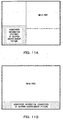
The arrangement of the original picture and the
associated information is not particularly limited.
However, for example, a layout is made so that the
associated information is arranged at a top end, a bottom
end, a right end, or a left end of a frame or in any
of its corners. For instance, an example shown in Fig.
11A depicts a case where associated information (picture
information) is arranged in a lower left region of a
frame. In the meantime, an example shown in Fig. 11B
depicts a case where associated information (character
information) is arranged in a bottom end region of a
frame.
In the above described implementation examples,
the associated information is arranged in the marginal
region obtained by reducing the original picture.
However, the present invention is not limited to this
implementation. Namely, associated information may be
displayed, for example, to overwrite an original picture
without reducing the original picture.
Additionally, in the example shown in Fig. 10, the
original picture and the associated information are
combined in the server device 20 when the advertisement
picture is skipped. However, moving picture data of a
combined picture which includes the original picture
and the associated information may be prepared in
advance. In this case, a combined picture storing unit
35 is provided as a replacement for the associated
information storing unit 34 as shown in Fig. 12. Here,
in the combined picture storing unit 35, for example,
moving picture data of a combined picture which is
configured by an original picture and associated
information is stored. Additionally, the transmitting
unit 24 comprises a selecting unit 36 selecting either
moving picture data read by the read controlling unit
32 or moving picture data read from the combined picture
storing unit 35. Here, the selecting unit 36 selects
one of the moving picture data according to an
instruction from the determining unit 33. Namely, the
selecting unit 36 selects and outputs the moving picture
data read by the read controlling unit 32 in normal times,
however selects and outputs the moving picture data read
from the combined picture storing unit 35 when an
advertisement picture is skipped.
With this configuration, it is possible to make
a user view associated information corresponding to a
skipped advertisement.picture without executing the
series of processes shown in Fig.10 (the process for
reproducing an original picture, the process for
reducing the reproduced original picture, the process
for combining the reduced original picture and
associated information, and the process for encoding
the generated combined picture) , when the advertisement
picture is skipped. Namely, the load imposed on the
server device 20 is lightened.
In the meantime; associated information
transmitted to the user terminal 10 when an
advertisement picture is skipped is allowed to vary by
user. Namely, a plurality of items of associated
information are prepared for each advertisement picture,
and a suitable item of associated information may be
selected according to an attribute of a user (such as
the age, the gender, the family structure, etc. of the
user), and transmitted to the user terminal 10.
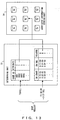
Fig. 13 is a schematic showing a configuration for
transmitting a suitable item of associated information
for each user. In Fig. 13, the determining unit 33
comprises a table for storing a correspondence between
the ID of each user and his or her attribute. Here, the
attribute of each user is assumed to be registered in
advance. Furthermore, a plurality of items of
associated information are stored in the associated
information storing unit 34 for each advertisement
picture.
In the above described configuration, the skip
request includes a user ID and skip time information.
In the example shown in Fig. 13, a pointer B is obtained
based on the skip time information, and an attribute
y is obtained based on the user ID. In this case, the
determining unit 33 extracts associated information By
from the associated information storing unit 34. Then,
the associated information thus extracted is
transmitted to the user terminal 10.
Accordingly, if the configuration shown in Fig.
13 is introduced, effective associated information can
be transmitted to a user who views video contents,
whereby an advertisement effect is improved.
As described above, in the video picture
information delivering system according to the first
embodiment, combined pictures, which are obtained by
embedding associated information corresponding to a
skipped advertisement picture in moving pictures after
being skipped, are generated by the server device 20.
Then, the combined pictures are delivered to the user
terminal 10. Accordingly, the user terminal 10 decodes
the received data, whereby moving pictures including
the associated information can be reproduced. Namely,
the user terminal 10 does not need to be provided with
a special function for displaying associated
information.
<Second embodiment>
As described above, in the first embodiment,
combined pictures configured by original pictures after
being skipped and associated information are generated
by the server device 20, and the combined pictures are
transmitted to the user terminal 20. In the meantime,
in the second embodiment, associated information
corresponding to a skipped advertisement picture is
transmitted to the user terminal 10 separately from
original pictures. Then, the original pictures and the
associated information are combined by the user terminal
10, and displayed on the display device 13.
A configuration of a server device used in a video
picture information delivering system in the second
embodiment is fundamentally the same as that of the
server device used in the first embodiment. That is,
also the server device in the second embodiment
comprises the accepting unit 21, the read controlling
unit 32, the determining unit 33, and the associated
information storing unit 34, which are shown in Fig.
6. When an advertisement picture is skipped,
associated information corresponding to the
advertisement picture is extracted from the associated
information storing unit 34. However, a transmitting
unit comprised by the server device 20 in the second
embodiment is different from that in the above described
first embodiment.
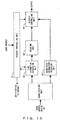
The transmitting unit of the server device in the
second embodiment comprises a contents transmitting
unit 41, an associated information transmitting unit
42, and a synchronizing unit 43 as shown in Fig. 14.
Here, the contents transmitting unit 41 transmits moving
picture data read by the read controlling unit 32 to
the user terminal 10 by using a predetermined port (#0) .
In the meantime, the associated information
transmitting unit 42 transmits associated information
to the user terminal 10 by using a predetermined port
(#1) when the associated information is provided from
the determining unit 33. The moving picture data and
the associated information are multiplexed with channel
multiplexing, and transmitted to the user terminal 10.
These ports are specified, for example, with port
numbers of TCP/IP. Additionally, synchronization
between the moving picture data and the associated
information is established by the synchronizing unit
43.
Note that the moving picture data and the
associated information may be multiplexed with another
method. Namely, the moving picture data and the
associated information may be multiplexed, for example,
with time-division multiplexing.
If an advertisement picture inserted in delivered
video contents is skipped as described above, associated
information corresponding to the advertisement picture
is transmitted from the server device 20 to the user
terminal 10. However, in the second embodiment,
original pictures and associated information are not
combined by the server device 20, and moving picture
data and the associated information are multiplexed and
transmitted to the user terminal 10. Accordingly, the
user terminal 10 must comprise a function for extracting
associated information from received data, and for
displaying the extracted information on the display
device 13.
Fig. 15 is a schematic showing a configuration of
the user terminal 10 used in the second embodiment. The
user terminal 10 in the second embodiment comprises a
request controlling unit 51, a demultiplexing unit 52,
a time information extracting unit 53, a decoding unit
54, an associated information receiving unit 55, and
a display controlling unit 56. The user terminal 10
comprises, as basic functions, a function for making
a request to deliver video picture information to the
server device 20, a function for receiving moving
picture data from the server device 20, a function for
reproducing moving pictures from the received moving
picture data and for displaying the reproduced moving
pictures on the display device 13, and a function for
transmitting a user request to the server device 20.
Also the user terminal in the first embodiment comprises
these basic functions.
The request controlling unit 51 analyzes a user
input, and creates a user request. Here, the user input
means that, for example, a playback button, a pause
button, a fast-forward button, a skip button, a key input
button, etc. is operated by a user. The request
controlling unit 51 transmits the created user request
to the server device 20. If an advertisement picture
is skipped by the user request at this time, the server
device 20 transmits associated information
corresponding to the skipped advertisement picture to
the user terminal 10.
Fig. 16 shows the user request and data delivery
according to the user request. The user terminal 10
transmits the playback request to the server device 20
according to an instruction from a user. Upon receipt
of the playback request, the server device 20 starts
to transmit moving picture data specified by the
playback request. If the skip request is provided from
the user while the moving picture data is being delivered,
the user terminal 10 notifies the server device 20 of
the skip start time and the skip end time. If an
advertisement picture is skipped at this time, the
server device 20 transmits associated information
corresponding to the skipped advertisement picture to
the user terminal 10 along with the moving picture data
after being skipped.
Note that the data stream of the moving pictures
delivered from the server device 20 to the user terminal
10 is assumed to be configured by encoded video data
and encoded audio data. Furthermore, time information
is added to this data stream of the moving pictures.
The demultiplexing unit 52 extracts moving
picture data and associated information from received
data. Specifically, if the moving picture data and the
associated information are respectively transmitted by
using predetermined ports, the demultiplexing unit 52
transmits the received data via a port allocated to
picture data to the decoding unit 54, and also transmits
the received data via a port allocated to associated
information to the associated information receiving
unit 55. Or, if the moving picture data and the
associated information are multiplexed with
time-division multiplexing and transmitted, the
demultiplexing unit 52 transmits data, which is
extracted from a time slot allocated to picture data,
to the decoding unit 54, and also transmits data, which
is extracted from a time slot allocated to associated
information, to the associated information receiving
unit 55. These processes can be implemented with a
known technique.
The time information extracting unit 53 extracts
time information added to received moving picture data,
and transmits the extracted time information to the
request controlling unit 51. The decoding unit 54
reproduces moving pictures by decoding received moving
picture data. Then, the reproduced moving pictures are
transmitted to the display controlling unit 56. In the
meantime, the associated information receiving unit 55
receives associated information if the received data
includes the associated information.
The display controlling unit 56 creates a picture
to be displayed on the display device 13 according to
an instruction from the request controlling unit 51.
If the associated information receiving unit 55 does
not receive associated information from the server
device 20, the display controlling unit 56 displays the
moving pictures reproduced by the decoding unit 54 on
the display device 13. Or, if the associated
information receiving unit 55 receives associated
information from the server device 20, the display
controlling unit 56 combines the moving pictures
reproduced by the decoding unit 54 and the associated
information according to timing instructed by the
request controlling unit 51, and displays the combined
pictures on the display device 13.
The picture combining process executed by the
display controlling unit 56 is fundamentally the same
as that in the server device 20 which is described with
reference to Fig. 10. Namely, the picture combining
process executed by the display controlling unit 56 is
configured by a process for reducing each of frames
configuring moving pictures reproduced by the decoding
unit 54, and a process for arranging associated
information in a marginal region obtained by reducing
a moving picture.
As described above, if an advertisement picture
is skipped in the video picture information delivering
system in the second embodiment, associated information
corresponding to the skipped advertisement picture is
transmitted from the server device 20 to the user
terminal 10. Then, the associated information is
embedded in the moving pictures after being skipped,
and the they are displayed by the user terminal 10.
Accordingly, there is no need to execute the picture
combining process in the server device 20, thereby
lightening the load imposed on the server device 20.
<Third embodiment>
As described above, in the first and the second
embodiments, associated information corresponding to
an advertisement picture is transmitted from the server
device 20 to the user terminal 10 when the advertisement
picture is shipped. In the meantime, in the third
embodiment, associated information corresponding to an
advertisement picture is prepared in a user terminal
10. If the advertisement picture is skipped, the
associated information held within the user terminal
is extracted and displayed on the display device 13.
Fig. 17 is a schematic showing a configuration of
the user terminal 10 used in the third embodiment. In
Fig. 17, the request controlling unit 51, the time
information extracting unit 53, the decoding unit 54,
and the display controlling unit 56 are fundamentally
the same as those described with reference to Fig. 15.
Note that, however, the request controlling unit 51 in
the third embodiment transmits a user request not only
to the server device 20 but also to an associated
information reading unit 58 when the skip request is
input from a user. Additionally, in a video picture
information delivering system in the third embodiment,
if the skip request is transmitted to the server device
20 as a user request, the server device 20 does not
transmit associated information corresponding to an
advertisement picture to the user terminal 10 even if
the advertisement picture is skipped by the user
request.
The associated information storing unit 57 stores
associated information corresponding to an
advertisement picture included in moving pictures
delivered from the server device 20. Here, the
associated information is received, for example,
collectively from the server device 20 before the
delivery of the moving pictures is started. Namely, if
a request to deliver desired video contents is made from
the user terminal 10 to the server device 20, the server
device 20 transmits to the user terminal 10 associated
information corresponding to an advertisement picture,
which is inserted in the specified video contents, and
starts to deliver the moving picture data of the
specified video contents thereafter.
The associated information reading unit 58
fundamentally comprises the same function as that of
the determining unit 33, which is shown in Figs. 6 and
9. Namely, the associated information reading unit 58
comprises a table for managing information which
indicates a time when each advertisement picture is
inserted, and a pointer pointing to a location where
associated information corresponding to each
advertisement picture is stored, similar to the
determining unit 33 shown in Fig. 9. The "information
which indicates a time when each advertisement picture
is inserted" is obtained, for example, from the server
device 20. Additionally, the "pointer pointing to a
location where associated information is stored" is
registered when the associated information received
from the server device 20 is written to the associated
information storing unit 57.
Upon receipt of the skip request from the request
controlling unit 51, the associated information reading
unit 58 references the above described table, and
determines whether or not an advertisement picture is
skipped by a user. If the advertisement picture is
skipped, the associated information reading unit 58
extracts corresponding associated information from the
associated information storing unit 57, and passes the
extracted information to the display controlling unit
56.
The display controlling unit 56 displays moving
pictures reproduced by the decoding unit 54 on the
display device 13 in normal times. Additionally, if an
advertisement picture is skipped, the display
controlling unit 56 generates combined pictures which
include the moving pictures reproduced by the decoding
unit, and the associated information extracted from the
associated information storing unit 57, and displays
the combined pictures on the display device 13.
As described above, in the video picture
information delivering system in the third embodiment,
associated information displayed when an advertisement
picture is skipped is prestored in advance in the user
terminal 10. Therefore, the associated information is
not transmitted while moving picture data is being
delivered. Accordingly, the process related to the
skip request can be made faster.
<Fourth embodiment>
As described above, in the first through the third
embodiments, associated information corresponding to
an advertisement picture is displayed on the display
device 13 if the advertisement picture is skipped. In
the meantime, in the fourth embodiment, if an
advertisement picture is skipped, also the
advertisement picture is together displayed when moving
pictures after being skipped are displayed.
Specifically, upon receipt of the skip request,
the server device 20 determines whether or not an
advertisement picture is included in the moving pictures
to be skipped. If the advertisement picture is included
in the moving pictures to be skipped at this time, that
advertisement picture is read from the video contents
storing device 31 and held. Then, the moving pictures
after being skipped are combined with the advertisement
picture, and the combined pictures are transmitted to
the user terminal 10. Here, this picture combining
process is-configured by a process for reducing the
moving pictures after being skipped, a process for
reducing an advertisement picture, and a process for
combining these reduced pictures to be suitably arranged.
The moving pictures after being skipped and the
advertisement picture are arranged, for example, as the
layout shown in Fig. 11A.
<Apparatus receiving and storing video picture
information>
As described above, in the video picture
information delivering systems according to the first
through the fourth embodiments, moving pictures are
delivered from the server device 20 to the user terminal
10 according to a request from a user. In contrast, an
apparatus recording TV video pictures, etc., which are
broadcast from a broadcasting station, is described
below.
Fig. 18 is a schematic showing a configuration of
a storing device receiving and storing moving picture
data. The moving picture data received by this device
may be transmitted by using a wireless signal or via
a cable. Additionally, the transmitted moving picture
data is assumed to be configured by main part pictures
and advertisement pictures as shown in Fig. 7.
A CM checking unit 61 detects an advertisement
picture from received moving picture data. A function
for detecting an advertisement picture by identifying
a main part picture and the advertisement picture, which
are included in moving picture data, can be implemented
with a known technique. An encoding unit 62 encodes
received moving picture data with a predetermined
encoding method. A time information adding unit 63 adds
time information to the moving picture data encoded by
the encoding unit 62. Then, the moving picture data is
stored in a moving picture data storing unit 64.
A controlling unit 65 detects the start time and
the end time of the advertisement picture detected by
the CM checking unit 61. The controlling unit 65
creates a table (equivalent to the table provided in.
the determining unit 33 shown in Fig. 9) for managing
each advertisement picture. An associated information
generating unit 66 generates associated information
corresponding to the advertisement picture detected by
the CM checking unit 61. Assume that identification
information is assigned to each advertisement picture,
and character information corresponding to each
advertisement picture is prepared in advance. In this
case, the associated information generating unit 66
detects the identification information assigned to the
advertisement picture detected by the CM checking unit
61, and outputs character information corresponding to
the identification information. Or, the associated
information generating unit 66 may analyze the contents
of the advertisement picture detected by the CM checking
unit 61 by using a picture recognition technique or a
voice recognition technique, and may generate
corresponding associated information.
A time information adding unit 67 adds time
information to associated information. This
associated information is stored in an associated
information storing unit 68. To the table of the
controlling unit 65, a pointer pointing to an address
at which associated information is stored is registered.
The moving picture data and the associated
information, which are stored as described above, are
used, for example, by the user terminal 10 shown in Fig.
17. In this case, the moving picture data read from the
moving picture data storing unit 64 is transmitted to
the display controlling unit 56 via the time information
extracting unit 53, and the decoding unit 54. In the
meantime, the associated information storing unit 68
shown in Fig. 18 corresponds to the associated
information storing unit 57 shown in Fig. 17. Namely,
if an advertisement picture is skipped by a user,
associated information corresponding to the
advertisement picture is read by the associated
information reading unit 58, and transmitted to the
display controlling unit 56. Then, the display
controlling unit 56 outputs the picture to be displayed
to the display device 13.
In this way, with the above described storing
device, it is possible to make a user view associated
information corresponding to an advertisement picture
even if TV video pictures, etc., which are broadcast
from a broadcasting station, are recorded, and the
advertisement picture is skipped when the recorded video
pictures are reproduced.
The above described embodiments refer to the
configurations where associated information
corresponding to an advertisement picture is displayed
when the advertisement picture is skipped. However,
the present invention is not limited to the case where
an advertisement picture is skipped. Namely, the
present invention is applied to a configuration where
associated information corresponding to a particular
picture is displayed when the predetermined particular
picture included in delivered moving pictures is skipped.
Here, the "particular information" is, for example, a
portion that a distributor or a sponsor of video picture
information desires to make a user particularly view.
The "associated information" may be any of character
information, a still picture, and a moving picture.
Additionally, the above described embodiments
refer to the configurations where associated
information corresponding to an advertisement picture
is displayed when the advertisement picture is skipped.
However, the present invention is not limited to the
skip process. Namely, the present invention is also
applied to a case where an advertisement picture is
reproduced with a special reproduction manner at a user
terminal. Here, the "special reproduction manner"
includes fast-forward playback. A case where a request
of "fast-forward playback" is made from a user is
described below.
The user terminal 10 comprises a function for
accepting a "fast-forward request" from a user. When
the fast-forward request is input, the start time and
the end time of a picture to be fast-forwarded is
notified to the server device 20. The basic
configuration of the server device 20 is the same as
that shown in Fig. 6 or 9. In this case, however, the
determining unit 33 examines whether or not an
advertisement picture is fast-forwarded instead of
examining whether or not an advertisement picture is
skipped. If the advertisement picture is
fast-forwarded, associated information corresponding
to the advertisement picture is transmitted to the user
terminal 10. As described above, if an advertisement
picture is fast-forwarded in the video picture
information delivering system in this embodiment,
associated information corresponding to the
advertisement picture is displayed on the display device
13.
As described above, according to the present
invention, if a predetermined particular picture such
as an advertisement, etc. is skipped or reproduced with
a special reproduction manner, associated information
corresponding to the particular picture is displayed.
Accordingly, the information associated with the
advertisement can be securely conveyed to a user.
Additionally, the user can skip or reproduce with a
special reproduction manner a moving picture at desired
timing even if the particular picture such as an
advertisement, etc. is inserted in delivered moving
pictures.