EP1485495B1 - Method for glucose production using endoglucanase core protein for improved recovery and reuse of enzyme - Google Patents
Method for glucose production using endoglucanase core protein for improved recovery and reuse of enzyme Download PDFInfo
- Publication number
- EP1485495B1 EP1485495B1 EP03706168A EP03706168A EP1485495B1 EP 1485495 B1 EP1485495 B1 EP 1485495B1 EP 03706168 A EP03706168 A EP 03706168A EP 03706168 A EP03706168 A EP 03706168A EP 1485495 B1 EP1485495 B1 EP 1485495B1
- Authority
- EP
- European Patent Office
- Prior art keywords
- enzymes
- enzyme
- core
- amount
- endoglucanase
- Prior art date
- Legal status (The legal status is an assumption and is not a legal conclusion. Google has not performed a legal analysis and makes no representation as to the accuracy of the status listed.)
- Revoked
Links
Images


Classifications
-
- C—CHEMISTRY; METALLURGY
- C12—BIOCHEMISTRY; BEER; SPIRITS; WINE; VINEGAR; MICROBIOLOGY; ENZYMOLOGY; MUTATION OR GENETIC ENGINEERING
- C12P—FERMENTATION OR ENZYME-USING PROCESSES TO SYNTHESISE A DESIRED CHEMICAL COMPOUND OR COMPOSITION OR TO SEPARATE OPTICAL ISOMERS FROM A RACEMIC MIXTURE
- C12P19/00—Preparation of compounds containing saccharide radicals
- C12P19/02—Monosaccharides
-
- C—CHEMISTRY; METALLURGY
- C12—BIOCHEMISTRY; BEER; SPIRITS; WINE; VINEGAR; MICROBIOLOGY; ENZYMOLOGY; MUTATION OR GENETIC ENGINEERING
- C12P—FERMENTATION OR ENZYME-USING PROCESSES TO SYNTHESISE A DESIRED CHEMICAL COMPOUND OR COMPOSITION OR TO SEPARATE OPTICAL ISOMERS FROM A RACEMIC MIXTURE
- C12P19/00—Preparation of compounds containing saccharide radicals
- C12P19/14—Preparation of compounds containing saccharide radicals produced by the action of a carbohydrase (EC 3.2.x), e.g. by alpha-amylase, e.g. by cellulase, hemicellulase
-
- Y—GENERAL TAGGING OF NEW TECHNOLOGICAL DEVELOPMENTS; GENERAL TAGGING OF CROSS-SECTIONAL TECHNOLOGIES SPANNING OVER SEVERAL SECTIONS OF THE IPC; TECHNICAL SUBJECTS COVERED BY FORMER USPC CROSS-REFERENCE ART COLLECTIONS [XRACs] AND DIGESTS
- Y02—TECHNOLOGIES OR APPLICATIONS FOR MITIGATION OR ADAPTATION AGAINST CLIMATE CHANGE
- Y02E—REDUCTION OF GREENHOUSE GAS [GHG] EMISSIONS, RELATED TO ENERGY GENERATION, TRANSMISSION OR DISTRIBUTION
- Y02E50/00—Technologies for the production of fuel of non-fossil origin
- Y02E50/10—Biofuels, e.g. bio-diesel
Definitions
- the present invention relates to the enzymatic conversion of cellulose to glucose. More specifically, the present invention provides a method for the conversion of pretreated lignocellulosic substrates using endoglucanase core proteins, and the recovery and reuse of the endoglucanase core proteins.
- Cellulose is one of the most abundant polymers found in nature and consists of glucose units connected by beta 1,4 linkages.
- the beta 1,4 linkages which connect individual glucose units are not easily degraded or depolymerized.
- cellulase enzymes which are capable of enzymatically hydrolysing cellulose.
- Cellulase are enzymes produced by a number of microorganisms which catalyse the hydrolysis of cellulose to products such as glucose, cellobiose, and other cellooligosaccharides.
- Cellulase is usually a generic term denoting a multienzyme mixture comprising exo-cellobiohydrolases (CBHs), endoglucanases (EGs) and ⁇ -glucosidases.
- CBHs exo-cellobiohydrolases
- EGs endoglucanases
- ⁇ -glucosidases ⁇ -glucosidases.
- Cellulase produced by the filamentous fungi Trichoderma longibrachiatum comprises at least two cellobiohydrolase enzymes termed CBHI and CBHII and at least 4 EG enzymes.
- Cellulase enzymes work synergistically to hydrolzye cellulose to glucose.
- CBHI and CBHII generally act on the ends of the glucose polymers in cellulose microfibrils liberating cellobiose (Teeri and Koivula, 1995) while the endoglucanases act at random locations on the cellulose. Together these enzymes hydrolyse cellulose to smaller cello-oligosaccharides such as cellobiose.
- Cellobiose is hydrolysed to glucose by ⁇ -glucosidase.
- Both the exo-cellobiohydrolases and the endoglucanases are glycosyl hydrolases which hydrolyse the glycosidic bond between two or more carbohydrates or between a carbohydrate and a non carbohydrate moiety.
- CBHI, CBH II and most EG proteins consist of a catalytic core domain and a cellulose binding domain (CBD) separated by a flexible linker region.
- the cellulose binding domain promotes adsorption of the enzyme to regions of the cellulosic substrate (Tomme et al., 1988; Gilkes et al, 1992), while the core domain is responsible for catalysing the cleavage of cellulose.
- the linker region may ensure an optimal interdomain distance between the core domain and the cellulose binding domain (Teeri et al., 1992).
- the major endoglucanases EG1, EG2 and EG3 are found at amounts of about 8 to 21 % in Trichoderma relative to the total cellulase mixture consisting of CBH1, CBH2, EG1, EG2 and EG3 (Bisset, 1979; Hui et al., 2001). Hui et al., have determined EG1, EG2 and EG3 to be present in Trichoderma from 8 to 18 % relative to the total cellulase mixture with EG3 present from 0 to 6 % relative to the total cellulase mixture.
- Trichoderma EG3 lacks a cellulose binding domain (DNA sequence disclosed in US 5,475,101 ), the natural abundance of endoglucanase core protein relative to the total endoglucanase mixture in Trichoderma is at most 33 wt% in the enzyme mixture. In Humicola insolens , the amount of endoglucanase protein relative to the total cellulase mixtures is greater than 50 % (Schulein et al.).
- US5861271 discloses truncated cellulase proteins or derivatives thereof cloned from the filamentous fungus Trichoderma longibrachiatum.
- EG2core protein from Trichoderma reesei does not bind as tightly to cellulose as EG2 (Macarron et. al., 1995; Nidetzky et.al., 1994)
- the EG2core protein is fully active against small soluble substrates such as the chromophoric glycosides derived from the cellodextrins and lactose.
- the conversion of cellulose from cellulosic material into glucose is important in many industrial processes, such as the bioconversion of cellulose to fuel ethanol.
- cellulose contained in most plant matter is not readily convertible to glucose, and this step represents a major hurdle in the commercialization of such a process.
- the efficient conversion of cellulose from cellulosic material into glucose was originally thought to involve liberating cellulose and hemicellulose from their complex with lignin.
- more recent processes focus on increasing the accessibility to cellulose within the lignocellulosic biomass followed by depolymerization of cellulose carbohydrate polymers to glucose.
- Increasing the accessibility to cellulose is most often accomplished by pretreating the cellulosic substrate.
- lignocellulosic biomass is loaded into a steam gun and up to 5% acid is optionally added to the biomass in the steam gun or in a presoak prior to loading the steam gun.
- the steam gun is then filled very quickly with steam and held at high pressure for a set length of cooking time. Once the cooking time elapses, the vessel is depressurized rapidly to expel the pretreated biomass.
- the present invention relates to the enzymatic conversion of cellulose to glucose.
- This invention also pertains to a method of converting cellulose within a cellulosic substrate into glucose comprising; treating a pretreated lignocellulosic substrate with an enzyme mixture comprising cellobiohydrolase, ⁇ -glucosidase, and EG enzymes, wherein the EG enzymes comprise from 2wt% to 50 wt% of the amount of the CBH and EG enzyme present and wherein endoglucanase core protein (ECP) is present from 35 wt% to 100 wt% of all EGs.
- ECP endoglucanase core protein
- the amount of the ECP in the cellulase mixture is from about 50 wt% to 90 wt% of all EGs.
- the amount of ECP in the cellulase mixture is from about 60 wt% to about 80 wt% of the EG type enzyme.
- the enzyme mixture preferably comprises CBH, EG, ⁇ -glucosidase, and endoglucanase core proteins. More preferably, the enzyme mixture comprises CBH1, CBH2, EGI, EGII, EGIII, ⁇ -glucosidase, and endoglucanase core proteins.
- this invention pertains to the above method wherein the ECP is recovered following the step of treating.
- This invention also pertains to the method as just described wherein the endoglucanase core protein is selected from EG core, EG core plus linker and EG with inactivated cellulose binding domain.
- the pretreated lignocellulosic substrate is selected from the group consisting of agricultural residues, residues after starch or sugar removal, dedicated ethanol crops, forestry products, and pulp and paper products or combinations thereof.
- the agricultural residues are selected from the group consisting of corn stover, wheat straw, barley straw; soybean stover; the residues after starch or sugar removal are elected from the group consisting of oat hulls, rice hulls, sugar cane bagasse, and corn fibre;
- the dedicated ethanol crops are selected from the group consisting of switch grass, miscanthus, cord grass, and rye grass;
- the forestry products are selected from the group consisting of hardwood, softwood, Eucalyptus, and sawdust; and the pulp and paper products is solka floc.
- the pretreated lignocellulosic substrate is present in the enzyme mixture at a concentration of about 1 wt% to about 25 wt% in aqueous slurry.
- the lignocellulosic substrate is present in the enzyme mixture at a concentration of about 10 wt% to about 16wt% in aqueous slurry.
- This invention also provides a method of converting cellulose within a cellulosic substrate into glucose comprising; treating a pretreated lignocellulosic substrate with an enzyme mixture comprising CBH, ⁇ -glucosidase, and EG enzymes, wherein the EG. enzymes comprise from 2 wt% to 50 wt% of the amount of CBH and EG enzymes, present in the mixture, and wherein the endoglucanase core protein is present from 35 wt% to 100 wit% of all EGs.
- the enzyme mixture comprises CBHI, CBHII, EG I, EG II, EGIII, ⁇ -glucosidase and endoglucanase core protein.
- the amount of the endoglucanase core protein in the cellulase mixture is from about 50 wt% to 90 wt% of all EGs. More preferably, the amount of endoglucanase core protein in the cellulase mixture is from about 60 wt% to about 80 wt% of all EGs.
- this invention pertains to either of the above method wherein the endoglucanase core protein is recovered following the step of treating.
- This invention also pertains to the method as just described wherein the endoglucanase core protein is selected from EG core, EG core plus linker and EG with inactivated cellulose binding domain.
- the present invention also embraces a method for converting cellulose to glucose comprising treating a pretreated lignocellulosic substrate with an enzyme mixture comprising CBH, ⁇ -glucosidase, endoglucanase (EG) and endoglucanase core plus linker wherein EG type enzymes within the enzyme mixture comprise from 2 wt% to 50 wt% of the amount of CBH and EG enzyme present and wherein the endoglucanase core plus linker is present from 35 wt% to 100 wt% of all EGs.
- the cellulase enzyme comprises CBHI, CBHII, EG I, EG II, EGIII, ⁇ -glucosidase.
- the amount of the endoglucanase core plus linker in the cellulase mixture is from about 50 wt% to 90 wt% of all EGs. More preferably, the amount of endoglucanase core plus linker in the cellulase mixture is from about 60 wt% to about 80 wt% of all EGs. Furthermore, this invention pertains to the above method wherein the endoglucanase core plus linker is recovered following the step of treating.
- the present invention also provides a cellulase composition with an enzyme mixture comprising CBHI, CBHII, EG I, EG II, EGIII, ⁇ -glucosidase and endoglucanase with an inactivated cellulose binding domain
- the EG enzymes comprise from 2 wit% to 50 wt% of the CBH and EG enzymes present.and wherein the endoglucanase with an inactivated cellulose binding domain is present from 35 wt% to 100 wt% of all EGs.
- the amount of the endoglucanase with an inactivated cellulose binding domain is present in the cellulase mixture is from about 50 wt% to 90wt% of all EGs.
- the amount of endoglucanase with an inactivated cellulose binding domain is present in the cellulase mixture is from about 60 wt% to about 80 wt% of all EGs. Furthermore, this invention pertains to the above method wherein the endoglucanase with an inactivated cellulose binding domain is recovered following the step of treating.
- the present invention relates to the enzymatic conversion of cellulose to glucose. More specifically, the present invention provides a method for the conversion of pretreated lignocellulosic substrates using endoglucanase core protein, and the recovery and reuse of the endoglucanase core protein.
- cellulose in many lignocellulosic materials may not be readily hydrolysable by enzymes.
- the cellulosic substrate for enzymatic hydrolysis as described herein be pretreated prior to being treated with enzymes.
- pretreatment processes There are a number of pretreatment processes known in the art that employ thermal, mechanical, chemical, or combinations of these methods to disrupt the fiber structure of cellulosic substrates and which enhance subsequent enzymatic hydrolysis of the cellulosic substrate.
- Any pretreatment process which enhances the enzymatic hydrolysis may be employed in combination with the method of the present invention.
- the pretreatment process disclosed in U.S. 4,461,648 or U.S. 4,237,226 may be used, or any of the pulping processes known within the art (e.g. Rydholm S.A. 1985, Pulping Processes, Kreiger Pub. Co ), including kraft, sulfite, mechanical, thermal, and chemi-thermal-mechanical pulping.
- pretreatment processes may also involve the addition of organic solvents to aid in the fractionation of lignin, cellulose and hemicellulose from lignocellulosic raw materials.
- These pretreatment processes may include but are not limited to those disclosed in U.S. 3,932,307 which teaches impregnating raw lignocellulosic material with a solution of lignin-solubilizing reactant in an organic solvent and subsequently immersing the impregnated material in a solvent that is neither soluble nor miscible with the reactant-containing solution with which the lignocellulosic material has been impregnated; U.S.
- a preferred pretreatment process is an acid-steam cook, as disclosed in U.S. 4,461,648 , wherein an acid, for example sulfuric acid from about 0 to about 5%, is added to a lignocellulosic substrate, and the acidified mixture is cooked for about 5 seconds to about 2 minutes, at a temperature of about 180 to about 250°C.
- an acid for example sulfuric acid from about 0 to about 5%
- the pretreatment process enhances subsequent enzymatic hydrolysis of cellulose by increasing delignification, creating micropores in the cellulose, changing the crystalline form of the cellulose, reducing the polymerization of cellulose, increasing the surface area of cellulose, or combinations thereof.
- the efficiency of the pretreatment phase can influence the efficiency and commercial application of enzymatically converting cellulose to glucose.
- the cellulosic substrate is preferably a pretreated lignocellulosic substrate, comprising at least about 10% lignin.
- the cellulosic substrate suitable for pretreatment may comprise:
- Enzymatic hydrolysis of cellulose may follow pretreatment directly, or alternatively, a number of steps may follow pretreatment and precede enzymatic hydrolysis of cellulose.
- pretreated cellulosic substrate may be washed with water to remove chemicals, contaminants, or combinations thereof which could hinder the enzymatic conversion of cellulose to glucose.
- exo-cellobiohydrolase a protein comprising a cellulose binding domain, a linker region and a cellobiohydrolase (CBH) core region which acts at cellulose ends to release cellobiose.
- the cellulose binding domain can be linked to the cellobiohydrolase core region at either the N-terminal or C-terminal end of the cellobiohydrolase core region.
- the CBH may be obtained from any suitable organism.
- the CBH is obtained from one or more of the following organisms: Trichoderma, Hypocrea, Thermomonospora, Aspergillus, Streptomyces, Cellulomonas, Humicola, Fusarium, Fibrobacter, Clostridium, Bacillus. More preferably, the CBH is obtained from Trichoderma reesei.
- EG cellulose binding domain
- linker region a endoglucanase core region which nicks cellulose polymers randomly to creating reducing and non reducing ends for digestion by exo-cellobiohydrolase.
- the cellulose binding domain can be linked to the endoglucanase core region at either the N-terminal or C-terminal end of the endoglucanase core region.
- endoglucanase enzymes have been classified into several families (Table 1) based on amino acid similarities, 3 dimensional structural analysis and hydrophobic cluster analysis (Henrissat et aL, 1997, and 1998, and references therein).
- Endoglucanases therefore encompass a widespread group of enzymes that differ in molecular weight, amino acid sequence, and 3D-structure.
- the Trichoderma reesei EG2 protein (classified as a family 5 enzyme), is of approximately 50 kDa comprising a N-terminal cellulose binding domain, linker region and a EG2 core region and nicks cellulose polymers randomly creating reducing and non reducing ends for digestion by exo-cellobiohydrolase.
- the EG3 protein of Trichoderma reesei (a family 12 enzyme) is of 27 kDa and comprises a catalytic domain, and lacks a cellulose binding domain.
- the EG is obtained from one or more of the following organisms: Trichoderma, Hypocrea, Thermomonospora, Aspergillus, Streptomyces, Cellulomonas, Humicola, Fusarium, Fibrobacter, Clostridium, Bacillus. More preferably, the EG is obtained from Trichoderma reesei. However, it is to be understood that EG protein may be obtained from other sources as well, including but not limited to those listed in Table 1. Table 1. Classification of known endoglucanases Family Enzyme Source 5 EG A Bacillus sp. Strain N-4 EG B Bacillus sp.
- endoglucanase core it is meant the portion of endoglucanase comprising the catalytic domain of endoglucanase, and that is capable of endoglucanase activity as defined herein.
- EG2core may be isolated by from culture fitrates using chromatographic methods (Bhikhabhai, et al.; Stahlberg et al.). EG2core may also be produced by proteolytic cleavage of the EG2 protein using a suitable protease, for example but not limited to papain.
- proteases for example but not limited to papain, may also be added to a crude enzyme mixture to produce EG2core within the mixture.
- other core enzymes may also be produced.
- EG2core may also be produced using recombinant technology. In this manner, EG2 and EG2 core may be co-expressed in the same host organism, or the host may be genetically modified so that the native EG2 expression is reduced or eliminated, and supplemented or replaced, respectively with recombinant EG2core expression.
- endoglucanase core also includes fragments or derivatives of endoglucanase core, including substitutions, deletions, insertions within the endoglucanase core sequence as would be known to one of skill in the art, providing that these fragments and derivatives exhibit endoglucanase activity as described herein. It is also to be understood that endoglucanase core may be isolated from an organism wherein the endoglucanase core protein does not comprise a cellulose binding domain or linker region.
- endoglucanase core plus linker it is meant a fragment of a endoglucanase protein comprising endoglucanase core and the linker amino acid sequence, or a fragment thereof, that joins the endoglucanase core to the CBD of the endoglucanase protein.
- the linker portion of the endoglucanase core plus linker may comprise any length of amino acid sequence.
- the endoglucanase core plus linker may include fragments or derivatives of endoglucanase core plus linker, including substitutions, deletions, insertions within the endoglucanase core plus linker sequence as would be known to one of skill in the art, providing that these fragments and derivatives of endoglucanase core plus linker exhibit endoglucanase core activity.
- the endoglucanase core plus linker may be isolated from an organism wherein the endoglucanase core plus linker protein does not comprise a cellulose binding domain, it may be prepared using recombinant techniques, or it may be prepared via proteolysis as would be known to one of skill in the art.
- an inactivated cellulose binding domain a protein comprising endoglucanase core, or endoglucanase core plus linker, and a cellulose binding domain (CBD) that has been inactivated.
- CBD cellulose binding domain
- Inactivation of a CBD may be performed by methods known in the art, for example but not limited to Linder et al. (Linder et al., 1995; Linder et al., 1999 ).
- An inactivated CBD results in a reduced capacity of the CBD to bind cellulose when compared with the binding activity associated with a corresponding wild type endoglucanase.
- endoglucanase with inactive cellulose binding domain also includes fragments or derivatives of endoglucanase including substitutions, deletions, insertions within the endoglucanase, linker, CBD, or a combination thereof, sequence as would be known to one of skill in the art, providing that these fragments and derivatives exhibit endoglucanase activity, and exhibit a reduced capacity to bind cellulose.
- an endoglucanase with inactive cellulose binding domain may be isolated from an organism wherein the endoglucanase protein comprises a cellulose binding domain, however the CBD exhibits poor cellulose binding activity.
- An endoglucanase exhibiting poor cellulose binding activity exhibits less than about 70% of the cellulose binding activity of endoglucanase obtained from Trichoderma reesei using the same substrate.
- the endoglucanase exhibiting poor cellulose binding activity exhibits less than about 50% of the cellulose binding activity of Trichoderma reesei endoglucanase.
- ECP endoglucanases core protein
- Cellulase mixtures as described herein may also comprise ⁇ -glucosidase (B-G).
- the ⁇ -glucosidase may be obtained form any suitable host, for example, but not limited to, Trichoderma, Hypocrea, Thermomonospora, Aspergillus, Streptomyces, Cellulomonas, Humicola, Fusarium, Fibrobacter, Clostridium, Bacillus, or a combination thereof.
- ⁇ -glucosidase is obtained from Aspergillus, or Trichoderma.
- the present invention provides a method of converting cellulose within a cellulosic substrate into glucose comprising, treating a pretreated lignocellulosic substrate with an enzyme mixture comprising cellobiohydrolase, ⁇ -glucosidase, EG enzymes and endoglucanase core protein (ECP), wherein the EG enzymes comprise from 2 wt% to 50 wt% of the total of the CBH and EG enzymes (the amount of the B-G enzyme is not included in this determination) within the cellulase mixture present and wherein the ECP is present from 35 wt% to 100 wt% of all EG type enzyme.
- an enzyme mixture comprising cellobiohydrolase, ⁇ -glucosidase, EG enzymes and endoglucanase core protein (ECP)
- ECP endoglucanase core protein
- the ECP is from about 50 to 90wt% of the EG type enzyme, and more preferably from about 60 to 80 wt%. It is also preferred that the endoglucanase core protein is a Trichoderma endoglucanase.
- a cellulase composition comprising CBHI, CBHII, EG I, EG II, EGIII, ⁇ -glucosidase and endoglucanase core protein wherein the ECP is present in the cellulase composition at an amount relative to all EG type enzyme of from about 35 to about 100 wt%.
- the ECP is from about 50 to about 90wt% of the EG type enzyme, and more preferably from about 60 to 80 wt%. It is also preferred that the ECP is a Trichoderma endoglucanase.
- the endoglucanase core protein may be added to a cellulase mixture (composing one or more of CBHI, CBHII, EG I, EG II, EGIII and ⁇ -glucosidase) produced by, for example, but not limited to a filamentous fungus.
- a filamentous fungus is Trichoderma.
- endoglucanase core protein may be expressed by a host capable of producing a cellulase enzyme mixture (comprising CBHI, CBHII, EG I, BG II, and ⁇ -glucosidase).
- the present invention also provides a method for converting cellulose to glucose with an enzyme mixture comprising CBHI, CBHII, EG I, EG II, and EGIII, ⁇ -glucosidase and endoglucanase core protein wherein the ECP, for example EG core plus linker, is present in the cellulase composition at an amount relative to all EG type enzymes of from about 35 to about 100 wt%.
- the EG core plus linker is from about 50 to about 90wt% of EG type enzymes, and more preferably from about 60 to about 80 wt%. It is also preferred that the EG core plus linker is a modified Trichoderma EG.
- a method for converting cellulose to glucose using an enzyme mixture comprising CBHI, CBHII, EG I, EG II, EGIII, ⁇ -glucosidase and endoglucanase core protein wherein the endoglucanase core protein, for example EG core with an inactivated cellulose binding domain is present in the cellulase composition at an amount relative to all EG type enzymes of from about 35 to about 100 wt%.
- the EG core plus linker is from about 50 to about 90 wt% of the EG type enzyme, and more preferably from about 60 to about 80wt%.
- the EG with an inactivated binding domain is from Trichoderma.
- Inactivation of the EG CBD may be accomplished using any suitable method as would be known within the art, for example but not limited to the method of Linder (Linder et al., 1995 and 1999; which are herein incorporated by reference). These references describe changes to single amino acids within the CBD that result in partial or complete loss in the capacity for the CBD to bind cellulose.
- Other methods for inactivation of the CBD may include deletion of a portion of the CBD, or insertion of a peptide sequence within the CBD in order to disrupt CBD binding activity.
- cellulose hydrolysis may occur under a variety of conditions.
- cellulose hydrolysis is performed by cellulase enzymes in a slurry of water and cellulase comprising about 1 to about 25 wt% lignocellulosic solids at a pH of about 4 to about 5 and at a temperature of about 50° C.
- concentrations of less than 1 wt% lignocellulosic solids the solution of glucose obtained is diluted and is typically concentrated for further processing. While this step of concentration may be performed, it is not a preferred method.
- the solids content in the reaction may become difficult to mix, filter and process.
- lignocellulosic materials after pretreatment can possess a range of cellulose content, therefore the amount of lignocellulosic material that is required to achieve a desired cellulose concentration can vary. It is preferred that the amount of pretreated lignocellulosic substrate is from about 10 wt% to about 16 wt%. A more preferred amount of pretreated lignocellulosic substrate is from about 12 wt% to about 16 wt%. These conditions are suitable for most cellulase enzymes.
- the present invention also contemplates hydrolysing cellulose under other conditions that may be better suited to a particular cellulase/EG core, EG-EG core, or other mixtures comprising EG core protein as defined herein. Such conditions may be readily determined by one of skill in the art.
- a cellulase composition comprising CBHI, CBHII, EG I, EG II, EGIII, ⁇ -glucosidase and endoglucanase core protein, wherein the EG enzyme is present in the cellulase composition from about 2 wt % to 50 wt % relative to the amount of CBH and EG present.
- the CBH and EG enzymes act synergistically. Below 2 wt% of EG relative to the total CBH and EG enzymes, the amount of EG may be too low to result in effective hydrolysis. As the amount of EG increase relative to CBH the observe performance is increased.
- the efficiency of cellulose conversion is much higher for CBH enzymes compared to EG enzymes, therefore it is preferred that the cellulase mixture contain at least about 50 % CBH. It is also understood that the relative amount of CBH1 and CBH2 can vary from 25 wt% to 95 wt% of CBH1. Those skilled in the art are aware that CBH1 and CBH2 also act synergistically to hydrolyse cellulose to glucose, and the activity of the enzymes in combination is greater than the sum of the individual activities.
- cellulase enzymes are from Trichoderma longibrachiatum, and Trichoderma reesei, or a combination thereof.
- the EG and EG core protein for example but not limited to EG2 core, proteins are also preferably obtained from T. longibrachiatum, and T. reesei, or a combination thereof.
- the crude Trichoderma cellulase enzymes used as a basis for the method of the present invention may be obtained directly through culture of the appropriate microorganism, or the enzymes may be purchase commercially (e.g. from Iogen Corporation).
- EG core protein may be obtained by expressing the appropriate genetic sequence in an suitable host cell, as is commonly performed in the art, and as described in US 5,874,276 or EG core protein may be prepared by enzymatic cleavage of EG as described above.
- EG core plus linker may be obtained by expressing a nucleotide sequence comprising the EG core and linker region, or via proteolytic cleavage of the holoenzyme.
- EG with an inactive cellulose binding domain may be obtained as described above, by expressing the appropriate gene sequence encoding an inactive CBD either through substitution, deletion or insertion, or as would be known by one of skill in the art.
- the amount of cellulase enzyme to be used in the hydrolysis of cellulose to glucose may be determined by the nature of the cellulosic substrate, the pretreatment process, the cost of the enzymes, the desired hydrolysis time, and the desired glucose yield from the cellulosic substrate.
- a typical enzyme dosage range is about 1 to about 50 Filter paper units (FPU) cellulase per gram cellulose for a period of time from about 3 to about 200 hours.
- the cellulase enzyme dosage is from about 1 to about 10 FPU per gram cellulose.
- cellulose concentration is chosen to accommodate the capabilities of pumps to handle and mix the solids.
- a pretreated lignocellulosic substrate concentration to be used in the hydrolysis of cellulose to glucose is from about 1 wt% to about 25 wt% is used.
- the preferred amount of pretreated lignocellulosic substrate is from about 10 wt% to about 16 wt%.
- a more preferred amount of pretreated lignocellulosic substrate is from about 12 wt% to about 16 wt%.
- Figure 1 shows the relative activity of a cellulase mixture as the percent of endoglucanase core protein is increased relative to the total endoglucanase enzyme in the mixture.
- the cellulase mixture used in this experiment which is not to be considered limiting in any manner, contains 18 wt% endoglucanase enzyme relative to the EG and CBH enzymes present.
- the amount of endoglucanase core protein was varied from the maximum reported percentage found in Trichoderma (33 wt%) to 100 wt%.
- the amount of endoglucanase core protein is increased relative to total endoglucanase enzyme in the mixture from 33 to 100 %, only a small loss in hydrolysis activity is observed.
- the enzyme activity can be compared using a fixed Et and comparing the percentage conversion of cellulose.
- FIG. 3 there is shown a summary of the relative activity of EG2 and EG2 core, which was observed to be similarly stable over 15 to 20 days at 50 C and pH 4.8. This attribute may be advantageous in the recovery and reuse of enzymes in cellulose hydrolysis.
- Enzyme remaining in solution after hydrolysis may be recovered using standard techniques as known within the art.
- the solids fraction may be removed from a reaction mixture, by filtration or centrifugation, and the protein remaining in solution may be separated from the sugar liquor and recovered via ultrafiltration, or precipitation, including pH, salting-out, or temperature induced precipitation.
- this invention is directed to the hydrolysis of cellulosic substrates using a cellulase mixture containing an endoglucanase core protein (ECP), for example but not limited to EG2 core protein, that is characterized by having a low tendency to bind to cellulosic substrates, but still exhibits high activity.
- ECP endoglucanase core protein
- the present invention also pertains to a method for the hydrolysis of a cellulosic substrate comprising adding a sufficient amount of ECP, for example but not limited to EG2 core, to a cellulase enzyme mixture and allowing the reaction to proceed for a period of time sufficient to hydrolyze cellulose to glucose.
- ECP for example but not limited to EG2 core
- the present invention provides for a method for the hydrolysis of a cellulosic substrate using a cellulase mixture containing an ECP, for example but not limited to EG2 core protein, over a range of mixtures from about 35 wt% to 100 wt % relative to the total EG in the enzyme mixture.
- ECP for example but not limited to EG2 core protein
- the substrate used is whole oats as per US 4,461,648 ; pretreatment process involved adding sulphuric acid from about 0 to 5% to the whole oats and the acidified mixture cooked for about 5 seconds to about 2 minutes, at a temperature of about 180 to about 250°C.
- the cellulose content of the pretreated material is 50%.
- Purified CBH1 and CBH2 was obtained from a crude Trichoderma cellulase broth by first filtering the broth through glass microfiber filter paper. The cellulase liquid was then dialyzed using a 10,000 MW cut off membrane in order to lower its conductivity to 12,000 ⁇ S.
- the CBH1 was enriched by loading 190 mg protein/mL of resin onto pH 6 DEAE Sepharose ion exchange resin. The other components were desorbed from the resin before CBH1, by running 50 mM phosphate, 25 NaCl buffer at a conductivity of 9,000 ⁇ S throught the column. The CBH1 was desorbed by running 50 mM phosphate, 300 mM NaC1 buffer at a conductivity of 30,000 ⁇ S through the column. The CBH1 was then concentrated by ultrafiltration and its purity was accessed by a LKB Bromma iso-electrofocusing electrophoresis unit
- CBH2 was purified by dialyzing to 700 ⁇ S and loading the CBH1 deleted mixture obtained above onto an S Sepharose ion exchange resin equilibrated with pH 5 acetate buffer.
- CBH2 was enriched by collecting the loosely bound proteins collected at a conductivity of 1300 ⁇ S.
- the enriched CBH2 mixture was dialized into pH 4 acetate buffer and passed through a CM-sepharose column.
- CBH2 was desorbed from the column using a 6 mM acetate, 40 mM NaCl buffer at a conductivity of 5100 ⁇ S.
- the CBH2 purity was accessed by iso-electrofocusing.
- EG1 and EG2 and EG3 were obtained by collecting the unbound proteins from the S sepharose column described above.
- an EG, EG2 and EG3 enriched culture can be obtained from a Trichoderma strain deleted in CBH1 and CBH2.
- anion exchange resin PBE 94 and a 12.5 % solution of polybuffer 74 a pH gradient from pH 4 to pH 7 was generated using 0.025 M pH 7.4 imidazole buffer allowing EG1 and EG2 to be separated using chromatofocusing methods.
- EG2core was obtained using a Trichoderma strain enriched in EG2core using a short thermal purification (pH 5.1, 60C, 4hrs) followed by a chromatofocusing step using a pH 4 to 7 gradient, PBE94 anion exchange resin and a 12.5% solution of polybuffer 74 as described above. Purity was accessed by SDS page and capillary isoelectrophoresis.
- Hydrolysis reactions contained 5 % cellulose in 50 mM pH 4.8 citrate buffer to a total weight of 2.5 gms. 116 IU ⁇ -glucosidase per gram cellulose was added to each tube. For each reaction five dosages of enzyme mixture, 6.25, 12.5, 25, 50, 75 mg of enzyme/gram of cellulose was prepared. Each dosage was composed as described by the wt% in Table 2. The mixtures were combined in the ratio of 18 % endoglucanase protein relative to the amount of CBH and EG enzyme. Starting from an initial composition of 33% endoglucanase core protein relative to the total endoglucanase protein the percent of EG core protein was increased to 100%.
- the mixtures were incubated at 50C with shaking at 250 RPM for 20 hrs. At this time the mixture was filtered through glass microfiber filter paper. The amount of remaining cellulose in the reaction was measured by converting the polymeric cellulose to glucose using acid hydrolysis and measuring the glucose using a glucose oxidase/horseradish peroxidase coupled assay (Bauminger, 1974).
- a cellulase mixture can be prepared from individual components in two ways. In this experiment the cellulase components are combined using a wt % ratio where the wt% of the individual component is calculated relative to the total cellulase mixture composed of CBH1, CBH2, EG1, EG2, and EG3. ⁇ -Glucosidase is added in excess (116 IU/g cellulose) to this mixture.
- the cellulase components may also be mixed using a molar ratio. For example, Jrin combined the Humicola insolen CBH1 and EGV in a molar ratio of 90:5.
- this molar ratio corresponds to a 2.3 wt% of endoglucanase to the amount of CBH and EG.
- EGV core has a molecular weight of 22 kDa
- a 90:5 molar ratio of CBH1 to EGV core would correspond to a wt% of endoglucanase core protein to the total CBH and EG enzyme of 1.7 %.
- the amount of cellulose conversion at a fixed Et of 1000 was determined for each enzyme mixture (Table 2) where Et is defined as the product of enzyme concentration in mg of enzyme/g of cellulose multiplied by the time in hours for the reaction.
- Et is defined as the product of enzyme concentration in mg of enzyme/g of cellulose multiplied by the time in hours for the reaction.
- the relative activity of the enzymes mixture as a function of the EG core composition is listed in Table'2 and shown graphically in Figure 1 . It can be seen that the activity remains constant when they amount of endoglucanase core protein is increased from 33 wt% to 80 wt %. A small decrease in activity, of about 13%, is observed on increasing the endoglucanase core protein from 80 wt % to 100 wt% relative to the total endoglucanase core protein.
- Protein measurement was done using a Biorad protein assay using a commercial product Iogen Cellulase (90g/L) as a standard.
- the two substrates analyzed were oats hulls and Sigmacell TM .
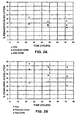
- the amount of EG2core in solution throughout the course of hydrolysis is higher than the amount of EG2. Approximately 30 to 85 % more EG2core than EG2 could be detected in solution after hydrolysis. This was observed with both a high surface area lignocellulosic substrate such as whole oats or Sigmacell TM . These results are shown graphically in figure 2A and 2B . Given that EG2 core is as efficient as EG2 in a cellulase mixture as described herein, the use of EG2core offers the opportunity to be recovered and reused. It is also observed that the amount of protein remaining in solution its substrate dependant and without wishing to be bound by theory may be dependant on the amount of lignin present in the lignocellulosic substrate.
- enzymes that remains in solution may be recovered from the reaction mixture by removing the unreacted solids by filtration, and separating and recovering the enzymes from the sugar liquor using ultrafiltration.
- the enzyme may also be recovered by precipation from the sugar liquor, for example by pH, salt, or temparture-induced precipitation.
- the stability of purified EG2 and EG2core was assessed under the typical conditions of hydrolysis.
- the enzymes were incubated at a concentration of 2.4 mg/mL and 2.9 mg/mL respectively in a pH 4.8 citrate buffer at 50°C. Aliquots were removed and the level of Carboxymethylcellulose (CMC) hydrolysis was assessed by quantification of reducing sugars using DNS.
- CMC Carboxymethylcellulose
- Example 4 Method for determining the percentage of EG and EGcore protein in a cellulase mixture.
- Trichoderma cellulase mixtures made by strain RUT-C30 (available from the ATCC #56765) were analyzed for composition. The CIEF determination's were conducted on a PAGE 5000 instrument. Separations were carried out using a Beckman eCAP neutral capillary (ID 50 ⁇ M X OD 365 ⁇ M, 27 cm in length). The cellulase standards or cellulase extracts were dissolved to their final concentration in an aqueous solution consisting of 3 % blended carrier ampholyte (Beckman ampholyte: Servalyt (3:1, v/v)). The analyte was 10 mM phosphoric acid and the catholyte was 20 mM NaOH.
- a Voltage of 13.5 kV was used to focus the analyte band for a duration of 10 min followed by cathodic mobilization using a buffer of methanol water-acetic acid (50:49:1, v/v/v). During focusing and mobilization, the voltage was maintained at a field strength of 13.5 kV (500 V/cm). The detector was set at 280 nM. Protein concentrations of standards and Trichoderma secreted cellulase mixtures were based on Bradford determination.
- the percentage of EG relative to the total EG and CBH present is calculated to be 8 % in RUT-C30 (see Table 3).
- the percent EG is determined using the ratio of EG protein to the total EG and CBH enzymes comprising of CBH1, CBH2, EG1, EG2 and EG3.
- the percentage of endoglucanase core in the cellulase extract is calculated from the amount of EG3 relative to the total amount of endoglucanase protein.
- EG1core and EG2core were not observed in the cellulase mixture, therefore, the amount of EG core protein in the extract from RUT-C30 is 0.
- Table 3 Distribution of cellulases in secreted protein extracts obtained from Trichoderma reesei.
Landscapes
- Organic Chemistry (AREA)
- Chemical & Material Sciences (AREA)
- Engineering & Computer Science (AREA)
- Zoology (AREA)
- Life Sciences & Earth Sciences (AREA)
- Wood Science & Technology (AREA)
- Chemical Kinetics & Catalysis (AREA)
- Microbiology (AREA)
- General Chemical & Material Sciences (AREA)
- Biotechnology (AREA)
- Health & Medical Sciences (AREA)
- Biochemistry (AREA)
- Bioinformatics & Cheminformatics (AREA)
- General Engineering & Computer Science (AREA)
- General Health & Medical Sciences (AREA)
- Genetics & Genomics (AREA)
- Enzymes And Modification Thereof (AREA)
- Preparation Of Compounds By Using Micro-Organisms (AREA)
Applications Claiming Priority (3)
| Application Number | Priority Date | Filing Date | Title |
|---|---|---|---|
| US36402002P | 2002-03-15 | 2002-03-15 | |
| US364020P | 2002-03-15 | ||
| PCT/CA2003/000299 WO2003078644A2 (en) | 2002-03-15 | 2003-03-05 | Method for glucose production using endoglucanase core protein for improved recovery and reuse of enzyme |
Publications (2)
| Publication Number | Publication Date |
|---|---|
| EP1485495A2 EP1485495A2 (en) | 2004-12-15 |
| EP1485495B1 true EP1485495B1 (en) | 2010-09-15 |
Family
ID=28041858
Family Applications (1)
| Application Number | Title | Priority Date | Filing Date |
|---|---|---|---|
| EP03706168A Revoked EP1485495B1 (en) | 2002-03-15 | 2003-03-05 | Method for glucose production using endoglucanase core protein for improved recovery and reuse of enzyme |
Country Status (9)
| Country | Link |
|---|---|
| US (1) | US8012721B2 (pl) |
| EP (1) | EP1485495B1 (pl) |
| AT (1) | ATE481496T1 (pl) |
| AU (1) | AU2003208215A1 (pl) |
| CA (1) | CA2479248C (pl) |
| DE (1) | DE60334193D1 (pl) |
| DK (1) | DK1485495T3 (pl) |
| PL (1) | PL208254B1 (pl) |
| WO (1) | WO2003078644A2 (pl) |
Families Citing this family (25)
| Publication number | Priority date | Publication date | Assignee | Title |
|---|---|---|---|---|
| US7604967B2 (en) * | 2003-03-19 | 2009-10-20 | The Trustees Of Dartmouth College | Lignin-blocking treatment of biomass and uses thereof |
| US8580541B2 (en) * | 2003-03-19 | 2013-11-12 | The Trustees Of Dartmouth College | Lignin blockers and uses thereof |
| US20070029252A1 (en) | 2005-04-12 | 2007-02-08 | Dunson James B Jr | System and process for biomass treatment |
| US7781191B2 (en) | 2005-04-12 | 2010-08-24 | E. I. Du Pont De Nemours And Company | Treatment of biomass to obtain a target chemical |
| JP4991700B2 (ja) | 2005-04-12 | 2012-08-01 | イー・アイ・デュポン・ドウ・ヌムール・アンド・カンパニー | バイオマス処理のためのシステムおよび方法 |
| BRPI0613681A2 (pt) | 2005-07-19 | 2010-07-13 | Holm Christensen Biosystemer A | método e aparelho para conversão de material celulósico para etanol |
| FI120045B (fi) | 2005-12-22 | 2009-06-15 | Roal Oy | Selluloosamateriaalin käsittely ja siinä käyttökelpoiset entsyymit |
| KR101376927B1 (ko) * | 2006-02-13 | 2014-03-27 | 도날드슨 컴파니, 인코포레이티드 | 미세 섬유 및 반응성, 흡착성 또는 흡수성 미립자를 포함하는 필터 웹 |
| EP2051956A1 (en) | 2006-08-18 | 2009-04-29 | Iogen Energy Corporation | Process for obtaining an organic salt or organic acid from an aqueous sugar stream |
| US8017373B2 (en) * | 2006-08-31 | 2011-09-13 | Iogen Energy Corporation | Process for enzymatic hydrolysis of pretreated lignocellulosic feedstocks |
| US8980599B2 (en) * | 2007-08-02 | 2015-03-17 | Iogen Energy Corporation | Method for the production of alcohol from a pretreated lignocellulosic feedstock |
| US8445236B2 (en) | 2007-08-22 | 2013-05-21 | Alliance For Sustainable Energy Llc | Biomass pretreatment |
| BRPI0816177B1 (pt) | 2007-08-30 | 2018-07-17 | Iogen Energy Corp | processo para a conversão de uma matéria-prima lignocelulósica pré-tratada em açúcares solúveis |
| EP2198019A4 (en) * | 2007-08-30 | 2011-05-11 | Iogen Energy Corp | PROCESS FOR PRODUCING CELLULASE |
| US20090130707A1 (en) * | 2007-11-01 | 2009-05-21 | Novozymes, Inc. | Methods of reducing the inhibitory effect of a redox active metal ion on the enzymatic hydrolysis of cellulosic material |
| FR2925521B1 (fr) * | 2007-12-20 | 2009-12-18 | Inst Francais Du Petrole | Complementation du secretome de trichoderma reesei limitant les contaminations microbiologiques dans le cadre de procedes industriels. |
| CN102016055A (zh) * | 2008-04-29 | 2011-04-13 | 丹尼斯科美国公司 | 膨胀素组合物以及增加纤维素酶效率的方法 |
| US8212087B2 (en) | 2008-04-30 | 2012-07-03 | Xyleco, Inc. | Processing biomass |
| WO2010080489A1 (en) * | 2008-12-19 | 2010-07-15 | E. I. Du Pont De Nemours And Company | Ozone treatment of biomass to enhance enzymatic saccharification |
| WO2011116320A1 (en) | 2010-03-19 | 2011-09-22 | Poet Research, Inc. | System for treatment of biomass to facilitate the production of ethanol |
| CA2795501C (en) | 2010-03-19 | 2019-02-26 | Poet Research, Inc. | System for the treatment of biomass |
| CN103547677B (zh) | 2011-01-18 | 2016-10-12 | 波特研究公司 | 用于生物质水解的体系和方法 |
| CN103842524A (zh) | 2011-07-07 | 2014-06-04 | 波特研究公司 | 酸回收系统和方法 |
| CN103304281B (zh) * | 2013-06-17 | 2014-07-30 | 刘立鹤 | 一种有机废弃物快速资源化热酶好氧处理工艺 |
| CN108841810B (zh) * | 2018-07-21 | 2021-08-27 | 湖北大学 | 一种多功能纤维素酶基因及其应用 |
Family Cites Families (20)
| Publication number | Priority date | Publication date | Assignee | Title |
|---|---|---|---|---|
| US3932307A (en) * | 1974-05-20 | 1976-01-13 | E. I. Du Pont De Nemours And Company | Tetra(neophyl) zirconium and its use in process for the polymerization of olefins |
| US4237226A (en) * | 1979-02-23 | 1980-12-02 | Trustees Of Dartmouth College | Process for pretreating cellulosic substrates and for producing sugar therefrom |
| US4461648A (en) * | 1980-07-11 | 1984-07-24 | Patrick Foody | Method for increasing the accessibility of cellulose in lignocellulosic materials, particularly hardwoods agricultural residues and the like |
| US4409329A (en) * | 1981-03-23 | 1983-10-11 | Gulf Research & Development Company | Saccharification method |
| FI841500A0 (fi) * | 1984-04-13 | 1984-04-13 | Valtion Teknillinen | Foerfarande foer uppbygnande av cellulolytiska jaeststammar. |
| US4728613A (en) * | 1985-09-04 | 1988-03-01 | Miles Laboratories, Inc. | Method for the recovery of extracellular enzymes from whole fermentation beer |
| US5298405A (en) * | 1986-04-30 | 1994-03-29 | Alko Limited | Enzyme preparations with recombinantly-altered cellulose profiles and methods for their production |
| US4826566A (en) * | 1988-01-11 | 1989-05-02 | Le Tourneau College | Rapid disolution of lignin and other non-carbohydrates from ligno-cellulosic materials impregnated with a reaction product of triethyleneglycol and an organic acid |
| US5712142A (en) * | 1989-09-26 | 1998-01-27 | Midwest Research Institute | Method for increasing thermostability in cellulase ennzymes |
| US5120463A (en) * | 1989-10-19 | 1992-06-09 | Genencor International, Inc. | Degradation resistant detergent compositions based on cellulase enzymes |
| US5837515A (en) * | 1990-05-16 | 1998-11-17 | Alko-Yhtiot Oy | Enzyme preparations and methods for their production |
| US5861271A (en) * | 1993-12-17 | 1999-01-19 | Fowler; Timothy | Cellulase enzymes and systems for their expressions |
| US5730837A (en) * | 1994-12-02 | 1998-03-24 | Midwest Research Institute | Method of separating lignocellulosic material into lignin, cellulose and dissolved sugars |
| US6184019B1 (en) * | 1995-10-17 | 2001-02-06 | Röhm Enzyme Finland OY | Cellulases, the genes encoding them and uses thereof |
| EP0868506A1 (en) * | 1995-12-18 | 1998-10-07 | Röhm Enzyme Finland Oy | Novel xylanases and uses thereof |
| US6228629B1 (en) * | 1995-12-18 | 2001-05-08 | Röhn Enzyme Finland OY | Xylanases, genes encoding them, and uses thereof |
| US5859236A (en) * | 1996-02-29 | 1999-01-12 | Burkart; Leonard | Process for preparation of lignin and microcellulose |
| US5866407A (en) | 1997-03-18 | 1999-02-02 | Iogen Corporation | Method and enzyme mixture for improved depilling of cotton goods |
| US5916780A (en) * | 1997-06-09 | 1999-06-29 | Iogen Corporation | Pretreatment process for conversion of cellulose to fuel ethanol |
| ATE327322T1 (de) * | 2000-09-25 | 2006-06-15 | Iogen Energy Corp | Verfahren zur herstellung von glucose mit ein ermodifizierten zellulase |
-
2003
- 2003-03-05 CA CA2479248A patent/CA2479248C/en not_active Expired - Fee Related
- 2003-03-05 WO PCT/CA2003/000299 patent/WO2003078644A2/en not_active Ceased
- 2003-03-05 DE DE60334193T patent/DE60334193D1/de not_active Expired - Lifetime
- 2003-03-05 US US10/507,618 patent/US8012721B2/en not_active Expired - Fee Related
- 2003-03-05 DK DK03706168.6T patent/DK1485495T3/da active
- 2003-03-05 AT AT03706168T patent/ATE481496T1/de not_active IP Right Cessation
- 2003-03-05 PL PL372388A patent/PL208254B1/pl unknown
- 2003-03-05 AU AU2003208215A patent/AU2003208215A1/en not_active Abandoned
- 2003-03-05 EP EP03706168A patent/EP1485495B1/en not_active Revoked
Also Published As
| Publication number | Publication date |
|---|---|
| CA2479248C (en) | 2011-09-27 |
| US20060008885A1 (en) | 2006-01-12 |
| PL372388A1 (pl) | 2005-07-25 |
| WO2003078644A3 (en) | 2004-02-19 |
| US8012721B2 (en) | 2011-09-06 |
| DE60334193D1 (de) | 2010-10-28 |
| ATE481496T1 (de) | 2010-10-15 |
| AU2003208215A1 (en) | 2003-09-29 |
| EP1485495A2 (en) | 2004-12-15 |
| WO2003078644A2 (en) | 2003-09-25 |
| CA2479248A1 (en) | 2003-09-25 |
| PL208254B1 (pl) | 2011-04-29 |
| AU2003208215A8 (en) | 2003-09-29 |
| DK1485495T3 (da) | 2010-11-22 |
Similar Documents
| Publication | Publication Date | Title |
|---|---|---|
| US8012721B2 (en) | Method for glucose production using endoglucanase core protein for improved recovery and reuse of enzyme | |
| EP1320588B2 (en) | Method for glucose production with a cellulase mixture comprising a modified cellulase | |
| RU2529949C2 (ru) | Ферментная композиция, способная эффективно разлагать целлюлозный материал | |
| RU2458128C2 (ru) | Способ обработки целлюлозного материала и используемые в нем ферменты | |
| JP5932648B2 (ja) | 新規なグリコシルヒドロラーゼ酵素及びその用途 | |
| US20140147894A1 (en) | Variant cbh i polypeptides with reduced product inhibition | |
| Adav et al. | Trichoderma secretome: an overview | |
| Sampathkumar et al. | An insight into fungal cellulases and their industrial applications | |
| US20130177959A1 (en) | Novel cbh1-eg1 fusion proteins and use thereof | |
| Gandla et al. | Enzymatic saccharification of lignocellulosic biomass | |
| Mathew et al. | Fungal β-Glucosidases: Production and Applications |
Legal Events
| Date | Code | Title | Description |
|---|---|---|---|
| PUAI | Public reference made under article 153(3) epc to a published international application that has entered the european phase |
Free format text: ORIGINAL CODE: 0009012 |
|
| 17P | Request for examination filed |
Effective date: 20041013 |
|
| AK | Designated contracting states |
Kind code of ref document: A2 Designated state(s): AT BE BG CH CY CZ DE DK EE ES FI FR GB GR HU IE IT LI LU MC NL PT RO SE SI SK TR |
|
| AX | Request for extension of the european patent |
Extension state: AL LT LV MK |
|
| RIN1 | Information on inventor provided before grant (corrected) |
Inventor name: TOLAN, JEFFREY, S. Inventor name: WHITE, THERESA, C. Inventor name: WAHNON, DAPHNE Inventor name: DONALDSON, JENNIFER |
|
| GRAP | Despatch of communication of intention to grant a patent |
Free format text: ORIGINAL CODE: EPIDOSNIGR1 |
|
| GRAS | Grant fee paid |
Free format text: ORIGINAL CODE: EPIDOSNIGR3 |
|
| RIN1 | Information on inventor provided before grant (corrected) |
Inventor name: TOLAN, JEFFREY, S. Inventor name: DONALDSON, JENNIFER Inventor name: WAHNON, DAPHNE Inventor name: WHITE, THERESA, C. |
|
| RAP1 | Party data changed (applicant data changed or rights of an application transferred) |
Owner name: IOGEN ENERGY CORPORATION |
|
| RAP1 | Party data changed (applicant data changed or rights of an application transferred) |
Owner name: IOGEN ENERGY CORPORATION |
|
| GRAA | (expected) grant |
Free format text: ORIGINAL CODE: 0009210 |
|
| AK | Designated contracting states |
Kind code of ref document: B1 Designated state(s): AT BE BG CH CY CZ DE DK EE ES FI FR GB GR HU IE IT LI LU MC NL PT RO SE SI SK TR |
|
| REG | Reference to a national code |
Ref country code: CH Ref legal event code: EP Ref country code: GB Ref legal event code: FG4D |
|
| REG | Reference to a national code |
Ref country code: IE Ref legal event code: FG4D |
|
| REF | Corresponds to: |
Ref document number: 60334193 Country of ref document: DE Date of ref document: 20101028 Kind code of ref document: P |
|
| REG | Reference to a national code |
Ref country code: DK Ref legal event code: T3 |
|
| REG | Reference to a national code |
Ref country code: NL Ref legal event code: T3 |
|
| PG25 | Lapsed in a contracting state [announced via postgrant information from national office to epo] |
Ref country code: FI Free format text: LAPSE BECAUSE OF FAILURE TO SUBMIT A TRANSLATION OF THE DESCRIPTION OR TO PAY THE FEE WITHIN THE PRESCRIBED TIME-LIMIT Effective date: 20100915 Ref country code: AT Free format text: LAPSE BECAUSE OF FAILURE TO SUBMIT A TRANSLATION OF THE DESCRIPTION OR TO PAY THE FEE WITHIN THE PRESCRIBED TIME-LIMIT Effective date: 20100915 |
|
| PG25 | Lapsed in a contracting state [announced via postgrant information from national office to epo] |
Ref country code: SI Free format text: LAPSE BECAUSE OF FAILURE TO SUBMIT A TRANSLATION OF THE DESCRIPTION OR TO PAY THE FEE WITHIN THE PRESCRIBED TIME-LIMIT Effective date: 20100915 Ref country code: CY Free format text: LAPSE BECAUSE OF FAILURE TO SUBMIT A TRANSLATION OF THE DESCRIPTION OR TO PAY THE FEE WITHIN THE PRESCRIBED TIME-LIMIT Effective date: 20100915 |
|
| PG25 | Lapsed in a contracting state [announced via postgrant information from national office to epo] |
Ref country code: GR Free format text: LAPSE BECAUSE OF FAILURE TO SUBMIT A TRANSLATION OF THE DESCRIPTION OR TO PAY THE FEE WITHIN THE PRESCRIBED TIME-LIMIT Effective date: 20101216 Ref country code: SE Free format text: LAPSE BECAUSE OF FAILURE TO SUBMIT A TRANSLATION OF THE DESCRIPTION OR TO PAY THE FEE WITHIN THE PRESCRIBED TIME-LIMIT Effective date: 20100915 |
|
| PG25 | Lapsed in a contracting state [announced via postgrant information from national office to epo] |
Ref country code: EE Free format text: LAPSE BECAUSE OF FAILURE TO SUBMIT A TRANSLATION OF THE DESCRIPTION OR TO PAY THE FEE WITHIN THE PRESCRIBED TIME-LIMIT Effective date: 20100915 Ref country code: RO Free format text: LAPSE BECAUSE OF FAILURE TO SUBMIT A TRANSLATION OF THE DESCRIPTION OR TO PAY THE FEE WITHIN THE PRESCRIBED TIME-LIMIT Effective date: 20100915 Ref country code: SK Free format text: LAPSE BECAUSE OF FAILURE TO SUBMIT A TRANSLATION OF THE DESCRIPTION OR TO PAY THE FEE WITHIN THE PRESCRIBED TIME-LIMIT Effective date: 20100915 Ref country code: CZ Free format text: LAPSE BECAUSE OF FAILURE TO SUBMIT A TRANSLATION OF THE DESCRIPTION OR TO PAY THE FEE WITHIN THE PRESCRIBED TIME-LIMIT Effective date: 20100915 Ref country code: PT Free format text: LAPSE BECAUSE OF FAILURE TO SUBMIT A TRANSLATION OF THE DESCRIPTION OR TO PAY THE FEE WITHIN THE PRESCRIBED TIME-LIMIT Effective date: 20110117 Ref country code: IT Free format text: LAPSE BECAUSE OF FAILURE TO SUBMIT A TRANSLATION OF THE DESCRIPTION OR TO PAY THE FEE WITHIN THE PRESCRIBED TIME-LIMIT Effective date: 20100915 |
|
| PLBI | Opposition filed |
Free format text: ORIGINAL CODE: 0009260 |
|
| PLBI | Opposition filed |
Free format text: ORIGINAL CODE: 0009260 |
|
| PG25 | Lapsed in a contracting state [announced via postgrant information from national office to epo] |
Ref country code: BE Free format text: LAPSE BECAUSE OF FAILURE TO SUBMIT A TRANSLATION OF THE DESCRIPTION OR TO PAY THE FEE WITHIN THE PRESCRIBED TIME-LIMIT Effective date: 20100915 Ref country code: ES Free format text: LAPSE BECAUSE OF FAILURE TO SUBMIT A TRANSLATION OF THE DESCRIPTION OR TO PAY THE FEE WITHIN THE PRESCRIBED TIME-LIMIT Effective date: 20101226 |
|
| PLAX | Notice of opposition and request to file observation + time limit sent |
Free format text: ORIGINAL CODE: EPIDOSNOBS2 |
|
| 26 | Opposition filed |
Opponent name: NOVOZYMES A/S Effective date: 20110614 |
|
| 26 | Opposition filed |
Opponent name: DANISCO US INC. Effective date: 20110615 Opponent name: NOVOZYMES A/S Effective date: 20110614 |
|
| REG | Reference to a national code |
Ref country code: DE Ref legal event code: R026 Ref document number: 60334193 Country of ref document: DE Effective date: 20110614 |
|
| PG25 | Lapsed in a contracting state [announced via postgrant information from national office to epo] |
Ref country code: MC Free format text: LAPSE BECAUSE OF NON-PAYMENT OF DUE FEES Effective date: 20110331 |
|
| REG | Reference to a national code |
Ref country code: CH Ref legal event code: PL |
|
| PLAF | Information modified related to communication of a notice of opposition and request to file observations + time limit |
Free format text: ORIGINAL CODE: EPIDOSCOBS2 |
|
| GBPC | Gb: european patent ceased through non-payment of renewal fee |
Effective date: 20110305 |
|
| REG | Reference to a national code |
Ref country code: IE Ref legal event code: MM4A |
|
| PLBB | Reply of patent proprietor to notice(s) of opposition received |
Free format text: ORIGINAL CODE: EPIDOSNOBS3 |
|
| PG25 | Lapsed in a contracting state [announced via postgrant information from national office to epo] |
Ref country code: LI Free format text: LAPSE BECAUSE OF NON-PAYMENT OF DUE FEES Effective date: 20110331 Ref country code: IE Free format text: LAPSE BECAUSE OF NON-PAYMENT OF DUE FEES Effective date: 20110305 Ref country code: CH Free format text: LAPSE BECAUSE OF NON-PAYMENT OF DUE FEES Effective date: 20110331 |
|
| PG25 | Lapsed in a contracting state [announced via postgrant information from national office to epo] |
Ref country code: GB Free format text: LAPSE BECAUSE OF NON-PAYMENT OF DUE FEES Effective date: 20110305 |
|
| PLBP | Opposition withdrawn |
Free format text: ORIGINAL CODE: 0009264 |
|
| PG25 | Lapsed in a contracting state [announced via postgrant information from national office to epo] |
Ref country code: LU Free format text: LAPSE BECAUSE OF NON-PAYMENT OF DUE FEES Effective date: 20110305 |
|
| PLAB | Opposition data, opponent's data or that of the opponent's representative modified |
Free format text: ORIGINAL CODE: 0009299OPPO |
|
| PG25 | Lapsed in a contracting state [announced via postgrant information from national office to epo] |
Ref country code: BG Free format text: LAPSE BECAUSE OF FAILURE TO SUBMIT A TRANSLATION OF THE DESCRIPTION OR TO PAY THE FEE WITHIN THE PRESCRIBED TIME-LIMIT Effective date: 20101215 Ref country code: TR Free format text: LAPSE BECAUSE OF FAILURE TO SUBMIT A TRANSLATION OF THE DESCRIPTION OR TO PAY THE FEE WITHIN THE PRESCRIBED TIME-LIMIT Effective date: 20100915 |
|
| RDAF | Communication despatched that patent is revoked |
Free format text: ORIGINAL CODE: EPIDOSNREV1 |
|
| PG25 | Lapsed in a contracting state [announced via postgrant information from national office to epo] |
Ref country code: HU Free format text: LAPSE BECAUSE OF FAILURE TO SUBMIT A TRANSLATION OF THE DESCRIPTION OR TO PAY THE FEE WITHIN THE PRESCRIBED TIME-LIMIT Effective date: 20100915 |
|
| APBM | Appeal reference recorded |
Free format text: ORIGINAL CODE: EPIDOSNREFNO |
|
| APBP | Date of receipt of notice of appeal recorded |
Free format text: ORIGINAL CODE: EPIDOSNNOA2O |
|
| APAH | Appeal reference modified |
Free format text: ORIGINAL CODE: EPIDOSCREFNO |
|
| APBQ | Date of receipt of statement of grounds of appeal recorded |
Free format text: ORIGINAL CODE: EPIDOSNNOA3O |
|
| REG | Reference to a national code |
Ref country code: FR Ref legal event code: PLFP Year of fee payment: 13 |
|
| REG | Reference to a national code |
Ref country code: FR Ref legal event code: PLFP Year of fee payment: 14 |
|
| REG | Reference to a national code |
Ref country code: FR Ref legal event code: PLFP Year of fee payment: 15 |
|
| APAH | Appeal reference modified |
Free format text: ORIGINAL CODE: EPIDOSCREFNO |
|
| REG | Reference to a national code |
Ref country code: FR Ref legal event code: PLFP Year of fee payment: 16 |
|
| PGFP | Annual fee paid to national office [announced via postgrant information from national office to epo] |
Ref country code: DE Payment date: 20180220 Year of fee payment: 16 Ref country code: DK Payment date: 20180312 Year of fee payment: 16 Ref country code: NL Payment date: 20180314 Year of fee payment: 16 |
|
| PGFP | Annual fee paid to national office [announced via postgrant information from national office to epo] |
Ref country code: FR Payment date: 20180223 Year of fee payment: 16 |
|
| PLAB | Opposition data, opponent's data or that of the opponent's representative modified |
Free format text: ORIGINAL CODE: 0009299OPPO |
|
| R26 | Opposition filed (corrected) |
Opponent name: DANISCO US INC. Effective date: 20110615 |
|
| REG | Reference to a national code |
Ref country code: DE Ref legal event code: R064 Ref document number: 60334193 Country of ref document: DE Ref country code: DE Ref legal event code: R103 Ref document number: 60334193 Country of ref document: DE |
|
| APBU | Appeal procedure closed |
Free format text: ORIGINAL CODE: EPIDOSNNOA9O |
|
| RDAG | Patent revoked |
Free format text: ORIGINAL CODE: 0009271 |
|
| STAA | Information on the status of an ep patent application or granted ep patent |
Free format text: STATUS: PATENT REVOKED |
|
| 27W | Patent revoked |
Effective date: 20190208 |