EP1484282B1 - Cerium based composite oxide, sintered product thereof and method for preparation thereof - Google Patents
Cerium based composite oxide, sintered product thereof and method for preparation thereof Download PDFInfo
- Publication number
- EP1484282B1 EP1484282B1 EP02743743.3A EP02743743A EP1484282B1 EP 1484282 B1 EP1484282 B1 EP 1484282B1 EP 02743743 A EP02743743 A EP 02743743A EP 1484282 B1 EP1484282 B1 EP 1484282B1
- Authority
- EP
- European Patent Office
- Prior art keywords
- cerium
- mol
- composite oxide
- based composite
- particles
- Prior art date
- Legal status (The legal status is an assumption and is not a legal conclusion. Google has not performed a legal analysis and makes no representation as to the accuracy of the status listed.)
- Expired - Lifetime
Links
- 239000002131 composite material Substances 0.000 title claims description 67
- 229910052684 Cerium Inorganic materials 0.000 title claims description 58
- GWXLDORMOJMVQZ-UHFFFAOYSA-N cerium Chemical compound [Ce] GWXLDORMOJMVQZ-UHFFFAOYSA-N 0.000 title claims description 58
- 238000000034 method Methods 0.000 title claims description 19
- 239000002245 particle Substances 0.000 claims description 80
- 239000000843 powder Substances 0.000 claims description 45
- 238000005245 sintering Methods 0.000 claims description 34
- 238000009826 distribution Methods 0.000 claims description 29
- 239000002244 precipitate Substances 0.000 claims description 29
- 239000000047 product Substances 0.000 claims description 29
- 239000007864 aqueous solution Substances 0.000 claims description 20
- 150000003839 salts Chemical class 0.000 claims description 20
- 239000002002 slurry Substances 0.000 claims description 17
- 239000011164 primary particle Substances 0.000 claims description 16
- 238000010438 heat treatment Methods 0.000 claims description 15
- BVKZGUZCCUSVTD-UHFFFAOYSA-L Carbonate Chemical compound [O-]C([O-])=O BVKZGUZCCUSVTD-UHFFFAOYSA-L 0.000 claims description 12
- 150000000703 Cerium Chemical class 0.000 claims description 10
- 229910052751 metal Inorganic materials 0.000 claims description 10
- 239000002184 metal Substances 0.000 claims description 10
- 229910052761 rare earth metal Inorganic materials 0.000 claims description 10
- 239000011163 secondary particle Substances 0.000 claims description 10
- 238000001354 calcination Methods 0.000 claims description 9
- 239000011259 mixed solution Substances 0.000 claims description 9
- 239000003513 alkali Substances 0.000 claims description 8
- 229910052773 Promethium Inorganic materials 0.000 claims description 6
- VQMWBBYLQSCNPO-UHFFFAOYSA-N promethium atom Chemical compound [Pm] VQMWBBYLQSCNPO-UHFFFAOYSA-N 0.000 claims description 6
- 229910052706 scandium Inorganic materials 0.000 claims description 6
- SIXSYDAISGFNSX-UHFFFAOYSA-N scandium atom Chemical compound [Sc] SIXSYDAISGFNSX-UHFFFAOYSA-N 0.000 claims description 6
- 229910052727 yttrium Inorganic materials 0.000 claims description 6
- VWQVUPCCIRVNHF-UHFFFAOYSA-N yttrium atom Chemical compound [Y] VWQVUPCCIRVNHF-UHFFFAOYSA-N 0.000 claims description 6
- 238000000227 grinding Methods 0.000 claims description 5
- 238000000465 moulding Methods 0.000 claims description 5
- 238000003825 pressing Methods 0.000 claims description 3
- 230000000052 comparative effect Effects 0.000 description 17
- 238000005259 measurement Methods 0.000 description 13
- CETPSERCERDGAM-UHFFFAOYSA-N ceric oxide Chemical compound O=[Ce]=O CETPSERCERDGAM-UHFFFAOYSA-N 0.000 description 10
- 229910000422 cerium(IV) oxide Inorganic materials 0.000 description 10
- 229910002490 Ce0.9Gd0.1O2–δ Inorganic materials 0.000 description 8
- HSJPMRKMPBAUAU-UHFFFAOYSA-N cerium(3+);trinitrate Chemical compound [Ce+3].[O-][N+]([O-])=O.[O-][N+]([O-])=O.[O-][N+]([O-])=O HSJPMRKMPBAUAU-UHFFFAOYSA-N 0.000 description 8
- ATRRKUHOCOJYRX-UHFFFAOYSA-N Ammonium bicarbonate Chemical compound [NH4+].OC([O-])=O ATRRKUHOCOJYRX-UHFFFAOYSA-N 0.000 description 7
- 239000001099 ammonium carbonate Substances 0.000 description 7
- 229910010293 ceramic material Inorganic materials 0.000 description 6
- 238000004519 manufacturing process Methods 0.000 description 6
- 238000001914 filtration Methods 0.000 description 5
- 239000000243 solution Substances 0.000 description 5
- OVSKIKFHRZPJSS-UHFFFAOYSA-N 2,4-D Chemical compound OC(=O)COC1=CC=C(Cl)C=C1Cl OVSKIKFHRZPJSS-UHFFFAOYSA-N 0.000 description 4
- 229910000013 Ammonium bicarbonate Inorganic materials 0.000 description 4
- 229910002430 Ce0.8Gd0.2O2-δ Inorganic materials 0.000 description 4
- 229910002436 Ce0.8Gd0.2O2−δ Inorganic materials 0.000 description 4
- CDBYLPFSWZWCQE-UHFFFAOYSA-L Sodium Carbonate Chemical compound [Na+].[Na+].[O-]C([O-])=O CDBYLPFSWZWCQE-UHFFFAOYSA-L 0.000 description 4
- UIIMBOGNXHQVGW-UHFFFAOYSA-M Sodium bicarbonate Chemical compound [Na+].OC([O-])=O UIIMBOGNXHQVGW-UHFFFAOYSA-M 0.000 description 4
- 238000003917 TEM image Methods 0.000 description 4
- 235000012538 ammonium bicarbonate Nutrition 0.000 description 4
- 238000006555 catalytic reaction Methods 0.000 description 4
- 239000000919 ceramic Substances 0.000 description 4
- MWFSXYMZCVAQCC-UHFFFAOYSA-N gadolinium(iii) nitrate Chemical compound [Gd+3].[O-][N+]([O-])=O.[O-][N+]([O-])=O.[O-][N+]([O-])=O MWFSXYMZCVAQCC-UHFFFAOYSA-N 0.000 description 4
- 238000001027 hydrothermal synthesis Methods 0.000 description 4
- 239000000203 mixture Substances 0.000 description 4
- 229910002437 Ce0.8Sm0.2O2−δ Inorganic materials 0.000 description 3
- 229910052688 Gadolinium Inorganic materials 0.000 description 3
- 238000004220 aggregation Methods 0.000 description 3
- 230000002776 aggregation Effects 0.000 description 3
- 235000012501 ammonium carbonate Nutrition 0.000 description 3
- 229910000420 cerium oxide Inorganic materials 0.000 description 3
- 238000000280 densification Methods 0.000 description 3
- UIWYJDYFSGRHKR-UHFFFAOYSA-N gadolinium atom Chemical compound [Gd] UIWYJDYFSGRHKR-UHFFFAOYSA-N 0.000 description 3
- 229910001938 gadolinium oxide Inorganic materials 0.000 description 3
- 229940075613 gadolinium oxide Drugs 0.000 description 3
- CMIHHWBVHJVIGI-UHFFFAOYSA-N gadolinium(iii) oxide Chemical compound [O-2].[O-2].[O-2].[Gd+3].[Gd+3] CMIHHWBVHJVIGI-UHFFFAOYSA-N 0.000 description 3
- 239000004570 mortar (masonry) Substances 0.000 description 3
- BMMGVYCKOGBVEV-UHFFFAOYSA-N oxo(oxoceriooxy)cerium Chemical compound [Ce]=O.O=[Ce]=O BMMGVYCKOGBVEV-UHFFFAOYSA-N 0.000 description 3
- 238000010992 reflux Methods 0.000 description 3
- 239000012798 spherical particle Substances 0.000 description 3
- 238000005406 washing Methods 0.000 description 3
- QGZKDVFQNNGYKY-UHFFFAOYSA-N Ammonia Chemical compound N QGZKDVFQNNGYKY-UHFFFAOYSA-N 0.000 description 2
- 229910052772 Samarium Inorganic materials 0.000 description 2
- WUKWITHWXAAZEY-UHFFFAOYSA-L calcium difluoride Chemical compound [F-].[F-].[Ca+2] WUKWITHWXAAZEY-UHFFFAOYSA-L 0.000 description 2
- 238000000975 co-precipitation Methods 0.000 description 2
- 238000005336 cracking Methods 0.000 description 2
- 239000003792 electrolyte Substances 0.000 description 2
- 238000002156 mixing Methods 0.000 description 2
- AHKZTVQIVOEVFO-UHFFFAOYSA-N oxide(2-) Chemical compound [O-2] AHKZTVQIVOEVFO-UHFFFAOYSA-N 0.000 description 2
- 238000001556 precipitation Methods 0.000 description 2
- KZUNJOHGWZRPMI-UHFFFAOYSA-N samarium atom Chemical compound [Sm] KZUNJOHGWZRPMI-UHFFFAOYSA-N 0.000 description 2
- 229910001954 samarium oxide Inorganic materials 0.000 description 2
- 229940075630 samarium oxide Drugs 0.000 description 2
- YZDZYSPAJSPJQJ-UHFFFAOYSA-N samarium(3+);trinitrate Chemical compound [Sm+3].[O-][N+]([O-])=O.[O-][N+]([O-])=O.[O-][N+]([O-])=O YZDZYSPAJSPJQJ-UHFFFAOYSA-N 0.000 description 2
- FKTOIHSPIPYAPE-UHFFFAOYSA-N samarium(iii) oxide Chemical compound [O-2].[O-2].[O-2].[Sm+3].[Sm+3] FKTOIHSPIPYAPE-UHFFFAOYSA-N 0.000 description 2
- 238000001878 scanning electron micrograph Methods 0.000 description 2
- 229910000030 sodium bicarbonate Inorganic materials 0.000 description 2
- 235000017557 sodium bicarbonate Nutrition 0.000 description 2
- 229910000029 sodium carbonate Inorganic materials 0.000 description 2
- 235000017550 sodium carbonate Nutrition 0.000 description 2
- XLYOFNOQVPJJNP-UHFFFAOYSA-N water Substances O XLYOFNOQVPJJNP-UHFFFAOYSA-N 0.000 description 2
- 238000002441 X-ray diffraction Methods 0.000 description 1
- VXXHJRBHKGKRGB-UHFFFAOYSA-N [Gd].[Ce] Chemical compound [Gd].[Ce] VXXHJRBHKGKRGB-UHFFFAOYSA-N 0.000 description 1
- 229910021529 ammonia Inorganic materials 0.000 description 1
- 230000005540 biological transmission Effects 0.000 description 1
- 239000011362 coarse particle Substances 0.000 description 1
- 239000013078 crystal Substances 0.000 description 1
- 239000012065 filter cake Substances 0.000 description 1
- 239000010436 fluorite Substances 0.000 description 1
- 239000000446 fuel Substances 0.000 description 1
- 150000002500 ions Chemical class 0.000 description 1
- 239000000463 material Substances 0.000 description 1
- 238000002203 pretreatment Methods 0.000 description 1
- 239000002994 raw material Substances 0.000 description 1
- 238000011160 research Methods 0.000 description 1
- 238000007873 sieving Methods 0.000 description 1
- 239000007787 solid Substances 0.000 description 1
- 238000003756 stirring Methods 0.000 description 1
Images



Classifications
-
- C—CHEMISTRY; METALLURGY
- C04—CEMENTS; CONCRETE; ARTIFICIAL STONE; CERAMICS; REFRACTORIES
- C04B—LIME, MAGNESIA; SLAG; CEMENTS; COMPOSITIONS THEREOF, e.g. MORTARS, CONCRETE OR LIKE BUILDING MATERIALS; ARTIFICIAL STONE; CERAMICS; REFRACTORIES; TREATMENT OF NATURAL STONE
- C04B35/00—Shaped ceramic products characterised by their composition; Ceramics compositions; Processing powders of inorganic compounds preparatory to the manufacturing of ceramic products
- C04B35/50—Shaped ceramic products characterised by their composition; Ceramics compositions; Processing powders of inorganic compounds preparatory to the manufacturing of ceramic products based on rare-earth compounds
-
- C—CHEMISTRY; METALLURGY
- C01—INORGANIC CHEMISTRY
- C01F—COMPOUNDS OF THE METALS BERYLLIUM, MAGNESIUM, ALUMINIUM, CALCIUM, STRONTIUM, BARIUM, RADIUM, THORIUM, OR OF THE RARE-EARTH METALS
- C01F17/00—Compounds of rare earth metals
- C01F17/20—Compounds containing only rare earth metals as the metal element
- C01F17/206—Compounds containing only rare earth metals as the metal element oxide or hydroxide being the only anion
- C01F17/241—Compounds containing only rare earth metals as the metal element oxide or hydroxide being the only anion containing two or more rare earth metals, e.g. NdPrO3 or LaNdPrO3
-
- C—CHEMISTRY; METALLURGY
- C01—INORGANIC CHEMISTRY
- C01P—INDEXING SCHEME RELATING TO STRUCTURAL AND PHYSICAL ASPECTS OF SOLID INORGANIC COMPOUNDS
- C01P2002/00—Crystal-structural characteristics
- C01P2002/50—Solid solutions
-
- C—CHEMISTRY; METALLURGY
- C01—INORGANIC CHEMISTRY
- C01P—INDEXING SCHEME RELATING TO STRUCTURAL AND PHYSICAL ASPECTS OF SOLID INORGANIC COMPOUNDS
- C01P2002/00—Crystal-structural characteristics
- C01P2002/50—Solid solutions
- C01P2002/52—Solid solutions containing elements as dopants
- C01P2002/54—Solid solutions containing elements as dopants one element only
-
- C—CHEMISTRY; METALLURGY
- C01—INORGANIC CHEMISTRY
- C01P—INDEXING SCHEME RELATING TO STRUCTURAL AND PHYSICAL ASPECTS OF SOLID INORGANIC COMPOUNDS
- C01P2004/00—Particle morphology
- C01P2004/10—Particle morphology extending in one dimension, e.g. needle-like
-
- C—CHEMISTRY; METALLURGY
- C01—INORGANIC CHEMISTRY
- C01P—INDEXING SCHEME RELATING TO STRUCTURAL AND PHYSICAL ASPECTS OF SOLID INORGANIC COMPOUNDS
- C01P2004/00—Particle morphology
- C01P2004/20—Particle morphology extending in two dimensions, e.g. plate-like
-
- C—CHEMISTRY; METALLURGY
- C01—INORGANIC CHEMISTRY
- C01P—INDEXING SCHEME RELATING TO STRUCTURAL AND PHYSICAL ASPECTS OF SOLID INORGANIC COMPOUNDS
- C01P2004/00—Particle morphology
- C01P2004/51—Particles with a specific particle size distribution
- C01P2004/52—Particles with a specific particle size distribution highly monodisperse size distribution
-
- C—CHEMISTRY; METALLURGY
- C01—INORGANIC CHEMISTRY
- C01P—INDEXING SCHEME RELATING TO STRUCTURAL AND PHYSICAL ASPECTS OF SOLID INORGANIC COMPOUNDS
- C01P2004/00—Particle morphology
- C01P2004/54—Particles characterised by their aspect ratio, i.e. the ratio of sizes in the longest to the shortest dimension
-
- C—CHEMISTRY; METALLURGY
- C01—INORGANIC CHEMISTRY
- C01P—INDEXING SCHEME RELATING TO STRUCTURAL AND PHYSICAL ASPECTS OF SOLID INORGANIC COMPOUNDS
- C01P2004/00—Particle morphology
- C01P2004/60—Particles characterised by their size
- C01P2004/61—Micrometer sized, i.e. from 1-100 micrometer
-
- C—CHEMISTRY; METALLURGY
- C01—INORGANIC CHEMISTRY
- C01P—INDEXING SCHEME RELATING TO STRUCTURAL AND PHYSICAL ASPECTS OF SOLID INORGANIC COMPOUNDS
- C01P2004/00—Particle morphology
- C01P2004/60—Particles characterised by their size
- C01P2004/62—Submicrometer sized, i.e. from 0.1-1 micrometer
-
- C—CHEMISTRY; METALLURGY
- C01—INORGANIC CHEMISTRY
- C01P—INDEXING SCHEME RELATING TO STRUCTURAL AND PHYSICAL ASPECTS OF SOLID INORGANIC COMPOUNDS
- C01P2006/00—Physical properties of inorganic compounds
- C01P2006/12—Surface area
-
- C—CHEMISTRY; METALLURGY
- C04—CEMENTS; CONCRETE; ARTIFICIAL STONE; CERAMICS; REFRACTORIES
- C04B—LIME, MAGNESIA; SLAG; CEMENTS; COMPOSITIONS THEREOF, e.g. MORTARS, CONCRETE OR LIKE BUILDING MATERIALS; ARTIFICIAL STONE; CERAMICS; REFRACTORIES; TREATMENT OF NATURAL STONE
- C04B2235/00—Aspects relating to ceramic starting mixtures or sintered ceramic products
- C04B2235/02—Composition of constituents of the starting material or of secondary phases of the final product
-
- C—CHEMISTRY; METALLURGY
- C04—CEMENTS; CONCRETE; ARTIFICIAL STONE; CERAMICS; REFRACTORIES
- C04B—LIME, MAGNESIA; SLAG; CEMENTS; COMPOSITIONS THEREOF, e.g. MORTARS, CONCRETE OR LIKE BUILDING MATERIALS; ARTIFICIAL STONE; CERAMICS; REFRACTORIES; TREATMENT OF NATURAL STONE
- C04B2235/00—Aspects relating to ceramic starting mixtures or sintered ceramic products
- C04B2235/02—Composition of constituents of the starting material or of secondary phases of the final product
- C04B2235/30—Constituents and secondary phases not being of a fibrous nature
- C04B2235/32—Metal oxides, mixed metal oxides, or oxide-forming salts thereof, e.g. carbonates, nitrates, (oxy)hydroxides, chlorides
- C04B2235/3224—Rare earth oxide or oxide forming salts thereof, e.g. scandium oxide
-
- C—CHEMISTRY; METALLURGY
- C04—CEMENTS; CONCRETE; ARTIFICIAL STONE; CERAMICS; REFRACTORIES
- C04B—LIME, MAGNESIA; SLAG; CEMENTS; COMPOSITIONS THEREOF, e.g. MORTARS, CONCRETE OR LIKE BUILDING MATERIALS; ARTIFICIAL STONE; CERAMICS; REFRACTORIES; TREATMENT OF NATURAL STONE
- C04B2235/00—Aspects relating to ceramic starting mixtures or sintered ceramic products
- C04B2235/02—Composition of constituents of the starting material or of secondary phases of the final product
- C04B2235/30—Constituents and secondary phases not being of a fibrous nature
- C04B2235/32—Metal oxides, mixed metal oxides, or oxide-forming salts thereof, e.g. carbonates, nitrates, (oxy)hydroxides, chlorides
- C04B2235/3224—Rare earth oxide or oxide forming salts thereof, e.g. scandium oxide
- C04B2235/3225—Yttrium oxide or oxide-forming salts thereof
-
- C—CHEMISTRY; METALLURGY
- C04—CEMENTS; CONCRETE; ARTIFICIAL STONE; CERAMICS; REFRACTORIES
- C04B—LIME, MAGNESIA; SLAG; CEMENTS; COMPOSITIONS THEREOF, e.g. MORTARS, CONCRETE OR LIKE BUILDING MATERIALS; ARTIFICIAL STONE; CERAMICS; REFRACTORIES; TREATMENT OF NATURAL STONE
- C04B2235/00—Aspects relating to ceramic starting mixtures or sintered ceramic products
- C04B2235/02—Composition of constituents of the starting material or of secondary phases of the final product
- C04B2235/30—Constituents and secondary phases not being of a fibrous nature
- C04B2235/32—Metal oxides, mixed metal oxides, or oxide-forming salts thereof, e.g. carbonates, nitrates, (oxy)hydroxides, chlorides
- C04B2235/3224—Rare earth oxide or oxide forming salts thereof, e.g. scandium oxide
- C04B2235/3229—Cerium oxides or oxide-forming salts thereof
-
- C—CHEMISTRY; METALLURGY
- C04—CEMENTS; CONCRETE; ARTIFICIAL STONE; CERAMICS; REFRACTORIES
- C04B—LIME, MAGNESIA; SLAG; CEMENTS; COMPOSITIONS THEREOF, e.g. MORTARS, CONCRETE OR LIKE BUILDING MATERIALS; ARTIFICIAL STONE; CERAMICS; REFRACTORIES; TREATMENT OF NATURAL STONE
- C04B2235/00—Aspects relating to ceramic starting mixtures or sintered ceramic products
- C04B2235/02—Composition of constituents of the starting material or of secondary phases of the final product
- C04B2235/50—Constituents or additives of the starting mixture chosen for their shape or used because of their shape or their physical appearance
- C04B2235/52—Constituents or additives characterised by their shapes
- C04B2235/5296—Constituents or additives characterised by their shapes with a defined aspect ratio, e.g. indicating sphericity
-
- C—CHEMISTRY; METALLURGY
- C04—CEMENTS; CONCRETE; ARTIFICIAL STONE; CERAMICS; REFRACTORIES
- C04B—LIME, MAGNESIA; SLAG; CEMENTS; COMPOSITIONS THEREOF, e.g. MORTARS, CONCRETE OR LIKE BUILDING MATERIALS; ARTIFICIAL STONE; CERAMICS; REFRACTORIES; TREATMENT OF NATURAL STONE
- C04B2235/00—Aspects relating to ceramic starting mixtures or sintered ceramic products
- C04B2235/02—Composition of constituents of the starting material or of secondary phases of the final product
- C04B2235/50—Constituents or additives of the starting mixture chosen for their shape or used because of their shape or their physical appearance
- C04B2235/54—Particle size related information
- C04B2235/5409—Particle size related information expressed by specific surface values
-
- C—CHEMISTRY; METALLURGY
- C04—CEMENTS; CONCRETE; ARTIFICIAL STONE; CERAMICS; REFRACTORIES
- C04B—LIME, MAGNESIA; SLAG; CEMENTS; COMPOSITIONS THEREOF, e.g. MORTARS, CONCRETE OR LIKE BUILDING MATERIALS; ARTIFICIAL STONE; CERAMICS; REFRACTORIES; TREATMENT OF NATURAL STONE
- C04B2235/00—Aspects relating to ceramic starting mixtures or sintered ceramic products
- C04B2235/02—Composition of constituents of the starting material or of secondary phases of the final product
- C04B2235/50—Constituents or additives of the starting mixture chosen for their shape or used because of their shape or their physical appearance
- C04B2235/54—Particle size related information
- C04B2235/5418—Particle size related information expressed by the size of the particles or aggregates thereof
- C04B2235/5436—Particle size related information expressed by the size of the particles or aggregates thereof micrometer sized, i.e. from 1 to 100 micron
-
- C—CHEMISTRY; METALLURGY
- C04—CEMENTS; CONCRETE; ARTIFICIAL STONE; CERAMICS; REFRACTORIES
- C04B—LIME, MAGNESIA; SLAG; CEMENTS; COMPOSITIONS THEREOF, e.g. MORTARS, CONCRETE OR LIKE BUILDING MATERIALS; ARTIFICIAL STONE; CERAMICS; REFRACTORIES; TREATMENT OF NATURAL STONE
- C04B2235/00—Aspects relating to ceramic starting mixtures or sintered ceramic products
- C04B2235/02—Composition of constituents of the starting material or of secondary phases of the final product
- C04B2235/50—Constituents or additives of the starting mixture chosen for their shape or used because of their shape or their physical appearance
- C04B2235/54—Particle size related information
- C04B2235/5418—Particle size related information expressed by the size of the particles or aggregates thereof
- C04B2235/5445—Particle size related information expressed by the size of the particles or aggregates thereof submicron sized, i.e. from 0,1 to 1 micron
-
- C—CHEMISTRY; METALLURGY
- C04—CEMENTS; CONCRETE; ARTIFICIAL STONE; CERAMICS; REFRACTORIES
- C04B—LIME, MAGNESIA; SLAG; CEMENTS; COMPOSITIONS THEREOF, e.g. MORTARS, CONCRETE OR LIKE BUILDING MATERIALS; ARTIFICIAL STONE; CERAMICS; REFRACTORIES; TREATMENT OF NATURAL STONE
- C04B2235/00—Aspects relating to ceramic starting mixtures or sintered ceramic products
- C04B2235/02—Composition of constituents of the starting material or of secondary phases of the final product
- C04B2235/50—Constituents or additives of the starting mixture chosen for their shape or used because of their shape or their physical appearance
- C04B2235/54—Particle size related information
- C04B2235/5463—Particle size distributions
- C04B2235/5481—Monomodal
-
- C—CHEMISTRY; METALLURGY
- C04—CEMENTS; CONCRETE; ARTIFICIAL STONE; CERAMICS; REFRACTORIES
- C04B—LIME, MAGNESIA; SLAG; CEMENTS; COMPOSITIONS THEREOF, e.g. MORTARS, CONCRETE OR LIKE BUILDING MATERIALS; ARTIFICIAL STONE; CERAMICS; REFRACTORIES; TREATMENT OF NATURAL STONE
- C04B2235/00—Aspects relating to ceramic starting mixtures or sintered ceramic products
- C04B2235/60—Aspects relating to the preparation, properties or mechanical treatment of green bodies or pre-forms
- C04B2235/604—Pressing at temperatures other than sintering temperatures
-
- C—CHEMISTRY; METALLURGY
- C04—CEMENTS; CONCRETE; ARTIFICIAL STONE; CERAMICS; REFRACTORIES
- C04B—LIME, MAGNESIA; SLAG; CEMENTS; COMPOSITIONS THEREOF, e.g. MORTARS, CONCRETE OR LIKE BUILDING MATERIALS; ARTIFICIAL STONE; CERAMICS; REFRACTORIES; TREATMENT OF NATURAL STONE
- C04B2235/00—Aspects relating to ceramic starting mixtures or sintered ceramic products
- C04B2235/65—Aspects relating to heat treatments of ceramic bodies such as green ceramics or pre-sintered ceramics, e.g. burning, sintering or melting processes
- C04B2235/656—Aspects relating to heat treatments of ceramic bodies such as green ceramics or pre-sintered ceramics, e.g. burning, sintering or melting processes characterised by specific heating conditions during heat treatment
-
- C—CHEMISTRY; METALLURGY
- C04—CEMENTS; CONCRETE; ARTIFICIAL STONE; CERAMICS; REFRACTORIES
- C04B—LIME, MAGNESIA; SLAG; CEMENTS; COMPOSITIONS THEREOF, e.g. MORTARS, CONCRETE OR LIKE BUILDING MATERIALS; ARTIFICIAL STONE; CERAMICS; REFRACTORIES; TREATMENT OF NATURAL STONE
- C04B2235/00—Aspects relating to ceramic starting mixtures or sintered ceramic products
- C04B2235/70—Aspects relating to sintered or melt-casted ceramic products
- C04B2235/74—Physical characteristics
- C04B2235/77—Density
-
- C—CHEMISTRY; METALLURGY
- C04—CEMENTS; CONCRETE; ARTIFICIAL STONE; CERAMICS; REFRACTORIES
- C04B—LIME, MAGNESIA; SLAG; CEMENTS; COMPOSITIONS THEREOF, e.g. MORTARS, CONCRETE OR LIKE BUILDING MATERIALS; ARTIFICIAL STONE; CERAMICS; REFRACTORIES; TREATMENT OF NATURAL STONE
- C04B2235/00—Aspects relating to ceramic starting mixtures or sintered ceramic products
- C04B2235/70—Aspects relating to sintered or melt-casted ceramic products
- C04B2235/74—Physical characteristics
- C04B2235/78—Grain sizes and shapes, product microstructures, e.g. acicular grains, equiaxed grains, platelet-structures
- C04B2235/785—Submicron sized grains, i.e. from 0,1 to 1 micron
-
- C—CHEMISTRY; METALLURGY
- C04—CEMENTS; CONCRETE; ARTIFICIAL STONE; CERAMICS; REFRACTORIES
- C04B—LIME, MAGNESIA; SLAG; CEMENTS; COMPOSITIONS THEREOF, e.g. MORTARS, CONCRETE OR LIKE BUILDING MATERIALS; ARTIFICIAL STONE; CERAMICS; REFRACTORIES; TREATMENT OF NATURAL STONE
- C04B2235/00—Aspects relating to ceramic starting mixtures or sintered ceramic products
- C04B2235/70—Aspects relating to sintered or melt-casted ceramic products
- C04B2235/74—Physical characteristics
- C04B2235/78—Grain sizes and shapes, product microstructures, e.g. acicular grains, equiaxed grains, platelet-structures
- C04B2235/786—Micrometer sized grains, i.e. from 1 to 100 micron
Definitions
- the present invention relates to cerium based composite oxides that may be used for ceramic materials functioning as an electrolyte in electrochemical devices such as sensors, solid oxide fuel cells (SOFC), and the like, and to sintered products of the composite oxides, and methods for producing the composite oxides.
- SOFC solid oxide fuel cells
- Cerium based composite oxides in the form of fine spherical particles have been in use as ceramic materials utilizing cerium based composite oxides.
- Such fine spherical particles are conventionally known to be prepared by precipitation or hydrothermal synthesis.
- An example of the precipitation method reported is a method wherein precipitate of cerium based composite salt is obtained by coprecipitation, separated by filtration, and calcined to obtain a oxide powder material ( JP-8-169713-A ).
- An example of the hydrothermal synthesis proposed is a method wherein precipitate of a cerium based composite salt is processed at high temperature under high pressure to synthesize fine spherical particles.
- both the coprecipitation and hydrothermal synthesis mentioned above are capable of providing fine spherical powders.
- the fineness of the powders causes difficulties in washing and filtration in the powder production process, resulting in remarkable aggregation of the oxide powders and a disadvantageously broad particle size distribution.
- the hydrothermal synthesis involves processing at high temperature under high pressure in a pressure vessel such as an autoclave, so that the industrial productivity is low, and the production cost is high.
- the powders with a broad particle size distribution are directly used as ceramic materials, the powders cause problems in processibility and sinterability, such as cracks in molding or sintering, and insufficient density of sintered products.
- pre-treatments such as grinding, dispersing, or sieving, before use as ceramic materials, which increases the process steps in the ceramics production and adds to the production cost.
- JP-8-169713-A discloses a highly sinterable cerium based composite oxide that provides a sintered product having a relative sintering density of 98.6 % at a sintering temperature of 1450 °C.
- the raw material powders have a broad particle size distribution and include coarse particles, so that the powders cannot be molded homogeneously and densely. This causes generation of voids in the molded body, which cannot be eliminated during sintering.
- densely sintered products having a relative sintering density of not lower than 99 % have not been obtained.
- a cerium based composite oxide having a sharp particle size distribution that has never been achieved conventionally, may be obtained by heat-treating precipitate of a cerium based composite salt without using a pressure vessel such as an autoclave in the production process thereof, and that the cerium based composite oxide having such a sharp particle size distribution can achieve the above objects, to thereby completing the present invention.
- cerium based composite oxide comprising:
- a cerium based composite oxide in a form of secondary particles consisting of aggregates of the above primary particles of the cerium based composite oxide, and having an average aspect ratio of 5.0 to 40.0 referred to as composite oxide (2) hereinbelow.
- a sintered product of the green compact having a relative sintering density of not lower than 99 %, and an average grain size of the primary grains in the sintered product of 0.8 to 3.0 ⁇ m.
- a method of producing the above sintered product comprising sintering the green compact at 1150 to 1400 °C.
- Composite oxide (1) is primary particles containing at least one metal selected from the group consisting of yttrium, scandium, and rare earth elements excluding cerium and promethium (referred to as non-cerium metal (M) hereinbelow) and cerium at a particular ratio, and having a particular acicular shape.
- M non-cerium metal
- the content of non-cerium metal (M) is 0.1 to 50 mol%, preferably 5 to 40 mol%, more preferably 10 to 20 mol% in terms of oxides, whereas the content of cerium is 50 to 99.9 mol%, preferably 60 to 95 mol%, more preferably 80 to 90 mol% in terms of oxides.
- M non-cerium metal
- cerium is 50 to 99.9 mol%, preferably 60 to 95 mol%, more preferably 80 to 90 mol% in terms of oxides.
- the form of the particles of composite oxide (1) is acicular, with the average aspect ratio of the particles being 1.05 to 10.0, preferably 1.05 to 7, more preferably 1.5 to 5.0. If the average aspect ratio is less than 1.05, remarkable aggregation of the particles occurs, whereas if over 10.0, the particle size distribution becomes broad.
- the "acicular" particles mean to include elliptical particles.
- the composite oxide (2) of the present invention is secondary particles consisting of aggregates of the primary particles, composite oxide (1), and having the aspect ratio of 5.0 to 40.0.
- the aspect ratio may be obtained from a TEM image.
- the aspect ratio of the primary particles may be determined by measuring the length and width of 10 particles in aggregates observed in a TEM image of x50000 magnification taken under a transmission electron microscope (manufactured by JEOL LTD., Model 1200EX), and measuring the average aspect ratio.
- the aspect ratio of the secondary particles may be determined by measuring the aspect ratio of the aggregates.
- Composite oxide (1-2) of the present invention contains the above composite oxides (1) and (2).
- D16, D50, and D84 each stands for an accumulated particle size of top 16%, 50%, and 84% particles from the finest.
- the average particle size means that of the secondary particles, which are aggregates of the primary particles.
- the BET specific surface area of composite oxide (1-2) is less than 5 m 2 /g, the surface area is too small to activate and promote sintering, and high densification cannot be achieved. If the BET specific surface area is over 40 m 2 /g, cracking and peeling may occur during molding. Further, if the average particle size of the acicular particles is less than 0.1 ⁇ m, the particles aggregate remarkably, leading to cracking and peeling during molding, whereas if the average particle size is over 0.5 ⁇ m, elements of the particles may not be dispersed sufficiently upon sintering, and high densification may not be achieved. If the particle size distribution index exceeds 1.6, the powders cannot be packed sufficiently upon molding, and high densification may not be achieved.
- the particles of composite oxide (1-2) of the present invention due to their excellent particle uniformity, has good moldability and may be packed uniformly, so that a densely sintered product may be obtained at lower temperatures.
- a green compact to be made into a preferred sintered product to be discussed later may be obtained by pressing composite oxide (1-2) of the present invention under a pressure of 20 to 100 MPa.
- the green compact may preferably complete shrinkage by heating at a heating rate of 5 °C/min up to 1300 °C.
- the sintered product of the present invention is a sintered product of the green compact mentioned above, and has a relative sintering density of not lower than 99%, and an average grain size of the primary grains in the sintered product of 0.8 to 3.0 ⁇ m.
- ⁇ A represents the mass of all the atoms in the unit lattice
- a, b, and c each stands for a lattice parameter
- N stands for an Avogadro's constant (6.022045 ⁇ 10 23 mol -1 ).
- Composite oxide (1-2) of the present invention may be prepared by any method as long as the particular acicular particles are obtained, but the method according to the present invention discussed below is preferred.
- step (A) is first carried out, wherein alkali is added to a cerium salt-containing mixed solution containing 0.1 to 50 mol% salt of non-cerium metal (M), and 50 to 99.9 mol% cerium salt to obtain a precipitate slurry of cerium based composite oxide.
- the total concentration of the cerium salt and the salts of non-cerium metal (M) together in the cerium salt-containing mixed solution used in step (A) is preferably 0.1 to 1.0 mol/L, more preferably 0.3 to 0.7 mol/L. At less than 0.1 mol/L, the resulting particles aggregate, the particle size distribution index exceeds 1.6, the sinterability may be inhibited, and the productivity is lowered, thus not being preferred. On the other hand, at over 1.0 mol/L, the particles grow to form large primary particles, and the sinterability of the resulting particles may be inhibited.
- the alkali used in step (A) is not particularly limited as long as it precipitates the cerium based composite salt, and may preferably be one or more alkali selected from the group consisting of ammonia, ammonium carbonate, ammonium hydrogencarbonate, sodium carbonate, and sodium hydrogencarbonate.
- the alkali may be added usually in the form of an aqueous solution.
- the concentration of the aqueous solution of alkali is preferably 0.3 to 2.0 mol/L, more preferably 0.9 to 1.9 mol/L. At a concentration of less than 0.3 mol/L, the resulting particles aggregate to cause the particle size distribution index to exceed 1.6, the sinterability may be inhibited, and the productivity is lowered. On the other hand, at a concentration of over 2.0 mol/L, the particles grow to form large primary particles, and the sinterability of the particles is inhibited.
- step (B) is performed wherein 0.1 to 1.0 mol, preferably 0.2 to 0.5 mol carbonate ions per 1 mol of the rare earth elements in the precipitate slurry is introduced into the precipitate slurry of cerium based composite salt obtained in step (A), and the precipitate slurry is heat-treated under atmospheric pressure at a particular temperature to prepare precipitate of carbonate ion-containing cerium based composite salt.
- step (B) the slurry containing a particular amount of carbonate ions is heat-treated under atmospheric pressure, so that the size of the resulting particles may be made uniform, the desired acicular particles may be synthesized selectively, and the particle size distribution may be made sharp.
- the particle size distribution index of the resulting composite oxide particles exceeds 1.6, with a broad particle size distribution, and larger particles disadvantageously inhibit sintering.
- the resulting composite oxide particles have an aspect ratio of over 10.0, which disadvantageously inhibit sintering.
- the carbonate ions may usually be introduced in the form of an alkaline aqueous solution.
- Such an alkaline aqueous solution containing carbonate ions may be, for example, one or more aqueous solutions selected from the group consisting of aqueous solutions of ammonium carbonate, ammonium hydrogencarbonate, sodium carbonate, and sodium hydrogencarbonate.
- step (B) the carbonate ions are introduced into the slurry, and the slurry is heat-treated under atmospheric pressure at 40 to 100 °C, preferably 70 to 90 °C under reflux, to thereby prepare precipitate of carbonate ion-containing cerium based composite salt.
- the temperature of the heat-treatment is lower than 40 °C, the particle size distribution index of the resulting particles exceeds 1.6, with a broad particle size distribution.
- the temperature exceeds 100 °C, the resulting particles take the form of fine spheres, which inevitably aggregate to make the particle size distribution broad.
- the duration of the heat treatment is preferably 1 to 10 hours. With less than 1 hour of heat treatment, growth of the acicular particles may not be sufficient. With over 10 hours of heat treatment, the resulting particles take a fine and spherical form, and the particle size distribution becomes broad, thus not being preferred.
- the reflux is necessary for keeping the concentration of the slurry constant during the heat treatment to synthesize uniform particles.
- this heat treatment is performed in a pressure vessel under pressure, the resulting particles take the form of fine spheres, which inevitably aggregate to make the particle size distribution broad.
- the heat treatment must be performed under atmospheric pressure.
- step (C) of calcining the precipitate obtained in step (B) at a particular temperature to obtain calcined powders, and step (D) of grinding the calcined powders, are carried out, to thereby obtain the objective composite oxide (1-2).
- step (C) the calcining of the precipitate obtained in step (B) may be carried out, for example, by subjecting the heat-treated product obtained in step (B) to filtration, and calcining the obtained filter cake in atmosphere at 600 to 1000 °C. If the calcining temperature is lower than 600 °C, the precipitate of cerium based composite salt is not decomposed completely, resulting in a mixture of oxides and the precipitate of cerium based composite salt. If the calcining temperature is over 1000 °C, the calcining results in aggregation of the particles, so that the objective composite oxide (1-2) cannot be obtained. Preferred duration of the calcining is usually 1 to 10 hours.
- step (D) the grinding may be carried out, for example, using a mortar for 5 minutes to 1 hour.
- the sintered product according to the present invention may be obtained by sintering the green compact mentioned above at 1150 to 1400 °C.
- the duration of the sintering is usually 1 to 10 hours. If the duration of sintering is too long, growth of the primary grains in the sintered product proceeds, and it becomes difficult to control the average grain size to fall within the desired range.
- ceramics are sintered at a high temperature, the density is increased while the grains grow. Ceramics are composed of grains and grain boundaries, so that the growth of the grains means increase in the grain part, and decrease in the grain boundaries. It is conventionally said that decrease in the grain boundaries lowers the mechanical strength of the ceramics. However, in the sintered body of the present invention, such lowering in mechanical strength may sufficiently be controlled.
- cerium based composite oxides of the present invention have excellent sinterability, they are quite useful as ceramic material powders and the like functioning as an electrolyte in electric devices.
- cerium based composite oxides of the present invention as well as sintered products thereof may easily be prepared at a low cost, which is quite advantageous for production in the industrial scale.
- the obtained precipitate was calcined in atmosphere at 700 °C for 5 hours, and ground in an automatic mortar for 15 minutes, to thereby obtain 100 g of Ce 0.9 Gd 0.1 O 2- ⁇ powders.
- the composition of the obtained powders was confirmed using an ICP emission spectrophotometer (SPS-1100EX) manufactured by SEIKO INSTRUMENTS, INC.
- a TEM image (with an apparatus manufactured by JEOL LTD., model 1200 EX), the average particle size (with an apparatus manufactured by HORIBA, LTD., LA-920), and the BET specific surface area (with an apparatus manufactured by QUANTACHROME, model NOVA 2000) of the obtained powders were taken. Further, 30 particles out of the particles observed in the TEM image at the magnification of x100000 were measured for length and width, to determine the average aspect ratio (length/width) of the primary particles, and the average aspect ratio of the secondary particles, which are aggregated particles. The results are shown in Table 1.
- 100 g of the objective cerium based composite oxide powders were prepared in the same way as in Example 1, except that the mixed solution was prepared by mixing an aqueous solution of cerium nitrate (containing 2.5 mol/L cerium in terms of cerium oxide), an aqueous solution of gadolinium nitrate (containing 2.0 mol/L gadolinium in terms of gadolinium oxide), and an aqueous solution of samarium nitrate (containing 2.0 mol/L samarium in terms of samarium oxide) (all manufactured by RHODIA ELECTRONICS AND CATALYSIS) at a molar ratio in terms of oxides as shown in Table 1.
- the obtained powders were subjected to the same measurements as in Example 1. The results are shown in Table 1.
- cerium based composite oxide powders were prepared in the same way as in Comparative Example 1, except that the starting solution was prepared by mixing an aqueous solution of cerium nitrate (containing 2.5 mol/L cerium in terms of cerium oxide), an aqueous solution of gadolinium nitrate (containing 2.0 mol/L gadolinium in terms of gadolinium oxide), and an aqueous solution of samarium nitrate (containing 2.0 mol/L samarium in terms of samarium oxide) (all manufactured by RHODIA ELECTRONICS AND CATALYSIS) at a molar ratio in terms of oxides as shown in Table 1.
- the obtained powders were subjected to the same measurements as in Example 1.
- CeO 2 :GdO 1.5 90:10 Ce 0.9 Gd 0.1 O 2- ⁇ 1.0 0.69 1.91 20.1 2.6
- Comp.Ex. 2 CeO 2 :GdO 1.5 80:20 Ce 0.8 Gd 0.2 O 2- ⁇ 1.0 1.25 1.39 26.5 3.1
- Comp.Ex. 3 CeO 2 :SmO 1.5 90:10 Ce 0.9 Sm 0.1 O 2- ⁇ 1.0 0.63 1.26 25.2 2.3
- Comp.Ex. 4 CeO 2 :SmO 1.5 80:20 Ce 0.8 Sm 0.2 O 2- ⁇ 1.0 0.62 2.19 26.8 2.1
- Example 1 1 g of the powders prepared in Example 1 was uniaxially pressed in a rectangular parallelepiped mold (manufactured by POWER APPLIED JAPAN CO., LTD., having a pressure surface of 14 mm ⁇ 7 mm) under a pressure of 100 MPa to obtain a green compact.
- This green compact was heated at a heating rate of 5 °C/min up to 1150 °C, and sintered at 1150 °C for 1 hour. After the interior temperature of the electric furnace was allowed to cool close to the room temperature, the sintered product was taken out, and the size and weight of the rectangular parallelepiped sample were measured to determine the density. The size was measured with a micrometer. The results are shown in Table 2. Further, a SEM (manufactured by JEOL LTD., JSM-T200) image of the obtained sintered product was taken at a magnification of x10000. The result is shown in Fig. 1 .
- a rectangular parallelepiped sample was prepared by sintering, and measurements thereof were made in the same way as in Example 5, except that 1 g of the powders prepared in Example 1 was replaced with 1 g of the powders prepared in Example 2. The results are shown in Table 2.
- a rectangular parallelepiped sample was prepared by sintering, and measurements thereof were made in the same way as in Example 5, except that 1 g of the powders prepared in Example 1 was replaced with 1 g of the powders prepared in Example 3. The results are shown in Table 2.
- a rectangular parallelepiped sample was prepared by sintering, and measurements thereof were made in the same way as in Example 5, except that 1 g of the powders prepared in Example 1 was replaced with 1 g of the powders prepared in Example 4. The results are shown in Table 2.
- a rectangular parallelepiped sample was prepared by sintering, and measurements thereof were made in the same way as in Example 5, except that 1 g of the powders prepared in Example 1 was replaced with 1 g of the powders prepared in Comparative Example 1. The results are shown in Table 2.
- a rectangular parallelepiped sample was prepared by sintering, and measurements thereof were made in the same way as in Example 5, except that 1 g of the powders prepared in Example 1 was replaced with 1 g of the powders prepared in Comparative Example 2. The results are shown in Table 2.
- a rectangular parallelepiped sample was prepared by sintering, and measurements thereof were made in the same way as in Example 5, except that 1 g of the powders prepared in Example 1 was replaced with 1 g of the powders prepared in Comparative Example 3. The results are shown in Table 2.
- a rectangular parallelepiped sample was prepared by sintering, and measurements thereof were made in the same way as in Example 5, except that 1 g of the powders prepared in Example 1 was replaced with 1 g of the powders prepared in Comparative Example 4. The results are shown in Table 2.
- Example 1 1 g of the powders prepared in Example 1 was uniaxially pressed in a rectangular parallelepiped mold (manufactured by POWER APPLIED JAPAN CO., LTD., having a pressure surface of 14 mm ⁇ 7 mm) under a pressure of 100 MPa to obtain a green compact.
- This green compact was heated at a heating rate of 5 °C/min up to 1600 °C, and the shrinkage percentage of the green compact was measured with TMA-8310 manufactured by RIGAKU CORPORATION. The results are shown in Fig. 3 . From Fig. 3 , it is understood that the shrinkage of this green compact completed at 1300 °C.
Landscapes
- Chemical & Material Sciences (AREA)
- Engineering & Computer Science (AREA)
- Organic Chemistry (AREA)
- Ceramic Engineering (AREA)
- Manufacturing & Machinery (AREA)
- Materials Engineering (AREA)
- Structural Engineering (AREA)
- Life Sciences & Earth Sciences (AREA)
- Geology (AREA)
- Inorganic Chemistry (AREA)
- Compounds Of Alkaline-Earth Elements, Aluminum Or Rare-Earth Metals (AREA)
- Compositions Of Oxide Ceramics (AREA)
Description
- The present invention relates to cerium based composite oxides that may be used for ceramic materials functioning as an electrolyte in electrochemical devices such as sensors, solid oxide fuel cells (SOFC), and the like, and to sintered products of the composite oxides, and methods for producing the composite oxides.
- Cerium based composite oxides in the form of fine spherical particles have been in use as ceramic materials utilizing cerium based composite oxides. Such fine spherical particles are conventionally known to be prepared by precipitation or hydrothermal synthesis. An example of the precipitation method reported is a method wherein precipitate of cerium based composite salt is obtained by coprecipitation, separated by filtration, and calcined to obtain a oxide powder material (
JP-8-169713-A - As far as the primary particles are concerned, both the coprecipitation and hydrothermal synthesis mentioned above are capable of providing fine spherical powders. However, the fineness of the powders causes difficulties in washing and filtration in the powder production process, resulting in remarkable aggregation of the oxide powders and a disadvantageously broad particle size distribution. Further, the hydrothermal synthesis involves processing at high temperature under high pressure in a pressure vessel such as an autoclave, so that the industrial productivity is low, and the production cost is high. In addition, when the powders with a broad particle size distribution are directly used as ceramic materials, the powders cause problems in processibility and sinterability, such as cracks in molding or sintering, and insufficient density of sintered products. Thus such powders with a broad particle size distribution requires pre-treatments such as grinding, dispersing, or sieving, before use as ceramic materials, which increases the process steps in the ceramics production and adds to the production cost.
- On the other hand,
JP-8-169713-A - It is an object of the present invention to provide a cerium based composite oxide composed of particular acicular particles, which is hard to form particle aggregates, and provides a highly sinterable ceramic material.
- It is another object of the present invention to provide a cerium based composite oxide that does not have a broad particle size distribution, that is inhibited from forming particle aggregates, and is excellent in sinterability.
- It is yet another object of the present invention to provide a method for preparing the above-mentioned cerium based composite oxide readily and conveniently.
- It is still another object of the present invention to provide a sintered product of cerium based composite oxide that has an extremely high relative sintering density.
- In order to achieve the above objects, the present inventors have made intensive researches to find out that a cerium based composite oxide having a sharp particle size distribution that has never been achieved conventionally, may be obtained by heat-treating precipitate of a cerium based composite salt without using a pressure vessel such as an autoclave in the production process thereof, and that the cerium based composite oxide having such a sharp particle size distribution can achieve the above objects, to thereby completing the present invention.
- There is provided a cerium based composite oxide comprising:
- 0.1 to 50 mol% of at least one metal selected from the group consisting of yttrium, scandium, and rare earth elements excluding cerium and promethium, in terms oxides, and
- 50 to 99.9 mol% of cerium in terms of oxides,
- According to the present invention, there is provided a cerium based composite oxide in a form of secondary particles consisting of aggregates of the above primary particles of the cerium based composite oxide, and having an average aspect ratio of 5.0 to 40.0 (referred to as composite oxide (2) hereinbelow).
- According to the present invention, there is further provided a cerium based composite oxide comprising the above primary particles of the cerium based composite oxide and the above secondary particles of the cerium based composite oxide, and having a BET specific surface area of 5 to 40 m2/g, an average particle size of 0.1 to 0.5 µm, and a particle size distribution expressed by a particle size distribution index represented by the following formula (1) of not higher than 1.6:

wherein D16, D50, and D84 each stands for an accumulated particle size of top 16%, 50%, and 84% particles from the finest (referred to as composite oxide (1-2) hereinbelow). - According to the present invention, there is also provided a method for preparing composite oxide (1-2) comprising the steps of:
- (A) adding alkali to a cerium salt-containing mixed solution containing 0.1 to 50 mol% salt of at least one metal selected from the group consisting of yttrium, scandium, and rare earth elements excluding cerium and promethium and 50 to 99.9 mol% cerium salt to obtain a precipitate slurry of cerium based composite salt,
- (B) introducing 0.1 to 1.0 mol carbonate ions per 1 mol of rare earth elements in the precipitate slurry, and heat-treating the precipitate slurry under atmospheric pressure at 40 to 100 °C to prepare precipitate of carbonate ion-containing cerium based composite salt,
- (C) calcining the precipitate at 600 to 1000 °C to obtain calcined powders, and
- (D) grinding the calcined powders.
- According to the present invention, there is further provided a green compact molded by pressing composite oxide (1-2).
- According to the present invention, there is also provided a sintered product of the green compact, having a relative sintering density of not lower than 99 %, and an average grain size of the primary grains in the sintered product of 0.8 to 3.0 µm.
- According to the present invention, there is further provided a method of producing the above sintered product comprising sintering the green compact at 1150 to 1400 °C.
-
Fig. 1 is a copy of a SEM image of a sintered product prepared in Example 5 at a magnification of x10000. -
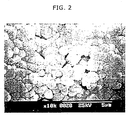
Fig. 2 is a copy of a SEM image of a sintered product prepared in Comparative Example 10 at a magnification of x10000. -
Fig. 3 is a graph showing the results of measurement of the relationship between the temperature and the shrinkage percentage of the green compact taken in Example 29. -
Fig. 4 is a graph showing the results of measurement of the relationship between the temperature and the shrinkage percentage of the green compact taken in Comparative Example 29. - The present invention will now be explained in detail. Composite oxide (1) is primary particles containing at least one metal selected from the group consisting of yttrium, scandium, and rare earth elements excluding cerium and promethium (referred to as non-cerium metal (M) hereinbelow) and cerium at a particular ratio, and having a particular acicular shape.
- In composite oxide (1) particles , the content of non-cerium metal (M) is 0.1 to 50 mol%, preferably 5 to 40 mol%, more preferably 10 to 20 mol% in terms of oxides, whereas the content of cerium is 50 to 99.9 mol%, preferably 60 to 95 mol%, more preferably 80 to 90 mol% in terms of oxides. With less than 50 mol% cerium, the fluorite crystal structure cannot be maintained, whereas with over 99.9 mol% cerium, sufficient amount of vacancy for the oxide ions required for electrical conductivity cannot be formed.
- The form of the particles of composite oxide (1) is acicular, with the average aspect ratio of the particles being 1.05 to 10.0, preferably 1.05 to 7, more preferably 1.5 to 5.0. If the average aspect ratio is less than 1.05, remarkable aggregation of the particles occurs, whereas if over 10.0, the particle size distribution becomes broad. Here, the "acicular" particles mean to include elliptical particles.
- The composite oxide (2) of the present invention is secondary particles consisting of aggregates of the primary particles, composite oxide (1), and having the aspect ratio of 5.0 to 40.0.
- As used herein, the aspect ratio may be obtained from a TEM image. For example, the aspect ratio of the primary particles may be determined by measuring the length and width of 10 particles in aggregates observed in a TEM image of x50000 magnification taken under a transmission electron microscope (manufactured by JEOL LTD., Model 1200EX), and measuring the average aspect ratio. The aspect ratio of the secondary particles may be determined by measuring the aspect ratio of the aggregates.
- Composite oxide (1-2) of the present invention contains the above composite oxides (1) and (2). Composite oxide (1-2) has a BET specific surface area of 5 to 40 m2/g, an average particle size of 0.1 to 0.5 µm measured by laser diffraction, and a particle size distribution expressed by a particle size distribution index represented by the formula (1) of not higher than 1.6, preferably 0 to 1.0:

- In formula (1), D16, D50, and D84 each stands for an accumulated particle size of top 16%, 50%, and 84% particles from the finest.
- Here, the average particle size means that of the secondary particles, which are aggregates of the primary particles.
- If the BET specific surface area of composite oxide (1-2) is less than 5 m2/g, the surface area is too small to activate and promote sintering, and high densification cannot be achieved. If the BET specific surface area is over 40 m2/g, cracking and peeling may occur during molding. Further, if the average particle size of the acicular particles is less than 0.1 µm, the particles aggregate remarkably, leading to cracking and peeling during molding, whereas if the average particle size is over 0.5 µm, elements of the particles may not be dispersed sufficiently upon sintering, and high densification may not be achieved. If the particle size distribution index exceeds 1.6, the powders cannot be packed sufficiently upon molding, and high densification may not be achieved.
- The particles of composite oxide (1-2) of the present invention, due to their excellent particle uniformity, has good moldability and may be packed uniformly, so that a densely sintered product may be obtained at lower temperatures. For example, a green compact to be made into a preferred sintered product to be discussed later may be obtained by pressing composite oxide (1-2) of the present invention under a pressure of 20 to 100 MPa. The green compact may preferably complete shrinkage by heating at a heating rate of 5 °C/min up to 1300 °C.
- The sintered product of the present invention is a sintered product of the green compact mentioned above, and has a relative sintering density of not lower than 99%, and an average grain size of the primary grains in the sintered product of 0.8 to 3.0 µm. The relative sintering density may be obtained from the actual density and the calculated density in accordance with the formula (2):

- The actual density may be determined by first measuring, with a micrometer, the length, width, and height of a rectangular parallelepiped sample after sintering, taking the weight of the sample, and calculating in accordance with the formula (3):

- The calculated density may be determined by first calculating the lattice parameters of the cubic fluorite structure from the XRD pattern of a powdered, sintered product, and calculating in accordance with the formula (4) :

- In the formula, ΣA represents the mass of all the atoms in the unit lattice, and a, b, and c each stands for a lattice parameter, and N stands for an Avogadro's constant (6.022045 × 10²³ mol-1).
- Composite oxide (1-2) of the present invention may be prepared by any method as long as the particular acicular particles are obtained, but the method according to the present invention discussed below is preferred.
- According to the present method, step (A) is first carried out, wherein alkali is added to a cerium salt-containing mixed solution containing 0.1 to 50 mol% salt of non-cerium metal (M), and 50 to 99.9 mol% cerium salt to obtain a precipitate slurry of cerium based composite oxide.
- The total concentration of the cerium salt and the salts of non-cerium metal (M) together in the cerium salt-containing mixed solution used in step (A) is preferably 0.1 to 1.0 mol/L, more preferably 0.3 to 0.7 mol/L. At less than 0.1 mol/L, the resulting particles aggregate, the particle size distribution index exceeds 1.6, the sinterability may be inhibited, and the productivity is lowered, thus not being preferred. On the other hand, at over 1.0 mol/L, the particles grow to form large primary particles, and the sinterability of the resulting particles may be inhibited.
- The alkali used in step (A) is not particularly limited as long as it precipitates the cerium based composite salt, and may preferably be one or more alkali selected from the group consisting of ammonia, ammonium carbonate, ammonium hydrogencarbonate, sodium carbonate, and sodium hydrogencarbonate. The alkali may be added usually in the form of an aqueous solution.
- The concentration of the aqueous solution of alkali is preferably 0.3 to 2.0 mol/L, more preferably 0.9 to 1.9 mol/L. At a concentration of less than 0.3 mol/L, the resulting particles aggregate to cause the particle size distribution index to exceed 1.6, the sinterability may be inhibited, and the productivity is lowered. On the other hand, at a concentration of over 2.0 mol/L, the particles grow to form large primary particles, and the sinterability of the particles is inhibited.
- In the method of the present invention, next, step (B) is performed wherein 0.1 to 1.0 mol, preferably 0.2 to 0.5 mol carbonate ions per 1 mol of the rare earth elements in the precipitate slurry is introduced into the precipitate slurry of cerium based composite salt obtained in step (A), and the precipitate slurry is heat-treated under atmospheric pressure at a particular temperature to prepare precipitate of carbonate ion-containing cerium based composite salt.
- In step (B), the slurry containing a particular amount of carbonate ions is heat-treated under atmospheric pressure, so that the size of the resulting particles may be made uniform, the desired acicular particles may be synthesized selectively, and the particle size distribution may be made sharp.
- If the content of the carbonate ions is less than 0.1 mol per 1 mol of the rare earth elements in the slurry, the particle size distribution index of the resulting composite oxide particles exceeds 1.6, with a broad particle size distribution, and larger particles disadvantageously inhibit sintering. On the other hand, if the content exceeds 1.0 mol, the resulting composite oxide particles have an aspect ratio of over 10.0, which disadvantageously inhibit sintering.
- The carbonate ions may usually be introduced in the form of an alkaline aqueous solution. Such an alkaline aqueous solution containing carbonate ions may be, for example, one or more aqueous solutions selected from the group consisting of aqueous solutions of ammonium carbonate, ammonium hydrogencarbonate, sodium carbonate, and sodium hydrogencarbonate.
- In step (B), the carbonate ions are introduced into the slurry, and the slurry is heat-treated under atmospheric pressure at 40 to 100 °C, preferably 70 to 90 °C under reflux, to thereby prepare precipitate of carbonate ion-containing cerium based composite salt. If the temperature of the heat-treatment is lower than 40 °C, the particle size distribution index of the resulting particles exceeds 1.6, with a broad particle size distribution. If the temperature exceeds 100 °C, the resulting particles take the form of fine spheres, which inevitably aggregate to make the particle size distribution broad. Further, the duration of the heat treatment is preferably 1 to 10 hours. With less than 1 hour of heat treatment, growth of the acicular particles may not be sufficient. With over 10 hours of heat treatment, the resulting particles take a fine and spherical form, and the particle size distribution becomes broad, thus not being preferred.
- The reflux is necessary for keeping the concentration of the slurry constant during the heat treatment to synthesize uniform particles. Incidentally, if this heat treatment is performed in a pressure vessel under pressure, the resulting particles take the form of fine spheres, which inevitably aggregate to make the particle size distribution broad. Thus the heat treatment must be performed under atmospheric pressure.
- In the method of the present invention, next, step (C) of calcining the precipitate obtained in step (B) at a particular temperature to obtain calcined powders, and step (D) of grinding the calcined powders, are carried out, to thereby obtain the objective composite oxide (1-2).
- In step (C), the calcining of the precipitate obtained in step (B) may be carried out, for example, by subjecting the heat-treated product obtained in step (B) to filtration, and calcining the obtained filter cake in atmosphere at 600 to 1000 °C. If the calcining temperature is lower than 600 °C, the precipitate of cerium based composite salt is not decomposed completely, resulting in a mixture of oxides and the precipitate of cerium based composite salt. If the calcining temperature is over 1000 °C, the calcining results in aggregation of the particles, so that the objective composite oxide (1-2) cannot be obtained. Preferred duration of the calcining is usually 1 to 10 hours.
- In step (D), the grinding may be carried out, for example, using a mortar for 5 minutes to 1 hour.
- The sintered product according to the present invention may be obtained by sintering the green compact mentioned above at 1150 to 1400 °C. The duration of the sintering is usually 1 to 10 hours. If the duration of sintering is too long, growth of the primary grains in the sintered product proceeds, and it becomes difficult to control the average grain size to fall within the desired range. In general, when ceramics are sintered at a high temperature, the density is increased while the grains grow. Ceramics are composed of grains and grain boundaries, so that the growth of the grains means increase in the grain part, and decrease in the grain boundaries. It is conventionally said that decrease in the grain boundaries lowers the mechanical strength of the ceramics. However, in the sintered body of the present invention, such lowering in mechanical strength may sufficiently be controlled.
- Since the cerium based composite oxides of the present invention have excellent sinterability, they are quite useful as ceramic material powders and the like functioning as an electrolyte in electric devices.
- Further, with the methods of the present invention, such cerium based composite oxides of the present invention as well as sintered products thereof may easily be prepared at a low cost, which is quite advantageous for production in the industrial scale.
- The present invention will now be explained in more detail with reference to Examples and Comparative Examples, but the present invention is not limited to these.
- An aqueous solution of cerium nitrate (manufactured by RHODIA ELECTRONICS AND CATALYSIS, containing 2.5 mol/L cerium in terms of cerium oxide) and an aqueous solution of gadolinium nitrate (manufactured by RHODIA ELECTRONICS AND CATALYSIS, containing 2.0 mol/L gadolinium in terms of gadolinium oxide) were mixed at a ratio of CeO2 : GdO1.5 = 90 : 10 (molar ratio) in terms of oxides, to prepare a mixed solution. This mixed solution Ce0.9Gd0.1O2-δ (equivalent to 100 g) was diluted with pure water to prepare a 0.3 mol/L starting solution.
- Next, 2.0 L of a separately prepared 75g/L aqueous solution of ammonium hydrogencarbonate was added to the starting solution under stirring at 25 °C to prepare a precipitate slurry of cerium-gadolinium composite salt. To this precipitate slurry, 0.1 L of a 100g/L aqueous solution of ammonium hydrogencarbonate was added, and heat-treated in a flask equipped with a reflux condenser under atmospheric pressure at 100 °C for 3 hours. Then filtration and washing were repeated 10 times, using 500 mL of pure water per washing. The obtained precipitate was calcined in atmosphere at 700 °C for 5 hours, and ground in an automatic mortar for 15 minutes, to thereby obtain 100 g of Ce0.9Gd0.1O2-δ powders. The composition of the obtained powders was confirmed using an ICP emission spectrophotometer (SPS-1100EX) manufactured by SEIKO INSTRUMENTS, INC.
- A TEM image (with an apparatus manufactured by JEOL LTD., model 1200 EX), the average particle size (with an apparatus manufactured by HORIBA, LTD., LA-920), and the BET specific surface area (with an apparatus manufactured by QUANTACHROME, model NOVA 2000) of the obtained powders were taken. Further, 30 particles out of the particles observed in the TEM image at the magnification of x100000 were measured for length and width, to determine the average aspect ratio (length/width) of the primary particles, and the average aspect ratio of the secondary particles, which are aggregated particles. The results are shown in Table 1.
- 100 g of the objective cerium based composite oxide powders were prepared in the same way as in Example 1, except that the mixed solution was prepared by mixing an aqueous solution of cerium nitrate (containing 2.5 mol/L cerium in terms of cerium oxide), an aqueous solution of gadolinium nitrate (containing 2.0 mol/L gadolinium in terms of gadolinium oxide), and an aqueous solution of samarium nitrate (containing 2.0 mol/L samarium in terms of samarium oxide) (all manufactured by RHODIA ELECTRONICS AND CATALYSIS) at a molar ratio in terms of oxides as shown in Table 1. The obtained powders were subjected to the same measurements as in Example 1. The results are shown in Table 1.
- The aqueous solution of cerium nitrate and the aqueous solution of gadolinium nitrate used in Example 1 were mixed at a ratio of CeO2 : GdO1.5 = 90 : 10 (molar ratio) in terms of oxides, to thereby prepare a starting solution Ce0.9Gd0.1O2-δ (equivalent of 100 g).
- Then 0.6 L of a separately prepared 160g/L aqueous solution of ammonium carbonate was added to the starting solution and reacted, to obtain precipitate of composite salt. The obtained precipitate was immediately subjected to filtration, dried at 150 °C for 20 hours, and then calcined at 900 °C for 3 hours. The resulting calcined product was ground in an automatic mortar for 15 minutes to obtain Ce0.9Gd0.1O2-δ powders. The obtained powders were subjected to the same measurements as in Example 1. The results are shown in Table 1.
- 100 g of cerium based composite oxide powders were prepared in the same way as in Comparative Example 1, except that the starting solution was prepared by mixing an aqueous solution of cerium nitrate (containing 2.5 mol/L cerium in terms of cerium oxide), an aqueous solution of gadolinium nitrate (containing 2.0 mol/L gadolinium in terms of gadolinium oxide), and an aqueous solution of samarium nitrate (containing 2.0 mol/L samarium in terms of samarium oxide) (all manufactured by RHODIA ELECTRONICS AND CATALYSIS) at a molar ratio in terms of oxides as shown in Table 1. The obtained powders were subjected to the same measurements as in Example 1. The results are shown in Table 1.
Table 1 Molar ratio in mixed solution Composition of obtained powders Average aspect ratio of primary particles Average particle size (µm) Particle size distribution index BET specific surface area (m2/g) Average aspect ratio of secondary particles Example 1 CeO2:GdO1.5 =90:10 Ce0.9Gd0.1O2-δ 1.6 0.22 0.33 13.9 18.9 Example 2 CeO2:GdO1.5 =80:20 Ce0.8Gd0.2O2-δ 2.0 0.21 0.53 17.7 20.1 Example 3 CeO2 : SmO1.5 =90:10 Ce0.9Sm0.1O2-δ 1.7 0.21 0.42 21.1 13.2 Example 4 CeO2:SmO1.5 =80:20 Ce0.8Sm0.2O2-δ 1.8 0.20 0.37 22.3 11.3 Comp.Ex. 1 CeO2:GdO1.5 =90:10 Ce0.9Gd0.1O2-δ 1.0 0.69 1.91 20.1 2.6 Comp.Ex. 2 CeO2:GdO1.5 =80:20 Ce0.8Gd0.2O2-δ 1.0 1.25 1.39 26.5 3.1 Comp.Ex. 3 CeO2:SmO1.5 =90:10 Ce0.9Sm0.1O2-δ 1.0 0.63 1.26 25.2 2.3 Comp.Ex. 4 CeO2:SmO1.5 =80:20 Ce0.8Sm0.2O2-δ 1.0 0.62 2.19 26.8 2.1 - 1 g of the powders prepared in Example 1 was uniaxially pressed in a rectangular parallelepiped mold (manufactured by POWER APPLIED JAPAN CO., LTD., having a pressure surface of 14 mm × 7 mm) under a pressure of 100 MPa to obtain a green compact. This green compact was heated at a heating rate of 5 °C/min up to 1150 °C, and sintered at 1150 °C for 1 hour. After the interior temperature of the electric furnace was allowed to cool close to the room temperature, the sintered product was taken out, and the size and weight of the rectangular parallelepiped sample were measured to determine the density. The size was measured with a micrometer. The results are shown in Table 2. Further, a SEM (manufactured by JEOL LTD., JSM-T200) image of the obtained sintered product was taken at a magnification of x10000. The result is shown in
Fig. 1 . - From
Fig. 1 , it is understood that the grain size of the primary grains in the sintered product obtained by the sintering at 1150 °C was 0.1 to 0.25 µm. - The sintering and measurements were performed in the same way as in Example 5, except that the heating up to 1150 °C and the sintering at 1150 °C were carried out at the temperature show in Table 2. The results are shown in Table 2.
- A rectangular parallelepiped sample was prepared by sintering, and measurements thereof were made in the same way as in Example 5, except that 1 g of the powders prepared in Example 1 was replaced with 1 g of the powders prepared in Example 2. The results are shown in Table 2.
- A rectangular parallelepiped sample was prepared by sintering, and measurements thereof were made in the same way as in Example 5, except that 1 g of the powders prepared in Example 1 was replaced with 1 g of the powders prepared in Example 3. The results are shown in Table 2.
- A rectangular parallelepiped sample was prepared by sintering, and measurements thereof were made in the same way as in Example 5, except that 1 g of the powders prepared in Example 1 was replaced with 1 g of the powders prepared in Example 4. The results are shown in Table 2.
- A rectangular parallelepiped sample was prepared by sintering, and measurements thereof were made in the same way as in Example 5, except that 1 g of the powders prepared in Example 1 was replaced with 1 g of the powders prepared in Comparative Example 1. The results are shown in Table 2.
- Further, a SEM (manufactured by JEOL LTD., JSM-T200) image of the sintered product obtained in Comparative Example 10 was taken at a magnification of x10000. The result is shown in
Fig. 2 . - From
Fig. 2 , it is understood that the grain size of the primary grains in the sintered product obtained by the sintering at 1400 °C was 0.9 to 1.2 µm. - A rectangular parallelepiped sample was prepared by sintering, and measurements thereof were made in the same way as in Example 5, except that 1 g of the powders prepared in Example 1 was replaced with 1 g of the powders prepared in Comparative Example 2. The results are shown in Table 2.
- A rectangular parallelepiped sample was prepared by sintering, and measurements thereof were made in the same way as in Example 5, except that 1 g of the powders prepared in Example 1 was replaced with 1 g of the powders prepared in Comparative Example 3. The results are shown in Table 2.
- A rectangular parallelepiped sample was prepared by sintering, and measurements thereof were made in the same way as in Example 5, except that 1 g of the powders prepared in Example 1 was replaced with 1 g of the powders prepared in Comparative Example 4. The results are shown in Table 2.
Table 2 Composition Terperature of heating and sintering (°C) Actual density (g/cm3) calculated density (g/cm3) Relative sintering density (%) Example 5 Ce0.9Gd0.1O2-δ 1150 7.150 7.206 99.2 Example 6 1200 7.150 99.2 Example 7 1250 7.150 99.2 Exanple 8 1300 7.199 99.9 Example 9 1350 7.199 99.9 Example 10 1400 7.177 99.6 Example 11 Ce0.8Gd0.2O2-δ 1150 7.199 7.258 99.2 Example 12 1200 7.211 99.4 Example 13 1250 7.222 99.5 Example 14 1300 7.222 99.5 Example 15 1350 7.222 99.5 Example 16 1400 7.219 99.5 Example 17 Ce0.9Sm0.1O2-δ 1150 7.090 7.158 99.1 Example 18 1200 7.098 99.2 Example 19 1250 7.100 99.2 Example 20 1300 7.101 99.2 Example 21 1350 7.108 99.3 Example 22 1400 7.101 99.2 Example 23 Ce0.8Sm0.2O2-δ 1150 7.050 7.117 99.1 Example 24 1200 7.080 99.5 Example 25 1250 7.098 99.7 Example 26 1300 7.046 99.0 Example 27 1350 7.046 99.0 Example 28 1400 7.053 99.1 Comp.Ex. 5 Ce0.9Gd0.1O2-δ Ce0.9Gd0.1O1-δ 1150 5.239 7.206 72.7 Comp.Ex. 6 1200 5.709 79.2 Comp.Ex. 7 1250 5.816 80.7 Comp.Ex. 8 1300 6.187 85.9 Comp.Ex. 9 1350 6.883 95.5 Comp.Ex. 10 1400 6.836 94.9 Comp.Ex. 11 Ce0.8Gd0.2O2-δ 1150 5.75 7.258 79.2 Comp.Ex. 12 1200 6.474 89.2 Comp.Ex. 13 1250 6.895 95.0 Comp.Ex. 14 1300 6.953 95.8 Comp.Ex. 15 1350 7.040 97.0 Comp.Ex. 16 1400 7.040 97.0 Comp.Ex. 17 Ce0.9Sm0.1O2-δ 1150 4.52 7.158 63.1 Comp.Ex. 18 1200 6.406 89.5 Comp.Ex. 19 1250 6.807 95.1 Comp.Ex. 20 1300 6.872 96.0 Comp. Ex. 21 1350 6.958 97.2 Comp.Ex. 22 1400 6.993 97.7 Comp.Ex. 23 Ce0.8Sn0.2O2-δ 1150 4.78 7.117 67.1 Comp.Ex. 24 1200 6.412 90.1 Comp.Ex. 25 1250 6.903 97.0 Comp.Ex. 26 1300 6.918 97.2 Comp.Ex. 27 1350 6.918 97.2 Comp.Ex. 28 1400 6.911 97.1 - 1 g of the powders prepared in Example 1 was uniaxially pressed in a rectangular parallelepiped mold (manufactured by POWER APPLIED JAPAN CO., LTD., having a pressure surface of 14 mm × 7 mm) under a pressure of 100 MPa to obtain a green compact. This green compact was heated at a heating rate of 5 °C/min up to 1600 °C, and the shrinkage percentage of the green compact was measured with TMA-8310 manufactured by RIGAKU CORPORATION. The results are shown in
Fig. 3 . FromFig. 3 , it is understood that the shrinkage of this green compact completed at 1300 °C. - 1 g of the powders prepared in Comparative Example 1 was uniaxially pressed in a rectangular parallelepiped mold (manufactured by POWER APPLIED JAPAN CO., LTD., having a pressure surface of 14 mm × 7 mm) under a pressure of 100 MPa to obtain a green compact. This green compact was heated at a heating rate of 5 °C/min up to 1600 °C, and the shrinkage percentage of the green compact was measured with TMA-8310 manufactured by RIGAKU CORPORATION. The results are shown in
Fig. 4 . FromFig. 4 , it is understood that the shrinkage of this green compact did not complete at 1300 °C, but completed at about 1500 °C.
Claims (9)
- A cerium based composite oxide in a form of secondary particles consisting of aggregates of primary particles of a cerium based composite oxide comprising:0.1 to 50 mol% of at least one metal selected from the group consisting of yttrium, scandium, and rare earth elements excluding cerium and promethium, in term of oxides, and50 to 99.9 mol% of cerium in terms of oxides,wherein said primary particles are acicular primary particles having an average aspect ratio (length/width) of 1.05 to 10.0, and said secondary particles have an average aspect ratio of 5.0 to 40.0.
- A cerium based composite oxide comprising primary particles and secondary particles of claim 1, and having a BET specific surface area of 5 to 40 m2/g, an average particle size of 0.1 to 0.5 µm, and a particle size distribution expressed by a particle size distribution index represented by the formula (1) of not higher than 1.6:

wherein D16, D50, and D84 each stands for an accumulated particle size of top 16%, 50%, and 84% particles from the finest. - A method for preparing cerium based composite oxide of claim 2 comprising the steps of:(A) adding alkali to a cerium salt-containing mixed solution containing 0.1 to 50 mol% salt of at least one metal selected from the group consisting of yttrium, scandium, and rare earth elements excluding cerium and promethium and 50 to 99.9 mol% cerium salt to obtain a precipitate slurry of cerium based composite salt,(B) introducing 0.1 to 1.0 mol carbonate ions per 1 mol of rare earth elements in the precipitate slurry, and heat-treating said precipitate slurry under atmospheric pressure at 40 to 100 °C to prepare precipitate of carbonate ion-containing cerium based composite salt,(C) calcining said precipitate at 600 to 1000 °C to obtain calcined powders, and(D) grinding said calcined powders.
- The method of claim 3, wherein a total concentration of said cerium salt and said salt of at least one metal selected from the group consisting of yttrium, scandium, and rare earth elements excluding cerium and promethium in said cerium salt-containing mixed solution in step (A) is 0.1 to 1.0 mol/L, and
wherein said alkali in step (A) is in a form of an aqueous solution at a concentration of 0.3 to 2.0 mol/L. - A green compact of a composite oxide of claim 2.
- The green compact of claim 5, wherein said compact shrinks no further above 1300°C at a heating rate of 5 °C/min,
- A method of molding a green compact comprising pressing a composite oxide of claim 2.
- A sintered product of a green compact of claim 5, having a relative sintering density of not lower than 99 %, and an average grain size of primary grains in the sintered product of 0.8 to 3.0 µm.
- A method of producing a sintered product of claim 8 comprising sintering a green compact of claim 5 at 1150 to 1400 °C.
Applications Claiming Priority (3)
| Application Number | Priority Date | Filing Date | Title |
|---|---|---|---|
| JP2002062865 | 2002-03-08 | ||
| JP2002062865 | 2002-03-08 | ||
| PCT/JP2002/006472 WO2003076336A1 (en) | 2002-03-08 | 2002-06-27 | Cerium based composite oxide, sintered product thereof and method for preparation thereof |
Publications (3)
| Publication Number | Publication Date |
|---|---|
| EP1484282A1 EP1484282A1 (en) | 2004-12-08 |
| EP1484282A4 EP1484282A4 (en) | 2008-12-17 |
| EP1484282B1 true EP1484282B1 (en) | 2016-01-13 |
Family
ID=27800173
Family Applications (1)
| Application Number | Title | Priority Date | Filing Date |
|---|---|---|---|
| EP02743743.3A Expired - Lifetime EP1484282B1 (en) | 2002-03-08 | 2002-06-27 | Cerium based composite oxide, sintered product thereof and method for preparation thereof |
Country Status (7)
| Country | Link |
|---|---|
| US (1) | US7119041B2 (en) |
| EP (1) | EP1484282B1 (en) |
| JP (1) | JP4162599B2 (en) |
| CN (1) | CN100351178C (en) |
| AU (1) | AU2002346227A1 (en) |
| DK (1) | DK1484282T3 (en) |
| WO (1) | WO2003076336A1 (en) |
Cited By (3)
| Publication number | Priority date | Publication date | Assignee | Title |
|---|---|---|---|---|
| WO2023078944A1 (en) | 2021-11-08 | 2023-05-11 | Rhodia Operations | Cerium-gadolinium composite oxide |
| WO2023078940A1 (en) | 2021-11-08 | 2023-05-11 | Rhodia Operations | Cerium-gadolinium composite oxide |
| FR3146676A1 (en) * | 2023-03-17 | 2024-09-20 | Saint-Gobain Centre De Recherches Et D'etudes Europeen | Process for manufacturing a powder, in particular intended for the manufacture of an electrolyte |
Families Citing this family (9)
| Publication number | Priority date | Publication date | Assignee | Title |
|---|---|---|---|---|
| JP5019323B2 (en) * | 2007-03-20 | 2012-09-05 | 独立行政法人物質・材料研究機構 | Ceria sintered body doped with rare earth element and manufacturing method thereof |
| FR2917646B1 (en) * | 2007-06-20 | 2011-06-03 | Anan Kasei Co Ltd | MIXED OXIDE WITH HIGH SURFACE SPECIFIC OF CERIUM AND OTHER RARE EARTH, PROCESS FOR PREPARATION AND USE IN CATALYSIS |
| EP2260013B1 (en) * | 2008-02-12 | 2018-12-19 | Saint-Gobain Ceramics & Plastics, Inc. | Ceria material and method of forming same |
| JP5907482B2 (en) * | 2010-07-20 | 2016-04-26 | 国立大学法人茨城大学 | Method for producing ceria-based composite oxide |
| EP3142179B1 (en) * | 2014-07-30 | 2019-02-27 | LG Chem, Ltd. | Method for manufacturing inorganic electrolyte membrane having improved compactness, composition for manufacturing inorganic electrolyte membrane, and inorganic electrolyte membrane manufactured using same |
| GB2524638B (en) * | 2015-02-06 | 2016-04-06 | Ceres Ip Co Ltd | Electrolyte forming process |
| GB2535338B (en) | 2015-02-06 | 2017-01-25 | Ceres Ip Co Ltd | Electrolyte forming process |
| CN106946282B (en) * | 2017-02-27 | 2018-12-28 | 广东省稀有金属研究所 | A kind of preparation method of porous cerium-based composite oxides |
| CN108751247B (en) * | 2018-08-17 | 2020-04-17 | 常州市卓群纳米新材料有限公司 | Preparation method of nano yttrium oxide with stable BET |
Family Cites Families (15)
| Publication number | Priority date | Publication date | Assignee | Title |
|---|---|---|---|---|
| JPH04310516A (en) * | 1991-04-05 | 1992-11-02 | Shin Etsu Chem Co Ltd | Method for producing rare earth element oxides |
| CN1032805C (en) * | 1993-03-29 | 1996-09-18 | 中国科学院长春应用化学研究所 | Preparation of Rare Earth Oxide Ultrafine Powder by Carbonate Precipitation |
| JP3505236B2 (en) * | 1994-10-05 | 2004-03-08 | 株式会社三徳 | Composite oxide having oxygen absorbing / releasing ability and method for producing the same |
| JPH08333116A (en) * | 1995-04-13 | 1996-12-17 | Toyota Central Res & Dev Lab Inc | Powder |
| US5945369A (en) | 1994-12-09 | 1999-08-31 | Kabushiki Kaisha Toyota Chuo Kenkyusho | Catalyst for purifying exhaust gases and process for producing the same |
| JPH08169713A (en) * | 1994-12-15 | 1996-07-02 | Santoku Kinzoku Kogyo Kk | Cerium based sinterable multiple oxide, cerium based multiple oxide sintered compact and its production |
| US5665482A (en) * | 1995-01-10 | 1997-09-09 | Tosoh Corporation | Fluorite structure type ceria type solid electrolyte |
| JP4038628B2 (en) * | 1998-03-19 | 2008-01-30 | 関西電力株式会社 | Oxide ion conductor, method for producing the same, and solid oxide fuel cell |
| JP2000007435A (en) * | 1998-06-26 | 2000-01-11 | Sumitomo Chem Co Ltd | Cerium-based oxide sintered body and method for producing the same |
| EP1000913B1 (en) * | 1998-11-13 | 2002-12-04 | Eidgenössische Technische Hochschule Zürich | Method of producing doped ceria ceramics |
| CA2298850A1 (en) * | 1999-02-17 | 2000-08-17 | Matsushita Electric Industrial Co., Ltd. | Mixed ionic conductor and device using the same |
| JP2002029742A (en) | 2000-07-21 | 2002-01-29 | Daiichi Kigensokagaku Kogyo Co Ltd | Rare earth metal oxide powder and method for producing the same |
| US6770392B2 (en) * | 2001-04-27 | 2004-08-03 | Air Products And Chemicals, Inc. | Ceria based solid electrolytes |
| WO2003084894A1 (en) * | 2002-04-10 | 2003-10-16 | Japan Science And Technology Agency | Complex mixed conductor and its preparing method |
| KR100489419B1 (en) * | 2003-02-27 | 2005-05-12 | 학교법인 동의학원 | Gd2 O3-doped CeO2 for Oxygen Ionic Conductors and the Fabricating Method Therefor |
-
2002
- 2002-06-27 EP EP02743743.3A patent/EP1484282B1/en not_active Expired - Lifetime
- 2002-06-27 CN CNB028289048A patent/CN100351178C/en not_active Expired - Lifetime
- 2002-06-27 US US10/507,032 patent/US7119041B2/en not_active Expired - Lifetime
- 2002-06-27 WO PCT/JP2002/006472 patent/WO2003076336A1/en not_active Ceased
- 2002-06-27 DK DK02743743.3T patent/DK1484282T3/en active
- 2002-06-27 JP JP2003574565A patent/JP4162599B2/en not_active Expired - Lifetime
- 2002-06-27 AU AU2002346227A patent/AU2002346227A1/en not_active Abandoned
Cited By (4)
| Publication number | Priority date | Publication date | Assignee | Title |
|---|---|---|---|---|
| WO2023078944A1 (en) | 2021-11-08 | 2023-05-11 | Rhodia Operations | Cerium-gadolinium composite oxide |
| WO2023078940A1 (en) | 2021-11-08 | 2023-05-11 | Rhodia Operations | Cerium-gadolinium composite oxide |
| FR3146676A1 (en) * | 2023-03-17 | 2024-09-20 | Saint-Gobain Centre De Recherches Et D'etudes Europeen | Process for manufacturing a powder, in particular intended for the manufacture of an electrolyte |
| WO2024194200A1 (en) * | 2023-03-17 | 2024-09-26 | Saint-Gobain Centre De Recherches Et D’Etudes Europeen | Method for producing a cerium-gadolinium oxide powder, in particular intended for the production of an electrolyte |
Also Published As
| Publication number | Publication date |
|---|---|
| CN1625527A (en) | 2005-06-08 |
| EP1484282A4 (en) | 2008-12-17 |
| US20050119108A1 (en) | 2005-06-02 |
| AU2002346227A1 (en) | 2003-09-22 |
| US7119041B2 (en) | 2006-10-10 |
| JPWO2003076336A1 (en) | 2005-07-07 |
| CN100351178C (en) | 2007-11-28 |
| DK1484282T3 (en) | 2016-02-15 |
| JP4162599B2 (en) | 2008-10-08 |
| WO2003076336A1 (en) | 2003-09-18 |
| EP1484282A1 (en) | 2004-12-08 |
Similar Documents
| Publication | Publication Date | Title |
|---|---|---|
| EP2418174B1 (en) | Method for producing alkali metal niobate particles, and alkali metal niobate particles | |
| KR101323697B1 (en) | Zirconium oxide and method for the production thereof | |
| EP1857428B1 (en) | Powder for black zirconia sintered body, production method thereof, and sintered body thereof | |
| DE3813731C2 (en) | Composition with zirconia and process for its manufacture | |
| Tarancón et al. | Synthesis of nanocrystalline materials for SOFC applications by acrylamide polymerisation | |
| Wang et al. | Low‐temperature synthesis of praseodymium‐doped ceria nanopowders | |
| US20070179041A1 (en) | Zirconia Ceramic | |
| EP4039648B1 (en) | Zirconia powder, zirconia sintered body, and method for producing zirconia sintered body | |
| US7119041B2 (en) | Cerium based composite oxide, sintered product thereof and method for preparation thereof | |
| DE112019002838B4 (en) | ZINC OXIDE VARISTOR | |
| CN110028317A (en) | Nano barium carbonate powder and preparation method thereof, ceramic dielectric layers and its manufacturing method | |
| CN119894846A (en) | Zirconia composition and method for producing same | |
| JP2004107186A (en) | Method for producing easily sinterable nano-spherical ceria-based compound powder | |
| AU609280B2 (en) | Process for preparing submicronic powders of zirconium oxide stabilized with yttrium oxide | |
| JP2003192452A (en) | Zirconia powder and its sintered body | |
| JP4955142B2 (en) | Rare earth / aluminum / garnet fine powder and sintered body using the powder | |
| EP4039647A1 (en) | Zirconia powder, zirconia sintered body, and method for producing zirconia sintered body | |
| JP6579318B2 (en) | Ion conductive ceramics and method for producing the same | |
| EP3816135A1 (en) | Zinc oxide powder for producing zinc oxide sintered body, zinc oxide sintered body, and method of producing these | |
| JP2005247673A (en) | Dy-doped nano ceria-based sintered body and method for producing the same | |
| Pathan et al. | Effect of synthesis methods and comparative study of structural properties of micro and nano Ferrites | |
| JP3906353B2 (en) | YAG fine powder manufacturing method | |
| JP4196179B2 (en) | Method for producing silicon nitride material | |
| JP3619875B2 (en) | High-performance ceria-based solid electrolyte containing nanosize domains | |
| JPH0235702B2 (en) |
Legal Events
| Date | Code | Title | Description |
|---|---|---|---|
| PUAI | Public reference made under article 153(3) epc to a published international application that has entered the european phase |
Free format text: ORIGINAL CODE: 0009012 |
|
| 17P | Request for examination filed |
Effective date: 20040920 |
|
| AK | Designated contracting states |
Kind code of ref document: A1 Designated state(s): AT BE CH CY DE DK ES FI FR GB GR IE IT LI LU MC NL PT SE TR |
|
| AX | Request for extension of the european patent |
Extension state: AL LT LV MK RO SI |
|
| A4 | Supplementary search report drawn up and despatched |
Effective date: 20081114 |
|
| RIC1 | Information provided on ipc code assigned before grant |
Ipc: C01F 17/00 20060101AFI20031001BHEP Ipc: C04B 35/50 20060101ALI20081110BHEP |
|
| 17Q | First examination report despatched |
Effective date: 20100621 |
|
| GRAP | Despatch of communication of intention to grant a patent |
Free format text: ORIGINAL CODE: EPIDOSNIGR1 |
|
| INTG | Intention to grant announced |
Effective date: 20150817 |
|
| GRAS | Grant fee paid |
Free format text: ORIGINAL CODE: EPIDOSNIGR3 |
|
| RAP1 | Party data changed (applicant data changed or rights of an application transferred) |
Owner name: ANAN KASEI CO., LTD |
|
| GRAA | (expected) grant |
Free format text: ORIGINAL CODE: 0009210 |
|
| AK | Designated contracting states |
Kind code of ref document: B1 Designated state(s): AT BE CH CY DE DK ES FI FR GB GR IE IT LI LU MC NL PT SE TR |
|
| REG | Reference to a national code |
Ref country code: GB Ref legal event code: FG4D |
|
| RIN1 | Information on inventor provided before grant (corrected) |
Inventor name: SUDA, EISAKU Inventor name: PACAUD, BERNARD |
|
| REG | Reference to a national code |
Ref country code: CH Ref legal event code: NV Representative=s name: KATZAROV S.A., CH Ref country code: CH Ref legal event code: EP Ref country code: DE Ref legal event code: R081 Ref document number: 60247737 Country of ref document: DE Owner name: SOLVAY SPECIAL CHEM JAPAN, LTD., ANAN-SHI, JP Free format text: FORMER OWNER: ANAN KASEI CO., LTD., KOBE, HYOGO, JP |
|
| REG | Reference to a national code |
Ref country code: IE Ref legal event code: FG4D |
|
| REG | Reference to a national code |
Ref country code: AT Ref legal event code: REF Ref document number: 770375 Country of ref document: AT Kind code of ref document: T Effective date: 20160215 Ref country code: DK Ref legal event code: T3 Effective date: 20160209 |
|
| REG | Reference to a national code |
Ref country code: DE Ref legal event code: R096 Ref document number: 60247737 Country of ref document: DE |
|
| REG | Reference to a national code |
Ref country code: NL Ref legal event code: FP |
|
| REG | Reference to a national code |
Ref country code: AT Ref legal event code: MK05 Ref document number: 770375 Country of ref document: AT Kind code of ref document: T Effective date: 20160113 |
|
| REG | Reference to a national code |
Ref country code: FR Ref legal event code: PLFP Year of fee payment: 15 |
|
| PG25 | Lapsed in a contracting state [announced via postgrant information from national office to epo] |
Ref country code: ES Free format text: LAPSE BECAUSE OF FAILURE TO SUBMIT A TRANSLATION OF THE DESCRIPTION OR TO PAY THE FEE WITHIN THE PRESCRIBED TIME-LIMIT Effective date: 20160113 Ref country code: FI Free format text: LAPSE BECAUSE OF FAILURE TO SUBMIT A TRANSLATION OF THE DESCRIPTION OR TO PAY THE FEE WITHIN THE PRESCRIBED TIME-LIMIT Effective date: 20160113 Ref country code: GR Free format text: LAPSE BECAUSE OF FAILURE TO SUBMIT A TRANSLATION OF THE DESCRIPTION OR TO PAY THE FEE WITHIN THE PRESCRIBED TIME-LIMIT Effective date: 20160414 |
|
| PG25 | Lapsed in a contracting state [announced via postgrant information from national office to epo] |
Ref country code: PT Free format text: LAPSE BECAUSE OF FAILURE TO SUBMIT A TRANSLATION OF THE DESCRIPTION OR TO PAY THE FEE WITHIN THE PRESCRIBED TIME-LIMIT Effective date: 20160513 Ref country code: AT Free format text: LAPSE BECAUSE OF FAILURE TO SUBMIT A TRANSLATION OF THE DESCRIPTION OR TO PAY THE FEE WITHIN THE PRESCRIBED TIME-LIMIT Effective date: 20160113 Ref country code: SE Free format text: LAPSE BECAUSE OF FAILURE TO SUBMIT A TRANSLATION OF THE DESCRIPTION OR TO PAY THE FEE WITHIN THE PRESCRIBED TIME-LIMIT Effective date: 20160113 |
|
| REG | Reference to a national code |
Ref country code: DE Ref legal event code: R097 Ref document number: 60247737 Country of ref document: DE |
|
| PLBE | No opposition filed within time limit |
Free format text: ORIGINAL CODE: 0009261 |
|
| STAA | Information on the status of an ep patent application or granted ep patent |
Free format text: STATUS: NO OPPOSITION FILED WITHIN TIME LIMIT |
|
| 26N | No opposition filed |
Effective date: 20161014 |
|
| PG25 | Lapsed in a contracting state [announced via postgrant information from national office to epo] |
Ref country code: MC Free format text: LAPSE BECAUSE OF FAILURE TO SUBMIT A TRANSLATION OF THE DESCRIPTION OR TO PAY THE FEE WITHIN THE PRESCRIBED TIME-LIMIT Effective date: 20160113 |
|
| REG | Reference to a national code |
Ref country code: DE Ref legal event code: R082 Ref document number: 60247737 Country of ref document: DE Representative=s name: HWP INTELLECTUAL PROPERTY, DE Ref country code: DE Ref legal event code: R081 Ref document number: 60247737 Country of ref document: DE Owner name: SOLVAY SPECIAL CHEM JAPAN, LTD., ANAN-SHI, JP Free format text: FORMER OWNER: ANAN KASEI CO., LTD, ANAN-SHI, TOKUSHIMA, JP |
|
| REG | Reference to a national code |
Ref country code: IE Ref legal event code: MM4A |
|
| REG | Reference to a national code |
Ref country code: CH Ref legal event code: PFA Owner name: SOLVAY SPECIAL CHEM JAPAN, LTD., JP Free format text: FORMER OWNER: ANAN KASEI CO., LTD, JP |
|
| PG25 | Lapsed in a contracting state [announced via postgrant information from national office to epo] |
Ref country code: IE Free format text: LAPSE BECAUSE OF NON-PAYMENT OF DUE FEES Effective date: 20160627 |
|
| REG | Reference to a national code |
Ref country code: NL Ref legal event code: HC Owner name: SOLVAY SPECIAL CHEM JAPAN, LTD.; JP Free format text: DETAILS ASSIGNMENT: CHANGE OF OWNER(S), CHANGE OF OWNER(S) NAME; FORMER OWNER NAME: ANAN KASEI CO., LTD Effective date: 20170411 Ref country code: FR Ref legal event code: PLFP Year of fee payment: 16 |
|
| REG | Reference to a national code |
Ref country code: FR Ref legal event code: CD Owner name: SOLVAY SPECIAL CHEM JAPAN, LTD., JP Effective date: 20170726 |
|
| REG | Reference to a national code |
Ref country code: CH Ref legal event code: PCAR Free format text: NEW ADDRESS: AVENUE DES MORGINES 12, 1213 PETIT-LANCY (CH) |
|
| PG25 | Lapsed in a contracting state [announced via postgrant information from national office to epo] |
Ref country code: CY Free format text: LAPSE BECAUSE OF FAILURE TO SUBMIT A TRANSLATION OF THE DESCRIPTION OR TO PAY THE FEE WITHIN THE PRESCRIBED TIME-LIMIT Effective date: 20160113 |
|
| REG | Reference to a national code |
Ref country code: FR Ref legal event code: PLFP Year of fee payment: 17 |
|
| PG25 | Lapsed in a contracting state [announced via postgrant information from national office to epo] |
Ref country code: TR Free format text: LAPSE BECAUSE OF FAILURE TO SUBMIT A TRANSLATION OF THE DESCRIPTION OR TO PAY THE FEE WITHIN THE PRESCRIBED TIME-LIMIT Effective date: 20160113 Ref country code: LU Free format text: LAPSE BECAUSE OF NON-PAYMENT OF DUE FEES Effective date: 20160627 |
|
| PGFP | Annual fee paid to national office [announced via postgrant information from national office to epo] |
Ref country code: DE Payment date: 20210618 Year of fee payment: 20 Ref country code: FR Payment date: 20210622 Year of fee payment: 20 Ref country code: IT Payment date: 20210625 Year of fee payment: 20 Ref country code: NL Payment date: 20210618 Year of fee payment: 20 |
|
| PGFP | Annual fee paid to national office [announced via postgrant information from national office to epo] |
Ref country code: BE Payment date: 20210618 Year of fee payment: 20 Ref country code: DK Payment date: 20210623 Year of fee payment: 20 Ref country code: CH Payment date: 20210618 Year of fee payment: 20 Ref country code: GB Payment date: 20210625 Year of fee payment: 20 |
|
| REG | Reference to a national code |
Ref country code: DE Ref legal event code: R071 Ref document number: 60247737 Country of ref document: DE |
|
| REG | Reference to a national code |
Ref country code: NL Ref legal event code: MK Effective date: 20220626 |
|
| REG | Reference to a national code |
Ref country code: DK Ref legal event code: EUP Expiry date: 20220627 |
|
| REG | Reference to a national code |
Ref country code: BE Ref legal event code: MK Effective date: 20220627 |
|
| REG | Reference to a national code |
Ref country code: CH Ref legal event code: PL |
|
| REG | Reference to a national code |
Ref country code: GB Ref legal event code: PE20 Expiry date: 20220626 |
|
| PG25 | Lapsed in a contracting state [announced via postgrant information from national office to epo] |
Ref country code: GB Free format text: LAPSE BECAUSE OF EXPIRATION OF PROTECTION Effective date: 20220626 |