EP1483376B1 - Hochdurchsatzsystem zur herstellung rekombinanter viren mittels stellenspezifischer rekombination - Google Patents
Hochdurchsatzsystem zur herstellung rekombinanter viren mittels stellenspezifischer rekombination Download PDFInfo
- Publication number
- EP1483376B1 EP1483376B1 EP03744066A EP03744066A EP1483376B1 EP 1483376 B1 EP1483376 B1 EP 1483376B1 EP 03744066 A EP03744066 A EP 03744066A EP 03744066 A EP03744066 A EP 03744066A EP 1483376 B1 EP1483376 B1 EP 1483376B1
- Authority
- EP
- European Patent Office
- Prior art keywords
- site
- viral
- recombinant
- specific recombination
- recombinant viruses
- Prior art date
- Legal status (The legal status is an assumption and is not a legal conclusion. Google has not performed a legal analysis and makes no representation as to the accuracy of the status listed.)
- Expired - Lifetime
Links
- 241000700605 Viruses Species 0.000 title claims abstract description 117
- 230000006798 recombination Effects 0.000 title claims abstract description 68
- 238000005215 recombination Methods 0.000 title claims abstract description 68
- 108020004414 DNA Proteins 0.000 claims abstract description 77
- 238000000034 method Methods 0.000 claims abstract description 77
- 230000003612 virological effect Effects 0.000 claims abstract description 44
- 239000000463 material Substances 0.000 claims abstract description 38
- 238000000338 in vitro Methods 0.000 claims abstract description 30
- 108091008146 restriction endonucleases Proteins 0.000 claims abstract description 18
- 238000012216 screening Methods 0.000 claims abstract description 12
- 210000004027 cell Anatomy 0.000 claims description 89
- 108090000623 proteins and genes Proteins 0.000 claims description 80
- 108020005202 Viral DNA Proteins 0.000 claims description 43
- 241000701447 unidentified baculovirus Species 0.000 claims description 34
- 239000013603 viral vector Substances 0.000 claims description 31
- 239000012634 fragment Substances 0.000 claims description 30
- 230000014509 gene expression Effects 0.000 claims description 29
- 230000006801 homologous recombination Effects 0.000 claims description 24
- 238000002744 homologous recombination Methods 0.000 claims description 24
- 239000011541 reaction mixture Substances 0.000 claims description 21
- 230000008569 process Effects 0.000 claims description 8
- 208000015181 infectious disease Diseases 0.000 claims description 7
- 238000012546 transfer Methods 0.000 claims description 7
- 108020005091 Replication Origin Proteins 0.000 claims description 6
- 241000700721 Hepatitis B virus Species 0.000 claims description 5
- 108091028043 Nucleic acid sequence Proteins 0.000 claims description 5
- 230000001580 bacterial effect Effects 0.000 claims description 3
- 210000004102 animal cell Anatomy 0.000 claims description 2
- 230000002458 infectious effect Effects 0.000 claims description 2
- 239000003242 anti bacterial agent Substances 0.000 claims 1
- 229940088710 antibiotic agent Drugs 0.000 claims 1
- 239000000203 mixture Substances 0.000 abstract description 16
- 239000013598 vector Substances 0.000 description 34
- 238000002360 preparation method Methods 0.000 description 29
- 101710182846 Polyhedrin Proteins 0.000 description 24
- 241000238631 Hexapoda Species 0.000 description 18
- 230000000694 effects Effects 0.000 description 17
- 102000004169 proteins and genes Human genes 0.000 description 17
- 238000006243 chemical reaction Methods 0.000 description 12
- 238000003776 cleavage reaction Methods 0.000 description 11
- 239000013612 plasmid Substances 0.000 description 11
- 230000007017 scission Effects 0.000 description 11
- 108010048367 enhanced green fluorescent protein Proteins 0.000 description 10
- 238000004519 manufacturing process Methods 0.000 description 10
- 241000894006 Bacteria Species 0.000 description 9
- IAZDPXIOMUYVGZ-UHFFFAOYSA-N Dimethylsulphoxide Chemical compound CS(C)=O IAZDPXIOMUYVGZ-UHFFFAOYSA-N 0.000 description 9
- 102000004190 Enzymes Human genes 0.000 description 9
- 108090000790 Enzymes Proteins 0.000 description 9
- 102100034343 Integrase Human genes 0.000 description 9
- 108010061833 Integrases Proteins 0.000 description 9
- 239000002245 particle Substances 0.000 description 9
- HMNZFMSWFCAGGW-XPWSMXQVSA-N [3-[hydroxy(2-hydroxyethoxy)phosphoryl]oxy-2-[(e)-octadec-9-enoyl]oxypropyl] (e)-octadec-9-enoate Chemical compound CCCCCCCC\C=C\CCCCCCCC(=O)OCC(COP(O)(=O)OCCO)OC(=O)CCCCCCC\C=C\CCCCCCCC HMNZFMSWFCAGGW-XPWSMXQVSA-N 0.000 description 8
- 238000003556 assay Methods 0.000 description 7
- 238000010367 cloning Methods 0.000 description 7
- 239000001963 growth medium Substances 0.000 description 7
- 238000004806 packaging method and process Methods 0.000 description 7
- 241000201370 Autographa californica nucleopolyhedrovirus Species 0.000 description 6
- 101150066002 GFP gene Proteins 0.000 description 6
- 108050002653 Retinoblastoma protein Proteins 0.000 description 6
- 102000037865 fusion proteins Human genes 0.000 description 6
- 108020001507 fusion proteins Proteins 0.000 description 6
- 238000011534 incubation Methods 0.000 description 6
- 150000007523 nucleic acids Chemical group 0.000 description 6
- 108060006633 protein kinase Proteins 0.000 description 6
- 230000009822 protein phosphorylation Effects 0.000 description 6
- JXCKZXHCJOVIAV-UHFFFAOYSA-N 6-[(5-bromo-4-chloro-1h-indol-3-yl)oxy]-3,4,5-trihydroxyoxane-2-carboxylic acid;cyclohexanamine Chemical compound [NH3+]C1CCCCC1.O1C(C([O-])=O)C(O)C(O)C(O)C1OC1=CNC2=CC=C(Br)C(Cl)=C12 JXCKZXHCJOVIAV-UHFFFAOYSA-N 0.000 description 5
- 238000012408 PCR amplification Methods 0.000 description 5
- 102000001253 Protein Kinase Human genes 0.000 description 5
- 238000004458 analytical method Methods 0.000 description 5
- 210000004436 artificial bacterial chromosome Anatomy 0.000 description 5
- 101150102092 ccdB gene Proteins 0.000 description 5
- 239000000284 extract Substances 0.000 description 5
- 230000001965 increasing effect Effects 0.000 description 5
- 239000002609 medium Substances 0.000 description 5
- 241001430294 unidentified retrovirus Species 0.000 description 5
- KISWVXRQTGLFGD-UHFFFAOYSA-N 2-[[2-[[6-amino-2-[[2-[[2-[[5-amino-2-[[2-[[1-[2-[[6-amino-2-[(2,5-diamino-5-oxopentanoyl)amino]hexanoyl]amino]-5-(diaminomethylideneamino)pentanoyl]pyrrolidine-2-carbonyl]amino]-3-hydroxypropanoyl]amino]-5-oxopentanoyl]amino]-5-(diaminomethylideneamino)p Chemical compound C1CCN(C(=O)C(CCCN=C(N)N)NC(=O)C(CCCCN)NC(=O)C(N)CCC(N)=O)C1C(=O)NC(CO)C(=O)NC(CCC(N)=O)C(=O)NC(CCCN=C(N)N)C(=O)NC(CO)C(=O)NC(CCCCN)C(=O)NC(C(=O)NC(CC(C)C)C(O)=O)CC1=CC=C(O)C=C1 KISWVXRQTGLFGD-UHFFFAOYSA-N 0.000 description 4
- QKNYBSVHEMOAJP-UHFFFAOYSA-N 2-amino-2-(hydroxymethyl)propane-1,3-diol;hydron;chloride Chemical compound Cl.OCC(N)(CO)CO QKNYBSVHEMOAJP-UHFFFAOYSA-N 0.000 description 4
- HEDRZPFGACZZDS-UHFFFAOYSA-N Chloroform Chemical compound ClC(Cl)Cl HEDRZPFGACZZDS-UHFFFAOYSA-N 0.000 description 4
- 101100049582 Enterobacteria phage HK620 hkaC gene Proteins 0.000 description 4
- 241000588724 Escherichia coli Species 0.000 description 4
- LFQSCWFLJHTTHZ-UHFFFAOYSA-N Ethanol Chemical compound CCO LFQSCWFLJHTTHZ-UHFFFAOYSA-N 0.000 description 4
- 101710173779 Integration host factor subunit alpha Proteins 0.000 description 4
- 101710139927 Integration host factor subunit beta Proteins 0.000 description 4
- 102000047918 Myelin Basic Human genes 0.000 description 4
- 101710107068 Myelin basic protein Proteins 0.000 description 4
- FAPWRFPIFSIZLT-UHFFFAOYSA-M Sodium chloride Chemical compound [Na+].[Cl-] FAPWRFPIFSIZLT-UHFFFAOYSA-M 0.000 description 4
- 208000036142 Viral infection Diseases 0.000 description 4
- 239000000872 buffer Substances 0.000 description 4
- 238000001727 in vivo Methods 0.000 description 4
- 230000026731 phosphorylation Effects 0.000 description 4
- 238000006366 phosphorylation reaction Methods 0.000 description 4
- 239000000047 product Substances 0.000 description 4
- 238000000746 purification Methods 0.000 description 4
- 238000002415 sodium dodecyl sulfate polyacrylamide gel electrophoresis Methods 0.000 description 4
- 239000000243 solution Substances 0.000 description 4
- 239000000758 substrate Substances 0.000 description 4
- 241000701161 unidentified adenovirus Species 0.000 description 4
- 230000009385 viral infection Effects 0.000 description 4
- 238000001262 western blot Methods 0.000 description 4
- 101150031239 xis gene Proteins 0.000 description 4
- 229920000936 Agarose Polymers 0.000 description 3
- KCXVZYZYPLLWCC-UHFFFAOYSA-N EDTA Chemical compound OC(=O)CN(CC(O)=O)CCN(CC(O)=O)CC(O)=O KCXVZYZYPLLWCC-UHFFFAOYSA-N 0.000 description 3
- 102000003960 Ligases Human genes 0.000 description 3
- 108090000364 Ligases Proteins 0.000 description 3
- 240000004808 Saccharomyces cerevisiae Species 0.000 description 3
- 235000014680 Saccharomyces cerevisiae Nutrition 0.000 description 3
- 239000011543 agarose gel Substances 0.000 description 3
- 102000005936 beta-Galactosidase Human genes 0.000 description 3
- 108010005774 beta-Galactosidase Proteins 0.000 description 3
- 210000000234 capsid Anatomy 0.000 description 3
- 239000006143 cell culture medium Substances 0.000 description 3
- 230000001419 dependent effect Effects 0.000 description 3
- 230000004927 fusion Effects 0.000 description 3
- 238000001415 gene therapy Methods 0.000 description 3
- 238000003306 harvesting Methods 0.000 description 3
- 238000003780 insertion Methods 0.000 description 3
- 230000037431 insertion Effects 0.000 description 3
- 238000010899 nucleation Methods 0.000 description 3
- 108020004707 nucleic acids Proteins 0.000 description 3
- 102000039446 nucleic acids Human genes 0.000 description 3
- 239000002244 precipitate Substances 0.000 description 3
- 230000010076 replication Effects 0.000 description 3
- 238000003860 storage Methods 0.000 description 3
- 208000024891 symptom Diseases 0.000 description 3
- 238000001890 transfection Methods 0.000 description 3
- 230000001131 transforming effect Effects 0.000 description 3
- 230000029812 viral genome replication Effects 0.000 description 3
- 108091032973 (ribonucleotides)n+m Proteins 0.000 description 2
- OPIFSICVWOWJMJ-AEOCFKNESA-N 5-bromo-4-chloro-3-indolyl beta-D-galactoside Chemical compound O[C@@H]1[C@@H](O)[C@@H](O)[C@@H](CO)O[C@H]1OC1=CNC2=CC=C(Br)C(Cl)=C12 OPIFSICVWOWJMJ-AEOCFKNESA-N 0.000 description 2
- 241000702421 Dependoparvovirus Species 0.000 description 2
- 241000701959 Escherichia virus Lambda Species 0.000 description 2
- TWRXJAOTZQYOKJ-UHFFFAOYSA-L Magnesium chloride Chemical compound [Mg+2].[Cl-].[Cl-] TWRXJAOTZQYOKJ-UHFFFAOYSA-L 0.000 description 2
- ISWSIDIOOBJBQZ-UHFFFAOYSA-N Phenol Chemical compound OC1=CC=CC=C1 ISWSIDIOOBJBQZ-UHFFFAOYSA-N 0.000 description 2
- NBIIXXVUZAFLBC-UHFFFAOYSA-N Phosphoric acid Chemical compound OP(O)(O)=O NBIIXXVUZAFLBC-UHFFFAOYSA-N 0.000 description 2
- CZMRCDWAGMRECN-UGDNZRGBSA-N Sucrose Chemical compound O[C@H]1[C@H](O)[C@@H](CO)O[C@@]1(CO)O[C@@H]1[C@H](O)[C@@H](O)[C@H](O)[C@@H](CO)O1 CZMRCDWAGMRECN-UGDNZRGBSA-N 0.000 description 2
- 229930006000 Sucrose Natural products 0.000 description 2
- 230000003321 amplification Effects 0.000 description 2
- 238000004113 cell culture Methods 0.000 description 2
- 238000005119 centrifugation Methods 0.000 description 2
- 239000002299 complementary DNA Substances 0.000 description 2
- 238000012217 deletion Methods 0.000 description 2
- 230000037430 deletion Effects 0.000 description 2
- 238000010195 expression analysis Methods 0.000 description 2
- 230000001939 inductive effect Effects 0.000 description 2
- 239000002502 liposome Substances 0.000 description 2
- 239000006166 lysate Substances 0.000 description 2
- -1 media Substances 0.000 description 2
- 238000002844 melting Methods 0.000 description 2
- 239000012528 membrane Substances 0.000 description 2
- 210000004779 membrane envelope Anatomy 0.000 description 2
- 238000002156 mixing Methods 0.000 description 2
- 238000003199 nucleic acid amplification method Methods 0.000 description 2
- 238000011160 research Methods 0.000 description 2
- 230000001177 retroviral effect Effects 0.000 description 2
- 239000013605 shuttle vector Substances 0.000 description 2
- 239000011780 sodium chloride Substances 0.000 description 2
- 239000005720 sucrose Substances 0.000 description 2
- 230000009466 transformation Effects 0.000 description 2
- 241001515965 unidentified phage Species 0.000 description 2
- 101150110633 112 gene Proteins 0.000 description 1
- 241000701242 Adenoviridae Species 0.000 description 1
- 241000478345 Afer Species 0.000 description 1
- 229920001817 Agar Polymers 0.000 description 1
- 108020005544 Antisense RNA Proteins 0.000 description 1
- 241000701412 Baculoviridae Species 0.000 description 1
- 101100008044 Caenorhabditis elegans cut-1 gene Proteins 0.000 description 1
- 108091026890 Coding region Proteins 0.000 description 1
- 241000557626 Corvus corax Species 0.000 description 1
- 241000238424 Crustacea Species 0.000 description 1
- 230000004544 DNA amplification Effects 0.000 description 1
- 238000007399 DNA isolation Methods 0.000 description 1
- 102100031780 Endonuclease Human genes 0.000 description 1
- 108010042407 Endonucleases Proteins 0.000 description 1
- 108010067770 Endopeptidase K Proteins 0.000 description 1
- 241000702191 Escherichia virus P1 Species 0.000 description 1
- 102000006947 Histones Human genes 0.000 description 1
- 108010033040 Histones Proteins 0.000 description 1
- 102100021244 Integral membrane protein GPR180 Human genes 0.000 description 1
- 108090000467 Interferon-beta Proteins 0.000 description 1
- 102000014150 Interferons Human genes 0.000 description 1
- 108010050904 Interferons Proteins 0.000 description 1
- 206010028980 Neoplasm Diseases 0.000 description 1
- 108010036939 Occlusion Body Matrix Proteins Proteins 0.000 description 1
- 239000008118 PEG 6000 Substances 0.000 description 1
- 239000002033 PVDF binder Substances 0.000 description 1
- 229920002584 Polyethylene Glycol 6000 Polymers 0.000 description 1
- 241001112090 Pseudovirus Species 0.000 description 1
- 101710185720 Putative ethidium bromide resistance protein Proteins 0.000 description 1
- 108020004511 Recombinant DNA Proteins 0.000 description 1
- 102000018120 Recombinases Human genes 0.000 description 1
- 108010091086 Recombinases Proteins 0.000 description 1
- 201000000582 Retinoblastoma Diseases 0.000 description 1
- 108010052160 Site-specific recombinase Proteins 0.000 description 1
- 108020004459 Small interfering RNA Proteins 0.000 description 1
- 108010003533 Viral Envelope Proteins Proteins 0.000 description 1
- 235000010724 Wisteria floribunda Nutrition 0.000 description 1
- 108700010877 adenoviridae proteins Proteins 0.000 description 1
- 239000008272 agar Substances 0.000 description 1
- 229910000147 aluminium phosphate Inorganic materials 0.000 description 1
- 230000035578 autophosphorylation Effects 0.000 description 1
- 239000007853 buffer solution Substances 0.000 description 1
- 201000011510 cancer Diseases 0.000 description 1
- 229940041514 candida albicans extract Drugs 0.000 description 1
- 239000013592 cell lysate Substances 0.000 description 1
- 239000003153 chemical reaction reagent Substances 0.000 description 1
- 239000007376 cm-medium Substances 0.000 description 1
- 239000003184 complementary RNA Substances 0.000 description 1
- 238000007796 conventional method Methods 0.000 description 1
- 230000007423 decrease Effects 0.000 description 1
- 230000002950 deficient Effects 0.000 description 1
- 238000004925 denaturation Methods 0.000 description 1
- 230000036425 denaturation Effects 0.000 description 1
- 238000001514 detection method Methods 0.000 description 1
- 239000003599 detergent Substances 0.000 description 1
- 238000011161 development Methods 0.000 description 1
- MTHSVFCYNBDYFN-UHFFFAOYSA-N diethylene glycol Chemical compound OCCOCCO MTHSVFCYNBDYFN-UHFFFAOYSA-N 0.000 description 1
- 229940079593 drug Drugs 0.000 description 1
- 239000003814 drug Substances 0.000 description 1
- 238000007876 drug discovery Methods 0.000 description 1
- 238000001962 electrophoresis Methods 0.000 description 1
- 238000010828 elution Methods 0.000 description 1
- 238000005516 engineering process Methods 0.000 description 1
- 239000003623 enhancer Substances 0.000 description 1
- 108700004025 env Genes Proteins 0.000 description 1
- DEFVIWRASFVYLL-UHFFFAOYSA-N ethylene glycol bis(2-aminoethyl)tetraacetic acid Chemical compound OC(=O)CN(CC(O)=O)CCOCCOCCN(CC(O)=O)CC(O)=O DEFVIWRASFVYLL-UHFFFAOYSA-N 0.000 description 1
- 108010052305 exodeoxyribonuclease III Proteins 0.000 description 1
- 239000013604 expression vector Substances 0.000 description 1
- 108700004026 gag Genes Proteins 0.000 description 1
- 238000001502 gel electrophoresis Methods 0.000 description 1
- 101150054900 gus gene Proteins 0.000 description 1
- 230000010354 integration Effects 0.000 description 1
- 229930027917 kanamycin Natural products 0.000 description 1
- SBUJHOSQTJFQJX-NOAMYHISSA-N kanamycin Chemical compound O[C@@H]1[C@@H](O)[C@H](O)[C@@H](CN)O[C@@H]1O[C@H]1[C@H](O)[C@@H](O[C@@H]2[C@@H]([C@@H](N)[C@H](O)[C@@H](CO)O2)O)[C@H](N)C[C@@H]1N SBUJHOSQTJFQJX-NOAMYHISSA-N 0.000 description 1
- 229960000318 kanamycin Drugs 0.000 description 1
- 229930182823 kanamycin A Natural products 0.000 description 1
- 101150066555 lacZ gene Proteins 0.000 description 1
- 229910001629 magnesium chloride Inorganic materials 0.000 description 1
- 238000005259 measurement Methods 0.000 description 1
- 239000008363 phosphate buffer Substances 0.000 description 1
- 108700004029 pol Genes Proteins 0.000 description 1
- 229920002981 polyvinylidene fluoride Polymers 0.000 description 1
- 230000004481 post-translational protein modification Effects 0.000 description 1
- 239000000843 powder Substances 0.000 description 1
- 108090000765 processed proteins & peptides Proteins 0.000 description 1
- 102000004196 processed proteins & peptides Human genes 0.000 description 1
- 230000003252 repetitive effect Effects 0.000 description 1
- 238000010187 selection method Methods 0.000 description 1
- 238000012163 sequencing technique Methods 0.000 description 1
- 239000012137 tryptone Substances 0.000 description 1
- 241001529453 unidentified herpesvirus Species 0.000 description 1
- 229960005486 vaccine Drugs 0.000 description 1
- 108700026220 vif Genes Proteins 0.000 description 1
- XLYOFNOQVPJJNP-UHFFFAOYSA-N water Substances O XLYOFNOQVPJJNP-UHFFFAOYSA-N 0.000 description 1
- 239000012138 yeast extract Substances 0.000 description 1
- DGVVWUTYPXICAM-UHFFFAOYSA-N β‐Mercaptoethanol Chemical compound OCCS DGVVWUTYPXICAM-UHFFFAOYSA-N 0.000 description 1
Images








Classifications
-
- C—CHEMISTRY; METALLURGY
- C12—BIOCHEMISTRY; BEER; SPIRITS; WINE; VINEGAR; MICROBIOLOGY; ENZYMOLOGY; MUTATION OR GENETIC ENGINEERING
- C12N—MICROORGANISMS OR ENZYMES; COMPOSITIONS THEREOF; PROPAGATING, PRESERVING, OR MAINTAINING MICROORGANISMS; MUTATION OR GENETIC ENGINEERING; CULTURE MEDIA
- C12N15/00—Mutation or genetic engineering; DNA or RNA concerning genetic engineering, vectors, e.g. plasmids, or their isolation, preparation or purification; Use of hosts therefor
- C12N15/09—Recombinant DNA-technology
- C12N15/63—Introduction of foreign genetic material using vectors; Vectors; Use of hosts therefor; Regulation of expression
- C12N15/79—Vectors or expression systems specially adapted for eukaryotic hosts
- C12N15/85—Vectors or expression systems specially adapted for eukaryotic hosts for animal cells
- C12N15/86—Viral vectors
-
- C—CHEMISTRY; METALLURGY
- C12—BIOCHEMISTRY; BEER; SPIRITS; WINE; VINEGAR; MICROBIOLOGY; ENZYMOLOGY; MUTATION OR GENETIC ENGINEERING
- C12N—MICROORGANISMS OR ENZYMES; COMPOSITIONS THEREOF; PROPAGATING, PRESERVING, OR MAINTAINING MICROORGANISMS; MUTATION OR GENETIC ENGINEERING; CULTURE MEDIA
- C12N15/00—Mutation or genetic engineering; DNA or RNA concerning genetic engineering, vectors, e.g. plasmids, or their isolation, preparation or purification; Use of hosts therefor
- C12N15/09—Recombinant DNA-technology
- C12N15/63—Introduction of foreign genetic material using vectors; Vectors; Use of hosts therefor; Regulation of expression
-
- C—CHEMISTRY; METALLURGY
- C12—BIOCHEMISTRY; BEER; SPIRITS; WINE; VINEGAR; MICROBIOLOGY; ENZYMOLOGY; MUTATION OR GENETIC ENGINEERING
- C12N—MICROORGANISMS OR ENZYMES; COMPOSITIONS THEREOF; PROPAGATING, PRESERVING, OR MAINTAINING MICROORGANISMS; MUTATION OR GENETIC ENGINEERING; CULTURE MEDIA
- C12N15/00—Mutation or genetic engineering; DNA or RNA concerning genetic engineering, vectors, e.g. plasmids, or their isolation, preparation or purification; Use of hosts therefor
- C12N15/09—Recombinant DNA-technology
- C12N15/10—Processes for the isolation, preparation or purification of DNA or RNA
- C12N15/102—Mutagenizing nucleic acids
- C12N15/1027—Mutagenizing nucleic acids by DNA shuffling, e.g. RSR, STEP, RPR
-
- C—CHEMISTRY; METALLURGY
- C12—BIOCHEMISTRY; BEER; SPIRITS; WINE; VINEGAR; MICROBIOLOGY; ENZYMOLOGY; MUTATION OR GENETIC ENGINEERING
- C12N—MICROORGANISMS OR ENZYMES; COMPOSITIONS THEREOF; PROPAGATING, PRESERVING, OR MAINTAINING MICROORGANISMS; MUTATION OR GENETIC ENGINEERING; CULTURE MEDIA
- C12N7/00—Viruses; Bacteriophages; Compositions thereof; Preparation or purification thereof
-
- C—CHEMISTRY; METALLURGY
- C12—BIOCHEMISTRY; BEER; SPIRITS; WINE; VINEGAR; MICROBIOLOGY; ENZYMOLOGY; MUTATION OR GENETIC ENGINEERING
- C12N—MICROORGANISMS OR ENZYMES; COMPOSITIONS THEREOF; PROPAGATING, PRESERVING, OR MAINTAINING MICROORGANISMS; MUTATION OR GENETIC ENGINEERING; CULTURE MEDIA
- C12N2710/00—MICROORGANISMS OR ENZYMES; COMPOSITIONS THEREOF; PROPAGATING, PRESERVING, OR MAINTAINING MICROORGANISMS; MUTATION OR GENETIC ENGINEERING; CULTURE MEDIA dsDNA viruses
- C12N2710/00011—Details
- C12N2710/14011—Baculoviridae
- C12N2710/14111—Nucleopolyhedrovirus, e.g. autographa californica nucleopolyhedrovirus
- C12N2710/14141—Use of virus, viral particle or viral elements as a vector
- C12N2710/14143—Use of virus, viral particle or viral elements as a vector viral genome or elements thereof as genetic vector
Definitions
- This invention relates to a method for producing recombinant viruses and vectors for the same. Furthermore, this invention relates to DNA constructs for the method and the recombinant viruses produced by the method.
- a recombinant viral vector means a genetically engineered vector, which is used in, for example: the preparation of a vaccine; analysis of function of a gene, a group of genes, or a genomic domain; production of proteins; and gene therapy.
- Genomic materials which could be integrated into a viral vector, include any genomic materials such as a gene, cDNA, genomic DNA, DNA sequences encoding peptides or proteins, RNA, anti-sense RNA, siRNA, DNA for si RNA, promoter, enhancer etc.
- a virus which is used in the preparation of a vector, includes baculovirus, adenovirus, adeno-associated virus (AAV), retrovirus, Herpes virus, hepatitis B virus (HBV), polioma virus, Sindbid virus, and vacxnia virus etc.
- Retrovirus is known as one of the most widely used viruses in gene therapy [ Clive Patience et al. J Virol, 72:2671-2676, 1998 , Marshall, Science, 269: 1050-1055,1995 ]. Retroviral genome has two LTRs, capsid sequences and 3 (three) coding regions (gag, pol and env), and the method of its preparation and its use in vitro and in vivo are disclosed (see WO9908692A1 and EP 453242 ). The clinical application of retroviral vector, however, has the following disadvantages: it forms a replication-competent retrovirus (RCR) ( Sharon K. Powell et al.
- RCR replication-competent retrovirus
- Adenovirus has a linear genome (sized about 36 kb) and includes replication origin and capsid signals near to the left inverse terminal region (ITR) (103 bp) [ Shenk, Adenoviridae: The Viruses and Their Replication. In: Fields BN, Knipe DM Howley PM, ed. Virology. Philadelphia: Raven publishers, 1996: 2111-2148 ].
- ITR left inverse terminal region
- adenoviral vectors have been made by deleting E1 site of the viral genome, which is essential for the viral replication.
- the viruses including foreign genomic materials substituting E1 site are transferred to the packaging cells that provide E1 proteins. Thereby, the viral replication occurs only in the packaging cells.
- Representative packaging cells include, for example, HEK293 cell, 911 cell, and PER. C6 cell, etc. [ Hitt MM et al., Advances in Pharmacology, vol. 40, 137-206 (1997) , Wang Y. and Huang S., Drug].
- Adenoviral vector has advantages such as safty, affinity to various cells, possibility of infecting dividing cells and higher titer (10 11 pfu/ml).
- adenovirus has been used in the preparation of a vector expressing heterologous genes.
- Adeno-associated virus (sized about 4700 bp) has ITRs (sized about 145 bp) as replication origins at each terminus. It can be integrated into the genomic DNAs of various types of host cells safely and specifically.
- a recombinant virus In order to use a recombinant virus as a vector, it should be modified not to replicate themselves in the infected cells. Therefore, defective viruses, which have deletions of some essential regions of genome for viral replication, are usually employed in the preparation of the recombinant viral vectors.
- defective viruses As for a retrovirus, for example, gag, pol and/or env genes are deleted, and the regions are replaced with desired genomic materials [ Bender et al., J. Virol. 61 (1987) 1639 ].
- E1, E2 and/or E4 sites are deleted for the preparation of a viral vector [ Levrero et al., Gene 101 (1991) 195 ; Gosh-Choudhury et al., Gene 50 (1986) 161 , Van der Vliet et al., (1975)].
- a pseudo-virus vector which consists of only the essential regions (such as, ITR and capsid sequences) of the replication, has been used also for obtaining recombinant viruses (see WO95/02697 ).
- baculoviruses which are known as having circular genomic DNAs, have been used for the preparation of viral vectors.
- Baculoviridae are infectious on invertebrates, such as insects and crustacea.
- AcNPV is one of the most widely used baculoviruses, and it contains double strand circular genomic DNAs (sized about 134 kb) (GenBank: NC_001623).
- Smith et al. developed recombinant baculoviruses by inserting ⁇ -interferon genes, and successfully obtained interferon proteins from insect cells using the recombinant baculoviruses ( Smith GE., Mol. Cell. Biol., V3, p2156-2165, 1983 ).
- carrier vectors containing desired genes and nucleic acid sequences necessary for the homologous recombination are prepared. Then, insect cells are transfected with the carrier vectors and viral genomic DNAs to induce recombination. In that method, however, since the production efficiency of recombinant viruses is relatively low (0.1-2%), repetitive screening of baculoviral plaques should be performed in order to obtain the desired recombinant viruses. Thus, it is also considered as being an inefficient method.
- Kitts PA et al. disclosed an improved method that increased production efficiency of recombinant viruses ( Nucleic Acids Res., Oct 1990; 18: 5667 - 5672. Kitts PA et al). They made baculoviral genomic DNAs to be in linear form using restriction enzyme.
- Kitts' method a linker, which includes Bsu36I recognition base sequences, CCTNAGG, or lacZ genes, is inserted to wild-type Autographa californica nuclear polyhedrosis virus (AcNPV) genome at polyherin locus in order to introduce Bsu36I site recognition nucleic acid sequences.
- AcNPV Autographa californica nuclear polyhedrosis virus
- the viral DNAs are digested with Bsu36I restriction enzyme, and then transferred to insect cells together with carrier vectors containing desired genomic materials so as to induce homologous recombination.
- the production efficiency of the desired recombinant viruses is from 26% to 44%. According to that method, linear digested DNA segments, which are not subjected to recombination, are excluded electively from the production of viral vectors. Thus, the desired recombinant viruses expressing desired protein could be generated with relatively high efficiency.
- the method has disadvantages as follows: i) it is not possible to digest Bsu36I recognition sites up to 100% and ii) since the digested DNA segments are fused with each other in insect cells by ligase, selection procedures for the desired viral vectors need be employed.
- Peakman TC et al. provided another method using site-specific recombination of cre/loxP system in vitro ( Peakman TC et al., Nucleic Acids Research, Vol 20, Issue 3 495-500 ). Briefly, they prepared baculoviruses containing loxP sites and applied them to site-specific recombination in vitro with desired genomic materials by reacting the viruses with transfer vectors having the genomic materials flanked with loxP sites, in the presence of cre recombination enzyme. In that method, time-period for producing recombinant viruses is shortened. However, the production efficiency of desired recombinant viruses is still low (0.2% to 49%), thereby it is not suitable to be used as a high-throughput system for the preparation of recombinant viruses.
- Luckow VA et al. reported a method of inserting desired genomic cassette to baculoviral genome by site-specific recombination in a cell ( Luckow VA et al., Virol., Aug 1993; 67: 4566 - 4579 ).
- a shuttle vector (sized about 130 kb) is prepared by inserting plasmid replication origin, which replicates in bacteria, kanamycin resistance gene and attTn7 recombination sequences into baculoviral genome.
- the shuttle was named "Bacmid”.
- DH10Bac was generated by transforming E.
- Bacmid and helper plasmid which in turn was transformed using a plasmid containing desired genes and polyhedrin promoter to prepare recombinant Bacmid in E coli.
- the resulting recombinant Bacmid is isolated and transferred to insect cells to obtain recombinant viruses. According to that method, baculoviruses could be obtained with relatively high efficiency by using site-specific recombination of transposon.
- That method however, required complex procedures, for example, cloning desired genomic materials to Tn7 Bacmid carrier vectors; transforming DH10Bac for the recombination of Tn7 baculoviruses; selecting and isolating bacteria having Bacmid that contains desired genomic materials; purifying Bacmid DNAs (sized about 130 kb) from the isolated bacteria; and transferring the DNAs again to insect cells to produce recombinant virues.
- US 6143557 discloses recombinational cloning for the use of nucleic acids, vectors and methods, in vitro and in vivo, for moving or exchanging segments of DNA molecules using engineered recombination sites and recombination proteins to provide chimeric DNA molecules that have the desired characteristic(s) and/or DNA segment(s).
- buffers, media, reagents, cells, culture conditions and the like or to some subclass of same, is not intended to be limiting, but should be read to include all such related materials that one of ordinary skill in the art would recognize as being of interest or value in the particular context in which that discussion is presented. For example, it is often possible to substitute one buffer system or culture medium for another, such that a different but known way is used to achieve the same goals as those to which the use of suggested method, material or composition is directed.
- this invention employs recombinant viral vectors that are prepared in vitro by site-specific recombination.
- a method for preparing expressive circular recombinant viral vectors characterized in that the method comprises the steps of:
- a method of screening recombinant viruses containing desired genomic materials characterized in that the method comprises the steps of:
- the method method of preparing recombinant viruses having circular genomic DNAs characterized in that the method comprises the steps of:
- viral genomic DNAs are made in linear form by restriction enzymes before being applied to site-specific recombination in vitro . Since the linear viral genomic DNAs, which are not subjected to the site-specific recombination, cannot replicate by themselves, almost all of the expressed viruses are believed to be those from the circular viral genomic DNAs. Thus, according to the present invention, it is possible to obtain recombinant viruses at high efficiency without the procedures for selecting and isolating the desired recombinant viruses. Accordingly, the method of the present invention can be applied to a virus having circular genomic DNAs, for example, polioma virus, papiloma virus and hepatitis B virus, etc.
- site-specific recombination it is an event occurring naturally in various living organisms. Enzymes for the site-specific recombination contain not only endonuclease activity but also ligase activity, so they recognize a certain part of DNA sequences and replace it with any other corresponding DNA sequences [ Yang W. and Mizuuchi K., Structure, 1997, Vol. 5, 1401-1406(9 )]. Int/att system from bacterio ⁇ phage, Cre/LoxP system from P1 bacterio phage and FLP-FRT system from yeast are well developed site-specific recombination systems.
- Site-specific recombination system has been used in i) expression control of desired genomic materials cloned into recombinant viruses, ii) excising helper-virus when preparing helper-viral dependent viruses, iii) increasing the efficiency of homologous recombination in packaging cells, or iv) inducing site-specific recombination between carrier vectors and viral genome in packaging cells to prepare recombinant viruses
- Philip NG et al., Biotechniques, vol. 29. 524-528 (2000 ) Philip NG et al., Human Gene therapy, vol. 10., 2667-2672 (1999 ), Hardy S et al., Journal of Viology, vol.
- the present invention is characterized by employing site-specific recombination in preparing recombinant viral vectors in vitro .
- the present invention has unexpected advantages compared to the prior arts as follows: i) it is possible to obtain recombinant viral vectors more easily and more rapidly by employing site-specific recombinant in vitro ; ii) it does not require any further procedure of selecting desired recombinant viruses from intermediate host cells, since the viral genomic DNAs are made in linear form and thereby the linear viral DNAs, which do not form in circular form by integration of the desired genomic materials, cannot be expressed; and iii) it is possible to generate the same kind of genomic materials from various types of viruses or to generate various genomic materials from the same kind of viral type muti-well (e.g. 96-well or 384-well) by employing common transfer vector containing expression cassette that does not have DNAs from viral genome.
- homologous recombination in the packaging cells is not required any more.
- particular cell lines for inducing homologous recombination are required.
- Table 1 and Table 2 show the results of the comparisons between the method of the present invention (BacHTS system) and the methods of the prior arts (BacPAK6 system and BacToBac system) with regard to the processes. With the results, it is clear that the desired recombinant viruses can be obtained even more rapidly by using the method of this invention in comparison to the prior arts. Table 1.
- promoter for the expression of the desired genomic materials, and fusion system and polyadenyl sequences for the preparation of fusion protein are provided from parent viral genome, the gene cassette cloned to common carrier vector could be applied to produce various types of viruses.
- the present invention provides significantly useful tools for studying functions of genes of which demands have been increasing greatly since the completion of genome project [ Wang Y. and Huang S., Drug Discovery Today, vol. 5, 10-16 (2000) ].
- the present invention employs bacuovirus having circular genomic DNAs, and Int/att system from bacteriophage ⁇ (Genebank: NC 001416) as a site-specific recombination system.
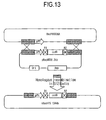
- Int/att system attR site-specific recombination sites within viral genomic DNA fragment react with corresponding attL site-specific recombination sites including desired genomic materials from carrier vector, in the presence of ⁇ integrase recombination enzyme, IHF as a co-factor and Xis, and result in vector DNA fragment containing attB and attP sites [see Hartley JL. Genome Research, 2000, Vol. 10, 1788-1795 ].
- Other recombination systems from various organisms for example, the Cre/loxP system from bacteriophage P1, and the FLP/FRT system from the Saccharomyces cerevisiae 2 ⁇ circle plasmid, can be employed.
- vBacHTS viral DNAs are constructed to include site-specific recombination sequences and Bsu36I recognition base sequences, which in turn are made to linear form viral DNAs flanked by 2 (two) site-specific sites with treatment of Bsu36I restriction enzyme.
- the linear vBacHTS DNAs cannot form viral particles since the vBacHTS viral DNAs are digested at 2 (two) Bsu36I recognition sites having nucleic acid sequences different from each other, while the circular form DNAs generated by site-specific recombination formed viral particles efficiently.
- the reaction mixture containing viral DNAs having desired genomic materials, which are integrated by site-specific recombination is transferred to Sf21 insect cells, and then viral packaging is detected.
- recombinant viruses can be obtained without employing intermediate host cells, such as E. coli or yeast, for selecting and amplifying suitable genomic DNAs. Therefore, the recombinant viruses are suitable for the purpose of expressing desired genes from host cells.
- the activity measurement of GFP and GUS proteins indicates that the method of the present invention is more efficient than the method of the prior arts.
- pBacHTS viral vectors were prepared.
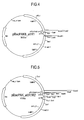
- pBacPAK8_R1 (see FIG.4 ) was provided by cloning amplified attR1 sites and Bsu36I recognition base sequences at BamHI/EcoRI sites of a shuttle vector of pBacPAK8 (Genebank: U2446, from Clontech) and transforming DH5 ⁇ (from LTI, Life Technologies Inc.) with the cloned vector, and then by incubating and screening in agar medium including ampicilin.
- pBacPAK8_R1R2 was prepared by cloning PCR amplified attR2 sites and Bsu36I recognition site sequences at EcoRI/PacI site sequences of pBacPAK8_R1 (see FIG.5 ).
- DNA fragment (427 bp) including ccdB gene from EcoR1 digested fragments of pEntr4 plasmid was inserted to the pBacPAK8_R1R2, and then the resulting plasmid was transferred to DB3.1 cell (from LTI).
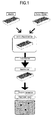
- pBacHTS contained two different Bsu36I recognition sequences between attR1 site and attR2 site ( FIG.2 ).
- the attR1 sites and the attR2 sites included site-specific recombinase target sequences that reacted with attL1 and attL2 sites, respectively, in the presence of integrase from ⁇ bacteriophage, Xis, IHF- ⁇ and IHF- ⁇ .
- EXAMPLE 2 Preparation of pBacHTS 6His, pBacHTS_GST, pBacHTS_HisGst, pBacHTS_GFP and pBacHTS_Flag
- Fusion tag was inserted to the sites in back of polyhedrin promoter in order to prepare recombinant baculovirus expressing fusion proteins.
- pBacHTS_Gst was designed for the preparation of expression vector for GST fusion protein.
- pGEX-2T (Genbank:U13850) was PCR amplified using a primer including Bg1II and a primer including BamH1 linker, which in turn was treated with BglII and BamHI and then was inserted to pBacHTS/BamHI restriction sites.
- pBacHTS_His was designed for the preparation of a vector expressing His tag fusion protein by inserting 6 His linker to BamHI site of pBacHTS.
- pBacHTS_HisGST was designed by inserting BglII and BamHI treated GST genes, which were PCR amplified, to BamHI site of pBacHTS_His.
- GFP gene was PCR amplified using a primer containing BamHI linker and a primer containing KpnI linker, which in turn was digested with BamHI/KpnI.
- pBacHTS_Flag was prepared by inserting a linker expressing Flag tag at BamHI/KpnI sites of pBacHTS (see FIG.7 ).
- EXAMPLE 3 Preparation of DNAs of vBacHTS, vBacHTS_His, vBacHTS_HisGst, vBacHTS_GST and vBacHTS_GFP viruses
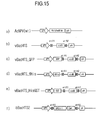
- Baculoviruses of which polyhedrin loci were replaced by pBacHTS plasmids were prepared using homologous recombination. Briefly, Sf21 insect cells were transfected with a mixture of pBacHTS plasmid, Bsu36I digested BacPAK6 viral DNAs (from Clontech#6144-1) and Lipofectin (from LTI) to induce homologous recombination in the cells. The recombinant viruses were isolated through twice repeated plaque assays, which in turn were subjected to PCR. The purified viral clone was named vBacHTS virus (SEQ. ID No.1: the sequences of its polyhedrin locus) (see FIG.15 ).
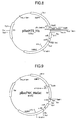
- pBacHTS_His see FIG.8
- pBacHTS_HisGst see FIG.9
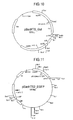
- pBacHTS_GST see FIG.10
- pBacHTS_GFP see FIG.6
- BacPAK6 virus to generate vBacHTS_His (SEQ. ID No.2: the sequences of its polyhedrin locus)
- vBacHTS_HisGst SEQ. ID No.3: the sequences of its polyhedrin locus
- vBacHTS_GST SEQ.
- sequences of the obtained viruses are the same as those of the wild type AcNPV (GenBank: NC_001623) except for the above-designated sequences of the polyhedrin loci.
- Viral plaques were selected from agarose medium.
- EXAMPLE 4 Purification of viral DNAs of vBacHTS, vBacHTS_His, vBacHTS_HisGst, vBacHTS_GFP, and vBacHTS
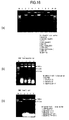
- the viral lysate was extracted twice with the same amount of phenol/chloroform solution, and ethanol was added to the extract, thereby pure viral DNAs were obtained as precipitates. Then, 50 units of restriction enzyme Bsu36I (from New England Bio labs Inc. NEB#524) were added to the purified DNAs (10 ug). The mixture was left at 37°C for 2 hrs before used in the following studies (see FIG.16 ).
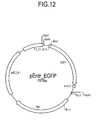
- a pEntr_GFP gene cassette was prepared by inserting PCR products of GFP between attL1 site and attL2 site.
- pEntr_Gus gene cassette from LTI was employed.
- EXAMPLE 6 Preparation of the desired recombinant viruses having GFP gene or GUS gene
- Recombinant viruses expressing GFP and Gus were generated in this study.
- the pEntr_GFP gene cassette (100 ng) or the pEntr_Gus gene cassette (100 ng) was transferred to a test-tube, and reacted with 100 ng of Bsu36I treated vBacHTS viral DNAs at 25°C for 2 hrs, in the presence of integrase mixture comprising 4 ul of integrase, Xis, IHF- ⁇ and IHF- ⁇ .
- Sf21 cells were infected with the reaction mixture together with lipofectin (from LTI), thereby recombinant viruses were generated.
- green fluorescence was observed from the insect cells including GFP gene cassette.
- after 4 days almost every cell showed green fluorescence.
- fluorescence and symptoms of viral infection were observed in the infected cells infected.
- a mixture containing pEntr_Gus gene cassette was transferred to Sf21 cells. After 4 days, X-Gluc was added to the cells. After 2 hrs of the reaction, the Sf21 cells became blue, which supported the expression of GUS (see FIG.18 ).
- 4-day viral culture was dilated and transferred to insect cells. Next, plaques were detected 4 days after adding culture medium containing 1% low-melting point agarose to the infected cells. As the result, most plaques represented blue fluorescence (see FIG.19 ).
- Recombinant viruses expressing GFP were prepared in this study.
- 100 ng of pEntr_GFP gene cassette containing GFP genes and 200 ng of viral DNAs of Bsu36I treated vBacHTS, vBacHTS_His or vBacHTS_HisGST were reacted in the presence of 4ul of integrase mixture comprising integrase, Xis (exisionase), IHF- ⁇ and IHF- ⁇ at 25 °C for 6 hrs.
- the resulting mixture was transferred to Sf21 cells together with lipofectin (from LTI) in order to generate recombinant baculoviruses.
- GFP baculoviruses Virus DNA Bsu36I gene cassette GFP positive cell# BacPAK6 Yes pBacPAK8 EGFP 154 VbacHTS pEntr EGFP 1752 VbacHTS yes pEntr EGFP 572 VbacHTS His pEntr EGFP 2236 VbacHTS His yes pEntr EGFP 654 VbacHTS HisGST pEntr EGFP 1433 VbacHTS HisGST yes pEntr EGFP 475
- EXAMPLE 8 Detection of the efficiency of recombinant viral expression
- Recombinant viruses expressing Gus were prepared, and the number of plaques expressing Gus genes was counted.
- 100 ng of pEntr_Gus gene cassette containing Gus genes and 200 ng of each of viral DNAs of Bsu36I treated vBacHTS, vBacHTS_His or vBacHTS_HisGST were reacted in the presence of 4 ul of integrase mixture comprising integrase, exisionase, IHF- ⁇ and IHF- ⁇ at 25°C for 6 hrs.
- the resulting mixture was transferred to Sf21 cells together with lipofectin (from LTI) to generate recombinant baculobiruses.
- Plaque assays were carried out for the viral culture medium.
- 4-day viral culture medium was dilated and transferred to insect cells. Subsequently, the cells were incubated for 4 days after adding medium containing 1% low-melting point agarose thereto.
- the numbers of plaques expressing Gus genes were counted after 4 days from the addition of 100 ul of 0.33% nutral red water solution and 25 ul of X-Gluc (20 mg/ml in DMSO) and afer subsequent dye treatment (see Table 4). Table 4.
- Desired recombinant viruses were prepared simultaneously from multi-well plate.
- the vBacHTS viral DNAs were treated with Bsu36I restriction enzyme.
- GFP gene cassette was employed to confirm the generation of recombinant baculoviruses and gene expression.
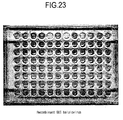
- the GFP gene cassettes were incubated in 96-deep well plate simultaneously and purified using automatic device. All the processes were carried out in multi-well plate while recombination reaction, insect cell incubation, and viral infection were performed using 8-channel pipette.
- Baculo-Forward primer 5-actgttttcgtaacagttttg-3 (SEQ. ID No.: 6)
- Baculo-Reverse primer 5-acaacgcacagaatctagc-3 (SEQ. ID No.: 7)
- liposome was prepared by mixing 5 ul of the recombinant reaction mixture with 5 ul of 10% lipofectin dilates, which in turn was transferred to 50, 000 of Sf21 cells in 96-well plate (SPL) followed by the incubation of the cells for 4 days. Protein expression was assayed after 3-day incubation of 50,000 of the Sf21 cells that were infected again with 10 ul of viruses. As for GFP viruses, the expression of green fluorescence was detected under the fluorescence microscope. And, the exhibition of symptoms of GFP viral infection was detected also.
- the cells were isolated from each of the wells with SDS-PAGE, and the expression of GFP was assayed using GFP-antibody with western blot. With regard to GFP proteins, the measured value showed similar pattern as detected under the fluorescence microscope (see FIG.22 ).
- EXAMPLE 10 High-throughput preparation and enzyme activity screening of LacZ gene mutants in 96-well plate using GFP recombinant baculoviruses
- vBacHTS_GFP viral DNAs were treated with Bsu36I restriction enzyme.
- Gene cassettes of pEntr_LacZdel were employed in this study. The gene cassettes were prepared in 96-well plate by PCR cloning of the gene of ⁇ -galactosidase from E. coli (sized about 3.2 kb), wherein the gene was deleted of 3'-terminus. More specifically, pEntr_LacZ was prepared by PCR cloning of gene of LacZ.
- the pEntr_LacZ was treated with ExoIII/S1 deletion kit (#K0421) (from Fermentas) to generate of pEntr_LacZdel. All the processes were carried out in multi-well plate, while the recombination reaction, insect cell incubation and viral infection were performed with 8-channel pipette. 50 ng of gene cassettes and 200 ng of vBacHTS baculoviral DNAs were reacted in the presence of 2 ul of recombines and 4 ul of buffer at 25 °C for 12 hrs. A total of 20 ul of reaction mixture was used in this reaction.
- PCR amplification was performed using a pair of primers (actgttttcgtaacagttttg and acaacgcacagaatctagc) for the amplification of polyhedrin locus.
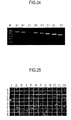
- recombinant viruses were generated at very high efficiency (see FIG.25 ).
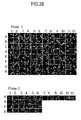
- liposome was prepared by mixing 5 ul of the recombinant reaction mixture and 5 ul of 10% lipofectin dilates, which in turn was transferred to 50,000 of Sf21 cells in 96-well plate (SPL) followed by incubation of the cells for 4 days (see FIG.26 ).
- SPL 96-well plate
- FIG.26 In order to assay the expression of GFP fusion proteins, SDS-PAGE analysis and western blotting using GFP antibodies were carried out (see FIG.26 ).
- EXAMPLE 11 High-throughput heterologous gene expression using recombinant baculoviruses in 96-well plate and the screening of enzyme activity using the same
- S. cerevisie which includes 124 protein kinase genes, was employed in this study. PCR amplification and cloning were carried out using gene-specific primers to obtain 112 gene cassettes from the S . cerevisie genome.
- Recombinant baculoviruses were prepared by the recombination of the gene cassettes and vBacHTS_GFP vector DNA. The respective recombinant viruses represented particular fluorescence according to the proteins fused to GFP (see FIG.28 ). Also, the recombinant baculoviruses having 32 human cDNA were prepared in the same manner.
- Viruses which exhibited protein kinase activities to substrates of Histon H1, MBP (myelin basic protein) and Rb were screened.
- EXAMPLE 12 The preparation of pBacHTS2 and pBacHTS2_GFP
- Baculoviral transfer vector of pBacHTS2 was prepared in order to generate vBacHTS2 viruses (SEQ. ID No.8: the sequences of its polyhedrin locus) that can replicate and can be applied to recombination reaction in vitro .
- the sequences of the obtained vBacHTS2 virus are the same as those of the wild type AcNPV (GenBank: NC_001623) except for the above-designated sequences of the polyhedrin locus.
- the pBacHTS2 had BAC vector originated replication origin and CmR (chloramphenichol resistance gene) at Bsu36I restriction enzyme recognition site located between attR1 site and attR2 site thereof. Thus, it was a kind of BAC vectors that can replicate in bacteria. Replacing the BAC vector originated replication origin and CmR with desired gene cassette generated vBacHTS viruses in vitro.
- pBacHTS2 In order to prepare pBacHTS2, firstly, 6.5 kb of DNA fragment containing BAC (Bacterial artificial chromosome) vector replication origin and CmR was generated using pBACe3.6 (Genbank:U80929) as a template. Then, PCR amplification was carried out using 10 pmole of a pair of sequences having Bsu36I recognition sequences, 200 uM of dNTPs and 2.5 U of Pfu turbo polymerase (Stratagene) with PCR cycler (Applied Biosystem, Gene Amp PCR System 2700). A total of 50 ul of reaction mixture was used.
- PCR was carried out for 20 cycles (DNA denaturation at 95 °C, 30 sec, DNA extension at 60 °C, 30 sec, DNA amplification at 72 °C, 7 min).
- PCR products of 6.5 kb of DNA fragment and vBacHTS vector were digested by Bsu36I, and were reacted in the presence of T4 ligase at 16 °C overnight.
- E. coli (DH5a) was transformed using the resulting mixture, which in turn was incubated with Cm and Amp medium (for selection) to produce pBacHTS2.
- Bsu36I treated PCR products of 6.5 kb of DNA fragment were inserted to Bsu36I site of the pBacHTS_GFP vector so as to obtain pBacHTS2_GFP vector.
- Baculoviruses were prepared using homologous recombination, which replicated in bacteria. Briefly, the homologous recombination was induced in Sf21 cells by transferring a mixture of pBacHTS2 plasmid, Bsu36I digested BacPAK66 DNA and Lipofectin (from LTI). The infected cells were incubated at 27 °C for 4 days, and were transferred to 5x10 6 of Sf21 cells (in 100 mm of dish). Thereby, high titer of viruses was obtained. Then, precipitates of viral particles were produced by centrifugation after adding 2ml of 50% PEG6000 to the cell culture medium.
- vBacHTS2 viral DNAs were obtained.
- DH10B cell lines from LTI
- MicroPulser from Bio-Rad
- the bacteria were incubated in 1 liter of 2 ⁇ YT medium (10 g of Yeast extract powder, 16 g of tryptone, 5 g of NaCl within per 1 (one) Liter), then DNAs were purified and named as bBacHTS2 ( FIG.16 ).
- bBacHTS2 FIG.16
- Purified 10 ug of DNAs was digested with 50 unit of Bsu36I at 37 °C for 5 hrs, which in turn was heat treated at 80 °C for 20 min to inactivate Bsu36I enzyme.
- vBacHTS2_GFP (SEQ. ID No.9: the sequences of its polyhedrin locus) was prepared from pBacHTS2_GFP vector by homologous recombination, and then was transferred to DH10B by electrophoration. The DNAs were purified and named as bBacHTS2_GFP (see FIG.16 ). The sequences of the vBacHTS2_GFP virus are the same as those of the wild type AcNPV (GenBank: NC_001623) except for the above-designated sequences of the polyhedrin locus.
- EXAMPLE 14 Preparation of the desired recombinant viruses using vBacHTS2 and vBacHTS2_GFP DNAs generated from bacteria
- PCR was performed as disclosed in the Examples mentioned above. PCR amplification was carried out using the reaction mixture, as templates, and a pair of primers amplifying viral polyhedrin locus to confirm whether recombination reaction occurred.
- a total of 20 cycles of PCR were carried out using each of 10 pmole of the primers and 1 tube of Bioneer premix kit, in which one cycle of PCR was performed at 95 °C for 30 sec, 50 °C for 30 sec and 72 °C for 3 min.
- electrophoresis was carried out for the PCR products on 1% agarose gel to confirm efficient performance of recombination.
- the gene cassette reaction mixture was transferred to Sf21 cells together with 5 ul of Lipofectin (from LTI) so as to obtain baculoviruses. Green fluorescence was observed in insect cells, after 2 days from transferring GFP gene cassette reaction mixture thereto. In addition, most of the cells represented green fluorescence after 4 days from transfer ( FIG.25 ).
- the present invention it is possible to prepare recombinant viruses more rapidly and more easily. Also, it is possible to obtain high titer viruses at high efficiency.
- the desired genes can be inserted into any target site of viral genome accurately, and also numerous viruses can be generated simultaneously. Accordingly, the present invention can be applied to high-throughput system to produce hundreds or thousands of viruses to study functions of genes at the same time, as well as to obtain several recombinant viruses.
- recombinant baculoviral library can be produced easily according to the present invention, and the library can be used in the screening of the desired genomic materials.
Landscapes
- Health & Medical Sciences (AREA)
- Genetics & Genomics (AREA)
- Life Sciences & Earth Sciences (AREA)
- Engineering & Computer Science (AREA)
- Chemical & Material Sciences (AREA)
- Wood Science & Technology (AREA)
- Bioinformatics & Cheminformatics (AREA)
- Organic Chemistry (AREA)
- Zoology (AREA)
- General Engineering & Computer Science (AREA)
- Biomedical Technology (AREA)
- Biotechnology (AREA)
- Microbiology (AREA)
- General Health & Medical Sciences (AREA)
- Biochemistry (AREA)
- Physics & Mathematics (AREA)
- Biophysics (AREA)
- Molecular Biology (AREA)
- Plant Pathology (AREA)
- Virology (AREA)
- Crystallography & Structural Chemistry (AREA)
- Immunology (AREA)
- Medicinal Chemistry (AREA)
- Micro-Organisms Or Cultivation Processes Thereof (AREA)
- Measuring Or Testing Involving Enzymes Or Micro-Organisms (AREA)
Claims (13)
- Verfahren zum Herstellen expressiver, zirkulärer, rekombinanter Virusvektoren, dadurch gekennzeichnet, dass das Verfahren die folgenden Schritte umfasst:i) Bereitstellen eines linearisierten Virus-DNA-Fragments, enthaltend mindestens zwei ortsspezifische Rekombinationsstellen und mindestens eine Restriktionsenzym-Erkennungsstelle;ii) Bereitstellen einer Genkassette, enthaltend das angestrebte genomische Material, das von mindestens zwei ortsspezifischen Rekombinationsstellen für die homologe Rekombination mit dem linearisierten Virus-DNA-Fragment an den beiden ortsspezifischen Rekombinationsstellen flankiert ist; undiii) zusammen zur Reaktion bringen des linearisierten Virus-DNA-Fragments und der Genkassette unter wirksamen Bedingungen, um zu erlauben, dass die homologe Rekombination in vitro stattfinden kann, um auf diese Weise einen rekombinanten Virusvektor zu bilden; undiv) Verhindern der Expression eines Virusvektors, der nicht das angestrebte genomische Material enthält.
- Verfahren zum Herstellen expressiver, zirkulärer, rekombinanter Virusvektoren nach Anspruch 1, worin ein oder mehr Virus-DNA-Fragment(e) mit Restriktionsenzymen an einer oder mehr Stelle(n) zum Herbeiführen der linearisierten DNA-Fragmente verdaut wird/werden.
- Verfahren zum Herstellen expressiver, zirkulärer, rekombinanter Virusvektoren nach Anspruch 2, worin eine oder mehr Restriktionsenzymstelle(n) die Nukleotidsequenzen von CCTNAGG umfasst/umfassen.
- Verfahren zum Herstellen expressiver, zirkulärer, rekombinanter Virusvektoren nach Anspruch 1, worin der rekombinante Virusvektor aus einer Gruppe erhalten wird, bestehend aus dem Baculovirus, Polyomavirus, Papillomavirus und Hepatitis B-virus (HBV).
- Verfahren zum Screening rekombinanter Viren, enthaltend die angestrebten genomischen Materialien, dadurch gekennzeichnet, dass das Verfahren die folgenden Schritte umfasst:i) Bereitstellen eines linearisierten Virus-DNA-Fragments, enthaltend mindestens zwei ortsspezifische Rekombinationsstellen und mindestens eine Restriktionsenzym-Erkennungsstelle;ii) Bereitstellen einer Genkassette, enthaltend das angestrebte genomische Material, das von mindestens zwei ortsspezifischen Rekombinationsstellen für die homologe Rekombination mit dem linearisierten Virus-DNA-Fragment an den beiden ortsspezifischen Rekombinationsstellen flankiert ist;iii) zusammen zur Reaktion bringen des linearisierten Virus-DNA-Fragments und der Genkassette unter wirksamen Bedingungen, um zu erlauben, dass die homologe Rekombination in vitro stattfinden kann, um auf diese Weise ein rekombinantes Virus in vitro zum Herstellen eines Reaktionsgemischs, einschließlich in vitro gebildeter expressiver, zirkulärer, rekombinanter Virusvektoren, zu bilden;iv) Verhindern der Expression eines Virus, das nicht das angestrebte genomische Material enthält; undv) Transferieren des Reaktionsgemischs von iii) an Wirtszellen in Multiwell-Platten.
- Verfahren zum Screening rekombinanter Viren nach Anspruch 4, worin das Verfahren weiter die folgenden Schritte umfasst:vi) Identifizierten der in Wirtszellen exprimierten Merkmale.
- Verfahren zum Screening rekombinanter Viren nach Anspruch 5 oder 6, worin das Virus ein Baculovirus, Polyomavirus, Papillomavirus und Hepatitis B-Virus (HBV) darstellt.
- Verfahren zum Herstellen rekombinanter Viren mit zirkulären genomischen DNAs, dadurch gekennzeichnet, dass das Verfahren die folgenden Schritte umfasst:i) Bereitstellen eines linearisierten Virus-DNA-Fragments, enthaltend mindestens zwei ortsspezifische Rekombinationsstellen und mindestens eine Restriktionsenzym-Erkennungsstelle;ii) Bereitstellen einer Genkassette, enthaltend das angestrebte genomische Material, das von mindestens zwei ortsspezifischen Rekombinationsstellen für die homologe Rekombination mit dem linearisierten DNA-Fragment an den beiden ortsspezifischen Rekombinationsstellen flankiert ist;iii) zur Reaktion bringen des linearisierten Virus-DNA-Fragments und der Genkassette zum Herbeiführen einer homologen Rekombination in vitro zum Herstellen eines Reaktionsgemischs, einschließlich expressiver, zirkulärer, rekombinanter Virusvektoren;iv) Verhindern der Expression eines Virusvektors, der nicht das angestrebte genomische Material enthält; undv) Transferieren des Reaktionsgemischs von iii) an Wirtszellen in Multiwell-Platten.
- Verfahren zum Herstellen rekombinanter Viren mit zirkulären genomischen DNAs nach Anspruch 8, worin das linearisierte Virus-DNA-Fragment für Tierzellen nicht infektiös ist oder nicht replizieren kann, obgleich es den bakteriellen Rcplikationsursprung und Antibiotikaresistenzsquenzen einschließt.
- Verfahren zum Herstellen rekombinanter Viren mit zirkulären genomischen DNAs nach Anspruch 8, worin der Transfer des Reaktionsgemischs an Wirtszellen ohne die Notwendigkeit für einen Selektionsprozess zum Isolieren der zirkulären genomischen DNA durchgeführt wird.
- Verfahren zum Herstellen rekombinanter Viren mit zirkulären genomischen DNAs nach Anspruch 7, worin die genomischen Virus-DNAs von i) mit Restriktionsenzym an einer oder mehr Stelle(n) zum Herbeiführen der linearisierten Virus-DNA-Fragmente verdaut werden.
- Verfahren zum Herstellen rekombinanter Viren mit zirkulären genomischen DNAs nach Anspruch 10, worin eine oder mehr Stelle(n) die Nukleotidsequenzen von CCTNAGG umfasst/umfassen.
- Verfahren zum Herstellen rekombinanter Viren mit zirkulären genomischen DNAs nach Anspruch 8, worin die rekombinanten Virusvektoren aus einer Gruppe erhalten werden, bestehend aus dem Baculovirus, Polyomavirus, Papillomavirus und Hepatitis B-Virus (HBV).
Applications Claiming Priority (3)
| Application Number | Priority Date | Filing Date | Title |
|---|---|---|---|
| KR2002012634 | 2002-03-09 | ||
| KR20020012634 | 2002-03-09 | ||
| PCT/KR2003/000454 WO2003076606A1 (en) | 2002-03-09 | 2003-03-08 | High throughput system for producing recombinant viruses using site-specific recombination |
Publications (3)
| Publication Number | Publication Date |
|---|---|
| EP1483376A1 EP1483376A1 (de) | 2004-12-08 |
| EP1483376A4 EP1483376A4 (de) | 2005-08-10 |
| EP1483376B1 true EP1483376B1 (de) | 2008-10-15 |
Family
ID=27800660
Family Applications (1)
| Application Number | Title | Priority Date | Filing Date |
|---|---|---|---|
| EP03744066A Expired - Lifetime EP1483376B1 (de) | 2002-03-09 | 2003-03-08 | Hochdurchsatzsystem zur herstellung rekombinanter viren mittels stellenspezifischer rekombination |
Country Status (9)
| Country | Link |
|---|---|
| US (1) | US7319001B2 (de) |
| EP (1) | EP1483376B1 (de) |
| JP (2) | JP4587671B2 (de) |
| KR (1) | KR100631429B1 (de) |
| CN (1) | CN100564520C (de) |
| AT (1) | ATE411381T1 (de) |
| AU (1) | AU2003210034A1 (de) |
| DE (1) | DE60324108D1 (de) |
| WO (1) | WO2003076606A1 (de) |
Families Citing this family (4)
| Publication number | Priority date | Publication date | Assignee | Title |
|---|---|---|---|---|
| WO2004020605A2 (en) * | 2002-08-29 | 2004-03-11 | The Board Of Trustees Of The Leland Stanford Junior University | Circular nucleic acid vectors, and methods for making and using the same |
| GB0424356D0 (en) * | 2004-11-03 | 2004-12-08 | Ark Therapeutics Ltd | Baculovirus-based gene libraries |
| GB0710535D0 (en) * | 2007-06-01 | 2007-07-11 | Ark Therapeutics Ltd | Baculovirus generation |
| CN103146753B (zh) * | 2013-03-18 | 2013-12-18 | 山东维真生物科技有限公司 | 一种新的腺病毒载体及其生产方法 |
Family Cites Families (8)
| Publication number | Priority date | Publication date | Assignee | Title |
|---|---|---|---|---|
| CA2039921A1 (en) | 1990-04-16 | 1991-10-17 | Xandra O. Breakefield | Transfer and expression of gene sequences into central nervous system cells using herpes simplex virus mutants with deletions in genes for viral replication |
| US5348886A (en) * | 1992-09-04 | 1994-09-20 | Monsanto Company | Method of producing recombinant eukaryotic viruses in bacteria |
| CN1115414C (zh) | 1993-07-13 | 2003-07-23 | 罗纳-布朗克罗莱尔股份有限公司 | 用于基因治疗的病毒载体 |
| US6143557A (en) * | 1995-06-07 | 2000-11-07 | Life Technologies, Inc. | Recombination cloning using engineered recombination sites |
| US5851808A (en) * | 1997-02-28 | 1998-12-22 | Baylor College Of Medicine | Rapid subcloning using site-specific recombination |
| US6110461A (en) | 1997-08-13 | 2000-08-29 | Oncolytics Biotech Inc. | Reovirus for the treatment of neoplasia |
| CN1757724B (zh) * | 1999-12-10 | 2014-06-11 | 茵维特罗根公司 | 具有独特特异性的多个重组位点在重组克隆中的用途 |
| US6406863B1 (en) * | 2000-06-23 | 2002-06-18 | Genetastix Corporation | High throughput generation and screening of fully human antibody repertoire in yeast |
-
2003
- 2003-03-07 US US10/383,838 patent/US7319001B2/en not_active Expired - Lifetime
- 2003-03-08 KR KR1020047014160A patent/KR100631429B1/ko not_active Expired - Fee Related
- 2003-03-08 AT AT03744066T patent/ATE411381T1/de not_active IP Right Cessation
- 2003-03-08 CN CNB038056437A patent/CN100564520C/zh not_active Expired - Fee Related
- 2003-03-08 WO PCT/KR2003/000454 patent/WO2003076606A1/en not_active Ceased
- 2003-03-08 EP EP03744066A patent/EP1483376B1/de not_active Expired - Lifetime
- 2003-03-08 DE DE60324108T patent/DE60324108D1/de not_active Expired - Lifetime
- 2003-03-08 JP JP2003574813A patent/JP4587671B2/ja not_active Expired - Fee Related
- 2003-03-08 AU AU2003210034A patent/AU2003210034A1/en not_active Abandoned
-
2010
- 2010-04-15 JP JP2010094517A patent/JP2010207231A/ja not_active Abandoned
Also Published As
| Publication number | Publication date |
|---|---|
| EP1483376A1 (de) | 2004-12-08 |
| WO2003076606A1 (en) | 2003-09-18 |
| ATE411381T1 (de) | 2008-10-15 |
| KR20040089723A (ko) | 2004-10-21 |
| CN1639326A (zh) | 2005-07-13 |
| CN100564520C (zh) | 2009-12-02 |
| JP4587671B2 (ja) | 2010-11-24 |
| JP2005519604A (ja) | 2005-07-07 |
| EP1483376A4 (de) | 2005-08-10 |
| JP2010207231A (ja) | 2010-09-24 |
| KR100631429B1 (ko) | 2006-10-11 |
| US20040185565A1 (en) | 2004-09-23 |
| US7319001B2 (en) | 2008-01-15 |
| AU2003210034A1 (en) | 2003-09-22 |
| DE60324108D1 (de) | 2008-11-27 |
Similar Documents
| Publication | Publication Date | Title |
|---|---|---|
| US6225060B1 (en) | Baculovirus expression system and method for high throughput expression of genetic material | |
| Lo et al. | Rapid titer determination of baculovirus by quantitative real‐time polymerase chain reaction | |
| US6291214B1 (en) | System for generating recombinant viruses | |
| US6953689B2 (en) | Cloning system for construction of recombinant expression vectors | |
| JP4597188B2 (ja) | 多タンパク質適用のための新規発現ツール | |
| Ho Je et al. | A defective viral genome maintained in Escherichia coli for the generation of baculovirus expression vectors | |
| Ciccarone et al. | Generation of recombinant baculovirus DNA in E. coli using a baculovirus shuttle vector | |
| EP1483375B1 (de) | Verfahren zur herstellung rekombinanter adenoviraler viren mittels stellenspezifischer rekombination | |
| US20090176660A1 (en) | Engineered Baculoviruses and Their Use | |
| JP2010207231A (ja) | 部位特異的組換を用いた、組換ウイルス生産のための高生産性機構 | |
| AU2003212521B2 (en) | Engineered baculoviruses and their use | |
| CN102286534A (zh) | 表达多外源基因的昆虫生物反应器及其构建方法和应用 | |
| de Jong et al. | Scarless baculovirus genome editing using lambda-red recombineering in E. coli | |
| US6806064B2 (en) | Baculovirus enhancer-like sequence | |
| Yao et al. | Construction of recombinant vaccinia viruses using leporipoxvirus-catalyzed recombination and reactivation of orthopoxvirus DNA | |
| Possee et al. | Baculovirus transfer vectors | |
| Laudermilch et al. | MAVERICC: Efficient marker-free rescue of vaccinia virus recombinants by in vitro CRISPR-Cas9 engineering | |
| Chen et al. | Analysis of BmNPV orf101 disruption: orf101 is essential for mediating budded virus production | |
| WO2026013698A2 (en) | Baculovirus expression systems and methods thereof | |
| Putman | Evaluating Modified Polyhedrin Promoters for Improved Co-Expression of KRAS4b | |
| Graves et al. | Unit Title | |
| Hayes | Baculovirus Production Methods For Reliable Isolation of Recombinant Baculovirus Engineered For Modified Actin Expression | |
| Powichrowski et al. | Probing Baculovirus Vector Gene Essentiality for Foreign Gene Expression Using a CRISPR-Cas9 System | |
| CN1242428A (zh) | 重组救活可线性化家蚕核多角体病毒基因工程载体 |
Legal Events
| Date | Code | Title | Description |
|---|---|---|---|
| PUAI | Public reference made under article 153(3) epc to a published international application that has entered the european phase |
Free format text: ORIGINAL CODE: 0009012 |
|
| 17P | Request for examination filed |
Effective date: 20040830 |
|
| AK | Designated contracting states |
Kind code of ref document: A1 Designated state(s): AT BE BG CH CY CZ DE DK EE ES FI FR GB GR HU IE IT LI LU MC NL PT RO SE SI SK TR |
|
| AX | Request for extension of the european patent |
Extension state: AL LT LV MK |
|
| RIN1 | Information on inventor provided before grant (corrected) |
Inventor name: YI, YONG-WEON Inventor name: KIM, MIN-SUNG Inventor name: CHOI, EUN-WOOK Inventor name: SEEN, DONG-SEUNG Inventor name: JUNG, NEON C. Inventor name: KIM, DO-HUI Inventor name: KIM, KYUNG-JIN Inventor name: SON, HO-SUN |
|
| A4 | Supplementary search report drawn up and despatched |
Effective date: 20050629 |
|
| RIC1 | Information provided on ipc code assigned before grant |
Ipc: 7C 12N 15/86 B Ipc: 7C 12N 7/01 A |
|
| 17Q | First examination report despatched |
Effective date: 20060215 |
|
| GRAP | Despatch of communication of intention to grant a patent |
Free format text: ORIGINAL CODE: EPIDOSNIGR1 |
|
| GRAS | Grant fee paid |
Free format text: ORIGINAL CODE: EPIDOSNIGR3 |
|
| GRAA | (expected) grant |
Free format text: ORIGINAL CODE: 0009210 |
|
| RAP1 | Party data changed (applicant data changed or rights of an application transferred) |
Owner name: NEWGEX INC. |
|
| AK | Designated contracting states |
Kind code of ref document: B1 Designated state(s): AT BE BG CH CY CZ DE DK EE ES FI FR GB GR HU IE IT LI LU MC NL PT RO SE SI SK TR |
|
| REG | Reference to a national code |
Ref country code: GB Ref legal event code: FG4D Ref country code: CH Ref legal event code: EP |
|
| REG | Reference to a national code |
Ref country code: IE Ref legal event code: FG4D |
|
| REF | Corresponds to: |
Ref document number: 60324108 Country of ref document: DE Date of ref document: 20081127 Kind code of ref document: P |
|
| REG | Reference to a national code |
Ref country code: CH Ref legal event code: NV Representative=s name: ISLER & PEDRAZZINI AG |
|
| NLV1 | Nl: lapsed or annulled due to failure to fulfill the requirements of art. 29p and 29m of the patents act | ||
| PG25 | Lapsed in a contracting state [announced via postgrant information from national office to epo] |
Ref country code: BG Free format text: LAPSE BECAUSE OF FAILURE TO SUBMIT A TRANSLATION OF THE DESCRIPTION OR TO PAY THE FEE WITHIN THE PRESCRIBED TIME-LIMIT Effective date: 20090115 Ref country code: ES Free format text: LAPSE BECAUSE OF FAILURE TO SUBMIT A TRANSLATION OF THE DESCRIPTION OR TO PAY THE FEE WITHIN THE PRESCRIBED TIME-LIMIT Effective date: 20090126 Ref country code: AT Free format text: LAPSE BECAUSE OF FAILURE TO SUBMIT A TRANSLATION OF THE DESCRIPTION OR TO PAY THE FEE WITHIN THE PRESCRIBED TIME-LIMIT Effective date: 20081015 |
|
| PG25 | Lapsed in a contracting state [announced via postgrant information from national office to epo] |
Ref country code: NL Free format text: LAPSE BECAUSE OF FAILURE TO SUBMIT A TRANSLATION OF THE DESCRIPTION OR TO PAY THE FEE WITHIN THE PRESCRIBED TIME-LIMIT Effective date: 20081015 Ref country code: FI Free format text: LAPSE BECAUSE OF FAILURE TO SUBMIT A TRANSLATION OF THE DESCRIPTION OR TO PAY THE FEE WITHIN THE PRESCRIBED TIME-LIMIT Effective date: 20081015 Ref country code: SI Free format text: LAPSE BECAUSE OF FAILURE TO SUBMIT A TRANSLATION OF THE DESCRIPTION OR TO PAY THE FEE WITHIN THE PRESCRIBED TIME-LIMIT Effective date: 20081015 Ref country code: PT Free format text: LAPSE BECAUSE OF FAILURE TO SUBMIT A TRANSLATION OF THE DESCRIPTION OR TO PAY THE FEE WITHIN THE PRESCRIBED TIME-LIMIT Effective date: 20090316 |
|
| PG25 | Lapsed in a contracting state [announced via postgrant information from national office to epo] |
Ref country code: DK Free format text: LAPSE BECAUSE OF FAILURE TO SUBMIT A TRANSLATION OF THE DESCRIPTION OR TO PAY THE FEE WITHIN THE PRESCRIBED TIME-LIMIT Effective date: 20081015 Ref country code: EE Free format text: LAPSE BECAUSE OF FAILURE TO SUBMIT A TRANSLATION OF THE DESCRIPTION OR TO PAY THE FEE WITHIN THE PRESCRIBED TIME-LIMIT Effective date: 20081015 Ref country code: BE Free format text: LAPSE BECAUSE OF FAILURE TO SUBMIT A TRANSLATION OF THE DESCRIPTION OR TO PAY THE FEE WITHIN THE PRESCRIBED TIME-LIMIT Effective date: 20081015 Ref country code: RO Free format text: LAPSE BECAUSE OF FAILURE TO SUBMIT A TRANSLATION OF THE DESCRIPTION OR TO PAY THE FEE WITHIN THE PRESCRIBED TIME-LIMIT Effective date: 20081015 |
|
| PLBE | No opposition filed within time limit |
Free format text: ORIGINAL CODE: 0009261 |
|
| STAA | Information on the status of an ep patent application or granted ep patent |
Free format text: STATUS: NO OPPOSITION FILED WITHIN TIME LIMIT |
|
| PG25 | Lapsed in a contracting state [announced via postgrant information from national office to epo] |
Ref country code: CZ Free format text: LAPSE BECAUSE OF FAILURE TO SUBMIT A TRANSLATION OF THE DESCRIPTION OR TO PAY THE FEE WITHIN THE PRESCRIBED TIME-LIMIT Effective date: 20081015 Ref country code: IT Free format text: LAPSE BECAUSE OF FAILURE TO SUBMIT A TRANSLATION OF THE DESCRIPTION OR TO PAY THE FEE WITHIN THE PRESCRIBED TIME-LIMIT Effective date: 20081015 Ref country code: SE Free format text: LAPSE BECAUSE OF FAILURE TO SUBMIT A TRANSLATION OF THE DESCRIPTION OR TO PAY THE FEE WITHIN THE PRESCRIBED TIME-LIMIT Effective date: 20090115 |
|
| 26N | No opposition filed |
Effective date: 20090716 |
|
| PG25 | Lapsed in a contracting state [announced via postgrant information from national office to epo] |
Ref country code: SK Free format text: LAPSE BECAUSE OF FAILURE TO SUBMIT A TRANSLATION OF THE DESCRIPTION OR TO PAY THE FEE WITHIN THE PRESCRIBED TIME-LIMIT Effective date: 20081015 |
|
| PG25 | Lapsed in a contracting state [announced via postgrant information from national office to epo] |
Ref country code: MC Free format text: LAPSE BECAUSE OF NON-PAYMENT OF DUE FEES Effective date: 20090331 |
|
| PG25 | Lapsed in a contracting state [announced via postgrant information from national office to epo] |
Ref country code: IE Free format text: LAPSE BECAUSE OF NON-PAYMENT OF DUE FEES Effective date: 20090308 |
|
| PG25 | Lapsed in a contracting state [announced via postgrant information from national office to epo] |
Ref country code: GR Free format text: LAPSE BECAUSE OF FAILURE TO SUBMIT A TRANSLATION OF THE DESCRIPTION OR TO PAY THE FEE WITHIN THE PRESCRIBED TIME-LIMIT Effective date: 20090116 |
|
| PG25 | Lapsed in a contracting state [announced via postgrant information from national office to epo] |
Ref country code: LU Free format text: LAPSE BECAUSE OF NON-PAYMENT OF DUE FEES Effective date: 20090308 |
|
| PG25 | Lapsed in a contracting state [announced via postgrant information from national office to epo] |
Ref country code: HU Free format text: LAPSE BECAUSE OF FAILURE TO SUBMIT A TRANSLATION OF THE DESCRIPTION OR TO PAY THE FEE WITHIN THE PRESCRIBED TIME-LIMIT Effective date: 20090416 |
|
| PG25 | Lapsed in a contracting state [announced via postgrant information from national office to epo] |
Ref country code: TR Free format text: LAPSE BECAUSE OF FAILURE TO SUBMIT A TRANSLATION OF THE DESCRIPTION OR TO PAY THE FEE WITHIN THE PRESCRIBED TIME-LIMIT Effective date: 20081015 |
|
| PG25 | Lapsed in a contracting state [announced via postgrant information from national office to epo] |
Ref country code: CY Free format text: LAPSE BECAUSE OF FAILURE TO SUBMIT A TRANSLATION OF THE DESCRIPTION OR TO PAY THE FEE WITHIN THE PRESCRIBED TIME-LIMIT Effective date: 20081015 |
|
| REG | Reference to a national code |
Ref country code: FR Ref legal event code: PLFP Year of fee payment: 13 |
|
| REG | Reference to a national code |
Ref country code: FR Ref legal event code: PLFP Year of fee payment: 14 |
|
| REG | Reference to a national code |
Ref country code: FR Ref legal event code: PLFP Year of fee payment: 15 |
|
| PGFP | Annual fee paid to national office [announced via postgrant information from national office to epo] |
Ref country code: DE Payment date: 20170322 Year of fee payment: 15 Ref country code: CH Payment date: 20170322 Year of fee payment: 15 Ref country code: FR Payment date: 20170322 Year of fee payment: 15 |
|
| PGFP | Annual fee paid to national office [announced via postgrant information from national office to epo] |
Ref country code: GB Payment date: 20170322 Year of fee payment: 15 |
|
| REG | Reference to a national code |
Ref country code: DE Ref legal event code: R119 Ref document number: 60324108 Country of ref document: DE |
|
| REG | Reference to a national code |
Ref country code: CH Ref legal event code: PL |
|
| GBPC | Gb: european patent ceased through non-payment of renewal fee |
Effective date: 20180308 |
|
| PG25 | Lapsed in a contracting state [announced via postgrant information from national office to epo] |
Ref country code: DE Free format text: LAPSE BECAUSE OF NON-PAYMENT OF DUE FEES Effective date: 20181002 |
|
| PG25 | Lapsed in a contracting state [announced via postgrant information from national office to epo] |
Ref country code: CH Free format text: LAPSE BECAUSE OF NON-PAYMENT OF DUE FEES Effective date: 20180331 Ref country code: LI Free format text: LAPSE BECAUSE OF NON-PAYMENT OF DUE FEES Effective date: 20180331 Ref country code: GB Free format text: LAPSE BECAUSE OF NON-PAYMENT OF DUE FEES Effective date: 20180308 |
|
| PG25 | Lapsed in a contracting state [announced via postgrant information from national office to epo] |
Ref country code: FR Free format text: LAPSE BECAUSE OF NON-PAYMENT OF DUE FEES Effective date: 20180331 |