EP1479008B1 - Verfahren und System zur Auflösung von Adressierungskonflikten auf der Basis von Tunnelinformationen - Google Patents
Verfahren und System zur Auflösung von Adressierungskonflikten auf der Basis von Tunnelinformationen Download PDFInfo
- Publication number
- EP1479008B1 EP1479008B1 EP03743105A EP03743105A EP1479008B1 EP 1479008 B1 EP1479008 B1 EP 1479008B1 EP 03743105 A EP03743105 A EP 03743105A EP 03743105 A EP03743105 A EP 03743105A EP 1479008 B1 EP1479008 B1 EP 1479008B1
- Authority
- EP
- European Patent Office
- Prior art keywords
- address
- gateway
- tunnel
- processor
- network
- Prior art date
- Legal status (The legal status is an assumption and is not a legal conclusion. Google has not performed a legal analysis and makes no representation as to the accuracy of the status listed.)
- Expired - Lifetime
Links
- 238000000034 method Methods 0.000 title claims abstract description 33
- 238000013507 mapping Methods 0.000 claims 1
- 238000004891 communication Methods 0.000 description 9
- 238000010586 diagram Methods 0.000 description 5
- 238000013459 approach Methods 0.000 description 4
- 238000013519 translation Methods 0.000 description 4
- 238000009434 installation Methods 0.000 description 2
- 238000012545 processing Methods 0.000 description 2
- 238000004590 computer program Methods 0.000 description 1
- 238000005516 engineering process Methods 0.000 description 1
- 230000006870 function Effects 0.000 description 1
- 230000007246 mechanism Effects 0.000 description 1
- 230000003287 optical effect Effects 0.000 description 1
- 230000007704 transition Effects 0.000 description 1
- 230000005641 tunneling Effects 0.000 description 1
Images


Classifications
-
- H—ELECTRICITY
- H04—ELECTRIC COMMUNICATION TECHNIQUE
- H04L—TRANSMISSION OF DIGITAL INFORMATION, e.g. TELEGRAPHIC COMMUNICATION
- H04L12/00—Data switching networks
- H04L12/28—Data switching networks characterised by path configuration, e.g. LAN [Local Area Networks] or WAN [Wide Area Networks]
- H04L12/46—Interconnection of networks
- H04L12/4641—Virtual LANs, VLANs, e.g. virtual private networks [VPN]
-
- H—ELECTRICITY
- H04—ELECTRIC COMMUNICATION TECHNIQUE
- H04L—TRANSMISSION OF DIGITAL INFORMATION, e.g. TELEGRAPHIC COMMUNICATION
- H04L61/00—Network arrangements, protocols or services for addressing or naming
-
- H—ELECTRICITY
- H04—ELECTRIC COMMUNICATION TECHNIQUE
- H04L—TRANSMISSION OF DIGITAL INFORMATION, e.g. TELEGRAPHIC COMMUNICATION
- H04L61/00—Network arrangements, protocols or services for addressing or naming
- H04L61/09—Mapping addresses
- H04L61/25—Mapping addresses of the same type
- H04L61/2503—Translation of Internet protocol [IP] addresses
- H04L61/2521—Translation architectures other than single NAT servers
- H04L61/2535—Multiple local networks, e.g. resolving potential IP address conflicts
Definitions
- the present invention relates to systems and methods for resolving addressing conflicts and, more particularly, systems and methods for translating addresses based on tunnel information.
- Wide area networks allow users to access company files and computer programs, regardless of where users are geographically located. Until recently, building wide area networks remained the province of only the largest corporations or companies with enough technical skill and financial resources. Organizations have used a range of approaches to building wide area networks to connect remote offices, partners, or employees. These "traditional" approaches to connectivity include, for example, point-to-point leased lines, packet switched networks, and dedicated virtual private networks (VPNs).
- VPNs dedicated virtual private networks
- Point-to-point leased lines are physical networks requiring the engineering of separate links between sites that need to communicate with each other. Point-to-point leased lines can take from 30 to 90 days to install and are costly.
- a packet switched network using frame relay is a traditional alternative to point-to-point leased lines that offers reduced costs and increased flexibility.
- the initial installation of a frame relay network takes a long time. For example, additional access circuits may usually take two to three weeks for installation and the service is fairly costly.
- a more-recently introduced service offered by some network service providers is a dedicated virtual private network. This routed service eliminates the complexity and costs associated with the engineering of connections between dedicated locations, but requires the network service provider to manage security as the network is shared with other customers.
- a virtual private network is "virtual" because it uses a shared or a base network, such as the Internet as its backbone as opposed to a completely private network with dedicated lines. It is also "private" since the information that is exchanged between the users may be encrypted or encoded to provide privacy.
- Virtual private networks provide secure private connections over the Internet by enabling authentication of users and locations, delivering secure and private "tunnels" between users or locations, and encrypting user communications.
- virtual private networks facilitate computers in different networks using different addressing schemes to communicate privately over a shared or base network, such as the Internet.
- WO 01/80487 A (Openreach.com) discloses methods and systems capable of being self-configured on nonproprietary hardware such as a PC to establish one or more private networks over a geographic area.
- said methods and systems may enable one or more networks between a first processor and a second processor, using at least one additional separate processor which receives information indicating consent on behalf of the first processor to enabling a tunnel between the first processor and the second processor and from the second processor to enabling a tunnel between the second processor and the first processor.
- the additional processor may determine different virtual addresses for the first processor and the second processor.
- a single entity allocated addresses to computer on a network (or subnetwork), ensuring address compatibility-i.e., no two computers in a network use the same address.
- computers in different networks may be under the control of different entities. These entities might assign to computers addresses that are in conflict with each other.
- a central entity or controller
- a central entity or controller
- a central entity or controller
- a central entity must resolve the address conflict by negotiating mutually agreeable unique addresses for the computers having the conflict.
- each computer's address is converted (e.g., using a network address translation (NAT) protocol) into the negotiated addresses.
- NAT network address translation
- a processor may negotiate addresses that do not pose a conflict to the three computers and/or their networks.
- each packet address transmitted by a computer would then be translated (using e.g., NAT) into a negotiated address and then forwarded on a network. Without performing this negotiation and translation, the computers would not be able to communicate.
- systems and methods are provided to facilitate the resolution of an addressing conflict between a first processor in a first network and a second processor in a second network.
- tunnel information is removed from one or more packets received from the first processor. Based on the removed tunnel information, the packets are associated with the detected addressing conflict and a translated address is determined. Based on the translated address, the packets are then forwarded.
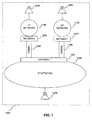
- FIG. 1 is a general block diagram of a first exemplary network, in accordance with methods and systems consistent with the present invention
- FIG. 2 is a general block diagram of an exemplary processor, in which systems and methods consistent with the present invention may be implemented;
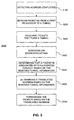
- FIG. 3 is an exemplary flow chart for resolving addressing conflicts, in accordance with methods and systems consistent with the present invention
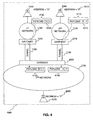
- FIG. 4 is a general block diagram of a second exemplary network, in accordance with methods and systems consistent with the present invention.
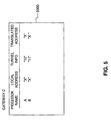
- FIG. 5 is an exemplary list (or table) for determining an address, in accordance with methods and systems consistent with the present invention.
- FIG. 6 is a general block diagram of a third exemplary network, in accordance with methods and systems consistent with the present invention.
- an addressing conflict is resolved between processors in a virtual private network that includes one or more tunnels.
- An addressing conflict may exist when, for example, a first processor in a first network and a second processor In a second network use addresses that conflict, such as when the addresses are identical, when the networks (or subnetworks) have overlapping address ranges, and/or any other conflict affecting the resolution of a packet source or destination.
- a packet address may not be uniquely resolvable. That is, the destination and the source of the packet cannot be readily determined, and therefore, either the packet cannot be routed to the proper destination or replies cannot be sent to the proper source.
- a processor serving as a gateway receives packets that form a tunnel through a communication channel, such as the Internet. That gateway removes from the packets information about the tunnel, determines a translated address based on removed information, and forwards the packet using the translated address. Accordingly, the gateway eliminates the address conflict between the first and second processors.
- FIG. 1 shows a general block diagram of a network 1000, in accordance with systems and methods consistent with the present invention.
- the network 1000 may include one or more networks (or subnetworks) 1160-1180, one or more processors 1540-1570, one or more processors serving as gateways 1500-1520, and one or more tunnels 1185, 1190.
- the processors 1540-1570 may each include a computer 2000 shown in FIG. 2 .
- the computer 2000 may include an input module 2050, a central processing unit (CPU) 2200, a storage module 2500, and an output module 2300.
- the output module 2300 may include a display 2350, a printer 2360, and a network interface 2380.
- FIG. 2 shows a computer 2000, the processors 1540-1570 may each instead include any other device, such as printers, personal digital assistants, wireless devices, mobile phones, routers, servers, and firewalls.
- the input module 2050 may be implemented with a variety of mechanisms to receive a user's input and/or provide the input to the CPU 2200. Some of these devices (not shown) may include, for example, a network interface module, a modem, a keyboard, a mouse, and an input storage device.
- Fig. 2 illustrates only a single CPU 2200
- computer 2000 may alternatively include more than one CPU.
- the CPU 2200 may also include, for example, one or more of the following: a co-processor, memory, registers, and other processing devices and systems as appropriate.
- the storage module 2500 may be embodied with a variety of components or subsystems including, for example, a hard drive, an optical drive, a general-purpose storage device, a removable storage device, and/or other devices capable of storing. Further, although storage module 2500 is illustrated in Fig. 2 as being separate or independent from CPU 2200, the storage module and CPU 2200 may be implemented as part of a single platform or system.
- the networks 1160-1180 may facilitate communication between the various entities depicted in the network 1000.
- the networks 1160-1180 may include, for example, a telephony-based network, a local area network (LAN), a wide area network (WAN), a dedicated Intranet, the Internet, and/or a wireless network.
- LAN local area network
- WAN wide area network
- a dedicated Intranet the Internet
- wireless network any suitable combination of wired and/or wireless components and systems may be incorporated into the networks 1160-1180.
- Any suitable combination of point-to-point communications or network communications may also be incorporated into the networks 1160-1180 to facilitate communication between the entities illustrated in FIG. 1 .
- one or more of the networks may be a shared network, such as the Internet, or a dedicated network, such as an intranet or point-to-point link.
- Each gateway 1500-1520 may include a processor (or computer) capable of establishing a tunnel (e.g., tunnels 1185, 1190) to another processor, such as another gateway.
- each gateway may be part of a virtual private network and may be under the management and/or control of a network operations center (or controller). Descriptions of an exemplary gateway and exemplary network operations center (or controller) are provided in pending U.S. Application No. 09/832,341 , titled "METHODS AND SYSTEMS FOR MANAGING VIRTUAL ADDRESSES FOR VIRTUAL NETWORKS.”
- FIG. 1 depicts the gateways 1500-1520 as separate from the processors 1540-1570, one of ordinary skill in the art will recognize that each of the processors 1540-1570 may also function as a gateway or vice versa.
- a tunnel (also referred to as encrypted tunnel) may be established through a base network, such as the Internet, by encapsulating a protocol within another protocol.
- a tunnel may be encrypted when an Internet Protocol (IP) packet encapsulates an encryption protocol.
- IP Internet Protocol
- Examples of encryption protocols may include RSA, Digital Encryption Standard (DES), and Triple DES (3DES).
- IP Internet Protocol
- DES Digital Encryption Standard
- a tunnel may be established using Internet Protocol (IP) packets such that the payload of each packet is encrypted but the address of each packet is unencrypted (i.e., clear-text).
- IP Internet Protocol
- the encrypted payload may be encapsulated by a clear text IP address, forming a virtual tunnel through a base network, such as the Internet.
- the virtual tunnel established between two gateways may have a virtual address that uniquely identifies the tunnel at each gateway.
- Each gateway may also have a real world (or public) IP address that permits packets to be communicated to and from the gateway.
- a processor may encrypt a packet and also add virtual addresses to identify the source and the destination of the tunnel and to permit the encrypted packet to be routed through the tunnel.
- the processor may add (also commonly referred to as wrap or encapsulate) public IP addresses for the source and destination gateways interfacing the tunnel. The public IP addresses may thus facilitate routing the packet from the source gateway to destination gateway.
- FIG. 1 shows two tunnels 1185, 1190, a plurality of gateways, processors, and tunnels may also be implemented. Moreover, when tunnels are established through the Internet between one or more gateways, these tunnels may be referred to as virtual tunnels. Furthermore, if the tunnels are encrypted, the resulting network may be referred to as a virtual private network.
- Figure 3 illustrates an exemplary flow chart of the steps for resolving address conflicts, in accordance with methods and systems consistent with the present invention. Each of these steps will be discussed in further detail following the broad description of Figure 3 .
- the address conflict may be detected by a gateway (step 3100).
- the first processor 1540 may use "X" as an address in network 1180, while the second processor 1560 may also use "X" as an address in network 1170.
- FIG. 3 depicts exemplary steps 3000 for resolving an address conflict between a first processor in a first network and a second processor in a second network.
- FIG. 3 depicts the step of detecting the address conflict (step 3100); sending packets from the first processor to a tunnel (step 3200); receiving packets that form the tunnel (step 3300); removing from the packets information about the tunnel (step 3400); determining that the packets are associated with the detected addressing conflict based on the removed tunnel information (step 3500); determining a translated address based on the removed tunnel information (step 3600); and forwarding the packets based on the translated address (step 3700).
- FIG. 4 depicts the exemplary network 1000 of FIG. 1 further including a processor 1540 that generates a packet 4100 with a source address "X" 4300, a processor 1560 that generates a packet 4110 with a source address "X" 4310, and a processor 1570 with an address "Y" 4320.
- a processor 1540 that generates a packet 4100 with a source address "X" 4300
- a processor 1560 that generates a packet 4110 with a source address "X” 4310
- a processor 1570 with an address "Y” 4320.
- This address conflict may be detected by one of the gateways 1500-1520 and resolved as described in the embodiment below (step 3100).
- the gateways 1500-1520 and the tunnels 1185, 1190 may form a virtual private network, where each tunnel is enabled by a network operations center (not shown).
- the network operation center may also detect the address conflict when the network operations center enables the establishment of tunnels 1185, 1190. The network operations center may then notify a gateway about the address conflict.
- a first processor such as the processor 1540, may send a packet 4100 to the processor 1570 at address Y via the network 1180 and gateway 1500.
- the gateway 1500 may process the packet 4100 by adding tunnel information that encapsulates the packet with an address of the tunnel 1185; encrypting the packet 4100; and adding the real (or public) IP addresses of the source and destination gateways.
- the address of the tunnel 1185 may correspond to a virtual IP (VIP) address, identifying the address of the tunnel at the gateway 1500.
- VIP virtual IP
- the gateway 1520 interfacing network 1160 may then receive through the tunnel 1185 the packet (step 3300); remove the public IP addresses; and remove (also commonly referred to as unwrap or deencapsulate) the VIP address associated with the tunnel 1185 (step 3400).
- the gateway 1520 may also decipher the packet, if necessary.
- the packet includes its original payload and address (see, e.g., packet 4100).
- the source address "X" 4300 is not unique in the network 1160 since the processor 1570 cannot resolve whether the packet 4100 originated at the first processor 1540 or the second processor 1560.
- the gateway 1520 may then determine that the packet is associated with the address conflict between the first and second processors 1540, 1560 (step 3500). For example, the gateway 1520 may determine that any packet received from tunnel 1185 should be evaluated for a possible address conflict.
- the gateway 1520 may resolve the address conflict by determining a translated address based on the removed tunnel information (step 3600). For example, the gateway 1520 may determine a translated address for the packet based on the information removed from the tunnel, such as the VIP address of the tunnel 1185, and/or the source address associated with the packet 4100 (e.g., address "X" 4300). In this example, the gateway 1520 may add the translated address to the packet 4100.
- An exemplary packet 4120 with its translated address (X 1 ) is depicted in FIG. 4 , where the payload of packet 4120 includes the packet 4100. Although in this embodiment the translated address (X 1 ) is added to packet 4120, the translated address may alternatively replace the address "X" in packet 4100.
- the gateway 1520 may maintain a list (or table) to facilitate determining translated addresses.
- FIG. 5 shows one example of such a list.
- the gateway 1520 may store a list that includes the name of a processor, an address on the processor's local network, tunnel information, and a translated address in network 1160 that interfaces gateway 1520.
- the gateway 1520 may store: a name "A" for the processor 1540, a local address of "X", a tunnel address (such as a VIP address) of "10", and a translated address of "X 1 ".
- the gateway 1520 may determine the translated address as X 1 when the ViP is "10" and the local address is "X.”
- the gateway 1520 may also forward the packet 4120 to a destination address (e.g., address "Y") in the network 1160 such that the packet 4120 is received by processor 1570 (step 3700).
- a destination address e.g., address "Y”
- the processor 1570 may receive packets from the first processor 1540 without the address conflict, enabling the processor 1570 to communicate with the first processor.
- the gateway 1520 may resolve the address conflict locally without negotiating an acceptable address with the gateway 1500.
- the second processor 1560 may also send a packet 4110 through the network 1170, gateway 1510, and tunnel 1190 (step 3200).
- the gateway 1520 may then receive the packet 4110 and remove the tunneling information, such as the VIP address of the tunnel. Based on the removed tunnel information, the gateway 1520 may then determine that the packet 4110 is associated with the address conflict at "X" (steps 3300-3500).
- the gateway 1520 may also determine a translated address as described above in step 3600. The gateway 1520 may then add the translated address to the packet and then forward the packet to processor 1570 without the address conflict (step 3700).
- the gateway 1520 When the gateway 1520 translates addresses for the first processor 1540 to "X 1 ,” the networks 1160 (or processors therein) may then be able to distinguish between the translated address "X 1 " and "X,” If that is the case, the gateway 1520 may determine that a transition is not necessary because in network 1160 the address "X" associated with the second processor 1560 does not conflict with the address "X 1 " associated with the first processor 1540. Accordingly, the gateway 1520 interfacing network 1160 may translated address"X1"to"X1"for the processor 1540 (see, e.g., packet 4120) while not translating address "X” for the second processor 1560 (see, e.g., packet 4130).
- FIG. 6 shows a network 6000 including a first processor 1540 connected to a network 1180 that interfaces with the first gateway 1500 and a second processor 1560 connected to a network 1170 that interfaces with second gateway 1510. Furthermore, a tunnel 1186 is established between gateway 1500,1510 through a communication channel such as the internet.
- the first gateway 1500 interfaces a network 1180 with an address range of 172.16.1.1-255 (i.e., the processors in the network 1180 use addresses within this range) with the first processor 1540 at an address 172.16.1.2.
- the second gateway 1510 interfaces a network 1170 with an address range of 172.16.2.1-255 with the second processor 1560 at an address 172.16.2.2.
- this addressing scheme does not pose an address conflict, the second gateway 1510 actually exports (or translates) packets within the address range of 172.16.1.0-255, rather than in the range 172.16.2.1-255.
- the second gateway 1510 may export the address of the second processor as 172.16.1.2 rather than 172.16.2.2.
- the gateway 1510 exports packets that create an address conflicts with the first processor 1540 (also at 172.16.1.2).
- the gateways 1500,1510 may exchange information including the addresses of the networks (or subnetworks) attached to each gateway.
- the first gateway 1500 may detect an address conflict because the addresses associated with the second network 1170 (i.e., the exported addresses) conflict with the addresses associated with the first network 1180 (step 3100 at FIG. 3 ).
- the second gateway 1510 exports packets from processor 1560 at an address 172.16.1.2, conflicting with the address of the processor 1540.
- the first gateway 1500 may also determine an address range 192.168.1-255 for packets received from the second gateway 1510 through tunnel 1186. Accordingly, the first gateway 1500 may resolve the address conflict without negotiating addresses with the second gateway 1510 or the second processor 1560.
- the second processor 1560 may send a packet to the network 1170 and gateway 1510 (step 3200).
- the second processor 1560 may address the packet as follows:
- the second gateway 1510 may also encrypt the payload of the packet; add VIP addresses to identify the source and destination addresses of the tunnel 1186; and then add public IP addresses to the packet.
- the packet may thus have the following form:
- the first gateway 1500 may then receive the packet that forms the tunnel 1186 (step 3300); remove the public IP addresses; remove the VIP address identifying the tunnel 1186 (step 3400); and decrypt the packet.
- the first gateway may determine that the packets are associated with the detected address conflict (step 3500). For example, the first gateway 1500 may determine that packets forming tunnel 1186 also originate at the second gateway 1510, which is the gateway with the address conflict.
- the first processor 1540 may address the packet as follows:
- the first gateway 1500 may receive the packet and determine that the packet is associated with the address conflict. For example, when the first gateway 1500 receives a packet, the first gateway 1500 may process the address and, based on the destination address 192.168.1.2, determine that the packet is associated with the address conflict of the second gateway 1510.
- the first gateway 1500 may then readdress the packet to an address that the second gateway 1510 recognizes.
- the first gateway 1500 translates (or maps) the address from 192.168.1.2 to 172.16.1.2, which is the address recognized by the second gateway 1510.
- the first gateway 1500 may also encrypt the packet; add VIP addresses to identify the source/destination addresses of the tunnel 1186; and then add public IP addresses to the packet.
- the packet may thus have the following form:
- the second gateway 1510 creates the addressing conflict when it exports (or translates) addresses from the second network 1170
- the address conflict may be inherently present because the second processor 1160 may instead implement an address, such as 172.16.1.2 that conflicts directly with the first network 1180 (or processor 1540). If that is the case, the systems and methods described above may also resolve such addressing conflict.
- the present invention also relates to computer readable media that include program instruction or program code for performing various computer-implemented operations based on the methods and processes of the invention.
- the media and program instructions may be those specially designed and constructed for the purposes of the invention, or they may be of the kind well-known and available to those having skill in the computer software arts.
- Examples of program instructions include for example microcode, machine code, such as produced by a compiler, and files containing a high-level code that can be executed by the computer using an interpreter.
Landscapes
- Engineering & Computer Science (AREA)
- Computer Networks & Wireless Communication (AREA)
- Signal Processing (AREA)
- Computer Security & Cryptography (AREA)
- Data Exchanges In Wide-Area Networks (AREA)
- Circuits Of Receivers In General (AREA)
- Control Of Indicators Other Than Cathode Ray Tubes (AREA)
- Small-Scale Networks (AREA)
- Multi Processors (AREA)
Claims (10)
- Verfahren zum Lösen eines Adresskonflikts zwischen einem ersten Prozessor (1540) in einem ersten Netz (1180) und einem zweiten Prozessor (1560) in einem zweiten Netz (1170), wobei
ein erstes Gateway (1500) mit dem genannten ersten Netz (1180) gekoppelt ist,
eine zweites Gateway (1510) mit einem zweiten Netz (1170) gekoppelt ist und
ein drittes Gateway (1520) mit einem dritten Netz (1160) gekoppelt ist, bei dem es sich um ein anderes als das erste (1180) und das zweite (1170) Netz handelt,
ein dritter Prozessor (1570) über das dritte Netz (1160) mit dem dritten Gateway verbunden ist und
die genannten Gateways (1500, 1510, 1520) jeweils in der Lage sind, einen Tunnel zu einem anderen der genannten Gateways (1500, 1510, 1520) aufzubauen, wobei der genannte Tunnel eine Adresse aufweist, die den Tunnel an jedem der genannten Gateways (1500, 1510, 1520) eindeutig identifiziert,
wobei das Verfahren folgende Schritte umfasst:Erkennen des Adresskonflikts zwischen einer ersten Adresse des ersten Prozessors (1540) und einer zweiten Adresse des zweiten Prozessors (1560) an einem dritten Gateway (1520), bei dem es sich um ein anderes als das erste und das zweite Gateway (1500, 1510) handelt,Schicken, von dem ersten Prozessor (1540), eines oder mehrerer Pakete (4100) zu einem Tunnel (1185), der zwischen dem genannten ersten Gateway (1500) und dem genannten dritten Gateway (1520) aufgebaut ist,Empfangen, an dem genannten dritten Gateway (1520), eines oder mehrerer einen Tunnel (1185) bildender Pakete von dem ersten Prozessor (1540),wobei das genannte dritte Gateway (1520) von den empfangenen Paketen (4100) Informationen über den Tunnel (1185) entfernt, wobei die entfernten Tunnelinformationen eine Adresse aufweisen, die den Tunnel eindeutig identifiziert,wobei das genannte dritte Gateway (1520) basierend auf der entfernten Adresse, die den Tunnel (1185) eindeutig identifiziert, feststellt, dass die empfangenen Pakete mit dem erkannten Adresskonflikt assoziiert sind,wobei das genannte dritte Gateway (1520) basierend auf der entfernten Adresse, die den Tunnel (1185) eindeutig identifiziert, eine übersetzte Adresse bestimmt undwobei das genannte dritte Gateway (1520) das eine beziehungsweise die mehreren Pakete basierend auf der übersetzten Adresse an den dritten Prozessor (1570) weiterleitet. - Verfahren nach Anspruch 1, wobei der Schritt des Erkennens weiter folgenden Schritt umfasst:Erkennen, dass die erste Adresse und die zweite Adresse gleich sind.
- Verfahren nach Anspruch 1, wobei der genannte Schritt des Erkennens weiter folgenden Schritt umfasst:Erkennen, basierend auf Informationen über den ersten Prozessor (1540) und den Tunnel (1185), dass die erste Adresse und die zweite Adresse gleich sind.
- Verfahren nach Anspruch 1, wobei der genannte Schritt des Bestimmens der übersetzten Adresse weiter folgenden Schritt umfasst:Bestimmen der übersetzten Adresse basierend auf der ersten Adresse.
- Verfahren nach Anspruch 1, das weiter folgenden Schritt umfasst:Abbilden der ersten Adresse in die übersetzte Adresse an dem Gateway (1520).
- Verfahren nach Anspruch 1, das weiter folgenden Schritt umfasst:Bilden des Tunnels, so dass ein erstes Protokoll ein zweites Protokoll einkapselt.
- Verfahren nach Anspruch 1, das weiter folgenden Schritt umfasst:Entfernen der Tunneladresse von dem einen beziehungsweise den mehreren Paketen, wobei die genannte Tunneladresse den Tunnel eindeutig identifiziert und in einem virtuellen Netz routingfähig ist.
- Computerimplementiertes System, das Folgendes umfasst:Mittel zum Erkennen eines Adresskonflikts zwischen einer ersten Adresse eines ersten Prozessors (1540) in einem ersten Netz (1180) und einer zweiten Adresse eines zweiten Prozessors (1560) in einem zweiten Netz (1170), wobeiein erstes Gateway (1500) mit dem genannten ersten Netz (1180) gekoppelt ist,eine zweites Gateway (1510) mit einem zweiten Netz (1170) gekoppelt ist undein drittes Gateway (1520) mit einem dritten Netz (1160) gekoppelt ist, bei dem es sich um ein anderes als das erste (1180) und das zweite (1170) Netz handelt,ein dritter Prozessor (1570) über das dritte Netz (1160) mit dem dritten Gateway verbunden ist unddie genannten Gateways (1500, 1510, 1520) jeweils in der Lage sind, einen Tunnel zu einem anderen der genannten Gateways (1500, 1510, 1520) aufzubauen, wobei der genannte Tunnel eine Adresse aufweist, die den Tunnel an jedem der genannten Gateways (1500, 1510, 1520) eindeutig identifiziert; wobei das Mittel zum Erkennen an einem Gateway (1520) auftritt,Mittel zum Empfangen, an dem genannten dritten Gateway, eines oder mehrerer einen Tunnel (1185) bildender Pakete von dem ersten Prozessor (1540),Mittel zum Entfernen, an dem dritten Gateway (1520), von Informationen über den Tunnel (1185) von dem einen beziehungsweise den mehreren empfangenen Paketen (4100), wobei die entfernten Tunnelinformationen eine Adresse aufweisen, die den Tunnel eindeutig identifiziert,Mittel zum Feststellen, an dem dritten Gateway (1520), basierend auf der entfernten Adresse, die den Tunnel eindeutig identifiziert, dass das eine beziehungsweise die mehreren empfangenen Pakete mit dem erkannten Adresskonflikt assoziiert sind,Mittel zum Bestimmen, an dem dritten Gateway (1520), basierend auf der genannten entfernten Adresse, einer übersetzten Adresse undMittel zum Weiterleiten, von dem dritten Gateway (1520), basierend auf der übersetzten Adresse, des einen beziehungsweise der mehreren Pakete an den dritten Prozessor (1570).
- System nach Anspruch 8, wobei das genannte Mittel zum Erkennen erkennt, dass die erste Adresse und die zweite Adresse gleich sind.
- System nach Anspruch 8, wobei das genannte Mittel zum Erkennen, basierend auf Informationen über den ersten Prozessor und den Tunnel, erkennt, dass die erste Adresse und die zweite Adresse gleich sind.
Applications Claiming Priority (3)
| Application Number | Priority Date | Filing Date | Title |
|---|---|---|---|
| US78366 | 1987-07-27 | ||
| US10/078,366 US7395354B2 (en) | 2002-02-21 | 2002-02-21 | Methods and systems for resolving addressing conflicts based on tunnel information |
| PCT/US2003/002671 WO2003073305A1 (en) | 2002-02-21 | 2003-02-07 | Methods and systems for resolving addressing conflicts based on tunnel information |
Publications (3)
| Publication Number | Publication Date |
|---|---|
| EP1479008A1 EP1479008A1 (de) | 2004-11-24 |
| EP1479008A4 EP1479008A4 (de) | 2005-04-20 |
| EP1479008B1 true EP1479008B1 (de) | 2011-12-21 |
Family
ID=27732822
Family Applications (1)
| Application Number | Title | Priority Date | Filing Date |
|---|---|---|---|
| EP03743105A Expired - Lifetime EP1479008B1 (de) | 2002-02-21 | 2003-02-07 | Verfahren und System zur Auflösung von Adressierungskonflikten auf der Basis von Tunnelinformationen |
Country Status (7)
| Country | Link |
|---|---|
| US (1) | US7395354B2 (de) |
| EP (1) | EP1479008B1 (de) |
| JP (2) | JP2005518739A (de) |
| AT (1) | ATE538438T1 (de) |
| AU (1) | AU2003210728A1 (de) |
| CA (1) | CA2476552A1 (de) |
| WO (1) | WO2003073305A1 (de) |
Families Citing this family (38)
| Publication number | Priority date | Publication date | Assignee | Title |
|---|---|---|---|---|
| US7028334B2 (en) * | 2000-04-12 | 2006-04-11 | Corente, Inc. | Methods and systems for using names in virtual networks |
| US7047424B2 (en) * | 2000-04-12 | 2006-05-16 | Corente, Inc. | Methods and systems for hairpins in virtual networks |
| US7028333B2 (en) * | 2000-04-12 | 2006-04-11 | Corente, Inc. | Methods and systems for partners in virtual networks |
| US6996628B2 (en) * | 2000-04-12 | 2006-02-07 | Corente, Inc. | Methods and systems for managing virtual addresses for virtual networks |
| US7181766B2 (en) * | 2000-04-12 | 2007-02-20 | Corente, Inc. | Methods and system for providing network services using at least one processor interfacing a base network |
| US7181542B2 (en) | 2000-04-12 | 2007-02-20 | Corente, Inc. | Method and system for managing and configuring virtual private networks |
| US7085854B2 (en) * | 2000-04-12 | 2006-08-01 | Corente, Inc. | Methods and systems for enabling communication between a processor and a network operations center |
| AU2001280072A1 (en) * | 2000-08-15 | 2002-02-25 | Polycom Israel Ltd. | A multimedia communication control unit as a secure device for multimedia communication between lan users and other network users |
| US7533409B2 (en) * | 2001-03-22 | 2009-05-12 | Corente, Inc. | Methods and systems for firewalling virtual private networks |
| US7020672B2 (en) * | 2001-03-30 | 2006-03-28 | Koninklijke Philips Electronics, N.V. | Reduced complexity IDCT decoding with graceful degradation |
| US20040258056A1 (en) * | 2001-11-13 | 2004-12-23 | Tomohiro Ishihara | Provider connection system, packet exchange apparatus thereof, dns server, packet exchange method, and computer program thereof |
| US7139841B1 (en) | 2002-07-24 | 2006-11-21 | Cisco Technology, Inc. | Method and apparatus for handling embedded address in data sent through multiple network address translation (NAT) devices |
| US7185107B1 (en) * | 2002-10-02 | 2007-02-27 | Cisco Technology Inc. | Redirecting network traffic through a multipoint tunnel overlay network using distinct network address spaces for the overlay and transport networks |
| US7454525B1 (en) * | 2002-12-05 | 2008-11-18 | Cisco Technology, Inc. | Enabling communication when signaling protocol packets contain embedded addresses subject to translation |
| WO2005074208A1 (ja) * | 2004-01-30 | 2005-08-11 | Matsushita Electric Industrial Co., Ltd. | 情報処理装置、サーバ、通信システム、アドレス決定方法、アドレス変更方法およびプログラム |
| US20050228851A1 (en) * | 2004-03-29 | 2005-10-13 | Intel Corporation | Configuration of redirection tables |
| US7782902B2 (en) * | 2004-07-14 | 2010-08-24 | Audiocodes, Inc. | Apparatus and method for mapping overlapping internet protocol addresses in layer two tunneling protocols |
| JP4561983B2 (ja) * | 2005-01-13 | 2010-10-13 | 日本電気株式会社 | ローカルコンテンツ接続システム、移動端末、ローカルコンテンツ接続方法及びクライアントプログラム |
| WO2007072254A1 (en) * | 2005-12-21 | 2007-06-28 | Koninklijke Philips Electronics N.V. | System with a plurality of interconnected sub-networks |
| JP5132059B2 (ja) * | 2006-01-30 | 2013-01-30 | 富士通株式会社 | パケット中継方法及びパケット中継システム |
| US8447802B2 (en) | 2006-03-08 | 2013-05-21 | Riverbed Technology, Inc. | Address manipulation to provide for the use of network tools even when transaction acceleration is in use over a network |
| JP2009017429A (ja) * | 2007-07-09 | 2009-01-22 | Fujitsu Ltd | ネットワーク中継制御プログラム、ネットワーク中継制御装置、ネットワーク中継制御方法 |
| CN101374068A (zh) * | 2007-08-25 | 2009-02-25 | 华为技术有限公司 | 实现组播业务的报文传输方法、装置及系统 |
| US7817636B2 (en) * | 2008-01-30 | 2010-10-19 | Cisco Technology, Inc. | Obtaining information on forwarding decisions for a packet flow |
| US8364847B2 (en) * | 2008-02-29 | 2013-01-29 | Microsoft Corporation | Address management in a connectivity platform |
| US8825883B2 (en) * | 2008-02-29 | 2014-09-02 | Microsoft Corporation | Connectivity platform |
| EP2253124B1 (de) * | 2008-03-20 | 2016-03-16 | Telefonaktiebolaget LM Ericsson (publ) | Verfahren und vorrichtung zur übermittlung von datenpaketen zwischen lokalen netzwerken |
| JP5010741B2 (ja) * | 2008-09-11 | 2012-08-29 | パナソニック株式会社 | 情報処理端末装置及びネットワーク接続方法 |
| KR20100040658A (ko) * | 2008-10-10 | 2010-04-20 | 삼성전자주식회사 | UPnP 네트워크의 원격 접속 서비스에서 아이피 주소 충돌 해결 방법 및 장치 |
| CN102333022B (zh) * | 2011-05-31 | 2014-01-15 | 广东省电力调度中心 | 电力通信网络中跨安全防护区信息交互的方法及防护系统 |
| AU2012282841B2 (en) * | 2011-07-08 | 2016-03-31 | Virnetx, Inc. | Dynamic VPN address allocation |
| CN103959720B (zh) * | 2011-11-30 | 2017-04-26 | 村田机械株式会社 | 中继服务器以及中继通信系统 |
| JP5994261B2 (ja) * | 2012-01-31 | 2016-09-21 | ブラザー工業株式会社 | 通信装置 |
| US9652297B2 (en) * | 2013-09-19 | 2017-05-16 | Intel Corporation | Techniques for distributed processing task portion assignment |
| US10673812B2 (en) | 2017-12-12 | 2020-06-02 | Mastercard International Incorporated | Systems and methods for resolving distributed network address conflicts |
| EP4029224B1 (de) * | 2020-02-06 | 2024-10-30 | Huawei Cloud Computing Technologies Co., Ltd. | Zuweisung virtueller adressen zum vermeiden von konflikten in umgebungen mit mehreren netzwerken |
| CN118631609A (zh) * | 2023-03-10 | 2024-09-10 | 华为云计算技术有限公司 | 一种基于隧道技术的报文处理方法以及装置 |
| US20250088480A1 (en) * | 2023-09-13 | 2025-03-13 | 3nets.io, Inc. | Connecting services running on different networks with overlapping ip addresses |
Family Cites Families (60)
| Publication number | Priority date | Publication date | Assignee | Title |
|---|---|---|---|---|
| US4823338B1 (en) | 1987-08-03 | 1998-11-10 | At & T Information Systems Inc | Virtual local area network |
| WO1989008887A1 (en) | 1988-03-11 | 1989-09-21 | Qpsx Communications Ltd. | Access security system for switched communications networks |
| US6041166A (en) | 1995-07-14 | 2000-03-21 | 3Com Corp. | Virtual network architecture for connectionless LAN backbone |
| US5684800A (en) | 1995-11-15 | 1997-11-04 | Cabletron Systems, Inc. | Method for establishing restricted broadcast groups in a switched network |
| US5918019A (en) | 1996-07-29 | 1999-06-29 | Cisco Technology, Inc. | Virtual dial-up protocol for network communication |
| US6101543A (en) | 1996-10-25 | 2000-08-08 | Digital Equipment Corporation | Pseudo network adapter for frame capture, encapsulation and encryption |
| US5864666A (en) | 1996-12-23 | 1999-01-26 | International Business Machines Corporation | Web-based administration of IP tunneling on internet firewalls |
| JP3374054B2 (ja) * | 1997-09-01 | 2003-02-04 | 富士通株式会社 | 伝送装置の同期メッセージ処理方法 |
| US6324267B1 (en) * | 1997-01-17 | 2001-11-27 | Scientific-Atlanta, Inc. | Two-tiered authorization and authentication for a cable data delivery system |
| US5875472A (en) | 1997-01-29 | 1999-02-23 | Unisys Corporation | Address conflict detection system employing address indirection for use in a high-speed multi-processor system |
| US6104716A (en) | 1997-03-28 | 2000-08-15 | International Business Machines Corporation | Method and apparatus for lightweight secure communication tunneling over the internet |
| US6173399B1 (en) | 1997-06-12 | 2001-01-09 | Vpnet Technologies, Inc. | Apparatus for implementing virtual private networks |
| SE9702385L (sv) | 1997-06-23 | 1998-12-24 | Ericsson Telefon Ab L M | Förfarande och anordning i ett datanät |
| SE513246C2 (sv) | 1997-06-23 | 2000-08-07 | Ericsson Telefon Ab L M | Förfarande och anordning i ett IP-baserat nät |
| US6092200A (en) | 1997-08-01 | 2000-07-18 | Novell, Inc. | Method and apparatus for providing a virtual private network |
| US6061796A (en) | 1997-08-26 | 2000-05-09 | V-One Corporation | Multi-access virtual private network |
| US6339595B1 (en) | 1997-12-23 | 2002-01-15 | Cisco Technology, Inc. | Peer-model support for virtual private networks with potentially overlapping addresses |
| US6353614B1 (en) * | 1998-03-05 | 2002-03-05 | 3Com Corporation | Method and protocol for distributed network address translation |
| US6154839A (en) | 1998-04-23 | 2000-11-28 | Vpnet Technologies, Inc. | Translating packet addresses based upon a user identifier |
| US6175917B1 (en) | 1998-04-23 | 2001-01-16 | Vpnet Technologies, Inc. | Method and apparatus for swapping a computer operating system |
| US6449272B1 (en) | 1998-05-08 | 2002-09-10 | Lucent Technologies Inc. | Multi-hop point-to-point protocol |
| US6557037B1 (en) | 1998-05-29 | 2003-04-29 | Sun Microsystems | System and method for easing communications between devices connected respectively to public networks such as the internet and to private networks by facilitating resolution of human-readable addresses |
| US6195705B1 (en) | 1998-06-30 | 2001-02-27 | Cisco Technology, Inc. | Mobile IP mobility agent standby protocol |
| JP2000022757A (ja) * | 1998-07-07 | 2000-01-21 | Hitachi Ltd | ネットワークシステム間接続方法 |
| JP3185762B2 (ja) | 1998-07-08 | 2001-07-11 | 日本電気株式会社 | ネットワークアドレス設定方式 |
| US6751729B1 (en) | 1998-07-24 | 2004-06-15 | Spatial Adventures, Inc. | Automated operation and security system for virtual private networks |
| US6516417B1 (en) | 1998-08-07 | 2003-02-04 | Nortel Networks, Limited | Virtual private networks |
| CN1227858C (zh) | 1998-08-21 | 2005-11-16 | 维斯托公司 | 实现对计算机网络中服务的安全访问的系统和方法 |
| US6438612B1 (en) | 1998-09-11 | 2002-08-20 | Ssh Communications Security, Ltd. | Method and arrangement for secure tunneling of data between virtual routers |
| US6407988B1 (en) | 1998-10-06 | 2002-06-18 | At&T Corp. | Mobility support services using mobility aware access networks |
| US6094437A (en) | 1998-10-09 | 2000-07-25 | Asc - Advanced Switching Communications | Layer two tunneling protocol (L2TP) merging and management |
| US6490289B1 (en) | 1998-11-03 | 2002-12-03 | Cisco Technology, Inc. | Multiple network connections from a single PPP link with network address translation |
| US6381646B2 (en) | 1998-11-03 | 2002-04-30 | Cisco Technology, Inc. | Multiple network connections from a single PPP link with partial network address translation |
| US6665304B2 (en) * | 1998-12-31 | 2003-12-16 | Hewlett-Packard Development Company, L.P. | Method and apparatus for providing an integrated cluster alias address |
| US6615357B1 (en) | 1999-01-29 | 2003-09-02 | International Business Machines Corporation | System and method for network address translation integration with IP security |
| JP2000253008A (ja) * | 1999-02-26 | 2000-09-14 | Mitsubishi Electric Corp | Ipアドレス変換装置及びネットワーク管理システム |
| US6788681B1 (en) | 1999-03-16 | 2004-09-07 | Nortel Networks Limited | Virtual private networks and methods for their operation |
| US6701358B1 (en) | 1999-04-02 | 2004-03-02 | Nortel Networks Limited | Bulk configuring a virtual private network |
| US7000014B2 (en) | 1999-04-02 | 2006-02-14 | Nortel Networks Limited | Monitoring a virtual private network |
| US6393488B1 (en) | 1999-05-27 | 2002-05-21 | 3Com Corporation | System and method for supporting internet protocol subnets with network address translators |
| US6490472B1 (en) * | 1999-09-03 | 2002-12-03 | The Mcw Research Foundation, Inc. | MRI system and method for producing an index indicative of alzheimer's disease |
| US6798782B1 (en) | 1999-12-10 | 2004-09-28 | Sun Microsystems, Inc. | Truly anonymous communications using supernets, with the provision of topology hiding |
| US6684256B1 (en) * | 2000-01-27 | 2004-01-27 | Utstarcom, Inc. | Routing method for mobile wireless nodes having overlapping internet protocol home addresses |
| US7111079B2 (en) | 2000-02-23 | 2006-09-19 | Koninklijke Philips Electronics, N.V. | Architecture of a bridge between a non-IP network and the web |
| JP2001244995A (ja) * | 2000-02-28 | 2001-09-07 | Nippon Telegr & Teleph Corp <Ntt> | アドレス変換方式 |
| JP3656134B2 (ja) * | 2000-03-23 | 2005-06-08 | 日本電信電話株式会社 | Vpn選択接続ゲートウェイおよびそれによる通信方法 |
| US7028333B2 (en) | 2000-04-12 | 2006-04-11 | Corente, Inc. | Methods and systems for partners in virtual networks |
| US7028334B2 (en) * | 2000-04-12 | 2006-04-11 | Corente, Inc. | Methods and systems for using names in virtual networks |
| US6996628B2 (en) | 2000-04-12 | 2006-02-07 | Corente, Inc. | Methods and systems for managing virtual addresses for virtual networks |
| US7181542B2 (en) * | 2000-04-12 | 2007-02-20 | Corente, Inc. | Method and system for managing and configuring virtual private networks |
| WO2001082533A2 (en) | 2000-04-12 | 2001-11-01 | Openreach.Com | Method and system for managing and configuring virtual private networks |
| US6631416B2 (en) | 2000-04-12 | 2003-10-07 | Openreach Inc. | Methods and systems for enabling a tunnel between two computers on a network |
| US7085854B2 (en) | 2000-04-12 | 2006-08-01 | Corente, Inc. | Methods and systems for enabling communication between a processor and a network operations center |
| US7181766B2 (en) | 2000-04-12 | 2007-02-20 | Corente, Inc. | Methods and system for providing network services using at least one processor interfacing a base network |
| US7047424B2 (en) | 2000-04-12 | 2006-05-16 | Corente, Inc. | Methods and systems for hairpins in virtual networks |
| AU2001281622A1 (en) | 2000-08-18 | 2002-03-04 | Etunnels Inc. | Method and apparatus for data communication between a plurality of parties |
| US20020124090A1 (en) | 2000-08-18 | 2002-09-05 | Poier Skye M. | Method and apparatus for data communication between a plurality of parties |
| US7533409B2 (en) | 2001-03-22 | 2009-05-12 | Corente, Inc. | Methods and systems for firewalling virtual private networks |
| US7379465B2 (en) * | 2001-12-07 | 2008-05-27 | Nortel Networks Limited | Tunneling scheme optimized for use in virtual private networks |
| US7099319B2 (en) * | 2002-01-23 | 2006-08-29 | International Business Machines Corporation | Virtual private network and tunnel gateway with multiple overlapping, remote subnets |
-
2002
- 2002-02-21 US US10/078,366 patent/US7395354B2/en not_active Expired - Lifetime
-
2003
- 2003-02-07 WO PCT/US2003/002671 patent/WO2003073305A1/en not_active Ceased
- 2003-02-07 JP JP2003571928A patent/JP2005518739A/ja not_active Withdrawn
- 2003-02-07 CA CA002476552A patent/CA2476552A1/en not_active Abandoned
- 2003-02-07 AU AU2003210728A patent/AU2003210728A1/en not_active Abandoned
- 2003-02-07 EP EP03743105A patent/EP1479008B1/de not_active Expired - Lifetime
- 2003-02-07 AT AT03743105T patent/ATE538438T1/de active
-
2010
- 2010-04-22 JP JP2010099182A patent/JP5161262B2/ja not_active Expired - Lifetime
Also Published As
| Publication number | Publication date |
|---|---|
| EP1479008A1 (de) | 2004-11-24 |
| US20030158962A1 (en) | 2003-08-21 |
| JP2010161823A (ja) | 2010-07-22 |
| EP1479008A4 (de) | 2005-04-20 |
| AU2003210728A1 (en) | 2003-09-09 |
| US7395354B2 (en) | 2008-07-01 |
| JP2005518739A (ja) | 2005-06-23 |
| JP5161262B2 (ja) | 2013-03-13 |
| ATE538438T1 (de) | 2012-01-15 |
| WO2003073305A1 (en) | 2003-09-04 |
| CA2476552A1 (en) | 2003-09-04 |
Similar Documents
| Publication | Publication Date | Title |
|---|---|---|
| US7395354B2 (en) | Methods and systems for resolving addressing conflicts based on tunnel information | |
| US7159242B2 (en) | Secure IPsec tunnels with a background system accessible via a gateway implementing NAT | |
| US6501767B1 (en) | Mobile IP communication scheme for supporting mobile computer move over different address spaces | |
| US7159109B2 (en) | Method and apparatus to manage address translation for secure connections | |
| EP1710953B1 (de) | Verschlüsselungs-kommunikationsverfahren | |
| KR100798660B1 (ko) | 로컬 ip 어드레스 및 변환불능 포트 어드레스를사용하는 구내 통신망에 대한 네트워크 어드레스 변환게이트웨이 | |
| EP1441483B1 (de) | Gateway zur Unterstützung der Kommunikation zwischen Netzwerkgeräten verschiedener, privater Netze | |
| US6591306B1 (en) | IP network access for portable devices | |
| CN100531229C (zh) | 通用外部代理 | |
| US8805977B2 (en) | Method and system for address conflict resolution | |
| CN101156420B (zh) | 防止来自网络地址端口转换器napt所服务的客户机的重复源的方法 | |
| JP6990647B2 (ja) | ReNAT通信環境を提供するシステム及び方法 | |
| KR100479261B1 (ko) | 네트워크 주소 변환 상에서의 데이터 전송 방법 및 장치 | |
| JP4328753B2 (ja) | Ipネットワークにおいて、あらゆるタイプのアプリケーションでネットワーク・アドレス変換(nat)を用いる方法、システム及びコンピュー | |
| CN101133625B (zh) | 防止重复源冲突的方法和装置 | |
| AU2016201620A1 (en) | Dynamic vpn address allocation | |
| JP2019050628A5 (de) | ||
| EP1584203B1 (de) | Mobilitätsverwaltung auf Basis von Netzwerkadressübersetzung | |
| JP3575369B2 (ja) | アクセスルーティング方法及びアクセス提供システム | |
| JP4191180B2 (ja) | 通信支援装置、システム、通信方法及びコンピュータプログラム | |
| KR100511059B1 (ko) | 보안 유지된 네트웍과 개방된 네트웍간에 멀티미디어 통신시스템 및 방법 |
Legal Events
| Date | Code | Title | Description |
|---|---|---|---|
| PUAI | Public reference made under article 153(3) epc to a published international application that has entered the european phase |
Free format text: ORIGINAL CODE: 0009012 |
|
| 17P | Request for examination filed |
Effective date: 20040920 |
|
| AK | Designated contracting states |
Kind code of ref document: A1 Designated state(s): AT BE BG CH CY CZ DE DK EE ES FI FR GB GR HU IE IT LI LU MC NL PT SE SI SK TR |
|
| AX | Request for extension of the european patent |
Extension state: AL LT LV MK RO |
|
| RIC1 | Information provided on ipc code assigned before grant |
Ipc: 7H 04L 12/46 B Ipc: 7G 06F 15/16 A Ipc: 7H 04L 29/12 B Ipc: 7G 06F 15/173 B |
|
| A4 | Supplementary search report drawn up and despatched |
Effective date: 20050304 |
|
| 17Q | First examination report despatched |
Effective date: 20050621 |
|
| 17Q | First examination report despatched |
Effective date: 20050621 |
|
| APBK | Appeal reference recorded |
Free format text: ORIGINAL CODE: EPIDOSNREFNE |
|
| APBN | Date of receipt of notice of appeal recorded |
Free format text: ORIGINAL CODE: EPIDOSNNOA2E |
|
| APBR | Date of receipt of statement of grounds of appeal recorded |
Free format text: ORIGINAL CODE: EPIDOSNNOA3E |
|
| APBV | Interlocutory revision of appeal recorded |
Free format text: ORIGINAL CODE: EPIDOSNIRAPE |
|
| GRAP | Despatch of communication of intention to grant a patent |
Free format text: ORIGINAL CODE: EPIDOSNIGR1 |
|
| RTI1 | Title (correction) |
Free format text: METHOD AND SYSTEM FOR RESOLVING ADDRESSING CONFLICTS BASED ON TUNNEL INFORMATION |
|
| GRAS | Grant fee paid |
Free format text: ORIGINAL CODE: EPIDOSNIGR3 |
|
| GRAA | (expected) grant |
Free format text: ORIGINAL CODE: 0009210 |
|
| AK | Designated contracting states |
Kind code of ref document: B1 Designated state(s): AT BE BG CH CY CZ DE DK EE ES FI FR GB GR HU IE IT LI LU MC NL PT SE SI SK TR |
|
| REG | Reference to a national code |
Ref country code: GB Ref legal event code: FG4D |
|
| REG | Reference to a national code |
Ref country code: CH Ref legal event code: EP |
|
| REG | Reference to a national code |
Ref country code: AT Ref legal event code: REF Ref document number: 538438 Country of ref document: AT Kind code of ref document: T Effective date: 20120115 |
|
| REG | Reference to a national code |
Ref country code: IE Ref legal event code: FG4D |
|
| REG | Reference to a national code |
Ref country code: NL Ref legal event code: T3 |
|
| REG | Reference to a national code |
Ref country code: DE Ref legal event code: R096 Ref document number: 60339479 Country of ref document: DE Effective date: 20120308 |
|
| PG25 | Lapsed in a contracting state [announced via postgrant information from national office to epo] |
Ref country code: SE Free format text: LAPSE BECAUSE OF FAILURE TO SUBMIT A TRANSLATION OF THE DESCRIPTION OR TO PAY THE FEE WITHIN THE PRESCRIBED TIME-LIMIT Effective date: 20111221 Ref country code: GR Free format text: LAPSE BECAUSE OF FAILURE TO SUBMIT A TRANSLATION OF THE DESCRIPTION OR TO PAY THE FEE WITHIN THE PRESCRIBED TIME-LIMIT Effective date: 20120322 Ref country code: SI Free format text: LAPSE BECAUSE OF FAILURE TO SUBMIT A TRANSLATION OF THE DESCRIPTION OR TO PAY THE FEE WITHIN THE PRESCRIBED TIME-LIMIT Effective date: 20111221 |
|
| PG25 | Lapsed in a contracting state [announced via postgrant information from national office to epo] |
Ref country code: BE Free format text: LAPSE BECAUSE OF FAILURE TO SUBMIT A TRANSLATION OF THE DESCRIPTION OR TO PAY THE FEE WITHIN THE PRESCRIBED TIME-LIMIT Effective date: 20111221 Ref country code: CY Free format text: LAPSE BECAUSE OF FAILURE TO SUBMIT A TRANSLATION OF THE DESCRIPTION OR TO PAY THE FEE WITHIN THE PRESCRIBED TIME-LIMIT Effective date: 20111221 |
|
| PG25 | Lapsed in a contracting state [announced via postgrant information from national office to epo] |
Ref country code: EE Free format text: LAPSE BECAUSE OF FAILURE TO SUBMIT A TRANSLATION OF THE DESCRIPTION OR TO PAY THE FEE WITHIN THE PRESCRIBED TIME-LIMIT Effective date: 20111221 Ref country code: SK Free format text: LAPSE BECAUSE OF FAILURE TO SUBMIT A TRANSLATION OF THE DESCRIPTION OR TO PAY THE FEE WITHIN THE PRESCRIBED TIME-LIMIT Effective date: 20111221 Ref country code: CZ Free format text: LAPSE BECAUSE OF FAILURE TO SUBMIT A TRANSLATION OF THE DESCRIPTION OR TO PAY THE FEE WITHIN THE PRESCRIBED TIME-LIMIT Effective date: 20111221 Ref country code: BG Free format text: LAPSE BECAUSE OF FAILURE TO SUBMIT A TRANSLATION OF THE DESCRIPTION OR TO PAY THE FEE WITHIN THE PRESCRIBED TIME-LIMIT Effective date: 20120321 |
|
| PG25 | Lapsed in a contracting state [announced via postgrant information from national office to epo] |
Ref country code: PT Free format text: LAPSE BECAUSE OF FAILURE TO SUBMIT A TRANSLATION OF THE DESCRIPTION OR TO PAY THE FEE WITHIN THE PRESCRIBED TIME-LIMIT Effective date: 20120423 |
|
| REG | Reference to a national code |
Ref country code: AT Ref legal event code: MK05 Ref document number: 538438 Country of ref document: AT Kind code of ref document: T Effective date: 20111221 |
|
| PG25 | Lapsed in a contracting state [announced via postgrant information from national office to epo] |
Ref country code: MC Free format text: LAPSE BECAUSE OF NON-PAYMENT OF DUE FEES Effective date: 20120229 |
|
| REG | Reference to a national code |
Ref country code: CH Ref legal event code: PL |
|
| PLBE | No opposition filed within time limit |
Free format text: ORIGINAL CODE: 0009261 |
|
| STAA | Information on the status of an ep patent application or granted ep patent |
Free format text: STATUS: NO OPPOSITION FILED WITHIN TIME LIMIT |
|
| PG25 | Lapsed in a contracting state [announced via postgrant information from national office to epo] |
Ref country code: CH Free format text: LAPSE BECAUSE OF NON-PAYMENT OF DUE FEES Effective date: 20120229 Ref country code: LI Free format text: LAPSE BECAUSE OF NON-PAYMENT OF DUE FEES Effective date: 20120229 Ref country code: DK Free format text: LAPSE BECAUSE OF FAILURE TO SUBMIT A TRANSLATION OF THE DESCRIPTION OR TO PAY THE FEE WITHIN THE PRESCRIBED TIME-LIMIT Effective date: 20111221 |
|
| 26N | No opposition filed |
Effective date: 20120924 |
|
| PG25 | Lapsed in a contracting state [announced via postgrant information from national office to epo] |
Ref country code: IT Free format text: LAPSE BECAUSE OF FAILURE TO SUBMIT A TRANSLATION OF THE DESCRIPTION OR TO PAY THE FEE WITHIN THE PRESCRIBED TIME-LIMIT Effective date: 20111221 |
|
| REG | Reference to a national code |
Ref country code: DE Ref legal event code: R097 Ref document number: 60339479 Country of ref document: DE Effective date: 20120924 |
|
| PG25 | Lapsed in a contracting state [announced via postgrant information from national office to epo] |
Ref country code: AT Free format text: LAPSE BECAUSE OF FAILURE TO SUBMIT A TRANSLATION OF THE DESCRIPTION OR TO PAY THE FEE WITHIN THE PRESCRIBED TIME-LIMIT Effective date: 20111221 |
|
| PG25 | Lapsed in a contracting state [announced via postgrant information from national office to epo] |
Ref country code: FI Free format text: LAPSE BECAUSE OF FAILURE TO SUBMIT A TRANSLATION OF THE DESCRIPTION OR TO PAY THE FEE WITHIN THE PRESCRIBED TIME-LIMIT Effective date: 20111221 |
|
| PG25 | Lapsed in a contracting state [announced via postgrant information from national office to epo] |
Ref country code: ES Free format text: LAPSE BECAUSE OF FAILURE TO SUBMIT A TRANSLATION OF THE DESCRIPTION OR TO PAY THE FEE WITHIN THE PRESCRIBED TIME-LIMIT Effective date: 20120401 |
|
| PG25 | Lapsed in a contracting state [announced via postgrant information from national office to epo] |
Ref country code: TR Free format text: LAPSE BECAUSE OF FAILURE TO SUBMIT A TRANSLATION OF THE DESCRIPTION OR TO PAY THE FEE WITHIN THE PRESCRIBED TIME-LIMIT Effective date: 20111221 |
|
| PG25 | Lapsed in a contracting state [announced via postgrant information from national office to epo] |
Ref country code: LU Free format text: LAPSE BECAUSE OF NON-PAYMENT OF DUE FEES Effective date: 20120207 |
|
| PG25 | Lapsed in a contracting state [announced via postgrant information from national office to epo] |
Ref country code: HU Free format text: LAPSE BECAUSE OF FAILURE TO SUBMIT A TRANSLATION OF THE DESCRIPTION OR TO PAY THE FEE WITHIN THE PRESCRIBED TIME-LIMIT Effective date: 20030207 |
|
| REG | Reference to a national code |
Ref country code: FR Ref legal event code: PLFP Year of fee payment: 14 |
|
| REG | Reference to a national code |
Ref country code: FR Ref legal event code: PLFP Year of fee payment: 15 |
|
| REG | Reference to a national code |
Ref country code: FR Ref legal event code: PLFP Year of fee payment: 16 |
|
| REG | Reference to a national code |
Ref country code: NL Ref legal event code: PD Owner name: ORACLE SYSTEMS CORPORATION; US Free format text: DETAILS ASSIGNMENT: CHANGE OF OWNER(S), MERGE; FORMER OWNER NAME: CORENTE, INC. Effective date: 20190524 |
|
| REG | Reference to a national code |
Ref country code: DE Ref legal event code: R081 Ref document number: 60339479 Country of ref document: DE Owner name: ORACLE SYSTEMS CORPORATION (N.D.GES. DES STAAT, US Free format text: FORMER OWNER: CORENTE, INC., EAST BRUNSWICK, N.J., US |
|
| REG | Reference to a national code |
Ref country code: GB Ref legal event code: 732E Free format text: REGISTERED BETWEEN 20190718 AND 20190724 |
|
| REG | Reference to a national code |
Ref country code: DE Ref legal event code: R082 Ref document number: 60339479 Country of ref document: DE |
|
| PGFP | Annual fee paid to national office [announced via postgrant information from national office to epo] |
Ref country code: GB Payment date: 20211230 Year of fee payment: 20 |
|
| PGFP | Annual fee paid to national office [announced via postgrant information from national office to epo] |
Ref country code: IE Payment date: 20220110 Year of fee payment: 20 Ref country code: DE Payment date: 20211230 Year of fee payment: 20 |
|
| PGFP | Annual fee paid to national office [announced via postgrant information from national office to epo] |
Ref country code: NL Payment date: 20220118 Year of fee payment: 20 Ref country code: FR Payment date: 20220118 Year of fee payment: 20 |
|
| REG | Reference to a national code |
Ref country code: DE Ref legal event code: R071 Ref document number: 60339479 Country of ref document: DE |
|
| REG | Reference to a national code |
Ref country code: NL Ref legal event code: MK Effective date: 20230206 |
|
| REG | Reference to a national code |
Ref country code: GB Ref legal event code: PE20 Expiry date: 20230206 |
|
| REG | Reference to a national code |
Ref country code: IE Ref legal event code: MK9A |
|
| PG25 | Lapsed in a contracting state [announced via postgrant information from national office to epo] |
Ref country code: IE Free format text: LAPSE BECAUSE OF EXPIRATION OF PROTECTION Effective date: 20230207 |
|
| PG25 | Lapsed in a contracting state [announced via postgrant information from national office to epo] |
Ref country code: GB Free format text: LAPSE BECAUSE OF EXPIRATION OF PROTECTION Effective date: 20230206 |
|
| P01 | Opt-out of the competence of the unified patent court (upc) registered |
Effective date: 20230523 |