EP1471895B2 - Formulation for inhalation comprising a glucocorticoid and a beta 2-adrenoreceptor agonist - Google Patents
Formulation for inhalation comprising a glucocorticoid and a beta 2-adrenoreceptor agonist Download PDFInfo
- Publication number
- EP1471895B2 EP1471895B2 EP03702732A EP03702732A EP1471895B2 EP 1471895 B2 EP1471895 B2 EP 1471895B2 EP 03702732 A EP03702732 A EP 03702732A EP 03702732 A EP03702732 A EP 03702732A EP 1471895 B2 EP1471895 B2 EP 1471895B2
- Authority
- EP
- European Patent Office
- Prior art keywords
- formula
- compound
- formulation
- methyl
- treatment
- Prior art date
- Legal status (The legal status is an assumption and is not a legal conclusion. Google has not performed a legal analysis and makes no representation as to the accuracy of the status listed.)
- Expired - Lifetime
Links
Images


Classifications
-
- A—HUMAN NECESSITIES
- A61—MEDICAL OR VETERINARY SCIENCE; HYGIENE
- A61K—PREPARATIONS FOR MEDICAL, DENTAL OR TOILETRY PURPOSES
- A61K9/00—Medicinal preparations characterised by special physical form
- A61K9/0012—Galenical forms characterised by the site of application
- A61K9/007—Pulmonary tract; Aromatherapy
- A61K9/0073—Sprays or powders for inhalation; Aerolised or nebulised preparations generated by other means than thermal energy
- A61K9/0075—Sprays or powders for inhalation; Aerolised or nebulised preparations generated by other means than thermal energy for inhalation via a dry powder inhaler [DPI], e.g. comprising micronized drug mixed with lactose carrier particles
-
- A—HUMAN NECESSITIES
- A61—MEDICAL OR VETERINARY SCIENCE; HYGIENE
- A61K—PREPARATIONS FOR MEDICAL, DENTAL OR TOILETRY PURPOSES
- A61K31/00—Medicinal preparations containing organic active ingredients
- A61K31/16—Amides, e.g. hydroxamic acids
- A61K31/18—Sulfonamides
-
- A—HUMAN NECESSITIES
- A61—MEDICAL OR VETERINARY SCIENCE; HYGIENE
- A61K—PREPARATIONS FOR MEDICAL, DENTAL OR TOILETRY PURPOSES
- A61K31/00—Medicinal preparations containing organic active ingredients
- A61K31/56—Compounds containing cyclopenta[a]hydrophenanthrene ring systems; Derivatives thereof, e.g. steroids
- A61K31/57—Compounds containing cyclopenta[a]hydrophenanthrene ring systems; Derivatives thereof, e.g. steroids substituted in position 17 beta by a chain of two carbon atoms, e.g. pregnane or progesterone
- A61K31/573—Compounds containing cyclopenta[a]hydrophenanthrene ring systems; Derivatives thereof, e.g. steroids substituted in position 17 beta by a chain of two carbon atoms, e.g. pregnane or progesterone substituted in position 21, e.g. cortisone, dexamethasone, prednisone or aldosterone
-
- A—HUMAN NECESSITIES
- A61—MEDICAL OR VETERINARY SCIENCE; HYGIENE
- A61K—PREPARATIONS FOR MEDICAL, DENTAL OR TOILETRY PURPOSES
- A61K31/00—Medicinal preparations containing organic active ingredients
- A61K31/56—Compounds containing cyclopenta[a]hydrophenanthrene ring systems; Derivatives thereof, e.g. steroids
- A61K31/58—Compounds containing cyclopenta[a]hydrophenanthrene ring systems; Derivatives thereof, e.g. steroids containing heterocyclic rings, e.g. danazol, stanozolol, pancuronium or digitogenin
-
- A—HUMAN NECESSITIES
- A61—MEDICAL OR VETERINARY SCIENCE; HYGIENE
- A61K—PREPARATIONS FOR MEDICAL, DENTAL OR TOILETRY PURPOSES
- A61K45/00—Medicinal preparations containing active ingredients not provided for in groups A61K31/00 - A61K41/00
- A61K45/06—Mixtures of active ingredients without chemical characterisation, e.g. antiphlogistics and cardiaca
-
- A—HUMAN NECESSITIES
- A61—MEDICAL OR VETERINARY SCIENCE; HYGIENE
- A61K—PREPARATIONS FOR MEDICAL, DENTAL OR TOILETRY PURPOSES
- A61K9/00—Medicinal preparations characterised by special physical form
- A61K9/0012—Galenical forms characterised by the site of application
- A61K9/007—Pulmonary tract; Aromatherapy
- A61K9/0073—Sprays or powders for inhalation; Aerolised or nebulised preparations generated by other means than thermal energy
- A61K9/008—Sprays or powders for inhalation; Aerolised or nebulised preparations generated by other means than thermal energy comprising drug dissolved or suspended in liquid propellant for inhalation via a pressurized metered dose inhaler [MDI]
-
- A—HUMAN NECESSITIES
- A61—MEDICAL OR VETERINARY SCIENCE; HYGIENE
- A61P—SPECIFIC THERAPEUTIC ACTIVITY OF CHEMICAL COMPOUNDS OR MEDICINAL PREPARATIONS
- A61P11/00—Drugs for disorders of the respiratory system
- A61P11/06—Antiasthmatics
-
- A—HUMAN NECESSITIES
- A61—MEDICAL OR VETERINARY SCIENCE; HYGIENE
- A61P—SPECIFIC THERAPEUTIC ACTIVITY OF CHEMICAL COMPOUNDS OR MEDICINAL PREPARATIONS
- A61P29/00—Non-central analgesic, antipyretic or antiinflammatory agents, e.g. antirheumatic agents; Non-steroidal antiinflammatory drugs [NSAID]
-
- A—HUMAN NECESSITIES
- A61—MEDICAL OR VETERINARY SCIENCE; HYGIENE
- A61P—SPECIFIC THERAPEUTIC ACTIVITY OF CHEMICAL COMPOUNDS OR MEDICINAL PREPARATIONS
- A61P37/00—Drugs for immunological or allergic disorders
- A61P37/08—Antiallergic agents
Definitions
- the present invention relates to novel formulations of anti-inflammatory and anti-allergic compounds of the androstane series and ⁇ 2 -adrenoreceptor agonists and to processes for their preparation.
- the present invention also relates to pharmaceutical formulations containing the compounds and to therapeutic uses thereof, particularly for the treatment of inflammatory and allergic conditions.
- Glucocorticoids which have anti-inflammatory properties are known and are widely used for the treatment of inflammatory disorders or diseases such as asthma and rhinitis.
- US Patent 4335121 discloses 6 ⁇ , 9 ⁇ -Difluoro-17 ⁇ -(1-oxopropoxy)-11 ⁇ -hydroxy-16 ⁇ -methyl-3-oxo-androsta-1,4-diene-17 ⁇ -carbothioic acid S-fluoromethyl ester (known by the generic name of fluticasone propionate) and derivatives thereof.
- fluticasone propionate known by the generic name of fluticasone propionate
- glucocorticoids include suppression of the Hypothalamic-Pituitary-Adrenal (HPA) axis, effects on bone growth in children and on bone density in the elderly, ocular complications (cataract formation and glaucoma) and skin atrophy.
- HPA Hypothalamic-Pituitary-Adrenal
- Certain glucocorticoid compounds also have complex paths of metabolism wherein the production of active metabolites may make the pharmacodynamics and pharmacokinetics of such compounds difficult to understand. Whilst the modem steroids are very much safer than those originally introduced it remains an object of research to produce new molecules which have excellent anti-inflammatory properties, with predictable pharmacokinetic and pharmacodynamic properties, with an attractive side effect profile, and with a convenient treatment regime.
- once-per-day dosing is considered to be significantly more convenient to patients than a twice-per-day dosing regime, which is likely to lead to greater patient compliance and hence better disease control and a product providing such a dosing regime has been sought.
- a pharmaceutical formulation for administration by inhalation comprising a compound of formula (I), wherein the compound of formula (I) is 6 ⁇ ,9 ⁇ -Difluoro-11 ⁇ -hydroxy-16 ⁇ -methyl-17 ⁇ -[(4-methyl-1,3-thiazole-5-carbonyl)oxy]-3-oxo-androsta-1,4-diene-17 ⁇ -carbothioic acid S-fluoromethyl ester or a salt or solvate thereof together with a long-acting ⁇ 2 -adrenoreceptor agonist which is salmeterol which formulation has a therapeutically useful effect in the treatment of asthma over a period of 24 hours or more.
- aryl include references to phenyl which may be optionally substituted with one or more substituents.
- solvates include hydrates.
- salts of compounds of formula (I) include physiologically acceptable salts which may be formed with basic compounds (such as when heteroaryl is basic) eg. acetate, benzoate, citrate, succinate, lactate, tartrate, fumarate and maleate.
- references hereinafter to a compound of formula (I) include both compounds of formula (I) and salts and solvates thereof, particularly pharmaceutically acceptable salts and solvates.
- compositions comprising all stereoisomers of the compounds of formula (I) and mixtures thereof.
- absolute stereochemistry will be as shown in the representation of compounds of formula (I).
- the compounds of formula (I) have potentially beneficial anti-inflammatory or anti-allergic effects, particularly upon topical administration, demonstrated by, for example, their ability to bind to the glucocorticoid receptor and to illicit a response via that receptor with long lasting effect.
- the compounds of formula (I) are useful in the treatment of inflammatory and/or allergic disorders, especially in once-per-day therapy.
- the compound of formula (I) or a solvate thereof and the long-acting ⁇ 2 -adrenoreceptor agonist are both present in particulate form.
- the pharmaceutical formulation of the invention may comprise one or more excipients.
- excipient it is meant to mean substantially inert materials that are nontoxic and do not interact with other components of a composition in a deleterious manner including, but not limited to, pharmaceutical grades of: carbohydrates, organic and inorganic salts, polymers, amino acids, phospholipids, wetting agents, emulsifiers, surfactants, poloxamers, pluronics, and ion exchange resins, and combinations thereof, a non-exhaustive list of examples of which are provided below:
- the pharmaceutical formulation of the invention preferably comprises a particulate carrier, especially lactose.
- the pharmaceutical formulation of the invention preferably further comprises a liquefied propellant gas.
- the inflammatory disorder of the respiratory tract is preferably asthma.
- a method of treatment of a inflammatory disorder of the respiratory tract once-per-day which comprises administration of a pharmaceutical formulation according to the first aspect of the present invention.
- the inflammatory disorder of the respiratory tract is preferably asthma.
- an inhaler containing a plurality of doses of a pharmaceutical formulation
- a pharmaceutical formulation comprising a compound of formula (I) wherein the compound of formula (I) is 6 ⁇ ,9 ⁇ -Difluoro-11 ⁇ -hydroxy-16 ⁇ -methyl-17 ⁇ -[(4-methy)-1,3-thiazole-5-carbonyl)oxy]-3-oxo-androsta-1,4-diene-17 ⁇ -carbothioic acid S-fluoromethyl ester or a salt or solvate thereof, together with a long-acting ⁇ 2 -adrenoreceptor agonist which is salmeterol which formulation has a therapeutically useful effect in the treatment of asthma over a period of 24 hours or more, and which doses are suitable for once-per-day administration of the formulation by inhalation.
- the compound of formula (I) or a solvate thereof and the long-acting ⁇ 2 -adrenoreceptor agonist are both present in particulate form.
- the inhaler of the invention further comprises a particulate carrier, especially lactose.
- the inhaler of the invention preferably further comprises a liquefied propellant gas.
- the inhaler containing a plurality of doses of the pharmaceutical formulation of the invention wherein the compound of formula (I) or a solvate thereof and the long-acting ⁇ 2 -adrenoreceptor agonists are both present in particulate form.
- the inflammatory disorder of the respiratory tract is asthma.
- a formulation as according to the first aspect of the present invention for the manufacture of a medicament for the treatment of patient with inflammatory and/or allergic conditions for treatment once-per-day.
- a method for the treatment of a human or animal subject with an anti-inflammatory and/or allergic condition comprises administering to said human or animal subject an effective amount of formulation according to the first aspect, especially for administration once per day.
- Inhaled steroids are also absorbed through the lung and this route of absorption makes a significant contribution to systemic exposure. Reduced lung absorption could therefore provide an improved safety profile.
- Studies with 6 ⁇ , 9 ⁇ -Difluoro-17 ⁇ -[(2-furanylcarbonyl)oxy]-11 ⁇ -hydroxy-16 ⁇ -methyl-3-oxo-androsta-1,4-diene-17 ⁇ -carbothioic acid S-fluoromethyl ester have shown significantly lower exposure to 6 ⁇ , 9 ⁇ -Difluoro-17 ⁇ -[(2-furanylcarbonyl)oxy]-11 ⁇ -hydroxy-16 ⁇ -methyl-3-oxo-androsta-1,4-diene-17 ⁇ -carbothioic acid S -fluoromethyl ester than with fluticasone propionate after dry powder delivery to the lungs of anaesthetised pigs.
- Examples of disease states in which the formulations of the invention have utility include inflammatory conditions of the nose, throat or lungs such as asthma (including allergen-induced asthmatic reactions).
- compounds of formula (I) are useful in human or veterinary medicine, in particular as anti-inflammatory and anti-allergic agents.
- a formulation according to the first aspect of the invention for use in human or veterinary medicine, particularly in the treatment of patients with inflammatory and/or allergic conditions, especially for treatment once-per-day.
- the formulation of the invention may be formulated for administration in any convenient way, and the invention therefore also includes within its scope pharmaceutical compositions comprising a compound of formula (I) or physiologically acceptable salt or solvate thereof together, if desirable, in admixture with one or more physiologically acceptable diluents or carriers.
- compositions for topical administration to the lung include dry powder compositions and spray compositions.
- Dry powder compositions for topical delivery to the lung may, for example, be presented in capsules and cartridges for use in an inhaler or insufflator of, for example, gelatine.
- Formulations generally contain a powder mix for inhalation of the compound of the invention and a suitable powder base such as lactose or starch. Use of lactose is preferred.
- Each capsule or cartridge may generally contain between 20 ⁇ g-10mg of the compound of formula (I) optionally in combination with another therapeutically active ingredient.
- the compound of the invention may be presented without excipients.
- Packaging of the formulation may be suitable for unit dose or multi-dose delivery. In the case of multi-dose delivery, the formulation can be pre-metered (eg.
- the Diskus inhalation device comprises an elongate strip formed from a base sheet having a plurality of recesses spaced along its length and a lid sheet hermetically but peelably sealed thereto to define a plurality of containers, each container having therein an inhalable formulation containing a compound of formula (I) optionally in combination with another therapeutically active ingredient preferably combined with lactose.
- the strip is sufficiently flexible to be wound into a roll.
- the lid sheet and base sheet will preferably have leading end portions which are not sealed to one another and at least one of the said leading end portions is constructed to be attached to a winding means. Also, preferably the hermetic seal between the base and lid sheets extends over their whole width.
- the lid sheet may preferably be peeled from the base sheet in a longitudinal direction from a first end of the said base sheet.
- the dry powder formulation may be presented as blends or or composite particles, or as blends of composite particles.
- the blended formulations generally contain micronized separate particles of active agent(s) and a suitable powder base such as lactose or starch. Use of lactose is preferred.
- the powder base acts as a diliuent allowing the actives to be effectively metered, as well as providing and inproving the flow properties of the dry powder composition.
- Blends may also contain additional components, such as flow enhances, chemical or physical stabilizers, diluents, and flavor masking agents, as will be appreciate by those of ordinary skill in the art.
- Each capsule or cartridge may generally contain between 20 ⁇ g-10mg of the compound of formula (I) and a long acting ⁇ 2 -adrenoreceptor agonist.
- Composite particles may include, in any given particle within a powder composition, one or more active agents, and optionally, one or more further excipients.
- excipeints may be suitable for sustaining or controlling the release of the active agents from the powder particle containg such active agent (for example, such as through using of hydrophobic or hydrophylic coating or matrixing agents in the dry powder particles).
- the excipients may increase the physical and/or chemical stability or the medicament particles, and/ or increase powder flow properties or the powder composition, thus making the dry powder more dispersible.
- Such excipients may form a matrix with the active or active agents, or may coat or be coated by the active or active agents.
- the composite particles may be formulated with particles having a different composition, thus forming a blend of particles presented as a dry powder composition.
- the compound of the invention may be presented without excipients.
- Such dry powders may be fromed by micronization, bead milliing, and known particle formulation or co-precipitation techniques (such as single or double emulsion techiques) spray drying, spray coating, sonocrystalization, and the like.
- Spray compositions may for example be formulated as aqueous solutions or suspensions or as aerosols delivered from pressurised packs, such as a metered dose inhaler, with the use of a suitable liquefied propellant.
- Aerosol compositions suitable for inhalation can be either a suspension or a solution and generally contain the compound of formula (I) optionally in combination with another therapeutically active ingredient and a suitable propellant such as a fluorocarbon or hydrogen-containing chlorofluorocarbon or mixtures thereof, particularly hydrofluoroalkanes, especially 1,1, 1,2-tetrafluoroethane, 1,1,1,2,3,3,3-heptafluoro-n-propane or a mixture thereof.
- the aerosol composition may optionally contain additional formulation excipients well known in the art such as surfactants e.g. oleic acid or lecithin and cosolvents e.g. ethanol.
- One example formulation is excipient free and consists essentially of (eg consists of) a compound of formula (I) (optionally together with another active ingredient) and a propellant selected from 1,1,1,2-tetrafluoroethane, 1,1,1,2,3,3,3-heptafluoro-n-propane and mixture thereof.
- Another example formulation comprises particulate compound of formula (I), a propellant selected from 1,1,1,2-tetrafluoroethane, 1,1,1,2,3,3,3-heptafluoro-n-propane and mixture thereof and a suspending agent which is soluble in the propellant eg an oligolactic acid or derivative thereof as described in WO94/21229 .
- the preferred propellant is 1,1,1,2-tetrafluoroethane.
- Pressurised formulations will generally be retained in a canister (eg an aluminium canister) closed with a valve (eg a metering valve) and fitted into an actuator provided with a mouthpiece.
- a canister eg an aluminium canister
- a valve eg a metering valve
- Medicaments for administration by inhalation desirably have a controlled particle size.
- the optimum particle size for inhalation into the bronchial system is usually 1-10 ⁇ m, preferably 2-5 ⁇ m. Particles having a size above 20 ⁇ m are generally too large when inhaled to reach the small airways.
- the particles of compound of formula (I) (and any further therapeutically active ingredient) as produced may be size reduced by conventional means eg. by micronisation.
- the desired fraction may be separated out by air classification or sieving.
- the particles will be crystalline, prepared for example by a process which comprises mixing in a continuous flow cell in the presence of ultrasonic radiation a flowing solution of compound of formula (I) as medicament in a liquid solvent with a flowing liquid antisolvent for said medicament (eg as described in International Patent Application PCT/GB99/04368 ) or else by a process which comprises admitting a stream of solution of the substance in a liquid solvent and a stream of liquid antisolvent for said substance tangentially into a cylindrical mixing chamber having an axial outlet port such that said streams are thereby intimately mixed through formation of a vortex and precipitation of crystalline particles of the substance is thereby caused (eg as described in International Patent Application PCT/GB00/04327 ).
- the particle size of the excipient will be much greater than the inhaled medicament within the present invention.
- the excipient is lactose it will typically be present as milled lactose, wherein not more than 85% of lactose particles will have a MMD of 60-90 ⁇ m and not less than 15% will have a MMD of less than 15 ⁇ m.
- Formulations for administration topically to the nose include pressurised aerosol formulations and aqueous formulations administered to the nose by pressurised pump.
- Aqueous formulations for administration to the lung or nose may be provided with conventional excipients such as buffering agents, tonicity modifying agents and the like. Aqueous formulations may also be administered to the nose by nebulisation.
- formulations of the invention may be buffered by the addition of suitable buffering agents.
- the proportion of the active compound of formula (I) in the formulations according to the invention depends on the precise type of formulation to be prepared but will generally be within the range of from 0.001 to 10% by weight. Generally, however for most types of preparations advantageously the proportion used will be within the range of from 0.005 to 1% and preferably 0.01 to 0.5%. However, in powders for inhalation or insufflation the proportion used will usually be within the range of from 0.1 to 5%.
- Aerosol formulations are preferably arranged so that each metered dose or "puff' of aerosol contains 1 ⁇ g-2000 ⁇ g eg 20 ⁇ g-2000 ⁇ g, preferably about 20 ⁇ g-500 ⁇ g of a compound of formula (I) optionally in combination with another therapeutically active ingredient.
- Administration may be once daily or several times daily, for example 2, 3, 4 or 8 times, giving for example 1, 2 or 3 doses each time.
- the compound of formula (I) is delivered once or twice daily, especially once per day.
- the overall daily dose with an aerosol will typically be within the range 10 ⁇ g-10mg eg 100 ⁇ g-10mg preferably, 200 ⁇ g-2000 ⁇ g.
- each metered dose or puff contains 0.5 ⁇ g to 1000 ⁇ g, preferably about 5 ⁇ g to 500 ⁇ g of long-acting ⁇ 2 -adrenoreceptor agonist.
- the ratio of the long-acting ⁇ 2 -adrenoreceptor agonist to the compound of formula (I) is preferably within the range 4:1 to 1:20.
- Each metered dose or actuation of the inhaler preferably will contain from 10 ⁇ g to 100 ⁇ g of the long-acting ⁇ 2 -adrenoreceptor agonist and from 25 ⁇ g to 500 ⁇ g of a compound of formula (I).
- each metered dose will contain about 25 ⁇ g of long acting B 2 -adrenoreceptor agonist and about 250 ⁇ g of a compound of formula (I) per 50 ⁇ l actuation.
- the composition comprising the compound of formula (I) and the long-acting ⁇ 2 -adrenoreceptor agonists (M) will be delivered once-per-day and the dose of each will be selected so that the composition has a therapeutic effect in the treatment of respiratory disorders effect (eg in the treatment of asthma) over 24 hours or more.
- respiratory disorders effect eg in the treatment of asthma
- the pharmaceutical formulation according to the invention may also be used in combination with another therapeutically active agent, for example, an anti-histamine or an anti-allergic.
- another therapeutically active agent for example, an anti-histamine or an anti-allergic.
- anti-histamines include methapyrilene or loratadine
- NSAIDs eg. PDE4 inhibitors, leukotriene antagonists, iNOS inhibitors, tryptase and elastase inhibitors, beta-2 integrin antagonists and adenosine 2a agonists
- anti-infective agents eg. antibiotics, antivirals
- compositions comprising the compound of formula (I) or a physiologically acceptable solvate thereof in combination with another therapeutically active ingredient together, if desirable, in admixture with one or more physiologically acceptable diluents or carriers.
- the preferred route of administration for inflammatory disorders of the respiratory tract will generally be administration by inhalation.
- the individual compounds of such combinations may be administered either sequentially in separate pharmaceutical compositions as well as simultaneously in combined pharmaceutical formulations. Appropriate doses of known therapeutic agents will be readily appreciated by those skilled in the art.
- a process according to the invention for preparing a compound of formula (I) or a salt or solvate thereof comprises alkylation of a thioacid of formula (II) wherein R 2 , R 3 , R 4 , R 5 and ----- are as defined above, or a salt thereof.
- the compound of formula (II) may be reacted with a compound of formula R 1 -L wherein L represents a leaving group such as halogen atom or a tosyl or mesyl group or the like, for example, an appropriate alkyl or haloalkyl halide under standard conditions.
- L represents a leaving group such as halogen atom or a tosyl or mesyl group or the like, for example, an appropriate alkyl or haloalkyl halide under standard conditions.
- R 1 represents fluoromethyl
- the preferred haloalkyl halide reagent is bromofluoromethane.
- a compound of formula (II) or a salt thereof may be treated with bromofluoromethane optionally in the presence of a phase transfer catalyst and optionally in the presence of an added base.
- a preferred solvent is methylacetate, or more preferably ethylacetate, optionally in the presence of water. The presence of water improves solubility of both starting material and product and the use of a phase transfer catalyst results in an increase in rate of reaction.
- phase transfer catalysts examples include (but are not restricted to) tetrabutylammonium bromide, tetrabutylammonium chloride, benzyltributylammonium bromide, benzyltributylammonium chloride, benzyltriethylammonium bromide, methyltributylammonium chloride and methyltrioctylammonium chloride.
- THF may also advantageously be employed as solvent for the phase transfer catalyst.
- Compounds of formula (II) may be prepared from the corresponding 17 ⁇ -hydroxyl derivative of formula (III): or a salt thereof wherein R 3 , R 4 , R 5 and ----- are as defined above, using for example, the methodology described by G. H. Phillipps et al., (1994) Journal of Medicinal Chemistry, 37, 3717-3729 .
- the step typically comprises the addition of a reagent suitable for performing the esterification to the ester such as an aryl or heteroarylcarbonyl halide eg. 2-furanoyl chloride in the presence of a mild base eg. triethylamine.
- a reagent suitable for performing the esterification to the ester such as an aryl or heteroarylcarbonyl halide eg. 2-furanoyl chloride in the presence of a mild base eg. triethylamine.
- aryl or heteroarylcarbonyl halide would be employed in at least 2 times molar quantity relative to the compound of formula (III).
- the second mole of aryl or heteroarylcarbonyl halide tends to react with the thioacid moiety in the compound of formula (III) and would need to be removed by reaction with an amine such as diethylamine.
- Step (a) comprises oxidation of a solution containing the compound of formula (V).
- step (a) will be performed in the presence of a solvent comprising methanol, water, tetrahydrofuran, dioxan or diethylene glygol dimethylether.
- a solvent comprising methanol, water, tetrahydrofuran, dioxan or diethylene glygol dimethylether.
- preferred solvents are methanol, water or tetrahydrofuran, and more preferably are water or tetrahydrofuran, especially water and tetrahydrofuran as solvent.
- Dioxan and diethylene glygol dimethylether are also preferred solvents which may optionally (and preferably) be employed together with water.
- the solvent will be present in an amount of between 3 and 10vol relative to the amount of the starting material (1wt.), more preferably between 4 and 6 vol., especially 5 vol.
- the oxidising agent is present in an amount of 1-9 molar equivalents relative to the amount of the starting material.
- the oxidising agent may be present in an amount of between 1.1 and 10wt. relative to the amount of the starting material (1wt.), more preferably between 1.1 and 3wt., especially 1.3wt.
- the oxidation step will comprise the use of a chemical oxidising agent.
- the oxidising agent will be periodic acid or iodic acid or a salt thereof. Most preferably, the oxidising agent will be periodic acid or sodium periodate, especially periodic acid.
- the oxidation step may comprise any suitable oxidation reaction, eg. one which utilises air and/or oxygen. When the oxidation reaction utilises air and/or oxygen, the solvent used in said reaction will preferably be methanol.
- step (a) will involve incubating the reagents at room temperature or a little warmer, say around 25°C eg for 2 hours.
- the compound of formula (I) may be isolated by recrystallisation from the reaction mixture by addition of an anti-solvent.
- a suitable anti-solvent for compound of formula (I) is water.
- anti-solvent eg water.
- the recrystallisation is performed using chilled water (eg water/ice mixture at a temperature of 0-5 °C) although better anti-solvent properties may be expected we have found that the crystalline product produced is very voluminous, resembles a soft gel and is very difficult to filter. Without being limited by theory we believe that this low density product contains a large amount of solvated solvent within the crystal lattice.
- Step (b) will typically comprise the addition of a reagent suitable for converting a carboxylic acid to a carbothioic acid eg. using hydrogen sulphide gas together with a suitable coupling agent eg. carbonyldiimidazole (CDI) in the presence of a suitable solvent eg. dimethylformamide.
- a suitable coupling agent eg. carbonyldiimidazole (CDI)
- CDI carbonyldiimidazole
- An alternative process for preparing certain compounds of formula (II) comprises treating a compound of formula (X) with a reagent suitable for converting a carboxylic acid to a carbothioic acid eg using hydrogen sulphide gas together with a suitable coupling agent such as CDI in the presence of a suitable solvent eg DMF.
- a suitable coupling agent such as CDI
- Compounds of formula (X) may be prepared by methodology analogous to that described herein.
- Other compounds of formula (II) may be prepared similarly.
- An alternative process for preparing a compound of formula (I) wherein R 4 represents fluorine or a salt or solvate thereof comprises reacting a compound of formula (VI) with a fluorine source.
- Suitable sources of fluorine include fluoride (eg sodium fluoride) or, more preferably, HF.
- fluoride eg sodium fluoride
- HF e.g., HF
- the preferred reagent is aqueous HF.
- a solvent such as THF or DMF may be employed.
- a compound of formula (VI) may be prepared by a process comprising
- Process (b) is preferably performed in two steps: (i) formation of a halohydrin especially a bromohydrin (eg by reaction with bromodan or equivalent reagent), followed by (ii) treatment with base such as sodium hydroxide so as to effect ring closure.
- a halohydrin especially a bromohydrin eg by reaction with bromodan or equivalent reagent
- base such as sodium hydroxide
- a suitable reagent would be an activated derivative of an aryl or heteroaryl carboxylic acid such as an activated ester or preferably an acid halide eg an acid chloride in the presence of an organic base eg triethylamine.
- This reaction may be performed at elevated temperature eg around 60 °C or else at ambient temperature in the presence of an acylation catalyst eg dimethylamino pyridine (DMAP).
- DMAP dimethylamino pyridine
- a suitable reagent would be an activated derivative of an aryl or heteroaryl carboxylic acid such as an activated ester or preferably an acid halide eg acid chloride in the presence of an organic base eg triethylamine.
- an activated derivative of an aryl or heteroaryl carboxylic acid such as an activated ester or preferably an acid halide eg acid chloride in the presence of an organic base eg triethylamine.
- Certain compounds of formula (XI) are known ( J Labelled Compd Radiopharm (1997) 39(7) 567-584 ) and others may be prepared by analogous methods.
- a compound of formula (VIII) may be prepared by a process comprising
- a suitable reagent would be an activated derivative of an aryl or heteroaryl carboxylic acid such as an activated ester or preferably an acid halide eg acid chloride in the presence of an organic base eg triethylamine.
- Compounds of formula (IX) and (XIII) may be prepared by alkylating the corresponding thioacids (XI) and (XIV) (defined below) using methodology analogous to that already described (eg by reaction with a compound of formula FCH 2 L wherein L represents a leaving group (eg a halogen atom, a mesyl or tosyl group or the like) for example, an appropriate fluoromethyl halide under standard conditions.
- the fluoromethyl halide reagent is bromofluoromethane.
- the thioacids (XI) are either known compounds ( J Labelled Compd Radiopharm (1997) 39(7) 567-584 ) or may be prepared by analogous methods.
- Compounds of formula (XII) may be prepared by a process comprising esterifying a compound of formula (XIV): or a salt thereof. This process may be performed using methodology analogous to that already described.
- a suitable reagent would be an activated derivative of an aryl or heteroaryl carboxylic acid such as an activated ester or preferably an acid halide eg and acid chloride in the presence of an organic base eg triethylamine.
- Compounds of formula (XIV) may be prepared from the corresponding carboxylic acid eg by a process analogous to that described above for the conversion of a compound of formula (IV) to a compound of formula (III).
- the aforesaid the corresponding carboxylic acid is either known (Upjohn WO90/15816 ) or may be prepared by conventional methods.
- a further alternative process for preparing a compound of formula (I) or a salt or solvate thereof comprises deprotecting or unmasking a compound of formula (I) in which the 11- ⁇ -hydroxy group is protected or masked.
- a first such process comprises deprotecting a compound of formula (XV) wherein P represents a hydroxy protecting group.
- hydroxy protecting groups P include groups selected from carbonate, alkyl (eg t-butyl or methoxymethyl), aralkyl (eg benzyl, p-nitrobenzyl, diphenylmethyl or triphenylmethyl), heterocyclic groups such as tetrahydropyranyl, acyl (eg acetyl or benzyl) and silyl groups such as trialkylsilyl (eg t-butyldimethylsilyl).
- the hydroxy protecting groups may be removed by conventional techniques.
- carbonate may be removed by treatment with base and alkyl, silyl, acyl and heterocyclic groups may be removed by solvolysis eg by hydrolysis under acid or basic conditions.
- Aralkyl groups such as triphenylmethyl may similarly be removed by solvolysis eg by hydrolysis under acidic conditions.
- Aralkyl groups such as benzyl or p-nitrobenzyl may be cleaved by hydrogenolysis in the presence of a Noble metal catalyst such as palladium on charcoal.
- p-Nitrobenzyl may also be cleaved by photolysis.
- the 11- ⁇ -hydroxy group may be masked as a carbonyl group.
- a second such process comprises reduction of a compound of formula (XVI)
- Reduction to the compound of formula (I) may be achieved eg by treatment with a hydride reducing agent such as borohydride eg sodium borohydride
- the 11-ketone (XVI) may also be masked.
- masked derivatives of compound of formula (XVI) include (i) ketal derivatives eg ketals formed by treatment of the compound of formula (XVI) with an alcohol eg methanol, ethanol or ethan-1,2-diol, (ii) dithioketal derivatives eg dithioketals formed by treatment of a compound of formula (XVI) with a thiol eg methanethiol, ethanethiol or ethan-1,2-dithiol, (iii) monothioketal derivatives eg monothioketals formed by treatment of a compound of formula (XVI) with eg 1-hydroxy-ethane-2-thiol, (iv) derivatives formed by treatment of a compound of formula (XVI) with an alcoholamine eg ephedrine, (v) imines formed by treatment of a compound of formula (XVI) with amine
- masked derivatives may be converted back to the ketone by conventional means eg ketals, imines and oximes are converted to carbonyl by treatment with dilute acid and dithioketals are converted to the ketone by a variety of methods as described by P. C. Bulman Page et al (1989), Tetrahedron, 45, 7643-7677 and references therein.
- step (a) analogous conditions to those described above for the conversion of a compound of formula (II) to a compound of formula (I) may be employed.
- compound of formula (XVII) will be reacted with a compound of formula R 1 -Lwherein L represents a leaving group (eg a halogen atom, a mesyl or tosyl group or the like) for example, an appropriate fluoromethyl halide under standard conditions.
- the fluoromethyl halide reagent is bromofluoromethane.
- step (b) analogous conditions to those employed above for the conversion of a compound of formula (IX) to a compound of formula (VI) may be employed.
- a suitable reagent would be an activated derivative of an aryl or heteroaryl carboxylic acid such as an activated ester or preferably an acid halide eg acid chloride in the presence of an organic base eg triethylamine.
- Compound of formula (XVIII) may be prepared by alkylating the corresponding thioacid using methodology analogous to that already described (eg by reaction with a compound of formula R 1 -L wherein L represents a leaving group (eg a halogen atom, a mesyl or tosyl group or the like) for example, an appropriate fluoromethyl halide under standard conditions.
- L represents a leaving group (eg a halogen atom, a mesyl or tosyl group or the like) for example, an appropriate fluoromethyl halide under standard conditions.
- R 1 represents -CH 2 F
- the fluoromethyl halide reagent is bromofluoromethane.
- the corresponding thioacids are known compounds or may be prepared by known methods.
- Compound of formula (XVIII) may alternatively be prepared by protection of the corresponding hydroxy derivative.
- Compound of formula (XVII) may be prepared by a process comprising esterifying a compound of formula (XIX) or a salt thereof wherein P represents a hydroxy protecting group.
- a suitable reagent would be an activated derivative of an aryl or heteroaryl carboxylic acid such as an activated ester or preferably an acid halide eg acid chloride in the presence of an organic base eg triethylamine.
- Compounds of formula (XIX) may be prepared by protecting the corresponding hydroxy derivative, having first protected the thioacid which would need to be subsequently deprotected.
- the corresponding hydroxy derivatives are known compounds or may be prepared by known methods.
- step (a) analogous conditions to those described above for the conversion of a compound of formula (III) to a compound of formula (II) may be employed.
- compound of formula (XX) will be reacted with a compound of formula R 1 -L wherein L represents a leaving group (eg a halogen atom, a mesyl or tosyl group or the like) for example, an appropriate fluoromethyl halide under standard conditions.
- the fluoromethyl halide reagent is bromofluoromethane.
- step (b) analogous conditions to those employed above for the conversion of a compound of formula (IX) to a compound of formula (VI) may be employed.
- a suitable reagent would be an activated derivative of an aryl or heteroaryl carboxylic acid such as an activated ester or preferably an acid halide eg acid chloride in the presence of an organic base eg triethylamine.
- Compound of formula (XXI) or a derivative thereof wherein the 11-ketone group is masked may be prepared by alkylating the corresponding thioacid using methodology analogous to that already described (eg by reaction with a compound of formula R 1 -L wherein L represents a leaving group (eg a halogen atom, a mesyl or tosyl group or the like) for example, an appropriate fluoromethyl halide under standard conditions.
- the fluoromethyl halide reagent is bromofluoromethane.
- the corresponding thioacids are known compounds.
- Compound of formula (XX) may be prepared by a process comprising esterifying a compound of formula (XXII) or a salt thereof or a derivative thereof wherein the 11-ketone group is masked.
- a suitable reagent would be an activated derivative of an aryl or heteroaryl carboxylic acid such as an activated ester or preferably an acid halide eg acid chloride in the presence of an organic base eg triethylamine.
- a further alternative process for the preparation of compounds of formula (I) wherein R 1 represents -CH 2 F comprises reaction of a compound of formula (XXIII) wherein L represents a leaving group (eg halide other than fluoride such as chloride, iodide or a sulphonate ester such mesylate, tosylate, triflate) with a fluorine source.
- L represents a leaving group (eg halide other than fluoride such as chloride, iodide or a sulphonate ester such mesylate, tosylate, triflate) with a fluorine source.
- the fluorine source is fluoride ion eg KF. Further details for this conversion may be obtained by reference to G. H. Phillipps et al., (1994) Journal of Medicinal Chemistry, 37, 3717-3729 or J Labelled Compd Radiopharm (1997) 39(7) 567-584 ).
- Some compounds of formula (XXIII) are compounds of formula (I). Compounds of formula (XXIII) may be prepared by methods analogous to those described herein. Corresponding novel intermediates of formula (VI), (VIII), (IX), (IXA), (XV) and (XVI) wherein the -CH 2 F moiety is replaced with a -CH 2 L moiety (wherein L represents a leaving group other than fluorine) are claimed as an aspect of the invention.
- a further alternative process for the preparation of compounds of formula (I) or a solvate thereof comprises deprotection or unmasking of a derivative of a compound of formula (I) in which the 3-carbonyl group is protected or masked.
- the 3-carbonyl group may be masked in a manner analogous to that described above in relation to masking of the 11-carbonyl position.
- the 3-carbonyl may be masked eg as a ketal, monothioketal, dithioketal, derivative with an alcoholamine, oxime or imine.
- the carbonyl group may be recovered by conventional means eg ketals are converted to carbonyl by treatment with dilute acid and dithioketals are converted to the ketone by a variety of methods as described by P. C. Bulman Page et al (1989), Tetrahedron, 45, 7643-7677 and references therein.
- the advantages of the compounds of formula (I) and/or its solvates may include the fact that the substance appears to demonstrate excellent anti-inflammatory properties, with predictable pharmacokinetic and pharmacodynamic behaviour, with an attractive side-effect profile, long duration of action, and is compatible with a convenient regime of treatment in human patients, in particular being amenable to once-per day dosing.
- the advantages may be appreciated in particular when the compound of formula (I) and/or its solvates are employed in combination with a the long-acting ⁇ 2 -adrenoreceptor agonist.
- Further advantages may include the fact that the substance has desirable physical and chemical properties which allow for ready manufacture and storage.
- LCMS was conducted on a Supelcosil LCABZ+PLUS column (3.3 cm x 4.6 mm ID) eluting with 0.1% HCO 2 H and 0.01 M ammonium acetate in water (solvent A), and 0.05% HCO 2 H 5% water in acetonitrile (solvent B), using the following elution gradient 0-0.7 min 0%B, 0.7-4.2 min 100%B, 4.2-5.3 min 0%B. 5.3-5.5 min 0%B at a flow rate of 3 ml/min.
- the mass spectra were recorded on a Fisons VG Platform spectrometer using electrospray positive and negative mode (ES+ve and ES-ve).
- the resulting solid was collected by filtration, washed successively with 3.5% aqueous sodium hydrogen carbonate solution, water, 1M hydrochloric acid, and water and dried in vacuo at 60 °C to give a cream coloured solid.
- the dichloromethane filtrate was washed successively with 3.5% sodium hydrogen carbonate solution, water, 1 M hydrochloric acid, water, dried (Na 2 SO 4 ) and evaporated to give a cream coloured solid which was combined with that isolated above.
- the combined solids (26.9g) were suspended in acetone (450ml) and stirred. Diethylamine (16.8ml, 162mmol) was added and the mixture stirred at room temperature for 4.5h.
- Example 1 6 ⁇ ,9 ⁇ -Difluoro-11 ⁇ -hydroxy-16 ⁇ -methyl-17 ⁇ -[(4-methyl-1.3-thiazole-5-carbonyl)oxy]-3-oxo-androsta-1,4-diene-17 ⁇ -carbothioic acid S -fluoromethyl ester
- Example 1 was prepared from Intermediate 1 using a method analogous to that described for 6 ⁇ , 9 ⁇ -Difluoro-17 ⁇ -[(2-furanylcarbonyl)oxy]-11 ⁇ -hydroxy-16 ⁇ -methyl-3-oxo-androsta-1,4-diene-17 ⁇ -carbothioic acid S-fluoromethyl ester: LCMS retention time 3.51 min, m / z 570 MH +
- Example 2 Dry powder composition containing 6 ⁇ ,g ⁇ -Difluoro-11 ⁇ -hydroxy-16 ⁇ -methyl-17 ⁇ -[(4-methyl-1,3-thiazole-5-carbonyl)oxy]-3-oxo-androsta-1,4-diene-17 ⁇ -carbothioic acid S -fluoromethyl ester
- a dry powder formulation may be prepared as follows:
- Example 3 Dry powder composition containing 6 ⁇ ,9 ⁇ -Difluoro-11 ⁇ -hydroxy-16 ⁇ -methyl-17 ⁇ -[(4-methyl-1,3-thiazole-5-carbonyl)oxy]-3-oxo-androsta-1,4-diene-17 ⁇ -carbothioic acid S -fluoromethyl ester and a long acting ⁇ 2 -adrenoreceptor agonist
- a dry powder formulation may be prepared as follows:
- Example 4 Aerosol formulation containing 6 ⁇ ,9 ⁇ -Difluoro-11 ⁇ -hvdroxy-16 ⁇ -methyl-17 ⁇ -[(4-methyl-1,3-thiazole-5-carbonyl)oxy]-3-oxo-androsta-1,4-diene-17 ⁇ -carbothioic acid S -fluoromethyl ester
- An aluminium canister may be filled with a formulation as follows:
- Example 5 Aerosol formulation containing 6 ⁇ ,9 ⁇ -Difluoro-11 ⁇ -hydroxy-16 ⁇ -methyl-17 ⁇ -[(4-methyl-1.3-thiazole-5-carbonyl)oxy]-3-oxo-androsta-1.4-diene-17 ⁇ -carbothioic acid S -fluoromethyl ester and a long acting ⁇ 2 -adrenoreceptor agonist
- An aluminium canister may be filled with a formulation as follows:
- Pharmacological activity was assessed in a functional in vitro assay of glucocorticoid agonist activity which is generally predictive of anti-inflammatory or anti-allergic activity in vivo.
- the functional assay was based on that described by K.P.Ray et al., Biochem J. (1997), 328, 707-715 .
- A549 cells stably transfected with a reporter gene containing the NF- ⁇ B responsive elements from the ELAM gene promoter coupled to sPAP (secreted alkaline phosphatase) were treated with test compounds at appropriate doses for 1 hour at 37°C.
- the cells were then stimulated with tumour necrosis factor (TNF, 10ng/ml) for 16 hours, at which time the amount of alkaline phosphatase produced is measured by a standard colourimetric assay.
- TNF tumour necrosis factor
- Dose response curves were constructed from which EC 50 values were estimated.
- the glucocorticoid receptor can function in at least two distinct mechanisms, by upregulating gene expression through the direct binding of GR to specific sequences in gene promotors, and by downregulating gene expression that is being driven by other transcription factors (such as NF ⁇ B or AP-1) through their direct interaction with GR.
- the first cell line contains the firefly luciferase reporter gene under the control of a synthetic promoter that specifically responds to activation of the transcription factor NF ⁇ B when stimulated with TNF ⁇ .
- the second cell line contains the renilla luciferase reporter gene under the control of a synthetic promotor that comprises 3 copies of the consensus glucocorticoid response element, and which responds to direct stimulation by glucocorticoids.
- T47D The human breast cancer cell line T47D has been reported to upregulate an endogenous alkaline phosphatase in response to progestins ( Di Lorenzo et al., Cancer Research (1991) 51, 4470-4475 .
- T47D cells were seeded into 96 well plates at a density of 1x10 5 cells per well and grown overnight at 37°C. Steroids were dissolved in DMSO, added to the cells (final DMSO concentration 0.7%), and incubated for 24 hours at 37°C. The cells were then washed with PBS and lysed with RIPA buffer (1% IGEPAL, 0.5% Na deoxycholate, 0.1% SDS in phosphate buffered saline).
- RIPA buffer 1% IGEPAL, 0.5% Na deoxycholate, 0.1% SDS in phosphate buffered saline.
- Alkaline phosphatase activity was measured spectrophotometrically (405nm) using p-nitrophenylphosphate (1.5mg/ml) as a substrate dissolved in 1 M diethanolamine, 0.28M NaCl, 0.5mM MgCl 2 . Dose response curves were constructed from which EC 50 values were estimated.
- Example 1 was dosed orally (0.1 mg/kg) and IV (0.1 mg/kg) to male Wistar Han rats and pharmacokinetic parameters determined.
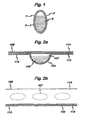
- Figure 1 shows a suitable medicament carrier in the form of a capsule.
- Figure 2a is a cross-sectional side elevation of a suitable elongate medicament blister strip.
- Figure 2b is a top perspective of the medicament blister strip illustrated in Figure 2a .
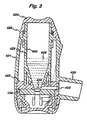
- Figure 3 shows a cross-sectional dry powder inhaler (DPI) comprising a powder reservoir.
- DPI dry powder inhaler
- Figure 4 shows a cross-sectional dry powder inhaler (DPI) comprising an elongate medicament blister strip.
- DPI dry powder inhaler
- the medicament carrier in Figure 1 is in the form of a capsule 1 comprising a wall 2 enclosing medicament powder 5.
- Medicament powder 5 is released on piercing the wall 2 of capsule 1 and may be inhaled by a patient.
- FIG 2a shows a sectional side-elevation of a single blister strip 106 comprising a pocket 107, containing dry powder 105, base 110 and lid comprising laminates 114, 115.
- the lid is composed of a metallic foil laminate 114 bound to a plastic laminate 115.
- the lid 114, 115 is hermetically sealed to base 110 by appropriate means (e.g. adhesion, welding).
- Base 110 comprises an organic polymeric plastic 103.
- a top perspective view of the blister strip 106 showing pockets 107 is illustrated in Figure 2b .
- Laminated lid 114, 115 is sealed to base 110.
- FIG. 3 shows a sectional view of a dry powder inhaler 420 for dispensing medicament in accord with the present invention.
- the inhaler 420 comprises a body 421 which defines a reservoir 423 and a reservoir cover 424.
- the reservoir contains a supply of medicament in dry powder form 405.
- the walls 423 of the reservoir, defined by the body 421, are comprised of a plastic material 403.
- Base 425 and body 421 define an aperture 430 through which powder 405 can pass from the reservoir to the dosing member 432.
- Powder 405 is guided by the walls 423 of the reservoir, which form a hopper, to the dosing member 432.
- Extending laterally from the lower end of the main body 421 is mouthpiece 435, through which the patient inhales via passage 433. If the device were intended for nasal inhalation this would be replaced by a nosepiece.
- Figure 4 shows a simplified cross-sectional plan view of a dry powder inhaler comprising an elongate medicament carrier suitable for dispensing medicament in accord with the present invention.
- the inhaler 540 dispenses unit doses of medicament powder from a medicament blister strip 506.
- the inhaler is comprised of an outer casing 544 enclosing a medicament strip 506 within body 521.
- the medicament strip may be, for example, any of those described in Figures 2a to 2b above.
- the patient uses the inhaler by holding the device to his mouth, depressing lever 538, and inhaling through mouthpiece 535.
- Depression of lever 538 activates the internal mechanism of the inhaler, such that the lid 514 and base 510 sheets of coiled medicament blister strip 506 are separated at index wheel 541 by use of contracting wheel 542 and base wheel 543.
- a unit dose of powdered medicament within blister pocket 507 is released and may be inhaled by the patient through exit port 533 and mouthpiece 535.
- Figure 5 is a schematic representation of a section through a standard metered dose inhalation device.
- the standard metered dose inhaler shown in Fig 1 comprises a housing 10 in which an aerosol canister 20 can be located.
- the housing is open at one end (which will hereinafter be considered to be the top of the device for convenience of description) and is closed at the other.
- An outlet 30 leads laterally from the closed end of the housing 10.
- the outlet 30 is in the form of a mouthpiece intended for insertion into the mouth of the patient but it may, if desired, be designed as a nozzle for insertion into the patient's nostril.
- the aerosol canister 20 comprising a neck region 21 and ferrule 22, has an outlet valve stem 40 at one end.
- This valve member can be depressed to release a measured dose from the aerosol canister or, alternatively, the valve stem 40 can be fixed and the main body of the canister can be moved relative to the valve member to release the dose.
- the aerosol canister 20 is located in the housing 10 so that one end protrudes from its open top, the canister being positioned such that the neck 21 and valve ferrule 22 are enclosed within housing 10.
- Spacer ribs may be provided inside the housing to hold the external surface of the canister 20 spaced from the internal surface of the housing 10.
- a support 50 is provided at the lower end of the housing 10 and has a passage 60 in which the valve stem 40 of the aerosol canister 20 can be located and supported.
- a second passage 70 is provided in the support 50 and is directed towards the interior of the outlet 30.
- the protruding portion of the aerosol canister 20 can be depressed to move the canister relative to the valve stem 40 to open the valve and a dose of medicament contained in the aerosol will be discharged through the passage 70 and into the outlet 30 from which it can be inhaled by a patient.
- One dose will be released from the aerosol canister each time it is fully depressed.
- the body 6 is made from a plastic material and defines a housing 9 and a dispensing nozzle 11.
- the housing 9 defines a cavity formed by a side wall and a first end wall and a second end wall 14.
- the dispensing nozzle 11 is connected to and extends away from the second end wall 14 and has an external tapering form.
Landscapes
- Health & Medical Sciences (AREA)
- Public Health (AREA)
- Chemical & Material Sciences (AREA)
- Veterinary Medicine (AREA)
- Medicinal Chemistry (AREA)
- Animal Behavior & Ethology (AREA)
- General Health & Medical Sciences (AREA)
- Pharmacology & Pharmacy (AREA)
- Life Sciences & Earth Sciences (AREA)
- Engineering & Computer Science (AREA)
- Bioinformatics & Cheminformatics (AREA)
- Epidemiology (AREA)
- Pulmonology (AREA)
- Chemical Kinetics & Catalysis (AREA)
- Organic Chemistry (AREA)
- Nuclear Medicine, Radiotherapy & Molecular Imaging (AREA)
- General Chemical & Material Sciences (AREA)
- Otolaryngology (AREA)
- Pain & Pain Management (AREA)
- Rheumatology (AREA)
- Immunology (AREA)
- Pharmaceuticals Containing Other Organic And Inorganic Compounds (AREA)
- Acyclic And Carbocyclic Compounds In Medicinal Compositions (AREA)
- Medicinal Preparation (AREA)
- Medicines That Contain Protein Lipid Enzymes And Other Medicines (AREA)
Priority Applications (1)
| Application Number | Priority Date | Filing Date | Title |
|---|---|---|---|
| EP06124055A EP1757281A3 (en) | 2002-02-04 | 2003-02-04 | Formulation for inhalation comprising a glucocorticoid and a beta 2-adrenoreceptor agonist |
Applications Claiming Priority (3)
| Application Number | Priority Date | Filing Date | Title |
|---|---|---|---|
| US66961 | 2002-02-04 | ||
| US10/066,961 US6537983B1 (en) | 2001-04-07 | 2002-02-04 | Anti-inflammatory androstane derivatives |
| PCT/GB2003/000485 WO2003066033A1 (en) | 2002-02-04 | 2003-02-04 | Formulation for inhalation comprising a glucocorticoid and a beta 2-adrenoreceptor agonist |
Related Child Applications (2)
| Application Number | Title | Priority Date | Filing Date |
|---|---|---|---|
| EP06124055A Division EP1757281A3 (en) | 2002-02-04 | 2003-02-04 | Formulation for inhalation comprising a glucocorticoid and a beta 2-adrenoreceptor agonist |
| EP06124055.2 Division-Into | 2006-11-14 |
Publications (3)
| Publication Number | Publication Date |
|---|---|
| EP1471895A1 EP1471895A1 (en) | 2004-11-03 |
| EP1471895B1 EP1471895B1 (en) | 2008-05-28 |
| EP1471895B2 true EP1471895B2 (en) | 2012-03-14 |
Family
ID=27732220
Family Applications (1)
| Application Number | Title | Priority Date | Filing Date |
|---|---|---|---|
| EP03702732A Expired - Lifetime EP1471895B2 (en) | 2002-02-04 | 2003-02-04 | Formulation for inhalation comprising a glucocorticoid and a beta 2-adrenoreceptor agonist |
Country Status (7)
| Country | Link |
|---|---|
| EP (1) | EP1471895B2 (enExample) |
| JP (1) | JP2005523268A (enExample) |
| AT (1) | ATE396716T1 (enExample) |
| AU (1) | AU2003205855A1 (enExample) |
| DE (1) | DE60321311D1 (enExample) |
| ES (1) | ES2305438T5 (enExample) |
| WO (1) | WO2003066033A1 (enExample) |
Families Citing this family (3)
| Publication number | Priority date | Publication date | Assignee | Title |
|---|---|---|---|---|
| US6759398B2 (en) * | 2000-08-05 | 2004-07-06 | Smithkline Beecham Corporation | Anti-inflammatory androstane derivative |
| GB2389530B (en) | 2002-06-14 | 2007-01-10 | Cipla Ltd | Pharmaceutical compositions |
| AU2011315315B2 (en) | 2010-10-12 | 2016-08-18 | Cipla Limited | Pharmaceutical composition |
Citations (3)
| Publication number | Priority date | Publication date | Assignee | Title |
|---|---|---|---|---|
| EP0416951A1 (en) † | 1989-09-08 | 1991-03-13 | Glaxo Group Limited | Medicaments comprising salmeterol and fluticason |
| WO2000048587A1 (en) † | 1999-02-18 | 2000-08-24 | Novartis Ag | Combinations of formoterol and fluticasone propionate for asthma |
| US20030045512A1 (en) † | 2001-04-07 | 2003-03-06 | Keith Biggadike | Novel anti-inflammatory androstane derivatives |
Family Cites Families (4)
| Publication number | Priority date | Publication date | Assignee | Title |
|---|---|---|---|---|
| CA2417826A1 (en) * | 2000-08-05 | 2002-02-14 | Glaxo Group Limited | 17.beta.-carbothioate 17.alpha.-arylcarbonyloxyloxy androstane derivative as anti-inflammatory agents |
| GB0103630D0 (en) * | 2001-02-14 | 2001-03-28 | Glaxo Group Ltd | Chemical compounds |
| WO2002070490A1 (en) * | 2001-03-08 | 2002-09-12 | Glaxo Group Limited | Agonists of beta-adrenoceptors |
| EP1370521B1 (en) * | 2001-03-22 | 2007-12-19 | Glaxo Group Limited | Formanilide derivatives as beta2-adrenoreceptor agonists |
-
2003
- 2003-02-04 EP EP03702732A patent/EP1471895B2/en not_active Expired - Lifetime
- 2003-02-04 AU AU2003205855A patent/AU2003205855A1/en not_active Abandoned
- 2003-02-04 AT AT03702732T patent/ATE396716T1/de not_active IP Right Cessation
- 2003-02-04 DE DE60321311T patent/DE60321311D1/de not_active Expired - Lifetime
- 2003-02-04 ES ES03702732T patent/ES2305438T5/es not_active Expired - Lifetime
- 2003-02-04 JP JP2003565457A patent/JP2005523268A/ja not_active Withdrawn
- 2003-02-04 WO PCT/GB2003/000485 patent/WO2003066033A1/en not_active Ceased
Patent Citations (3)
| Publication number | Priority date | Publication date | Assignee | Title |
|---|---|---|---|---|
| EP0416951A1 (en) † | 1989-09-08 | 1991-03-13 | Glaxo Group Limited | Medicaments comprising salmeterol and fluticason |
| WO2000048587A1 (en) † | 1999-02-18 | 2000-08-24 | Novartis Ag | Combinations of formoterol and fluticasone propionate for asthma |
| US20030045512A1 (en) † | 2001-04-07 | 2003-03-06 | Keith Biggadike | Novel anti-inflammatory androstane derivatives |
Non-Patent Citations (6)
Also Published As
| Publication number | Publication date |
|---|---|
| EP1471895A1 (en) | 2004-11-03 |
| JP2005523268A (ja) | 2005-08-04 |
| ES2305438T3 (es) | 2008-11-01 |
| WO2003066033A1 (en) | 2003-08-14 |
| ATE396716T1 (de) | 2008-06-15 |
| AU2003205855A1 (en) | 2003-09-02 |
| DE60321311D1 (de) | 2008-07-10 |
| ES2305438T5 (es) | 2012-06-05 |
| EP1471895B1 (en) | 2008-05-28 |
Similar Documents
| Publication | Publication Date | Title |
|---|---|---|
| EP2363121A1 (en) | Pharmaceutical formulation for administration by inhalation comprising an androstane derivative and a beta-2-adrenoreceptor agonist for the treatment of inflammatory and allergic conditions | |
| EP1775305B1 (en) | 6.Alpha.,9.alpha.-difluoro-17.alpha.-'(2-furanylcarboxyl) oxy]-11.beta.-hydroxy-16.alpha.-methyl-3-oxo-androst-1,4,-diene-17-carbothiotic acid s-fluoromethyl ester as an anti-inflammatory agent | |
| EP1471896B1 (en) | Formulations for inhalation | |
| US6878698B2 (en) | Anti-inflammatory androstane derivatives | |
| AU2001276497A1 (en) | 17.beta.-carbothioate 17.alpha.-arylcarbonyloxyloxy androstane derivative as anti-inflammatory agents | |
| US20120321565A1 (en) | Pharmaceutical compositions comprising 17alpha-furanylesters of 17beta-carbothiate androstanes with a muscarinic receptor antagonist | |
| US6858593B2 (en) | Anti-inflammatory androstane derivative compositions | |
| US7132532B2 (en) | Compounds useful in the manufacture of an anti-inflammatory androstane derivative | |
| EP1471895B2 (en) | Formulation for inhalation comprising a glucocorticoid and a beta 2-adrenoreceptor agonist | |
| US20050175545A1 (en) | Formulation for inhalation comprising a glucocorticoid and a beta 2-adrenoreceptor agonist | |
| EP1757281A2 (en) | Formulation for inhalation comprising a glucocorticoid and a beta 2-adrenoreceptor agonist |
Legal Events
| Date | Code | Title | Description |
|---|---|---|---|
| PUAI | Public reference made under article 153(3) epc to a published international application that has entered the european phase |
Free format text: ORIGINAL CODE: 0009012 |
|
| 17P | Request for examination filed |
Effective date: 20040727 |
|
| AK | Designated contracting states |
Kind code of ref document: A1 Designated state(s): AT BE BG CH CY CZ DE DK EE ES FI FR GB GR HU IE IT LI LU MC NL PT SE SI SK TR |
|
| AX | Request for extension of the european patent |
Extension state: AL LT LV MK RO |
|
| 17Q | First examination report despatched |
Effective date: 20050314 |
|
| 17Q | First examination report despatched |
Effective date: 20050314 |
|
| GRAP | Despatch of communication of intention to grant a patent |
Free format text: ORIGINAL CODE: EPIDOSNIGR1 |
|
| GRAS | Grant fee paid |
Free format text: ORIGINAL CODE: EPIDOSNIGR3 |
|
| GRAA | (expected) grant |
Free format text: ORIGINAL CODE: 0009210 |
|
| AK | Designated contracting states |
Kind code of ref document: B1 Designated state(s): AT BE BG CH CY CZ DE DK EE ES FI FR GB GR HU IE IT LI LU MC NL PT SE SI SK TR |
|
| AX | Request for extension of the european patent |
Extension state: LT LV RO |
|
| REG | Reference to a national code |
Ref country code: GB Ref legal event code: FG4D |
|
| REG | Reference to a national code |
Ref country code: CH Ref legal event code: EP |
|
| REF | Corresponds to: |
Ref document number: 60321311 Country of ref document: DE Date of ref document: 20080710 Kind code of ref document: P |
|
| REG | Reference to a national code |
Ref country code: IE Ref legal event code: FG4D |
|
| PG25 | Lapsed in a contracting state [announced via postgrant information from national office to epo] |
Ref country code: SI Free format text: LAPSE BECAUSE OF FAILURE TO SUBMIT A TRANSLATION OF THE DESCRIPTION OR TO PAY THE FEE WITHIN THE PRESCRIBED TIME-LIMIT Effective date: 20080528 |
|
| PG25 | Lapsed in a contracting state [announced via postgrant information from national office to epo] |
Ref country code: FI Free format text: LAPSE BECAUSE OF FAILURE TO SUBMIT A TRANSLATION OF THE DESCRIPTION OR TO PAY THE FEE WITHIN THE PRESCRIBED TIME-LIMIT Effective date: 20080528 |
|
| REG | Reference to a national code |
Ref country code: ES Ref legal event code: FG2A Ref document number: 2305438 Country of ref document: ES Kind code of ref document: T3 |
|
| PG25 | Lapsed in a contracting state [announced via postgrant information from national office to epo] |
Ref country code: AT Free format text: LAPSE BECAUSE OF FAILURE TO SUBMIT A TRANSLATION OF THE DESCRIPTION OR TO PAY THE FEE WITHIN THE PRESCRIBED TIME-LIMIT Effective date: 20080528 Ref country code: NL Free format text: LAPSE BECAUSE OF FAILURE TO SUBMIT A TRANSLATION OF THE DESCRIPTION OR TO PAY THE FEE WITHIN THE PRESCRIBED TIME-LIMIT Effective date: 20080528 |
|
| NLV1 | Nl: lapsed or annulled due to failure to fulfill the requirements of art. 29p and 29m of the patents act | ||
| PG25 | Lapsed in a contracting state [announced via postgrant information from national office to epo] |
Ref country code: CZ Free format text: LAPSE BECAUSE OF FAILURE TO SUBMIT A TRANSLATION OF THE DESCRIPTION OR TO PAY THE FEE WITHIN THE PRESCRIBED TIME-LIMIT Effective date: 20080528 Ref country code: PT Free format text: LAPSE BECAUSE OF FAILURE TO SUBMIT A TRANSLATION OF THE DESCRIPTION OR TO PAY THE FEE WITHIN THE PRESCRIBED TIME-LIMIT Effective date: 20081028 Ref country code: SE Free format text: LAPSE BECAUSE OF FAILURE TO SUBMIT A TRANSLATION OF THE DESCRIPTION OR TO PAY THE FEE WITHIN THE PRESCRIBED TIME-LIMIT Effective date: 20080828 Ref country code: DK Free format text: LAPSE BECAUSE OF FAILURE TO SUBMIT A TRANSLATION OF THE DESCRIPTION OR TO PAY THE FEE WITHIN THE PRESCRIBED TIME-LIMIT Effective date: 20080528 |
|
| PG25 | Lapsed in a contracting state [announced via postgrant information from national office to epo] |
Ref country code: SK Free format text: LAPSE BECAUSE OF FAILURE TO SUBMIT A TRANSLATION OF THE DESCRIPTION OR TO PAY THE FEE WITHIN THE PRESCRIBED TIME-LIMIT Effective date: 20080528 |
|
| PLBI | Opposition filed |
Free format text: ORIGINAL CODE: 0009260 |
|
| 26 | Opposition filed |
Opponent name: NORTON HEALTHCARE LIMITED Effective date: 20090227 |
|
| PLAX | Notice of opposition and request to file observation + time limit sent |
Free format text: ORIGINAL CODE: EPIDOSNOBS2 |
|
| PG25 | Lapsed in a contracting state [announced via postgrant information from national office to epo] |
Ref country code: EE Free format text: LAPSE BECAUSE OF FAILURE TO SUBMIT A TRANSLATION OF THE DESCRIPTION OR TO PAY THE FEE WITHIN THE PRESCRIBED TIME-LIMIT Effective date: 20080528 Ref country code: BG Free format text: LAPSE BECAUSE OF FAILURE TO SUBMIT A TRANSLATION OF THE DESCRIPTION OR TO PAY THE FEE WITHIN THE PRESCRIBED TIME-LIMIT Effective date: 20080828 |
|
| PLAF | Information modified related to communication of a notice of opposition and request to file observations + time limit |
Free format text: ORIGINAL CODE: EPIDOSCOBS2 |
|
| PG25 | Lapsed in a contracting state [announced via postgrant information from national office to epo] |
Ref country code: MC Free format text: LAPSE BECAUSE OF NON-PAYMENT OF DUE FEES Effective date: 20090228 |
|
| REG | Reference to a national code |
Ref country code: CH Ref legal event code: PL |
|
| PLAB | Opposition data, opponent's data or that of the opponent's representative modified |
Free format text: ORIGINAL CODE: 0009299OPPO |
|
| PG25 | Lapsed in a contracting state [announced via postgrant information from national office to epo] |
Ref country code: CH Free format text: LAPSE BECAUSE OF NON-PAYMENT OF DUE FEES Effective date: 20090228 Ref country code: LI Free format text: LAPSE BECAUSE OF NON-PAYMENT OF DUE FEES Effective date: 20090228 |
|
| PLBB | Reply of patent proprietor to notice(s) of opposition received |
Free format text: ORIGINAL CODE: EPIDOSNOBS3 |
|
| PG25 | Lapsed in a contracting state [announced via postgrant information from national office to epo] |
Ref country code: IE Free format text: LAPSE BECAUSE OF NON-PAYMENT OF DUE FEES Effective date: 20090204 |
|
| PG25 | Lapsed in a contracting state [announced via postgrant information from national office to epo] |
Ref country code: GR Free format text: LAPSE BECAUSE OF FAILURE TO SUBMIT A TRANSLATION OF THE DESCRIPTION OR TO PAY THE FEE WITHIN THE PRESCRIBED TIME-LIMIT Effective date: 20080829 |
|
| PLAY | Examination report in opposition despatched + time limit |
Free format text: ORIGINAL CODE: EPIDOSNORE2 |
|
| PLBC | Reply to examination report in opposition received |
Free format text: ORIGINAL CODE: EPIDOSNORE3 |
|
| PG25 | Lapsed in a contracting state [announced via postgrant information from national office to epo] |
Ref country code: LU Free format text: LAPSE BECAUSE OF NON-PAYMENT OF DUE FEES Effective date: 20090204 |
|
| PG25 | Lapsed in a contracting state [announced via postgrant information from national office to epo] |
Ref country code: HU Free format text: LAPSE BECAUSE OF FAILURE TO SUBMIT A TRANSLATION OF THE DESCRIPTION OR TO PAY THE FEE WITHIN THE PRESCRIBED TIME-LIMIT Effective date: 20081129 |
|
| PG25 | Lapsed in a contracting state [announced via postgrant information from national office to epo] |
Ref country code: TR Free format text: LAPSE BECAUSE OF FAILURE TO SUBMIT A TRANSLATION OF THE DESCRIPTION OR TO PAY THE FEE WITHIN THE PRESCRIBED TIME-LIMIT Effective date: 20080528 |
|
| PG25 | Lapsed in a contracting state [announced via postgrant information from national office to epo] |
Ref country code: CY Free format text: LAPSE BECAUSE OF FAILURE TO SUBMIT A TRANSLATION OF THE DESCRIPTION OR TO PAY THE FEE WITHIN THE PRESCRIBED TIME-LIMIT Effective date: 20080528 |
|
| PUAH | Patent maintained in amended form |
Free format text: ORIGINAL CODE: 0009272 |
|
| STAA | Information on the status of an ep patent application or granted ep patent |
Free format text: STATUS: PATENT MAINTAINED AS AMENDED |
|
| 27A | Patent maintained in amended form |
Effective date: 20120314 |
|
| AK | Designated contracting states |
Kind code of ref document: B2 Designated state(s): AT BE BG CH CY CZ DE DK EE ES FI FR GB GR HU IE IT LI LU MC NL PT SE SI SK TR |
|
| AX | Request for extension of the european patent |
Extension state: LT LV RO |
|
| PGFP | Annual fee paid to national office [announced via postgrant information from national office to epo] |
Ref country code: FR Payment date: 20120203 Year of fee payment: 10 |
|
| REG | Reference to a national code |
Ref country code: DE Ref legal event code: R102 Ref document number: 60321311 Country of ref document: DE Effective date: 20120314 |
|
| PGFP | Annual fee paid to national office [announced via postgrant information from national office to epo] |
Ref country code: DE Payment date: 20120229 Year of fee payment: 10 |
|
| REG | Reference to a national code |
Ref country code: ES Ref legal event code: DC2A Ref document number: 2305438 Country of ref document: ES Kind code of ref document: T5 Effective date: 20120605 |
|
| PGFP | Annual fee paid to national office [announced via postgrant information from national office to epo] |
Ref country code: BE Payment date: 20120312 Year of fee payment: 10 Ref country code: IT Payment date: 20120216 Year of fee payment: 10 Ref country code: GB Payment date: 20120127 Year of fee payment: 10 |
|
| PGFP | Annual fee paid to national office [announced via postgrant information from national office to epo] |
Ref country code: ES Payment date: 20120223 Year of fee payment: 10 |
|
| BERE | Be: lapsed |
Owner name: GLAXO GROUP LTD Effective date: 20130228 |
|
| GBPC | Gb: european patent ceased through non-payment of renewal fee |
Effective date: 20130204 |
|
| REG | Reference to a national code |
Ref country code: FR Ref legal event code: ST Effective date: 20131031 |
|
| REG | Reference to a national code |
Ref country code: DE Ref legal event code: R119 Ref document number: 60321311 Country of ref document: DE Effective date: 20130903 |
|
| PG25 | Lapsed in a contracting state [announced via postgrant information from national office to epo] |
Ref country code: IT Free format text: LAPSE BECAUSE OF NON-PAYMENT OF DUE FEES Effective date: 20130204 |
|
| PG25 | Lapsed in a contracting state [announced via postgrant information from national office to epo] |
Ref country code: BE Free format text: LAPSE BECAUSE OF NON-PAYMENT OF DUE FEES Effective date: 20130228 Ref country code: FR Free format text: LAPSE BECAUSE OF NON-PAYMENT OF DUE FEES Effective date: 20130228 Ref country code: GB Free format text: LAPSE BECAUSE OF NON-PAYMENT OF DUE FEES Effective date: 20130204 Ref country code: DE Free format text: LAPSE BECAUSE OF NON-PAYMENT OF DUE FEES Effective date: 20130903 |
|
| REG | Reference to a national code |
Ref country code: ES Ref legal event code: FD2A Effective date: 20150709 |
|
| PG25 | Lapsed in a contracting state [announced via postgrant information from national office to epo] |
Ref country code: ES Free format text: LAPSE BECAUSE OF NON-PAYMENT OF DUE FEES Effective date: 20130205 |