EP1471222A1 - Regenerationsverfahren für einen Speicherkatalysator einer Brennkraftmaschine - Google Patents
Regenerationsverfahren für einen Speicherkatalysator einer Brennkraftmaschine Download PDFInfo
- Publication number
- EP1471222A1 EP1471222A1 EP04101084A EP04101084A EP1471222A1 EP 1471222 A1 EP1471222 A1 EP 1471222A1 EP 04101084 A EP04101084 A EP 04101084A EP 04101084 A EP04101084 A EP 04101084A EP 1471222 A1 EP1471222 A1 EP 1471222A1
- Authority
- EP
- European Patent Office
- Prior art keywords
- regeneration
- catalytic converter
- storage
- storage catalytic
- internal combustion
- Prior art date
- Legal status (The legal status is an assumption and is not a legal conclusion. Google has not performed a legal analysis and makes no representation as to the accuracy of the status listed.)
- Granted
Links
Images


Classifications
-
- F—MECHANICAL ENGINEERING; LIGHTING; HEATING; WEAPONS; BLASTING
- F01—MACHINES OR ENGINES IN GENERAL; ENGINE PLANTS IN GENERAL; STEAM ENGINES
- F01N—GAS-FLOW SILENCERS OR EXHAUST APPARATUS FOR MACHINES OR ENGINES IN GENERAL; GAS-FLOW SILENCERS OR EXHAUST APPARATUS FOR INTERNAL-COMBUSTION ENGINES
- F01N3/00—Exhaust or silencing apparatus having means for purifying, rendering innocuous, or otherwise treating exhaust
- F01N3/08—Exhaust or silencing apparatus having means for purifying, rendering innocuous, or otherwise treating exhaust for rendering innocuous
- F01N3/0807—Exhaust or silencing apparatus having means for purifying, rendering innocuous, or otherwise treating exhaust for rendering innocuous by using absorbents or adsorbents
- F01N3/0828—Exhaust or silencing apparatus having means for purifying, rendering innocuous, or otherwise treating exhaust for rendering innocuous by using absorbents or adsorbents characterised by the absorbed or adsorbed substances
- F01N3/0842—Nitrogen oxides
-
- F—MECHANICAL ENGINEERING; LIGHTING; HEATING; WEAPONS; BLASTING
- F01—MACHINES OR ENGINES IN GENERAL; ENGINE PLANTS IN GENERAL; STEAM ENGINES
- F01N—GAS-FLOW SILENCERS OR EXHAUST APPARATUS FOR MACHINES OR ENGINES IN GENERAL; GAS-FLOW SILENCERS OR EXHAUST APPARATUS FOR INTERNAL-COMBUSTION ENGINES
- F01N11/00—Monitoring or diagnostic devices for exhaust-gas treatment apparatus
-
- F—MECHANICAL ENGINEERING; LIGHTING; HEATING; WEAPONS; BLASTING
- F01—MACHINES OR ENGINES IN GENERAL; ENGINE PLANTS IN GENERAL; STEAM ENGINES
- F01N—GAS-FLOW SILENCERS OR EXHAUST APPARATUS FOR MACHINES OR ENGINES IN GENERAL; GAS-FLOW SILENCERS OR EXHAUST APPARATUS FOR INTERNAL-COMBUSTION ENGINES
- F01N11/00—Monitoring or diagnostic devices for exhaust-gas treatment apparatus
- F01N11/002—Monitoring or diagnostic devices for exhaust-gas treatment apparatus the diagnostic devices measuring or estimating temperature or pressure in, or downstream of the exhaust apparatus
-
- F—MECHANICAL ENGINEERING; LIGHTING; HEATING; WEAPONS; BLASTING
- F01—MACHINES OR ENGINES IN GENERAL; ENGINE PLANTS IN GENERAL; STEAM ENGINES
- F01N—GAS-FLOW SILENCERS OR EXHAUST APPARATUS FOR MACHINES OR ENGINES IN GENERAL; GAS-FLOW SILENCERS OR EXHAUST APPARATUS FOR INTERNAL-COMBUSTION ENGINES
- F01N11/00—Monitoring or diagnostic devices for exhaust-gas treatment apparatus
- F01N11/007—Monitoring or diagnostic devices for exhaust-gas treatment apparatus the diagnostic devices measuring oxygen or air concentration downstream of the exhaust apparatus
-
- F—MECHANICAL ENGINEERING; LIGHTING; HEATING; WEAPONS; BLASTING
- F01—MACHINES OR ENGINES IN GENERAL; ENGINE PLANTS IN GENERAL; STEAM ENGINES
- F01N—GAS-FLOW SILENCERS OR EXHAUST APPARATUS FOR MACHINES OR ENGINES IN GENERAL; GAS-FLOW SILENCERS OR EXHAUST APPARATUS FOR INTERNAL-COMBUSTION ENGINES
- F01N3/00—Exhaust or silencing apparatus having means for purifying, rendering innocuous, or otherwise treating exhaust
- F01N3/08—Exhaust or silencing apparatus having means for purifying, rendering innocuous, or otherwise treating exhaust for rendering innocuous
- F01N3/0807—Exhaust or silencing apparatus having means for purifying, rendering innocuous, or otherwise treating exhaust for rendering innocuous by using absorbents or adsorbents
- F01N3/0814—Exhaust or silencing apparatus having means for purifying, rendering innocuous, or otherwise treating exhaust for rendering innocuous by using absorbents or adsorbents combined with catalytic converters, e.g. NOx absorption/storage reduction catalysts
-
- F—MECHANICAL ENGINEERING; LIGHTING; HEATING; WEAPONS; BLASTING
- F01—MACHINES OR ENGINES IN GENERAL; ENGINE PLANTS IN GENERAL; STEAM ENGINES
- F01N—GAS-FLOW SILENCERS OR EXHAUST APPARATUS FOR MACHINES OR ENGINES IN GENERAL; GAS-FLOW SILENCERS OR EXHAUST APPARATUS FOR INTERNAL-COMBUSTION ENGINES
- F01N3/00—Exhaust or silencing apparatus having means for purifying, rendering innocuous, or otherwise treating exhaust
- F01N3/08—Exhaust or silencing apparatus having means for purifying, rendering innocuous, or otherwise treating exhaust for rendering innocuous
- F01N3/0807—Exhaust or silencing apparatus having means for purifying, rendering innocuous, or otherwise treating exhaust for rendering innocuous by using absorbents or adsorbents
- F01N3/0871—Exhaust or silencing apparatus having means for purifying, rendering innocuous, or otherwise treating exhaust for rendering innocuous by using absorbents or adsorbents using means for controlling, e.g. purging, the absorbents or adsorbents
-
- F—MECHANICAL ENGINEERING; LIGHTING; HEATING; WEAPONS; BLASTING
- F02—COMBUSTION ENGINES; HOT-GAS OR COMBUSTION-PRODUCT ENGINE PLANTS
- F02D—CONTROLLING COMBUSTION ENGINES
- F02D41/00—Electrical control of supply of combustible mixture or its constituents
- F02D41/02—Circuit arrangements for generating control signals
- F02D41/021—Introducing corrections for particular conditions exterior to the engine
- F02D41/0235—Introducing corrections for particular conditions exterior to the engine in relation with the state of the exhaust gas treating apparatus
- F02D41/027—Introducing corrections for particular conditions exterior to the engine in relation with the state of the exhaust gas treating apparatus to purge or regenerate the exhaust gas treating apparatus
-
- F—MECHANICAL ENGINEERING; LIGHTING; HEATING; WEAPONS; BLASTING
- F02—COMBUSTION ENGINES; HOT-GAS OR COMBUSTION-PRODUCT ENGINE PLANTS
- F02D—CONTROLLING COMBUSTION ENGINES
- F02D41/00—Electrical control of supply of combustible mixture or its constituents
- F02D41/02—Circuit arrangements for generating control signals
- F02D41/021—Introducing corrections for particular conditions exterior to the engine
- F02D41/0235—Introducing corrections for particular conditions exterior to the engine in relation with the state of the exhaust gas treating apparatus
- F02D41/027—Introducing corrections for particular conditions exterior to the engine in relation with the state of the exhaust gas treating apparatus to purge or regenerate the exhaust gas treating apparatus
- F02D41/0275—Introducing corrections for particular conditions exterior to the engine in relation with the state of the exhaust gas treating apparatus to purge or regenerate the exhaust gas treating apparatus the exhaust gas treating apparatus being a NOx trap or adsorbent
-
- F—MECHANICAL ENGINEERING; LIGHTING; HEATING; WEAPONS; BLASTING
- F02—COMBUSTION ENGINES; HOT-GAS OR COMBUSTION-PRODUCT ENGINE PLANTS
- F02D—CONTROLLING COMBUSTION ENGINES
- F02D41/00—Electrical control of supply of combustible mixture or its constituents
- F02D41/02—Circuit arrangements for generating control signals
- F02D41/14—Introducing closed-loop corrections
- F02D41/1438—Introducing closed-loop corrections using means for determining characteristics of the combustion gases; Sensors therefor
- F02D41/1444—Introducing closed-loop corrections using means for determining characteristics of the combustion gases; Sensors therefor characterised by the characteristics of the combustion gases
- F02D41/1454—Introducing closed-loop corrections using means for determining characteristics of the combustion gases; Sensors therefor characterised by the characteristics of the combustion gases the characteristics being an oxygen content or concentration or the air-fuel ratio
-
- F—MECHANICAL ENGINEERING; LIGHTING; HEATING; WEAPONS; BLASTING
- F01—MACHINES OR ENGINES IN GENERAL; ENGINE PLANTS IN GENERAL; STEAM ENGINES
- F01N—GAS-FLOW SILENCERS OR EXHAUST APPARATUS FOR MACHINES OR ENGINES IN GENERAL; GAS-FLOW SILENCERS OR EXHAUST APPARATUS FOR INTERNAL-COMBUSTION ENGINES
- F01N2550/00—Monitoring or diagnosing the deterioration of exhaust systems
- F01N2550/03—Monitoring or diagnosing the deterioration of exhaust systems of sorbing activity of adsorbents or absorbents
-
- F—MECHANICAL ENGINEERING; LIGHTING; HEATING; WEAPONS; BLASTING
- F01—MACHINES OR ENGINES IN GENERAL; ENGINE PLANTS IN GENERAL; STEAM ENGINES
- F01N—GAS-FLOW SILENCERS OR EXHAUST APPARATUS FOR MACHINES OR ENGINES IN GENERAL; GAS-FLOW SILENCERS OR EXHAUST APPARATUS FOR INTERNAL-COMBUSTION ENGINES
- F01N2560/00—Exhaust systems with means for detecting or measuring exhaust gas components or characteristics
- F01N2560/02—Exhaust systems with means for detecting or measuring exhaust gas components or characteristics the means being an exhaust gas sensor
- F01N2560/025—Exhaust systems with means for detecting or measuring exhaust gas components or characteristics the means being an exhaust gas sensor for measuring or detecting O2, e.g. lambda sensors
-
- F—MECHANICAL ENGINEERING; LIGHTING; HEATING; WEAPONS; BLASTING
- F01—MACHINES OR ENGINES IN GENERAL; ENGINE PLANTS IN GENERAL; STEAM ENGINES
- F01N—GAS-FLOW SILENCERS OR EXHAUST APPARATUS FOR MACHINES OR ENGINES IN GENERAL; GAS-FLOW SILENCERS OR EXHAUST APPARATUS FOR INTERNAL-COMBUSTION ENGINES
- F01N2560/00—Exhaust systems with means for detecting or measuring exhaust gas components or characteristics
- F01N2560/02—Exhaust systems with means for detecting or measuring exhaust gas components or characteristics the means being an exhaust gas sensor
- F01N2560/026—Exhaust systems with means for detecting or measuring exhaust gas components or characteristics the means being an exhaust gas sensor for measuring or detecting NOx
-
- F—MECHANICAL ENGINEERING; LIGHTING; HEATING; WEAPONS; BLASTING
- F01—MACHINES OR ENGINES IN GENERAL; ENGINE PLANTS IN GENERAL; STEAM ENGINES
- F01N—GAS-FLOW SILENCERS OR EXHAUST APPARATUS FOR MACHINES OR ENGINES IN GENERAL; GAS-FLOW SILENCERS OR EXHAUST APPARATUS FOR INTERNAL-COMBUSTION ENGINES
- F01N2560/00—Exhaust systems with means for detecting or measuring exhaust gas components or characteristics
- F01N2560/06—Exhaust systems with means for detecting or measuring exhaust gas components or characteristics the means being a temperature sensor
-
- F—MECHANICAL ENGINEERING; LIGHTING; HEATING; WEAPONS; BLASTING
- F01—MACHINES OR ENGINES IN GENERAL; ENGINE PLANTS IN GENERAL; STEAM ENGINES
- F01N—GAS-FLOW SILENCERS OR EXHAUST APPARATUS FOR MACHINES OR ENGINES IN GENERAL; GAS-FLOW SILENCERS OR EXHAUST APPARATUS FOR INTERNAL-COMBUSTION ENGINES
- F01N2560/00—Exhaust systems with means for detecting or measuring exhaust gas components or characteristics
- F01N2560/14—Exhaust systems with means for detecting or measuring exhaust gas components or characteristics having more than one sensor of one kind
-
- Y—GENERAL TAGGING OF NEW TECHNOLOGICAL DEVELOPMENTS; GENERAL TAGGING OF CROSS-SECTIONAL TECHNOLOGIES SPANNING OVER SEVERAL SECTIONS OF THE IPC; TECHNICAL SUBJECTS COVERED BY FORMER USPC CROSS-REFERENCE ART COLLECTIONS [XRACs] AND DIGESTS
- Y02—TECHNOLOGIES OR APPLICATIONS FOR MITIGATION OR ADAPTATION AGAINST CLIMATE CHANGE
- Y02T—CLIMATE CHANGE MITIGATION TECHNOLOGIES RELATED TO TRANSPORTATION
- Y02T10/00—Road transport of goods or passengers
- Y02T10/10—Internal combustion engine [ICE] based vehicles
- Y02T10/40—Engine management systems
Definitions
- the invention relates to a regeneration method for a Storage catalytic converter of an internal combustion engine according to the preamble of claim 1.
- Modern internal combustion engines have a controlled three-way catalytic converter and an NO x storage catalytic converter for exhaust gas purification.
- the three-way catalyst is also referred to as a TWC (TWC - T hree W ay C atalyst) and serves as a precatalyst for the reduction of carbon monoxide and hydrocarbon in the exhaust gas of the internal combustion engine.
- the NO x storage catalytic converter is arranged downstream of the TWC catalytic converter and has the task of absorbing and temporarily storing nitrogen oxides from the exhaust gas in the stoichiometric mode.
- the storage capacity of the NO x storage catalyst is limited, so that the NO x storage catalyst must be regenerated in time before the exhaustion of its storage capacity to prevent breakdown of the NO x storage catalyst, as this leads to an increase in NO x emissions would.
- the regeneration of the NO x storage catalytic converter can take place by a temporary enrichment of the internal combustion engine mixture composition, so that the stored nitrogen oxides are converted into less environmentally harmful compounds such as N 2 and H 2 O.
- the problem with such an exhaust gas purification system with a NO x storage catalytic converter is the fact that the NO x storage catalyst loses storage capacity with increasing operating time. This loss of storage capacity rests on the one hand on a poisoning of the NO x storage catalytic converter by the sulfur contained in commercial fuels today and on the other to a thermal aging of the NO x storage catalytic converter.
- sulfur oxides are formed which are bound and stored in the NO x storage catalytic converter such as nitrogen oxides on the catalytically active surface.
- the sulfur compounds stored in this way in the NO x storage catalytic converter are chemically substantially more stable than the NO x compounds, so that the stored sulfur compounds are not removed from the NO x storage catalytic converter during the usual regeneration of the NO x storage catalytic converter.
- the absolute NO x storage capacity of the NO x storage catalytic converter constantly decreases.
- a known method for determining the storage capacity of the NO x storage catalytic converter is based on the so-called regeneration agent integral, ie the regeneration agent provided during the regeneration up to a fat jump of an exhaust gas probe arranged downstream of the NO x storage catalytic converter.
- the so-called regenerating agent is the Anfettungsüberschuss in the exhaust gas of the internal combustion engine, which leads into the NO x storing catalyst to the NO x regeneration. It is assumed here that the regeneration agent integral is proportional to the previously stored NO x amount. A reduction in the regeneration agent integral then indicates an aging-related decrease in the NO x storage capacity of the NO x storage catalytic converter.
- the NO x concentration gradient over the NO x storage catalyst is evaluated at the time of regeneration initiation, wherein from the NO x concentration gradient of the loading level of the NO x storage catalytic converter and therefrom the absolute NO x load is determined.
- the stored NO x amount is additionally calculated for an unaltered NO x storage catalytic converter.
- the NO x charge value determined from the concentration gradient is then compared to the modeled NO x load value, the difference between these two values reflecting the age-related loss of storage capacity.
- the two methods described above for determining the state of aging of the NOx storage catalytic converter have the prerequisite that the NO x storage catalytic converter is completely regenerated at the beginning of the process. This means that no more nitrogen oxides are bound to the catalytically active surfaces of the NO x storage catalytic converter. This complete evacuation prior to determining the aging condition of the NO x storage catalyst is important because residual loading of the NO x storage catalyst with nitrogen oxides would otherwise be misdiagnosed as sulfur poisoning or thermal aging.
- a disadvantage of the known regeneration method for a NO x storage catalytic converter is therefore the fact that the NO x storage catalyst is usually only partially emptied, which leads to errors in a subsequent determination of the aging state of the NO x storage catalytic converter.
- the invention is therefore based on the object, a regeneration process to create for a storage catalyst the error in a subsequent determination of the state of aging avoids.
- the invention includes the general technical teaching, in the regeneration of the storage catalyst the degree of regeneration to determine.
- the inventive determination of the Degree of regeneration of the storage catalyst also the possibility only then the aging state of the storage catalyst to determine if this is fully regenerated. at an incomplete regeneration of the storage catalytic converter On the other hand, it can be based on a determination of the state of aging be waived.
- the regeneration of the storage catalytic converter and the optionally required completion of the regeneration of the storage catalytic converter are preferably carried out by an operation of the internal combustion engine with a sub-stoichiometric air ratio ⁇ , ie with a mixture enrichment.
- ⁇ sub-stoichiometric air ratio
- the nitrogen compounds stored in the storage catalyst are released from the catalytically active surface of the storage catalyst and converted into harmless chemical compounds, such as N 2 and H 2 O.
- the invention is in terms of the regeneration of Storage catalytic converter not limited to a mixture enrichment, but also feasible with other regeneration methods.
- the degree of regeneration of the storage catalyst is preferably the oxygen concentration in the exhaust gas of Internal combustion engine during the regeneration of the storage catalytic converter measured.
- an exhaust gas probe can be used, between the internal combustion engine and a pre-catalyst is arranged.
- an exhaust gas probe for measuring the oxygen concentration in the exhaust gas the internal combustion engine is used an exhaust gas probe, between the pre-catalyst and the storage catalyst is arranged.
- the Oxygen concentration downstream of the storage catalyst to measure by an exhaust gas probe. The invention is thus with regard to the measuring point for the measurement of the oxygen concentration as a basis for the determination of regeneration onsgrades of the storage catalyst not determine one Measuring point limited.
- the oxygen concentration measured in this way becomes then preferably with a designated as a fat threshold Limit value compared to a so-called fat jump in the exhaust to recognize the internal combustion engine.
- a Fat leap is characterized by a significant drop in measured oxygen concentration.
- the finding becomes exploited that during prolonged homogeneous phases of the Internal combustion engine a complete regeneration of the storage catalyst without an undue increase in hydrocarbon emissions takes place. It is therefore preferable checked during the homogeneous phases of the internal combustion engine, whether due to the respective operating conditions (e.g. Full load enrichment of the internal combustion engine) a complete Regeneration of the storage catalyst takes place. If This may be the case during a subsequent lean operation the internal combustion engine with a superstoichiometric Air ratio a determination of the state of aging of the Storage catalyst done. For this purpose, preferably the Time span measured from exceeding the fat threshold and compared with a predetermined limit. When passing of the limit can then be assumed that the storage catalyst was completely regenerated, whereas falling below the limit value to an incomplete one Regeneration indicates.
- the respective operating conditions e.g. Full load enrichment of the internal combustion engine
- the degree of regeneration of the storage catalyst depends not only depend on how long the homogeneous operation after the fat threshold is exceeded, but is also different from other operating parameters of the internal combustion engine influenced, such as the air ratio during the homogeneous operation or the air mass flow. So takes the regeneration rate with increasing air ratio as a rich mixture accelerates regeneration.
- the default limit for the assessment of the Regeneration level is therefore preferably dependent set of operating parameters of the internal combustion engine.
- the aging state is determined of the storage catalyst.
- the Regeneration of the storage catalyst preferably first completed in order to subsequently determine the state of aging To avoid mistakes. If the requirements for a determination of the aging state of the storage catalyst on the other hand are not fulfilled, it is preferable also no completion of the regeneration of the storage catalyst.
- the internal combustion engine are evaluated, such as the temperature of the storage catalyst, the air ratio of the internal combustion engine, the ambient pressure or the travel speed of one of the internal combustion engine driven motor vehicle.
- the number of aging fits during a driving cycle limited to a predetermined maximum value be, as any aging adaptation with a deterioration fuel consumption and additional exhaust emissions can be. Therefore, in the method according to the invention preferably counting the number of aging adaptations, wherein an aging adaptation is blocked if the number the already made aging adaptations the given Maximum value has reached.
- the completion of the regeneration of the leads Storage catalyst (e.g., by an actively initiated homogeneous phase) to an increase in fuel consumption and possibly to additional exhaust emissions. It can therefore also the number of completion of the regeneration of the storage catalyst limited to a predetermined maximum value be an excessive increase in fuel consumption to avoid. Therefore, in the method according to the invention preferably counted, how often the regeneration of the Storage catalyst is actively completed, the active completion of regeneration is blocked if the number of completed completions is has reached the predetermined maximum value.
- the invention is not related to the realization limited with the storage catalyst mentioned above, but also advantageous in other types of storage catalysts applicable, which regularly require regeneration.
- FIG. 1 shows in highly simplified form an internal combustion engine 1 with an exhaust gas purification system, the exhaust gas cleaning system a three way catalyst (engl TWC -. T hree- W ay C atalyst) and includes a downstream of the three way catalyst 2 arranged NO x storage catalytic converter 3 ,
- the three-way catalytic converter 2 serves to reduce the hydrocarbon and carbon monoxide concentration in the exhaust gas, while the NO x storage catalytic converter 3 has the task of absorbing and temporarily storing nitrogen oxides from the exhaust gas in the superstoichiometric mode.
- the exhaust gas purification system has an exhaust gas probe 4 which is arranged in an exhaust gas channel between the three-way catalytic converter 2 and the NO x storage catalytic converter 3 and measures the oxygen concentration in the exhaust gas.
- the exhaust gas sensor 4 is (engl ECU. - E lectronic C ontrol U nit) with an electronic engine controller 5 is connected, which controls the internal combustion engine 1 and specifies the mixture composition of the internal combustion engine 1.
- the exhaust gas purification system has a temperature sensor 6, which is mounted on or in front of the NO x storage catalytic converter 3 and measures the temperature of the NO x storage catalytic converter 3 or enables its determination at least indirectly, the temperature sensor 6 also being connected to the electronic engine control 5 on the output side is.
- the emission control system an exhaust gas probe 7, which in an exhaust passage between the internal combustion engine 1 and the three-way catalyst 2 arranged is and the oxygen concentration in the exhaust gas of Internal combustion engine 1 upstream of the three-way catalyst 2 measures. From the oxygen concentration measured in this way can the electronic engine controller 5 then determine whether the oxygen storage capacity of the three-way catalyst 2 is exhausted.
- a further exhaust gas probe 8 is arranged downstream of the NO x storage catalytic converter 3, which measures the nitrogen oxide and oxygen concentration downstream of the NO x storage catalytic converter 3 in order to detect a breakdown of the NO x storage catalytic converter 3 to be able to.
- Such an NO x -Durchschlag the NO x storage 3 then occurs when the absolute NOx storage ability of the NO x storage catalytic converter 3 is exceeded, and the nitrogen oxides contained in exhaust gas of the internal combustion engine 1 thus no longer stored in the NO x storage catalytic converter can be.
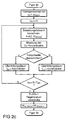
- the superfatting period t FAT is initially set to zero.
- the electronic control unit 5 calculates in the loop from the air ratio ⁇ and the exhaust gas mass flow Q exhaust evaluation factor K with the measured over- rich duration T FETT is subsequently weighted, the exhaust gas mass flow Q exhaust is obtained from the air mass flow Q.
- the over-greasing time t FAT is then counted up in the loop, whereas the over-greasing time t FAT is counted down when the fat threshold is undershot.
- the product of the weighting factor K and the richening time t FETT is compared with a threshold value T MIN to determine whether the regeneration of the NO x storage catalytic converter 3 has been completed.
- N ADAPTION of the already existing aging adaptations exceeds a predetermined maximum value N MAX , since the number of aging adaptations permitted during a drive cycle is limited in order to avoid an excessive increase of the fuel consumption and the exhaust emissions. If the maximum value N MAX is reached, there is no further aging adaptation and it is again transferred in a loop to the beginning of the method section in FIG. 2b.
- variable FLAG it is checked by means of the variable FLAG whether the preceding regeneration of the NO x storage catalytic converter 3 was complete during the homogeneous operation shown in FIG. 2 a.
- the exhaust gas recirculation can be switched off.
- the shutdown of the exhaust gas recirculation allows a reduction of the raw emission fluctuations, since the tolerance influences of the exhaust gas recirculation also eliminate the NO x emissions.
- the higher NO x emission can shorten the accumulation time until the regeneration trigger, which increases the probability of a successful adaptation.
- an aging adaptation can then take place in a conventional manner, the aging-dependent storage capacity of the NO x storage catalyst 3 being determined.
- the regeneration of the NO x storage catalytic converter 3 would first have to be completed in order to allow a correct aging adaptation, since a residual charge of the NO x storage catalytic converter 3 with nitrogen oxides falsifies the aging adaptation.
- the regeneration of the NO x storage catalyst 3 may not be completed as often as fuel consumption and exhaust emissions are increased by each active completion of the regeneration. Therefore, the number M TRIAL of the already completed regeneration completions is compared with a predetermined maximum value M MAX .
- the internal combustion engine 1 is driven in a fat-balanced homogeneous operation, which leads to a regeneration of the NO x storage catalytic converter 3.
Landscapes
- Engineering & Computer Science (AREA)
- Chemical & Material Sciences (AREA)
- Combustion & Propulsion (AREA)
- Mechanical Engineering (AREA)
- General Engineering & Computer Science (AREA)
- Chemical Kinetics & Catalysis (AREA)
- Exhaust Gas After Treatment (AREA)
Abstract
Description
- Figur 1
- eine schematische Darstellung einer Brennkraftmaschine mit einer erfindungsgemäßen Abgasreinigungsanlage sowie
- Figur 2a-c
- das erfindungsgemäße Regenerationsverfahren in Form eines Flussdiagramms.
Claims (12)
- Regenerationsverfahren für einen Speicherkatalysator (3) einer Brennkraftmaschine (1), bei dem der Speicherkatalysator (3) regeneriert wird,
dadurch gekennzeichnet, dass nach der Regeneration des Speicherkatalysators (3) der Regenerationsgrad des Speicherkatalysators (3) ermittelt wird. - Regenerationsverfahren nach Anspruch 1,
dadurch gekennzeichnet, dass die Regeneration des Speicherkatalysators (3) vervollständigt wird, falls der ermittelte Regenerationsgrad einen vorgegebenen Minimalwert (TMIN) unterschreitet. - Regenerationsverfahren nach mindestens einem der vorhergehenden Ansprüche,
dadurch gekennzeichnet, dass das alterungsbedingte Speichervermögen des Speicherkatalysators (3) ermittelt wird, wenn der ermittelte Regenerationsgrad des Speicherkatalysators (3) den vorgegebenen Minimalwert überschreitet. - Regenerationsverfahren nach Anspruch 3,
dadurch gekennzeichnet, dass Voraussetzungen für eine Ermittlung des alterungsbedingten Speichervermögens des Speicherkatalysators (3) überprüft werden, wobei die Regeneration des Speicherkatalysators (3) nur vervollständigt wird, wenn die Voraussetzungen für die Ermittlung des alterungsbedingten Speichervermögens des Speicherkatalysators (3) erfüllt sind. - Regenerationsverfahren nach Anspruch 4,
dadurch gekennzeichnet, dass die Voraussetzungen für die Ermittlung des alterungsbedingten Speichervermögens des Speicherkatalysators (3) in Abhängigkeit von mindestens einem Betriebsparameter der Brennkraftmaschine überprüft werden. - Regenerationsverfahren nach Anspruch 5,
dadurch gekennzeichnet, dass die Voraussetzungen für die Ermittlung des alterungsbedingten Speichervermögens des Speicherkatalysators (3) in Abhängigkeit von mindestens einem der folgenden Betriebsparameter überprüft werden:Temperatur des Speicherkatalysators (3)Luftverhältnis der Brennkraftmaschine (1)UmgebungsdruckFahrgeschwindigkeit eines von der Brennkraftmaschine (1) angetriebenen Kraftfahrzeugs. - Regenerationsverfahren nach mindestens einem der Ansprüche 3 bis 6,
gekennzeichnet durch
eine Abgasrückführung, wobei die Abgasrückführung vor der Ermittlung des alterungsbedingten Speichervermögens des Speicherkatalysators (3) abgeschaltet und/oder nach der Ermittlung des alterungsbedingten Speichervermögens des Speicherkatalysators (3) wieder angeschaltet wird. - Regenerationsverfahren mindestens einem der vorhergehenden Ansprüche,
dadurch gekennzeichnet, dass die Brennkraftmaschine (1) zur Regeneration des Speicherkatalysators (3) mit einem unterstöchiometrischen Luftverhältnis betrieben wird. - Regenerationsverfahren nach Anspruch 8,
gekennzeichnet durch
folgende Schritte:Messung der Sauerstoffkonzentration im Abgas der Brennkraftmaschine (1) während der Regeneration des Speicherkatalysators (3)Vergleich der gemessenen Sauerstoffkonzentration mit einer vorgegebenen FettschwelleErmittlung der Zeitspanne (tFETT) nach dem Erreichen der FettschwelleErmittlung des Regenerationsgrads des Speicherkatalysators (3) in Abhängigkeit von der ermittelten Zeitspanne (tFETT) nach dem Erreichen der Fettschwelle. - Regenerationsverfahren nach Anspruch 9,
dadurch gekennzeichnet, dass der Regenerationsgrad des Speicherkatalysators (3) in Abhängigkeit von der Zeitspanne (tFETT) ab dem Erreichen der Fettschwelle und in Abhängigkeit von mindestens einem Betriebsparameter der Brennkraftmaschine (1) ermittelt wird. - Regenerationsverfahren nach Anspruch 10,
dadurch gekennzeichnet, dass bei der Regeneration des Speicherkatalysators (3) das Luftverhältnis und/oder der Abgasmassenstrom als Betriebsparameter der Brennkraftmaschine (1) ermittelt wird und der Re generationsgrad des Speicherkatalysators (3) in Abhängigkeit von der Luftzahl und/oder dem Abgasmassenstrom ermittelt wird. - Regenerationsverfahren nach mindestens einem der Ansprüche 9 bis 11,
dadurch gekennzeichnet, dass die Sauerstoffkonzentration im Abgas der Brennkraftmaschine (1) zwischen der Brennkraftmaschine (1) und einem Vorkatalysator (2) und/oder zwischen dem Vorkatalysator (2) und dem Speicherkatalysator (3) und/oder nach dem Speicherkatalysator (3) gemessen wird.
Applications Claiming Priority (2)
| Application Number | Priority Date | Filing Date | Title |
|---|---|---|---|
| DE10318213 | 2003-04-22 | ||
| DE10318213A DE10318213B4 (de) | 2003-04-22 | 2003-04-22 | Regenerationsverfahren für einen Speicherkatalysator einer Brennkraftmaschine |
Publications (2)
| Publication Number | Publication Date |
|---|---|
| EP1471222A1 true EP1471222A1 (de) | 2004-10-27 |
| EP1471222B1 EP1471222B1 (de) | 2008-10-15 |
Family
ID=32946395
Family Applications (1)
| Application Number | Title | Priority Date | Filing Date |
|---|---|---|---|
| EP04101084A Expired - Lifetime EP1471222B1 (de) | 2003-04-22 | 2004-03-17 | Regenerationsverfahren für einen Speicherkatalysator einer Brennkraftmaschine |
Country Status (2)
| Country | Link |
|---|---|
| EP (1) | EP1471222B1 (de) |
| DE (2) | DE10318213B4 (de) |
Cited By (1)
| Publication number | Priority date | Publication date | Assignee | Title |
|---|---|---|---|---|
| EP3047131A1 (de) * | 2013-07-29 | 2016-07-27 | MAN Diesel & Turbo SE | Verfahren zum betreiben einer brennkraftmaschine |
Citations (2)
| Publication number | Priority date | Publication date | Assignee | Title |
|---|---|---|---|---|
| US6497092B1 (en) * | 1999-03-18 | 2002-12-24 | Delphi Technologies, Inc. | NOx absorber diagnostics and automotive exhaust control system utilizing the same |
| US6499291B2 (en) * | 1998-11-12 | 2002-12-31 | Volkswagen Ag | Apparatus and method for monitoring NOx storage catalytic converters |
Family Cites Families (2)
| Publication number | Priority date | Publication date | Assignee | Title |
|---|---|---|---|---|
| ATE218671T1 (de) * | 1998-08-07 | 2002-06-15 | Volkswagen Ag | Verfahren zur temperatur- und lambdaabhängigen de-sulfatierung eines no x?-speicherkatalysators |
| DE19847874A1 (de) * | 1998-10-16 | 2000-04-20 | Volkswagen Ag | Verfahren zur Stickoxidreduzierung im Abgas einer mager betriebenen Brennkraftmaschine |
-
2003
- 2003-04-22 DE DE10318213A patent/DE10318213B4/de not_active Expired - Fee Related
-
2004
- 2004-03-17 EP EP04101084A patent/EP1471222B1/de not_active Expired - Lifetime
- 2004-03-17 DE DE502004008245T patent/DE502004008245D1/de not_active Expired - Fee Related
Patent Citations (2)
| Publication number | Priority date | Publication date | Assignee | Title |
|---|---|---|---|---|
| US6499291B2 (en) * | 1998-11-12 | 2002-12-31 | Volkswagen Ag | Apparatus and method for monitoring NOx storage catalytic converters |
| US6497092B1 (en) * | 1999-03-18 | 2002-12-24 | Delphi Technologies, Inc. | NOx absorber diagnostics and automotive exhaust control system utilizing the same |
Cited By (1)
| Publication number | Priority date | Publication date | Assignee | Title |
|---|---|---|---|---|
| EP3047131A1 (de) * | 2013-07-29 | 2016-07-27 | MAN Diesel & Turbo SE | Verfahren zum betreiben einer brennkraftmaschine |
Also Published As
| Publication number | Publication date |
|---|---|
| DE10318213A1 (de) | 2004-11-25 |
| EP1471222B1 (de) | 2008-10-15 |
| DE502004008245D1 (de) | 2008-11-27 |
| DE10318213B4 (de) | 2007-09-20 |
Similar Documents
| Publication | Publication Date | Title |
|---|---|---|
| EP1214511B1 (de) | VERFAHREN ZUR FUNKTIONSÜBERWACHUNG EINES IN EINEM ABGASKANAL EINER VERBRENNUNGSKRAFTMASCHINE ANGEORDNETEN NOx-SENSORS | |
| EP1097299B1 (de) | VERFAHREN ZUR ÜBERPRÜFUNG DES WIRKUNGSGRADES EINES NOx-SPEICHERKATALYSATORS | |
| DE19843871A1 (de) | Diagnose eines NOx-Speicherkatalysators mit nachgeschaltetem NOx-Sensor | |
| DE102016209566A1 (de) | Steuern einer Stickoxidemission im Abgas einer Brennkraftmaschine | |
| DE10027347B4 (de) | Abgasemissionssteuerungs/regelungsvorrichtung für einen Verbrennungsmotor | |
| EP1192343B1 (de) | VERFAHREN ZUR INITIIERUNG UND ÜBERWACHUNG EINER ENTSCHWELFELUNG VON WENIGSTENS EINEM IN EINEM ABGASKANAL EINER VERBRENNUNGSKRAFTMASCHINE ANGEORDNETEN NOx-SPEICHERKATALYSATOR | |
| DE102004007523B4 (de) | Verfahren zur Bestimmung des Umschaltzeitpunktes von der Speicherphase zur Regenerationsphase eines Stickoxid-Speicherkatalysators und zur Diagnose seines Speicherverhaltens | |
| DE10114456B4 (de) | Vorrichtung und Verfahren zur Koordination von abgasrelevanten Maßnahmen | |
| DE10160704B4 (de) | Verfahren zum Betrieb von Abgasreinigungsvorrichtungen | |
| DE19926148A1 (de) | Verfahren zur Erhöhung der NOx-Umsatzrate von geschädigten NOx-Speicherkatalysatoren | |
| EP1471222B1 (de) | Regenerationsverfahren für einen Speicherkatalysator einer Brennkraftmaschine | |
| DE102017211710B4 (de) | Ermitteln der Schwefelbeladung eines LNT | |
| DE10125759B4 (de) | Verfahren zur Ermittlung eines Beladungszustandes eines NOx-Speicherkatalysators | |
| DE10330367A1 (de) | Verfahren und Vorrichtung zur Entschwefelung eines Katalysators | |
| DE10318214B4 (de) | Verfahren zur Ermittlung des Alterungszustandes eines Speicherkatalysators | |
| DE102016210897A1 (de) | Steuerung einer Stickoxidemission in Betriebsphasen hoher Last | |
| EP1188915B1 (de) | Verfahren zur Regelung einer NOx-Regeneration eines NOx-Speicherkatalysators | |
| EP1298302A1 (de) | Abgasreinigungsverfahren für Magerbrennkraftmaschinen | |
| DE102017205706B4 (de) | Bestimmen der Ammoniakkonzentration im Abgastrakt | |
| DE10318210B4 (de) | Betriebsverfahren für eine Brennkraftmaschine mit einem Vorkatalysator und einem Speicherkatalysator | |
| DE19859176A1 (de) | Verfahren zum Überprüfen der Funktionsfähigkeit einer Lambdasonde | |
| DE102016204216B4 (de) | Verfahren und Vorrichtung zur Ermittlung des Beladungszustands eines NOx-Speicherkatalysators | |
| DE102018206559B4 (de) | Abgasnachbehandlung mit Speicherkatalysator und Partikelfilter | |
| DE102016209564A1 (de) | Steuern einer Stickoxidemission im Abgas einer Brennkraftmaschine | |
| DE10353597B4 (de) | Verfahren und Vorrichtung zur Entschwefelung eines NOx-Speicherkatalysators |
Legal Events
| Date | Code | Title | Description |
|---|---|---|---|
| PUAI | Public reference made under article 153(3) epc to a published international application that has entered the european phase |
Free format text: ORIGINAL CODE: 0009012 |
|
| AK | Designated contracting states |
Kind code of ref document: A1 Designated state(s): AT BE BG CH CY CZ DE DK EE ES FI FR GB GR HU IE IT LI LU MC NL PL PT RO SE SI SK TR |
|
| AX | Request for extension of the european patent |
Extension state: AL LT LV MK |
|
| 17P | Request for examination filed |
Effective date: 20050207 |
|
| AKX | Designation fees paid |
Designated state(s): DE FR GB IT |
|
| 17Q | First examination report despatched |
Effective date: 20070111 |
|
| RAP1 | Party data changed (applicant data changed or rights of an application transferred) |
Owner name: DAIMLERCHRYSLER AG Owner name: SIEMENS AKTIENGESELLSCHAFT |
|
| RAP1 | Party data changed (applicant data changed or rights of an application transferred) |
Owner name: DAIMLER AG Owner name: SIEMENS AKTIENGESELLSCHAFT |
|
| GRAP | Despatch of communication of intention to grant a patent |
Free format text: ORIGINAL CODE: EPIDOSNIGR1 |
|
| RAP1 | Party data changed (applicant data changed or rights of an application transferred) |
Owner name: CONTINENTAL AUTOMOTIVE GMBH Owner name: DAIMLER AG |
|
| GRAS | Grant fee paid |
Free format text: ORIGINAL CODE: EPIDOSNIGR3 |
|
| GRAA | (expected) grant |
Free format text: ORIGINAL CODE: 0009210 |
|
| AK | Designated contracting states |
Kind code of ref document: B1 Designated state(s): DE FR GB IT |
|
| REG | Reference to a national code |
Ref country code: GB Ref legal event code: FG4D Free format text: NOT ENGLISH |
|
| REF | Corresponds to: |
Ref document number: 502004008245 Country of ref document: DE Date of ref document: 20081127 Kind code of ref document: P |
|
| PLBE | No opposition filed within time limit |
Free format text: ORIGINAL CODE: 0009261 |
|
| STAA | Information on the status of an ep patent application or granted ep patent |
Free format text: STATUS: NO OPPOSITION FILED WITHIN TIME LIMIT |
|
| PG25 | Lapsed in a contracting state [announced via postgrant information from national office to epo] |
Ref country code: IT Free format text: LAPSE BECAUSE OF FAILURE TO SUBMIT A TRANSLATION OF THE DESCRIPTION OR TO PAY THE FEE WITHIN THE PRESCRIBED TIME-LIMIT Effective date: 20081015 |
|
| 26N | No opposition filed |
Effective date: 20090716 |
|
| GBPC | Gb: european patent ceased through non-payment of renewal fee |
Effective date: 20090317 |
|
| PG25 | Lapsed in a contracting state [announced via postgrant information from national office to epo] |
Ref country code: DE Free format text: LAPSE BECAUSE OF NON-PAYMENT OF DUE FEES Effective date: 20091001 |
|
| PG25 | Lapsed in a contracting state [announced via postgrant information from national office to epo] |
Ref country code: GB Free format text: LAPSE BECAUSE OF NON-PAYMENT OF DUE FEES Effective date: 20090317 |
|
| PGFP | Annual fee paid to national office [announced via postgrant information from national office to epo] |
Ref country code: FR Payment date: 20120403 Year of fee payment: 9 |
|
| REG | Reference to a national code |
Ref country code: FR Ref legal event code: ST Effective date: 20131129 |
|
| PG25 | Lapsed in a contracting state [announced via postgrant information from national office to epo] |
Ref country code: FR Free format text: LAPSE BECAUSE OF NON-PAYMENT OF DUE FEES Effective date: 20130402 |