EP1466583A1 - Dérivé de N-alpha et N-epsilon-polylysine et polyornithine à fonction thiol et leur utilisation en cosmétique - Google Patents
Dérivé de N-alpha et N-epsilon-polylysine et polyornithine à fonction thiol et leur utilisation en cosmétique Download PDFInfo
- Publication number
- EP1466583A1 EP1466583A1 EP04290713A EP04290713A EP1466583A1 EP 1466583 A1 EP1466583 A1 EP 1466583A1 EP 04290713 A EP04290713 A EP 04290713A EP 04290713 A EP04290713 A EP 04290713A EP 1466583 A1 EP1466583 A1 EP 1466583A1
- Authority
- EP
- European Patent Office
- Prior art keywords
- alkyl
- poly
- amino
- lysine
- acyl
- Prior art date
- Legal status (The legal status is an assumption and is not a legal conclusion. Google has not performed a legal analysis and makes no representation as to the accuracy of the status listed.)
- Granted
Links
Classifications
-
- A—HUMAN NECESSITIES
- A61—MEDICAL OR VETERINARY SCIENCE; HYGIENE
- A61K—PREPARATIONS FOR MEDICAL, DENTAL OR TOILETRY PURPOSES
- A61K8/00—Cosmetics or similar toiletry preparations
- A61K8/18—Cosmetics or similar toiletry preparations characterised by the composition
- A61K8/72—Cosmetics or similar toiletry preparations characterised by the composition containing organic macromolecular compounds
- A61K8/84—Cosmetics or similar toiletry preparations characterised by the composition containing organic macromolecular compounds obtained by reactions otherwise than those involving only carbon-carbon unsaturated bonds
- A61K8/88—Polyamides
-
- A—HUMAN NECESSITIES
- A61—MEDICAL OR VETERINARY SCIENCE; HYGIENE
- A61Q—SPECIFIC USE OF COSMETICS OR SIMILAR TOILETRY PREPARATIONS
- A61Q19/00—Preparations for care of the skin
Definitions
- the subject of the invention is the use in cosmetics of poly-N- ⁇ and N- ⁇ -lysine derivatives and ornithine with thiol function. It also targets new poly N- ⁇ derivatives and N- ⁇ -lysines and ornithine with thiol function as well as cosmetic compositions containing these new compounds.
- N- ⁇ polylysine
- keratin material includes the skin, nails and keratin fibers.
- keratin fibers means the hair, the eyelashes, the eyebrows, the hair and in particular the hair.
- the present invention relates in particular to keratin fibers.
- residual deposit on keratinous fibers means a continuous coating or not formed on each fiber remaining present after five consecutive shampoos.
- the coating may represent, from a chemical point of view, the polylysines according to the invention, alone or else the polylysines mixed with other compounds cosmetically active.
- the term “sheathing” means an envelope formed on the surface of each fiber, in particular each hair, after drying of the cosmetic composition.
- poly N- ⁇ - and N- ⁇ - lysine and ornithine we use the abbreviation “poly N- ⁇ - and N- ⁇ - lysine and ornithine", to name together the derivatives poly-N- ⁇ - lysine, poly-N- ⁇ -ornithine, poly-N- ⁇ - lysine and poly-N- ⁇ -omithine.
- the abbreviation “poly-N- ⁇ -lysine and ornithine” is used to jointly denote the derivatives poly-N- ⁇ -lysine and poly-N- ⁇ -omithine.
- the configuration of lysine and ornithine can be L or D or a mixture of the two.
- the problem posed by the present invention is to provide polylysines forming a residual deposit on keratin materials, and in particular on the hair and bringing, in addition, good cosmetic properties to keratin materials, and especially hair, like softness, smoothing and better detangling.
- the grafting rate of thiol function will be greater than or equal to 1%.
- the poly N- ⁇ - and N- ⁇ - lysine and omithine corresponding to the formula I have: 5 ⁇ m ⁇ 1000.
- the "theoretical rate of grafting of thiol function" represents the theoretical percentage in lysine or ornithine unit carrying the thiol function in the compound of formula I.
- poly N- ⁇ - and N- ⁇ - lysine and ornithine are used with the formula I, with a thiol function, in combination or not with a conventional cosmetic active for form a residual deposit on keratin materials.
- polylysines of the invention have a covalent reactivity, for example with hair "via" the formation of bonds disulfide. This point further reinforces the interest in obtaining a persistence important on the fiber compared to non cationic polymers functionalized by thiol functions
- poly N- ⁇ - and N- ⁇ - lysine and omithine are used.
- formula I with thiol function, in combination with at least one cosmetic active agent conventional anionic, such as dyes, conditioners, moisturizers, emollients or sun filters, to form a residual deposit on keratin materials.
- the grafting rate of thiol function will be greater than or equal to 1%.
- the invention also relates to cosmetic compositions comprising, in a cosmetically acceptable medium, at least one derivative of poly-N- ⁇ and poly N- ⁇ -lysine and thiol-functional omithine of formula II.
- the poly-N- ⁇ derivative (s) and poly N- ⁇ -lysine and omithine with thiol function of formula II are preferably present at concentrations of between 0.05 and 30% by weight, more preferably between 0.1 and 15% by weight, and more preferably between 0.25 and 10% by weight relative to the total weight of the composition.
- the composition advantageously contains, in addition, conventional cosmetic additives chosen from fixing polymers, thickeners, anionic, nonionic, cationic or amphoteric surfactants, fragrances, preservatives, proteins, non-reactive vitamins, provitamins non-reactive, anionic, nonionic, cationic or non-fixing polymers amphoteric, mineral, vegetable or synthetic oils, volatile silicones or non, linear or cyclic, modified or not, pH regulating agents, oxidants, reducers, catalysts and any other additive conventionally used in cosmetic compositions intended to be applied to keratin materials, especially on the hair.
- conventional cosmetic additives chosen from fixing polymers, thickeners, anionic, nonionic, cationic or amphoteric surfactants, fragrances, preservatives, proteins, non-reactive vitamins, provitamins non-reactive, anionic, nonionic, cationic or non-fixing polymers amphoteric, mineral, vegetable or synthetic oils, volatile silicones or non, linear or cyclic
- the cosmetically acceptable medium is preferably constituted by water and / or one or more cosmetically acceptable solvents such as alcohols, esters, ketones or cyclic volatile silicones or water-solvent (s) mixtures, these solvents preferably being C 1 -C 4 alcohols.
- cosmetically acceptable solvents such as alcohols, esters, ketones or cyclic volatile silicones or water-solvent (s) mixtures, these solvents preferably being C 1 -C 4 alcohols.
- the composition according to the invention when packaged in a device aerosol, it comprises at least one propellant, which can be chosen from volatile hydrocarbons such as n-butane, propane, isobutane, pentane, halogenated hydrocarbons and their mixtures. It can also be used as an agent propellant carbon dioxide, nitrous oxide, dimethyl ether (DME), nitrogen, air compressed. Mixtures of propellants can also be used. Preferably, we use dimethyl ether.
- volatile hydrocarbons such as n-butane, propane, isobutane, pentane, halogenated hydrocarbons and their mixtures. It can also be used as an agent propellant carbon dioxide, nitrous oxide, dimethyl ether (DME), nitrogen, air compressed. Mixtures of propellants can also be used. Preferably, we use dimethyl ether.
- the propellant is present at a concentration comprised between 5 and 90% by weight relative to the total weight of the composition in the device aerosol and, more particularly, at a concentration of between 10 and 60%.
- compositions according to the invention can be applied in particular on dry or damp hair.
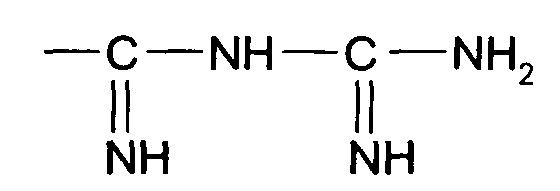
- Poly-N- ⁇ and poly N- ⁇ -lysine and omithine derivatives with thiol function formula II are generally prepared by reaction under an inert atmosphere, by example, of poly-N- ⁇ -lysine supplied in particular by the company Chisso or of poly-N- ⁇ -lysine guanidine or biguanide function with a thiolactone such as N-acetyl-homocysteinethiolactone supplied in particular by the company Fluka.
- the duration of the reaction can in particular vary between 30 minutes and 24 hours.
- the reaction temperature is between 0 and 80 ° C.
- Polylysines can possibly be partially salified.
- composition of the invention can be for cosmetic or pharmaceutical use.
- the composition of the invention is for cosmetic use.
- the composition must contain a physiologically acceptable non-toxic medium and may be applied to the skin, integuments or lips of humans.
- Cosmetic means within the meaning of the invention a composition of appearance, odor and pleasant touch.
- the composition for application to the scalp or the hair can be in the form of a hair care lotion, for example of application daily or bi-weekly, of a hair shampoo or conditioner, in particular bi-weekly or weekly application, of a liquid soap or solid scalp cleaning daily application, a setting product shape of the hairstyle (hairspray, product for styling, styling gel), of a treating mask, a foaming hair cleaning cream or gel.
- She can still present in the form of a hair dye or mascara to be applied with a brush or comb.
- Another subject of the invention relates to the use of derivatives of poly-N- ⁇ and poly N- ⁇ -lysine and omithine with a thiol function corresponding to formula II in cosmetics. he is especially applied to the skin, nails or keratin fibers.
- the compound of formula II may be present in a nail polish or a skin care product, a makeup product or an anti-aging product, all as in a hair conditioning, hair care or hair coloring.
- the polylysine solution is degassed by bubbling argon.
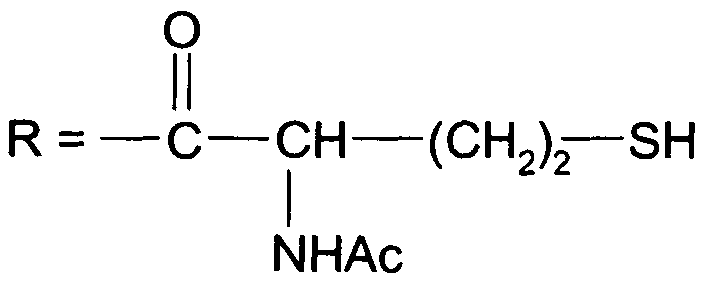
- N-acetyl-homocysteinethiolactone is added to the polylysine solution with stirring, while waiting for the reagent to dissolve between each addition. Is left stirring under argon for 24 hours, following CCM CH 2 Cl 2 / MeOH / NH 3 (15/4/1), the disappearance of the reagent and the appearance of the thiol function on the polymer which does not migrate not, by revelation with sodium nitroprusside.
- the 13 C NMR analysis is in accordance with the expected structure.
- Example 2 was prepared according to the same procedure as Example 1, increasing the amount of N-acetyl-homocysteinethiolactone (2.35 g).
Landscapes
- Health & Medical Sciences (AREA)
- Life Sciences & Earth Sciences (AREA)
- Animal Behavior & Ethology (AREA)
- General Health & Medical Sciences (AREA)
- Public Health (AREA)
- Veterinary Medicine (AREA)
- Dermatology (AREA)
- Birds (AREA)
- Epidemiology (AREA)
- Cosmetics (AREA)
- Polyamides (AREA)
- Organic Low-Molecular-Weight Compounds And Preparation Thereof (AREA)
Abstract
Description

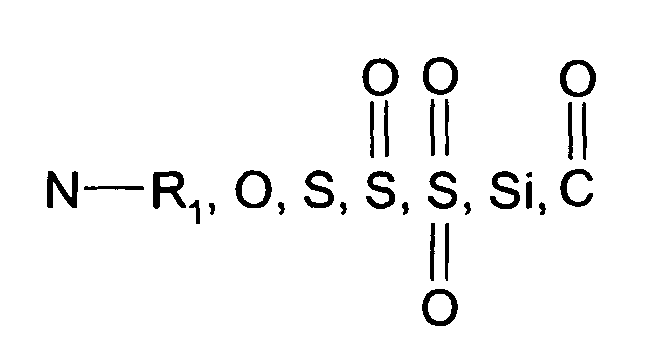
- A = chaíne hydrocarbonée en C-1 à C-30, saturée ou non, linéaire ou
ramifiée pouvant être interrompue par un ou plusieurs hétéro-atomes ou
fonctions tels
ou/et par un ou plusieurs cycles aromatiques ou non aromatiques (à 5, 6 ou 7 chaínons) et pouvant être substituée par un ou plusieurs groupements : COOH, OH, NH2, alkyl (C-1 à C-8) amino, acyl (C-1 à C-8) amino, acyl (C-1 à C-8) oxy, alkyl (C-1 à C-8) oxycarbonylamino, alkyl (C-1 à C-8) amino-carbonyloxy, halogéno, alkyl (C-1 à C-8) aminocarbonyl,
sachant que R ou R' peuvent, en partie seulement, également représenter H, ou/etet ses sels ou/et et ses sels.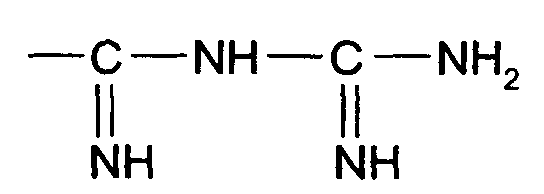
- R1 = H, alkyl (C-1 à C-8), acyl (C-1 à C-8), alkyl (C-1 à C-8) oxycarbonyl, alkyl (C-1 à C-8) amino-carbonyl, halogéno.
- A peut être également représenté par un cycle aromatique ou non aromatique à 5, 6 ou 7 chaínons, éventuellement substitués par les mêmes groupements déjà listés pour la chaíne aliphatique.
- m = 3 à 10000.
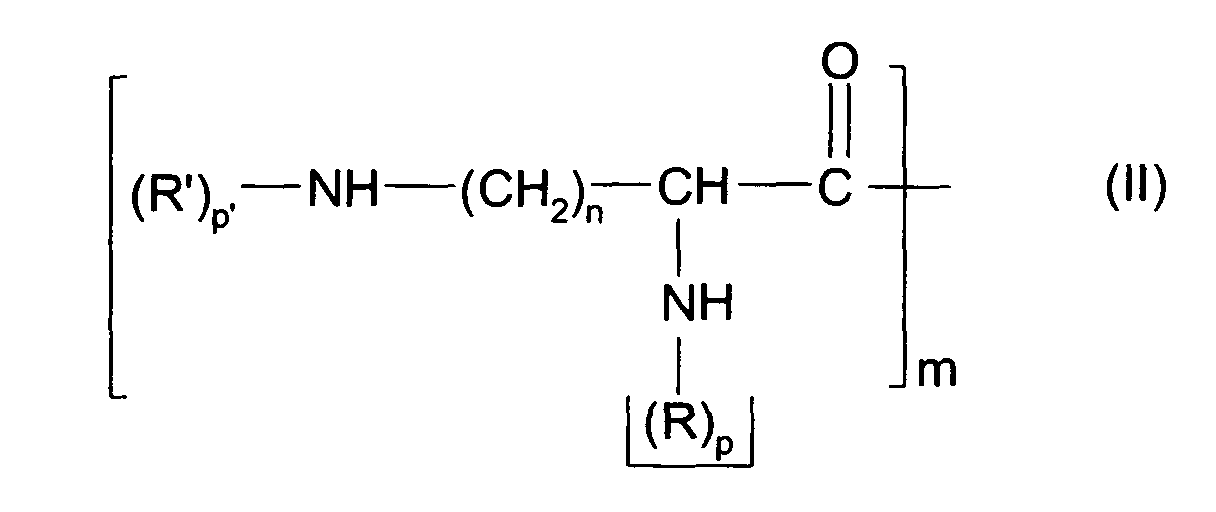
n = 3 ou 4
Quand
- P' = 0, le NH voisin est engagé dans une polymérisation N-ε ; quand P = 0, le NH voisin est engagé dans une polymérisation N-α.
- P ou P' = 1, alors R ou R' = A'-SH
-

- R1, R2, R3, R4 = H, COOH, OH, NH2, alkyl (C-1 à C-8) amino, acyl (C-1 à
C-8) amino, acyl (C-1 à C-8) oxy, alkyl (C-1 à C-8) oxycarbonylamino, alkyl
(C-1 à C-8) amino-carbonyloxy, halogéno, alkyl (C-1 à C-8) aminocarbonyl.
sachant que R ou R' peuvent, en partie seulement, également représenter H, ou/etet ses sels ou/et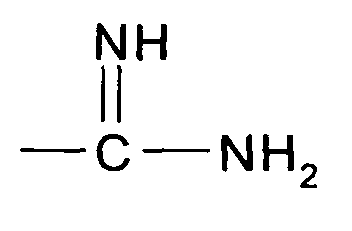 et ses sels.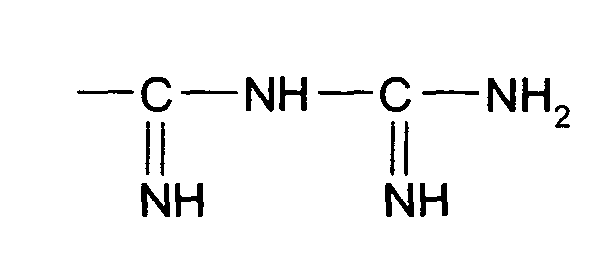
- m = 3 à 10000.
n=4,p'=0,p=1,

n=4,p'=0,p=1,
n=4,p'=0, p=1,

A température ambiante et sous argon, on ajoute par petites fractions, en attendant la dissolution du réactif entre chaque addition, la N-acétyl-homocystéinethiolactone à la solution de polylysine sous agitation. On laisse sous agitation sous argon, pendant 24 heures, en suivant en CCM CH2Cl2/MeOH/NH3 (15/4/1), la disparition du réactif et l'apparition de la fonction thiol sur le polymère qui ne migre pas, par révélation par le nitroprussiate de sodium.
12 g de solution de polylysine sont partiellement salifiés par 0,5 ml d'acide chlorhydrique concentré ; après addition de 1,04 g de 1-H-pyrazole carboxamidine mono-hydrochloride, le milieu réactionnel est chauffé 2h00 à 40°C, sous agitation. (Suivi de la réaction par RMN 1H) .
Après extraction du pyrazole à l'éther éthylique, et dégazage sous argon, on ajoute à la solution aqueuse, toujours sous argon, 1,13 g de N-acétyl-homocystéine thiolactone ; on laisse agiter, sous argon, 16h00 à 40°C (suivi de la réaction par RMN et CCM), puis le pH de la solution est amené à 5, par ajout d'HCl concentré.
Claims (13)
- Utilisation de poly N-α- et N-ε- lysine et omithine de formule I, à fonction thiol, pour former un dépôt rémanent sur les matières kératiniques, et notamment sur les fibres kératiniques:dans laquelle:

P différent de P' et P, P' = 0 ou 1
n = 3 ou 4
Si P' = 0, alors le NH voisin est engagé dans une polymérisation N-ε ;
Si P = 0, alors le NH voisin est engagé dans une polymérisation N-α;
Si P ou P' = 1, alors R ou R' = A-SH, avecA = chaíne hydrocarbonée en C-1 à C-30, saturée ou non, linéaire ou ramifiée pouvant être interrompue par un ou plusieurs hétéro-atomes ou fonctions telsou/et par un ou plusieurs cycles aromatiques ou non aromatiques (à 5, 6 ou 7 chaínons) et pouvant être substituée par un ou plusieurs groupements : COOH, OH, NH2, alkyl (C-1 à C-8) amino, acyl (C-1 à C-8) amino, acyl (C-1 à C-8) oxy, alkyl (C-1 à C-8) oxycarbonylamino, alkyl (C-1 à C-8) amino-carbonyloxy, halogéno, alkyl (C-1 à C-8) aminocarbonyl,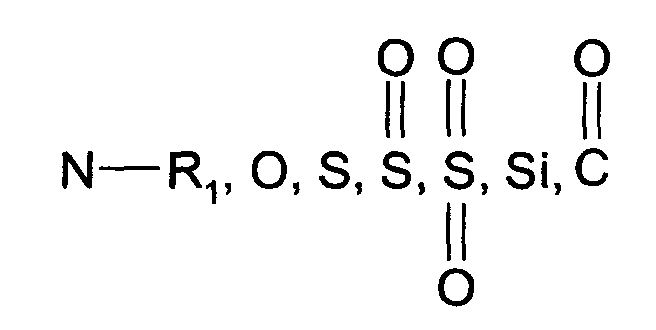
sachant que R ou R' peuvent, en partie seulement, également représenter
H, ou/etet ses sels ou/et et ses sels.
 R1 = H, alkyl (C-1 à C-8), acyl (C-1 à C-8), alkyl (C-1 à C-8) oxycarbonyl, alkyl (C-1 à C-8) amino-carbonyl, halogéno.A peut être également représenté par un cycle aromatique ou non aromatique à 5, 6 ou 7 chaínons, éventuellement substitués par les mêmes groupements déjà listés pour la chaíne aliphatique.m = 3 à 10000.
 - Utilisation selon la revendication 1, les poly N-α- et N-ε- lysine et omithine répondant à la formule I dans laquelle: 5<m<1000.
- Utilisation selon l'une quelconque des revendications précédentes, les poly N-α- et N-ε- lysine et omithine présentant un taux de greffage de fonction thiol supérieur ou égal à 1 %.
- Utilisation selon l'une quelconque des revendications précédentes, les poly N-α- et N-ε- lysine et omithine de formule I, à fonction thiol, étant en association avec au moins un actif cosmétique conventionnel pour former un dépôt rémanent sur les matières kératiniques.
- Utilisation selon la revendication 4, l'actif cosmétique conventionnel étant un actif cosmétique conventionnel anionique, comme des colorants, conditionneurs, hydratants, émollients ou filtres solaires.
- Dérivés de poly-N-ε et poly N-α-lysine et omithine à fonction thiol répondant à la formule II ci-après:P différent de P' et P, P' = 0 ou 1
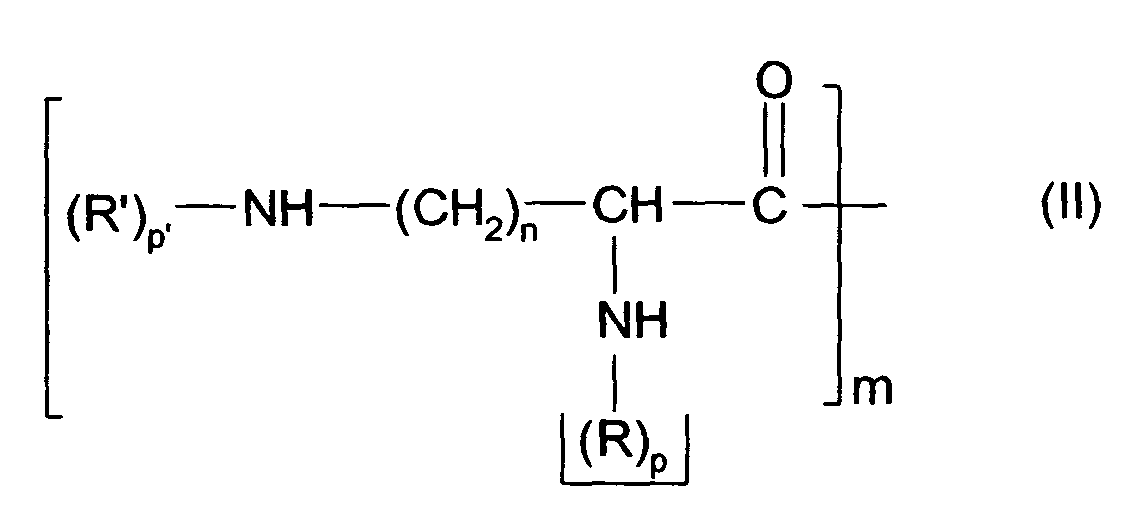
n = 3 ou 4
QuandQuandP' = 0, le NH voisin est engagé dans une polymérisation N-ε ; quand P = 0, le NH voisin est engagé dans une polymérisation N-α.P ou P' = 1, alors R ou R' = A'-SHA'=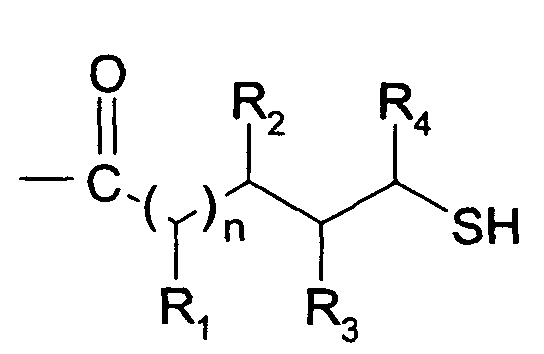 R1, R2, R3, R4 = H, COOH, OH, NH2, alkyl (C-1 à C-8) amino, acyl (C-1 à C-8) amino, acyl (C-1 à C-8) oxy, alkyl (C-1 à C-8) oxycarbonylamino, alkyl (C-1 à C-8) amino-carbonyloxy, halogéno, alkyl (C-1 à C-8) aminocarbonyl.
sachant que R ou R' peuvent, en partie seulement, également représenter
H, ou/etet ses sels ou/et et ses sels.
 m = 3 à 10000.
 - Dérivés de poly-N-ε et poly N-α-lysine et omithine à fonction thiol selon la revendication 6, caractérisés par le fait que le taux de greffage de fonction thiol est supérieur ou égal à 1 %.
- Composition cosmétique comprenant, dans un milieu cosmétiquement acceptable, au moins un dérivé de poly-N-ε et poly N-α-lysine et ornithine à fonction thiol répondant à la formule II ci-après:P différent de P' et P, P' = 0 ou 1
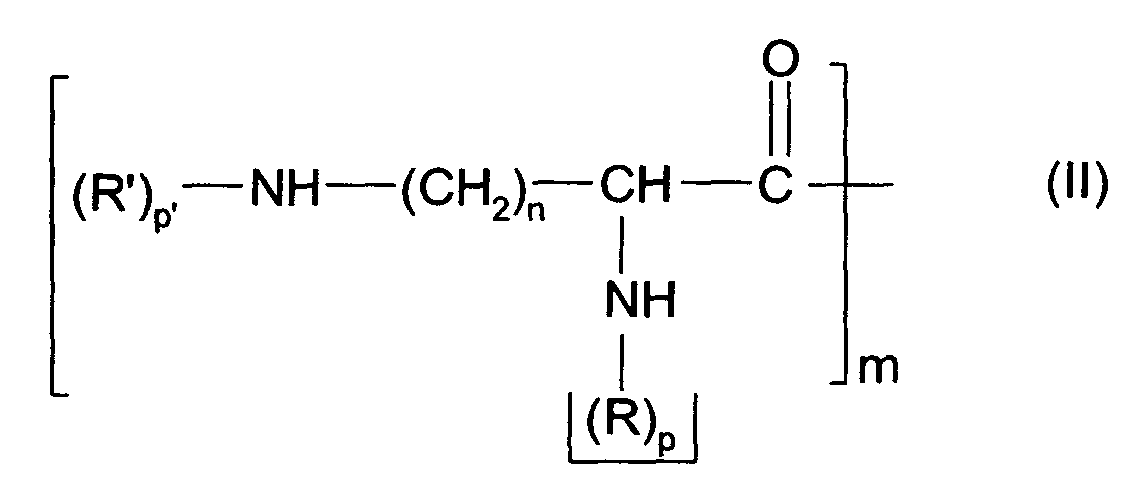
n = 3 ou 4
QuandQuandP' = 0, le NH voisin est engagé dans une polymérisation N-ε ; quand P = 0, le NH voisin est engagé dans une polymérisation N-α.P ou P' = 1, alors R ou R' = A'-SHA' =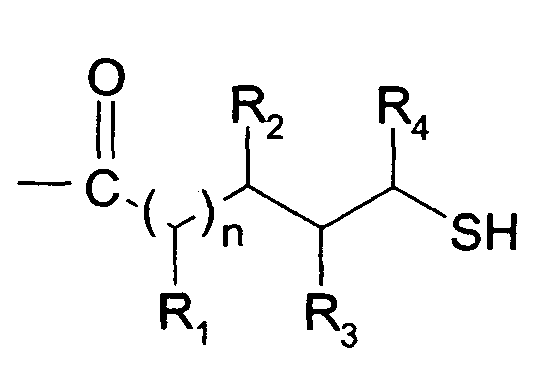 R1, R2, R3, R4 = H, COOH, OH, NH2, alkyl (C-1 à C-8) amino, acyl (C-1 à C-8) amino, acyl (C-1 à C-8) oxy, alkyl (C-1 à C-8) oxycarbonylamino, alkyl (C-1 à C-8) amino-carbonyloxy, halogéno, alkyl (C-1 à C-8) aminocarbonyl.
sachant que R ou R' peuvent, en partie seulement, également représenter
H, ou/etet ses sels ou/et et ses sels.
 m = 3 à 10000.
 - Composition selon la revendication 8, caractérisée par le fait que, le ou les dérivés de poly- N- ε et poly N-α-lysine et ornithine à fonction thiol de formule II sont présentes à des concentrations comprises entre 0,05 et 30 % en poids, plus préférentiellement comprises entre 0,1 et 15 % en poids, et plus préférentiellement entre 0,25 et 10 % en poids par rapport au poids total de la composition.
- Composition selon la revendication 8 ou 9, caractérisée par le fait que le milieu cosmétiquement acceptable est constitué par de l'eau et/ou un ou plusieurs solvants cosmétiquement acceptables tels que des alcools, les esters, les cétones ou les silicones volatiles cycliques ou des mélanges eau-solvant(s), ces solvants étant de préférence des alcools en C1-C4.
- Utilisation en cosmétique de dérivés de poly-N-ε et poly N-α-lysine et ornithine à fonction thiol répondant à la formule Il ci-après:P différent de P' et P, P' = 0 ou 1

n = 3 ou 4
QuandQuandP' = 0, le NH voisin est engagé dans une polymérisation N-ε ; quand P = 0, le NH voisin est engagé dans une polymérisation N-α.P ou P' = 1, alors R ou R' = A'-SHA' = R1, R2, R3, R4 = H, COOH, OH, NH2, alkyl (C-1 à C-8) amino, acyl (C-1 à C-8) amino, acyl (C-1 à C-8) oxy, alkyl (C-1 à C-8) oxycarbonylamino, alkyl (C-1 à C-8) amino-carbonyloxy, halogéno, alkyl (C-1 à C-8) aminocarbonyl.
sachant que R ou R' peuvent, en partie seulement, également représenter
H, ou/etet ses sels ou/et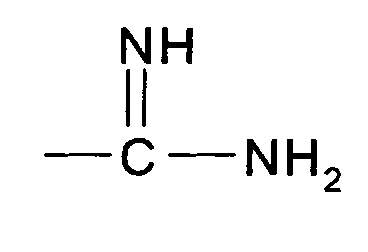 et ses sels.
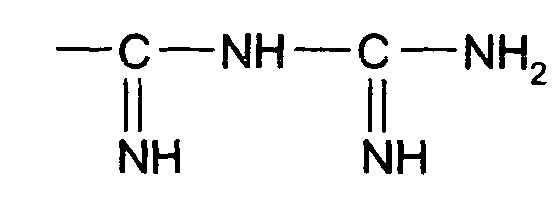 m = 3 à 10000.
 - Utilisation selon la revendication 11, caractérisée par le fait que le dérivé de poly-N-ε et poly N-α-lysine et omithine à fonction thiol répondant à la formule Il est appliqué sur la peau, les ongles ou les fibres kératiniques.
- Procédé de préparation de dérivés de poly-N-ε et poly N-α-lysine et omithine à fonction thiol de formule Il ci-après:P différent de P' et P, P' = 0 ou 1

n = 3 ou 4
QuandQuandP' = 0, le NH voisin est engagé dans une polymérisation N-ε ; quand P = 0, le NH voisin est engagé dans une polymérisation N-α.par réaction, sous atmosphère inerte, de poly-N-ε-lysine ou de poly-N-ε-lysine à fonction guanidine ou biguanide avec une thiolactone.P ou P' = 1, alors R ou R' = A'-SHA'= R1, R2, R3, R4 = H, COOH, OH, NH2, alkyl (C-1 à C-8) amino, acyl (C-1 à C-8) amino, acyl (C-1 à C-8) oxy, alkyl (C-1 à C-8) oxycarbonylamino, alkyl (C-1 à C-8) amino-carbonyloxy, halogène, alkyl (C-1 à C-8) aminocarbonyl.
sachant que R ou R' peuvent, en partie seulement, également représenter
H, ou/etet ses sels ou/et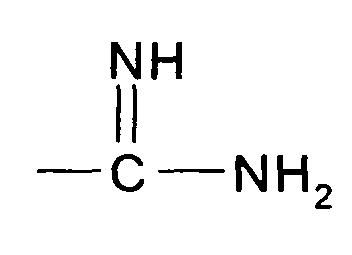 et ses sels.
 m = 3 à 10000,
Applications Claiming Priority (2)
| Application Number | Priority Date | Filing Date | Title |
|---|---|---|---|
| FR0304575 | 2003-04-11 | ||
| FR0304575A FR2853533B1 (fr) | 2003-04-11 | 2003-04-11 | Derive de n-alpha et n-epsilon-lysine et ornithine a fonction thiol et leur utilisation en cosmetique |
Publications (2)
| Publication Number | Publication Date |
|---|---|
| EP1466583A1 true EP1466583A1 (fr) | 2004-10-13 |
| EP1466583B1 EP1466583B1 (fr) | 2008-09-03 |
Family
ID=32865423
Family Applications (1)
| Application Number | Title | Priority Date | Filing Date |
|---|---|---|---|
| EP04290713A Expired - Lifetime EP1466583B1 (fr) | 2003-04-11 | 2004-03-16 | Dérivé de N-alpha et N-epsilon-polylysine et polyornithine à fonction thiol et leur utilisation en cosmétique |
Country Status (5)
| Country | Link |
|---|---|
| EP (1) | EP1466583B1 (fr) |
| JP (1) | JP4071736B2 (fr) |
| AT (1) | ATE406869T1 (fr) |
| DE (1) | DE602004016241D1 (fr) |
| FR (1) | FR2853533B1 (fr) |
Cited By (1)
| Publication number | Priority date | Publication date | Assignee | Title |
|---|---|---|---|---|
| WO2012022709A1 (fr) * | 2010-08-17 | 2012-02-23 | Basf Se | Colorants capillaires polymériques à base de disulfure ou de thiol |
Families Citing this family (28)
| Publication number | Priority date | Publication date | Assignee | Title |
|---|---|---|---|---|
| WO2006103860A1 (fr) * | 2005-03-28 | 2006-10-05 | Nakayama, Hiroki | Premier agent sans danger pour agent de permanentage moins agressif envers les cheveux |
| FR2921256B1 (fr) | 2007-09-24 | 2009-12-04 | Oreal | Composition pour la coloration de fibres keratiniques comprenant au moins un colorant direct a fonction disulfure/thiol et au moins un polymere a fonction thiol et procede utilisant la composition |
| FR2988602B1 (fr) | 2012-03-27 | 2014-09-05 | Oreal | Procede cosmetique de soin et/ou de maquillage des matieres keratiniques |
| JP7563853B2 (ja) * | 2019-08-05 | 2024-10-08 | インターナショナル・ビジネス・マシーンズ・コーポレーション | 抗菌又は抗ガン、又はそれら両方の活性を有するポリリシンポリマー |
| US11028264B2 (en) | 2019-08-05 | 2021-06-08 | International Business Machines Corporation | Polylysine polymers with antimicrobial and/or anticancer activity |
| FR3109313B1 (fr) | 2020-04-15 | 2022-11-25 | Oreal | Procede de traitement de matieres keratiniques mettant en oeuvre un polymere acrylique d’anhydride en dispersion huileuse et d’un compose hydroxyle et/ou thiole |
| FR3117850A1 (fr) | 2020-12-17 | 2022-06-24 | L'oreal | Procédé de coloration des fibres kératiniques mettant en œuvre deux composés distincts aptes à former ensemble des liaisons covalentes ainsi qu’un sel de métal appartenant au groupe des terres rares |
| FR3117851A1 (fr) | 2020-12-17 | 2022-06-24 | L'oreal | Procédé de coloration des fibres kératiniques mettant en œuvre deux composés distincts aptes à former ensemble des liaisons covalentes ainsi qu’un composé organométallique particulier |
| FR3117849B1 (fr) | 2020-12-17 | 2024-11-01 | Oreal | Procédé de coloration des fibres kératiniques mettant en œuvre deux composés distincts aptes à former ensemble des liaisons covalentes ainsi qu’un sel métallique particulier |
| WO2022128901A1 (fr) | 2020-12-17 | 2022-06-23 | L'oreal | Procédé de coloration de fibres de kératine utilisant deux composés différents pouvant former entre eux des liaisons covalentes et également un sel métallique particulier ou un sel d'un métal appartenant au groupe des métaux de terres rares ou un composé organométallique particulier |
| FR3117856B1 (fr) | 2020-12-23 | 2024-05-10 | Oreal | Composition cosmétique comprenant un copolymère séquencé à base de fonctions acétoacétates |
| FR3117852B1 (fr) | 2020-12-23 | 2023-06-23 | Oreal | Composition cosmétique comprenant un copolymère à base de fonctions acétoacétates |
| WO2022136110A1 (fr) | 2020-12-23 | 2022-06-30 | L'oreal | Composition cosmétique comprenant des particules polymériques à base de fonctions acétoacétates |
| FR3117794B1 (fr) | 2020-12-23 | 2023-07-28 | Oreal | Dispersion aqueuse d’un copolymère spécifique et ses applications cosmétiques |
| WO2022136104A1 (fr) | 2020-12-23 | 2022-06-30 | L'oreal | Composition cosmétique comprenant un copolymère à base de fonctions acétoacétates |
| WO2022136114A1 (fr) | 2020-12-23 | 2022-06-30 | L'oreal | Dispersion aqueuse d'un copolymère spécifique et ses applications cosmétiques |
| FR3117854B1 (fr) | 2020-12-23 | 2024-03-15 | Oreal | Composition cosmétique comprenant des particules polymériques à base de fonctions acétoacétates |
| FR3129596A1 (fr) | 2021-12-01 | 2023-06-02 | L'oreal | Procédé de coloration des fibres kératiniques mettant en œuvre un composé portant une fonction chimique réactive, un alcoxysilane, un agent colorant et éventuellement un composé choisi parmi les sels métalliques, les composés de métal appartenant au groupe des terres rares et les alcoxydes métalliques |
| FR3129597A1 (fr) | 2021-12-01 | 2023-06-02 | L'oreal | Procédé de traitement des fibres kératiniques mettant en œuvre un polymère fonctionnalisé acrylate et un alcoxysilane |
| FR3130574B1 (fr) | 2021-12-17 | 2024-08-30 | Oreal | Procédé de coloration des fibres kératiniques mettant en œuvre un copolymère à base de fonctions acétoacétates, un agent réticulant, un agent colorant et un composé métallique |
| FR3130559B1 (fr) | 2021-12-17 | 2024-08-30 | Oreal | Procédé de coloration des fibres kératiniques mettant en œuvre un (co)polymère à base de fonctions acétoacétates, un agent réticulant, un agent colorant et un composé métallique |
| FR3130611A1 (fr) | 2021-12-20 | 2023-06-23 | L'oreal | Copolymère polyhydroxyalcanoate à groupe acétoacétate, composition le contenant et son utilisation en cosmétique |
| WO2023228870A1 (fr) | 2022-05-25 | 2023-11-30 | L'oreal | Composition pour colorer des fibres de kératine |
| FR3137835A1 (fr) | 2022-07-15 | 2024-01-19 | L'oreal | Composition pour la coloration des fibres kératineuses |
| WO2024262657A1 (fr) | 2023-06-20 | 2024-12-26 | L'oreal | Composition comprenant de la polylysine de faible poids moléculaire et des glycolipides |
| FR3151974B3 (fr) | 2023-08-10 | 2025-09-12 | Oreal | Composition comprenant de la polylysine et des glycolipides de faible poids moléculaire |
| WO2025263641A1 (fr) | 2024-06-20 | 2025-12-26 | L'oreal | Composition comprenant un glycolipide, un polymère cationique et un acide polyhydroxy |
| WO2025263642A2 (fr) | 2024-06-20 | 2025-12-26 | L'oreal | Composition comprenant un glycolipide et un polymère cationique |
Citations (2)
| Publication number | Priority date | Publication date | Assignee | Title |
|---|---|---|---|---|
| US5434060A (en) * | 1986-08-19 | 1995-07-18 | Chisso Corporation | Method for producing ε-poly-L-lysine |
| WO1999037279A1 (fr) * | 1998-01-20 | 1999-07-29 | Unilever Plc | Composition servant a foncer la peau et les cheveux |
-
2003
- 2003-04-11 FR FR0304575A patent/FR2853533B1/fr not_active Expired - Fee Related
-
2004
- 2004-03-16 EP EP04290713A patent/EP1466583B1/fr not_active Expired - Lifetime
- 2004-03-16 DE DE602004016241T patent/DE602004016241D1/de not_active Expired - Lifetime
- 2004-03-16 AT AT04290713T patent/ATE406869T1/de not_active IP Right Cessation
- 2004-04-09 JP JP2004116178A patent/JP4071736B2/ja not_active Expired - Fee Related
Patent Citations (2)
| Publication number | Priority date | Publication date | Assignee | Title |
|---|---|---|---|---|
| US5434060A (en) * | 1986-08-19 | 1995-07-18 | Chisso Corporation | Method for producing ε-poly-L-lysine |
| WO1999037279A1 (fr) * | 1998-01-20 | 1999-07-29 | Unilever Plc | Composition servant a foncer la peau et les cheveux |
Non-Patent Citations (3)
| Title |
|---|
| DATABASE CA [online] CHEMICAL ABSTRACTS SERVICE, COLUMBUS, OHIO, US; PROSERPIO, G. ET AL: "Cosmetic properties and applications of amino-lysine thio ethers", XP002267105, retrieved from STN Database accession no. 84:65170 * |
| MAHMOOD A ET AL: "A New Approach to Labeling Cells with Technetium-99m, Part I. Preparation of Modified Polylysine and In Vitro Cell Labeling", NUCLEAR MEDICINE AND BIOLOGY, ELSEVIER SCIENCE PUBLISHERS, NEW YORK, NY, US, vol. 23, no. 1, 1996, pages 79 - 85, XP004051695, ISSN: 0969-8051 * |
| RIVISTA ITALIANA ESSENZE, PROFUMI, PIANTE OFFICINALI, AROMI, SAPONI, COSMETICI, AEROSOL (1975), 57(3), 119-27 * |
Cited By (4)
| Publication number | Priority date | Publication date | Assignee | Title |
|---|---|---|---|---|
| WO2012022709A1 (fr) * | 2010-08-17 | 2012-02-23 | Basf Se | Colorants capillaires polymériques à base de disulfure ou de thiol |
| CN103068930A (zh) * | 2010-08-17 | 2013-04-24 | 巴斯夫欧洲公司 | 二硫化物或硫醇聚合物染发剂 |
| US8641783B2 (en) | 2010-08-17 | 2014-02-04 | Basf Se | Disulfide or thiol polymeric hair dyes |
| CN103068930B (zh) * | 2010-08-17 | 2015-09-30 | 巴斯夫欧洲公司 | 二硫化物或硫醇聚合物染发剂 |
Also Published As
| Publication number | Publication date |
|---|---|
| JP4071736B2 (ja) | 2008-04-02 |
| JP2004315820A (ja) | 2004-11-11 |
| ATE406869T1 (de) | 2008-09-15 |
| DE602004016241D1 (de) | 2008-10-16 |
| FR2853533A1 (fr) | 2004-10-15 |
| FR2853533B1 (fr) | 2006-06-30 |
| EP1466583B1 (fr) | 2008-09-03 |
Similar Documents
| Publication | Publication Date | Title |
|---|---|---|
| EP1466583B1 (fr) | Dérivé de N-alpha et N-epsilon-polylysine et polyornithine à fonction thiol et leur utilisation en cosmétique | |
| EP1767187B1 (fr) | Composition cosmétique comprenant un composé organique du silicium, et procédé de mise en forme des cheveux | |
| CA2324302A1 (fr) | Derives de polyamino-acides et leur utilisation dans des compositions de traitement des fibres keratiniques | |
| FR2912650A1 (fr) | Procede de traitement cosmetique des matieres keratiniques, et composition comprenant un polymere aminoacide greffe | |
| EP1093807B1 (fr) | Compositions cosmétiques contenant un copolymère vinyldiméthicone/diméthicone en émulsion aqueuse et un épaississant et leurs utilisations | |
| WO2013117843A1 (fr) | Composition cosmétique comprenant un composé multifonctionnel, composé et procédé de traitement cosmétique | |
| WO2002041856A1 (fr) | Utilisation en cosmetique d'un polymere hydrosoluble sous forme d'une dispersion et composition cosmetique le contenant | |
| FR3008889A1 (fr) | Procede de traitement des cheveux avec au moins une silicone fonctionnalisee par au moins un motif alcoxysilane, un solvant particulier et moins de 5% d'eau | |
| WO1997012585A1 (fr) | Composition pour le traitement des matieres keratiniques comprenant au moins un polymere silicone greffe, a squelette polysiloxanique greffe par des monomeres organiques non-silicones et au moinsun hydrocarbure liquide en c11-c¿26? | |
| FR2851465A1 (fr) | Utilisation de polylysines pour former un depot remanent sur les matieres keratiniques | |
| EP1767189B1 (fr) | Composition cosmétique comprenant un composé organique du silicium, et procédé de mise en forme des cheveux | |
| EP0728473B2 (fr) | Composition cosmétique comprenant une association de céramides et son utilisation | |
| FR2831816A1 (fr) | Utilisation de silicone aminees particulieres en pre- ou post-traitement de decolorations de fibres keratiniques | |
| EP1767188B1 (fr) | Composition cosmétique comprenant un composé organique du silicium, et procédé de mise en forme des cheveux | |
| FR2955255A1 (fr) | Composition cosmetique comprenant un polysaccharide greffe hydrophile et procede de traitement cosmetique | |
| US7396897B2 (en) | N-α- and N-ε-lysine and ornithine compounds comprising a thiol function and cosmetic use thereof | |
| EP1535598A1 (fr) | Composition de défrisage des cheveux comprenant de la tétraméthylguanidine | |
| FR2756824A1 (fr) | Derives ammoniums quaternaires hydroxypropyles a fonction ester, compositions cosmetiques et dermatologiques les contenant | |
| EP1402880A1 (fr) | Composition cosmétique comprenant un système ligand-récepteur exogène pour la liaison aux matières kérantiniques et traitement des cheveux utilisant cette composition ou ses éléments constitutifs | |
| EP1532964A1 (fr) | Composition de défrisage des cheveux comprenant au moins une base hors hydroxyde | |
| EP1705187A1 (fr) | Compositions cosmetiques de soin, renforcement et/ou réparation des substrats kératiniques comprenant des polpeptides KAP | |
| FR2876285A1 (fr) | Procede de traitement cosmetique des fibres keratiniques et utilisation d'un inhibiteur de transglutaminase | |
| EP1535597A1 (fr) | Composition de défrisage des cheveux comprenant au moins une amine secondaire ou tertiaire | |
| EP1477158A1 (fr) | Dithiols et leur utilisation pour le renforcement du cheveu | |
| WO2008059159A1 (fr) | Polyoxyalkylenediguanidines particulieres, composition cosmetique les comprenant, procede de defrisage |
Legal Events
| Date | Code | Title | Description |
|---|---|---|---|
| PUAI | Public reference made under article 153(3) epc to a published international application that has entered the european phase |
Free format text: ORIGINAL CODE: 0009012 |
|
| AK | Designated contracting states |
Kind code of ref document: A1 Designated state(s): AT BE BG CH CY CZ DE DK EE ES FI FR GB GR HU IE IT LI LU MC NL PL PT RO SE SI SK TR |
|
| AX | Request for extension of the european patent |
Extension state: AL HR LT LV MK |
|
| 17P | Request for examination filed |
Effective date: 20050413 |
|
| AKX | Designation fees paid |
Designated state(s): AT BE BG CH CY CZ DE DK EE ES FI FR GB GR HU IE IT LI LU MC NL PL PT RO SE SI SK TR |
|
| GRAP | Despatch of communication of intention to grant a patent |
Free format text: ORIGINAL CODE: EPIDOSNIGR1 |
|
| RIC1 | Information provided on ipc code assigned before grant |
Ipc: A61Q 5/12 20060101ALI20080410BHEP Ipc: A61K 8/88 20060101AFI20080410BHEP |
|
| GRAS | Grant fee paid |
Free format text: ORIGINAL CODE: EPIDOSNIGR3 |
|
| GRAA | (expected) grant |
Free format text: ORIGINAL CODE: 0009210 |
|
| AK | Designated contracting states |
Kind code of ref document: B1 Designated state(s): AT BE BG CH CY CZ DE DK EE ES FI FR GB GR HU IE IT LI LU MC NL PL PT RO SE SI SK TR |
|
| REG | Reference to a national code |
Ref country code: GB Ref legal event code: FG4D Free format text: NOT ENGLISH |
|
| REG | Reference to a national code |
Ref country code: CH Ref legal event code: EP |
|
| REG | Reference to a national code |
Ref country code: IE Ref legal event code: FG4D Free format text: LANGUAGE OF EP DOCUMENT: FRENCH |
|
| REF | Corresponds to: |
Ref document number: 602004016241 Country of ref document: DE Date of ref document: 20081016 Kind code of ref document: P |
|
| PG25 | Lapsed in a contracting state [announced via postgrant information from national office to epo] |
Ref country code: NL Free format text: LAPSE BECAUSE OF FAILURE TO SUBMIT A TRANSLATION OF THE DESCRIPTION OR TO PAY THE FEE WITHIN THE PRESCRIBED TIME-LIMIT Effective date: 20080903 Ref country code: ES Free format text: LAPSE BECAUSE OF FAILURE TO SUBMIT A TRANSLATION OF THE DESCRIPTION OR TO PAY THE FEE WITHIN THE PRESCRIBED TIME-LIMIT Effective date: 20081214 |
|
| PG25 | Lapsed in a contracting state [announced via postgrant information from national office to epo] |
Ref country code: FI Free format text: LAPSE BECAUSE OF FAILURE TO SUBMIT A TRANSLATION OF THE DESCRIPTION OR TO PAY THE FEE WITHIN THE PRESCRIBED TIME-LIMIT Effective date: 20080903 Ref country code: SI Free format text: LAPSE BECAUSE OF FAILURE TO SUBMIT A TRANSLATION OF THE DESCRIPTION OR TO PAY THE FEE WITHIN THE PRESCRIBED TIME-LIMIT Effective date: 20080903 Ref country code: AT Free format text: LAPSE BECAUSE OF FAILURE TO SUBMIT A TRANSLATION OF THE DESCRIPTION OR TO PAY THE FEE WITHIN THE PRESCRIBED TIME-LIMIT Effective date: 20080903 |
|
| NLV1 | Nl: lapsed or annulled due to failure to fulfill the requirements of art. 29p and 29m of the patents act | ||
| REG | Reference to a national code |
Ref country code: IE Ref legal event code: FD4D |
|
| PG25 | Lapsed in a contracting state [announced via postgrant information from national office to epo] |
Ref country code: IE Free format text: LAPSE BECAUSE OF FAILURE TO SUBMIT A TRANSLATION OF THE DESCRIPTION OR TO PAY THE FEE WITHIN THE PRESCRIBED TIME-LIMIT Effective date: 20080903 Ref country code: BG Free format text: LAPSE BECAUSE OF FAILURE TO SUBMIT A TRANSLATION OF THE DESCRIPTION OR TO PAY THE FEE WITHIN THE PRESCRIBED TIME-LIMIT Effective date: 20081203 |
|
| PG25 | Lapsed in a contracting state [announced via postgrant information from national office to epo] |
Ref country code: CZ Free format text: LAPSE BECAUSE OF FAILURE TO SUBMIT A TRANSLATION OF THE DESCRIPTION OR TO PAY THE FEE WITHIN THE PRESCRIBED TIME-LIMIT Effective date: 20080903 Ref country code: PT Free format text: LAPSE BECAUSE OF FAILURE TO SUBMIT A TRANSLATION OF THE DESCRIPTION OR TO PAY THE FEE WITHIN THE PRESCRIBED TIME-LIMIT Effective date: 20090203 Ref country code: SK Free format text: LAPSE BECAUSE OF FAILURE TO SUBMIT A TRANSLATION OF THE DESCRIPTION OR TO PAY THE FEE WITHIN THE PRESCRIBED TIME-LIMIT Effective date: 20080903 Ref country code: RO Free format text: LAPSE BECAUSE OF FAILURE TO SUBMIT A TRANSLATION OF THE DESCRIPTION OR TO PAY THE FEE WITHIN THE PRESCRIBED TIME-LIMIT Effective date: 20080903 |
|
| PLBE | No opposition filed within time limit |
Free format text: ORIGINAL CODE: 0009261 |
|
| STAA | Information on the status of an ep patent application or granted ep patent |
Free format text: STATUS: NO OPPOSITION FILED WITHIN TIME LIMIT |
|
| PG25 | Lapsed in a contracting state [announced via postgrant information from national office to epo] |
Ref country code: EE Free format text: LAPSE BECAUSE OF FAILURE TO SUBMIT A TRANSLATION OF THE DESCRIPTION OR TO PAY THE FEE WITHIN THE PRESCRIBED TIME-LIMIT Effective date: 20080903 Ref country code: DK Free format text: LAPSE BECAUSE OF FAILURE TO SUBMIT A TRANSLATION OF THE DESCRIPTION OR TO PAY THE FEE WITHIN THE PRESCRIBED TIME-LIMIT Effective date: 20080903 |
|
| 26N | No opposition filed |
Effective date: 20090604 |
|
| PG25 | Lapsed in a contracting state [announced via postgrant information from national office to epo] |
Ref country code: IT Free format text: LAPSE BECAUSE OF FAILURE TO SUBMIT A TRANSLATION OF THE DESCRIPTION OR TO PAY THE FEE WITHIN THE PRESCRIBED TIME-LIMIT Effective date: 20080903 |
|
| BERE | Be: lapsed |
Owner name: L'OREAL Effective date: 20090331 |
|
| PG25 | Lapsed in a contracting state [announced via postgrant information from national office to epo] |
Ref country code: MC Free format text: LAPSE BECAUSE OF NON-PAYMENT OF DUE FEES Effective date: 20090331 |
|
| REG | Reference to a national code |
Ref country code: CH Ref legal event code: PL |
|
| PG25 | Lapsed in a contracting state [announced via postgrant information from national office to epo] |
Ref country code: LI Free format text: LAPSE BECAUSE OF NON-PAYMENT OF DUE FEES Effective date: 20090331 Ref country code: CH Free format text: LAPSE BECAUSE OF NON-PAYMENT OF DUE FEES Effective date: 20090331 Ref country code: SE Free format text: LAPSE BECAUSE OF FAILURE TO SUBMIT A TRANSLATION OF THE DESCRIPTION OR TO PAY THE FEE WITHIN THE PRESCRIBED TIME-LIMIT Effective date: 20081203 |
|
| PG25 | Lapsed in a contracting state [announced via postgrant information from national office to epo] |
Ref country code: BE Free format text: LAPSE BECAUSE OF NON-PAYMENT OF DUE FEES Effective date: 20090331 |
|
| PG25 | Lapsed in a contracting state [announced via postgrant information from national office to epo] |
Ref country code: PL Free format text: LAPSE BECAUSE OF FAILURE TO SUBMIT A TRANSLATION OF THE DESCRIPTION OR TO PAY THE FEE WITHIN THE PRESCRIBED TIME-LIMIT Effective date: 20080903 |
|
| PG25 | Lapsed in a contracting state [announced via postgrant information from national office to epo] |
Ref country code: GR Free format text: LAPSE BECAUSE OF FAILURE TO SUBMIT A TRANSLATION OF THE DESCRIPTION OR TO PAY THE FEE WITHIN THE PRESCRIBED TIME-LIMIT Effective date: 20081204 |
|
| PG25 | Lapsed in a contracting state [announced via postgrant information from national office to epo] |
Ref country code: LU Free format text: LAPSE BECAUSE OF NON-PAYMENT OF DUE FEES Effective date: 20090316 |
|
| PG25 | Lapsed in a contracting state [announced via postgrant information from national office to epo] |
Ref country code: HU Free format text: LAPSE BECAUSE OF FAILURE TO SUBMIT A TRANSLATION OF THE DESCRIPTION OR TO PAY THE FEE WITHIN THE PRESCRIBED TIME-LIMIT Effective date: 20090304 |
|
| PG25 | Lapsed in a contracting state [announced via postgrant information from national office to epo] |
Ref country code: TR Free format text: LAPSE BECAUSE OF FAILURE TO SUBMIT A TRANSLATION OF THE DESCRIPTION OR TO PAY THE FEE WITHIN THE PRESCRIBED TIME-LIMIT Effective date: 20080903 |
|
| PG25 | Lapsed in a contracting state [announced via postgrant information from national office to epo] |
Ref country code: CY Free format text: LAPSE BECAUSE OF FAILURE TO SUBMIT A TRANSLATION OF THE DESCRIPTION OR TO PAY THE FEE WITHIN THE PRESCRIBED TIME-LIMIT Effective date: 20080903 |
|
| PGFP | Annual fee paid to national office [announced via postgrant information from national office to epo] |
Ref country code: FR Payment date: 20120319 Year of fee payment: 9 |
|
| PGFP | Annual fee paid to national office [announced via postgrant information from national office to epo] |
Ref country code: GB Payment date: 20120314 Year of fee payment: 9 |
|
| PGFP | Annual fee paid to national office [announced via postgrant information from national office to epo] |
Ref country code: DE Payment date: 20120411 Year of fee payment: 9 |
|
| GBPC | Gb: european patent ceased through non-payment of renewal fee |
Effective date: 20130316 |
|
| REG | Reference to a national code |
Ref country code: FR Ref legal event code: ST Effective date: 20131129 |
|
| REG | Reference to a national code |
Ref country code: DE Ref legal event code: R119 Ref document number: 602004016241 Country of ref document: DE Effective date: 20131001 |
|
| PG25 | Lapsed in a contracting state [announced via postgrant information from national office to epo] |
Ref country code: DE Free format text: LAPSE BECAUSE OF NON-PAYMENT OF DUE FEES Effective date: 20131001 Ref country code: FR Free format text: LAPSE BECAUSE OF NON-PAYMENT OF DUE FEES Effective date: 20130402 Ref country code: GB Free format text: LAPSE BECAUSE OF NON-PAYMENT OF DUE FEES Effective date: 20130316 |