EP1445719A1 - Exchange transaction system for financial and related instruments - Google Patents
Exchange transaction system for financial and related instruments Download PDFInfo
- Publication number
- EP1445719A1 EP1445719A1 EP03079053A EP03079053A EP1445719A1 EP 1445719 A1 EP1445719 A1 EP 1445719A1 EP 03079053 A EP03079053 A EP 03079053A EP 03079053 A EP03079053 A EP 03079053A EP 1445719 A1 EP1445719 A1 EP 1445719A1
- Authority
- EP
- European Patent Office
- Prior art keywords
- exchange
- transaction
- capital
- products
- asset
- Prior art date
- Legal status (The legal status is an assumption and is not a legal conclusion. Google has not performed a legal analysis and makes no representation as to the accuracy of the status listed.)
- Ceased
Links
Images















Classifications
-
- G—PHYSICS
- G06—COMPUTING OR CALCULATING; COUNTING
- G06Q—INFORMATION AND COMMUNICATION TECHNOLOGY [ICT] SPECIALLY ADAPTED FOR ADMINISTRATIVE, COMMERCIAL, FINANCIAL, MANAGERIAL OR SUPERVISORY PURPOSES; SYSTEMS OR METHODS SPECIALLY ADAPTED FOR ADMINISTRATIVE, COMMERCIAL, FINANCIAL, MANAGERIAL OR SUPERVISORY PURPOSES, NOT OTHERWISE PROVIDED FOR
- G06Q40/00—Finance; Insurance; Tax strategies; Processing of corporate or income taxes
- G06Q40/06—Asset management; Financial planning or analysis
-
- G—PHYSICS
- G06—COMPUTING OR CALCULATING; COUNTING
- G06Q—INFORMATION AND COMMUNICATION TECHNOLOGY [ICT] SPECIALLY ADAPTED FOR ADMINISTRATIVE, COMMERCIAL, FINANCIAL, MANAGERIAL OR SUPERVISORY PURPOSES; SYSTEMS OR METHODS SPECIALLY ADAPTED FOR ADMINISTRATIVE, COMMERCIAL, FINANCIAL, MANAGERIAL OR SUPERVISORY PURPOSES, NOT OTHERWISE PROVIDED FOR
- G06Q30/00—Commerce
- G06Q30/06—Buying, selling or leasing transactions
- G06Q30/08—Auctions
-
- G—PHYSICS
- G06—COMPUTING OR CALCULATING; COUNTING
- G06Q—INFORMATION AND COMMUNICATION TECHNOLOGY [ICT] SPECIALLY ADAPTED FOR ADMINISTRATIVE, COMMERCIAL, FINANCIAL, MANAGERIAL OR SUPERVISORY PURPOSES; SYSTEMS OR METHODS SPECIALLY ADAPTED FOR ADMINISTRATIVE, COMMERCIAL, FINANCIAL, MANAGERIAL OR SUPERVISORY PURPOSES, NOT OTHERWISE PROVIDED FOR
- G06Q40/00—Finance; Insurance; Tax strategies; Processing of corporate or income taxes
- G06Q40/02—Banking, e.g. interest calculation or account maintenance
Definitions
- the present invention relates to an exchange transaction system for financial and/or related instruments to create one or more exchange transaction markets for at least one of financial instruments and quasi-financial instruments via at least one computer network and to mutually match a demand to dissolve a position and a demand to create a position of customers.
- the principle of monetary economy is in that an act of purchase is separated from an act of sale. For example, if a person cannot find a product that the person wishes to buy immediately after the person has sold a product, the person normally maintains purchasing power by holding the money and spends time to find a product that the person wishes to buy. Since a conventional financial transaction is premised on this principle, a customer has to pay fees respectively at the time of dissolution of a position and at the time of creation of a position in a financial instrument. Also, in transaction markets today that fluctuate intensely, a time lag between an act of dissolution and an act of creation instead increases market risks.
- commodity futures, commodity options, commodity futures options, commodity price swaps and the like with commodity products such as precious metals, nonferrous metals, energy-related products and primary industry products as underlying products, have already established their status as quasi-financial instruments due to their nature of transactions that virtually allows net settlement.
- WO 02/054310 A2 suggests an exchange transaction system to create exchange transaction markets for financial instruments and/or quasi-financial instruments via computer networks and to mutually match a demand to dissolve a position and a demand to create a position of customers. That document does disclose that exchange transactions can be performed on a matching basis of an auction mode via, e.g. the Internet while saving fees payable to intermediaries. In the financial and/or related markets, however, more technical functionality is required than disclosed therein. That is, the auction mode may not always be sufficient as functionality.
- the present invention provides a computer system for supporting exchange transactions of at least one of financial instruments and quasi-financial instruments between customers selected from the group consisting of asset managers, capital raisers and capital transactors, wherein the system comprises: (a) at least one computer equipped to function as a web server and a database server; (b) a plurality of user terminals of said customers; (c) at least one computer network connecting said computer and said user terminals; (d) one or more exchange transaction databases storing data regarding said exchange transactions; and (e) any one or more other databases selected from the group consisting of: (i) one or more contract management databases storing data regarding at least one of exchange agreements, prospectuses, reports and disclosures; (ii) one or more settlement management databases storing data regarding at least one of funds settlement and securities settlement; (iii) one or more appraiser information databases storing at least one of self-introduction materials of one or more appraisers and reference/proposal data for said exchange transactions; and (iv) one or more client information databases
- the term 'exchange transaction between users' or 'exchange transaction between customers' shall mean any exchange transaction between or among asset managers, any exchange transaction between or among capital raisers, any exchange transaction between or among capital transactors, any exchange transaction between an asset managers and a capital transactor, and/or the like, and shall include cases as well in which a conduit such as a special purpose vehicle, a trust or a partnership is involved between or among the users on actual transactions.
- the term 'asset manager' shall mean any domestic or foreign individual or entity that performs asset management through lending, deposits or savings, trading of equities, bonds, commercial papers, beneficiary rights or real estate products, transactions of foreign exchange products, financial derivative products, real estate derivative products or commodity derivative products, and/or the like.
- the term 'capital raiser' shall mean any domestic or foreign individual or entity that performs capital raising through borrowings, deposits or savings, issuance of equities, bonds or commercial papers, transactions of foreign exchange products or financial derivative products, and/or the like.
- any domestic or foreign individual or entity that functions as both an asset manager as above and a capital raiser as above shall be referred to as a 'capital transactor.'
- any underlying product to be an object of asset management such as a financial asset management product and a real estate asset management product shall be referred to as an 'asset management product,' while any underlying product to be an object of capital raising such as a financial capital raising product shall be referred to as a 'capital raising product.
- a bond, an equity, a commercial paper or the like that a capital raiser utilizes as a capital raising product is regarded as an asset management product from the standpoint of an asset manager that purchases it.
- the means for capital raising is a loan
- the underlying product for the capital raising side i.e. the capital raising product is a borrowed liability
- the underlying product for the asset management side i.e.
- the asset management product is a loan asset.
- the means for capital raising is a deposit
- the underlying product for the capital raising side i.e. the capital raising product is a deposit liability
- the underlying product for the asset management side i.e. the asset management product is a deposit asset.
- the exchange transaction system for financial and/or related instruments may be characterized in that the system further comprises: (a) first transmission means by which a terminal of a prospective exchange transactor of at least one of said financial instruments and quasi-financial instruments sends an exchange order to said computer; (b) first receiving means by which the computer receives the exchange order sent from the terminal of the prospective exchange transactor by the first transmission means; (c) first storage means by which the computer stores the exchange order of the prospective exchange transactor received by the first receiving means; (d) disclosure means by which the computer discloses the exchange order to terminals of specified or unspecified potential exchanging counterparties of the prospective exchange transactor; (e) second transmission means by which one or more of the terminals of the potential exchanging counterparties send the computer their exchange orders targeting the prospective exchange transaction based on the exchange order disclosed by the computer with said disclosure means; (f) second receiving means by which the computer receives the exchange orders sent from the terminals of the potential exchanging counterparties by the second transmission means; (a) first transmission means by which a terminal
- the exchange transaction system for financial and/or related instruments may be characterized in that the system further comprises: (a) transmission means by which two or more of said user terminals send said computer exchange orders of at least one of said financial instruments and quasi-financial instruments; (b) receiving means by which the computer receives the exchange orders sent from the user terminals by said transmission means; (c) storage means by which the computer stores the exchange orders received by said receiving means; (d) matching means by which the computer compares the exchange orders stored by said storage means to determine whether or not their conditions match; (e) updating means by which, if the computer determines with said matching means that their conditions match, the computer completes the exchange transactions between the exchange orders and updates the respective exchange orders stored by said storage means; and (f) notifying means by which the computer notifies said user terminals of the respective transaction results brought about by said matching means.
- the exchange transaction system for financial and/or related instruments may be characterized in that the system further comprises: (a) transmission means by which a terminal of a prospective initiating exchanger who desires a negotiated exchange transaction of at least one of said financial instruments and quasi-financial instruments sends a request for the negotiated exchange transaction to a terminal of at least one potential exchanging counterparty; (b) first receiving means by which a terminal of a potential exchanging counterparty receives the request for the negotiated exchange transaction sent from the terminal of the prospective initiating exchanger by said transmission means; (c) returning means by which the terminal of the potential exchanging counterparty returns a decision of acceptance, rejection or negotiation with respect to the request for the negotiated exchange transaction received by the first receiving means, to the terminal of the prospective initiating exchanger; (d) second receiving means by which the terminal of the prospective initiating exchanger receives the decision returned from the terminal of the potential exchanging counterparty by said returning means; and (e) notifying means by which at least one of the terminal of the prospective
- the exchange transaction system for financial and/or related instruments may be characterized in that the system further comprises: (a) transmission means by which the terminal of said prospective initiating exchanger sends said computer a request for a negotiated exchange transaction of at least one of said financial instruments and quasi-financial instruments; (b) receiving means by which the computer receives the request for the negotiated exchange transaction sent from the terminal of the prospective initiating exchanger by said transmission means; (c) specifying means by which the computer specifies at least one potential exchanging counterparty who matches the request for the negotiated exchange transaction received by said receiving means; and (d) notifying means by which the computer notifies the terminal of the prospective initiating exchanger of contact information on the potential exchanging counterparty or counterparties specified by said specifying means.
- the exchange transaction system for financial and/or related instruments may be characterized in that said exchange transaction is a direct exchange of asset management products.
- the exchange transaction system for financial and/or related instruments may be characterized in that said exchange transaction is a cash flow exchange of asset management products.
- the term 'cash flow' shall mean any cash inflow and any cash outflow. More specifically, it shall mean any cash inflow and outflow arising from principal parts of asset management products, capital raising products and/or capital transaction products, and any cash inflow and outflow arising from fruit parts such as interest, dividends, and rent including land rent and house rent accruing from the principal parts.
- the exchange transaction system for financial and/or related instruments may be characterized in that said exchange transaction is a cash flow exchange of asset management products on the basis of their unrealized profits and/or losses.
- the exchange transaction system for financial and/or related instruments according to the first aspect of the present invention may be characterized in that asset management products can be exchanged by a compromise method between said direct exchange and said cash flow exchange.
- the exchange transaction system for financial and/or related instruments may be characterized in that said exchange transaction is a cash flow exchange of capital raising products.
- the exchange transaction system for financial and/or related instruments may be characterized in that said exchange transaction is a cash flow exchange of capital transaction products.
- the exchange transaction system for financial and/or related instruments may be characterized in that a cash flow exchange between an asset management product and a capital transaction product can thereby be performed.
- the exchange transaction system for financial and/or related instruments may be characterized in that object products of said exchange transactions are any one or more financial asset management products selected from the group consisting of loan assets, bonds, commercial papers, deposit assets, equities, subscription certificates, depository receipts and beneficiary securities.
- the exchange transaction system for financial and/or related instruments may be characterized in that object products of said exchange transactions are any one or more real estate asset management products selected from the group consisting of land, buildings, compound real estate properties, condominiums, real estate-backed securities and real estate investment trusts.
- the exchange transaction system for financial and/or related instruments may be characterized in that object products of said exchange transactions are any one or more capital raising products selected from the group consisting of borrowed liabilities, bonds, commercial papers, deposit liabilities, equities and subscription certificates.
- exchange transaction system for financial and/or related instruments may be characterized in that object products of said exchange transactions are any one or more capital transaction products selected from the group consisting of foreign exchange products, interest rate derivative products, equity derivative products, real estate derivative products, commodity derivative products, hybrid derivative products, forward products, futures products, option products and swap products.
- the exchange transaction system for financial and/or related instruments according to the first aspect of the present invention may be characterized in that any one or more exchange transactions from among those between same type products, those between different type products and those between different industry products can thereby be completed.
- the term 'same type products' shall mean products of an equal type such as 'equity' and 'equity
- the term 'different type products' shall mean products of different types such as 'equity' and 'bond
- the term 'different industry products' shall mean products of different industries such as 'equity' and 'land.
- the exchange transaction system for financial and/or related instruments may be characterized in that an exchange transaction by tie-in of a plurality of products can thereby be completed.
- the exchange transaction system for financial and/or related instruments according to the first aspect of the present invention may be characterized in that a simultaneous exchange transaction among three or more users can thereby be completed.
- the term 'simultaneous exchange transaction among three or more users' shall mean the following two transaction styles:
- the exchange transaction system for financial and/or related instruments may be characterized in that asset/liability management can be performed by various combinations of the direct exchange of asset management products, the cash flow exchange of asset management products, the cash flow exchange of capital raising products and the cash flow exchange of capital transaction products.
- the exchange transaction system for financial and/or related instruments may be characterized in that exchange transactions of said instruments can thereby be completed domestically and abroad 24 hours a day beyond the confines of national borders and/or session hours.
- the exchange transaction system for financial and/or related instruments may be characterized in that a function of due diligence of an exchange transaction product and/or a function of appraisal of an exchange transaction value is thereby performed.
- the exchange transaction system for financial and/or related instruments may be characterized in that settlement and administration functions after completion of an exchange transaction, such as transaction confirmation, signing or assignment of a contract, settlement of an exchange difference, delivery and receipt of actuals, payment and receipt of cash flows, inspection of legal or regulatory compliance, and/or the like, are thereby concentrated.
- the exchange transaction system for financial and/or related instruments may be characterized in that any one or more transactions from among a transaction regarding control of a business, a transaction regarding cross-equityholding, a transaction regarding own equities, concentration of equities in real estate, a change in order of reimbursement, a transaction regarding credit accommodation, an exchange of portfolios, and a transaction regarding selection of a party to be entrusted with asset management, can be performed through said direct exchange and/or said cash flow exchange of asset management products.
- the term 'transaction regarding control of a business' shall mean strengthening and/or weakening of control over a business as well as acquisition and/or divestment of a business
- the term 'transaction regarding cross-equityholding' shall mean commencement, strengthening, weakening and/or unwinding of cross-equityholding
- the term 'transaction regarding own equities' shall mean acquisition and/or disposal of an entity's own equities.
- the term 'transaction regarding credit accommodation' shall mean commencement, extension, reduction and/or suspension of credit accommodation.
- the term 'transaction regarding selection of a party to be entrusted with asset management' shall mean, within fund-type asset management products and/or investment vehicles, appointment, concentration, diversification and/or discharge of an investment management institution.
- the term 'fund-type asset management product' shall mean any asset management product that is generally set up and managed for many and unspecific asset managers and shall include a securities investment trust, a real estate investment trust, a commodity fund, a loan trust, and/or a money trust in a narrow sense.
- the term 'investment vehicle' shall mean any asset management product that is generally set up and utilized by a specific asset manager for the purpose of book value separation, fruits policy, outsourcing of asset management, and/or the like and shall include a specified money trust, a designated fund trust, a managed securities trust, an equity in an investment subsidiary, and/or a fund-type privately placed bond.
- a server for a computer system supporting exchange transactions of at least one of financial instruments and quasi-financial instruments between customers selected from the group consisting of asset managers, capital raisers and capital transactors is characterized in that the server is equipped to function as a web server and a database server and to communicate with: (a) a plurality of user terminals of said customers; (b) one or more exchange transaction databases storing data regarding said exchange transactions; and (c) any one or more other databases selected from the group consisting of: (i) one or more contract management databases storing data regarding at least one of exchange agreements, prospectuses, reports and disclosures; (ii) one or more settlement management databases storing data regarding at least one of funds settlement and securities settlement; (iii) one or more appraiser information databases storing at least one of self-introduction materials of one or more appraisers and reference/proposal data for said exchange transactions; and (iv) one or more client information databases storing data regarding users of said system,
- a method for supporting, by a server, exchange transactions of at least one of financial instruments and quasi-financial instruments between customers selected from the group consisting of asset managers, capital raisers and capital transactors over a computer system comprises: (a) performing web server functions and database server functions; (b) communicating with a plurality of user terminals of said customers; (c) utilizing one or more exchange transaction databases storing data regarding said exchange transactions, and any one or more other databases selected from the group consisting of: (i) one or more contract management databases storing data regarding at least one of exchange agreements, prospectuses, reports and disclosures; (ii) one or more settlement management databases storing data regarding at least one of funds settlement and securities settlement; (iii) one or more appraiser information databases storing at least one of self-introduction materials of one or more appraisers and reference/proposal data for said exchange transactions; and (iv) one or more client information databases storing data regarding users of said system
- a computer program product is characterized in that the product comprises data and instructions to be loaded by a server and, after being loaded, provides the server with the capacity to perform the above-described method.
- a computer-readable storage medium is characterized in that the medium stores the above-described computer program.
- exchange transactions of financial instruments and quasi-financial instruments are, by attribute of exchange items and style of transactions, categorized as follows:
- the invention is a computer system for substantially or actually exchanging the whole or part of asset management products, capital raising products and/or capital transaction products between parties, and thus it is intended that the schemes therefor not be limited to those that will be hereinafter described:
- new styles of arbitrage transactions can be performed through exchange transactions in asset management, capital raising and/or capital transactions.
- the present invention relates to an exchange transaction system for financial and/or related instruments. That is, one or more exchange transaction markets for at least one of financial instruments, quasi-financial instruments are thereby created via at least one computer network, and users can thereby complete exchange transactions between and/or among themselves.
- the present invention is a computer system for mutually matching a demand to dissolve a position and a demand to create a position of an asset management product, a capital raising product and/or a capital transaction product, and these enabling details should not be construed as limiting the scope of the invention. Also, it will be readily understood by those persons skilled in the art that the present invention is susceptible to many modifications, adaptations, and equivalent implementations without departing from this scope and without diminishing its attendant advantages. It is therefore intended that the present invention is not limited to the disclosed embodiments but should be defined in accordance with the appended claims.
- negotiation mode makes it easier to mutually match a demand to dissolve a position and a demand to create a position depending on the type and attribute of a desired exchange product, an example of the negotiation mode will also be described:
- the system operator entitles asset managers, capital raisers and/or capital transactors who desire to use the service.
- These users can, in the present system, execute exhibition, bidding, successful bid making, transaction confirmation, preparation and signing of a letter of intent, communication with an appraiser regarding due diligence of an exchange transaction product and/or appraisal of an exchange transaction value, preparation and signing of an exchange contract, settlement of an exchange difference, delivery and receipt of an actual, payment and receipt of a cash flow during an exchange period, payment and receipt of various service charges, and/or the like.
- Prospective exchange transactors in the present transaction markets comprise two types, i.e. exhibitors and bidders.
- the exhibitor in the present system, exhibits a product that it desires to offer, and at the same time, presents a product that it desires to procure.
- the bidder participates in bidding after confirming that the desired offer product of the exhibitor is the desired procurement product of the bidder and that the desired procurement product of the exhibitor is the desired offer product of the bidder, and is called a successful bidder at the stage where the exchange transaction is completed.
- an exhibitor or bidder may present a position that it is already carrying as its desired offer product, or may alternatively present a position that it is planning to create anew for the purpose of an exchange transaction as its desired offer product.
- the desired offer value of the exhibiting party increases and/or the desired procurement value of the exhibiting party decreases as the principle of competition works.
- the exchange transaction is completed at the desired offer value after the increase and/or at the desired procurement value after the decrease, and then the exchange difference is settled between the successful bidder, who has accepted the desired offer value and/or the desired procurement value, and the exhibitor, whereby the offer and the procurement by both the parties are balanced.
- the desired offer value of the exhibiting party decreases and/or the desired procurement value of the exhibiting party increases as the principle of competition works.
- the exchange transaction is completed at the desired offer value after the decrease and/or at the desired procurement value after the increase, and then the exchange difference is settled between the successful bidder, who has accepted the desired offer value and/or the desired procurement value, and the exhibitor, whereby the offer and the procurement by both the parties are balanced.
- the term 'letter of intent' shall mean an agreement provisionally entered into by the system operator and an exhibitor as well as an agreement provisionally entered into by the operator and a successful bidder at the stage where transaction confirmation on the successful bid is finalized
- the term 'exchange contract' shall mean an agreement finally entered into by the operator and the exhibitor as well as an agreement finally entered into by the operator and the successful bidder at the stage where the due diligence of the product and/or the appraisal of the transaction value is finalized.
- the exhibitor and the successful bidder may directly enter into a letter of intent and an exchange contract, while alternatively, they may enter into the exchange contract immediately after the transaction confirmation is finalized omitting the processes of entering into the letter of intent, of the due diligence and of the appraisal.
- the operator establishes, on the screen displayed on client terminals, separate sections for various transaction styles as described below:
- the operator displays, in the above-described separate sections for various transaction styles on a real time basis, names and issues, types and attributes, terms and conditions, exchange periods, and completed exchange values of various products for which exchange transactions have been recently completed, completed exchange volumes in cases of unit price products, and/or the like, as well as outlines or details of products scheduled to be exhibited afterwards.
- Asset managers, capital raisers and/or capital transactors grasp, based on such information, market levels and balance of supply and demand of various exchange transactions, and wait for opportunities for their participation in bidding. Additionally, the details regarding completed exchange transactions are disclosed for the purpose of showing the market levels and balance of supply and demand of exchange transactions to users of the present system, and yet individual names and/or corporate names of exchange completers and such confidential information as special provisions of exchange contracts are basically not disclosed.
- the operator may display on a real time basis contractual values, indicative values, theoretical values and/or the like as well of various financial and/or quasi-financial instruments as reference data for users to perform arbitrage transactions between the present system and the conventional financial and/or quasi-financial markets.
- a system user that has confirmed market levels of exchange transactions on the screen and has decided to make an exhibition, informs the operator of a name or issue, a type and attribute, and terms and conditions of a desired offer product, a name or issue, a type and attribute, and terms and conditions of a desired procurement product, acceptable creditworthiness of an exchanging counterparty, desired exchange values, desired exchange volumes in cases of unit price products, a desired exchange period, a desired exhibition period as well as acceptability of an automatic extension or an early termination thereof, various requests for bidders, and/or the like.
- the disclosure of information on a desired offer product at this stage shall be referred to as 'primary information disclosure by an exhibitor.'
- the operator confirms that there is no problem in the creditworthiness of the exhibitor, that there is no deceit in the notification regarding the desired offer product, and that the desired exchange value is a fair appraisal value based on an optimal appraisal approach, and then accepts the exhibition. Concealing the individual name and/or corporate name of the exhibitor, the operator displays the above-described information on the products in the appropriate section for the transaction style. Among the information related to the desired offer product, there may be confidential information that the exhibitor wishes to avoid disclosure of until the last stage, and yet basically, the more replete the primary information disclosure is, the more comfort bidders are given, and the more bidders can be attracted. Additionally, in the case in which the exhibitor utilizes prospectuses to invite bidders, the individual name and/or corporate name of the exhibitor is disclosed from the beginning.
- the exhibitor transfers a clearing margin to the operator, and then the operator maintains custody thereof in a separate funds account opened for the exhibitor.
- the amount of the clearing margin is determined by the operator taking into account the desired exchange products as well as their desired exchange values in the current exchange transaction, the desired exchange period, the creditworthiness of the exhibitor, the operator's previous transaction records with the exhibitor, and/or the like.
- a system user that has confirmed the above-described exhibition on the screen and has decided to make a bid, informs the operator of a name or issue, a type and attribute, and terms and conditions of his or her desired offer product, desired exchange values as well as a desired amount of the exchange difference, desired exchange volumes in cases of unit price products, a desired exchange period, desired timing for participating in the bidding, various requests for the exhibitor, and/or the like.
- desired exchange values as well as a desired amount of the exchange difference
- desired exchange volumes in cases of unit price products
- desired exchange period desired timing for participating in the bidding
- desired timing for participating in the bidding various requests for the exhibitor, and/or the like.
- the operator confirms that there is no problem in the creditworthiness of the bidder, that there is no deceit in the notification regarding the desired offer product, and that the desired exchange value is a fair appraisal value based on an optimal appraisal approach, and then accepts the bidding. Concealing the individual name and/or corporate name of the bidder, the operator feeds back the above-described information on the product to the exhibitor.
- the information related to the desired offer product there may be confidential information that the bidder wishes to avoid disclosure of until the last stage, and yet basically, the more replete the primary information disclosure is, the more comfort the exhibitor is given, and the more likely the exchange is completed.
- the bidder transfers a clearing margin to the operator, and then the operator maintains custody thereof in a separate funds account opened for the bidder.
- the amount of the clearing margin is determined by the operator taking into account the desired exchange products as well as their desired exchange values in the current exchange transaction, the desired exchange period, the creditworthiness of the bidder, the operator's previous transaction records with the bidder, and/or the like.
- a plurality of bidders may be matched to one exhibitor, one bidder may be matched to a plurality exhibitors, or a plurality of bidders may be matched to a plurality of exhibitors. That is, in these cases, exchange transactions are simultaneously completed among three or more users.
- a desired exchange product is a plurality of asset management products, a plurality of capital raising products or a plurality of capital transaction products
- a tie-in of a capital raising product and a capital transaction product or a tie-in of an asset management product and a capital raising product and/or is a tie-in of an asset management product, a capital raising product and a capital transaction product
- there is a method of unbundling each tie-in into its constituents to execute bidding and a method of bundling cash flows arising from a plurality of products and then utilizing the net cash flow to execute bidding.
- the system operator may arrange a simultaneous exchange transaction among the three parties. Also, in the case as well in which desires to offer and desires to procure circulate among four or more prospective exchange transactors, the operator may arrange a simultaneous exchange transaction.
- the negotiation is substituted for by the negotiation between the exhibitor and the operator as well as by the negotiation between the bidder and the operator, whereby the anonymity of the transaction is basically maintained.
- the exhibitor can exhibit the same desired offer product at a different time.
- the quantity of information in the primary information disclosure, the acceptable creditworthiness of an exchanging counterparty, the desired exchange values, the desired exchange volumes in the case of unit price products, the desired exchange period, the method of bundling or unbundling the desired offer product, the conditions for completing the exchange, the name or issue, type and attribute, terms and conditions of the desired procurement product, and/or the like are reviewed in advance.
- the operator causes both the exhibitor and the successful bidder to confirm the transaction.
- the operator prepares a letter of intent between the operator and the exhibitor as well as a letter of intent between the operator and the successful bidder, and then the respective parties sign the letters of intent.
- the operator stores separate master letters of intent for various transaction styles to be amended according to completed exchange transactions, thereby preparing actual letters of intent.
- the due diligence of completed exchange products and the appraisal of completed exchange values are executed. These are executed by appraisers that do not have conflicts of interest with the exhibitor or with the successful bidder, and it is confirmed, for example, that the desired exchange values of both the parties, based on which the auction started, can be regarded as fair, and that the completed exchange products do not include legal, ethical, economic, physical or environmental problems.
- the exchange completers are required to submit to the appraisers all the information related to the products that they have offered such as the calculation grounds of the desired exchange values, and the existing contracts.
- the disclosure of information on a completed exchange product at this stage shall be referred to as 'secondary information disclosure by an exhibitor and a successful bidder.
- the system operator may also serve as an appraiser or may omit the process of the due diligence and appraisal.
- the appraiser feeds back the content of the defect or the result of the appraisal to the original offerer of the product, to the exchanging counterparty of the original offerer and/or to the system operator, and then the completed exchange values, the amount of the exchange difference, the exchange period, the special provisions of the exchange contract, and/or the like are reviewed between the original offerer and the operator, and/or between the exchanging counterparty and the operator respectively.
- a fair appraisal value shall mean a market value, which is a contractual value and/or an indicative value announced in a securities exchange, a derivatives exchange, an over-the-counter market, an inter-financial institution market, an inter-realtor market and/or the like.
- a fair appraisal value shall mean a theoretical value that is rationally calculated excluding arbitrariness.
- the methodologies of rationally calculating a theoretical value comprise a method in which the value is calculated by incorporating a fluctuation factor such as an interest rate, maturity, a credit risk and the like as well as individual characteristics of a product into a market value of a similar product, a method in which a present value is calculated by discounting a future cash flow arising from a product by an interest rate or the like, a method in which a theoretical pricing model recognized in the market is utilized, and other methods.
- a hybrid product or the like whose constituents respectively have market values
- a plurality of fair appraisal values are applicable to one product regardless of whether it is a priceable product or a non-priceable product
- its desired exchange value is determined by a method in which the plurality of approaches are adopted and then their weighted average or the like is calculated, or by a method in which a value regarded as the fairest from among the plurality of values is adopted.
- the system operator guides exhibitors and bidders to adopt appraisal approaches with the same base so that a plurality of desired exchange values to be presented can be easily compared, and also plays a leading role in unifying calculation bases as to whether or not such expenses as exchange transaction fees payable to the operator at the time of the exchange transaction, expenses required during the exchange period for the maintenance of a position, the exercise of rights and the fulfillment of obligations, and expenses required at the expiry of the exchange should be included beforehand in a desired exchange value. Additionally, the operator can provide prospective exchange transactors with software or other tools via the present system for calculation of appraisal values.
- a desired exchange value of an individual financial instrument or quasi-financial instrument is required to be recognized or calculated by, for example, the following methods:
- a loan asset With respect to a loan asset, if it is traded in a secondary market as is a bond, its market value is applied to the desired exchange value. With respect to an illiquid loan asset, its acquisition value can be applied to the desired exchange value. However, if there is a problem in a business operation or financial standing of the borrower, the value of the possible bad loan asset is estimated on the basis of the ranking of the credit risk, the forecast of the future cash flows and the like, and then the amount found by deducting the estimated value from said acquisition value is applied to the desired exchange value.
- the deposited amount can be applied to the desired exchange value.
- the value of the possible bad deposit asset is estimated on the basis of the ranking of the credit risk, the forecast of the future cash flows and the like, and then the amount found by deducting the estimated value from said deposited amount is applied to the desired exchange value.
- a fund-type asset management product in the case of a priceable product that is found in securities investment trusts, real estate investment trusts, commodity funds and the like, its market value is applied to the desired exchange value.
- a product that can be called a quasi-deposit product due to a guarantee of its principal and interest amount, its asset management policy or the like from among a loan trust, a money trust in a narrow sense, a bond investment trust and the like its acquisition value of a beneficiary right can be applied to the desired exchange value.
- the composition of products in a portfolio together with the appraisal values of the individual products is basically disclosed, and then the sum total of the appraisal values of the managed assets is applied to the desired exchange value.
- the net asset value methodology comprises a book value net asset approach in which a net asset value on a book is utilized, a present replacement value net asset approach in which liabilities are deducted from the sum total of present replacement prices of assets, and a liquidation value net asset approach in which liabilities are deducted from the sum total of present sellable prices of assets, and other approaches.
- the earning power methodology comprises a capitalized earning approach in which an estimated future profit is divided by a capitalization rate or the like, a capitalized dividend approach in which an estimated future dividend is divided by a capitalization rate or the like, a discounted cash flow approach in which liabilities are deducted from the sum total of present values, which are found by discounting estimated future cash flows with a capitalization rate or the like, and other approaches.
- the market price comparison methodology comprises a similar industry comparison approach in which an equity price of a target company is calculated on the basis of an average equity price of a plurality of listed companies in similar industries as compared with their dividends, profits and net asset values, and a similar company comparison approach in which an equity price of a target company is calculated on the basis of an average equity price of a plurality of similar companies as compared with revenues, profits and net asset values, and other approaches.
- the desired exchange value is calculated by an appraisal approach such as a cost approach, a transacted precedent comparison approach, a capitalized earning approach or the like.
- the cost approach is a method in which the replacement cost of real estate is applied to the appraisal value
- the transacted precedent comparison approach is a method in which a value found in a transaction case of another property is utilized as a reference for the appraisal value.
- the capitalized earning approach used in this context is a method in which the sum total of present values found by discounting future cash flows such as rents and sale proceeds is applied to the appraisal value.
- a foreign exchange product a financial derivative product, a real estate derivative product or a commodity derivative product
- its unrealized profit or loss calculated using a contractual value or an indicative value announced in a derivatives exchange or a securities exchange is applied to the desired exchange value.
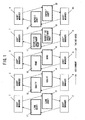
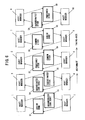
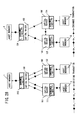
- FIG. 1 is an embodiment of the direct exchange of asset management products illustrating cases in which the same types of financial asset management products are exchange items.
- an asset manager 1 was holding a loan asset 12, while an asset manager 2 was holding a loan asset 11.
- the asset manager 1 has been able to take over the loan asset 11 in exchange for assigning the loan asset 12
- the asset manager 2 has been able to take over the loan asset 12 in exchange for assigning the loan asset 11.
- an asset manager 3 and an asset manager 4 an asset manager 5 and an asset manager 6, an asset manager 7 and an asset manager 8, and an asset manager 9 and an asset manager 10 have directly exchanged respectively, an equity 14 and an equity 13, a bond 16 and a bond 15, a securities investment trust 18 and a securities investment trust 17, and a deposit asset 20 and a deposit asset 19.
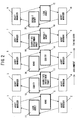
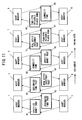
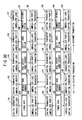
- FIG. 2 is another embodiment of the direct exchange of asset management products illustrating cases in which different types of financial asset management products are exchange items.
- an asset manager 1 was holding a bond 15, while an asset manager 2 was holding a loan asset 11.
- the asset manager 1 has been able to take over the loan asset 11 in exchange for assigning the bond 15, while at the same time, the asset manager 2 has been able to take over the bond 15 in exchange for assigning the loan asset 11.
- an asset manager 3 and an asset manager 4 an asset manager 5 and an asset manager 6, an asset manager 7 and an asset manager 8, and an asset manager 9 and an asset manager 10 have directly exchanged respectively, a securities investment trust 17 and an equity 13, an equity 14 and a bond 16, a deposit asset 19 and a securities investment trust 18, and a loan asset 12 and a deposit asset 20.
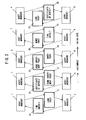
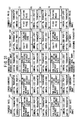
- FIG. 3 is another embodiment of the direct exchange of asset management products illustrating cases in which different deposit types of financial asset management products are exchange items.
- an asset manager 1 was holding a loan trust 23, while an asset manager 2 was holding a time deposit 21.
- the asset manager 1 has been able to take over the time deposit 21 in exchange for assigning the loan trust 23, while at the same time, the asset manager 2 has been able to take over the loan trust 23 in exchange for assigning the time deposit 21.
- an asset manager 3 and an asset manager 4 an asset manager 5 and an asset manager 6, an asset manager 7 and an asset manager 8, and an asset manager 9 and an asset manager 10 have directly exchanged respectively, a bond investment trust 27 and a certificate of deposit 25, a money trust 29 and a bond investment trust 28, a time deposit 22 and a money trust 30, and a certificate of deposit 26 and a loan trust 24.
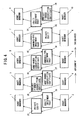
- FIG. 4 is another embodiment of the direct exchange of asset management products illustrating cases in which different equity types of financial asset management products are exchange items.
- an asset manager 1 was holding a beneficiary right in an equity investment trust 33, while an asset manager 2 was holding a private equity 31.
- the asset manager 1 has been able to take over the private equity 31 in exchange for assigning the beneficiary right in the equity investment trust 33, while at the same time, the asset manager 2 has been able to take over the beneficiary right in the equity investment trust 33 in exchange for assigning the private equity 31.
- an asset manager 3 and an asset manager 4 an asset manager 5 and an asset manager 6, an asset manager 7 and an asset manager 8, and an asset manager 9 and an asset manager 10 have directly exchanged respectively, an asset-backed subscription certificate 37 and a project finance subscription certificate 35, a subscription certificate of a corporate-type investment trust 39 and an asset-backed subscription certificate 38, a private equity 32 and a subscription certificate of a corporate-type investment trust 40, and a project finance subscription certificate 36 and a beneficiary right in an equity investment trust 34.
- FIG. 5 is another embodiment of the direct exchange of asset management products illustrating cases in which different types of equity-linked asset management products being serviced by an identical capital raiser are exchange items.
- an asset manager 1 was holding an exchangeable stock 43, while an asset manager 2 was holding a redeemable stock 41.
- the asset manager 1 has been able to take over the redeemable stock 41 in exchange for assigning the exchangeable stock 43, while at the same time, the asset manager 2 has been able to take over the exchangeable stock 43 in exchange for assigning the redeemable stock 41.
- an asset manager 3 and an asset manager 4 an asset manager 5 and an asset manager 6, an asset manager 7 and an asset manager 8, and an asset manager 9 and an asset manager 10 have directly exchanged respectively, a convertible bond 45 and an exchangeable stock 44, a redeemable stock 42 and a stock depository receipt 47, a warrant bond 49 and a convertible bond 46, and a stock depository receipt 48 and a warrant bond 50.
- FIG. 6 is another embodiment of the direct exchange of asset management products illustrating cases in which financial asset management products with different orders of reimbursement being serviced by an identical capital raiser are exchange items.
- an asset manager 1 was holding a subordinated loan asset 53, while an asset manager 2 was holding a senior bond 51.
- the asset manager 1 has been able to take over the senior bond 51 in exchange for assigning the subordinated loan asset 53, while at the same time, the asset manager 2 has been able to take over the subordinated loan asset 53 in exchange for assigning the senior bond 51.
- an asset manager 3 and an asset manager 4 an asset manager 5 and an asset manager 6, an asset manager 7 and an asset manager 8, and an asset manager 9 and an asset manager 10 have directly exchanged respectively, a subordinated stock 55 and a subordinated loan asset 54, a common stock 59 and a preferred stock 57, a senior bond 52 and a common stock 60, and a preferred stock 58 and a subordinated stock 56.
- FIG. 7 is another embodiment of the direct exchange of asset management products illustrating cases in which the same types of real estate asset management products are exchange items.
- an asset manager 1 was holding land 62, while an asset manager 2 was holding land 61.
- the asset manager 1 has been able to take over the land 61 in exchange for assigning the land 62, while at the same time, the asset manager 2 has been able to take over the land 62 in exchange for assigning the land 61.
- an asset manager 3 and an asset manager 4 an asset manager 5 and an asset manager 6, an asset manager 7 and an asset manager 8, and an asset manager 9 and an asset manager 10 have directly exchanged respectively, a building 64 and a building 63, a compound real estate property 66 and a compound real estate property 65, a real estate-backed security 68 and a real estate-backed security 67, and a real estate investment trust 70 and a real estate investment trust 69.
- FIG. 8 is another embodiment of the direct exchange of asset management products illustrating cases in which different types of real estate asset management products are exchange items.
- an asset manager 1 was holding a building 63, while an asset manager 2 was holding land 61.
- the asset manager 1 has been able to take over the land 61 in exchange for assigning the building 63
- the asset manager 2 has been able to take over the building 63 in exchange for assigning the land 61.
- an asset manager 3 and an asset manager 4 an asset manager 5 and an asset manager 6, an asset manager 7 and an asset manager 8, and an asset manager 9 and an asset manager 10 have directly exchanged respectively, a real estate investment trust 69 and a building 64, a real estate-backed security 67 and a compound real estate property 65, land 62 and a real estate-backed security 68, and a compound real estate property 66 and a real estate investment trust 70.
- FIG. 9 is another embodiment of the direct exchange of asset management products illustrating cases in which different types of real estate-backed products being serviced by an identical special purpose vehicle are exchange items.
- an asset manager 1 was holding a special purpose senior loan asset 73, while an asset manager 2 was holding a special purpose subordinated bond 71.
- the asset manager 1 has been able to take over the special purpose subordinated bond 71 in exchange for assigning the special purpose senior loan asset 73
- the asset manager 2 has been able to take over the special purpose senior loan asset 73 in exchange for assigning the special purpose subordinated bond 71.
- an asset manager 3 and an asset manager 4 an asset manager 5 and an asset manager 6, an asset manager 7 and an asset manager 8, and an asset manager 9 and an asset manager 10 have directly exchanged respectively, a special purpose convertible bond 77 and a special purpose common stock 75, a special purpose warrant bond 79 and a special purpose convertible bond 78, a special purpose subordinated bond 72 and a special purpose warrant bond 80, and a special purpose common stock 76 and a special purpose senior loan asset 74.
- FIG. 10 is another embodiment of the direct exchange of asset management products illustrating cases in which different industry products are exchange items.
- an asset manager 1 was holding a building 63, while an asset manager 2 was holding a loan asset 11.
- the asset manager 1 has been able to take over the loan asset 11 in exchange for assigning the building 63
- the asset manager 2 has been able to take over the building 63 in exchange for assigning the loan asset 11.
- an asset manager 3 and an asset manager 4 an asset manager 5 and an asset manager 6, an asset manager 7 and an asset manager 8, and an asset manager 9 and an asset manager 10 have directly exchanged respectively, land 61 and an equity 13, a compound real estate property 65 and a bond 15, a real estate investment trust 69 and a securities investment trust 17, and a real estate-backed security 67 and a deposit asset 19.
- FIG. 11 is another embodiment of the direct exchange of asset management products illustrating cases in which fund-type asset management products or investment vehicles of different types or different industries are exchange items.
- an asset manager 1 was holding a designated fund trust 83, while an asset manager 2 was holding a specified money trust 81.
- the asset manager 1 has been able to take over the specified money trust 81 in exchange for assigning the designated fund trust 83, while at the same time, the asset manager 2 has been able to take over the designated fund trust 83 in exchange for assigning the specified money trust 81.
- an asset manager 3 and an asset manager 4 an asset manager 5 and an asset manager 6, an asset manager 7 and an asset manager 8, and an asset manager 9 and an asset manager 10 have directly exchanged respectively, a real estate investment trust 69 and a designated fund trust 84, a specified money trust 82 and a commodity fund 85, a fund-type privately placed bond 87 and a real estate investment trust 70, and a commodity fund 86 and a fund-type privately placed bond 88.
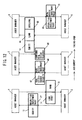
- FIG. 12 is another embodiment of the direct exchange of asset management products illustrating cases in which products are exchanged by tie-in.
- an asset manager 1 was holding a loan asset 11 and a bond 15, while an asset manager 2 was holding an equity 13 and a securities investment trust 17.
- the asset manager 1 has been able to take over 'the equity 13 and the securities investment trust 17' by tie-in in exchange for assigning 'the loan asset 11 and the bond 15' by tie-in
- the asset manager 2 has been able to take over 'the loan asset 11 and the bond 15' by tie-in in exchange for assigning 'the equity 13 and the securities investment trust 17' by tie-in.
- an asset manager 3 and an asset manager 4 and an asset manager 5 and an asset manager 6 have directly exchanged respectively 'a single compound real estate property 65' and 'a tie-in of a real estate-backed security 67 and a real estate investment trust 69,' and 'a tie-in of a securities investment trust 18 and a real estate investment trust 70' and 'a tie-in of an equity 14, land 61 and a building 63.
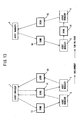
- FIG. 13 is another embodiment of the direct exchange of asset management products illustrating cases in which products are exchanged among three parties.
- an asset manager 1 was holding a bond 15, while an asset manager 2 was holding a bond 16.
- the asset manager 1 has been able to take over the bond 16 in exchange for assigning the bond 15, while at the same time, the asset manager 2 has been able to take over the bond 15 in exchange for assigning the bond 16.
- the asset manager 1, who had taken over the bond 16 has completed a direct exchange with an asset manager 3 that is holding a bond 89.
- the asset manager 1 has been able to take over the bond 89 in exchange for assigning the bond 16
- the asset manager 3 has been able to take over the bond 16 in exchange for assigning the bond 89.
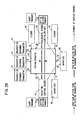
- FIG. 14 is an embodiment of the flows of funds and the fee collection scheme in a direct exchange of asset management products.
- ⁇ indicates that, as a result of completing the direct exchange, an exhibitor 94, who is an asset manager, pays an exchange difference to a successful bidder 95, who is also an asset manager.
- FIG. 15 is an embodiment of the cash flow exchange of asset management products illustrating cases in which different types of financial asset management products are exchange items.
- an asset manager 1 is holding a loan asset 11, while an asset manager 2 is holding a bond 15.
- the asset manager 1 has been able to take over the cash inflow arising from the bond 15 in exchange for assigning the cash inflow arising from the loan asset 11, while at the same time, the asset manager 2 has been able to take over the cash inflow arising from the loan asset 11 in exchange for assigning the cash inflow arising from the bond 15.
- an asset manager 3 and an asset manager 4 an asset manager 5 and an asset manager 6, an asset manager 7 and an asset manager 8, and an asset manager 9 and an asset manager 10 have respectively exchanged a cash inflow arising from an equity 13 and a cash inflow arising from a securities investment trust 17, a cash inflow arising from a bond 16 and a cash inflow arising from an equity 14, a cash inflow arising from a securities investment trust 18 and a cash inflow arising from a deposit asset 19, and a cash inflow arising from a deposit asset 20 and a cash inflow arising from a loan asset 12.
- FIG. 16 is another embodiment of the cash flow exchange of asset management products illustrating cases in which different types of real estate asset management products are exchange items.
- an asset manager 1 is holding land 61, while an asset manager 2 is holding a building 63.
- the asset manager 1 has been able to take over the cash inflow arising from the building 63 in exchange for assigning the cash inflow arising from the land 61
- the asset manager 2 has been able to take over the cash inflow arising from the land 61 in exchange for assigning the cash inflow arising from the building 63.
- an asset manager 3 and an asset manager 4 an asset manager 5 and an asset manager 6, an asset manager 7 and an asset manager 8, and an asset manager 9 and an asset manager 10 have respectively exchanged a cash inflow arising from a building 64 and a cash inflow arising from a real estate investment trust 69, a cash inflow arising from a compound real estate property 65 and a cash inflow arising from a real estate-backed security 67, a cash inflow arising from a real estate-backed security 68 and a cash inflow arising from land 62, and a cash inflow arising from a real estate investment trust 70 and a cash inflow arising from a compound real estate property 66.
- FIG. 17 is another embodiment of the cash flow exchange of asset management products illustrating cases in which different industry products are exchange items.
- an asset manager 1 is holding a loan asset 11, while an asset manager 2 is holding a building 63.
- the asset manager 1 has been able to take over the cash inflow arising from the building 63 in exchange for assigning the cash inflow arising from the loan asset 11, while at the same time, the asset manager 2 has been able to take over the cash inflow arising from the loan asset 11 in exchange for assigning the cash inflow arising from the building 63.
- an asset manager 3 and an asset manager 4 an asset manager 5 and an asset manager 6, an asset manager 7 and an asset manager 8, and an asset manager 9 and an asset manager 10 have respectively exchanged a cash inflow arising from an equity 13 and a cash inflow arising from land 61, a cash inflow arising from a bond 15 and a cash inflow arising from a compound real estate property 65, a cash inflow arising from a securities investment trust 17 and a cash inflow arising from a real estate investment trust 69, and a cash inflow arising from a deposit asset 19 and a cash inflow arising from a real estate-backed security 67.
- FIG. 18 is another embodiment of the cash flow exchange of asset management products illustrating cases in which fund-type asset management products or investment vehicles of different types or different industries are exchange items.
- an asset manager 1 is holding a specified money trust 81, while an asset manager 2 is holding a designated fund trust 83.
- the asset manager 1 has been able to take over the cash inflow arising from the designated fund trust 83 in exchange for assigning the cash inflow arising from the specified money trust 81
- the asset manager 2 has been able to take over the cash inflow arising from the specified money trust 81 in exchange for assigning the cash inflow arising from the designated fund trust 83.
- an asset manager 3 and an asset manager 4 have respectively exchanged a cash inflow arising from a designated fund trust 84 and a cash inflow arising from a real estate investment trust 69, a cash inflow arising from a commodity fund 85 and a cash inflow arising from a specified money trust 82, a cash inflow arising from a real estate investment trust 70 and a cash inflow arising from a fund-type privately placed bond 87, and a cash inflow arising from a fund-type privately placed bond 88 and a cash inflow arising from a commodity fund 86.
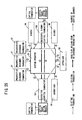
- FIG. 19 is another embodiment of the cash flow exchange of asset management products illustrating cases in which cash flows of products are exchanged by tie-in.
- an asset manager 1 is holding an equity 13 and a securities investment trust 17, while an asset manager 2 is holding a loan asset 11 and a bond 15.
- the asset manager 1 has been able to take over 'the cash inflows arising from the loan asset 11 and the bond 15' by tie-in in exchange for assigning 'the cash inflows arising from the equity 13 and the securities investment trust 17' by tie-in
- the asset manager 2 has been able to take over 'the cash inflows arising from the equity 13 and the securities investment trust 17' by tie-in in exchange for assigning 'the cash inflows arising from the loan asset 11 and the bond 15 by tie-in.
- an asset manager 3 and an asset manager 4, and an asset manager 5 and an asset manager 6 have respectively exchanged 'a single cash inflow arising from a compound real estate property 65' and 'a tie-in of cash inflows arising from a real estate-backed security 67 and a real estate investment trust 69,' and 'a tie-in of cash inflows arising from an equity 14, land 61 and a building 63' and 'a tie-in of cash inflows arising from a securities investment trust 18 and a real estate investment trust 70.
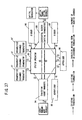
- FIG. 20 is another embodiment of the cash flow exchange of asset management products illustrating cases in which cash flows of products are exchanged among three parties.
- an asset manager 1 is holding a bond 15, while an asset manager 2 is holding a bond 16.
- the asset manager 1 has been able to take over the cash inflow arising from the bond 16 in exchange for assigning the cash inflow arising from the bond 15, while at the same time, the asset manager 2 has been able to take over the cash inflow arising from the bond 15 in exchange for assigning the cash inflow arising from the bond 16.
- the asset manager 1 who had taken over the cash inflow arising from the bond 16, has completed a cash flow exchange with an asset manager 3 that is holding a bond 89.
- the asset manager 1 has been able to take over the cash inflow arising from the bond 89 in exchange for assigning the cash inflow arising from the bond 16
- the asset manager 3 has been able to take over the cash inflow arising from the bond 16 in exchange for assigning the cash inflow arising from the bond 89.
- an asset manager 4 In the left view, cash flow exchanges among three parties have been completed through two steps, and yet it is possible to complete them simultaneously in the present invention.
- an asset manager 5 In the right view, an asset manager 4, an asset manager 5 and an asset manager 6 are respectively holding a bond 90, a bond 91 and a bond 92.
- the asset manager 4 has been able to take over the cash inflow arising from the bond 92 in exchange for assigning the cash inflow arising from the bond 90
- the asset manager 5 has been able to take over the cash inflow arising from the bond 90 in exchange for assigning the cash inflow arising from the bond 91
- the asset manager 6 has been able to take over the cash inflow arising from the bond 91 in exchange for assigning the cash inflow arising from the bond 92.
- FIG. 21 is another embodiment of the cash flow exchange of asset management products illustrating cases in which unrealized profits or losses of different type products or different industry products are exchanged.
- an asset manager 1 is holding a loan asset 11, while an asset manager 2 is holding a real estate-backed security 67.
- the asset manager 1 has been able to take over the unrealized profit of the real estate-backed security 67 in exchange for assigning the unrealized profit of the loan asset 11, while at the same time, the asset manager 2 has been able to take over the unrealized profit of the loan asset 11 in exchange for assigning the unrealized profit of the real estate-backed security 67.
- an asset manager 3 and an asset manager 4 an asset manager 5 and an asset manager 6, an asset manager 7 and an asset manager 8, and an asset manager 9 and an asset manager 10 have exchanged an unrealized loss of an equity 13 and an unrealized loss of a compound real estate property 65, an unrealized profit of a securities investment trust 17 and an unrealized profit of a real estate investment trust 69, an unrealized loss of a specified money trust 81 and an unrealized loss of a designated fund trust 83, and an unrealized profit of a fund-type privately placed bond 87 and an unrealized profit of a commodity fund 85.
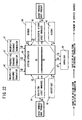
- FIG. 22 is an embodiment of the flows of funds and the fee collection scheme in a cash flow exchange of asset management products.
- ⁇ indicates that an exhibitor 94, who is an asset manager, a successful bidder 95, who is also an asset manager, bidders 96, prospective exchange transactors 97 and an appraiser 98 pay service charges, line charges and/or the like to the system operator 93.
- FIG. 23 is an embodiment of the exchange transaction of asset management products by the compromise method between the direct exchange and the cash flow exchange illustrating cases in which different industry products are exchange items.
- an asset manager 1 is holding a loan asset 11, while an asset manager 2 was holding a building 63.
- the asset manager 1 has been able to directly take over the building 63 in exchange for assigning the cash inflow arising from the loan asset 11, while at the same time, the asset manager 2 has been able to take over the cash inflow arising from the loan asset 11 in exchange for directly assigning the building 63.
- an asset manager 3 and an asset manager 4 an asset manager 5 and an asset manager 6, an asset manager 7 and an asset manager 8, and an asset manager 9 and an asset manager 10 have respectively exchanged by the compromise method between the cash flow exchange and the direct exchange, a cash inflow arising from land 61 and an equity in kind 13, a cash inflow arising from a bond 15 and a compound real estate property in kind 65, a cash inflow arising from a real estate investment trust 69 and a securities investment trust in kind 17, and a cash inflow arising from a deposit asset 19 and a real estate-backed security in kind 67.
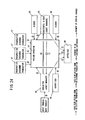
- FIG. 24 is an embodiment of the flows of funds and the fee collection scheme in an exchange transaction of asset management products by the compromise method between the direct exchange and the cash flow exchange.
- ⁇ indicates that, as a result of completing the exchange transaction, a successful bidder 95, who is an asset manager, pays an exchange difference to an exhibitor 94, who is also an asset manager.
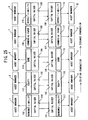
- FIG. 25 is an embodiment of the cash flow exchange of capital raising products illustrating cases in which the same types of financial capital raising products are exchange items.
- a capital raiser 100 is servicing a borrowed liability 110 from an asset manager 1, while a capital raiser 101 is servicing a borrowed liability 111 from an asset manager 2.
- the capital raiser 100 has been able to pass on the cash outflow arising from the borrowed liability 110 in exchange for assuming the cash outflow arising from the borrowed liability 111
- the capital raiser 101 has been able to pass on the cash outflow arising from the borrowed liability 111 in exchange for assuming the cash outflow arising from the borrowed liability 110.
- a capital raiser 102 and a capital raiser 103, a capital raiser 104 and a capital raiser 105, a capital raiser 106 and a capital raiser 107, and a capital raiser 108 and a capital raiser 109 have respectively exchanged 'a cash outflow arising from an equity 112 being held by an asset manager 3' and 'a cash outflow arising from an equity 113 being held by an asset manager 4,' 'a cash outflow arising from a bond 114 being held by an asset manager 5' and 'a cash outflow arising from a bond 115 being held by an asset manager 6,' 'a cash outflow arising from a commercial paper 116 being held by an asset manager 7' and 'a cash outflow arising from a commercial paper 117 being held by an asset manager 8,' and 'a cash outflow arising from a deposit liability 118 from an asset manager 9' and 'a cash outflow arising from a deposit liability 119 from an asset manager 10.
- any number of asset managers may be acting as a counterparty for an existing position of a capital raiser that becomes an exchanging party.
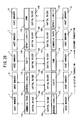
- FIG. 26 is another embodiment of the cash flow exchange of capital raising products illustrating cases in which different types of financial capital raising products are exchange items.
- a capital raiser 100 is servicing a commercial paper 116 being held by an asset manager 1, while a capital raiser 101 is servicing a borrowed liability 110 from an asset manager 2.
- the capital raiser 100 has been able to pass on the cash outflow arising from the commercial paper 116 in exchange for assuming the cash outflow arising from the borrowed liability 110
- the capital raiser 101 has been able to pass on the cash outflow arising from the borrowed liability 110 in exchange for assuming the cash outflow arising from the commercial paper 116.
- a capital raiser 102 and a capital raiser 103, a capital raiser 104 and a capital raiser 105, a capital raiser 106 and a capital raiser 107, and a capital raiser 108 and a capital raiser 109 have respectively exchanged 'a cash outflow arising from a borrowed liability 111 from an asset manager 3' and 'a cash outflow arising from an equity 112 being held by an asset manager 4,' 'a cash outflow arising from an equity 113 being held by an asset manager 5' and 'a cash outflow arising from a bond 114 being held by an asset manager 6,' 'a cash outflow arising from a deposit liability 118 from an asset manager 7' and 'a cash outflow arising from a commercial paper 117 being held by an asset manager 8,' and 'a cash outflow arising from a bond 115 being held by an asset manager 9' and 'a cash outflow arising from a deposit liability 119 from an asset manager 10.
- FIG. 27 is another embodiment of the cash flow exchange of capital raising products illustrating cases in which cash flows of products are exchanged by tie-in.
- a capital raiser 100 is servicing 'a senior borrowed liability 122 from an asset manager 1 and a senior bond 123 being held by an asset manager 2,' while a capital raiser 101 is servicing 'a subordinated borrowed liability 124 from an asset manager 3 and a subordinated bond 125 being held by an asset manager 4.
- the capital raiser 100 has been able to pass on 'the cash outflows arising from the senior borrowed liability 122 and the senior bond 123' by tie-in in exchange for assuming 'the cash outflows arising from the subordinated borrowed liability 124 and the subordinated bond 125' by tie-in
- the capital raiser 101 has been able to pass on 'the cash outflows arising from the subordinated borrowed liability 124 and the subordinated bond 125' by tie-in in exchange for assuming 'the cash outflows arising from the senior borrowed liability 122 and the senior bond 123' by tie-in.
- a capital raiser 102 and a capital raiser 103, and a capital raiser 104 and a capital raiser 105 have respectively exchanged 'a single cash outflow arising from a medium-term bond 126 being held by an asset manager 5' and 'a tie-in of cash outflows arising from a long-term bond 127 being held by an asset manager 6 and a short-term bond 128 being held by an asset manager 7,' and 'a tie-in of cash outflows arising from a time deposit 129 from an asset manager 8, a certificate of deposit 130 from an asset manager 9 and a call money 131 from an asset manager 10' and 'a tie-in of cash outflows arising from a long-term borrowed liability 132 from an asset manager 120 and a commercial paper 116 being held by an asset manager 121.
- FIG. 28 is another embodiment of the cash flow exchange of capital raising products illustrating cases in which cash flows of products are exchanged among three parties.
- a capital raiser 100 is servicing a borrowed liability 110 from an asset manager 1, while a capital raiser 101 is servicing a borrowed liability 111 from an asset manager 2.
- the capital raiser 100 has been able to pass on the cash outflow arising from the borrowed liability 110 in exchange for assuming the cash outflow arising from the borrowed liability 111
- the capital raiser 101 has been able to pass on the cash outflow arising from the borrowed liability 111 in exchange for assuming the cash outflow arising from the borrowed liability 110.
- the capital raiser 100 who had assumed the cash outflow arising from the borrowed liability 111, has completed a cash flow exchange with a capital raiser 102 that is servicing a borrowed liability 133 from an asset manager 3.
- the capital raiser 100 has been able to pass on the cash outflow arising from the borrowed liability 111 in exchange for assuming the cash outflow arising from the borrowed liability 133
- the capital raiser 102 has been able to pass on the cash outflow arising from the borrowed liability 133 in exchange for assuming the cash outflow arising from the borrowed liability 111.
- a capital raiser 103, a capital raiser 104 and a capital raiser 105 are respectively servicing a borrowed liability 134 from an asset manager 4, a borrowed liability 135 from an asset manager 5 and a borrowed liability 136 from an asset manager 6.
- the capital raiser 103 has been able to pass on the cash outflow arising from the borrowed liability 134 in exchange for assuming the cash outflow arising from the borrowed liability 136
- the capital raiser 104 has been able to pass on the cash outflow arising from the borrowed liability 135 in exchange for assuming the cash outflow arising from the borrowed liability 134
- the capital raiser 105 has been able to pass on the cash outflow arising from the borrowed liability 136 in exchange for assuming the cash outflow arising from the borrowed liability 135.
- FIG. 29 is an embodiment of the flows of funds and the fee collection scheme in a cash flow exchange of capital raising products.
- ⁇ indicates that an exhibitor 137, who is a capital raiser, a successful bidder 138, who is also a capital raiser, bidders 96, prospective exchange transactors 97 and an appraiser 98 pay service charges, line charges and/or the like to the system operator 93.
- FIG. 30 is an embodiment of the cash flow exchange of capital transaction products illustrating cases in which the same types of foreign exchange products, financial derivative products, real estate derivative products or commodity derivative products are exchange items.
- a capital transactor 139 is carrying an unrealized profit of a forex spot transaction 159 with a capital transactor 141, while a capital transactor 140 is carrying an unrealized profit of a forex spot transaction 160 with a capital transactor 142.
- the capital transactor 139 has been able to take over the unrealized profit of the forex spot transaction 160 in exchange for assigning the unrealized profit of the forex spot transaction 159
- the capital transactor 140 has been able to take over the unrealized profit of the forex spot transaction 159 in exchange for assigning the unrealized profit of the forex spot transaction 160.
- a capital transactor 143 and a capital transactor 144, a capital transactor 147 and a capital transactor 148, a capital transactor 151 and a capital transactor 152, and a capital transactor 155 and a capital transactor 156 have exchanged 'an unrealized loss of an interest rate forward transaction 161 with a capital transactor 145' and 'an unrealized loss of an interest rate forward transaction 162 with a capital transactor 146,' 'an unrealized profit of a real estate index futures transaction 163 with a capital transactor 149' and 'an unrealized profit of a real estate index futures transaction 164 with a capital transactor 150,' 'an unrealized loss of an equity index option transaction 165 with a capital transactor 153' and 'an unrealized loss of an equity index option transaction 166 with a capital transactor 154,' and 'an unrealized profit of
- any number of capital transactors may be acting as a counterparty for an existing position of a capital transactor that becomes an exchanging party.
- products listed in a derivatives exchange or a securities exchange among capital transaction products although each exchange is acting as a counterparty of a capital transactor, because each capital transactor is substantially carrying an opposite position with one or more other capital transactors through the exchanges, the counterparty shall be described as another capital transactor in each drawing in the present embodiments.
- FIG. 31 is another embodiment of the cash flow exchange of capital transaction products illustrating cases in which the same types of swap products are exchange items.
- a capital transactor 139 is carrying an unrealized profit of an interest rate swap transaction 169 with a capital transactor 141, while a capital transactor 140 is carrying an unrealized profit of an interest rate swap transaction 170 with a capital transactor 142.
- the capital transactor 139 has been able to take over the unrealized profit of the interest rate swap transaction 170 in exchange for assigning the unrealized profit of the interest rate swap transaction 169
- the capital transactor 140 has been able to take over the unrealized profit of the interest rate swap transaction 169 in exchange for assigning the unrealized profit of the interest rate swap transaction 170.
- a capital transactor 143 and a capital transactor 144, a capital transactor 147 and a capital transactor 148, a capital transactor 151 and a capital transactor 152, and a capital transactor 155 and a capital transactor 156 have exchanged 'an unrealized loss of a cross-currency swap transaction 171 with a capital transactor 145' and 'an unrealized loss of a cross-currency swap transaction 172 with a capital transactor 146,' 'an unrealized profit of a cross-currency interest rate swap transaction 173 with a capital transactor 149' and 'an unrealized profit of a cross-currency interest rate swap transaction 174 with a capital transactor 150,' 'an unrealized loss of an equity swap transaction 175 with a capital transactor 153' and 'an unrealized loss of an equity swap transaction 176 with a capital transactor
- FIG. 32 is another embodiment of the cash flow exchange of capital transaction products illustrating cases in which different type products or different industry products are exchange items.
- a capital transactor 139 is carrying an unrealized profit of a cross-currency interest rate swap transaction 173 with a capital transactor 141, while a capital transactor 140 is carrying an unrealized profit of a forex spot transaction 159 with a capital transactor 142.
- the capital transactor 139 has been able to take over the unrealized profit of the forex spot transaction 159 in exchange for assigning the unrealized profit of the cross-currency interest rate swap transaction 173, while at the same time, the capital transactor 140 has been able to take over the unrealized profit of the cross-currency interest rate swap transaction 173 in exchange for assigning the unrealized profit of the forex spot transaction 159.
- a capital transactor 143 and a capital transactor 144, a capital transactor 147 and a capital transactor 148, a capital transactor 151 and a capital transactor 152, and a capital transactor 155 and a capital transactor 156 have exchanged 'an unrealized loss of an interest rate swap transaction 169 with a capital transactor 145' and 'an unrealized loss of an interest rate forward transaction 161 with a capital transactor 146,' 'an unrealized profit of a cross-currency swap transaction 171 with a capital transactor 149' and 'an unrealized profit of a real estate index futures transaction 163 with a capital transactor 150,' 'an unrealized loss of an equity swap transaction 175 with a capital transactor 153' and 'an unrealized loss of an equity index option transaction 165 with a capital transactor 154,' and 'an unrealized profit of
- FIG. 33 is another embodiment of the cash flow exchange of capital transaction products illustrating cases in which cash flows of products are exchanged by tie-in.
- a capital transactor 139 is carrying 'an unrealized loss of an equity swap transaction 175 with a capital transactor 141,' while a capital transactor 140 is carrying 'an unrealized profit of an equity index option transaction 165 with a capital transactor 142 and an unrealized loss of an interest rate futures transaction 179 with a capital transactor 143' to have an unrealized loss on a net basis.
- the capital transactor 139 has assumed 'the unrealized profit of the equity index option transaction 165 and the unrealized loss of the interest rate futures transaction 179' by tie-in in exchange for passing on 'the unrealized loss of the equity swap transaction 175,' while at the same time, the capital transactor 140 has assumed 'the unrealized loss of the equity swap transaction 175' in exchange for passing on 'the unrealized profit of the equity index option transaction 165 and the unrealized loss of the interest rate futures transaction 179' by tie-in.
- a capital transactor 144 is carrying 'an unrealized profit of a forex forward transaction 180 with a capital transactor 146, an unrealized profit of an interest rate swap transaction 169 with a capital transactor 147, and an unrealized loss of a bond futures option transaction 181 with a capital transactor 148' to have an unrealized profit on a net basis, while a capital transactor 145 is carrying 'an unrealized loss of a currency option transaction 182 with a capital transactor 149 and an unrealized profit of a cross-currency swap transaction 171 with a capital transactor 150' to have an unrealized profit on a net basis.
- the capital transactor 144 has taken over 'the unrealized loss of the currency option transaction 182 and the unrealized profit of the cross-currency swap transaction 171' by tie-in in exchange for assigning 'the unrealized profit of the forex forward transaction 180, the unrealized profit of the interest rate swap transaction 169, and the unrealized loss of the bond futures option transaction 181' by tie-in, while at the same time, the capital transactor 145 has taken over 'the unrealized profit of the forex forward transaction 180, the unrealized profit of the interest rate swap transaction 169, and the unrealized loss of the bond futures option transaction 181' by tie-in in exchange for assigning 'the unrealized loss of the currency option transaction 182 and the unrealized profit of the cross-currency swap transaction 171' by tie-in.
- FIG. 34 is another embodiment of the cash flow exchange of capital transaction products illustrating cases in which cash flows of products are exchanged among three parties.
- a capital transactor 139 is carrying an unrealized profit of a cross-currency interest rate swap transaction 173 with a capital transactor 142, while a capital transactor 140 is carrying an unrealized profit of a swaption transaction 183 with a capital transactor 143.
- the capital transactor 139 has been able to take over the unrealized profit of the swaption transaction 183 in exchange for assigning the unrealized profit of the cross-currency interest rate swap transaction 173, while at the same time, the capital transactor 140 has been able to take over the unrealized profit of the cross-currency interest rate swap transaction 173 in exchange for assigning the unrealized profit of the swaption transaction 183.
- the capital transactor 139 who had taken over the unrealized profit of the swaption transaction 183, has completed a cash flow exchange with a capital transactor 141 that is carrying an unrealized profit of the swaption transaction 184.
- the capital transactor 139 has been able to take over the unrealized profit of the swaption transaction 184 in exchange for assigning the unrealized profit of the swaption transaction 183
- the capital transactor 141 has been able to take over the unrealized profit of the swaption transaction 183 in exchange for assigning the unrealized profit of the swaption transaction 184.
- a capital transactor 145, a capital transactor 146, and a capital transactor 147 are respectively carrying an unrealized profit of a cross-currency interest rate swap transaction 174 with a capital transactor 148, an unrealized profit of a swaption transaction 185 with a capital transactor 149, and an unrealized profit of a swaption transaction 186 with a capital transactor 150.
- the capital transactor 145 has been able to take over the unrealized profit of the swaption transaction 186 in exchange for assigning the unrealized profit of the cross-currency interest rate swap transaction 174
- the capital transactor 146 has been able to take over the unrealized profit of the cross-currency interest rate swap transaction 174 in exchange for assigning the unrealized profit of the swaption transaction 185
- the capital transactor 147 has been able to take over the unrealized profit of the swaption transaction 185 in exchange for assigning the unrealized profit of the swaption transaction 186.
- FIG. 35 is an embodiment of the flows of funds and the fee collection scheme in a cash flow exchange of capital transaction products.
- ⁇ indicates that an exhibitor 187, who is a capital transactor, a successful bidder 188, who is also a capital transactor, bidders 96, prospective exchange transactors 97 and an appraiser 98 pay service charges, line charges and/or the like to the system operator 93.
- FIG. 36 is an embodiment of the cash flow exchange between asset management products and capital transaction products illustrating cases in which unrealized profits or losses of different type products or different industry products are exchanged.
- an asset manager 1 is holding an unrealized profit of an equity 13, while a capital transactor 139 is carrying an unrealized profit of an equity swap transaction 175 with a capital transactor 140.
- the asset manager 1 has been able to take over the unrealized profit of the equity swap transaction 175 in exchange for assigning the unrealized profit of the equity 13, while at the same time, the capital transactor 139 has been able to take over the unrealized profit of the equity 13 in exchange for assigning the unrealized profit of the equity swap transaction 175.
- an asset manager 2 and a capital transactor 141, an asset manager 3 and a capital transactor 143, an asset manager 4 and a capital transactor 145, and an asset manager 5 and a capital transactor 147 have exchanged 'an unrealized loss of a compound real estate property 65' and 'an unrealized loss of a real estate index futures transaction 163 with a capital transactor 142,' 'an unrealized profit of a loan asset 11' and 'an unrealized profit of an interest rate forward transaction 161 with a capital transactor 144,' 'an unrealized loss of a bond 15' and 'an unrealized loss of a cross-currency swap transaction 171 with a capital transactor 146,' and 'an unrealized profit of a commodity fund 85' and 'an unrealized profit of a forex spot transaction 159 with a capital transactor 148.
- FIG. 37 is an embodiment of the flows of funds and the fee collection scheme in a cash flow exchange between an asset management product and a capital transaction product on the basis of their unrealized profits or losses.
- ⁇ indicates that an exhibitor 94, who is an asset manager, a successful bidder 188, who is a capital transactor, bidders 96, prospective exchange transactors 97 and an appraiser 98 pay service charges, line charges and/or the like to the system operator 93.
- FIG. 38 is an embodiment of the cash flow exchange by tie-in of an asset management product and a capital transaction product illustrating cases in which asset managers exchange by tie-in an asset management product as a whole or an unrealized profit or loss thereof, and an unrealized profit or loss of a capital transaction product.
- an asset manager 1 is holding a loan asset 11 and is carrying an unrealized profit of an interest rate swap transaction 169 with a capital transactor 139, while an asset manager 2 is holding a compound real estate property 65 and is carrying an unrealized profit of a real estate index futures transaction 163 with a capital transactor 140.
- the asset manager 1 has been able to take over 'the cash inflow arising from the compound real estate property 65 and the unrealized profit of the real estate index futures transaction 163' by tie-in in exchange for assigning 'the cash inflow arising from the loan asset 11 and the unrealized profit of the interest rate swap transaction 169' by tie-in
- the asset manager 2 has been able to take over 'the cash inflow arising from the loan asset 11 and the unrealized profit of the interest rate swap transaction 169' by tie-in in exchange for assigning 'the cash inflow arising from the compound real estate property 65 and the unrealized profit of the real estate index futures transaction 163' by tie-in.
- an asset manager 3 is holding an unrealized profit of an equity 13 and is carrying an unrealized loss of an individual equity option transaction 189 with a capital transactor 141, while an asset manager 4 is holding an unrealized loss of a deposit asset 19 and is carrying an unrealized profit of a cross-currency swap transaction 171 with a capital transactor 142.
- the asset manager 3 has assumed 'the unrealized loss of the deposit asset 19 and the unrealized profit of the cross-currency swap transaction 171' by tie-in in exchange for passing on 'the unrealized profit of the equity 13 and the unrealized loss of the individual equity option transaction 189' by tie-in, while at the same time, the asset manager 4 has assumed 'the unrealized profit of the equity 13 and the unrealized loss of the individual equity option transaction 189' by tie-in in exchange for passing on 'the unrealized loss of the deposit asset 19 and the unrealized profit of the cross-currency swap transaction 171' by tie-in.
- FIG. 39 is an embodiment of the flows of funds and the fee collection scheme in a cash flow exchange by tie-in of an asset management product and a capital transaction product.
- ⁇ indicates that an exhibitor 94, who is an asset manager, a successful bidder 95, who is also an asset manager, a bidder 96, prospective exchange transactors 97 and an appraiser 98 pay service charges, line charges and/or the like to the system operator 93.
- FIG. 40 is an embodiment of the cash flow exchange by tie-in of a capital raising product and a capital transaction product illustrating cases in which capital raisers exchange by tie-in a capital raising product and an unrealized profit or loss of a capital transaction product.
- a capital raiser 100 is servicing a bond 114 being held by an asset manager 1 and is carrying an unrealized profit of a cross-currency interest rate swap transaction 173 with a capital transactor 139, while a capital raiser 101 is servicing a borrowed liability 110 from an asset manager 2 and is carrying an unrealized profit of a collar transaction 190 with a capital transactor 140.
- the capital raiser 100 has been able to pass on the cash outflow arising from the bond 114 and take over the unrealized profit of the collar transaction 190 in exchange for assuming the cash outflow arising from the borrowed liability 110 and assigning the unrealized profit of the cross-currency interest rate swap transaction 173, while at the same time, the capital raiser 101 has been able to pass on the cash outflow arising from the borrowed liability 110 and take over the unrealized profit of the cross-currency interest rate swap transaction 173 in exchange for assuming the cash outflow arising from the bond 114 and assigning the unrealized profit of the collar transaction 190.
- a capital raiser 102 is servicing a deposit liability 118 from an asset manager 3 and is carrying an unrealized loss of a cap transaction 191 with a capital transactor 141, while a capital raiser 103 is servicing a commercial paper 116 being held by an asset manager 4 and is carrying an unrealized loss of an interest rate swap transaction 169 with a capital transactor 142.
- the capital raiser 102 has passed on the cash outflow arising from the deposit liability 118 and assumed the unrealized loss of the interest rate swap transaction 169 in exchange for assuming the cash outflow arising from the commercial paper 116 and passing on the unrealized loss of the cap transaction 191, while at the same time, the capital raiser 103 has passed on the cash outflow arising from the commercial paper 116 and assumed the unrealized loss of the cap transaction 191 in exchange for assuming the cash outflow arising from the deposit liability 118 and passing on the unrealized loss of the interest rate swap transaction 169.
- FIG. 41 is an embodiment of the flows of funds and the fee collection scheme in a cash flow exchange by tie-in of a capital raising product and a capital transaction product.
- ⁇ indicates that an exhibitor 137, who is a capital raiser, a successful bidder 138, who is also a capital raiser, a bidder 96, prospective exchange transactors 97 and an appraiser 98 pay service charges, line charges and/or the like to the system operator 93.
- FIG. 42 is an embodiment of the cash flow exchange by tie-in of an asset management product and a capital raising product illustrating cases in which capital transactors exchange by tie-in a capital raising product and an asset management product as a whole.
- a capital transactor 139 is servicing a borrowed liability 110 from an asset manager 1 and is holding a loan asset 11, while a capital transactor 140 is servicing a bond 114 being held by an asset manager 2 and is holding a real estate investment trust 69.
- the capital transactor 139 has been able to pass on the cash outflow arising from the borrowed liability 110 and take over the cash inflow arising from the real estate investment trust 69 in exchange for assuming the cash outflow arising from the bond 114 and assigning the cash inflow arising from the loan asset 11, while at the same time, the capital transactor 140 has been able to pass on the cash outflow arising from the bond 114 and take over the cash inflow arising from the loan asset 11 in exchange for assuming the cash outflow arising from the borrowed liability 110 and assigning the cash inflow arising from the real estate investment trust 69.
- a capital transactor 141 is servicing a commercial paper 116 being held by an asset manager 3 and is holding an equity 13 while a capital transactor 142 is servicing a deposit liability 118 from an asset manager 4 and is holding a call loan 192.
- the capital transactor 141 has been able to pass on the cash outflow arising from the commercial paper 116 and take over the cash inflow arising from the call loan 192 in exchange for assuming the cash outflow arising from the deposit liability 118 and assigning the cash inflow arising from the equity 13, while at the same time, the capital transactor 142 has been able to pass on the cash outflow arising from the deposit liability 118 and take over the cash inflow arising from the equity 13 in exchange for assuming the cash outflow arising from the commercial paper 116 and assigning the cash inflow arising from the call loan 192.
- FIG. 43 is an embodiment of the flows of funds and the fee collection scheme in a cash flow exchange by tie-in of an asset management product and a capital raising product.
- ⁇ indicates that an exhibitor 187, who is a capital transactor, a successful bidder 188, who is also a capital transactor, a bidder 96, prospective exchange transactors 97 and an appraiser 98 pay service charges, line charges and/or the like to the system operator 93.
- FIG. 44 is an embodiment of the cash flow exchange by tie-in of an asset management product, a capital raising product and a capital transaction product illustrating a case in which capital transactors exchange by tie-in an asset management product as a whole, a capital raising product and an unrealized profit or loss of a capital transaction product.
- a capital transactor 139 is servicing a bond 114 being held by an asset manager 1, is carrying an unrealized loss of a cross-currency interest rate swap transaction 173 with a capital transactor 141 and is holding an equity 13, while a capital transactor 140 is servicing a borrowed liability 110 from an asset manager 2, is carrying an unrealized loss of a real estate index futures transaction 163 with a capital transactor 142 and is holding a compound real estate property 65.
- the capital transactor 139 has 'passed on the cash outflow arising from the bond 114, assumed the unrealized loss of the real estate index futures transaction 163 and taken over the cash inflow arising from the compound real estate property 65' in exchange for 'assuming the cash outflow arising from the borrowed liability 110, passing on the unrealized loss of the cross-currency interest rate swap transaction 173 and assigning the cash inflow arising from the equity 13,' while at the same time, the capital transactor 140 has 'passed on the cash outflow arising from the borrowed liability 110, assumed the unrealized loss of the cross-currency interest rate swap transaction 173 and taken over the cash inflow arising from the equity 13' in exchange for 'assuming the cash outflow arising from the bond 114, passing on the unrealized loss of the real estate index futures transaction 163 and assigning the cash inflow arising from the compound real estate property 65.
- FIG. 45 is an embodiment of the flows of funds and the fee collection scheme in a cash flow exchange by tie-in of an asset management product, a capital raising product and a capital transaction product.
- ⁇ indicates that an exhibitor 187, who is a capital transactor, a successful bidder 188, who is also a capital transactor, a bidder 96, prospective exchange transactors 97, and an appraiser 98 pay service charges, line charges and/or the like to the system operator 93.
- FIG. 46 shows main transaction styles of the case in which an exchange transaction is performed on a net basis by one of various combinations of the direct exchange of asset management products, the cash flow exchange of asset management products, the cash flow exchange of capital raising products and the cash flow exchange of capital transaction products.
- the present system is arranged on the Internet 193, and comprises an exchange transaction site for financial and related instruments 194 (hereinafter referred to as the site 194) providing various exchange transaction markets for financial instruments and/or quasi-financial instruments, and a plurality of client terminals 195 for performing various exchange transactions for the purpose of asset management, capital raising and/or capital transactions in said markets.
- the site 194 providing various exchange transaction markets for financial instruments and/or quasi-financial instruments
- client terminals 195 for performing various exchange transactions for the purpose of asset management, capital raising and/or capital transactions in said markets.
- client terminals 195 are asset managers, capital raisers, capital transactors and/or others, and the system users, by accessing said site 194 from their own client terminals 195, can complete various exchange transactions on a matching basis and execute various business accompanying the exchange transactions.
- the present site 194 is for sequentially processing orders of various desired exchange products from the client terminals 195, for sequentially executing the settlement and administration business related to the exchange transactions, and for appropriately distributing to the client terminals 195 the various data necessary for the exchange transactions, and comprises at least one exchange transaction server for financial and related instruments 196 (hereinafter referred to as the server 196), a support terminal 197, a client information database 198, an exchange transaction database 199, a contract management database 200, a settlement management database 201, an appraiser information database 202, and a bus for connecting them.
- the server 196 comprises at least one exchange transaction server for financial and related instruments 196 (hereinafter referred to as the server 196), a support terminal 197, a client information database 198, an exchange transaction database 199, a contract management database 200, a settlement management database 201, an appraiser information database 202, and a bus for connecting them.
- the present system uses ISO15022 for the electronic message format, ISO6166 for the securities identification numbering system, and ISO 9362 for the financial institution identification numbering system, as well as, for example, Financial Information exchange (FIX) for the protocol and extensible Markup Language (XML) for the description language of electronic messages, so that jobs from execution to transaction confirmation and settlement of various exchange transactions can be electronically processed in a seamless manner 24 hours a day both domestically and abroad.
- FIX Financial Information exchange
- XML extensible Markup Language
- the present server 196 works by the execution of at least one central processing unit in at least one workstation and in conjunction with at least one program stored in memory, and/or with the like, and is equipped to function as a WWW server and/or a database server.
- the former is a web management function, via the Internet 193, for managing access from client terminals 195 to perform authentication processing, for providing the client terminals 195 with various web pages that appear on screens and that users interface with, and for exchanging information with the client terminals 195.
- the latter is a database management function for accessing the client information database 198, the exchange transaction database 199, the contract management database 200, the settlement management database 201 and/or the appraiser information database 202, for searching for data on the databases, for reading out the data and for writing data to the databases.
- these databases are stored in the memory or on at least one hard disc device in the workstation, and/or in the like.
- the support terminal 197 is a terminal with which the system operator manages the present server 196 and the databases. Using the support terminal 197, the operator can monitor implementation status of exchange transactions and business accompanying the exchange transactions on all the client terminals 195, and can exchange messages with each client terminal 195 utilizing an e-mail function of the support terminal 197.
- the client terminal 195 is a device such as a personal computer, a mobile telephone equipped with a liquid crystal display, a personal digital assistant and/or a pager, and comprises a control unit 203, a display unit 204, an input unit 205, a communication unit 206 and the like.
- the control unit 203 comprises a processor, memory and the like, and stores operation programs, including a browser, for exchange transactions.
- the display unit 204 and the input unit 205 respectively display and input various data and instructions, and the communication unit 206 communicates with other devices on the Internet 193.
- the users can exchange messages with the operator and with other client terminals 195.
- the exchange transaction database 199 stores names and issues, types and attributes, terms and conditions, and/or the like of asset management products, capital raising products and/or capital transaction products to be objects of exchange transactions, and also stores, by product, details of exchange orders, results of matching, and/or information on events related to exchange transactions before their expiries such as exercise of various rights and fulfillment of various obligations, together with their histories.
- the contract management database 200 stores various agreements in which digital signatures have been entered as well as electronic master agreements that are models thereof, various prospectuses in which digital signatures have been entered as well as electronic master prospectuses that are models thereof, various reports and disclosures respectively to the authorities and to the general public in which digital signatures have been entered as well as electronic master reports and disclosures that are models thereof, and/or the like, and also stores various data generated in accordance with the progress of document preparation processing, together with their histories.
- the settlement management database 201 stores funds account numbers, securities account numbers and/or the like of users of the present system, and also stores various data generated in accordance with the progress of inter-account funds transfer processing and/or inter-account securities transfer processing between and among the users, together with their histories.
- the appraiser information database 202 stores self-introduction materials containing profiles and appraisal fee scales of appraisers collected from themselves, and also stores various reference and/or proposal data that appraisers prepare with respect to individual exchange items.
- the profiles may include the information on ownership structure, associated companies and human resources of the appraisers.
- the client information database 198 stores the following information:
- said ID is a code number or user name allocated to each user
- said password is authentication information that is required when a user accesses the present server 196.
- the present server 196 identifies an accessing user by an ID, and authenticates the accessing user by the combination of the ID and the password.
- the methods of matching demands to exchange according to the present system include an auction mode and a negotiation mode.
- the auction mode is utilized in cases in which an asset manager, a capital raiser or a capital transactor to be a counterparty of an exchange transaction is not originally specified and orders are matched basically according to the principle of balance of supply and demand, and/or in cases in which, although the name of the exhibiting party and its act of exhibition are originally disclosed, the bidding party is not originally specified and orders are matched on the basis of provisional terms basically according to the principle of balance of supply and demand.
- the auction mode is effective on occasions on which an exchange item is a well-recognized product. Additionally, as used in the present invention, the former auction mode shall be referred to as the 'matching method with both sides unspecified,' while the latter auction mode shall be referred to as the 'matching method with a single side specified.'
- the negotiation mode is utilized in cases in which a counterparty of the exchange transaction is originally specified or selected and orders are matched under an environment in which the principle of balance of supply and demand does not act directly.
- the mode is effective on occasions on which an exchange item is a tie-in of a plurality of products, or is a capital raising product or capital transaction product with a complicated cash flow.
- the negotiation mode shall be referred to as the 'matching method with both sides specified.'
- a prospective exchange transactor that desires to make an exhibition (hereinafter referred to as an exhibitor) first starts up the operation program stored in the control unit 203 of his or her client terminal 195 to establish a session with the present site 194.
- the present server 196 sends a top page for login to the client terminal 195 of the exhibitor, who inputs an ID and a password in the page and sends it to the present server 196.
- the present server 196 accesses the client information database 198 and determines whether or not the combination of the ID and the password is stored therein. If it is stored therein, the present server 196 sends the exhibitor a menu page on which he or she can choose to participate in an exchange transaction, to negotiate on an exchange transaction, to inquire about his or her agreement, to inquire about his or her funds account, to inquire about his or her securities account, to peruse appraiser data, to view market information, or to report his or her event.
- the exhibitor chooses to participate in an exchange transaction, and then the present server 196 sends the exhibitor an order placement page for inputting details of an exchange order.
- the exhibitor having received the order placement page, inputs or specifies therein a name or issue, a type and attribute, terms and conditions, and a desired offer value of the asset management product, capital raising product or capital transaction product that he or she desires to offer (hereinafter referred to as the exhibition product), and a desired offer volume in the case in which the exhibition product is a unit price product, as well as a name or issue, a type and attribute, terms and conditions, and a desired procurement value of the asset management product, capital raising product or capital transaction product that he or she desires to procure through the auction (hereinafter referred to as the bidding product), and a desired procurement volume in the case in which the bidding product is a unit price product.
- the exhibition product a desired offer volume in the case in which the exhibition product is a unit price product, as well as a name or issue, a type and attribute, terms and conditions, and a desired procurement value of the asset management product, capital raising product or capital transaction product that he or she desires to procure through the auction (
- the exhibitor also inputs or specifies therein a desired exchange period, acceptable creditworthiness of his or her exchanging counterparties, various requests to the exchanging counterparties, and/or a desired exhibition period as well as acceptability of an automatic extension or an early termination of the exhibition, and further specifies therein, as a provisional term, the disparity between the desired offer value and the desired procurement value, i.e. the desired amount of exchange difference.
- the exhibitor sends the page to the present server 196.
- the provisional term which may be an indication of a specific uniform value or of a range with an upper and/or lower limit, may be arbitrarily decided by the exhibitor.
- the present server 196 receives the exchange order from the exhibitor, stores it in an exhibition list on the exchange transaction database 199, and then sends the exhibitor an order confirmation page for reporting the stored contents thereto, on which the exhibitor confirms the contents of his or her order.
- the present server 196 accesses the client information database 198, searches attribute information on users of the present system stored therein such as policies and objectives on asset management, capital raising or capital transactions, industries, credit ratings, stock ratings and financial data, and specifies prospective exchange transactors that are in line with said exchange order of the exhibitor. Then, the system operator prepares a preliminary prospectus based on the contents of the exchange order, converts it into an electronic document format or the like, and then distributes it simultaneously to the specified prospective exchange transactors via the support terminal 197. Additionally, in the case in which narrowing-down of distribution destinations is unnecessary, the operator distributes the preliminary prospectus to all the prospective exchange transactors.
- a prospective exchange transactor that has received the preliminary prospectus, has confirmed that the exhibition product is his or her desired procurement product while the bidding product is his or her desired offer product, and then has decided to participate in the bidding (hereinafter referred to as a bidder), on his or her own order placement page, specifies both the products, and also inputs or specifies various requests to the exhibitor, whether it is a limit order or an order without limit, his or her bidding volume in the case in which the bidding product is a unit price product, and his or her desired amount of exchange difference vis-à-vis the provisional term in case of a limit order.
- the bidder sends the page to the present server 196.
- the present server 196 receives the exchange order from the bidder, stores it in a bidding list on the exchange transaction database 199, and then sends the bidder an order confirmation page for reporting the stored contents thereto, on which the bidder confirms the contents of his or her order.
- the exchange difference referred to in this context does not mean the individual sums that successful bidders respectively pay to or receive from the exhibitor at the stage where the exchange transactions have been completed, but the total sum that the successful bidding side as a whole pays to or receives from the exhibitor.
- the finally fixed amount of the exchange difference is prorated according to the respective successful bid volumes of the successful bidders, and then the prorated amounts are respectively paid to or received from the exhibitor.
- the desired amount of exchange difference that a bidder specifies may be at levels that do not take the provisional term into account, but in general, the more the desired amount is in line with the provisional term, the more likely the bid will be successful.
- the present server 196 matches an exchange demand of an exhibitor to an exchange demand of a bidder by executing processing as described below:
- the server 196 makes successful all the desired offer volumes of the bidders within the desired procurement volume of the exhibitor. Also, concerning limit orders from bidders, the server 196 extracts therefrom the orders whose desired amounts of exchange difference are within the range of the provisional term of the exchange difference, and the orders whose desired amounts of exchange difference are beyond the range of the provisional term because they are even more favorable to the exhibitor than the provisional term, and makes them successful in the order of how much the desired amounts of exchange difference favor the exhibitor.
- the present server 196 stores the contents of the successful bids in the exchange transaction database 199 and, based on the data, updates the remaining volumes on the exhibition list and on the bidding list. Then, at the stage where successful bid volumes of the bidding product have been accumulated to reach the desired procurement volume of the exhibitor, the present server 196 sets as a fixed term the desired amount of exchange difference that most favors a bidder out of those of the successful bid orders, thereby completing the exchange transaction.
- the system operator prepares, by amending said preliminary prospectus, successful bid notices that describe the details of the successful bids including the fixed amount of exchange difference. It sends the successful bid notices to the exhibitor and the successful bidder or bidders via the support terminal 197, and the respective parties finally confirm this, whereby the transaction confirmation ends.
- the fixed amount of exchange difference is prorated according to the respective successful bid volumes of the successful bidders, and then the prorated amounts are respectively reported to the successful bidders.
- the exhibition product is a unit price product
- the exhibition volume is prorated according to the respective successful bid volumes of the successful bidders regarding the bidding product, and then the prorated volumes are respectively reported to the successful bidders.
- the successful bid notice functions as the final prospectus, while if an appraiser is utilized, through the due diligence of the completed exchange products and the appraisal of the fixed amount of exchange difference by the appraiser, the successful bid notice is amended into the final prospectus.
- an exchange transaction that finally sets as a uniform numerical value the amount of exchange difference between an exhibiting party and one or more successful bidding parties.
- an exhibition product and a bidding product are unit price products, a style in which, for example, an exchange ratio of volume between the products is predetermined, and then amounts of exchange differences vary, successful bidder by successful bidder, at each matching to make successful bids in the order of how much the orders favor the exhibitor, may also be employed.
- a prospective exchange transactor specifies or inputs, in said order placement page, a name or issue, a type and attribute, terms and conditions, and a desired offer value of the asset management product, capital raising product or capital transaction product that he or she desires to offer, and a desired offer volume in the case in which the desired offer product is a unit price product, as well as a name or issue, a type and attribute, terms and conditions, and a desired procurement value of the asset management product, capital raising product or capital transaction product that he or she desires to procure, and a desired procurement volume in the case in which the desired procurement product is a unit price product.
- the prospective exchange transactor also specifies or inputs therein an exchange ratio in the case in which both the desired offer product and the desired procurement product are unit price products, a desired exchange period, various requests to exchanging counterparties, whether it is a limit order or an order without limit, and a term of validity of the order as well as acceptability of an automatic extension or an early termination of the term, and further specifies therein in case of a limit order, the disparity between the desired offer value and the desired procurement value, i.e. the desired amount of exchange difference.
- the prospective exchange transactor After confirming the contents of the order, the prospective exchange transactor sends the page to the present server 196.
- the present server 196 receives the order from the prospective exchange transactor, and stores it in an exchange order list on the exchange transaction database 199. Then, the server 196 sends the prospective exchange transactor an order confirmation page for reporting the stored contents thereto, on which the prospective exchange transactor confirms the contents of his or her order.
- the present server 196 matches opposite exchange demands by executing processing as described below:
- the server 196 matches exchange orders, stored in the exchange order list, in which the desired offer product and the desired procurement product in one order are respectively the desired procurement product and the desired offer product in the other order. Also, in the case in which both the products are unit price products, the server 196 matches exchange orders that agree with each other not only in the offer vis-à-vis the procurement, but also in the exchange ratio.
- the server 196 matches one order to as many other orders as possible so that the desired procurement volumes and desired offer volumes of the latter orders respectively correspond to the desired offer volume and desired procurement volume of the former order. Also, in the case in which the stored exchange orders are limit orders, the server 196 extracts exchange orders whose desired amounts of exchange difference most favor exchanging counterparties, determines whether or not an exchange transaction can be completed, and if the exchange transaction can be completed, completes it between both the orders. Also, if there is divergence between desired amounts of exchange difference and thus an exchange transaction cannot be directly completed, the server 196 may regard an intermediate amount as a completed amount of exchange difference.
- the present server 196 stores the contents of the completed transactions in the exchange transaction database 199 and, based on the data, updates the remaining volumes on the exchange order list. That is, if exchange transaction of the entire volumes is completed, the server 196 deletes both the exchange orders from the exchange order list, while if exchange transaction is partially completed, the server 196 continues to carry the remaining volumes on the pertinent exchange orders on the exchange order list.
- the present server 196 sends each exchange completer via the support terminal 197, a respective contract notice that describes details of the exchange products including the completed amount of exchange difference, on which each party finally confirms the details, thereby ending its transaction confirmation.
- an asset manager, capital raiser or capital transactor (hereinafter referred to as a requesting party) that desires an exchange transaction with a specific user of the present system, chooses to negotiate on an exchange transaction on said menu page, and then the present server 196 sends the requesting party a transaction negotiation page in which details of his or her transaction negotiation are to be input.
- the requesting party having received the transaction negotiation page, specifies or inputs therein information for specifying one asset manager, capital raiser or capital transactor to be a negotiating counterparty (hereinafter referred to as a requested party) or information for narrowing down requested parties to a specific plurality of persons based on their industry, credit rating, stock rating, financial data and/or the like.
- the requesting party specifies or inputs therein, as specific conditions that he or she desires from the requested party, a name or issue, a type and attribute, terms and conditions, and a desired offer value of his or her desired offer product, and a desired offer volume in the case in which the product is a unit price product, as well as a name or issue, a type and attribute, terms and conditions, and a desired procurement value of the desired procurement product, and a desired procurement volume in the case in which the product is a unit price product, a desired exchange period, various requests to the requested party, and/or the disparity between the desired offer value and the desired procurement value, i.e. the desired amount of exchange difference, and sends the page to the present server 196.
- the present server 196 In the case in which the requesting party has individually specified one requested party, the present server 196, having received the transaction negotiation page from the requesting party, adds the ID of the requesting party to the e-mail address of the requested party, and sends the page thereto.
- the present server 196 based on information such as industries, credit ratings, stock ratings and/or financial data of users of the present system stored in the client information database 198, adds the ID of the requesting party to the e-mail addresses of all the users satisfying said conditions, and distributes the transaction negotiation page thereto.
- the present server 196 feeds back names of all the candidates to the requesting party, causes it to select a requested party, and then sends the transaction negotiation page to the requested party.
- the requested party having received the transaction negotiation page, confirms the contents of the proposal from the requesting party, selects completion, non-completion or negotiation as a stance thereon, and then returns the page to the requesting party.
- the exchange transaction is obviously not completed.
- the present server 196 as well as the requesting party is notified of the completion of the exchange transaction.
- the requested party chooses to negotiate, he or she can counterpropose the name or issue, the type and attribute, the terms and conditions, and the desired offer value of his or her desired offer product, and the desired offer volume in the case in which the product is a unit price product, as well as the name or issue, the type and attribute, the terms and conditions, and the desired procurement value of the desired procurement product, and the desired procurement volume in the case in which the product is a unit price product, the desired exchange period, and/or the desired amount of the exchange difference.
- the requested party converts the received transaction negotiation page into the page for reply, revises the desired exchange conditions on this page, and then returns it as a new proposal to the requesting party (hereinafter referred to as the new requested party).
- the new requested party and the new requesting party search for a point of contact for a negotiated exchange transaction.
- the present server 196 is involved in the process until the point of contact between both the parties is established. It is also possible, however, that the requesting party begins transaction negotiation directly with the requested party utilizing an e-mail function, and both the parties or either of them notifies the server 196 only of their transaction result.
- the contract management database 200 stores electronic master agreements by product for direct exchanges of asset management products, general cash flow exchanges of asset management products, cash flow exchanges of asset management products on the basis of their unrealized profits, cash flow exchanges of asset management products on the basis of their unrealized losses, exchange transactions of asset management products by the comprise method between the direct exchange and the cash flow exchange, cash flow exchanges of capital raising products, cash flow exchanges of capital transaction products on the basis of their unrealized profits, cash flow exchanges of capital transaction products on the basis of their unrealized losses, cash flow exchanges between asset management products and capital transaction products on the basis of their unrealized losses, cash flow exchanges between asset management products and capital transaction products on the basis of their unrealized losses, various exchange transactions by tie-in, which are applied styles of the above-described exchange transactions, and/or assignment to third parties and premature cancellation of exchange agreements.
- the electronic master agreement referred to in this context means an electronic document prepared by combining input data that has described items and conditions (hereinafter respectively referred to as general items and general conditions) commonly used in each transaction style or in each type and attribute of a transaction product, with an electronic form.
- an electronic form means electronic data converted from an ordinary paper-based form for a contract, and consists of a field in which detailed contents of an agreement and addresses and names of contracting parties are to be input and a field in which digital signatures of the contracting parties are to be entered.
- the present server 196 accesses the exchange transaction database 199, reads out additional items and additional conditions of the pertinent products stored therein such as the name or issue, the terms and conditions, the exchange period, the completed exchange values, the completed exchange volumes in the case of unit price products, the amount of exchange difference, the schedule until the entry into the exchange agreement, the method of the due diligence of the products as well as the appraisal of the transaction values, the information regarding the appraiser in charge of the due diligence and appraisal, and/or the term of validity of the letter of intent, and writes them to blank fields of said electronic master agreement.
- additional items and additional conditions of the pertinent products stored therein such as the name or issue, the terms and conditions, the exchange period, the completed exchange values, the completed exchange volumes in the case of unit price products, the amount of exchange difference, the schedule until the entry into the exchange agreement, the method of the due diligence of the products as well as the appraisal of the transaction values, the information regarding the appraiser in charge of the due diligence and appraisal, and/or the term of validity of the letter of intent, and writes them to blank fields
- the respective parties input their addresses and names and enter their digital signatures, whereby both the letters come into force.
- the present server 196 sends an exhibitor and a successful bidder respective letters of intent to which additional items and additional conditions have been written and in which the operator has entered its signature.
- the exhibitor and the successful bidder enter their signatures and return the letters of intent to the present server 196, and the server 196 stores them in the contract management database 200.
- the present server 196 sends one exchange completer a letter of intent to which additional items and additional conditions have been written, and the exchange completer having received it, enters his or her digital signature and returns it to the server 196.
- the present server 196 sends it to the other exchange completer, and the exchange completer having received it, enters his or her digital signature and returns it to the server 196.
- the present server 196 stores the signed letter of intent in the contract management database 200.
- the letter of intent is amended to be used as the exchange agreement, which is the final agreement between the parties. That is, based on the result of due diligence and/or appraisal, the system operator amends additional items and additional conditions input in blank fields of the electronic master agreement, and then the parties input their addresses and names and enter their digital signatures in the amended agreement, whereby the agreement comes into force. Then, the present server 196 stores the signed agreement in the contract management database 200.
- the procedure during an exchange period in a case in which a contracting party assigns his or her exchange agreement to a third party, or in a case in which a contracting party cancels his or her exchange agreement may be similarly executed by using an electronic master agreement for assignment or cancellation.
- non-securities such as deposit assets other than certificates of deposit, loan assets, land, buildings or compound real estate properties
- the offerer finds it necessary to assign his or her existing contract on the non-security to the procurer.
- the assignment procedure on such an occasion may also be executed by using the above-described electronic master agreement.
- contract management database 200 in addition to a letter of intent and an exchange agreement themselves, various data generated from the beginning of preparation of a letter of intent until signing on an exchange agreement is finalized, such as an identifier allocated to each agreement, a digital signature, and history data of procedures performed by the contracting parties and the present server 196, are sequentially stored in accordance with the progress of agreement processing.
- an identifier allocated to each agreement such as an identifier allocated to each agreement, a digital signature, and history data of procedures performed by the contracting parties and the present server 196.
- a digital signature to be entered in a letter of intent or exchange agreement is prepared by using a secret key existing, for example, in an IC card held by an exchanging party or inside his or her client terminal 195.
- a signer can be authenticated if the entered digital signature is decoded and verified.
- an exchanging party can confirm at any time his or her own letter of intent or exchange agreement stored in the contract management database 200 by choosing to inquire about his or her agreement on said menu page.
- the contract management database 200 may also store electronic master prospectuses for exchange transactions that are required to deliver prospectuses, on which general items and general conditions corresponding to each style of transaction or each type and attribute of a transaction product are described.
- the present server 196 accesses the exchange transaction database 199, and reads out additional items and additional conditions stored therein such as a name or issue, terms and conditions of the desired offer product, a name or issue, terms and conditions of the desired procurement product, acceptable creditworthiness of exchanging counterparties, a desired exhibition period as well as acceptability of an automatic extension or an early termination of the exhibition, desired exchange values (i.e. provisional terms), desired exchange volumes in case of unit price products, and/or a desired exchange period. Then, the server 196 writes them to blank fields of said electronic master prospectus, and sends the prospectus to the exhibitor.
- the exhibitor receives the prospectus, inputs his or her address and name and enters his or her digital signature in the blank fields thereon, and returns the prospectus to the present server 196.
- the server 196 enters an identifier of the exhibitor in electronic mail addresses of system users that the server 196 has specified or in electronic mail addresses of unspecified system users, distributes the electronic preliminary prospectus to the addresses, and then stores the prospectus in the contract management database 200.
- the operator concerning an exchange transaction for which the system operator is obliged to deliver a prospectus, the operator itself inputs its address and name and enters its digital signature therein, and then distributes the electronic preliminary prospectus to the pertinent system users.
- the present server 196 amends part of the additional conditions on the electronic preliminary prospectus to prepare a successful bid notice or an electronic final prospectus. Then, the server 196 causes the exhibitor to enter his or her digital signature or the server 196 enters a digital signature of its own, and distributes the notice or the prospectus to the pertinent system users.
- a user of the present system can confirm at any time electronic prospectuses stored in the contract management database 200 by choosing to inquire about his or her agreement using the previously described function therefor on said menu page.
- a method of delivering a prospectus other than the above-described distribution, there is a method in which the system operator notifies the pertinent system users via the support terminal 197 only that the prospectus has been issued, and the system users, having been notified to that effect, actively access the contract management database 200 and download the prepared electronic preliminary or final prospectus.
- the contract management database 200 may also store electronic master reports and electronic master disclosures for exchange transactions respectively required to be reported to the authorities and to be disclosed to the general public, on which general items and general conditions corresponding to each style of transaction or each type and attribute of a transaction product, and each reporting or disclosing destination, are described.
- the present server 196 accesses the exchange transaction database 199, reads out additional items and additional conditions stored therein such as names or issues, terms and conditions of the pertinent products, the exchange period, completed exchange values, completed exchange volumes in case of unit price products, the amount of exchange difference, information on the due diligence and appraisal, writes them to blank fields of said electronic master report or disclosure, and sends it to the exchanging parties.
- the exchanging party receives the report or disclosure, inputs his or her address and name and enters his or her digital signature in the blank fields thereon, and returns the report or disclosure to the present server 196.
- the server 196 enters an identifier of the exchanging party in electronic mail addresses of the authorities or the mass media that the exchanging party has specified, and sends the report or disclosure to the addresses. Thereafter, the server 196 stores it in the contract management database 200.
- the operator concerning an exchange transaction that the system operator is obliged to report or disclose, the operator itself inputs its address and name and enters its digital signature therein, and then sends the report or disclosure to the authorities or the mass media.
- an exchanging party can confirm at any time report documents or disclosure documents of his or her own stored in the contract management database 200 by choosing to inquire about his or her agreement on said menu page.
- the present server 196 may also execute similar processing in the case in which a new obligation to report or disclose has developed in accordance with the occurrence of an event between exchanging parties such as payment and receipt of cash flows, exercise of various rights such as jus disponendi, and fulfillment of various obligations. Also, at the time of the occurrence of the above-described events or at other times, the operator may send an exchanging party a questionnaire or the like via the support terminal 197, and realizes communication with him or her in order to inspect whether or not said party is in compliance with his or her exchange agreement, with laws governing said prospectus, report or disclosure, and/or with other related laws and regulations.
- the settlement management database 201 stores information such as funds account numbers, payment and receipt histories and funds account balances of users of the present system, i.e. exchanging parties, prospective exchange transactors who desire to participate in exchange transactions depending on the market levels, and/or advertisers who place advertisements related to exchange transactions in the system.
- the present server 196 accesses the settlement management database 201, and sends his or her client terminal 195 a funds account confirmation page on which the present funds account balance and the payment and receipt history of the user are recorded. Additionally, the system operator as well has a funds account of its own and hence a funds account number, and uses it for payment and receipt of money between the account and the funds accounts of users.
- the present server 196 accesses the exchange transaction database 199 in a predetermined cycle, and recognizes payment and receipt dates of cash flows of completed exchange products stored therein. Then, via the support terminal 197, for example, one day before the pertinent date, the server 196 sends the client terminal 195 of each exchanging party a funds settlement notice that notifies the party that the inter-account funds transfer will be executed.
- an exchanging party may be a payer or a recipient depending on the actual cash flow.
- the system operator becomes the recipient if an exchanging party is a payer, and the payer if an exchanging party is a recipient.
- one exchanging party is a payer, while the other is a recipient and thus the operator does not intermediate directly.
- the individual name and/or corporate name and funds account number of a payer or a recipient, identifier of an exchange agreement, amount payable or amount receivable, execution date of the funds settlement, and the like are indicated on the funds settlement notice. Then, the payer or the recipient notifies the present server 196 that this funds settlement information has been confirmed.
- the present server 196 executes the inter-account funds transfer that transfers the predetermined amount of money from the payer's funds account to the recipient's funds account. Then, the server 196 updates the information such as funds account balances and payment and receipt histories of the payer and the recipient stored in the settlement management database 201 to reflect the transfer of money.
- the inter-account funds transfer that uses the funds settlement notice is executed in the following transfers of money as well. However, if payment and receipt of cash flows and/or various service charges concerning a completed exchange product coincide with one another in timing between a payer and a recipient, the operator may write to the funds settlement notice an amount found by offsetting them, and execute the inter-account funds transfer on a net amount basis.
- the settlement management database 201 in the present invention also stores information such as securities account numbers, securities transfer histories and securities account balances of exchange completers and prospective exchange transactors.
- the present server 196 accesses the settlement management database 201, and sends his or her client terminal 195 a securities account confirmation page on which his or her present securities account balance and securities transfer history are recorded. Additionally, the system operator as well has a securities account of its own and hence a securities account number, and uses it for delivery and receipt of securities between the account and the securities accounts of users.
- the present server 196 sends the client terminal 195 of the exchanging party a securities settlement notice that notifies him or her that the inter-account securities transfer will be executed.
- the individual name and/or corporate name and securities account number of the exchanging party, identifier of the exchange agreement, volume of securities to be transferred, execution date of the securities settlement, and the like are indicated on the securities settlement notice.
- the exchanging party notifies the present server 196 that he or she has confirmed the securities settlement information.
- the present server 196 executes the inter-account securities transfer for transferring the predetermined volumes of the securities respectively from the securities account of one exchanging party to that of the other exchanging party, and from the securities account of the other exchanging party to that of the former exchanging party. Then, the server 196 updates the information such as securities account balances and securities transfer histories of both the parties stored in the settlement management database 201 to reflect the transfers of the securities.
- the operator may charge an exchanging party an additional margin or refund an excess margin to the party. If securities are used instead of this margin, the present server 196 transfers the object securities between the exchanging party and the operator or between the exchanging parties by the above-mentioned inter-account securities transfer. Also, if, instead of money, securities with equal value are used in the settlement of exchange difference as well, the present server 196 executes a similar inter-account securities transfer.
- appraisers send the present server 196 their self-introduction materials containing their profiles and appraisal fee scales, and reference and/or proposal data related to individual exchange items.
- the present server 196 sequentially stores them in the appraiser information database 202 together with the dates and times of receipt.
- the present server 196 searches the client information database 198, compares the types and attributes of data, stored in the database, that each prospective exchange transactor desires to receive with those of said data related to appraisers that the server 196 has actually received, and specifies target prospective exchange transactors to whom it distributes the self-introduction materials and/or reference/proposal data at this time. Based on the results of this search, using a form such as a text or an electronic document format, it simultaneously distributes these data to the client terminals 195 of the pertinent prospective exchange transactors. Then, the prospective exchange transactors having received the data, may use the data as factors in selecting their appraisers.
- a prospective exchange transactor can peruse at any time various data stored in the appraiser information database 202 by choosing to peruse appraiser data on said menu page.
- the system operator can at any time recognize statuses of conflicts of interest existing between a prospective exchange transactor and an appraiser that he or she desires to utilize, or between a prospective exchange transactor and an appraiser that his or her exchanging counterparty desires to utilize, and then feed back such statuses to parties that will be affected thereby.
- communication and exchange of various data between a prospective exchange transactor and an appraiser is executed by utilizing an e-mail function that each client terminal 195 is equipped with, by utilizing a hypertext link between the present site 194 and a web site that the appraiser may build separately from the present site 194, and/or by the like.
- the present server 196 accesses the exchange transaction database 199 in a predetermined cycle and sequentially executes accumulation and statistical processing of various data stored therein, and the system users can peruse the data from their client terminals 195.
- the present server 196 processes market statuses of various exchange transaction products that have been subjected to accumulation and statistical processing, i.e. names and issues, types and attributes, terms and conditions, completed exchange values, completed exchange volumes in case of unit price products, amounts of exchange differences, and exchange periods, as well as details and provisional terms of exchange transactions currently under bidding, bidding statuses of prospective exchange transactors, and/or outlines of exchange transactions scheduled to be auctioned afterwards, into lists and/or graphs to prepare market information for market conditions pages, and sends the pages to the user.
- accumulation and statistical processing i.e. names and issues, types and attributes, terms and conditions, completed exchange values, completed exchange volumes in case of unit price products, amounts of exchange differences, and exchange periods, as well as details and provisional terms of exchange transactions currently under bidding, bidding statuses of prospective exchange transactors, and/or outlines of exchange transactions scheduled to be auctioned afterwards, into lists and/or graphs to prepare market information for market conditions pages, and sends the pages to the user.
- Such information allows prospective exchange transactors to grasp market levels and balance of supply and demand of various exchange transactions, and enables appraisers to appropriately distribute self-introduction materials and/or reference/proposal data that they prepare with respect to exchange transactions.
- the present server 196 and the client terminals 195 are connected via the Internet 193
- there are a configuration in which they are connected via a computer network that utilizes a dedicated communications line a configuration in which they are connected via a computer network that utilizes other communications lines, a configuration in which they are connected via a computer network on which wireless communications can be performed, and/or the like.
- the present server 196 and the client terminals 195 may be configured so that the server 196 and broadcast receiving terminals of the users transmit and receive information via a broadcast network of a wireless broadcast or a wired broadcast, whereby they can utilize the present system.
- data prepared in the present server 196 is converted to data for broadcast in a predetermined broadcast server, is transmitted via electric waves or a communications line to broadcast receiving terminals equipped with predetermined tuners, and is decoded in the tuners, whereby the users can utilize the data.
- the users can transmit data that they desire to transmit, via the electric waves or the communications line from the broadcast receiving terminals, to the present server 196 through the broadcast server or directly.
- the present server 196 and the like may be configured by distributing storage media storing a program for executing the above-described operations such as a magneto-optical disc, a digital versatile disc read-only memory, a compact disc read-only memory or a flexible disk cartridge, and then installing the program in a computer.
- a program for executing the above-described operations such as a magneto-optical disc, a digital versatile disc read-only memory, a compact disc read-only memory or a flexible disk cartridge, and then installing the program in a computer.
- the present invention also makes it possible to implement exchange transactions of various producer goods including commodity products such as precious metals, nonferrous metals, energy-related products and primary industry products, as well as various consumer goods including objects of art and objects of virtu.
- the exchange transaction server for financial and related instruments 196, the client terminals 195 and the support terminal 197 of FIG. 47 can be implemented in any way known to persons skilled in the art.
- One such example is given in FIG. 48.
- the arrangement of FIG. 48 comprises a processor 207 for carrying out arithmetic operations.
- the processor 207 is connected to a plurality of memory components including a hard disk 208, read only memory (ROM) 209, electrically erasable and programmable read only memory (EEPROM) 210 and random access memory (RAM) 211 as well as a tape unit 212. Not all of these memory types need necessarily be provided. Additionally, these memory components need not be located physically close to the processor 207, but may be located remote from the processor 207.
- the processor 207 is connected to means for inputting instructions, data and the like, by a user, like a keyboard 213 and a mouse 214.
- a user like a keyboard 213 and a mouse 214.
- Other input means such as a touch screen, a track ball and/or a voice converter, known to persons skilled in the art, may also be provided.
- a reading unit 215 connected to the processor 207 is provided.
- the reading unit 215 is arranged to read out data from and possibly write data to a data carrier like a flexible disk cartridge 216 or a compact disc read-only memory 217.
- Other data carriers may be tapes, digital versatile discs and the like as is known to persons skilled in the art.
- the processor 207 is connected to a printer 218 for printing output data on paper as well as to a display 219, for instance, a monitor or liquid crystal display screen, or any other type of display known to persons skilled in the art.
- the processor 207 may be connected to a communication network 220, for instance, a public switched telephone network (PSTN), a local area network (LAN), a wide area network (WAN), the Internet, etc. by means of I/O means 221.
- the processor 207 may be arranged to communicate with other communication arrangements through the network 220.
- the processor 207 may be implemented as a stand alone system, or as a plurality of parallel operating processors, each arranged to carry out subtasks of a larger computer program, or as one or more main processors with several subprocessors. Parts of the functionality of the present invention may even be carried out by remote processors communicating with the processor 207 through the network 220.
Landscapes
- Business, Economics & Management (AREA)
- Accounting & Taxation (AREA)
- Finance (AREA)
- Engineering & Computer Science (AREA)
- Development Economics (AREA)
- Theoretical Computer Science (AREA)
- Economics (AREA)
- Strategic Management (AREA)
- Marketing (AREA)
- Physics & Mathematics (AREA)
- General Business, Economics & Management (AREA)
- General Physics & Mathematics (AREA)
- Technology Law (AREA)
- Entrepreneurship & Innovation (AREA)
- Game Theory and Decision Science (AREA)
- Human Resources & Organizations (AREA)
- Operations Research (AREA)
- Financial Or Insurance-Related Operations Such As Payment And Settlement (AREA)
- Management, Administration, Business Operations System, And Electronic Commerce (AREA)
Applications Claiming Priority (2)
| Application Number | Priority Date | Filing Date | Title |
|---|---|---|---|
| JP2002364717 | 2002-12-17 | ||
| JP2002364717 | 2002-12-17 |
Publications (1)
| Publication Number | Publication Date |
|---|---|
| EP1445719A1 true EP1445719A1 (en) | 2004-08-11 |
Family
ID=32652605
Family Applications (1)
| Application Number | Title | Priority Date | Filing Date |
|---|---|---|---|
| EP03079053A Ceased EP1445719A1 (en) | 2002-12-17 | 2003-12-16 | Exchange transaction system for financial and related instruments |
Country Status (2)
| Country | Link |
|---|---|
| EP (1) | EP1445719A1 (https=) |
| JP (5) | JP2009277242A (https=) |
Cited By (3)
| Publication number | Priority date | Publication date | Assignee | Title |
|---|---|---|---|---|
| WO2009129609A1 (en) * | 2008-04-21 | 2009-10-29 | Matthew Gibson | System, method and computer program for conducting transactions remotely |
| US7769676B2 (en) * | 2006-09-29 | 2010-08-03 | Douglas Peter R | Exchange offer for securities |
| CN115063226A (zh) * | 2022-06-15 | 2022-09-16 | 中国工商银行股份有限公司 | 银行各层级机构间敞口流转方法、装置和系统 |
Families Citing this family (5)
| Publication number | Priority date | Publication date | Assignee | Title |
|---|---|---|---|---|
| WO2011153155A2 (en) | 2010-05-30 | 2011-12-08 | Sonian, Inc. | Method and system for arbitraging computing resources in a cloud computing environment |
| KR101444272B1 (ko) * | 2013-02-27 | 2014-10-22 | (주) 아트리아트레이딩 | 주소록을 이용하여 대차 거래를 지원하기 위한 방법, 시스템 및 비일시성의 컴퓨터 판독 가능 기록 매체 |
| US20160321752A1 (en) * | 2015-05-01 | 2016-11-03 | Medici, Inc. | Digitally Encrypted Securities Platform, Along With Methods And Systems For The Same |
| WO2016207981A1 (ja) * | 2015-06-23 | 2016-12-29 | 株式会社野村総合研究所 | 証券取引管理システム |
| KR102433324B1 (ko) * | 2019-09-24 | 2022-08-17 | 주식회사 디셈버앤컴퍼니자산운용 | 자동거래 시스템 및 방법 |
Family Cites Families (5)
| Publication number | Priority date | Publication date | Assignee | Title |
|---|---|---|---|---|
| GB9416673D0 (en) * | 1994-08-17 | 1994-10-12 | Reuters Ltd | Data exchange filtering system |
| US7080050B1 (en) * | 1999-08-05 | 2006-07-18 | Barter Securities | Electronic bartering system |
| JP2001325470A (ja) * | 2000-05-15 | 2001-11-22 | Kyuhoku Electronics Corp | クライアントサーバコンピュータ環境におけるユーザ間の物品の交換を実現する方法及び装置 |
| WO2002011000A2 (en) * | 2000-07-24 | 2002-02-07 | Institute Of Information Research | Monetary transaction system |
| US20040143525A1 (en) * | 2000-12-28 | 2004-07-22 | Masanobu Nishimaki | Finantial instrument exchange transaction system |
-
2003
- 2003-12-16 EP EP03079053A patent/EP1445719A1/en not_active Ceased
-
2009
- 2009-07-17 JP JP2009168630A patent/JP2009277242A/ja active Pending
-
2012
- 2012-04-13 JP JP2012091826A patent/JP2012133826A/ja active Pending
-
2013
- 2013-11-15 JP JP2013236578A patent/JP5536948B2/ja not_active Expired - Fee Related
-
2014
- 2014-02-10 JP JP2014023094A patent/JP5844833B2/ja not_active Expired - Fee Related
-
2015
- 2015-03-09 JP JP2015045701A patent/JP2015109112A/ja active Pending
Non-Patent Citations (1)
| Title |
|---|
| No Search * |
Cited By (5)
| Publication number | Priority date | Publication date | Assignee | Title |
|---|---|---|---|---|
| US7769676B2 (en) * | 2006-09-29 | 2010-08-03 | Douglas Peter R | Exchange offer for securities |
| WO2009129609A1 (en) * | 2008-04-21 | 2009-10-29 | Matthew Gibson | System, method and computer program for conducting transactions remotely |
| US8843552B2 (en) | 2008-04-21 | 2014-09-23 | Syngrafii Inc. | System, method and computer program for conducting transactions remotely |
| US9405894B2 (en) | 2008-04-21 | 2016-08-02 | Syngrafii Inc. | System, method and computer program for conducting transactions remotely with an authentication file |
| CN115063226A (zh) * | 2022-06-15 | 2022-09-16 | 中国工商银行股份有限公司 | 银行各层级机构间敞口流转方法、装置和系统 |
Also Published As
| Publication number | Publication date |
|---|---|
| JP5536948B2 (ja) | 2014-07-02 |
| JP2015109112A (ja) | 2015-06-11 |
| JP5844833B2 (ja) | 2016-01-20 |
| JP2014029741A (ja) | 2014-02-13 |
| JP2014081965A (ja) | 2014-05-08 |
| JP2009277242A (ja) | 2009-11-26 |
| JP2012133826A (ja) | 2012-07-12 |
Similar Documents
| Publication | Publication Date | Title |
|---|---|---|
| US8671043B2 (en) | Server for supporting an exchange transaction | |
| JP5778751B2 (ja) | 商品に係るリース取引サーバ、リース取引システム及びリース取引支援方法 | |
| US20040143525A1 (en) | Finantial instrument exchange transaction system | |
| JP5844833B2 (ja) | 交換差による取引に係る交換取引サーバ | |
| US20050038723A1 (en) | Storage medium storing a lease transaction program, lease transaction system and lease transaction method for financial and related instruments | |
| JP3872474B2 (ja) | 預金債務交換取引サーバ | |
| JP2004213642A5 (https=) | ||
| JP2015043243A (ja) | 金融商品等リース取引プログラムを記録した記憶媒体、金融商品等リース取引システム及び金融商品等リース取引方法 | |
| JP4122309B2 (ja) | 有価証券リース取引サーバ | |
| JP4471228B2 (ja) | リース取引サーバ、リース取引プログラム及びリース取引支援方法 | |
| JP4471227B2 (ja) | リース取引サーバ、リース取引プログラム及びリース取引支援方法 | |
| JP4405974B2 (ja) | 交換取引サーバ、交換取引プログラム及び交換取引支援方法 | |
| HK1068704A (en) | Exchange transaction system for financial and related instruments | |
| JP2004355608A5 (https=) | ||
| JP2007265456A5 (https=) | ||
| JP2007265455A5 (https=) | ||
| JP2006146960A (ja) | 金融商品等交換取引プログラムを記録した記憶媒体、金融商品等交換取引システム及び商品交換取引方法 | |
| JP2006146960A5 (https=) | ||
| HK1070959A (en) | Storage medium storing a lease transaction program, lease transaction system for financial and related instruments and corresponding server and method |
Legal Events
| Date | Code | Title | Description |
|---|---|---|---|
| PUAI | Public reference made under article 153(3) epc to a published international application that has entered the european phase |
Free format text: ORIGINAL CODE: 0009012 |
|
| AK | Designated contracting states |
Kind code of ref document: A1 Designated state(s): AT BE BG CH CY CZ DE DK EE ES FI FR GB GR HU IE IT LI LU MC NL PT RO SE SI SK TR |
|
| AX | Request for extension of the european patent |
Extension state: AL LT LV MK |
|
| 17P | Request for examination filed |
Effective date: 20050209 |
|
| 17Q | First examination report despatched |
Effective date: 20050316 |
|
| REG | Reference to a national code |
Ref country code: HK Ref legal event code: DE Ref document number: 1068704 Country of ref document: HK |
|
| AKX | Designation fees paid |
Designated state(s): CH DE GB LI |
|
| RAP1 | Party data changed (applicant data changed or rights of an application transferred) |
Owner name: IP STRATEGY INCORPORATED |
|
| STAA | Information on the status of an ep patent application or granted ep patent |
Free format text: STATUS: THE APPLICATION HAS BEEN REFUSED |
|
| 18R | Application refused |
Effective date: 20101021 |
|
| REG | Reference to a national code |
Ref country code: HK Ref legal event code: WD Ref document number: 1068704 Country of ref document: HK |