EP1444516B1 - Verwendung von leptin zur behandlung von lipoatrophie im menschen und verfahren zur bestimmmung einer prädisposition gegenüber der behandlung - Google Patents
Verwendung von leptin zur behandlung von lipoatrophie im menschen und verfahren zur bestimmmung einer prädisposition gegenüber der behandlung Download PDFInfo
- Publication number
- EP1444516B1 EP1444516B1 EP02793811A EP02793811A EP1444516B1 EP 1444516 B1 EP1444516 B1 EP 1444516B1 EP 02793811 A EP02793811 A EP 02793811A EP 02793811 A EP02793811 A EP 02793811A EP 1444516 B1 EP1444516 B1 EP 1444516B1
- Authority
- EP
- European Patent Office
- Prior art keywords
- leptin
- patient
- treatment
- lipoatrophy
- patients
- Prior art date
- Legal status (The legal status is an assumption and is not a legal conclusion. Google has not performed a legal analysis and makes no representation as to the accuracy of the status listed.)
- Expired - Lifetime
Links
Images




Classifications
-
- A—HUMAN NECESSITIES
- A61—MEDICAL OR VETERINARY SCIENCE; HYGIENE
- A61K—PREPARATIONS FOR MEDICAL, DENTAL OR TOILETRY PURPOSES
- A61K38/00—Medicinal preparations containing peptides
- A61K38/16—Peptides having more than 20 amino acids; Gastrins; Somatostatins; Melanotropins; Derivatives thereof
- A61K38/17—Peptides having more than 20 amino acids; Gastrins; Somatostatins; Melanotropins; Derivatives thereof from animals; from humans
- A61K38/22—Hormones
- A61K38/2264—Obesity-gene products, e.g. leptin
-
- A—HUMAN NECESSITIES
- A61—MEDICAL OR VETERINARY SCIENCE; HYGIENE
- A61K—PREPARATIONS FOR MEDICAL, DENTAL OR TOILETRY PURPOSES
- A61K31/00—Medicinal preparations containing organic active ingredients
- A61K31/13—Amines
- A61K31/155—Amidines (), e.g. guanidine (H2N—C(=NH)—NH2), isourea (N=C(OH)—NH2), isothiourea (—N=C(SH)—NH2)
-
- A—HUMAN NECESSITIES
- A61—MEDICAL OR VETERINARY SCIENCE; HYGIENE
- A61K—PREPARATIONS FOR MEDICAL, DENTAL OR TOILETRY PURPOSES
- A61K31/00—Medicinal preparations containing organic active ingredients
- A61K31/33—Heterocyclic compounds
- A61K31/395—Heterocyclic compounds having nitrogen as a ring hetero atom, e.g. guanethidine or rifamycins
- A61K31/41—Heterocyclic compounds having nitrogen as a ring hetero atom, e.g. guanethidine or rifamycins having five-membered rings with two or more ring hetero atoms, at least one of which being nitrogen, e.g. tetrazole
- A61K31/425—Thiazoles
- A61K31/426—1,3-Thiazoles
-
- A—HUMAN NECESSITIES
- A61—MEDICAL OR VETERINARY SCIENCE; HYGIENE
- A61K—PREPARATIONS FOR MEDICAL, DENTAL OR TOILETRY PURPOSES
- A61K45/00—Medicinal preparations containing active ingredients not provided for in groups A61K31/00 - A61K41/00
- A61K45/06—Mixtures of active ingredients without chemical characterisation, e.g. antiphlogistics and cardiaca
-
- A—HUMAN NECESSITIES
- A61—MEDICAL OR VETERINARY SCIENCE; HYGIENE
- A61P—SPECIFIC THERAPEUTIC ACTIVITY OF CHEMICAL COMPOUNDS OR MEDICINAL PREPARATIONS
- A61P1/00—Drugs for disorders of the alimentary tract or the digestive system
- A61P1/16—Drugs for disorders of the alimentary tract or the digestive system for liver or gallbladder disorders, e.g. hepatoprotective agents, cholagogues, litholytics
-
- A—HUMAN NECESSITIES
- A61—MEDICAL OR VETERINARY SCIENCE; HYGIENE
- A61P—SPECIFIC THERAPEUTIC ACTIVITY OF CHEMICAL COMPOUNDS OR MEDICINAL PREPARATIONS
- A61P21/00—Drugs for disorders of the muscular or neuromuscular system
-
- A—HUMAN NECESSITIES
- A61—MEDICAL OR VETERINARY SCIENCE; HYGIENE
- A61P—SPECIFIC THERAPEUTIC ACTIVITY OF CHEMICAL COMPOUNDS OR MEDICINAL PREPARATIONS
- A61P3/00—Drugs for disorders of the metabolism
-
- A—HUMAN NECESSITIES
- A61—MEDICAL OR VETERINARY SCIENCE; HYGIENE
- A61P—SPECIFIC THERAPEUTIC ACTIVITY OF CHEMICAL COMPOUNDS OR MEDICINAL PREPARATIONS
- A61P3/00—Drugs for disorders of the metabolism
- A61P3/04—Anorexiants; Antiobesity agents
-
- A—HUMAN NECESSITIES
- A61—MEDICAL OR VETERINARY SCIENCE; HYGIENE
- A61P—SPECIFIC THERAPEUTIC ACTIVITY OF CHEMICAL COMPOUNDS OR MEDICINAL PREPARATIONS
- A61P3/00—Drugs for disorders of the metabolism
- A61P3/06—Antihyperlipidemics
-
- A—HUMAN NECESSITIES
- A61—MEDICAL OR VETERINARY SCIENCE; HYGIENE
- A61P—SPECIFIC THERAPEUTIC ACTIVITY OF CHEMICAL COMPOUNDS OR MEDICINAL PREPARATIONS
- A61P3/00—Drugs for disorders of the metabolism
- A61P3/08—Drugs for disorders of the metabolism for glucose homeostasis
-
- A—HUMAN NECESSITIES
- A61—MEDICAL OR VETERINARY SCIENCE; HYGIENE
- A61P—SPECIFIC THERAPEUTIC ACTIVITY OF CHEMICAL COMPOUNDS OR MEDICINAL PREPARATIONS
- A61P3/00—Drugs for disorders of the metabolism
- A61P3/08—Drugs for disorders of the metabolism for glucose homeostasis
- A61P3/10—Drugs for disorders of the metabolism for glucose homeostasis for hyperglycaemia, e.g. antidiabetics
-
- A—HUMAN NECESSITIES
- A61—MEDICAL OR VETERINARY SCIENCE; HYGIENE
- A61P—SPECIFIC THERAPEUTIC ACTIVITY OF CHEMICAL COMPOUNDS OR MEDICINAL PREPARATIONS
- A61P31/00—Antiinfectives, i.e. antibiotics, antiseptics, chemotherapeutics
- A61P31/12—Antivirals
- A61P31/14—Antivirals for RNA viruses
- A61P31/18—Antivirals for RNA viruses for HIV
-
- A—HUMAN NECESSITIES
- A61—MEDICAL OR VETERINARY SCIENCE; HYGIENE
- A61P—SPECIFIC THERAPEUTIC ACTIVITY OF CHEMICAL COMPOUNDS OR MEDICINAL PREPARATIONS
- A61P43/00—Drugs for specific purposes, not provided for in groups A61P1/00-A61P41/00
-
- A—HUMAN NECESSITIES
- A61—MEDICAL OR VETERINARY SCIENCE; HYGIENE
- A61P—SPECIFIC THERAPEUTIC ACTIVITY OF CHEMICAL COMPOUNDS OR MEDICINAL PREPARATIONS
- A61P9/00—Drugs for disorders of the cardiovascular system
- A61P9/10—Drugs for disorders of the cardiovascular system for treating ischaemic or atherosclerotic diseases, e.g. antianginal drugs, coronary vasodilators, drugs for myocardial infarction, retinopathy, cerebrovascula insufficiency, renal arteriosclerosis
-
- G—PHYSICS
- G01—MEASURING; TESTING
- G01N—INVESTIGATING OR ANALYSING MATERIALS BY DETERMINING THEIR CHEMICAL OR PHYSICAL PROPERTIES
- G01N33/00—Investigating or analysing materials by specific methods not covered by groups G01N1/00 - G01N31/00
- G01N33/48—Biological material, e.g. blood, urine; Haemocytometers
- G01N33/50—Chemical analysis of biological material, e.g. blood, urine; Testing involving biospecific ligand binding methods; Immunological testing
- G01N33/68—Chemical analysis of biological material, e.g. blood, urine; Testing involving biospecific ligand binding methods; Immunological testing involving proteins, peptides or amino acids
-
- G—PHYSICS
- G01—MEASURING; TESTING
- G01N—INVESTIGATING OR ANALYSING MATERIALS BY DETERMINING THEIR CHEMICAL OR PHYSICAL PROPERTIES
- G01N33/00—Investigating or analysing materials by specific methods not covered by groups G01N1/00 - G01N31/00
- G01N33/48—Biological material, e.g. blood, urine; Haemocytometers
- G01N33/50—Chemical analysis of biological material, e.g. blood, urine; Testing involving biospecific ligand binding methods; Immunological testing
- G01N33/74—Chemical analysis of biological material, e.g. blood, urine; Testing involving biospecific ligand binding methods; Immunological testing involving hormones or other non-cytokine intercellular protein regulatory factors such as growth factors, including receptors to hormones and growth factors
Definitions
- the present invention relates to the field of therapeutic use of leptin, leptin analogs, and leptin derivatives for the treatment of human lipoatrophy.
- the lipoatrophy (also known as lipodystrophy) syndromes are a heterogeneous group of syndromes characterized by a paucity of adipose or fat tissue. Metabolic abnormalities may also be associated with this condition. These metabolic abnormalities include hypertriglyceridemia and severe insulin resistance usually accompanied by diabetes mellitus (Reitmann et al., 2000). Lipoatrophy in humans may be genetically inherited or acquired. There is more than one genetic form of lipoatrophy. For example, mutations in the gene encoding lamin A/C (LMNA ) has been shown to be associated with the Dunnigan-type familial partial lipodystrophy (FPLD) (Cao et al., 2000).
- LMNA lamin A/C
- FPLD Dunnigan-type familial partial lipodystrophy
- Congenital generalized lipodystrophy is a recessive disorder characterized by a near complete absence of adipose tissue from birth, insulin resistance, hypertriglyceridemia and acanthosis nigricans.
- lipoatrophy in humans Some forms of lipoatrophy in humans are acquired. For example, many patients infected with human immunodeficiency virus (HIV) and treated with highly active antiretroviral therapy (HAART) develop a partial lipodystrophy, characterized by loss of subcutaneous fat from the face, extremities and trunk, with increased visceral fat and a 'buffalo hump' similar to that seen in Cushing's syndrome. These patients may also develop metabolic disorders such as insulin resistance and hypertriglyceridemia. Acquired forms of lipoatrophy may also be associated with juvenile dermamyositis and other autoimmune diseases.
- HOV human immunodeficiency virus
- HAART highly active antiretroviral therapy
- thiazolidinediones which are PPAR ⁇ (peroxisome proliferator activated receptor ⁇ ) agonists. While thiazolidinediones are appealing because they promote both adipocyte differentiation and insulin sensitivity, patients receiving thiazolidinediones are usually managed with combination therapy, including high dose insulin, oral hypoglycemic agents (e.g.
- metformin and thiazolidinediones lipid-lowering drugs
- lipid-lowering drugs e.g., fibrates and statins.
- severe hypertriglyceridemia which causes recurrent attacks of acute pancreatitis
- severe hyperglycemia which poses risk of diabetic retinopathy and nephropathy
- non-alcoholic steatohepatitis which can result in cirrhosis
- troglitazone one member of the thiazolidinediones, troglitazone, was removed from the US market because of its rare but severe hepatotoxicity, leaving two thiazolidinediones (rosiglitazone and pioglitazone) available (Reitmann, et al.).
- rosiglitazone and pioglitazone two thiazolidinediones
- the present invention as claimed provides for leptin protein for use in treating humans with lipoatrophy and its associated metabolic abnormalities, and provides a method of determining a predisposition to leptin treatment.
- human leptin is for use in hormone replacement therapy in lipoatrophic patients having reduced serum concentration of leptin.
- recombinant human leptin is used.
- Leptin proteins may be administered subcutaneously or systemically, or through any other routes including methods in gene therapy.
- serum concentration of leptin may be determined.
- patients with serum leptin concentration of less than 4 ng/ml, and more preferably, less than 2 ng/ml, and most preferred, less than 0.5 ng/ml are subjected to leptin treatment.
- treatment with leptin be given to female patients with ⁇ 4 ng/ml of serum leptin concentration and to male patients with ⁇ 3 ng/ml of serum leptin concentration. More preferably, leptin is given to male patients with ⁇ 2 ng/ml of serum leptin concentration.
- Figure 1A shows the clinical course of patient NIH-1 with 4 months of leptin therapy. Historical data before leptin therapy (started at Day 0) is presented to demonstrate the severity of metabolic findings. Important milestones of therapy and the improvement in metabolic parameters are shown.
- Figure 1B depicts a T1-weighted axial magnetic resonance imaging of patient NIH-1 at the level of L4 at baseline and at 4-months of leptin therapy. Note the decrease in liver size, and the consequent changes in position of the kidneys and midline structures.
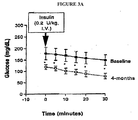
- Panel A Plasma glucose in response to 0.2 U.kg IV insulin before (closed circles and solid line) and 4-months after (open circles and dotted line) leptin therapy. Error bars indicate SEM *p ⁇ 0.02.
- Panel B Plasma glucose in response to 75-gram oral glucose before (closed circles and solid line) and 4-months after (open circles and dotted line) leptin therapy. Error bars indicate SEM. * p ⁇ 0.01.
- Figure 4 shows that leptin decreases triglycerides. Data are presented as mean change from baseline and error bars represent 95% Confidence Interval. The mean baseline and 4-month values with observed ranges are also shown. Note that data are skewed and do not follow a normal distribution. *p ⁇ 0.001.
- the adipocyte hormone leptin plays a central role in energy homeostasis. It was first discovered in the obese mouse as the missing serum factor that decreased food intake and body weight upon replacement (Zhang et al., 1994; Pelleymounter et al., 1995). Because of these initial observations, much of the earlier therapeutic attempt using this hormone has been in the treatment of obesity. Serum leptin concentrations in the majority of humans with obesity are high, and a state of leptin resistance is thought to exist (Mantzoros et al., 2000).
- the present invention provides for the feasibility of leptin protein for use in the treatment of lipoatrophy and its associated metabolic abnormalities in humans such as hyperglycemia, dyslipidemia, hyperlipidemia, hypercholesterolemia, hypertriglyceridemia, atherosclerosis, vascular restenosis, and insulin resistance.
- results from studies in HIV patients have shown that decrease in serum concentrations of leptin is closely associated with the onset of acquired lipoatrophy.
- leptin replacement in lipoatrophic patients dramatically improves glucose and triglyceride metabolism even after all other potential therapies have been extinguished. In all these leptin replacement therapy cases, the baseline serum concentration of leptin was less than 4 ng/ml.
- leptin levels may be measured using a body fluid, most preferably blood or some portion thereof.
- serums from individuals were used.
- Other body fluids may also contain measurable leptin, such as whole blood, cerebral spinal fluid, plasma, and possibly urine.
- the present measurements of 4 ng of leptin/ml of serum may be correlated to corresponding levels in other body fluids. For example, if whole blood is used, the leptin concentration will be diluted to account for the diluting effect of using unfractionated blood.
- leptin leptin analog or leptin derivative
- the goal of replacement therapy is to achieve neat physiological concentrations of leptin in the plasma. It is estimated that the physiological replacement dose of leptin is about 0.02 mg per kilogram of body weight per day for males of all ages, about 0.03 mg par kilogram per day for females under 18 years and about 0.04 mg per kilogram per day for adult females.
- HbA 1c Glycosylated hemoglobin
- triglyceride fasting
- serum leptin levels can be measured using commercially available immunoassays, as further disclosed in the Examples below.
- a diagnostic assay for measuring the amount of leptin in the blood (or plasma or scrum) may first be used to determine endogenous levels of protein.
- Such diagnostic tools may be in the form of an antibody assay, such as an antibody sandwich assay.
- the amount of endogenous leptin is quantified initially, and a baseline is determined.
- the therapeutic dosages are determined as the quantification of endogenous and exogenous leptin protein (that is, leptin, leptin analog or leptin derivative found within the body, either self-produced or administered). Monitoring the leptin levels of a patient is continued over the course of therapy.
- the present invention also provides pharmaceutical compositions of leptin, protein for therapeutic use.
- Such pharmaceutical compositions may be for administration for injection, or for oral, pulmonary, nasal, transdermal or other forms of administration.
- Preferred methods of administering the leptin proteins include subcutaneously, systemically and by gene therapy methods.
- compositions of the present invention comprise effective amounts of leptin protein together with pharmaceutically acceptable diluents, preservatives, solubilizers, emulsifiers, adjuvants and/or carriers.
- Such compositions include diluents of various buffer content (e:g., Tris-HCI, acetate, phosphate), pH and ionic strength; additives such as detergents and solubilizing agents ( e . g ., Tween 80, Polysorbate 80), anti-oxidants ( e . g ., ascorbic acid, sodium metabisulfite), preservatives ( e . g ., Thimersol, benzyl alcohol) and bulking substances ( e .
- buffer content e:g., Tris-HCI, acetate, phosphate
- additives such as detergents and solubilizing agents ( e . g ., Tween 80, Polysorbate 80), anti-oxidants ( e .
- compositions may influence the physical state, stability, rate of in vivo release, and rate of in vivo clearance of the present proteins and derivatives. See , e . g . , Remington's Pharmaceutical Sciences, 18th Ed. (1990, Mack Publishing Co., Easton, PA 18042) pages 1435-1712 which are herein incorporated by reference.
- the compositions may be prepared in liquid form, or may be in dried powder, such as lyophilized form. Implantable sustained release formulations are also contemplated, as are transdermal formulations.
- surfactant might be added as a wetting agent.
- Surfactants may include anionic detergents such as sodium lauryl sulfate, dioctyl sodium sulfosuccinate and dioctyl sodium sulfonate.
- anionic detergents such as sodium lauryl sulfate, dioctyl sodium sulfosuccinate and dioctyl sodium sulfonate.
- Cationic detergents might be used and could include benzalkonium chloride or benzethomium chloride.
- nonionic detergents that could be included in the formulation as surfactants are lauromacrogol 400, polyoxyl 40 stearate, polyoxyethylene hydrogenated castor oil 10, 50 and 60, glycerol monostearate, polysorbate 40, 60, 65 and 80, sucrose fatty acid ester, methyl cellulose and carboxymethyl cellulose. These surfactants could be present in the formulation of the protein or derivative either alone or as a mixture in different ratios.
- Additives that potentially enhance uptake of the leptin protein are for instance the fatty acids oleic acid, linoleic acid and linolenic acid.
- Controlled release formulation may be desirable.
- the leptin protein could be incorporated into an inert matrix which permits release by either diffusion or leaching mechanisms e . g ., gums.
- Slowly degenerating matrices may also be incorporated into the formulation, e . g ., alginates, polysaccharides.
- Another form of a controlled release of this therapeutic is by a method based on the Oros therapeutic system (Alza Corp.), i . e ., the leptin, protein is enclosed in a semi-permeable membrane, which allows water to enter and push the protein out through a single small opening due to osmotic effects. Some enteric coatings also have a delayed release effect.
- an improved kit may provide means for determining whether the leptin level of the patient prior to said leptin treatment is lass than or equal to approximately 4 ng/ml. In a related aspect, an improved kit may consider the gender of a patient when determining a leptin level in the patient prior to said leptin treatment.
- the kit may provide means for determining whether the leptin level of the patient prior to said leptin treatment is less than or equal to approximately 2 ng/ml if the patient is male, or less than or equal to approximately 4 ng/ml if the patient is female.
- the kit comprises instructions for use.
- the kit may also comprise reagents, tubes, packaging, and/or other reaction components.
- HIV-associated lipoatrophy syndrome may be influenced by reduced leptin in the serum, which contributes to the accumulation, loss or redistribution ofbody fat.
- HAART highly active antiretroviral therapy
- leptin replacement therapy was also conducted in nine female patients who have been diagnosed with various forms of lipoatrophy. The patients of this study were referred by multiple physicians in the United States and in Europe.
- the patients were required to have low levels (defined as serum leptin concentration of ⁇ 3.0 ng/ml in males and ⁇ 4.0 ng/ml in females) in association with lipodystrophy, and at least one of the following metabolic abnormalities: (1) Presence of diabetes mellitus by American Diabetes Association criteria (See Peters et al., 1998); (2) fasting serum triglyceride concentrations >200 mg/dL; and/or (3) fasting serum insulin concentrations >30 ⁇ U/ml.
- the diagnosis of lipodystrophy was based on clinical grounds well known to one ordinary skilled in the art.
- Table 1 summarizes the baseline clinical characteristics of the patients treated in the study.
- TABLE 1 Characteristics of Patients Patient Age/Sex/ Type Lipid-Lowering Therapy Fasting Insulin 1 ( ⁇ U/mL) Leptin 2 (ng/mL) RMR 3 (kcal/day) Total Fat 4 (%) NIH-1 17/F Acquired Generalized Fenofibrate Atorvastatin Orlistat, Weekly Plasmapharesis 31.2 ⁇ 0.5 2010 7 NIH-2 17/F Congenital Generalized None 334 1.0 2030 17 NIH-3 27/F Acquired Generalized None 19 0.7 1570 18 NIH-4 17/F Congenital Generalized None 211 1.1 2480 17 NIH-5 15/F Congenital Generalized None 115 0.8 2670 15 NIH-6 37/F Congenital Generalized None 25 0.6 1370 15 NIH-7 42/F Familial Partial Gemfibrozil 40.3 3.6 1980 26 UTSW-1 31/F Congenital Generalized Fenofibrate
- the study was designed as a prospective open-label study at the Diabetes Branch of National Institute of Diabetes, Digestive and Kidney Diseases (NIDDK), and at the University of Texas Southwestern (UT Southwestern) Medical Center at Dallas. Amgen Inc. (Thousand Oaks, CA) provided recombinant methionyl human leptin (recombinant leptin) for the trial. Response of each patient was compared to her baseline state. Because of the rarity of lipoatrophy syndromes and the variability of the clinical features, it was not feasible to include a randomized placebo-treated control group. The institutional review boards of the NIDDK and University of Texas Southwestern Medical Center approved the study. Informed written consent was obtained from the patient or the legal guardian.
- the goal in this study was to achieve near-physiological concentrations of leptin in the plasma.
- the physiological replacement dose was estimated to be 0.02 mg/kg/day for males of all ages, 0.03 mg/kg/day for females under 18 years and 0.04 mg/kg/day for adult females.
- Recombinant leptin was administered subcutaneously every 12 hours. It is important to note that the replacement dose is approximately one tenth of the dose most commonly used in obesity trials. Patients were treated with 50% of the replacement dose for the first month, 100% replacement dose the next month and 200% replacement dose for the following two months.
- the primary end-points to determine efficacy of recombinant leptin were determined as Hemoglobin A 1c and fasting serum triglyceride levels.
- Serum glucose and triglyceride levels were determined by standard methods using automated Hitachi equipment (Boehringer Mannheim, Indianapolis, IN) and using Beckman Instrument (Beckman, CA). Hemoglobin A 1c was determined by ionexchange high-pressure liquid chromatography (Bio-Rad Laboratories Inc., Hercules, CA). Serum free fatty acid (FFA) levels were determined with a commercial kit (Wako, Richmond, VA). Serum insulin levels were determined by immunoassays using reagents provided by Abbott Imx Instrument (Abbott Park, IL) and a commercial kit (Linco Research, Inc., St. Charles, MO). Serum leptin levels were determined by immunoassays using a commercial kit (Linco Research, Inc. St. Charles, MO).
- Resting energy expenditure was measured using Deltatrac Equipment (Sensormedics, Yorba Linda, CA). The test was performed after an overnight fast for more than 8 hours in resting patients upon awakening between 6 and 8 AM. Oral glucose tolerance test was performed after an overnight fast using 75 grams of dextrose. Serum glucose was measured at -10, 0, 30, 60, 90, 120 and 180 minutes of the glucose load.
- a high-dose insulin tolerance test was performed using 0.2 IU/kg regular insulin to assess insulin sensitivity. Insulin was administered intravenously after an overnight fast. Samples for glucose were collected at -10, 0, 5, 10, 15, 20 and 30 minutes of insulin administration. K constant (the rate of glucose disappearance as a reflection of total body insulin sensitivity) was calculated as the rate constant for the fall in blood glucose after intravenous insulin using first order kinetics (Harrision et al., 1976).
- Body fat was determined using dual energy x-ray absorptiometer (DEXA, Hologic QDR 4500) (Hologic, Inc., Bedford, MA) (Lambrinoudaki et al., 1998).
- Axial Tl weighted MR scans of the liver were obtained on a 1.5 tesla scanner (General Electric Medical Systems, Milwaukee) (Abate et al., 1994).
- Liver volumes were calculated using the MEDx image analysis software package (Sensor Systems, Inc., Sterling, VA), on a Sun workstation. By placing a seed point for an edge following algorithm, tracings of the outer margins of the liver were made on individual contiguous slices. The liver volumes were then computed based on the pixel area and slice thickness. Subjects participating at the NIH-site were asked to report their food intake in the last 3 days at baseline and at 4-months to calculate estimated daily food intake (Feskanich et al., 1993).
- Measurements are presented as mean ⁇ SEM. To compare study variables during various study periods, repeated measures analysis of variance was used. Skewed data such as the triglyceride concentrations and the calculated K constants were log-transformed. Paired t-test was employed to compare baseline data with various time points wherever applicable. Plasma glucose concentration during the oral glucose tolerance test were compared using a 2-factor analysis of variance with study period and time during the test modeled as repeated factors. Ninety-five percent confidence intervals of the differences between the means were derived from the analysis of variance and for the differences between the means (Hanh et al., 1991). Changes were considered statistically significant for p ⁇ 0.05. No adjustments for simultaneous comparisons were made for statistical analyses of specific a priori hypotheses.
- NIH patients had fatty liver on ultrasound and enlarged livers on physical exam.
- Three of the patients underwent liver biopsies and two of the three were diagnosed with non-alcoholic steatohepatitis based on histopathological criteria (Manton et al., 2000; Berasain et al., 2000; Luyckx, et al., 2000).
- the mean serum leptin concentration was 1.3 ⁇ 0.3 ng/mL at baseline (Table 1) which increased with therapy to 2.3 ⁇ 0.5 ng/mL at the end of the first month, 5.5 ⁇ 1.2 ng/mL at the end of the second month, and 11.1 ⁇ 2.5 ng/mL at the end of the fourth month. Therefore, recombinant leptin administration at the doses used in this study resulted in approximately normal serum leptin levels in these patients.
- the first patient treated in the study (NIH-1) is the most severely affected and her course is instructive in showing the dramatic effect of leptin replacement in this population even after all other potential therapies have been extinguished.
- This patient was born healthy, but experienced fat loss between age 10 and 12.
- She developed severe hypertriglyceridemia at age 13 and diabetes at age 14.
- She was presented to the NIH Clinical Center at age 15 with triglyceride levels consistently >10,000 mg/dL (>113 nmol/L) and diabetes with HbA 1c of 9.5%.
- Table 2 Changes in hypoglycemic therapy during the study Patient Hypoglycemic therapy during baseline period Hypoglycemic therapy at 4-months of therapy NIH-1 Metformin (500 mg bid) Acarbose (50 mg tid) None NIH-2 Insulin (800 U/day) None NIH-3 Insulin (40 U/day) Metformin (500 mg tid) None NIH-4 Insulin (1200 U/day) None NIH-5 Insulin (3000 U/day) None NIH-6 Metaformin (500 mg tid) None NIH-7 Insulin (200 U/day) Proglitazone (45 mg qd) Insulin (60 U/day) UTSW-1 Insulin (700 U/day) Insulin (300 U/day) UTSW-2 Nondiabetic patient None None None
- the plasma glucose levels during the insulin tolerance test showed significant improvement at the end of 4 months compared to the baseline ( Fig. 3A ).
- the K-value rate of glucose disappearance
- increased from 0.0071 ⁇ 0.0012 to 0.0169 ⁇ 0.0039 indicating improvement of whole-body insulin sensitivity (p 0.035).
- the oral glucose tolerance was also significantly improved compared to baseline ( Figure 3B ).
- Table 3 Patients' metabolic parameters during different stages of therapy Patients HbA 1C (%) Triglycerides 1 (mg/dL) Free fatty acids 2 (pmol/L) Month 3 0 1 2 4 0 1 2 4 0 1 2 4 NIH-1 8.6 7.6 7.4 7.0 7420 6440 1632 1214 3977 3517 2216 1701 NIH-2 4 9.8 8.3 7.4 10.0 633 523 471 405 2922 1452 1372 1244 NIH-3 9.3 7.8 8.4 7.9 450 579 233 281 919 368 451 454 NIH-4 7.6 6.7 6.1 5.0 322 232 160 106 1838 1388 866 446 NIH-5 9.5 9.4 6.5 6.1 913 427 143 123 1066 1842 723 629 NIH-6 9.2 8.6 7.2 7.4 663 355 242 303 1672 1367 1315 428 NIH-7 9.5 8.4 7.4 6.6 802 366 295 215 384 315 306
- Patient NIH-7 was hospitalized due to streptococcus infection during the third month of therapy. None of these events recurred with continued therapy.
- Leptin signal appears to regulate total body insulin sensitivity and triglyceride levels in addition to its known role in the control of energy homeostasis. This study is the first evidence that leptin functions as an insulin-sensitizing and insulin-sparing agent in vivo in humans.
- SREBP1c a transcription factor stimulating lipogenesis
- SREBP1c is upregulated by hyperinsulinemia seen in lipoatrophy.
- Leptin deficiency and hyperinsulinemia cause down-regulation of insulin-receptor substrate, IRS-2, impairing insulin action and increasing hepatic glucose output.
- IRS-2 insulin-receptor substrate
- the increased lipogenesis and hepatic glucose output create a vicious cycle.
- Increased tissue lipid levels are associated with decreased whole body insulin sensitivity and thus more hepatic glucose output. Replacement of leptin is shown to correct this vicious cycle.
- Leptin an anti-steatosis hormone
- adipose tissue is an endocrine organ was strongly supported by the discovery of leptin.
- Leptin has effects, both direct and/or indirect, on the key organs of metabolism, including the brain, liver, muscle, fat and pancreas. Leptin certainly is not the only circulating adipocyte signal.
- another adipocyte hormone is adipocyte specific complement related protein (ACRP) 30/Adiponectin/AdipoQ which seems to be important in inducing fat oxidation in the muscle and liver (Yamauchi et al., 2001; Fruebis et al., 2001; Berg et al., 2001).
- ACRP adipocyte specific complement related protein
- amino acid sequence for mature, recombinant methionyl human leptin is presented herein as SEQ ID NO. 1, where the first amino acid of the mature protein is valine (at position 1) and a methionyl residue is located at position -1 (herein called rHu-Leptin 1-146, SEQ ID No. 1).
- rHu-Leptin 1-145 SEQ ID NO. 2, wherein the blank ("*") indicates no amino acid
- PCTWO96/34885 WO 97/46585 (SmithKline Beecham, PLC);
- a standard enzyme-linked immunosorbent assay may be used to determine leptin levels in the serum of lipoatrophic patients according to one embodiment of the present invention.
- the ELISA method may use a purified rat monoclonal anti rmetHu-Leptin antibody for capturing leptin from serum.
- Affinity purified rabbit anti rmetHu-leptin polyclonal antibody conjugated to horseradish peroxidase may also be used to detect captured leptin.
- the limit of detection of the said assay using these antibodies may be in the range of 0.5-0.8 ng/ml.
- preferred antibodies are those which specifically react with native human leptin, and are sensitive to detect leptin quantities of equal to or below 5 ng/ml serum.
- the timing for determining the baseline leptin levels in a patient is after an 8-12 hour fast such as during morning hours.
- Baseline leptin levels may not be confounded by raising levels, such as after a meal, or due to sleep cycle rise in leptin seen in most individuals (e.g., 3:00 a.m. rise in leptin levels).
- Such baseline levels may be used, such as observation of nocturnal elevation of leptin levels, but those levels should be compared against similar levels in similarly situated patients.
- a method of determining predisposition of lipoatrophic patients to treatment with leptin can be performer by determining the leptin level corresponding to the serum leptin concentration and ascertaining that the serum leptin concentration is about 4 ng/ml or less.
Landscapes
- Health & Medical Sciences (AREA)
- Life Sciences & Earth Sciences (AREA)
- Chemical & Material Sciences (AREA)
- Engineering & Computer Science (AREA)
- Medicinal Chemistry (AREA)
- General Health & Medical Sciences (AREA)
- Veterinary Medicine (AREA)
- Public Health (AREA)
- Animal Behavior & Ethology (AREA)
- Pharmacology & Pharmacy (AREA)
- Bioinformatics & Cheminformatics (AREA)
- Hematology (AREA)
- Nuclear Medicine, Radiotherapy & Molecular Imaging (AREA)
- Organic Chemistry (AREA)
- General Chemical & Material Sciences (AREA)
- Chemical Kinetics & Catalysis (AREA)
- Molecular Biology (AREA)
- Immunology (AREA)
- Epidemiology (AREA)
- Diabetes (AREA)
- Urology & Nephrology (AREA)
- Obesity (AREA)
- Biomedical Technology (AREA)
- Endocrinology (AREA)
- Proteomics, Peptides & Aminoacids (AREA)
- Pathology (AREA)
- Biochemistry (AREA)
- Physics & Mathematics (AREA)
- Food Science & Technology (AREA)
- Microbiology (AREA)
- Analytical Chemistry (AREA)
- Cell Biology (AREA)
- General Physics & Mathematics (AREA)
- Biotechnology (AREA)
- Gastroenterology & Hepatology (AREA)
- Genetics & Genomics (AREA)
- Zoology (AREA)
- Emergency Medicine (AREA)
- Virology (AREA)
- Vascular Medicine (AREA)
Claims (14)
- Verfahren zur Bestimmung einer Veranlagung eines Patienten mit Lipoatrophie zum Ansprechen auf eine Behandlung mit einem Leptin-Protein, wobei das Verfahren Folgendes umfasst:(a) Bestimmen eines Leptinspiegels im Patienten vor der Behandlung;(b) Ermitteln, ob der Leptinspiegel weniger als oder gleich ungefähr 4 ng/ml ist; und(c) Festsetzen einer Veranlagung zum Ansprechen auf eine Ersatztherapie, die die Behandlung mit dem Leptin-Protein umfasst, für den Patienten.
- Verfahren nach Anspruch 1, wobei der Patient ein Mann ist und der Leptinspiegel vor der Behandlung weniger als oder gleich ungefähr 2 ng/ml ist.
- Verfahren nach Anspruch 1, wobei der Patient eine Frau ist.
- Verfahren zur Bestimmung einer Veranlagung eines Patienten mit Lipoatrophie zum Ansprechen auf eine Behandlung mit einem Leptin-Protein nach einem der Ansprüche 1, 2 oder 3, wobei das Verfahren Folgendes umfasst:(a) Bestimmen eines Leptinspiegels im Patienten vor der Behandlung;(b) Ermitteln, ob der Leptinspiegel (i) eines männlichen Patienten weniger als oder gleich ungefähr 2 ng/ml ist oder (ii) einer weiblichen Patientin weniger als oder gleich ungefähr 4 ng/ml ist; und(c) Festsetzen einer Veranlagung zum Ansprechen auf eine Ersatztherapie, die die Behandlung mit dem Leptin-Protein umfasst, für den Patienten.
- Verfahren nach einem der Ansprüche 1-4, wobei der Leptinspiegel mit einem Antikörper-Immunoassay bestimmt wird.
- Pharmazeutisches Therapieschema zur Behandlung eines Patienten mit Lipoatrophie durch Bestimmen einer Veranlagung eines Patienten mit Lipoatrophie zum Ansprechen auf eine Behandlung mit einem Leptin-Protein mittels eines Verfahrens nach einem der Ansprüche 1 bis 5 und anschließendes Behandeln des Patienten mit dem Therapieschema, wobei das Therapieschema eine pharmazeutische Zusammensetzung umfasst, die das Leptin-Protein umfasst.
- Pharmazeutisches Therapieschema zur Behandlung von Lipoatrophie, das eine Kombination eines Proteaseinhibitors und eines Leptin-Proteins umfasst.
- Pharmazeutisches Therapieschema zur Behandlung von Lipoatrophie, das eine Kombination eines Leptin-Proteins und mindestens einer Verbindung umfasst, die aus der Gruppe bestehend aus Thiazolidindionen, Fibraten, Statinen und Metformin ausgewählt ist.
- Pharmazeutisches Therapieschema zur Behandlung eines menschlichen Patienten mit Stoffwechselanomalien, die mit Lipoatrophie in Verbindung stehen, wobei das Therapieschema eine pharmazeutische Zusammensetzung umfasst, die ein Leptin-Protein umfasst.
- Pharmazeutisches Therapieschema zur Behandlung eines menschlichen Patienten mit einem Lipoatrophie-Leiden, wobei es sich bei der Lipoatrophie um eine erworbene Form der Erkrankung handelt, wobei das Therapieschema eine pharmazeutische Zusammensetzung umfasst, die ein Leptin-Protein umfasst.
- Pharmazeutisches Therapieschema nach Anspruch 10, wobei es sich bei dem menschlichen Patienten um einen HIV-positiven Patienten handelt.
- Pharmazeutisches Therapieschema nach Anspruch 11, wobei die erworbene Form der Lipoatrophie mit der Behandlung des HIV-positiven Patienten mit einer hochwirksamen antiviralen Therapie (HAART) in Zusammenhang steht.
- Verfahren nach einem der Ansprüche 1-5, wobei das Leptin-Protein aus der Gruppe bestehend aus SEQ ID NO: 1 und SEQ ID NO: 2 ausgewählt ist.
- Verfahren nach einem der Ansprüche 6-12, wobei das Leptin-Protein aus der Gruppe bestehend aus SEQ ID NO: 1 und SEQ ID NO: 2 ausgewählt ist.
Priority Applications (2)
| Application Number | Priority Date | Filing Date | Title |
|---|---|---|---|
| DK10165256.8T DK2219031T3 (da) | 2001-10-22 | 2002-10-22 | Anvendelse af leptin til behandling af human lipoatrofi og fremgangsmåde til bestemmelse af prædisposition for behandlinngen |
| EP10165256.8A EP2219031B1 (de) | 2001-10-22 | 2002-10-22 | Verwendung von Leptin zur Behandlung von Lipoatrophie im Menschen und Verfahren zur Bestimmung einer Prädisposition gegenüber der Behandlung |
Applications Claiming Priority (3)
| Application Number | Priority Date | Filing Date | Title |
|---|---|---|---|
| US33639401P | 2001-10-22 | 2001-10-22 | |
| US336394P | 2001-10-22 | ||
| PCT/US2002/033875 WO2003034996A2 (en) | 2001-10-22 | 2002-10-22 | Use of leptin for treating human lipoatrophy and method of determining predisposition to said treatment |
Related Child Applications (1)
| Application Number | Title | Priority Date | Filing Date |
|---|---|---|---|
| EP10165256.8 Division-Into | 2010-06-08 |
Publications (3)
| Publication Number | Publication Date |
|---|---|
| EP1444516A2 EP1444516A2 (de) | 2004-08-11 |
| EP1444516A4 EP1444516A4 (de) | 2006-05-10 |
| EP1444516B1 true EP1444516B1 (de) | 2010-07-21 |
Family
ID=23315890
Family Applications (2)
| Application Number | Title | Priority Date | Filing Date |
|---|---|---|---|
| EP02793811A Expired - Lifetime EP1444516B1 (de) | 2001-10-22 | 2002-10-22 | Verwendung von leptin zur behandlung von lipoatrophie im menschen und verfahren zur bestimmmung einer prädisposition gegenüber der behandlung |
| EP10165256.8A Expired - Lifetime EP2219031B1 (de) | 2001-10-22 | 2002-10-22 | Verwendung von Leptin zur Behandlung von Lipoatrophie im Menschen und Verfahren zur Bestimmung einer Prädisposition gegenüber der Behandlung |
Family Applications After (1)
| Application Number | Title | Priority Date | Filing Date |
|---|---|---|---|
| EP10165256.8A Expired - Lifetime EP2219031B1 (de) | 2001-10-22 | 2002-10-22 | Verwendung von Leptin zur Behandlung von Lipoatrophie im Menschen und Verfahren zur Bestimmung einer Prädisposition gegenüber der Behandlung |
Country Status (14)
| Country | Link |
|---|---|
| US (7) | US7183254B2 (de) |
| EP (2) | EP1444516B1 (de) |
| JP (7) | JP2005506994A (de) |
| AT (1) | ATE475094T1 (de) |
| AU (1) | AU2002359288B2 (de) |
| CA (1) | CA2464277C (de) |
| DE (1) | DE60237100D1 (de) |
| DK (2) | DK1444516T3 (de) |
| ES (2) | ES2418954T3 (de) |
| MX (1) | MXPA04003773A (de) |
| PL (1) | PL214862B1 (de) |
| PT (1) | PT2219031E (de) |
| SI (1) | SI2219031T1 (de) |
| WO (1) | WO2003034996A2 (de) |
Cited By (3)
| Publication number | Priority date | Publication date | Assignee | Title |
|---|---|---|---|---|
| US20160051620A1 (en) * | 2014-08-25 | 2016-02-25 | China Medical University | Methods for regulating transcription of multiple genes and expression of multiple targets |
| US12275792B2 (en) | 2015-10-12 | 2025-04-15 | Regeneron Pharmaceuticals, Inc. | Antigen-binding proteins that activate the leptin receptor |
| US12371503B2 (en) | 2018-04-06 | 2025-07-29 | Regeneron Pharmaceuticals, Inc. | Methods of treatment using a leptin receptor agonist antibody |
Families Citing this family (18)
| Publication number | Priority date | Publication date | Assignee | Title |
|---|---|---|---|---|
| EP1444516B1 (de) * | 2001-10-22 | 2010-07-21 | Amgen, Inc. | Verwendung von leptin zur behandlung von lipoatrophie im menschen und verfahren zur bestimmmung einer prädisposition gegenüber der behandlung |
| EP2286837A3 (de) | 2004-11-01 | 2013-09-04 | Amylin Pharmaceuticals, LLC | Behandlung von Fettleibigkeit und von verwandten Krankheiten |
| US8227408B2 (en) * | 2005-09-07 | 2012-07-24 | Neurotez, Inc. | Leptin as an anti-amyloidogenic biologic and methods for delaying the onset and reducing Alzheimer's disease-like pathology |
| US20070066512A1 (en) * | 2005-09-12 | 2007-03-22 | Dominique Verhelle | Methods and compositions using immunomodulatory compounds for the treatment of disorders associated with low plasma leptin levels |
| WO2008048691A2 (en) * | 2006-10-18 | 2008-04-24 | Amylin Pharmaceuticals, Inc. | Use of leptin for treating post-lipectomy ectopic fat deposition and other post-lipectomy associated disorders |
| AU2009248914A1 (en) | 2008-05-21 | 2009-11-26 | Neurotez, Inc. | Methods for Treating Neurodegenerative Disorders Related to Neurofibrillary Tangles |
| WO2009149379A2 (en) * | 2008-06-05 | 2009-12-10 | Regents Of The University Of Michigan | Use of leptin for the treatment of fatty liver diseases and conditions |
| CN102300581B (zh) | 2008-11-04 | 2016-12-21 | 尼古拉斯·泰萨普塞蒂斯 | 用于治疗因神经原纤维缠结和β淀粉状蛋白的积聚引起的进行性认知功能障碍的瘦蛋白组合物和方法 |
| US20110218141A1 (en) * | 2010-03-03 | 2011-09-08 | Hamrick Mark W | Leptin therapy to increase muscle mass and to treat muscle wasting conditions |
| WO2012050930A2 (en) | 2010-09-28 | 2012-04-19 | Amylin Pharmaceuticals, Inc | Engineered polypeptides having enhanced duration of action |
| JP6040464B2 (ja) | 2011-07-08 | 2016-12-07 | アエゲリオン・ファーマシューティカルズ・インコーポレイテッドAegerion Pharmaceuticals, Inc. | 作用持続期間が増大し、免疫原性が減少した操作されたポリペプチド |
| RU2650646C2 (ru) | 2012-09-27 | 2018-04-16 | Дзе Чилдрен'З Медикал Сентер Корпорейшн | Соединения, предназначенные для лечения ожирения, и способы их применения |
| EP3010529B1 (de) | 2013-06-21 | 2020-05-06 | Millendo Therapeutics SAS | Verwendung von nichtacyliertem ghrelin sowie fragmenten und analogen davon als antioxidantien |
| PT3074033T (pt) | 2013-11-26 | 2019-02-08 | Childrens Medical Ct Corp | Compostos para o tratamento de obesidade e métodos de utilização dos mesmos |
| WO2015153933A1 (en) | 2014-04-03 | 2015-10-08 | The Children's Medical Center Corporation | Hsp90 inhibitors for the treatment of obesity and methods of use thereof |
| JP2015205846A (ja) * | 2014-04-22 | 2015-11-19 | 出光興産株式会社 | レプチン分泌促進剤 |
| EP3509624B1 (de) | 2016-09-12 | 2023-08-09 | Amryt Pharmaceuticals Inc. | Verfahren zum nachweis von anti-leptin-neutralisierenden antikörpern |
| GB202100311D0 (en) * | 2021-01-11 | 2021-02-24 | Univ Court Of The Univ Of Aberdeen | Treatment for Lipodystrophy |
Family Cites Families (52)
| Publication number | Priority date | Publication date | Assignee | Title |
|---|---|---|---|---|
| US6309853B1 (en) | 1994-08-17 | 2001-10-30 | The Rockfeller University | Modulators of body weight, corresponding nucleic acids and proteins, and diagnostic and therapeutic uses thereof |
| US5827734A (en) | 1995-01-20 | 1998-10-27 | University Of Washington | Materials and methods for determining ob protein in a biological sample |
| US5552523A (en) | 1995-01-31 | 1996-09-03 | Eli Lilly And Company | Anti-obesity proteins |
| US5563244A (en) | 1995-01-31 | 1996-10-08 | Eli Lilly And Company | Anti-obesity proteins |
| US5563245A (en) | 1995-01-31 | 1996-10-08 | Eli Lilly And Company | Anti-obesity proteins |
| US5567678A (en) | 1995-01-31 | 1996-10-22 | Eli Lilly And Company | Anti-obesity proteins |
| US5605886A (en) | 1995-01-31 | 1997-02-25 | Eli Lilly And Company | Anti-obesity proteins |
| US5567803A (en) | 1995-01-31 | 1996-10-22 | Eli Lilly And Company | Anti-obesity proteins |
| US5580954A (en) | 1995-01-31 | 1996-12-03 | Eli Lilly And Company | Anti-obesity proteins |
| US5563243A (en) | 1995-01-31 | 1996-10-08 | Eli Lilly And Company | Anti-obesity proteins |
| US5594104A (en) | 1995-01-31 | 1997-01-14 | Eli Lilly And Company | Anti-obesity proteins |
| US5559208A (en) | 1995-01-31 | 1996-09-24 | Eli Lilly And Company | Anti-obesity proteins |
| US5569744A (en) | 1995-01-31 | 1996-10-29 | Eli Lilly And Company | Anti-obesity proteins |
| US5569743A (en) | 1995-01-31 | 1996-10-29 | Eli Lilly And Company | Anti-obesity proteins |
| CA2211664A1 (en) | 1995-01-31 | 1996-08-08 | Eli Lilly And Company | Anti-obesity proteins |
| US5574133A (en) | 1995-01-31 | 1996-11-12 | Eli Lilly And Company | Anti-obesity proteins |
| US5691309A (en) | 1995-01-31 | 1997-11-25 | Eli Lilly And Company | Anti-obesity proteins |
| US5521283A (en) | 1995-01-31 | 1996-05-28 | Eli Lilly And Company | Anti-obesity proteins |
| US5554727A (en) | 1995-01-31 | 1996-09-10 | Eli Lilly And Company | Anti-obesity proteins |
| US5525705A (en) | 1995-01-31 | 1996-06-11 | Eli Lilly And Company | Anti-obesity proteins |
| US5532336A (en) | 1995-01-31 | 1996-07-02 | Eli Lilly And Company | Anti-obesity proteins |
| US5552522A (en) | 1995-01-31 | 1996-09-03 | Eli Lilly And Company | Anti-obesity proteins |
| CA2211656A1 (en) | 1995-01-31 | 1996-08-08 | Margret B. Basinski | Anti-obesity proteins |
| US5552524A (en) | 1995-01-31 | 1996-09-03 | Eli Lilly And Company | Anti-obesity proteins |
| US5594101A (en) | 1995-03-03 | 1997-01-14 | Eli Lilly And Company | Anti-obesity proteins |
| US5719266A (en) | 1995-03-17 | 1998-02-17 | Eli Lilly And Company | Anti-obesity proteins |
| EP0736599A3 (de) | 1995-04-03 | 1996-12-11 | Takeda Chemical Industries Ltd | Das Obesitätsgen der Ratte, sein Genprodukt und dessen Herstellung |
| AU5539596A (en) | 1995-04-06 | 1996-10-23 | Amylin Pharmaceuticals, Inc. | Anti-obesity agents |
| US5614379A (en) | 1995-04-26 | 1997-03-25 | Eli Lilly And Company | Process for preparing anti-obesity protein |
| EP0741187A2 (de) | 1995-05-05 | 1996-11-06 | F. Hoffmann-La Roche Ag | Rekombinante Obesitäts-(OB)-Proteine |
| GB9509164D0 (en) | 1995-05-05 | 1995-06-28 | Smithkline Beecham Plc | Novel compounds |
| CA2218529A1 (en) | 1995-05-08 | 1996-11-14 | Chiron Corporation | Nucleic acids for treating obesity |
| JP2001501906A (ja) | 1995-05-26 | 2001-02-13 | イーライ・リリー・アンド・カンパニー | Rhesus obタンパク質およびdna |
| CA2223433C (en) | 1995-06-07 | 2003-11-18 | Amgen Inc. | Ob protein compositions and methods |
| WO1997000886A1 (en) | 1995-06-22 | 1997-01-09 | Eli Lilly And Company | Obesity protein intermediates and their preparation and use |
| CN1195293A (zh) * | 1995-06-30 | 1998-10-07 | 伊莱利利公司 | 治疗糖尿病的方法 |
| DE69631605T2 (de) | 1995-08-17 | 2005-01-05 | Amgen Inc., Thousand Oaks | Verfahren zur verringerung und zur erhaltung von verringerten blutspiegeln von lipiden mittels zubereitungen von ob-proteinen |
| WO1997016550A1 (en) | 1995-11-02 | 1997-05-09 | Bristol-Myers Squibb Company | Polypeptide fragments derived from the obese gene product |
| DK0866720T3 (da) | 1995-11-22 | 2004-06-14 | Amgen Inc | OB-protein til forögelse af mager kropsmasse |
| AU1406497A (en) | 1995-12-06 | 1997-06-27 | Schering Corporation | Mutational variants of mammalian ob gene proteins |
| WO1997038014A1 (en) | 1996-04-04 | 1997-10-16 | Amgen Inc. | Fibulin pharmaceutical compositions and related methods |
| EP0912609A2 (de) | 1996-06-06 | 1999-05-06 | Smithkline Beecham Plc | Leptinfragmente (ob protein) |
| US5922678A (en) * | 1996-06-28 | 1999-07-13 | Eli Lilly And Company | Methods for treating diabetes |
| JP2001501177A (ja) | 1996-08-30 | 2001-01-30 | アムジエン・インコーポレーテツド | Obタンパク質受容体をアップレギュレートすることによりobタンパク質に対する個体の感受性を増加させる方法 |
| AU4582597A (en) | 1996-10-11 | 1998-05-11 | Eli Lilly And Company | Therapeutic proteins |
| JP4175668B2 (ja) | 1996-12-20 | 2008-11-05 | アムジエン・インコーポレーテツド | Ob融合タンパク質組成物および方法 |
| EP1118001A1 (de) | 1998-10-02 | 2001-07-25 | Amgen Inc. | Verfahren zum nachweis einer prädisposition zur leptinbehandlung |
| CA2359840C (en) * | 1999-02-12 | 2012-10-23 | Amgen Inc. | Glycosylated leptin compositions and related methods |
| US6258932B1 (en) * | 1999-08-09 | 2001-07-10 | Tripep Ab | Peptides that block viral infectivity and methods of use thereof |
| JP2001199887A (ja) * | 1999-11-10 | 2001-07-24 | Takeda Chem Ind Ltd | 体重増加抑制剤 |
| EP1444516B1 (de) * | 2001-10-22 | 2010-07-21 | Amgen, Inc. | Verwendung von leptin zur behandlung von lipoatrophie im menschen und verfahren zur bestimmmung einer prädisposition gegenüber der behandlung |
| US6899892B2 (en) * | 2001-12-19 | 2005-05-31 | Regents Of The University Of Minnesota | Methods to reduce body fat |
-
2002
- 2002-10-22 EP EP02793811A patent/EP1444516B1/de not_active Expired - Lifetime
- 2002-10-22 DK DK02793811.7T patent/DK1444516T3/da active
- 2002-10-22 JP JP2003537565A patent/JP2005506994A/ja active Pending
- 2002-10-22 ES ES10165256T patent/ES2418954T3/es not_active Expired - Lifetime
- 2002-10-22 MX MXPA04003773A patent/MXPA04003773A/es active IP Right Grant
- 2002-10-22 CA CA2464277A patent/CA2464277C/en not_active Expired - Lifetime
- 2002-10-22 AU AU2002359288A patent/AU2002359288B2/en not_active Expired
- 2002-10-22 AT AT02793811T patent/ATE475094T1/de not_active IP Right Cessation
- 2002-10-22 PL PL374301A patent/PL214862B1/pl unknown
- 2002-10-22 PT PT101652568T patent/PT2219031E/pt unknown
- 2002-10-22 WO PCT/US2002/033875 patent/WO2003034996A2/en not_active Ceased
- 2002-10-22 DE DE60237100T patent/DE60237100D1/de not_active Expired - Lifetime
- 2002-10-22 ES ES02793811T patent/ES2350924T3/es not_active Expired - Lifetime
- 2002-10-22 EP EP10165256.8A patent/EP2219031B1/de not_active Expired - Lifetime
- 2002-10-22 SI SI200231031T patent/SI2219031T1/sl unknown
- 2002-10-22 DK DK10165256.8T patent/DK2219031T3/da active
-
2003
- 2003-07-18 US US10/623,189 patent/US7183254B2/en active Active
-
2006
- 2006-11-29 US US11/606,805 patent/US20070099836A1/en not_active Abandoned
-
2010
- 2010-06-16 JP JP2010137501A patent/JP2010209114A/ja active Pending
-
2011
- 2011-05-09 US US13/103,294 patent/US8318666B2/en not_active Expired - Fee Related
-
2012
- 2012-11-05 US US13/669,324 patent/US20130190225A1/en not_active Abandoned
-
2014
- 2014-08-06 JP JP2014160718A patent/JP2014224142A/ja active Pending
-
2016
- 2016-05-13 US US15/154,749 patent/US20170095535A1/en not_active Abandoned
- 2016-05-31 JP JP2016108936A patent/JP2016190855A/ja not_active Withdrawn
- 2016-08-04 JP JP2016153889A patent/JP2016190872A/ja active Pending
-
2018
- 2018-07-27 JP JP2018141461A patent/JP6764906B2/ja not_active Expired - Lifetime
- 2018-11-19 US US16/195,661 patent/US20190321447A1/en not_active Abandoned
-
2019
- 2019-12-24 JP JP2019232609A patent/JP2020055868A/ja not_active Withdrawn
-
2020
- 2020-02-05 US US16/782,773 patent/US20200268853A1/en not_active Abandoned
Cited By (3)
| Publication number | Priority date | Publication date | Assignee | Title |
|---|---|---|---|---|
| US20160051620A1 (en) * | 2014-08-25 | 2016-02-25 | China Medical University | Methods for regulating transcription of multiple genes and expression of multiple targets |
| US12275792B2 (en) | 2015-10-12 | 2025-04-15 | Regeneron Pharmaceuticals, Inc. | Antigen-binding proteins that activate the leptin receptor |
| US12371503B2 (en) | 2018-04-06 | 2025-07-29 | Regeneron Pharmaceuticals, Inc. | Methods of treatment using a leptin receptor agonist antibody |
Also Published As
Similar Documents
| Publication | Publication Date | Title |
|---|---|---|
| US20200268853A1 (en) | Use of leptin for treating human lipoatrophy and method of determining predisposition to said treatment | |
| AU2002359288A1 (en) | Use of leptin for treating human lipoatrophy and method of determining predisposition to said treatment | |
| Han et al. | Leptin stimulates type I collagen production in db/db mesangial cells: glucose uptake and TGF-β type II receptor expression | |
| Poon et al. | Exenatide improves glycemic control and reduces body weight in subjects with type 2 diabetes: a dose-ranging study | |
| Gorden et al. | The clinical uses of leptin | |
| CZ69596A3 (en) | Application of amylin, amylin agonist, amylin analog agonist or amylin antagonist for preparing a pharmaceutical preparation used for the control of gastrointestinal motility | |
| Bell-Anderson et al. | Leptin as a potential treatment for obesity: progress to date | |
| US20250381199A1 (en) | Pharmaceutical preparation for improving absorption and postprandial hypoglycemic action of insulin | |
| Triplitt et al. | Pioglitazone and alogliptin combination therapy in type 2 diabetes: a pathophysiologically sound treatment | |
| Zinman | PPARγ agonists in type 2 diabetes: how far have we come in ‘preventing the inevitable’? A review of the metabolic effects of rosiglitazone. | |
| EP2983784B1 (de) | Zusammensetzung mit hip/pap-protein oder einem derivat davon zur behandlung von insulinresistenz | |
| Scarpace et al. | Leptin antagonist reveals an uncoupling between leptin receptor signal transducer and activator of transcription 3 signaling and metabolic responses with central leptin resistance | |
| KR20220110506A (ko) | 비만 치료를 위한 글루카곤 및 glp-1 공동-작용제를 사용하는 조합 치료법 | |
| O'Farrell et al. | The novel GIP, GLP-1 and glucagon receptor agonist retatrutide delays gastric emptying | |
| WO2009051804A1 (en) | Thiazolium compounds for treating or preventing diseases associated with insulin resistance | |
| Lee et al. | Pharmacokinetics and bioequivalence of 0.5 mg lobeglitazone tablets in healthy male subjects | |
| Kuchay et al. | Effect of Dulaglutide on Liver Fat in Patients with Type 2 Diabetes and Nonalcoholic Fatty Liver Disease: Randomized Controlled Trial (D-LIFT Trial) | |
| Agent | PrACH-Pioglitazone | |
| Ferreira et al. | Research Article Effects of Sitagliptin Treatment on Dysmetabolism, Inflammation, and Oxidative Stress in an Animal Model of Type 2 Diabetes (ZDF Rat) |
Legal Events
| Date | Code | Title | Description |
|---|---|---|---|
| PUAI | Public reference made under article 153(3) epc to a published international application that has entered the european phase |
Free format text: ORIGINAL CODE: 0009012 |
|
| 17P | Request for examination filed |
Effective date: 20040506 |
|
| AK | Designated contracting states |
Kind code of ref document: A2 Designated state(s): AT BE BG CH CY CZ DE DK EE ES FI FR GB GR IE IT LI LU MC NL PT SE SK TR |
|
| AX | Request for extension of the european patent |
Extension state: AL LT LV MK RO SI |
|
| REG | Reference to a national code |
Ref country code: HK Ref legal event code: DE Ref document number: 1064152 Country of ref document: HK |
|
| RAP1 | Party data changed (applicant data changed or rights of an application transferred) |
Owner name: THE BOARD OF REGENTS, THE UNIVERSITY OF TEXAS SYST Owner name: AMGEN, INC. Owner name: THE GOVERNMENT OF THE UNITED STATES OF AMERICA, R |
|
| A4 | Supplementary search report drawn up and despatched |
Effective date: 20060329 |
|
| RIC1 | Information provided on ipc code assigned before grant |
Ipc: A61K 38/18 20060101ALI20060323BHEP Ipc: A61P 3/06 20060101ALI20060323BHEP Ipc: A61P 3/10 20060101ALI20060323BHEP Ipc: G01N 33/53 20060101AFI20040519BHEP Ipc: A61K 38/19 20060101ALI20060323BHEP |
|
| 17Q | First examination report despatched |
Effective date: 20061214 |
|
| GRAP | Despatch of communication of intention to grant a patent |
Free format text: ORIGINAL CODE: EPIDOSNIGR1 |
|
| GRAS | Grant fee paid |
Free format text: ORIGINAL CODE: EPIDOSNIGR3 |
|
| GRAA | (expected) grant |
Free format text: ORIGINAL CODE: 0009210 |
|
| AK | Designated contracting states |
Kind code of ref document: B1 Designated state(s): AT BE BG CH CY CZ DE DK EE ES FI FR GB GR IE IT LI LU MC NL PT SE SK TR |
|
| AX | Request for extension of the european patent |
Extension state: AL LT LV MK RO SI |
|
| REG | Reference to a national code |
Ref country code: GB Ref legal event code: FG4D |
|
| REG | Reference to a national code |
Ref country code: CH Ref legal event code: EP |
|
| REG | Reference to a national code |
Ref country code: IE Ref legal event code: FG4D |
|
| REF | Corresponds to: |
Ref document number: 60237100 Country of ref document: DE Date of ref document: 20100902 Kind code of ref document: P |
|
| REG | Reference to a national code |
Ref country code: NL Ref legal event code: T3 |
|
| REG | Reference to a national code |
Ref country code: SE Ref legal event code: TRGR |
|
| REG | Reference to a national code |
Ref country code: DK Ref legal event code: T3 |
|
| REG | Reference to a national code |
Ref country code: CH Ref legal event code: NV Representative=s name: BOHEST AG |
|
| LTIE | Lt: invalidation of european patent or patent extension |
Effective date: 20100721 |
|
| REG | Reference to a national code |
Ref country code: ES Ref legal event code: FG2A Effective date: 20110118 |
|
| PG25 | Lapsed in a contracting state [announced via postgrant information from national office to epo] |
Ref country code: AT Free format text: LAPSE BECAUSE OF FAILURE TO SUBMIT A TRANSLATION OF THE DESCRIPTION OR TO PAY THE FEE WITHIN THE PRESCRIBED TIME-LIMIT Effective date: 20100721 Ref country code: FI Free format text: LAPSE BECAUSE OF FAILURE TO SUBMIT A TRANSLATION OF THE DESCRIPTION OR TO PAY THE FEE WITHIN THE PRESCRIBED TIME-LIMIT Effective date: 20100721 |
|
| PG25 | Lapsed in a contracting state [announced via postgrant information from national office to epo] |
Ref country code: BG Free format text: LAPSE BECAUSE OF FAILURE TO SUBMIT A TRANSLATION OF THE DESCRIPTION OR TO PAY THE FEE WITHIN THE PRESCRIBED TIME-LIMIT Effective date: 20101021 Ref country code: CY Free format text: LAPSE BECAUSE OF FAILURE TO SUBMIT A TRANSLATION OF THE DESCRIPTION OR TO PAY THE FEE WITHIN THE PRESCRIBED TIME-LIMIT Effective date: 20100721 Ref country code: PT Free format text: LAPSE BECAUSE OF FAILURE TO SUBMIT A TRANSLATION OF THE DESCRIPTION OR TO PAY THE FEE WITHIN THE PRESCRIBED TIME-LIMIT Effective date: 20101122 |
|
| PG25 | Lapsed in a contracting state [announced via postgrant information from national office to epo] |
Ref country code: BE Free format text: LAPSE BECAUSE OF FAILURE TO SUBMIT A TRANSLATION OF THE DESCRIPTION OR TO PAY THE FEE WITHIN THE PRESCRIBED TIME-LIMIT Effective date: 20100721 Ref country code: GR Free format text: LAPSE BECAUSE OF FAILURE TO SUBMIT A TRANSLATION OF THE DESCRIPTION OR TO PAY THE FEE WITHIN THE PRESCRIBED TIME-LIMIT Effective date: 20101022 |
|
| PLBE | No opposition filed within time limit |
Free format text: ORIGINAL CODE: 0009261 |
|
| STAA | Information on the status of an ep patent application or granted ep patent |
Free format text: STATUS: NO OPPOSITION FILED WITHIN TIME LIMIT |
|
| PG25 | Lapsed in a contracting state [announced via postgrant information from national office to epo] |
Ref country code: SK Free format text: LAPSE BECAUSE OF FAILURE TO SUBMIT A TRANSLATION OF THE DESCRIPTION OR TO PAY THE FEE WITHIN THE PRESCRIBED TIME-LIMIT Effective date: 20100721 Ref country code: CZ Free format text: LAPSE BECAUSE OF FAILURE TO SUBMIT A TRANSLATION OF THE DESCRIPTION OR TO PAY THE FEE WITHIN THE PRESCRIBED TIME-LIMIT Effective date: 20100721 Ref country code: EE Free format text: LAPSE BECAUSE OF FAILURE TO SUBMIT A TRANSLATION OF THE DESCRIPTION OR TO PAY THE FEE WITHIN THE PRESCRIBED TIME-LIMIT Effective date: 20100721 Ref country code: MC Free format text: LAPSE BECAUSE OF NON-PAYMENT OF DUE FEES Effective date: 20101031 |
|
| 26N | No opposition filed |
Effective date: 20110426 |
|
| REG | Reference to a national code |
Ref country code: DE Ref legal event code: R097 Ref document number: 60237100 Country of ref document: DE Effective date: 20110426 |
|
| PG25 | Lapsed in a contracting state [announced via postgrant information from national office to epo] |
Ref country code: IE Free format text: LAPSE BECAUSE OF NON-PAYMENT OF DUE FEES Effective date: 20101022 |
|
| REG | Reference to a national code |
Ref country code: HK Ref legal event code: WD Ref document number: 1064152 Country of ref document: HK |
|
| PG25 | Lapsed in a contracting state [announced via postgrant information from national office to epo] |
Ref country code: LU Free format text: LAPSE BECAUSE OF NON-PAYMENT OF DUE FEES Effective date: 20101022 |
|
| PG25 | Lapsed in a contracting state [announced via postgrant information from national office to epo] |
Ref country code: TR Free format text: LAPSE BECAUSE OF FAILURE TO SUBMIT A TRANSLATION OF THE DESCRIPTION OR TO PAY THE FEE WITHIN THE PRESCRIBED TIME-LIMIT Effective date: 20100721 |
|
| REG | Reference to a national code |
Ref country code: CH Ref legal event code: PCAR Free format text: NEW ADDRESS: HOLBEINSTRASSE 36-38, 4051 BASEL (CH) |
|
| REG | Reference to a national code |
Ref country code: FR Ref legal event code: PLFP Year of fee payment: 14 |
|
| REG | Reference to a national code |
Ref country code: FR Ref legal event code: PLFP Year of fee payment: 15 |
|
| REG | Reference to a national code |
Ref country code: FR Ref legal event code: PLFP Year of fee payment: 16 |
|
| PGFP | Annual fee paid to national office [announced via postgrant information from national office to epo] |
Ref country code: NL Payment date: 20211020 Year of fee payment: 20 |
|
| PGFP | Annual fee paid to national office [announced via postgrant information from national office to epo] |
Ref country code: DK Payment date: 20211022 Year of fee payment: 20 Ref country code: ES Payment date: 20211223 Year of fee payment: 20 Ref country code: GB Payment date: 20211022 Year of fee payment: 20 Ref country code: SE Payment date: 20211020 Year of fee payment: 20 Ref country code: DE Payment date: 20211020 Year of fee payment: 20 |
|
| PGFP | Annual fee paid to national office [announced via postgrant information from national office to epo] |
Ref country code: IT Payment date: 20211021 Year of fee payment: 20 Ref country code: FR Payment date: 20211021 Year of fee payment: 20 Ref country code: CH Payment date: 20211020 Year of fee payment: 20 |
|
| REG | Reference to a national code |
Ref country code: DE Ref legal event code: R071 Ref document number: 60237100 Country of ref document: DE |
|
| REG | Reference to a national code |
Ref country code: DK Ref legal event code: EUP Expiry date: 20221022 |
|
| REG | Reference to a national code |
Ref country code: NL Ref legal event code: MK Effective date: 20221021 |
|
| REG | Reference to a national code |
Ref country code: CH Ref legal event code: PL Ref country code: ES Ref legal event code: FD2A Effective date: 20221031 |
|
| REG | Reference to a national code |
Ref country code: GB Ref legal event code: PE20 Expiry date: 20221021 |
|
| REG | Reference to a national code |
Ref country code: SE Ref legal event code: EUG |
|
| PG25 | Lapsed in a contracting state [announced via postgrant information from national office to epo] |
Ref country code: GB Free format text: LAPSE BECAUSE OF EXPIRATION OF PROTECTION Effective date: 20221021 Ref country code: ES Free format text: LAPSE BECAUSE OF EXPIRATION OF PROTECTION Effective date: 20221023 |