EP1440887B1 - Method and apparatus for vacuum and/or protective atmosphere packaging - Google Patents
Method and apparatus for vacuum and/or protective atmosphere packaging Download PDFInfo
- Publication number
- EP1440887B1 EP1440887B1 EP04000962A EP04000962A EP1440887B1 EP 1440887 B1 EP1440887 B1 EP 1440887B1 EP 04000962 A EP04000962 A EP 04000962A EP 04000962 A EP04000962 A EP 04000962A EP 1440887 B1 EP1440887 B1 EP 1440887B1
- Authority
- EP
- European Patent Office
- Prior art keywords
- tray
- lid
- container
- sealing
- station
- Prior art date
- Legal status (The legal status is an assumption and is not a legal conclusion. Google has not performed a legal analysis and makes no representation as to the accuracy of the status listed.)
- Expired - Lifetime
Links
- 230000001681 protective effect Effects 0.000 title claims abstract description 24
- 238000004806 packaging method and process Methods 0.000 title claims abstract description 14
- 238000000034 method Methods 0.000 title claims abstract description 13
- 238000007789 sealing Methods 0.000 claims abstract description 22
- 238000007599 discharging Methods 0.000 claims abstract description 4
- 239000007789 gas Substances 0.000 claims description 12
- CURLTUGMZLYLDI-UHFFFAOYSA-N Carbon dioxide Chemical compound O=C=O CURLTUGMZLYLDI-UHFFFAOYSA-N 0.000 claims description 7
- IJGRMHOSHXDMSA-UHFFFAOYSA-N Atomic nitrogen Chemical compound N#N IJGRMHOSHXDMSA-UHFFFAOYSA-N 0.000 claims description 4
- 229910002092 carbon dioxide Inorganic materials 0.000 claims description 4
- 239000004033 plastic Substances 0.000 claims description 4
- 239000002985 plastic film Substances 0.000 claims description 4
- 229920006255 plastic film Polymers 0.000 claims description 4
- 235000013305 food Nutrition 0.000 claims description 3
- 239000000463 material Substances 0.000 claims description 3
- QVGXLLKOCUKJST-UHFFFAOYSA-N atomic oxygen Chemical compound [O] QVGXLLKOCUKJST-UHFFFAOYSA-N 0.000 claims description 2
- 239000001569 carbon dioxide Substances 0.000 claims description 2
- 229910052757 nitrogen Inorganic materials 0.000 claims description 2
- 239000001301 oxygen Substances 0.000 claims description 2
- 229910052760 oxygen Inorganic materials 0.000 claims description 2
- 238000011144 upstream manufacturing Methods 0.000 claims description 2
- 238000010924 continuous production Methods 0.000 description 1
- 230000001419 dependent effect Effects 0.000 description 1
- 238000012986 modification Methods 0.000 description 1
- 230000004048 modification Effects 0.000 description 1
- 230000002093 peripheral effect Effects 0.000 description 1
- 230000000284 resting effect Effects 0.000 description 1
- 238000003860 storage Methods 0.000 description 1
- 239000002699 waste material Substances 0.000 description 1
Images

Classifications
-
- B—PERFORMING OPERATIONS; TRANSPORTING
- B65—CONVEYING; PACKING; STORING; HANDLING THIN OR FILAMENTARY MATERIAL
- B65B—MACHINES, APPARATUS OR DEVICES FOR, OR METHODS OF, PACKAGING ARTICLES OR MATERIALS; UNPACKING
- B65B7/00—Closing containers or receptacles after filling
- B65B7/16—Closing semi-rigid or rigid containers or receptacles not deformed by, or not taking-up shape of, contents, e.g. boxes or cartons
- B65B7/26—Closing semi-rigid or rigid containers or receptacles not deformed by, or not taking-up shape of, contents, e.g. boxes or cartons by closing hinged lids
-
- B—PERFORMING OPERATIONS; TRANSPORTING
- B65—CONVEYING; PACKING; STORING; HANDLING THIN OR FILAMENTARY MATERIAL
- B65B—MACHINES, APPARATUS OR DEVICES FOR, OR METHODS OF, PACKAGING ARTICLES OR MATERIALS; UNPACKING
- B65B31/00—Packaging articles or materials under special atmospheric or gaseous conditions; Adding propellants to aerosol containers
- B65B31/02—Filling, closing, or filling and closing, containers or wrappers in chambers maintained under vacuum or superatmospheric pressure or containing a special atmosphere, e.g. of inert gas
- B65B31/025—Filling, closing, or filling and closing, containers or wrappers in chambers maintained under vacuum or superatmospheric pressure or containing a special atmosphere, e.g. of inert gas specially adapted for rigid or semi-rigid containers
- B65B31/028—Filling, closing, or filling and closing, containers or wrappers in chambers maintained under vacuum or superatmospheric pressure or containing a special atmosphere, e.g. of inert gas specially adapted for rigid or semi-rigid containers closed by a lid sealed to the upper rim of the container, e.g. tray-like container
Definitions
- the present invention refers in general to the field of vacuum and/or protective atmosphere packaging and in particular to a method and to an apparatus for packaging products, in particular food products, in a vacuum and/or in a protective atmosphere.
- Said packaging system according to the prior art has various drawbacks. In fact, once the tray is opened by the end user by removing the covering film, the contents of the tray must be consumed because the tray cannot be closed again.
- US 3,481, 100 discloses a method and an apparatus for packaging products in protective atmosphere into a package comprising a container hermetically sealed by a portion of a thin, flexible sheet.
- the package further comprises an inner cover, not sealed to the container, which is formed separated from the container, is gripped by a reciprocating head and is deposed on the container before sealing it through said portion of a thin, flexible sheet.
- the object of the present invention is to overcome the drawbacks of the prior art by providing a method for vacuum and/or protective atmosphere packaging that is versatile, efficient and able to allow high-speed, continuous production.
- Another object of the invention is to provide an apparatus for vacuum and/or protective atmosphere packaging that is simple to make.
- the peculiar characteristic of the invention is represented by the use of a container comprising a tray with a lid integral with/hinged to the tray. In this manner closing of the container takes place simply by lowering the lid on the tray.
- the process of packaging must provide a first stage of semi-closing of the lid so as to leave a gap for removal of the air and/or for introduction of gas into the container, and a second stage of complete closing of the lid and of heat-sealing or sealing thereof to avoid tampering with the container and/or the product.
- Such a package according to the invention offers the end user the possibility of opening and of subsequently closing it by wedging of the lid into the tray.
- the apparatus 1 comprises a conveying station 2, a filling station 6, a semi-closing station 3, a station 4 for creating the vacuum and/or the protective atmosphere and for heat-sealing and a discharging station 5.
- the conveying station 2 comprises a horizontal conveyor belt 20 supported by a main frame 21 resting on the ground.
- a plurality of containers 100 able to contain the products destined to be put in a vacuum and/or in a protective atmosphere, is fed on the conveyor belt 20.
- each container 100 is a tray 101 of thermoformed plastic material, open at the top.
- a lid 103 able to close the tray 101 hermetically, is connected integrally to a portion 102 of the upper edge of the tray 101.
- the connecting portion 102 behaves as a hinge and the lid 103, rotating around the hinging axis 102, can pass from an opening position to a closing position of the tray 101.
- the lid 103 is thermoformed together with the tray 101 and in normal conditions the lid 103 remains in the open position with respect to the tray 101.
- the upper edge of the tray 101 and the peripheral edge of the lid 103 are able to engage mutually with each other by interference, to maintain the lid 103 in the closing position.
- the empty containers 100 are conveyed from the conveyor belt 20 toward the filling station 6, disposed in two parallel rows, with the lids 103 completely open and disposed towards the outside. Even if in the Figures the containers 100 are shown disposed on two rows, they can be disposed on one or more rows.
- the conveyor 20 has two side bars 23 integral with the sides of its frame.
- the side bars 23 are parallel to each other and horizontal. In this manner the lids 103 of the containers as they pass through the filling station 6 remain above the horizontal side bars 23.
- the filled containers 100 continue their transfer on the conveyor belt 20 towards the semi-closing station 3. During this transfer the side bars 23 of the conveyor continue with two guide bars 31, convergent and inclined upwards. In this manner the bars 31 cause raising of the lids 103 of the containers bringing them towards the closing position.
- Semi-closing of the container 100 takes place by means of shaped guides 34 suitably inclined downwards or by means of mechanical or pneumatic actuators 32 which are responsible for lowering the lid 103 onto the tray 101.
- the filled and semi-closed containers 100 continue on the conveyor belt 20 towards the station 4 for creating a vacuum and/or a protective atmosphere and for heat-sealing.
- the lids 103 of the containers remain beneath the parallel horizontal bars 33 which serve to keep the lids 103 in their semi-closed position.
- a press comprising a lower half-mould 41 and an upper half-mould 42.
- pneumatic means 43 for suction and introduction of gas and thermal means 44 for heat-sealing are provided on the upper half-mould 42.
- the suction means 43 suck the air from the inside of the container 100 so as to create the vacuum.
- the introduction means 43 introduce suitable gases into the container so as to create a protective atmosphere. According to the characteristics of the product contained in the containers 100, gases such as oxygen O 2 , carbon dioxide CO 2 or nitrogen N 2 can be introduced.
- the edge of the container 100 is sandwiched between the lower half-mould 41 and the upper half-mould 42, closed hermetically and sealed by means of the thermal heat-sealing means 44, so as to avoid tampering with the container 100 and the product, before it reaches the end user.
- the container 100 is made of particular plastic materials (easy open) which allow heat-sealing and easy opening of the container 100. In this way, if the consumer intends to use up the product in more than one time, there is the possibility of closing again by wedging the lid 103 of the container.
- the apparatus 100 can provide a reel 70 of plastic film 71 which can be used in a per se known manner for closing of the trays 101, if said trays are not provided with a reclosable lid.
- the reel 70 is disposed above and upstream of the station 4 for creating a vacuum and/or a protective atmosphere and for heat-sealing, whilst the waste film 71' is collected by a winder 42 disposed downstream of the station 4.
- the product On leaving the station 4 for creating a vacuum and/or a protective atmosphere and for heat-sealing, the product is perfectly packaged in a vacuum and/or in a protective atmosphere inside the container 100.
- the container 100 is then discharged from the apparatus 1 though a slide 50 or a conveyor belt of the discharge station 5 to be sent for transport and/or storage.
Landscapes
- Engineering & Computer Science (AREA)
- Mechanical Engineering (AREA)
- Chemical & Material Sciences (AREA)
- Dispersion Chemistry (AREA)
- Vacuum Packaging (AREA)
- Packages (AREA)
Abstract
Description
- The present invention refers in general to the field of vacuum and/or protective atmosphere packaging and in particular to a method and to an apparatus for packaging products, in particular food products, in a vacuum and/or in a protective atmosphere.
- There are currently known in the art systems for vacuum and protective atmosphere packaging that provide for the use of containers in the form of thermoformed plastic trays open at the top. Such a tray is filled with the product to be packaged, the air is evacuated to create the vacuum and it may be filled with gas to create a protective atmosphere. Finally, the tray is closed and sealed by means of a plastic film.
- Said packaging system according to the prior art has various drawbacks. In fact, once the tray is opened by the end user by removing the covering film, the contents of the tray must be consumed because the tray cannot be closed again.
-
US 3,481, 100 discloses a method and an apparatus for packaging products in protective atmosphere into a package comprising a container hermetically sealed by a portion of a thin, flexible sheet. - Preferably, the package further comprises an inner cover, not sealed to the container, which is formed separated from the container, is gripped by a reciprocating head and is deposed on the container before sealing it through said portion of a thin, flexible sheet.
- The object of the present invention is to overcome the drawbacks of the prior art by providing a method for vacuum and/or protective atmosphere packaging that is versatile, efficient and able to allow high-speed, continuous production.
- This object is achieved in accordance with the invention with the method listed in appended independent claim 1.
- Another object of the invention is to provide an apparatus for vacuum and/or protective atmosphere packaging that is simple to make.
- This object is achieved according to the invention with the apparatus listed in appended
independent claim 5. - Advantageous embodiments of the invention are apparent from the dependent claims.
- The peculiar characteristic of the invention is represented by the use of a container comprising a tray with a lid integral with/hinged to the tray. In this manner closing of the container takes place simply by lowering the lid on the tray. For this purpose the process of packaging must provide a first stage of semi-closing of the lid so as to leave a gap for removal of the air and/or for introduction of gas into the container, and a second stage of complete closing of the lid and of heat-sealing or sealing thereof to avoid tampering with the container and/or the product.
- Such a package according to the invention offers the end user the possibility of opening and of subsequently closing it by wedging of the lid into the tray.
- Further characteristics of the invention will be made clearer by the detailed description that follows referring to purely exemplary and therefore non limiting embodiment thereof illustrated in the appended drawings, in which:
-
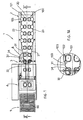
Figure 1 is a diagrammatic top plan view of the apparatus for packaging in a vacuum and/or in a protective atmosphere according to the invention; -
Figure 1A is an enlarged detail, enclosed in the circle A ofFigure 1 , better illustrating the arrangement of the containers on the apparatus ofFigure 1 ; -
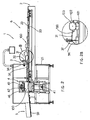
Figure 2 is a longitudinal sectional view of the apparatus according to the invention, taken along the section plane II-II ofFigure 1 ; -
Figure 2B is an enlarged detail, enclosed in the circle B ofFigure 2 , which better illustrates the arrangement of the containers on the apparatus ofFigure 2 ; and -
Figure 3 is a longitudinal sectional view likeFigure 2 , illustrating the apparatus according to the invention, completed with a reel of plastic film for sealing of containers without a lid. - An apparatus for packaging in a vacuum and/or in a protective atmosphere according to the invention, denoted as a whole with reference numeral 1, is described with reference to
Figures 1 and2 . - The apparatus 1 comprises a
conveying station 2, afilling station 6, asemi-closing station 3, astation 4 for creating the vacuum and/or the protective atmosphere and for heat-sealing and adischarging station 5. - The
conveying station 2 comprises ahorizontal conveyor belt 20 supported by amain frame 21 resting on the ground. A plurality ofcontainers 100, able to contain the products destined to be put in a vacuum and/or in a protective atmosphere, is fed on theconveyor belt 20. - As shown better in
Figures 1A and2B , according to the invention eachcontainer 100 is atray 101 of thermoformed plastic material, open at the top. - A
lid 103, able to close thetray 101 hermetically, is connected integrally to aportion 102 of the upper edge of thetray 101. In this manner the connectingportion 102 behaves as a hinge and thelid 103, rotating around thehinging axis 102, can pass from an opening position to a closing position of thetray 101. - The
lid 103 is thermoformed together with thetray 101 and in normal conditions thelid 103 remains in the open position with respect to thetray 101. - The upper edge of the
tray 101 and the peripheral edge of thelid 103 are able to engage mutually with each other by interference, to maintain thelid 103 in the closing position. - As shown in
Figures 1 and2 , theempty containers 100 are conveyed from theconveyor belt 20 toward thefilling station 6, disposed in two parallel rows, with thelids 103 completely open and disposed towards the outside. Even if in the Figures thecontainers 100 are shown disposed on two rows, they can be disposed on one or more rows. - The
conveyor 20 has twoside bars 23 integral with the sides of its frame. Theside bars 23 are parallel to each other and horizontal. In this manner thelids 103 of the containers as they pass through thefilling station 6 remain above thehorizontal side bars 23. - Special means (per se known and therefore not shown in the figures) suitable to fill the
trays 101 with the products destined to be packaged will be provided in thefilling station 6. Clearly filling of thetrays 101 can also take place manually. - The filled
containers 100 continue their transfer on theconveyor belt 20 towards thesemi-closing station 3. During this transfer theside bars 23 of the conveyor continue with twoguide bars 31, convergent and inclined upwards. In this manner thebars 31 cause raising of thelids 103 of the containers bringing them towards the closing position. - As a result, in the semi-closing station 3 a partial closing of the
lid 103 on thetray 101 occurs, so as to leave a gap between thelid 103 and the upper edge of thetray 101 able to allow the discharge of air from the container and/or the introduction of gas into thecontainer 100. - Semi-closing of the
container 100 takes place by means ofshaped guides 34 suitably inclined downwards or by means of mechanical orpneumatic actuators 32 which are responsible for lowering thelid 103 onto thetray 101. - At this point the filled and
semi-closed containers 100 continue on theconveyor belt 20 towards thestation 4 for creating a vacuum and/or a protective atmosphere and for heat-sealing. During this transfer, thelids 103 of the containers remain beneath the parallelhorizontal bars 33 which serve to keep thelids 103 in their semi-closed position. - In the
station 4 for creating a vacuum and/or a protective atmosphere and for heat-sealing there is provided a press comprising a lower half-mould 41 and an upper half-mould 42. On the upper half-mould 42, pneumatic means 43 for suction and introduction of gas andthermal means 44 for heat-sealing are provided. - The suction means 43 suck the air from the inside of the
container 100 so as to create the vacuum. - The introduction means 43, on the other hand, introduce suitable gases into the container so as to create a protective atmosphere. According to the characteristics of the product contained in the
containers 100, gases such as oxygen O2, carbon dioxide CO2 or nitrogen N2 can be introduced. - After the protective atmosphere has been created inside the
container 100, in thestation 4 for creating a vacuum and/or a protective atmosphere and for heat-sealing, the edge of thecontainer 100 is sandwiched between the lower half-mould 41 and the upper half-mould 42, closed hermetically and sealed by means of the thermal heat-sealing means 44, so as to avoid tampering with thecontainer 100 and the product, before it reaches the end user. - The
container 100 is made of particular plastic materials (easy open) which allow heat-sealing and easy opening of thecontainer 100. In this way, if the consumer intends to use up the product in more than one time, there is the possibility of closing again by wedging thelid 103 of the container. - As shown in
Figure 3 , theapparatus 100 can provide areel 70 ofplastic film 71 which can be used in a per se known manner for closing of thetrays 101, if said trays are not provided with a reclosable lid. Thereel 70 is disposed above and upstream of thestation 4 for creating a vacuum and/or a protective atmosphere and for heat-sealing, whilst the waste film 71' is collected by a winder 42 disposed downstream of thestation 4. - On leaving the
station 4 for creating a vacuum and/or a protective atmosphere and for heat-sealing, the product is perfectly packaged in a vacuum and/or in a protective atmosphere inside thecontainer 100. Thecontainer 100 is then discharged from the apparatus 1 though aslide 50 or a conveyor belt of thedischarge station 5 to be sent for transport and/or storage. - Numerous variations and modifications of detail within the reach of a person skilled in the art can be made to the present embodiment of the invention without departing from the scope of the invention as set forth in the appended claims.
Claims (8)
- A method for packaging products, in particular food products, in a vacuum and/or a protective atmosphere, comprising the following steps:- feeding of a plurality of containers (100) separated from each other and comprising a tray (101) and a lid (103) integrally connected to said tray (101) through a hinging axis (102),- introducing the product to be packaged into the tray (101),- partial closing the lid (103) on said tray (101) by rotating the lid (103) around said hinging axis (102) so as to leave a gap between said lid (103) and said tray (101) for discharging air from said container (100) and/or for introducing gas into said container (100),- sucking air and/or introducing gas from/into said container (100), and- complete closing the lid (103) on said tray (101) by further rotating the lid (103) around said hinging axis (102) and sealing the lid (103) on the tray (101) to close the container (100) hermetically and to avoid tampering with the product.
- A method according to claim 1, characterised in that said step of complete closing the lid (103) on the tray (101) provides for a closure by wedging.
- A method according to claim 1 o 2, characterised in that said step of sealing the lid (103) on the tray (101) involves sealing on plastic materials (easy open) to allow sealing with easy opening of the container (100).
- A method according to any one of the preceding claims, characterised in that said step of introducing gas into the container (100) provides for the introduction of gases such as oxygen O2, carbon dioxide CO2, or nitrogen N2.
- An apparatus (1) for packaging products, in particular food products, in a vacuum and/or in a protective atmosphere, comprising:- a conveying station (2) for conveying containers (100) separated from each other and comprising a tray (101) and a lid (103) integrally connected to the tray (101) through a hinging axis (102),- a filling station (6) for introducing the product to be packaged into the tray (101),- a station (3) for partial closing said lid (103) on said tray (101) by rotating the lid (103) around said hinging axis (102) so as to leave a gap between said lid (103) and said tray (101) for discharging air from said container (100) and/or for introducing gas into said container (100);- a station (4) for sucking air and/or for introducing gas from/into said container (100), for complete closing the lid (103) on said tray (101) by further rotating the lid (103) around said hinging axis (102) and for sealing the lid (103) on the tray (101) to close the container (100) hermetically and to avoid possible tampering.
- An apparatus according to claim 5, characterised in that said station for partial closing the lid (103) on the tray (101) comprises guide means (31, 34) and/or actuator means (32) to bring the lid (103) close to the tray (101).
- An apparatus according to claim 5 or 6, characterised in that it comprises means (33) for maintaining said lid (103) in a semi-closed position on said tray (101), disposed upstream of said station (4) for creating a vacuum and/or a protective atmosphere and for sealing.
- An apparatus according to any one of claims 5 to 7, characterised in that it further comprises a reel (70) of plastic film (71) and sealing means to apply said film (71) to trays (101) without lids (103).
Applications Claiming Priority (2)
| Application Number | Priority Date | Filing Date | Title |
|---|---|---|---|
| IT000099A ITMI20030099A1 (en) | 2003-01-23 | 2003-01-23 | PROCEDURE, APPARATUS AND CONTAINER FOR VACUUM PACKAGING AND / OR IN A PROTECTIVE ATMOSPHERE. |
| ITMI20030099 | 2003-01-23 |
Publications (2)
| Publication Number | Publication Date |
|---|---|
| EP1440887A1 EP1440887A1 (en) | 2004-07-28 |
| EP1440887B1 true EP1440887B1 (en) | 2010-12-29 |
Family
ID=32587884
Family Applications (1)
| Application Number | Title | Priority Date | Filing Date |
|---|---|---|---|
| EP04000962A Expired - Lifetime EP1440887B1 (en) | 2003-01-23 | 2004-01-19 | Method and apparatus for vacuum and/or protective atmosphere packaging |
Country Status (5)
| Country | Link |
|---|---|
| EP (1) | EP1440887B1 (en) |
| AT (1) | ATE493339T1 (en) |
| DE (1) | DE602004030735D1 (en) |
| ES (1) | ES2358902T3 (en) |
| IT (1) | ITMI20030099A1 (en) |
Cited By (1)
| Publication number | Priority date | Publication date | Assignee | Title |
|---|---|---|---|---|
| CN110155414A (en) * | 2019-04-25 | 2019-08-23 | 李飞灵 | A kind of intelligent vacuum packing device |
Families Citing this family (5)
| Publication number | Priority date | Publication date | Assignee | Title |
|---|---|---|---|---|
| EP2310273B1 (en) * | 2008-07-14 | 2013-02-20 | Gima S.P.A. | Machine for packaging products, in particular capsules for machines for delivering infusion beverages |
| IT1393743B1 (en) * | 2008-10-24 | 2012-05-08 | Compac S R L | '' GROUP FOR THE TREATMENT OF FOOD PRODUCTS IN A CONTROLLED ATMOSPHERE '' |
| DE102013204160A1 (en) * | 2013-03-11 | 2014-09-11 | Multivac Sepp Haggenmüller Gmbh & Co. Kg | Packaging system with latching station and method |
| EP3061705B1 (en) | 2015-02-24 | 2018-12-19 | Attilio Vignoni | Container for packaging foods |
| IT202400011137A1 (en) * | 2024-05-16 | 2025-11-16 | Chima S R L | PROCEDURE, SYSTEM AND CONTAINER FOR VACUUM AND/OR PROTECTIVE ATMOSPHERE PACKAGING |
Family Cites Families (6)
| Publication number | Priority date | Publication date | Assignee | Title |
|---|---|---|---|---|
| US3267637A (en) * | 1963-10-17 | 1966-08-23 | Kliklok Corp | Method of closing, squaring and sealing folding boxes comprising cover flaps |
| US3481100A (en) | 1966-11-23 | 1969-12-02 | Anderson Bros Mfg Co | Method and apparatus for packaging in protective atmosphere |
| JPS60501805A (en) * | 1983-07-12 | 1985-10-24 | ガーウツド・リミテツド | improved packaging |
| US5534282A (en) * | 1989-08-30 | 1996-07-09 | Seawell North America Inc. | Packing perishable goods |
| US5247746A (en) * | 1992-06-04 | 1993-09-28 | W. R. Grace & Co.-Conn. | Tray sealing and gas flush apparatus |
| FR2712253B1 (en) * | 1993-11-10 | 1996-01-19 | Mecaplastic | Method and device for packaging food, chemical or pharmaceutical products and corresponding packaging trays. |
-
2003
- 2003-01-23 IT IT000099A patent/ITMI20030099A1/en unknown
-
2004
- 2004-01-19 ES ES04000962T patent/ES2358902T3/en not_active Expired - Lifetime
- 2004-01-19 EP EP04000962A patent/EP1440887B1/en not_active Expired - Lifetime
- 2004-01-19 AT AT04000962T patent/ATE493339T1/en not_active IP Right Cessation
- 2004-01-19 DE DE602004030735T patent/DE602004030735D1/en not_active Expired - Lifetime
Cited By (1)
| Publication number | Priority date | Publication date | Assignee | Title |
|---|---|---|---|---|
| CN110155414A (en) * | 2019-04-25 | 2019-08-23 | 李飞灵 | A kind of intelligent vacuum packing device |
Also Published As
| Publication number | Publication date |
|---|---|
| EP1440887A1 (en) | 2004-07-28 |
| ATE493339T1 (en) | 2011-01-15 |
| DE602004030735D1 (en) | 2011-02-10 |
| ITMI20030099A1 (en) | 2004-07-24 |
| ES2358902T3 (en) | 2011-05-16 |
Similar Documents
| Publication | Publication Date | Title |
|---|---|---|
| CN1120115C (en) | Method of handling, filling and sealing packaging containers | |
| EP0485782B1 (en) | Automatic packaging apparatus, and method and flexible pouch therefor | |
| GB2086834A (en) | Packaging particulate material in an inert atmosphere | |
| JPH07500299A (en) | packaging machinery | |
| ZA200410040B (en) | Packaging method and device | |
| GB1580572A (en) | Method and apparatus for applying a lid and tamper indicating sheet to a container | |
| US12263974B2 (en) | System, method and apparatus for sealing and applying modified atmosphere for bulk perishable bins | |
| EP1595796A3 (en) | Aseptic packaging for foods and systems and methods for aseptically packaging foods | |
| US6719015B2 (en) | Apparatus and process for manufacturing a filled flexible pouch | |
| US4069349A (en) | Process for vacuum packaging of roasted, ground coffee | |
| US9227747B2 (en) | Method for packaging non-liquid food products, in particular those sensitive to oxygen, in a container with a low oxygen content | |
| EP1440887A1 (en) | Method, apparatus and container for vacuum and/or protective atmosphere packaging | |
| US6629401B1 (en) | Method for the sterile packaging products, notably food or beverages, in pouches and corresponding pouch | |
| AU2003207411B2 (en) | Method for compacting bags | |
| JP2025524561A (en) | Composite container for bulk solids, related systems and methods | |
| AU2003207411A1 (en) | Method for compacting bags | |
| IE52594B1 (en) | Packaging flowable material in an inert gas atmosphere | |
| EP0328638A1 (en) | Method of substituting inert gas and apparatus therefore | |
| JP6083445B2 (en) | Aseptic filling method and apparatus | |
| JP2000118540A (en) | Packaging bag and its sealing mechanism | |
| US20070044436A1 (en) | Equipment and method for the packaging of packets of products in bags | |
| JP2731615B2 (en) | Packaging container and aseptic packaging method | |
| JPS62251320A (en) | Method and device for replacing gas in vessel | |
| JP4086430B2 (en) | Carton mold for molding and method for removing upper lid in molding process | |
| CN1005100B (en) | container and method and apparatus for manufacturing the same |
Legal Events
| Date | Code | Title | Description |
|---|---|---|---|
| PUAI | Public reference made under article 153(3) epc to a published international application that has entered the european phase |
Free format text: ORIGINAL CODE: 0009012 |
|
| AK | Designated contracting states |
Kind code of ref document: A1 Designated state(s): AT BE BG CH CY CZ DE DK EE ES FI FR GB GR HU IE IT LI LU MC NL PT RO SE SI SK TR |
|
| AX | Request for extension of the european patent |
Extension state: AL LT LV MK |
|
| 17P | Request for examination filed |
Effective date: 20041221 |
|
| AKX | Designation fees paid |
Designated state(s): AT BE BG CH CY CZ DE DK EE ES FI FR GB GR HU IE IT LI LU MC NL PT RO SE SI SK TR |
|
| 17Q | First examination report despatched |
Effective date: 20070618 |
|
| GRAP | Despatch of communication of intention to grant a patent |
Free format text: ORIGINAL CODE: EPIDOSNIGR1 |
|
| RIN1 | Information on inventor provided before grant (corrected) |
Inventor name: VIGNONI, ATTILIO |
|
| GRAS | Grant fee paid |
Free format text: ORIGINAL CODE: EPIDOSNIGR3 |
|
| GRAA | (expected) grant |
Free format text: ORIGINAL CODE: 0009210 |
|
| AK | Designated contracting states |
Kind code of ref document: B1 Designated state(s): AT BE BG CH CY CZ DE DK EE ES FI FR GB GR HU IE IT LI LU MC NL PT RO SE SI SK TR |
|
| REG | Reference to a national code |
Ref country code: GB Ref legal event code: FG4D |
|
| REG | Reference to a national code |
Ref country code: CH Ref legal event code: EP |
|
| REG | Reference to a national code |
Ref country code: IE Ref legal event code: FG4D |
|
| REF | Corresponds to: |
Ref document number: 602004030735 Country of ref document: DE Date of ref document: 20110210 Kind code of ref document: P |
|
| REG | Reference to a national code |
Ref country code: DE Ref legal event code: R096 Ref document number: 602004030735 Country of ref document: DE Effective date: 20110210 |
|
| REG | Reference to a national code |
Ref country code: NL Ref legal event code: VDEP Effective date: 20101229 |
|
| REG | Reference to a national code |
Ref country code: ES Ref legal event code: FG2A Ref document number: 2358902 Country of ref document: ES Kind code of ref document: T3 Effective date: 20110504 |
|
| PG25 | Lapsed in a contracting state [announced via postgrant information from national office to epo] |
Ref country code: FI Free format text: LAPSE BECAUSE OF FAILURE TO SUBMIT A TRANSLATION OF THE DESCRIPTION OR TO PAY THE FEE WITHIN THE PRESCRIBED TIME-LIMIT Effective date: 20101229 Ref country code: SE Free format text: LAPSE BECAUSE OF FAILURE TO SUBMIT A TRANSLATION OF THE DESCRIPTION OR TO PAY THE FEE WITHIN THE PRESCRIBED TIME-LIMIT Effective date: 20101229 Ref country code: SI Free format text: LAPSE BECAUSE OF FAILURE TO SUBMIT A TRANSLATION OF THE DESCRIPTION OR TO PAY THE FEE WITHIN THE PRESCRIBED TIME-LIMIT Effective date: 20101229 Ref country code: CY Free format text: LAPSE BECAUSE OF FAILURE TO SUBMIT A TRANSLATION OF THE DESCRIPTION OR TO PAY THE FEE WITHIN THE PRESCRIBED TIME-LIMIT Effective date: 20101229 Ref country code: BG Free format text: LAPSE BECAUSE OF FAILURE TO SUBMIT A TRANSLATION OF THE DESCRIPTION OR TO PAY THE FEE WITHIN THE PRESCRIBED TIME-LIMIT Effective date: 20110329 Ref country code: AT Free format text: LAPSE BECAUSE OF FAILURE TO SUBMIT A TRANSLATION OF THE DESCRIPTION OR TO PAY THE FEE WITHIN THE PRESCRIBED TIME-LIMIT Effective date: 20101229 |
|
| PG25 | Lapsed in a contracting state [announced via postgrant information from national office to epo] |
Ref country code: PT Free format text: LAPSE BECAUSE OF FAILURE TO SUBMIT A TRANSLATION OF THE DESCRIPTION OR TO PAY THE FEE WITHIN THE PRESCRIBED TIME-LIMIT Effective date: 20110429 Ref country code: CZ Free format text: LAPSE BECAUSE OF FAILURE TO SUBMIT A TRANSLATION OF THE DESCRIPTION OR TO PAY THE FEE WITHIN THE PRESCRIBED TIME-LIMIT Effective date: 20101229 Ref country code: EE Free format text: LAPSE BECAUSE OF FAILURE TO SUBMIT A TRANSLATION OF THE DESCRIPTION OR TO PAY THE FEE WITHIN THE PRESCRIBED TIME-LIMIT Effective date: 20101229 Ref country code: GR Free format text: LAPSE BECAUSE OF FAILURE TO SUBMIT A TRANSLATION OF THE DESCRIPTION OR TO PAY THE FEE WITHIN THE PRESCRIBED TIME-LIMIT Effective date: 20110330 Ref country code: BE Free format text: LAPSE BECAUSE OF FAILURE TO SUBMIT A TRANSLATION OF THE DESCRIPTION OR TO PAY THE FEE WITHIN THE PRESCRIBED TIME-LIMIT Effective date: 20101229 |
|
| PG25 | Lapsed in a contracting state [announced via postgrant information from national office to epo] |
Ref country code: MC Free format text: LAPSE BECAUSE OF NON-PAYMENT OF DUE FEES Effective date: 20110131 Ref country code: SK Free format text: LAPSE BECAUSE OF FAILURE TO SUBMIT A TRANSLATION OF THE DESCRIPTION OR TO PAY THE FEE WITHIN THE PRESCRIBED TIME-LIMIT Effective date: 20101229 Ref country code: RO Free format text: LAPSE BECAUSE OF FAILURE TO SUBMIT A TRANSLATION OF THE DESCRIPTION OR TO PAY THE FEE WITHIN THE PRESCRIBED TIME-LIMIT Effective date: 20101229 Ref country code: NL Free format text: LAPSE BECAUSE OF FAILURE TO SUBMIT A TRANSLATION OF THE DESCRIPTION OR TO PAY THE FEE WITHIN THE PRESCRIBED TIME-LIMIT Effective date: 20101229 |
|
| REG | Reference to a national code |
Ref country code: CH Ref legal event code: PL |
|
| REG | Reference to a national code |
Ref country code: IE Ref legal event code: MM4A |
|
| PG25 | Lapsed in a contracting state [announced via postgrant information from national office to epo] |
Ref country code: LI Free format text: LAPSE BECAUSE OF NON-PAYMENT OF DUE FEES Effective date: 20110131 Ref country code: DK Free format text: LAPSE BECAUSE OF FAILURE TO SUBMIT A TRANSLATION OF THE DESCRIPTION OR TO PAY THE FEE WITHIN THE PRESCRIBED TIME-LIMIT Effective date: 20101229 Ref country code: CH Free format text: LAPSE BECAUSE OF NON-PAYMENT OF DUE FEES Effective date: 20110131 |
|
| PLBE | No opposition filed within time limit |
Free format text: ORIGINAL CODE: 0009261 |
|
| STAA | Information on the status of an ep patent application or granted ep patent |
Free format text: STATUS: NO OPPOSITION FILED WITHIN TIME LIMIT |
|
| GBPC | Gb: european patent ceased through non-payment of renewal fee |
Effective date: 20110329 |
|
| 26N | No opposition filed |
Effective date: 20110930 |
|
| REG | Reference to a national code |
Ref country code: DE Ref legal event code: R097 Ref document number: 602004030735 Country of ref document: DE Effective date: 20110930 |
|
| PG25 | Lapsed in a contracting state [announced via postgrant information from national office to epo] |
Ref country code: IE Free format text: LAPSE BECAUSE OF NON-PAYMENT OF DUE FEES Effective date: 20110119 |
|
| PG25 | Lapsed in a contracting state [announced via postgrant information from national office to epo] |
Ref country code: GB Free format text: LAPSE BECAUSE OF NON-PAYMENT OF DUE FEES Effective date: 20110329 |
|
| PG25 | Lapsed in a contracting state [announced via postgrant information from national office to epo] |
Ref country code: LU Free format text: LAPSE BECAUSE OF NON-PAYMENT OF DUE FEES Effective date: 20110119 |
|
| PG25 | Lapsed in a contracting state [announced via postgrant information from national office to epo] |
Ref country code: TR Free format text: LAPSE BECAUSE OF FAILURE TO SUBMIT A TRANSLATION OF THE DESCRIPTION OR TO PAY THE FEE WITHIN THE PRESCRIBED TIME-LIMIT Effective date: 20101229 |
|
| PG25 | Lapsed in a contracting state [announced via postgrant information from national office to epo] |
Ref country code: HU Free format text: LAPSE BECAUSE OF FAILURE TO SUBMIT A TRANSLATION OF THE DESCRIPTION OR TO PAY THE FEE WITHIN THE PRESCRIBED TIME-LIMIT Effective date: 20101229 |
|
| REG | Reference to a national code |
Ref country code: FR Ref legal event code: PLFP Year of fee payment: 12 |
|
| REG | Reference to a national code |
Ref country code: ES Ref legal event code: PC2A Owner name: CHIMA S.R.L. Effective date: 20150127 |
|
| REG | Reference to a national code |
Ref country code: DE Ref legal event code: R082 Ref document number: 602004030735 Country of ref document: DE Representative=s name: MITSCHERLICH, PATENT- UND RECHTSANWAELTE PARTM, DE |
|
| REG | Reference to a national code |
Ref country code: FR Ref legal event code: CJ Effective date: 20150130 Ref country code: FR Ref legal event code: CA Effective date: 20150130 Ref country code: FR Ref legal event code: TP Owner name: CHIMA SRL, IT Effective date: 20150130 Ref country code: FR Ref legal event code: CD Owner name: CHIMA SRL, IT Effective date: 20150130 |
|
| REG | Reference to a national code |
Ref country code: DE Ref legal event code: R082 Ref document number: 602004030735 Country of ref document: DE Representative=s name: MITSCHERLICH, PATENT- UND RECHTSANWAELTE PARTM, DE Effective date: 20150304 Ref country code: DE Ref legal event code: R081 Ref document number: 602004030735 Country of ref document: DE Owner name: CHIMA S.R.L., IT Free format text: FORMER OWNER: VACUUM PUMP S.P.A., BRIVIO, IT Effective date: 20150304 |
|
| REG | Reference to a national code |
Ref country code: FR Ref legal event code: PLFP Year of fee payment: 13 |
|
| REG | Reference to a national code |
Ref country code: FR Ref legal event code: PLFP Year of fee payment: 14 |
|
| REG | Reference to a national code |
Ref country code: FR Ref legal event code: PLFP Year of fee payment: 15 |
|
| PGFP | Annual fee paid to national office [announced via postgrant information from national office to epo] |
Ref country code: FR Payment date: 20230124 Year of fee payment: 20 Ref country code: ES Payment date: 20230330 Year of fee payment: 20 |
|
| PGFP | Annual fee paid to national office [announced via postgrant information from national office to epo] |
Ref country code: IT Payment date: 20230126 Year of fee payment: 20 Ref country code: DE Payment date: 20230123 Year of fee payment: 20 |
|
| P01 | Opt-out of the competence of the unified patent court (upc) registered |
Effective date: 20230602 |
|
| P02 | Opt-out of the competence of the unified patent court (upc) changed |
Effective date: 20230726 |
|
| P02 | Opt-out of the competence of the unified patent court (upc) changed |
Effective date: 20230817 |
|
| REG | Reference to a national code |
Ref country code: DE Ref legal event code: R071 Ref document number: 602004030735 Country of ref document: DE |
|
| REG | Reference to a national code |
Ref country code: ES Ref legal event code: FD2A Effective date: 20240126 |
|
| PG25 | Lapsed in a contracting state [announced via postgrant information from national office to epo] |
Ref country code: ES Free format text: LAPSE BECAUSE OF EXPIRATION OF PROTECTION Effective date: 20240120 |
|
| PG25 | Lapsed in a contracting state [announced via postgrant information from national office to epo] |
Ref country code: ES Free format text: LAPSE BECAUSE OF EXPIRATION OF PROTECTION Effective date: 20240120 |