EP1435935B1 - Konzentriertes x-ray kontrastmittel effektiv als universal antigen und zur verhütung oder vermeidung von allergischen reaktionen - Google Patents
Konzentriertes x-ray kontrastmittel effektiv als universal antigen und zur verhütung oder vermeidung von allergischen reaktionen Download PDFInfo
- Publication number
- EP1435935B1 EP1435935B1 EP02784074A EP02784074A EP1435935B1 EP 1435935 B1 EP1435935 B1 EP 1435935B1 EP 02784074 A EP02784074 A EP 02784074A EP 02784074 A EP02784074 A EP 02784074A EP 1435935 B1 EP1435935 B1 EP 1435935B1
- Authority
- EP
- European Patent Office
- Prior art keywords
- contrast media
- ray contrast
- ray
- group
- antigen
- Prior art date
- Legal status (The legal status is an assumption and is not a legal conclusion. Google has not performed a legal analysis and makes no representation as to the accuracy of the status listed.)
- Expired - Lifetime
Links
- 239000002872 contrast media Substances 0.000 title claims abstract description 109
- 229940039231 contrast media Drugs 0.000 title claims abstract description 108
- 239000000427 antigen Substances 0.000 title claims abstract description 58
- 102000036639 antigens Human genes 0.000 title claims abstract description 48
- 108091007433 antigens Proteins 0.000 title claims abstract description 48
- 206010020751 Hypersensitivity Diseases 0.000 title claims description 12
- 208000003455 anaphylaxis Diseases 0.000 claims abstract description 15
- 206010002198 Anaphylactic reaction Diseases 0.000 claims abstract description 13
- 230000036783 anaphylactic response Effects 0.000 claims abstract description 12
- 230000002411 adverse Effects 0.000 claims abstract description 4
- 239000000539 dimer Substances 0.000 claims description 27
- NBQNWMBBSKPBAY-UHFFFAOYSA-N iodixanol Chemical compound IC=1C(C(=O)NCC(O)CO)=C(I)C(C(=O)NCC(O)CO)=C(I)C=1N(C(=O)C)CC(O)CN(C(C)=O)C1=C(I)C(C(=O)NCC(O)CO)=C(I)C(C(=O)NCC(O)CO)=C1I NBQNWMBBSKPBAY-UHFFFAOYSA-N 0.000 claims description 20
- 239000000178 monomer Substances 0.000 claims description 20
- XUHXFSYUBXNTHU-UHFFFAOYSA-N Iotrolan Chemical compound IC=1C(C(=O)NC(CO)C(O)CO)=C(I)C(C(=O)NC(CO)C(O)CO)=C(I)C=1N(C)C(=O)CC(=O)N(C)C1=C(I)C(C(=O)NC(CO)C(O)CO)=C(I)C(C(=O)NC(CO)C(O)CO)=C1I XUHXFSYUBXNTHU-UHFFFAOYSA-N 0.000 claims description 19
- 229960003182 iotrolan Drugs 0.000 claims description 19
- 229960004359 iodixanol Drugs 0.000 claims description 18
- 229940029407 ioxaglate Drugs 0.000 claims description 7
- TYYBFXNZMFNZJT-UHFFFAOYSA-N ioxaglic acid Chemical compound CNC(=O)C1=C(I)C(N(C)C(C)=O)=C(I)C(C(=O)NCC(=O)NC=2C(=C(C(=O)NCCO)C(I)=C(C(O)=O)C=2I)I)=C1I TYYBFXNZMFNZJT-UHFFFAOYSA-N 0.000 claims description 7
- 206010010744 Conjunctivitis allergic Diseases 0.000 claims description 6
- 208000002205 allergic conjunctivitis Diseases 0.000 claims description 6
- 208000024998 atopic conjunctivitis Diseases 0.000 claims description 6
- 206010039085 Rhinitis allergic Diseases 0.000 claims description 5
- 201000010105 allergic rhinitis Diseases 0.000 claims description 5
- 230000000903 blocking effect Effects 0.000 claims description 5
- 238000001727 in vivo Methods 0.000 claims description 5
- 241000124008 Mammalia Species 0.000 claims description 3
- 230000002401 inhibitory effect Effects 0.000 claims description 3
- 125000001997 phenyl group Chemical group [H]C1=C([H])C([H])=C(*)C([H])=C1[H] 0.000 claims description 3
- 238000011282 treatment Methods 0.000 claims description 3
- 239000013566 allergen Substances 0.000 claims description 2
- 238000009434 installation Methods 0.000 claims description 2
- 239000003690 nonionic contrast media Substances 0.000 claims description 2
- 239000003189 dimeric nonionic contrast media Substances 0.000 claims 5
- 208000030961 allergic reaction Diseases 0.000 claims 4
- 230000009918 complex formation Effects 0.000 claims 2
- 238000002560 therapeutic procedure Methods 0.000 claims 1
- 238000006243 chemical reaction Methods 0.000 abstract description 13
- 230000000694 effects Effects 0.000 abstract description 10
- 231100000419 toxicity Toxicity 0.000 abstract description 3
- 230000001988 toxicity Effects 0.000 abstract description 3
- NTYJJOPFIAHURM-UHFFFAOYSA-N Histamine Chemical compound NCCC1=CN=CN1 NTYJJOPFIAHURM-UHFFFAOYSA-N 0.000 description 38
- FAPWRFPIFSIZLT-UHFFFAOYSA-M Sodium chloride Chemical compound [Na+].[Cl-] FAPWRFPIFSIZLT-UHFFFAOYSA-M 0.000 description 34
- 241000700159 Rattus Species 0.000 description 33
- 108010058846 Ovalbumin Proteins 0.000 description 31
- 229940092253 ovalbumin Drugs 0.000 description 31
- 239000011780 sodium chloride Substances 0.000 description 30
- 230000036772 blood pressure Effects 0.000 description 28
- 239000007924 injection Substances 0.000 description 24
- 238000002347 injection Methods 0.000 description 24
- MWUXSHHQAYIFBG-UHFFFAOYSA-N Nitric oxide Chemical compound O=[N] MWUXSHHQAYIFBG-UHFFFAOYSA-N 0.000 description 20
- 229960001340 histamine Drugs 0.000 description 19
- VLHUSFYMPUDOEL-WZTVWXICSA-N Iothalamate meglumine Chemical compound CNC[C@H](O)[C@@H](O)[C@H](O)[C@H](O)CO.CNC(=O)C1=C(I)C(NC(C)=O)=C(I)C(C(O)=O)=C1I VLHUSFYMPUDOEL-WZTVWXICSA-N 0.000 description 12
- 238000000034 method Methods 0.000 description 12
- AMDBBAQNWSUWGN-UHFFFAOYSA-N Ioversol Chemical compound OCCN(C(=O)CO)C1=C(I)C(C(=O)NCC(O)CO)=C(I)C(C(=O)NCC(O)CO)=C1I AMDBBAQNWSUWGN-UHFFFAOYSA-N 0.000 description 11
- 241001465754 Metazoa Species 0.000 description 11
- 230000027455 binding Effects 0.000 description 11
- 238000012453 sprague-dawley rat model Methods 0.000 description 10
- 210000003743 erythrocyte Anatomy 0.000 description 8
- 210000003630 histaminocyte Anatomy 0.000 description 8
- 239000009342 ragweed pollen Substances 0.000 description 8
- 244000036975 Ambrosia artemisiifolia Species 0.000 description 7
- 235000003129 Ambrosia artemisiifolia var elatior Nutrition 0.000 description 7
- 108060003951 Immunoglobulin Proteins 0.000 description 7
- 235000003484 annual ragweed Nutrition 0.000 description 7
- 235000006263 bur ragweed Nutrition 0.000 description 7
- 210000004027 cell Anatomy 0.000 description 7
- 235000003488 common ragweed Nutrition 0.000 description 7
- 108010074605 gamma-Globulins Proteins 0.000 description 7
- 102000018358 immunoglobulin Human genes 0.000 description 7
- 230000005764 inhibitory process Effects 0.000 description 7
- 235000009736 ragweed Nutrition 0.000 description 7
- ZCYVEMRRCGMTRW-UHFFFAOYSA-N 7553-56-2 Chemical compound [I] ZCYVEMRRCGMTRW-UHFFFAOYSA-N 0.000 description 6
- KCWZGJVSDFYRIX-YFKPBYRVSA-N N(gamma)-nitro-L-arginine methyl ester Chemical compound COC(=O)[C@@H](N)CCCN=C(N)N[N+]([O-])=O KCWZGJVSDFYRIX-YFKPBYRVSA-N 0.000 description 6
- 230000004520 agglutination Effects 0.000 description 6
- 239000003814 drug Substances 0.000 description 6
- 238000002474 experimental method Methods 0.000 description 6
- 229910052740 iodine Inorganic materials 0.000 description 6
- 239000011630 iodine Substances 0.000 description 6
- 231100000225 lethality Toxicity 0.000 description 6
- 238000004519 manufacturing process Methods 0.000 description 6
- 239000000243 solution Substances 0.000 description 6
- 206010067484 Adverse reaction Diseases 0.000 description 5
- 230000006838 adverse reaction Effects 0.000 description 5
- 230000035931 haemagglutination Effects 0.000 description 5
- 102000005962 receptors Human genes 0.000 description 5
- 108020003175 receptors Proteins 0.000 description 5
- 239000000126 substance Substances 0.000 description 5
- 238000012360 testing method Methods 0.000 description 5
- 208000026935 allergic disease Diseases 0.000 description 4
- 230000004872 arterial blood pressure Effects 0.000 description 4
- 238000011685 brown norway rat Methods 0.000 description 4
- 229940079593 drug Drugs 0.000 description 4
- 230000006870 function Effects 0.000 description 4
- 229940072221 immunoglobulins Drugs 0.000 description 4
- 230000008595 infiltration Effects 0.000 description 4
- 238000001764 infiltration Methods 0.000 description 4
- 230000007246 mechanism Effects 0.000 description 4
- 210000001331 nose Anatomy 0.000 description 4
- 230000028327 secretion Effects 0.000 description 4
- 210000002966 serum Anatomy 0.000 description 4
- HUHDYASLFWQVOL-WZTVWXICSA-N 3-[[2-[[3-[acetyl(methyl)amino]-2,4,6-triiodo-5-(methylcarbamoyl)benzoyl]amino]acetyl]amino]-5-(2-hydroxyethylcarbamoyl)-2,4,6-triiodobenzoic acid;(2r,3r,4r,5s)-6-(methylamino)hexane-1,2,3,4,5-pentol Chemical compound CNC[C@H](O)[C@@H](O)[C@H](O)[C@H](O)CO.CNC(=O)C1=C(I)C(N(C)C(C)=O)=C(I)C(C(=O)NCC(=O)NC=2C(=C(C(=O)NCCO)C(I)=C(C(O)=O)C=2I)I)=C1I HUHDYASLFWQVOL-WZTVWXICSA-N 0.000 description 3
- 241000282472 Canis lupus familiaris Species 0.000 description 3
- 206010070834 Sensitisation Diseases 0.000 description 3
- 230000007815 allergy Effects 0.000 description 3
- 229940037003 alum Drugs 0.000 description 3
- 210000003651 basophil Anatomy 0.000 description 3
- ZZVUWRFHKOJYTH-UHFFFAOYSA-N diphenhydramine Chemical compound C=1C=CC=CC=1C(OCCN(C)C)C1=CC=CC=C1 ZZVUWRFHKOJYTH-UHFFFAOYSA-N 0.000 description 3
- 210000003979 eosinophil Anatomy 0.000 description 3
- 238000009169 immunotherapy Methods 0.000 description 3
- 239000007928 intraperitoneal injection Substances 0.000 description 3
- XQZXYNRDCRIARQ-LURJTMIESA-N iopamidol Chemical compound C[C@H](O)C(=O)NC1=C(I)C(C(=O)NC(CO)CO)=C(I)C(C(=O)NC(CO)CO)=C1I XQZXYNRDCRIARQ-LURJTMIESA-N 0.000 description 3
- 229960004537 ioversol Drugs 0.000 description 3
- 239000000203 mixture Substances 0.000 description 3
- 230000001681 protective effect Effects 0.000 description 3
- 235000018102 proteins Nutrition 0.000 description 3
- 102000004169 proteins and genes Human genes 0.000 description 3
- 108090000623 proteins and genes Proteins 0.000 description 3
- 230000008313 sensitization Effects 0.000 description 3
- 210000001519 tissue Anatomy 0.000 description 3
- 231100000331 toxic Toxicity 0.000 description 3
- 230000002588 toxic effect Effects 0.000 description 3
- 206010010741 Conjunctivitis Diseases 0.000 description 2
- 206010010836 Contrast media reaction Diseases 0.000 description 2
- 206010015866 Extravasation Diseases 0.000 description 2
- WSFSSNUMVMOOMR-UHFFFAOYSA-N Formaldehyde Chemical compound O=C WSFSSNUMVMOOMR-UHFFFAOYSA-N 0.000 description 2
- 206010028980 Neoplasm Diseases 0.000 description 2
- 239000004698 Polyethylene Substances 0.000 description 2
- 238000000692 Student's t-test Methods 0.000 description 2
- 125000001931 aliphatic group Chemical group 0.000 description 2
- 238000004458 analytical method Methods 0.000 description 2
- 210000004369 blood Anatomy 0.000 description 2
- 239000008280 blood Substances 0.000 description 2
- 239000011575 calcium Substances 0.000 description 2
- 210000001715 carotid artery Anatomy 0.000 description 2
- 230000001413 cellular effect Effects 0.000 description 2
- 229960000520 diphenhydramine Drugs 0.000 description 2
- 230000002327 eosinophilic effect Effects 0.000 description 2
- 230000036251 extravasation Effects 0.000 description 2
- 230000009610 hypersensitivity Effects 0.000 description 2
- 238000000338 in vitro Methods 0.000 description 2
- 238000001802 infusion Methods 0.000 description 2
- 238000010253 intravenous injection Methods 0.000 description 2
- 229960004647 iopamidol Drugs 0.000 description 2
- 238000005259 measurement Methods 0.000 description 2
- 210000004400 mucous membrane Anatomy 0.000 description 2
- 230000000803 paradoxical effect Effects 0.000 description 2
- 230000035699 permeability Effects 0.000 description 2
- MRBDMNSDAVCSSF-UHFFFAOYSA-N phentolamine Chemical compound C1=CC(C)=CC=C1N(C=1C=C(O)C=CC=1)CC1=NCCN1 MRBDMNSDAVCSSF-UHFFFAOYSA-N 0.000 description 2
- 229960001999 phentolamine Drugs 0.000 description 2
- SONNWYBIRXJNDC-VIFPVBQESA-N phenylephrine Chemical compound CNC[C@H](O)C1=CC=CC(O)=C1 SONNWYBIRXJNDC-VIFPVBQESA-N 0.000 description 2
- 229960001802 phenylephrine Drugs 0.000 description 2
- -1 polyethylene Polymers 0.000 description 2
- 229920000573 polyethylene Polymers 0.000 description 2
- 238000001556 precipitation Methods 0.000 description 2
- 230000008569 process Effects 0.000 description 2
- 239000011734 sodium Substances 0.000 description 2
- XZNXVSDNACTASG-RZNNTOFGSA-M sodium;3,5-diacetamido-2,4,6-triiodobenzoate;3,5-diacetamido-2,4,6-triiodobenzoic acid;(2r,3r,4r,5s)-6-(methylamino)hexane-1,2,3,4,5-pentol Chemical compound [Na+].CNC[C@H](O)[C@@H](O)[C@H](O)[C@H](O)CO.CC(=O)NC1=C(I)C(NC(C)=O)=C(I)C(C(O)=O)=C1I.CC(=O)NC1=C(I)C(NC(C)=O)=C(I)C(C([O-])=O)=C1I XZNXVSDNACTASG-RZNNTOFGSA-M 0.000 description 2
- 210000003462 vein Anatomy 0.000 description 2
- HJBUBXIDMQBSQW-UHFFFAOYSA-N 4-(4-diazoniophenyl)benzenediazonium Chemical compound C1=CC([N+]#N)=CC=C1C1=CC=C([N+]#N)C=C1 HJBUBXIDMQBSQW-UHFFFAOYSA-N 0.000 description 1
- 108010088751 Albumins Proteins 0.000 description 1
- 102000009027 Albumins Human genes 0.000 description 1
- 206010002199 Anaphylactic shock Diseases 0.000 description 1
- 108010032595 Antibody Binding Sites Proteins 0.000 description 1
- 238000012935 Averaging Methods 0.000 description 1
- 108010017384 Blood Proteins Proteins 0.000 description 1
- 102000004506 Blood Proteins Human genes 0.000 description 1
- OYPRJOBELJOOCE-UHFFFAOYSA-N Calcium Chemical compound [Ca] OYPRJOBELJOOCE-UHFFFAOYSA-N 0.000 description 1
- 241000700199 Cavia porcellus Species 0.000 description 1
- 229920000742 Cotton Polymers 0.000 description 1
- IVOMOUWHDPKRLL-KQYNXXCUSA-N Cyclic adenosine monophosphate Chemical compound C([C@H]1O2)OP(O)(=O)O[C@H]1[C@@H](O)[C@@H]2N1C(N=CN=C2N)=C2N=C1 IVOMOUWHDPKRLL-KQYNXXCUSA-N 0.000 description 1
- 206010011906 Death Diseases 0.000 description 1
- 108010044091 Globulins Proteins 0.000 description 1
- 102000006395 Globulins Human genes 0.000 description 1
- SXRSQZLOMIGNAQ-UHFFFAOYSA-N Glutaraldehyde Chemical group O=CCCCC=O SXRSQZLOMIGNAQ-UHFFFAOYSA-N 0.000 description 1
- 102000000543 Histamine Receptors Human genes 0.000 description 1
- 108010002059 Histamine Receptors Proteins 0.000 description 1
- 241000282412 Homo Species 0.000 description 1
- 206010020772 Hypertension Diseases 0.000 description 1
- 208000001718 Immediate Hypersensitivity Diseases 0.000 description 1
- ODKSFYDXXFIFQN-BYPYZUCNSA-N L-arginine Chemical compound OC(=O)[C@@H](N)CCCN=C(N)N ODKSFYDXXFIFQN-BYPYZUCNSA-N 0.000 description 1
- 229930064664 L-arginine Natural products 0.000 description 1
- 235000014852 L-arginine Nutrition 0.000 description 1
- 125000002059 L-arginyl group Chemical class O=C([*])[C@](N([H])[H])([H])C([H])([H])C([H])([H])C([H])([H])N([H])C(=N[H])N([H])[H] 0.000 description 1
- BAQCROVBDNBEEB-UBYUBLNFSA-N Metrizamide Chemical compound CC(=O)N(C)C1=C(I)C(NC(C)=O)=C(I)C(C(=O)N[C@@H]2[C@H]([C@H](O)[C@@H](CO)OC2O)O)=C1I BAQCROVBDNBEEB-UBYUBLNFSA-N 0.000 description 1
- MBBZMMPHUWSWHV-BDVNFPICSA-N N-methylglucamine Chemical compound CNC[C@H](O)[C@@H](O)[C@H](O)[C@H](O)CO MBBZMMPHUWSWHV-BDVNFPICSA-N 0.000 description 1
- 229940123134 Nitric oxide inhibitor Drugs 0.000 description 1
- 241001494479 Pecora Species 0.000 description 1
- 241000220317 Rosa Species 0.000 description 1
- 108010071390 Serum Albumin Proteins 0.000 description 1
- 102000007562 Serum Albumin Human genes 0.000 description 1
- 208000005279 Status Asthmaticus Diseases 0.000 description 1
- 206010045240 Type I hypersensitivity Diseases 0.000 description 1
- IVOMOUWHDPKRLL-UHFFFAOYSA-N UNPD107823 Natural products O1C2COP(O)(=O)OC2C(O)C1N1C(N=CN=C2N)=C2N=C1 IVOMOUWHDPKRLL-UHFFFAOYSA-N 0.000 description 1
- 230000002776 aggregation Effects 0.000 description 1
- 238000004220 aggregation Methods 0.000 description 1
- 230000000172 allergic effect Effects 0.000 description 1
- 229940024546 aluminum hydroxide gel Drugs 0.000 description 1
- SMYKVLBUSSNXMV-UHFFFAOYSA-K aluminum;trihydroxide;hydrate Chemical compound O.[OH-].[OH-].[OH-].[Al+3] SMYKVLBUSSNXMV-UHFFFAOYSA-K 0.000 description 1
- 150000001408 amides Chemical group 0.000 description 1
- 230000002052 anaphylactic effect Effects 0.000 description 1
- 238000010171 animal model Methods 0.000 description 1
- 208000010216 atopic IgE responsiveness Diseases 0.000 description 1
- 208000010668 atopic eczema Diseases 0.000 description 1
- 229940088007 benadryl Drugs 0.000 description 1
- 150000001555 benzenes Chemical group 0.000 description 1
- 239000011230 binding agent Substances 0.000 description 1
- 230000004531 blood pressure lowering effect Effects 0.000 description 1
- 229910052791 calcium Inorganic materials 0.000 description 1
- 210000000845 cartilage Anatomy 0.000 description 1
- 150000001768 cations Chemical class 0.000 description 1
- 230000008859 change Effects 0.000 description 1
- 238000004040 coloring Methods 0.000 description 1
- 230000000536 complexating effect Effects 0.000 description 1
- 150000001875 compounds Chemical class 0.000 description 1
- 210000000795 conjunctiva Anatomy 0.000 description 1
- 230000002596 correlated effect Effects 0.000 description 1
- 230000001186 cumulative effect Effects 0.000 description 1
- 229940095074 cyclic amp Drugs 0.000 description 1
- 230000003247 decreasing effect Effects 0.000 description 1
- 230000001419 dependent effect Effects 0.000 description 1
- 230000008021 deposition Effects 0.000 description 1
- 238000011161 development Methods 0.000 description 1
- 239000010432 diamond Substances 0.000 description 1
- 230000000916 dilatatory effect Effects 0.000 description 1
- 230000003292 diminished effect Effects 0.000 description 1
- LOKCTEFSRHRXRJ-UHFFFAOYSA-I dipotassium trisodium dihydrogen phosphate hydrogen phosphate dichloride Chemical compound P(=O)(O)(O)[O-].[K+].P(=O)(O)([O-])[O-].[Na+].[Na+].[Cl-].[K+].[Cl-].[Na+] LOKCTEFSRHRXRJ-UHFFFAOYSA-I 0.000 description 1
- SDIXRDNYIMOKSG-UHFFFAOYSA-L disodium methyl arsenate Chemical compound [Na+].[Na+].C[As]([O-])([O-])=O SDIXRDNYIMOKSG-UHFFFAOYSA-L 0.000 description 1
- XEYBHCRIKKKOSS-UHFFFAOYSA-N disodium;azanylidyneoxidanium;iron(2+);pentacyanide Chemical compound [Na+].[Na+].[Fe+2].N#[C-].N#[C-].N#[C-].N#[C-].N#[C-].[O+]#N XEYBHCRIKKKOSS-UHFFFAOYSA-N 0.000 description 1
- 239000002270 dispersing agent Substances 0.000 description 1
- 238000006073 displacement reaction Methods 0.000 description 1
- 239000012645 endogenous antigen Substances 0.000 description 1
- 238000005516 engineering process Methods 0.000 description 1
- 238000011156 evaluation Methods 0.000 description 1
- 230000001747 exhibiting effect Effects 0.000 description 1
- 239000012530 fluid Substances 0.000 description 1
- GNBHRKFJIUUOQI-UHFFFAOYSA-N fluorescein Chemical compound O1C(=O)C2=CC=CC=C2C21C1=CC=C(O)C=C1OC1=CC(O)=CC=C21 GNBHRKFJIUUOQI-UHFFFAOYSA-N 0.000 description 1
- 210000000224 granular leucocyte Anatomy 0.000 description 1
- 210000003128 head Anatomy 0.000 description 1
- 238000007654 immersion Methods 0.000 description 1
- 230000002163 immunogen Effects 0.000 description 1
- 210000004969 inflammatory cell Anatomy 0.000 description 1
- 230000004941 influx Effects 0.000 description 1
- 230000002452 interceptive effect Effects 0.000 description 1
- 230000003834 intracellular effect Effects 0.000 description 1
- 239000002611 ionic contrast media Substances 0.000 description 1
- 230000002045 lasting effect Effects 0.000 description 1
- 231100000636 lethal dose Toxicity 0.000 description 1
- 210000004698 lymphocyte Anatomy 0.000 description 1
- 229920002521 macromolecule Polymers 0.000 description 1
- 239000000463 material Substances 0.000 description 1
- 230000001404 mediated effect Effects 0.000 description 1
- 229960003194 meglumine Drugs 0.000 description 1
- 230000011987 methylation Effects 0.000 description 1
- 238000007069 methylation reaction Methods 0.000 description 1
- 229960000554 metrizamide Drugs 0.000 description 1
- 230000004048 modification Effects 0.000 description 1
- 238000012986 modification Methods 0.000 description 1
- 239000003607 modifier Substances 0.000 description 1
- 210000004877 mucosa Anatomy 0.000 description 1
- 239000002953 phosphate buffered saline Substances 0.000 description 1
- 150000003904 phospholipids Chemical class 0.000 description 1
- 239000002244 precipitate Substances 0.000 description 1
- 230000002035 prolonged effect Effects 0.000 description 1
- 238000011552 rat model Methods 0.000 description 1
- 230000009257 reactivity Effects 0.000 description 1
- 230000009467 reduction Effects 0.000 description 1
- 230000002829 reductive effect Effects 0.000 description 1
- 238000009877 rendering Methods 0.000 description 1
- 238000011160 research Methods 0.000 description 1
- 230000029058 respiratory gaseous exchange Effects 0.000 description 1
- 230000004044 response Effects 0.000 description 1
- 238000012552 review Methods 0.000 description 1
- 210000003491 skin Anatomy 0.000 description 1
- ZEYOIOAKZLALAP-UHFFFAOYSA-M sodium amidotrizoate Chemical compound [Na+].CC(=O)NC1=C(I)C(NC(C)=O)=C(I)C(C([O-])=O)=C1I ZEYOIOAKZLALAP-UHFFFAOYSA-M 0.000 description 1
- 229940083618 sodium nitroprusside Drugs 0.000 description 1
- VIDRYROWYFWGSY-UHFFFAOYSA-N sotalol hydrochloride Chemical compound Cl.CC(C)NCC(O)C1=CC=C(NS(C)(=O)=O)C=C1 VIDRYROWYFWGSY-UHFFFAOYSA-N 0.000 description 1
- 230000009870 specific binding Effects 0.000 description 1
- 238000013222 sprague-dawley male rat Methods 0.000 description 1
- 239000006228 supernatant Substances 0.000 description 1
- 238000012353 t test Methods 0.000 description 1
- 231100000041 toxicology testing Toxicity 0.000 description 1
- YNJBWRMUSHSURL-UHFFFAOYSA-N trichloroacetic acid Chemical compound OC(=O)C(Cl)(Cl)Cl YNJBWRMUSHSURL-UHFFFAOYSA-N 0.000 description 1
- 230000002792 vascular Effects 0.000 description 1
Images



Classifications
-
- A—HUMAN NECESSITIES
- A61—MEDICAL OR VETERINARY SCIENCE; HYGIENE
- A61K—PREPARATIONS FOR MEDICAL, DENTAL OR TOILETRY PURPOSES
- A61K49/00—Preparations for testing in vivo
- A61K49/04—X-ray contrast preparations
- A61K49/0433—X-ray contrast preparations containing an organic halogenated X-ray contrast-enhancing agent
- A61K49/0438—Organic X-ray contrast-enhancing agent comprising an iodinated group or an iodine atom, e.g. iopamidol
-
- A—HUMAN NECESSITIES
- A61—MEDICAL OR VETERINARY SCIENCE; HYGIENE
- A61K—PREPARATIONS FOR MEDICAL, DENTAL OR TOILETRY PURPOSES
- A61K31/00—Medicinal preparations containing organic active ingredients
-
- A—HUMAN NECESSITIES
- A61—MEDICAL OR VETERINARY SCIENCE; HYGIENE
- A61K—PREPARATIONS FOR MEDICAL, DENTAL OR TOILETRY PURPOSES
- A61K31/00—Medicinal preparations containing organic active ingredients
- A61K31/16—Amides, e.g. hydroxamic acids
- A61K31/165—Amides, e.g. hydroxamic acids having aromatic rings, e.g. colchicine, atenolol, progabide
-
- A—HUMAN NECESSITIES
- A61—MEDICAL OR VETERINARY SCIENCE; HYGIENE
- A61K—PREPARATIONS FOR MEDICAL, DENTAL OR TOILETRY PURPOSES
- A61K31/00—Medicinal preparations containing organic active ingredients
- A61K31/16—Amides, e.g. hydroxamic acids
- A61K31/165—Amides, e.g. hydroxamic acids having aromatic rings, e.g. colchicine, atenolol, progabide
- A61K31/166—Amides, e.g. hydroxamic acids having aromatic rings, e.g. colchicine, atenolol, progabide having the carbon of a carboxamide group directly attached to the aromatic ring, e.g. procainamide, procarbazine, metoclopramide, labetalol
-
- A—HUMAN NECESSITIES
- A61—MEDICAL OR VETERINARY SCIENCE; HYGIENE
- A61K—PREPARATIONS FOR MEDICAL, DENTAL OR TOILETRY PURPOSES
- A61K31/00—Medicinal preparations containing organic active ingredients
- A61K31/16—Amides, e.g. hydroxamic acids
- A61K31/165—Amides, e.g. hydroxamic acids having aromatic rings, e.g. colchicine, atenolol, progabide
- A61K31/167—Amides, e.g. hydroxamic acids having aromatic rings, e.g. colchicine, atenolol, progabide having the nitrogen of a carboxamide group directly attached to the aromatic ring, e.g. lidocaine, paracetamol
-
- A—HUMAN NECESSITIES
- A61—MEDICAL OR VETERINARY SCIENCE; HYGIENE
- A61K—PREPARATIONS FOR MEDICAL, DENTAL OR TOILETRY PURPOSES
- A61K31/00—Medicinal preparations containing organic active ingredients
- A61K31/185—Acids; Anhydrides, halides or salts thereof, e.g. sulfur acids, imidic, hydrazonic or hydroximic acids
- A61K31/19—Carboxylic acids, e.g. valproic acid
- A61K31/195—Carboxylic acids, e.g. valproic acid having an amino group
-
- A—HUMAN NECESSITIES
- A61—MEDICAL OR VETERINARY SCIENCE; HYGIENE
- A61K—PREPARATIONS FOR MEDICAL, DENTAL OR TOILETRY PURPOSES
- A61K31/00—Medicinal preparations containing organic active ingredients
- A61K31/185—Acids; Anhydrides, halides or salts thereof, e.g. sulfur acids, imidic, hydrazonic or hydroximic acids
- A61K31/19—Carboxylic acids, e.g. valproic acid
- A61K31/195—Carboxylic acids, e.g. valproic acid having an amino group
- A61K31/197—Carboxylic acids, e.g. valproic acid having an amino group the amino and the carboxyl groups being attached to the same acyclic carbon chain, e.g. gamma-aminobutyric acid [GABA], beta-alanine, epsilon-aminocaproic acid or pantothenic acid
- A61K31/198—Alpha-amino acids, e.g. alanine or edetic acid [EDTA]
-
- A—HUMAN NECESSITIES
- A61—MEDICAL OR VETERINARY SCIENCE; HYGIENE
- A61K—PREPARATIONS FOR MEDICAL, DENTAL OR TOILETRY PURPOSES
- A61K31/00—Medicinal preparations containing organic active ingredients
- A61K31/70—Carbohydrates; Sugars; Derivatives thereof
- A61K31/7028—Compounds having saccharide radicals attached to non-saccharide compounds by glycosidic linkages
- A61K31/7034—Compounds having saccharide radicals attached to non-saccharide compounds by glycosidic linkages attached to a carbocyclic compound, e.g. phloridzin
- A61K31/7036—Compounds having saccharide radicals attached to non-saccharide compounds by glycosidic linkages attached to a carbocyclic compound, e.g. phloridzin having at least one amino group directly attached to the carbocyclic ring, e.g. streptomycin, gentamycin, amikacin, validamycin, fortimicins
-
- A—HUMAN NECESSITIES
- A61—MEDICAL OR VETERINARY SCIENCE; HYGIENE
- A61K—PREPARATIONS FOR MEDICAL, DENTAL OR TOILETRY PURPOSES
- A61K49/00—Preparations for testing in vivo
- A61K49/04—X-ray contrast preparations
- A61K49/0433—X-ray contrast preparations containing an organic halogenated X-ray contrast-enhancing agent
-
- A—HUMAN NECESSITIES
- A61—MEDICAL OR VETERINARY SCIENCE; HYGIENE
- A61K—PREPARATIONS FOR MEDICAL, DENTAL OR TOILETRY PURPOSES
- A61K9/00—Medicinal preparations characterised by special physical form
- A61K9/0012—Galenical forms characterised by the site of application
- A61K9/0043—Nose
-
- A—HUMAN NECESSITIES
- A61—MEDICAL OR VETERINARY SCIENCE; HYGIENE
- A61K—PREPARATIONS FOR MEDICAL, DENTAL OR TOILETRY PURPOSES
- A61K9/00—Medicinal preparations characterised by special physical form
- A61K9/0012—Galenical forms characterised by the site of application
- A61K9/0048—Eye, e.g. artificial tears
-
- A—HUMAN NECESSITIES
- A61—MEDICAL OR VETERINARY SCIENCE; HYGIENE
- A61P—SPECIFIC THERAPEUTIC ACTIVITY OF CHEMICAL COMPOUNDS OR MEDICINAL PREPARATIONS
- A61P11/00—Drugs for disorders of the respiratory system
- A61P11/02—Nasal agents, e.g. decongestants
-
- A—HUMAN NECESSITIES
- A61—MEDICAL OR VETERINARY SCIENCE; HYGIENE
- A61P—SPECIFIC THERAPEUTIC ACTIVITY OF CHEMICAL COMPOUNDS OR MEDICINAL PREPARATIONS
- A61P27/00—Drugs for disorders of the senses
- A61P27/02—Ophthalmic agents
- A61P27/14—Decongestants or antiallergics
-
- A—HUMAN NECESSITIES
- A61—MEDICAL OR VETERINARY SCIENCE; HYGIENE
- A61P—SPECIFIC THERAPEUTIC ACTIVITY OF CHEMICAL COMPOUNDS OR MEDICINAL PREPARATIONS
- A61P37/00—Drugs for immunological or allergic disorders
- A61P37/08—Antiallergic agents
Definitions
- the present invention is generally directed to the use of X-ray contrast media to block antigen-antibody complexes.
- the present invention is more specifically directed to the use of contrast media as drugs to inhibit allergic reactions, to treat or prevent allergic conjunctivitis, allergic rhinitis, their use in "rush” and “routine” immunotherapy and in non-responding anaphylaxis.
- CM X-ray contrast media
- the sensitized red blood cells were allowed to incubate with each of the contrast media (methylglucamine iothalamate [CONRAY; 282 mg iodine/ml, Mallinckrodt Medical, St Louis MO], ioversol [OPTIRAY 320; 320mg iodine/ml, Mallinckrodt], IOXAGLATE [BEXABRIX; 320 mg iodine/ml, Mallinckrodt] and IOTROLAN [ISOVIST; 300 mg iodine /ml, Schering Pharmaceutical; Berlin, Germany] and the antibodies at room temperature for 2-3 hours prior to evaluation of the potential of the contrast media to compete with the bound ovalbumin or gamma-globulin for their respective antibodies and thereby to function as "pseudoantigens.” If no competition occurred, there would be a visible agglutination that covered variable areas of the base of the micro
- contrast media can in fact act as an antigen and combine with antibodies ( Lasser EC and Lamkin GE Academic Radiology 1998; 5 (suppl. 1; S95-S98 )). This was shown when, at various concentrations, individual contrast media would inhibit the agglutination of RBC-attached ovalbumin or RBC- attached gamma globulin in the presence of their respective antibodies, thus resulting in a button of cells, rather than agglutination, in the bottom of the microtiter well. Table I shows the results of this experiment: TABLE I ⁇ -globulin vs.
- Ovalbumin is known to bind on the variable portion of the immunoglobulin molecule (Fab), while gamma globulin is known to bind to the constant portion of the specific immunoglobulin (Fc)( Frick OL in Basic & Clinical Immunology 2nd Edition, Fudenberg, Stites, Caldwell and Wells editors; Lange Medical Publications; Chapter 22 ; Immediate Hypersensitivity).
- Fc specific immunoglobulin
- contrast media have the potential to bind to at least three divergent antibodies and furthermore (inferentially) that binding may take place on either the constant, variable, or both the constant and variable portions of the immunoglobulin molecule.
- contrast media function as totipotential universal antigens and may thereby compete with any antigen for binding sites on its specific antibody.
- contrast media like antigens, can bind to antibodies but cannot themselves produce antibodies (unlike antigens), we have termed the contrast media "pseudoantigens.” It was noted earlier that the contrast media do not have the chemical characteristics to bind to macromolecules and thus do not have attributes to function like classical antigens. The question then arises: how then, do contrast media compete with antigens? In discussing this issue, it is necessary to have information on the general structure of contrast media molecules.
- the X-ray contrast media currently available are generally triiodinated, completely substituted, benzene moieties existing in the form of a monomer or a dimer. These contrast media molecules may be either ionic or nonionic (or in the case of one dimer, part ionic and part nonionic). There are generally slight variations in the amide side chains attached at the 3 and 5 positions on the ring and in the nature of the cations (for the ionic media) and there are slight differences in the length of the aliphatic chains linking the dimers and in the nature of the coupler group.
- X-ray contrast media that are commercially available are METRIZAMIDE, IOPAMIDOL and IOXEXOL which are nonionic monomers.
- IOXAGLATE and IOTROLAN are ionic dimers. For purposes of this patent application, only nonionic dimers will be considered. The only two ionic dimers believed to be commercially available thus far are IODIXANOL and IOTROLAN.
- the term "mammal” as used herein refers to human and non-human mammals.
- dosage of CM may be from 0.1 - 40 grams of CM depending on the subj ect to be treated and the CM.
- Other dosages of administered CM may be from 0.01 - 0.1 grams, 0.1 - 5 grams, 5 - 10 grams, 10 - 15 grams, 15 - 20 grams, 20 - 25 grams, 25 - 30 grams, 30 - 35 grams, 35 - 40 grams, 40 - 45 grams, 45 - 50 grams and 50 - 100 grams.
- contrast media to bind to antibodies must depend on some factor other than their chemical composition since, as noted, their molecular structures do not suggest a potential for binding and in dilute solutions, no binding to globulins could be demonstrated ( Lang JH and Lasser EC Invest Radiology 1967; 2; 396-400 ).
- contrast molecules In an aggregated form, contrast molecules have physical characteristics that simulate a multivalent antigen.
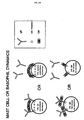
- Histamine release from mast cells and basophils is known to occur when adjacent IgE antibodies attached to these cells are connected by a bridging antigen. Under these circumstances, the receptors that bind the antibodies to the cells are believed to be activated to induce phospholipid methylation and an increase in intracellular cyclic AMP. These biochemical events are followed by an influx of calcium and the release of histamine ( Ishizaka T et al J Immunology 1983; 130; 2357-62 ).
- the present invention is directed to the use of contrast media or modified contrast media molecules (for example contrast molecules with the iodine removed - see Figure 7B ) as drugs that can be utilized to inhibit allergic reactions.
- contrast media or modified contrast media molecules for example contrast molecules with the iodine removed - see Figure 7B
- the toxicity of the contrast media that is proposed is very low in comparison to almost all drugs on the market and the details of the toxicity of these substances are well known through extensive utilization and research.
- the contrast media that are proposed are in the dimer and nonionic form and thus are known to be the least toxic of contrast media.
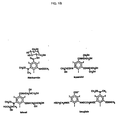
- Figure 1 shows the structures of some commercially available contrast media
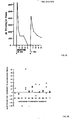
- Figures 2A - 2B show histamine release in response to injections of contrast media
- FIG. 3 illustrates the phenomenon of antigen excess
- Figures 4A shows the rise in blood pressure in Brown-Norway and Sprague Dawley rats following the bolus injection of 5 mg/kg of diphenhydramine;
- Figure 4B shows that in 15 tested animals, injection of L-Name, a nitric oxide inhibitor, produces a rise in BP and that ISOVIST no longer produces a rise in blood pressure when the production of nitric oxide is blocked;
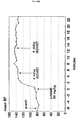
- Figure 5 shows that the injection of a CM dimer along with OVA in 5 OVA-sensitized rats (diamonds) diminishes the prolonged fall in blood pressure that results from injection of OVA and saline made equiosmolar to the dimer in 4 sensitized rats (squares) which results from antigen-specific, antigen equivalent immunogenic mechanisms having to compete with the pseudoantigen, antigen excess mechanisms operative when the CM accompanies the OVA;
- Figure 6 shows IODIXANOL vs. control treatment given 10 minutes post challenge in sensitized Sprague Dawley rats;
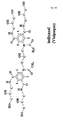
- Figure 7 shows the structural formula IODIXANOL
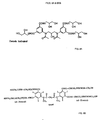
- Figure 8A shows the structural formula of deiodinated IODIXANOL and Figure 8B shows the structural formula of IOTROL.
- the more rapid injection of the contrast media in the dogs is believed to have produced an antigen excess situation relative to the existing IgE antibody on the cells of the dogs from previous sensitization episodes and thus produced less, rather than more, histamine release.
- the contrast media exhibiting the best potential to compete with specific antigens for antibody binding sites in our study of passive hemagglutination inhibition would in fact be the media less likely to produce adverse reactions, rather than the opposite.
- contrast media with less potential to compete with antigens in our passive hemagglutination inhibition studies would be more likely to attain antibody-antigen (pseudoantigen) equivalence rather than antigen excess in vivo, and thus be associated with a higher incidence of adverse reactions.
- Sprague Dawley and Brown Norway rats 300-350 g were purchased from Harlan Sprague Dawley (Indianapolis, Ind.).
- the CM utilized were meglumine/sodium diatrizoate, an ionic monomer (ANGIOVIST 370; 370 mg I/ml; Berlex Laboratories, Wayne N.J., USA), meglumine iothalamate, an ionic monomer (Conray; 282 mg I/ml; Mallinckrodt Medical, St.
- IOXAGLATE an ionic dimer
- HEXABRIX 320 mg I/ml; Guerbet Laboratories, Aulong-sousBois, France
- IOPAMIDOL a nonionic monomer
- ISOWE 300 300 mg I/ml; Bracco Pharmaceuticals, Milan, Italy
- IOTROLAN a nonionic dimer
- ISOVIST 300 mg I/ml; Schering Pharmaceuticals, Berlin, Germany
- IOVERSOL a nonionic monomer
- Optiray 240 240 mg I/ ml, Mallinckrodt.
- the monomers are either ionic or nonionic molecules consisting essentially of a tri-iodinated fully substituted benzene ring.
- the dimers are two such benzene rings separated by an aliphatic chain.
- a Propaq blood pressure monitor (Protocol Systems, Beaverton, Oreg., USA) was connected to polyethylene catheters inserted into a carotid artery and measured mean arterial pressures. Injection rates into a tail vein varied from 2 to 8 ml/kg/min. Modifications of the mean blood pressure tracings in individual animals were studied by injections of the following substances either preceding or following the CM.
- NG-nitro-L-arginine methyl ester (L-NAME; Sigma), sodium nitroprusside (SNP; Sigma), histamine (Sigma), phenylephrine (Sigma), phentolamine; (Sigma), L-arginine (Sigma), diphenhydramine (Benadryl; Sigma), and BQ 123 (American Peptide Co., Sunnyvale, Ca., USA).
- Fig. 4A shows that the infusion of an H-1 blocker (diphenyhydramine) in the rats produced an immediate elevation in blood pressure.
- a nonionic contrast media dimer ISOVIST
- when injected by itself, produces an elevation in pressure can no longer produce an elevation in blood pressure when the production of nitric oxide is blocked. This is evidently due to the fact that the dimer elevates pressure by blocking ongoing IgE mediated histamine/nitric oxide release and hence their vascular dilating effect, but can not evidence this when nitric oxide release is already blocked.
- Example II Net increase/decrease in mean arterial blood pressures in the Brown-Norway and Sprague Dawley rats are summarized below: Contrast media: Brown Norway Rats Sprague Dawley Rats Monomers (4 ml) mm Hg (mean+/-S.E.) mm Hg (mean +/-S.E.) Conray decrease (37+/- 1.6) (3) decrease (55+/- 5.0) (3) Optiray decrease (20 +/-1.5) (3) NO DATA Monomers (8 ml) Isovue decrease (36+/- 8.6) (2) decrease (27+/- 8.6) (2) Optiray decrease (33+/- 2.8) (3) decrease (22+/- 0.0) (1) Angiovist decrease (40+/- 0.0) (1) NO DATA Dimers ( 4 ml) Isovist increase (18+/-0.00 (1) NO DATA Dimers ( 8 ml) Isovist increase (20+/-2.0) (4) increase (
- nitric oxide When the production of nitric oxide was blocked (utilizing L-NAME, a nitric oxide analog), a blood pressure elevation was produced similar in all respects to that produced by blocking the H-1 receptor (see Figs. 4A and 4B ). The same findings occurred in the presence of salient blood pressure modifiers (phenylephrine and phentolamine) ( Lasser EC and Lamkin GE Academic Radiology 2002; 9 [suppl 1]; S72-S75 ).
- salient blood pressure modifiers phenylephrine and phentolamine
- CM or other materials were injected into the tail vein of anesthetized Sprague Dawley rats (300-400 mg).
- the CM tested were IOXAGLATE and IODIXANOL. Both are CM dimers and IOXAGLATE is ionic and IODIXANOL is nonionic.
- the CM injections were done 12 to 14 days after sensitization of the rats by intraperitoneal injections of 1 mg of ovalbumin in normal saline.
- a Propaq blood pressure apparatus was connected to polyethylene catheters inserted into a carotid artery to monitor mean arterial blood pressure. Injection rates were 6 ml/kg/min.
- the CM were injected I.V. either 6 hours before, 45 minutes before, concurrent with, or 10 minutes post challenge of a dose of 10 mg of ovalbumin.
- the concept was also tested by examining the potential of a monomer nonionic contrast and a dimer nonionic contrast to diminish the lethality in 300-350 g Sprague-Dawley rats of an ionic monomer CM.
- the nonionic monomer used was IOVERSOL (Optiray 160, Mallinckrodt; St Louis MO).
- the nonionic dimer used was IOTROLAN (Isovist, Schering, Berlin, Germany).
- the ionic contrast media used was 70% methylglucamine iothalamate (Conray, Mallinckrodt; St Louis MO).
- An LD-100 technique was used to determine lethality.
- This technique involves an immediate decision on mortality and is more humane than the LD-50 technique since the animals do not undergo post technique morbidity for variable periods.
- the determination of death in this technique is done by a continuous I.V. infusion of CM and noting at what dose the animal suspended respirations for a period of at least 15 seconds.
- CM toxicity studies the technique correlated well with published data using a standard LD-50 technique.
- Example III demonstrates that when either the monomer nonionic or the dimer nonionic, both of which exhibit stronger binding potential to immunoglobulins than does the ionic monomer used, are substituted for saline, the lethality of the mixture diminishes (the animals can accept more total contrast media before lethality). This can now be assumed to be due to the nonionic CM partially blocking the effect of the ionic media on IgE immunoglobulins and mast cell release. S.D.
- rats were injected intradermally with 50 uL of serum from ovalbumin sensitized rats and varying mixtures of Na/ meglumine iothalamate (MD-76; 370 mg iodine/ml, Mallinckrodt) and normal saline to a total of 50 ul. This was followed in 5-7 hours by intravenous injections of 1 mg ovalbumin along with Evans Blue and then measurement of the subsequent extravasation of the blue coloring in the area under the skin. Evans Blue binds to serum albumin and the diameter of the area of blue indicates extravasation of albumin secondary to specific antigen- antibody reactions.
- MD-76 Na/ meglumine iothalamate
- the potential protective effect of a contrast material on experimental allergic conjunctivitis induced in rats was examined.
- the rats were sensitized systemically to either ovalbumin or ragweed pollen and 10 to 12 days later obtained local sensitization by several applications of the respective antigens to the eyes.
- the rats were then challenged with a larger dose of the antigen accompanied by either the contrast media or equiosmolal saline and sacrificed at several different time periods for examination of the excised eyes.
- the most reliable indicator of conjunctivitis was found to be a cellular infiltration in the conjunctiva and/or in the underlying lamina propria.
- the tissues were examined on a "blinded" basis and assigned a 0 to 3+ rating based on the perceived abundance of inflammatory cells (mostly lymphocytes, but also including eosinophils, polymorphonuclear leukocytes, and mast cells).
- the ovalbumin experiment was carried out at 3 hours post antigen application (8 rats) and at 24 hours post application (8 rats) and the ragweed study was carried out at 1 hour post application (8 rats) and at 24 hours post application. (8 rats).
- the cumulative scores for the ratings in each set of rats were recorded. Details of the ovalbumin study are as follows:
- a ragweed pollen experiment also involved 16 Sprague-Dawley rats born approximately 2 months previously and sensitized on Day 1 with SQ injections of 0.1 ml of N. saline, containing 100 ug of ragweed pollen (P-0146, Sigma) and 20 mg alum.
- 20 ul of saline (left eye) or 20 ul of IODIXANOL (right eye) were applied to the eyes.
- both eyes were treated with 10 ul of phosphate buffered saline containing 1.5 mg of ragweed pollen. The process was done 4 times at 15 min. intervals. 8 rats were observed for 1 hour preceding sacrifice and 8 for 24 hours.
- Sprague Dawley rats were given an IP injection of 1 ml of 1 mg/ml ovalbumin in normal saline containing 20 mg alum ( reconstituted aluminum hydroxide gel). 10 days later, 8 of the rats were given 20 ul of saline made equiosmolal to IODIXANOL into both nostrils via a small catheter placed just inside the nostril and 8 rats were given 20 ul of IODIXANOL into both nostrils.15 minutes later, the animals were challenged locally by installation of 20 ul of 1 mg/ml ovalbumin via the catheter into each nostril.
- the noses pretreated with saline will show a stretch of color averaging about 20 to 40 mm while the noses pretreated with IODIXANOL will probably average 10 to 20 mm, reflecting the inhibition of the locally applied allergen due to the antigen-excess phenomenon of the CM. -
- the saline pretreatment will show an average of about 40-60 eosinophils / oil immersion objective field counted on both sides of the septal cartilage while the IODDCANOL pretreatment group will show a much smaller average.
- the infiltration of eosinophils is an index of a hypersensitivity response.
- contrast media to varying degrees, have the potential to serve as universal antigens that we have labeled "pseudoantigens.” This property appears to derive from the fact that all of the contrast media have the potential to exist in an aggregated state that is greater in increased concentrations. In this aggregated state, contrast media assume the role of multivalent antigens and can successfully compete with, and thus inhibit, any other antigens involved in antibody-antigen reactions that might lead to anaphylaxis. In this competition, the large quantity of contrast media that can be made available enables the media to function in an antigen-excess mode that then inhibits the adverse effects which would otherwise result from the specific antibody-antigen reaction.
Landscapes
- Health & Medical Sciences (AREA)
- Life Sciences & Earth Sciences (AREA)
- Veterinary Medicine (AREA)
- Public Health (AREA)
- General Health & Medical Sciences (AREA)
- Animal Behavior & Ethology (AREA)
- Epidemiology (AREA)
- Pharmacology & Pharmacy (AREA)
- Chemical & Material Sciences (AREA)
- Medicinal Chemistry (AREA)
- General Chemical & Material Sciences (AREA)
- Otolaryngology (AREA)
- Nuclear Medicine, Radiotherapy & Molecular Imaging (AREA)
- Chemical Kinetics & Catalysis (AREA)
- Organic Chemistry (AREA)
- Bioinformatics & Cheminformatics (AREA)
- Engineering & Computer Science (AREA)
- Ophthalmology & Optometry (AREA)
- Pulmonology (AREA)
- Molecular Biology (AREA)
- Pain & Pain Management (AREA)
- Immunology (AREA)
- Medicines Containing Antibodies Or Antigens For Use As Internal Diagnostic Agents (AREA)
- Medicines That Contain Protein Lipid Enzymes And Other Medicines (AREA)
- Peptides Or Proteins (AREA)
- Acyclic And Carbocyclic Compounds In Medicinal Compositions (AREA)
- Medicinal Preparation (AREA)
- Pharmaceuticals Containing Other Organic And Inorganic Compounds (AREA)
Claims (22)
- Röntgenkontrastmittel zur Verwendung in der Hemmung, Behandlung und Vorbeugung einer allergischen Reaktion in einem Säugetier, welches an einer allergischen Reaktion leidet.
- Röntgenkontrastmittel gemäß Anspruch 1, wobei das Röntgenkontrastmittel eine allergische Reaktion durch Blockieren ungünstiger Antigen-Antikörperkomplexbildung hemmt, behandelt oder ihr vorbeugt.
- Röntgenkontrastmittel gemäß Anspruch 1, wobei das Röntgenkontrastmittel ausgewählt ist aus der Gruppe bestehend aus dimeren, nichtionischen Kontrastmitteln oder dejodierten, nicht-ionischen Kontrastmittelderivaten.
- Röntgenkontrastmittel gemäß Anspruch 1, wobei das Röntgenkontrastmittel in dimerer Form vorliegt.
- Röntgenkontrastmittel gemäß Anspruch 1, wobei das Röntgenkontrastmittel nichtionisch ist.
- Röntgenkontrastmittel gemäß Anspruch 1, wobei das Röntgenkontrastmittel in einer aggregierten Form vorliegt.
- Röntgenkontrastmittel gemäß Anspruch 1, wobei das Röntgenkontrastmittel in einer Weise verabreicht wird ausgewählt aus der Gruppe bestehend aus subkutan, intramuskulär, intravenös oder topisch.
- Röntgenkontrastmittel gemäß Anspruch 1, wobei das Röntgenkontrastmittel trijodiert ist, vollständig oder teilweise substituiert, wobei Benzengruppen in der Form eines Monomers oder Dimers existieren.
- Röntgenkontrastmittel gemäß Anspruch 2, wobei der Antikörper ausgewählt ist aus der Gruppe bestehend aus IgA1, IgA2, IgD, IgE, IgG1, IgG2, IgG3, IgG4 und IgM.
- Röntgenkontrastmittel zur Verwendung in der Behandlung von Anaphylaxie umfassend die Verabreichung von 0,1 g bis 40 g des Röntgenkontrastmittels an eine Person, welche an irgendeiner Form oder irgendeinem Grad von Anaphylaxie leidet.
- Röntgenkontrastmittel gemäß Anspruch 10, wobei das Kontrastmittel ein beliebiges dimeres, nicht-ionisches Kontrastmittel ist.
- Röntgenkontrastmittel gemäß Anspruch 10, wobei das Röntgenkontrastmittel in einer Antigen-Desensibilisierungstherapie subkutan verabreicht wird, um lokale oder systemische Anaphylaxie, hervorgerufen durch das Desensibilisierungsantigen, zu hemmen.
- Röntgenkontrastmittel zur Verwendung in der Vorbeugung ungünstiger in vivo Antigen-Antikörperkomplexbildung und somit Hemmung, Behandlung und Vorbeugung einer allergischen Reaktion durch die Verabreichung von 0,1 bis 40 g von Röntgenkontrastmittel an eine Person.
- Röntgenkontrastmittel gemäß Anspruch 13, wobei das Röntgenkontrastmittel ausgewählt ist aus der Gruppe bestehend aus dimeren, nicht-ionischen Kontrastmitteln.
- Röntgenkontrastmittel zur Verwendung in der Behandlung oder Vorbeugung allergischer Konjunktivitis umfassend das Verabreichen von 0,1 bis 3 mL von Röntgenkontrastmittel an ein Auge, welches an allergischer Konjunktivitis leidet.
- Röntgenkontrastmittel gemäß Anspruch 15, wobei das Röntgenkontrastmittel ausgewählt ist aus der Gruppe bestehend aus dimeren, nicht-ionischen Kontrastmitteln.
- Röntgenkontrastmittel gemäß Anspruch 16, wobei das Röntgenkontrastmittel ausgewählt ist aus der Gruppe bestehend aus IOTROLAN und IODIXANOL.
- Röntgenkontrastmittel zur Verwendung in der Behandlung von allergischer Rhinitis durch die Verabreichung von 0,1 bis 3 mL von Röntgenkontrastmittel in Form von Tropfen in die Nase in einem Säugetier, welches an allergischer Rhinitis leidet oder einem bekannten, potenziellen nasalen Allergen ausgesetzt ist.
- Röntgenkontrastmittel gemäß Anspruch 18, wobei das Röntgenkontrastmittel ausgewählt ist aus der Gruppe bestehend aus dimeren, nicht-ionischen Kontrastmitteln.
- Röntgenkontrastmittel gemäß Anspruch 19, wobei das Röntgenkontrastmittel ausgewählt ist aus der Gruppe bestehend aus IOTROLAN und IODIXANOL.
- Röntgenkontrastmittel gemäß Anspruch 1 oder Anspruch 10, wobei das Röntgenkontrastmittel ausgewählt ist aus der Gruppe bestehend aus IOXAGLATE und IODIXANOL.
- Röntgenkontrastmittel gemäß der Ansprüche 13, 15 oder 18, wobei das Röntgenkontrastmittel ausgewählt ist aus der Gruppe bestehend aus IOTROLAN und IODIXANOL.
Applications Claiming Priority (3)
| Application Number | Priority Date | Filing Date | Title |
|---|---|---|---|
| US32902701P | 2001-10-12 | 2001-10-12 | |
| US329027P | 2001-10-12 | ||
| PCT/US2002/032467 WO2003030947A2 (en) | 2001-10-12 | 2002-10-10 | Concentrated x-ray contrast media can act as universal antigens and can inhibit or prevent allergic reactions |
Publications (2)
| Publication Number | Publication Date |
|---|---|
| EP1435935A2 EP1435935A2 (de) | 2004-07-14 |
| EP1435935B1 true EP1435935B1 (de) | 2009-09-23 |
Family
ID=23283543
Family Applications (1)
| Application Number | Title | Priority Date | Filing Date |
|---|---|---|---|
| EP02784074A Expired - Lifetime EP1435935B1 (de) | 2001-10-12 | 2002-10-10 | Konzentriertes x-ray kontrastmittel effektiv als universal antigen und zur verhütung oder vermeidung von allergischen reaktionen |
Country Status (10)
| Country | Link |
|---|---|
| US (3) | US6951641B2 (de) |
| EP (1) | EP1435935B1 (de) |
| JP (1) | JP4707952B2 (de) |
| AT (1) | ATE443514T1 (de) |
| AU (1) | AU2002347863A1 (de) |
| DE (1) | DE60233812D1 (de) |
| DK (1) | DK1435935T3 (de) |
| ES (1) | ES2334340T3 (de) |
| PT (1) | PT1435935E (de) |
| WO (1) | WO2003030947A2 (de) |
Families Citing this family (8)
| Publication number | Priority date | Publication date | Assignee | Title |
|---|---|---|---|---|
| US20080275128A1 (en) * | 2007-04-27 | 2008-11-06 | Elliott C Lasser | Compositions and methods for the treatment of inflammatory conditions |
| CN101842120A (zh) * | 2007-10-30 | 2010-09-22 | 通用电气医疗集团股份有限公司 | 造影剂 |
| JP2011504939A (ja) * | 2007-11-07 | 2011-02-17 | ジーイー・ヘルスケア・アクスイェ・セルスカプ | 造影剤 |
| US20130071335A1 (en) | 2011-09-20 | 2013-03-21 | Elliott C. Lasser | X-ray contrast media compositions and methods of using the same |
| US20130071490A1 (en) | 2011-09-20 | 2013-03-21 | Elliott C. Lasser | X-ray contrast media compositions and methods of using the same to treat, reduce or delay the onset of cns inflammation and inflammation associated conditions |
| US8915399B1 (en) | 2012-11-06 | 2014-12-23 | Acist Medical Systems, Inc. | Simulated contrast injection medium |
| EP2916831A4 (de) * | 2012-11-09 | 2016-07-13 | 3E Therapeutics Corp | Röntgenkontrastmittelzusammensetzungen und verfahren zur verwendung davon zur behandlung von leiden im zusammenhang mit entzündungen |
| US20160106692A1 (en) * | 2014-10-03 | 2016-04-21 | 3E Therapeutics Corporation | Use of x-ray contrast media and related compositions for the treatment and prevention of a filovirus infection |
Family Cites Families (3)
| Publication number | Priority date | Publication date | Assignee | Title |
|---|---|---|---|---|
| DE3568773D1 (en) * | 1984-05-24 | 1989-04-20 | Ciba Geigy Ag | Resorcin ethers |
| CA2000177A1 (en) | 1988-10-13 | 1990-04-13 | Ronald E. Wyrick | Predicting sensitivity to injectable radio contrast media with a histamine release test |
| JPH02218959A (ja) * | 1988-10-13 | 1990-08-31 | Miles Inc | ヒスタミン放出試験を用いる注射性x線撮影造影剤に対する感受性の予測方法 |
-
2002
- 2002-10-10 EP EP02784074A patent/EP1435935B1/de not_active Expired - Lifetime
- 2002-10-10 PT PT02784074T patent/PT1435935E/pt unknown
- 2002-10-10 ES ES02784074T patent/ES2334340T3/es not_active Expired - Lifetime
- 2002-10-10 AU AU2002347863A patent/AU2002347863A1/en not_active Abandoned
- 2002-10-10 DK DK02784074.3T patent/DK1435935T3/da active
- 2002-10-10 AT AT02784074T patent/ATE443514T1/de not_active IP Right Cessation
- 2002-10-10 DE DE60233812T patent/DE60233812D1/de not_active Expired - Lifetime
- 2002-10-10 WO PCT/US2002/032467 patent/WO2003030947A2/en not_active Ceased
- 2002-10-10 JP JP2003533978A patent/JP4707952B2/ja not_active Expired - Fee Related
-
2004
- 2004-04-09 US US10/821,352 patent/US6951641B2/en not_active Expired - Fee Related
-
2005
- 2005-09-01 US US11/217,578 patent/US7151117B2/en not_active Expired - Fee Related
-
2006
- 2006-12-18 US US11/612,389 patent/US7838557B2/en not_active Expired - Fee Related
Also Published As
| Publication number | Publication date |
|---|---|
| US7151117B2 (en) | 2006-12-19 |
| ATE443514T1 (de) | 2009-10-15 |
| US20040198834A1 (en) | 2004-10-07 |
| AU2002347863A1 (en) | 2003-04-22 |
| US20070088087A1 (en) | 2007-04-19 |
| JP4707952B2 (ja) | 2011-06-22 |
| WO2003030947A3 (en) | 2004-02-19 |
| DE60233812D1 (de) | 2009-11-05 |
| JP2005523880A (ja) | 2005-08-11 |
| US7838557B2 (en) | 2010-11-23 |
| ES2334340T3 (es) | 2010-03-09 |
| EP1435935A2 (de) | 2004-07-14 |
| PT1435935E (pt) | 2009-12-29 |
| US20060002858A1 (en) | 2006-01-05 |
| WO2003030947A2 (en) | 2003-04-17 |
| DK1435935T3 (da) | 2010-02-01 |
| US6951641B2 (en) | 2005-10-04 |
Similar Documents
| Publication | Publication Date | Title |
|---|---|---|
| Vibulsresth et al. | Failure of nimodipine to prevent ischemic neuronal damage in rats. | |
| Paulos et al. | Folate-targeted immunotherapy effectively treats established adjuvant and collagen-induced arthritis | |
| US7261891B2 (en) | Antibodies to cytokines in the prevention and treatment of inflammatory bowel disease | |
| EP1435935B1 (de) | Konzentriertes x-ray kontrastmittel effektiv als universal antigen und zur verhütung oder vermeidung von allergischen reaktionen | |
| Mosbech et al. | Immunotherapy with yellow jacket venom: a comparative study including three different extracts, one adsorbed to aluminium hydroxide and two unmodified | |
| Rapoport et al. | Experience with metrizamide in patients with previous severe anaphylactoid reactions to ionic contrast agents. | |
| ZA200606557B (en) | Methods and compositions for treating tumors and metastatic disease | |
| Mihelcic et al. | Inhibition of leukocyte L-selectin function with a monoclonal antibody attenuates reperfusion injury to the rabbit ear | |
| Hadden et al. | Accumulation of immunoglobulin across the ‘blood–nerve barrier’in spinal roots in adoptive transfer experimental autoimmune neuritis | |
| Passwell et al. | Inter-mouse strain differences in macrophage function and its relationship to antibody responses | |
| EP1085906B1 (de) | Antikörper gegen il6 zur vorbeugung und behandlung entzündlicher darmerkrankungen | |
| Fisher et al. | Allergy to local anaesthesia | |
| JP2009503044A (ja) | 炎症症状を処置するための炭の使用 | |
| Sherwood et al. | LARGE-DOSE UROGRAPHY: Is There an Optimum Dose? | |
| Strait et al. | Cytokine enhancement of anaphylaxis | |
| Platts et al. | Spleen size in chronic renal failure. | |
| TREY et al. | The clinical syndrome of halothane hepatitis | |
| US20230330226A1 (en) | Compositions and methods for the prevention of type i hypersensitivity reactions | |
| Okuchi et al. | Astrocytoma with widespread calcification along axonal fibres | |
| Hazouard et al. | Peduncular hallucinosis related to propranolol self-poisoning: efficacy of intravenous glucagon | |
| Junck et al. | Prolonged brain retention of contrast agent in neonatal herpes simplex encephalitis. | |
| Levant et al. | Use of C-terminal octapeptide of cholecystokinin in cholecystography | |
| DE60125377T2 (de) | Behandlung von hepatitis c mit thymosin, interferon und ribavirin | |
| BR112021004900A2 (pt) | anticorpos de quimiocina pan-elr+ cxc para o tratamento de hidradenitis suppurativa | |
| DE10060686A1 (de) | Anti-Idiotyp Antikörper zur Therapie und Diagnose von rheumatischen Autoimmunkrankheiten |
Legal Events
| Date | Code | Title | Description |
|---|---|---|---|
| PUAI | Public reference made under article 153(3) epc to a published international application that has entered the european phase |
Free format text: ORIGINAL CODE: 0009012 |
|
| 17P | Request for examination filed |
Effective date: 20040511 |
|
| AK | Designated contracting states |
Kind code of ref document: A2 Designated state(s): AT BE BG CH CY CZ DE DK EE ES FI FR GB GR IE IT LI LU MC NL PT SE SK TR |
|
| AX | Request for extension of the european patent |
Extension state: AL LT LV MK RO SI |
|
| RAP1 | Party data changed (applicant data changed or rights of an application transferred) |
Owner name: LASSER FAMILY PARTNERSHIP, L.P. |
|
| GRAP | Despatch of communication of intention to grant a patent |
Free format text: ORIGINAL CODE: EPIDOSNIGR1 |
|
| GRAS | Grant fee paid |
Free format text: ORIGINAL CODE: EPIDOSNIGR3 |
|
| GRAA | (expected) grant |
Free format text: ORIGINAL CODE: 0009210 |
|
| AK | Designated contracting states |
Kind code of ref document: B1 Designated state(s): AT BE BG CH CY CZ DE DK EE ES FI FR GB GR IE IT LI LU MC NL PT SE SK TR |
|
| REG | Reference to a national code |
Ref country code: GB Ref legal event code: FG4D |
|
| REG | Reference to a national code |
Ref country code: CH Ref legal event code: EP |
|
| REG | Reference to a national code |
Ref country code: IE Ref legal event code: FG4D |
|
| REF | Corresponds to: |
Ref document number: 60233812 Country of ref document: DE Date of ref document: 20091105 Kind code of ref document: P |
|
| REG | Reference to a national code |
Ref country code: PT Ref legal event code: SC4A Free format text: AVAILABILITY OF NATIONAL TRANSLATION Effective date: 20091221 |
|
| REG | Reference to a national code |
Ref country code: CH Ref legal event code: NV Representative=s name: BOVARD AG PATENTANWAELTE |
|
| REG | Reference to a national code |
Ref country code: SE Ref legal event code: TRGR |
|
| REG | Reference to a national code |
Ref country code: GR Ref legal event code: EP Ref document number: 20090403189 Country of ref document: GR |
|
| REG | Reference to a national code |
Ref country code: DK Ref legal event code: T3 |
|
| REG | Reference to a national code |
Ref country code: ES Ref legal event code: FG2A Ref document number: 2334340 Country of ref document: ES Kind code of ref document: T3 |
|
| PG25 | Lapsed in a contracting state [announced via postgrant information from national office to epo] |
Ref country code: EE Free format text: LAPSE BECAUSE OF FAILURE TO SUBMIT A TRANSLATION OF THE DESCRIPTION OR TO PAY THE FEE WITHIN THE PRESCRIBED TIME-LIMIT Effective date: 20090923 |
|
| PG25 | Lapsed in a contracting state [announced via postgrant information from national office to epo] |
Ref country code: SK Free format text: LAPSE BECAUSE OF FAILURE TO SUBMIT A TRANSLATION OF THE DESCRIPTION OR TO PAY THE FEE WITHIN THE PRESCRIBED TIME-LIMIT Effective date: 20090923 |
|
| PGFP | Annual fee paid to national office [announced via postgrant information from national office to epo] |
Ref country code: LU Payment date: 20100415 Year of fee payment: 8 |
|
| PGFP | Annual fee paid to national office [announced via postgrant information from national office to epo] |
Ref country code: BG Payment date: 20100510 Year of fee payment: 8 Ref country code: DK Payment date: 20100427 Year of fee payment: 8 Ref country code: FI Payment date: 20100414 Year of fee payment: 8 Ref country code: IE Payment date: 20100414 Year of fee payment: 8 Ref country code: MC Payment date: 20100415 Year of fee payment: 8 Ref country code: PT Payment date: 20100409 Year of fee payment: 8 |
|
| PLBE | No opposition filed within time limit |
Free format text: ORIGINAL CODE: 0009261 |
|
| STAA | Information on the status of an ep patent application or granted ep patent |
Free format text: STATUS: NO OPPOSITION FILED WITHIN TIME LIMIT |
|
| PGFP | Annual fee paid to national office [announced via postgrant information from national office to epo] |
Ref country code: AT Payment date: 20100428 Year of fee payment: 8 Ref country code: CZ Payment date: 20100412 Year of fee payment: 8 Ref country code: IT Payment date: 20100428 Year of fee payment: 8 Ref country code: NL Payment date: 20100414 Year of fee payment: 8 |
|
| 26N | No opposition filed |
Effective date: 20100624 |
|
| PGFP | Annual fee paid to national office [announced via postgrant information from national office to epo] |
Ref country code: BE Payment date: 20100414 Year of fee payment: 8 Ref country code: CH Payment date: 20100414 Year of fee payment: 8 |
|
| PGFP | Annual fee paid to national office [announced via postgrant information from national office to epo] |
Ref country code: CY Payment date: 20100426 Year of fee payment: 8 Ref country code: SE Payment date: 20100428 Year of fee payment: 8 Ref country code: TR Payment date: 20100412 Year of fee payment: 8 |
|
| PGFP | Annual fee paid to national office [announced via postgrant information from national office to epo] |
Ref country code: GR Payment date: 20100423 Year of fee payment: 8 |
|
| REG | Reference to a national code |
Ref country code: CH Ref legal event code: PFA Owner name: LASSER FAMILY PARTNERSHIP, L.P. Free format text: LASSER FAMILY PARTNERSHIP, L.P.#4365 EXECUTIVE DRIVE, SUITE 1100#SAN DIEGO CA 92121 (US) -TRANSFER TO- LASSER FAMILY PARTNERSHIP, L.P.#4365 EXECUTIVE DRIVE, SUITE 1100#SAN DIEGO CA 92121 (US) |
|
| BERE | Be: lapsed |
Owner name: LASSER FAMILY PARTNERSHIP, L.P. Effective date: 20101031 |
|
| REG | Reference to a national code |
Ref country code: NL Ref legal event code: V1 Effective date: 20110501 |
|
| REG | Reference to a national code |
Ref country code: DK Ref legal event code: EBP |
|
| PG25 | Lapsed in a contracting state [announced via postgrant information from national office to epo] |
Ref country code: MC Free format text: LAPSE BECAUSE OF NON-PAYMENT OF DUE FEES Effective date: 20101031 |
|
| REG | Reference to a national code |
Ref country code: CH Ref legal event code: PL |
|
| PG25 | Lapsed in a contracting state [announced via postgrant information from national office to epo] |
Ref country code: LI Free format text: LAPSE BECAUSE OF NON-PAYMENT OF DUE FEES Effective date: 20101031 Ref country code: CH Free format text: LAPSE BECAUSE OF NON-PAYMENT OF DUE FEES Effective date: 20101031 Ref country code: GR Free format text: LAPSE BECAUSE OF NON-PAYMENT OF DUE FEES Effective date: 20110503 Ref country code: CZ Free format text: LAPSE BECAUSE OF NON-PAYMENT OF DUE FEES Effective date: 20101010 |
|
| PG25 | Lapsed in a contracting state [announced via postgrant information from national office to epo] |
Ref country code: NL Free format text: LAPSE BECAUSE OF NON-PAYMENT OF DUE FEES Effective date: 20110501 Ref country code: CY Free format text: LAPSE BECAUSE OF NON-PAYMENT OF DUE FEES Effective date: 20101010 Ref country code: BE Free format text: LAPSE BECAUSE OF NON-PAYMENT OF DUE FEES Effective date: 20101031 Ref country code: FI Free format text: LAPSE BECAUSE OF NON-PAYMENT OF DUE FEES Effective date: 20101010 Ref country code: BG Free format text: LAPSE BECAUSE OF NON-PAYMENT OF DUE FEES Effective date: 20110531 Ref country code: AT Free format text: LAPSE BECAUSE OF NON-PAYMENT OF DUE FEES Effective date: 20101010 |
|
| PG25 | Lapsed in a contracting state [announced via postgrant information from national office to epo] |
Ref country code: SE Free format text: LAPSE BECAUSE OF NON-PAYMENT OF DUE FEES Effective date: 20101011 |
|
| PG25 | Lapsed in a contracting state [announced via postgrant information from national office to epo] |
Ref country code: IE Free format text: LAPSE BECAUSE OF NON-PAYMENT OF DUE FEES Effective date: 20101011 Ref country code: DK Free format text: LAPSE BECAUSE OF NON-PAYMENT OF DUE FEES Effective date: 20101031 |
|
| PG25 | Lapsed in a contracting state [announced via postgrant information from national office to epo] |
Ref country code: IT Free format text: LAPSE BECAUSE OF NON-PAYMENT OF DUE FEES Effective date: 20101010 |
|
| PGFP | Annual fee paid to national office [announced via postgrant information from national office to epo] |
Ref country code: ES Payment date: 20111115 Year of fee payment: 10 |
|
| REG | Reference to a national code |
Ref country code: PT Ref legal event code: MM4A Free format text: LAPSE DUE TO NON-PAYMENT OF FEES Effective date: 20110711 |
|
| PG25 | Lapsed in a contracting state [announced via postgrant information from national office to epo] |
Ref country code: LU Free format text: LAPSE BECAUSE OF NON-PAYMENT OF DUE FEES Effective date: 20101010 |
|
| PG25 | Lapsed in a contracting state [announced via postgrant information from national office to epo] |
Ref country code: TR Free format text: LAPSE BECAUSE OF NON-PAYMENT OF DUE FEES Effective date: 20101010 |
|
| PG25 | Lapsed in a contracting state [announced via postgrant information from national office to epo] |
Ref country code: PT Free format text: LAPSE BECAUSE OF NON-PAYMENT OF DUE FEES Effective date: 20120305 Ref country code: BG Free format text: LAPSE BECAUSE OF NON-PAYMENT OF DUE FEES Effective date: 20110630 |
|
| REG | Reference to a national code |
Ref country code: ES Ref legal event code: FD2A Effective date: 20140527 |
|
| PG25 | Lapsed in a contracting state [announced via postgrant information from national office to epo] |
Ref country code: ES Free format text: LAPSE BECAUSE OF NON-PAYMENT OF DUE FEES Effective date: 20121011 |
|
| REG | Reference to a national code |
Ref country code: FR Ref legal event code: PLFP Year of fee payment: 14 |
|
| REG | Reference to a national code |
Ref country code: FR Ref legal event code: PLFP Year of fee payment: 15 |
|
| PGFP | Annual fee paid to national office [announced via postgrant information from national office to epo] |
Ref country code: FR Payment date: 20161025 Year of fee payment: 15 Ref country code: DE Payment date: 20161027 Year of fee payment: 15 Ref country code: GB Payment date: 20161027 Year of fee payment: 15 |
|
| REG | Reference to a national code |
Ref country code: DE Ref legal event code: R119 Ref document number: 60233812 Country of ref document: DE |
|
| GBPC | Gb: european patent ceased through non-payment of renewal fee |
Effective date: 20171010 |
|
| REG | Reference to a national code |
Ref country code: FR Ref legal event code: ST Effective date: 20180629 |
|
| PG25 | Lapsed in a contracting state [announced via postgrant information from national office to epo] |
Ref country code: DE Free format text: LAPSE BECAUSE OF NON-PAYMENT OF DUE FEES Effective date: 20180501 Ref country code: GB Free format text: LAPSE BECAUSE OF NON-PAYMENT OF DUE FEES Effective date: 20171010 |
|
| PG25 | Lapsed in a contracting state [announced via postgrant information from national office to epo] |
Ref country code: FR Free format text: LAPSE BECAUSE OF NON-PAYMENT OF DUE FEES Effective date: 20171031 |