EP1433836A1 - Brennstofföle mit verbesserten Kälteeigenschaften - Google Patents
Brennstofföle mit verbesserten Kälteeigenschaften Download PDFInfo
- Publication number
- EP1433836A1 EP1433836A1 EP20030027827 EP03027827A EP1433836A1 EP 1433836 A1 EP1433836 A1 EP 1433836A1 EP 20030027827 EP20030027827 EP 20030027827 EP 03027827 A EP03027827 A EP 03027827A EP 1433836 A1 EP1433836 A1 EP 1433836A1
- Authority
- EP
- European Patent Office
- Prior art keywords
- fuel oils
- mol
- oils according
- ethylene
- vinyl
- Prior art date
- Legal status (The legal status is an assumption and is not a legal conclusion. Google has not performed a legal analysis and makes no representation as to the accuracy of the status listed.)
- Granted
Links
Classifications
-
- C—CHEMISTRY; METALLURGY
- C10—PETROLEUM, GAS OR COKE INDUSTRIES; TECHNICAL GASES CONTAINING CARBON MONOXIDE; FUELS; LUBRICANTS; PEAT
- C10L—FUELS NOT OTHERWISE PROVIDED FOR; NATURAL GAS; SYNTHETIC NATURAL GAS OBTAINED BY PROCESSES NOT COVERED BY SUBCLASSES C10G OR C10K; LIQUIFIED PETROLEUM GAS; USE OF ADDITIVES TO FUELS OR FIRES; FIRE-LIGHTERS
- C10L1/00—Liquid carbonaceous fuels
- C10L1/10—Liquid carbonaceous fuels containing additives
- C10L1/14—Organic compounds
- C10L1/18—Organic compounds containing oxygen
-
- C—CHEMISTRY; METALLURGY
- C10—PETROLEUM, GAS OR COKE INDUSTRIES; TECHNICAL GASES CONTAINING CARBON MONOXIDE; FUELS; LUBRICANTS; PEAT
- C10L—FUELS NOT OTHERWISE PROVIDED FOR; NATURAL GAS; SYNTHETIC NATURAL GAS OBTAINED BY PROCESSES NOT COVERED BY SUBCLASSES C10G OR C10K; LIQUIFIED PETROLEUM GAS; USE OF ADDITIVES TO FUELS OR FIRES; FIRE-LIGHTERS
- C10L1/00—Liquid carbonaceous fuels
- C10L1/10—Liquid carbonaceous fuels containing additives
- C10L1/14—Organic compounds
- C10L1/143—Organic compounds mixtures of organic macromolecular compounds with organic non-macromolecular compounds
-
- C—CHEMISTRY; METALLURGY
- C08—ORGANIC MACROMOLECULAR COMPOUNDS; THEIR PREPARATION OR CHEMICAL WORKING-UP; COMPOSITIONS BASED THEREON
- C08F—MACROMOLECULAR COMPOUNDS OBTAINED BY REACTIONS ONLY INVOLVING CARBON-TO-CARBON UNSATURATED BONDS
- C08F210/00—Copolymers of unsaturated aliphatic hydrocarbons having only one carbon-to-carbon double bond
- C08F210/02—Ethene
-
- C—CHEMISTRY; METALLURGY
- C10—PETROLEUM, GAS OR COKE INDUSTRIES; TECHNICAL GASES CONTAINING CARBON MONOXIDE; FUELS; LUBRICANTS; PEAT
- C10L—FUELS NOT OTHERWISE PROVIDED FOR; NATURAL GAS; SYNTHETIC NATURAL GAS OBTAINED BY PROCESSES NOT COVERED BY SUBCLASSES C10G OR C10K; LIQUIFIED PETROLEUM GAS; USE OF ADDITIVES TO FUELS OR FIRES; FIRE-LIGHTERS
- C10L1/00—Liquid carbonaceous fuels
- C10L1/10—Liquid carbonaceous fuels containing additives
- C10L1/14—Organic compounds
- C10L1/18—Organic compounds containing oxygen
- C10L1/192—Macromolecular compounds
- C10L1/195—Macromolecular compounds obtained by reactions involving only carbon-to-carbon unsaturated bonds
- C10L1/197—Macromolecular compounds obtained by reactions involving only carbon-to-carbon unsaturated bonds derived from monomers containing a carbon-to-carbon unsaturated bond and an acyloxy group of a saturated carboxylic or carbonic acid
- C10L1/1973—Macromolecular compounds obtained by reactions involving only carbon-to-carbon unsaturated bonds derived from monomers containing a carbon-to-carbon unsaturated bond and an acyloxy group of a saturated carboxylic or carbonic acid mono-carboxylic
-
- C—CHEMISTRY; METALLURGY
- C10—PETROLEUM, GAS OR COKE INDUSTRIES; TECHNICAL GASES CONTAINING CARBON MONOXIDE; FUELS; LUBRICANTS; PEAT
- C10L—FUELS NOT OTHERWISE PROVIDED FOR; NATURAL GAS; SYNTHETIC NATURAL GAS OBTAINED BY PROCESSES NOT COVERED BY SUBCLASSES C10G OR C10K; LIQUIFIED PETROLEUM GAS; USE OF ADDITIVES TO FUELS OR FIRES; FIRE-LIGHTERS
- C10L1/00—Liquid carbonaceous fuels
- C10L1/10—Liquid carbonaceous fuels containing additives
- C10L1/14—Organic compounds
- C10L1/18—Organic compounds containing oxygen
- C10L1/192—Macromolecular compounds
- C10L1/195—Macromolecular compounds obtained by reactions involving only carbon-to-carbon unsaturated bonds
-
- C—CHEMISTRY; METALLURGY
- C10—PETROLEUM, GAS OR COKE INDUSTRIES; TECHNICAL GASES CONTAINING CARBON MONOXIDE; FUELS; LUBRICANTS; PEAT
- C10L—FUELS NOT OTHERWISE PROVIDED FOR; NATURAL GAS; SYNTHETIC NATURAL GAS OBTAINED BY PROCESSES NOT COVERED BY SUBCLASSES C10G OR C10K; LIQUIFIED PETROLEUM GAS; USE OF ADDITIVES TO FUELS OR FIRES; FIRE-LIGHTERS
- C10L1/00—Liquid carbonaceous fuels
- C10L1/10—Liquid carbonaceous fuels containing additives
- C10L1/14—Organic compounds
- C10L1/18—Organic compounds containing oxygen
- C10L1/192—Macromolecular compounds
- C10L1/198—Macromolecular compounds obtained otherwise than by reactions involving only carbon-to-carbon unsaturated bonds homo- or copolymers of compounds having one or more unsaturated aliphatic radicals, each having only one carbon to carbon double bond, and at least one being terminated by an acyloxy radical of a saturated carboxylic acid, of carbonic acid
- C10L1/1981—Condensation polymers of aldehydes or ketones
-
- C—CHEMISTRY; METALLURGY
- C10—PETROLEUM, GAS OR COKE INDUSTRIES; TECHNICAL GASES CONTAINING CARBON MONOXIDE; FUELS; LUBRICANTS; PEAT
- C10L—FUELS NOT OTHERWISE PROVIDED FOR; NATURAL GAS; SYNTHETIC NATURAL GAS OBTAINED BY PROCESSES NOT COVERED BY SUBCLASSES C10G OR C10K; LIQUIFIED PETROLEUM GAS; USE OF ADDITIVES TO FUELS OR FIRES; FIRE-LIGHTERS
- C10L1/00—Liquid carbonaceous fuels
- C10L1/10—Liquid carbonaceous fuels containing additives
- C10L1/14—Organic compounds
- C10L1/18—Organic compounds containing oxygen
- C10L1/192—Macromolecular compounds
- C10L1/198—Macromolecular compounds obtained otherwise than by reactions involving only carbon-to-carbon unsaturated bonds homo- or copolymers of compounds having one or more unsaturated aliphatic radicals, each having only one carbon to carbon double bond, and at least one being terminated by an acyloxy radical of a saturated carboxylic acid, of carbonic acid
- C10L1/1985—Macromolecular compounds obtained otherwise than by reactions involving only carbon-to-carbon unsaturated bonds homo- or copolymers of compounds having one or more unsaturated aliphatic radicals, each having only one carbon to carbon double bond, and at least one being terminated by an acyloxy radical of a saturated carboxylic acid, of carbonic acid polyethers, e.g. di- polygylcols and derivatives; ethers - esters
-
- C—CHEMISTRY; METALLURGY
- C10—PETROLEUM, GAS OR COKE INDUSTRIES; TECHNICAL GASES CONTAINING CARBON MONOXIDE; FUELS; LUBRICANTS; PEAT
- C10L—FUELS NOT OTHERWISE PROVIDED FOR; NATURAL GAS; SYNTHETIC NATURAL GAS OBTAINED BY PROCESSES NOT COVERED BY SUBCLASSES C10G OR C10K; LIQUIFIED PETROLEUM GAS; USE OF ADDITIVES TO FUELS OR FIRES; FIRE-LIGHTERS
- C10L1/00—Liquid carbonaceous fuels
- C10L1/10—Liquid carbonaceous fuels containing additives
- C10L1/14—Organic compounds
- C10L1/22—Organic compounds containing nitrogen
- C10L1/221—Organic compounds containing nitrogen compounds of uncertain formula; reaction products where mixtures of compounds are obtained
-
- C—CHEMISTRY; METALLURGY
- C10—PETROLEUM, GAS OR COKE INDUSTRIES; TECHNICAL GASES CONTAINING CARBON MONOXIDE; FUELS; LUBRICANTS; PEAT
- C10L—FUELS NOT OTHERWISE PROVIDED FOR; NATURAL GAS; SYNTHETIC NATURAL GAS OBTAINED BY PROCESSES NOT COVERED BY SUBCLASSES C10G OR C10K; LIQUIFIED PETROLEUM GAS; USE OF ADDITIVES TO FUELS OR FIRES; FIRE-LIGHTERS
- C10L1/00—Liquid carbonaceous fuels
- C10L1/10—Liquid carbonaceous fuels containing additives
- C10L1/14—Organic compounds
- C10L1/22—Organic compounds containing nitrogen
- C10L1/222—Organic compounds containing nitrogen containing at least one carbon-to-nitrogen single bond
- C10L1/224—Amides; Imides carboxylic acid amides, imides
Definitions
- the present invention relates to mineral oils and mineral oil distillates with improved Cold properties and a polymer to improve the cold properties.
- Crude oils and middle distillates obtained by the distillation of crude oils such as gas oil, Diesel oil or fuel oil contain different amounts depending on the origin of the crude oils on n-paraffins, which when the temperature is lowered as platelet-shaped crystals crystallize out and partially agglomerate with inclusion of oil. Thereby it comes to a deterioration of the flow properties of these oils or Distillates, whereby, for example, in extraction, transport, storage and / or Use of mineral oils and mineral oil distillates may occur.
- at Mineral oils can undergo this phenomenon of crystallization during transport Pipelines, especially in winter to deposits on the pipe walls, in Individual cases, e.g. at standstill of a pipeline, even to its complete blockage to lead.
- the flow and cold behavior of mineral oils and mineral oil distillates is through Specification of the cloud point (determined according to ISO 3015), the pour point (determined by ISO 3016) and the Cold Filter Plugging Point (CFPP, determined according to EN 116) described. These parameters are measured in ° C.
- Typical flow improvers for crude oils and middle distillates are copolymers of Ethylenes with one or more carboxylic acid esters of vinyl alcohol. Especially at critical blending conditions terpolymers, in addition to ethylene a short-chain and a long-chain, branched Vinyl esters contain proven. These are distinguished by a comparison with ethylene-vinyl acetate copolymers improved solubility in middle distillates.
- EP-A-0 493 769 discloses terpolymers consisting of ethylene, vinyl acetate and neononane or vinyl neodecanoate, and their use as Additives for mineral oil distillates.
- EP-A-0778875 discloses ethylene terpolymers with short-chain and branched alkyl vinyl esters Vinylestern with up to 7 or non-tertiary carbon atoms C 8 -C 15 -Alkylvinylestern and a degree of branching of less than 6 CH 3/100 CH 2 groups as a flow improver for mineral oil and biodiesel.
- ethylene terpolymers having from 1.2 to 7.73 mol% of vinyl acetate and 7.4 to 12.8 mol% of vinyl 2-ethylhexanoate are disclosed.
- EP-A-0 890 589 discloses copolymers of ethylene and at least 3 mol% (preferably up to 15 mol%) of vinyl esters of neocarboxylic acids having 6 to 16 carbon atoms as flow improver for middle distillates, especially such middle distillates with low sulfur, cloud point and boiling point. These copolymers can optionally up to 4% by weight (3.6 mol%) of vinyl acetate or up to 5 mol% contain other monomers. The examples disclose copolymers 4.8-13.8 mol% of vinyl neodecanoate.
- EP-A-1 007 605 discloses terpolymers of ethylene, 2.5-4.5 mol% of vinyl acetate and 9.5-14 mol% of a branched vinyl ester having up to 15 carbon atoms, the polymers having an average molecular weight of 3,500 - 6,000 g / mol and a degree of branching of 2.2 to 3.6 CH 2 / 100CH 3 groups. Vinyl esters of non-tertiary branched fatty acids are preferably used.
- EP-A-0 931 824 discloses additive mixtures for low sulfur fuel oils containing at least 8% by weight of n-paraffins of chain length C 18 and longer containing as terlucornene component terpolymers of ethylene, 1 to 10 mol% of vinyl neocarboxylate and may contain up to 10 mol% of vinyl acetate.
- EP-A-0 796 306 discloses additives for stabilizing CFPP in middle distillates. These additives contain in addition to terpolymers of ethylene, vinyl acetate and Neocarboxylic acid vinyl esters Nucleators based on low copolymers Vinyl acetate content. A disadvantage of the mixtures proposed there is the proportion at correstallinen copolymer portions, in particular at low oil and / or Additive temperatures during additivation The filterability of the additized oils above the cloud point.
- the total aromatics content of 25 to 35% by weight of conventional oils is lowered to less than 22, in some cases less than 18 and especially less than 15% by weight, by hydrogenations and / or hydrodesulfurizations.
- the poor solubility can lead to loss of efficiency of the additive and, on the other hand, to filtration problems of the additized fuel oil above the cloud point due to incompletely dissolved polymer fractions.
- additives which have a good performance and at the same time a good solubility in middle distillates with low sulfur and aromatics content even at low blending temperatures.
- Another object of the invention is a copolymer as defined above.
- Another object of the invention is the use of copolymers such as defined above for improving the cold flow behavior of middle distillates a maximum sulfur content of 350 ppm and an aromatic content of at most 22% by weight.
- Another object of the invention is a method for improving the Cold flow behavior of middle distillates with a maximum sulfur content of 350 ppm and an aromatics content of at most 22% by weight, by giving it Copolymers as defined above added.
- comonomers b) are branched vinyl esters Carboxylic acids having 5 to 15 carbon atoms, preferably 7 to 15 carbon atoms, especially 9 to 12 C atoms.
- the branching may be at any point in the alkyl radical, it is preferably in the 2- or 3-position or at the chain end of the acid radical. In particular, the branching is a tertiary carbon atom.
- Suitable comonomers are e.g. Vinyl pivalate, vinyl isopentanoate, Vinyl isohexanoate, vinyl 2-ethylhexanoate, vinyl isononanoate, Vinyl isodecanoate and vinyl isotridecanoate are particularly preferred Neononane, neodecane and / or neoundecanoic acid vinyl esters.
- the molar fraction of the branched vinyl ester b) is preferably between 5 and 11 mol%, especially between 6.5 and 9.4 mol%.
- the molar fraction of the vinyl acetate c) is preferred between 4.6 and 9 mol%.
- the molar fraction of ethylene a) is preferably between 79 and 88 mol%, especially between 81 and 88 mol%, for example between 83 and 88 mol% and in particular between 84 and 88 mol%.
- the terpolymers according to the invention may also contain minor amounts of, for example, up to 5 mol%, preferably up to 3 mol%, of further comonomers.
- Suitable further comonomers are, in particular, olefins having 3 to 18 C atoms, for example propene, n-butene, isobutene, pentene, hexene, isohexene, octene, diisobutylene, decene, norbornene, esters of acrylic or methacrylic acid with C 1 - C 18 -alcohols and C 1 -C 18 -alkyl vinyl ethers.
- the terpolymers according to the invention preferably have molecular weights (according to GPC versus poly (styrene)) of 3,000 to 15,000 g / mol, in particular 4,000 to 12,000 g / mol.
- the determined by NMR branching degree of the polymer backbone is preferably between 2 and 9 CH 3/100 CH 2 groups, in particular between 2.5 and 5 CH 3/100 CH 2 groups. Methyl groups of the comonomers are not taken into account.
- the copolymers have melt viscosities at 140 ° C of 20 to 10,000 mPas, in particular from 30 to 5000 mPas, especially from 50 to 2000 mPas.
- the copolymers are prepared by the usual copolymerization methods such as for example suspension polymerization, solution polymerization, Gas phase polymerization or high-pressure mass polymerization produced. Preference is given to the high-pressure mass polymerization at pressures of preferably 50 to 400, in particular 100 to 300 MPa and temperatures of preferably 50 to 350 ° C, in particular 100 to 250 ° C.
- the reaction of Monomers Are Generated by Radical Initiators (Radical Chain Starters) initiated. This class of substance includes e.g.
- Oxygen, hydroperoxides, Peroxides and azo compounds such as cumene hydroperoxide, t-butyl hydroperoxide, Dilauroyl peroxide, dibenzoyl peroxide, bis (2-ethylhexyl) peroxide carbonate, t-butyl perpivalate, t-butyl per-maleate, t-butyl perbenzoate, dicumyl peroxide, t-butyl cumyl peroxide, di (t-butyl) peroxide, 2,2'-azobis (2-methylpropionitrile), 2,2'-azobis (2-methylbutyronitrile).
- the initiators are used individually or as a mixture of two or more substances in amounts of 0.01 to 20 wt .-%, preferably 0.05 to 10 wt .-%, based on the monomer mixture used.
- Suitable regulators are, for example, hydrogen, saturated or unsaturated Hydrocarbons such as e.g. Propane or propene, aldehydes, e.g. Propionaldehyde, n-butyraldehyde or iso-butyraldehyde, ketones such as e.g. Acetone, Methyl ethyl ketone, methyl isobutyl ketone, cyclohexanone or alcohols, e.g. Butanol.
- Hydrocarbons such as e.g. Propane or propene
- aldehydes e.g. Propionaldehyde, n-butyraldehyde or iso-butyraldehyde
- ketones such as e.g. Acetone, Methyl ethyl ketone, methyl isobutyl ketone, cyclohexanone or alcohols, e.g. Butanol.
- High pressure bulk polymerization is used in known high pressure reactors, e.g. Autoclaves or tube reactors, discontinuous or continuous, Tube reactors have proven particularly useful.
- Solvents such as aliphatic and / or aromatic hydrocarbons or hydrocarbon mixtures, benzene or toluene, may be included in the reaction mixture.
- the solvent-free operation is the mixture of the monomers, the initiator and, if used, the moderator, a tubular reactor via the reactor inlet and above supplied to one or more side branches.
- the monomer streams be composed differently (EP-A-0 271 738, EP-A-0 922 716).
- the additives of the invention are mineral oils or mineral oil distillates in Form of solutions or dispersions added. These solutions or Dispersions contain preferably 1 to 90, in particular 5 to 80 wt .-% of Copolymers.
- Suitable solvents or dispersants are aliphatic and / or aromatic hydrocarbons or hydrocarbon mixtures, e.g. Benzine fractions, kerosene, decane, pentadecane, toluene, xylene, ethylbenzene or commercial solvent mixtures such as Solvent Naphtha, ®Shellsoll AB, ® Solvesso 150, ® Solvesso 200, ®Exxsol, ®ISOPAR and ®Shellsol D grades.
- the specified Solvent mixtures contain different amounts of aliphatic and / or aromatic hydrocarbons.
- the aliphatics can be straight chain (n-paraffins) or branched (iso-paraffins).
- Aromatic hydrocarbons can be mono-, be di- or polycyclic and optionally one or more substituents wear.
- polar solubilizers e.g. Butanol, 2-ethylhexanol, Decanol, iso-decanol or iso-tridecanol, benzoic acid, or higher aliphatic as well as aromatic ethers and / or esters are added.
- improved mineral oils or Mineral oil distillates contain from 0.001 to 2, preferably 0.005 to 0.5 wt .-% of Copolymers, based on the distillate.
- Fuel oils contain less than 350 ppm, preferably less than 200 ppm, especially less than 50 ppm and especially less than 10 ppm sulfur.
- the total content of aromatics in the middle distillates is lowered by hydrogenations and / or hydrodesulphurations to below 22, preferably below 18 and especially below 15 wt .-%.
- Particularly advantageous results show the additives of the invention in narrow-cut middle distillates with a boiling range 90-20% of less than 110 ° C, especially less than 100 ° C.
- their use is still in paraffin-rich middle distillates with according to DSC more than 3 wt .-% precipitated paraffins at 10 ° C under cloud point.
- their use is still in low density middle distillates of less than 0.840 g / cm 3 and especially less than 0.835 g / cm 3 .
- the additives of the invention show in these middle distillates a known copolymers of ethylene and long-chain, branched vinyl esters superior lowering of the CFPP value with simultaneously improved solubility. You can thus easily at lower temperatures to the be added to additizing oil. They are both such terpolymers with higher vinyl acetate content at the same time low content of longer-chain Vinyl esters (EP 0493769, EP 1007605) as well as those with a high mass fraction of longer-chain, branched vinyl esters (EP 0890589).
- the additive mixtures according to the invention are the same for Improvement of the cold flow properties of biodiesel suitable.
- biodiesel are fatty acid alkyl esters of fatty acids having 14 to 24 carbon atoms and Alcohols with 1 to 4 carbon atoms. Usually contains a greater part of the fatty acids one, two or three double bonds. It is particularly preferred to e.g. around Rapsölchuremethylester and mixtures thereof with others convincedölkladreestern.
- the additives according to the invention can be used with equal success used in mixtures of fatty acid methyl esters and mineral oil diesel. Such mixtures preferably contain up to 25 wt .-%, in particular up to 10 wt .-%, especially up to 5 wt .-% of fuel oil animal or vegetable Origin.
- the Copolymers also together with one or more oil-soluble co-additives already used by itself the cold flow properties of crude oils, Improve lubricating oils or fuel oils.
- oil-soluble co-additives are others Copolymers of ethylene and olefinically unsaturated compounds, polar nitrogen-containing compounds, alkylphenol-aldehyde resins, comb polymers, Olefin copolymers and polyoxyalkylene derivatives.
- mixtures of the additives according to the invention with copolymers have excellent proven, the 60 to 90 wt .-% of ethylene and 10 to 40 wt .-% Containing vinyl acetate or vinyl propionate.
- Ethylene / vinyl acetate / vinyl 2-ethylhexanoate terpolymers have proven to be particularly suitable.
- Further preferred copolymers contain in addition Ethylene and 10 to 35 wt .-% vinyl esters or 0.5 to 20 wt .-% olefin with 3 to 10 C atoms such as e.g. Propene, butene, isobutylene, diisobutylene, 4-methylpentene or Norbornene.
- the polymers according to the invention can be used together with polar nitrogenous compounds are used which are the size of the precipitating Further reduce paraffin crystals and cause the paraffin particles are not but colloid with significantly reduced Sedimentationsbestreben remain dispersed.
- paraffin dispersants are oil-soluble polar Compounds with ionic or polar groups, e.g. Amine salts and / or amides proven, by reaction of aliphatic or aromatic amines, preferably long-chain aliphatic amines, with aliphatic or aromatic mono-, di-, Tri- or tetracarboxylic acids or their anhydrides are obtained (see. US 4 211 534).
- Paraffin dispersants are copolymers of maleic anhydride and ⁇ , ⁇ -unsaturated Compounds optionally with primary monoalkylamines and / or aliphatic alcohols (cf., EP 0 154 177), which Reaction products of alkenyl spiro-bis-lactones with amines (compare EP 0 413 279 B1) and according to EP 0 606 055 A2 reaction products of terpolymer Basis of ⁇ , ⁇ -unsaturated dicarboxylic acid anhydrides, ⁇ , ⁇ -unsaturated compounds and polyoxyalkylene ethers of lower unsaturated alcohols.
- Especially preferred Paraffin dispersants contain reaction products of secondary fatty amines with 8 to 36 C-atoms
- alkylphenol-aldehyde resins are, for example in Römpp Chemie Lexikon, 9th edition, Thieme Verlag 1988-92, Volume 4, p 3351ff. described.
- alkyl radicals of the o- or p-alkylphenol can be used in the im
- usable alkylphenol-aldehyde resins are the same or be different and have 1-50, preferably 1-20, especially 4-12 Carbon atoms; it is preferably n-, iso- and tert-butyl, n- and isopentyl, n- and iso-hexyl, n- and iso-octyl, n- and iso-nonyl, n- and iso-decyl, n- and iso-dodecyl and octadecyl.
- the aliphatic aldehyde in the alkylphenol-aldehyde resin preferably has 1 to 4 carbon atoms.
- Particularly preferred aldehydes are Formaldehyde, acetaldehyde and butyraldehyde, especially formaldehyde.
- the Molecular weight of the alkylphenol-aldehyde resins is 400-10,000, preferably 400 - 5000 g / mol. The prerequisite here is that the resins are oil-soluble.
- these alkylphenol-formaldehyde resins are oligomers or polymers having a repeat unit of the formula wherein R A is C 4 -C 50 alkyl or alkenyl, R B is hydrogen or a polyoxyalkylene moiety of the formula (AO) p -H, wherein A is a C 2 to C 4 alkylene group, n is a number of 3 to 100, preferably 4 to 20 and p is a number from 0 to 50.
- Copolymers of the invention used together with comb polymers.
- This term refers to polymers in which hydrocarbon radicals having at least 8, in particular at least 10, carbon atoms are bonded to a polymer backbone.
- they are homopolymers whose alkyl side chains contain at least 8 and in particular at least 10 carbon atoms.
- at least 20%, preferably at least 30%, of the monomers have side chains (compare Comb-like Polymers-Structure and Properties, NA Platé and VP Shibaev, J. Polym. Sci. Macromolecular Revs 1974, 8, 1117 ff).
- Suitable comb polymers are, for example, fumarate / vinyl acetate copolymers (cf., EP 0 153 176 A1), copolymers of a C 6 -C 24 - ⁇ -olefin and an NC 6 -C 22 -alkylmaleimide (compare EP 0 320 766). , further esterified olefin / maleic anhydride copolymers, polymers and copolymers of ⁇ -olefins and esterified copolymers of styrene and maleic anhydride.
- Olefin copolymers can be obtained directly from monoethylenically unsaturated Derive monomers or indirectly by hydrogenation of polymers that differ from derive polyunsaturated monomers such as isoprene or butadiene produced become.
- Preferred copolymers contain, in addition to ethylene, structural units which are themselves derived from ⁇ -olefins having 3 to 24 carbon atoms and molecular weights of up to 120,000.
- Preferred ⁇ -olefins are propylene, butene, isobutene, n-hexene, Isohexene, n-octene, isooctene, n-decene, isodecene.
- the comonomer content of olefins is preferably between 15 and 50 mol%, more preferably between 20 and 45 mol% and especially between 30 and 35 mol%.
- These copolymers can also small quantities, eg. B. up to 10 mol% of other comonomers such as e.g. Not contain terminal olefins or non-conjugated olefins.
- Preferred are Ethylene-propylene copolymers.
- the olefin copolymers can be prepared by known methods, e.g. by Ziegler or metallocene catalysts.
- Suitable flow improvers are polyoxyalkylene compounds such as For example, esters, ethers and ethers / esters containing at least one alkyl radical with 12 carry up to 30 carbon atoms.
- esters, ethers and ethers / esters containing at least one alkyl radical with 12 carry up to 30 carbon atoms.
- the alkyl groups are derived from an acid, it is derived the balance of a polyhydric alcohol (polyol); the alkyl radicals come from a fatty alcohol, the remainder of the compound is derived from a polyacid.
- Suitable polyols are preferably polyethylene glycols, polypropylene glycols, Polybutylene glycols and their copolymers having a molecular weight of about 100 to about 5000, preferably 200 to 2000.
- alkoxylates of polyols such as, for example, glycerol, trimethylolpropane, pentaerythritol, Neopentylglykol, as well as the resulting from condensation oligomers with 2 to 10 monomer units, e.g. Polyglycerol.
- Preferred alkoxylates are those with 1 to 100, especially 5 to 50 moles of ethylene oxide, propylene oxide and / or Butylene oxide per mole of polyol. Esters are especially preferred.
- Fatty acids containing 12 to 26 carbon atoms are preferred for reaction with the polyols to form the ester additives, preferably using C 18 to C 24 fatty acids, especially stearic and behenic acid.
- the esters can also be prepared by esterification of polyoxyalkylated alcohols. Preference is given to completely esterified polyoxyalkylated polyols having molecular weights of from 150 to 2,000, preferably from 200 to 600. Particularly suitable are PEG-600 dibehenate and glycerol-20-ethylene glycol tribehenate.
- the mixing ratio (in parts by weight) of the additives according to the invention Ethylene copolymers, polar nitrogenous compounds, demulsifiers, Defoamers, alkylphenol-aldehyde resins, comb polymers, olefin copolymers or polyoxyalkylene compounds is in each case 1:10 to 20: 1, preferably 1: 1 to 10: 1.
- additive mixtures can be used alone or together with others Additives are used, for example with dewaxing aids, Corrosion inhibitors, antioxidants, lubricity additives, dehazers, Conductivity improvers, cetane number improvers or sludge inhibitors.
- the following additives were produced:
- the polymers were prepared as follows: ethylene, vinyl acetate and Vinyl neodecanoate (VeoVa) or 2-ethylhexyl vinyl ester (EHV) were polymerized in a high-pressure autoclave with addition of propionaldehyde as molecular weight regulator (moderator).
- the monomer mixture to which bis (2-ethylhexyl) peroxydicarbonate had been added as initiator dissolved in white spirit (15% strength by weight solution), was fed under reaction pressure of 150 MPa into the reactor at the temperature indicated in Table 1a.
- the residence time of the reactants in the autoclave was about 90 seconds.
- Table 1a the polymerization conditions are summarized in Table 1b, the properties of the resulting terpolymers.
- the vinyl acetate content was determined by pyrolysis of the polymer.
- 100 mg of the polymer were thermally split with 200 mg of pure polyethylene in a pyrolysis flask for 5 minutes at 450 ° C. in a closed system under vacuum and the fission gases were collected in a 250 ml round bottom flask.
- the cleavage product acetic acid is reacted with a NaJ / KJO 3 solution and titrated with Na 2 S 2 O 3 solution, the liberated iodine.
- the determination of the degree of branching of the polymers was carried out by 1 H-NMR spectroscopy (measurements in C 2 D 2 Cl 4 at 333 K, spectrometer AM 360, Bruker).
- the degree of branching is understood as meaning the number of CH 3 groups per 100 CH 2 groups of the poly (ethylene), with the exception of the methyl groups derived from the acid residues of the vinyl esters.
- VeoVa ethylene vinyl acetate Branched monomer P1 50.5 12.0 37.5 VeoVa 190 1600 P2 51.3 11.1 37.6 VeoVa 190 1750 P3 50.5 12.2 37.3 (VeoVa) 190 1600 P4 51.2 11.2 37.6 (VeoVa) 160 1750 P5 48.1 14.5 37.4 (VeoVa) 190 1600 P6 46.1 10.6 43.3 (VeoVa) 220 1550 P7 45.1 17.4 37.5 (VeoVa) 190 1600 P8 42.5 20.2 37.3 (VeoVa) 190 1600 P9 49.6 29.4 21.0 (VeoVa) 160 1750 P10 47.2 30.9 21.9 (VeoVa) 220 1525 P11 48.0 18.4 33.6 (EHV) 190 1550 Characterization of the terpolymers Example no.
- V 140 [Mol%] [Mol%] [Mol%] [Wt .-%] [MPas] P1 4.8 7.6 (VeoVa 10) 12.4 44.0 147 P2 4.6 8.0 (VeoVa 10) 12.6 44.8 194 P3 4.7 7.7 (VeoVa 10) 12.5 43.9 63 P4 4.7 8.3 (VeoVa 10) 13.0 45.7 171 P5 5.7 7.8 (VeoVa 10) 13.5 45.7 166 P6 4.5 9.3 (VeoVa 10) 13.9 48.1 167 P7 7.0 7.9 (VeoVa 10) 15.0 47.7 167 P8 7.4 7.8 (VeoVa 10) 15.2 47.8 186 P9 10.8 5.1 (VeoVa 10) 15.9 46.2 128 P10 11.2 4.6 (VeoVa 10) 15.8 44.2 142 P11 7.2
- the boiling characteristics were determined in accordance with ASTM D-86, the CFPP value in accordance with EN 116 and the determination of the cloud point in accordance with ISO 3015.
- the boiling analysis is carried out in accordance with ASTM D 86.
- Characteristics of the test oils Test oil 1 Test oil 2 Test oil 3 Test oil 4 (Cf.) distillation IBP [° C] 202 170 191 169 20% [° C] 257 190 223 219 90% [° C] 346 297 319 339 FBP [° C] 376 328 339 369 Cloud Point [° C] -9.8 -22.2 -10.0 -9.3 CFPP [° C] -14 -27 -11 -14 Paraffin 10 ° u.
- terpolymer 800 ppm 1200 ppm 52 P2 -24 -26 53 P3 -25 -27 54 P5 -23 -25 55 P8 -24 -26 56 P9 -22 -23 57 P10 -23 -24 58 (Cf.) P11 -18 -21 59 (Cf.) P12 -21 -21 60 (Cf.) P13 -21 -22 61 (Cf.) P14 -20 -21
Landscapes
- Chemical & Material Sciences (AREA)
- Oil, Petroleum & Natural Gas (AREA)
- Chemical Kinetics & Catalysis (AREA)
- Organic Chemistry (AREA)
- Health & Medical Sciences (AREA)
- Engineering & Computer Science (AREA)
- General Chemical & Material Sciences (AREA)
- Emergency Medicine (AREA)
- Medicinal Chemistry (AREA)
- Polymers & Plastics (AREA)
- Liquid Carbonaceous Fuels (AREA)
- Addition Polymer Or Copolymer, Post-Treatments, Or Chemical Modifications (AREA)
Abstract
Description



- A
- R', COOR', OCOR', R"-COOR' oder OR';
- D
- H, CH3, A oder R;
- E
- H oder A;
- G
- H, R", R"-COOR', einen Arylrest oder einen heterocyclischen Rest;
- M
- H, COOR", OCOR", OR" oder COOH;
- N
- H, R", COOR", OCOR, COOH oder einen Arylrest;
- R'
- eine Kohlenwasserstoffkette mit 8-150 Kohlenstoffatomen;
- R"
- eine Kohlenwasserstoffkette mit 1 bis 24 Kohlenstoffatomen;
- m
- eine Zahl zwischen 0,4 und 1,0; und
- n
- eine Zahl zwischen 0 und 0,6.
Die Herstellung der Polymeren erfolgte wie folgt: Ethylen, Vinylacetat und
Neodecansäurevinylester (VeoVa) bzw. 2-Ethylhexylvinylester (EHV) wurden unter Zusatz von Propionaldehyd als Molekulargewichtsregler (Moderator), in einem Hochdruckautoklaven polymerisiert. Hierzu wurde das Monomerengemisch, dem als Initiator Bis(2-ethylhexyl)-peroxidicarbonat gelöst in Testbenzin (15 gew.-%ige Lösung) zugesetzt worden ist, unter Reaktionsdruck von 150 MPa in den Reaktor bei der in Tabelle 1a angegebenen Temperatur eingespeist. Die Verweilzeit der Reaktanden im Autoklaven betrug ca. 90 Sekunden. In Tabelle 1a sind die Polymerisationsbedingungen, in Tabelle 1b die Eigenschaften der erhaltenen Terpolymerisate zusammengestellt.
Unter Verzweigungsgrad wird die Anzahl der CH3-Gruppen je 100 CH2-Gruppen des Poly(ethylens) mit Ausnahme der aus den Säureresten der Vinylester stammenden Methylgruppen verstanden.
| Herstellung der Terpolymerisate | |||||
| Einsatz (Gew.-%) | Temperatur °C | Druck MPa | |||
| Beispiel Nr. | Ethylen | Vinylacetat | Verzweigtes Monomer | ||
| P1 | 50,5 | 12,0 | 37,5 VeoVa | 190 | 1600 |
| P2 | 51,3 | 11,1 | 37,6 VeoVa | 190 | 1750 |
| P3 | 50,5 | 12,2 | 37,3 (VeoVa) | 190 | 1600 |
| P4 | 51,2 | 11,2 | 37,6 (VeoVa) | 160 | 1750 |
| P5 | 48,1 | 14,5 | 37,4 (VeoVa) | 190 | 1600 |
| P6 | 46,1 | 10,6 | 43,3 (VeoVa) | 220 | 1550 |
| P7 | 45,1 | 17,4 | 37,5 (VeoVa) | 190 | 1600 |
| P8 | 42,5 | 20,2 | 37,3 (VeoVa) | 190 | 1600 |
| P9 | 49,6 | 29,4 | 21,0 (VeoVa) | 160 | 1750 |
| P10 | 47,2 | 30,9 | 21,9 (VeoVa) | 220 | 1525 |
| P11 | 48,0 | 18,4 | 33,6 (EHV) | 190 | 1550 |
| Charakterisierung der Terpolymerisate | |||||
| Beispiel Nr. | Vinylacetat | Verzweigtes Monomer | Σ Comonomere | V140 | |
| [mol-%] | [mol-%] | [mol-%] | [Gew.-%] | [mPas] | |
| P1 | 4,8 | 7,6 (VeoVa 10) | 12,4 | 44,0 | 147 |
| P2 | 4,6 | 8,0 (VeoVa 10) | 12,6 | 44,8 | 194 |
| P3 | 4,7 | 7,7 (VeoVa 10) | 12,5 | 43,9 | 63 |
| P4 | 4,7 | 8,3 (VeoVa 10) | 13,0 | 45,7 | 171 |
| P5 | 5,7 | 7,8 (VeoVa 10) | 13,5 | 45,7 | 166 |
| P6 | 4,5 | 9,3 (VeoVa 10) | 13,9 | 48,1 | 167 |
| P7 | 7,0 | 7,9 (VeoVa 10) | 15,0 | 47,7 | 167 |
| P8 | 7,4 | 7,8 (VeoVa 10) | 15,2 | 47,8 | 186 |
| P9 | 10,8 | 5,1 (VeoVa 10) | 15,9 | 46,2 | 128 |
| P10 | 11,2 | 4,6 (VeoVa 10) | 15,8 | 44,2 | 142 |
| P11 | 7,2 | 7,3 (EHV) | 14,5 | 43,8 | 132 |
| P12 (Vgl.) | 8,7 | 1,6 (EHV) | 10,3 | 28,8 | 168 |
| P13 (Vgl.) | 2,9 | 7,0 (EHV) | 9,9 | 30,0 | 218 |
| P14 (Vgl.) | 13,7 | 1,4 (VeoVa 10) | 15,1 | 37,8 | 97 |
| P15 (Vgl.) | 13,3 | ― | 13,3 | 32,0 | 140 |
| P16 (Vgl.) | ― | 7,5 (VeoVa 10) | 7,5 | 36,4 | 176 |
| Kenndaten der Testöle | ||||
| Testöl 1 | Testöl 2 | Testöl 3 | Testöl 4 (Vgl.) | |
| Destillation | ||||
| IBP [°C] | 202 | 170 | 191 | 169 |
| 20% [°C] | 257 | 190 | 223 | 219 |
| 90% [°C] | 346 | 297 | 319 | 339 |
| FBP [°C] | 376 | 328 | 339 | 369 |
| Cloud Point [°C] | -9,8 | -22,2 | -10,0 | -9,3 |
| CFPP [°C] | -14 | -27 | -11 | -14 |
| Paraffin 10° u. CP (DSC) | 4,2 % | 3,6 % | 4,5 % | 2,7 % |
| Dichte 15°C [g/cm3] | 0,828 | 0,831 | 0,828 | 0,842 |
| Schwefelgehalt [ppm] | 8 | 26 | 9 | 420 |
| Aromatengehalt [Gew.-%] | 14,3 | 18,3 | 16,7 | 24,6 |
| davon mono [Gew.-%] | 12,6 | 15,7 | 15,1 | 20,6 |
| di [Gew.-%] | 1,5 | 2,2 | 1,2 | 3,4 |
| poly [Gew.-%] | 0,2 | 0,3 | 0,4 | 0,6 |
| Filtrierbarkeit additivierter aromatenarmer Mitteldestillate | |||||
| Beispiel | Additiv | Testöl | Temperatur Öl | Zeit [sec] | Volumen [ml] |
| 1 | P1 | 1 | 25°C | 65 | 500 |
| 2 | P2 | 1 | 25°C | 71 | 500 |
| 3 | P3 | 1 | 25°C | 69 | 500 |
| 4 | P4 | 1 | 25°C | 64 | 500 |
| 5 | P5 | 1 | 25°C | 67 | 500 |
| 6 | P6 | 1 | 25°C | 64 | 500 |
| 7 | P7 | 1 | 25°C | 63 | 500 |
| 8 | P8 | 1 | 25°C | 66 | 500 |
| 9 | P9 | 1 | 25°C | 78 | 500 |
| 10 | P10 | 1 | 25°C | 68 | 500 |
| 11 | P11 | 1 | 25°C | 82 | 500 |
| 12 (Vgl.) | P12 | 1 | 25°C | >120 | ca. 400 |
| 13 (Vgl.) | P13 | 1 | 25°C | >120 | ca. 400 |
| 14 (Vgl.) | P14 | 1 | 25°C | 115 | 500 |
| 15 (Vgl.) | P15 | 1 | 25°C | >120 | ca. 180 |
| 16 (Vgl.) | P16 | 1 | 25°C | nicht löslich | |
| 17 (Vgl.) | ― | 1 | 25°C | 60 | 500 ml |
| Filtrierbarkeit additivierter aromatenreicher Mitteldestillate (Vergleichsversuche) | |||||
| Beispiel | Additiv | Testöl | Temperatur Öl | Zeit [sec] | Volumen [ml] |
| 18 (Vgl.) | P1 | 4 | 25°C | 56 | 500 ml |
| 19 (Vgl.) | P3 | 4 | 25°C | 59 | 500 ml |
| 20 (Vgl.) | P8 | 4 | 25°C | 51 | 500 ml |
| 21 (Vgl.) | P12 | 4 | 25°C | 115 | 500 ml |
| 22 (Vgl.) | P14 | 4 | 25°C | 56 | 500 ml |
| 23 (Vgl.) | P15 | 4 | 25°C | 110 | 500 ml |
| 24 (Vgl.) | ― | 4 | 25°C | 47 | 500 ml |
| CFPP-Wirksamkeit in Testöl 1 | ||||
| Beispiel Nr. | Terpolymer | 400 ppm | 800 ppm | 1200 ppm |
| 25 | P1 | -23 | -25 | -28 |
| 26 | P2 | -22 | -27 | -29 |
| 27 | P4 | -23 | -24 | -27 |
| 28 | P6 | -22 | -26 | -28 |
| 29 | P7 | -22 | -25 | -27 |
| 30 | P9 | -22 | -26 | -27 |
| 31 | P10 | -21 | -25 | -28 |
| 32 | P11 | -20 | -26 | -28 |
| 33 (Vgl.) | P12 | -20 | -23 | -25 |
| 34 (Vgl.) | P13 | -21 | -23 | -25 |
| 35 (Vgl.) | P14 | -22 | -26 | -26 |
| 36 (Vgl.) | P15 | -24 | -25 | -26 |
| CFPP-Wirksamkeit in Testöl 2 | ||||
| Beispiel Nr. | Terpolymer | 350 ppm | 700 ppm | 1000 ppm |
| 37 | P1 | -30 | -32 | -38 |
| 38 | P2 | -29 | -32 | -37 |
| 39 | P3 | -29 | -34 | -35 |
| 40 | P4 | -30 | -32 | -37 |
| 41 | P5 | -28 | -37 | -40 |
| 42 | P6 | -30 | -34 | -39 |
| 43 | P7 | -31 | -38 | -38 |
| 44 | P8 | -29 | -40 | -42 |
| 45 | P9 | -30 | -35 | -38 |
| 46 | P10 | -30 | -34 | -36 |
| 47 | P11 | -28 | -31 | -32 |
| 48 (Vgl.) | P13 | -23 | -26 | -28 |
| 49 (Vgl.) | P14 | -22 | -23 | -22 |
| 50 (Vgl.) | P15 | -22 | -23 | -26 |
| 51 (Vgl.) | P16 | -22 | -22 | -23 |
| CFPP-Wirksamkeit in Testöl 3 | |||
| Beispiel Nr. | Terpolymer | 800 ppm | 1200 ppm |
| 52 | P2 | -24 | -26 |
| 53 | P3 | -25 | -27 |
| 54 | P5 | -23 | -25 |
| 55 | P8 | -24 | -26 |
| 56 | P9 | -22 | -23 |
| 57 | P10 | -23 | -24 |
| 58 (Vgl.) | P11 | -18 | -21 |
| 59 (Vgl.) | P12 | -21 | -21 |
| 60 (Vgl.) | P13 | -21 | -22 |
| 61 (Vgl.) | P14 | -20 | -21 |
- Solvent Naphtha ®Shellsol AB ®Solvesso 150
- aromatische Lösemittelgemische mit Siedebereich 180 bis 210°C
- ®Solvesso 200
- aromatisches Lösemittelgemisch mit Siedebereich 230 bis 287°C
- ®Exxsol
- Dearomatisierte Lösemittel in verschiedenen Siedebereichen, beispielsweise ®Exxsol D60: 187 bis 215°C
- ®ISOPAR (Exxon)
- isoparaffinische Lösemittelgemische in verschiedenen Siedebereichen, beispielsweise ®ISOPAR L: 190 bis 210°C
- ®Shellsol D
- hauptsächlich aliphatische Lösemittelgemische in verschiedenen Siedebereichen
Claims (19)
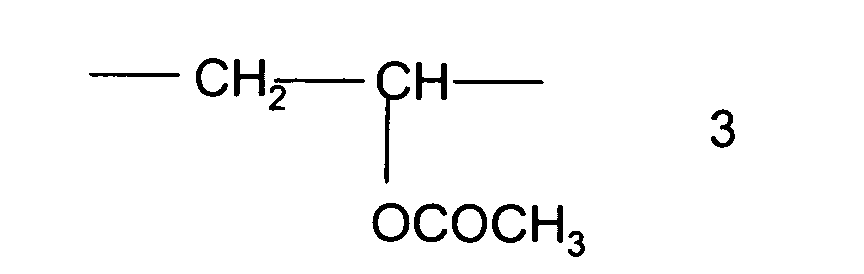
- Brennstofföle, enthaltend einen größeren Anteil Mitteldestillate mit einem Schwefelgehalt von höchstens 350 ppm und einem Aromatengehalt von höchstens 22 Gew.-%, sowie einen kleineren Anteil mindestens eines Copolymers aus Ethylen und Vinylestern, enthaltenda) vom Ethylen abgeleitete bivalente Struktureinheiten der Formel 1b) 5 bis 12 mol-% bivalente Struktureinheiten der Formel 2worin R1 gesättigtes, verzweigtes C5-C18-Alkyl bedeutet, und
 c) 4 bis 13 mol-% bivalente Struktureinheiten der Formel 3wobei die Summe der molaren Anteile an Struktureinheiten der Formeln 2 und 3 zwischen 12 und 16 mol-% liegt.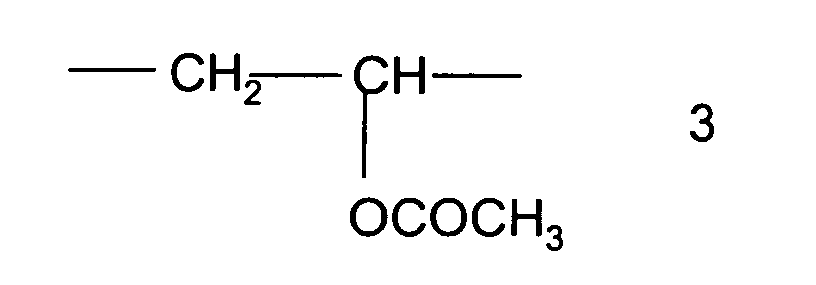
- Brennstofföle nach Anspruch 1, worin der molare Anteil des verzweigten Vinylesters b) zwischen 5 und 11 mol-% liegt.
- Brennstofföle nach Anspruch 1 und/oder 2, worin der molare Anteil des Vinylacetats c) zwischen 4,6 und 9 mol-% liegt.
- Brennstofföle nach einem oder mehreren der Ansprüche 1 bis 3, worin als Comonomere b) Vinylester von verzweigten Carbonsäuren mit 5 bis 15 C-Atomen enthalten sind.
- Brennstofföle nach einem oder mehreren der Ansprüche 1 bis 4, worin die Copolymere neben den als a), b) und c) bezeichneten Struktureinheiten bis zu 5 mol-% weiterer Comonomere ausgewählt aus Olefinen mit 3 bis 18 C-Atomen, Estern der Acryl- bzw. Methacrylsäure mit C1-C18-Alkoholen und C1-C18-Alkylvinylethern enthalten.
- Brennstofföle nach einem oder mehreren der Ansprüche 1 bis 5, worin die Copolymere Molekulargewichte (gemäß GPC gegen Poly(styrol)) von 3.000 bis 15.000 g/mol aufweisen.
- Brennstofföle nach einem oder mehreren der Ansprüche 1 bis 6, worin der mittels NMR bestimmte Verzweigungsgrad des Copolymerrückgrats zwischen 2 und 9 CH3/100 CH2-Gruppen liegt, wobei die Methylgruppen der Comonomere dabei nicht berücksichtigt werden.
- Brennstofföle nach einem oder mehreren der Ansprüche 1 bis 7, worin die Copolymere Schmelzviskositäten bei 140°C von 20 bis 10.000 mPas aufweisen.
- Brennstofföle nach einem oder mehreren der Ansprüche 1 bis 8, worin der Gesamtgehalt an Aromaten im Mitteldestillat unter 18 Gew.-% liegt.
- Brennstofföle nach einem oder mehreren der Ansprüche 1 bis 9, worin das Mitteldestillat einen Siedebereich 90-20 % von weniger als 110°C aufweist.
- Brennstofföle nach einem oder mehreren der Ansprüche 1 bis 10, worin das Mitteldestillat einen Paraffingehalt gemäß DSC von mehr als 3 Gew.-% ausgefallenen Paraffinen bei 10°C unter Cloud Point aufweist.
- Brennstofföle nach einem oder mehreren der Ansprüche 1 bis 11, worin das Mitteldestillat eine Dichte von weniger als 0,840 g/cm3 aufweist.
- Brennstofföle nach einem oder mehreren der Ansprüche 1 bis 12, worin das Mitteldestillat zusätzlich mindestens ein weiteres Ethylen-Vinylester-Copolymer enthält.
- Brennstofföle nach einem oder mehreren der Ansprüche 1 bis 12, worin das Mitteldestillat zusätzlich mindestens eine polare stickstoffhaltige Verbindung enthält.
- Brennstofföle nach einem oder mehreren der Ansprüche 1 bis 12, worin das Mitteldestillat zusätzlich mindestens ein Alkylphenol-Aldehydharz enthält.
- Brennstofföle nach einem oder mehreren der Ansprüche 1 bis 12, worin das Mitteldestillat zusätzlich mindestens ein Kammpolymer enthält
- Brennstofföle nach einem oder mehreren der Ansprüche 1 bis 12, worin das Mitteldestillat zusätzlich mindestens ein Polyoxyalkylenderivat enthält
- Copolymer aus Ethylen und Vinylestern, enthaltenda) vom Ethylen abgeleitete bivalente Struktureinheiten der Formel 1b) 5 bis 12 mol-% bivalente Struktureinheiten der Formel 2worin R1 gesättigtes, verzweigtes C5-C18-Alkyl bedeutet, und
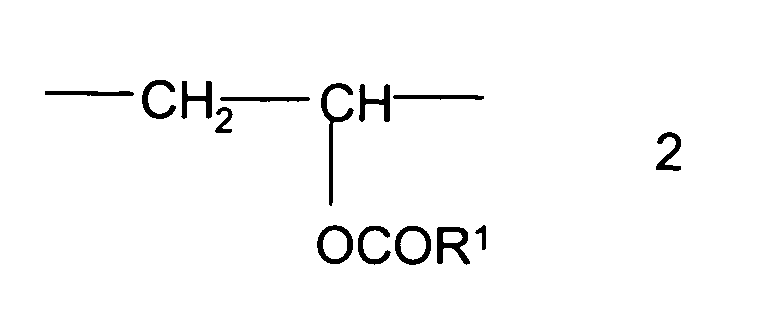 c) 4 bis 13 mol-% bivalente Struktureinheiten der Formel 3wobei die Summe der molaren Anteile an Struktureinheiten der Formeln 2 und 3 zwischen 12 und 16 mol-% liegt.
- Verwendung von Copolymeren gemäß Anspruch 18 zur Verbesserung des Kaltfließverhaltens von Mitteldestillaten mit einem Schwefelgehalt von höchstens 350 ppm und einem Aromatengehalt von höchstens 22 Gew.-%.
Applications Claiming Priority (2)
| Application Number | Priority Date | Filing Date | Title |
|---|---|---|---|
| DE10260714 | 2002-12-23 | ||
| DE10260714A DE10260714A1 (de) | 2002-12-23 | 2002-12-23 | Brennstofföle mit verbesserten Kälteeigenschaften |
Publications (2)
| Publication Number | Publication Date |
|---|---|
| EP1433836A1 true EP1433836A1 (de) | 2004-06-30 |
| EP1433836B1 EP1433836B1 (de) | 2016-04-06 |
Family
ID=32404208
Family Applications (1)
| Application Number | Title | Priority Date | Filing Date |
|---|---|---|---|
| EP03027827.9A Expired - Lifetime EP1433836B1 (de) | 2002-12-23 | 2003-12-04 | Brennstofföle mit verbesserten Kälteeigenschaften |
Country Status (6)
| Country | Link |
|---|---|
| US (1) | US7713316B2 (de) |
| EP (1) | EP1433836B1 (de) |
| JP (2) | JP5403643B2 (de) |
| KR (1) | KR101067252B1 (de) |
| CA (1) | CA2453966C (de) |
| DE (1) | DE10260714A1 (de) |
Cited By (5)
| Publication number | Priority date | Publication date | Assignee | Title |
|---|---|---|---|---|
| CN107805289A (zh) * | 2016-09-08 | 2018-03-16 | 中国石油化工股份有限公司 | 一种乙烯‑乙酸乙烯酯共聚物及其制备方法和海岛型超细纤维及其制备方法 |
| WO2021064473A1 (en) * | 2019-10-04 | 2021-04-08 | Braskem S.A. | Polyethylene copolymers and products and methods thereof |
| WO2022214880A1 (en) * | 2021-04-07 | 2022-10-13 | Braskem S.A. | Method of controlling polyethylene architecture |
| US11827815B2 (en) | 2021-01-19 | 2023-11-28 | Braskem S.A. | Polyethylene copolymer and terpolymer hotmelt adhesive compositions, articles and methods of preparing same |
| WO2024037904A1 (de) | 2022-08-16 | 2024-02-22 | Basf Se | Zusammensetzung zur verminderung der kristallisation von paraffinkristallen in kraftstoffen |
Families Citing this family (19)
| Publication number | Priority date | Publication date | Assignee | Title |
|---|---|---|---|---|
| KR101143114B1 (ko) * | 2003-11-13 | 2012-05-08 | 인피늄 인터내셔날 리미티드 | 고온에서 제트연료에서의 침적물 형성을 억제하는 방법 |
| EP1866397A2 (de) * | 2005-03-29 | 2007-12-19 | Arizona Chemical Company | Zusammensetzung mit fettsäuren und/oder derivaten daraus und niederigtemperatur-stabilisator |
| US20060236598A1 (en) * | 2005-04-26 | 2006-10-26 | Flint Hills Resources, L.P. | Low temperature biodiesel diesel blend |
| DE102006022698B4 (de) * | 2006-05-16 | 2008-10-02 | Clariant International Limited | Zusammensetzung von Brennstoffölen |
| DE102006022719B4 (de) | 2006-05-16 | 2008-10-02 | Clariant International Limited | Kaltfließverbesserer für pflanzliche oder tierische Brennstofföle |
| DE102006033151B4 (de) * | 2006-07-18 | 2014-11-20 | Clariant International Limited | Additive zur Verbesserung der Kälteeigenschaften von Brennstoffölen |
| DE102006033149A1 (de) * | 2006-07-18 | 2008-01-31 | Clariant International Limited | Additive zur Verbesserung der Kälteeigenschaften von Brennstoffölen |
| DE102006033150B4 (de) * | 2006-07-18 | 2008-10-16 | Clariant International Limited | Additive zur Verbesserung der Kälteeigenschaften von Brennstoffölen |
| US7655055B2 (en) * | 2006-09-21 | 2010-02-02 | Southwest Research Institute | Biofuel |
| KR100806517B1 (ko) * | 2006-11-07 | 2008-02-21 | 김학로 | 저온 유동성이 향상된 바이오디젤 제조방법 |
| FR2919293B1 (fr) * | 2007-07-27 | 2009-11-06 | Total France Sa | Polymeres d'ethylene et d'esters vinyliques modifies par greffage,leur procede de preparation et leur application en tant qu'additifs ameliorant les proprietes a froid des hydrocarbures liquides |
| FR2925909B1 (fr) * | 2007-12-26 | 2010-09-17 | Total France | Additifs bifonctionnels pour hydrocarbures liquides obtenus par greffage a partir de copolymeres d'ethylene et/ou de propylene et d'esters vinyliques |
| FR2940314B1 (fr) | 2008-12-23 | 2011-11-18 | Total Raffinage Marketing | Carburant de type gazole pour moteur diesel a fortes teneurs en carbone d'origine renouvelable et en oxygene |
| ITMI20132043A1 (it) * | 2013-12-06 | 2015-06-07 | Eni Spa | Composizioni a base di copolimeri etilene-vinilacetato e loro impiego come additivi anti-gelificazione di greggi petroliferi paraffinici |
| FR3091539B1 (fr) * | 2019-01-04 | 2021-10-01 | Total Marketing Services | Utilisation de copolymères spécifiques pour abaisser la température limite de filtrabilité de carburants ou combustibles |
| FR3113063B1 (fr) * | 2020-07-31 | 2022-08-12 | Total Marketing Services | Utilisation de copolymères à distribution de masse molaire spécifique pour abaisser la température limite de filtrabilité de carburants ou de combustibles |
| EP4166633A1 (de) | 2021-10-15 | 2023-04-19 | Innospec Fuel Specialties LLC | Verbesserungen bei brennstoffen |
| KR20240089218A (ko) | 2021-10-04 | 2024-06-20 | 이노스펙 퓨얼 스페셜티즈 엘엘씨 | 연료의 개선 |
| KR20250019681A (ko) | 2022-06-01 | 2025-02-10 | 이노스펙 퓨얼 스페셜티즈 엘엘씨 | 연료의 개선 |
Citations (6)
| Publication number | Priority date | Publication date | Assignee | Title |
|---|---|---|---|---|
| WO1996007718A1 (en) * | 1994-09-02 | 1996-03-14 | Exxon Chemical Patents Inc. | Oil additives, compositions and polymers for use therein |
| WO1996017905A1 (en) * | 1994-12-06 | 1996-06-13 | Exxon Chemical Patents Inc. | Fuel oil compositions |
| EP0892012A2 (de) * | 1997-07-08 | 1999-01-20 | Clariant GmbH | Fliessverbesserer für Mineralöle |
| EP0931824A2 (de) * | 1998-01-24 | 1999-07-28 | Clariant GmbH | Verfahren zur Verbesserung der Kaltfliesseigenschaften von Brennstoffölen |
| EP1116780A1 (de) * | 2000-01-11 | 2001-07-18 | Clariant GmbH | Mehrfunktionelles Additiv für Brennstofföle |
| EP1007605B1 (de) * | 1997-08-05 | 2001-10-24 | Infineum USA L.P. | Zusätze für ölzusammensetzungen |
Family Cites Families (15)
| Publication number | Priority date | Publication date | Assignee | Title |
|---|---|---|---|---|
| US4211534A (en) | 1978-05-25 | 1980-07-08 | Exxon Research & Engineering Co. | Combination of ethylene polymer, polymer having alkyl side chains, and nitrogen containing compound to improve cold flow properties of distillate fuel oils |
| US4364743A (en) * | 1979-09-05 | 1982-12-21 | Erner William E | Synthetic liquid fuel and fuel mixtures for oil-burning devices |
| JPS58129096A (ja) * | 1982-01-27 | 1983-08-01 | Mitsubishi Petrochem Co Ltd | 燃料油の添加剤 |
| DE3405843A1 (de) | 1984-02-17 | 1985-08-29 | Bayer Ag, 5090 Leverkusen | Copolymere auf basis von maleinsaeureanhydrid und (alpha), (beta)-ungesaettigten verbindungen, ein verfahren zu ihrer herstellung und ihre verwendung als paraffininhibitoren |
| CA1282240C (en) | 1984-02-21 | 1991-04-02 | Albert Rossi | Fuel oil with added polymer of alkyl ester |
| DE3640613A1 (de) | 1986-11-27 | 1988-06-09 | Ruhrchemie Ag | Verfahren zur herstellung von ethylen-mischpolymerisaten und deren verwendung als zusatz zu mineraloel und mineraloelfraktionen |
| DE3742630A1 (de) | 1987-12-16 | 1989-06-29 | Hoechst Ag | Polymermischungen fuer die verbesserung der fliessfaehigkeit von mineraloeldestillaten in der kaelte |
| DE3926992A1 (de) | 1989-08-16 | 1991-02-21 | Hoechst Ag | Verwendung von umsetzungsprodukten von alkenylspirobislactonen und aminen als paraffindispergatoren |
| DE4042206A1 (de) | 1990-12-29 | 1992-07-02 | Hoechst Ag | Terpolymerisate des ethylens, ihre herstellung und ihre verwendung als additive fuer mineraloeldestillate |
| GB9200694D0 (en) * | 1992-01-14 | 1992-03-11 | Exxon Chemical Patents Inc | Additives and fuel compositions |
| ATE158314T1 (de) | 1993-01-06 | 1997-10-15 | Hoechst Ag | Terpolymere auf basis von alpha,beta- ungesättigten dicarbonsäureanhydriden, alpha,beta-ungesättigten verbindungen und polyoxyalkylenethern von niederen, ungesättigten alkoholen |
| CA2182108A1 (en) * | 1995-07-31 | 1997-02-01 | Yutaka Hasegawa | Gas oil |
| DE19729057A1 (de) | 1997-07-08 | 1999-01-14 | Clariant Gmbh | Copolymere auf Basis von Ethylen und ungesättigten Carbonsäureestern und ihre Verwendung als Mineralöladditive |
| DE19754555A1 (de) | 1997-12-09 | 1999-06-24 | Clariant Gmbh | Verfahren zur Herstellung von Ethylen-Mischpolymerisaten und deren Verwendung als Zusatz zu Mineralöl und Mineralöldestillaten |
| DE19802689A1 (de) * | 1998-01-24 | 1999-07-29 | Clariant Gmbh | Verfahren zur Verbesserung der Kaltfließeigenschaften von Brennstoffölen |
-
2002
- 2002-12-23 DE DE10260714A patent/DE10260714A1/de not_active Withdrawn
-
2003
- 2003-12-02 JP JP2003403204A patent/JP5403643B2/ja not_active Expired - Fee Related
- 2003-12-04 EP EP03027827.9A patent/EP1433836B1/de not_active Expired - Lifetime
- 2003-12-12 US US10/735,490 patent/US7713316B2/en not_active Expired - Fee Related
- 2003-12-22 CA CA2453966A patent/CA2453966C/en not_active Expired - Fee Related
- 2003-12-22 KR KR1020030094677A patent/KR101067252B1/ko not_active Expired - Fee Related
-
2013
- 2013-08-22 JP JP2013172103A patent/JP5631461B2/ja not_active Expired - Fee Related
Patent Citations (6)
| Publication number | Priority date | Publication date | Assignee | Title |
|---|---|---|---|---|
| WO1996007718A1 (en) * | 1994-09-02 | 1996-03-14 | Exxon Chemical Patents Inc. | Oil additives, compositions and polymers for use therein |
| WO1996017905A1 (en) * | 1994-12-06 | 1996-06-13 | Exxon Chemical Patents Inc. | Fuel oil compositions |
| EP0892012A2 (de) * | 1997-07-08 | 1999-01-20 | Clariant GmbH | Fliessverbesserer für Mineralöle |
| EP1007605B1 (de) * | 1997-08-05 | 2001-10-24 | Infineum USA L.P. | Zusätze für ölzusammensetzungen |
| EP0931824A2 (de) * | 1998-01-24 | 1999-07-28 | Clariant GmbH | Verfahren zur Verbesserung der Kaltfliesseigenschaften von Brennstoffölen |
| EP1116780A1 (de) * | 2000-01-11 | 2001-07-18 | Clariant GmbH | Mehrfunktionelles Additiv für Brennstofföle |
Cited By (9)
| Publication number | Priority date | Publication date | Assignee | Title |
|---|---|---|---|---|
| CN107805289A (zh) * | 2016-09-08 | 2018-03-16 | 中国石油化工股份有限公司 | 一种乙烯‑乙酸乙烯酯共聚物及其制备方法和海岛型超细纤维及其制备方法 |
| WO2021064473A1 (en) * | 2019-10-04 | 2021-04-08 | Braskem S.A. | Polyethylene copolymers and products and methods thereof |
| WO2021064474A1 (en) * | 2019-10-04 | 2021-04-08 | Braskem S.A. | Polyethylene copolymers and products and methods thereof |
| US11326002B2 (en) | 2019-10-04 | 2022-05-10 | Braskem S.A. | Polyethylene copolymers and products and methods thereof |
| US11453732B2 (en) | 2019-10-04 | 2022-09-27 | Braskem S.A. | Polyethylene copolymers and products and methods thereof |
| US11827815B2 (en) | 2021-01-19 | 2023-11-28 | Braskem S.A. | Polyethylene copolymer and terpolymer hotmelt adhesive compositions, articles and methods of preparing same |
| WO2022214880A1 (en) * | 2021-04-07 | 2022-10-13 | Braskem S.A. | Method of controlling polyethylene architecture |
| US12103995B2 (en) | 2021-04-07 | 2024-10-01 | Braskem S.A. | Method of controlling polyethylene architecture |
| WO2024037904A1 (de) | 2022-08-16 | 2024-02-22 | Basf Se | Zusammensetzung zur verminderung der kristallisation von paraffinkristallen in kraftstoffen |
Also Published As
| Publication number | Publication date |
|---|---|
| DE10260714A1 (de) | 2004-07-08 |
| CA2453966C (en) | 2014-07-08 |
| JP5631461B2 (ja) | 2014-11-26 |
| CA2453966A1 (en) | 2004-06-23 |
| KR101067252B1 (ko) | 2011-09-27 |
| US7713316B2 (en) | 2010-05-11 |
| US20040226216A1 (en) | 2004-11-18 |
| JP5403643B2 (ja) | 2014-01-29 |
| JP2004204222A (ja) | 2004-07-22 |
| JP2014012848A (ja) | 2014-01-23 |
| KR20040057957A (ko) | 2004-07-02 |
| EP1433836B1 (de) | 2016-04-06 |
Similar Documents
| Publication | Publication Date | Title |
|---|---|---|
| EP1433836B1 (de) | Brennstofföle mit verbesserten Kälteeigenschaften | |
| EP0922716B1 (de) | Verfahren zur Herstellung von Ethylen-Terpolymeren und deren Verwendung als Zusatz zu Mineralöl und Mineralöldestillaten | |
| DE19620118C1 (de) | Terpolymerisate des Ethylens, ihre Herstellung und ihre Verwendung als Additive für Mineralöldestillate | |
| EP0926168B1 (de) | Hydroxylgruppenhaltige Ethylencopolymere enthaltende Brennstofföle | |
| EP1146108B1 (de) | Copolymermischungen und ihre Verwendung als Additiv zur Verbesserung der Kaltfliesseigenschaften von Mitteldestillaten | |
| EP1881054B1 (de) | Additive zur Verbesserung der Kälteeigenschaften von Brennstoffölen | |
| EP1881053B1 (de) | Additive zur Verbesserung der Kälteeigenschaften von Brennstoffölen | |
| EP1022293B1 (de) | Copolymere und ihre Verwendung als Additiv zur Verbesserung der Kaltfliesseigenschaften von Mitteldestillaten | |
| EP0890589B1 (de) | Lösungen oder Dispersionen auf Basis von Copolymere von Olefinen und ungesättigten Carbonsäureestern und ihre Verwendung als Mineralöladditive | |
| EP1134275B1 (de) | Copolymermischungen und ihre Verwendung als Additiv zur Verbesserung der Kaltfliesseigenschaften von Mitteldestillaten | |
| DE19927561C1 (de) | Verwendung hydroxylgruppenhaltiger Copolymere zur Herstellung von Brennstoffölen mit verbesserter Schmierwirkung | |
| EP1808450A1 (de) | Additive für schwefelarme Mineralöldestillate, umfassend Pfropfcopolymere auf Basis von Ethylen-Vinylester-Copolymeren | |
| EP0890633B1 (de) | Verwendung von Copolymeren aus Ethylen und ungesättigten Carbonsäureestern in Mitteldestillaten zur Verbesserung der Kaltfliesseigenschaften | |
| EP0892012B1 (de) | Fliessverbesserer für Mineralöle | |
| EP1194456B1 (de) | Hydroxylgruppenhaltige copolymere und ihre verwendung zur herstellung von brennstoffölen mit verbesserter schmierwirkung | |
| EP0751963B1 (de) | Copolymerisate auf basis von diketenen, ethylenisch ungesättigten dicarbonsäuren bzw. dicarbonsäurederivaten und ethylenisch ungesättigten kohlenwasserstoffen |
Legal Events
| Date | Code | Title | Description |
|---|---|---|---|
| PUAI | Public reference made under article 153(3) epc to a published international application that has entered the european phase |
Free format text: ORIGINAL CODE: 0009012 |
|
| AK | Designated contracting states |
Kind code of ref document: A1 Designated state(s): AT BE BG CH CY CZ DE DK EE ES FI FR GB GR HU IE IT LI LU MC NL PT RO SE SI SK TR |
|
| AX | Request for extension of the european patent |
Extension state: AL LT LV MK |
|
| 17P | Request for examination filed |
Effective date: 20041230 |
|
| AKX | Designation fees paid |
Designated state(s): AT BE BG CH CY CZ DE DK EE ES FI FR GB GR HU IE IT LI LU MC NL PT RO SE SI SK TR |
|
| RAP1 | Party data changed (applicant data changed or rights of an application transferred) |
Owner name: CLARIANT PRODUKTE (DEUTSCHLAND) GMBH |
|
| GRAP | Despatch of communication of intention to grant a patent |
Free format text: ORIGINAL CODE: EPIDOSNIGR1 |
|
| INTG | Intention to grant announced |
Effective date: 20151125 |
|
| GRAS | Grant fee paid |
Free format text: ORIGINAL CODE: EPIDOSNIGR3 |
|
| RBV | Designated contracting states (corrected) |
Designated state(s): BE DE FR GB NL |
|
| GRAA | (expected) grant |
Free format text: ORIGINAL CODE: 0009210 |
|
| AK | Designated contracting states |
Kind code of ref document: B1 Designated state(s): BE DE FR GB NL |
|
| REG | Reference to a national code |
Ref country code: GB Ref legal event code: FG4D Free format text: NOT ENGLISH |
|
| REG | Reference to a national code |
Ref country code: DE Ref legal event code: R096 Ref document number: 50315438 Country of ref document: DE |
|
| REG | Reference to a national code |
Ref country code: NL Ref legal event code: FP |
|
| REG | Reference to a national code |
Ref country code: FR Ref legal event code: PLFP Year of fee payment: 14 |
|
| REG | Reference to a national code |
Ref country code: DE Ref legal event code: R097 Ref document number: 50315438 Country of ref document: DE |
|
| PLBE | No opposition filed within time limit |
Free format text: ORIGINAL CODE: 0009261 |
|
| STAA | Information on the status of an ep patent application or granted ep patent |
Free format text: STATUS: NO OPPOSITION FILED WITHIN TIME LIMIT |
|
| 26N | No opposition filed |
Effective date: 20170110 |
|
| REG | Reference to a national code |
Ref country code: FR Ref legal event code: PLFP Year of fee payment: 15 |
|
| PGFP | Annual fee paid to national office [announced via postgrant information from national office to epo] |
Ref country code: FR Payment date: 20171226 Year of fee payment: 15 Ref country code: NL Payment date: 20171221 Year of fee payment: 15 |
|
| PGFP | Annual fee paid to national office [announced via postgrant information from national office to epo] |
Ref country code: GB Payment date: 20171228 Year of fee payment: 15 Ref country code: BE Payment date: 20171221 Year of fee payment: 15 |
|
| PGFP | Annual fee paid to national office [announced via postgrant information from national office to epo] |
Ref country code: DE Payment date: 20180228 Year of fee payment: 15 |
|
| REG | Reference to a national code |
Ref country code: DE Ref legal event code: R119 Ref document number: 50315438 Country of ref document: DE |
|
| REG | Reference to a national code |
Ref country code: NL Ref legal event code: MM Effective date: 20190101 |
|
| GBPC | Gb: european patent ceased through non-payment of renewal fee |
Effective date: 20181204 |
|
| PG25 | Lapsed in a contracting state [announced via postgrant information from national office to epo] |
Ref country code: NL Free format text: LAPSE BECAUSE OF NON-PAYMENT OF DUE FEES Effective date: 20190101 |
|
| REG | Reference to a national code |
Ref country code: BE Ref legal event code: MM Effective date: 20181231 |
|
| PG25 | Lapsed in a contracting state [announced via postgrant information from national office to epo] |
Ref country code: FR Free format text: LAPSE BECAUSE OF NON-PAYMENT OF DUE FEES Effective date: 20181231 Ref country code: DE Free format text: LAPSE BECAUSE OF NON-PAYMENT OF DUE FEES Effective date: 20190702 |
|
| PG25 | Lapsed in a contracting state [announced via postgrant information from national office to epo] |
Ref country code: BE Free format text: LAPSE BECAUSE OF NON-PAYMENT OF DUE FEES Effective date: 20181231 |
|
| PG25 | Lapsed in a contracting state [announced via postgrant information from national office to epo] |
Ref country code: GB Free format text: LAPSE BECAUSE OF NON-PAYMENT OF DUE FEES Effective date: 20181204 |