EP1425911B1 - Method and system for creating a subset of active channels - Google Patents
Method and system for creating a subset of active channels Download PDFInfo
- Publication number
- EP1425911B1 EP1425911B1 EP02756671A EP02756671A EP1425911B1 EP 1425911 B1 EP1425911 B1 EP 1425911B1 EP 02756671 A EP02756671 A EP 02756671A EP 02756671 A EP02756671 A EP 02756671A EP 1425911 B1 EP1425911 B1 EP 1425911B1
- Authority
- EP
- European Patent Office
- Prior art keywords
- channels
- programming
- subset
- channel
- pictures
- Prior art date
- Legal status (The legal status is an assumption and is not a legal conclusion. Google has not performed a legal analysis and makes no representation as to the accuracy of the status listed.)
- Expired - Lifetime
Links
- 238000000034 method Methods 0.000 title claims abstract description 21
- 230000005236 sound signal Effects 0.000 claims abstract description 4
- 238000001514 detection method Methods 0.000 claims description 6
- 239000013598 vector Substances 0.000 claims description 4
- 230000005540 biological transmission Effects 0.000 description 4
- 238000010586 diagram Methods 0.000 description 2
- 230000001419 dependent effect Effects 0.000 description 1
- 230000007257 malfunction Effects 0.000 description 1
- 239000013589 supplement Substances 0.000 description 1
Images
Classifications
-
- H—ELECTRICITY
- H04—ELECTRIC COMMUNICATION TECHNIQUE
- H04N—PICTORIAL COMMUNICATION, e.g. TELEVISION
- H04N5/00—Details of television systems
- H04N5/44—Receiver circuitry for the reception of television signals according to analogue transmission standards
- H04N5/50—Tuning indicators; Automatic tuning control
-
- H—ELECTRICITY
- H04—ELECTRIC COMMUNICATION TECHNIQUE
- H04N—PICTORIAL COMMUNICATION, e.g. TELEVISION
- H04N5/00—Details of television systems
- H04N5/76—Television signal recording
- H04N5/91—Television signal processing therefor
-
- H—ELECTRICITY
- H04—ELECTRIC COMMUNICATION TECHNIQUE
- H04N—PICTORIAL COMMUNICATION, e.g. TELEVISION
- H04N21/00—Selective content distribution, e.g. interactive television or video on demand [VOD]
- H04N21/40—Client devices specifically adapted for the reception of or interaction with content, e.g. set-top-box [STB]; Operations thereof
- H04N21/43—Processing of content or additional data, e.g. demultiplexing additional data from a digital video stream; Elementary client operations, e.g. monitoring of home network or synchronising decoder's clock; Client middleware
- H04N21/438—Interfacing the downstream path of the transmission network originating from a server, e.g. retrieving encoded video stream packets from an IP network
- H04N21/4383—Accessing a communication channel
-
- H—ELECTRICITY
- H04—ELECTRIC COMMUNICATION TECHNIQUE
- H04N—PICTORIAL COMMUNICATION, e.g. TELEVISION
- H04N21/00—Selective content distribution, e.g. interactive television or video on demand [VOD]
- H04N21/40—Client devices specifically adapted for the reception of or interaction with content, e.g. set-top-box [STB]; Operations thereof
- H04N21/43—Processing of content or additional data, e.g. demultiplexing additional data from a digital video stream; Elementary client operations, e.g. monitoring of home network or synchronising decoder's clock; Client middleware
- H04N21/439—Processing of audio elementary streams
- H04N21/4394—Processing of audio elementary streams involving operations for analysing the audio stream, e.g. detecting features or characteristics in audio streams
-
- H—ELECTRICITY
- H04—ELECTRIC COMMUNICATION TECHNIQUE
- H04N—PICTORIAL COMMUNICATION, e.g. TELEVISION
- H04N21/00—Selective content distribution, e.g. interactive television or video on demand [VOD]
- H04N21/40—Client devices specifically adapted for the reception of or interaction with content, e.g. set-top-box [STB]; Operations thereof
- H04N21/43—Processing of content or additional data, e.g. demultiplexing additional data from a digital video stream; Elementary client operations, e.g. monitoring of home network or synchronising decoder's clock; Client middleware
- H04N21/44—Processing of video elementary streams, e.g. splicing a video clip retrieved from local storage with an incoming video stream or rendering scenes according to encoded video stream scene graphs
- H04N21/44008—Processing of video elementary streams, e.g. splicing a video clip retrieved from local storage with an incoming video stream or rendering scenes according to encoded video stream scene graphs involving operations for analysing video streams, e.g. detecting features or characteristics in the video stream
-
- H—ELECTRICITY
- H04—ELECTRIC COMMUNICATION TECHNIQUE
- H04N—PICTORIAL COMMUNICATION, e.g. TELEVISION
- H04N21/00—Selective content distribution, e.g. interactive television or video on demand [VOD]
- H04N21/40—Client devices specifically adapted for the reception of or interaction with content, e.g. set-top-box [STB]; Operations thereof
- H04N21/43—Processing of content or additional data, e.g. demultiplexing additional data from a digital video stream; Elementary client operations, e.g. monitoring of home network or synchronising decoder's clock; Client middleware
- H04N21/442—Monitoring of processes or resources, e.g. detecting the failure of a recording device, monitoring the downstream bandwidth, the number of times a movie has been viewed, the storage space available from the internal hard disk
- H04N21/44209—Monitoring of downstream path of the transmission network originating from a server, e.g. bandwidth variations of a wireless network
-
- H—ELECTRICITY
- H04—ELECTRIC COMMUNICATION TECHNIQUE
- H04N—PICTORIAL COMMUNICATION, e.g. TELEVISION
- H04N21/00—Selective content distribution, e.g. interactive television or video on demand [VOD]
- H04N21/40—Client devices specifically adapted for the reception of or interaction with content, e.g. set-top-box [STB]; Operations thereof
- H04N21/47—End-user applications
- H04N21/482—End-user interface for program selection
-
- H—ELECTRICITY
- H04—ELECTRIC COMMUNICATION TECHNIQUE
- H04N—PICTORIAL COMMUNICATION, e.g. TELEVISION
- H04N21/00—Selective content distribution, e.g. interactive television or video on demand [VOD]
- H04N21/40—Client devices specifically adapted for the reception of or interaction with content, e.g. set-top-box [STB]; Operations thereof
- H04N21/41—Structure of client; Structure of client peripherals
- H04N21/426—Internal components of the client ; Characteristics thereof
Definitions
- the inventive arrangements relate generally to video systems and more particularly to video systems that receive video signals containing numerous channels for viewer display.
- Many televisions that receive analog video signals can program into memory those channels that actually contain a broadcast signal. Such an arrangement can permit the television to skip automatically those channels that do not contain broadcast signals thereby eliminating the delay associated with channel surfing through these channels. This skipping of channels is possible because the channels carrying no signals in traditional analog format merely contain random noise or "snow." As such, the television can quickly distinguish between those channels actually carrying a signal from those that do not.
- DBS digital broadcast systems
- the programming provider typically supplies to the consumer a receiving box, which can receive a digital satellite or cable transmission.
- the receiving box typically converts the digital signal into an analog signal and then transfers the signal to the television or, in some instances, a storage medium device such as a DVD recorder.
- the digital signal is converted into an analog signal for purposes of copyright protection among other reasons.
- each channel in a DBS signal typically contains a video signal, even if one or more of the channels carries no programming.
- DBS signals such as satellite or cable transmissions offer a wide variety of programming transmitted over tens or even hundreds of channels.
- Each consumer need not, however, subscribe to every available programming channel.
- the receiving box normally outputs a video signal that contains a still video pattern that may include a message relating to the unavailability of that particular channel.
- the signal may also include instructions for subscribing to a particular channel and may also include date and time displays.
- WO 01/06771 A pertains to a method and apparatus for performing a channel search in a television.
- JP 05 276457 A relates to a system to automatically judge whether any station is existent or not while reducing malfunction not only by confirming the change of a video carrier caused by an AFT voltage but also by considering the change of an audio carrier as well.
- EP 0 865 202 A1 describes a TV receiver, method of setting reception channel, and picture display method.
- the present invention concerns a method of creating a subset of channels with programming from a plurality of channels according to claim 1.
- the present invention also concerns a system for creating a subset of channel indicators for channels with programming from a plurality of channels according to claim 7.
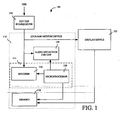
- FIG. 1 A system 100 for implementing the various advanced operating features in accordance with the inventive arrangements is shown in block diagram form in FIG. 1 .
- the invention is not limited to the particular system illustrated in FIG. 1 , as the invention can be practiced with any other appropriate system capable of encoding a video signal.
- the system 100 can include a receiver or set top box 112, a storage medium device 114 and a display device 122.
- the storage medium device 114 can include an encoder 116, memory 118, a microprocessor 120 and an audio detection circuit 124.
- the encoder 116 and the microprocessor 120 can be collectively referred to as a video processor 121.
- control and data interface can also be provided for permitting the microprocessor 120 to control the operation of the encoder 116, memory 118 and the audio detection circuit 124.
- the display device 122 can contain the encoder 116, memory 118, the microprocessor 120 and the audio detection circuit 124 thereby eliminating the use of the storage medium device 114.
- the set top box 112 can receive a digital DBS signal, such as a satellite or cable transmission, containing one or more broadcast channels. Generally, the set top box 112 converts the digital DBS signal into an analog signal and then transfers the analog signal to the storage medium device 114 (if the system 100 contains the storage medium device 114). The storage medium device 114 can then send the signal to the display device 122.
- the display device 122 can be any suitable device for displaying multimedia data contained in the DBS signal such as an analog or digital television.
- the storage medium device 114 can process one or more of these channels to determine which of the incoming channels contains programming.
- the encoder 116 can encode a portion of one or more of the incoming channels.
- an encoded signal can be created for one or more of these channels.
- the microprocessor 120 can then process a portion of one or more of these encoded signals to determine which channels contain actual programming and which channels contain still video patterns.
- the microprocessor 120 determines that a particular channel contains programming, that channel number or channel indicator can be stored in memory 118, which can then be accessed by the display device 122.
- the audio detection circuit 124 can determine whether any audio exists on a particular channel. Detecting audio can improve the accuracy of the system 100, as the channels that do not contain programming typically do not carry an audio signal. In an alternative arrangement, the audio detection circuit 124 can be used by itself to determine whether a channel contains programming.
- the display device 122 Since the channels with programming can be stored in memory 118, the display device 122 is permitted to limit its display to only these channels, and channels with no programming can be automatically skipped. This process of receiving, encoding, processing and storing into memory one or more DBS channels will be explained in greater detail below.
- Suitable software or firmware can be provided in memory for the conventional operations performed by the microprocessor 120. Further, program routines for creating a subset of programming channels in accordance with the inventive arrangements can be provided in memory for the microprocessor 120 as well. In one arrangement, the microprocessor 120 and other relevant elements of the system 100 can be programmed to perform automatically the steps necessary for receiving, encoding, processing and storing into memory one or more DBS channels. In addition, those skilled in the art can appreciate that the control CPU 120 can be one or more hardware components or a software program suitable for determining which DBS channels contain actual programming
- a subset of channels with programming from a plurality of channels can be created thereby permitting a video system to skip automatically those channels that do not contain programming.
- the "subset of channels" can mean a subset of channel numbers or channel indicators representing the subset of channels containing programming.
- a plurality of channels can be received in which one or more of these channels contain actual programming.
- a portion of a predetermined number of these channels can be encoded into intra and/or non-intra pictures, and these intra and non-intra pictures can then be processed to determine which of these predetermined number of channels contain programming for purposes of providing a program channel subset.
- This-program channel subset can then be stored into memory thereby permitting a display device to display only the channels that contain programming.
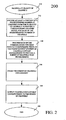
- FIG. 2 illustrates a flowchart 200 that demonstrates one way in which a subset of channels with programming can be created thereby permitting the automatic skipping of channels with no programming.
- Programming can include video, audio or a combination thereof.
- a plurality of channels can be received.
- these channels can be channels from a digital DBS signal such as a cable or satellite transmission; however, the invention is not so limited, as any other signal containing a plurality of channels in which the channels carry a broadcast signal and one or more of them may carry no programming can be received.
- a portion of a predetermined number of these plurality of channels can be-encoded-to-provide a corresponding encoded signal for each of the predetermined channels.
- any number of the plurality of channels can be encoded, including all the plurality of channels.
- the encoding step can be performed by encoding a portion of each of the predetermined number of channels into MPEG formatted pictures such as intra (I) pictures or non-intra (non-I) pictures.
- Non-I pictures can include predictive (P) or bi-directional predictive (B) pictures.
- the encoded signals can contain any number of I or non-I pictures.
- the encoded signal can be limited to merely a single I picture, a single I picture and a single non-I picture or a single non-I picture such as a P picture that contains a number of I macroblocks.
- the accuracy of the invention may improve as the number of encoded pictures increases for each of the encoded signals.
- each of the encoded signals can be processed to determine which of the predetermined number of channels contains programming. Once the channels that contain programming are distinguished from those that do not, a subset of channels with programming can be created. In one arrangement, the pictures that were created from the encoding step can be processed to determine whether the particular channel from which they were encoded contains programming.
- a particular encoded signal contains one or more non-I pictures
- the number of bits in one or more of these non-I pictures can be counted. If the number of bits is lower than a typical non-I picture, for example, 20% lower than typical non-I picture, then there is a good possibility that the encoded signal is a DBS signal that carries no programming. This determination can be made because the non-I pictures from these types of signals contain very little encoded information, as the signal display almost never varies. It should be noted, however, that the invention is not limited to the particular example discussed above, as other thresholds can be used to determine whether a non-I picture is from a non-programming channel.
- the motion vectors in one or more non-intra pictures in the encoded signals can be analyzed to determine whether a particular signal contains a still video pattern. If all the motion vectors have a value of zero or substantially close to zero, then there is a good chance that the non-I pictures from which they are measured are from a signal carrying a still video pattern. To improve the accuracy of the invention, a greater number of these non-I pictures can be checked in accordance with the examples listed above. It should be noted, however, that the invention is not limited to the above examples, as any other suitable means of processing non-I pictures can be used to determine which of the plurality of channels contains programming.
- one or more I pictures in each encoded signal can be processed for purposes of eliminating the signals containing still video patterns.
- the discrete cosine transform (DCT) coefficients in each I picture can be examined; notably, if the DCT alternating current (ac) coefficients are zero or substantially zero in a large number of the macroblocks in a particular I picture, then there is a good possibility that that I picture is from an encoded signal carrying a still video pattern.
- information relating to the DCT-ac coefficient values for each macroblock contained in a sample picture from one or more of the non-programming channels can be stored in memory.
- the DCT-ac coefficients of all or a portion of the macroblocks contained in an I picture being analyzed can then be compared to the sample picture DCT-ac information stored in memory. If there is a correlation between the DCT-ac coefficients of the macroblocks contained in the I picture being analyzed and the DCT-ac coefficients of the macroblocks contained in the sample picture from the particular channel being examined, then there is a good chance that the I picture is from a non-programming channel.
- a sample picture can be retrieved from one or more of the non-programming channels and other relevant information from these sample pictures can be stored in memory. As an example, the number of bits in each of these sample pictures can be counted and stored in memory.
- the number of bits from the I pictures being analyzed can be counted and then compared to the number of bits contained in a corresponding sample picture (a corresponding sample pictures is a sample picture that has been retrieved from the particular channel from which the I pictures being analyzed originate). If the number of bits in a specific I picture are within a predetermined threshold for example, within twenty percent of the number of bits contained in the sample picture - then there is a good chance that the I picture is from a channel containing no programming. It should be noted that the invention is not limited to this particular example, as any other suitable threshold can be used to help determine whether an I picture is from a non-programming channel.
- processing a greater number of I pictures in accordance with the above examples may improve the accuracy of the invention.
- the invention is not limited to these examples, as any other suitable means of processing I pictures can be used to determine which of the plurality of channels contains programming.
- an encoded signal contains both I pictures and non-I pictures
- one or more I and non-I pictures can be processed in accordance with the above examples or any other suitable means; this process of checking both I and non-I pictures can also improve the accuracy of the invention.
- the channels that contain programming can be combined to form a subset of channels with programming.
- this subset of channels can be stored into memory.
- the subset of channels can be one or more channel indicators, which can be stored in memory.
- the channel indicators can preferably be channel numbers or any other suitable means for identifying a particular channel.
- these channel indicators can then be provided to a display device. Since the display device can access a subset of channels containing programming, the display device can skip over the channels that do not carry any programming thereby eliminating the delay associated with browsing through these non-programming channels.
- the process can be re-initiated to add (or delete) channels from the subset of channels.
- the audio of one or more of the plurality of channels can be processed to determine which channels contain programming. Significantly, the channels that do not have any programming typically do not carry any audio. Thus, the audio level of each channel can be examined to separate the non-programming channels from the channels that have programming. This process of examining the level of audio contained in each channel can be used solely for purposes of creating a subset of channels with programming or can be used to supplement the process discussed in flowchart 200.
Landscapes
- Engineering & Computer Science (AREA)
- Multimedia (AREA)
- Signal Processing (AREA)
- Computer Networks & Wireless Communication (AREA)
- Databases & Information Systems (AREA)
- Human Computer Interaction (AREA)
- Compression Or Coding Systems Of Tv Signals (AREA)
- Stereophonic System (AREA)
- Two-Way Televisions, Distribution Of Moving Picture Or The Like (AREA)
- Television Signal Processing For Recording (AREA)
- Circuits Of Receivers In General (AREA)
- Compression, Expansion, Code Conversion, And Decoders (AREA)
Applications Claiming Priority (3)
| Application Number | Priority Date | Filing Date | Title |
|---|---|---|---|
| US09/916,903 US7383567B2 (en) | 2001-07-27 | 2001-07-27 | Method and system for creating a subset of programming channels |
| US916903 | 2001-07-27 | ||
| PCT/US2002/023711 WO2003013136A2 (en) | 2001-07-27 | 2002-07-25 | Method and system for creating a subset of active channels |
Publications (2)
| Publication Number | Publication Date |
|---|---|
| EP1425911A2 EP1425911A2 (en) | 2004-06-09 |
| EP1425911B1 true EP1425911B1 (en) | 2012-02-01 |
Family
ID=25438038
Family Applications (1)
| Application Number | Title | Priority Date | Filing Date |
|---|---|---|---|
| EP02756671A Expired - Lifetime EP1425911B1 (en) | 2001-07-27 | 2002-07-25 | Method and system for creating a subset of active channels |
Country Status (12)
| Country | Link |
|---|---|
| US (1) | US7383567B2 (enExample) |
| EP (1) | EP1425911B1 (enExample) |
| JP (1) | JP4070720B2 (enExample) |
| KR (1) | KR100889157B1 (enExample) |
| CN (1) | CN100493154C (enExample) |
| AU (1) | AU2002322664A1 (enExample) |
| BR (1) | BRPI0211446B1 (enExample) |
| CA (1) | CA2454661C (enExample) |
| MX (1) | MXPA04000742A (enExample) |
| MY (1) | MY138714A (enExample) |
| TW (1) | TWI221736B (enExample) |
| WO (1) | WO2003013136A2 (enExample) |
Families Citing this family (5)
| Publication number | Priority date | Publication date | Assignee | Title |
|---|---|---|---|---|
| US20030219232A1 (en) * | 2001-10-01 | 2003-11-27 | Shu Lin | System and method for identifying data on a storage medium |
| KR20060068671A (ko) * | 2004-12-16 | 2006-06-21 | 엘지전자 주식회사 | 디지털 티브이 및 그 채널설정방법 |
| KR100557146B1 (ko) * | 2005-07-09 | 2006-03-03 | 삼성전자주식회사 | 디지털 멀티미디어 방송 수신 장치 |
| DE102006059354A1 (de) * | 2006-12-15 | 2008-06-19 | Robert Bosch Gmbh | Verfahren und Vorrichtung zur Erkennung eines nicht belegten Übertragungskanals in einem Multimedia-Übertragungssystem |
| US9380251B2 (en) * | 2009-06-04 | 2016-06-28 | Mediatek Inc. | Method for performing channel scan within a multi-channel broadcasting program receiver, and associated multi-channel broadcasting program receiver |
Family Cites Families (13)
| Publication number | Priority date | Publication date | Assignee | Title |
|---|---|---|---|---|
| JPH0758884B2 (ja) * | 1986-07-31 | 1995-06-21 | ソニー株式会社 | テレビ受像機 |
| JP3234272B2 (ja) | 1992-03-25 | 2001-12-04 | 三洋電機株式会社 | ボルテージシンセサイザ式選局方式 |
| JPH08298441A (ja) | 1995-04-27 | 1996-11-12 | Nippondenso Co Ltd | 移動体用テレビ受信装置の自動選局装置 |
| JP2710591B2 (ja) | 1995-08-16 | 1998-02-10 | 日本電気アイシーマイコンシステム株式会社 | ラジオ受信機 |
| WO1998015118A1 (fr) | 1996-10-02 | 1998-04-09 | Sony Corporation | Televiseur, procede de reglage du canal de reception et procede d'affichage d'image |
| US20050028194A1 (en) * | 1998-01-13 | 2005-02-03 | Elenbaas Jan Hermanus | Personalized news retrieval system |
| JP3955143B2 (ja) | 1998-02-19 | 2007-08-08 | 富士通テン株式会社 | ディジタル放送受信機 |
| US6137546A (en) * | 1998-07-20 | 2000-10-24 | Sony Corporation | Auto program feature for a television receiver |
| US6233389B1 (en) * | 1998-07-30 | 2001-05-15 | Tivo, Inc. | Multimedia time warping system |
| KR100299981B1 (ko) | 1998-11-25 | 2001-10-29 | 윤종용 | 디지털방송수신장치에서의채널자동서치방법및장치 |
| WO2001006771A1 (en) | 1999-07-16 | 2001-01-25 | Thomson Licensing S.A. | Method and apparatus for performing a channel search in a television |
| JP2001086017A (ja) | 1999-09-14 | 2001-03-30 | Kenwood Corp | ディジタル放送受信機 |
| US6621528B1 (en) * | 2000-05-22 | 2003-09-16 | Sony Corporation | Channel control for digital television |
-
2001
- 2001-07-27 US US09/916,903 patent/US7383567B2/en not_active Expired - Lifetime
-
2002
- 2002-07-25 JP JP2003518179A patent/JP4070720B2/ja not_active Expired - Fee Related
- 2002-07-25 WO PCT/US2002/023711 patent/WO2003013136A2/en not_active Ceased
- 2002-07-25 CA CA2454661A patent/CA2454661C/en not_active Expired - Lifetime
- 2002-07-25 CN CNB028181948A patent/CN100493154C/zh not_active Expired - Fee Related
- 2002-07-25 MX MXPA04000742A patent/MXPA04000742A/es active IP Right Grant
- 2002-07-25 BR BRPI0211446A patent/BRPI0211446B1/pt not_active IP Right Cessation
- 2002-07-25 KR KR1020047000872A patent/KR100889157B1/ko not_active Expired - Fee Related
- 2002-07-25 AU AU2002322664A patent/AU2002322664A1/en not_active Abandoned
- 2002-07-25 EP EP02756671A patent/EP1425911B1/en not_active Expired - Lifetime
- 2002-07-26 MY MYPI20022831A patent/MY138714A/en unknown
- 2002-07-26 TW TW091116715A patent/TWI221736B/zh not_active IP Right Cessation
Also Published As
| Publication number | Publication date |
|---|---|
| WO2003013136B1 (en) | 2003-07-31 |
| MY138714A (en) | 2009-07-31 |
| JP2005527123A (ja) | 2005-09-08 |
| JP4070720B2 (ja) | 2008-04-02 |
| MXPA04000742A (es) | 2004-04-20 |
| AU2002322664A1 (en) | 2003-02-17 |
| EP1425911A2 (en) | 2004-06-09 |
| CA2454661A1 (en) | 2003-02-13 |
| TWI221736B (en) | 2004-10-01 |
| BRPI0211446B1 (pt) | 2016-04-12 |
| CN1593057A (zh) | 2005-03-09 |
| US7383567B2 (en) | 2008-06-03 |
| BR0211446A (pt) | 2006-05-23 |
| KR100889157B1 (ko) | 2009-03-17 |
| US20030023984A1 (en) | 2003-01-30 |
| CN100493154C (zh) | 2009-05-27 |
| WO2003013136A2 (en) | 2003-02-13 |
| CA2454661C (en) | 2011-07-12 |
| WO2003013136A3 (en) | 2003-06-19 |
| KR20040018485A (ko) | 2004-03-03 |
Similar Documents
| Publication | Publication Date | Title |
|---|---|---|
| CN100539675C (zh) | 不间断显示具有抑制节目段的电视节目的方法 | |
| US8259812B2 (en) | PVR-support video decoding system | |
| US6778224B2 (en) | Adaptive overlay element placement in video | |
| US20030122959A1 (en) | Method for digital broadcast interpolation and digital broadcast receiving system | |
| US9712799B2 (en) | Method and apparatus for selecting compression for an incoming video signal in an interactive television system | |
| US5699124A (en) | Bandwidth efficient communication of user data in digital television data stream | |
| US20030123841A1 (en) | Commercial detection in audio-visual content based on scene change distances on separator boundaries | |
| US20040060076A1 (en) | Method and apparatus for preventing duplicate recording of a broadcasting program | |
| US20070074243A1 (en) | Inserting commercials in time-shifted broadcast content | |
| KR20070051879A (ko) | 다양한 출처들로부터의 시청 콘텐츠를 감시하는 방법들 및장치들 | |
| KR19980070567A (ko) | 디지털 텔레비젼 에디터스트림으로 수직회귀 데이터를 전송하기 위한 방법 및 그로부터 수직회귀시간데이터를 디코딩하귀우한수장치 | |
| US20030093795A1 (en) | Electronic program guide display controller | |
| US6804451B1 (en) | Method and video recording apparatus for recording a television program | |
| US20100064224A1 (en) | Method and device for displaying information | |
| EP1425911B1 (en) | Method and system for creating a subset of active channels | |
| US20050188410A1 (en) | Methods and apparatus for switching from a non-module tuning mode to a module tuning mode in a cable television receiver | |
| US6825874B1 (en) | Monitoring the degree of action in video transmissions | |
| EP1532810A1 (en) | Method and system for detecting and performing automatic bank switching for a filter coefficient ram | |
| KR100834302B1 (ko) | 텔레비전 신호 수신기 | |
| KR20080043126A (ko) | 웹페이지 호출기능을 갖춘 디지털 텔레비젼과 이의 호출방법 |
Legal Events
| Date | Code | Title | Description |
|---|---|---|---|
| PUAI | Public reference made under article 153(3) epc to a published international application that has entered the european phase |
Free format text: ORIGINAL CODE: 0009012 |
|
| 17P | Request for examination filed |
Effective date: 20040122 |
|
| AK | Designated contracting states |
Kind code of ref document: A2 Designated state(s): AT BE BG CH CY CZ DE DK EE ES FI FR GB GR IE IT LI LU MC NL PT SE SK TR |
|
| AX | Request for extension of the european patent |
Extension state: AL LT LV MK RO SI |
|
| RAP1 | Party data changed (applicant data changed or rights of an application transferred) |
Owner name: THOMSON LICENSING |
|
| RAP1 | Party data changed (applicant data changed or rights of an application transferred) |
Owner name: THOMSON LICENSING |
|
| 17Q | First examination report despatched |
Effective date: 20110117 |
|
| REG | Reference to a national code |
Ref country code: DE Ref legal event code: R079 Ref document number: 60242141 Country of ref document: DE Free format text: PREVIOUS MAIN CLASS: H04N0007160000 Ipc: H04N0005500000 |
|
| GRAP | Despatch of communication of intention to grant a patent |
Free format text: ORIGINAL CODE: EPIDOSNIGR1 |
|
| RIC1 | Information provided on ipc code assigned before grant |
Ipc: H04N 5/50 20060101AFI20110719BHEP Ipc: H04N 21/438 20110101ALI20110719BHEP |
|
| RIN1 | Information on inventor provided before grant (corrected) |
Inventor name: LIN, SHU Inventor name: CANG, YONGMEI |
|
| GRAS | Grant fee paid |
Free format text: ORIGINAL CODE: EPIDOSNIGR3 |
|
| GRAA | (expected) grant |
Free format text: ORIGINAL CODE: 0009210 |
|
| AK | Designated contracting states |
Kind code of ref document: B1 Designated state(s): DE FR GB IT |
|
| REG | Reference to a national code |
Ref country code: GB Ref legal event code: FG4D |
|
| REG | Reference to a national code |
Ref country code: DE Ref legal event code: R096 Ref document number: 60242141 Country of ref document: DE Effective date: 20120322 Ref country code: DE Ref legal event code: R082 Ref document number: 60242141 Country of ref document: DE Representative=s name: THIES, STEPHAN, DIPL.-PHYS., DE Ref country code: DE Ref legal event code: R082 Ref document number: 60242141 Country of ref document: DE Representative=s name: HOFSTETTER, SCHURACK & PARTNER PATENT- UND REC, DE |
|
| PLBE | No opposition filed within time limit |
Free format text: ORIGINAL CODE: 0009261 |
|
| STAA | Information on the status of an ep patent application or granted ep patent |
Free format text: STATUS: NO OPPOSITION FILED WITHIN TIME LIMIT |
|
| 26N | No opposition filed |
Effective date: 20121105 |
|
| REG | Reference to a national code |
Ref country code: DE Ref legal event code: R097 Ref document number: 60242141 Country of ref document: DE Effective date: 20121105 |
|
| REG | Reference to a national code |
Ref country code: FR Ref legal event code: PLFP Year of fee payment: 15 |
|
| REG | Reference to a national code |
Ref country code: FR Ref legal event code: PLFP Year of fee payment: 16 |
|
| REG | Reference to a national code |
Ref country code: DE Ref legal event code: R082 Ref document number: 60242141 Country of ref document: DE Representative=s name: DEHNS, DE Ref country code: DE Ref legal event code: R082 Ref document number: 60242141 Country of ref document: DE Representative=s name: DEHNS PATENT AND TRADEMARK ATTORNEYS, DE Ref country code: DE Ref legal event code: R082 Ref document number: 60242141 Country of ref document: DE Representative=s name: HOFSTETTER, SCHURACK & PARTNER PATENT- UND REC, DE |
|
| REG | Reference to a national code |
Ref country code: FR Ref legal event code: PLFP Year of fee payment: 17 |
|
| REG | Reference to a national code |
Ref country code: DE Ref legal event code: R082 Ref document number: 60242141 Country of ref document: DE Representative=s name: DEHNS, DE Ref country code: DE Ref legal event code: R081 Ref document number: 60242141 Country of ref document: DE Owner name: INTERDIGITAL CE PATENT HOLDINGS SAS, FR Free format text: FORMER OWNER: THOMSON LICENSING, ISSY-LES-MOULINEAUX, FR Ref country code: DE Ref legal event code: R082 Ref document number: 60242141 Country of ref document: DE Representative=s name: DEHNS PATENT AND TRADEMARK ATTORNEYS, DE |
|
| REG | Reference to a national code |
Ref country code: GB Ref legal event code: 732E Free format text: REGISTERED BETWEEN 20190926 AND 20191002 |
|
| PGFP | Annual fee paid to national office [announced via postgrant information from national office to epo] |
Ref country code: DE Payment date: 20200729 Year of fee payment: 19 Ref country code: FR Payment date: 20200728 Year of fee payment: 19 Ref country code: GB Payment date: 20200724 Year of fee payment: 19 |
|
| PGFP | Annual fee paid to national office [announced via postgrant information from national office to epo] |
Ref country code: IT Payment date: 20200721 Year of fee payment: 19 |
|
| REG | Reference to a national code |
Ref country code: DE Ref legal event code: R119 Ref document number: 60242141 Country of ref document: DE |
|
| GBPC | Gb: european patent ceased through non-payment of renewal fee |
Effective date: 20210725 |
|
| PG25 | Lapsed in a contracting state [announced via postgrant information from national office to epo] |
Ref country code: GB Free format text: LAPSE BECAUSE OF NON-PAYMENT OF DUE FEES Effective date: 20210725 Ref country code: DE Free format text: LAPSE BECAUSE OF NON-PAYMENT OF DUE FEES Effective date: 20220201 |
|
| PG25 | Lapsed in a contracting state [announced via postgrant information from national office to epo] |
Ref country code: FR Free format text: LAPSE BECAUSE OF NON-PAYMENT OF DUE FEES Effective date: 20210731 |
|
| PG25 | Lapsed in a contracting state [announced via postgrant information from national office to epo] |
Ref country code: IT Free format text: LAPSE BECAUSE OF NON-PAYMENT OF DUE FEES Effective date: 20210725 |