EP1424830A2 - Verfahren zum Bereitstellen von Präsenzinformationen mindestens einer Kommunikationseinheit auf mindestens einem Präsenzserver, zugehörige Kommunikationseinheit, Präsenzserver sowie Kommunikationsnetz - Google Patents
Verfahren zum Bereitstellen von Präsenzinformationen mindestens einer Kommunikationseinheit auf mindestens einem Präsenzserver, zugehörige Kommunikationseinheit, Präsenzserver sowie Kommunikationsnetz Download PDFInfo
- Publication number
- EP1424830A2 EP1424830A2 EP03104020A EP03104020A EP1424830A2 EP 1424830 A2 EP1424830 A2 EP 1424830A2 EP 03104020 A EP03104020 A EP 03104020A EP 03104020 A EP03104020 A EP 03104020A EP 1424830 A2 EP1424830 A2 EP 1424830A2
- Authority
- EP
- European Patent Office
- Prior art keywords
- presence information
- communication unit
- control signal
- presence server
- group
- Prior art date
- Legal status (The legal status is an assumption and is not a legal conclusion. Google has not performed a legal analysis and makes no representation as to the accuracy of the status listed.)
- Granted
Links
Images






Classifications
-
- H—ELECTRICITY
- H04—ELECTRIC COMMUNICATION TECHNIQUE
- H04L—TRANSMISSION OF DIGITAL INFORMATION, e.g. TELEGRAPHIC COMMUNICATION
- H04L67/00—Network arrangements or protocols for supporting network services or applications
- H04L67/01—Protocols
- H04L67/02—Protocols based on web technology, e.g. hypertext transfer protocol [HTTP]
-
- H—ELECTRICITY
- H04—ELECTRIC COMMUNICATION TECHNIQUE
- H04L—TRANSMISSION OF DIGITAL INFORMATION, e.g. TELEGRAPHIC COMMUNICATION
- H04L67/00—Network arrangements or protocols for supporting network services or applications
- H04L67/2866—Architectures; Arrangements
- H04L67/30—Profiles
- H04L67/306—User profiles
-
- H—ELECTRICITY
- H04—ELECTRIC COMMUNICATION TECHNIQUE
- H04L—TRANSMISSION OF DIGITAL INFORMATION, e.g. TELEGRAPHIC COMMUNICATION
- H04L67/00—Network arrangements or protocols for supporting network services or applications
- H04L67/50—Network services
- H04L67/54—Presence management, e.g. monitoring or registration for receipt of user log-on information, or the connection status of the users
-
- H—ELECTRICITY
- H04—ELECTRIC COMMUNICATION TECHNIQUE
- H04L—TRANSMISSION OF DIGITAL INFORMATION, e.g. TELEGRAPHIC COMMUNICATION
- H04L69/00—Network arrangements, protocols or services independent of the application payload and not provided for in the other groups of this subclass
- H04L69/30—Definitions, standards or architectural aspects of layered protocol stacks
- H04L69/32—Architecture of open systems interconnection [OSI] 7-layer type protocol stacks, e.g. the interfaces between the data link level and the physical level
- H04L69/322—Intralayer communication protocols among peer entities or protocol data unit [PDU] definitions
- H04L69/329—Intralayer communication protocols among peer entities or protocol data unit [PDU] definitions in the application layer [OSI layer 7]
Definitions
- the invention has for its object to show a way as in a communication network for at least one communication unit a variety of presence information in more flexible and simple way to access through and / or Forwarding to one or more other communication units can be provided.
- each communication unit in the communication network on its own, i.e. independent, individually or specifically for retrieval by and / or for forwarding to another communication unit or several other communication units a variety of presence information deploy on at least one presence server, i.e. can create, change, and / or delete.
- a uniform instruction and Presence information parameter set also becomes a standardized Way to update a profile of a variety presence information of the respective communication unit made available on an assigned presence server.
- the respective Service provider for his own service, especially for he developed software procedure and corresponding signaling used. Because it becomes a uniform creation, Update and deletion procedures for presence information network-uniformly provided, which in each case used by a wide variety of communication devices can be. Furthermore, it is in particular also not necessary that the procedure which requires such presence information Service on a communication device to create, update and / or delete it Presence information on an assigned presence server enabled by the respective service provider itself Is made available.
- the invention also relates to a communication unit, a Presence server and a communication network, which each are designed such that a large amount of presence information can be provided by the method according to the invention is.
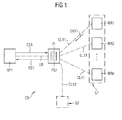
- Figure 1 shows a schematic representation of the principle Networking between a communication unit RP1 and a Presence server PS1 via a communication link LI1 within the network structure of a communication network CN in order a large amount of presence information for this communication unit RP1 in the form of a presence information profile PI on this presence server PS1 for one or more other communication units available and / or forwardable.
- Such other communication units to which as addressees the presence information profile PI of the communication unit RP1 is intended for retrieval and / or forwarding are designated in the figure 1 with WA1 to WAn. They are each via specific communication links such as CL11 with CLn1 separately coupled to the presence server PS1. From this, the communication units WA1 with WAn can current presence information profile PI the stored there communication unit that makes individual presence information available Query RP1 if necessary.
- the presence profile PI contains a large number for the communication unit RP1 presence information or parameters.
- Presence server is simplified in the context of the invention expressed a storage device understood the presence information data of a plurality of communication units saved and for retrieval and / or forwarding be kept ready for other communication units can.
- This presence server can be used as a standalone Unit provided in the communication network as well as in an existing network component.
- the term communication unit Generally speaking, a terminal or Subscriber device understood, the unique addressing is assignable for sending and / or receiving. On the other hand can the respective communication unit by a other unique address identification or specific identification be characterized for a user. Possibly can thus one or more communication units each also available on the same terminal or subscriber device his.
- the respective terminal or subscriber device can in particular through a radio communication device, using a computer Radio network and / or landline connection, or by another Device component with access to a communication network be educated.
- Figure 2 illustrates an example of such a sentence or such a profile PI of presence information for the Communication unit RP1.
- the status value for the first group "Friends” the availability of the participant “mark.beckmann@siemens.com” to "reachable” and the status value for its location set to "at home”.
- the second Group “enemies” i.e. for communication units of participants, with whom no communication is desired, the Status value "not available” for the status information Ver Availability, as well as the status value "on the go” for the location of the participant "mark.beckmann@siemens.com”.
- the communication unit sends RP1 a control signal CS1 over the communication link LI1 to the assigned presence server PS1.
- this control signal CS1 becomes the profile PI of presence information parameters in at least one memory of the Presence server PS1 generated and saved there.
- the respective communication unit a corresponding control signal to the assigned presence server sent if one already assigned to it Presence information profile exists, however an "update" or an update in the form of a modification or changes change, addition, deletion, or other correction of a or more presence information data within the already existing profile is desired.
- a set of instructions defined in the network and an associated set of presence information parameters set in the network is used to generate the respective control signal such as CS1.
- the presence server PS1 is preferably provided with the following parameters or input variables for the provisioning process called up by the instruction set AS1 - here in the exemplary embodiment in particular called update process - in the control signal CS1:
- the presence information parameter PA1 denotes the type of communication the presence information parameter PA2 to this Communication type associated communication address.
- the group list (PA3) can also contain a parameter which indicates for which group categories the status information should be changed. If this parameter the following parameters apply to all Groups in this category. This is not shown in Figure 4.
- the presence server PS1 knows for which participants in the presence service Communication unit changes the presence information is to be carried out in the respective control signal such as.
- CS1 expediently at least one statement about the identity ID of the communication unit sending this control signal such as. RP1 included. 4 is a control line specifying the identity ID of the presence information sending communication unit the instruction set AS1 provided.
- the presence server now has the presence information data profile for the participant mark.beckmann@siemens.com changed so that now for the group "friends” the status value for the availability has also been set to "unreachable”.
- This modified table of presence information is in the figure 3 labeled PI *, with the changes compared the presence information profile PI of Figure 2 by bold are highlighted.
- the group "Friends" for which the status information "Availability” has been changed for example by the group G1 of communication units WA1 with WAn can be formed in FIG. 1.
- the respective control signal with which the presence information profile the respective communication unit on the respective assigned presence server created, updated, and / or is deleted with the help of a network-standardized, i.e. standardized instruction and / or parameter set Presence information profiles can be generated between the communication units of different types of messaging systems and / or different providers exchanged properly and managed. Through this network-wide compatible Presence information management are misunderstandings largely avoided through presence information.
- Every communication unit for updating i.e. first creating, changing, and / or deleting your presence information profile at least one control signal below
- Use the same, uniformly defined format on the each assigned presence server sent go to this uniform or harmonized instruction and parameter sets to provide, in particular update, of Presence information profiles.
- Such a presence service is a network-wide service, too which are both so-called representatives and so-called Can register or subscribe observers.
- there the respective representative e.g. information about its availability on an assigned presence server Available.
- Such presence information is, for example, "online”, i.e. the user is currently logged on to the network, "offline”, i.e. the user is currently logged out of the network, or "Coffee break", i.e. the user is currently logged on to the network, but not available.
- status information possible at the current location such as for example "at home” or precise position information in the form of coordinates.
- the communication unit functions in FIG RP1 as such representative while the communication units WA1 with WAn have the function of observers.
- one or more of the communication units, that are assigned to the respective presence server and establish a communication connection with each one can, in radio communication devices, in particular mobile stations, a radio communication network can be implemented.
- the respective presence server expediently forms for this a kind of network node for communication units that it in assigned to a specific area of the communication network are. It is preferably part of the so-called "backbones", i.e. the network infrastructure, a radio communication system or landline telephone system. He preferably points at least one storage device in which the presence information profiles the communication units logged on to it be created and managed.
- the presence server can now first grant the permission of Regar Obtain sentants before giving presence information to the observer returns. Alternatively, he can use the presence information of the representative directly, i.e. automatically send to the requesting observer without doing this extra ask.
- each set such as TU1 can also other sets such as TU2 can be provided, which there is indicated in Figure 2 by continuation points.
- each set such as TU1 are still one or more Status information and optionally the type of communication, the associated communication address, and the priority, for which include the status information. Is not Contain communication type and associated communication address, so this means that the status information is general without restrictions such as a specific one Observer group the state of the respective representative describe. If such contact information is available, the status information within this set only applies for this type of communication and its associated communication address.
- the presence information data format for the respective set is in 3GPP TR23.841 "Presence Service Stage 2 "and” Draft-ietf-impp-cpim-pidf-05 "detailed.
- a presence information profile for the respective representative is now not by the representative itself, but only through the assigned presence server completely created, i.e. only on the basis of the respective Control signal transmitted is for the respective representative at least one set with a name, status information, Communication type and communication address created and managed.
- the set compilation for the respective representative therefore only takes place in the respective presence server, i.e. the presence server determines the name of the respective set, and what status information as well as contact information in the one or more sets from a specific representative become.
- the decision to create the set is made the respective presence server based on information that he by the respective representative beforehand by at least one Received control signal. For this, the respective representative generates at least one control signal, the parameters over the Status information and optional contact information such as for example via communication type and associated communication address having.
- the respective representative can expediently present presence information profiles for a variety of presence groups create. This is detailed in the 3GPP TS technical report 23.841, version 1.1.0 specified. Every presence group exists from one or more observers. Any presence group preferably at least one category is assigned, such as: personal groups, public groups, forbidden groups.
- Personal groups usually include observers like Friends, acquaintances and relatives, with each observer preferably is called individually. Include public groups Groups of observers without listing them in detail. Such groups can, for example, all observers of one Network (for example, all observers with the ending "Siemens.com"). Forbidden groups include observers who the respective representative doesn't want to allow from him Receive presence information.
- the respective representative determine that he is for the observers in the "friends" group, which is of the "personal group” type while being “general” for the group, i.e. a public one Group with all other observers, not reachable wants to be.
- the uniform instruction set, such as AS1 and the presence information defined by the network tion parameter set such as PR1 of the respective control signal such as CS1 in Figure 4 is convenient using a so-called SOAP protocol (simple object Access Protocol).
- the respective control signal such as CS1 itself is preferably carried out using the HTTP (Hyper Text Transfer Protocol) - or SIP (Session Initiation Protocol) protocol to the presence server such as PS1 transported in Figure 1.
- HTTP is used in this context so as a transport protocol for the SOAP message, that is, the SOAP message is in the so-called body of the HTTP message sent.
- Information exchanged between applications or Procedures can be called.
- the control signal With the help of the control signal according to the invention, it is in particular allows for a variety of groups of observers Presence information profiles for specific groups create, change or modify, and / or delete. Since the respective control signal consists of one or more explicit instructions of a set of instructions defined in the network as well as one or more, preferably to changing, parameters of an associated, network-uniform specified presence information parameter set generated is always a compatibility between the different, control signals arriving at the respective presence server ensured so that there is a coordinated network Provision such as Update, i.e. Change or Modification, deletion, and / or other administration of a Variety of presence information from a variety of communication units is possible. This way is always compatibility between different presence applications - Even different providers - - largely ensured.
- the respective presence server preferably has one or more Procedures by means of which one or more explicit Instructions and one or more presence information parameters read in the control signal received and can be evaluated.
- each one can Representative from his communication unit Update or management procedures on the respective assigned presence server by sending at least one Start control signal and thereby in particular its respective Update or modify the presence information record.
- the respective communication unit can in particular in a radio communication device such as one Mobile radio device can be implemented.
- the remote start of the administration procedure on the respective presence server via a user interface on a radio communication device make. So the representative can just click on select the desired status on his end device.
- the presence software then automatically takes over the call of the corresponding Procedures on the presence server.
- the call of these administration procedures on the presence server by the respective representative such as with With the help of presence software on a mobile device of the Representatives, by sending at least one Control signal or a request message to the presence server initiated.
- the presence server shares the communication unit of the respective Representatives expediently by sending them back with at least one response signal.
- the identity ID is indicated by a separate SOAP protocol line, which in particular contains the representative's e-mail address mark.beckmann@siemens.com .
- the name of the administration procedure that is to say the information which identifies the administration procedure on the presence server, is known both in the communication unit which sends the respective control signal, in particular the mobile radio station, and in the presence server assigned in each case.
- This provisioning or administration procedure is preferably implemented in software on the presence server.
- the function of the administration procedure is expediently made known to every communication unit that wishes to participate in the presence service.
- the presence server PS1 confirms the completion of the update process based on the control signal CS1 by the Response signal RS1 on the communication link LI1 transmits the representative RP1 back.
- the response signal also expediently comprises Information that it is an answer to one previously sent request deals with an update procedure has been started on the presence server.
- This data can in particular also be messages of the so-called SOAP (Simple Object Access Protocol) protocol (specification in http://www.w3.org/tr/soap/: Simple Object Access Protocol 1.1).
- SOAP Simple Object Access Protocol
- the advantage of the SOAP protocol is that it provides message formatting with which a procedure can be called and the parameters of which can be specified for transfer.
- the respective group name is expediently used as text shown.
- the status list is preferably a list mapped in the control signal, such as in the form of a Field (array), whereby each status type is uniquely selected.
- the communication unit now sets RP1 of Figure 1 of the representative, especially with the help the man-machine interface of his radio communication device, by transmitting at least one control signal, such as Example CS1, his presence information profile PI for the first time according to the table of Figure 2, specifically for his phone with the number "+4953419061814" den Availability status value for the Friends group currently at the "reachable” value. For the group “enemies” the value is currently set to "not available”. Farther is used for the status value of the type "whereabouts" for the Group called “friends" the value "at home” and for the group with the name “enemies” entered the value "on the way". The priority is given in this for the sake of simplicity Embodiment not considered.
- the representative now wants the status for the given telephone number for the group with the Na Men "Friends" so that he is now unavailable is.
- the request message and / or response message preferably contain a SOAP message body, the beginning of which is identified by the line " ⁇ SOAP-ENV: Envelope ".
- the presence server PS1 recognizes from the header" content type "that a message in XML (Extensible Markup Language) format.
- the presence of the header "SOAP Action” informs the presence server that it is a so-called SOAP message.
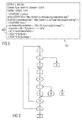
- the presence server uses this data to carry out the update procedure, which changes the status of the representative stored on the presence server. How this advantageous change procedure for updating or modifying the presence information profile of the communication unit of the respective representative is carried out step by step on the presence server is illustrated by way of example using a flow chart in FIG. 6:
- step 1 the communication unit of the respective Representative presence information parameters read in, and handles the first group in the list by the group name.
- the presence server first looks at the received SOAP message, such as CS1, after, whether communication information is available at all. This he recognizes by this whether the elements " ⁇ type of communication>" and “ ⁇ Communication address>” as a parameter of the procedure " ⁇ Change status>” are included.
- step 3 the presence server now looks for the entries for the corresponding communication type and address from its continuously maintained administration table for the representative mark.beckmann@siemens.com .
- step 5 a status type is now from the list of status information the control signal received.
- the presence server looks for the in Step 1 selected group in at least one of them continuously managed database for whether there is already an entry exists for the status type selected in step 5.
- the presence server determines whether the new value of the status type is set to "not accessible" is.
- decision step 11 it is determined whether all status information are processed in the list.
- the new state of the presence information profile for the communication unit RP1 of the representative after evaluation of the Control signal CS1 on the presence server is in the table reproduced from Figure 3.
- the status information is then form together with the identity of the representative on the presence server PS1 of figure 1 saved.
- an error message e.g. internal Error
- a presence service or Presence information management process with procedures for Providing, changing, and / or deleting status information a variety of communication units for one or several specific groups of observers based on a network set instruction and presence information parameters- Sentence.
- the parameters which when calling up the corresponding creation, update, and / or delete procedure on the presence server in an inquiry message or contained in a control signal are selected by the respective representative himself or be set with a high granularity, i.e. multiple graded according to different types of communication, addresses, status information, ... etc.
- the respective Control signals are preferably transmitted only those parameters for which a change in the database of the pre senzservers is desired. It is also advantageous that in the response signal, that from the presence server to the communication unit of the respective representative is sent, possible reasons for error are included if one of the procedures is created, Change, delete presence information on the presence server could not be executed.
- the presence server itself has at least one presence information profile in the form of one or more sets for the respective representatives. That is, the Presence server determines the name of the sets and what status information as well as communication information in the respective Set to be included, which is sent to a specific observer by retrieval or automatic server forwarding is sent. The presence server decides in turn, based on information it receives from the respective Representatives beforehand using at least one control signal has received. To do this, the respective representative brings in Control signal status information to be sent to the presence server and optionally a type of communication and address.
- Another way to deploy, i.e. Create, Update and / or delete at least one presence information profile at least one communication unit at least one presence server can be advantageous to the other Way are made possible that the respective Representative himself one or more so-called tuples from Presence information created, i.e. the respective representative assigns a unique name to the respective tuple, and determines which status information, as well as whether and if necessary what type of communication and communication address are contained in this tuple.
- the respective representative itself receives in this variant Possibility of one or more tuples using its communication unit to create yourself. In particular, he will Possibility given each tuple to one or more presence groups assigned by observers. That tuple, that one can be assigned to a specific group used by the presence server to this observer group to inform about the state of the representative.
- the presence server is expedient Procedures implemented that the respective Representatives create, delete and / or modify enable presence tuples.
- Each tuple can be one Presence group or multiple presence groups can be assigned. Are later one or more observers of the corresponding Presence groups interested in the state of each Representatives informed using the presence server to become, the tuples stored there are with the associations to these presence groups from the presence information profile of the respective representative.
- the respective representative does this Procedures to create, delete and / or modify of at least one presence tuple e.g. from his radio communication device, especially mobile device, start from and can thus modify its status.
- This can be beneficial Way via a user interface on the respective Subscriber device, in particular radio communication device, the respective representatives. So each one can Simply representative on his subscriber device Select the desired status for each presence group.
- a associated attendance procedure then takes over in an advantageous manner Automatically call the respective procedure Create, modify, and / or delete one or more Presence tuples within the presence information profile of the respective representative on the assigned presence server.
- the call of these procedures by the representative or through the flow control of its communication unit can, expediently takes place by sending an inquiry message in the form of at least one control signal from the respective Representatives to the assigned presence server. If the respective procedure can be carried out successfully there the presence server expediently shares the communication unit of the respective representative, in particular its radio communication device, by returning at least a response signal with.
- At least one procedure or Sequence control for provisioning i.e. Create, change and / or deleting one or more tuples for a presence information profile of at least one communication unit at least one representative on the assigned Presence server provided.
- the function and mode of operation this procedure is the communication unit of each Representatives preferably announced in advance.
- the respective representative can at least do this with the help a communication unit at least one control signal send to the presence server assigned to him, the one or several explicit instructions of a network-standardized Statement set and one or more parameters an associated presence information parameter set that is defined by the network contains.
- the respective specific procedure for creating, changing and / or deleting at least one tuple within the presence information profile of the respective representative on the presence server can be called up or activated.
- the format of how and in the order in which the presence information parameters are transmitted are both in the communication unit of the respective representative, as well as in the presence server in advance made known.
- HTTP hypertext transfer protocol
- SIP Session Initiation Protocol
- Another advantage of both protocols is that they are in the so-called Message body can transport data.
- This data can also be messages the so-called SOAP (Simple Object Access Protocol) protocol act as in http: www.w3.org/TR/SOAP/: "Simple Object Access Protocol 1.1" is specified.
- SOAP Simple Object Access Protocol
- the SOAP protocol also has the advantage that it is for each Control signal from the communication unit of the respective representatives to their assigned presence server a compatible message formatting is transmitted network-wide. With the help of this message formatting it is also possible that the respective Procedure for creating, changing and / or deleting a or several presence tuples of the respective representative on his associated presence server called and corresponding Parameters for the presence information can be specified can.
- the presence procedure recognizes on the subscriber device, in particular radio communication device, of the representative preferably the names of the Control processes or update procedures for creating, Change and / or delete presence tuples as well as the presence information parameters for handover to these sequence procedures on the presence server.
- the present embodiment has the procedure for creating presence tuples Name "Create tuple”, the procedure for changing a tuple the name "TupelAendern” and the procedure for deleting one Tupels the name "TupelLoeschen”.
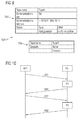
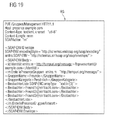
- Figure 10 schematically illustrates the flow of messages between the communication unit of the representative RP1 and the assigned presence server PS1 e.g. to create and update of one or more presence information of the Representatives RP1 on the presence server PS1.
- Representative RP1 wishes that he for the group “friends” on the phone number "+4953419061814" can be reached, but for the group “Feinde” is not available.
- the representative RP1 is preferred via his email address such as Mark.Beckmann@siemen.com clearly identifiable.
- the representative RP1 already defined the observer groups "friends" and “enemies” has so that the affiliation of observers too the presence server is already known to these groups.
- SOAP message In the message body of the PUT message is a so-called SOAP message according to FIG (Simple Object Access Protocol) contain which the procedure calls ATUP1, ATUP2 to create two tuples includes.
- the start of the SOAP message is in the control signal AF1 of Figure 11 by the line " ⁇ SOAP-ENV: Envelope ...>” marked so that the deployment procedure is on the presence server also identify these creation calls can.
- the Control signal AF1 of Figure 11 are then two calls of the Procedure to create a new tuple included, where the tuples are named "Tupel1" and "Tupel2" are.
- XML Extensible Markup Language
- the observer group with the name "Friends” is entered for the tuple "Tupel1", for which the status for the availability is to be indicated as “reachable” when the presence information is called up via the representative RP1.
- the second tuple TUP2 is divided into the two tables TA3, TA4, which are linked to one another in terms of data technology.
- the observer group with the name "enemies” is stored for this tuple "Tupel2" TUP2, for which the presence information of the parameters in the table TA3 should apply.
- nxmlns: m http://tempuri.org/message/
- the presence server knows the desired procedure to be called PS1 now clearly what procedure is meant and which presence information parameters for processing these Control procedure should be adopted.
- these are e.g. in the creation procedure the presence information parameters for the tuple TUP1 with the name "Tupel1" Communication type with the value “Tel”, the associated communication address with the value "+4953419061814", as well as the status list with the status type "Availability”, which has the status value "available”, where still assigned the group list with the group name "Friends" is. So this is how the build procedure is used the information parameters when called for processing Communication type, communication address, group list, and status list.
- the status type can in particular again in xmlns format. This has the advantage that this information about the status type also as Information is sent to the respective observer can. In this case, the xmlns statement line denotes "http://example.com/presence/availability" the status type "Availability”.
- the presence server PS1 now guides you through this Control signal AF1 transmitted data the desired creation procedure from which the stored on the presence server Status of the respective representative, e.g. RP1 changes.
- the execution of this creation procedure is in the signaling diagram of Figure 10 by the rectangle with the Reference number P1 marked.
- the detailed control process the creation procedure for expedient creation of the two tuples TUP1 and TUP2 on the presence server explained in more detail using the flow diagram of FIG. 12:
- the presence information parameters from the received control signal e.g. AF1
- the first group e.g. "Friends" in the list processed by group names.
- the presence server stores, e.g. PS1, first the tuple name, the associated communication type, Communication address and status information for the Representatives, such as here e.g. Mark.Beckmann@siemens.com.
- the presence server searches PS1 in the presence information parameters, whether there is a list of group names is what he thinks of the presence of a Group list and the corresponding instruction line " ⁇ Group lists>" recognizes.
- step S3 If a group list is not available, the creation procedure ends immediately after performing step S3 with step S5.
- the presence server PS1 After receiving this control signal AF2, the presence server PS1 again recognizes from the "Content-Type" header that it is a message in xml (Extensible Markup Language) format.
- the presence of the header "SOAP-Action” informs the presence server PS1 that the control signal AF2 is implemented in SOAP format.
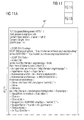
- the activation of this procedure for changing or modifying the presence information is indicated in FIG. 10 using a rectangle with the reference symbol P2.
- step I1 the control instructions and presence information parameters read out from the control signal AF2 and for Evaluation provided.
- the database the presence server PS1 the data record of that tuple provided that in the received control signal for the modification is named.
- presence server PS1 determines whether Communication information available in the control signal AF2 are. He recognizes this by whether the elements " ⁇ Communication type>", “ ⁇ Communication address>” or " ⁇ Priority>” available are.
- the presence server PS1 checks in one further decision step I3, whether in the currently stored tuple - like here TUP1 - already communication information available.
- the observer groups which with the tuple, e.g. associated here with TUP1 are added (" ⁇ ListGroupsNew>") or removed ( " ⁇ List group Delete>").
- a presence service in a communication network especially a mobile network
- a variety of presence information centralized for the respective participant can be called up and / or forwarded to at least one presence server can be filed.
- It can be a simple Update, i.e. creating, changing and / or deleting of presence information tuples.
- the presence server can especially with the help of groups that are a representative has created in an advantageous manner, check whether the Observer belongs to one of these groups - and if so - which one. If the observer is one specified by the representative Belongs to a group, the presence server sends the corresponding one Presence information to the observer preferably automatically or upon explicit request. Heard the observer e.g. the "Friends" group, the observer becomes the current one Status value communicated, such as that the representative is "reachable".
- the procedure is called by the representative or by the presence software on the radio communication device, in particular Mobile device, the representative is here in the embodiment as in the previous versions by sending your own request message or a group control signal to the server. Whether the procedure the presence server shares the representative or his mobile device sending a response signal in a corresponding manner.
- the request message contains information, which communicates this to the presence server.
- Presence server to allow the request to a specific one Assigning representatives is expediently an identity of the representative included in the message. Farther is the name of this procedure in the respective radio communication device of the representative and the assigned presence server made known. The corresponding procedure name becomes the attached to each request message. In this will be about the necessary parameters for calling the procedure sent.
- HTTP Hyper Text Transfer Protocol
- SIP Session Initiation Protocol
- Another advantage of both protocols is that they can transport data in the so-called message body.
- This data can in particular also be messages of the so-called SOAP (Simple Object Access Protocol) protocol, as specified in http://www.w3.org/TR/SOAP/ : Simple Object Access Protocol 1.1.
- SOAP Simple Object Access Protocol
- the SOAP protocol has the particular advantage that it provides message formatting with which a procedure can be called and its parameters can be specified.
- the watch list is presented as a list (e.g. one "array") in which each observer name is unique is laid down.
- a representative uses his presence information software to create a new presence group called "Friends" on his terminal or communication device TE (see FIG. 16) and assigns the category "personal” to this list. He also specifies that the observers with the addresses Freund1@eintracht.com , Freund2@eintracht.com and Freund3@eintracht.com should belong to this group.
- the request and response messages are preferably implemented by HTTP messages.
- the request message is a so-called PUT message, which can be used to transport information from one network unit to another network unit, where it is stored under the address contained in the so-called "request URI".
- the messages contain a SOAP message body, the beginning of which is identified by the line ⁇ SOAP-ENV: Envelope ....
- the presence server With the help of the information on the valid range and the specification of the The presence server now clearly knows which administration procedure is meant, and what parameters for processing this group creation procedure is appropriate (the is the format between the lines ⁇ m: Create PresenceGroups ...> and ⁇ / M: ClearellePresence AnnAntwort>).
- the presence server uses the parameter values as they are in the subsequent lines of Figure 19 for the group name, Group category and the list of observers given are.
- the presence server generates the new one with this data Group and save them with the identity of the representative from.
- the presence server then sends the response message RS back to the TE terminal.
- the response message RS (2000K) is shown in FIG. 20.
- the presence service is a service that includes so-called observers Inform about the availability of a representative can. For this, the observer writes to one Presence server for the presence data of the representative. After registration to the presence data, the current status the representative from his presence server to the observer Posted. Once the status of the representative changes, the new status is again sent to the observer.
- a description of such a presence service is for example in RFC 2778 A Model for Presence and Instant Messaging specified.
- CPIM Presence Information Data Format is the data format defines which is used by the observer to inform about the status of the representative. On a simple example of this can be seen in FIG. 21.
- the respective representative it is particularly desirable for the respective representative to give his status more than two ways describe. For example, the status of the respective representatives with the values “online”, “busy”, “I'll be right back”, “away”, “on the phone” etc. mark. For example, if the status is "am Telephone "is set, the representative is not closed by telephone reach, but an observer can still send him messages send.
- Another task is in particular a way to demonstrate how compatibility between a variety of, preferably more than two, definitions of presence status values (Presence Status) in the presence information providing Communication unit of the respective representative, in a first presence server, on which the representative tant is currently coupled, and / or in one or more Observer communication units retrieving or receiving presence information can be produced, if necessary a second presence server is connected - namely even if there are different definitions for the presence status values in the first, possibly in the second presence server, and / or in the respective, providing presence information and / or retrieving communication unit used are.
- Presence Status Presence Status
- the presence information is advantageously transmitted retrieving or receiving communication unit presence information profile definitions of the presence server downloaded on which the presence information profile of the Communication unit exposing presence information is saved.
- Retrieving from the presence information Communication unit will then be advantageous the downloaded presence information profile definitions the communication unit making available presence information with the presence information profile definitions the assigned, own presence server. additionally or independently of this, it may also be appropriate be to the communication unit making the presence information available even presence information profile definitions of the presence server to download the presence information profile of the presence information retrieving communication unit is stored.
- the Communication unit exposing presence information then the downloaded presence information profile definitions of the presence information receiving communication unit with the presence information profile definitions on the assigned own presence server matched. This basic principle is illustrated by the figures 22 with 25 explained in more detail:
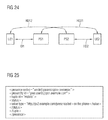
- a first user has helped himself a first presence information application or procedure, which on the communication unit UE1 of his mobile device is installed on a first presence server PS1 enrolled.
- This coupling is by a double arrow HD1 indicated.
- the communication unit UE1 wants its presence information on the presence server PS1 for a group of observing communication units such as UE2 in figure 24, i.e. create, modify, and / or delete, and thus acts as a representative in the present case.
- the first communication unit UE1 definitions of the first presence server Status values used PS1 sent. These are sent to the Presence application of the communication unit UE1 forwarded.
- the definitions of the status values be formatted using the "Extensible Markup Language (XML)".
- XML Extensible Markup Language
- the Identity of the presence server that manages the definitions is in the line " ⁇ PresenceServer> PS1.example.com ⁇ /PresenceServer>” indicated with PS1.
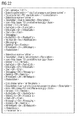
- the presence information is available Communication unit UE1 of Figure 24 according to the panel of FIG. 22 in the "online" status via telephone (audio call), Video phone (VideoCall), chat or instant messaging (Chat), as well as messages such as SMS or MMS (messaging). It also stands for games (gaming) and whiteboard Sessions available.
- FIG. 22 shows how for the value ⁇ Messaging> in the status state "online" can be that the user about the arrival of a message is notified or notified.
- ⁇ Availability> indicates whether the user can be reached under messaging.
- With ⁇ Notification> indicates whether he is notifying about incoming messages becomes.
- the presence server defines PS1 on which the communication unit UE1 of the representative is coupled, still the status value "offline".
- the user is not closed at all reach, and all values for telephone, video telephone etc. are set to "Off", i.e. "Off" set (e.g. ⁇ Audio-Calls> On ⁇ /AudioCalls>).
- the third status value is a value "on the phone" defined.
- this status state is the User or his terminal only ready to send messages received or attend a whiteboard session ( ⁇ Messaging> and ⁇ Whiteboard> are set to "On").
- the communication unit UE1 has the definitions of these Status values downloaded from the first presence server PS1 and saved after logging in to it. Farther loads the presence information application on the communication unit UE1 either yourself or through another Application such as a browser the given under the links Images (icons) from the first presence server or from one other server.
- a second communication unit UE2 now registers for the presence information service of a second presence server PS2, the definitions of the status values used by this presence server PS2 being sent to it.
- This transfer of the status value definitions of the second presence server PS2 to the communication unit UE2 is indicated in FIG. 24 with a double arrow HD2.
- the definitions are then passed on to the corresponding presence information application, which stores the information.
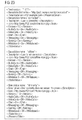
- the definitions of the status values of the presence server PS2 are shown by way of example in FIG. 23. These are also identified via a globally unique xmlns in the form of a URI, here http://ps2.example.com/presence/ext .
- the second presence server PS2 has also defined three status values in this exemplary embodiment.
- the user of the second communication unit should UE2 on its presence application for the presence information of the user of the first communication unit UE1 at its Register the first presence server PS1.
- the first presence server PS1 sends the definitions during the registration phase 22 to the terminal UE2 of the second User or observer who sends the data to his presence information application forwards.
- This "crossover" exchange the status value definitions from the first to the second Presence server is in Figure 24 by the double arrow HD21 indicated.
- the second communication unit UE2, which to the second presence server PS2 is coupled, also calls definitions to the presence status values based on the first Presence server PS1 specifically for the presence information connected to it providing, first communication unit UE1 are defined.
- the second communication unit UE2 compares them Status value definitions of the two presence servers PS1, PS2. In the present exemplary embodiment, that the status values named "offline" from both the name forth as well as from the definition regarding the description of the Terminal behavior completely match her.
- the second Communication unit UE2 expediently rejects that of first presence server PS1 received definition of the status value "offline” because it is redundant. Farther the second communication unit UE2 determines that the Definitions of that defined by the first presence server PS1 Status value "online” and that of the second presence server PS2 defined value "connected" with regard to the terminal behavior to match.
- the second communication unit UE2 can now add this status value to its already existing status values and show a new icon for describing the status of the first communication unit UE1 on its display. This may also only take place after confirmation by the user of the second communication unit. Alternatively, the second communication unit UE2 can decide to completely reject the definition of the status value "on the phone” or to map it to a similar, already existing status value. In the present exemplary embodiment, the second communication unit UE2 stores the new, previously unknown status value "on the phone" and its definition of the first terminal UE1.
Landscapes
- Engineering & Computer Science (AREA)
- Computer Networks & Wireless Communication (AREA)
- Signal Processing (AREA)
- Mobile Radio Communication Systems (AREA)
- Telephonic Communication Services (AREA)
Abstract
Description
- Figur 1
- in schematischer Darstellung ein Kommunikationsnetz mit Netzwerkkomponenten zur Durchführung des erfindungsgemäßen Verfahrens,
- Figur 2
- beispielhaft ein erstes Präsenzinformationsprofil für eine Kommunikationseinheit des Kommunikationsnetzes nach Figur 1 auf deren zugeordnetem Präsenzserver,
- Figur 3
- beispielhaft ein gegenüber Figur 2 geändertes Präsenzinformationsprofil für dieselbe Kommunikationseinheit wie in Figur 1 bzw. 2 nach Durchführung des erfindungsgemäßen Verfahrens,
- Figur 4
- beispielhaft ein Steuersignal, das von der Kommunikationseinheit von Figur 1 zur Änderung ihres Präsenzinformationsprofils von Figur 2 in das Präsenzinformationsprofil von Figur 3 aus einem netzeinheitlich festgelegten Anweisungssatz und aus lediglich zu ändernden Parametern eines netzeinheitlich festgelegten Präsenzinformations-Parametersatzes mit Hilfe eines SOAP-Protokolls (Simple Object Access Protocol) generiert und mit Hilfe des HTTP Protokolls (Hyper Text Transport Protocol) an den zugeordneten Präsenzserver des Kommunikationsnetzes von Figur 1 gesendet wird,
- Figur 5
- beispielhaft als Reaktion auf das Steuersignal nach Figur 4 ein Antwortsignal, das vom Präsenzserver des Kommunikationsnetzes nach Figur 1 an die das Steuersignal ursprünglich sendende Kommunikationseinheit zurückübermittelt wird,
- Figur 6
- in schematischer Darstellung ein Ablaufdiagramm zur Veranschaulichung einer ersten, vorteilhaften Ausführungsvariante zum Bereitstellen und/oder Aktualisieren einer Vielzahl von Präsenzinformationen mindestens einer Kommunikationseinheit auf mindestens einem zugeordneten Präsenzserver des Kommunikationsnetzes nach Figur 1 unter Verwendung des Steuersignals von Figur 4 und des Antwortsignals von Figur 5,
- Figuren 7, 8
- zwei verschiedene Tupelstrukturen von Präsenzinformationen, die nach einer zweiten, vorteilhaften Ausführungsvariante des erfindungsgemäßen Verfahrens von mindestens einer Kommunikationseinheit des Kommunikationsnetzes nach Figur 1 selbst erstellt und an mindestens einen zugeordneten Präsenzserver - wie z.B. den Präsenzserver von Figur 1 - übermittelt werden, von wo aus sie für eine oder mehrere andere Kommunikationseinheiten abruf- oder weiterleitbar sind,
- Figur 9
- eine gegenüber Figur 7 geänderte Tupelstruktur, die die Kommunikationseinheit nach Figur 1 zur Aktualisierung ihrer Präsenzinformationen erzeugt und an den Präsenzserver zur dortigen Bereitstellung überträgt,
- Figur 10
- in schematischer Darstellung einen Übermittlungs-/Antwortmechanismus zur Übertragung der veränderten Tupelstruktur nach Figur 9 von der Präsenzinformationen bereitstellenden Kommunikationseinheit nach Figur 1 an deren zugeordneten Präsenzserver,
- Figur 11
- zusammengesetzt aus Figurenteilen 11A und 11B beispielhaft ein Steuersignal im SOAP-Format (Simple Object Access Protocol), mit dessen Hilfe die von der Kommunikationseinheit erzeugten Tupelstrukturen der Figuren 7, 8 an den zugeordneten Präsenzserver zur dortigen Bereitstellung nach dem Signalisierungsschema von Figur 10 gesendet werden,
- Figur 12
- in schematischer Darstellung den Ablauf einer Prozedur zur Auswertung des Steuersignals nach Figur 11 auf dem Präsenzserver, durch die ein Präsenzinformationsprofil für die Kommunikationseinheit nach Figur 1 in Form der beiden Tupelstrukturen nach den Figuren 7, 8 erzeugt wird,
- Figur 13
- beispielhaft als Reaktion auf das Steuersignal nach Figur 11 ein Antwortsignal, das vom Präsenzserver des Kommunikationsnetzes nach Figur 1 an die das Steuersignal ursprünglich sendende Kommunikationseinheit nach dem Signalisierungsschema von Figur 10 zurückübermittelt wird,
- Figur 14
- ein weiteres Steuersignal im SOAP-Format (Simple Object Access Protocol) bei der Durchführung des Übermittlungs/Antwortmechanismus nach Figur 10, mit dessen Hilfe die durch die Kommunikationseinheit geänderte Tupelstruktur von Figur 9 mit Hilfe des HTTP Protokolls (Hyper Text Transport Protocol)an deren zugeordneten Präsenzserver zur dortigen Weiterverarbeitung gesendet wird,
- Figur 15
- in schematischer Darstellung den Ablauf einer Prozedur zur Auswertung des Steuersignals nach Figur 14 auf dem Präsenzserver, wodurch dort eine Bereitstellung, insbesondere Aktualisierung, des Präsenzinformationsprofils für die Kommunikationseinheit nach Figur 1 in Form der Tupelstruktur nach Figur 9 durchgeführt wird,
- Figur 16
- in schematischer Darstellung ein Signalisierungsschema zwischen einer Kommunikationseinheit und einem Präsenzserver eines Kommunikationsnetzes zur Durchführung einer weiteren Variante des erfindungsgemäßen Verfahrens, nach der mit Hilfe eines Gruppensteuersignals der Kommunikationseinheit ein Gruppenmanagement von Präsenzinformationen auf dem Präsenzserver durchgeführt wird,
- Figur 17
- das Signalisierungsschema nach Figur 16 abgewandelt für ein Funkkommunikationsnetz,
- Figur 18
- in schematischer Darstellung den Ablauf einer Prozedur zur Auswertung des Steuersignals nach Figur 16 oder 17 auf dem Präsenzserver, wodurch dort für mindestens eine vorgebbare Gruppe von Präsenzinformationen abrufenden Kommunikationseinheiten eine Bereitstellung, insbesondere Aktualisierung, des Präsenzinformationsprofils für die Präsenzinformationen verfügbar machenden Kommunikationseinheit nach Figur 1 durchgeführt wird,
- Figur 19
- beispielhaft den Aufbau eines Steuersignals, das von der Kommunikationseinheit von Figur 16 oder 17 zur gruppenweisen Änderung ihres Präsenzinformationsprofils aus einem netzeinheitlich festgelegten Anweisungssatz und zu ändernden Parametern eines netzeinheitlich festgelegten Präsenzinformations-Parametersatzes mit Hilfe eines SOAP-Protokolls (Simple Object Access Protocol) generiert und mit Hilfe des HTTP Protokolls (Hyper Text Transport Protocol) an den zu geordneten Präsenzserver des Kommunikationsnetzes von Figur 16 oder 17 gesendet wird,
- Figur 20
- beispielhaft als Reaktion auf das Steuersignal nach Figur 19 ein Antwortsignal, das vom Präsenzserver des Kommunikationsnetzes nach Figur 16 oder 17 an die das Steuersignal ursprünglich sendende Kommunikationseinheit zurückübermittelt wird,
- Figur 21
- schematisch ein Datenformat, das netzeinheitlich für eine weitere Variante des erfindungsgemäßen Verfahrens verwendet wird, um eine beobachtende Kommunikationseinheit über den Präsenzstatus einer Präsenzinformationen bereitstellenden Kommunikationseinheit zu informieren,
- Figur 22
- beispielhaft eine erste Präsenzinformationsprofil-Definition festen Formats zur vorteilhaften Bereitstellung von verschiedenen Präsenzinformations- Parametern mit ihren zugehörigen Statuswerten auf mindestens einem ersten Präsenzserver eines Kommunikationsnetzes, an den eine Präsenzinformationen abrufende Kommunikationseinheit angekoppelt ist,
- Figur 23
- beispielhaft eine zweite Präsenzinformationsprofil-Definition festen Formats zur vorteilhaften Bereitstellung von verschiedenen Präsenzinformations- Parametern mit ihren zugehörigen Statuswerten auf mindestens einem zweiten Präsenzserver eines Kommunikationsnetzes, an den eine Präsenzin formationen verfügbar machende Kommunikationseinheit angekoppelt ist,
- Figur 24
- beispielhaft das Herunterladen der ersten und der zweiten Präsenzinformationsprofil-Definition der Figuren 22 und 23 vom ersten und zweiten Präsenzserver an die Präsenzinformationen abrufende Kommunikationseinheit und die Herstellung der Kompatibilität zwischen diesen beiden Präsenzinformationsprofil-Definitionen nach einer weiteren Variante des erfindungsgemäßen Verfahrens, und
- Figur 25
- eine Präsenzinformation, die nach dem Herunterladen und der Kompatibilitätsherstellung der Präsenzinformationsparameter-Definitionen von der Präsenzinformationen verfügbar machenden Kommunikationseinheit von Figur 24 an die Präsenzinformationen abrufenden Kommunikationseinheit von Figur 24 übermittelt wird.
- mögliche Kommunikationsarten, wie z.B. Festnetztelefon, E-Mail, Mobilfunktelefon, Fax, usw., über die die Präsenzinformationen bereitstellende Kommunikationseinheit erreichbar ist und/oder Nachrichten versenden kann;
- zugehörige Kommunikationsadressen wie z.B. in Form von Telefonnummern, Faxnummern, E-mail- Adressen, usw. zu diesen Kommunikationsarten;
- optional mindestens eine Prioritätsliste, die die Rangfolge der Kommunikationsarten zur Annahme und/oder zum Absenden von Nachrichten festlegt;
- optional mindestens eine Gruppen-Kategorieliste, durch die die Präsenzinformationen bereitstellende Kommunikationseinheit ihre Präsenzinformationen für alle Gruppen der selben Kategorie auf dem Präsenzserver bereitstellen und aktualisieren kann;
- mindestens eine Gruppenliste, durch die die Präsenzinformationen bereitstellende Kommunikationseinheit ihre Präsenzinformationen gruppenspezifisch auf dem Präsenzserver bereitstellen und aktualisieren kann;
- mindestens eine Statusliste mit Statuseintragungen, insbesondere über die Verfügbarkeit bzw. Erreichbarkeit sowie den Aufenthaltsort der Kommunikationseinheit.
"<m:StatusÄndern xmlns:m="http://tempuri.org/message/">" und wird durch die Befehlszeile "</m:StatusÄndern>" am Ende abgeschlossen. Aufgrund dieser Anfangszeile des Anweisungssatzes AS1 des Steuersignals CS1 löst der Präsenzserver PS1 einen Administrationsvorgang aus, durch den die nach der Anfangszeile des Anweisungssatzes AS1 folgenden Informationselemente als Präsenzinformations-Parameter, wie z.B. PA1 mit PA4, erkannt und zum Anlegen, Aktualisieren, und/oder Löschen des für die Kommunikationseinheit RP1 spezifischen Profils von Präsenzinformationen PI auf dem Präsenzserver PS1 abgearbeitet werden. Der von den Steuerbefehlen des Anweisungssatzes AS1 umklammerte Block von Präsenzinformations-Parametern PA1 mit PA4 ist in der Figur 4 mit PR1 bezeichnet. In diesem Präsenzinformations-Block bzw. -Satz PR1 des Steuersignals CS1 werden dem Präsenzserver PS1 vorzugsweise folgende Parameter bzw. Eingabegrößen für den durch den Anweisungssatz AS1 aufgerufenen Bereitstellungsvorgang - hier im Ausführungsbeispiel insbesondere aufgerufenen Aktualisierungsvorgang - im Steuersignal CS1 mitgeliefert:
- Wenn im empfangenen Steuersignal eine Kommunikationsart
und Kommunikationsadresse enthalten ist, sowie Statusinformationen
für diese Kommunikationsart und Kommunikati
onsadresse für den dieses Steuersignal absendenden Repräsentanten
bereits auf dem Präsenzserver gespeichert sind:
- Ändern, Hinzufügen, und/oder Löschen der Statusinformationen bezüglich der angegebenen Kommunikationsart und -adresse des Repräsentanten, d.h. Speichern der Assoziation zwischen Kommunikationsart und -adresse des Repräsentanten, und der Listen von Statusinformationen, sowie der Kommunikationsart und -adresse sowie Speichern der Statusinformationen selbst bzw. Löschen der Statusinformationen.
- Wenn keine Kommunikationsinformationen im jeweilig empfangenen
Steuersignal angegeben werden:
- Ändern, Hinzufügen, und/oder Löschen der Statusinformationen für den das Steuersignal sendenden Repräsentanten, d.h. Speichern der Assoziation zwischen Repräsentanten und den Statusinformationen, sowie Speichern der Statusinformation selbst, bzw. Löschen der Statusinformationen.
- Zuweisung zu einer oder mehreren Präsenzinformations-Gruppen, für welche die Statusinformationen gültig sein sollen, d.h. die oben genannten Assoziationen werden zusätzlich mit einer oder mehreren Beobachtergruppen assoziiert, und diese Assoziationen auf dem Präsenzserver gespeichert.
- Die Kommunikationsart, zugehörige Kommunikationsadresse, sowie Priorität, für die eine Änderung vorgenommen werden soll. Diese Parameter sind optional, da Präsenz-Statusinformationen nicht direkt mit einer Kommunikationsart und -adresse zwingend verbunden sind.
- Eine Liste (vgl. GL im Steuersignal CS1 von Figur 4) von Gruppennamen, für welche die Statusinformationen geändert werden sollen.
- Alternativ kann auch eine Liste von Gruppenkategorien enthalten sein, die angibt, dass für alle Gruppen dieser Kategorien die Statusinformationen geändert werden sollen.
- Eine Liste (vgl. SL im Steuersignal CS1 von Figur 4) mit ein oder mehreren Statusinformationen, bestehend aus Statusinformationstyp wie z.B. ST und -wert wie z.B. SW (vgl. ST, SW im Steuersignal CS1 von Figur 4).
- Interner Fehler (zum Beispiel Prozessorfehler)
- Fehlender Parameter mit Angabe des Parameternamens
- Falscher Wertebereich eines Parameters mit Angabe des Parameternamens
- Unbekannter Statustyp mit Angabe des Typs
- Unbekannter Gruppenname mit Angabe des Gruppennamens.
- Kommunikationsart: "Kommunikationsart"
- Kommunikationsadresse: "Kommunikationsadresse"
- Priorität: "Priorität"
- Liste von Gruppennamen: "Gruppenliste", wobei jeder Eintrag der Liste einen Gruppennamen: "Gruppenname" aufweist.
- Statusliste: "Statusliste", wobei jeder Eintrag der Liste
umfasst:
- Statustyp: "Status Type"
- Statuswert: "Statuswert"
http://tempuri.org/message>Mark.Beckmann@siemens.com</Iden tität>" mitgeteilt. Nach Empfang der jeweiligen Anfragenachricht wie z.B. CS1 erkennt der Präsenzserver PS1 anhand der Kopfzeile "content type", dass eine Nachricht im XML(Extensible Markup Language)-Format vorliegt. Das Vorhandensein der Kopfzeile "SOAP Action" teilt dem Präsenzserver mit, dass es sich um eine sogenannte SOAP-Nachricht handelt. Weiterhin erkennt der Präsenz-Server anhand der Information "<m:StatusÄndern xmlns:m=http://tempuri.org/message/"> in der SOAP-Nachricht, wie zum Beispiel CS1 von Figur 4, dass die Prozedur "Status ändern" aufgerufen werden soll. Der Teil "xmlns:m=http://tempuri.org/message/" im Steuersignal CS1 von Figur 4 identifiziert dabei eindeutig die Beschreibung der Nachrichten, wie sie zwischen der Zeile "<m:StatusÄndern xmlns:m=http://tempuri.org/message/''>'' und der Zeile "</m:StatusÄndern>" enthalten ist.
- Tupelname,
- Kommunikationsart und Kommunikationsadresse (optional),
- ein oder mehrere Statusinformationen mit jeweils einem Statustyp und zugehörigem Statuswert.
- Speichern des jeweiligen Präsenztupels,
- wenn eine Liste von Beobachtergruppen oder eine Liste von
Beobachter-Gruppenkategorien für den Aufruf der Erstellungsprozedur
enthalten ist:
Zuweisen des jeweiligen Präsenztupels zu den entsprechenden Gruppen und Speichern dieser Assoziation.
- Löschen des jeweiligen Präsenztupels,
- Löschen der Assoziation zwischen Gruppennamen und dem jeweilig zu löschenden Präsenztupel.
- wenn eine Kommunikationsart und Kommunikationsadresse im
Aufruf dieser Prozedur enthalten ist und diese von der
bisher unter dem angegebenen Tupelnamen gespeicherten Kommunikationsinformation
abweicht:
Ändern der Kommunikationsart und Kommunikationsadresse des jeweiligen Repräsentanten für dieses Tupel - wenn eine Kommunikationsart und Kommunikationsadresse im
Aufruf der Änderungsprozedur enthalten ist, und bisher unter
dem angegebenen Tupelnamen keine Kommunikationsinformationen
gespeichert sind:
Hinzufügen der Kommunikationsart und Kommunikationsadresse des jeweiligen Repräsentanten für dieses Tupel - wenn eine Liste von zu ändernden Statusinformationen enthalten
ist:
Ändern der Statusinformationen aus diesem Tupel - wenn eine Liste von hinzuzufügenden Statusinformationen
enthalten ist:
Hinzufügen der Statusinformationen aus diesem Tupel - wenn eine Liste von zu entfernenden Statusinformationen
enthalten ist:
Löschen der Statusinformationen aus diesem Tupel
- Wenn eine Liste von hinzuzufügenden Gruppen oder Gruppenkategorien
im Aufruf der jeweiligen Prozedur enthalten
ist:
Assoziieren des Präsenztupels mit den angegebenen Gruppen bzw. mit allen Gruppen der entsprechenden Kategorie zu sätzlich zu den Gruppen, welche eventuell schon mit dem jeweiligen Präsenztupel assoziiert sind. - Wenn eine Liste von zu entfernenden Gruppen oder Gruppenkategorien
im Aufruf der jeweiligen Prozedur enthalten
ist:
Löschen der Assoziation des jeweiligen Präsenztupels mit den angegebenen Gruppen bzw. mit allen Gruppen der entsprechenden Kategorie. - Wenn eine Liste von zu ändernden Gruppen oder Gruppenkategorien
im Aufruf der jeweiligen Prozedur enthalten ist:
- Modifizieren der Assoziation des jeweiligen Präsenztupels mit den angegebenen Gruppen bzw. mit allen Gruppen der entsprechenden Kategorie zusätzlich zu den Gruppen, welche eventuell schon mit dem Präsenztupel assoziiert sind.
zweckmäßige Parameter für die Prozedur zum Erstellen eines Präsenztupels:
- Tupelname; dieser wird vorzugsweise so gewählt, dass er eindeutig unter allen Tupeln ist, die der jeweilige Repräsentant erstellt hat, also die dem jeweiligen Repräsentanten zugeordnet sind.
- Kommunikationsart, Kommunikationsadresse, sowie zugehörige Priorität. Diese Parameter sind vorzugsweise optional.
- Eine Liste von Statusinformationen, wobei für die jeweilige Statusinformation ein Statustyp und ein Statuswert angegeben sind. Diese Liste ist vorzugsweise optional.
- Eine Liste von Gruppennamen, für welche ein bestimmtes Tupel verwendet wird, um Beobachter dieser Gruppen über den Status des jeweiligen Repräsentanten zu informieren. Auch diese Liste ist vorzugsweise optional.
- Alternativ, eine Liste von Gruppenkategorien, die angibt dass ein bestimmtes Tupel für alle Gruppen dieser Kategorie verwendet wird, um Beobachter dieser Gruppen über den Status des jeweiligen Repräsentanten zu informieren. Auch diese Liste ist vorzugsweise optional.
- Tupelname
- Tupelname des zu ändernden Tupels.
- Kommunikationsart, Kommunikationsadresse, sowie Priorität. Diese Parameter sind vorzugweise optional.
- Eine Liste von zu ändernden Statusinformationen, wobei für die jeweilige Statusinformation ein Statustyp und ein Statuswert angegeben sind. Diese Liste ist vorzugsweise optional.
- Eine Liste von hinzuzufügenden Statusinformationen, wobei die jeweilige Statusinformation einen Statustyp und einen Statuswert angibt. Auch diese Liste ist vorzugsweise optional.
- Eine Liste von zu löschenden Statusinformationen, wobei die jeweilige Statusinformation einen Statustyp und einen zugehörigen Statuswert angibt. Diese Liste ist ebenfalls vorzugsweise optional.
- Eine Liste von hinzuzufügenden Gruppennamen, für welche das jeweilig spezifisch vorliegende Tupel verwendet wird, um Beobachter dieser Gruppen über den Status des jeweiligen Repräsentanten zu informieren. Diese Liste ist vorzugsweise optional.
- Eine Liste von hinzuzufügenden Gruppenkategorien, welche somit alle Gruppen dieser Kategorie angeben, für welche das jeweilig spezifisch vorliegende Tupel verwendet wird, um Beobachter dieser Gruppen über den Status des jeweiligen Repräsentanten zu informieren. Diese Liste ist vorzugsweise optional.
- Eine Liste von zu löschenden Gruppennamen, für welche das jeweilig spezifisch vorliegende Tupel nicht mehr verwendet wird. Auch diese Liste ist vorzugsweise optional.
- Eine Liste von zu löschenden Gruppenkategorien, welche somit alle Gruppen dieser Kategorie angeben, für welche das jeweilig spezifisch vorliegende Tupel nicht mehr verwendet wird. Auch diese Liste ist vorzugsweise optional.
- interner Fehler (z.B. Prozessorfehler)
- Tupelname existiert bereits
- fehlender Parameter mit Angabe des Parameternamens
- falscher Wertebereich eines Parameters mit Angabe des Parameternamens (z.B. angegebener Statustyp oder Gruppenname ist unbekannt)
- interner Fehler (z.B. Prozessorfehler)
- Tupelname existiert nicht
- Tupelname existiert nicht
- fehlender Parameter mit Angabe des Parameternamens
- falscher Wertebereich eines Parameters mit Angabe des Parameternamens
- Name des Tupels: " TupelName"
- Kommunikationsart: "KommunikationsArt"
- Kommunikationsadresse: "KommunikationsAdresse"
- Priorität: "Prioritaet"
- Statusliste: "StatusListe", wobei
jeder Eintrag der Liste folgende Informationen aufweist:
- Statustyp: "StatusType"
- Statuswert: "StatusWert"
- Liste von Gruppenamen: "GruppenListe", wobei jeder
Eintrag der Liste folgende Informationen aufweist:
- Gruppenname: "GruppenName"
- Name des Tupels: "TupelName"
- Kommunikationsart: "KommunikationsArt"
- Kommunikationsadresse: "KommunikationsAdresse"
- Priorität: "Prioritaet"
- Statusliste der hinzuzufügenden Statusinformation: "ListeStatusNeu",
wobei jeder Eintrag der Liste folgende Informationen
aufweist:
- Statustyp: "StatusType"
- Statuswert: "StatusWert"
- Statusliste der zu ändernden Statusinformaton: "ListeStatusAendern",
wobei jeder Eintrag der Liste folgende Informationen
aufweist:
- Statustyp: "StatusType"
- Statuswert: "StatusWert"
- Statusliste der zu löschenden Statusinformation:
"ListeStatusLoeschen", wobei jeder Eintrag der Liste folgende
Informationen aufweist:
- Statustyp: "StatusType"
- Statuswert: "StatusWert"
- Liste mit dem Namen der jeweilig zu löschenden Gruppe:
"ListeGruppenLoeschen", wobei jeder Eintrag dieser Liste
enthält:
- Gruppenname: "GruppenName"
- Liste mit dem Namen der jeweilig hinzuzufügenden Gruppe:"ListeGruppenNeu",
wobei jeder Eintrag dieser Liste
enthält:
- Gruppenname: "GruppenName"
- Name des Tupels: "TupelName"
- Anlegen einer Gruppe und Festlegen des Gruppennamens;
- Zuweisen einer Gruppen-Kategorie als übergeordnete Ordnung zur jeweiligen Gruppe, wobei die Gruppen-Kategorien sich insbesondere in "persönliche", "öffentliche" und "verbotene" differenziert unterteilen lassen;
- Zuweisen einer Liste von Beobachtern, die der jeweiligen Gruppe zugeordnet werden sollen;
- Löschen einer Gruppe und Liste von Beobachtern, die dieser Liste zugeordnet wurden;
- Ändern des Gruppennamens;
- Ändern der Gruppenkategorie;
- Löschen von Beobachtern aus der Liste der Beobachter, die dieser Gruppe zugeordnet sind;
- Hinzufügen von Beobachtern zu der Liste der Beobachter, die dieser Gruppe zugeordnet sind;
- den Gruppennamen,
- die Gruppen-Kategorie, die der jeweiligen Gruppe zugewiesen werden soll, und
- eine Liste von Beobachtern, die dieser Gruppe angehören sollen.
- dem Gruppennamen.
- den alten und neuen Gruppennamen. Falls der Gruppenname nicht modifiziert werden soll, braucht der neue Gruppenname nicht vorhanden sein. Einige Protokolle zur Beschreibung der Prozeduren lassen allerdings optionale Parameter nicht zu. Für diesen Fall sind zweckmäßigerweise beide Parameter (alter und neuer Gruppenname) vorhanden.
- die Gruppenkategorie. Falls die Gruppen-Kategorie nicht modifiziert werden soll, braucht dieser Parameter nicht vorhanden sein. Einige Protokolle zur Beschreibung der Prozeduren lassen allerdings optionale Parameter nicht zu. Für diesen Fall ist dieser Parameter zweckmäßigerweise immer vorhanden.
- die Liste von zu löschenden Beobachtern.
- die Liste von hinzuzufügenden Beobachtern.
- Interner Fehler (z.B. Prozessorfehler)
- fehlender Parameter mit Angabe des betroffenen Parameternamens
- Falscher Wertebereich eines Parameters mit Angabe des betroffenen Parameternamens.
- Gruppenname: "GruppenName"
- Gruppenkategorie: "GruppenKategorie"
- Benutzerliste: "BenutzerListe"
- Schritt P1:
- Einlesen des Prozedur Namens aus der Anfragenachricht;
- Schritt P2:
- Festellen, ob die Prozedur zum Erstellen von Gruppen aufgerufen werden soll;
- Schritt P3:
- falls eine Gruppe erstellt werden soll, Auslesen der Parameter aus der Nachricht;
- Schritt P4:
- Speichern von Gruppen- Name, Gruppen-Kategorie und Beobachtern unter der Identität des Repräsentanten;
- Schritt P5:
- falls nicht die Prozedur zum Erstellen von Gruppen aufgerufen werden soll, wird festgestellt, ob stattdessen eine Gruppe modifiziert werden soll;
- Schritt P6:
- falls eine Gruppe modifiziert werden soll, werden die Parameter aus der Nachricht ausgelesen;
- Schritt P7:
- Festellen, ob einer der Parameter einen neuen Gruppenname enthält. Falls dies nicht der Fall ist, wird Schritt P8 übergangen;
- Schritt P8:
- falls ein neuer Gruppenname enthalten ist, wird der Gruppenname geändert;
- Schritt P9:
- Feststellen, ob einer der Parameter die Gruppenkategorie enthält; falls dies nicht der Fall ist, wird Schritt P10 übersprungen;
- Schritt P10:
- falls eine Gruppenkategorie enthalten ist, wird diese für die Gruppe aktualisiert;
- Schritt 11:
- die in den Parametern der Nachricht enthaltenen Beobachter zum Löschen, werden von der auf dem Präsenzserver gespeicherten Beobachter-Liste gelöscht, und die in den Parametern der Nachricht enthaltene Beobachter zum Hinzufügen, werden hinzugefügt;
- Schritt P12:
- falls in Schritt P5 festgestellt wird, dass keine Gruppen modifiziert werden sollen, wird die Prozedur zum Löschen einer Gruppe aufgerufen; dazu wird der Parameter, welcher den Gruppennamen der zu löschenden Gruppe enthält, ausgelesen und die Informationen bzgl. der Gruppe gelöscht;
- Festlegung der Funktionalitäten der Prozeduren;
- Festlegung der Parameter, welche bei Aufruf der Prozeduren in einer Anfrage-Nachricht enthalten sind;
- Festlegung der Informationen, welche in der Anfrage- und Antwort-Nachricht vorhanden sind;
- Festlegung der Fehler-Gründe, welche ggf. in der Antwort-Nachricht enthalten sind, falls eine Prozedur nicht ausgeführt werden kann;
- spezielle Verwendung der Protokolle HTTP/SOAP bzw. SIP/SOAP.
- Definition mindestens eines Statuswertes durch Beschreibung des Verhaltens von Terminal-Funktionalitäten und Zuweisung eines Präsenzstatuswert- Namens zum beschriebenen Verhalten in einem festgelegten Format;
- die jeweilige Definition kann dabei folgende Informationen
enthalten:
- eine Identität des Präsenzservers, dem die Definitionen der Statuswerte zugeordnet sind, um zu ermöglichen, die Definitionen unterschiedlicher Präsenzserver auseinander zu halten. Wenn ein Beobachter bereits die Definitionen eines bestimmten Präsenzservers gespeichert hat, ist es nicht erforderlich, diese dann noch einmal an den Beobachter zu senden, wenn er den entsprechenden Präsenzserver erneut kontaktiert;
- ein eindeutiger xmlns, der die Definition global eindeutig identifiziert und der später in der eigentlichen Präsenzinformation verwendet wird, um die Erweiterung der Statuswerte zu identifizieren;
- eine Versions-Information über die Definition der Statuswerte, so dass ein Beobachter oder auch Repräsentant erkennen kann, wenn sich etwas an den Definitionen der Statusinformationen geändert hat;
- eine textuelle Beschreibung pro Status-Wert, der dem u-ser dargestellt werden kann;
- ein Name pro Status Wert, der den Statuswert innerhalb der Definitionen eines Präsenzservers identifiziert;
- ein Icon (kleines Bildchen) oder einen Link, wo man das Icon finden kann (pro Status Wert), welches auf dem Display eines Terminals dargestellt werden kann;
- Beschreibung des Terminal-Verhaltens pro Statuswert;
- Das Verhalten eines Terminals wird für jeden Statuswert
vorzugsweise mindestens bzgl. der folgenden Funktionalitäten
beschrieben:
- Verfügbarkeit für Sprachanrufe:
Wenn der Parameter dafür gesetzt ist, nimmt das Terminal ankommende Sprach-Anrufe nicht an. Außerdem lässt das Terminal keine abgehenden Sprach-Anrufe zu. - Verfügbarkeit für Video-Anrufe:
Wenn der Parameter dafür gesetzt ist, nimmt das Terminal ankommende Video- Anrufe nicht an. Außerdem lässt das Terminal keine abgehenden Sprach-Anrufe zu. - Verfügbarkeit für Chat:
Wenn der Parameter dafür gesetzt ist, lehnt das Termi nal Einladungen zu Chat Sitzungen ab. Weiterhin lässt das Terminal keine user initierte Chat-Teilnahme zu. - Verfügbarkeit für Nachrichten (SMS/MMS):
Wenn der Paramtere dafür gesetzt ist, lässt das Terminal keine ankommenden Nachrichten (SMS/MMS etc.) zu. Weiterhin sendet das Terminal keine Nachrichten. - Verfügbarkeit für Spiele:
Wenn der Parameter dafür gesetzt ist, nimmt das Terminal keine Einladung zu Spiele- Sitzungen an und sendet selber auch keine Einladungen. - Whiteboard application:
Wenn der Parameter dafür gesetzt ist, nimmt das Terminal keine Einladung zu einer Whiteboard Session an und initiiert auch selber keine Whiteboard Session. - Erweiterungsmechanismus um zukünftige Funtionalitäten einbinden zu können.
- Benachrichtigungs-Funktionen bzgl. jeder der oben genannten Funktionen, falls die entsprechende Funktion aktiviert ist, d.h. Informationen darüber, ob der Nutzer darüber informiert wird, wenn eine neue Nachricht eintrifft oder ein Anruf eingeht. Diese Benachrichtigungs-Funktion kann z.B. durch Töne oder erscheinende Fenster realisiert werden.
- Verfügbarkeit für Sprachanrufe:
- Austausch der Beschreibung bzw. Definitionen für Präsenzinformationen
zwischen Präsenzserver und dem jeweiligen
Beobachter:
Wenn ein Beobachter sich zu den Präsenzinformationen eines Repräsentanten einschreibt, welcher zu einem anderem Service Anbieter als der Beobachter selber eingeschrieben ist, werden vorab die Definitionen der Statuswerte des Repräsentanten von dessen zugeordnetem Präsenzserver an den Präsenzserver des Beobachters gesendet, so dass dieser anschließend die übermittelten Statuswerte des Repräsentanten interpretieren kann. - Austausch der Beschreibung zwischen Präsenzserver und Presentity:
Wenn ein Repräsentant sich an einem Präsenzserver bzw. einem Service Anbieter anmeldet, werden die Definitionen der Statuswerte an den neuen Repräsentanten gesendet, so dass dieser anschließend die Statuswerte interpretieren, und der Repräsentant seinen Status entsprechend setzen kann. - Erhält ein Beobachter nach der Einschreibung zu den Präsenzinformationen
eines Repräsentanten Definitionen von
Status-Werten zugesandt, so vergleicht die Kommunikationseinheit
des jeweiligen Beobachters die Definitionen der
empfangenen Statuswerte mit den Definitionen der Statuswerte
seines eigenen Präsenzservers.
- - Sie bildet bei Übereinstimmungen entweder
- - den Präsenzstatuswert des externen, fremden Präsenzservers auf den entsprechenden Statuswert des eigenen Präsenzservers ab und speichert die Abbildung der Statuswerte aufeinander, oder
- - fügt alternativ den neuen Statuswert in ihre bisherige Statusliste ein (eventuell nach Rückfrage mit dem user), speichert diesen und die Beschreibung des Statuswertes und die Identität des fremden Präsenzservers sowie die Version der Beschreibung oder verweist auf die bereits bestehende Beschreibung.
- - Wenn die Beschreibung eines Statuswertes des externen
Präsenzservers mit keinem der vom eigenen Präsenzserver
vorgegebenen Status Wert übereinstimmt, kann der Beobachter
entweder:
- den Präsenzstatuswert des externen Präsenzservers in seine Liste der Statuswerte aufnehmen, oder
- den Status Wert auf den am ehesten dem Statuswert entsprechenden Wert des eigenen Servers abbilden und die Abbildung der Status Werte speichern, oder
- den Statuswert verwerfen und alle empfangen Präsenz-Informationen, welche den Statuswert verwenden, ignorieren.
Claims (28)
- Verfahren zum Bereitstellen mindestens eines Präsenzinformationsprofils (PI*) aus einer Vielzahl von Präsenzinformationen mindestens einer Kommunikationseinheit (RP1) auf mindestens einem Präsenzserver (PS1) eines Kommunikationsnetzes (CN), von dem aus dieses Präsenzinformationsprofil (PI) für eine oder mehrere andere Kommunikationseinheiten (WA1 mit WAn) abruf- und/oder weiterleitbar ist, indem von der jeweiligen, Präsenzinformationen verfügbar machenden Kommunikationseinheit (RP1) an den Präsenzserver (PS1) zum dortigen Bereitstellen ihres Präsenzinformationsprofils (PI*) mindestens ein Steuersignal (CS1) gesendet wird, das von dieser Kommunikationseinheit (RP1) selbst aus einer oder mehreren expliziten Anweisungen eines netzeinheitlich festgelegten Anweisungssatzes (AS1) sowie aus einem oder mehreren Parametern (PA1 mit PA4) eines zugehörigen, netzeinheitlich festgelegten Präsenzinformations-Parametersatzes (PR1) generiert wird.
- Verfahren nach Anspruch 1,
dadurch gekennzeichnet, dass mit dem jeweiligen Steuersignal (CS1) lediglich solche Präsenzinformations-Parameter (PA1 mit PA4) zum Präsenzserver (PS1) mitübertragen werden, die zu aktualisieren sind. - Verfahren nach einem der vorhergehenden Ansprüche,
dadurch gekennzeichnet, dass aufgrund des Anweisungssatzes (AS1) im jeweilig übermittelten Steuersignal (CS1) ein Bereitstellungsvorgang für das spezifische Präsenzinformationsprofil (PI) auf dem Präsenzserver (PS1) der dieses Steuersignal sendenden Kommunikationseinheit (RP1) gestartet wird. - Verfahren nach einem der vorhergehenden Ansprüche,
dadurch gekennzeichnet, dass in das jeweilige Steuersignal (CS1) mindestens eine Angabe über die Identität (ID) der dieses Steuersignal sendenden Kommunikationseinheit (RP1) aufgenommen wird. - Verfahren nach einem der vorhergehenden Ansprüche,
dadurch gekennzeichnet, dass in den Präsenzinformations-Parametersatz (PR1) des jeweiligen Steuersignals (CS1) mindestens eine Liste (GL) von Gruppen (G1) von Kommunikationseinheiten (WA1 mit WAn) aufgenommen wird, für die die im Steuersignal (CS1) übermittelten Parameter (PA1 mit PA4) auf dem Präsenzserver (PS1) gruppenspezifisch erstellt, geändert, und/oder gelöscht werden. - Verfahren nach einem der vorhergehenden Ansprüche,
dadurch gekennzeichnet, dass in den Präsenzinformations-Parametersatz (PR1) des jeweiligen Steuersignals (CS1) mindestens eine Liste (GL) von Gruppenkategorien aufgenommen wird, welche diejenigen Gruppen von Kommunikationseinheiten (WA1 mit WAn) enthält, für die die im Steuersignal (CS1) übermittelten Parameter (PA1 mit PA4) auf dem Präsenzserver (PS1) gruppenspezifisch erstellt, geändert, und/oder gelöscht werden. - Verfahren nach einem der vorhergehenden Ansprüche,
dadurch gekennzeichnet, dass in den Präsenzinformations-Parametersatz (PR1) des jeweiligen Steuersignals (CS1) mindestens eine Liste (SL) von Statusinformationen (ST, SW) über die Verfügbarkeit und/oder den Aufenthaltsort der das Steuersignal (CS1) sendenden Kommunikationseinheit (RP1) aufgenommen wird. - Verfahren nach einem der vorhergehenden Ansprüche,
dadurch gekennzeichnet, dass in den Präsenzinformations-Parametersatz (PR1) des jeweiligen Steuersignals (CS1) die Kommunikationsart (PA1) und/oder die Kommunikationsadresse (PA2) der das Steuersignal sendenden Kommunikationseinheit (RP1) aufgenommen wird. - Verfahren nach einem der vorhergehenden Ansprüche,
dadurch gekennzeichnet, dass von der Präsenzinformationen verfügbar machenden Kommunikationseinheit (RP1) mit dem jeweiligen Steuersignal (AF1) ein oder mehrere vollständige Tupel (TUP1, TUP2) zum Erstellen, Modifizieren, und/oder Löschen eines Teils oder der Gesamtheit ihres Präsenzinformationsprofils zum Präsenzserver (PS1) übertragen werden. - Verfahren nach Anspruch 9,
dadurch gekennzeichnet, dass das jeweilige Tupel (TUP1, TUP2) aus einem Tupelnamen, ein oder mehreren Präsenzinformations-Parametern mit hinzuzufügenden, zu ändernden, und/oder zu löschenden Status-Werten, und/oder ein oder mehreren hinzuzufügenden, zu ändernden, und/oder zu löschenden Gruppenlisten von Kommunikationseinheiten zusammengesetzt wird. - Verfahren nach einem der vorhergehenden Ansprüche,
dadurch gekennzeichnet, dass der netzeinheitlich festgelegte Anweisungssatz (AS1) und Präsenzinformations-Parametersatz (PR1) des jeweiligen Steuersignals (CS1) mit Hilfe eines SOAP-Protokolls (Simple Object Access Protocol) realisiert wird. - Verfahren nach einem der vorhergehenden Ansprüche,
dadurch gekennzeichnet, dass der Anweisungssatz (AS1) und Präsenzinformations-Parametersatz (PR1) des jeweiligen Steuersignals (CS1) mit Hilfe des HTTP (Hypertext Transfer Protocol)- oder SIP (Session Initiation Protocol)-Protokolls zum Präsenzserver (PS1) transportiert wird. - Verfahren nach einem der vorhergehenden Ansprüche,
dadurch gekennzeichnet, dass nach Ablauf des Bereitstellungsvorgangs für das spezifische Präsenzinformationsprofil (PI*) der jeweiligen Kommunikationseinheit (RP1) auf dem Präsenzserver (PS1) von diesem mindestens ein Antwortsignal (RS1) zu der die Präsenzinformationen verfügbar machenden Kommunikationseinheit (RP1) zurückgesandt wird. - Verfahren nach Anspruch 13,
dadurch gekennzeichnet, dass in dem Antwortsignal (RS1) das Ergebnis des vom Steuersignal (CS1) initiierten Bereitstellungsvorgangs für das Präsenzinformationsprofil (PI*) der das Steuersignal (CS1) sendenden Kommunikationseinheit (RP1) und/oder etwaige Fehlerparameter über den Einstellungsvorgang übermittelt werden. - Verfahren nach einem der vorhergehenden Ansprüche,
dadurch gekennzeichnet, dass für ein oder mehrere der an den jeweiligen Präsenzserver (PS1) ankoppelbaren Kommunikationseinheiten (RP1) Funkkommunikationsgeräte eines Funkkommunikationsnetzes verwendet werden. - Verfahren nach einem der vorhergehenden Ansprüche,
dadurch gekennzeichnet, dass die jeweilige, Präsenzinformationen verfügbar machende Kommunikationseinheit (UE1) an mindestens einen ersten Präsenzserver (PS1) mit ersten Präsenzinformationsprofil-Definitionen, und die jeweilige, Präsenzinformationen abrufende Kommunikationseinheit (UE2) an mindestens einen zweiten Präsenzserver (PS2) mit zweiten Präsenzinformationsprofil-Definitionen angekoppelt wird, der vom ersten Präsenzserver (PS1) verschieden ist. - Verfahren nach Anspruch 16,
dadurch gekennzeichnet, dass an die Präsenzinformationen abrufende Kommunikationseinheit (UE2) Präsenzinformationsprofil-Definitionen (HD21) desjenigen Präsenzservers (PS1) heruntergeladen werden, auf dem das Präsenzinformationsprofil (PI*) der Präsenzinformationen verfügbar machenden Kommunikationseinheit (UE1) gespeichert wird. - Verfahren nach Anspruch 17,
dadurch gekennzeichnet, dass von der Präsenzinformationen abrufenden Kommunikationseinheit (UE2) die heruntergeladenen Präsenzinformationsprofil-Definitionen (HD21) der Präsenzinformationen verfügbar machenden Kommunikationseinheit (UE1) mit den Präsenzinformationsprofil-Definitionen (HD2) auf dem zugeordneten, eigenen Präsenzserver (PS2) abgeglichen werden. - Verfahren nach einem der Ansprüche 16 mit 18,
dadurch gekennzeichnet, dass an die Präsenzinformationen verfügbar machenden Kommunikationseinheit (UE1) Präsenzinformationsprofil-Definitionen (HD12) desjenigen Präsenzservers (PS2) heruntergeladen werden, auf dem das Präsenzinformationsprofil der Präsenzinformationen abrufenden Kommunikationseinheit (UE2) gespeichert wird. - Verfahren nach Anspruch 19,
dadurch gekennzeichnet, dass von der Präsenzinformationen verfügbar machenden Kommunikationseinheit (UE1) die heruntergeladenen Präsenzinformationsprofil-Definitionen (HD12) der Präsenzinformationen abrufenden Kommunikationseinheit (UE2) mit den Präsenzinformationsprofil-Definitionen (HD1) auf dem zugeordneten, eigenen Präsenzserver (PS1) abgeglichen werden. - Verfahren nach einem der vorhergehenden Ansprüche,
dadurch gekennzeichnet, dass auf dem Präsenzserver (PS1) ein oder mehrere Gruppen (G1, G2) von Kommunikationseinheiten erstellt, modifiziert, und/oder gelöscht werden, indem mindestens ein Gruppenststeuersignal (RQ) von der Präsenzinformationen verfügbar machenden Kommunikationseinheit (RP1) an den zugeordneten Präsenzserver (PS1) übermittelt wird. - Verfahren nach Anspruch 21,
dadurch gekennzeichnet, dass in das Gruppensteuersignal (RQ) mindestens eine Angabe über die Identität der dieses Gruppensteuersignal sendenden Kommunikationseinheit (RP1) aufgenommen wird. - Verfahren nach einem der Ansprüche 21 oder 22,
dadurch gekennzeichnet, dass zum Erstellen der jeweiligen Gruppe (G1) in dem Gruppensteuersignal (RQ) ein Gruppenname, eine Gruppenkategorie, und mindestens eine Liste von Kommunikationseinheiten (WA1 - WAn) übermittelt werden, die dieser Gruppe (G1) angehören. - Verfahren nach einem der Ansprüche 21 mit 23,
dadurch gekennzeichnet, dass zum Löschen der jeweiligen Gruppe (G1) im Gruppensteuersignal (RQ) der Gruppenname der zu löschenden Gruppe als Parameter an den zugeordneten Präsenzserver (PS1) übermittelt wird. - Verfahren nach einem der Ansprüche 21 mit 24,
dadurch gekennzeichnet, dass zum Modifizieren der jeweiligen Gruppe (G1) im Gruppensteuersignal (RQ) der Gruppenname der zu modifizierenden Gruppe, ein gewünschter neuer Gruppenname, eine Gruppenkategorie, mindestens eine Liste von zu löschenden Kommunikationseinheiten, und/oder mindestens eine Liste von hinzuzufügenden Kommunikationseinheiten übermittelt werden. - Kommunikationseinheit (RP1) und/oder Präsenzserver (PS1), die derart ausgebildet sind, dass mindestens ein Präsenzinformationsprofil (PI) nach einem der Ansprüche 1 mit 25 bereitstellbar ist.
- Kommunikationseinheit nach Anspruch 26,
gekennzeichnet durch den Einbau in einem Funkkommunikationsgerät. - Kommunikationsnetz (CN), das derart ausgebildet ist, dass für mindestens eine Kommunikationseinheit (RP1) mindestens ein Präsenzinformationsprofil (PI*) auf mindestens einem zugeordneten Präsenzserver (PS1) nach einem der Ansprüche 1 mit 25 bereitstellbar ist.
Applications Claiming Priority (2)
| Application Number | Priority Date | Filing Date | Title |
|---|---|---|---|
| DE10255920 | 2002-11-29 | ||
| DE10255920A DE10255920A1 (de) | 2002-11-29 | 2002-11-29 | Verfahren zum Bereitstellen von Präsenzinformationen mindestens einer Kommunikationsheinheit auf mindestens einem Präsenzserver, zugehörige Kommunikationseinheit, Präsenzserver sowie Kommunikationsnetz |
Publications (3)
| Publication Number | Publication Date |
|---|---|
| EP1424830A2 true EP1424830A2 (de) | 2004-06-02 |
| EP1424830A3 EP1424830A3 (de) | 2005-04-13 |
| EP1424830B1 EP1424830B1 (de) | 2006-12-27 |
Family
ID=32240529
Family Applications (1)
| Application Number | Title | Priority Date | Filing Date |
|---|---|---|---|
| EP03104020A Expired - Lifetime EP1424830B1 (de) | 2002-11-29 | 2003-10-29 | Verfahren zum Bereitstellen von Präsenzinformationen mindestens einer Kommunikationseinheit auf mindestens einem Präsenzserver, zugehörige Kommunikationseinheit, Präsenzserver sowie Kommunikationsnetz |
Country Status (2)
| Country | Link |
|---|---|
| EP (1) | EP1424830B1 (de) |
| DE (2) | DE10255920A1 (de) |
Family Cites Families (3)
| Publication number | Priority date | Publication date | Assignee | Title |
|---|---|---|---|---|
| US7870196B2 (en) * | 2000-11-08 | 2011-01-11 | Nokia Corporation | System and methods for using an application layer control protocol transporting spatial location information pertaining to devices connected to wired and wireless internet protocol networks |
| US7283805B2 (en) * | 2000-11-20 | 2007-10-16 | Cingular Wireless Ii, Llc | Methods and systems for providing application level presence information in wireless communication |
| GB0108041D0 (en) * | 2001-03-30 | 2001-05-23 | Nokia Networks Oy | Presence service in IP multimedia |
-
2002
- 2002-11-29 DE DE10255920A patent/DE10255920A1/de not_active Withdrawn
-
2003
- 2003-10-29 DE DE50306093T patent/DE50306093D1/de not_active Expired - Lifetime
- 2003-10-29 EP EP03104020A patent/EP1424830B1/de not_active Expired - Lifetime
Also Published As
| Publication number | Publication date |
|---|---|
| EP1424830A3 (de) | 2005-04-13 |
| EP1424830B1 (de) | 2006-12-27 |
| DE10255920A1 (de) | 2004-06-17 |
| DE50306093D1 (de) | 2007-02-08 |
Similar Documents
| Publication | Publication Date | Title |
|---|---|---|
| DE60303746T2 (de) | Kommunikation eines aktualisierten Verfügbarkeitszustandes für einen Fernsprechanruf von einer Mobilfunkstation zu einer anderen Mobilfunkstation | |
| EP1632065B1 (de) | Verfahren zum übertragen von nachrichten in einem auf mms basierten kommunikationssystem | |
| DE602005004721T2 (de) | Verfahren zur Verwaltung von verdoppelten Nachrichtenmeldungen in multimedialen Benachrichtigungsdiensten | |
| WO2005041535A1 (de) | Verfahren zum aufbau einer kommunikationsverbindung in einem direkt kommunizierenden kommunikationsnetzwerk | |
| WO2012084249A1 (de) | Verfahren zur integration von funktionen eines telekommunikationsnetzes in ein datennetz | |
| EP1683320B1 (de) | Verfahren zum aufbauen einer kommunikationsverbindung | |
| DE102008045425B3 (de) | Verfahren zur Ermittlung aktiver Kommunikationssitzungen, Kommunikationssitzungs-Informationsserver, Verfahren zum Bereitstellen einer Information über aktive Kommunikationssitzungen und Dokumentenmanagement-Server | |
| DE102008029142B3 (de) | Verfahren zur Ermittlung aktiver Kommunikationssitzungen und Kommunikationssitzungs-Informationsserver | |
| EP1424830B1 (de) | Verfahren zum Bereitstellen von Präsenzinformationen mindestens einer Kommunikationseinheit auf mindestens einem Präsenzserver, zugehörige Kommunikationseinheit, Präsenzserver sowie Kommunikationsnetz | |
| DE102006001503A1 (de) | Verfahren und System zum Übermitteln von Zusatzdaten und Kommunikationsendgerät | |
| DE102006004819B4 (de) | Kommunikationsverfahren mit mehreren Teilnehmern, Anordnung, Kommunikations-Verwaltungs-Server und Kommunikationsendgerät zum Durchführen eines Kommunikationsverfahrens mit mehereren Teilnehmern | |
| EP1954018A2 (de) | Verfahren und Einrichtung zum Steuern des Aufbaus von Kommunikationsverbindungen | |
| DE102007057986B4 (de) | Verfahren zum Betreiben von zumindest einer gemäß einem Schnurlostelekommunikationsstandard funktionierenden mobilen Funksende-/Funkempfangseinrichtung an einer gemäß dem Schnurlostelekommunikationsstandard funktionierenden stationären Funksende-/Funkempfangseinrichtung sowie stationäre Funksende-/Funkempfangseinrichtung und mobile Funksende-/Funkempfangseinrichtung zur Durchführung des Verfahrens | |
| EP1634469B1 (de) | Verfahren zum modifizieren einer multimedia-nachricht durch netzwerkseitige anwendung von applikationen | |
| DE102005007342B4 (de) | Kommunikationssystem und Verfahren zum Betreiben eines Kommunikationssystems | |
| DE60207056T2 (de) | System und Verfahren zur Datenteilung von einem WAP-Endgerät | |
| EP1867182A2 (de) | Umleiten einer multimedianachricht durch eine multimedianachricht-relaiseinrichtung in abhängigkeit einer umleitungs-anforderungsnachricht | |
| DE602004006074T2 (de) | Verfahren, System und Gerät für die Ermittlung der Identifikatoren von bereitgestellten Sprechgruppen | |
| EP1922894B1 (de) | Mobilfunksystem zur behandlung von gruppenanrufen | |
| EP2059003B1 (de) | Verfahren zum Bereitstellen von Präsenzinformationen | |
| DE102005053914B4 (de) | Kommunikationssystem, Verfahren zum Betreiben eines Kommunikationssystems, Server-Einheit, Verfahren zum Betreiben einer Server-Einheit, Kommunikationsdienst-Client-Einheit und Verfahren zum Betreiben einer Kommunikationsdienst-Client-Einheit | |
| EP2026539B1 (de) | Verfahren zum Nutzbarmachen eines Internetidentifizierers in einem Telefonnetzwerk | |
| EP2063591B1 (de) | Verfahren und Vorrichtung zur Übermittlung von Nachrichten in Telekommunikationsnetzen | |
| WO2006034948A1 (de) | Nutzung von presence-informationen (statusinformationen) zur erweiterung einer bestehenden kommunikationsverbindung | |
| WO2005046264A1 (de) | Verfahren zum aufbauen einer kommunikationsverbindung |
Legal Events
| Date | Code | Title | Description |
|---|---|---|---|
| PUAI | Public reference made under article 153(3) epc to a published international application that has entered the european phase |
Free format text: ORIGINAL CODE: 0009012 |
|
| AK | Designated contracting states |
Kind code of ref document: A2 Designated state(s): AT BE BG CH CY CZ DE DK EE ES FI FR GB GR HU IE IT LI LU MC NL PT RO SE SI SK TR |
|
| AX | Request for extension of the european patent |
Extension state: AL LT LV MK |
|
| PUAL | Search report despatched |
Free format text: ORIGINAL CODE: 0009013 |
|
| AK | Designated contracting states |
Kind code of ref document: A3 Designated state(s): AT BE BG CH CY CZ DE DK EE ES FI FR GB GR HU IE IT LI LU MC NL PT RO SE SI SK TR |
|
| AX | Request for extension of the european patent |
Extension state: AL LT LV MK |
|
| 17P | Request for examination filed |
Effective date: 20050321 |
|
| AKX | Designation fees paid |
Designated state(s): DE FR GB |
|
| GRAP | Despatch of communication of intention to grant a patent |
Free format text: ORIGINAL CODE: EPIDOSNIGR1 |
|
| GRAS | Grant fee paid |
Free format text: ORIGINAL CODE: EPIDOSNIGR3 |
|
| GRAA | (expected) grant |
Free format text: ORIGINAL CODE: 0009210 |
|
| AK | Designated contracting states |
Kind code of ref document: B1 Designated state(s): DE FR GB |
|
| REG | Reference to a national code |
Ref country code: GB Ref legal event code: FG4D Free format text: NOT ENGLISH |
|
| REF | Corresponds to: |
Ref document number: 50306093 Country of ref document: DE Date of ref document: 20070208 Kind code of ref document: P |
|
| GBT | Gb: translation of ep patent filed (gb section 77(6)(a)/1977) |
Effective date: 20070404 |
|
| ET | Fr: translation filed | ||
| PLBE | No opposition filed within time limit |
Free format text: ORIGINAL CODE: 0009261 |
|
| STAA | Information on the status of an ep patent application or granted ep patent |
Free format text: STATUS: NO OPPOSITION FILED WITHIN TIME LIMIT |
|
| 26N | No opposition filed |
Effective date: 20070928 |
|
| PGFP | Annual fee paid to national office [announced via postgrant information from national office to epo] |
Ref country code: DE Payment date: 20121216 Year of fee payment: 10 |
|
| PGFP | Annual fee paid to national office [announced via postgrant information from national office to epo] |
Ref country code: GB Payment date: 20131014 Year of fee payment: 11 Ref country code: FR Payment date: 20131015 Year of fee payment: 11 |
|
| REG | Reference to a national code |
Ref country code: DE Ref legal event code: R119 Ref document number: 50306093 Country of ref document: DE Effective date: 20140501 |
|
| PG25 | Lapsed in a contracting state [announced via postgrant information from national office to epo] |
Ref country code: DE Free format text: LAPSE BECAUSE OF NON-PAYMENT OF DUE FEES Effective date: 20140501 |
|
| GBPC | Gb: european patent ceased through non-payment of renewal fee |
Effective date: 20141029 |
|
| PG25 | Lapsed in a contracting state [announced via postgrant information from national office to epo] |
Ref country code: GB Free format text: LAPSE BECAUSE OF NON-PAYMENT OF DUE FEES Effective date: 20141029 |
|
| REG | Reference to a national code |
Ref country code: FR Ref legal event code: ST Effective date: 20150630 |
|
| PG25 | Lapsed in a contracting state [announced via postgrant information from national office to epo] |
Ref country code: FR Free format text: LAPSE BECAUSE OF NON-PAYMENT OF DUE FEES Effective date: 20141031 |