EP1423784B1 - Method and apparatus for adaptively storing program guide data - Google Patents
Method and apparatus for adaptively storing program guide data Download PDFInfo
- Publication number
- EP1423784B1 EP1423784B1 EP02775751.7A EP02775751A EP1423784B1 EP 1423784 B1 EP1423784 B1 EP 1423784B1 EP 02775751 A EP02775751 A EP 02775751A EP 1423784 B1 EP1423784 B1 EP 1423784B1
- Authority
- EP
- European Patent Office
- Prior art keywords
- channel
- program
- program guide
- objects
- schedule
- Prior art date
- Legal status (The legal status is an assumption and is not a legal conclusion. Google has not performed a legal analysis and makes no representation as to the accuracy of the status listed.)
- Expired - Lifetime
Links
Images



Classifications
-
- H—ELECTRICITY
- H04—ELECTRIC COMMUNICATION TECHNIQUE
- H04N—PICTORIAL COMMUNICATION, e.g. TELEVISION
- H04N21/00—Selective content distribution, e.g. interactive television or video on demand [VOD]
- H04N21/40—Client devices specifically adapted for the reception of or interaction with content, e.g. set-top-box [STB]; Operations thereof
- H04N21/43—Processing of content or additional data, e.g. demultiplexing additional data from a digital video stream; Elementary client operations, e.g. monitoring of home network or synchronising decoder's clock; Client middleware
- H04N21/433—Content storage operation, e.g. storage operation in response to a pause request, caching operations
- H04N21/4335—Housekeeping operations, e.g. prioritizing content for deletion because of storage space restrictions
-
- H—ELECTRICITY
- H04—ELECTRIC COMMUNICATION TECHNIQUE
- H04N—PICTORIAL COMMUNICATION, e.g. TELEVISION
- H04N7/00—Television systems
- H04N7/08—Systems for the simultaneous or sequential transmission of more than one television signal, e.g. additional information signals, the signals occupying wholly or partially the same frequency band, e.g. by time division
-
- H—ELECTRICITY
- H04—ELECTRIC COMMUNICATION TECHNIQUE
- H04N—PICTORIAL COMMUNICATION, e.g. TELEVISION
- H04N21/00—Selective content distribution, e.g. interactive television or video on demand [VOD]
- H04N21/20—Servers specifically adapted for the distribution of content, e.g. VOD servers; Operations thereof
- H04N21/25—Management operations performed by the server for facilitating the content distribution or administrating data related to end-users or client devices, e.g. end-user or client device authentication, learning user preferences for recommending movies
- H04N21/262—Content or additional data distribution scheduling, e.g. sending additional data at off-peak times, updating software modules, calculating the carousel transmission frequency, delaying a video stream transmission, generating play-lists
- H04N21/26283—Content or additional data distribution scheduling, e.g. sending additional data at off-peak times, updating software modules, calculating the carousel transmission frequency, delaying a video stream transmission, generating play-lists for associating distribution time parameters to content, e.g. to generate electronic programme guide data
-
- H—ELECTRICITY
- H04—ELECTRIC COMMUNICATION TECHNIQUE
- H04N—PICTORIAL COMMUNICATION, e.g. TELEVISION
- H04N21/00—Selective content distribution, e.g. interactive television or video on demand [VOD]
- H04N21/40—Client devices specifically adapted for the reception of or interaction with content, e.g. set-top-box [STB]; Operations thereof
- H04N21/45—Management operations performed by the client for facilitating the reception of or the interaction with the content or administrating data related to the end-user or to the client device itself, e.g. learning user preferences for recommending movies, resolving scheduling conflicts
- H04N21/4508—Management of client data or end-user data
- H04N21/4532—Management of client data or end-user data involving end-user characteristics, e.g. viewer profile, preferences
-
- H—ELECTRICITY
- H04—ELECTRIC COMMUNICATION TECHNIQUE
- H04N—PICTORIAL COMMUNICATION, e.g. TELEVISION
- H04N21/00—Selective content distribution, e.g. interactive television or video on demand [VOD]
- H04N21/40—Client devices specifically adapted for the reception of or interaction with content, e.g. set-top-box [STB]; Operations thereof
- H04N21/47—End-user applications
Definitions
- This invention relates to electronic program guides for televisions and receivers.
- Television viewers especially associated with premium cable and satellite programming services, often use an electronic program guide to select a program for viewing from a service provider or broadcast centre. For example, the viewer may use the program guide to order a pay-per view selection from a movie provider. Similarly, the viewer may select a particular category of programming, such as "Sports", and select a program for viewing from those offered in that category.
- Such program guides are generally provided using a video receiver coupled to a display device, e.g., a television set. Examples of a typical video receiver include a set top terminal, a Digital Broadcast Satellite (DBS) receiver, an Integrated Receiver-Decoder (IRD), and other types of television receivers.
- DBS Digital Broadcast Satellite
- IRD Integrated Receiver-Decoder
- the receiver periodically receives program guide information for a program schedule.
- Current specifications for an Advanced Program Guide require the storage of all received program guide information within a memory of the video receiver. Such memory is typically limited in size.
- US-A-5,917,481 describes a method for receiving and storing an electronic television program guide.
- Electronic program guides may be coded into the video signals received by the TV receiver.
- Receivers allow users to program a list of "select-channel". When the receiver is in its select-channel mode, the receiver only tunes to the channels of the list of "select channels”. Only program guide information associated with channels of the list is stored.
- US-B1-6,209,131 describes a method for processing additional information in a display device by detecting if a new information is a substitute and by updating to the new information.
- US-A-5,652,613 describes an intelligent electronic program guide memory system and method which automatically deletes the least valuable stored program information.
- the system first sweep obsolete schedule information. Than, if there is till insufficient memory available, the schedule information is prioritized and the last valuable information is deleted until enough space is available in memory.
- JP-A-2001 078 110 describes an electronic program guide information display device, that receivers electronic program guide information and displays them, wherein electronic program guide information with respect to programs of unreceptible channels is eliminated.
- Method and apparatus suitable for use within a television receiver for storing program guide information wherein a scan list identifies a plurality of channels available for reviewing, channels not included within the scan list have corresponding program guide data deleted from a program guide database.
- the program guide database may be arranged as a plurality of objects including channel objects.
- a method according to an embodiment of the invention for adapting the storage of program guide information for a plurality of programs in a receiver memory comprises storing all received program guide information in said receiver memory and determining whether a channel is include within a scan list comprising a plurality of preferred channels and deleting, from said receiver memory program guide information associated with the channel if the channel is not included within the scan list.
- FIG. 1 depicts a high level block diagram of a broadcast system 100 for providing a program guide to a viewer of a television receiver set top terminal (STT) or other video receiver device.
- the system 100 of FIG. 1 comprises a program source 102, a satellite 104, a receiver 106 and a display device 108.
- a program source 102, one satellite 104 and one television receiver 106 is depicted in FIG. 1
- the system 100 may comprise multiple program sources 102, multiple satellites 104 and multiple receivers 106.
- the video broadcast system 100 is not limited to satellite transmission of video signals.
- the system 100 may implement terrestrial stations to broadcast video signals.
- the program source 102 broadcasts one or more video, audio, audiovisual and/or data signals via an antenna 110.
- the program is broadcast according to a program schedule.
- the program schedule defines the time and transmission channel used to broadcast the program for one or more geographic viewing areas.
- the signals may comprise a program in the form of an MPEG-formatted data stream.
- the program may comprise a television program, a movie, a live broadcast, an advertisement, or some other form of audiovisual signal.
- the satellite 104 receives the signals from the signal source 102 and rebroadcasts the signals to a predefined geographical viewing area. Additionally, the satellite 104 may receive a request from a video receiver 106 to broadcast "program guide information".
- the program guide information may comprise Advanced Program Guide (APG) information.
- APG Advanced Program Guide
- the receiver 106 receives the program guide information via an antenna 112 and stores the received information in a memory.
- the receiver 106 uses the program guide information to provide a program guide on a display device or some other form of output device.
- the program guide contains a listing of programs scheduled for broadcast over each channel accessible by the receiver 106. Exemplary program guide display imagery is described below with respect to FIG. 3 .
- Programs are scheduled for broadcast in accordance to a program schedule of a predetermined time frame or schedule length.
- the program guide displays only a current portion of the program schedule.
- the remainder of the program schedule is retained as program guide information stored in the memory of the receiver.
- the remainder portion of the program schedule is that portion of program guide scheduled for display in the future.
- the receiver 106 must periodically obtain program guide information.
- a viewer of the program guide may select a program displayed thereon. Once this occurs, the receiver 106 tunes to the satellite 104 (or satellite transponder/channel) broadcasting the selected program. The program is then received at the receiver 106 and provided to the display device 108. The receiver 106 is further described below with respect to FIG. 2 .
- FIG. 2 depicts a block diagram of the receiver 106 in the video system 100 of FIG. 1 .
- the video receiver 106 comprises a set top terminal (STT) or television receiver.
- the receiver 106 of FIG. 2 comprises a processor 202, a memory 204, a tuner 206, a demodulator 208 and a decoder 210.
- the receiver 106 may also comprise an input/output interface 212 and various support circuits (not shown).
- the tuner 206 receives a plurality of signals from the satellite 104 and selects the appropriate signal or channel of interest.
- the demodulator 208 demodulates the selected signal. Common forms of demodulation include QAM (Quadrature Amplitude Modulation), QPSK (Quadrature Phase Shift Keying), and the like.
- the decoder 210 decodes program stream or program guide information within the demodulated signal. The decoder 210 may perform error correction such as forward error correction (FEC) as known to those skilled in the art.
- FEC forward error correction
- the memory 204 stores software and data structures for the operation of the receiver 106.
- the memory 204 stores a program guide application 216, memory allocation software (application) 218 and a program guide database 220.
- the memory 204 may comprise a combination of memory devices including random access memory (RAM), nonvolatile or backup memory (e.g., programmable or flash memories, read only memories (ROM), and the like).
- the program guide application 216 comprises software programs having instructions which, when executed by the processor 202, provide program guide functionality in the television system 100.
- the program guide application 216 may include a software program operative to monitor viewing habits of a user or viewer.
- the viewing habits or history may include a history of program selections or a history of selecting a particular genre of program, e.g., sports, romance, comedy, drama, and the like.
- the program guide application 216 then uses the viewing habits to suggest or estimate programs or the types of programs that the viewer is likely to watch or not likely to watch.
- the memory allocation software 218 comprises a software program with instructions to allocate the storage of program guide information in the memory 204.
- the program guide database 220 contains program guide information relating to channels, schedules and programs in the program schedule.
- One embodiment of the program guide database 220 is further described with respect to FIG. 4 .
- a program guide database 220 comprises a plurality of objects including channel objects, schedule objects and program objects. Each of these database objects includes respective attributes associated with, respectively, channel data, schedule data and program data.
- the scan list 222 stored in memory 204 comprises, illustratively, a data structure containing channels that are of interest to a viewer, i.e., preferred channels.
- the scan list 222 contains channels to be displayed as part of program guide imagery. As such, if a channel is no longer of interest to a user (i.e., a non-preferred channel), the channel is removed from the scan list 222 and, therefore, removed from the display program guide imagery. If a user decides to watch programs provided via that channel again, the channel is then added back to the scan list 222 and the program guide imagery.
- Each channel provides programs according to a program schedule.
- Information pertaining to the channel, the program schedule, and the programs to be provided are stored in the memory 204.
- the present invention operates to remove channel, schedule and program information from the memory 204 if such information is received from the scan list 222. However, if the information is also associated with another channel that remains on the scan list 222, then the program and schedule information is not removed from the memory 204.
- the scan list 222 is used to determine which program guide information is to be stored in the memory 204. By removing program guide information from the memory 204 (via removal of channel information from the scan list 222), portions of the memory 204 are released for other uses. Such other uses may comprise, for example, the storage of additional information for other channels and/or other time slots.
- the information may provide additional detail, such as extended program information or may comprise additional time slots.
- the processor 202 executes instructions contained in the program guide application 216 to enable the receiver 106 to provide a program guide function and other functionality as described herein. Additionally, the processor 202 executes instructions contained in the memory allocation software 218 to enable the receiver 106 to implement various embodiments of the present invention.
- the input/output interface 212 comprises controllers used to couple the processor 202 to the input device 214 and the display device 108.
- the input/output interface 212 enables the processor 202 to receive commands from the input device 214 and to provide the program guide and the selected program to the display device 108.
- the interface 212 may comprise, for example, an NTSC, PAL, SECAM or HDTV presentation device.
- the input device 214 may comprise any device utilized to provide input to the receiver 102, e.g., to access program information for a program shown on the program guide or to select a television program on a channel. Examples of the input device 214 include a remote control, a keypad, a microphone, a touch screen, and the like.
- the invention operates to reduce the amount of memory used to store program guide information pertaining to non-preferred programs such that program guide information pertaining to more programs may be stored, or that the program guide information associated with preferred programs may be increased in terms of program description and other parameters.
- program guide information comprises "basic program information" and "extended program information."
- Basic programming information includes any channel, scheduling and programming information displayable on the program guide.
- Extended program information comprises additional information about the program accessible via the program guide.
- the receiver 106 minimizes the amount of program guide information stored in the memory 204 for programs that are not of interest to the viewer by discarding or deleting some or all of the corresponding extended program guide information. By deleting this information, the memory 204 thus conserved may to be utilized to increase the extended program guide information associated with preferred programming or increase the time-slice size for the stored program guide information. Additionally, the receiver 106 may use different levels of storing program information in the memory. For example, the receiver 106 may store some (or predetermined types) of extended program information for programs of different levels of interest.
- FIG. 3 depicts exemplary program guide screen imagery.
- the program guide screen imagery 300 of FIG. 3 may be generated by the receiver 106 for display upon the display device 108.
- the program guide imagery 300 depicts a table of various programs available at different channels 302 1 , 302 2 , ..., 302 n (collectively channels 302).
- the programs are displayed for a predetermined time frame or schedule length, illustratively two hours. While the program guide 300 of FIG. 3 lists programs for nine channels, it will be appreciated that the program guide 300 may list any number of channels for different schedule times.
- the program guide 300 represents each program as a button accessible by a viewer.
- the viewer may use the input device 214, e.g., a remote control, to access the button via a cursor or highlight. If the viewer accesses the button, the program guide 300 may display additional information about a corresponding program.
- the additional information may comprise "extended information" such as description of an episode, actor names, director names, and the like.
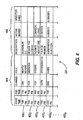
- FIG. 4 depicts an embodiment of a program guide database 220 stored in the memory 204 of the video receiver 106.
- the program guide database 220 comprises a plurality of records 402 1 , 402 2 , 402 3 , 402 4 , 402 5 , ..., 402 n (generally referred to herein as records 402).
- Each record 402 comprises channel information, schedule information and program information for a particular program.
- Each record 402 comprises basic programming information 404 and, optionally, extended programming information 406. Multiple entries 402 of a program may exist in the database 220 if a program is listed multiple times in the program schedule.
- the basic programming information 404 comprises any channel, scheduling and programming information displayable on the program guide 300.
- the basic program information 404 may comprise the channel showing the program, the start time of the program on the channel, the end time of the program on the channel, and the title of the program.
- Basic program information may also include a rating of a program, or a type or classification of the program.
- the extended program information 406 comprises additional information about the program.
- the extended program information 406 may comprise a description of the program, names of actors in the program and the name of the director of the program. Extended program information 406 may also include a review of the program or a description of the program in a different language.
- FIG. 5 depicts an embodiment of a program guide database 220 stored in the memory 204 of receiver 106.
- the program guide database 220 of FIG.5 comprises a plurality of channel objects 502, schedule objects 504 and program objects 506.
- Each of the channel objects 502 has associated with it one or more schedule objects.
- channel object 502 1 has associated with it schedule objects 504 1 and 504 2 ;
- channel object 502 2 has associated with it schedule objects 504 3 and 504 4 ;
- channel object 502 3 has associated with it schedule objects 504 4 and 504 5 .
- schedule objects may be shared by multiple channel objects (as with schedule object 504 4 ).
- schedule object 504 has associated with it at least one program object 506.
- schedule object 504 1 has associated with it program object 506 1 and 506 2 ;
- schedule object 504 2 has associated with it program object 506 3 ;
- schedule object 504 3 has associated with it program objects 506 4 and 506 5 ;
- schedule object 504 4 has associated with it program object 506 5 ;
- schedule object 504 5 has associated with it program objects 506 6 and 506 7 .
- program objects 506 may be shared by multiple schedule objects and also be associated with channel objects 502.
- channel object 502 3 has associated with it program object 506 8 .
- Channel objects 502 contain information pertaining to a presentable (e.g., viewable) channel. Such information may include, for example, channel name, tuning parameters, access code information and the like. Channel object information varies depending upon the type of channel to be selected, such as analog or broadcast television channels, cable transported television channels, or channels delivered via other means.
- Schedule objects 504 contain information pertaining to a portion of the program guide schedule.
- a schedule object 504 may contain a start time of a scheduled program, an end time of the scheduled program, a duration or time period for the scheduled program and any offset information suitable for use within the program guide.
- Program objects 506 contain information pertaining to a single program; such as a television program, a live broadcast, an advertisement, or some other form of (typically) audiovisual signal broadcast or transported to the receiver.
- the program object may comprise "basic description information" and, optionally, "extended description information," such as described above with respect to FIGS. 1-4 .
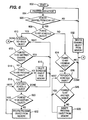
- FIG. 6 depicts a flow diagram of a method 600 for allocating the memory 204 in the receiver 106.
- the method 600 updates the program guide databases 220 in response to removal of channels from the scan list 222. Specifically, the method 600 starts at step 602 and proceeds to step 604 where an action from the user or viewer is processed. At step 606, a query determines whether the user action is to remove a channel from the scan list 222. If the user action is not to remove a channel from the scan list 222, the method 600 returns to step 604 where the next user action is processed.
- step 608 a query determines whether a channel object 502 for the channel points to any, i.e., at least one, schedule object 504. If the channel points to at least one schedule object 504, the method proceeds to step 610 where each schedule object 504 is processed.
- step 612 a query determines whether the schedule object 504 is pointed to by another channel object 612. That is, step 612 determines whether the program schedule for the schedule object 504 is used by another channel. If the schedule object 504 is pointed to by another channel object 502, then at step 610 the next schedule object 610 (if applicable) is processed.
- a query determines whether the schedule object 504 points to any program object 506. If the schedule object 504 does not point to any program object 506, then at step 616 the schedule object 504 is deleted from the memory 204. The method 600 then returns to step 610.
- step 612 the schedule object 504 points to any program object 506, the method 600 proceeds to step 618 where each program object 618 pointed to by the schedule object 504 is processed.
- step 620 a query determines whether the program object 506 is pointed to by another object, i.e., either a schedule object 504 or a channel object 502. If the program object 506 is pointed to by another object, the method 600 returns to step 618 where the next program object 506 is processed. If the program object 506 is not pointed to by another object, the method 600 proceeds to step 622 where the program object 504 is deleted from memory. The method 600 returns to step 618 where the next program object 506 is processed. Once all the program objects 506 are processed for the schedule object 504, the method 600 returns to step 620 where the next schedule object 504 is processed. Once all the schedule object(s) 504 for the channel object 502 is processed, the method 600 proceeds to step 632.
- step 608 if the channel object 502 does not point any schedule object 504, the method 600 proceeds to step 624 where a query determines whether the channel object 502 directly points to any program object 506.
- a channel object 502 may directly point to a program object 506 if there no is schedule object 504 or the program for the program object 506 is not in a program schedule for the channel. If the channel object 502 does not directly point to any program object 506, the method 600 proceeds to step 632.
- step 626 each program object 506 directly pointed to by the channel object 502 is processed.
- step 628 a query determines whether the program object 506 is pointed to by another object for a different channel. If the program object 506 is pointed to by another object, the method 600 proceeds to process the next program object 506 directly pointed to by the channel object 502. If the program object 506 is not pointed to by another object, the program object 506 is deleted from the memory 204.
- step 632 the channel object 502 for the channel selected is deleted from the memory 204.
- the method 600 then returns to step 604 where the next user action is processed.
Landscapes
- Engineering & Computer Science (AREA)
- Multimedia (AREA)
- Signal Processing (AREA)
- Databases & Information Systems (AREA)
- Two-Way Televisions, Distribution Of Moving Picture Or The Like (AREA)
- Circuits Of Receivers In General (AREA)
- Television Systems (AREA)
Applications Claiming Priority (5)
| Application Number | Priority Date | Filing Date | Title |
|---|---|---|---|
| US31804001P | 2001-09-07 | 2001-09-07 | |
| US318040P | 2001-09-07 | ||
| US10/092,039 US20030051247A1 (en) | 2001-09-07 | 2002-03-06 | Method and apparatus for adaptively storing program guide data |
| US92039 | 2002-03-06 | ||
| PCT/US2002/028184 WO2003023603A1 (en) | 2001-09-07 | 2002-09-05 | Method and apparatus for adaptively storing program guide data |
Publications (3)
| Publication Number | Publication Date |
|---|---|
| EP1423784A1 EP1423784A1 (en) | 2004-06-02 |
| EP1423784A4 EP1423784A4 (en) | 2005-09-07 |
| EP1423784B1 true EP1423784B1 (en) | 2015-01-28 |
Family
ID=26784770
Family Applications (1)
| Application Number | Title | Priority Date | Filing Date |
|---|---|---|---|
| EP02775751.7A Expired - Lifetime EP1423784B1 (en) | 2001-09-07 | 2002-09-05 | Method and apparatus for adaptively storing program guide data |
Country Status (9)
| Country | Link |
|---|---|
| US (1) | US20030051247A1 (cg-RX-API-DMAC7.html) |
| EP (1) | EP1423784B1 (cg-RX-API-DMAC7.html) |
| JP (2) | JP4410561B2 (cg-RX-API-DMAC7.html) |
| KR (2) | KR100960072B1 (cg-RX-API-DMAC7.html) |
| CN (1) | CN100489763C (cg-RX-API-DMAC7.html) |
| BR (1) | BRPI0212326B1 (cg-RX-API-DMAC7.html) |
| MX (1) | MXPA04002154A (cg-RX-API-DMAC7.html) |
| MY (1) | MY153302A (cg-RX-API-DMAC7.html) |
| WO (1) | WO2003023603A1 (cg-RX-API-DMAC7.html) |
Families Citing this family (8)
| Publication number | Priority date | Publication date | Assignee | Title |
|---|---|---|---|---|
| JP2004056630A (ja) * | 2002-07-23 | 2004-02-19 | Sony Corp | 制御システム、制御装置および方法、記録媒体、並びにプログラム |
| US20040117826A1 (en) * | 2002-12-11 | 2004-06-17 | Jeyhan Karaoguz | Media exchange network with media guide interface |
| US20040123317A1 (en) * | 2002-12-19 | 2004-06-24 | Sony Corporation | System and method for delivering electronic program guide |
| KR101204792B1 (ko) * | 2007-02-05 | 2012-11-26 | 삼성전자주식회사 | Epg 저장 방법 및 장치, epg 제공 방법 및 장치 |
| US8490130B2 (en) * | 2008-01-07 | 2013-07-16 | Kabushiki Kaisha Toshiba | Television channel list system and method |
| CN102804802B (zh) * | 2009-06-01 | 2015-07-01 | 夏普株式会社 | 接收机及接收机的控制方法 |
| JP5554550B2 (ja) * | 2009-11-27 | 2014-07-23 | シャープ株式会社 | コンテンツ情報管理装置、コンテンツ情報管理方法及びプログラム |
| US20180152740A1 (en) * | 2016-11-29 | 2018-05-31 | The Directv Group, Inc. | Centralized metadata retrieval |
Citations (1)
| Publication number | Priority date | Publication date | Assignee | Title |
|---|---|---|---|---|
| JP2001078110A (ja) * | 1999-07-02 | 2001-03-23 | Sanyo Electric Co Ltd | 電子番組ガイド情報表示装置 |
Family Cites Families (20)
| Publication number | Priority date | Publication date | Assignee | Title |
|---|---|---|---|---|
| WO1995028055A1 (en) * | 1994-04-08 | 1995-10-19 | Prevue International, Inc. | Interactive scroll program guide |
| US5502504A (en) * | 1994-04-28 | 1996-03-26 | Prevue Networks, Inc. | Video mix program guide |
| JP3644455B2 (ja) * | 1994-09-29 | 2005-04-27 | ソニー株式会社 | 番組情報放送方式、番組情報表示方法および受信装置 |
| JPH08251120A (ja) * | 1995-03-09 | 1996-09-27 | Nippon Hoso Kyokai <Nhk> | 番組表データの伝送方法、送信および受信装置 |
| US5699125A (en) | 1995-03-31 | 1997-12-16 | Matsushita Electric Corporation Of America | Electronic television program guide for a television system having two tuners |
| US5828945A (en) * | 1995-04-17 | 1998-10-27 | Starsight Telecast, Inc. | Merging multi-source information in a television system |
| US5666645A (en) * | 1995-04-26 | 1997-09-09 | News America Publications, Inc. | Data management and distribution system and method for an electronic television program guide |
| US5699107A (en) * | 1995-05-05 | 1997-12-16 | Microsoft Corporation | Program reminder system |
| US5652613A (en) * | 1995-06-07 | 1997-07-29 | Lazarus; David Beryl | Intelligent electronic program guide memory management system and method |
| US5801753A (en) * | 1995-08-11 | 1998-09-01 | General Instrument Corporation Of Delaware | Method and apparatus for providing an interactive guide to events available on an information network |
| US5635989A (en) * | 1996-02-13 | 1997-06-03 | Hughes Electronics | Method and apparatus for sorting and searching a television program guide |
| AU3294997A (en) * | 1996-06-13 | 1998-01-07 | Starsight Telecast Incorporated | Method and apparatus for searching a guide using program characteristics |
| US20020016963A1 (en) * | 1996-08-08 | 2002-02-07 | Hideki Inoue | Information receiving apparatus |
| US5900868A (en) * | 1997-04-01 | 1999-05-04 | Ati International | Method and apparatus for multiple channel display |
| US6061097A (en) * | 1997-05-22 | 2000-05-09 | United Video Properties, Inc. | Interactive television program guide with selectable non-program options |
| US6262722B1 (en) * | 1997-07-08 | 2001-07-17 | United Video Properties, Inc. | Interactive program guide navigator menu system |
| KR100252348B1 (ko) * | 1997-09-26 | 2000-04-15 | 전주범 | 위성방송 수신기의 프로그램 가이드 선별적 수신 방법 |
| US6243142B1 (en) * | 1997-10-17 | 2001-06-05 | Sony Corporation | Method and apparatus for displaying time and program status in an electronic program guide |
| KR100304886B1 (ko) * | 1998-12-01 | 2001-09-24 | 구자홍 | 디스플레이장치의부가정보표시방법 |
| US6169543B1 (en) * | 1998-12-28 | 2001-01-02 | Thomson Licensing S.A. | System and method for customizing program guide information to include reminder item or local identifier |
-
2002
- 2002-03-06 US US10/092,039 patent/US20030051247A1/en not_active Abandoned
- 2002-09-05 EP EP02775751.7A patent/EP1423784B1/en not_active Expired - Lifetime
- 2002-09-05 MX MXPA04002154A patent/MXPA04002154A/es active IP Right Grant
- 2002-09-05 KR KR1020047003361A patent/KR100960072B1/ko not_active Expired - Fee Related
- 2002-09-05 JP JP2003527589A patent/JP4410561B2/ja not_active Expired - Fee Related
- 2002-09-05 WO PCT/US2002/028184 patent/WO2003023603A1/en not_active Ceased
- 2002-09-05 KR KR1020107001043A patent/KR101005034B1/ko not_active Expired - Fee Related
- 2002-09-05 BR BRPI0212326A patent/BRPI0212326B1/pt not_active IP Right Cessation
- 2002-09-05 CN CNB028220536A patent/CN100489763C/zh not_active Expired - Fee Related
- 2002-09-06 MY MYPI20023331A patent/MY153302A/en unknown
-
2008
- 2008-08-19 JP JP2008210575A patent/JP4936399B2/ja not_active Expired - Fee Related
Patent Citations (1)
| Publication number | Priority date | Publication date | Assignee | Title |
|---|---|---|---|---|
| JP2001078110A (ja) * | 1999-07-02 | 2001-03-23 | Sanyo Electric Co Ltd | 電子番組ガイド情報表示装置 |
Also Published As
| Publication number | Publication date |
|---|---|
| CN100489763C (zh) | 2009-05-20 |
| MY153302A (en) | 2015-01-29 |
| KR101005034B1 (ko) | 2010-12-30 |
| WO2003023603A1 (en) | 2003-03-20 |
| US20030051247A1 (en) | 2003-03-13 |
| JP2005509339A (ja) | 2005-04-07 |
| BRPI0212326B1 (pt) | 2016-12-13 |
| EP1423784A1 (en) | 2004-06-02 |
| CN1582427A (zh) | 2005-02-16 |
| KR20100022111A (ko) | 2010-02-26 |
| JP4410561B2 (ja) | 2010-02-03 |
| MXPA04002154A (es) | 2005-03-07 |
| JP4936399B2 (ja) | 2012-05-23 |
| KR20040029468A (ko) | 2004-04-06 |
| EP1423784A4 (en) | 2005-09-07 |
| KR100960072B1 (ko) | 2010-05-31 |
| JP2008289193A (ja) | 2008-11-27 |
| BR0212326A (pt) | 2004-09-21 |
Similar Documents
| Publication | Publication Date | Title |
|---|---|---|
| US6983483B2 (en) | Scheduler apparatus employing a gopher agent for use in a television receiver | |
| EP1458194A2 (en) | Dynamic adjustment of EPG level of detail based on user behavior | |
| JP4936399B2 (ja) | 番組ガイド情報を受信機内に適応的に記憶する方法および装置 | |
| JPH09200638A (ja) | テレビジョン受信装置用の予測エージェントを使用するスケジューラ装置およびその方法 | |
| EP1423779B1 (en) | Method and apparatus for adaptively storing program guide data | |
| US20030051245A1 (en) | Method and apparatus for adaptively storing program guide data | |
| US7315881B2 (en) | Scheduler apparatus employing a gopher agent that sends e-mail messages for use in a television receiver | |
| US6980730B2 (en) | System and method for processing a program already in progress | |
| JP2880988B1 (ja) | 番組表表示装置及び方法 |
Legal Events
| Date | Code | Title | Description |
|---|---|---|---|
| PUAI | Public reference made under article 153(3) epc to a published international application that has entered the european phase |
Free format text: ORIGINAL CODE: 0009012 |
|
| 17P | Request for examination filed |
Effective date: 20040316 |
|
| AK | Designated contracting states |
Kind code of ref document: A1 Designated state(s): AT BE BG CH CY CZ DE DK EE ES FI FR GB GR IE IT LI LU MC NL PT SE SK TR |
|
| AX | Request for extension of the european patent |
Extension state: AL LT LV MK RO SI |
|
| A4 | Supplementary search report drawn up and despatched |
Effective date: 20050722 |
|
| RAP1 | Party data changed (applicant data changed or rights of an application transferred) |
Owner name: THOMSON LICENSING |
|
| 17Q | First examination report despatched |
Effective date: 20071221 |
|
| RAP1 | Party data changed (applicant data changed or rights of an application transferred) |
Owner name: THOMSON LICENSING |
|
| REG | Reference to a national code |
Ref country code: DE Ref legal event code: R079 Ref document number: 60246953 Country of ref document: DE Free format text: PREVIOUS MAIN CLASS: G06F0007000000 Ipc: H04N0021433500 |
|
| RIC1 | Information provided on ipc code assigned before grant |
Ipc: H04N 21/4335 20110101AFI20140722BHEP Ipc: H04N 21/45 20110101ALN20140722BHEP |
|
| GRAP | Despatch of communication of intention to grant a patent |
Free format text: ORIGINAL CODE: EPIDOSNIGR1 |
|
| RIC1 | Information provided on ipc code assigned before grant |
Ipc: H04N 21/45 20110101ALN20140825BHEP Ipc: H04N 21/4335 20110101AFI20140825BHEP |
|
| INTG | Intention to grant announced |
Effective date: 20140910 |
|
| GRAS | Grant fee paid |
Free format text: ORIGINAL CODE: EPIDOSNIGR3 |
|
| GRAA | (expected) grant |
Free format text: ORIGINAL CODE: 0009210 |
|
| AK | Designated contracting states |
Kind code of ref document: B1 Designated state(s): DE ES FR GB IT |
|
| REG | Reference to a national code |
Ref country code: GB Ref legal event code: FG4D |
|
| REG | Reference to a national code |
Ref country code: DE Ref legal event code: R084 Ref document number: 60246953 Country of ref document: DE |
|
| REG | Reference to a national code |
Ref country code: DE Ref legal event code: R096 Ref document number: 60246953 Country of ref document: DE Effective date: 20150312 |
|
| REG | Reference to a national code |
Ref country code: DE Ref legal event code: R084 Ref document number: 60246953 Country of ref document: DE Effective date: 20150228 |
|
| PG25 | Lapsed in a contracting state [announced via postgrant information from national office to epo] |
Ref country code: ES Free format text: LAPSE BECAUSE OF FAILURE TO SUBMIT A TRANSLATION OF THE DESCRIPTION OR TO PAY THE FEE WITHIN THE PRESCRIBED TIME-LIMIT Effective date: 20150128 |
|
| REG | Reference to a national code |
Ref country code: FR Ref legal event code: PLFP Year of fee payment: 14 |
|
| REG | Reference to a national code |
Ref country code: DE Ref legal event code: R097 Ref document number: 60246953 Country of ref document: DE |
|
| PLBE | No opposition filed within time limit |
Free format text: ORIGINAL CODE: 0009261 |
|
| STAA | Information on the status of an ep patent application or granted ep patent |
Free format text: STATUS: NO OPPOSITION FILED WITHIN TIME LIMIT |
|
| PG25 | Lapsed in a contracting state [announced via postgrant information from national office to epo] |
Ref country code: IT Free format text: LAPSE BECAUSE OF FAILURE TO SUBMIT A TRANSLATION OF THE DESCRIPTION OR TO PAY THE FEE WITHIN THE PRESCRIBED TIME-LIMIT Effective date: 20150128 |
|
| 26N | No opposition filed |
Effective date: 20151029 |
|
| GBPC | Gb: european patent ceased through non-payment of renewal fee |
Effective date: 20150905 |
|
| PG25 | Lapsed in a contracting state [announced via postgrant information from national office to epo] |
Ref country code: GB Free format text: LAPSE BECAUSE OF NON-PAYMENT OF DUE FEES Effective date: 20150905 |
|
| REG | Reference to a national code |
Ref country code: FR Ref legal event code: PLFP Year of fee payment: 15 |
|
| REG | Reference to a national code |
Ref country code: DE Ref legal event code: R082 Ref document number: 60246953 Country of ref document: DE Representative=s name: HOFSTETTER, SCHURACK & PARTNER PATENT- UND REC, DE |
|
| REG | Reference to a national code |
Ref country code: FR Ref legal event code: PLFP Year of fee payment: 16 |
|
| REG | Reference to a national code |
Ref country code: FR Ref legal event code: PLFP Year of fee payment: 17 |
|
| PGFP | Annual fee paid to national office [announced via postgrant information from national office to epo] |
Ref country code: FR Payment date: 20180925 Year of fee payment: 17 |
|
| PGFP | Annual fee paid to national office [announced via postgrant information from national office to epo] |
Ref country code: DE Payment date: 20181001 Year of fee payment: 17 |
|
| REG | Reference to a national code |
Ref country code: DE Ref legal event code: R119 Ref document number: 60246953 Country of ref document: DE |
|
| PG25 | Lapsed in a contracting state [announced via postgrant information from national office to epo] |
Ref country code: DE Free format text: LAPSE BECAUSE OF NON-PAYMENT OF DUE FEES Effective date: 20200401 |
|
| PG25 | Lapsed in a contracting state [announced via postgrant information from national office to epo] |
Ref country code: FR Free format text: LAPSE BECAUSE OF NON-PAYMENT OF DUE FEES Effective date: 20190930 |
|
| P01 | Opt-out of the competence of the unified patent court (upc) registered |
Effective date: 20230527 |