EP1418807B1 - Methode zur induzierung neurofibrillärer tangles in transgenen tieren - Google Patents
Methode zur induzierung neurofibrillärer tangles in transgenen tieren Download PDFInfo
- Publication number
- EP1418807B1 EP1418807B1 EP02796273A EP02796273A EP1418807B1 EP 1418807 B1 EP1418807 B1 EP 1418807B1 EP 02796273 A EP02796273 A EP 02796273A EP 02796273 A EP02796273 A EP 02796273A EP 1418807 B1 EP1418807 B1 EP 1418807B1
- Authority
- EP
- European Patent Office
- Prior art keywords
- neurofibrillary tangles
- rodent
- anyone
- app
- amyloid
- Prior art date
- Legal status (The legal status is an assumption and is not a legal conclusion. Google has not performed a legal analysis and makes no representation as to the accuracy of the status listed.)
- Expired - Lifetime
Links
- 210000002682 neurofibrillary tangle Anatomy 0.000 title claims abstract description 101
- 230000015572 biosynthetic process Effects 0.000 title claims abstract description 42
- 238000000034 method Methods 0.000 title claims abstract description 39
- 230000009261 transgenic effect Effects 0.000 title claims description 24
- 241001465754 Metazoa Species 0.000 title claims description 17
- 230000001939 inductive effect Effects 0.000 title claims description 4
- 108010026424 tau Proteins Proteins 0.000 claims abstract description 80
- 238000002347 injection Methods 0.000 claims abstract description 59
- 239000007924 injection Substances 0.000 claims abstract description 59
- 210000004556 brain Anatomy 0.000 claims abstract description 45
- 208000024827 Alzheimer disease Diseases 0.000 claims abstract description 40
- 210000004727 amygdala Anatomy 0.000 claims abstract description 36
- 230000004770 neurodegeneration Effects 0.000 claims abstract description 18
- 208000015122 neurodegenerative disease Diseases 0.000 claims abstract description 17
- 238000004519 manufacturing process Methods 0.000 claims abstract description 16
- 239000003795 chemical substances by application Substances 0.000 claims abstract description 13
- 238000002560 therapeutic procedure Methods 0.000 claims abstract description 12
- 238000005462 in vivo assay Methods 0.000 claims abstract description 10
- 102000013498 tau Proteins Human genes 0.000 claims description 76
- 241000283984 Rodentia Species 0.000 claims description 37
- 108010090849 Amyloid beta-Peptides Proteins 0.000 claims description 30
- 102000013455 Amyloid beta-Peptides Human genes 0.000 claims description 30
- 108090000623 proteins and genes Proteins 0.000 claims description 21
- 239000012634 fragment Substances 0.000 claims description 17
- 201000011240 Frontotemporal dementia Diseases 0.000 claims description 12
- 210000001320 hippocampus Anatomy 0.000 claims description 11
- 238000010171 animal model Methods 0.000 claims description 8
- 210000002511 neuropil thread Anatomy 0.000 claims description 8
- 230000001965 increasing effect Effects 0.000 claims description 7
- 210000002241 neurite Anatomy 0.000 claims description 4
- 230000007850 degeneration Effects 0.000 claims description 3
- 238000011830 transgenic mouse model Methods 0.000 abstract description 28
- 241000699660 Mus musculus Species 0.000 abstract description 23
- 210000005056 cell body Anatomy 0.000 abstract description 6
- 238000012360 testing method Methods 0.000 abstract description 5
- 108010064539 amyloid beta-protein (1-42) Proteins 0.000 abstract description 3
- DZHSAHHDTRWUTF-SIQRNXPUSA-N amyloid-beta polypeptide 42 Chemical compound C([C@@H](C(=O)N[C@@H](C)C(=O)N[C@@H](CCC(O)=O)C(=O)N[C@@H](CC(O)=O)C(=O)N[C@H](C(=O)NCC(=O)N[C@@H](CO)C(=O)N[C@@H](CC(N)=O)C(=O)N[C@@H](CCCCN)C(=O)NCC(=O)N[C@@H](C)C(=O)N[C@H](C(=O)N[C@@H]([C@@H](C)CC)C(=O)NCC(=O)N[C@@H](CC(C)C)C(=O)N[C@@H](CCSC)C(=O)N[C@@H](C(C)C)C(=O)NCC(=O)NCC(=O)N[C@@H](C(C)C)C(=O)N[C@@H](C(C)C)C(=O)N[C@@H]([C@@H](C)CC)C(=O)N[C@@H](C)C(O)=O)[C@@H](C)CC)C(C)C)NC(=O)[C@H](CC=1C=CC=CC=1)NC(=O)[C@@H](NC(=O)[C@H](CC(C)C)NC(=O)[C@H](CCCCN)NC(=O)[C@H](CCC(N)=O)NC(=O)[C@H](CC=1N=CNC=1)NC(=O)[C@H](CC=1N=CNC=1)NC(=O)[C@@H](NC(=O)[C@H](CCC(O)=O)NC(=O)[C@H](CC=1C=CC(O)=CC=1)NC(=O)CNC(=O)[C@H](CO)NC(=O)[C@H](CC(O)=O)NC(=O)[C@H](CC=1N=CNC=1)NC(=O)[C@H](CCCNC(N)=N)NC(=O)[C@H](CC=1C=CC=CC=1)NC(=O)[C@H](CCC(O)=O)NC(=O)[C@H](C)NC(=O)[C@@H](N)CC(O)=O)C(C)C)C(C)C)C1=CC=CC=C1 DZHSAHHDTRWUTF-SIQRNXPUSA-N 0.000 abstract description 3
- 238000010200 validation analysis Methods 0.000 abstract description 2
- 102400000574 Amyloid-beta protein 42 Human genes 0.000 abstract 1
- 102100040243 Microtubule-associated protein tau Human genes 0.000 abstract 1
- 241000699670 Mus sp. Species 0.000 description 22
- 210000002569 neuron Anatomy 0.000 description 17
- 108090000765 processed proteins & peptides Proteins 0.000 description 15
- 108010029485 Protein Isoforms Proteins 0.000 description 13
- 102000001708 Protein Isoforms Human genes 0.000 description 13
- 230000026731 phosphorylation Effects 0.000 description 13
- 238000006366 phosphorylation reaction Methods 0.000 description 13
- 241000699666 Mus <mouse, genus> Species 0.000 description 11
- 230000035772 mutation Effects 0.000 description 11
- 230000002159 abnormal effect Effects 0.000 description 10
- 208000037259 Amyloid Plaque Diseases 0.000 description 9
- 102000004196 processed proteins & peptides Human genes 0.000 description 9
- 102000029749 Microtubule Human genes 0.000 description 8
- 108091022875 Microtubule Proteins 0.000 description 8
- MTCFGRXMJLQNBG-UHFFFAOYSA-N Serine Natural products OCC(N)C(O)=O MTCFGRXMJLQNBG-UHFFFAOYSA-N 0.000 description 8
- 210000004688 microtubule Anatomy 0.000 description 8
- 150000001413 amino acids Chemical class 0.000 description 7
- 150000001875 compounds Chemical class 0.000 description 7
- 238000001493 electron microscopy Methods 0.000 description 7
- 230000007170 pathology Effects 0.000 description 7
- 229920001184 polypeptide Polymers 0.000 description 7
- 102000004169 proteins and genes Human genes 0.000 description 7
- 238000010186 staining Methods 0.000 description 7
- 101000891579 Homo sapiens Microtubule-associated protein tau Proteins 0.000 description 6
- 238000004458 analytical method Methods 0.000 description 6
- 208000037265 diseases, disorders, signs and symptoms Diseases 0.000 description 6
- 102000057063 human MAPT Human genes 0.000 description 6
- 210000004092 somatosensory cortex Anatomy 0.000 description 6
- AYFVYJQAPQTCCC-UHFFFAOYSA-N Threonine Natural products CC(O)C(N)C(O)=O AYFVYJQAPQTCCC-UHFFFAOYSA-N 0.000 description 5
- 239000004473 Threonine Substances 0.000 description 5
- 210000004027 cell Anatomy 0.000 description 5
- 201000010099 disease Diseases 0.000 description 5
- 239000003814 drug Substances 0.000 description 5
- 229920002307 Dextran Polymers 0.000 description 4
- 208000034799 Tauopathies Diseases 0.000 description 4
- 108700019146 Transgenes Proteins 0.000 description 4
- 230000032683 aging Effects 0.000 description 4
- 230000002981 neuropathic effect Effects 0.000 description 4
- MPLHNVLQVRSVEE-UHFFFAOYSA-N texas red Chemical compound [O-]S(=O)(=O)C1=CC(S(Cl)(=O)=O)=CC=C1C(C1=CC=2CCCN3CCCC(C=23)=C1O1)=C2C1=C(CCC1)C3=[N+]1CCCC3=C2 MPLHNVLQVRSVEE-UHFFFAOYSA-N 0.000 description 4
- 241000283707 Capra Species 0.000 description 3
- 238000000585 Mann–Whitney U test Methods 0.000 description 3
- BQCADISMDOOEFD-UHFFFAOYSA-N Silver Chemical compound [Ag] BQCADISMDOOEFD-UHFFFAOYSA-N 0.000 description 3
- 230000002776 aggregation Effects 0.000 description 3
- 238000004220 aggregation Methods 0.000 description 3
- VREFGVBLTWBCJP-UHFFFAOYSA-N alprazolam Chemical compound C12=CC(Cl)=CC=C2N2C(C)=NN=C2CN=C1C1=CC=CC=C1 VREFGVBLTWBCJP-UHFFFAOYSA-N 0.000 description 3
- 210000001130 astrocyte Anatomy 0.000 description 3
- 210000003050 axon Anatomy 0.000 description 3
- 210000003169 central nervous system Anatomy 0.000 description 3
- 238000003776 cleavage reaction Methods 0.000 description 3
- 230000001419 dependent effect Effects 0.000 description 3
- 230000001605 fetal effect Effects 0.000 description 3
- 238000003364 immunohistochemistry Methods 0.000 description 3
- 238000001727 in vivo Methods 0.000 description 3
- 239000000203 mixture Substances 0.000 description 3
- 230000001936 parietal effect Effects 0.000 description 3
- 238000002360 preparation method Methods 0.000 description 3
- 230000007017 scission Effects 0.000 description 3
- 238000000926 separation method Methods 0.000 description 3
- 229910052709 silver Inorganic materials 0.000 description 3
- 239000004332 silver Substances 0.000 description 3
- 239000000725 suspension Substances 0.000 description 3
- 229940124597 therapeutic agent Drugs 0.000 description 3
- 230000001225 therapeutic effect Effects 0.000 description 3
- 210000001519 tissue Anatomy 0.000 description 3
- 239000013598 vector Substances 0.000 description 3
- 241000282412 Homo Species 0.000 description 2
- 101001071233 Homo sapiens PHD finger protein 1 Proteins 0.000 description 2
- PXHVJJICTQNCMI-UHFFFAOYSA-N Nickel Chemical compound [Ni] PXHVJJICTQNCMI-UHFFFAOYSA-N 0.000 description 2
- 102100036879 PHD finger protein 1 Human genes 0.000 description 2
- 229930040373 Paraformaldehyde Natural products 0.000 description 2
- 108091081062 Repeated sequence (DNA) Proteins 0.000 description 2
- 210000001056 activated astrocyte Anatomy 0.000 description 2
- 239000000556 agonist Substances 0.000 description 2
- 230000003321 amplification Effects 0.000 description 2
- 230000003941 amyloidogenesis Effects 0.000 description 2
- 230000003376 axonal effect Effects 0.000 description 2
- 210000000349 chromosome Anatomy 0.000 description 2
- 239000002299 complementary DNA Substances 0.000 description 2
- 230000001054 cortical effect Effects 0.000 description 2
- 238000011161 development Methods 0.000 description 2
- 230000018109 developmental process Effects 0.000 description 2
- 239000000032 diagnostic agent Substances 0.000 description 2
- 229940039227 diagnostic agent Drugs 0.000 description 2
- 238000010790 dilution Methods 0.000 description 2
- 239000012895 dilution Substances 0.000 description 2
- 238000009826 distribution Methods 0.000 description 2
- 238000002474 experimental method Methods 0.000 description 2
- 238000000198 fluorescence anisotropy Methods 0.000 description 2
- 230000014509 gene expression Effects 0.000 description 2
- 238000010166 immunofluorescence Methods 0.000 description 2
- 238000005470 impregnation Methods 0.000 description 2
- 230000006698 induction Effects 0.000 description 2
- 230000003447 ipsilateral effect Effects 0.000 description 2
- 210000000274 microglia Anatomy 0.000 description 2
- 230000002025 microglial effect Effects 0.000 description 2
- 239000003068 molecular probe Substances 0.000 description 2
- 230000001537 neural effect Effects 0.000 description 2
- 230000002887 neurotoxic effect Effects 0.000 description 2
- 238000003199 nucleic acid amplification method Methods 0.000 description 2
- 229920002866 paraformaldehyde Polymers 0.000 description 2
- 230000001717 pathogenic effect Effects 0.000 description 2
- 230000001575 pathological effect Effects 0.000 description 2
- 230000008569 process Effects 0.000 description 2
- 210000001176 projection neuron Anatomy 0.000 description 2
- 230000007342 reactive astrogliosis Effects 0.000 description 2
- 230000007441 retrograde transport Effects 0.000 description 2
- 210000002966 serum Anatomy 0.000 description 2
- JQWHASGSAFIOCM-UHFFFAOYSA-M sodium periodate Chemical compound [Na+].[O-]I(=O)(=O)=O JQWHASGSAFIOCM-UHFFFAOYSA-M 0.000 description 2
- 239000000126 substance Substances 0.000 description 2
- 238000013518 transcription Methods 0.000 description 2
- 230000035897 transcription Effects 0.000 description 2
- 238000013519 translation Methods 0.000 description 2
- 239000003656 tris buffered saline Substances 0.000 description 2
- 238000002255 vaccination Methods 0.000 description 2
- 238000005406 washing Methods 0.000 description 2
- 239000012099 Alexa Fluor family Substances 0.000 description 1
- 101710137189 Amyloid-beta A4 protein Proteins 0.000 description 1
- 101710151993 Amyloid-beta precursor protein Proteins 0.000 description 1
- 102100022704 Amyloid-beta precursor protein Human genes 0.000 description 1
- 238000011740 C57BL/6 mouse Methods 0.000 description 1
- RZZPDXZPRHQOCG-OJAKKHQRSA-O CDP-choline(1+) Chemical compound O[C@@H]1[C@H](O)[C@@H](COP(O)(=O)OP(O)(=O)OCC[N+](C)(C)C)O[C@H]1N1C(=O)N=C(N)C=C1 RZZPDXZPRHQOCG-OJAKKHQRSA-O 0.000 description 1
- OKTJSMMVPCPJKN-UHFFFAOYSA-N Carbon Chemical compound [C] OKTJSMMVPCPJKN-UHFFFAOYSA-N 0.000 description 1
- 241000700199 Cavia porcellus Species 0.000 description 1
- 108091035707 Consensus sequence Proteins 0.000 description 1
- 208000011990 Corticobasal Degeneration Diseases 0.000 description 1
- 206010012289 Dementia Diseases 0.000 description 1
- 208000018672 Dilatation Diseases 0.000 description 1
- 108010067770 Endopeptidase K Proteins 0.000 description 1
- 108700024394 Exon Proteins 0.000 description 1
- SXRSQZLOMIGNAQ-UHFFFAOYSA-N Glutaraldehyde Chemical compound O=CCCCC=O SXRSQZLOMIGNAQ-UHFFFAOYSA-N 0.000 description 1
- 208000023105 Huntington disease Diseases 0.000 description 1
- YQEZLKZALYSWHR-UHFFFAOYSA-N Ketamine Chemical compound C=1C=CC=C(Cl)C=1C1(NC)CCCCC1=O YQEZLKZALYSWHR-UHFFFAOYSA-N 0.000 description 1
- 108090001090 Lectins Proteins 0.000 description 1
- 102000004856 Lectins Human genes 0.000 description 1
- 241000282560 Macaca mulatta Species 0.000 description 1
- 102000009664 Microtubule-Associated Proteins Human genes 0.000 description 1
- 108010020004 Microtubule-Associated Proteins Proteins 0.000 description 1
- 208000026072 Motor neurone disease Diseases 0.000 description 1
- 208000001089 Multiple system atrophy Diseases 0.000 description 1
- 102000007474 Multiprotein Complexes Human genes 0.000 description 1
- 108010085220 Multiprotein Complexes Proteins 0.000 description 1
- 241001529936 Murinae Species 0.000 description 1
- 108091034117 Oligonucleotide Proteins 0.000 description 1
- 238000010222 PCR analysis Methods 0.000 description 1
- 206010033799 Paralysis Diseases 0.000 description 1
- 208000018737 Parkinson disease Diseases 0.000 description 1
- 208000027089 Parkinsonian disease Diseases 0.000 description 1
- 206010034010 Parkinsonism Diseases 0.000 description 1
- 102000003992 Peroxidases Human genes 0.000 description 1
- 208000000609 Pick Disease of the Brain Diseases 0.000 description 1
- 108010076504 Protein Sorting Signals Proteins 0.000 description 1
- COQLPRJCUIATTQ-UHFFFAOYSA-N Uranyl acetate Chemical compound O.O.O=[U]=O.CC(O)=O.CC(O)=O COQLPRJCUIATTQ-UHFFFAOYSA-N 0.000 description 1
- JLCPHMBAVCMARE-UHFFFAOYSA-N [3-[[3-[[3-[[3-[[3-[[3-[[3-[[3-[[3-[[3-[[3-[[5-(2-amino-6-oxo-1H-purin-9-yl)-3-[[3-[[3-[[3-[[3-[[3-[[5-(2-amino-6-oxo-1H-purin-9-yl)-3-[[5-(2-amino-6-oxo-1H-purin-9-yl)-3-hydroxyoxolan-2-yl]methoxy-hydroxyphosphoryl]oxyoxolan-2-yl]methoxy-hydroxyphosphoryl]oxy-5-(5-methyl-2,4-dioxopyrimidin-1-yl)oxolan-2-yl]methoxy-hydroxyphosphoryl]oxy-5-(6-aminopurin-9-yl)oxolan-2-yl]methoxy-hydroxyphosphoryl]oxy-5-(6-aminopurin-9-yl)oxolan-2-yl]methoxy-hydroxyphosphoryl]oxy-5-(6-aminopurin-9-yl)oxolan-2-yl]methoxy-hydroxyphosphoryl]oxy-5-(6-aminopurin-9-yl)oxolan-2-yl]methoxy-hydroxyphosphoryl]oxyoxolan-2-yl]methoxy-hydroxyphosphoryl]oxy-5-(5-methyl-2,4-dioxopyrimidin-1-yl)oxolan-2-yl]methoxy-hydroxyphosphoryl]oxy-5-(4-amino-2-oxopyrimidin-1-yl)oxolan-2-yl]methoxy-hydroxyphosphoryl]oxy-5-(5-methyl-2,4-dioxopyrimidin-1-yl)oxolan-2-yl]methoxy-hydroxyphosphoryl]oxy-5-(5-methyl-2,4-dioxopyrimidin-1-yl)oxolan-2-yl]methoxy-hydroxyphosphoryl]oxy-5-(6-aminopurin-9-yl)oxolan-2-yl]methoxy-hydroxyphosphoryl]oxy-5-(6-aminopurin-9-yl)oxolan-2-yl]methoxy-hydroxyphosphoryl]oxy-5-(4-amino-2-oxopyrimidin-1-yl)oxolan-2-yl]methoxy-hydroxyphosphoryl]oxy-5-(4-amino-2-oxopyrimidin-1-yl)oxolan-2-yl]methoxy-hydroxyphosphoryl]oxy-5-(4-amino-2-oxopyrimidin-1-yl)oxolan-2-yl]methoxy-hydroxyphosphoryl]oxy-5-(6-aminopurin-9-yl)oxolan-2-yl]methoxy-hydroxyphosphoryl]oxy-5-(4-amino-2-oxopyrimidin-1-yl)oxolan-2-yl]methyl [5-(6-aminopurin-9-yl)-2-(hydroxymethyl)oxolan-3-yl] hydrogen phosphate Polymers Cc1cn(C2CC(OP(O)(=O)OCC3OC(CC3OP(O)(=O)OCC3OC(CC3O)n3cnc4c3nc(N)[nH]c4=O)n3cnc4c3nc(N)[nH]c4=O)C(COP(O)(=O)OC3CC(OC3COP(O)(=O)OC3CC(OC3COP(O)(=O)OC3CC(OC3COP(O)(=O)OC3CC(OC3COP(O)(=O)OC3CC(OC3COP(O)(=O)OC3CC(OC3COP(O)(=O)OC3CC(OC3COP(O)(=O)OC3CC(OC3COP(O)(=O)OC3CC(OC3COP(O)(=O)OC3CC(OC3COP(O)(=O)OC3CC(OC3COP(O)(=O)OC3CC(OC3COP(O)(=O)OC3CC(OC3COP(O)(=O)OC3CC(OC3COP(O)(=O)OC3CC(OC3COP(O)(=O)OC3CC(OC3COP(O)(=O)OC3CC(OC3CO)n3cnc4c(N)ncnc34)n3ccc(N)nc3=O)n3cnc4c(N)ncnc34)n3ccc(N)nc3=O)n3ccc(N)nc3=O)n3ccc(N)nc3=O)n3cnc4c(N)ncnc34)n3cnc4c(N)ncnc34)n3cc(C)c(=O)[nH]c3=O)n3cc(C)c(=O)[nH]c3=O)n3ccc(N)nc3=O)n3cc(C)c(=O)[nH]c3=O)n3cnc4c3nc(N)[nH]c4=O)n3cnc4c(N)ncnc34)n3cnc4c(N)ncnc34)n3cnc4c(N)ncnc34)n3cnc4c(N)ncnc34)O2)c(=O)[nH]c1=O JLCPHMBAVCMARE-UHFFFAOYSA-N 0.000 description 1
- 238000009825 accumulation Methods 0.000 description 1
- 230000021736 acetylation Effects 0.000 description 1
- 238000006640 acetylation reaction Methods 0.000 description 1
- 230000004913 activation Effects 0.000 description 1
- 230000007791 alzheimer disease like pathology Effects 0.000 description 1
- 230000007792 alzheimer disease pathology Effects 0.000 description 1
- 206010002026 amyotrophic lateral sclerosis Diseases 0.000 description 1
- 239000005557 antagonist Substances 0.000 description 1
- 238000013459 approach Methods 0.000 description 1
- 238000003556 assay Methods 0.000 description 1
- 208000037875 astrocytosis Diseases 0.000 description 1
- 230000008335 axon cargo transport Effects 0.000 description 1
- 230000007844 axonal damage Effects 0.000 description 1
- 230000008901 benefit Effects 0.000 description 1
- 230000004071 biological effect Effects 0.000 description 1
- 238000001574 biopsy Methods 0.000 description 1
- HOQPTLCRWVZIQZ-UHFFFAOYSA-H bis[[2-(5-hydroxy-4,7-dioxo-1,3,2$l^{2}-dioxaplumbepan-5-yl)acetyl]oxy]lead Chemical compound [Pb+2].[Pb+2].[Pb+2].[O-]C(=O)CC(O)(CC([O-])=O)C([O-])=O.[O-]C(=O)CC(O)(CC([O-])=O)C([O-])=O HOQPTLCRWVZIQZ-UHFFFAOYSA-H 0.000 description 1
- 210000001124 body fluid Anatomy 0.000 description 1
- 239000010839 body fluid Substances 0.000 description 1
- 210000004899 c-terminal region Anatomy 0.000 description 1
- 229910052799 carbon Inorganic materials 0.000 description 1
- 239000000969 carrier Substances 0.000 description 1
- 208000013677 cerebrovascular dementia Diseases 0.000 description 1
- 238000006243 chemical reaction Methods 0.000 description 1
- 230000004186 co-expression Effects 0.000 description 1
- 208000010877 cognitive disease Diseases 0.000 description 1
- 230000003920 cognitive function Effects 0.000 description 1
- 230000003436 cytoskeletal effect Effects 0.000 description 1
- 230000006378 damage Effects 0.000 description 1
- 230000006735 deficit Effects 0.000 description 1
- 208000037765 diseases and disorders Diseases 0.000 description 1
- 208000035475 disorder Diseases 0.000 description 1
- 229940079593 drug Drugs 0.000 description 1
- 230000000694 effects Effects 0.000 description 1
- 210000002257 embryonic structure Anatomy 0.000 description 1
- 239000003822 epoxy resin Substances 0.000 description 1
- 230000003628 erosive effect Effects 0.000 description 1
- 239000013604 expression vector Substances 0.000 description 1
- 239000000284 extract Substances 0.000 description 1
- 238000002060 fluorescence correlation spectroscopy Methods 0.000 description 1
- 238000000475 fluorescence cross-correlation spectroscopy Methods 0.000 description 1
- 238000002866 fluorescence resonance energy transfer Methods 0.000 description 1
- 108020001507 fusion proteins Proteins 0.000 description 1
- 102000037865 fusion proteins Human genes 0.000 description 1
- 230000002518 glial effect Effects 0.000 description 1
- 230000013595 glycosylation Effects 0.000 description 1
- 238000006206 glycosylation reaction Methods 0.000 description 1
- 230000036541 health Effects 0.000 description 1
- 230000000971 hippocampal effect Effects 0.000 description 1
- 230000002209 hydrophobic effect Effects 0.000 description 1
- 230000006951 hyperphosphorylation Effects 0.000 description 1
- 238000003119 immunoblot Methods 0.000 description 1
- 238000010185 immunofluorescence analysis Methods 0.000 description 1
- 238000003125 immunofluorescent labeling Methods 0.000 description 1
- 238000003126 immunogold labeling Methods 0.000 description 1
- 238000012744 immunostaining Methods 0.000 description 1
- 230000001771 impaired effect Effects 0.000 description 1
- 238000000338 in vitro Methods 0.000 description 1
- 238000011534 incubation Methods 0.000 description 1
- 208000015181 infectious disease Diseases 0.000 description 1
- 230000028709 inflammatory response Effects 0.000 description 1
- 230000003993 interaction Effects 0.000 description 1
- 230000029226 lipidation Effects 0.000 description 1
- 239000006166 lysate Substances 0.000 description 1
- 230000035800 maturation Effects 0.000 description 1
- 238000005259 measurement Methods 0.000 description 1
- 230000007246 mechanism Effects 0.000 description 1
- 230000001404 mediated effect Effects 0.000 description 1
- 238000001000 micrograph Methods 0.000 description 1
- 238000000520 microinjection Methods 0.000 description 1
- 238000000386 microscopy Methods 0.000 description 1
- 208000027061 mild cognitive impairment Diseases 0.000 description 1
- 230000000626 neurodegenerative effect Effects 0.000 description 1
- 231100000189 neurotoxic Toxicity 0.000 description 1
- 229910052759 nickel Inorganic materials 0.000 description 1
- 108020004707 nucleic acids Proteins 0.000 description 1
- 102000039446 nucleic acids Human genes 0.000 description 1
- 150000007523 nucleic acids Chemical class 0.000 description 1
- 210000004248 oligodendroglia Anatomy 0.000 description 1
- 230000003287 optical effect Effects 0.000 description 1
- 229910000489 osmium tetroxide Inorganic materials 0.000 description 1
- 208000021090 palsy Diseases 0.000 description 1
- 239000012188 paraffin wax Substances 0.000 description 1
- 239000004031 partial agonist Substances 0.000 description 1
- 230000008506 pathogenesis Effects 0.000 description 1
- 230000001991 pathophysiological effect Effects 0.000 description 1
- 230000007030 peptide scission Effects 0.000 description 1
- 210000001428 peripheral nervous system Anatomy 0.000 description 1
- 108040007629 peroxidase activity proteins Proteins 0.000 description 1
- RLZZZVKAURTHCP-UHFFFAOYSA-N phenanthrene-3,4-diol Chemical compound C1=CC=C2C3=C(O)C(O)=CC=C3C=CC2=C1 RLZZZVKAURTHCP-UHFFFAOYSA-N 0.000 description 1
- IYDGMDWEHDFVQI-UHFFFAOYSA-N phosphoric acid;trioxotungsten Chemical compound O=[W](=O)=O.O=[W](=O)=O.O=[W](=O)=O.O=[W](=O)=O.O=[W](=O)=O.O=[W](=O)=O.O=[W](=O)=O.O=[W](=O)=O.O=[W](=O)=O.O=[W](=O)=O.O=[W](=O)=O.O=[W](=O)=O.OP(O)(O)=O IYDGMDWEHDFVQI-UHFFFAOYSA-N 0.000 description 1
- 229920000647 polyepoxide Polymers 0.000 description 1
- 238000006116 polymerization reaction Methods 0.000 description 1
- 210000000063 presynaptic terminal Anatomy 0.000 description 1
- 208000037821 progressive disease Diseases 0.000 description 1
- 230000000750 progressive effect Effects 0.000 description 1
- 230000001737 promoting effect Effects 0.000 description 1
- 238000003259 recombinant expression Methods 0.000 description 1
- 230000001105 regulatory effect Effects 0.000 description 1
- 230000004044 response Effects 0.000 description 1
- 238000012552 review Methods 0.000 description 1
- 230000037432 silent mutation Effects 0.000 description 1
- 150000003384 small molecules Chemical class 0.000 description 1
- 239000012064 sodium phosphate buffer Substances 0.000 description 1
- 210000000225 synapse Anatomy 0.000 description 1
- 238000003786 synthesis reaction Methods 0.000 description 1
- 231100000331 toxic Toxicity 0.000 description 1
- 230000002588 toxic effect Effects 0.000 description 1
- 238000011820 transgenic animal model Methods 0.000 description 1
- 238000004627 transmission electron microscopy Methods 0.000 description 1
- BPICBUSOMSTKRF-UHFFFAOYSA-N xylazine Chemical compound CC1=CC=CC(C)=C1NC1=NCCCS1 BPICBUSOMSTKRF-UHFFFAOYSA-N 0.000 description 1
Images






Classifications
-
- C—CHEMISTRY; METALLURGY
- C07—ORGANIC CHEMISTRY
- C07K—PEPTIDES
- C07K14/00—Peptides having more than 20 amino acids; Gastrins; Somatostatins; Melanotropins; Derivatives thereof
- C07K14/435—Peptides having more than 20 amino acids; Gastrins; Somatostatins; Melanotropins; Derivatives thereof from animals; from humans
- C07K14/46—Peptides having more than 20 amino acids; Gastrins; Somatostatins; Melanotropins; Derivatives thereof from animals; from humans from vertebrates
- C07K14/47—Peptides having more than 20 amino acids; Gastrins; Somatostatins; Melanotropins; Derivatives thereof from animals; from humans from vertebrates from mammals
- C07K14/4701—Peptides having more than 20 amino acids; Gastrins; Somatostatins; Melanotropins; Derivatives thereof from animals; from humans from vertebrates from mammals not used
- C07K14/4711—Alzheimer's disease; Amyloid plaque core protein
-
- A—HUMAN NECESSITIES
- A01—AGRICULTURE; FORESTRY; ANIMAL HUSBANDRY; HUNTING; TRAPPING; FISHING
- A01K—ANIMAL HUSBANDRY; AVICULTURE; APICULTURE; PISCICULTURE; FISHING; REARING OR BREEDING ANIMALS, NOT OTHERWISE PROVIDED FOR; NEW BREEDS OF ANIMALS
- A01K67/00—Rearing or breeding animals, not otherwise provided for; New or modified breeds of animals
- A01K67/027—New or modified breeds of vertebrates
- A01K67/0275—Genetically modified vertebrates, e.g. transgenic
-
- A—HUMAN NECESSITIES
- A01—AGRICULTURE; FORESTRY; ANIMAL HUSBANDRY; HUNTING; TRAPPING; FISHING
- A01K—ANIMAL HUSBANDRY; AVICULTURE; APICULTURE; PISCICULTURE; FISHING; REARING OR BREEDING ANIMALS, NOT OTHERWISE PROVIDED FOR; NEW BREEDS OF ANIMALS
- A01K67/00—Rearing or breeding animals, not otherwise provided for; New or modified breeds of animals
- A01K67/027—New or modified breeds of vertebrates
- A01K67/0275—Genetically modified vertebrates, e.g. transgenic
- A01K67/0278—Knock-in vertebrates, e.g. humanised vertebrates
-
- A—HUMAN NECESSITIES
- A61—MEDICAL OR VETERINARY SCIENCE; HYGIENE
- A61P—SPECIFIC THERAPEUTIC ACTIVITY OF CHEMICAL COMPOUNDS OR MEDICINAL PREPARATIONS
- A61P25/00—Drugs for disorders of the nervous system
-
- C—CHEMISTRY; METALLURGY
- C12—BIOCHEMISTRY; BEER; SPIRITS; WINE; VINEGAR; MICROBIOLOGY; ENZYMOLOGY; MUTATION OR GENETIC ENGINEERING
- C12N—MICROORGANISMS OR ENZYMES; COMPOSITIONS THEREOF; PROPAGATING, PRESERVING, OR MAINTAINING MICROORGANISMS; MUTATION OR GENETIC ENGINEERING; CULTURE MEDIA
- C12N15/00—Mutation or genetic engineering; DNA or RNA concerning genetic engineering, vectors, e.g. plasmids, or their isolation, preparation or purification; Use of hosts therefor
- C12N15/09—Recombinant DNA-technology
- C12N15/63—Introduction of foreign genetic material using vectors; Vectors; Use of hosts therefor; Regulation of expression
- C12N15/79—Vectors or expression systems specially adapted for eukaryotic hosts
- C12N15/85—Vectors or expression systems specially adapted for eukaryotic hosts for animal cells
- C12N15/8509—Vectors or expression systems specially adapted for eukaryotic hosts for animal cells for producing genetically modified animals, e.g. transgenic
-
- A—HUMAN NECESSITIES
- A01—AGRICULTURE; FORESTRY; ANIMAL HUSBANDRY; HUNTING; TRAPPING; FISHING
- A01K—ANIMAL HUSBANDRY; AVICULTURE; APICULTURE; PISCICULTURE; FISHING; REARING OR BREEDING ANIMALS, NOT OTHERWISE PROVIDED FOR; NEW BREEDS OF ANIMALS
- A01K2207/00—Modified animals
- A01K2207/15—Humanized animals
-
- A—HUMAN NECESSITIES
- A01—AGRICULTURE; FORESTRY; ANIMAL HUSBANDRY; HUNTING; TRAPPING; FISHING
- A01K—ANIMAL HUSBANDRY; AVICULTURE; APICULTURE; PISCICULTURE; FISHING; REARING OR BREEDING ANIMALS, NOT OTHERWISE PROVIDED FOR; NEW BREEDS OF ANIMALS
- A01K2217/00—Genetically modified animals
-
- A—HUMAN NECESSITIES
- A01—AGRICULTURE; FORESTRY; ANIMAL HUSBANDRY; HUNTING; TRAPPING; FISHING
- A01K—ANIMAL HUSBANDRY; AVICULTURE; APICULTURE; PISCICULTURE; FISHING; REARING OR BREEDING ANIMALS, NOT OTHERWISE PROVIDED FOR; NEW BREEDS OF ANIMALS
- A01K2217/00—Genetically modified animals
- A01K2217/05—Animals comprising random inserted nucleic acids (transgenic)
-
- A—HUMAN NECESSITIES
- A01—AGRICULTURE; FORESTRY; ANIMAL HUSBANDRY; HUNTING; TRAPPING; FISHING
- A01K—ANIMAL HUSBANDRY; AVICULTURE; APICULTURE; PISCICULTURE; FISHING; REARING OR BREEDING ANIMALS, NOT OTHERWISE PROVIDED FOR; NEW BREEDS OF ANIMALS
- A01K2227/00—Animals characterised by species
- A01K2227/10—Mammal
- A01K2227/105—Murine
-
- A—HUMAN NECESSITIES
- A01—AGRICULTURE; FORESTRY; ANIMAL HUSBANDRY; HUNTING; TRAPPING; FISHING
- A01K—ANIMAL HUSBANDRY; AVICULTURE; APICULTURE; PISCICULTURE; FISHING; REARING OR BREEDING ANIMALS, NOT OTHERWISE PROVIDED FOR; NEW BREEDS OF ANIMALS
- A01K2267/00—Animals characterised by purpose
- A01K2267/03—Animal model, e.g. for test or diseases
- A01K2267/0306—Animal model for genetic diseases
- A01K2267/0312—Animal model for Alzheimer's disease
-
- A—HUMAN NECESSITIES
- A01—AGRICULTURE; FORESTRY; ANIMAL HUSBANDRY; HUNTING; TRAPPING; FISHING
- A01K—ANIMAL HUSBANDRY; AVICULTURE; APICULTURE; PISCICULTURE; FISHING; REARING OR BREEDING ANIMALS, NOT OTHERWISE PROVIDED FOR; NEW BREEDS OF ANIMALS
- A01K2267/00—Animals characterised by purpose
- A01K2267/03—Animal model, e.g. for test or diseases
- A01K2267/0306—Animal model for genetic diseases
- A01K2267/0318—Animal model for neurodegenerative disease, e.g. non- Alzheimer's
Definitions
- the present invention relates to a method of inducing the formation of neurofibrillary tangles in transgenic rodents and said rodents as such.
- An in-vivo assay is provided whereby compounds and modifying agents can be tested and validated for their potential efficacy as therapeutics for the treatment of disorders associated with neurofibrillary tangles, in particular Alzheimer's disease and other tauopathies.
- Alzheimer's disease has a severely debilitating impact on a patient's life. Furthermore, these diseases constitute an enormous health, social, and economic burden. Alzheimer's disease is the most common age-related neurodegenerative condition affecting about 10 % of the population over 65 years of age and up to 45 % over age 85 (for a recent review see Vickers et al., Progress in Neurobiology 2000, 60:139). Presently, this amounts to an estimated 12 million cases in the US, Europe, and Japan. This situation will inevitably worsen with the demographic increase in the number of old people ("aging of the baby boomers") in developed countries.
- AD Alzheimer's disease
- amyloid- ⁇ protein amyloid- ⁇ protein
- cytoskeletal changes coinciding with the appearance of abnormal filamentous structures and the formation of neurofibrillary tangles.
- AD is a progressive disease that is associated with early deficits in memory formation and ultimately leads to the complete erosion of higher cognitive function.
- There is no cure for AD nor is there an effective treatment to halt the progression of AD or even a method to diagnose AD ante-mortem with high probability.
- the late onset and complex pathogenesis of neurodegenerative disorders pose a daunting challenge to the development of therapeutic and diagnostic agents. Therefore, it is very important to develop suitable animal models and in-vivo assay systems of neurodegenerative disease which may be useful in the development and subsequent validation of such therapeutic and diagnostic agents.
- Alzheimer's disease is characterized by two hallmarks: senile plaques composed of proteinaceous deposits of ⁇ -amyloid peptide and neurofibrillary tangles composed of tau protein.
- senile plaques composed of proteinaceous deposits of ⁇ -amyloid peptide
- neurofibrillary tangles composed of tau protein.
- tauopathies in general, are characterized by neuronal and/or glial tau inclusions, insoluble deposits comprising tau or tau-similar structures, the appearance of abnormal filamentous neuronal structures, structures of straight tau filaments, and the formation of neurofibrillary tangles composed of paired helical filaments.
- tau protein is higher phosphorylated as in adult CNS.
- Some of the phosphorylation sites are located within the microtubule binding domains of tau, and it has been shown that an increase of tau phosphorylation negatively regulates the binding of microtubules.
- Ser262 and Ser396, which lie within or adjacent to microtubule binding motifs are phosphorylated in fetal tau and are hyperphosphorylated in the tau proteins of the abnormal paired helical filaments (PHFs) which form the neurofibrillary tangles (NFTs) present in the brains of AD patients.
- PHFs abnormal paired helical filaments
- NFTs neurofibrillary tangles
- NFTs are abundant in several other neurodegenerative diseases, including frontotemporal dementia with Parkinsonism linked to chromosome 17 (FTDP-17), caused by mutations in the tau gene (Hutton et al., Nature 1998, 393: 702; Poorkaj et al., Ann Neurol 1998, 43: 815; Spillantini et al., Proc Natl Acad Sci USA 1998, 95: 7737).
- FTDP-17 frontotemporal dementia with Parkinsonism linked to chromosome 17
- ⁇ -amyloid is the principal histopathological hallmark of AD.
- ⁇ -amyloid consists of hydrophobic A ⁇ peptides which have a strong tendency to aggregate into various oligomeric and filamentous states.
- SDS-stable oligomers and protofibrils appear to be particularly neurotoxic (Hartley et al., J Neurosci 1999, 19:8876-8884).
- Frautschy and coworkers investigated the significance of extracellular ⁇ -amyloid deposits and their impact on AD pathology by injecting amyloid cores into rat brain (Frautschy et al., Proc Natl Acad Sci USA 1991, 88: 8362).
- transgenic mice expressing pathogenic human tau mutations form abnormal tau-containing filaments in brains (Lewis et al., Nat Genet 2000, 25:402; Götz et al., J Biol Chem 2001, 276:529), and that these filaments display similarities with neurofibrillary tangles (NFTs) of several human neurodegenerative diseases including Alzheimer's disease (AD) and frontotemporal dementia with parkinsonism linked to chromosome 17 (FTDP-17), their numbers are considerably lower than the ones commonly found in human diseases (Götz, Brain Res Brain Res Rev 2001, 35:266). This quantitative limitation precludes the use of these transgenic mice as a model system for said diseases. Thus, there is an urgent need for a suitable animal model system for the formation of genuine NFTs.
- AD Alzheimer's disease
- FTDP-17 frontotemporal dementia with parkinsonism linked to chromosome 17
- an animal model system characterized by an accelerated production and an increased number of NFTs as well as by specific features of NFTs which are similar to those seen in human AD patients. Therefore, it is an object of the present invention to provide a non-human animal model and an in-vivo assay system useful for testing of therapies, compounds and moduiaiing agents of neurodegenerative diseases associated with the formation of neurofibrillary tangles, in particular Alzheimer's disease.
- the present invention shows that injection of ⁇ -amyloid A ⁇ 42 fibrils into brains of P301 L mutant tau transgenic mice cause a several-fold increase in the numbers of NFTs in cell bodies within the amygdala from where neurons project to the injection sites. Another feature of the present invention is the accelerated production of NFTs.
- variants shall include any shorter or longer version of a polypeptide or protein. Variants comprise proteins and polypeptides which can be isolated from nature or be produced by recombinant and/or synthetic means. Native proteins or polypeptides refer to naturally occurring truncated or secreted forms, naturally occurring variant forms (e.g. splice-variants) and naturally occurring allelic variants.
- agent modulating agent
- compound refer to any substance, chemical, composition or extract that have a positive or negative biological effect on an animal, a cell, tissue, body fluid, or within the context of any biological system, or any assay system examined. They can be agonists, antagonists, partial agonists or inverse agonists of a target.
- Such agents, modulating agents, or compounds may be nucleic acids, natural or synthetic peptides or protein complexes, or fusion proteins. They may also be antibodies, organic or anorganic molecules or compositions, small molecules, drugs and any combinations of any of said agents above. They may be used for testing, for diagnostic or for therapeutic purposes.
- Neurodegenerative diseases or disorders according to the present invention comprise Alzheimer's disease, Pick's disease, fronto-temporal dementia with parkinsonism (FTDP-17), progressive nuclear palsy, corticobasal degeneration, parkinsonism-dementia complex of Guam, and other tauopathies.
- Further conditions involving neurodegenerative processes are, for instance, Parkinson's disease, Huntington's disease, amyotrophic lateral sclerosis and other motor neuron diseases, cerebro-vascular dementia, multiple system atrophy, and mild cognitive impairment.
- tau-related diseases and disorders can be found in a publication by Lee et al. ( Annu Rev Neurosci, 2001, 24:1122).
- the non-human transgenic rodent is preferably a mouse, a guinea pig, or a rat.
- the transgenic rodent in which neurofibrillary tangles are to be produced is preferably a mouse.
- said transgenic mouse expresses a recombinant gene coding for human tau, preferably the tau protein isoform containing four microtubule binding motifs, also referred to as the four-repeat isoform.
- said transgenic mouse expresses a recombinant gene coding for P301 L mutant tau.
- other tau gene sequences having a mutation linked to tau pathology may also be expressed as a trans-gene in said animal.
- ⁇ -amyloid is admitted, or administered, through injection into the brain of said animal, in particular through injection into the hippocampus or the cortex.
- a preferred method is stereotaxic injection (Paxinos, The Mouse Brain in Stereotaxic Coordinates, Academic Press, San Diego, 1997).
- a proper control animal for instance, can be an animal which has been sham-injected, or mock-injected, or control-injected, for instance with an A ⁇ 42-1 reverse peptide.
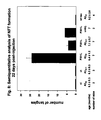
- the increase of neurofibrillary tangles is at least five-fold as compared to a control animal to which no APP or a fragment thereof, in particular ⁇ -amyloid, has been administered.
- the herein described methods can further be useful for the induction of other neuropathological features similar to the features observed in Alzheimer's disease, such as the formation of neuropil threads and/or the degeneration of neurites.
- the invention features a transgenic rodent which expresses a recombinant gene coding for tau protein wherein said rodent is capable of producing neurofibrillary tangles. Furthermore, a feature of the present invention is a transgenic rodent which expresses a recombinant gene coding for tau protein wherein said rodent is capable of producing an increased number of neurofibrillary tangles. Additionally, another feature of the invention is a transgenic rodent wich expresses a recombinant gene coding for tau protein wherein said rodent is capable of an accelerated production of neurofibrillary tangles.
- the herein described rodents comprise APP or a ⁇ -amyloid fragment, thereof, in an amount sufficient to induce the production of neurofibrillary tangles.
- the instant invention claims a transgenic rodent which expresses a recombinant gene coding for tau protein wherein the increase in the number of neurofibrillary tangles and/or the accelerated production of neurofibrillary tangles is induced through injection of APP or a ⁇ -amyloid fragment thereof.
- the ⁇ -amyloid is preferably injected into the brain of said rodent, in particular through injection into the hippocampus or the cortex.
- a recombinant gene coding for APP or can be coexpressed thereof can be coexpressed said APP being enzymatically processed to generate a cleavage product, said cleavage product being ⁇ -amyloid.
- said co-expressed APP is a mutant APP, particularly a mutant associated with Alzheimer's disease pathology.
- the co-expression can be carried out, for instance, by recombinant expression methods as described in the state of the art.
- the transgenic rodents according to the present invention provide an in-vivo assay to determine or validate the efficacy of therapies, or modulatory agents, or compounds for the treatment of neurodegenerative diseases, in particular Alzheimer's disease, frontotemporal dementia (FTD), and other neurodegenerative diseases accompanied by neurofibrillary tangle formation.
- said in-vivo assay is useful for determining or validating the efficacy of amyloid-lowering therapies, such as ⁇ -amyloid vaccination, or NFT-reducing therapies.
- an in-vivo assay comprises, for instance, the following steps: (i) providing a transgenic rodent which produces neurofibrillary tangles, said rodent being generated by the methods of the instant invention, (ii) contacting said rodent with a compound or modulatory agent, or alternatively, applying a therapy in said rodent, and (iii) assessing the ability of said compound or modulatory agent, or said therapy to modulate the formation of neurofibrillary tangles, and/or the formation of neuropil threads, and/or the degeneration of neurites, or other AD-related pathology in said rodent.
- Determining the formation of neurofibrillary tangles in said in-vivo assay can be accomplished by a variety of methods, for instance immunohistochemistry and electron microscopy, and it can comprise the utilization of conformation-dependent antibodies that are capable of recognizing and discriminating a tau molecule in the context of neurofibrillary tangles from tau molecules existing in other states of aggregation.
- said conformation-dependent antibodies are optically labeled, preferably flourescently labeled, and can be detected, for instance, by a number of optical methodologies such as fluorescence polarisation spectroscopy, fluorescence correlation spectroscopy, fluorescence cross-correlation spectroscopy, fluorescence intensity distribution analysis, fluorescence lifetime measurements, fluorescence anisotropy measurements, fluorescence resonance energy transfer, or combinations thereof.
- optical methodologies such as fluorescence polarisation spectroscopy, fluorescence correlation spectroscopy, fluorescence cross-correlation spectroscopy, fluorescence intensity distribution analysis, fluorescence lifetime measurements, fluorescence anisotropy measurements, fluorescence resonance energy transfer, or combinations thereof.
- antibodies that are capable of recognizing phosphorylated epitopes of tau in particular epitopes whose degree of phosphorylation correlates with the state of tau aggregation and neurofibrillary tangle formation as observed in Alzheimer's disease, in particular the tau epitope S422, can be used.
- a ⁇ 42 fibrils were injected into the somatosensory cortex and the hippocampus of five to six month-old P301L tau transgenic mice and non-transgenic littermates, (refer to methods section (i)-(iii)).
- a ⁇ 42-1 the reversed sequence, derived from the identical source was used (methods section (ii)).
- a ⁇ 42 fibrils were generated by shaking incubation at 37°C and were confirmed by electron microscopy (Fig. 2 A,B) (methods section (ii) and (iii)).
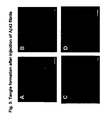
- This reaction may be related to the fact that neurons in the amygdala project to the injection sites, as shown by retrograde transport of Texas red-conjugated dextran from the injection site in the somatosensory cortex to cell bodies in the amygdala (Fig. 3D) (methods section (iv)).
- the neuropil threads were similar to those known in AD (Braak et al., Neurosci Lett 1986, 65: 351; McKee et al., Ann Neurol 1989, 26: 652; Velasco et al., Brain Res 1998, 813: 329).
- a subset of Gallyas-positive neurofibrillary tangles in the mice were also stained with thioflavin-S, consistent with the histopathology of AD (Fig. 5D).
- the filaments had a width of 20-25 nm and a periodicity of 90 nm, and are best described as twisted ribbons (Fig. 7).
- the P301L mutation causes predominant expression of 4 repeat (4R) isoforms, with a small amount of wild-type 3R isoforms, resulting in 15 nm wide twisted filaments with a periodicity of greater than 130 nm (Spillantini et al., Am J Pathol 1998, 153: 1359). Because mice endogenously express only 4R tau isoforms, and the transgene was designed to express 4R human P301 L tau, the filaments observed here contained no 3R tau. Importantly, the human intronic FTDP-17 mutations that reduce the formation of 3R tau also cause twisted ribbons mainly composed of 4R tau. It is therefore possible that the relative amounts of 3R and 4R isoforms contribute to the ultrastructural morphology of the filaments.
- NFTs in AD are associated with hyperphosphorylation and conformational changes of tau (Grundke-lqbal et al., Proc Natl Acad Sci U S A 1986, 83: 4913; Braak and Braak, Neurobiol Aging 1995, 16: 271; Jicha et al., J Neurosci Res 1997, 48: 128).
Landscapes
- Life Sciences & Earth Sciences (AREA)
- Health & Medical Sciences (AREA)
- Engineering & Computer Science (AREA)
- Chemical & Material Sciences (AREA)
- Zoology (AREA)
- Genetics & Genomics (AREA)
- Organic Chemistry (AREA)
- General Health & Medical Sciences (AREA)
- Environmental Sciences (AREA)
- Biotechnology (AREA)
- Biomedical Technology (AREA)
- Veterinary Medicine (AREA)
- Animal Behavior & Ethology (AREA)
- Bioinformatics & Cheminformatics (AREA)
- Animal Husbandry (AREA)
- Biodiversity & Conservation Biology (AREA)
- General Engineering & Computer Science (AREA)
- Wood Science & Technology (AREA)
- Molecular Biology (AREA)
- Biochemistry (AREA)
- Biophysics (AREA)
- Neurology (AREA)
- Medicinal Chemistry (AREA)
- Microbiology (AREA)
- Plant Pathology (AREA)
- Proteomics, Peptides & Aminoacids (AREA)
- Physics & Mathematics (AREA)
- Toxicology (AREA)
- Gastroenterology & Hepatology (AREA)
- General Chemical & Material Sciences (AREA)
- Pharmacology & Pharmacy (AREA)
- Nuclear Medicine, Radiotherapy & Molecular Imaging (AREA)
- Public Health (AREA)
- Chemical Kinetics & Catalysis (AREA)
- Neurosurgery (AREA)
- Micro-Organisms Or Cultivation Processes Thereof (AREA)
- Medicines That Contain Protein Lipid Enzymes And Other Medicines (AREA)
- Measuring Or Testing Involving Enzymes Or Micro-Organisms (AREA)
- Catching Or Destruction (AREA)
- Investigating Or Analysing Biological Materials (AREA)
Claims (19)
- Verfahren zur Erhöhung der Zahl der neurofibrillären Tangles in einem transgenen Nager, der ein rekombinantes Gen exprimiert, das für humanes P301L-mutantes Tau-Protein codiert, wobei die Zunahme der neurofibrillären Tangles durch Injektion von APP oder eines β-Amyloid-Fragments davon induziert wird.
- Verfahren zur Beschleunigung der Produktion von neurofibrillären Tangles in einem transgenen Nager, der ein rekombinantes Gen exprimiert, das für humanes P301L-mutantes Tau-Protein codiert, wobei die beschleunigte Produktion von neurofibrillären Tangles durch Injektion von APP oder eines β-Amyloid-Fragments davon induziert wird.
- Verfahren gemäß einem der Ansprüche 1 oder 2, wobei es sich bei dem β-Amyloid-Fragment um Aβ42 handelt.
- Verfahren gemäß Anspruch 3, wobei das Aβ42 fibrillär, voraggregiert oder aggregiert ist.
- Verfahren gemäß einem der Ansprüche 1 bis 4, wobei der transgene Nager eine Maus ist.
- Verfahren gemäß einem der Ansprüche 1 bis 5, wobei das β-Amyloid-Fragment in das Gehirn des Nagers, insbesondere in den Hippocampus oder den Cortex, injiziert wird.
- Verfahren gemäß einem der Ansprüche 1 bis 6, wobei die Zunahme der neurofibrillären Tangles vorwiegend in der Amygdala des Nagerhirns, insbesondere der basolateralen Amygdala, erfolgt.
- Verfahren gemäß einem der Ansprüche 1 bis 7, wobei die Zunahme der neurofibrillären Tangles auf ein Mehrfaches, vorzugsweise wenigstens auf das Zweifache, der Menge bei einem Kontrolltier, in das kein APP oder ein β-Amyloid-Fragment davon induziert wurde, erfolgt.
- Verfahren gemäß einem der Ansprüche 1 bis 8, wobei die Zunahme der neurofibrillären Tangles wenigstens auf das Fünffache der Menge bei einem Kontrolltier, in das kein APP oder ein β-Amyloid-Fragment davon induziert wurde, erfolgt.
- Verfahren gemäß einem der Ansprüche 1 bis 9 zum Induzieren von Neuropilfäden und/oder zur Degeneration von Neuriten.
- Transgener Nager, der ein rekombinantes Gen exprimiert, das für humanes P301L-mutantes Tau-Protein codiert, und der eine erhöhte Zahl von neurofibrillären Tangles oder eine beschleunigte Produktion von neurofibrillären Tangles aufweist, wobei die erhöhte Zahl der neurofibrillären Tangles und/oder die beschleunigte Produktion der neurofibrillären Tangles des Nagers durch Injektion des APP oder des β-Amyloid-Fragments gemäß einem der Ansprüche 1 bis 10 erhalten wird.
- Nager gemäß Anspruch 11, wobei neurofibrilläre Tangles erzeugt werden, die mit denjenigen vergleichbar sind, die man üblicherweise bei neurodegenerativen Krankheiten des Menschen findet.
- Nager gemäß einem der Ansprüche 11 und/oder 12, der das APP oder das β-Amyloid-Fragment in einer ausreichenden Menge umfasst, um die Produktion von neurofibrillären Tangles zu induzieren.
- Nager gemäß einem der Ansprüche 11 bis 13, wobei das β-Amyloid-Fragment in das Gehirn des Nagers, insbesondere in den Hippocampus oder den Cortex, injiziert wird.
- Nager gemäß einem der Ansprüche 11 bis 14, der ein für APP codierendes rekombinantes Gen coexprimiert, wobei das APP zur Erzeugung des β-Amyloid-Fragments enzymatisch verarbeitet wird.
- Nager gemäß Anspruch 15, wobei das APP ein mutantes APP ist.
- Nager gemäß einem der Ansprüche 11 bis 16, bei dem es sich um eine Maus handelt.
- Verwendung des Nagers gemäß einem der Ansprüche 11 bis 17 als Tiermodell in einem in-vivo-Assay zur Bestimmung oder Bewertung der Wirksamkeit von Modulationsmitteln oder Therapien, insbesondere amyloidsenkenden Therapien oder NFT-reduzierenden Therapien.
- Verwendung gemäß Anspruch 18, wobei die Modulationsmittel oder Therapien auf neurodegenerative Krankheiten gerichtet sind, insbesondere Alzheimer-Krankheit, frontotemporale Demenz (FTD) und andere neurodegenerative Krankheiten, die mit einer Bildung von neurofibrillären Tangles einhergehen.
Priority Applications (1)
| Application Number | Priority Date | Filing Date | Title |
|---|---|---|---|
| EP02796273A EP1418807B8 (de) | 2001-08-24 | 2002-08-24 | Methode zur induzierung neurofibrillärer tangles in transgenen tieren |
Applications Claiming Priority (6)
| Application Number | Priority Date | Filing Date | Title |
|---|---|---|---|
| US31430301P | 2001-08-24 | 2001-08-24 | |
| EP01120348 | 2001-08-24 | ||
| US314303P | 2001-08-24 | ||
| EP01120348 | 2001-08-24 | ||
| PCT/EP2002/009491 WO2003017918A2 (en) | 2001-08-24 | 2002-08-24 | A method of inducing the formation of neurofibrillary tangles in transgenic animals |
| EP02796273A EP1418807B8 (de) | 2001-08-24 | 2002-08-24 | Methode zur induzierung neurofibrillärer tangles in transgenen tieren |
Publications (3)
| Publication Number | Publication Date |
|---|---|
| EP1418807A2 EP1418807A2 (de) | 2004-05-19 |
| EP1418807B1 true EP1418807B1 (de) | 2007-05-02 |
| EP1418807B8 EP1418807B8 (de) | 2008-04-23 |
Family
ID=34042746
Family Applications (1)
| Application Number | Title | Priority Date | Filing Date |
|---|---|---|---|
| EP02796273A Expired - Lifetime EP1418807B8 (de) | 2001-08-24 | 2002-08-24 | Methode zur induzierung neurofibrillärer tangles in transgenen tieren |
Country Status (7)
| Country | Link |
|---|---|
| US (2) | US20050015819A1 (de) |
| EP (1) | EP1418807B8 (de) |
| JP (1) | JP2005500076A (de) |
| AT (1) | ATE360988T1 (de) |
| AU (1) | AU2002333704A1 (de) |
| DE (1) | DE60219925T2 (de) |
| WO (1) | WO2003017918A2 (de) |
Families Citing this family (5)
| Publication number | Priority date | Publication date | Assignee | Title |
|---|---|---|---|---|
| JP5511144B2 (ja) * | 2008-02-12 | 2014-06-04 | 学校法人福岡大学 | てんかんモデル非ヒト哺乳動物 |
| SG189174A1 (en) | 2010-10-11 | 2013-05-31 | Biogen Idec Internat Neuroscience Gmbh | Human anti-tau antibodies |
| HRP20201422T1 (hr) | 2012-12-21 | 2021-02-19 | Biogen Ma Inc. | Ljudska anti-tau antitijela |
| ZA201608812B (en) | 2014-06-26 | 2019-08-28 | Janssen Vaccines & Prevention Bv | Antibodies and antigen-binding fragments that specifically bind to microtubule-associated protein tau |
| NZ727020A (en) * | 2014-06-26 | 2022-02-25 | Janssen Vaccines & Prevention Bv | Antibodies and antigen-binding fragments that specifically bind to microtubule-associated protein tau |
Family Cites Families (3)
| Publication number | Priority date | Publication date | Assignee | Title |
|---|---|---|---|---|
| US6172277B1 (en) * | 1997-10-28 | 2001-01-09 | The Miriam Hospital | Non-transgenic rodent model of alzheimer's disease |
| US6664443B1 (en) * | 1998-05-01 | 2003-12-16 | Mayo Foundation For Medical Education And Research | Pathogenic Tau mutations in transgenic mice |
| EP1077990A1 (de) * | 1998-05-01 | 2001-02-28 | Mayo Foundation For Medical Education And Research | Patogene tau mutationen |
-
2002
- 2002-08-24 US US10/487,546 patent/US20050015819A1/en not_active Abandoned
- 2002-08-24 JP JP2003522441A patent/JP2005500076A/ja active Pending
- 2002-08-24 DE DE60219925T patent/DE60219925T2/de not_active Expired - Lifetime
- 2002-08-24 AT AT02796273T patent/ATE360988T1/de not_active IP Right Cessation
- 2002-08-24 WO PCT/EP2002/009491 patent/WO2003017918A2/en not_active Ceased
- 2002-08-24 AU AU2002333704A patent/AU2002333704A1/en not_active Abandoned
- 2002-08-24 EP EP02796273A patent/EP1418807B8/de not_active Expired - Lifetime
-
2007
- 2007-10-23 US US11/976,318 patent/US7550648B2/en not_active Expired - Fee Related
Also Published As
| Publication number | Publication date |
|---|---|
| AU2002333704A1 (en) | 2003-03-10 |
| EP1418807B8 (de) | 2008-04-23 |
| US20050015819A1 (en) | 2005-01-20 |
| DE60219925D1 (de) | 2007-06-14 |
| JP2005500076A (ja) | 2005-01-06 |
| ATE360988T1 (de) | 2007-05-15 |
| US20080261878A1 (en) | 2008-10-23 |
| WO2003017918A3 (en) | 2003-12-04 |
| DE60219925T2 (de) | 2008-01-17 |
| WO2003017918A2 (en) | 2003-03-06 |
| EP1418807A2 (de) | 2004-05-19 |
| US7550648B2 (en) | 2009-06-23 |
Similar Documents
| Publication | Publication Date | Title |
|---|---|---|
| Götz et al. | Oligodendroglial tau filament formation in transgenic mice expressing G272V tau | |
| Götz et al. | Tau filament formation in transgenic mice expressing P301L tau | |
| Duyckaerts et al. | Alzheimer disease models and human neuropathology: similarities and differences | |
| Götz et al. | Transgenic animal models of Alzheimer's disease and related disorders: histopathology, behavior and therapy | |
| Schwab et al. | Transgenic mice overexpressing amyloid beta protein are an incomplete model of Alzheimer disease | |
| Lewis et al. | Propagation of tau pathology: hypotheses, discoveries, and yet unresolved questions from experimental and human brain studies | |
| Eisele et al. | Propagation of Aß pathology: hypotheses, discoveries, and yet unresolved questions from experimental and human brain studies | |
| Wen et al. | Overexpression of wild type but not an FAD mutant presenilin-1 promotes neurogenesis in the hippocampus of adult mice | |
| Moechars et al. | Premature death in transgenic mice that overexpress a mutant amyloid precursor protein is preceded by severe neurodegeneration and apoptosis | |
| EP3080611B1 (de) | Lösliche hochmolekulare (hmw) tau-spezies und anwendungen davon | |
| US7632816B2 (en) | Treatment of Alzheimer amyloid deposition | |
| Ubhi et al. | Neurofibrillary and neurodegenerative pathology in APP-transgenic mice injected with AAV2-mutant TAU: neuroprotective effects of Cerebrolysin | |
| Spencer et al. | Selective targeting of 3 repeat Tau with brain penetrating single chain antibodies for the treatment of neurodegenerative disorders | |
| US7550648B2 (en) | Inducing neurofibrillary tangles in transgenic mice expressing a mutant tau protein | |
| Ajit et al. | A unique tau conformation generated by an acetylation-mimic substitution modulates P301S-dependent tau pathology and hyperphosphorylation | |
| DeArmond et al. | Neuropathology of prion diseases | |
| JP2000512141A (ja) | パーレカン遺伝子組換え動物及びアミロイド症を治療するための化合物を同定する方法 | |
| EP1255824B1 (de) | Transgene mäuse zur studierung von neurodegenerativen syndromen | |
| Hajimohammadreza et al. | β-Amyloid precursor protein fragments and lysosomal dense bodies are found in rat brain neurons after ventricular infusion of leupeptin | |
| US20040038302A1 (en) | Methods and compounds for treating brain amyloidosis | |
| Vitali et al. | Soluble amyloid β-protein is increased in frontotemporal dementia with tau gene mutations | |
| KR102775835B1 (ko) | 알츠하이머병 모델 동물의 제조방법 및 그에 의해 제조된 알츠하이머병 모델 동물 | |
| Shoji et al. | Age‐related amyloid β protein accumulation induces cellular death and macrophage activation in transgenic mice | |
| US7135610B2 (en) | Mouse showing neurofibril change due to senile dementia | |
| US20260132176A1 (en) | Compositions and methods for treating neurodegenerative disease |
Legal Events
| Date | Code | Title | Description |
|---|---|---|---|
| PUAI | Public reference made under article 153(3) epc to a published international application that has entered the european phase |
Free format text: ORIGINAL CODE: 0009012 |
|
| 17P | Request for examination filed |
Effective date: 20040303 |
|
| AK | Designated contracting states |
Kind code of ref document: A2 Designated state(s): AT BE BG CH CY CZ DE DK EE ES FI FR GB GR IE IT LI LU MC NL PT SE SK TR |
|
| AX | Request for extension of the european patent |
Extension state: AL LT LV MK RO SI |
|
| RIN1 | Information on inventor provided before grant (corrected) |
Inventor name: GOETZ, JUERGEN 2 PSYCHIATRISCHE UNIV.KLINIKEN ZUER Inventor name: NITSCH, ROGER Inventor name: CHEN, FENG PSYCHIATRISCHE UNIV.KLINIKEN ZUERICH |
|
| 17Q | First examination report despatched |
Effective date: 20040809 |
|
| GRAP | Despatch of communication of intention to grant a patent |
Free format text: ORIGINAL CODE: EPIDOSNIGR1 |
|
| GRAS | Grant fee paid |
Free format text: ORIGINAL CODE: EPIDOSNIGR3 |
|
| GRAA | (expected) grant |
Free format text: ORIGINAL CODE: 0009210 |
|
| AK | Designated contracting states |
Kind code of ref document: B1 Designated state(s): AT BE BG CH CY CZ DE DK EE ES FI FR GB GR IE IT LI LU MC NL PT SE SK TR |
|
| PG25 | Lapsed in a contracting state [announced via postgrant information from national office to epo] |
Ref country code: FI Free format text: LAPSE BECAUSE OF FAILURE TO SUBMIT A TRANSLATION OF THE DESCRIPTION OR TO PAY THE FEE WITHIN THE PRESCRIBED TIME-LIMIT Effective date: 20070502 |
|
| REG | Reference to a national code |
Ref country code: GB Ref legal event code: FG4D |
|
| RIN1 | Information on inventor provided before grant (corrected) |
Inventor name: CHEN, FENG Inventor name: NITSCH, ROGER Inventor name: GOETZ, JUERGEN B |
|
| REG | Reference to a national code |
Ref country code: CH Ref legal event code: EP |
|
| REG | Reference to a national code |
Ref country code: IE Ref legal event code: FG4D |
|
| REF | Corresponds to: |
Ref document number: 60219925 Country of ref document: DE Date of ref document: 20070614 Kind code of ref document: P |
|
| RIN2 | Information on inventor provided after grant (corrected) |
Inventor name: GOETZ, JUERGEN B Inventor name: NITSCH, ROGER Inventor name: CHEN, FENG |
|
| PG25 | Lapsed in a contracting state [announced via postgrant information from national office to epo] |
Ref country code: SE Free format text: LAPSE BECAUSE OF FAILURE TO SUBMIT A TRANSLATION OF THE DESCRIPTION OR TO PAY THE FEE WITHIN THE PRESCRIBED TIME-LIMIT Effective date: 20070802 |
|
| PG25 | Lapsed in a contracting state [announced via postgrant information from national office to epo] |
Ref country code: ES Free format text: LAPSE BECAUSE OF FAILURE TO SUBMIT A TRANSLATION OF THE DESCRIPTION OR TO PAY THE FEE WITHIN THE PRESCRIBED TIME-LIMIT Effective date: 20070813 |
|
| REG | Reference to a national code |
Ref country code: CH Ref legal event code: NV Representative=s name: PATENTANWAELTE SCHAAD, BALASS, MENZL & PARTNER AG |
|
| NLV1 | Nl: lapsed or annulled due to failure to fulfill the requirements of art. 29p and 29m of the patents act | ||
| PG25 | Lapsed in a contracting state [announced via postgrant information from national office to epo] |
Ref country code: AT Free format text: LAPSE BECAUSE OF FAILURE TO SUBMIT A TRANSLATION OF THE DESCRIPTION OR TO PAY THE FEE WITHIN THE PRESCRIBED TIME-LIMIT Effective date: 20070502 |
|
| EN | Fr: translation not filed | ||
| PG25 | Lapsed in a contracting state [announced via postgrant information from national office to epo] |
Ref country code: BE Free format text: LAPSE BECAUSE OF FAILURE TO SUBMIT A TRANSLATION OF THE DESCRIPTION OR TO PAY THE FEE WITHIN THE PRESCRIBED TIME-LIMIT Effective date: 20070502 |
|
| PG25 | Lapsed in a contracting state [announced via postgrant information from national office to epo] |
Ref country code: NL Free format text: LAPSE BECAUSE OF FAILURE TO SUBMIT A TRANSLATION OF THE DESCRIPTION OR TO PAY THE FEE WITHIN THE PRESCRIBED TIME-LIMIT Effective date: 20070502 Ref country code: DK Free format text: LAPSE BECAUSE OF FAILURE TO SUBMIT A TRANSLATION OF THE DESCRIPTION OR TO PAY THE FEE WITHIN THE PRESCRIBED TIME-LIMIT Effective date: 20070502 Ref country code: CZ Free format text: LAPSE BECAUSE OF FAILURE TO SUBMIT A TRANSLATION OF THE DESCRIPTION OR TO PAY THE FEE WITHIN THE PRESCRIBED TIME-LIMIT Effective date: 20070502 Ref country code: PT Free format text: LAPSE BECAUSE OF FAILURE TO SUBMIT A TRANSLATION OF THE DESCRIPTION OR TO PAY THE FEE WITHIN THE PRESCRIBED TIME-LIMIT Effective date: 20071002 Ref country code: BG Free format text: LAPSE BECAUSE OF FAILURE TO SUBMIT A TRANSLATION OF THE DESCRIPTION OR TO PAY THE FEE WITHIN THE PRESCRIBED TIME-LIMIT Effective date: 20070802 |
|
| PG25 | Lapsed in a contracting state [announced via postgrant information from national office to epo] |
Ref country code: SK Free format text: LAPSE BECAUSE OF FAILURE TO SUBMIT A TRANSLATION OF THE DESCRIPTION OR TO PAY THE FEE WITHIN THE PRESCRIBED TIME-LIMIT Effective date: 20070502 |
|
| PLBE | No opposition filed within time limit |
Free format text: ORIGINAL CODE: 0009261 |
|
| STAA | Information on the status of an ep patent application or granted ep patent |
Free format text: STATUS: NO OPPOSITION FILED WITHIN TIME LIMIT |
|
| 26N | No opposition filed |
Effective date: 20080205 |
|
| PG25 | Lapsed in a contracting state [announced via postgrant information from national office to epo] |
Ref country code: IT Free format text: LAPSE BECAUSE OF FAILURE TO SUBMIT A TRANSLATION OF THE DESCRIPTION OR TO PAY THE FEE WITHIN THE PRESCRIBED TIME-LIMIT Effective date: 20070502 Ref country code: FR Free format text: LAPSE BECAUSE OF FAILURE TO SUBMIT A TRANSLATION OF THE DESCRIPTION OR TO PAY THE FEE WITHIN THE PRESCRIBED TIME-LIMIT Effective date: 20071228 Ref country code: GR Free format text: LAPSE BECAUSE OF FAILURE TO SUBMIT A TRANSLATION OF THE DESCRIPTION OR TO PAY THE FEE WITHIN THE PRESCRIBED TIME-LIMIT Effective date: 20070803 Ref country code: MC Free format text: LAPSE BECAUSE OF NON-PAYMENT OF DUE FEES Effective date: 20070831 |
|
| REG | Reference to a national code |
Ref country code: CH Ref legal event code: PK Free format text: DER VERTRETER SCHAAD BALASS MENZL & PARTNER WURDE IRRTUEMLICH EINGETRAGEN. Ref country code: CH Ref legal event code: NV Representative=s name: SCHMAUDER & PARTNER AG PATENTANWALTSBUERO |
|
| PG25 | Lapsed in a contracting state [announced via postgrant information from national office to epo] |
Ref country code: IE Free format text: LAPSE BECAUSE OF NON-PAYMENT OF DUE FEES Effective date: 20070824 |
|
| PG25 | Lapsed in a contracting state [announced via postgrant information from national office to epo] |
Ref country code: FR Free format text: LAPSE BECAUSE OF FAILURE TO SUBMIT A TRANSLATION OF THE DESCRIPTION OR TO PAY THE FEE WITHIN THE PRESCRIBED TIME-LIMIT Effective date: 20070502 |
|
| PG25 | Lapsed in a contracting state [announced via postgrant information from national office to epo] |
Ref country code: EE Free format text: LAPSE BECAUSE OF FAILURE TO SUBMIT A TRANSLATION OF THE DESCRIPTION OR TO PAY THE FEE WITHIN THE PRESCRIBED TIME-LIMIT Effective date: 20070502 |
|
| PG25 | Lapsed in a contracting state [announced via postgrant information from national office to epo] |
Ref country code: CY Free format text: LAPSE BECAUSE OF FAILURE TO SUBMIT A TRANSLATION OF THE DESCRIPTION OR TO PAY THE FEE WITHIN THE PRESCRIBED TIME-LIMIT Effective date: 20070502 |
|
| REG | Reference to a national code |
Ref country code: CH Ref legal event code: PCAR Free format text: SCHMAUDER & PARTNER AG PATENT- UND MARKENANWAELTE VSP;ZWAENGIWEG 7;8038 ZUERICH (CH) |
|
| PG25 | Lapsed in a contracting state [announced via postgrant information from national office to epo] |
Ref country code: LU Free format text: LAPSE BECAUSE OF NON-PAYMENT OF DUE FEES Effective date: 20070824 |
|
| PG25 | Lapsed in a contracting state [announced via postgrant information from national office to epo] |
Ref country code: TR Free format text: LAPSE BECAUSE OF FAILURE TO SUBMIT A TRANSLATION OF THE DESCRIPTION OR TO PAY THE FEE WITHIN THE PRESCRIBED TIME-LIMIT Effective date: 20070502 |
|
| PGFP | Annual fee paid to national office [announced via postgrant information from national office to epo] |
Ref country code: GB Payment date: 20150824 Year of fee payment: 14 Ref country code: CH Payment date: 20150824 Year of fee payment: 14 |
|
| PGFP | Annual fee paid to national office [announced via postgrant information from national office to epo] |
Ref country code: DE Payment date: 20151019 Year of fee payment: 14 |
|
| REG | Reference to a national code |
Ref country code: DE Ref legal event code: R119 Ref document number: 60219925 Country of ref document: DE |
|
| REG | Reference to a national code |
Ref country code: CH Ref legal event code: PL |
|
| GBPC | Gb: european patent ceased through non-payment of renewal fee |
Effective date: 20160824 |
|
| PG25 | Lapsed in a contracting state [announced via postgrant information from national office to epo] |
Ref country code: CH Free format text: LAPSE BECAUSE OF NON-PAYMENT OF DUE FEES Effective date: 20160831 Ref country code: LI Free format text: LAPSE BECAUSE OF NON-PAYMENT OF DUE FEES Effective date: 20160831 |
|
| PG25 | Lapsed in a contracting state [announced via postgrant information from national office to epo] |
Ref country code: DE Free format text: LAPSE BECAUSE OF NON-PAYMENT OF DUE FEES Effective date: 20170301 Ref country code: GB Free format text: LAPSE BECAUSE OF NON-PAYMENT OF DUE FEES Effective date: 20160824 |