EP1417975A1 - REMEDIES FOR DISEASES WITH BONE MASS LOSS HAVING EP sb 4 /sb AGONIST AS THE ACTIVE INGREDIENT - Google Patents
REMEDIES FOR DISEASES WITH BONE MASS LOSS HAVING EP sb 4 /sb AGONIST AS THE ACTIVE INGREDIENT Download PDFInfo
- Publication number
- EP1417975A1 EP1417975A1 EP02747707A EP02747707A EP1417975A1 EP 1417975 A1 EP1417975 A1 EP 1417975A1 EP 02747707 A EP02747707 A EP 02747707A EP 02747707 A EP02747707 A EP 02747707A EP 1417975 A1 EP1417975 A1 EP 1417975A1
- Authority
- EP
- European Patent Office
- Prior art keywords
- oxo
- hydroxy
- tetranor
- azaprost
- enoic acid
- Prior art date
- Legal status (The legal status is an assumption and is not a legal conclusion. Google has not performed a legal analysis and makes no representation as to the accuracy of the status listed.)
- Granted
Links
- 0 CC(CC(C)(*)*)*[C@@](C*C1=*)*1N Chemical compound CC(CC(C)(*)*)*[C@@](C*C1=*)*1N 0.000 description 10
- XKMYUEJUGDIIGH-JNLXFHGJSA-N CC(C)OC(C(C)OC(/C=C/CSCC[C@H]([C@H]([C@@H](C1)O)/C=C/[C@H](Cc2cccc(COC)c2)O)C1=O)=O)=O Chemical compound CC(C)OC(C(C)OC(/C=C/CSCC[C@H]([C@H]([C@@H](C1)O)/C=C/[C@H](Cc2cccc(COC)c2)O)C1=O)=O)=O XKMYUEJUGDIIGH-JNLXFHGJSA-N 0.000 description 1
- YCBRMJLUGHXVSO-LEWJYISDSA-N CC(C)Oc1cc(C[C@@H](CC[C@@H](CC2)N(CCCCCCC(O)=O)C2=O)O)ccc1 Chemical compound CC(C)Oc1cc(C[C@@H](CC[C@@H](CC2)N(CCCCCCC(O)=O)C2=O)O)ccc1 YCBRMJLUGHXVSO-LEWJYISDSA-N 0.000 description 1
- RKRLQDJTVWZXMM-UHFFFAOYSA-N CC(N1)=NOC1=O Chemical compound CC(N1)=NOC1=O RKRLQDJTVWZXMM-UHFFFAOYSA-N 0.000 description 1
- XCUUXCDIVKRONM-UHFFFAOYSA-N CC(N1)=NOC1=S Chemical compound CC(N1)=NOC1=S XCUUXCDIVKRONM-UHFFFAOYSA-N 0.000 description 1
- RAMIDNIJQHHESE-UHFFFAOYSA-N CC(N1)=NOS1=O Chemical compound CC(N1)=NOS1=O RAMIDNIJQHHESE-UHFFFAOYSA-N 0.000 description 1
- VVCKHHJMPOIXAQ-UHFFFAOYSA-N CC(N1)=NSC1=O Chemical compound CC(N1)=NSC1=O VVCKHHJMPOIXAQ-UHFFFAOYSA-N 0.000 description 1
- JHTAUGIYTJGPQJ-SSUSWEDASA-N CCCCCCN(CC1)CCN1C(COC(CCCSCCN([C@H](CC1)/C=C/[C@H](Cc(cc2)ccc2F)O)C1=O)=O)=O Chemical compound CCCCCCN(CC1)CCN1C(COC(CCCSCCN([C@H](CC1)/C=C/[C@H](Cc(cc2)ccc2F)O)C1=O)=O)=O JHTAUGIYTJGPQJ-SSUSWEDASA-N 0.000 description 1
- GFGMTSNURCAONP-NHKCBPKXSA-N CCCN(CCC)CC(OCCOC(CCCSCCN([C@H](CC1)/C=C/[C@H](Cc(cc2)ccc2F)O)C1=O)=O)=O Chemical compound CCCN(CCC)CC(OCCOC(CCCSCCN([C@H](CC1)/C=C/[C@H](Cc(cc2)ccc2F)O)C1=O)=O)=O GFGMTSNURCAONP-NHKCBPKXSA-N 0.000 description 1
- QANYHEQSAXEARC-XZOQPEGZSA-N CCOC(CCCCCCN([C@@H](CC[C@H](Cc1cccc(COC)c1)O)CC1)C1=O)=O Chemical compound CCOC(CCCCCCN([C@@H](CC[C@H](Cc1cccc(COC)c1)O)CC1)C1=O)=O QANYHEQSAXEARC-XZOQPEGZSA-N 0.000 description 1
- HFXVRZCPMJYDPJ-ZSXQTNLUSA-N CCOC(CCCCCCN([C@H](CC1)/C=C/[C@H](Cc2cccc(COC)c2)O)C1=O)=O Chemical compound CCOC(CCCCCCN([C@H](CC1)/C=C/[C@H](Cc2cccc(COC)c2)O)C1=O)=O HFXVRZCPMJYDPJ-ZSXQTNLUSA-N 0.000 description 1
- VFURZFXINHLLBT-GFCCVEGCSA-N CCOC(CCCCCCN([C@H](CC1)C=O)C1=O)=O Chemical compound CCOC(CCCCCCN([C@H](CC1)C=O)C1=O)=O VFURZFXINHLLBT-GFCCVEGCSA-N 0.000 description 1
- FZZJLUHBUNNJJO-LEWJYISDSA-N CN(C)C(COC(CCCSCCN([C@@H](CC[C@H](Cc1cc(Cl)ccc1)O)CC1)C1=O)=O)=O Chemical compound CN(C)C(COC(CCCSCCN([C@@H](CC[C@H](Cc1cc(Cl)ccc1)O)CC1)C1=O)=O)=O FZZJLUHBUNNJJO-LEWJYISDSA-N 0.000 description 1
- BRPCUFYDAVWBES-UHFFFAOYSA-N COC(CCCSCCN(C(CO)CC1)C1=O)=O Chemical compound COC(CCCSCCN(C(CO)CC1)C1=O)=O BRPCUFYDAVWBES-UHFFFAOYSA-N 0.000 description 1
- ASGXLBAYRUCXJB-RWDVLYHFSA-N COCc1cccc(C[C@@H](/C=C/[C@@H](CC2)N(CCCCCCC(O)=O)C2=O)O)c1 Chemical compound COCc1cccc(C[C@@H](/C=C/[C@@H](CC2)N(CCCCCCC(O)=O)C2=O)O)c1 ASGXLBAYRUCXJB-RWDVLYHFSA-N 0.000 description 1
- PYPAXGAKDDQMHI-QOEWUMFVSA-N COCc1cccc(C[C@@H](/C=C/[C@@H](CC2)N(CCCc3ccc(C(O)=O)[s]3)C2=O)O)c1 Chemical compound COCc1cccc(C[C@@H](/C=C/[C@@H](CC2)N(CCCc3ccc(C(O)=O)[s]3)C2=O)O)c1 PYPAXGAKDDQMHI-QOEWUMFVSA-N 0.000 description 1
- JJISWZFBSNXKPL-WOILGKDISA-N COCc1cccc(C[C@@H](/C=C/[C@H]([C@@H](CCSCCCC(OCCO)=O)C(C2)=O)[C@@H]2O)O)c1 Chemical compound COCc1cccc(C[C@@H](/C=C/[C@H]([C@@H](CCSCCCC(OCCO)=O)C(C2)=O)[C@@H]2O)O)c1 JJISWZFBSNXKPL-WOILGKDISA-N 0.000 description 1
- DWLBFFMLIQEQIV-ORMBLBCUSA-N COc(cc1)ccc1-c1cc(C[C@@H](/C=C/[C@@H](CC2)N(CCSc3nc(C(O)=O)c[s]3)C2=O)O)ccc1 Chemical compound COc(cc1)ccc1-c1cc(C[C@@H](/C=C/[C@@H](CC2)N(CCSc3nc(C(O)=O)c[s]3)C2=O)O)ccc1 DWLBFFMLIQEQIV-ORMBLBCUSA-N 0.000 description 1
- FEIGIVZRKKZMLJ-YUXAGFNASA-N C[C@@H](CCCC(O)=O)CCN([C@@H](CC[C@H](Cc1cccc(COC)c1)O)CC1)C1=O Chemical compound C[C@@H](CCCC(O)=O)CCN([C@@H](CC[C@H](Cc1cccc(COC)c1)O)CC1)C1=O FEIGIVZRKKZMLJ-YUXAGFNASA-N 0.000 description 1
- XCHSNCZEYBEIGI-QUJGQYFQSA-N Cc1cc(C[C@@H](/C=C/[C@@H](CC2)N(CCCCCCC(O)=O)C2=O)O)ccc1 Chemical compound Cc1cc(C[C@@H](/C=C/[C@@H](CC2)N(CCCCCCC(O)=O)C2=O)O)ccc1 XCHSNCZEYBEIGI-QUJGQYFQSA-N 0.000 description 1
- GXJVYOWKWVRIRT-ZWKOTPCHSA-N Cc1cc(C[C@@H](C#C[C@@H](CO2)N(CCSCCCC(O)=O)C2=O)O)ccc1 Chemical compound Cc1cc(C[C@@H](C#C[C@@H](CO2)N(CCSCCCC(O)=O)C2=O)O)ccc1 GXJVYOWKWVRIRT-ZWKOTPCHSA-N 0.000 description 1
- KGVPNLBXJKTABS-UHFFFAOYSA-N Cc1cc(O)n[o]1 Chemical compound Cc1cc(O)n[o]1 KGVPNLBXJKTABS-UHFFFAOYSA-N 0.000 description 1
- OMKVQNICZAITDI-ZWKOTPCHSA-N Cc1cccc(C[C@@H](CC[C@@H](CC2)N(CCCc3nc(C(O)=O)c[o]3)C2=O)O)c1 Chemical compound Cc1cccc(C[C@@H](CC[C@@H](CC2)N(CCCc3nc(C(O)=O)c[o]3)C2=O)O)c1 OMKVQNICZAITDI-ZWKOTPCHSA-N 0.000 description 1
- RCGDHBWFEGSNHU-NRFANRHFSA-N O=C(CC[C@@H](CC1)N(CCOC(CCC2CCCC2)=O)C1=O)Cc(cc1)ccc1F Chemical compound O=C(CC[C@@H](CC1)N(CCOC(CCC2CCCC2)=O)C1=O)Cc(cc1)ccc1F RCGDHBWFEGSNHU-NRFANRHFSA-N 0.000 description 1
- WUSQPGIPIGJVIL-KBSZCIAZSA-N OCCCCSCCN([C@H](CO1)/C=C/[C@H](Cc(cc2)ccc2F)O)C1=O Chemical compound OCCCCSCCN([C@H](CO1)/C=C/[C@H](Cc(cc2)ccc2F)O)C1=O WUSQPGIPIGJVIL-KBSZCIAZSA-N 0.000 description 1
- PKVAAXUGLCRKFS-SJKUQHEZSA-N O[C@@H](CC1CCCC1)/C=C/[C@@H](CC1)N(CCSc2nc(C(O)=O)c[s]2)C1=O Chemical compound O[C@@H](CC1CCCC1)/C=C/[C@@H](CC1)N(CCSc2nc(C(O)=O)c[s]2)C1=O PKVAAXUGLCRKFS-SJKUQHEZSA-N 0.000 description 1
- VNUZGGQEDYRNSO-GMIBQGTOSA-N O[C@@H](Cc(cc1)ccc1F)/C=C/[C@@H](CC1)N(CCCCCCC(O)=O)C1=O Chemical compound O[C@@H](Cc(cc1)ccc1F)/C=C/[C@@H](CC1)N(CCCCCCC(O)=O)C1=O VNUZGGQEDYRNSO-GMIBQGTOSA-N 0.000 description 1
- PIOINWBIULYIHL-ZECLNWPYSA-N O[C@@H](Cc(cc1)ccc1F)/C=C/[C@@H](CC1)N(CCSc2ccc(C(O)=O)[s]2)C1O Chemical compound O[C@@H](Cc(cc1)ccc1F)/C=C/[C@@H](CC1)N(CCSc2ccc(C(O)=O)[s]2)C1O PIOINWBIULYIHL-ZECLNWPYSA-N 0.000 description 1
- ZAZDMHQMDSYSDG-WLIQXQMSSA-N O[C@@H](Cc1cc(Cl)ccc1)/C=C/[C@@H](CC1)N(C/C=C\CCCC(O)=O)C1=O Chemical compound O[C@@H](Cc1cc(Cl)ccc1)/C=C/[C@@H](CC1)N(C/C=C\CCCC(O)=O)C1=O ZAZDMHQMDSYSDG-WLIQXQMSSA-N 0.000 description 1
- RUIWHFGZUWJVMV-JVRPOKLMSA-N O[C@@H](Cc1cc(OCc2ccncc2)ccc1)/C=C/[C@@H](CC1)N(CCSCCCC(O)=O)C1=O Chemical compound O[C@@H](Cc1cc(OCc2ccncc2)ccc1)/C=C/[C@@H](CC1)N(CCSCCCC(O)=O)C1=O RUIWHFGZUWJVMV-JVRPOKLMSA-N 0.000 description 1
- YRJQFGJPOUBDSJ-KSFASEQNSA-N O[C@@H](Cc1cccc(COC2CC2)c1)/C=C/[C@@H](CC1)N(CCSCCCC(O)=O)C1=O Chemical compound O[C@@H](Cc1cccc(COC2CC2)c1)/C=C/[C@@H](CC1)N(CCSCCCC(O)=O)C1=O YRJQFGJPOUBDSJ-KSFASEQNSA-N 0.000 description 1
- JTQMHUHRIOHWKN-ZWKOTPCHSA-N O[C@H](CC[C@@H](CC1)N(CCCc2ccc(C(O)=O)[o]2)C1=O)Cc(cc1)ccc1F Chemical compound O[C@H](CC[C@@H](CC1)N(CCCc2ccc(C(O)=O)[o]2)C1=O)Cc(cc1)ccc1F JTQMHUHRIOHWKN-ZWKOTPCHSA-N 0.000 description 1
- ROSGKIQGDUKPCS-FCHUYYIVSA-N O[C@H](CC[C@@H](CC1)N(CCSc2nc(C(O)=O)c[s]2)C1=O)Cc1cc(-c2cc3ccccc3[o]2)ccc1 Chemical compound O[C@H](CC[C@@H](CC1)N(CCSc2nc(C(O)=O)c[s]2)C1=O)Cc1cc(-c2cc3ccccc3[o]2)ccc1 ROSGKIQGDUKPCS-FCHUYYIVSA-N 0.000 description 1
Classifications
-
- C—CHEMISTRY; METALLURGY
- C07—ORGANIC CHEMISTRY
- C07C—ACYCLIC OR CARBOCYCLIC COMPOUNDS
- C07C405/00—Compounds containing a five-membered ring having two side-chains in ortho position to each other, and having oxygen atoms directly attached to the ring in ortho position to one of the side-chains, one side-chain containing, not directly attached to the ring, a carbon atom having three bonds to hetero atoms with at the most one bond to halogen, and the other side-chain having oxygen atoms attached in gamma-position to the ring, e.g. prostaglandins ; Analogues or derivatives thereof
- C07C405/0008—Analogues having the carboxyl group in the side-chains replaced by other functional groups
- C07C405/0033—Analogues having the carboxyl group in the side-chains replaced by other functional groups containing sulfur
-
- A—HUMAN NECESSITIES
- A61—MEDICAL OR VETERINARY SCIENCE; HYGIENE
- A61K—PREPARATIONS FOR MEDICAL, DENTAL OR TOILETRY PURPOSES
- A61K31/00—Medicinal preparations containing organic active ingredients
- A61K31/33—Heterocyclic compounds
- A61K31/395—Heterocyclic compounds having nitrogen as a ring hetero atom, e.g. guanethidine or rifamycins
- A61K31/40—Heterocyclic compounds having nitrogen as a ring hetero atom, e.g. guanethidine or rifamycins having five-membered rings with one nitrogen as the only ring hetero atom, e.g. sulpiride, succinimide, tolmetin, buflomedil
- A61K31/4015—Heterocyclic compounds having nitrogen as a ring hetero atom, e.g. guanethidine or rifamycins having five-membered rings with one nitrogen as the only ring hetero atom, e.g. sulpiride, succinimide, tolmetin, buflomedil having oxo groups directly attached to the heterocyclic ring, e.g. piracetam, ethosuximide
-
- A—HUMAN NECESSITIES
- A61—MEDICAL OR VETERINARY SCIENCE; HYGIENE
- A61K—PREPARATIONS FOR MEDICAL, DENTAL OR TOILETRY PURPOSES
- A61K31/00—Medicinal preparations containing organic active ingredients
- A61K31/33—Heterocyclic compounds
- A61K31/395—Heterocyclic compounds having nitrogen as a ring hetero atom, e.g. guanethidine or rifamycins
- A61K31/41—Heterocyclic compounds having nitrogen as a ring hetero atom, e.g. guanethidine or rifamycins having five-membered rings with two or more ring hetero atoms, at least one of which being nitrogen, e.g. tetrazole
-
- A—HUMAN NECESSITIES
- A61—MEDICAL OR VETERINARY SCIENCE; HYGIENE
- A61K—PREPARATIONS FOR MEDICAL, DENTAL OR TOILETRY PURPOSES
- A61K31/00—Medicinal preparations containing organic active ingredients
- A61K31/557—Eicosanoids, e.g. leukotrienes or prostaglandins
- A61K31/5575—Eicosanoids, e.g. leukotrienes or prostaglandins having a cyclopentane, e.g. prostaglandin E2, prostaglandin F2-alpha
-
- A—HUMAN NECESSITIES
- A61—MEDICAL OR VETERINARY SCIENCE; HYGIENE
- A61K—PREPARATIONS FOR MEDICAL, DENTAL OR TOILETRY PURPOSES
- A61K31/00—Medicinal preparations containing organic active ingredients
- A61K31/557—Eicosanoids, e.g. leukotrienes or prostaglandins
- A61K31/559—Eicosanoids, e.g. leukotrienes or prostaglandins having heterocyclic rings containing hetero atoms other than oxygen
-
- A—HUMAN NECESSITIES
- A61—MEDICAL OR VETERINARY SCIENCE; HYGIENE
- A61K—PREPARATIONS FOR MEDICAL, DENTAL OR TOILETRY PURPOSES
- A61K9/00—Medicinal preparations characterised by special physical form
- A61K9/0012—Galenical forms characterised by the site of application
- A61K9/0019—Injectable compositions; Intramuscular, intravenous, arterial, subcutaneous administration; Compositions to be administered through the skin in an invasive manner
-
- A—HUMAN NECESSITIES
- A61—MEDICAL OR VETERINARY SCIENCE; HYGIENE
- A61K—PREPARATIONS FOR MEDICAL, DENTAL OR TOILETRY PURPOSES
- A61K9/00—Medicinal preparations characterised by special physical form
- A61K9/14—Particulate form, e.g. powders, Processes for size reducing of pure drugs or the resulting products, Pure drug nanoparticles
- A61K9/16—Agglomerates; Granulates; Microbeadlets ; Microspheres; Pellets; Solid products obtained by spray drying, spray freeze drying, spray congealing,(multiple) emulsion solvent evaporation or extraction
- A61K9/1605—Excipients; Inactive ingredients
- A61K9/1629—Organic macromolecular compounds
- A61K9/1641—Organic macromolecular compounds obtained otherwise than by reactions only involving carbon-to-carbon unsaturated bonds, e.g. polyethylene glycol, poloxamers
- A61K9/1647—Polyesters, e.g. poly(lactide-co-glycolide)
-
- A—HUMAN NECESSITIES
- A61—MEDICAL OR VETERINARY SCIENCE; HYGIENE
- A61K—PREPARATIONS FOR MEDICAL, DENTAL OR TOILETRY PURPOSES
- A61K9/00—Medicinal preparations characterised by special physical form
- A61K9/20—Pills, tablets, discs, rods
- A61K9/2004—Excipients; Inactive ingredients
- A61K9/2022—Organic macromolecular compounds
- A61K9/205—Polysaccharides, e.g. alginate, gums; Cyclodextrin
- A61K9/2054—Cellulose; Cellulose derivatives, e.g. hydroxypropyl methylcellulose
-
- A—HUMAN NECESSITIES
- A61—MEDICAL OR VETERINARY SCIENCE; HYGIENE
- A61P—SPECIFIC THERAPEUTIC ACTIVITY OF CHEMICAL COMPOUNDS OR MEDICINAL PREPARATIONS
- A61P1/00—Drugs for disorders of the alimentary tract or the digestive system
- A61P1/02—Stomatological preparations, e.g. drugs for caries, aphtae, periodontitis
-
- A—HUMAN NECESSITIES
- A61—MEDICAL OR VETERINARY SCIENCE; HYGIENE
- A61P—SPECIFIC THERAPEUTIC ACTIVITY OF CHEMICAL COMPOUNDS OR MEDICINAL PREPARATIONS
- A61P1/00—Drugs for disorders of the alimentary tract or the digestive system
- A61P1/04—Drugs for disorders of the alimentary tract or the digestive system for ulcers, gastritis or reflux esophagitis, e.g. antacids, inhibitors of acid secretion, mucosal protectants
-
- A—HUMAN NECESSITIES
- A61—MEDICAL OR VETERINARY SCIENCE; HYGIENE
- A61P—SPECIFIC THERAPEUTIC ACTIVITY OF CHEMICAL COMPOUNDS OR MEDICINAL PREPARATIONS
- A61P1/00—Drugs for disorders of the alimentary tract or the digestive system
- A61P1/16—Drugs for disorders of the alimentary tract or the digestive system for liver or gallbladder disorders, e.g. hepatoprotective agents, cholagogues, litholytics
-
- A—HUMAN NECESSITIES
- A61—MEDICAL OR VETERINARY SCIENCE; HYGIENE
- A61P—SPECIFIC THERAPEUTIC ACTIVITY OF CHEMICAL COMPOUNDS OR MEDICINAL PREPARATIONS
- A61P11/00—Drugs for disorders of the respiratory system
-
- A—HUMAN NECESSITIES
- A61—MEDICAL OR VETERINARY SCIENCE; HYGIENE
- A61P—SPECIFIC THERAPEUTIC ACTIVITY OF CHEMICAL COMPOUNDS OR MEDICINAL PREPARATIONS
- A61P11/00—Drugs for disorders of the respiratory system
- A61P11/06—Antiasthmatics
-
- A—HUMAN NECESSITIES
- A61—MEDICAL OR VETERINARY SCIENCE; HYGIENE
- A61P—SPECIFIC THERAPEUTIC ACTIVITY OF CHEMICAL COMPOUNDS OR MEDICINAL PREPARATIONS
- A61P13/00—Drugs for disorders of the urinary system
- A61P13/12—Drugs for disorders of the urinary system of the kidneys
-
- A—HUMAN NECESSITIES
- A61—MEDICAL OR VETERINARY SCIENCE; HYGIENE
- A61P—SPECIFIC THERAPEUTIC ACTIVITY OF CHEMICAL COMPOUNDS OR MEDICINAL PREPARATIONS
- A61P15/00—Drugs for genital or sexual disorders; Contraceptives
- A61P15/08—Drugs for genital or sexual disorders; Contraceptives for gonadal disorders or for enhancing fertility, e.g. inducers of ovulation or of spermatogenesis
-
- A—HUMAN NECESSITIES
- A61—MEDICAL OR VETERINARY SCIENCE; HYGIENE
- A61P—SPECIFIC THERAPEUTIC ACTIVITY OF CHEMICAL COMPOUNDS OR MEDICINAL PREPARATIONS
- A61P17/00—Drugs for dermatological disorders
- A61P17/02—Drugs for dermatological disorders for treating wounds, ulcers, burns, scars, keloids, or the like
-
- A—HUMAN NECESSITIES
- A61—MEDICAL OR VETERINARY SCIENCE; HYGIENE
- A61P—SPECIFIC THERAPEUTIC ACTIVITY OF CHEMICAL COMPOUNDS OR MEDICINAL PREPARATIONS
- A61P17/00—Drugs for dermatological disorders
- A61P17/14—Drugs for dermatological disorders for baldness or alopecia
-
- A—HUMAN NECESSITIES
- A61—MEDICAL OR VETERINARY SCIENCE; HYGIENE
- A61P—SPECIFIC THERAPEUTIC ACTIVITY OF CHEMICAL COMPOUNDS OR MEDICINAL PREPARATIONS
- A61P19/00—Drugs for skeletal disorders
-
- A—HUMAN NECESSITIES
- A61—MEDICAL OR VETERINARY SCIENCE; HYGIENE
- A61P—SPECIFIC THERAPEUTIC ACTIVITY OF CHEMICAL COMPOUNDS OR MEDICINAL PREPARATIONS
- A61P19/00—Drugs for skeletal disorders
- A61P19/02—Drugs for skeletal disorders for joint disorders, e.g. arthritis, arthrosis
-
- A—HUMAN NECESSITIES
- A61—MEDICAL OR VETERINARY SCIENCE; HYGIENE
- A61P—SPECIFIC THERAPEUTIC ACTIVITY OF CHEMICAL COMPOUNDS OR MEDICINAL PREPARATIONS
- A61P19/00—Drugs for skeletal disorders
- A61P19/08—Drugs for skeletal disorders for bone diseases, e.g. rachitism, Paget's disease
-
- A—HUMAN NECESSITIES
- A61—MEDICAL OR VETERINARY SCIENCE; HYGIENE
- A61P—SPECIFIC THERAPEUTIC ACTIVITY OF CHEMICAL COMPOUNDS OR MEDICINAL PREPARATIONS
- A61P19/00—Drugs for skeletal disorders
- A61P19/08—Drugs for skeletal disorders for bone diseases, e.g. rachitism, Paget's disease
- A61P19/10—Drugs for skeletal disorders for bone diseases, e.g. rachitism, Paget's disease for osteoporosis
-
- A—HUMAN NECESSITIES
- A61—MEDICAL OR VETERINARY SCIENCE; HYGIENE
- A61P—SPECIFIC THERAPEUTIC ACTIVITY OF CHEMICAL COMPOUNDS OR MEDICINAL PREPARATIONS
- A61P21/00—Drugs for disorders of the muscular or neuromuscular system
-
- A—HUMAN NECESSITIES
- A61—MEDICAL OR VETERINARY SCIENCE; HYGIENE
- A61P—SPECIFIC THERAPEUTIC ACTIVITY OF CHEMICAL COMPOUNDS OR MEDICINAL PREPARATIONS
- A61P25/00—Drugs for disorders of the nervous system
-
- A—HUMAN NECESSITIES
- A61—MEDICAL OR VETERINARY SCIENCE; HYGIENE
- A61P—SPECIFIC THERAPEUTIC ACTIVITY OF CHEMICAL COMPOUNDS OR MEDICINAL PREPARATIONS
- A61P25/00—Drugs for disorders of the nervous system
- A61P25/20—Hypnotics; Sedatives
-
- A—HUMAN NECESSITIES
- A61—MEDICAL OR VETERINARY SCIENCE; HYGIENE
- A61P—SPECIFIC THERAPEUTIC ACTIVITY OF CHEMICAL COMPOUNDS OR MEDICINAL PREPARATIONS
- A61P25/00—Drugs for disorders of the nervous system
- A61P25/28—Drugs for disorders of the nervous system for treating neurodegenerative disorders of the central nervous system, e.g. nootropic agents, cognition enhancers, drugs for treating Alzheimer's disease or other forms of dementia
-
- A—HUMAN NECESSITIES
- A61—MEDICAL OR VETERINARY SCIENCE; HYGIENE
- A61P—SPECIFIC THERAPEUTIC ACTIVITY OF CHEMICAL COMPOUNDS OR MEDICINAL PREPARATIONS
- A61P29/00—Non-central analgesic, antipyretic or antiinflammatory agents, e.g. antirheumatic agents; Non-steroidal antiinflammatory drugs [NSAID]
-
- A—HUMAN NECESSITIES
- A61—MEDICAL OR VETERINARY SCIENCE; HYGIENE
- A61P—SPECIFIC THERAPEUTIC ACTIVITY OF CHEMICAL COMPOUNDS OR MEDICINAL PREPARATIONS
- A61P3/00—Drugs for disorders of the metabolism
- A61P3/12—Drugs for disorders of the metabolism for electrolyte homeostasis
- A61P3/14—Drugs for disorders of the metabolism for electrolyte homeostasis for calcium homeostasis
-
- A—HUMAN NECESSITIES
- A61—MEDICAL OR VETERINARY SCIENCE; HYGIENE
- A61P—SPECIFIC THERAPEUTIC ACTIVITY OF CHEMICAL COMPOUNDS OR MEDICINAL PREPARATIONS
- A61P31/00—Antiinfectives, i.e. antibiotics, antiseptics, chemotherapeutics
- A61P31/04—Antibacterial agents
-
- A—HUMAN NECESSITIES
- A61—MEDICAL OR VETERINARY SCIENCE; HYGIENE
- A61P—SPECIFIC THERAPEUTIC ACTIVITY OF CHEMICAL COMPOUNDS OR MEDICINAL PREPARATIONS
- A61P35/00—Antineoplastic agents
-
- A—HUMAN NECESSITIES
- A61—MEDICAL OR VETERINARY SCIENCE; HYGIENE
- A61P—SPECIFIC THERAPEUTIC ACTIVITY OF CHEMICAL COMPOUNDS OR MEDICINAL PREPARATIONS
- A61P35/00—Antineoplastic agents
- A61P35/04—Antineoplastic agents specific for metastasis
-
- A—HUMAN NECESSITIES
- A61—MEDICAL OR VETERINARY SCIENCE; HYGIENE
- A61P—SPECIFIC THERAPEUTIC ACTIVITY OF CHEMICAL COMPOUNDS OR MEDICINAL PREPARATIONS
- A61P37/00—Drugs for immunological or allergic disorders
-
- A—HUMAN NECESSITIES
- A61—MEDICAL OR VETERINARY SCIENCE; HYGIENE
- A61P—SPECIFIC THERAPEUTIC ACTIVITY OF CHEMICAL COMPOUNDS OR MEDICINAL PREPARATIONS
- A61P37/00—Drugs for immunological or allergic disorders
- A61P37/02—Immunomodulators
-
- A—HUMAN NECESSITIES
- A61—MEDICAL OR VETERINARY SCIENCE; HYGIENE
- A61P—SPECIFIC THERAPEUTIC ACTIVITY OF CHEMICAL COMPOUNDS OR MEDICINAL PREPARATIONS
- A61P41/00—Drugs used in surgical methods, e.g. surgery adjuvants for preventing adhesion or for vitreum substitution
-
- A—HUMAN NECESSITIES
- A61—MEDICAL OR VETERINARY SCIENCE; HYGIENE
- A61P—SPECIFIC THERAPEUTIC ACTIVITY OF CHEMICAL COMPOUNDS OR MEDICINAL PREPARATIONS
- A61P43/00—Drugs for specific purposes, not provided for in groups A61P1/00-A61P41/00
-
- A—HUMAN NECESSITIES
- A61—MEDICAL OR VETERINARY SCIENCE; HYGIENE
- A61P—SPECIFIC THERAPEUTIC ACTIVITY OF CHEMICAL COMPOUNDS OR MEDICINAL PREPARATIONS
- A61P7/00—Drugs for disorders of the blood or the extracellular fluid
- A61P7/02—Antithrombotic agents; Anticoagulants; Platelet aggregation inhibitors
-
- A—HUMAN NECESSITIES
- A61—MEDICAL OR VETERINARY SCIENCE; HYGIENE
- A61P—SPECIFIC THERAPEUTIC ACTIVITY OF CHEMICAL COMPOUNDS OR MEDICINAL PREPARATIONS
- A61P7/00—Drugs for disorders of the blood or the extracellular fluid
- A61P7/08—Plasma substitutes; Perfusion solutions; Dialytics or haemodialytics; Drugs for electrolytic or acid-base disorders, e.g. hypovolemic shock
-
- A—HUMAN NECESSITIES
- A61—MEDICAL OR VETERINARY SCIENCE; HYGIENE
- A61P—SPECIFIC THERAPEUTIC ACTIVITY OF CHEMICAL COMPOUNDS OR MEDICINAL PREPARATIONS
- A61P9/00—Drugs for disorders of the cardiovascular system
- A61P9/10—Drugs for disorders of the cardiovascular system for treating ischaemic or atherosclerotic diseases, e.g. antianginal drugs, coronary vasodilators, drugs for myocardial infarction, retinopathy, cerebrovascula insufficiency, renal arteriosclerosis
-
- A—HUMAN NECESSITIES
- A61—MEDICAL OR VETERINARY SCIENCE; HYGIENE
- A61P—SPECIFIC THERAPEUTIC ACTIVITY OF CHEMICAL COMPOUNDS OR MEDICINAL PREPARATIONS
- A61P9/00—Drugs for disorders of the cardiovascular system
- A61P9/12—Antihypertensives
-
- A—HUMAN NECESSITIES
- A61—MEDICAL OR VETERINARY SCIENCE; HYGIENE
- A61K—PREPARATIONS FOR MEDICAL, DENTAL OR TOILETRY PURPOSES
- A61K9/00—Medicinal preparations characterised by special physical form
- A61K9/14—Particulate form, e.g. powders, Processes for size reducing of pure drugs or the resulting products, Pure drug nanoparticles
- A61K9/19—Particulate form, e.g. powders, Processes for size reducing of pure drugs or the resulting products, Pure drug nanoparticles lyophilised, i.e. freeze-dried, solutions or dispersions
Definitions
- the present invention relates to
- Prostaglandin E 2 (abbreviated as PGE 2 ) has been known as a metabolite in the arachidonate cascade. It has been known that PGE 2 possesses cyto-protective activity, uterine contractive activity, a pain-inducing effect, a promoting effect on digestive peristalsis, an awakening effect, a suppressive effect on gastric acid secretion, hypotensive activity and diuretic activity and so on.
- EP 4 subtype receptor relates to inhibition of producing TNF- ⁇ and acceleration of producing IL-10. Therefore, the compounds which can bind on EP 4 subtype receptor are expected to be useful for the prevention and/or treatment of immunological diseases (autoimmune diseases such as amyotrophic lateral sclerosis (ALS), multiple sclerosis, Sjoegren's syndrome, chronic rheumarthrosis and systemic lupus erythematosus etc., and rejection after organ transplantation etc .), asthma, neuronal cell death, arthritis, lung failure, pulmonary fibrosis, pulmonary emphysema, bronchitis, chronic obstructive pulmonary disease, liver damage, acute hepatitis, nephritis (acute nephritis, chronic nephritis), renal insufficiency, hypertension, myocardiac ischemia, systemic inflammatory response syndrome, sepsis, hemophagous syndrome, macrophage activation syndrome, Still's disease,
- EP 4 subtype receptor relates to protecting of mucosa. Therefore, the compounds which can bind on EP 4 subtype receptor are expected to be useful for the prevention and/or treatment of ulcer of gastrointestinal tract such as gastric ulcer and duodenal ulcer etc . and stomatitis. It is also thought that EP 4 subtype receptor relates to hair growth function. Therefore, the compounds which can bind on EP 4 subtype receptor are expected to be useful for the prevention and/or treatment of hair-disadvantaged and alopecia. Furthermore, it is also thought that EP 4 subtype receptor relates to maturation of cervix. Therefore, the compounds which can bind on EP 4 subtype receptor are expected to be useful for the promoter of maturation of cervix.
- the compounds which can bind on EP 4 subtype receptor also have an action of accelerating bone formation, so it is expected to be useful for the prevention and/or treatment of diseases associated with decrease in bone mass, for example,
- the present invention also includes a pharmaceutical composition for accelerating bone formation after bone operation (e.g., bone formation after fractures, bone formation after bone grafting, bone formation after operation of artificial joint, bone formation after spinal fusion and bone formation after the other operation for bone regeneration etc .), or promoting treatment thereof, or alternative treatment for bone grafting.
- a pharmaceutical composition for accelerating bone formation after bone operation e.g., bone formation after fractures, bone formation after bone grafting, bone formation after operation of artificial joint, bone formation after spinal fusion and bone formation after the other operation for bone regeneration etc .
- EP 4 subtype receptor relates to induction of physiological sleeping and suppression of blood platelet aggregation, so such compounds are expected to be useful for the prevention and/or treatment of sleep disorder and thrombosis
- the compound which can bind an EP 4 receptor selectively do not have inducing pain which may be caused by EP 1 , uterine relaxation which may be caused by EP 2 and uterine contraction which may be caused by EP 3 , so they are thought to be agents having no effect on the above actions.
- EP 4 receptor agonist of formula (I-1) is useful for treatment of diseases associated with decrease in bone mass.
- the EP 4 receptor agonist of formulae (A) and (I-1) is useful for treatment of diseases associated with bone, there is a general description about topical administration. Therefore it is unproved that topical administration of the EP 4 receptor agonist is useful for treatment of diseases associated with bone experimentally.
- each subtype is called EP 1 , EP 2 , EP 3 , and EP 4 and has a different pharmacological action. So the compounds which can bind on EP 4 subtype receptor selectively and binds on the other subtype receptors weakly may be the drug with less side effect, because they show no any other activities. Therefore it is in need of finding the drug like this.
- the present inventors found out the compound which binds on both EP 4 and EP 2 subtype receptor.
- the compound which binds on both EP 4 and EP 2 subtype receptor is expected additive or multiplier effect when treatment of the disease associated with both subtype receptor.
- the present inventors also thought that we can create the therapeutic agent (treatment of diseases associated with decrease in bone mass, particularly) with no side-effect in systemic administration if EP 4 agonist can be administered topically.
- the present invention relates to
- C1-4 alkyl means methyl, ethyl, propyl, butyl and the isomers thereof.
- C1-10 alkyl means methyl, ethyl, propyl, butyl, pentyl, hexyl, heptyl, octyl, nonyl, decyl and the isomers thereof
- C1-15 alkyl means methyl, ethyl, propyl, butyl, pentyl, hexyl, heptyl, octyl, nonyl, decyl, undecyl, dodecyl, tridecyl, tetradecyl, pentadecyl and the isomers thereof.
- C2-10 alkenyl means ethenyl, propenyl, butenyl, pentenyl, hexenyl, heptenyl, octenyl, nonenyl, decenyl and the isomers thereof
- C2-15 alkenyl means ethenyl, propenyl, butenyl, pentenyl, hexenyl, heptenyl, octenyl, nonenyl, decenyl, undecenyl, dodecenyl, tetradecenyl, pentadecenyl and the isomers thereof
- C2-10 alkynyl means ethynyl, propynyl, butynyl, pentynyl, hexynyl, heptynyl, octynyl, nonynyl, decynyl and the isomers thereof
- C2-15 alkynyl means ethynyl, propynyl, butynyl, pentynyl, hexynyl, heptynyl, octynyl, nonynyl, decynyl, undecynyl, dodecynyl, tridecynyl, tetradecynyl, pentadecynyl and the isomers thereof.
- straight-chain C1-4 alkylene means methylene, ethylene, trimethylene and tetramethylene.
- straight-chain C2-8 alkylene means methylene, ethylene, trimethylene, tetramethylene, pentamethylene, hexamethylene, heptamethylene and octamethylene.
- C1-4 alkylene means methylene, ethylene, trimethylene, tetramethylene and the isomers thereof.
- C1-10 alkylene means methylene, ethylene, trimethylene, tetramethylene, pentamethylene, hexamethylene, heptamethylene, octamethylene, nonamethylene, decamethylene and the isomers thereof.
- C1-15 alkylene means methylene, ethylene, trimethylene, tetramethylene, pentamethylene, hexamethylene, heptamethylene, octamethylene, nonamethylene, decamethylene, undecamethylene, dodecamethylene, tridecamethylene, tetradecamethylene, pentadecamethylene and the isomers thereof.
- straight-chain C2-4 alkenylene means ethenylene, propenylene, butenylene and the isomers thereof.
- straight-chain C2-8 alkenylene means C2-8 alkenylene which has 1 to 2 double bond(s). It means ethenylene, propenylene, butenylene, pentenylene, hexenylene, heptenylene, octenylene, pentadienylene, hexadienylene, heptadienylene and octadienylene.
- C2-15 alkenylene means ethenylene, propenylene, butenylene, pentenylene, hexenylene, heptenylene, octenylene, nonenylene, decenylene, undecenylene, dodecenylene, tridecenylene, tetradecenylene, pentadecenylene and the isomers thereof
- straight-chain C2-4 alkynylene means ethynylene, propynylene, butynylene.
- straight-chain C2-8 alkynylene means C2-8 alkenylene which has 1 to 2 triple bond(s). It means ethynylene, propynylene, butynylene, butadiynylene, pentynylene, pentadiynylene, hexynylene, hexadiynylene, heptynylene, heptadiynylene, octynylene, octadiynylene.
- C2-15 alkynylene means ethynylene, propynylene, butynylene, pentynylene, hexynylene, heptynylene, octynylene, nonynylene, decynylene, undecynylene, dodecynylene, tridecynylene, tetradecynylene, pentadecynylene and the isomers thereof.
- C1-10 alkoxy means methoxy, ethoxy, propoxy, butoxy, pentyloxy, hexyloxy, heptyloxy, octyloxy, nonyloxy, decyloxy and the isomers thereof.
- C1-10 alkylthio means methylthio, ethylthio, propylthio, butylthio, pentylthio, hexylthio, heptylthio, octylthio, nonylthio, decylthio and the isomers thereof.
- halogen atom means chloride, bromide, fluoride and iodide atom.
- biphenyl means 2-phenylphenyl, 3-phenylphenyl or 4-phenylphenyl.
- C2-10 acyl means ethanoyl, propanoyl, butanoyl, pentanoyl, hexanoyl, heptanoyl, octanoyl, nonanoyl, decanoyl and the isomers thereof.
- phenylene means benzene ring which has two connectable bonds, i.e. ,
- thienylene means thiophene ring which has two connectable bonds, i.e .,
- furylene means furan ring which has two connectable bonds, i . e .,
- thiazolylene means thiazole ring which has two connectable bonds, i.e. ,
- oxazolylene means oxazole ring which has two connectable bonds, i . e .,
- C3-5cycloalkylene means cyclopropyl, cyclobutyl or cyclopenthyl which have two connectable bonds, i.e .,
- amino acid residue means the amino acid residue of natural amino acid or abnormal amino acid.
- Natural amino acids or abnormal amino acid include, for example, glycine, alanine, valine, leucine, isoleucine, serine, threonine, cystein, methionine, proline, asparagine, glutamine, phenylalanine, tyrosine, tryptophan, aspartic acid, glutamic acid, lysine, arginine, histidine, ⁇ -alanine, cystathionine, cystine, homoserine, isoleucine, lanthionine, norleucine, norvaline, ornithine, sarcosine, thyronine.
- the amino acid with protecting group is included the former amino acid residue.
- a protecting group of amino group includes, for example, benzyloxycarbonyl, t-butoxycarbonyl, trifluoroacetyl, 9-fluorenylmethoxycarbonyl.
- 5 to 7 membered saturated mono-heterocyclic ring means 5 to 7 membered saturated mono-heterocyclic ring which may contains another one hetero atom selected from oxygen, nitrogen and sulfur atom. It includes, for example, pyrrolidine, imidazolidine, pyrazolidine, piperidine, piperazine, perhydropyridazine, perhydroazepine, perhydrodiazepine, tetrahydrooxazole (oxazolidine), tetrahydroisoxazole (isoxazolidine), tetrahydrothiazole (thiazolidine), tetrahydroisothiazole (isothiazolidine), tetrahydrooxazine, perhydrooxazepine, tetrahydrothiazine, perhydrothiazepine, morpholine, thiomorpholine ring.
- C3-15 mono-, bi- or tri-carbocyclic ring which may be partially or fully saturated also includes spirocarbocyclic ring and bridged carbocyclic ring. It includes, for example, cyclopropane, cyclobutane, cyclopentane, cyclohexane, cycloheptane, cyclooctane, cyclononane, cyclodecane, cycloundecane, cyclododecane, cyclotridecane, cyclotetradecane, cyclopentadecane, cyclopropene, cyclobutene, cyclopentene, cyclohexene, cycloheptene, cyclooctene, cyclopentadiene, cyclohexadiene, cycloheptadiene, cyclooctadiene, benzene, pentalene, perhydropen
- 3 to 15 membered mono-, bi- or tri-heterocyclic aryl which may be partially or fully saturated containing 1 to 4 hetero atom(s) selected from oxygen, nitrogen and sulfur atom(s)
- 3 to 15 membered mono-, bi- or tri-heterocyclic aryl containing 1 to 4 hetero atom(s) selected from oxygen, nitrogen and sulfur atom(s) includes, for example, pyrrole, imidazole, triazole, tetrazole, pyrazole, pyridine, pyrazine, pyrimidine, pyridazine, azepine, diazepine, furan, pyran, oxepihe, thiophene, thiopyran, thiepine, oxazole, isoxazole, thiazole, isothiazole, furazan, oxadiazole, oxazine, oxadiazine, oxaxaxa
- the 3 to 15 membered mono-, bi- or tri-heterocyclic aryl which may be partially or fully saturated containing 1 to 4 hetero atom(s) selected from oxygen, nitrogen and sulfur atom(s) includes aziridine, azetidine, pyrroline, pyrrolidine, imidazoline, imidazolidine, triazoline, triazolidine, tetrazoline, tetrazolidine, pyrazoline, pyrazolidine, dihydropyridine, tetrahydropyridine, piperidine, dihydropyrazine, tetrahydropyrazine, piperazine, dihydropyrimidine, tetrahydropyrimidine, perhydropyrimidine, dihydropyridazine, tetrahydropyridazine, perhydropyridazine, dihydroazepine, tetrahydroazepine, perhydroazepine, dihydrodiazepine, t
- C1-6 alkyloxy means methoxy, ethoxy, propoxy, butoxy, pentyloxy, hexyloxy and the isomers thereof.
- C1-4 alkyloxy means methoxy, ethoxy, propoxy, butoxy and the isomers thereof.
- C1-4 alkylthio means methylthio, ethylthio, propylthio, butylthio and the isomers thereof
- C2-4 alkenyloxy means ethenyloxy, propenyloxy, butenyloxy and the isomers thereof.
- C2-4 alkenylthio means ethenylthio, propenylthio, butenylthio and the isomers thereof
- C2-4 alkynyloxy means ethynyloxy, propynyloxy, butynyloxy and the isomers thereof.
- C2-4 alkynylthio means ethynylthio, propynylthio, butynylthio and the isomers thereof.
- C3-7 cycloalkyl means cyclopropyl, cyclobutyl, cyclopentyl, cyclohexyl, cycloheptyl and the isomers thereof.
- C3-7 cycloalkyloxy means cyclopropyloxy, cyclobutyloxy, cyclopentyloxy, cyclohexyloxy, cycloheptyloxy and the isomers thereof.
- C3-7 cycloalkylthio means cyclopropylthio, cyclobutylthio, cyclopentylthio, cyclohexylthio, cycloheptylthio and the isomers thereof.
- alkyl, alkenyl, alkynyl, alkoxy, alkylthio, alkylene alkenylene and alkynylene group means straight-chain or branched-chain ones.
- isomers on double bond, ring, fused ring (E-, Z-, cis-, trans-isomer), isomers generated from asymmetric carbon atom(s) (R-, S-, ⁇ -, ⁇ -isomer, enantiomer, diastereomer), optically active isomers (D-, L-, d-, l-isomer), polar compounds generated by chromatographic separation (more polar compound, less polar compound), equilibrium compounds, mixtures thereof at voluntary ratios and racemic mixtures are also included in the present invention.
- the symbol means that the substituent attached thereto is behind the sheet (i.e., ⁇ -configuration), the symbol means that the substituent attached thereto is in front of the sheet (i.e., ⁇ -configuration), the symbol means ⁇ -configuration, ⁇ -configuration or a mixture of ⁇ -configuration and ⁇ -configuration, and the symbol means that there is a mixture of ⁇ -configuration and ⁇ -configuration as would be clear to the person skilled in the art.
- the compound of the present invention may be converted into the corresponding non-toxic salt by conventional methods.
- Non-toxic salts of the compounds of the present invention include all pharmaceutically acceptable salts, and water-soluble salts are preferred.
- Non-toxic salts of the compounds of the present invention include: salts of alkali metals (e.g . potassium, sodium, lithium, etc .), salts of alkaline earth metals ( e.g . calcium, magnesium, etc .), ammonium salts ( e.g . tetramethylammonium salt, tetrabutylammonium salt, etc .), salts of organic amines ( e.g .
- Non-toxic salts of the compounds of the present invention include solvates thereof or solvates of the salts of alkali metals, salts of alkaline earth metals, ammonium salts, salts of organic amines and acid addition salts of the compounds of the present invention.
- Non-toxic and water-soluble solvates are preferred.
- Solvates of the compounds of the present invention include: hydrates, solvates of the alcohols (ethanol etc. ), etc .
- the compounds of the present invention may be converted into the corresponding cyclodextrin clathrates by the method described in the specification of JP-B-50-3362, 52-31404 or 61-52146 using ⁇ -, ⁇ - or ⁇ -cyclodextrin or a mixture thereof. Converting into the corresponding cyclodextrin clathrates serves to increase the stability and solubility in water of the compounds, and therefore it is useful in the use for pharmaceuticals.
- EP 4 agonist it is enough to use the compound of the present invention as the EP 4 agonist if it has EP 4 agonistic activity. Both a selective EP 4 agonist and a non-selective EP 4 agonist can be used.
- EP 4 agonists of the present invention include the ones which will be found newly in future as well as known ones at present.
- the EP 4 agonists known at present are prostaglandin E 1 (PGE 1 ), prostaglandin E 2 (PGE 2 ), 13,14-dihydroprostaglandin E 1 , the compound described in WO00/54808, the compound described in WO01/37877, the compound described in JP-A-2001-181210, the compounds of formulae (I-1), (I-2) and (I-3) described in WO00/03980.
- Prostaglandin E 2 the compounds of formulae (I-1), (I-2) and (I-3) is more preferable.
- a 3 is preferably A 1-3 or A 2-3 . More preferably, A 3 is A 2-3 .
- G 1-3 is preferably (1) C1-4 straight-chain alkylene optionally substituted by 1-2 C1-4 alkyl, or (2) C2-4 straight-chain alkenylene optionally substituted by 1-2 C1-4 alkyl. 1) C1-4 straight-chain alkylene optionally substituted by 1-2 C1-4 alkyl is more preferable.
- G 2-3 is preferably (1) -Y 3 -, (2) -(ring1 3 )-, or (3) -Y 3 -(ring1 3 )-. 1) -Y 3 - is more preferable.
- Y 3 is preferably -S- or-O-. -S- is more preferable.
- G 3-3 is preferably (1) bond, (2) C1-4 straight-chain alkylene optionally substituted by 1-2 C1-4 alkyl, or (3) C2-4 straight-chain alkenylene optionally substituted by 1-2 C1-4 alkyl.
- (2) C1-4 straight-chain alkylene optionally substituted by 1-2 C1-4 alkyl is more preferable.
- T 3 is preferably oxygen atom or sulfur atom. Oxygen atom is more preferable.
- X 3 is preferably -CH 2 -, -O- or -S-. -CH 2 - is more preferable.
- D 3 is preferably -COOH, -COOR 2-3 , -COOR 9-3 -, COO-Z 1-3 -Z 2-3 -Z 3-3 , tetrazol-5-yl, -COOH, -COOR 2-3 , -COOR 9-3 - or COO-Z 1-3 -Z 2-3 -Z 3-3 is more preferable.
- -COOH or COO-Z 1-3 -Z 2-3 -Z 3-3 is most preferable.
- R 19-3 and R 20-3 are preferably hydrogen atom.
- E 3 is preferably ring3 3 , ring4 3 or ring5 3 .
- ring3 3 is preferably phenyl.
- ring4 3 is preferably phenyl.
- ring5 3 is preferably C5-10 mono- or bi-carbocyclic aryl which may be partially or fully saturated, or 5 to 10 membered mono- or bi- heterocyclic aryl containing 1 to 2 hetero atom selected from oxygen, nitrogen and sulfur atom(s) which may be partially or fully saturated.
- the 5 to 10 membered mono- or bi- heterocyclic aryl containing 1 to 2 hetero atom selected from oxygen, nitrogen and sulfur atom(s) which may be partially or fully saturated is preferably furan, thiophene, oxazole, thiazole, imidazole, pyridine, pyrimidine, benzofuran, indole, benzothiazole.
- the hydroxy of 15-position is preferably ⁇ -configuration.
- C13-14 is preferably double bond.
- Z 1-3 is preferably C1-15 alkylene.
- C1-8 alkylene is more preferable.
- C1-4 alkylene is most preferable.
- Z 2-3 is preferably -CO-, -OCO-, -COO-, -CONR 11-3 -, -OCONR 17-3 - or -OCOO-. -OCO-, -OCONR 17-3 -, -OCOO- is more preferable.
- Z 3-3 is preferably C1-15 alkyl or C1-10 alkyl substituted by C1-10 alkoxy, C1-10 alkylthio, C1-10 alkyl-NR 18-3 - or ring2 3 .
- C4-12 alkyl is more preferable.
- R 1-2 is preferably -COO-Y 2 -R 9-2 or -COO-Z 1-2 -Z 2-2 -Z 3-2 .
- COO-Z 1-2 -Z 2-2 -Z 3-2 is more preferable.
- Z 1-2 is preferably C1-15 alkylene.
- C1-8 alkylene is more preferable.
- C1-4 alkylene is most preferable.
- Z 2-2 is preferably -CO-, -OCO-, -COO-, -CONR 11-2 -, -OCONR 17-2 - or -OCOO-. -OCO-, -CONR 17-2 - or - OCOO- is more preferable.
- Z 3-2 is preferably C1-15 alkyl, C1-10 alkyl substituted by C1-10 alkoxy, C1-10 alkylthio, C1-10 alkyl-NR 18-2 - or ring1 2 .
- C4-12 alkyl is more preferable.
- preferable compounds are the compound of formula (I-3-A-1) (wherein all symbols are the same meanings as defined hereinbefore), the compound of formula (I-3-A-2) (wherein all symbols are the same meanings as defined hereinbefore), the compound of formula (I-3-A-3) (wherein all symbols are the same meanings as defined hereinbefore), the compound of formula (I-3-A-4) (wherein all symbols are the same meanings as defined hereinbefore), and the compound of formula (I-3-A-5) (wherein all symbols are the same meanings as defined hereinbefore).
- preferable compounds are the compound of formula (I-2-A-1) (wherein all symbols are the same meanings as defined hereinbefore), the compound of formula (I-2-A-2) (wherein all symbols are the same meanings as defined hereinbefore), the compound of formula (I-2-A-3) (wherein all symbols are the same meanings as defined hereinbefore), the compound of formula (I-2-A-4) (wherein all symbols are the same meanings as defined hereinbefore), the compound of formula (I-2-A-5) (wherein all symbols are the same meanings as defined hereinbefore), and the compound of formula (I-2-A-6) (wherein all symbols are the same meanings as defined hereinbefore).
- preferable compounds are the compound of formula (I-1-A-1) (wherein all symbols are the same meanings as defined hereinbefore), the compound of formula (I-1-A-2) (wherein all symbols are the same meanings as defined hereinbefore), the compound of formula (I-1-A-3) (wherein all symbols are the same meanings as defined hereinbefore), the compound of formula (I-1-A-4) (wherein all symbols are the same meanings as defined hereinbefore), the compound of formula (I-1-A-5) (wherein all symbols are the same meanings as defined hereinbefore), and the compound of formula (I-1-A-6) (wherein all symbols are the same meanings as defined hereinbefore).
- the compounds of the present invention are the compounds shown in the following tables 1 to 120, the compounds described in the Examples and non-toxic salts thereof.
- preferable compounds are the compound described in the Example of WO00/03980. More preferable compounds are the Compound (1) to (8) listed below.
- those of formula (I-1) can be produced according to the methods described in WO00/03980.
- those of formula (I-3) can be produced according to the methods mentioned below or according to the methods described in the Examples mentioned below.
- the compounds of formula (IA) can be produced by reducing a compound of formula (II): wherein A 3' , D 3' and E 3' have the same meanings as A 3 , D 3 and E 3 , respectively, but the hydroxyl, the amino, the carboxyl or the formyl in the group represented by A 3' , D 3' and E 3' may be protected, if necessary; and the other symbols have the same meanings as defined above, and then optionally removing the protective group from the resulting product.
- the reaction for reduction is known, and it may be effected, for example, by processing the compound in an organic solvent (e.g., tetrahydrofuran, dimethoxyethane, toluene, methylene chloride, diethyl ether, dioxane) in the presence of a reducing agent (e.g., borohydride-tetrahydrofuran complex, borohydride-dimethyl sulfide complex, diborane) and an asymmetric inducer (e.g., (R)-2-methyl-CBS-oxazaborolysine, (S)-2-methyl-CBS-oxazaborolysine) at -20 to 50°C.
- an organic solvent e.g., tetrahydrofuran, dimethoxyethane, toluene, methylene chloride, diethyl ether, dioxane
- a reducing agent e.g., borohydride-tetrahydr
- the removal of the protective group may be effected according to the methods mentioned below.
- reaction for removing the protective group for carboxyl, hydroxyl, amino or formyl is well known, including, for example, the following:
- the deprotection may also be effected, for example, according to the methods described in T.W. Greene, Protective Groups in Organic Synthesis, Wiley, New York, 1999.
- the carboxyl-protective group includes, for example, methyl, ethyl, allyl, t-butyl, trichloroethyl, benzyl (Bn), and phenacyl.
- the hydroxyl-protective group includes, for example, methyl, trityl, methoxymethyl (MOM), 1-ethoxyethyl (BE), methoxyethoxyethyl (MEM), 2-tetrahydropyranyl (THP), trimethylsilyl (TMS), triethylsilyl (TES), t-butyldimethylsilyl (TBDMS), t-butyldiphenylsilyl (TBDPS), acetyl (Ac), pivaloyl, benzoyl, benzyl (Bn), p-methoxybenzyl, allyloxycarbonyl (Alloc), and 2,2,2-trichloroethoxycarbonyl (Troc).
- MOM methoxymethyl
- BE 1-ethoxyethyl
- MEM methoxyethoxyethyl
- TMS trimethylsilyl
- TES triethylsily
- the amino-protective group includes, for example, benzyloxycarbonyl, t-butoxycarbonyl, allyloxycarbonyl (Alloc), 1-methyl-1-(4-biphenyl)ethoxycarbonyl (Bpoc), trifluoroacetyl, 9-fluorenylmethoxycarbonyl, benzyl (Bn), p-methoxybenzyl, benzyloxymethyl (BOM), and 2-(trimethylsilyl)ethoxymethyl (SEM).
- the formyl-protective group is, for example, acetal (e.g., dimethylacetal).
- the carboxyl, hydroxyl, amino or formyl-protective may be any others than those mentioned above, capable of being readily and selectively removed, and are not specifically defined. For example, those described in T.W. Greene, Protective Groups in Organic Synthesis , 3rd Ed., Wiley, New York, 1999 may be used.
- the compounds of formula (IB) can be produced by hydrogenating a compound of formula (III): wherein R 29-3 represents hydrogen, or a hydroxyl-protective group, and the other symbols have the same meanings as defined above, and then optionally removing the protective group from the resulting product.
- the reaction for hydrogenation is known, and it may be effected, for example, by processing the compound in an organic solvent (e.g., ether-type (e.g., tetrahydrofuran, dioxane, dimethoxyethane, diethyl ether), alcohol-type (e.g., methanol, ethanol), benzene-type (e.g., benzene, toluene), ketone-type (e.g., acetone, methyl ethyl ketone), nitrile-type (e.g., acetonitrile), amide-type (e.g., dimethylformamide), water, ethyl acetate, acetic acid, or mixed solvent of two or more of these), in the presence of a catalyst (e.g., palladium-carbon, palladium-black, palladium hydroxide, platinum oxide, Raney nickel), in a normal-pressure or increased-pressure hydrogen atmosphere or in the presence of
- the compounds of formula (IC) can be produced by thioamidating a compound of formula (IV): wherein all symbols have the same meanings as defined above, and then optionally removing the protective group from the resulting product.
- the reaction for thioamidation is known, and it may be effected, for example, by processing the compound in an organic solvent (e.g., toluene, diethyl ether, methylene chloride, chloroform, dioxane, tetrahydrofuran) in the presence of a thionating agent (e.g., Rawson reagent (2,4-bis(4-methoxyphenyl)-1,3-dithia-2,4-diphosphetan-2,4-disulfide), diphosphorus pentoxide) at 0 to 150°C.
- an organic solvent e.g., toluene, diethyl ether, methylene chloride, chloroform, dioxane, tetrahydrofuran
- a thionating agent e.g., Rawson reagent (2,4-bis(4-methoxyphenyl)-1,3-dithia-2,4-diphosp
- the compounds of formula (ID) can be produced by reducing a compound of formula (V): wherein R 30-3 represents C1-10 alkyl, and the other symbols have the same meanings as defined above, and then optionally removing the protective group from the resulting product.
- the reaction for reduction is known, and it may be effected, for example, by processing the compound in an organic solvent (e.g., tetrahydrofuran, dimethoxyethane, diethyl ether, dimethylformamide, dioxane, methanol, ethanol, isopropanol) or in its aqueous solution, in the presence of a reducing agent (e.g., sodium borohydride, lithium borohydride), at 0 to 70°C.
- an organic solvent e.g., tetrahydrofuran, dimethoxyethane, diethyl ether, dimethylformamide, dioxane, methanol, ethanol, isopropanol
- a reducing agent e.g., sodium borohydride, lithium borohydride
- the removal of the protective group may be effected in the same manner as herein. 5)
- D 3 is -CONR 3-3 SO 2 R 4-3 , -CONR 6-3 R 7-3 , -CONR 6-3 SO 2 R 8-3 , or -CO-(NH-amino acid residue-CO) m-3 -OH, or that is, those of formula (IE): wherein D 3" represents -CONR 3-3 SO 2 R 4-3 , -CONR 6-3 R 7-3 , -CONR 6-3 SO 2 R 8-3 , or -CO-(NH-amino acid residue-CO) m-3 -OH, and the other symbols have the same meanings as defined above, can be produced according to the methods mentioned below.
- the compounds of formula (IE) can be produced by amidating a compound of formula (VI): wherein all symbols have the same meanings as defined above, with a compound of formula (VII-1): H-NR 3-3 SO 2 R 4-3 (VII-1) wherein all symbols have the same meanings as defined above, or a compound of formula (VII-2): H-NR 6-3 R 7-3 (VII-2) wherein all symbols have the same meanings as defined above, or a compound of formula (VII-3): H-NR 6-3 SO 2 R 8-3 (VII-3) wherein all symbols have the same meanings as defined above, or a compound of formula (VII-4): H-(NH-amino acid residue-CO) m-3 -OH (VII-4) wherein all symbols have the same meanings as defined above, but the amino, the hydroxyl or the carboxyl in the compound of formula (VII-4) may be protected, if necessary, and then optionally removing the protective group from the resulting product.
- reaction for amidation is known, for example, including the following:
- the reactions (1), (2) and (3) are all effected in an inert gas (e.g., argon, nitrogen) atmosphere with no water.
- an inert gas e.g., argon, nitrogen
- the compounds of formula (IF) can be produced by esterifying a compound of formula (VIII): wherein R 31-3 represents -OH or -CH 2 OH, and the other symbols have the same meanings as defined above, with a compound of formula (IX-1): HO-(CO-amino acid residue-NH) m-3 -H (IX-1) wherein all symbols have the same meanings as defined above, but the amino, the hydroxyl or the carboxyl in the compound of formula (IX-1) may be protected, if necessary, or a compound of formula (IX-2): HOOC-R 10-3 (IX-2) wherein R 10-3 has the same meaning as above, and then optionally removing the protective group from the resulting product.
- a compound of formula (IX-1) HO-(CO-amino acid residue-NH) m-3 -H (IX-1) wherein all symbols have the same meanings as defined above, but the amino, the hydroxyl or the carboxyl in the compound of formula
- the reaction for esterification is known, for example, including the following:
- the reactions (1), (2) and (3) are all effected in an inert gas (e.g., argon, nitrogen) atmosphere with no water.
- an inert gas e.g., argon, nitrogen
- the compounds of formula (IG) can be produced by oxidizing a compound of formula (X): wherein all symbols have the same meanings as defined above, and then optionally removing the protective group from the resulting product.
- reaction for oxidation is known, for example, including the following:
- the oxidation is not limited to the above, and may be any other capable of readily and selectively oxidizing the alcohol into a ketone.
- herein employable is any of Johns oxidation, oxidation with PCC (pyridinium chlorochromate), oxidation with sulfur trioxide-pyridine complex, or those described in Comprehensive Organic Transformations (Richard C. Larock, VCH Publishers, Inc., (1989), pp. 604-614).
- the removal of the protective group may be effected in the same manner as herein. 8)
- the compounds of formula (1-3) those in which D 3 is -COOR 2-3 , -COOR 9-3 , or -COO-Z 1-3 -Z 2-3 -Z 3-3 , or that is, those of formula (IH): wherein D 3"" represents -COOR 2-3 , -COOR 9-3 , or -COO-Z 1-3 -Z 2-3 -Z 3-3 , and the other symbols have the same meanings as defined above, can be produced according to the methods mentioned below.
- the compounds of formula (IH) can be produced by esterifying a compound of formula (VI): wherein all symbols have the same meanings as defined above, with a compound of formula (XI-1): R 31-3 -R 2-3 (XI-1) wherein R 31-3 represents hydroxyl or halogen, and the other symbols have the same meanings as defined above, or a compound of formula (XI-2): R 31-3 -R 9-3 (XI-2) wherein all symbols have the same meanings as defined above, or a compound of formula (XI-3): R 31-3 -Z 1-3-1 -Z 2-3-1 -Z 3-3-1 (XI-3) wherein Z 1-3-1 , Z 2-3-1 and Z 3-3-1 have the same meanings as Z 1-3 , Z 2-3 and Z 3-3 , respectively, but the hydroxyl, the amino, the carboxyl or the formyl in the group of Z 1-3-1 -Z 2-3-1 -Z 3-3-1 may be optionally protected, if necessary, and then optionally removing the
- the esterification with the compound of formulae (XI-1), (XI-2) and (XI-3) in which R 31-3 is halogen may be effected, for example, in an organic solvent (e.g., dimethylformamide, tetrahydrofuran, dioxane, diethyl ether, dimethylacetamide), in the presence of a base (e.g., potassium carbonate, cesium carbonate, sodium carbonate, potassium hydrogencarbonate, sodium hydrogencarbonate, potassium hydroxide, sodium hydroxide) at 0 to 150°C.
- an organic solvent e.g., dimethylformamide, tetrahydrofuran, dioxane, diethyl ether, dimethylacetamide
- a base e.g., potassium carbonate, cesium carbonate, sodium carbonate, potassium hydrogencarbonate, sodium hydrogencarbonate, potassium hydroxide, sodium hydroxide
- reaction for nitro reduction is known, and it may be effected, for example through hydrogenolysis and reduction with organic metal.
- the reaction for hydrogenolysis is known, and the deprotection through hydrogenolysis may be effected, for example, in an inert solvent (e.g., ether-type (e.g., tetrahydrofuran, dioxane, dimethoxyethane, diethyl ether), alcohol-type (e.g., methanol, ethanol), benzene-type (e.g., benzene, toluene), ketone-type (e.g., acetone, methyl ethyl ketone), nitrile-type (e.g., acetonitrile), amide-type (e.g., dimethylformamide), water, ethyl acetate, acetic acid, or mixed solvent of two or more of these), in the presence of a hydrogenation catalyst (e.g., palladium-carbon, palladium-black, palladium, palladium hydroxide, platinum dioxide, nickel, Raney nickel, rut
- the reaction for reduction with organic metal is known, and it may be effected, for example, in a water-miscible solvent (e.g., ethanol, methanol) in the presence or absence of aqueous hydrochloric acid solution by the use of an organic metal (e.g., zinc, iron, tin, tin chloride, iron chloride) at 50 to 150°C. 10)
- a water-miscible solvent e.g., ethanol, methanol
- an organic metal e.g., zinc, iron, tin, tin chloride, iron chloride
- the compounds of formula (IJ) can be produced through reductive amination of a compound of formula (XII): wherein all symbols have the same meanings as defined above, with a compound of formula (XIII): OHC-A 3" -D 3' (XIII) wherein A 3" represents A 1'-3 or A 2'-3 , A 1'-3 represents
- the reaction for reductive amination is known, and it may be effected, for example, in an organic solvent (e.g., ethyl acetate, dichloroethane, dichloromethane, dimethylformamide, tetrahydrofuran, acetic acid, or their mixture) in the presence of a reducing agent (e.g., sodium triacetoxyborohydride, sodium borocyanohydride, sodium borohydride, zinc borohydride, diisobutylaluminium hydride) at -15 to 100°C, or in an organic solvent (e.g., ethyl acetate, dichloroethane, dichloromethane, methanol, ethanol, acetic acid, or their mixture) in the presence of a catalyst (e.g., palladium-carbon, palladium-black, palladium hydroxide, platinum oxide, Raney nickel) in a normal-pressure or increased-pressure hydrogen atmosphere at 0 to 200°C.
- the removal of the protective group may be effected in the same manner as herein.
- those of formula (I-2) can be produced according to the methods mentioned below or according to the methods described in the Examples mentioned below.
- the compounds of formula (IK) can be produced through amidation of a compound of formula (I-1) in which R 1-1 is hydroxy, or that is, a compound of formula (I-1-1): wherein all symbols have the same meanings as defined above, with a compound of formula (XIV): H-(NH-amino acid residue-CO) m-2 -OH (XIV) wherein all symbols have the same meanings as defined above, but the amino, the hydroxyl or the carboxyl in the compound of formula (XIV) may be optionally protected, if necessary, and then optionally removing the protective group from the resulting product.
- the compounds of formula (IL) can be produced through esterification of a compound of formula (I-1-1): wherein all symbols have the same meanings as defined above, with a compound of formula (XV-1): R 23-2 -Y 2 -R 9-2 (XV-1) wherein R 23-2 represents hydroxyl or halogen, and the other symbols have the same meanings as defined above, or a compound of formula (XV-2): R 23-2 -Z 1-2-1 -Z 2-2-1 -Z 3-2-1 (XV-2) wherein Z 1-2-1 , Z 2-2-1 and Z 3-2-1 have the same meanings as Z 1-2 , Z 2-2 and Z 3-2 , respectively, but the hydroxyl, the amino, the carboxyl or the formyl in the group of Z 1-2-1 -Z 2-2-1 -Z 3-2-1 may be optionally protected, if necessary, and then optionally removing the protective group from the resulting product.
- the deprotection may be effected also in the same manner as above.
- the compounds of formulae (II) and (XII) can be produced according to the following reaction processes 1, 2 and 3.
- Boc represents t-butoxycarbonyl
- R 32-3 represents hydroxyl-protective
- Ac represents an acetyl group
- R 33-3 represents halogen
- R 34-3 represents C1-3 alkylene
- R 35-3 represents C1-4 alkylene
- R 36-3 represents an amino-protective group
- the other symbols have the same meanings as defined above.
- the reaction product in each reaction stage in this description may be purified in an ordinary manner, for example, through normal-pressure or reduced-pressure distillation, or through high-performance liquid chromatography, thin-layer chromatography or column chromatography with silica gel or magnesium silicate, or through washing or recrystallization.
- the purification may be effected in every reaction stage or after some reaction stages.
- the compounds of the invention represented by formulae (I-2) and (I-3) act on PGE receptor EP 4 subtype specifically and strongly and thus are considered useful for prevention and/or treatment of immunodiseases (e.g., autoimmune diseases such as amyotrophic lateral sclerosis (ALS), multiple sclerosis, Sjogren's syndrome, chronic rheumatism and systemic lupus erythematosus, rejection after organ implantation) and diseases such as asthma, death of neurocyte, arthritis, lung disorder, fibroid lung, pulmonary emphysema, bronchitis, chronic obstructive respiratory disease, hepatopathy, acute hepatitis, nephritis (acute nephritis, chronic nephritis), renal insufficiency, hypertension, myocardial ischemia, systemic inflammatory response syndrome, septicemia, hemophagocytosis syndrome, macrophage activation syndrome, still disease, Kawasaki Disease, thermal burn
- EP 4 receptor also takes part in mucous membrane protective action and thus is considered useful for prevention and/or treatment of digestive tract ulcer such as gastric ulcer and duodenal ulcer and stomatitis.
- EP 4 receptor further takes part in trichogenous action and hair growing action and is considered useful for prevention and/or treatment of alopecia.
- EP 4 receptor takes part in maturation of cervical canal and thus is considered useful as a cervical canal maturing agent.
- the compound bound to EP 4 receptor has an osteogenesis accelerating action and thus is considered not only useful for prevention and/or treatment of bone diseases in which the amount of bone is decreased, e.g., 1) primary osteoporosis due to, e.g., aging, menopause, overietomy, 2) secondary osteoporosis (e.g., glucocorticoid-induced osteoporosis, hyperhyroidismic osteoporosis, fixed induced osteoporosis, haparin-induced osteoporosis, immunosuppression-induced osteoporosis, osteoporosis due to renal insufficiency, inflammatory osteoporosis, osteoporosis due to Cushing's syndrome, rheumatic osteoporosis), 3) bone diseases such as transfer of cancer to bone, hypercalcemia, Behcet's disease, bone deficiency (e.g., alveolar bone deficiency, mandible deficiency, infantile idiopathic bone defici
- EP 4 acts to induce physiologic sleep and inhibit platelet aggregation and the compound bound to EP 4 receptor is considered useful for prevention of somnipathy and thrombosis.
- the compound selectively bound to EP 4 has neither pain-giving effect presumably attributed to EP 1 nor uterine contracting effect presumably attributed to EP 3 and thus is considered to be a pharmaceutical preparation having no such effects.
- the compounds represented by formula (I-3) are those which are connected to EP 4 receptor as well as EP 2 receptor.
- the compound connected to EP2 receptor is considered useful for prevention and/or treatment of immunodiseases (e.g., autoimmune diseases such as amyotrophic lateral sclerosis (ALS), multiple sclerosis, Sjogren's syndrome, chronic rheumatism and systemic lupus erythematosus, rejection after organ implantation) and diseases such as asthma, death of neurocyte, premature birth, miscarriage, pars nervosa retinae trouble such a glaucoma, erectile insufficiency, arthritis, lung disorder, fibroid lung, pulmonary emphysema, bronchitis, chronic obstructive respiratory disease, hepatopathy, acute hepatitis, shock, nephritis, renal insufficiency, circulatory system disorder (e.g., hypertension, myocardial ischemia, chronic arterial obstruction, vibration
- the compound connected to EP2 receptor is also considered useful as an agent for accelerating the osteogenesis/treatment after bone surgery (e.g., fracture, bone graft, artificial arthrogenesis, spinal fusion, surgery for multiple myeloma, lung cancer, breast cancer, etc., other bone repair) or substitute for bone transfer.
- This compound is further considered useful as an agent for accelerating the regeneration ofperidontium in peridontium disease.
- the compound connected both to EP 4 receptor and EP 2 receptor can be expected to exert an additive or synergistic effect on diseases related to both the receptors.
- the compound represented by formula (I-1), (I-2) or (I-3) or nontoxic salt thereof may be administered in combination with other pharmaceutical preparations to accomplish the following purposes:
- the compound represented by formula (I-I), (I-2) or (I-3) and other pharmaceutical preparations may be administered in the form of formulation having these components incorporated in one preparation or may be administered in separate preparations. In the case where these pharmaceutical preparations are administered in separate preparations, they may be administered simultaneously or at different times. In the latter case, the compound represented by formula (I-1), (I-2) or (I-3) may be administered before the other pharmaceutical preparations. Alternatively, the other pharmaceutical preparations may be administered before the compound represented by formula (I-1), (I-2) or (I-3). The method for the administration of these pharmaceutical preparations may be the same or different.
- the diseases on which the preventive and/or treatment effect of the aforementioned combined preparations works are not specifically limited but may be those for which the preventive and/or treatment effect of the compound represented by formula (I-1), (I-2) or (I-3) is compensated for and/or enhanced.
- Examples of the other pharmaceutical preparations for compensating for and/or enhancing the preventive and/or treatment effect of the compound represented by formula (I-1), (I-2) or (I-3) on bone diseases include phosphodiesterases-4 inhibitor, bisphosphonate preparation, vitamin D preparation, calcium adjuvant, estrogen preparation, calcitonin preparation, isoflavone-based preparation, anabolic steroid preparation, vitamin K preparation, cathepsin K inhibitor, prostaglandins, statin, parathyroid hormone, and growth factors.
- Examples of the other pharmaceutical preparations for compensating for and/or enhancing the preventive and/or treatment effect of the compound represented by formula (I-1), (I-2) or (I-3) on chronic obstructive lung diseases and/or asthma include phosphodiesterases-4 inhibitor, steroid preparation, ⁇ 2 adrenoreceptor stimulant, leukotriene receptor antagonist, thromboxane synthesis enzyme inhibitor, thromboxane A 2 receptor antagonist, mediator liberation inhibitor, antihistamines, xanthine derivatives, anticholinergic preparation, cytokine inhibitor, prostaglandins, metaprotease inhibitor, expectorant, and antibiotic.
- Examples of the other pharmaceutical preparations for compensating for and/or enhancing the preventive and/or treatment effect of the compound represented by formula (I-1), (I-2) or (I-3) on arthritis or chronic articular rheumatism include metaprotease inhibitor, immunosuppressant, nonsteroid-based antiphlogistic (NSAID), steroid preparation, and phosphodiesterases-4 inhibitor.
- Examples of the other pharmaceutical preparations for compensating for and/or enhancing the preventive and/or treatment effect of the compound represented by formula (I-1), (I-2) or (I-3) on erectile insufficiency include phosphodiesterases-5 inhibitor.
- Examples of the other pharmaceutical preparations for compensating for and/or enhancing the preventive and/or treatment effect of the compound represented by formula (I-1), (I-2) or (I-3) on shock include elastase inhibitor.
- Examples of the other pharmaceutical preparations for compensating for and/or enhancing the preventive and/or treatment effect of the compound represented by formula (I-1), (I-2) or (I-3) on colitis include steroid preparation, phosphodiesterases-4 inhibitor, nonsteroid-based antiphlogistic, thromboxane A 2 receptor antagonist, leukotriene receptor antagonist, angiotensin II antagonist, angiotensin converting enzyme inhibitor, and diuretic.
- Examples of the other pharmaceutical preparations for compensating for and/or enhancing the preventive and/or treatment effect of the compound represented by formula (I-1), (I-2) or (I-3) on hypertension include calcium antagonist, angiotensin II antagonist, angiotensin converting enzyme inhibitor, phosphodiesterases-4 inhibitor, and diuretic.
- Examples of the phosphodiesterases-4 inhibitor include rolipram, cilomilast (trade name: Ariflo), Bay 19-8004, NIK-616, cilomilast (BY-217), cipamfylline (BGL-61063), atizolam (CP-80633), SCH-351591, YM-976, V-11294A, PD-168787, D-4386, and IC-485.
- Examples pf the phosphodiesterases-5 inhibitor include sildenafil.
- Examples of the bisphonate preparation include sodium alendronate, disodium chlodronate, disodium pamidronate, disodium ethydronate, ivandronate, disodium incadronate, minodronate, olpadronate, sodium risedronate, tildronate, and zoledronate.
- calcitonin preparation examples include calcitonin, and elcatonin.
- Examples of the prostaglandins include PG receptor agonist, and PG receptor antagonist.
- PG receptor examples include PGE receptors (EP 1 , EP 2 , EP 3 , EP 4 ), PGD receptors (DP), PGF receptors (FP), and PGI receptors (IP).
- Examples of the steroid preparation for external application include clobetasol propionate, diflorasone acetate, fluocinonide, monometasone furancarboxylate, betamesone dipropionate, betamesone butyropropionate, betamesone valerate, difluprednate, budesonide, diflucortolone valerate, amcinonide, halcinonide, dexamethasone, dexamethasone propionate, dexamethasone valerate, dexamethasone acetate, hydrocortisone acetate, hydrocortisone butyrate, hydrocortisone acetopropionate, deprodone propionate, prednisolone valeroacetate, fluocinolone acetonide, beclometasone dipropionate, triamcinonide acetonide, flumethasone pivalate, prednisolone, beclometasone propionate,
- Examples of the steroid preparation for internal use or injection include cortisone acetate, hydrocortisone, hydrocortisone sodium phosphate, hydrocortisone sodium succinate, fludrocortisone acetate, prednisolone, prednisolone acetate, prednisolone sodium succinate, prednisolone butylacetate, prednisolone sodium phosphate, halopredon acetate, methyl prednisolone, methyl prednisolone acetate, methyl prednisolone sodium succinate, triamicinolon, triamicinolon acetate, triamicinonolon acetonide, dexamethasone, dexamethasone acetate, dexamethasone sodium phosphate, dexamethasone palmitate, paramethasone acetate, and betamethasone.
- Examples of the steroid preparation as an inhalant include beclomethasone propionate, fluticasone propionate, budesonide, flunisolide, triamicinolon, ST-126P, ciclesonide, dexamethasone palomitionate, monometasone furancarboxylate, prasterone sulfonate, deflazacort, methyl prednisolone sreptanate, and methyl prednisolone sodium succinate.
- ⁇ 2 adrenoreceptor stimulant examples include fenoterol hydrobromide, salbutamol sulfate, terbutaline sulfate, formoterol fumarate, salmeterol xinafoate, isoprotenol sulfate, orciprenalin sulfate, chloroprenalin sulfate, epinephrine, trimetoquinol hydrochloride, hexoprenalinmesyl sulfate, procaterol hydrochloride, tulobuterol hydrochloride, tulobuterol, pirbuterol hydrochloride, clenbuterol hydrochloride, mabuterol hydrochloride, ritodrine hydrochloride, bambuterol, dopexamin hydrochloride, meradrin tartrate, AR-C68397, levosalbutamol, R,R- formoterol, KUR-12
- leukotriene receptor antagonist examples include pranlukast hydrate, montelukast, zafirlukast, seratrodast, MCC-847, KCA-757, CD-615, YM-158, L-740515, CP-195494, LM-1484, RS-635, A-93178, S-36496, BIIL-284, and ONO-4057.
- thromboxane synthesis enzyme inhibitor examples include ozagrel hydrochloride, and imitrodast sodium.
- thromboxane A 2 receptor antagonist examples include seratrodast, ramatroban, domitroban calcium dihydrate, and KT-2-962.
- mediator liberation inhibitor examples include tranilast, sodium cromoglicate, anlexanox, repirinast, ibudilast, tazanolast, and pemilolast sodium.
- antihistamines examples include ketotifen fumarate, mequitazine, azelastine hydrochloride, oxatomide, terfenadine, emedastine fumarate, epinastine hydrochloride, astemizole, ebastin, cetirizine hydrochloride, bepotastine, fexofenadine, lolatadine, deslolatadine, olopatadine hydrochloride, TAK-427, ZCR-2060, NIP-530, mometasone furcate, mizolastine, BP-294, andolast, auranofin, and acribastin.
- xanthine derivatives examples include aminophylline, thoeophyline, doxophylline, cipamphilline, and diprophilline.
- anticholinergic preparation examples include ipratropium bromide, oxitropium bromide, flutropium bromide, temiverine, tiotropium bromide, and revatropate (UK-112166).
- cytokine inhibitor examples include suplatast tosilate (trade name: IPD).
- Examples of the expectorant include foeniculated ammonia spirit, sodium hydrogencarbonate, bromhexine hydrochloride, carbocisteine, ambroxol hydrochloride, extended-release ambroxol hydrochloride, methylcysteine hydrochloride, acetyl cysteine, L-ethylcysteine hydrochloride, and tyloxapol.
- growth factors examples include fibroblast growth factor (FGF), vascular endothelium growth factor (VEGF), hepatocyte growth factor (HGF), and insulin-like growth factor.
- FGF fibroblast growth factor
- VEGF vascular endothelium growth factor
- HGF hepatocyte growth factor
- insulin-like growth factor examples include insulin-like growth factor.
- nonsteroid-based antiphlogistic examples include sasapyrine, sodium salicylate, aspirin, aspirin dialuminate formulation, diflunisal, indomethacin, suprofen, ufenamate, dimethylisopropyl azulen, bufexamac, felbinac, diclofenac, tolmetin sodium, Clinoril, fenbufen, napmetone, proglumetacin, indomethacin farnesil, acemetacin, proglumetacin maleate, amfenac sodium, mofezolac, etodolac, ibuprofen, ibuprofen piconol, naproxen, flurbiprofen, flurbiprofen axethyl, ketoprofen, fenoprofen calcium, tiaprofenen, oxaprozin, pranoprofen, loxoprofen sodium, alum
- diuretic examples include mannitol, furosemide, acetazolamide, diclofenamide, matazolamide, trichlormethiazide, mefruside, spinolactone, and aminophylline.
- the weight proportion of the compound represented by formula (I-1), (I-2) or (I-3) and the other pharmaceutical preparations is not specifically limited.
- Examples of the other pharmaceutical preparations for compensating for and/or enhancing the preventive and/or treatment effect of the compound represented by formula (I-1), (I-2) or (I-3) include not only those which have so far been found but also those which will be found on the basis of the aforementioned mechanism.
- these compounds depends on the age, weight and symptom of the patient, the remedial value, the administration method, the treatment time, etc . In practice, however, these compounds are administered orally once or several times per day each in an amount of from 1 ng to 100 mg per adult, parenterally once or several times per day each in an amount of from 0.1 ng to 00 mg per adult or continuously administered into vein for 1 hour to 24 hours per day.
- the dose of these compounds may be less than the aforementioned value or may need to exceed the aforementioned range because the dose varies under various conditions as mentioned above.
- Examples of the solid agent for oral administration include tablet, pill, capsule, powder, and pellet.
- Examples of the capsule include hard capsule, and soft capsule.
- one or more active materials are used in the form of preparation produced by an ordinary method singly or in admixture with a vehicle (e.g., lactose, mannitol, glucose, microcrystalline cellulose, starch), binder (e.g., hydroxypropyl cellulose, polyvinyl pyrrolidone, magnesium metasilicoaluminate), disintegrant (e.g., calcium fibrinoglycolate), glidant (e.g., magnesium stearate), stabilizer, dissolution aid (e.g., glutamic acid, aspartic acid) or the like.
- a vehicle e.g., lactose, mannitol, glucose, microcrystalline cellulose, starch
- binder e.g., hydroxypropyl cellulose, polyvinyl pyrrolidone, magnesium metasilicoaluminate
- disintegrant e.g., calcium fibrinoglycolate
- glidant e.g., magnesium ste
- the solid agent may be coated with a coating agent (e.g., white sugar, gelatin, hydroxypropyl cellulose, hydroxypropyl methyl cellulose phthalate) or two or more layers.
- a coating agent e.g., white sugar, gelatin, hydroxypropyl cellulose, hydroxypropyl methyl cellulose phthalate
- the solid agent may be capsulized by an absorbable material such as gelatin.
- liquid agent for oral administration examples include pharmaceutically acceptable aqueous solution, suspension, emulsion, syrup, and elixir.
- a liquid agent one or more active agents are dissolved, suspended or emulsified in a commonly used diluent (e.g., purified water, ethanol, mixture thereof).
- a liquid agent may comprise a wetting agent, a suspending agent, an emulsifier, a sweetening agent, a flavor, a preservative, a buffer, etc .
- the agent for parenteral administration may be in the form of, e.g., ointment, gel, cream, wet compress, paste, liniment, nebula, inhalant, spray, eye drops, collunarium or the like.
- These agents each contain one or more active materials and are prepared by any known method or commonly used formulation.
- the ointment is prepared by any known or commonly used formulation.
- one or more active materials are titurated or dissolved in a base to prepare such an ointment.
- the ointment base is selected from known or commonly used materials.
- higher aliphatic acid or higher aliphatic acid ester e.g., adipic acid, myristic acid, palmitic acid, stearic acid, oleic acid, adipic acid ester, myristic acid ester, palmitic acid ester, stearic acid ester, oleic acid ester
- wax e.g., beeswax, whale wax, ceresin
- surface active agent e.g., polyoxyethylenealkyletherphosphoric acid ester
- higher alcohol e.g., cetanol, stearyl alcohol, setostearyl alcohol
- silicon oil e.g., dimethyl polysiloxane
- hydrocarbon e.g., hydrophil
- the gel is prepared by any known or commonly used formulation.
- one or more active materials are dissolved in a base to prepare such a gel.
- the gel base is selected from known or commonly used materials.
- lower alcohol e.g., ethanol, isopropyl alcohol
- gelling agent e.g., carboxymethyl cellulose, hydroxyethyl cellulose, hydroxypropyl cellulose, ethyl cellulose
- neutralizing agent e.g., triethanolamine, diisopropanolamine
- surface active agent e.g., polyethylene glycol monostearate
- gum water, absorption accelerator, and rash preventive are used singly or in admixture of two or more thereof.
- the gel base may further comprise a humectant, an antioxidant, a perfume, etc .
- the cream is prepared by any known or commonly used formulation.
- one or more active materials are dissolved in a base to prepare such a cream.
- the cream base is selected from known or commonly used materials.
- higher aliphatic acid ester, lower alcohol, hydrocarbon, polyvalent alcohol (e.g., propylene glycol, 1,3-butylene glycol), higher alcohol (e.g., 2-hexyl decanol, cetanol), emulsifier (e.g., polyoxyethylene alkyl ether, aliphatic acid ester), water, absorption accelerator, and rash preventive are used singly or in admixture of two or more thereof.
- the cream base may further comprise a humectant, an antioxidant, a perfume, etc .
- the wet compress is prepared by any known or commonly used formulation. For example, one or more active materials are dissolved in a base to prepare a kneaded mixture which is then spread over a support to prepare such a wet compress.
- the wet compress base is selected from known or commonly used materials.
- thickening agent e.g., polyacrylic acid, polyvinyl pyrrolidone, gum arabic, starch, gelatin, methyl cellulose
- wetting agent e.g., urea, glycerin, propylene glycol
- filler e.g., kaolin, zinc oxide, talc, calcium, magnesium
- water, dissolution aid, tackifier, and rash preventive may be used singly or in admixture of two or more thereof
- the wet compress base may further comprise a humectant, an antioxidant, a perfume, etc.
- the pasting agent is prepared by any known or commonly used formulation. For example, one or more active materials are dissolved in a base to prepare a kneaded mixture which is then spread over a support to prepare such a pasting agent.
- the pasting agent base is selected from known or commonly used materials. For example, polymer base, fat and oil, higher aliphatic acid, tackifier and rash preventive may be used singly or in admixture of two or more thereof.
- the pasting agent base may further comprise a humectant, an antioxidant, a perfume, etc.
- the liniment is prepared by any known or commonly used formulation.
- one or more active materials are dissolved, suspended or emulsified in water, alcohol (e.g., ethanol, polyethylene glycol), higher aliphatic acid, glycerin, soap, emulsifier, suspending agent, etc. , singly or in combination of two or more thereof, to prepare such a liniment.
- the liniment may further comprise a humectant, an antioxidant, a perfume, etc.
- the nebula, inhalant and spray each may comprise a stabilizer such as sodium hydrogensulfite and a buffer capable of providing isotonicity such as isotonic agent (e.g., sodium chloride, sodium citrate, citric acid).
- a buffer capable of providing isotonicity such as isotonic agent (e.g., sodium chloride, sodium citrate, citric acid).
- isotonic agent e.g., sodium chloride, sodium citrate, citric acid.
- the injection for parenteral administration may be in the form of solution, suspension, emulsion or solid injection to be dissolved or suspended in a solvent in use.
- the injection is prepared by dissolving, suspending or emulsifying one or more active materials in a solvent.
- a solvent there may be used distilled water for injection, physiological saline, vegetable oil, alcohol such as propylene glycol, polyethylene glycol and ethanol, etc., singly or in combination.
- the injection may further comprise a stabilizer, a dissolution aid (e.g., glutamic acid, aspartic acid, Polysolvate 80 (trade name)), a suspending agent, an emulsifier, a soothing agent, a buffer, a preservative, etc .
- the injection is sterilized at the final step or prepared by an aseptic process.
- an aseptic solid agent such as freeze-dried product which has previously been prepared may be rendered aseptic or dissolved in an aseptic distilled water for injection or other solvent before use.
- the eye drops for parenteral administration may be in the form of liquid, suspension, emulsion or ointment or may be dissolved in a solvent in use.
- eye drops are prepared by any known method.
- one or more active materials are dissolved, suspended or emulsified in a solvent.
- a solvent for eye drops there may be used sterilized purified water, physiological saline and other aqueous or nonaqueous solvents (e.g., vegetable oil), singly or in combination.
- the eye drops may comprise an isotonic agent (e.g., sodium chloride, concentrated glycerin), a buffering agent (e.g., sodium phosphate, sodium acetate), a surface active agent (e.g., Polysolvate 80 (trade name), polyoxyl stearate 40, polyoxyethylene-hardened castor oil), a stabilizer (sodium citrate, sodium edetate), a preservative (e.g., benzalconium chloride, Paraben), etc . properly selectively as necessary.
- the eye drops are sterilized at the final step or prepared by an aseptic process.
- an aseptic solid agent such as freeze-dried product which has previously been prepared may be rendered aseptic or dissolved in an aseptic distilled water for injection or other solvent before use.
- the inhalant for parenteral administration may be in the form of aerosol, powder for inhalation or liquid for inhalation.
- the liquid for inhalation may be dissolved or suspended in water or other proper medium in use.
- the liquid for inhalation is prepared from materials properly selected from preservatives (e.g., benzalconium chloride, Paraben), colorants, buffering agents (e.g., sodium phosphate, sodium acetate), isotonic agents (e.g., sodium chloride, concentrated glycerin), thickening agents (e.g., carboxyvinyl polymer), absorption accelerators, etc. as necessary.
- preservatives e.g., benzalconium chloride, Paraben
- colorants e.g., sodium phosphate, sodium acetate
- isotonic agents e.g., sodium chloride, concentrated glycerin
- thickening agents e.g., carboxyvinyl polymer
- absorption accelerators e.g., carboxyvinyl polymer
- the powder for inhalation is prepared from materials properly selected from glidants (e.g., stearic acid and salt thereof), binders (e.g., starch, dextrin), vehicles (e.g., lactose, cellulose), colorants, preservatives (e.g., benzalconium chloride, Paraben), absorption accelerators, etc ., if necessary.
- glidants e.g., stearic acid and salt thereof
- binders e.g., starch, dextrin
- vehicles e.g., lactose, cellulose
- colorants e.g., lactose, cellulose
- preservatives e.g., benzalconium chloride, Paraben
- absorption accelerators etc .
- a sprayer e.g., atomizer, nebulizer
- a powder inhaler is normally used.
- composition for oral administration examples include suppository for rectal administration and pessary for vaginal administration prepared by an ordinary formulation comprising one or more active materials.
- EP 4 agonist may be locally administered to site of disease (particularly bone diseases in which the amount of bone is decreased).
- the form of EP 4 agonist is not limited to its administration method.
- EP 4 agonist may be in the form of injection, solid agent such as embedding agent, pellet and powder ointment to be administered to intramuscular, subcutaneous or articular site.
- the extended-release preparation is not limited to its form so far as EP 4 agonist can be continuously administered to site of disease (particularly bone diseases in which the amount of bone is decreased).
- the extended-release preparation may be in the form of, e.g., extended-release injection (e.g., microcapsuled preparation, microspheric preparation, nanospheric preparation), embedding preparation (e.g., film-like preparation) or the like.
- microcapsuled preparation, microspheric preparation and nanospheric preparation of the invention each are a finely divided pharmaceutical composition with an in vivo degradable polymer comprising as active components the compound represented by formula (I-1), (I-2) or (I-3) optionally in combination with other pharmaceutical preparations.
- Examples of the in vivo degradable polymer of the invention include aliphatic acid ester polymers and copolymers thereof, polyacrylic acid esters, polyhydroxybutyric acids, polyalkylene oxalates, polyorthoesters, polycarbonates, and polyaminoacids. These compounds may be used singly or in admixture of two or more thereof.
- Examples of the aliphatic acid ester polymers and copolymers thereof include polylactic acid, polyglycolic acid, polycitric acid, polymalic acid, and lactic acid-glycolic acid copolymer. These compounds may be used singly or in admixture of two or more thereof.
- poly- ⁇ -cyanoacrylic acid esters poly- ⁇ -hydroxybutyric acids, polytrimethyleneoxates, polyorthoesters, polyorthocarbonates, polyethylene carbonates, poly- ⁇ -benzyl-L-glutamic acids and poly-L-alanines may be used singly or in admixture of two or more thereof.
- Preferred among these compounds are polylactic acids, polyglycolic acids and lactic acid-glycolic acid copolymers, more preferably lactic acid-glycolic acid copolymers.
- the average molecular weight of these in vivo degradable polymers to be used in the invention is preferably from about 2,000 to 800,000, more preferably from about 5,000 to 200,000.
- the polylactic acid preferably has a weight-average molecular weight of from about 5,000 to 100,000, more preferably from about 6,000 to 50,000.
- the polylactic acid can be synthesized according to any known preparation method per se.
- the composition ratio of the lactic acid to the glycolic acid is preferably from about 100/0 to 50/50 (w/w), particularly from about 90/10 to 50/50.
- the weight-average molecular weight of the lactic acid-glycolic acid copolymer is preferably from about 5,000 to 100,000, more preferably from about 10,000 to 80,000.
- the lactic acid-glycolic acid copolymer can be synthesized according to any known preparation method per se.
- weight-average molecular weight as used herein is meant to indicate molecular weight in polystyrene equivalence determined by gel permeation chromatography (GPC).
- the aforementioned in vivo degradable polymer may be changed depending on the intensity of pharmacological activity of the compounds represented by formulae (I-1), (I-2) and (I-3) and the desired medicines to be released so far as the aforementioned aims of the invention are accomplished.
- the in vivo degradable polymer may be used in an amount of from about 0.2 to 10,000 times, preferably from about 1 to 1,000 times, more preferably from about 1 to 100 times (by weight) that of the physiologically active material.
- Examples of the process for the preparation of microspheric, microcapsuled and nanospheric preparations include submerged drying method (e.g., o/w method, w/o method, w/o/w method), phase separation method, spray drying method, granulation method by ulractritical fluid, and methods analogous thereto.
- submerged drying method e.g., o/w method, w/o method, w/o/w method
- phase separation method e.g., spray drying method, granulation method by ulractritical fluid, and methods analogous thereto.
- the submerged drying method (o/w method) and spray drying method will be further described hereinafter.
- a solution of an in vivo degradable polymer in an organic solvent is prepared at first.
- the organic solvent to be used in the preparation of the microspheric, microcapsuled and nanospheric preparations preferably has a boiling point of 120°C or less.
- the organic solvent employable herein include halogenated hydrocarbons (e.g., dichloromethane, chloroform), aliphatic esters (e.g., ethyl acetate), ethers, aromatic hydrocarbons, and ketones (e.g., acetone).
- the concentration of the in vivo degradable polymer in the organic solution depends on the molecular weight of the in vivo degradable polymer, the kind of the organic solvent, etc. but is normally predetermined to be from about 0.01 to 80% (v/w), preferably from about 0.1 to 70% (v/w), more preferably from about 1 to 60% (v/w).
- the compound represented by formula (I-1), (I-2) or (I-3) is then added to and dissolved in the solution of the in vivo degradable polymer in an organic solvent thus obtained, optionally in combination with other pharmaceutical preparations.
- the amount of the compound represented by formula (I-1), (I-2) or (I-3) to be added optionally in combination with the other pharmaceutical preparations depends on the kind of the pharmaceutical preparations to be added, the action of the pharmaceutical preparations in osteogenesis, the duration of the action, etc . but is normally from about 0.001% to 90% (w/w), preferably from about 0.01% to 80% (w/w), more preferably from about 0.3 to 30% (w/w) as calculated in terms of concentration in the solution of in vivo degradable polymer in an organic solvent.
- the organic solution thus prepared is added to an aqueous phase which is then processed by an agitator, emulsifier or the like to form an o/w emulsion.
- the volume of the aqueous phase during this procedure is predetermined to be from about 1 to 10,000 times, preferably from about 2 to 5,000 times, particularly from about 5 to 2,000 times that of the oil phase.
- An emulsifier may be added to the aqueous phase which is an external phase. As such an emulsifier there may be normally used any material capable of forming a stable o/w emulsion.
- emulsifier examples include anionic surface active agents, nonionic surface active agents, polyoxyethylene castor oil derivatives, polyvinyl pyrrolidone, polyvinyl alcohol, carboxymethyl cellulose, lecitine, and gelatin. These compounds may be used in proper combination.
- concentration of the emulsifier in the external aqueous phase is preferably from about 0.001% to 20% (w/w), more preferably from about 0.01% to 10% (w/w), particularly from about 0.05% to 5% (w/w).
- the evaporation of the solvent which is an oil phase can be accomplished by any commonly used method.
- the evaporation of the solvent may be effected at ordinary pressure or gradually falling pressure with stirring by an agitator, magnetic stirrer or the like or may be effected while the pressure is being adjusted using a rotary evaporator.
- the microspheric preparation thus obtained is then fractionated by centrifugal separation or filtration.
- microspheric preparation is washed with a surface active agent solution, alcohol or the like several times to remove the free compound represented by formula (I-1), (I-2) or (I-3), optionally in combination with other pharmaceutical preparations, and the emulsifier from the surface thereof, again dispersed in distilled water or a dispersant containing a vehicle (e.g., mannitol, sorbitol, lactose), and then freeze-dried.
- a vehicle e.g., mannitol, sorbitol, lactose
- the microspheric preparation may be prepared by a method involving the dispersion of the compound represented by formula (I-1), (I-2) or (I-3) in a solvent of an in vivo degradable polymer in an organic solvent, optionally in combination with other pharmaceutical preparations, i.e., s/o/w method.
- an organic solvent or emulsion having the in vivo degradable polymer and the compound represented by formula (I-1), (I-2) or (I-3), optionally in combination with other pharmaceutical preparations, dissolved therein is sprayed into the drying chamber of a spray dryer (spray dryer) through a nozzle so that the organic solvent or water in the atomized droplets is evaporated in an extremely short period of time to prepare a microspheric preparation.
- a spray dryer spray dryer
- the nozzle employable herein include two liquid nozzle, pressure nozzle, and rotary disc.
- microspheric preparation is then put under reduced pressure optionally under heating to remove water and solvent therefrom.
- an aggregation inhibitor e.g., mannitol, lactose, gelatin
- the film-like preparation examples include film-like material obtained by dissolving the aforementioned in vivo degradable polymer and compound represented by formula (I-1), (I-2) or (I-3), optionally in combination with other pharmaceutical preparations, in an organic solvent, and then subjecting the solution to evaporation to dryness and gelled material obtained by dissolving the aforementioned in vivo degradable polymer and compound represented by formula (I-1), (I-2) or (I-3), optionally in combination with other pharmaceutical preparations, in a proper solvent, and then adding a granulating agent (e.g., cellulose, polycarbonate) to the solution.
- a granulating agent e.g., cellulose, polycarbonate
- microsphere, microcapsule and nanosphere of the invention may be used as they are.
- a spherical, rod-like, acicular, pelletized, film-like or cream-like pharmaceutical composition may be processed as a starting material to provide preparations in various forms.
- this preparation may be used as a parenteral for local administration (e.g., injection, solid agent such as embedding agent, pellet and powder, liquid agent such as suspension, ointment, etc. to be administered to intramuscular, subcutaneous, organic or articular site).
- parenteral e.g., injection, solid agent such as embedding agent, pellet and powder, liquid agent such as suspension, ointment, etc. to be administered to intramuscular, subcutaneous, organic or articular site.
- the microspheric preparation is suspended with a dispersant, a preservative, an isotonic agent, a buffer, a pH adjustor, etc . to make an aqueous suspension as a practical preparation for injection.
- the microspheric preparation may be dispersed with a vegetable oil optionally in admixture with a phospholipid such as lecitine or with a middle-chain aliphatic acid triglyceride (e.g., Mygliol-812) to make an oil suspension as an injection which can be practically used.
- a vegetable oil optionally in admixture with a phospholipid such as lecitine or with a middle-chain aliphatic acid triglyceride (e.g., Mygliol-812) to make an oil suspension as an injection which can be practically used.
- a phospholipid such as lecitine
- a middle-chain aliphatic acid triglyceride e.g., Mygliol-812
- the particle diameter of the microspheric preparation may be arbitrary so far as it suffices the desired dispersibility and passage through syringe if the preparation is used as a suspension for injection.
- the average particle diameter of the microspheric preparation is from about 0.1 to 300 ⁇ m, preferably from about 1 to 150 ⁇ m, more preferably from about 2 to 100 ⁇ m.
- the pharmaceutical composition of the invention is preferably in the form of suspension as mentioned above.
- the pharmaceutical composition of the invention is also preferably in particulate form. This is because the pharmaceutical composition gives less excessive pain to patients when administered through a syringe for use in ordinary hypodermic or intramuscular injection. It is particularly preferred that the pharmaceutical composition of the invention be in the form of injection.
- Examples of the method for rendering the microspheric preparation aseptic include method which is aseptic throughout the entire steps, method involving sterilization by gamma rays, and method involving the addition of preservative. However, the invention is not limited to these methods.
- the pharmaceutical composition of the invention can be used for the treatment of bone diseases in which the amount of bone is decreased because the compound represented by formula (I-1), (I-2) or (I-3), optionally in combination with other pharmaceutical preparations, can be gradually released normally for 1 week to 3 months, though depending on the kind and added amount of the in vivo degradable polymer.
- the treatment of fracture often requires that the affected part be fixed and covered with a plaster bandage and the administration of pharmaceutical preparations be conducted only once rather than frequently. Accordingly, the pharmaceutical preparations thus administered are required to accelerate treatment continuously.
- the pharmaceutical composition of the invention is useful particularly in this treatment.
- the dose of the pharmaceutical composition of the invention depends on the kind, content and form of the compound represented by formula (I-1), (I-2) or (I-3), optionally in combination with other pharmaceutical preparations, the duration of release of pharmaceutical preparations, the animal to be administered, etc ., but may be the effective amount of the compound represented by formula (I-1), (I-2) or (I-3), optionally in combination with other pharmaceutical preparations.
- one time dose for adult is from about 0.001 mg to 500 mg, preferably from about 0.01 mg to 50 mg as calculated in terms of effective component.
- the pharmaceutical composition of the invention may be administered once 1 week to 3 months in the aforementioned amount.
- the solvents in parentheses at chromatographic separations section show the developing or eluting solvents and the ratios of the solvents used are indicated by volume.
- NMR data was determined in CDCl 3 solution. And the solvents in parentheses at NMR data section show solvents used in determination.
- TBS is t-butyldimethylsilyl
- THP is tetrahydropyran-2-yl
- Boc is t-butoxycarbonyl
- Me is methyl
- Et is ethyl
- Ac is acetyl
- Bu is butyl
- Ms is mesyl
- TMS is trimethylsilyl.
- Example 2 A solution of the compound prepared in Example 1 (1.05 g) in methanol (5 mL) was added by 2N aqueous sodium hydroxide (4 ml), and the mixture was stirred overnight. To the mixture, diethyl ether (10 mL) and water (20 mL) was added, and the mixture was stirred. 1N hydrochloric acid was added to the aqueous layer to acidify, then extracted by ethyl acetate.
- Example 10 To a solution of the compound prepared in Example 10 (65 mg) in benzene (0.55 mL), 4N hydrogenchloride-ethyl acetate (0.14 mL) was added, and the mixture was stirred for 2 hours at room temperature. The mixture was azeotropied with toluene to give the title compound (54 mg) having the following physical data.
- Example 12 By the same procedure as describe in Example 12 using the compound prepared in Example 3(b) or corresponding carboxylic acid derivatives and corresponding halide derivatives instead of 2-bromoacetic acid isopropyl ester, the compound of the present invention having the following physical data were obtained.
- Example 15(c) The compound prepared in Example 15(c) was done by additional procedure of the same as described in Example 11.
- Example 16 By the same procedure as describe in Example 16 using the compound prepared in Example 3 or corresponding carboxylic acid derivatives and corresponding alcohol derivatives instead of 2-pentanoyloxyethanol, the compound of the present invention having the following physical data were obtained.
Landscapes
- Health & Medical Sciences (AREA)
- Chemical & Material Sciences (AREA)
- Veterinary Medicine (AREA)
- Life Sciences & Earth Sciences (AREA)
- Public Health (AREA)
- General Health & Medical Sciences (AREA)
- Animal Behavior & Ethology (AREA)
- Medicinal Chemistry (AREA)
- Pharmacology & Pharmacy (AREA)
- Organic Chemistry (AREA)
- Bioinformatics & Cheminformatics (AREA)
- Engineering & Computer Science (AREA)
- Nuclear Medicine, Radiotherapy & Molecular Imaging (AREA)
- General Chemical & Material Sciences (AREA)
- Chemical Kinetics & Catalysis (AREA)
- Epidemiology (AREA)
- Physical Education & Sports Medicine (AREA)
- Rheumatology (AREA)
- Neurology (AREA)
- Orthopedic Medicine & Surgery (AREA)
- Neurosurgery (AREA)
- Immunology (AREA)
- Dermatology (AREA)
- Biomedical Technology (AREA)
- Hematology (AREA)
- Pulmonology (AREA)
- Diabetes (AREA)
- Reproductive Health (AREA)
- Endocrinology (AREA)
- Urology & Nephrology (AREA)
- Heart & Thoracic Surgery (AREA)
- Oncology (AREA)
- Cardiology (AREA)
- Gynecology & Obstetrics (AREA)
- Pain & Pain Management (AREA)
- Anesthesiology (AREA)
- Communicable Diseases (AREA)
- Surgery (AREA)
- Hospice & Palliative Care (AREA)
- Vascular Medicine (AREA)
Abstract
Description
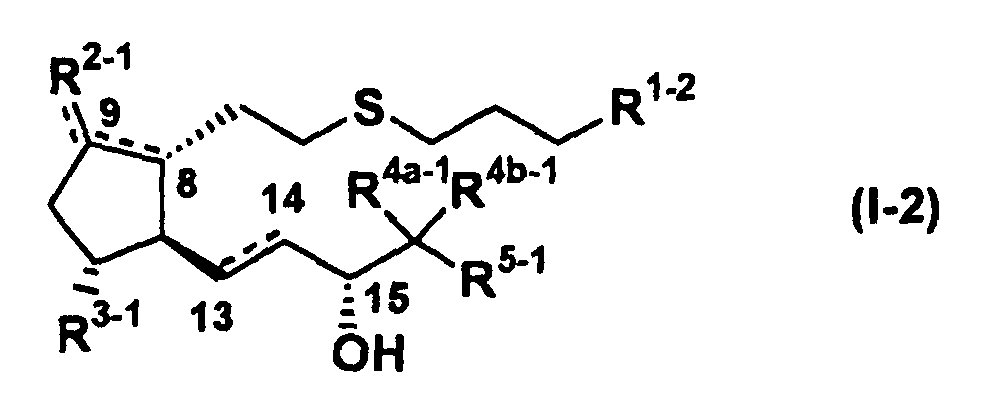
or a non-toxic salt thereof, or a cyclodextrin clathrate thereof, and a process for the preparation thereof and a pharmaceutical composition comprising thereof as an active ingredient,
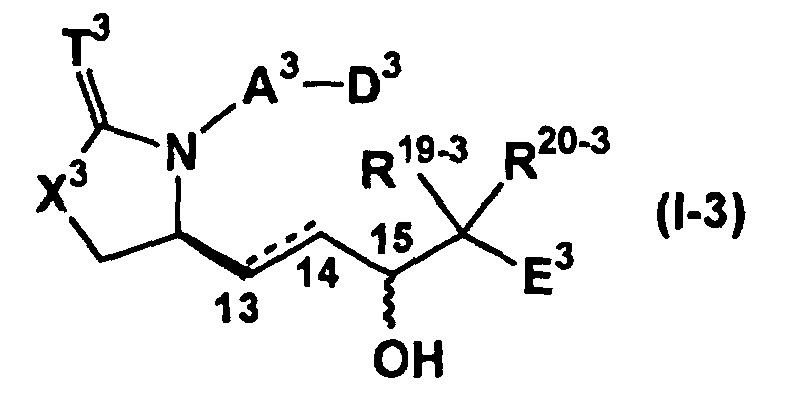
or a non-toxic salt thereof, or a cyclodextrin clathrate thereof, and a process for the preparation thereof and a pharmaceutical composition comprising thereof as an active ingredient, and

AA is single bond or cis-double bond;
BA is single bond or trans-double bond;
UA is

R3A is selected from the group consisting of hydrogen, C1-5 alkyl, phenyl and p-biphenyl;
R4A is selected from the group consisting of -COR5A and -SO2R5A;
R5A is selected from the group consisting of phenyl and C1-5 alkyl),
and a C5 epimer thereof, the salt of alkali metal and alkaline earth metals and ammounium salt of the compound which have carboxylate or tetrazol-5-yl.

R2B is a straight- or branched- chain, saturated or unsaturated, aliphatic or cycloaliphatic hydrocarbon radical having up to 6 carbon atoms, or an araliphatic hydrocarbon radical having 7 or 8 carbon atoms, and
nB is the integer 2,3 or 4, the definitions of the symbols are excerpt),
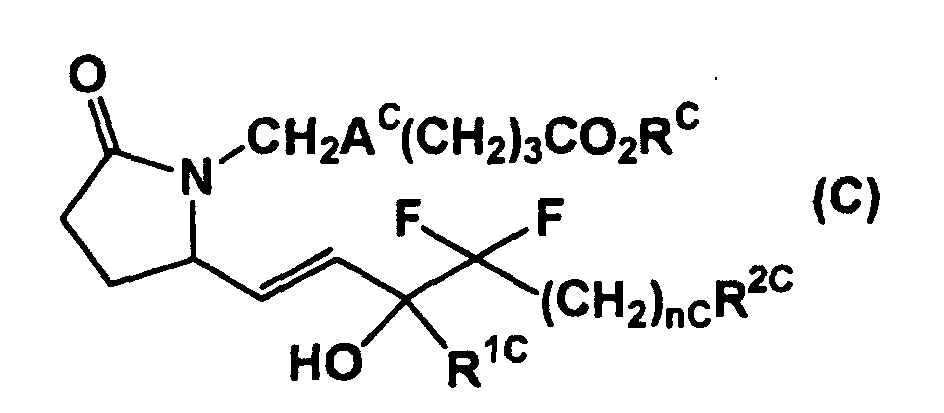
RC is H, C1-C12 n-alkyl, branched alkyl or cycloalkyl etc.;
R1C is H, CH3 or C2H5;
R2C is phenyl or mono- or di-substituted phenyl, the substituent is selected from is selected from the group consisting of, F, Cl, CH3, OCH3, NO2 or CF3;
when R2C is phenyl or substituted phenyl,nC is 0-2, the definitions of the symbols are excerpt) is disclosed.

R2-1 is oxo, halogen, or O-COR8-1, wherein R8-1 is C1-4 alkyl, phenyl or phenyl(C1-4 alkyl),
R3-1 is hydrogen atom or hydroxy,
R4a-1 and R4b-1 are each independently, hydrogen atom or C1-4 alkyl,
R5-1 is phenyl substituted by the group listed below:
- (i) 1 to 3 of
C1-4 alkyloxy-C1-4 alkyl,
C2-4 alkenyloxy-C1-4 alkyl,
C2-4 alkynyloxy-C1-4 alkyl,
C3-7 cycloalkyloxy-C1-4 alkyl,
C3-7 cycloalkyl(C1-4 alkyloxy)-C1-4 alkyl,
phenyloxy-C1-4 alkyl,
phenyl-C1-4 alkyloxy-C1-4 alkyl,
C1-4 alkylthio-C1-4 alkyl,
C2-4 alkenylthio-C1-4 alkyl,
C2-4 alkynylthio-C1-4 alkyl,
C3-7 cycloalkylthio-C1-4 alkyl,
C3-7 cycloalkyl(C1-4 alkylthio)-C1-4 alkyl or
phenylthio-C1-4 alkyl or phenyl-C1-4 alkylthio-C1-4 alkyl, - (ii) C1-4 alkyloxy-C1-4 alkyl and C1-4 alkyl,
C1-4 alkyloxy-C1-4 alkyl and C1-4 alkyloxy,
C1-4 alkyloxy-C1-4 alkyl and hydroxy,
C1-4 alkyloxy-C1-4 alkyl and halogen,
C1-4 alkylthio-C1-4 alkyl and C1-4 alkyl,
C1-4 alkylthio-C1-4 alkyl and C1-4 alkyloxy,
C1-4 alkylthio-C1-4 alkyl and hydroxy or
C1-4 alkylthio-C1-4 alkyl and halogen, - (iii) haloalkyl or hydroxy-C1-4 alkyl, or
- (iv) C1-4 alkyl and hydroxy;
is single bond or double bond,
wherein when R2-1 is O-COR8-1, C8-9 position is double bond,
or a non-toxic salt thereof, or a cyclodextrin clathrate thereof as an active ingredient, - v) the sustained release formulation comprising a compound selected from the group of formula (I-1), or a non-toxic salt thereof, or a cyclodextrin clathrate thereof as an active ingredient,
- vi) a pharmaceutical composition for prevention and/or treatment of diseases
associated with decrease in bone mass, characterized by topical administration of the
formulation comprising a compound selected from the group of formula (I-2)

- (1) -CO-(NH-amino acid residue-CO)m-2-OH,
- (2) -COO-Y2-R9-2,
- (3) -COO-Z1-2-Z2-2-Z3-2,
R9-2 is (1) phenyl or (2) biphenyl optionally substituted by 1-3 C1-10 alkyl, C1-10 alkoxy or halogen atom,
Z1-2 is
- (1) C1-15 alkylene,
- (2) C2-15 alkenylene or
- (3) C2-15 alkynylene,
- (1) -CO-,
- (2) -OCO-,
- (3) -COO-,
- (4) -CONR11-2-,
- (5) -NR12-2CO-,
- (6) -O-,
- (7) -S-,
- (8) -SO-,
- (9) -SO2-,
- (10) -NR13-2-,
- (11) -NR14-2CONR15-2-,
- (12) -NR16-2COO-,
- (13) -OCONR17-2- or
- (14) -OCOO-,
- (1) hydrogen atom,
- (2) C1-15 alkyl,
- (3) C2-15 alkenyl,
- (4) C2-15 alkynyl,
- (5) ring12 or
- (6) C1-10 alkyl substituted by C1-10 alkoxy, C1-10 alkylthio, C1-10 alkyl-NR18-2- or ring12,
- (1) C3-15 mono-, bi- or tri-carbocyclic aryl which may be partially or fully saturated or
- (2) 3 to 15 membered mono-, bi- or tri-heterocyclic aryl containing 1 to 4 hetero atom selected from oxygen, nitrogen and sulfur atom(s) which may be partially or fully saturated,
R11-2 and Z3-2 may be taken together with the nitrogen atom to which they are attached to form 5 to 7 membered saturated monoheterocyclic ring, and the heterocyclic ring may contain another one hetero atom selected from oxygen, nitrogen and sulfur atom,
ring12 and saturated monoheterocyclic ring formed by R11-2, Z3-2 and the nitrogen atom to which Z3-2 is attached may be substituted by 1-3 group(s) selected from
- (1) C1-15 alkyl,
- (2) C2-15 alkenyl,
- (3) C2-15 alkynyl and
- (4) C1-10 alkyl substituted with C1-10 alkoxy, C1-10 alkylthio or C1-10 alkyl-NR19-2, R19-2 is hydrogen atom or C1-10 alkyl,
other symbols are same meaning as definedhereinbefore,
or a non-toxic salt thereof, or a cyclodextrin clathrate thereof as an active ingredient,
- vii) the sustained release formulation comprising a compound selected from the group of formula (I-2), or a non-toxic salt thereof, or a cyclodextrin clathrate thereof as an active ingredient,
- viii) a pharmaceutical composition for prevention and/or treatment of diseases
associated with decrease in bone mass, characterized by topical administration of the
formulation comprising a compound selected from the group of formula (I-3)
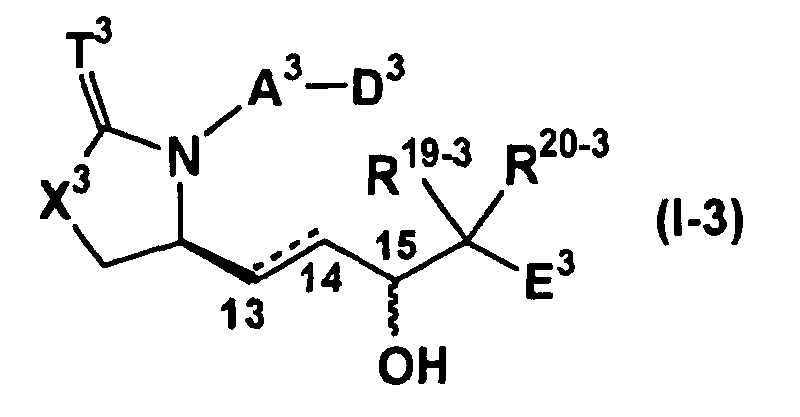

R19-3 and R20-3 are each independently, (1) hydrogen atom, (2) C1-10 alkyl or (3) halogen atom,
T3 is (1) oxygen atom or (2) sulfur atom,
X3 is (1) -CH2-, (2) -O- or (3) -S-,
A3 is A1-3 or A2-3,
A1-3 is
- (1) C2-8 straight-chain alkylene optionally substituted by 1-2 C1-4 alkyl,
- (2) C2-8 straight-chain alkenylene optionally substituted by 1-2 C1-4 alkyl or
- (3) C2-8 straight-chain alkynylene optionally substituted by 1-2 C1-4 alkyl,
G1-3 is
- (1) C1-4 straight-chain alkylene optionally substituted by 1-2 C1-4 alkyl,
- (2) C2-4 straight-chain alkenylene optionally substituted by 1-2 C1-4 alkyl or
- (3) C2-4 straight-chain alkynylene optionally substituted by 1-2 C1-4 alkyl,
- (1) -Y3-,
- (2) -(ring13)-,
- (3) -Y3-(ring13)-,
- (4) -(ring13)-Y3- or
- (5) -Y3-(C1-4 alkylene)-(ring13)-,
R1-3 is (1) hydrogen atom, (2) C1-10 alkyl or (3) C2-10 acyl,
G3-3 is
- (1) bond,
- (2) C1-4 straight-chain alkylene optionally substituted by 1-2 C1-4 alkyl,
- (3) C2-4 straight-chain alkenylene optionally substituted by 1-2 C1-4 alkyl or
- (4) C2-4 straight-chain alkynylene optionally substituted by 1-2 C1-4 alkyl,
D1-3 is
- (1) -COOH,
- (2) -COOR2-3,
- (3) tetrazol-5-yl or
- (4) CONR3-3SO2R4-3,
R3-3 is (1) hydrogen atom or (2) C1-10 alkyl,
R4-3 is (1) C1-10 alkyl or (2) phenyl,
D2-3 is
- (1) -CH2OH,
- (2) -CH2OR5-3,
- (3) hydroxy,
- (4) -OR5-3,
- (5) formyl,
- (6) -CONR6-3R7-3,
- (7) -CONR6-3SO2R8-3,
- (8) -CO-(NH-amino acid residue-CO)m-3-OH,
- (9) -O-(CO- amino acid residue -NH)m-3-H,
- (10) -COOR9-3,
- (11) -OCO-R10-3,
- (12) -COO-Z1-3-Z2-3-Z3-3,
- (13)

R6-3 and R7-3 are each independently, (1) hydrogen atom or (2) C1-10 alkyl,
R8-3 is C1-10 alkyl substituted by phenyl,
R9-3 is (1) C1-10 alkyl substituted by biphenyl optionally substituted by 1-3 C1-10 alkyl, C1-10 alkoxy or halogen atom or (2) biphenyl substituted by 1-3 C1-10 alkyl, C1-10 alkoxy or halogen atom,
R10-3 is (1) phenyl or (2) C1-10 alkyl,
m-3 is 1 or 2,
Z1-3 is (1) C1-15 alkylene, (2) C2-15 alkenylene or (3) C2-15 alkynylene,
Z2-3 is (1) -CO-, (2) -OCO-, (3) -COO-, (4) -CONR11-3-, (5) -NR12-3CO-, (6) -O-, (7) -S-, (8) -SO-, (9) -SO2-, (10) -NR13-3-, (11) -NR14-3CONR15-3-, (12) -NR16-3COO-, (13) -OCONR17-3- or (14) -OCOO-,
Z3-3 is (1) hydrogen atom, (2) C1-15 alkyl, (3) C2-15 alkenyl, (4) C2-15 alkynyl, (5) ring23 or (6) C1-10 alkyl substituted by C1-10 alkoxy, C1-10 alkylthio, C1-10 alkyl-NR18-3- or ring23,
R11-3, R12-3, R13-3, R14-3, R15-3, R16-3, R17-3 and R18-3 are each independently, (1) hydrogen atom or (2) C1-15 alkyl,
R11-3 and Z3-3 may be taken together with the nitrogen atom to which they are attached to form 5 to 7 membered saturated monoheterocyclic ring, and the heterocyclic ring may contain other one hetero atom selected from oxygen, nitrogen and sulfur atom,
E3 is E1-3 or E2-3,
E1-3 is
- (1) C3-7 cycloalkyl or
- (2) ring33,
- (1) C3-7 cycloalkyl,
- (2) ring43 or
- (3) ring53,
ring33 is optionally substituted by 1-2 R21-3,
C3-7 cycloalkyl represented by E2-3 is substituted by one of R21-3 or R22-3, and optionally substituted by another 1-2 R21-3 and/or R22-3,
ring43 is substituted by one of R22-3, optionally substituted by another 1-2 R21-3 and/or R22-3, and
optionally substituted by heterocyclic ring formed by R11-3, Z3-3 and the nitrogen to which Z3-3 is attached or ring23 may be substituted by R23-3,
R21-3 is (1) C1-10 alkyl, (2) C1-10 alkoxy, (3) halogen atom, (4) nitro, (5) C1-10 alkyl substituted by 1-3 halogen atom(s) or (6) phenyl,
R22-3 is (1) C2-10 alkenyl, (2) C2-10 alkynyl, (3) C1-10 alkylthio, (4) hydroxy, (5) -NR24-3R25-3, (6) C1-10 alkyl substituted by C1-10 alkoxy, (7) C1-10 alkyl substituted by C1-10 alkoxy substituted by 1-3 halogen atom(s), (8) C1-10 alkyl substituted by -NR24-3R25-3, (9) ring63, (10) -O-ring73, (11) C1-10 alkyl substituted by ring73, (12) C2-10 alkenyl substituted by ring73, (13) C2-10 alkynyl substituted by ring73, (14) C1-10 alkoxy substituted by ring73, (15) C1-10 alkyl substituted by -O-ring73, (16) -COOR26-3 or (17) C1-10 alkoxy substituted by 1-3 halogen atom(s)(s),
R24-3, R25-3 and R26-3 are each independently, (1) hydrogen atom or (2) C1-10 alkyl,
R23-3 is (1) C1-15 alkyl, (2) C2-15 alkenyl, (3) C2-15 alkynyl or (4) C1-10 alkyl substituted by C1-10 alkoxy, C1-10 alkylthio or C1-10 alkyl-NR27-3-,
R27-3 is (1) hydrogen atom or (2) C1-10 alkyl,
ring13, ring23, ring53, ring63 and ring73 are
- (1) C3-15 mono-, bi- or tri-carbocyclic aryl which may be partially or fully saturated or
- (2) 3 to 15 membered mono-, bi- or tri-heterocyclic aryl containing 1 to 4 hetero atom selected from oxygen, nitrogen and sulfur atom(s) which may be partially or fully saturated,
ring63 and ring73 may be substituted by 1-3 R28-3,
R28-3 is (1) C1-10 alkyl, (2) C2-10 alkenyl, (3) C2-10 alkynyl, (4) C1-10 alkoxy, (5) C1-10 alkyl substituted by C1-10 alkoxy, (6) halogen atom, (7) hydroxy, (8) C1-10 alkyl substituted by 1-3 halogen atom(s) or (9) C1-10 alkyl substituted by C1-10 alkoxy substituted by 1-3 halogen atom(s), and
wherein
- (1) when T3 is oxygen atom, X3 is CH2-, A3 is A1-3, and D3 is D1-3, E3 is E2-3,
- (2) ring53 is not C3-7 cycloalkyl, phenyl, thienyl nor furyl,
- (3) ring63 is phenyl, then phenyl have at least one R28-3,
- ix) the sustained release formulation comprising a compound selected from the group of formula (I-3), or a non-toxic salt thereof, or a cyclodextrin clathrate thereof as an active ingredient,
- x) a prostaglandin derivative of formula (I-2)
wherein all symbols have the same meaning as defined in vi),

or a non-toxic salt thereof, or a cyclodextrin clathrate thereof, - xi) a process for the preparation of a prostaglandin derivative of formula (1-2), or a non-toxic salt thereof, or a cyclodextrin clathrate thereof,
- xii) a pharmaceutical composition comprising of a prostaglandin derivative of formula (1-2), or a non-toxic salt thereof, or a cyclodextrin clathrate thereof as an active ingredient,
- xiii) a compound selected from the group of formula (I-3)
wherein all symbols have the same meaning as defined in viii), or a non-toxic salt thereof, or a cyclodextrin clathrate thereof

- xiv) a process for the preparation of an 8-azaprostaglandin derivative of formula (I-3), or a non-toxic salt thereof, or a cyclodextrin clathrate thereof,
- xv) a pharmaceutical composition comprising of an 8-azaprostaglandin derivative of formula (I-3), or a non-toxic salt thereof, or a cyclodextrin clathrate thereof as an active ingredient,
- xvi) a pharmaceutical composition for prevention and/or treatment of diseases
associated with decrease in bone mass, characterized by topical administration of the
formulation comprising a compound selected from the group consisting of
- (1) (15α,13E)-9-oxo-15-hydroxy-16-(3-chlorophenyl)-17,18,19,20-tetranor-8-azaprost-13-enoic acid,
- (2) (15α,13E)-9-oxo-15-hydroxy-16-(3-phenylphenyl)-17,18,19,20-tetranor-8-azaprost-13-enoic acid,
- (3) (15α,13E)-9-oxo-15-hydroxy-16-(3-methylphenyl)-17,18,19,20-tetranor-8-azaprost-13-enoic acid,
- (4) (15α,13E)-9-oxo-15-hydroxy-16-(3-fluorophenyl)-17,18,19,20-tetranor-8-azaprost-13-enoic acid,
- (5) (15α,13E)-9-oxo-15-hydroxy-16-(4-fluorophenyl)-17,18,19,20-tetranor-8-azaprost-13-enoic acid,
- (6) (15α,13E)-9-oxo-15-hydroxy-16-(4-methylphenyl)-17,18,19,20-tetranor-8-azaprost-13-enoic acid,
- (7) (15α,13E)-9-oxo-15-hydroxy-16-(2-methylphenyl)-17,18,19,20-tetranor-8-azaprost-13-enoic acid,
- (8) (15α,13E)-9-oxo-15-hydroxy-16-(2-fluorophenyl)-17,18,19,20-tetranor-8-azaprost-13-enoic acid,
- (9) (15α,13E)-9-oxo-15-hydroxy-16-(3-trifluoromethylphenyl)-17,18,19,20-tetranor-8-azaprost-13-enoic acid,
- (10) (15α,13E)-9-oxo-15-hydroxy-16-(3-methoxyphenyl)-17,18,19,20-tetranor-8-azaprost-13-enoic acid,
- (11) (15α,13E)-9-oxo-15-hydroxy-16-(3-ethylphenyl)-17,18,19,20-tetranor-8-azaprost-13-enoic acid,
- (12) (15α,13E)-9-oxo-15-hydroxy-16-(3,4-difluorophenyl)-17,18,19,20-tetranor-8-azaprost-13-enoic acid,
- (13) (15α,13E)-9-oxo-15-hydroxy-16-(3,5-difluorophenyl)-17,18,19,20-tetranor-8-azaprost-13-enoic acid,
- (14) (15α,13E)-9-oxo-15-hydroxy-16-(3-propylphenyl)-17,18,19,20-tetranor-8-azaprost-13-enoic acid,
- (15) (15α,13E)-9-oxo-15-hydroxy-16-(3-ethoxyphenyl)-17,18,19,20-tetranor-8-azaprost-13-enoic acid,
- (16) (15α,13E)-9-oxo-15-hydroxy-16-(3-isopropyloxyphenyl)-17,18,19,20-tetranor-8-azaprast-13-enoic acid,
- (17) (15α,5Z,13E)-9-oxo-15-hydroxy-16-(3-trifluoromethylphenyl)-17,18,19,20-tetranor-8-azaprost-5,13-dienoic acid,
- (18) (15α,5Z,13E)-9-oxo-15-hydroxy-16-(3-methylphenyl)-17,18,19,20-tetranor-8-azaprost-5,13-dienoic acid,
- (19) (15α,13E)-9-oxo-15-hydroxy-16-(3,5-dimethylphenyl)-17,18,19,20-tetranor-8-azaprost-13-enoic acid,
- (20) (15α,5Z,13E)-9-oxo-15-hydroxy-16-(3-chlorophenyl)-17,18,19,20-tetranor-8-azaprost-5,13-dienoic acid,
- (21) (15α,13E)-9-oxo-15-hydroxy-16-(3,4-difluorophenyl)-17,18,19,20-tetranor-8-azaprost-5,13-dienoic acid,
- (22) (15α,5Z,13E)-9-oxo-15-hydroxy-16-(3-fluorophenyl)-17,18,19,20-tetranor-8-azaprost-5,13-dienoic acid,
- (23) (15α,5Z,13E)-9-oxo-15-hydroxy-16-(4-fluorophenyl)-17,18,19,20-tetranor-8-azaprost-5,13-dienoic acid,
- (24) (15α)-9-oxo-15-hydroxy-16-(3-methylphenyl)-17,18,19,20-tetranor-8-azaprostanoic acid, and
- (25) (15α,13E)-9-oxo-15-hydroxy-16-phenyl-17,18,19,20-tetranor-8-azaprost-13-enoic acid 3-phenylphenyl ester,
or the sustained release formulation comprising a compound selected from the former group, or a non-toxic salt thereof, or a cyclodextrin clathrate thereof as an active ingredient,
or a compound selected from the former group, or a non-toxic salt thereof, or a cyclodextrin clathrate thereof, and a process for the preparation thereof and a pharmaceutical composition comprising thereof as an active ingredient.


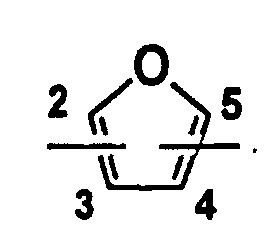


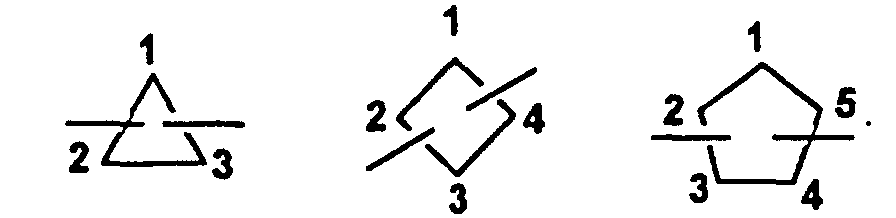


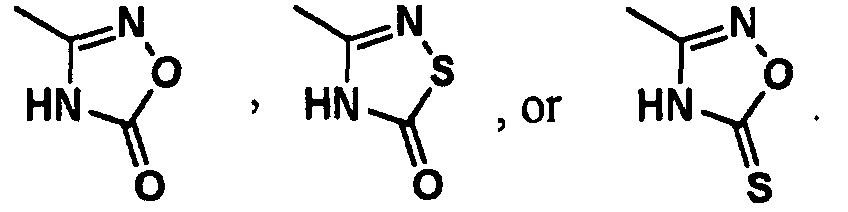
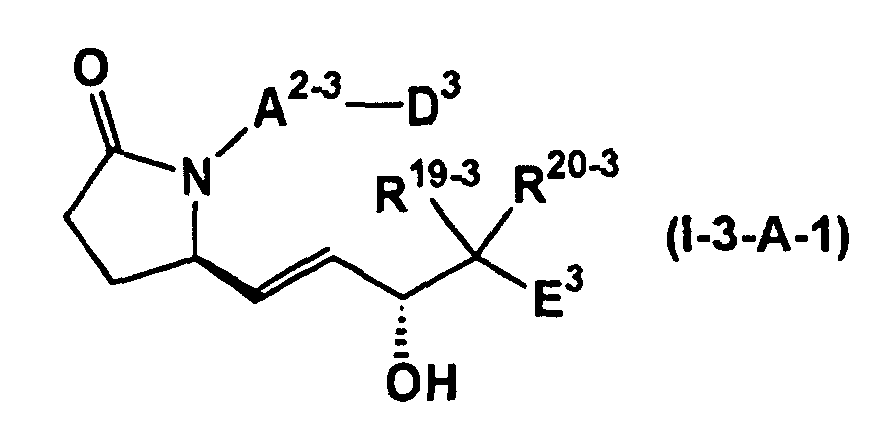
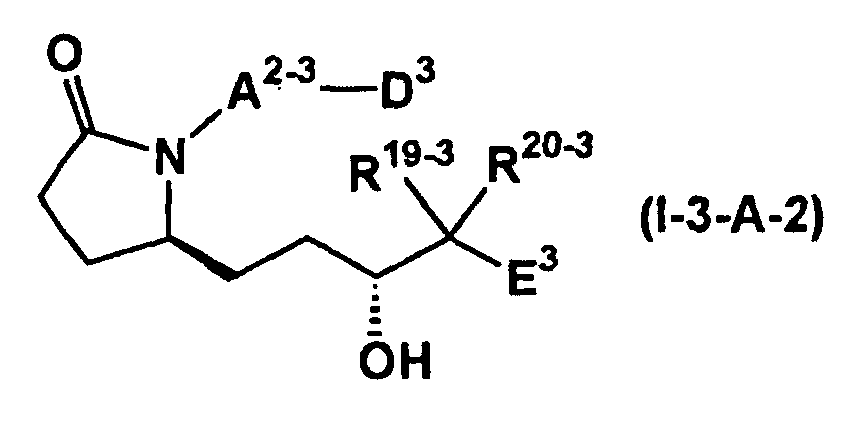

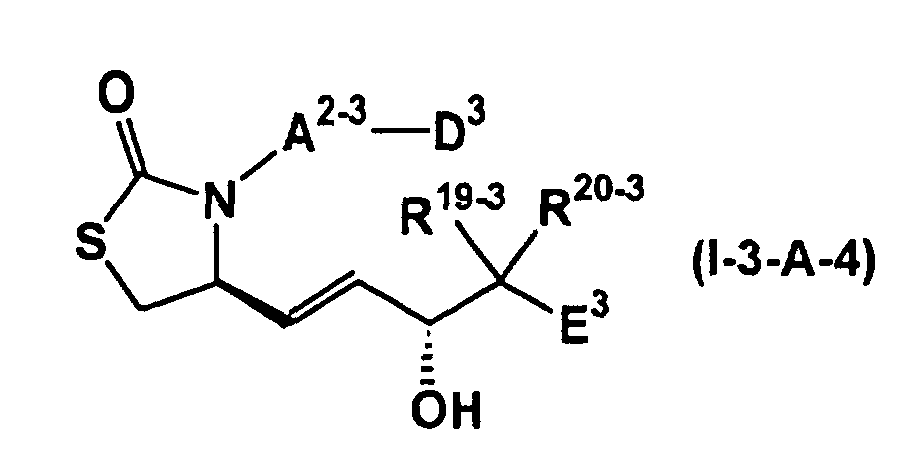


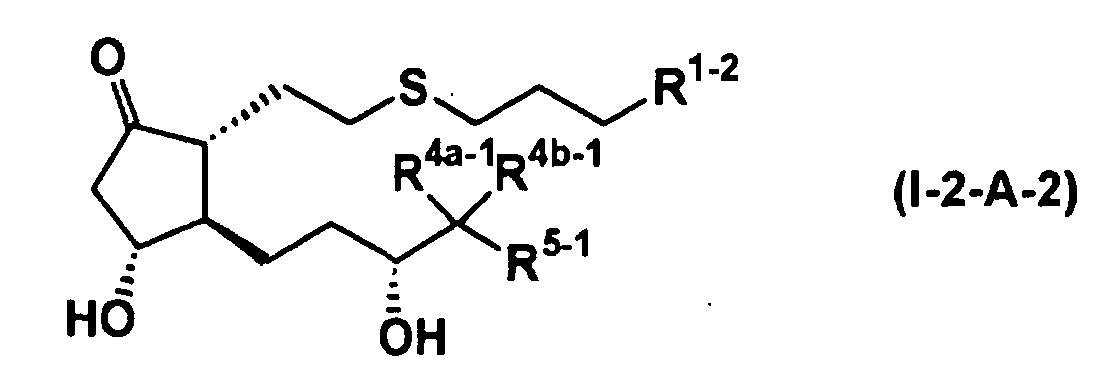


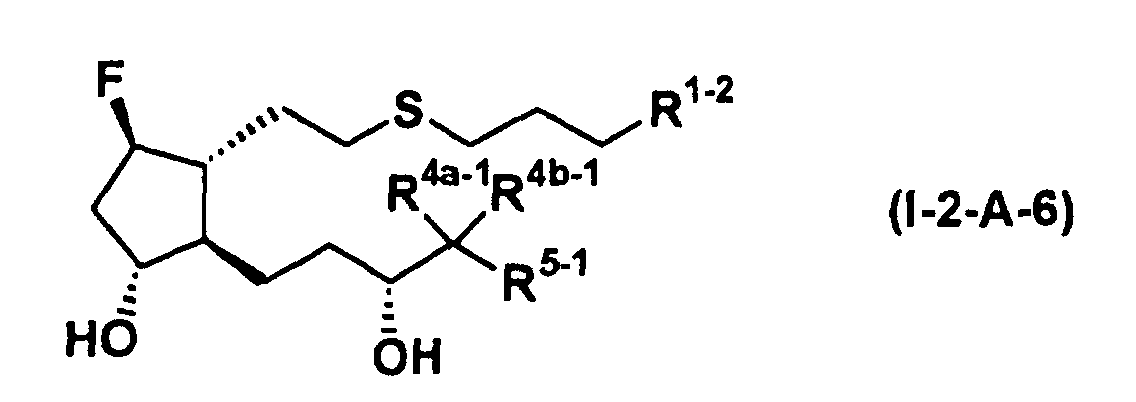

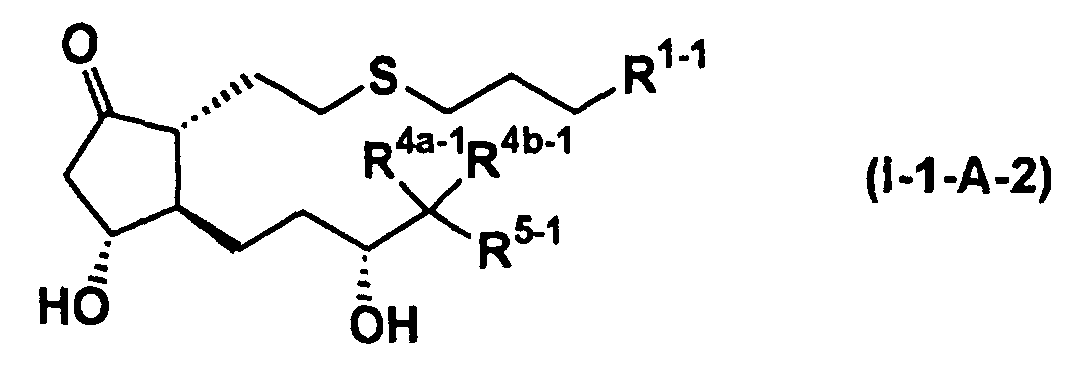
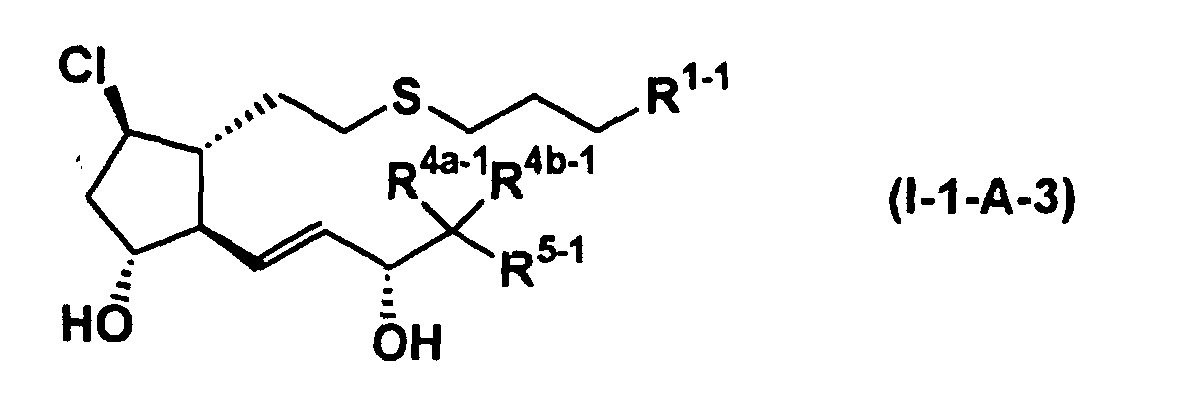
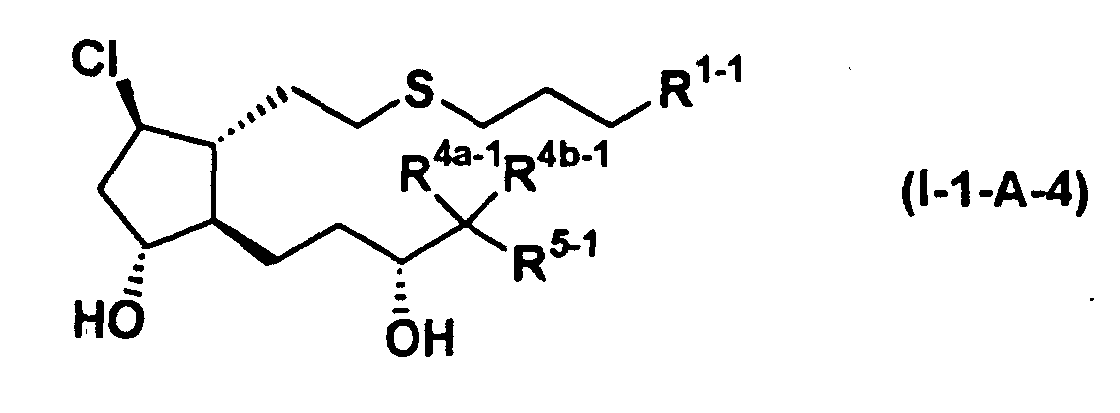
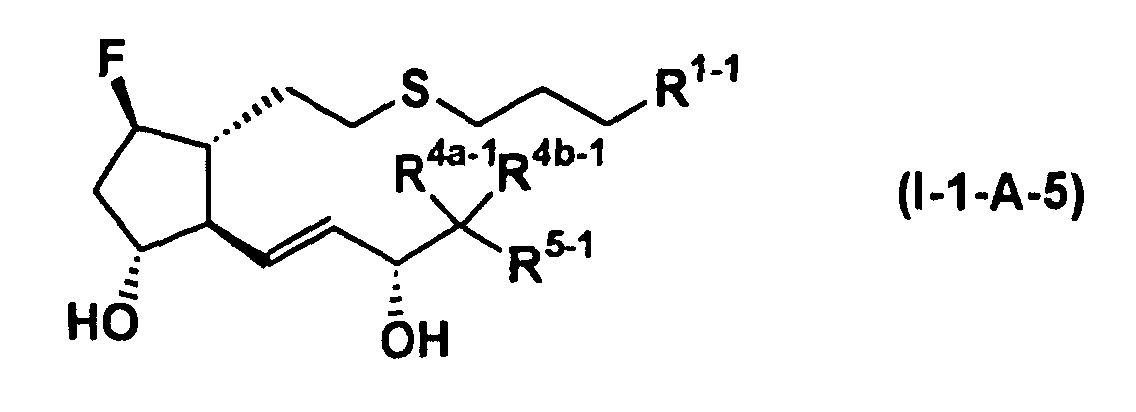

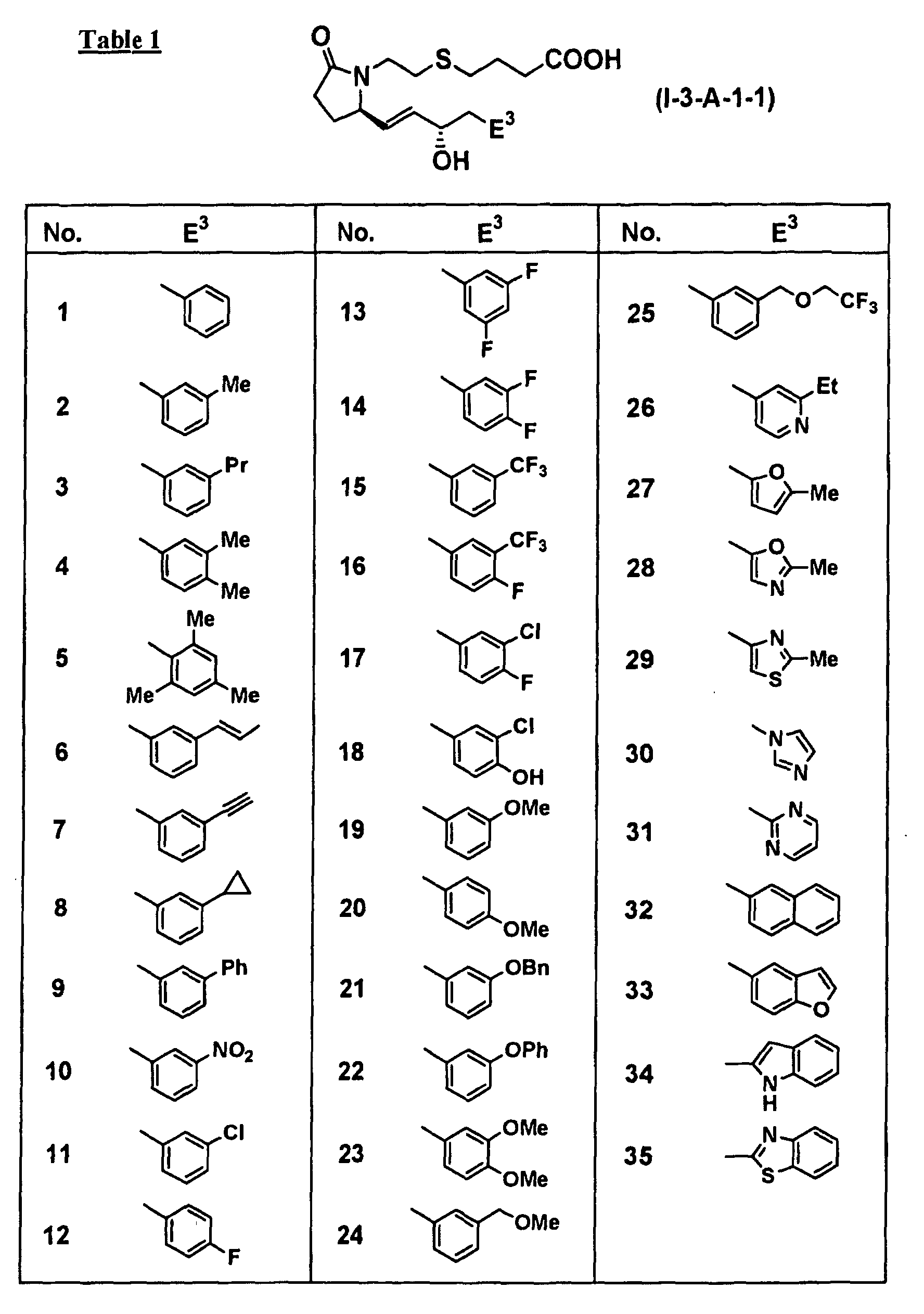

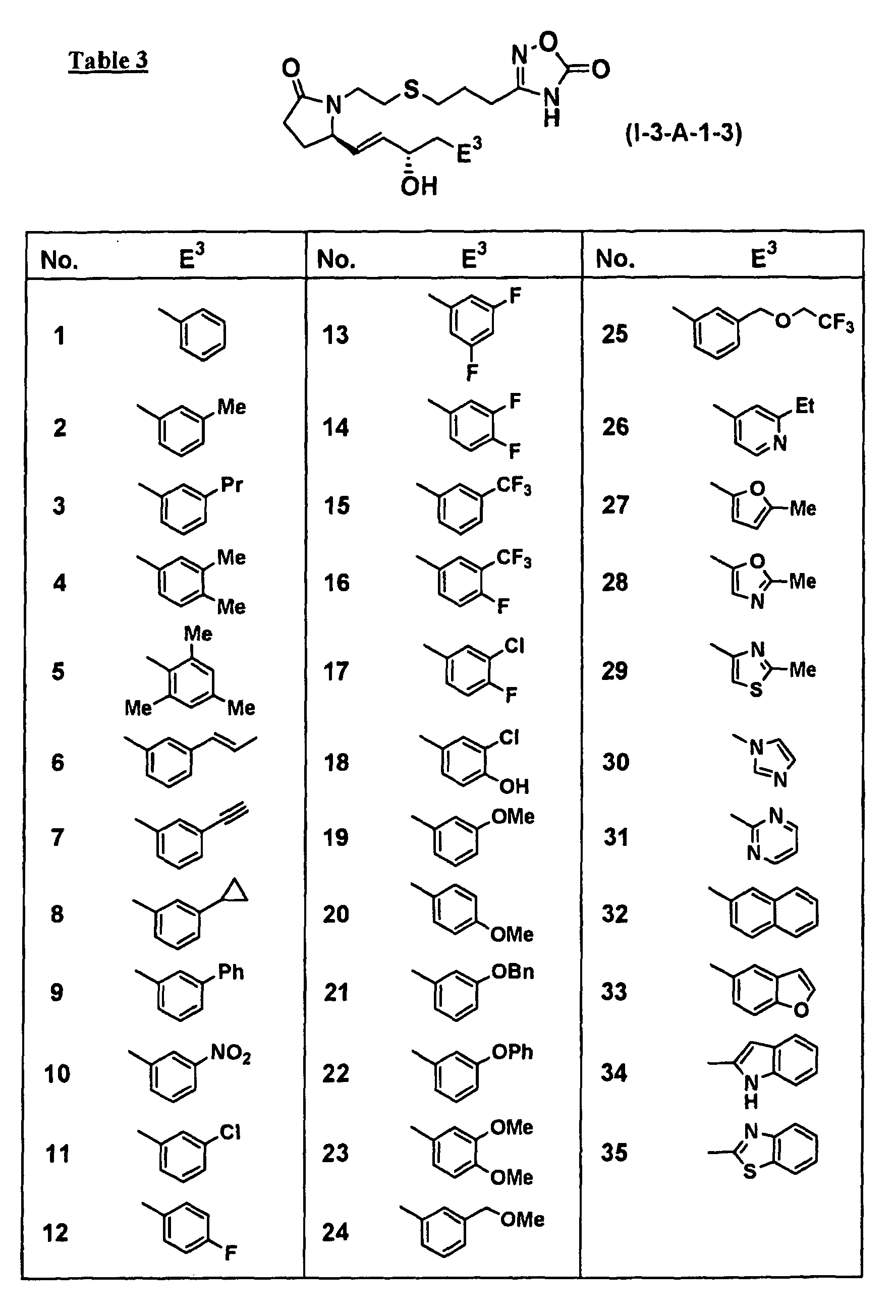


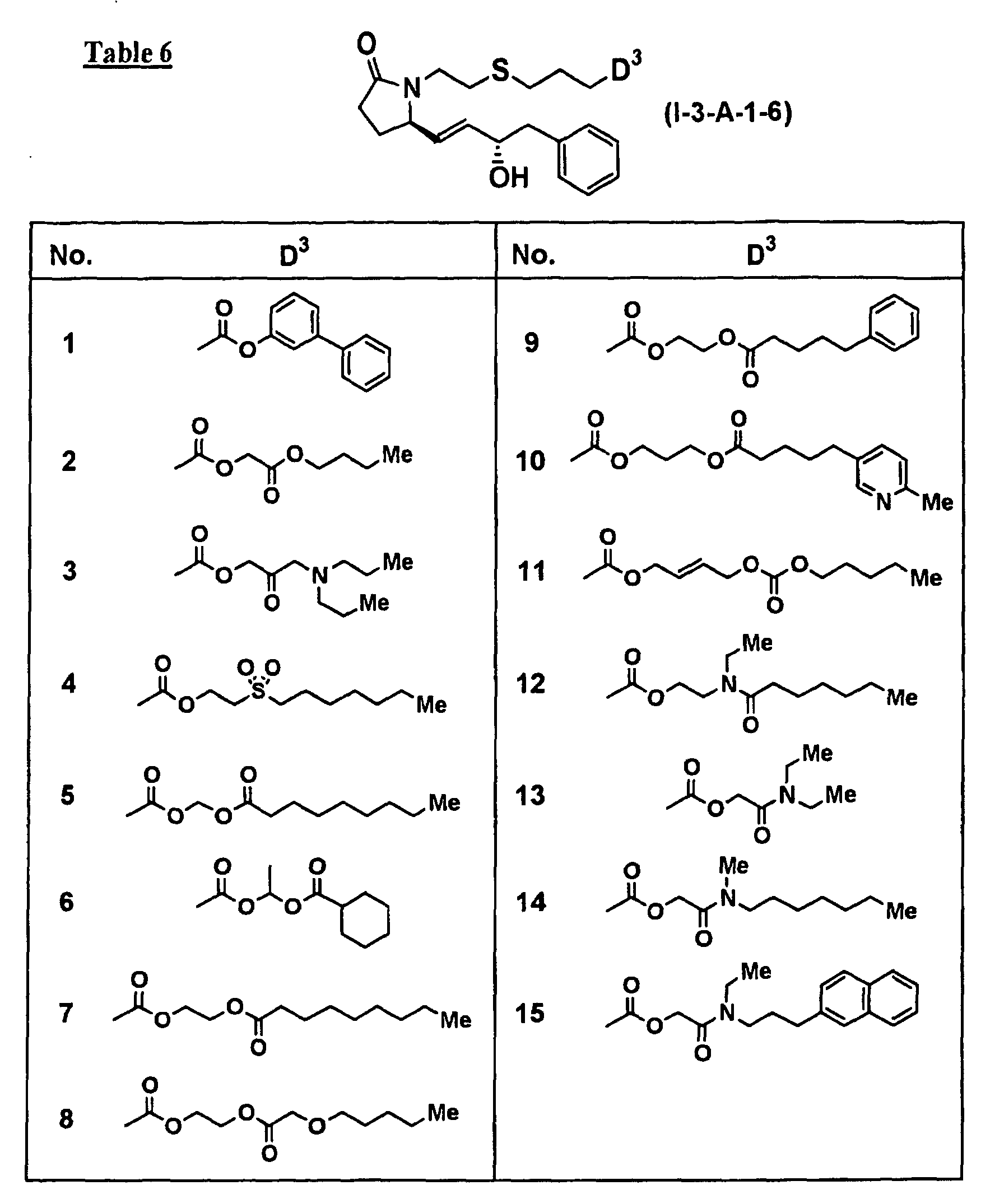


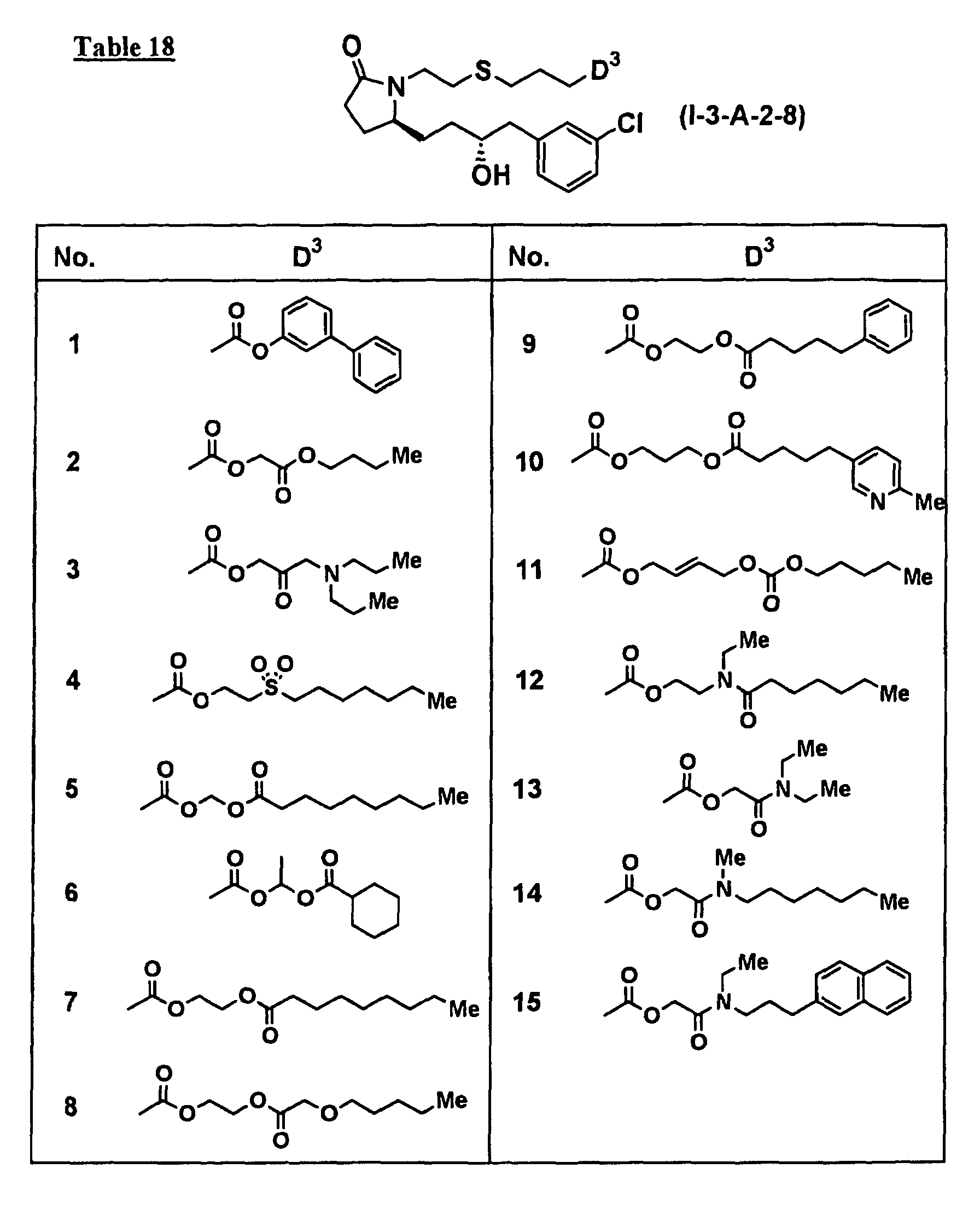


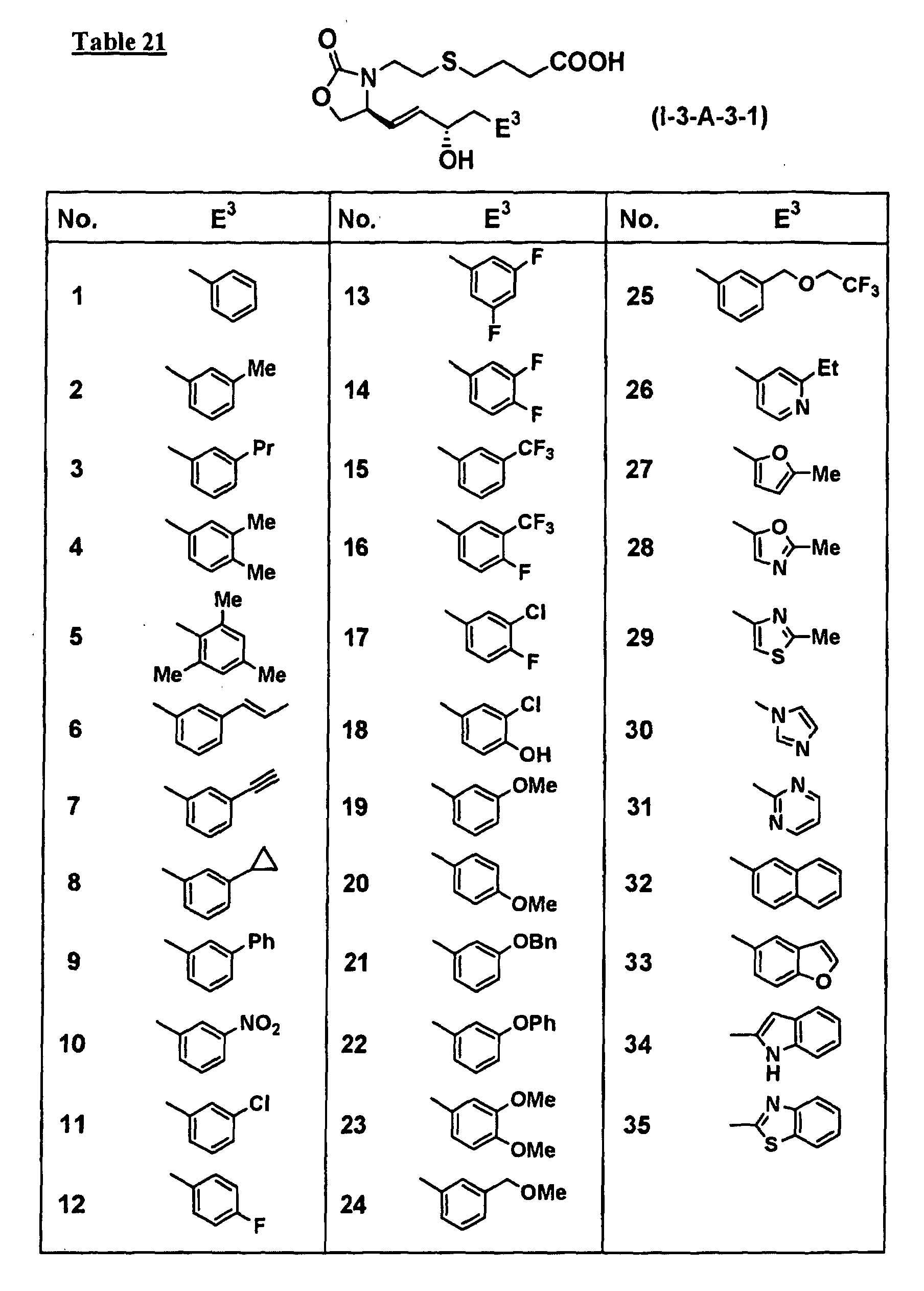
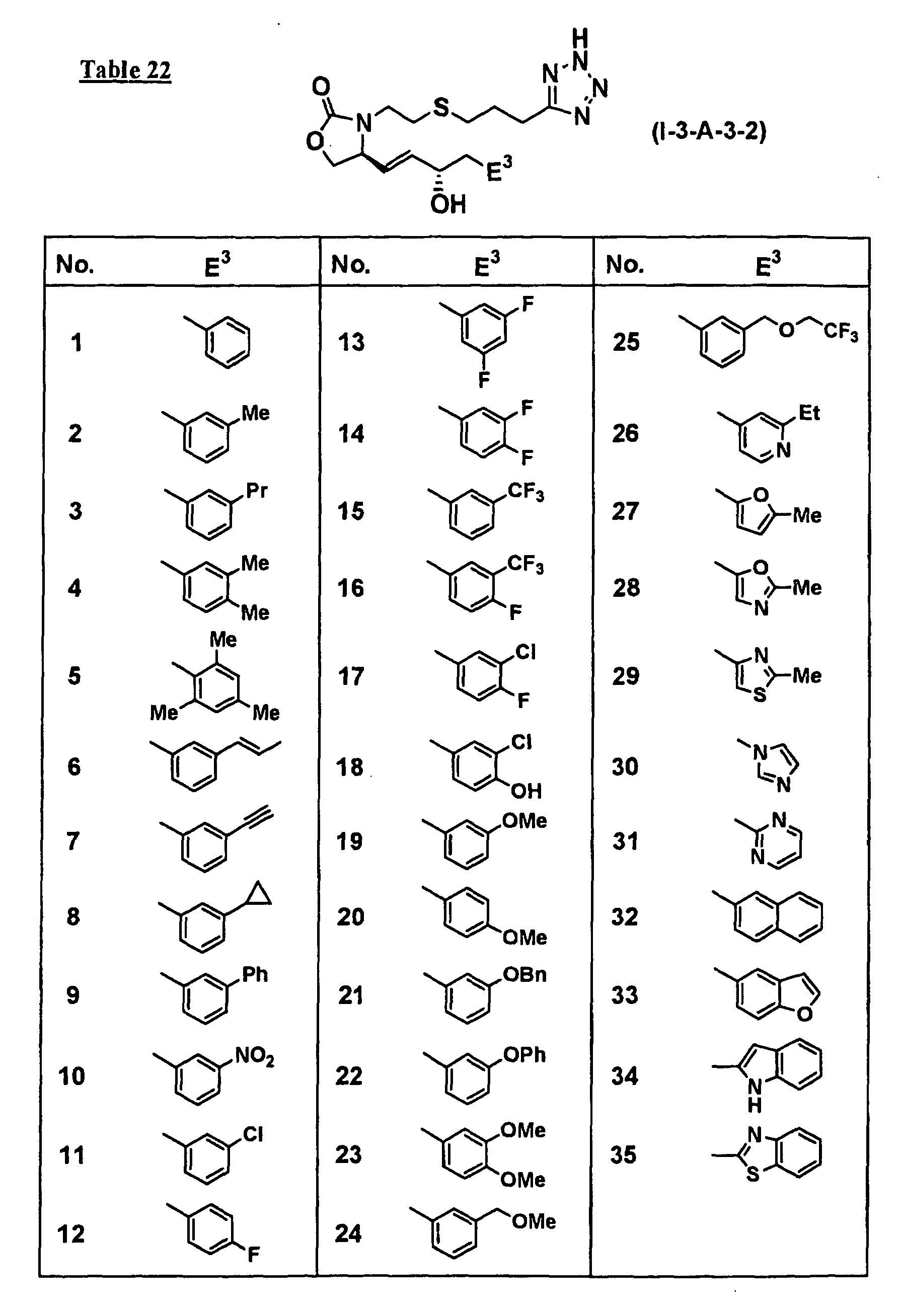
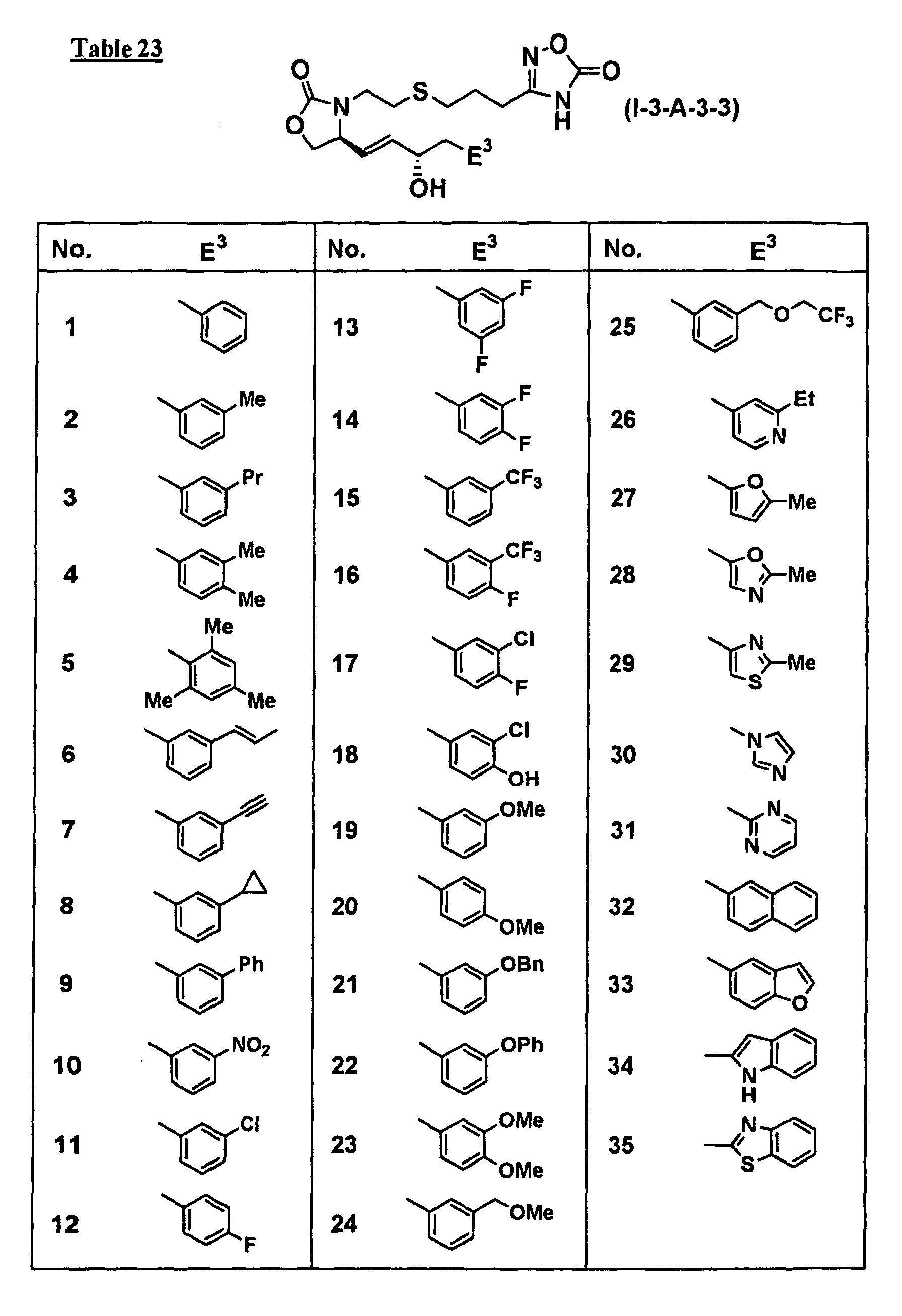
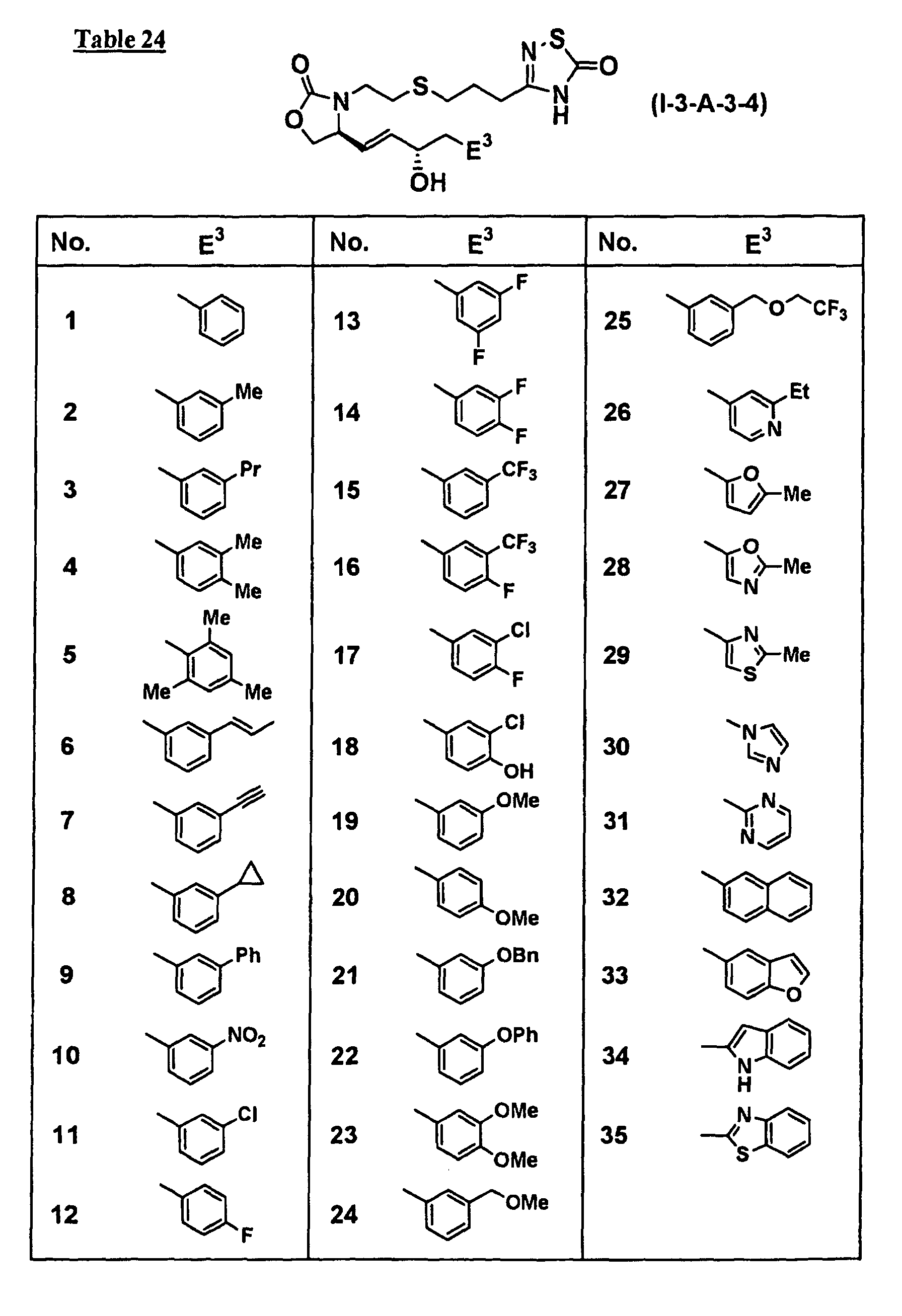

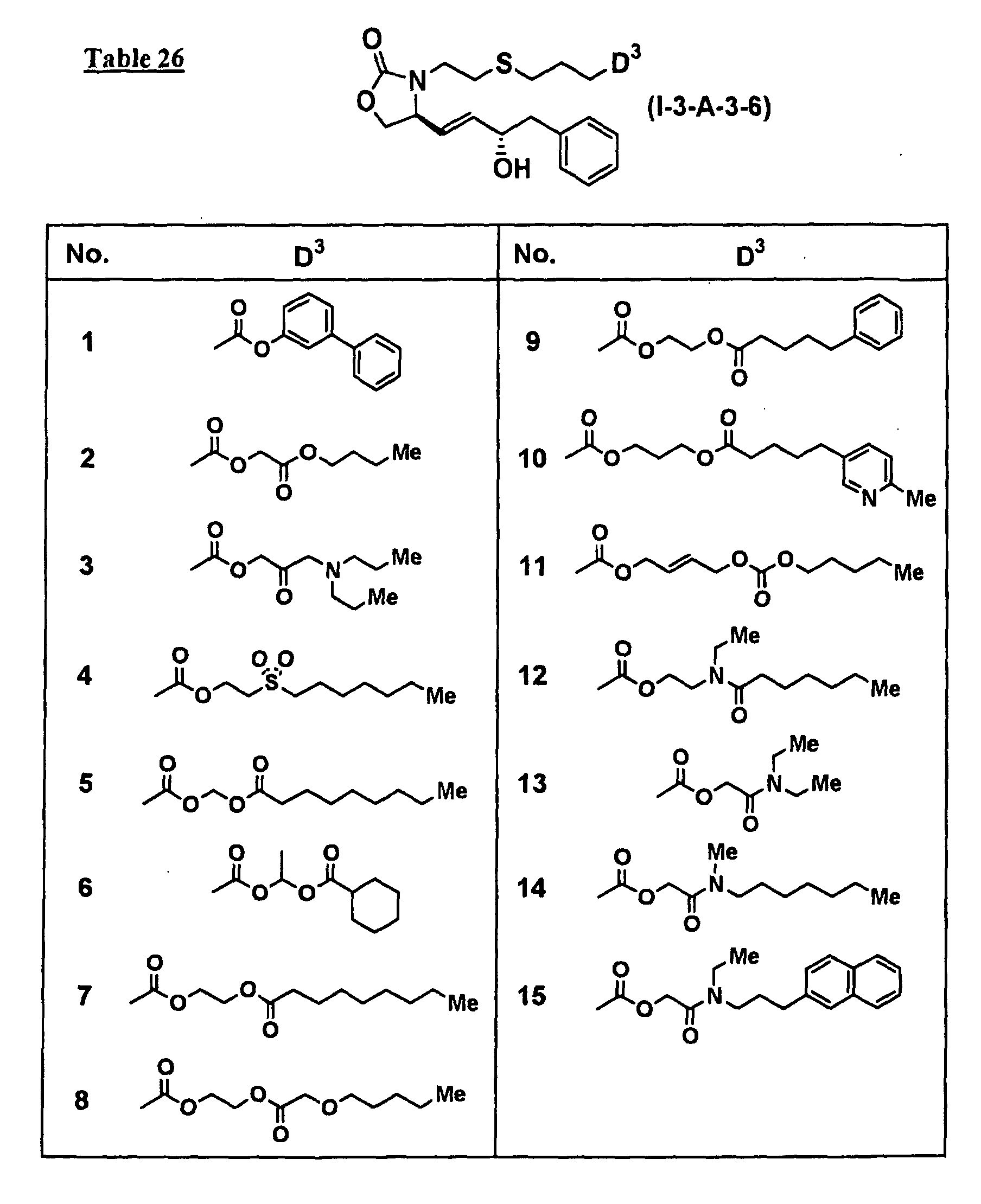
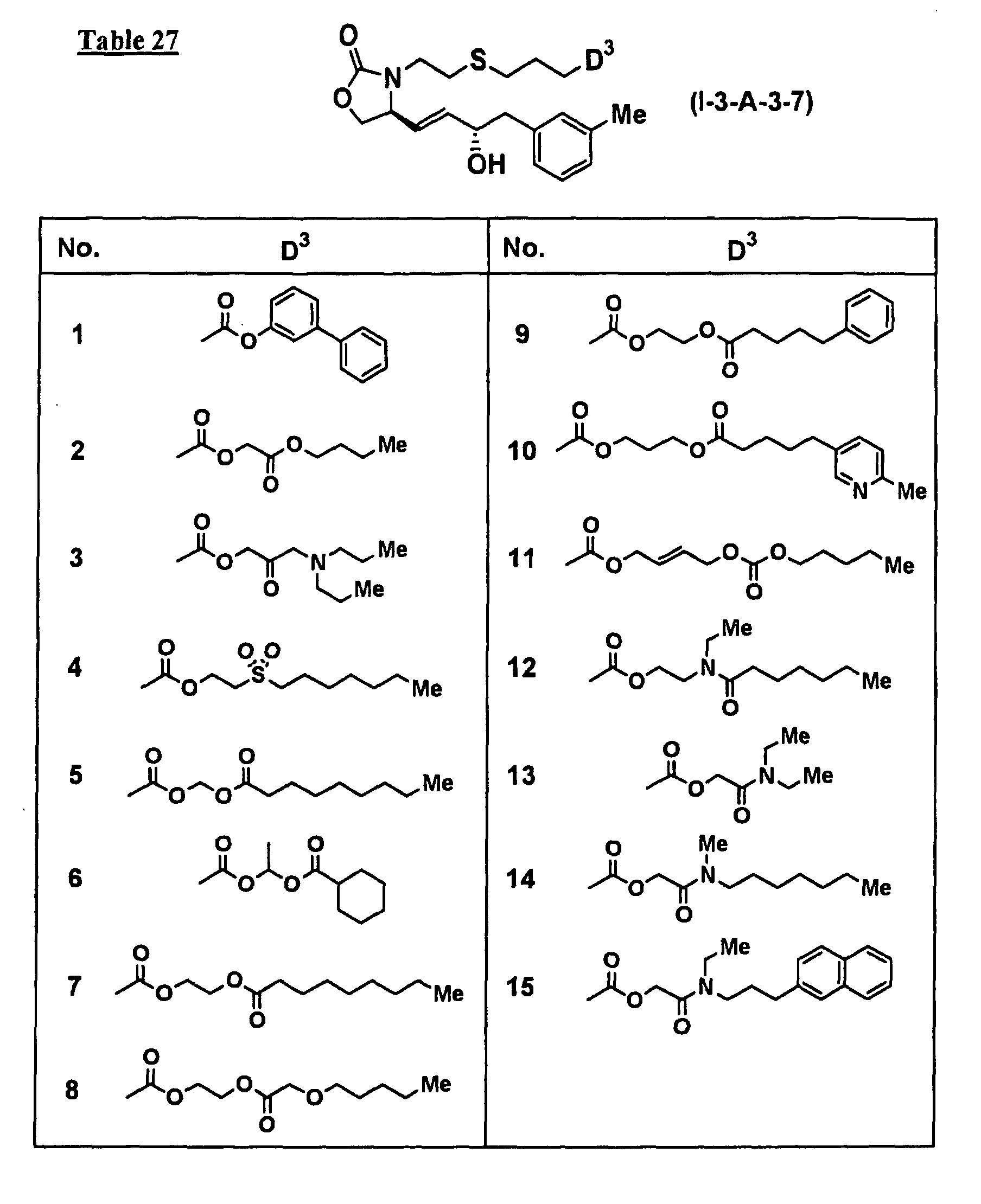


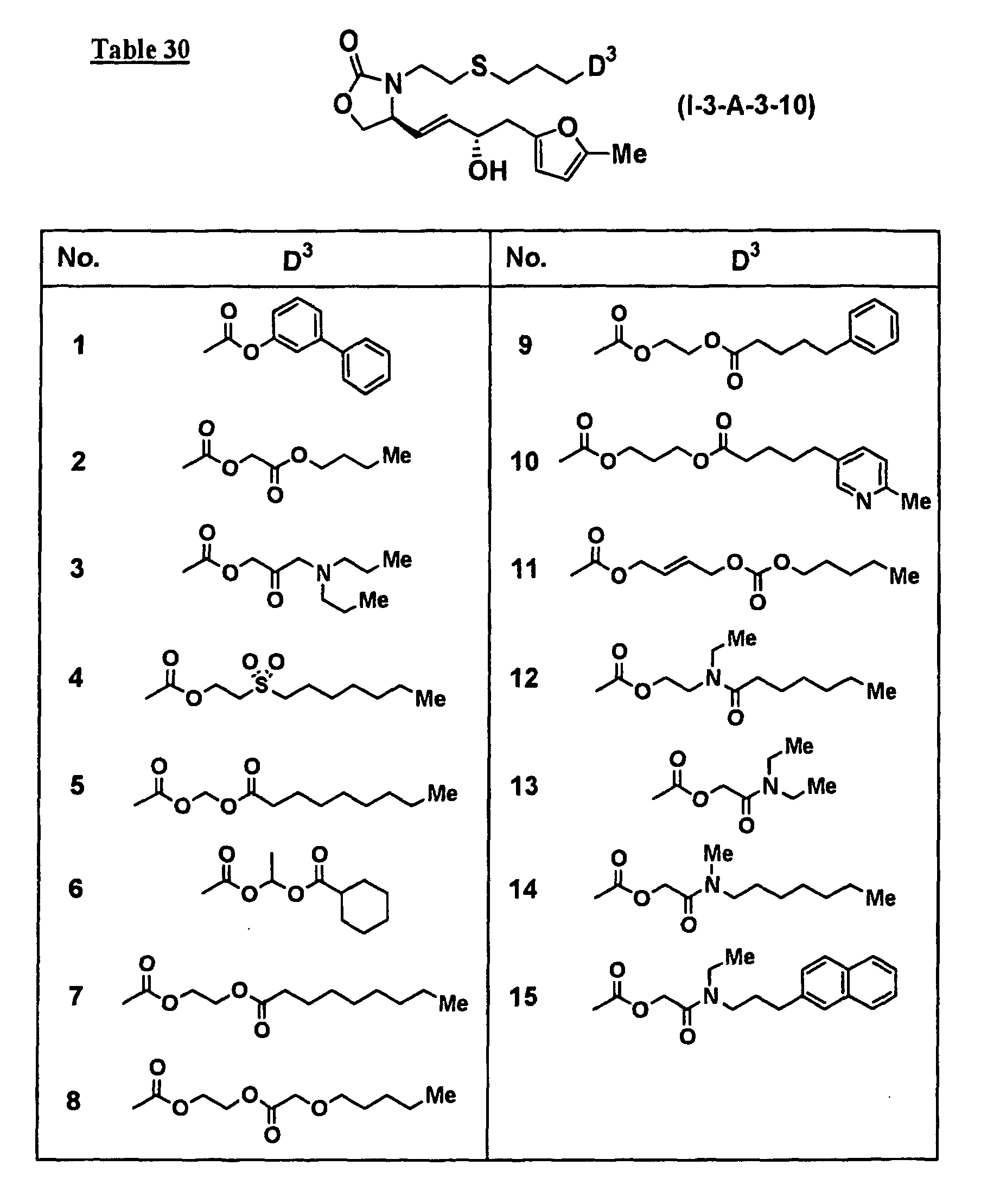
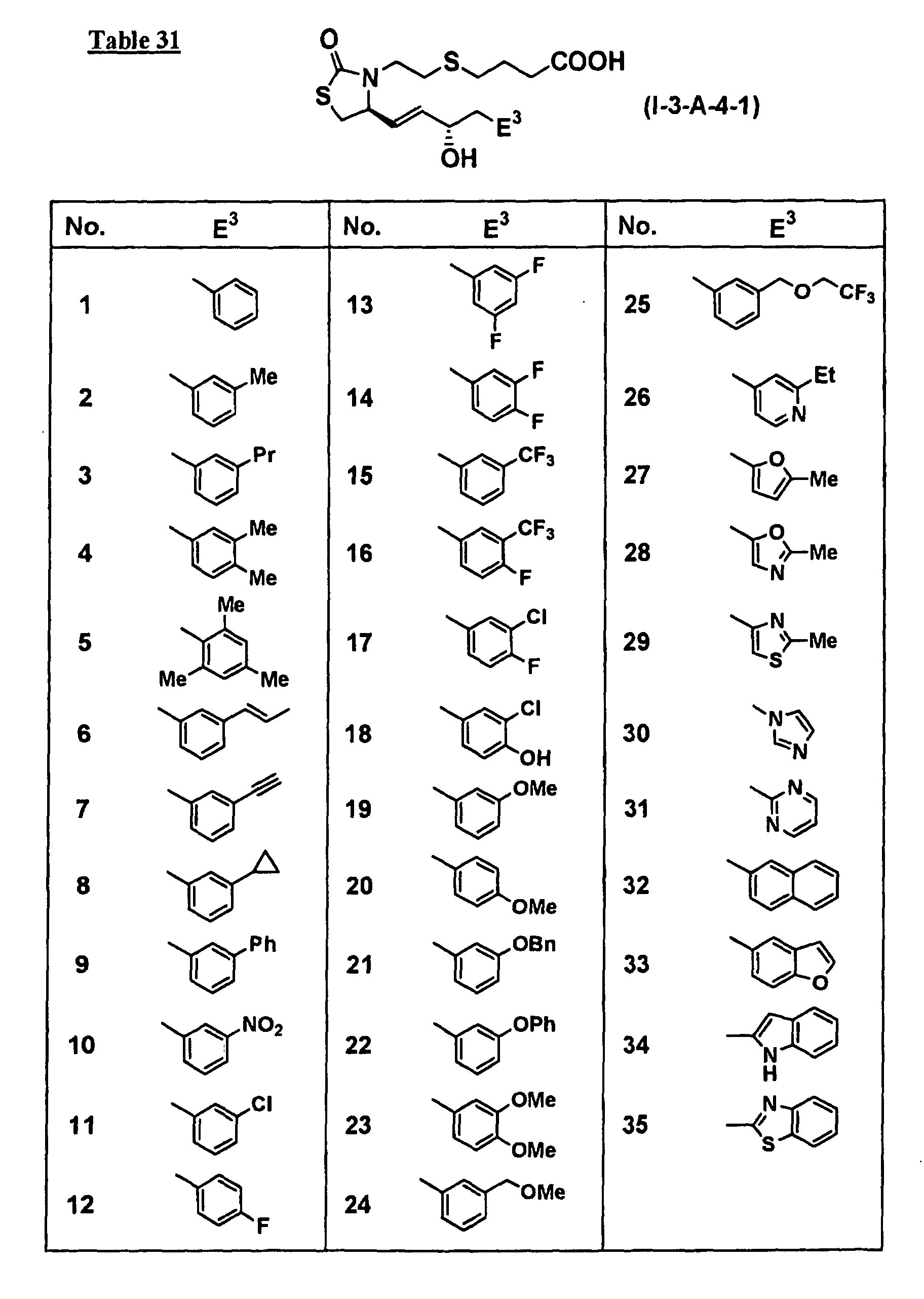
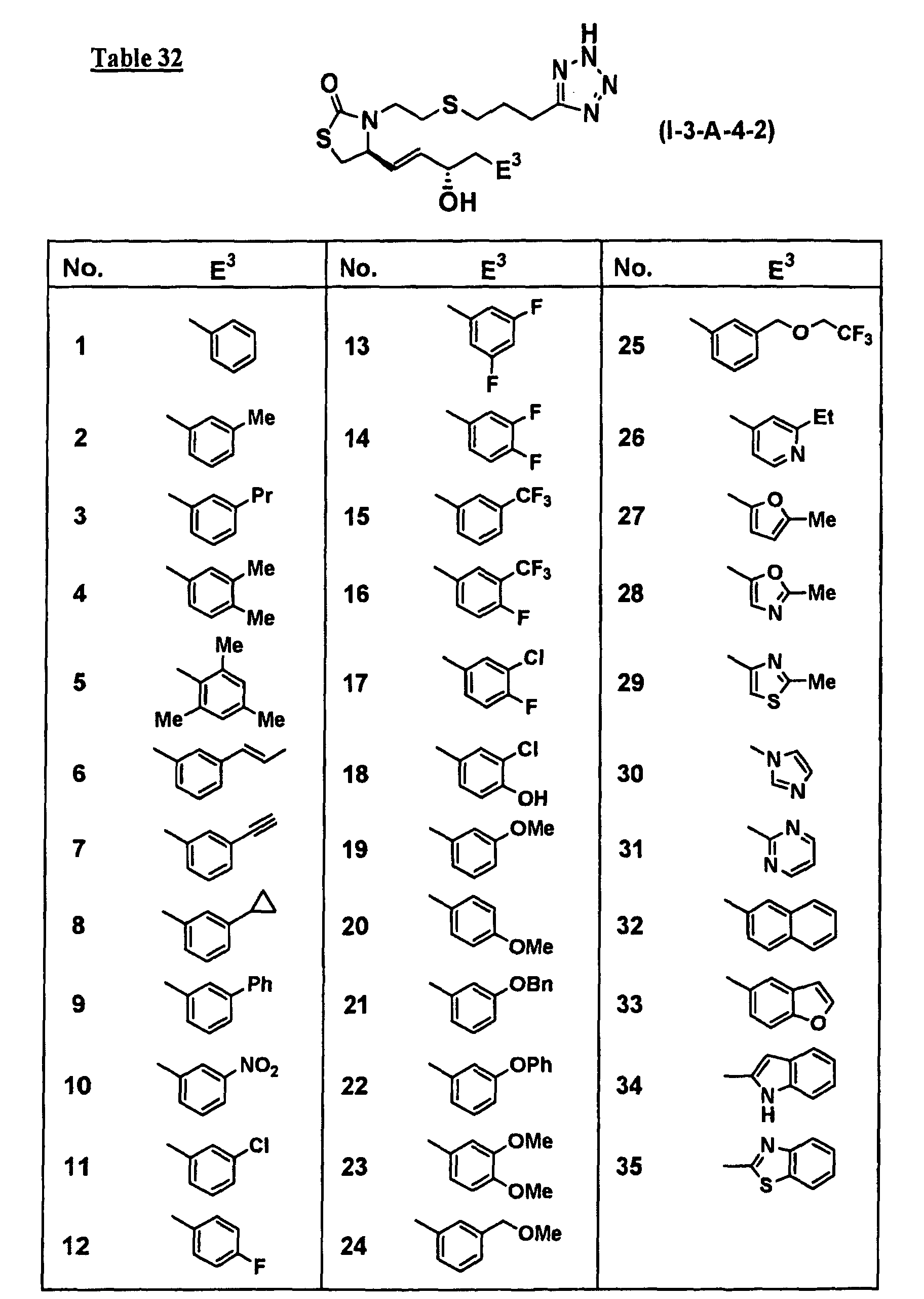
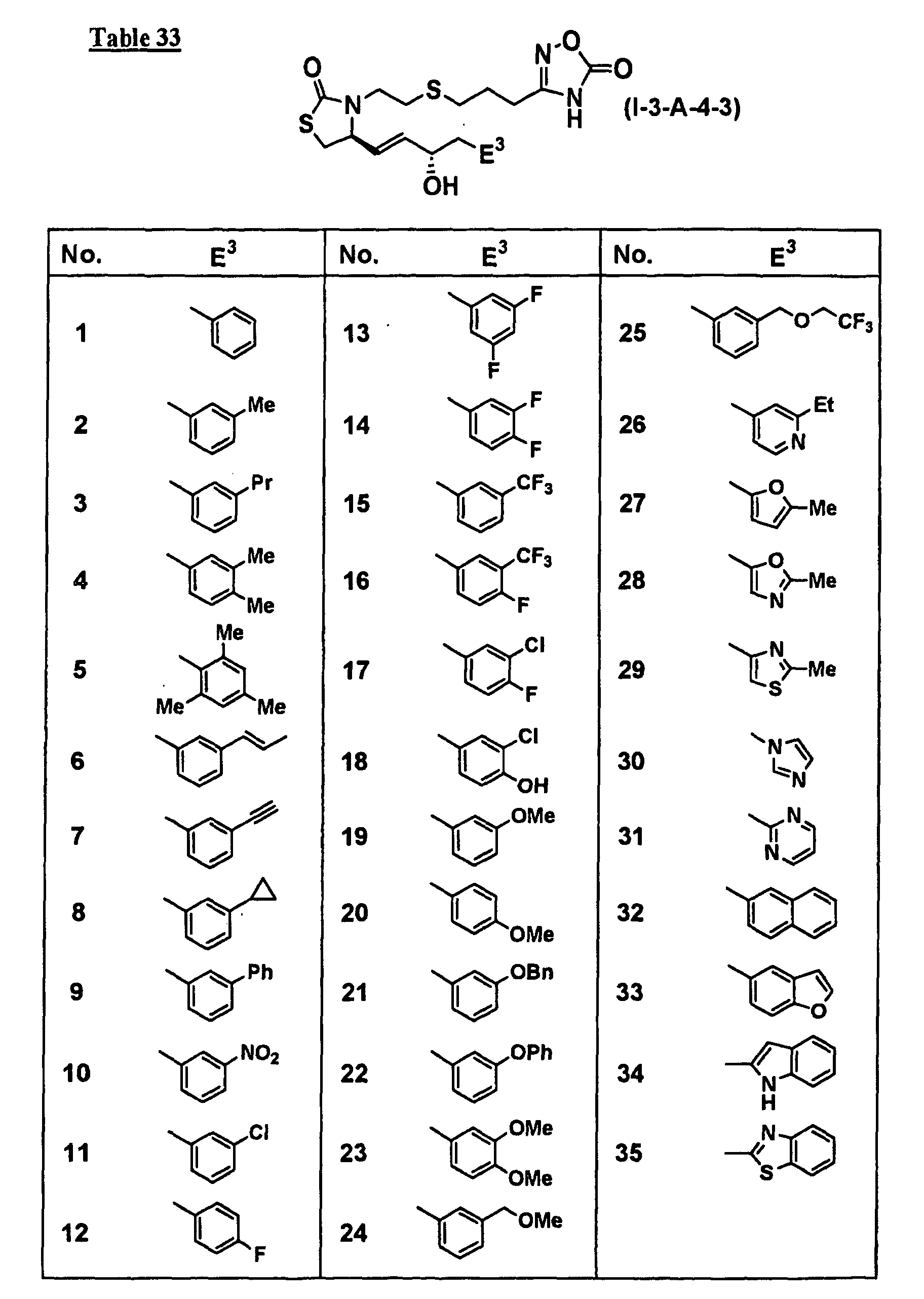
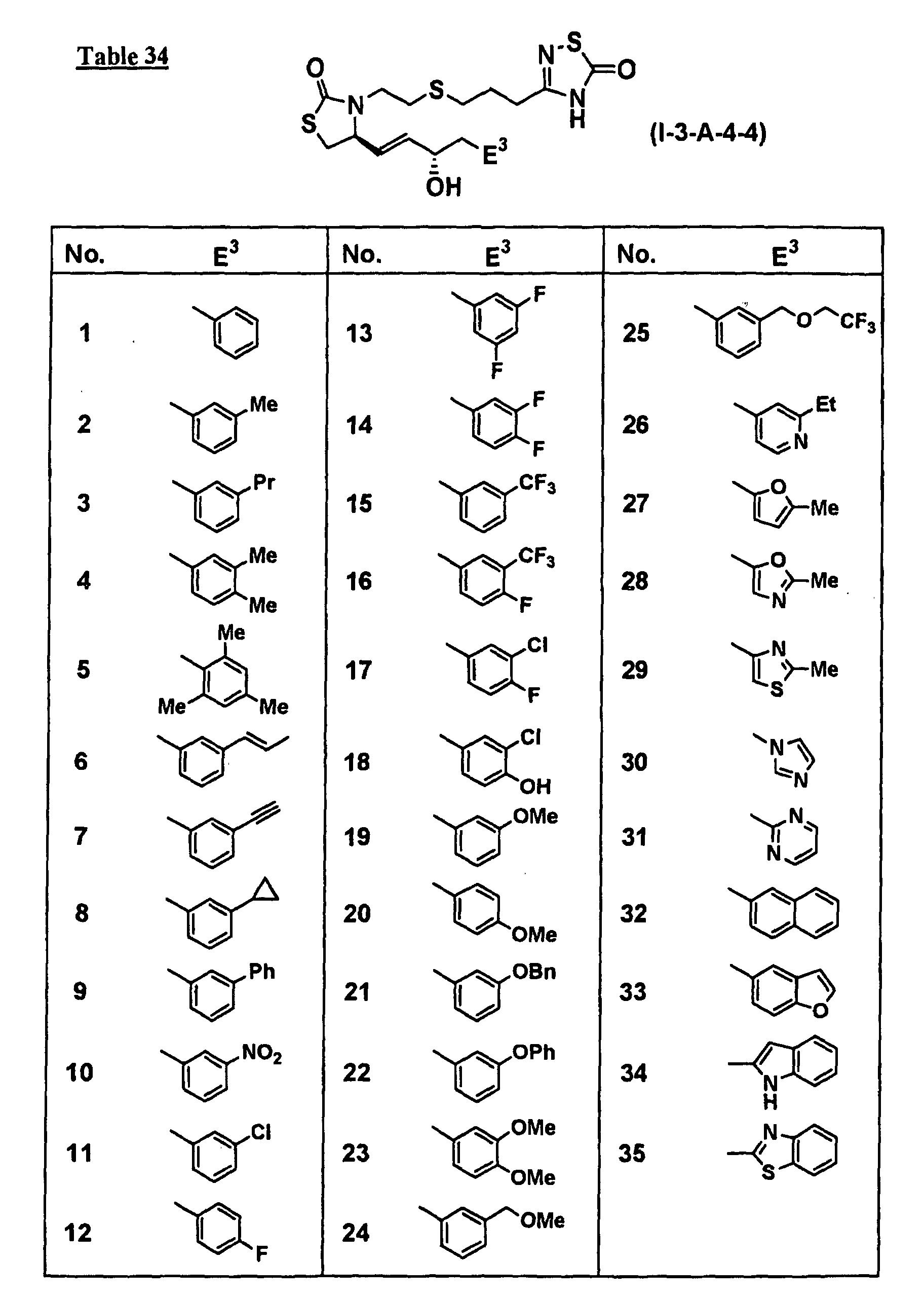
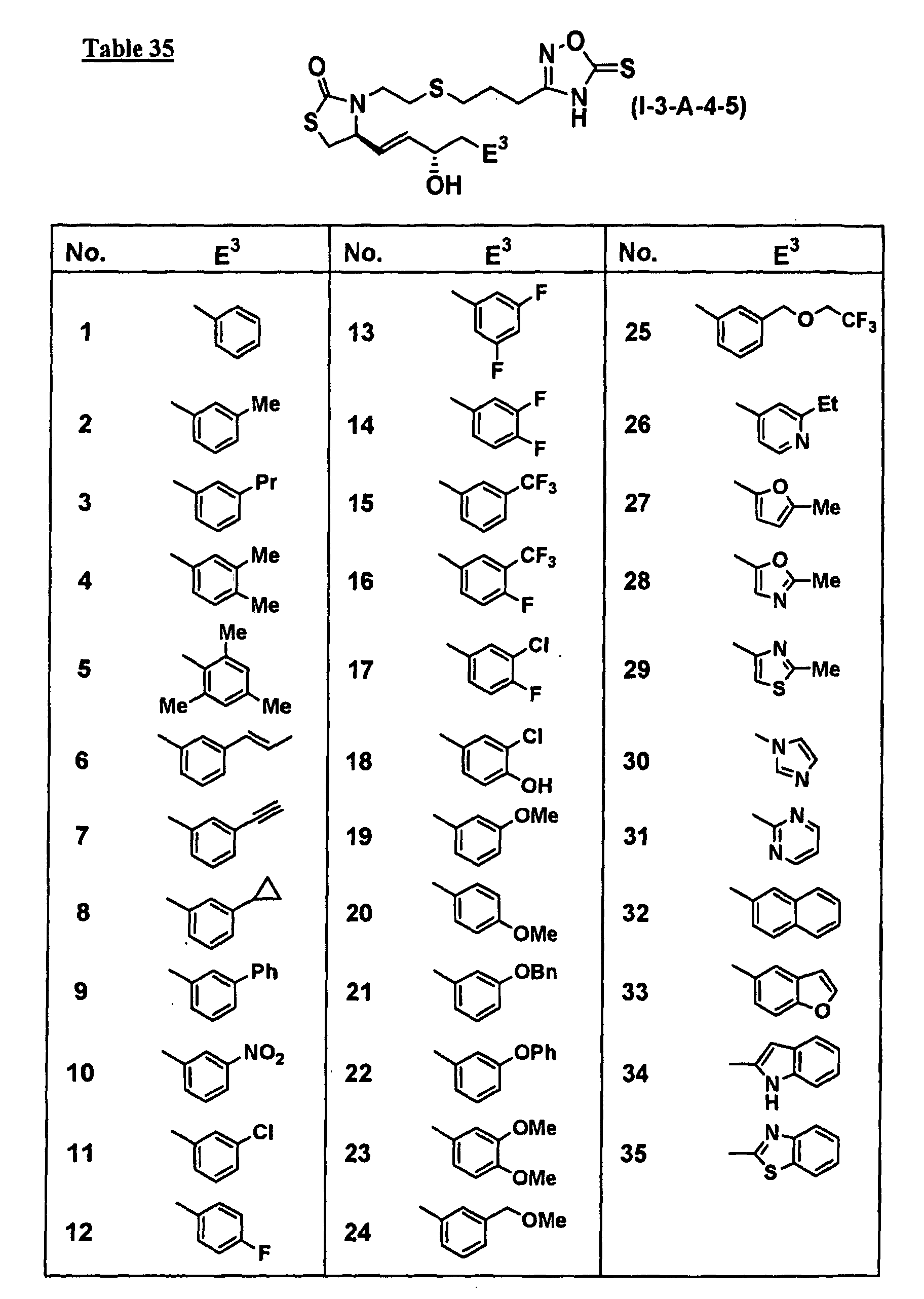
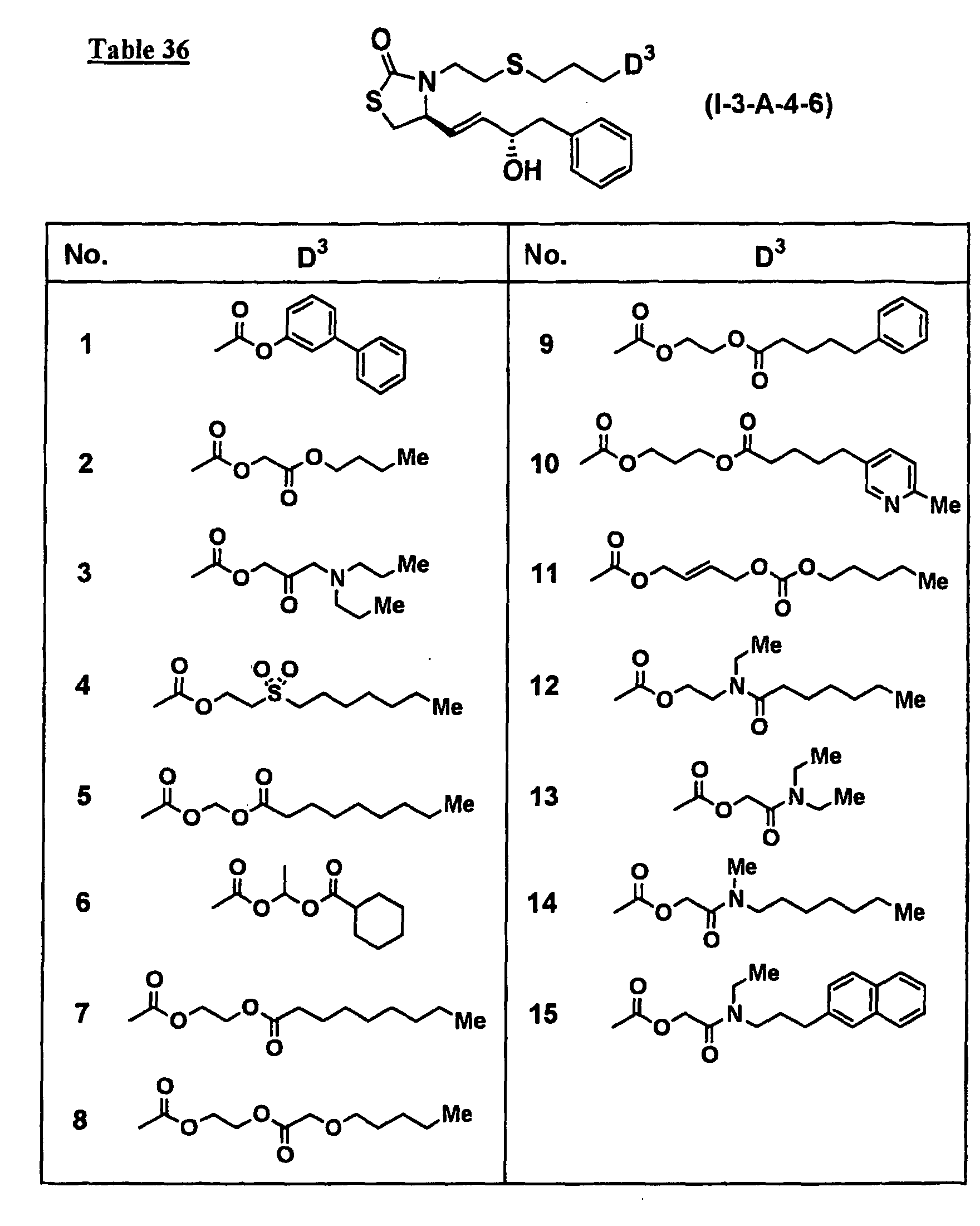
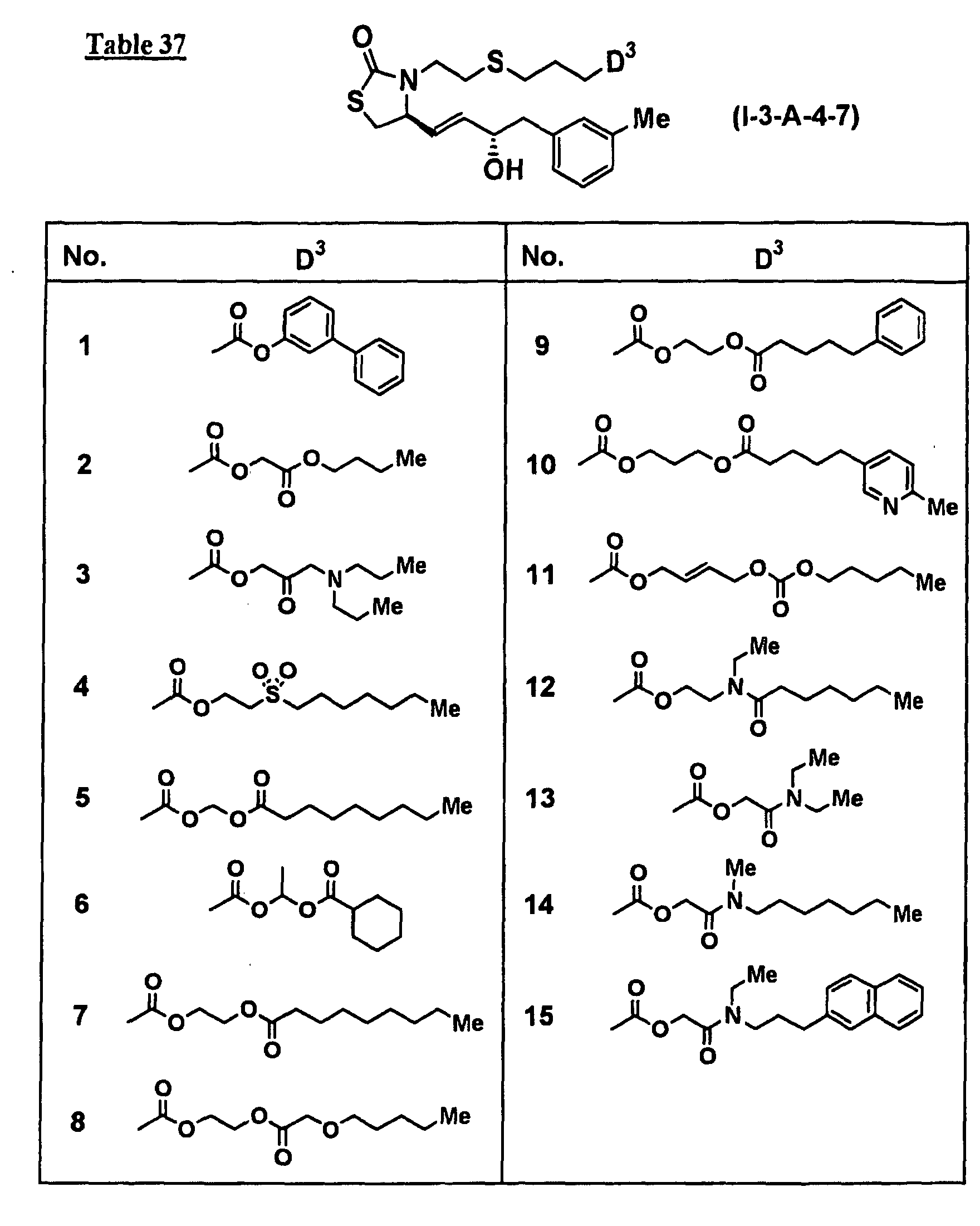


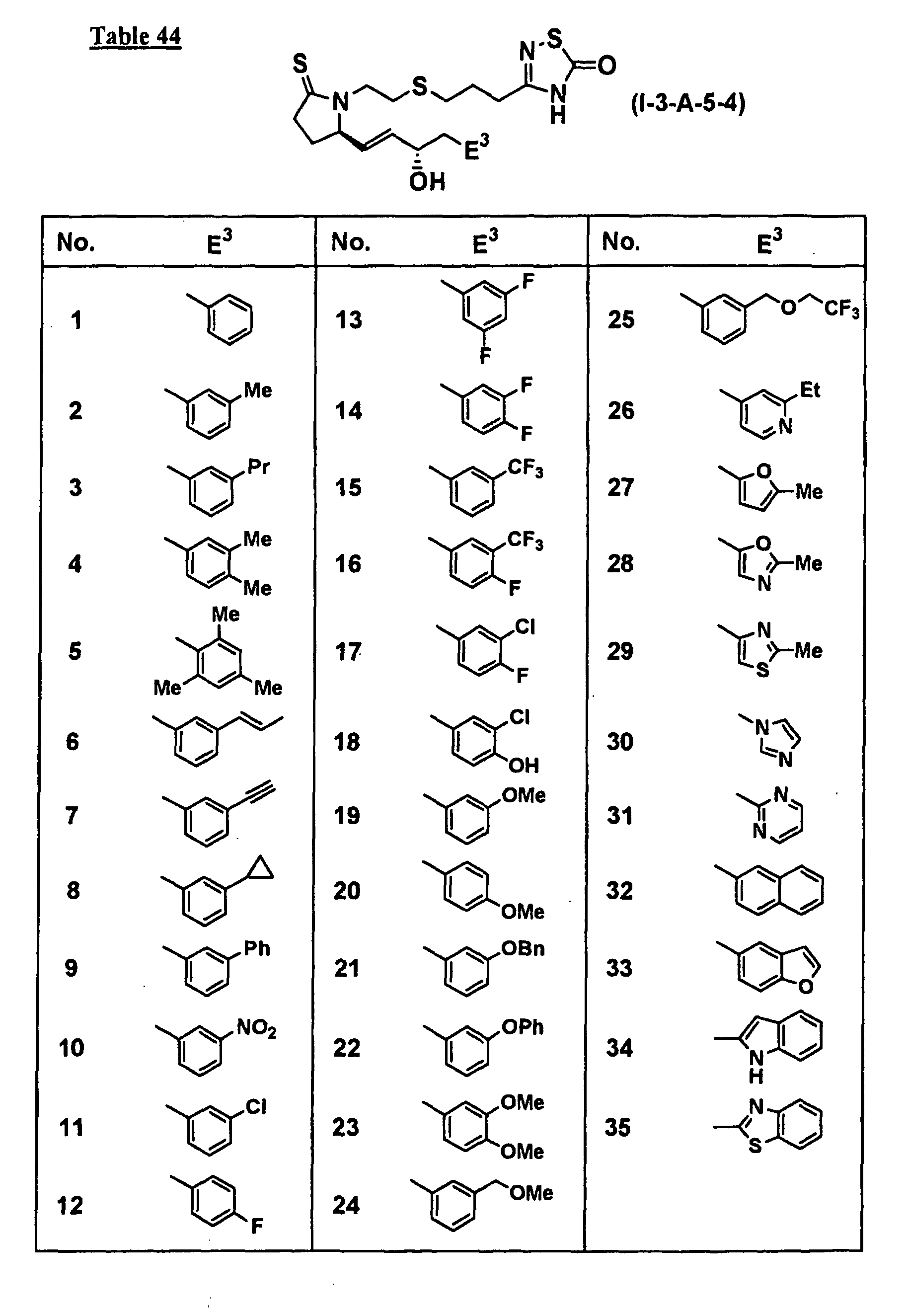

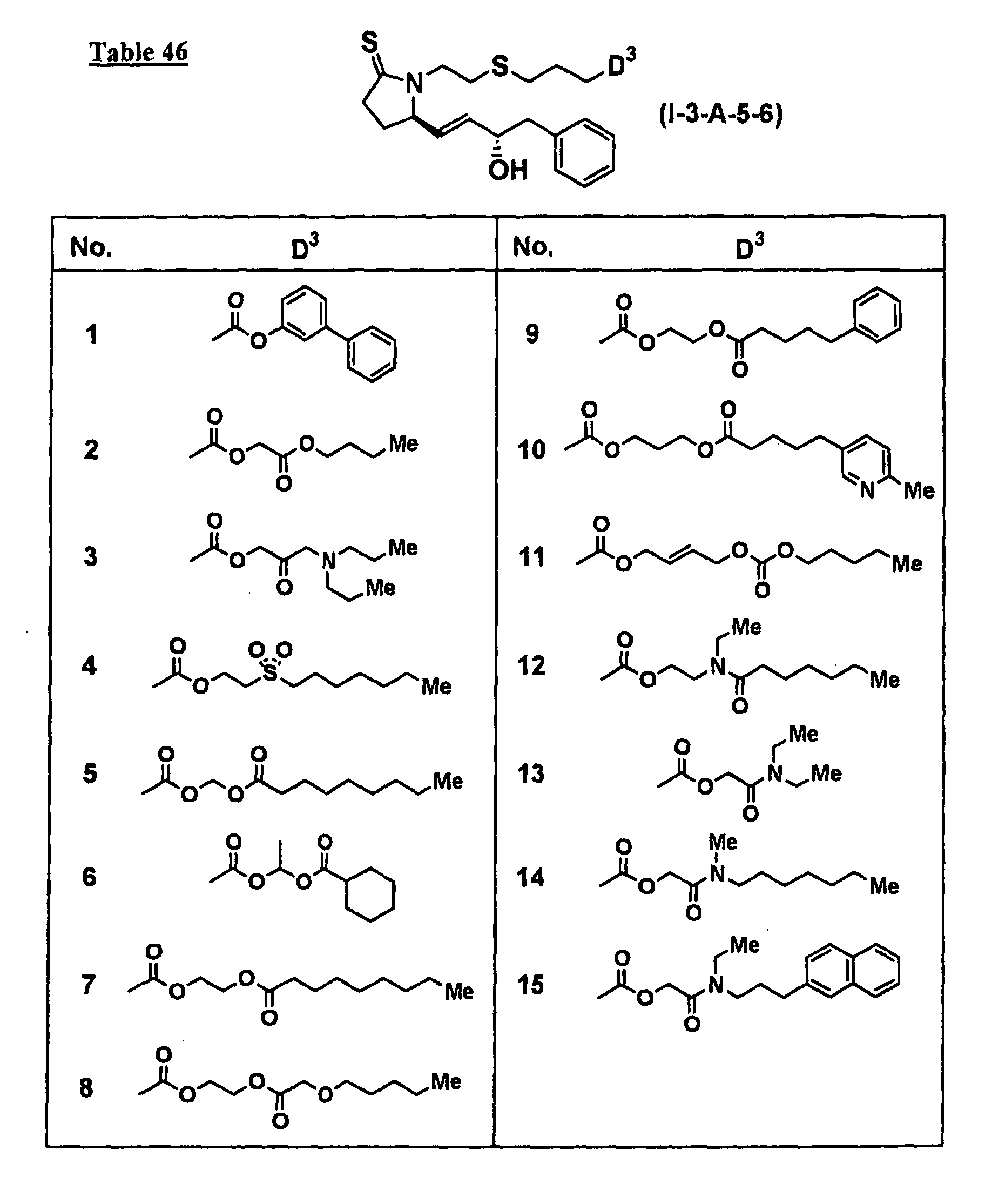
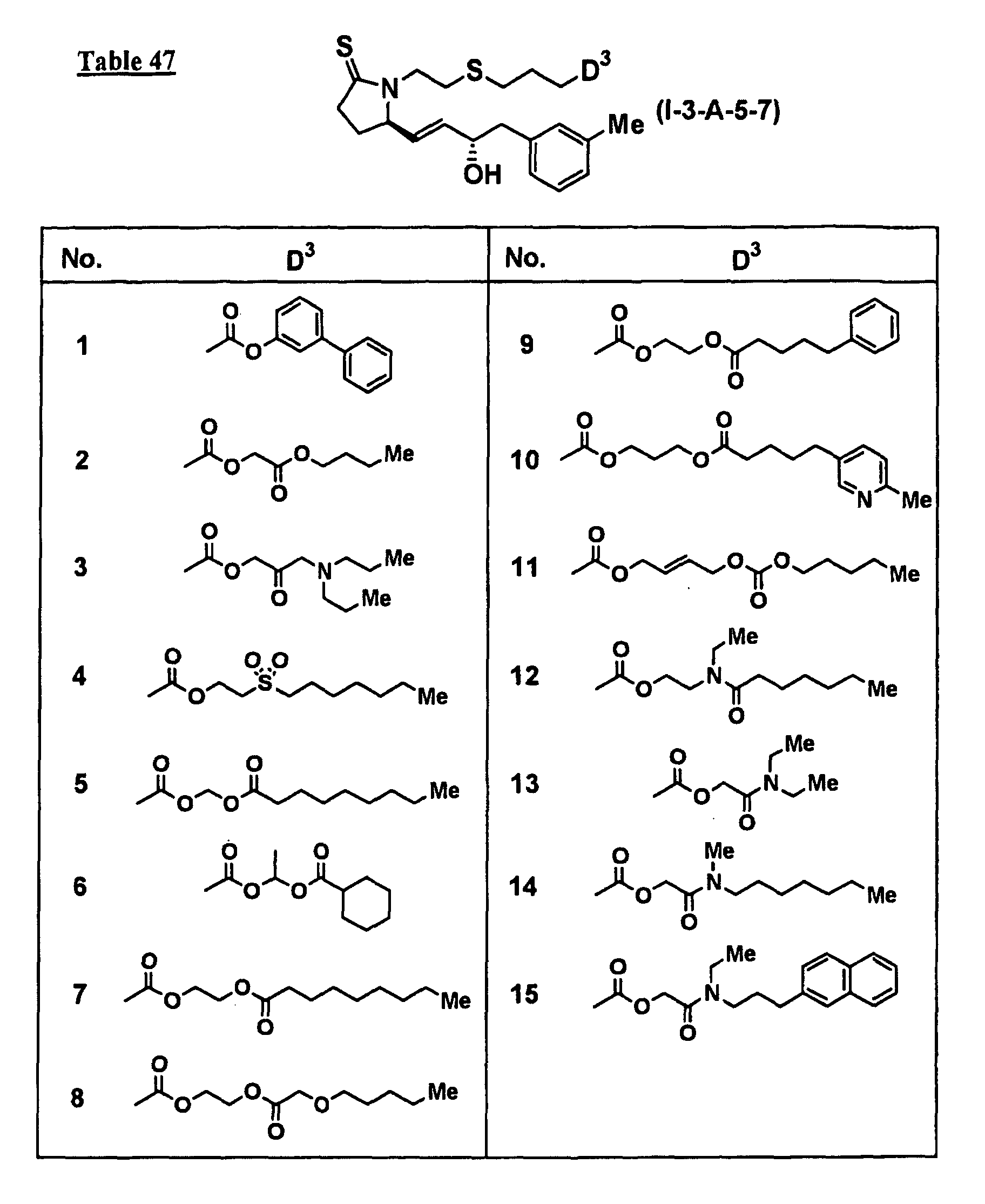
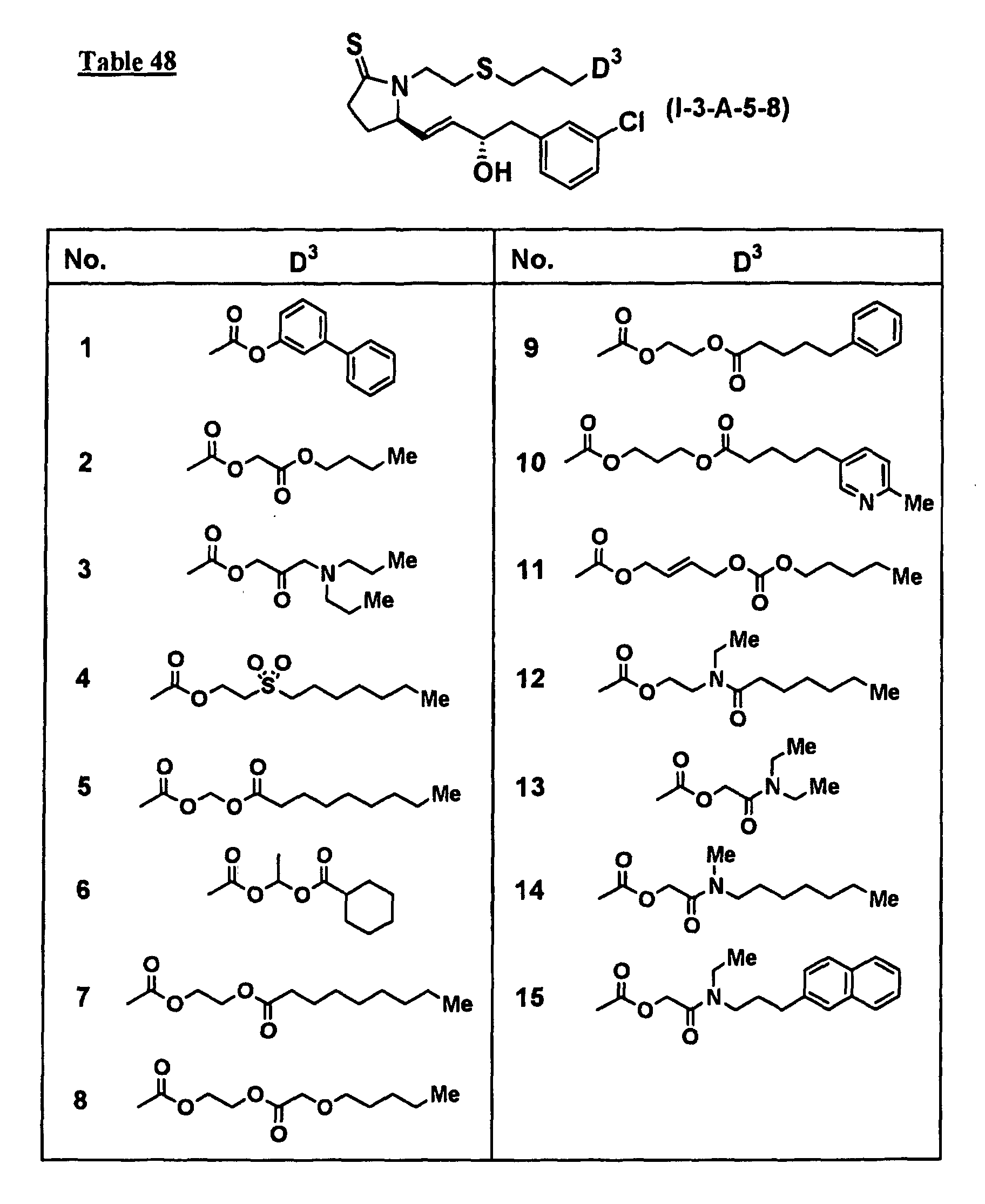

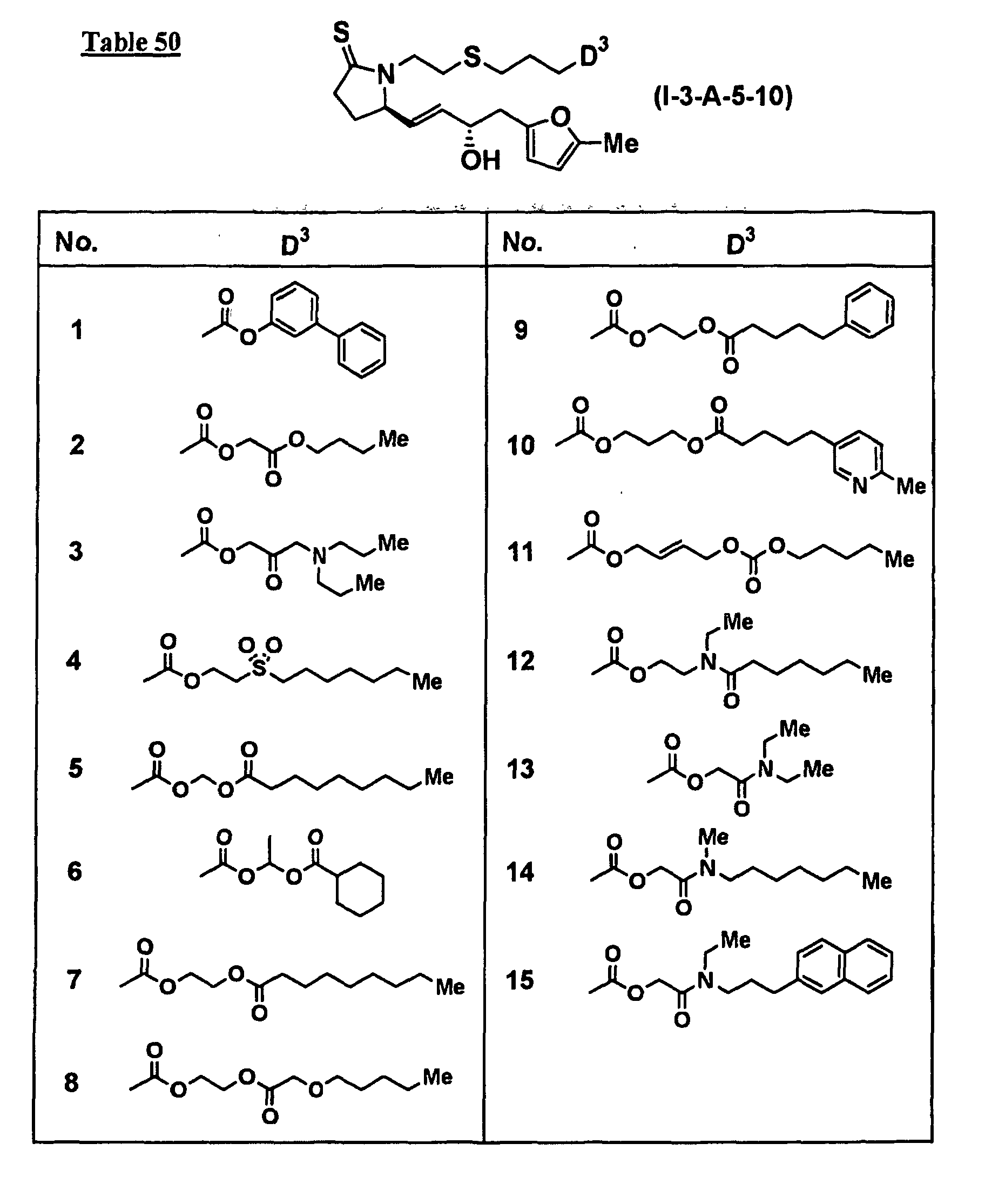

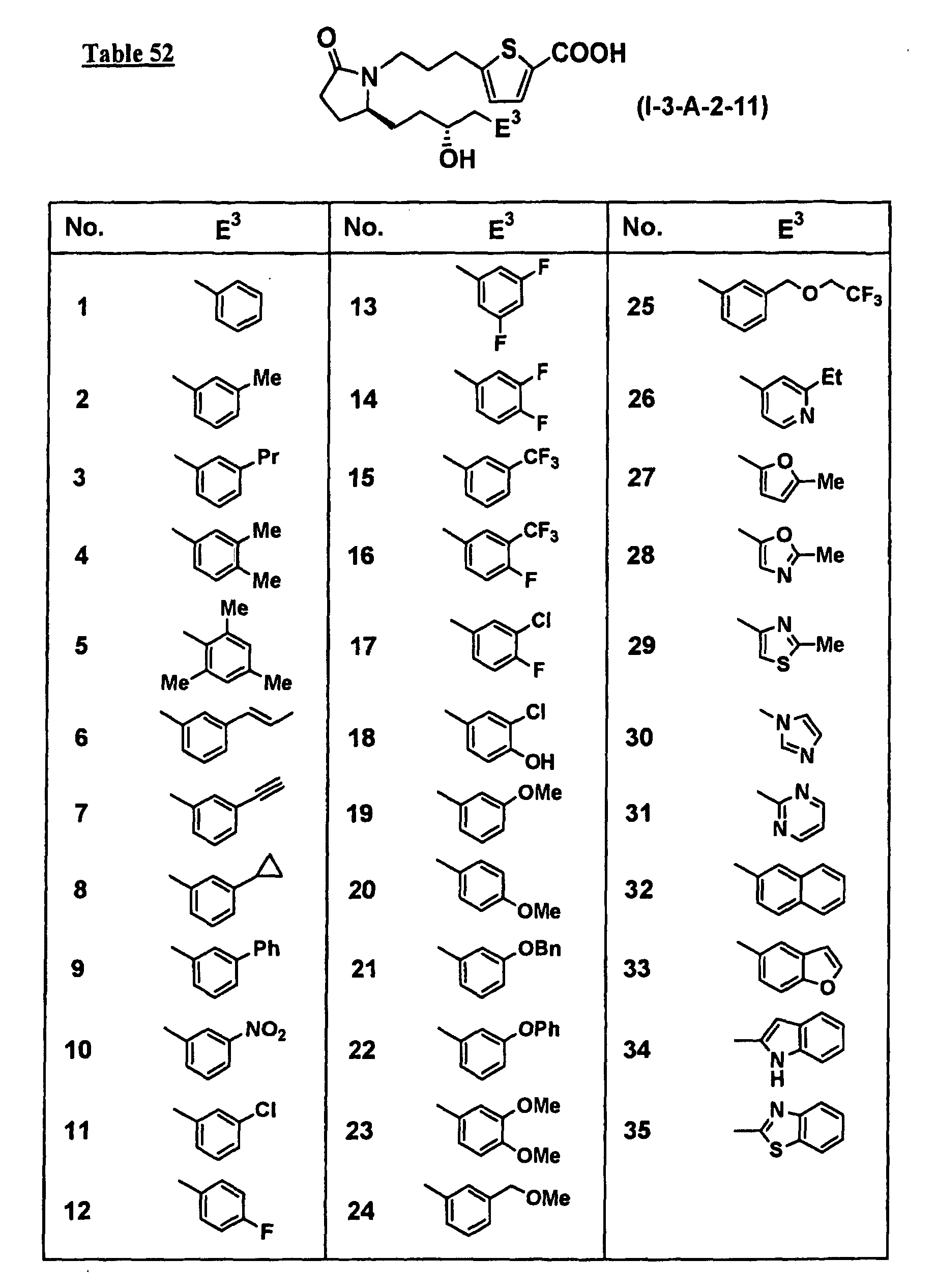
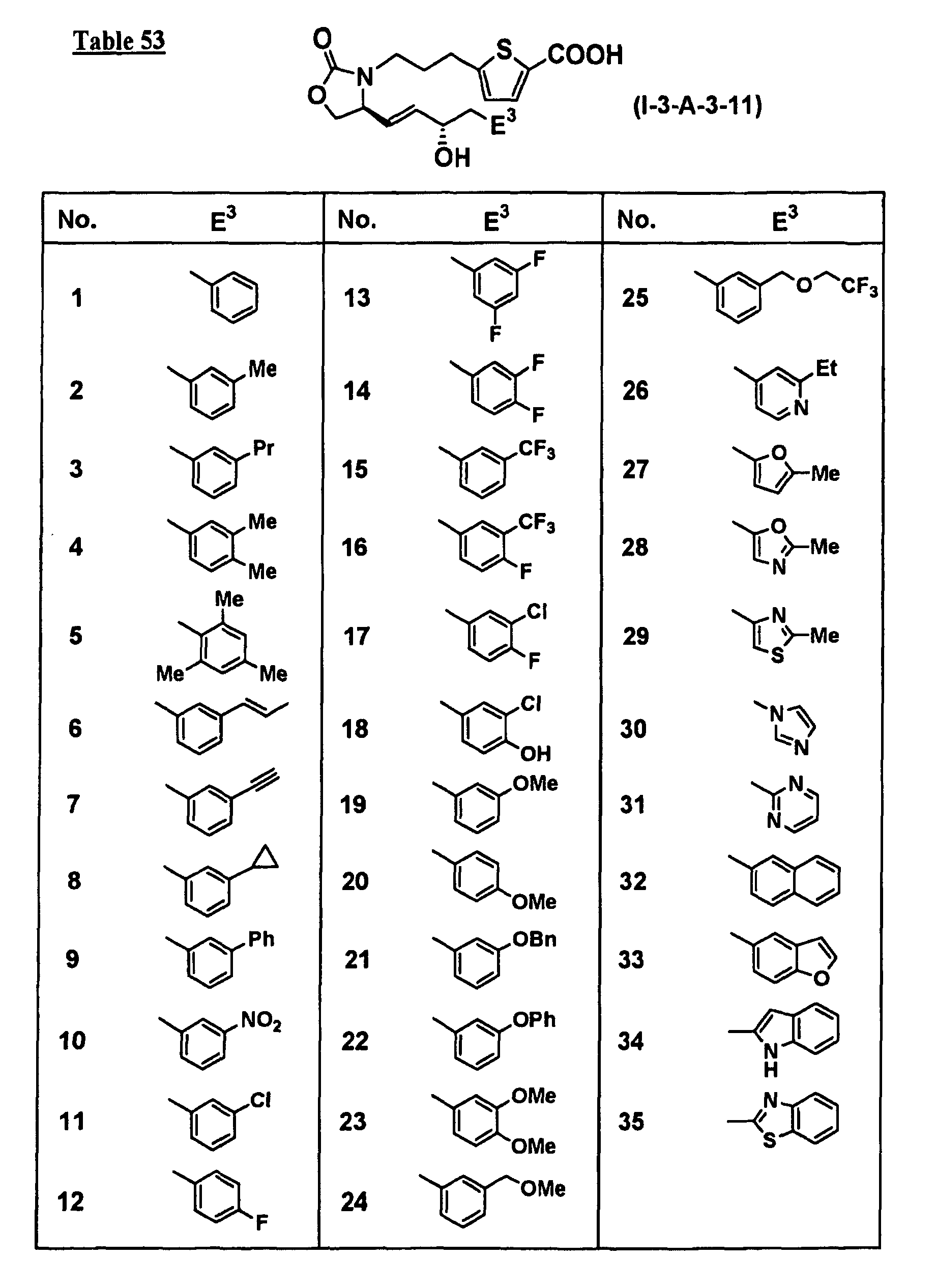
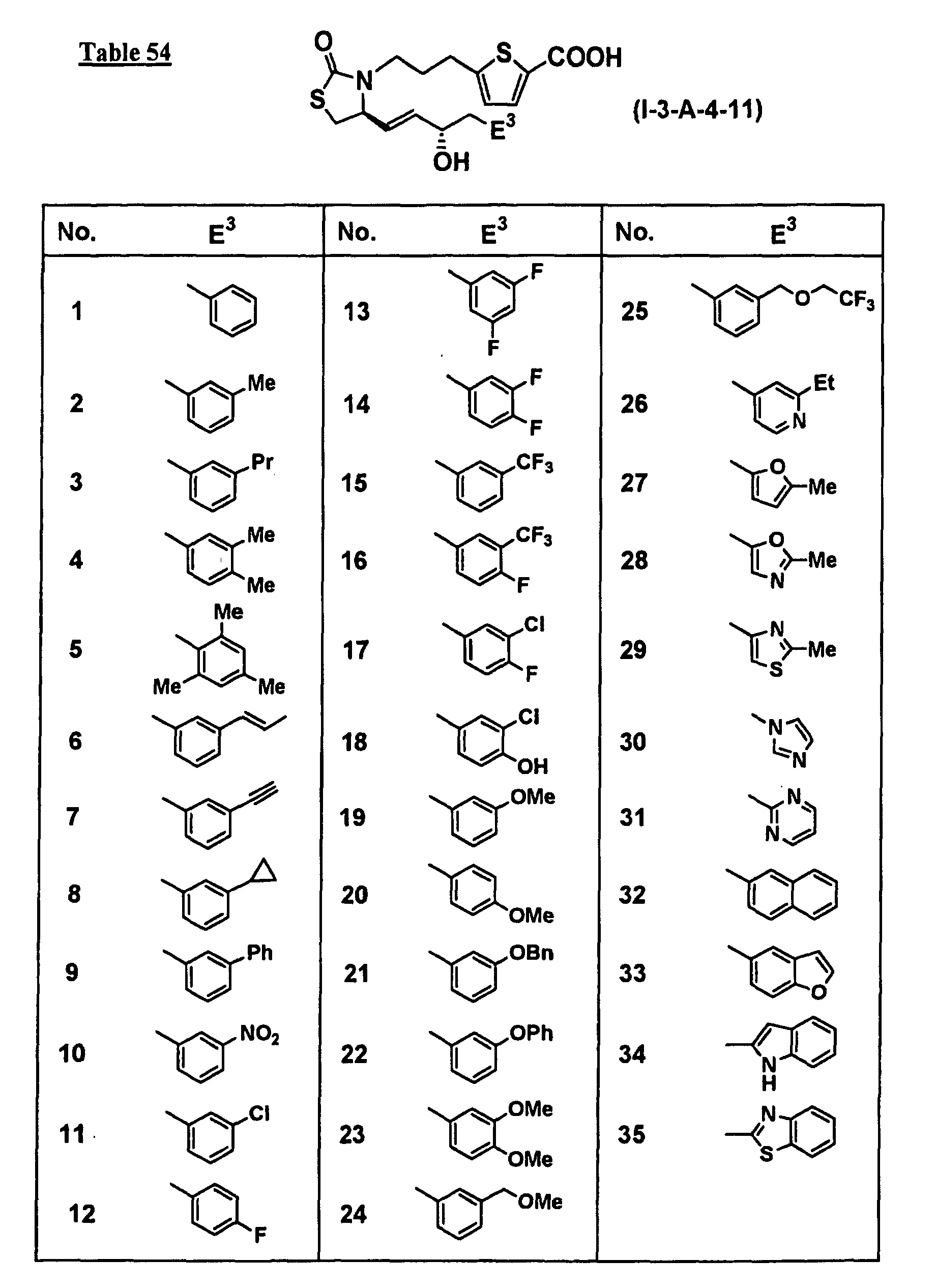
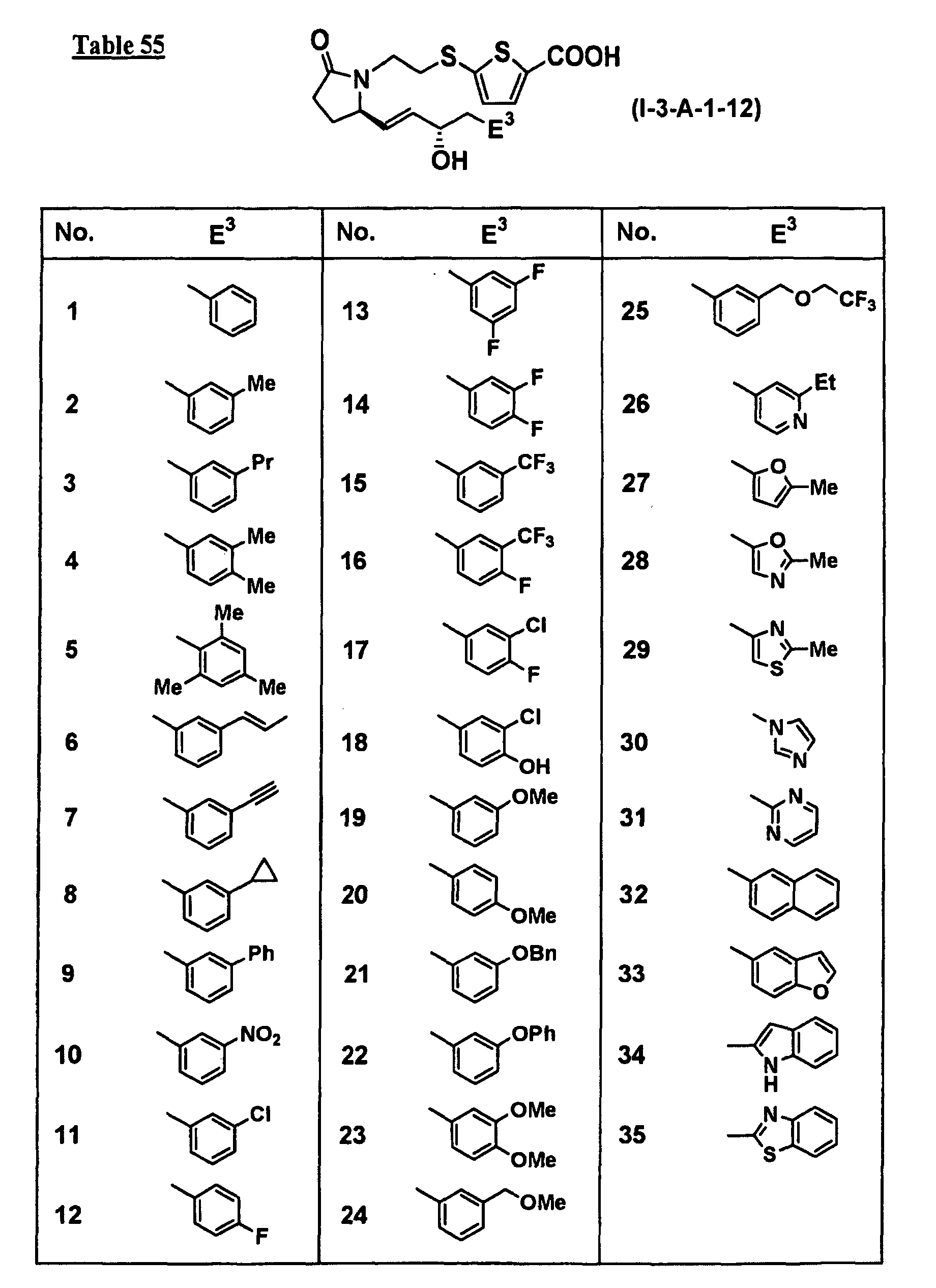

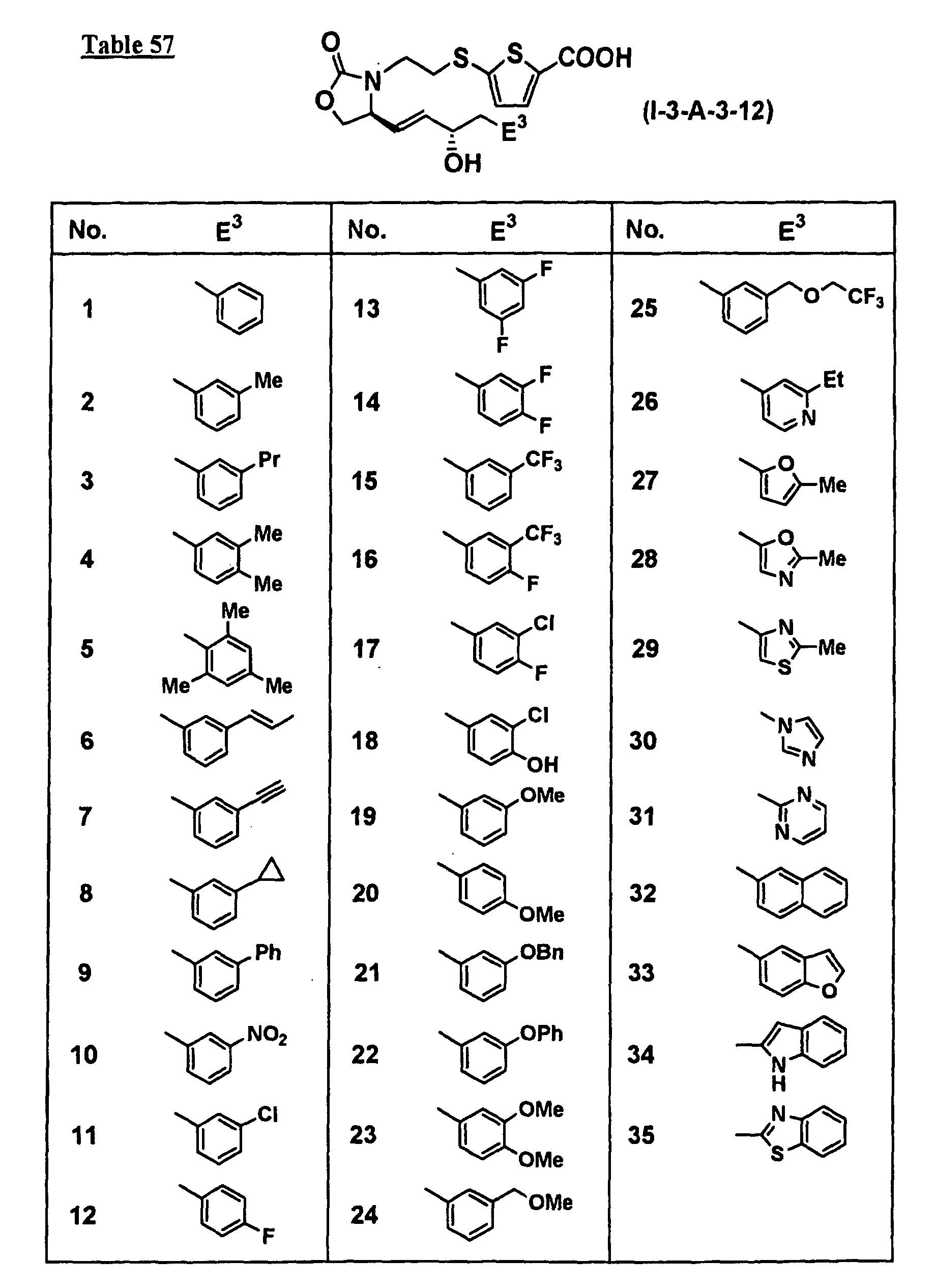


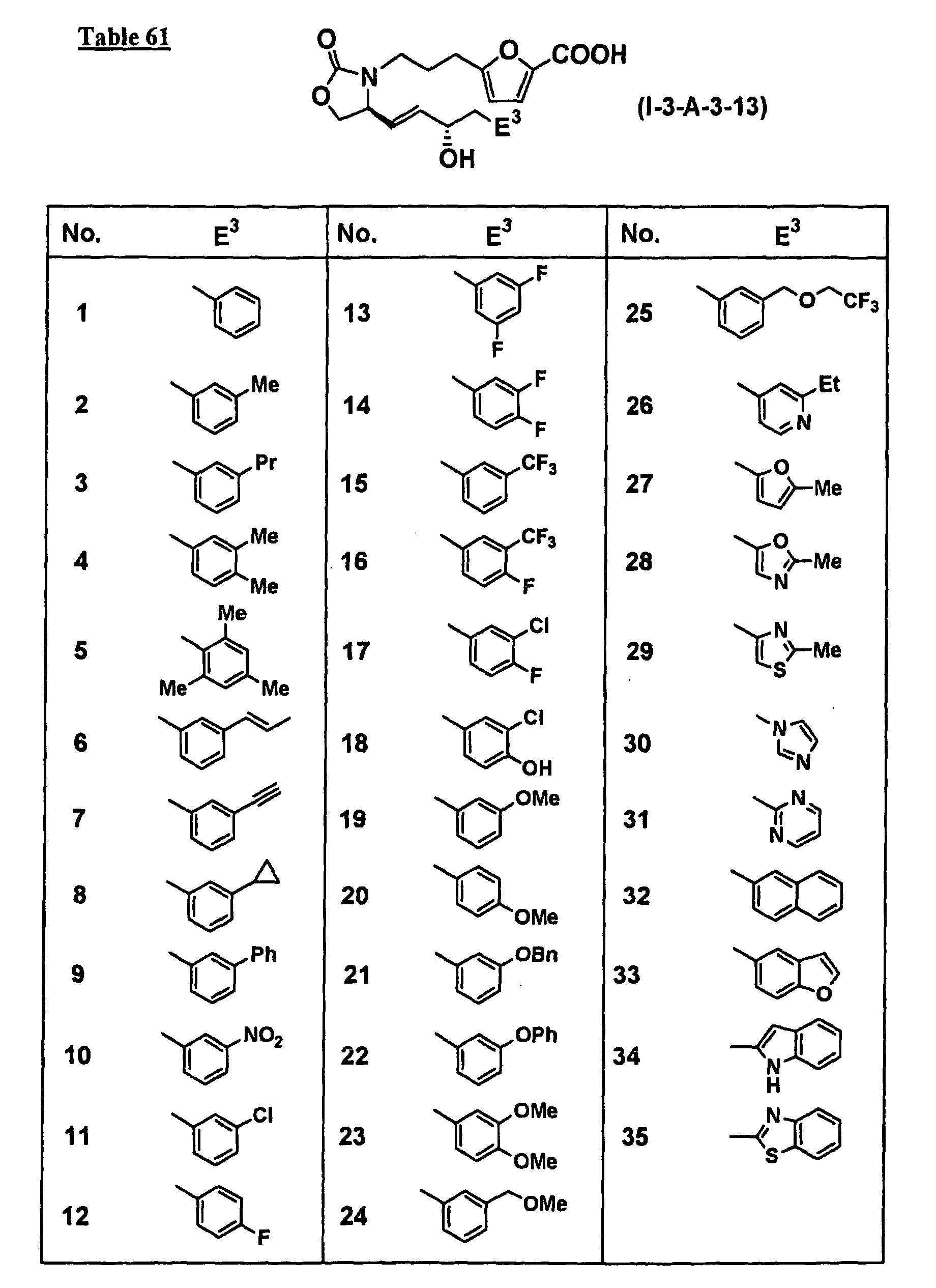
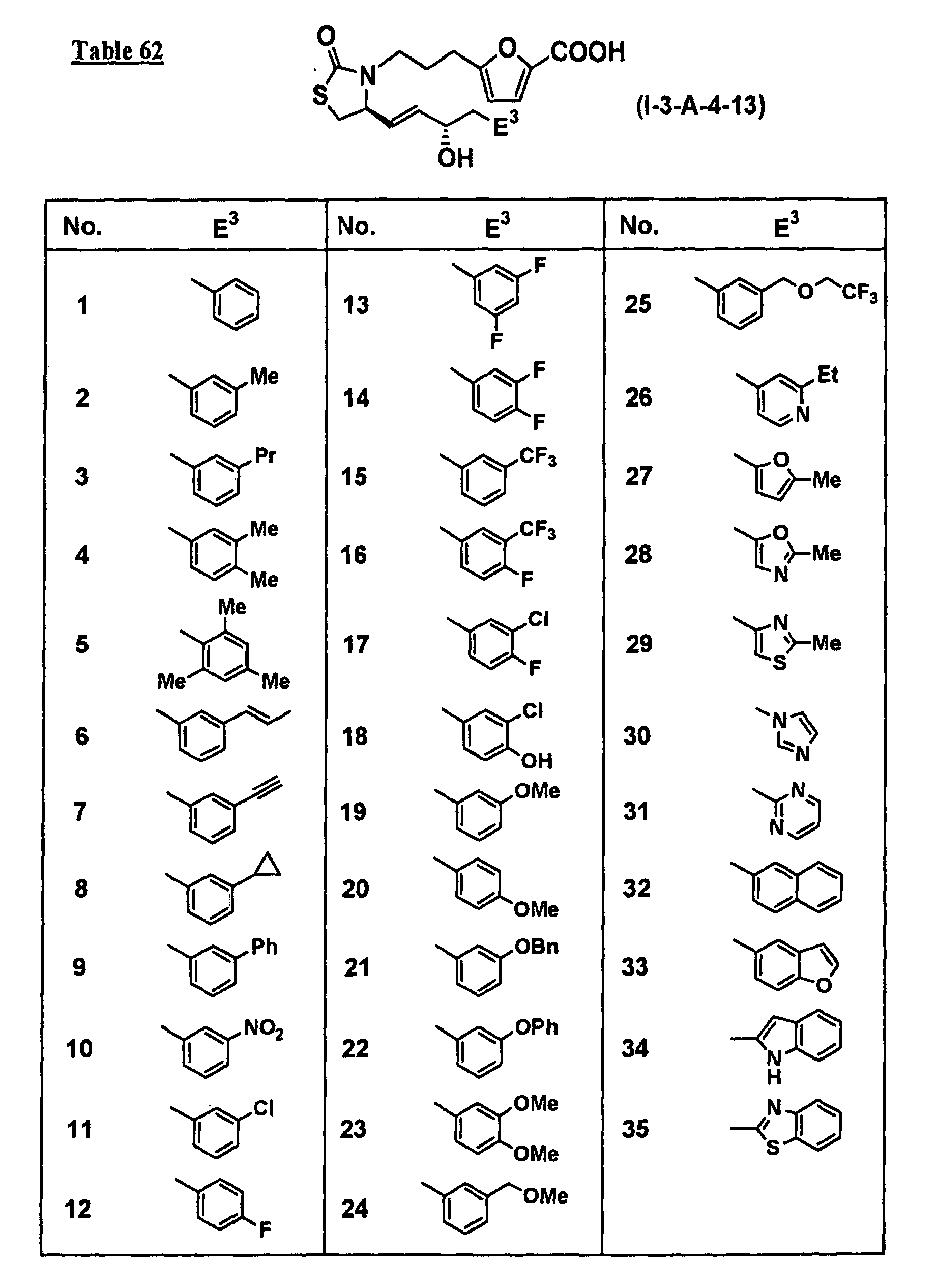
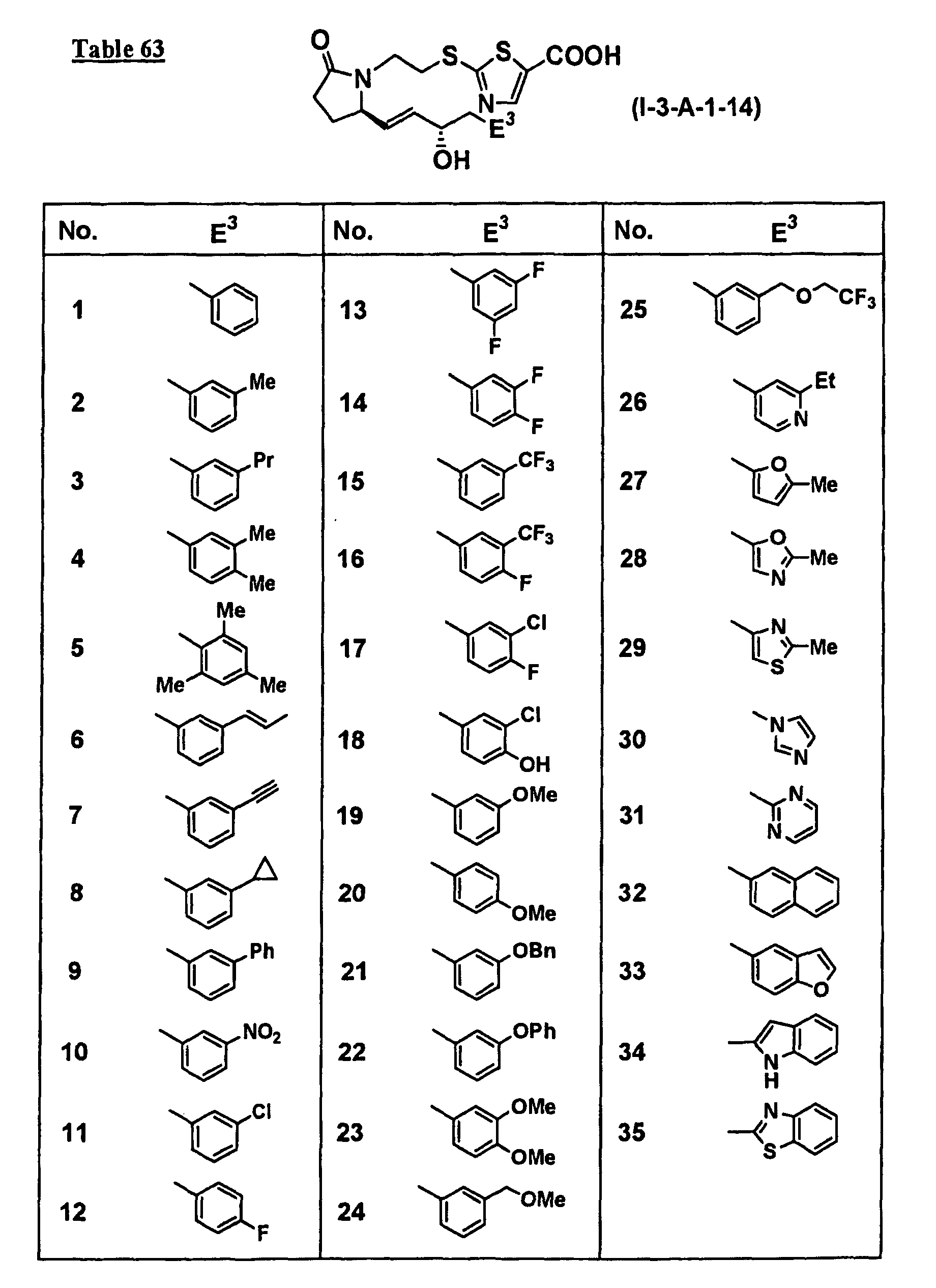
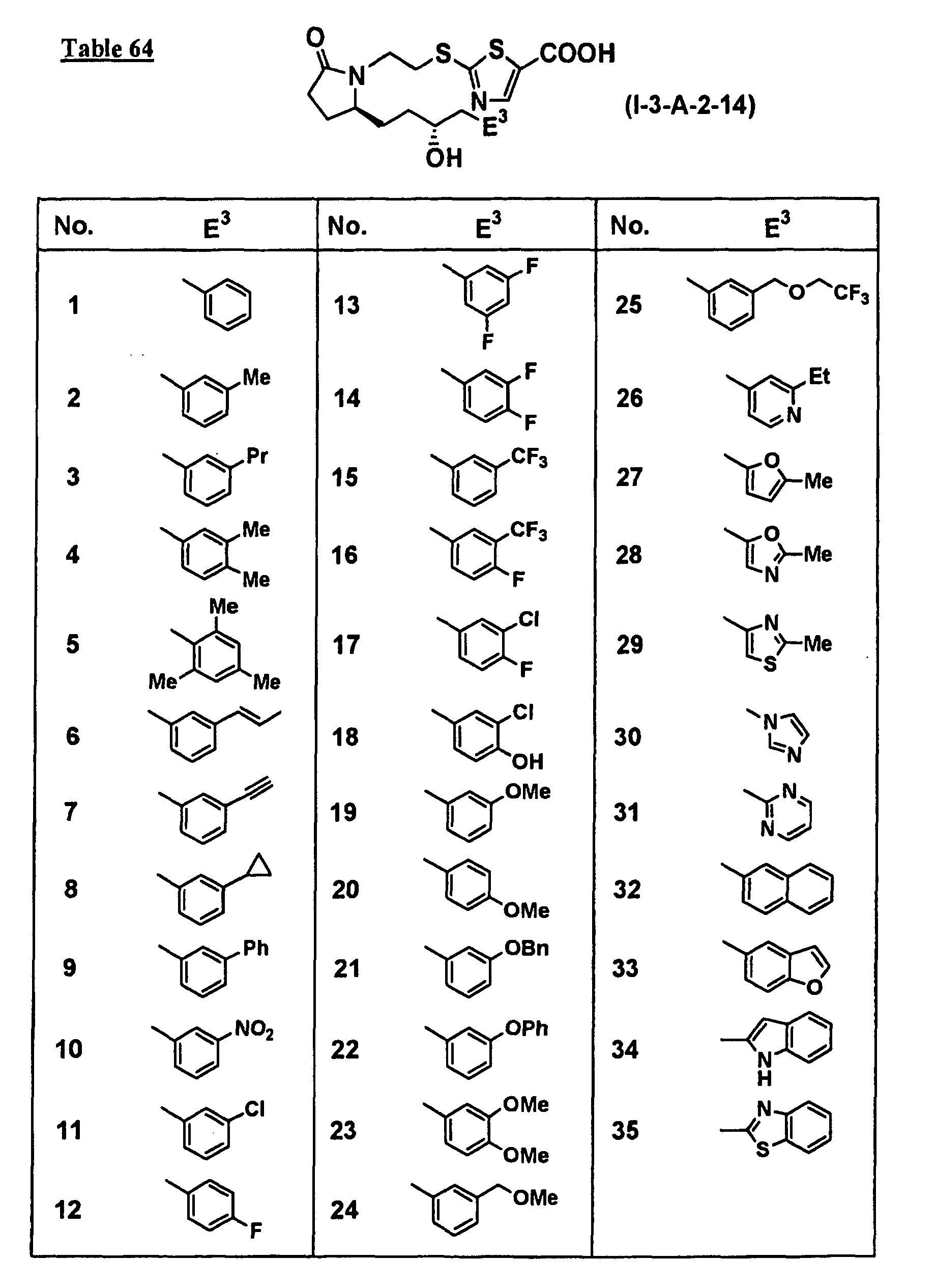
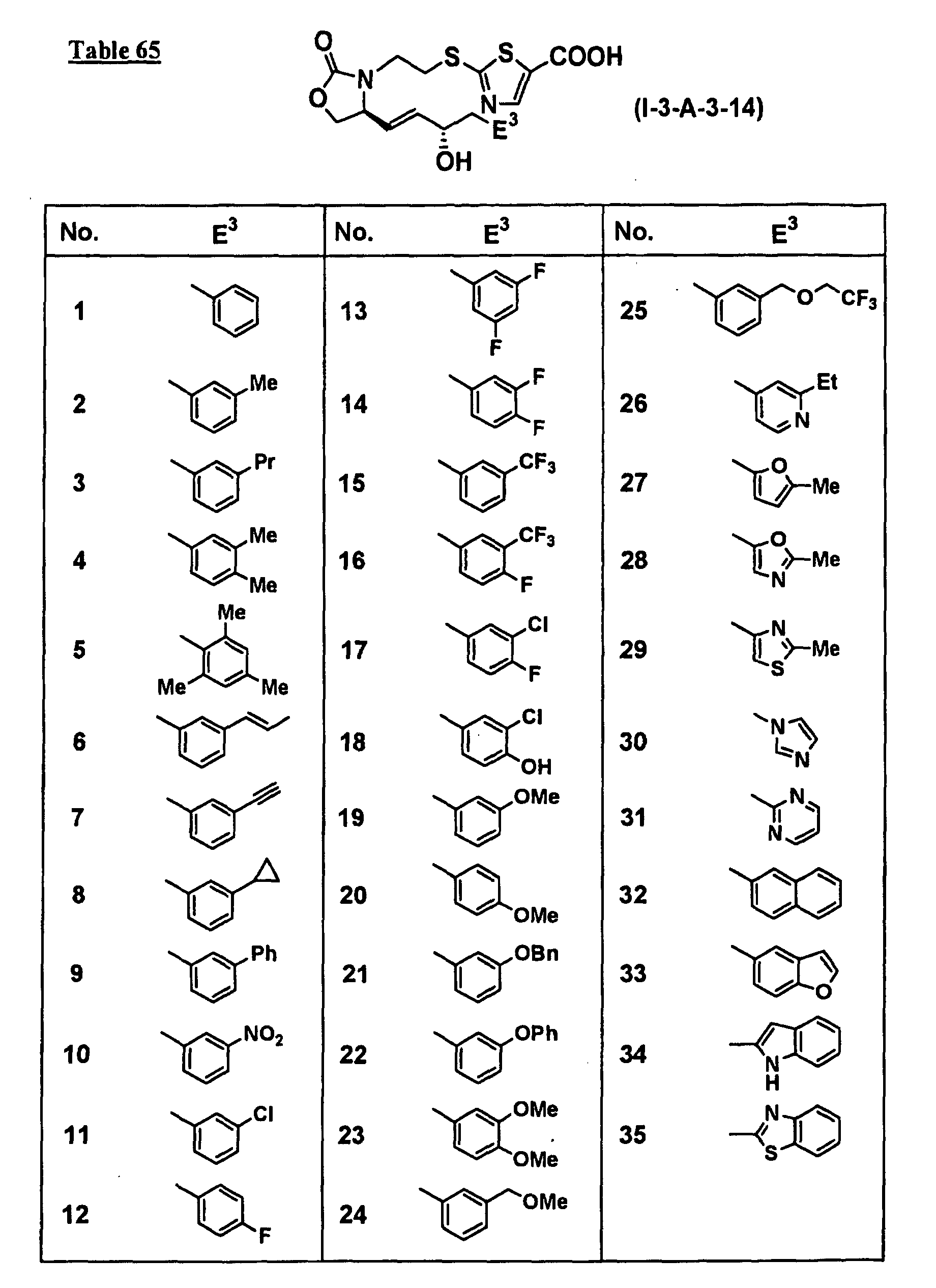
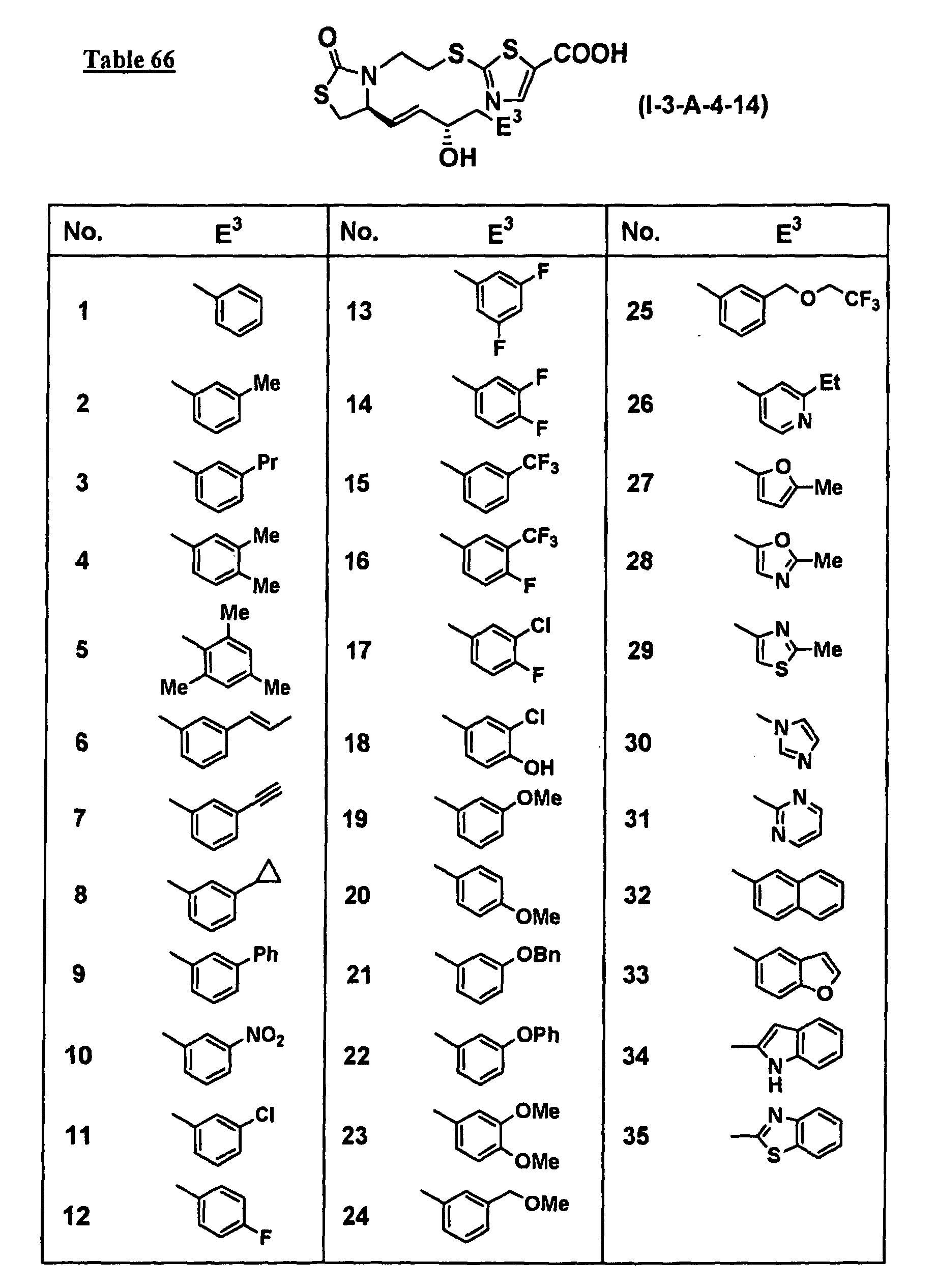
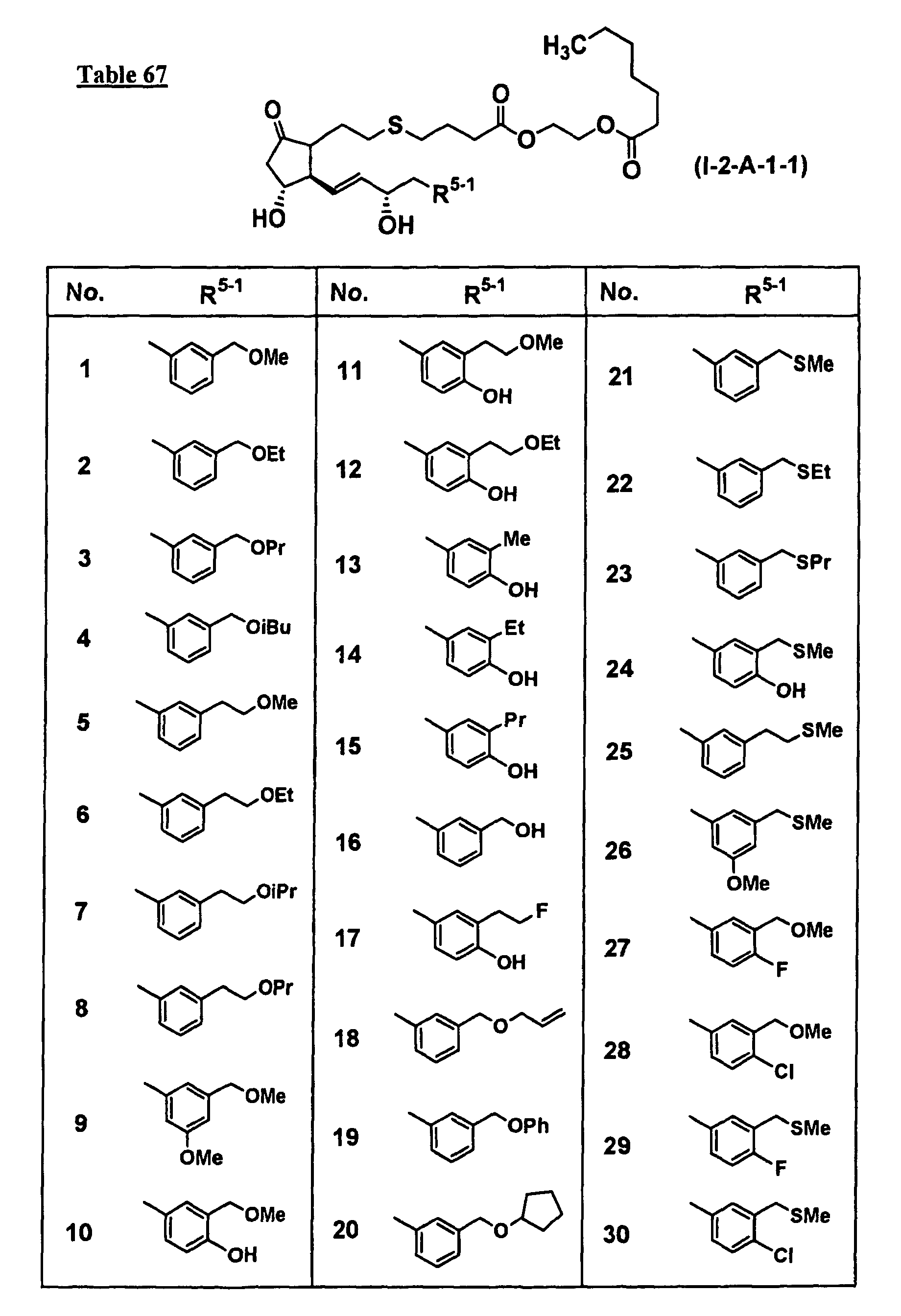


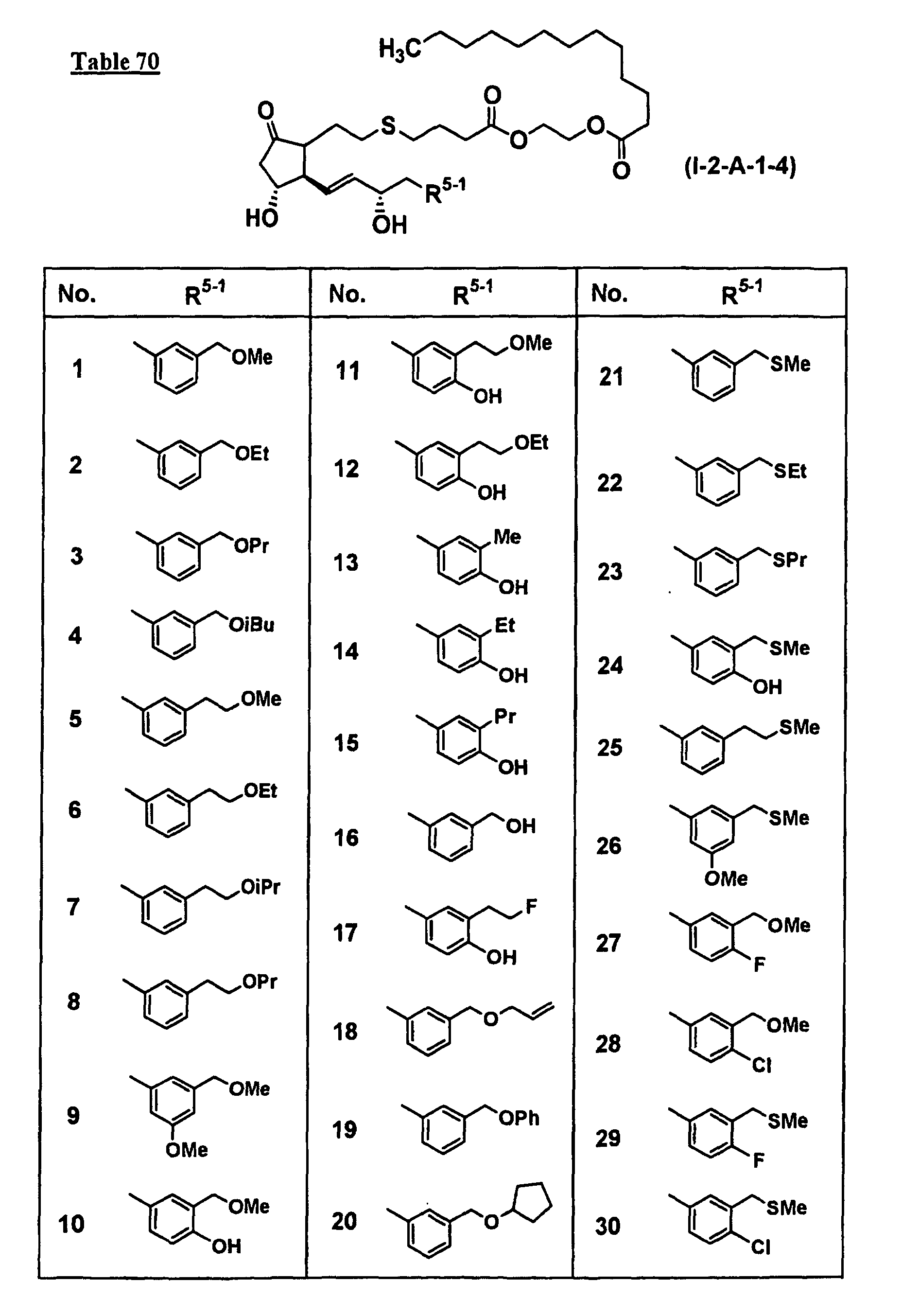

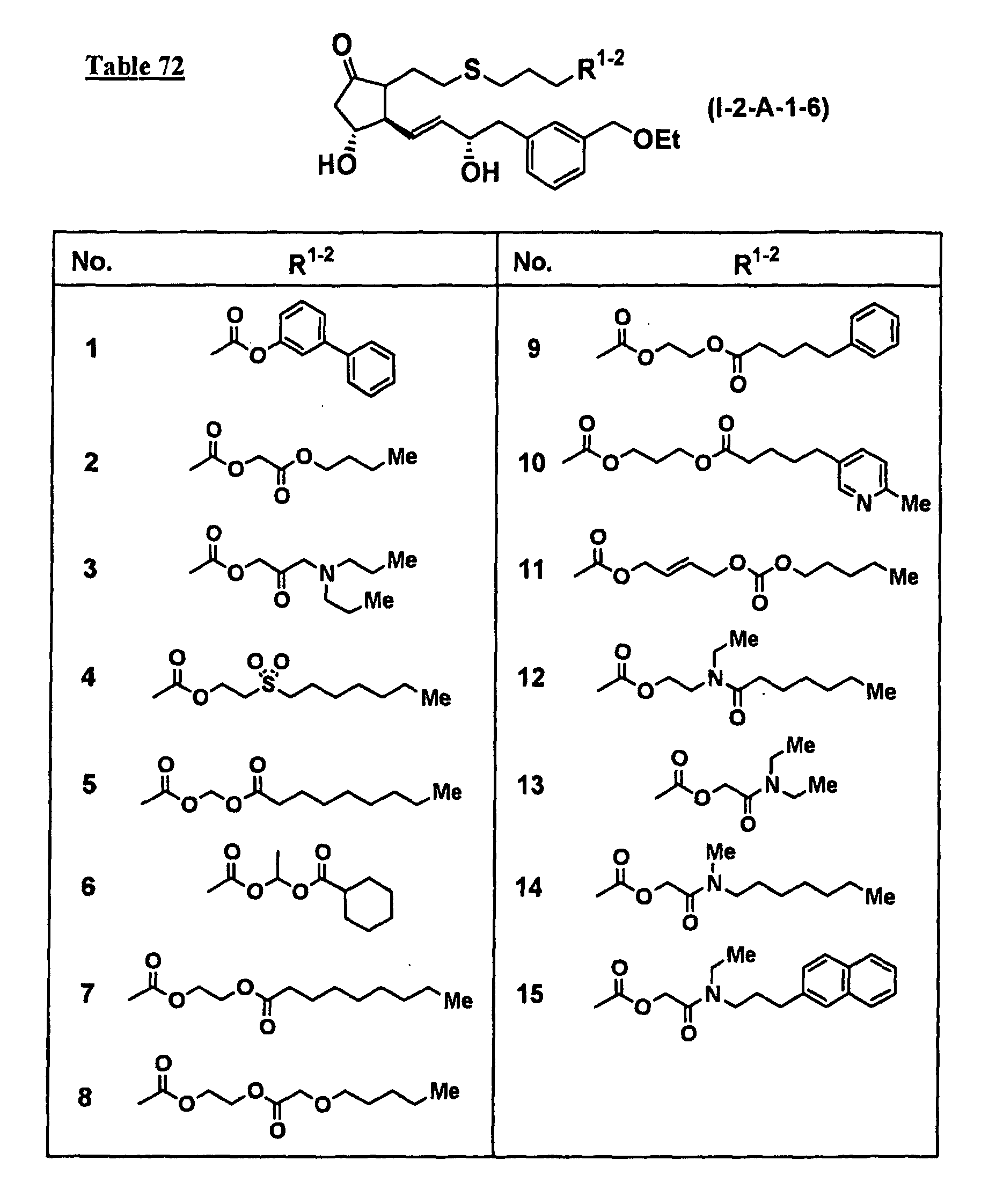
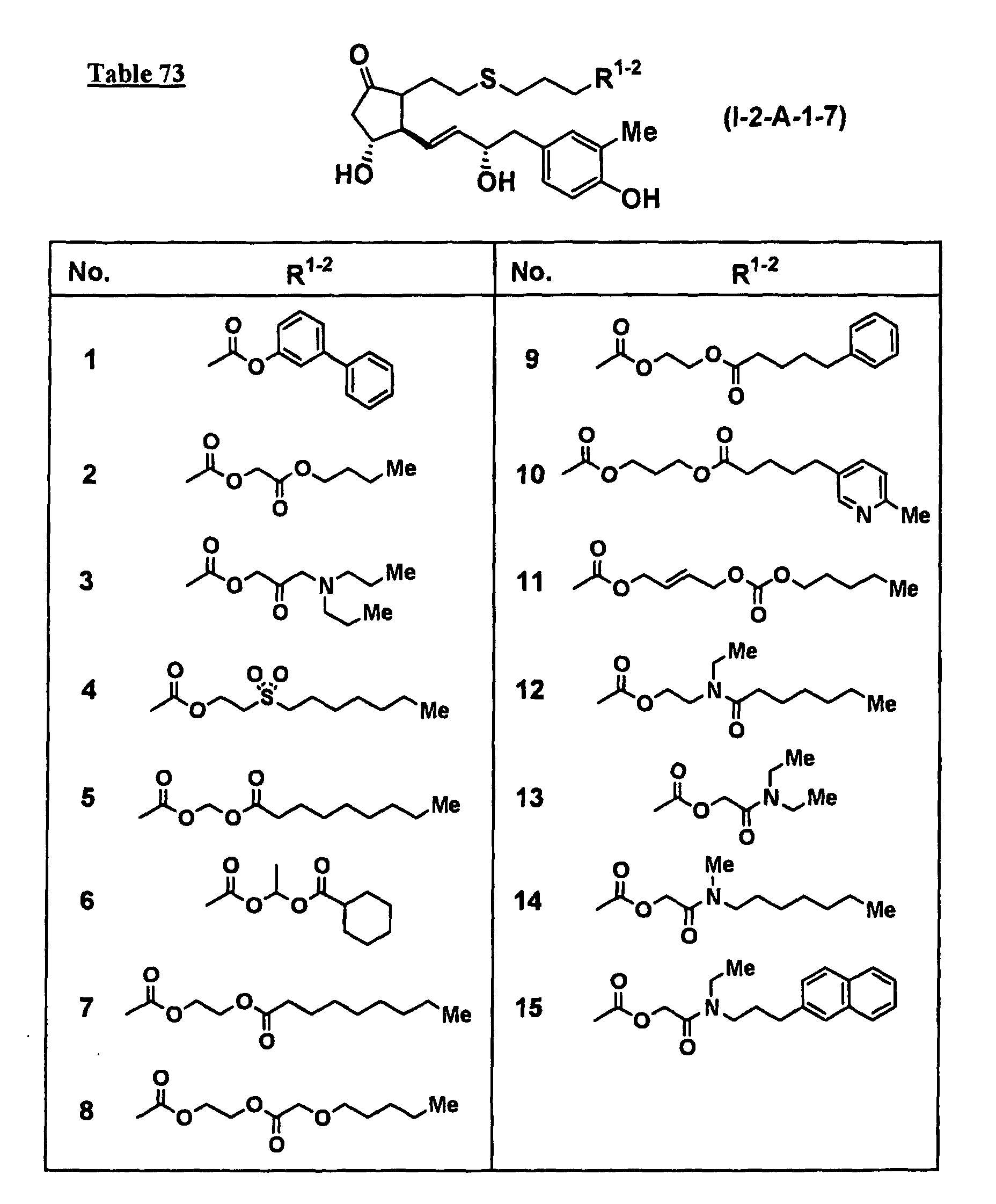


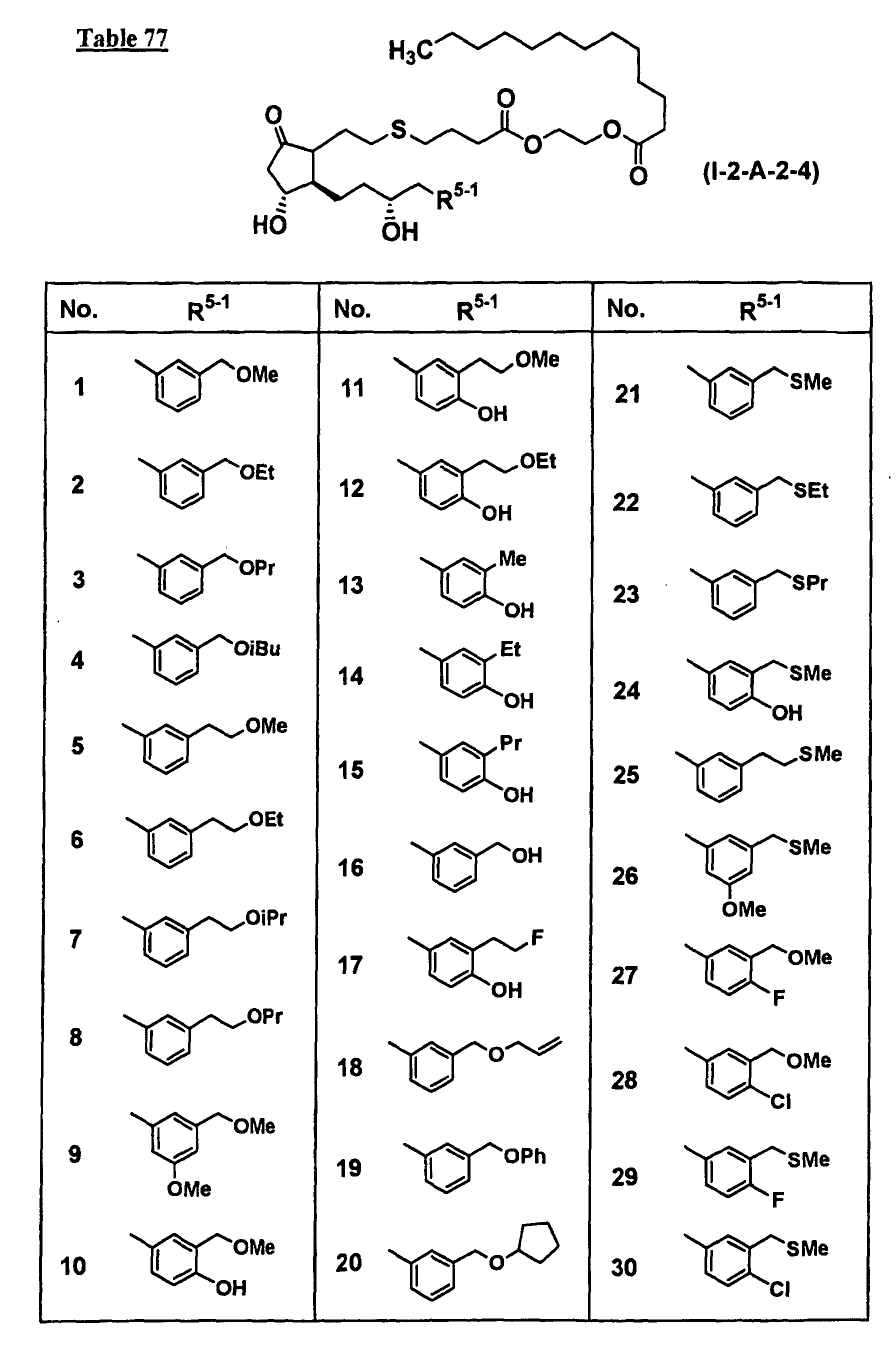


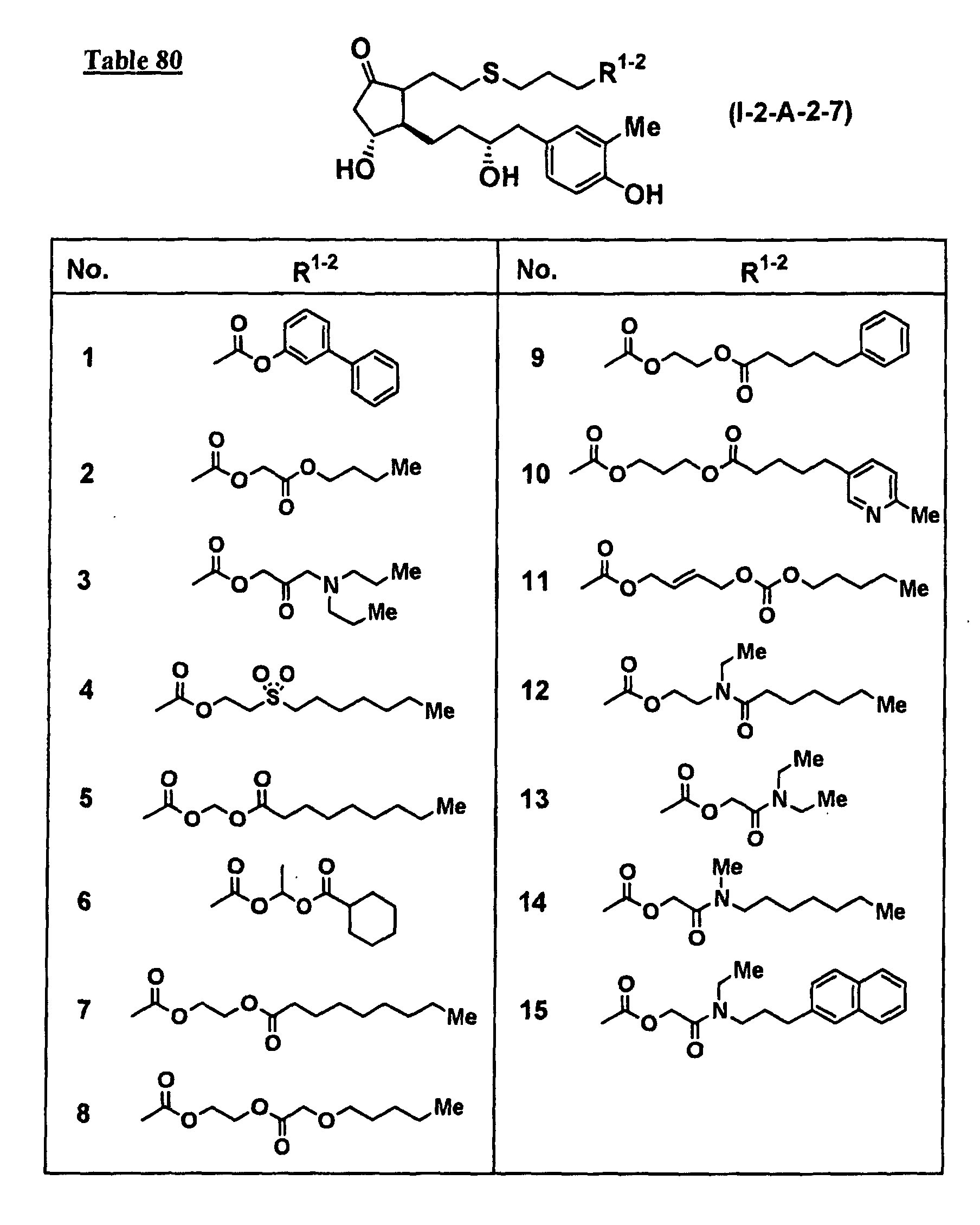


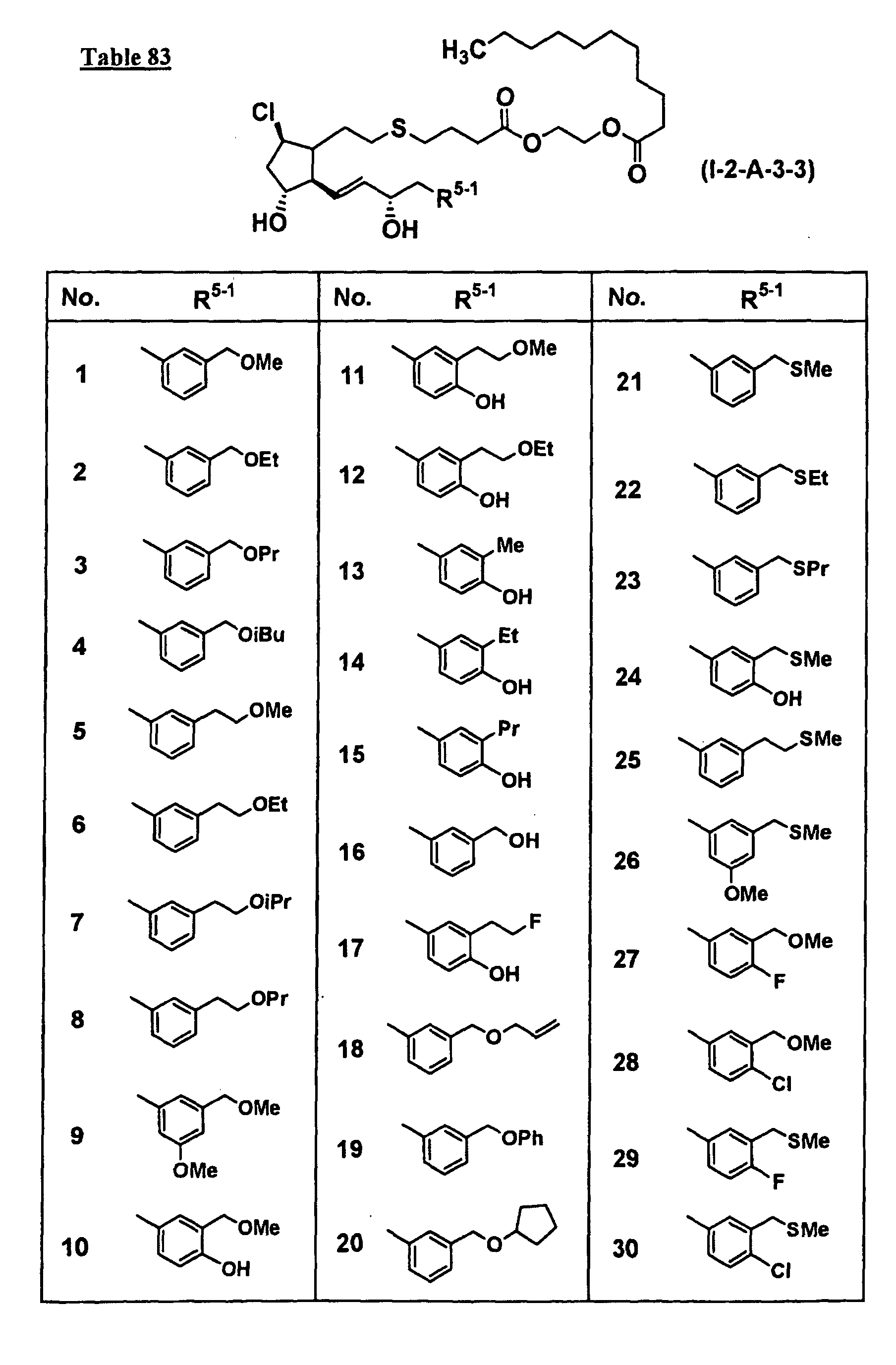
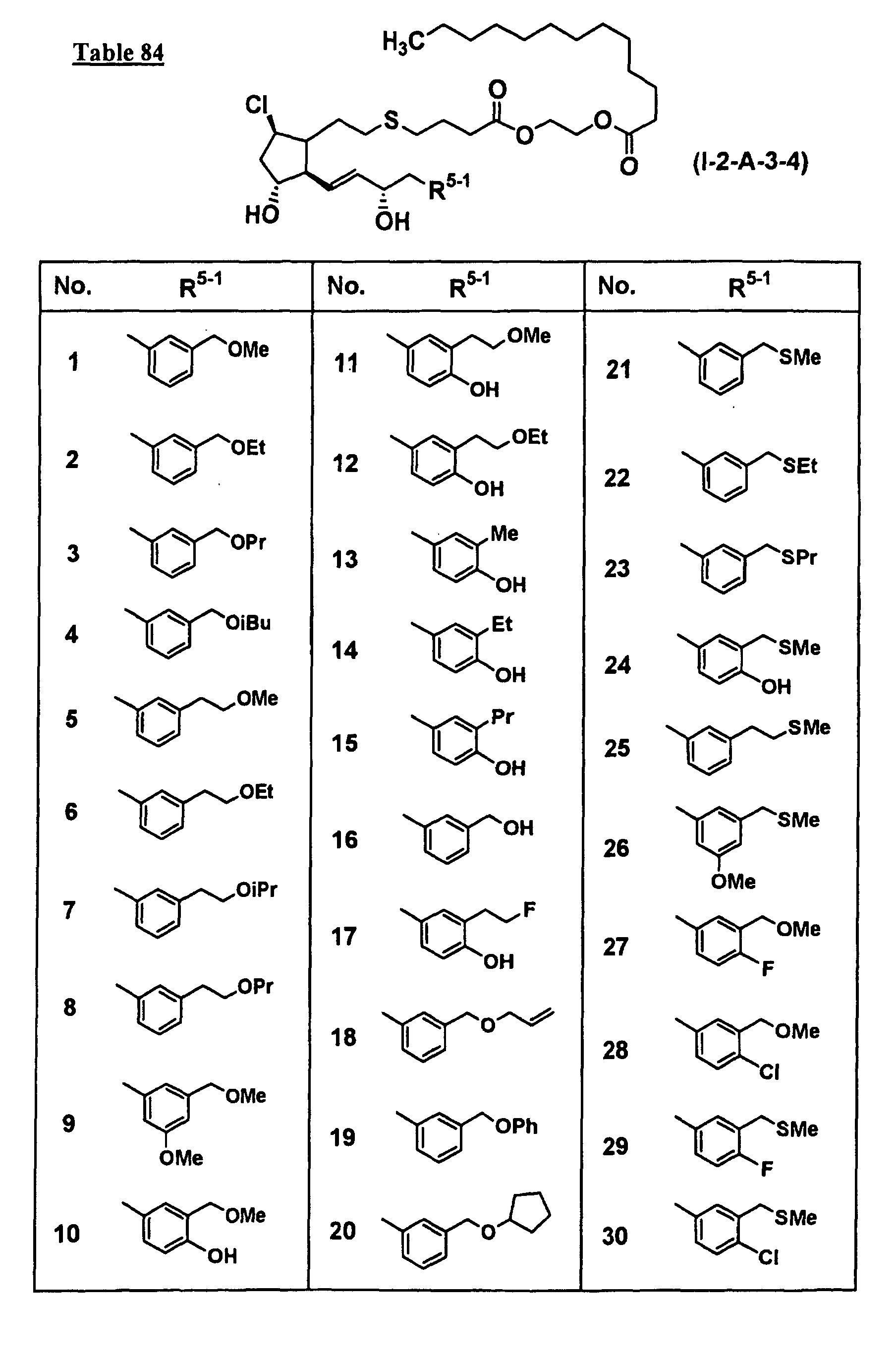


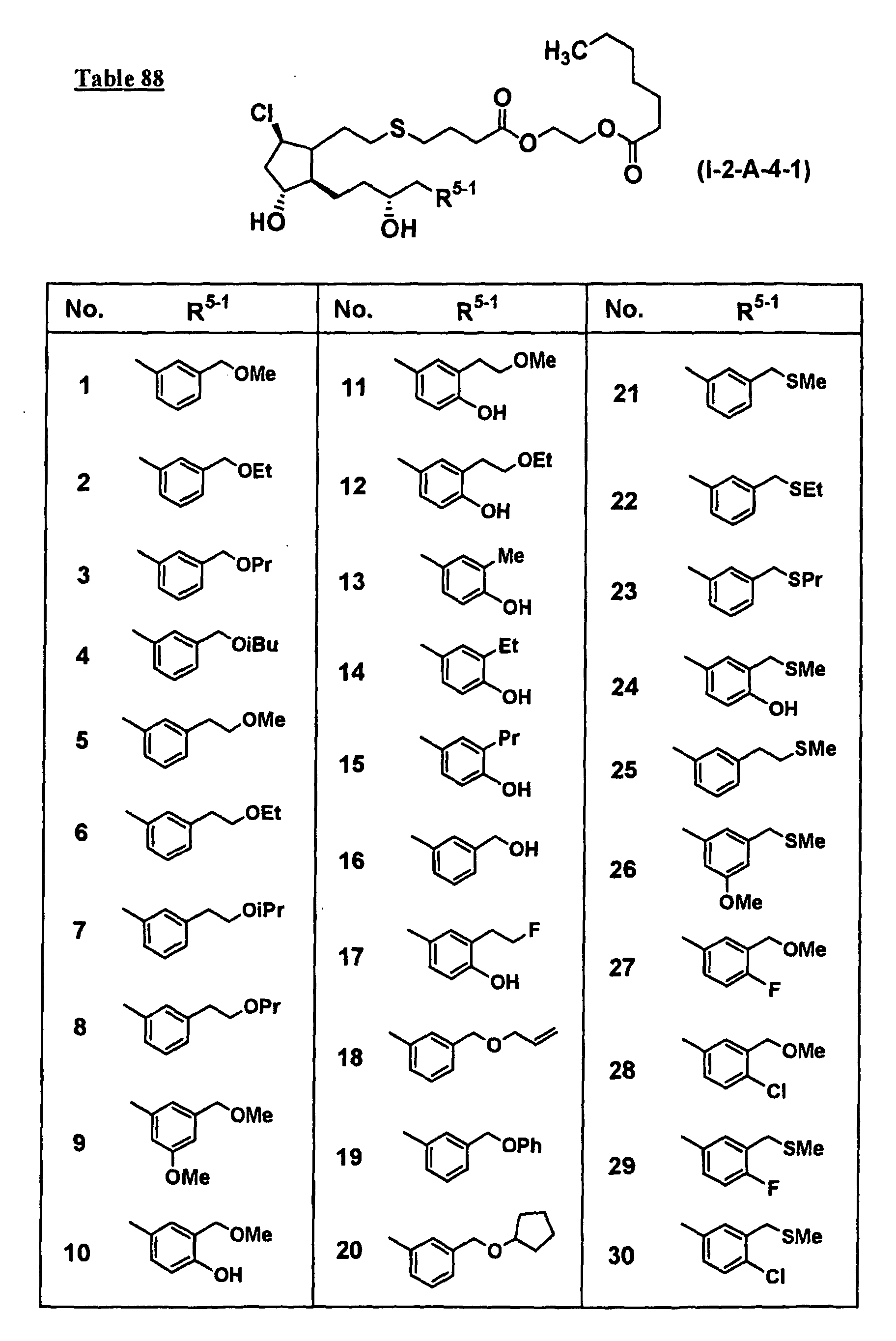


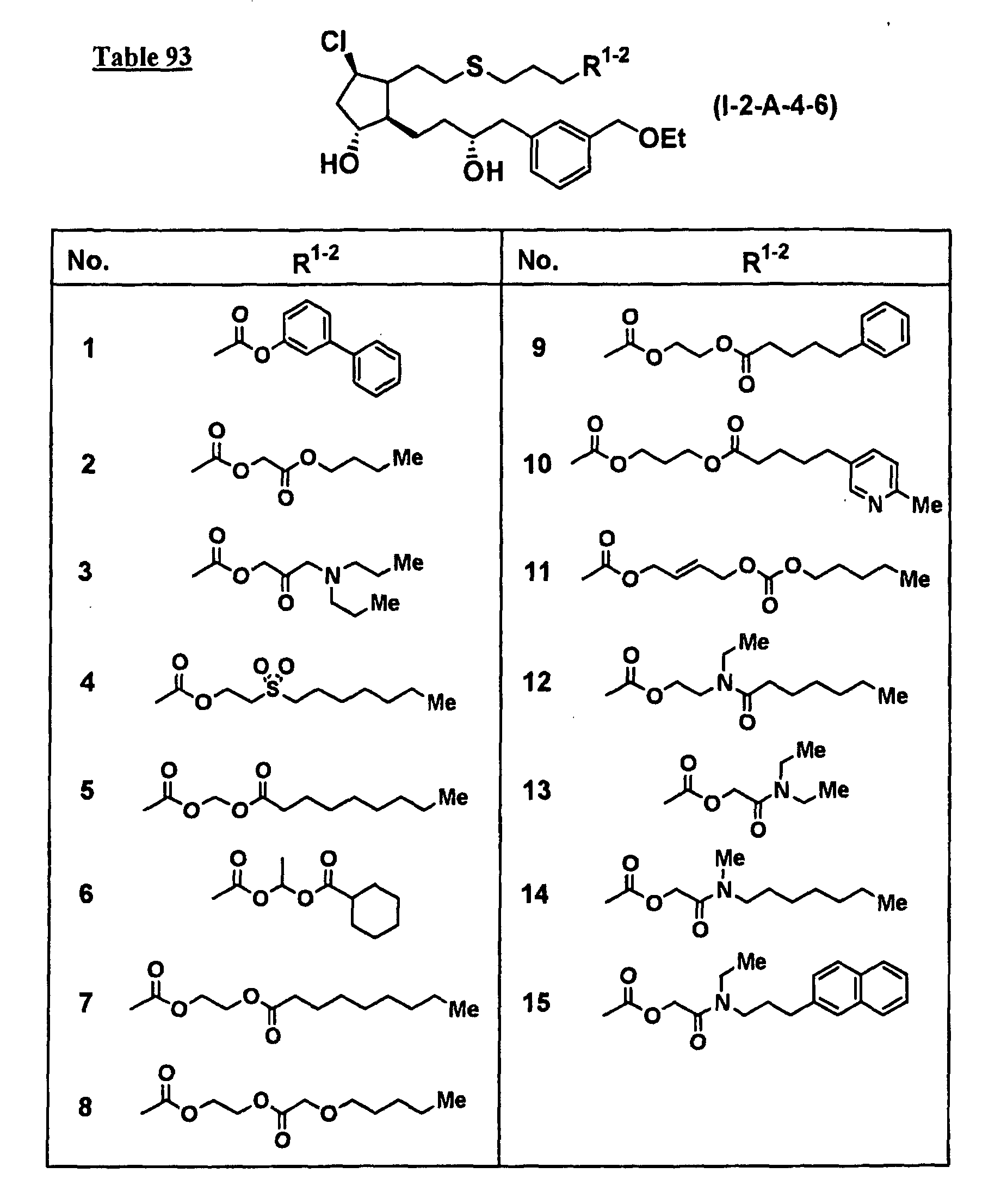
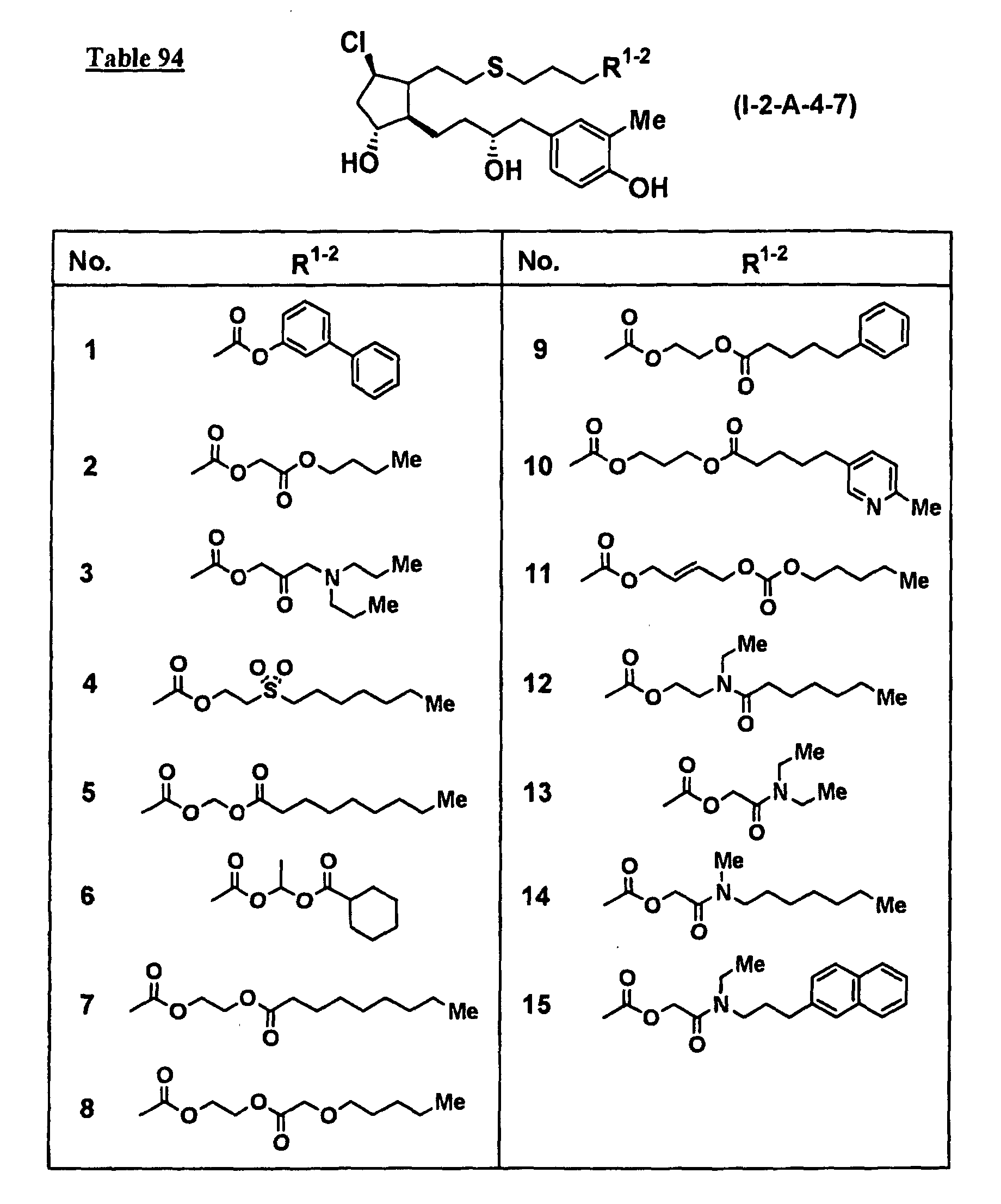


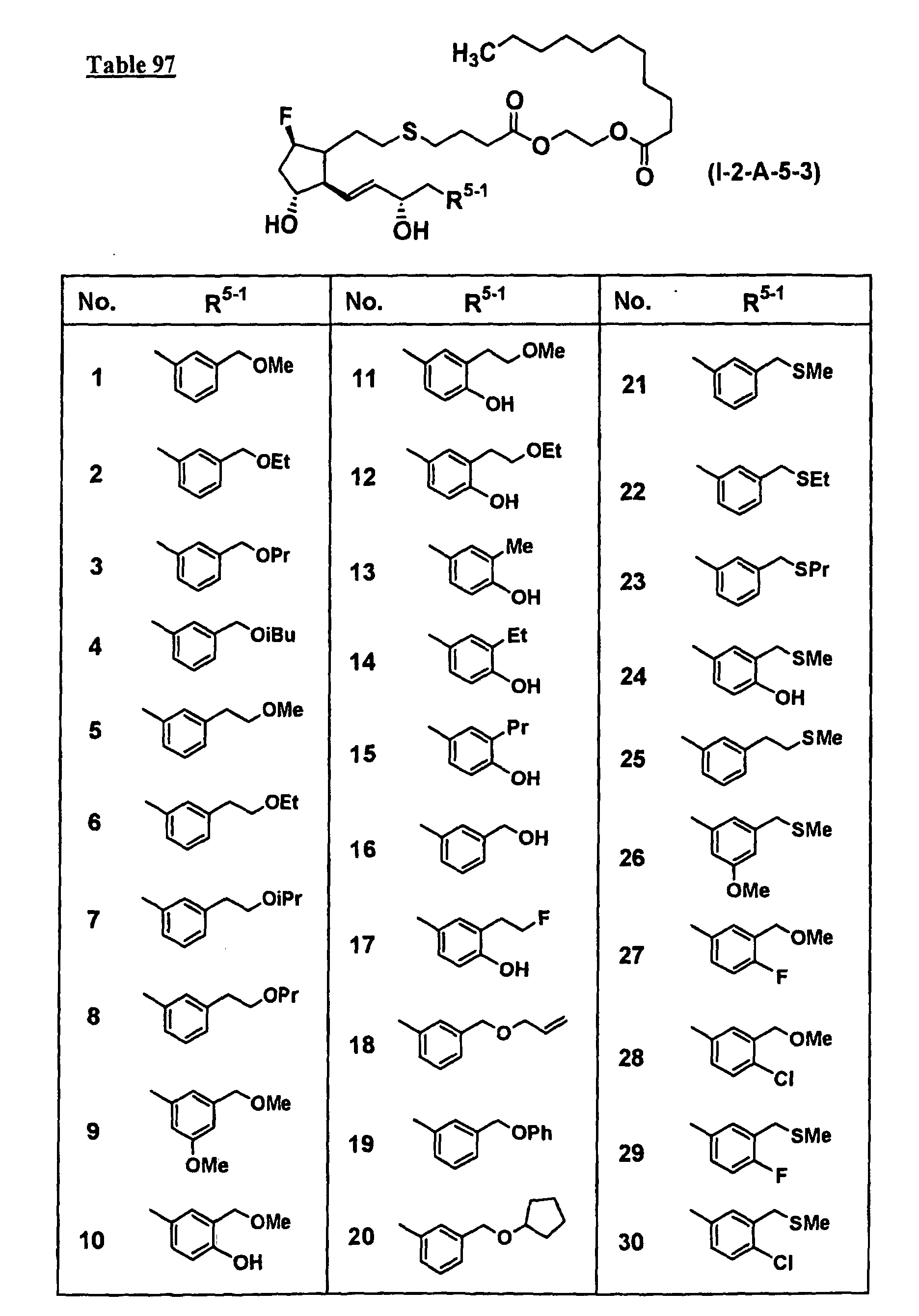
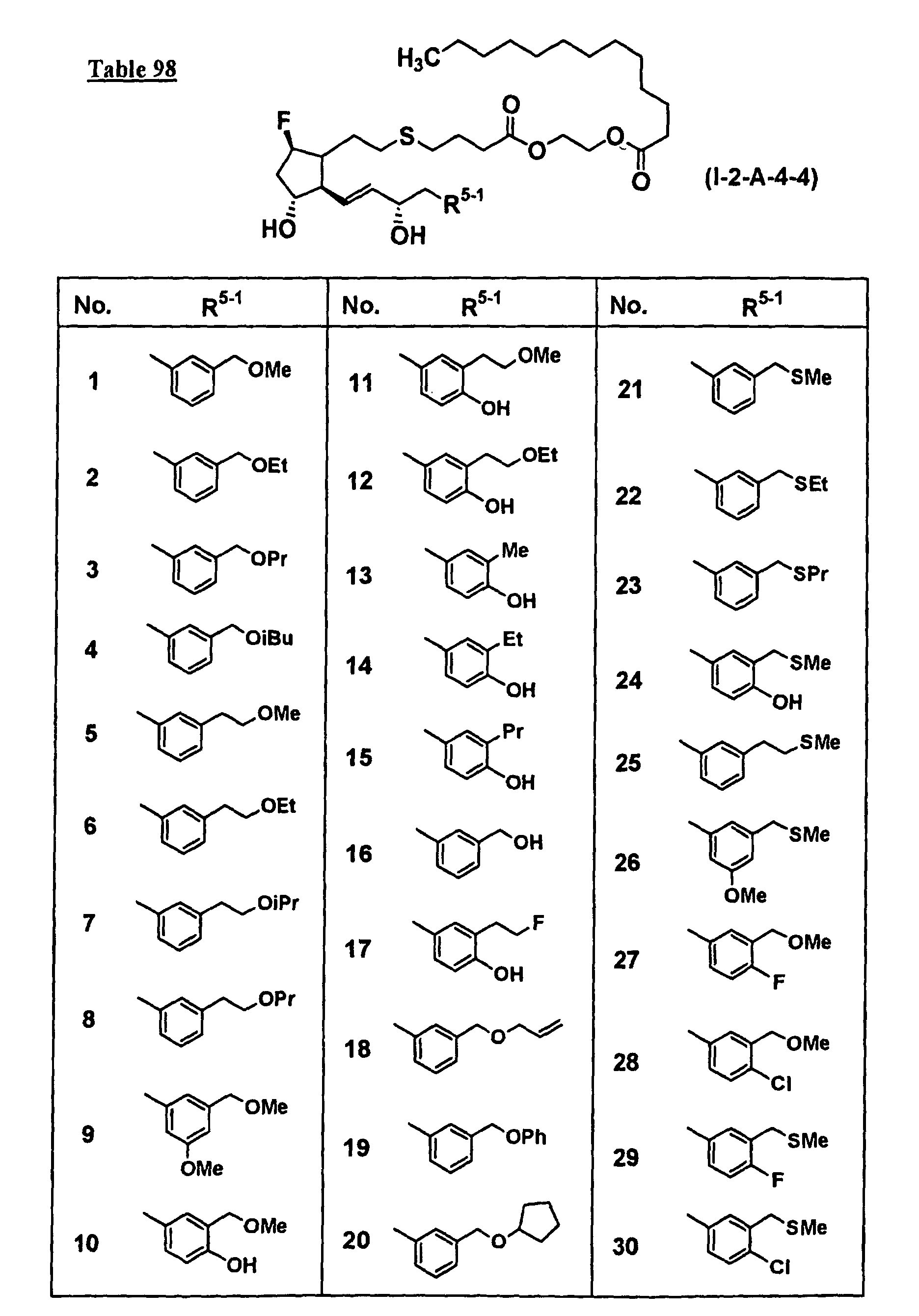


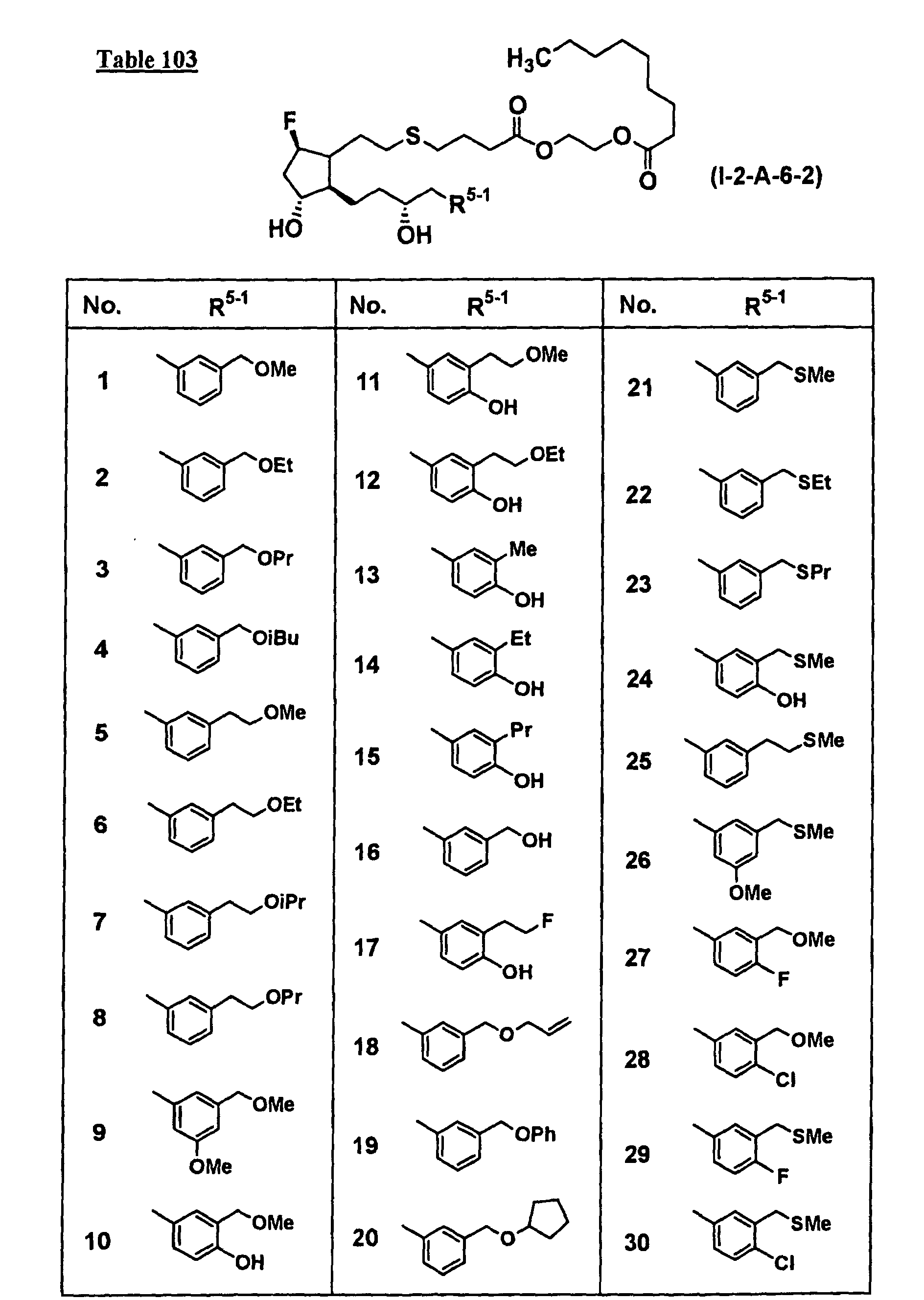
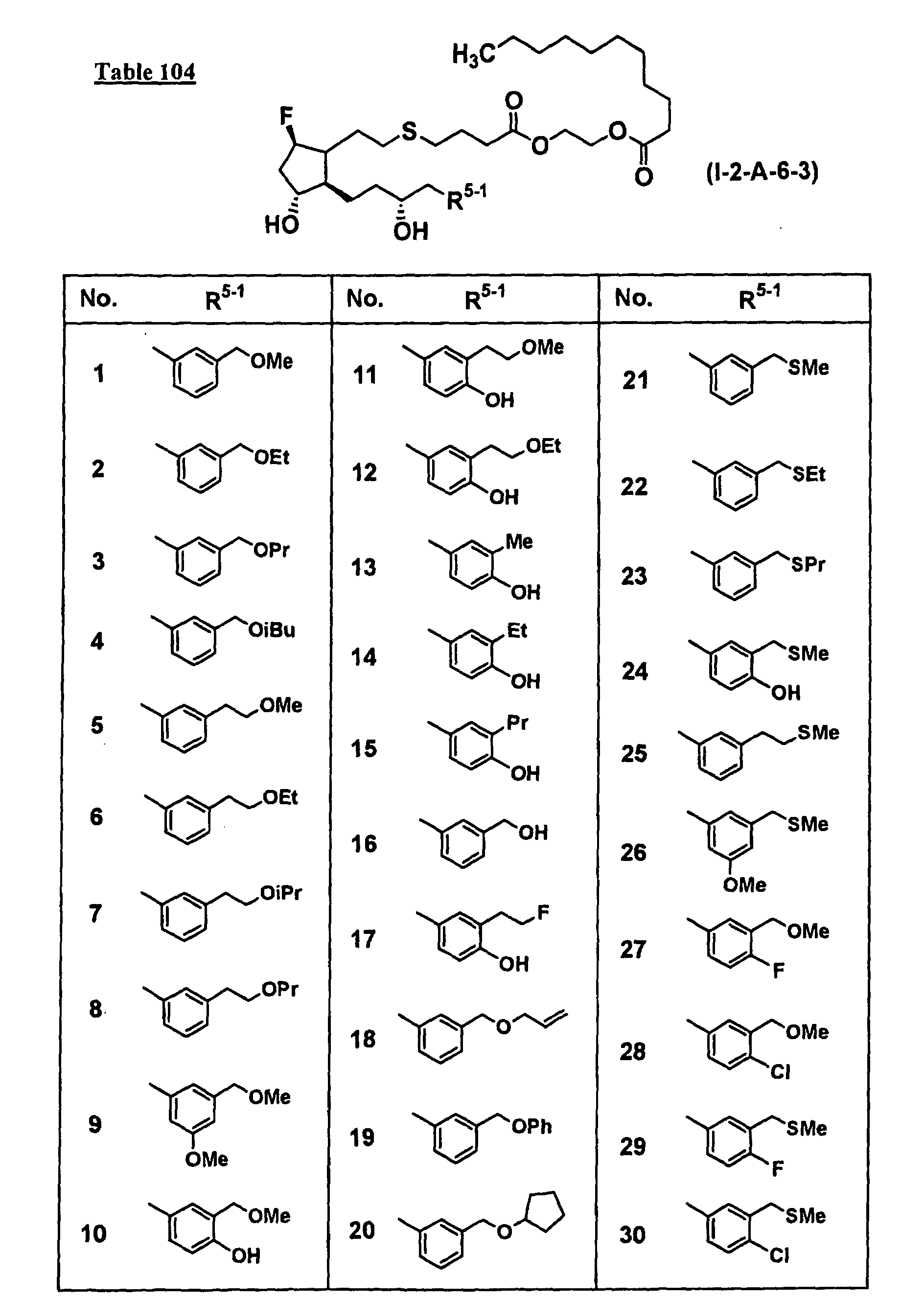
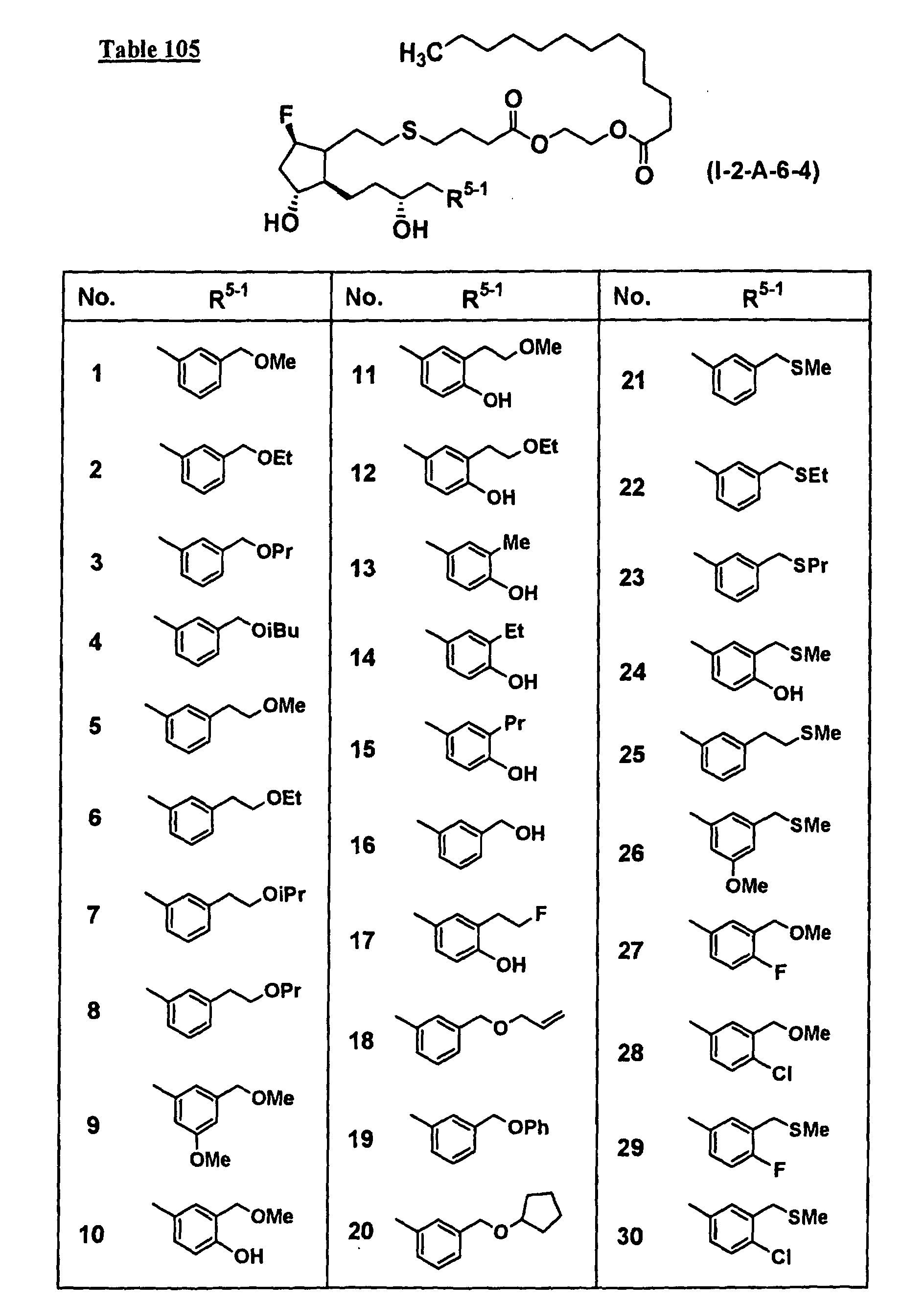
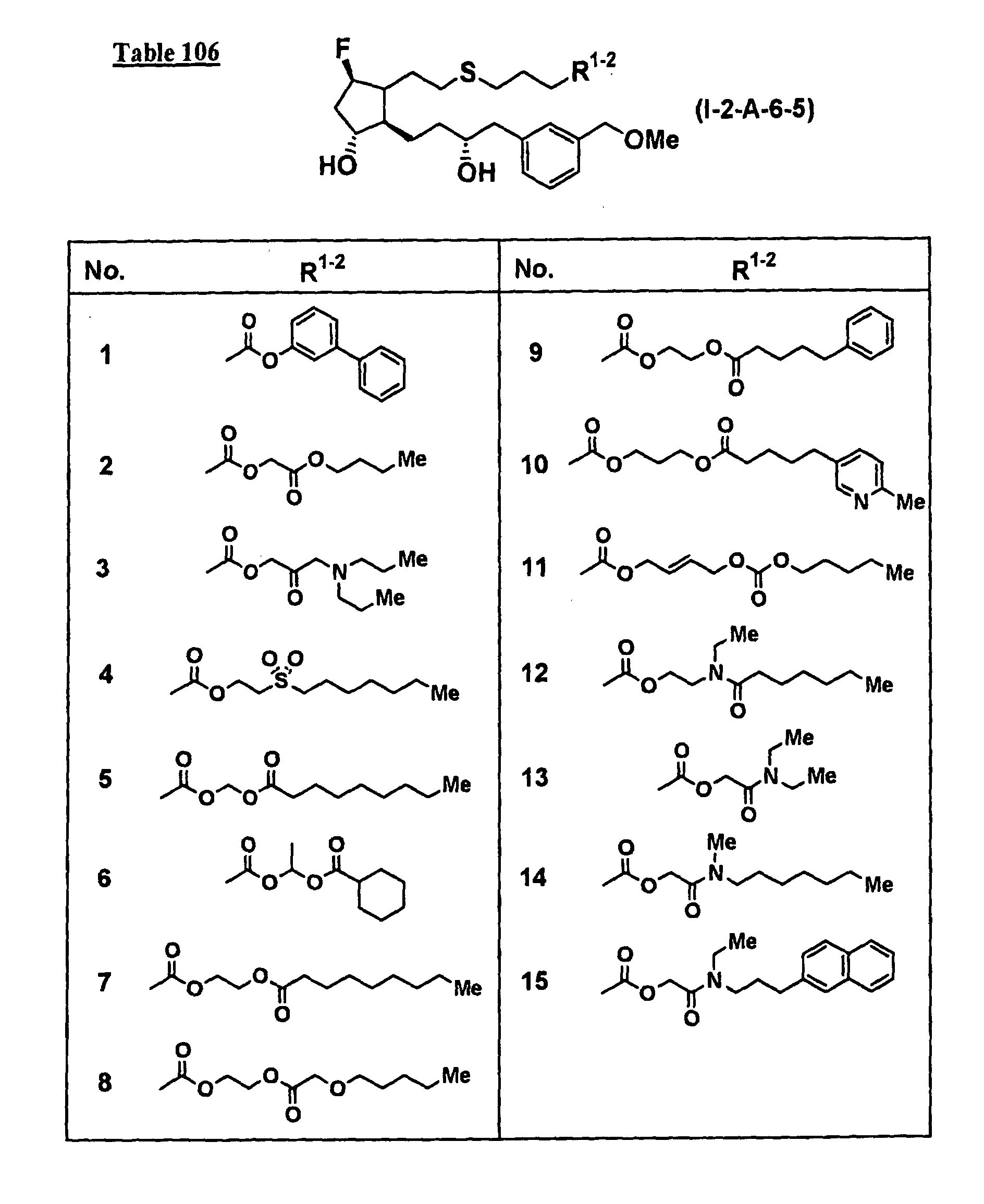

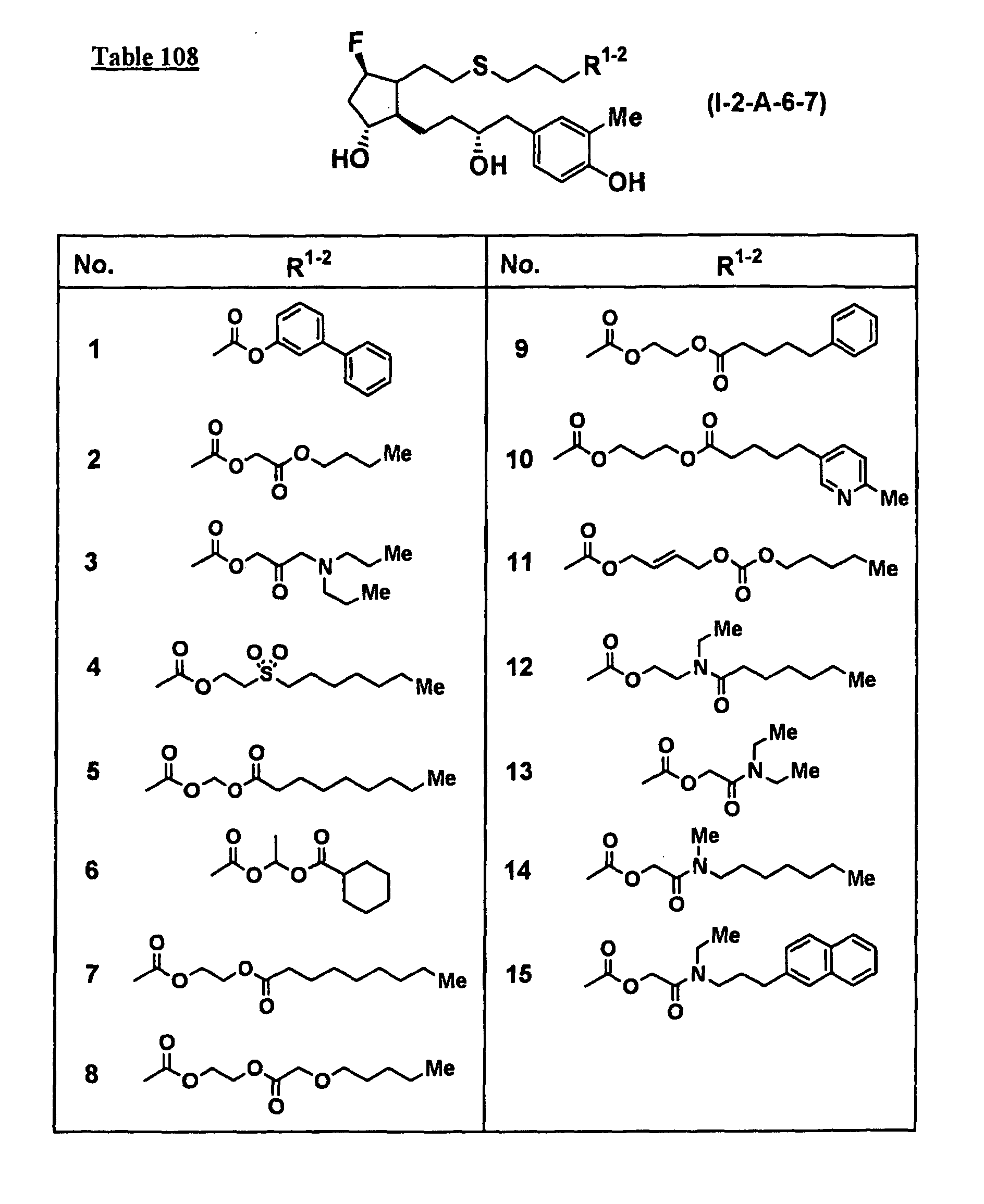
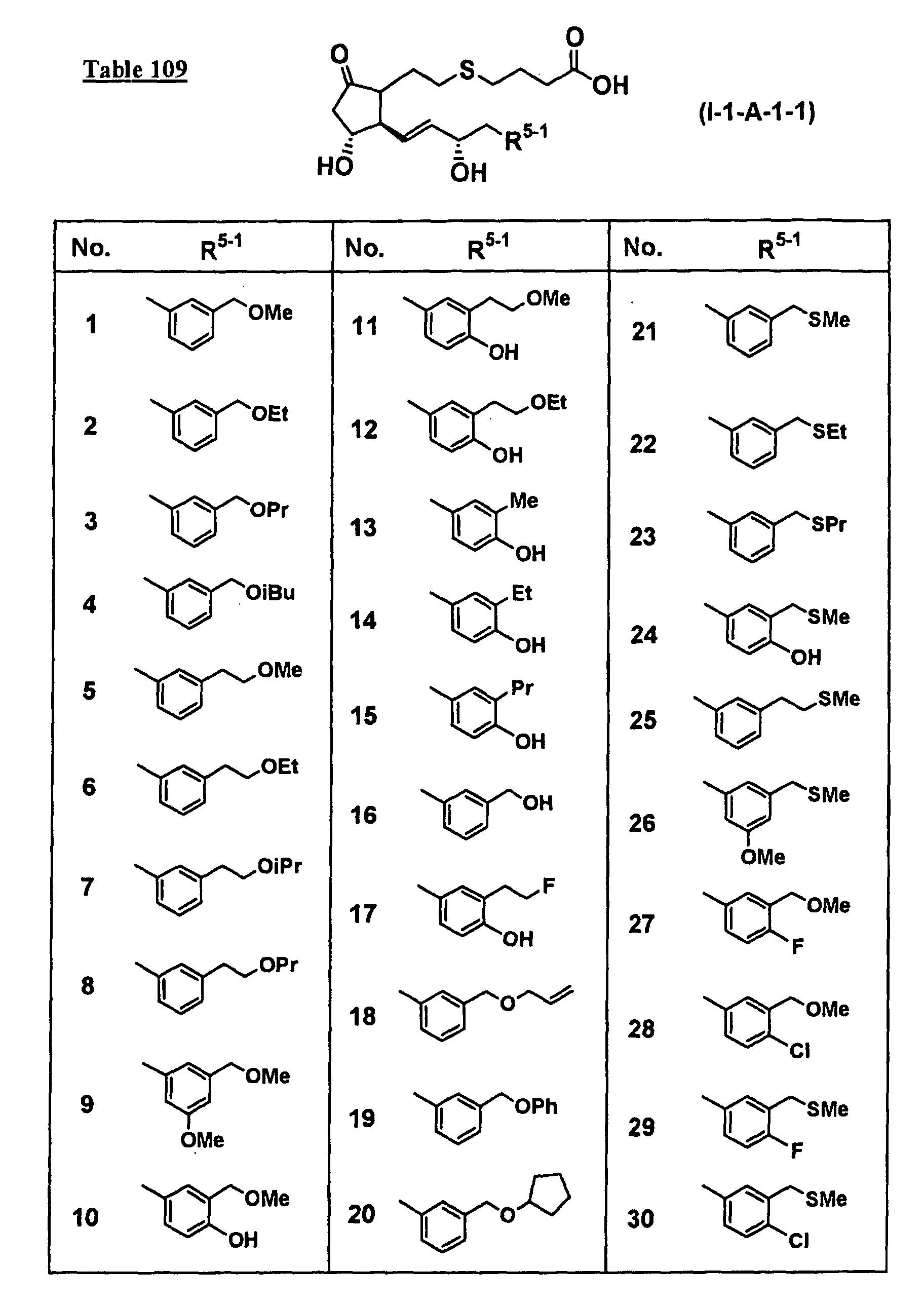
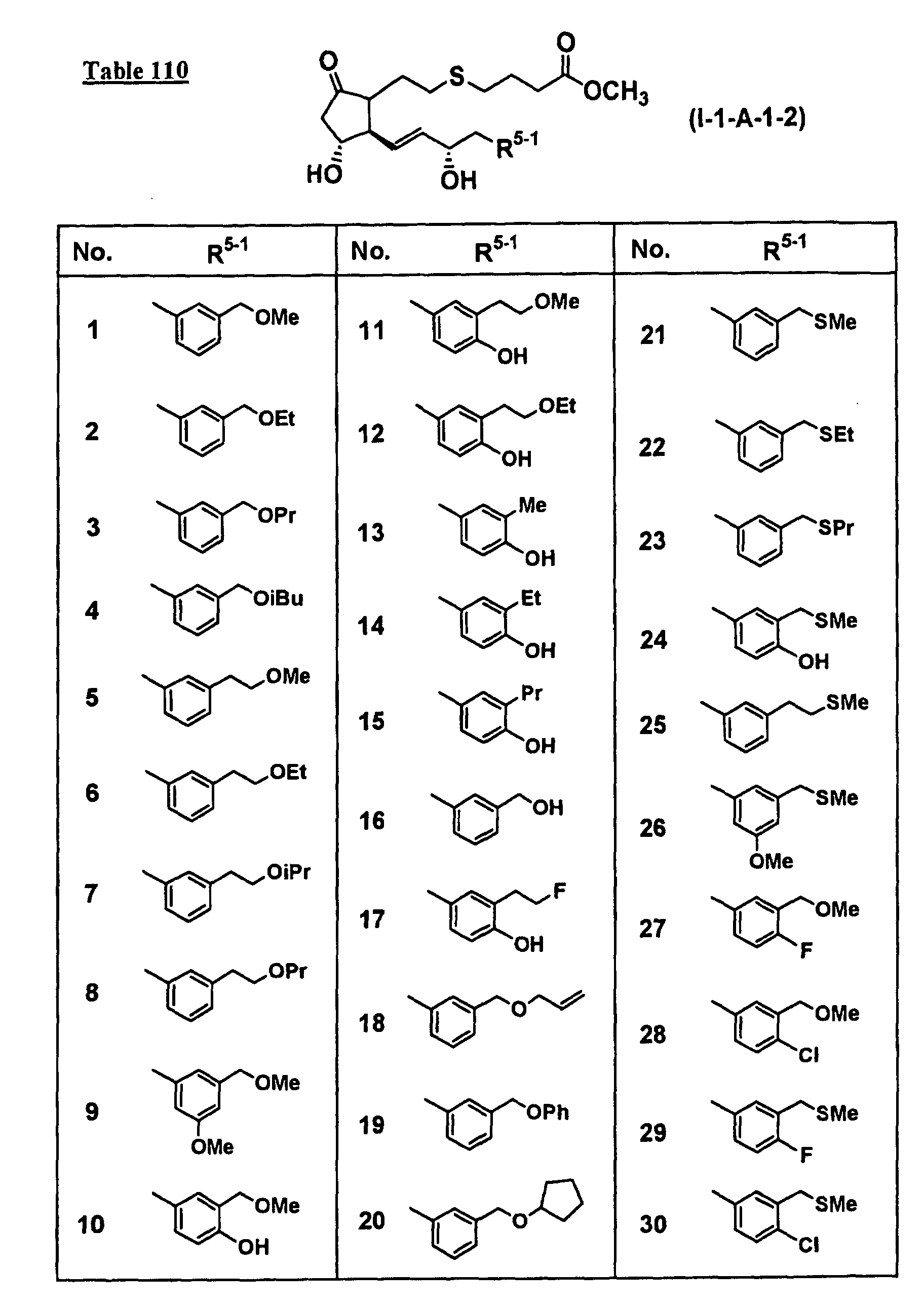


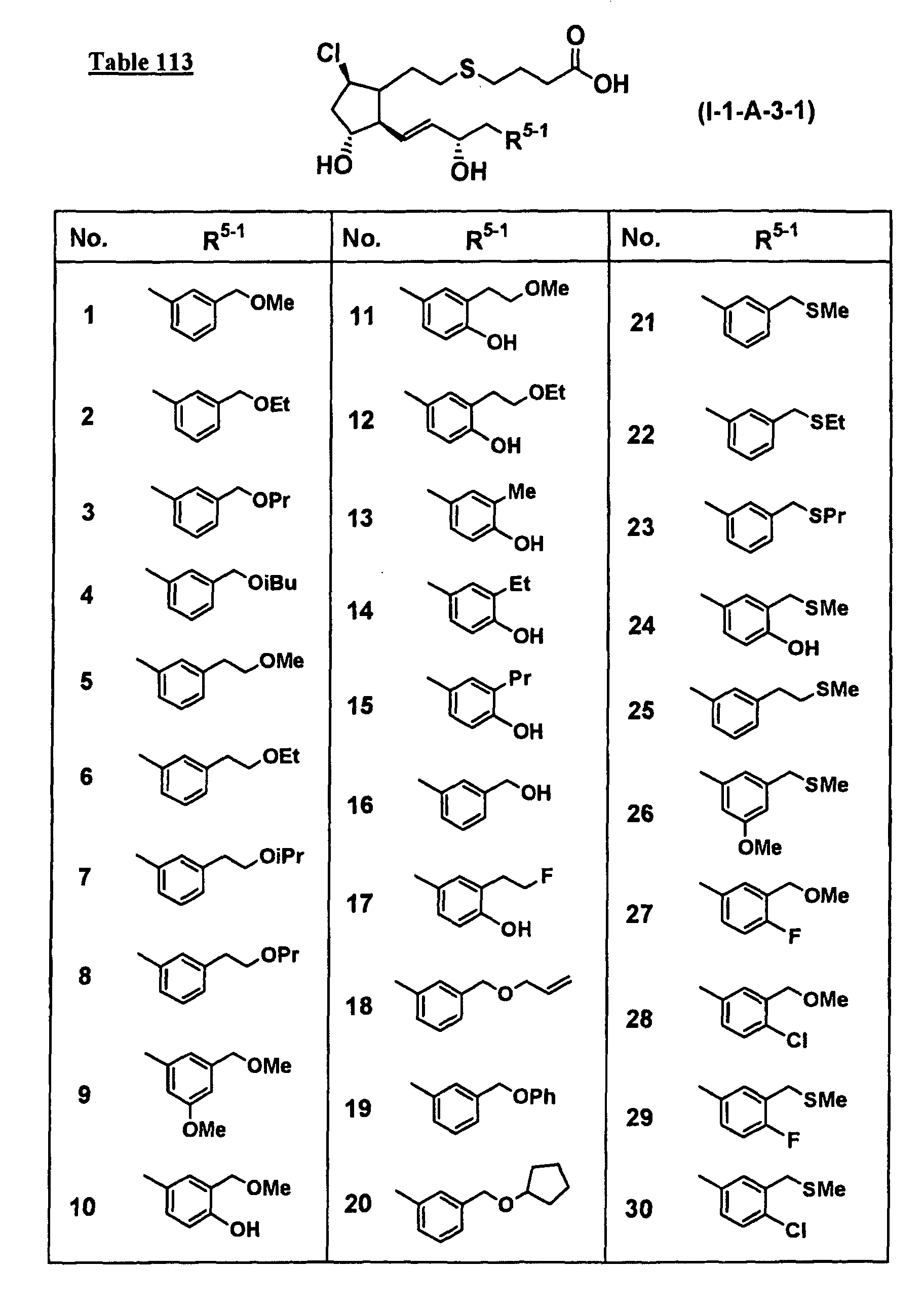

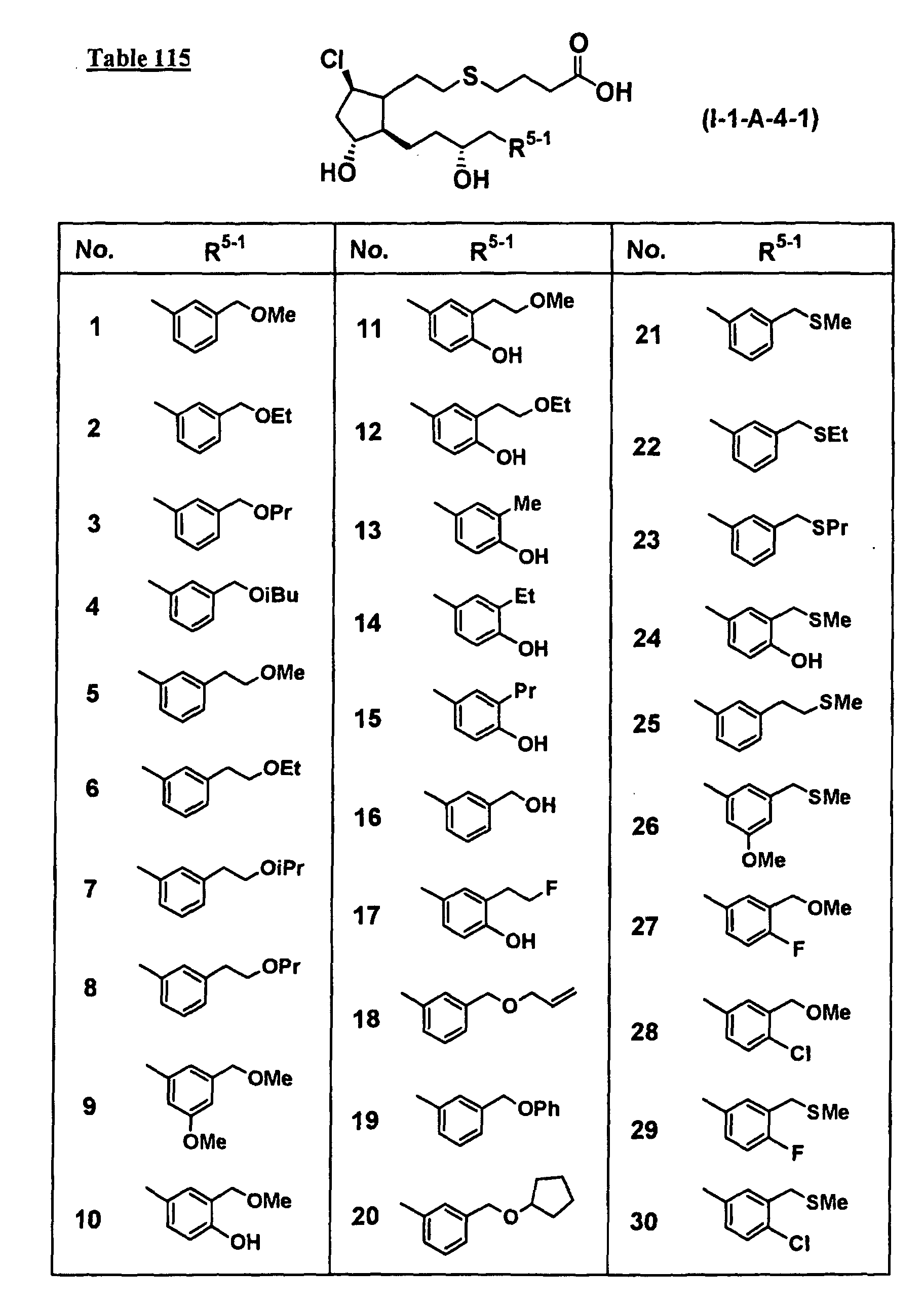

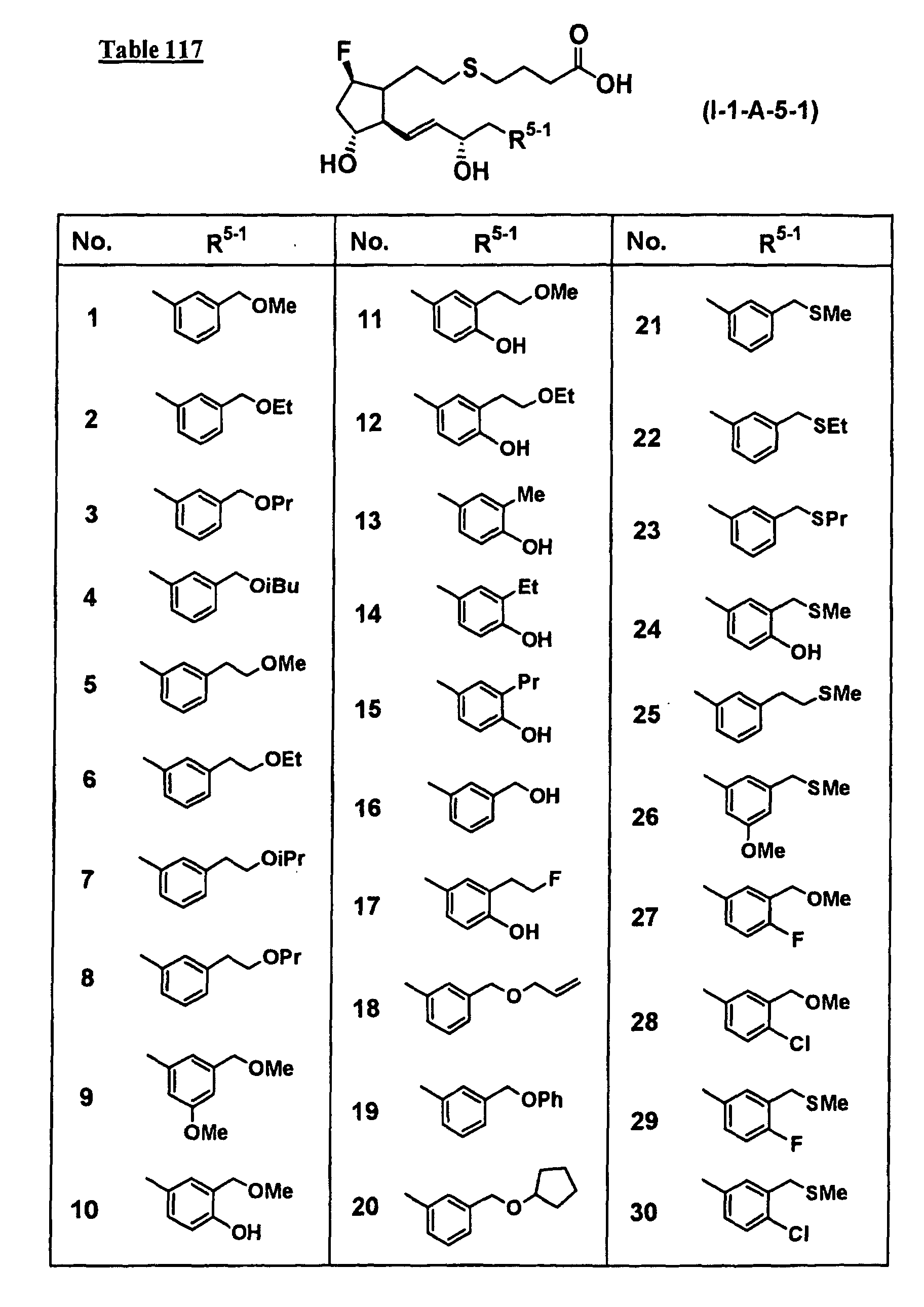
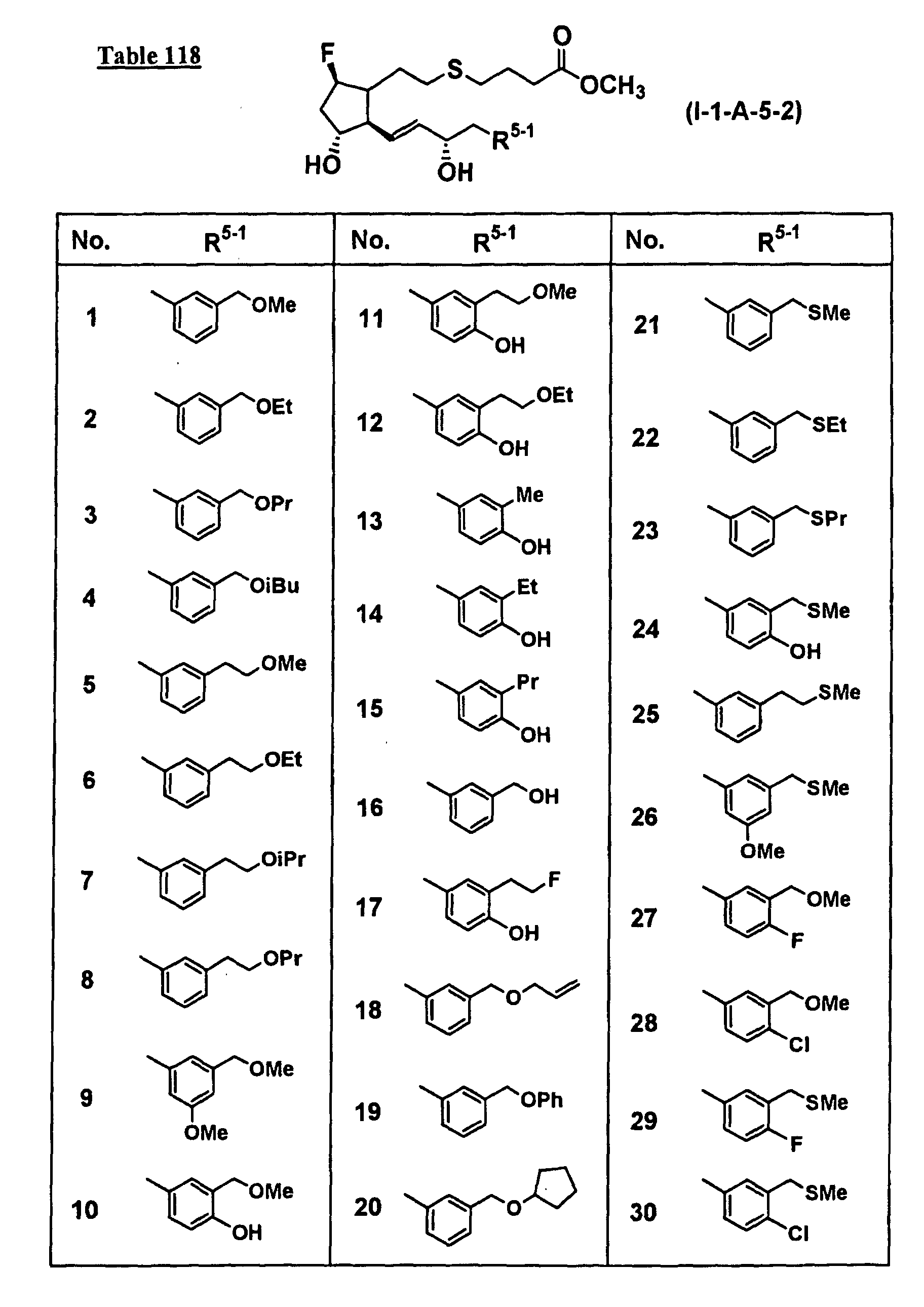
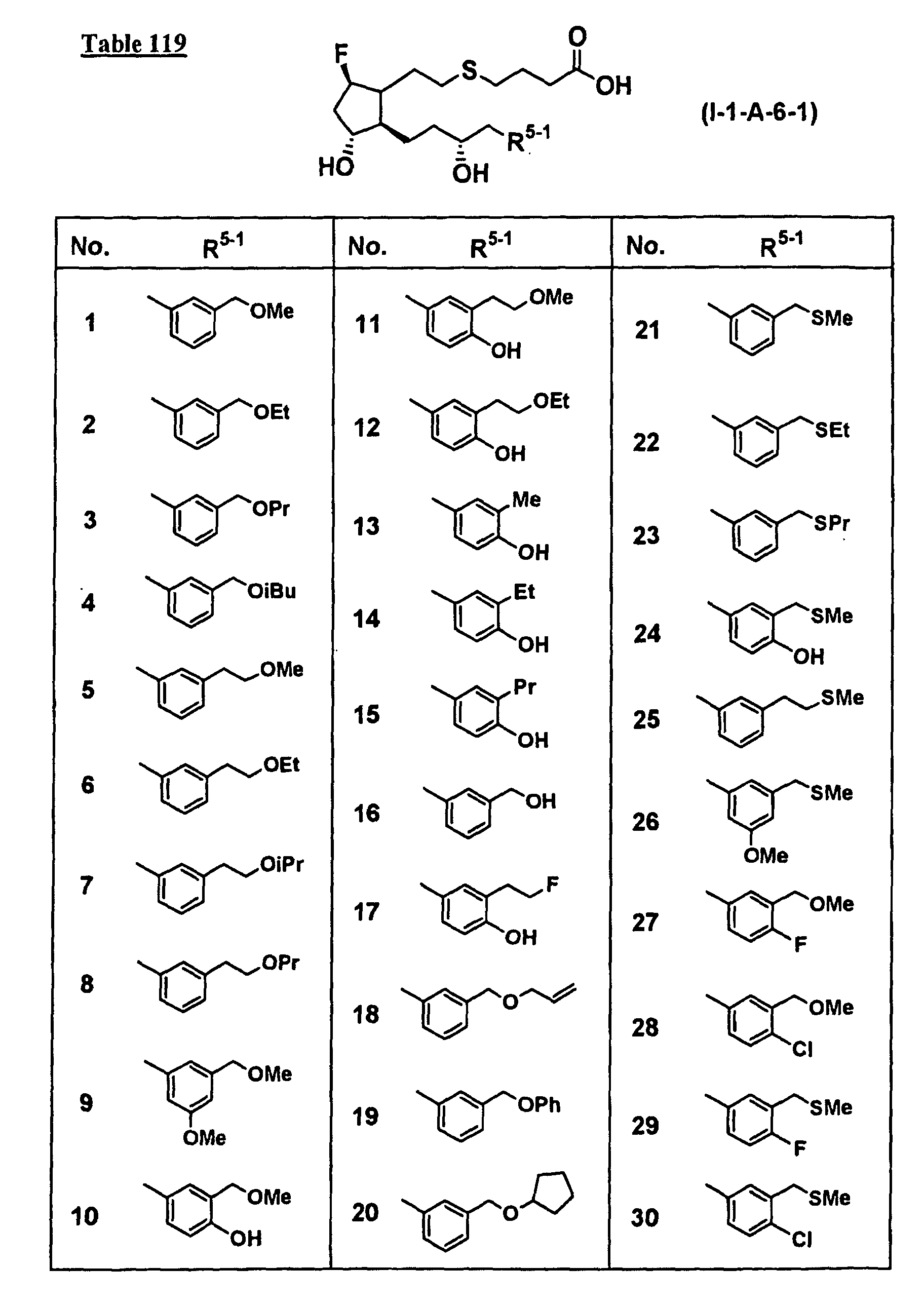

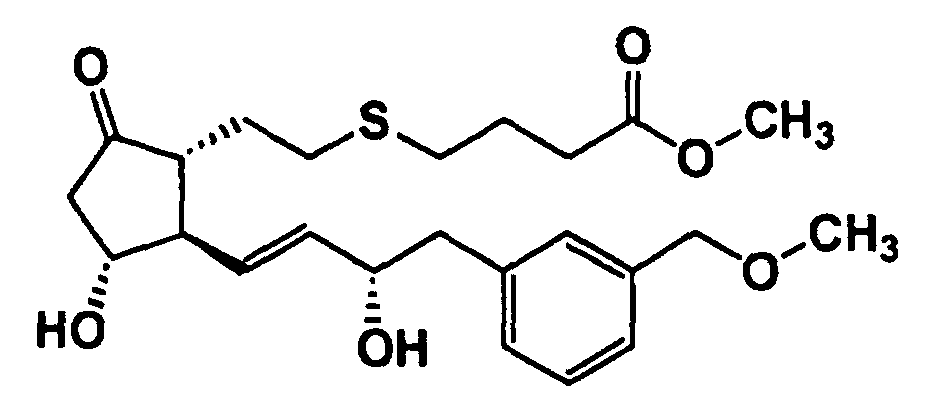
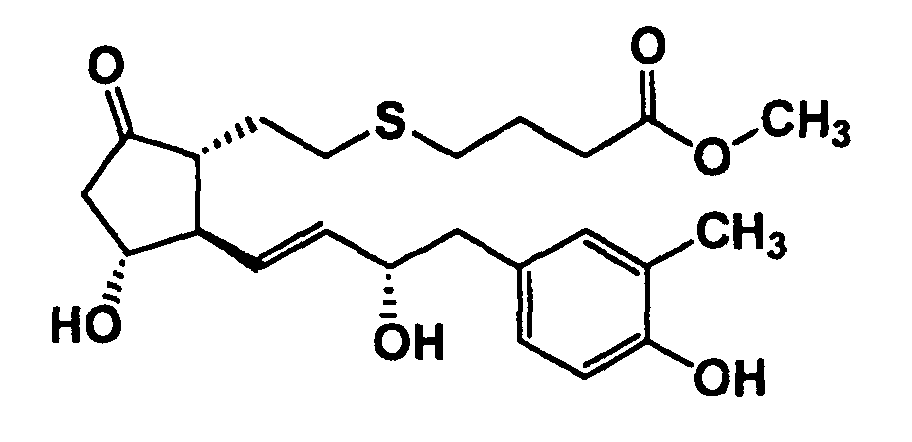

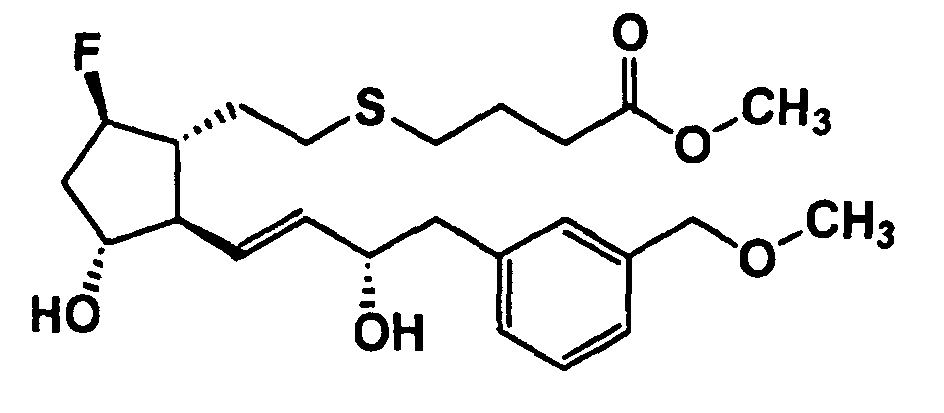


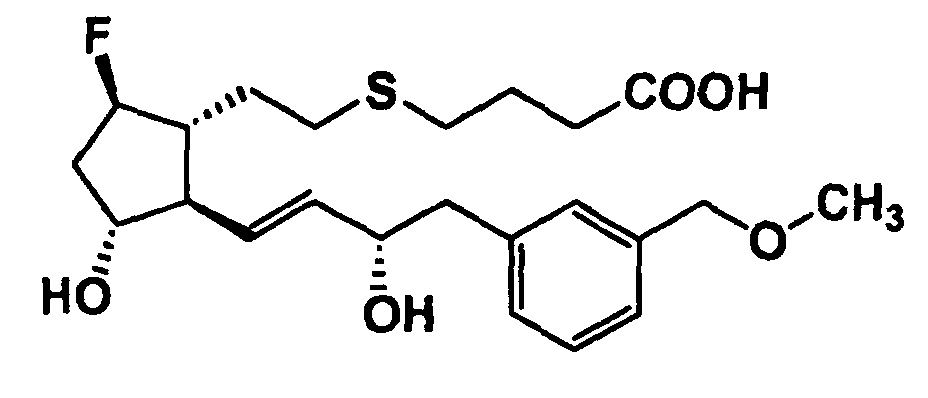
1) Among the compounds of formula (I-3), those in which T3 is oxygen and the 13-14 position is a double bond, or that is, those of formula (IA):

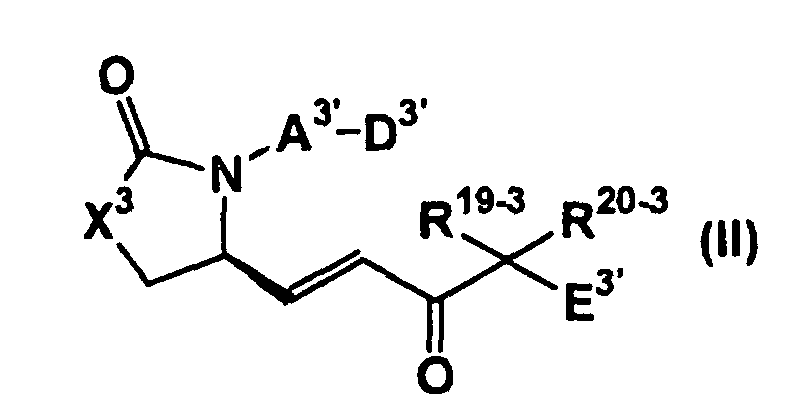
and then optionally removing the protective group from the resulting product.
2) Among the compounds of formula (I-3), those in which T3 is oxygen and the 13-14 position is a single bond, or that is, those of formula (IB):
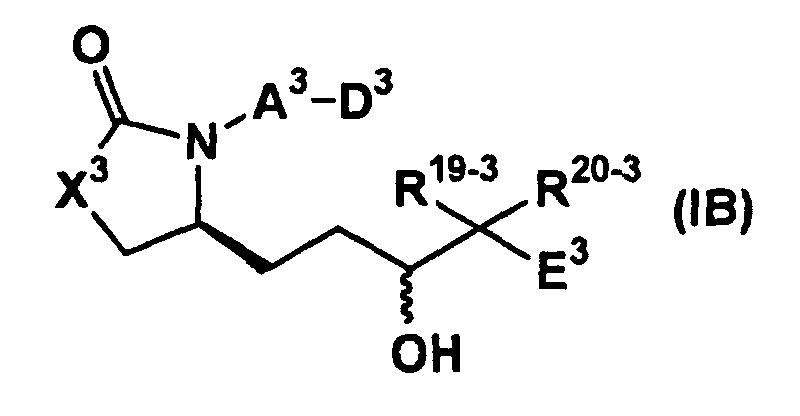
can be produced according to the methods mentioned below.
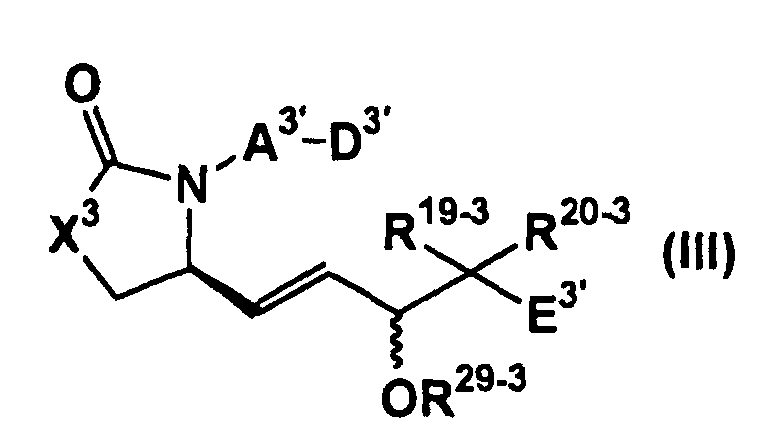
and then optionally removing the protective group from the resulting product.
3) Among the compounds of formula (I-3), those in which T3 is sulfur, or that is, those of formula (IC):

can be produced according to the methods mentioned below.

and then optionally removing the protective group from the resulting product.
4) Among the compounds of formula (I-3), those in which D3 is -CH2OH, or that is, those of formula (ID):

can be produced according to the methods mentioned below.

and then optionally removing the protective group from the resulting product.
5) Among the compounds of formula (I-3), those in which D3 is -CONR3-3SO2R4-3, -CONR6-3R7-3, -CONR6-3SO2R8-3, or -CO-(NH-amino acid residue-CO)m-3-OH, or that is, those of formula (IE):

can be produced according to the methods mentioned below.
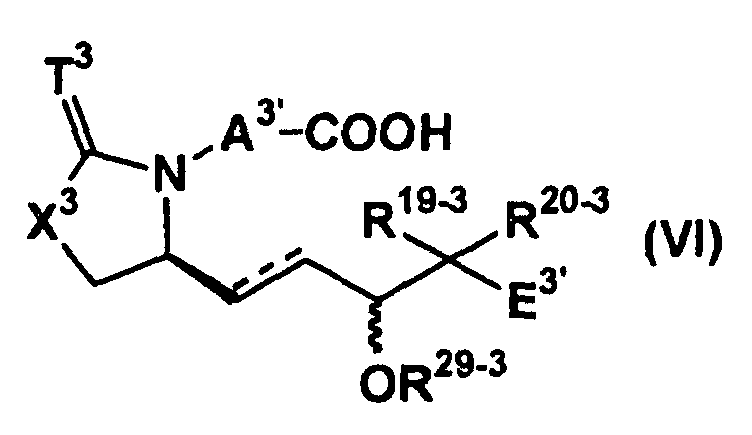
with a compound of formula (VII-1):
or a compound of formula (VII-2):
and then optionally removing the protective group from the resulting product.
6) Among the compounds of formula (I-3), those in which D3 is -O-(CO-amino acid residue-NH)m-3-H or -OCO-R10-3, or that is, those of formula (IF):

can be produced according to the methods mentioned below.
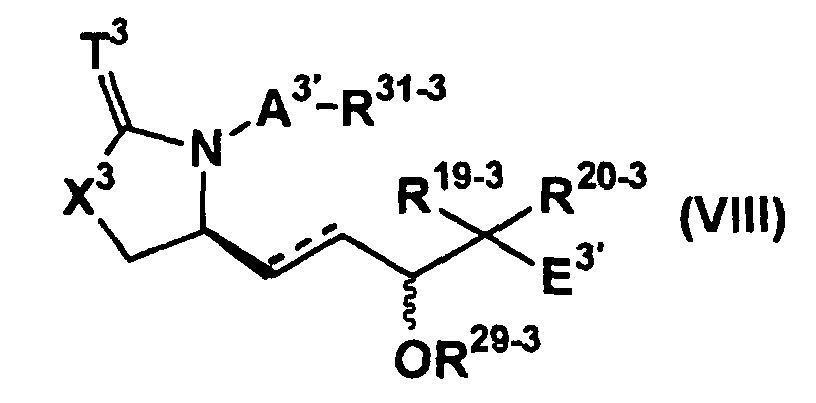
with a compound of formula (IX-1):
or a compound of formula (IX-2):
and then optionally removing the protective group from the resulting product.
7) Among the compounds of formula (I-3), those in which D3 is formyl, or that is, those of formula (IG):
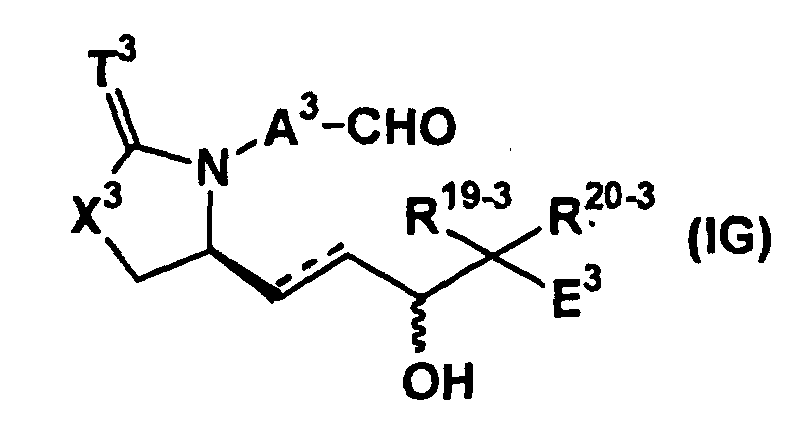
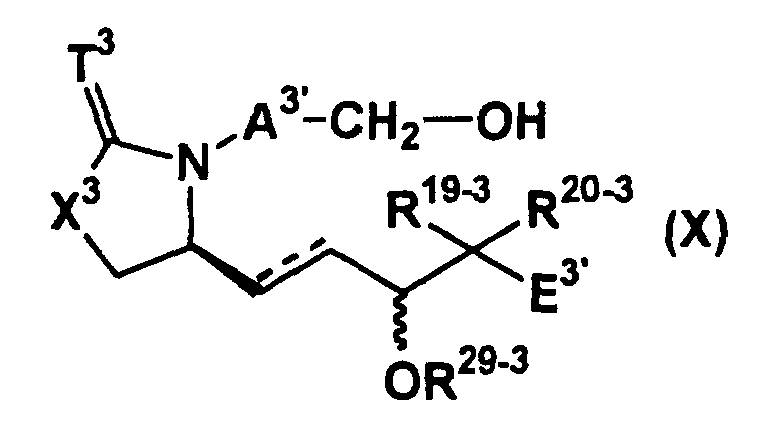
8) Among the compounds of formula (1-3), those in which D3 is -COOR2-3, -COOR9-3, or -COO-Z1-3-Z2-3-Z3-3, or that is, those of formula (IH):
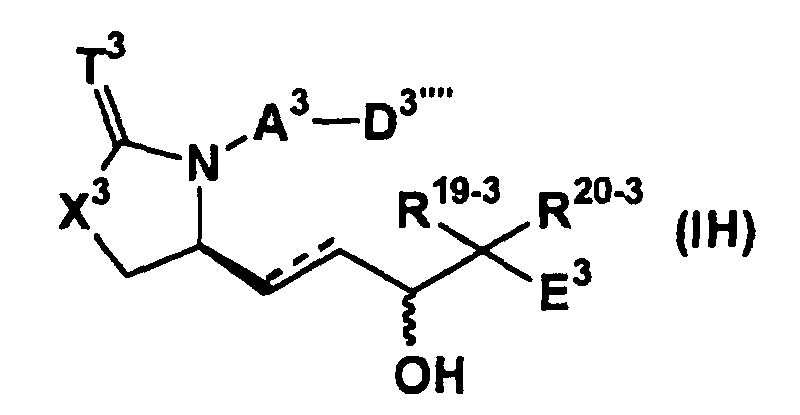
can be produced according to the methods mentioned below.

with a compound of formula (XI-1):
or a compound of formula (XI-2):
and then optionally removing the protective group from the resulting product.
9) Among the compounds of formula (I-3), those in which the substituent of E3 is amino can be produced through reduction of nitro.
10) Among the compounds of formula (I-3), those in which T3 is oxygen and X3 is -CH2-, or that is, those of formula (IJ):

can be produced according to the methods mentioned below.

with a compound of formula (XIII):
A1'-3 represents
G1'-3 represents
- 1) a single bond,
- 2) linear C1-3 alkylene optionally substituted by one or two C1-4 alkyl(s),
- 3) linear C2-3 alkenylene optionally substituted by one or two C1-4 alkyl(s), or
- 4) linear C2-3 alkynylene optionally substituted by one or two C1-4 alkyl(s),
and then optionally removing the protective group from the resulting product.
1) Among the compounds of formula (I-2), those in which R1-2 is -CO-(NH-amino acid residue-CO)m-2-OH, or that is, those of formula (IK):
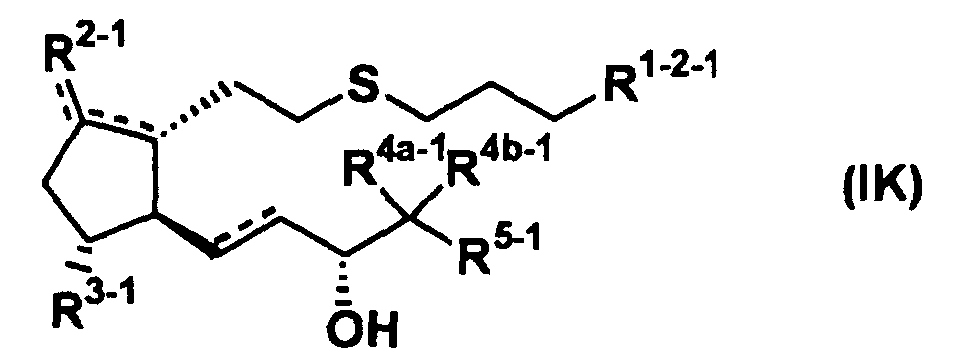
can be produced according to the methods mentioned below.

with a compound of formula (XIV):
and then optionally removing the protective group from the resulting product.
2) Among the compounds of formula (1-2), those in which R1-2 is -COO-Y2-R9-2, or -COO-Z1-2-Z2-2-Z2-3, or that is, those of formula (IL):

can be produced according to the methods mentioned below.
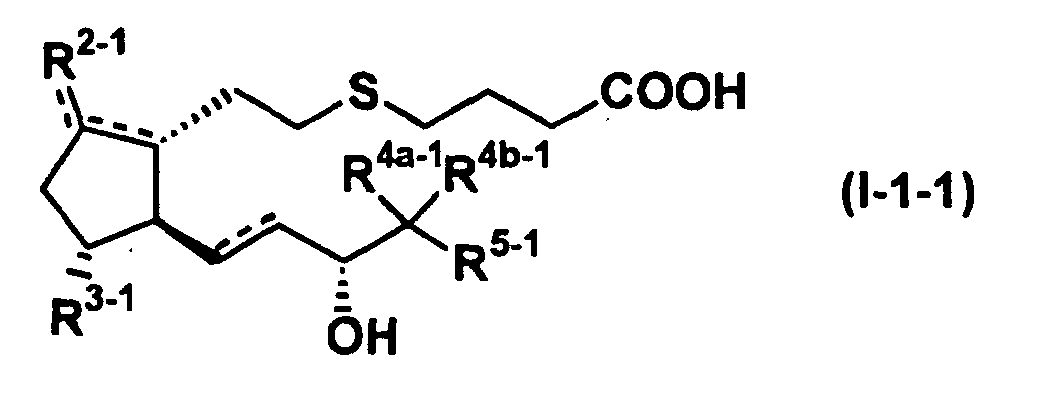
with a compound of formula (XV-1):
or a compound of formula (XV-2):
and then optionally removing the protective group from the resulting product.

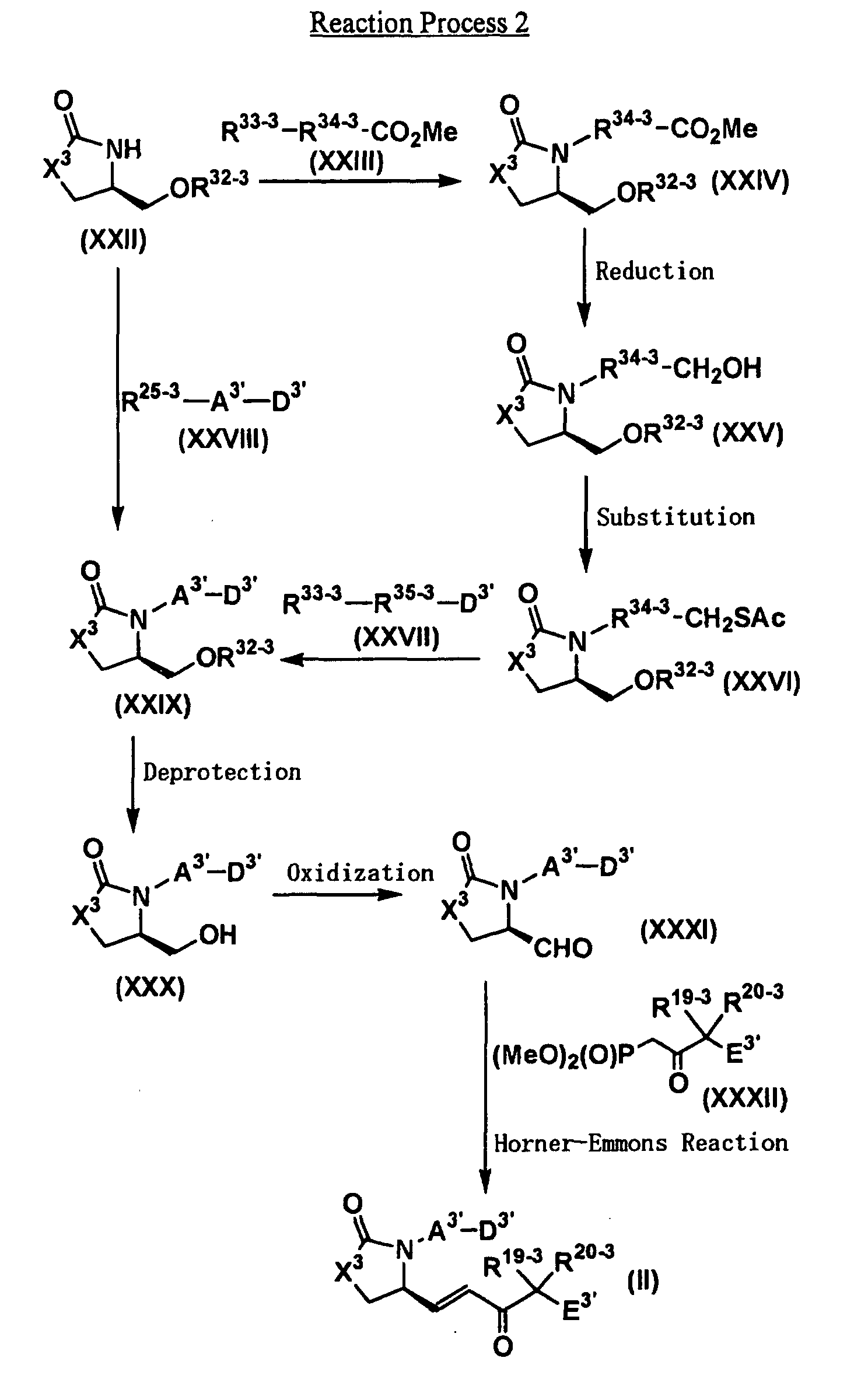
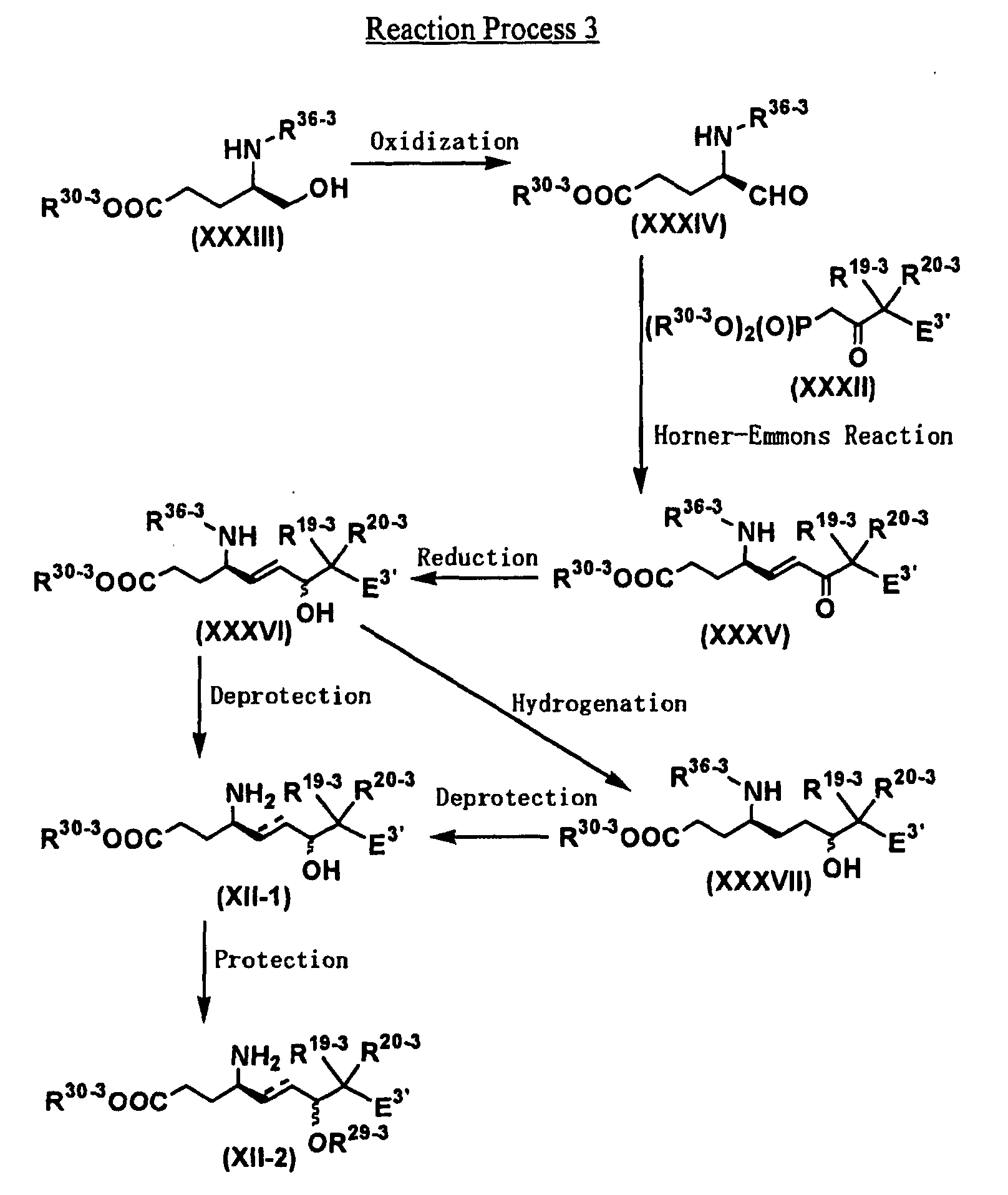
propionate, fluticasone propionate, budesonide, flunisolide, triamicinolon, ST-126P, ciclesonide, dexamethasone palomitionate, monometasone furancarboxylate, prasterone sulfonate, deflazacort, methyl prednisolone sreptanate, and methyl prednisolone sodium succinate.
(1) In the submerged drying method (o/w method), a solution of an in vivo degradable polymer in an organic solvent is prepared at first. The organic solvent to be used in the preparation of the microspheric, microcapsuled and nanospheric preparations preferably has a boiling point of 120°C or less. Examples of the organic solvent employable herein include halogenated hydrocarbons (e.g., dichloromethane, chloroform), aliphatic esters (e.g., ethyl acetate), ethers, aromatic hydrocarbons, and ketones (e.g., acetone). These compounds may be used in admixture of two or more at a proper ratio. Preferred among these organic solvents are dichloromethane and acetonitrile, particularly dichloromethane. The concentration of the in vivo degradable polymer in the organic solution depends on the molecular weight of the in vivo degradable polymer, the kind of the organic solvent, etc. but is normally predetermined to be from about 0.01 to 80% (v/w), preferably from about 0.1 to 70% (v/w), more preferably from about 1 to 60% (v/w).
(2) In order to prepare the microspheric preparation by the spray drying method, an organic solvent or emulsion having the in vivo degradable polymer and the compound represented by formula (I-1), (I-2) or (I-3), optionally in combination with other pharmaceutical preparations, dissolved therein is sprayed into the drying chamber of a spray dryer (spray dryer) through a nozzle so that the organic solvent or water in the atomized droplets is evaporated in an extremely short period of time to prepare a microspheric preparation. Examples of the nozzle employable herein include two liquid nozzle, pressure nozzle, and rotary disc. It is useful to spray an organic solvent or an aqueous solution of an aggregation inhibitor (e.g., mannitol, lactose, gelatin) at the same time with the spray of o/w emulsion as necessary for the purpose of inhibiting the aggregation of microspheres. The microspheric preparation thus obtained is then put under reduced pressure optionally under heating to remove water and solvent therefrom.

TLC : Rf 0.52 (Ethyl Acetate).

TLC : Rf 0.51 (Ethyl Acetate: Hexane = 2:1).

TLC : Rf 0.18 (Ethyl Acetate);
NMR : δ 4.12 (q, J = 7Hz, 2H), 3.85-3.6 (m, 4H), 3.05-2.9 (m, 1H), 2.55-2.4 (m, 1H), 2.4-2.25 (m, 3H), 2.2-2.05 (m, 1H), 2.0-1.9 (m, 1H), 1.85-1.7 (br, 1H), 1.7-1.2 (m, 8H), 1.27 (t, J = 7Hz, 3H).

TLC : Rf 0.45 (Chloroform : Methanol = 9:1).

TLC : Rf 0.72 (Chloroform : Methanol = 9:1);
NMR : δ 7.35-7.10 (m, 4H), 6.65 (dd, J = 16, 8Hz, 1H), 6.23 (d, J = 16Hz, 1H), 4.42 (s, 2H), 4.2-4.1 (m, 3H), 3.85 (s, 2H), 3.6-3.5 (m, 1H), 3.38 (s, 3H), 2.8-2.65 (m, 1H), 2.5-2.2 (m, 5H), 1.85-1.7 (m, 1H), 1.7-1.5 (m, 2H), 1.5-1.2 (m, 9H).
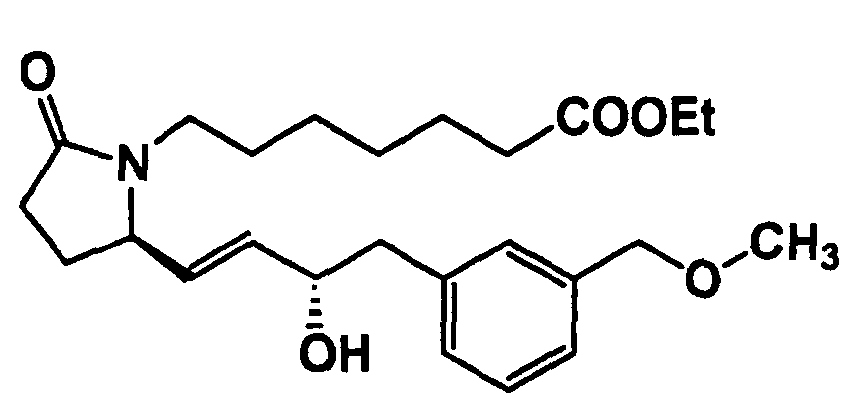
TLC : Rf 0.60 (Chloroform : Methanol = 9:1);
NMR : δ 7.38-7.10 (m, 4H), 5.73 (dd, J = 15.3, 6.0 Hz, 1H), 5.50 (dd, J = 15.3, 8.0 Hz, 1H), 4.48-4.35 (m, 3H), 4.17-3.98 (m, 3H), 3.53-3.36 (m, 4H), 2.92-2.68 (m, 3H), 2.44-2.05 (m, 6H), 1.81-1.20 (m, 12H).
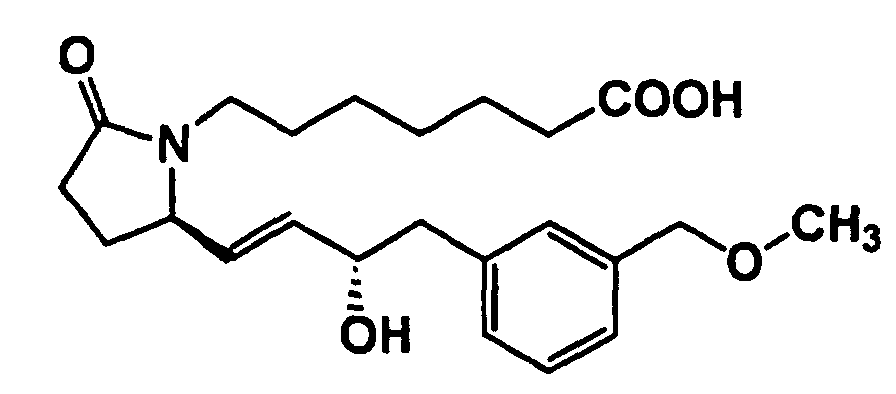
TLC : Rf 0.41 (Chloroform : Methanol = 9:1);
NMR : δ 7.36-7.11 (m, 4H), 5.75 (dd, J = 15.3, 6.0 Hz, 1H), 5.51 (dd, J = 15.3, 8.0 Hz, 1H), 4.49-4.38 (m, 3H), 4.08-3.99 (m, 1H), 3.50-3.36 (m, 4H), 2.94-2.75 (m, 3H), 2.49-2.14 (m, 6H), 1.79-1.20 (m, 9H).

NMR : δ 7.40-7.10 (m, 4H), 5.78 (dd, J = 15.2, 5.2 Hz, 1H), 5.55 (dd, J = 15.2, 8.4 Hz, 1H), 4.50-4.35 (m, 1H), 4.46 (s, 2H), 4.10-3.95(m, 1H), 3.60-3.35 (m, 1H), 3.42 (s, 3H), 3.00-2.70 (m, 4H), 2.50-2.10 (m, 5H), 1.80-1.00 (m, 8H), 0.91 (d, J = 5.8 Hz, 3H).

NMR : δ 7.33-7.12 (m, 4H), 5.78 (dd, J = 15, 5Hz, 1H), 5.59 (dd, J = 15, 8Hz, 1H), 4.48 (s, 2H), 4.45-4.36 (m, 1H), 4.12-4.03 (m, 1H), 3.51 (dt, J = 12, 5Hz, 1H), 3.43 (s, 3H), 2.91-2.81 (m, 2H), 2.76 (dd, J = 14, 8Hz, 1H), 2.47-2.10 (m, 5H), 1.78-1.63 (m, 1H), 1.61-1.40 (m, 3H), 1.32-1.10 (m, 3H), 0.92 (s, 3H), 0.89 (s, 3H).

NMR : δ 7.33-7.13 (m, 4H), 5.81 (dd, J = 15, 5Hz, 1H), 5.61 (dd, J = 15, 8Hz, 1H), 4.46 (s, 2H), 4.48-4.39 (m, 1H), 4.12-4.04 (m, 1H), 3.54 (ddd, J = 14, 11, 5Hz, 1H), 3.43 (s, 3H), 2.98 (ddd, J = 14, 11, 5Hz, 1H), 2.90 (dd, J = 14, 9Hz, 1H), 2.47-2.12 (m, 5H), 1.79-1.52 (m, 4H), 1.36-1.10 (m, 3H), 0.37-0.22 (m, 4H).

NMR : δ 7.40-7.10 (m, 4H), 5.78 (dd, J = 15.4, 5.6 Hz, 1H), 5.54 (dd, J = 15.4, 8.4 Hz, 1H), 4.50-4.35 (m, 1H), 4.41 (s, 2H), 4.10-3.98 (m, 1H), 3.60-3.45 (m, 1H), 3.42 (s, 3H), 3.00-2.75 (m, 3H), 2.50-2.10 (m, 5H), 1.80-1.10 (m, 8H), 0.91 (d, J = 5.8 Hz, 3H).

NMR : δ 7.40-7.10 (m, 4H), 5.75 (dd, J = 15.6, 5.6 Hz, 1H), 5.52 (dd, J = 15.6, 8.4 Hz, 1H), 4.67 (s, 2H), 4.50-4.35 (m, 1H), 4.10-3.98 (m, 1H), 3.86 (q, J =8.8 Hz, 2H), 3.60-3.35 (m, 1H), 3.00-1.80 (m, 6H), 2.33 (t, J = 7.0 Hz, 2H), 1.80-1.55 (m, 3H), 1.55-1.10 (m, 6H).
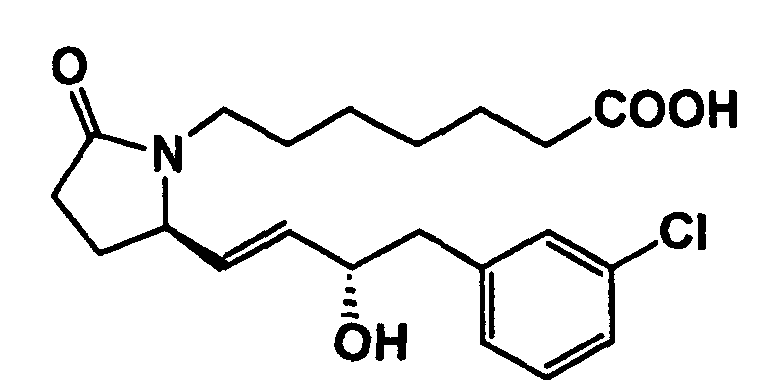
NMR : δ 7.35-7.15 (m, 3H), 7.15-7.00 (m, 1H), 5.72 (dd, J =15.8, 5.8 Hz, 1H), 5.48 (dd, J = 15.8, 8.2 Hz, 1H), 4.42 (q, J = 6.6 Hz, 1H), 4.10-3.98 (m, 1H), 3.60-3.40 (m, 1H), 2.83 (d, J = 6.6 Hz, 2H), 3.00-2.10 (m, 4H), 2.34 (t, J = 7.2 Hz, 2H), 1.80-1.55 (m, 3H), 1.55-1.10 (m, 6H).
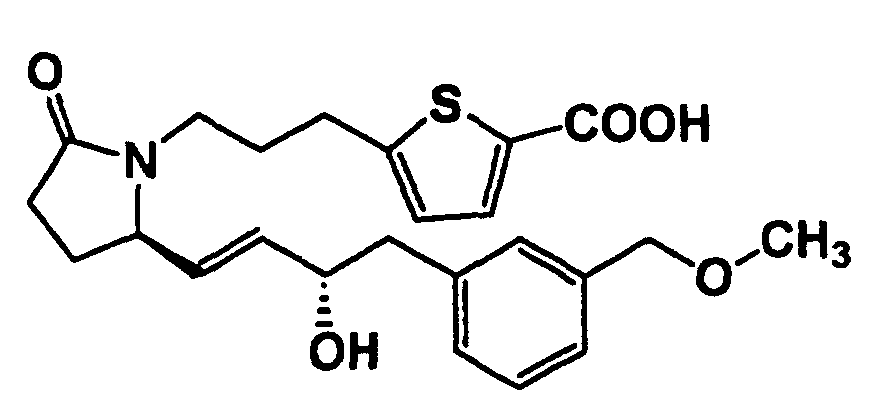
NMR : δ 7.63 (d, J = 3Hz, 1H), 7.33-7.25 (m, 2H), 7.19 (d, J = 8Hz, 1H), 7.13 (d, J = 8Hz, 1H), 6.81 (d, J = 3Hz, 1H), 5.73 (dd, J = 15, 5Hz, 1H), 5.50 (dd, J = 15, 9Hz, 1H), 4.52 (d, J = 11Hz, 1H), 4.45 (d, J = 11Hz, 1H), 4.40-4.30 (m, 1H), 4.2-3.0 (br), 4.02 (q, J = 9Hz, 1H), 3.46 (s, 3H), 3.50-3.35 (m, 1H), 2.98-2.68 (m, 5H), 2.50-2.10 (m, 3H), 2.00-1.68 (m, 3H).

NMR : δ 7.60-7.37 (m, 8H), 7.24-7.17 (d, J = 8.2 Hz, 1H), 5.74 (dd, J = 15.0, 6.0 Hz, 1H), 5.49 (ddd, J = 15.0, 8.6, 1.2 Hz, 1H), 4.51-4.40 (m, 1H), 4.08-3.99 (m, 1H), 3.50-3.39 (m, 1H), 2.91 (d, J = 6.6 Hz, 2H), 2.78-2.64 (m, 1H), 2.42-2.05 (m, 6H), 1.77-1.51 (m,.3H), 1.42-1.06 (m, 6H).
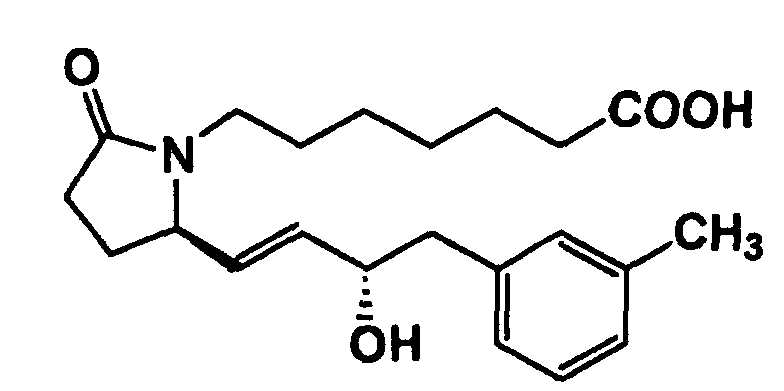
NMR : δ 7.22-7.17 (m, 1H), 7.07-6.98 (m, 3H), 5.74 (dd, J = 15.3, 5.7 Hz, 1H), 5.50 (ddd, J = 15.3, 8.4, 1.2 Hz, 1H), 4.41 (m, 1H), 4.03 (m, 1H), 3.47 (m, 1H), 2.90-2.70 (m, 3H), 2.40-2.10 (m, 6H), 2.33 (s, 3H), 1.76-1.22 (m, 9H).

NMR : δ 7.32-7.23 (m, 1H), 6.99-6.90 (m, 3H), 5.72 (dd, J = 15.3, 6.0 Hz, 1H), 5.50 (ddd, J = 15.3, 8.4, 1.2 Hz, 1H), 4.42 (m, 1H), 4.03 (m, 1H), 3.46 (m, 1H), 2.85 (d, J = 6.0 Hz, 2H), 2.70 (m, 1H), 2.40-2.10 (m, 6H), 1.75-1.20 (m, 9H).
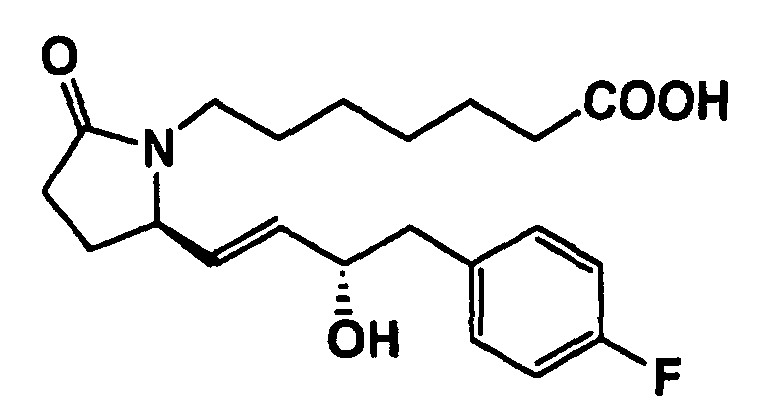
NMR : δ 7.16 (m, 2H), 7.00 (m, 2H), 5.72 (dd, J = 15.4, 6.0Hz, 1H), 5.49 (dd, J = 15.4, 8.2Hz, 1H), 4.38 (m, 1H), 4.03 (m, 1H), 3.47 (m, 1H), 2.82 (d, J = 6.6Hz, 2H), 2.72 (m, 1H), 2.41-2.31 (m, 2H), 2.34 (t, J = 7.2Hz, 2H), 2.21 (m, 1H), 1.67 (m, 1H), 1.66-1.58 (m, 2H), 1.50-1.20 (m, 6H).

NMR : δ 7.12 (d, J = 8.2Hz, 2H), 7.07 (d, J = 8.2Hz, 2H), 5.73 (dd, J = 15.4, 5.8Hz, 1H), 5.47 (dd, J = 15.4, 8.8Hz, 1H), 4.38 (m, 1H), 4.03 (m, 1H), 3.46 (m, 1H), 2.81 (d, J = 6.9Hz, 2H), 2.72 (m, 1H), 2.40-2.27 (m, 4H), 2.34 (s, 3H), 2.21 (m, 1H), 1.72 (m, 1H), 1.67-1.58 (m, 2H), 1.50-1.18 (m, 6H).

NMR : δ 7.28-7.00 (m, 4H), 5.76 (dd, J = 15.2, 6.0 Hz, 1H), 5.49 (ddd, J = 15.2, 8.4, 0.6 Hz, 1H), 4.42 (m, 1H), 4.04 (m, 1H), 3.46 (m, 1H), 2.87 (d, J = 7.0 Hz, 2H), 2.72 (m, 1H), 2.50-2.04 (m, 6H), 2.34 (s, 3H), 1.85-1.10 (m, 9H).
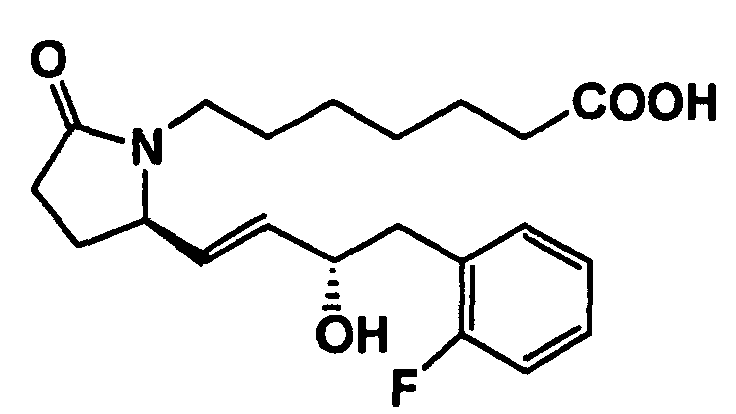
NMR : δ 7.34-6.94 (m, 4H), 5.74 (dd, J = 15.2, 6.0 Hz, 1H), 5.45 (ddd, J = 15.2, 8.4, 0.8 Hz, 1H), 4.47 (m, 1H), 4.02 (m, 1H), 3.44 (m, 1H), 3.40-1.90 (m, 9H), 1.80-0.90 (m, 9H).

NMR : δ 7.60-7.35 (m, 4H), 5.73 (dd, J = 15.3, 5.9 Hz, 1H), 5.50 (ddd, J = 15.3, 8.3, 0.9 Hz, 1H), 4.46 (m, 1H), 4.03 (m, 1H), 4.00-3.00 (br, 2H), 3.46 (m, 1H), 2.91 (d, J = 6.3 Hz, 2H), 2.71 (m, 1H), 2.48-2.06 (m, 5H), 1.76-1.12 (m, 9H).

NMR : δ 7.23 (dd, J = 7.8, 7.8 Hz, 1H), 6.86-6.70 (m, 3H), 5.73 (dd, J = 15.3, 6.0 Hz, 1H), 5.48 (dd, J = 15.3, 8.4 Hz, 1H), 4.41 (m, 1H), 4.03 (m, 1H), 3.80 (s, 3H), 3.46 (m, 1H), 2.82 (d, J = 6.6 Hz, 2H), 2.71 (m, 1H), 2.50-2.04 (m, 5H), 1.80-1.10 (m, 10H).

NMR : δ 7.24 (t, J = 7.3Hz, 1H), 7.11-6.97 (m, 3H), 5.74 (dd, J = 15.1, 5.9Hz, 1H), 5.50 (ddd, J = 15.1, 8.3, 1.0Hz, 1H), 4.42 (m, 1H), 4.04 (m, 1H), 3.45 (m, 1H), 2.84-2.80 (m, 2H), 2.75 (m, 1H), 2.63 (q, J = 7.8Hz, 2H), 2.43-2.32 (m, 2H), 2.35 (t, J = 7.3Hz, 2H), 2.21 (m, 1H), 1.71 (m, 1H), 1.68-1.57 (m, 2H), 1.54-1.20 (m, 6H), 1.24 (t, J =7.8Hz, 3H).

NMR : δ 7.14-7.00 (m, 3H), 6.92 (m, 1H), 5.71 (dd, J = 15.4, 5.8Hz, 1H), 5.50 (dd, J = 15.4, 8.6Hz, 1H), 4.38 (m, 1H), 4.04 (m, 1H), 3.44 (m, 1H), 2.82 (d, J = 6.6Hz, 2H), 2.73 (m, 1H), 2.43-2.32 (m, 2H), 2.34 (t, J = 7.1Hz, 2H), 2.22 (m, 1H), 1.69 (m, 1H), 1.65-1.55 (m, 2H), 1.51-1.20 (m, 6H).
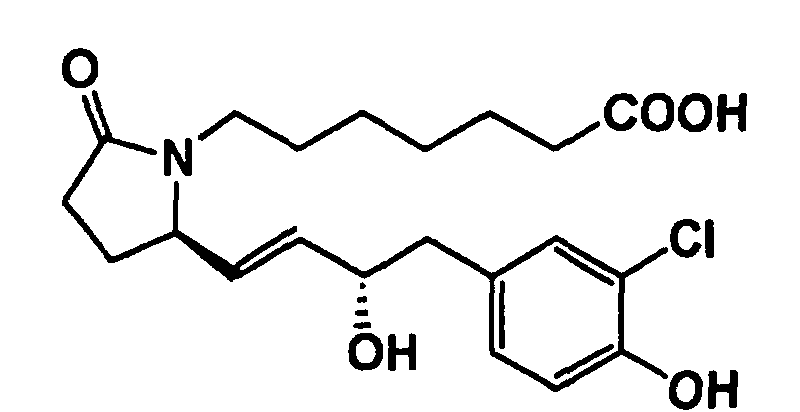
NMR : δ 7.14 (d, J = 2.1 Hz, 1H), 6.94 (dd, J = 8.4, 2.1 Hz, 1H), 6.88 (d, J = 8.4 Hz, 1H), 5.65 (dd, J = 15, 6.3 Hz, 1H), 5.41 (ddd, J = 15, 8.0, 1.2 Hz, 1H), 4.33 (m, 1H), 4.01 (m, 1H), 3.41 (m, 1H), 2.85-2.62 (m, 3H), 2.57-2.10 (m, 8H), 1.79-1.56 (m, 3H),1.54-1.19 (m, 6H).
The hydroxyl group bound benzene ring was protected by THP group, and was removed protecting group by acid before hydrolysis of the ester (procedure of Example 2)
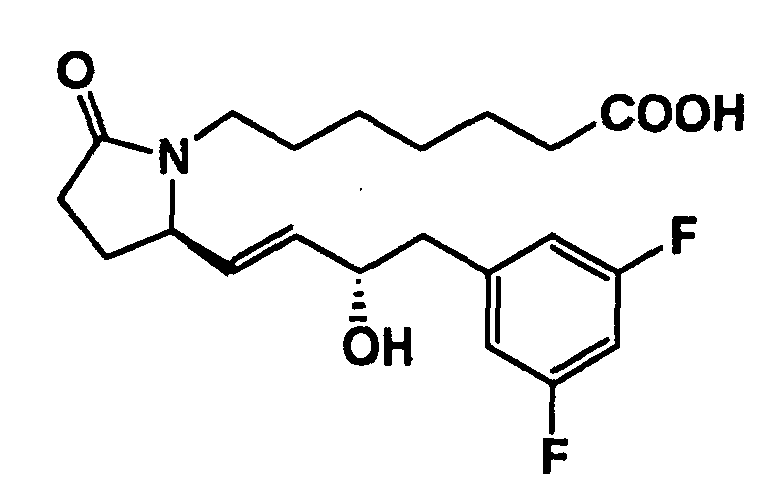
NMR : δ 6.80-6.65 (m, 3H), 5.71 (dd, J = 15, 5.7 Hz, 1H), 5.50 (dd, J = 15, 8.7 Hz, 1H), 4.41 (m, 1H), 4.03 (m, 1H), 3.48 (m, 1H), 3.10-2.50 (m, 4H), 2.47-2.10 (m, 6H), 1.79-1.59 (m, 3H), 1.58-1.20 (m, 6H).

NMR: δ 7.25-7.19 (m, 1H), 7.08-7.00 (m, 3H), 5.75 (dd, J = 15.3, 5.7 Hz, 1H), 5.51 (ddd, J = 15.3, 8.4, 0.9 Hz, 1H), 4.41 (m, 1H), 4.05 (m, 1H), 3.48 (m, 1H), 2.90-2.70 (m, 3H), 2.57 (t, J = 7.2 Hz, 2H), 2.50-2.10 (m, 5H), 1.80-1.20 (m, 11H), 0.94 (t, J = 7.2 Hz, 3H).

NMR : δ 7.23-7.21 (m, 2H), 7.14 (s, 1H), 7.02 (m, 1H), 6.37 (dd, J = 15.6, 1.5 Hz, 1H), 6.27 (dq, J = 15.6, 6.3 Hz, 1H), 5.74 (dd, J = 15.3, 6.0 Hz, 1H), 5.49 (ddd, J = 15.3, 8.4, 1.2 Hz, 1H), 4.41 (m, 1H), 4.02 (m, 1H), 3.45 (m, 1H), 2.83 (d, J = 6.9 Hz, 2H), 2.70 (m, 1H), 2.40-2.10 (m, 5H), 1.88 (dd, J = 6.3, 1.5 Hz, 3H), 1.80-1.20 (m, 9H).
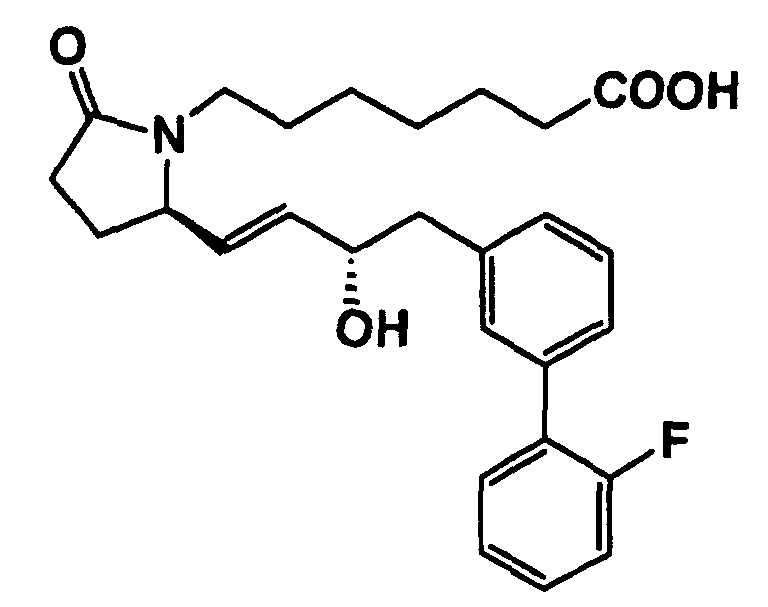
NMR : δ 7.60-6.80 (m, 8H), 5.72 (m, 1H), 5.48 (m, 1H), 5.00-3.00 (br, 2H), 4.43 (m, 1H), 4.01 (m, 1H), 3.43 (m, 1H), 2.98-2.60 (m, 3H), 2.48-2.00 (m, 5H), 1.98-0.88 (m, 9H).

NMR : δ 7.64-7.00 (m, 8H), 5.72 (m, 1H), 5.48 (m, 1H), 4.60-3.00 (br, 2H), 4.45 (m, 1H), 4.02 (m, 1H), 3.44 (m, 1H), 2.96-2.60 (m, 3H), 2.48-2.02 (m, 5H), 1.78-0.78 (m, 9H).
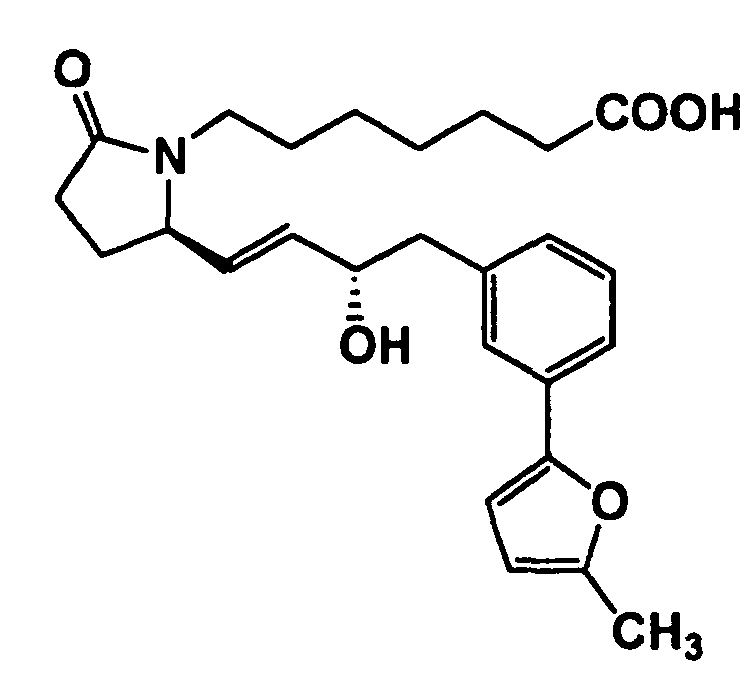
NMR : δ 7.60-6.96 (m, 4H), 6.53 (d, J = 3.0 Hz, 1H), 6.05 (m, 1H), 5.72 (m, 1H), 5.48 (m, 1H), 4.60-2.80 (br, 2H), 4.44 (m, 1H), 4.02 (m, 1H), 3.44 (m, 1H), 2.96-2.60 (m, 3H), 2.48-2.02 (m, 8H), 1.80-1.06 (m, 9H).

NMR : δ 7.83-7.76 (m, 3H), 7.65 (s, 1H), 7.51-7.41 (m, 2H), 7.33 (dd, J = 8.5, 1.7Hz, 1H), 5.77 (dd, J = 15.4, 6.1Hz, 1H), 5.44 (ddd, J = 15.4, 8.5, 0.8Hz, 1H), 4.54 (m, 1H), 4.01 (m, 1H), 3.38 (m, 1H), 3.02 (d, J = 6.9Hz, 2H), 2.63 (m, 1H), 2.37-2.32 (m, 2H), 2.34 (t, J = 7.2Hz, 2H), 2.19 (m, 1H), 1.64 (m, 1H), 1.63-1.55 (m, 2H), 1.40-1.12 (m, 6H).
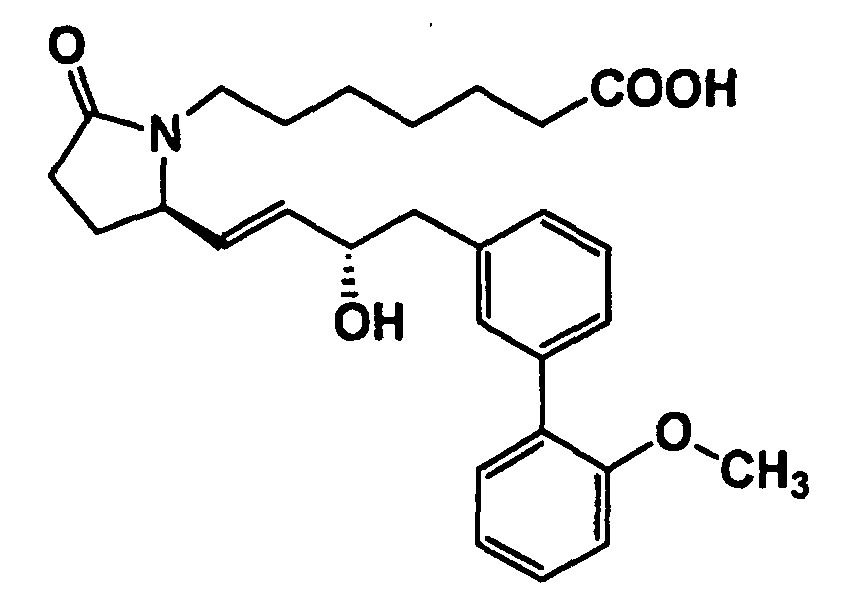
NMR : δ 7.50-6.92 (m, 8H), 5.74 (m, 1H), 5.50 (m, 1H), 4.43 (m, 1H), 4.03 (m, 1H), 3.81 (s, 3H), 3.45 (m, 1H), 3.40-1.90 (br, 2H), 3.00-2.64 (m, 3H), 2.48-2.14 (m, 5H), 1.78-1.10 (m, 9H).

NMR : δ 7.46-7.08 (m, 7H), 6.97 (m, 1H), 5.72 (m, 1H), 5.47 (m, 1H), 4.42 (m, 1H), 4.02 (m, 1H), 3.43 (m, 1H), 2.98-2.62 (m, 3H), 2.50-2.06 (m, 5H), 1.80-1.08 (m, 9H).
The hydroxyl group bound benzene ring was protected by THP group, and was removed protecting group by acid before hydrolysis of the ester (procedure of Example 2)

NMR : δ 7.48-6.80 (m, 8H), 5.70 (dd, J = 15.3, 6.3 Hz, 1H), 5.51 (m, 1H), 4.44 (m, 1H), 4.06 (m, 1H), 3.49 (m, 1H), 3.06-2.60 (m, 3H), 2.54-1.96 (m, 5H), 1.82-1.00 (m, 9H).
The hydroxyl group bound benzene ring was protected by THP group, and was removed protecting group at final step.
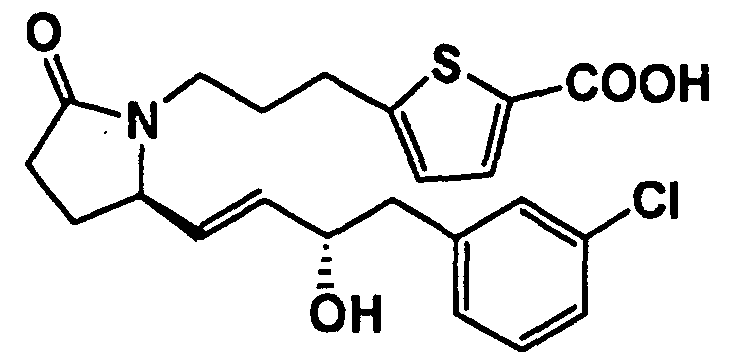
NMR : δ 7.68 (d, J = 3.6 Hz, 1H), 7.23-7.18 (m, 3H), 7.08 (m, 1H), 6.83 (d, J = 3.6 Hz, 1H), 5.71 (dd, J = 15.3, 6.0 Hz, 1H), 5.48 (ddd, J = 15.3, 8.7, 0.9 Hz, 1H), 4.39 (m, 1H), 4.02 (m, 1H), 3.53 (m, 1H), 3.40 (br s, 1H), 2.90-2.70 (m, 5H), 2.50-2.10 (m, 3H), 1.90-1.60 (m, 3H).
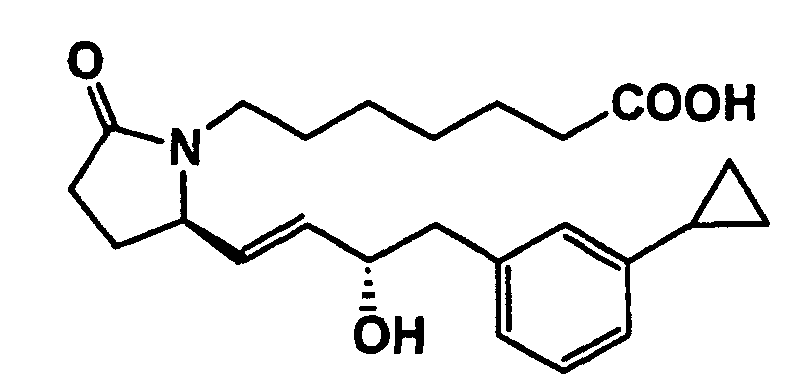
NMR.: δ 7.19 (t, J = 7.7Hz, 1H), 7.02-6.89 (m, 3H), 5.73 (dd, J = 15.4, 5.8Hz, 1H), 5.48 (ddd, J = 15.4, 8.5, 1.0Hz, 1H), 4.42 (m, 1H), 4.04 (m, 1H), 3.45 (m, 1H), 2.81 (d, J = 6.6Hz, 2H), 2.75 (m, 1H), 2.43-2.30 (m, 2H), 2.32 (t, J = 7.1Hz, 2H), 2.21 (m, 1H), 1.86 (m, 1H), 1.71 (m, 1H), 1.67-1.56 (m, 2H), 1.52-1.19 (m, 6H), 1.00-0.90 (m, 2H), 0.74-0.63 (m, 2H).
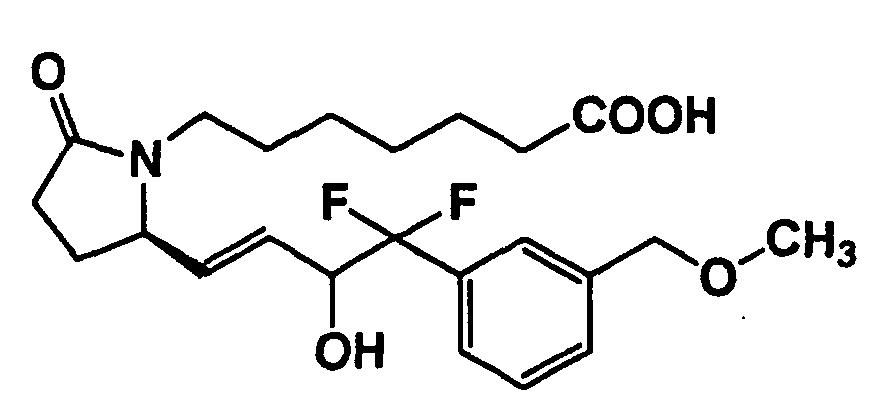
NMR : δ 7.57-7.35 (m, 4H), 5.78-5.59 (m, 2H), 4.61-4.43 (m, 3H), 4.04 (m, 1H), 3.50-3.32 (m, 4H), 2.82 (m, 1H), 2.43-2.10 (m, 5H), 1.72-1.20 (m, 9H).
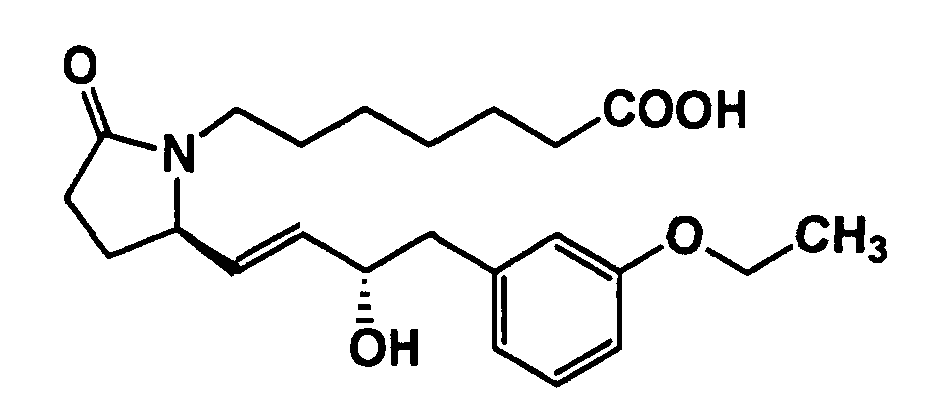
NMR : δ 7.22 (t, J = 7.7Hz, 1H), 6.81-6.73 (m, 3H), 5.73 (dd, J = 15.4, 6.1Hz, 1H), 5.48 (ddd, J = 15.4, 8.5, 1.1Hz, 1H), 4.41 (m, 1H), 4.03 (m, 1H), 4.02 (q, J = 7.1Hz, 2H), 3.45 (m, 1H), 2.81 (d, J = 6.6Hz, 2H), 2.72 (m, 1H), 2.42-2.32 (m, 4H), 2.21 (m, 1H), 1.76-1.58 (m, 3H), 1.48-1.20 (m, 6H), 1.42 (t, J=7.1Hz, 3H).
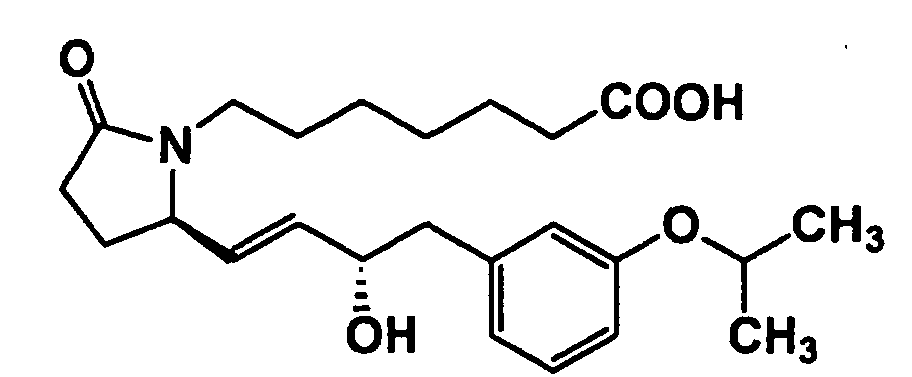
NMR : δ 7.20 (t, J = 7.7Hz, 1H), 6.80-6.75 (m, 3H), 5.73 (dd, J = 15.4, 6.0Hz, 1H), 5.49 (ddd, J = 15.4, 8.5, 1.1Hz, 1H), 4.55 (m, 1H), 4.40 (m, 1H), 4.04 (m, 1H), 3.54 (m, 1H), 2.80 (d, J = 6.6Hz, 2H), 2.74 (m, 1H), 2.42-2.32 (m, 4H), 2.21 (m, 1H), 1.77-1.58 (m, 3H), 1.50-1.20 (m, 6H), 1.38 (d, J = 6.0Hz, 6H).

NMR : δ 7.45-7.28 (m, 5H), 7.23 (t, J = 7.7Hz, 1H), 6.89-6.76 (m, 3H), 5.71 (dd, J = 15.4, 6.0Hz, 1H), 5.45 (ddd, J = 15.4, 8.5, 0.8Hz, 1H), 5.03 (s, 2H), 4.39 (m, 1H), 4.01 (m, 1H), 3.45 (m, 1H), 2.81 (d, J = 6.9Hz, 2H), 2.71 (m, 1H), 2.41-2.27 (m, 4H),2.20 (m, 1H), 1.75-1.54 (m, 3H), 1.48-1.20 (m, 6H).
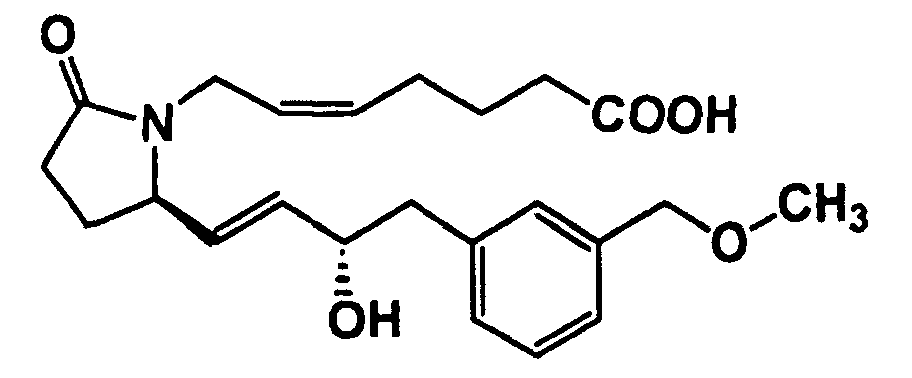
NMR : δ 7.32-7.11 (m, 4H), 5.70 (dd, J = 16, 5Hz, 1H), 5.60-5.48 (m, 2H), 5.34-5.25 (m, 1H), 4.44 (s, 2H), 4.50-4.39 (m, 1H), 4.20 (dd, J = 15, 5Hz, 1H), 4.03 (dt, J = 8, 5Hz, 1H), 3.49 (dd, J = 15, 8Hz, 1H), 3.42 (s, 3H), 2.92-2.78 (m, 2H), 2.50-2.05 (m, 7H), 1.77-1.61 (m, 3H).

NMR : δ 7.62-7.26 (m, 4H), 5.67 (dd, J = 15.6, 5.7 Hz, 1H), 5.62-5.44 (m, 2H), 5.28 (m, 1H), 4.45 (m, 1H), 4.21 (dd, J = 15.0, 6.6 Hz, 1H), 4.03 (m, 1H), 3.80-2.40 (br, 2H), 3.45 (m, 1H), 2.90 (d, J = 6.6 Hz, 2H), 2.48-2.02 (m, 7H), 1.76-1.52 (m, 3H).
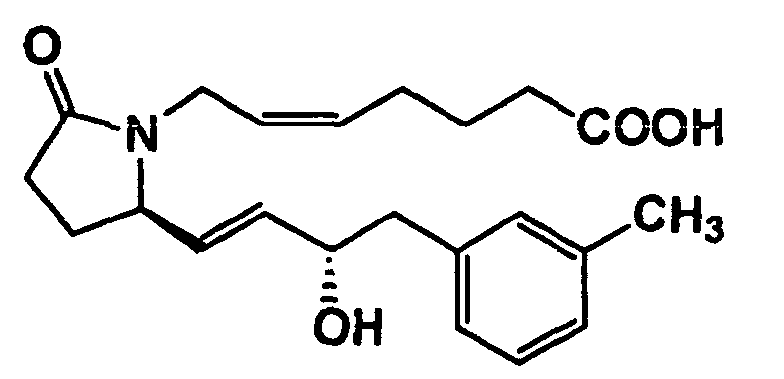
NMR : δ 7.19 (dd, J = 7.5, 7.5 Hz, 1H), 7.10-7.05 (m, 3H), 5.68 (dd, J = 15.6, 5.7 Hz, 1H), 5.61-5.40 (m, 2H), 5.30 (m, 1H), 4.41 (m, 1H), 4.21 (m, 1H), 4.03 (m, 1H), 3.70-2.60 (br, 2H), 3.44 (m, 1H), 2.80 (d, J = 6.6 Hz, 2H), 2.48-2.04 (m, 10H), 1.78-1.56 (m, 3H).

NMR : δ 6.88 (s, 1H), 6.81 (s, 2H), 5.74 (dd, J = 15.3, 5.7 Hz, 1H), 5.51 (dd, J = 15.3, 8.4 Hz, 1H), 4.39 (m, 1H), 4.04 (m, 1H), 3.48 (m, 1H), 2.83-2.69 (m, 3H), 2.50-2.10 (m, 5H), 2.29 (s, 6H), 1.80-1.20 (m, 9H).

NMR : δ 7.74-7.72 (m, 2H), 7.59-7.50 (m, 2H), 7.39 (m, 1H), 7.32-7.18 (m, 3H), 7.03 (d, J= 1.2Hz, 1H), 5.77 (dd, J = 15.3, 6.3 Hz, 1H), 5.51 (ddd, J = 15.3, 8.7, 0.9 Hz, 1H), 4.48 (m, 1H), 4.03 (m, 1H), 3.43 (m, 1H), 2.93 (d, J = 6.6 Hz, 2H), 2.69(m, 1H), 2.45-2.10 (m, 5H), 1.75-1.10 (m, 9H).
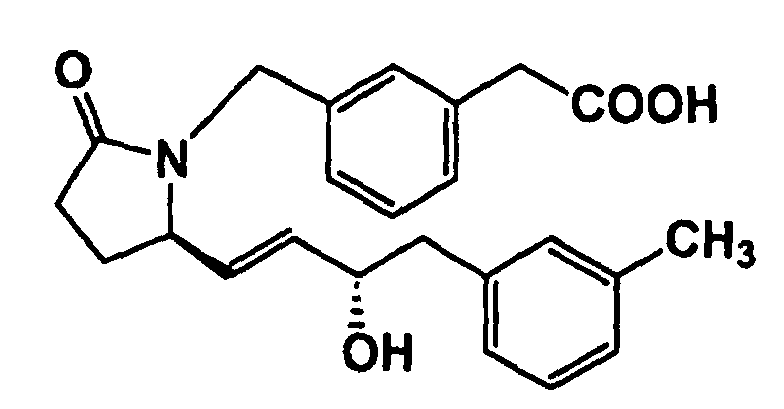
NMR : δ 7.27-6.97 (m, 8H), 5.62 (dd, J = 15.4, 5.8Hz, 1H), 5.41 (ddd, J = 15.4, 8.8, 1.1Hz, 1H), 4.74 (d, J = 14.6Hz, 1H), 4.36 (m, 1H), 3.87 (m, 1H), 3.81 (d, J = 14.6Hz, 1H), 3.60 (s, 2H), 2.78 (d, J = 6.6Hz, 2H), 2.55-2.35 (m, 2H), 2.32 (s, 3H), 2.15 (m, 1H), 1.69 (m, 1H).

NMR : δ 7.60-7.14 (m, 9H), 5.72 (dd, J = 15.3, 6.0 Hz, 1H), 5.47 (dd, J = 15.3, 8.4 Hz, 1H), 4.43 (m, 1H), 4.03 (m, 1H), 3.46 (m, 1H), 2.94-2.62 (m, 3H), 2.48-2.12 (m, 5H), 1.80-1.16 (m, 9H).

NMR : δ 7.40-7.00 (m, 4H), 5.66 (dd, J = 15.6, 5.7 Hz, 1H), 5.61-5.22 (m, 3H), 4.41 (m, 1H), 4.22 (m, 1H), 4.03 (m, 1H), 3.80-2.80 (br, 2H), 3.44 (m, 1H), 2.90-2.70 (m, 3H), 2.48-2.02 (m, 6H), 1.76-1.54 (m, 3H).

NMR : δ 7.20-6.84 (m, 3H), 5.66 (dd, J = 15.3, 5.7 Hz, 1H), 5.62-5.22 (m, 3H), 4.38 (m, 1H), 4.21 (m, 1H), 4.04 (m, 1H), 4.02-3.00 (br, 2H), 3.46 (m, 1H), 2.79 (d, J = 6.6 Hz, 2H), 2.50-2.02 (m, 7H), 1.80-1.54 (m, 3H).

NMR : δ 7.24-6.96 (m, 8H), 5.62 (dd, J = 15.4, 6.0Hz, 1H), 5.43 (ddd, J = 15.4, 8.2, 0.8Hz, 1H), 4.78 (d, J = 14.8Hz, 1H), 4.37 (m, 1H), 3.89 (m, 1H), 3.77 (d, J = 14.8Hz, 1H), 3.62 (s, 2H), 2.80 (d, J = 6.6Hz, 2H), 2.55-2.37 (m, 2H), 2.36 (s, 3H), 2.15 (m, 1H), 1.74 (m, 1H).

NMR : δ 7.25 (m, 1H), 7.04-6.86 (m, 3H), 5.66 (dd, J = 15.3, 5.7 Hz, 1H), 5.60-5.20 (m, 3H), 4.42 (m, 1H), 4.40-2.80 (br, 2H), 4.21 (m, 1H), 4.03 (m, 1H), 3.44 (m, 1H), 2.90-2.72 (m, 2H), 2.48-2.02 (m, 7H), 1.78-1.56 (m, 3H).

NMR : δ 7.22-7.10 (m, 2H), 7.05-6.93 (m, 2H), 5.66 (dd, J = 15.6, 5.7 Hz, 1H), 5.61-5.20 (m, 3H), 4.70-3.20 (br, 2H), 4.38 (m, 1H), 4.20 (m, 1H), 4.02 (m, 1H), 3.44 (m, 1H), 2.81 (d, J = 6.6 Hz, 2H), 2.48-2.02 (m, 7H), 1.78-1.56 (m, 3H).

NMR : δ 7.25-7.0 (m, 8H), 5.51 (dd, J = 15, 6Hz, 1H), 5.25 (dd, J = 15, 8Hz, 1H), 4.4-4.3 (m, 1H), 3.75-3.65 (m, 1H), 3.62 (s, 2H), 3.65-3.55 (m, 1H), 3.3-2.4 (br), 3.0-2.7 (m, 5H), 2.4-2.2 (m, 2H), 2.1-1.95 (m, 1H), 1.65-1.5 (m, 1H).
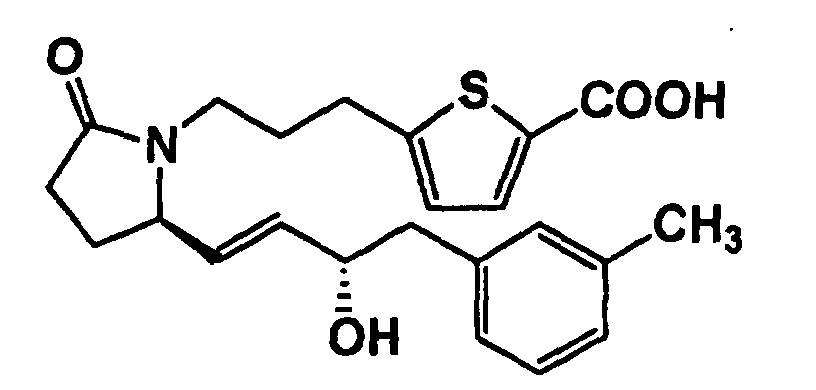
NMR : δ 7.68 (d, J = 3.8Hz, 1H), 7.19 (t, J = 7.4Hz, 1H), 7.07-6.96 (m, 3H), 6.83 (d, J = 3.8Hz, 1H), 5.75 (dd, J = 15.4, 6.0Hz, 1H), 5.47 (ddd, J = 15.4, 8.8, 1.1Hz, 1H), 4.38 (m, 1H), 4.02 (m, 1H), 3.53 (m, 1H), 2.90-2.76 (m, 5H), 2.46-2.37 (m, 2H), 2.33 (s, 3H), 2.21 (m, 1H), 1.90-1.65 (m, 3H).
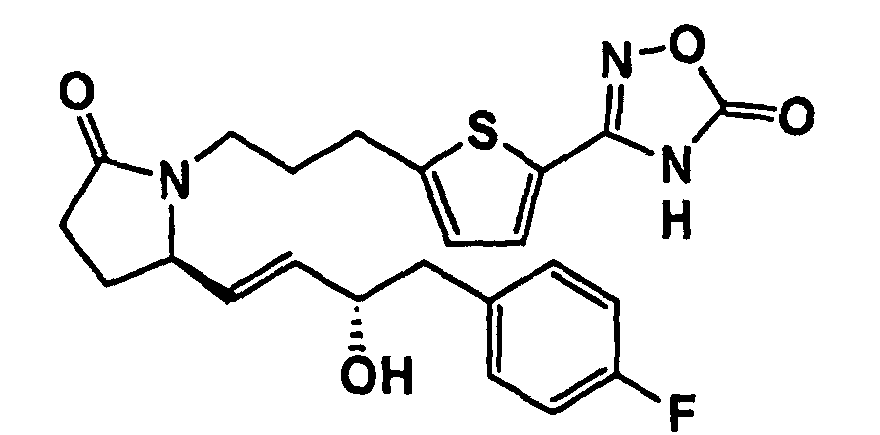
NMR(DMSO-d6) : δ 12.98 (br. s, 1H), 7.52 (d, J = 4.0 Hz, 1H), 7.22-7.14 (m, 2H), 7.08-6.99 (m, 3H), 5.62 (dd, J = 15.0, 6.2 Hz, 1H), 5.30 (dd, J = 15.0, 8.8 Hz, 1H), 4.97 (br. s, 1H), 4.16 (m, 1H), 4.00 (m, 1H), 3.28 (m, 2H), 2.81-2.58 (m, 4H), 2.22-2.03 (m, 3H), 1.77-1.50 (m, 3H).
Hydrolysis of the ester (procedure of Example 2) was not done. The NH group bound 1,2,4-oxadiazole ring was protected by Boc group, and was removed protecting group at final step.

NMR : δ 7.20-7.14 (m, 3H), 7.04-6.94 (m, 2H), 6.21 (d, J = 3.6 Hz, 1H), 5.73 (dd, J = 15.4, 5.8 Hz, 1H), 5.49 (dd, J = 15.4, 8.8 Hz, 1H), 5.14 (brs, 2H), 4.38 (m, 1H), 4.06 (m, 1H), 3.51 (m, 1H), 2.86 (m, 1H), 2.81 (d, J = 6.6 Hz, 2H), 2.66 (t, J = 7.4 Hz, 2H), 2.48-2.29 (m, 2H), 2.18 (m, 1H), 1.93-1.80 (m, 2H), 1.72 (m, 1H).

NMR(CDCl3 + CD3OD) : δ 7.25-7.15 (m, 2H), 7.05-6.95 (m, 2H), 6.7-6.6 (m, 2H), 5.72 (dd, J = 16, 6Hz, 1H), 5.45 (dd, J = 16, 8Hz, 1H), 4.78 (d, J = 15Hz, 1H), 4.37 (q, J = 6Hz, 1H), 4.05-3.95 (m, 1H), 3.90 (d, J = 15Hz, 1H), 3.09 (t, J = 7Hz, 2H), 2.83 (d, J = 6Hz, 2H), 2.65 (t, J = 7Hz, 2H), 2.5-2.25 (m, 2H), 2.25-2.1 (m, 1H), 1.8-1.6 (m, 1H).
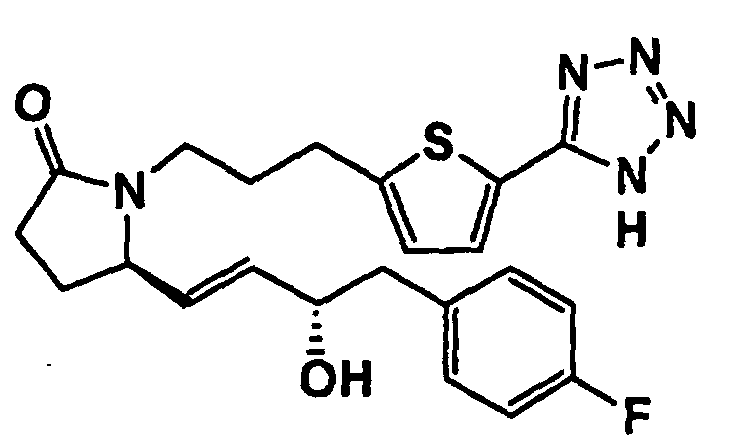
NMR(DMSO-d6) : δ 7.59 (d, J = 3.7 Hz, 1H), 7.21-7.13 (m, 2H), 7.08-6.99 (m, 3H), 5.62 (dd, J = 15.4, 6.2 Hz, 1H), 5.31 (dd, J = 15.4, 8.8 Hz, 1H), 4.97 (br, 1H), 4.17 (m, 1H), 4.02 (m, 1H), 3.33 (m, 1H), 2.82-2.58 (m, 5H), 2.27-2.03 (m, 3H), 1.80-1.49 (m, 3H).
Hydrolysis of the ester (procedure of Example 2) was not done. The NH group bound 1,2,4-oxadiazole ring was protected by Boc group, and was removed protecting group at final step.
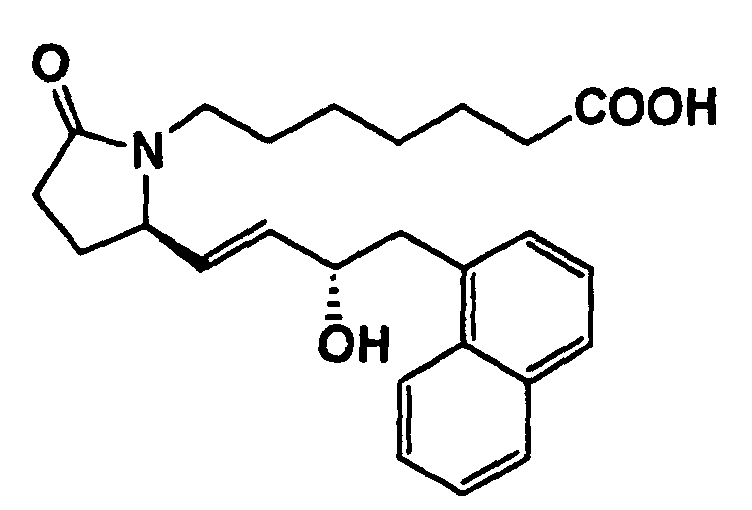
NMR : δ 8.04 (m, 1H), 7.87 (m, 1H), 7.76 (m, 1H), 7.57-7.46 (m, 2H), 7.44-7.32 (m, 2H), 5.78 (dd, J = 15.4, 6.1Hz, 1H), 5.45 (ddd, J = 15.4, 8.5, 1.1Hz, 1H), 4.57 (m, 1H), 3.97 (m, 1H), 3.35 (m, 1H), 3.32 (d, J = 6.6Hz, 2H), 2.64 (m, 1H), 2.37-2.32 (m, 2H), 2.34 (t, J = 7.1Hz, 2H), 2.15 (m, 1H), 1.64-1.55 (m, 3H), 1.43-1.15 (m, 6H).

TLC : Rf 0.48 (Ethyl Acetate : Hexane = 1:1).

TLC : Rf 0.43 (Ethyl Acetate).
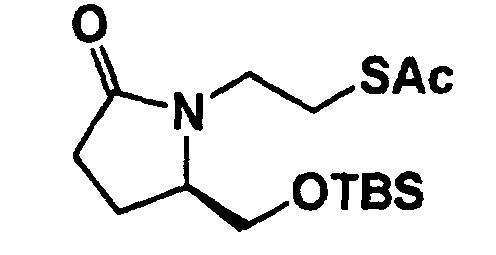
TLC : Rf 0.83 (Ethyl Acetate).

TLC : Rf 0.67 (Ethyl Acetate : Hexane = 1:1).

TLC : Rf 0.14 (Ethyl Acetate).

TLC : Rf 0.50 (Chloroform : Methanol = 9:1).
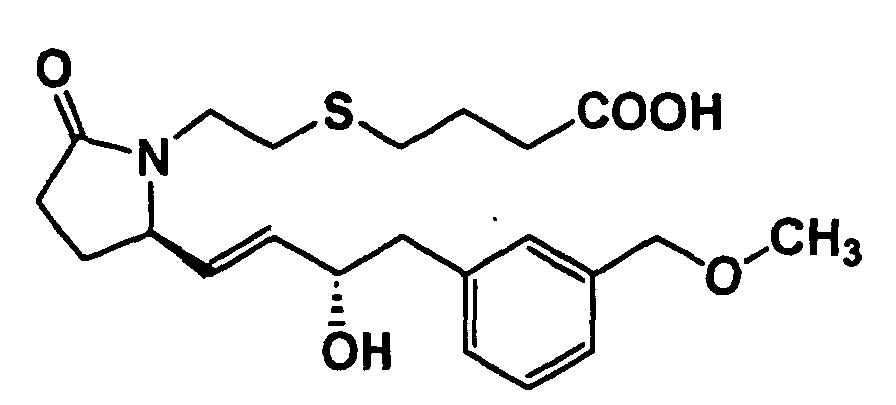
NMR : δ 7.40-7.10 (m, 4H), 5.79 (dd, J = 15.4, 5.2 Hz, 1H), 5.54 (dd, J = 15.4, 8.4 Hz, 1H), 4.50-4.40 (m, 1H), 4.46 (s, 2H), 4.20-4.05 (m, 1H), 3.70-3.50 (m, 1H), 3.42 (s, 3H), 3.20-2.90 (m, 1H), 2.90-2.80 (m, 2H), 2.80-2.10 (m, 9H), 2.00-1.60 (m, 3H).

NMR : δ 7.30-7.20 (m, 3H), 7.20-7.05 (m, 1H), 5.75 (dd, J =15.4, 5.4 Hz, 1H), 5.49 (dd, J = 15.4, 8.6 Hz, 1H), 4.50-4.35 (m, 1H), 4.20-4.05 (m, 1H), 3.75-3.55 (m, 1H), 3.10-2.85 (m, 1H), 2.85 (d, J = 6.6 Hz, 2H), 2.80-2.10 (m, 9H), 2.00-1.80 (m, 2H), 1.80-1.60 (m, 1H).

NMR : δ 7.37-7.11 (m, 4H), 5.80 (dd, J = 15, 5Hz, 1H), 5.55 (dd, J = 15, 8Hz, 1H), 4.56 (s, 2H), 4.50-4.40 (m, 1H), 4.17-4.08 (m, 1H), 3.63-3.51 (m, 1H), 3.42-3.36 (m, 1H), 3.11-3.00 (m, 1H), 2.89 (dd, J = 14, 6Hz, 1H), 2.80 (dd, J = 14, 8Hz, 1H), 2.72-2.32 (m, 8H), 2.31-2.17 (m, 1H), 1.98-1.83 (m, 2H), 1.79-1.65 (m, 1H), 0.71-0.49 (m, 4H).
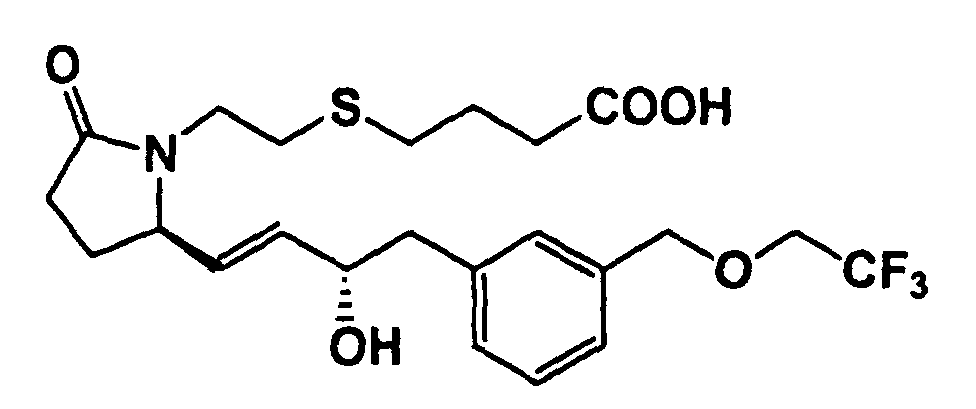
NMR : δ 7.38-7.14 (m, 4H), 5.77 (dd, J = 15, 6Hz, 1H), 5.53 (dd, J = 15, 8Hz, 1H), 4.65 (s, 2H), 4.50-4.40 (m, 1H), 4.18-4.08 (m, 1H), 3.86 (q, J = 9Hz, 2H), 3.68-3.55 (m, 1H), 3.08-2.94 (m, 1H), 2.94-2.79 (m, 2H), 2.68-2.32 (m, 8H), 2.32-2.17 (m, 1H), 1.98-1.82 (m, 2H), 1.78-1.63 (m, 1H).

NMR : δ 7.30-7.20 (m, 1H), 7.10-7.00 (m, 3H), 5.78 (dd, J =15.4, 5.4 Hz, 1H), 5.52 (dd, J = 15.4, 8.4 Hz, 1H), 4.50-4.40 (m, 1H), 4.20-4.05 (m, 1H), 3.75-3.55 (m, 1H), 3.20-2.10 (m, 14H), 2.00-1.80 (m, 2H), 1.80-1.55 (m, 3H), 0.94 (t, J = 7.2 Hz, 3H).

NMR : δ 5.75 (dd, J = 15.3, 6.0 Hz, 1H), 5.53 (ddd, J = 15.3, 8.0, 1.0 Hz, 1H), 4.29-4.10 (m, 2H), 3.77-3.60 (m, 1H), 3.20-3.08 (m, 1H), 2.79-1.43 (m, 22H), 1.22-1.04 (m, 2H).

NMR : δ 7.19 (d, J = 5.1 Hz, 1H), 6.95 (dd, J = 5.1, 3.3 Hz, 1H), 6.86 (d, J = 3.3 Hz, 1H), 5.75 (dd, J = 15.0, 5.4 Hz, 1H), 5.55 (dd, J = 15.0, 8.6 Hz, 1H), 4.48-4.39 (m, 1H), 4.19-4.06 (m, 1H), 3.70-3.59 (m, 1H), 3.42-2.75 (m, 4H), 2.70-2.18 (m, 10H), 1.99-1.84 (m, 2H), 1.79-1.62 (m, 1H).
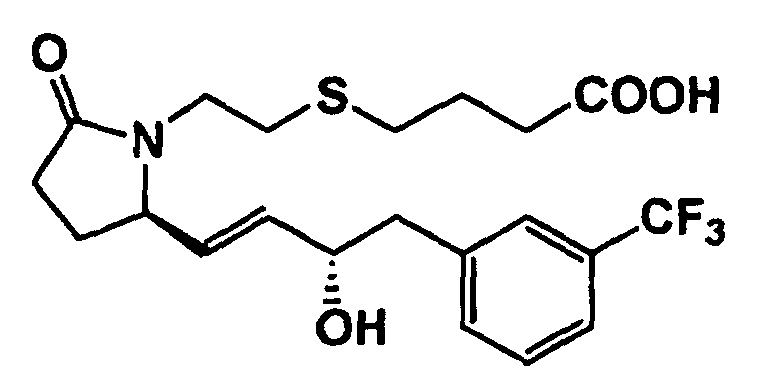
NMR : δ 7.59-7.38 (m, 4H), 5.82-5.71 (m, 1H), 5.60-5.41 (m, 1H), 4.57-4.40 (m, 1H), 4.20-4.06 (m, 1H), 3.70-3.59 (m, 1H), 3.15-2.81 (m, 3H), 2.80-2.01 (m, 10H), 1.99-1.80 (m, 2H), 1.79-1.60 (m, 1H).
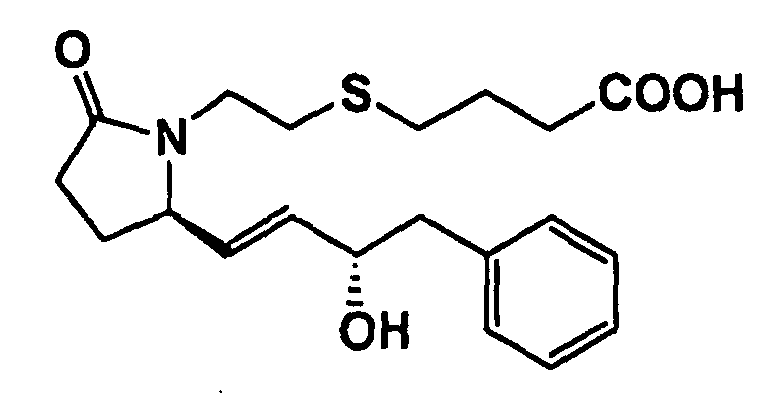
NMR : δ 7.32-7.19 (m, 5H), 5.77 (dd, J = 15.3, 5.4 Hz, 1H), 5.51 (ddd, J = 15.3, 8.4, 1.2 Hz, 1H), 4.41 (m, 1H), 4.11 (m, 1H), 3.62 (m, 1H), 2.95 (m, 1H), 2.86 (d, J = 6.6 Hz, 2H), 2.65-2.20 (m, 9H), 2.00-1.80 (m, 2H), 1.70 (m, 1H).

NMR: δ 7.21 (m, 1H), 7.07-6.98 (m, 3H), 5.78 (dd, J = 15.3, 5.4 Hz, 1H), 5.52 (ddd, J = 15.3, 8.7, 1.2 Hz, 1H), 4.43 (m, 1H), 4.11 (m, 1H), 3.62 (m, 1H), 2.95 (m, 1H), 2.83-2.20 (m, 11H), 2.34 (S, 3H), 2.00-1.80 (m, 2H), 1.70 (m, 1H).
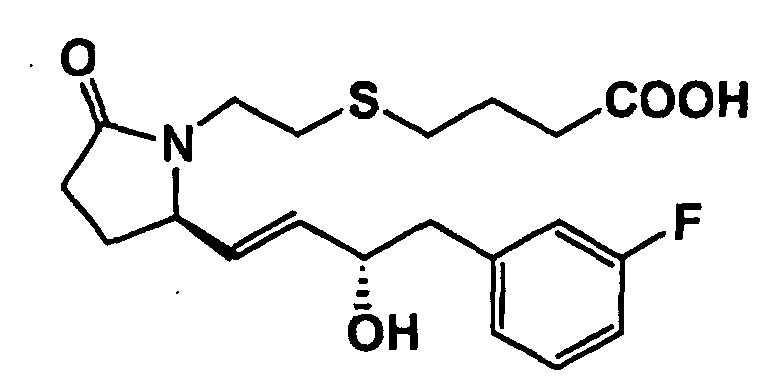
NMR : δ 7.27 (m, 1H), 7.00-6.89 (m, 3H), 5.75 (dd, J = 15.4, 5.5Hz, 1H), 5.50 (dd, J = 15.4, 8.5Hz, 1H), 4.42 (m, 1H), 4.11 (m, 1H), 3.62 (m, 1H), 2.92 (m, 1H), 2.84 (d, J = 6.9Hz, 2H), 2.67-2.51 (m, 4H), 2.50-2.41 (m, 2H), 2.38 (t, J = 7.1Hz, 2H), 2.22 (m, 1H), 1.94-1.83 (m, 2H), 1.66 (m, 1H).
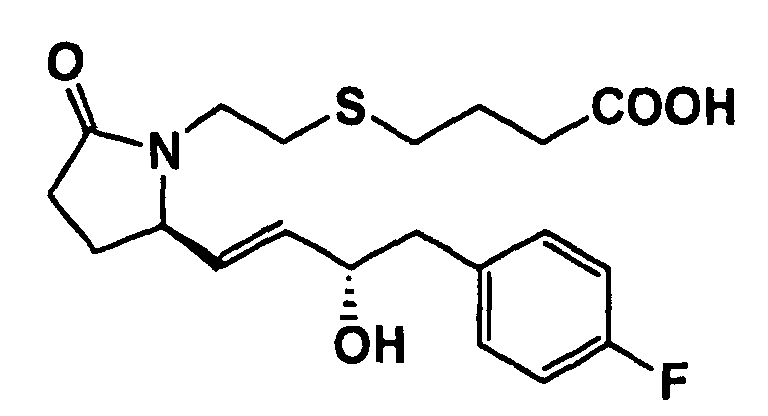
NMR : δ 7.20-7.16 (m, 2H), 7.04-6.96 (m, 2H), 5.75 (dd, J = 15.4, 6.0Hz, 1H), 5.50 (ddd, J = 15.4, 8.5, 1.1Hz, 1H), 4.39 (m, 1H), 4.11 (m, 1H), 3.62 (m, 1H), 2.95 (m, 1H), 2.82 (d, J = 6.6Hz, 2H), 2.67-2.53 (m, 4H), 2.52-2.43 (m, 2H), 2.39 (t, J = 7.1Hz, 2H), 2.22 (m, 1H), 1.94-1.83 (m, 2H), 1.68 (m, 1H).
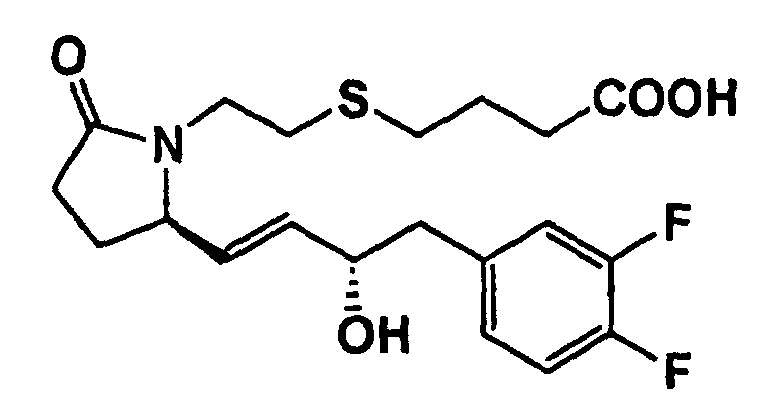
NMR : δ 7.14-7.00 (m, 2H), 6.92 (m, 1H), 5.76 (dd, J = 15.6, 5.4 Hz, 1H), 5.54 (ddd, J = 15.6,8.4, 1.2 Hz, 1H), 4.40 (m, 1H), 4.12 (m, 1H), 3.63 (m, 1H), 3. 00 (m, 1H), 2.82-2.10 (m, 11H), 2.00-1.60 (m, 3H).

NMR : δ 7.82-7.77 (m, 3H), 7.65 (s, 1H), 7.50-7.40 (m, 2H), 7.32 (dd, J = 8.4, 1.5 Hz, 1H), 5.80 (dd, J = 15.6, 5.1 Hz, 1H), 5.51 (ddd, J = 15.6, 8.4, 1.2 Hz, 1H), 4.53 (m, 1H), 4.11 (m, 1H), 3.53 (m, 1H), 3.02 (d, J = 6.6 Hz, 2H), 2.86 (m, 1H), 2.60-2.10 (m, 9H), 2.00-1.60 (m, 3H).
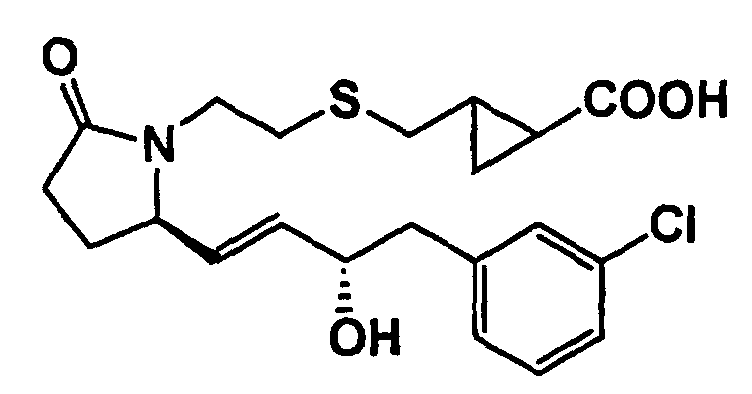
NMR : δ 7.26-7.19 (m, 3H), 7.09 (m, 1H), 5.73 (dd, J = 15.3, 5.7 Hz, 1H), 5.48 (m, 1H), 4.41 (m, 1H), 4.12 (m, 1H), 3.62 (m, 1H), 3.05-2.20 (m, 9H), 2.83 (d, J = 6.3 Hz, 2H), 1.80-1.60 (m, 2H), 1.34 (m, 1H), 0.90 (m, 1H).
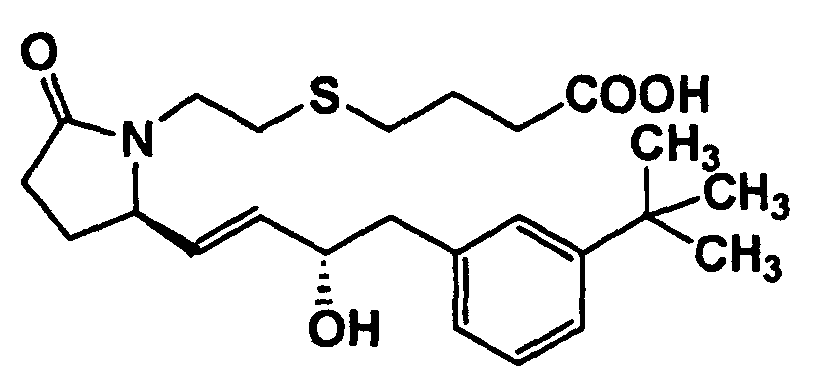
NMR : δ 7.38-7.20 (m, 3H), 7.06-6.99 (m, 1H), 5.79 (dd, J = 15.3, 5.4 Hz, 1H), 5.54 (dd, J = 15.3, 8.4 Hz, 1H), 4.43 (m, 1H), 4.12 (m, 1H), 3.62 (m, 1H), 3.37-2.20 (m, 14H), 1.99-1.83 (m, 2H), 1.73 (m, 1H), 1.31 (s, 9H).

NMR : δ 7.40-7.12 (m, 5H), 5.58 (dd, J = 15.3, 6.3 Hz, 1H), 5.36 (ddd, J = 15.3, 8.4, 0.9 Hz, 1H), 4.26 (m, 1H), 4.02 (m, 1H), 3.90-2.80 (br, 2H), 3.52 (m, 1H), 2.85 (m, 1H), 2.66 (m, 1H), 2.60-2.06 (m, 9H), 1.98-1.80 (m, 2H), 1.61 (m, 1H), 1.35 (d, J = 7.2 Hz, 3H).
Stereochemistry at C15 position is not determined, but this compound is a single isomer.

NMR : δ 7.42-7.14 (m, 5H), 5.73 (dd, J = 15.3, 6.3 Hz, 1H), 5.55 (dd, J = 15.3, 8.1 Hz, 1H), 4.24 (dd, J = 6.6, 6.3 Hz, 1H), 4.15 (m, 1H), 3.71 (m, 1H), 3.60-2.70 (br, 2H), 3.06 (m, 1H), 2.84 (m, 1H), 2.76-2.14 (m, 9H), 2.00-1.82 (m, 2H), 1.71 (m, 1H), 1.27 (d, J = 7.2 Hz, 3H).
Stereochemistry at C15 position is not determined, but this compound is a single isomer.
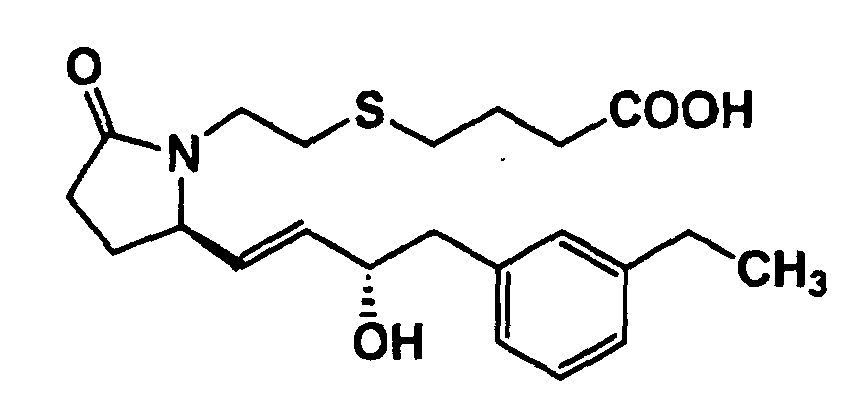
NMR : δ 7.24 (m, 1H), 7.13-6.98 (m, 3H), 5.78 (dd, J = 15.4, 5.5 Hz, 1H), 5.52 (ddd, J = 15.4, 8.2, 1.1 Hz, 1H), 4.42 (m, 1H), 4.12 (m, 1H), 3.63 (m, 1H), 3.00 (m, 1H), 2.90-2.77 (m, 2H), 2.67-2.35 (m, 10H), 2.23 (m, 1H), 1.95-1.85 (m, 2H), 1.72 (m, 1H), 1.22 (t, J= 7.4 Hz, 3H).

NMR : δ 7.52-7.35 (m, 2H), 7.14 (dd, J = 9.3, 9.3 Hz, 1H), 5.77 (dd, J = 15.3, 5.4 Hz, 1H), 5.54 (ddd, J = 15.3, 8.1, 0.9 Hz, 1H), 4.42 (m, 1H), 4.14 (m, 1H), 4.06-1.10 (m, 18H).
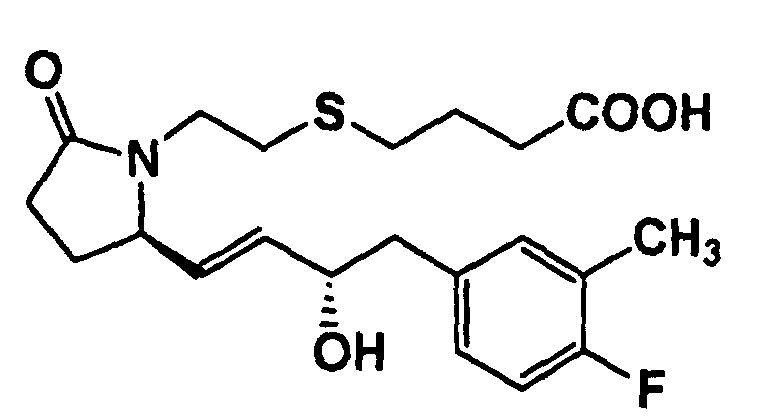
NMR : δ 7.06-6.88 (m, 3H), 5.75 (dd, J = 15.3, 5.4 Hz, 1H), 5.51 (dd, J = 15.3, 8.4 Hz, 1H), 4.39 (m, 1H), 4.12 (m, 1H), 3.80-2.80 (br, 2H), 3.63 (m, 1H), 2.99 (m, 1H), 2.86-2.06 (m, 14H), 1.98-1.62 (m, 3H).
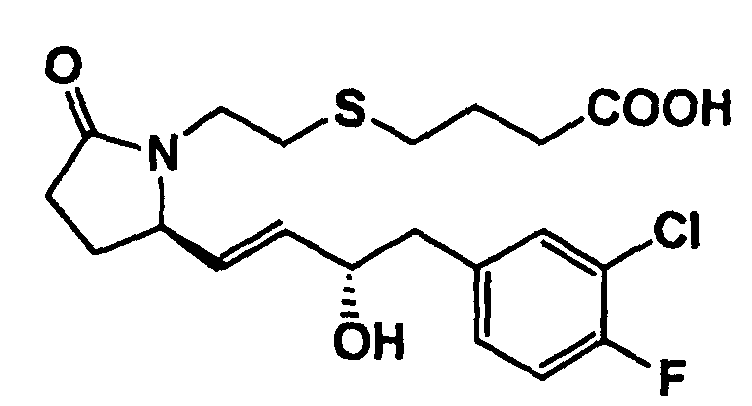
NMR : δ 7.24 (m, 1H), 7.13-7.04 (m, 2H), 5.75 (dd, J = 15.3, 5.7 Hz, 1H), 5.51 (ddd, J = 15.3, 8.4, 0.9 Hz, 1H), 4.40 (m, 1H), 4.13 (m, 1H), 4.10-3.10 (br, 2H), 3.63 (m, 1H), 2.99 (m, 1H), 2.88-2.14 (m, 11H), 2.00-1.56 (m, 3H).

NMR : δ 7.32-7.18 (m, 3H), 7.10 (m, 1H), 5.75 (dd, J = 15.0, 6.6 Hz, 1H), 5.41 (dd, J = 15.0, 8.7 Hz, 1H), 4.39 (m, 1H), 4.11 (m, 1H), 3.62 (m, 1H), 3.18-2.12 (m, 13H), 1.98-1.82 (m, 2H), 1. 60 (m, 1H).

NMR: δ 8.17 (s, 1H), 7.14 (t, J = 8Hz, 1H), 7.0-6.9 (m, 3H), 5.68 (dd, J = 15, 7Hz, 1H), 5.35 (dd, J = 15, 9Hz, 1H), 4.31 (q, J = 7Hz, 1H), 4.25-4.1 (m, 1H), 3.7-3.55 (m, 1H), 3.4-3.2 (m, 2H), 3.05-2.9 (m, 1H), 2.88 (dd, J = 13, 6Hz, 1H), 2.63 (dd, J = 13, 7Hz, 1H), 2.4-2.25 (m, 5H), 2.25-2.1 (m, 1H), 1.75-1.6 (m, 1H).
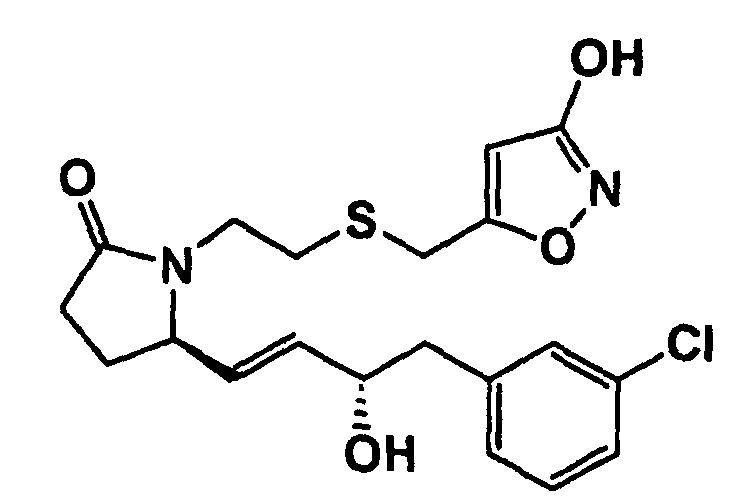
NMR : δ 7.25-7.16 (m, 3H), 7.08 (m, 1H), 5.87 (s, 1H), 5.72 (dd, J = 15.3, 5.7 Hz, 1H), 5.48 (ddd, J = 15.3, 8.4, 1.2 Hz, 1H), 4.44 (m, 1H), 4.06 (m, 1H), 3.75-3.52 (m, 3H), 2.93 (m, 1H), 2.88-2.48 (m, 6H), 2.42-2.30 (m, 2H), 2.22 (m, 1H), 1.67 (m, 1H).
Hydrolysis of the ester (procedure of Example 2) was not done. The hydroxyl group bound isoxazole ring was protected by methoxymethyl group, and was removed protecting group at final step.

NMR: δ 7.38-7.15 (m, 3H), 7.14-7.02 (m, 1H), 5.74 (dd, J = 15.3, 6.0 Hz, 1H), 5.46 (ddd, J = 15.3, 8.7, 1.0 Hz, 1H), 4.41 (m, 1H), 4.02 (m, 1H), 3.57 (m, 1H), 3.00-2.19 (m, 12H), 2.17-1.60 (m, 3H).
Hydrolysis of the ester (procedure of Example 2) was not done. The NH group bound 1,2,4-oxadiazole ring was protected by Boc group, and was removed protecting group at final step.
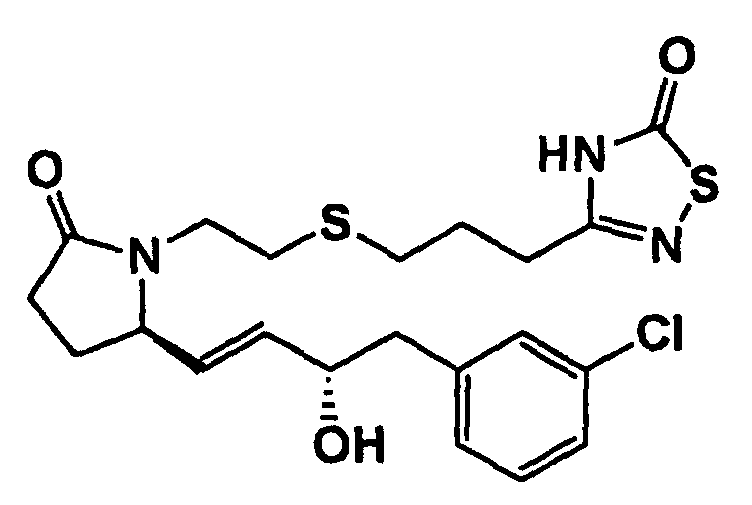
NMR: δ 7.37-7.18 (m, 3H), 7.12-7.04 (m, 1H), 5.74 (dd, J = 15.0, 6.0 Hz, 1H), 5.47 (ddd, J = 15.0, 8.7, 1.2 Hz, 1H), 4.42 (m, 1H), 4.03 (m, 1H), 3.60 (m, 1H), 3.00-2.70 (m, 4H), 2.69-2.38 (m, 7H), 2.28 (m, 1H), 2.15-1.70 (m, 3H).
Hydrolysis of the ester (procedure of Example 2) was not done. The NH group bound 1,2,4-oxadiazole ring was protected by Boc group, and was removed protecting group at final step.
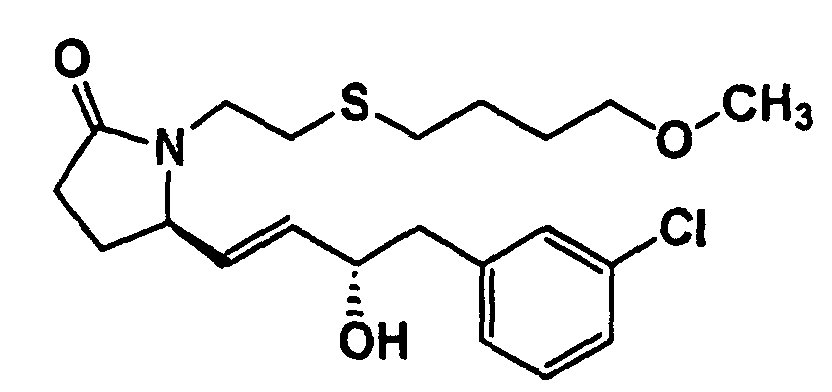
NMR : δ 7.32-7.18 (m, 3H), 7.10 (m, 1H), 5.74 (dd, J = 15.4, 5.8 Hz, 1H), 5.51 (ddd, J = 15.4, 8.5, 0.8 Hz, 1H), 4.41 (m, 1H), 4.14 (m, 1H), 3.62 (m, 1H), 3.40 (m, 2H), 3.32 (s, 3H), 2.94 (m, 1H), 2.82 (d, J = 6.6 Hz, 2H), 2.71-2.48 (m, 4H), 2.42-2.35 (m, 2H), 2.24 (m, 1H), 1.77-1.63 (m, 5H).
Hydrolysis of the ester (procedure of Example 2) was not done.
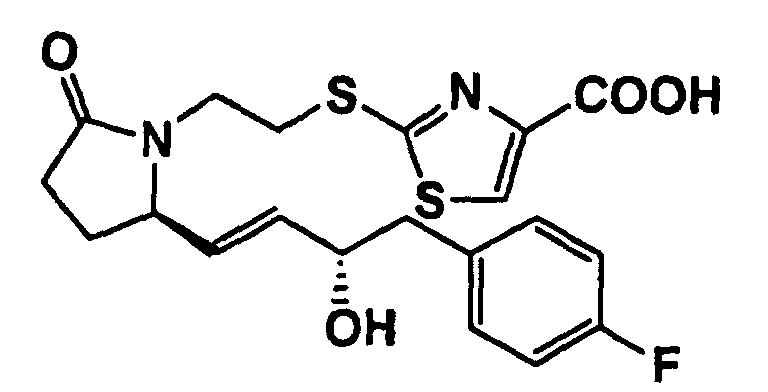
NMR : δ 8.09 (s, 1H), 7.18-7.12 (m, 2H), 7.06-6.95 (m, 2H), 5.79 (dd, J = 15.3, 5.7 Hz, 1H), 5.51 (dd, J = 15.3, 9.0 Hz, 1H), 4.39 (m, 1H), 4.11 (m, 1H), 3.73 (m, 1H), 3.40-2.19 (m, 10H), 1.74 (m, 1H).
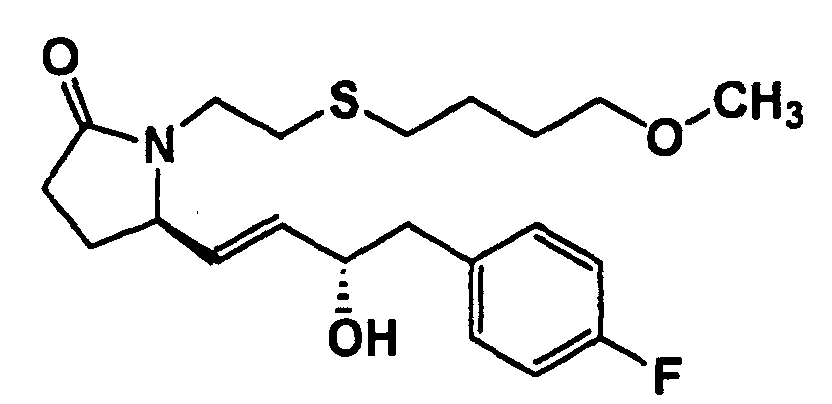
NMR : δ 7.19-7.15 (m, 2H), 7.04-6.98 (m, 2H), 5.74 (dd, J = 15.3, 5.7 Hz, 1H), 5.50 (ddd, J = 15.3, 8.4, 1.2 Hz, 1H), 4.37 (m, 1H), 4.10 (m, 1H), 3.62 (m, 1H), 3.40-3.36 (m, 2H), 3.30 (s, 3H), 2.96 (m, 1H), 2.88-2.75 (m, 2H), 2.69-2.49 (m, 4H), 2.40-2.34 (m, 2H), 2.24 (m, 1H), 1.76-1.64 (m, 5H).
Hydrolysis of the ester (procedure of Example 2) was not done.

NMR(CDCl3 + CD3OD) : δ 8.03 (s, 1H), 7.20-7.07 (m, 2H), 7.02-6.94 (m, 2H), 5.72 (dd, J = 15.3, 5.7 Hz, 1H), 5.44 (dd, J = 15.3, 8.7 Hz, 1H), 4.35 (m, 1H), 4.14 (m, 1H), 3.68 (m, 1H), 3.65-3.10 (m, 3H), 2.91-2.67 (m, 2H), 2.46-2.11 (m, 3H), 1.72 (m, 1H).
Hydrolysis of the ester (procedure of Example 2) was not done. The NH group bound 1,2,4-oxadiazole ring was protected by Boc group, and was removed protecting group at final step.

NMR : δ 7.32-7.20 (m, 3H), 7.10 (m, 1H), 5.88 (dd, J = 15.4, 5.2 Hz, 1H), 5.56 (ddd, J = 15.4, 8.5, 1.4 Hz, 1H), 4.50-4.29 (m, 2H), 4.43 (dd, J = 8.5, 8.2 Hz, 1H), 3.89 (dd, J = 8.5, 8.2 Hz, 1H), 3.46 (m, 1H), 3.10 (m, 1H), 2.84-2.80 (m, 2H), 2.77-2.44 (m, 6H), 1.98-1.87 (m, 2H).
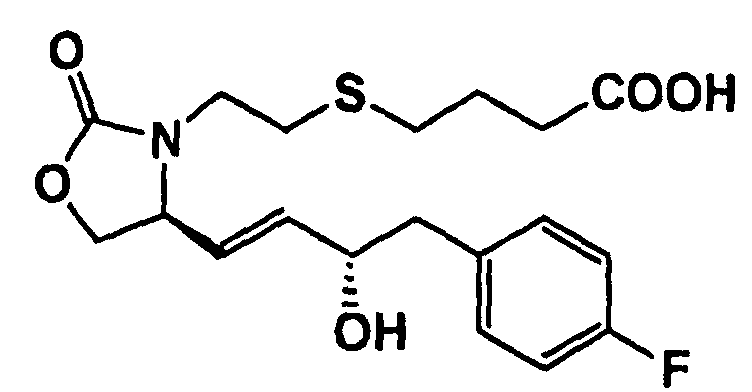
NMR : δ 7.20-7.13 (m, 2H), 7.08-6.98 (m, 2H), 5.88 (dd, J = 15.4, 5.2 Hz, 1H), 5.57 (ddd, J = 15.4, 8.5, 1.4 Hz, 1H), 4.47-4.28 (m, 2H), 4.42 (dd, J = 8.5, 8.2 Hz, 1H), 3.91 (dd, J = 8.5, 8.2 Hz, 1H), 3.46 (m, 1H), 3.12 (m, 1H), 2.90-2.78 (m, 2H), 2.75-2.43 (m, 6H), 1.97-1.86 (m, 2H).
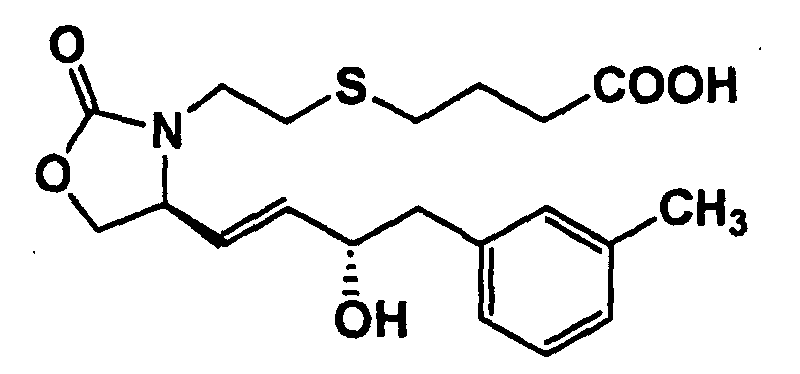
NMR : δ 7.22 (t, J = 7.4Hz, 1H), 7.11-6.97 (m, 3H), 5.90 (dd, J = 15.4, 5.2Hz, 1H), 5.57 (ddd, J = 15.4, 8.8, 1.4Hz, 1H), 4.51-4.28 (m, 3H), 3.91 (dd, J = 8.2, 8.0Hz, 1H), 3.45 (m, 1H), 3.11 (m, 1H), 2.89-2.44 (m, 8H), 2.36 (s, 3H), 1.96-1.85 (m, 2H).

NMR(CD3OD) : δ 7.50-7.30 (m, 4H), 5.76 (dd, J = 15.0, 6.6 Hz, 1H), 5.45 (dd, J = 15.0, 8.7 Hz, 1H), 4.40 (m, 1H), 4.24-4.11 (m, 3H), 3.50 (m, 1H), 2.96-2.80 (m, 3H), 2.71 (s, 3H), 2.63-2.43 (m, 3H), 2.42-2.20 (m, 4H), 1.93-1.62 (m, 3H).
The amino group bound benzene ring was protected by Boc group, and was removed protecting group at final step.

NMR : δ 7.08 -6.93 (m, 3H), 5.75 (dd, J = 15.3, 5.4 Hz, 1H), 5.52 (ddd, J = 15.3, 8.7, 1.2 Hz, 1H), 4.40 (m, 1H), 4.12 (m, 1H), 3.62 (m, 1H), 3.00 (m, 1H), 2.87-2.18 (m, 11H), 1.98-1.82 (m, 2H), 1.71 (m, 1H), 1.22 (t, J = 7.5 Hz, 3H).

NMR : δ 5.99 (d, J = 2.7 Hz, 1H), 5.88 (m, 1H), 5.75 (dd, J = 15.3, 5.4 Hz, 1H), 5.55 (ddd, J = 15.3, 8.7, 1.0 Hz, 1H), 4.47 (m, 1H), 4.15 (m, 1H), 3.63 (m, 1H), 3.06 (m, 1H), 2.92-2.78 (m, 2H), 2.75-2.18 (m, 12H), 2.00-1.81 (m, 2H), 1.72 (m, 1H).
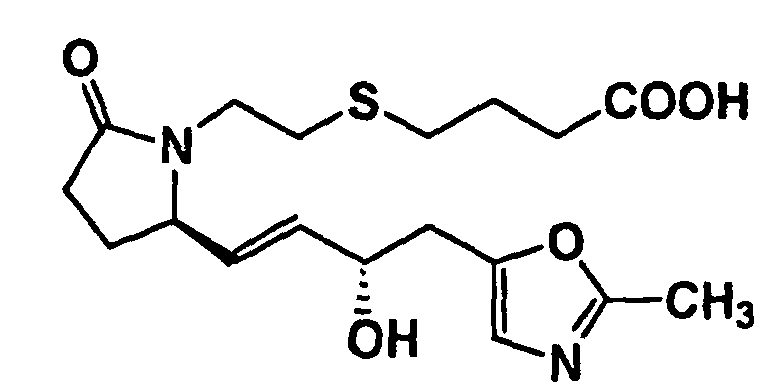
NMR : δ 6.95 (s, 1H), 5.80 (dd, J = 16, 5 Hz, 1H), 5.66 (dd, J = 16, 8 Hz, 1H), 4.6-4.5 (m, 1H), 4.25-4.1 (m, 1H), 3.7-3.55 (m, 1H), 3.2-3.05 (m, 1H), 3.0-2.8 (m, 2H), 2.75-2.5 (m, 7H), 2.5-2.35 (m, 4H), 2.35-2.2 (m, 1H), 2.0-1.85 (m, 2H), 1.85-1.7 (m, 1H).

NMR : δ 7.55-7.5 (m, 1H), 7.41 (d, J = 7 Hz, 1H), 7.25-7.15 (m, 2H), 6.52 (s, 1H), 5.80 (dd, J = 15, 6 Hz, 1H), 5.57 (dd, J = 15, 8 Hz, 1H), 4.63 (q, J = 6 Hz, 1H), 4.15-4.05 (m, 1H), 3.58 (pent, J = 7 Hz , 1H), 3.04 (d, J = 6 Hz, 2H), 3.0-2.9 (m, 1H), 2.65-2.3 (m, 8H), 2.3-2.1 (m, 1H), 1.95-1.8 (m, 2H), 1.75-1.6 (m, 1H).

NMR : δ 6.00 (d, J = 3.0 Hz, 1H), 5.88 (d, J = 3.0 Hz, 1H), 5.75 (dd, J = 15.3, 5.4 Hz, 1H), 5.55 (ddd, J = 15.3, 8.4, 1.0 Hz, 1H), 4.48 (m, 1H), 4.15 (m, 1H), 3.64 (m, 1H), 3.03 (m, 1H), 2.93-2.78 (m, 2H), 2.71-2.18 (m, 12H), 1.99-1.82 (m, 2H), 1.72 (m, 1H), 1.21 (t, J = 7.2 Hz, 3H).
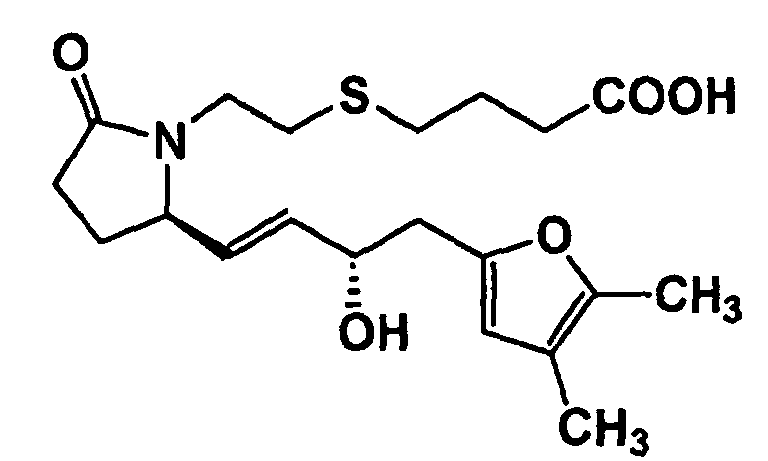
NMR : δ 5.89 (s, 1H), 5.75 (dd, J = 15.3, 5.1 Hz, 1H), 5.55 (dd, J = 15.3, 8.7 Hz, 1H), 4.44 (m, 1H), 4.15 (m, 1H), 3.63 (m, 1H), 3.07 (m, 1H), 2.86-2.09 (m, 15H), 1.99-1.63 (m, 6H).
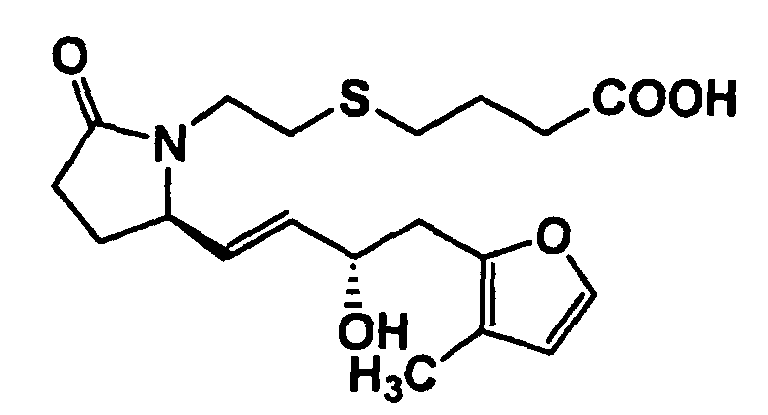
NMR : δ 7.24 (d, J = 1.8 Hz, 1H), 6.19 (d, J = 1.8 Hz, 1H), 5.75 (dd, J = 16, 6 Hz, 1H), 5.53 (dd, J = 16, 9 Hz, 1H), 4.53-4.44 (m, 1H), 4.18-4.08 (m, 1H), 3.70-3.59 (m, 1H), 3.10-2.97 (m, 1H), 2.83 (d, J = 6 Hz, 2H), 2.72-2.32 (m, 8H), 2.30-2.18 (m, 1H), 2.0-1.8 (m, 5H), 1.81-1.64 (m, 1H).

NMR : δ 8.01 (m, 1H), 7.60-7.42 (m, 3H), 5.78 (dd, J = 15.0, 5.4 Hz, 1H), 5.55 (dd, J = 15.0, 8.4 Hz, 1H), 4.50 (m, 1H), 4.16 (m, 1H), 3.60 (m, 1H), 3.10-2.18 (m, 13H), 1.98-1.81 (m, 2H), 1.78-1.59 (m, 1H).
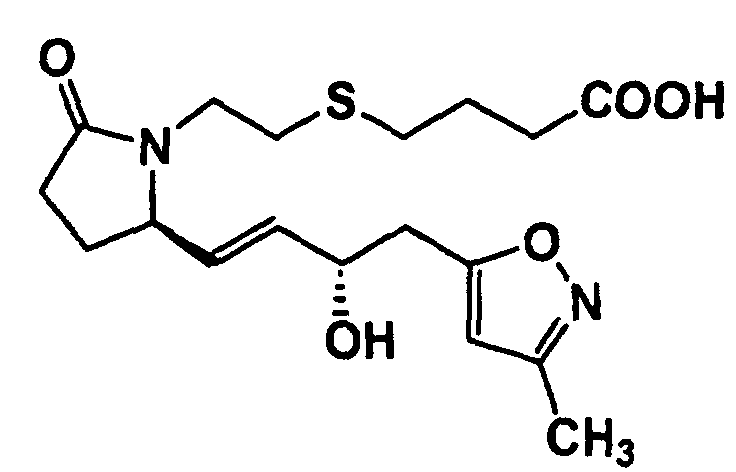
NMR : δ 5.96 (s, 1H), 5.79 (dd, J = 15.3, 5.1 Hz, 1H), 5.60 (dd, J = 15.3, 8.1 Hz, 1H), 4.59 (m, 1H), 4.17 (m, 1H), 4.00-3.20 (m, 2H), 3.10-2.99 (m, 3H), 2.75-2.20 (m, 12H), 1.98-1.80 (m, 2H), 1.71 (m, 1H).
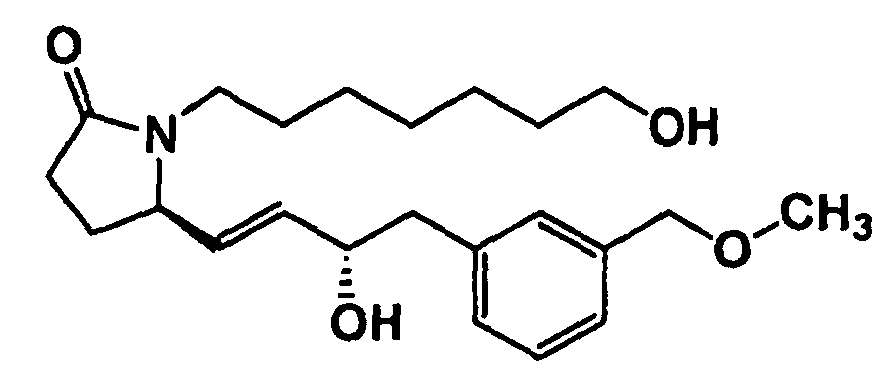
TLC : Rf 0,16 (Ethyl Acetate : Methanol = 85:15);
NMR : δ 7.38-7.11 (m, 4H), 5.73 (dd, J = 15.3, 6.0 Hz, 1H), 5.50 (ddd, J = 15.3, 8.0, 1.2 Hz, 1H), 4.50-4.37 (m, 3H), 4.08-3.99 (m, 1H), 3.62 (t, J = 6.6 Hz, 2H), 3.53-3.37 (m, 4H), 2.92-2.70 (m, 3H), 2.46-2.12 (m, 3H), 1.94 (bs, 1H), 1.78-1.20 (m, 12H).
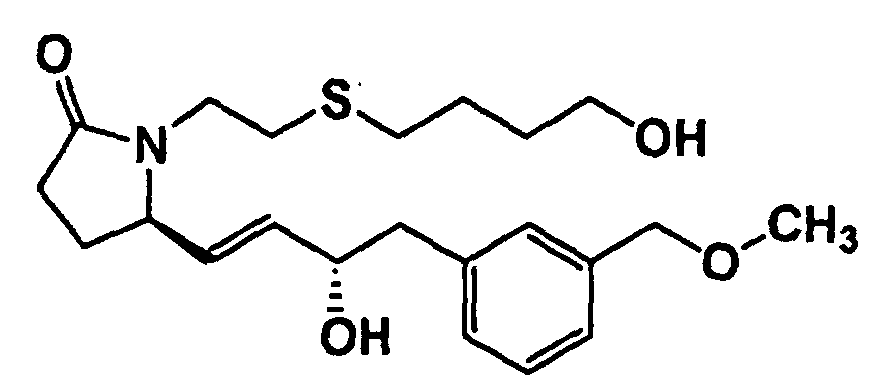
NMR : δ 7.35-7.10 (m, 4H), 5.77 (dd, J = 15, 6Hz, 1H), 5.52 (dd, J = 15, 9Hz, 1H), 4.43 (s, 2H), 4.45-4.35 (m, 1H), 4.15-4.05 (m, 1H), 3.70-3.55 (m, 3H), 3.42 (s, 3H), 3.05-2.95 (m, 1H), 2.9-2.75 (m, 2H), 2.7-2.45 (m, 4H), 2.4-2.3 (m, 2H), 2.3-2.15 (m, 1H), 2.1-1.9 (br, 2H), 1.8-1.5 (m, 5H).

NMR : δ 7.15-7.00 (m, 2H), 6.93 (m, 1H), 5.72 (dd, J = 15.4, 5.8 Hz, 1H), 5.50 (dd, J = 15.4, 9.3 Hz, 1H), 4.38 (m, 1H), 4.03 (m, 1H), 3.62 (t, J = 6.3 Hz, 2H), 3.48 (m, 1H), 2.80 (d, J = 6.6 Hz, 2H), 2.74 (m, 1H), 2.46-2.26 (m, 2H), 2.22 (m, 1H), 1.76-1.20 (m, 11H).
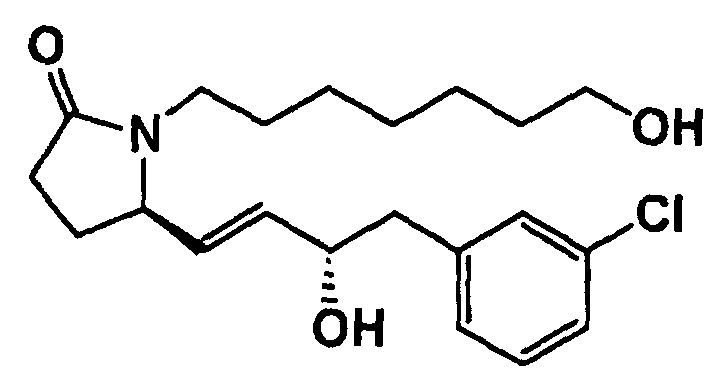
NMR : δ 7.24-7.18 (m, 3H), 7.08 (m, 1H), 5.71 (dd, J = 15.4, 6.0 Hz, 1H), 5.48 (ddd, J = 15.4, 8.2, 0. 8 Hz, 1H), 4.42 (m, 1H), 4.04 (m, 1H), 3.63 (t, J = 6.6 Hz, 2H), 3.47 (m, 1H), 2.82 (d, J = 6.6 Hz, 2H), 2.72 (m, 1H), 2.44-2.26 (m, 2H), 2.21 (m, 1H), 1.77-1.20 (m, 11H).
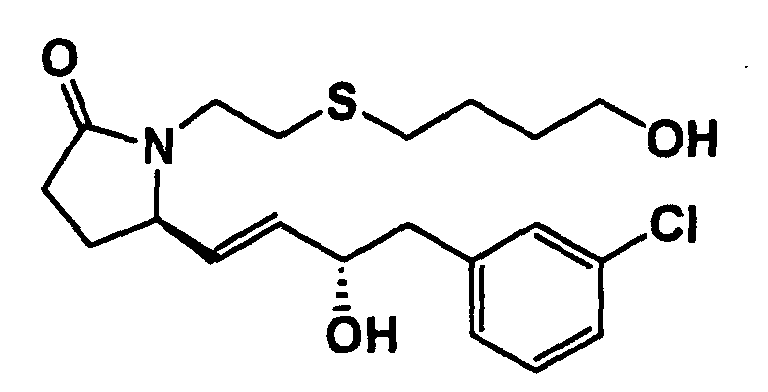
NMR : δ 7.29-7.19 (m, 3H), 7.08 (m, 1H), 5.74 (dd, J = 15.4, 5.8Hz, 1H), 5.49 (dd, J = 15.4, 8.5Hz, 1H), 4.40 (m, 1H), 4.10 (m, 1H), 3.70-3.67 (m, 2H), 3.65 (m, 1H), 2.95 (m, 1H), 2.84 (d, J = 6.6Hz, 2H), 2.68-2.47 (m, 4H), 2.40-2.34 (m, 2H), 2.23 (m, 1H), 2.09 (br. s, 1H), 1.75-1.58 (m, 5H).
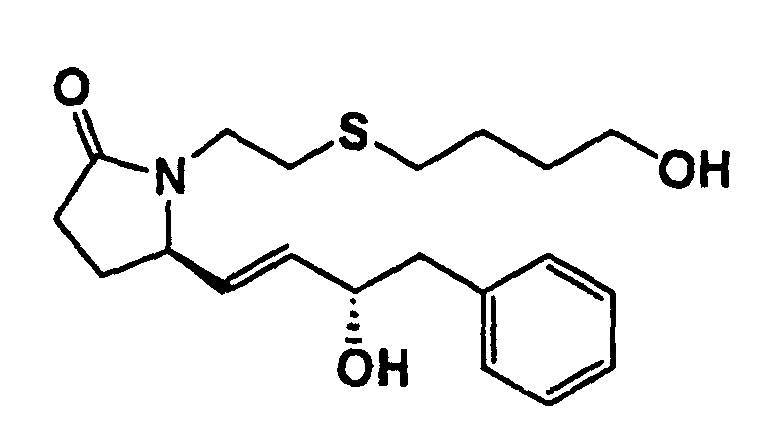
NMR : δ 7.37-7.16 (m, 5H), 5.76 (dd, J = 15.4, 5.8Hz, 1H), 5.49 (ddd, J = 15.4, 8.5, 1.1Hz, 1H), 4.42 (m, 1H), 4.09 (m, 1H), 3.71-3.56 (m, 3H), 2.96 (m, 1H), 2.84 (d, J = 6.6Hz, 2H), 2.67-2.43 (m, 4H), 2.41-2.35 (m, 2H), 2.23 (m, 1H), 1.79-1.60 (m, 5H).

NMR : δ 7.21 (t, J = 7.4Hz, 1H), 7.19-6.97 (m, 3H), 5.76 (dd, J = 15.4, 5.8Hz, 1H), 5.50 (ddd, J = 15.4, 8.5, 1.1Hz, 1H), 4.40 (m, 1H), 4.10 (m, 1H), 3.68-3.58 (m, 3H), 2.95 (m, 1H), 2.84-2.78 (m, 2H), 2.67-2.48 (m, 4H), 2.41-2.35 (m, 2H), 2.36 (s, 3H), 2.26 (m, 1H), 1.78-1.62 (m, 5H).
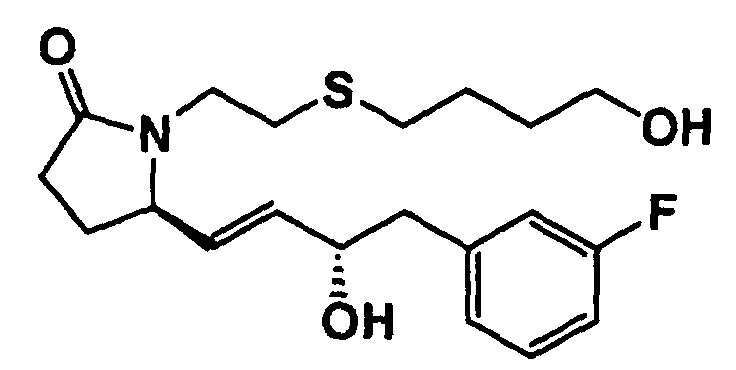
NMR : δ 7.29 (m, 1H), 7.01-6.89 (m, 3H), 5.75 (dd, J = 15.4, 5.8Hz, 1H), 5.50 (ddd, J = 15.4, 8.5, 1.1Hz, 1H), 4.41 (m, 1H), 4.12 (m, 1H), 3.70-3.57 (m, 3H), 2.94 (m, 1H), 2.84 (d, J = 6.6Hz, 2H), 2.66-2.54 (m, 4H), 2.41-2.35 (m, 2H), 2.24 (m, 1H), 1.78-1.60 (m, 5H).
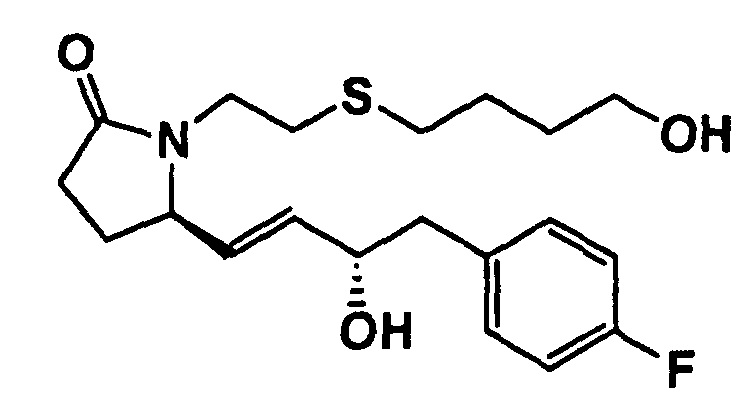
NMR : δ 7.20-7.13 (m, 2H), 7.05-6.96 (m, 2H), 5.74 (dd, J = 15.4, 5.5Hz, 1H), 5.50 (ddd, J = 15.4, 8.5, 1.4Hz, 1H), 4.38 (m, 1H), 4.10 (m, 1H), 3.71-3.57 (m, 3H), 2.95 (m, 1H), 2.82 (d, J = 6.9Hz, 2H), 2.66-2.48 (m, 4H), 2.40-2.33 (m, 2H), 2.24 (m, 1H), 1.78-1.60 (m, 5H).

NMR : δ 7.21 (d, J = 7.8 Hz, 1H), 7.06 (d, J = 7.8 Hz, 1H), 7.04-7.00 (m, 2H), 5.76 (dd, J = 15.0, 6.0 Hz, 1H), 5.51 (ddd, J = 15.0, 8.0, 1.2 Hz, 1H), 4.40 (m, 1H), 4.10 (m, 1H), 3.72-3.59 (m, 3H), 2.98 (m, 1H), 2.90-2.78 (m, 2H), 2.73-2.43 (m, 8H), 2.41-2.10 (m, 3H), 1.90 (bs, 1H), 1.80-1.75 (m, 6H), 0.94 (t, J = 7.5 Hz, 3H).

NMR : δ 7.60-7.30 (m, 4H), 5.76 (dd, J = 15.0, 5.7 Hz, 1H), 5.52 (ddd, J = 15.0, 8.0, 1.0 Hz, 1H), 4.43 (m, 1H),4.11 (m, 1H), 3.73-3.69 (m, 3H), 3.06-2.83 (m, 3H), 2.72-2.50 (m, 4H), 2.42-2.00 (m, 5H), 1.80-1.53 (m, 5H).
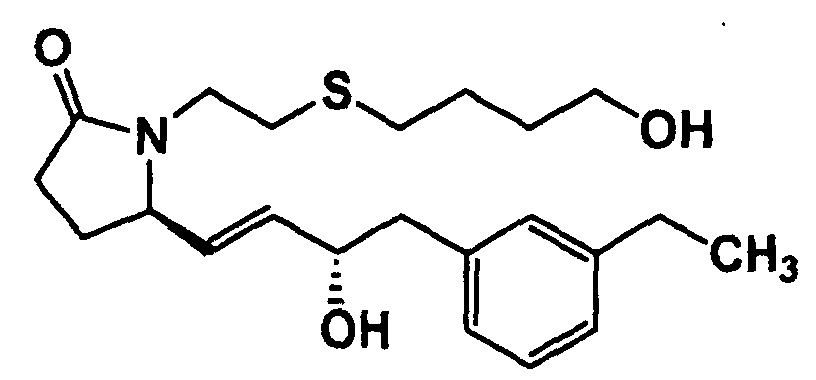
NMR : δ 7.24 (m, 1H), 7.13-6.98 (m, 3H), 5.78 (dd, J = 15.4, 6.0 Hz, 1H), 5.52 (ddd, J = 15.4, 8.5, 1.1 Hz, 1H), 4.41 (m, 1H), 4.12 (m, 1H), 3.68-3.57 (m, 3H), 3.00 (m, 1H), 2.90-2.75 (m, 2H), 2.67-2.52 (m, 6H), 2.42-2.35 (m, 2H), 2.25 (m, 1H), 1.77-1.60 (m, 5H), 1.23 (t, J = 7.7 Hz, 3H).

NMR : δ 7.15-7.00 (m, 2H), 6.93 (m, 1H), 5.74 (dd, J = 15.4, 5.5 Hz, 1H), 5.52 (dd, J = 15.4, 8.5 Hz, 1H), 4.38 (m, 1H), 4.12 (m, 1H), 3.71-3.57 (m, 3H), 2.98 (m, 1H), 2.80 (d, J = 6.9 Hz, 2H), 2.68-2.48 (m, 4H), 2.42-2.36 (m, 2H), 2.25 (m, 1H), 1.77-1.60 (m, 5H).
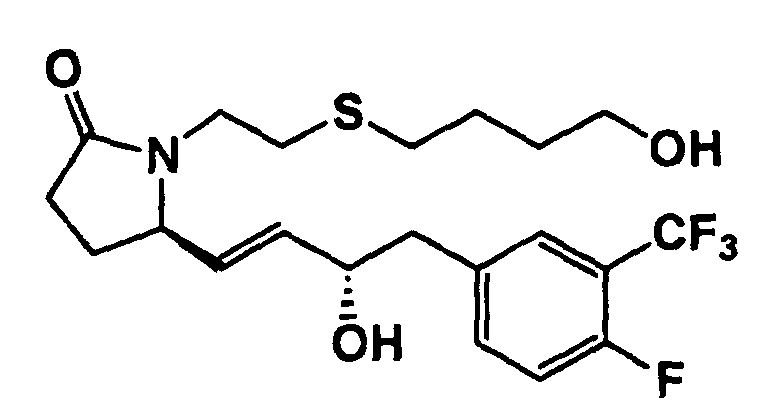
NMR : δ 7.52-7.34 (m, 2H), 7.15 (dd, J = 9.6, 9.6 Hz, 1H), 5.76 (dd, J = 15.3, 5.4 Hz, 1H), 5.53 (ddd, J = 15.3, 8.7, 0.9 Hz, 1H), 4.42 (m, 1H), 4.12 (m, 1H), 3.74-3.54 (m, 3H), 3.26-1.40 (m, 17H).
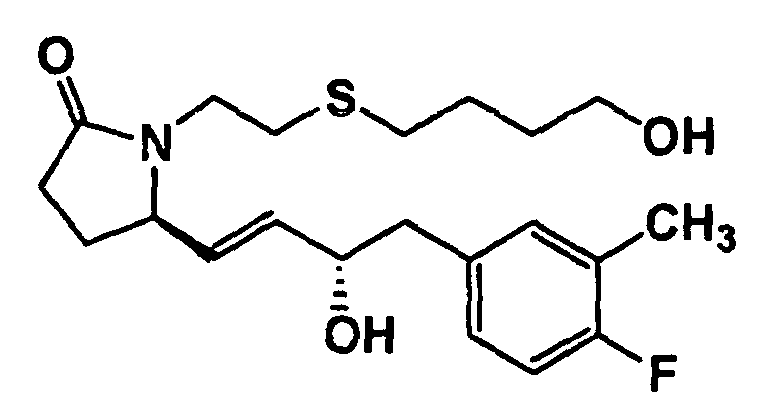
NMR : δ 7.06-6.90 (m, 3H), 5.75 (dd, J = 15.3, 5.4 Hz, 1H), 5.51 (ddd, J = 15.3, 8.4, 0.9 Hz, 1H), 4.37 (m, 1H), 4.10 (m, 1H), 3.74-3.56 (m, 3H), 2.99 (m, 1H), 2.86-2.16 (m, 12H), 2.00-1.44 (m, 7H).

NMR : δ 7.26 (m, 1H), 7.14-7.04 (m, 2H), 5.74 (dd, J = 15.3, 5.4 Hz, 1H), 5.51 (ddd, J = 15.3, 8.7, 0.9 Hz, 1H), 4.39 (m, 1H), 4.11 (m, 1H), 3.78-3.56 (m, 3H), 2.99 (m, 1H), 2.84-1.86 (m, 10H), 1.82-1.54 (m, 6H).

NMR : δ 7.19 (t, J = 7.4Hz, 1H), 7.08-6.94 (m, 3H), 6.79 (d, J = 3.3Hz, 1H), 6.64 (d, J = 3.3Hz, 1H), 5.69 (dd, J = 15.4, 6.0Hz, 1H), 5.43 (ddd, J = 15.4, 8.5, 1.1Hz, 1H), 4.72 (s, 2H), 4.37 (m, 1H), 4.02 (m, 1H), 3.53 (m, 1H), 2.85-2.74 (m, 5H), 2.44-2.33 (m, 2H), 2.36 (s, 3H), 2.20 (m, 1H), 1.87-1.64 (m, 3H).

NMR : δ 7.48 (s, 1H), 7.20 (t, J = 8Hz, 1H), 7.1-6.95 (m, 3H), 5.68 (dd, J = 15, 6Hz, 1H), 5.47 (dd, J = 15, 9Hz, 1H), 4.78 (s, 2H), 4.34 (q, J = 6Hz, 1H), 4.13 (q, J = 7Hz, 1H), 3.7-3.6 (m, 1H), 3.4-3.15 (m, 3H), 2.77 (d, J = 6Hz, 2H), 2.4-2.1 (m, 6H), 1.8-1.6 (m, 1H).

NMR : δ 7.32-7.20 (m, 3H), 7.10 (m, 1H), 5.86 (dd, J = 15.4, 5.5 Hz, 1H), 5.56 (ddd, J = 15.4, 8.8, 1.4 Hz, 1H), 4.48-4.29 (m, 2H), 4.43 (dd, J = 8.2, 8.2 Hz, 1H), 3.91 (dd, J = 8.2, 8.2 Hz, 1H), 3.70-3.63 (m, 2H), 3.45 (m, 1H), 3.09 (m, 1H), 2.82 (d, J = 6.0 Hz, 2H), 2.75-2.56 (m, 4H), 1.78-1.54 (m, 4H).

NMR : δ 7.20-7.13 (m, 2H), 7.06-6.98 (m, 2H), 5.87 (dd, J = 15.4, 5.5 Hz, 1H), 5.57 (ddd, J = 15.4, 8.5, 1.4 Hz, 1H), 4.44-4.28 (m, 2H), 4.43 (dd, J = 8.5, 8.2 Hz, 1H), 3.91 (dd, J = 8.5, 8.2 Hz, 1H), 3.69-3.64 (m, 2H), 3.46 (m, 1H), 3.11 (m, 1H), 2.90-2.76 (m, 2H), 2.74-2.55 (m, 4H), 1.78-1.62 (m, 4H).
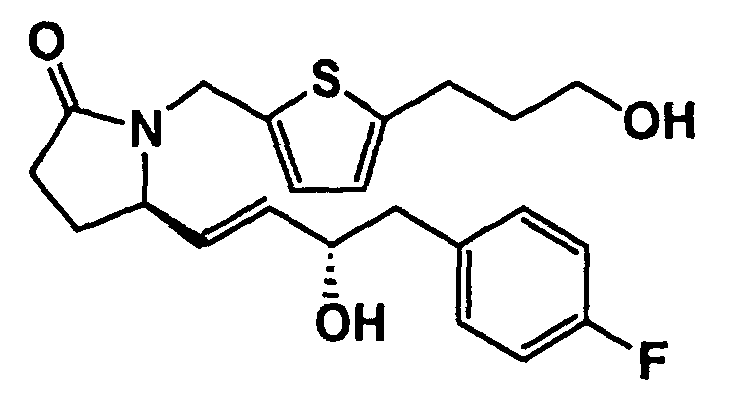
NMR : δ 7.25-7.1 (m, 2H), 7.05-6.95 (m, 2H), 6.66 (d, J = 3Hz, 1H), 6.62 (d, J = 3Hz, 1H), 5.73 (dd, J = 16, 6Hz, 1H), 5.47 (dd, J = 16, 9Hz, 1H), 4.85 (d, J = 15Hz, 1H), 4.45-4.35 (m, 1H), 4.05-3.95 (m, 1H), 3.88 (d, J = 15Hz, 1H), 3.70 (t, J = 6Hz, 2H), 2.95-2.8 (m, 4H), 2.5-2.3 (m, 2H), 2.25-2.1 (m, 1H), 2.0-1.85 (m, 2H), 1.8-1.6 (m, 1H).
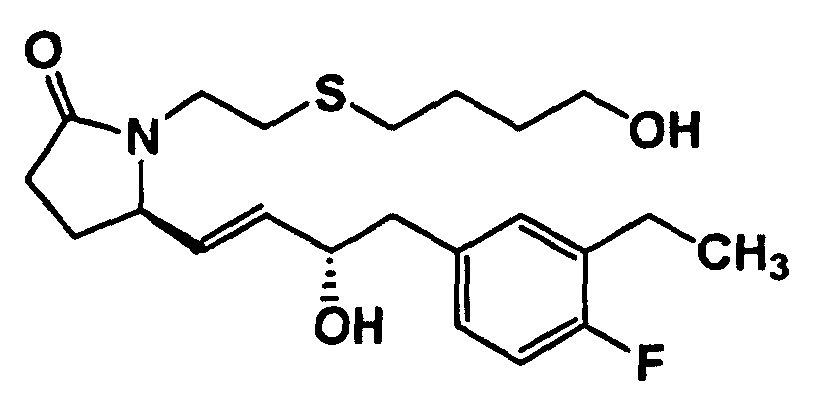
NMR : δ 7.06-6.91 (m, 3H), 5.75 (dd, J = 15.6, 5.7 Hz, 1H), 5.52 (ddd, J = 15.6, 9.0, 1.5 Hz, 1H), 4.39 (m, 1H), 4.10 (m, 1H), 3.72-3.59 (m, 3H), 3.00 (m, 1H), 2.84-2.43 (m, 8H), 2.41-2.19 (m, 3H), 1.90 (bs, 2H), 1.80-1.60 (m, 5H), 1.22 (t, J = 7.5 Hz, 3H).
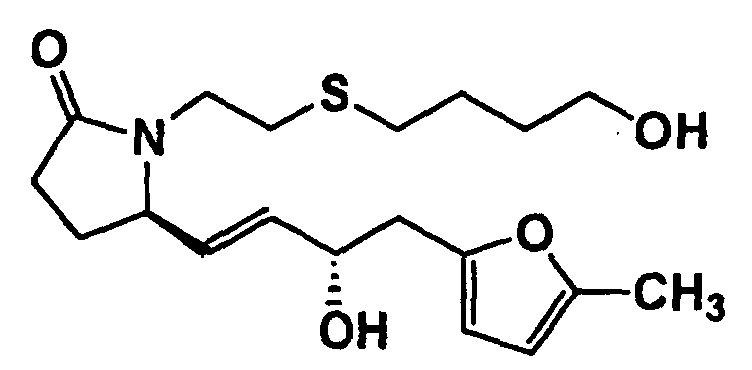
NMR : δ 5.99 (d, J = 3.0 Hz, 1H), 5.88 (m, 1H), 5.76 (dd, J = 15.3, 5.7 Hz, 1H), 5.55 (ddd, J = 15.3, 8.4, 1.0 Hz, 1H), 4.42 (m, 1H), 4.11 (m, 1H), 3.74-3.60 (m, 3H), 3.06 (m, 1H), 2.94-2.77 (m, 2H), 2.71-2.50 (m, 4H), 2.43-2.09 (m, 7H), 1.92-1.56 (m, 6H).

NMR : δ 6.01 (d, J = 3.0 Hz, 1H), 5.89 (d, J = 3.0 Hz, 1H), 5.75 (dd, J = 15.3, 5.4 Hz, 1H), 5.55 (dd, J = 15.3, 8.7 Hz, 1H), 4.45 (m, 1H), 4.10 (m, 1H), 3.71-3.59 (m, 3H), 3.03 (m, 1H), 2.92-2.78 (m, 2H), 2.72-2.45 (m, 6H), 2.42-2.10 (m, 4H), 2.00-1.59 (m, 6H), 1.21 (t, J = 7.8 Hz, 3H).

TLC : Rf 0.16 (Ethyl Acetate : Methanol = 85:15).

TLC : Rf 0.45 (Chloroform : Methanol = 9:1);
NMR : δ 7.38-7.11(m, 4H), 4.45 (s, 2H), 3.91-3.80 (m, 1H), 3.67-3.53 (m, 2H), 3.42 (s, 3H), 3.00-2.64 (m, 3H), 2.50-2.03 (m, 5H), 1.94-1.89 (m, 1H), 1.86-1.20 (m, 13H).

NMR : δ 7.22 (t, J = 6.9 Hz, 1H), 7.08-6.99 (m, 3H), 3.86 (m, 1H), 3.63-3.54 (m, 2H), 2.92 (m, 1H), 2.80 (dd, J = 13.5, 4.8 Hz, 1H), 2.67 (dd, J = 13.5, 8.4 Hz, 1H), 2.34 (s, 3H), 2.40-1.20 (m, 18H).
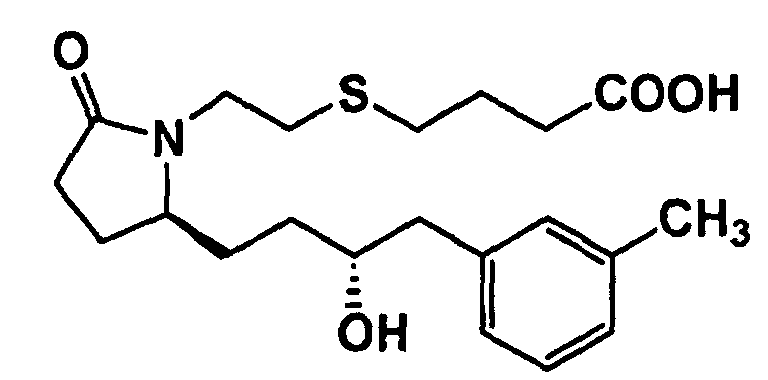
NMR : δ 7.21 (t, J = 7.8 Hz, 1H), 7.08-6.98 (m, 3H), 3.90 (m, 1H), 3.78-3.62 (m, 2H), 3.40 (br s, 1H), 3.17 (m, 1H), 2.80-2.30 (m, 10H), 2.34 (s, 3H), 2.14 (m, 1H), 2.00-1.40 (m, 7H).
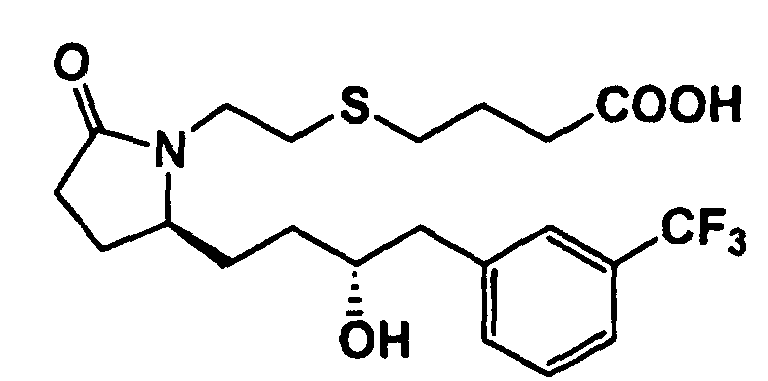
NMR : δ 7.57-7.39 (m, 4H), 3.95 (m, 1H), 3.78-3.63 (m, 2H), 3.19 (m, 1H), 2.92-2.67 (m, 4H), 2.65-2.34 (m, 6H), 2.16 (m, 1H), 2.00-1.47 (m, 7H).

TLC : Rf 0.62 (Ethyl Acetate).
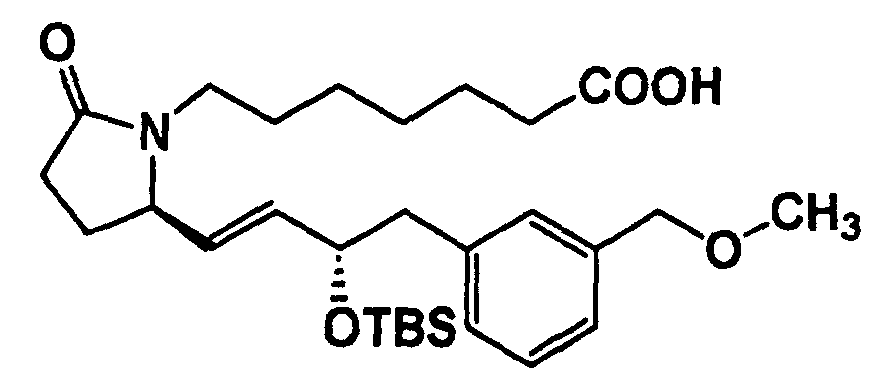
TLC : Rf 0.48 (Chloroform : Methanol = 8:1).
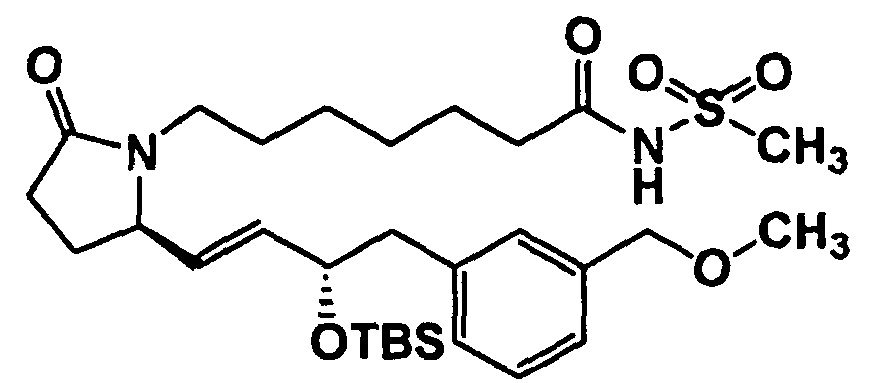
TLC : Rf 0.23 (Hexane : Ethyl Acetate = 1:3).
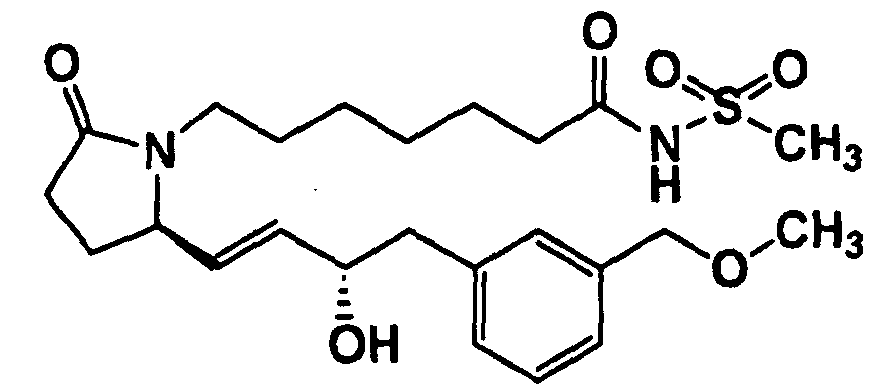
TLC : Rf 0.38 (Chloroform : Methanol = 8:1);
NMR : δ 9.97 (brs, 1H), 7.38-7.08 (m, 4H), 5.75 (dd, J = 15.3, 5.4 Hz, 1H), 5.50 (dd, J = 15.3, 8.1 Hz, 1H), 4.44 (s, 2H), 4.43 (m, 1H), 4.04 (m, 1H), 3.41 (s, 3H), 3.40 (m, 1H), 3.26 (s, 3H), 3.06-2.72 (m, 3H), 2.52-2.10 (m, 5H), 1.86-1.12 (m, 10H).
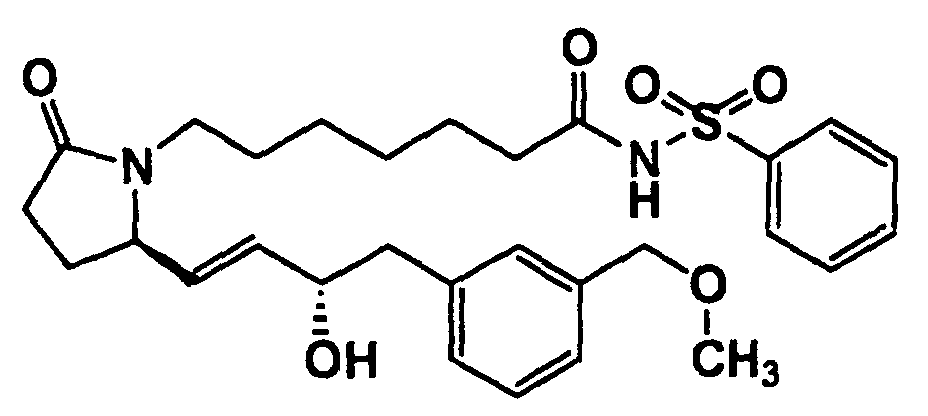
NMR : δ 9.84 (brs, 1H), 8.05 (d, J = 7.2 Hz, 1H), 7.68-7.46 (m, 3H), 7.38-7.08 (m, 5H), 5.75 (dd, J = 15.3, 5.4 Hz, 1H), 5.50 (dd, J = 15.3, 8.7 Hz, 1H), 4.45 (s, 2H), 4.45 (m, 1H), 4.03 (m, 1H), 3.41 (s, 3H), 3.40 (m, 1H), 3.06-2.68 (m, 3H), 2.54-2.12 (m, 5H), 1.90-1.06 (m, 10H).
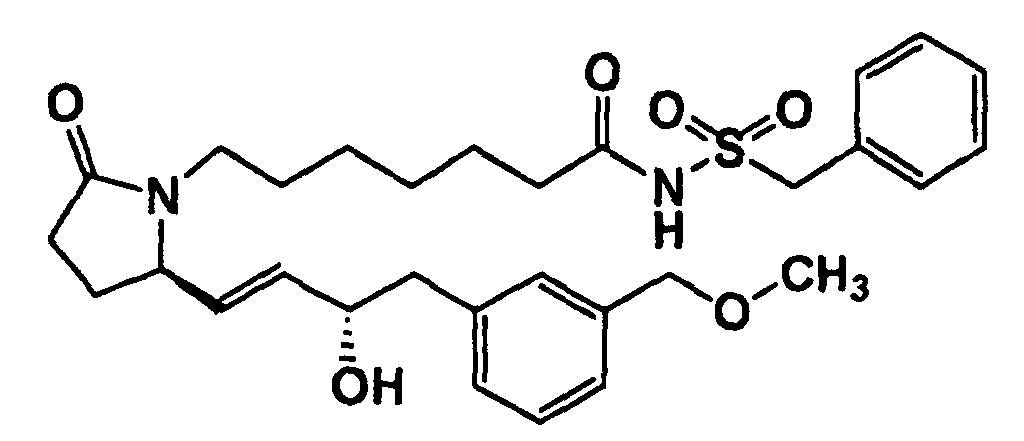
NMR : δ 9.46 (brs, 1H), 7.46-7.04 (m, 9H), 5.71 (dd, J = 15.3, 5.7 Hz, 1H), 5.46 (dd, J = 15.3, 8.7 Hz, 1H), 4.63 (s, 2H), 4.42 (s, 2H), 4.40 (m, 1H), 3.98 (m, 1H), 3.37 (s, 3H), 3.30 (m, 1H), 3.00-2.62 (m, 3H), 2.40-2.06 (m, 5H), 1.82-1.08 (m, 10H).
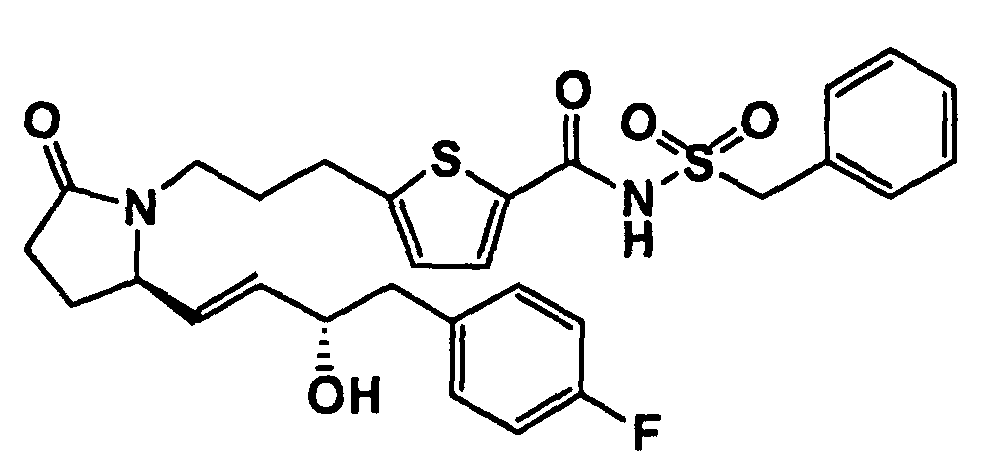
NMR : δ 9.15 (br. s, 1H), 7.52 (d, J = 3.9 Hz, 1H), 7.39-7.30 (m, 5H), 7.18-7.11 (m, 2H), 7.03-6.96 (m, 2H), 6.79 (d, J = 3.9 Hz, 1H), 5.71 (dd, J = 15.4, 5.8 Hz, 1H), 5.43 (ddd, J = 15.4, 8.8, 1.1 Hz, 1H), 4.76 (s, 2H), 4.38 (m, 1H), 4.00 (m, 1H), 3.41 (m, 1H), 2.86-2.74 (m, 5H), 2.38-2.07 (m, 3H), 1.84-1.60 (m, 3H).

NMR : δ 8.20 (s, 1H), 7.34 (s, 5H), 7.18-7.07 (m, 2H), 7.02-6.95 (m, 2H), 5.71 (dd, J = 15.3, 5.1 Hz, 1H), 5.47 (dd, J = 15.3, 9.0 Hz, 1H), 4.73 (s, 2H), 4.37 (m, 1H), 4.03 (m, 1H), 3.63 (m, 1H), 3.39 (m, 1H), 3.28-3.10 (m, 2H), 2.82-2.71 (m, 2H), 2.25-2.03 (m, 3H), 1.75-1.55 (m, 1H).
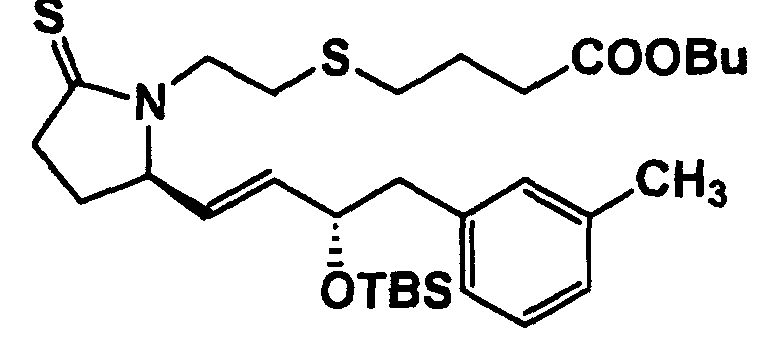
TLC : Rf 0.53 (Hexane : Ethyl Acetate = 4:1).
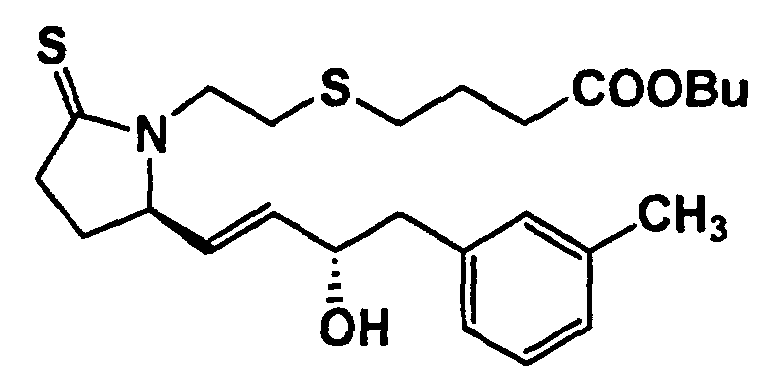
TLC : Rf 0.38 (Hexane : Ethyl Acetate = 1:1).

TLC : Rf 0.40 (Chloroform : Methanol = 8:1);
NMR : δ 7.22 (dd, J = 7.5, 7.5 Hz, 1H), 7.11-6.95 (m, 3H), 5.82 (dd, J = 15.3, 5.1 Hz, 1H), 5.55 (ddd, J = 15.3, 8.7, 1.2 Hz, 1H), 4.52-4.38 (m, 2H), 4.13 (m, 1H), 3.37 (m, 1H), 3.10-2.39 (m, 12H), 2.35 (s, 3H), 2.27 (m, 1H), 2.00-1.70 (m, 3H).
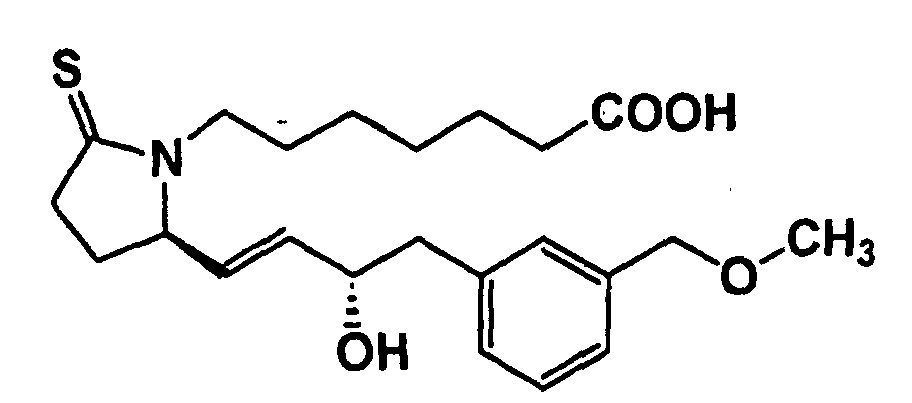
TLC : Rf 0.31 (Methanol : Chloroform = 1:10);
NMR : δ 7.40-7.10 (m, 4H), 5.82 (dd, J = 15.4, 5.0 Hz, 1H), 5.59 (dd, J = 15.4, 8.4 Hz, 1H), 4.50-4.25 (m, 2H), 4.47 (s, 2H), 4.02-3.85 (m, 1H), 3.43 (s, 3H), 3.38-3.10 (m, 1H), 3.10-2.75 (m, 4H), 2.40-2.15 (m, 2H), 2.33 (t, J = 7.2 Hz, 2H), 1.90-1.20 (m, 10H).

TLC : Rf 0.53 (Chloroform : Methanol = 8:1).

TLC : Rf 0.33 (Chloroform : Methanol = 8:1).

TLC : Rf 0.41 (Chloroform : Methanol = 4:1);
NMR(CD3OD) : δ 7.15 (dd, J = 7.5, 7.5 Hz, 1H), 7.08-6.94 (m, 3H), 5.70 (dd, J = 15.3, 6.6 Hz, 1H), 5.37 (dd, J = 15.3, 8.7 Hz, 1H), 4.33 (m, 1H), 4.24-4.07 (m, 3H), 4.06-3.94 (m, 2H), 3.73 (s, 2H), 3.60-3.40 (m, 2H), 2.95-2.12 (m, 14H), 1.82-1.54 (m, 5H).
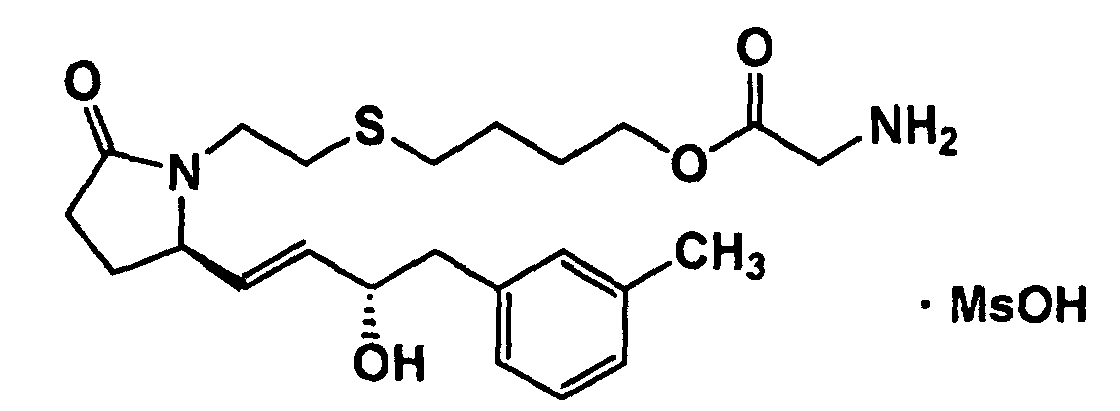
NMR(CD3OD) : δ 7.15 (dd, J = 7.5, 7.5 Hz, 1H), 7.06-6.94 (m, 3H), 5.70 (dd, J = 15.3, 6.6 Hz, 1H), 5.37 (ddd, J = 15.3, 8.7, 0.9 Hz, 1H), 4.33 (m, 1H), 4.27 (t, J = 6.3 Hz, 2H), 4.13 (m, 1H), 3.83 (s, 2H), 3.50 (m, 1H), 2.96-2.10 (m, 15H), 1.88-1.54 (m, 5H).
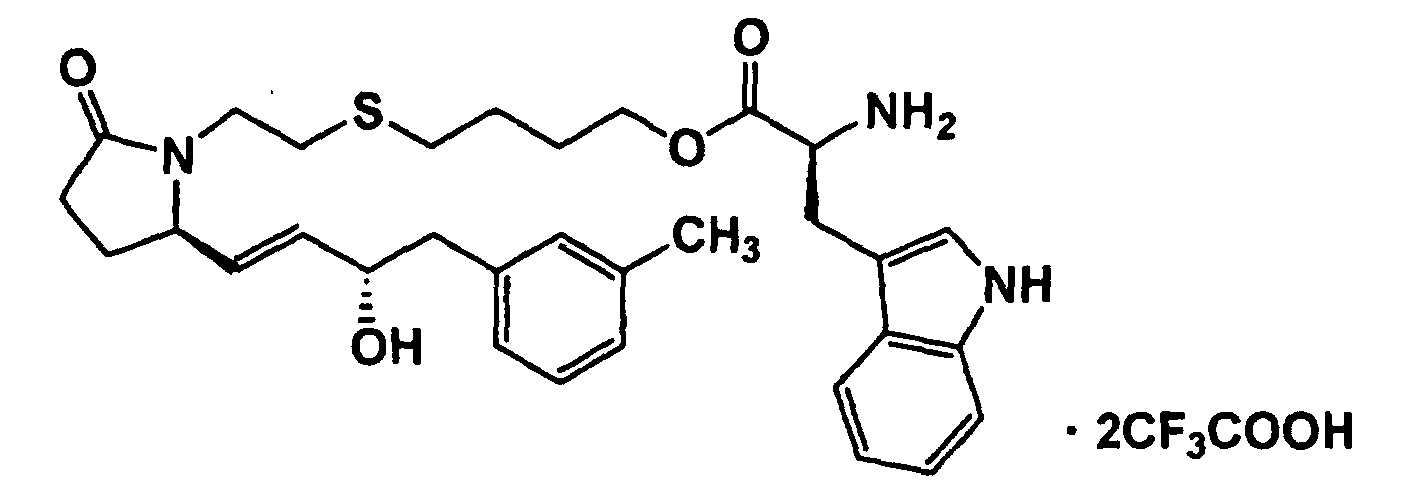
NMR(CD3OD) : δ 7.53 (d, J = 8.1 Hz, 1H), 7.39 (d, J = 8.1 Hz, 1H), 7.24-6.92 (m, 7H), 5.67 (dd, J = 15.6, 6.6 Hz, 1H), 5.34 (dd, J = 15.6, 9.0 Hz, 1H), 4.30 (t, J = 6.9 Hz, 2H), 4.28-4.00 (m, 3H), 3.52-3.30 (m, 3H), 2.94-2.60 (m, 3H), 2.56-2.08 (m, 10H), 1.74-1.32 (m, 5H).
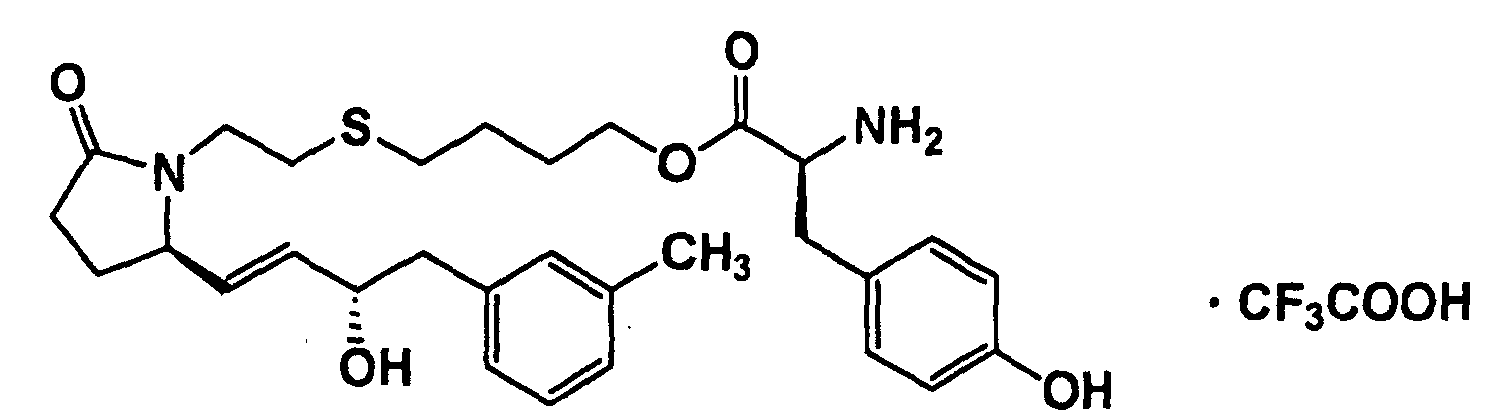
NMR(CD3OD) : δ 7.22-6.92 (m, 6H), 6.77 (d, J = 8.4 Hz, 2H), 5.69 (dd, J = 15.3, 6.6 Hz, 1H), 5.36 (dd, J = 15.3, 8.7 Hz, 1H), 4.33 (m, 1H), 4.27-4.15 (m, 3H), 4.12 (m, 1H), 3.47 (m, 1H), 3.16-3.04 (m, 2H), 2.96-2.06 (m, 13H), 1.80-1.48 (m, 5H).

TLC : Rf 0.45 (Chloroform : Methanol = 9: 1);
NMR : δ 7.32-7.20 (m, 3H), 7.14-7.06 (m, 1H), 5.74 (dd, J = 15.3, 6.0 Hz, 1H), 5.50 (dd, J = 15.3, 8.6 Hz, 1H), 5.06 (m, 1H), 4.57 (s, 2H), 4.40 (m, 1H), 4.12 (m, 1H), 3.62 (m, 1H), 2.96 (m, 1H), 2.82 (d, J = 6.0 Hz, 2H), 2.71-2.50 (m, 6H), 2.41 -2.19 (m, 3H), 2.00-1.90 (m, 2H), 1.73 (m, 1H), 1.25 (d, J = 6.3 Hz, 6H).
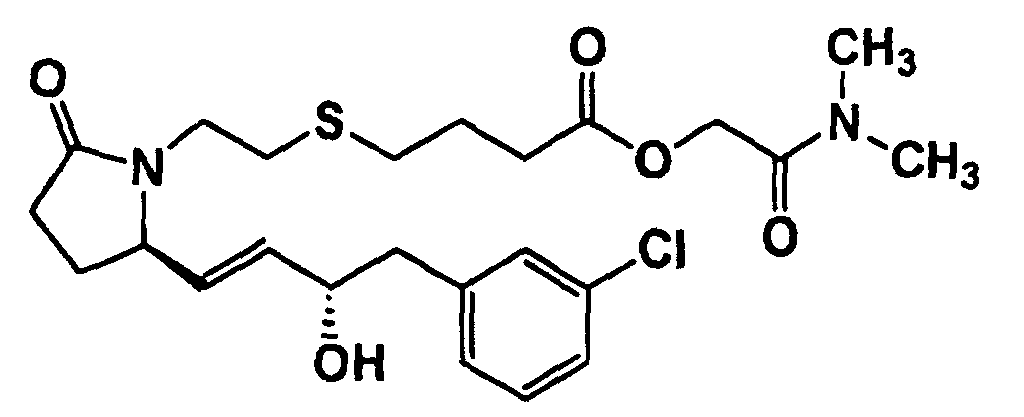
NMR : δ 7.28-7.19 (m, 3H), 7.12-7.08 (m, 1H), 5.77 (dd, J = 15.3, 5.1 Hz, 1H), 5.54 (ddd, J = 15.3, 8.7, 1.2 Hz, 1H), 4.70 (s, 2H), 4.40 (m, 1H), 4.15 (m, 1H), 3.54 (m, 1H), 3.04 (m, 1H), 2.95 (s, 3H), 2.91 (s, 3H), 2.82 (d, J = 6.0 Hz, 2H), 2.78-2.53 (m, 6H), 2.40-2.18 (m, 3H), 2.03-1.93 (m, 2H), 1.71 (m, 1H).

NMR : δ 7.21-7.14 (m, 2H), 7.05-6.96 (m, 2H), 5.75 (dd, J = 15.6, 6.0 Hz, 1H), 5.50 (dd, J = 15.6, 8.4 Hz, 1H), 4.19 (m, 1H), 4.18-4.03 (m, 3H), 3.60 (m, 1H), 2.97 (m, 1H), 2.85-2.79 (m, 2H), 2.70-2.18 (m, 9H), 2.01-1.82 (m, 3H), 1.79-1.60 (m, 1H), 1.25 (t, J = 7.2 Hz, 3H).
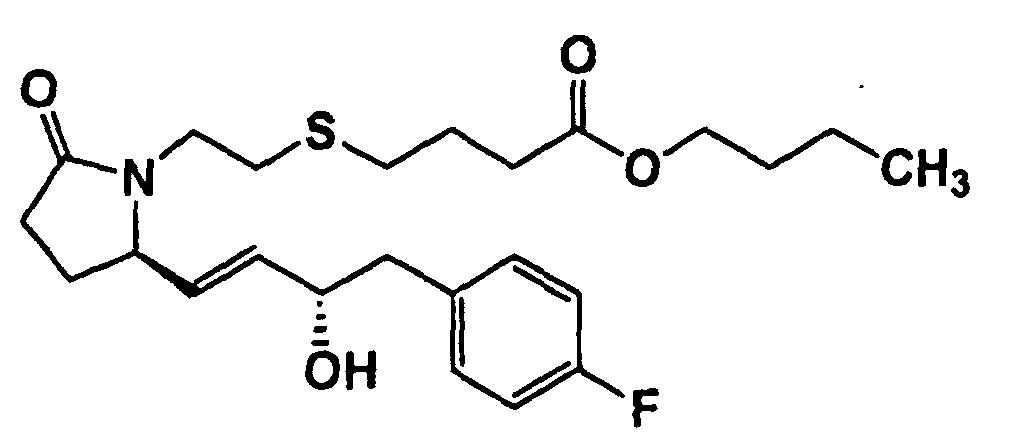
NMR : δ 7.2-7.1 (m, 2H), 7.05-6.95 (m, 2H), 5.75 (dd, J = 15, 6Hz, 1H), 5.51 (dd, J = 15, 8Hz, 1H), 4.45-4.35 (m, 1H), 4.15-4.05 (m, 1H), 4.07 (t, J = 7Hz, 2H), 3.7-3.55 (m, 1H), 3.05-2.9 (m, 1H), 2.82 (d, J = 7Hz, 2H), 2.7-2.45 (m, 4H), 2.4-2.3 (m, 4H), 2.3-2.15 (m, 1H), 2.0 (d, J = 4Hz, 1H), 1.95-1.85 (m, 2H), 1.8-1.65 (m, 1H), 1.65-1.55 (m, 2H), 1.45-1.3 (m, 2H), 0.93 (t, J = 7Hz, 3H).
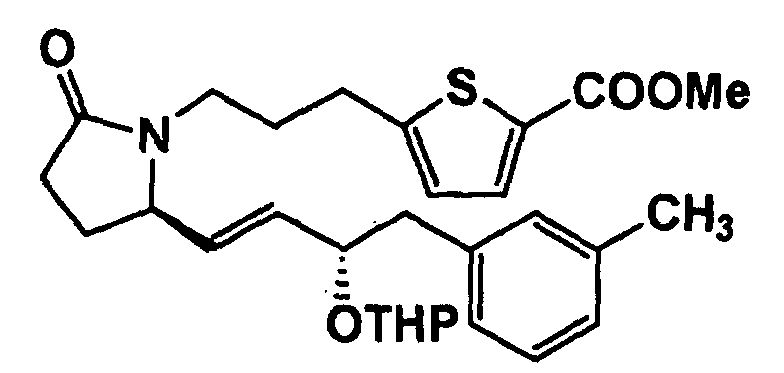

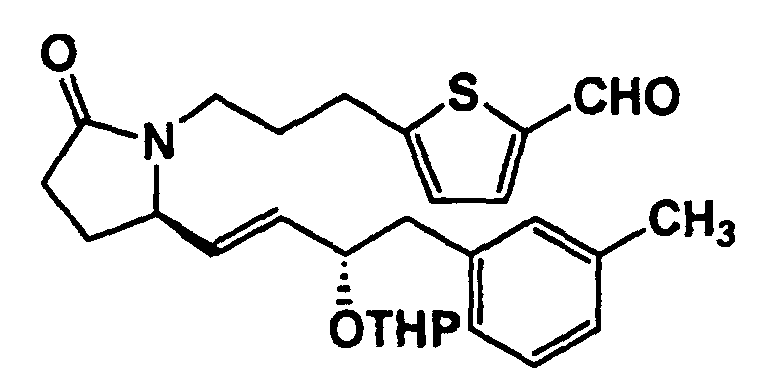
TLC : Rf 0.51 (Ethyl Acetate).
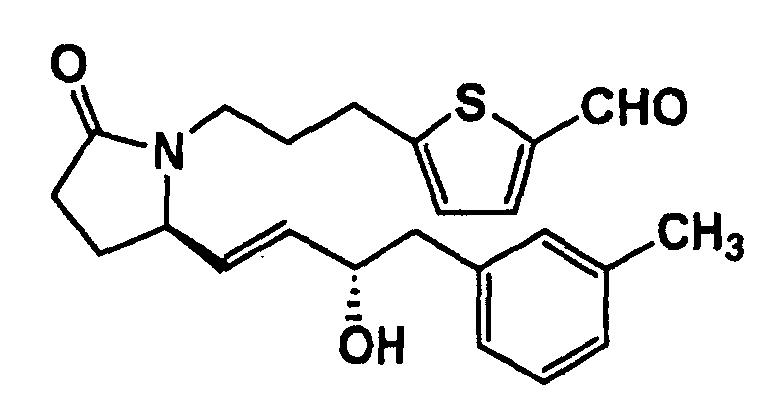
TLC : Rf 0.34 (Ethyl Acetate);
NMR : δ 9.80 (s, 1H), 7.60 (d, J = 3.9Hz, 1H), 7.20 (t, J = 7.4Hz, 1H), 7.08-6.96 (m, 3H), 6.93 (d, J = 3.9Hz, 1H), 5.73 (dd, J = 15.4, 5.8Hz, 1H), 5.48 (ddd, J = 15.4, 8.8, 1.4Hz, 1H), 4.39 (m, 1H), 4.02 (m, 1H), 3.52 (m, 1H), 2.90-2.77 (m, 5H), 2.47-2.25 (m, 2H), 2.36 (s, 3H), 2.20 (m, 1H), 1.88-1.64 (m, 3H).
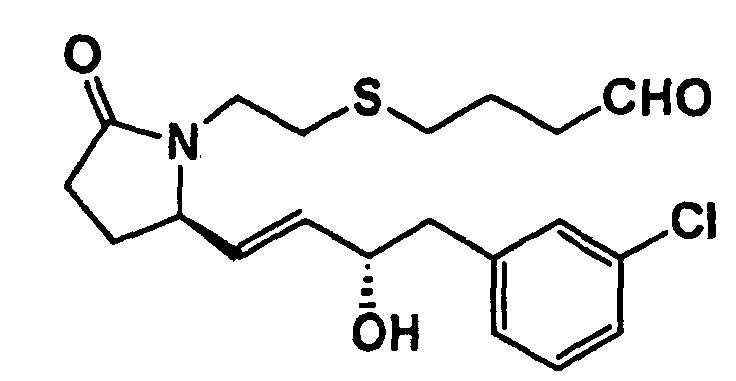
TLC : Rf 0.13 (Hexane : Ethyl Acetate = 1:5);
NMR : δ 9.80 (t, J = 1.5 Hz, 1H), 7.27-7.20 (m, 3H), 7.09 (m, 1H), 5.75 (dd, J = 15.6, 5.4 Hz, 1H), 5.51 (ddd, J = 15.6, 8.7, 1.2 Hz, 1H), 4.43 (m, 1H), 4.09 (m, 1H), 3.60 (m, 1H), 2.95 (m, 1H), 2.84 (d, J = 6.6 Hz, 2H), 2.70-2.20 (m, 9H), 2.00-1.60 (m, 3H).
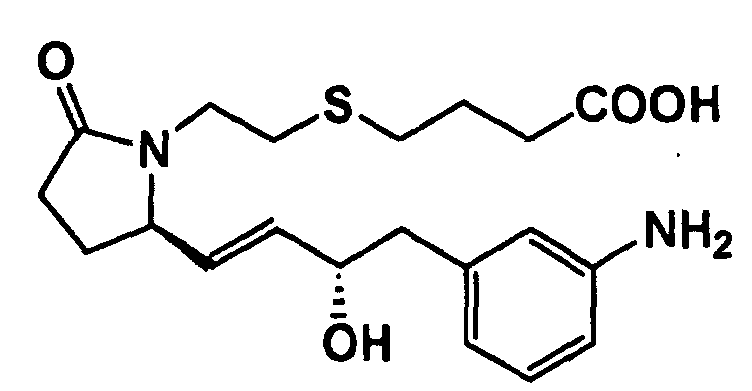
TLC : Rf 0.46 (Chloroform : Methanol = 9:1);
NMR : δ 7.15-7.04 (m, 1H), 6.64-6.50 (m, 3H), 5.75 (dd, J = 15.0, 6.0 Hz, 1H), 5.50 (dd, J = 15.0, 8.4 Hz, 1H), 4.40 (m, 1H), 4.10 (m, 1H), 4.00-3.55 (m, 4H), 2.99 (m, 1H), 2.80-2.19 (m, 11H), 1.98-1.80 (m, 2H), 1.78-1.61 (m, 1H).

NMR : δ 8.05-8.02 (m, 2H), 7.55 (m, 1H), 7.46-7.41 (m, 2H), 7.34-7.18 (m, 5H), 5.73 (dd, J = 15.3, 6.0 Hz, 1H), 5.49 (ddd, J = 15.3, 8.4, 1.2 Hz, 1H), 4.40 (m, 1H), 4.31 (t, J = 6.6 Hz, 2H), 4.02 (m, 1H), 3.48 (m, 1H), 2.85 (d, J = 6.6 Hz, 2H), 2.68 (m, 1H), 2.45-2.10 (m, 3H), 1.80-1.20 (m, 11H).
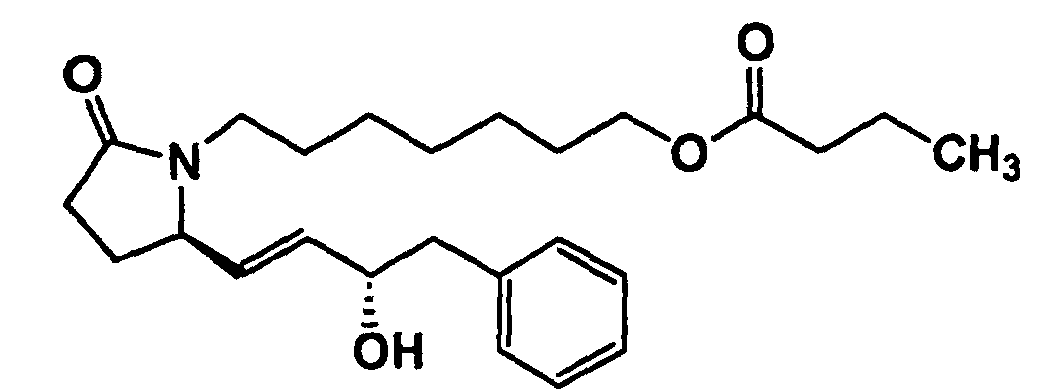
NMR : δ 7.34-7.19 (m, 5H), 5.73 (dd, J = 15.3, 6.3 Hz, 1H), 5.49 (ddd, J = 15.3, 8.4, 1.2 Hz, 1H), 4.41 (m, 1H), 4.05 (t, J = 6.6 Hz, 2H), 4.03 (m, 1H), 3.47 (m, 1H), 2.85 (d, J = 6.6 Hz, 2H), 2.68 (m, 1H), 2.45-2.10 (m, 5H), 1.80-1.20 (m, 13H), 0.95 (t, J = 7.2 Hz, 3H).

NMR : δ 7.32-7.17 (m, 5H), 5.72 (dd, J = 15.6, 6.3 Hz, 1H), 5.45 (dd, J = 15.6, 8.7 Hz, 1H), 4.39 (m, 1H), 4.19 (t, J = 6.3 Hz, 2H), 4.01 (m, 1H), 3.77 (br, 2H), 3.39 (m, 1H), 2.91-2.78 (m, 2H), 2.66 (m, 1H), 2.40-2.10 (m, 3H), 1.75-1.15 (m, 11H).

TLC : Rf 0.33 (Ethyl Acetate);
NMR : δ 7.23-7.15 (m, 2H), 7.06-6.97 (m, 2H), 5.76 (dd, J = 15.0, 5.4 Hz, 1H), 5.50 (dd, J = 15.0, 8.7 Hz, 1H), 4.40 (m, 1H), 4.27 (s, 4H), 4.10 (m, 1H), 3.60 (m, 1H), 2.98 (m, 1H), 2.82 (d, J = 6.0 Hz, 2H), 2.68-2.20 (m, 11H), 1.96-1.83 (m, 3H), 1.78-1.57 (m, 3H), 1.41-1.29 (m, 2H), 0.92 (t, J = 7.2 Hz, 3H).

NMR : δ 7.63-7.56 (m, 4H), 7.48-7.18 (m, 10H), 5.71 (dd, J = 15.4, 5.8Hz, 1H), 5.46 (ddd, J = 15.4, 8.2, 1.1Hz, 1H), 5.17 (s, 2H), 4.40 (m, 1H), 3.99 (m, 1H), 3.44 (m, 1H), 2.82 (d, J = 6.6Hz, 2H), 2.66 (m, 1H), 2.40-2.31 (m, 4H), 2.20 (m, 1H), 1.70-1.61 (m, 3H), 1.50-1.20 (m, 6H).

NMR : δ 7.61-7.55 (m, 2H), 7.48-7.17 (m, 11H), 7.05 (m, 1H), 5.72 (dd, J = 15.4, 5.8Hz, 1H), 5.48 (ddd, J = 15.4, 8.5, 1.1Hz, 1H), 4.40 (m, 1H), 4.02 (m, 1H), 3.48 (m, 1H), 2.83 (d, J = 6.6Hz, 2H), 2.72 ( m, 1H), 2.59 (t, J = 7.4Hz, 2H), 2.41-2.34 (m, 2H), 2.21 (m, 1H), 1.81-1.62 (m, 3H), 1.54-1.22 (m, 6H).
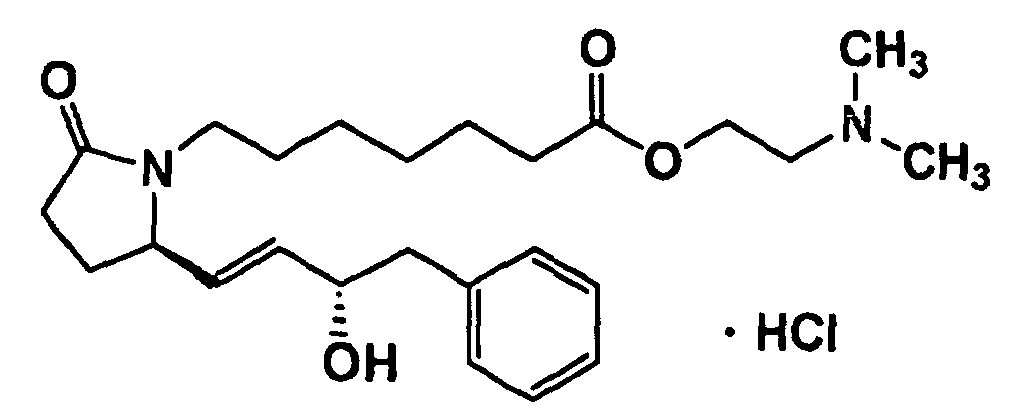
NMR(CD3OD) : δ 7.30-7.12 (m, 5H), 5.68 (dd, J = 15.3, 6.6 Hz, 1H), 5.36 (dd, J = 15.3, 9.0 Hz, 1H), 4.43-4.29 (m, 3H), 4.07 (m, 1H), 3.45 (m, 2H), 3.38-3.20 (m, 1H), 2.94-2.89 (m, 7H), 2.72 (m, 1H), 2.54 (m, 1H), 2.44-2.17 (m, 5H), 1.76-1.56 (m, 3H), 1.55-1.18 (m, 6H).
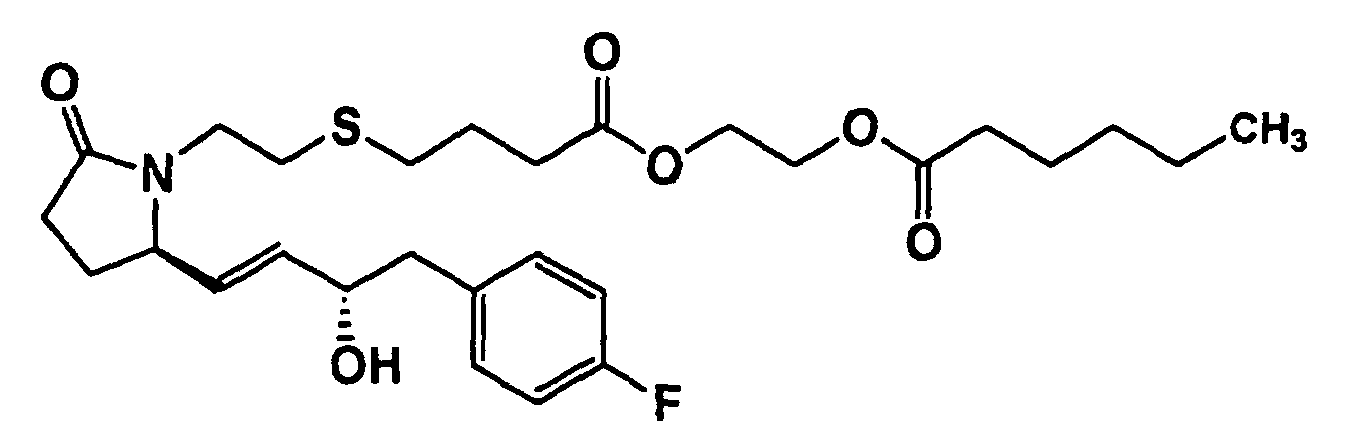
NMR : δ 7.21-7.12 (m, 2H), 7.07-6.97 (m, 2H), 5.75 (dd, J = 15.0, 6.0 Hz, 1H), 5.51 (dd, J = 15.0, 8.6 Hz, 1H), 4.39 (m, 1H), 4.27 (s, 4H), 4.10 (m, 1H), 3.61 (m, 1H), 2.96 (m, 1H), 2.82 (d, J = 6.6 Hz, 2H), 2.70-2.14 (m, 11H), 1.99-1.82 (m, 3H), 1.79-1.55 (m, 2H), 1.40-1.22 (m, 4H), 0.90 (t, J = 7.0 Hz, 3H).

NMR : δ 7.21-7.13 (m, 2H), 7.06-6.97 (m, 2H), 5.75 (dd, J = 15.0, 6.0 Hz, 1H), 5.50 (dd, J = 15.0, 8.4 Hz, 1H), 4.39 (m, 1H), 4.27 (s, 4H), 4.10 (m, 1H), 3.61 (m, 1H), 2.97 (m, 1H), 2.82 (d, J = 6.6 Hz, 2H), 2.68-2.16 (m, 11H), 1.97-1.83 (m, 3H), 1.76-1.55 (m, 2H), 1.40-1.20 (m, 6H), 0.89 (t, J = 7.0 Hz, 3H).

NMR : δ 7.22-7.12 (m, 2H), 7.07-6.97 (m, 2H), 5.75 (dd, J = 15.3, 5.4 Hz, 1H), 5.51 (dd, J = 15.3, 8.4 Hz, 1H), 4.45-4.36 (m, 1H), 4.26 (s, 4H), 4.18-4.07 (m, 1H), 3.70-3.57 (m, 1H), 3.02-2.90 (m, 1H), 2.82 (d, J = 5.4 Hz, 2H), 2.70-2.50 (m, 4H), 2.45 (t, J = 7.2 Hz, 2H), 2.40-2.18 (m, 5H), 1.98-1.86 (m, 3H), 1.80-1.50 (m, 3H), 1.40-1.20 (m, 8H), 0.89 (t, J = 7.2 Hz, 3H).
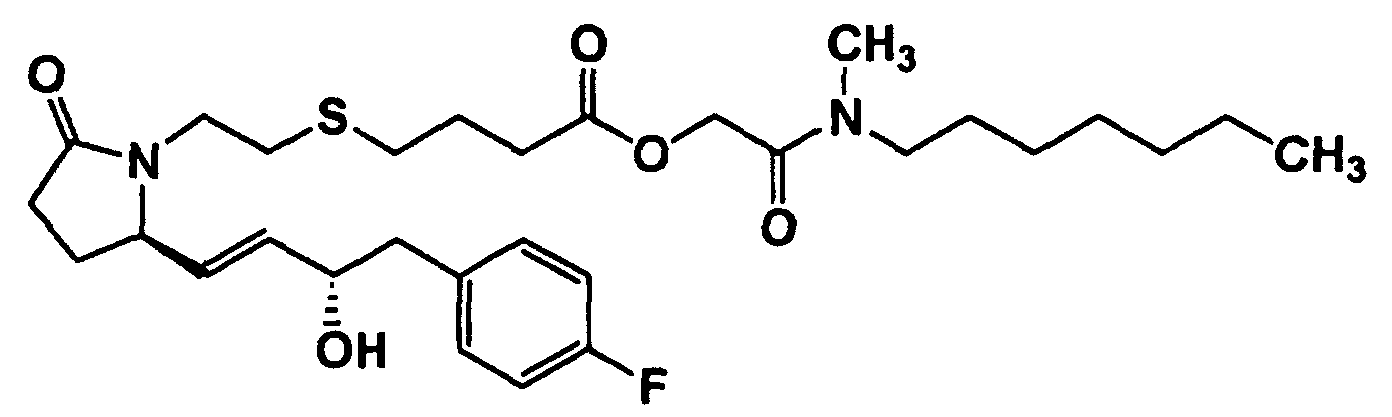
NMR : δ 7.21-7.14 (m, 2H), 7.04-6.97 (m, 2H), 5.75 (ddd, J = 15.0, 5.4, 1.2 Hz, 1H), 5.53 (dd, J = 15., 8.7 Hz, 1H), 4.73-4.65 (m, 2H), 4.39 (m, 1H), 4.13 (m, 1H), 3.58 (m, 1H), 3.39-3.24 (m, 1H), 3.20-3.10 (m, 1H), 3.06 (m, 1H), 2.93-2.77 (m, 5H), 2.71-2.15 (m, 9H), 2.00-1.89 (m, 2H), 1.78-1.42 (m, 3H), 1.40-1.20 (m, 8H), 0.95-0.82 (m, 3H).
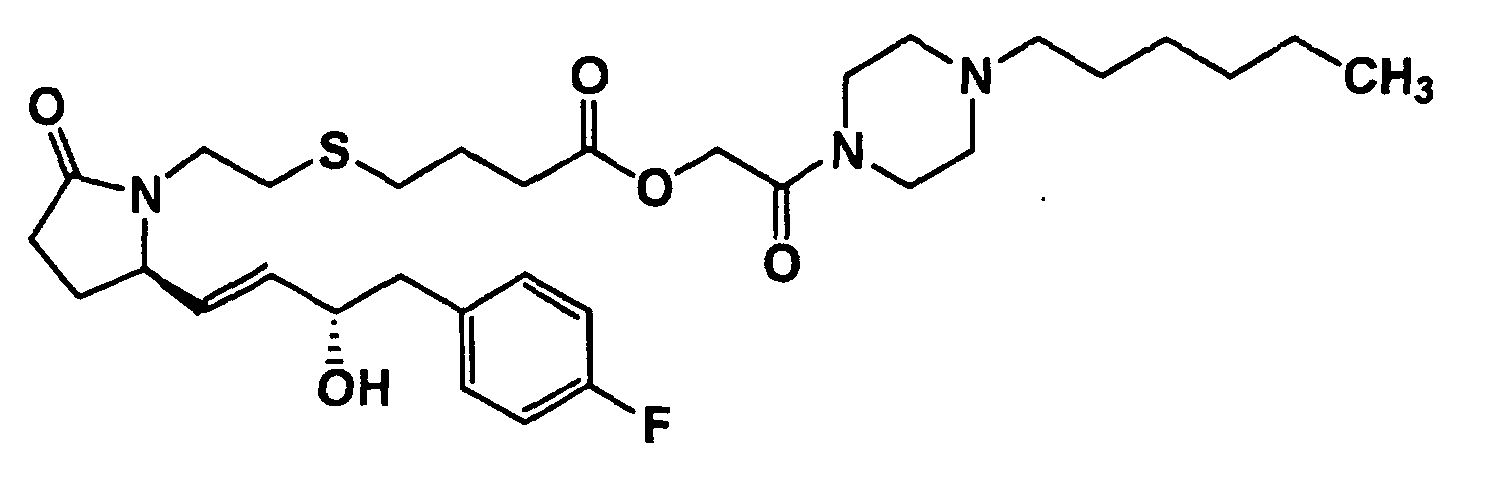
NMR : δ 7.22-7.12 (m, 2H), 7.06-6.96 (m, 2H), 5.76 (dd, J = 15.3, 5.4 Hz, 1H), 5.52 (dd, J = 15.3, 8.7 Hz, 1H), 4.70 (s, 2H), 4.43-4.35 (m, 1H), 4.18-4.07 (m, 1H), 3.70-3.50 (m, 3H), 3.41-3.32 (m, 2H), 3.09-2.97 (m, 1H), 2.81 (d, J = 6.6 Hz, 2H), 2.72-2.5 (m, 6H), 2.5-2.2 (m, 9H), 2.01-1.89 (m, 2H), 1,80-1.58 (m, 1H), 1.58-1.41 (m, 2H), 1.41-1.22 (m, 6H), 0.90 (t, J = 7.2Hz, 3H).

NMR : δ 7.25-7.10 (m, 2H), 7.05-6.95 (m, 2H), 5.76 (dd, J = 15.0, 5.4 Hz, 1H), 5.60-5.45 (m, 1H), 4.79 and 4.71 (s, 2H), 4.38 (q, J = 6.0 Hz, 1H), 4.12 (q, J = 7.2 Hz, 1H), 3.65-3.50 (m, 1H), 3.45-3.20 (m, 4H), 3.10-2.95 (m, 1H), 2.82 (d, J = 6.0 Hz, 2H), 2.75-2.40 (m, 10H), 2.40-2.15 (m, 4H), 2.05-1.85 (m, 2H), 1,80-1.60 (m, 1H), 1.22 and 1.12 (t, J = 7.2 Hz, 3H), 1.05 (t, J = 7.2 Hz, 3H), 1.04 (t , J = 7.2 Hz, 3H).

NMR : δ 7.21-7.15 (m, 2H), 7.04-6.97 (m, 2H), 5.76 (dd, J = 15.3, 5.7 Hz, 1H), 5.50 (ddd, J = 15.3, 8.4, 1.0 Hz, 1H), 4.40 (m, 1H), 4.37-4.20 (m, 4H), 4.10 (m, 1H), 3.60 (m, 1H), 3.35 (s, 2H), 2.97 (m, 1H), 2.80 (d, J = 6.0 Hz, 2H), 2.65-2.19 (m, 13H), 1.97-1.84 (m, 3H), 1.78-1.40 (m, 5H), 0.88 (t, J = 7.5 Hz, 6H).

NMR : δ 7.20-7.14 (m, 2H), 7.06-6.95 (m, 2H), 5.75 (dd, J = 15.3, 5.7 Hz, 1H), 5.50 (dd, J = 15.3, 8.4 Hz, 1H), 4.42-4.20 (m, 5H),4.10 (m, 1H), 3.60 (m, 1H), 3.34 (s, 2H), 2.97 (m, 1H), 2.80 (d, J = 7.0 Hz, 2H), 2.70-2.17 (m, 13H), 2.00-1.83 (m, 3H), 1.70 (m, 1H), 1.06 (t, J = 7.2 Hz, 6H).
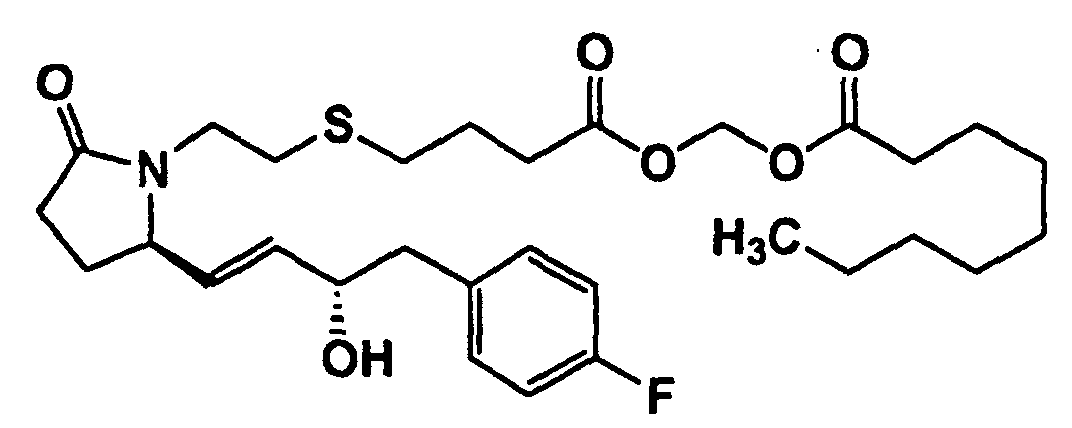
TLC : Rf 0.31 (Hexane : Ethyl Acetate = 1:4);
NMR : δ 7.21-7.12 (m, 2H), 7.06-6.96 (m, 2H), 5.81-5.69 (m, 3H), 5.50 (dd, J = 15.3, 8.4 Hz, 1H), 4.39 (m, 1H), 4.10 (m, 1H), 3.61 (m, 1H), 3.00-2.78 (m, 3H), 2.69-2.17 (m, 11H), 2.00-1.50 (m, 4H), 1.40-1.19 (m, 10H), 0.88 (t, J = 7.2 Hz, 3H).
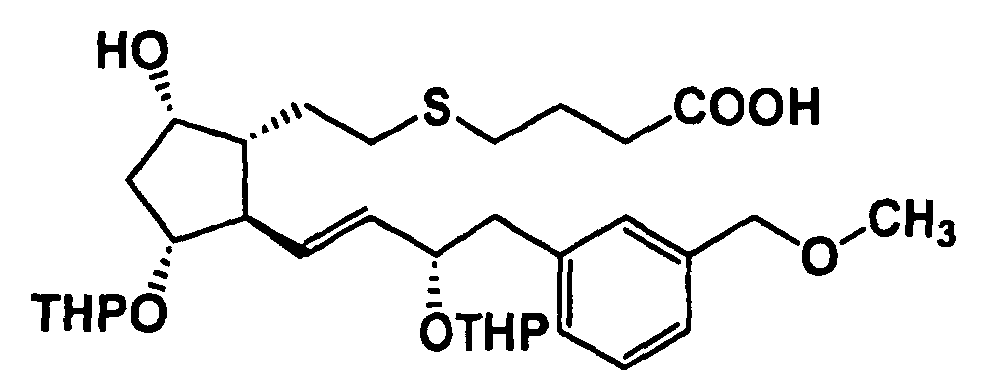
TLC : Rf 0.55 (Ethyl Acetate);
NMR : δ 7.3-7.1 (m, 4H), 5.7-5.3 (m, 2H), 4.8-3.1 (m, 9H), 3.5-3.1 (m, 5H), 3.0-2.0 (m, 10H), 2.0-1.3 (m, 18H).
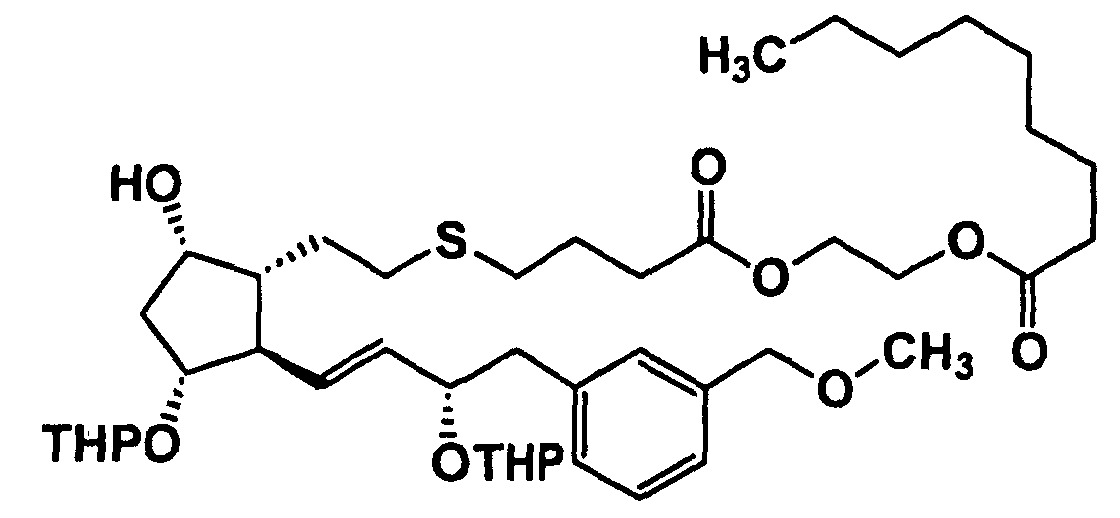
TLC : Rf 0.43 (Hexane : Ethyl Acetate = 1: 1);
NMR : δ 7.3-7.1 (m, 4H), 5.7-5.3 (m, 2H), 4.75-4.45 (m, 2H), 4.42 (s, 2H), 4.27 (s, 4H), 4.3-3.7 (m, 3H), 3.5-3.2 (m, 5H), 3.0-2.7 (m, 2H), 2.6-2.4 (m, 6H), 2.33 (t, J = 7.2 Hz, 2H), 2.3-2.0 (m, 1H), 2.0-1.2 (m, 31H), 0.90 (t, J = 7.2 Hz, 3H).
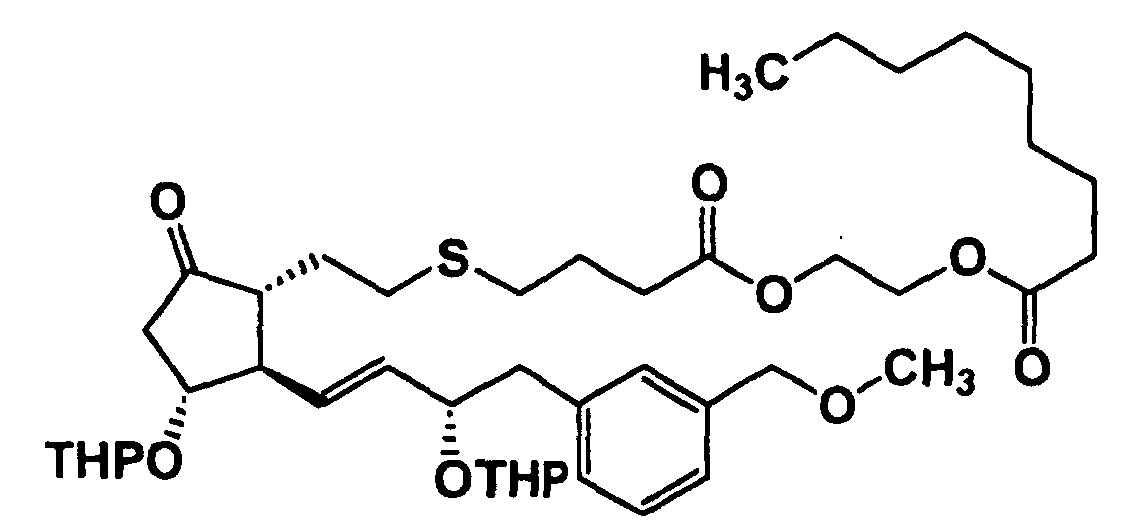
TLC : Rf 0.50 (Hexane : Ethyl Acetate = 1:1);
NMR : δ 7.3-7.1 (m, 4H), 5.8-5.25 (m, 2H), 4.8-4.5 (m, 2H), 4.42 (s, 2H), 4.4-3.75 (m, 8H), 3.55-3.2 (m, 5H), 3.0-2.65 (m, 3H), 2.65-2.4 (m, 7H), 2.4-2.05 (m, 4H), 1.95-1.2 (m, 28H), 0.88 (t, J = 7.2 Hz, 3H).

TLC : Rf 0.33 (Ethyl Acetate);
NMR: δ 7.30 (t, J = 8.1 Hz, 1H), 7.23-7.11 (m, 3H), 5.76 (dd, J = 15.3, 6.0 Hz, 1H), 5.53 (dd, J = 15.3, 8.4 Hz, 1H), 4.48-4.39 (m, 3H), 4.26 (s, 4H), 4.00-3.90 (m, 1H), 3.42 (s, 3H), 3.15-3.08 (br, 1H), 2.91 (dd, J = 13.5, 5.4 Hz, 1H), 2.83 (dd, J = 13.5, 6.9 Hz, 1H), 2.70 (dd, J = 18.6, 7.5 Hz, 1H), 2.65-2.50 (m, 2H), 2.52 (t, J = 7.2 Hz, 2H), 2.44 (t, J = 7.2 Hz, 2H), 2.36 (t, J = 7.2 Hz, 2H), 2.40-2.13 (m, 4H), 1.95-1.82 (m, 3H), 1.74-1.60 (m, 3H), 1.40-1.20 (m, 10H), 0.89 (t, J = 7.2 Hz, 3H).
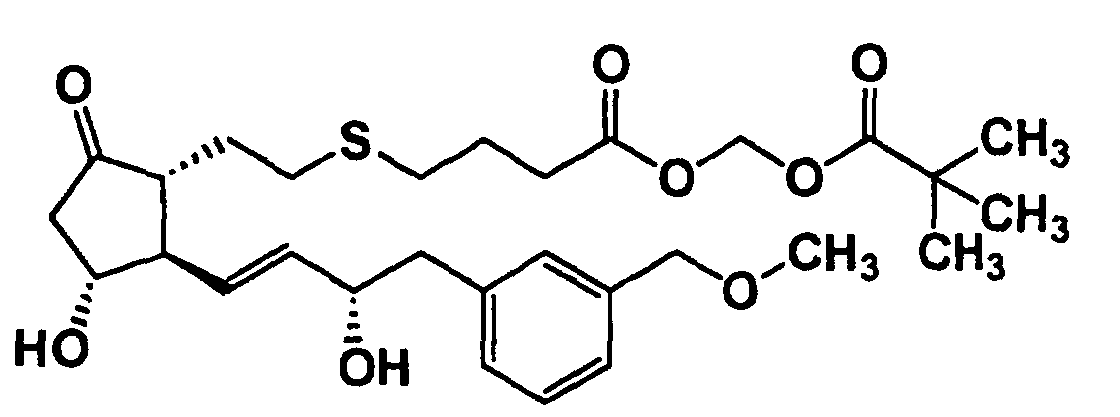
NMR : δ 7.33-7.10 (m, 4H), 5.74 (s, 2H), 5.73 (dd, J = 15, 6.0 Hz, 1H), 5.53 (ddd, J = 15, 8.7, 0.7 Hz, 1H), 4.48-4.37 (m, 3H), 3.94 (m, 1H), 3.42 (s, 3H), 2.90 (dd, J = 13, 5.6 Hz, 1H), 2.83 (dd, J = 13, 6.9 Hz, 1H), 2.70 (ddd, J = 19, 7.5, 1.1 Hz, 1H), 2.62-2.43 (m, 6H), 2.38-2.12 (m, 3H), 1.95-1.81 (m, 3H), 1.74-1.59 (m, 1H), 1.21 (s, 9H).
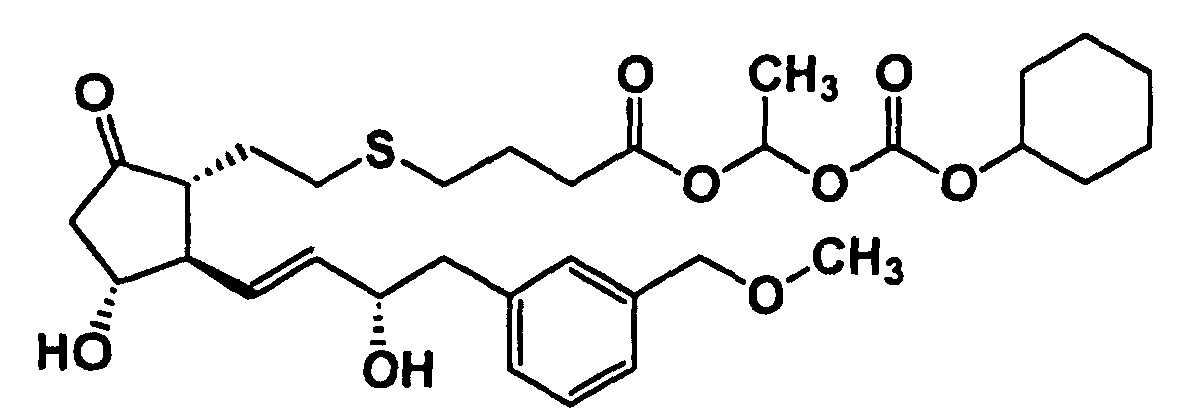
NMR : δ 7.33-7.09 (m, 4H), 6.75 (q, J = 5.4 Hz, 1H), 5.73 (dd, J = 15, 6.3 Hz, 1H), 5.53 (dd, J = 15, 8.6 Hz, 1H), 4.63 (m, 1H), 4.48-4.34 (m, 3H), 3.94 (m, 1H), 3.41 (s, 3H), 2.88 (dd, J = 14, 5.6 Hz, 1H), 2.82 (dd, J = 14, 6.9 Hz, 1H), 2.69 (ddd, J = 19, 7.6, 1.0 Hz, 1H), 2.64-2.41 (m, 6H), 2.37-2.12 (m, 3H), 1.98-1.17 (m, 14H), 1.51 (d, J = 5.4 Hz, 3H).

NMR : δ 7.3-7.1 (m, 4H), 5.76 (dd, J = 15, 6Hz, 1H), 5.55 (dd, J = 15, 8Hz, 1H), 4.70 (s, 2H), 4.42 (s, 2H), 4.5-4.4 (m, 1H), 3.90 (q, J = 8Hz, 1H), 3.41 (s, 3H), 3.37 (q, J = 7Hz, 2H), 3.24 (q, J = 7Hz, 2 H), 2.95-2.8 (m, 2H), 2.69 (dd, J = 18, 7Hz, 1H), 2.65-2.5 (m, 6H), 2.4-2.1 (m, 4H), 2.4-1.8 (m, br), 2.0-1.8 (m, 2H), 1.75-1.6 (m, 1H), 1.22 (t, J = 7Hz, 3H), 1.15 (t, J = 7Hz, 3H).
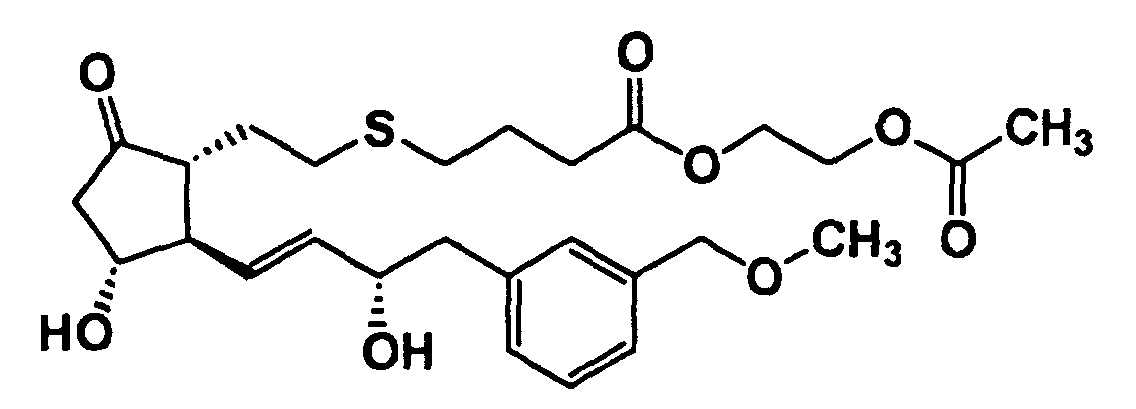
NMR : δ 7.3-7.1 (m, 4H), 5.76 (dd, J = 15, 6Hz, 1H), 5.53 (dd, J = 15, 8Hz, 1H), 4.5-4.4 (m, 3H), 4.27 (s, 4H), 3.94 (brq, 1H), 3.42 (s, 3H), 3.05-3.0 (br, 1H), 2.91 (dd, J = 14, 6Hz, 1H), 2.83 (dd, J = 14, 7Hz, 1H), 2.70 (dd, J = 18, 7Hz, 1H), 2.65-2.5 (m, 2H), 2.51 (t, J = 7Hz, 2H), 2.45 (t, J = 7Hz, 2H), 2.4-2.1 (m, 4H), 2.08 (s, 3H), 1.95-1.8 (m, 3H), 1.8-1.6 (m, 1H).
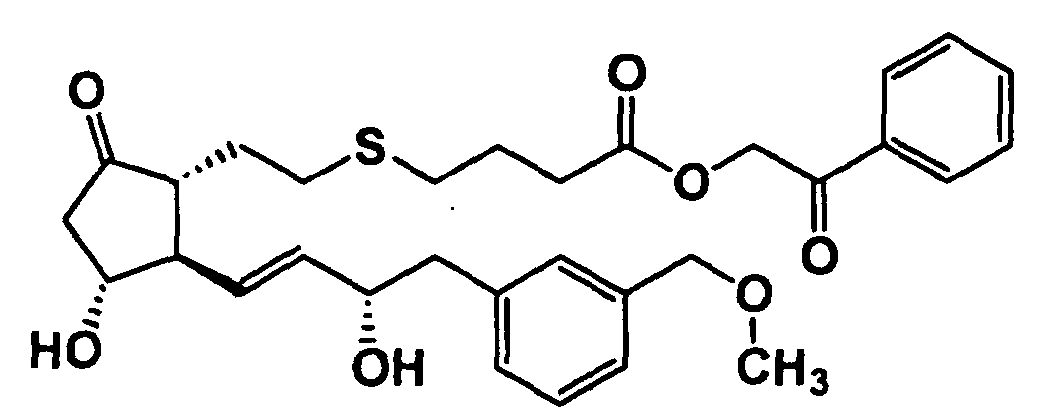
NMR : δ 7.92-7.88 (m, 2H), 7.65-7.59 (m, 1H), 7.52-7.46 (m, 2H), 7.34-7.10 (m, 4H), 5.77 (dd, J = 15.6, 5.7 Hz, 1H), 5.54 (dd, J = 15.6, 8.4 Hz, 1H), 5.35 (s, 2H), 4.50-4.38 (m, 3H), 4.00-3.89 (m, 1H), 3.41 (s, 3H), 2.87-2.54 (m, 9H), 2.41-2.18 (m, 3H), 2.04-1.84 (m, 3H), 1.78-1.65 (m, 1H).
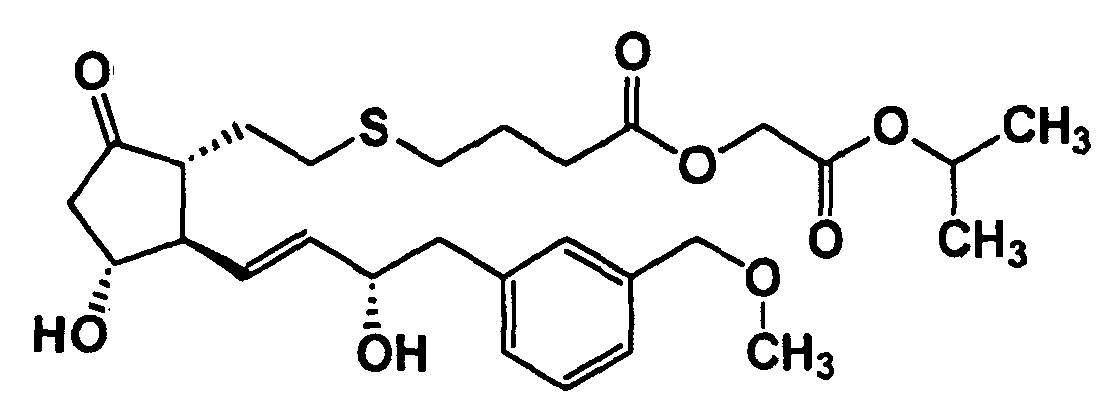
NMR : δ 7.35-7.12 (m, 4H), 5.75 (dd, J = 15.0, 5.7 Hz, 1H), 5.53 (dd, J = 15.0, 8.4 Hz, 1H), 5.07 (m, 1H), 4.56 (s, 2H), 4.47-4.37 (m, 3H), 3.93 (m, 1H), 3.42 (s, 3H), 3.05-2.50 (m, 10H), 2.39-2.14 (m, 4H), 1.98-1.83 (m, 3H), 1.78-1.60 (m, 1H), 1.25 (d, J = 6.3 Hz, 6H).

NMR : δ 7.3-7.1 (m, 4H), 5.76 (s, 2H), 5.75 (dd, J= 15, 6Hz, 1H), 5.53 (dd, J = 15, 8Hz, 1H), 4.5-4.35 (m, 3H), 3.93 (brq, 1H), 3.42 (s, 3H), 3.4-3.2 (m, 4H), 2.95-2.8 (m, 2H), 2.70 (dd, J = 19, 8Hz, 1H), 2.65-2.45 (m, 6H), 2.4-2.1 (m, 4H), 1.95-1.8 (m, 4H), 1.75-1.6 (m, 1H), 1.2-1.05 (m, 6H).

NMR : δ 7.35-7.12 (m, 4H), 5.73 (dd, J = 15.0, 6.0 Hz, 1H), 5.51 (dd, J = 15.0, 8.0 Hz, 1H), 4.50 (s, 2H), 4.43-4.35 (m, 3H), 3.99-3.88 (m, 1H), 3.42-3.20 (m, 4H), 2.89-2.15 (m, 11H), 1.95-1.60 (m, 6H), 1.47 (s, 9H).
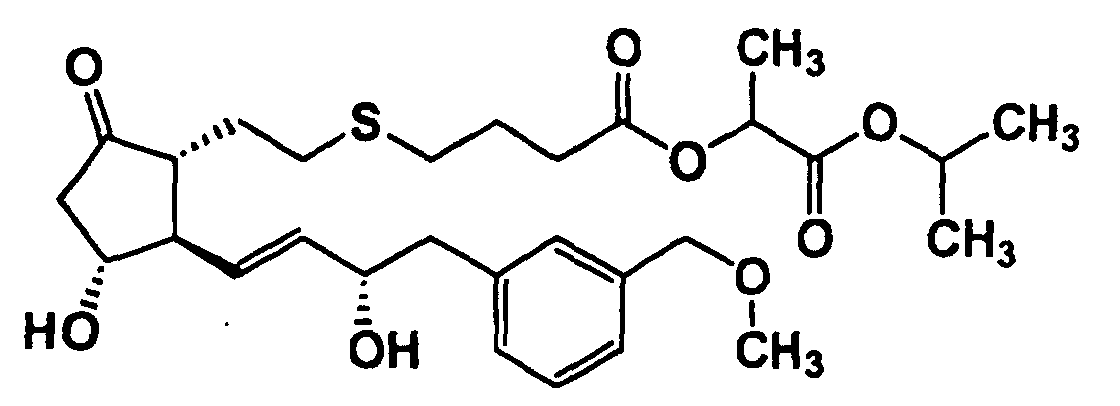
NMR : δ 7.36-7.12 (m, 4H), 5.76 (dd, J = 15.0, 5.4 Hz, 1H), 5.53 (dd, J = 15.0, 8.4 Hz, 1H), 5.10-4.97 (m, 1H), 4.47-4.38 (m, 3H), 3.99-3.87 (m, 1H), 3.42 (s, 3H), 2.97-2.14 (m, 12H), 1.97-1.61 (m, 7H), 1.46 (d, J = 7.2 Hz, 3H), 1.27 and 1.23 (d, J = 7.0 Hz, 6H).

NMR : δ 7.92 (d, J = 8.4 Hz, 2H), 7.63-7.57 (m, 1H), 7.51-7.44 (m, 2H), 7.31-7.25 (m, 1H), 7.19-7.10 (m, 3H), 5.95 (q, J = 7.20 Hz, 1H), 5.74 (ddd, J = 15.3, 5.7, 4.2 Hz, 1H), 5.52 (ddd, J = 15.3, 7.5, 1.8 Hz, 1H), 4.47-4.35 (m, 3H), 4.09-3.94 (m, 1H), 3.41 (s, 3H), 3.02-2.13 (m, 14H), 1.97-1.65 (m, 4H), 1.52 (d, J = 7.2 Hz, 3H).
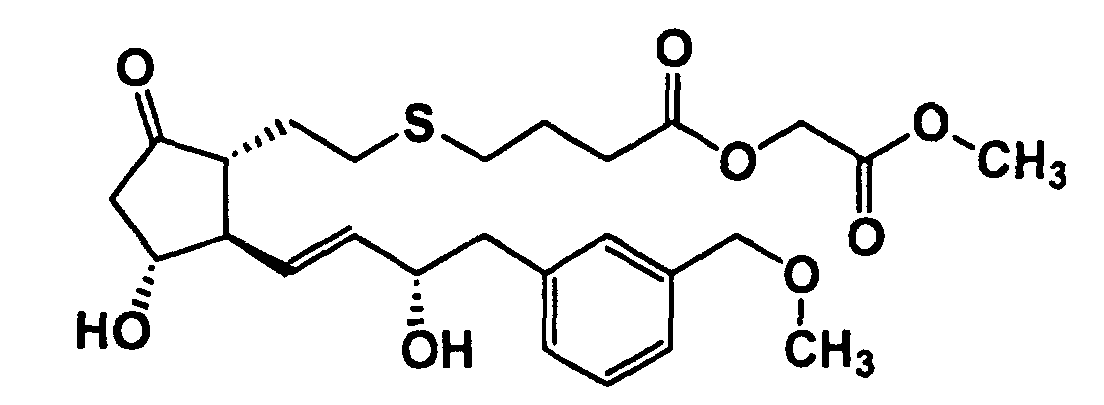
NMR : δ 7.32-7.15 (m, 4H), 5.74 (dd, J = 15.3, 6.3 Hz, 1H), 5.53 (dd, J = 15.3, 8.7 Hz, 1H), 4.62 (s, 2H), 4.42 (m, 2H), 4.39 (m, 1H), 3.94 (m, 1H), 3.76 (s, 3H), 3.41 (s, 3H), 3.24 (brs, 1H), 2.91-2.51 (m, 8H), 2.41-2.14 (m, 4H), 1.95-1.83 (m, 3H), 1.74-1.62 (m, 2H).

NMR : δ 7.3-7.1 (m, 4H), 5.77 (dd, J = 15, 6Hz, 1H), 5.53 (dd, J = 15, 8Hz, 1H), 4.5-4.4 (m, 3H), 4.25 (s, 4H), 4.0-3.9 (brq, 1H), 3.42 (s, 3H), 2.92 (dd, J = 14, 5Hz, 1H), 2.84 (dd, J = 14, 7Hz, 1H), 2.70 (dd, J = 19, 8Hz, 1H), 2.65-2.5 (m, 2H), 2.50 (t, J = 7Hz, 2H), 2.45 (t, J = 7Hz, 2H), 2.33 (t, J = 7Hz, 2H), 2.4-2.1 (m, 5H), 1.95-1.8 (m, 3H), 1.75-1.5 (m, 3H), 1.4-1.2 (m, 18H), 0.87 (t, J = 7 Hz, 3H).
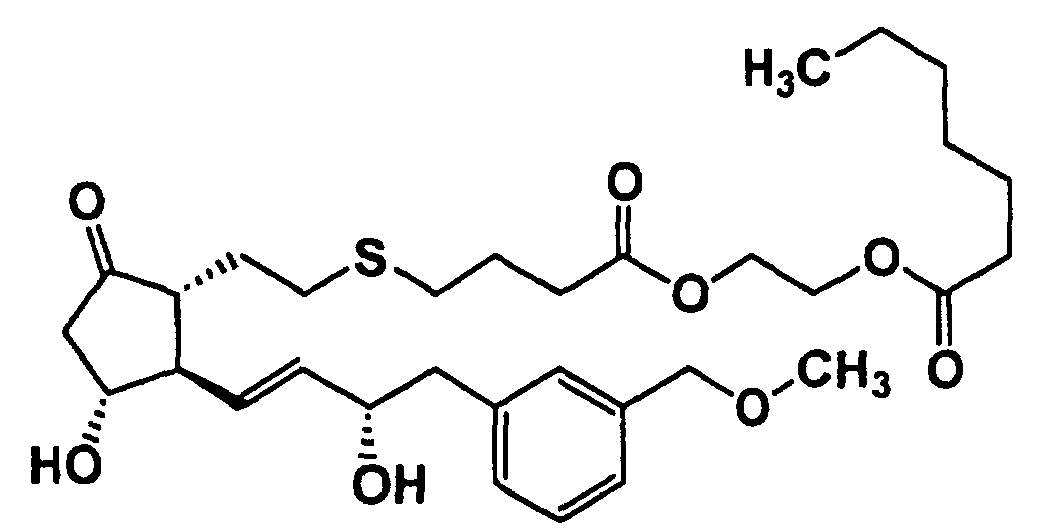
NMR: δ 7.3-7.1 (m, 4H), 5.74 (dd, J = 15, 6Hz, 1H), 5.52 (dd, J = 15, 8Hz, 1H), 4.5-4.3 (m, 3H), 4.26 (s, 4H), 4.0-3.9 (m, 1H), 3.42 (s, 3H), 3.35-3.3 (br, 1H), 2.89 (dd, J = 14, 6Hz, 1H), 2.81 (dd, J = 1 4, 7Hz, 1H), 2.70 (dd, J = 19, 8Hz, 1H), 2.65-2.5 (m, 2H), 2.52 (t, J = 7Hz, 2H), 2.47 (t, J = 7Hz, 2H), 2.5-2.4 (br, 1H), 2.4-2.15 (m, 5H), 1.95-1.8 (m, 3H), 1.75-1.55 (m, 3H), 1.4-1.2 (m, 6H), 0.90 (t, J = 7Hz, 3H).

NMR : δ 7.35-7.10 (m, 4H), 5.76 (dd, J = 15.3, 5.7 Hz, 1H), 5.53 (dd, J = 15.3, 8.7 Hz, 1H), 4.48-4.38 (m, 3H), 4.27 (s, 4H), 3.96 (m, 1H), 3.42 (s, 3H), 3.00-2.80 (m, 3H), 2.78-2.40 (m, 7H), 2.39-2.13 (m, 6H), 1.96-1.80 (m, 3H), 1.78-1.57 (m, 3H), 1.40-1.20 (m, 8H), 0.88 (t, J = 7.0 Hz, 3H).

NMR : δ 7.36-7.12 (m, 4H), 5.76 (dd, J = 15.0, 6.0 Hz, 1H), 5.53 (dd, J = 15.0, 8.0 Hz, 1H), 4.44-4.39 (m, 3H), 4.27 (s, 4H), 3.96 (m, 1H), 3.42 (s, 3H), 2.99-2.80 (m, 3H), 2.78-2.40 (m, 7H), 2.39-2.12 (m, 6H), 1.95-1.80 (m, 3H), 1.77-1.60 (m, 3H), 1.39-1.19 (m, 12H), 0.88 (t, J = 6.9 Hz, 3H).
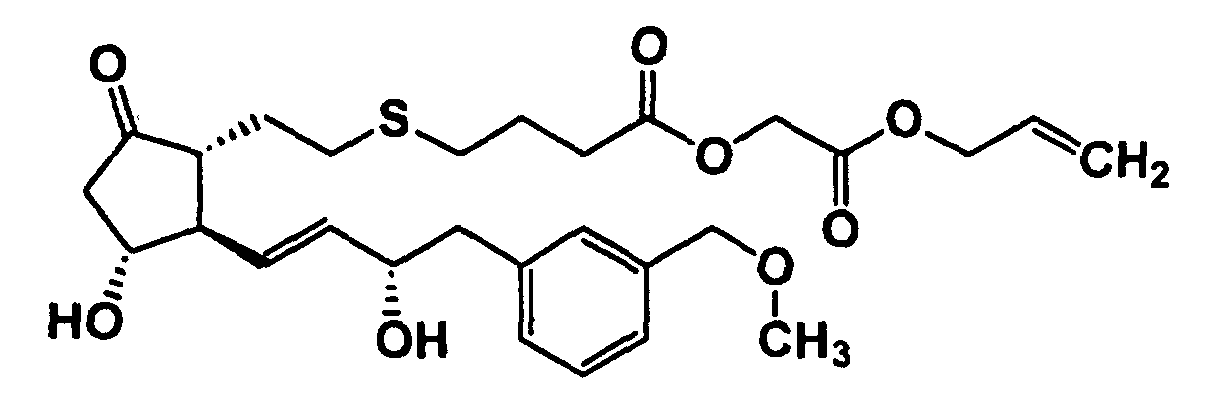
NMR : δ 7.4-7.1 (m, 4H), 6.0-5.8 (m, 1H), 5.78 (dd, J = 16, 6 Hz, 1H), 5.53 (dd, J = 16, 8 Hz, 1H), 5.4-5.25 (m, 2H), 4.7-4.6 (m, 4H), 4.5-4.4 (m, 3H), 4.0-3.85 (m, 1H), 3.42 (s, 3H), 3.0-2.8 (m, 2H), 2.72 (dd, J = 19, 10 Hz, 1H), 2.65-2.5 (m, 6H), 2.4-2.1 (m, 4H), 2.0-1.6 (m, 5H).

NMR : δ 7.35-7.10 (m, 4H), 5.81-5.69 (m, 3H), 5.52 (dd, J = 15.0, 8.7 Hz, 1H), 4.48-4.37 (m, 3H), 3.95 (m, 1H), 3.42 (s, 3H), 3.10 (bs, 1H), 2.92-2.42 (m, 9H), 2.40-2.11 (m, 6H), 1.97-1.80 (m, 3H), 1.78-1.58 (m, 3H), 1.40-1.20 (m, 10H), 0.88 (t, J = 7.2 Hz, 3H).
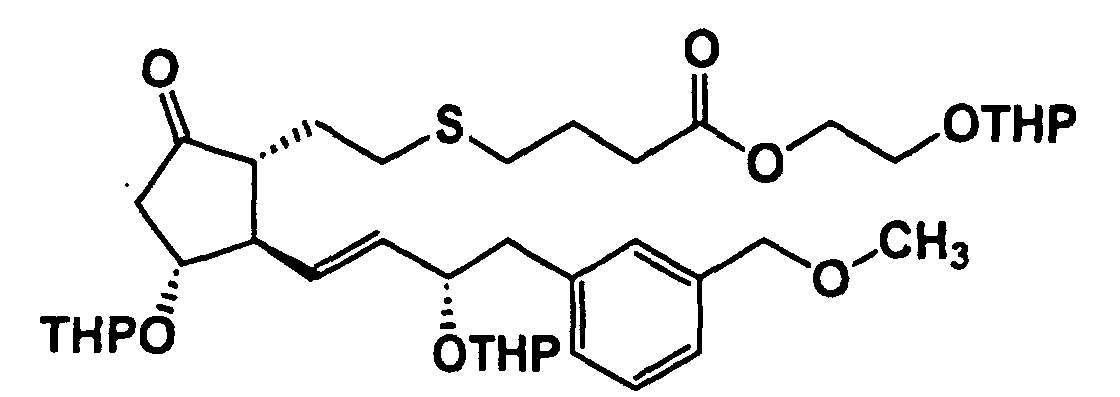
TLC : Rf 0.51 (Hexane : Ethyl Acetate = 1:1).
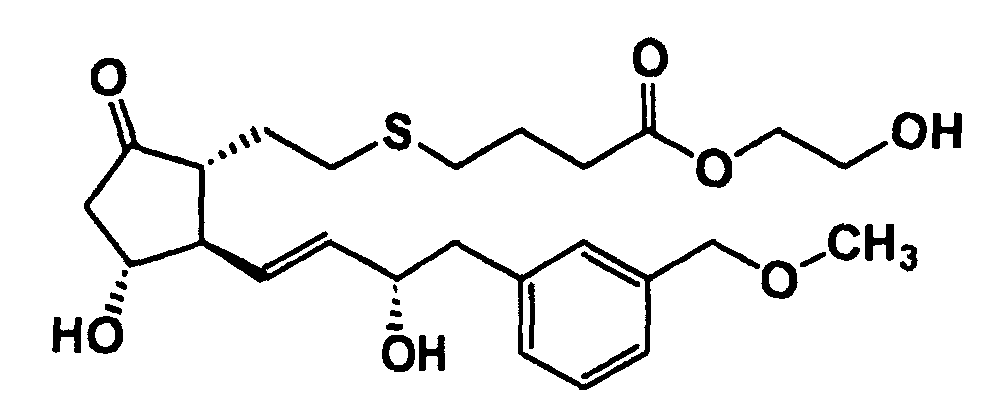
TLC : Rf 0.35 (Ethyl Acetate : Methanol = 19: 1);
NMR : δ 7.32-7.11 (m, 4H), 5.77 (dd, J = 15.3, 5.7 Hz, 1H), 5.54 (dd, J = 15.3, 8.1 Hz, 1H), 4.48-4.38 (m, 3H), 4.22-4.17 (m, 2H), 4.00-3.90 (m, 1H), 3.82-3.75 (m, 2H), 3.42 (s, 3H), 3.12-2.91 (br, 1H), 2.92 (dd, J = 13.5, 5.4 Hz, 1H), 2.84 (dd, J = 13.5, 6.9 Hz, 1H), 2.71 (dd, J = 18.9, 7.5 Hz, 1H), 2.65-2.50 (m, 2H), 2.52 (t, J = 7.2 Hz, 2H), 2.47 (t, J = 7.2 Hz, 2H), 2.45-2.15 (m, 5H), 1.95-1.8 0 (m, 3H), 1.76-1.60 (m, 1H).
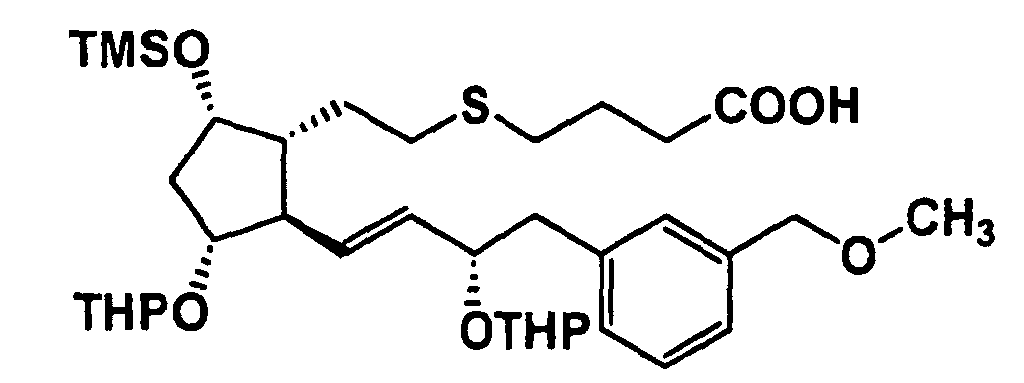
TLC : Rf 0.45 (Ethyl Acetate).
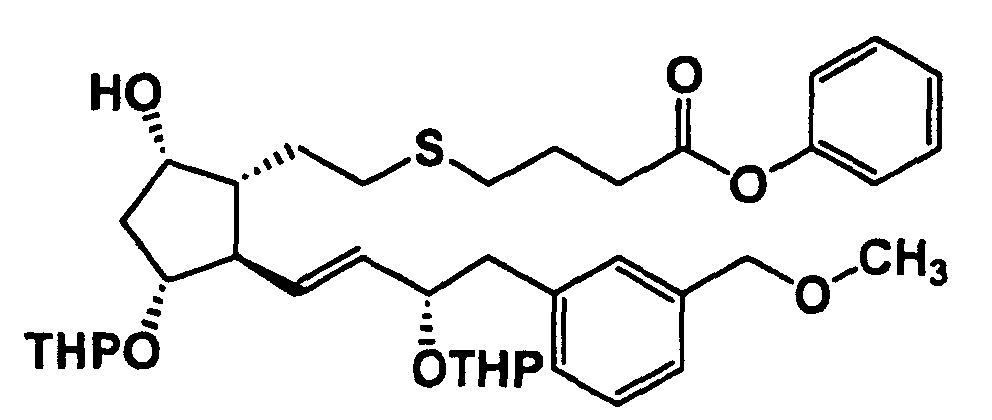
TLC : Rf 0.35 (Hexane : Ethyl Acetate = 1:1).
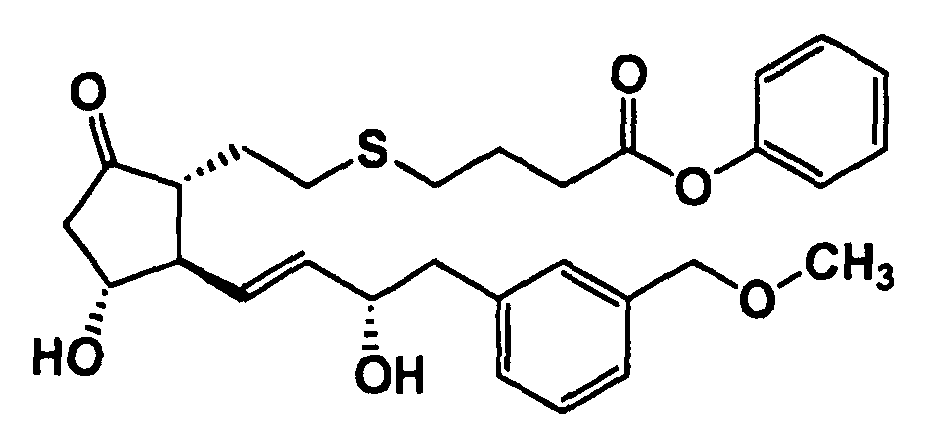
TLC : Rf 0.34 (Ethyl Acetate);
NMR : δ 7.4-7.0 (m, 9H), 5.74 (dd, J = 15, 6Hz, 1H), 5.51 (dd, J = 15, 8Hz, 1H), 4.5-4.3 (m, 3H), 3.93 (brq, 1H), 3.42 (s, 3H), 3.2-3.1 (br, 1H), 2.88 (dd, J = 14, 6Hz, 1H), 2.80 (dd, J = 14, 7Hz, 1H), 2.75-2.5 (m, 7H), 2.4-2.1 (m, 4H), 2.1-1.95 (m, 2H), 2.0-1.85 (m, 1H), 1.8-1.6 (m, 1H).

TLC : Rf 0.30 (Chloroform : Methanol : Acetic Acid = 45:5:1);
NMR : δ 7.3-7.1 (m, 4H), 5.80 (dd, J = 15, 6Hz, 1H), 5.57 (dd, J = 15, 8Hz, 1H), 4.58 (s, 2H), 4.47 (s, 2H), 4.5-4.4 (m, 1H), 4.0-3.9 (m, 1H), 3.23 (s, 3H), 2.93 (dd, J = 14, 5Hz, 1H), 2.81 (dd, J = 14, 7H z, 1H), 2.8-2.5 (m, 7H), 2.5-2.2 (m, 3H), 2.0-1.8 (m, 3H), 1.8-1.65 (m, 1H).
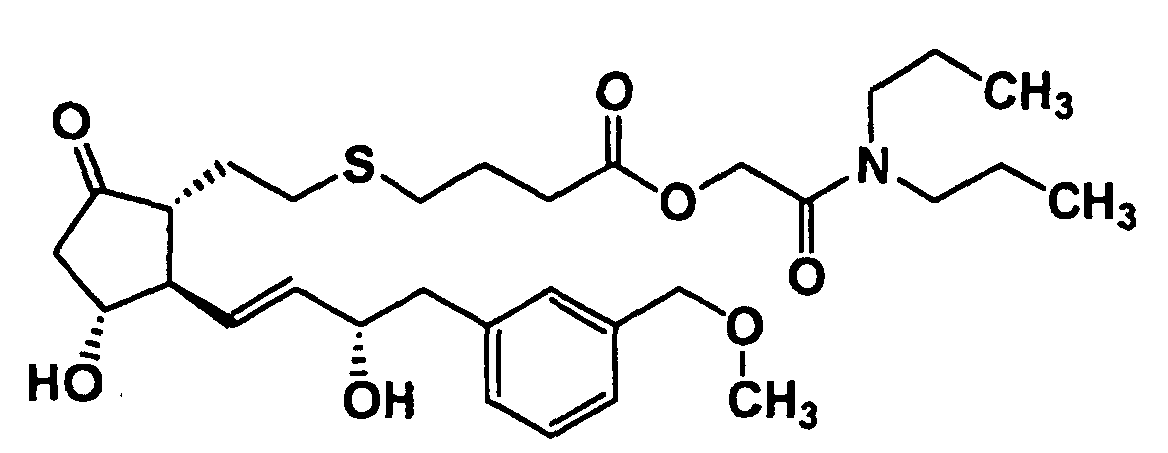
NMR : δ 7.32-7.27 (m, 1H), 7.22-7.13 (m, 3H), 5.74 (dd, J = 15.9, 6.3 Hz, 1H), 5.54 (ddd, J = 15.9, 8.4, 1.2 Hz, 1H), 4.71 (s, 2H), 4.42 (m, 3H), 3.94 (m, 1H), 3.41 (s, 3H), 3.28 (m, 2H), 3.19-3.08 (m, 3H), 2,95-2.80 (m, 2H), 2.78-2.50 (m, 8H), 2.40-2.18 (m, 3H), 2.00-1.83 (m, 3H), 1.76-1.50 (m, 5H), 0.94 (t, J = 7.5 Hz, 3H), 0.88 (t, J = 7.5 Hz, 3H).

NMR : δ 7.32-7.26 (m, 1H), 7.22-7.13 (m, 3H), 5.74 (dd, J = 15.6, 6.0 Hz, 1H), 5.54 (dd, J = 15.6, 8.4 Hz, 1H), 4.71 (s, 2H), 4.42 (m, 3H), 3.94 (m, 1H), 3.41 (s, 3H), 3.31 (m, 2H), 3.17 (m, 2H), 3.02 (m, 1H), 2.93-2.82 (m, 2H), 2.77-2.50 (m, 8H), 2.40-2.19 (m, 3H), 2.00-1.83 (m, 3H), 1.77-1.43 (m, 5H), 1.41-1.21 (m, 4H), 0.96 (t, J = 7.5 Hz, 3H), 0.91 (t, J = 7.5 Hz, 3H).

NMR : δ 7.81 (d, J = 8.4 Hz, 2H), 7.36-7.23 (m, 3H), 7.21-7.10 (m, 3H), 5.78 (dd, J = 15.0, 5.4 Hz, 1H), 5.55 (dd, J = 15.0, 8.1 Hz, 1H), 5.33 (s, 2H), 4.47-4.39 (m, 3H), 3.95 (m, 1H), 3.41 (s, 3H), 2.97-2.55 (m, 12H), 2.40-2.18 (m, 4H), 2,03-1.84 (m, 3H), 1.80-1.58 (m, 3H), 1.40-1.22 (m, 4H), 0.89 (t, J = 6.6 Hz, 3H).
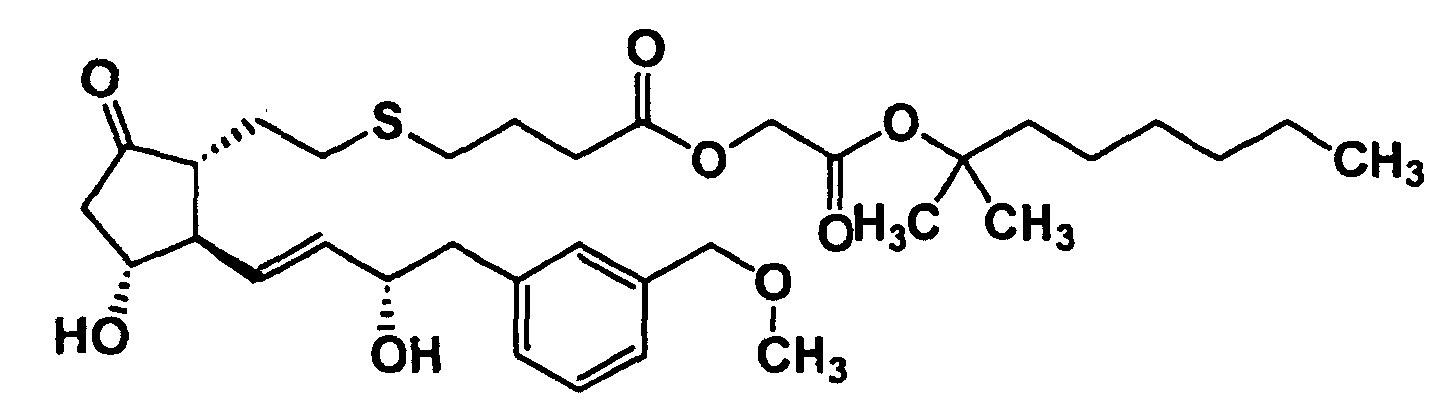
NMR : δ 7.35-7.12 (m, 4H), 5.76 (dd, J = 15.3, 5.7 Hz, 1H), 5.53 (dd, J = 15.3, 8.1 Hz, 1H), 4.51-4.40 (m, 5H), 3.95 (m, 1H), 3.42 (s, 3H), 3.00 (bs, 1H), 2.96-2.81 (m, 2H), 2.70 (dd, J = 18.6, 7.5 Hz, 1H), 2.61-2.48 (m, 6H), 2.40-2.19 (m, 4H), 2.00-1.83 (m, 3H), 1.79-1.60 (m, 3H), 1.44 (s, 6H), 1.38-1.20 (m, 8H), 0.88 (t, J = 6.6 Hz, 3H).

NMR : δ 7.36-7.12 (m, 4H), 5.76 (dd, J = 15.0, 5.4 Hz, 1H), 5.55 (dd, J = 15.0, 8.7 Hz, 1H), 4.70 (s, 2H), 4.45-4.39 (m, 3H), 3.95 (m, 1H), 3.41 (s, 3H), 3.30 (m, 2H), 3.17 (m, 2H), 3.00 (bs, 1H), 2.98-2.80 (m, 2H), 2.77-2.50 (m, 8H), 2.40-2.19 (m, 3H), 2.00-1.82 (m, 3H), 1.78-1.50 (m, 5H), 1.40-1.20 (m, 8H), 0.98-0.84 (m, 6H).

TLC : Rf 0.22 (Ethyl Acetate : Hexane = 3:1);
NMR : δ 7.35-7.15 (m, 4H), 5.75 (dd, J = 15.3, 6.0 Hz, 1H), 5.53 (dd, J = 15.3, 8.7 Hz, 1H), 4.50-4.37 (m, 3H), 4.22 (t, J = 5.1 Hz, 2H), 4.00-3.90 (m, 1H), 3.62 (t, J = 5.1 Hz, 2H), 3.46 (t, J = 6.9 Hz, 2H), 3.42 (s, 3H), 2.90 (dd, J = 13.5, 5.4 Hz, 1H), 2.83 (dd, J = 13.5, 7.2 Hz, 1H), 2.70 (dd, J = 18.6, 7.5 Hz, 1H), 2.65-2.40 (m, 6H), 2.40-2.10 (m, 4H), 1.95-1.80 (m, 4H), 1.80-1.50 (m, 3H), 1. 40-1.20 (m, 10H), 0.90 (t, J = 6.9 Hz, 3H).

NMR : δ 7.35-7.10 (m, 4H), 5.77 (dd, J = 15.3, 5.7 Hz, 1H), 5.53 (dd, J = 15.3, 8.4 Hz, 1H), 4.50-4.40 (m, 3H), 4.25 (s, 4H), 4.00-3.90 (m, 1H), 3.41 (s, 3H), 2.96-2.80 (m, 3H), 2.67 (dd, J = 18.3, 7.5 Hz, 1H), 2.65-2.50 (m, 2H), 2.50 (t, J = 7.2 Hz, 2H), 2.43 (t, J = 7.2 Hz, 2H), 2.40-2.10 (m, 4H), 1.95-1.80 (m, 3H), 1.75-1.60 (m, 1H), 1.55-1.45 (m, 2H), 1.30-1.20 (m, 2H), 0.88 (t, J = 7.2 Hz, 3H).
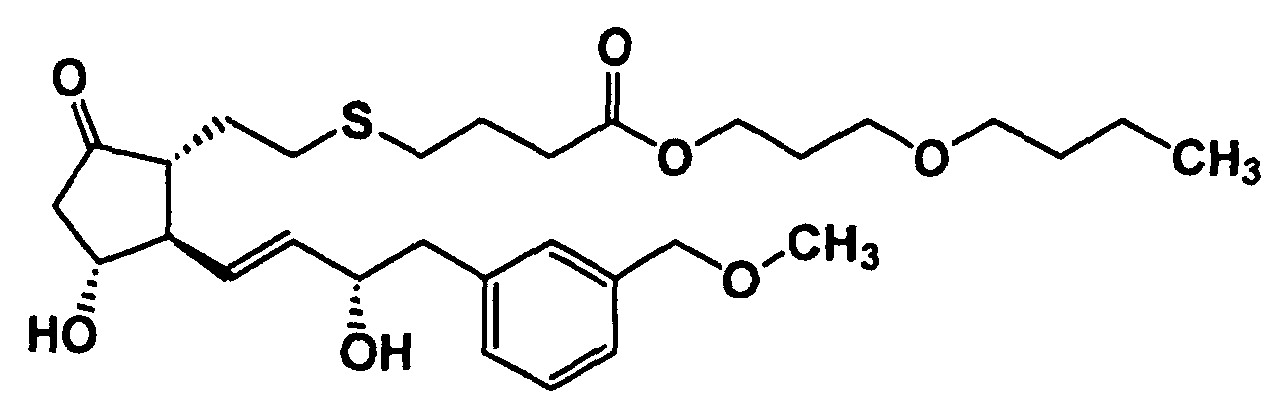
NMR : δ 7.30-7.10 (m, 4H), 5.77 (dd, J = 15.3, 5.7 Hz, 1H), 5.53 (dd, J = 15.3, 8.4 Hz, 1H), 4.50-4.40 (m, 3H), 4.17 (t, J = 7.2 Hz, 2H), 4.00-3.90 (m, 1H), 3.48 (t, J = 7.2 Hz, 2H), 3.42 (s, 3H), 3.40 (t , J = 6.6 Hz, 2H), 2.97-2.80 (m, 3H), 2.70 (dd, J = 19.2, 7.5 Hz, 1H), 2.65-2.50 (m, 2H), 2.50 (t, J = 7.2 Hz, 2H), 2.41 (t, J = 7.2 Hz, 2H), 2.36-2.14 (m, 4H), 1.95-1.82 (m, 3H), 1.75-1.60 (m, 1H ), 1.60-1.50 (m, 2H), 1.42-1.30 (m, 2H), 0.92 (t, J = 7.2 Hz, 3H).

NMR : δ 7.35-7.11 (m, 4H), 5.75 (dd, J = 15.3, 5.7 Hz, 1H), 5.53 (dd, J = 15.3, 8.7 Hz, 1H), 4.48-4.39 (m, 3H), 4.21 (m, 2H), 3.95 (m, 1H), 3.61 (m, 2H), 3.46 (t, J = 6.6 Hz, 2H), 3.42 (s, 3H), 3.00 (m, 1H), 2.98-2.80 (m, 2H), 2.78-2.18 (m, 11H), 1.98-1.81 (m, 3H), 1.78-1.53 (m, 3H), 1.38 (m, 2H), 0.92 (t, J = 7.5 Hz, 3H).

NMR : δ 7.35-7.11 (m, 4H), 5.75 (dd, J = 15.3, 5.7 Hz, 1H), 5.53 (dd, J = 15.3, 8.7 Hz, 1H), 4.48-4.39 (m, 3H), 4.21 (m, 2H), 3.95 (m, 1H), 3.61 (m, 2H), 3.46 (t, J = 6.6 Hz, 2H), 3.42 (s, 3H), 2.98-2.80 (m, 3H), 2.78-2.18 (m, 11H), 1.98-1.81 (m, 3H), 1.78-1.53 (m, 3H), 1.38 (m, 4H), 0.92 (t, J = 7.5 Hz, 3H).
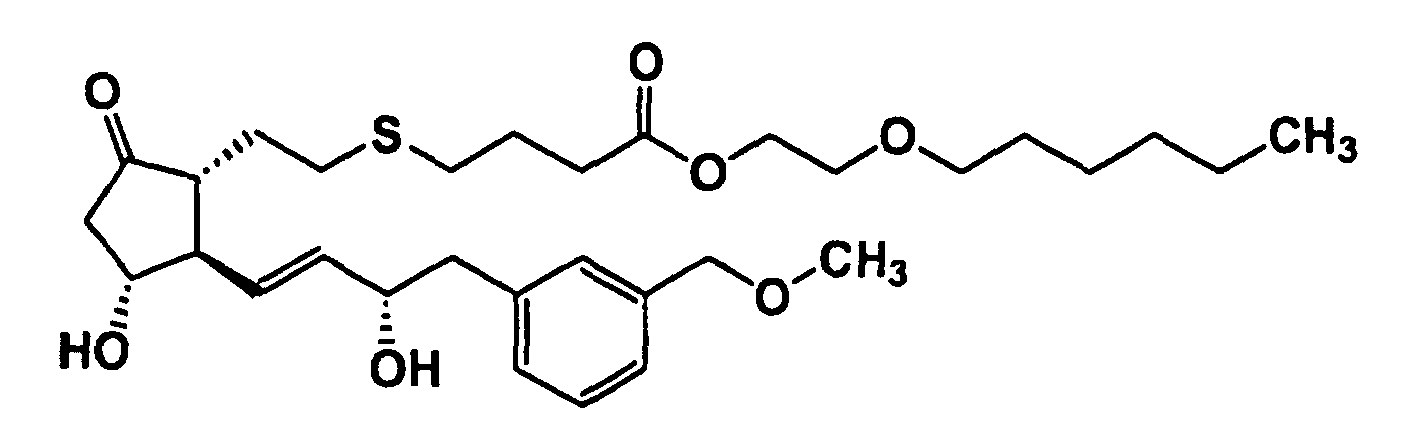
NMR : δ 7.36-7.12 (m, 4H), 5.76 (dd, J = 15.3, 5.7 Hz, 1H), 5.53 (dd, J = 15.3, 8.7 Hz, 1H), 4.48-4.40 (m, 3H), 4.21 (m, 2H), 3.95 (m, 1H), 3.61 (m, 2H), 3.47-3.40 (m, 5H), 2.98-2.80 (m, 3H), 2.78-2.40 (m, 7H), 2.38-2.18 (m, 4H), 1.97-1.82 (m, 3H), 1.70 (m, 1H), 1.63-1.52 (m, 2H), 1.40-1.25 (m, 6H), 0.88 (t, J = 7.2 Hz, 3H).
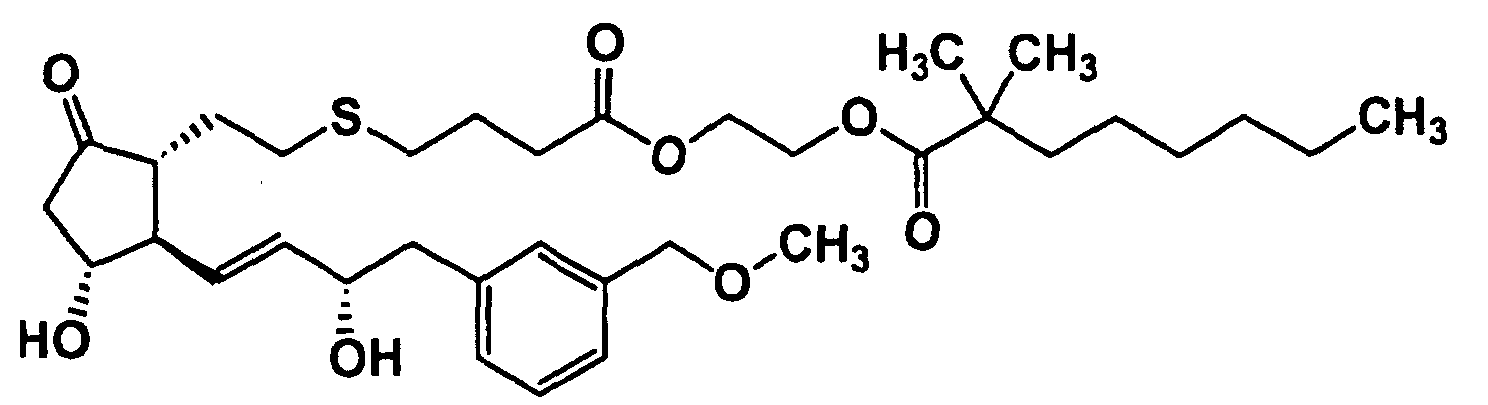
NMR : δ 7.35-7.10 (m, 4H), 5.75 (dd, J = 15.3, 6.0 Hz, 1H), 5.53 (dd, J = 15.3, 8.4 Hz, 1H), 4.50-4.35 (m, 3H), 4.26 (s, 4H), 4.00-3.90 (m, 1H), 3.42 (s, 3H), 3.20-3.10 (br, 1H), 2.90 (dd, J = 13.5, 5.4 H z, 1H), 2.83 (dd, J = 13.5, 7.2 Hz, 1H), 2.70 (dd, J = 18.6, 7.2 Hz, 1H), 2.63-2.50 (m, 2H), 2.50 (t, J = 7.5 Hz, 2H), 2.43 (t, J = 7.2 Hz, 2H), 2.40-2.15 (m, 4H), 1.95-1.80 (m, 3H), 1.80-1.60 (m, 1H), 1.55-1.50 (m, 2H), 1.40-1.15 (m, 8H), 0.90 (t, J = 6.9 Hz, 3H).

NMR : δ 7.35-7.10 (m, 4H), 5.76 (dd, J = 15.3, 6.0 Hz, 1H), 5.53 (dd, J = 15.3, 8.4 Hz, 1H), 4.50-4.35 (m, 3H), 4.27 (s, 4H), 4.00-3.90 (m, 1H), 3.42 (s, 3H), 3.05-3.00 (br, 1H), 2.92 (dd, J = 13.5, 5.4 H z, 1H), 2.83 (dd, J = 13.5, 7.2 Hz, 1H), 2.70 (dd, J = 18.0, 7.2 Hz, 1H), 2.65-2.40 (m, 6H), 2.40-2.10 (m, 4H), 1.95-1.80 (m, 3H), 1.80-1.50 (m, 7H), 1.25-1.10 (m, 2H), 0.90 (t, J = 7.2 Hz, 3H), 0.78 (t, J = 7.2 Hz, 6H).

NMR : δ 7.52 (d, J = 8.7 Hz, 2H), 7.47 (d, J = 8.6 Hz, 2H), 7.40 (d, J = 8.6 Hz, 2H), 7.24 (m, 1H), 7.20-7.08 (m, 5H), 5.72 (dd, J = 15.3, 6.6 Hz, 1H), 5.51 (dd, J = 15.3, 8.4 Hz, 1H), 4.45-4.30 (m, 3H), 3.95 (m, 1H), 3.63 (bs, 1H), 3.40 (s, 3H), 2.90-2.50 (m, 9H), 2.39-2.13 (m, 3H), 2.09-1.82 (m, 3H), 1.70 (m, 1H).
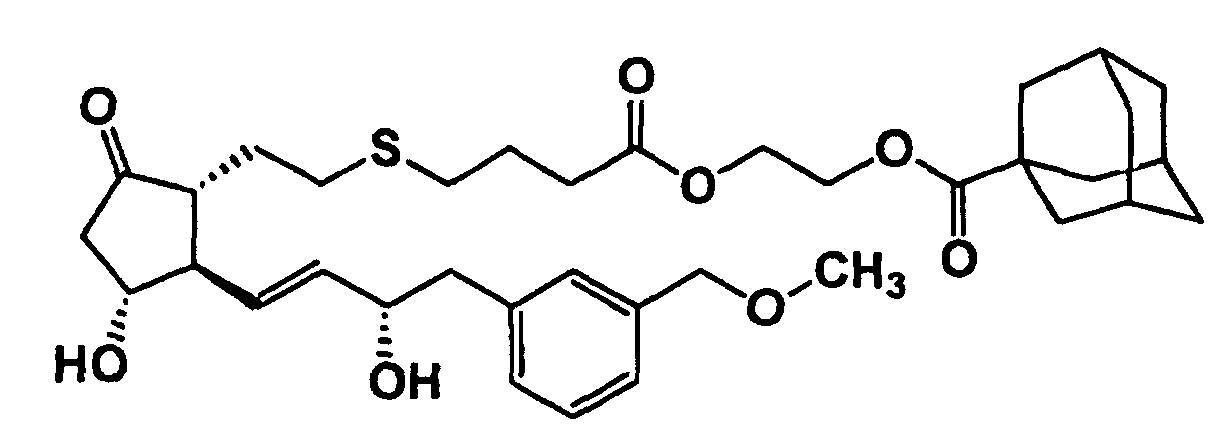
NMR : δ 7.32-7.11 (m, 4H), 5.75 (dd, J = 15.3, 6.0 Hz, 1H), 5.52 (dd, J = 15.3, 9.0 Hz, 1H), 4.48-4.36 (m, 3H), 4.31-4.22 (m, 4H), 4.02-3.89 (m, 1H), 3.42 (s, 3H), 3.20-3.12 (br, 1H), 2.90 (dd, J = 13.8, 5.4 Hz, 1H), 2.82 (dd, J = 13.8, 7.2 Hz, 1H), 2.70 (dd, J = 18.3, 7.2 Hz, 1H), 2.65-2.13 (m, 10H), 2.07-1.97 (m, 3H), 1.96-1.80 (m, 9H), 1.80-1.60 (m, 7H).

NMR : δ 7.32-7.12 (m, 4H), 5.75 (dd, J = 15.3, 6.0 Hz, 1H), 5.52 (dd, J = 15.3, 8.7 Hz, 1H), 4.48-4.32 (m, 3H), 4.25 (s, 4H), 4.02-3.88 (m, 1H), 3.42 (s, 3H), 3.27-3.20 (br, 1H), 2.90 (dd, J = 13.5, 5.4 Hz , 1H), 2.82 (dd, J = 13.5, 6.9 Hz, 1H), 2.70 (dd, J = 18.3, 7.2 Hz, 1H), 2.65-2.12 (m, 10H), 1.94-1.82 (m, 3H), 1.75-1.60 (m, 1H), 1.55-1.45 (m, 6H), 1.22-1.09 (m, 6H), 0.89 (t, J = 7.2 Hz, 9H).

TLC : Rf 0.17 (Chloroform : Methanol = 9:1);
NMR : δ 6.98 (d, J = 8.4 Hz, 2H), 6.66 (d, J = 8.4 Hz, 2H), 5.73 (dd, J = 15.9, 6.3 Hz, 1H), 5.47 (dd, J = 15.9, 8.4 Hz, 1H), 4.38 (m, 1H), 4.10 (m, 1H), 3.61 (m, 1H), 3.10-2.15 (m, 15H), 2.00-1.81 (m, 2H), 1.73 (m, 1H).
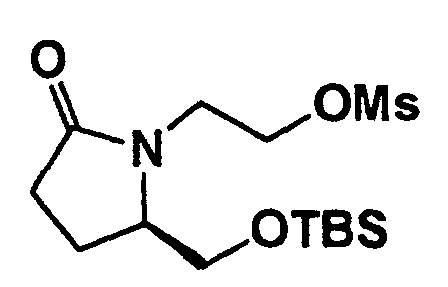
TLC : Rf 0.46 (Ethyl Acetate).
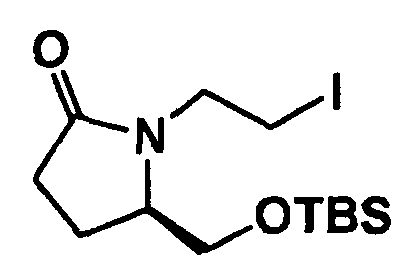
TLC : Rf 0.63 (Hexane : Ethyl Acetate = 1:1);
NMR : δ 3.92 (m, 1H), 3,81-3.69 (m, 2H), 3.62-3.45 (m, 2H), 3.35 (m, 1H), 3.22 (m, 1H), 2.50-2.26 (m, 2H), 2.14 (m, 1H), 1.78 (m, 1H), 0.86 (s, 9H), 0.03 (s, 3H), 0.02 (s, 3H).
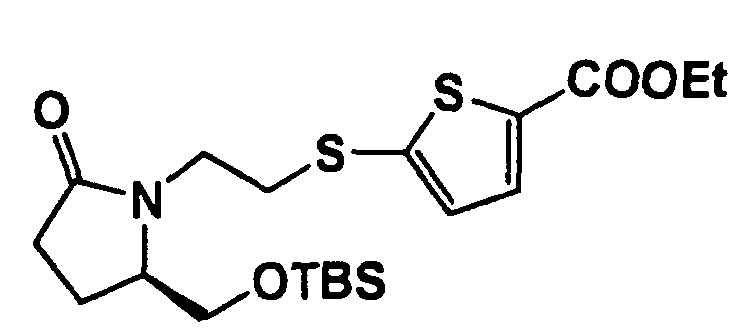
TLC : Rf 0.54 (Hexane : Ethyl Acetate = 1:1);
NMR : δ 7.65 (d, J = 3.9 Hz, 1H), 7.09 (d, J = 3.9 Hz, 1H), 4.32 (q, J = 7.5 Hz, 2H), 3.86-3.61 (m, 3H), 3.55 (m, 1H), 3.32 (m, 1H), 3.22-3.00 (m, 2H), 2.50-2.21 (m, 2H), 2.10 (m, 1H), 1.80 (m, 1H), 1.36 (t, J = 7.5 Hz, 3H), 0.86 (s, 9H), 0.03 (s, 3H), 0.02 (s, 3H).
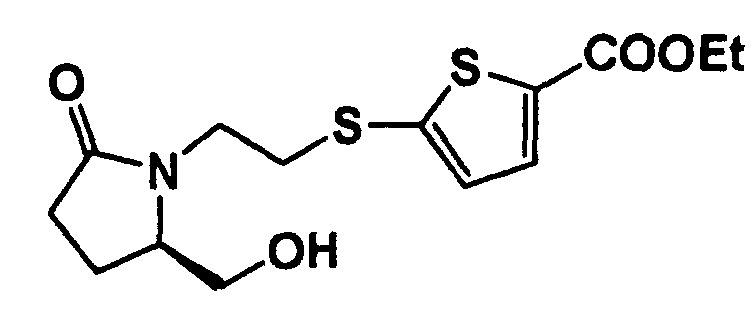
TLC : Rf 0.15 (Ethyl Acetate);
NMR: δ 7.64 (d, J = 3.9 Hz, 1H), 7.10 (d, J = 3.9 Hz, 1H), 4.33 (q, J = 6.9 Hz, 2H), 3.80-3.68 (m, 3H), 3.60 (m, 1H), 3.40 (m, 1H), 3.17 (t, J = 7.0 Hz, 2H), 2.58-2.28 (m, 2H), 2.10 (m, 1H), 1.98-1.80 (m, 2H), 1.37 (t, J = 7.2 Hz, 3H).

NMR : δ 7.68 (d, J = 3.9 Hz, 1H), 7.15 (dd, J = 8.4, 5.4 Hz, 2H), 7.06 (d, J = 3.9 Hz, 1H), 6.98 (t, J = 8.4 Hz, 2H), 5.71 (dd, J = 15.0, 5.4 Hz, 1H), 5.48 (dd, J = 15.0, 9.0 Hz, 1H), 4.37 (m, 1H), 4.11 (m, 1H), 3.82-3.30 (m, 2H), 3.19-2.93 (m, 3H), 2.70 (d, J = 6.9 Hz, 2H), 2.50-2.18 (m, 3H), 1.71 (m, 1H).

NMR : δ 7.66 (d, J = 4.2 Hz, 1H), 7.22 (d, J = 6.9 Hz, 1H), 7.10-7.00 (m, 3H), 5.69 (dd, J = 15.3, 5.4 Hz, 1H), 5.48 (dd, J = 15.3, 8.7 Hz, 1H), 4.50 (bs, 2H), 4.37 (m, 1H), 4.10 (m, 1H), 3.75-3.60 (m, 1H), 3.20-2.93 (m, 3H), 2.80-2.68 (m, 2H), 2.50-2.12 (m, 3H), 1.70 (m, 1H).

NMR : δ 7.65 (d, J = 3.9 Hz, 1H), 7.50-7.30 (m, 2H), 7.20-7.00 (m, 2H), 5.72 (dd, J = 15.3, 5.1 Hz, 1H), 5.51 (dd, J = 15.3, 8.7 Hz, 1H), 4.82 (bs, 2H), 4.40 (m, 1H), 4.12 (m, 1H), 3.65 (m, 1H), 3.23-2.93 (m, 3H), 2.90-2.73 (m, 2H), 2.50-2.10 (m, 3H), 1.70 (m, 1H).

TLC : Rf 0.63 (Ethyl Acetate: Hexane = 1:1);
NMR : δ 9.60 (s, 1H); 5.25-5.15 (m, 1H), 4.35-4.20 (m, 1H), 4.13 (q, J = 7.2 Hz, 2H), 2.50-2.35 (m, 2H), 2.35-2.20 (m, 1H), 2.00-1.85 (m, 1H), 1.43 (s, 9H), 1.27 (t, J = 7.2 Hz, 3H).
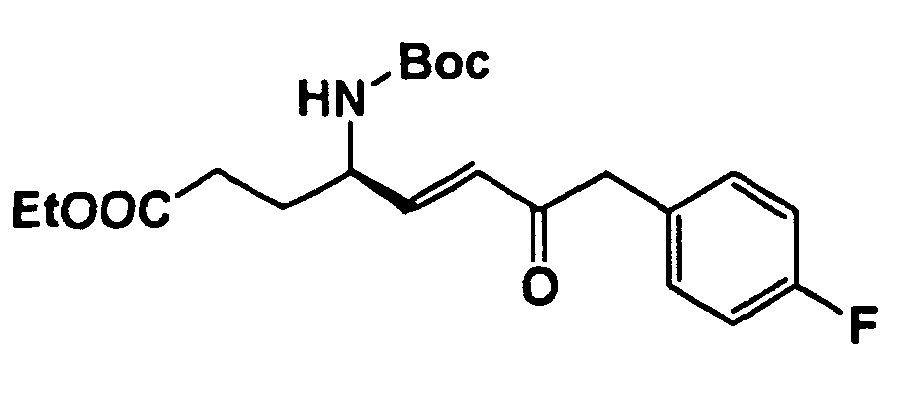
TLC : Rf 0.74 (Ethyl Acetate : Hexane = 1:1);
NMR : δ 7.20-7.10 (m, 2H), 7.08-6.96(m, 2H), 6.76 (dd, J = 15.3, 5.1 Hz, 1H), 6.24 (d, J = 15.3 Hz, 1H), 4.7-4.6 (m, 1H), 4.4-4.25 (m, 1H), 4.14 (q, J = 7.2 Hz, 2H), 3.82 (s, 2H), 2.38 (t, J = 7.2 Hz, 2H), 2.00-1.75 (m, 2H), 1.42 (s, 9H), 1.25 (t, J = 7.2 Hz, 3H).
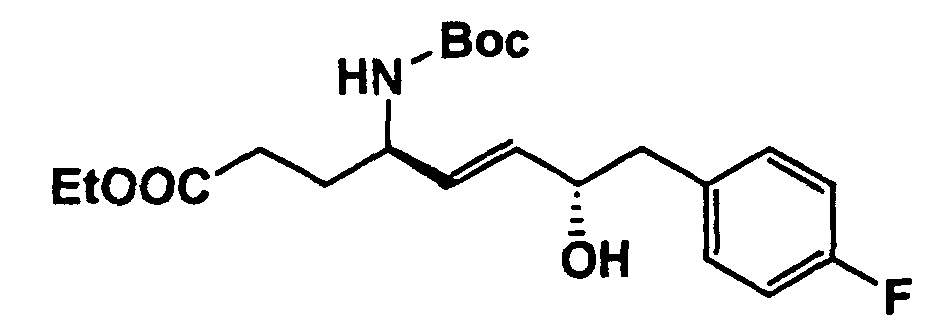
TLC : Rf 0.80 (Ethyl Acetate);
NMR : δ 7.20-7.09 (m, 2H), 7.02-6.93 (m, 2H), 5.67 (dd, J = 15.6, 5.7 Hz, 1H), 5.52 (dd, J = 15.6, 6.0 Hz, 1H), 4.56-4.43 (br, 1H), 4.35-4,27 (m, 1H), 4.20-4.05 (m, 3H), 2.85-2.68 (m, 2H), 2.30 (t, J = 6.9 Hz, 2H), 1.90-1.70 (m, 2H), 1.43 (s, 9H), 1.26 (t, J = 7.2 Hz, 3H).

TLC : Rf 0.05 (Ethyl Acetate);
NMR(CD3OD) : δ 7.28-7.19 (m, 2H), 7.04-6.93 (m, 2H), 5.92 (dd, J = 15.6, 4.8 Hz, 1H), 5.53 (dd, J = 15.6, 8.7 Hz, 1H), 4.41-4.32 (m, 1H), 4.15 (q, J = 7.2 Hz, 2H), 3.80-3.70 (m, 1H), 2.81 (d, J = 5.7 Hz, 2H), 2.28 (t, J = 6.9 Hz, 2H), 2.09-1.97 (m, 1H), 1.84-1.75 (m, 1H), 1.24 (t, J = 7.2 Hz, 3H).
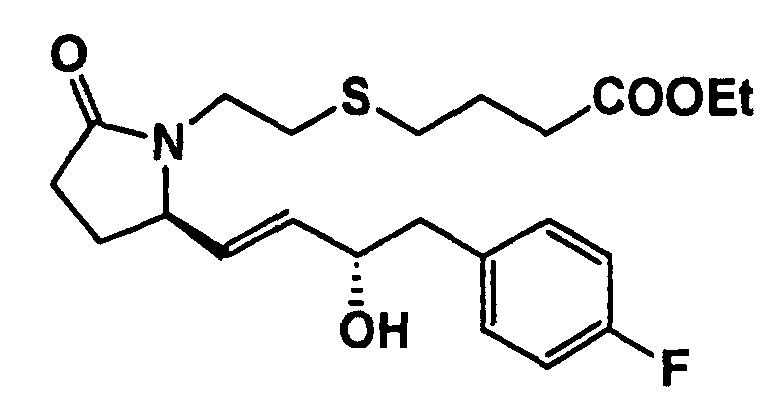
TLC : Rf 0.33 (Ethyl Acetate).
TLC : Rf 0.44 (Chloroform : Methanol = 9:1);
NMR : δ 7.21-7.14 (m, 2H), 7.05-6.96 (m, 2H), 5.75 (dd, J = 15.6, 6.0 Hz, 1H), 5.50 (dd, J = 15.6, 8.4 Hz, 1H), 4.19 (m, 1H), 4.18-4.03 (m, 3H), 3.60 (m, 1H), 2.97 (m, 1H), 2.85-2.79 (m, 2H), 2.70-2.18 (m, 9H), 2.01-1.82 (m, 3H), 1.79-1.60 (m, 1H), 1.25 (t, J = 7.2 Hz, 3H).

TLC : Rf 0.38 (Chloroform : Methanol : Water = 9:1:0.1);
NMR : δ 7.20-7.16 (m, 2H), 7.04-6.96 (m, 2H), 5.75 (dd, J = 15.4, 6.0Hz, 1H), 5.50 (ddd, J = 15.4, 8.5, 1.1Hz, 1H), 4.39 (m, 1H), 4.11 (m, 1H), 3.62 (m, 1H), 2.95 (m, 1H), 2.82 (d, J = 6.6Hz, 2H), 2.67-2.53 (m, 4H), 2.52-2.43 (m, 2H), 2.39 (t, J = 7.1Hz, 2H), 2.22 (m, 1H), 1.94-1.83 (m, 2H), 1.68 (m, 1H).

NMR : δ 7.76-7.70 (m, 2H), 7.59 (d, J = 8.4 Hz, 1H), 7.52 (d, J = 8.4 Hz, 1H), 7.40 (dd, J = 8.4, 8.4 Hz, 1H), 7.33-7.17 (m, 3H), 7.04 (s, 1H), 5.79 (dd, J = 15.3, 5.7 Hz, 1H), 5.51 (dd, J = 15.3, 8.4 Hz, 1H), 4.55-4.44 (m, 1H), 4.16-4.07 (m, 1H), 3.68-3.54 (m, 1H), 3.02-2.90 (m, 3H), 2.70-2.10 (m, 9H), 1.92-1.78 (m, 2H), 1.78-1.62 (m, 1H).

NMR : δ 8.07 (s, 1H), 7.21 (t, J = 7.2 Hz, 1H), 7.10-6.95 (m, 3H), 3.97-3.80 (m, 2H), 3.72 (m, 1H), 3.60-3.25 (m, 3H), 2.84-2.63 (m, 2H), 2.55-2.22 (m, 5H), 2.14 (m, 1 H), 1.93 (m, 1H), 1.78-1.41 (m, 4H).

NMR : δ 8.02 (d, J = 8.1 Hz, 2H), 7.30-7.15 (m, 3H), 7.10-6.97 (m, 3H), 5.64 (dd, J = 15.6, 6.3 Hz, 1H), 5.37 (dd, J = 15.6, 8.7 Hz, 1H), 4.41-4.32 (m, 1H), 3.83-3.70 (m, 2H), 3.09-2.95 (m, 1H), 2.95-2.75 (m, 4H), 2.48-2.25 (m, 5H), 2.20-2.13 (m, 1H), 1.72-1.58 (m, 1H).

NMR(DMSO-d6) : δ 8.08 (d, J = 1.2 Hz, 1H), 7.68 (d, J = 8.1Hz, 1H), 7.56 (d, J = 8.1 Hz, 1H), 7.20-7.10 (m, 2H), 7.10-6.95 (m, 3H), 5.60 (dd, J = 15.3, 6.6 Hz, 1H), 5.43 (dd, J = 15.3, 5.4 Hz, 1H), 4.95-4.80 (m, 2H), 4.37 (q, J = 6.6 Hz, 1H), 3.90-3.75 (m, 2H), 2.91 (dd, J = 13.5, 6.6 Hz, 1H), 2.70 (dd, J = 13.5, 7.5 Hz, 1H), 2.50-2.20 (m, 5H), 2.15-2.00 (m, 1H), 1.75-1.60 (m, 1H).
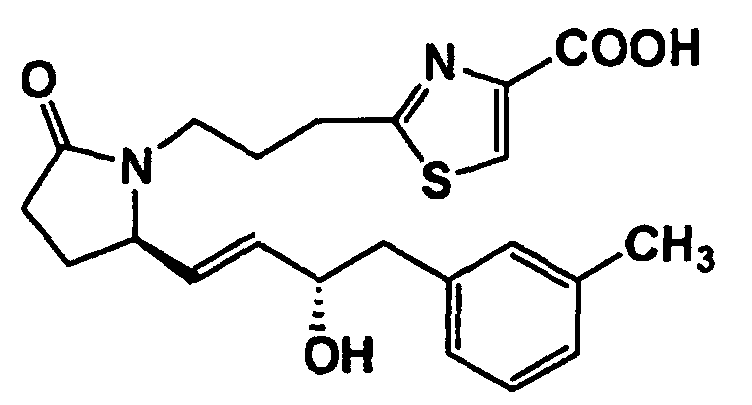
NMR : δ 8.12 (s, 1H), 7.18 (m, 1H), 7.05-6.97 (m, 3H), 5.75 (dd, J = 15.3, 5.7 Hz, 1H), 5.60-5.20 (m, 3H), 4.40 (m, 1H), 4.07 (m, 1H), 3.51 (m, 1H), 3.07-2.85 (m, 3H), 2.79 (d, J = 6.6 Hz, 2H), 2,50-2.12 (m, 6H), 2.04-1.90 (m, 2H), 1.70 (m, 1H).
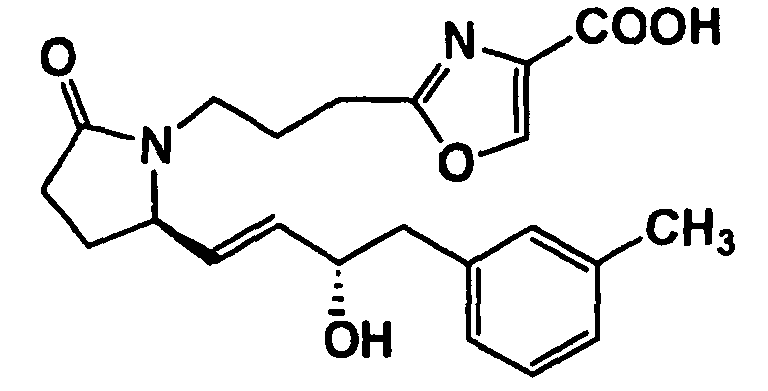
NMR : δ 8.19 (s, 1H), 7.20 (m, 1H), 7.06-6.97 (m, 3H), 5.78 (dd, J = 15.3, 6.0 Hz, 1H), 5.50 (ddd, J = 15.3, 9.0, 1.2 Hz, 1H), 4.40 (m, 2H), 4.07 (m, 1H), 3.47 (m, 1H), 2.94 (m, 1H), 2.83-2.75 (m, 4H), 2. 50-2.10 (m, 6H), 2.05-1.83 (m, 2H), 1.64 (m, 1H).

NMR : δ 7.70 (d, J = 3.9 Hz, 1H), 7.21 (t, J = 7.8 Hz, 1H), 7.10-6.98 (m, 3H), 6.88 (d, J = 3.9 Hz, 1H), 5.75 (dd, J = 15.0, 6.0 Hz, 1H), 5.46 (dd, J = 15.0, 8.7 Hz, 1H), 4.88 (d, J = 16.2 Hz, 1H), 4.50-4.40 (m, 1H), 4.10-4.00 (m, 1H), 3.88 (d, J = 16.2 Hz, 1H), 2.82 (d, J = 6.6 Hz, 2H), 2.50-2.15 (m, 6H), 1.80-1.70 (m, 1H).
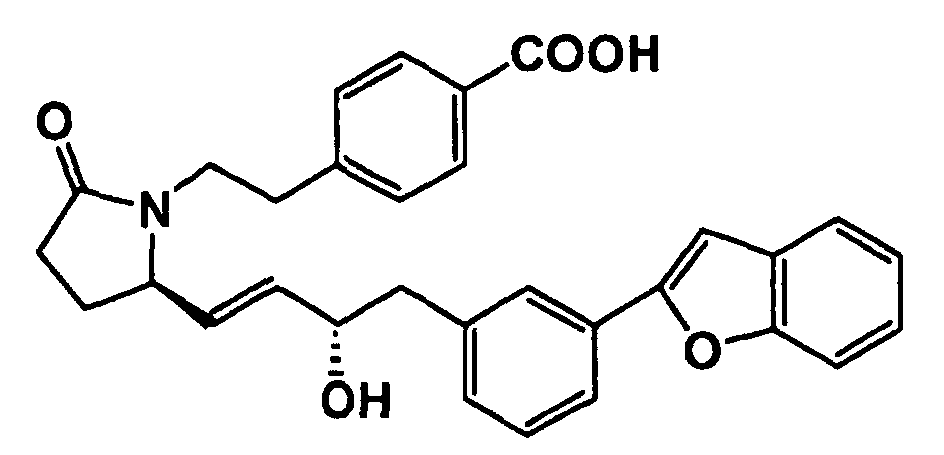
NMR : δ 7.98 (d, J = 8.1 Hz, 2H), 7.78-7.70 (m, 2H), 7.58 (d, J = 8.1 Hz, 1H), 7.51 (d, J = 8.1 Hz, 1H), 7.38 (t, J = 7.8 Hz, 1H), 7.34-7.16 (m, 5H), 7.03 (s, 1H), 5.65 (dd, J = 15.0, 6.0 Hz, 1H), 5.37 (dd, J = 15.0, 7.8 Hz, 1H), 4.50-4.40 (m, 1H), 3.80-3.65 (m, 2H), 3.05-2.60 (m, 5H), 2.40-2.20 (m, 2H), 2.20-2.00 (m, 1H), 1.70-1.55 (m, 1H).
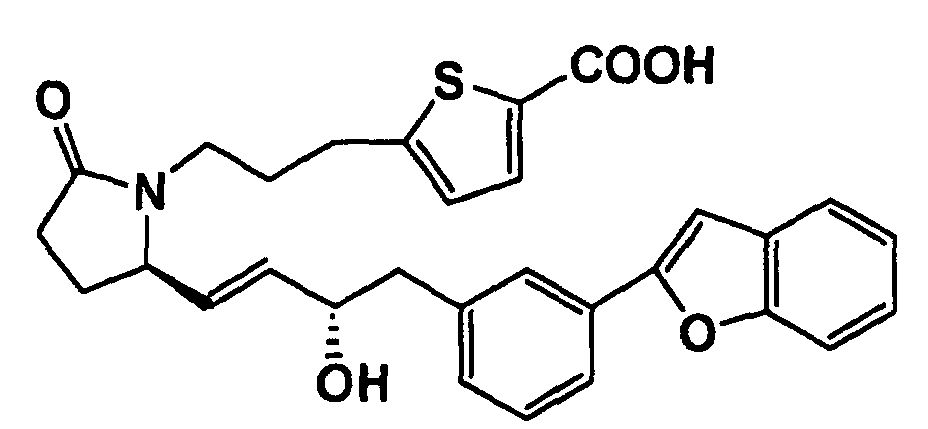
NMR : δ 7.74-7.68 (m, 2H), 7.61 (d, J = 3.9 Hz, 1H), 7.57 (d, J = 8.4 Hz, 1H), 7.50 (d, J = 8.4 Hz, 1H), 7.38 (t, J = 7.8 Hz, 1H), 7.32-7.14 (m, 3H), 7.02 (s, 1H), 6.73 (d, J = 3.9 Hz, 1H), 5.75 (dd, J = 15.3, 6.3 Hz, 1H), 5.47 (dd, J = 15.3, 8.4 Hz, 1H), 4.50-4.40 (m, 1H), 4.05-3.95 (m, 1H), 3.65-3.40 (m, 1H), 2.90 (d, J = 6.9 Hz, 2H), 2.85-2.70 (m, 3H), 2.50-2.10 (m, 3H), 1.85-1.65 (m, 3H).
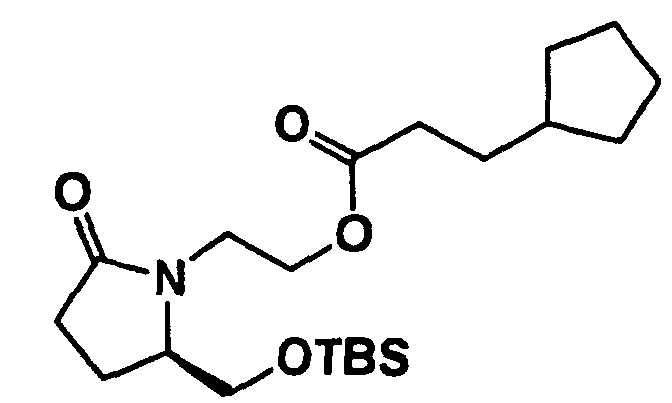
TLC : Rf 0.40 (Ethyl Acetate : Hexane = 1:1).

TLC : Rf 0.35 (Ethyl Acetate : Methanol = 20:1).

TLC : Rf 0.57 (Ethyl Acetate : Methanol = 20:1).
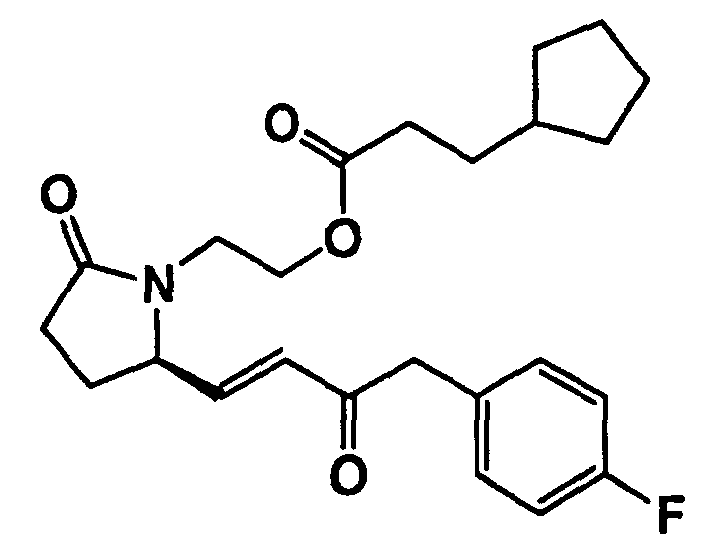
TLC : Rf 0.75 (Ethyl Acetate : Methanol = 20:1).

TLC : Rf 0.50 (Ethyl Acetate : Methanol = 20:1).

TLC : Rf 0.81 (Ethyl Acetate).
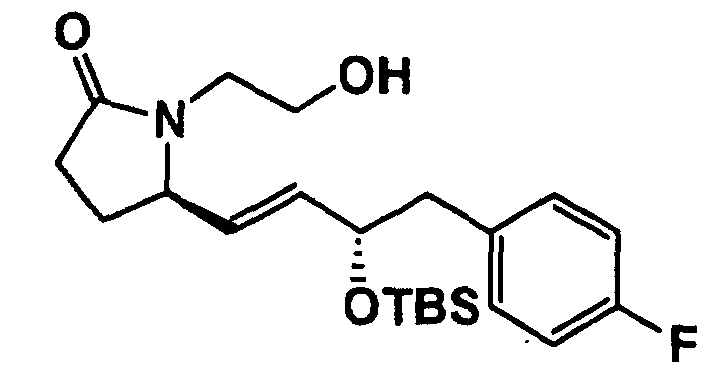
TLC : Rf 0. 15 (Ethyl Acetate).
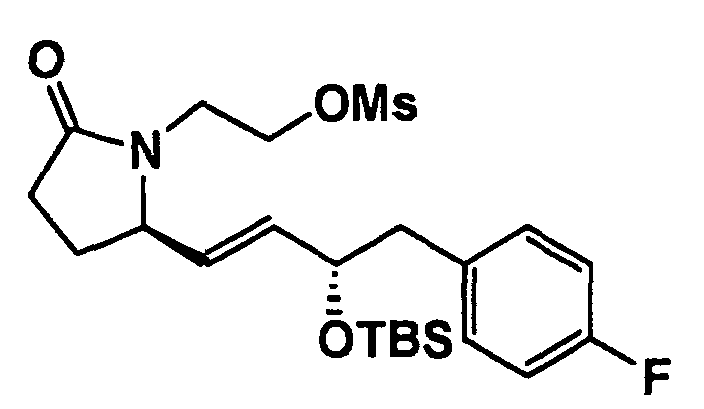
TLC : Rf 0.60 (Ethyl Acetate).

TLC : Rf 0.92 (Ethyl Acetate).
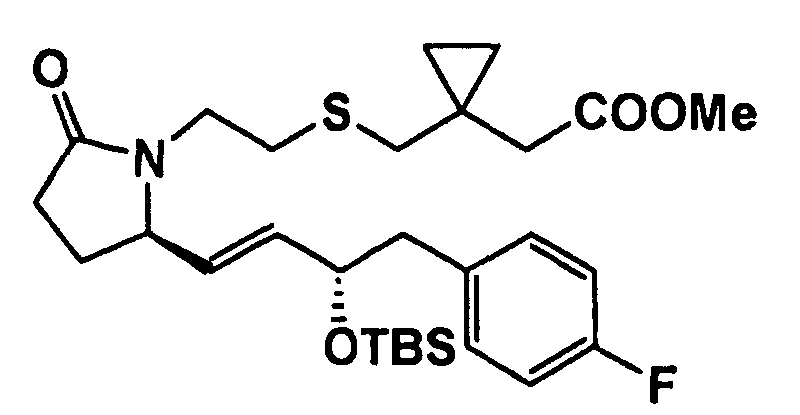
TLC : Rf 0.42 (Ethyl Acetate : Hexane = 1:1).

TLC : Rf 0.50 (Chloroform : Methanol = 9:1);
NMR : δ 7.22-7.13 (m, 2H), 7.08-6.96 (m, 2H), 5.76 (dd, J = 15.3, 5.7 Hz, 1H), 5.51 (dd, J = 15.3, 8.7 Hz, 1H), 4.48-4.38 (m, 1H), 4.16-4.05 (m, 1H), 3.67-3.53 (m, 1H), 3.10-2.95 (m, 1H), 2.88-2.79 (m, 2H) , 2.76 (d, J = 13.5 Hz, 1H), 2.68-2.50 (m, 4H), 2.43-2.16 (m, 5H), 1.75-1.63 (m, 1H), 0.65-0.50 (m, 4H).

NMR : δ 8.00 (d, J = 8.4 Hz, 2H), 7.38 (d, J = 8.4 Hz, 2H), 7.20-7.10 (m, 2H), 7.07-6.96 (m, 2H), 5.65 (dd, J = 15.3, 5.4 Hz, 1H), 5.47 (dd, J = 15.3, 9.3 Hz, 1H), 4.35 (m, 1H), 4.10 (m, 1H), 3.67 (m, 1H), 3.30-3.00 (m, 3H), 2.75 (d, J = 6.9 Hz, 2H), 2.48-2.08 (m, 3H), 1.70 (m, 1H).

NMR : δ 8.05 (m, 1H), 7.88 (d, J = 7.8 Hz, 1H), 7.58 (d, J = 8.4 Hz, 1H), 7.38 (t, J = 7.8 Hz, 1H), 7.18-7.02 (m, 2H), 7.01-6.93 (m, 2H), 5.68 (dd, J = 15.6, 5.7 Hz, 1H), 5.45 (dd, J = 15.6, 8.7 Hz, 1H), 4.60 (bs, 2H), 4.33 (m, 1H), 4.10 (m, 1H), 3.64 (m, 1H), 3.22-2.98 (m, 3H), 2.75 (d, J = 6.6 Hz, 2H), 2.50-2.08 (m, 3H), 1.68 (m, 1H).

NMR : δ 7.65 (d, J = 8.1 Hz, 2H), 7.55 (d, J = 8.1 Hz, 2H), 7.28-7.20 (m, 1H), 6.88-6.78 (m, 3H), 5.75 (dd, J = 15.3, 5.7 Hz, 1H), 5.48 (dd, J = 15.3, 8.1 Hz, 1H), 5.12 (s, 2H), 4.41 (q, J = 6.3 Hz, 1H), 4.3-3.4 (br), 4.17-4.07 (m, 1H), 3.68-3.57 (m, 1H), 3.01-2.88 (m, 1H), 2.82 (d, J = 6.3 Hz, 2H), 2.70-2.10 (m, 9H), 1.96-1.82 (m, 2H), 1.78-1.62 (m, 1H).
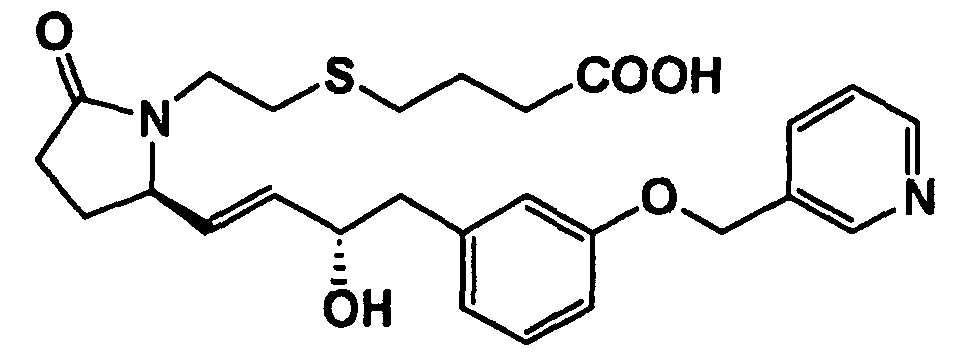
NMR : δ 8.72 (s, 1H), 8.45 (d, J = 3.3 Hz, 1H), 7.85 (d, J = 7.8 Hz, 1H), 7.39 (dd, J = 7.8, 3.3 Hz, 1H), 7.16 (dd, J = 8.1, 8.1 Hz, 1H), 7.04 (s, 1H), 6.80-6.75 (m, 2H), 5.85 (dd, J = 15.3, 4.8 Hz, 1H), 5.62 (dd, J = 15.3, 8.7 Hz, 1H), 5.24 (d, J = 13.2 Hz, 1H), 5.17 (d, J = 13.2 Hz, 1H), 4.35-4.30 (m, 1H), 4.20-4.10 (m, 1H), 3.53-3.40 (m, 1H), 3.30-3.16 (m, 1H), 2.8-2.3 (m, 10H), 2.3-2.1 (m, 1H), 1.95-1.8 (m, 2H), 1.8-1.6 (m, 1H).

NMR : δ 5.80 (dd, J = 15.6, 6.0 Hz, 1H), 5.58 (ddd, J = 15.6, 8.4, 1.0 Hz, 1H), 4.30 (m, 1H), 4.15 (m, 1H), 3.77-3.05 (m, 4H), 2.77-2.08 (m, 9H), 2.00-1.70 (m, 3H), 1.53-1.41 (m, 2H), 0.72 (m, 1H), 0.60-0.42 (m, 2H), 0.20-0.02 (m, 2H).
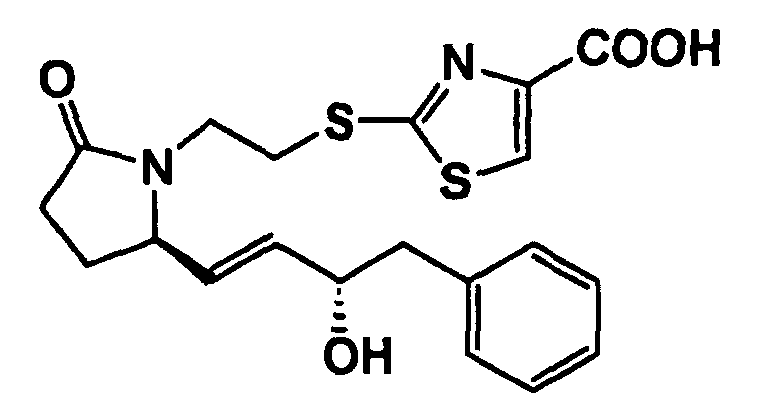
NMR : δ 8.09 (s, 1H), 7.38-7.14 (m, 5H), 5.80 (dd, J = 15.3, 6.0 Hz, 1H), 5.47 (dd, J = 15.3, 8.7 Hz, 1H), 4.40 (m, 1H), 4.21-3.61 (m, 4H), 3.38-3.16 (m, 3H), 2.97-2.79 (m, 2H), 2.52-2.18 (m, 3H), 1.76 (m, 1H).

NMR : δ 8.08 (s, 1H), 7.20 (m, 1H), 7.08-6.95 (m, 3H), 5.80 (dd, J = 15.3, 5.7 Hz, 1H), 5.50 (dd, J = 15.3, 8.7 Hz, 1H), 4.40 (m, 1H), 4.12 (m, 1H), 3.70 (m, 1H), 3.50-2.95 (m, 5H), 2.85-2.78 (m, 2H), 2.50-2.19 (m, 6H), 1.77 (m, 1H).
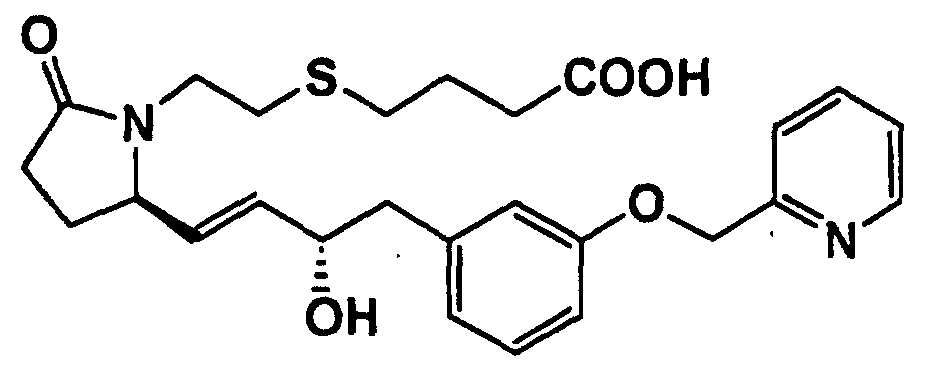
NMR : δ 8.57 (d, J = 5.4 Hz, 1H), 7.80 (dt, J = 1.5, 7.5 Hz, 1H), 7.60 (d, J = 7.5 Hz, 1H), 7.32 (m, 1H), 7.22 (t, J = 7.8 Hz, 1H), 6.99-6.85 (m, 2H), 6.80 (d, J = 7.8 Hz, 1H), 5.85 (dd, J = 15.0, 4.8 Hz, 1H), 5.59 (ddd, J = 15.0, 8.7, 1.2 Hz, 1H), 5.32 (s, 2H), 4.43 (m, 1H), 4.11 (m, 1H), 3.43 (m, 1H), 3.18 (m, 1H), 2.88-2.18 (m, 13H), 1.97-1.83 (m, 2H), 1.72 (m, 1H).
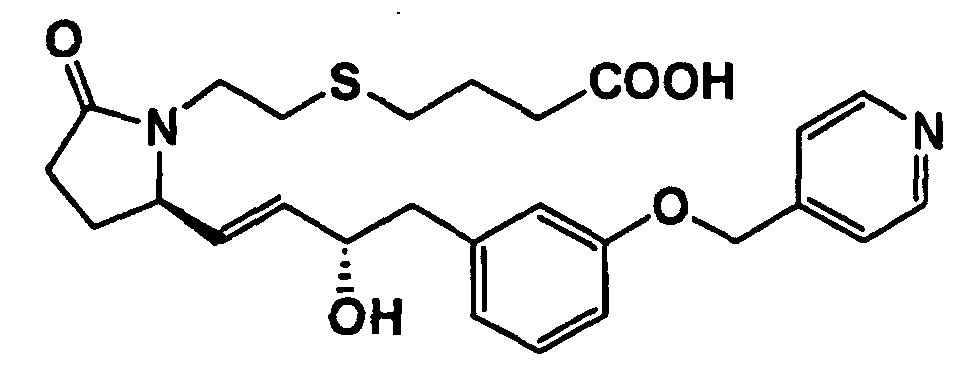
NMR : δ 8.58 (d, J = 6.0 Hz, 2H), 7.39 (d, J = 6.0 Hz, 2H), 7.22 (t, J = 7.8 Hz, 1H), 6.88-6.70 (m, 3H), 5.72 (dd, J = 15.3, 5.7 Hz, 1H), 5.45 (dd, J = 15.3, 8.1 Hz, 1H), 5.12 (s, 2H), 4.32 (m, 1H), 4.11 ( m, 1H), 3.59 (m, 1H), 3.30 (m, 1H), 2.99 (m, 1H), 2.78 (m, 2H), 2.69-2.12 (m, 10H), 1.98-1.80 (m, 2H), 1.63 (m, 1H).
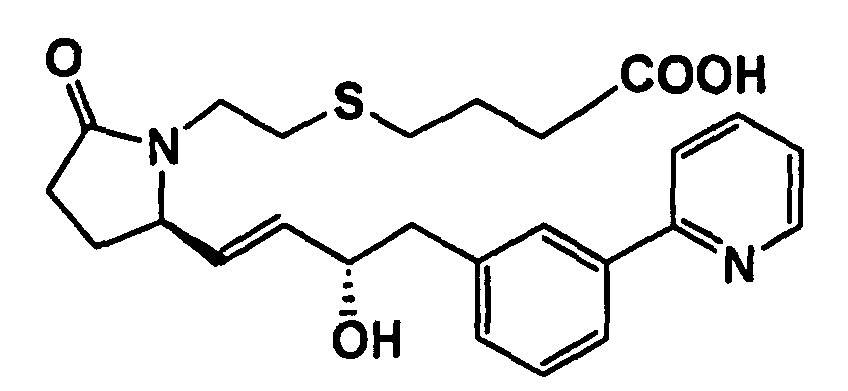
NMR : δ 8.74 (m, 1H), 7.93 (s, 1H), 7.84 (dt, J = 1.8, 7.8 Hz, 1H), 7.72 (d, J = 7.8 Hz, 1H), 7.65 (d, J = 8.1 Hz, 1H), 7.42 (t, J = 7.5 Hz, 1H), 7.37-7.23 (m, 2H), 5.88 (dd, J = 15.0, 4.5 Hz, 1H), 5.64 (ddd, J = 15.0, 9.0, 1.5 Hz, 1H), 5.45 (bs, 2H), 4.58 (m, 1H), 4.10 (m, 1H), 3.40 (m, 1H), 3.21 (m, 1H), 3.02-2.80 (m, 2H), 2.78-2.10 (m, 9H), 1.99-1.82 (m, 2H), 1.73 (m, 1H).
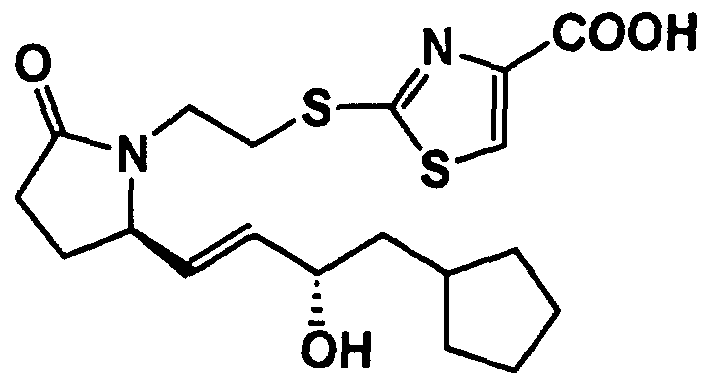
NMR : δ 8.10 (s, 1H), 5.79 (dd, J = 15.6, 6.0 Hz, 1H), 5.55 (d, J = 15.6, 8.7 Hz, 1H), 4.40-3.63 (m, 5H), 3.58-3.24 (m, 3H), 2.57 -2.08 (m, 3H), 1.98-1.40 (m, 10H), 1.10 (m, 2H).
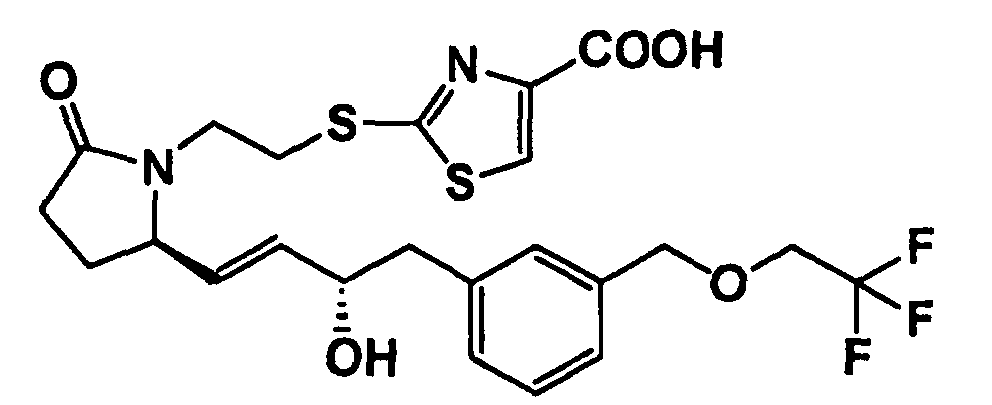
NMR : δ 8.08 (s, 1H), 7.37-7.10 (m, 4H), 5.80 (dd, J = 15.3, 5.7 Hz, 1H), 5.52 (dd, J = 15.3, 8.4 Hz, 1H), 4.80-4.50 (m, 3H), 4.41 (m, 1H), 4.11 (m, 1H), 3.94-3.62 (m, 4H), 3.39-3.19 (m, 3H), 2.88-2.79 (m, 2H), 2.50-2.17 (m, 3H), 1.72 (m, 1H).
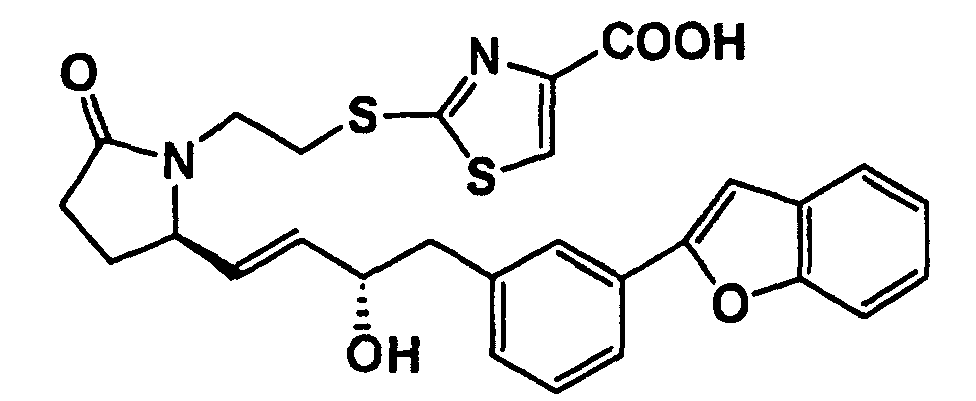
NMR : δ 8.05 (s, 1H), 7.80-7.65 (m, 2H), 7.58 (d, J = 7.5 Hz, 1H), 7.51 (d, J = 7.5 Hz, 1H), 7.39 (t, J = 7.8 Hz, 1H), 7.35-7.15 (m, 3H), 7.03 (s, 1H), 5.82 (dd, J = 15.0, 5.7 Hz, 1H), 5.52 (d, J = 15.0, 8 .7 Hz, 1H), 4.50 (m, 1H), 4.19-4.02 (m, 1H), 3.70 (m, 1H), 3.36-3.08 (m, 3H), 3.00-2.82 (m, 2H), 2.50-2.10 (m, 3H), 1.72 (m, 1H).
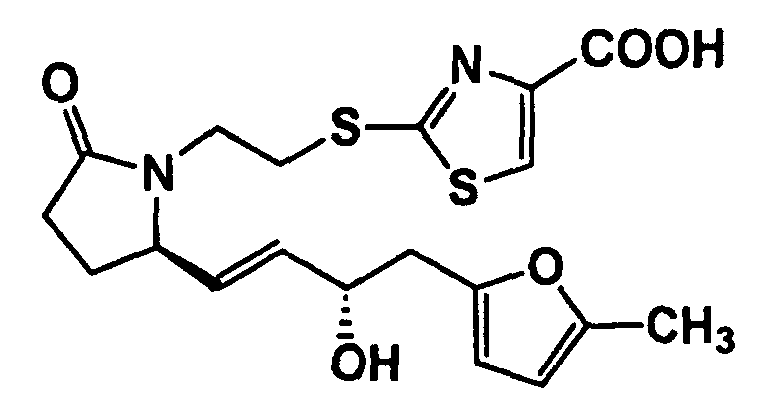
NMR : δ 8.09 (s, 1H), 5.96 (d, J = 3.0 Hz, 1H), 5.90-5.84 (m, 1H), 5.79 (dd, J = 15.3, 6.0 Hz, 1H), 5.55 (ddd, J = 15.3, 6.0, 1.2 Hz, 1H), 4.45 (q, J = 6.3 Hz, 1H), 4.12 (q, J = 7.5 Hz, 1 H), 3.84-3.72 (m, 1H), 3.46-3.18 (m, 3H), 2.82 (d, J = 6.3 Hz, 2H), 2.50-2.20 (m, 3H), 2.24 (s, 3H), 1.80-1.70 (m, 1H).

NMR : δ 7.97 (m, 1H), 7.69 (m, 1H), 7.38 (m, 1H), 7.21-7.15 (m, 2H), 7.06-6.97 (m, 2H), 5.75 (dd, J = 15.0, 5.7 Hz, 1H), 5.51 (ddd, J = 15.0, 8.4, 1.0 Hz, 1H), 4.40 (m, 1H), 4.10 (m, 1H), 3.58 (m, 1H), 3. 38-3.15 (m, 3H), 2.83 (d, J = 6.6 Hz, 2H), 2.57-2.20 (m, 3H), 1.77 (m, 1H).
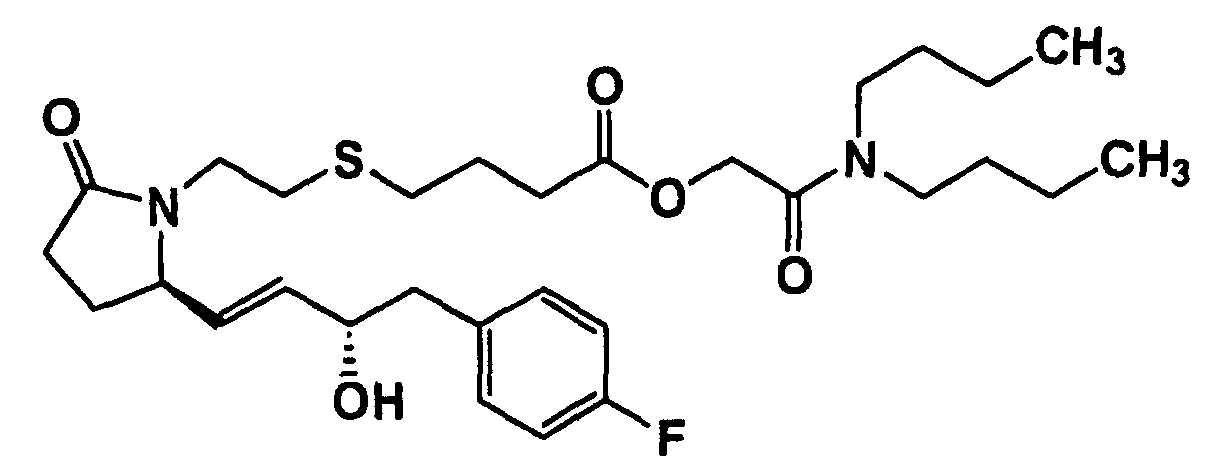
NMR : δ 7.17 (m, 2H), 6.99 (m, 2H), 5.75 (dd, J = 15.6, 5.1 Hz, 1H), 5.52 (dd, J = 15.6, 8.4 Hz, 1H), 4.69 (s, 2H), 4.40 (m, 1H), 4.11 (m, 1H), 3.58 (m, 1H), 3.28 (m, 2H), 3.20-3.00 (m, 3H), 2.81 (d, J = 6.6 Hz, 2H), 2.70-2.47 (m, 7H), 2.40-2.18 (m, 3H), 1.95 (m, 2H), 1.88-1.42 (m, 5H), 1.41-1.22 (m, 4H), 1.00-0.83 (m, 6H).

NMR : δ 7.22-7.13 (m, 2H), 7.07-6.97 (m, 2H), 5.75 (dd, J = 15.3, 6.0 Hz, 1H), 5.50 (dd, J = 15.3, 8.7 Hz, 1H), 4.43-4.32 (m, 1H), 4.25 (s, 4H), 4.18-4.06 (m, 1H), 3.79-3.56 (m, 1H), 3.02-2.88 (m, 1H), 2. 86-2.79 (m, 2H), 2.70-2.48 (m, 4H), 2.48-2.31 (m, 4H), 2.31-2.17 (m, 1H), 1.97-1.82 (m, 3H), 1.78-1.60 (m, 1H), 1.60-1.48 (m, 6H), 1.22-1.10 (m, 2H), 0.89 (t, J = 7.2 Hz, 3H), 0.77 (t, J = 7.5 Hz, 6H).
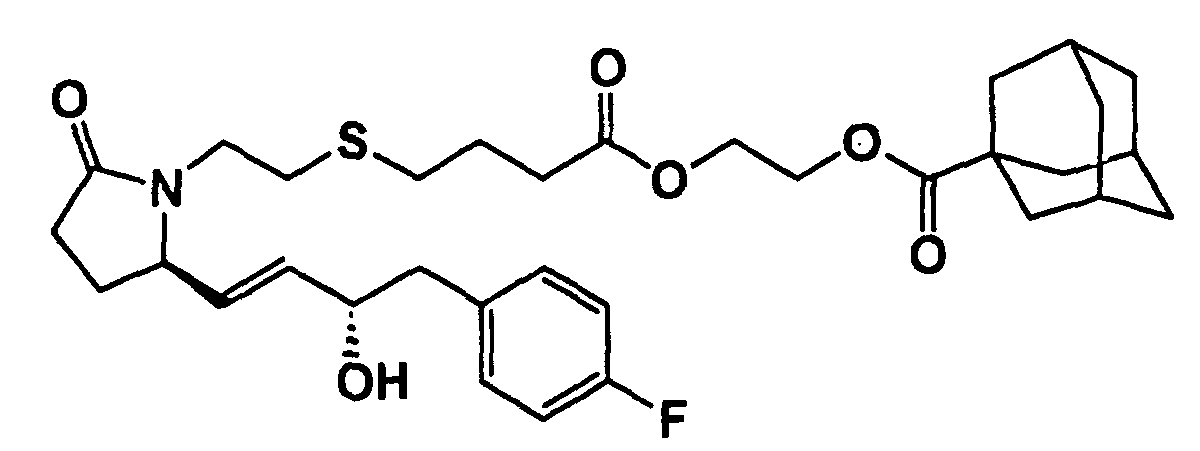
NMR : δ 7.20-7.10 (m, 2H), 7.05-6.95 (m, 2H), 5.74 (dd, J = 14.7, 6.0 Hz, 1H), 5.50 (ddd, J = 14.7, 8.4, 1.5 Hz, 1H), 4.45-4.35 (m, 1H), 4.30-4.20 (m, 4H), 4.15-4.05 (m, 1H), 3.70-3.55 (m , 1H), 3.00-2.90 (m, 1H), 2.81 (d, J = 6.0 Hz, 2H), 2.70-2.35 (m, 8H), 2.30-2.15 (m, 1H), 2.05-1.95 (m, 3H), 1.95-1.80 (m, 9H), 1.80-1.60 (m, 6H).

NMR : δ 7.20-7.10 (m, 2H), 7.05-6.95 (m, 2H), 5.23 (dd, J = 15.6, 6.0 Hz, 1H), 5.50 (ddd, J = 15.6, 8.4, 1.5 Hz, 1H), 4.40-4.30 (m, 1H), 4.27 (s, 4H), 4.15-4.05 (m, 1H), 3.70-3.50 (m, 1H), 3.00-2.90 (m, 1H), 2.81 (d, J = 6.6 Hz, 2H), 2.70-2.15 (m, 8H), 1.95-1.85 (m, 3H), 1.75-1.60 (m, 3H), 1.50-1.40 (m, 2H), 1.09 (s, 3H), 0.82 (t, J = 7.5 Hz, 6H).

NMR : δ 7.99 (s, 1H), 7.17 (t, J = 7.5 Hz, 1H), 7.05-7.00 (m, 1H), 7.00-6.90 (m, 2H), 5.80 (dd, J = 15.3, 6.0 Hz, 1H), 5.50 (ddd, J = 16.2, 8.7, 1.5 Hz, 1H), 4.56-4.45 (m, 2H), 4.40-4.30 (m, 3H), 4.25-4.15 (m, 1H), 3.75-3.65 (m, 1H), 3.40 (t, J = 6.6 Hz, 2H), 3.30-3.15 (m, 1H), 2.80-2.75 (m, 2H), 2.40-2.15 (m, 6H), 2.08 (d, J = 4.5 Hz, 1H), 1.80-1.60 (m, 3H), 1.50-1.40 (m, 2H), 1. 09 (s, 3H), 0.80 (t, J = 7.5 Hz, 6H).
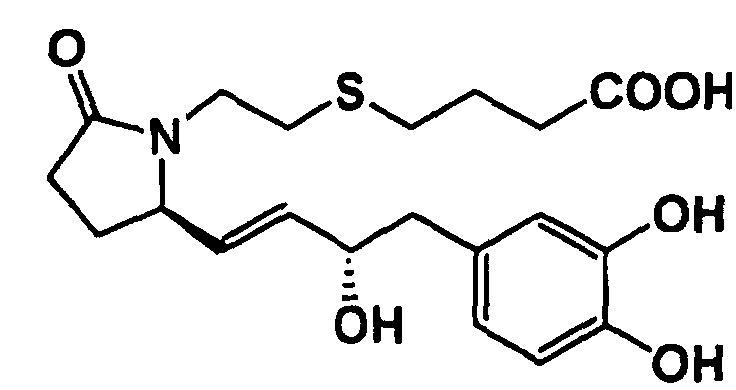
TLC : Rf 0.14 (Dichloromethane : Methanol : Acetic Acid = 90:10:1);
NMR(CD3OD) : δ 6.67 (d, J = 7.8 Hz, 1H), 6.61 (d, J = 1.8 Hz, 1H), 6.49 (dd, J = 7.8, 1.8 Hz, 1H), 5.68 (dd, J = 15.3, 7.2 Hz, 1H), 5.33 (dd, J = 15.3, 9.0 Hz, 1H), 4.30-4.20 (m, 1H), 4.20-4.10 ( m, 1H), 3.55-3.45 (m, 1H), 2.90-2.70 (m, 2H), 2.70-2.15 (m, 10H), 1.95-1.80 (m, 2H), 1.80-1.60 (m, 1H).
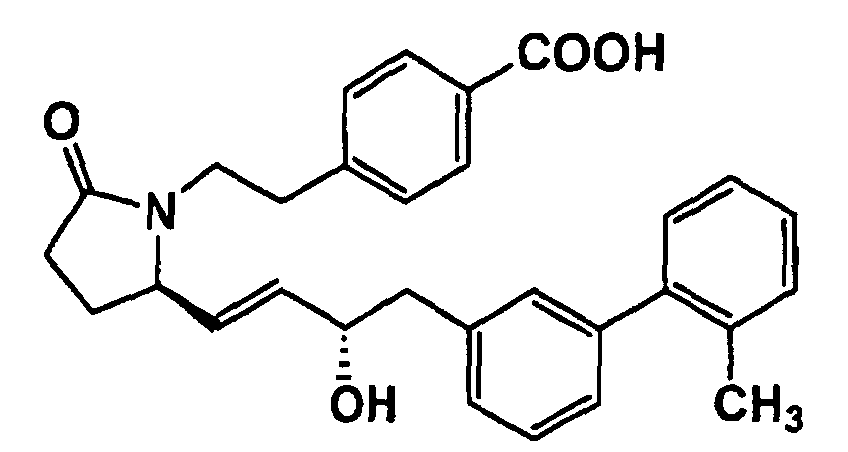
TLC : Rf 0.41 (Dichloromethane : Methanol = 9:1);
NMR : δ 7.99 (d, J = 8.4 Hz, 2H), 7.40-7.14 (m, 10H), 5.65 (dd, J = 15.3, 6.0 Hz, 1H), 5.39 (dd, J = 15.3, 8.7 Hz, 1H), 4.45-4.35 (m, 1H), 3.85-3.70 (m, 2H), 3.05-2.70 (m, 5H), 2.40-2.20 (m, 5H), 2.20-2.00 (m, 1H), 1.70-1.55 (m, 1H).
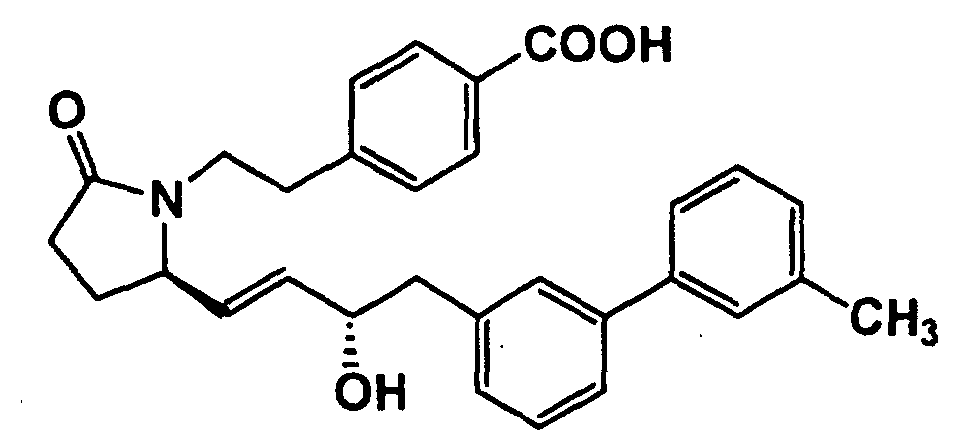
NMR : δ 7.98 (d, J = 8.4 Hz, 2H), 7.50-7.30 (m, 6H), 7.24-7.14 (m, 4H), 5.64 (dd, J = 15.3, 6.0 Hz, 1H), 5.36 (dd, J = 15.3, 8.4 Hz, 1H), 4.50-4.40 (m, 1H), 3.80-3.65 (m, 2H), 3.00-2.70 (m, 5H), 2.45-2.20 (m, 5H), 2.20-2.00 (m, 1H), 1.70-1.55 (m, 1H).
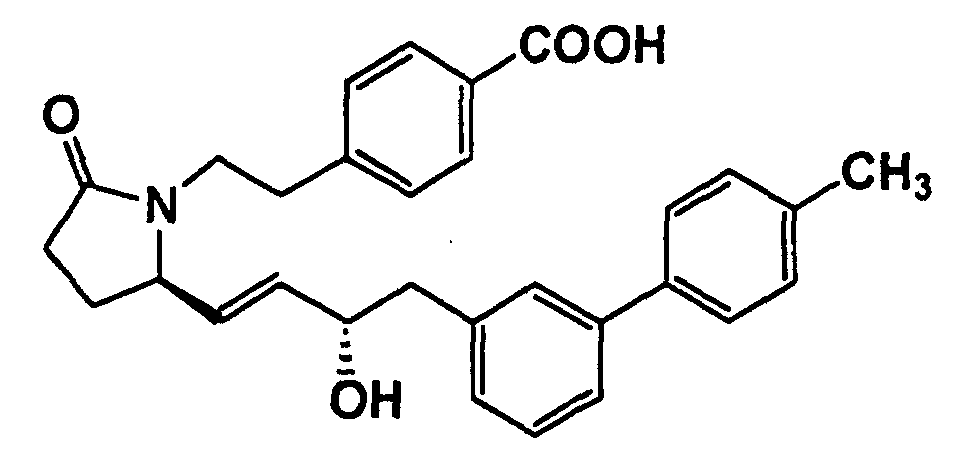
NMR : δ 7.98 (d, J = 8.4 Hz, 2H), 7.50-7.44 (m, 3H), 7.44-7.32 (m, 2H), 7.28-7.14 (m, 5H), 5.64 (dd, J = 15.6, 6.0 Hz, 1H), 5.36 (dd, J = 15.6, 8.7 Hz, 1H), 4.45-4.35 (m, 1H), 3.80-3.65 (m, 2H), 3.00-2.70 (m, 5H), 2.40-2.20 (m, 5H), 2.20-2.00 (m, 1H), 1.70-1.55 (m, 1H).
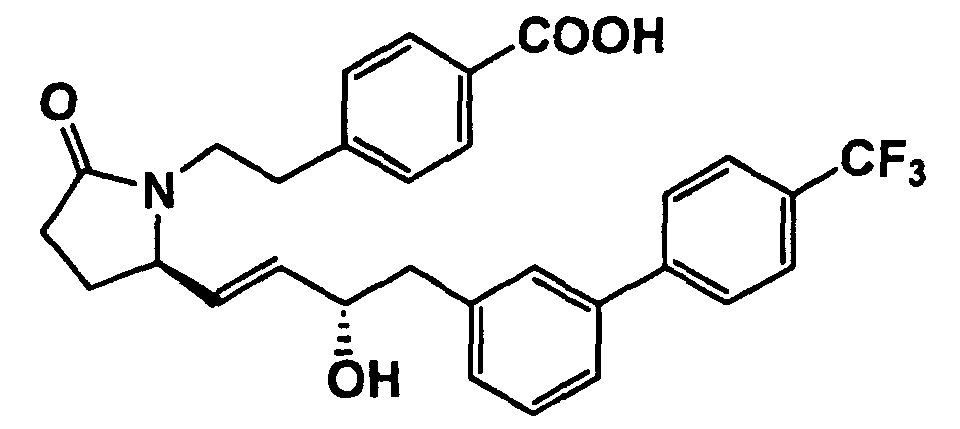
NMR : δ 8.00 (d, J = 8.1 Hz, 2H), 7.69 (m, 4H), 7.55-7.13 (m, 6H), 5.65 (dd, J = 15.0, 6.0 Hz, 1H), 5.39 (dd, J = 15.0, 8.4 Hz, 1H), 4.41 (m, 1H), 3.81-3.69 (m, 2H), 3.10-2.70 (m, 5H), 2.43-1.30 (m, 5H).
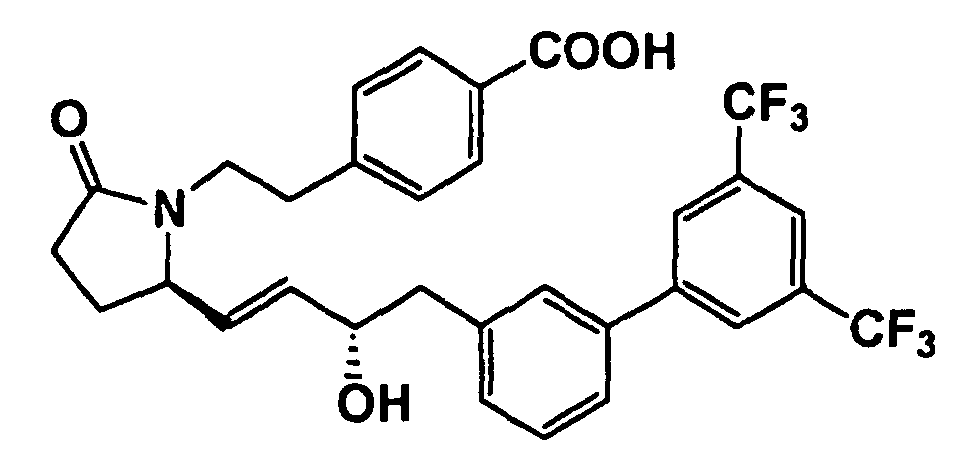
NMR: δ 8.01-7.98 (m, 4H), 7.86 (s, 1H), 7.58-7.40 (m, 3H), 7.37-7.20 (m, 3H), 5.68 (dd, J = 15.6, 6.0 Hz, 1H), 5.44 (dd, J = 15.6, 8.4 Hz, 1H), 4.43 (m, 1H), 3.83-3.78 (m, 2H), 3.18-2.80 (m, 6H), 2.42-2.22 (m, 2H), 2.14 (m, 1H), 1.65 (m, 1H).
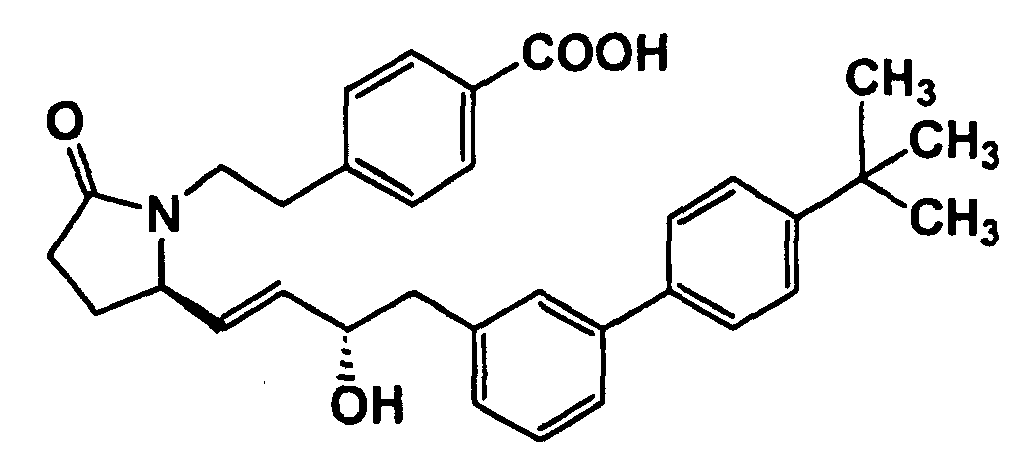
NMR : δ 7.98 (d, J = 8.4 Hz, 2H), 7.59-7.33 (m, 7H), 7.25-7.16 (m, 3H), 5.63 (dd, J = 15.3, 5.7 Hz, 1H), 5.39 (dd, J = 15.3, 9.0 Hz, 1H), 4.21 (m,1H), 3.80-3.65 (m, 2H), 3.00-2.68 (m, 6H), 2.40-1.40 (m, 4H), 1.35 (s, 9H).
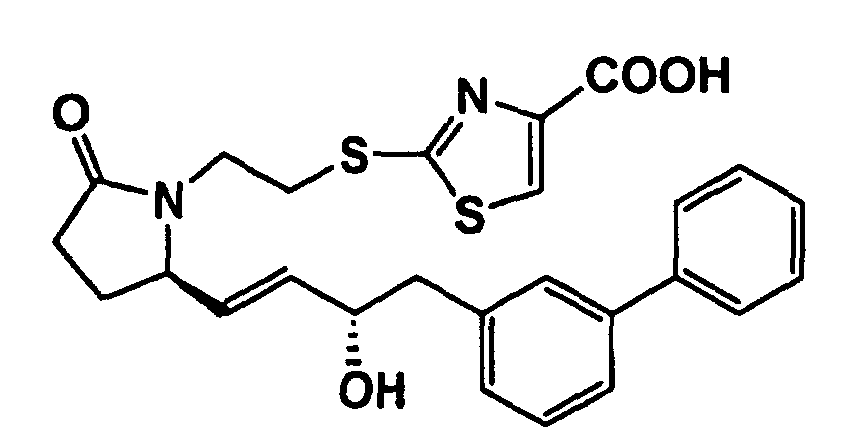
NMR : δ 1.72 (m, 1 H) 2.30 (m, 3 H) 3.06 (m, 7 H) 3.68 (m, 1 H) 4.11 (m, 1 H) 4.47 (m, 1 H) 5.51 (dd, J=15.38, 8.79 Hz, 1 H) 5.82 (dd, J=15.38, 5.77 Hz, 1 H) 7.35 (m, 9 H) 8 .07 (s, 1 H).

NMR : δ 1.71 (m, 1 H) 2.38 (m, 8 H) 2.92 (m, 2 H) 3.23 (m, 3 H) 3.69 (m, 1 H) 4.10 (m, 1 H) 4.47 (m, 1 H) 5.51 (dd, J=15.38, 8.52 Hz, 1 H) 5.82 (dd, J=15.38, 5.77 Hz, 1 H) 7. 31 (m, 8 H) 8.01 (s, 1 H).
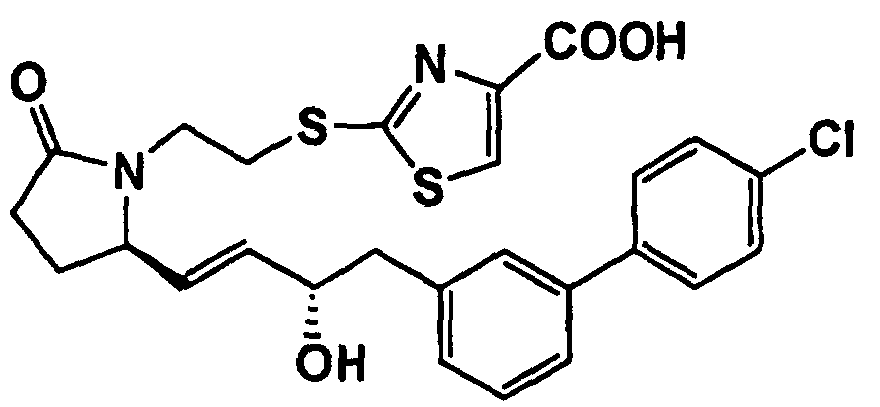
NMR : δ 1.69 (m, 1 H) 2.30 (m, 3 H) 2.90 (m, 2 H) 3.44 (m, 6 H) 4.11 (m, 1 H) 4.46 (m, 1 H) 5.52 (dd, J=15.38, 8.79 Hz, 1 H) 5.83 (dd, J=15.38, 5.77 Hz, 1 H) 7.35 (m, 8 H) 8. 07 (s, 1 H).
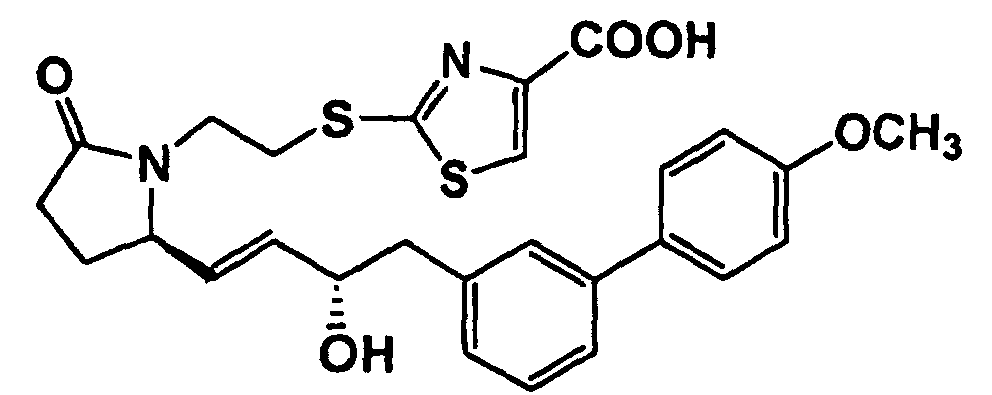
NMR : δ 1.70 (m, 1 H) 2.53 (m, 7 H) 3.21 (m, 3 H) 3.69 (m, 1 H) 3.85 (s, 3 H) 4.09 (m, 1 H) 4.46 (m, 1 H) 5.51 (dd, J=15.38, 8.79 Hz, 1 H) 5.82 (dd, J=15.38, 6.04 Hz, 1 H) 7. 22 (m, 8 H) 8.07 (s, 1 H).

NMR : δ 8.03 (s, 1H), 7.94-7.82 (m, 3H), 7.73 (dd, J = 8.7, 2.1 Hz, 1H), 7.64-7.57 (m, 1H), 7.57-7.40 (m, 4H), 7.21 (d, J = 7.5 Hz, 1H), 5.79 (dd, J = 15.3, 6.0 Hz, 1H), 5.49 (ddd, J = 15. 3, 8.7, 1.2 Hz, 1H), 4.54-4.44 (m, 1H), 4.14-4.04 (m, 1H), 3.66-3.52 (m, 1H), 3.00-2.85 (m, 3H), 2.60-2.10 (m, 9H), 1.90-1.60 (m, 3H).

NMR : δ 8.31 and 8.24 (s, 1H), 8.08 (d, J = 7.8 Hz, 1H), 7.82-7.74 (m, 1H), 7.64-7.56 (m, 1H), 7.48(t, J = 7.8 Hz, 1H), 7.44-7.34 (m, 3H), 5.89 (dd, J = 15.6, 4.5 Hz, 1H), 5.63 (dd, J = 15.6, 7.5 Hz, 1H), 4.65-4.55 and 4.55-4.45 (m, 1H), 4.20-4.05 (m, 1H), 3.55-3.40 (m, 1H), 3.30-3.10 (m, 1H), 3.30 (dd, J = 13.8, 5.1 Hz, 1H), 2.89 (dd, J = 13.8, 8.7 Hz, 1H), 2.75-2.15 (m, 9H), 1.95-1.85 (m, 2H), 1.80-1.60 (m, 1H).
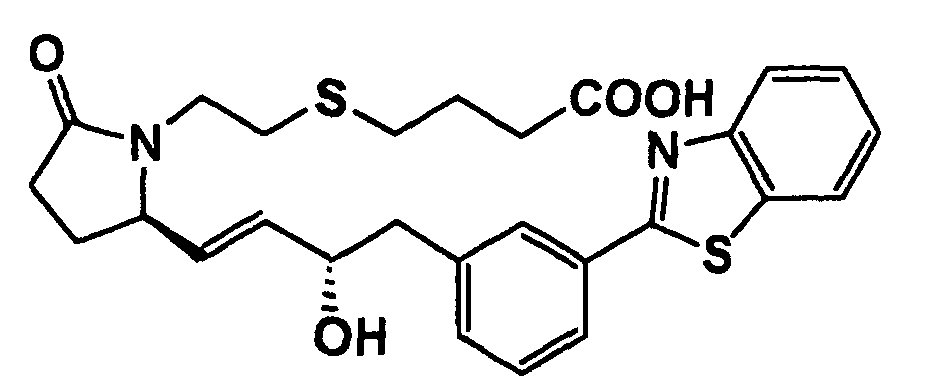
NMR : δ 8.14 (s, 1H), 8.09 (d, J = 8.1 Hz, 1H), 7.91 (d, J = 7.8 Hz, 1H), 7.84 (d, J = 7.8 Hz, 1H), 7.56-7.32 (m, 4H), 5.88 (dd, J = 15.0, 5.1 Hz, 1H), 5.61 (ddd, J = 15.0, 8.7, 1.5 Hz, 1H), 4.60-4.45 (m, 1H), 4.20-4.05 (m, 1H), 3.55-3.40 (m, 1H), 3.25-3.05 (m, 1H), 3.01 (dd, J = 13.8, 4.8 Hz, 1H), 2.88 (dd, J = 13.8, 8.7 Hz, 1H), 2.70-2.10 (m, 9H), 1.96-1.82 (m, 2H), 1.80-1.60 (m, 1H).
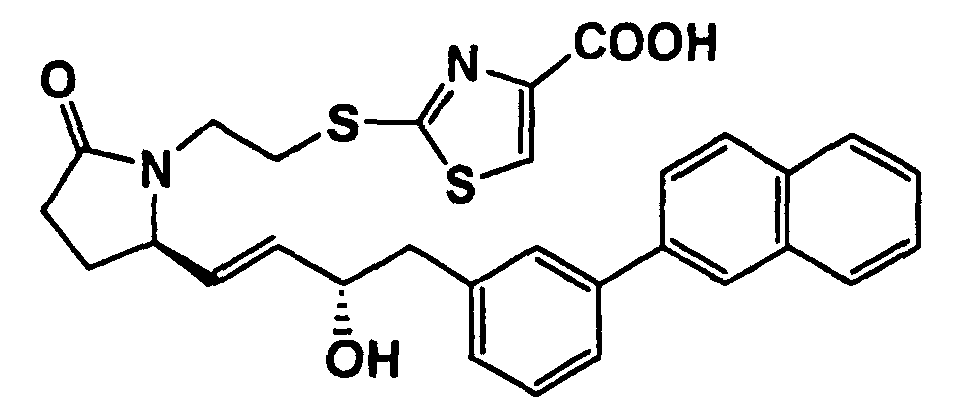
NMR: δ 8.05-8.00 (m, 2H), 7.93-7.82 (m, 3H), 7.71 (dd, J = 8.4, 1.8 Hz, 1H), 7.61 (d, J = 7.8 Hz, 1H), 7.56-7.47 (m, 4H), 7.42 (t, J = 7.8 Hz, 1H), 7.19 (d, J = 7.8 Hz, 1H), 5.84 (dd, J = 15.3, 5.7 Hz, 1H), 5.52 (dd, J = 15.3, 8.7 Hz, 1H), 4.49 (q, J = 6.0 Hz, 1H), 4.15-4.05 (m, 1H), 3.75-3.65 (m, 1H), 3.35-3.05 (m, 3H), 2.95 (dd, J = 7.2, 3.3 Hz, 2H), 2.50-2.10 (m, 3H), 1.80-1.60 (m, 1H).

NMR : δ 8.45 and 8.32 (s, 1H), 8.12 (s, 1H), 8.06 (d, J = 7.5 Hz, 1H), 7.90-7.82 (m, 1H), 7.64-7.58 (m, 1H), 7.50-7.36 (m, 4H), 5.94 (dd, J = 15.6, 4.5 Hz, 1H), 5.78 (dd, J = 15.6, 6.3 Hz, 1H), 4.70-4.50 (m, 1H), 4.15 (q, J = 7.2 Hz, 1H), 3.60-3.20 (m, 4H), 3.00 (dd, J = 14.4, 4.2 Hz, 1H), 2.85 (dd, J = 14.4, 9.0 Hz, 1H), 2.50-2.15 (m, 3H), 1.85-1.70 (m, 1H).

NMR : δ 8.29 (s, 1H), 8.20-8.14 (m, 1H), 8.11 (s, 1H), 7.92 (d, J = 7.2 Hz, 1H), 7.79 (d, J = 7.8 Hz, 1H), 7.60-7.30 (m, 4H), 5.90 (dd, J = 15.3, 3.9 Hz, 1H), 5.71 (dd, J = 15.3, 9.0 Hz, 1 H), 4.60-4.45 (m, 1H), 4.20-4.05 (m, 1H), 3.60-3.15 (m, 4H), 2.98 (dd, J = 14.1, 4.5 Hz, 1H), 2.83 (dd, J = 14.1, 9.0 Hz, 1H), 2.50-2.10 (m, 3H), 1.85-1.70 (m, 1H).
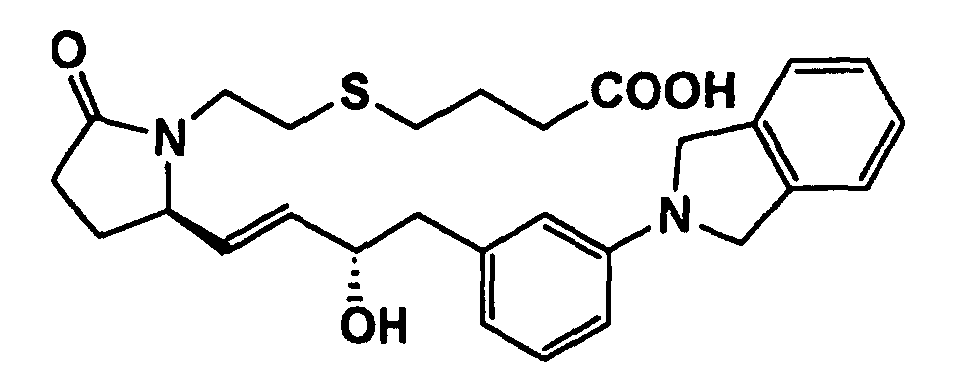
NMR : δ 1.79 (m, 3 H) 2.72 (m, 13 H) 3.59 (m, 1 H) 4.12 (m, 1 H) 4.49 (m, 1 H) 4.78 (m, 4 H) 5.55 (dd, J=15.66, 8.79 Hz, 1 H) 5.81 (dd, J=15.66, 5.49 Hz, 1 H) 6.57 (m, 2 H) 7.33 (m, 6 H).
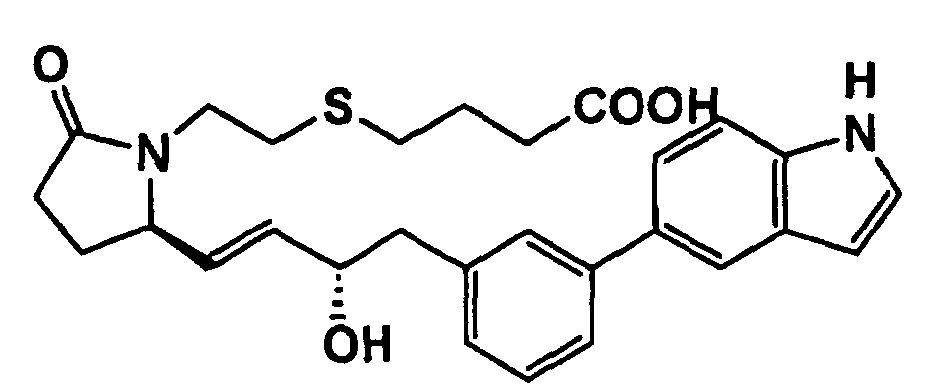
NMR : δ 2.09 (m, 13 H) 2.90 (m, 3 H) 3.54 (m, 1 H) 4.07 (m, 1 H) 4.48 (m, 1 H) 5.46 (ddd, J=15.38, 8.79, 1.10 Hz, 1 H) 5.78 (dd, J=15.38, 5.77 Hz, 1 H) 6.60 (m, 1 H) 7.14 (m, 1 H) 7.25 (m, 2 H) 7.46 (m, 4 H) 7.84 (m, 1 H) 8.35 (brs., 1 H).
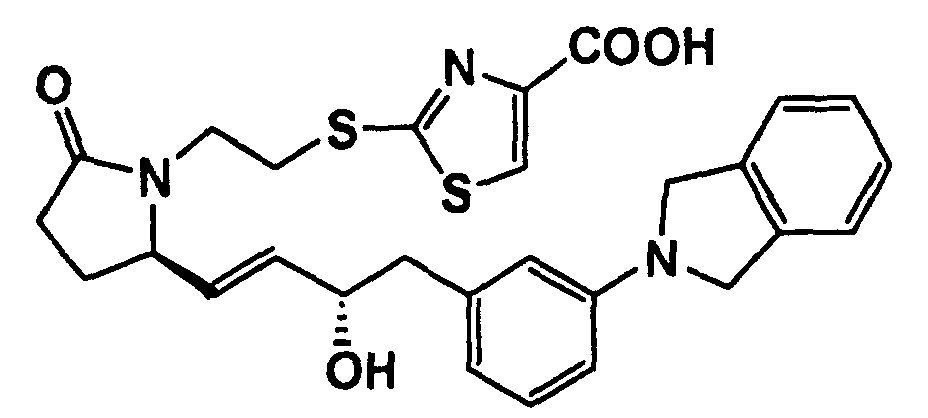
NMR : δ 8.04 (s, 1H); 7.70-7.00 (m, 5H), 6.60-6.40 (m, 3H), 6.00-5.75 (m, 1H), 5.65-5.50 (m, 1H), 4.64 (s, 4H), 4.50-4.40(m, 1H), 4.20-4.10 (m, 1H), 3.80-3.60 (m, 1H), 3.50-3.00 (m, 3H), 3.00-2.75 (m, 2H), 2.50-2.10 (m, 3H), 1.85-1.65 (m, 1H).
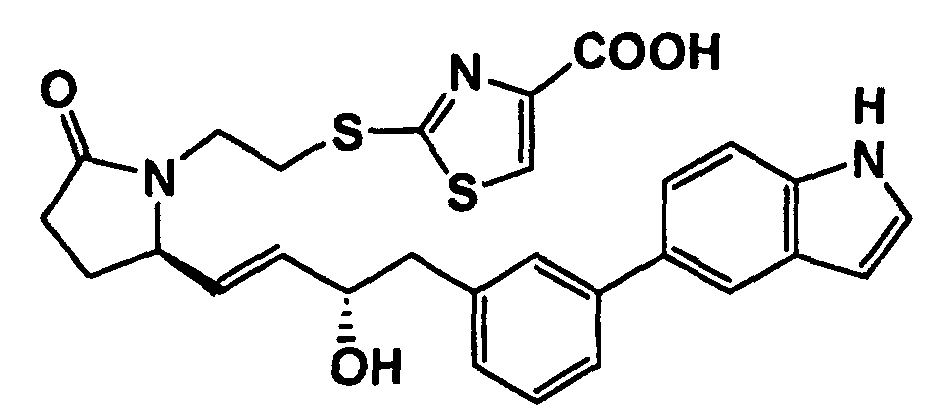
NMR(CD3OD): δ 10.47 (s, 1H), 8.17 and 8.14 (s, 1H), 7.80-7.74 (m, 1H), 7.50-7.22 (m, 6H), 7.14-7.05 (m, 1H), 6.50-6.46 (m, 1H), 5.74 (dd, J = 15.0, 6.9 Hz, 1H), 5.28 (dd, J = 15.0, 9.0 Hz, 1H), 4.45-4.30 (m, 1H), 4.30-4.15 (m, 1H), 3.55-3.45 (m, 1H), 3.30-3.20 (m, 1H), 3.20-2.70 (m, 4H), 2.35-2.00 (m, 3H), 1.70-1.50 (m, 1H).
| (15α,13E)-9-Oxo-15-hydroxy-16-(3-methoxymethylphenyl)-17,18,19,20-tetranor-8-azaprost-13-enoic acid • α-cyclodextrin | 250 mg (active ingredient 50 mg) |
| Carboxymethylcellulose calcium | 200 mg |
| Magnesium stearate | 100 mg |
| Micro crystalline cellulose | 9.2 g |
| (15α,13E)-9-Oxo-15-hydroxy-16-(3-methoxymethylphenyl)-17,18,19,20-tetranor-8-azaprost-13-enoic acid•α-cyclodextrin | 100 mg (active ingredient 20 mg) |
| Mannit | 5 g |
| Distilled water | 100 ml |
Formulation Example 3(1): Example 18
Formulation Example 3(2): Example 16(f)
Formulation Example 3(3): Example 16(e)
- Buffer:
- 10 mM potassium phosphate (pH 6.9), 1 mM EDTA, 10 mM MgCl2, and 0.1M NaCl.
| Example | Dissociation Constant Ki (nM) |
| 2 (pp) | 0.24 |
| 3 (e) | 0.71 |
| Compound | Dose | Arthritic Score (Means±SE) |
| Example 2 | vehicle | 24.6±1.0 |
| 1000 µg/kg | 17.3±1.5 | |
| Example 3 (b) | vehicle | 24.6±1.0 |
| 300 µg/kg | 19.3±1.4 | |
| Example 3 (l) | vehicle | 27.0±1.2 |
| 100 µg/kg | 16.3±3.0 | |
| Example 3 (kk) | vehicle | 23.4±3.0 |
| 100 µg/kg | 11.9±3.6 | |
| Example 4 (h) | vehicle | 27.0±1.2 |
| 300 µg/kg | 9.8±1.9 |
| Bone Density (mg/cm2) | Fracture Strength (% of intact) | |
| Formulation Example 3(1) | 60.9±4.0 | 149.8±12.4% |
| Reference (Control) | 39.8±2.7 | 62.8±8.5% |
| Bone Density (mg/cm2) | Fracture Strength (% of intact) | |
| Formulation Example 3(3) | 51.6±3.8 | 114.6±10.4% |
| Reference (Control) | 36.5±2.5 | 55.3±5.7% |
| Bone Density (mg/cm2) | Fracture Strength (% of intact) | |
| Compound | 42.8±2.58 | 30.4±12.4% |
| Reference (Control) | 35.2±1.91 | 55.2±9.77% |
Claims (19)
- A pharmaceutical composition for topical administration for prevention and/or treatment of diseases associated with decrease in bone mass comprising an EP4 agonist as an active ingredient.
- The pharmaceutical composition for prevention and/or treatment according to claim 1, wherein the disease associated with decrease in bone mass is primary osteoporosis, secondary osteoporosis, bone metastasis of cancer, hypercalcemia, Paget's disease, bone loss and bone necrosis, postoperative osteogenesis, or alternative therapy for bone grafting.
- A sustained release formulation comprising an EP4 agonist as an active ingredient.
- The formulation according to claim 3, wherein the sustained release formulation is a microsphere, a microcapsule, a nanosphere or a film.
- A pharmaceutical composition for prevention and/or treatment of diseases associated with decrease in bone mass, comprising the formulation described in claim 3 which is topically administered.
- The pharmaceutical composition for prevention and/or treatment of diseases associated with decrease in bone mass according to claim 1, wherein the EP4 agonist is a compound possessing prostaglandin skeleton.
- The sustained release formulation according to claim 3, wherein the EP4 agonist is a compound possessing prostaglandin skeleton.
- The pharmaceutical composition for treatment and/or prevention according to claim 1, wherein the compound possessing prostaglandin skeleton is a compound selected from the group of formula (I-1)wherein R1-1 is hydroxy, C1-6 alkyloxy, or NR6-1R7-1, wherein R6-1 and R7-1 are each independently, hydrogen atom or C 1-4 alkyl,

R2-1 is oxo, halogen, or O-COR8-1, wherein R8-1 is C1-4 alkyl, phenyl or phenyl(C1-4 alkyl),
R3-1 is hydrogen atom or hydroxy,
R4a-1 and R4b-1 are each independently, hydrogen atom or C1-4 alkyl,
R5-1 is phenyl substituted by the group listed below:--- is single bond or double bond, wherein when R2-1 is O-COR8-1, C8-9 position is double bond, or a non-toxic salt thereof, or a cyclodextrin clathrate thereof.(i) 1 to 3 of
C1-4 alkyloxy-C1-4 alkyl,
C2-4 alkenyloxy-C1-4 alkyl,
C2-4 alkynyloxy-C1-4 alkyl,
C3-7 cycloalkyloxy-C1-4 alkyl,
C3-7 cycloalkyl(C1-4 alkyloxy)-C1-4 alkyl,
phenyloxy-C1-4 alkyl,
phenyl-C1-4 alkyloxy-C1-4 alkyl,
C1-4 alkylthio-C1-4 alkyl,
C2-4 alkenylthio-C1-4 alkyl,
C2-4 alkynylthio-C1-4 alkyl,
C3-7 cycloalkylthio-C1-4 alkyl,
C3-7 cycloalkyl(C1-4 alkylthio)-C1-4 alkyl or
phenylthio-C1-4 alkyl or phenyl-C1-4 alkylthio-C1-4 alkyl,(ii) C1-4 alkyloxy-C1-4 alkyl and C1-4 alkyl,
C1-4 alkyloxy-C1-4 alkyl and C1-4 alkyloxy,
C1-4 alkyloxy-C1-4 alkyl and hydroxy,
C1-4 alkyloxy-C1-4 alkyl and halogen,
C1-4 alkylthio-C1-4 alkyl and C1-4 alkyl,
C1-4 alkylthio-C1-4 alkyl and C1-4 alkyloxy,
C1-4 alkylthio-C1-4 alkyl and hydroxy or
C1-4 alkylthio-C1-4 alkyl and halogen,(iii) haloalkyl or hydroxy-C1-4 alkyl, or(iv) C1-4 alkyl and hydroxy; - The sustained release formulation according to claim 3, wherein the compound possessing prostaglandin skeleton is a compound selected from the group of formula (I-1) described in claim 8, or a non-toxic salt thereof, or a cyclodextrin clathrate thereof.
- The pharmaceutical composition for treatment and/or prevention according to claim 1, wherein the compound possessing prostaglandin skeleton is a compound selected from the group of formula (1-2)wherein R1-2 is
 wherein Y2 is bond or C1-10 alkylene,(1) -CO-(NH-amino acid residue-CO)m-2-OH,(2) -COO-Y2-R9-2,(3) -COO-Z1-2-Z2-2-Z3-2,
R9-2 is (1) phenyl or (2) biphenyl optionally substituted by 1-3 C1-10 alkyl, C1-10 alkoxy or halogen atom,
Z1-2 isZ2-2 is(1) C1-15 alkylene,(2) C2-15 alkenylene or(3) C2-15 alkynylene,Z3-2 is(1) -CO-,(2) -OCO-,(3) -COO-,(4) -CONR11-2-,(5) -NR12-2CO-,(6) -O-,(7) -S-,(8) -SO-,(9) -SO2-,(10) -NR13-2-,(11) -NR14-2CONR15-2-,(12) -NR16-2COO-,(13) -OCONR17-2- or(14) -OCOO-,ring12 is(1) hydrogen atom,(2) C1-15 alkyl,(3) C2-15 alkenyl,(4) C2-15 alkynyl,(5) ring12 or(6) C1-10 alkyl substituted by C1-10 alkoxy, C1-10 alkylthio, C1-10 alkyl-NR18-2- or ring12,R11-2, R12-2, R13-2, R14-2, R15-2, R16-2, R17-2 and R18-2 are each independently, hydrogen atom or C1-15 alkyl,(1) C3-15 mono-, bi- or tri-carbocyclic aryl which may be partially or fully saturated or(2) 3 to 15 membered mono-, bi- or tri-heterocyclic aryl containing I to 4 hetero atom selected from oxygen, nitrogen and sulfur atom(s) which may be partially or fully saturated,
R11-2 and Z3-2 may be taken together with the nitrogen atom to which they are attached to form 5 to 7 membered saturated monoheterocyclic ring, and the heterocyclic ring may contain another one hetero atom selected from oxygen, nitrogen and sulfur atom,
ring12 and saturated monoheterocyclic ring formed by R11-2, Z3-2 and the nitrogen atom to which Z3-2 is attached may be substituted by 1-3 group(s) selected fromR19-2 is hydrogen atom or C1-10 alkyl,(1) C1-15 alkyl,(2) C2-15 alkenyl,(3) C2-15 alkynyl and(4) C1-10 alkyl substituted with C1-10 alkoxy, C1-10 alkylthio or C1-10 alkyl-NR19-2,
m-2 is 1 or 2,
other symbols are same meaning as defined in claim 8,
or a non-toxic salt thereof, or cyclodextrin clathrate thereof. - The sustained release formulation according to claim 3, wherein the compound possessing prostaglandin skeleton is a compound selected from the group of formula (I-2) described in claim 10, or a non-toxic salt thereof, or a cyclodextrin clathrate thereof
- The pharmaceutical composition for treatment and/or prevention according to claim I, wherein the compound possessing prostaglandin skeleton is a compound selected from the group of formula (I-3)wherein
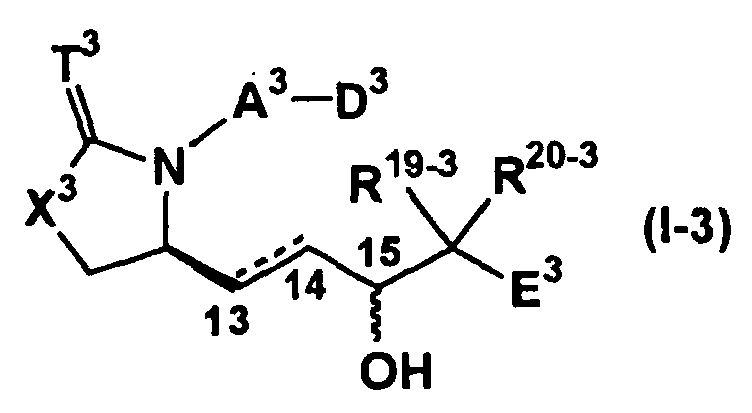 is (1) single bond or (2) double bond,
R19-3 and R20-3 are each independently, (1) hydrogen atom, (2) C1-10 alkyl or (3) halogen atom,
T3 is (1) oxygen atom or (2) sulfur atom,
X3 is (1) -CH2-, (2) -O- or (3) -S-,
A3 is A1-3 or A2-3,
A1-3 isA2-3 is -G1-3-G2-3-G3-3-,(1) C2-8 straight-chain alkylene optionally substituted by 1-2 C1-4 alkyl,(2) C2-8 straight-chain alkenylene optionally substituted by 1-2 C1-4 alkyl or(3) C2-8 straight-chain alkynylene optionally substituted by 1-2 C1-4 alkyl,
G1-3 isG2-3 is(1) C1-4 straight-chain alkylene optionally substituted by 1-2 C1-4 alkyl,(2) C2-4 straight-chain alkenylene optionally substituted by 1-2 C1-4 alkyl or(3) C2-4 straight-chain alkynylene optionally substituted by 1-2 C1-4 alkyl,Y3 is (1) -S-, (2) -SO-, (3) -SO2-, (4) -O- or (5) -NR1-3-,(1) -Y3-,(2) -(ring13)-,(3) -Y3-(ring13)-,(4) -(ring13)-Y3- or(5) -Y3-(C1-4 alkylene)-(ring13)-,
R1-3 is (1) hydrogen atom, (2) C1-10 alkyl or (3) C2-10 acyl,
G3-3 isD3 is D1-3 or D2-3,(1) bond,(2) C1-4 straight-chain alkylene optionally substituted by 1-2 C1-4 alkyl,(3) C2-4 straight-chain alkenylene optionally substituted by 1-2 C1-4 alkyl or(4) C2-4 straight-chain alkynylene optionally substituted by 1-2 C1-4 alkyl,
D1-3 isR2-3 is (1) C1-10 alkyl, (2) phenyl, (3) C1-10 alkyl substituted by phenyl or (4) biphenyl,(1) -COOH,(2) -COOR2-3,(3) tetrazol-5-yl or(4) CONR3-3SO2R4-3,
R3-3 is (1) hydrogen atom or (2) C1-10 alkyl,
R4-3 is (1) C1-10 alkyl or (2) phenyl,
D2-3 isR5-3 is C1-10 alkyl,(1) -CH2OH,(2) -CH2OR5-3,(3) hydroxy,(4) -OR5-3,(5) formyl,(6) -CONR6-3R7-3,(7) -CONR6-3SO2R8-3,(8) -CO-(NH-amino acid residue-CO)m-3-OH,(9) -O-(CO- amino acid residue -NH)m-3-H,(10) -COOR9-3,(11) -OCO-R10-3,(12) -COO-Z1-3-Z2-3-Z3-3,(13)
R6-3 and R7-3 are each independently, (1) hydrogen atom or (2) C1-10 alkyl,
R8-3 is C1-10 alkyl substituted by phenyl,
R9-3 is (1) C1-10 alkyl substituted by biphenyl optionally substituted by 1-3 C1-10 alkyl, C1-10 alkoxy or halogen atom or (2) biphenyl substituted by 1-3 C1-10 alkyl, C1-10 alkoxy or halogen atom,
R10-3 is (1) phenyl or (2) C1-10 alkyl,
m-3 is 1 or 2,
Z1-3 is (1) C1-15 alkylene, (2) C2-15 alkenylene or (3) C2-15 alkynylene,
Z2-3 is (1) -CO-, (2) -OCO-, (3) -COO-, (4) -CONR11-3-, (5) -NR12-3CO-, (6) -O-, (7) -S-, (8) -SO-, (9) -SO2-, (10) -NR13-3-, (11) -NR14-3CONR15-3-, (12) -NR16-3COO-, (13) -OCONR17-3- or (14) -OCOO-,
Z3-3 is (1) hydrogen atom, (2) C1-15 alkyl, (3) C2-15 alkenyl, (4) C2-15 alkynyl, (5) ring23 or (6) C1-10 alkyl substituted by C1-10 alkoxy, C1-10 alkylthio, C1-10 alkyl-NR18-3- or ring23,
R11-3, R12-3, R13-3, R14-3, R15-3, R16-3, R17-3 and R18-3 are each independently, (1) hydrogen atom or (2) C1-15 alkyl,
R11-3 and Z3-3 may be taken together with the nitrogen atom to which they are attached to form 5 to 7 membered saturated monoheterocyclic ring, and the heterocyclic ring may contain other one hetero atom selected from oxygen, nitrogen and sulfur atom,
E3 is E1-3 or E2-3,
E1-3 isE2-3 is(1) C3-7 cycloalkyl or(2) ring33,ring13 and ring53 are optionally substituted by 1-3 R21-3 and/or R22-3,(1) C3-7 cycloalkyl,(2) ring43 or(3) ring53,
ring33 is optionally substituted by 1-2 R21-3,
C3-7 cycloalkyl represented by E2-3 is substituted by one of R21-3 or R22-3, and optionally substituted by another 1-2 R21-3 and/or R22-3,
ring43 is substituted by one of R22-3, optionally substituted by another 1-2 R21-3 and/or R22-3, and
optionally substituted by heterocyclic ring formed by R11-3, Z3-3 and the nitrogen to which Z3-3 is attached or ring23 may be substituted by R23-3,
R21-3 is (1) C1-10 alkyl, (2) C1-10 alkoxy, (3) halogen atom, (4) nitro, (5) C1-10 alkyl substituted by 1-3 halogen atom(s) or (6) phenyl,
R22-3 is (1) C2-10 alkenyl, (2) C2-10 alkynyl, (3) C1-10 alkylthio, (4) hydroxy, (5) -NR24-3R25-3, (6) C1-10 alkyl substituted by C1-10 alkoxy, (7) C1-10 alkyl substituted by C1-10 alkoxy substituted by 1-3 halogen atom(s), (8) C1-10 alkyl substituted by -NR24-3R25-3, (9) ring63, (10) -O-ring73, (11) C1-10 alkyl substituted by ring73, (12) C2-10 alkenyl substituted by ring73, (13) C2-10 alkynyl substituted by ring73, (14) C1-10 alkoxy substituted by ring73, (15) C1-10 alkyl substituted by -O-ring73, (16) -COOR26-3 or (17) C1-10 alkoxy substituted by 1-3 halogen atom(s)(s),
R24-3, R25-3 and R26-3 are each independently, (1) hydrogen atom or (2) C1-10 alkyl,
R23-3 is (1) C1-15 alkyl, (2) C2-15 alkenyl, (3) C2-15 alkynyl or (4) C1-10 alkyl substituted by C1-10 alkoxy, C1-10 alkylthio or C1-10 alkyl-NR27-3-,
R27-3 is (1) hydrogen atom or (2) C1-10 alkyl,
ring13, ring23, ring53, ring63 and ring73 arering33 and ring43 are (1) thienyl, (2) phenyl or (3) furyl,(1) C3-15 mono-, bi- or tri-carbocyclic aryl which may be partially or fully saturated or(2) 3 to 15 membered mono-, bi- or tri-heterocyclic aryl containing 1 to 4 hetero atom selected from oxygen, nitrogen and sulfur atom(s) which may be partially or fully saturated,
ring63 and ring73 may be substituted by 1-3 R28-3,
R28-3 is (1) C1-10 alkyl, (2) C2-10 alkenyl, (3) C2-10 alkynyl, (4) C1-10 alkoxy, (5) C1-10 alkyl substituted by C1-10 alkoxy, (6) halogen atom, (7) hydroxy, (8) C1-10 alkyl substituted by 1-3 halogen atom(s) or (9) C1-10 alkyl substituted by C1-10 alkoxy substituted by 1-3 halogen atom(s), and
whereinor a non-toxic salt thereof, or a cyclodextrin clathrate thereof.(1) when T3 is oxygen atom, X3 is CH2-, A3 is A1-3, and D3 is D1-3, E3 is E2-3,(2) ring53 is not C3-7 cycloalkyl, phenyl, thienyl nor furyl,(3) ring63 is phenyl, then phenyl have at least one R28-3, - The sustained release formulation according to claim 3, wherein the compound possessing prostaglandin skeleton is a compound selected from the group of formula (I-3) described in claim 12, or a non-toxic salt thereof, or a cyclodextrin clathrate thereof
- A prostaglandin derivative of formula (I-2)wherein all symbols have the same meaning as defined in claim 10,
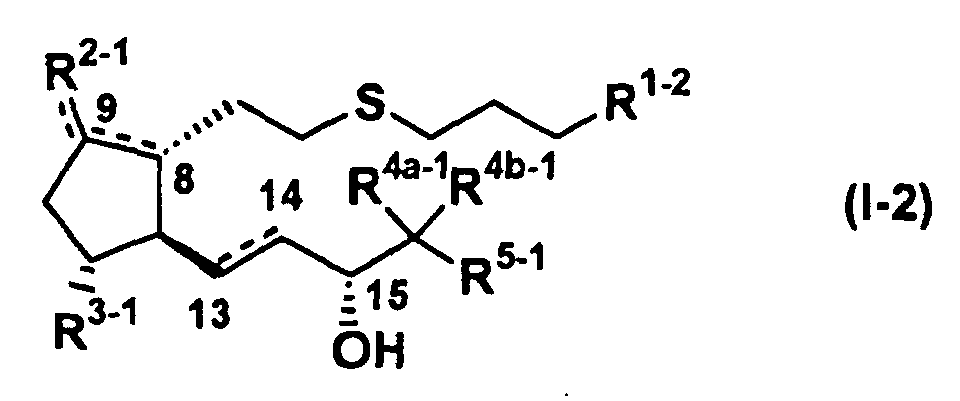
or a non-toxic salt thereof, or a cyclodextrin clathrate thereof. - A compound selected from the group of formula (I-3)wherein all symbols have the same meaning as defined in claim 12,
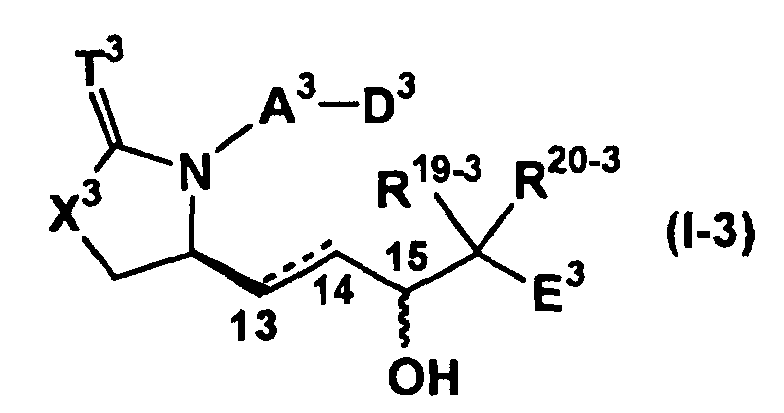
or a non-toxic salt thereof, or a cyclodextrin clathrate thereof. - A compound selected from the group consisting ofor a non-toxic salt thereof, or a cyclodextrin clathrate thereof.(1) (15α,13E)-9-oxo-15-hydroxy-16-(3-chlorophenyl)-17,18,19,20-tetranor-8-azaprost-13-enoic acid,(2) (15α,13E)-9-oxo-15-hydroxy-16-(3-phenylphenyl)-17,18,19,20-tetranor-8-azaprost-13-enoic acid,(3) (15α,13E)-9-oxo-15-hydroxy-16-(3-methylphenyl)-17,18,19,20-tetranor-8-azaprost-13-enoic acid,(4) (15α,13E)-9-oxo-15-hydroxy-16-(3-fluorophenyl)-17,18,19,20-tetranor-8-azaprost-13-enoic acid,(5) (15a, 13E)-9-oxo-15-hydroxy-16-(4-fluorophenyl)-17,18,19,20-tetranor-8-azaprost-13-enoic acid,(6) (15α,13E)-9-oxo-15-hydroxy-16-(4-methylphenyl)-17,18,19,20-tetranor-8-azaprost-13-enoic acid,(7) (15α,13E)-9-oxo-15-hydroxy-16-(2-methylphenyl)-17,18,19,20-tetranor-8-azaprost-13-enoic acid,(8) (15α,13E)-9-oxo-15-hydroxy-16-(2-fluorophenyl)-17,18,19,20-tetranor-8-azaprost-13-enoic acid,(9) (15α,13E)-9-oxo-15-hydroxy-16-(3-trifluoromethylphenyl)-17,18,19,20-tetranor-8-azaprost-13-enoic acid,(10) (15α,13E)-9-oxo-15-hydroxy-16-(3-methoxyphenyl)-17,18,19,20-tetranor-8-azaprost-13-enoic acid,(11) (15α,13E)-9-oxo-15-hydroxy-16-(3-ethylphenyl)-17,18,19,20-tetranor-8-azaprost-13-enoic acid,(12) (15α,13E)-9-oxo-15-hydroxy-16-(3,4-difluorophenyl)-17,18,19,20-tetranor-8-azaprost-13-enoic acid,(13) (15α,13E)-9-oxo-15-hydroxy-16-(3,5-difluorophenyl)-17,18,19,20-tetranor-8-azaprost-13-enoic acid,(14) (15α,13E)-9-oxo-15-hydroxy-16-(3-propylphenyl)-17,18,19,20-tetranor-8-azaprost-13-enoic acid,(15) (15α,13E)-9-oxo-15-hydroxy-16-(3-ethoxyphenyl)-17,18,19,20-tetranor-8-azaprost-13-enoic acid,(16) (15α,13E)-9-oxo-15-hydroxy-16-(3-isopropyloxyphenyl)-17,18,19,20-tetranor-8-azaprost-13-enoic acid,(17) (15α,5Z,13E)-9-oxo-15-hydroxy-16-(3-trifluoromethylphenyl)-17,18,19,20-tetranor-8-azaprost-5,13-dienoic acid,(18) (15α,5Z,13E)-9-oxo-15-hydroxy-16-(3-methylphenyl)-17,18,19,20-tetranor-8-azaprost-5,13-dienoic acid,(19) (15α,13E)-9-oxo-15-hydroxy-16-(3,5-dimethylphenyl)-17,18,19,20-tetranor-8-azaprost-13-enoic acid,(20) (15α,5Z,13E)-9-oxo-15-hydroxy-16-(3-chlorophenyl)-17,18,19,20-tetranor-8-azaprost-5,13-dienoic acid,(21) (15α,13E)-9-oxo-15-hydroxy-16-(3,4-difluorophenyl)-17,18,19,20-tetranor-8-azaprost-5,13-dienoic acid,(22) (15α,5Z,13E)-9-oxo-15-hydroxy-16-(3-fluorophenyl)-17,18,19,20-tetranor-8-azaprost-5,13-dienoic acid,(23) (15α,5Z,13E)-9-oxo-15-hydroxy-16-(4-fluorophenyl)-17,18,19,20-tetranor-8-azaprost-5,13-dienoic acid,(24) (15α)-9-oxo-15-hydroxy-16-(3-methylphenyl)-17,18,19,20-tetranor-8-azaprostanoic acid, and(25) (15α,13E)-9-oxo-15-hydroxy-16-phenyl-17,18,19,20-tetranor-8-azaprost-13-enoic acid 3-phenylphenyl ester,
- The compound according to claim 15, wherein -Y3- group in A3 group of a compound of formula (I-3) is -S- group.
- The compound according to claim 14, which is a compound selected from the group consisting ofor a non-toxic salt thereof, or a cyclodextrin clathrate thereof.(1) (11α,15α,13E)-9-oxo-11,15-dihydroxy-16-(3-methoxymethylphenyl)-17,18,19,20-tetranor-5-thiaprost-13-enoic acid 2-nonanoyloxyethyl ester,(2) (11α,15α,13E)-9-oxo-11,15-dihydroxy-16-(3-methoxymethylphenyl)-17,18,19,20-tetranor-5-thiaprost-13-enoic acid pivaloyloxymethyl ester,(3) (11α,15α,13E)-9-oxo-11,15-dihydroxy-16-(3-methoxymethylphenyl)-17,18,19,20-tetranor-5-thiaprost-13-enoic acid 1-cyclohexyloxycarbonyloxyethyl ester,(4) (11α,15α,13E)-9-oxo-11,15-dihydroxy-16-(3-methoxymethylphenyl)-17,18,19,20-tetranor-5-thiaprost-13-enoic acid N,N-diethylaminocarbonylmethyl ester,(5) (11α,15α,13E)-9-oxo-11,15-dihydroxy-16-(3-methoxymethylphenyl)-17,18,19,20-tetranor-5-thiaprost-13-enoic acid 2-acetyloxyethyl ester,(6) (11α,15α,13E)-9-oxo-11,15-dihydroxy-16-(3-methoxymethylphenyl)-17,18,19,20-tetranor-5-thiaprost-13-enoic acid benzoylmethyl ester,(7) (11α,15α,13E)-9-oxo-11,15-dihydroxy-16-(3-methoxymethylphenyl)-17,18,19,20-tetranor-5-thiaprost-13-enoic acid isopropyloxycarbonylmethyl ester,(8) (11α,15α,13E)-9-oxo-11,15-dihydroxy-16-(3-methoxymethylphenyl)-17,18,19,20-tetranor-5-thiaprost-13-enoic acid N,N-diethylaminocarbonyloxymethyl ester,(9) (11α,15α,13E)-9-oxo-11,15-dihydroxy-16-(3-methoxymethylphenyl)-17,18,19,20-tetranor-5-thiaprost-13-enoic acid t-butyloxycarbonylmethyl ester,(10) (11α,15α,13E)-9-oxo-11,15-dihydroxy-16-(3-methoxymethylphenyl)-17,18,19,20-tetranor-5-thiaprost-13-enoic acid 1-isopropyloxycarbonylethyl ester,(11) (11α,15α,13E)-9-oxo-11,15-dihydroxy-16-(3-methoxymethylphenyl)-17,18,19,20-tetranor-5-thiaprost-13-enoic acid 1-benzoylethyl ester,(12) (11α,15α,13E)-9-oxo-11,15-dihydroxy-16-(3-methoxymethylphenyl)-17,18,19,20-tetranor-5-thiaprost-13-enoic acid methoxycarbonylmethyl ester,(13) (11α,15α,13E)-9-oxo-11,15-dihydroxy-16-(3-methoxymethylphenyl)-17,18,19,20-tetranor-5-thiaprost-13-enoic acid 2-tridecanoyloxyethyl ester,(14) (11α,15α,13E)-9-oxo-11,15-dihydroxy-16-(3-methoxymethylphenyl)-17,18,19,20-tetranor-5-thiaprost-13-enoic acid 2-heptanoyloxyethyl ester,(15) (11α,15α,13E)-9-oxo-11,15-dihydroxy-16-(3-methoxymethylphenyl)-17,18,19,20-tetranor-5-thiaprost-13-enoic acid 2-octanoyloxyethyl ester,(16) (11α,15α,13E)-9-oxo-11,15-dihydroxy-16-(3-methoxymethylphenyl)-17,18,19,20-tetranor-5-thiaprost-13-enoic acid 2-decanoyloxyethyl ester,(17) (11α,15α,13E)-9-oxo-11,15-dihydroxy-16-(3-methoxymethylphenyl)-17,18,19,20-tetranor-5-thiaprost-13-enoic acid allyloxycarbonylmethyl ester,(18) (11α,15α,13E)-9-oxo-11,15-dihydroxy-16-(3-methoxymethylphenyl)-17,18,19,20-tetranor-5-thiaprost-13-enoic acid nonanoyloxymethyl ester,(19) (11α,15α,13E)-9-oxo-11,15-dihydroxy-16-(3-methoxymethylphenyl)-17,18,19,20-tetranor-5-thiaprost-13-enoic acid 2-hydroxyethyl ester,(20) (11α,15α,13E)-9-oxo-11,15-dihydroxy-16-(3-methoxymethylphenyl)-17,18,19,20-tetranor-5-thiaprost-13-enoic acid phenyl ester,(21) (11α,15α,13E)-9-oxo-11,15-dihydroxy-16-(3-methoxymethylphenyl)-17,18,19,20-tetranor-5-thiaprost-13-enoic acid carboxymethyl ester,(22) (11α,15α,13E)-9-oxo-11,15-dihydroxy-16-(3-methoxymethylphenyl)-17,18,19,20-tetranor-5-thiaprost-13-enoic acid dipropylcarbamoylmethyl ester,(23) (11α,15α,13E)-9-oxo-11,15-dihydroxy-16-(3-methoxymethylphenyl)-17,18,19,20-tetranor-5-thiaprost-13-enoic acid dibutylcarbamoylmethyl ester,(24) (11α,15α,13E)-9-oxo-11,15-dihydroxy-16-(3-methoxymethylphenyl)-17,18,19,20-tetranor-5-thiaprost-13-enoic acid 4-pentylbenzoylmethyl ester,(25) (11α,15α,13E)-9-oxo-11,15-dihydroxy-16-(3-methoxymethylphenyl)-17,18,19,20-tetranor-5-thiaprost-13-enoic acid 1,1-dimethylheptyloxycarbonylmethyl ester,(26) (11α,15α,13E)-9-oxo-11,15-dihydroxy-16-(3-methoxymethylphenyl)-17,18,19,20-tetranor-5-thiaprost-13-enoic acid dipentylcarbamoylmethyl ester,(27) (11α,15α,13E)-9-oxo-11,15-dihydroxy-16-(3-methoxymethylphenyl)-17,18,19,20-tetranor-5-thiaprost-13-enoic acid 2-octyloxyethyl ester,(28) (11α,15α,13E)-9-oxo-11,15-dihydroxy-16-(3-methoxymethylphenyl)-17,18,19,20-tetranor-5-thiaprost-13-enoic acid 2-(2,2-dimethylpentanoyloxy)ethyl ester,(29) (11α,15α,13E)-9-oxo-11,15-dihydroxy-16-(3-methoxymethylphenyl)-17,18,19,20-tetranor-5-thiaprost-13-enoic acid 3-butoxypropyl ester,(30) (11α,15α,13E)-9-oxo-11,15-dihydroxy-16-(3-methoxymethylphenyl)-17,18,19,20-tetranor-5-thiaprost-13-enoic acid 2-butoxyethyl ester,(31) (11α,15α,13E)-9-oxo-11,15-dihydroxy-16-(3-methoxymethylphenyl)-17,18,19,20-tetranor-5-thiaprost-13-enoic acid 2-pentyloxyethyl ester,(32) (11α,15α,13E)-9-oxo-11,15-dihydroxy-16-(3-methoxymethylphenyl)-17,18,19,20-tetranor-5-thiaprost-13-enoic acid 2-hexyloxyethyl ester,(33) (11α,15α,13E)-9-oxo-11,15-dihydroxy-16-(3-methoxymethylphenyl)-17,18,19,20-tetranor-5-thiaprost-13-enoic acid 2-(2,2-dimethyloctanoyloxy)ethyl ester,(34) (11α,15α,13E)-9-oxo-11,15-dihydroxy-16-(3-methoxymethylphenyl)-17,18,19,20-tetranor-5-thiaprost-13-enoic acid 2-(2,2-diethylpentanoyloxy)ethyl ester,(35) (11α,15α,13E)-9-oxo-11,15-dihydroxy-16-(3-methoxymethylphenyl)-17,18,19,20-tetranor-5-thiaprost-13-enoic acid 4-(4-chlorophenyl)phenyl ester,(36) (11α,15α,13E)-9-oxo-11,15-dihydroxy-16-(3-methoxymethylphenyl)-17,18,19,20-tetranor-5-thiaprost-13-enoic acid 2-(adamantan-1-ylcarbonyloxy)ethyl ester, and(37) (11α,15α,13E)-9-oxo-11,15-dihydroxy-16-(3-methoxymethylphenyl)-17,18,19,20-tetranor-5-thiaprost-13-enoic acid 2-(2,2-dipropylpentanoyloxy)ethyl ester,
- The compound according to claim 15, which is a compound selected from the group consisting ofor a non-toxic salt thereof, or a cyclodextrin clathrate thereof(1) (15α,13E)-9-oxo-15-hydroxy-16-(3-methoxymethylphenyl)-17,18,19,20-tetranor-8-azaprost-13-enoic acid ethyl ester,(2) (15α,13E)-9-oxo-15-hydroxy-16-(3-methoxymethylphenyl)-17,18,19,20-tetranor-8-azaprost-13-enoic acid,(3) (5S,15α,13E)-5-methyl-9-oxo-15-hydroxy-16-(3-methoxymethylphenyl)-17,18,19,20-tetranor-8-azaprost-13-enoic acid,(4) (15α,13E)-5,5-dimethyl-9-oxo-15-hydroxy-16-(3-methoxymethylphenyl)-17,18,19,20-tetranor-8-azaprost-13-enoic acid,(5) (15α,13E)-5,5-ethano-9-oxo-15-hydroxy-16-(3-methoxymethylphenyl)-17,18,19,20-tetranor-8-azaprost-13-enoic acid,(6) (5R,15α,13E)-5-methyl-9-oxo-15-hydroxy-16-(3-methoxymethylphenyl)-17,18,19,20-tetranor-8-azaprost-13-enoic acid,(7) (15α,13E)-9-oxo-15-hydroxy-16-(3-(2,2,2-trifluoroethoxymethyl)phenyl)-17,18,19,20-tetranor-8-azaprost-13-enoic acid,(8) (15α,13E)-9-oxo-15-hydroxy-16-(3-methoxymethylphenyl)-2,3,4,17,18,19,20-heptanor-1,5-(2,5-interthienylene)-8-azaprost-13-enoic acid,(9) (15α,13E)-9-oxo-15-hydroxy-16-(3-chloro-4-hydroxyphenyl)-17,18,19,20-tetranor-8-azaprost-13-enoic acid,(10) (15α,13E)-9-oxo-15-hydroxy-16-((E)-1-propenylphenyl)-17,18,19,20-tetranor-8-azaprost-13-enoic acid,(11) (15α,13E)-9-oxo-15-hydroxy-16-(3-(2-fluorophenyl)phenyl)-17,18,19,20-tetranor-8-azaprost-13-enoic acid,(12) (15α,13E)-9-oxo-15-hydroxy-16-(3-(4-fluorophenyl)phenyl)-17,18,19,20-tetranor-8-azaprost-13-enoic acid,(13) (15α,13E)-9-oxo-15-hydroxy-16-(3-(5-methylfuran-2-yl)phenyl)-17,18,19,20-tetranor-8-azaprost-13-enoic acid,(14) (15α,13E)-9-oxo-15-hydroxy-16-(naphthalen-2-yl)-17,18,19,20-tetranor-8-azaprost-13-enoic acid,(15) (15α,13E)-9-oxo-15-hydroxy-16-(3-(2-methoxyphenyl)phenyl)-17,18,19,20-tetranor-8-azaprost-13-enoic acid,(16) (15α,13E)-9-oxo-15-hydroxy-16-(3-(2-hydroxyphenyl)phenyl)-17,18,19,20-tetranor-8-azaprost-13-enoic acid,(17) (15α,13E)-9-oxo-15-hydroxy-16-(3-(3-hydroxyphenyl)phenyl)-17,18,19,20-tetranor-8-azaprost-13-enoic acid,(18) (15α,13E)-1,5-(2,5-interthienylene)-9-oxo-15-hydroxy-16-(3-chlorophenyl)-2,3,4,17,18,19,20-heptanor-8-azaprost-13-enoic acid,(19) (15α,13E)-9-oxo-15-hydroxy-16-(3-cyclopropylphenyl)-17,18,19,20-tetranor-8-azaprost-13-enoic acid,(20) (13E)-9-oxo-15-hydroxy-16,16-difluoro-16-(3-methoxymethylphenyl)-17,18,19,20-tetranor-8-azaprost-13-enoic acid,(21) (15α,13E)-9-oxo-15-hydroxy-16-(3-benzyloxyphenyl)-17,18,19,20-tetranor-8-azaprost-13-enoic acid,(22) (15α,5Z,13E)-9-oxo-15-hydroxy-16-(3-methoxymethylphenyl)-17,18,19,20-tetranor-8-azaprost-5,13-dienoic acid,(23) (15α,13E)-9-oxo-15-hydroxy-16-(3-(benzofuran-2-yl)phenyl)-17,18,19,20-tetranor-8-azaprost-13-enoic acid,(24) (15α,13E)-2,7-(1,3-interphenylene)-9-oxo-15-hydroxy-16-(3-methylphenyl)-3,4,5,6,17,18,19,20-octanor-8-azaprost-13-enoic acid,(25) (15α,13E)-9-oxo-15-hydroxy-16-(3-(2-phenylethynyl)phenyl)-17,18,19,20-tetranor-8-azaprost-13-enoic acid,(26) (15α,13E)-2,7-(1,4-interphenylene)-9-oxo-15-hydroxy-16-(3-methylphenyl)-3,4,5,6,17,18,19,20-octanor-8-azaprost-13-enoic acid,(27) (15α,5Z,13E)-9-oxo-15-hydroxy-16-(3-chlorophenyl)-2,6-(1,3-interphenylene)-3,4,5,17,18,19,20-heptanor-8-azaprost-13-enoic acid,(28) (15α,13E)-9-oxo-15-hydroxy-16-(3-methylphenyl)-1,5-(2,5-interthienylene)-2,3,4,17,18,19,20-heptanor-8-azaprost-13-enoic acid,(29) (15α,13E)-9-oxo-15-hydroxy-16-(4-fluorophenyl)-5-(5-(5-oxo-1,2,4-oxadiazol-3-yl)thiophen-2-yl)-1,2,3,4,17,18,19,20-octanor-8-azaprost-13-ene,(30) (15α,13E)-9-oxo-15-hydroxy-16-(4-fluorophenyl)-1,5-(2,5-interfurylene)-2,3,4,17,18,19,20-heptanor-8-azaprost-13-enoic acid,(31) (15α,13E)-9-oxo-15-hydroxy-16-(4-fluorophenyl)-3,7-(2,5-interthienylene)-4,5,6,17,18,19,20-heptanor-8-azaprost-13-enoic acid,(32) (15α,13E)-9-oxo-15-hydroxy-16-(4-fluorophenyl)-5-(5-(tetrazol-5-yl)thiophen-2-yl)-1,2,3,4,17,18,19,20-octanor-8-azaprost-13-ene,(33) (15α,13E)-9-oxo-15-hydroxy-16-(naphthalen-1-yl)-17,18,19,20-tetranor-8-azaprost-13-enoic acid,(34) (15α,13E)-9-oxo-15-hydroxy-16-(3-methoxymethylphenyl)-17,18,19,20-tetranor-5-thia-8-azaprost-13-enoic acid,(35) (15α,13E)-9-oxo-15-hydroxy-16-(3-chlorophenyl)-17,18,19,20-tetranor-5-thia-8-azaprost-13-enoic acid,(36) (15α,13E)-9-oxo-15-hydroxy-16-(3-cyclopropyloxymethylphenyl)-17,18,19,20-tetranor-5-thia-8-azaprost-13-enoic acid,(37) (15α,13E)-9-oxo-15-hydroxy-16-(3-(2,2,2-trifluoroethoxymethyl)phenyl)-17,18,19,20-tetranor-5-thia-8-azaprost-13-enoic acid,(38) (15α,13E)-9-oxo-15-hydroxy-16-(3-propylphenyl)-17,18,19,20-tetranor-5-thia-8-azaprost-13-enoic acid,(39) (15α,13E)-9-oxo-15-hydroxy-16-cyclopentyl-17,18,19,20-tetranor-5-thia-8-azaprost-13-enoic acid,(40) (15α,13E)-9-oxo-15-hydroxy-16-(thiophen-2-yl)-17,18,19,20-tetranor-5-thia-8-azaprost-13-enoic acid,(41) (15α,13E)-9-oxo-15-hydroxy-16-(3-trifluoromethylphenyl)-17,18,19,20-tetranor-5-thia-8-azaprost-13-enoic acid,(42) (15α,13E)-9-oxo-15-hydroxy-16-phenyl-17,18,19,20-tetranor-5-thia-8-azaprost-13-enoic acid,(43) (15α,13E)-9-oxo-15-hydroxy-16-(3-methylphenyl)-17,18,19,20-tetranor-5-thia-8-azaprost-13-enoic acid,(44) (15a, 13E)-9-oxo-15-hydroxy-16-(3-fluorophenyl)-17,18,19,20-tetranor-5-thia-8-azaprost-13-enoic acid,(45) (15α,13E)-9-oxo-15-hydroxy-16-(4-fluorophenyl)-17,18,19,20-tetranor-5-thia-8-azaprost-13-enoic acid,(46) (15α,13E)-9-oxo-15-hydroxy-16-(3,4-difluorophenyl)-17,18,19,20-tetranor-5-thia-8-azaprost-13-enoic acid,(47) (15α,13E)-9-oxo-15-hydroxy-16-(naphthalen-2-yl)-17,18,19,20-tetranor-5-thia-8-azaprost-13-enoic acid,(48) (15α,13E)-2,3-methano-9-axo-15-hydroxy-16-(3-chlorophenyl)-17,18,19,20-tetranor-5-thia-8-azaprost-13-enoic acid,(49) (15α,13E)-9-oxo-15-hydroxy-16-(3-t-butylphenyl)-17,18,19,20-tetranor-5-thia-8-azaprost-13-enoic acid,(50) (13E)-9-oxo-15-hydroxy-16α-methyl-16-phenyl-17,18,19,20-tetranor-5-thia-8-azaprost-13-enoic acid,(51) (13E)-9-oxo-15-hydroxy-16β-methyl-16-phenyl-17,18,19,20-tetranor-5-thia-8-azaprost-13-enoic acid,(52) (15α,13E)-9-oxo-15-hydroxy-16-(3-ethylphenyl)-17,18,19,20-tetranor-5-thia-8-azaprost-13-enoic acid,(53) (15α,13E)-9-oxo-15-hydroxy-16-(4-fluoro-3-trifluoromethylphenyl)-17,18,19,20-tetranor-5-thia-8-azaprost-13-enoic acid,(54) (15α,13E)-9-oxo-15-hydroxy-16-(4-fluoro-3-methylphenyl)-17,18,19,20-tetranor-5-thia-8-azaprost-13-enoic acid,(55) (15α,13E)-9-oxo-15-hydroxy-16-(3-chloro-4-fluorophenyl)-17,18,19,20-tetranor-5-thia-8-azaprost-13-enoic acid,(56) (15β,13E)-9-oxo-15-hydroxy-16-(3-chlorophenyl)-17,18,19,20-tetranor-5-thia-8-azaprost-13-enoic acid,(57) (15α,13E)-9-oxo-15-hydroxy-16-(3-methylphenyl)-5-(5-carboxythiazol-2-yl)-1,2,3,4,17,18,19,20-octanor-5-thia-8-azaprost-13-ene,(58) (15α,13E)-9-oxo-15-hydroxy-16-(3-chlorophenyl)-4-(3-hydroxyisoxazol-5-yl)-1,2,3,17,18,19,20-heptanor-5-thia-8-azaprost-13-ene,(59) (15α,13E)-9-oxo-15-hydroxy-16-(3-chlorophenyl)-2-(5-oxo-1,2,4-oxadiazol-3-yl)-1,17,18,19,20-pentanor-5-thia-8-azaprost-13-ene,(60) (15α,13E)-9-oxo-15-hydroxy-16-(3-chlorophenyl)-2-(5-oxo-1,2,4-thiadiazol-3-yl)-1,17,18,19,20-pentanor-5-thia-8-azaprost-13-ene,(61) (15α,13E)-1-methoxy-9-oxo-15-hydroxy-16-(3-chlorophenyl)-17,18,19,20-tetranor-5-thia-8-azaprost-13-ene,(62) (15α,13E)-9-oxo-15-hydroxy-16-(4-fluorophenyl)-5-(4-carboxythiazol-2-yl)-1,2,3,4,17,18,19,20-octanor-5-thia-8-azaprost-13-ene,(63) (15α,13E)-1-methoxy-9-oxo-15-hydroxy-16-(4-fluorophenyl)-17,18,19,20-tetranor-5-thia-8-azaprost-13-ene,(64) (15α,13E)-9-oxo-15-hydroxy-16-(4-fluorophenyl)-5-(5-(5-oxo-1,2,4-oxadiazol-3-yl)thiazol-2-yl)-1,2,3,4,17,18,19,20-octanor-5-thia-8-azaprost-13-ene,(65) (15α,13E)-9-oxo-15-hydroxy-16-(3-chlorophenyl)-17,18,19,20-tetranor-5-thia-8-aza-10-oxaprost-13-enoic acid,(66) (15α,13E)-9-oxo-15-hydroxy-16-(4-fluorophenyl)-17,18,19,20-tetranor-5-thia-8-aza-10-oxaprost-13-enoic acid,(67) (15α,13E)-9-oxo-15-hydroxy-16-(3-methylphenyl)-17,18,19,20-tetranor-5-thia-8-aza-10-oxaprost-13-enoic acid,(68) (15α,13E)-9-oxo-15-hydroxy-16-(3-methylaminomethylphenyl)-17,18,19,20-tetranor-5-thia-8-azaprost-13-enoic acid hydrochloride,(69) (15α,13E)-9-oxo-15-hydroxy-16-(3-ethyl-4-fluorophenyl)-17,18,19,20-tetranor-5-thia-8-azaprost-13-enoic acid,(70) (15α,13E)-9-oxo-15-hydroxy-16-(5-methylfuran-2-yl)-17,18,19,20-tetranor-5-thia-8-azaprost-13-enoic acid,(71) (15α, 13E)-9-oxo-15-hydroxy-16-(2-methyloxazol-5-yl)-17,18,19,20-tetranor-5-thia-8-azaprost-13-enoic acid,(72) (15α,13E)-9-oxo-15-hydroxy-16-(benzofuran-2-yl)-17,18,19,20-tetranor-5-thia-8-azaprost-13-enoic acid,(73) (15α,13E)-9-oxo-15-hydroxy-16-(5-ethylfuran-2-yl)-17,18,19,20-tetranor-5-thia-8-azaprost-13-enoic acid,(74) (15α,13E)-9-oxo-15-hydroxy-16-(4,5-dimethylfuran-2-yl)-17,18,19,20-tetranor-5-thia-8-azaprost-13-enoic acid,(75) (15α,13E)-9-oxo-15-hydroxy-16-(3-methylfuran-2-yl)-17,18,19,20-tetranor-5-thia-8-azaprost-13-enoic acid,(76) (15α,13E)-9-oxo-15-hydroxy-16-(3-nitrophenyl)-17,18,19,20-tetranor-5-thia-8-azaprost-13-enoic acid,(77) (15α,13E)-9-oxo-15-hydroxy-16-(3-methylisoxazol-5-yl)-17,18,19,20-tetranor-5-thia-8-azaprost-13-enoic acid,(78) (15α,13E)-9-oxo-15-hydroxy-16-(3-methoxymethylphenyl)-17,18,19,20-tetranor-8-azaprost-13-en-1-ol,(79) (15α,13E)-9-oxo-15-hydroxy-16-(3-methoxymethylphenyl)-17,18,19,20-tetranor-5-thia-8-azaprost-13-en-1-ol,(80) (15α,13E)-9-oxo-15-hydroxy-16-(3,4-difluorophenyl)-17,18,19,20-tetranor-8-azaprost-13-en-1-ol,(81) (15α, 13E)-9-oxo-15-hydroxy-16-(3-chlorophenyl)-17,18,19,20-tetranor-8-azaprost-13-en-1-ol,(82) (15α,13E)-9-oxo-15-hydroxy-16-(3-chlorophenyl)-17,18,19,20-tetranor-5-thia-8-azaprost-13-en-1-ol,(83) (15α, 13E)-9-oxo-15-hydroxy-16-phenyl-17,18,19,20-tetranor-5-thia-8-azaprost-13-en-1-ol,(84) (15α,13E)-9-oxo-15-hydroxy-16-(3-methylphenyl)-17,18,19,20-tetranor-5-thia-8-azaprost-13-en-1-ol,(85) (15α,13E)-9-oxo-15-hydroxy-16-(3-fluorophenyl)-17,18,19,20-tetranor-5-thia-8-azaprost-13-en-1-ol,(86) (15α,13E)-9-oxo-15-hydroxy-16-(4-fluorophenyl)-17,18,19,20-tetranor-5-thia-8-azaprost-13-en-1-ol,(87) (15α,13E)-9-oxo-15-hydroxy-16-(3-propylphenyl)-17,18,19,20-tetranor-5-thia-8-azaprost-13-en-1-ol,(88) (15α,13E)-9-oxo-15-hydroxy-16-(3-trifluoromethylphenyl)-17,18,19,20-tetranor-5-thia-8-azaprost-13-en-1-ol,(89) (15α,13E)-9-oxo-15-hydroxy-16-(3-ethylphenyl)-17,18,19,20-tetranor-5-thia-8-azaprost-13-en-1-ol,(90) (15α,13E)-9-oxo-15-hydroxy-16-(3,4-difluorophenyl)-17,18,19,20-tetranor-5-thia-8-azaprost-13-en-1-ol,(91) (15α,13E)-9-oxo-15-hydroxy-16-(4-fluoro-3-trifluoromethylphenyl)-17,18,19,20-tetranor-5-thia-8-azaprost-13-en-1-ol,(92) (15α,13E)-9-oxo-15-hydroxy-16-(4-fluoro-3-methylphenyl)-17,18,19,20-tetranor-5-thia-8-azaprost-13-en-1-ol,(93) (15α,13E)-9-oxo-15-hydroxy-16-(3-chloro-4-fluorophenyl)-17,18,19,20-tetranor-5-thia-8-azaprost-13-en-1-ol,(94) (15α,13E)-9-oxo-15-hydroxy-16-(3-methylphenyl)-1,5-(2,5-interthienylene)-2,3,4,17,18,19,20-heptanor-8-azaprost-13-en-1-ol,(95) (15α,13E)-9-oxo-15-hydroxy-16-(3-methylphenyl)-5-(5-hydroxymethylthiazol-2-yl)-1,2,3,4,17,18,19,20-octanor-5-thia-8-azaprost-13-ene,(96) (15α,13E)-9-oxo-15-hydroxy-16-(3-chlorophenyl)-17,18,19,20-tetranor-5-thia-8-aza-10-oxaprost-13-en-1-ol,(97) (15α,13E)-9-oxo-15-hydroxy-16-(4-fluorophenyl)-17,18,19,20-tetranor-5-thia-8-aza-10-oxaprost-13-en-1-ol,(98) (15α,13E)-9-oxo-15-hydroxy-16-(4-fluorophenyl)-3,7-(2,5-interthienylene)-4,5,6,17,18,19,20-heptanor-8-azaprost-13-en-1-ol,(99) (15α,13E)-9-oxo-15-hydroxy-16-(3-ethyl-4-fluorophenyl)-17,18,19,20-tetranor-5-thia-8-azaprost-13-en-1-ol,(100) (15α,13E)-9-oxo-15-hydroxy-16-(5-methylfuran-2-yl)-17,18,19,20-tetranor-5-thia-8-azaprost-13 -en-1-ol,(101) (15α,13E)-9-oxo-15-hydroxy-16-(5-ethylfuran-2-yl)-17,18,19,20-tetranor-5-thia-8-azaprost-13-en-1-ol,(102) (15α)-9-oxo-15-hydroxy-16-(3-methoxymethylphenyl)-17,18,19,20-tetranor-8-azaprostanoic acid ethyl ester,(103) (15α)-9-oxo-15-hydroxy-16-(3-methoxymethylphenyl)-17,18,19,20-tetranor-8-azaprostanoic acid,(104) (15α)-9-oxo-15-hydroxy-16-(3-methylphenyl)-17,18,19,20-tetranor-5-thia-8-azaprostanoic acid,(105) (15α)-9-oxo-15-hydroxy-16-(3-trifluoromethylphenyl)-17,18,19,20-tetranor-5-thia-8-azaprostanoic acid,(106) (15α,13E)-9-oxo-15-hydroxy-16-(3-methoxymethylphenyl)-17,18,19,20-tetranor-8-azaprost-13-enoic acid N-mesylamide,(107) (15α,13E)-9-oxo-15-hydroxy-16-(3-methoxymethylphenyl)-17,18,19,20-tetranor-8-azaprost-13-enoic acid N-phenylsulfonylamide,(108) (15α,13E)-9-oxo-15-hydroxy-16-(3-methoxymethylphenyl)-17,18,19,20-tetranor-8-azaprost-13-enoic acid N-benzylsulfonylamide,(109) (15α,13E)-9-oxo-15-hydroxy-16-(4-fluorophenyl)-1,5-(2,5-interthienylene)-2,3,4,17,18,19,20-heptanor-8-azaprost-13-enoic acid N-benzylsulfonylamide,(110) (15α,13E)-9-oxo-15-hydroxy-16-(4-fluorophenyl)-5-(5-benzylsulfonylcarbamoylthiazol-2-yl)-1,2,3,4,17,18,19,20-octanor-5-thia-8-azaprost-13-ene,(111) (15α,13E)-9-thioxo-15-hydroxy-16-(3-methylphenyl)-17,18,19,20-tetranor-5-thia-8-azaprost-13-enoic acid butyl ester,(112) (15α,13E)-9-thioxo-15-hydroxy-16-(3-methylphenyl)-17,18,19,20-tetranor-5-thia-8-azaprost-13-enoic acid,(113) (15α,13E)-9-thioxo-15-hydroxy-16-(3-methoxymethylphenyl)-17,18,19,20-tetranor-8-azaprost-13-enoic acid,(114) (15α,13E)-9-oxo-15-hydroxy-16-(3-methylphenyl)-17,18,19,20-tetranor-5-thia-8-azaprost-13-en-1-yl t-butoxycarbonylglycylglycinate,(115) (15α,13E)-9-oxo-15-hydroxy-16-(3-methylphenyl)-17,18,19,20-tetranor-5-thia-8-azaprost-13-en-1-yl glycylglycinate monohydrochloride,(116) (15α,13E)-9-oxo-15-hydroxy-16-(3-methylphenyl)-17,18,19,20-tetranor-5-thia-8-azaprost-13-en-1-yl glycinate methanesulfonic acid salt,(117) (15α,13E)-9-oxo-15-hydroxy-16-(3-methylphenyl)-17,18,19,20-tetranor-5-thia-8-azaprost-13-en-1-yl tryptophanate bis-trifluoroacetic acid salt,(118) (15α,13E)-9-oxo-15-hydroxy-16-(3-methylphenyl)-17,18,19,20-tetranor-5-thia-8-azaprost-13-en-1-yl tyrosinate trifluoroacetic acid salt,(119) (15α,13E)-9-oxo-15-hydroxy-16-(3-chlorophenyl)-17,18,19,20-tetranor-5-thia-8-azaprost-13-enoic acid isopropyloxycarbonylmethyl ester,(120) (15α,13E)-9-oxo-15-hydroxy-16-(3-chlorophenyl)-17,18,19,20-tetranor-5-thia-8-azaprost-13-enoic acid dimethylaminocarbonylmethyl ester,(121) (15α,13E)-9-oxo-15-hydroxy-16-(4-fluorophenyl)-17,18,19,20-tetranor-5-thia-8-azaprost-13-enoic acid ethyl ester,(122) (15α,13E)-9-oxo-15-hydroxy-16-(4-fluorophenyl)-17,18,19,20-tetranor-5-thia-8-azaprost-13-enoic acid butyl ester,(123) (15α,13E)-9-oxo-15-hydroxy-16-(3-methylphenyl)-1,5-(2,5-interthienylene)-2,3,4,17,18,19,20-heptanor-8-azaprost-13-en-1-al,(124) (15α,13E)-9-oxo-15-hydroxy-16-(3-chlorophenyl)-17,18,19,20-tetranor-5-thia-8-azaprost-13-en-1-al,(125) (15α,13E)-9-oxo-15-hydroxy-16-(3-aminophenyl)-17,18,19,20-tetranor-5-thia-8-azaprost-13-enoic acid,(126) (15α,13E)-1-benzoyloxy-9-oxo-15-hydroxy-16-phenyl-17,18,19,20-tetranor-8-azaprost-13-ene,(127) (15α,13E)-1-butanoyloxy-9-oxo-15-hydroxy-16-phenyl-17,18,19,20-tetranor-8-azaprost-13-ene,(128) (15α,13E)-1-(2-aminoacetyloxy)-9-oxo-15-hydroxy-16-phenyl-17,18,19,20-tetranor-8-azaprost-13-ene trifluoromethanesulfonic acid salt,(129) (15α, 13E)-9-oxo-15-hydroxy-16-(4-fluorophenyl)-17,18,19,20-tetranor-5-thia-8-azaprost-13-enoic acid 2-pentanoyloxyethyl ester,(130) (15α,13E)-9-oxo-15-hydroxy-16-phenyl-17,18,19,20-tetranor-8-azaprost-13-enoic acid 4-phenylbenzyl ester,(131) (15α,13E)-9-oxo-15-hydroxy-16-phenyl-17,18,19,20-tetranor-8-azaprost-13-enoic acid 2-dimethylaminoethyl ester hydrochloride,(132) (15α,13E)-9-oxo-15-hydroxy-16-(4-fluorophenyl)-17,18,19,20-tetranor-5-thia-8-azaprost-13-enoic acid 2-hexanoyloxyethyl ester,(133) (15α,13E)-9-oxo-15-hydroxy-16-(4-fluorophenyl)-17,18,19,20-tetranor-5-thia-8-azaprost-13-enoic acid 2-heptanoyloxyethyl ester,(134) (15α,13E)-9-oxo-15-hydroxy-16-(4-fluorophenyl)-17,18,19,20-tetranor-5-thia-8-azaprost-13-enoic acid 2-octanoyloxyethyl ester,(135) (15α,13E)-9-oxo-15-hydroxy-16-(4-fluorophenyl)-17,18,19,20-tetranor-5-thia-8-azaprost-13-enoic acid N-heptanoyl-N-methylcarbamoylmethyl ester,(136) (15α,13E)-9-oxo-15-hydroxy-16-(4-fluorophenyl)-17,18,19,20-tetranor-5-thia-8-azaprost-13-enoic acid (4-hexylpiperazin-1-yl)carbonylmethyl ester,(137) (15α,13E)-9-oxo-15-hydroxy-16-(4-fluorophenyl)-17,18,19,20-tetranor-5-thia-8-azaprost-13-enoic acid N-ethyl-N-(2-diethylaminoethyl)carbamoylmethyl ester,(138) (15α,13E)-9-oxo-15-hydroxy-16-(4-fluorophenyl)-17,18,19,20-tetranor-5-thia-8-azaprost-13-enoic acid 2-(2-(dipropylamino)acetyloxy)ethyl ester,(139) (15α,13E)-9-oxo-15-hydroxy-16-(4-fluorophenyl)-17,18,19,20-tetranor-5-thia-8-azaprost-13-enoic acid 2-(2-(diethylamino)acetyloxy)ethyl ester,(140) (15α,13E)-9-oxo-15-hydroxy-16-(4-fluorophenyl)-17,18,19,20-tetranor-5-thia-8-azaprost-13-enoic acid nonanoyloxymethyl ester,(141) (15α,13E)-9-oxo-15-hydroxy-16-(4-aminophenyl)-17,18,19,20-tetranor-5-thia-8-azaprost-13-enoic acid,(142) (15α,13E)-1,5-(2,5-interthienylene)-9-oxo-15-hydroxy-16-(4-fluorophenyl)-2,3,4,17,18,19,20-heptanor-5-thia-8-azaprost-13-enoic acid,(143) (15α,13E)-1,5-(2,5-interthienylene)-9-oxo-15-hydroxy-16-(3-chloro-4-fluorophenyl)-2,3,4,17,18,19,20-heptanor-5-thia-8-azaprost-13-enoic acid,(144) (15α,13E)-1,5-(2,5-interthienylene)-9-oxo-15-hydroxy-16-(4-fluoro-3-trifluoromethylphenyl)-2,3,4,17,18,19,20-heptanor-5-thia-8-azaprost-13-enoic acid,(145) (15α,13E)-9-oxo-15-hydroxy-16-(4-fluorophenyl)-17,18,19,20-tetranor-5-thia-8-azaprost-13-enoic acid ethyl ester,(146) (15α,13E)-9-oxo-15-hydroxy-16-(4-fluorophenyl)-17,18,19,20-tetranor-5-thia-8-azaprost-13-enoic acid,(147) (15α,13E)-9-oxo-15-hydroxy-16-(3-(benzofuran-2-yl)phenyl)-17,18,19,20-tetranor-5-thia-8-azaprost-13-enoic acid,(148) (15α)-9-oxo-15-hydroxy-16-(3-methylphenyl)-5-(4-carboxythiazol-2-yl)-1,2,3,4,17,18,19,20-octanor-5-thia-8-azaprostane,(149) (15α,13E)-1,6-(1,4-interphenylene)-9-oxo-15-hydroxy-16-(3-methylphenyl)-2,3,4,5,17,18,19,20-octanor-8-azaprost-13-enoic acid,(150) (15α,13E)-7-(6-carboxyindol-3-yl)-9-oxo-15-hydroxy-16-(3-methylphenyl)-1,2,3,4,5,6,17,18,19,20-decanor-8-azaprost-13-ene,(151) (15α,13E)-9-oxo-15-hydroxy-16-(3-methylphenyl)-5-(4-carboxythiazol-2-yl)-1,2,3,4,17,18,19,20-octanor-8-azaprost-13-ene,(152) (15α,13E)-9-oxo-15-hydroxy-16-(3-methylphenyl)-5-(4-carboxyoxazol-2-yl)-1,2,3,4,17,18,19,20-octanor-8-azaprost-13-ene,(153) (15α,13E)-1,7-(2,5-interthienylene)-9-oxo-15-hydroxy-16-(3-methylphenyl)-2,3,4,5,6,17,18,19,20-nonanor-8-azaprost-13-enoic acid,(154) (15α,13E)-1,6-(1,4-interphenylene)-9-oxo-15-hydroxy-16-(3-(benzofuran-2-yl)phenyl)-2,3,4,5,17,18,19,20-octanor-8-azaprost-13-enoic acid,(155) (15α,13E)-1,5-(2,5-interthienylene)-9-oxo-15-hydroxy-16-(3-(benzofuran-2-yl)phenyl)-2,3,4,17,18,19,20-heptanor-8-azaprost-13-enoic acid,(156) (15α,13E)-3,3-Ethano-9-oxo-15-hydroxy-16-(4-fluorophenyl)-17,18,19,20-tetranor-5-thia-8-azaprost-13-enoic acid,(157) (15α,13E)-1,5-(1,4-interphenylene)-9-oxo-15-hydroxy-16-(4-fluorophenyl)-2,3,4,17,18,19,20-heptanor-5-thia-8-azaprost-13-enoic acid,(158) (15α,13E)-1,5-(1,3-interphenylene)-9-oxo-15-hydroxy-16-(4-fluorophenyl)-2,3,4,17,18,19,20-heptanor-5-thia-8-azaprost-13-enoic acid,(159) (15α,13E)-9-oxo-15-hydroxy-16-(3-(4-fluoromethylbenzyloxy)phenyl)-17,18,19,20-tetranor-5-thia-8-azaprost-13-enoic acid,(160) (15α,13E)-9-oxo-15-hydroxy-16-(3-(pyridin-3-ylmethoxy)phenyl)-17,18,19,20-tetranor-5-thia-8-azaprost-13-enoic acid,(161) (15α,13E)-9-oxo-15-hydroxy-16-cyclopropyl-17,18,19,20-tetranor-5-thia-8-azaprost-13-enoic acid,(162) (15α,13E)-9-oxo-15-hydroxy-16-phenyl-5-(4-carboxythiazol-2-yl)-1,2,3,4,17,18,19,20-octanor-5-thia-8-azaprost-13-ene,(163) (15α,13E)-9-oxo-15-hydroxy-16-(3-methylphenyl)-5-(4-carboxythiazol-2-yl)-1,2,3,4,17,18,19,20-octanor-5-thia-8-azaprost-13-ene,(164) (15α,13E)-9-oxo-15-hydroxy-16-(3-(pyridin-2-ylmethoxy)phenyl)-17,18,19,20-tetranor-5-thia-8-azaprost-13-enoic acid,(165) (15α,13E)-9-oxo-15-hydroxy-16-(3-(pyridin-4-ylmethoxy)phenyl)-17,18,19,20-tetranor-5-thia-8-azaprost-13-enoic acid,(166) (15α,13E)-9-oxo-15-hydroxy-16-(3-(pyridin-2-yl)phenyl)-17,18,19,20-tetranor-5-thia-8-azaprost-13-enoic acid,(167) (15α,13E)-9-oxo-15-hydroxy-16-cyclopentyl-5-(4-carboxythiazol-2-yl)-1,2,3,4,17,18,19,20-octanor-5-thia-8-azaprost-13-ene,(168) (15α,13E)-9-oxo-15-hydroxy-16-(3-(2,2,2-trifluoroethoxymethyl)phenyl)-5-(4-carboxythiazol-2-yl)-1,2,3,4,17,18,19,20-octanor-5-thia-8-azaprost-13-ene,(169) (15α,13E)-9-oxo-15-hydroxy-16-(3-(benzofuran-2-yl)phenyl)-5-(4-carboxythiazol-2-yl)-1,2,3,4,17,18,19,20-octanor-5-thia-8-azaprost-13-ene,(170) (15α,13E)-9-oxo-15-hydroxy-16-(5-methylfuran-2-yl)-5-(4-carboxythiazol-2-yl)-1,2,3,4,17,18,19,20-octanor-5-thia-8-azaprost-13-ene,(171) (15α,13E)-9-oxo-15-hydroxy-16-(4-fluorophenyl)-5-(6-carboxypyridin-2-yl)-1,2,3,4,17,18,19,20-octanor-5-thia-8-azaprost-13-ene,(172) (15α,13E)-9-oxo-15-hydroxy-16-(4-fluorophenyl)-17,18,19,20-tetranor-5-thia-8-azaprost-13-enoic acid dibutylcarbamoylmethyl ester,(173) (15α,13E)-9-oxo-15-hydroxy-16-(4-fluorophenyl)-17,18,19,20-tetranor-5-thia-8-azaprost-13-enoic acid 2-(2,2-diethylpentanoyloxy)ethyl ester,(174) (15α,13E)-9-oxo-15-hydroxy-16-(4-fluorophenyl)-17,18,19,20-tetranor-5-thia-8-azaprost-13-enoic acid 2-(adamantan-1-ylcarbonyloxy)ethyl ester,(175) (15α,13E)-9-oxo-15-hydroxy-16-(4-fluorophenyl)-17,18,19,20-tetranor-5-thia-8-azaprost-13-enoic acid 2-(1-ethyl-1-methylbutanoyloxy)ethyl ester,(176) (15α,13E)-9-oxo-15-hydroxy-16-(3-methylphenyl)-5-(4-(2-(1-ethyl-1-methylbutanoyloxy)ethoxycarbonyl)thiazol-2-yl)-1,2,3,4,17,18,19,20-octanor-5-thia-8-azaprost-13-ene,(177) (15α,13E)-9-oxo-15-hydroxy-16-(3,4-dihydroxyphenyl)-17,18,19,20-tetranor-5-thia-8-azaprost-13-enoic acid,(178) (15α,13E)-1,6-(1,4-interphenylene)-9-oxo-15-hydroxy-16-(3-(2-methylphenyl)phenyl)-2,3,4,5,17,18,19,20-octanor-8-azaprost-13-enoic acid,(179) (15α,13E)-1,6-(1,4-interphenylene)-9-oxo-15-hydroxy-16-(3-(3-methylphenyl)phenyl)-2,3,4,5,17,18,19,20-octanor-8-azaprost-13-enoic acid,(180) (15α,13E)-1,6-(1,4-interphenylene)-9-oxo-15-hydroxy-16-(3-(4-methylphenyl)phenyl)-2,3,4,5,17,18,19,20-octanor-8-azaprost-13-enoic acid,(181) (15α,13E)-1,6-(1,4-interphenylene)-9-oxo-15-hydroxy-16-(3-(4-trifluoromethylphenyl)phenyl)-2,3,4,5,17,18,19,20-octanor-8-azaprost-13-enoic acid,(182) (15α,13E)-1,6-(1,4-interphenylene)-9-oxo-15-hydroxy-16-(3-(3,5-ditrifluoromethylphenyl)phenyl)-2,3,4,5,17,18,19,20-octanor-8-azaprost-13-enoic acid,(183) (15α,13E)-1,6-(1,4-interphenylene)-9-oxo-15-hydroxy-16-(3-(4-t-butylphenyl)phenyl)-2,3,4,5,17,18,19,20-octanor-8-azaprost-13-enoic acid,(184) (15α)-9-oxo-15-hydroxy-16-(3-phenylphenyl)-5-(4-carboxythiazol-2-yl)-1,2,3,4,17,18,19,20-octanor-5-thia-8-azaprostane,(185) (15α)-9-oxo-15-hydroxy-16-(3-(4-methylphenyl)phenyl)-5-(4-carboxythiazol-2-yl)-1,2,3,4,17,18,19,20-octanor-5-thia-8-azaprostane,(186) (15α)-9-oxo-15-hydroxy-16-(3-(4-chlorophenyl)phenyl)-5-(4-carboxythiazol-2-yl)-1,2,3,4,17,18,19,20-octanor-5-thia-8-azaprostane,(187) (15α)-9-oxo-15-hydroxy-16-(3-(4-methoxyphenyl)phenyl)-5-(4-carboxythiazol-2-yl)-1,2,3,4,17,18,19,20-octanor-5-thia-8-azaprostane,(188) (15α,13E)-9-oxo-15-hydroxy-16-(3-(naphthalen-2-yl)phenyl)-17,18,19,20-tetranor-5-thia-8-azaprost-13-enoic acid,(189) (15α,13E)-9-oxo-15-hydroxy-16-(3-(benzoxazol-2-yl)phenyl)-17,18,19,20-tetranor-5-thia-8-azaprost-13-enoic acid,(190) (15α,13E)-9-oxo-15-hydroxy-16-(3-(benzothiazol-2-yl)phenyl)-17,18,19,20-tetranor-5-thia-8-azaprost-13-enoic acid,(191) (15α)-9-oxo-15-hydroxy-16-(3-(naphthalen-2-yl)phenyl)-5-(4-carboxythiazol-2-yl)-1,2,3,4,17,18,19,20-octanor-5-thia-8-azaprostane,(192) (15α)-9-oxo-15-hydroxy-16-(3-(benzoxazol-2-yl)phenyl)-5-(4-carboxythiazol-2-yl)-1,2,3,4,17,18,19,20-octanor-5-thia-8-azaprostane,(193) (15α)-9-oxo-15-hydroxy-16-(3-(benzothiazol-2-yl)phenyl)-5-(4-carboxythiazol-2-yl)-1,2,3,4,17,18,19,20-octanor-5-thia-8-azaprostane,(194) (15α,13E)-9-oxo-15-hydroxy-16-(3-(isoindolin-2-yl)phenyl)-17,18,19,20-tetranor-5-thia-8-azaprost-13-enoic acid,(195) (15α,13E)-9-oxo-15-hydroxy-16-(3-(indol-5-yl)phenyl)-17,18,19,20-tetranor-5-thia-8-azaprost-13-enoic acid,(196) (15α)-9-oxo-15-hydroxy-16-(3-(isoindolin-2-yl)phenyl)-5-(4-carboxythiazol-2-yl)-1,2,3,4,17,18,19,20-octanor-5-thia-8-azaprostane, and(197) (15α)-9-oxo-15-hydroxy-16-(3-(indol-5-yl)phenyl)-5-(4-carboxythiazol-2-yl)-1,2,3,4,17,18,19,20-octanor-5-thia-8-azaprostane,
Priority Applications (1)
| Application Number | Priority Date | Filing Date | Title |
|---|---|---|---|
| EP10176842A EP2255829A3 (en) | 2001-07-23 | 2002-07-22 | Pharmaceutical composition for treatment of diseases associated with decrease in bone mass comprising EP4 agonist as active ingredient |
Applications Claiming Priority (7)
| Application Number | Priority Date | Filing Date | Title |
|---|---|---|---|
| JP2001222148 | 2001-07-23 | ||
| JP2001222148 | 2001-07-23 | ||
| JP2001239895 | 2001-08-07 | ||
| JP2001239895 | 2001-08-07 | ||
| JP2002056449 | 2002-03-01 | ||
| JP2002056449 | 2002-03-01 | ||
| PCT/JP2002/007385 WO2003009872A1 (en) | 2001-07-23 | 2002-07-22 | Remedies for diseases with bone mass loss having ep4 agonist as the active ingredient |
Related Child Applications (1)
| Application Number | Title | Priority Date | Filing Date |
|---|---|---|---|
| EP10176842.2 Division-Into | 2010-09-15 |
Publications (3)
| Publication Number | Publication Date |
|---|---|
| EP1417975A1 true EP1417975A1 (en) | 2004-05-12 |
| EP1417975A4 EP1417975A4 (en) | 2007-08-29 |
| EP1417975B1 EP1417975B1 (en) | 2011-03-02 |
Family
ID=27347210
Family Applications (2)
| Application Number | Title | Priority Date | Filing Date |
|---|---|---|---|
| EP02747707A Expired - Lifetime EP1417975B1 (en) | 2001-07-23 | 2002-07-22 | Remedies for diseases with bone mass loss having ep4 agonist as the active ingredient |
| EP10176842A Withdrawn EP2255829A3 (en) | 2001-07-23 | 2002-07-22 | Pharmaceutical composition for treatment of diseases associated with decrease in bone mass comprising EP4 agonist as active ingredient |
Family Applications After (1)
| Application Number | Title | Priority Date | Filing Date |
|---|---|---|---|
| EP10176842A Withdrawn EP2255829A3 (en) | 2001-07-23 | 2002-07-22 | Pharmaceutical composition for treatment of diseases associated with decrease in bone mass comprising EP4 agonist as active ingredient |
Country Status (22)
| Country | Link |
|---|---|
| US (3) | US7608637B2 (en) |
| EP (2) | EP1417975B1 (en) |
| JP (3) | JP4273407B2 (en) |
| KR (3) | KR20070087078A (en) |
| CN (1) | CN101921220B (en) |
| AT (1) | ATE500218T1 (en) |
| AU (1) | AU2002318759C1 (en) |
| BR (1) | BR0211364A (en) |
| CA (1) | CA2454584C (en) |
| DE (1) | DE60239343D1 (en) |
| DK (1) | DK1417975T3 (en) |
| HU (1) | HU230421B1 (en) |
| IL (1) | IL159996A0 (en) |
| MX (1) | MXPA04000757A (en) |
| NO (2) | NO332625B1 (en) |
| NZ (1) | NZ530885A (en) |
| PL (1) | PL367740A1 (en) |
| PT (1) | PT1417975E (en) |
| RU (1) | RU2303451C2 (en) |
| TW (1) | TWI313608B (en) |
| WO (1) | WO2003009872A1 (en) |
| ZA (1) | ZA200400493B (en) |
Cited By (7)
| Publication number | Priority date | Publication date | Assignee | Title |
|---|---|---|---|---|
| EP1453503A4 (en) * | 2001-12-03 | 2005-03-30 | Merck & Co Inc | EP4 RECEPTOR AGONIST, COMPOSITIONS AND METHODS |
| WO2006047476A3 (en) * | 2004-10-26 | 2006-09-28 | Allergan Inc | Therapeutic and delivery methods of prostaglandin ep4 agonists |
| US20120136011A1 (en) * | 2010-07-30 | 2012-05-31 | Allergan, Inc. | Compounds and methods for skin repair |
| WO2012075174A3 (en) * | 2010-12-02 | 2012-07-26 | Allergan, Inc. | Compounds and methods for skin repair |
| EP1586564B1 (en) * | 2003-01-21 | 2012-11-28 | Ono Pharmaceutical Co., Ltd. | 8-azaprostaglandin derivatives and medicinal uses thereof |
| EP2740475A4 (en) * | 2011-08-02 | 2015-02-25 | Ono Pharmaceutical Co | Left ventricular diastolic function improving agent |
| WO2015009991A3 (en) * | 2013-07-19 | 2015-07-16 | Cayman Chemical Company, Inc. | Methods, systems, and compositions for promoting bone growth |
Families Citing this family (57)
| Publication number | Priority date | Publication date | Assignee | Title |
|---|---|---|---|---|
| US8048917B2 (en) | 2005-04-06 | 2011-11-01 | Xenoport, Inc. | Prodrugs of GABA analogs, compositions and uses thereof |
| US7186855B2 (en) | 2001-06-11 | 2007-03-06 | Xenoport, Inc. | Prodrugs of GABA analogs, compositions and uses thereof |
| US6818787B2 (en) | 2001-06-11 | 2004-11-16 | Xenoport, Inc. | Prodrugs of GABA analogs, compositions and uses thereof |
| US7232924B2 (en) | 2001-06-11 | 2007-06-19 | Xenoport, Inc. | Methods for synthesis of acyloxyalkyl derivatives of GABA analogs |
| CN101921220B (en) * | 2001-07-23 | 2013-05-22 | 小野药品工业株式会社 | Pharmaceutical compositions for treating diseases with bone mass loss having EP4 agonist as the active ingredient |
| EP1481976B1 (en) | 2002-03-05 | 2012-11-07 | Ono Pharmaceutical Co., Ltd. | 8-azaprostaglandin derivative compounds and drugs containing the compounds as the active ingredient |
| US6573294B1 (en) * | 2002-05-14 | 2003-06-03 | Allergan, Inc. | 8-azaprostaglandin analogs as agents for lowering intraocular pressure |
| EP1513523A1 (en) * | 2002-06-06 | 2005-03-16 | Merck Frosst Canada & Co. | 1,5-disubstituted imidazolidin-2-one derivatives for use as ep4 receptor agonists in the treatment of eye and bone diseases |
| CA2483555A1 (en) * | 2002-06-10 | 2003-12-18 | Applied Research Systems Ars Holding N.V. | Gamma lactams as prostaglandin agonists and use thereof |
| CA2495917A1 (en) * | 2002-08-28 | 2004-03-11 | Merck Frosst Canada & Co. | Oxazolidin-2-one and thiazolidin-2-one derivatives for use as ep4 receptor agonists in the treatment of glaucoma |
| AU2003275838A1 (en) * | 2002-10-25 | 2004-05-13 | Beunard, Jean-Luc | Pyrrolidin-2-on derivatives as ep4 receptor agonists |
| WO2004037786A2 (en) * | 2002-10-25 | 2004-05-06 | Merck Frosst Canada & Co. | 2-pyrrolidones as ep4 receptor agonists |
| US6734201B1 (en) * | 2003-06-02 | 2004-05-11 | Allergan, Inc. | 8-Azaprostaglandin carbonate and thiocarbonate analogs as therapeutic agents |
| US6734206B1 (en) | 2003-06-02 | 2004-05-11 | Allergan, Inc. | 3-oxa-8-azaprostaglandin analogs as agents for lowering intraocular pressure |
| US7833995B2 (en) | 2003-12-05 | 2010-11-16 | Ono Pharmaceutical Co., Ltd. | Blood flow promoters for cauda equina tissues |
| WO2005072743A1 (en) * | 2004-01-30 | 2005-08-11 | Ono Pharmaceutical Co., Ltd. | Bronchodilators |
| WO2006016695A1 (en) * | 2004-08-10 | 2006-02-16 | Ono Pharmaceutical Co., Ltd. | Preventive and/or remedy for hyperkalemia containing ep4 agonist |
| EP1782830A4 (en) * | 2004-08-10 | 2009-07-29 | Ono Pharmaceutical Co | Preventive and/or remedy for lower urinary tract diseases containing ep4 agonist |
| WO2006043655A1 (en) * | 2004-10-22 | 2006-04-27 | Ono Pharmaceutical Co., Ltd. | Medicinal composition for inhalation |
| US7547685B2 (en) | 2004-11-08 | 2009-06-16 | Allergan, Inc. | Therapeutic substituted pyrrolidone compounds |
| ES2336933T3 (en) | 2004-12-06 | 2010-04-19 | Merck Serono Sa | DERIVATIVES OF PIRROLIDIN-2-ONA FOR USE AS AN ANALOGONIST OF THE DP1 RECEIVER |
| KR20080000647A (en) | 2005-04-28 | 2008-01-02 | 오노 야꾸힝 고교 가부시키가이샤 | Percutaneous Absorption Formulation |
| AU2006253356B2 (en) * | 2005-06-03 | 2011-12-01 | Ono Pharmaceutical Co., Ltd. | Agent for regeneration and/or protection of nerves |
| US7893107B2 (en) * | 2005-11-30 | 2011-02-22 | Allergan, Inc. | Therapeutic methods using prostaglandin EP4 agonist components |
| US7476755B2 (en) * | 2006-05-04 | 2009-01-13 | Allergan, Inc. | Therapeutic compounds |
| US7491844B2 (en) * | 2006-05-04 | 2009-02-17 | Allergan, Inc. | Therapeutic cyclopentane derivatives |
| JP5262720B2 (en) * | 2006-10-26 | 2013-08-14 | 小野薬品工業株式会社 | Patch |
| JP5271272B2 (en) | 2006-11-16 | 2013-08-21 | ジェンムス ファーマ インコーポレイティド | EP2 and EP4 agonists as drugs for the treatment of influenza A virus infection |
| AU2008246579A1 (en) | 2007-05-08 | 2008-11-13 | National University Corporation, Hamamatsu University School Of Medicine | Cytotoxic T cell activator comprising EP4 agonist |
| RU2369391C1 (en) * | 2008-06-02 | 2009-10-10 | Михаил Владимирович Покровский | Method of osteoporosis correction and prevention of osteoporotic fractures by means of losartan |
| EP2149552A1 (en) | 2008-07-30 | 2010-02-03 | Bayer Schering Pharma AG | 5,6 substituted benzamide derivatives as modulators of EP2 receptors |
| EP2149551A1 (en) | 2008-07-30 | 2010-02-03 | Bayer Schering Pharma AG | N-(indol-3-ylalkyl)-(hetero)arylamid derivatives as modulators of EP2 receptors |
| EP2149554A1 (en) | 2008-07-30 | 2010-02-03 | Bayer Schering Pharma Aktiengesellschaft | Indolyamides as modulators for an EP2 receptor |
| JP5557216B2 (en) * | 2009-03-13 | 2014-07-23 | 国立大学法人 東京大学 | Polyfunctional compound, heteroatom polymer obtained using the same, and production method thereof |
| RU2531350C2 (en) | 2009-06-10 | 2014-10-20 | Оно Фармасьютикал Ко., Лтд. | Compound, possessing detrusor-contracting and urethral sphincter-relaxing activity |
| KR20120093955A (en) | 2009-10-14 | 2012-08-23 | 젬머스 파마 인코포레이티드 | Combination therapy treatment for viral infections |
| KR200457847Y1 (en) * | 2010-02-12 | 2012-01-06 | 김인주 | Cable organizer |
| US8697057B2 (en) | 2010-08-19 | 2014-04-15 | Allergan, Inc. | Compositions and soft tissue replacement methods |
| WO2012112757A2 (en) | 2011-02-17 | 2012-08-23 | Allergan, Inc. | Compositions and improved soft tissue replacement methods |
| EP2678022A2 (en) | 2011-02-23 | 2014-01-01 | Allergan, Inc. | Compositions and improved soft tissue replacement methods |
| WO2013123270A1 (en) | 2012-02-16 | 2013-08-22 | Allergan, Inc. | Compositions and improved soft tissue replacement methods |
| WO2013123272A1 (en) | 2012-02-16 | 2013-08-22 | Allergan, Inc. | Compositions and improved soft tissue replacement methods |
| EP2814527A1 (en) | 2012-02-16 | 2014-12-24 | Allergan, Inc. | Compositions and improved soft tissue replacement methods |
| EP2814526B1 (en) | 2012-02-16 | 2016-11-02 | Allergan, Inc. | Compositions and improved soft tissue replacement methods |
| HUE031885T2 (en) | 2012-07-19 | 2017-08-28 | Cayman Chemical Co Inc | Difluorolactam compositions for ep4-mediated osteo related diseases and conditions |
| RU2503458C1 (en) * | 2012-08-27 | 2014-01-10 | Сергей Васильевич Чуйкин | Method of local treatment and prevention of primary dental diseases in children with chronic renal pathology using chewable phytosubstrate |
| ES2623788T3 (en) | 2012-08-31 | 2017-07-12 | Ono Pharmaceutical Co., Ltd. | Amine salt and crystals thereof |
| ES2635635T3 (en) | 2013-03-15 | 2017-10-04 | Cayman Chemical Company, Incorporated | Difluorolactam compounds as selective agonists of the EP4 receptor for use in the treatment of diseases and conditions mediated by EP4 |
| US9676712B2 (en) | 2013-03-15 | 2017-06-13 | Cayman Chemical Company, Inc. | Lactam compounds as EP4 receptor-selective agonists for use in the treatment of EP4-mediated diseases and conditions |
| WO2014144500A2 (en) * | 2013-03-15 | 2014-09-18 | Cayman Chemical Company, Inc. | Methods of synthesizing a difluorolactam analog |
| KR20160042039A (en) | 2013-08-09 | 2016-04-18 | 알데릭스, 인코포레이티드 | Compounds and methods for inhibiting phosphate transport |
| AU2017225999B2 (en) | 2016-03-04 | 2022-08-18 | The Board Of Trustees Of The Leland Stanford Junior University | Compositions and methods for muscle regeneration using prostaglandin E2 |
| CA3065945A1 (en) | 2017-06-09 | 2018-12-13 | The Board Of Trustees Of The Leland Stanford Junior University | Compositions and methods for preventing or treating muscle conditions |
| US10988468B2 (en) | 2017-12-25 | 2021-04-27 | Asahi Kasei Pharma Corporation | Nitrogen-containing 6-membered cyclic compound |
| WO2020237096A1 (en) | 2019-05-21 | 2020-11-26 | Ardelyx, Inc. | Combination for lowering serum phosphate in a patient |
| GB202211232D0 (en) | 2022-08-02 | 2022-09-14 | Heptares Therapeutics Ltd | Prostaglandin EP4 receptor agonist compounds |
| WO2025115896A1 (en) * | 2023-11-28 | 2025-06-05 | 小野薬品工業株式会社 | Ep4 agonist |
Family Cites Families (36)
| Publication number | Priority date | Publication date | Assignee | Title |
|---|---|---|---|---|
| BE555319A (en) | 1956-03-21 | 1900-01-01 | ||
| US3095355A (en) | 1961-10-12 | 1963-06-25 | Revlon | Aerosol composition |
| JPS503362B1 (en) | 1970-06-10 | 1975-02-04 | ||
| US4054736A (en) * | 1970-06-10 | 1977-10-18 | Ono Pharmaceutical Co., Ltd. | Clathrate compounds of prostaglandins or their analogues with cyclodextrin |
| JPS5231404B1 (en) | 1971-04-28 | 1977-08-15 | ||
| US3975399A (en) * | 1974-08-06 | 1976-08-17 | E. I. Du Pont De Nemours And Company | 1,5-Disubstituted-2-pyrrolidinones, -3-pyrrolin-2-ones, and -4-pyrrolin-2-ones |
| US4113873A (en) * | 1975-04-26 | 1978-09-12 | Tanabe Seiyaku Co. Ltd. | 8-azaprostanoic acid derivatives |
| NL7604330A (en) | 1975-04-28 | 1976-11-01 | Syntex Inc | PROCESS FOR THE PREPARATION OF 8-AZAPROSTAN ACID DERIVATIVES. |
| DE2528664A1 (en) | 1975-06-27 | 1977-01-13 | Hoechst Ag | PYRROLIDONE AND THE METHOD FOR MANUFACTURING THEIR |
| DE2556326A1 (en) | 1975-12-13 | 1977-06-23 | Hoechst Ag | NEW PYRROLIDONES AND THE PROCESS FOR THEIR PRODUCTION |
| IL49325A (en) * | 1976-03-31 | 1979-11-30 | Labaz | 8-aza-11-deoxy-pge1 derivatives,their preparation and pharmaceutical compositions containing them |
| DE2619638A1 (en) * | 1976-05-04 | 1977-11-17 | Hoechst Ag | PYRROLIDONE AND THE METHOD FOR MANUFACTURING THEIR |
| SE423813B (en) * | 1976-08-06 | 1982-06-07 | Pfizer | PROCEDURE FOR THE PREPARATION OF 1,5-DISUBSTITUTED PYRROLIDONS WITH THERAPEUTICAL PROPERTIES |
| US4177346A (en) * | 1976-08-06 | 1979-12-04 | Pfizer Inc. | 1,5-Disubstituted-2-pyrrolidones |
| US4320136A (en) * | 1980-08-11 | 1982-03-16 | E. I. Du Pont De Nemours And Company | 8-Aza-16,16-difluoroprostanoids |
| JPS57156460A (en) | 1981-03-20 | 1982-09-27 | Ono Pharmaceut Co Ltd | Stabilized composition of prostaglandin and prostaglandin mimic compound, and its preparation |
| HN1996000101A (en) * | 1996-02-28 | 1997-06-26 | Inc Pfizer | COMBINED THERAPY FOR OSTEOPOROSIS |
| SE9702681D0 (en) * | 1997-07-10 | 1997-07-10 | Pharmacia & Upjohn Ab | Method and composition for treatment of impotence |
| CA2303800A1 (en) * | 1997-09-09 | 1999-03-18 | Mark Walden Lundy | Method of increasing bone volume using non-naturally-occurring fp selective agonists |
| GB2330307A (en) | 1998-02-07 | 1999-04-21 | Glaxo Group Ltd | EP4 Receptor antagonists as bone resorption inhibitors |
| JP3703004B2 (en) * | 1998-07-15 | 2005-10-05 | 小野薬品工業株式会社 | 5-thia-ω-substituted phenyl-prostaglandin E derivatives |
| TWI249520B (en) * | 1998-07-15 | 2006-02-21 | Ono Pharmaceutical Co | 5-Thia-omega-substituted phenyl prostaglandin E derivatives, method for producing the same and medicines containing the same as the active ingredient |
| AU6427599A (en) | 1998-10-15 | 2000-05-01 | Merck & Co., Inc. | Methods for stimulating bone formation |
| CA2346038A1 (en) | 1998-10-15 | 2000-04-20 | Merck & Co., Inc. | Methods for inhibiting bone resorption |
| US6414006B1 (en) * | 1998-10-15 | 2002-07-02 | Merck Frosst Canada & Co. | Methods for inhibiting bone resorption |
| US6211226B1 (en) * | 1998-12-17 | 2001-04-03 | Alcon Laboratories, Inc. | 11-Aza prostaglandins for the treatment of glaucoma and ocular hypertension |
| CA2332427A1 (en) | 1999-03-16 | 2000-09-21 | Toray Industries, Inc. | Prostaglandin ep4 receptor agonist and treatment method |
| TWI247606B (en) | 1999-11-24 | 2006-01-21 | Ono Pharmaceutical Co | Treating agent for osteopenic diseases |
| PL356662A1 (en) * | 1999-12-22 | 2004-06-28 | Pfizer Products Inc. | Ep4 receptor selective agonists in the treatment of osteoporosis |
| PT1132086E (en) * | 2000-01-31 | 2006-09-29 | Pfizer Prod Inc | USE OF SELECTIVE AGONISTS FOR THE PROSTAGLANDINE (PGE2) 4 (EP4) RECEPTOR FOR THE TREATMENT OF ACUTE AND CHRONIC RENAL FAILURE |
| US20010056060A1 (en) * | 2000-02-07 | 2001-12-27 | Cameron Kimberly O. | Treatment of osteoporsis with EP2/EP4 receptor selective agonists |
| AU2001235990A1 (en) | 2000-02-28 | 2001-09-03 | Fumie Sato | Prostaglandin e derivatives |
| AU2001290250A1 (en) | 2000-09-21 | 2002-04-02 | Ono Pharmaceutical Co. Ltd. | Ep4 receptor agonists containing 8-azaprostaglandin derivatives as the active ingredient |
| NZ525164A (en) * | 2000-11-27 | 2005-04-29 | Pfizer Prod Inc | EP4 receptor selective agonists in the treatment of osteoporosis |
| EP1408961B1 (en) * | 2001-07-16 | 2007-07-11 | F. Hoffmann-La Roche Ag | 2 pyrrolidone derivatives as prostanoid agonists |
| CN101921220B (en) * | 2001-07-23 | 2013-05-22 | 小野药品工业株式会社 | Pharmaceutical compositions for treating diseases with bone mass loss having EP4 agonist as the active ingredient |
-
2002
- 2002-07-22 CN CN2010102514340A patent/CN101921220B/en not_active Expired - Fee Related
- 2002-07-22 KR KR1020077016142A patent/KR20070087078A/en not_active Ceased
- 2002-07-22 RU RU2004105154/15A patent/RU2303451C2/en not_active IP Right Cessation
- 2002-07-22 AU AU2002318759A patent/AU2002318759C1/en not_active Ceased
- 2002-07-22 IL IL15999602A patent/IL159996A0/en not_active IP Right Cessation
- 2002-07-22 TW TW091116219A patent/TWI313608B/en not_active IP Right Cessation
- 2002-07-22 HU HU0600140A patent/HU230421B1/en not_active IP Right Cessation
- 2002-07-22 BR BR0211364-3A patent/BR0211364A/en active Search and Examination
- 2002-07-22 KR KR1020047000997A patent/KR100826866B1/en not_active Expired - Fee Related
- 2002-07-22 JP JP2003515264A patent/JP4273407B2/en not_active Expired - Fee Related
- 2002-07-22 KR KR1020077007791A patent/KR20070043059A/en not_active Ceased
- 2002-07-22 MX MXPA04000757A patent/MXPA04000757A/en active IP Right Grant
- 2002-07-22 PL PL02367740A patent/PL367740A1/en unknown
- 2002-07-22 PT PT02747707T patent/PT1417975E/en unknown
- 2002-07-22 EP EP02747707A patent/EP1417975B1/en not_active Expired - Lifetime
- 2002-07-22 CA CA002454584A patent/CA2454584C/en not_active Expired - Fee Related
- 2002-07-22 NZ NZ530885A patent/NZ530885A/en not_active IP Right Cessation
- 2002-07-22 US US10/484,500 patent/US7608637B2/en not_active Expired - Fee Related
- 2002-07-22 WO PCT/JP2002/007385 patent/WO2003009872A1/en not_active Ceased
- 2002-07-22 DK DK02747707.4T patent/DK1417975T3/en active
- 2002-07-22 DE DE60239343T patent/DE60239343D1/en not_active Expired - Lifetime
- 2002-07-22 EP EP10176842A patent/EP2255829A3/en not_active Withdrawn
- 2002-07-22 AT AT02747707T patent/ATE500218T1/en active
-
2004
- 2004-01-22 ZA ZA2004/00493A patent/ZA200400493B/en unknown
- 2004-01-23 NO NO20040331A patent/NO332625B1/en not_active IP Right Cessation
-
2008
- 2008-12-25 JP JP2008329756A patent/JP4973650B2/en not_active Expired - Fee Related
-
2009
- 2009-08-27 US US12/549,136 patent/US8207223B2/en not_active Expired - Fee Related
-
2011
- 2011-12-22 NO NO20111765A patent/NO20111765L/en not_active Application Discontinuation
-
2012
- 2012-01-16 JP JP2012006534A patent/JP5387699B2/en not_active Expired - Fee Related
- 2012-04-23 US US13/453,434 patent/US20120202773A1/en not_active Abandoned
Cited By (8)
| Publication number | Priority date | Publication date | Assignee | Title |
|---|---|---|---|---|
| EP1453503A4 (en) * | 2001-12-03 | 2005-03-30 | Merck & Co Inc | EP4 RECEPTOR AGONIST, COMPOSITIONS AND METHODS |
| EP1586564B1 (en) * | 2003-01-21 | 2012-11-28 | Ono Pharmaceutical Co., Ltd. | 8-azaprostaglandin derivatives and medicinal uses thereof |
| WO2006047476A3 (en) * | 2004-10-26 | 2006-09-28 | Allergan Inc | Therapeutic and delivery methods of prostaglandin ep4 agonists |
| AU2005299473B2 (en) * | 2004-10-26 | 2012-06-28 | Allergan, Inc. | Therapeutic and delivery methods of prostaglandin EP4 agonists |
| US20120136011A1 (en) * | 2010-07-30 | 2012-05-31 | Allergan, Inc. | Compounds and methods for skin repair |
| WO2012075174A3 (en) * | 2010-12-02 | 2012-07-26 | Allergan, Inc. | Compounds and methods for skin repair |
| EP2740475A4 (en) * | 2011-08-02 | 2015-02-25 | Ono Pharmaceutical Co | Left ventricular diastolic function improving agent |
| WO2015009991A3 (en) * | 2013-07-19 | 2015-07-16 | Cayman Chemical Company, Inc. | Methods, systems, and compositions for promoting bone growth |
Also Published As
Similar Documents
| Publication | Publication Date | Title |
|---|---|---|
| US8207223B2 (en) | Pharmaceutical composition for treatment of diseases associated with decrease in bone mass comprising EP4 agonist as active ingredient | |
| RU2306309C2 (en) | 8-azaprostaglandine derivatives, pharmaceutical composition and agent for prophylaxis of diseases | |
| US20080033033A1 (en) | 8-azaprostaglandin derivatives and medical use thereof | |
| EP1806148A1 (en) | Medicinal composition for inhalation | |
| CN1893977B (en) | Medicaments for treating diseases associated with bone loss with EP4 agonists as active ingredients |
Legal Events
| Date | Code | Title | Description |
|---|---|---|---|
| PUAI | Public reference made under article 153(3) epc to a published international application that has entered the european phase |
Free format text: ORIGINAL CODE: 0009012 |
|
| 17P | Request for examination filed |
Effective date: 20040123 |
|
| AK | Designated contracting states |
Kind code of ref document: A1 Designated state(s): AT BE BG CH CY CZ DE DK EE ES FI FR GB GR IE IT LI LU MC NL PT SE SK TR |
|
| AX | Request for extension of the european patent |
Extension state: AL LT LV MK RO SI |
|
| A4 | Supplementary search report drawn up and despatched |
Effective date: 20070727 |
|
| 17Q | First examination report despatched |
Effective date: 20080811 |
|
| GRAP | Despatch of communication of intention to grant a patent |
Free format text: ORIGINAL CODE: EPIDOSNIGR1 |
|
| RIC1 | Information provided on ipc code assigned before grant |
Ipc: A61P 19/08 20060101ALI20100827BHEP Ipc: A61P 19/02 20060101ALI20100827BHEP Ipc: C07D 263/24 20060101ALI20100827BHEP Ipc: A61K 9/16 20060101ALI20100827BHEP Ipc: A61K 31/559 20060101ALI20100827BHEP Ipc: A61P 19/10 20060101ALI20100827BHEP Ipc: C07D 207/27 20060101ALI20100827BHEP Ipc: C07D 207/24 20060101ALI20100827BHEP Ipc: C07C 405/00 20060101AFI20100827BHEP |
|
| RTI1 | Title (correction) |
Free format text: REMEDIES FOR DISEASES WITH BONE MASS LOSS HAVING EP4 AGONIST AS THE ACTIVE INGREDIENT |
|
| GRAS | Grant fee paid |
Free format text: ORIGINAL CODE: EPIDOSNIGR3 |
|
| GRAA | (expected) grant |
Free format text: ORIGINAL CODE: 0009210 |
|
| AK | Designated contracting states |
Kind code of ref document: B1 Designated state(s): AT BE BG CH CY CZ DE DK EE ES FI FR GB GR IE IT LI LU MC NL PT SE SK TR |
|
| REG | Reference to a national code |
Ref country code: GB Ref legal event code: FG4D |
|
| REG | Reference to a national code |
Ref country code: CH Ref legal event code: EP |
|
| REG | Reference to a national code |
Ref country code: IE Ref legal event code: FG4D |
|
| REF | Corresponds to: |
Ref document number: 60239343 Country of ref document: DE Date of ref document: 20110414 Kind code of ref document: P |
|
| REG | Reference to a national code |
Ref country code: DE Ref legal event code: R096 Ref document number: 60239343 Country of ref document: DE Effective date: 20110414 |
|
| REG | Reference to a national code |
Ref country code: DK Ref legal event code: T3 |
|
| REG | Reference to a national code |
Ref country code: CH Ref legal event code: NV Representative=s name: BOVARD AG |
|
| REG | Reference to a national code |
Ref country code: NL Ref legal event code: T3 |
|
| REG | Reference to a national code |
Ref country code: PT Ref legal event code: SC4A Free format text: AVAILABILITY OF NATIONAL TRANSLATION Effective date: 20110520 |
|
| REG | Reference to a national code |
Ref country code: ES Ref legal event code: FG2A Ref document number: 2360604 Country of ref document: ES Kind code of ref document: T3 Effective date: 20110607 |
|
| REG | Reference to a national code |
Ref country code: SE Ref legal event code: TRGR |
|
| REG | Reference to a national code |
Ref country code: GR Ref legal event code: EP Ref document number: 20110400965 Country of ref document: GR Effective date: 20110513 |
|
| PG25 | Lapsed in a contracting state [announced via postgrant information from national office to epo] |
Ref country code: CY Free format text: LAPSE BECAUSE OF FAILURE TO SUBMIT A TRANSLATION OF THE DESCRIPTION OR TO PAY THE FEE WITHIN THE PRESCRIBED TIME-LIMIT Effective date: 20110302 Ref country code: BG Free format text: LAPSE BECAUSE OF FAILURE TO SUBMIT A TRANSLATION OF THE DESCRIPTION OR TO PAY THE FEE WITHIN THE PRESCRIBED TIME-LIMIT Effective date: 20110602 |
|
| PG25 | Lapsed in a contracting state [announced via postgrant information from national office to epo] |
Ref country code: EE Free format text: LAPSE BECAUSE OF FAILURE TO SUBMIT A TRANSLATION OF THE DESCRIPTION OR TO PAY THE FEE WITHIN THE PRESCRIBED TIME-LIMIT Effective date: 20110302 |
|
| PG25 | Lapsed in a contracting state [announced via postgrant information from national office to epo] |
Ref country code: SK Free format text: LAPSE BECAUSE OF FAILURE TO SUBMIT A TRANSLATION OF THE DESCRIPTION OR TO PAY THE FEE WITHIN THE PRESCRIBED TIME-LIMIT Effective date: 20110302 |
|
| PLBE | No opposition filed within time limit |
Free format text: ORIGINAL CODE: 0009261 |
|
| STAA | Information on the status of an ep patent application or granted ep patent |
Free format text: STATUS: NO OPPOSITION FILED WITHIN TIME LIMIT |
|
| 26N | No opposition filed |
Effective date: 20111205 |
|
| PG25 | Lapsed in a contracting state [announced via postgrant information from national office to epo] |
Ref country code: MC Free format text: LAPSE BECAUSE OF NON-PAYMENT OF DUE FEES Effective date: 20110731 |
|
| REG | Reference to a national code |
Ref country code: DE Ref legal event code: R097 Ref document number: 60239343 Country of ref document: DE Effective date: 20111205 |
|
| PGFP | Annual fee paid to national office [announced via postgrant information from national office to epo] |
Ref country code: TR Payment date: 20140619 Year of fee payment: 13 |
|
| REG | Reference to a national code |
Ref country code: FR Ref legal event code: PLFP Year of fee payment: 15 |
|
| PGFP | Annual fee paid to national office [announced via postgrant information from national office to epo] |
Ref country code: ES Payment date: 20160613 Year of fee payment: 15 Ref country code: GR Payment date: 20160614 Year of fee payment: 15 |
|
| PGFP | Annual fee paid to national office [announced via postgrant information from national office to epo] |
Ref country code: FR Payment date: 20160613 Year of fee payment: 15 Ref country code: BE Payment date: 20160613 Year of fee payment: 15 Ref country code: LU Payment date: 20160712 Year of fee payment: 15 Ref country code: NL Payment date: 20160610 Year of fee payment: 15 |
|
| PGFP | Annual fee paid to national office [announced via postgrant information from national office to epo] |
Ref country code: FI Payment date: 20160711 Year of fee payment: 15 Ref country code: GB Payment date: 20160720 Year of fee payment: 15 Ref country code: IT Payment date: 20160720 Year of fee payment: 15 Ref country code: DK Payment date: 20160712 Year of fee payment: 15 Ref country code: DE Payment date: 20160720 Year of fee payment: 15 Ref country code: CH Payment date: 20160712 Year of fee payment: 15 Ref country code: IE Payment date: 20160711 Year of fee payment: 15 |
|
| PGFP | Annual fee paid to national office [announced via postgrant information from national office to epo] |
Ref country code: CZ Payment date: 20160713 Year of fee payment: 15 Ref country code: SE Payment date: 20160712 Year of fee payment: 15 Ref country code: PT Payment date: 20160722 Year of fee payment: 15 Ref country code: AT Payment date: 20160630 Year of fee payment: 15 |
|
| REG | Reference to a national code |
Ref country code: DE Ref legal event code: R119 Ref document number: 60239343 Country of ref document: DE |
|
| REG | Reference to a national code |
Ref country code: DK Ref legal event code: EBP Effective date: 20170731 |
|
| REG | Reference to a national code |
Ref country code: CH Ref legal event code: PL |
|
| REG | Reference to a national code |
Ref country code: NL Ref legal event code: MM Effective date: 20170801 |
|
| REG | Reference to a national code |
Ref country code: SE Ref legal event code: EUG |
|
| REG | Reference to a national code |
Ref country code: AT Ref legal event code: MM01 Ref document number: 500218 Country of ref document: AT Kind code of ref document: T Effective date: 20170722 |
|
| GBPC | Gb: european patent ceased through non-payment of renewal fee |
Effective date: 20170722 |
|
| REG | Reference to a national code |
Ref country code: IE Ref legal event code: MM4A |
|
| REG | Reference to a national code |
Ref country code: FR Ref legal event code: ST Effective date: 20180330 |
|
| PG25 | Lapsed in a contracting state [announced via postgrant information from national office to epo] |
Ref country code: DE Free format text: LAPSE BECAUSE OF NON-PAYMENT OF DUE FEES Effective date: 20180201 Ref country code: CH Free format text: LAPSE BECAUSE OF NON-PAYMENT OF DUE FEES Effective date: 20170731 Ref country code: LI Free format text: LAPSE BECAUSE OF NON-PAYMENT OF DUE FEES Effective date: 20170731 Ref country code: FI Free format text: LAPSE BECAUSE OF NON-PAYMENT OF DUE FEES Effective date: 20170722 Ref country code: SE Free format text: LAPSE BECAUSE OF NON-PAYMENT OF DUE FEES Effective date: 20170723 Ref country code: NL Free format text: LAPSE BECAUSE OF NON-PAYMENT OF DUE FEES Effective date: 20170801 Ref country code: GB Free format text: LAPSE BECAUSE OF NON-PAYMENT OF DUE FEES Effective date: 20170722 Ref country code: CZ Free format text: LAPSE BECAUSE OF NON-PAYMENT OF DUE FEES Effective date: 20170722 Ref country code: IE Free format text: LAPSE BECAUSE OF NON-PAYMENT OF DUE FEES Effective date: 20170722 |
|
| PG25 | Lapsed in a contracting state [announced via postgrant information from national office to epo] |
Ref country code: AT Free format text: LAPSE BECAUSE OF NON-PAYMENT OF DUE FEES Effective date: 20170722 Ref country code: PT Free format text: LAPSE BECAUSE OF NON-PAYMENT OF DUE FEES Effective date: 20180122 Ref country code: GR Free format text: LAPSE BECAUSE OF NON-PAYMENT OF DUE FEES Effective date: 20180208 Ref country code: FR Free format text: LAPSE BECAUSE OF NON-PAYMENT OF DUE FEES Effective date: 20170731 |
|
| REG | Reference to a national code |
Ref country code: BE Ref legal event code: MM Effective date: 20170731 |
|
| PG25 | Lapsed in a contracting state [announced via postgrant information from national office to epo] |
Ref country code: LU Free format text: LAPSE BECAUSE OF NON-PAYMENT OF DUE FEES Effective date: 20170722 |
|
| PG25 | Lapsed in a contracting state [announced via postgrant information from national office to epo] |
Ref country code: DK Free format text: LAPSE BECAUSE OF NON-PAYMENT OF DUE FEES Effective date: 20170731 |
|
| PG25 | Lapsed in a contracting state [announced via postgrant information from national office to epo] |
Ref country code: BE Free format text: LAPSE BECAUSE OF NON-PAYMENT OF DUE FEES Effective date: 20170731 Ref country code: IT Free format text: LAPSE BECAUSE OF NON-PAYMENT OF DUE FEES Effective date: 20170722 |
|
| REG | Reference to a national code |
Ref country code: ES Ref legal event code: FD2A Effective date: 20181030 |
|
| PG25 | Lapsed in a contracting state [announced via postgrant information from national office to epo] |
Ref country code: ES Free format text: LAPSE BECAUSE OF NON-PAYMENT OF DUE FEES Effective date: 20170723 |
|
| PG25 | Lapsed in a contracting state [announced via postgrant information from national office to epo] |
Ref country code: TR Free format text: LAPSE BECAUSE OF NON-PAYMENT OF DUE FEES Effective date: 20170722 |