EP1408268A1 - Automotive in-tank fuel hose - Google Patents
Automotive in-tank fuel hose Download PDFInfo
- Publication number
- EP1408268A1 EP1408268A1 EP20030022213 EP03022213A EP1408268A1 EP 1408268 A1 EP1408268 A1 EP 1408268A1 EP 20030022213 EP20030022213 EP 20030022213 EP 03022213 A EP03022213 A EP 03022213A EP 1408268 A1 EP1408268 A1 EP 1408268A1
- Authority
- EP
- European Patent Office
- Prior art keywords
- dimer acid
- acid moiety
- hose
- different
- same
- Prior art date
- Legal status (The legal status is an assumption and is not a legal conclusion. Google has not performed a legal analysis and makes no representation as to the accuracy of the status listed.)
- Withdrawn
Links
Images
Classifications
-
- F—MECHANICAL ENGINEERING; LIGHTING; HEATING; WEAPONS; BLASTING
- F16—ENGINEERING ELEMENTS AND UNITS; GENERAL MEASURES FOR PRODUCING AND MAINTAINING EFFECTIVE FUNCTIONING OF MACHINES OR INSTALLATIONS; THERMAL INSULATION IN GENERAL
- F16L—PIPES; JOINTS OR FITTINGS FOR PIPES; SUPPORTS FOR PIPES, CABLES OR PROTECTIVE TUBING; MEANS FOR THERMAL INSULATION IN GENERAL
- F16L11/00—Hoses, i.e. flexible pipes
- F16L11/04—Hoses, i.e. flexible pipes made of rubber or flexible plastics
-
- C—CHEMISTRY; METALLURGY
- C08—ORGANIC MACROMOLECULAR COMPOUNDS; THEIR PREPARATION OR CHEMICAL WORKING-UP; COMPOSITIONS BASED THEREON
- C08L—COMPOSITIONS OF MACROMOLECULAR COMPOUNDS
- C08L67/00—Compositions of polyesters obtained by reactions forming a carboxylic ester link in the main chain; Compositions of derivatives of such polymers
- C08L67/02—Polyesters derived from dicarboxylic acids and dihydroxy compounds
-
- C—CHEMISTRY; METALLURGY
- C08—ORGANIC MACROMOLECULAR COMPOUNDS; THEIR PREPARATION OR CHEMICAL WORKING-UP; COMPOSITIONS BASED THEREON
- C08G—MACROMOLECULAR COMPOUNDS OBTAINED OTHERWISE THAN BY REACTIONS ONLY INVOLVING UNSATURATED CARBON-TO-CARBON BONDS
- C08G63/00—Macromolecular compounds obtained by reactions forming a carboxylic ester link in the main chain of the macromolecule
- C08G63/02—Polyesters derived from hydroxycarboxylic acids or from polycarboxylic acids and polyhydroxy compounds
- C08G63/12—Polyesters derived from hydroxycarboxylic acids or from polycarboxylic acids and polyhydroxy compounds derived from polycarboxylic acids and polyhydroxy compounds
- C08G63/16—Dicarboxylic acids and dihydroxy compounds
- C08G63/18—Dicarboxylic acids and dihydroxy compounds the acids or hydroxy compounds containing carbocyclic rings
- C08G63/199—Acids or hydroxy compounds containing cycloaliphatic rings
-
- Y—GENERAL TAGGING OF NEW TECHNOLOGICAL DEVELOPMENTS; GENERAL TAGGING OF CROSS-SECTIONAL TECHNOLOGIES SPANNING OVER SEVERAL SECTIONS OF THE IPC; TECHNICAL SUBJECTS COVERED BY FORMER USPC CROSS-REFERENCE ART COLLECTIONS [XRACs] AND DIGESTS
- Y10—TECHNICAL SUBJECTS COVERED BY FORMER USPC
- Y10T—TECHNICAL SUBJECTS COVERED BY FORMER US CLASSIFICATION
- Y10T428/00—Stock material or miscellaneous articles
- Y10T428/13—Hollow or container type article [e.g., tube, vase, etc.]
- Y10T428/1352—Polymer or resin containing [i.e., natural or synthetic]
- Y10T428/139—Open-ended, self-supporting conduit, cylinder, or tube-type article
Definitions
- the present invention relates to an automotive in-tank fuel hose for installation in an automotive fuel tank.
- an automotive fuel piping system uses a mechanism which draws up a fuel such as a gasoline or a gasohol (an alcohol-containing gasoline) from a fuel tank and supplies the fuel to an engine for operation, as required.
- a fuel is drawn up by means of a pump which is built in the fuel tank, so-called a fuel pump.
- a hose connected with the fuel pump is called an in-tank hose, which is built in the fuel tank, as well as the fuel pump.
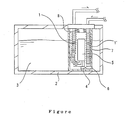
- the sole figure of the drawing is a diagram schematically illustrating the construction inside the fuel tank.
- a reference numeral 1 denotes an in-tank hose
- a reference numeral 1' similarly denotes another in-tank hose on a return side, equivalent to the above-mentioned in-tank hose 1.
- a reference numeral 2 denotes a fuel tank; 3: gasoline; 4: a filter; 5: a fuel pump; 6: a jet pump; 7: a polyoxymethylene (POM) housing; and 8: a spring.
- the housing 7 accommodating the in-tank hose 1 and the like is provided with the spring 8 so as to compensate for deformation of the fuel tank 2 due to thermal expansion.
- the in-tank hose 1 generally has a bellows structure so as to compensate for deformation of the fuel tank 2 due to thermal expansion and to absorb vibration due to the fuel pump 5.
- the in-tank hose 1 Since the in-tank hose 1 is installed in the above-mentioned conditions, an outer peripheral surface as well as an inner peripheral surface of the in-tank hose require sour gasoline resistance, that is, resistance to sour gasoline which is generated through oxidation of the gasoline 3. Further, since the gasoline 3 contains water at about 0.5%, the in-tank hose 1 requires resistance to hydrolysis due to water. For this reason, and to cope with these requirements heretofore, the entire hose has been made of materials excellent in sour gasoline resistance and the like such as fluororubber (FKM), hydrogenated acrylonitrile-butadiene rubber (H-NBR), polyamide 11 (PA11) and polyamide 12 (PA12) (Japanese Unexamined Patent Publication No. 7-118349 (1995)).
- FKM fluororubber
- H-NBR hydrogenated acrylonitrile-butadiene rubber
- PA11 polyamide 11
- PA12 polyamide 12
- FKM is expensive and further is difficult to be formed into the bellows structure required for the above-mentioned in-tank hose 1.
- H-NBR is used for formation of the in-tank hose 1
- a plasticizer and an antioxidant blended in H-NBR and remaining residue of a vulcanizing agent, also blended therein, may be extracted into the gasoline, resulting in clogging of the filter and contamination of motor electrodes in the pump, which may cause failure in operation of the motor.
- PA11 or PA12 is used for the above-mentioned in-tank hose 1, a bellows structure only cannot provide sufficient flexibility, which therefore requires the addition of a plasticizer for sufficient flexibility. Extracted plasticizer may result in clogging of the filter and contamination of motor electrodes in the pump.
- an object of the present invention to provide an automotive in-tank fuel hose which has excellent flexibility and is highly resistant to sour gasoline and hydrolysis.
- an automotive in-tank fuel hose for installation in a fuel tank comprising a single layer structure formed by at least one of (A) a thermoplastic polybutylene terephthalate elastomer containing a dimer acid moiety (hereinafter abbreviated as PBT-TPE containing a dimer acid moiety) and (B) a thermoplastic polybutylene naphthalate elastomer containing a dimer acid moiety (hereinafter abbreviated as PBN-TPE containing a dimer acid moiety), the automotive in-tank fuel hose being capable of following a deformation of the fuel tank and absorbing vibration caused by a fuel pump.
- PBT-TPE thermoplastic polybutylene terephthalate elastomer containing a dimer acid moiety
- PBN-TPE containing a dimer acid moiety a thermoplastic polybutylene naphthalate elastomer containing a dimer acid moiety
- the inventors of the present invention conducted studies to solve the above-mentioned problems. During a process, they have conducted studies focused upon polyester resins showing less permeability to gasoline including a gasohol. In studies, they also have made research on such problems that the sole use of polyester resin offers too high rigidity and inferior hydrolysis. As a result, they found that when a hose is made of a thermoplastic elastomer (TPE) containing a polyester resin such as a polybutylene terephthalate (PBT) or polybutylene naphthalate (PBN) as a hard segment and polyether as a soft segment, the above-mentioned problems may be improved.
- TPE thermoplastic elastomer
- PBT polybutylene terephthalate
- PBN polybutylene naphthalate
- the inventors found that, when a dimer acid moiety is introduced into the above-mentioned specific thermoplastic elastomer as a hard segment to reduce the proportion of the soft segment (polyether) or to entirely replace the soft segment with the dimer acid moiety, the hose is less likely to be eroded by the peroxide in the sour gasoline, whereby the hose tends to be free from deterioration by having an improved sour gasoline resistance.
- the present invention has been attained.
- the inventive automotive in-tank fuel hose for installation in a fuel tank comprises a single layer structure formed by at least one of PBT-TPE containing a dimer acid moiety and PBN-TPE containing a dimer acid moiety. Since a dimer acid moiety is introduced into PBT-TPE or PBN-TPE as a hard segment to reduce the proportion of the soft segment (polyether) or to entirely replace the soft segment with the dimer acid moiety, the soft segment is less likely to be eroded by the peroxide in the sour gasoline, whereby the hose tends to have an improved sour gasoline resistance without deterioration of flexibility and also to have excellent hydrolysis resistance. Especially, when the content of the dimer acid moiety is within a specific range in the thermoplastic elastomer, the above-mentioned properties for the inventive automotive in-tank hose may be further improved.
- the sole figure of the drawing is a diagram schematically illustrating the construction inside an automotive fuel tank.
- the automotive in-tank fuel hose is installed in a fuel tank and has a structure which may follow deformation of the fuel tank and absorb vibration caused by a fuel pump (for example, a bellows structure as shown in Figure).
- a notable feature of the present invention is a single layer structure comprising a specific thermoplastic elastomer (TPE) containing a dimer acid moiety.
- At least one of the following (A) and (B) is used.
- the dimer acid is a dimer obtained through a reaction of two molecules of an organic acid.
- Examples of the dimer acid include aliphatic dimer acids, alicyclic dimer acids and aromatic dimer acids, which may be used either alone or in combination.
- Examples of aliphatic dimer acids include dimer acids represented by the following general formulae (1) and (2) , which may be used either alone or in combination. wherein R 1 and R 2 , which may be the same or different, are alkyl groups; R 3 and R 4 , which may be the same or different, are alkylene groups; and a total carbon number of R 1 to R 4 is preferably 24 to 36. wherein R 1 and R 2 , which may be the same or different, are alkyl groups; R 3 is an alkylene group; and a total carbon number of R 1 to R 3 is preferably 24 to 36.
- Examples of alicyclic dimer acids include dimer acids represented by the following general formulae (3) to (6), which may be used either alone or in combination.
- R 1 and R 2 which may be the same or different, are alkyl groups
- R 3 and R 4 which may be the same or different, are alkylene groups
- a total carbon number of R 1 to R 4 is preferably 24 to 36.
- R 1 and R 2 which may be the same or different, are alkyl groups
- R 3 and R 4 which may be the same or different, are alkylene groups
- a total carbon number of R 1 to R 4 is preferably 24 to 36.
- R 1 and R 2 which may be the same or different, are alkyl groups; R 3 and R 4 , which may be the same or different, are alkylene groups; and a total carbon number of R 1 to R 4 is preferably 24 to 36.
- aromatic dimer acids include dimer acids represented by the following general formula (7). wherein R 1 and R 2 , which may be the same or different, are alkyl groups; R 3 and R 4 , which may be the same or different, are alkylene groups; and a total carbon number of R 1 to R 4 is preferably 24 to 36.
- dimer acids include acids sold under the trade name PRIPOL 1008 by Uniqema of Gouda, the Netherlands (a hydrogenated dimer acid product containing an aromatic dimer acid, an alicyclic dimer acid and an aliphatic dimer acid in a molar ratio of 9:54:37 (carbon number: 36)), Uniqema's PRIPOL 1009 (a hydrogenated dimer acid product containing an aromatic dimer acid, an alicyclic dimer acid and an aliphatic dimer acid in a molar ratio of 13: 64 :23 (carbon number: 36)), Uniqema's PRIPOL 1098 (an unhydrogenated dimer acid product containing an aromatic dimer acid, an alicyclic dimer acid and an aliphatic dimer acid in a molar ratio of 13:64:23 (carbon number: 36) ) , Uniqema's PRIPLAST 3008 (a dimethyl ester product of PRIPOL 1008), and Uniqemma's
- the PBT-TPE containing the dimer acid moiety may be prepared, for example, by partly substituting terephthalic acid (TPA: a material for preparation of the PBT) with the dimer acid.
- TPA terephthalic acid
- the PBN-TPE containing the dimer acid moiety may be prepared, for example, by partly substituting 2, 6-naphthalene dicarboxylate (a material for preparation of the PBN) with the dimer acid.
- TPE terephthalic acid
- B the PBN-TPE containing the dimer acid moiety
- 2, 6-naphthalene dicarboxylate a material for preparation of the PBN
- the proportion of the soft segment contained in the TPE containing the dimer acid moiety is preferably not greater than 20 wt% from the viewpoint of sour gasoline resistance.
- polyether which may be copolymerized with the dimer acid
- PTMG polytetramethylene glycol
- polyester which may be copolymerized with the dimer acid
- PBA polybutylene adipate
- PBA poly - ⁇ -caprolactone
- the proportion of the dimer acid moiety in the TPE containing the dimer acid is preferably 3 mol% to 30 mol%, particularly preferably 6 mol% to 20 mol%. If the proportion of the dimer acid moiety is smaller than 3 mol%, flexibility (or crazing resistance) and hydrolysis resistance tend to be deteriorated. If the proportion of the dimer acid moiety is greater than 30 mol%, the crystallinity of the PBT or the PBN tends to be reduced, resulting in reduction of gasoline resistance and mechanical strength.
- the TPE containing the dimer acid moiety preferably has a flexural modulus of 150 MPa to 1200 MPa, particularly preferably 300 MPa to 700 MPa.
- the hose may further contain an electrically conductive material such as carbon black, carbon nano-tubes or metal powder.
- This conductive material tends to dissipate static electricity, generated by a fuel pump or a filter, from the hose to outside the hose to help prevent accidents such as ignition of a fuel (such as gasoline) which may otherwise occur due to the static electricity.
- the PBT, PBN and their thermoplastic elastomers may appropriately be contained, as required according to the case, as long as the effects of the present invention are not deteriorated, that is, within a maximum range of about 20 wt% of the whole amount.
- the inventive hose is produced, for example, in the following manner.
- the specific material is prepared and extruded by means of an extruder (with the use of a mandrel, as required), and in turn is partially formed into a bellows structure by means of a vacuum forming corrugator (120HS model available from Corma Inc. of Yokohama, Japan) and simultaneously cooled to solidification.
- a vacuum forming corrugator 120HS model available from Corma Inc. of Yokohama, Japan
- the inventive hose typically has a thickness of 0.5 mm to 1.5 mm on straight portions at both ends, preferably 0.7 mm to 1.2 mm.
- the inventive hose typically has an inner diameter of 3 mm to 10 mm on straight portions at both ends, preferably 5 mm to 8 mm.
- the inventive hose typically has an outer diameter of 4 mm to 13 mm on straight portions at both ends, preferably 6 mm to 10 mm.
- PBTS01562 (a dimer acid moiety in a proportion of 6 mol% and having a flexural modulus of 650 MPa) available from Kanebo Gohsen, Ltd. of Osaka, Japan.
- PBT-TPE containing dimer acid moiety (the dimer acid: Uniqema's PRIPOL 1008 as a dimer acid moiety in a proportion of 10 mol%) and having a flexural modulus of 340 MPa.
- PBT-TPE containing dimer acid moiety (the dimer acid: Uniqema's PRIPOL 1008 as a dimer acid moiety in a proportion of 20 mol%) and having a flexural modulus of 150 MPa.
- PBT-TPE containing dimer acid moiety (the dimer acid: Uniqema's PRIPOL 1008 as a dimer acid moiety in a proportion of 2 mol%) and having a flexural modulus of 1600 MPa .
- PBT-TPE containing dimer acid moiety and polytetramethylene glycol (PTMG)
- PTMG polytetramethylene glycol
- the dimer acid Uniqema's PRIPOL 1008 as a dimer acid moiety in a proportion of 10 mol%
- PTMG a molecular weight of a number average molecular weight according to polystyrene calculation by gel permeation chromatography: 2000; content of PTMG: 20 wt%) and having a flexural modulus of 200 MPa.
- CELANEX 2001 (having a flexural modulus of 2450 MPa) available from Ticona.
- TQB-OT (having a flexural modulus of 2100 MPa) available from Teijin Chemicals, Ltd. of Tokyo, Japan.
- HYTREL 5577 (having a flexural modulus of 200 MPa) available from DuPont-Toray Co., Ltd. of Tokyo, Japan.
- PERPRENE S-6001 (having a flexural modulus of 570 MPa) available from Toyobo Co., Ltd. of Osaka, Japan.
- PA 12 (containing plasticizer)
- RILSAN AESN NOIR P40TL (containing a plasticizer at 14% and having a flexural modulus of 340 MPa) available from Atofina S.A. of Paris, France.
- a vacuum forming corrugator 120HS model available from Corma Inc. of Yokohama, Japan
- a model of degraded gasoline was prepared by blending 5 wt% of lauroyl peroxide (LPO) in Fuel C (50 vol% of toluene + 50 vol% of isooctane). Then, each hose (length: 20 cm) was respectively immersed into the model of degraded gasoline at 60°C for two weeks (exchange of the model of degraded gasoline: once a week), and then each hose was cooled to room temperature. A part of the hose was sampled and bent by 180 degrees. The state of the sampled part was visually observed for the evaluation of the sour gasoline resistance. In Tables 1 and 2, the symbol ⁇ indicates that the hose suffered from no abnormality, and the symbol ⁇ indicates that the hose was cracked or fractured.
- LPO lauroyl peroxide
- a hose was allowed to stand at a temperature of 80°C at a humidity of 95%.
- a part of the hose was sampled each 500 hours and cooled to room temperature and was bent by 180 degrees. The state of the sampled part was visually observed for evaluating the hydrolysis resistance.
- Tables 1 and 2 the symbol ⁇ indicates that an abnormality such as fold-down occurred within 1000 hours, the symbol ⁇ indicates that such abnormality occurred between 1000 and 1500 hours, and the symbol ⁇ indicates that no abnormality occurred over 1500 hours.
- Each hose (length: 20 cm) was filled with gasohol which was a mixture of Fuel C and methanol at 85: 15 (vol%), and was allowed to stand at 60°C for 1 week. Thereafter, the gasohol was withdrawn and condensed to 25% thereof by volume and then separated by a centrifugal separator. The separated material was visually observed for evaluating the extraction.
- gasohol was a mixture of Fuel C and methanol at 85: 15 (vol%)
- each hose was expanded and a stainless pipe (having an outer diameter of 8 mm at a straight portion and an outer diameter of 10 mm at a bulged portion) was press fitted therein.
- the assembly was entirely immersed into a gasohol (a mixture of Fuel C and methanol at 85:15 (vol%)) and allowed to stand at 40°C for 1 week. Thereafter, the end portion into which the pipe was press fitted was divided into halves. The condition of the end portion near to the press-fitted portion was observed by means of a 30 ⁇ magnifier.
- the symbol ⁇ indicates that no abnormality such as crazing occurred, while the symbol ⁇ indicates that crazing occurred.
- the hoses of Examples were excellent in sour gasoline resistance, hydrolysis resistance, extraction and crazing resistance.
- the hoses of Comparative Examples 1 and 4 were inferior in hydrolysis resistance. Further, the hoses of Comparative Examples 1 and 2 were inferior in crazing resistance.
- the hose of Comparative Example 3 was inferior in sour gasoline resistance, because the soft segment of polyether was easy to be eroded by the sour gasoline.
- the hose of Comparative Example 5 was inferior in extraction because a plasticizer was contained therein.
Landscapes
- Engineering & Computer Science (AREA)
- General Engineering & Computer Science (AREA)
- Chemical & Material Sciences (AREA)
- Mechanical Engineering (AREA)
- Health & Medical Sciences (AREA)
- Chemical Kinetics & Catalysis (AREA)
- Medicinal Chemistry (AREA)
- Polymers & Plastics (AREA)
- Organic Chemistry (AREA)
- Rigid Pipes And Flexible Pipes (AREA)
- Manufacture Of Macromolecular Shaped Articles (AREA)
Abstract
Description
- The present invention relates to an automotive in-tank fuel hose for installation in an automotive fuel tank.
- Generally, an automotive fuel piping system uses a mechanism which draws up a fuel such as a gasoline or a gasohol (an alcohol-containing gasoline) from a fuel tank and supplies the fuel to an engine for operation, as required. In such a mechanism, a fuel is drawn up by means of a pump which is built in the fuel tank, so-called a fuel pump. Also, in such a mechanism, a hose connected with the fuel pump is called an in-tank hose, which is built in the fuel tank, as well as the fuel pump. The sole figure of the drawing is a diagram schematically illustrating the construction inside the fuel tank. In the figure, a reference numeral 1 denotes an in-tank hose, while a reference numeral 1' similarly denotes another in-tank hose on a return side, equivalent to the above-mentioned in-tank hose 1. Also, a
reference numeral 2 denotes a fuel tank; 3: gasoline; 4: a filter; 5: a fuel pump; 6: a jet pump; 7: a polyoxymethylene (POM) housing; and 8: a spring.Gasoline 3, drawn up from thefuel tank 2 into thehousing 7 by a Venturi effect by means of thejet pump 6, passes through thefilter 4, and is fed into the in-tank hose 1 by means of thefuel pump 5, and is in turn supplied to an outside fuel circuit such as an engine, as it is. Thehousing 7 accommodating the in-tank hose 1 and the like is provided with thespring 8 so as to compensate for deformation of thefuel tank 2 due to thermal expansion. Also, the in-tank hose 1 generally has a bellows structure so as to compensate for deformation of thefuel tank 2 due to thermal expansion and to absorb vibration due to thefuel pump 5. - Since the in-tank hose 1 is installed in the above-mentioned conditions, an outer peripheral surface as well as an inner peripheral surface of the in-tank hose require sour gasoline resistance, that is, resistance to sour gasoline which is generated through oxidation of the
gasoline 3. Further, since thegasoline 3 contains water at about 0.5%, the in-tank hose 1 requires resistance to hydrolysis due to water. For this reason, and to cope with these requirements heretofore, the entire hose has been made of materials excellent in sour gasoline resistance and the like such as fluororubber (FKM), hydrogenated acrylonitrile-butadiene rubber (H-NBR), polyamide 11 (PA11) and polyamide 12 (PA12) (Japanese Unexamined Patent Publication No. 7-118349 (1995)). - However, FKM is expensive and further is difficult to be formed into the bellows structure required for the above-mentioned in-tank hose 1. When H-NBR is used for formation of the in-tank hose 1, a plasticizer and an antioxidant blended in H-NBR and remaining residue of a vulcanizing agent, also blended therein, may be extracted into the gasoline, resulting in clogging of the filter and contamination of motor electrodes in the pump, which may cause failure in operation of the motor. When PA11 or PA12 is used for the above-mentioned in-tank hose 1, a bellows structure only cannot provide sufficient flexibility, which therefore requires the addition of a plasticizer for sufficient flexibility. Extracted plasticizer may result in clogging of the filter and contamination of motor electrodes in the pump.
- In view of the foregoing, it is an object of the present invention to provide an automotive in-tank fuel hose which has excellent flexibility and is highly resistant to sour gasoline and hydrolysis.
- In accordance with the present invention to achieve the aforesaid object, among others, there is provided an automotive in-tank fuel hose for installation in a fuel tank comprising a single layer structure formed by at least one of (A) a thermoplastic polybutylene terephthalate elastomer containing a dimer acid moiety (hereinafter abbreviated as PBT-TPE containing a dimer acid moiety) and (B) a thermoplastic polybutylene naphthalate elastomer containing a dimer acid moiety (hereinafter abbreviated as PBN-TPE containing a dimer acid moiety), the automotive in-tank fuel hose being capable of following a deformation of the fuel tank and absorbing vibration caused by a fuel pump.
- The inventors of the present invention conducted studies to solve the above-mentioned problems. During a process, they have conducted studies focused upon polyester resins showing less permeability to gasoline including a gasohol. In studies, they also have made research on such problems that the sole use of polyester resin offers too high rigidity and inferior hydrolysis. As a result, they found that when a hose is made of a thermoplastic elastomer (TPE) containing a polyester resin such as a polybutylene terephthalate (PBT) or polybutylene naphthalate (PBN) as a hard segment and polyether as a soft segment, the above-mentioned problems may be improved. However, as a result of experiments, it was found that a polyether contained as a soft segment in the thermoplastic polyester elastomer is liable to be eroded by a peroxide in the sour gasoline, which thereby may result in the deterioration of the hose. As a result of further research and development, the inventors found that, when a dimer acid moiety is introduced into the above-mentioned specific thermoplastic elastomer as a hard segment to reduce the proportion of the soft segment (polyether) or to entirely replace the soft segment with the dimer acid moiety, the hose is less likely to be eroded by the peroxide in the sour gasoline, whereby the hose tends to be free from deterioration by having an improved sour gasoline resistance. Thus, the present invention has been attained.
- As mentioned above, the inventive automotive in-tank fuel hose for installation in a fuel tank comprises a single layer structure formed by at least one of PBT-TPE containing a dimer acid moiety and PBN-TPE containing a dimer acid moiety. Since a dimer acid moiety is introduced into PBT-TPE or PBN-TPE as a hard segment to reduce the proportion of the soft segment (polyether) or to entirely replace the soft segment with the dimer acid moiety, the soft segment is less likely to be eroded by the peroxide in the sour gasoline, whereby the hose tends to have an improved sour gasoline resistance without deterioration of flexibility and also to have excellent hydrolysis resistance. Especially, when the content of the dimer acid moiety is within a specific range in the thermoplastic elastomer, the above-mentioned properties for the inventive automotive in-tank hose may be further improved.
- The sole figure of the drawing is a diagram schematically illustrating the construction inside an automotive fuel tank.
- The present invention will hereinafter be described in detail by way of embodiments thereof.
- The automotive in-tank fuel hose is installed in a fuel tank and has a structure which may follow deformation of the fuel tank and absorb vibration caused by a fuel pump (for example, a bellows structure as shown in Figure). A notable feature of the present invention is a single layer structure comprising a specific thermoplastic elastomer (TPE) containing a dimer acid moiety.
- As material for the inventive automotive in-tank fuel hose, at least one of the following (A) and (B) is used.
- (A) PBT-TPE containing a dimer acid moiety; and
- (B) PBN-TPE containing a dimer acid moiety.
-
- The dimer acid is a dimer obtained through a reaction of two molecules of an organic acid. Examples of the dimer acid include aliphatic dimer acids, alicyclic dimer acids and aromatic dimer acids, which may be used either alone or in combination.
- Examples of aliphatic dimer acids include dimer acids represented by the following general formulae (1) and (2) , which may be used either alone or in combination.wherein R1 and R2, which may be the same or different, are alkyl groups; R3 and R4, which may be the same or different, are alkylene groups; and a total carbon number of R1 to R4 is preferably 24 to 36.
 wherein R1 and R2, which may be the same or different, are alkyl groups; R3 is an alkylene group; and a total carbon number of R1 to R3 is preferably 24 to 36.
- Examples of alicyclic dimer acids include dimer acids represented by the following general formulae (3) to (6), which may be used either alone or in combination.wherein R1 and R2, which may be the same or different, are alkyl groups; R3 and R4, which may be the same or different, are alkylene groups; and a total carbon number of R1 to R4 is preferably 24 to 36.
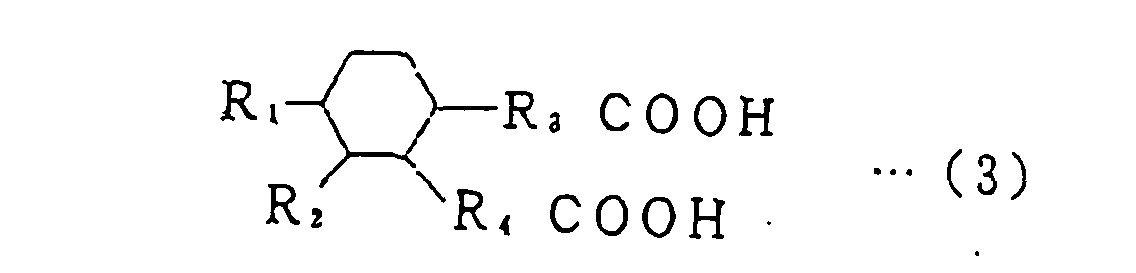 wherein R1 and R2, which may be the same or different, are alkyl groups; R3 and R4, which may be the same or different, are alkylene groups; and a total carbon number of R1 to R4 is preferably 24 to 36.
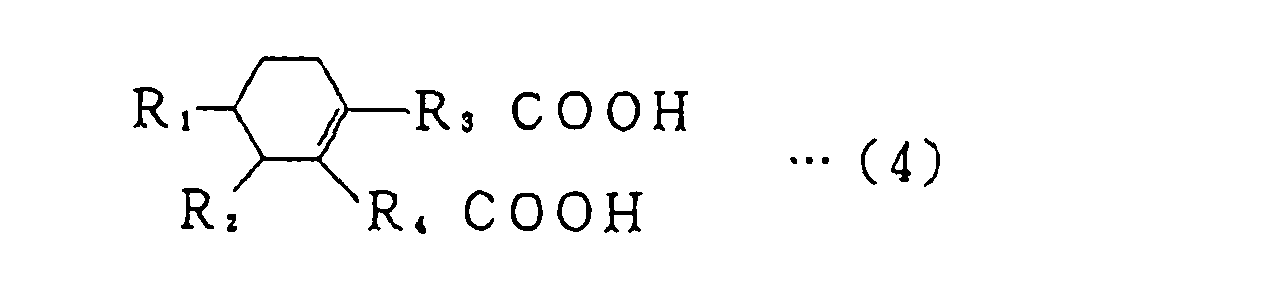 wherein R1 and R2, which may be the same or different, are alkyl groups; R3 and R4, which may be the same or different, are alkylene groups; and a total carbon number of R1 to R4 is preferably 24 to 36.
 wherein R1 and R2, which may be the same or different, are alkyl groups; R3 and R4, which may be the same or different, are alkylene groups; and a total carbon number of R1 to R4 is preferably 24 to 36.
- Examples of aromatic dimer acids include dimer acids represented by the following general formula (7).wherein R1 and R2, which may be the same or different, are alkyl groups; R3 and R4, which may be the same or different, are alkylene groups; and a total carbon number of R1 to R4 is preferably 24 to 36.

- More specific examples of preferred dimer acids include acids sold under the trade name PRIPOL 1008 by Uniqema of Gouda, the Netherlands (a hydrogenated dimer acid product containing an aromatic dimer acid, an alicyclic dimer acid and an aliphatic dimer acid in a molar ratio of 9:54:37 (carbon number: 36)), Uniqema's PRIPOL 1009 (a hydrogenated dimer acid product containing an aromatic dimer acid, an alicyclic dimer acid and an aliphatic dimer acid in a molar ratio of 13: 64 :23 (carbon number: 36)), Uniqema's PRIPOL 1098 (an unhydrogenated dimer acid product containing an aromatic dimer acid, an alicyclic dimer acid and an aliphatic dimer acid in a molar ratio of 13:64:23 (carbon number: 36) ) , Uniqema's PRIPLAST 3008 (a dimethyl ester product of PRIPOL 1008), and Uniqema's PRIPLAST 1899 (a dimethyl ester product of PRIPOL 1009) . Among these dimer acid products, the hydrogenated dimer acid products (PRIPOL 1008, PRIPOL 1009, PRIPLAST 3008 and PRIPLAST 1899) are particularly preferred.
- The above-mentioned (A), the PBT-TPE containing the dimer acid moiety may be prepared, for example, by partly substituting terephthalic acid (TPA: a material for preparation of the PBT) with the dimer acid. The above-mentioned (B), the PBN-TPE containing the dimer acid moiety may be prepared, for example, by partly substituting 2, 6-naphthalene dicarboxylate (a material for preparation of the PBN) with the dimer acid. For the preparation of the TPE containing the dimer acid moiety, the above-mentioned (A) or (B) , and a polyether and/or a polyester as a soft segment may be copolymerized with the dimer acid.
- The proportion of the soft segment contained in the TPE containing the dimer acid moiety is preferably not greater than 20 wt% from the viewpoint of sour gasoline resistance.
- An example of the polyether which may be copolymerized with the dimer acid is polytetramethylene glycol (PTMG). Examples of the polyester which may be copolymerized with the dimer acid include polybutylene adipate (PBA) and poly - ε-caprolactone.
- The proportion of the dimer acid moiety in the TPE containing the dimer acid is preferably 3 mol% to 30 mol%, particularly preferably 6 mol% to 20 mol%. If the proportion of the dimer acid moiety is smaller than 3 mol%, flexibility (or crazing resistance) and hydrolysis resistance tend to be deteriorated. If the proportion of the dimer acid moiety is greater than 30 mol%, the crystallinity of the PBT or the PBN tends to be reduced, resulting in reduction of gasoline resistance and mechanical strength.
- The TPE containing the dimer acid moiety preferably has a flexural modulus of 150 MPa to 1200 MPa, particularly preferably 300 MPa to 700 MPa.
- The hose may further contain an electrically conductive material such as carbon black, carbon nano-tubes or metal powder. This conductive material tends to dissipate static electricity, generated by a fuel pump or a filter, from the hose to outside the hose to help prevent accidents such as ignition of a fuel (such as gasoline) which may otherwise occur due to the static electricity. The PBT, PBN and their thermoplastic elastomers may appropriately be contained, as required according to the case, as long as the effects of the present invention are not deteriorated, that is, within a maximum range of about 20 wt% of the whole amount.
- The inventive hose is produced, for example, in the following manner. The specific material is prepared and extruded by means of an extruder (with the use of a mandrel, as required), and in turn is partially formed into a bellows structure by means of a vacuum forming corrugator (120HS model available from Corma Inc. of Yokohama, Japan) and simultaneously cooled to solidification. Thus, the intended hose (see the Figure) is produced.
- The dimensions of the inventive hose thus produced are not specifically limited, however, the inventive hose typically has a thickness of 0.5 mm to 1.5 mm on straight portions at both ends, preferably 0.7 mm to 1.2 mm. The inventive hose typically has an inner diameter of 3 mm to 10 mm on straight portions at both ends, preferably 5 mm to 8 mm. The inventive hose typically has an outer diameter of 4 mm to 13 mm on straight portions at both ends, preferably 6 mm to 10 mm. Each outer diameter of root and thread on the bellows portion is preferably root / thread = about 7 mm / 10 mm, and a pitch length thereof is preferably about 3 mm.
- Next, an explanation will be given to Examples and Comparative Examples.
- Prior to the explanation of Examples and Comparative Examples, the materials therein employed will be explained.
- PBTS01562 (a dimer acid moiety in a proportion of 6 mol% and having a flexural modulus of 650 MPa) available from Kanebo Gohsen, Ltd. of Osaka, Japan.
- PBT-TPE containing dimer acid moiety (the dimer acid: Uniqema's PRIPOL 1008 as a dimer acid moiety in a proportion of 10 mol%) and having a flexural modulus of 340 MPa.
- PBT-TPE containing dimer acid moiety (the dimer acid: Uniqema's PRIPOL 1008 as a dimer acid moiety in a proportion of 20 mol%) and having a flexural modulus of 150 MPa.
- PBT-TPE containing dimer acid moiety (the dimer acid: Uniqema's PRIPOL 1008 as a dimer acid moiety in a proportion of 2 mol%) and having a flexural modulus of 1600 MPa .
- PBT-TPE containing dimer acid moiety and polytetramethylene glycol (PTMG) (the dimer acid: Uniqema's PRIPOL 1008 as a dimer acid moiety in a proportion of 10 mol%; PTMG: a molecular weight of a number average molecular weight according to polystyrene calculation by gel permeation chromatography: 2000; content of PTMG: 20 wt%) and having a flexural modulus of 200 MPa.
- 2, 6-dimethyl naphthalate (DMN) as a material for the PBN, dimer based dimethyl ester (Uniqema's PRIPLAST 3008 ) , 1, 4-butanediol (BD) , and tetra n-butyl titanate, as polymerization catalyst, were put into an ester exchange bath, were heated at 210°C, and thus produced methanol was withdrawn, and then ester exchange was conducted. In turn, the reaction product was gradually vacuum heated at 260°C for 1 hour for polycondensation until degree of vacuum became 0.5 mmHg. Thus, PBN-TPE containing the diner acid moiety (a dimer acid moiety in a proportion of 10 mol%) and having a flexural modulus of 350Mpa was obtained.
- CELANEX 2001 (having a flexural modulus of 2450 MPa) available from Ticona.
- TQB-OT (having a flexural modulus of 2100 MPa) available from Teijin Chemicals, Ltd. of Tokyo, Japan.
- HYTREL 5577 (having a flexural modulus of 200 MPa) available from DuPont-Toray Co., Ltd. of Tokyo, Japan.
- PERPRENE S-6001 (having a flexural modulus of 570 MPa) available from Toyobo Co., Ltd. of Osaka, Japan.
- RILSAN AESN NOIR P40TL (containing a plasticizer at 14% and having a flexural modulus of 340 MPa) available from Atofina S.A. of Paris, France.
- Hoses of Examples 1 to 6 and Comparative Examples 1 to 5 were produced using the material as shown in Tables 1 and 2. Each material was extruded by an extruder so as to have a thickness as shown in Tables 1 and 2, which in turn was formed into a bellows structure (length of the bellows portion: 150 mm, root / thread = about 7 mm / 10 mm, a pitch length: 3 mm, length of straight portions at both ends: 25 mm × 2, and an inner diameter of the both straight portions: 6 mm) by means of a vacuum forming corrugator (120HS model available from Corma Inc. of Yokohama, Japan) and simultaneously cooled to solidification, and then cut for producing the hose by means of a cutting machine.
- The hoses of the Examples and the Comparative Examples thus produced were evaluated for characteristic properties thereof in the following manners. The results of the evaluation are shown in Tables 1 and 2.
- A model of degraded gasoline was prepared by blending 5 wt% of lauroyl peroxide (LPO) in Fuel C (50 vol% of toluene + 50 vol% of isooctane). Then, each hose (length: 20 cm) was respectively immersed into the model of degraded gasoline at 60°C for two weeks (exchange of the model of degraded gasoline: once a week), and then each hose was cooled to room temperature. A part of the hose was sampled and bent by 180 degrees. The state of the sampled part was visually observed for the evaluation of the sour gasoline resistance. In Tables 1 and 2, the symbol ○ indicates that the hose suffered from no abnormality, and the symbol × indicates that the hose was cracked or fractured.
- A hose was allowed to stand at a temperature of 80°C at a humidity of 95%. In turn, a part of the hose was sampled each 500 hours and cooled to room temperature and was bent by 180 degrees. The state of the sampled part was visually observed for evaluating the hydrolysis resistance. In Tables 1 and 2, the symbol × indicates that an abnormality such as fold-down occurred within 1000 hours, the symbol Δ indicates that such abnormality occurred between 1000 and 1500 hours, and the symbol ○ indicates that no abnormality occurred over 1500 hours.
- Each hose (length: 20 cm) was filled with gasohol which was a mixture of Fuel C and methanol at 85: 15 (vol%), and was allowed to stand at 60°C for 1 week. Thereafter, the gasohol was withdrawn and condensed to 25% thereof by volume and then separated by a centrifugal separator. The separated material was visually observed for evaluating the extraction. In Tables 1 and 2, the symbol ○ indicates that no sediment was seen, while the symbol × indicates that sediment was seen.
- An end portion of each hose was expanded and a stainless pipe (having an outer diameter of 8 mm at a straight portion and an outer diameter of 10 mm at a bulged portion) was press fitted therein. The assembly was entirely immersed into a gasohol (a mixture of Fuel C and methanol at 85:15 (vol%)) and allowed to stand at 40°C for 1 week. Thereafter, the end portion into which the pipe was press fitted was divided into halves. The condition of the end portion near to the press-fitted portion was observed by means of a 30 × magnifier. In Tables 1 and 2, the symbol ○ indicates that no abnormality such as crazing occurred, while the symbol × indicates that crazing occurred.


- As can be understood from the aforesaid results, the hoses of Examples were excellent in sour gasoline resistance, hydrolysis resistance, extraction and crazing resistance.
- On the other hand, the hoses of Comparative Examples 1 and 4 were inferior in hydrolysis resistance. Further, the hoses of Comparative Examples 1 and 2 were inferior in crazing resistance. The hose of Comparative Example 3 was inferior in sour gasoline resistance, because the soft segment of polyether was easy to be eroded by the sour gasoline. The hose of Comparative Example 5 was inferior in extraction because a plasticizer was contained therein.
- The features disclosed in the foregoing description, in the claims and/or in the accompanying drawings may, both separately and in any combination thereof, be material for realising the invention in diverse forms thereof.
Claims (8)
- An automotive in-tank fuel hose for installation in a fuel tank, the hose comprising a single layer structure formed by at least one of (A) a thermoplastic polybutylene terephthalate elastomer containing a dimer acid moiety and (B) a thermoplastic polybutylene naphthalate elastomer containing a dimer acid moiety, the automotive in-tank fuel hose being capable of following a deformation of the fuel tank and absorbing vibration caused by a fuel pump.
- An automotive in-tank fuel hose as set forth in claim 1, wherein the dimer acid moiety is present in a proportion of 3 to 30 mol% in the thermoplastic elastomer containing the dimer acid moiety.
- An automotive in-tank fuel hose as set forth in Claim 2 wherein the dimer acid moiety is present in a preparation of 6 to 20 mol % in the thermoplastic elastomer containing the dimer acid moiety.
- An automative in-tank fuel hose as set forth in any one of Claims 1 to 3 wherein the dimer acid moiety includes one or more aliphatic dimer acids represented by the following general formulae (1) and (2), either alone or in combination;wherein R1 and R2, which may be the same or different, are alkyl groups; R3 and R4, which may be the same or different, are alkylene groups; and a total carbon number of R1 to R4 is preferably 24 to 36;
 wherein R1 and R2, which may be the same or different, are alkyl groups; R3 is an alkylene group; and a total carbon number of R1 to R3 is 24 to 36.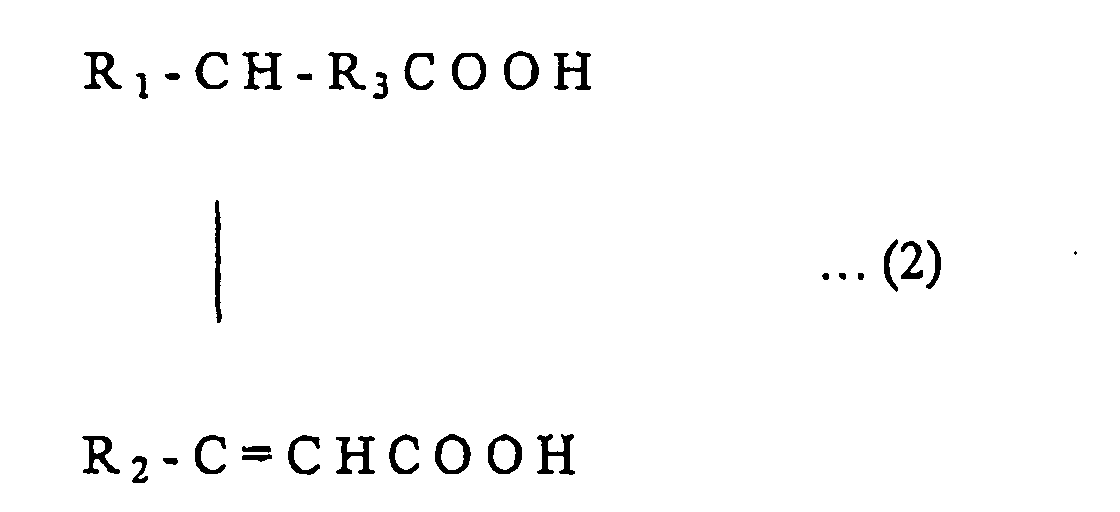
- An automotive in-tank fuel hose as set further in any one of Claims 1 to 4 wherein the dimer acid moiety includes one or more alicyclic acids represented by the following general formulae (3) to (6), either alone or in combination;wherein R1 and R2, which may be the same or different, are alkyl groups; R3 and R4, which may be the same or different, are alkylene groups; and a total carbon number of R1 to R4 is 24 to 36;
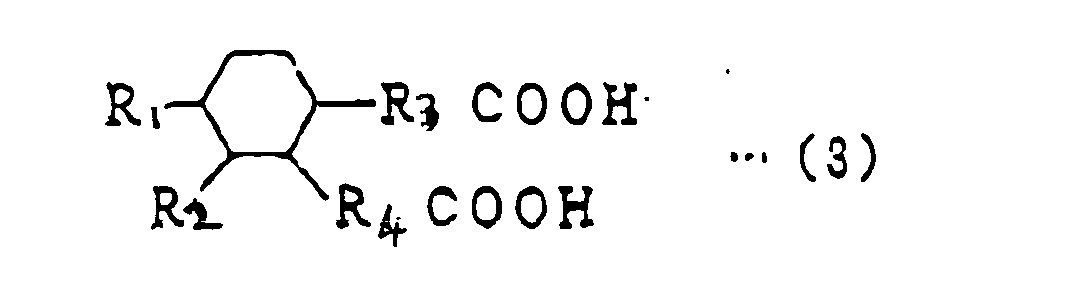 wherein R1 and R2, which may be the same or different, are alkyl groups; R3 and R4, which may be the same or different, are alkylene groups; and a total carbon number of R1 to R4 is 24 to 36;
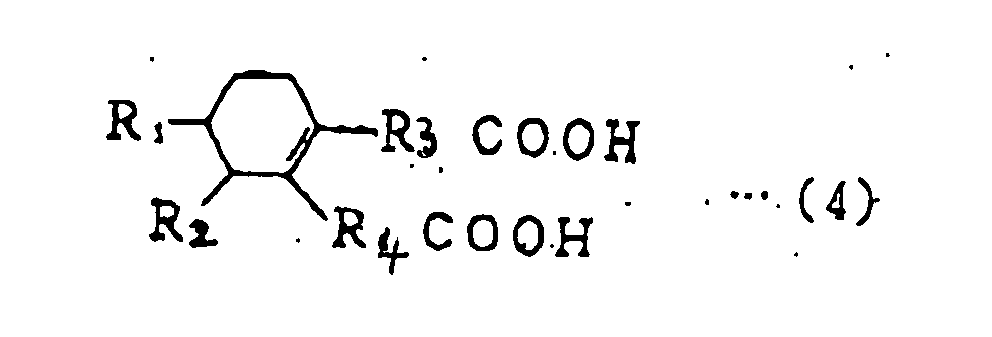 wherein R1 and R2, which may be the same or different, are alkyl groups; R3 and R4, which may be the same or different, are alkylene groups; and a total carbon number of R1 to R4 is 24 to 36;
 wherein R1 and R2, which may be the same or different, are alkyl groups; R3 and R4, which may be the same or different, are alkylene groups; and a total carbon number of R1 to R4 is 24 to 36.
- An automotive in-tank fuel hose as set forth in any one of Claims 1 to 5 wherein the dimer acid moiety includes one or more aromatic dimer acids represented by the following general formula (7).wherein R1 and R2, which may be the same or different, are alkyl groups; R3 and R4, which may be the same or different, are alkylene groups; and a total carbon number of R1 to R4 is 24 to 36.

- An automotive in-tank fuel hose as set forth in any one of Claims 1 to 6 wherein the hose further contains an electrically conductive material.
- A method of making an automotive in-tank fuel hose for installation in a fuel tank, the hose comprising a single layer structure formed from a specific material incorporating at least one of (A) a thermoplastic polybutylene terephthalate elastomer containing a dimer acid moiety and (B) a thermoplastic polybutylene naphthalate elastomer containing a dimer acid moiety, the method comprising the steps of extruding the specific material by means of an extruder, and forming the extruded material into a bellows structure by means of a vacuum forming corrugator, and cooling the extruded and corrugated material.
Applications Claiming Priority (4)
| Application Number | Priority Date | Filing Date | Title |
|---|---|---|---|
| JP2002286410 | 2002-09-30 | ||
| JP2002286410 | 2002-09-30 | ||
| JP2003337861A JP2004143448A (en) | 2002-09-30 | 2003-09-29 | In-tank hose for automotive fuel |
| JP2003337861 | 2003-09-29 |
Publications (1)
| Publication Number | Publication Date |
|---|---|
| EP1408268A1 true EP1408268A1 (en) | 2004-04-14 |
Family
ID=32032928
Family Applications (1)
| Application Number | Title | Priority Date | Filing Date |
|---|---|---|---|
| EP20030022213 Withdrawn EP1408268A1 (en) | 2002-09-30 | 2003-09-30 | Automotive in-tank fuel hose |
Country Status (3)
| Country | Link |
|---|---|
| US (1) | US20040105946A1 (en) |
| EP (1) | EP1408268A1 (en) |
| JP (1) | JP2004143448A (en) |
Cited By (3)
| Publication number | Priority date | Publication date | Assignee | Title |
|---|---|---|---|---|
| CN102317062A (en) * | 2010-03-18 | 2012-01-11 | 东海橡胶工业株式会社 | Automobile fuel in-tank tube and method of manufacturing same |
| US9074038B2 (en) | 2003-12-17 | 2015-07-07 | Dsm Ip Assets B.V. | Stain resistant urethane-vinyl aqueous coating compositions |
| CN116608067A (en) * | 2023-07-19 | 2023-08-18 | 江苏普瑞亚动力科技有限公司 | Diesel engine capable of improving atomization effect |
Families Citing this family (4)
| Publication number | Priority date | Publication date | Assignee | Title |
|---|---|---|---|---|
| US20040161538A1 (en) * | 2003-02-10 | 2004-08-19 | Angelika Boehme | Coating agents and a process for the preparation of multi-layer coatings |
| JP2011178207A (en) * | 2010-02-26 | 2011-09-15 | Tokai Rubber Ind Ltd | In-tank tube for automotive fuel, and method for manufacturing the same |
| FR3046826B1 (en) * | 2016-01-15 | 2018-05-25 | Arkema France | MULTILAYER TUBULAR STRUCTURE HAVING IMPROVED RESISTANCE TO EXTRACTION IN BIO-GASOLINE AND USE THEREOF |
| FR3046827B1 (en) | 2016-01-15 | 2018-05-25 | Arkema France | MULTILAYER TUBULAR STRUCTURE HAVING IMPROVED RESISTANCE TO EXTRACTION IN BIO-GASOLINE AND USE THEREOF |
Citations (6)
| Publication number | Priority date | Publication date | Assignee | Title |
|---|---|---|---|---|
| JPH061152A (en) * | 1992-06-23 | 1994-01-11 | Tokai Rubber Ind Ltd | Fuel piping tube |
| JPH07118349A (en) | 1993-10-15 | 1995-05-09 | E I Du Pont De Nemours & Co | Fluoroelastomer |
| JPH0948909A (en) * | 1995-08-02 | 1997-02-18 | Kanebo Ltd | Resin composition for extrusion molding and extrusion molded product thereof |
| JP2002213655A (en) * | 2001-01-19 | 2002-07-31 | Nissan Motor Co Ltd | Resin tube |
| US20030021560A1 (en) * | 2001-07-10 | 2003-01-30 | Fujikura Ltd. | Optical fiber ribbon and optical fiber cable |
| EP1333212A2 (en) * | 2002-01-24 | 2003-08-06 | Tokai Rubber Industries, Ltd. | Fuel hose |
Family Cites Families (3)
| Publication number | Priority date | Publication date | Assignee | Title |
|---|---|---|---|---|
| US3954689A (en) * | 1973-12-10 | 1976-05-04 | E. I. Du Pont De Nemours And Company | Segmented thermoplastic copolyester elastomers |
| TW203079B (en) * | 1991-03-27 | 1993-04-01 | Japan Synthetic Rubber Co Ltd | |
| DE19831898B4 (en) * | 1998-07-16 | 2004-01-22 | Rasmussen Gmbh | Fluid line for fuels and fuel vapors |
-
2003
- 2003-09-29 JP JP2003337861A patent/JP2004143448A/en active Pending
- 2003-09-30 EP EP20030022213 patent/EP1408268A1/en not_active Withdrawn
- 2003-09-30 US US10/673,642 patent/US20040105946A1/en not_active Abandoned
Patent Citations (6)
| Publication number | Priority date | Publication date | Assignee | Title |
|---|---|---|---|---|
| JPH061152A (en) * | 1992-06-23 | 1994-01-11 | Tokai Rubber Ind Ltd | Fuel piping tube |
| JPH07118349A (en) | 1993-10-15 | 1995-05-09 | E I Du Pont De Nemours & Co | Fluoroelastomer |
| JPH0948909A (en) * | 1995-08-02 | 1997-02-18 | Kanebo Ltd | Resin composition for extrusion molding and extrusion molded product thereof |
| JP2002213655A (en) * | 2001-01-19 | 2002-07-31 | Nissan Motor Co Ltd | Resin tube |
| US20030021560A1 (en) * | 2001-07-10 | 2003-01-30 | Fujikura Ltd. | Optical fiber ribbon and optical fiber cable |
| EP1333212A2 (en) * | 2002-01-24 | 2003-08-06 | Tokai Rubber Industries, Ltd. | Fuel hose |
Non-Patent Citations (3)
| Title |
|---|
| "CAPLUS", CAPLUS, XP002263712 * |
| PATENT ABSTRACTS OF JAPAN vol. 018, no. 192 (M - 1587) 4 April 1994 (1994-04-04) * |
| PATENT ABSTRACTS OF JAPAN vol. 2002, no. 11 6 November 2002 (2002-11-06) * |
Cited By (6)
| Publication number | Priority date | Publication date | Assignee | Title |
|---|---|---|---|---|
| US9074038B2 (en) | 2003-12-17 | 2015-07-07 | Dsm Ip Assets B.V. | Stain resistant urethane-vinyl aqueous coating compositions |
| CN102317062A (en) * | 2010-03-18 | 2012-01-11 | 东海橡胶工业株式会社 | Automobile fuel in-tank tube and method of manufacturing same |
| US8555931B2 (en) | 2010-03-18 | 2013-10-15 | Tokai Rubber Industries, Ltd. | In-tank tube for automotive fuel and method of producing the tube |
| EP2548721A4 (en) * | 2010-03-18 | 2015-04-22 | Sumitomo Riko Co Ltd | Automobile fuel in-tank tube and method of manufacturing same |
| CN116608067A (en) * | 2023-07-19 | 2023-08-18 | 江苏普瑞亚动力科技有限公司 | Diesel engine capable of improving atomization effect |
| CN116608067B (en) * | 2023-07-19 | 2023-09-29 | 江苏普瑞亚动力科技有限公司 | Diesel engine capable of improving atomization effect |
Also Published As
| Publication number | Publication date |
|---|---|
| JP2004143448A (en) | 2004-05-20 |
| US20040105946A1 (en) | 2004-06-03 |
Similar Documents
| Publication | Publication Date | Title |
|---|---|---|
| JP3606204B2 (en) | Resin tube | |
| JP2631615B2 (en) | Gasoline transfer tube | |
| KR100303858B1 (en) | Fuel transfer tube | |
| US5469892A (en) | Corrugated polymeric tubing having at least three layers with at least two respective layers composed of polymeric materials dissimilar to one another | |
| US5679425A (en) | Hose for fuel handling systems | |
| JP4404255B2 (en) | A hollow multilayer thermoplastic multilayer composite | |
| EP1302308B1 (en) | Low precipitate polyamide based tubing | |
| JP2000154890A (en) | Tubing for fuel piping | |
| EP2554887B2 (en) | Fuel hose and method for producing same | |
| US20040105946A1 (en) | Automotive in-tank fuel hose | |
| JPH0796564A (en) | Fuel transfer tube | |
| EP1333212B1 (en) | Fuel hose | |
| JP3606213B2 (en) | Resin tube | |
| US20100009107A1 (en) | Multi-layer tube for conducting fuel in a motor vehicle | |
| EP2548721B1 (en) | In-tank tube for automotive fuel and method of producing same | |
| US6739356B2 (en) | Tube for transporting a fluid in an automobile | |
| JP2004100943A (en) | Resin tube and fuel system tube | |
| US10724659B2 (en) | Multilayer tube for guiding fuel fluid and method of manufacturing same | |
| US20040071908A1 (en) | Fuel hose | |
| US20040040608A1 (en) | Automotive fuel hose | |
| JP2005081663A (en) | Resin tubes and fuel piping tubes | |
| JP2824111B2 (en) | Refrigerant gas hose | |
| JP2006118392A (en) | Multilayer resin piping and multilayer resin container | |
| Ferber et al. | Low Permeation Elastomeric Fuel Hose Requirements and New Fluoroelastomer Materials | |
| WO1994009302A1 (en) | Corrugated multilayer tubing having at least two dissimilar polymeric materials |
Legal Events
| Date | Code | Title | Description |
|---|---|---|---|
| PUAI | Public reference made under article 153(3) epc to a published international application that has entered the european phase |
Free format text: ORIGINAL CODE: 0009012 |
|
| AK | Designated contracting states |
Kind code of ref document: A1 Designated state(s): AT BE BG CH CY CZ DE DK EE ES FI FR GB GR HU IE IT LI LU MC NL PT RO SE SI SK TR |
|
| AX | Request for extension of the european patent |
Extension state: AL LT LV MK |
|
| STAA | Information on the status of an ep patent application or granted ep patent |
Free format text: STATUS: REQUEST FOR EXAMINATION WAS MADE |
|
| 17P | Request for examination filed |
Effective date: 20040921 |
|
| AKX | Designation fees paid |
Designated state(s): DE FR GB |
|
| STAA | Information on the status of an ep patent application or granted ep patent |
Free format text: STATUS: THE APPLICATION HAS BEEN WITHDRAWN |
|
| 18W | Application withdrawn |
Effective date: 20051117 |