EP1406185A2 - Informationssystem zum Auswählen eines Materials mit gewünschten Eigenschaften - Google Patents
Informationssystem zum Auswählen eines Materials mit gewünschten Eigenschaften Download PDFInfo
- Publication number
- EP1406185A2 EP1406185A2 EP20030256210 EP03256210A EP1406185A2 EP 1406185 A2 EP1406185 A2 EP 1406185A2 EP 20030256210 EP20030256210 EP 20030256210 EP 03256210 A EP03256210 A EP 03256210A EP 1406185 A2 EP1406185 A2 EP 1406185A2
- Authority
- EP
- European Patent Office
- Prior art keywords
- property
- value
- acceptable
- user
- scored
- Prior art date
- Legal status (The legal status is an assumption and is not a legal conclusion. Google has not performed a legal analysis and makes no representation as to the accuracy of the status listed.)
- Withdrawn
Links
Images
Classifications
-
- G—PHYSICS
- G06—COMPUTING OR CALCULATING; COUNTING
- G06F—ELECTRIC DIGITAL DATA PROCESSING
- G06F16/00—Information retrieval; Database structures therefor; File system structures therefor
- G06F16/20—Information retrieval; Database structures therefor; File system structures therefor of structured data, e.g. relational data
- G06F16/24—Querying
- G06F16/245—Query processing
- G06F16/2457—Query processing with adaptation to user needs
- G06F16/24578—Query processing with adaptation to user needs using ranking
-
- G—PHYSICS
- G06—COMPUTING OR CALCULATING; COUNTING
- G06F—ELECTRIC DIGITAL DATA PROCESSING
- G06F16/00—Information retrieval; Database structures therefor; File system structures therefor
- G06F16/30—Information retrieval; Database structures therefor; File system structures therefor of unstructured textual data
- G06F16/33—Querying
- G06F16/3331—Query processing
- G06F16/334—Query execution
-
- Y—GENERAL TAGGING OF NEW TECHNOLOGICAL DEVELOPMENTS; GENERAL TAGGING OF CROSS-SECTIONAL TECHNOLOGIES SPANNING OVER SEVERAL SECTIONS OF THE IPC; TECHNICAL SUBJECTS COVERED BY FORMER USPC CROSS-REFERENCE ART COLLECTIONS [XRACs] AND DIGESTS
- Y10—TECHNICAL SUBJECTS COVERED BY FORMER USPC
- Y10S—TECHNICAL SUBJECTS COVERED BY FORMER USPC CROSS-REFERENCE ART COLLECTIONS [XRACs] AND DIGESTS
- Y10S707/00—Data processing: database and file management or data structures
- Y10S707/99931—Database or file accessing
- Y10S707/99933—Query processing, i.e. searching
-
- Y—GENERAL TAGGING OF NEW TECHNOLOGICAL DEVELOPMENTS; GENERAL TAGGING OF CROSS-SECTIONAL TECHNOLOGIES SPANNING OVER SEVERAL SECTIONS OF THE IPC; TECHNICAL SUBJECTS COVERED BY FORMER USPC CROSS-REFERENCE ART COLLECTIONS [XRACs] AND DIGESTS
- Y10—TECHNICAL SUBJECTS COVERED BY FORMER USPC
- Y10S—TECHNICAL SUBJECTS COVERED BY FORMER USPC CROSS-REFERENCE ART COLLECTIONS [XRACs] AND DIGESTS
- Y10S707/00—Data processing: database and file management or data structures
- Y10S707/99931—Database or file accessing
- Y10S707/99933—Query processing, i.e. searching
- Y10S707/99934—Query formulation, input preparation, or translation
-
- Y—GENERAL TAGGING OF NEW TECHNOLOGICAL DEVELOPMENTS; GENERAL TAGGING OF CROSS-SECTIONAL TECHNOLOGIES SPANNING OVER SEVERAL SECTIONS OF THE IPC; TECHNICAL SUBJECTS COVERED BY FORMER USPC CROSS-REFERENCE ART COLLECTIONS [XRACs] AND DIGESTS
- Y10—TECHNICAL SUBJECTS COVERED BY FORMER USPC
- Y10S—TECHNICAL SUBJECTS COVERED BY FORMER USPC CROSS-REFERENCE ART COLLECTIONS [XRACs] AND DIGESTS
- Y10S707/00—Data processing: database and file management or data structures
- Y10S707/99931—Database or file accessing
- Y10S707/99933—Query processing, i.e. searching
- Y10S707/99935—Query augmenting and refining, e.g. inexact access
-
- Y—GENERAL TAGGING OF NEW TECHNOLOGICAL DEVELOPMENTS; GENERAL TAGGING OF CROSS-SECTIONAL TECHNOLOGIES SPANNING OVER SEVERAL SECTIONS OF THE IPC; TECHNICAL SUBJECTS COVERED BY FORMER USPC CROSS-REFERENCE ART COLLECTIONS [XRACs] AND DIGESTS
- Y10—TECHNICAL SUBJECTS COVERED BY FORMER USPC
- Y10S—TECHNICAL SUBJECTS COVERED BY FORMER USPC CROSS-REFERENCE ART COLLECTIONS [XRACs] AND DIGESTS
- Y10S707/00—Data processing: database and file management or data structures
- Y10S707/99931—Database or file accessing
- Y10S707/99933—Query processing, i.e. searching
- Y10S707/99936—Pattern matching access
Definitions
- the present invention relates generally to systems and methods for finding a material that matches a set of properties. More specifically, the present invention relates to material selection systems and methods for quickly finding a material that best matches a desired set of properties so that product development time can be shortened.
- This invention relates to material selection systems and methods that allow one to quickly identify which existing material(s) most closely matches a desired set of properties overall, thereby allowing new product development cycle times to be significantly reduced.
- An embodiment of this invention comprises systems and methods that utilize a computer to automatically search a database of materials and calculate which material therein best matches the desired set of properties overall.
- the systems and methods of this invention may be accessible to users via a personal computer, an intranet, an extranet, or the Internet.
- Embodiments of the systems and methods of this invention may take all the desired properties into account collectively when calculating which material(s) best matches the desired set of properties overall.
- the systems and methods may utilize fuzzy membership functions to score existing materials according to how well they match each individual desired property value. Furthermore, properties having higher priorities can be given greater weight than properties having lower priorities when the overall match score of the material is being calculated. Finally, embodiments of the systems and methods of this invention can allow materials to be ranked in descending order according to their calculated overall match score, so that the material(s) that best matches the desired properties is readily identifiable by a user.
- the systems and methods of the present invention allow a user to input or select the various properties and property values that they desire in a material. For example, users may be able to select the properties they desire in a material. Users may also be able to select acceptable values for these desired properties, such as a minimum acceptable value, a maximum acceptable value, an acceptable point value, or a range of acceptable values. In embodiments, users may be able to select a priority for each desired property, such as high, medium or low. In embodiments, users may also be able to select how many matching materials they wish to see listed.
- a search for the closest matching material can begin.
- the first step involves searching a database of materials to find out which materials possess the properties that are desired.
- an index value may be calculated for each property value of each material.
- a score may be calculated for each property value.
- an overall match score may be calculated for each material, indicating how well the material matches the desired properties.
- the materials may be sorted in descending order based on their overall match scores so that a user can easily identify which material matches all the desired properties the best.
- fuzzy membership functions are used to calculate a score for each property value. These fuzzy membership functions determine the degree of similarity between the desired property values and the actual property values of existing materials. There are four different fuzzy membership functions utilized by the present invention, depending on what acceptable values are selected by the user for each desired property. For example, if the user selects a maximum acceptable value for a property, one fuzzy membership function is utilized to calculate a score for that property value. If the user selects a minimum acceptable value for a property, a second fuzzy membership function is utilized to calculate the score for that property value. If the user selects a range of acceptable values for a property, a third fuzzy membership function is utilized to calculate the score for that property value. Finally, if the user selects an acceptable point value for a property, a fourth fuzzy membership function is utilized to calculate the score for that property value.
- each score may also be weighted to account for the priority selected for that property. For example, if a high priority is selected for a property, that property may be assigned a higher value than one having a lower priority so that when the overall match score is calculated, these priorities are taken into account.
- the overall match score may take all the property values into account collectively.
- the calculations described above may be performed automatically by a computer, or they may be performed manually.
- the systems and methods may be designed so that, once a user selects the desired properties and acceptable property values, a database of materials is automatically searched and the best matching material therein is located.
- the present invention has all the advantages of existing material selection systems and methods, but it requires less experimentation and laboratory time, thereby reducing product development cycle times so that new products can get to market quicker.
- One embodiment of the present invention comprises a method for selecting a material that most closely matches a desired set of properties.
- This method comprises obtaining at least one input parameter from a user; retrieving actual property values for at least one preliminary matching material from a global data repository; determining how well each preliminary matching material matches a desired set of property values; and outputting the results to the user.
- This determining step further comprises calculating an index value for each actual property value of each preliminary matching material; scoring each property value to create a scored property value; weighting each scored property value by taking a priority value for each property into account to create a weighted scored property value; and calculating an overall match score for each preliminary matching material.
- the method may also comprise sorting the preliminary matching materials by their respective overall match scores prior to outputting the results to the user.
- Another embodiment of the present invention comprises a system for selecting a material that most closely matches a desired set of properties.
- This system comprises a means for obtaining at least one input parameter from a user; a means for retrieving actual property values for at least one preliminary matching material from a global data repository; a material selection algorithm operable for determining how well each preliminary matching material matches a desired set of property values; and a means for outputting the results to the user.
- This material selection algorithm is further operable for calculating an index value for each actual property value of each preliminary matching material; scoring each property value to create a scored property value; weighting each scored property value by taking a priority value for each property into account to create a weighted scored property value; and calculating an overall match score for each preliminary matching material.
- the material selection algorithm may also be operable for sorting the preliminary matching materials by their respective overall match scores prior to outputting the results to the user.
- FIGURES 1-6 For the purposes of promoting an understanding of the invention, reference will now be made to some preferred embodiments of the present invention as illustrated in FIGURES 1-6, and specific language used to describe the same.
- the terminology used herein is for the purpose of description, not limitation. Specific structural and functional details disclosed herein are not to be interpreted as limiting, but merely as a basis for the claims as a representative basis for teaching one skilled in the art to variously employ the present invention. Any modifications or variations in the depicted material selection systems and methods, and such further applications of the principles of the invention as illustrated herein, as would normally occur to one skilled in the art, are considered to be within the spirit of this invention.
- the present invention comprises material selection systems and methods that allow one to quickly identify which existing materials most closely match a desired set of properties overall so that new product development time can be reduced.
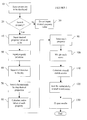
- the material selection method comprises the steps shown in Figure 1. First, a user inputs the properties they wish to be displayed for each material 10. These properties may include mechanical properties, thermal properties, electrical properties or other desired properties.
- Such properties may include one or more of the following non-limiting properties: tensile strength, tensile strain at break, tensile modulus, flexural modulus, Izod impact notched at 23°C, HDT at 0.45 MPa, HDT at 1.80 MPa, Vicat softening temperature, coefficient of thermal expansion, relative thermal index (electrical), relative thermal index (mechanical with impact), relative thermal index (mechanical without impact), dissipation factor at 50Hz, dissipation factor at 1MHz, dielectric constant at 50Hz, dielectric constant at 1MHz, volume resistivity, surface resistivity, specific gravity, water absorption, and the UL94 rating at a given thickness.
- the user decides which properties they wish to have displayed, they then decide whether or not each property they selected is to be searched 20. If the user wants a particular property to be displayed, but not searched and scored, then they do not need to input a value for that property 30. If however, the user wants the property values to be searched, scored and displayed, then the user inputs the desired or acceptable values for that property 40, and also selects which units are desired for each property (i.e., SI units or British units). For example, the user may input a minimum acceptable value, a maximum acceptable value, a range of acceptable values, or an acceptable point value for each property being searched and scored. Next, the user may input the priority assigned to each property 50. The priorities may comprise high, medium and low. Next, the user may input the number of matching materials they wish to have displayed 60. For example, they may wish to see only the ten materials that most closely match the desired properties.
- background calculations may be performed. Users may or may not even be aware that these background calculations are occurring. For example, if property values for a material are retrieved from the global data repository in SI units, but the user wants the units to be displayed in British or U.S. units, embodiments of the invention may convert the retrieved units to the appropriate desired units before displaying them to the user. Also, data may be normalized as needed so that testing methods used to measure a given property in one country can be normalized to test methods used to measure that same property in another country. Other background calculations may also be performed. For example, if results of a specific test method are requested by a user, but that test has not been performed and entered into the database, then if a similar test has been conducted, the desired results may in some cases be calculated from the actual results of the similar test.
- a global data repository or database may be searched to make preliminary matching material selections 70.
- This global data repository may comprise data for materials from all around the globe, instead of just comprising data from one region of the globe.
- embodiments of this invention comprise data for materials available in North America, Europe, Japan, Brazil, etc. all combined into one searchable global data repository.
- this invention does not discard a material just because it does not match one or more property values very well.
- this invention allows materials to be preliminarily selected if they have property values that are just somewhat in the vicinity of the desired property values.
- an index value can be calculated for each property value of each material 80.
- Index value range Actual property value - (LOW + HIGH)/2 HIGH - LOW where LOW is the minimum value of the acceptable range specified by the user and HIGH is the maximum value of the acceptable range specified by the user. If an acceptable point value is selected, there is no need to calculate an index value for the property because the scoring algorithm for an acceptable point value does not take the index value into account.
- a score for each property value can be calculated 90.
- a property is given a score of about 0.7 if it satisfies the acceptable property value.
- a higher score is given if the material exceeds the acceptable property value, and a lower score is given if it does not meet the acceptable property value as well.
- a score of 0.0 is given if the material does not come close to matching the acceptable property value at all. Therefore, the highest scores are given to materials having property values that exceed the acceptable property values, or that are well within the specified ranges of acceptable property values.
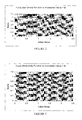
- a graphical representation of this sigmoidal fuzzy membership function is shown in Figure 3.
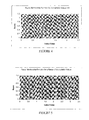
- a graphical representation of this fuzzy membership function is shown in Figure 4.
- each score can be weighted 100 according to the priority assigned to each property. For example, in this embodiment, if a property is given a high priority, a priority value of 4 is assigned to that property; if a property is given a medium priority, a priority value of 2 is assigned to that property; and if a property is given a low priority, a priority value of 1 is assigned to that property. The score can then be weighted by multiplying the score by the priority value.
- Table 1 shows all the above-described calculations for a group of materials. For simplicity, the calculations for only one property of one material will described herein - flexural modulus for Material Grade Name 2735.
- the properties that were desired were selected - flexural modulus, RT Izod impact, tensile strength, and tensile strain at break. These properties are list in the first column in the table below.
- the six (6) best matching materials were asked to be listed in the results output, and the units selected were SI units.
- the actual value of flexural modulus for the 2735 material was 2136 MPa.
- the overall match score rates how well a material fits the desired property values. Each material will have an overall match score ranging from 0 to 1.0, depending on how well it matches the desired properties. An overall match score of 1.0 means the material matches all the desired properties perfectly, while an overall match score of 0.0 means the material does not match the desired properties at all.
- Embodiments of the present invention also comprise material selection systems.
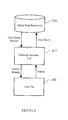
- the material selection system comprises a three-tier architecture as shown in Figure 6.
- the three tiers in this embodiment include the user tier 200, the network tier 210 and the database tier 220.
- the user tier in this embodiment allows a user to input or select various input parameters. Some non-limiting examples of these various input parameters comprise: which properties the user wishes to have displayed, which properties they wish to be searched, what the acceptable property values are for each property being searched, a priority value for each property being searched, and/or the number of matching materials they wish to have displayed.
- This user tier may contain a material search interface layer implemented in any suitable manner, such as by JavaServer Pages TM (JSP) technology and/or JavaScript.
- JSP JavaServer Pages TM
- the network tier layer hosts the actual application that performs the material search (i.e., the network tier acts as the material search engine).
- the network tier accepts the user's inputs, and then performs the search/data query over the database layer.
- the search results may then be returned to the user via the user tier.
- This functionality may be achieved in any suitable manner, such as by using a web server, Java Servlet and/or Java Data Base Connectivity (JDBC TM ) technology.
- JDBC TM Java Data Base Connectivity
- Embodiments of this invention search a global data repository comprising any type of materials such as, for example, plastics, glasses, ceramics, and/or metals, etc.
- Other embodiments search a global data repository comprising commercial or developmental grade engineering thermoplastics.
- These thermoplastics may comprise, for example, polyesters, such as polyethylene terephthalate (PET), polybutylene terephthalate (PBT), polyethylene naphthalate (PEN), liquid crystal polyester (LCP) and the like, polyolefins, such as polyethylene (PE), polypropylene (PP), polybutylene or the like, styrene-type resins, etc.
- polyoxymethylene polyamide (PA), polycarbonate (PC), polymethylene methacrylate (PMMA), polyvinyl chloride (PVC), polyphenylene sulfide (PPS), polyphenylene ether (PPE), polyimide (PI), polyamide imide (PAI), polyetherimide (PEI), polysulfone (PSU), polyether sulphone (PES), polyketone (PK), polyether ketone (PEK), polyether ether ketone (PEEK), polyalylate (PAR), polyethernitrile (PEN), phenol resins (novolac type or the like), phenoxy resins, fluorocarbon resins, or, furthermore, thermoplastic elastomers of a polystyrene type, a polyolefin type, a polyurethane type, a polyester type, a polyamide type, a polybutadiene type, polyisoprene type, a fluorine type or the like, or copo
- thermoplastics comprise styrene-type resins, polycarbonate resins, polyphenylene ether resins, polyamide resins, polyester resins, polyphenylene sulfide resins, polyolebi resins, liquid-crystalline resins and phenol-type resins.
- the thermoplastics in this invention may further comprise one or more reinforcing agents such as glass, talc, mica, clay, or combinations thereof; flame retarding compounds used alone or in conjunction with a synergist; drip retarding agent(s); and/or a wide variety of other additives such as stabilizers, pigments, colorants, processing aids, antioxidants and the like.
- the systems and methods of the present invention allow a user to quickly and easily identify a material that closely matches desired performance criteria.
- these systems and methods may significantly speed up new product development times, allowing new products to get to market quicker than in the past.
Landscapes
- Engineering & Computer Science (AREA)
- Theoretical Computer Science (AREA)
- Computational Linguistics (AREA)
- Data Mining & Analysis (AREA)
- Databases & Information Systems (AREA)
- Physics & Mathematics (AREA)
- General Engineering & Computer Science (AREA)
- General Physics & Mathematics (AREA)
- Information Retrieval, Db Structures And Fs Structures Therefor (AREA)
- Management, Administration, Business Operations System, And Electronic Commerce (AREA)
Applications Claiming Priority (2)
| Application Number | Priority Date | Filing Date | Title |
|---|---|---|---|
| US263216 | 2002-10-02 | ||
| US10/263,216 US7246113B2 (en) | 2002-10-02 | 2002-10-02 | Systems and methods for selecting a material that best matches a desired set of properties |
Publications (2)
| Publication Number | Publication Date |
|---|---|
| EP1406185A2 true EP1406185A2 (de) | 2004-04-07 |
| EP1406185A3 EP1406185A3 (de) | 2006-05-31 |
Family
ID=31993562
Family Applications (1)
| Application Number | Title | Priority Date | Filing Date |
|---|---|---|---|
| EP03256210A Withdrawn EP1406185A3 (de) | 2002-10-02 | 2003-10-01 | Informationssystem zum Auswählen eines Materials mit gewünschten Eigenschaften |
Country Status (3)
| Country | Link |
|---|---|
| US (2) | US7246113B2 (de) |
| EP (1) | EP1406185A3 (de) |
| JP (1) | JP2004145879A (de) |
Families Citing this family (25)
| Publication number | Priority date | Publication date | Assignee | Title |
|---|---|---|---|---|
| US6888548B1 (en) | 2001-08-31 | 2005-05-03 | Attenex Corporation | System and method for generating a visualized data representation preserving independent variable geometric relationships |
| US7657540B1 (en) | 2003-02-04 | 2010-02-02 | Seisint, Inc. | Method and system for linking and delinking data records |
| US7359905B2 (en) * | 2003-06-24 | 2008-04-15 | Microsoft Corporation | Resource classification and prioritization system |
| US7610313B2 (en) | 2003-07-25 | 2009-10-27 | Attenex Corporation | System and method for performing efficient document scoring and clustering |
| US7191175B2 (en) | 2004-02-13 | 2007-03-13 | Attenex Corporation | System and method for arranging concept clusters in thematic neighborhood relationships in a two-dimensional visual display space |
| US7930050B2 (en) * | 2004-12-23 | 2011-04-19 | Oracle International Corporation | Systems and methods for best-fit allocation in a warehouse environment |
| US7356777B2 (en) | 2005-01-26 | 2008-04-08 | Attenex Corporation | System and method for providing a dynamic user interface for a dense three-dimensional scene |
| US7404151B2 (en) | 2005-01-26 | 2008-07-22 | Attenex Corporation | System and method for providing a dynamic user interface for a dense three-dimensional scene |
| JP4701059B2 (ja) * | 2005-10-04 | 2011-06-15 | 東光東芝メーターシステムズ株式会社 | 超音波センサ及びその製造方法ならびにその最適設計装置 |
| US20070179940A1 (en) * | 2006-01-27 | 2007-08-02 | Robinson Eric M | System and method for formulating data search queries |
| US7851001B2 (en) * | 2006-03-10 | 2010-12-14 | T.F.H. Publications, Inc. | Pet chews having internal and external materials of different rigidity |
| US7979459B2 (en) | 2007-06-15 | 2011-07-12 | Microsoft Corporation | Scalable model-based product matching |
| US8266168B2 (en) * | 2008-04-24 | 2012-09-11 | Lexisnexis Risk & Information Analytics Group Inc. | Database systems and methods for linking records and entity representations with sufficiently high confidence |
| US8572070B2 (en) * | 2008-07-02 | 2013-10-29 | LexisNexis Risk Solution FL Inc. | Statistical measure and calibration of internally inconsistent search criteria where one or both of the search criteria and database is incomplete |
| US8825640B2 (en) * | 2009-03-16 | 2014-09-02 | At&T Intellectual Property I, L.P. | Methods and apparatus for ranking uncertain data in a probabilistic database |
| US8572084B2 (en) | 2009-07-28 | 2013-10-29 | Fti Consulting, Inc. | System and method for displaying relationships between electronically stored information to provide classification suggestions via nearest neighbor |
| CA2772082C (en) | 2009-08-24 | 2019-01-15 | William C. Knight | Generating a reference set for use during document review |
| US9411859B2 (en) | 2009-12-14 | 2016-08-09 | Lexisnexis Risk Solutions Fl Inc | External linking based on hierarchical level weightings |
| US9189505B2 (en) | 2010-08-09 | 2015-11-17 | Lexisnexis Risk Data Management, Inc. | System of and method for entity representation splitting without the need for human interaction |
| US8375035B2 (en) * | 2010-08-17 | 2013-02-12 | Oracle International Corporation | Visual aid to assist making purchase by tracking key product characteristics |
| JP5630275B2 (ja) * | 2011-01-11 | 2014-11-26 | ソニー株式会社 | 検索装置、検索方法、及びプログラム |
| US20160092041A1 (en) * | 2014-09-29 | 2016-03-31 | Madesolid, Inc. | System and method to facilitate material selection for a three dimensional printing object |
| AU2017274558B2 (en) | 2016-06-02 | 2021-11-11 | Nuix North America Inc. | Analyzing clusters of coded documents |
| EP3436234A4 (de) * | 2016-07-21 | 2019-11-13 | Hewlett-Packard Development Company, L.P. | Abbildungsressourcen |
| US20240143636A1 (en) * | 2022-10-26 | 2024-05-02 | Ticona Llc | Interactive Chemical Material Interface |
Family Cites Families (6)
| Publication number | Priority date | Publication date | Assignee | Title |
|---|---|---|---|---|
| JP3201156B2 (ja) | 1993-08-30 | 2001-08-20 | トヨタ自動車株式会社 | 設計を支援する方法と装置 |
| JP3481075B2 (ja) | 1997-04-28 | 2003-12-22 | 中沢 弘 | 最適な設計パラメータ値を有する製品の製造方法および設計パラメータ最適値決定システム |
| US6046300A (en) * | 1997-12-26 | 2000-04-04 | Toray Industries, Inc. | Liquid-crystalline resin and thermoplastic resin composition |
| US6449612B1 (en) * | 1998-03-17 | 2002-09-10 | Microsoft Corporation | Varying cluster number in a scalable clustering system for use with large databases |
| US6546388B1 (en) * | 2000-01-14 | 2003-04-08 | International Business Machines Corporation | Metadata search results ranking system |
| JP3870666B2 (ja) * | 2000-06-02 | 2007-01-24 | 株式会社日立製作所 | 文書検索方法および装置並びにその処理プログラムを記録した記録媒体 |
-
2002
- 2002-10-02 US US10/263,216 patent/US7246113B2/en not_active Expired - Fee Related
-
2003
- 2003-10-01 EP EP03256210A patent/EP1406185A3/de not_active Withdrawn
- 2003-10-02 JP JP2003343906A patent/JP2004145879A/ja not_active Withdrawn
-
2007
- 2007-06-07 US US11/759,312 patent/US20070233665A1/en not_active Abandoned
Non-Patent Citations (1)
| Title |
|---|
| LIAO T W: "A FUZZY MULTICRITERIA DECISION-MAKING METHOD FOR MATERIAL SELECTION" JOURNAL OF MANUFACTURING SYSTEMS, SOCIETY OF MANUFACTURING ENGINEERS, DEARBORN, MI, US, vol. 15, no. 1, January 1996 (1996-01), pages 1-12, XP000581084 ISSN: 0278-6125 * |
Also Published As
| Publication number | Publication date |
|---|---|
| US20070233665A1 (en) | 2007-10-04 |
| JP2004145879A (ja) | 2004-05-20 |
| EP1406185A3 (de) | 2006-05-31 |
| US7246113B2 (en) | 2007-07-17 |
| US20040068339A1 (en) | 2004-04-08 |
Similar Documents
| Publication | Publication Date | Title |
|---|---|---|
| EP1406185A2 (de) | Informationssystem zum Auswählen eines Materials mit gewünschten Eigenschaften | |
| US8135739B2 (en) | Online relevance engine | |
| KR101994987B1 (ko) | 관련 엔티티들 | |
| US7801887B2 (en) | Method for re-ranking documents retrieved from a document database | |
| US9384214B2 (en) | Image similarity from disparate sources | |
| US6701318B2 (en) | Multiple engine information retrieval and visualization system | |
| CN108304512B (zh) | 一种视频搜索引擎粗排序方法、装置及电子设备 | |
| US20040083083A1 (en) | Systems and methods for designing a new material that best matches an desired set of properties | |
| WO2008124536A1 (en) | Discovering and scoring relationships extracted from human generated lists | |
| WO2003081468A2 (en) | Ontology-based information management system and method | |
| WO2009003124A1 (en) | Media discovery and playlist generation | |
| CN102016845A (zh) | 社交网络提供的查询细化和推荐 | |
| CN101996200A (zh) | 一种搜索文档的方法和装置 | |
| US20060282413A1 (en) | System and method for a search engine using reading grade level analysis | |
| JP6219967B2 (ja) | ラベル付非テキスト系アイテムを検索するためのシステム及び方法 | |
| Mei et al. | Videoreach: an online video recommendation system | |
| CN109933692B (zh) | 建立映射关系的方法和装置、信息推荐的方法和装置 | |
| Daoud et al. | Learning user interests for a session-based personalized search | |
| CN112100330A (zh) | 一种基于人工智能技术的主题搜索方法及其系统 | |
| Wang et al. | Content-based top-n recommendations with perceived similarity | |
| Secker et al. | AISIID: An artificial immune system for interesting information discovery on the web | |
| Schedl et al. | Towards an automatically generated music information system via web content mining | |
| CN118964707B (zh) | 一种电子文档智能化筛选查询方法及系统 | |
| Hassan et al. | Discriminative clustering for content-based tag recommendation in social bookmarking systems | |
| CN105608110A (zh) | 源搜索引擎 |
Legal Events
| Date | Code | Title | Description |
|---|---|---|---|
| PUAI | Public reference made under article 153(3) epc to a published international application that has entered the european phase |
Free format text: ORIGINAL CODE: 0009012 |
|
| AK | Designated contracting states |
Kind code of ref document: A2 Designated state(s): AT BE BG CH CY CZ DE DK EE ES FI FR GB GR HU IE IT LI LU MC NL PT RO SE SI SK TR |
|
| AX | Request for extension of the european patent |
Extension state: AL LT LV MK |
|
| PUAL | Search report despatched |
Free format text: ORIGINAL CODE: 0009013 |
|
| AK | Designated contracting states |
Kind code of ref document: A3 Designated state(s): AT BE BG CH CY CZ DE DK EE ES FI FR GB GR HU IE IT LI LU MC NL PT RO SE SI SK TR |
|
| AX | Request for extension of the european patent |
Extension state: AL LT LV MK |
|
| 17P | Request for examination filed |
Effective date: 20061130 |
|
| 17Q | First examination report despatched |
Effective date: 20070103 |
|
| AKX | Designation fees paid |
Designated state(s): DE GB NL |
|
| RAP1 | Party data changed (applicant data changed or rights of an application transferred) |
Owner name: SABIC INNOVATIVE PLASTICS IP B.V. |
|
| STAA | Information on the status of an ep patent application or granted ep patent |
Free format text: STATUS: THE APPLICATION IS DEEMED TO BE WITHDRAWN |
|
| 18D | Application deemed to be withdrawn |
Effective date: 20090811 |