EP1405934A2 - Zinc-diffused alloy coating for corrosion/heat protection - Google Patents
Zinc-diffused alloy coating for corrosion/heat protection Download PDFInfo
- Publication number
- EP1405934A2 EP1405934A2 EP03255981A EP03255981A EP1405934A2 EP 1405934 A2 EP1405934 A2 EP 1405934A2 EP 03255981 A EP03255981 A EP 03255981A EP 03255981 A EP03255981 A EP 03255981A EP 1405934 A2 EP1405934 A2 EP 1405934A2
- Authority
- EP
- European Patent Office
- Prior art keywords
- nickel
- layer
- zinc
- alloy
- substrate
- Prior art date
- Legal status (The legal status is an assumption and is not a legal conclusion. Google has not performed a legal analysis and makes no representation as to the accuracy of the status listed.)
- Granted
Links
Images
Classifications
-
- C—CHEMISTRY; METALLURGY
- C25—ELECTROLYTIC OR ELECTROPHORETIC PROCESSES; APPARATUS THEREFOR
- C25D—PROCESSES FOR THE ELECTROLYTIC OR ELECTROPHORETIC PRODUCTION OF COATINGS; ELECTROFORMING; APPARATUS THEREFOR
- C25D5/00—Electroplating characterised by the process; Pretreatment or after-treatment of workpieces
- C25D5/10—Electroplating with more than one layer of the same or of different metals
- C25D5/12—Electroplating with more than one layer of the same or of different metals at least one layer being of nickel or chromium
-
- C—CHEMISTRY; METALLURGY
- C23—COATING METALLIC MATERIAL; COATING MATERIAL WITH METALLIC MATERIAL; CHEMICAL SURFACE TREATMENT; DIFFUSION TREATMENT OF METALLIC MATERIAL; COATING BY VACUUM EVAPORATION, BY SPUTTERING, BY ION IMPLANTATION OR BY CHEMICAL VAPOUR DEPOSITION, IN GENERAL; INHIBITING CORROSION OF METALLIC MATERIAL OR INCRUSTATION IN GENERAL
- C23C—COATING METALLIC MATERIAL; COATING MATERIAL WITH METALLIC MATERIAL; SURFACE TREATMENT OF METALLIC MATERIAL BY DIFFUSION INTO THE SURFACE, BY CHEMICAL CONVERSION OR SUBSTITUTION; COATING BY VACUUM EVAPORATION, BY SPUTTERING, BY ION IMPLANTATION OR BY CHEMICAL VAPOUR DEPOSITION, IN GENERAL
- C23C10/00—Solid state diffusion of only metal elements or silicon into metallic material surfaces
- C23C10/60—After-treatment
-
- C—CHEMISTRY; METALLURGY
- C23—COATING METALLIC MATERIAL; COATING MATERIAL WITH METALLIC MATERIAL; CHEMICAL SURFACE TREATMENT; DIFFUSION TREATMENT OF METALLIC MATERIAL; COATING BY VACUUM EVAPORATION, BY SPUTTERING, BY ION IMPLANTATION OR BY CHEMICAL VAPOUR DEPOSITION, IN GENERAL; INHIBITING CORROSION OF METALLIC MATERIAL OR INCRUSTATION IN GENERAL
- C23C—COATING METALLIC MATERIAL; COATING MATERIAL WITH METALLIC MATERIAL; SURFACE TREATMENT OF METALLIC MATERIAL BY DIFFUSION INTO THE SURFACE, BY CHEMICAL CONVERSION OR SUBSTITUTION; COATING BY VACUUM EVAPORATION, BY SPUTTERING, BY ION IMPLANTATION OR BY CHEMICAL VAPOUR DEPOSITION, IN GENERAL
- C23C22/00—Chemical surface treatment of metallic material by reaction of the surface with a reactive liquid, leaving reaction products of surface material in the coating, e.g. conversion coatings, passivation of metals
- C23C22/05—Chemical surface treatment of metallic material by reaction of the surface with a reactive liquid, leaving reaction products of surface material in the coating, e.g. conversion coatings, passivation of metals using aqueous solutions
- C23C22/06—Chemical surface treatment of metallic material by reaction of the surface with a reactive liquid, leaving reaction products of surface material in the coating, e.g. conversion coatings, passivation of metals using aqueous solutions using aqueous acidic solutions with pH less than 6
- C23C22/34—Chemical surface treatment of metallic material by reaction of the surface with a reactive liquid, leaving reaction products of surface material in the coating, e.g. conversion coatings, passivation of metals using aqueous solutions using aqueous acidic solutions with pH less than 6 containing fluorides or complex fluorides
-
- C—CHEMISTRY; METALLURGY
- C23—COATING METALLIC MATERIAL; COATING MATERIAL WITH METALLIC MATERIAL; CHEMICAL SURFACE TREATMENT; DIFFUSION TREATMENT OF METALLIC MATERIAL; COATING BY VACUUM EVAPORATION, BY SPUTTERING, BY ION IMPLANTATION OR BY CHEMICAL VAPOUR DEPOSITION, IN GENERAL; INHIBITING CORROSION OF METALLIC MATERIAL OR INCRUSTATION IN GENERAL
- C23C—COATING METALLIC MATERIAL; COATING MATERIAL WITH METALLIC MATERIAL; SURFACE TREATMENT OF METALLIC MATERIAL BY DIFFUSION INTO THE SURFACE, BY CHEMICAL CONVERSION OR SUBSTITUTION; COATING BY VACUUM EVAPORATION, BY SPUTTERING, BY ION IMPLANTATION OR BY CHEMICAL VAPOUR DEPOSITION, IN GENERAL
- C23C28/00—Coating for obtaining at least two superposed coatings either by methods not provided for in a single one of groups C23C2/00 - C23C26/00 or by combinations of methods provided for in subclasses C23C and C25C or C25D
- C23C28/02—Coating for obtaining at least two superposed coatings either by methods not provided for in a single one of groups C23C2/00 - C23C26/00 or by combinations of methods provided for in subclasses C23C and C25C or C25D only coatings only including layers of metallic material
- C23C28/021—Coating for obtaining at least two superposed coatings either by methods not provided for in a single one of groups C23C2/00 - C23C26/00 or by combinations of methods provided for in subclasses C23C and C25C or C25D only coatings only including layers of metallic material including at least one metal alloy layer
-
- C—CHEMISTRY; METALLURGY
- C23—COATING METALLIC MATERIAL; COATING MATERIAL WITH METALLIC MATERIAL; CHEMICAL SURFACE TREATMENT; DIFFUSION TREATMENT OF METALLIC MATERIAL; COATING BY VACUUM EVAPORATION, BY SPUTTERING, BY ION IMPLANTATION OR BY CHEMICAL VAPOUR DEPOSITION, IN GENERAL; INHIBITING CORROSION OF METALLIC MATERIAL OR INCRUSTATION IN GENERAL
- C23C—COATING METALLIC MATERIAL; COATING MATERIAL WITH METALLIC MATERIAL; SURFACE TREATMENT OF METALLIC MATERIAL BY DIFFUSION INTO THE SURFACE, BY CHEMICAL CONVERSION OR SUBSTITUTION; COATING BY VACUUM EVAPORATION, BY SPUTTERING, BY ION IMPLANTATION OR BY CHEMICAL VAPOUR DEPOSITION, IN GENERAL
- C23C28/00—Coating for obtaining at least two superposed coatings either by methods not provided for in a single one of groups C23C2/00 - C23C26/00 or by combinations of methods provided for in subclasses C23C and C25C or C25D
- C23C28/02—Coating for obtaining at least two superposed coatings either by methods not provided for in a single one of groups C23C2/00 - C23C26/00 or by combinations of methods provided for in subclasses C23C and C25C or C25D only coatings only including layers of metallic material
- C23C28/023—Coating for obtaining at least two superposed coatings either by methods not provided for in a single one of groups C23C2/00 - C23C26/00 or by combinations of methods provided for in subclasses C23C and C25C or C25D only coatings only including layers of metallic material only coatings of metal elements only
-
- C—CHEMISTRY; METALLURGY
- C23—COATING METALLIC MATERIAL; COATING MATERIAL WITH METALLIC MATERIAL; CHEMICAL SURFACE TREATMENT; DIFFUSION TREATMENT OF METALLIC MATERIAL; COATING BY VACUUM EVAPORATION, BY SPUTTERING, BY ION IMPLANTATION OR BY CHEMICAL VAPOUR DEPOSITION, IN GENERAL; INHIBITING CORROSION OF METALLIC MATERIAL OR INCRUSTATION IN GENERAL
- C23C—COATING METALLIC MATERIAL; COATING MATERIAL WITH METALLIC MATERIAL; SURFACE TREATMENT OF METALLIC MATERIAL BY DIFFUSION INTO THE SURFACE, BY CHEMICAL CONVERSION OR SUBSTITUTION; COATING BY VACUUM EVAPORATION, BY SPUTTERING, BY ION IMPLANTATION OR BY CHEMICAL VAPOUR DEPOSITION, IN GENERAL
- C23C28/00—Coating for obtaining at least two superposed coatings either by methods not provided for in a single one of groups C23C2/00 - C23C26/00 or by combinations of methods provided for in subclasses C23C and C25C or C25D
- C23C28/02—Coating for obtaining at least two superposed coatings either by methods not provided for in a single one of groups C23C2/00 - C23C26/00 or by combinations of methods provided for in subclasses C23C and C25C or C25D only coatings only including layers of metallic material
- C23C28/023—Coating for obtaining at least two superposed coatings either by methods not provided for in a single one of groups C23C2/00 - C23C26/00 or by combinations of methods provided for in subclasses C23C and C25C or C25D only coatings only including layers of metallic material only coatings of metal elements only
- C23C28/025—Coating for obtaining at least two superposed coatings either by methods not provided for in a single one of groups C23C2/00 - C23C26/00 or by combinations of methods provided for in subclasses C23C and C25C or C25D only coatings only including layers of metallic material only coatings of metal elements only with at least one zinc-based layer
-
- C—CHEMISTRY; METALLURGY
- C23—COATING METALLIC MATERIAL; COATING MATERIAL WITH METALLIC MATERIAL; CHEMICAL SURFACE TREATMENT; DIFFUSION TREATMENT OF METALLIC MATERIAL; COATING BY VACUUM EVAPORATION, BY SPUTTERING, BY ION IMPLANTATION OR BY CHEMICAL VAPOUR DEPOSITION, IN GENERAL; INHIBITING CORROSION OF METALLIC MATERIAL OR INCRUSTATION IN GENERAL
- C23C—COATING METALLIC MATERIAL; COATING MATERIAL WITH METALLIC MATERIAL; SURFACE TREATMENT OF METALLIC MATERIAL BY DIFFUSION INTO THE SURFACE, BY CHEMICAL CONVERSION OR SUBSTITUTION; COATING BY VACUUM EVAPORATION, BY SPUTTERING, BY ION IMPLANTATION OR BY CHEMICAL VAPOUR DEPOSITION, IN GENERAL
- C23C28/00—Coating for obtaining at least two superposed coatings either by methods not provided for in a single one of groups C23C2/00 - C23C26/00 or by combinations of methods provided for in subclasses C23C and C25C or C25D
- C23C28/02—Coating for obtaining at least two superposed coatings either by methods not provided for in a single one of groups C23C2/00 - C23C26/00 or by combinations of methods provided for in subclasses C23C and C25C or C25D only coatings only including layers of metallic material
- C23C28/028—Including graded layers in composition or in physical properties, e.g. density, porosity, grain size
-
- C—CHEMISTRY; METALLURGY
- C23—COATING METALLIC MATERIAL; COATING MATERIAL WITH METALLIC MATERIAL; CHEMICAL SURFACE TREATMENT; DIFFUSION TREATMENT OF METALLIC MATERIAL; COATING BY VACUUM EVAPORATION, BY SPUTTERING, BY ION IMPLANTATION OR BY CHEMICAL VAPOUR DEPOSITION, IN GENERAL; INHIBITING CORROSION OF METALLIC MATERIAL OR INCRUSTATION IN GENERAL
- C23C—COATING METALLIC MATERIAL; COATING MATERIAL WITH METALLIC MATERIAL; SURFACE TREATMENT OF METALLIC MATERIAL BY DIFFUSION INTO THE SURFACE, BY CHEMICAL CONVERSION OR SUBSTITUTION; COATING BY VACUUM EVAPORATION, BY SPUTTERING, BY ION IMPLANTATION OR BY CHEMICAL VAPOUR DEPOSITION, IN GENERAL
- C23C2222/00—Aspects relating to chemical surface treatment of metallic material by reaction of the surface with a reactive medium
- C23C2222/10—Use of solutions containing trivalent chromium but free of hexavalent chromium
-
- Y—GENERAL TAGGING OF NEW TECHNOLOGICAL DEVELOPMENTS; GENERAL TAGGING OF CROSS-SECTIONAL TECHNOLOGIES SPANNING OVER SEVERAL SECTIONS OF THE IPC; TECHNICAL SUBJECTS COVERED BY FORMER USPC CROSS-REFERENCE ART COLLECTIONS [XRACs] AND DIGESTS
- Y10—TECHNICAL SUBJECTS COVERED BY FORMER USPC
- Y10S—TECHNICAL SUBJECTS COVERED BY FORMER USPC CROSS-REFERENCE ART COLLECTIONS [XRACs] AND DIGESTS
- Y10S428/00—Stock material or miscellaneous articles
- Y10S428/922—Static electricity metal bleed-off metallic stock
- Y10S428/9335—Product by special process
- Y10S428/941—Solid state alloying, e.g. diffusion, to disappearance of an original layer
-
- Y—GENERAL TAGGING OF NEW TECHNOLOGICAL DEVELOPMENTS; GENERAL TAGGING OF CROSS-SECTIONAL TECHNOLOGIES SPANNING OVER SEVERAL SECTIONS OF THE IPC; TECHNICAL SUBJECTS COVERED BY FORMER USPC CROSS-REFERENCE ART COLLECTIONS [XRACs] AND DIGESTS
- Y10—TECHNICAL SUBJECTS COVERED BY FORMER USPC
- Y10T—TECHNICAL SUBJECTS COVERED BY FORMER US CLASSIFICATION
- Y10T428/00—Stock material or miscellaneous articles
- Y10T428/12—All metal or with adjacent metals
- Y10T428/12458—All metal or with adjacent metals having composition, density, or hardness gradient
-
- Y—GENERAL TAGGING OF NEW TECHNOLOGICAL DEVELOPMENTS; GENERAL TAGGING OF CROSS-SECTIONAL TECHNOLOGIES SPANNING OVER SEVERAL SECTIONS OF THE IPC; TECHNICAL SUBJECTS COVERED BY FORMER USPC CROSS-REFERENCE ART COLLECTIONS [XRACs] AND DIGESTS
- Y10—TECHNICAL SUBJECTS COVERED BY FORMER USPC
- Y10T—TECHNICAL SUBJECTS COVERED BY FORMER US CLASSIFICATION
- Y10T428/00—Stock material or miscellaneous articles
- Y10T428/12—All metal or with adjacent metals
- Y10T428/12493—Composite; i.e., plural, adjacent, spatially distinct metal components [e.g., layers, joint, etc.]
- Y10T428/12771—Transition metal-base component
- Y10T428/12785—Group IIB metal-base component
- Y10T428/12792—Zn-base component
-
- Y—GENERAL TAGGING OF NEW TECHNOLOGICAL DEVELOPMENTS; GENERAL TAGGING OF CROSS-SECTIONAL TECHNOLOGIES SPANNING OVER SEVERAL SECTIONS OF THE IPC; TECHNICAL SUBJECTS COVERED BY FORMER USPC CROSS-REFERENCE ART COLLECTIONS [XRACs] AND DIGESTS
- Y10—TECHNICAL SUBJECTS COVERED BY FORMER USPC
- Y10T—TECHNICAL SUBJECTS COVERED BY FORMER US CLASSIFICATION
- Y10T428/00—Stock material or miscellaneous articles
- Y10T428/12—All metal or with adjacent metals
- Y10T428/12493—Composite; i.e., plural, adjacent, spatially distinct metal components [e.g., layers, joint, etc.]
- Y10T428/12771—Transition metal-base component
- Y10T428/12785—Group IIB metal-base component
- Y10T428/12792—Zn-base component
- Y10T428/12799—Next to Fe-base component [e.g., galvanized]
-
- Y—GENERAL TAGGING OF NEW TECHNOLOGICAL DEVELOPMENTS; GENERAL TAGGING OF CROSS-SECTIONAL TECHNOLOGIES SPANNING OVER SEVERAL SECTIONS OF THE IPC; TECHNICAL SUBJECTS COVERED BY FORMER USPC CROSS-REFERENCE ART COLLECTIONS [XRACs] AND DIGESTS
- Y10—TECHNICAL SUBJECTS COVERED BY FORMER USPC
- Y10T—TECHNICAL SUBJECTS COVERED BY FORMER US CLASSIFICATION
- Y10T428/00—Stock material or miscellaneous articles
- Y10T428/12—All metal or with adjacent metals
- Y10T428/12493—Composite; i.e., plural, adjacent, spatially distinct metal components [e.g., layers, joint, etc.]
- Y10T428/12771—Transition metal-base component
- Y10T428/12861—Group VIII or IB metal-base component
- Y10T428/12937—Co- or Ni-base component next to Fe-base component
Definitions
- the present invention relates to a steel substrate having a zinc diffused nickel alloy coating thereon and to a method for forming same.
- Steel products are subject to damage from atmospheric corrosion and must be protected. This is often accomplished by applying a protective coating such as an organic film (paint) or a metallic coating (electroplate). Steel is also subject to heat oxidation at high temperatures and, if it is to be subjected to this environment, it must be protected via an appropriate coating. Electroplated or sprayed metal coatings or metallized paints are often used to provide resistance to high heat environments, such as those found in gas turbine engines. Problems arise when both heat and atmospheric corrosion protection are needed. Coatings resistant to high heat generally do not impart effective atmospheric corrosion protection, while typical coatings capable of preventing atmospheric corrosion offer little thermal protection beyond 420°C (approximately 790°F).
- a method for forming a corrosion and heat protective coating on a substrate broadly comprises the steps of forming a nickel base coating layer on the substrate, applying a layer of zinc over the nickel alloy coating layer, and diffusing the zinc into the nickel alloy coating layer. If desired, the coated substrate may be immersed in a phosphated trivalent chromium conversion solution either before or after the diffusing step.
- a steel substrate having at least one surface and a zinc diffused nickel alloy coating on the at least one surface is provided.
- the present invention consists of diffusing zinc into an existing nickel base coating that has been previously deposited on a substrate.
- the zinc diffused nickel alloy coatings of the present invention may be applied to substrates formed from a wide range of materials, but have particularly utility with a substrate formed from a steel material such as a deoxidized, low carbon steel alloy designated C1010.
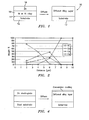
- FIG. 1 illustrates a process for forming a zinc diffused nickel alloy coating 10 in accordance with the present invention.
- the process begins with the provision of a clean substrate 12, preferably formed from a steel material.
- the substrate 12 may be a component to be used in a gas turbine engine.
- a plain nickel or nickel alloy layer 14 is deposited on at least one surface 16 of the substrate 12. Any suitable technique known in the art may be used to deposit the nickel or nickel alloy layer 14.
- the nickel or nickel alloy layer 14 is deposited at a rate of approximately 12.0 ⁇ m per hour via an electroplating bath operated at a temperature in the range of room temperature (approximately 68°F (approximately 20°C)) to 130°F (approximately 55°C).
- a typical bath composition for depositing a nickel cobalt alloy comprises 48 to 76 g/l Ni, 1.7 - 2.9 g/l Co, 15 - 40 g/l boric acid, 4.0 - 10 g/l total chloride (from NiCl 2 -6H 2 O) having a pH in the range of 3.0 to 6.0, preferably 4.5 to 5.5.
- Other suitable nickel alloys which may be deposited include NiFe, NiMn, NiMo, and NiSn.
- the cobalt content in the deposited layer should be in the range of 7.0 to 40 wt%.
- the plating process may be carried out at a current density in the range of 0.5 amps/dm 2 to 4.304 amps/dm 2 with the bath being maintained at a pH in the range of 2.0 to 6.0.
- the nickel containing layer 14 may have a thickness in the range of 2.0 - 20 ⁇ m, preferably 1.0 to 14 ⁇ m, and most preferably 8.0 to 11 ⁇ m.
- a zinc layer 18 is deposited on the nickel or nickel alloy layer 14.
- the zinc layer may be deposited using any suitable technique known in the art.
- the zinc layer is deposited using an electroplating technique which deposits the zinc at a rate of approximately 1 ⁇ m per minute at room temperature.
- the zinc electroplating chemistry may be primarily zinc sulfate with added sodium acetate and chloride salts. A zinc metal concentration of between 8.8 g/l to 45 g/l may be used.
- the sodium salts are used to provide a suitable bath conductivity.
- the zinc layer may be deposited from moderate to mildly agitated, room temperature solutions.
- a suitable zinc bath chemistry which may be used comprises 442.5 g/l ZnSO 4 -7H 2 O, 26.5 g/l Na 2 SO 4 , 13.8 g/l CH 3 COONa-3H 2 O, and 1.0 g/l NaCl.
- the bath may have a pH in the range of 4.8 to 6.2 and may be adjusted with either NaOH or H 2 SO 4 .
- a current density in the range of 3.228 amps/dm 2 to 8.608 amps/dm 2 may be used to plate the zinc layer.
- the zinc layer 18 may have a thickness in the range of 0.8 to 14 ⁇ m, preferably 2.0 to 14.0 ⁇ m, and most preferably 4.0 to 7.0 ⁇ m.
- the zinc in the layer 18 may be diffused in the nickel alloy layer 14 using any suitable technique known in the art.
- a thermal diffusion technique is utilized.
- the thermal diffusion technique may be carried out in either an atmospheric or an inert gas oven at a temperature in the range of 600° to 800°F (315 to 427°C) for a time period of at least 100 minutes.
- the thermal diffusion technique may be carried out in two steps where the substrate 12 with the nickel alloy and zinc layers 14 and 18 is subject to a first temperature in the aforesaid range for a time in the range of 80 to 100 minutes and to a second temperature in the aforesaid range, preferably higher than the first temperature, for a time in the range of 20 to 60 minutes.
- Experimental test panels formed from clean and deoxidized, low-carbon steel coupons were coated with a NiCo layer from a 500 ml test bath operated at room temperature with moderate agitation.
- the alloy layers were deposited over a current density range of 0.5 to 4.0 amp/dm 2 .
- the NiCo bath had a composition of 62 g/l Ni, 2.3 g/l Co, 27.5 g/l boric acid, 7 g/l total chloride and a pH of 5 which was adjusted with NaOH or H 2 SO 4 .
- the Zn electroplating bath was formulated to have a zinc metal concentration of between 8.0 to 45 g/l. Potassium or ammonium chloride salts were used to provide the desired bath conductivity.
- the zinc layers on the test coupons were deposited from moderately agitated, room temperature solutions. Diffusion was performed in two stages, most typically by holding the sample first at 630°F (332°F) for 90 minutes followed by one hour at 730°F (388°C).
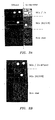
- X-ray maps of the samples indicated that zinc atoms had diffused throughout the NiCo layer right up to the NiCo-Fe interface and that, to a lesser degree, both nickel and cobalt atoms had diffused into the zinc layer.
- the concentration profile plot of FIG. 2 shows the sort of elemental concentration gradient established by the diffusion process for a 5.4 ⁇ m coating which initially had approximately 3.0 ⁇ m of NiCo under approximately 2.0 ⁇ m of zinc. Indications are that 80% of the metal atoms at the coating surface are zinc and the zinc content drops to practically zero at the NiCo-Fe interface.
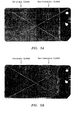
- FIGS. 3A and 3B illustrate how the added Zn enhances performance of the coatings of the present invention upon exposure to a corrosive environment.
- FIG. 3A shows coating as-grown before (right) and after (left) the thermal diffusion cycle.
- FIG. 3B depicts the condition following exposure to an ASTM B117 salt fog for 20 hours. Edges of the samples were masked with plater's tape. Severe red rust on the bare steel section indicated the width of the exposed strip. NiCo in an amount of 63%Ni/37%Co alone offered some resistance to corrosion, but damaged areas appear highly susceptible to corrosion (a hole punch was used to sample coating). Only the top section, where a thin layer of zinc was deposited and later thermally diffused, showed enhanced resistance to corrosive attack.
- the coated substrate may be immersed in a phosphated trivalent chromium conversion solution.
- the immersion step may take place either prior to the final diffusion step or subsequent to the diffusion step.
- the phosphated trivalent chromium conversion solution comprises a water soluble trivalent chromium compound, a water soluble fluoride compound, and a corrosion improving additive which may also reduce precipitation of trivalent chromium.
- the additive may comprise a chelating agent or a bi- or multi-dentate ligand.
- the additive is present in an amount of between 5 ppm to 100 ppm with respect to the total coating solution, preferably between 15 ppm to 30 ppm with respect to the total coating solution.
- the preferred additives for corrosion inhibition include the derivatives of the amino-phosphoric acids, e.g.
- nitrilotris (methylene) triphosphoric (NTMP) nitrilotris (methylene) triphosphoric (NTMP)
- hydroxy-amino-alkyl phosphoric acids ethyl imido (methylene) phosphoric acids, diethyl aminomethyl phosphoric acid, etc.
- NTMP nitrilotris (methylene) triphosphoric acid
- the diluted acidic aqueous solution comprises a water soluble trivalent chromium compound, a water soluble fluoride compound, and an amino-phosphoric acid compound.
- the trivalent chromium compound is present in the solution in an amount of between 0.2 g/l to 10.0 g/l (preferably between 0.5 g/l to 8.0 g/l), the fluoride compound is present in an amount of between 0.2 g/l to 20.0 g/l (preferably 0.5 g/l to 18.0 g/l).
- the diluted trivalent chromium coating solution has a pH between 2.5 to 4.0.
- the coated substrate may be immersed in the phosphated trivalent chromium conversion solution for a time period in the range of 5 seconds to 15 minutes, preferably at least 30 seconds.
- FIGS. 5A and 5B show a scribed nickel-zinc coated coupon that was conversion coated in accordance with the present invention on only the left half prior to salt fog exposure.
- FIG. 5B is the same coupon after 199 hours of ASTM B117 salt fog exposure. Comparing FIGS. 5A and 5B reveals how the conversion coated area was more resistant to corrosion, especially within the scribes. The conversion coated half of the sample also had better overall appearance compared to the base electroplate side. The area on the far right is uncoated base steel and has experienced massive red rust corrosion.
- the zinc diffused nickel alloy coatings of the present invention provide substrates, particularly those used in gas turbine engines, an excellent ability to resist corrosion and to withstand temperatures in excess of 900°F (482°C).
Landscapes
- Chemical & Material Sciences (AREA)
- Chemical Kinetics & Catalysis (AREA)
- Engineering & Computer Science (AREA)
- Materials Engineering (AREA)
- Metallurgy (AREA)
- Organic Chemistry (AREA)
- Mechanical Engineering (AREA)
- General Chemical & Material Sciences (AREA)
- Electrochemistry (AREA)
- Other Surface Treatments For Metallic Materials (AREA)
- Electroplating Methods And Accessories (AREA)
- Electroplating And Plating Baths Therefor (AREA)
- Laminated Bodies (AREA)
- Chemical Treatment Of Metals (AREA)
- Preventing Corrosion Or Incrustation Of Metals (AREA)
- Chemically Coating (AREA)
Abstract
Description
Claims (23)
- A method for forming a corrosion and heat protective coating on a substrate (12) comprising the steps of:forming a nickel base coating layer (14) on said substrate;applying a layer of zinc (18) over said nickel base coating layer; anddiffusing the zinc into said nickel base coating layer.
- A method according to claim 1, wherein said nickel base coating layer forming step comprises electrodepositing a layer of nickel or nickel alloy (14) onto a surface of said substrate (12).
- A method according to claim 1 or 2, wherein said nickel base coating layer forming step comprises forming a layer of nickel or nickel alloy (14) having a thickness in the range of 2.0 to 20µm.
- A method according to any preceding claim, wherein said nickel base coating layer forming step comprises forming a layer of nickel or nickel alloy (14) having a thickness in the range of from 2.0 to 14.0µm.
- A method according to claim 1 or 2, wherein said nickel base coating layer forming step comprises forming a layer of nickel or nickel alloy (14) having a thickness in the range of from 8.0 to 11µm.
- A method according to any preceding claim, wherein said nickel base coating layer forming step comprises forming a layer of nickel alloy (14) on a component used in a gas turbine engine.
- A method according to any preceding claim, wherein said nickel base coating layer step comprises forming a layer of a nickel alloy (14) selected from the group consisting of a nickel cobalt alloy, a nickel iron alloy, a nickel manganese alloy, a nickel molybdenum alloy, and a nickel tin alloy on a steel substrate.
- A method according to any preceding claim, wherein said zinc layer (18) applying step comprises forming an electroplating solution containing a zinc metal concentration of between 8.0 and 45.0 g/l and electroplating said layer of zinc onto said nickel alloy layer (14).
- A method according to any preceding claim, wherein said zinc layer applying step comprises forming a layer of zinc (18) having a thickness in the range of 0.8 to 14µm.
- A method according to any preceding claim, wherein said zinc layer applying step comprises forming a layer of zinc (18) having a thickness in the range of 2.0 to 14µm.
- A method according to any preceding claim, wherein said zinc layer applying step comprises forming a layer of zinc (18) having a thickness in the range of 4.0 to 7.0µm.
- A method according to any preceding claim, wherein said diffusing step comprises carrying out a thermal diffusion cycle in at least one of an atmospheric and an inert gas oven at a temperature in the range of 600 to 800°F (315 to 427°C) for a time of at least 100 minutes.
- A method according to claim 12, wherein said thermal diffusion cycle comprises heating said nickel base (14) coated substrate (12) with said layer of zinc (18) to a first temperature in the aforesaid range for a time period in the range of 80 to 100 minutes and then to a second temperature higher than the first temperature for a time period in the range of 20 to 60 minutes.
- A method according to any preceding claim, further comprising immersing said substrate (12) in a phosphate trivalent chromium conversion solution.
- A method according to claim 14, wherein said immersing step is performed after said zinc layer applying step and before said diffusion step.
- A method according to claim 14, wherein said immersing step is performed after said diffusing step.
- A method according to any of claims 14 to 16, wherein said immersing step comprises immersing said substrate (12) into a solution comprising a water soluble trivalent chromium compound, a water soluble fluoride compound and a corrosion resistance improving additive.
- A substrate (12) having at least one surface (16) and a zinc diffused nickel alloy coating (10) on said at least one surface.
- A substrate (12) according to claim 18, wherein said substrate is formed from steel.
- A substrate (12) according to claim 18 or 19, wherein said substrate comprises a component used in a gas turbine engine.
- A substrate (12) according to any of claims 18 to 20, wherein said zinc diffused nickel alloy coating (10) provides corrosion resistance and heat resistance at temperatures in excess of 900°F (482°C) and wherein said coating has a nickel or nickel alloy layer (14) into which zinc atoms have diffused and a zinc layer (18) into which nickel atoms have diffused.
- A substrate (12) according to claim 21, wherein said nickel alloy layer (14) is formed by an alloy selected from the group consisting of a nickel cobalt alloy, a nickel iron alloy, a nickel manganese alloy, a nickel molybdenum alloy, and a nickel tin alloy.
- A substrate (12) according to claim 21, wherein said nickel alloy is formed from a nickel cobalt alloy having a cobalt content in the range of 7.0 to 40wt%.
Applications Claiming Priority (2)
| Application Number | Priority Date | Filing Date | Title |
|---|---|---|---|
| US252867 | 1999-02-18 | ||
| US10/252,867 US6756134B2 (en) | 2002-09-23 | 2002-09-23 | Zinc-diffused alloy coating for corrosion/heat protection |
Publications (3)
| Publication Number | Publication Date |
|---|---|
| EP1405934A2 true EP1405934A2 (en) | 2004-04-07 |
| EP1405934A3 EP1405934A3 (en) | 2006-02-01 |
| EP1405934B1 EP1405934B1 (en) | 2008-06-04 |
Family
ID=31993033
Family Applications (1)
| Application Number | Title | Priority Date | Filing Date |
|---|---|---|---|
| EP03255981A Expired - Lifetime EP1405934B1 (en) | 2002-09-23 | 2003-09-23 | Zinc-diffused alloy coating for corrosion/heat protection |
Country Status (12)
| Country | Link |
|---|---|
| US (2) | US6756134B2 (en) |
| EP (1) | EP1405934B1 (en) |
| JP (1) | JP2004115914A (en) |
| KR (1) | KR100584059B1 (en) |
| CN (1) | CN100360713C (en) |
| AT (1) | ATE397683T1 (en) |
| BR (1) | BR0304193A (en) |
| CA (1) | CA2441718A1 (en) |
| DE (1) | DE60321435D1 (en) |
| MX (1) | MXPA03008544A (en) |
| SG (1) | SG134989A1 (en) |
| TW (1) | TWI276707B (en) |
Cited By (2)
| Publication number | Priority date | Publication date | Assignee | Title |
|---|---|---|---|---|
| CN103710692A (en) * | 2013-12-20 | 2014-04-09 | 苏州市邦成电子科技有限公司 | Preparation method of corrosion-resistant SUS301 stainless steel band |
| EP3951960A4 (en) * | 2019-03-29 | 2022-12-14 | Toyo Kohan Co., Ltd. | Surface-treated plate for alkaline secondary battery, and method for manufacturing same |
Families Citing this family (35)
| Publication number | Priority date | Publication date | Assignee | Title |
|---|---|---|---|---|
| US7018486B2 (en) * | 2002-05-13 | 2006-03-28 | United Technologies Corporation | Corrosion resistant trivalent chromium phosphated chemical conversion coatings |
| US20050181137A1 (en) * | 2004-02-17 | 2005-08-18 | Straus Martin L. | Corrosion resistant, zinc coated articles |
| US20060222880A1 (en) * | 2005-04-04 | 2006-10-05 | United Technologies Corporation | Nickel coating |
| US7812703B2 (en) * | 2006-03-23 | 2010-10-12 | Innovative Micro Technology | MEMS device using NiMn alloy and method of manufacture |
| WO2008034282A1 (en) * | 2006-09-14 | 2008-03-27 | Guohua Wang | A cooking pot |
| US20110005287A1 (en) * | 2008-09-30 | 2011-01-13 | Bibber Sr John | Method for improving light gauge building materials |
| US20110269051A1 (en) * | 2008-12-29 | 2011-11-03 | Hille& Muller Gmbh | Coated Product For Use In Electrochemical Device And A Method For Producing Such A Product |
| JP4883240B1 (en) * | 2010-08-04 | 2012-02-22 | Jfeスチール株式会社 | Steel sheet for hot press and method for producing hot press member using the same |
| US8574396B2 (en) | 2010-08-30 | 2013-11-05 | United Technologies Corporation | Hydration inhibitor coating for adhesive bonds |
| JP5555146B2 (en) * | 2010-12-01 | 2014-07-23 | 株式会社日立製作所 | Metal-resin composite structure and manufacturing method thereof, bus bar, module case, and resin connector part |
| RU2457287C1 (en) * | 2011-04-06 | 2012-07-27 | Государственное образовательное учреждение высшего профессионального образования "Тюменский государственный университет" | Electrolyte for deposition of nickel-bismuth alloy |
| CN103103589B (en) * | 2013-01-16 | 2015-06-10 | 南京工业大学 | Preparation method of manganese-copper alloy material |
| CN103320739A (en) * | 2013-05-30 | 2013-09-25 | 中国船舶重工集团公司第七二五研究所 | Preparation method of anticorrosion nickel-based coating for marine environment |
| JP5949680B2 (en) * | 2013-06-25 | 2016-07-13 | Jfeスチール株式会社 | Manufacturing method of hot press member |
| US10266958B2 (en) | 2013-12-24 | 2019-04-23 | United Technologies Corporation | Hot corrosion-protected articles and manufacture methods |
| EP3090075B1 (en) | 2013-12-24 | 2018-12-05 | United Technologies Corporation | Hot corrosion-protected article and manufacture method therefor |
| CN105917030B (en) | 2014-01-15 | 2018-04-13 | 萨夫罗克有限公司 | For generating the method for the laminated coating containing chromium and the object of coating |
| US10443143B2 (en) | 2014-01-15 | 2019-10-15 | Savroc Ltd | Method for producing a chromium coating and a coated object |
| CN106661749B (en) | 2014-07-11 | 2020-06-05 | 萨夫罗克有限公司 | Chromium-containing coating, method for producing same and coated object |
| CN105239064A (en) * | 2015-10-29 | 2016-01-13 | 无锡市嘉邦电力管道厂 | Corrosion-resistant metal material |
| WO2017201418A1 (en) | 2016-05-20 | 2017-11-23 | Arcanum Alloys, Inc. | Methods and systems for coating a steel substrate |
| CN106493309A (en) * | 2016-11-24 | 2017-03-15 | 张红卫 | A kind of water pump turbine casting and annealing process |
| KR101839783B1 (en) * | 2016-12-21 | 2018-04-26 | 이종소 | Continuous equipment catalyzing decomposion decomposable and extinguishable organic waste |
| JP7399080B2 (en) * | 2017-05-12 | 2023-12-15 | ケメオン サーフェス テクノロジー, エルエルシー | pH stable trivalent chromium coating liquid |
| ES2708984A1 (en) | 2017-09-22 | 2019-04-12 | Haldor Topsoe As | Burner for a catalytic reactor with slurry coating with high resistance to disintegration in metal powder (Machine-translation by Google Translate, not legally binding) |
| US11854007B2 (en) * | 2018-04-16 | 2023-12-26 | Visa International Service Association | Method and system for pre-authorizing a delivery transaction |
| CN109252196B (en) * | 2018-09-30 | 2020-02-04 | 四川理工学院 | Preparation of MnCo2O4Method for preparing micro-nano fiber |
| US12392040B2 (en) | 2019-12-30 | 2025-08-19 | Entegris, Inc. | Metal body having magnesium fluoride region formed therefrom |
| CN112247487A (en) * | 2020-10-14 | 2021-01-22 | 山东聊城富锋汽车部件有限公司 | Manufacturing method of high-temperature-resistant engine support |
| CN113073324B (en) * | 2021-03-26 | 2023-02-28 | 苏州航宇九天动力技术有限公司 | Vacuum motor surface treatment device and treatment process thereof |
| CN115148448B (en) * | 2021-03-31 | 2025-07-29 | 太原理工大学 | Protective coating on surface of neodymium-iron-boron permanent magnet for wind power, preparation method and permanent magnet |
| CN115679304A (en) * | 2022-08-24 | 2023-02-03 | 湖南人文科技学院 | Preparation method and application of zinc-nickel composite infiltrated layer reinforced by nano particles |
| CN115433897B (en) * | 2022-09-19 | 2025-02-28 | 平顶山市美伊厨炊具有限公司 | A surface treatment process for steel-based materials |
| US12601050B2 (en) | 2023-07-27 | 2026-04-14 | Entegris, Inc. | Surface modified substrates and related methods |
| CN119932663B (en) * | 2025-02-25 | 2025-09-16 | 江苏极泰环保科技有限公司 | A heat pipe with high thermal conductivity and its manufacturing process |
Family Cites Families (23)
| Publication number | Priority date | Publication date | Assignee | Title |
|---|---|---|---|---|
| US3808031A (en) * | 1968-05-31 | 1974-04-30 | Chromalloy American Corp | Multi-metal corrosion-resistant diffusion coatings |
| JPS6049715B2 (en) * | 1979-04-09 | 1985-11-05 | 新日本製鐵株式会社 | Zinc-based alloy coated steel sheet |
| US4416737A (en) * | 1982-02-11 | 1983-11-22 | National Steel Corporation | Process of electroplating a nickel-zinc alloy on steel strip |
| JPS6056790B2 (en) * | 1982-07-28 | 1985-12-11 | 川崎製鉄株式会社 | Method for producing hot-dip galvanized steel sheet alloyed on only one side |
| JPS61119679A (en) * | 1984-11-16 | 1986-06-06 | Nippon Steel Corp | Zinc alloy plated steel sheet of high corrosion resistance |
| IT1184289B (en) * | 1985-07-19 | 1987-10-22 | Consiglio Nazionale Ricerche | PROCEDURE FOR THE COATING OF STEEL WIRES AND RELATED PRODUCTS USABLE IN THE MANUFACTURE OF STRINGS FOR STRENGTHENING STRUCTURES OF ELASTOMERIC MANUFACTURED MATERIALS, IN PARTICULAR TIRES |
| US4859289A (en) * | 1986-05-26 | 1989-08-22 | Sumitomo Electric Industries, Ltd. | Process for producing a metal wire useful as rubber product reinforcement |
| JPS63312960A (en) * | 1987-06-17 | 1988-12-21 | Nippon Steel Corp | Manufacture of zinc alloy hot dip galvanized steel sheet having superior workability |
| US5246786A (en) * | 1988-10-29 | 1993-09-21 | Usui Kokusai Sangyo Kaisha Ltd. | Steel product with heat-resistant, corrosion-resistant plating layers |
| US5176812A (en) * | 1988-12-27 | 1993-01-05 | The Furukawa Electric Co., Ltd. | Copper fin material for heat-exchanger and method of producing the same |
| JPH03215693A (en) * | 1990-01-18 | 1991-09-20 | Furukawa Electric Co Ltd:The | Laminated material having salt water corrosion resistance |
| JPH0651903B2 (en) * | 1990-01-30 | 1994-07-06 | 新日本製鐵株式会社 | Method for producing zinc or zinc-based alloy hot-dip steel sheet with high sliding resistance |
| DE69109928T2 (en) * | 1990-04-20 | 1996-02-08 | Sumitomo Metal Ind | Improved, corrosion-resistant, surface-coated steel sheet. |
| JPH0753913B2 (en) * | 1990-11-14 | 1995-06-07 | 新日本製鐵株式会社 | Method for manufacturing organic composite plated steel sheet |
| KR970000190B1 (en) * | 1993-06-02 | 1997-01-06 | 니홍고오깡 가부시키가이샤 | Manufacturing method of galvanized steel sheet |
| JPH0711479A (en) * | 1993-06-28 | 1995-01-13 | Nkk Corp | Zinc-based alloy plated steel sheet and method for producing the same |
| US5494706A (en) * | 1993-06-29 | 1996-02-27 | Nkk Corporation | Method for producing zinc coated steel sheet |
| US5500290A (en) * | 1993-06-29 | 1996-03-19 | Nkk Corporation | Surface treated steel sheet |
| JPH07145469A (en) * | 1993-09-28 | 1995-06-06 | Nippon Steel Corp | Method for producing alloyed hot-dip galvanized steel sheet with excellent corrosion resistance and press formability |
| US5595831A (en) * | 1994-01-28 | 1997-01-21 | Clark; Eugene V. | Cadium-free corrosion protection for turbines |
| US6500565B2 (en) * | 1994-08-30 | 2002-12-31 | Usui Kokusai Sangyo Kaisha Limited | Corrosion resistant resin coating structure in a metal tube |
| US6040054A (en) * | 1996-02-01 | 2000-03-21 | Toyo Boseki Kabushiki Kaisha | Chromium-free, metal surface-treating composition and surface-treated metal sheet |
| US6527841B2 (en) * | 2000-10-31 | 2003-03-04 | The United States Of America As Represented By The Secretary Of The Navy | Post-treatment for metal coated substrates |
-
2002
- 2002-09-23 US US10/252,867 patent/US6756134B2/en not_active Expired - Lifetime
-
2003
- 2003-09-18 CA CA002441718A patent/CA2441718A1/en not_active Abandoned
- 2003-09-22 TW TW092126080A patent/TWI276707B/en not_active IP Right Cessation
- 2003-09-22 MX MXPA03008544A patent/MXPA03008544A/en not_active Application Discontinuation
- 2003-09-22 CN CNB031649149A patent/CN100360713C/en not_active Expired - Fee Related
- 2003-09-22 SG SG200305626-4A patent/SG134989A1/en unknown
- 2003-09-22 BR BR0304193-0A patent/BR0304193A/en not_active IP Right Cessation
- 2003-09-23 KR KR1020030065762A patent/KR100584059B1/en not_active Expired - Fee Related
- 2003-09-23 EP EP03255981A patent/EP1405934B1/en not_active Expired - Lifetime
- 2003-09-23 AT AT03255981T patent/ATE397683T1/en not_active IP Right Cessation
- 2003-09-23 DE DE60321435T patent/DE60321435D1/en not_active Expired - Lifetime
- 2003-09-24 JP JP2003332239A patent/JP2004115914A/en not_active Abandoned
-
2004
- 2004-05-19 US US10/848,747 patent/US6869690B1/en not_active Expired - Lifetime
Cited By (2)
| Publication number | Priority date | Publication date | Assignee | Title |
|---|---|---|---|---|
| CN103710692A (en) * | 2013-12-20 | 2014-04-09 | 苏州市邦成电子科技有限公司 | Preparation method of corrosion-resistant SUS301 stainless steel band |
| EP3951960A4 (en) * | 2019-03-29 | 2022-12-14 | Toyo Kohan Co., Ltd. | Surface-treated plate for alkaline secondary battery, and method for manufacturing same |
Also Published As
| Publication number | Publication date |
|---|---|
| DE60321435D1 (en) | 2008-07-17 |
| EP1405934B1 (en) | 2008-06-04 |
| MXPA03008544A (en) | 2005-09-08 |
| CN1497065A (en) | 2004-05-19 |
| ATE397683T1 (en) | 2008-06-15 |
| JP2004115914A (en) | 2004-04-15 |
| SG134989A1 (en) | 2007-09-28 |
| US6756134B2 (en) | 2004-06-29 |
| TWI276707B (en) | 2007-03-21 |
| US20040058189A1 (en) | 2004-03-25 |
| KR20040026618A (en) | 2004-03-31 |
| CN100360713C (en) | 2008-01-09 |
| CA2441718A1 (en) | 2004-03-23 |
| US20050058848A1 (en) | 2005-03-17 |
| EP1405934A3 (en) | 2006-02-01 |
| TW200413580A (en) | 2004-08-01 |
| BR0304193A (en) | 2004-09-08 |
| US6869690B1 (en) | 2005-03-22 |
| KR100584059B1 (en) | 2006-05-29 |
Similar Documents
| Publication | Publication Date | Title |
|---|---|---|
| US6756134B2 (en) | Zinc-diffused alloy coating for corrosion/heat protection | |
| JP2014500404A (en) | SUBSTRATE HAVING CORROSION-RESISTANT COATING AND METHOD FOR PRODUCING THE SAME | |
| JPS6096786A (en) | Electroplated product and its production | |
| US4610937A (en) | Product of and process for preparing Zn-Ni-alloy-electroplated steel sheets excellent in corrosion resistance | |
| JPS6056436B2 (en) | Surface-treated steel sheet with excellent corrosion resistance and phosphate treatment properties | |
| JPS5815554B2 (en) | Plated steel materials for cationic electrodeposition coating | |
| WO2011127473A1 (en) | Passivation treatment of zinc-based coatings | |
| EP2784188B1 (en) | Process for corrosion protection of iron containing materials | |
| Zaki | Zinc alloy plating | |
| JP2002285346A (en) | Zinc phosphate-treated galvanized steel sheet with excellent corrosion resistance and color tone | |
| JPS6343479B2 (en) | ||
| JPS62228498A (en) | Plated steel sheet for painting | |
| KR920010778B1 (en) | Double layer alloy plated steel sheet with excellent plating adhesion, phosphate treatment and water resistance, and manufacturing method | |
| JPH11310895A (en) | Manufacturing method of zinc-based electroplated steel sheet | |
| KR930007927B1 (en) | High corrosion resistant double layer alloy plated steel sheet and its manufacturing method | |
| JPS5920491A (en) | Improvement of secondary adhesion of paint film on zinc plated steel sheet | |
| JPH073436A (en) | Zinc alloy plated steel sheet with excellent plating adhesion and corrosion resistance | |
| KR960004626B1 (en) | Method for making a galvanized steel sheet with a minispangle of an excellent phosphate treating | |
| JPS63250489A (en) | Surface-treated steel sheet having excellent corrosion resistance and electrodeposition coating property | |
| KR920010777B1 (en) | Double layer alloy plated steel sheet and manufacturing method | |
| JPH0472077A (en) | Improvement of low-temperature chipping resistance of plated steel sheet | |
| Zhong et al. | Selective brush plating a tin-zinc alloy for sacrificial corrosion protection | |
| JP2010209431A (en) | Method of forming colored coating film using metallic material excellent in corrosion resistance, and colored metallic material | |
| JPS6043498A (en) | Galvanized steel sheet having high corrosion resistance and its production | |
| JPS60131977A (en) | Surface treated steel sheet having superior suitability to chemical conversion treatment |
Legal Events
| Date | Code | Title | Description |
|---|---|---|---|
| PUAI | Public reference made under article 153(3) epc to a published international application that has entered the european phase |
Free format text: ORIGINAL CODE: 0009012 |
|
| AK | Designated contracting states |
Kind code of ref document: A2 Designated state(s): AT BE BG CH CY CZ DE DK EE ES FI FR GB GR HU IE IT LI LU MC NL PT RO SE SI SK TR |
|
| AX | Request for extension of the european patent |
Extension state: AL LT LV MK |
|
| PUAL | Search report despatched |
Free format text: ORIGINAL CODE: 0009013 |
|
| AK | Designated contracting states |
Kind code of ref document: A3 Designated state(s): AT BE BG CH CY CZ DE DK EE ES FI FR GB GR HU IE IT LI LU MC NL PT RO SE SI SK TR |
|
| AX | Request for extension of the european patent |
Extension state: AL LT LV MK |
|
| RIC1 | Information provided on ipc code assigned before grant |
Ipc: C25D 5/12 20060101ALI20051215BHEP Ipc: C23C 28/00 20060101ALI20051215BHEP Ipc: C25D 5/50 20060101AFI20040210BHEP |
|
| 17P | Request for examination filed |
Effective date: 20060403 |
|
| 17Q | First examination report despatched |
Effective date: 20060621 |
|
| AKX | Designation fees paid |
Designated state(s): AT BE BG CH CY CZ DE DK EE ES FI FR GB GR HU IE IT LI LU MC NL PT RO SE SI SK TR |
|
| GRAP | Despatch of communication of intention to grant a patent |
Free format text: ORIGINAL CODE: EPIDOSNIGR1 |
|
| GRAS | Grant fee paid |
Free format text: ORIGINAL CODE: EPIDOSNIGR3 |
|
| GRAA | (expected) grant |
Free format text: ORIGINAL CODE: 0009210 |
|
| AK | Designated contracting states |
Kind code of ref document: B1 Designated state(s): AT BE BG CH CY CZ DE DK EE ES FI FR GB GR HU IE IT LI LU MC NL PT RO SE SI SK TR |
|
| REG | Reference to a national code |
Ref country code: GB Ref legal event code: FG4D |
|
| REG | Reference to a national code |
Ref country code: CH Ref legal event code: EP |
|
| REF | Corresponds to: |
Ref document number: 60321435 Country of ref document: DE Date of ref document: 20080717 Kind code of ref document: P |
|
| REG | Reference to a national code |
Ref country code: IE Ref legal event code: FG4D |
|
| PG25 | Lapsed in a contracting state [announced via postgrant information from national office to epo] |
Ref country code: ES Free format text: LAPSE BECAUSE OF FAILURE TO SUBMIT A TRANSLATION OF THE DESCRIPTION OR TO PAY THE FEE WITHIN THE PRESCRIBED TIME-LIMIT Effective date: 20080915 Ref country code: FI Free format text: LAPSE BECAUSE OF FAILURE TO SUBMIT A TRANSLATION OF THE DESCRIPTION OR TO PAY THE FEE WITHIN THE PRESCRIBED TIME-LIMIT Effective date: 20080604 Ref country code: SI Free format text: LAPSE BECAUSE OF FAILURE TO SUBMIT A TRANSLATION OF THE DESCRIPTION OR TO PAY THE FEE WITHIN THE PRESCRIBED TIME-LIMIT Effective date: 20080604 |
|
| PG25 | Lapsed in a contracting state [announced via postgrant information from national office to epo] |
Ref country code: AT Free format text: LAPSE BECAUSE OF FAILURE TO SUBMIT A TRANSLATION OF THE DESCRIPTION OR TO PAY THE FEE WITHIN THE PRESCRIBED TIME-LIMIT Effective date: 20080604 Ref country code: NL Free format text: LAPSE BECAUSE OF FAILURE TO SUBMIT A TRANSLATION OF THE DESCRIPTION OR TO PAY THE FEE WITHIN THE PRESCRIBED TIME-LIMIT Effective date: 20080604 |
|
| NLV1 | Nl: lapsed or annulled due to failure to fulfill the requirements of art. 29p and 29m of the patents act | ||
| PG25 | Lapsed in a contracting state [announced via postgrant information from national office to epo] |
Ref country code: CZ Free format text: LAPSE BECAUSE OF FAILURE TO SUBMIT A TRANSLATION OF THE DESCRIPTION OR TO PAY THE FEE WITHIN THE PRESCRIBED TIME-LIMIT Effective date: 20080604 Ref country code: SE Free format text: LAPSE BECAUSE OF FAILURE TO SUBMIT A TRANSLATION OF THE DESCRIPTION OR TO PAY THE FEE WITHIN THE PRESCRIBED TIME-LIMIT Effective date: 20080904 Ref country code: PT Free format text: LAPSE BECAUSE OF FAILURE TO SUBMIT A TRANSLATION OF THE DESCRIPTION OR TO PAY THE FEE WITHIN THE PRESCRIBED TIME-LIMIT Effective date: 20081104 |
|
| PG25 | Lapsed in a contracting state [announced via postgrant information from national office to epo] |
Ref country code: BE Free format text: LAPSE BECAUSE OF FAILURE TO SUBMIT A TRANSLATION OF THE DESCRIPTION OR TO PAY THE FEE WITHIN THE PRESCRIBED TIME-LIMIT Effective date: 20080604 Ref country code: SK Free format text: LAPSE BECAUSE OF FAILURE TO SUBMIT A TRANSLATION OF THE DESCRIPTION OR TO PAY THE FEE WITHIN THE PRESCRIBED TIME-LIMIT Effective date: 20080604 Ref country code: RO Free format text: LAPSE BECAUSE OF FAILURE TO SUBMIT A TRANSLATION OF THE DESCRIPTION OR TO PAY THE FEE WITHIN THE PRESCRIBED TIME-LIMIT Effective date: 20080604 |
|
| PLBE | No opposition filed within time limit |
Free format text: ORIGINAL CODE: 0009261 |
|
| STAA | Information on the status of an ep patent application or granted ep patent |
Free format text: STATUS: NO OPPOSITION FILED WITHIN TIME LIMIT |
|
| PG25 | Lapsed in a contracting state [announced via postgrant information from national office to epo] |
Ref country code: MC Free format text: LAPSE BECAUSE OF NON-PAYMENT OF DUE FEES Effective date: 20080930 Ref country code: EE Free format text: LAPSE BECAUSE OF FAILURE TO SUBMIT A TRANSLATION OF THE DESCRIPTION OR TO PAY THE FEE WITHIN THE PRESCRIBED TIME-LIMIT Effective date: 20080604 Ref country code: BG Free format text: LAPSE BECAUSE OF FAILURE TO SUBMIT A TRANSLATION OF THE DESCRIPTION OR TO PAY THE FEE WITHIN THE PRESCRIBED TIME-LIMIT Effective date: 20080904 Ref country code: DK Free format text: LAPSE BECAUSE OF FAILURE TO SUBMIT A TRANSLATION OF THE DESCRIPTION OR TO PAY THE FEE WITHIN THE PRESCRIBED TIME-LIMIT Effective date: 20080604 |
|
| REG | Reference to a national code |
Ref country code: CH Ref legal event code: PL |
|
| 26N | No opposition filed |
Effective date: 20090305 |
|
| REG | Reference to a national code |
Ref country code: IE Ref legal event code: MM4A |
|
| REG | Reference to a national code |
Ref country code: FR Ref legal event code: ST Effective date: 20090529 |
|
| PG25 | Lapsed in a contracting state [announced via postgrant information from national office to epo] |
Ref country code: IE Free format text: LAPSE BECAUSE OF NON-PAYMENT OF DUE FEES Effective date: 20080923 |
|
| PG25 | Lapsed in a contracting state [announced via postgrant information from national office to epo] |
Ref country code: IT Free format text: LAPSE BECAUSE OF FAILURE TO SUBMIT A TRANSLATION OF THE DESCRIPTION OR TO PAY THE FEE WITHIN THE PRESCRIBED TIME-LIMIT Effective date: 20080604 |
|
| PG25 | Lapsed in a contracting state [announced via postgrant information from national office to epo] |
Ref country code: LI Free format text: LAPSE BECAUSE OF NON-PAYMENT OF DUE FEES Effective date: 20080930 Ref country code: FR Free format text: LAPSE BECAUSE OF NON-PAYMENT OF DUE FEES Effective date: 20080930 Ref country code: CH Free format text: LAPSE BECAUSE OF NON-PAYMENT OF DUE FEES Effective date: 20080930 |
|
| PG25 | Lapsed in a contracting state [announced via postgrant information from national office to epo] |
Ref country code: CY Free format text: LAPSE BECAUSE OF FAILURE TO SUBMIT A TRANSLATION OF THE DESCRIPTION OR TO PAY THE FEE WITHIN THE PRESCRIBED TIME-LIMIT Effective date: 20080604 Ref country code: HU Free format text: LAPSE BECAUSE OF FAILURE TO SUBMIT A TRANSLATION OF THE DESCRIPTION OR TO PAY THE FEE WITHIN THE PRESCRIBED TIME-LIMIT Effective date: 20081205 Ref country code: LU Free format text: LAPSE BECAUSE OF NON-PAYMENT OF DUE FEES Effective date: 20080923 |
|
| PG25 | Lapsed in a contracting state [announced via postgrant information from national office to epo] |
Ref country code: TR Free format text: LAPSE BECAUSE OF FAILURE TO SUBMIT A TRANSLATION OF THE DESCRIPTION OR TO PAY THE FEE WITHIN THE PRESCRIBED TIME-LIMIT Effective date: 20080604 |
|
| PG25 | Lapsed in a contracting state [announced via postgrant information from national office to epo] |
Ref country code: GR Free format text: LAPSE BECAUSE OF FAILURE TO SUBMIT A TRANSLATION OF THE DESCRIPTION OR TO PAY THE FEE WITHIN THE PRESCRIBED TIME-LIMIT Effective date: 20080905 |
|
| REG | Reference to a national code |
Ref country code: DE Ref legal event code: R082 Ref document number: 60321435 Country of ref document: DE Representative=s name: SCHMITT-NILSON SCHRAUD WAIBEL WOHLFROM PATENTA, DE |
|
| REG | Reference to a national code |
Ref country code: DE Ref legal event code: R082 Ref document number: 60321435 Country of ref document: DE Representative=s name: SCHMITT-NILSON SCHRAUD WAIBEL WOHLFROM PATENTA, DE Ref country code: DE Ref legal event code: R081 Ref document number: 60321435 Country of ref document: DE Owner name: UNITED TECHNOLOGIES CORP. (N.D.GES.D. STAATES , US Free format text: FORMER OWNER: UNITED TECHNOLOGIES CORP., HARTFORD, CONN., US |
|
| PGFP | Annual fee paid to national office [announced via postgrant information from national office to epo] |
Ref country code: DE Payment date: 20190820 Year of fee payment: 17 |
|
| PGFP | Annual fee paid to national office [announced via postgrant information from national office to epo] |
Ref country code: GB Payment date: 20190820 Year of fee payment: 17 |
|
| REG | Reference to a national code |
Ref country code: DE Ref legal event code: R119 Ref document number: 60321435 Country of ref document: DE |
|
| GBPC | Gb: european patent ceased through non-payment of renewal fee |
Effective date: 20200923 |
|
| PG25 | Lapsed in a contracting state [announced via postgrant information from national office to epo] |
Ref country code: DE Free format text: LAPSE BECAUSE OF NON-PAYMENT OF DUE FEES Effective date: 20210401 |
|
| PG25 | Lapsed in a contracting state [announced via postgrant information from national office to epo] |
Ref country code: GB Free format text: LAPSE BECAUSE OF NON-PAYMENT OF DUE FEES Effective date: 20200923 |