EP1396255A1 - Method for suppressing reduction of elasticity of skin - Google Patents
Method for suppressing reduction of elasticity of skin Download PDFInfo
- Publication number
- EP1396255A1 EP1396255A1 EP02700812A EP02700812A EP1396255A1 EP 1396255 A1 EP1396255 A1 EP 1396255A1 EP 02700812 A EP02700812 A EP 02700812A EP 02700812 A EP02700812 A EP 02700812A EP 1396255 A1 EP1396255 A1 EP 1396255A1
- Authority
- EP
- European Patent Office
- Prior art keywords
- skin
- phase
- preventing
- preparation
- matrix metalloproteinase
- Prior art date
- Legal status (The legal status is an assumption and is not a legal conclusion. Google has not performed a legal analysis and makes no representation as to the accuracy of the status listed.)
- Withdrawn
Links
- 238000000034 method Methods 0.000 title claims abstract description 28
- 230000009467 reduction Effects 0.000 title description 9
- 239000004480 active ingredient Substances 0.000 claims abstract description 25
- 230000037394 skin elasticity Effects 0.000 claims abstract description 15
- 229940121386 matrix metalloproteinase inhibitor Drugs 0.000 claims abstract description 14
- 239000003771 matrix metalloproteinase inhibitor Substances 0.000 claims abstract description 14
- 229940088597 hormone Drugs 0.000 claims description 27
- 239000005556 hormone Substances 0.000 claims description 27
- 240000006053 Garcinia mangostana Species 0.000 claims description 22
- 235000017048 Garcinia mangostana Nutrition 0.000 claims description 21
- 102000002274 Matrix Metalloproteinases Human genes 0.000 claims description 21
- 108010000684 Matrix Metalloproteinases Proteins 0.000 claims description 21
- 238000007665 sagging Methods 0.000 claims description 21
- 230000009245 menopause Effects 0.000 claims description 19
- 201000004535 ovarian dysfunction Diseases 0.000 claims description 16
- 230000002829 reductive effect Effects 0.000 claims description 15
- 102000013382 Gelatinases Human genes 0.000 claims description 10
- 108010026132 Gelatinases Proteins 0.000 claims description 10
- 239000000284 extract Substances 0.000 claims description 10
- 108091005804 Peptidases Proteins 0.000 claims description 3
- 239000004365 Protease Substances 0.000 claims description 2
- 230000003247 decreasing effect Effects 0.000 claims description 2
- 102100037486 Reverse transcriptase/ribonuclease H Human genes 0.000 claims 1
- 238000002360 preparation method Methods 0.000 abstract description 33
- 239000012071 phase Substances 0.000 description 46
- 210000003491 skin Anatomy 0.000 description 31
- XLYOFNOQVPJJNP-UHFFFAOYSA-N water Substances O XLYOFNOQVPJJNP-UHFFFAOYSA-N 0.000 description 28
- DNIAPMSPPWPWGF-UHFFFAOYSA-N Propylene glycol Chemical compound CC(O)CO DNIAPMSPPWPWGF-UHFFFAOYSA-N 0.000 description 27
- 230000009759 skin aging Effects 0.000 description 23
- LFQSCWFLJHTTHZ-UHFFFAOYSA-N Ethanol Chemical compound CCO LFQSCWFLJHTTHZ-UHFFFAOYSA-N 0.000 description 19
- 150000002500 ions Chemical group 0.000 description 18
- 239000008346 aqueous phase Substances 0.000 description 17
- 230000000694 effects Effects 0.000 description 16
- VEXZGXHMUGYJMC-UHFFFAOYSA-N Hydrochloric acid Chemical compound Cl VEXZGXHMUGYJMC-UHFFFAOYSA-N 0.000 description 15
- KWYUFKZDYYNOTN-UHFFFAOYSA-M Potassium hydroxide Chemical compound [OH-].[K+] KWYUFKZDYYNOTN-UHFFFAOYSA-M 0.000 description 15
- 238000009472 formulation Methods 0.000 description 15
- 239000000203 mixture Substances 0.000 description 15
- 239000000796 flavoring agent Substances 0.000 description 14
- 235000019634 flavors Nutrition 0.000 description 14
- 239000000419 plant extract Substances 0.000 description 14
- OKKJLVBELUTLKV-UHFFFAOYSA-N Methanol Chemical compound OC OKKJLVBELUTLKV-UHFFFAOYSA-N 0.000 description 12
- -1 ascorbic acid glucoside Chemical class 0.000 description 12
- 238000010438 heat treatment Methods 0.000 description 12
- 108010015302 Matrix metalloproteinase-9 Proteins 0.000 description 11
- 229920003171 Poly (ethylene oxide) Polymers 0.000 description 11
- 102100030412 Matrix metalloproteinase-9 Human genes 0.000 description 10
- DWAQJAXMDSEUJJ-UHFFFAOYSA-M Sodium bisulfite Chemical compound [Na+].OS([O-])=O DWAQJAXMDSEUJJ-UHFFFAOYSA-M 0.000 description 10
- 235000019441 ethanol Nutrition 0.000 description 10
- 239000004615 ingredient Substances 0.000 description 10
- 235000010267 sodium hydrogen sulphite Nutrition 0.000 description 10
- 235000013772 propylene glycol Nutrition 0.000 description 9
- RTZKZFJDLAIYFH-UHFFFAOYSA-N Diethyl ether Chemical compound CCOCC RTZKZFJDLAIYFH-UHFFFAOYSA-N 0.000 description 8
- PRAKJMSDJKAYCZ-UHFFFAOYSA-N squalane Chemical compound CC(C)CCCC(C)CCCC(C)CCCCC(C)CCCC(C)CCCC(C)C PRAKJMSDJKAYCZ-UHFFFAOYSA-N 0.000 description 8
- 238000003756 stirring Methods 0.000 description 8
- 239000000126 substance Substances 0.000 description 8
- 241000699670 Mus sp. Species 0.000 description 7
- 230000002401 inhibitory effect Effects 0.000 description 7
- 239000012488 sample solution Substances 0.000 description 7
- PUPZLCDOIYMWBV-UHFFFAOYSA-N (+/-)-1,3-Butanediol Chemical compound CC(O)CCO PUPZLCDOIYMWBV-UHFFFAOYSA-N 0.000 description 6
- IAZDPXIOMUYVGZ-UHFFFAOYSA-N Dimethylsulphoxide Chemical compound CS(C)=O IAZDPXIOMUYVGZ-UHFFFAOYSA-N 0.000 description 6
- 241000196324 Embryophyta Species 0.000 description 6
- XEKOWRVHYACXOJ-UHFFFAOYSA-N Ethyl acetate Chemical compound CCOC(C)=O XEKOWRVHYACXOJ-UHFFFAOYSA-N 0.000 description 6
- PEDCQBHIVMGVHV-UHFFFAOYSA-N Glycerine Chemical compound OCC(O)CO PEDCQBHIVMGVHV-UHFFFAOYSA-N 0.000 description 6
- HEMHJVSKTPXQMS-UHFFFAOYSA-M Sodium hydroxide Chemical compound [OH-].[Na+] HEMHJVSKTPXQMS-UHFFFAOYSA-M 0.000 description 6
- 229920002125 Sokalan® Polymers 0.000 description 6
- 239000006071 cream Substances 0.000 description 6
- 229940079593 drug Drugs 0.000 description 6
- 239000003814 drug Substances 0.000 description 6
- 238000002474 experimental method Methods 0.000 description 6
- BXWNKGSJHAJOGX-UHFFFAOYSA-N hexadecan-1-ol Chemical compound CCCCCCCCCCCCCCCCO BXWNKGSJHAJOGX-UHFFFAOYSA-N 0.000 description 6
- GLDOVTGHNKAZLK-UHFFFAOYSA-N octadecan-1-ol Chemical compound CCCCCCCCCCCCCCCCCCO GLDOVTGHNKAZLK-UHFFFAOYSA-N 0.000 description 6
- 210000001672 ovary Anatomy 0.000 description 6
- 239000000843 powder Substances 0.000 description 6
- 241001465754 Metazoa Species 0.000 description 5
- 235000021355 Stearic acid Nutrition 0.000 description 5
- 230000032683 aging Effects 0.000 description 5
- 229960001617 ethyl hydroxybenzoate Drugs 0.000 description 5
- 235000010228 ethyl p-hydroxybenzoate Nutrition 0.000 description 5
- 239000004403 ethyl p-hydroxybenzoate Substances 0.000 description 5
- NUVBSKCKDOMJSU-UHFFFAOYSA-N ethylparaben Chemical compound CCOC(=O)C1=CC=C(O)C=C1 NUVBSKCKDOMJSU-UHFFFAOYSA-N 0.000 description 5
- 238000000605 extraction Methods 0.000 description 5
- 239000000499 gel Substances 0.000 description 5
- 229940057995 liquid paraffin Drugs 0.000 description 5
- QIQXTHQIDYTFRH-UHFFFAOYSA-N octadecanoic acid Chemical compound CCCCCCCCCCCCCCCCCC(O)=O QIQXTHQIDYTFRH-UHFFFAOYSA-N 0.000 description 5
- OQCDKBAXFALNLD-UHFFFAOYSA-N octadecanoic acid Natural products CCCCCCCC(C)CCCCCCCCC(O)=O OQCDKBAXFALNLD-UHFFFAOYSA-N 0.000 description 5
- 235000011118 potassium hydroxide Nutrition 0.000 description 5
- 239000003755 preservative agent Substances 0.000 description 5
- 230000002335 preservative effect Effects 0.000 description 5
- 239000002904 solvent Substances 0.000 description 5
- 239000008117 stearic acid Substances 0.000 description 5
- VBICKXHEKHSIBG-UHFFFAOYSA-N 1-monostearoylglycerol Chemical compound CCCCCCCCCCCCCCCCCC(=O)OCC(O)CO VBICKXHEKHSIBG-UHFFFAOYSA-N 0.000 description 4
- 102000008186 Collagen Human genes 0.000 description 4
- 108010035532 Collagen Proteins 0.000 description 4
- UQSXHKLRYXJYBZ-UHFFFAOYSA-N Iron oxide Chemical compound [Fe]=O UQSXHKLRYXJYBZ-UHFFFAOYSA-N 0.000 description 4
- RJKFOVLPORLFTN-LEKSSAKUSA-N Progesterone Chemical compound C1CC2=CC(=O)CC[C@]2(C)[C@@H]2[C@@H]1[C@@H]1CC[C@H](C(=O)C)[C@@]1(C)CC2 RJKFOVLPORLFTN-LEKSSAKUSA-N 0.000 description 4
- GWEVSGVZZGPLCZ-UHFFFAOYSA-N Titan oxide Chemical compound O=[Ti]=O GWEVSGVZZGPLCZ-UHFFFAOYSA-N 0.000 description 4
- GSEJCLTVZPLZKY-UHFFFAOYSA-N Triethanolamine Chemical compound OCCN(CCO)CCO GSEJCLTVZPLZKY-UHFFFAOYSA-N 0.000 description 4
- 238000006243 chemical reaction Methods 0.000 description 4
- 229920001436 collagen Polymers 0.000 description 4
- SZXQTJUDPRGNJN-UHFFFAOYSA-N dipropylene glycol Chemical compound OCCCOCCCO SZXQTJUDPRGNJN-UHFFFAOYSA-N 0.000 description 4
- 238000004945 emulsification Methods 0.000 description 4
- 230000005764 inhibitory process Effects 0.000 description 4
- 239000006210 lotion Substances 0.000 description 4
- LXCFILQKKLGQFO-UHFFFAOYSA-N methylparaben Chemical compound COC(=O)C1=CC=C(O)C=C1 LXCFILQKKLGQFO-UHFFFAOYSA-N 0.000 description 4
- JXTPJDDICSTXJX-UHFFFAOYSA-N n-Triacontane Natural products CCCCCCCCCCCCCCCCCCCCCCCCCCCCCC JXTPJDDICSTXJX-UHFFFAOYSA-N 0.000 description 4
- 229940093430 polyethylene glycol 1500 Drugs 0.000 description 4
- 239000008213 purified water Substances 0.000 description 4
- 239000000243 solution Substances 0.000 description 4
- 229940032094 squalane Drugs 0.000 description 4
- 229940058015 1,3-butylene glycol Drugs 0.000 description 3
- 102100026802 72 kDa type IV collagenase Human genes 0.000 description 3
- CSCPPACGZOOCGX-UHFFFAOYSA-N Acetone Chemical compound CC(C)=O CSCPPACGZOOCGX-UHFFFAOYSA-N 0.000 description 3
- NIXOWILDQLNWCW-UHFFFAOYSA-N Acrylic acid Chemical compound OC(=O)C=C NIXOWILDQLNWCW-UHFFFAOYSA-N 0.000 description 3
- CIWBSHSKHKDKBQ-JLAZNSOCSA-N Ascorbic acid Chemical compound OC[C@H](O)[C@H]1OC(=O)C(O)=C1O CIWBSHSKHKDKBQ-JLAZNSOCSA-N 0.000 description 3
- ZAKOWWREFLAJOT-CEFNRUSXSA-N D-alpha-tocopherylacetate Chemical compound CC(=O)OC1=C(C)C(C)=C2O[C@@](CCC[C@H](C)CCC[C@H](C)CCCC(C)C)(C)CCC2=C1C ZAKOWWREFLAJOT-CEFNRUSXSA-N 0.000 description 3
- 102000004190 Enzymes Human genes 0.000 description 3
- 108090000790 Enzymes Proteins 0.000 description 3
- 150000001298 alcohols Chemical class 0.000 description 3
- FPIPGXGPPPQFEQ-OVSJKPMPSA-N all-trans-retinol Chemical compound OC\C=C(/C)\C=C\C=C(/C)\C=C\C1=C(C)CCCC1(C)C FPIPGXGPPPQFEQ-OVSJKPMPSA-N 0.000 description 3
- 238000010171 animal model Methods 0.000 description 3
- 239000000872 buffer Substances 0.000 description 3
- 235000019437 butane-1,3-diol Nutrition 0.000 description 3
- 229960000541 cetyl alcohol Drugs 0.000 description 3
- 210000004207 dermis Anatomy 0.000 description 3
- 229940088598 enzyme Drugs 0.000 description 3
- 238000011049 filling Methods 0.000 description 3
- 235000011187 glycerol Nutrition 0.000 description 3
- 238000011534 incubation Methods 0.000 description 3
- 239000003112 inhibitor Substances 0.000 description 3
- WTFXARWRTYJXII-UHFFFAOYSA-N iron(2+);iron(3+);oxygen(2-) Chemical compound [O-2].[O-2].[O-2].[O-2].[Fe+2].[Fe+3].[Fe+3] WTFXARWRTYJXII-UHFFFAOYSA-N 0.000 description 3
- SZVJSHCCFOBDDC-UHFFFAOYSA-N iron(II,III) oxide Inorganic materials O=[Fe]O[Fe]O[Fe]=O SZVJSHCCFOBDDC-UHFFFAOYSA-N 0.000 description 3
- 230000007246 mechanism Effects 0.000 description 3
- 238000002156 mixing Methods 0.000 description 3
- VLKZOEOYAKHREP-UHFFFAOYSA-N n-Hexane Chemical compound CCCCCC VLKZOEOYAKHREP-UHFFFAOYSA-N 0.000 description 3
- GOQYKNQRPGWPLP-UHFFFAOYSA-N n-heptadecyl alcohol Natural products CCCCCCCCCCCCCCCCCO GOQYKNQRPGWPLP-UHFFFAOYSA-N 0.000 description 3
- 238000012360 testing method Methods 0.000 description 3
- 229940042585 tocopherol acetate Drugs 0.000 description 3
- 229940099259 vaseline Drugs 0.000 description 3
- CUNWUEBNSZSNRX-RKGWDQTMSA-N (2r,3r,4r,5s)-hexane-1,2,3,4,5,6-hexol;(z)-octadec-9-enoic acid Chemical compound OC[C@H](O)[C@@H](O)[C@H](O)[C@H](O)CO.OC[C@H](O)[C@@H](O)[C@H](O)[C@H](O)CO.CCCCCCCC\C=C/CCCCCCCC(O)=O.CCCCCCCC\C=C/CCCCCCCC(O)=O.CCCCCCCC\C=C/CCCCCCCC(O)=O CUNWUEBNSZSNRX-RKGWDQTMSA-N 0.000 description 2
- FPIPGXGPPPQFEQ-UHFFFAOYSA-N 13-cis retinol Natural products OCC=C(C)C=CC=C(C)C=CC1=C(C)CCCC1(C)C FPIPGXGPPPQFEQ-UHFFFAOYSA-N 0.000 description 2
- XDOFQFKRPWOURC-UHFFFAOYSA-N 16-methylheptadecanoic acid Chemical compound CC(C)CCCCCCCCCCCCCCC(O)=O XDOFQFKRPWOURC-UHFFFAOYSA-N 0.000 description 2
- JVTIXNMXDLQEJE-UHFFFAOYSA-N 2-decanoyloxypropyl decanoate 2-octanoyloxypropyl octanoate Chemical compound C(CCCCCCC)(=O)OCC(C)OC(CCCCCCC)=O.C(=O)(CCCCCCCCC)OCC(C)OC(=O)CCCCCCCCC JVTIXNMXDLQEJE-UHFFFAOYSA-N 0.000 description 2
- NEAQRZUHTPSBBM-UHFFFAOYSA-N 2-hydroxy-3,3-dimethyl-7-nitro-4h-isoquinolin-1-one Chemical class C1=C([N+]([O-])=O)C=C2C(=O)N(O)C(C)(C)CC2=C1 NEAQRZUHTPSBBM-UHFFFAOYSA-N 0.000 description 2
- LEACJMVNYZDSKR-UHFFFAOYSA-N 2-octyldodecan-1-ol Chemical compound CCCCCCCCCCC(CO)CCCCCCCC LEACJMVNYZDSKR-UHFFFAOYSA-N 0.000 description 2
- HIQIXEFWDLTDED-UHFFFAOYSA-N 4-hydroxy-1-piperidin-4-ylpyrrolidin-2-one Chemical compound O=C1CC(O)CN1C1CCNCC1 HIQIXEFWDLTDED-UHFFFAOYSA-N 0.000 description 2
- 239000005995 Aluminium silicate Substances 0.000 description 2
- UXVMQQNJUSDDNG-UHFFFAOYSA-L Calcium chloride Chemical compound [Cl-].[Cl-].[Ca+2] UXVMQQNJUSDDNG-UHFFFAOYSA-L 0.000 description 2
- HEDRZPFGACZZDS-UHFFFAOYSA-N Chloroform Chemical compound ClC(Cl)Cl HEDRZPFGACZZDS-UHFFFAOYSA-N 0.000 description 2
- 102000004266 Collagen Type IV Human genes 0.000 description 2
- 108010042086 Collagen Type IV Proteins 0.000 description 2
- RGHNJXZEOKUKBD-SQOUGZDYSA-N D-gluconic acid Chemical compound OC[C@@H](O)[C@@H](O)[C@H](O)[C@@H](O)C(O)=O RGHNJXZEOKUKBD-SQOUGZDYSA-N 0.000 description 2
- ODKSFYDXXFIFQN-BYPYZUCNSA-N L-arginine Chemical compound OC(=O)[C@@H](N)CCCN=C(N)N ODKSFYDXXFIFQN-BYPYZUCNSA-N 0.000 description 2
- 235000014852 L-arginine Nutrition 0.000 description 2
- 229930064664 L-arginine Natural products 0.000 description 2
- 108010016165 Matrix Metalloproteinase 2 Proteins 0.000 description 2
- 102000001776 Matrix metalloproteinase-9 Human genes 0.000 description 2
- 102000035195 Peptidases Human genes 0.000 description 2
- 239000004372 Polyvinyl alcohol Substances 0.000 description 2
- VYGQUTWHTHXGQB-FFHKNEKCSA-N Retinol Palmitate Chemical compound CCCCCCCCCCCCCCCC(=O)OC\C=C(/C)\C=C\C=C(/C)\C=C\C1=C(C)CCCC1(C)C VYGQUTWHTHXGQB-FFHKNEKCSA-N 0.000 description 2
- FAPWRFPIFSIZLT-UHFFFAOYSA-M Sodium chloride Chemical compound [Na+].[Cl-] FAPWRFPIFSIZLT-UHFFFAOYSA-M 0.000 description 2
- 239000007983 Tris buffer Substances 0.000 description 2
- HCHKCACWOHOZIP-UHFFFAOYSA-N Zinc Chemical compound [Zn] HCHKCACWOHOZIP-UHFFFAOYSA-N 0.000 description 2
- 239000002253 acid Substances 0.000 description 2
- 235000012211 aluminium silicate Nutrition 0.000 description 2
- 230000002146 bilateral effect Effects 0.000 description 2
- 239000007844 bleaching agent Substances 0.000 description 2
- 229910021538 borax Inorganic materials 0.000 description 2
- RYYVLZVUVIJVGH-UHFFFAOYSA-N caffeine Chemical compound CN1C(=O)N(C)C(=O)C2=C1N=CN2C RYYVLZVUVIJVGH-UHFFFAOYSA-N 0.000 description 2
- 239000001110 calcium chloride Substances 0.000 description 2
- 229910001628 calcium chloride Inorganic materials 0.000 description 2
- 239000004359 castor oil Substances 0.000 description 2
- 235000019438 castor oil Nutrition 0.000 description 2
- 239000003795 chemical substances by application Substances 0.000 description 2
- 239000002537 cosmetic Substances 0.000 description 2
- 239000002552 dosage form Substances 0.000 description 2
- 238000001962 electrophoresis Methods 0.000 description 2
- 125000001495 ethyl group Chemical group [H]C([H])([H])C([H])([H])* 0.000 description 2
- 238000007804 gelatin zymography Methods 0.000 description 2
- ZEMPKEQAKRGZGQ-XOQCFJPHSA-N glycerol triricinoleate Natural products CCCCCC[C@@H](O)CC=CCCCCCCCC(=O)OC[C@@H](COC(=O)CCCCCCCC=CC[C@@H](O)CCCCCC)OC(=O)CCCCCCCC=CC[C@H](O)CCCCCC ZEMPKEQAKRGZGQ-XOQCFJPHSA-N 0.000 description 2
- BJRNKVDFDLYUGJ-RMPHRYRLSA-N hydroquinone O-beta-D-glucopyranoside Chemical compound O[C@@H]1[C@@H](O)[C@H](O)[C@@H](CO)O[C@H]1OC1=CC=C(O)C=C1 BJRNKVDFDLYUGJ-RMPHRYRLSA-N 0.000 description 2
- 230000006872 improvement Effects 0.000 description 2
- NLYAJNPCOHFWQQ-UHFFFAOYSA-N kaolin Chemical compound O.O.O=[Al]O[Si](=O)O[Si](=O)O[Al]=O NLYAJNPCOHFWQQ-UHFFFAOYSA-N 0.000 description 2
- 238000005259 measurement Methods 0.000 description 2
- 235000010270 methyl p-hydroxybenzoate Nutrition 0.000 description 2
- 239000004292 methyl p-hydroxybenzoate Substances 0.000 description 2
- 229960002216 methylparaben Drugs 0.000 description 2
- 239000004006 olive oil Substances 0.000 description 2
- 235000008390 olive oil Nutrition 0.000 description 2
- 238000006116 polymerization reaction Methods 0.000 description 2
- 229920002451 polyvinyl alcohol Polymers 0.000 description 2
- 230000002265 prevention Effects 0.000 description 2
- 235000018102 proteins Nutrition 0.000 description 2
- 102000004169 proteins and genes Human genes 0.000 description 2
- 108090000623 proteins and genes Proteins 0.000 description 2
- 150000003839 salts Chemical class 0.000 description 2
- 238000007127 saponification reaction Methods 0.000 description 2
- 239000000344 soap Substances 0.000 description 2
- 235000011121 sodium hydroxide Nutrition 0.000 description 2
- 239000004328 sodium tetraborate Substances 0.000 description 2
- 235000010339 sodium tetraborate Nutrition 0.000 description 2
- 239000007787 solid Substances 0.000 description 2
- 229960005078 sorbitan sesquioleate Drugs 0.000 description 2
- 239000000454 talc Substances 0.000 description 2
- 229910052623 talc Inorganic materials 0.000 description 2
- 235000018553 tannin Nutrition 0.000 description 2
- 239000001648 tannin Substances 0.000 description 2
- 229920001864 tannin Polymers 0.000 description 2
- VZGDMQKNWNREIO-UHFFFAOYSA-N tetrachloromethane Chemical compound ClC(Cl)(Cl)Cl VZGDMQKNWNREIO-UHFFFAOYSA-N 0.000 description 2
- 239000004408 titanium dioxide Substances 0.000 description 2
- LENZDBCJOHFCAS-UHFFFAOYSA-N tris Chemical compound OCC(N)(CO)CO LENZDBCJOHFCAS-UHFFFAOYSA-N 0.000 description 2
- 230000037303 wrinkles Effects 0.000 description 2
- 229910052725 zinc Inorganic materials 0.000 description 2
- 239000011701 zinc Substances 0.000 description 2
- HDTRYLNUVZCQOY-UHFFFAOYSA-N α-D-glucopyranosyl-α-D-glucopyranoside Natural products OC1C(O)C(O)C(CO)OC1OC1C(O)C(O)C(O)C(CO)O1 HDTRYLNUVZCQOY-UHFFFAOYSA-N 0.000 description 1
- PROQIPRRNZUXQM-UHFFFAOYSA-N (16alpha,17betaOH)-Estra-1,3,5(10)-triene-3,16,17-triol Natural products OC1=CC=C2C3CCC(C)(C(C(O)C4)O)C4C3CCC2=C1 PROQIPRRNZUXQM-UHFFFAOYSA-N 0.000 description 1
- CCWPSKZBVMNDLT-UHFFFAOYSA-N (2-hydroxy-4-methoxyphenyl)-phenylmethanone;sodium Chemical compound [Na].OC1=CC(OC)=CC=C1C(=O)C1=CC=CC=C1 CCWPSKZBVMNDLT-UHFFFAOYSA-N 0.000 description 1
- SGKRLCUYIXIAHR-AKNGSSGZSA-N (4s,4ar,5s,5ar,6r,12ar)-4-(dimethylamino)-1,5,10,11,12a-pentahydroxy-6-methyl-3,12-dioxo-4a,5,5a,6-tetrahydro-4h-tetracene-2-carboxamide Chemical compound C1=CC=C2[C@H](C)[C@@H]([C@H](O)[C@@H]3[C@](C(O)=C(C(N)=O)C(=O)[C@H]3N(C)C)(O)C3=O)C3=C(O)C2=C1O SGKRLCUYIXIAHR-AKNGSSGZSA-N 0.000 description 1
- ALSTYHKOOCGGFT-KTKRTIGZSA-N (9Z)-octadecen-1-ol Chemical compound CCCCCCCC\C=C/CCCCCCCCO ALSTYHKOOCGGFT-KTKRTIGZSA-N 0.000 description 1
- SCYULBFZEHDVBN-UHFFFAOYSA-N 1,1-Dichloroethane Chemical compound CC(Cl)Cl SCYULBFZEHDVBN-UHFFFAOYSA-N 0.000 description 1
- ZORQXIQZAOLNGE-UHFFFAOYSA-N 1,1-difluorocyclohexane Chemical compound FC1(F)CCCCC1 ZORQXIQZAOLNGE-UHFFFAOYSA-N 0.000 description 1
- NWUYHJFMYQTDRP-UHFFFAOYSA-N 1,2-bis(ethenyl)benzene;1-ethenyl-2-ethylbenzene;styrene Chemical compound C=CC1=CC=CC=C1.CCC1=CC=CC=C1C=C.C=CC1=CC=CC=C1C=C NWUYHJFMYQTDRP-UHFFFAOYSA-N 0.000 description 1
- VOXZDWNPVJITMN-ZBRFXRBCSA-N 17β-estradiol Chemical compound OC1=CC=C2[C@H]3CC[C@](C)([C@H](CC4)O)[C@@H]4[C@@H]3CCC2=C1 VOXZDWNPVJITMN-ZBRFXRBCSA-N 0.000 description 1
- MPDGHEJMBKOTSU-YKLVYJNSSA-N 18beta-glycyrrhetic acid Chemical compound C([C@H]1C2=CC(=O)[C@H]34)[C@@](C)(C(O)=O)CC[C@]1(C)CC[C@@]2(C)[C@]4(C)CC[C@@H]1[C@]3(C)CC[C@H](O)C1(C)C MPDGHEJMBKOTSU-YKLVYJNSSA-N 0.000 description 1
- SGTNSNPWRIOYBX-UHFFFAOYSA-N 2-(3,4-dimethoxyphenyl)-5-{[2-(3,4-dimethoxyphenyl)ethyl](methyl)amino}-2-(propan-2-yl)pentanenitrile Chemical compound C1=C(OC)C(OC)=CC=C1CCN(C)CCCC(C#N)(C(C)C)C1=CC=C(OC)C(OC)=C1 SGTNSNPWRIOYBX-UHFFFAOYSA-N 0.000 description 1
- QKNYBSVHEMOAJP-UHFFFAOYSA-N 2-amino-2-(hydroxymethyl)propane-1,3-diol;hydron;chloride Chemical compound Cl.OCC(N)(CO)CO QKNYBSVHEMOAJP-UHFFFAOYSA-N 0.000 description 1
- MOMKYJPSVWEWPM-UHFFFAOYSA-N 4-(chloromethyl)-2-(4-methylphenyl)-1,3-thiazole Chemical compound C1=CC(C)=CC=C1C1=NC(CCl)=CS1 MOMKYJPSVWEWPM-UHFFFAOYSA-N 0.000 description 1
- XZIIFPSPUDAGJM-UHFFFAOYSA-N 6-chloro-2-n,2-n-diethylpyrimidine-2,4-diamine Chemical compound CCN(CC)C1=NC(N)=CC(Cl)=N1 XZIIFPSPUDAGJM-UHFFFAOYSA-N 0.000 description 1
- 241000546193 Clusiaceae Species 0.000 description 1
- ZZZCUOFIHGPKAK-UHFFFAOYSA-N D-erythro-ascorbic acid Natural products OCC1OC(=O)C(O)=C1O ZZZCUOFIHGPKAK-UHFFFAOYSA-N 0.000 description 1
- RGHNJXZEOKUKBD-UHFFFAOYSA-N D-gluconic acid Natural products OCC(O)C(O)C(O)C(O)C(O)=O RGHNJXZEOKUKBD-UHFFFAOYSA-N 0.000 description 1
- WQZGKKKJIJFFOK-QTVWNMPRSA-N D-mannopyranose Chemical compound OC[C@H]1OC(O)[C@@H](O)[C@@H](O)[C@@H]1O WQZGKKKJIJFFOK-QTVWNMPRSA-N 0.000 description 1
- XMSXQFUHVRWGNA-UHFFFAOYSA-N Decamethylcyclopentasiloxane Chemical compound C[Si]1(C)O[Si](C)(C)O[Si](C)(C)O[Si](C)(C)O[Si](C)(C)O1 XMSXQFUHVRWGNA-UHFFFAOYSA-N 0.000 description 1
- ZGTMUACCHSMWAC-UHFFFAOYSA-L EDTA disodium salt (anhydrous) Chemical compound [Na+].[Na+].OC(=O)CN(CC([O-])=O)CCN(CC(O)=O)CC([O-])=O ZGTMUACCHSMWAC-UHFFFAOYSA-L 0.000 description 1
- QZKRHPLGUJDVAR-UHFFFAOYSA-K EDTA trisodium salt Chemical compound [Na+].[Na+].[Na+].OC(=O)CN(CC([O-])=O)CCN(CC([O-])=O)CC([O-])=O QZKRHPLGUJDVAR-UHFFFAOYSA-K 0.000 description 1
- 102000016942 Elastin Human genes 0.000 description 1
- 108010014258 Elastin Proteins 0.000 description 1
- DNXHEGUUPJUMQT-CBZIJGRNSA-N Estrone Chemical compound OC1=CC=C2[C@H]3CC[C@](C)(C(CC4)=O)[C@@H]4[C@@H]3CCC2=C1 DNXHEGUUPJUMQT-CBZIJGRNSA-N 0.000 description 1
- 229930091371 Fructose Natural products 0.000 description 1
- 239000005715 Fructose Substances 0.000 description 1
- RFSUNEUAIZKAJO-ARQDHWQXSA-N Fructose Chemical compound OC[C@H]1O[C@](O)(CO)[C@@H](O)[C@@H]1O RFSUNEUAIZKAJO-ARQDHWQXSA-N 0.000 description 1
- 241000593508 Garcinia Species 0.000 description 1
- 235000000885 Garcinia xanthochymus Nutrition 0.000 description 1
- 108010010803 Gelatin Proteins 0.000 description 1
- WQZGKKKJIJFFOK-GASJEMHNSA-N Glucose Natural products OC[C@H]1OC(O)[C@H](O)[C@@H](O)[C@@H]1O WQZGKKKJIJFFOK-GASJEMHNSA-N 0.000 description 1
- MPDGHEJMBKOTSU-UHFFFAOYSA-N Glycyrrhetinsaeure Natural products C12C(=O)C=C3C4CC(C)(C(O)=O)CCC4(C)CCC3(C)C1(C)CCC1C2(C)CCC(O)C1(C)C MPDGHEJMBKOTSU-UHFFFAOYSA-N 0.000 description 1
- 235000001453 Glycyrrhiza echinata Nutrition 0.000 description 1
- 244000303040 Glycyrrhiza glabra Species 0.000 description 1
- 235000006200 Glycyrrhiza glabra Nutrition 0.000 description 1
- 235000017382 Glycyrrhiza lepidota Nutrition 0.000 description 1
- 101000627872 Homo sapiens 72 kDa type IV collagenase Proteins 0.000 description 1
- 101001013150 Homo sapiens Interstitial collagenase Proteins 0.000 description 1
- 101000990902 Homo sapiens Matrix metalloproteinase-9 Proteins 0.000 description 1
- 101000990915 Homo sapiens Stromelysin-1 Proteins 0.000 description 1
- 101000577874 Homo sapiens Stromelysin-2 Proteins 0.000 description 1
- 241000832224 Hypericaceae Species 0.000 description 1
- LPHGQDQBBGAPDZ-UHFFFAOYSA-N Isocaffeine Natural products CN1C(=O)N(C)C(=O)C2=C1N(C)C=N2 LPHGQDQBBGAPDZ-UHFFFAOYSA-N 0.000 description 1
- 102000007547 Laminin Human genes 0.000 description 1
- 108010085895 Laminin Proteins 0.000 description 1
- 239000004166 Lanolin Substances 0.000 description 1
- ACFGRWJEQJVZTM-LEJBHHMKSA-L Magnesium L-ascorbic acid-2-phosphate Chemical compound [Mg+2].OC[C@H](O)[C@H]1OC(=O)C(OP([O-])([O-])=O)=C1O ACFGRWJEQJVZTM-LEJBHHMKSA-L 0.000 description 1
- 102000000380 Matrix Metalloproteinase 1 Human genes 0.000 description 1
- 102000000422 Matrix Metalloproteinase 3 Human genes 0.000 description 1
- 206010027304 Menopausal symptoms Diseases 0.000 description 1
- 239000004909 Moisturizer Substances 0.000 description 1
- 241000699666 Mus <mouse, genus> Species 0.000 description 1
- ZQMQTZAPHTVMBH-UHFFFAOYSA-N O.O.[Na].[Na].[Na].OC(=O)CN(CC(O)=O)CCN(CC(O)=O)CC(O)=O Chemical compound O.O.[Na].[Na].[Na].OC(=O)CN(CC(O)=O)CCN(CC(O)=O)CC(O)=O ZQMQTZAPHTVMBH-UHFFFAOYSA-N 0.000 description 1
- 229920001214 Polysorbate 60 Polymers 0.000 description 1
- 102000016611 Proteoglycans Human genes 0.000 description 1
- 108010067787 Proteoglycans Proteins 0.000 description 1
- 244000086363 Pterocarpus indicus Species 0.000 description 1
- 235000009984 Pterocarpus indicus Nutrition 0.000 description 1
- 102100030416 Stromelysin-1 Human genes 0.000 description 1
- 102100028848 Stromelysin-2 Human genes 0.000 description 1
- CZMRCDWAGMRECN-UGDNZRGBSA-N Sucrose Chemical compound O[C@H]1[C@H](O)[C@@H](CO)O[C@@]1(CO)O[C@@H]1[C@H](O)[C@@H](O)[C@H](O)[C@@H](CO)O1 CZMRCDWAGMRECN-UGDNZRGBSA-N 0.000 description 1
- 229930006000 Sucrose Natural products 0.000 description 1
- 239000004098 Tetracycline Substances 0.000 description 1
- HDTRYLNUVZCQOY-WSWWMNSNSA-N Trehalose Natural products O[C@@H]1[C@@H](O)[C@@H](O)[C@@H](CO)O[C@@H]1O[C@@H]1[C@H](O)[C@@H](O)[C@@H](O)[C@@H](CO)O1 HDTRYLNUVZCQOY-WSWWMNSNSA-N 0.000 description 1
- 229920004890 Triton X-100 Polymers 0.000 description 1
- 239000013504 Triton X-100 Substances 0.000 description 1
- FPIPGXGPPPQFEQ-BOOMUCAASA-N Vitamin A Natural products OC/C=C(/C)\C=C\C=C(\C)/C=C/C1=C(C)CCCC1(C)C FPIPGXGPPPQFEQ-BOOMUCAASA-N 0.000 description 1
- 229930003268 Vitamin C Natural products 0.000 description 1
- 239000006096 absorbing agent Substances 0.000 description 1
- SHGAZHPCJJPHSC-YCNIQYBTSA-N all-trans-retinoic acid Chemical compound OC(=O)\C=C(/C)\C=C\C=C(/C)\C=C\C1=C(C)CCCC1(C)C SHGAZHPCJJPHSC-YCNIQYBTSA-N 0.000 description 1
- HDTRYLNUVZCQOY-LIZSDCNHSA-N alpha,alpha-trehalose Chemical compound O[C@@H]1[C@@H](O)[C@H](O)[C@@H](CO)O[C@@H]1O[C@@H]1[C@H](O)[C@@H](O)[C@H](O)[C@@H](CO)O1 HDTRYLNUVZCQOY-LIZSDCNHSA-N 0.000 description 1
- 230000003712 anti-aging effect Effects 0.000 description 1
- 239000003963 antioxidant agent Substances 0.000 description 1
- 235000006708 antioxidants Nutrition 0.000 description 1
- BTFJIXJJCSYFAL-UHFFFAOYSA-N arachidyl alcohol Natural products CCCCCCCCCCCCCCCCCCCCO BTFJIXJJCSYFAL-UHFFFAOYSA-N 0.000 description 1
- 229960000271 arbutin Drugs 0.000 description 1
- 239000011668 ascorbic acid Substances 0.000 description 1
- 235000010323 ascorbic acid Nutrition 0.000 description 1
- 229960005070 ascorbic acid Drugs 0.000 description 1
- 239000012131 assay buffer Substances 0.000 description 1
- 235000013871 bee wax Nutrition 0.000 description 1
- 239000012166 beeswax Substances 0.000 description 1
- WQZGKKKJIJFFOK-VFUOTHLCSA-N beta-D-glucose Chemical compound OC[C@H]1O[C@@H](O)[C@H](O)[C@@H](O)[C@@H]1O WQZGKKKJIJFFOK-VFUOTHLCSA-N 0.000 description 1
- 239000002981 blocking agent Substances 0.000 description 1
- VJEONQKOZGKCAK-UHFFFAOYSA-N caffeine Natural products CN1C(=O)N(C)C(=O)C2=C1C=CN2C VJEONQKOZGKCAK-UHFFFAOYSA-N 0.000 description 1
- 229960001948 caffeine Drugs 0.000 description 1
- 238000005119 centrifugation Methods 0.000 description 1
- 229920001429 chelating resin Polymers 0.000 description 1
- 239000003086 colorant Substances 0.000 description 1
- 238000010276 construction Methods 0.000 description 1
- NKLPQNGYXWVELD-UHFFFAOYSA-M coomassie brilliant blue Chemical compound [Na+].C1=CC(OCC)=CC=C1NC1=CC=C(C(=C2C=CC(C=C2)=[N+](CC)CC=2C=C(C=CC=2)S([O-])(=O)=O)C=2C=CC(=CC=2)N(CC)CC=2C=C(C=CC=2)S([O-])(=O)=O)C=C1 NKLPQNGYXWVELD-UHFFFAOYSA-M 0.000 description 1
- 239000000431 corpus luteum hormone Substances 0.000 description 1
- VFLDPWHFBUODDF-FCXRPNKRSA-N curcumin Chemical compound C1=C(O)C(OC)=CC(\C=C\C(=O)CC(=O)\C=C\C=2C=C(OC)C(O)=CC=2)=C1 VFLDPWHFBUODDF-FCXRPNKRSA-N 0.000 description 1
- 238000000354 decomposition reaction Methods 0.000 description 1
- 230000007812 deficiency Effects 0.000 description 1
- 235000013870 dimethyl polysiloxane Nutrition 0.000 description 1
- 239000004205 dimethyl polysiloxane Substances 0.000 description 1
- 229960003722 doxycycline Drugs 0.000 description 1
- 229940124274 edetate disodium Drugs 0.000 description 1
- 235000013399 edible fruits Nutrition 0.000 description 1
- 229920002549 elastin Polymers 0.000 description 1
- 239000000839 emulsion Substances 0.000 description 1
- 229960003720 enoxolone Drugs 0.000 description 1
- 210000002615 epidermis Anatomy 0.000 description 1
- 229960005309 estradiol Drugs 0.000 description 1
- 229930182833 estradiol Natural products 0.000 description 1
- PROQIPRRNZUXQM-ZXXIGWHRSA-N estriol Chemical compound OC1=CC=C2[C@H]3CC[C@](C)([C@H]([C@H](O)C4)O)[C@@H]4[C@@H]3CCC2=C1 PROQIPRRNZUXQM-ZXXIGWHRSA-N 0.000 description 1
- 229960001348 estriol Drugs 0.000 description 1
- 229940011871 estrogen Drugs 0.000 description 1
- 239000000262 estrogen Substances 0.000 description 1
- 230000001076 estrogenic effect Effects 0.000 description 1
- 238000011156 evaluation Methods 0.000 description 1
- 239000008273 gelatin Substances 0.000 description 1
- 229920000159 gelatin Polymers 0.000 description 1
- 235000019322 gelatine Nutrition 0.000 description 1
- 235000011852 gelatine desserts Nutrition 0.000 description 1
- LBQIJVLKGVZRIW-ZDUSSCGKSA-N glabridin Chemical compound C1([C@H]2CC3=CC=C4OC(C=CC4=C3OC2)(C)C)=CC=C(O)C=C1O LBQIJVLKGVZRIW-ZDUSSCGKSA-N 0.000 description 1
- PMPYOYXFIHXBJI-ZDUSSCGKSA-N glabridin Natural products C1([C@H]2CC=3C=CC4=C(C=3OC2)CCC(O4)(C)C)=CC=C(O)C=C1O PMPYOYXFIHXBJI-ZDUSSCGKSA-N 0.000 description 1
- 229940093767 glabridin Drugs 0.000 description 1
- LBQIJVLKGVZRIW-UHFFFAOYSA-N glabridine Natural products C1OC2=C3C=CC(C)(C)OC3=CC=C2CC1C1=CC=C(O)C=C1O LBQIJVLKGVZRIW-UHFFFAOYSA-N 0.000 description 1
- 239000000174 gluconic acid Substances 0.000 description 1
- 235000012208 gluconic acid Nutrition 0.000 description 1
- 239000008103 glucose Substances 0.000 description 1
- 229930182478 glucoside Natural products 0.000 description 1
- 210000005260 human cell Anatomy 0.000 description 1
- 239000012535 impurity Substances 0.000 description 1
- 238000000338 in vitro Methods 0.000 description 1
- 238000001727 in vivo Methods 0.000 description 1
- 239000003456 ion exchange resin Substances 0.000 description 1
- 229920003303 ion-exchange polymer Polymers 0.000 description 1
- YOBAEOGBNPPUQV-UHFFFAOYSA-N iron;trihydrate Chemical compound O.O.O.[Fe].[Fe] YOBAEOGBNPPUQV-UHFFFAOYSA-N 0.000 description 1
- 235000015110 jellies Nutrition 0.000 description 1
- 239000008274 jelly Substances 0.000 description 1
- BEJNERDRQOWKJM-UHFFFAOYSA-N kojic acid Chemical compound OCC1=CC(=O)C(O)=CO1 BEJNERDRQOWKJM-UHFFFAOYSA-N 0.000 description 1
- WZNJWVWKTVETCG-UHFFFAOYSA-N kojic acid Natural products OC(=O)C(N)CN1C=CC(=O)C(O)=C1 WZNJWVWKTVETCG-UHFFFAOYSA-N 0.000 description 1
- 229960004705 kojic acid Drugs 0.000 description 1
- 235000019388 lanolin Nutrition 0.000 description 1
- 229940039717 lanolin Drugs 0.000 description 1
- 229940010454 licorice Drugs 0.000 description 1
- 239000007788 liquid Substances 0.000 description 1
- 239000011159 matrix material Substances 0.000 description 1
- 239000012528 membrane Substances 0.000 description 1
- 229910052751 metal Inorganic materials 0.000 description 1
- 239000002184 metal Substances 0.000 description 1
- 239000000401 methanolic extract Substances 0.000 description 1
- 230000001333 moisturizer Effects 0.000 description 1
- ZACLLTOVWLMJRG-GOSISDBHSA-N n-[2-[(2r)-1-hydroxy-2-(4-methoxyphenyl)sulfonyl-2h-pyridin-3-yl]ethyl]butanamide Chemical compound CCCC(=O)NCCC1=CC=CN(O)[C@@H]1S(=O)(=O)C1=CC=C(OC)C=C1 ZACLLTOVWLMJRG-GOSISDBHSA-N 0.000 description 1
- 229930014626 natural product Natural products 0.000 description 1
- 235000015097 nutrients Nutrition 0.000 description 1
- 125000005474 octanoate group Chemical group 0.000 description 1
- 239000002674 ointment Substances 0.000 description 1
- XMLQWXUVTXCDDL-UHFFFAOYSA-N oleyl alcohol Natural products CCCCCCC=CCCCCCCCCCCO XMLQWXUVTXCDDL-UHFFFAOYSA-N 0.000 description 1
- 229940055577 oleyl alcohol Drugs 0.000 description 1
- 239000003960 organic solvent Substances 0.000 description 1
- 230000002611 ovarian Effects 0.000 description 1
- BJRNKVDFDLYUGJ-UHFFFAOYSA-N p-hydroxyphenyl beta-D-alloside Natural products OC1C(O)C(O)C(CO)OC1OC1=CC=C(O)C=C1 BJRNKVDFDLYUGJ-UHFFFAOYSA-N 0.000 description 1
- 206010033675 panniculitis Diseases 0.000 description 1
- 239000012188 paraffin wax Substances 0.000 description 1
- 238000005192 partition Methods 0.000 description 1
- 239000000825 pharmaceutical preparation Substances 0.000 description 1
- 239000000049 pigment Substances 0.000 description 1
- 229920000435 poly(dimethylsiloxane) Polymers 0.000 description 1
- 229920002401 polyacrylamide Polymers 0.000 description 1
- 229920000642 polymer Polymers 0.000 description 1
- 230000003389 potentiating effect Effects 0.000 description 1
- 230000008569 process Effects 0.000 description 1
- 239000000186 progesterone Substances 0.000 description 1
- 229960003387 progesterone Drugs 0.000 description 1
- 229940024999 proteolytic enzymes for treatment of wounds and ulcers Drugs 0.000 description 1
- 238000011084 recovery Methods 0.000 description 1
- 238000010992 reflux Methods 0.000 description 1
- 229930002330 retinoic acid Natural products 0.000 description 1
- 229960003471 retinol Drugs 0.000 description 1
- 235000020944 retinol Nutrition 0.000 description 1
- 239000011607 retinol Substances 0.000 description 1
- 229960000342 retinol acetate Drugs 0.000 description 1
- 235000019173 retinyl acetate Nutrition 0.000 description 1
- 239000011770 retinyl acetate Substances 0.000 description 1
- QGNJRVVDBSJHIZ-QHLGVNSISA-N retinyl acetate Chemical compound CC(=O)OC\C=C(/C)\C=C\C=C(/C)\C=C\C1=C(C)CCCC1(C)C QGNJRVVDBSJHIZ-QHLGVNSISA-N 0.000 description 1
- 229940108325 retinyl palmitate Drugs 0.000 description 1
- 235000019172 retinyl palmitate Nutrition 0.000 description 1
- 239000011769 retinyl palmitate Substances 0.000 description 1
- 239000000523 sample Substances 0.000 description 1
- 239000011780 sodium chloride Substances 0.000 description 1
- 239000001509 sodium citrate Substances 0.000 description 1
- NLJMYIDDQXHKNR-UHFFFAOYSA-K sodium citrate Chemical compound O.O.[Na+].[Na+].[Na+].[O-]C(=O)CC(O)(CC([O-])=O)C([O-])=O NLJMYIDDQXHKNR-UHFFFAOYSA-K 0.000 description 1
- 235000011083 sodium citrates Nutrition 0.000 description 1
- 235000019983 sodium metaphosphate Nutrition 0.000 description 1
- 235000019830 sodium polyphosphate Nutrition 0.000 description 1
- 229940035044 sorbitan monolaurate Drugs 0.000 description 1
- 239000001593 sorbitan monooleate Substances 0.000 description 1
- 235000011069 sorbitan monooleate Nutrition 0.000 description 1
- 229940035049 sorbitan monooleate Drugs 0.000 description 1
- 238000001179 sorption measurement Methods 0.000 description 1
- 238000010561 standard procedure Methods 0.000 description 1
- 108091007196 stromelysin Proteins 0.000 description 1
- 210000004304 subcutaneous tissue Anatomy 0.000 description 1
- 239000005720 sucrose Substances 0.000 description 1
- 235000000346 sugar Nutrition 0.000 description 1
- 150000008163 sugars Chemical class 0.000 description 1
- BDHFUVZGWQCTTF-UHFFFAOYSA-M sulfonate Chemical compound [O-]S(=O)=O BDHFUVZGWQCTTF-UHFFFAOYSA-M 0.000 description 1
- 239000006228 supernatant Substances 0.000 description 1
- 239000004094 surface-active agent Substances 0.000 description 1
- 208000024891 symptom Diseases 0.000 description 1
- 229960002180 tetracycline Drugs 0.000 description 1
- 229930101283 tetracycline Natural products 0.000 description 1
- 235000019364 tetracycline Nutrition 0.000 description 1
- 150000003522 tetracyclines Chemical group 0.000 description 1
- GYDJEQRTZSCIOI-LJGSYFOKSA-N tranexamic acid Chemical compound NC[C@H]1CC[C@H](C(O)=O)CC1 GYDJEQRTZSCIOI-LJGSYFOKSA-N 0.000 description 1
- 229960000401 tranexamic acid Drugs 0.000 description 1
- 229960001727 tretinoin Drugs 0.000 description 1
- 239000008513 turmeric extract Substances 0.000 description 1
- 229940052016 turmeric extract Drugs 0.000 description 1
- 235000020240 turmeric extract Nutrition 0.000 description 1
- 238000009281 ultraviolet germicidal irradiation Methods 0.000 description 1
- 229960001722 verapamil Drugs 0.000 description 1
- 235000019155 vitamin A Nutrition 0.000 description 1
- 239000011719 vitamin A Substances 0.000 description 1
- 235000019154 vitamin C Nutrition 0.000 description 1
- 239000011718 vitamin C Substances 0.000 description 1
- 229940045997 vitamin a Drugs 0.000 description 1
- 239000001993 wax Substances 0.000 description 1
- NWONKYPBYAMBJT-UHFFFAOYSA-L zinc sulfate Chemical compound [Zn+2].[O-]S([O-])(=O)=O NWONKYPBYAMBJT-UHFFFAOYSA-L 0.000 description 1
- 229910000368 zinc sulfate Inorganic materials 0.000 description 1
- 239000011686 zinc sulphate Substances 0.000 description 1
Images

Classifications
-
- A—HUMAN NECESSITIES
- A61—MEDICAL OR VETERINARY SCIENCE; HYGIENE
- A61K—PREPARATIONS FOR MEDICAL, DENTAL OR TOILETRY PURPOSES
- A61K8/00—Cosmetics or similar toiletry preparations
- A61K8/02—Cosmetics or similar toiletry preparations characterised by special physical form
- A61K8/0212—Face masks
-
- A—HUMAN NECESSITIES
- A61—MEDICAL OR VETERINARY SCIENCE; HYGIENE
- A61K—PREPARATIONS FOR MEDICAL, DENTAL OR TOILETRY PURPOSES
- A61K8/00—Cosmetics or similar toiletry preparations
- A61K8/18—Cosmetics or similar toiletry preparations characterised by the composition
- A61K8/30—Cosmetics or similar toiletry preparations characterised by the composition containing organic compounds
- A61K8/49—Cosmetics or similar toiletry preparations characterised by the composition containing organic compounds containing heterocyclic compounds
- A61K8/4906—Cosmetics or similar toiletry preparations characterised by the composition containing organic compounds containing heterocyclic compounds with one nitrogen as the only hetero atom
- A61K8/4926—Cosmetics or similar toiletry preparations characterised by the composition containing organic compounds containing heterocyclic compounds with one nitrogen as the only hetero atom having six membered rings
-
- A—HUMAN NECESSITIES
- A61—MEDICAL OR VETERINARY SCIENCE; HYGIENE
- A61K—PREPARATIONS FOR MEDICAL, DENTAL OR TOILETRY PURPOSES
- A61K8/00—Cosmetics or similar toiletry preparations
- A61K8/18—Cosmetics or similar toiletry preparations characterised by the composition
- A61K8/96—Cosmetics or similar toiletry preparations characterised by the composition containing materials, or derivatives thereof of undetermined constitution
- A61K8/97—Cosmetics or similar toiletry preparations characterised by the composition containing materials, or derivatives thereof of undetermined constitution from algae, fungi, lichens or plants; from derivatives thereof
- A61K8/9783—Angiosperms [Magnoliophyta]
- A61K8/9789—Magnoliopsida [dicotyledons]
-
- A—HUMAN NECESSITIES
- A61—MEDICAL OR VETERINARY SCIENCE; HYGIENE
- A61P—SPECIFIC THERAPEUTIC ACTIVITY OF CHEMICAL COMPOUNDS OR MEDICINAL PREPARATIONS
- A61P15/00—Drugs for genital or sexual disorders; Contraceptives
- A61P15/12—Drugs for genital or sexual disorders; Contraceptives for climacteric disorders
-
- A—HUMAN NECESSITIES
- A61—MEDICAL OR VETERINARY SCIENCE; HYGIENE
- A61P—SPECIFIC THERAPEUTIC ACTIVITY OF CHEMICAL COMPOUNDS OR MEDICINAL PREPARATIONS
- A61P17/00—Drugs for dermatological disorders
-
- A—HUMAN NECESSITIES
- A61—MEDICAL OR VETERINARY SCIENCE; HYGIENE
- A61P—SPECIFIC THERAPEUTIC ACTIVITY OF CHEMICAL COMPOUNDS OR MEDICINAL PREPARATIONS
- A61P5/00—Drugs for disorders of the endocrine system
- A61P5/24—Drugs for disorders of the endocrine system of the sex hormones
-
- A—HUMAN NECESSITIES
- A61—MEDICAL OR VETERINARY SCIENCE; HYGIENE
- A61P—SPECIFIC THERAPEUTIC ACTIVITY OF CHEMICAL COMPOUNDS OR MEDICINAL PREPARATIONS
- A61P5/00—Drugs for disorders of the endocrine system
- A61P5/24—Drugs for disorders of the endocrine system of the sex hormones
- A61P5/30—Oestrogens
-
- A—HUMAN NECESSITIES
- A61—MEDICAL OR VETERINARY SCIENCE; HYGIENE
- A61Q—SPECIFIC USE OF COSMETICS OR SIMILAR TOILETRY PREPARATIONS
- A61Q19/00—Preparations for care of the skin
-
- A—HUMAN NECESSITIES
- A61—MEDICAL OR VETERINARY SCIENCE; HYGIENE
- A61Q—SPECIFIC USE OF COSMETICS OR SIMILAR TOILETRY PREPARATIONS
- A61Q19/00—Preparations for care of the skin
- A61Q19/08—Anti-ageing preparations
-
- A—HUMAN NECESSITIES
- A61—MEDICAL OR VETERINARY SCIENCE; HYGIENE
- A61K—PREPARATIONS FOR MEDICAL, DENTAL OR TOILETRY PURPOSES
- A61K2800/00—Properties of cosmetic compositions or active ingredients thereof or formulation aids used therein and process related aspects
- A61K2800/74—Biological properties of particular ingredients
- A61K2800/78—Enzyme modulators, e.g. Enzyme agonists
- A61K2800/782—Enzyme inhibitors; Enzyme antagonists
-
- A—HUMAN NECESSITIES
- A61—MEDICAL OR VETERINARY SCIENCE; HYGIENE
- A61Q—SPECIFIC USE OF COSMETICS OR SIMILAR TOILETRY PREPARATIONS
- A61Q1/00—Make-up preparations; Body powders; Preparations for removing make-up
- A61Q1/02—Preparations containing skin colorants, e.g. pigments
Definitions
- the present invention relates to a preparation for preventing skin aging, and particularly skin sagging, due to reduced female hormones associated with ovarian insufficiency, particularly reduced female hormones during menopause. More specifically, the present invention relates to a preparation for preventing skin aging due to reduced female hormones associated with ovarian insufficiency, said preparation comprising, as an active ingredient, a substance having a potent inhibitory action on the activity of matrix metalloproteinases.
- Matrix metalloproteinases are well known to be zinc-containing proteolytic enzymes that hydrolyze extracellular matrix-forming proteins including collagen (Seikagaku 71(12): 1387-1401 (1999)), and to cause changes due to the aging of the skin, i.e. wrinkles, darkeness, loss of surface texture, and the like (see Japanese Unexamined Patent Publication (Kokai) No. 2000-256122).
- the enhanced expression was mainly attributed to UV irradiation (Gary J. Fischer et al., Nature 379(25), 335(1996); Gary J.
- matrix metalloproteinase inhibitors are effective for the prevention and improvement of skin aging processes such as "sagging" that increase due to reduced female hormones in the post-menopausal period, and thereby have accomplished the present invention.
- the present invention relates to a preparation for preventing skin aging due to reduced female hormones associated with ovarian insufficiency, said preparation comprising, as an active ingredient, a matrix metalloproteinase inhibitor.
- the above reduction in female hormones associated with ovarian insufficiency is caused by menopause.
- the above aging of the skin comprises the sagging of the skin.
- the above matrix metalloproteinase is a protease belonging to the gelatinase group.
- the present invention further relates to a method of suppressing skin aging, said method comprising applying the above preparation for preventing skin aging to the skin.
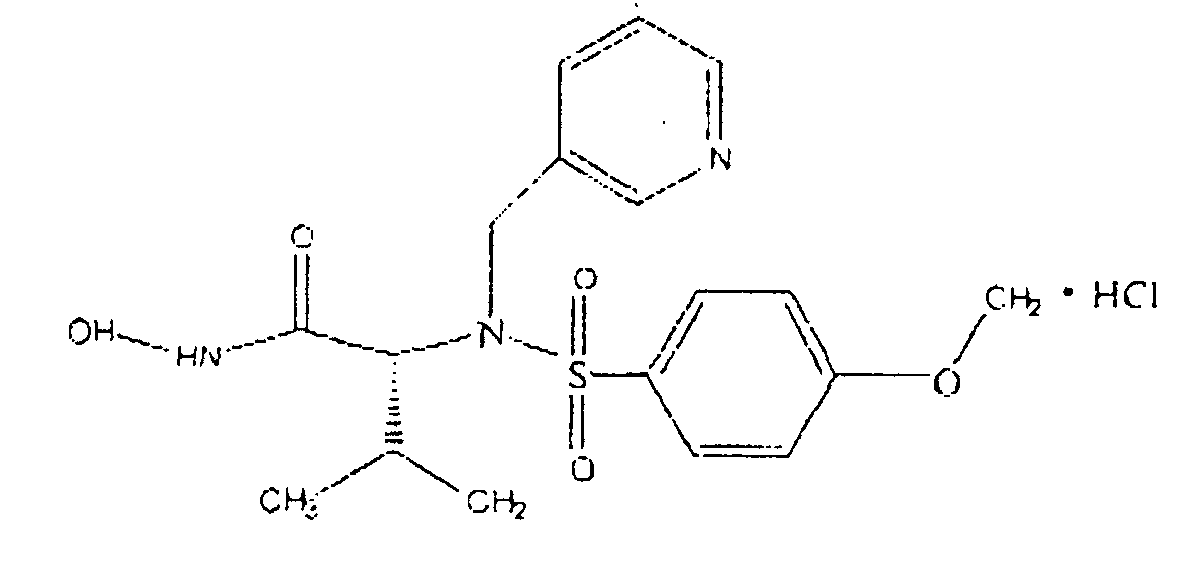
- the active ingredient of the preparation for preventing skin aging is not specifically limited as long as it inhibits matrix metalloproteinase, and, for example, N-hydroxy-2(R)[(4-methoxyphenyl)sulfonyl](3-picolyl)-methyl butanamide (referred to as active ingredient A), or a salt thereof, for example a hydrochloride thereof, which belongs to hydroxamic derivatives, is preferred.
- active ingredient A N-hydroxy-2(R)[(4-methoxyphenyl)sulfonyl](3-picolyl)-methyl butanamide
- active ingredient A N-hydroxy-2(R)[(4-methoxyphenyl)sulfonyl](3-picolyl)-methyl butanamide
- a salt thereof for example a hydrochloride thereof, which belongs to hydroxamic derivatives
- Substances that inhibit matrix metalloproteinase other than hydroxamic acid derivatives may include doxycycline having a tetracycline backbone, as natural compounds, curcumine for which an excellent gelatinase inhibiting effect was found and plant extracts (turmeric extract) containing it, as well as a plant extract mangosteen (Garcinia mangostana L.), DaunDuduk, for which the matrix metalloproteinase inhibiting effect has been confirmed.
- Mangosteen (Garcinia mangostana L.) mentioned above is a plant belonging to the family Guttiferae (Hypericaceae)) Genus Garcinia. It is an evergreen fruiter, and the peel portion contains tannin and a yellow'dye (mangosteen). A dry bark provides a black pigment.
- mangosteen G. mangostana
- peel or the bark is used, but other parts can also be used.
- Extracts of the above plants can be obtained by standard methods, and for example, they can be obtained by immersing in an extraction solvent or heating to reflux each of the above plants, after which they can be filtered and concentrated to obtain the extracts.
- the extraction solvent any commonly used ones may be used, and for example water, alcohols such as methanol, ethanol, propylene glycol, 1,3-butylene glycol and glycerin, organic solvents such as water-containing alcohols, chloroform, dichloroethane, carbon tetrachloride, acetone, ethyl acetate and hexane may be used alone or in combination.
- the extracts as they are obtained by extracting with the above solvents, or those obtained by removing impurities from the concentrated extract with an adsorption method or an ion exchange resin, those obtained by allowing them adsorbed onto a column of porous polymer (for example Amberlite XAD-2) and then eluting with methanol or ethanol followed by concentration can also be used.
- Extracts etc. obtained by a partition method, for example extraction with water/ethyl acetate can also be used.
- Matrix metalloproteinases include, for example, MMP1 that degrades type I and III collagen which are major skin matrix-building components ; MMP2 (gelatinase A), MMP9 (gelatinase B) belonging to the gelatinase group that degrades type IV collagen and laminin which are components of basal membrane and elastin which is a dermis matrix-component; MMP3 and MMP10 belonging to the stromelysin group that degrades proteoglycans, type IV collagen, laminin etc., and the like.
- MMP1 that degrades type I and III collagen which are major skin matrix-building components
- MMP2 gelatinase A
- MMP9 gelatinase B
- MMP3 and MMP10 belonging to the stromelysin group that degrades proteoglycans, type IV collagen, laminin etc., and the like.
- the preparation for preventing skin aging according to the present invention is particularly effective for the prevention and improvement of skin aging, particularly the sagging of the skin, due to reduced female hormones associated with ovarian insufficiency.
- Ovarian insufficiency associated with reduced female hormones include various ovarian insufficiencies accompanied by the depression of the female hormone-producing function of the ovary, such as climacteric disturbance and ovarian deficiency symptoms.
- female hormones include estrogenic hormones (estrogen), for example estradiol, estrin, estriol, corpus luteum hormone (progesterone) and the like.
- Skin aging due to reduced female hormones associated with ovarian insufficiency means changes in the skin resulting from increased matrix metalloproteinases in the skin, for example reduced elasticity of the skin, in particular wrinkles, loss of texture, sagging of the skin, and particularly sagging.
- the degree of "sagging" as used herein can be judged by determining mainly the elasticity of the skin, and can be determined by a method known to a person skilled in the art. For example, elasticity can be determined by measuring the ratio (%) of the skin recovering after being extended at a given pressure. In this case, the higher the degree of recovering the higher elasticity the skin has, and thus judged to have smaller "sagging.” The measurement of such a ratio of recovering can be measured using, for example, the skin elasticoviscosity measuring instrument Cutometer (manufactured by COURAGE KHAZAKSA).
- the preparation for preventing skin aging for use in the present invention containing a matrix metalloproteinase inhibitor exhibits an effect of preventing skin aging due to reduced female hormones associated with ovarian insufficiency, for example the effect of preventing skin aging during menopause, was found for the first time by the present inventors. Accordingly, it was found that the preparation for preventing skin aging for use in the present invention containing a matrix metalloproteinase inhibitor is particularly effective for preventing and improving the sagging of the skin during menopause.
- the amount blended of the matrix metalloproteinase inhibitor in the preparation for preventing skin aging of the present invention is 0.0001-20.0% by mass, preferably 0.0001-10.0% by mass in terms of dry weight in the total amount of the preparation for preventing skin aging.
- the amount is less than 0.0001% by mass, the effect mentioned in the present invention cannot be fully exhibited, and when it exceeds 20.0% by mass, it is difficult to formulate into drugs or the like and thus is undesirable.
- the blending of the amount over 10.0% by mass does not result in significant increases in efficacy.
- the preparation for preventing skin aging containing matrix metalloproteinase inhibitor of the present invention may be blended, as appropriate, with ingredients used in external preparations such as conventional cosmetics and pharmaceutical preparations, including for example whitening agents, moisturizers, antioxidants, oily components, UV absorbers, surfactants, thickners, alcohols, powder components, coloring agents, aqueous components, water, various skin nutrients, and the like, as needed.
- ingredients used in external preparations such as conventional cosmetics and pharmaceutical preparations, including for example whitening agents, moisturizers, antioxidants, oily components, UV absorbers, surfactants, thickners, alcohols, powder components, coloring agents, aqueous components, water, various skin nutrients, and the like, as needed.
- metal blocking agents such as edetate disodium, edetate trisodium, sodium citrate, sodium polyphosphate, sodium metaphosphate, and gluconic acid, caffeine, tannin, verapamil, tranexamic acid and derivatives thereof, licorice extracts, glabridin, hot water extracts of padauk fruit, various crude drugs, tocopherol acetate, drugs such as glycyrrhetic acid and derivatives thereof or salts thereof, vitamin C, ascorbic acid magnesium phosphate, ascorbic acid glucoside, arbutin, other whitening agents such as kojic acid, sugars such as glucose, fructose, mannose, sucrose and trehalose, vitamin A such as retinoic acid, retinol, retinol acetate, and retinol palmitate, and the like.
- metal blocking agents such as edetate disodium, edetate trisodium, sodium citrate, sodium polyphosphate, sodium metaphosphate,
- the preparation for preventing skin aging containing matrix metalloproteinase inhibitor of the present invention may be formulated to any form that are conventionally used in drugs for external application to the skin such as ointments, creams, emulsions, lotions, packs, and baths, and the dosage forms are not specifically limited.
- the present invention will now be explained in more detail with reference to examples. It should be noted that the present invention is not limited by these examples.
- the amount blended is expressed in % by weight.
- mice Female hairless mice were subjected to bilateral ovarectomy, and used as an animal model of menopause (ovarian insufficiency). Mice that were not subjected to such ovarectomy were used as the normal animals. Two months after ovary removal, the skin was extracted from the back of the female hairless mice, subcutaneous tissue thereof was removed, and divided into the epidermis and the dermis after heated in hot water at 60°C. The dermis was extracted with 0.05M Tris-HCl buffer, centrifuged (8000 ⁇ g, Hitachi), and the amount of gelatinase in the centrifugation supernatant was analyzed by a gelatin zymography.
- mice Five-week old female hairless mice were subjected to bilateral ovarectomy, and used as an animal model of menopause. For two months from immediately after ovary extraction, 100 ⁇ l of 1% inhibitor (hydrochloride of active ingredient A) in 80% ethanol, 15% of 1,3-butylene glycol and 5% dynamite glycerin was applied onto the back five times per week.
- a group menopause animals + inhibitor in which the solvent of the inhibitor was applied in a similar protocol and the normal group (normal animals) that did not receive ovarectomy were set up.
- the matrix metalloproteinase inhibitor suppresses a decrease in skin elasticity due to reduced female hormones and suppressed "sagging" in the post-menopausal period, and thus an effect of preventing skin aging was noted, which indicates that the blending of a matrix metalloproteinase-suppressing agent in drugs for external use as an active ingredient of a preparation for preventing skin aging during menopause is a very useful regimen.
- each plant was immersed in methanol at room temperature for 1 week to obtain an extract. This extract was concentrated to yield each plant extract (methanol extract).
- Plant name Part Amount of plant used g
- Amount of solvent (methanol) used ml
- Yield of plant extract g
- Plant extract was dissolved at a concentration of 2% by weight in dimethyl sulfoxide (DMSO) to prepare a plant extract-containing solution.
- DMSO dimethyl sulfoxide
- the plant extract-containing solution was diluted in an assay buffer (0.1 M Tris, pH 7.4, containing 0.4 M NaCl, 10 mM CaCl 2 ), and the concentration was adjusted as shown in Table 2, which was used as a sample solution and was subjected to the following experiment.
- an assay buffer 0.1 M Tris, pH 7.4, containing 0.4 M NaCl, 10 mM CaCl 2
- MMP-9 As an enzyme belonging to the gelatinase group, MMP-9 was used, and the inhibition ratio of its activity was determined. The measurement was carried out as follows.
- SDS-polyacrylamide gel (10% T) containing 0.2% by weight gelatin was prepared, and a given amount of human cell-derived MMP-9 solution was applied in all lanes and then was subjected to electrophoresis.
- the gel after electrophoresis was washed in 2.5% by mass solution of Triton X-100, and then in an incubation buffer (0.50 M Tris, pH 8.0, containing 0.01 mM ZnSO 4 , 5 mM CaCl 2 ) to sufficiently remove SDS.
- Gel was cut into strips, and each cut gel was immersed in the incubation buffer to which a given amount of MMP-9 was added, and then incubated overnight at 37°C.
- the plant extract-containing sample solution was investigated concerning the inhibitory effect on decrease in skin elasticity of the menopause model (ovarectomized mice, non-UV irradiated).
- propylene glycol, active ingredient A and caustic potash are added and dissolved, and then heated and maintained at 70°C (aqueous phase).
- the other ingredients are mixed, molten under heating and maintained at 70°C (oily phase).
- the oily phase is gradually added to the aqueous phase, and after the total amount has been added, the temperature is maintained for a while in order to allow the reaction to occur. It is then emulsified to homogeneity by a homomixer, and cooled to 30°C with sufficient stirring.
- propylene glycol is added, and heated and maintained at 70°C (aqueous phase).
- the other ingredients are mixed, melted by heating and maintained at 70°C (oily phase).
- the oily phase is added to the aqueous phase to pre-emulsify, and after emulsified to homogeneity by a homomixer, it is cooled to 30°C with sufficient stirring.
- soap powder and borax are added, dissolved under heating, and maintained at 70°C (aqueous phase).
- the other ingredients are mixed, melted by heating, and maintained at 70°C (oily phase).
- the oily phase is gradually added to the aqueous phase to allow the reaction to occur. After the reaction is complete, it is emulsified to homogeneity by a homomixer, and after emulsification it is cooled to 30°C with sufficient stirring.
- phase A carboxyvinyl polymer is dissolved (phase A).
- polyethylene glycol 1500 and triethanolamine are added, dissolved by heating, and maintained at 70°C (aqueous phase).
- the other ingredients are mixed, molten under heating, and maintained at 70°C (oily phase).
- the oily phase is added to the aqueous phase to pre-emulsify, to which phase A is added and emulsified to homogeneity by a homomixer. After emulsification, it is cooled to 30°C with sufficient stirring.
- aqueous phase aqueous phase
- the other ingredients are mixed, molten under heating, and maintained at 70°C (oily phase). While the oily phase is stirred, the aqueous phase is gradually added thereto, and emulsified to homogeneity by a homomixer. After emulsification, it is cooled to 30°C with sufficient stirring.
- Carbopol 940 is homogeneously dissolved, while the hydrochloride of active ingredient A and polyoxyethylene (50 mole) oleylalcohol ether are dissolved and added to the aqueous phase. Then, the other ingredients are added, and caustic soda and L-arginine are added to neutralize it and to increase viscosity.
- Phase A Ethyl alcohol (95%) 10.0 % by mass Polyoxyethylene (20 mole) octyldodecanol 1.0 Panthothenilethyl ether 0.1 Hydrochloride of active ingredient A 1.5 Methylparaben 0.15
- Phase B Potassium hydroxide 0.1
- Phase C Glycerin 5.0 Dipropylene glycol 10.0 Sodium bisulfite 0.03 Carboxyvinyl polymer 0.2 (Trade name: Carbopol 940, B.F. Goodrich Chemical Company) Purified water Balance
- Phase A and phase B are separately dissolved, and phase A is added to phase C. Then phase B is added thereto and filling is performed.
- Phase A Dipropylene glycol 5.0 % by mass Polyoxyethylene (60 mole) hydrogenated castor oil 5.0
- Phase B Hydrochloride of active ingredient A 0.01 Olive oil 5.0 Tocopherol acetate 0.2 Ethyl parabene 0.2 Flavor 0.2
- Phase C Sodium bisulfite 0.03 Polyvinyl alcohol 13.0 (degree of saponification 90, degree of polymerization 2,000) Ethanol 7.0 Purified water Balance
- Phase A, phase B and phase C are separately dissolved to homogeneity, and phase A is added to phase B to solubilize. Then this is added to phase C and filling is performed.
- Powder components of talc to black iron oxide are mixed well in the blender, and then oily components of squalane to isocetyl octaoate, the hydrochloride of active ingredient A, a preservative and a flavor are added thereto, and after blending well, it is filled into a container and molded.
- aqueous phase is stirred under heating, a fully mixed and ground powder portion is added thereto and treated by a homomixer.
- a flavor is added with stirring, and then cooled to room temperature.
- propylene glycol, active ingredient A and caustic potash are added and dissolved, and then heated and maintained at 70°C (aqueous phase).
- the other ingredients are mixed, molten under heating and maintained at 70°C (oily phase).
- the oily phase is gradually added to the aqueous phase, and after the total amount has been added, the temperature is maintained for a while in order to allow the reaction to occur. It is then emulsified to homogeneity by a homomixer, and cooled to 30°C with sufficient stirring.
- phase A carboxyvinyl polymer is dissolved (phase A).
- polyethylene glycol 1500 and triethanolamine are added, dissolved under heating, and maintained at 70°C (aqueous phase).
- the other ingredients are mixed, molten under heating, and maintained at 70°C (oily phase).
- the oily phase is added to the aqueous phase to pre-emulsify, to which phase A is added and emulsified to homogeneity by a homomixer. After emulsification, it is cooled to 30°C with thorough stirring.
- Phase A Dipropylene glycol 5.0 % by mass polyoxyethylene (60 mole) hydrogenated castor oil 5.0
- Phase B Daun Duduk 0.01 Olive oil 5.0
- Flavor 0.2 Phase C
- Polyvinyl alcohol 13.0 degree of saponification 90, degree of polymerization 2,000
- Phase A, phase B and phase C are separately dissolved to homogeneity, and phase A is added to phase B to solubilize. Then this is added to phase C and filling is performed.
- the preparation for preventing skin aging containing matrix metalloproteinase inhibitor of the present invention exhibits the effect of inhibiting skin aging due to reduced female hormones associated with ovarian insufficiency such as menopause and, in particular, acts favorably in preventing and/or improving "sagging" etc. in the post-menopausal period.
Landscapes
- Health & Medical Sciences (AREA)
- Life Sciences & Earth Sciences (AREA)
- Veterinary Medicine (AREA)
- Public Health (AREA)
- General Health & Medical Sciences (AREA)
- Animal Behavior & Ethology (AREA)
- Epidemiology (AREA)
- Birds (AREA)
- Engineering & Computer Science (AREA)
- Dermatology (AREA)
- Medicinal Chemistry (AREA)
- Nuclear Medicine, Radiotherapy & Molecular Imaging (AREA)
- Organic Chemistry (AREA)
- Pharmacology & Pharmacy (AREA)
- Chemical Kinetics & Catalysis (AREA)
- Chemical & Material Sciences (AREA)
- General Chemical & Material Sciences (AREA)
- Bioinformatics & Cheminformatics (AREA)
- Biotechnology (AREA)
- Gerontology & Geriatric Medicine (AREA)
- Endocrinology (AREA)
- Botany (AREA)
- Microbiology (AREA)
- Mycology (AREA)
- Diabetes (AREA)
- Reproductive Health (AREA)
- Cosmetics (AREA)
- Medicines That Contain Protein Lipid Enzymes And Other Medicines (AREA)
Abstract
The present invention provides a preparation, for
preventing a decrease in skin elasticity, comprising a
matrix metalloproteinase inhibitor as an active
ingredient and also a method of preventing a decrease in
skin elasticity using the same.
Description
The present invention relates to a preparation for
preventing skin aging, and particularly skin sagging, due
to reduced female hormones associated with ovarian
insufficiency, particularly reduced female hormones
during menopause. More specifically, the present
invention relates to a preparation for preventing skin
aging due to reduced female hormones associated with
ovarian insufficiency, said preparation comprising, as an
active ingredient, a substance having a potent inhibitory
action on the activity of matrix metalloproteinases.
Conventionally, it has been reported that female
hormones drastically decrease in the post-menopausal
period, which is accompanied by aggravated aging of the
skin resulting in increased "sagging" (Journal of the
Japan Menopause Society, Vol. 8, pp. 33-40, 2000). As
one of the causes for this, a reduction in collagen of
the skin in the post-menopausal period has been reported
(Maturitus 15: 113-119 (1992); Br. J. Obstet. Gynecol.
100: 154-156 (1993)). However, as the mechanism of
collagen reduction during menopause has not been
elucidated, no effective means has been found to prevent
it other than the administration of female hormones. The
latter method is not practical, however, because the
administration of female hormones has a risk of causing
side effects, and thereby formulation comprising the same
is greatly limited. Thus, there has been a great need
for substances, that effectively suppress aging phenomena
such as "sagging" which becomes specifically pronounced
during menopause, as anti-aging agents during menopause.
In efforts to elucidate the mechanism involved in
aging changes in the skin in the post-menopausal period,
specifically "sagging", the present inventors have used
academically recognized ovarectomized mice as a menopause
model, and made intensive study on the mechanism of onset
of skin aging accompanied by "sagging" etc. As a result,
the cause of "sagging" that develops in the post-menopausal
period was narrowed down to the enhanced
expression of matrix metalloproteinases, in particular,
gelatinase belonging to the matrix metalloproteinase, in
the skin due to decreased female hormones in the skin in
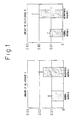
the post-menopausal period (see Fig. 1).
Matrix metalloproteinases are well known to be zinc-containing
proteolytic enzymes that hydrolyze
extracellular matrix-forming proteins including collagen
(Seikagaku 71(12): 1387-1401 (1999)), and to cause
changes due to the aging of the skin, i.e. wrinkles,
darkeness, loss of surface texture, and the like (see
Japanese Unexamined Patent Publication (Kokai) No. 2000-256122).
However, the enhanced expression was mainly
attributed to UV irradiation (Gary J. Fischer et al.,
Nature 379(25), 335(1996); Gary J. Fischer et al., The
New England Journal of Medicine, 337(20), 1419(1997)),
and the association of reduction in female hormones and
the enhanced expression of matrix metalloproteinases was
not known. The present inventors have found that
reduction in female hormones in the post-menopausal
period is accompanied by the increase in this enzyme,
which causes enhanced decomposition of extracellular
matrix-forming proteins of the skin, resulting in
increased "sagging." And when a substance that inhibits
matrix metalloproteinase was externally applied to the
mouse menopause model, "sagging" that increases by
reduction in female hormones is markedly suppressed (see
Fig. 2). Thus, the present inventors have found that
matrix metalloproteinase inhibitors are effective for the
prevention and improvement of skin aging processes such
as "sagging" that increase due to reduced female hormones
in the post-menopausal period, and thereby have
accomplished the present invention.
Thus, the present invention relates to a preparation
for preventing skin aging due to reduced female hormones
associated with ovarian insufficiency, said preparation
comprising, as an active ingredient, a matrix
metalloproteinase inhibitor.
In one aspect, the above reduction in female
hormones associated with ovarian insufficiency is caused
by menopause.
In a further aspect, the above aging of the skin
comprises the sagging of the skin.
In a further aspect, the above matrix
metalloproteinase is a protease belonging to the
gelatinase group.
The present invention further relates to a method of
suppressing skin aging, said method comprising applying
the above preparation for preventing skin aging to the
skin.
In accordance with the present invention, the active
ingredient of the preparation for preventing skin aging
is not specifically limited as long as it inhibits matrix
metalloproteinase, and, for example, N-hydroxy-2(R)[(4-methoxyphenyl)sulfonyl](3-picolyl)-methyl
butanamide
(referred to as active ingredient A), or a salt thereof,
for example a hydrochloride thereof, which belongs to
hydroxamic derivatives, is preferred. As used herein,
the structure of the hydrochloride of active ingredient A
is shown by the following formula:
Substances that inhibit matrix metalloproteinase
other than hydroxamic acid derivatives may include
doxycycline having a tetracycline backbone, as natural
compounds, curcumine for which an excellent gelatinase
inhibiting effect was found and plant extracts (turmeric
extract) containing it, as well as a plant extract
mangosteen (Garcinia mangostana L.), DaunDuduk, for which
the matrix metalloproteinase inhibiting effect has been
confirmed.
Mangosteen (Garcinia mangostana L.) mentioned above
is a plant belonging to the family Guttiferae
(Hypericaceae)) Genus Garcinia. It is an evergreen
fruiter, and the peel portion contains tannin and a
yellow'dye (mangosteen). A dry bark provides a black
pigment.
For mangosteen (G. mangostana), preferably the peel
or the bark is used, but other parts can also be used.
Extracts of the above plants can be obtained by
standard methods, and for example, they can be obtained
by immersing in an extraction solvent or heating to
reflux each of the above plants, after which they can be
filtered and concentrated to obtain the extracts. As the
extraction solvent, any commonly used ones may be used,
and for example water, alcohols such as methanol,
ethanol, propylene glycol, 1,3-butylene glycol and
glycerin, organic solvents such as water-containing
alcohols, chloroform, dichloroethane, carbon
tetrachloride, acetone, ethyl acetate and hexane may be
used alone or in combination. The extracts as they are
obtained by extracting with the above solvents, or those
obtained by removing impurities from the concentrated
extract with an adsorption method or an ion exchange
resin, those obtained by allowing them adsorbed onto a
column of porous polymer (for example Amberlite XAD-2)
and then eluting with methanol or ethanol followed by
concentration can also be used. Extracts etc. obtained
by a partition method, for example extraction with
water/ethyl acetate can also be used.
As used herein, there are known many types of matrix
metalloproteinases (Kaoru Miyazaki, Seikagaku 6(12):
1791-1807 (1996)). Matrix metalloproteinases (MMP)
include, for example, MMP1 that degrades type I and III
collagen which are major skin matrix-building components
; MMP2 (gelatinase A), MMP9 (gelatinase B) belonging to
the gelatinase group that degrades type IV collagen and
laminin which are components of basal membrane and
elastin which is a dermis matrix-component; MMP3 and
MMP10 belonging to the stromelysin group that degrades
proteoglycans, type IV collagen, laminin etc., and the
like.
The preparation for preventing skin aging according
to the present invention is particularly effective for
the prevention and improvement of skin aging,
particularly the sagging of the skin, due to reduced
female hormones associated with ovarian insufficiency.
Ovarian insufficiency associated with reduced female
hormones include various ovarian insufficiencies
accompanied by the depression of the female hormone-producing
function of the ovary, such as climacteric
disturbance and ovarian deficiency symptoms. Also,
female hormones include estrogenic hormones (estrogen),
for example estradiol, estrin, estriol, corpus luteum
hormone (progesterone) and the like.
"Skin aging due to reduced female hormones
associated with ovarian insufficiency" as used herein
means changes in the skin resulting from increased matrix
metalloproteinases in the skin, for example reduced
elasticity of the skin, in particular wrinkles, loss of
texture, sagging of the skin, and particularly sagging.
The degree of "sagging" as used herein can be judged
by determining mainly the elasticity of the skin, and can
be determined by a method known to a person skilled in
the art. For example, elasticity can be determined by
measuring the ratio (%) of the skin recovering after
being extended at a given pressure. In this case, the
higher the degree of recovering the higher elasticity the
skin has, and thus judged to have smaller "sagging." The
measurement of such a ratio of recovering can be measured
using, for example, the skin elasticoviscosity measuring
instrument Cutometer (manufactured by COURAGE KHAZAKSA).
The construction of the present invention will now
be explained in more detail.
That the preparation for preventing skin aging for
use in the present invention containing a matrix
metalloproteinase inhibitor exhibits an effect of
preventing skin aging due to reduced female hormones
associated with ovarian insufficiency, for example the
effect of preventing skin aging during menopause, was
found for the first time by the present inventors.
Accordingly, it was found that the preparation for
preventing skin aging for use in the present invention
containing a matrix metalloproteinase inhibitor is
particularly effective for preventing and improving the
sagging of the skin during menopause.
The amount blended of the matrix metalloproteinase
inhibitor in the preparation for preventing skin aging of
the present invention is 0.0001-20.0% by mass, preferably
0.0001-10.0% by mass in terms of dry weight in the total
amount of the preparation for preventing skin aging.
when the amount is less than 0.0001% by mass, the effect
mentioned in the present invention cannot be fully
exhibited, and when it exceeds 20.0% by mass, it is
difficult to formulate into drugs or the like and thus is
undesirable. Furthermore, the blending of the amount
over 10.0% by mass does not result in significant
increases in efficacy.
In addition to the above-mentioned essential
ingredients, the preparation for preventing skin aging
containing matrix metalloproteinase inhibitor of the
present invention may be blended, as appropriate, with
ingredients used in external preparations such as
conventional cosmetics and pharmaceutical preparations,
including for example whitening agents, moisturizers,
antioxidants, oily components, UV absorbers, surfactants,
thickners, alcohols, powder components, coloring agents,
aqueous components, water, various skin nutrients, and
the like, as needed.
In addition, there may be blended, as appropriate,
metal blocking agents such as edetate disodium, edetate
trisodium, sodium citrate, sodium polyphosphate, sodium
metaphosphate, and gluconic acid, caffeine, tannin,
verapamil, tranexamic acid and derivatives thereof,
licorice extracts, glabridin, hot water extracts of
padauk fruit, various crude drugs, tocopherol acetate,
drugs such as glycyrrhetic acid and derivatives thereof
or salts thereof, vitamin C, ascorbic acid magnesium
phosphate, ascorbic acid glucoside, arbutin, other
whitening agents such as kojic acid, sugars such as
glucose, fructose, mannose, sucrose and trehalose,
vitamin A such as retinoic acid, retinol, retinol
acetate, and retinol palmitate, and the like.
The preparation for preventing skin aging containing
matrix metalloproteinase inhibitor of the present
invention may be formulated to any form that are
conventionally used in drugs for external application to
the skin such as ointments, creams, emulsions, lotions,
packs, and baths, and the dosage forms are not
specifically limited.
The present invention will now be explained in more
detail with reference to examples. It should be noted
that the present invention is not limited by these
examples. The amount blended is expressed in % by
weight.
Female hairless mice were subjected to bilateral
ovarectomy, and used as an animal model of menopause
(ovarian insufficiency). Mice that were not subjected to
such ovarectomy were used as the normal animals. Two
months after ovary removal, the skin was extracted from
the back of the female hairless mice, subcutaneous tissue
thereof was removed, and divided into the epidermis and
the dermis after heated in hot water at 60°C. The dermis
was extracted with 0.05M Tris-HCl buffer, centrifuged
(8000×g, Hitachi), and the amount of gelatinase in the
centrifugation supernatant was analyzed by a gelatin
zymography. Numerical expression of the amount of
gelatinase was carried out using the Flour-S Multi Imager
(BIORAD) by analyzing the intensity of bands obtained by
the gelatin zymography. The amount of gelatinase in the
skin of the normal animals was also measured according to
a similar protocol.
As can be seen from the result of Fig. 1, the amount
of gelatinase A and B in the skin increased in the animal
model of menopause compared to the normal animals. Thus,
this demonstrates that the extraction of the female
hormone-producing ovary results in an increase in the
amount of gelatinase belonging to the matrix
metalloproteinase in the skin.
Five-week old female hairless mice were subjected to
bilateral ovarectomy, and used as an animal model of
menopause. For two months from immediately after ovary
extraction, 100 µl of 1% inhibitor (hydrochloride of
active ingredient A) in 80% ethanol, 15% of 1,3-butylene
glycol and 5% dynamite glycerin was applied onto the back
five times per week. As a control, a group (menopause
animals + inhibitor) in which the solvent of the
inhibitor was applied in a similar protocol and the
normal group (normal animals) that did not receive
ovarectomy were set up.
Two months after ovary removal, skin elasticity of
the back was measured. A skin section was pulled by a
given pressure (200 mPa) for five seconds using Cutometer
(COURAGE KHAZAKSA), and then the ratio of the skin
section returning was measured as recovery to determine
the mean and the standard deviation for each group. It
was judged that the greater the value is, the more
elasticity, and hence less "sagging", there is.
As can be seen from Fig. 2, the matrix
metalloproteinase inhibitor suppresses a decrease in skin
elasticity due to reduced female hormones and suppressed
"sagging" in the post-menopausal period, and thus an
effect of preventing skin aging was noted, which
indicates that the blending of a matrix
metalloproteinase-suppressing agent in drugs for external
use as an active ingredient of a preparation for
preventing skin aging during menopause is a very useful
regimen.
As shown in Table 1, each plant was immersed in
methanol at room temperature for 1 week to obtain an
extract. This extract was concentrated to yield each
plant extract (methanol extract).
| Plant name | Part | Amount of plant used (g) | Amount of solvent (methanol) used (ml) | Yield of plant extract (g) |
| Mangosteen (Garcinia mangostana) | Peel | 200 | 450 | 1.52 |
| Mangosteen (Garcinia mangostana) | Bark | 200 | 500 | 3.01 |
Plant extract was dissolved at a concentration of 2%
by weight in dimethyl sulfoxide (DMSO) to prepare a plant
extract-containing solution.
The plant extract-containing solution was diluted in
an assay buffer (0.1 M Tris, pH 7.4, containing 0.4 M
NaCl, 10 mM CaCl2), and the concentration was adjusted as
shown in Table 2, which was used as a sample solution and
was subjected to the following experiment.
As an enzyme belonging to the gelatinase group, MMP-9
was used, and the inhibition ratio of its activity was
determined. The measurement was carried out as follows.
SDS-polyacrylamide gel (10% T) containing 0.2% by
weight gelatin was prepared, and a given amount of human
cell-derived MMP-9 solution was applied in all lanes and
then was subjected to electrophoresis. The gel after
electrophoresis was washed in 2.5% by mass solution of
Triton X-100, and then in an incubation buffer (0.50 M
Tris, pH 8.0, containing 0.01 mM ZnSO4, 5 mM CaCl2) to
sufficiently remove SDS. Gel was cut into strips, and
each cut gel was immersed in the incubation buffer to
which a given amount of MMP-9 was added, and then
incubated overnight at 37°C.
After incubation, the gel was stained with Coomassie
Brilliant Blue, and the widths of the bands appearing
after destaining were quantitated using an image analyzer
(manufactured by BIORAD [Fluor-SMulti Imager]).
A reduction of the band width in a system containing
the plant extract (the above sample solution) relative to
the band width in a system containing no plant extract
(control, DMSO) was determined, and MMP-9 activity
inhibition ratio (%) was calculated. The result is shown
in Table 2.
| Sample | Concentration of sample solution (% by weight) | Enzyme | Inhibition of MMPs activity(%) |
| Mangosteen (Garcinia mangostana) (peel) | 0.0005 | MMP-9 | 68 |
| Mangosteen (Garcinia mangostana) (peel) | 0.005 | MMP-9 | 98 |
| Mangosteen (Garcinia mangostana) (bark) | 0.0005 | MMP-9 | 71 |
| Mangosteen (Garcinia mangostana) (bark) | 0.005 | MMP-9 | 100 |
The plant extract-containing sample solution was
investigated concerning the inhibitory effect on decrease
in skin elasticity of the menopause model (ovarectomized
mice, non-UV irradiated).
After removing the ovaries from 6-week old female
mice, 100 µl of the plant extract-containing sample
solution was applied five times per week for 12 weeks.
The result demonstrated that the plant extract-containing
sample solution improves the skin elasticity of the
menopause model.
Formulation examples of active ingredient A in
various dosage forms according to the present invention
are explained as working Examples below.
| (Formulation) | |
| Stearic acid | 5.0 % by mass |
| Stearyl alcohol | 4.0 |
| Isopropyl myristate | 18.0 |
| Glycerin monostearate | 3.0 |
| Propylene glycol | 10.0 |
| Hydrochloride of active ingredient A | 1.0 |
| Caustic potash | 0.2 |
| Sodium bisulfite | 0.01 |
| Preservative | q.s. |
| Flavor | q.s. |
| Ion exchanged water | Balance |
To ion exchanged water, propylene glycol, active
ingredient A and caustic potash are added and dissolved,
and then heated and maintained at 70°C (aqueous phase).
The other ingredients are mixed, molten under heating and
maintained at 70°C (oily phase). The oily phase is
gradually added to the aqueous phase, and after the total
amount has been added, the temperature is maintained for
a while in order to allow the reaction to occur. It is
then emulsified to homogeneity by a homomixer, and cooled
to 30°C with sufficient stirring.
| (Formulation) | |
| Stearic acid | 2.0 % by mass |
| Stearyl alcohol | 7.0 |
| Hydrogenated lanolin | 2.0 |
| Squalane | 5.0 |
| 2-octyldodecyl alcohol | 6.0 |
| Polyoxyethylene (25 mole) cetylalcohol ether | 3.0 |
| Glycerin monostearate | 2.0 |
| Propylene glycol | 5.0 |
| Hydrochloride of active ingredient A | 0.05 |
| Sodium bisulfite | 0.03 |
| Ethylparaben | 0.3 |
| Flavor | q.s. |
| Ion exchanged water | Balance |
To ion exchanged water, propylene glycol is added,
and heated and maintained at 70°C (aqueous phase). The
other ingredients are mixed, melted by heating and
maintained at 70°C (oily phase). The oily phase is added
to the aqueous phase to pre-emulsify, and after
emulsified to homogeneity by a homomixer, it is cooled to
30°C with sufficient stirring.
| (Formulation) | |
| Solid paraffin | 5.0 % by mass |
| Beeswax | 10.0 |
| Vaseline | 15.0 |
| Liquid paraffin | 41.0 |
| Glycerin monostearate | 2.0 |
| Polyoxyethylene (20 mole) sorbitan monolaurate | 2.0 |
| Soap powder | 0.1 |
| Borax | 0.2 |
| Hydrochloride of active ingredient A | 0.01 |
| Sodium bisulfite | 0.03 |
| Ethylparaben | 0.3 |
| Flavor | q.s. |
| Ion exchanged water | Balance |
To ion exchanged water, soap powder and borax are
added, dissolved under heating, and maintained at 70°C
(aqueous phase). The other ingredients are mixed, melted
by heating, and maintained at 70°C (oily phase). The
oily phase is gradually added to the aqueous phase to
allow the reaction to occur. After the reaction is
complete, it is emulsified to homogeneity by a homomixer,
and after emulsification it is cooled to 30°C with
sufficient stirring.
| (Formulation) | |
| Stearic acid | 2.5 % by mass |
| Cetyl alcohol | 1.5 |
| Vaseline | 5.0 |
| Liquid paraffin | 10.0 |
| Polyoxyethylene (10 mole) | |
| monooleate | 2.0 |
| Polyethylene glycol 1500 | 3.0 |
| Triethanolamine | 1.0 |
| Carboxyvinyl polymer | 0.05 |
| (Trade name: Carbopol 941, B.F. Goodrich Chemical Company) | |
| Hydrochloride of active ingredient A | 0.01 |
| Sodium bisulfite | 0.01 |
| Ethylparaben | 0.3 |
| Flavor | q.s. |
| Ion exchanged water | Balance |
In a small amount of ion exchanged water,
carboxyvinyl polymer is dissolved (phase A). To the rest
of ion exchanged water, polyethylene glycol 1500 and
triethanolamine are added, dissolved by heating, and
maintained at 70°C (aqueous phase). The other
ingredients are mixed, molten under heating, and
maintained at 70°C (oily phase). The oily phase is added
to the aqueous phase to pre-emulsify, to which phase A is
added and emulsified to homogeneity by a homomixer.
After emulsification, it is cooled to 30°C with
sufficient stirring.
| (Formulation) | |
| Macrocrystalline wax | 1.0 % by mass |
| Beexwax | 2.0 |
| Lanoline | 20.0 |
| Liquid paraffin | 10.0 |
| Squalane | 5.0 |
| Sorbitan sesquioleate | 4.0 |
| Polyoxyethylene (20 mole) sorbitan monooleate | 1.0 |
| Propylene glycol | 7.0 |
| Hydrochloride of active ingredient A | 10.0 |
| Sodium bisulfite | 0.01 |
| Ethylparaben | 0.3 |
| Flavor | q.s. |
| Ion exchanged water | Balance |
To ion exchanged water, propylene glycol is added,
and heated and maintained at 70°C (aqueous phase). The
other ingredients are mixed, molten under heating, and
maintained at 70°C (oily phase). While the oily phase is
stirred, the aqueous phase is gradually added thereto,
and emulsified to homogeneity by a homomixer. After
emulsification, it is cooled to 30°C with sufficient
stirring.
| (Formulation) | |
| 95% ethyl alcohol | 10.0 % by mass |
| Dipropylene glycol | 15.0 |
| Polyoxyethylene (50 mole) oleylalcahol ether | 2.0 |
| Carboxyvinyl polymer | 1.0 |
| (Trade name: Carbopol 940, B.F. Goodrich Chemical Company) | |
| Caustic soda | 0.15 |
| L-arginine | 0.1 |
| Hydrochloride of active ingredient A | 7.0 |
| Sodium 2-hydroxy-4-methoxybenzophenone sulfonate | 0.05 |
| Ethylenediaminetetraacetic acid trisodium dihydrate | 0.05 |
| Methylparaben | 0.2 |
| Flavor | q.s. |
| Ion exchanged water | Balance |
In ion exchanged water, Carbopol 940 is
homogeneously dissolved, while the hydrochloride of
active ingredient A and polyoxyethylene (50 mole)
oleylalcohol ether are dissolved and added to the aqueous
phase. Then, the other ingredients are added, and
caustic soda and L-arginine are added to neutralize it
and to increase viscosity.
| (Formulation) | |
| (Phase A) | |
| Ethyl alcohol (95%) | 10.0 % by mass |
| Polyoxyethylene (20 mole) octyldodecanol | 1.0 |
| Panthothenilethyl ether | 0.1 |
| Hydrochloride of active ingredient A | 1.5 |
| Methylparaben | 0.15 |
| (Phase B) | |
| Potassium hydroxide | 0.1 |
| (Phase C) | |
| Glycerin | 5.0 |
| Dipropylene glycol | 10.0 |
| Sodium bisulfite | 0.03 |
| Carboxyvinyl polymer | 0.2 |
| (Trade name: Carbopol 940, B.F. Goodrich Chemical Company) | |
| Purified water | Balance |
Phase A and phase B are separately dissolved, and
phase A is added to phase C. Then phase B is added
thereto and filling is performed.
| (Formulation) | |
| (Phase A) | |
| Dipropylene glycol | 5.0 % by mass |
| Polyoxyethylene (60 mole) hydrogenated castor oil | 5.0 |
| (Phase B) | |
| Hydrochloride of active ingredient A | 0.01 |
| Olive oil | 5.0 |
| Tocopherol acetate | 0.2 |
| Ethyl parabene | 0.2 |
| Flavor | 0.2 |
| (Phase C) | |
| Sodium bisulfite | 0.03 |
| Polyvinyl alcohol | 13.0 |
| (degree of saponification 90, degree of polymerization 2,000) | |
| Ethanol | 7.0 |
| Purified water | Balance |
Phase A, phase B and phase C are separately
dissolved to homogeneity, and phase A is added to phase B
to solubilize. Then this is added to phase C and filling
is performed.
| (Formulation) | |
| Talc | 43.1 % by mass |
| Kaolin | 15.0 |
| Cericite | 10.0 |
| zinc flower | 7.0 |
| Titanium dioxide | 3.8 |
| Yellow iron oxide | 2.9 |
| Black iron oxide | 0.2 |
| Squalane | 8.0 |
| Isostearic acid | 4.0 |
| Monooleic acid POE sorbitan | 3.0 |
| Isocetyl Octoate | 2.0 |
| Hydrochloride of active ingredient A | 1.0 |
| Preservative | q.s. |
| Flavor | q.s. |
Powder components of talc to black iron oxide are
mixed well in the blender, and then oily components of
squalane to isocetyl octaoate, the hydrochloride of
active ingredient A, a preservative and a flavor are
added thereto, and after blending well, it is filled into
a container and molded.
| (Formulation) | |
| (Powder portion) | |
| Titanium dioxide | 10.3 % by mass |
| Cericite | 5.4 |
| Kaolin | 3.0 |
| Yellow iron oxide | 0.8 |
| Red oxide | 0.3 |
| Black iron oxide | 0.2 |
| (oily phase) | |
| Decamethylcyclopentasiloxane | 11.5 |
| Liquid paraffin | 4.5 |
| Polyoxyethylene denatured Dimethylpolysiloxane | 4.0 |
| (aqueous phase) | |
| Purified water | 50.0 |
| 1,3-butyleneglycol | 4.5 |
| Hydrochloride of active ingredient A | 1.5 |
| Sorbitan sesquioleate | 3.0 |
| Preservative | q.s. |
| Flavor | q.s. |
After the aqueous phase is stirred under heating, a
fully mixed and ground powder portion is added thereto
and treated by a homomixer. After the heated and mixed
oily phase is further added and treated by a homomixer, a
flavor is added with stirring, and then cooled to room
temperature.
| (Formulation) | |
| Stearic acid | 5.0 % by mass |
| Stearyl alcohol | 4.0 |
| Isopropyl myristate | 18.0 |
| Glycerin monostearate | 3.0 |
| Propylene glycol | 10.0 |
| Mangosteen (bark) | 1.0 |
| Caustic potash | 0.2 |
| Sodium bisulfite | 0.01 |
| Preservative | q.s. |
| Flavor | q.s. |
| Ion exchanged water | Balance |
To ion exchanged water, propylene glycol, active
ingredient A and caustic potash are added and dissolved,
and then heated and maintained at 70°C (aqueous phase).
The other ingredients are mixed, molten under heating and
maintained at 70°C (oily phase). The oily phase is
gradually added to the aqueous phase, and after the total
amount has been added, the temperature is maintained for
a while in order to allow the reaction to occur. It is
then emulsified to homogeneity by a homomixer, and cooled
to 30°C with sufficient stirring.
| (Formulation) | |
| Stearic acid | 2.5 % by mass |
| Cetyl alcohol | 1.5 |
| Vaseline | 5.0 |
| Liquid paraffin | 10.0 |
| Polyoxyethylene (10 mole) monooleate | 2.0 |
| Polyethylene glycol 1500 | 3.0 |
| Triethanolamine | 1.0 |
| Carboxyvinyl polymer | 0.05 |
| (Trade name: Carbopol 941, B.F. Goodrich Chemical Company) | |
| Mangosteen (bark) | 0.01 |
| Sodium bisulfite | 0.01 |
| Ethylparaben | 0.3 |
| Flavor | q.s. |
| Ion exchanged water | Balance |
To a small amount of ion exchanged water,
carboxyvinyl polymer is dissolved (phase A). To the rest
of ion exchanged water, polyethylene glycol 1500 and
triethanolamine are added, dissolved under heating, and
maintained at 70°C (aqueous phase). The other
ingredients are mixed, molten under heating, and
maintained at 70°C (oily phase). The oily phase is added
to the aqueous phase to pre-emulsify, to which phase A is
added and emulsified to homogeneity by a homomixer.
After emulsification, it is cooled to 30°C with thorough
stirring.
| (Formulation) | |
| (Phase A) | |
| Dipropylene glycol | 5.0 % by mass |
| polyoxyethylene (60 mole) hydrogenated castor oil | 5.0 |
| (Phase B) | |
| Daun Duduk | 0.01 |
| Olive oil | 5.0 |
| Tocopherol acetate | 0.2 |
| Ethyl parabene | 0.2 |
| Flavor | 0.2 |
| (Phase C) | |
| Sodium bisulfite | 0.03 |
| Polyvinyl alcohol | 13.0 |
| (degree of saponification 90, degree of polymerization 2,000) | |
| Ethanol | 7.0 |
| Purified water | Balance |
Phase A, phase B and phase C are separately
dissolved to homogeneity, and phase A is added to phase B
to solubilize. Then this is added to phase C and filling
is performed.
The preparation for preventing skin aging containing
matrix metalloproteinase inhibitor of the present
invention exhibits the effect of inhibiting skin aging
due to reduced female hormones associated with ovarian
insufficiency such as menopause and, in particular, acts
favorably in preventing and/or improving "sagging" etc.
in the post-menopausal period.
Claims (6)
- A method of preventing a decrease in skin elasticity due to reduced female hormones associated with ovarian insufficiency, comprising using a matrix metalloproteinase inhibitor as an active ingredient.
- The method of preventing a decrease in skin elasticity according to claim 1 wherein a condition in which female hormones are decreased associated with ovarian insufficiency is menopause.
- The method of preventing a decrease in skin elasticity according to claim 1 or 2 wherein said decrease in skin elasticity is the sagging of the skin.
- The method of preventing a decrease in skin elasticity according to any one of claims I to 3 wherein said matrix metalloproteinase is a protease belonging to the gelatinase group.
- The method of preventing a decrease in skin elasticity according to any one of claims 1 to 4, comprising applying said matrix metalloproteinase inhibitor as an active ingredient to the skin.
- A method of preventing a decrease in skin elasticity due to reduced female hormones associated with ovarian insufficiency, comprising using a mangosteen extract as a matrix metalloproteinase inhibitor.
Applications Claiming Priority (3)
| Application Number | Priority Date | Filing Date | Title |
|---|---|---|---|
| JP2001050839A JP2002255850A (en) | 2001-02-26 | 2001-02-26 | Skin aging inhibitor |
| JP2001050839 | 2001-02-26 | ||
| PCT/JP2002/001757 WO2002067873A2 (en) | 2001-02-26 | 2002-02-26 | Method for suppressing reduction of elasticity of skin |
Publications (1)
| Publication Number | Publication Date |
|---|---|
| EP1396255A1 true EP1396255A1 (en) | 2004-03-10 |
Family
ID=18911739
Family Applications (1)
| Application Number | Title | Priority Date | Filing Date |
|---|---|---|---|
| EP02700812A Withdrawn EP1396255A1 (en) | 2001-02-26 | 2002-02-26 | Method for suppressing reduction of elasticity of skin |
Country Status (5)
| Country | Link |
|---|---|
| US (1) | US20040077523A1 (en) |
| EP (1) | EP1396255A1 (en) |
| JP (1) | JP2002255850A (en) |
| KR (1) | KR20030086270A (en) |
| WO (1) | WO2002067873A2 (en) |
Cited By (1)
| Publication number | Priority date | Publication date | Assignee | Title |
|---|---|---|---|---|
| EP1465577A4 (en) * | 2001-12-27 | 2006-05-24 | Avon Prod Inc | Methods for improving the aesthetic appearance of skin |
Families Citing this family (15)
| Publication number | Priority date | Publication date | Assignee | Title |
|---|---|---|---|---|
| JP4558363B2 (en) * | 2003-06-19 | 2010-10-06 | 日本メナード化粧品株式会社 | Fragrance composition |
| JP4243202B2 (en) * | 2004-01-20 | 2009-03-25 | 株式会社ナリス化粧品 | Skin preparation for wrinkle improvement |
| US20060115556A1 (en) * | 2004-12-01 | 2006-06-01 | Foulger Sidney W | Nutritional supplement drink containing xanthone extracts |
| US20060115555A1 (en) * | 2004-12-01 | 2006-06-01 | Foulger Sidney W | Nutritional supplements containing xanthone extracts |
| US7749545B2 (en) * | 2005-03-18 | 2010-07-06 | Sakura Properties, Llc | Fucoidan compositions and methods for dietary and nutritional supplements |
| US20060210697A1 (en) * | 2005-03-18 | 2006-09-21 | Mower Thomas E | Infant formula composition |
| US20060210688A1 (en) * | 2005-03-18 | 2006-09-21 | Mower Thomas E | Dehydrated sports drink powder |
| US7666448B2 (en) | 2005-03-18 | 2010-02-23 | Sakura Properties, Llc | Skin cleansing article |
| US20060210692A1 (en) * | 2005-03-18 | 2006-09-21 | Mower Thomas E | Baby food composition |
| US20070020358A1 (en) * | 2005-03-18 | 2007-01-25 | Mower Thomas E | Sports drink concentrate |
| US7776365B2 (en) * | 2005-03-18 | 2010-08-17 | Sakura Properties, Llc | Article with skin protecting and moisturizing compound |
| US20060210515A1 (en) * | 2005-03-18 | 2006-09-21 | Mower Thomas E | Hair growth formula |
| US20060210496A1 (en) * | 2005-03-18 | 2006-09-21 | Mower Thomas E | Compositions for skin protection from ultraviolet damage |
| JP2006349372A (en) * | 2005-06-13 | 2006-12-28 | Shiseido Co Ltd | Method for evaluating flexibility, and elasticity of skin using oxidized protein in horny cell layer as index |
| WO2022131108A1 (en) * | 2020-12-15 | 2022-06-23 | 株式会社 資生堂 | Dermis regeneration promoter |
Family Cites Families (1)
| Publication number | Priority date | Publication date | Assignee | Title |
|---|---|---|---|---|
| US6398753B2 (en) * | 1998-04-03 | 2002-06-04 | Mcdaniel David H. | Ultrasound enhancement of percutaneous drug absorption |
-
2001
- 2001-02-26 JP JP2001050839A patent/JP2002255850A/en not_active Withdrawn
-
2002
- 2002-02-26 WO PCT/JP2002/001757 patent/WO2002067873A2/en not_active Ceased
- 2002-02-26 EP EP02700812A patent/EP1396255A1/en not_active Withdrawn
- 2002-02-26 KR KR10-2003-7011035A patent/KR20030086270A/en not_active Withdrawn
- 2002-02-26 US US10/469,033 patent/US20040077523A1/en not_active Abandoned
Cited By (2)
| Publication number | Priority date | Publication date | Assignee | Title |
|---|---|---|---|---|
| EP1465577A4 (en) * | 2001-12-27 | 2006-05-24 | Avon Prod Inc | Methods for improving the aesthetic appearance of skin |
| US7825157B2 (en) | 2001-12-27 | 2010-11-02 | Avon Products, Inc. | Methods for improving the aesthetic appearance of skin |
Also Published As
| Publication number | Publication date |
|---|---|
| WO2002067873A2 (en) | 2002-09-06 |
| JP2002255850A (en) | 2002-09-11 |
| US20040077523A1 (en) | 2004-04-22 |
| KR20030086270A (en) | 2003-11-07 |
Similar Documents
| Publication | Publication Date | Title |
|---|---|---|
| US20040077523A1 (en) | Method for pressuring reduction of elasticity of skin | |
| EP1284134B1 (en) | External skin preparations for suppressing sebum secretion | |
| JP2003201229A (en) | Matrix metalloprotease activity inhibitor and anti-aging cosmetic | |
| US8106094B2 (en) | Compositions and methods for treating skin conditions | |
| JPH11315008A (en) | Anti-aging agent | |
| KR20190137328A (en) | Skin external application composition for anti-aging containing Rhodotypos scandens extract | |
| EP1330999B1 (en) | Melanogenesis inhibitors and whitening agents comprising ergosterol derivative and compositions containing ergosterol derivative | |
| JP2001139466A (en) | Inhibitor for matrix metalloproteinase activity and cosmetic for anti-aging | |
| JPH1179970A (en) | Collagenase inhibitor | |
| JPH0925209A (en) | Skin preparation for external use | |
| JPH0925212A (en) | Skin preparation for external use | |
| JPH10167957A (en) | Cell adhesion inhibitor | |
| KR102525901B1 (en) | Skin external application composition for anti-aging containing Phlox subulata extract | |
| JP2000226311A (en) | Anti-aging agent | |
| JP3452671B2 (en) | External preparation for skin | |
| JP3224962B2 (en) | External preparation for skin | |
| KR19990072830A (en) | Antiplasmin agent | |
| JPH11335230A (en) | External preparation for skin | |
| JP2003201212A (en) | Matrix metalloprotease activity inhibitor and external preparation for skin | |
| JPH1029928A (en) | Skin preparation for external use | |
| JP2001114664A (en) | Cosmetic | |
| JP2001172157A (en) | Gelatinase activity inhibitor and anti-aging skin preparation for external use | |
| JPH0987135A (en) | Dermal preparation for external use | |
| JPH0920635A (en) | Whitening skin preparation for external use | |
| JPH1036215A (en) | External preparation for skin |
Legal Events
| Date | Code | Title | Description |
|---|---|---|---|
| PUAI | Public reference made under article 153(3) epc to a published international application that has entered the european phase |
Free format text: ORIGINAL CODE: 0009012 |
|
| 17P | Request for examination filed |
Effective date: 20030825 |
|
| AK | Designated contracting states |
Kind code of ref document: A1 Designated state(s): AT BE CH CY DE DK ES FI FR GB GR IE IT LI LU MC NL PT SE TR |
|
| RTI1 | Title (correction) |
Free format text: METHOD FOR SUPPRESSING REDUCTION OF ELASTICITY OF SKIN |
|
| STAA | Information on the status of an ep patent application or granted ep patent |
Free format text: STATUS: THE APPLICATION HAS BEEN WITHDRAWN |
|
| 18W | Application withdrawn |
Effective date: 20070227 |