EP1384489B1 - Biokompatibles Gerüst als Haut- oder Knorpelersatz - Google Patents
Biokompatibles Gerüst als Haut- oder Knorpelersatz Download PDFInfo
- Publication number
- EP1384489B1 EP1384489B1 EP02077989A EP02077989A EP1384489B1 EP 1384489 B1 EP1384489 B1 EP 1384489B1 EP 02077989 A EP02077989 A EP 02077989A EP 02077989 A EP02077989 A EP 02077989A EP 1384489 B1 EP1384489 B1 EP 1384489B1
- Authority
- EP
- European Patent Office
- Prior art keywords
- collagen
- scaffold
- copolymer
- protein
- matrix
- Prior art date
- Legal status (The legal status is an assumption and is not a legal conclusion. Google has not performed a legal analysis and makes no representation as to the accuracy of the status listed.)
- Expired - Lifetime
Links
- 210000000845 cartilage Anatomy 0.000 title claims description 6
- 230000002500 effect on skin Effects 0.000 title claims description 6
- 229920001436 collagen Polymers 0.000 claims abstract description 151
- 108010035532 Collagen Proteins 0.000 claims abstract description 150
- 102000008186 Collagen Human genes 0.000 claims abstract description 150
- 108090000623 proteins and genes Proteins 0.000 claims abstract description 53
- 102000004169 proteins and genes Human genes 0.000 claims abstract description 53
- 238000000034 method Methods 0.000 claims abstract description 36
- 229920001577 copolymer Polymers 0.000 claims abstract description 32
- 239000002243 precursor Substances 0.000 claims abstract description 19
- 229920000728 polyester Polymers 0.000 claims abstract description 17
- 229920001515 polyalkylene glycol Polymers 0.000 claims abstract description 16
- 125000003118 aryl group Chemical group 0.000 claims abstract description 12
- 238000004519 manufacturing process Methods 0.000 claims abstract description 6
- 238000000576 coating method Methods 0.000 claims description 60
- 239000011248 coating agent Substances 0.000 claims description 51
- 239000000203 mixture Substances 0.000 claims description 30
- 229920001707 polybutylene terephthalate Polymers 0.000 claims description 25
- -1 polybutylene Polymers 0.000 claims description 21
- 239000011159 matrix material Substances 0.000 claims description 19
- 239000006185 dispersion Substances 0.000 claims description 16
- 239000011148 porous material Substances 0.000 claims description 13
- 239000013543 active substance Substances 0.000 claims description 11
- 229920001223 polyethylene glycol Polymers 0.000 claims description 11
- 239000002202 Polyethylene glycol Substances 0.000 claims description 10
- KKEYFWRCBNTPAC-UHFFFAOYSA-L terephthalate(2-) Chemical compound [O-]C(=O)C1=CC=C(C([O-])=O)C=C1 KKEYFWRCBNTPAC-UHFFFAOYSA-L 0.000 claims description 10
- 238000011282 treatment Methods 0.000 claims description 9
- LYCAIKOWRPUZTN-UHFFFAOYSA-N Ethylene glycol Chemical compound OCCO LYCAIKOWRPUZTN-UHFFFAOYSA-N 0.000 claims description 8
- 239000000126 substance Substances 0.000 claims description 7
- 241001465754 Metazoa Species 0.000 claims description 4
- 239000003102 growth factor Substances 0.000 claims description 4
- WGCNASOHLSPBMP-UHFFFAOYSA-N hydroxyacetaldehyde Natural products OCC=O WGCNASOHLSPBMP-UHFFFAOYSA-N 0.000 claims description 4
- 239000007864 aqueous solution Substances 0.000 claims description 3
- 239000003795 chemical substances by application Substances 0.000 claims description 3
- 229920000139 polyethylene terephthalate Polymers 0.000 claims description 3
- 102000044503 Antimicrobial Peptides Human genes 0.000 claims description 2
- 108700042778 Antimicrobial Peptides Proteins 0.000 claims description 2
- 239000003242 anti bacterial agent Substances 0.000 claims description 2
- 229940121363 anti-inflammatory agent Drugs 0.000 claims description 2
- 239000002260 anti-inflammatory agent Substances 0.000 claims description 2
- 229940088710 antibiotic agent Drugs 0.000 claims description 2
- 239000003429 antifungal agent Substances 0.000 claims description 2
- 229940121375 antifungal agent Drugs 0.000 claims description 2
- 230000003399 chemotactic effect Effects 0.000 claims description 2
- 239000005556 hormone Substances 0.000 claims description 2
- 229940088597 hormone Drugs 0.000 claims description 2
- 229920001748 polybutylene Polymers 0.000 claims description 2
- 239000005020 polyethylene terephthalate Substances 0.000 claims description 2
- 229920001451 polypropylene glycol Polymers 0.000 claims description 2
- 210000004027 cell Anatomy 0.000 description 22
- LMDZBCPBFSXMTL-UHFFFAOYSA-N 1-ethyl-3-(3-dimethylaminopropyl)carbodiimide Chemical compound CCN=C=NCCCN(C)C LMDZBCPBFSXMTL-UHFFFAOYSA-N 0.000 description 20
- 206010052428 Wound Diseases 0.000 description 19
- 208000027418 Wounds and injury Diseases 0.000 description 19
- 238000004132 cross linking Methods 0.000 description 14
- 210000002510 keratinocyte Anatomy 0.000 description 14
- 238000012377 drug delivery Methods 0.000 description 10
- 229920000642 polymer Polymers 0.000 description 9
- 108090000765 processed proteins & peptides Proteins 0.000 description 9
- NQTADLQHYWFPDB-UHFFFAOYSA-N N-Hydroxysuccinimide Chemical compound ON1C(=O)CCC1=O NQTADLQHYWFPDB-UHFFFAOYSA-N 0.000 description 8
- 238000011534 incubation Methods 0.000 description 8
- 210000001519 tissue Anatomy 0.000 description 8
- 239000002131 composite material Substances 0.000 description 7
- 238000004108 freeze drying Methods 0.000 description 7
- 102000004196 processed proteins & peptides Human genes 0.000 description 7
- 238000012546 transfer Methods 0.000 description 7
- XLYOFNOQVPJJNP-UHFFFAOYSA-N water Substances O XLYOFNOQVPJJNP-UHFFFAOYSA-N 0.000 description 7
- QTBSBXVTEAMEQO-UHFFFAOYSA-N Acetic acid Chemical compound CC(O)=O QTBSBXVTEAMEQO-UHFFFAOYSA-N 0.000 description 6
- DHMQDGOQFOQNFH-UHFFFAOYSA-N Glycine Chemical compound NCC(O)=O DHMQDGOQFOQNFH-UHFFFAOYSA-N 0.000 description 6
- 238000002203 pretreatment Methods 0.000 description 6
- 102000029816 Collagenase Human genes 0.000 description 5
- 108060005980 Collagenase Proteins 0.000 description 5
- 229960002424 collagenase Drugs 0.000 description 5
- 238000013461 design Methods 0.000 description 5
- HEDRZPFGACZZDS-UHFFFAOYSA-N Chloroform Chemical compound ClC(Cl)Cl HEDRZPFGACZZDS-UHFFFAOYSA-N 0.000 description 4
- 102000000503 Collagen Type II Human genes 0.000 description 4
- 108010041390 Collagen Type II Proteins 0.000 description 4
- 108010050808 Procollagen Proteins 0.000 description 4
- 102000007056 Recombinant Fusion Proteins Human genes 0.000 description 4
- 108010008281 Recombinant Fusion Proteins Proteins 0.000 description 4
- 230000008901 benefit Effects 0.000 description 4
- 210000002615 epidermis Anatomy 0.000 description 4
- 238000007710 freezing Methods 0.000 description 4
- 230000008014 freezing Effects 0.000 description 4
- 238000005470 impregnation Methods 0.000 description 4
- 238000004626 scanning electron microscopy Methods 0.000 description 4
- 210000003491 skin Anatomy 0.000 description 4
- 241000283690 Bos taurus Species 0.000 description 3
- 239000004471 Glycine Substances 0.000 description 3
- OKKJLVBELUTLKV-UHFFFAOYSA-N Methanol Chemical compound OC OKKJLVBELUTLKV-UHFFFAOYSA-N 0.000 description 3
- 238000007605 air drying Methods 0.000 description 3
- 125000002947 alkylene group Chemical group 0.000 description 3
- 150000001413 amino acids Chemical class 0.000 description 3
- 239000012867 bioactive agent Substances 0.000 description 3
- 238000006243 chemical reaction Methods 0.000 description 3
- 238000007906 compression Methods 0.000 description 3
- 230000006835 compression Effects 0.000 description 3
- 230000003247 decreasing effect Effects 0.000 description 3
- 238000009826 distribution Methods 0.000 description 3
- 238000005227 gel permeation chromatography Methods 0.000 description 3
- 230000035876 healing Effects 0.000 description 3
- 238000001727 in vivo Methods 0.000 description 3
- 239000004005 microsphere Substances 0.000 description 3
- 239000000243 solution Substances 0.000 description 3
- 229920001059 synthetic polymer Polymers 0.000 description 3
- 238000005809 transesterification reaction Methods 0.000 description 3
- 230000029663 wound healing Effects 0.000 description 3
- 238000010146 3D printing Methods 0.000 description 2
- XKRFYHLGVUSROY-UHFFFAOYSA-N Argon Chemical compound [Ar] XKRFYHLGVUSROY-UHFFFAOYSA-N 0.000 description 2
- 102000007350 Bone Morphogenetic Proteins Human genes 0.000 description 2
- 108010007726 Bone Morphogenetic Proteins Proteins 0.000 description 2
- OKTJSMMVPCPJKN-UHFFFAOYSA-N Carbon Chemical compound [C] OKTJSMMVPCPJKN-UHFFFAOYSA-N 0.000 description 2
- 102000001187 Collagen Type III Human genes 0.000 description 2
- 108010069502 Collagen Type III Proteins 0.000 description 2
- 239000004971 Cross linker Substances 0.000 description 2
- RTZKZFJDLAIYFH-UHFFFAOYSA-N Diethyl ether Chemical compound CCOCC RTZKZFJDLAIYFH-UHFFFAOYSA-N 0.000 description 2
- 206010063560 Excessive granulation tissue Diseases 0.000 description 2
- 102000010834 Extracellular Matrix Proteins Human genes 0.000 description 2
- 108010037362 Extracellular Matrix Proteins Proteins 0.000 description 2
- 102000018233 Fibroblast Growth Factor Human genes 0.000 description 2
- 108050007372 Fibroblast Growth Factor Proteins 0.000 description 2
- SXRSQZLOMIGNAQ-UHFFFAOYSA-N Glutaraldehyde Chemical compound O=CCCCC=O SXRSQZLOMIGNAQ-UHFFFAOYSA-N 0.000 description 2
- PMMYEEVYMWASQN-DMTCNVIQSA-N Hydroxyproline Chemical compound O[C@H]1CN[C@H](C(O)=O)C1 PMMYEEVYMWASQN-DMTCNVIQSA-N 0.000 description 2
- 108090000723 Insulin-Like Growth Factor I Proteins 0.000 description 2
- 102000029797 Prion Human genes 0.000 description 2
- 108091000054 Prion Proteins 0.000 description 2
- ONIBWKKTOPOVIA-UHFFFAOYSA-N Proline Natural products OC(=O)C1CCCN1 ONIBWKKTOPOVIA-UHFFFAOYSA-N 0.000 description 2
- PXIPVTKHYLBLMZ-UHFFFAOYSA-N Sodium azide Chemical compound [Na+].[N-]=[N+]=[N-] PXIPVTKHYLBLMZ-UHFFFAOYSA-N 0.000 description 2
- 102000013275 Somatomedins Human genes 0.000 description 2
- 241000282887 Suidae Species 0.000 description 2
- 108010073929 Vascular Endothelial Growth Factor A Proteins 0.000 description 2
- 102000005789 Vascular Endothelial Growth Factors Human genes 0.000 description 2
- 108010019530 Vascular Endothelial Growth Factors Proteins 0.000 description 2
- 241000700605 Viruses Species 0.000 description 2
- 239000002390 adhesive tape Substances 0.000 description 2
- QVGXLLKOCUKJST-UHFFFAOYSA-N atomic oxygen Chemical compound [O] QVGXLLKOCUKJST-UHFFFAOYSA-N 0.000 description 2
- 229920000249 biocompatible polymer Polymers 0.000 description 2
- 230000004071 biological effect Effects 0.000 description 2
- 229940088623 biologically active substance Drugs 0.000 description 2
- 230000015572 biosynthetic process Effects 0.000 description 2
- 229940112869 bone morphogenetic protein Drugs 0.000 description 2
- CDQSJQSWAWPGKG-UHFFFAOYSA-N butane-1,1-diol Chemical compound CCCC(O)O CDQSJQSWAWPGKG-UHFFFAOYSA-N 0.000 description 2
- 229910052799 carbon Inorganic materials 0.000 description 2
- 125000003178 carboxy group Chemical group [H]OC(*)=O 0.000 description 2
- 230000015556 catabolic process Effects 0.000 description 2
- 230000001684 chronic effect Effects 0.000 description 2
- 230000021615 conjugation Effects 0.000 description 2
- 208000031513 cyst Diseases 0.000 description 2
- 238000006731 degradation reaction Methods 0.000 description 2
- WOZVHXUHUFLZGK-UHFFFAOYSA-N dimethyl terephthalate Chemical compound COC(=O)C1=CC=C(C(=O)OC)C=C1 WOZVHXUHUFLZGK-UHFFFAOYSA-N 0.000 description 2
- PMMYEEVYMWASQN-UHFFFAOYSA-N dl-hydroxyproline Natural products OC1C[NH2+]C(C([O-])=O)C1 PMMYEEVYMWASQN-UHFFFAOYSA-N 0.000 description 2
- 230000000694 effects Effects 0.000 description 2
- 238000002474 experimental method Methods 0.000 description 2
- 210000002744 extracellular matrix Anatomy 0.000 description 2
- 230000002349 favourable effect Effects 0.000 description 2
- 229940126864 fibroblast growth factor Drugs 0.000 description 2
- LEQAOMBKQFMDFZ-UHFFFAOYSA-N glyoxal Chemical compound O=CC=O LEQAOMBKQFMDFZ-UHFFFAOYSA-N 0.000 description 2
- 210000001126 granulation tissue Anatomy 0.000 description 2
- 210000004209 hair Anatomy 0.000 description 2
- 229960002591 hydroxyproline Drugs 0.000 description 2
- 230000005847 immunogenicity Effects 0.000 description 2
- 239000007943 implant Substances 0.000 description 2
- 238000002513 implantation Methods 0.000 description 2
- 238000007918 intramuscular administration Methods 0.000 description 2
- RLSSMJSEOOYNOY-UHFFFAOYSA-N m-cresol Chemical compound CC1=CC=CC(O)=C1 RLSSMJSEOOYNOY-UHFFFAOYSA-N 0.000 description 2
- 239000000463 material Substances 0.000 description 2
- 239000001301 oxygen Substances 0.000 description 2
- 229910052760 oxygen Inorganic materials 0.000 description 2
- 229920002635 polyurethane Polymers 0.000 description 2
- 239000004814 polyurethane Substances 0.000 description 2
- 238000002360 preparation method Methods 0.000 description 2
- 125000002924 primary amino group Chemical group [H]N([H])* 0.000 description 2
- 238000011069 regeneration method Methods 0.000 description 2
- 230000011664 signaling Effects 0.000 description 2
- 239000002904 solvent Substances 0.000 description 2
- 238000000807 solvent casting Methods 0.000 description 2
- 125000000383 tetramethylene group Chemical group [H]C([H])([*:1])C([H])([H])C([H])([H])C([H])([H])[*:2] 0.000 description 2
- 230000017423 tissue regeneration Effects 0.000 description 2
- 230000002792 vascular Effects 0.000 description 2
- BYEAHWXPCBROCE-UHFFFAOYSA-N 1,1,1,3,3,3-hexafluoropropan-2-ol Chemical compound FC(F)(F)C(O)C(F)(F)F BYEAHWXPCBROCE-UHFFFAOYSA-N 0.000 description 1
- SXGZJKUKBWWHRA-UHFFFAOYSA-N 2-(N-morpholiniumyl)ethanesulfonate Chemical compound [O-]S(=O)(=O)CC[NH+]1CCOCC1 SXGZJKUKBWWHRA-UHFFFAOYSA-N 0.000 description 1
- QKNYBSVHEMOAJP-UHFFFAOYSA-N 2-amino-2-(hydroxymethyl)propane-1,3-diol;hydron;chloride Chemical compound Cl.OCC(N)(CO)CO QKNYBSVHEMOAJP-UHFFFAOYSA-N 0.000 description 1
- FPQQSJJWHUJYPU-UHFFFAOYSA-N 3-(dimethylamino)propyliminomethylidene-ethylazanium;chloride Chemical compound Cl.CCN=C=NCCCN(C)C FPQQSJJWHUJYPU-UHFFFAOYSA-N 0.000 description 1
- 229940117976 5-hydroxylysine Drugs 0.000 description 1
- UXVMQQNJUSDDNG-UHFFFAOYSA-L Calcium chloride Chemical compound [Cl-].[Cl-].[Ca+2] UXVMQQNJUSDDNG-UHFFFAOYSA-L 0.000 description 1
- 102000012422 Collagen Type I Human genes 0.000 description 1
- 108010022452 Collagen Type I Proteins 0.000 description 1
- KCXVZYZYPLLWCC-UHFFFAOYSA-N EDTA Chemical compound OC(=O)CN(CC(O)=O)CCN(CC(O)=O)CC(O)=O KCXVZYZYPLLWCC-UHFFFAOYSA-N 0.000 description 1
- 241000193159 Hathewaya histolytica Species 0.000 description 1
- PIWKPBJCKXDKJR-UHFFFAOYSA-N Isoflurane Chemical compound FC(F)OC(Cl)C(F)(F)F PIWKPBJCKXDKJR-UHFFFAOYSA-N 0.000 description 1
- ONIBWKKTOPOVIA-BYPYZUCNSA-N L-Proline Chemical compound OC(=O)[C@@H]1CCCN1 ONIBWKKTOPOVIA-BYPYZUCNSA-N 0.000 description 1
- 206010029113 Neovascularisation Diseases 0.000 description 1
- 239000004677 Nylon Substances 0.000 description 1
- 102000035195 Peptidases Human genes 0.000 description 1
- 108091005804 Peptidases Proteins 0.000 description 1
- 239000004698 Polyethylene Substances 0.000 description 1
- 239000004793 Polystyrene Substances 0.000 description 1
- 206010072170 Skin wound Diseases 0.000 description 1
- 101710172711 Structural protein Proteins 0.000 description 1
- KKEYFWRCBNTPAC-UHFFFAOYSA-N Terephthalic acid Chemical group OC(=O)C1=CC=C(C(O)=O)C=C1 KKEYFWRCBNTPAC-UHFFFAOYSA-N 0.000 description 1
- 238000005411 Van der Waals force Methods 0.000 description 1
- 239000002253 acid Substances 0.000 description 1
- 230000002378 acidificating effect Effects 0.000 description 1
- 210000000577 adipose tissue Anatomy 0.000 description 1
- 150000001299 aldehydes Chemical class 0.000 description 1
- 125000001931 aliphatic group Chemical group 0.000 description 1
- 238000004458 analytical method Methods 0.000 description 1
- 239000003963 antioxidant agent Substances 0.000 description 1
- 230000003078 antioxidant effect Effects 0.000 description 1
- 229910052786 argon Inorganic materials 0.000 description 1
- XTKDAFGWCDAMPY-UHFFFAOYSA-N azaperone Chemical compound C1=CC(F)=CC=C1C(=O)CCCN1CCN(C=2N=CC=CC=2)CC1 XTKDAFGWCDAMPY-UHFFFAOYSA-N 0.000 description 1
- 230000001580 bacterial effect Effects 0.000 description 1
- 230000001588 bifunctional effect Effects 0.000 description 1
- 230000031018 biological processes and functions Effects 0.000 description 1
- 229920001222 biopolymer Polymers 0.000 description 1
- 238000001574 biopsy Methods 0.000 description 1
- 229920001400 block copolymer Polymers 0.000 description 1
- 210000000988 bone and bone Anatomy 0.000 description 1
- 210000002449 bone cell Anatomy 0.000 description 1
- 210000002798 bone marrow cell Anatomy 0.000 description 1
- JYLRDAXYHVFRPW-UHFFFAOYSA-N butane-1,1-diol;terephthalic acid Chemical compound CCCC(O)O.OC(=O)C1=CC=C(C(O)=O)C=C1 JYLRDAXYHVFRPW-UHFFFAOYSA-N 0.000 description 1
- 239000001110 calcium chloride Substances 0.000 description 1
- 229910001628 calcium chloride Inorganic materials 0.000 description 1
- 150000001718 carbodiimides Chemical class 0.000 description 1
- 125000004432 carbon atom Chemical group C* 0.000 description 1
- 239000000969 carrier Substances 0.000 description 1
- 210000003321 cartilage cell Anatomy 0.000 description 1
- 239000003054 catalyst Substances 0.000 description 1
- 230000021164 cell adhesion Effects 0.000 description 1
- 238000005119 centrifugation Methods 0.000 description 1
- 210000001612 chondrocyte Anatomy 0.000 description 1
- 239000000470 constituent Substances 0.000 description 1
- 238000001816 cooling Methods 0.000 description 1
- 230000008878 coupling Effects 0.000 description 1
- 238000010168 coupling process Methods 0.000 description 1
- 238000005859 coupling reaction Methods 0.000 description 1
- 239000003431 cross linking reagent Substances 0.000 description 1
- 238000012258 culturing Methods 0.000 description 1
- 230000000593 degrading effect Effects 0.000 description 1
- YSMODUONRAFBET-UHFFFAOYSA-N delta-DL-hydroxylysine Natural products NCC(O)CCC(N)C(O)=O YSMODUONRAFBET-UHFFFAOYSA-N 0.000 description 1
- 239000003599 detergent Substances 0.000 description 1
- 238000000113 differential scanning calorimetry Methods 0.000 description 1
- 230000029087 digestion Effects 0.000 description 1
- BNIILDVGGAEEIG-UHFFFAOYSA-L disodium hydrogen phosphate Chemical compound [Na+].[Na+].OP([O-])([O-])=O BNIILDVGGAEEIG-UHFFFAOYSA-L 0.000 description 1
- 229910000397 disodium phosphate Inorganic materials 0.000 description 1
- 229940079593 drug Drugs 0.000 description 1
- 239000003814 drug Substances 0.000 description 1
- 229920001198 elastomeric copolymer Polymers 0.000 description 1
- 210000002889 endothelial cell Anatomy 0.000 description 1
- 230000037305 epidermis formation Effects 0.000 description 1
- YSMODUONRAFBET-UHNVWZDZSA-N erythro-5-hydroxy-L-lysine Chemical compound NC[C@H](O)CC[C@H](N)C(O)=O YSMODUONRAFBET-UHNVWZDZSA-N 0.000 description 1
- 239000000835 fiber Substances 0.000 description 1
- 108060002894 fibrillar collagen Proteins 0.000 description 1
- 102000013373 fibrillar collagen Human genes 0.000 description 1
- 210000002950 fibroblast Anatomy 0.000 description 1
- 239000010408 film Substances 0.000 description 1
- 239000012634 fragment Substances 0.000 description 1
- 239000007789 gas Substances 0.000 description 1
- 230000014509 gene expression Effects 0.000 description 1
- 238000002695 general anesthesia Methods 0.000 description 1
- 102000034238 globular proteins Human genes 0.000 description 1
- 108091005896 globular proteins Proteins 0.000 description 1
- 125000003827 glycol group Chemical group 0.000 description 1
- 229940015043 glyoxal Drugs 0.000 description 1
- 239000008187 granular material Substances 0.000 description 1
- 208000006454 hepatitis Diseases 0.000 description 1
- 231100000283 hepatitis Toxicity 0.000 description 1
- 125000004836 hexamethylene group Chemical group [H]C([H])([*:2])C([H])([H])C([H])([H])C([H])([H])C([H])([H])C([H])([H])[*:1] 0.000 description 1
- 239000001257 hydrogen Substances 0.000 description 1
- 229910052739 hydrogen Inorganic materials 0.000 description 1
- 230000002209 hydrophobic effect Effects 0.000 description 1
- 125000002887 hydroxy group Chemical group [H]O* 0.000 description 1
- 238000000338 in vitro Methods 0.000 description 1
- 238000010348 incorporation Methods 0.000 description 1
- 208000014674 injury Diseases 0.000 description 1
- 229960002725 isoflurane Drugs 0.000 description 1
- 238000002386 leaching Methods 0.000 description 1
- 238000011068 loading method Methods 0.000 description 1
- 230000033001 locomotion Effects 0.000 description 1
- 230000007774 longterm Effects 0.000 description 1
- 210000002901 mesenchymal stem cell Anatomy 0.000 description 1
- WSFSSNUMVMOOMR-NJFSPNSNSA-N methanone Chemical compound O=[14CH2] WSFSSNUMVMOOMR-NJFSPNSNSA-N 0.000 description 1
- 125000002496 methyl group Chemical group [H]C([H])([H])* 0.000 description 1
- 210000004925 microvascular endothelial cell Anatomy 0.000 description 1
- 244000309715 mini pig Species 0.000 description 1
- 238000010606 normalization Methods 0.000 description 1
- 229920001778 nylon Polymers 0.000 description 1
- 239000003960 organic solvent Substances 0.000 description 1
- 239000002245 particle Substances 0.000 description 1
- 230000004962 physiological condition Effects 0.000 description 1
- 238000009832 plasma treatment Methods 0.000 description 1
- 229920003023 plastic Polymers 0.000 description 1
- 239000004033 plastic Substances 0.000 description 1
- 229920001983 poloxamer Polymers 0.000 description 1
- 229920001281 polyalkylene Polymers 0.000 description 1
- 229920000223 polyglycerol Polymers 0.000 description 1
- 229920005594 polymer fiber Polymers 0.000 description 1
- 229920001184 polypeptide Polymers 0.000 description 1
- 229920002223 polystyrene Polymers 0.000 description 1
- 230000008569 process Effects 0.000 description 1
- 230000035755 proliferation Effects 0.000 description 1
- QQONPFPTGQHPMA-UHFFFAOYSA-N propylene Natural products CC=C QQONPFPTGQHPMA-UHFFFAOYSA-N 0.000 description 1
- 125000004805 propylene group Chemical group [H]C([H])([H])C([H])([*:1])C([H])([H])[*:2] 0.000 description 1
- 230000002797 proteolythic effect Effects 0.000 description 1
- 229940024999 proteolytic enzymes for treatment of wounds and ulcers Drugs 0.000 description 1
- 230000008929 regeneration Effects 0.000 description 1
- 230000004044 response Effects 0.000 description 1
- 238000012552 review Methods 0.000 description 1
- 150000003839 salts Chemical class 0.000 description 1
- 238000001878 scanning electron micrograph Methods 0.000 description 1
- 239000000565 sealant Substances 0.000 description 1
- 210000004927 skin cell Anatomy 0.000 description 1
- 239000007787 solid Substances 0.000 description 1
- 238000005507 spraying Methods 0.000 description 1
- 230000001954 sterilising effect Effects 0.000 description 1
- 238000004659 sterilization and disinfection Methods 0.000 description 1
- 230000004936 stimulating effect Effects 0.000 description 1
- 239000000758 substrate Substances 0.000 description 1
- 229940028426 sufenta Drugs 0.000 description 1
- GGCSSNBKKAUURC-UHFFFAOYSA-N sufentanil Chemical compound C1CN(CCC=2SC=CC=2)CCC1(COC)N(C(=O)CC)C1=CC=CC=C1 GGCSSNBKKAUURC-UHFFFAOYSA-N 0.000 description 1
- 230000002123 temporal effect Effects 0.000 description 1
- 210000002435 tendon Anatomy 0.000 description 1
- 239000003106 tissue adhesive Substances 0.000 description 1
- 230000008467 tissue growth Effects 0.000 description 1
- FGMPLJWBKKVCDB-UHFFFAOYSA-N trans-L-hydroxy-proline Natural products ON1CCCC1C(O)=O FGMPLJWBKKVCDB-UHFFFAOYSA-N 0.000 description 1
- 230000008733 trauma Effects 0.000 description 1
- 238000011277 treatment modality Methods 0.000 description 1
- 239000003981 vehicle Substances 0.000 description 1
- 238000000196 viscometry Methods 0.000 description 1
- 230000010388 wound contraction Effects 0.000 description 1
Images





Classifications
-
- A—HUMAN NECESSITIES
- A61—MEDICAL OR VETERINARY SCIENCE; HYGIENE
- A61L—METHODS OR APPARATUS FOR STERILISING MATERIALS OR OBJECTS IN GENERAL; DISINFECTION, STERILISATION OR DEODORISATION OF AIR; CHEMICAL ASPECTS OF BANDAGES, DRESSINGS, ABSORBENT PADS OR SURGICAL ARTICLES; MATERIALS FOR BANDAGES, DRESSINGS, ABSORBENT PADS OR SURGICAL ARTICLES
- A61L27/00—Materials for grafts or prostheses or for coating grafts or prostheses
- A61L27/36—Materials for grafts or prostheses or for coating grafts or prostheses containing ingredients of undetermined constitution or reaction products thereof, e.g. transplant tissue, natural bone, extracellular matrix
- A61L27/38—Materials for grafts or prostheses or for coating grafts or prostheses containing ingredients of undetermined constitution or reaction products thereof, e.g. transplant tissue, natural bone, extracellular matrix containing added animal cells
- A61L27/3839—Materials for grafts or prostheses or for coating grafts or prostheses containing ingredients of undetermined constitution or reaction products thereof, e.g. transplant tissue, natural bone, extracellular matrix containing added animal cells characterised by the site of application in the body
- A61L27/3843—Connective tissue
- A61L27/3852—Cartilage, e.g. meniscus
-
- A—HUMAN NECESSITIES
- A61—MEDICAL OR VETERINARY SCIENCE; HYGIENE
- A61F—FILTERS IMPLANTABLE INTO BLOOD VESSELS; PROSTHESES; DEVICES PROVIDING PATENCY TO, OR PREVENTING COLLAPSING OF, TUBULAR STRUCTURES OF THE BODY, e.g. STENTS; ORTHOPAEDIC, NURSING OR CONTRACEPTIVE DEVICES; FOMENTATION; TREATMENT OR PROTECTION OF EYES OR EARS; BANDAGES, DRESSINGS OR ABSORBENT PADS; FIRST-AID KITS
- A61F2/00—Filters implantable into blood vessels; Prostheses, i.e. artificial substitutes or replacements for parts of the body; Appliances for connecting them with the body; Devices providing patency to, or preventing collapsing of, tubular structures of the body, e.g. stents
- A61F2/02—Prostheses implantable into the body
- A61F2/30—Joints
- A61F2/30756—Cartilage endoprostheses
-
- A—HUMAN NECESSITIES
- A61—MEDICAL OR VETERINARY SCIENCE; HYGIENE
- A61L—METHODS OR APPARATUS FOR STERILISING MATERIALS OR OBJECTS IN GENERAL; DISINFECTION, STERILISATION OR DEODORISATION OF AIR; CHEMICAL ASPECTS OF BANDAGES, DRESSINGS, ABSORBENT PADS OR SURGICAL ARTICLES; MATERIALS FOR BANDAGES, DRESSINGS, ABSORBENT PADS OR SURGICAL ARTICLES
- A61L27/00—Materials for grafts or prostheses or for coating grafts or prostheses
- A61L27/40—Composite materials, i.e. containing one material dispersed in a matrix of the same or different material
- A61L27/44—Composite materials, i.e. containing one material dispersed in a matrix of the same or different material having a macromolecular matrix
- A61L27/48—Composite materials, i.e. containing one material dispersed in a matrix of the same or different material having a macromolecular matrix with macromolecular fillers
-
- A—HUMAN NECESSITIES
- A61—MEDICAL OR VETERINARY SCIENCE; HYGIENE
- A61L—METHODS OR APPARATUS FOR STERILISING MATERIALS OR OBJECTS IN GENERAL; DISINFECTION, STERILISATION OR DEODORISATION OF AIR; CHEMICAL ASPECTS OF BANDAGES, DRESSINGS, ABSORBENT PADS OR SURGICAL ARTICLES; MATERIALS FOR BANDAGES, DRESSINGS, ABSORBENT PADS OR SURGICAL ARTICLES
- A61L27/00—Materials for grafts or prostheses or for coating grafts or prostheses
- A61L27/50—Materials characterised by their function or physical properties, e.g. injectable or lubricating compositions, shape-memory materials, surface modified materials
- A61L27/56—Porous materials, e.g. foams or sponges
-
- A—HUMAN NECESSITIES
- A61—MEDICAL OR VETERINARY SCIENCE; HYGIENE
- A61L—METHODS OR APPARATUS FOR STERILISING MATERIALS OR OBJECTS IN GENERAL; DISINFECTION, STERILISATION OR DEODORISATION OF AIR; CHEMICAL ASPECTS OF BANDAGES, DRESSINGS, ABSORBENT PADS OR SURGICAL ARTICLES; MATERIALS FOR BANDAGES, DRESSINGS, ABSORBENT PADS OR SURGICAL ARTICLES
- A61L27/00—Materials for grafts or prostheses or for coating grafts or prostheses
- A61L27/50—Materials characterised by their function or physical properties, e.g. injectable or lubricating compositions, shape-memory materials, surface modified materials
- A61L27/60—Materials for use in artificial skin
-
- A—HUMAN NECESSITIES
- A61—MEDICAL OR VETERINARY SCIENCE; HYGIENE
- A61F—FILTERS IMPLANTABLE INTO BLOOD VESSELS; PROSTHESES; DEVICES PROVIDING PATENCY TO, OR PREVENTING COLLAPSING OF, TUBULAR STRUCTURES OF THE BODY, e.g. STENTS; ORTHOPAEDIC, NURSING OR CONTRACEPTIVE DEVICES; FOMENTATION; TREATMENT OR PROTECTION OF EYES OR EARS; BANDAGES, DRESSINGS OR ABSORBENT PADS; FIRST-AID KITS
- A61F2/00—Filters implantable into blood vessels; Prostheses, i.e. artificial substitutes or replacements for parts of the body; Appliances for connecting them with the body; Devices providing patency to, or preventing collapsing of, tubular structures of the body, e.g. stents
- A61F2/02—Prostheses implantable into the body
- A61F2/10—Hair or skin implants
- A61F2/105—Skin implants, e.g. artificial skin
-
- A—HUMAN NECESSITIES
- A61—MEDICAL OR VETERINARY SCIENCE; HYGIENE
- A61F—FILTERS IMPLANTABLE INTO BLOOD VESSELS; PROSTHESES; DEVICES PROVIDING PATENCY TO, OR PREVENTING COLLAPSING OF, TUBULAR STRUCTURES OF THE BODY, e.g. STENTS; ORTHOPAEDIC, NURSING OR CONTRACEPTIVE DEVICES; FOMENTATION; TREATMENT OR PROTECTION OF EYES OR EARS; BANDAGES, DRESSINGS OR ABSORBENT PADS; FIRST-AID KITS
- A61F2/00—Filters implantable into blood vessels; Prostheses, i.e. artificial substitutes or replacements for parts of the body; Appliances for connecting them with the body; Devices providing patency to, or preventing collapsing of, tubular structures of the body, e.g. stents
- A61F2/02—Prostheses implantable into the body
- A61F2/28—Bones
- A61F2002/2817—Bone stimulation by chemical reactions or by osteogenic or biological products for enhancing ossification, e.g. by bone morphogenetic or morphogenic proteins [BMP] or by transforming growth factors [TGF]
-
- A—HUMAN NECESSITIES
- A61—MEDICAL OR VETERINARY SCIENCE; HYGIENE
- A61F—FILTERS IMPLANTABLE INTO BLOOD VESSELS; PROSTHESES; DEVICES PROVIDING PATENCY TO, OR PREVENTING COLLAPSING OF, TUBULAR STRUCTURES OF THE BODY, e.g. STENTS; ORTHOPAEDIC, NURSING OR CONTRACEPTIVE DEVICES; FOMENTATION; TREATMENT OR PROTECTION OF EYES OR EARS; BANDAGES, DRESSINGS OR ABSORBENT PADS; FIRST-AID KITS
- A61F2/00—Filters implantable into blood vessels; Prostheses, i.e. artificial substitutes or replacements for parts of the body; Appliances for connecting them with the body; Devices providing patency to, or preventing collapsing of, tubular structures of the body, e.g. stents
- A61F2/02—Prostheses implantable into the body
- A61F2/30—Joints
- A61F2002/30001—Additional features of subject-matter classified in A61F2/28, A61F2/30 and subgroups thereof
- A61F2002/30667—Features concerning an interaction with the environment or a particular use of the prosthesis
- A61F2002/30677—Means for introducing or releasing pharmaceutical products, e.g. antibiotics, into the body
-
- A—HUMAN NECESSITIES
- A61—MEDICAL OR VETERINARY SCIENCE; HYGIENE
- A61F—FILTERS IMPLANTABLE INTO BLOOD VESSELS; PROSTHESES; DEVICES PROVIDING PATENCY TO, OR PREVENTING COLLAPSING OF, TUBULAR STRUCTURES OF THE BODY, e.g. STENTS; ORTHOPAEDIC, NURSING OR CONTRACEPTIVE DEVICES; FOMENTATION; TREATMENT OR PROTECTION OF EYES OR EARS; BANDAGES, DRESSINGS OR ABSORBENT PADS; FIRST-AID KITS
- A61F2/00—Filters implantable into blood vessels; Prostheses, i.e. artificial substitutes or replacements for parts of the body; Appliances for connecting them with the body; Devices providing patency to, or preventing collapsing of, tubular structures of the body, e.g. stents
- A61F2/02—Prostheses implantable into the body
- A61F2/30—Joints
- A61F2/30756—Cartilage endoprostheses
- A61F2002/30766—Scaffolds for cartilage ingrowth and regeneration
-
- A—HUMAN NECESSITIES
- A61—MEDICAL OR VETERINARY SCIENCE; HYGIENE
- A61F—FILTERS IMPLANTABLE INTO BLOOD VESSELS; PROSTHESES; DEVICES PROVIDING PATENCY TO, OR PREVENTING COLLAPSING OF, TUBULAR STRUCTURES OF THE BODY, e.g. STENTS; ORTHOPAEDIC, NURSING OR CONTRACEPTIVE DEVICES; FOMENTATION; TREATMENT OR PROTECTION OF EYES OR EARS; BANDAGES, DRESSINGS OR ABSORBENT PADS; FIRST-AID KITS
- A61F2250/00—Special features of prostheses classified in groups A61F2/00 - A61F2/26 or A61F2/82 or A61F9/00 or A61F11/00 or subgroups thereof
- A61F2250/0058—Additional features; Implant or prostheses properties not otherwise provided for
- A61F2250/0067—Means for introducing or releasing pharmaceutical products into the body
-
- A—HUMAN NECESSITIES
- A61—MEDICAL OR VETERINARY SCIENCE; HYGIENE
- A61F—FILTERS IMPLANTABLE INTO BLOOD VESSELS; PROSTHESES; DEVICES PROVIDING PATENCY TO, OR PREVENTING COLLAPSING OF, TUBULAR STRUCTURES OF THE BODY, e.g. STENTS; ORTHOPAEDIC, NURSING OR CONTRACEPTIVE DEVICES; FOMENTATION; TREATMENT OR PROTECTION OF EYES OR EARS; BANDAGES, DRESSINGS OR ABSORBENT PADS; FIRST-AID KITS
- A61F2310/00—Prostheses classified in A61F2/28 or A61F2/30 - A61F2/44 being constructed from or coated with a particular material
- A61F2310/00005—The prosthesis being constructed from a particular material
- A61F2310/00365—Proteins; Polypeptides; Degradation products thereof
Definitions
- the present invention relates to a biocompatible scaffold comprising a biocompatible polymer and a protein selected from the group consisting of collagens and biological precursors and functional analogues thereof which is manufactured by the method of claim 1.
- Collagen is the main structural protein in men and is frequently used in the biomedical field due to its good biological properties, its availability and its biocompatibility.
- collagen is biodegradable, which allows remodelling and replacement with new host tissue upon implantation.
- Applications of collagen include its use as a vascular sealant, tissue adhesive and as a temporary scaffold for tissue engineering of inter alia skin and cartilage.
- mechanical and handling properties of collagenous scaffolds are generally poor, even after cross-linking of the collagen.
- collagen based scaffolds are rapidly degraded, limiting their use.
- US 5,131,907 describes an intravascular implant, seeded with microvascular endothelial cells, wherein collagen is covalently bound to a polyester substrate, using glutaraldehyde as a cross-linking agent to improve the adherence and proliferation of endothelial cells.
- EP 0,784,986 relates to artificial hairs that can be implanted.
- the hairs are made of a graft-polymerised chain and are chemically coated with a protein, e.g. collagen.
- biocompatible scaffold comprising a specific biocompatible synthetic polymer and one or more proteins selected from a specific group of proteins manufactured by the method of claim 1.
- the present invention relates to a biocompatible scaffold comprising (a) at least one protein selected from the group consisting of collagens, biological precursors of a collagen and collagen-like peptides and (b) a copolymer of a polyalkylene glycol terephtalate and an aromatic polyester.
- a scaffold according to the invention has been found very suitable for use as a dermal substitute, as a cartilage-substitute, a vascular substitute or other tissue substitute, as a cell carrier or as a drug-delivery system.
- a scaffold according to the invention typically has the advantageous mechanical and handling properties of the copolymer.
- the copolymer of the scaffold gives a high level of flexibility to the scaffold.
- the hydrophilicity and biodegradability of the copolymer are usually hardly affected or not affected at all, after being provided with the protein.
- the scaffold also has the advantages of specific biological signalling sites provided by the protein, which allows the scaffold to actively participate in a healing process after application at the body or implantation into the body.
- the protein contributes significantly to the suitability of a scaffold according to the invention as an in vivo drug delivery system, as the protein allows better loading of the scaffold with one or more pharmaceutically active substances, biopolymers and/or extracellular matrix materials, which can be incorporated into the protein or polymer phase of the scaffold ( e.g. the coating).
- the protein can be combined with the copolymer in an efficient and convenient manner, allowing bioactive agents to be incorporated without the necessity to involve drastic measures that could affect the stability or activity of the bioactive agents, such as the use of organic solvents or high temperature.
- a scaffold according to the invention is moreover easy to handle, sterilise, store and transport.
- biological precursor of collagen as used herein is used for peptides, polypeptides and proteins that can be transformed into collagen by a biological process, e.g. enzymatically.
- Preferred examples of such precursors are procollagens.
- Much preferred is a heterotrimer procollagen.
- a procollagen is a soluble precursor of fibrillar collagen and is characterised by the presence of globular extension peptides (propeptides) at both the amino (N)- and carboxyl (C)-termini, in addition to the helical domain of the protein.
- the propeptides confer solubility under physiological conditions, so their removal is normally a prerequisite for the formation of insoluble collagen fibrils. It will be understood that in case a globular extension peptide is present at only one of the amino (N)- and carboxyl (C)-termini, the protein is also referred to as a precursor of collagen.
- procollagen is its reduced immunogenicity and higher purity in comparison to collagen, when the collagen has not been treated to remove non-collagenous proteins and the non-helical telopeptides which may be attached to the collagen.
- Procollagen may also contribute to processes in the body, such as neovascularisation and wound-healing in general.
- the term functional analogue of collagen or a biological precursor of collagen is used herein to describe biocompatible polymers of amino acids that have similar structural properties to collagen or a biological precursor of collagen.
- the term relates to polymers having a relatively high content of glycine in comparison to globular proteins e.g. up to one third of the amino acids.
- Such peptides further tend to have a high degree of regularity with respect to the distribution of glycine. This amount will typically be less in case prodomains of precursors of collagen are taken into account.
- Further proline is usually highly abundant. Often such peptides also comprise 4-hydroxyproline and/or 5-hydroxylysine.
- glycine, proline and hydroxyproline together make up about two thirds of all amino acids in a collagen or precursor or functional analogue thereof.
- the protein in the scaffold can be of any origin. Particularly suitable are proteins of human origin, animal derived (particularly bovine) origin and recombinant proteins. Much preferred are type I, type II and type III collagen and type I, type II and type III procollagen.
- Recombinant proteins are particularly preferred. Such a protein can be obtained in a virtually unlimited supply with high yields and high purity. Furthermore, recombinant proteins can be produced free of viruses (e.g. HIV or hepatitis virus in protein products of human origin) or prions (e.g. prions causing BSE in protein products of bovine or human origin). Suitable methods to prepare recombinant proteins, such as human collagen, are known in the art, e.g. from WO 97/14431 , US 5,593,859 , US 6,111,165 and EP-A 0,9967,226 .
- viruses e.g. HIV or hepatitis virus in protein products of human origin
- prions e.g. prions causing BSE in protein products of bovine or human origin.
- Suitable methods to prepare recombinant proteins, such as human collagen are known in the art, e.g. from WO 97/14431 , US 5,593,859 , US 6,111,165 and EP-A
- the copolymer in a scaffold according to the invention is a copolymer of a polyalkylene glycol terephtalate and an aromatic polyester.
- the copolymer comprises 20-90 wt.%, more preferably 40-70 wt.% of the polyalkylene glycol terephtalate, and 80-10 wt.%, more preferably 60-30 wt.% of the aromatic polyester.
- a preferred type of copolymers according to the invention is formed by the group of block copolymers.
- the polyalkylene glycol terephtalate may have a weight average molecular weight of about 150 to about 10,000.
- the polyalkylene glycol terephtalate has a weight average molecular weight of 200 to 4,000.
- the aromatic polyester preferably has a weight average molecular weight of from 200 to 5,000, more preferably from 250 to 4,000.
- the weight average molecular weight of the copolymer preferably lies between 10,000 and 300,000, more preferably between 40,000 and 120,000.
- the weight average molecular weight may suitably be determined by gel permeation chromatography (GPC). This technique, which is known per se, may for instance be performed using chloroform, hexafluoro isopropanol or m-cresol as a solvent and polystyrene as external standard. Alternatively, a measure for the weight average molecular weight may be obtained by using viscometry (see NEN-EN-ISO 1628-1). This technique may for instance be performed at 25°C using chloroform as a solvent.
- the intrinsic viscosity of the copolymer lies between 0.2 and 1.5 dL/g, which corresponds to a weight average molecular weight between 10,000 and 300,000. Likewise, the more preferred ranges for the weight average molecular weight measured by GPC mentioned above can also be expressed in terms of the intrinsic viscosity.
- the polyalkylene glycol terephtalate component has units of the formula -OLO-CO-Q-CO-, wherein O represents oxygen, C represents carbon, L is a divalent organic radical remaining after removal of terminal hydroxyl groups from a poly(oxyalkylene)glycol, and Q is a divalent organic radical.
- Preferred polyalkylene glycol terephtalates are chosen from the group of polyethylene glycol terephtalate, polypropylene glycol terephtalate, and polybutylene glycol terephtalate and copolymers thereof, such as poloxamers.
- a highly preferred polyalkylene glycol terephtalate is polyethylene glycol terephtalate.
- alkylene and polyalkylene generally refer to any isomeric structure, i.e. propylene comprises both 1,2-propylene and 1,3-propylene, butylene comprises 1,2-butylene, 1,3-butylene, 2,3-butylene, 1,2-isobutylene, 1,3-isobutylene and 1,4-isobutylene (tetramethylene) and similarly for higher alkylene homologues.
- the polyalkylene glycol terephtalate component is preferably terminated with a dicarboxylic acid residue -CO-Q-CO-, if necessary to provide a coupling to the polyester component.
- Group Q may be an aromatic group having the same definition as R, or may be an aliphatic group such as ethylene, propylene, butylene and the like.
- the polyester component preferably has units -O-E-O-CO-R-CO-, wherein O represents oxygen, C represents carbon, E is a substituted or unsubstituted alkylene or oxydialkylene radical having from 2 to 8 carbon atoms, and R is a substituted or unsubstituted divalent aromatic radical.
- the polyester is chosen from the group of polyethylene terephthalate, polypropylene terephthalate, and polybutylene terephthalate.
- a highly preferred polyester is polybutylene terephthalate.
- a polyethylene glycol terephtalate/polybutylene terephthalate copolymer may be synthesized from a mixture of dimethyl terephthalate, butanediol (in excess), polyethylene glycol, an antioxidant and a catalyst. The mixture is placed in a reaction vessel and heated to about 180°C, and methanol is distilled as transesterification proceeds. During the transesterification, the ester bond with methyl is replaced with an ester bond with butylene and/or the polyethyene glycol. After transesterification, the temperature is raised slowly to about 245°C, and a vacuum (finally less than 0.1 mbar) is achieved.
- butanediol terephthalate condenses with the polyethylene glycol to form a polyethylene/polybutylene terephthalate copolymer.
- a terephthalate moiety connects the polyethylene glycol units to the polybutylene terephthalate units of the copolymer and thus such a copolymer also is sometimes referred to as a polyethylene glycol terephthalate/polybutylene terephthalate copolymer (PEGT/PBT copolymer).
- the scaffold can have a more or less closed structure or a open structure with channels, e.g. provided by pores or by a laminar structure of the scaffold. Good results have been achieved with a scaffold comprising interconnected pores, oriented fibres, laminar structures or a combination thereof.
- a porous scaffold can be obtained in any usual way, e.g. by salt leaching. Other methods of preparation of the scaffold, such as solvent casting, mold compression, 3D-printing and lyophilization, are also suitable depending on the desired characteristics of the scaffold.
- a porous scaffold Preferably at least the majority of the pores in a porous scaffold has an average diameter in the range of 20-1,000 ⁇ m, more preferably in the range of 400 to 600.
- the pores are present in the polymeric phase of the scaffold.
- the protein phase may partially or completely fill, or cover in case of a coating, the open space formed by the pores in the polymer phase.
- the free volume provided by the pores and/or the channels between laminar structures is preferably in the range of 50-90%, preferably 70-80%.
- a scaffold according to the invention has for example been found very suitable to be seeded with skin cells, such as (dermal) fibroblasts or keratinocytes, cartilage cells, such as chondrocytes, and/or bone cells or bone forming cells, such as bone marrow cells or mesenchymal stem cells.
- skin cells such as (dermal) fibroblasts or keratinocytes
- cartilage cells such as chondrocytes
- bone cells or bone forming cells such as bone marrow cells or mesenchymal stem cells.
- the invention also encompasses a scaffold as described herein comprising living cells.
- the cells are autologous cells, indicating that they originate from the same organism as for which the tissue substitute is intended.
- the at least one protein may be present at at least part of the exterior of the scaffold or throughout at least part of the scaffold.
- the protein phase is present as an external coating on the polymer phase.
- a coating is preferably non-covalently conjugated to the copolymer, more preferably substantially only by molecular forces such as hydrogen bonds and van der Waals forces. Even more preferably, such a scaffold is provided with a coating that adheres to the matrix without a chemical treatment.
- An advantage of such a scaffold is the high level of nativity and/or a favourable biodegradability of the protein or proteins in the coating.
- the protein, e.g. collagen thus has been found to retain inter alia a high activity as signalling site to cells that attach to the scaffold.
- the thickness of the coating preferably is chosen in the range of from 2 to 30 ⁇ m.
- Scaffolds coated with collagen or a precursor or functional analogue thereof are particularly useful as a cell carrier to improve wound healing.
- cells are transferred from the scaffold to the wound thereby stimulating tissue repair and regeneration.
- Keratinocytes for example, can be used to promote healing of partial thickness burns and chronic wounds. Briefly, keratinocytes are seeded on collagen coated scaffolds. Cell seeded scaffolds are subsequently applied to the wounds in an upside-down fashion, i.e. the cell seeded side of the scaffold being in direct contact with the wound. This allows the transfer of undifferentiated keratinocytes which are able to proliferate and actively participate in the healing process.
- the use of pre-confluent cells prevents long-term culturing procedures, hence substantially reducing the time required for the delivery of tissue engineered products to the operation theatre.
- the protein phase may be allowed to infiltrate into ( e.g. into the pores of) the polymer phase thereby producing a composite scaffold material.
- a biologically active substance or agent may be present in the polymer phase or, more preferably, in the protein phase.
- a dispersion of a collagen or precursor or functional analogue thereof is mixed with a copolymer of polyalkylene glycol terephthalate and an aromatic polyester, poured into a mould and lyophilized to form a biocompatible composite scaffold.
- the copolymer can be applied to the collagen dispersion in any suitable solid physical form like fibers, flakes, films, particles, granules, and porous structures.
- the copolymer is added in the form of porous or nonporous microspheres.
- the diameter of the microspheres preferably ranges from 10 to 400 ⁇ m.
- the microspheres can be loaded with bioactive agents prior to their incorporation in the biocompatible composite scaffold. In this way, tailored drug delivery vehicles can be created.
- the protein is typically present in the range of 0.1 to 15 wt.%, preferably of 2 to 8 wt.%, based on the weight of the biocompatible scaffold.
- the scaffold, and in particular the protein phase of the scaffold may suitably be provided with one or more pharmaceutically active substances.
- agents could be present in a scaffold for use as a tissue substitute or in a scaffold that is specifically intended as a drug delivery device.
- a scaffold according to the invention has been found particularly suitable to carry at least one pharmaceutically active substance selected from the group consisting of hormones, such as growth factors, such as fibroblast growth factor (FGF), vascular endothelial growth factor (VEGF), insulin-like growth factor (IGF), bone morphogenetic protein (BMP), tissue growth factor (TGF), or platelet-derived growth factors, antibiotics, antimicrobial peptides, anti-inflammatory agents, chemotactic agents, and anti-fungal agents.
- FGF fibroblast growth factor
- VEGF vascular endothelial growth factor
- IGF insulin-like growth factor
- BMP bone morphogenetic protein
- TGF tissue growth factor
- platelet-derived growth factors antibiotics, antimicrobial peptides, anti-
- the concentration of pharmaceutically active substance can be widely varied, depending upon its intended purpose and the concentration required to provide a pharmaceutically active amount of the substance.
- the active substance can be present in the protein phase (e.g. the protein coating), in the copolymer or in both. Suitable design parameters for a drug delivery device according to the invention wherein the active substance is present in the polymer phase are for example known from US 5,980,948 .
- the scaffold can be prepared by any means known in the art, e.g. by chemically bonding the protein and the copolymer. It has however been found that prior art materials, which are coated by chemical conjugation such as covalent conjugation of collagen and similar proteins to synthetic polymers, tend to have relatively poor structural characteristics, biodegradability and/or nativity. The presence of native collagen is a pivotal requisite for exerting various biological properties, like cell binding. Biodegradability is important for temporal implants, so that they do not have to be removed surgically, and for drug delivery devices, since the drug-release is inter alia controlled via the degradation of the scaffold.
- the present invention relates to a method for manufacturing a biocompatible scaffold, wherein a matrix comprising a copolymer of a polyalkylene glycol terephthalate and an aromatic polyester aromatic polyester is provided; the matrix is contacted with a homogeneous collagen dispersion (in case of a non-soluble collagen) or an aqueous solution (in case of a soluble collagen) comprising at least one protein selected from the group consisting of collagens, biological precursors of a collagen and collagen-like peptides; and wherein the matrix is subsequently dried by lyophilisation to form the scaffold.
- the scaffold may be subjected to sterilization or any other treatments, such as a gas plasma treatment to enhance cell adhesion.
- the method has been found very suitable to provide a scaffold with a coating comprising one or more of said proteins.
- the method has been found to be highly efficient, particularly for hydrophilic scaffolds, reducing the amount of collagen necessary.
- the method is very suitable to manufacture the scaffolds reproducibly with high purity in various geometrical shapes.
- the mixture comprising the at least one protein is preferably a solution or dispersion of the at least one protein in water or an aqueous solution.
- the mixture is may be acidic, depending on the initial collagen structure.
- the mixture preferably has a pH in the range of 1-3.
- the mixture preferably has a pH in the range 4-8.
- any physiologically acceptable buffer may be used. Good results have been achieved with a buffer comprising acetic acid.
- the concentration of protein or proteins in the mixture is preferably chosen in the range of 0.1 to 8% (total weight of proteins/volume of mixture) more preferably in the range of 0.25 to 2% (total weight of proteins/volume of mixture). If the scaffold is to contain one or more pharmaceutically active substances or physiological substances, such as extracellular matrix constituents, these can be added to the mixture in the desired concentration.
- the contacting of the matrix and the mixture comprising the at least one protein can for example be done by spraying or submerging (depending on the viscosity of the mixture) the matrix with or in the mixture or submerging the matrix fully or partially in the mixture.
- the contacting is preferably performed at a temperature of 4 to 37°C.
- a suitable duration can routinely be determined. Usually a duration of 2 to 4 hours will suffice.
- the structure of the phase of the scaffold containing the at least on protein can be modulated by either letting the mixture and the matrix contact another without any relative movement of both phases, by shaking a reactor containing matrix and mixture or by applying a centrifugal force.
- a matrix coated with a collagen while shaking during the contacting results in a complete coverage of the matrix with a collagenous meshwork comprising a fibrous, porous morphology.
- centrifuging matrix while in contact with a mixture comprising e.g. collagen the formation of sheet-like coating structures can be favoured.
- Preferred centrifugation conditions are 200-1000 xg, 5-30 min, 4-20 °C.
- sheet-like structures may be useful to prevent the ingrowth of cells in the porous synthetic scaffold (synthetic scaffold is coated with sheet-like layer). For example for the creation of an epidermis, or for the cell carrier system (presence of cells only at the outer layer of the biocompatible scaffold may result in more efficient cell transfer to wounds).
- the claimed method leads to a coating with good adherence and allows the production of a coating wherein the protein or proteins retain a very high level of nativity. Nativity may be measured using differential scanning calorimetry.
- An advantage of lyophilising is further the fact that the scaffold can be made without subjecting it to elevated temperatures (e.g. above 37°C). As such the method is also very suitable to incorporate pharmaceutically active substance, e.g. thermo-instable substances, in the scaffold, in particular in the coating.
- Lyophilising is preferably performed at a temperature in the range of 0 to37°C, more preferably in the range of 15 to 25°C.
- the pressure during lyophilising is preferably in the range of 0.001 to 0.1 mbar, more preferably in the range of 0.01 to 0.08 mbar.
- Lyophilisation time can routinely be determined depending upon the other lyphilisation parameters. Typically a lyophilisation time of 16 to 48 hours will suffice.
- the temperature of the cooling spiral used is preferably between -10 and -80°C, more preferably between -30 and -60°C.
- the collagen, the biological precursor of collagen or the combination thereof is cross-linked by a chemical treatment, a physical treatment or a combination thereof.
- a chemical treatment e.g., a chemical treatment
- a physical treatment e.g., a physical treatment
- Cross-linking can also be performed to decrease susceptibility of the protein towards degradation by proteolytic enzymes and the immunogenicity.
- Cross-linking is for example conveniently performed with gluteraldehyde, formaldehyde, biocompatible bifunctional aldehydes, hexamethylene diisocysanate, carbodiimides, polyglycerol polyglyceryl ether, glyoxal and mixtures thereof. Good results have been achieved with 1-ethyl 3-3-dimethyl amino propyl carbodiimide (EDC).
- EDC 1-ethyl 3-3-dimethyl amino propyl carbodiimide
- N-hydroxysuccinimide is used in combination with a cross-linker, e.g. EDC.
- a cross-linker e.g. EDC.
- the addition of NHS tends to increase cross-linking efficiency and the degree of cross-linking, leading to a slower degrading protein phase in the scaffold. This could be advantageous to adjust the rate of release of a biologically active substance incorporated therein or to modulate tissue response.
- Cross-linking is preferably carried out using 10-200 mM, more preferably 30-100 mM EDC and an amount of NHS roughly corresponding to two thirds of the amount of EDC used, e.g. an amount of 50 mM EDC may be combined with an amount of 30 mM NHS.
- the pH of the cross-linking mixture is preferably between 4 and 8, more preferably around 5.5.
- the duration of the cross-linking reaction may be chosen between 0 and 24 hours, preferably between 2 and 4 hours.
- the biodegradable elastomeric copolymer poly(ethylene glycol) terephthalate (PEGT)/ poly(butylene terephthalate) (PBT) was used to prepare porous scaffolds. Scaffolds with the composition 4000PEGT55PBT45 (indicated as aPEGTbPBTc were a is Mw PEGT, b and c the wt.% PEGT and PBT respectively) were prepared by solvent casting.
- the general collagen coating procedure is as follows. Native insoluble bovine tendon type I collagen (0.5 gram) (Sigma Chemical Co., St Louis, USA) is suspended in 50 ml 0.5 M acetic acid (pH 2.5) at 4°C for 16 h. After the addition of 50 ml demineralized water (4°C), the collagen is homogenized in a Waring Blendor (550 W) at room temperature for 2 min. Subsequently, the collagen is filtrated using a 90 ⁇ m nylon gauze filter (TG 100, Schleicher & Schuell, Dasel, Germany).
- PEGT/PBT scaffolds of 4 x 4 cm 2 are placed in plastic petri-dishes (Greiner, 8 cm in diameter), and incubated with 10 ml collagen dispersion (0.5% (w/v)) for 4 h at 20°C under gentle shaking using a orbital plate shaker. Subsequently, the collagen-impregnated scaffolds are transferred to new petri-dishes, frozen at - 80°C for 2 h, and lyophilized for 16 h at 0.050 mBar. This results in the presence of a whitish, soft, felt-like, and homogenous collagen coating.
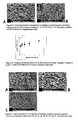
- FIG. 1 Scanning electron micrographs of the distribution and morphology of the collagen coating is shown in Figure 1 .
- the coating entirely covers the porous PEGT/PBT scaffold. It consist of a collagenous meshwork with a fibrous, porous morphology ( Fig. 1 B,C ). The majority of the internal pores of the synthetic scaffold are also substantially filled with collagen ( Fig. 1D ). Fibrous meshworks predominate in these areas.
- the amount and morphology of the collagen coating were evaluated to modulate the amount and morphology of the collagen coating. These include the composition of the PEGT/PBT scaffolds, the concentration and pH of the collagen dispersion, the impregnation time, the freezing temperature, and the influence of gasplasma pre-treatment. The feasibility of coating different scaffold designs, and the use of different coating techniques were assessed as well.
- the morphology of the collagen coating was analyzed with scanning electron microscopy (SEM). The amount of collagen coated was measured gravimetrically and expressed as ((dry weight collagen coated PEGT/PBT scaffold - dry weight PEGT/PBT scaffold)/(dry weight collagen coated PEGT/PBT scaffold)) * 100%.
- Collagen coatings were applied as described in Example 1.
- the influence of the PEGT/PBT composition on collagen coating was established by changing the molecular weight of the soft PEGT segment. Scaffold compositions varied from the hydrophobic 300PEGT55PBT45 to hydrophilic 4000PEGT55PBT45. As is shown in Figure 2 , the amount of collagen coated on 300PEGT55PBT45 compositions is about 4 % (w/w), which increases to 10% (w/w) for the 4000PEGT55PBT45 scaffolds. The larger amount of collagen coated on these latter scaffolds is due to their ability to swell during incubation.
- Collagen coatings were applied as described using Polyactive 300PEGT55PBT45 scaffolds and a 0.5% (w/v) collagen dispersion. Collagen-impregnated scaffolds were frozen at -30, -80, and -196°C. Hybrid scaffolds were evaluated with SEM. A homogenous porous collagen meshwork is observed using a freezing temperature of -30°C ( Fig. 7A ). Occasionally, small sheet-like structures are observed. At -80°C, the collagen meshwork is more dens and compact compared to collagen coatings at -30°C, but the porous morphology is maintained ( Fig 7B ). At -196°C, a homogenous microporous meshwork with pores ranging from approximately 10-20 ⁇ m entirely coats the synthetic scaffold as is shown in Figure 7C .
- the feasibility of coating collagen on different scaffold designs was established.
- the designs included porous scaffolds prepared by mould compression techniques and 3D-printing.
- a collagen-coated mould compression scaffold is presented in Figure 9B .
- a fibrous and porous collagen meshwork completely covers the surface.
- 3D-printed PEGT/PBT scaffolds reveal highly oriented lattice-like laminar structures in between the polymer fibers of the printed scaffold ( Fig. 9C ).
- the lyophilization procedure was compared to collagen coating techniques known in the art. These include air-drying and gelling at 37°C of collagen impregnated synthetic scaffolds. Porous Polyactive scaffolds with a copolymer composition of 4000PEGT55PBT45 were impregnated for 4 h in 0.4% (w/v) acid soluble type I rat tail collagen (Sigma) at room temperature. Subsequently, collagen coatings were formed by either air-drying in a flow cabinet for 16 h at room temperature, gelling the collagen by incubation of scaffolds for 16 h at 37°C, or freezing the scaffolds at -80°C followed by lyophilization. Characteristic SEM pictures of the various collagen coatings are given in Figure 10 .
- Bioabsorbability of collagen coatings was analyzed by incubation of scaffolds of approximately 30 mg in PBS (pH 7.4) containing 0.01% (w/v) sodium azide at 37°C for time periods up to 16 days. Incubation medium was changed every two days. At designated time intervals, scaffolds were washed in demineralized water (2 times for 30 min) and lyophilized. Collagen coated 4000PEGT55PBT45 scaffolds, with and without gasplasma pre-treatment, and 4000PEGT55PBT45 scaffolds with a crosslinked collagen coating were included. The amount of resorbed collagen was determent gravimetrically and expressed as a percentage of the initial dry weight of the coated scaffolds.
- Crosslinking of collagen coating was performed using the water soluble carbodiimide 1-ethyl-3-(3-dimethyl aminopropyl)carbodiimide (EDC) and N-hydroxysuccinimide (NHS).
- EDC water soluble carbodiimide 1-ethyl-3-(3-dimethyl aminopropyl)carbodiimide
- NHS N-hydroxysuccinimide
- Collagen coated PEGT/PBT scaffolds were incubated in 50 mM 2-morpholinoethane sulfonic acid (pH 5.5) containing 50 mM EDC and 30 mM NHS. After reaction for 4 h at 20 °C, the hybrid composites were washed twice in 0.1 M Na 2 HPO 4 (pH 9.1) for 1 h, 4 times in demineralized water for 30 min, and lyophilized.
- Crosslinking with EDC and NHS was performed as described in Example 3.1.
- Collagen coated scaffolds of approximately 30 mg in dry weight were incubated in 10 ml 0.1 M Tris-HCl (pH 7.4) containing 0.05 M CaCl 2 and 100 U/ml bacterial collagenase (Clostridium Histolyticum) at 37°C. After 40 minutes, scaffolds were washed in 0.1 M EDTA (2 times for 30 min), demineralized water, and lyophilized. Coated collagen without gasplasma pre-treatment were completely degraded at collagenase treatment. By contrast, crosslinked collagen coatings were only degraded by 36% (Table 1).
- Example 4 Collagen coated PEGT/PBT scaffold as a carrier for the transfer of keratinocytes
- porous 4000PEGT55PBT45 scaffolds with and without a collagen coating, were used as a carrier for the transfer of autologous undifferentiated keratinocytes in porcine full-thickness wounds.
- the use of such a carrier may stimulate wound closure and provide a suitable alternative to available techniques like meshed split thickness skin grafts or cultured epithelial autografts for the treatment of burns or chronic wounds.
- Porcine keratinocytes were isolated from split skin grafts of donor sites on the back and lower back of the pigs, and cultured in Optimem ® based medium. One day before the operation, keratinocytes were seeded in the scaffolds at a density of 500.000 cells/cm 2 . General anesthesia was performed by intramuscular administration of Stresnil ® , and Nimatec ® .
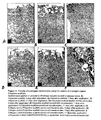
- FIG. 11 Histological section taken from the middle of the wounds are given in Figure 11 .
- wounds are not closed and small scaffold fragments can be observed on top of the granulation tissue ( Fig. 11C ).
- Collagen coated 4000PEGT55PBT45 scaffolds seeded with keratinocytes, showed epidermis formation and the presence keratinocyte cysts as early as 7 days after application ( Fig. 11H ). After 11 days, the size and number of these cysts have decreased, indicating normalization of the newly formed epidermis ( Fig. 11I ). No differences in wound contraction were observed between the different treatment modalities. Results demonstrate that PA/collagen hybrid scaffolds are suitable carriers for the transfer of keratinocytes to promote wound healing.
Landscapes
- Health & Medical Sciences (AREA)
- Life Sciences & Earth Sciences (AREA)
- Chemical & Material Sciences (AREA)
- Veterinary Medicine (AREA)
- Animal Behavior & Ethology (AREA)
- Engineering & Computer Science (AREA)
- Public Health (AREA)
- General Health & Medical Sciences (AREA)
- Oral & Maxillofacial Surgery (AREA)
- Transplantation (AREA)
- Biomedical Technology (AREA)
- Dermatology (AREA)
- Medicinal Chemistry (AREA)
- Epidemiology (AREA)
- Vascular Medicine (AREA)
- Chemical Kinetics & Catalysis (AREA)
- Botany (AREA)
- Zoology (AREA)
- Cell Biology (AREA)
- Rheumatology (AREA)
- Orthopedic Medicine & Surgery (AREA)
- Cardiology (AREA)
- Heart & Thoracic Surgery (AREA)
- Composite Materials (AREA)
- Materials Engineering (AREA)
- Dispersion Chemistry (AREA)
- Materials For Medical Uses (AREA)
Claims (16)
- Ein Verfahren zum Herstellen eines biologisch verträglichen Gerüstes, worin eine Matrix, umfassend ein Polymer von einem Polyalkylenglykolterephthalat und einem aromatischen Polyester bereitgestellt wird; die Matrix in Kontakt gebracht wird mit einer wässrigen Lösung oder Dispersion, umfassend mindestens ein Protein, ausgewählt aus der Gruppe, bestehend aus Kollagenen und biologischen Vorläufern und funktionellen Analoga davon; und worin die Matrix anschließend durch Lyophilisierung getrocknet wird, um das Gerüst zu bilden.
- Ein Verfahren nach Anspruch 1, worin das Inkontaktbringen der Matrix und der wässrigen Mischung durchgeführt wird, während dieselben geschüttelt oder zentrifugiert werden,
- Ein Verfahren nach Anspruch 1 oder 2, worin das Kollagen, der biologische Vorläufer von Kollagen oder die Kombination davon durch eine chemische Behandlung, eine physikalische Behandlung oder eine Kombination davon vernetzt wird.
- Ein Verfahren nach einem der vorherigen Ansprüche, worin das Kollagen ausgewählt ist aus der Gruppe, bestehend aus menschlichen Kollagenen, Kollagen, welches von Tieren abgeleitet wird, rekombinanten Kollagenen und Kombinationen davon.
- Ein Verfahren nach einem der vorherigen Ansprüche, worin der Kollagenvorläufer ausgewählt ist aus der Gruppe, bestehend aus Pro-Kollagenen.
- Ein Verfahren nach einem der vorherigen Ansprüche, worin das mindestens eine Protein nicht kovalent konjugiert zu dem Copolymer ist.
- Ein Verfahren nach einem der vorherigen Ansprüche, worin das Polyalkylenglykolterephthalat in dem Copolymer ausgewählt ist aus der Gruppe, bestehend aus Copolymeren von Polyethylenglykolterophthalat, Polypropylenglykolterephthalat, Polybutylenglykolterephthalat und Kombinationen davon, und worin der aromatische Polyester ausgewählt ist aus der Gruppe, bestehend aus Polyethylenterephthalat, Polypropylenterephthalat, Polybutylenterephthalat und Kombinationen davon,
- Ein Verfahren nach einem der vorherigen Ansprüche, worin die wässrige Mischung einen pharmazeutisch aktiven Wirkstoff umfasst.
- Ein Verfahren nach Anspruch 8, worin der pharmazeutisch aktive Wirkstoff ausgewählt ist aus der Gruppe, bestehend aus Hormonen, Wachstumsfaktoren, Antibiotika, antimikrobiotisch wirkenden Peptiden, entzündungshernmendem Mittel, chemotaktischen Mitteln, antimykotischen Mitteln und Kombinationen davon,
- Biologisch verträgliches Gerüst, erhältlich nach einem Verfahren gemäß einem der vorherigen Ansprüche.
- Ein Gerüst nach Anspruch 10, worin das Gerüst aus einer Matrix, umfassend das Copolymer eines Polyalkylenglykolterephthalats und eines aromatischen Polyesters, gebildet wird, wobei die Matrix mit einer Beschichtung, umfassend zumindest ein Protein, ausgestattet ist.
- Ein Gerüst nach Anspruch 10 oder 11, worin das Gerüst miteinander verbundene Poren, orientierte Fasern, laminare Strukturen oder eine Kombination davon aufweist.
- Ein Gerüst nach Anspruch 12, worin zumindest die Mehrzahl der Poren In dem porösen Gerüst einen mittleren Durchmesser in dem Bereich von 10 bis 1000 µm aufweist.
- Ein Gerüst nach einem der Ansprüche 10 bis 13, umfassend lebende Zellen, vorzugsweise autogenetische Zellen.
- Eine Zuführvorrichtung für Arzneimittel, ein Hautsubstitut oder ein Knorpelsubstitut, umfassend ein Gerüst gemäß einem der Ansprüche 10 bis 14.
- Verwendung eines Gerüstes gemäß einem der Ansprüche 10 bis 1 4 in der Herstellung einer Vorrichtung zur Arzneimittelzuführung, eines dermalen Substituts oder eines Knorpelsubstituts.
Priority Applications (3)
| Application Number | Priority Date | Filing Date | Title |
|---|---|---|---|
| AT02077989T ATE390153T1 (de) | 2002-07-22 | 2002-07-22 | Biokompatibles gerüst als haut- oder knorpelersatz |
| DE60225791T DE60225791D1 (de) | 2002-07-22 | 2002-07-22 | Biokompatibles Gerüst als Haut- oder Knorpelersatz |
| EP02077989A EP1384489B1 (de) | 2002-07-22 | 2002-07-22 | Biokompatibles Gerüst als Haut- oder Knorpelersatz |
Applications Claiming Priority (1)
| Application Number | Priority Date | Filing Date | Title |
|---|---|---|---|
| EP02077989A EP1384489B1 (de) | 2002-07-22 | 2002-07-22 | Biokompatibles Gerüst als Haut- oder Knorpelersatz |
Publications (2)
| Publication Number | Publication Date |
|---|---|
| EP1384489A1 EP1384489A1 (de) | 2004-01-28 |
| EP1384489B1 true EP1384489B1 (de) | 2008-03-26 |
Family
ID=29797260
Family Applications (1)
| Application Number | Title | Priority Date | Filing Date |
|---|---|---|---|
| EP02077989A Expired - Lifetime EP1384489B1 (de) | 2002-07-22 | 2002-07-22 | Biokompatibles Gerüst als Haut- oder Knorpelersatz |
Country Status (3)
| Country | Link |
|---|---|
| EP (1) | EP1384489B1 (de) |
| AT (1) | ATE390153T1 (de) |
| DE (1) | DE60225791D1 (de) |
Families Citing this family (1)
| Publication number | Priority date | Publication date | Assignee | Title |
|---|---|---|---|---|
| CN114618015B (zh) * | 2022-04-13 | 2022-11-25 | 珠海麦得发生物科技股份有限公司 | 含胶原蛋白的pha微球及其制备方法和用途 |
Family Cites Families (1)
| Publication number | Priority date | Publication date | Assignee | Title |
|---|---|---|---|---|
| ATE236669T1 (de) * | 1998-11-30 | 2003-04-15 | Isotis Nv | Kunsthaut |
-
2002
- 2002-07-22 EP EP02077989A patent/EP1384489B1/de not_active Expired - Lifetime
- 2002-07-22 DE DE60225791T patent/DE60225791D1/de not_active Expired - Lifetime
- 2002-07-22 AT AT02077989T patent/ATE390153T1/de not_active IP Right Cessation
Also Published As
| Publication number | Publication date |
|---|---|
| ATE390153T1 (de) | 2008-04-15 |
| DE60225791D1 (de) | 2008-05-08 |
| EP1384489A1 (de) | 2004-01-28 |
Similar Documents
| Publication | Publication Date | Title |
|---|---|---|
| US5939323A (en) | Hyaluronan based biodegradable scaffolds for tissue repair | |
| US8535719B2 (en) | Biohybrid elastomeric scaffolds and methods of use thereof | |
| Pandey et al. | Chitosan: Application in tissue engineering and skin grafting | |
| Chattopadhyay et al. | Collagen‐based biomaterials for wound healing | |
| JP4698596B2 (ja) | 濃縮された水性シルクフィブロイン溶液およびそれらの使用 | |
| Choi et al. | Studies on gelatin‐containing artificial skin: II. Preparation and characterization of cross‐linked gelatin‐hyaluronate sponge | |
| EP0705878B1 (de) | Polyanionische Polysaccharide und hydrophobe, bioabsorbierbare Polymere enthaltende Zusammensetzungen | |
| AU2014268601A1 (en) | Wound dressings and applications thereof | |
| EP1799277A1 (de) | Poröser verbundwerkstoff aus biologischem material und füllstoff und verfahren zu seiner herstellung | |
| US11103338B2 (en) | Post-surgical healing accelerator | |
| WO2001054735A2 (en) | Gel-infused sponges for tissue repair and augmentation | |
| Nijsure et al. | Collagen-based scaffolds for bone tissue engineering applications | |
| AU682266B2 (en) | Cell-gels | |
| Tomihata et al. | Cross-linking of gelatin with carbodiimides | |
| JP3771510B2 (ja) | 組織の体内再生用材料 | |
| US20240216587A1 (en) | Multi-Layered Graft for Tissue Engineering Applications | |
| EP1384489B1 (de) | Biokompatibles Gerüst als Haut- oder Knorpelersatz | |
| Park et al. | Biomolecule-modified synthetic polymers for wound healing and orthopaedic applications | |
| Senköylü et al. | Interaction of cultured chondrocytes with chitosan scaffold | |
| Lee et al. | Cell-interactive polymers for tissue engineering | |
| Thompson et al. | Natural Materials for Cell-Based Therapies | |
| Wang et al. | Application of chitosan-based biomaterials in tissue engineering | |
| Thomas et al. | Tissue Engineering Systems | |
| Khan et al. | Bioproteins: Fabrication and application | |
| Savina et al. | Cryogels in regenerative medicine |
Legal Events
| Date | Code | Title | Description |
|---|---|---|---|
| PUAI | Public reference made under article 153(3) epc to a published international application that has entered the european phase |
Free format text: ORIGINAL CODE: 0009012 |
|
| AK | Designated contracting states |
Kind code of ref document: A1 Designated state(s): AT BE BG CH CY CZ DE DK EE ES FI FR GB GR IE IT LI LU MC NL PT SE SK TR |
|
| AX | Request for extension of the european patent |
Extension state: AL LT LV MK RO SI |
|
| 17P | Request for examination filed |
Effective date: 20040706 |
|
| AKX | Designation fees paid |
Designated state(s): AT BE BG CH CY CZ DE DK EE ES FI FR GB GR IE IT LI LU MC NL PT SE SK TR |
|
| 17Q | First examination report despatched |
Effective date: 20061206 |
|
| RTI1 | Title (correction) |
Free format text: BIOCOMPATIBLE SCAFFOLD AS A DERMAL OR CARTILAGE SUBSTITUTE |
|
| GRAP | Despatch of communication of intention to grant a patent |
Free format text: ORIGINAL CODE: EPIDOSNIGR1 |
|
| GRAS | Grant fee paid |
Free format text: ORIGINAL CODE: EPIDOSNIGR3 |
|
| GRAA | (expected) grant |
Free format text: ORIGINAL CODE: 0009210 |
|
| AK | Designated contracting states |
Kind code of ref document: B1 Designated state(s): AT BE BG CH CY CZ DE DK EE ES FI FR GB GR IE IT LI LU MC NL PT SE SK TR |
|
| RAP1 | Party data changed (applicant data changed or rights of an application transferred) |
Owner name: OCTOPLUS SCIENCES B.V. |
|
| REG | Reference to a national code |
Ref country code: GB Ref legal event code: FG4D |
|
| REG | Reference to a national code |
Ref country code: CH Ref legal event code: EP Ref country code: IE Ref legal event code: FG4D |
|
| REF | Corresponds to: |
Ref document number: 60225791 Country of ref document: DE Date of ref document: 20080508 Kind code of ref document: P |
|
| PG25 | Lapsed in a contracting state [announced via postgrant information from national office to epo] |
Ref country code: FI Free format text: LAPSE BECAUSE OF FAILURE TO SUBMIT A TRANSLATION OF THE DESCRIPTION OR TO PAY THE FEE WITHIN THE PRESCRIBED TIME-LIMIT Effective date: 20080326 |
|
| PG25 | Lapsed in a contracting state [announced via postgrant information from national office to epo] |
Ref country code: AT Free format text: LAPSE BECAUSE OF FAILURE TO SUBMIT A TRANSLATION OF THE DESCRIPTION OR TO PAY THE FEE WITHIN THE PRESCRIBED TIME-LIMIT Effective date: 20080326 |
|
| PG25 | Lapsed in a contracting state [announced via postgrant information from national office to epo] |
Ref country code: BE Free format text: LAPSE BECAUSE OF FAILURE TO SUBMIT A TRANSLATION OF THE DESCRIPTION OR TO PAY THE FEE WITHIN THE PRESCRIBED TIME-LIMIT Effective date: 20080326 |
|
| PG25 | Lapsed in a contracting state [announced via postgrant information from national office to epo] |
Ref country code: SK Free format text: LAPSE BECAUSE OF FAILURE TO SUBMIT A TRANSLATION OF THE DESCRIPTION OR TO PAY THE FEE WITHIN THE PRESCRIBED TIME-LIMIT Effective date: 20080326 Ref country code: SE Free format text: LAPSE BECAUSE OF FAILURE TO SUBMIT A TRANSLATION OF THE DESCRIPTION OR TO PAY THE FEE WITHIN THE PRESCRIBED TIME-LIMIT Effective date: 20080626 Ref country code: ES Free format text: LAPSE BECAUSE OF FAILURE TO SUBMIT A TRANSLATION OF THE DESCRIPTION OR TO PAY THE FEE WITHIN THE PRESCRIBED TIME-LIMIT Effective date: 20080707 Ref country code: CZ Free format text: LAPSE BECAUSE OF FAILURE TO SUBMIT A TRANSLATION OF THE DESCRIPTION OR TO PAY THE FEE WITHIN THE PRESCRIBED TIME-LIMIT Effective date: 20080326 Ref country code: PT Free format text: LAPSE BECAUSE OF FAILURE TO SUBMIT A TRANSLATION OF THE DESCRIPTION OR TO PAY THE FEE WITHIN THE PRESCRIBED TIME-LIMIT Effective date: 20080901 |
|
| PGFP | Annual fee paid to national office [announced via postgrant information from national office to epo] |
Ref country code: NL Payment date: 20080715 Year of fee payment: 7 |
|
| EN | Fr: translation not filed | ||
| PG25 | Lapsed in a contracting state [announced via postgrant information from national office to epo] |
Ref country code: DK Free format text: LAPSE BECAUSE OF FAILURE TO SUBMIT A TRANSLATION OF THE DESCRIPTION OR TO PAY THE FEE WITHIN THE PRESCRIBED TIME-LIMIT Effective date: 20080326 Ref country code: DE Free format text: LAPSE BECAUSE OF FAILURE TO SUBMIT A TRANSLATION OF THE DESCRIPTION OR TO PAY THE FEE WITHIN THE PRESCRIBED TIME-LIMIT Effective date: 20080627 |
|
| PLBE | No opposition filed within time limit |
Free format text: ORIGINAL CODE: 0009261 |
|
| STAA | Information on the status of an ep patent application or granted ep patent |
Free format text: STATUS: NO OPPOSITION FILED WITHIN TIME LIMIT |
|
| REG | Reference to a national code |
Ref country code: CH Ref legal event code: PL |
|
| 26N | No opposition filed |
Effective date: 20081230 |
|
| GBPC | Gb: european patent ceased through non-payment of renewal fee |
Effective date: 20080722 |
|
| PG25 | Lapsed in a contracting state [announced via postgrant information from national office to epo] |
Ref country code: MC Free format text: LAPSE BECAUSE OF NON-PAYMENT OF DUE FEES Effective date: 20080731 |
|
| PG25 | Lapsed in a contracting state [announced via postgrant information from national office to epo] |
Ref country code: BG Free format text: LAPSE BECAUSE OF FAILURE TO SUBMIT A TRANSLATION OF THE DESCRIPTION OR TO PAY THE FEE WITHIN THE PRESCRIBED TIME-LIMIT Effective date: 20080626 Ref country code: EE Free format text: LAPSE BECAUSE OF FAILURE TO SUBMIT A TRANSLATION OF THE DESCRIPTION OR TO PAY THE FEE WITHIN THE PRESCRIBED TIME-LIMIT Effective date: 20080326 Ref country code: FR Free format text: LAPSE BECAUSE OF FAILURE TO SUBMIT A TRANSLATION OF THE DESCRIPTION OR TO PAY THE FEE WITHIN THE PRESCRIBED TIME-LIMIT Effective date: 20090116 |
|
| PG25 | Lapsed in a contracting state [announced via postgrant information from national office to epo] |
Ref country code: LI Free format text: LAPSE BECAUSE OF NON-PAYMENT OF DUE FEES Effective date: 20080731 Ref country code: CH Free format text: LAPSE BECAUSE OF NON-PAYMENT OF DUE FEES Effective date: 20080731 Ref country code: GB Free format text: LAPSE BECAUSE OF NON-PAYMENT OF DUE FEES Effective date: 20080722 |
|
| PG25 | Lapsed in a contracting state [announced via postgrant information from national office to epo] |
Ref country code: IE Free format text: LAPSE BECAUSE OF NON-PAYMENT OF DUE FEES Effective date: 20080722 |
|
| PG25 | Lapsed in a contracting state [announced via postgrant information from national office to epo] |
Ref country code: IT Free format text: LAPSE BECAUSE OF FAILURE TO SUBMIT A TRANSLATION OF THE DESCRIPTION OR TO PAY THE FEE WITHIN THE PRESCRIBED TIME-LIMIT Effective date: 20080326 |
|
| PG25 | Lapsed in a contracting state [announced via postgrant information from national office to epo] |
Ref country code: CY Free format text: LAPSE BECAUSE OF FAILURE TO SUBMIT A TRANSLATION OF THE DESCRIPTION OR TO PAY THE FEE WITHIN THE PRESCRIBED TIME-LIMIT Effective date: 20080326 |
|
| NLV4 | Nl: lapsed or anulled due to non-payment of the annual fee |
Effective date: 20100201 |
|
| PG25 | Lapsed in a contracting state [announced via postgrant information from national office to epo] |
Ref country code: LU Free format text: LAPSE BECAUSE OF NON-PAYMENT OF DUE FEES Effective date: 20080722 |
|
| PG25 | Lapsed in a contracting state [announced via postgrant information from national office to epo] |
Ref country code: TR Free format text: LAPSE BECAUSE OF FAILURE TO SUBMIT A TRANSLATION OF THE DESCRIPTION OR TO PAY THE FEE WITHIN THE PRESCRIBED TIME-LIMIT Effective date: 20080326 |
|
| PG25 | Lapsed in a contracting state [announced via postgrant information from national office to epo] |
Ref country code: GR Free format text: LAPSE BECAUSE OF FAILURE TO SUBMIT A TRANSLATION OF THE DESCRIPTION OR TO PAY THE FEE WITHIN THE PRESCRIBED TIME-LIMIT Effective date: 20080627 |
|
| PG25 | Lapsed in a contracting state [announced via postgrant information from national office to epo] |
Ref country code: NL Free format text: LAPSE BECAUSE OF NON-PAYMENT OF DUE FEES Effective date: 20100201 |