EP1367515A1 - Système d'information pour la gestion dynamique de produits en vrac - Google Patents
Système d'information pour la gestion dynamique de produits en vrac Download PDFInfo
- Publication number
- EP1367515A1 EP1367515A1 EP02291303A EP02291303A EP1367515A1 EP 1367515 A1 EP1367515 A1 EP 1367515A1 EP 02291303 A EP02291303 A EP 02291303A EP 02291303 A EP02291303 A EP 02291303A EP 1367515 A1 EP1367515 A1 EP 1367515A1
- Authority
- EP
- European Patent Office
- Prior art keywords
- product
- data
- unit
- storage
- consumer
- Prior art date
- Legal status (The legal status is an assumption and is not a legal conclusion. Google has not performed a legal analysis and makes no representation as to the accuracy of the status listed.)
- Withdrawn
Links
Images



Classifications
-
- G—PHYSICS
- G06—COMPUTING OR CALCULATING; COUNTING
- G06Q—INFORMATION AND COMMUNICATION TECHNOLOGY [ICT] SPECIALLY ADAPTED FOR ADMINISTRATIVE, COMMERCIAL, FINANCIAL, MANAGERIAL OR SUPERVISORY PURPOSES; SYSTEMS OR METHODS SPECIALLY ADAPTED FOR ADMINISTRATIVE, COMMERCIAL, FINANCIAL, MANAGERIAL OR SUPERVISORY PURPOSES, NOT OTHERWISE PROVIDED FOR
- G06Q10/00—Administration; Management
- G06Q10/08—Logistics, e.g. warehousing, loading or distribution; Inventory or stock management
-
- G—PHYSICS
- G06—COMPUTING OR CALCULATING; COUNTING
- G06Q—INFORMATION AND COMMUNICATION TECHNOLOGY [ICT] SPECIALLY ADAPTED FOR ADMINISTRATIVE, COMMERCIAL, FINANCIAL, MANAGERIAL OR SUPERVISORY PURPOSES; SYSTEMS OR METHODS SPECIALLY ADAPTED FOR ADMINISTRATIVE, COMMERCIAL, FINANCIAL, MANAGERIAL OR SUPERVISORY PURPOSES, NOT OTHERWISE PROVIDED FOR
- G06Q30/00—Commerce
- G06Q30/06—Buying, selling or leasing transactions
Definitions
- the invention relates to the field of product management in bulk, and in particular of products such as gases, for example products cryogenic in liquid form.
- Gas production by a gas manufacturer is generally a continuous process.
- a product such as a gas is a critical element for the safety of a production process. It's the case for gases, such as nitrogen, which must have a flow minimum continuous to avoid explosions.
- Production or storage sites for such bulk products, and the sites of use of these products, are generally separate and are not not connected by a network.
- This diagram is opposed to the diagrams of distribution of fluids such as water or natural gas, or electricity, for which the production and consumption sites are united by a network.
- Safety measures are imposed for handling and the use of certain products.
- gas it will be necessary to respect, for example, a suitable filling speed, minimum pressure and / or maximum, etc. Trained and qualified staff is therefore necessary for good risk prevention.
- Another problem is that of centralized management of supply of product (s) to an industrial site, using this (s) product (s) as raw material.
- the current industrial sites are increasingly complex, extensive, and require a supply of raw material on different storage sites or on different sites of production.
- such centralization is essential for a rational control of these sites.
- the consumer sometimes has a lack of control over their consumption, and they cannot often have no information on the relationship between its production and its consumption of said bulk products.
- This data can then be transmitted to said unit of production, or can be viewed remotely.
- the production of the production unit can then be modified based on previous consumption forecast data.
- Data relating to needs can be expressed in quantity or mass or volume of product per unit of time, per example per day or per week or per month, possibly during a certain duration (for example: 2 tonnes per day for 2 months).
- forecast data for consumption may also relate to a period of time such than one or more day (s) or week (s) or month (for example: 3 tonnes per week for two months).
- This process also makes it possible to take account of the best technical characteristics of the product, in particular in the case of a dangerous or perishable material.
- Delivery or product supply can therefore be adapted consumer needs.
- the data contained in the storage means may be transmitted to said consumption unit, or may be viewed remotely.
- Needs data and forecast data consumption can be indicated as described above, in quantity or mass or volume per unit of time, possibly over one certain duration.
- a packaging and transport step can then have location.
- a production or a supply is obtained adapted to the needs of the consumer industrial site. This is all more advantageous during continuous production and / or consumption of products, especially bulk products, distributed without infrastructure fixed distribution as there is in the case of water or electricity or natural gas.
- the quantities actually available in the means of storage can also be measured and then entered into the storage means, after which the data relating to the state stocks and / or forecast data can also be changed.
- the user i.e. the consumer or the site consumer, can also modify consumption data or needs memorized, for example following a modification of his plans or work forecasts. Again, forecast data can then be recalculated according to the modified data.
- the storage means may also contain technical characteristics data of means of production of said consumer using said product or relating to manufacturing units of said product.
- They can also include or store data relating to deliveries of said product, past and / or current deliveries and / or future.
- the user thus has global technical information, including included on its own facilities.
- the producer and / or supplier may also have this global technical information.
- a system or unit as above can further include means of communication between said measuring means and said storage means or between said measurement means and computer means containing these storage means and / or means for establishing a secure connection with means for communication from a consuming unit and / or means to establish a secure link with the communication means of a production of products and / or means to establish a link secured with communication means from a management unit means of transport.
- the link or connection is preferably secure.
- Such a device can also include calculation means consumption forecast data, based on data stored previously.
- this device can also include means for connecting at least part of the data to means of communication of a transporter of said products.
- An industrial production network may include one or more several production unit (s), for example one or more factories, connected, by means of communication, to a computer device such as described above.
- An industrial unit according to the invention may comprise at least minus a product use site, or a production site using these products, at least one production site for these products or one storage of a supplier of these products, and a computer device such as described above.
- Product means a material intended to be used subsequently in a manufacturing process, in a factory or in a service.
- product can be for example a gas, in particular of the type delivered and stored in liquid form.
- An example of a factory is that of a steelworks, which uses gases for certain stages of steel making.
- An example of a service is a medical service that also uses certain gases.
- Gas can be taken as an example of a product, but others products may be affected by the present invention.
- the steel produced by a steel mill can make itself after manufacture, office of raw material and be used in all type heavy industry.
- the invention finds application in all type of industry where products are used as raw material in view of the production of other products, called secondary products or processed.
- client or "user” or consumer means the person who manages or is responsible for the laboratory or factory where these industrial products are used, or where the services are located supplied with products.
- the manufacturer who designates is also designated by manufacturer the products used by the customer.
- the invention also applies to the case from a non-manufacturer distributor or supplier.
- the product or raw material in question is manufactured or obtained or first stored on a production or storage separate from its place of use.
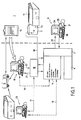
- FIG. 1 only one storage unit 7 is shown, but the installation can also include several storage units. of the means 7a for supplying products contained in the storage unit 7 connect the latter and the means of production 13.
- Reference 3 designates a factory or, more generally, means of manufacturing the products or the raw material, by example a gas. It can also be a storage unit of a supplier or distributor. It is equipped with IT resources 23.
- User and producer or supplier are not related through a fixed product distribution infrastructure, as in the case electricity or water distribution.
- transporter provided with 5 transport or delivery 5 such as for example trucks (or any our vehicle suitable for the transport of the products in question) which will be responsible for delivering to the customer 1 products from factory 3. It can also be equipped with IT resources 11.
- the reference 2 designates a site or an application web, communication or network (for example a private network) with the IT resources of the various parties involved (customer, manufacturer or supplier, transporter).
- References 10, 17, 19, 20, 21 and 22 denote the corresponding links. In fact, some of these connections are established with a 16 application, which will be discussed further.
- this site 2 is hosted on a central computer or a server 12, and in particular contains a database data 4.
- exemption request forms to some of these administrative burdens may also be available on the site.
- the client or user who has access to this information, can download a standard form from base 14, which he can then fill out and present directly to the departments administrative staff likely to grant the required exemption.
- This database is fed by the various stakeholders in the system or chain leading from manufacturing to delivery of gases to the user or to the use of the gas by the latter: the gas manufacturer or supplier, technicians or teams responsible for distribution and order taking, the staff carrying out the deliveries and which provide information in return for these tours, or well again the customer himself who gives information for example on production rhythms that will vary.
- This application allows to calculate, from data contained in base 4, consumption or data relating to consumption forecast for the future at the various sites of production such as site 13.
- the resulting consumption data will be for example xa tonnes of steel per day (for example during a xm month), or even xl liters of liquid nitrogen per day for xs weeks.
- the corresponding delivery data (quantity to be delivered, delivery date and time, customer to be delivered) can also be generated at from the data in the database 4.
- This application 16 can also optionally calculate operating autonomy data with the product remaining within storage means 7.
- the set of consumption data relating to several sites of the same user can therefore be gathered in means of memorizing the same computer system.
- Des measuring means 9 can also be used. These means include for example means for reading the level of products stored in the means 7, such as an electronic cell. These measures can be performed at regular intervals, and are transmitted to the server 12 by means of communication. According to a mode advantageous, the measurement means 9 can be networked to the server 12, the measurements then supplying the database 2.
- the storage means 7 can also be provided with means for processing data from measuring means 9, these processing means making it possible to carry out on place forecast calculations.
- the data resulting from these calculations are then transmitted by means of communication, preferably by network, to server 12.
- site 2 may not be accessible only securely or confidentially by certain people can connect to site 2. This includes information from the customer or the user himself and which are not accessible than the latter and the manufacturer. Information relating to the sites of production are accessible to the transporters used and to the customers themselves.
- Certain general information 6 concerning the manufacturer or provider can be accessed by anyone connecting to the site 2 but most of the sensitive or important information in the production, supply and supply management consumption or use of products will only be accessible to direct stakeholders, namely manufacturer and / or supplier, transporter and customer or user.
- secret access keys can be distributed to customers or users, which will allow them to have access to information reserved for them.
- Data can be exchanged securely between one of the clients and the server, for example using software encryption / decryption installed both in IT resources 8 and in server 12. Other solutions can be used to secure data exchange between the client and the server.
- FIG 1 Various users can be connected to means 2 hosting these databases.
- one of these users is represented by their laptop or PC 8 type, the connection with means 2 being ensured by a network of communication, for example the internet 18 and by means 41 (figure 2) for connection to this network (modem or network card).
- the computer system 8 as well as the systems 70, 72, 74, 76, may for example be a PC type microcomputer of the trade.
- Such a system comprises (FIG. 2) a central unit 25, which itself comprises a microprocessor 27, a set 29 of ROM and RAM memories, a hard disk 23, which also has a function of information storage, all of these elements being coupled to a bus 35.
- Program data e.g. encryption-decryption program data for the secure exchange of data with the server, can be stored in the memories of this system.
- a screen 39 makes it possible to display information on the data entered into the system by an operator, and the data provided by databases in response to data entered by the operator.
- Presentation pages are successively displayed at during the execution of the method according to the invention. These pages can allow, for some, to enter data such as one or more secure access code (s) or key (s), so that only authorized persons can connect to certain areas of site 2 or may have access to certain information in the database 4.
- the system also has control devices, and in particular a keyboard 30 and a mouse 31.
- Other means for select an area or field on a page displayed on the screen 29 can also be used, for example any means allowing make a selection by touch on the screen.
- the server 14 generally has a structure of the same type, with processor (s), data storage areas (some are moreover designated in FIG. 3 by the references 2, 6, 14, 16).
- a memory area of the server can be stored program data or instructions for implementing a process according to the invention.
- a server memory area from floppy disk or other media can be read by a computer (e.g. hard drive, memory ROM, dynamic RAM memory or any other type of RAM memory, compact optical disc, magnetic storage element or optical).
- a computer e.g. hard drive, memory ROM, dynamic RAM memory or any other type of RAM memory, compact optical disc, magnetic storage element or optical.
- Program data e.g. program data encryption-decryption for the secure exchange of data with the server, can be stored in the memories of this system.
- a connection is established between the system 8 and the means 2 which host the database data and possibly the programs to be implemented for perform certain steps or calculations, for example the steps of calculation or forecast of consumption.
- a session can then be initialized, during which, in response to data entered by the user, the system 12 will send this user data selected by search in the database or resulting from a calculation performed by the server 12 (application 16).
- the session can be interactive or not.
- To this raw information can be added information resulting from the implementation of specific programs which may perform calculations from the raw information. For example, consumption forecast calculations (performed by application 16) and / or delivery, or even operating autonomy with the product remaining in storage.
- They can also be programs or means of triggering of alerts when a level approaches a maximum level or minimal to be present in the storage means or when a consumption has a deviation from a reference given or reached a certain value between two periods of consumption.
- the user can, for his part, introduce directly on the site of new data or modify data already existing on the site.
- He can, for example, place an order not yet planned, by specifying the desired date and quantity, or give information on its future consumption, or indicate a change in rhythm in consumption, or indicate that a security level of storage.
- Some of this information may in turn have an effect. on consumption and / or delivery forecast calculations, or on the operating autonomy calculations with the product remaining in storage.
- Others may have an effect on a delivery schedule, for example if the user announces a new operating mode a production site (in the case of a change of work pace) or a temporary closure of such a site for technical unemployment.
- the invention therefore makes it possible to immediately share the same technical information between several people or between several sites industrialists who must adapt their technical and industrial activities as quickly as possible based on this information.
- This includes information relating to rhythms of past, and / or current, and / or future consumption of an industrial site consumer 13, and / or relating to operating autonomy, and / or security levels, and / or information relating to the whole of the raw material supply chain (for example: location 3 production factories or supplier storage units, and / or production capacities of these factories or storage capacities of these means of storage, and / or planned deliveries of this material, and / or technical characteristics of the available material, for example the nature or name or identification of this material) which has need this consumer industrial site.
- location 3 production factories or supplier storage units and / or production capacities of these factories or storage capacities of these means of storage, and / or planned deliveries of this material, and / or technical characteristics of the available material, for example the nature or name or identification of this material
- the industrial sites concerned who have access to this common information, include not only the sites industrial consumers of products or raw materials, but still the industrial producer or the manufacturer or supplier of these products or that same raw material, or the carrier responsible for delivering them to the consumer industrial site (s).
- Knowledge of production or storage capacities means 3 of production or storage, and / or planned deliveries and / or the level of its own stocks allows the user to adapt his production or provision of its services. So he can avoid start production of certain products for which the material premiere will not be available at any given time, or it may at otherwise start producing products knowing that the raw material is available or will be available soon. It the same goes for services: the user can then take an order of certain services or on the contrary refuse them depending on the availability of the material produced by the means 3.
- Another actor in the supply chain of products to the end user is the carrier or the person responsible for transport of these products. It has means of access to the site similar to those available to the user. It therefore has the same information as this one. She also has access to information relating to other industrial sites to be delivered.
- this person can identify current deliveries, or next deliveries to perform, and therefore adapt its transport capacity to current needs or future.
- the carrier can also obtain information relating to user needs or deliveries to be made soon. Indeed, as already explained above, the application 16 makes it possible to produce data relating to deliveries to be made. It therefore allows you to print tour sheets from this same information and print associated delivery slips (including, in particular, name and address of the customer, nature and quantity of the product to be delivered).
- This entry can be made, either when returning as explained above, either using computer means on board delivery trucks.
- the manufacturer, or supplier, of the material or products to be delivered the user also has information gathered on the site and can adapt its own production, or its own orders or its own stocks, according to needs, or quantities required, expressed by users or needs forecast by calculation of consumption forecasts.
- production, or order by the supplier material or product is increased, while it is reduced in the event that an overall reduction in needs is noted.
- the invention therefore makes it possible to minimize the storage time of products from the manufacturer or supplier, and deliver those products to the user as quickly as possible, not only after the need possibly manifested by the user, but also after consumption.
- Figure 3 are represented four users 70, 72, 74, 76, which can have very geographic locations separate and connected, via the Internet 60 and connections specific 61 - 67, to computer 2.
- All users of the system can therefore be linked networked to a central computer system 12. This is particularly the case of a plurality of producers or users forming a set of 13 means of production or factories or a set of usage sites connected by means of communication, to device 12.
- Each factory or each user site can regulate its own production or activity by based on manufacturer's production data or storage of the supplier present on the site or the computer 12, likewise that the manufacturer's production or supplier's storage can be adapted according to the needs of the client user (s) or factories.
- Various means can be used in place of the means 8, 11, 23.
- mobile phones can also be used for the transmission of certain data, in particular in SMS form.
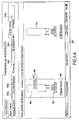
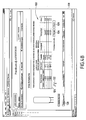
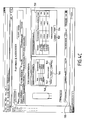
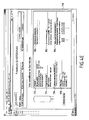
- Figures 4 A to 4 E show various screen pages can be viewed by an operator during implementation of a method according to the invention.
- a first introduction page 100 makes it possible to present, for a given user, various tabs 102 a - e allowing select and run various applications such as, for example example: distribution and equipment of delivery points (tabs 102 a), physical data on the products used (tab 102 b), indication relating to the security measures to be used with a particular product (tab 102 c), description of the installations operating with the fluid used (gas installations, tab 102 d), access to various information (tab 102 e).
- various applications such as, for example example: distribution and equipment of delivery points (tabs 102 a), physical data on the products used (tab 102 b), indication relating to the security measures to be used with a particular product (tab 102 c), description of the installations operating with the fluid used (gas installations, tab 102 d), access to various information (tab 102 e).
- FIG. 4 A a point of delivery has been selected.
- the storage means located in this place is shown schematically on the corresponding page (reference 104).
- Information 106 concerning the storage level and the date which this level has been found can also appear on this page.
- An indicator light, or an insert 108 presents the user with a signal consumption alert relating to the storage means 104, or a signal alert in the event of an exceptional event.
- the delivery data can also be represented, as shown in Figure 4 B.
- This page gives information about the estimated consumption calculated (see zone 122 on page 120), these calculations being carried out according to a predetermined algorithm, for example according to the application 16 shown in FIG. 1.
- a tab 126 provides a summary of the bulletins of deliveries, for example a history of these bulletins over a period given, for example a year, with, for each delivery, the date, the delivery number, quantity delivered, order reference, ...
- Another tab 128 allows you to implement a function "Export", to another application or to a page, data viewed or selected.
- tabs 130 represented at the bottom of the page in FIG. 4 B, allow, for example to access another page to perform a order the product, or even access a page to reproduce data relating to a variation in the consumption of the user.
- Another tab 132 validates a replenishment proposal made by the provider.
- Figure 4 C represents a page which brings together various information relating to the consumptions of the user.
- an insert 140 can be represented the consumption of the product for several successive months.
- Such table can be established from delivery notes.
- Tabs 142, 144, 146 allow to select a representation in the form of table, or an export of the selected data, or a graphical representation of consumption.
- Another table 148 makes it possible to represent consumption over a period different from that of table 140, by example a weekly consumption.
- This consumption weekly is for example calculated from the level readings and delivery notes.
- a consumption variation calculation between two successive periods can also be performed and presented in a column 150. Such a deviation can be represented in a particular color if it reaches a threshold predetermined, for example 20%.
- tabs 152, 154 allow you to select, on the one hand a representation in the form of a table, on the other hand a export certain data to another page or another application.
- the lower strip 130 provides access to various other applications, already mentioned above.
- Page 160 of Figure 4D is a graphical representation of the evolution of the level of fluid in container 104. This graph corresponds to a given period, and a tab 162 allows you to select other time periods.
- Two tabs 164 and 166 allow, on the one hand to select a representation in table form, and on the other hand to export, to another application or another page, some data.
- the banner 130 at the bottom of the page, offers the same possibilities that already described above.
- a tab 168 allows a calculation of autonomy to constant consumption rate, or autonomy simulations with variations in rhythm.
Landscapes
- Business, Economics & Management (AREA)
- Economics (AREA)
- Engineering & Computer Science (AREA)
- General Business, Economics & Management (AREA)
- Development Economics (AREA)
- Finance (AREA)
- Marketing (AREA)
- Accounting & Taxation (AREA)
- Theoretical Computer Science (AREA)
- Strategic Management (AREA)
- General Physics & Mathematics (AREA)
- Physics & Mathematics (AREA)
- Entrepreneurship & Innovation (AREA)
- Tourism & Hospitality (AREA)
- Quality & Reliability (AREA)
- Operations Research (AREA)
- Human Resources & Organizations (AREA)
- Management, Administration, Business Operations System, And Electronic Commerce (AREA)
Abstract
Description
- en reproduisant des schémas historiques simples de livraison, par exemple en reproduisant la base des dernières livraisons (délai, quantité);
- ou par échange à distance, par exemple par relation téléphonique entre le client et le fournisseur.
- la mémorisation, dans des moyens de mémorisation, de données relatives à au moins l'état de stocks dudit produit contenus dans des moyens de stockage dudit consommateur et aux besoins en produit de ce consommateur,
- le calcul de données de prévisions de consommation, en fonction des données mémorisées précédentes.
- la mémorisation, dans des moyens de mémorisation, de données relatives à au moins l'état de stocks dudit produit contenus dans des moyens de stockage dudit consommateur ou dudit site, et aux besoins en produit de ce consommateur ou de ce site,
- le calcul de données de prévisions de consommation, en fonction des données mémorisées précédentes,
- la génération, de préférence automatique, de données de livraison dudit produit en fonction des données de prévisions de consommation calculées.
- la mémorisation, dans des moyens de mémorisation, de données relatives à au moins l'état de stocks dudit produit contenus dans des moyens de stockage dudit consommateur et aux besoins en produit de ce consommateur,
- la variation de consommation, par l'unité de consommation, en fonction des données précédentes.
- des moyens de mémorisation, pour mémoriser des données relatives à au moins l'état de stocks dudit produit contenus dans des moyens de stockage dudit consommateur et aux besoins en produit de ce consommateur,
- des moyens de calcul de données de prévisions de consommation, ou spécialement programmés pour calculer de telles données, en fonction des données mémorisées précédentes,
- des moyens pour transmettre ces données à ladite unité de production.
- des moyens de production desdits produits,
- des moyens de communication pour établir une communication avec un système tel que décrit ci-dessus.
- des moyens de mémorisation, pour mémoriser des données relatives à au moins l'état de stocks dudit produit contenus dans des moyens de stockage de ladite unité consommatrice et aux besoins en produit de cette unité,
- des moyens de calcul de données de prévisions de consommation, ou spécialement programmés pour calculer de telles données, en fonction des données mémorisées précédentes,
- des moyens de génération automatique de données de livraison dudit produit en fonction des données de prévisions de consommation calculées.
- des moyens de stockage de produits, dits produits premiers,
- des moyens de production de produits seconds, obtenus à partir des produits premiers,
- des moyens de communication pour établir une liaison informatique avec un système tel que décrit ci-dessus.
- des moyens de mémorisation mémorisant des données sur les stocks et la consommation de, ou les besoins en, produits industriels par au moins un site industriel consommateur de ces produits,
- des moyens de connexion pour établir une liaison ou une connexion avec des moyens de communication d'au moins un site d'utilisation des produits, ou un site de production utilisant ces produits, et des moyens de communication d'au moins un site de production ou de stockage de ces produits.
- la figure 1 représente un mode de réalisation de l'invention,
- la figure 2 représente de manière schématique des moyens informatiques d'un mode de réalisation de l'invention,
- la figure 3 représente de manière schématique un serveur, un réseau et des moyens informatiques d'accès au réseau,
- les figures 4 A à 4 E représentent des pages écran pouvant apparaítre lors de la mise en oeuvre d'un procédé selon l'invention.
- les différents points de livraison, avec les capacités de stockage aux points de livraison, la nature du produit stocké en ces points, les heures de livraison,
- divers calendriers, tels que, par exemple, un calendrier correspondant à un client (ses contraintes (horaires d'ouverture, accessibilité), et/ou les périodes connues d'utilisation plus ou moins intenses par celui-ci, et/ou un calendrier relatif à la circulation des véhicules de livraison, et/ou un calendrier contenant des indications relatives aux jours fériés,...etc.).
- les différents produits pouvant être offerts par le fabricant ou le distributeur ou le fournisseur, identifiés par exemple par un ou des codes, et éventuellement les sites de production ou de stockage correspondants,
- un historique des commandes des clients (dates, quantités...)
- les niveaux de stockage des produits chez les utilisateurs,
- les livraisons de produits, passées, en cours et prévues,
- le plan de tournée pour les prochaines livraisons prévues,
- des prévisions de consommation,
- des données contractuelles.
- caractéristiques de son propre site (procédés et équipements mis en oeuvre, capacité des moyens de stockage 7),
- historique des différentes commandes et/ou livraisons qui lui ont déjà été effectuées, par exemple par les bulletins de commande et/ou de livraison disponibles en ligne sur le site, avec, par exemple, mentions des quantités commandées et/ou livrées, des dates de commande ou de livraison),
- informations relatives aux produits qui lui ont déjà été effectivement livrés, telles que par exemple analyse du produit (composition exacte) et/ou certificat de conformité,
- niveaux des produits dans les moyens de stockage 7 dont dispose l'utilisateur.
- les différentes dates de livraisons (passées et prévues),
- le numéro de bulletin de livraison correspondant,
- la quantité livrée ou a livrer, le nom du transporteur,
- le statut de la livraison (livré ou en prévision de livraison).
- la nature du produit (champ 172),
- le type de contrat (champ 174),
- le mode de déclenchement des livraisons (champ 176),
- les conditions de stockage (par exemple : capacité, et diverses informations techniques sur l'équipement des moyens de stockage, champ 178),
- les périodes de livraison (champ 180),
- les conditions d'accessibilité du site (champ 182),
- certaines références relatives à la consommation, telles que les plages d'heures de consommation, champ 184).
Claims (27)
- Procédé pour adapter une production, par une unité de production (3) d'au moins un produit à une consommation dudit produit par au moins un consommateur (13) de ce produit, comportant:la mémorisation, dans des moyens de mémorisation (4), de données relatives à au moins l'état de stocks dudit produit contenus dans des moyens de stockage (7) dudit consommateur et aux besoins en produit de ce consommateur,le calcul de données de prévisions de consommation, en fonction des données mémorisées précédentes,la variation de production, par l'unité de production (3), en fonction des données de prévision de consommation précédentes.
- Procédé d'approvisionnement d'un consommateur (13) en au moins un produit consommé par ledit consommateur, comportant:la mémorisation, dans des moyens de mémorisation (4), de données relatives à au moins l'état de stocks dudit produit contenus dans des moyens de stockage (7) dudit consommateur et aux besoins en produit de ce consommateur,le calcul de données de prévisions de consommation, en fonction des données mémorisées précédentes,la génération (21) de données de livraison dudit produit en fonction des données de prévisions de consommation calculées.
- Procédé pour adapter une utilisation, par une unité (13) de consommation d'au moins un produit, comportant:la mémorisation, dans des moyens de mémorisation (4), de données relatives à au moins l'état de stocks dudit produit contenus dans des moyens de stockage (7) de ladite unité de consommation et aux besoins en produit de cette unité de consommation,la variation de consommation, par l'unité de consommation (13), en fonction des données précédentes.
- Procédé selon l'une des revendications 1 à 3, lesdits moyens de mémorisation comportant en outre des données de caractéristiques techniques relatives à des unités de fabrication ou de stockage ou à des moyens de production (3) dudit produit.
- Procédé selon la revendication 4, lesdites données de caractéristiques techniques relatives à des unités de fabrication (3) ou de stockage ou à des moyens de production (3), comportant au moins une donnée relative à la localisation des unités de production et/ou de stockage et/ou au moins une caractéristique dudit produit.
- Procédé selon l'une des revendications 1 à 5, ledit produit étant un gaz.
- Procédé selon l'une des revendications 1 à 6, comportant en outre une étape de conditionnement dans des moyens de transport (5), puis de transport dudit produit vers ledit consommateur ou ladite unité de consommation (7,13) de ce produit.
- Procédé selon la revendication 7, comportant en outre une étape de mémorisation, dans lesdits moyens de mémorisation (4), des données relatives à au moins une quantité de produit effectivement livrée.
- Procédé selon la revendication 7 ou 8, comportant, après transport, une étape de transfert dudit produit vers les moyens de stockage (7).
- Procédé selon l'une des revendications 1 à 9, comportant une étape de mesure de la quantité de produit disponible dans lesdits moyens de stockage (7), et la transmission des données de mesure auxdits moyens de mémorisation (4).
- Procédé selon la revendication 10, comportant en outre une modification correspondante, suite à la transmission des données de mesure, des données (4) mémorisées relatives à l'état des stocks.
- Procédé selon l'une des revendications 1 à 11, comportant en outre une étape d'envoi, dans les moyens de mémorisation (4), par le consommateur ou à partir de l'unité de consommation, de données modifiées relatives aux besoins en produit de ce consommateur ou de cette unité de consommation.
- Procédé selon la revendication 12, comportant en outre une étape de calcul des données de prévisions de consommation, en fonction des données modifiées relatives aux besoins en produit.
- Procédé selon l'une des revendications 1 à 13, comportant en outre une étape d'envoi, dans les moyens de mémorisation (4), par le consommateur (13) ou à partir de l'unité de consommation, de données de commandes dudit produit.
- Procédé selon l'une des revendications 1 à 14, lesdits moyens de mémorisation comportant en outre des données de caractéristiques techniques de moyens (13) de production dudit consommateur utilisant ledit produit.
- Procédé selon la revendication 15, lesdites données de caractéristiques techniques de moyens de production (13) comportant au moins une donnée de rythme de consommation et/ou de variation de ce rythme et/ou une donnée de niveau ou de quantité de sécurité dans les moyens (7) de stockage
- Procédé selon l'une des revendications 1 à 16, lesdits moyens de mémorisation comportant en outre des données relatives à des livraisons dudit produit.
- Système de contrôle d'au moins une unité de production (3) ou de stockage d'au moins un produit, en fonction de données de consommation dudit produit par au moins une unité consommatrice (13) de ce produit, comportant:des moyens de mémorisation (4), pour mémoriser des données relatives à au moins l'état de stocks dudit produit contenus dans des moyens de stockage (7) dudit consommateur et aux besoins en produit de ce consommateur,des moyens (16) de calcul de données de prévisions de consommation, en fonction des données mémorisées précédentes,des moyens pour transmettre ces données à ladite unité de production ou de stockage (3).
- Unité de production de produits industriels comportant:des moyens (3) de production desdits produits,des moyens (2, 23, 17, 10) de communication pour établir une communication avec un système selon la revendication 18.
- Système de contrôle de l'approvisionnement d'une unité (13) consommatrice d'un produit, comportant:des moyens de mémorisation (4), pour mémoriser des données relatives à au moins l'état de stocks dudit produit contenus dans des moyens de stockage (7) de ladite unité (13) consommatrice et aux besoins en produit de cette unité,des moyens (16) de calcul de données de prévisions de consommation, en fonction des données mémorisées précédentes.
- Système selon la revendication 20, comportant en outre des moyens (16) de calcul de données de livraison dudit produit en fonction des données de prévisions de consommation calculées.
- Unité de production industrielle comportant:des moyens (7) de stockage de produits, dits produits premiers,des moyens (13) de production de produits seconds, obtenus à partir des produits premiers,des moyens de communication pour établir une communication avec un système selon la revendication 20 ou 21.
- Unité selon la revendication 19 ou 22, ladite communication étant sécurisée.
- Système ou unité selon l'une des revendications 18 à 23, les moyens de mémorisation comportant en outre des données relatives à des caractéristiques techniques d'au moins une unité de production dudit produit.
- Système ou unité selon l'une des revendications 18 à 24, comportant en outre des moyens (9) de mesure d'une quantité ou d'un volume de produits contenus dans lesdits moyens de stockage (7).
- Système selon la revendication 25, comportant en outre des moyens (18) de communication entre lesdits moyens (9) de mesure et lesdits moyens de mémorisation ou entre lesdits moyens (9) de mesure et des moyens informatiques (12) contenant ces moyens de mémorisation.
- Système ou unité selon l'une des revendications 18 à 26, comportant en outre des moyens (2, 25) pour établir une liaison sécurisée (10, 17, 20, 21, 22) avec des moyens de communication (8, 11, 23) d'une unité (5, 13) consommatrice et/ou avec des moyens de communication (23) d'une unité (13) de production des produits et/ou avec des moyens de communication (11) d'une unité de gestion de moyens (5) de transport.
Priority Applications (1)
| Application Number | Priority Date | Filing Date | Title |
|---|---|---|---|
| EP02291303A EP1367515A1 (fr) | 2002-05-29 | 2002-05-29 | Système d'information pour la gestion dynamique de produits en vrac |
Applications Claiming Priority (1)
| Application Number | Priority Date | Filing Date | Title |
|---|---|---|---|
| EP02291303A EP1367515A1 (fr) | 2002-05-29 | 2002-05-29 | Système d'information pour la gestion dynamique de produits en vrac |
Publications (1)
| Publication Number | Publication Date |
|---|---|
| EP1367515A1 true EP1367515A1 (fr) | 2003-12-03 |
Family
ID=29414826
Family Applications (1)
| Application Number | Title | Priority Date | Filing Date |
|---|---|---|---|
| EP02291303A Withdrawn EP1367515A1 (fr) | 2002-05-29 | 2002-05-29 | Système d'information pour la gestion dynamique de produits en vrac |
Country Status (1)
| Country | Link |
|---|---|
| EP (1) | EP1367515A1 (fr) |
Citations (5)
| Publication number | Priority date | Publication date | Assignee | Title |
|---|---|---|---|---|
| US5983198A (en) * | 1996-04-23 | 1999-11-09 | Novus International, Inc. | Integrated system monitoring use of materials, controlling and monitoring delivery of materials and providing automated billing of delivered materials |
| WO2001050377A2 (fr) * | 1999-12-30 | 2001-07-12 | General Electric Company | Procede et systeme de surveillance et de modification d'une prevision de consommation dans un reseau informatique |
| US6341271B1 (en) * | 1998-11-13 | 2002-01-22 | General Electric Company | Inventory management system and method |
| US6366829B1 (en) * | 1998-10-06 | 2002-04-02 | J. P. Donmoyer, Inc. | Bulk inventory network system (BINS) |
| EP1205407A1 (fr) * | 2000-02-25 | 2002-05-15 | Rubycon Corporation | Procede de traitement de donnees destine a un systeme de gestion des approvisionnements en composants |
-
2002
- 2002-05-29 EP EP02291303A patent/EP1367515A1/fr not_active Withdrawn
Patent Citations (5)
| Publication number | Priority date | Publication date | Assignee | Title |
|---|---|---|---|---|
| US5983198A (en) * | 1996-04-23 | 1999-11-09 | Novus International, Inc. | Integrated system monitoring use of materials, controlling and monitoring delivery of materials and providing automated billing of delivered materials |
| US6366829B1 (en) * | 1998-10-06 | 2002-04-02 | J. P. Donmoyer, Inc. | Bulk inventory network system (BINS) |
| US6341271B1 (en) * | 1998-11-13 | 2002-01-22 | General Electric Company | Inventory management system and method |
| WO2001050377A2 (fr) * | 1999-12-30 | 2001-07-12 | General Electric Company | Procede et systeme de surveillance et de modification d'une prevision de consommation dans un reseau informatique |
| EP1205407A1 (fr) * | 2000-02-25 | 2002-05-15 | Rubycon Corporation | Procede de traitement de donnees destine a un systeme de gestion des approvisionnements en composants |
Non-Patent Citations (1)
| Title |
|---|
| DEB NAVAS: "Accurate data in the pipeline", SUPPLY CHAIN SYSTEMS MAGAZINE, 1 July 1999 (1999-07-01), pages 1 - 4, XP002219666, Retrieved from the Internet <URL:http://web.archive.org/web/19960101-20020529re_/http://www.idsystems.com/reader/1999_07/accu0799/accu0799.htm> [retrieved on 20021105] * |
Similar Documents
| Publication | Publication Date | Title |
|---|---|---|
| Andoh et al. | A two-stage decision-support approach for improving sustainable last-mile cold chain logistics operations of COVID-19 vaccines | |
| TW476900B (en) | Integrated system monitoring use of materials, controlling and monitoring delivery of materials and providing automated billing of delivered materials | |
| US8032393B2 (en) | System and method of prescription alignment | |
| TW202046191A (zh) | 飲料分配與監控系統 | |
| US8566189B2 (en) | Computer-enabled method and system for facilitating veterinary pharmaceutical and other animal-related product transactions | |
| US8005689B2 (en) | Method and system for aligning a plurality of prescription refills to multiple alignment dates | |
| US8676604B2 (en) | Method and apparatus for medication prescription consultation | |
| CN119993410A (zh) | 一种医用药品管理系统及优化方法 | |
| US8244557B1 (en) | Method and system for aligning a plurality of refill dates for prescriptions associated with a plurality of customers | |
| US20180240539A1 (en) | System and method for filling a prescription | |
| JP2003526166A (ja) | インベントリ管理システム及び方法 | |
| US8666776B1 (en) | Method and system for delivering to a customer a plurality of prescriptions having aligned refill dates | |
| CN114239966B (zh) | 用于油气管道输送的运行优化方法、处理器及存储介质 | |
| US20030023503A1 (en) | Vendor-managed inventory method and system | |
| WO2016135532A1 (fr) | Système pour vérifier la quantité et la qualité du carburant reçu dans des véhicules et des automoteurs | |
| JP2002149819A (ja) | 薬品卸業務管理システム | |
| JP2018096521A (ja) | 高圧ガス容器の管理システム | |
| Martin et al. | Incentive system to smooth out fluctuations in demand | |
| KR20220030241A (ko) | 벌크 제품 공급 및/또는 획득을 위한 시스템 및 방법 | |
| US20040236643A1 (en) | Information system for the dynamic management of bulk products | |
| US20180060977A1 (en) | Systems and methods for providing fluid resources | |
| JP7244039B2 (ja) | 水素水生成装置及び同装置に使用する水素ガスボンベの水素ガス充填配送システム | |
| JP2008204168A (ja) | 商品流通管理システム | |
| JP7489708B2 (ja) | 燃料等配送協力システム | |
| US20030225637A1 (en) | Control apparatus |
Legal Events
| Date | Code | Title | Description |
|---|---|---|---|
| PUAI | Public reference made under article 153(3) epc to a published international application that has entered the european phase |
Free format text: ORIGINAL CODE: 0009012 |
|
| AK | Designated contracting states |
Kind code of ref document: A1 Designated state(s): AT BE CH CY DE DK ES FI FR GB GR IE IT LI LU MC NL PT SE TR |
|
| AX | Request for extension of the european patent |
Extension state: AL LT LV MK RO SI |
|
| 17P | Request for examination filed |
Effective date: 20040603 |
|
| AKX | Designation fees paid |
Designated state(s): AT BE CH CY DE DK ES FI FR GB GR IE IT LI LU MC NL PT SE TR |
|
| RAP1 | Party data changed (applicant data changed or rights of an application transferred) |
Owner name: L'AIR LIQUIDE, SOCIETE ANONYME POUR L'ETUDE ET L'E |
|
| RAP1 | Party data changed (applicant data changed or rights of an application transferred) |
Owner name: L'AIR LIQUIDE, SOCIETE ANONYME POUR L'ETUDE ET L'E |
|
| 17Q | First examination report despatched |
Effective date: 20070807 |
|
| STAA | Information on the status of an ep patent application or granted ep patent |
Free format text: STATUS: THE APPLICATION IS DEEMED TO BE WITHDRAWN |
|
| 18D | Application deemed to be withdrawn |
Effective date: 20101201 |