EP1365557A2 - Device-sharing system, device administration terminal, gateway terminal, and method for providing a device-sharing service - Google Patents
Device-sharing system, device administration terminal, gateway terminal, and method for providing a device-sharing service Download PDFInfo
- Publication number
- EP1365557A2 EP1365557A2 EP03011558A EP03011558A EP1365557A2 EP 1365557 A2 EP1365557 A2 EP 1365557A2 EP 03011558 A EP03011558 A EP 03011558A EP 03011558 A EP03011558 A EP 03011558A EP 1365557 A2 EP1365557 A2 EP 1365557A2
- Authority
- EP
- European Patent Office
- Prior art keywords
- service
- information
- request
- service information
- received
- Prior art date
- Legal status (The legal status is an assumption and is not a legal conclusion. Google has not performed a legal analysis and makes no representation as to the accuracy of the status listed.)
- Granted
Links
Images





Classifications
-
- H—ELECTRICITY
- H04—ELECTRIC COMMUNICATION TECHNIQUE
- H04L—TRANSMISSION OF DIGITAL INFORMATION, e.g. TELEGRAPHIC COMMUNICATION
- H04L61/00—Network arrangements, protocols or services for addressing or naming
-
- H—ELECTRICITY
- H04—ELECTRIC COMMUNICATION TECHNIQUE
- H04L—TRANSMISSION OF DIGITAL INFORMATION, e.g. TELEGRAPHIC COMMUNICATION
- H04L67/00—Network arrangements or protocols for supporting network services or applications
- H04L67/50—Network services
- H04L67/51—Discovery or management thereof, e.g. service location protocol [SLP] or web services
-
- H—ELECTRICITY
- H04—ELECTRIC COMMUNICATION TECHNIQUE
- H04L—TRANSMISSION OF DIGITAL INFORMATION, e.g. TELEGRAPHIC COMMUNICATION
- H04L69/00—Network arrangements, protocols or services independent of the application payload and not provided for in the other groups of this subclass
- H04L69/30—Definitions, standards or architectural aspects of layered protocol stacks
- H04L69/32—Architecture of open systems interconnection [OSI] 7-layer type protocol stacks, e.g. the interfaces between the data link level and the physical level
- H04L69/322—Intralayer communication protocols among peer entities or protocol data unit [PDU] definitions
- H04L69/329—Intralayer communication protocols among peer entities or protocol data unit [PDU] definitions in the application layer [OSI layer 7]
-
- H—ELECTRICITY
- H04—ELECTRIC COMMUNICATION TECHNIQUE
- H04L—TRANSMISSION OF DIGITAL INFORMATION, e.g. TELEGRAPHIC COMMUNICATION
- H04L9/00—Cryptographic mechanisms or cryptographic arrangements for secret or secure communications; Network security protocols
- H04L9/40—Network security protocols
-
- H—ELECTRICITY
- H04—ELECTRIC COMMUNICATION TECHNIQUE
- H04N—PICTORIAL COMMUNICATION, e.g. TELEVISION
- H04N1/00—Scanning, transmission or reproduction of documents or the like, e.g. facsimile transmission; Details thereof
- H04N1/00127—Connection or combination of a still picture apparatus with another apparatus, e.g. for storage, processing or transmission of still picture signals or of information associated with a still picture
- H04N1/00204—Connection or combination of a still picture apparatus with another apparatus, e.g. for storage, processing or transmission of still picture signals or of information associated with a still picture with a digital computer or a digital computer system, e.g. an internet server
- H04N1/00209—Transmitting or receiving image data, e.g. facsimile data, via a computer, e.g. using e-mail, a computer network, the internet, I-fax
Definitions
- the present invention relates to a system for sharing devices and a terminal, device, programs, and methods adapted for that system, and relates more specifically to a device-sharing system useful for sharing devices, a device administration terminal, a gateway terminal, a device, a program for the terminal and a program for the device, and a method for providing a device-sharing service.
- home gateways in each home for connecting to the Internet will be common in the very near future. These home gateways will be connected directly to the Internet and have multiple ports for connecting multiple network devices to the gateway so that each network device can access Internet services through the home gateway. Typical of such network devices are network-enabled scanners and printers.
- Such networks will enable network devices in the home to access Internet servers as well as network devices in other homes.
- An example of the latter is a case in which home A has a network-enabled scanner connected as a network device to the gateway, home B has a network printer as the network device connected to the gateway, and a user in home A wants to send a document by fax to home B.
- To send the fax the user scans the document with the network scanner in home A, and the network scanner then sends the document through the gateways in homes A and B to the network printer in home B.
- the address assigned to the destination home gateway must first be acquired to enable communication. This makes it necessary to either install a special application or set special network settings in the home gateway or network device. Both of these can be complicated for non-technical users.
- the network devices in one home are not necessarily able to use all other network devices, and each other network device must be individually queried to determine whether the other device can be used in order to expand the range of usable devices. Expanding the range of usable network devices can therefore be time-consuming and difficult.
- the present invention is therefore directed to solving these unresolved problems of the prior art described above, and an object of the invention is to provide a device-sharing system useful for sharing devices, a device administration terminal, a gateway terminal, a device, a program for the terminal and a program for the device, and a method for providing a device-sharing service.
- a device-sharing system communicatively connects a plurality of devices, defines a plurality of services achieved by linking at least two of the plural devices, and, when a provide-service request is received, communicatively connects those of the plural devices used to provide the service requested in the provide-service request.
- the devices used to provide a service requested from among plural available services are connected so that they can communicate with each other. Each of these devices can therefore use another device through communication between the devices.
- Services that can be requested to be provided include, for example, any service that can be identified by a provide-service request, services that can be received by the terminal that sends the provide-service request, and services that can be received by a user that sends the provide-service request.
- methods for communicatively connecting the devices include indirectly connecting the system of this invention and the devices through another terminal.
- system of this invention can be achieved as stand-alone system, or as a network system communicatively connecting multiple terminals. If the system is built as a network system and the individual components are also communicatively connected, then the individual components can belong connected to any of the multiple terminals.
- a device-sharing system according to a second aspect of the invention, according to the device-sharing system of the first aspect, further preferably comprises a service information storage means for storing, for each service, service information relating to the service.
- the service information includes device-to-device communication information enabling communication between the devices used to provide the service.
- the devices used in the service indicated by the provide-service request are identified, and the identified devices are communicatively connected to each other based on device-to-device communication information in the service information storage means for the service indicated by the provide-service request.
- the service information storage means can be any medium capable of storing the service information by any means at any time. Further, the service information storage means could non-volatilely store prewritten service information, or it could store service information written thereto due to external input when the system operates. This also applies to the device-sharing system according to an eighth aspect of the invention, the device administration terminal according to a ninth or tenth aspect of the invention, the terminal program according to a thirteenth or fourteenth aspect of the invention, and the method for providing a device-sharing service according to eighteenth or nineteenth aspects of the invention.
- a device-sharing system communicatively connects a device administration terminal for managing devices with a plurality of gateway terminals for communicatively connecting the devices, defines a plurality of services achieved by linking at least two of these multiple devices, and, when a provide-service request is received, communicatively connects those of the plural devices used to provide the service requested in the provide-service request.
- This device-sharing system has a service information storage means for storing, for each service, service information relating to the service.
- the service information includes device-to-device communication information enabling communication between devices used for the service.
- the device administration terminal When a provide-service request is received, the device administration terminal identifies as service-related devices the device of the gateway terminal originating the provide-service request and the device related thereto to provide a requested service based on service information from the service information storage means, reads service information for the service-related devices from the service information storage means, and sends the read service information to the gateway terminal from which the request originated (referred to below as the "request-originating gateway terminal").
- the gateway terminal sends a provide-service request to the device administration terminal, displays a service list based on the received service information when it receives service information in response to the request, and, when a service is selected from the displayed service list, relays communication between the gateway terminal device and the service-related device based on device-to-device communication information contained in the received service information relating to the selected service.
- the provide-service request is sent to the device administration terminal by the gateway terminal.
- the device administration terminal When the device administration terminal receives the request the device connected to the gateway terminal from which the request originated and the device linked thereto to provide the service are identified based on service information retrieved from the service information storage means. Service information for the service-related devices is then read from the service information storage means and sent to the gateway terminal from which the request was received.
- the gateway terminal When the gateway terminal receives the service information it presents a service list based on the received service information. When a desired service is then selected from the displayed service list, the gateway terminal relays communication between the gateway terminal device and the related service device based on the device-to-device communication information contained in the received service information for the selected service.
- gateway terminal device and service-related device as used herein mean the device connected to the gateway terminal and another device linked thereto to provide any of the plural services that use a device connected to a gateway terminal.
- the service information storage means could be disposed to any of the device, gateway terminal, or device administration terminal, but the invention shall not be so limited and the service information storage means could be provided to a terminal other than the device, gateway terminal, and device administration terminal. Examples of such other terminals include a database server and network storage devices. This also applies to the device administration terminal according to a ninth aspect of the invention, a terminal program according to a thirteenth aspect of the invention, and a method for providing a device-sharing service according to an eighteenth aspect of the invention.
- the device administration terminal is any communication device connected to one end of a communication path to the gateway terminal and having at least a server function.
- the device administration terminal could also have both a client function and a server function.
- the service information further preferably contains service identification information for identifying each service, and, when service information is received, the gateway terminal displays a service list based on the service identification information contained in the received service information.
- a service list is displayed based on the service identification information contained in the received service information.
- a device-sharing system also comprises a group information storage means for storing group information relating to groups to which multiple users can belong.
- the device administration terminal reads from the group information storage means group information for the group to which the user of the gateway terminal originating the provide-service request belongs, and, based on the read group information and service information from the service information storage means, identifies as service-related devices from among devices belonging to users in the same group a device of the gateway terminal originating the provide-service request and the device linked thereto to provide the service.
- the device administration terminal when the device administration terminal receives a provide-service request, it reads the group information for the group to which the user of the gateway terminal that sent the request belongs from the group information storage means. Then, based on this group information and service information from the service information storage means, it identifies from among the devices of the users belonging to the same group the device of the gateway terminal that sent the request and the device linked thereto to provide a service as the service-related devices.
- the group information storage means can be any medium capable of storing the group information by any means at any time. Further the group information storage means could non-volatilely store prewritten group information, or it could store group information written thereto due to external input during system operation. This also applies to the device-sharing system according to a sixth aspect of the invention.
- the group information storage means could be disposed to the device, gateway terminal, or device administration terminal, but the invention shall not be so limited and the group information storage means could be provided to a terminal other than the device, gateway terminal, and device administration terminal. Examples of such other terminals include a database server and network storage devices. This also applies to the device-sharing system according to a sixth aspect of the invention.
- a device-sharing system comprises a group information storage means for storing group information relating to groups to which multiple devices can belong.
- the device administration terminal reads from the group information storage means group information for the group to which the device of the gateway terminal originating the provide-service request belongs, and, based on the read group information and service information from the service information storage means, identifies as service-related devices from among devices belonging to the same group the device of the gateway terminal originating the provide-service request and the device linked thereto to provide the service.
- the device administration terminal when the device administration terminal receives a provide-service request it reads from the group information storage means and gets the group information for the group to which the device of the gateway terminal originating the request belongs was sent. Based on the acquired group information and service information from the service information storage means, the device of the gateway terminal that sent the request and the device related thereto to provide the requested service are identified from among the devices belonging to the same group as the service-related devices.
- a device-sharing system is constructed such that the service information includes application information denoting a location from which an application to be applied to a device or gateway terminal used in the service can be acquired.
- the gateway terminal acquires an application based on application information contained in the received service information for the selected service, and applies the acquired application to the device or gateway terminal.
- the gateway terminal acquires the application based on the application information contained in the received service information for the selected service, and applies the acquired application to the device or gateway terminal.
- a further aspect of the present invention is a device-sharing system for communicatively connecting a plurality of devices and a device administration terminal for managing the devices, defining a plurality of services provided by linking at least two of these multiple devices, and, when a provide-service request is received, communicatively connecting those of the plural devices used to provide the service requested in the provide-service request.
- the device-sharing system comprises a service information storage means for storing, for each service, service information relating to the service.
- the service information includes device-to-device communication information enabling communication between devices used for the service.
- the device administration terminal When the device administration terminal receives a provide-service request it identifies as service-related devices based on service information from the service information storage means the device that sent the provide-service request and a device linked thereto to provide the service, reads service information for the service-related devices from the service information storage means, and sends the read service information to the request-originating device.
- the device sends the provide-service request to the device administration terminal and upon receiving service information in response to the request displays a service list based on the received service information.
- the device communicates with the service-related device based on device-to-device communication information contained in the received service information for the selected service.
- the device in this aspect of the invention sends the provide-service request to the device administration terminal.
- the device administration terminal When the device administration terminal receives a request it identifies, based on service information from the service information storage means, the device that sent the provide-service request and a device linked thereto to provide the service as service-related devices. It then reads service information for the service-related devices from the service information storage means, and sends the read service information to the request-originating device.
- the device When the device then receives the service information, it displays a service list based on the received service information. When a service is then selected from the displayed service list, the device communicates with the linked service device based on device-to-device communication information contained in the received service information for the selected service.
- the request-originating device and the service-related device refer to the device requesting a service and the other device linked thereto to provide, from among plural available services, a service that uses the device that sent the provide-service request.
- This also applies to the device administration terminal according to the tenth aspect of the invention, the terminal program according to the fourteenth aspect of the invention, and the method of providing a device-sharing service according to the nineteenth aspect of the invention.
- the service information storage means could be disposed to the device or device administration terminal, but the invention shall not be so limited and the service information storage means could be provided to a terminal other than the device and device administration terminal.
- Examples of such other terminals include a database server and network storage devices. This also applies to the device administration terminal according to a tenth aspect of the invention, a terminal program according to a fourteenth aspect of the invention, and a method for providing a device-sharing service according to a nineteenth aspect of the invention.
- the device administration terminal is any communication device connected to one end of a communication path to the device and having at least a server function.
- the device administration terminal could also have both a client function and a server function.
- a device administration terminal is a terminal for communicatively connecting with a gateway terminal in a device-sharing system according to a third aspect of the invention.
- the device administration terminal When the device administration terminal receives a provide-service request it identifies as service-related devices the device of the gateway terminal originating the provide-service request and the device related thereto to provide a requested service based on service information retrieved from the service information storage means, reads service information for the service-related devices from the service information storage means, and sends the read service information to the request-originating gateway terminal.
- This device administration terminal provides the same effect as the device administration terminal in the device-sharing system according to the third aspect of the invention.
- a device administration terminal is a terminal communicatively connected to a device in a device-sharing system according to the eighth aspect of the invention.
- the device administration terminal When the device administration terminal receives a provide-service request it identifies as service-related devices based on service information from the service information storage means the device that sent the provide-service request and a device linked thereto to provide the service, reads service information for the service-related devices from the service information storage means, and sends the read service information to the device from which the request originated (referred to below as the "request-originating device").
- This device administration terminal provides the same effect as the device administration terminal in the device-sharing system according to the eighth aspect of the invention.
- a gateway terminal is a terminal for communicatively connecting to a device administration terminal in a device-sharing system as described in the above third aspect of the invention.
- the gateway terminal When the gateway terminal sends a provide-service request to the device administration terminal and receives service information in reply, it displays a service list based on the received service information. When a service is then selected from the displayed service list, it relays communication between the gateway terminal device and the service-related device based on device-to-device communication information contained in the received service information relating to the selected service.
- This gateway terminal provides the same effect as the gateway terminal in the device-sharing system according to the third aspect of the invention.
- a device is a device for communicatively connecting to a device administration terminal in a device-sharing system as described in the eighth aspect of the invention.
- the device sends a provide-service request to the device administration terminal and upon receiving service information in response to the sent request displays a service list based on the received service information.
- a service is then selected from the displayed service list, it communicates with the service-related device [sic] based on device-to-device communication information contained in the received service information for the selected service.
- This device provides the same effect as a device in the device-sharing system according to the eighth aspect of the invention.
- a terminal program according to a thirteenth aspect of the invention is a program run by a device administration terminal, which is a computer, as described in the ninth aspect of the invention.
- the program executes a process for identifying as service-related devices, based on service information from the service information storage means when a provide-service request is received, the device of the gateway terminal originating a provide-service request and the device related thereto to provide a requested service, reading service information for the service-related devices from the service information storage means, and sending the read service information to the request-originating gateway terminal.
- a terminal program according to a fourteenth aspect of the invention is a program run by a device administration terminal, which is a computer, as described in the tenth aspect of the invention.
- the program executes a process for identifying as service-related devices based on service information from the service information storage means a device that sent the provide-service request when a provide-service is received and a device linked thereto to provide the service, reading service information for the service-related devices from the service information storage means, and sending the read service information to the request-originating device.
- the device administration terminal reads and runs the program, the same effect as a device administration terminal according to the tenth aspect of the invention is achieved.
- a terminal program according to a fifteenth aspect of the invention is a program run by a gateway terminal, which is a computer, as described in the eleventh aspect of the invention.
- the program executes a process for upon sending a provide-service request to the device administration terminal and receiving service information in response to the request, displaying a service list based on the received service information, and, when a service is selected from the displayed service list, relaying communication between the gateway terminal device and the service-related device based on device-to-device communication information contained in the received service information relating to the selected service.
- a device program is a program run by a device, which is a computer, as described in the twelfth aspect of the invention to execute a process for sending the provide-service request to the device administration terminal and upon receiving service information in response to the request transmission displaying a service list based on the received service information, and, when a service is selected from the displayed service list, communicating with the service-related device based on device-to-device communication information contained in the received service information for the selected service.
- a method for providing a device-sharing service communicatively connects a plurality of devices, defines a plurality of services achieved by linking at least two of these multiple devices, and, when a provide-service request is received, communicatively connects those of the plural devices used to provide the requested service.
- a further method for providing a device-sharing service by communicatively connecting a device administration terminal for managing devices with a plurality of gateway terminals for communicatively connecting the devices, defining a plurality of services achieved by linking at least two of these multiple devices, and, when a provide-service request is received, communicatively connecting those of the plural devices used to provide the service requested in the provide-service request, comprises a service information storage step for storing, for each service, in a service information storage means, service information including device-to-device communication information enabling communication between devices used for the service.
- This method for providing a device-sharing system also has for the gateway terminal a provide-service request transmission step for sending a provide-service request to the device administration terminal.
- This method also has for the device administration terminal a device identification step for identifying as service-related devices the device of the gateway terminal originating the provide-service request and the device related thereto to provide a requested service based on service information from the service information storage means when a provide-service request is received; a service information reading step for reading service information for the service-related devices from the service information storage means; and a service information transmission step for sending the service information read in the service information reading step to the request-originating gateway terminal.
- This method further has for the gateway terminal a service list displaying step for displaying a service list based on received service information when the service information is received; and a communication relaying step for relaying communication between the gateway terminal device and the service-related device based on device-to-device communication information contained in the received service information for the selected service when a service is selected from the service list displayed by the service information displaying step.
- a further method for providing a device-sharing service by communicatively connecting a plurality of devices with a device administration terminal for managing the devices, defining a plurality of services achieved by linking at least two of these multiple devices, and, when a provide-service request is received, communicatively connecting those of the plural devices used to provide the service requested in the provide-service request, comprises a service information storage step for storing, for each service, in a service information storage means, service information including device-to-device communication information enabling communication between devices used for the service.
- this method has a provide-service request transmission step for sending a provide-service request to the device administration terminal.
- this method has a device identification step for identifying as service-related devices the device originating the provide-service request and the device related thereto to provide a requested service based on service information from the service information storage means when a provide-service request is received; a service information reading step for reading service information for the service-related devices from the service information storage means; and a service information transmission step for sending the service information read in the service information reading step to the request-originating device.
- a service list displaying step enables the device to display a service list based on received service information when the service information is received
- a communication step enables communication between the device and the service-related device based on device-to-device communication information contained in the received service information for the selected service when a service is selected from the service list displayed by the service information displaying step.
- Fig. 1 to Fig. 21 show various embodiments of the a device-sharing system, a device administration terminal, a gateway terminal, a device, a program for the terminal and a program for the device, and a method for providing a device-sharing service according to the present invention.
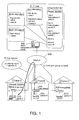
- a device-sharing system As shown in Fig. 1, a device-sharing system, a device administration terminal, a gateway terminal, a device, a program for the terminal and a program for the device, and a method for providing a device-sharing service according to the present invention are employed to define multiple services achieved by linking at least two of multiple network devices 210 located in individual homes A, B, and C, to communicatively connect the necessary network devices 210 according to a provide-service request, and to provide services using these network devices 210.
- Fig. 1 is a schematic block diagram of a network system to which the present invention is applied.
- a home gateway 200 and at least two network devices 210 connected to each home gateway 200 are located in homes A and B.
- Examples of these network devices 210 are a network-enabled scanner and printer.
- a network-enabled printer is located in home A, and a network-enabled scanner is installed in both home B and home C as the network devices 210.
- a device management server 100 for managing the network devices 210 and each of the home gateways 200 are connected to the Internet 199.
- Fig. 2 is a block diagram showing the configuration of the device management server 100.
- the device management server 100 is composed of a CPU 30 for controlling the entire operations and the system based on a control program, ROM 32 for storing the control program for CPU 30 at a predetermined address, RAM 34 for storing data read from ROM 32 and the required results of operations performed by CPU 30, and an interface 38 for exchanging data with external devices.
- the components of the device management server 100 are connected to a common data bus 39 for transferring data therebetween.
- a user information database 40 for storing user information about the users
- a device information database 41 for storing device information relating to the network devices 210
- a service information database 42 for storing service information relating to available services
- a group information database 43 for storing group information relating to the groups to which a plurality of users or network devices 210 belong
- an application database 44 for storing applications applicable to the home gateway 200
- a communication path for connecting to the Internet 199.
- Fig. 3 is a table showing the data structure of the user information database 40.
- the user information database 40 stores user information relating to the users.
- a user could be the owner of a home gateway 200 or network device 210, or another service vendor.
- the user information database 40 stores one record per user as represented by the lines in Fig. 3. Each record contains the following fields shown as columns in Fig. 3: a user ID field 400 for storing a unique user ID, a user password field 402, user name field 404, and user contact field 406.
- Fig. 4 is a table showing the data structure of the device information database 41.
- the device information database 41 similarly stores one record per network device 210.
- Each record has the following fields: device ID field 420 storing a unique ID for each network device 210, a name field 422 for network device 210, an administrator ID field 424 identifying the user that is the administrator for the network device 210, a device type field 426 for storing the type of network device 210, and a status field 428 for storing the status of the network device 210.
- the information stored to fields 422, 426, and 428 is acquired from the network device 210 by means of communication with the network device 210.
- Fig. 5 is a table showing the device-sharing of the service information database 42.
- the service information database 42 stores one record per service.
- Each record has the following fields: a service ID field 440 for storing a unique ID identifying the particular service, a service name field 442, administrator ID field 444 identifying the user that is the service administrator, a device-to-device communication information field 446 storing information enabling communication between network devices 210 used for the service, an application information field 448 storing the location from which the application can be acquired, and device type field 450 for storing the type of network device 210.
- the global IP address for example, assigned to the home gateway 200 to which the network device 210 used in the service is connected is stored as the device-to-device communication information in field 446.
- the URL (Universal Resource Locator) of the Web server where the application is stored is stored as the application information in field 448, for example.
- the address of the device management server 100 is set.It is not essential that application information is stored, and it could be stored only when a special application is needed on the home gateway 200 side to provide the service.
- Services as defined in this embodiment of the invention are achieved by linking at least two network devices 210.
- Multiple network devices 210 used for the service are defined for each service, and device-to-device communication information enabling the defined network devices 210 to talk with each other is defined.
- these network devices 210 are communicatively connected to link the network devices 210 together and thereby achieve some particular function.
- the device-to-device communication information is required to communicatively connect the network devices 210.
- one network device 210 used in the service communicates with another network device 210 used for the same service based on the device-to-device communication information.
- An example of this service is a fax service achieved by linking a network scanner and a network printer.
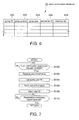
- Fig. 6 is a table showing the data structure of the group information database 43.
- the group information database 43 also stores one record per group as shown in Fig. 6. Each record has the following fields: a group ID field 460 for storing a group ID uniquely identifying the group, a group password field 462, group name field 464, administrator ID field 466 storing the user ID of the user that is the group administrator, and a member list field 468 storing all members of the group.
- the user ID of each user belonging to the group, or the device ID of each network device 210 associated with the group, is stored as a member list in the member list field 468. It should be noted that one or multiple user IDs or device IDs could be stored to the member list field 468.
- the CPU 30 is a microprocessing unit (MPU) that starts a specific program stored to a specific address in ROM 32 to execute on a time-share basis according to this program processes such as shown in the flow charts in Fig. 7 to Fig. 13. More specifically, these processes are a user information registration process, a device information registration process, a service information registration process, a group information registration process, a join-group process, a first service-information-providing process, and a second service-information-providing process.
- MPU microprocessing unit
- Fig. 7 is a flow chart showing the user information registration process.
- the user information registration process stores user information to the user information database 40 at a user information registration request from the home gateway 200.
- the user information registration process is called by the CPU 30 it starts from step S100 as shown in Fig. 7.
- step S100 Whether a user information registration request was received is first determined in step S100. If it was (yes), control goes to step S102. Otherwise (no), the process waits at step S100 until a registration request is received.
- the user information (except for the user ID) is then received in step S102 and a unique user ID that does not duplicate any other user ID is generated in step S104.
- the user information including both the received user information and the generated user ID is then stored as one user information record in the user information database 40 in step S106.
- the generated user ID is then sent to the home gateway 200 of the requesting terminal in step S108, and control goes to step S110.
- step S110 Whether a registration-completed report, indicating that storing the user information was completed normally, was received is determined in step S110. If it was (yes), the user information registration process ends and control returns to the previous process. If it was not received (no), step S110 repeats until the registration-completed report is received.
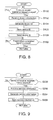
- Fig. 8 is a flow chart showing the device information registration process.
- the device information registration process is for registering device information to the device information database 41 in response to a registration request from the home gateway 200. This process starts from step S150 as shown in Fig. 8 when it is called by the CPU 30.
- step S150 Whether a device information registration request was received is first determined in step S150. If the registration request was received (yes) control goes to step S152, but otherwise (no) step S150 repeats until the registration request is received.
- step S152 the device information (except for the device ID) is received and a unique device ID that does not duplicate any other device ID is then generated in step S154.
- the received device information and the generated device ID are then stored as one device information record in the device information database 41 (step S156) and the generated device ID is sent to the home gateway 200 of the requesting terminal in step S158. Control then goes to step S160.
- step S160 Whether a registration-completed report, indicating that storing the device information was successfully completed, was received is then detected in step S160. If the registration-completed report was received (yes), the device information registration process ends and control returns to the previous process. If the report was not received (no), step S160 repeats until the registration-completed report is received.
- Fig. 9 is a flow chart showing the service information registration process.
- the service information registration process is a process for storing service information in the service information database 42 in response to a registration request from the home gateway 200.
- the process is run by the CPU 30 it starts from step S200 as shown in Fig. 9.
- step S200 Whether a service information registration request was received is first determined in step S200. If it was (yes), control goes to step S202. Otherwise (no), step S200 repeats until a registration request is received.
- step S202 the service information (not including the service ID) is received and a unique service ID not duplicating any other service ID is then generated in step S204.
- the received service information and generated service ID are then stored as one service information record to the service information database 42 in step S206, the process ends and control returns to the previous process.
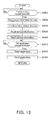
- Fig. 10 is a flow chart showing the group information registration process.
- the group information registration process is a process for storing the group information in the group information database 43 in response to a registration request from the home gateway 200.
- the process is run by the CPU 30 it starts from step S250 as shown in Fig. 10.
- step S250 Whether the group information registration request was received is first determined in step S250. If it was (yes), control goes to step S252, but otherwise (no) step S250 repeats until the registration request is received.
- step S252 The group information (not including the group ID) and user password are then received in step S252, and the user password corresponding to the administrator user ID contained in the received group information is read from the user information database 40 in step S254. Control then goes to step S256.
- step S256 the received user password is compared with the user password read from the database. If the passwords are the same (step S256 returns yes), a unique group ID that does not duplicate any other group ID is generated in step S258. The received group information and generated group ID are then stored as one group information record to the group information database 43 in step S260, the registration process ends, and control returns to the previous process.
- step S256 if the received password and the user password read from the database do not match in step S256 (no), the process ends and control returns to the previous process.
- Fig. 11 is a flow chart showing the join-group process.
- the join-group process enables a user or network device 210 to join a group according to a join-group request from the home gateway 200.
- the process is run by the CPU 30 it starts from step S300 as shown in Fig. 11.
- step S300 Whether a join-group request was received is determined in step S300. If it was (step S300 returns yes), control goes to step S302, but otherwise (no) step S300 repeats until a join-group request is received.
- Join-group information including at least a group name and group password is received in step S302. Whether a user ID or a device ID is contained in the received join-group information is then determined in step S304. If a user ID was contained in the join-group information (step S304 returns yes), control goes to step S306.
- step S306 The user password corresponding to the user ID contained in the join-group information is then read from the user information database 40 in step S306. Whether the user password in the join-group information matches the user password read from the user information database 40 is then determined in step S308. If the passwords match (step S308 returns yes), control goes to step S310.
- step S310 The group password corresponding to the group name in the join-group information is then read from the group information database 43 in step S310. Whether the group password in the join-group information matches the group password read from the database is then checked in step S312. If these group passwords match (step S312 returns yes), the group information in the group information database 43 is updated by writing the user ID in the join-group information to the member list of the corresponding group information record in step S314. The process then ends and control returns to the previous process.
- step S312 If the group password contained in the join-group information and the group password read from the database are determined in step S312 not to match (step S312 returns no), the process ends and control returns to the previous process.
- step S308 determines whether the user password contained in the join-group information and the user password read from the database are determined in step S308 not to match (step S308 returns no).
- step S304 determines whether a device ID is contained in the join-group information(step S304 returns no).
- step S316 the group password corresponding to the group name contained in the join-group information is read from the group information database 43, and control then goes to step S318.
- step S318 Whether the group password contained in the join-group information and the group password read from the database match is then determined in step S318. If the group passwords match (step S318 returns yes), control goes to step S320.
- the group information in the group information database 43 is then updated by writing the device ID contained in the join-group information to the member list of the corresponding group information record. The process ends and control returns to the previous process.
- step S318 If in step S318 the group password in the join-group information does not match the group password read from the database (step S318 returns no), the process ends and control returns to the previous process.
- Fig. 12 is a flow chart showing the first service-information-providing process.
- the first service-information-providing process provides service information from the service information database 42 to the requesting home gateway 200.
- the process is run by the CPU 30 it starts from step S350 as shown in Fig. 12.
- step S350 Whether a provide-service request was received is determined in step S350. If a request was received (yes), control goes to step S352, but otherwise (no) step S350 repeats until a request is received.
- the group information for the group to which the user of home gateway 200 that sent the provide-service request belongs is then read from the group information database 43 in step S352.
- a network device 210 connected to home gateway 200 and a network device 210 linked thereto to provide the service are identified from among the network devices 210 belonging to users in the same group based on the read group information and the service information in the service information database 42 as service-related devices in step S354, and control then goes to step S356.
- the service information for the service-related devices is then read from the service information database 42 in step S356.
- Control then goes to step S358 whereby the read service information is sent to the home gateway 200 from which the request was received.
- the process then ends and control returns to the previous process.
- Fig. 13 is a flow chart showing the second service-information-providing process.
- the second service-information-providing process provides service information from the service information database 42 to the requesting home gateway 200.
- the process is run by the CPU 30 it starts from step S400 as shown in Fig. 13. It should be noted that this second service-information-providing process differs from the first service-information-providing process in that it sends an application to the home gateway 200.
- step S400 Whether a provide-service request was received is determined in step S400. If a request was received (yes), control goes to step S402, but otherwise (no) step S400 repeats until a request is received.
- the group information for the group to which the user of home gateway 200 that sent the provide-service request belongs is then read from the group information database 43 in step S402.
- a network device 210 connected to home gateway 200 and a network device 210 linked thereto to provide the service are identified from among the network devices 210 belonging to users in the same group based on the read group information and the service information in the service information database 42 as service-related devices, and control then goes to step S406.
- the service information for the service-related devices is then read from the service information database 42 in step S406.
- Control then goes to step S408 whereby the read service information is sent to the home gateway 200 from which the request was received.
- the process ends then goes to step S410.
- step S410 Whether a get-application request was received is then determined in step S410. If a get-application request was received (step S410 returns yes), control goes to step S412, but otherwise (no) step S410 repeats until a get-application request is received.
- step S412 the application identified by the get-application request is read from the application database 44, and the retrieved application is then sent to the home gateway 200 from which the request was received in step S414. The process then ends and control returns to the previous process.
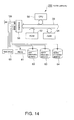
- Fig. 14 is a block diagram showing the configuration of a home gateway 200.
- this home gateway 200 has a CPU 50 for performing operations and controlling the overall system based on a specific control program, ROM 52 for storing the control program run by the CPU 50 at a specific memory address, RAM 54 for storing data read from ROM 52 and the results of operations required for the operation of the CPU 50, and an interface 58 enabling the exchange of data with external devices. These components are connected to a common data bus 59 for transferring data therebetween.
- an input device 60 such as a keyboard or mouse as the human interface for entering data
- a display 61 for displaying information based on an applied image signal
- a user information database 62 for storing user information
- a device information database 63 for storing device information
- a service information database 64 for storing service information
- the data structures used in the user information database 62, device information database 63, and service information database 64 are the same as the user information database 40, device information database 41, and service information database 42 described above.
- the CPU 50 is a microprocessing unit (MPU) that starts a specific program stored to a specific address in ROM 52 to execute on a time-share basis according to this program processes such as shown in the flow charts in Fig. 15 to Fig. 21. More specifically, these processes are a user information registration request process, a device information registration request process, a service information registration request process, a group information registration request process, a join-group request process, a first service-providing process, and a second service-providing process.
- MPU microprocessing unit
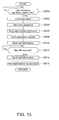
- Fig. 15 is a flow chart showing the user information registration request process.
- the user information registration request process corresponds to the user information registration process shown in Fig. 7.
- this process is run by the CPU 50, it starts from step S500 as shown in Fig. 15.
- step S500 Whether a user information registration request was input from the input device 60 is first determined in step S500. If a registration request was input (step S500 returns yes), control goes to step S502, but otherwise (no) step S500 repeats until a registration request is detected.
- a user name is then input from the input device 60 in step S502
- the user password is input from the input device 60 in step S504
- user contact information is input from the input device 60 in step S506. Control then goes to step S508.
- the user information registration request is sent to the device management server 100 in step S508, and the user information input in steps S502 to S506 is sent to the device management server 100 in step S510. Control then goes to step 512.
- step S512 it is determined whether the user ID was received. If the user ID was received (step S512 returns yes), control goes to step S514, but otherwise (no) step S512 repeats until the user ID is received.
- the received user ID and the user information input in steps S502 to S506 is then registered as one user information record to the user information database 62.
- a registration-completed report indicating that storing the user information was successfully completed is then sent to the device management server 100 in step S516, the process ends and control returns to the previous process.
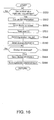
- Fig. 16 is a flow chart showing the device information registration request process.
- the device information registration request process corresponds to the device information registration process shown in Fig. 8. When this process is run by the CPU 50, it starts from step S550 as shown in Fig. 16.
- step S550 Whether a device information registration request was input from the input device 60 is determined in step S550. If a registration request was input (step S550 returns yes), control goes to step S552 but otherwise (no) step S550 repeats until a registration request is input.
- step S552 the device information is acquired from network device 210 by communication with the network device 210 connected to the home gateway 200. More specifically, the name, type, and status of the network device 210 are acquired as the device information in step S552.
- step S554 the user is requested to select the network device 210 that is to be registered from among the network devices 210 connected to the home gateway 200.
- the network device 210 selection is then input from the input device 60 and control goes to step S556.
- the user ID is then read from the user information database 62 in step S556 and the read user ID is acquired as the administrator ID.
- a device information registration request is then sent to the device management server 100 in step S558, the device information acquired in steps S552 and S556 is sent to the device management server 100 in step S560, and control goes to step S562.
- step S562 Whether the device ID was received is then determined in step S562. If it was (yes), control goes to step S564, but if not (no) step S562 repeats until the device ID is received.
- step S564 the received device ID and the device information acquired in steps S552 and S556 are saved as one device ID record to the device information database 63.
- a registration-completed report indicating that the device information was successfully registered is then sent to the device management server 100 in step S566. The process then ends and control returns to the previous process.
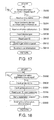
- Fig. 17 is a flow chart showing the service information registration request process.
- the service information registration request process corresponds to the service information registration process shown in Fig. 9.
- this process is run by the CPU 50, it starts from step S600 as shown in Fig. 17.
- step S600 Whether a service information registration request was input from the input device 60 is determined in step S600. If a registration request was input (yes), control goes to step S602 but otherwise (no) step S600 repeats until a registration request is input.
- the service name is then input from the input device 60 in step S602 and control goes to step S604.
- the device-to-device communication information is then input from the input device 60, the application information is input from the input device 60 in step S606, and the type of network device 210 used in the service is input from the input device 60 in step S608. Control then goes to step S610.
- the user ID is then read from the user information database 62 in step S610 and acquired as the administrator ID.
- a service information registration request is then sent to the device management server 100 in step S612, and the service information input in steps S602 to S610 is sent to the device management server 100. The process then ends and control returns to the previous process.
- Fig. 18 is a flow chart showing the group information registration request process.
- the group information registration request process corresponds to the group information registration process shown in Fig. 10. When this process is run by the CPU 50, it starts from step S650 as shown in Fig. 18.
- step S650 Whether a group information registration request was input from the input device 60 is determined in step S650. If a registration request was input (yes), control goes to step S652 but otherwise (no) step S650 repeats until the registration request is input.
- step S652 the group name is input from the input device 60, the group password is input from the input device 60 in step S654, and the user ID and group password are read from the user information database 62 in step S656.
- the read user ID is acquired as the administrator ID and control goes to step S658.
- a group information registration request is then sent to the device management server 100 in step S658, and in step S660 the group information input in steps S652 to S656 and the user password read in step S656 are sent to the device management server 100.
- the process then ends and control returns to the previous process.
- Fig. 19 is a flow chart showing the join-group request process.
- the join-group request process corresponds to the join-group process shown in Fig. 11.
- this process is run by the CPU 50, it starts from step S700 as shown in Fig. 19.
- step S700 Whether a join-group request was input from the input device 60 is determined in step S700. If a join-group request was input (yes), control goes to step S702 but otherwise (no) step S700 repeats until a join-group request is input.
- the group name is then input from the input device 60 in step S702, the group password is input from the input device 60 in step S704, and control goes to step S706.
- step S706 Based on command input from the user, whether a user joins the group or a network device 210 joins the group is determined in step S706. If it is determined that a user joins the group(yes), the user ID and user password are then read from the user information database 62 in step S708, and control then goes to step S710.
- the join-group request is then sent to the device management server 100 in step S710, and the group name, group password, user ID, and user password acquired in steps S702, S704, and S708 are sent to the device management server 100 as the join-group information in step S712.
- the process then ends and control returns to the previous process.
- step S706 determines that a network device 210 is to participate in the group (step S706 returns no), control goes to step S714 and the user is requested to select the network device 210 connected to the home gateway 200 that is to participate in the group.
- the network device 210 selection is then input from input device 60, the device ID of the selected network device 210 is read from the device information database 63, and control goes to step S718.
- step S718 the join-group request is sent to the device management server 100.
- the group name, group password, and device ID input in steps S702, S704, and S716 are then sent to the device management server 100 as the join-group information in step S720.
- the process then ends and control returns to the previous process.
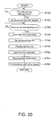
- Fig. 20 is a flow chart showing the first service-providing process.
- the first service-providing process corresponds to the first service-information-providing process shown in Fig. 12.
- this process is run by the CPU 50, it starts from step S750 as shown in Fig. 20.
- step S750 Whether a provide-service request was input from the input device 60 is determined in step S750. If a service request was input (yes) control goes to step S752, but otherwise (no) step S750 repeats until a provide-service request is input.
- step S752 the provide-service request is sent to the device management server 100 and whether service information was received is determined in step S754. If service information was received (step S754 returns yes), control goes to step S756, but otherwise (no) step S754 repeats until the service information is received.
- the received service information is then stored to the service information database 64 in step S756.
- a service list is then generated in step S758 based on the service name contained in the received service information, and the generated service list is presented on the display 61 in step S760. Control then goes to step S762.
- step S762 the user is requested to select the service to be received from the displayed service list and the service selection is then input from the input device 60.
- step S764 the service information for the selected service is then read from the service information database 64 and control goes to step S766.
- step S766 based on the device-to-device communication information contained in the read service information, communication between the network device 210 connected to the home gateway 200 and the related service device is relayed through the home gateway. The process then ends and control returns to the previous process.
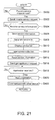
- Fig. 21 is a flow chart showing the second service-providing process.
- the second service-providing process corresponds to the second service-information-providing process shown in Fig. 13. When this process is run by the CPU 50, it starts from step S800 as shown in Fig. 21. This second service-providing process differs from the first service-providing process in that it applies an application to the home gateway 200.
- step S800 Whether a provide-service request was input from the input device 60 is first determined in step S800. If a provide-service request was input (yes) control goes to step S802, otherwise (no) step S800 repeats until a provide-service request is input.
- step S802 the provide-service request is sent to the device management server 100. Whether service information was received is then determined in step S804. If service information was received (yes), control goes to step S806, otherwise (no) step S804 repeats until the service information is received.
- the received service information is then stored to the service information database 64 in step S806 and control goes to step S808 where a service list is generated based on the service name contained in the received service information.
- the resulting service list is then presented on the display 61 in step S810 and control goes to step S812.
- step S812 The user is then prompted to select the service to be provided from the displayed service list in step S812 and the user inputs the service selection from the input device 60.
- Service information for the selected service is then read from the service information database 64 in step S814, and control goes to step S816.
- step S816 a get-application request is then sent based on the application information contained in the read service information, and whether the application was received or not is determined in step S818. If the application was received (yes) control goes to step S820. If the application was not received (no), step S818 repeats until the application is received.
- step S820 the received application is applied to the home gateway 200 and control goes to step S822 where communication between the network device 210 connected to the home gateway 200 and the related service device is relayed based on the device-to-device communication information contained in the read service information. The process then ends and control returns to the previous process.
- the user To register user information the user first inputs a user information registration request to the home gateway 200.
- the user information includes the user name, user password, and contact address information.
- the input user information and registration request are sent to the device management server 100 (steps S508 and S510).
- the device management server 100 When the device management server 100 receives the registration request and user information it generates a user ID and saves the received user information and resulting user ID as one user information record to the user information database 40, and returns the resulting user ID to the home gateway 200 that sent the registration request (steps S104 to S108).
- the home gateway 200 When the home gateway 200 receives the user ID it saves the user ID with the input user information as one user information record to the user information database 62, and then returns a registration-completed report to the device management server 100 (steps S514, S516).
- the user can thus register his own user information in the device management server 100.
- the user To register device information the user first inputs the device information registration request to the home gateway 200.
- the home gateway 200 gets the device information from the network device 210 by communicating with the network device 210 connected to the home gateway 200 and prompts the user to select one of the network devices 210 connected to the home gateway 200 (steps S552, S554).
- the user ID is read from the user information database 62 and acquired as the administrator ID (step S556).
- the device information and registration request are then sent to the device management server 100 (steps S558, S560).
- the device management server 100 When the device management server 100 receives the registration request and device information it generates the device ID and saves the received device information and resulting device ID to the device information database 41 as one device information record, and sends the device ID to the home gateway 200 from which the registration request was received (steps S154 to S158).
- the home gateway 200 When the home gateway 200 receives the device ID it saves the received device ID and acquired device information as one device information record to the device information database 63, and returns a registration-completed report to the device management server 100 (steps S564, S566).
- the user can thus register device information about the user's own network devices 210 in the device management server 100.
- the service information includes the service name, device-to-device communication information, application information, and type of network device 210.
- the user ID is read from the user information database 62 and acquired as the administrator ID (step S610).
- the input service information and registration request are then sent to the device management server 100 (steps S612, S614).
- the device management server 100 When the device management server 100 receives the registration request and service information it generates a service ID and stores the received service information and resulting service ID as one service information record to the service information database 42 (steps S204, S206).
- the user can thus define a specific service in the device management server 100.
- the user To register group information the user first inputs a group information registration request to the home gateway 200, and inputs the group name and group password as group information.
- the home gateway 200 reads the user ID and user password from the user information database 62 and acquires the read user ID as the administrator ID (steps S656).
- the input group information and read user password are then sent with the registration request to the device management server 100 (step S658).
- the device management server 100 reads the user password corresponding to the administrator ID contained in the received group information from the user information database 40 and determines if the received user password matches the user password read from the database (steps S254, S256). If the user password matches, a group ID is generated and the received group information and resulting group ID are stored as one group information record to the group information database 43 (steps S258, S260).
- the user can thus create groups on the device management server 100.
- the user For a user to participate in a group the user must first input a join-group request together with the group name and group password to the home gateway 200. It should be noted that the group name and group password must be acquired in advance from the group administrator.
- the home gateway 200 reads the user ID and user password from the user information database 62, and then sends the input group name and group password, and the user ID and user password read from the database, as the join-group information together with a join-group request to the device management server 100 (steps S708 to S712).
- the device management server 100 finds the user password for the user ID in the join-group information from the user information database 40, and determines if the user password in the join-group information matches the user password read from the database (steps S306, S308).
- the group password for the group name contained in the join-group information is then read from the group information database 43, and whether the group password in the join-group information matches the group password for the database is determined (steps S310, S312). If the passwords match in both determinations, the user ID in the join-group information is stored to the member list of the corresponding group information (steps S314).
- a user can thus join a group on the device management server 100.
- the user can join a group created by another user or a group created by the user.
- a network device 210 to join a group the user must first input a join-group request to the home gateway 200, and input the group name and group password.
- the group name and group password must be acquired in advance from the administrator that created the group.
- the home gateway 200 prompts the user to select one of the network devices 210 connected to the home gateway 200 (steps S714).
- the device ID for the selected network device 210 is read from the device information database 63, and the input group name, group password, and retrieved device ID are sent as the join-group information with the join-group request to the device management server 100 (steps S716 to S720).
- a device ID is contained in the join-group information received with the join-group request.
- the device management server 100 therefore reads the group password for the group name contained in the join-group information from the group information database 43, and determines if the group password in the join-group information and the group password from the database match (steps S316, S318). If the passwords match, the device ID in the join-group information is stored to the member list of the corresponding group information (steps S320).
- a user can therefore add a network device 210 managed by the user to a group on the device management server 100.
- the user can add the device to a group created by another user or to a group that the user created.
- the user To use another network device 210 the user first inputs a provide-service request to the home gateway 200. In order to access a service the user information, device information, service information, and group information must already be registered with the device management server 100.
- the home gateway 200 sends the provide-service request to the device management server 100 (step S752).
- the device management server 100 When a provide-service request is received the device management server 100 reads from the group information database 43 the group information for the group to which the user of the home gateway 200 originating the service request belongs(step S352). Based on the retrieved group information and the service information from service information database 42, network device 210 connected to home gateway 200 and a network device 210 linked thereto to provide the service are identified from among the network devices 210 belonging to users in the same group as the service-related devices (step S354). Service information for the service-related devices is then retrieved from the service information database 42 and the acquired service information is sent to the requesting home gateway 200 (steps S356, S358).
- the received service information is stored to the service information database 64, a service list is generated based on the service names contained in the received service information, and the resulting service list is displayed (steps S756 to S760).
- service information for the selected service is retrieved from the service information database 64, and, based on the device-to-device communication information contained in the retrieved service information, communication between the network device 210 connected to the home gateway 200 and service-related device is relayed through the home gateway (steps S762 to S766).
- a user in home A wants to send a document by fax to home B
- the home A user simply selects a fax service using the network printer in home B.
- the network scanner in home A and the network printer in home B are connected as described above so that they can communicate with each other.
- the scanner and printer are communicatively connected and the document to be faxed is scanned with the scanner in home A
- the document is sent by the network scanner to the network printer in home B through the home gateways 200 in home A and home B.
- the user first inputs a provide-service request to the home gateway 200.
- the user information, device information, service information, and group information must already be registered in the device management server 100 in order to send a provide-service request.
- the home gateway 200 sends the request to the device management server 100 (steps S802).
- the device management server 100 reads the group information for the group to which the user of the home gateway 200 that sent the service request belongs from the group information database 43 (steps S402).
- step S404 based on the read group information and the service information from service information database 42, the network device 210 connected to the home gateway 200 and the network device 210 linked thereto to provide the service are identified from among the network devices 210 of the users in the same group as the service-related devices.
- the service information for the service-related devices is then read from the service information database 42 and sent to the requesting home gateway 200 (steps S406 and S408).
- the home gateway 200 When the home gateway 200 receives the service information, it stores the received service information to the service information database 64, generates a service list based on the service names contained in the received service information, and displays the resulting service list (steps S806 to S810).
- the service information for the selected service is read from the service information database 64 and a get-application request is sent based on the application information contained in the read service information (step S814). Because the address of the device management server 100 is set in the application information at this time, the get-application request is sent to the device management server 100.
- the device management server 100 When the device management server 100 receives the get-application request, it reads the requested application from the application database 44 and returns the application to the home gateway 200 that requested it (steps S412, S414).
- step S820 When the home gateway 200 receives the application it applies the application to the home gateway 200 (step S820). Based on the device-to-device communication information contained in the read service information, communication between the network device 210 connected to the home gateway 200 and the related service device is relayed(step S822).
- the device management server 100 sets the network device 210 connected to the home gateway 200 and the network device 210 linked thereto to provide a particular service as service-related devices based on the service information from the service information database 42. It then reads and sends the service information for the service-related devices from the service information database 42 to the home gateway 200. The home gateway 200 then sends a provide-service request to the device management server 100.
- the home gateway 200 When service information is received in response to this request, the home gateway 200 displays a service list based on the received service information, and, when a service is selected from the displayed service list, relays communication between the network device 210 connected to the home gateway 200 and the service-related device based on the device-to-device communication information contained in the received service information for the selected service.
- a network device 210 defined as a service device accessible by a provide-service request can be used by simply sending a provide-service request from the home gateway 200 to the device management server 100, network devices 210 can be shared relatively easily compared with the prior art. Furthermore, if usable network devices 210 are defined as service devices, the home gateway 200 does not need to query a particular network device 210 to determine if it is accessible for use, and even network devices 210 that are unknown to a user of the network device 210 can therefore be used.
- the home gateway 200 receives service information, it generates a service list based on the service names contained in the received service information.
- a service list is thus generated based on service names by the home gateway 200, the user can easily know what services can be used.
- the device management server 100 when it receives a provide-service request, it reads the group information for the group associated with the user of the home gateway 200 from the group information database 43, and, based on the read group information and service information retrieved from the service information database 42, defines the network device 210 connected to the home gateway 200 and the network device 210 linked thereto to provide the service from among the network devices 210 of the users in the same group as service-related devices.
- the device management server 100 in this embodiment receives a provide-service request it reads the group information for the group to which the network device 210 of the home gateway 200 belongs from the group information database 43, and, based on this read group information and the service information from the service information database 42, identifies the network device 210 connected to the home gateway 200 and the network device 210 linked thereto to provide the requested service as the service-related devices of the network devices 210 belonging to the same group.
- network devices 210 are grouped and only network devices 210 belonging to the same group can use other network devices 210 in the same group, the possibility of network devices 210 being used by a network device 210 that does not belong to the group can be reduced and security can be relatively improved.
- the home gateway 200 in this embodiment gets an application based on application information contained in the received service information for the selected service, and applies the acquired application to the home gateway 200.
- the network devices 210 can therefore be easily shared even when a particular application is required to receive the service because the home gateway 200 is able to get and apply the required application based on the service information from the device management server 100.
- the device management server 100 in the above embodiment corresponds to the device administration terminal described in claims 3, 5, 6, 9, 11, 13, 15, or 18;
- the home gateway 200 corresponds to the gateway terminal in claims 3 through 7, 9, 11, 13, 15, or 18;
- the network device 210 corresponds to a device in any of claims 1 through 3, 5 through 7, 9, 11, 13, 15, 17, or 18.
- the service information database 42 corresponds to the service information storage means in 2, 3, 5, 6, 9, 13, or 18;
- the group information database 43 corresponds to the group information storage means in claim 5 or 6;
- step S206 corresponds to the service information storage means in claim 18.
- steps S354 and S404 correspond to the device identification step in claim 18; steps S356, S406 correspond to the service information reading step in claim 18; steps S358, S408 correspond to the service information transmission step in claim 18; steps S752, S802 correspond to the provide-service request transmission step in claim 18; steps S760, S810 correspond to the service list display step in claim 18; and steps S766, S822 corresponds to the communication relay step in claim 18.
- the service name referred to in the above embodiment corresponds to the service identification information in claim 4.
- the steps shown in the flow charts in Fig. 15 to Fig. 21 are performed by the home gateway 200 in the above embodiment, but the invention shall not be so limited. These steps could, for example, be performed by the network device 210. In this case the network device 210 could be connected directly to the Internet 199 without using a home gateway 200.
- network devices 210 defined for a service specified in a provide-service request can be used only by means of the network device 210 sending a provide-service request directly to the device management server 100, and the network devices 210 can therefore be easily shared compared with the prior art.
- a usable network device 210 is defined as a service, even network devices 210 that are unknown to the user of the network device 210 can be used without the network device 210 querying whether a network device 210 can be used.
- the device management server 100 in the above embodiments corresponds to the device administration terminal in claims 8, 10, 12, 14, 16, or 19;
- the network device 210 corresponds to a device in claims 1, 8, 10, 12, 14, 16, 17, or 19;
- the service information database 42 corresponds to the service information storage means in claims 8, 10, 14, or 19;
- step S206 corresponds to the service information storage step in claim 19;
- steps S354 and S404 correspond to the device identification step in claim 19;
- steps S356 and S406 correspond to the service information reading step in claim 19.
- service information registration is handled by the home gateway 200 in the above embodiment, but the invention shall not be so limited and any terminal connected to the Internet 199 could store the service information. Because these services are more likely to be defined and provided by service vendors rather than the owner of a particular home gateway 200 or network device 210, the service information is preferably stored at a service vendor terminal rather than the home gateway 200.
- the application is adapted to the home gateway 200 in the above embodiment but the invention shall not be so limited and could be configured to adapt the application to the network device 210.
- Deleting user information was also not particularly described in the above embodiment, but it will be obvious that user information can also be deleted.
- To delete user information the user inputs the user name and user password, and sends the user name and user password with a user information deletion request to the device management server 100.
- the device management server 100 receives the user information deletion request with the user name and user password, it verifies the user based on the received user name and password, then deletes the user information for the indicated user, deletes all device information, service information, and group information for which the user is the designated administrator, and deletes the user and all network devices 210 for which the user is the administrator from the member lists of all groups to which the user belongs.
- Deleting device information was also not particularly described in the above embodiment, but it will also be obvious that device information can be deleted.
- To delete device information the user inputs the user name, user password, and indicates the network device 210 for which device information is to be deleted, and then sends the input user name and password and network device 210 selection together with a device information deletion request to the device management server 100.
- the device management server 100 receives the device information deletion request, user name, user password, and network device 210 selection, it verifies the user based on the received user name, user password, and network device 210 selection, then deletes the device information for the indicated network device 210, and deletes the network device 210 from the member lists of all groups to which the network device 210 belongs.
- Deleting service information was also not particularly described in the above embodiment, but service information can also be deleted.
- To delete the service information the user inputs the user name, user password, and indicates the service for which service information is to be deleted, and then sends the input user name and password and service selection together with a service information deletion request to the device management server 100.
- the device management server 100 receives the service information deletion request, user name, user password, and service selection, it verifies the user based on the received user name, user password, and service selection, and then deletes the service information for the indicated service.
- Deleting group information was also not particularly described in the above embodiment, but group information can also be deleted.
- group information To delete group information the user inputs the user name, user password, group name and group password, and then sends the input user name and password and group name and password together with a group information deletion request to the device management server 100.
- the device management server 100 receives the group information deletion request, user name, user password, group name and group password, it verifies the user and group based on the received user name, user password, group name and group password, verifies that the user is the group administrator, and then deletes the group information for the indicated group.
- Removing a user from a group was also not specifically described in the above embodiment, but it will be obvious that a user can be removed from a group.
- the user To remove a user from a group, the user enters the user name, user password, group name, and group password, and sends the user name, user password, group name, and group password together with a remove-from-group request to the device management server 100.
- the device management server 100 receives the remove-from-group request together with the user name, user password, group name, and group password, it verifies the user and group based on the received user name, user password, group name, and group password, and then removes the user from the member list of the indicated group.
- Removing a network device 210 from a group was also not specifically described in the above embodiment, but it will be obvious that a network device 210 can be removed from a group.
- the user enters the user name, user password, group name, group password, and network device 210 selection, and sends the user name, user password, group name, group password and network device 210 selection together with a remove-from-group request to the device management server 100.
- the device management server 100 When the device management server 100 receives the remove-from-group request together with the user name, user password, group name, group password, and network device 210 selection, it verifies the user and group based on the received user name, user password, group name, group password, and network device 210 selection, and then removes the network device 210 from the member list of the indicated group.
- a network scanner and a network printer are used as examples of network devices 210 in the above embodiment, but the invention shall obviously not be so limited.
- Other possible network devices include, for example, network-capable projectors, digital cameras, digital video cameras, personal computers, personal digital assistants (PDA), network storage devices, audio equipment, cell phones, PHS (Personal Handyphone System) handsets, watch-type PDAs, POS (point-of-sale) terminals, photocopiers, facsimile machines, telephones (including Internet Protocol (IP) telephones), exchange equipment, Network Control Units (NCU), and other network-capable devices and equipment.
- IP Internet Protocol
- NCU Network Control Units
- These storage media could be a semiconductor storage device such as RAM or ROM, a magnetic storage medium such as a floppy disk or hard disk, an optically-readable storage medium such as a CD, CDV, LD, or DVD, a magnetically-writable/optically-readable storage medium such as magnetooptical discs, or any other type of computer-readable storage media regardless of the reading method, including electronic, magnetic, optical, or other.
- a semiconductor storage device such as RAM or ROM
- a magnetic storage medium such as a floppy disk or hard disk
- an optically-readable storage medium such as a CD, CDV, LD, or DVD
- a magnetically-writable/optically-readable storage medium such as magnetooptical discs
- the device sharing system, device administration terminal, gateway terminal, device, terminal program and device program, and method for providing a device-sharing system are described in the above embodiment adapted to the Internet 199 as the network system.
- the invention shall not be so limited, however, and could be applied to an intranet enabling communication in the same way as the Internet 199.
- the invention will obviously not be limited to communication systems identical to the Internet 199, and can be applied to any type of network system.
- the device sharing system, device administration terminal, gateway terminal, device, terminal program and device program, and method for providing a device-sharing system define plural services achieved by linking at least two network devices 210 located in homes A to C as shown in Fig. 1, and provide services using these network devices 210 by connecting the required network devices 210 to communicate with each other in response to a received provide-service request.
- the invention shall not be so limited, however, and can be adapted within the scope of the present invention to various other scenarios.
- the invention could be used to provide services using network devices 210 located in different parts of a company.
- a device-sharing system can use devices defined for a specifically requested service by simply asserting a provide-service request, and sharing devices is thus easy compared with the prior art. Furthermore, if usable devices are defined as services, even devices unknown to the user of a device can be used without querying the device to determine whether it can be used.
- a gateway terminal can use a device defined for a service relating to a provide-service request by simply sending a provide-service request to the device administration terminal with the device-sharing system described in claims 3 to 7 of the invention, devices can be shared easily when compared with the prior art.
- the gateway terminal of the device-sharing system as described in claim 4 of the invention can display a service list based on service identification information, thereby making it easier to know what services can be used.
- the device-sharing system described in claim 5 of the invention puts users into groups and enables only users in a given group to use devices belonging to users in the same group. The possibility of users not belonging to the group using those devices is thus reduced and security is relatively improved.
- the device-sharing system described in claim 6 of the invention puts devices into groups and enables only devices in a given group to use devices belonging to the same group. The possibility of devices being used by devices not belonging to the same group is thus reduced and security is relatively improved.
- the gateway terminal of the device-sharing system described in claim 7 of the invention gets and applies a required application based on service information received from a device administration terminal when a particular application is required to receive a particular provided service. Sharing devices is thus even easier.
- a device can use other devices designated for a service indicated by a provide-service request by simply sending a provide-service request to the device administration terminal. Devices can thus be shared more easily compared with the prior art.
- the device administration terminal described in claim 9 of the invention achieves the same effect as the device-sharing system of claim 3.
- the device administration terminal described in claim 10 of the invention achieves the same effect as the device-sharing system of claim 8.
- the gateway terminal described in claim 11 of the invention achieves the same effect as the device-sharing system of claim 3.
- the device described in claim 12 of the invention achieves the same effect as the device-sharing system of claim 8.
- the terminal program described in claim 13 of the invention achieves the same effect as the device administration terminal of claim 9.
- the terminal program described in claim 14 of the invention achieves the same effect as the device administration terminal of claim 10.
- the method for providing a device-sharing service described in claim 17 of the invention achieves the same effect as the device-sharing system of claim 1.
Landscapes
- Engineering & Computer Science (AREA)
- Signal Processing (AREA)
- Computer Networks & Wireless Communication (AREA)
- General Engineering & Computer Science (AREA)
- Computer Security & Cryptography (AREA)
- Computing Systems (AREA)
- Multimedia (AREA)
- Computer And Data Communications (AREA)
- Data Exchanges In Wide-Area Networks (AREA)
- Information Transfer Between Computers (AREA)
- Facsimiles In General (AREA)
Abstract
Description
- Fig. 1
- is a schematic block diagram of a network system to which the present invention is applied;
- Fig. 2
- is a block diagram showing the configuration of the
device management server 100; - Fig. 3
- is a table showing the data structure of the
user information database 40; - Fig. 4
- is a table showing the data structure of the
device information database 41; - Fig. 5
- is a table showing the device-sharing of the
service information database 42; - Fig. 6
- is a table showing the data structure of the
group information database 43; - Fig. 7
- is a flow chart showing the user information registration process;
- Fig. 8
- is a flow chart showing the device information registration process;
- Fig. 9
- is a flow chart showing the service information registration process;
- Fig. 10
- is a flow chart showing the group information registration process;
- Fig. 11
- is a flow chart showing the join-group process;
- Fig. 12
- is a flow chart showing the first service-information-providing process;
- Fig. 13
- is a flow chart showing the second service-information-providing process;
- Fig. 14
- is a block diagram showing the configuration of a
home gateway 200; - Fig. 15
- is a flow chart showing the user information registration request process;
- Fig. 16
- is a flow chart showing the device information registration request process;
- Fig. 17
- is a flow chart showing the service information registration request process;
- Fig. 18
- is a flow chart showing the group information registration request process;
- Fig. 19
- is a flow chart showing the join-group request process;
- Fig. 20
- is a flow chart showing the first service-providing process;
- Fig. 21
- is a flow chart showing the second service-providing process.
Claims (19)
- A device-sharing system for communicatively connecting a plurality of devices, defining a plurality of services achieved by linking at least two of these multiple devices, and, when a provide-service request is received, communicatively connecting those of the plural devices used to provide the service requested in the provide-service request.
- A device-sharing system as described in claim 1, comprising a service information storage means for storing, for each service, service information relating to the service,
the service information including device-to-device communication information enabling communication between devices used for the service;
wherein when a provide-service request is received the devices used in the requested service are identified, and the identified devices are communicatively connected based on the device-to-device communication information retrieved from the service information storage means for the requested service. - A device-sharing system for communicatively connecting a device administration terminal for managing devices with a plurality of gateway terminals for communicatively connecting the devices, defining a plurality of services achieved by linking at least two of these multiple devices, and, when a provide-service request is received, communicatively connecting those of the plural devices used to provide the service requested in the provide-service request, the device-sharing system comprising:wherein when a provide-service request is received the device administration terminal identifies as service-related devices the device of the gateway terminal originating the provide-service request and the device related thereto to provide a requested service based on service information from the service information storage means, reads service information for the service-related devices from the service information storage means, and sends the read service information to the request-originating gateway terminal, anda service information storage means for storing, for each service, service information relating to the service,the service information including device-to-device communication information enabling communication between devices used for the service;
the gateway terminal, upon sending a provide-service request to the device administration terminal and receiving service information in response to the request, displays a service list based on the received service information, and, when a service is selected from the displayed service list, relays communication between the gateway terminal device and the service-related device based on device-to-device communication information contained in the received service information relating to the selected service. - A device-sharing system as described in claim 3, wherein the service information contains service identification information for identifying each service, and
the gateway terminal, when service information is received, displays a service list based on the service identification information contained in the received service information. - A device-sharing system as described in claim 3 or 4, further comprising a group information storage means for storing group information relating to groups to which multiple users can belong,
wherein the device administration terminal, when a provide-service request is received, reads from the group information storage means group information for the group to which the user of the gateway terminal originating the provide-service request belongs, and, based on the read group information and service information from the service information storage means, identifies as service-related devices from among devices belonging to users in the same group a device of the gateway terminal originating the provide-service request and the device linked thereto for the service. - A device-sharing system as described in claim 3 or 4, further comprising a group information storage means for storing group information relating to groups to which multiple devices can belong;
wherein the device administration terminal, when a provide-service request is received, reads from the group information storage means group information for the group to which the device of the gateway terminal originating the provide-service request belongs, and, based on the read group information and service information from the service information storage means, identifies as service-related devices from among devices belonging to the same group a device of the gateway terminal originating the provide-service request and the device linked thereto for the service. - A device-sharing system as described in any of claims 3 to 6, wherein the service information includes application information denoting a location from which an application to be applied to a device or gateway terminal used in the service can be acquired;
the gateway terminal, when a service is selected from the service list, acquires an application based on application information contained in the received service information for the selected service, and applies the acquired application to the device or gateway terminal. - A device-sharing system for communicatively connecting a plurality of devices and a device administration terminal for managing the devices, defining a plurality of services provided by linking at least two of these multiple devices, and, when a provide-service request is received, communicatively connecting those of the plural devices used to provide the service requested in the provide-service request, the device-sharing system comprising:wherein the device administration terminal, when it receives a provide-service request, identifies as service-related devices based on service information from the service information storage means the device that sent the provide-service request and a device linked thereto to provide the service, reads service information for the service-related devices from the service information storage means, and sends the read service information to the request-originating device; anda service information storage means for storing, for each service, service information relating to the service,the service information including device-to-device communication information enabling communication between devices used for the service;
the device sends the provide-service request to the device administration terminal and upon receiving service information in response to the request displays a service list based on the received service information, and, when a service is selected from the displayed service list, communicates with the service-related device based on device-to-device communication information contained in the received service information for the selected service. - A device administration terminal for communicatively connecting to a gateway terminal in a device-sharing system as described in claim 3, wherein when the device administration terminal receives a provide-service request it identifies as service-related devices the device of the gateway terminal originating the provide-service request and the device related thereto to provide a requested service based on service information from the service information storage means, reads service information for the service-related devices from the service information storage means, and sends the read service information to the request-originating gateway terminal.
- A device administration terminal for communicatively connecting to a device in a device-sharing system as described in claim 8, wherein when the device administration terminal receives a provide-service request it identifies as service-related devices based on service information from the service information storage means the device that sent the provide-service request and a device linked thereto to provide the service, reads service information for the service-related devices from the service information storage means, and sends the read service information to the request-originating device.
- A gateway terminal for communicatively connecting to a device administration terminal in a device-sharing system as described in claim 3, wherein the gateway terminal, upon sending a provide-service request to the device administration terminal and receiving service information in response to the request, displays a service list based on the received service information, and, when a service is selected from the displayed service list, relays communication between the gateway terminal device and the service-related device based on device-to-device communication information contained in the received service information relating to the selected service.
- A device for communicatively connecting to a device administration terminal in a device-sharing system as described in claim 8, wherein the device sends the provide-service request to the device administration terminal and upon receiving service information in response to the sent request displays a service list based on the received service information, and, when a service is selected from the displayed service list, communicates with the service-related device based on device-to-device communication information contained in the received service information for the selected service.
- A terminal program run by a device administration terminal, which is a computer, as described in claim 9 to execute a process for identifying as service-related devices the device of the gateway terminal originating a provide-service request and the device related thereto to provide a requested service based on service information from the service information storage means when a provide-service request is received, reading service information for the service-related devices from the service information storage means, and sending the read service information to the request-originating gateway terminal.
- A terminal program run by a device administration terminal, which is a computer, as described in claim 10 to execute, a process for identifying a device that sent the provide-service request and a device linked thereto to provide the service as service-related devices based on service information from the service information storage means when a provide-service request is received, reading service information for the service-related devices from the service information storage means, and sending the read service information to the request-originating device.
- A terminal program run by a gateway terminal, which is a computer, as described in claim 11 to execute a process for, upon sending a provide-service request to the device administration terminal and receiving service information in response to the request, displaying a service list based on the received service information, and, when a service is selected from the displayed service list, relaying communication between the gateway terminal device and the service-related device based on device-to-device communication information contained in the received service information relating to the selected service.
- A device program run by a device, which is a computer, as described in claim 12 to execute a process for sending the provide-service request to the device administration terminal and upon receiving service information in response to the request displaying a service list based on the received service information, and, when a service is selected from the displayed service list, communicating with the service-related device based on device-to-device communication information contained in the received service information for the selected service.
- A method for providing a device-sharing service by communicatively connecting a plurality of devices, defining a plurality of services achieved by linking at least two of these multiple devices, and, when a provide-service request is received, communicatively connecting those of the plural devices used to provide the requested service.
- A method for providing a device-sharing service by communicatively connecting a device administration terminal for managing devices with a plurality of gateway terminals for communicatively connecting the devices, defining a plurality of services achieved by linking at least two of these multiple devices, and, when a provide-service request is received, communicatively connecting those of the plural devices used to provide the service requested in the provide-services,
the method comprising:a service information storage step for storing, for each service, in a service information storage means, service information including device-to-device communication information enabling communication between devices used for the service;a provide-service request transmission step enabling the gateway terminal to send a provide-service request to the device administration terminal;a device identification step enabling the device administration terminal to identify as service-related devices the device of the gateway terminal originating the provide-service request and the device related thereto to provide a requested service based on service information from the service information storage means when a provide-service request is received;a service information reading step enabling the device administration terminal to read service information for the service-related devices from the service information storage means; anda service information transmission step enabling the device administration terminal to send the service information read in the service information reading step to the request-originating gateway terminal; anda service list displaying step enabling the gateway terminal to display a service list based on received service information when the service information is received; anda communication relaying step enabling the gateway terminal to relay communication between the gateway terminal device and the service-related device based on device-to-device communication information contained in the received service information for the selected service when a service is selected from the service list displayed by the service information displaying step. - A method for providing a device-sharing service by communicatively connecting a plurality of devices with a device administration terminal for managing the devices, defining a plurality of services achieved by linking at least two of these multiple devices, and, when a provide-service request is received, communicatively connecting those of the plural devices used to provide the service requested in the provide-services,
the method comprising:a service information storage step for storing, for each service, in a service information storage means, service information including device-to-device communication information enabling communication between devices used for the service;a provide-service request transmission step enabling the device to send a provide-service request to the device administration terminal;a device identification step enabling the device administration terminal to identify as service-related devices the device originating the provide-service request and the device related thereto to provide a requested service based on service information from the service information storage means when a provide-service request is received;a service information reading step enabling the device administration terminal to read service information for the service-related devices from the service information storage means; anda service information transmission step enabling the device administration terminal to send the service information read in the service information reading step to the request-originating device; anda service list displaying step enabling the device to display a service list based on received service information when the service information is received; anda communication step enabling communication between the device and the service-related device based on device-to-device communication information contained in the received service information for the selected service when a service is selected from the service list displayed by the service information displaying step.
Applications Claiming Priority (2)
| Application Number | Priority Date | Filing Date | Title |
|---|---|---|---|
| JP2002148242 | 2002-05-22 | ||
| JP2002148242A JP2003345685A (en) | 2002-05-22 | 2002-05-22 | Device sharing system, device management terminal, gateway terminal, device, terminal program, device program, and method for providing device sharing service |
Publications (3)
| Publication Number | Publication Date |
|---|---|
| EP1365557A2 true EP1365557A2 (en) | 2003-11-26 |
| EP1365557A3 EP1365557A3 (en) | 2004-07-28 |
| EP1365557B1 EP1365557B1 (en) | 2007-04-18 |
Family
ID=29397861
Family Applications (1)
| Application Number | Title | Priority Date | Filing Date |
|---|---|---|---|
| EP20030011558 Expired - Lifetime EP1365557B1 (en) | 2002-05-22 | 2003-05-21 | Device-sharing system, device administration terminal, gateway terminal, and method for providing a device-sharing service |
Country Status (5)
| Country | Link |
|---|---|
| US (1) | US20040024912A1 (en) |
| EP (1) | EP1365557B1 (en) |
| JP (1) | JP2003345685A (en) |
| AT (1) | ATE360320T1 (en) |
| DE (1) | DE60313242T2 (en) |
Cited By (4)
| Publication number | Priority date | Publication date | Assignee | Title |
|---|---|---|---|---|
| WO2011021865A3 (en) * | 2009-08-19 | 2011-07-07 | Samsung Electronics Co., Ltd. | Techniques for controlling gateway functionality to support device management in a communication system |
| EP2611073A1 (en) * | 2011-12-28 | 2013-07-03 | Ricoh Company, Ltd. | Transmission management apparatus, transmission system, transmission management method, and computer-readable recording medium |
| EP2658213A1 (en) * | 2012-04-24 | 2013-10-30 | Gemalto SA | Method and system for communicating data |
| US20170251428A1 (en) * | 2014-12-02 | 2017-08-31 | Telefonaktiebolaget Lm Ericsson (Publ) | Methods and Nodes for M2M Communication |
Families Citing this family (34)
| Publication number | Priority date | Publication date | Assignee | Title |
|---|---|---|---|---|
| US20020002039A1 (en) | 1998-06-12 | 2002-01-03 | Safi Qureshey | Network-enabled audio device |
| EP1545052B1 (en) * | 2003-12-15 | 2008-01-30 | Alcatel Lucent | Method for waking up a plurality of sleeping devices, a related network element and a related waking device |
| JP4059214B2 (en) * | 2004-03-04 | 2008-03-12 | ソニー株式会社 | Information reproducing system control method, information reproducing system, information providing apparatus, and information providing program |
| JP2005293352A (en) * | 2004-04-01 | 2005-10-20 | Seiko Epson Corp | Control device, control method, and control program |
| US8028038B2 (en) | 2004-05-05 | 2011-09-27 | Dryden Enterprises, Llc | Obtaining a playlist based on user profile matching |
| US8028323B2 (en) | 2004-05-05 | 2011-09-27 | Dryden Enterprises, Llc | Method and system for employing a first device to direct a networked audio device to obtain a media item |
| US9826046B2 (en) * | 2004-05-05 | 2017-11-21 | Black Hills Media, Llc | Device discovery for digital entertainment network |
| US7698061B2 (en) | 2005-09-23 | 2010-04-13 | Scenera Technologies, Llc | System and method for selecting and presenting a route to a user |
| WO2007062108A2 (en) | 2005-11-23 | 2007-05-31 | Pak Siripunkaw | Method of upgrading a platform in a subscriber gateway device |
| KR100754222B1 (en) * | 2006-06-15 | 2007-09-03 | 삼성전자주식회사 | Service control method between network devices and network devices and storage media capable of performing the method |
| JP4680172B2 (en) * | 2006-12-14 | 2011-05-11 | 日本電信電話株式会社 | Service providing system and service providing method |
| US8628522B2 (en) | 2007-05-21 | 2014-01-14 | Estech, Inc. (Endoscopic Technologies, Inc.) | Cardiac ablation systems and methods |
| US8108911B2 (en) | 2007-11-01 | 2012-01-31 | Comcast Cable Holdings, Llc | Method and system for directing user between captive and open domains |
| US8010601B2 (en) | 2007-12-21 | 2011-08-30 | Waldeck Technology, Llc | Contiguous location-based user networks |
| US8024431B2 (en) | 2007-12-21 | 2011-09-20 | Domingo Enterprises, Llc | System and method for identifying transient friends |
| KR101040193B1 (en) * | 2008-10-09 | 2011-06-09 | 한국전자통신연구원 | Method and apparatus for providing service in ubiquitous computing environment |
| US9391853B2 (en) | 2009-12-23 | 2016-07-12 | Apple Inc. | Efficient service advertisement and discovery in a peer-to-peer networking environment with dynamic advertisement and discovery periods based on operating conditions |
| US9021072B2 (en) * | 2010-01-28 | 2015-04-28 | Verizon Patent And Licensing Inc. | Localized media offload |
| WO2012155351A1 (en) | 2011-05-19 | 2012-11-22 | 华为技术有限公司 | Method and network device for generating tunneling forwarding entries |
| KR101958902B1 (en) * | 2011-09-30 | 2019-07-03 | 삼성전자주식회사 | Method for group controlling of electronic devices and electronic device management system therefor |
| US9100453B2 (en) * | 2011-10-08 | 2015-08-04 | Broadcom Corporation | Social device security in a social network |
| JP6231327B2 (en) * | 2012-09-28 | 2017-11-15 | パナソニック インテレクチュアル プロパティ コーポレーション オブ アメリカPanasonic Intellectual Property Corporation of America | Terminal control method, terminal control system, and server device |
| US9197700B2 (en) * | 2013-01-18 | 2015-11-24 | Apple Inc. | Keychain syncing |
| US9124637B2 (en) | 2013-01-18 | 2015-09-01 | Apple Inc. | Data protection for keychain syncing |
| US20180352430A1 (en) * | 2017-05-30 | 2018-12-06 | Atlassian Pty Ltd | Systems and methods for creating electronic access accounts |
| US10797895B2 (en) | 2017-06-08 | 2020-10-06 | Cisco Technology, Inc. | Onboarding devices for use in conference room |
| US20190005592A1 (en) * | 2017-06-29 | 2019-01-03 | Microsoft Technology Licensing, Llc | Extendible user profiles |
| CN107577516B (en) * | 2017-07-28 | 2020-08-14 | 华为技术有限公司 | Virtual machine password reset method, device and system |
| US11310236B2 (en) | 2018-11-29 | 2022-04-19 | International Business Machines Corporation | Deriving confidence scores based on device sharing |
| CN109639829B (en) | 2019-01-15 | 2021-03-30 | 腾讯科技(深圳)有限公司 | Service-based communication method, communication unit, service support unit and system |
| US11810183B1 (en) * | 2019-02-19 | 2023-11-07 | United Services Automobile Association (Usaa) | Systems and methods for asset sharing using distributed ledger techniques |
| KR20200130151A (en) * | 2019-05-10 | 2020-11-18 | 현대자동차주식회사 | Method and apparatus for identifying service entity in machine to machine system |
| JP7296796B2 (en) * | 2019-06-26 | 2023-06-23 | キヤノン株式会社 | Management system, management device, management method and program |
| US11526325B2 (en) * | 2019-12-27 | 2022-12-13 | Abalta Technologies, Inc. | Projection, control, and management of user device applications using a connected resource |
Family Cites Families (2)
| Publication number | Priority date | Publication date | Assignee | Title |
|---|---|---|---|---|
| JP4428844B2 (en) * | 1999-10-01 | 2010-03-10 | キヤノン株式会社 | Information processing apparatus, data processing method, and recording medium |
| KR100729758B1 (en) * | 2000-10-02 | 2007-06-20 | 삼성전자주식회사 | A method of providing services in a network system based on the Internet |
-
2002
- 2002-05-22 JP JP2002148242A patent/JP2003345685A/en active Pending
-
2003
- 2003-05-14 US US10/438,359 patent/US20040024912A1/en not_active Abandoned
- 2003-05-21 AT AT03011558T patent/ATE360320T1/en not_active IP Right Cessation
- 2003-05-21 EP EP20030011558 patent/EP1365557B1/en not_active Expired - Lifetime
- 2003-05-21 DE DE2003613242 patent/DE60313242T2/en not_active Expired - Lifetime
Cited By (10)
| Publication number | Priority date | Publication date | Assignee | Title |
|---|---|---|---|---|
| WO2011021865A3 (en) * | 2009-08-19 | 2011-07-07 | Samsung Electronics Co., Ltd. | Techniques for controlling gateway functionality to support device management in a communication system |
| JP2013502635A (en) * | 2009-08-19 | 2013-01-24 | サムスン エレクトロニクス カンパニー リミテッド | Technology to control gateway functions to support device management in communication systems |
| RU2493664C1 (en) * | 2009-08-19 | 2013-09-20 | Самсунг Электроникс Ко., Лтд. | Techniques for controlling gateway functionality to support device management in communication system |
| AU2010284774B2 (en) * | 2009-08-19 | 2014-05-15 | Samsung Electronics Co., Ltd. | Techniques for controlling gateway functionality to support Device Management in a communication system |
| EP2611073A1 (en) * | 2011-12-28 | 2013-07-03 | Ricoh Company, Ltd. | Transmission management apparatus, transmission system, transmission management method, and computer-readable recording medium |
| CN103313022A (en) * | 2011-12-28 | 2013-09-18 | 株式会社理光 | Transmission management apparatus, transmission system, and computer-readable recording medium |
| US9912519B2 (en) | 2011-12-28 | 2018-03-06 | Ricoh Company, Ltd. | Transmission management apparatus, transmission system, and computer-readable recording medium |
| EP2658213A1 (en) * | 2012-04-24 | 2013-10-30 | Gemalto SA | Method and system for communicating data |
| US20170251428A1 (en) * | 2014-12-02 | 2017-08-31 | Telefonaktiebolaget Lm Ericsson (Publ) | Methods and Nodes for M2M Communication |
| US10051561B2 (en) * | 2014-12-02 | 2018-08-14 | Telefonaktiebolaget Lm Ericsson (Publ) | Methods and nodes for M2M communication |
Also Published As
| Publication number | Publication date |
|---|---|
| DE60313242T2 (en) | 2008-01-03 |
| US20040024912A1 (en) | 2004-02-05 |
| DE60313242D1 (en) | 2007-05-31 |
| EP1365557A3 (en) | 2004-07-28 |
| EP1365557B1 (en) | 2007-04-18 |
| JP2003345685A (en) | 2003-12-05 |
| ATE360320T1 (en) | 2007-05-15 |
Similar Documents
| Publication | Publication Date | Title |
|---|---|---|
| EP1365557B1 (en) | Device-sharing system, device administration terminal, gateway terminal, and method for providing a device-sharing service | |
| US6065044A (en) | Home page update notification apparatus comparing notification time and update time to determine home page update status in an information communication system using computer network and program recording medium | |
| CN100569009C (en) | Method and system for providing location-based services | |
| EP2153625B1 (en) | Mobile device file sharing method and apparatus | |
| US7903646B2 (en) | Wireless communication system allowing group identification information to be publicly available and to be hidden, wireless access point device, and communication method and program for wireless access point device | |
| JP4826828B2 (en) | Output system, network device, output control program, and output method | |
| US20040199616A1 (en) | Automatic and dynamic service information delivery from service providers to data terminals in an access point network | |
| EP1821459A1 (en) | Authentication system, authentication method, and authentication information generation program | |
| JP4722641B2 (en) | Connection management system, connection management program, and connection management method | |
| JP4200692B2 (en) | Device status monitoring system, device management terminal | |
| JP2004206682A (en) | Device management system, device management terminal, network device, terminal program, device program, and device management method | |
| JP4251620B2 (en) | COMMUNICATION DEVICE AND COMMUNICATION DEVICE CONNECTION METHOD | |
| JP2015001784A (en) | Information processing system, information processing apparatus, and information processing program | |
| US7627906B2 (en) | Service discovery system, client terminal, service providing device, and service discovery method | |
| JP2004102506A (en) | Program, information processing method and apparatus | |
| KR20120001924A (en) | Apparatus and method for controlling peripheral nodes in a wireless communication system | |
| JP4434088B2 (en) | Authentication output system, image output apparatus, output control program, and authentication output method | |
| JP2004171277A (en) | Device control system, device control terminal, terminal program, and device control method | |
| JP2015032098A (en) | Relay server and access control method | |
| JP3252832B2 (en) | Communication system and method | |
| JPH10243120A (en) | Communication processing device and recording medium | |
| KR101084466B1 (en) | Apparatus and method for determining a service for providing a service to a wireless device operating in a power saving mode, a processor and a computer readable medium | |
| JP4636864B2 (en) | Relay equipment | |
| JP3862717B2 (en) | Wireless communication system | |
| JP4186928B2 (en) | Security output device, security output system, output device control program and storage medium, and security output method |
Legal Events
| Date | Code | Title | Description |
|---|---|---|---|
| PUAI | Public reference made under article 153(3) epc to a published international application that has entered the european phase |
Free format text: ORIGINAL CODE: 0009012 |
|
| AK | Designated contracting states |
Kind code of ref document: A2 Designated state(s): AT BE BG CH CY CZ DE DK EE ES FI FR GB GR HU IE IT LI LU MC NL PT RO SE SI SK TR |
|
| AX | Request for extension of the european patent |
Extension state: AL LT LV MK |
|
| PUAL | Search report despatched |
Free format text: ORIGINAL CODE: 0009013 |
|
| AK | Designated contracting states |
Kind code of ref document: A3 Designated state(s): AT BE BG CH CY CZ DE DK EE ES FI FR GB GR HU IE IT LI LU MC NL PT RO SE SI SK TR |
|
| AX | Request for extension of the european patent |
Extension state: AL LT LV MK |
|
| 17P | Request for examination filed |
Effective date: 20040917 |
|
| 17Q | First examination report despatched |
Effective date: 20041028 |
|
| AKX | Designation fees paid |
Designated state(s): AT BE BG CH CY CZ DE DK EE ES FI FR GB GR HU IE IT LI LU MC NL PT RO SE SI SK TR |
|
| GRAP | Despatch of communication of intention to grant a patent |
Free format text: ORIGINAL CODE: EPIDOSNIGR1 |
|
| GRAS | Grant fee paid |
Free format text: ORIGINAL CODE: EPIDOSNIGR3 |
|
| GRAA | (expected) grant |
Free format text: ORIGINAL CODE: 0009210 |
|
| AK | Designated contracting states |
Kind code of ref document: B1 Designated state(s): AT BE BG CH CY CZ DE DK EE ES FI FR GB GR HU IE IT LI LU MC NL PT RO SE SI SK TR |
|
| PG25 | Lapsed in a contracting state [announced via postgrant information from national office to epo] |
Ref country code: CH Free format text: LAPSE BECAUSE OF FAILURE TO SUBMIT A TRANSLATION OF THE DESCRIPTION OR TO PAY THE FEE WITHIN THE PRESCRIBED TIME-LIMIT Effective date: 20070418 Ref country code: SI Free format text: LAPSE BECAUSE OF FAILURE TO SUBMIT A TRANSLATION OF THE DESCRIPTION OR TO PAY THE FEE WITHIN THE PRESCRIBED TIME-LIMIT Effective date: 20070418 Ref country code: LI Free format text: LAPSE BECAUSE OF FAILURE TO SUBMIT A TRANSLATION OF THE DESCRIPTION OR TO PAY THE FEE WITHIN THE PRESCRIBED TIME-LIMIT Effective date: 20070418 Ref country code: FI Free format text: LAPSE BECAUSE OF FAILURE TO SUBMIT A TRANSLATION OF THE DESCRIPTION OR TO PAY THE FEE WITHIN THE PRESCRIBED TIME-LIMIT Effective date: 20070418 |
|
| REG | Reference to a national code |
Ref country code: CH Ref legal event code: EP |
|
| REG | Reference to a national code |
Ref country code: IE Ref legal event code: FG4D |
|
| REF | Corresponds to: |
Ref document number: 60313242 Country of ref document: DE Date of ref document: 20070531 Kind code of ref document: P |
|
| PG25 | Lapsed in a contracting state [announced via postgrant information from national office to epo] |
Ref country code: SE Free format text: LAPSE BECAUSE OF FAILURE TO SUBMIT A TRANSLATION OF THE DESCRIPTION OR TO PAY THE FEE WITHIN THE PRESCRIBED TIME-LIMIT Effective date: 20070718 |
|
| PG25 | Lapsed in a contracting state [announced via postgrant information from national office to epo] |
Ref country code: ES Free format text: LAPSE BECAUSE OF FAILURE TO SUBMIT A TRANSLATION OF THE DESCRIPTION OR TO PAY THE FEE WITHIN THE PRESCRIBED TIME-LIMIT Effective date: 20070729 |
|
| PG25 | Lapsed in a contracting state [announced via postgrant information from national office to epo] |
Ref country code: PT Free format text: LAPSE BECAUSE OF FAILURE TO SUBMIT A TRANSLATION OF THE DESCRIPTION OR TO PAY THE FEE WITHIN THE PRESCRIBED TIME-LIMIT Effective date: 20070918 |
|
| ET | Fr: translation filed | ||
| REG | Reference to a national code |
Ref country code: CH Ref legal event code: PL |
|
| NLV1 | Nl: lapsed or annulled due to failure to fulfill the requirements of art. 29p and 29m of the patents act | ||
| PG25 | Lapsed in a contracting state [announced via postgrant information from national office to epo] |
Ref country code: AT Free format text: LAPSE BECAUSE OF FAILURE TO SUBMIT A TRANSLATION OF THE DESCRIPTION OR TO PAY THE FEE WITHIN THE PRESCRIBED TIME-LIMIT Effective date: 20070418 |
|
| PG25 | Lapsed in a contracting state [announced via postgrant information from national office to epo] |
Ref country code: BE Free format text: LAPSE BECAUSE OF FAILURE TO SUBMIT A TRANSLATION OF THE DESCRIPTION OR TO PAY THE FEE WITHIN THE PRESCRIBED TIME-LIMIT Effective date: 20070418 |
|
| PG25 | Lapsed in a contracting state [announced via postgrant information from national office to epo] |
Ref country code: MC Free format text: LAPSE BECAUSE OF NON-PAYMENT OF DUE FEES Effective date: 20070531 Ref country code: BG Free format text: LAPSE BECAUSE OF FAILURE TO SUBMIT A TRANSLATION OF THE DESCRIPTION OR TO PAY THE FEE WITHIN THE PRESCRIBED TIME-LIMIT Effective date: 20070718 Ref country code: DK Free format text: LAPSE BECAUSE OF FAILURE TO SUBMIT A TRANSLATION OF THE DESCRIPTION OR TO PAY THE FEE WITHIN THE PRESCRIBED TIME-LIMIT Effective date: 20070418 Ref country code: CZ Free format text: LAPSE BECAUSE OF FAILURE TO SUBMIT A TRANSLATION OF THE DESCRIPTION OR TO PAY THE FEE WITHIN THE PRESCRIBED TIME-LIMIT Effective date: 20070418 Ref country code: NL Free format text: LAPSE BECAUSE OF FAILURE TO SUBMIT A TRANSLATION OF THE DESCRIPTION OR TO PAY THE FEE WITHIN THE PRESCRIBED TIME-LIMIT Effective date: 20070418 |
|
| PLBE | No opposition filed within time limit |
Free format text: ORIGINAL CODE: 0009261 |
|
| STAA | Information on the status of an ep patent application or granted ep patent |
Free format text: STATUS: NO OPPOSITION FILED WITHIN TIME LIMIT |
|
| PG25 | Lapsed in a contracting state [announced via postgrant information from national office to epo] |
Ref country code: SK Free format text: LAPSE BECAUSE OF FAILURE TO SUBMIT A TRANSLATION OF THE DESCRIPTION OR TO PAY THE FEE WITHIN THE PRESCRIBED TIME-LIMIT Effective date: 20070418 |
|
| 26N | No opposition filed |
Effective date: 20080121 |
|
| PG25 | Lapsed in a contracting state [announced via postgrant information from national office to epo] |
Ref country code: IT Free format text: LAPSE BECAUSE OF FAILURE TO SUBMIT A TRANSLATION OF THE DESCRIPTION OR TO PAY THE FEE WITHIN THE PRESCRIBED TIME-LIMIT Effective date: 20070418 Ref country code: GR Free format text: LAPSE BECAUSE OF FAILURE TO SUBMIT A TRANSLATION OF THE DESCRIPTION OR TO PAY THE FEE WITHIN THE PRESCRIBED TIME-LIMIT Effective date: 20070719 |
|
| PG25 | Lapsed in a contracting state [announced via postgrant information from national office to epo] |
Ref country code: IE Free format text: LAPSE BECAUSE OF NON-PAYMENT OF DUE FEES Effective date: 20070521 Ref country code: RO Free format text: LAPSE BECAUSE OF FAILURE TO SUBMIT A TRANSLATION OF THE DESCRIPTION OR TO PAY THE FEE WITHIN THE PRESCRIBED TIME-LIMIT Effective date: 20070418 |
|
| PG25 | Lapsed in a contracting state [announced via postgrant information from national office to epo] |
Ref country code: EE Free format text: LAPSE BECAUSE OF FAILURE TO SUBMIT A TRANSLATION OF THE DESCRIPTION OR TO PAY THE FEE WITHIN THE PRESCRIBED TIME-LIMIT Effective date: 20070418 |
|
| PG25 | Lapsed in a contracting state [announced via postgrant information from national office to epo] |
Ref country code: CY Free format text: LAPSE BECAUSE OF FAILURE TO SUBMIT A TRANSLATION OF THE DESCRIPTION OR TO PAY THE FEE WITHIN THE PRESCRIBED TIME-LIMIT Effective date: 20070418 |
|
| PG25 | Lapsed in a contracting state [announced via postgrant information from national office to epo] |
Ref country code: LU Free format text: LAPSE BECAUSE OF NON-PAYMENT OF DUE FEES Effective date: 20070521 |
|
| PG25 | Lapsed in a contracting state [announced via postgrant information from national office to epo] |
Ref country code: HU Free format text: LAPSE BECAUSE OF FAILURE TO SUBMIT A TRANSLATION OF THE DESCRIPTION OR TO PAY THE FEE WITHIN THE PRESCRIBED TIME-LIMIT Effective date: 20071019 Ref country code: TR Free format text: LAPSE BECAUSE OF FAILURE TO SUBMIT A TRANSLATION OF THE DESCRIPTION OR TO PAY THE FEE WITHIN THE PRESCRIBED TIME-LIMIT Effective date: 20070418 |
|
| REG | Reference to a national code |
Ref country code: FR Ref legal event code: PLFP Year of fee payment: 14 |
|
| REG | Reference to a national code |
Ref country code: FR Ref legal event code: PLFP Year of fee payment: 15 |
|
| REG | Reference to a national code |
Ref country code: FR Ref legal event code: PLFP Year of fee payment: 16 |
|
| PGFP | Annual fee paid to national office [announced via postgrant information from national office to epo] |
Ref country code: GB Payment date: 20180329 Year of fee payment: 16 |
|
| PGFP | Annual fee paid to national office [announced via postgrant information from national office to epo] |
Ref country code: DE Payment date: 20180508 Year of fee payment: 16 |
|
| PGFP | Annual fee paid to national office [announced via postgrant information from national office to epo] |
Ref country code: FR Payment date: 20180412 Year of fee payment: 16 |
|
| REG | Reference to a national code |
Ref country code: DE Ref legal event code: R119 Ref document number: 60313242 Country of ref document: DE |
|
| GBPC | Gb: european patent ceased through non-payment of renewal fee |
Effective date: 20190521 |
|
| PG25 | Lapsed in a contracting state [announced via postgrant information from national office to epo] |
Ref country code: DE Free format text: LAPSE BECAUSE OF NON-PAYMENT OF DUE FEES Effective date: 20191203 Ref country code: GB Free format text: LAPSE BECAUSE OF NON-PAYMENT OF DUE FEES Effective date: 20190521 |
|
| PG25 | Lapsed in a contracting state [announced via postgrant information from national office to epo] |
Ref country code: FR Free format text: LAPSE BECAUSE OF NON-PAYMENT OF DUE FEES Effective date: 20190531 |