EP1361998B1 - Procede de commande d'un groupe d'ascenseurs - Google Patents
Procede de commande d'un groupe d'ascenseurs Download PDFInfo
- Publication number
- EP1361998B1 EP1361998B1 EP02700304.5A EP02700304A EP1361998B1 EP 1361998 B1 EP1361998 B1 EP 1361998B1 EP 02700304 A EP02700304 A EP 02700304A EP 1361998 B1 EP1361998 B1 EP 1361998B1
- Authority
- EP
- European Patent Office
- Prior art keywords
- time
- service time
- elevator group
- elevator
- traffic
- Prior art date
- Legal status (The legal status is an assumption and is not a legal conclusion. Google has not performed a legal analysis and makes no representation as to the accuracy of the status listed.)
- Expired - Lifetime
Links
- 238000000034 method Methods 0.000 title claims description 41
- 238000005265 energy consumption Methods 0.000 claims description 15
- 238000005259 measurement Methods 0.000 claims description 5
- 230000000694 effects Effects 0.000 claims description 3
- 230000010354 integration Effects 0.000 claims description 3
- 238000005457 optimization Methods 0.000 description 12
- 238000009826 distribution Methods 0.000 description 6
- 238000001514 detection method Methods 0.000 description 4
- 230000007774 longterm Effects 0.000 description 4
- 238000011156 evaluation Methods 0.000 description 2
- 238000010606 normalization Methods 0.000 description 2
- 238000004364 calculation method Methods 0.000 description 1
- 230000001010 compromised effect Effects 0.000 description 1
- 230000007423 decrease Effects 0.000 description 1
- 230000003247 decreasing effect Effects 0.000 description 1
- 230000001934 delay Effects 0.000 description 1
- 238000004088 simulation Methods 0.000 description 1
- 230000006641 stabilisation Effects 0.000 description 1
- 238000011105 stabilization Methods 0.000 description 1
- 230000007704 transition Effects 0.000 description 1
- 238000012384 transportation and delivery Methods 0.000 description 1
Images


Classifications
-
- B—PERFORMING OPERATIONS; TRANSPORTING
- B66—HOISTING; LIFTING; HAULING
- B66B—ELEVATORS; ESCALATORS OR MOVING WALKWAYS
- B66B1/00—Control systems of elevators in general
- B66B1/02—Control systems without regulation, i.e. without retroactive action
- B66B1/06—Control systems without regulation, i.e. without retroactive action electric
- B66B1/14—Control systems without regulation, i.e. without retroactive action electric with devices, e.g. push-buttons, for indirect control of movements
- B66B1/18—Control systems without regulation, i.e. without retroactive action electric with devices, e.g. push-buttons, for indirect control of movements with means for storing pulses controlling the movements of several cars or cages
-
- B—PERFORMING OPERATIONS; TRANSPORTING
- B66—HOISTING; LIFTING; HAULING
- B66B—ELEVATORS; ESCALATORS OR MOVING WALKWAYS
- B66B1/00—Control systems of elevators in general
- B66B1/24—Control systems with regulation, i.e. with retroactive action, for influencing travelling speed, acceleration, or deceleration
- B66B1/2408—Control systems with regulation, i.e. with retroactive action, for influencing travelling speed, acceleration, or deceleration where the allocation of a call to an elevator car is of importance, i.e. by means of a supervisory or group controller
- B66B1/2458—For elevator systems with multiple shafts and a single car per shaft
-
- B—PERFORMING OPERATIONS; TRANSPORTING
- B66—HOISTING; LIFTING; HAULING
- B66B—ELEVATORS; ESCALATORS OR MOVING WALKWAYS
- B66B2201/00—Aspects of control systems of elevators
- B66B2201/10—Details with respect to the type of call input
- B66B2201/102—Up or down call input
-
- B—PERFORMING OPERATIONS; TRANSPORTING
- B66—HOISTING; LIFTING; HAULING
- B66B—ELEVATORS; ESCALATORS OR MOVING WALKWAYS
- B66B2201/00—Aspects of control systems of elevators
- B66B2201/10—Details with respect to the type of call input
- B66B2201/103—Destination call input before entering the elevator car
-
- B—PERFORMING OPERATIONS; TRANSPORTING
- B66—HOISTING; LIFTING; HAULING
- B66B—ELEVATORS; ESCALATORS OR MOVING WALKWAYS
- B66B2201/00—Aspects of control systems of elevators
- B66B2201/20—Details of the evaluation method for the allocation of a call to an elevator car
- B66B2201/211—Waiting time, i.e. response time
-
- B—PERFORMING OPERATIONS; TRANSPORTING
- B66—HOISTING; LIFTING; HAULING
- B66B—ELEVATORS; ESCALATORS OR MOVING WALKWAYS
- B66B2201/00—Aspects of control systems of elevators
- B66B2201/20—Details of the evaluation method for the allocation of a call to an elevator car
- B66B2201/212—Travel time
-
- B—PERFORMING OPERATIONS; TRANSPORTING
- B66—HOISTING; LIFTING; HAULING
- B66B—ELEVATORS; ESCALATORS OR MOVING WALKWAYS
- B66B2201/00—Aspects of control systems of elevators
- B66B2201/20—Details of the evaluation method for the allocation of a call to an elevator car
- B66B2201/214—Total time, i.e. arrival time
-
- B—PERFORMING OPERATIONS; TRANSPORTING
- B66—HOISTING; LIFTING; HAULING
- B66B—ELEVATORS; ESCALATORS OR MOVING WALKWAYS
- B66B2201/00—Aspects of control systems of elevators
- B66B2201/20—Details of the evaluation method for the allocation of a call to an elevator car
- B66B2201/216—Energy consumption
-
- B—PERFORMING OPERATIONS; TRANSPORTING
- B66—HOISTING; LIFTING; HAULING
- B66B—ELEVATORS; ESCALATORS OR MOVING WALKWAYS
- B66B2201/00—Aspects of control systems of elevators
- B66B2201/40—Details of the change of control mode
-
- Y—GENERAL TAGGING OF NEW TECHNOLOGICAL DEVELOPMENTS; GENERAL TAGGING OF CROSS-SECTIONAL TECHNOLOGIES SPANNING OVER SEVERAL SECTIONS OF THE IPC; TECHNICAL SUBJECTS COVERED BY FORMER USPC CROSS-REFERENCE ART COLLECTIONS [XRACs] AND DIGESTS
- Y02—TECHNOLOGIES OR APPLICATIONS FOR MITIGATION OR ADAPTATION AGAINST CLIMATE CHANGE
- Y02B—CLIMATE CHANGE MITIGATION TECHNOLOGIES RELATED TO BUILDINGS, e.g. HOUSING, HOUSE APPLIANCES OR RELATED END-USER APPLICATIONS
- Y02B50/00—Energy efficient technologies in elevators, escalators and moving walkways, e.g. energy saving or recuperation technologies
Definitions
- the present invention relates to an elevator group control method for the allocation of landing calls to elevator cars in a manner aiming to provide a set passenger service level.
- a traffic detector monitors the operation and state of the elevator system and determines the prevailing traffic type and intensity.
- the things to be monitored are typically landing calls, car calls, elevator loads etc.
- a parameter set tailored for this traffic type is applied. For example, a parameter set used during outward peak traffic may give a higher weighting to landing calls for a traveling direction towards entrance floors than to calls issued from entrance floors. In peak hours, more weight may be given to the travel time of the passenger in the elevator car.
- the procedure adopted is called multi-goal optimization.
- a problem in the above-described method is the difficulty of defining the practical values of the parameter set corresponding to each traffic situation, said parameter sets being stored in a parameter bank.
- These parameters are sensitive to factors like building type, number of floors, distribution of passengers between different floors in the building, number of elevators in an elevator group and properties of the elevators.
- the actual traffic in the building is changeable, the population distribution is not stationary in the long term, and the operation of traffic detectors is susceptible to inaccuracy, detection errors and detection delays.
- the parameter sets in the parameter bank have to be assigned compromised values that function reasonably in most deliveries without individual settings.
- These parameter values can be set e.g. on the basis of simulation operation or on the basis of expert experience. It is obvious that average parameter values like these will not result in optimal operation in the case of each building and elevator group.
- Another problem with changing the parameter set on the basis of traffic type is the selection of the quantities to be weighted and the evaluation of the weightings.
- Numerous quantities to be optimized can be found, such as call time, estimated passenger waiting time, riding time travel time, number of stops, car load, number of simultaneous car and landing calls, and so on. Which ones of these quantities should be weighted and how much in each traffic situation? If the quantities and weightings are selected and fixed beforehand, then this is an advance selection made by the designer, which is not necessarily in keeping with the needs of the owner of the building. On the other hand, if the quantities to be optimized are not to be fixed beforehand, a possible approach is to allow some freedom to the operating personnel of the building and let them decide themselves about the weightings in different traffic situations. However, due to the adjustments and the complexity of the matter as a whole, this is not a reasonable alternative.
- Document US4448286 describes a control method for controlling the energy consumption and a service time of a group control.
- the control of this method comprises a couple of different parameters which is considered in the location control.
- the service ability is evaluated, a floor stop probability is evaluated, the traffic demand is evaluated, which different evaluation factors lead to value used in the call allocation.
- this method requires a quite essential amount of input and calculations.
- a specific object of the invention is to disclose a new type of method for controlling an elevator group in which it is possible to optimize two goals contrary to each other and obtain an optimal result on the whole, depending in each case on how these contrary goals are weighted in relation to each other.
- a target value is assigned to a given service time of the elevator group. Landing calls are then so allocated that the assigned target value of service time is achieved on the average, the energy consumption of the elevator group being thus reduced.
- the quantity used as service time may be e.g. the call time, passenger waiting time, travel time or riding time.
- T N (R) is a normalized sum of call times for route alternative R, and correspondingly E N (R) is a normalized energy consumption associated with route alternative R.
- E N (R) (E(R)- ⁇ E )/ ⁇ E .
- the expectation values ⁇ and average distributions ⁇ are the characteristic numbers of the entire set of targets, i.e. of the route alternatives applicable in the current call situation. In practice, because the number of route alternatives grows exponentially with the number of active landing calls, it is necessary to make do with sample quantities: instead of an expectation value, sample averages T and E are used, and instead of a standard deviation, sample standard deviations S T and S E are used.
- Fig. 1 the horizontal axis represents relative traffic intensity in comparison with the theoretical transportation capacity of the elevator group.
- the traffic type is purely outgoing traffic. It can be seen from the curves that waiting time optimization and energy consumption optimization are goals contrary to each other: when only one of the goals is optimized, the other goal suffers. For different traffic types, the forms and absolute values of the curves differ from each other, but the basic nature of the operation remains the same.
- Fig. 1 illustrates the two extremities in the operation of the system. It is obvious that is possible to move steplessly between these extremities by selecting weighting coefficients W T and W E in accordance with formula 2.
- the available operating range is limited to the area between the two curves, in respect of both waiting times and energy consumption.
- the operating range available at the point of 60% intensity is indicated by arrows in Fig. 1 .
- the starting point is to aim at allocating landing calls in such manner that a given average passenger service time, such as e.g. waiting time, remains at a certain level regardless of the traffic situation and intensity.
- a given average passenger service time such as e.g. waiting time
- Included in Fig. 1 are curves describing a situation where the average passenger waiting time is defined as 20 seconds.
- control engineering the aim is to control a process so that the controlled quantity remains at its target value as closely as possible.
- the idea is to compare the controlled quantity to a set value and to form from the error between these a control signal by means of which the operation of the system can be directed appropriately so that the error between the set value and the controlled quantity is eliminated.
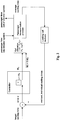
- Fig. 2 illustrates a controlled process adapted to the allocation of landing calls in an elevator group whereby, according to the invention, separate traffic detection is eliminated and the system is rendered immune to both changes in the process itself and to external factors. This naturally applies only within the limits in which the process is able to reach the set goal.
- the quantity to be controlled is preferably the average waiting time of passengers traveling in the system. Measurements of this quantity are obtained via the landing call buttons.
- a call is activated when a passenger having entered the system issues a call, and it is deactivated when the elevator to which it has been allocated starts decelerating to stop at the destination floor, thereby resetting the call.
- the individual waiting times thus realized are compared to a set target time.
- the control signal u obtained from the integrating controller is converted into a waiting time optimization coefficient W T in accordance with formula 2.
- the integral of the error e drives the process along its characteristic curve to a point at which the error e becomes zero. For example, if the average of realized call times tends to lag behind the target, which means that the system serves too well e.g. in consequence of a low traffic intensity, then the error e grows in the positive direction. As a result of this, weighting coefficient W T increases while W E decreases, so the characteristic curve for waiting time develops towards longer waiting times, in other words, the importance of energy consumption in the selection of route alternatives is increasing while the importance of waiting times is decreasing.
- Fig. 3 shows how the weighting coefficients automatically assume values at which the long-term average of actual waiting times corresponds to the target value.
- the weighting coefficients assume a value in the right range during the first 40 calls.
- the controller is able to keep the long-term average of waiting times relatively accurately at the target value.
- the average of the respective waiting times is found to be 20.
- the waiting time measurement is very noisy, short-term local traffic variations cannot be avoided. This is not the final aim, either, but the aim is to bring the long-term average of the service to the set level, and this aim is thus clearly realized.
- the elevator group control method of the invention brings very significant savings in energy consumption without substantially impairing the service level of the elevator group as a whole.
- An elevator group is designed to answer to the transportation needs in peak traffic conditions in the building and to provide an acceptable service level during hours of peak traffic.
- traditional elevator group control produces excess capacity in the sense that passengers are still served as efficiently as possible. This leads to very short waiting times and a high energy consumption. If a lower service level requirement is applied during hours of lighter traffic, i.e. if services are not always provided as quickly as possible, this excess capacity can be converted into a saving in energy consumption.
- the ultimate reason for the energy saving achieved by the method of the invention is the unsymmetrical nature of elevator movements.
- the elevator is designed in such a way that the car and counterweight are in balance when the car is carrying a half-load. In practical passenger traffic, the car load only seldom has a weight that balances the elevator, i.e. generally the elevator is lighter to move in one direction than in the other direction, in other words, moving the elevator in one direction requires less energy than moving it in the other direction.
- the car During light traffic periods, the car generally moves with a very small load, in other words, the car and counterweight are far from a balanced state.
- the routes of the elevators in the building can be so designed and arranged that the elevators are moved by routes as advantageous as possible in respect of energy consumption, yet with an aim to achieve the set target time.
- the entire elevator group can be brought under complete control.
- the method of the invention it is possible to specify a service level that the elevator system will produce for passengers regardless of the traffic situation and to convert the excess capacity of the elevator group and its control system into an energy saving during periods of lighter traffic.
- the method can be implemented as a closed loop that eliminates the effects of both internal and external factors and stabilizes the service level of the system.
- the service level can be defined simply by defining a desired average service time, such as waiting time.
- the target to be set in the method of the invention is of a sufficiently general nature and is reasonable and easy to understand, it is possible to make a simple user interface for it and even to allow the target waiting time to be set by the personnel of the building. For the target time, it is also possible to prepare a user-programmable calendar, allowing different service levels to be set for different days of the week and times of the day.
Landscapes
- Engineering & Computer Science (AREA)
- Automation & Control Theory (AREA)
- Elevator Control (AREA)
Claims (3)
- Procédé de commande d'un groupe d'ascenseurs destiné à l'affectation d'appels de palier, dans lequel procédé une valeur cible de temps de service est attribuée à un temps de service donné du groupe d'ascenseurs et des appels de palier sont affectés à des ascenseurs de sorte que la valeur cible de temps de service attribuée soit exécutée sur une moyenne, la consommation d'énergie du groupe d'ascenseurs étant ainsi réduite, caractérisé en ce que les itinéraires d'ascenseurs sont choisis de sorte qu'un terme de coût J =WT·TN (R) + WE - EN (R) est minimisé, où TN (R) est une somme normalisée de temps d'appels pour l'itinéraire alternatif R, et EN (R) est une consommation d'énergie normalisée résultant du choix de l'itinéraire alternatif R, et WT et WE sont des coefficients de pondération de TN (R) et EN (R) de telle sorte que 0 < WT < 1 et WE = 1 - WT, moyennant quoi WT et WE sont déterminés par le biais d'une intégration par un moyen de commande en utilisant uniquement le bloc d'intégration des trois blocs de moyen de commande PID possibles, dans lequel le temps de service réel est comparé à la valeur cible du temps de service et une erreur entre ceux-ci est intégrée, une constante de temps d'intégration étant choisie suffisamment longue pour garantir qu'une mesure de bruit individuelle du temps de service réel ne peut pas avoir un effet trop fort sur un signal de commande u mais est choisie suffisamment courte pour garantir que le groupe d'ascenseurs réagisse aux changements survenant dans le type de circulation et son intensité, le signal de commande u, qui est obtenu à partir du moyen de commande et par lequel le fonctionnement du groupe d'ascenseurs peut être dirigé de manière appropriée de sorte que l'erreur est éliminée, est converti dans le coefficient de pondération pour une optimisation du temps de service WT = 1 - WE.
- Procédé selon la revendication 1, caractérisé en ce que le temps de service utilisé est le temps d'appel, le temps d'attente du passager, le temps de déplacement ou le temps de trajet.
- Procédé selon une quelconque des revendications 1 à 2, caractérisé en ce que la valeur cible du temps de service est définie de sorte qu'elle varie sur la base des temps de la journée, des jours de la semaine et/ou des périodes de vacances.
Applications Claiming Priority (3)
| Application Number | Priority Date | Filing Date | Title |
|---|---|---|---|
| FI20010355A FI112064B (fi) | 2001-02-23 | 2001-02-23 | Hissiryhmän ohjausmenetelmä |
| FI20010355 | 2001-02-23 | ||
| PCT/FI2002/000135 WO2002066356A2 (fr) | 2001-02-23 | 2002-02-19 | Procede de commande d'un groupe d'ascenseurs |
Publications (2)
| Publication Number | Publication Date |
|---|---|
| EP1361998A2 EP1361998A2 (fr) | 2003-11-19 |
| EP1361998B1 true EP1361998B1 (fr) | 2019-11-13 |
Family
ID=8560483
Family Applications (1)
| Application Number | Title | Priority Date | Filing Date |
|---|---|---|---|
| EP02700304.5A Expired - Lifetime EP1361998B1 (fr) | 2001-02-23 | 2002-02-19 | Procede de commande d'un groupe d'ascenseurs |
Country Status (8)
| Country | Link |
|---|---|
| EP (1) | EP1361998B1 (fr) |
| JP (1) | JP4177668B2 (fr) |
| KR (1) | KR100861249B1 (fr) |
| CN (1) | CN1239371C (fr) |
| AU (1) | AU2002233392B2 (fr) |
| BR (1) | BR0207555B1 (fr) |
| FI (1) | FI112064B (fr) |
| WO (1) | WO2002066356A2 (fr) |
Families Citing this family (13)
| Publication number | Priority date | Publication date | Assignee | Title |
|---|---|---|---|---|
| FI115130B (fi) * | 2003-11-03 | 2005-03-15 | Kone Corp | Menetelmä ja laite hissiryhmän ohjaamiseksi |
| US7791991B2 (en) | 2005-03-02 | 2010-09-07 | Pioneer Corporation | Information reproducing apparatus, information reproducing method, information reproducing program, and information recording medium |
| JP4139819B2 (ja) * | 2005-03-23 | 2008-08-27 | 株式会社日立製作所 | エレベータの群管理システム |
| FI117282B (fi) | 2005-05-12 | 2006-08-31 | Kone Corp | Hissijärjestelmä |
| CN102300798B (zh) * | 2009-01-27 | 2015-06-10 | 因温特奥股份公司 | 用于运行电梯设备的方法 |
| SG11201400868QA (en) * | 2011-10-14 | 2014-07-30 | Inventio Ag | Elevator system with multiple cars |
| US8938348B2 (en) * | 2011-12-13 | 2015-01-20 | Mitsubishi Electric Research Laboratories, Inc. | Method for optimizing run curve of vehicles |
| CN106458503B (zh) | 2014-06-10 | 2022-05-03 | 通力股份公司 | 用于控制乘客运输系统的方法以及运输系统 |
| CN104085749A (zh) * | 2014-07-02 | 2014-10-08 | 吴优良 | 一种电梯运行智能分配管理方法 |
| WO2016070937A1 (fr) * | 2014-11-07 | 2016-05-12 | Kone Corporation | Procédé pour commander un système d'ascenseurs |
| CN110217656B (zh) * | 2019-06-20 | 2021-11-30 | 江苏正一物联科技有限公司 | 带能耗分析的电梯群管理监控系统及方法 |
| WO2021014050A1 (fr) * | 2019-07-19 | 2021-01-28 | Kone Corporation | Attribution d'appel d'ascenseur |
| CN113526278B (zh) * | 2021-07-23 | 2023-04-25 | 广州广日电梯工业有限公司 | 电梯的调度控制方法以及电梯的调度控制装置 |
Family Cites Families (4)
| Publication number | Priority date | Publication date | Assignee | Title |
|---|---|---|---|---|
| JPS5811479A (ja) | 1981-07-15 | 1983-01-22 | 株式会社日立製作所 | エレベ−タ群管理制御装置 |
| JPS5981179A (ja) * | 1982-07-14 | 1984-05-10 | Matsushita Electric Ind Co Ltd | ペンタツチ式ドツトプリンタ |
| US4815568A (en) * | 1988-05-11 | 1989-03-28 | Otis Elevator Company | Weighted relative system response elevator car assignment system with variable bonuses and penalties |
| US5612519A (en) | 1992-04-14 | 1997-03-18 | Inventio Ag | Method and apparatus for assigning calls entered at floors to cars of a group of elevators |
-
2001
- 2001-02-23 FI FI20010355A patent/FI112064B/fi not_active IP Right Cessation
-
2002
- 2002-02-19 AU AU2002233392A patent/AU2002233392B2/en not_active Expired
- 2002-02-19 WO PCT/FI2002/000135 patent/WO2002066356A2/fr not_active Ceased
- 2002-02-19 EP EP02700304.5A patent/EP1361998B1/fr not_active Expired - Lifetime
- 2002-02-19 JP JP2002565879A patent/JP4177668B2/ja not_active Expired - Lifetime
- 2002-02-19 KR KR1020037011074A patent/KR100861249B1/ko not_active Expired - Lifetime
- 2002-02-19 CN CNB028052064A patent/CN1239371C/zh not_active Expired - Lifetime
- 2002-02-19 BR BRPI0207555-5B1A patent/BR0207555B1/pt not_active IP Right Cessation
Non-Patent Citations (1)
| Title |
|---|
| None * |
Also Published As
| Publication number | Publication date |
|---|---|
| AU2002233392B2 (en) | 2006-02-16 |
| FI20010355L (fi) | 2002-08-24 |
| BR0207555A (pt) | 2004-09-14 |
| EP1361998A2 (fr) | 2003-11-19 |
| HK1064657A1 (en) | 2005-02-04 |
| JP2004520252A (ja) | 2004-07-08 |
| BR0207555B1 (pt) | 2013-07-23 |
| FI112064B (fi) | 2003-10-31 |
| WO2002066356A2 (fr) | 2002-08-29 |
| WO2002066356A3 (fr) | 2003-02-27 |
| KR20040007453A (ko) | 2004-01-24 |
| FI20010355A0 (fi) | 2001-02-23 |
| JP4177668B2 (ja) | 2008-11-05 |
| KR100861249B1 (ko) | 2008-10-02 |
| CN1492829A (zh) | 2004-04-28 |
| CN1239371C (zh) | 2006-02-01 |
Similar Documents
| Publication | Publication Date | Title |
|---|---|---|
| AU2002233392B2 (en) | Method for controlling an elevator group | |
| US7083027B2 (en) | Elevator group control method using destination floor call input | |
| US8978833B2 (en) | Double-deck elevator group controller | |
| US6857506B1 (en) | Elevator control method based on energy consumption | |
| AU2002233392A1 (en) | Method for controlling an elevator group | |
| US5229559A (en) | Defining the traffic mode of an elevator, based on traffic statistical data and traffic type definitions | |
| EP1680345B1 (fr) | Procede et dispositif permettant de commander un groupe d'ascenseurs | |
| CA2134948C (fr) | Systeme de commande d'ascenseur utilisant des facteurs de poids voluminique pour ce qui est des etages et de l'ascenseur | |
| EP0895506A1 (fr) | Procede de commande d'un groupe d'ascenseurs constitue de deux ascenseurs a cabines superposees, aux fins d'optimisation de la duree de transport des passagers | |
| AU2002233391A1 (en) | Method for controlling an elevator group | |
| US6935467B1 (en) | Method for controlling an elevator group | |
| JP5774643B2 (ja) | エレベータ群管理制御装置、及び、エレベータ群管理制御方法 | |
| JP6370008B1 (ja) | エレベータ管理システム | |
| AU2003262594B2 (en) | Elevator group control method | |
| EP0688733B1 (fr) | Commande de cabines d'ascenseur sous utilisation d'une réévalution des assignations d'appels | |
| EP2221266A1 (fr) | Système de gestion d'un groupe d'ascenseurs | |
| EP3003942A1 (fr) | Commande d'allocation d'ascenseur à étages multiples | |
| JP6833918B2 (ja) | エレベータの群管理システム | |
| JP2005112520A (ja) | エレベータシステム | |
| HK1006111B (en) | Elevator dispatching employing reevaluation of hall call assignments | |
| HK1097499A1 (en) | An elevator system and a method of controlling traffic in the elevator system |
Legal Events
| Date | Code | Title | Description |
|---|---|---|---|
| PUAI | Public reference made under article 153(3) epc to a published international application that has entered the european phase |
Free format text: ORIGINAL CODE: 0009012 |
|
| 17P | Request for examination filed |
Effective date: 20030828 |
|
| AK | Designated contracting states |
Kind code of ref document: A2 Designated state(s): AT BE CH CY DE DK ES FI FR GB GR IE IT LI LU MC NL PT SE TR |
|
| AX | Request for extension of the european patent |
Extension state: AL LT LV MK RO SI |
|
| 17Q | First examination report despatched |
Effective date: 20090312 |
|
| GRAP | Despatch of communication of intention to grant a patent |
Free format text: ORIGINAL CODE: EPIDOSNIGR1 |
|
| INTG | Intention to grant announced |
Effective date: 20190619 |
|
| GRAS | Grant fee paid |
Free format text: ORIGINAL CODE: EPIDOSNIGR3 |
|
| GRAA | (expected) grant |
Free format text: ORIGINAL CODE: 0009210 |
|
| AK | Designated contracting states |
Kind code of ref document: B1 Designated state(s): DE FR GB IT |
|
| REG | Reference to a national code |
Ref country code: GB Ref legal event code: FG4D |
|
| REG | Reference to a national code |
Ref country code: DE Ref legal event code: R096 Ref document number: 60250039 Country of ref document: DE |
|
| REG | Reference to a national code |
Ref country code: DE Ref legal event code: R097 Ref document number: 60250039 Country of ref document: DE |
|
| PLBE | No opposition filed within time limit |
Free format text: ORIGINAL CODE: 0009261 |
|
| STAA | Information on the status of an ep patent application or granted ep patent |
Free format text: STATUS: NO OPPOSITION FILED WITHIN TIME LIMIT |
|
| 26N | No opposition filed |
Effective date: 20200814 |
|
| PG25 | Lapsed in a contracting state [announced via postgrant information from national office to epo] |
Ref country code: IT Free format text: LAPSE BECAUSE OF FAILURE TO SUBMIT A TRANSLATION OF THE DESCRIPTION OR TO PAY THE FEE WITHIN THE PRESCRIBED TIME-LIMIT Effective date: 20191113 |
|
| PGFP | Annual fee paid to national office [announced via postgrant information from national office to epo] |
Ref country code: FR Payment date: 20210224 Year of fee payment: 20 |
|
| PGFP | Annual fee paid to national office [announced via postgrant information from national office to epo] |
Ref country code: GB Payment date: 20210219 Year of fee payment: 20 Ref country code: DE Payment date: 20210217 Year of fee payment: 20 |
|
| REG | Reference to a national code |
Ref country code: DE Ref legal event code: R071 Ref document number: 60250039 Country of ref document: DE |
|
| REG | Reference to a national code |
Ref country code: GB Ref legal event code: PE20 Expiry date: 20220218 |
|
| PG25 | Lapsed in a contracting state [announced via postgrant information from national office to epo] |
Ref country code: GB Free format text: LAPSE BECAUSE OF EXPIRATION OF PROTECTION Effective date: 20220218 |