EP1357497A1 - Stock planning method - Google Patents
Stock planning method Download PDFInfo
- Publication number
- EP1357497A1 EP1357497A1 EP02018909A EP02018909A EP1357497A1 EP 1357497 A1 EP1357497 A1 EP 1357497A1 EP 02018909 A EP02018909 A EP 02018909A EP 02018909 A EP02018909 A EP 02018909A EP 1357497 A1 EP1357497 A1 EP 1357497A1
- Authority
- EP
- European Patent Office
- Prior art keywords
- stock
- goods
- management server
- moving average
- transport
- Prior art date
- Legal status (The legal status is an assumption and is not a legal conclusion. Google has not performed a legal analysis and makes no representation as to the accuracy of the status listed.)
- Ceased
Links
Images




Classifications
-
- G—PHYSICS
- G06—COMPUTING OR CALCULATING; COUNTING
- G06Q—INFORMATION AND COMMUNICATION TECHNOLOGY [ICT] SPECIALLY ADAPTED FOR ADMINISTRATIVE, COMMERCIAL, FINANCIAL, MANAGERIAL OR SUPERVISORY PURPOSES; SYSTEMS OR METHODS SPECIALLY ADAPTED FOR ADMINISTRATIVE, COMMERCIAL, FINANCIAL, MANAGERIAL OR SUPERVISORY PURPOSES, NOT OTHERWISE PROVIDED FOR
- G06Q10/00—Administration; Management
- G06Q10/08—Logistics, e.g. warehousing, loading or distribution; Inventory or stock management
-
- G—PHYSICS
- G06—COMPUTING OR CALCULATING; COUNTING
- G06Q—INFORMATION AND COMMUNICATION TECHNOLOGY [ICT] SPECIALLY ADAPTED FOR ADMINISTRATIVE, COMMERCIAL, FINANCIAL, MANAGERIAL OR SUPERVISORY PURPOSES; SYSTEMS OR METHODS SPECIALLY ADAPTED FOR ADMINISTRATIVE, COMMERCIAL, FINANCIAL, MANAGERIAL OR SUPERVISORY PURPOSES, NOT OTHERWISE PROVIDED FOR
- G06Q10/00—Administration; Management
- G06Q10/08—Logistics, e.g. warehousing, loading or distribution; Inventory or stock management
- G06Q10/087—Inventory or stock management, e.g. order filling, procurement or balancing against orders
-
- G—PHYSICS
- G06—COMPUTING OR CALCULATING; COUNTING
- G06Q—INFORMATION AND COMMUNICATION TECHNOLOGY [ICT] SPECIALLY ADAPTED FOR ADMINISTRATIVE, COMMERCIAL, FINANCIAL, MANAGERIAL OR SUPERVISORY PURPOSES; SYSTEMS OR METHODS SPECIALLY ADAPTED FOR ADMINISTRATIVE, COMMERCIAL, FINANCIAL, MANAGERIAL OR SUPERVISORY PURPOSES, NOT OTHERWISE PROVIDED FOR
- G06Q40/00—Finance; Insurance; Tax strategies; Processing of corporate or income taxes
- G06Q40/06—Asset management; Financial planning or analysis
Definitions
- the present invention relates to a technique of stock management of goods, and more particularly to creating a stock plan for managing production and transport more efficiently.
- An object of the invention is to solve the above-described problems and to stabilize stocks at a predetermined level by reducing lacking/items and delivery delay.
- a quantity of necessary stock is calculated from demand and supply characteristics of goods by taking into consideration a lead time and a planning cycle in a distribution route of goods.
- the lead time means a goods delivery period from the goods supplier to the demand side including a sales shop.
- the planning cycle means the period of stock planning to be periodically performed.
- the supply characteristics of goods include a demand quantity moving average which is an average of demand quantities in the unit of a predetermined period, and a standard deviation.
- the supply characteristics include a safety stock coefficient.
- the invention includes calculating a requested re-order quantity from a quantity of necessary stock.
- calculations include calculating the quantity of necessary stock and requested re-order quantity at the calculation time as well as calculating the future quantity of necessary stock and future requested re-order quantity.
- the invention also includes calculating the quantity of necessary stock and requested re-order quantity by taking into consideration the lead time which is a distribution period up to the sales shop.
- the embodiment is applied to stock planning for the distribution route in which goods manufactured by a maker are transported by a transport means of a transport company to a sales shop to sale the goods.
- the quantities of effective stocks at a production company, transport company and sales shop are calculated.
- the maker manages its production and grasps its production state by using a production management server 200 to be described later.
- the transport company manages its transport and its transport state by using a transport management server 300 to be described later.
- the sales shop manages its sales and its sales state by using a sales management server 400 to be described later.
- the stock planning server 100 may be integrated with any one of the production management server 200, transport management server 300 and sales management server 400.
- Each of the stock planning server 100, production management server 200, transport management server 300 and sales management server 400 may be a computer having a general architecture and processes in accordance with a program stored in a storage device.
- a goods ID 90 for identifying goods, a planning cycle C 10, a lead time L 20, a service factor s 30 and a moving average period tm 40 are input to the stock planning server 100.
- This information is input by a stock manager who is a user of the stock planning server.
- This information may correspond to the contents of goods sales strategies made by the stock manager.
- the planning cycle C 10 has a value satisfying a goods sales plan and representing that "the goods are supplied at what time cycle".
- the lead time L 20 indicates a time taken for goods to be distributed from the production site to the sales site.
- the service factor s 30 has a value satisfying the goods sales plan and representing that how many lacking goods are permitted.
- the information input at Step 1000 may be manually input, or actual values of distribution may be input as such information.
- the stock planning server 100 requests the actual demand quantity of the goods during a predetermined period from the sales management server 400.
- the stock planning server 100 transmits request information containing the goods ID 90 and moving average period tm 40 to the sales management server 400.
- the sales management server 400 calculates the actual demand quantity corresponding to the transmitted request information.
- the sales quantity during the moving average period tm 40 is searched from the actual sales DB 410 shown in Fig. 3 to calculate actual demand quantities.
- Step 1003 the sale management server 400 transmits the calculated actual demand quantities to the stock management server 100.
- the stock management server 100 calculates the demand quantity moving average Qd 15 from the actual demand quantities received at Step 1004.
- the demand quantity moving average Qd 15 is an average of actual demand quantities during predetermined partial moving average periods constituting the moving average period tm 40. For example, if the moving average period tm 40 is one year, the partial moving average period is one week. In this case, the demand quantity moving average Qd 15 is calculated by separating the actual demand quantities into 52 weeks of the year.
- the demand quantity moving average Qd 15 may be calculated from the following equation (1).
- Qd ⁇ (Qd(i))/tm
- the stock planning server 100 enters the calculated demand quantity moving average Qd 15 in the cell of the column 122 of the stock planning table 120 shown in Fig. 7, the cell corresponding to the goods ID 90.
- the sales management server 400 may calculate the sales quantity during the latest partial moving average period at Step 1002 and transmit the calculated sales quantity to the stock management server 100 at Step 1003.
- the stock planning server 100 calculates the demand quantity moving average Qd 15 by using the received sales quantity and the sales quantities during the partial moving average periods in the past stored in the past actual sales DB 110 shown in Fig. 5.
- Step 1005 may be executed at the sales management server 400.
- the sales management server 400 calculates the demand quantity moving average Qd 15 and sends it to the stock planning server 100.
- Step 1007 the stock planning server 100 judges whether trend correction is necessary. If necessary, the trend correction is performed at Step 1008 to thereafter advance to Step 1009.
- the trend correction corrects the demand quantity Qd 15 in accordance with an increase/decrease trend of demands. In the judgement at Step 1007, if the increase/decrease trend is over a predetermined value, then it is judged that the trend correction is necessary. The details of the trend correction will be later described.
- the standard deviation ⁇ d 60 of the demand quantity moving average Qd 15 is calculated.
- the standard deviation ⁇ d 60 may be calculated from the following equation (2).
- the stock planning server 100 stores the calculated demand quantity Qd 15 in the field of the column 123 of the stock planning table 120 shown in Fig. 7, the field corresponding to the goods ID 90.
- I Qd(L + C) + k ⁇ (L + C) ⁇ d
- ⁇ d ⁇ ( ⁇ (Qd - Qd(i)) 2 /(tm - 1))
- the stock planning server 100 calculates a safety stock coefficient k 70 from the service factor s 30 by using the safety coefficient calculation table 150 shown in Fig. 8. Namely, the safety stock coefficient k 70 in the safety coefficient calculation table 150 corresponding to the service factor s 30 input at Step 1000 is selected.
- Step 1011 the stock planning server 100 judges whether the safety stock coefficient k 70 calculated at Step 1010 is necessary to be corrected. If necessary, the correction is made by using a safety stock coefficient correction table 160.
- Step 1011 whether the correction is necessary is judged from a distribution of the demand quantity moving average Qd 15. Namely, if at least one of the kurtosis and ⁇ d/Qd is over predetermined threshold values, it is judged that the correction is necessary.
- the reason for this is that a quantity of necessary stock is determined on the assumptions that the demand has generally a normal distribution. However, an actual demand distribution is not always a normal distribution, but the skirt may become broader than the normal distribution or the kurtosis becomes higher than the normal distribution. In these cases, the service factor does not match actual demand.
- the stock planning server 100 calculates an effective stock quantity in order to calculate the requested re-order quantity.
- the process at Step 1014 which is an example of calculating the effective stock quantity will be described in the following.
- the effective stock quantity is a sum of the actual stock quantity and remaining order. Therefore, the effective stock quantity is the order quantity not still accepted (arrived) among the order quantity.
- the effective stock quantity may be calculated by subtracting the quantity accepted (arrived) from the order quantity.
- the stock planning server 100 requests the actual stock quantities from the production management server 200.and sales management server 400.
- the stock management server 100 transmits actual stock request information including the goods ID 90 to the production management server 200 and sales management server 400.
- the production management server 200 searches the actual stock of the maker corresponding to the goods ID 90 from the production plan - actual production DB 210 shown in Fig. 9. For example, the number in the order quantity (accepted order quantity) 214 corresponding to the goods ID 90 is output as the search result.
- the quantity order 214 may be a sum of values in 214-a to 214-e instead of the search result.
- the order quantity 214 indicates the order quantity of production instructed to or by the maker, and the items 214-a to 214-e show the contents of the order quantity 214.
- the sales management server 400 searches from the stock management DB 420 shown in Fig. 4 the actual stock of the maker (company) corresponding to the goods ID 90 transmitted from the stock planning server 100 at Step 1014. For example, the quantity 426 of stock in hand corresponding to the goods ID 423 corresponding to the transmitted goods ID 90 is output as the search result.
- Step 1019 the stock planning server 100 receives the actual stock transmitted from the production management server 200 at Step 1016 and the actual stock transmitted from the sales management server 400 at Step 1018.
- Step 1019 may be divided into two Steps corresponding to the number of transmission sources.
- the stock planning server 100 requests the delivery data including the delivery ID corresponding to the goods ID from the production management server 200.
- the stock planning server 100 transmits delivery data request information including the goods ID 90 to the production management server 200.
- the production management server 200 transmits information to the stock planning server 100, the information including the searched delivery ID and delivery quantity and the corresponding goods ID.
- the stock planning server 100 requests transport information which is the information on the goods under transport corresponding to the delivery ID transmitted from the production management server 200.
- the stock planning server 100 transmits transport information request information including the delivery ID to the transport management server 300.
- the transport management server 300 transmits the transport information to the stock planning server 100.
- the stock planning server 100 calculates the delivery quantity for the goods ID from the transmitted transport information by using the delivery DB 120 shown in Fig. 6. Namely, the stock planning server 100 identifies the goods ID corresponding to the goods ID 90 from the delivery IDs contained in the transmitted transport information and searches the delivery (order) quantity from the item 131.
- the stock planning server 100 calculates the effective stock quantity by adding the actual stock received at Step 1019 and the delivery quantity calculated at Step 1026.
- the effective stock quantity may be calculated in the following manner.
- the stock planning server 100 requests the effective stock quantity from the sales management server 400.
- the stock planning server 100 transmits effective stock quantity request information including the goods ID 90 to the sales management server 400.
- the sales management server 400 calculates the order quantity corresponding to the goods ID 90 from the stock management DB 420. Namely, the sales management server 400 checks from the item 425 whether the goods corresponding to the goods ID 90 arrived. If arrived, the quantity 426 of stock in hand is used as the effective stock quantity. If a plurality of items corresponding to the goods ID 90 exists in the stock management DB 420, the total quantity in these items is used as the effective stock quantity.
- the stock planning server 100 receives the effective stock quantity from the sales management server 400.
- the stock planning server 100 receives from the production management server 200 the quantity 214-a under production planning,..., and the quantity 214-d of production end corresponding to the good ID 90. This information is searched by the production management server 200 from the production plan - actual production DB 210.
- the stock planning server 100 receives from the transport management server 300 the quantity 129-e under delivery/transport corresponding to the goods ID 90. This transport quantity may be calculated in the manner similar to Steps 1020 to 1026.
- the stock planning server 100 receives from the sales management server 400 the quantity 426-a of goods arrived at the sales shop and the quantity 426-b of salable goods (or the quantity 426 of stock in hand) corresponding to the goods ID 90.
- the sales management server 400 searches from the stock management DB 420 the quantity 426-a of goods arrived at the sales shop and the quantity 426-b of salable goods (or the quality 426 of stock in hand) corresponding to the goods ID 90.
- the stock planning server 100 adds the quantity 426-a under production planning to the quantity 426-b of salable goods to use the total quantity as the effective stock quantity.
- the stock planning server 100 receives actual physical stock quantities from the production management server 200, transport management server 300 and sales management server 400.
- the stock planning server 100 receives a remaining order corresponding to the goods ID 90 from at least one of the production management server 200, transport management server 300 and sales management server 400.
- the effective stock quantity is calculated by adding the actual stock quantity to the remaining order.
- the stock planning server 100 may receive order state information representative of the order information including the actual stock quantity and remaining order at predetermined timings from the production management server 200, transport management server 300 and sales management server 400. In this case, the effective stock quantity is calculated from the order state information.
- the stock planning server 100 calculates the requested re-order quantity by subtracting the effective stock quantity calculated at Step 1027 from the quantity 180 of necessary stock calculated at Step 1013.
- the stock planning server 100 judges whether the calculated requested re-order quantity is to be corrected. If it is judged to be corrected, correction is made. These processes are performed at Steps 1029 and 1030, and the details will be later given.
- the stock planning server 100 instructs the production management server 200 to perform a re-order for the requested re-order quantity.
- the stock planning server 100 transmits the re-order request information including the goods ID 90 and requested re-order quantity to the production management server 200.
- the stock planning server 100 records the requested re-order quantity in the field of the item 127 of the stock planning table 120 corresponding to the goods ID.
- Step 1032 the production management server 200 performs production management in accordance with the requested re-order information.
- Step 100 the flow returns to Step 100 to repeat the above-described processes.
- similar processes are performed in accordance with the contents of each DB updated by the processes performed earlier.
- the stock planning server 100 calculates the demand quantity moving average Qd at Steps 1005 to 1008 in accordance with the current stock state.
- the quantity of necessary stock may be calculated by calculating each demand quantity moving average up to the lead time C 20.
- Such a demand quantity moving average can be calculated by the following methods: (1) human forecast; (2) utilizing the demand quantity moving average Qd calculated at Steps 1005 to 1008; and (3) computer forecast by the stock planning server 100 or the like.
- an input value of each item of the stock planning table 120 is calculated and a quantity of necessary stock at each timing is sequentially calculated in accordance with the calculated input values. This calculation is made because each item at the next timing changes with the quantity of necessary stock (requested re-order quantity).
- Step 1007 if the degree of a demand change with time is equal to or greater than the standard, it is judged that the trend correction is necessary.
- the change degree is calculated in the following manner.
- the actual demand Qd (i) at each timing is obtained from the item 127 of the stock planning table 120.
- the actual demand Qd(i) before a predetermined period from each timing is obtained in the similar manner.
- a difference between the actual demands is calculated and compared with a predetermined value. If the number of differences larger than the predetermined value is larger than a predetermined number, it is judged that the trend correction is necessary.
- the planning cycle C 10 is included in the period before the predetermined period from each timing.
- the predetermined value and number may be input from a user to the stock planning server 100.
- Step 1008 the trend correction is executed.
- the demand quantity moving average Qd is corrected to obtain a demand quantity moving average at the timing of the lead time C 20. In the above manner, the trend correction is completed.
- Step 1030 the requested re-order quantity calculated at Step 1028 is corrected to the demand quantity moving average Qd 15. Steps 1029 and 1030 may be performed before Step 1028. In this case, if it is judged at Step 1029 that the correction is necessary, the process at Step 1028 may be omitted by using the requested re-order quantity calculated at Step 1030.
Landscapes
- Business, Economics & Management (AREA)
- Engineering & Computer Science (AREA)
- Economics (AREA)
- Development Economics (AREA)
- Accounting & Taxation (AREA)
- Finance (AREA)
- Marketing (AREA)
- Physics & Mathematics (AREA)
- Operations Research (AREA)
- Theoretical Computer Science (AREA)
- Entrepreneurship & Innovation (AREA)
- Strategic Management (AREA)
- General Physics & Mathematics (AREA)
- Human Resources & Organizations (AREA)
- General Business, Economics & Management (AREA)
- Quality & Reliability (AREA)
- Tourism & Hospitality (AREA)
- Technology Law (AREA)
- Game Theory and Decision Science (AREA)
- Management, Administration, Business Operations System, And Electronic Commerce (AREA)
- General Factory Administration (AREA)
Abstract
Conventional techniques are associated with some problem on stock and goods delivery depending upon a change in demand. Because of this problem, it is necessary to have a large quantity of stock as safety stock. A stock planning server (100) calculates a quantity of necessary stock by using the demand and supply characteristics of goods and the lead time and planning cycle in a distribution route of the goods supplied from a production management server (200), a transport management server (300) and a sales management server (400). <IMAGE>
Description
The present invention relates to a technique
of stock management of goods, and more particularly to
creating a stock plan for managing production and
transport more efficiently.
As a conventional technique of stock
management of goods, the technique disclosed in the
Publication JP-A-8-235274 is known. This conventional
technique utilizes both a "manufacturing resource
planning (MRP) system and a "just-in-time (JIT)
system". More specifically, this Publication discloses
a stock management system: although the MRP system is
incorporated, JIT items can be dealt with; by making
stock forecast of JIT items, the adequacy of "signboard
(kanban) numbers" and "order quantities" can be
verified; and by shortening a renewal time of stock
standard values ("signboard numbers" and "order
quantities"), the renewal cycle can be shortened so
that supply activities following a market change can be
made.
The above-described conventional technique
is, however, associated with some problem on stock and
goods delivery depending upon a change in demand.
Because of this problem, it is necessary to have a
large quantity of stock as safety stock.
This results from that the conventional
technique is a mere aggregation of the "MRP system" and
the "JIT system". According to the "MRP" system,
production quantities are leveled and an actual stock
of inventory is adjusted by a changing demand quantity.
From this reason, the "MRP" system tries to reduce an
actual stock of inventory by making high precision
demand forecast. However, if the precision of demand
forecast is not high, an excessive or insufficient
stock of inventory becomes actual.
According to the "JIT" system, actual stocks
of inventory are leveled and production quantities are
adjusted by a changing demand quantity. Since the
"JIT" system does not require to have a safety stock
for a demand change, if the precision of signboard size
is poor, there occur lacking items and delivery delay.
Since the above-described conventional
technique is a mere aggregation of the "MRP" system and
the "JIT" system, the problems of an excessive or
insufficient stock, lacking items and delivery delay
cannot be solved at the same time.
An object of the invention is to solve the
above-described problems and to stabilize stocks at a
predetermined level by reducing lacking/items and
delivery delay.
In order to solve the above-described
problems, according to the invention, a quantity of
necessary stock is calculated from demand and supply
characteristics of goods by taking into consideration a
lead time and a planning cycle in a distribution route
of goods.
The lead time means a goods delivery period
from the goods supplier to the demand side including a
sales shop. The planning cycle means the period of
stock planning to be periodically performed.
The supply characteristics of goods include a
demand quantity moving average which is an average of
demand quantities in the unit of a predetermined
period, and a standard deviation. The supply
characteristics include a safety stock coefficient.
The invention includes calculating a
requested re-order quantity from a quantity of
necessary stock. In this case, calculations include
calculating the quantity of necessary stock and
requested re-order quantity at the calculation time as
well as calculating the future quantity of necessary
stock and future requested re-order quantity. The
invention also includes calculating the quantity of
necessary stock and requested re-order quantity by
taking into consideration the lead time which is a
distribution period up to the sales shop.
Other objects, features and advantages of the
invention will become apparent from the following
description of the embodiments of the invention taken
in conjunction with the accompanying drawings.
An application field of the embodiment will
be first described. The embodiment is applied to stock
planning for the distribution route in which goods
manufactured by a maker are transported by a transport
means of a transport company to a sales shop to sale
the goods. The quantities of effective stocks at a
production company, transport company and sales shop
are calculated. There may be a plurality of makers,
transport companies and sales shops which deal with
object goods.
The maker manages its production and grasps
its production state by using a production management
server 200 to be described later. The transport
company manages its transport and its transport state
by using a transport management server 300 to be
described later. The sales shop manages its sales and
its sales state by using a sales management server 400
to be described later.
The embodiment of the invention will be
described with reference to the accompanying drawings.
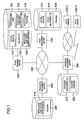
Fig. 1 is a diagram showing the structure of a stock
planning system according to the embodiment. The stock
planning system has a stock planning server 100, the
production management server 200, transport management
server 300 and sales management server 400,
respectively interconnected by a network 500. A
plurality of servers may be used for each of these
servers. The numbers of production management servers
200, transport management servers 300 and sales
management servers 400 are determined by the topology
of a distribution route.
The stock planning server 100 may be
integrated with any one of the production management
server 200, transport management server 300 and sales
management server 400. Each of the stock planning
server 100, production management server 200, transport
management server 300 and sales management server 400
may be a computer having a general architecture and
processes in accordance with a program stored in a
storage device.
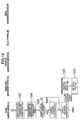
Next, processes to be executed by the
embodiment will be described with reference to the flow
charts shown in Figs. 2, 11, 12 and 13.
First, at Step 1000 a goods ID 90 for
identifying goods, a planning cycle C 10, a lead time L
20, a service factor s 30 and a moving average period
tm 40 are input to the stock planning server 100. This
information is input by a stock manager who is a user
of the stock planning server.
This information may correspond to the
contents of goods sales strategies made by the stock
manager. The planning cycle C 10 has a value
satisfying a goods sales plan and representing that
"the goods are supplied at what time cycle". The lead
time L 20 indicates a time taken for goods to be
distributed from the production site to the sales site.
The service factor s 30 has a value satisfying the
goods sales plan and representing that how many lacking
goods are permitted.
As will be later described, the information
input at Step 1000 may be manually input, or actual
values of distribution may be input as such
information.
Next, at Step 1001 the stock planning server
100 requests the actual demand quantity of the goods
during a predetermined period from the sales management
server 400. For example, the stock planning server 100
transmits request information containing the goods ID
90 and moving average period tm 40 to the sales
management server 400.
Next, at Step 1002 the sales management
server 400 calculates the actual demand quantity
corresponding to the transmitted request information.
By using the received goods ID 90 as a search key, the
sales quantity during the moving average period tm 40
is searched from the actual sales DB 410 shown in Fig.
3 to calculate actual demand quantities.
Next, at Step 1003 the sale management server
400 transmits the calculated actual demand quantities
to the stock management server 100.
Next, the stock management server 100
calculates the demand quantity moving average Qd 15
from the actual demand quantities received at Step
1004. The demand quantity moving average Qd 15 is an
average of actual demand quantities during
predetermined partial moving average periods
constituting the moving average period tm 40. For
example, if the moving average period tm 40 is one
year, the partial moving average period is one week.
In this case, the demand quantity moving average Qd 15
is calculated by separating the actual demand
quantities into 52 weeks of the year. The demand
quantity moving average Qd 15 may be calculated from
the following equation (1).
Qd = Σ(Qd(i))/tm
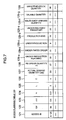
The stock planning server 100 enters the
calculated demand quantity moving average Qd 15 in the
cell of the column 122 of the stock planning table 120
shown in Fig. 7, the cell corresponding to the goods ID
90.
The sales management server 400 may calculate
the sales quantity during the latest partial moving
average period at Step 1002 and transmit the calculated
sales quantity to the stock management server 100 at
Step 1003. In this case, the stock planning server 100
calculates the demand quantity moving average Qd 15 by
using the received sales quantity and the sales
quantities during the partial moving average periods in
the past stored in the past actual sales DB 110 shown
in Fig. 5.
Next, at Step 1007 the stock planning server
100 judges whether trend correction is necessary. If
necessary, the trend correction is performed at Step
1008 to thereafter advance to Step 1009. The trend
correction corrects the demand quantity Qd 15 in
accordance with an increase/decrease trend of demands.
In the judgement at Step 1007, if the increase/decrease
trend is over a predetermined value, then it is judged
that the trend correction is necessary. The details of
the trend correction will be later described.
Next, at Step 1009 the standard deviation σd
60 of the demand quantity moving average Qd 15 is
calculated. The standard deviation σd 60 may be
calculated from the following equation (2).
The stock planning server 100 stores the
calculated demand quantity Qd 15 in the field of the
column 123 of the stock planning table 120 shown in
Fig. 7, the field corresponding to the goods ID 90.
I = Qd(L + C) + k√(L + C)σd , then
σd = √(Σ(Qd - Qd(i))2 /(tm - 1))
Next, at Step 1010 the stock planning server 100
calculates a safety stock coefficient k 70 from the
service factor s 30 by using the safety coefficient
calculation table 150 shown in Fig. 8. Namely, the
safety stock coefficient k 70 in the safety coefficient
calculation table 150 corresponding to the service
factor s 30 input at Step 1000 is selected.
Next, at Step 1011 the stock planning server
100 judges whether the safety stock coefficient k 70
calculated at Step 1010 is necessary to be corrected.
If necessary, the correction is made by using a safety
stock coefficient correction table 160.
In the judgement at Step 1011, whether the
correction is necessary is judged from a distribution
of the demand quantity moving average Qd 15. Namely,
if at least one of the kurtosis and σd/Qd is over
predetermined threshold values, it is judged that the
correction is necessary. The reason for this is that a
quantity of necessary stock is determined on the
assumptions that the demand has generally a normal
distribution. However, an actual demand distribution
is not always a normal distribution, but the skirt may
become broader than the normal distribution or the
kurtosis becomes higher than the normal distribution.
In these cases, the service factor does not match
actual demand.
At Step 1012 by using the safety stock
coefficient correction table 160 corresponding to the
expected service factor s 30, the safety stock
coefficient is corrected to be larger for the demand
having a higher kurtosis than its threshold value, and
corrected to be smaller for the demand having a larger
σd(/Qd) than its threshold value.
Next, at Step 1013 the stock planning server
100 calculates a quantity I of necessary stock by using
a sum of the planning cycle C 10 and lead time L 20,
the demand quantity moving average Qd 15, safety stock
coefficient k 70 and standard deviation σd. Namely,
the quantity I of necessary stock is calculated from
the following equation (3).
I = Qd(L + C) + k√( L + C)·σd
Next, the stock planning server 100
calculates an effective stock quantity in order to
calculate the requested re-order quantity. The process
at Step 1014 which is an example of calculating the
effective stock quantity will be described in the
following. The effective stock quantity is a sum of
the actual stock quantity and remaining order.
Therefore, the effective stock quantity is the order
quantity not still accepted (arrived) among the order
quantity. The effective stock quantity may be
calculated by subtracting the quantity accepted
(arrived) from the order quantity.
First, at Step 1014 the stock planning server
100 requests the actual stock quantities from the
production management server 200.and sales management
server 400. The stock management server 100 transmits
actual stock request information including the goods ID
90 to the production management server 200 and sales
management server 400.
Next, at Step 1015 the production management
server 200 searches the actual stock of the maker
corresponding to the goods ID 90 from the production
plan - actual production DB 210 shown in Fig. 9. For
example, the number in the order quantity (accepted
order quantity) 214 corresponding to the goods ID 90 is
output as the search result. The quantity order 214
may be a sum of values in 214-a to 214-e instead of the
search result. The order quantity 214 indicates the
order quantity of production instructed to or by the
maker, and the items 214-a to 214-e show the contents
of the order quantity 214.
At Step 1017 the sales management server 400
searches from the stock management DB 420 shown in Fig.
4 the actual stock of the maker (company) corresponding
to the goods ID 90 transmitted from the stock planning
server 100 at Step 1014. For example, the quantity 426
of stock in hand corresponding to the goods ID 423
corresponding to the transmitted goods ID 90 is output
as the search result.
Next, at Step 1019 the stock planning server
100 receives the actual stock transmitted from the
production management server 200 at Step 1016 and the
actual stock transmitted from the sales management
server 400 at Step 1018. Step 1019 may be divided into
two Steps corresponding to the number of transmission
sources.
At Step 1020 the stock planning server 100
requests the delivery data including the delivery ID
corresponding to the goods ID from the production
management server 200. For example, the stock planning
server 100 transmits delivery data request information
including the goods ID 90 to the production management
server 200.
Next, at Step 1021 the production management
server 200 searches from the production plan - actual
production DB 210 the delivery ID corresponding to the
goods ID 90 and the delivery quantity. Namely, the
production management server 200 searches from the item
211 the goods ID corresponding to the transmitted goods
ID 90, and searches from the item 214-e1 the delivery
ID in the same column corresponding to the searched
goods ID.
Next, at Step 1022 the production management
server 200 transmits information to the stock planning
server 100, the information including the searched
delivery ID and delivery quantity and the corresponding
goods ID.
Next, at Step 1023 the stock planning server
100 requests transport information which is the
information on the goods under transport corresponding
to the delivery ID transmitted from the production
management server 200. For example, the stock planning
server 100 transmits transport information request
information including the delivery ID to the transport
management server 300.
Next, at Step 1024 the transport management
server 300 searches transport information corresponding
to the delivery ID and including the delivery ID and
transport quantity (goods receiving quantity). For
example, by using a trucking process program 320, the
transport management server 300 collects goods
receiving IDs under transport from truck terminals 350
installed in respective transport means. Among the
collected goods receiving IDs, transport information
related to the delivery ID transmitted from the stock
planning server 100 is searched from the transport
management DB 310 shown in Fig. 10. The transport
means is a means capable of transporting goods, such as
a truck, a ship and a plane. The transport management
server 300 may collect at predetermined timings the
information to be registered from each truck terminal
350 to the transport management DB 310, and in response
to a transport information request, the transport
information is searched from the transport management
DB 350.
Next, at Step 1025 the transport management
server 300 transmits the transport information to the
stock planning server 100.
Next, at Step 1026 the stock planning server
100 calculates the delivery quantity for the goods ID
from the transmitted transport information by using the
delivery DB 120 shown in Fig. 6. Namely, the stock
planning server 100 identifies the goods ID
corresponding to the goods ID 90 from the delivery IDs
contained in the transmitted transport information and
searches the delivery (order) quantity from the item
131.
Next, at Step 1027 the stock planning server
100 calculates the effective stock quantity by adding
the actual stock received at Step 1019 and the delivery
quantity calculated at Step 1026.
The effective stock quantity may be
calculated in the following manner. As a first
substitute approach, the stock planning server 100
requests the effective stock quantity from the sales
management server 400. For example, the stock planning
server 100 transmits effective stock quantity request
information including the goods ID 90 to the sales
management server 400. Next, the sales management
server 400 calculates the order quantity corresponding
to the goods ID 90 from the stock management DB 420.
Namely, the sales management server 400 checks from the
item 425 whether the goods corresponding to the goods
ID 90 arrived. If arrived, the quantity 426 of stock
in hand is used as the effective stock quantity. If a
plurality of items corresponding to the goods ID 90
exists in the stock management DB 420, the total
quantity in these items is used as the effective stock
quantity. The stock planning server 100 receives the
effective stock quantity from the sales management
server 400.
As a second substitute approach, the stock
planning server 100 receives from the production
management server 200 the quantity 214-a under
production planning,..., and the quantity 214-d of
production end corresponding to the good ID 90. This
information is searched by the production management
server 200 from the production plan - actual production
DB 210. The stock planning server 100 receives from
the transport management server 300 the quantity 129-e
under delivery/transport corresponding to the goods ID
90. This transport quantity may be calculated in the
manner similar to Steps 1020 to 1026.
The stock planning server 100 receives from
the sales management server 400 the quantity 426-a of
goods arrived at the sales shop and the quantity 426-b
of salable goods (or the quantity 426 of stock in hand)
corresponding to the goods ID 90. The sales management
server 400 searches from the stock management DB 420
the quantity 426-a of goods arrived at the sales shop
and the quantity 426-b of salable goods (or the quality
426 of stock in hand) corresponding to the goods ID 90.
The stock planning server 100 adds the quantity 426-a
under production planning to the quantity 426-b of
salable goods to use the total quantity as the
effective stock quantity.
As a third substitute approach, the stock
planning server 100 receives actual physical stock
quantities from the production management server 200,
transport management server 300 and sales management
server 400. The stock planning server 100 receives a
remaining order corresponding to the goods ID 90 from
at least one of the production management server 200,
transport management server 300 and sales management
server 400. The effective stock quantity is calculated
by adding the actual stock quantity to the remaining
order. The stock planning server 100 may receive order
state information representative of the order
information including the actual stock quantity and
remaining order at predetermined timings from the
production management server 200, transport management
server 300 and sales management server 400. In this
case, the effective stock quantity is calculated from
the order state information.
Next, at Step 1028 the stock planning server
100 calculates the requested re-order quantity by
subtracting the effective stock quantity calculated at
Step 1027 from the quantity 180 of necessary stock
calculated at Step 1013.
If necessary, the stock planning server 100
judges whether the calculated requested re-order
quantity is to be corrected. If it is judged to be
corrected, correction is made. These processes are
performed at Steps 1029 and 1030, and the details will
be later given.
Next, at Step 1031 the stock planning server
100 instructs the production management server 200 to
perform a re-order for the requested re-order quantity.
For example, the stock planning server 100 transmits
the re-order request information including the goods ID
90 and requested re-order quantity to the production
management server 200. At Step 1031, the stock
planning server 100 records the requested re-order
quantity in the field of the item 127 of the stock
planning table 120 corresponding to the goods ID.
At Step 1032 the production management server
200 performs production management in accordance with
the requested re-order information.
Lastly, the flow returns to Step 100 to
repeat the above-described processes. In these
repeated processes, similar processes are performed in
accordance with the contents of each DB updated by the
processes performed earlier.
There is a time lag between when a quantity
of requested re-order is calculated and when goods
actually arrive at the sales shop. The stock planning
server 100 calculates the demand quantity moving
average Qd at Steps 1005 to 1008 in accordance with the
current stock state. In order to eliminate the time
lag, the quantity of necessary stock may be calculated
by calculating each demand quantity moving average up
to the lead time C 20. Such a demand quantity moving
average can be calculated by the following methods: (1)
human forecast; (2) utilizing the demand quantity
moving average Qd calculated at Steps 1005 to 1008; and
(3) computer forecast by the stock planning server 100
or the like. In any of these methods, in accordance
with an input demand quantity moving average at each
timing, an input value of each item of the stock
planning table 120 is calculated and a quantity of
necessary stock at each timing is sequentially
calculated in accordance with the calculated input
values. This calculation is made because each item at
the next timing changes with the quantity of necessary
stock (requested re-order quantity).
Next, the trend correction at Steps 1007 and
1008 will be described. First, at Step 1007 if the
degree of a demand change with time is equal to or
greater than the standard, it is judged that the trend
correction is necessary. The change degree is
calculated in the following manner.
First, the actual demand Qd (i) at each
timing is obtained from the item 127 of the stock
planning table 120. Next, the actual demand Qd(i)
before a predetermined period from each timing is
obtained in the similar manner. A difference between
the actual demands is calculated and compared with a
predetermined value. If the number of differences
larger than the predetermined value is larger than a
predetermined number, it is judged that the trend
correction is necessary. The planning cycle C 10 is
included in the period before the predetermined period
from each timing. The predetermined value and number
may be input from a user to the stock planning server
100.
Next, at Step 1008 the trend correction is
executed. First, by using the actual demand recorded
in the item 127 of the stock planning table 120, an
approximate expression of the demand change during a
preset period is obtained. By using this approximate
expression, the demand quantity moving average Qd is
corrected to obtain a demand quantity moving average at
the timing of the lead time C 20. In the above manner,
the trend correction is completed.
Next, correcting the requested re-order
quantity at Steps 1029 and 1030 will be described.
First, the judgement at Step 1029 whether the
correction of the requested re-order quantity is
necessary will be described.
First, (1) it is judged whether the lead time
L 20 input at Step 1000 is longer than a predetermined
lead time threshold value. (2) It is judged whether
the standard deviation σd 60 calculated at Step 1009 is
smaller than a predetermined standard deviation
threshold value. (3) It is judged whether the quantity
of necessary stock calculated at Step 1013 is larger
than the effective stock quantity calculated at Step
1027. (4) It is further judged whether a value of the
quantity of necessary stock calculated at Step 1013
subtracted by the effective stock quantity calculated
at Step 1027 is larger than the demand quantity Qd 15.
If the conditions (1) to (4) are satisfied, it is
judged that it is necessary to correct the requested
re-order quantity.
If the correction is necessary, at Step 1030
the requested re-order quantity calculated at Step 1028
is corrected to the demand quantity moving average Qd
15. Steps 1029 and 1030 may be performed before Step
1028. In this case, if it is judged at Step 1029 that
the correction is necessary, the process at Step 1028
may be omitted by using the requested re-order quantity
calculated at Step 1030.
According to the invention, the production
quantity and stock quantity can be stabilized even if
demands are fluctuated.
It should be further understood by those
skilled in the art that although the foregoing
description has been made on embodiments of the
invention, the invention is not limited thereto and
various changes and modifications may be made without
departing from the spirit of the invention and the
scope of the appended claims.
Claims (23)
- A stock planning method of creating with a computer (100) a stock plan of goods to be distributed on a distribution route, the method comprising:a step of inputting a planning cycle and a lead time of the goods;a step of inputting a demand quantity moving average during a predetermined period constituting a preset moving average period of the goods, the demand quantity moving average being an average of actual demand quantities indicating demand quantities of the goods during the preset moving average period;a step of calculating a standard deviation of the demand quantity moving average;a step of calculating a safety stock coefficient indicating a probability of not lacking goods by using a service factor indicating a probability of not lacking goods; anda step of calculating a quantity of necessary stock of the goods required by the distribution route by using a sum of the planning cycle and the lead time, the demand quantity moving average, the standard deviation and the safety stock coefficient.
- A stock planning method according to claim 1, wherein:the computer is connected via a network to a sales management server (400) for managing sales of the goods; andsaid step of inputting the demand quantity moving average comprises:a step of transmitting to the sales management server request information including goods identification information for identifying the goods and the moving average period, the request information requesting an actual demand quantity during the moving average period of the goods;a step of receiving the actual demand quantity from the sales management server; anda step of calculating the demand quantity moving average by using the actual demand quantity.
- A stock planning method according to claim 1, further comprising:a step of calculating an effective stock quantity on the distribution route; anda step of calculating a requested re-order quantity by subtracting the effective stock quantity from the quantity of necessary stock.
- A stock planning method according to claim 3, wherein:the computer is connected via a network (500) to a production management server (200) for managing production of the goods and a transport management server (300) for managing transport of the goods; andsaid step of calculating the effective stock quantity calculates the effective stock quantity by receiving partial effective stock quantities from the production management server, the transport management server and the sales management server and adding the received partial effective stock quantities.
- A stock planning method according to claim 4, wherein said step of calculating the effective stock quantity calculates the effective stock quantity including a remaining order which includes a quantity instructed to be ordered by the sales management server and a quantity instructed to be produced by the production management server.
- A stock planning method according to claim 5, wherein said step of calculating the effective stock quantity comprises:a step of requesting delivery information on delivery of goods corresponding to the goods identification information to a transport organization from the production management server, the delivery information including delivery identification information for identifying the delivery;a step of receiving from the production management server the delivery information responding to the request;a step of requesting a quantity under transport corresponding to the delivery identification information from the transport management server;a step of receiving the quantity under transport from the transport management server; anda step of calculating a quantity of the goods among the quantity under transport by using the delivery information.
- A stock planning method according to claim 4, further comprising a step of transmitting to the production management server a re-order request including the requested re-order quantity and the goods identification information.
- A stock planning method according to claim 7, further comprising a step of receiving an actual transport period of the goods to be changed by production instruction from the transport management server, wherein said step of inputting the demand quantity moving average inputs the transport period as the lead time.
- A stock planning method according to claim 1, wherein:said step of inputting the demand quantity moving average inputs a forecast demand quantity moving average after a predetermined period; andsaid step of calculating the quantity of necessary stock calculates a quantity of necessary stock after the predetermined period by using the forecast demand quantity moving average.
- A stock planning method according to claim 9, wherein said step of inputting the demand quantity moving average inputs as the forecast demand quantity moving average a demand quantity moving average before a predetermined period.
- A stock planning method according to claim 8, wherein:said step of inputting the demand quantity moving average inputs the demand quantity moving average after the lead time as the forecast demand quantity moving average after the predetermined period; andsaid step of calculating the quantity of necessary stock calculates a quantity of necessary stock by using the demand quantity moving average after the lead time and taking into consideration a delay of a transport period.
- A stock planning system for creating a stock plan of goods to be distributed on a distribution route, the system comprising:a first input apparatus for receiving an input of a planning cycle and a lead time of the goods entered by user;a second input apparatus for receiving an input of a demand quantity moving average during a predetermined period constituting a preset moving average period of the goods, the demand quantity moving average being an average of actual demand quantities indicating demand quantities of the goods during the preset moving average period;a storage device storing a predetermined program for making the stock planning system to execute predetermined processes; anda processing apparatus (100) connected to said first and second input apparatuses and said storage device, said processing apparatus calculating a safety stock coefficient indicating a probability of not lacking goods by using a service factor indicating a probability of not lacking goods, and calculating a quantity of necessary stock of the goods required by the distribution route by using a sum of the planning cycle and the lead time, the demand quantity moving average, the standard deviation and the safety stock coefficient.
- A stock planning system according to claim 12 further comprising a connection apparatus connected via a network (500) to a sales management server (400) for managing sales of the goods, wherein said second input apparatus:includes a transmitter for transmitting to the sales management server request information including goods identification information for identifying the goods and the moving average period, the request information requesting an actual demand quantity during the moving average period of the goods, and a receiver for receiving from the sales management server the actual demand quantity; andcalculates the demand quantity moving average by using the actual demand quantity.
- A stock planning system according to claim 12, wherein said processing apparatus calculates an effective stock quantity on the distribution route, and calculates a requested re-order quantity by subtracting the effective stock quantity from the quantity of necessary stock.
- A stock planning system according to claim 14, further comprising a connection apparatus connected via a network to a production management server (200) for managing production of the goods and a transport management server (300) for managing transport of the goods, wherein said processing apparatus:calculates the effective stock quantity by receiving partial effective stock quantities from the production management server, the transport management server and the sales management server (400) and adding the received partial effective stock quantities.
- A stock planning system according to claim 15, wherein said processing apparatus calculates the effective stock quantity including a remaining order which includes a quantity instructed to be ordered by the sales management server (400) and a quantity instructed to be produced by the production management server (200).
- A stock planning system according to claim 16, wherein said processing apparatus:requests delivery information on delivery of goods corresponding to the goods identification information to a transport organization from the production management server(200), the delivery information including delivery identification information for identifying the delivery;receives from the production management server the delivery information responding to the request;requests a quantity under transport corresponding to the delivery identification information from the transport management server (300);receives the quantity under transport from the transport management server; andcalculates a quantity of the goods among the quantity under transport by using the delivery information.
- A stock planning system according to claim 15, wherein said processing apparatus transmits via the connection apparatus to the production management server (200) a re-order request including the requested re-order quantity and the goods identification information.
- A stock planning system according to claim 18, wherein said processing apparatus receives an actual transport period of the goods to be changed by production instruction from the transport management server, and inputs via the connection apparatus the transport period as the lead time.
- A stock planning system according to claim 12, wherein:said second input apparatus inputs a forecast demand quantity moving average after a predetermined period; andsaid processing apparatus calculates a quantity of necessary stock after the predetermined period by using the forecast demand quantity moving average.
- A stock planning system according to claim 20, wherein said second input apparatus inputs as the forecast demand quantity moving average a demand quantity moving average before a predetermined period.
- A stock planning system according to claim 19, wherein:said second input apparatus inputs the demand quantity moving average after the lead time as the forecast demand quantity moving average after the predetermined period; andsaid processing apparatus calculates a quantity of necessary stock by using the demand quantity moving average after the lead time and taking into consideration a delay of a transport period.
- A program capable of being stored in a storage medium readable by a computer, the program making the computer execute a stock planning method of creating a stock plan of goods to be distributed on a distribution route, the program comprising the steps of any of claims 1 to 11.
Applications Claiming Priority (2)
| Application Number | Priority Date | Filing Date | Title |
|---|---|---|---|
| JP2002123397 | 2002-04-25 | ||
| JP2002123397A JP2003312849A (en) | 2002-04-25 | 2002-04-25 | Inventory planning method |
Publications (1)
| Publication Number | Publication Date |
|---|---|
| EP1357497A1 true EP1357497A1 (en) | 2003-10-29 |
Family
ID=28786789
Family Applications (1)
| Application Number | Title | Priority Date | Filing Date |
|---|---|---|---|
| EP02018909A Ceased EP1357497A1 (en) | 2002-04-25 | 2002-08-23 | Stock planning method |
Country Status (6)
| Country | Link |
|---|---|
| US (1) | US20030204463A1 (en) |
| EP (1) | EP1357497A1 (en) |
| JP (1) | JP2003312849A (en) |
| KR (1) | KR100477035B1 (en) |
| CN (1) | CN1453720A (en) |
| TW (1) | TW594523B (en) |
Families Citing this family (24)
| Publication number | Priority date | Publication date | Assignee | Title |
|---|---|---|---|---|
| JP2004075321A (en) * | 2002-08-20 | 2004-03-11 | Ricoh Co Ltd | Inventory management method and inventory management program |
| JP4369286B2 (en) * | 2004-04-21 | 2009-11-18 | キヤノンItソリューションズ株式会社 | Safety stock calculation device, control method thereof, and computer program |
| US8438051B2 (en) * | 2004-09-28 | 2013-05-07 | Sap Aktiengeselleschaft | Rounding to transportation quantities |
| US7039479B1 (en) * | 2005-01-12 | 2006-05-02 | Li-Chih Lu | Production planning system |
| JP4410167B2 (en) * | 2005-07-14 | 2010-02-03 | 株式会社日立製作所 | Container management method and container management system |
| JP2007133612A (en) * | 2005-11-09 | 2007-05-31 | Toshiba Corp | Production planning apparatus and method, and production plan processing program |
| KR100782921B1 (en) * | 2005-12-23 | 2007-12-07 | 주식회사농심 | Supply chain management system for efficient inventory management |
| JP5123592B2 (en) * | 2007-07-26 | 2013-01-23 | パナソニック株式会社 | Safety stock quantity calculation system and safety stock quantity calculation program |
| JP5212221B2 (en) * | 2009-03-30 | 2013-06-19 | 富士通株式会社 | Planning device, planning method and planning program |
| JP5686960B2 (en) * | 2009-06-25 | 2015-03-18 | 三菱電機株式会社 | Inventory standard setting device |
| JP5836170B2 (en) * | 2012-03-21 | 2015-12-24 | 株式会社日立製作所 | Procurement risk calculation method, procurement risk calculation device, and procurement risk calculation program |
| US9195690B2 (en) | 2013-06-26 | 2015-11-24 | Sap Se | Iterative measures |
| CN103365271B (en) * | 2013-06-28 | 2015-06-17 | 浙江大学 | Material transportation control method based on petrochemical enterprise production device |
| KR101898762B1 (en) * | 2015-06-16 | 2018-09-13 | 코오롱인더스트리 주식회사 | Apparatus for distributing goods with considering demand uncertainty, method thereof, and computer recordable medium storing the method |
| CN105069604A (en) * | 2015-09-11 | 2015-11-18 | 浙江中烟工业有限责任公司 | Tobacco logistics information collaborative management system based on Internet of Things |
| CN106215417B (en) * | 2016-09-09 | 2020-01-14 | 广州爱九游信息技术有限公司 | Server and gift package distribution device and method |
| CN110363454B (en) * | 2018-04-09 | 2022-01-11 | 杉数科技(北京)有限公司 | Method and device for determining commodity replenishment quantity |
| CN110599277A (en) * | 2018-06-12 | 2019-12-20 | 北京京东尚科信息技术有限公司 | Inventory deduction method and device |
| CN111370896B (en) | 2018-12-25 | 2024-02-20 | 富士康(昆山)电脑接插件有限公司 | Electrical connectors and combinations thereof |
| CN109754207A (en) * | 2018-12-26 | 2019-05-14 | 秒针信息技术有限公司 | The determination method and device of Inventory Transshipment information, storage medium, electronic device |
| JP7339139B2 (en) * | 2019-12-05 | 2023-09-05 | 株式会社日立ビルシステム | Requirements planning system and requirements planning method |
| JP7571626B2 (en) * | 2021-03-08 | 2024-10-23 | トヨタ自動車株式会社 | Material supply system and material supply method |
| KR102340809B1 (en) * | 2021-04-26 | 2021-12-20 | 쿠팡 주식회사 | Operating method for electronic apparatus for offering information related to order and electronic apparatus supporting thereof |
| KR102907821B1 (en) * | 2022-01-28 | 2026-01-02 | 사회복지법인 삼성생명공익재단 | Logistics server, a smart logistics system, and a method for managing the quantity of items in a plurality of carts |
Family Cites Families (11)
| Publication number | Priority date | Publication date | Assignee | Title |
|---|---|---|---|---|
| US5596493A (en) * | 1991-04-19 | 1997-01-21 | Meiji Milk Products Co., Ltd. | Method for classifying sale amount characteristics, method for predicting sale volume, method for ordering for restocking, system for classifying sale amount characteristics and system for ordering for restocking |
| JPH07249082A (en) * | 1994-03-10 | 1995-09-26 | Sony Corp | Inventory management method |
| JPH0930616A (en) * | 1995-07-18 | 1997-02-04 | Hitachi Ltd | Inventory management device |
| EP0770967A3 (en) * | 1995-10-26 | 1998-12-30 | Koninklijke Philips Electronics N.V. | Decision support system for the management of an agile supply chain |
| US5963919A (en) * | 1996-12-23 | 1999-10-05 | Northern Telecom Limited | Inventory management strategy evaluation system and method |
| JPH11345267A (en) * | 1998-06-01 | 1999-12-14 | Hitachi Ltd | Inventory management business support method and system |
| JP4001687B2 (en) * | 1998-12-01 | 2007-10-31 | ライオン株式会社 | Inventory management apparatus, method, and recording medium thereof |
| JP2000222506A (en) * | 1999-02-01 | 2000-08-11 | Central Japan Industries Association | Appropriate inventory control device |
| JP2002007823A (en) * | 2000-06-20 | 2002-01-11 | Nec Corp | Sales distribution system, and appropriate arranging method of stock in the system |
| JP2002099595A (en) * | 2000-07-18 | 2002-04-05 | Shibata Kk | Logistics management support system |
| JP2002053211A (en) * | 2000-08-09 | 2002-02-19 | Toyota Motor Corp | Inventory amount prediction method and inventory amount prediction device |
-
2002
- 2002-04-25 JP JP2002123397A patent/JP2003312849A/en active Pending
- 2002-08-07 TW TW091117816A patent/TW594523B/en not_active IP Right Cessation
- 2002-08-23 US US10/226,157 patent/US20030204463A1/en not_active Abandoned
- 2002-08-23 EP EP02018909A patent/EP1357497A1/en not_active Ceased
- 2002-08-30 KR KR10-2002-0051794A patent/KR100477035B1/en not_active Expired - Fee Related
- 2002-08-30 CN CN02141489A patent/CN1453720A/en active Pending
Non-Patent Citations (1)
| Title |
|---|
| No Search * |
Also Published As
| Publication number | Publication date |
|---|---|
| US20030204463A1 (en) | 2003-10-30 |
| CN1453720A (en) | 2003-11-05 |
| JP2003312849A (en) | 2003-11-06 |
| TW594523B (en) | 2004-06-21 |
| KR100477035B1 (en) | 2005-03-17 |
| KR20030084547A (en) | 2003-11-01 |
Similar Documents
| Publication | Publication Date | Title |
|---|---|---|
| EP1357497A1 (en) | Stock planning method | |
| KR102830805B1 (en) | Systems and methods for optimization of a product inventory by intelligent adjustment of inbound purchase orders | |
| US7818082B2 (en) | Method and apparatus for planning a manufacturing schedule using an adaptive learning process | |
| KR102518108B1 (en) | system and method for Appropriate inventory prediction through big data | |
| JP2003312849A5 (en) | ||
| CN118235150A (en) | Communication server device, method and communication system for managing orders | |
| EP1357498A2 (en) | Stock planning method | |
| CN119227925A (en) | An intelligent inventory management system and method based on big data supply chain | |
| CN113743862A (en) | Product target inventory determination method and system based on product classification | |
| US20240289738A1 (en) | Predictive picking of items for staging in a rapid fulfillment area in association with an online concierge system | |
| US20250225456A1 (en) | Resource planning for an online concierge system based on predictive modeling | |
| US20060036499A1 (en) | Inventory management system and method | |
| US20200097907A1 (en) | Optimization of batch requests | |
| JP3260333B2 (en) | Production management device, production management system, production planning method, and storage medium | |
| CN113902373A (en) | Delivery time estimation method and device, electronic equipment and storage medium | |
| JP2006342002A (en) | Inventory planning method | |
| KR102889927B1 (en) | Method and appratus for optimizing logistics system | |
| US12468993B2 (en) | Using trained model to predict a supply state of an online system for managing order fulfillments | |
| CN121836419A (en) | A collaborative approach to the entire intelligent supply chain of converged media, cultural tourism, and agricultural products. | |
| KR20250102142A (en) | Fulfillment service and warehouse matching platform apparatus and method based on artificial intelligence | |
| CN119761969A (en) | Stock storage joint control management method and platform for cross-border electronic commerce | |
| CN119918873A (en) | Brand resource scheduling method, device, computer equipment and storage medium | |
| CN119809776A (en) | A transaction data processing method and system for deposit-free credit leasing | |
| CN119338158A (en) | Intelligent carton production management system and method | |
| JP2002132329A (en) | Supply and demand planning method and system |
Legal Events
| Date | Code | Title | Description |
|---|---|---|---|
| PUAI | Public reference made under article 153(3) epc to a published international application that has entered the european phase |
Free format text: ORIGINAL CODE: 0009012 |
|
| AK | Designated contracting states |
Kind code of ref document: A1 Designated state(s): AT BE BG CH CY CZ DE DK EE ES FI FR GB GR IE IT LI LU MC NL PT SE SK TR |
|
| AX | Request for extension of the european patent |
Extension state: AL LT LV MK RO SI |
|
| 17P | Request for examination filed |
Effective date: 20040427 |
|
| AKX | Designation fees paid |
Designated state(s): DE FR GB NL |
|
| 17Q | First examination report despatched |
Effective date: 20050223 |
|
| STAA | Information on the status of an ep patent application or granted ep patent |
Free format text: STATUS: THE APPLICATION HAS BEEN REFUSED |
|
| 18R | Application refused |
Effective date: 20060208 |