EP1350397B1 - Method for dynamically mapping channels for new gsm frequency bands - Google Patents
Method for dynamically mapping channels for new gsm frequency bands Download PDFInfo
- Publication number
- EP1350397B1 EP1350397B1 EP02702578A EP02702578A EP1350397B1 EP 1350397 B1 EP1350397 B1 EP 1350397B1 EP 02702578 A EP02702578 A EP 02702578A EP 02702578 A EP02702578 A EP 02702578A EP 1350397 B1 EP1350397 B1 EP 1350397B1
- Authority
- EP
- European Patent Office
- Prior art keywords
- mapping
- public land
- channel numbers
- land mobile
- mobile network
- Prior art date
- Legal status (The legal status is an assumption and is not a legal conclusion. Google has not performed a legal analysis and makes no representation as to the accuracy of the status listed.)
- Expired - Lifetime
Links
- 238000013507 mapping Methods 0.000 title claims abstract description 180
- 238000000034 method Methods 0.000 title claims abstract description 32
- 230000001413 cellular effect Effects 0.000 claims abstract description 15
- 230000011664 signaling Effects 0.000 claims abstract description 15
- 230000005540 biological transmission Effects 0.000 claims description 5
- 230000010267 cellular communication Effects 0.000 claims description 5
- 238000005259 measurement Methods 0.000 description 5
- 239000000969 carrier Substances 0.000 description 4
- 238000004891 communication Methods 0.000 description 2
- 238000010586 diagram Methods 0.000 description 2
- 238000010295 mobile communication Methods 0.000 description 2
- 238000012986 modification Methods 0.000 description 2
- 230000004048 modification Effects 0.000 description 2
- 238000001228 spectrum Methods 0.000 description 2
- 230000009977 dual effect Effects 0.000 description 1
- 230000002045 lasting effect Effects 0.000 description 1
- 230000007704 transition Effects 0.000 description 1
Images

Classifications
-
- H—ELECTRICITY
- H04—ELECTRIC COMMUNICATION TECHNIQUE
- H04W—WIRELESS COMMUNICATION NETWORKS
- H04W16/00—Network planning, e.g. coverage or traffic planning tools; Network deployment, e.g. resource partitioning or cells structures
- H04W16/02—Resource partitioning among network components, e.g. reuse partitioning
- H04W16/10—Dynamic resource partitioning
-
- H—ELECTRICITY
- H04—ELECTRIC COMMUNICATION TECHNIQUE
- H04W—WIRELESS COMMUNICATION NETWORKS
- H04W16/00—Network planning, e.g. coverage or traffic planning tools; Network deployment, e.g. resource partitioning or cells structures
-
- H—ELECTRICITY
- H04—ELECTRIC COMMUNICATION TECHNIQUE
- H04W—WIRELESS COMMUNICATION NETWORKS
- H04W84/00—Network topologies
- H04W84/02—Hierarchically pre-organised networks, e.g. paging networks, cellular networks, WLAN [Wireless Local Area Network] or WLL [Wireless Local Loop]
- H04W84/04—Large scale networks; Deep hierarchical networks
- H04W84/042—Public Land Mobile systems, e.g. cellular systems
Definitions
- the present invention relates to cellular communications, and more particularly to the assignment (mapping) of channel numbers to physical frequencies, for use in communications under the global system for mobile communications (GSM).
- GSM global system for mobile communications
- GSM global system for mobile communications
- GSM 900 band which in turn includes an extension band, called the E-GSM band
- R-GSM for railway cellular communications
- DCS 1800 band the PCS 1900 band
- GSM 450, GSM 480, GSM 850 and the newly added GSM 700 band Each band is divided into two sub-bands, an uplink sub-band and a downlink sub-band.
- the uplink sub-band is for mobile transmission (to the serving base station), while the downlink sub-band is for base station transmission to a mobile phone.
- Each sub-band is divided into 200 kHz frequency slots, each such frequency slot being indicated by an ARFCN (Absolute Radio Frequency Channel Number).
- ARFCN Absolute Radio Frequency Channel Number
- Each ARFCN is shared by up to eight mobiles, each using it in turn in a time division multiplex mode, i.e. each mobile is assigned a frequency slot and a time slot in a time division multiple access (TDMA) frame.
- TDMA time division multiple access
- the combination of a succession of time slots (every eighth time slot beginning with a specified time slot, such as every 3rd time slot out of every eight time slots) and a frequency slot (specified by an ARFCN) indicates what is called a physical channel.
- n is the ARFCN.
- a physical channel consists of a carrier frequency given by the ARFCN, and every 8th time slot on the frequency, each time slot having a duration of 4.615/8 ms, often denoted as a burst, there being 8 time slots in a TDMA frame, which therefore has duration 4.615 ms.
- the total number of ARFCNs currently supported by GSM signaling is 1024. Excluding GSM 700 (i.e. release 4 of the 3GPP standards), a total of 262 ARFCN values are unused. (GSM 900 uses 124+50 ARFCNs; R-GSM uses 20 ARFCNs; DCS 1800 uses 374 (PCS 1900 uses a subset of DCS 1800 numbers); GSM 400 uses 35+35 numbers, and GSM 850 uses 124. The total amounts to 762 ARFCN values.) However, only two separate large blocks of unallocated ARFCNs exist, 341-511 and 886-954, supporting a total bandwidth of 48 MHz (a total of 240 ARFCN values).
- ARFCNs are currently defined with 10 bits. Several signaling messages include ARFCNs. An obvious alternative to extend the ARFCN range would be to use more than 10 bits. However, such a change would also change all messages that include ARFCNs, and would also change many other messages that do not contain ARFCNs but refer to them.
- U.S. Patent US-A-5 711 005 discloses a method wherein a starting and an ending channel number is broadcast by a radio port in a PACS in order to indicate to a subscriber which channel are high tier channels.
- the present invention is a method and an apparatus as set out in claims 1 and 11.
- the present invention it is possible to maintain all existing signaling messages unchanged.
- the changes to signaling are limited to providing two new system information messages, one for broadcast and one for dedicated mode.
- one GPRS Packet System Information message is extended with relevant information, and the GSM handover command is extended to include dynamic mapping information.
- the invention is a method of providing, for a cell of a cellular telephone system, a (dynamic) mapping of channel numbers to physical frequencies in addition to the mapping providing by the fixed ARFCN mapping.
- the invention provides the content of the mapping as well as a means of communicating the mapping to mobile stations in the cell.
- the invention provides such a mapping in a way that maintains the 10-bit ARFCN numbering space, and so keeps the existing signaling messages unmodified as far as possible.
- the invention provides a new information element to be used to dynamically map ARFCN values to physical frequencies.
- the new information element would be broadcast, likely within a new SI/PSI (system information/ packet system information) message, so as to provide a PLMN (Public Land Mobile Network) specific mapping of ARFCNs to physical frequencies, instead of the current fixed mapping in 3GPP TS 45.005 (analogous to GSM 05.05, which is for an earlier release) where the designation of carrier frequencies has been fixed, i.e. where there is a one-to-one fixed mapping between ARFCNs and physical carrier frequencies.
- a PLMN is a sub-network of a cellular telephone system, in particular a UMTS (Universal Mobile Telecommunications System) network.
- a PLMN is operational either on its own or together with other sub-networks, and is distinguished from other PLMNs by a unique identifier.
- one PLMN is operated by a single operator, and is connected to other PLMNs as well as to other types of networks, such as ISDN, PSTN, and the Internet.
- the mapping of ARFCNs is currently fixed in 3GPP TS 45.005 (or GSM 05.05)
- the dynamic mapping according to the invention allows a specific range of ARFCNs to be used for designating a range of physical frequencies with practically no limitations. Such flexibility results in the efficient use of ARFCNs in the sense that ARFCNs are mapped only for those frequencies that are actually used by the operator of the PLMN.
- the older (fixed mapping) method where for example for DCS 1800, the ARFCN values from 512 to 885 are all used by the fixed mapping scheme even if a single operator (or a single PLMN) would never use the whole band, is correspondingly less efficient. (One operator could have 20 MHz of bandwidth and thus a mere 100 ARFCNs would be sufficient, but the older scheme would map the entire 75 MHz band of frequencies using 374 ARFCN values.)
- the invention makes efficient use of ARFCNs because ARFCNs are only mapped for a PLMN for those frequencies used by the PLMN, not for all frequencies supported by the standard.
- the invention extends the current signaling capability to support new frequency allocations, i.e. to provide new spectrum support, while maintaining the 10-bit ARFCN numbering space, and so keeps the existing signaling messages unmodified as far as possible.
- the invention avoids having to use different decoding rules for different messages (depending on whether 10 bits are used or more than 10 bits are used for ARFCNs); it also avoids having to segment some messages as a result of their increased length (which because of an unavoidable increase in the failure rate of a segmented message compared to a shorter, unified message, would cause an increase in the failure rate of handover); and it also avoids having to duplicate some messages (specifically broadcast messages) because legacy mobile terminals would not understand messages having longer ARFCNs (whereas legacy mobile terminals do correctly ignore 10 bit ARFCNs that have been dynamically mapped but are intended for frequency bands that they do not support).
- the new information element could, in an exemplary embodiment, consist of the following three parameters (which would be repeated for each separate frequency block):
- one possible coding for ARF_FIRST could be the coding used by the UMTS Terrestrial Radio Access Network (UTRAN), which supports all frequencies below 3.2768 GHz.
- the invention thus extends the supported frequency range to at least the same extent as UTRAN signaling.
- the 3GPP TS for UTRAN WCDMA
- WCDMA has a definition for 14-bit UARFCNs; the UTRAN definition for UARFCN can be found from TS 3GPP 25.101.
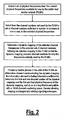
- Fig. 2 is a flowchart of a method of providing according to the invention a dynamic mapping for a public land mobile network.
- One way to provide the dynamic mapping to the MS is to broadcast a new information element, either in an existing system information (SI) message, in a new SI message, or in a combination of a new SI message and an existing SI message, where the existing message content is extended to include information about the dynamic mapping.
- SI system information
- dynamic mapping information is provided for the MS through the BCCH (broadcast control channel) when the MS is idle (not using a dedicated connection) and through the SACCH (slow associated control channel) when the MS is in connected mode (when the MS is not able to read the BCCH information but can still read the SACCH information, the SACCH always being available).
- BCCH broadcast control channel
- SACCH slow associated control channel
- the information is provided through PBCCH (packet broadcast control channel) if the PBCCH exists in the cell, and if not, then GPRS attached mobiles read the BCCH.
- PBCCH packet broadcast control channel
- mapping information is needed if the cell is using a non-hopping SDCCH (stand alone dedicated control channel) on the BCCH carrier and all necessary information about dynamic mapping is provided to the mobile station through the SACCH.
- SDCCH stand alone dedicated control channel
- a means for sending the mapping information in dedicated mode is also required.
- Dedicated mode support is preferable in other situations as well.
- the option to broadcast dynamic mapping is preferred.
- the dynamic mapping should be added to the corresponding handover command, because there is a possibility that a MS being handed over has not had a chance to read any valid mapping information (from the relevant GSM system) before receiving the handover command.
- the mapping preferably covers the full frequency allocation used by a particular PLMN, but need not cover all frequencies in all possible frequency bands. Having the mapping cover the full frequency allocation used by a particular PLMN would make available 240 ARFCN values to cover new frequency bands of up to hundreds of MHz, assuming that the new bands are shared among several operators (e.g. among the six operators currently sharing in Germany the IMT-2000 frequency band).
- the dynamic mapping in a live network is changed (a live network being a network that is in operation, with ongoing calls) when there is a change in the frequency allocation either within a specified, existing frequency band or within a new frequency band (although changing the dynamic mapping in the latter case is not always necessary, an extension to the current mapping usually being sufficient).
- a MS may be in idle mode or in dedicated mode at the time the mapping changes. It is necessary to guarantee that a MS is using the correct information for dynamic mapping at the time the network modifies the dynamic mapping unless the dynamic mapping is added to all relevant signaling messages.
- each MS uses the dynamic mapping obtained at switch on (either by reading the dynamic mapping from the BCCH or by having the mapping provided during network registration), which would allow providing critical messages like a handover command without increasing signaling message size.
- ARFCN values There are two different types of ARFCN values, those that are used in pre-Release 4 standards, i.e. for frequency bands that have been defined before Release 4, and those that are not used in pre-Release 4 releases, which are the type that can be used without any restrictions for dynamic ARFCN mapping. There are some restrictions concerning how the first type of ARFCN values can be used for dynamic mapping.
- Unallocated ARFCN values allow the highest flexibility for dynamic mapping. However, in some cases it could be useful to allow remapping of existing ARFCN values, such as when an operator does not support the R-GSM frequency band. If such an operator supports GSM 700, the operator could remap the R-GSM ARFCN values so as to be used by the GSM 700 system. (For GSM, there is really no need at present for remapping allocated ARFCN values. The need would really only occur if new bands are specified for GSM and there are then no more "unallocated" ARFCN values.) When the R-GSM ARFCN values are remapped, there is no difference between a Release 4 MS and when other, unallocated values are used.
- pre-Release 4 MS supporting the R-GSM band
- Mobiles would have to perform some unnecessary neighbor cell RXLEV measurements (received signal level measurements for a neighbor cell) and these mobiles would try to synchronize to those cells in order to identify them.
- the MS decodes the BSIC (base station identity code), it recognizes that the neighbor cell does not belong to the serving PLMN.
- BSIC base station identity code
- SI5 messages are the dedicated mode messages corresponding to the broadcast mode SI2 messages (SI2, SI2bis, SI2ter, SI2quater), which provide neighbor cell information.)
- Dynamic mapping of currently fixed ARFCNs would also make it possible to support multiband operation between frequency bands not currently supported.
- a MS operating on the 850 MHz band should be made to assume ARFCN values 512-810 to address PCS 1900 frequencies instead of DCS 1800 frequencies (by having the network set the band indicator bit so that 850 mobiles decode common 1800/1900 ARFCNs as 1900 frequencies).
- a country that uses GSM 850 and DCS 1800 could use dynamic channel numbers on the 850 MHz band, pointing to the 1800 MHz band. Then a Release 4 mobile or a later MS could support dual band operation between these two bands.
- a difficulty with currently fixed ARFCNs is that DCS 1800 and PCS 1900 frequency bands are defined so as to use overlapping ARFCNs, i.e. all of the PCS 1900 ARFCNs are also used for DCS 1800, so that using both DCS 1800 and PCS 1900 simultaneously is not possible (without the invention).
- an ARFCN does not uniquely identify the corresponding carrier frequency; the MS must use some other information to interpret ARFCNs correctly. So far, the overlapping has not been a problem because there has been no MSs simultaneously supporting the 1900 frequency band and any other frequency band, and so far there has been no need for such support.
- SIM Subscriber Identification Module
- a MS would store the latest valid BCCH allocation (the list of neighbor cell frequencies of a particular cell, normally stored in the SIM in order to help the MS find service if switched on close to the area where it was switched off) at switch off in the SIM (subscriber identification module) in order to allow faster registration to the last registered PLMN at next switch on.
- the SIM is modified either to support storing 14 bit ARFCNs or to allow including the mapping information related to applicable 10-bit ARFCN values.
- the storing of the latest BA to the SIM is not provided for those ARFCNs that have no fixed mapping, i.e. for the dynamically allocated ARFCNs.
- the MS may optionally store the BA including dynamically mapped ARFCNs, as is done today for all other frequencies. Assuming that the information is available internally at the MS, i.e. is stored in the MS, normally any additional delay in initial access can be avoided.
- the information about dynamic mapping is preferably included in the non-GSM to GSM handover message provided to the MS by the serving base station, i.e. the non-GSM base station (with the main part of the handover message built up by the target system base station, i.e. the GSM base station).
- UTRAN has a similar problem; the preconfiguration data used there must be broadcast and that data may need to be changed.
- UTRAN controls changes in the preconfiguration data using a so-called change mark, but that method is not suitable in the present circumstance.
- change-mark method an A/B indicator is used in which two different dynamic mappings, A and B, are broadcast simultaneously and the A/B indicator is added to all relevant messages referring to ARFCNs.
- a disadvantage of the A/B indicator method is that even if only a single bit is used as the A/B indicator, it must be added to a significant number of different signaling messages.
- the present invention takes into account that the dynamic mapping is needed for mapping in one direction only, from any ARFCN to a physical frequency, and so a simple broadcast-based solution is used.
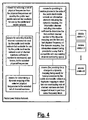
- a duplicated mapping is broadcast, for a sufficiently long time period, for the frequency block whose mapping is to be changed.
- a dynamic mapping is usually comprised of several different mappings, the different mappings for mapping different blocks of channel numbers to different frequency blocks licensed for the operator of the PLMN using the dynamic mapping.
- an operator of a PLMN is using four separate frequency blocks where dynamic mapping is applied, the operator can handle a change in the dynamic mapping if, for a limited period of time, a duplicate mapping (provided by a parameter set) is added for the frequency block where the mapping is to be changed.
- the new parameter set is valid after the change, and the parameter set valid before the change is kept during a transition period.
- Such a duplicate mapping is possible if the before and after parameter sets of ARFCNs of the dynamic mapping are completely separate (non-overlapping) in that the before and after parameter sets (provided by the duplicate mapping) use a different ARFCN range, but both cover, at least partially, the same physical frequency band. No signal is needed indicating when the change is to occur, which is important since it would be difficult to effecting a change at a specific time in several different cells.
- the network broadcasts the duplicate mapping for a period equal to the assumed length of the longest call.
- the broadcasting may be performed for a period ranging anywhere from one hour to several weeks.
- the invention assumes that after the broadcast period, all mobiles have entered idle mode and have decoded the new broadcast system information. Once all mobiles have decoded the duplicated mapping, the network can start sending only the new mapping (i.e. the network can remove the mapping for the old frequency allocation from the system information messages.
- the duplicated mapping broadcast procedure can be enhanced by providing point-to-point transmission (i.e. in connected mode) of mapping information.
- the duplicated mapping is transmitted to each active mobile.
- the network has the option according to the invention of including a new SI message on the SACCH channel (used for point-to-point communications for all mobiles in dedicated mode).
- the new SI message would be used at the time the change in dynamic mapping is to occur, from the time before the change to at least up to the time of the change is actually made.
- Mobiles in connected mode cannot receive the broadcast SI but if the dynamic mapping information is sent on the SACCH channel, then it can be acquired by all mobiles in dedicated mode.
- the point-to-point broadcast requires less time for broadcasting a duplicated mapping and supports unlimited duration circuit-switched calls. Thus, if an operator, for some reason, would not want to transmit a duplicated mapping for more than one week and would still want to support calls lasting four weeks, then the point-to-point option is necessary. The operator may find the need to change the dynamic mapping after the start of a four-week long call. If the operator starts broadcasting a duplicated mapping and at any time while the duplicated mapping is being broadcast the operator sends the new mapping point to point on the SACCH, then the MS having the four-week long call will be able to receive information about changes in dynamic mapping.
- the MS in dedicated mode
- the network may therefore start using the new ARFCN mapping information.
- the network may also command a handover using new mapping information. In all cases, the call may continue uninterrupted and all relevant tasks can be performed even if the dynamic mapping has changed.
- Fig. 3 is a flowchart of the above-described aspect of the invention that provides for changes to a dynamic mapping carried out while a public land mobile network is in actual operation. Discussion
- the MS With respect to the indication of the existence of the new SI message being broadcast, if a MS is aware that dynamic mapping is in use by a PLMN, then the MS would know that dynamic mapping information is being broadcast by the PLMN, and the MS would then decode the new SI message conveying the dynamic mapping information. There is therefore a need for some kind of signal indicating that a PLMN is using dynamic mapping information. If such a signal is not provided, then a MS would have to spend quite a relatively long time to find out if dynamic mapping is being used by a PLMN.
- an apparatus according to the preferred embodiment of the invention is shown, as a combination of several components of a public land mobile network (which of course also includes many other components not shown), coupled to a plurality of mobile stations.
- the apparatus includes means for performing the steps necessary to create a dynamic mapping, to have the public land mobile network convey the dynamic mapping to mobile stations coupled to the public land mobile network, and to have the public land mobile network notify the mobile stations of any change in the dynamic mapping.
Landscapes
- Engineering & Computer Science (AREA)
- Computer Networks & Wireless Communication (AREA)
- Signal Processing (AREA)
- Mobile Radio Communication Systems (AREA)
- Transmission Systems Not Characterized By The Medium Used For Transmission (AREA)
- Transmitters (AREA)
- Compression, Expansion, Code Conversion, And Decoders (AREA)
- Channel Selection Circuits, Automatic Tuning Circuits (AREA)
Applications Claiming Priority (3)
| Application Number | Priority Date | Filing Date | Title |
|---|---|---|---|
| US26048601P | 2001-01-09 | 2001-01-09 | |
| US260486P | 2001-01-09 | ||
| PCT/IB2002/000012 WO2002056610A2 (en) | 2001-01-09 | 2002-01-07 | Method for dynamically mapping channels for new gsm frequency bands |
Publications (2)
| Publication Number | Publication Date |
|---|---|
| EP1350397A2 EP1350397A2 (en) | 2003-10-08 |
| EP1350397B1 true EP1350397B1 (en) | 2007-03-14 |
Family
ID=22989357
Family Applications (1)
| Application Number | Title | Priority Date | Filing Date |
|---|---|---|---|
| EP02702578A Expired - Lifetime EP1350397B1 (en) | 2001-01-09 | 2002-01-07 | Method for dynamically mapping channels for new gsm frequency bands |
Country Status (13)
| Country | Link |
|---|---|
| US (1) | US6748219B2 (enExample) |
| EP (1) | EP1350397B1 (enExample) |
| JP (1) | JP2004524736A (enExample) |
| KR (1) | KR100593458B1 (enExample) |
| CN (1) | CN100388844C (enExample) |
| AT (1) | ATE357117T1 (enExample) |
| AU (1) | AU2002236105A1 (enExample) |
| BR (1) | BRPI0206257B1 (enExample) |
| CA (1) | CA2431726C (enExample) |
| DE (1) | DE60218816T2 (enExample) |
| ES (1) | ES2281505T3 (enExample) |
| WO (1) | WO2002056610A2 (enExample) |
| ZA (1) | ZA200304872B (enExample) |
Families Citing this family (18)
| Publication number | Priority date | Publication date | Assignee | Title |
|---|---|---|---|---|
| US6952408B2 (en) * | 1998-10-15 | 2005-10-04 | Airnet Communications Corporation | Method of baseband frequency hopping utilizing time division multiplexed mapping between a radio transceiver and digital signal processing resources |
| US6836471B2 (en) * | 2001-02-02 | 2004-12-28 | Nokia Mobile Phones Ltd. | Method and system for inter-operator handover between WCDMA and GSM |
| FI20011259L (fi) * | 2001-05-28 | 2002-11-29 | Nokia Corp | Yhteydenmuodostusparametrien välittäminen pakettidataverkossa |
| US7325250B1 (en) * | 2001-07-09 | 2008-01-29 | Advanced Micro Devices, Inc. | Method and apparatus for preventing radio communication system access by an unauthorized modem |
| DE10134589B4 (de) * | 2001-07-17 | 2014-05-08 | Siemens Aktiengesellschaft | Verfahren sowie Vorrichtung zur Positionbestimmung von Teilnehmergeräten eines Funkkommunikationssystems mit Hilfe von zusätzlichen Positionselementen in benachbarten Funkzellen |
| US7853260B2 (en) * | 2002-04-29 | 2010-12-14 | Nokia Corporation | Method and apparatus for cell identification for uplink interference avoidance using inter-frequency measurements |
| US20040047312A1 (en) * | 2002-04-29 | 2004-03-11 | Peter Muszynski | Method and apparatus for UL interference avoidance by DL measurements and IFHO |
| FR2880716A1 (fr) * | 2005-01-13 | 2006-07-14 | Gemplus Sa | Personnalisation de service dans un dispositif terminal |
| US7639658B2 (en) * | 2005-03-18 | 2009-12-29 | Qualcomm Incorporated | Efficient wireless transmission opportunity handoff |
| CN101060713B (zh) * | 2006-04-20 | 2010-05-12 | 大唐移动通信设备有限公司 | 一种寻呼方法及基站和终端设备 |
| CN100438677C (zh) * | 2006-08-31 | 2008-11-26 | 华为技术有限公司 | 一种资源分配的处理方法、装置及系统 |
| US7835712B1 (en) * | 2006-12-19 | 2010-11-16 | Palm, Inc. | Apparatus and methods for providing multi-band operation in a mobile computing device |
| CN101779507B (zh) * | 2007-08-17 | 2014-07-16 | Lm爱立信电话有限公司 | 射频信道的编号 |
| AP2010005497A0 (en) * | 2008-06-13 | 2010-12-31 | Rajiv Mehrotra | Method and architecture for pairing guard band frequencies for effecting GSM, CDMA, UMTS & WCDMA services. |
| AU2011292475C9 (en) * | 2010-08-17 | 2017-02-23 | Telefonaktiebolaget L M Ericsson (Publ) | Methods and arrangements in cellular communication systems |
| KR101510811B1 (ko) * | 2013-11-13 | 2015-04-10 | 주식회사 지아이블루 | 유휴채널 활용 및 유휴채널 접근성 개선방법 |
| CN104735751B (zh) * | 2013-12-20 | 2018-10-30 | 成都鼎桥通信技术有限公司 | 一种专网系统中终端接入网络的方法 |
| US10278174B2 (en) * | 2017-08-04 | 2019-04-30 | Charter Communications Operating, Llc | System and method of spectrum allocation |
Family Cites Families (4)
| Publication number | Priority date | Publication date | Assignee | Title |
|---|---|---|---|---|
| US5711005A (en) | 1996-08-06 | 1998-01-20 | Hughes Electronics | Method for implementing a personal access communication system in a high mobility environment |
| US5960351A (en) | 1997-02-26 | 1999-09-28 | Ericsson Inc. | Radio frequency planning and assignment in a discontiguous spectrum environment |
| DE69908166T2 (de) * | 1998-10-15 | 2004-04-01 | Airnet Communications Corp., Melbourne | Architektur einer breitbandbasisstation zur fortgeschrittenen resouranverwaltung |
| US6230026B1 (en) * | 1998-10-15 | 2001-05-08 | Airnet Communications Corporation | Basestation architecture supporting baseband frequency hopping utilizing time division multiplexed mapping between a radio transceiver and digital signal processing resources |
-
2002
- 2002-01-02 US US10/040,896 patent/US6748219B2/en not_active Expired - Lifetime
- 2002-01-07 CA CA002431726A patent/CA2431726C/en not_active Expired - Fee Related
- 2002-01-07 ES ES02702578T patent/ES2281505T3/es not_active Expired - Lifetime
- 2002-01-07 KR KR1020037008973A patent/KR100593458B1/ko not_active Expired - Fee Related
- 2002-01-07 WO PCT/IB2002/000012 patent/WO2002056610A2/en not_active Ceased
- 2002-01-07 AT AT02702578T patent/ATE357117T1/de not_active IP Right Cessation
- 2002-01-07 AU AU2002236105A patent/AU2002236105A1/en not_active Abandoned
- 2002-01-07 CN CNB028035623A patent/CN100388844C/zh not_active Expired - Fee Related
- 2002-01-07 BR BRPI0206257A patent/BRPI0206257B1/pt not_active IP Right Cessation
- 2002-01-07 EP EP02702578A patent/EP1350397B1/en not_active Expired - Lifetime
- 2002-01-07 DE DE60218816T patent/DE60218816T2/de not_active Expired - Lifetime
- 2002-01-07 JP JP2002557140A patent/JP2004524736A/ja active Pending
-
2003
- 2003-06-23 ZA ZA200304872A patent/ZA200304872B/en unknown
Also Published As
| Publication number | Publication date |
|---|---|
| KR20030096245A (ko) | 2003-12-24 |
| WO2002056610A2 (en) | 2002-07-18 |
| US6748219B2 (en) | 2004-06-08 |
| DE60218816D1 (de) | 2007-04-26 |
| WO2002056610A3 (en) | 2002-12-19 |
| BR0206257A (pt) | 2005-03-01 |
| CA2431726C (en) | 2008-04-01 |
| BRPI0206257B1 (pt) | 2017-03-21 |
| EP1350397A2 (en) | 2003-10-08 |
| CA2431726A1 (en) | 2002-07-18 |
| CN1633820A (zh) | 2005-06-29 |
| CN100388844C (zh) | 2008-05-14 |
| KR100593458B1 (ko) | 2006-06-28 |
| JP2004524736A (ja) | 2004-08-12 |
| DE60218816T2 (de) | 2007-12-06 |
| US20020102980A1 (en) | 2002-08-01 |
| ATE357117T1 (de) | 2007-04-15 |
| ZA200304872B (en) | 2004-09-23 |
| ES2281505T3 (es) | 2007-10-01 |
| AU2002236105A1 (en) | 2002-07-24 |
Similar Documents
| Publication | Publication Date | Title |
|---|---|---|
| US6748219B2 (en) | Method for dynamically mapping channels for new GSM frequency bands | |
| US11664953B2 (en) | Bandwidth signalling | |
| US5109527A (en) | Mobile radio communications method avoiding unnecessary transmissions in environment of unknown channel allocation | |
| EP2078340B1 (en) | Method for cognitive radio based communication and method for broadcasting policy information for the same | |
| CN1094024C (zh) | 多波段移动电话系统 | |
| US8543062B2 (en) | Radio communication device, receiver controller of a radio communication device, methods for searching for a radio cell | |
| EP1142417B1 (en) | Retrieving cell information in an overlaid circuit switched and packet switched wireless telecommunication network | |
| US6026300A (en) | Method for service acquisition after a call release in a dual mode mobile telephone | |
| EP2502446B1 (en) | Method and apparatus for allocating femto cell information for handover in a wireless communication system | |
| FI111313B (fi) | Menetelmä ja laite palvelevan viestintäjärjestelmän määrittämiseksi viestintäjärjestelmien toimiessa yhdistettyinä | |
| JP2002521857A (ja) | 情報伝送方法および無線局 | |
| EP1033047B1 (en) | Method for responding to dcch pointers | |
| EP2179621B1 (en) | Numbering of radio frequency channels | |
| US7046996B1 (en) | Mobile station, radio telecommunication system and methods for operating radio telecommunications systems | |
| US6597681B1 (en) | Time-based mapping of control channel bursts in a wireless communication network | |
| EP1058469A1 (en) | Method for modifying information stored in a terminal of a cellular radio communication system | |
| CN100438659C (zh) | 分配载频给无线本地环路通信系统的方法 |
Legal Events
| Date | Code | Title | Description |
|---|---|---|---|
| PUAI | Public reference made under article 153(3) epc to a published international application that has entered the european phase |
Free format text: ORIGINAL CODE: 0009012 |
|
| AK | Designated contracting states |
Kind code of ref document: A2 Designated state(s): AT BE CH CY DE DK ES FI FR GB GR IE IT LI LU MC NL PT SE TR |
|
| AX | Request for extension of the european patent |
Extension state: AL LT LV MK RO SI |
|
| 17P | Request for examination filed |
Effective date: 20030630 |
|
| GRAP | Despatch of communication of intention to grant a patent |
Free format text: ORIGINAL CODE: EPIDOSNIGR1 |
|
| GRAS | Grant fee paid |
Free format text: ORIGINAL CODE: EPIDOSNIGR3 |
|
| GRAA | (expected) grant |
Free format text: ORIGINAL CODE: 0009210 |
|
| AK | Designated contracting states |
Kind code of ref document: B1 Designated state(s): AT BE CH CY DE DK ES FI FR GB GR IE IT LI LU MC NL PT SE TR |
|
| PG25 | Lapsed in a contracting state [announced via postgrant information from national office to epo] |
Ref country code: AT Free format text: LAPSE BECAUSE OF FAILURE TO SUBMIT A TRANSLATION OF THE DESCRIPTION OR TO PAY THE FEE WITHIN THE PRESCRIBED TIME-LIMIT Effective date: 20070314 Ref country code: FI Free format text: LAPSE BECAUSE OF FAILURE TO SUBMIT A TRANSLATION OF THE DESCRIPTION OR TO PAY THE FEE WITHIN THE PRESCRIBED TIME-LIMIT Effective date: 20070314 |
|
| REG | Reference to a national code |
Ref country code: GB Ref legal event code: FG4D |
|
| REG | Reference to a national code |
Ref country code: CH Ref legal event code: EP |
|
| REF | Corresponds to: |
Ref document number: 60218816 Country of ref document: DE Date of ref document: 20070426 Kind code of ref document: P |
|
| REG | Reference to a national code |
Ref country code: CH Ref legal event code: NV Representative=s name: E. BLUM & CO. AG PATENT- UND MARKENANWAELTE VSP |
|
| REG | Reference to a national code |
Ref country code: IE Ref legal event code: FG4D |
|
| REG | Reference to a national code |
Ref country code: SE Ref legal event code: TRGR |
|
| PG25 | Lapsed in a contracting state [announced via postgrant information from national office to epo] |
Ref country code: PT Free format text: LAPSE BECAUSE OF FAILURE TO SUBMIT A TRANSLATION OF THE DESCRIPTION OR TO PAY THE FEE WITHIN THE PRESCRIBED TIME-LIMIT Effective date: 20070814 |
|
| ET | Fr: translation filed | ||
| REG | Reference to a national code |
Ref country code: ES Ref legal event code: FG2A Ref document number: 2281505 Country of ref document: ES Kind code of ref document: T3 |
|
| PLBE | No opposition filed within time limit |
Free format text: ORIGINAL CODE: 0009261 |
|
| STAA | Information on the status of an ep patent application or granted ep patent |
Free format text: STATUS: NO OPPOSITION FILED WITHIN TIME LIMIT |
|
| PG25 | Lapsed in a contracting state [announced via postgrant information from national office to epo] |
Ref country code: DK Free format text: LAPSE BECAUSE OF FAILURE TO SUBMIT A TRANSLATION OF THE DESCRIPTION OR TO PAY THE FEE WITHIN THE PRESCRIBED TIME-LIMIT Effective date: 20070314 |
|
| 26N | No opposition filed |
Effective date: 20071217 |
|
| PG25 | Lapsed in a contracting state [announced via postgrant information from national office to epo] |
Ref country code: GR Free format text: LAPSE BECAUSE OF FAILURE TO SUBMIT A TRANSLATION OF THE DESCRIPTION OR TO PAY THE FEE WITHIN THE PRESCRIBED TIME-LIMIT Effective date: 20070615 |
|
| PG25 | Lapsed in a contracting state [announced via postgrant information from national office to epo] |
Ref country code: MC Free format text: LAPSE BECAUSE OF NON-PAYMENT OF DUE FEES Effective date: 20080131 |
|
| REG | Reference to a national code |
Ref country code: CH Ref legal event code: PUE Owner name: QUALCOMM INCORPORATED Free format text: NOKIA CORPORATION#KEILALAHDENTIE 4#02150 ESPOO (FI) -TRANSFER TO- QUALCOMM INCORPORATED#5775 MOREHOUSE DRIVE#SAN DIEGO, CA 92121 (US) |
|
| PG25 | Lapsed in a contracting state [announced via postgrant information from national office to epo] |
Ref country code: IE Free format text: LAPSE BECAUSE OF NON-PAYMENT OF DUE FEES Effective date: 20080107 |
|
| REG | Reference to a national code |
Ref country code: CH Ref legal event code: NV Representative=s name: E. BLUM & CO. AG PATENT- UND MARKENANWAELTE VSP |
|
| REG | Reference to a national code |
Ref country code: GB Ref legal event code: 732E Free format text: REGISTERED BETWEEN 20090115 AND 20090121 |
|
| NLS | Nl: assignments of ep-patents |
Owner name: QUALCOMM INCORPORATED Effective date: 20090203 |
|
| PG25 | Lapsed in a contracting state [announced via postgrant information from national office to epo] |
Ref country code: CY Free format text: LAPSE BECAUSE OF FAILURE TO SUBMIT A TRANSLATION OF THE DESCRIPTION OR TO PAY THE FEE WITHIN THE PRESCRIBED TIME-LIMIT Effective date: 20070314 |
|
| PG25 | Lapsed in a contracting state [announced via postgrant information from national office to epo] |
Ref country code: IT Free format text: LAPSE BECAUSE OF NON-PAYMENT OF DUE FEES Effective date: 20080107 |
|
| REG | Reference to a national code |
Ref country code: FR Ref legal event code: TP |
|
| PGFP | Annual fee paid to national office [announced via postgrant information from national office to epo] |
Ref country code: SE Payment date: 20091223 Year of fee payment: 9 |
|
| PGFP | Annual fee paid to national office [announced via postgrant information from national office to epo] |
Ref country code: CH Payment date: 20100218 Year of fee payment: 9 |
|
| PGFP | Annual fee paid to national office [announced via postgrant information from national office to epo] |
Ref country code: BE Payment date: 20100201 Year of fee payment: 9 Ref country code: TR Payment date: 20100105 Year of fee payment: 9 |
|
| PG25 | Lapsed in a contracting state [announced via postgrant information from national office to epo] |
Ref country code: LU Free format text: LAPSE BECAUSE OF NON-PAYMENT OF DUE FEES Effective date: 20080107 |
|
| PGFP | Annual fee paid to national office [announced via postgrant information from national office to epo] |
Ref country code: NL Payment date: 20100118 Year of fee payment: 9 |
|
| BERE | Be: lapsed |
Owner name: QUALCOMM INC. Effective date: 20110131 |
|
| REG | Reference to a national code |
Ref country code: NL Ref legal event code: V1 Effective date: 20110801 |
|
| REG | Reference to a national code |
Ref country code: CH Ref legal event code: PL |
|
| REG | Reference to a national code |
Ref country code: SE Ref legal event code: EUG |
|
| PG25 | Lapsed in a contracting state [announced via postgrant information from national office to epo] |
Ref country code: LI Free format text: LAPSE BECAUSE OF NON-PAYMENT OF DUE FEES Effective date: 20110131 Ref country code: CH Free format text: LAPSE BECAUSE OF NON-PAYMENT OF DUE FEES Effective date: 20110131 |
|
| PG25 | Lapsed in a contracting state [announced via postgrant information from national office to epo] |
Ref country code: BE Free format text: LAPSE BECAUSE OF NON-PAYMENT OF DUE FEES Effective date: 20110131 |
|
| PG25 | Lapsed in a contracting state [announced via postgrant information from national office to epo] |
Ref country code: NL Free format text: LAPSE BECAUSE OF NON-PAYMENT OF DUE FEES Effective date: 20110801 |
|
| REG | Reference to a national code |
Ref country code: ES Ref legal event code: PC2A Owner name: QUALCOMM INCORPORATED Effective date: 20120130 |
|
| PG25 | Lapsed in a contracting state [announced via postgrant information from national office to epo] |
Ref country code: SE Free format text: LAPSE BECAUSE OF NON-PAYMENT OF DUE FEES Effective date: 20110108 |
|
| PG25 | Lapsed in a contracting state [announced via postgrant information from national office to epo] |
Ref country code: TR Free format text: LAPSE BECAUSE OF NON-PAYMENT OF DUE FEES Effective date: 20110107 |
|
| REG | Reference to a national code |
Ref country code: FR Ref legal event code: PLFP Year of fee payment: 15 |
|
| PGFP | Annual fee paid to national office [announced via postgrant information from national office to epo] |
Ref country code: GB Payment date: 20161228 Year of fee payment: 16 |
|
| REG | Reference to a national code |
Ref country code: FR Ref legal event code: PLFP Year of fee payment: 16 |
|
| PGFP | Annual fee paid to national office [announced via postgrant information from national office to epo] |
Ref country code: DE Payment date: 20170706 Year of fee payment: 16 Ref country code: FR Payment date: 20170703 Year of fee payment: 16 |
|
| PGFP | Annual fee paid to national office [announced via postgrant information from national office to epo] |
Ref country code: ES Payment date: 20180202 Year of fee payment: 17 |
|
| PGFP | Annual fee paid to national office [announced via postgrant information from national office to epo] |
Ref country code: IT Payment date: 20180110 Year of fee payment: 17 |
|
| REG | Reference to a national code |
Ref country code: DE Ref legal event code: R119 Ref document number: 60218816 Country of ref document: DE |
|
| GBPC | Gb: european patent ceased through non-payment of renewal fee |
Effective date: 20180107 |
|
| PG25 | Lapsed in a contracting state [announced via postgrant information from national office to epo] |
Ref country code: DE Free format text: LAPSE BECAUSE OF NON-PAYMENT OF DUE FEES Effective date: 20180801 Ref country code: FR Free format text: LAPSE BECAUSE OF NON-PAYMENT OF DUE FEES Effective date: 20180131 |
|
| REG | Reference to a national code |
Ref country code: FR Ref legal event code: ST Effective date: 20180928 |
|
| PG25 | Lapsed in a contracting state [announced via postgrant information from national office to epo] |
Ref country code: GB Free format text: LAPSE BECAUSE OF NON-PAYMENT OF DUE FEES Effective date: 20180107 |
|
| PG25 | Lapsed in a contracting state [announced via postgrant information from national office to epo] |
Ref country code: IT Free format text: LAPSE BECAUSE OF NON-PAYMENT OF DUE FEES Effective date: 20190107 |
|
| REG | Reference to a national code |
Ref country code: ES Ref legal event code: FD2A Effective date: 20200309 |
|
| PG25 | Lapsed in a contracting state [announced via postgrant information from national office to epo] |
Ref country code: ES Free format text: LAPSE BECAUSE OF NON-PAYMENT OF DUE FEES Effective date: 20190108 |