EP1348943A2 - Sheath liquid for particle analyzer - Google Patents
Sheath liquid for particle analyzer Download PDFInfo
- Publication number
- EP1348943A2 EP1348943A2 EP03006298A EP03006298A EP1348943A2 EP 1348943 A2 EP1348943 A2 EP 1348943A2 EP 03006298 A EP03006298 A EP 03006298A EP 03006298 A EP03006298 A EP 03006298A EP 1348943 A2 EP1348943 A2 EP 1348943A2
- Authority
- EP
- European Patent Office
- Prior art keywords
- sheath liquid
- sample
- refractive index
- sodium
- wavelength
- Prior art date
- Legal status (The legal status is an assumption and is not a legal conclusion. Google has not performed a legal analysis and makes no representation as to the accuracy of the status listed.)
- Withdrawn
Links
Images


Classifications
-
- G—PHYSICS
- G01—MEASURING; TESTING
- G01N—INVESTIGATING OR ANALYSING MATERIALS BY DETERMINING THEIR CHEMICAL OR PHYSICAL PROPERTIES
- G01N15/00—Investigating characteristics of particles; Investigating permeability, pore-volume or surface-area of porous materials
- G01N15/10—Investigating individual particles
- G01N15/14—Optical investigation techniques, e.g. flow cytometry
- G01N15/1404—Handling flow, e.g. hydrodynamic focusing
-
- G—PHYSICS
- G01—MEASURING; TESTING
- G01N—INVESTIGATING OR ANALYSING MATERIALS BY DETERMINING THEIR CHEMICAL OR PHYSICAL PROPERTIES
- G01N15/00—Investigating characteristics of particles; Investigating permeability, pore-volume or surface-area of porous materials
- G01N15/10—Investigating individual particles
- G01N15/14—Optical investigation techniques, e.g. flow cytometry
- G01N15/1404—Handling flow, e.g. hydrodynamic focusing
- G01N15/1409—Handling samples, e.g. injecting samples
-
- G—PHYSICS
- G01—MEASURING; TESTING
- G01N—INVESTIGATING OR ANALYSING MATERIALS BY DETERMINING THEIR CHEMICAL OR PHYSICAL PROPERTIES
- G01N15/00—Investigating characteristics of particles; Investigating permeability, pore-volume or surface-area of porous materials
- G01N15/10—Investigating individual particles
- G01N15/14—Optical investigation techniques, e.g. flow cytometry
- G01N15/1404—Handling flow, e.g. hydrodynamic focusing
- G01N2015/1415—Control of particle position
-
- Y—GENERAL TAGGING OF NEW TECHNOLOGICAL DEVELOPMENTS; GENERAL TAGGING OF CROSS-SECTIONAL TECHNOLOGIES SPANNING OVER SEVERAL SECTIONS OF THE IPC; TECHNICAL SUBJECTS COVERED BY FORMER USPC CROSS-REFERENCE ART COLLECTIONS [XRACs] AND DIGESTS
- Y10—TECHNICAL SUBJECTS COVERED BY FORMER USPC
- Y10T—TECHNICAL SUBJECTS COVERED BY FORMER US CLASSIFICATION
- Y10T436/00—Chemistry: analytical and immunological testing
- Y10T436/10—Composition for standardization, calibration, simulation, stabilization, preparation or preservation; processes of use in preparation for chemical testing
-
- Y—GENERAL TAGGING OF NEW TECHNOLOGICAL DEVELOPMENTS; GENERAL TAGGING OF CROSS-SECTIONAL TECHNOLOGIES SPANNING OVER SEVERAL SECTIONS OF THE IPC; TECHNICAL SUBJECTS COVERED BY FORMER USPC CROSS-REFERENCE ART COLLECTIONS [XRACs] AND DIGESTS
- Y10—TECHNICAL SUBJECTS COVERED BY FORMER USPC
- Y10T—TECHNICAL SUBJECTS COVERED BY FORMER US CLASSIFICATION
- Y10T436/00—Chemistry: analytical and immunological testing
- Y10T436/10—Composition for standardization, calibration, simulation, stabilization, preparation or preservation; processes of use in preparation for chemical testing
- Y10T436/101666—Particle count or volume standard or control [e.g., platelet count standards, etc.]
-
- Y—GENERAL TAGGING OF NEW TECHNOLOGICAL DEVELOPMENTS; GENERAL TAGGING OF CROSS-SECTIONAL TECHNOLOGIES SPANNING OVER SEVERAL SECTIONS OF THE IPC; TECHNICAL SUBJECTS COVERED BY FORMER USPC CROSS-REFERENCE ART COLLECTIONS [XRACs] AND DIGESTS
- Y10—TECHNICAL SUBJECTS COVERED BY FORMER USPC
- Y10T—TECHNICAL SUBJECTS COVERED BY FORMER US CLASSIFICATION
- Y10T436/00—Chemistry: analytical and immunological testing
- Y10T436/10—Composition for standardization, calibration, simulation, stabilization, preparation or preservation; processes of use in preparation for chemical testing
- Y10T436/108331—Preservative, buffer, anticoagulant or diluent
Definitions
- the present invention relates to a sheath liquid for a particle analyzer.
- the sheath flow system is a technique for obtaining the count of and morphological information about cells or particles.
- the cells or particles as they are or in the form of a suspension or a diluted sample, are enveloped in a stream of a sheath liquid and are passed one by one at an optimal flow amount and flow velocity in a flow cell of a flow cytometer.
- the count and morphological information are obtained by detecting an electrical or optical pulse generated by the cells or particles when passing by a detecting section in the flow cell.
- a sample containing object cells, particles and the like is lead by the steam of the sheath liquid to a detecting section, where the cell or particles are irradiated with a laser beam from a laser light source via a lens for focusing light emitted from the light source.
- the emitted light is stopped by an emitted light stopper, and only forward scattered light from the cells or particles is detected by a forward scattered light detector via a lens for detecting forward scattered light.
- side scattered light is detected by a side scattered light detector via a lens for detecting side scattered light.
- Voltage values detected by the detectors are input to an analyzer, which produces a scattergram by the forward and side scattered light based on the voltage values, displays the scattergram on a display and counts the cells and particles.
- the laser light source is a red light source such as a He-Ne laser, a semiconductor laser or the like
- a red light source such as a He-Ne laser, a semiconductor laser or the like
- no problems are observed with samples like blood which are diluted at a high dilution factor, but accurate analysis results cannot be obtained with samples like urine which are used as they are or which are diluted at a low dilution factor.
- the sample and the sheath liquid have greatly different refractive index at a wavelength near red. Consequently a baseline of a forward scattered light signal fluctuates, and a population may appear in a scattergram as if a lot of particles existed although particles are not present in the sample. Therefore, particulate components in the sample cannot be counted accurately.
- An object of the present invention is to provide a sheath liquid for a particle analyzer that allows a sample having a high refractive index to be analyzed accurately even with use of a red light source.
- the present invention provides a sheath liquid for use with a particle analyzer having a refractive index of 1.3340 or more (preferably 1.3380 to 1.3450) at the wavelength of sodium D line at 25 °C.
- the sheath liquid of the present invention is usually for enveloping a sample containing particles to be analyzed and passing them through a flow cell of a flow cytometer at an optimal flow amount and velocity for the purpose of analyzing the particles using the flow cytometer.
- the composition of the sheath liquid is not particularly limited insofar as the cells or particles in the sample are not affected by the sheath liquid, and may be adjusted as appropriate depending upon the kind and concentration of the sample, the type of a light source used with the flow cytometer and the like.
- Sheath liquids usually contain buffer agents, osmotic pressure compensating agents, surfactants, chelating agents, fungicidal agents/bactericidal agents and the like in organic solvents, water or mixture thereof.
- the sheath liquid of the present invention may also be composed to contain at least one of, preferably a plurality of the above-mentioned components.
- the buffer agents are used for maintaining the pH of the sheath liquid within the range of about 6.0 to 8.5, preferably about 7.0 to 8.5.
- the buffer agents may be conventionally known ones, and examples thereof include Tris buffers, Good's buffers such as MES, Bis-Tris, ADA, PIPES, ACES, MOPSO, BES, MOPS, TES, HEPES, DIPSO, TAPSO, POPSO, HEPPSO, EPPS, Tricine, Bicine and TAPS, disodium hydrogen phosphate, sodium dihydrogen phosphate, potassium dihydrogen phosphate, veronal sodium-HCl, collidine-HCl, tris(hydroxymethyl)aminomethane -HCl and the like.
- the concentration may be adjusted as appropriate depending upon the buffer capacity of a buffer agent used and may be about 5 to 50 mM, for example.
- the osmotic pressure compensating agents are used for preventing the cells or particles in the sample from lysing and maintain the osmotic pressure of the sheath liquid.
- examples thereof include inorganic salts such as sodium chloride, potassium chloride, lithium chloride and the like, organic salts such as propionates (e.g., sodium propionate, potassium propionate, ammonium propionate, etc.), oxalates, acetates and the like, and saccharides such as sorbitol, glucose, mannitol and the like.
- the surfactants are not necessarily contained in the sheath liquid, but may be cationic, anionic, nonionic or ampholytic insofar as they do not affect the analysis of the sample adversely.
- the surfactants may preferably be nonionic. Preferable examples thereof are as follows:
- the chelating agents are used for dissolving amorphous salts (e.g., ammonium phosphate ⁇ magnesium, calcium carbonate) present in the sample and for anti-oxidation.
- amorphous salts e.g., ammonium phosphate ⁇ magnesium, calcium carbonate
- examples thereof include EDTA salts, CyDTA, DHEG, DPTA-OH, EDDA, EDDP, GEDTA, HDTA, HIDA, Methy-EDTA, NTA, NTP, NTPO, EDDPO and the like.
- the concentration may be within the range of about 0.05 to 5 W/W%.
- the fungicidal agents/bactericidal agents are not particularly limited, and usable examples thereof include triazine antimicrobial agents, thiazole antimicrobial agents such as benzisothiazolone (BIT), pyrithione (PTO), pyridine antimicrobial agents such as 1-hydroxypyridine-2-thiosodium, 2-phenoxyethanol and the like. These agents are required to be added to the sheath liquid in a concentration such that they do not affect the analysis of the sample adversely.
- the organic solvents are aqueous organic solvents, and examples thereof include lower alkanols, lower alkylene glycols and lower alkylene glycol mono-lower alkyl ethers. Particularly, are usable methanol, ethanol, n-propanol, ethylene glycol, diethylene glycol, triethylene glycol, ethylene glycol mono-methyl ether and ethylene glycol mono-ethyl ether, among which ethylene glycol and diethylene glycol and triethylene glycol are preferable. Ethylene glycol is the most preferable in consideration of its influence on the cells or particles in the sample and its viscosity.
- the refractive index of the sheath liquid can be adjusted by varying the kind and/or concentration of each component in the sheath liquid.
- the refractive index of the sheath liquid can be adjusted by varying the kind and/or concentration of each component in the sheath liquid.
- about 6.2 g/L of sodium chloride can be used for raising the refractive index of the sheath liquid by 0.001
- about 11 g/L of ethylene glycol can be used for raising the refractive index by 0.001.
- the above-mentioned agents and solvents may be used singly or as a combination of two or more thereof in an appropriate concentration so that components contained in the sample such as cells, particles and others will not be adversely affected.
- the term "equal" means that the sheath liquid has a refractive index within the range of the refractive index of the sample ⁇ 0.5 %, preferably ⁇ 0.3 %.
- the sample to be analyzed is not particularly limited, but may suitably be a biological sample, more particularly, blood, urine, spinal fluid and the like.
- the sample has a refractive index of 1.3340 or more, preferably within the range of 1.3380 to 1.3450, more preferably about 1.3400 to 1.3420 at the wavelength of sodium D line at 25 °C.
- the sheath liquid of the present invention in particular, is useful for analysis of urine, and a urine sample preferably has a refractive index of 1.3380 to 1.3450.
- the refractive index is based on that at the wavelength of sodium D line. Accordingly, in the case where the flow cytometer uses a light source with a wavelength of about 500 nm or more, or about 500 to 800 nm (a He-Ne laser, a red semiconductor laser, etc.), the sheath liquid may have a refractive index equal to that of the sample at the wavelength of a light source used. In addition, the refractive index of the sheath liquid may be equal to that of the sample not at 25 °C but at temperature at the time when the sheath liquid and the sample are passed through the flow cell, for example, at about 25 to 45 °C in consideration of a reaction which may take place in the sample and other factors.
- the particles contained in the sample may be analyzed using a flow cytometer as typically shown in Fig. 1.
- a valve 1 and a valve 2 are opened for a specific time period to introduce the sample from a suction nozzle 3 into a path between the valves 1 and 2 by negative pressure from a waste liquid chamber.
- the valves 1 and 2 are closed and a syringe 4 pushes out a liquid, thereby delivering the sample from a sample nozzle 6, and at the same time a valve 8 is opened to supply the sheath liquid from a sheath liquid chamber 9 into a chamber 7 of a flow cell 5.
- the sample is made thin by the inner diameter of the chamber 7 to form a sheath flow together with the sheath liquid.
- the sheath flow passes through an orifice 11.
- the orifice 11 is formed of an optical glass (including quartz glass) in the shape of a prism which is about 100 to 300 ⁇ m wide on the inside. This formation of the sheath flow allows the particles to flow through the center of the orifice 11 one by one in a line.
- the particles having passed through the orifice 11 are discharged with the sheath liquid through a collecting tube 14 mounted on a chamber 7.
- the sample 26 flowing almost at the center of the orifice 11 is irradiated with a laser beam which is emitted from a laser 17 and condensed to be ellipse in cross section by a condenser lens 18. More particularly, the laser beam is condensed so that its cross section has a dimension almost equal to the diameter of the cells or particles in the direction of the flow of the sample while it has a dimension considerably larger than the diameter of the cells or particles in a direction perpendicular to the flow of the sample and to the optical axis of the emitted laser beam.
- the laser beam is around 10 ⁇ m in the sample flow direction and around 150 to 300 ⁇ m in the direction perpendicular to the flow of the sample and to the optical axis of the emitted laser beam.
- a beam stopper 19 On the laser beam applied to the flow of the sample, light which has not impinged on cells or particles (material objects) and has traveled through the flow cell 5 is stopped by a beam stopper 19, while light which has impinged on cells or particles (material objects) and has been scattered at small angles, i.e., forward scattered light, is collected by a collector lens 20 and passes through a pin hole 21 of a light shielding plate 30. Then the forward scattered light reaches a dichroic mirror 22, which reflects the forward scattered light. The forward scattered light is then received by a photo diode 31 and converted into an electric signal 28, which is output.
- Output electric signals are input to the analyzer, which displays a scattergram by plotting the values of the signals corresponding to the forward scattered light for use in counting cells or particles.
- the sheath liquid of the present invention is useful for measuring scattred light, in general, scattered light that is able to be measured by commercially available flow cytometers.
- the scattered light includes a low-angle forward scattered light (at an acceptance angle of 0 to less than 5 degrees, for example), a high-angle forward scattered light (at an acceptance angle of around 5 to 20 degrees, for example), a side scattered light (at an acceptance angle of around 90 degrees) and the like.
- the sheath liquid of the present invention is particularly useful for measuring the forward scattered lights.
- the present invention also includes (1) a sheath liquid for use with a particle analyzer, for enveloping particles contained in a sample to be analyzed by a flow cytometer and passing the particles through a flow cell of the flow cytometer, the sheath liquid having a refractive index at the wavelength of sodium D line equal to that of the sample at 25 °C, (2) a preparation method of preparing a sheath liquid for use with a particle analyzer, for enveloping particles contained in a sample to be analyzed by a flow cytometer and passing the particles through a flow cell of the flow cytometer, the method comprising setting the refractive index of the sheath liquid to be equal to the refractive index of the sample at wavelength of sodium D line at 25 °C, and (3) a particle analysis method comprising, for analyzing particles contained in a sample to be analyzed by a flow cytometer, enveloping the particles with a sheath liquid having a refractive index at the wavelength of sodium D line equal to that of the
- sheath liquid for a particle analyzer of the present invention is described in detail by way of example.
- Sheath liquids having the following compositions were prepared for analyzing, respectively, as a sample to be analyzed by use of a flow cytometer, a urine sample from which particulate components had been removed by filtration with a 0.22 ⁇ m filter.
- the urine sample had a refractive index of 1.3419 at the wavelength of sodium D line at 25 °C.
- Sheath Liquid 1 Components Amount Effect Purified water 1 kg (1.0L) NaCl 53.0 g Refraction index adjustment Maleic acid 0.5 g pH adjustment Tris(hydroxymethyl)aminomethane 1.51 g pH adjustment EDTA-2K 0.2 g Anti-oxidation Polyoxyethylene (20)sorbitan mono-oleate (nonionic surfactant) 1.5 g Debubbling 2-phenoxyethanol 1.0 g Fungicide Refractive index 1.3420 pH 7.8 Sheath Liquid 2 Components Amount Purified water 1 kg (1.0L) NaCl 53.0 g Maleic acid 0.5 g Tris(hydroxymethyl)aminomethane 1.51 g EDTA-2K 0.2 g Refractive index 1.3420 pH 7.8
- the sheath liquid of Japanese Patent Publication of HEI 7(1995)-82010 was prepared.
- the measurement of properties of this sheath liquid showed an nD of 1.335, and a pH of 7.2.
- the sheath liquid 1 and the sheath liquid for comparison were used for measuring the forward scattered light of the urine sample using a flow cytometer provided with a light source of 633 nm wavelength.
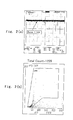
- the measurement results are shown in Figs. 2(a) and 3(a).
- Fig. 2(a) shows that, according to the present invention, the baseline of the forward scattered light was suppressed from vacillating because the refractive index of the sheath liquid 1 was substantially equal to that of the urine sample. Consequently, as shown in the scattergram of Fig. 2(b), the counting of false components in the urine sample was restrained, and the urine sample was able to be analyzed accurately.
Landscapes
- Chemical & Material Sciences (AREA)
- Dispersion Chemistry (AREA)
- Physics & Mathematics (AREA)
- Health & Medical Sciences (AREA)
- Life Sciences & Earth Sciences (AREA)
- Analytical Chemistry (AREA)
- Biochemistry (AREA)
- General Health & Medical Sciences (AREA)
- General Physics & Mathematics (AREA)
- Immunology (AREA)
- Pathology (AREA)
- Investigating Or Analysing Biological Materials (AREA)
- Investigating Or Analysing Materials By Optical Means (AREA)
Abstract
Description
- polyoxyethylenealkyl ether-type surfactants (see Japanese
Unexamined Patent Publication No. HEI 8(1996)-122327) such
as those of the formula:
- polyoxyethylenealkylphenyl ether-type surfactants (see Japanese Patent Publication No. HEI 8(1996)-33388) having C9-20 alkyl group and 20 to 60 of an additional mole number of polyoxyethylene, for example, Nissannonion NS-240 ;
- polyoxyethylenesorbitanalkyl ester-type surfactants (see Japanese Patent Publication No. HEI 7(1995)-82010) having alkyl group with a carbon number 16 or more and 15 to 40 of an additional mole number of polyoxyethylene, for example, RHEODOL TW-0120 produced by Kao Corporation;
- polyol copolymers having a hydroxyl group at the end (see Japanese Unexamined Patent Publication No. SHO 62(1987)-87233) such as those of the formula: OH-CH2CH2O[(CH2CH2O]s-(CH2CH2CH2O)m]-CH2CH2CH2-OH wherein s and m are, the same or different, 39 to 77, for example Pluronic P-105, P-84, P-85, P-87, P-75 and the like produced by BASF Wyandotte Company;
- MEGA-8;
- sucrose monocaprate;
- deoxy-BIGCHAP;
- n-octyl-β-D-thioglucoside, n-nonyl-β-D-thiomaltoside, n-heptyl-β-D-thioglucoside, n-octyl-β-D-thioglucoside;
- CHAPS, CHAPSO and the like. The surfactants may be used in a concentration of about 50 to 5000 mg/L, preferably about 100 to 3000 mg/L.
| Sheath Liquid 1 | ||
| Components | Amount | Effect |
| Purified water | 1 kg (1.0L) | |
| NaCl | 53.0 g | Refraction index adjustment |
| Maleic acid | 0.5 g | pH adjustment |
| Tris(hydroxymethyl)aminomethane | 1.51 g | pH adjustment |
| EDTA-2K | 0.2 g | Anti-oxidation |
| Polyoxyethylene (20)sorbitan mono-oleate (nonionic surfactant) | 1.5 g | Debubbling |
| 2-phenoxyethanol | 1.0 g | Fungicide |
| Refractive index | 1.3420 | |
| pH | 7.8 | |
| | ||
| Components | Amount | |
| Purified water | 1 kg (1.0L) | |
| NaCl | 53.0 g | |
| Maleic acid | 0.5 g | |
| Tris(hydroxymethyl)aminomethane | 1.51 g | |
| EDTA-2K | 0.2 g | |
| Refractive index | 1.3420 | |
| pH | 7.8 |
Claims (17)
- A sheath liquid for use with a particle analyzer having a refractive index of 1.3340 or more at the wavelength of sodium D line at 25 °C.
- A sheath liquid according to claim 1, a refractive index is within the range of 1.3380 to 1.3450 at the wavelength of sodium D line at 25 °C.
- A sheath liquid according to claim 1, comprising at least one component selected from a buffer agent, an osmotic pressure compensating agent, a surfactant, a chelating agent and a fungicidal agent/bactericidal agent, the component being contained in an organic solvent, water or mixture thereof.
- A sheath liquid according to claim 3, wherein the buffer agent maintains the pH of the sheath liquid within the range of about 6.0 to 8.5.
- A sheath liquid according to claim 4, wherein the buffer agent is selected from tris buffers, Good's buffers such as MES, Bis-Tris, ADA, PIPES, ACES, MOPSO, BES, MOPS, TES, HEPES, DIPSO, TAPSO, POPSO, HEPPSO, EPPS, Tricine, Bicine and TAPS, disodium hydrogenphosphate, sodium dihydrogen phosphate, potassium dihydrogen phosphate, veronal sodium-HCl, collidine-HCl and tris(hydroxymethyl) aminomethane-HCl.
- A sheath liquid according to claim 3, wherein the surfactant is selected from polyoxyethylenealkyl ether-type surfactants, polyoxyethylenealkylphenyl ether-type surfactants, polyoxyethylenesorbitanalkyl ester-type surfactants, polyol copolymers having a hydroxyl group at the end, MEGA-8, sucrose monocaprate, deoxy-BIGCHAP, n-octyl-β -D-thioglucoside, n-nonyl- β-D-thiomaltoside, n-heptyl- β -D-thioglucoside, n-octyl-β-D-thioglucoside, CHAPS and CHAPSO.
- A sheath liquid according to claim 6, wherein the surfactant is used in a concentration of about 50 to 5000 mg/L.
- A sheath liquid according to claim 1, comprising 1 kg of purified water, 20 to 78 g of NaCl, 5 to 50mM of maleic acid, 5 to 50mM of tris(hydroxymethyl)aminomethane, 0.05 to 5 w/w% of EDTA-2K, 0.05 to 5 g of polyoxyethylene (20) sorbitan mono-oleate as a nonionic surfactant and 0.1 to 3.0 g of 2-phenoxyethanol.
- A sheath liquid according to claim 1, comprising, 1 kg of purified water, 20 to 78 g of NaCl, 5 to 50 mM of maleic acid, 5 to 50 mM of tris(hydroxymethyl)aminomethane and 0.05 to 5 w/w% of EDTA-2K.
- A sheath liquid for use with a particle analyzer, for enveloping a sample containing particles to be analyzed by a flow cytometer and passing the particles through a flow cell of the flow cytometer, the sheath liquid having a refractive index at the wavelength of sodium D line equal to that of the sample at 25 °C.
- A sheath liquid according to claim 10, wherein the sample has the refractive index of 1.3340 or more at the wavelength of sodium D line at 25 °C.
- A sheath liquid according to claim 10, having the refractive index within that of the sample ± 0.5%.
- A sheath liquid according to claim 10, whherein the flow cytometer uses a light source with a wavelength of about 500 nm or more.
- A particle analysis method for analyzing particles a sample containing particles to be analyzed by a flow cytometer, comprising ;
enveloping the sample with a sheath liquid having an refractive index at the wavelength of sodium D line equal to that of the sample at 25 °C and passing the sample enveloped by the sheath fluid through a flow cell of the flow cytometer. - A particle analysis method according to claim 14, wherein the sample has the refractive index of 1.3340 or more at the wavelength of sodium D line at 25 °C.
- A particle analysis method according to claim 14, wherein the sample has the refractive index of 1.3380 to 1.3450 at the wavelength of sodium D line at 25 °C.
- A particle analysis method according to claim 15, wherein the analysis of the particles by the flow cytometer is based on forward scattered light.
Applications Claiming Priority (2)
| Application Number | Priority Date | Filing Date | Title |
|---|---|---|---|
| JP2002083457 | 2002-03-25 | ||
| JP2002083457 | 2002-03-25 |
Publications (2)
| Publication Number | Publication Date |
|---|---|
| EP1348943A2 true EP1348943A2 (en) | 2003-10-01 |
| EP1348943A3 EP1348943A3 (en) | 2003-12-17 |
Family
ID=27800404
Family Applications (1)
| Application Number | Title | Priority Date | Filing Date |
|---|---|---|---|
| EP03006298A Withdrawn EP1348943A3 (en) | 2002-03-25 | 2003-03-24 | Sheath liquid for particle analyzer |
Country Status (3)
| Country | Link |
|---|---|
| US (1) | US6750060B2 (en) |
| EP (1) | EP1348943A3 (en) |
| CN (1) | CN1327208C (en) |
Cited By (3)
| Publication number | Priority date | Publication date | Assignee | Title |
|---|---|---|---|---|
| US7658121B2 (en) | 2007-04-16 | 2010-02-09 | Shenzhen Mindray Bio-Medical Electronics Co., Ltd. | Flow cytometric apparatus and method |
| US11561219B2 (en) | 2016-08-26 | 2023-01-24 | Juno Therapeutics, Inc. | Methods of enumerating particles present in a cell composition |
| US12140526B2 (en) | 2018-02-28 | 2024-11-12 | Juno Therapeutics, Inc. | Methods for detecting particles present in a cell composition |
Families Citing this family (21)
| Publication number | Priority date | Publication date | Assignee | Title |
|---|---|---|---|---|
| US7130046B2 (en) * | 2004-09-27 | 2006-10-31 | Honeywell International Inc. | Data frame selection for cytometer analysis |
| CN102519919B (en) * | 2004-04-23 | 2016-03-16 | 古河电气工业株式会社 | The separation of sample, identification, dispensing method and its device and resolver |
| JP4896534B2 (en) * | 2006-01-31 | 2012-03-14 | シスメックス株式会社 | Sheath liquid for particle analyzer |
| JP4926812B2 (en) * | 2007-02-01 | 2012-05-09 | シスメックス株式会社 | Blood cell analyzer and body fluid analysis method |
| DK2129680T3 (en) * | 2007-03-21 | 2015-08-10 | Brookhaven Science Ass Llc | COMBINED hairpin ANTISENSE COMPOSITIONS AND METHODS FOR MODULATING EXPRESSION OF |
| US8665439B2 (en) * | 2009-06-30 | 2014-03-04 | Microbix Biosystems, Inc. | Method and apparatus for limiting effects of refraction in cytometry |
| WO2011067745A2 (en) | 2009-12-06 | 2011-06-09 | Rosetta Green Ltd. | Compositions and methods for enhancing plants resistance to abiotic stress |
| US20120125126A1 (en) * | 2010-11-19 | 2012-05-24 | Becton, Dickinson And Company | Fluidics with thermal compensation for a flow-type particle analyzer |
| MX338778B (en) | 2011-02-15 | 2016-05-02 | Microbix Biosystems Inc | Methods, systems, and apparatus for performing flow cytometry. |
| WO2013118120A2 (en) | 2012-02-06 | 2013-08-15 | Rosetta Green Ltd. | Isolated polynucleotides expressing or modulating micrornas or targets of same, transgenic plants comprising same and uses thereof in improving nitrogen use efficiency, abiotic stress tolerance, biomass, vigor or yield of a plant |
| CN102998437A (en) * | 2012-11-26 | 2013-03-27 | 江苏美诚生物科技有限公司 | Sheath fluid used for urinary sediment analysis and preparation method thereof |
| CN104981691B (en) * | 2013-03-12 | 2020-03-31 | 雅培实验室 | Reagents, systems and methods for analyzing red blood cells and platelets |
| CA2970138A1 (en) | 2014-12-17 | 2016-06-23 | Pioneer Hi-Bred International, Inc. | Modulation of yep6 gene expression to increase yield and other related traits in plants |
| US10634602B2 (en) | 2015-06-12 | 2020-04-28 | Cytochip Inc. | Fluidic cartridge for cytometry and additional analysis |
| US10077999B2 (en) | 2015-07-14 | 2018-09-18 | Cytochip Inc. | Volume sensing in fluidic cartridge |
| CN113791202B (en) | 2015-06-12 | 2024-07-12 | 芯易诊有限公司 | Fluidic device for analyzing a fluidic sample and method for analyzing a biological sample |
| WO2019083844A1 (en) | 2017-10-23 | 2019-05-02 | Cytochip Inc. | Devices and methods for measuring analytes and target particles |
| WO2021100034A1 (en) | 2019-11-19 | 2021-05-27 | Protalix Ltd. | Removal of constructs from transformed cells |
| CN111781128B (en) * | 2020-06-15 | 2023-07-07 | 迪瑞医疗科技股份有限公司 | Sheath liquid for urine analyzer and preparation method thereof |
| CN116087066B (en) * | 2023-03-17 | 2025-05-16 | 福州汉佰康生物科技有限公司 | A sheath fluid for urine analysis and preparation method thereof |
| CN116818729A (en) * | 2023-05-30 | 2023-09-29 | 维林光电(苏州)有限公司 | Sheath liquid for liquid-phase biochip analysis and preparation method thereof |
Family Cites Families (18)
| Publication number | Priority date | Publication date | Assignee | Title |
|---|---|---|---|---|
| US3661460A (en) * | 1970-08-28 | 1972-05-09 | Technicon Instr | Method and apparatus for optical analysis of the contents of a sheathed stream |
| US4523841A (en) * | 1979-03-15 | 1985-06-18 | Coulter Electronics, Inc. | Radiant energy reradiating flow cell system and method |
| JPH0336914Y2 (en) * | 1985-05-17 | 1991-08-05 | ||
| JPS61266959A (en) * | 1985-05-22 | 1986-11-26 | Hitachi Ltd | Continuous flow analysis method |
| AU587491B2 (en) * | 1985-09-06 | 1989-08-17 | Technicon Instruments Corportion | Non-lytic sheath composition |
| JPH0782010B2 (en) | 1987-10-16 | 1995-09-06 | 東亜医用電子株式会社 | Sheath liquid for particle analyzer |
| JPH0833388B2 (en) | 1987-10-16 | 1996-03-29 | 東亜医用電子株式会社 | Sheath liquid for particle analyzer |
| IL93565A0 (en) * | 1989-05-15 | 1990-11-29 | Technicon Instr | Optical standards for automated blood analysis instruments |
| EP0582736A1 (en) * | 1992-08-11 | 1994-02-16 | Abbott Laboratories | Flow cytometry sheath reagent for elimination of red cells with preservation of nucleated cells |
| JPH06287233A (en) | 1993-03-31 | 1994-10-11 | Mitsubishi Petrochem Co Ltd | Super absorbent polymer manufacturing method |
| JPH0782010A (en) * | 1993-06-30 | 1995-03-28 | Ryoji Watabe | Dielectric heating element and incinerator |
| EP1089078B1 (en) * | 1994-10-20 | 2007-02-28 | Sysmex Corporation | Reagent and method for analyzing solid components in urine |
| JP3580615B2 (en) | 1994-10-20 | 2004-10-27 | シスメックス株式会社 | Urine particulate analysis reagent and particulate analysis method using the reagent |
| JP3334020B2 (en) | 1994-10-24 | 2002-10-15 | 日本光電工業株式会社 | Sheath liquid for particle and cell measurement |
| US5888752A (en) * | 1995-05-16 | 1999-03-30 | Bayer Corporation | Universal rinse reagent and method for use in hematological analyses of whole blood samples |
| JP3305181B2 (en) * | 1995-12-19 | 2002-07-22 | シスメックス株式会社 | Urine particle analyzer |
| US6025201A (en) * | 1995-12-28 | 2000-02-15 | Bayer Corporation | Highly sensitive, accurate, and precise automated method and device for identifying and quantifying platelets and for determining platelet activation state using whole blood samples |
| JP4194233B2 (en) * | 2000-08-18 | 2008-12-10 | シスメックス株式会社 | Sheath liquid supply device, supply method, and sample analyzer |
-
2003
- 2003-03-24 EP EP03006298A patent/EP1348943A3/en not_active Withdrawn
- 2003-03-25 CN CNB031079466A patent/CN1327208C/en not_active Expired - Lifetime
- 2003-03-25 US US10/395,272 patent/US6750060B2/en not_active Expired - Lifetime
Cited By (4)
| Publication number | Priority date | Publication date | Assignee | Title |
|---|---|---|---|---|
| US7658121B2 (en) | 2007-04-16 | 2010-02-09 | Shenzhen Mindray Bio-Medical Electronics Co., Ltd. | Flow cytometric apparatus and method |
| US8342044B2 (en) | 2007-04-16 | 2013-01-01 | Shenzhen Mindray Bio-Medical Electronics Co., Ltd. | Flow cytometric apparatus and method |
| US11561219B2 (en) | 2016-08-26 | 2023-01-24 | Juno Therapeutics, Inc. | Methods of enumerating particles present in a cell composition |
| US12140526B2 (en) | 2018-02-28 | 2024-11-12 | Juno Therapeutics, Inc. | Methods for detecting particles present in a cell composition |
Also Published As
| Publication number | Publication date |
|---|---|
| US6750060B2 (en) | 2004-06-15 |
| CN1447107A (en) | 2003-10-08 |
| EP1348943A3 (en) | 2003-12-17 |
| CN1327208C (en) | 2007-07-18 |
| US20030180955A1 (en) | 2003-09-25 |
Similar Documents
| Publication | Publication Date | Title |
|---|---|---|
| US6750060B2 (en) | Sheath liquid for particle analyzer | |
| US7824916B2 (en) | Sheath liquid for particle analyzer | |
| US7625757B2 (en) | Reagent for immature leukocyte analysis and reagent kit | |
| JP4468590B2 (en) | Cell analysis method and apparatus for whole blood sample | |
| US7892841B2 (en) | Method and apparatus for measuring hematological sample | |
| EP0797762B1 (en) | Method for rapid and simultaneous analysis of nucleated red blood cells | |
| US7625730B2 (en) | Method for classifying and counting leukocytes | |
| JPH0726956B2 (en) | Dissolving agent and its use | |
| ES2201182T3 (en) | COMPOSITIONS AND PROCEDURES FOR QUICK ANALYSIS OF RETICULOCITS. | |
| EP2972321B1 (en) | System for analyzing white blood cells | |
| US8455209B2 (en) | Reagent and reagent kit for analysis of immature leukocyte | |
| EP1643247B1 (en) | Method, apparatus, reagent kit and reagent for distinguishing erythrocytes in a biological specimen | |
| US20080131898A1 (en) | Method for measuring biological sample and measuring apparatus therefor | |
| US6118522A (en) | Apparatus and method for differentiating erythrocytes in urine | |
| US9222934B2 (en) | Reagent and reagent kit for analysis of immature leukocyte | |
| JP3739482B2 (en) | Method and reagent for analysis of urine component | |
| JP3580615B2 (en) | Urine particulate analysis reagent and particulate analysis method using the reagent | |
| JP2004003978A (en) | Sheath liquid for particle analyzing apparatus | |
| Abbott et al. | Evaluation of flow cytometric counting procedure for canine reticulocytes by use of thiazole orange | |
| JP3334020B2 (en) | Sheath liquid for particle and cell measurement | |
| JP5303627B2 (en) | Sheath liquid for particle analyzer | |
| EP0398522A2 (en) | Optical standard for automated blood analysis |
Legal Events
| Date | Code | Title | Description |
|---|---|---|---|
| PUAI | Public reference made under article 153(3) epc to a published international application that has entered the european phase |
Free format text: ORIGINAL CODE: 0009012 |
|
| AK | Designated contracting states |
Kind code of ref document: A2 Designated state(s): AT BE BG CH CY CZ DE DK EE ES FI FR GB GR HU IE IT LI LU MC NL PT RO SE SI SK TR |
|
| AX | Request for extension of the european patent |
Extension state: AL LT LV MK |
|
| PUAL | Search report despatched |
Free format text: ORIGINAL CODE: 0009013 |
|
| AK | Designated contracting states |
Kind code of ref document: A3 Designated state(s): AT BE BG CH CY CZ DE DK EE ES FI FR GB GR HU IE IT LI LU MC NL PT RO SE SI SK TR |
|
| AX | Request for extension of the european patent |
Extension state: AL LT LV MK |
|
| 17P | Request for examination filed |
Effective date: 20040407 |
|
| AKX | Designation fees paid |
Designated state(s): AT BE BG CH CY CZ DE DK EE ES FI FR GB GR HU IE IT LI LU MC NL PT RO SE SI SK TR |
|
| 17Q | First examination report despatched |
Effective date: 20061213 |
|
| STAA | Information on the status of an ep patent application or granted ep patent |
Free format text: STATUS: THE APPLICATION HAS BEEN WITHDRAWN |
|
| 18W | Application withdrawn |
Effective date: 20091005 |