EP1335202A1 - Procédé D'Identification de Composés Modulateurs des Neuromédiateurs - Google Patents
Procédé D'Identification de Composés Modulateurs des Neuromédiateurs Download PDFInfo
- Publication number
- EP1335202A1 EP1335202A1 EP03007646A EP03007646A EP1335202A1 EP 1335202 A1 EP1335202 A1 EP 1335202A1 EP 03007646 A EP03007646 A EP 03007646A EP 03007646 A EP03007646 A EP 03007646A EP 1335202 A1 EP1335202 A1 EP 1335202A1
- Authority
- EP
- European Patent Office
- Prior art keywords
- release
- catecholamines
- dopamine
- nervous tissue
- cells
- Prior art date
- Legal status (The legal status is an assumption and is not a legal conclusion. Google has not performed a legal analysis and makes no representation as to the accuracy of the status listed.)
- Granted
Links
- 238000000034 method Methods 0.000 title claims abstract description 84
- 150000001875 compounds Chemical class 0.000 title claims abstract description 69
- 238000012216 screening Methods 0.000 title 1
- 150000003943 catecholamines Chemical class 0.000 claims abstract description 65
- HWYHZTIRURJOHG-UHFFFAOYSA-N luminol Chemical compound O=C1NNC(=O)C2=C1C(N)=CC=C2 HWYHZTIRURJOHG-UHFFFAOYSA-N 0.000 claims abstract description 42
- 108010023244 Lactoperoxidase Proteins 0.000 claims abstract description 40
- 102000045576 Lactoperoxidases Human genes 0.000 claims abstract description 39
- 229940057428 lactoperoxidase Drugs 0.000 claims abstract description 39
- 239000000203 mixture Substances 0.000 claims abstract description 21
- 230000008569 process Effects 0.000 claims abstract description 12
- 239000006228 supernatant Substances 0.000 claims abstract description 10
- VYFYYTLLBUKUHU-UHFFFAOYSA-N dopamine Chemical compound NCCC1=CC=C(O)C(O)=C1 VYFYYTLLBUKUHU-UHFFFAOYSA-N 0.000 claims description 108
- 238000002360 preparation method Methods 0.000 claims description 77
- 229960003638 dopamine Drugs 0.000 claims description 54
- 238000012360 testing method Methods 0.000 claims description 43
- 210000004556 brain Anatomy 0.000 claims description 17
- SFLSHLFXELFNJZ-QMMMGPOBSA-N (-)-norepinephrine Chemical compound NC[C@H](O)C1=CC=C(O)C(O)=C1 SFLSHLFXELFNJZ-QMMMGPOBSA-N 0.000 claims description 12
- 229960002748 norepinephrine Drugs 0.000 claims description 12
- SFLSHLFXELFNJZ-UHFFFAOYSA-N norepinephrine Natural products NCC(O)C1=CC=C(O)C(O)=C1 SFLSHLFXELFNJZ-UHFFFAOYSA-N 0.000 claims description 12
- UCTWMZQNUQWSLP-VIFPVBQESA-N (R)-adrenaline Chemical compound CNC[C@H](O)C1=CC=C(O)C(O)=C1 UCTWMZQNUQWSLP-VIFPVBQESA-N 0.000 claims description 7
- 229930182837 (R)-adrenaline Natural products 0.000 claims description 7
- 229960005139 epinephrine Drugs 0.000 claims description 7
- 210000002569 neuron Anatomy 0.000 claims description 4
- 238000004113 cell culture Methods 0.000 claims description 3
- 239000012228 culture supernatant Substances 0.000 claims description 3
- QVGXLLKOCUKJST-UHFFFAOYSA-N atomic oxygen Chemical compound [O] QVGXLLKOCUKJST-UHFFFAOYSA-N 0.000 claims 2
- 229910052760 oxygen Inorganic materials 0.000 claims 2
- 239000001301 oxygen Substances 0.000 claims 2
- 230000000694 effects Effects 0.000 abstract description 12
- 210000001519 tissue Anatomy 0.000 description 63
- 210000004027 cell Anatomy 0.000 description 57
- 239000000243 solution Substances 0.000 description 46
- OYPRJOBELJOOCE-UHFFFAOYSA-N Calcium Chemical compound [Ca] OYPRJOBELJOOCE-UHFFFAOYSA-N 0.000 description 45
- 239000011575 calcium Substances 0.000 description 44
- 229910052791 calcium Inorganic materials 0.000 description 43
- WHUUTDBJXJRKMK-VKHMYHEASA-N L-glutamic acid Chemical compound OC(=O)[C@@H](N)CCC(O)=O WHUUTDBJXJRKMK-VKHMYHEASA-N 0.000 description 33
- FAPWRFPIFSIZLT-UHFFFAOYSA-M Sodium chloride Chemical compound [Na+].[Cl-] FAPWRFPIFSIZLT-UHFFFAOYSA-M 0.000 description 33
- 238000003556 assay Methods 0.000 description 32
- 229930195712 glutamate Natural products 0.000 description 25
- OIPILFWXSMYKGL-UHFFFAOYSA-N acetylcholine Chemical compound CC(=O)OCC[N+](C)(C)C OIPILFWXSMYKGL-UHFFFAOYSA-N 0.000 description 24
- 239000000126 substance Substances 0.000 description 22
- 229960004373 acetylcholine Drugs 0.000 description 21
- 239000000463 material Substances 0.000 description 17
- 239000011780 sodium chloride Substances 0.000 description 16
- 239000000047 product Substances 0.000 description 15
- 239000000523 sample Substances 0.000 description 15
- 238000006243 chemical reaction Methods 0.000 description 14
- 239000000835 fiber Substances 0.000 description 14
- 241001465754 Metazoa Species 0.000 description 13
- 239000011541 reaction mixture Substances 0.000 description 13
- 230000001800 adrenalinergic effect Effects 0.000 description 12
- 102000003992 Peroxidases Human genes 0.000 description 11
- 239000007983 Tris buffer Substances 0.000 description 11
- 238000001514 detection method Methods 0.000 description 11
- 239000002609 medium Substances 0.000 description 11
- 210000001640 nerve ending Anatomy 0.000 description 11
- 108040007629 peroxidase activity proteins Proteins 0.000 description 11
- TWRXJAOTZQYOKJ-UHFFFAOYSA-L Magnesium chloride Chemical compound [Mg+2].[Cl-].[Cl-] TWRXJAOTZQYOKJ-UHFFFAOYSA-L 0.000 description 10
- 230000015556 catabolic process Effects 0.000 description 10
- 238000006731 degradation reaction Methods 0.000 description 10
- 230000028161 membrane depolarization Effects 0.000 description 10
- HEMHJVSKTPXQMS-UHFFFAOYSA-M Sodium hydroxide Chemical compound [OH-].[Na+] HEMHJVSKTPXQMS-UHFFFAOYSA-M 0.000 description 9
- 238000005185 salting out Methods 0.000 description 9
- 230000005062 synaptic transmission Effects 0.000 description 9
- 210000003568 synaptosome Anatomy 0.000 description 9
- CIWBSHSKHKDKBQ-JLAZNSOCSA-N Ascorbic acid Chemical compound OC[C@H](O)[C@H]1OC(=O)C(O)=C1O CIWBSHSKHKDKBQ-JLAZNSOCSA-N 0.000 description 8
- MHAJPDPJQMAIIY-UHFFFAOYSA-N Hydrogen peroxide Chemical compound OO MHAJPDPJQMAIIY-UHFFFAOYSA-N 0.000 description 8
- 102000004316 Oxidoreductases Human genes 0.000 description 8
- 108090000854 Oxidoreductases Proteins 0.000 description 8
- 230000002490 cerebral effect Effects 0.000 description 8
- 210000000944 nerve tissue Anatomy 0.000 description 8
- QZAYGJVTTNCVMB-UHFFFAOYSA-N serotonin Chemical compound C1=C(O)C=C2C(CCN)=CNC2=C1 QZAYGJVTTNCVMB-UHFFFAOYSA-N 0.000 description 8
- 230000009466 transformation Effects 0.000 description 8
- LENZDBCJOHFCAS-UHFFFAOYSA-N tris Chemical compound OCC(N)(CO)CO LENZDBCJOHFCAS-UHFFFAOYSA-N 0.000 description 8
- HIYAVKIYRIFSCZ-UHFFFAOYSA-N calcium ionophore A23187 Natural products N=1C2=C(C(O)=O)C(NC)=CC=C2OC=1CC(C(CC1)C)OC1(C(CC1C)C)OC1C(C)C(=O)C1=CC=CN1 HIYAVKIYRIFSCZ-UHFFFAOYSA-N 0.000 description 7
- 239000000284 extract Substances 0.000 description 7
- 239000008188 pellet Substances 0.000 description 7
- 230000002269 spontaneous effect Effects 0.000 description 7
- HEDRZPFGACZZDS-UHFFFAOYSA-N Chloroform Chemical compound ClC(Cl)Cl HEDRZPFGACZZDS-UHFFFAOYSA-N 0.000 description 6
- RTZKZFJDLAIYFH-UHFFFAOYSA-N Diethyl ether Chemical compound CCOCC RTZKZFJDLAIYFH-UHFFFAOYSA-N 0.000 description 6
- 239000004677 Nylon Substances 0.000 description 6
- 230000009471 action Effects 0.000 description 6
- 210000004100 adrenal gland Anatomy 0.000 description 6
- 230000008901 benefit Effects 0.000 description 6
- 210000001175 cerebrospinal fluid Anatomy 0.000 description 6
- DEFVIWRASFVYLL-UHFFFAOYSA-N ethylene glycol bis(2-aminoethyl)tetraacetic acid Chemical compound OC(=O)CN(CC(O)=O)CCOCCOCCN(CC(O)=O)CC(O)=O DEFVIWRASFVYLL-UHFFFAOYSA-N 0.000 description 6
- 238000004519 manufacturing process Methods 0.000 description 6
- 229920001778 nylon Polymers 0.000 description 6
- 238000007254 oxidation reaction Methods 0.000 description 6
- HIYAVKIYRIFSCZ-CYEMHPAKSA-N 5-(methylamino)-2-[[(2S,3R,5R,6S,8R,9R)-3,5,9-trimethyl-2-[(2S)-1-oxo-1-(1H-pyrrol-2-yl)propan-2-yl]-1,7-dioxaspiro[5.5]undecan-8-yl]methyl]-1,3-benzoxazole-4-carboxylic acid Chemical compound O=C([C@@H](C)[C@H]1O[C@@]2([C@@H](C[C@H]1C)C)O[C@@H]([C@@H](CC2)C)CC=1OC2=CC=C(C(=C2N=1)C(O)=O)NC)C1=CC=CN1 HIYAVKIYRIFSCZ-CYEMHPAKSA-N 0.000 description 5
- 102000004190 Enzymes Human genes 0.000 description 5
- 108090000790 Enzymes Proteins 0.000 description 5
- 241000124008 Mammalia Species 0.000 description 5
- 210000001638 cerebellum Anatomy 0.000 description 5
- OEYIOHPDSNJKLS-UHFFFAOYSA-N choline Chemical compound C[N+](C)(C)CCO OEYIOHPDSNJKLS-UHFFFAOYSA-N 0.000 description 5
- 229960001231 choline Drugs 0.000 description 5
- 239000003814 drug Substances 0.000 description 5
- 229940088598 enzyme Drugs 0.000 description 5
- 238000002474 experimental method Methods 0.000 description 5
- 239000012634 fragment Substances 0.000 description 5
- 230000000848 glutamatergic effect Effects 0.000 description 5
- 239000002555 ionophore Substances 0.000 description 5
- 230000000236 ionophoric effect Effects 0.000 description 5
- 229910001629 magnesium chloride Inorganic materials 0.000 description 5
- 230000003647 oxidation Effects 0.000 description 5
- 230000035945 sensitivity Effects 0.000 description 5
- 239000011550 stock solution Substances 0.000 description 5
- 238000011282 treatment Methods 0.000 description 5
- 102000012440 Acetylcholinesterase Human genes 0.000 description 4
- 108010022752 Acetylcholinesterase Proteins 0.000 description 4
- WQZGKKKJIJFFOK-GASJEMHNSA-N Glucose Natural products OC[C@H]1OC(O)[C@H](O)[C@@H](O)[C@@H]1O WQZGKKKJIJFFOK-GASJEMHNSA-N 0.000 description 4
- WTDRDQBEARUVNC-LURJTMIESA-N L-DOPA Chemical compound OC(=O)[C@@H](N)CC1=CC=C(O)C(O)=C1 WTDRDQBEARUVNC-LURJTMIESA-N 0.000 description 4
- WTDRDQBEARUVNC-UHFFFAOYSA-N L-Dopa Natural products OC(=O)C(N)CC1=CC=C(O)C(O)=C1 WTDRDQBEARUVNC-UHFFFAOYSA-N 0.000 description 4
- 108060001084 Luciferase Proteins 0.000 description 4
- 239000005089 Luciferase Substances 0.000 description 4
- 102000010909 Monoamine Oxidase Human genes 0.000 description 4
- 108010062431 Monoamine oxidase Proteins 0.000 description 4
- 241000699670 Mus sp. Species 0.000 description 4
- 229940022698 acetylcholinesterase Drugs 0.000 description 4
- 230000001919 adrenal effect Effects 0.000 description 4
- 235000010323 ascorbic acid Nutrition 0.000 description 4
- 239000011668 ascorbic acid Substances 0.000 description 4
- 230000001419 dependent effect Effects 0.000 description 4
- 238000011161 development Methods 0.000 description 4
- 230000003492 excitotoxic effect Effects 0.000 description 4
- 239000008103 glucose Substances 0.000 description 4
- HHLFWLYXYJOTON-UHFFFAOYSA-N glyoxylic acid Chemical compound OC(=O)C=O HHLFWLYXYJOTON-UHFFFAOYSA-N 0.000 description 4
- 210000001320 hippocampus Anatomy 0.000 description 4
- 210000001577 neostriatum Anatomy 0.000 description 4
- 210000000653 nervous system Anatomy 0.000 description 4
- 239000002858 neurotransmitter agent Substances 0.000 description 4
- BOPGDPNILDQYTO-NNYOXOHSSA-N nicotinamide-adenine dinucleotide Chemical compound C1=CCC(C(=O)N)=CN1[C@H]1[C@H](O)[C@H](O)[C@@H](COP(O)(=O)OP(O)(=O)OC[C@@H]2[C@H]([C@@H](O)[C@@H](O2)N2C3=NC=NC(N)=C3N=C2)O)O1 BOPGDPNILDQYTO-NNYOXOHSSA-N 0.000 description 4
- 229930027945 nicotinamide-adenine dinucleotide Natural products 0.000 description 4
- 230000007170 pathology Effects 0.000 description 4
- 102000004169 proteins and genes Human genes 0.000 description 4
- 108090000623 proteins and genes Proteins 0.000 description 4
- 230000004044 response Effects 0.000 description 4
- 239000013049 sediment Substances 0.000 description 4
- 229940076279 serotonin Drugs 0.000 description 4
- 239000000758 substrate Substances 0.000 description 4
- 101000950981 Bacillus subtilis (strain 168) Catabolic NAD-specific glutamate dehydrogenase RocG Proteins 0.000 description 3
- 108010000659 Choline oxidase Proteins 0.000 description 3
- 108010014531 FMN Reductase Proteins 0.000 description 3
- 102000016901 Glutamate dehydrogenase Human genes 0.000 description 3
- 241000699666 Mus <mouse, genus> Species 0.000 description 3
- 208000018737 Parkinson disease Diseases 0.000 description 3
- 208000028017 Psychotic disease Diseases 0.000 description 3
- 229930006000 Sucrose Natural products 0.000 description 3
- CZMRCDWAGMRECN-UGDNZRGBSA-N Sucrose Chemical compound O[C@H]1[C@H](O)[C@@H](CO)O[C@@]1(CO)O[C@@H]1[C@H](O)[C@@H](O)[C@H](O)[C@@H](CO)O1 CZMRCDWAGMRECN-UGDNZRGBSA-N 0.000 description 3
- 150000001299 aldehydes Chemical class 0.000 description 3
- -1 aliphatic amines Chemical class 0.000 description 3
- 239000008346 aqueous phase Substances 0.000 description 3
- 229960005070 ascorbic acid Drugs 0.000 description 3
- 230000015572 biosynthetic process Effects 0.000 description 3
- 239000006285 cell suspension Substances 0.000 description 3
- 238000012512 characterization method Methods 0.000 description 3
- 239000003153 chemical reaction reagent Substances 0.000 description 3
- 230000007423 decrease Effects 0.000 description 3
- 238000011156 evaluation Methods 0.000 description 3
- 231100000063 excitotoxicity Toxicity 0.000 description 3
- 108010055793 gabase Proteins 0.000 description 3
- 239000001963 growth medium Substances 0.000 description 3
- 230000001744 histochemical effect Effects 0.000 description 3
- 238000004020 luminiscence type Methods 0.000 description 3
- 239000008267 milk Substances 0.000 description 3
- 210000004080 milk Anatomy 0.000 description 3
- 235000013336 milk Nutrition 0.000 description 3
- 210000000056 organ Anatomy 0.000 description 3
- 230000000144 pharmacologic effect Effects 0.000 description 3
- 230000001766 physiological effect Effects 0.000 description 3
- 230000003518 presynaptic effect Effects 0.000 description 3
- 230000002829 reductive effect Effects 0.000 description 3
- 238000004062 sedimentation Methods 0.000 description 3
- 239000005720 sucrose Substances 0.000 description 3
- 239000000725 suspension Substances 0.000 description 3
- 229940124597 therapeutic agent Drugs 0.000 description 3
- 238000004448 titration Methods 0.000 description 3
- YNJBWRMUSHSURL-UHFFFAOYSA-N trichloroacetic acid Chemical compound OC(=O)C(Cl)(Cl)Cl YNJBWRMUSHSURL-UHFFFAOYSA-N 0.000 description 3
- 230000001960 triggered effect Effects 0.000 description 3
- LRFVTYWOQMYALW-UHFFFAOYSA-N 9H-xanthine Chemical compound O=C1NC(=O)NC2=C1NC=N2 LRFVTYWOQMYALW-UHFFFAOYSA-N 0.000 description 2
- 208000019901 Anxiety disease Diseases 0.000 description 2
- 241000283690 Bos taurus Species 0.000 description 2
- HIYAVKIYRIFSCZ-CVXKHCKVSA-N Calcimycin Chemical compound CC([C@H]1OC2([C@@H](C[C@H]1C)C)O[C@H]([C@H](CC2)C)CC=1OC2=CC=C(C(=C2N=1)C(O)=O)NC)C(=O)C1=CC=CN1 HIYAVKIYRIFSCZ-CVXKHCKVSA-N 0.000 description 2
- UXVMQQNJUSDDNG-UHFFFAOYSA-L Calcium chloride Chemical compound [Cl-].[Cl-].[Ca+2] UXVMQQNJUSDDNG-UHFFFAOYSA-L 0.000 description 2
- 239000006144 Dulbecco’s modified Eagle's medium Substances 0.000 description 2
- XEEYBQQBJWHFJM-UHFFFAOYSA-N Iron Chemical compound [Fe] XEEYBQQBJWHFJM-UHFFFAOYSA-N 0.000 description 2
- 206010029260 Neuroblastoma Diseases 0.000 description 2
- IQFYYKKMVGJFEH-XLPZGREQSA-N Thymidine Chemical compound O=C1NC(=O)C(C)=CN1[C@@H]1O[C@H](CO)[C@@H](O)C1 IQFYYKKMVGJFEH-XLPZGREQSA-N 0.000 description 2
- UCTWMZQNUQWSLP-UHFFFAOYSA-N adrenaline Chemical compound CNCC(O)C1=CC=C(O)C(O)=C1 UCTWMZQNUQWSLP-UHFFFAOYSA-N 0.000 description 2
- 230000004075 alteration Effects 0.000 description 2
- 230000036506 anxiety Effects 0.000 description 2
- 239000012472 biological sample Substances 0.000 description 2
- 239000000872 buffer Substances 0.000 description 2
- 239000001110 calcium chloride Substances 0.000 description 2
- 235000011148 calcium chloride Nutrition 0.000 description 2
- 229910001628 calcium chloride Inorganic materials 0.000 description 2
- 210000003169 central nervous system Anatomy 0.000 description 2
- 210000003710 cerebral cortex Anatomy 0.000 description 2
- 230000001713 cholinergic effect Effects 0.000 description 2
- 231100000673 dose–response relationship Toxicity 0.000 description 2
- 239000004744 fabric Substances 0.000 description 2
- 238000005194 fractionation Methods 0.000 description 2
- 238000013467 fragmentation Methods 0.000 description 2
- 238000006062 fragmentation reaction Methods 0.000 description 2
- 229940065734 gamma-aminobutyrate Drugs 0.000 description 2
- BTCSSZJGUNDROE-UHFFFAOYSA-N gamma-aminobutyric acid Chemical compound NCCCC(O)=O BTCSSZJGUNDROE-UHFFFAOYSA-N 0.000 description 2
- 210000004907 gland Anatomy 0.000 description 2
- FDGQSTZJBFJUBT-UHFFFAOYSA-N hypoxanthine Chemical compound O=C1NC=NC2=C1NC=N2 FDGQSTZJBFJUBT-UHFFFAOYSA-N 0.000 description 2
- 238000011534 incubation Methods 0.000 description 2
- 238000002347 injection Methods 0.000 description 2
- 239000007924 injection Substances 0.000 description 2
- 230000003902 lesion Effects 0.000 description 2
- 150000002632 lipids Chemical class 0.000 description 2
- 230000007246 mechanism Effects 0.000 description 2
- 239000012528 membrane Substances 0.000 description 2
- 238000012544 monitoring process Methods 0.000 description 2
- 210000005036 nerve Anatomy 0.000 description 2
- 230000002265 prevention Effects 0.000 description 2
- 238000011160 research Methods 0.000 description 2
- 239000011734 sodium Substances 0.000 description 2
- 230000001225 therapeutic effect Effects 0.000 description 2
- GPRLSGONYQIRFK-MNYXATJNSA-N triton Chemical compound [3H+] GPRLSGONYQIRFK-MNYXATJNSA-N 0.000 description 2
- 238000005406 washing Methods 0.000 description 2
- XLYOFNOQVPJJNP-UHFFFAOYSA-N water Substances O XLYOFNOQVPJJNP-UHFFFAOYSA-N 0.000 description 2
- TVZGACDUOSZQKY-LBPRGKRZSA-N 4-aminofolic acid Chemical compound C1=NC2=NC(N)=NC(N)=C2N=C1CNC1=CC=C(C(=O)N[C@@H](CCC(O)=O)C(O)=O)C=C1 TVZGACDUOSZQKY-LBPRGKRZSA-N 0.000 description 1
- ZKHQWZAMYRWXGA-KQYNXXCUSA-N Adenosine triphosphate Chemical compound C1=NC=2C(N)=NC=NC=2N1[C@@H]1O[C@H](COP(O)(=O)OP(O)(=O)OP(O)(O)=O)[C@@H](O)[C@H]1O ZKHQWZAMYRWXGA-KQYNXXCUSA-N 0.000 description 1
- 208000024827 Alzheimer disease Diseases 0.000 description 1
- 108090000363 Bacterial Luciferases Proteins 0.000 description 1
- DWRXFEITVBNRMK-UHFFFAOYSA-N Beta-D-1-Arabinofuranosylthymine Natural products O=C1NC(=O)C(C)=CN1C1C(O)C(O)C(CO)O1 DWRXFEITVBNRMK-UHFFFAOYSA-N 0.000 description 1
- BVKZGUZCCUSVTD-UHFFFAOYSA-M Bicarbonate Chemical compound OC([O-])=O BVKZGUZCCUSVTD-UHFFFAOYSA-M 0.000 description 1
- 108091003079 Bovine Serum Albumin Proteins 0.000 description 1
- 241000238097 Callinectes sapidus Species 0.000 description 1
- 102000003914 Cholinesterases Human genes 0.000 description 1
- 108090000322 Cholinesterases Proteins 0.000 description 1
- 241000252206 Cypriniformes Species 0.000 description 1
- 108020005199 Dehydrogenases Proteins 0.000 description 1
- MYMOFIZGZYHOMD-UHFFFAOYSA-N Dioxygen Chemical compound O=O MYMOFIZGZYHOMD-UHFFFAOYSA-N 0.000 description 1
- 108090000331 Firefly luciferases Proteins 0.000 description 1
- UGQMRVRMYYASKQ-UHFFFAOYSA-N Hypoxanthine nucleoside Natural products OC1C(O)C(CO)OC1N1C(NC=NC2=O)=C2N=C1 UGQMRVRMYYASKQ-UHFFFAOYSA-N 0.000 description 1
- 229910021578 Iron(III) chloride Inorganic materials 0.000 description 1
- 235000002779 Morchella esculenta Nutrition 0.000 description 1
- 240000002769 Morchella esculenta Species 0.000 description 1
- 206010029350 Neurotoxicity Diseases 0.000 description 1
- 229910019142 PO4 Inorganic materials 0.000 description 1
- 206010034912 Phobia Diseases 0.000 description 1
- 241000607568 Photobacterium Species 0.000 description 1
- ZLMJMSJWJFRBEC-UHFFFAOYSA-N Potassium Chemical compound [K] ZLMJMSJWJFRBEC-UHFFFAOYSA-N 0.000 description 1
- 241000700159 Rattus Species 0.000 description 1
- UIIMBOGNXHQVGW-DEQYMQKBSA-M Sodium bicarbonate-14C Chemical compound [Na+].O[14C]([O-])=O UIIMBOGNXHQVGW-DEQYMQKBSA-M 0.000 description 1
- 241001247203 Syngnathidae Species 0.000 description 1
- 241001080024 Telles Species 0.000 description 1
- 206010044221 Toxic encephalopathy Diseases 0.000 description 1
- 229920004890 Triton X-100 Polymers 0.000 description 1
- 239000002253 acid Substances 0.000 description 1
- VREFGVBLTWBCJP-UHFFFAOYSA-N alprazolam Chemical compound C12=CC(Cl)=CC=C2N2C(C)=NN=C2CN=C1C1=CC=CC=C1 VREFGVBLTWBCJP-UHFFFAOYSA-N 0.000 description 1
- 150000001413 amino acids Chemical class 0.000 description 1
- 229940067621 aminobutyrate Drugs 0.000 description 1
- 229960003896 aminopterin Drugs 0.000 description 1
- 238000013459 approach Methods 0.000 description 1
- 229940072107 ascorbate Drugs 0.000 description 1
- 238000013096 assay test Methods 0.000 description 1
- 230000001580 bacterial effect Effects 0.000 description 1
- 230000003542 behavioural effect Effects 0.000 description 1
- WQZGKKKJIJFFOK-VFUOTHLCSA-N beta-D-glucose Chemical compound OC[C@H]1O[C@@H](O)[C@H](O)[C@@H](O)[C@@H]1O WQZGKKKJIJFFOK-VFUOTHLCSA-N 0.000 description 1
- IQFYYKKMVGJFEH-UHFFFAOYSA-N beta-L-thymidine Natural products O=C1NC(=O)C(C)=CN1C1OC(CO)C(O)C1 IQFYYKKMVGJFEH-UHFFFAOYSA-N 0.000 description 1
- 230000005540 biological transmission Effects 0.000 description 1
- 238000005415 bioluminescence Methods 0.000 description 1
- 230000029918 bioluminescence Effects 0.000 description 1
- 239000003710 calcium ionophore Substances 0.000 description 1
- OVXZVDMCQPLHIY-QXGOIDDHSA-L calcium;4-[[(2r)-2,4-dihydroxy-3,3-dimethylbutanoyl]amino]butanoate Chemical compound [Ca+2].OCC(C)(C)[C@@H](O)C(=O)NCCCC([O-])=O.OCC(C)(C)[C@@H](O)C(=O)NCCCC([O-])=O OVXZVDMCQPLHIY-QXGOIDDHSA-L 0.000 description 1
- 230000007163 central neurotransmission Effects 0.000 description 1
- 238000005119 centrifugation Methods 0.000 description 1
- 239000003795 chemical substances by application Substances 0.000 description 1
- 238000005520 cutting process Methods 0.000 description 1
- 230000006378 damage Effects 0.000 description 1
- 230000003247 decreasing effect Effects 0.000 description 1
- 238000009792 diffusion process Methods 0.000 description 1
- 238000007865 diluting Methods 0.000 description 1
- 229910001882 dioxygen Inorganic materials 0.000 description 1
- 230000006806 disease prevention Effects 0.000 description 1
- 230000006744 dopaminergic deficit Effects 0.000 description 1
- 229940079593 drug Drugs 0.000 description 1
- 229960002017 echothiophate Drugs 0.000 description 1
- BJOLKYGKSZKIGU-UHFFFAOYSA-N ecothiopate Chemical compound CCOP(=O)(OCC)SCC[N+](C)(C)C BJOLKYGKSZKIGU-UHFFFAOYSA-N 0.000 description 1
- 229940082150 encore Drugs 0.000 description 1
- 238000005516 engineering process Methods 0.000 description 1
- 206010015037 epilepsy Diseases 0.000 description 1
- CJAONIOAQZUHPN-KKLWWLSJSA-N ethyl 12-[[2-[(2r,3r)-3-[2-[(12-ethoxy-12-oxododecyl)-methylamino]-2-oxoethoxy]butan-2-yl]oxyacetyl]-methylamino]dodecanoate Chemical compound CCOC(=O)CCCCCCCCCCCN(C)C(=O)CO[C@H](C)[C@@H](C)OCC(=O)N(C)CCCCCCCCCCCC(=O)OCC CJAONIOAQZUHPN-KKLWWLSJSA-N 0.000 description 1
- 210000001723 extracellular space Anatomy 0.000 description 1
- 238000000605 extraction Methods 0.000 description 1
- 239000012894 fetal calf serum Substances 0.000 description 1
- 238000011049 filling Methods 0.000 description 1
- FVTCRASFADXXNN-SCRDCRAPSA-N flavin mononucleotide Chemical compound OP(=O)(O)OC[C@@H](O)[C@@H](O)[C@@H](O)CN1C=2C=C(C)C(C)=CC=2N=C2C1=NC(=O)NC2=O FVTCRASFADXXNN-SCRDCRAPSA-N 0.000 description 1
- 239000007850 fluorescent dye Substances 0.000 description 1
- 238000005558 fluorometry Methods 0.000 description 1
- 238000007710 freezing Methods 0.000 description 1
- 230000008014 freezing Effects 0.000 description 1
- 239000011521 glass Substances 0.000 description 1
- 230000002518 glial effect Effects 0.000 description 1
- 229960001031 glucose Drugs 0.000 description 1
- ZDXPYRJPNDTMRX-UHFFFAOYSA-N glutamine Natural products OC(=O)C(N)CCC(N)=O ZDXPYRJPNDTMRX-UHFFFAOYSA-N 0.000 description 1
- 230000007062 hydrolysis Effects 0.000 description 1
- 238000006460 hydrolysis reaction Methods 0.000 description 1
- 238000000338 in vitro Methods 0.000 description 1
- 230000004941 influx Effects 0.000 description 1
- 239000003112 inhibitor Substances 0.000 description 1
- 230000002401 inhibitory effect Effects 0.000 description 1
- 208000014674 injury Diseases 0.000 description 1
- 230000002452 interceptive effect Effects 0.000 description 1
- 230000003834 intracellular effect Effects 0.000 description 1
- 238000011835 investigation Methods 0.000 description 1
- 229910052742 iron Inorganic materials 0.000 description 1
- RBTARNINKXHZNM-UHFFFAOYSA-K iron trichloride Chemical compound Cl[Fe](Cl)Cl RBTARNINKXHZNM-UHFFFAOYSA-K 0.000 description 1
- 208000028867 ischemia Diseases 0.000 description 1
- 238000002955 isolation Methods 0.000 description 1
- 239000007788 liquid Substances 0.000 description 1
- 230000004807 localization Effects 0.000 description 1
- 239000008176 lyophilized powder Substances 0.000 description 1
- 230000002934 lysing effect Effects 0.000 description 1
- 230000010534 mechanism of action Effects 0.000 description 1
- 230000003340 mental effect Effects 0.000 description 1
- 229910052751 metal Inorganic materials 0.000 description 1
- 239000002184 metal Substances 0.000 description 1
- 229910021645 metal ion Inorganic materials 0.000 description 1
- 238000005497 microtitration Methods 0.000 description 1
- 230000004048 modification Effects 0.000 description 1
- 238000012986 modification Methods 0.000 description 1
- 210000003757 neuroblast Anatomy 0.000 description 1
- 230000004770 neurodegeneration Effects 0.000 description 1
- 230000000626 neurodegenerative effect Effects 0.000 description 1
- 239000012244 neurotoxicant Substances 0.000 description 1
- 231100000421 neurotoxicant Toxicity 0.000 description 1
- 230000001682 neurotoxicant effect Effects 0.000 description 1
- 230000007135 neurotoxicity Effects 0.000 description 1
- 231100000228 neurotoxicity Toxicity 0.000 description 1
- 150000002978 peroxides Chemical class 0.000 description 1
- 208000019899 phobic disease Diseases 0.000 description 1
- NBIIXXVUZAFLBC-UHFFFAOYSA-K phosphate Chemical compound [O-]P([O-])([O-])=O NBIIXXVUZAFLBC-UHFFFAOYSA-K 0.000 description 1
- 239000010452 phosphate Substances 0.000 description 1
- 230000001242 postsynaptic effect Effects 0.000 description 1
- 229910052700 potassium Inorganic materials 0.000 description 1
- 239000011591 potassium Substances 0.000 description 1
- 239000000843 powder Substances 0.000 description 1
- 238000002203 pretreatment Methods 0.000 description 1
- 238000000746 purification Methods 0.000 description 1
- 239000000941 radioactive substance Substances 0.000 description 1
- 239000012429 reaction media Substances 0.000 description 1
- 230000003248 secreting effect Effects 0.000 description 1
- 238000007873 sieving Methods 0.000 description 1
- 239000001488 sodium phosphate Substances 0.000 description 1
- 229910000162 sodium phosphate Inorganic materials 0.000 description 1
- 230000000087 stabilizing effect Effects 0.000 description 1
- 238000012289 standard assay Methods 0.000 description 1
- 230000000638 stimulation Effects 0.000 description 1
- 238000003756 stirring Methods 0.000 description 1
- 230000008961 swelling Effects 0.000 description 1
- 208000024891 symptom Diseases 0.000 description 1
- 230000000946 synaptic effect Effects 0.000 description 1
- 230000008293 synaptic mechanism Effects 0.000 description 1
- 238000003786 synthesis reaction Methods 0.000 description 1
- 238000010257 thawing Methods 0.000 description 1
- 238000002560 therapeutic procedure Methods 0.000 description 1
- 229940104230 thymidine Drugs 0.000 description 1
- 238000002054 transplantation Methods 0.000 description 1
- 230000008733 trauma Effects 0.000 description 1
- 230000000472 traumatic effect Effects 0.000 description 1
- RYFMWSXOAZQYPI-UHFFFAOYSA-K trisodium phosphate Chemical compound [Na+].[Na+].[Na+].[O-]P([O-])([O-])=O RYFMWSXOAZQYPI-UHFFFAOYSA-K 0.000 description 1
- 230000035899 viability Effects 0.000 description 1
- 229940075420 xanthine Drugs 0.000 description 1
Images





Classifications
-
- G—PHYSICS
- G01—MEASURING; TESTING
- G01N—INVESTIGATING OR ANALYSING MATERIALS BY DETERMINING THEIR CHEMICAL OR PHYSICAL PROPERTIES
- G01N33/00—Investigating or analysing materials by specific methods not covered by groups G01N1/00 - G01N31/00
- G01N33/48—Biological material, e.g. blood, urine; Haemocytometers
- G01N33/50—Chemical analysis of biological material, e.g. blood, urine; Testing involving biospecific ligand binding methods; Immunological testing
- G01N33/94—Chemical analysis of biological material, e.g. blood, urine; Testing involving biospecific ligand binding methods; Immunological testing involving narcotics or drugs or pharmaceuticals, neurotransmitters or associated receptors
- G01N33/9406—Neurotransmitters
-
- A—HUMAN NECESSITIES
- A61—MEDICAL OR VETERINARY SCIENCE; HYGIENE
- A61P—SPECIFIC THERAPEUTIC ACTIVITY OF CHEMICAL COMPOUNDS OR MEDICINAL PREPARATIONS
- A61P25/00—Drugs for disorders of the nervous system
-
- A—HUMAN NECESSITIES
- A61—MEDICAL OR VETERINARY SCIENCE; HYGIENE
- A61P—SPECIFIC THERAPEUTIC ACTIVITY OF CHEMICAL COMPOUNDS OR MEDICINAL PREPARATIONS
- A61P25/00—Drugs for disorders of the nervous system
- A61P25/08—Antiepileptics; Anticonvulsants
-
- A—HUMAN NECESSITIES
- A61—MEDICAL OR VETERINARY SCIENCE; HYGIENE
- A61P—SPECIFIC THERAPEUTIC ACTIVITY OF CHEMICAL COMPOUNDS OR MEDICINAL PREPARATIONS
- A61P25/00—Drugs for disorders of the nervous system
- A61P25/14—Drugs for disorders of the nervous system for treating abnormal movements, e.g. chorea, dyskinesia
- A61P25/16—Anti-Parkinson drugs
-
- A—HUMAN NECESSITIES
- A61—MEDICAL OR VETERINARY SCIENCE; HYGIENE
- A61P—SPECIFIC THERAPEUTIC ACTIVITY OF CHEMICAL COMPOUNDS OR MEDICINAL PREPARATIONS
- A61P25/00—Drugs for disorders of the nervous system
- A61P25/18—Antipsychotics, i.e. neuroleptics; Drugs for mania or schizophrenia
-
- A—HUMAN NECESSITIES
- A61—MEDICAL OR VETERINARY SCIENCE; HYGIENE
- A61P—SPECIFIC THERAPEUTIC ACTIVITY OF CHEMICAL COMPOUNDS OR MEDICINAL PREPARATIONS
- A61P25/00—Drugs for disorders of the nervous system
- A61P25/22—Anxiolytics
-
- A—HUMAN NECESSITIES
- A61—MEDICAL OR VETERINARY SCIENCE; HYGIENE
- A61P—SPECIFIC THERAPEUTIC ACTIVITY OF CHEMICAL COMPOUNDS OR MEDICINAL PREPARATIONS
- A61P25/00—Drugs for disorders of the nervous system
- A61P25/28—Drugs for disorders of the nervous system for treating neurodegenerative disorders of the central nervous system, e.g. nootropic agents, cognition enhancers, drugs for treating Alzheimer's disease or other forms of dementia
-
- A—HUMAN NECESSITIES
- A61—MEDICAL OR VETERINARY SCIENCE; HYGIENE
- A61P—SPECIFIC THERAPEUTIC ACTIVITY OF CHEMICAL COMPOUNDS OR MEDICINAL PREPARATIONS
- A61P43/00—Drugs for specific purposes, not provided for in groups A61P1/00-A61P41/00
-
- A—HUMAN NECESSITIES
- A61—MEDICAL OR VETERINARY SCIENCE; HYGIENE
- A61P—SPECIFIC THERAPEUTIC ACTIVITY OF CHEMICAL COMPOUNDS OR MEDICINAL PREPARATIONS
- A61P9/00—Drugs for disorders of the cardiovascular system
- A61P9/10—Drugs for disorders of the cardiovascular system for treating ischaemic or atherosclerotic diseases, e.g. antianginal drugs, coronary vasodilators, drugs for myocardial infarction, retinopathy, cerebrovascula insufficiency, renal arteriosclerosis
-
- G—PHYSICS
- G01—MEASURING; TESTING
- G01N—INVESTIGATING OR ANALYSING MATERIALS BY DETERMINING THEIR CHEMICAL OR PHYSICAL PROPERTIES
- G01N33/00—Investigating or analysing materials by specific methods not covered by groups G01N1/00 - G01N31/00
- G01N33/48—Biological material, e.g. blood, urine; Haemocytometers
- G01N33/50—Chemical analysis of biological material, e.g. blood, urine; Testing involving biospecific ligand binding methods; Immunological testing
- G01N33/5005—Chemical analysis of biological material, e.g. blood, urine; Testing involving biospecific ligand binding methods; Immunological testing involving human or animal cells
- G01N33/5008—Chemical analysis of biological material, e.g. blood, urine; Testing involving biospecific ligand binding methods; Immunological testing involving human or animal cells for testing or evaluating the effect of chemical or biological compounds, e.g. drugs, cosmetics
- G01N33/5082—Supracellular entities, e.g. tissue, organisms
-
- G—PHYSICS
- G01—MEASURING; TESTING
- G01N—INVESTIGATING OR ANALYSING MATERIALS BY DETERMINING THEIR CHEMICAL OR PHYSICAL PROPERTIES
- G01N2333/00—Assays involving biological materials from specific organisms or of a specific nature
- G01N2333/435—Assays involving biological materials from specific organisms or of a specific nature from animals; from humans
- G01N2333/705—Assays involving receptors, cell surface antigens or cell surface determinants
- G01N2333/70571—Assays involving receptors, cell surface antigens or cell surface determinants for neuromediators, e.g. serotonin receptor, dopamine receptor
Definitions
- the present invention relates to compositions and methods for the detection or characterization of compounds acting on the release of neuromediators. It also relates to preparations of nervous tissue useful for the implementation of these methods, and the use of the compounds thus identified or characterized as therapeutic agents or as leads for the development of therapeutic agents.
- the methods used today by the pharmaceutical industry are long, cumbersome and laborious. Thus, these methods are essentially based on the study of what happens after the release of neuromediators, that is to say the study of post-synaptic events.
- the present invention provides new methods and compositions for tackling the study, prevention and treatment of pathologies of the nervous system with greater chances of success.
- the present invention is based in particular on the study of the modulation of neurotransmission by its pre-synaptic aspect. The invention therefore makes it possible to act not on the effects or on the symptoms, but directly on the origin and the causes of the pathologies.
- the present invention allows the simultaneous study of numerous test compounds on preparations of nervous tissue, and offers significant levels of reliability and reproducibility.
- This object is achieved according to the present invention, by means of a method for identifying compounds capable of modulating the release of neuromediator, characterized in that at least one compound to be tested is brought into contact with a preparation of nervous tissue and in determining the possible modulating effect of said compound on the release of neuromediator by said preparation of nervous tissue.
- the present invention is remarkable in that it offers a series of neurotransmitter assays, rapid, simple, sensitive and reliable, which can be used in real time on living preparations, such as perfused brains, tissue sections, isolated nerve endings. (synaptosomes), cell cultures, etc.
- the method according to the invention is concerned with the release of neuromediators, that is to say at the pre-synaptic level of neurotransmission, while the investigation techniques described in the prior art relate to the post-release aspects, such as action on receptors, reuptake inhibitors or neuromediators degradation enzyme.
- the method of the invention is characterized in that at least one compound to be tested is brought into contact with a preparation of nervous tissue, then the said preparation or its supernatant is placed in the presence of '' one or more substances, at least one of which is capable of reacting with a neuromediator released by the preparation of nervous tissue, and in that the possible modulating effect of the compound or compounds to be tested is determined by detecting or measuring one or more of said detectable substances if a neuromediator is released, or by detecting or assaying at least one product resulting from the transformation of one of said substances if a neuromediator is released.
- the preparation of nervous tissue preparation with the compound or compounds to be tested is carried out for a sufficient time to allow said compound to express a possible effect on said preparation.
- the method of the invention makes it possible to test isolated compounds, a mixture of compounds, a biological sample, a combinatorial library, a synthetic or natural molecule, etc. It can be a product. known, whose activity we want to characterize, or unknown products or undefined mixtures.
- the invention describes preparations of nervous tissue which make it possible to have a large number of samples of brain material from a single animal, which makes it possible to test quantities simultaneously or sequentially. important compounds, including compound libraries.
- the method of the invention can consist of bringing several compounds to be tested into contact either sequentially or simultaneously, in parallel or not, with the preparation of nervous tissue.
- the compound or compounds tested are, for example, placed in solution with the detectable substance, then the mixture obtained is brought into contact with the preparation of nervous tissue.
- the compound (s) tested and the solution comprising the substance (s) at least one of which is capable of reacting with a neuromediator are packaged separately and introduced simultaneously into the medium comprising the preparation of nervous tissue . The supernatant is then collected and the assay carried out.
- the preparation of nervous tissue can be brought into contact initially with the solution comprising one or more substances of which at least one is capable of reacting with a neuromediator.
- test compound (s) are added, and the detectable substance is assayed.
- the method of the invention allows, in addition to testing several compounds, but also the assay of several neuromediators in parallel. Thus, the same compound can be tested in parallel for its properties on the release of different neuromediators, on samples of nervous tissue prepared from a single animal.
- nerve tissue preparations may be used, such as cell lines expressing neurotransmission phenotypes, brain sections, cerebrospinal fluid, etc. However, it is particularly preferred, for the reasons mentioned above before, to use preparations preserving the local connectivities and which can be produced in large numbers from a single animal, such as microcubes.
- the contact of the compound or compounds to be tested with the preparation of nervous tissue can be carried out in any device suitable for an assay reaction, such as tubes, wells, plates, support, etc. They are preferably tubes or microtitration wells. Typically, the assays are carried out on titration plates.
- the detection or the determination of one or more detectable substances if a neuromediator is released, or of at least one product resulting from the transformation of one of said substances if a neuromediator is released can be carried out in different ways, depending on the nature of the substance to be dosed. In a particularly preferred embodiment, the method uses cold substances, that is to say non-radioactive substances.
- the method of the invention particularly relates to the detection or metering of a substance leading to an emission of light in the presence of a neuromediator, the metering of the substance then consisting in the metering or detection of the emitted light.
- the method of the invention comprises a chemiluminescence assay, which allows rapid, precise and numerous assays of the neuromediators.
- the substances or mixtures of products leading to an emission of light in the presence of a neuromediator can be, for example, depending on the neuromediator, a combination of luminol and peroxidase, decaldehyde and luciferase or for example NADH-FMN oxidoreductase.
- the process according to the invention is characterized in that at least one compound to be tested is brought into contact with a preparation of nervous tissue in the presence of one or more enzymes including the substrate of the at least one is a neuromediator and at least one agent capable of emitting light following the degradation of said neuromediator by its enzyme.
- the assay of the neuromediator can be carried out in the culture supernatant of the preparations of nervous tissue, after treatment of the latter to transform the neuromediator into the substrate of the light-emitting reaction.
- the assay consists in detecting a transformation product of the neuromediator.
- the neuromediator is previously treated to produce this transformation product.
- Different treatments can be used, depending on the neuromediator concerned.
- glutamate (Glu) glutamate
- Ach acetycholine
- Gaba ⁇ -aminobutyrate
- catecholamines in particular dopamine ( Da), or ATP.
- the application of the process of the invention to the assay or detection of acetylcholine is characterized in that at least one compound to be tested is brought into contact with a preparation of nervous tissue and then the the said preparation or its supernatant is placed in the presence, successively or simultaneously, of acetylcholinesterase, of cholineoxidase, of peroxidase, and of luminol, and in that the light emitted by the degradation of the luminol is detected or measured. degradation by acetylcholinesterase of acetylcholine released by the preparation of nervous tissue.
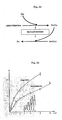
- Figure 3a in the appendix represents the assay of acetylcholine (Ach).
- the mediator is hydrolyzed by acetylcholinesterase, and the resulting choline is oxidized by cholineoxidase in the presence of luminol and peroxidase.
- acetylcholinesterase is added and the light that appears gives the rate of ACh.
- the application of the method of the invention to the determination or detection of glutamate is characterized in that at least one compound to be tested is brought into contact with a preparation of nervous tissue, then said preparation or its supernatant in the presence, successively or simultaneously, of glutamate dehydrogenase, oxidoreductase, luciferase, NAD and decaldehyde, and in that the light emitted by the degradation of decaldehyde following the degradation is detected or measured by glutamate dehydrogenase glutamate released by the preparation of nervous tissue.
- Figure 3b in the appendix shows the dosage of glutamate.
- the glutamate is for example dehydrogenated by the enzyme glutamate dehydrogenase; NADH 2 which appears then being attacked by the enzyme NADH-FMN oxidoreductase, which triggers in the presence of decaldehyde and luciferase from photobacterium, a light emission.
- glutamate dehydrogenase NADH 2 which appears then being attacked by the enzyme NADH-FMN oxidoreductase, which triggers in the presence of decaldehyde and luciferase from photobacterium, a light emission.
- NADH-FMN oxidoreductase which triggers in the presence of decaldehyde and luciferase from photobacterium, a light emission.
- the application of the method of the invention to the determination or detection of Gaba is characterized in that at least one compound to be tested is brought into contact with a preparation of nervous tissue and then said preparation or its supernatant is placed in the presence, successively or simultaneously, of gabase, oxidoreductase, luciferase, NAD and FMN and in that the light emitted by the degradation of the SSAL following the degradation by the gabase is detected or measured of Gaba released by the preparation of nervous tissue.
- Figure 3c in the appendix shows the dosage of Gaba.
- the enzyme Gabase is used to convert Gaba to semi-succinic aldehyde with production of NADH 2 .
- the application of the process of the invention to the determination or the detection of catecholamines is characterized in that at least one compound to be tested is brought into contact with a preparation of nervous tissue and then said preparation or its supernatant is placed in the presence, successively or simultaneously, of lactoperoxidase, O 2 and luminol and in that the light emitted by the degradation of the luminol is detected or assayed following the degradation by the lactoperoxidase of a released catecholamine by the preparation of nervous tissue.
- Figures 3d and 3e in the appendix represent the assay of catecholamines, in particular dopamine.
- the present invention relates to a particularly effective test, based on the demonstration of properties of an enzyme in the transformation of dopamine.
- the present invention shows that the enzyme lactoperoxidase, in the presence of O 2 , leads to the formation of H 2 O 2 , then, in the presence of the latter and of luminol, the same lactoperoxidase catalyzes the formation of light. Therefore, unexpectedly, the lactoperoxidase appears to have both a peroxidase action conventionally described and an oxidase action.
- the present invention therefore also relates to a test based on a luminescent catecholamine and its applications for controlling the release of an adrenergic transmitter.
- An increasing number of oxidases has been used to measure their specific substrate (glucose, xanthine, choline, etc. (Michelson 1978 and Takayama et al. 1977).
- acetylcholine transmitter (Ach) a method was proposed in 1980 in which the choline resulting from ACh hydrolysis was oxidized by the choline oxidase to form hydrogen peroxide, the latter being detected using a chemiluminescent reaction (luminol plus peroxidase) (Israel and Lesbats, 1981 a, b , 1982, 1987).
- Glu and Gaba are substrates for dehydrogenases giving NADH which triggers luminescence of Bacterial luciferases sensitive to aldehydes (Fosse et al, 1986; Israel et al, 1993; Israel and Lebats, 1996). If ATP, detected by firefly luciferases (De Luca and Mc Elro, is added to these transmitters) y, 1978; Meunier et al, 1975) we realize that many transmitters are now measured using chemiluminescent methods.
- milk lactoperoxidase has a mixed oxidase - peroxidase function, it has been able to oxidize catecholamines and to catalyze the reaction of the peroxide formed with luminol, thus generating the emission of light.
- a sensitive test has been developed which measures norepinephrine, epinephrine or dopamine as well, it reacts very weakly with L-DOPA or serotonin. This test was applied to control the release of catecholamines from adrenergic tissues and cells.
- the invention therefore also relates to a method for assaying catecholamine in a sample, comprising bringing this sample into contact with the lactoperoxidase and the luminol, and assaying the light emitted.
- the sample can be any culture supernatant of nerve cells, brain microcubes, or any other preparation of nerve tissue, possibly after stimulation of the release of catecholamines by calcium depolarization and incubation in the presence of the test compound.
- This assay can be used to measure epinephrine, norepinephrine, dopamine, etc.
- kits according to the invention can be implemented in any device suitable for a dosing reaction, such as tubes, wells, plates, support, etc. It is preferentially microtiter tubes or wells. Typically, assays are carried out on titration plates.
- Bovine milk lactoperoxidase (EC1.11.1.7) has was obtained from Sigma in the form of lyophilized powder (80-150 Protein units / mg).
- Luminol (5-amino-1,2,3,4-tetrahydrophthalazindione-1,4) was obtained from Merck.
- a 1 mM stock solution was prepared by diluting 18 mg in a few drops of 1M NaOH, and the final volume was increased at 100 mM by adding 0.2 M Tris buffer, pH 8.6.
- the environment of Krebs mammals is composed of 136 mM NaCl, 5.6 mM KCl, 2.2 mM CaCl2, 1.2 mM MgCl2, 1.2 mM sodium phosphate, 2.5 mM sodium bicarbonate, 5.5 mM glucose, oxygenated.
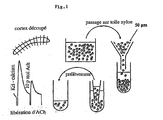
- Example 2 Preparation of microcubes of matter and uses for the determination of neuromediators ( Figure 1) .
- the cortex of a rat or mouse (or another mammal, including a human) is dissected and cut into cubes of approximately 1 to 2 mm 3 with a scalpel blade. These cubes are washed in a volume of mammalian Krebs (at least twice 250 ml) then aspirated using a P5000 pipette and forced to "jet" through a rigid nylon canvas having a mesh of approximately 1 mm side .
- the cubes thus calibrated are harvested from the bottom of a beaker by spontaneous sedimentation, which reduces more "traumatic" centrifugations, then the microcubes are harvested in a progressively smaller volume.
- the microcubes sediment at the bottom of a conical tube and are covered by 1 or 2 mL of Krebs.
- microcubes When pipetting into a pellet of 20 to 50 ⁇ L of these microcubes using a Gilson pipette with yellow tip at the cut end to widen the inlet, an equal number of microcubes is taken so that the mediator release can be tested on statistically comparable samples.
- the dosages of four neuromediators can also be spread over several days since these preparations are freezable.
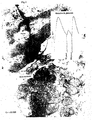
- Example 3 Preparation of Mossy Fibers glutamatergics of the cerebellum or hippocampus and uses for the determination of neuromediators ( Figure 2).
- the nerve endings of mossy fibers have a diameter of 5 to 10 ⁇ m (Fig. 2) and are not, in general, not preserved when homogenizing the tissue nervous to isolate small synaptosomes (0.5 ⁇ m) which are usually purified. If we take the precaution of soften the tissue in a solution physiological it is possible to preserve these large glutamatergic endings.
- quantities of tissues of approximately 0.1 g have been dissociated by aspiration-expiration in a volume of 0.3 mL using a pipette Gilson blue point. This "homogenate" is then reduced to 2 mL of Krebs and filtered through a 50 ⁇ m nylon fabric.
- the nerve endings of mossy fibers sediment spontaneously in the nuclear fraction. This base is washed 1 or 2 times in Krebs by spontaneous sedimentation then resuspended in 1 mL of Krebs. These nerve endings will release the mediator when depolarized presence of calcium and will be stable for a long time.
- Example 4 Cell Lines Expressing Various neurotransmission phenotypes ( Figure 4).
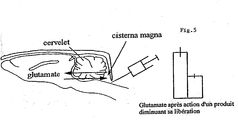
- Example 5 Study of the excito-toxicity of glutamate measured in cerebrospinal fluid ( Figure 5).
- the invention relates very particularly to the development of a particularly effective test for the assay, by chemiluminescence, of catecholamines in preparations of nervous tissue.
- This test is based on the unexpected double transformation of catecholamines by lactoperoxidase, leading to the emission of light, as shown in Figure 3d.
- the sample comprising the neuromediator is brought into contact with the lactoperoxidase and the luminol.
- equal volumes of these reagents are mixed beforehand (for example 30 ⁇ l each), and the mixture is then added to the sample (approximately 6 ⁇ l).
- the reaction is preferably carried out in a saline solution composed of 136 mM NaCl, 5.6 mM KCl, 1.2 mM MgCl 2 , 20 mM Tris buffer pH 8.6, oxygenated (solution I).
- the solution is placed in a tube and introduced into the luminometer, with gentle stirring.
- the mixture can be used to dose the catecholamines.
- approximately 3 ⁇ l of each reagent is used (i.e. 6 ⁇ l of the mixture).
- the catecholamine assay was carried out at from different preparations of nerve tissue, including dissociated adrenergic cells, microcubes of striatal regions of the brain or lineages cells loaded with catecholamine.
- Dissociated adrenergic cells have been prepared and used in a release test dopamine. For this, 4 adrenergic glands have been dissociated in a final volume of 2 ml of Krebs medium mammal. The release was tested on volumes of 5 to 10 ⁇ l, in solutions I or II above in which luminol (3 ⁇ l) and lactoperoxidase (5 ⁇ l) were added. The release of catecholamine was stimulated by the addition of the calcium ionophore A23187 (1.2 ⁇ l) in the presence of calcium (2.5 mM). The results obtained are presented on Figure 6 and show that the test of the invention allows a fast and sensitive dosage of catecholamine release on small samples of nerve tissue.
- Microcubes of striatal regions of the brain were prepared from the brains of two mice, which were cut and passed through a nylon membrane (0.5 mm section), then taken up in a final volume of 2 ml in a conical tube. Samples of 10 ⁇ l of the pellet were used to carry out the release test, under the conditions described above (in 2 ml of solution I containing 3 ⁇ l of luminol and 3 ⁇ l of lactoperoxidase). The release was stimulated by depolarization with KCl (45 mM) in the presence of calcium (2.5 mM). Controls without calcium were carried out, in the presence of EGTA (7 ⁇ M). The results obtained are presented in FIG.
- Example 7 Study of the release of catecholamines.
- Solution I consists of 136 mM NaCl, KCl 5.6 mM, 1.2 mM MgCl2, 20 mM Tris buffer pH 8.6 oxygenated.
- Solution II consists of 120 mM sucrose, buffer Tris 120 mM pH 8.6 oxygenated.
- Mammalian Krebs medium NaCl 136 mM, KCl 5.6 mM, 2.2 mM CaCl2, 1.2 mM MgCl2, 1.2 mM Na phosphate, 2.5 mM Na bicarbonate, 5.5 mM glucose pH 7.4 oxygenated.
- Lactoperoxidase (E C 1. 11. 1. 7) from milk cow was purchased from Sigma as a powder lyophilized (80 to 150 units per mg of protein), it was dissolved in 1 ml of water and kept frozen in aliquots of 100 ⁇ l.
- Luminol (5-amino-1,2,3,4-tetrahydrophtala zindione-1,4) was purchased from Merck. A stock solution has been prepared by dissolving 18 mg of luminol in a few drops of NaOH 1M and the volume was brought to 100 ml with Tris buffer pH 8.6 0.2 M. 1 ml aliquots were kept at -20 ° C.
- TCA trichloroacetic acid
- mice Two mice were anesthetized with ether, then their adrenals were removed and cut into 4 or 5 pieces which have been washed for 40 minutes and 1 hour in 400 ml of Krebs mammal.
- the salting out was carried out in solution I or II in which the luminol and the lactoperoxidase are increased respectively to 5 and 10 ⁇ l.
- the depolarization with 60 mM KCl in the presence of calcium 2.5 mM triggers the release.
- the pieces were washed as before and dissociated by several aspirations and rejections through a pipette (Eppendorf, 1 ml cone) in a final volume of 2 ml.
- the salting out was tested on aliquots of 5 and 10 ⁇ l. More material quenches the reaction mixture.
- the release was measured in solution I or II in which luminol (3 ⁇ l) and lactoperoxidase (5 ⁇ l) were added.
- the release was triggered by the addition of calcium ionophore A23187 (1.2 ⁇ M) in the presence of calcium 2.5 mM.
- the striatal regions of the brain of two mice were cut and forced into large volumes of Krebs through a rigid nylon gauze (0.5 mm).
- the micro fragments were collected at the bottom of the beaker and concentrated to a final volume of 2 ml in a conical tube.
- the pellet forms quickly by sedimentation and is possible to take 10 ⁇ l samples from the pellet. They are added to 2 ml of solution I containing 6 ⁇ l of lactoperoxidase-luminol mixture (an equal volume of each stock solution).
- the release was obtained by depolarization with KCl (45 mM) in the presence of 2.5 mM of calcium.
- the controls in the absence of calcium were carried out with 0.7 ⁇ M of EGTA in the solution. More EGTA could inhibit reaction, this condition gives as much sensitivity to controls and for samples
- NG108-15 cell cultures were maintained in Dulbecco's modified Eagle medium (DMEM) enriched in 2 mM glutamine, 10% fetal calf serum, HAT (100 ⁇ M hypoxanthine, 1 mM aminopterin and 16 pM thymidine).
- DMEM Dulbecco's modified Eagle medium
- HAT 100 ⁇ M hypoxanthine, 1 mM aminopterin and 16 pM thymidine
- the cells were cultured at 37 ° C in a humidified atmosphere of 95% air and 5% CO2.
- the inventors added, 16 hours before the experiment, a mixture of dopamine and neutralized ascorbic acid to obtain a final concentration of 10 mM of each in the culture vessel.
- the stock solution was made with 0.5 M ascorbic acid neutralized with sodium hydroxide and with 0.5 M dopamine pH 8.7.
- the cells are washed in a solution consisting of 136 mM NaCl, 5.6 mM KCl, 1.2 mM MgCl2, 20 mM Tris buffer pH 8.6, 5.5 mM oxygenated glucose. Four washes at 1200 RPM for 5 min were carried out. The pellet from the 4 containers was resuspended in 0.5 ml of Krebs. The enriched cells were released in 2 ml of solution II containing 3 ⁇ l of luminol and 5 ⁇ l of lactoperoxidase, it was found preferable to reinforce the reaction mixture after adding the cells (5 ⁇ l) by doubling the luminol and the peroxidase and adding 1 ml more solution II. When the trace returned to an acceptable base level, the release was triggered by calcium (1.6 mM) in the presence of the ionophore A 23187 (0.7 ⁇ M).
- the cells were diluted by half with a 2% volume by volume solution of glyoxylic acid containing 0.5 mg% MgCl2 pH 5.
- the cells were deposited on a glass slide, and the solution drained.
- the cells were dried at room temperature and then treated at 80 ° C for half an hour, before being examined in the medium suitable for observations of fluorescence.
- the procedure was adapted from Liu et al., 1992 following De La Torre 1980 and Knigge et al., 1977.
- Figure 3d shows the principle of the catecholamine-luminescent test. Lactoperoxidase catalyzes the oxidation of catecholamines (dopamine, norepinephrine, epinephrine) and the chemiluminescent oxidation of luminol, it has a mixed oxidase-peroxidase function.
- Figure 3e represents the dose-response curve for dopamine and norepinephrine.
- the reaction mixture, solution I containing the lactoperoxidase and the luminol gives a chemiluminescent reaction when catecholamine is added. Below the curves is shown a typical response in the range of picomoles.
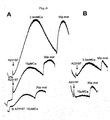
- Figure 6 shows the release of catecholamines by dissociated adrenergic cells.
- A the release was measured in saline solution I, it was induced by the addition of ionophore A23107 (1.2 ⁇ M) in the presence of 2.5 mM of calcium (top line).
- ionophore A23107 1.2 ⁇ M
- FIG. 8 represents the determination of the catecholamine content of the biological extracts
- the TCA-ether-washed extract was also treated with chloroform and Triton, as described in Methods.
- the catecholamine content of the striatum extract is compared to the standards (left) and to a blank treated exactly like the sample.
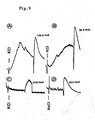
- Figure 9 shows the release of catecholamine by adrenal gland fragments. Each mouse adrenal gland was cut into 4 pieces washed in a large volume (400 ml) of mammalian Krebs. The pieces were transferred to solution I (A) or solution II (B) and the salting out caused by depolarization by KCl (60 mM) in the presence of Calcium (2.5 mM). The proportions of lactoperoxidase and luminol are given in the Methods section.
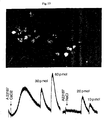
- FIG. 10 shows the release of catecholamine by neuroblastoma cells enriched in dopamine during their culture.
- Top histochemical demonstration of the presence of dopamine in NG108-15 cells enriched in culture with dopamine (2 mM).
- the glyoxylic acid process yielded a fluorescent compound with dopamine.
- the cells were enriched with 2 to 10 mM dopamine.
- Bottom release of dopamine by enriched cells.
- the NG108-15 cells were enriched with 10 mM dopamine added for 12 hours to the culture.
- the catecholamine test can be suitable for monitoring salting out from tissue sections or cells. This required some modifications in function of each of the experimental situations.
- adrenal cuts for example, one of difficulties came from the presence of quantities high extracellular which deplete the mixture reaction.
- cell suspensions the turbidity of the solution and the lipid material extinguish chemiluminescence, and decrease sensitivity. The inventors were finally able to adapt the procedure to each experience.
- FIG. 6 A and B aims to compare the release of adrenal cells in two different solutions, saline solution I and non-saline solution II.
- saline solution I the release from the cells was measured in saline and caused by calcium ionophore (A23187) in the presence of 2.5 mM calcium.
- calcium ionophore A23187
- the inventors wanted to couple the oxidation of catecholamines by monoamine oxidase to the detection of hydrogen peroxide using luminol. It was found by chance that the lactoperoxidase was in itself sufficient to catalyze both the oxidation of catecholamines and the detection of the product with the chemiluminescence of luminol. It is known that catecholamines are detected by amperometric procedures, and that these methods are sensitive, the specificity depends on the relationship between the redox potential of catecholamines and the detection electrode (Albillos et al., 1977, Pan and al., 1977).
- the inventors also observed that the procedure does not distinguish between norepinephrine, epinephrine or dopamine, and that L-DOPA is not measurable, despite the fact that it inactivates the reaction mixture.
- Other transmitters such as serotonin oxidized by monoamine oxidase, did not react during the lactoperoxidase test.
- Other compounds ascorbate or acetylcholine, have little or no effect.
- the method described can be used in addition to other methods. The process is fast and complements the other methods developed for ATP, ACh, glutamate and Gaba by using the same luminometer to determine the light emission.
- the inventors have also been able to control the release of catecholamines from various adrenergic preparations.
- the method makes it possible to continuously detect the release.
- One of the results that may be interesting in the future is the observation that certain cells can be enriched in dopamine during culture. This could make it possible to find the cells capable of accumulating and releasing this transmitter, with the aim of one day correcting a dopaminergic deficit as in Parkinson's disease (Bjorklund and Stenevi, 1985; Espejo et al., 1998).
- the method could be useful for finding pharmacological compounds that affect adrenergic transmission.
- Fosse MV Kolstad J
- Fonnum F A bioluminescence method for the measurement of L-glutamate: application to the study of changes in the release of L-glutamate from lateral geniculate nucleus and superior colliculus after visual cortex ablation in rats. Journal of Neurochemistry. 1986; 47; 340-349.
- Knigge KM Hoffman G, Scott DE, Sladek JR. Identification of catecholamine and luteinizing hormone-releasing hormone (LHRH) containing neurons in primary cultures of dispersed cells of the basal hypothalamus. Brain Res 1977; 120: 393-405.
- LHRH luteinizing hormone-releasing hormone
- Michelson AM Purification and properties of Pholas dactylus Luciferine and Luciferase. In Methods in enzymology bioluminescence and chemiluminescence. Ed. M.A. De Luca; Acad Press NY 1978; LVII: 385-406.
Landscapes
- Health & Medical Sciences (AREA)
- Engineering & Computer Science (AREA)
- Life Sciences & Earth Sciences (AREA)
- Biomedical Technology (AREA)
- Bioinformatics & Cheminformatics (AREA)
- Chemical & Material Sciences (AREA)
- General Health & Medical Sciences (AREA)
- Medicinal Chemistry (AREA)
- Immunology (AREA)
- Molecular Biology (AREA)
- Pharmacology & Pharmacy (AREA)
- Urology & Nephrology (AREA)
- Neurosurgery (AREA)
- General Chemical & Material Sciences (AREA)
- Veterinary Medicine (AREA)
- Animal Behavior & Ethology (AREA)
- Public Health (AREA)
- Chemical Kinetics & Catalysis (AREA)
- Hematology (AREA)
- Organic Chemistry (AREA)
- Neurology (AREA)
- Nuclear Medicine, Radiotherapy & Molecular Imaging (AREA)
- Cell Biology (AREA)
- Microbiology (AREA)
- Physics & Mathematics (AREA)
- Biotechnology (AREA)
- Pathology (AREA)
- General Physics & Mathematics (AREA)
- Biochemistry (AREA)
- Analytical Chemistry (AREA)
- Food Science & Technology (AREA)
- Tropical Medicine & Parasitology (AREA)
- Toxicology (AREA)
- Psychiatry (AREA)
- Heart & Thoracic Surgery (AREA)
- Cardiology (AREA)
- Pain & Pain Management (AREA)
- Psychology (AREA)
- Vascular Medicine (AREA)
- Hospice & Palliative Care (AREA)
Abstract
Description
Les méthodes utilisées aujourd'hui par l'industrie pharmaceutique sont longues, lourdes et laborieuses. Ainsi, ces méthodes reposent essentiellement sur l'étude de ce qui se passe après la libération des neuromédiateurs, c'est-à-dire l'étude des événements post-synaptiques.
La présente invention propose de nouvelles méthodes et compositions permettant d'aborder l'étude, la prévention et le traitement des pathologies du système nerveux avec des chances plus grandes de succès. La présente invention repose notamment sur l'étude de la modulation de la neurotransmission par son aspect pré-synaptique. L'invention permet donc d'agir non pas sur les effets ou sur les symptômes, mais directement sur l'origine et les causes des pathologies. La présente invention permet l'étude simultanée de nombreux composés tests sur des préparations de tissu nerveux, et offre des niveaux de fiabilité et de reproductibilité importants.
Ce but est atteint selon la présente invention, grâce à un procédé d'identification de composés capables de moduler la libération de neuromédiateur, caractérisé en ce que l'on met en contact au moins un composé à tester avec une préparation de tissu nerveux et en ce que l'on détermine l'éventuel effet modulateur dudit composé sur la libération de neuromédiateur par ladite préparation de tissu nerveux.
La présente invention est remarquable en ce qu'elle offre une série de dosages de neurotransmetteurs, rapides, simples, sensibles et fiables, qui peuvent être utilisés en temps réel sur des préparation vivantes, telles que cerveaux perfusés, coupes de tissus, terminaisons nerveuses isolées (synaptosomes), cultures de cellules, etc. Le procédé selon l'invention s'intéresse à la libération des neuromédiateurs, c'est à dire au plan pré-synaptique de la neurotransmission, alors que les techniques d'investigation décrites dans l'art antérieur concernent sur les aspects post-libératoires, comme l'action sur les récepteurs, les inhibiteurs de recapture ou d'enzyme de dégradation des neuromédiateurs.
La mise en contact de la préparation de tissu nerveux avec le ou les composés à tester est effectuée pendant une durée suffisante pour permettre audit composé d'exprimer un éventuel effet sur ladite préparation.
Le procédé de l'invention permet de tester des composés isolés, un mélange de composés, un échantillon biologique, une banque combinatoire, une molécule synthétique ou naturelle, etc. Il peut s'agir d'un produit. connu, dont on souhaite caractériser l'activité, ou de produits inconnus ou de mélanges indéfinis. Comme indiqué ci-après, l'invention décrit des préparations de tissu nerveux qui permettent de disposer d'un grand nombre d'échantillons de matière cérébrale à partir d'un seul animal, ce qui permet de tester de manière simultanée ou séquentielle des quantités importantes de composés, notamment des banques de composés.
Ainsi, le procédé de l'invention peut consister à mettre en contact plusieurs composés à tester soit séquentiellement, soit simultanément, en parallèle ou non, avec la préparation de tissu nerveux.
Pour une mise en contact simultanée, le ou les composés testés sont par exemple mis en solution avec la substance détectable, puis le mélange obtenu est mis en contact avec la préparation de tissu nerveux. Dans un autre mode de mise en oeuvre, le ou les composés testés et la solution comprenant la ou les substances dont l'une au moins est capable de réagir avec un neuromédiateur sont conditionnés séparément et introduits simultanément dans le milieu comprenant la préparation de tissu nerveux. Le surnageant est ensuite récolté et le dosage réalisé.
Pour une mise en contact séquentielle, la préparation de tissu nerveux peut être mise en contact dans un premier temps avec la solution comprenant une ou plusieurs substances dont l'une au moins est capable de réagir avec un neuromédiateur. Ceci permet éventuellement d'éliminer le bruit de fond lié à la présence éventuelle de neuromédiateur résiduel dans le milieu. Dans un second temps, le ou les composés testés sont ajoutés, et la substance détectable est dosée.
Le procédé de l'invention permet, outre de tester plusieurs composés, mais aussi le dosage de plusieurs neuromédiateurs en parallèle. Ainsi, un même composé peut être testé en parallèle pour ses propriétés sur la libération de différents neuromédiateurs, sur des échantillons de tissu nerveux préparés à partir d'un seul animal.
Un premier type de préparation de tissu nerveux selon l'invention comprend des microcubes de matière cérébrale de mammifère, et de préférence des microcubes de cortex cérébral.
Un second type de préparation de tissu nerveux selon l'invention comprend des fibres moussues de matière cérébrale de mammifère, et de préférence des fibres moussues du cervelet ou de l'hippocampe.
L'invention concerne en effet la préparation de tissu nerveux permettant des dosages fiables, nombreux et reproductibles à partir d'un même animal. En particulier, l'invention s'intéresse à la préparation de microcubes de matière cérébrale à partir de tissu nerveux, notamment de cerveau entier, de cortex, de cervelet ou tout autre tissu nerveux. Les microcubes présentent l'avantage de conserver les connectivités nerveuses locales et d'être suffisamment oxygénés en milieu physiologique pour assurer une viabilité compatible avec les méthodes de l'invention.
Il convient de rappeler que le fractionnement du système nerveux central a conduit, dans les années 1960, à la purification des terminaisons nerveuses (synaptosomes). Depuis cette époque, l'intérêt des neurobiologistes pour ces préparations ne s'est jamais tari. Si ces préparations ont été très utiles pour déterminer la composition biochimique des éléments synaptiques ou pour isoler les protéines qui assurent la neurotransmission, il faut cependant constater que ces études physiologiques et pharmacologiques se sont heurtées à des difficultés liées à la durée de vie brève in vitro de ces synaptosomes, obtenus dans des milieux de fractionnement non adaptés à l'étude physiologique. L'isolement des synaptosomes d'organe électrique de Torpille dans des milieux physiologiques semblait alors être une exception puisqu'ils étaient capables de conserver leurs propriétés physiologiques (potentiel de membrane, synthèse et libération d'ACh) pendant au moins 48 heures. Toutefois, des préparations de tissu nerveux mammifère conservant de telles propriétés physiologiques n'a pas été décrite jusqu'à présent. Les microcubes de matière cérébrale selon l'invention présentent donc un intérêt pharmacologique considérable.
Les microcubes de matière cérébrale constituent une préparation qui offre de multiples avantages. Ainsi, un échantillon de microcubes obtenu à partir d'un cortex est statistiquement comparable à ce cortex entier dans le sens où l'ensemble des neurones contenus dans chaque microcubes se trouve dans un environnement qui est proche de celui qui est le sien dans l'animal entier. Chacun des neurones garde un certain nombre de ses connexions et l'environnement glial reste très stable. Ces deux constances physiologiques sont sans aucun doute responsables de la stabilité et de la longue durée de vie des échantillons de micro cubes. Et même si tous les microcubes ne sont pas équivalents entre eux du fait de l'hétérogénéité du cortex, chaque population constituant l'échantillon est statistiquement identique.
Préférentiellement, les microcubes ont une taille moyenne comprise entre 0,1 et 5 mm3, de préférence entre 0,1 et 3 mm3, encore plus préférentiellement de 1 mm3 environ. Les microcubes peuvent être préparés à partir de tissu nerveux, par découpage puis passage à travers une ou plusieurs grillés de diamètre défini, par exemple entre 0,01 et 2 mm2. Il peut s'agir notamment d'une toile de nylon, d'une grille métallique, ou de tout autre support adapté au tamisage. Une illustration de la préparation de microcubes est représentée sur la Figure 1 en annexe, utilisant comme tissu nerveux de départ le cortex cérébral.
Dans un mode particulier de réalisation du procédé de l'invention, après préparation des microcubes et d'un nombre conséquent d'échantillons répartis dans des supports de titration, par exemple des tubes coniques ou des puits de microplaques, on met en contact le ou les composés à tester avec la préparation de tissu nerveux, puis l'on prélève le surnageant sur lequel on effectue le dosage (notamment par chimiluminescence) des médiateurs éventuellement libérés par la préparation de tissu nerveux.
Un autre avantage des microcubes réside dans leur stabilité importante, même après congélation/décongélation. De ce fait, la mise en batterie de ces dosages n'est pas limitée par la durée de la journée de travail, mais les préparations de tissu nerveux peuvent être conservées pour usage ultérieur. Une même préparation permet donc de déterminer avec certitude les effets d'une ou plusieurs séries de composés sur plusieurs (notamment cinq) neurotransmissions en parallèle, ce qui rend les comparaisons d'autant plus faciles que la constitution du cortex des animaux sains est stable.
Ces micro cubes offrent en plus des avantages par rapport aux autres préparations existantes et utilisées par l'industrie pharmaceutique :
- Comparé aux coupes de cerveau, les échantillons de microcubes sont statistiquement plus homogènes car il est toujours difficile de réaliser deux coupes identiques pour avoir une bonne comparaison entre les manipulations,
- Comparé aux synaptosomes, les échantillons de microcubes sont plus stables et ont une durée de vie plus longue car ils ont conservé leur environnement physiologique,
- Comparé aux études sur l'animal vivant, les microcubes permettent de réaliser, à partir d'un seul sacrifice, une batterie de tests concernant à la fois plusieurs composés et plusieurs pans de la neurotransmission, ce qui tranche avec les études comportementales, où un animal testé permet de ne répondre qu'à une question (actif ou pas sur un comportement dont la portée est extrapolée).
Comme indiqué précédemment, une variante avantageuse du procédé de l'invention, consiste à utiliser une préparation de tissu nerveux comprenant des fibres moussues de matière cérébrale mammifère, notamment des fibres moussues du cervelet ou de l'hippocampe.
Les fibres moussues contiennent des terminaisons nerveuses glutamatergiques d'un diamètre de 5 a 10 µm. Celles-ci ne sont, en général, pas préservées lorsque l'on homogénéise le tissu nerveux pour isoler des petits synaptosomes (0.5 µm). Selon la présente invention, on utilise comme préparation de tissu nerveux des fibres moussues, préparées de manière à conserver lesdites terminaisons nerveuses. Ces fibres peuvent être préparées par fragmentation du tissu de manière plus douce, dans une solution physiologique, ce qui permet de préserver ces grandes terminaisons glutamatergiques. Des fibres moussues préparées dans ces conditions et utilisables pour la mise en oeuvre de la présente invention sont décrites sur la Figure 2 en annexe.
La détection ou le dosage d'une ou plusieurs substances détectables si un neuromédiateur est libéré, ou d'au moins un produit résultant de la transformation de l'une desdites substances si un neuromédiateur est libéré, peut être effectué de différentes façons, selon la nature de la substance à doser.
Dans un mode particulièrement préféré de mise en oeuvre, le procédé utilise des substances froides, c'est-à-dire non radioactives. Le procédé concerne tout particulièrement la détection ou le dosage d'une substance conduisant à une émission de lumière en présence de néuromédiateur, le dosage de la substance consistant alors en le dosage ou la détection de la lumière émise.
Ainsi, dans un mode tout préféré, le procédé de l'invention comprend un dosage par chimiluminescence, ce qui permet des dosages rapides, précis et nombreux des neuromédiateurs. Les substances ou mélanges de produits conduisant à une émission de lumière en présence de neuromédiateur peuvent être par exemple, selon le neuromédiateur, une combinaison de luminol et de péroxydase, de décaldéhyde et de luciférase ou par exemple la NADH-FMN oxydoréductase.
Ainsi, le procédé selon l'invention est caractérisé en ce que l'on en ce que l'on met en contact au moins un composé à tester avec une préparation de tissu nerveux en présence d'une une plusieurs enzymes dont le substrat de l'une au moins est un neuromédiateur et d'au moins un agent capable d'émettre de la lumière suite à la dégradation dudit neuromédiateur par son enzyme.
A titre de neuromédiateur dont la libération est détectée ou dosée selon le procédé de l'invention, on peut citer notamment le glutamate (Glu), l'acétycholine (Ach), le γ-aminobutyrate (Gaba), les catécholamines notamment la dopamine (Da) , ou l'ATP.
La figure 3a en annexe représente le dosage de l'acétylcholine (Ach). Pour ce dosage le médiateur est hydrolysé par l'acétylcholinestérase, et la choline qui en résulte est oxydée par la cholineoxydase en présence de luminol et de peroxydase. Même lorsqu'un échantillon contient de la choline et de l'ACh, on peut lire sequentiellement les deux substances : lorsque la luminescence due à la choline s'éteint, on ajoute de l'acétylcholinestérase et la lumière qui apparaít donne le taux d'ACh. Ce type de test a été appliqué sur certains échantillons nerveux, essentiellement non mammifère ou ne permettant pas des études sur des gammes assez larges de composés (Israel et Morel, Rev. Neurol. 143 (1987) 89) La présente invention montre à présent que ce type de test peut être utilisé à grande, échelle, sur des préparation particulières de tissu nerveux, et en batterie avec d'autres tests de dosage de neuromédiateur.
La figure 3b en annexe représente le dosage du glutamate. Pour ce dosage le glutamate est par exemple déshydrogéné par l'enzyme glutamate deshydrogénase ; le NADH2 qui apparaít étant ensuite attaqué par l'enzyme NADH-FMN oxydoréductase, ce qui déclenche en présence de décaldéhyde et de luciférase de photobactérium, une émission lumineuse. Ce type de dosage a été mis en oeuvre dans d'autres conditions, expérimentales, sur des terminaisons nerveuses d'organes électriques (Israel et al., Neurochem. Int. 22 (1993) 53). La présente invention montre à présent que ce type de test peut être utilisé à grande échelle, sur des préparation particulières de tissu nerveux, et en batterie avec d'autres tests de dosage de neuromédiateur.
La figure 3c en annexe réprésente le dosage du Gaba. Pour ce dosage, l'enzyme Gabase est utilisée pour convertir le Gaba en aldéhyde semi succinique avec production de NADH2. L'aldéhyde semi succinique et le NADH déclenchent, en présence de NADH-FMN oxydoréductase, l'émission de lumière. L'avantage de ce test est qu'il n'est pas nécessaire d'ajouter un aldéhyde exogène. Ce type de dosage a été mis en oeuvre dans d'autres conditions, expérimentales, sur des terminaisons nerveuses d'organes électriques (Israel et Lesbats., J. Neurochem. 67 (1996) 2624). La présente invention montre à présent que ce type de test peut être utilisé à grande échelle, sur des préparations particulières de tissu nerveux, et en batterie avec d'autres tests de dosage de neuromédiateur.
Les figures 3d et 3e en annexe représentent le dosage des catécholamines, notamment de la dopamine. Pour le dosage de la dopamine, la présente invention se rapporte à un test particulièrement efficace, basé sur la mise en évidence de propriétés d'une enzyme dans la transformation de la dopamine. Ainsi, la présente invention montre que l'enzyme lactopéroxydase, en présence de O2, conduit à la formation de H2O2, puis, en présence de ce dernier et de luminol, la même lactopéroxydase catalyse la formation de lumière. De ce fait, de manière inattendue, la lactopéroxydase apparaít comme possédant à la fois une action péroxydase classiquement décrite et une action oxydase.
L'action de la monoamine oxydase sur les catécholamines produit du péroxyde d'hydrogène (Cadet et Brannock, 1998) qui a pu être détecté à l'aide du luminol. Il a maintenant été mis en évidence dans le cadre de la présente invention que la lactopéroxydase de lait présente une fonction mixte oxydase - péroxydase, elle a été capable d'oxyder des catécholamines et de catalyser la réaction du peroxyde formé avec le luminol, générant ainsi l'émission de lumière. Ainsi, il a été mis au point un test sensible qui mesure aussi bien la norépinephrine, l'épinephrine ou la dopamine, il réagit très faiblement avec la L-DOPA ou la sérotonine. Ce test a été appliqué pour contrôler le relargage de catécholamines des tissus et des cellules adrénergiques.
L'invention a donc aussi pour objet un procédé de dosage de catécholamine dans un échantillon, comprenant la mise en contact de cet échantillon avec la lactopéroxydase et le luminol, et le dosage de la lumière émise. L'échantillon peut être tout surnageant de culture de cellules nerveuses, de microcubes de cerveau, ou de toute autre préparation de tissu nerveux, éventuellement après stimulation de la libération de catécholamines par dépolarisation au calcium et incubation en présence du composé test. Ce dosage peut être utilisé pour doser l'épinéphrine, la norépinéphrine, la dopamine, etc.
- une ou plusieurs préparations de tissus nerveux dans des compartiments séparés,
- une ou plusieurs substances dont l'une au moins est capables de réagir avec un neuromédiateur libéré par la préparation de tissu nerveux, et l'une au moins desdites substances est détectable si un neuromédiateur est libéré ou dont au moins un produit résultant de la transformation de l'une desdites substances est détectable si un neuromédiateur est libéré.
- éventuellement un ou plusieurs composés de référence dont l'effet sur la libération d'un ou plusieurs neuromédiateurs par la préparation de tissu nerveux est connu.
En effet, les composés identifiés ou caractérisés selon le procédé de l'invention peuvent soit augmenter, soit inhiber la libération de médiateur. Ainsi, selon les pathologies concernées, il peut être avantageux de chercher à augmenter ou à réduire la quantité de médiateur libérée. A cet égard, les composés identifiés peuvent constituer des composés à usage thérapeutique, ou bien des leads (cibles) pour le développement de tels agents thérapeutiques. Les applications de ces composés sont par exemple :
- pour les composés modulant la libération d'acétylcholine, la neurodégénérecence et la maladie d'Alzheimer,
- pour les composés modulant la libération de glutamate, la neurotoxicité et l'ischémie,
- pour les composés modulant la libération de Gaba, l'épilepsie et l'anxiété,
- pour les composés modulant la libération de catécholamines (dopamine), la psychose, la dépression, la maladie de Parkinson,
- pour les composés modulant la libération d'ATP, l'anxiété, la panique, les phobies, la maladie de Parkinson.
Il sera fait référence dans ce qui suit aux dessins en annexe, dans lesquels :
- La Figure 1 représente la production de microcubes de matière cérébrale, et leur utilisation pour le dosage de neuromédiateurs.
- La Figure 2 représente la production et l'aspect de fibres moussues glutamatergiques, et leur utilisation pour le dosage de neuromédiateurs.
- La Figure 3 représente le principe des dosages de l'acétylcholine (Figure 3a), du glutamate (Figure 3b) et du Gaba (Figure 3c). La Figure 3d représente le principe du test catécholamine-luminescent, la Figure 3e représente le dosage de la dopamine et de la norépinéphrine. Les différents dosages permettent de détecter quelques picomoles de l'un des médiateurs. Une proportionnalité entre la lumière émise et le taux de médiateur est montrée sur les figures pour chaque médiateur.
- La Figure 4 représente le remplissage de cellules en neuromédiateurs et leur utilisation pour le dosage de neuromédiateurs. Les cellules sont chargées en neuromédiateur en l'ajoutant au milieu de culture (10 mM). Les cellules sont lavées 5 à 6 fois, puis reprises dans un volume de milieu, pour aboutir à une concentration de 1 nanomole de neuromédiateur dans 5 µl environ. Différents phénotypes de neurotransmetteurs sont ainsi exprimés par les lignées cellulaires.
- La Figure 5 représente le dosage du glutamate dans le liquide céphalo-rachidien.
- La Figure 6 représente le dosage des catécholamines sur une préparation de cellules adrénergiques dissociées, en solution saline (A) ou non saline (B).
- La Figure 7 représente le dosage des catécholamines sur une préparation de microcubes de cerveau stimulée par du KCl en présence de calcium (7A) ou d'EGTA (7B).
- La Figure 8 représente la détermination du contenu en catécholamines des extraits biologiques.
- La Figure 9 représente le relargage de catécholamine par des fragments de glande surrénale.
- La Figure 10 représente le relargage de catécholamines par des cellules de neuroblastome enrichies en dopamine au cours de leur culture.
Des expériences similaires ont été réalisées à partir de lignées cellulaires chargées en dopamine (notamment de lignées de neuroblastes) et ont permis de confirmer la sensibilité et la reproductibilité du procédé de l'invention.
Le relargage des cellules enrichies a été réalisé dans 2 ml de solution II contenant 3 µl de luminol et 5 µl de lactopéroxydase, il a été trouvé préférable de renforcer le mélange réactionnel après avoir ajouté les cellules (5 µl) en doublant le luminol et la péroxydase et en ajoutant 1 ml de plus de solution II. Quand le tracé est revenu à un niveau de base acceptable, le relargage a été déclenché par le calcium (1,6 mM) en présence de l'ionophore A 23187 (0,7 µM).
La lactopéroxydase catalyse l'oxydation des catécholamines (dopamine, norépinephrine, épinéphrine) et l'oxydation chimiluminescente du luminol, elle présente une fonction mixte oxydase-péroxydase.
La Figure 3e représente la courbe dose-réponse pour la dopamine et la norépinephrine.
Le mélange réactionnel, la solution I contenant la lactopéroxydase et le luminol (voir méthodes), donne une réaction chimiluminescente quand la catécholamine est ajoutée. Au-dessous des courbes est montrée une réponse typique dans la gamme des picomoles. La différence entre les deux courbes dépend de lot de lactopéroxydase et des solutions, elle ne correspond pas à une distinction spécifique entre les deux catécholamines.
La Figure 6 représente le relargage de catécholamines par des cellules adrénergiques dissociées.
En A, le relargage a été mesuré en solution I saline, il a été induit par l'addition d'ionophore A23107 (1,2 µM) en présence de 2,5 mM de calcium (tracé du haut). Quand le calcium a été réduit jusqu'à 10 µM, le relargage est clairement plus faible mais pas négligeable (tracé du milieu). Sur le tracé du milieu, les pertes spontanées des cellules sont mesurées en absence d'ionophore.
En B, le relargage a été mesuré en solution II (sucrose-Tris) et a été provoqué par l'addition d'ionophore comme en A, en présence de calcium 2,5 mM ou de calcium 10 µM (tracé du bas). Dans cette solution, le relargage apparaít comme négligeable en présence de faibles quantités de calcium, et les pertes spontanées ne sont pas mesurables.
La proportion de lactopéroxydase et de luminol est donnée dans la partie Méthodes.
La Figure 7 représente le relargage de catécholamine par des microfragments striataux.
Les morceaux de striatum ont été passés de force, avec un grand volume de Krebs, à travers une gaze de nylon rigide, les microfragments ont ensuite pu sédimenter et le striatum de 4 souris a été concentré dans un volume de 2 ml. Sur le tracé du haut, le relargage dans un volume de (probablement de la dopamine) a été provoqué par le KCl (45 mM) et le calcium (2,5 mM). Quand le relargage décline, deux standards dopamine ont été injectés. Sur le tracé du bas, une dépolarisation contrôle a été réalisée comme ci-dessus, mais en absence de calcium (plus 0,7 µM EGTA), aucun relargage n'a été mesuré, un standard a été injecté pour vérifier le mélange réactionnel. Dans les deux cas, 10 µl des microfragments prélevés du culot (voir Méthodes) ont été utilisés. Le relargage a été réalisé en solution 1 contenant de la lactopéroxydase et du luminol, comme décrit dans Méthodes.
La Figure 8 représente la détermination du contenu en catécholamine des extraits biologiques
L'extrait lavé au TCA et à l'éther a aussi été traité au chloroforme et au Triton, comme décrit dans Méthodes. Le contenu en catécholamine de l'extrait du striatum est comparé aux standards (gauche) et à un blanc traité exactement comme l'échantillon.
La Figure 9 représente le relargage de catécholamine par des fragments de glande surrénale.
Chaque glande surrénale de souris a été découpée en 4 morceaux lavés dans un grand volume (400 ml) de Krebs mammifère. Les morceaux ont été transférés dans la solution I (A) ou la solution II (B) et le relargage provoqué par la dépolarisation par le KCl (60 mM) en présence de Calcium (2,5 mM). Les proportions de lactopéroxydase et de luminol sont données dans la partie Méthodes. Les tracés du bas sont des contrôles réalisés en absence de Calcium (C) ou en absence de dépolarisation (D) en utilisant du NaCl 60 mM.
La Figure 10 représente le relargage de catécholamine par des cellules de neuroblastome enrichies en dopamine au cours de leur culture.
Haut : démonstration histochimique de la présence de dopamine dans les cellules NG108-15 enrichies en culture avec de la dopamine (2 mM). Le procédé à l'acide glyoxylique donné un composé fluorescent avec la dopamine. Les cellules ont été enrichies avec 2 à 10 mM de dopamine.
Bas : relargage de dopamine par les cellules enrichies. Les cellules NG108-15 ont été enrichies avec de la dopamine 10 mM ajoutée pendant 12 heures à la culture. Des cellules de quatre récipients à confluence ont été rassemblées, lavées au moins quatre fois dans une solution saline et suspendues dans 0,5 ml de solution saline.
Gauche : le relargage a été mesuré sur 5 µl de suspension cellulaire en solution II contenant de la lactopéroxydase et du luminol comme décrit dans Méthodes. Le relargage a été provoqué par le calcium (1,6 mM) et A23187 (0,7 µM). Deux standards dopamine ont été injectés pour calibrer le relargage.
Droite : contrôle, les cellules enrichies en dopamine n'en ont pas relargué en absence de calcium (l'injection de NaCl remplace le calcium). Le standard montre que le mélange réactionnel aurait détecté toute dopamine relarguée.
L'évaluation du contenu en catécholàmines d'échantillons biologiques inconnus demande une extraction, et le traitement des échantillons qui diminue ou minimise les interférences possibles avec d'autres composés susceptibles d'être présents dans l'extrait, et particulièrement les lipides. L'échantillon lavé au TCA et à l'éther a aussi été mélangé avec du chloroforme, et une faible quantité de Triton a été ajoutée à la phase aqueuse, comme décrit dans Méthodes. La figure 8 montre une évaluation typique, dans laquelle le contenu en catécholamines de l'échantillon est comparé à des standards, un blanc est aussi réalisé avec la solution traitée exactement comme l'extrait biologique. Le tableau I ci-dessous donne les résultats pour cinq expériences différentes, le contenu en catécholamines, trouvé avec le test chimiluminescence est comparé à des valeurs trouvées dans la littérature en utilisant la fluorométrie ou d'autres méthodes.
| Méthode chimiluminescente | Méthode fluorométrique | |
| Glande surrénale | 490 ± 94 | 1100 |
| Striatum | 40 ± 10 | 54 ± 8,2 |
| Canal déférent | 11,9 ± 0, 8 | 7, 9 |
La Figure 6 B montre qu'en milieu non salin (solution II : sucrose Tris), le relargage de ces cellules peut encore être provoqué comme en A par l'ionophore A23187 et le calcium, mais la dépendance au calcium est plus évidente puisque le relargage est devenu négligeable en conditions de faible niveau de calcium. De plus, les pertes spontanées n'ont pas été détectées en sucrose-Tris. Il est probable qu'un comportement de relargage non dépendant du calcium, dû au gonflement des cellules, a lieu dans la solution saline.
Les inventeurs ont aussi observé que la procédure ne distingue pas la norepinéphrine, l'épinéphrine
ou la dopamine, et que L-DOPA n'est pas mesurable, en dépit du fait qu'elle inactive le mélange réactionnel. D'autres transmetteurs, tels que la sérotonine oxydée par la monoamine oxydase, n'ont pas réagi lors du test à la lactopéroxydase. D'autres composés, l'ascorbate ou l'acétylcholine, ont peu ou pas d'effet.
Le procédé décrit peut être utilisé en complément d'autres méthodes. Le procédé est rapide et complète les autres méthodes développées pour l'ATP, l'ACh, le glutamate et le Gaba en utilisant le même luminomètre pour déterminer l'émission de lumière.
Les inventeurs ont aussi été capables de contrôler le relargage de catécholamines de diverses préparations adrénergiques. Le procédé permet de détecter en continu le relargage. L'un des résultats pouvant être intéressant dans le futur est l'observation que certaines cellules peuvent être enrichies en dopamine lors de la culture. Ceci pourrait permettre de trouver les cellules capables d'accumuler et de relarguer ce transmetteur, dans le but de corriger, un jour, un déficit dopaminergique comme dans la maladie de Parkinson (Bjorklund et Stenevi, 1985 ; Espejo et al., 1998). De plus, la méthode pourrait être utile pour trouver des composés pharmacologiques qui affectent la transmission adrénergique.
Claims (6)
- Procédé pour détecter ou mesurer les catécholamines dans un échantillon caractérisé en ce qu'il comprend les étapes suivantes :(i) placer en contact ledit échantillon avec une lactoperoxidase et du luminol,(ii) mesurer la lumière émise.
- Procédé selon la revendication 1, caractérisé en ce que l'oxygène (O2) est également ajouté à l'étape (i).
- Procédé selon la revendication 1 ou 2, caractérisé en ce que ledit échantillon est sélectionné parmi le surnageant de culture de cellules nerveuses, les microcubes de cerveau ou les préparations de tissu nerveux.
- Procédé d'identification de composés capables de moduler la libération de catécholamines par un tissu nerveux, ledit procédé comprenant les étapes suivantes :(i) mélanger au moins un composé à tester avec ledit tissu nerveux,(ii) mettre en contact ledit mélange, ou son surnageant, avec une lactoperoxidase et du luminol,(iii) mesurer la lumière émise,(iv) déterminer si le composé à tester module la libération de catécholamines par ledit tissu nerveux par comparaison à un essai réalisé dans les mêmes conditions mais en l'absence dudit composé.
- Procédé selon la revendication 4, caractérisé en ce que l'oxygène (O2) est également ajouté à l'étape (i).
- Procédé selon l'une quelconque des revendications 1 à 5, caractérisé en ce que ladite catécholamine est sélectionnée parmi la dopamine, la norépinéphrine et l'épinéphrine.
Applications Claiming Priority (3)
| Application Number | Priority Date | Filing Date | Title |
|---|---|---|---|
| FR9910410A FR2797453B1 (fr) | 1999-08-11 | 1999-08-11 | Procede d'identification de composes capables de moduler la liberation de neuromediateur et les kits pour sa mise en oeuvre |
| FR9910410 | 1999-08-11 | ||
| EP00958662A EP1203233B1 (fr) | 1999-08-11 | 2000-08-10 | Procede d'identification de composes modulateurs des neuromediateurs |
Related Parent Applications (1)
| Application Number | Title | Priority Date | Filing Date |
|---|---|---|---|
| EP00958662A Division EP1203233B1 (fr) | 1999-08-11 | 2000-08-10 | Procede d'identification de composes modulateurs des neuromediateurs |
Publications (3)
| Publication Number | Publication Date |
|---|---|
| EP1335202A1 true EP1335202A1 (fr) | 2003-08-13 |
| EP1335202B1 EP1335202B1 (fr) | 2006-01-04 |
| EP1335202B9 EP1335202B9 (fr) | 2006-06-28 |
Family
ID=9549085
Family Applications (2)
| Application Number | Title | Priority Date | Filing Date |
|---|---|---|---|
| EP03007646A Expired - Lifetime EP1335202B9 (fr) | 1999-08-11 | 2000-08-10 | Procédé D'Identification de Composés Modulateurs des Neuromédiateurs |
| EP00958662A Expired - Lifetime EP1203233B1 (fr) | 1999-08-11 | 2000-08-10 | Procede d'identification de composes modulateurs des neuromediateurs |
Family Applications After (1)
| Application Number | Title | Priority Date | Filing Date |
|---|---|---|---|
| EP00958662A Expired - Lifetime EP1203233B1 (fr) | 1999-08-11 | 2000-08-10 | Procede d'identification de composes modulateurs des neuromediateurs |
Country Status (9)
| Country | Link |
|---|---|
| US (1) | US7279330B1 (fr) |
| EP (2) | EP1335202B9 (fr) |
| JP (1) | JP2003507710A (fr) |
| AT (2) | ATE288080T1 (fr) |
| AU (1) | AU776373B2 (fr) |
| CA (1) | CA2381700A1 (fr) |
| DE (2) | DE60017754T2 (fr) |
| FR (1) | FR2797453B1 (fr) |
| WO (1) | WO2001013108A1 (fr) |
Families Citing this family (1)
| Publication number | Priority date | Publication date | Assignee | Title |
|---|---|---|---|---|
| JP4665165B2 (ja) * | 2005-03-31 | 2011-04-06 | 国立大学法人富山大学 | 生体アミンの分析方法 |
Family Cites Families (1)
| Publication number | Priority date | Publication date | Assignee | Title |
|---|---|---|---|---|
| WO1992019717A1 (fr) * | 1991-04-02 | 1992-11-12 | Baylor College Of Medicine | Systeme humain de fixation de glutamate/aspartate a haute affinite |
-
1999
- 1999-08-11 FR FR9910410A patent/FR2797453B1/fr not_active Expired - Fee Related
-
2000
- 2000-08-10 AT AT00958662T patent/ATE288080T1/de not_active IP Right Cessation
- 2000-08-10 EP EP03007646A patent/EP1335202B9/fr not_active Expired - Lifetime
- 2000-08-10 US US10/049,296 patent/US7279330B1/en not_active Expired - Fee Related
- 2000-08-10 WO PCT/FR2000/002294 patent/WO2001013108A1/fr not_active Ceased
- 2000-08-10 AT AT03007646T patent/ATE315227T1/de active
- 2000-08-10 EP EP00958662A patent/EP1203233B1/fr not_active Expired - Lifetime
- 2000-08-10 CA CA002381700A patent/CA2381700A1/fr not_active Abandoned
- 2000-08-10 DE DE60017754T patent/DE60017754T2/de not_active Expired - Lifetime
- 2000-08-10 AU AU70111/00A patent/AU776373B2/en not_active Ceased
- 2000-08-10 DE DE60025405T patent/DE60025405T2/de not_active Expired - Lifetime
- 2000-08-10 JP JP2001517159A patent/JP2003507710A/ja active Pending
Non-Patent Citations (3)
| Title |
|---|
| GALZIGNA L ET AL: "A rat brain fraction and different purified peroxidases catalyzing the formation of dopaminochrome from dopamine", BBA - GENERAL SUBJECTS, ELSEVIER SCIENCE PUBLISHERS, NL, vol. 1427, no. 3, 24 May 1999 (1999-05-24), pages 329 - 336, XP004276313, ISSN: 0304-4165 * |
| ISRAEL M ET AL: "A chemiluminescent catecholamine assay: Its application for monitoring adrenergic transmitter release", JOURNAL OF NEUROSCIENCE METHODS 1999 NETHERLANDS, vol. 91, no. 1-2, 15 September 1999 (1999-09-15), pages 101 - 107, XP002244783, ISSN: 0165-0270 * |
| METODIEWA D ET AL: "EVIDENCE FOR A PEROXIDATIC OXIDATION OF NOREPINEPHRINE A CATECHOLAMINE BY LACTOPEROXIDASE", BIOCHEMICAL AND BIOPHYSICAL RESEARCH COMMUNICATIONS, vol. 160, no. 3, 1989, pages 1183 - 1188, XP001149073, ISSN: 0006-291X * |
Also Published As
| Publication number | Publication date |
|---|---|
| DE60017754D1 (de) | 2005-03-03 |
| EP1203233B1 (fr) | 2005-01-26 |
| EP1335202B9 (fr) | 2006-06-28 |
| WO2001013108A1 (fr) | 2001-02-22 |
| FR2797453B1 (fr) | 2003-10-17 |
| EP1335202B1 (fr) | 2006-01-04 |
| DE60017754T2 (de) | 2006-01-05 |
| AU7011100A (en) | 2001-03-13 |
| ATE288080T1 (de) | 2005-02-15 |
| EP1203233A1 (fr) | 2002-05-08 |
| JP2003507710A (ja) | 2003-02-25 |
| CA2381700A1 (fr) | 2001-02-22 |
| FR2797453A1 (fr) | 2001-02-16 |
| US7279330B1 (en) | 2007-10-09 |
| ATE315227T1 (de) | 2006-02-15 |
| DE60025405T2 (de) | 2006-09-07 |
| DE60025405D1 (de) | 2006-03-30 |
| AU776373B2 (en) | 2004-09-09 |
Similar Documents
| Publication | Publication Date | Title |
|---|---|---|
| Kudo et al. | Three types of neurochemical projection from the bed nucleus of the stria terminalis to the ventral tegmental area in adult mice | |
| Mathar et al. | Increased catecholamine secretion contributes to hypertension in TRPM4-deficient mice | |
| Hellerström et al. | QUANTITATIVE STUDIES ON ISOLATED PANCREATIC ISLETS OF MAMMALS: I. Peptidase activity in normal and obese-hyperglycaemic mice | |
| FR2485038A1 (fr) | Produits et procedes pour immunotests | |
| Wang et al. | Hyposmolality differentially and spatiotemporally modulates levels of glutamine synthetase and serine racemase in rat supraoptic nucleus | |
| Ivashkin et al. | Transglutaminase activity determines nuclear localization of serotonin immunoreactivity in the early embryos of invertebrates and vertebrates | |
| Adamo et al. | DetectEV: A functional enzymatic assay to assess integrity and bioactivity of extracellular vesicles | |
| Medvedev et al. | Tryptophan metabolites as mediators of microbiota-gut-brain communication: focus on isatin | |
| Medina et al. | Maternal inheritance of an inactive type III deiodinase gene allele affects mouse pancreatic β-cells and disrupts glucose homeostasis | |
| NISHIO et al. | Ca2+-independent fusion of synaptic vesicles with phospholipase A2-treated presynaptic membranes in vitro | |
| Enenkel et al. | Proteasome dynamics in response to metabolic changes | |
| Morozov et al. | The spatial and temporal pattern of fatty acid amide hydrolase expression in rat hippocampus during postnatal development | |
| Rosso et al. | Vasopressin‐induced taurine efflux from rat pituicytes: a potential negative feedback for hormone secretion | |
| EP1335202B1 (fr) | Procédé D'Identification de Composés Modulateurs des Neuromédiateurs | |
| KR20090091472A (ko) | 프로베네시드를 포함하는 trpv2 활성제 | |
| Martinez et al. | Mouse embryonic stem cell‐derived motor neurons are susceptible to ferroptosis | |
| WO2000023804A1 (fr) | Procede de detection de l'activite enzymatique de l'enzyme poly(adp-ribose polymerase) | |
| Sivas et al. | Comparison of the developmental effects of lactase or bisphenol A antibody immobilized polycaprolactone/silk fibroin nanofibers on zebrafish embryos | |
| JP2006280201A (ja) | 生体アミンの分析方法 | |
| EP4017261A1 (fr) | Utilisation d'hémoglobine d'annélides in vitro | |
| Itoh | The influence of self-generated song during aggression on brain serotonin levels in male crickets | |
| Zhang et al. | Dopamine Enhances Surface Glial Glycolysis via Acetylcholine and Insulin/Insulin-Like Growth Factor Signaling in the Honeybee | |
| Poulain et al. | In Vitro Physiological Studies on Clostridial Neurotoxins: Biological Models and Procedures for Extracellular and Intracellular Application of Toxins | |
| FR2899337A1 (fr) | Standard c4d / c4b pour cytometrie de flux quantitative du rejet humoral de transplantation. | |
| FR2938921A1 (fr) | Procede de determination in vitro du niveau d'expression de la cyclophiline d associe a la presence ou au risque de developper un diabete |
Legal Events
| Date | Code | Title | Description |
|---|---|---|---|
| PUAI | Public reference made under article 153(3) epc to a published international application that has entered the european phase |
Free format text: ORIGINAL CODE: 0009012 |
|
| 17P | Request for examination filed |
Effective date: 20030403 |
|
| AC | Divisional application: reference to earlier application |
Ref document number: 1203233 Country of ref document: EP Kind code of ref document: P |
|
| AK | Designated contracting states |
Designated state(s): AT BE CH CY DE DK ES FI FR GB GR IE IT LI LU MC NL PT SE |
|
| AKX | Designation fees paid |
Designated state(s): AT BE CH CY DE DK ES FI FR GB GR IE IT LI LU MC NL PT SE |
|
| 17Q | First examination report despatched |
Effective date: 20040506 |
|
| GRAP | Despatch of communication of intention to grant a patent |
Free format text: ORIGINAL CODE: EPIDOSNIGR1 |
|
| 111L | Licence recorded |
Free format text: 0100 FAUST PHARMACEUTICALS SA, SOCIETE ANONYME Effective date: 20050525 |
|
| GRAS | Grant fee paid |
Free format text: ORIGINAL CODE: EPIDOSNIGR3 |
|
| GRAA | (expected) grant |
Free format text: ORIGINAL CODE: 0009210 |
|
| AC | Divisional application: reference to earlier application |
Ref document number: 1203233 Country of ref document: EP Kind code of ref document: P |
|
| AK | Designated contracting states |
Kind code of ref document: B1 Designated state(s): AT BE CH CY DE DK ES FI FR GB GR IE IT LI LU MC NL PT SE |
|
| PG25 | Lapsed in a contracting state [announced via postgrant information from national office to epo] |
Ref country code: IT Free format text: LAPSE BECAUSE OF FAILURE TO SUBMIT A TRANSLATION OF THE DESCRIPTION OR TO PAY THE FEE WITHIN THE PRESCRIBED TIME-LIMIT;WARNING: LAPSES OF ITALIAN PATENTS WITH EFFECTIVE DATE BEFORE 2007 MAY HAVE OCCURRED AT ANY TIME BEFORE 2007. THE CORRECT EFFECTIVE DATE MAY BE DIFFERENT FROM THE ONE RECORDED. Effective date: 20060104 Ref country code: IE Free format text: LAPSE BECAUSE OF FAILURE TO SUBMIT A TRANSLATION OF THE DESCRIPTION OR TO PAY THE FEE WITHIN THE PRESCRIBED TIME-LIMIT Effective date: 20060104 Ref country code: NL Free format text: LAPSE BECAUSE OF FAILURE TO SUBMIT A TRANSLATION OF THE DESCRIPTION OR TO PAY THE FEE WITHIN THE PRESCRIBED TIME-LIMIT Effective date: 20060104 Ref country code: FI Free format text: LAPSE BECAUSE OF FAILURE TO SUBMIT A TRANSLATION OF THE DESCRIPTION OR TO PAY THE FEE WITHIN THE PRESCRIBED TIME-LIMIT Effective date: 20060104 |
|
| REG | Reference to a national code |
Ref country code: GB Ref legal event code: FG4D Free format text: NOT ENGLISH |
|
| REG | Reference to a national code |
Ref country code: CH Ref legal event code: EP |
|
| REG | Reference to a national code |
Ref country code: IE Ref legal event code: FG4D Free format text: LANGUAGE OF EP DOCUMENT: FRENCH |
|
| REG | Reference to a national code |
Ref country code: CH Ref legal event code: NV Representative=s name: MICHELI & CIE INGENIEURS-CONSEILS |
|
| REF | Corresponds to: |
Ref document number: 60025405 Country of ref document: DE Date of ref document: 20060330 Kind code of ref document: P |
|
| PG25 | Lapsed in a contracting state [announced via postgrant information from national office to epo] |
Ref country code: SE Free format text: LAPSE BECAUSE OF FAILURE TO SUBMIT A TRANSLATION OF THE DESCRIPTION OR TO PAY THE FEE WITHIN THE PRESCRIBED TIME-LIMIT Effective date: 20060404 Ref country code: DK Free format text: LAPSE BECAUSE OF FAILURE TO SUBMIT A TRANSLATION OF THE DESCRIPTION OR TO PAY THE FEE WITHIN THE PRESCRIBED TIME-LIMIT Effective date: 20060404 |
|
| PG25 | Lapsed in a contracting state [announced via postgrant information from national office to epo] |
Ref country code: ES Free format text: LAPSE BECAUSE OF FAILURE TO SUBMIT A TRANSLATION OF THE DESCRIPTION OR TO PAY THE FEE WITHIN THE PRESCRIBED TIME-LIMIT Effective date: 20060415 |
|
| PG25 | Lapsed in a contracting state [announced via postgrant information from national office to epo] |
Ref country code: PT Free format text: LAPSE BECAUSE OF FAILURE TO SUBMIT A TRANSLATION OF THE DESCRIPTION OR TO PAY THE FEE WITHIN THE PRESCRIBED TIME-LIMIT Effective date: 20060605 |
|
| NLV1 | Nl: lapsed or annulled due to failure to fulfill the requirements of art. 29p and 29m of the patents act | ||
| GBT | Gb: translation of ep patent filed (gb section 77(6)(a)/1977) |
Effective date: 20060621 |
|
| REG | Reference to a national code |
Ref country code: IE Ref legal event code: FD4D |
|
| PG25 | Lapsed in a contracting state [announced via postgrant information from national office to epo] |
Ref country code: MC Free format text: LAPSE BECAUSE OF NON-PAYMENT OF DUE FEES Effective date: 20060831 |
|
| PLBE | No opposition filed within time limit |
Free format text: ORIGINAL CODE: 0009261 |
|
| STAA | Information on the status of an ep patent application or granted ep patent |
Free format text: STATUS: NO OPPOSITION FILED WITHIN TIME LIMIT |
|
| 26N | No opposition filed |
Effective date: 20061005 |
|
| PG25 | Lapsed in a contracting state [announced via postgrant information from national office to epo] |
Ref country code: GR Free format text: LAPSE BECAUSE OF FAILURE TO SUBMIT A TRANSLATION OF THE DESCRIPTION OR TO PAY THE FEE WITHIN THE PRESCRIBED TIME-LIMIT Effective date: 20060405 |
|
| PG25 | Lapsed in a contracting state [announced via postgrant information from national office to epo] |
Ref country code: LU Free format text: LAPSE BECAUSE OF NON-PAYMENT OF DUE FEES Effective date: 20060810 |
|
| PG25 | Lapsed in a contracting state [announced via postgrant information from national office to epo] |
Ref country code: CY Free format text: LAPSE BECAUSE OF FAILURE TO SUBMIT A TRANSLATION OF THE DESCRIPTION OR TO PAY THE FEE WITHIN THE PRESCRIBED TIME-LIMIT Effective date: 20060104 |
|
| PGFP | Annual fee paid to national office [announced via postgrant information from national office to epo] |
Ref country code: FR Payment date: 20100910 Year of fee payment: 11 |
|
| PGFP | Annual fee paid to national office [announced via postgrant information from national office to epo] |
Ref country code: CH Payment date: 20110726 Year of fee payment: 12 |
|
| PGFP | Annual fee paid to national office [announced via postgrant information from national office to epo] |
Ref country code: DE Payment date: 20110803 Year of fee payment: 12 Ref country code: GB Payment date: 20110728 Year of fee payment: 12 Ref country code: AT Payment date: 20110725 Year of fee payment: 12 |
|
| PGFP | Annual fee paid to national office [announced via postgrant information from national office to epo] |
Ref country code: BE Payment date: 20110725 Year of fee payment: 12 |
|
| REG | Reference to a national code |
Ref country code: FR Ref legal event code: ST Effective date: 20120430 |
|
| PG25 | Lapsed in a contracting state [announced via postgrant information from national office to epo] |
Ref country code: FR Free format text: LAPSE BECAUSE OF NON-PAYMENT OF DUE FEES Effective date: 20110831 |
|
| BERE | Be: lapsed |
Owner name: CENTRE NATIONAL DE LA RECHERCHE SCIENTIFIQUE *CNRS Effective date: 20120831 |
|
| REG | Reference to a national code |
Ref country code: CH Ref legal event code: PL |
|
| REG | Reference to a national code |
Ref country code: AT Ref legal event code: MM01 Ref document number: 315227 Country of ref document: AT Kind code of ref document: T Effective date: 20120810 |
|
| GBPC | Gb: european patent ceased through non-payment of renewal fee |
Effective date: 20120810 |
|
| PG25 | Lapsed in a contracting state [announced via postgrant information from national office to epo] |
Ref country code: LI Free format text: LAPSE BECAUSE OF NON-PAYMENT OF DUE FEES Effective date: 20120831 Ref country code: CH Free format text: LAPSE BECAUSE OF NON-PAYMENT OF DUE FEES Effective date: 20120831 |
|
| PG25 | Lapsed in a contracting state [announced via postgrant information from national office to epo] |
Ref country code: BE Free format text: LAPSE BECAUSE OF NON-PAYMENT OF DUE FEES Effective date: 20120831 |
|
| PG25 | Lapsed in a contracting state [announced via postgrant information from national office to epo] |
Ref country code: AT Free format text: LAPSE BECAUSE OF NON-PAYMENT OF DUE FEES Effective date: 20120810 |
|
| PG25 | Lapsed in a contracting state [announced via postgrant information from national office to epo] |
Ref country code: DE Free format text: LAPSE BECAUSE OF NON-PAYMENT OF DUE FEES Effective date: 20130301 Ref country code: GB Free format text: LAPSE BECAUSE OF NON-PAYMENT OF DUE FEES Effective date: 20120810 |
|
| REG | Reference to a national code |
Ref country code: DE Ref legal event code: R119 Ref document number: 60025405 Country of ref document: DE Effective date: 20130301 |
|
| REG | Reference to a national code |
Ref country code: CH Ref legal event code: PK Free format text: COMPLEMENT D'ENREGISTREMENT DE LICENCE: LICENCE EXCLUSIVE |